FM 3-11.34 MULTISERVICE TACTICS, TECHNIQUES, AND PROCEDURES FOR INSTALLATION CBRN DEFENSE (NOVEMBER 2007) - page 1
*FM 3-11.34
MCWP 3-37.5
NTTP 3-11.23
AFTTP(I) 3-2.33
FM 3-11.34
U.S. Army Training and Doctrine Command
Fort Monroe, Virginia
MCWP 3-37.5
Marine Corps Combat Development Command
Quantico, Virginia
NTTP 3-11.23
Navy Warfare Development Command
Newport, Rhode Island
AFTTP(I) 3-2.33
Headquarters Air Force Doctrine Center
Maxwell Air Force Base, Alabama
6 November 2007
Multiservice Tactics, Techniques, and Procedures
for
Installation CBRN Defense
TABLE OF CONTENTS
Page
EXECUTIVE SUMMARY
viii
CHAPTER I
INTRODUCTION
I-1
Fundamentals of Installation CBRN Defense
I-1
Operational Environment
I-2
Installation CBRN Defense Framework
I-3
CHAPTER II
INSTALLATION CHEMICAL, BIOLOGICAL, RADIOLOGICAL,
AND NUCLEAR DEFENSE PLANNING
II-1
Overview
II-1
Installation Command and Staff Responsibilities
II-1
Operational Environment Assessment
II-3
Vulnerability Assessment
II-9
Commander’s Guidance
II-11
Plan Development
II-11
DISTRIBUTION RESTRICTION: Approved for public release; distribution is unlimited.
*This manual supersedes FM 3-11.34/MCWP 3.37.5/NTTP 3-11.23/AFTTP(I) 3-2.33,
29 September 2000.
iv
FM 3-11.34/MCWP 3-37.5/NTTP 3-11.23/AFTTP(I) 3-2.33
6 November 2007
Page
CHAPTER III
INSTALLATION CHEMICAL, BIOLOGICAL, RADIOLOGICAL,
AND NUCLEAR DEFENSE PREPARATION
III-1
Overview
III-1
Acquisition of Necessary CBRN Defense Equipment
III-2
Preparation of Facilities
III-3
Education and Training
III-4
Coordination, Monitoring, and Reporting Requirements
III-8
Conducting Response Exercises
III-10
Reassess Capabilities and Identify Remaining
Vulnerabilities
III-11
Threat Advisory Systems
III-12
CHAPTER IV
INSTALLATION CHEMICAL, BIOLOGICAL, RADIOLOGICAL,
AND NUCLEAR RESPONSE
IV-1
Fundamentals of Installation Response
IV-1
Tiered Response
IV-4
Emergency Support Functions and Roles
IV-9
Emergency Communications (Warning and Reporting)
IV-9
Common Operational Picture (COP)
IV-11
Transition to Recovery and Immediate Mitigation
IV-12
CHAPTER V
INSTALLATION CHEMICAL, BIOLOGICAL, RADIOLOGICAL,
AND NUCLEAR RECOVERY
V-1
Fundamentals of Recovery
V-1
Unique Operational Environment Considerations
V-3
Recovery Phase Command and Control
V-4
Mitigating CBRN Hazard Effects
V-6
APPENDICES
A. Installation Chemical, Biological, Radiological, and
Nuclear Plan Development
A-1
B. Emergency Support Function (ESF) Manager Roles
B-1
C. Installation Chemical, Biological, Radiological, and
Nuclear Checklists
C-1
D. Force Health Protection Capabilities, Restrictions, and
Considerations
D-1
E. Collective Protection and In-Place Protection
E-1
F. Split Mission-Oriented Protective Posture Operations
F-1
G. Civilian and Contractor Chemical, Biological,
Radiological, and Nuclear Defense Considerations
G-1
6 November 2007
FM 3-11.34/MCWP 3-37.5/NTTP 3-11.23/AFTTP(I) 3-2.33
v
Page
H. Responsibilities for Installation Chemical, Biological,
Radiological, and Nuclear Defense
H-1
I. Chemical Contamination Control for Airlift Operations
I-1
J. Installation Chemical, Biological, Radiological, and
Nuclear Defense Capability Packages
J-1
REFERENCES
References-1
GLOSSARY
Glossary-1
INDEX
Index-1
FIGURES
Figure I-1. Installation CBRN Defense Framework
I-4
Figure II-1. Planning Phase for Installation CBRN Defense
II-1
Figure II-2. Vulnerability Assessment During the
Planning Phase
II-10
Figure II-3. Military Decision-Making Process
II-12
Figure III-1. Preparation Phase for Installation
CBRN Defense
III-1
Figure III-2. Vulnerability Assessment During the
Preparation Phase
III-12
Figure IV-1. Response Phase for Installation CBRN
Defense
IV-1
Figure IV-2. Installation Response Example
IV-3
Figure IV-3. ICS Major Management Functions
IV-5
Figure IV-4. Installation Incident Command System
IV-7
Figure V-1. Recovery Phase for Installation CBRN Defense
V-1
Figure V-2. Contamination Marking Signs
V-10
Figure A-1. Installation CBRN Defense Plan Format
A-1
Figure A-2. Sample Installation CBRN Defense Plan
A-6
Figure C-1. Sample Installation-Level CBRN Coordination
With a Tenant or Transient Unit
C-9
Figure C-2. Tenant or Transient Unit Level CBRN
Coordination With an Installation
C-13
Figure E-1. SIP Sign for Posting Outside Rooms
or Buildings
E-10
Figure F-1. Sector or Zone Identification (Notional Example)
F-1
Figure F-2. Sample Base Sectoring with Split MOPP Levels
F-2
Figure F-3. Transition Point Diagram
F-6
Figure G-1. Evacuation Processing Flow of Personnel
G-6
Figure I-1. Basic Flowchart for In-Flight Decontamination
I-10
Figure I-2. Sample Supervisor Checklist
I-17
Figure I-3. Sample Assistant Checklist
I-18
vi
FM 3-11.34/MCWP 3-37.5/NTTP 3-11.23/AFTTP(I) 3-2.33
6 November 2007
Page
Figure I-4. Sample Aircrew Decontamination Checklist
I-19
Figure I-5. Sample Mission-Essential Loading Checklist
I-20
Figure I-6. Sample Mission Support Loading Checklist
I-21
Figure I-7. Sample Retrograde Loading Checklist
I-22
Figure I-8. Sample In-Flight Decontamination Checklist
for Maximum Decontamination of Payload
I-22
Figure I-9. Sample In-Flight Decontamination Checklist
I-23
for Minimum Contamination of Aircraft
TABLES
Table II-1. Potential TIM Hazard Sources
II-4
Table II-2. CBRN Threat Levels
II-5
Table II-3. Installation Zoning Principles
II-5
Table III-1. FPCONs
III-13
Table III-2. CBRN Threat Levels
III-14
Table IV-1. Flow of Events for Installation CBRN Response
IV-2
Table IV-2. Standardized Alarm Signals for the US and its
Territories and Possessions
IV-10
Table IV-3. Standardized Alarm Signals for OCONUS Bases
and Stations Subject to CBRN Attacks
IV-11
Table A-1. Technical Reach-Back Contact Information
A-13
Table B-1. Sample ESF Manager Roles
B-1
Table C-1. Planning and Preparatory Actions
C-1
Table C-2. Response Actions
C-4
Table C-3. Recovery Actions
C-6
Table E-1. General Protection-In-Place Options
E-3
Table E-2. Establishing an SIP Program
E-7
Table E-3. SIP Notification and Response Procedures
E-8
Table F-1. Processing Through a CCA
F-5
Table G-1. Sample CBRN Tasks
G-4
Table G-2. Sample First Aid Tasks
G-4
Table I-1. Generic Matrix for Aircraft/Payload Handling
I-16
6 November 2007
FM 3-11.34/MCWP 3-37.5/NTTP 3-11.23/AFTTP(I) 3-2.33
vii
EXECUTIVE SUMMARY
Multiservice Tactics, Techniques, and Procedures for Installation CBRN
Defense
Chapter I
Introduction
Chapter I describes the various types of installations and introduces the implication
of their location with respect to the limits and extents of the installation commander’s
authority. It presents complementary tactical CBRN doctrine as it relates to installation
CBRN defense. It also introduces the factors of the operational environment that impact
installation CBRN defense operations. The four major phases representing the installation
CBRN defense framework are presented—planning, preparation, response, and recovery.
Finally, it describes the relationship of installation CBRN defense procedures to those
involving CBRN consequence management, for which doctrine and TTP are found in the
complementary tactical CBRN doctrine.
Chapter II
Installation CBRN Defense Planning
Chapter II presents installation command and staff responsibilities in planning for
CBRN defense. It focuses on critical operational environment assessments—threat,
physical, information, and political. Vulnerability assessment is related to the planning
phase, as well as the importance of implementing commander’s guidance—specifically with
regard to risk management. Finally, it promotes the implementation of the military
decision-making process as a method by which to integrate CBRN defense planning into the
overall installation protection plan.
Chapter III
Installation CBRN Defense Preparation
Chapter III extends the planning phase by describing the implementation of
vulnerability reduction measures consistent with command guidance through the
vulnerability assessment process. It describes coordination measures, task organization,
equipping, training and certification, exercises, readiness evaluations, and the use of threat
advisory systems.
viii
FM 3-11.34/MCWP 3-37.5/NTTP 3-11.23/AFTTP(I) 3-2.33
6 November 2007
Chapter IV
Installation CBRN Response
Chapter IV discusses immediate response measures following a CBRN incident. It
describes various responder classifications and how they are employed in a tiered response
fashion. Organization and implementation of various responder operations centers are
presented, as well as forms of emergency communications—warning and reporting to
notify.
Chapter V
Installation CBRN Recovery
Chapter V presents installation commander recovery operations within the extent of
his own available organic and precoordinated resources. It emphasizes immediate response
and mitigation measures to restore critical functions to their preincident capability. It
presents methods to mitigate the effects of a CBRN incident and describes the transition to
plan revision upon reassessment and lessons learned. Finally, it describes the relationship
between installation CBRN defense recovery and CBRN consequence management
operations as differentiated by the capabilities immediately at the installation commander’s
disposal without external coordination.
Appendices
Appendix A provides TTP for installation CBRN defense planning, to include a plan format,
a sample plan, and technical reach-back assets.
Appendix B describes the emergency support functions from the National Response Plan in
greater detail.
Appendix C provides detailed checklists for all phases of installation CBRN defense
operations.
Appendix D discusses force health protection measures in greater detail than presented in
the chapter material.
Appendix E addresses collective protection and in-place protection TTPs and their
integration into the installation CBRN defense plan.
Appendix F introduces the installation commander’s option to exercise split MOPP and
installation zoning as TTP to maintain critical installation functions after a CBRN incident.
Appendix G describes the unique relationships, requirements, and responsibilities inherent
when integrating civilians and contract personnel into the CBRN defense plan.
Appendix H provides detailed responsibilities for installation commanders, staffs,
responders, tenant units, and transient units.
Appendix I addresses contamination control for airlift operations.
Appendix J describes installation capability packages as a method to prioritize the
installation CBRN defense capabilities in a tiered approach based on mission.
6 November 2007
FM 3-11.34/MCWP 3-37.5/NTTP 3-11.23/AFTTP(I) 3-2.33
ix
PROGRAM PARTICIPANTS
The following commands and agencies participated in the development of this publication:
Joint
Joint Requirements Office, 401 MANSCEN Loop, Suite 1309, Fort Leonard Wood, MO
65473
Army
United States Army Chemical School, 464 MANSCEN Loop, Suite 2617, Fort Leonard
Wood, MO 65473
United States Army Medical Department Center and School, 1400 E. Grayson Street, Fort
Sam Houston, TX 78234
Marine Corps
United States Marine Corps Combat Development Command, 3300 Russell Road, Suite
204, Quantico, VA 22134-5021
Navy
United States Navy Warfare Development Command, 686 Cushing Road, Sims Hall,
Newport, RI 02841
Air Force
HQ Air Force Doctrine Center, ATTN: DJ, 155 North Twining Street, Maxwell AFB, AL
36112-6112
United States Air Force Civil Engineer Support Agency, 139 Barnes Drive, Suite 1, Tyndall
AFB, FL 32403
x
FM 3-11.34/MCWP 3-37.5/NTTP 3-11.23/AFTTP(I) 3-2.33
6 November 2007
Chapter I
INTRODUCTION
1.
Fundamentals of Installation CBRN Defense
This chapter establishes the environment for CBRN defense of installations. It
provides the terms of reference for CBRN defense of installations and illustrates the
integration of complementary tactical CBRN passive defense MTTP relate to this
manual. The chapter also addresses the operational environment for installations and
the installation CBRN defense framework - plan, prepare, respond, and recover.
Finally, it describes the transition potential from installation CBRN defense operations
to CBRN consequence management operations.
a. Terms of Reference.
(1)
Installation. JP 1-02 defines an installation as a grouping of facilities,
located in the same vicinity, which supports particular functions. Examples of
installations include, but are not limited to the following:
•
Posts or bases.
•
Ports (sea or air).
•
Airfields.
•
Base clusters.
•
Staging areas.
•
Command and control nodes.
•
Logistics nodes.
•
Other facilities or fixed sites to include expeditionary bases and camps.
(2)
Geographic Locations. US military installations support operational
forces in domestic and foreign environments. The particular location of the installation
is critical in determining the laws or regulations that must be applied, as well as the
level of military authority the installation commander may have in determining
response actions - to include the level of personal protection for the response force.
(a) Domestic Locations. DODI 2000.21 lists the following as domestic
locations: the continental United States (CONUS), Alaska, Hawaii, the Commonwealth
of Puerto Rico, the US Virgin Islands, US territories of Guam, American Samoa, Jarvis
Island, the Commonwealth of the Northern Marianas Islands, the Freely Associated
States of Micronesia, the Republic of Palau, the Republic of the Marshall Islands, and
the US possessions of Wake Island, Midway Island, Johnson Island, Baker Island,
Howland Island, Palmyra Atoll, and Kingman Reef.
(b) Foreign Locations. DODI 2000.21 defines foreign locations as any
geographic area not reflected in the definition of domestic.
b.
Complementary Tactical CBRN Doctrine.
(1)
Multiservice Tactics, Techniques, and Procedures for Chemical,
biological, radiological, and nuclear Defense Operations provides principles for the
6 November 2007
FM 3-11.34/MCWP 3-37.5/NTTP 3-11.23/AFTTP(I) 3-2.33
I-1
installation CBRN staff on their roles and responsibilities in executing installation
CBRN defense.
(2)
Multiservice Tactics, Techniques, and Procedures for CBRN
Contamination Avoidance addresses the principle of contamination avoidance and
describes the CBRN Warning and Reporting System (CBRNWRS) which may be
integrated into installation CBRN defense actions.
(3)
Multiservice Tactics, Techniques, and Procedures for Chemical,
biological, radiological, and nuclear Protection describes methods for protecting
personnel and equipment from CBRN hazards in a tactical environment, and levels of
personal protection.
(4)
Multiservice Tactics, Techniques, and Procedures for CBRN
Decontamination provides decontamination guidance for personnel, equipment,
facilities, and terrain.
(5)
Multiservice Tactics, Techniques, and Procedures for Chemical,
biological, radiological, and nuclear Vulnerability Assessment provides planning
guidance for conducting vulnerability assessments that may be applicable to
installation CBRN defense planning and preparation phases.
(6)
Multiservice Tactics, Techniques, and Procedures for Chemical,
biological, radiological, and nuclear Reconnaissance provides principles and tactics,
techniques, and procedures (TTP) for detection and identification that may be applied to
the installation CBRN protection plan.
(7)
Multiservice Tactics, Techniques, and Procedures for Biological
Surveillance provides principles and TTP for biological surveillance operations that may
be applied to the installation CBRN defense plan.
(8)
Health Service Support in a Chemical, biological, radiological, and
nuclear Environment provides supporting medical doctrine, to include patient
decontamination procedures.
2.
Operational Environment
a.
Threat. There are common threat considerations that apply to military
installations during military operations ranging from stable peace to full scale war.
Installations will likely receive intelligence summaries that provide information on the
local or regional threat. CBRN threats and hazards can range from adversarial actions
to man-made incidents/accidents to natural disasters. A key component of the threat
assessment is to determine whether a deliberate capability exists with a corresponding
intent.
b.
Physical Environment. Key components of the physical environment include
terrain and weather and their effects as well as the geographic framework that
influences the installation commander’s plan and ability to exercise his authority.
(1)
Terrain. Topography, soil and surface type, and vegetation directly
impact CBRN operations on installations.
(2)
Weather. Precipitation, winds, air stability, humidity, and temperature
are among those factors that also impact CBRN operations on installations.
I-2
FM 3-11.34/MCWP 3-37.5/NTTP 3-11.23/AFTTP(I) 3-2.33
6 November 2007
(3)
Geographic Framework. The commander’s plan for installation CBRN
defense must encompass the assigned area of operations (AO) and the associated areas
of interest. The area of operations establishes the boundaries within which the
installation commander operates, and controls response actions. The area of interest
represents the environment external to the AO for which the installation commander
must maintain situational awareness, and may include surrounding communities and
civil authorities with whom the installation commander establishes agreements for
coordinated notification, response, and recovery operations.
c. Information Environment. The installation commander strives to achieve
situational awareness and understanding by integrating technology with capabilities of
military and civil authorities. The installation commander determines sources of
information - to include intelligence - and appropriate stakeholders for information
sharing. Further, a CBRN incident may require notification procedures among military
commanders and civil authorities that must be based on common agreements and pre-
established methods.
d. Political Environment. Military authority, jurisdictional authority, established
agreements, and local customs are among the important political, legal, and cultural
issues for the installation commander. Installation commanders must consider cultural,
ethnic, and religious attitudes and behaviors that may impact operations.
3.
Installation CBRN Defense Framework
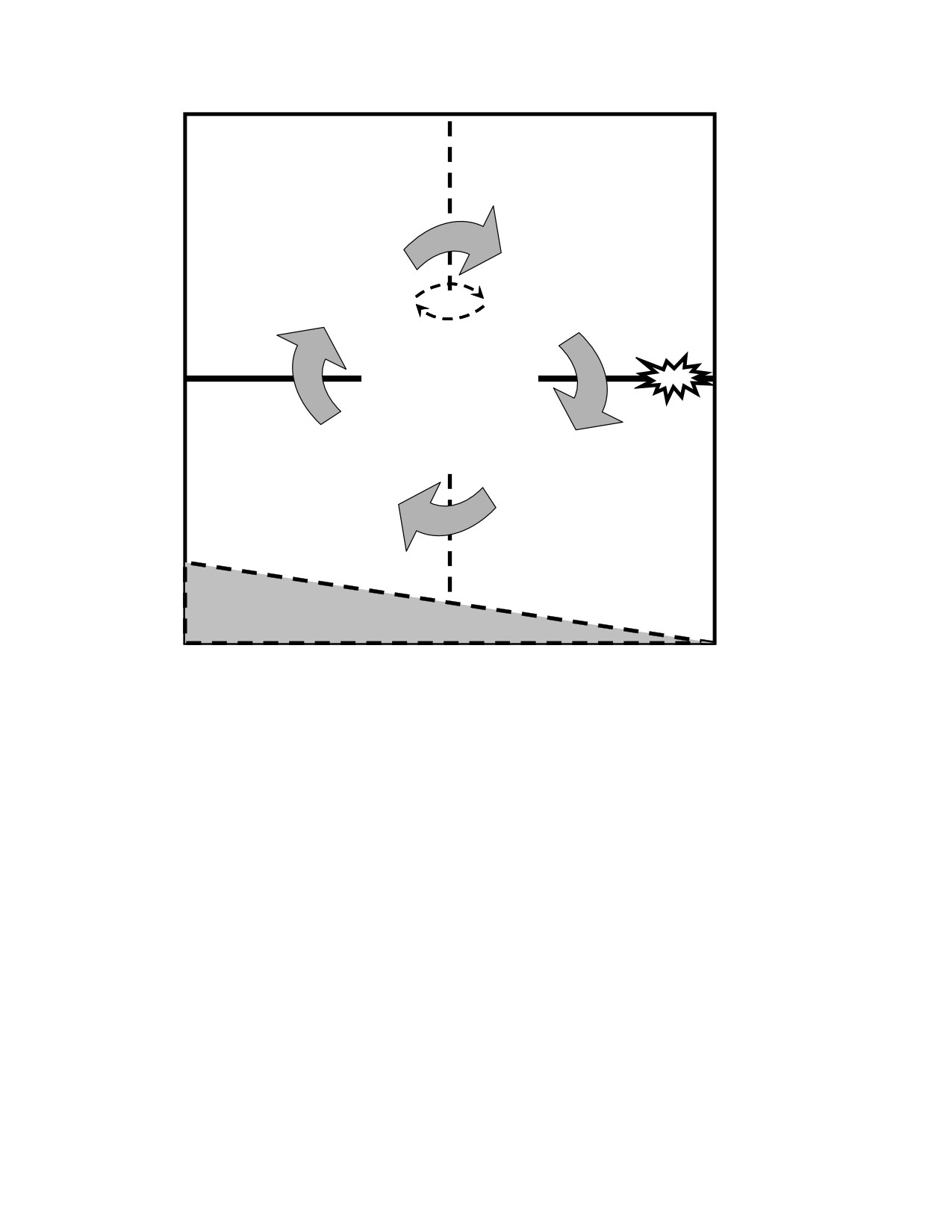
a.
Installation Defense. Installation defense consists of four phases that can
occur sequentially or simultaneously as shown in Figure I-1 and described in Chapters
II through V. The four phases are:
• Planning.
• Preparation.
• Response.
• Recovery.
6 November 2007
FM 3-11.34/MCWP 3-37.5/NTTP 3-11.23/AFTTP(I) 3-2.33
I-3
Plan
Prepare
CBRN
Prevent
and
Mitigate
Incident
Recover
Respond
Consequence Management
Figure I-1. Installation CBRN Defense Framework
(1)
Planning Phase. Planning is based upon assessment of the operational
environment and enables commanders to identify minimum standards for training,
organizing, equipping, and protecting resources. The plan drives preparation and
facilitates response and recovery operations. Chapter II discusses the planning phase in
more detail.
(2)
Preparation Phase. Preparation implements the approved plan and
relevant agreements to increase readiness through training, exercises, and certification.
Vulnerability reduction measures are also initiated to support prevention and
mitigation functions. Chapter III discusses the preparation phase in more detail.
(3)
Response Phase. The response phase addresses the short-term, direct
effects of an incident. Response measures include those actions taken to save lives,
protect property, and establish control. Chapter IV discusses the response phase in
more detail.
(4)
Recovery Phase. The focus of recovery is on restoring mission capability
and essential public and government services interrupted by the CBRN incident. The
recovery phase also includes completing the mitigation of the immediate hazard.
Chapter V discusses the recovery phase in more detail.
I-4
FM 3-11.34/MCWP 3-37.5/NTTP 3-11.23/AFTTP(I) 3-2.33
6 November 2007
b.
Consequence Management. The CBRN aspects of consequence management
include those actions taken to manage and mitigate the effects of a CBRN attack or
incident and restore essential operations and services by employing capabilities beyond
those immediately available to the installation. The Multiservice Tactics, Techniques,
and Procedures for Chemical, biological, radiological, and nuclear Aspects of Consequence
Management provides more information for CBRN incidents in which the installation
commander’s immediate and coordinated response resources are insufficient to complete
response and recovery operations.
6 November 2007
FM 3-11.34/MCWP 3-37.5/NTTP 3-11.23/AFTTP(I) 3-2.33
I-5
Chapter II
INSTALLATION CBRN DEFENSE PLANNING
1.
Overview
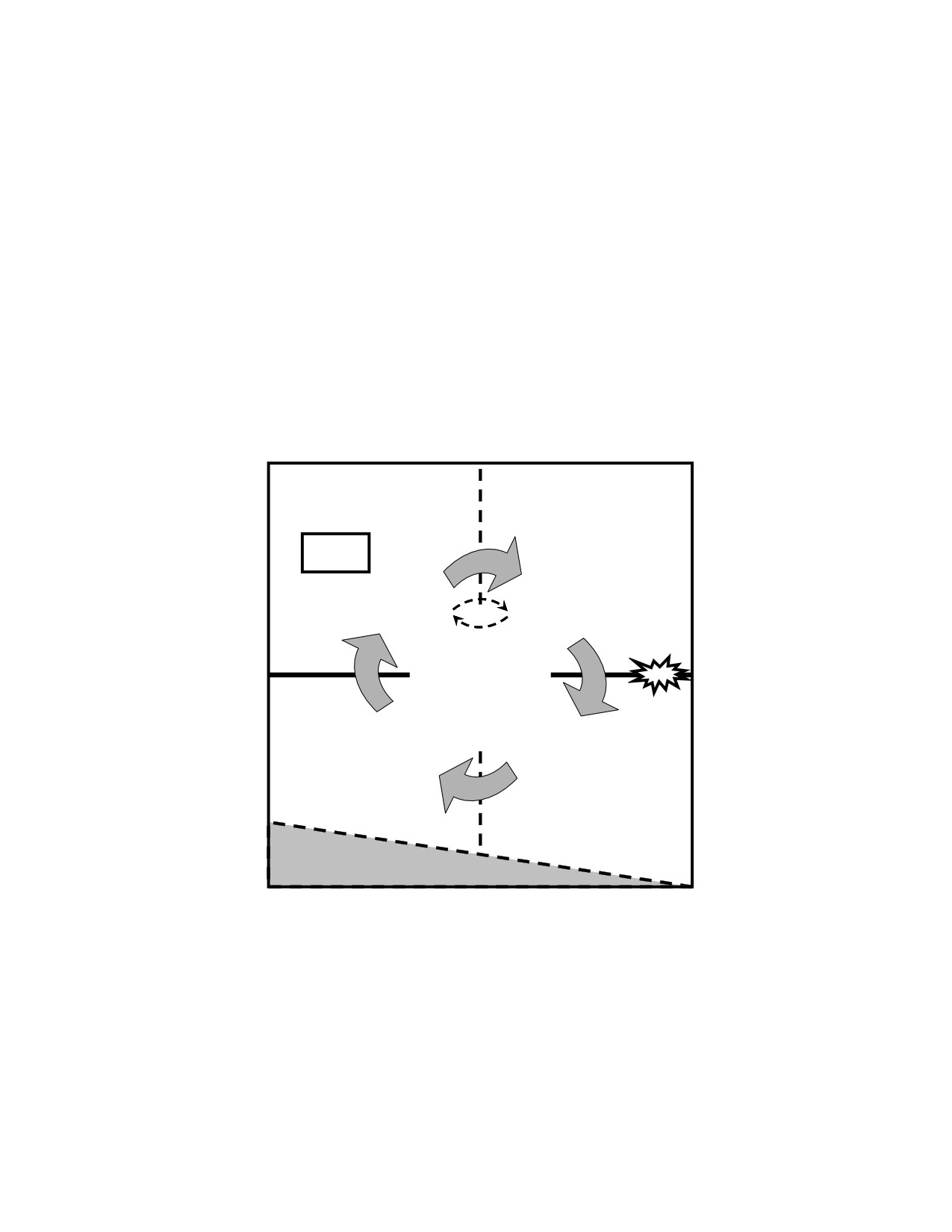
Planning for installation CBRN defense and the development of the installation
CBRN defense plan begins with the assessment of the operational environment and
installation command and staff assessments (see Figure II-1). Application of the
military decision making process (MDMP) matures these assessments and estimates
into a published installation CBRN defense plan. The installation CBRN defense plan
requires continuous assessment over time to integrate changes in threat, vulnerability
assessments, capabilities, and command relationships with civil authorities. The
installation CBRN defense plan may be a stand-alone document or an addendum to an
existing installation protection plan (IPP). The installation commander and his staff
have the primary responsibility for developing the installation CBRN defense plan.
Plan
Prepare
CBRN
Prevent
and
Mitigate
Incident
Recover
Respond
Consequence Management
Figure II-1. Planning Phase for Installation CBRN Defense
2.
Installation Command and Staff Responsibilities
The commander and his staff are responsible for establishing the installation’s
CBRN defense plan, to include threat assessment, vulnerability analysis and reduction,
emergency response, and immediate recovery operations across the range of possible
CBRN hazards. A summary of tasks for installation commanders and staffs is provided
below. A comprehensive listing of responsibilities, to include CBRN responders and
tenant/transient units is provided in Appendix H.
6 November 2007
FM 3-11.34/MCWP 3-37.5/NTTP 3-11.23/AFTTP(I) 3-2.33
II-1
a.
The responsibilities of all installation commanders include:
•
Develop a comprehensive installation CBRN defense plan.
•
Train, rehearse, and exercise the CBRN defense plan.
•
Allocate installation activities and resources to support the installation
CBRN defense plan.
•
Continuously assess and improve the installation CBRN defense plan.
•
Inspect and assess the installation CBRN readiness and preparedness.
•
Execute applicable MOAs or MOUs with activities that will provide
mutual aid.
b.
Installation commanders in a foreign operational environment
include the following additional requirements:
•
Integrate installation and host nation emergency response capabilities to
support the sustainment of installation capabilities and readiness.
•
Coordinate installation CBRN defense measures with the respective area
or base cluster commanders, if applicable.
•
Identify interoperability requirements and mitigation measures to help
meet emergency response requirements.
•
Monitor or support negotiations and/or implementing MOUs and/or
MOAs with host nations (HNs), as necessary, to support HN CBRN
defense and emergency response assistance.
•
Coordinate training opportunities with supporting HN resources that will
periodically exercise existing MOUs and/or MOAs.
•
Review and approve exercise scenarios for CBRN exercises that are
consistent with the regional threat assessment.
c.
The responsibilities of the installation staff include:
•
Develop, implement, and supervise the organizational CBRN defense
program.
•
Coordinate with the appropriate command intelligence section(s) to
provide a continuous CBRN threat assessment.
•
Conduct CBRN vulnerability assessment.
•
Develop, coordinate and assess CBRN defense training execution.
•
Integrating installation CBRN emergency response initiatives into
installation resource planning.
•
Coordinate with local authorities to ensure that the installation CBRN
emergency response plan is integrated with local emergency response
plans.
•
Identify roles for tenant and transient units.
•
Ensure that point, standoff, and medical CBRN reconnaissance and
surveillance assets support the common operational picture.
•
Coordinate with supporting medical and non-medical laboratory(s) for
sample analysis.
•
Conduct inspections to determine the current status of the installation's
capabilities, to include strengths and weaknesses in the installation
CBRN defense program.
II-2
FM 3-11.34/MCWP 3-37.5/NTTP 3-11.23/AFTTP(I) 3-2.33
6 November 2007
•
Conduct periodic reviews of the installation CBRN defense program for
improvement and to ensure compliance with the standards.
3.
Operational Environment Assessment
a.
Threat Assessment. CBRN hazards can range from adversarial actions to
man-made incidents/accidents to natural disasters. A key component of the threat
assessment requires determining whether a deliberate adversarial capability exists.
Many of the hazards however, may originate from technological or natural CBRN
disasters. For information on the characteristics of CB agents see Potential Military
Chemical/Biological Agents and Compounds. For information on radioactive materials
of military significance and their effects, see Multiservice Tactics, Techniques, and
Procedures for CBRN Contamination Avoidance. For information on TIM, see the
Emergency Response Guide (current edition).
(1)
Assess Adversarial Capability. The installation staff examines
available intelligence on potential CBRN hazards, weapons systems, storage facilities,
production facilities, research and development programs, and delivery methods. Upon
assessing capability, an installation can also conduct direct observation to obtain
information on the industrialization in their AO, or from intelligence on other hazards
within the area of interest. For example, a vast array of TIM facilities may exist in the
AO or near the AO. Further, assessment of an adversary’s capability involves several
factors that require more specifics, and may generate an intelligence collection plan.
Risk is measured when conducting assessments of the possibility of third-power
intervention with CBRN weapons on the behalf of an adversary, or the weaponization of
a chemical, biological, or radiological (CBR) weapon could occur on a very rudimentary
basis with an improvised dissemination device (e.g., handheld spray devices).
(a) Assess Adversarial Opportunity. The installation assesses factors
such as when, where, and how an adversary may use a CBRN or TIM weapon or agent.
Planners consider the weather, the terrain, the installation boundaries, the defensive
posture, and other factors to assess when or where an adversary may attack.
Assessment of how an adversary will attack considers the objective (e.g., attacks against
critical infrastructure) and subjective factors (e.g., an adversary could attack with no
other purpose than to prove his capability or to cause terror). Further, an adversary
may attack using overt systems (such as aircraft, cruise missiles, unmanned aircraft
systems/remotely piloted vehicles, tactical ballistic missiles and small boats) against
operational-level targets. However, covert releases, including various aerosol-releasing
devices, contamination of drinking water, radiological dispersal devices (RDD), or
improvised explosive devices (IEDs) with CBR components.
(b) Assess Adversarial Intent. Installations conduct an assessment of
an adversary’s intent to use CBRN weapons or TIM. The adversary’s intent may be to
cause casualties, contamination, degradation or panic or demonstrate its ability to
attack anywhere at anytime.
(2)
Technological and Natural CBRN Disasters. Major accidents and
natural disasters occur on a continuing basis and may involve CBRN agents/materials.
Consequently, CBRN defense plans need to address avoidance, protection, and
decontamination functions within an installation’s AO, and across the area of interest.
6 November 2007
FM 3-11.34/MCWP 3-37.5/NTTP 3-11.23/AFTTP(I) 3-2.33
II-3
(3)
Assess Impact. Planners assess the impact of a CBRN or TIM attack or
incident on the installation. Attack templates identify whether the attack is conducted
on or off the installation. For example, attack scenarios could include point source
attack on an installation or line source attacks upwind of the target. The source of the
attack assessment may occur at the installation level using decision support tools
(DSTs) or by exercising technical reach-back.
(4)
Assess the Operational Environment. The operational environment
may be a permissive, uncertain, or hostile environment. As a permissive environment,
the military and/or law enforcement agencies (LEAs) should have control and the intent
and capability to assist operations. An uncertain operational environment could be one
in which the host government forces, whether opposed to or receptive to operations, do
not have effective control of the territory and population in the intended AO. A hostile
environment includes adversarial forces that have a degree of control, the intent, and
the capability to effectively oppose or react to operations.
(5)
Assess Previous Incidents/Past Use. The installation planner must
think “outside of the box.” The planner collects information on previous uses of CBRN
agents or weapons, and also obtains information on TIM incidents or accidents that may
have occurred in the AO. The planner’s assessment also considers how an installation
may be affected by TIM release (as a secondary hazard from a naturally occurring
incident such as hurricanes or floods). As assessments on previous use of TIM are
conducted, hazards may occur based on the manufacture, storage, distribution, or
transport of those materials in close proximity to installations. Deliberate or
inadvertent release significantly increases hazards to the indigenous population and
U.S. forces. Given the prevalence of TIM throughout the world, civilian and DOD
planners use area studies and integrate intelligence estimates to assess possible TIM
hazards. TIM should be recognized for the singular hazards they pose and the potential
risks that may result from an explosion or a fire. Some representative sources of TIM
hazards are shown in Table II-1.
Table II-1. Potential TIM Hazard Sources
• Agricultural—includes insecticides, herbicides, and fertilizers.
• Industrial—chemical and radiological materials used in the manufacturing processes, fuel, or in
cleaning.
• Production and research—CB materials produced or stored in a facility.
• Radiological—nuclear power plants, medical facilities, and laboratories nondestructive testing
facilities and food/mail irradiator facilities.
(6)
CBRN Threat Levels. CBRN threat levels serve as a marker for
establishing the level of CBRN threat posed by an adversary. CBRN threat levels
should be in accordance with Standardization Agreement (STANAG) 2984. Table II-2
provides an overview of the CBRN threat levels.
II-4
FM 3-11.34/MCWP 3-37.5/NTTP 3-11.23/AFTTP(I) 3-2.33
6 November 2007

Table II-2. CBRN Threat Levels
CBRN Threat Level
Description
Zero
The belligerents have no known offensive CBRN capability.
Low
The belligerents have an offensive CBRN capability, but there is no indication
of its use in the immediate future.
Medium
Nuclear, biological, or chemical weapons have been used in another AO or
there are strong indications that the belligerents will use these weapons in the
immediate future.
High
Nuclear, biological, or chemical attack is imminent.
b.
Physical Environment.
(1)
The physical environment includes terrain, weather, and the
commander’s geographic framework. Terrain and weather effects must be continuously
assessed so that decision support tools and predictive modeling capabilities are
integrated with environmental conditions.
(2)
Installation Zoning and Split-MOPP. An installation commander may
elect to establish zones for the installation to provide flexibility and maximize mission
performance in the event that a CBRN incident occurs. Further MOPP analysis may be
expanded to include split-MOPP operations within the established installation
protection zones at installations where MOPP is the personnel protection level
employed. Appendix F provides more detail on establishing zones and integrating split-
MOPP for an installation CBRN defense plan. Some installation zoning principles are
shown in Table II-3.
Table II-3. Installation Zoning Principles
• Consider the location of key functions (e.g., work centers) within different zone sectors.
o A very large zone may be practical if only a few functions are located in the area.
o One large work area with a clearly defined boundary is a good candidate for a zone.
• Consider physical features.
o Zone boundaries should be clearly identifiable.
o Group similar surface areas into the zone.
• Consider the terrain. If part of an installation has a significantly higher elevation, consider aligning a
zone boundary along an identifiable contour interval.
• Consider accessibility (such as the presence of clear access routes).
• Consider responsibility assignments for the area.
• Consider the consistency with ground defense sectors. The CBRN zones should be the same as the
ground defense sectors.
c.
Information Environment. The installation commander and staff maintain
constant situational awareness and updates to the common operational picture.
Intelligence assessments must be integrated between military and civil sources. The
commander must consider requirements and existing agreements for information
sharing among the civil-military stakeholders. Assumptions may be required, but the
plan must call for means by which to confirm or deny these assumptions through
information collection efforts. In addition, the information environment may include
predictive modeling, meteorological data, data from an integrated detection network,
and readiness reporting.
6 November 2007
FM 3-11.34/MCWP 3-37.5/NTTP 3-11.23/AFTTP(I) 3-2.33
II-5
d.
Political Environment.
(1)
Jurisdictional Authority. The installation commander must establish
the level of authority in exercising military operations on or off the installation. This
level of authority will conform to public law, local agreements, or military regulations
and standards. Assessment of the political environment must include the level(s) of
authority that the military commander may exercise when implementing the
installation CBRN defense plan. One example of this includes the appropriate level of
personal protection equipment required by CBRN responders. Operations in support of
civil authorities may be subject to public law or host nation agreements, where
contingency operations may give the commander more flexibility to apply risk
management and subsequently lower the level of protection.
(2)
Agreements. Installations range in size and complexity. Small or simple
installations may not have organic emergency response resources of large or complex
ones. The installation commander evaluates essential functions during the
development of the CBRN defense plan. The national response plan (NRP) provides a
list of emergency support functions (ESFs) that the installation commander may
implement - or may be required to implement - into the overall CBRN defense plan.
Appendix B provides the details for the 15 ESFs from the NRP. The commander
assesses the requirement and then determines if he has the requisite capability.
Capability shortfalls may be overcome by agreements with civil authority capabilities.
Inversely, the commander may be required to support civil authorities by providing
capabilities to fill gaps that are identified for civil response.
(3)
The Domestic Environment.
(a) National Incident Management System (NIMS). The national
structure for incident management establishes a clear progression of coordination and
communication from the local level to regional and national HQ levels. For the military
installation, use of NIMS supports the interoperability between installations and with
the civilian community. Use of NIMS is an important interoperability tool for the
different service components that will operate together on an installation. Chapter IV
discusses the implementation of the NIMS with respect to the ICS. The NIMS process
supports the following:
•
Integrating incident-related prevention, mitigation, response, and
recovery activities.
•
Improving the coordination and integration within the military AO
and with federal, state, local private-sector, and nongovernmental
organization (NGO) partners.
•
Increasing the efficient use of resources needed for more effective
incident management.
•
Improving situational awareness (SA) within the installation.
•
Facilitating requests for assistance (RFAs) for support that
exceeds an installation’s response capability.
•
Providing linkage to technical reach-back capabilities.
II-6
FM 3-11.34/MCWP 3-37.5/NTTP 3-11.23/AFTTP(I) 3-2.33
6 November 2007
(b) National Response Plan (NRP). The NRP is an all-discipline, all-
hazards plan that establishes a single, comprehensive framework for the management
of domestic incidents. Because the purpose of the NRP is to establish a comprehensive,
national, all-hazards approach to domestic incident management, most installation
response plans must be consistent with the guidance found in the NRP. The services or
combatant commands should consider standardized procedures and provide a common
emergency planning template that would also facilitate interoperability among the
different components serving on an installation.
(c)
Title 10 USC Support. Installation title 10 USC assets may
receive tasks to provide support to validated RFAs. Installation resources capable of
providing the necessary response are then sent to the incident area, normally OPCON
to the Defense Coordinating Officer (DCO) or JTF (during a CBRN incident), to perform
the tasks. National Guard (NG) units may be mobilized and employed under
installation 10 USC units; however, they will be subject to employment according to
applicable command or support relationships established by the governing headquarters
(such as COCOM or OPCON).
(d) Title 32 USC Support. Installation-based NG units are primarily a
state response force. They will normally remain under the control of the governor,
through the adjutant general (TAG). In this capacity their missions are conducted under
the state emergency management framework. However, installation NG units assigned
to an installation could operate (on or off the installation) within its state of assignment
or within another state under one of four potential authorities:
•
Immediate Response. Under DOD Directive (DODD) 3025.1,
imminently serious conditions resulting from any civil emergency
or attack may require immediate action by military commanders
or responsible officials of other DOD agencies to save lives, prevent
human suffering, or mitigate great property damage.
•
Interstate Compacts. Several interstate compacts provide for
mutual aid between states for disaster response. These agreements
occur between the states; however, the states may provide DOD
with information on their interstate agreements. The most
comprehensive of these, the Emergency Management Assistance
Compact (EMAC), provides habitual relationships that facilitates
emergency planning. NG support under EMAC occurs in state
active-duty status. Therefore, the EMAC is not applicable to NG
units performing their mission exclusively in 32 USC or 10 USC
status.
•
State-to-State MOAs. In an emergency situation, the governor or
other appropriate officials, according to state laws, could rapidly
develop a simple MOA addressing NG support. This process is
commonly used by states that are not EMAC signatories but wish
to receive or provide support on a case-by-case basis.
•
Mobilization Under 10 USC. A reserve component unit could be
called to active duty under the mobilization statutes (voluntary
mobilization, presidential selective reserve call-up, partial
mobilization, or full mobilization) and then be employed as
6 November 2007
FM 3-11.34/MCWP 3-37.5/NTTP 3-11.23/AFTTP(I) 3-2.33
II-7
directed by the President of the United States (POTUS) or his
designee (see Joint Tactics, Techniques, and Procedures for
Manpower Mobilization and Demobilization Operations: Reserve
Component (RC) Callup for more detailed information). The
decision to mobilize NG units is the responsibility of the POTUS
based on a recommendation from the Secretary of Defense
(SecDef). If a NG unit is mobilized, the unit will be assigned to the
C2 element of the designated, supported combatant commander.
(e) Regulatory and Legal Considerations. Military units supporting an
installation emergency response will always be under the C2 of military authorities, yet
they may work in support of the civil authorities assisting the installation. The legal
considerations for CBRN response on an installation are complex, varying by the
location, the area affected, and the type of incident. Commanders should consult their
legal staff at the beginning of the planning process to incorporate, understand, and train
staffs and responders on the limitations that a particular installation might face.
Commanders, in conjunction with their judge advocate general (JAG), should assess the
preparedness of the legal staff and ensure the legal staff receives appropriate training to
deal with terrorist CBRN attacks. Representative legal planning considerations that
influence response activities include some of the following considerations:
•
The use of chemical and biological weapons within the US is a
federal offense under 18 USC Section 175 (biological weapons
possession); and Section 229 (CB weapons use as a WMD).
•
The commander’s inherent authority to maintain law and order on
a military installation coupled with the mandatory responsibility
to protect personnel, facilities, and material also guides response
to a prewar incident in the United States, its territories or
possessions, the District of Columbia, and other places subject to
U.S. jurisdiction. In these cases, the Federal Bureau of
Investigation (FBI) has investigative jurisdiction and should be
immediately notified when an incident occurs. Incident/attack
locations should be treated as crime scenes, insofar as reasonably
possible, and the normal chain of custody procedures should be
followed for any item that is removed from the incident scene.
These authorities, responsibilities, and actions are according to
DODD 5525.5 and implemented by AR 500-51.
•
Should the effects of an installation terrorist CBRN incident or
attack extend to surrounding civilian communities; or when the
need to save lives, prevent human suffering, or mitigate great
property damage caused by an off-installation event, the
installation may respond immediately, if requested. The
responding commander will report to higher HQ as soon as
possible following the initiation of the response effort.
•
Requests for an immediate response (i.e., any form of immediate
action taken by a DoD Component or military commander to save
lives, prevent human suffering, or mitigate great property damage
under imminently serious conditions) may be made to any
II-8
FM 3-11.34/MCWP 3-37.5/NTTP 3-11.23/AFTTP(I) 3-2.33
6 November 2007
Component or Command. The DoD Components that receive
verbal requests from civil authorities for support in an emergency
may initiate informal planning and, if required, immediately
respond as authorized in DoD Directive 3025.1. Civil authorities
shall be informed that verbal requests for support in an emergency
must be followed by a written request. (according to DODD
3025.15).
(4)
The Foreign Environment.
(a) Host Nation (HN) Agreements and Treaties. During peace
operations, HN agreements and treaties may direct U.S. forces to provide assistance
during CBRN events. In these instances, installation assets may receive taskings to
provide support to a HN response. U.S. forces will remain under U.S. command.
(b) Status of Forces Agreement (SOFA). A SOFA between the United
States Government and a HN generally governs the authorized activities of U.S.
personnel and the installation. Most SOFAs, such as North Atlantic Treaty
Organization (NATO) SOFA Article VII, paragraph 10, and Japan SOFA Article XVII,
paragraph 10, state that the U.S. has the right to police and maintain order on the
premises it occupies. Most SOFAs require U.S. military authorities to assist the HN
with incident investigation and turn over all evidence to the HN authorities when
requested. Commanders must also identify legal authorities and requirements before
conducting joint training exercises with HN elements.
(c)
Sovereignty Issues. During peace operations, U.S. forces must be
aware that HN laws may require the sharing of information, to include samples of
CBRN agents during a CBRN event. The release of information or material is likely a
strategic or operational-level war issue, and the installation commander will respond
according to the command guidance furnished.
(d) Stability Operations. HN agreements and treaties and SOFA will
likely remain in affect during contingency operations in countries where U.S. forces are
based and operate, unless the agreement or treaty is with a country in which the
contingency operations are directed. In this case, the United States will determine its
responsibilities under U.S. and international laws. During contingency operations,
issues of sovereignty during a CBRN event will be addressed by applicable contingency
plans, orders, and rules of engagement.
4.
Vulnerability Assessment
a.
Developing the installation CBRN defense plan requires comparison of the
threat with installation vulnerabilities in order to determine efforts to mitigate CBRN
effects before an incident occurs. Vulnerability assessment also includes integration of
commander’s guidance through a risk management process in order to prioritize
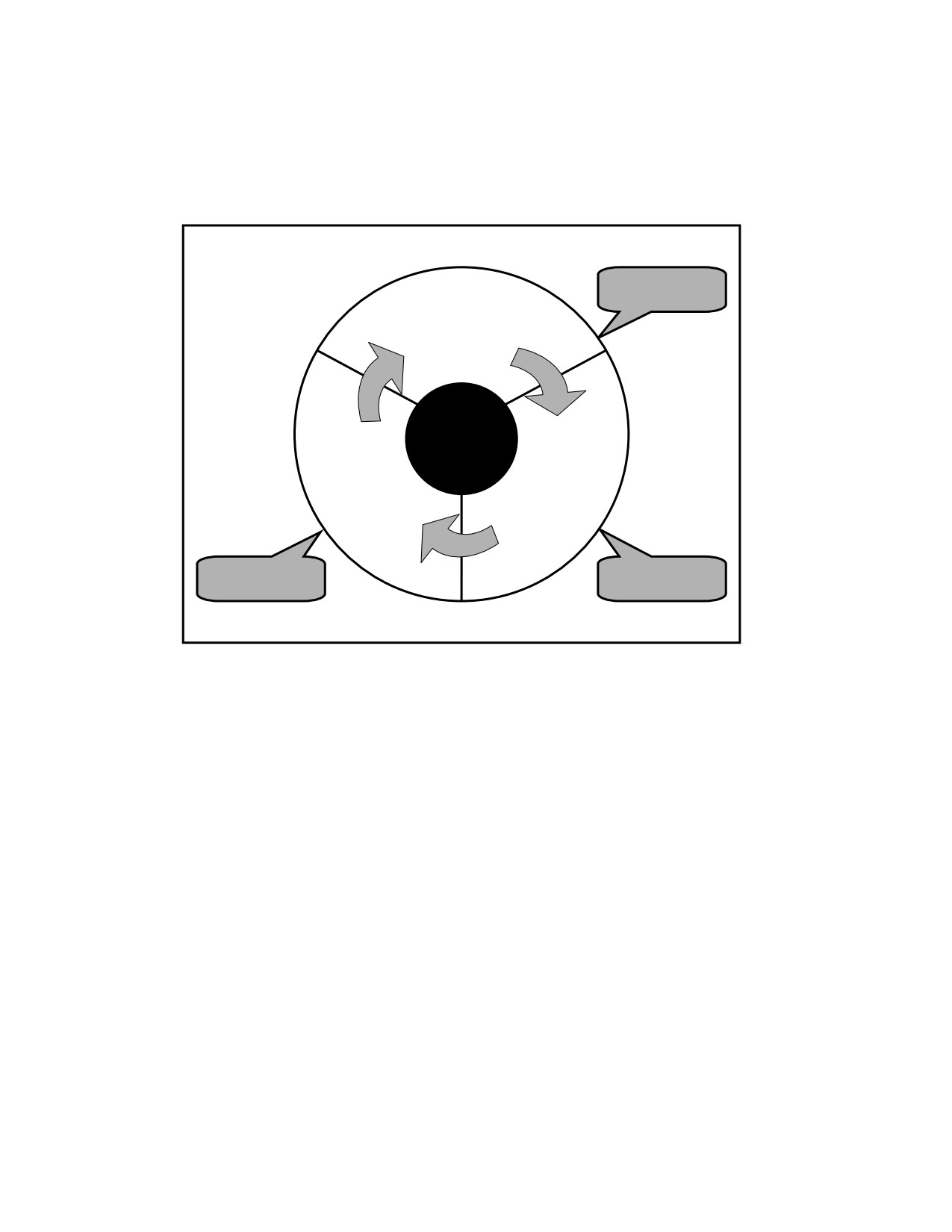
vulnerability reduction measure implementation. Vulnerability assessment during the
planning phase begins with the identification of the hazards and an analysis of each
(see Figure II-2). Vulnerability assessment during the planning phase continues by
integrating the specific threat assessment with analysis of specific vulnerabilities and
identification of potential vulnerability reduction measures. The endstate during the
planning phase is typically a staff estimate (running estimate for U.S. Army) and
recommendation to the commander on the priorities for vulnerability reduction. The
6 November 2007
FM 3-11.34/MCWP 3-37.5/NTTP 3-11.23/AFTTP(I) 3-2.33
II-9
commander must provide risk management guidance that determines which
vulnerability reduction measures to implement, and which to abandon or postpone. The
assessment is an appraisal of the strengths and weaknesses of the installation functions
as compared to the threat. Chapter III provides additional detail for the completion of
the vulnerability assessment process.
Operational
Environment
Hazard Assessment
(Planning)
Vulnerability
Assessment
Vulnerability
Vulnerability
Reduction
Analysis
(Preparation)
(Planning)
Command
Threat
Guidance
Integration
Figure II-2. Vulnerability Assessment During the Planning Phase
b.
Analyzing key assets and critical infrastructure should be conducted during
the CBRN VA, when possible. Automated tools at the installation or available via
technical reach-back capability can be used to perform the following functions:
•
Conduct a blast effects analysis from explosive munitions and devices.
•
Conduct a weapons effects analysis from CBRN and/or TIM.
•
Conduct the analyses and plot the effects on a map or image to identify the
key assets and critical infrastructure (e.g., people, structures, equipment)
that could be affected by a CBRN or TIM event. If possible, include the
projected fatalities, contamination, casualties and impact on installation
readiness.
•
Coordinate with and provide results of the analyses to the commander and
his staff.
•
Use the results to help produce courses of action during the estimation
process.
c.
An accurate CBRN VA is the groundwork for the strategy. The strategy is
used to develop and execute vulnerability reduction measures. The Multiservice Tactics,
Techniques, and Procedures for Chemical, biological, radiological, and nuclear
II-10
FM 3-11.34/MCWP 3-37.5/NTTP 3-11.23/AFTTP(I) 3-2.33
6 November 2007
Vulnerability Assessment provides further guidance for conducting a CBRN VA and
developing CBRN vulnerability reduction measures.
5.
Commander’s Guidance
Commander’s guidance includes the vision, intent, key tasks, mission, priorities,
and overall strategy - to include acceptable risk.
a.
The commander and staff develop a vision and corresponding strategy that
defines successful installation readiness and preparedness by balancing threat,
vulnerability, and risk. This guidance gives definition to the installation’s mission, the
commander’s intent, and the goal of the installation CBRN defense program. It orients
on the future and provides a clear, concise statement of the precise picture of
installation readiness and preparedness. It could include comments about healthy
relationships with the local community or effective security measures to deter a
prospective terrorist from using CBRN weapons. In short, the vision gives the
commander’s view of the end product of the installation’s CBRN readiness and
preparedness. The vision includes identified key tasks or critical functions that support
the installation’s ability to accomplish its assigned mission. It also takes into account
the inherent responsibility to protect people and property.
b.
Strategy Development. Using assessments as the starting point and the
vision as the end point, the commander and staff develop the CBRN defense strategy.
The strategy provides the method by which installation CBRN readiness and
preparedness will be achieved. The strategy is the road map for building an installation
CBRN defense program over a period of time. The strategy should—
•
Focus on the threat.
•
Identify the phases or steps to reach the vision.
•
Assign objectives and vulnerability reduction measures to each phase.
•
Identify the main and supporting vulnerability reduction measures in each
phase.
•
Assign priorities for resources in each phase.
•
Identify indicators of success to monitor the progress of the strategy.
•
Assess readiness to respond to CBRN events.
6. Plan Development
a.
Military Decision Making Process (MDMP).
(1)
The responsibility for CBRN defense decisions, plans, and supervision
rests on the commander. For many years, commanders have used a planning process
known as the military decision making process (MDMP) to determine the best course of
action (COA) to be written into a plan. Figure II-3, provides an overview of this process.
6 November 2007
FM 3-11.34/MCWP 3-37.5/NTTP 3-11.23/AFTTP(I) 3-2.33
II-11
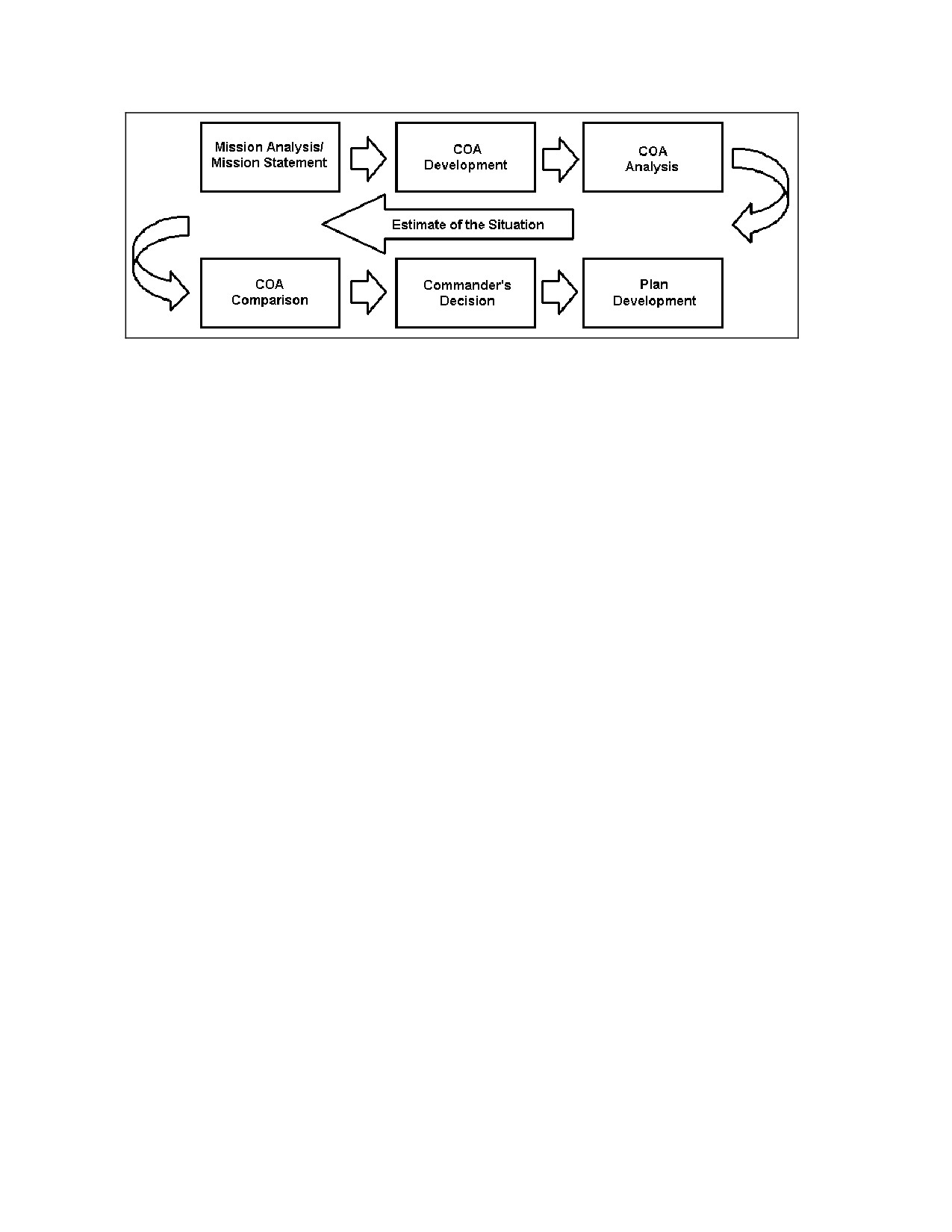
Figure II-3. Military Decision-Making Process
(2)
The process provides a framework for determining a plan of action for
emergency response. The installation uses these process steps to develop an effective
solution to the challenge of preparing a viable and comprehensive emergency
management plan. The estimate process is used by each service component and provides
a common framework for an installation that may have components from the different
services.
(3)
Once the COAs have been developed and analyzed, the commander
compares and considers multiple COAs that support the installation CBRN defense
mission. In a CBRN plan, the recommended COA encompasses preparation, response,
and recovery phases. Variables will include modifications to the plan dependent on
type of CBRN or TIM hazard involved in the incident. For example, the COA that
outlines the response to a biological or radiological attack may differ from the COA for a
chemical attack.
(4)
Installation CBRN defense plans are living documents. The installation
CBRN defense plan should be planned, staffed, exercised, and approved by the
installation commander. Once approved, the installation CBRN defense program
transitions from the planning to the preparation phase. As preparation proceeds,
assessments are continuously updated and may require re-visiting and revising the
installation CBRN defense plan. Chapter III discusses the installation CBRN defense
preparation phase in more detail.
b.
Resource Allocation and Prioritization. As part of the development of the
CBRN defense plan, resources identified by the installation are allocated to prioritized
requirements. The prioritization is made by the commander with input from his staff.
c.
Key Elements of the Plan. The plan should address each ESF role and how
they are integrated and synchronized with respect to response and recovery.
(1)
C2. The installation CBRN defense plan is aligned with the installation
C2 architecture. The use of ICS, or tactical equivalent, provides a means of maintaining
SA during CBRN incident responses.
(2)
Functional Organization. An example of the management organization
used by ICS is discussed in Chapter IV. This organization is mandated by the NIMS,
but provides a potential model for commander’s operating tactical or expeditionary
bases for which the NIMS is not required.
II-12
FM 3-11.34/MCWP 3-37.5/NTTP 3-11.23/AFTTP(I) 3-2.33
6 November 2007
(3)
Organization by ESF. Appendix B describes the ESFs, and Chapter IV
discusses a method of organization response measures that relates the functional
components of the ICS to the ESFs as a method by which to ensure that the plan
accounts for these critical tasks. The installation commander may have a complex staff
to incorporate this functional organization, or may assign multiple functions to singular
staff elements.
6 November 2007
FM 3-11.34/MCWP 3-37.5/NTTP 3-11.23/AFTTP(I) 3-2.33
II-13
This page intentionally left blank.
Chapter III
INSTALLATION CBRN DEFENSE PREPARATION
1.
Overview
a.
CBRN passive defense operations focus on protecting assets, sustaining
mission operations, and minimizing casualties during and after an attack or incident.
An installation updates its CBRN defense plan to reduce the exposure of the installation
to a CBRN attack and to minimize the impact of such an attack on operations should it
occur. During the preparation phase, installation personnel systematically initiate
vulnerability reduction measures that have been incorporated into their latest
installation CBRN defense plan. The previous chapter discussed development of the
installation CBRN defense plan. This chapter focuses on instituting that plan.
Plan
Prepare
CBRN
Prevent
and
Mitigate
Incident
Recover
Respond
Consequence Management
Figure III-1. Preparation Phase for Installation CBRN Defense
b.
Although, as was explained previously in this document, the development
of a robust CBRN defense capability on an installation is a continuous, cyclic process
(see Figure III-1), there is a logical order to preparing and upgrading an installation’s
CBRN defense posture. Equipment must be installed before it can be trained on.
Exercises evaluate the success of previous education and training. Capabilities cannot
be reassessed until they’ve been exercised and tested. The material within this chapter
6 November 2007
FM 3-11.34/MCWP 3-37.5/NTTP 3-11.23/AFTTP(I) 3-2.33
III-1
is presented in a logical order for preparing and improving an installation’s CBRN
defenses:
•
Acquisition of necessary CBRN defense equipment.
•
Preparation of facilities.
•
Education and training.
•
Coordination, monitoring, and reporting requirements.
•
Conducting response exercises.
•
Reassessing capabilities and identifying remaining vulnerabilities.
2.
Acquisition of Necessary CBRN Defense Equipment
a.
Specialized CBRN Defense Equipment. The nature of CBRN agents is
such that highly specialized equipment is necessary to detect and defend against
attacks involving weapons containing these substances. The use of CBRN sensors,
detectors, surveillance, and alarms is therefore a vital part of the defense strategy in
preparing an installation CBRN defense plan. The first step to properly preparing an
installation against a possible CBRN attack is the acquisition, installation, and
employment of this specialized equipment necessary for effective detection and defense
against such an attack. DOD has recently instituted a “tiered approach” to installation
CBRN defense. This approach, using a graduated scale of employment based on priority,
was designed to be flexible enough to accommodate the needs of specific installations
while standardizing major system elements to provide cost effective solutions. Appendix
J provides further details about this DOD tiered program for manning, training, and
equipping the response force for CBRN defense.
b.
JPM Guardian. On May 6, 2003, the Joint Project Manager-Guardian
(JPM-Guardian) was formally established “to provide Department of Defense (DoD)
prioritized installations with an integrated chemical, biological, radiological, nuclear
(CBRN) protection and response capability to reduce casualties, maintain critical
operations, contain contamination and effectively restore critical operations”. JPM-
Guardian was established to “provide an effective CBRN protection, detection,
identification and warning system for installation protection, ensure integration of
CBRN network with existing Command, Control, Communications, Intelligence (C3I)
capabilities to provide effective information management, provide a capability that will
allow for rapid restoration of critical installation operations, protect DoD civilians,
contractors and other persons working or living on U.S. Military installations and
facilities, and equip and support Coalition Support Teams, Installation Support Teams,
Regional Response Teams and recon/decon teams.” JPM Guardian should be contacted
for guidance on what specific equipment should be installed on a particular DOD
installation.
c.
CBRN Detection and Surveillance. The TTPs outlined in the Multiservice
Tactics, Techniques, and Procedures for Chemical, biological, radiological, and nuclear
Reconnaissance and Multiservice Tactics, Techniques, and Procedures for Biological
Surveillance provide guidance on establishing installation CBRN detection and
III-2
FM 3-11.34/MCWP 3-37.5/NTTP 3-11.23/AFTTP(I) 3-2.33
6 November 2007
surveillance arrays. The operational use of the detector arrays should be linked to the
CBRN threat level. As the CBRN threat level increases, CBRN detection and
surveillance operations should also increase, as follows:
(1)
At CBRN Threat Level Zero, the IC and staff may choose not to
activate or emplace CBRN detection and surveillance devices.
(2)
At CBRN Threat Level Low, an IC and staff may choose to position
detection and surveillance devices as appropriate but not activate them.
(3)
At CBRN Threat Level Medium, an installation could operate
detection and surveillance devices on a periodic basis when conditions were favorable
for a CBRN attack. For example, an available JBPDS could be run in early evening,
when conditions were favorable for a biological attack.
(4)
At CBRN Threat Level High, all available CBRN detection and
surveillance devices appropriate for the threat could be operated. Care must be taken to
insure power supplies and expendables are available for such operations. An
installation CBRN detector array is only one source of information that supports the
installation common operational picture (COP). Other critical information input (such
as medical surveillance [MEDSURV], individual reports of unusual activity, or
individuals experiencing chemical agent symptoms) also contributes to the installation
CBRN SA.
3.
Preparation of Facilities
a.
Critical Facilities. Facilities identified as ‘critical’ in the installation’s
emergency response plan are integrated into the CBRN defense plan. Installation
activities improve installation preparedness by fortifying shelters, protecting vital
equipment (e.g., covers, sheltering), and improving or preparing individual fighting
positions. These actions and prior planning can protect against conventional and some
CBRN weapons effects.
b.
Special CBRN Defense Measures. Specific CBRN-defensive measures
needed to protect facilities are identified in the VA process. See the Multiservice Tactics,
Techniques, and Procedures for CBRN Contamination Avoidance and the Multiservice
Tactics, Techniques, and Procedures for Chemical, biological, radiological, and nuclear
Protection for additional information on measures that can be taken for the preparation
of facilities. Representative measures that can be taken include the following:
(1)
Provide safeguards in and around building HVAC systems to
minimize the possibility of a covert CBRN attack.
(2)
Identify alternate sources of electricity or water for key facilities
(3)
Identify alternate facilities to house key functions should the
primary facility become uninhabitable.
6 November 2007
FM 3-11.34/MCWP 3-37.5/NTTP 3-11.23/AFTTP(I) 3-2.33
III-3
(4)
Verify the serviceability of facility collective protection (COLPRO).
(5)
Prepare SIP kits for buildings that may not have COLPRO.
(6)
Identify shelter management personnel and provide provisions for
shelter locations.
(7)
Provide effective communications to facility occupants.
4.
Education and Training
a.
Education. Installation incident management organizations and
personnel at all levels must be appropriately educated to effectively provide the
installation with an all-hazards incident management capability. CBRN incident
response operations need to be adequately emphasized in applicable programs of
instruction. For those units without experience in civilian exercises on a local, state,
regional, or national basis, limited opportunities exist to incorporate lessons learned
from these events into the training environment such as institutional education,
simulations, and exercises. All personnel should be educated in basic CBRN awareness
and personnel assigned special responsibilities receive more specific operational
instruction. Numerous courses and training opportunities are available from various
government and private sources. A compendium of these resources is available from
FEMA. Some of the educational opportunities available are in the following areas:
(1)
General Awareness.
(a)
Force Protection (FP)/Anti-Terrorism (AT). One component
of combating terrorism includes defensive measures against terrorist attacks. All
personnel train on the fundamentals necessary to defend installations, units, and
individuals against terrorist attacks. AT is a FP measure and is the responsibility of
commanders at every level.
(b)
Overview of CBRN Counter-Terrorism (CT) Operations.
Based on the roles and responsibilities of the audience, this may include the
fundamentals of the NRP, the ICS, and service-specific issues.
(2)
Specific Operational Education for Command and Staff.
•
The role of the action agency and Lead Federal Agencies
(LFAs).
•
Legal authorities, constraints, and limitations.
•
Logistics and support requirements, including fiscal
reimbursement issues.
•
C2 structures.
III-4
FM 3-11.34/MCWP 3-37.5/NTTP 3-11.23/AFTTP(I) 3-2.33
6 November 2007
NOTE: An example of this type of training is the DOD Emergency
Preparedness Course. This course prepares Emergency Preparedness Liaison
Officers (EPLOs), and staffs to plan and execute joint military operations
that support civil authorities responding to domestic emergencies and
disasters. The US Forces Command offers the course eight times a year at the
FEMA Mount Weather Emergency Assistance Center, Berryville, Virginia, and
conducts mobile training teams within the USPACOM’s and the US Southern
Command’s AORs each year. This training is authorized by DODD 3025.1.
b.
Training. Installations must train to perform individual and collective
CBRN defense tasks as units and joint forces. Licensing and certification standards
vary based on geographical location and equipment available on the installation.
Commanders should ensure that all operators are fully trained to complete their
assigned missions. Training must be provided to HN military and civilian work forces
and US contractors on the installation.
(1)
Training Tasks. The installation conducts training on key UJTL
and applicable service training tasks that support preparedness, response and recovery
measures. Using the UJTL as a baseline helps to support a common framework for
training.
(2)
Training Conditions. The installation uses a simulated CBRN or
TIM environment as a condition for selected training events. The degradation
experienced by operating in the appropriate protective posture improves installation
preparedness. This type of training provides installation leadership with an assessment
of the effectiveness of vulnerability reduction measures.
(3)
General Installation Training Considerations. CBRN awareness
training is available for every military service member, DOD civilian, contractor,
appropriate family member, and local national hired by the DOD—regardless of rank.
These personnel should be aware of CBRN actions and effects, the need to maintain
vigilance for possible CBRN actions, and methods for employment of CBRN TTP. To
ensure an effective response, an installation-wide, cross-functional training program
should be implemented. Thorough training is required to prepare individuals and
emergency teams to safely and efficiently respond to a terrorist CBRN attack at their
required level of proficiency.
(4)
Incident Management Training.
(a)
General Considerations. Installations must have personnel
trained to respond to a CBRN attack. All persons participating in the response to CBRN
incidents should be trained to competently perform within the incident command
system (ICS)/unified command (UC) structure.
(b)
Minimum Requirements. The following are minimum
requirements for installation incident management personnel:
6 November 2007
FM 3-11.34/MCWP 3-37.5/NTTP 3-11.23/AFTTP(I) 3-2.33
III-5
(b)
Minimum Requirements. The following are minimum
requirements for installation incident management personnel:
•
Entry level first responders (including firefighters, police
officers, emergency medical services providers, public works
on-scene personnel, public health on-scene personnel and
other emergency responders) and other emergency
personnel will require an introduction to the basic
components of the Incident Command System.
(FEMA IS-
700: NIMS, An Introduction ICS-100: Introduction to ICS or
equivalent)
•
First line supervisors, single resource leaders, lead
dispatchers, field supervisors, company officers and entry
level positions (trainees) on Incident Management Teams
and other emergency personnel will require a higher level
of Incident Command System training. (IS-700, ICS-100
and ICS-200: Basic ICS or its equivalent)
•
Middle management, strike team leaders, task force
leaders, unit leaders, division/group supervisors, branch
directors and Multi-Agency Coordination
System/Emergency Operations Center staff require higher
level Incident Command System training. (IS-700, IS-800
NRP, ICS-100, ICS-200 and in FY07, ICS-300)
•
Command and general staff, agency administrators,
department heads, emergency managers, area commanders
and Multi-Agency Coordination System/Emergency
Operations Center managers also require higher level
Incident Command System training. (IS-700, IS-800, ICS-
100, ICS-200 and in FY07, ICS-300 and ICS-400)
•
All personnel providing support to civil authorities must be
knowledgeable of the NRP prior to providing support by
completing the DHS, FEMA, Emergency Management
Institute IS-800 course “National Response Plan and
Introduction”.
(5)
First Responder Training.
(a)
General Considerations.
•
All local responding personnel must be trained at least to
the first responder operations level.
•
Persons functioning in more complex roles, such as IC,
HAZMAT team leader, or technician, must have completed
III-6
FM 3-11.34/MCWP 3-37.5/NTTP 3-11.23/AFTTP(I) 3-2.33
6 November 2007
additional training appropriate for the functions to be
performed.
•
Training competencies for each of these roles and functions
are fully defined in the above standards and regulations.
•
The competency and training requirements for local
responders and technical experts are defined in 29 CFR
1910.120, the Occupational Safety and Health
Administration (OSHA), National Fire Protection
Association (NFPA) Standards 471, 472, and 473, and in
reference resources, such as Department of Transportation
(DOT)/Federal Emergency Management Agency (FEMA)
Guidelines for Public Sector Hazardous Materials Training.
•
Requirements for all roles include training necessary to
perform correctly within the ICS/UC structure at an
incident.
(b)
Specific Requirements. Personnel who participate, or are
expected to participate, in emergency response shall complete the following training:
•
First responder awareness-level training is for personnel
who are likely to witness or discover an incident, and who
have been trained to initiate an emergency response
sequence. This training should be provided for all
installation personnel. These personnel would take no
further action beyond notifying the authorities of the
hazard.
•
First responder operations-level training is required of
personnel who respond to incidents as part of the initial
response to the site for the purpose of protecting persons,
property, or the environment from effects of the hazard.
This includes security guards, military police, incident
response team members, emergency medical personnel, and
firefighters. These personnel are trained to respond in a
defensive fashion without actually trying to contain the
hazard. They are required to receive at least eight hours of
training and to demonstrate competency.
•
HAZMAT technician-level training is provided for
personnel who respond for the purpose of containing the
hazard. This training is required for HAZMAT team
members. They are required to receive at least 24 hours of
training equal to responder operations-level training and to
demonstrate additional competencies.
6 November 2007
FM 3-11.34/MCWP 3-37.5/NTTP 3-11.23/AFTTP(I) 3-2.33
III-7
•
HAZMAT specialist-level training should be provided for
incident response team specialists who respond with and
provide support to HAZMAT technicians. However, their
duties require more specific knowledge of the various
substances to be contained. These personnel also act as site
liaison with other authorities regarding site activities. They
are required to receive at least 24 hours of training equal to
responder technician-level training and to demonstrate
additional competencies.
•
On-scene IC-level training is provided to those who are to
assume control of the incident scene. They are required to
receive at least 24 hours of training equal to responder
operations-level training and to demonstrate additional
competencies.
c.
Training Evaluations.
(1)
Evaluations can be either internal or external. Internal
evaluations are conducted at all levels and are implemented into all training. External
evaluations are usually more formal and are conducted by the next higher HQ.
(2)
A critical weakness in training is the failure to evaluate each task
every time it is executed. The exercise evaluation concept is based on simultaneous
training and evaluation. Every training exercise provides the potential for evaluation
feedback. Every evaluation is a training session. For the program to work, trainers and
leaders must continually evaluate training as it is executed.
(3)
External evaluations are administered at the discretion of the
chain of command and are conducted to evaluate the ability to perform its critical
response missions.
5.
Coordination, Monitoring, and Reporting Requirements
a.
Coordination.
(1)
Who Needs to Coordinate? One major objective of preparedness
efforts is to ensure mission integration and interoperability in response to emergent
crises across functional and organizational lines, as well as between public and private
organizations. Each installation must therefore make certain that the CBRN response
plans of the various components, agencies and sections within that installation have
been thoroughly coordinated with each other as well as with the response plans of
tenant units, the plans of local, state, and federal organizations, and the plans of any
Joint Task Forces, Coalition Forces or Host Nations (HN). These organizations
represent a wide variety of resources, and representatives from each entity / capability
should meet regularly to coordinate.
III-8
FM 3-11.34/MCWP 3-37.5/NTTP 3-11.23/AFTTP(I) 3-2.33
6 November 2007
(2)
Focus of Coordination Efforts. These installation, local and
regional CBRN defense experts should meet to ensure that proper consideration has
been placed on planning (identify threats, determine vulnerabilities, and identify
required resources), training and exercises, personnel qualification and certification,
equipment certification, and other preparedness requirements within and between
installations and surrounding resources (civil or HN). Another focus should be to
identify the range of deliberate and critical tasks and activities necessary to build,
sustain, and improve the operational capability of the installation to prevent, protect
against, respond to, and recover from any CBRN incident. The needs of the installation
involved will dictate how frequently such coordination efforts should occur as well as
how they are structured.
(3)
Mutual-Aid Agreements (MAA). Mutual-aid agreements are the
means for installations and local, state Federal, (HN or any other outside organization)
to provide resources, facilities, services, and other required support to one another
during an incident. Each installation should be party to a mutual-aid agreement (such
as the Emergency Management Assistance Compact) with appropriate agencies
(units/organizations) from which they expect to receive or to which they expect to
provide assistance during an incident. This would normally include all neighboring or
nearby organizations, as well as relevant private-sector and nongovernmental
organizations. Mutual-aid agreements are also needed with private organizations, such
as the American Red Cross, to facilitate the timely delivery of private assistance at the
appropriate organizational level during incidents. At a minimum, mutual-aid
agreements should include the following elements or provisions:
(a)
Definitions of key terms used in the agreement.
(b)
Roles and responsibilities of individual parties.
(c)
Procedures for requesting and providing assistance.
(d)
Procedures, authorities, and rules for payment,
reimbursement, and allocation of costs.
(e)
Notification procedures.
(f)
Protocols for interoperable communications.
(g)
Relationships with other agreements among organizations.
(h)
Workers compensation.
(i)
Treatment of liability and immunity.
(h)
Recognition of qualifications and certifications.
(i)
Sharing agreements, as required.
6 November 2007
FM 3-11.34/MCWP 3-37.5/NTTP 3-11.23/AFTTP(I) 3-2.33
III-9
NOTE: More information and examples of MAAs can be found at Web site
b.
Monitoring. Any analysis of an installation’s CBRN defense status should
include a step-by-step review of command SOPs and associated formal checklists from
the functional elements on the installation (e.g., HAZMAT, law enforcement, fire, and
emergency medical services). As was mentioned previously, these emergency response
checklists should be analyzed to insure that maximum coordination between responding
elements exists in each SOP.
c.
Status Reporting. Each installation activity (including tenant units)
responsible for different aspects of the CBRN defense plan (e.g., HAZMAT, law
enforcement) should be tasked to periodically report their operational status to the
installation operations center. This status reporting helps to ensure that the
installation CBRN defense plan is updated, executable, and relevant.
6.
Conducting Response Exercises
a.
General Considerations. Education and training are not enough to
prepare an installation. The use of realistic exercises is required to ensure that the
installation can conduct operations under CBRN or TIM conditions. Aspects to consider
when developing an exercise should include the following:
(1)
Exercises should include participants from all emergency response
functions on the installation and whenever possible, appropriate local, State, Federal,
and host-nation participants.
(2)
Each exercise should include realistic CBRN and TIM scenarios
that the installation could face based on the current threat assessment.
(3)
When appropriate, OCONUS installations should align their
installation exercise and training schedule with the Combatant Commanders, host-
nation, and the Department of State-related CBRN exercises.
(4)
Each exercise should provide realistic master events sequence lists
that exercise each element of the installation emergency response plan. Unexpected
challenges (e.g., disabling key personnel and equipment) are included to assess the
resiliency of the response process.
(5)
HN civilians supporting installation operations may require
frequent rehearsals and refresher training.
(6)
Tabletop exercises can be used to provide the installation
leadership and staff with opportunities to war-game multiple scenarios. Tabletop
training exercises are specifically designed to train the leaders to execute the critical
missions and critical collective tasks.
III-10
FM 3-11.34/MCWP 3-37.5/NTTP 3-11.23/AFTTP(I) 3-2.33
6 November 2007
(7)
When possible, installations should consider aligning their
installation exercise and training schedules with that of the Department of Justice, the
Office of Domestic Preparedness exercise and training programs as well as State and
local preparedness programs to include WMD CSTs, as appropriate.
b.
Exercise Design. Each exercise should be designed to evaluate specific
critical missions or tasks within the overall evaluation scenario. Evaluators should
make every effort to support the evaluation. By the same token, serious thought should
be given to those conditions that obstruct an accurate assessment of the unit's
performance. The evaluators must know the test thoroughly and precisely to implement
it correctly. The use of realistic exercises is required to ensure that the installation can
conduct operations under CBRN or TIM conditions.
c.
Evaluator Knowledge. Each evaluator, regardless of position, must have
expert knowledge of capabilities and responsibilities, communications equipment,
weapons, and vehicles, and should thoroughly understand mission. Poor evaluator
training may result in poor after-action or lessons-learned information. Note: The
following link may be useful in preparing an evaluation staff for evaluating a CBRN
d.
Periodicity of Exercises. Installations should conduct annual CBRN
exercises using realistic CBRN scenarios appropriate to the installation's mission and
vulnerabilities to validate the concept of operations articulated in their CBRN
emergency response plan. Scenarios should consider terrorism, technological accidents,
and natural disasters that may result in CBRN releases and incidents. Training
exercises are used to train and practice the performance of collective tasks to execute
the unit's primary mission and other critical tasks.
7.
Reassess Capabilities and Identify Remaining Vulnerabilities
a.
The installation CBRN defense vulnerability assessment must be an
almost continuous process (see Figure III-2). Multiservice Tactics, Techniques, and
Procedures for Chemical, biological, radiological, and nuclear Vulnerability Assessment
provides further guidance on the VA cycle. After the installation’s CBRN defense plan is
implemented, the installation senior staff should start scheduling periodic follow-ups to
reassess these CBRN defense preparations. These periodic follow-ups help ensure that
necessary resources remain properly deployed, prepared, and synchronized to
successfully execute CBRN defense tasks. The timing of these recurring reassessments
should not be just based strictly on time (calendar year, etc) however. Other factors such
as changes in the threat or changes in unit or resource availability should also
considered when scheduling installation CBRN defense reviews.
b.
Pre-incident checks reverify that installation personnel and units have
supplies and equipment such as the required individual protective equipment (IPE) and
COLPRO equipment.
6 November 2007
FM 3-11.34/MCWP 3-37.5/NTTP 3-11.23/AFTTP(I) 3-2.33
III-11
c.
The measures that comprise protection actions also provide VA feedback.
This feedback improves the overall installation CBRN response plan. For example, US
CBRN personnel may take notice of the shortcomings of HN protective equipment (i.e.,
protective ponchos issued by some nations, which may be effective in protecting against
a direct spray hazard but would provide little protection against regional mustard
contamination on an installation).
Operational
Environment
Hazard Assessment
(Planning)
Vulnerability
Assessment
Vulnerability
Vulnerability
Reduction
Analysis
(Preparation)
(Planning)
Command
Threat
Guidance
Integration
Figure III-2. Vulnerability Assessment During the Preparation Phase
8. Threat Advisory Systems
a.
Installation preparedness includes tracking and disseminating
information about the threat environment. The installation uses different means to
track and disseminate specific threat and CBRN information. These mechanisms are
considered for incorporation into the installation CBRN defense plan.
b.
DOD Force Protection Conditions (FPCONs) (see Table III-1). FPCONs
are graduated categories of measures or actions that ICs can use to protect personnel
and assets from attack. Based on factors such as anticipated changes in the threat,
changes in the installation VA status, or guidance from higher HQ, an installation may
III-12
FM 3-11.34/MCWP 3-37.5/NTTP 3-11.23/AFTTP(I) 3-2.33
6 November 2007

raise or lower FPCON levels; however, subordinate commanders may raise but not
lower a higher-level commander's FPCON. The installation may have access to other
information sources that can provide input to what FPCON should be established. For
example, ICs may use the following:
(1)
The DOD Terrorist Threat Level Classification System to identify
the terrorist threat in a specified overseas area. Installation planners may use this
general threat level as one basis for developing FP plans; however, threat levels are
estimates, with no direct relationship to specific FPCON.
(2)
The NATO CBRN threat level.
(3)
Other local FPCON systems (e.g., HN force protection alert
systems).
(4)
CBRN threat levels. CBRN threat levels serve as a marker for
establishing the level of CBRN threat posed by an adversary. CBRN threat levels
should be in accordance with Standardization Agreement (STANAG) 2984. FM 3-11.14
provides CBRN threat levels and protection according to STANAG 2984. Table III-2,
provides an overview of the CBRN threat levels.
Table III-1. FPCONs
FPCON
Description
Local security measures designed for implementation when there is no credible
Normal
threat of terrorist activity. Under these conditions, only a routine security posture
designed to defeat the routine criminal threat is warranted.
Applies when there is a general threat activity against personnel and/or
Alpha
installations, the nature and extent of which is unpredictable, and circumstances
do not justify full implementation of FPCON BRAVO.
Bravo
Applies when an increased or more predictable threat exists.
Applies when an incident occurs or intelligence indicates some form of threat
against personnel and/or facilities is likely. Implementation of FPCON CHARLIE
Charlie
measures for longer than a short period will probably create hardships for
personnel and affect the peacetime activities of units and personnel.
Implementation applies in immediate area where a threat attack has occurred or
when intelligence indicates terrorist action in a specific location is imminent.
Delta
Implementation of FPCON DELTA normally occurs for only limited periods of
time over specified, localized areas.
6 November 2007
FM 3-11.34/MCWP 3-37.5/NTTP 3-11.23/AFTTP(I) 3-2.33
III-13

Table III-2. CBRN Threat Levels
CBRN Threat Level
Description
Zero
The belligerents have no known offensive CBRN capability.
Low
The belligerents have an offensive CBRN capability, but there is no indication
of its use in the immediate future.
Medium
Nuclear, biological, or chemical weapons have been used in another AO or
there are strong indications that the belligerents will use these weapons in the
immediate future.
High
Nuclear, biological, or chemical attack is imminent.
III-14
FM 3-11.34/MCWP 3-37.5/NTTP 3-11.23/AFTTP(I) 3-2.33
6 November 2007
///////////////////////////////////////