FM 3-07 Stability Operations (October 2008) - page 1
*FM 3-07
Field Manual
Headquarters
Department of the Army
No. 3-07
Washington, DC, 6 October 2008
Stability Operations
Contents
Page
PREFACE
iv
INTRODUCTION
vi
Chapter 1
THE STRATEGIC CONTEXT
1-1
The American Experience with Stability
1-1
The Strategic Approach
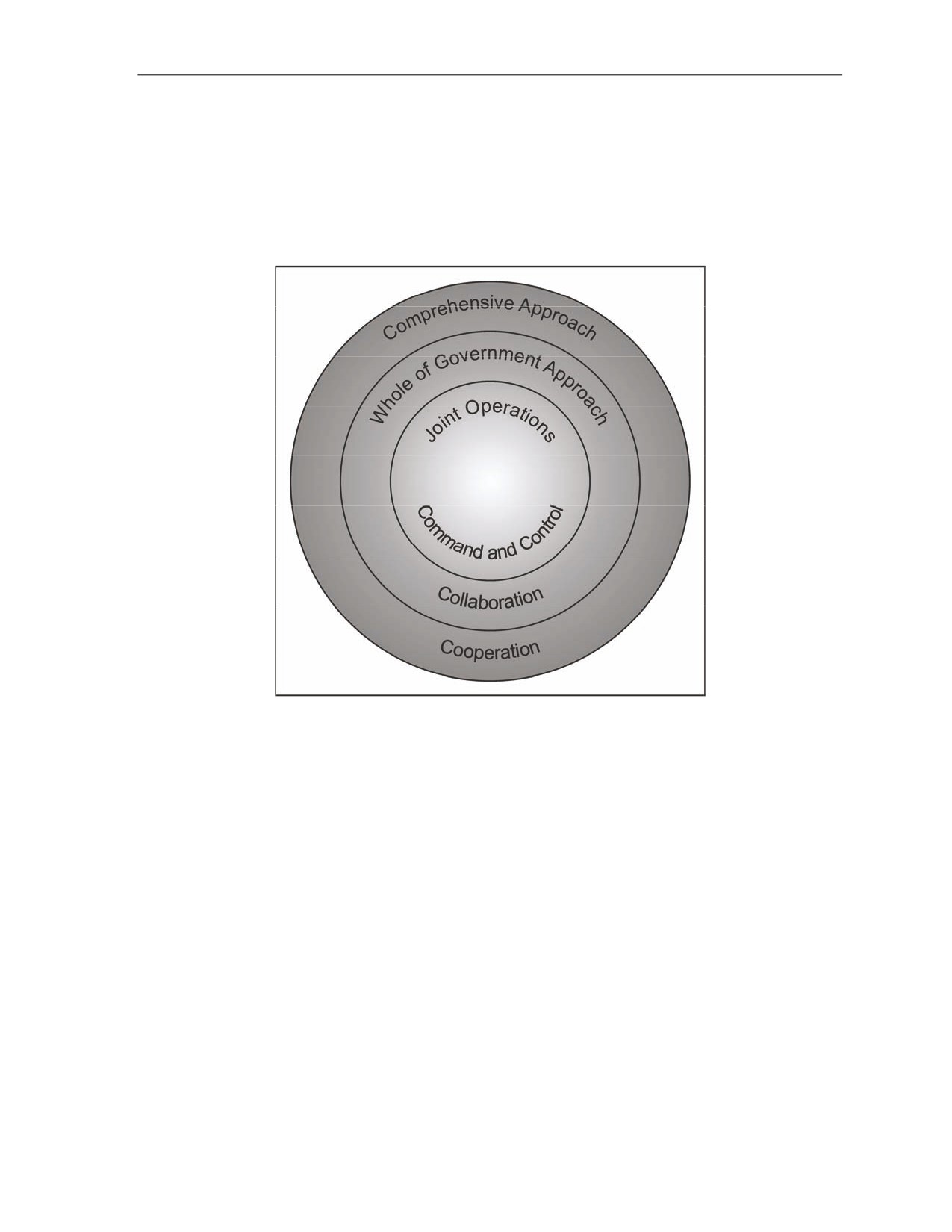
1-2
National Strategy
1-10
National and Defense Policies
1-13
Strategy for Stability Operations
1-16
Chapter 2
STABILITY IN FULL SPECTRUM OPERATIONS
2-1
Full Spectrum Operations
2-1
Department of State Post-Conflict Reconstruction Essential Tasks
2-5
Primary Stability Tasks
2-9
Stability Operations Framework
2-12
Chapter 3
ESSENTIAL STABILITY TASKS
3-1
Identifying Essential Tasks
3-1
Primary Stability Tasks
3-2
The Role of Civil Affairs in Stability Operations
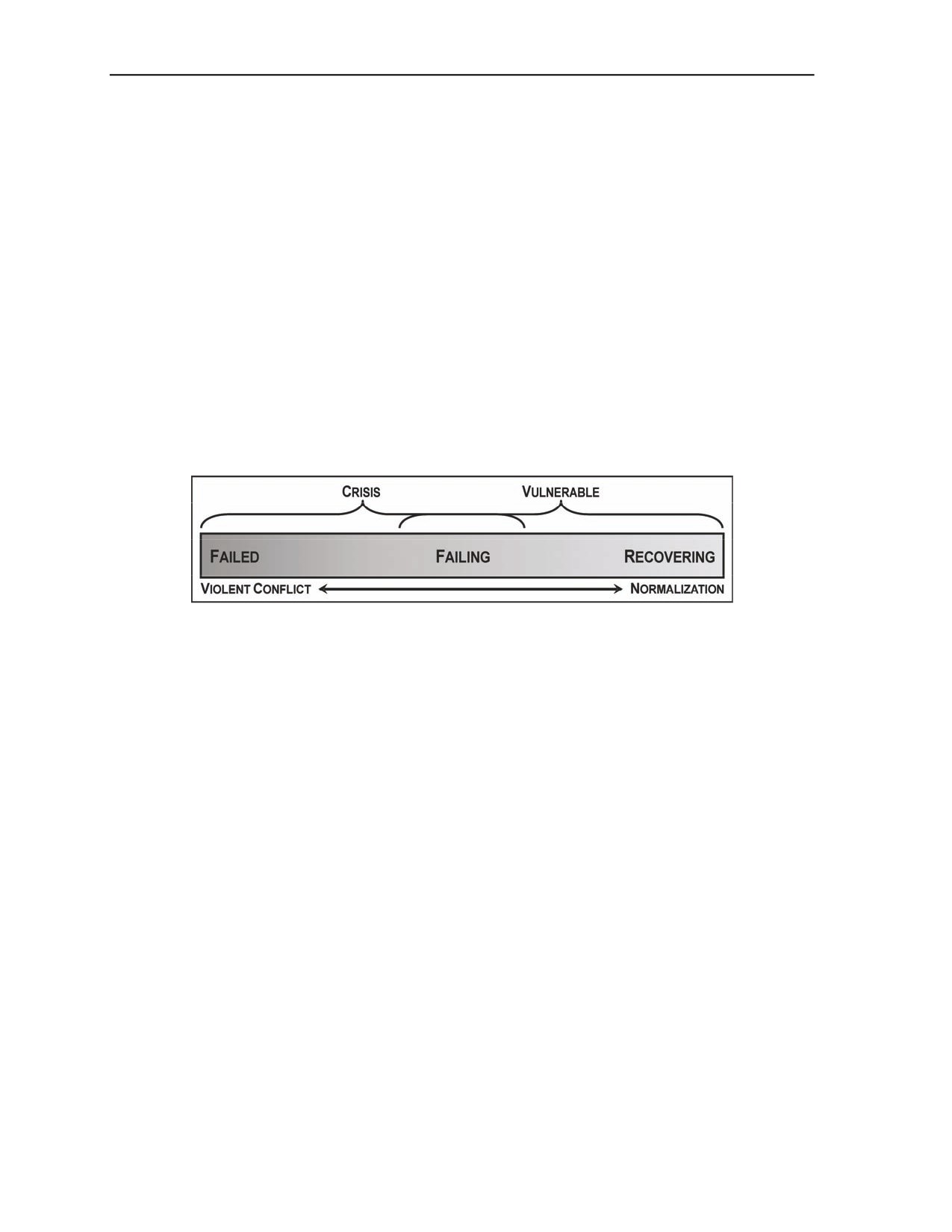
3-21
Mission-Essential Tasks in Stability Operations
3-22
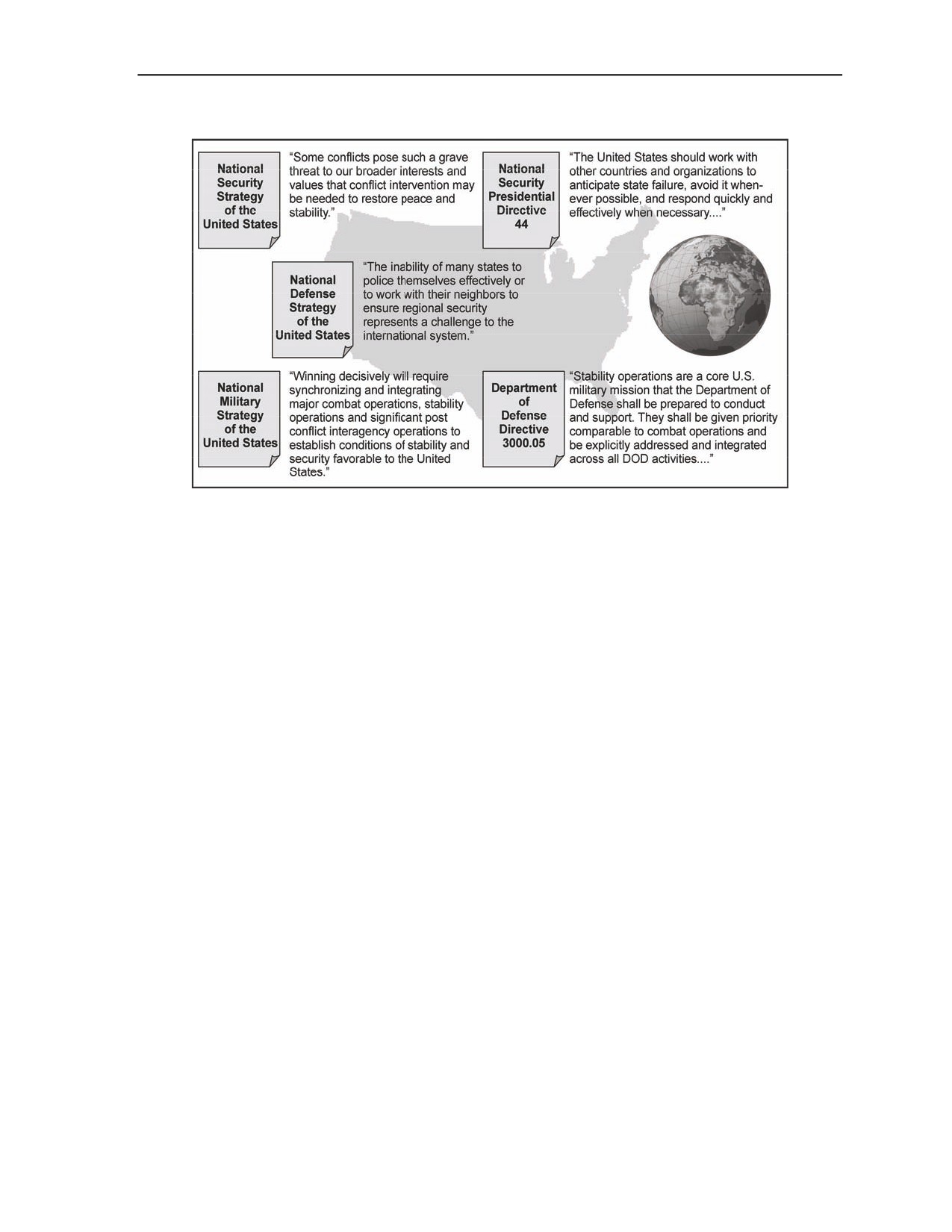
Chapter 4
PLANNING FOR STABILITY OPERATIONS
4-1
Planning Fundamentals
4-1
Planning Foundations
4-4
Designing Stability Operations
4-6
Chapter 5
TRANSITIONAL MILITARY AUTHORITY
5-1
Authority and Command Responsibility
5-1
Organizing for Transitional Military Authority
5-3
Guidelines for Transitional Military Authority
5-5
Courts and Claims
5-9
Distribution Restriction: Approved for public release; distribution is unlimited.
*This publication supersedes FM 3-07, 20 February 2003.
i
Contents
Chapter 6
SECURITY SECTOR REFORM
6-1
Background
6-1
Integrated Security Sector Reform
6-2
Security Sector Reform Planning
6-5
Comprehensive Security Sector Reform
6-10
Disarmament, Demobilization, and Reintegration
6-19
Appendix A
INTERAGENCY, INTERGOVERNMENTAL, AND NONGOVERNMENTAL
ORGANIZATIONS IN STABILITY OPERATIONS
A-1
Appendix B
INTERAGENCY MANAGEMENT SYSTEM
B-1
Appendix C
USAID PRINCIPLES FOR RECONSTRUCTION AND DEVELOPMENT
C-1
Appendix D
INTERAGENCY CONFLICT ASSESSMENT OVERVIEW
D-1
Appendix E
HUMANITARIAN RESPONSE PRINCIPLES
E-1
Appendix F
PROVINCIAL RECONSTRUCTION TEAMS
F-1
Appendix G
SUMMARY OF CHANGES
G-1
SOURCE NOTES
Source Notes-1
GLOSSARY
Glossary-1
REFERENCES
References-1
INDEX
Index-1
Figures
Figure 1-1. Comprehensive approach to stability operations
1-5
Figure 1-2. The fragile states framework
1-10
Figure 1-3. Strategy and policy references for stability operations
1-11
Figure 2-1. Full spectrum operations
2-1
Figure 2-2. An integrated approach to stability operations
2-5
Figure 2-3. The fragile states spectrum
2-12
Figure 2-4. The stability operations framework
2-13
Figure 3-1. Relating information engagement to the primary stability tasks
3-20
Figure 4-1. Example of stability lines of effort
4-10
Figure 4-2. Using SWEAT-MSO
4-11
Figure 6-1. Elements of the security sector
6-3
Figure A-1. Country team members
A-2
Figure A-2. Notional civil-military operations center (battalion and above)
A-13
Figure A-3. Coordination within the CMOC
A-14
Figure D-1. Conflict diagnosis
D-4
Figure D-2. Dynamics of instability
D-8
Figure D-3. Analyzing causes of instability
D-11
Figure F-1. Example of provincial reconstruction team organization
F-3
ii
FM 3-07
6 October 2008
Contents
Tables
Table A-1. Members of NATO
A-9
Table A-2. Example of coordination centers
A-12
Table D-1. Tactical stability matrix
D-12
Table E-1. The International Red Cross and Red Crescent Movement and
Nongovernmental Organization Code of Conduct in Disaster Relief
E-5
Table G-1. New Army terms
G-3
6 October 2008
FM 3-07
iii
Preface
Field Manual (FM) 3-07 is the Army’s keystone doctrinal publication for stability operations. FM 3-07 presents
overarching doctrinal guidance and direction for conducting stability operations, setting the foundation for
developing other fundamentals and tactics, techniques, and procedures detailed in subordinate field manuals. It
also provides operational guidance for commanders and trainers at all echelons and forms the foundation for
Army Training System curricula.
The six chapters that make up this edition of Stability Operations constitute the Army’s approach to the conduct
of full spectrum operations in any environment across the spectrum of conflict. This doctrine focuses on
achieving unity of effort through a comprehensive approach to stability operations, but remains consistent with,
and supports the execution of, a broader “whole of government” approach as defined by the United States
Government (USG). The core of this doctrine includes the following:
•
Chapter 1 describes the strategic context that frames the Army’s comprehensive approach to
stability operations. It includes discussion of the strategic environment, USG strategy and
policy, and interagency efforts to define an integrated approach to stability operations that
leverages the collective efforts of a wide array of actors toward a commonly understood and
recognized end state.
•
Chapter
2 links full spectrum operations to broader efforts aiming to achieve stability,
emphasizing the simultaneous nature of offensive, defensive, and stability tasks. It describes the
phasing paradigm that defines stability operations activities conducted before, during, and after
combat operations. Finally, the chapter links the primary stability tasks with broader interagency
stability sectors to provide the foundation for civil-military integration at the tactical level.
•
Chapter 3 addresses the essential stability tasks that comprise military stability operations. It
provides a detailed discussion of each of the five primary stability tasks, and describes the
subordinate tasks that constitute the range of activities in stability operations. It includes
doctrine that describes the role of civil affairs forces in stability operations as the commander’s
conduit for civil-military integration. Finally, it describes development of mission-essential and
directed task list development to support stability operations.
•
Chapter 4 discusses the fundamental principles of the detailed component of planning, focused
on the stability element of full spectrum operations. It builds on the precepts established in
FMs 3-0 and 5-0, providing a systemic approach to planning and assessing stability operations.
•
Chapter 5 addresses transitional military authority and provides doctrine concerning command
responsibility, establishment, and organization of military government to support stability
operations. It includes principles for establishing judicial structures to enable transitional
military authority.
•
Chapter 6 provides the doctrinal foundation for security sector reform, and introduces security
force assistance as the capacity-building activity that encompasses organizing, training,
equipping, rebuilding, and advising host-nation security forces. It also sets disarmament,
demobilization, and reintegration as a fundamental element of security sector reform.
Seven appendixes complement the body of the manual.
Army doctrine is consistent and compatible with joint doctrine. FM 3-07 links stability operations doctrine to
joint operations doctrine as expressed in joint doctrinal publications, specifically, Joint Publication (JP) 3-0 and
JP 5-0. FM 3-07 expands on the fundamental principles of operations expressed in FM 3-0 and links those
principles to a comprehensive approach to stability operations within the framework of full spectrum
operations. FM
3-07 also uses text and concepts developed in conjunction with North Atlantic Treaty
Organization partners.
iv
FM 3-07
6 October 2008
Preface
The principal audience for FM 3-07 is the middle and senior leadership of the Army, officers in the rank of
major and above, who command Army forces or serve on the staffs that support those commanders. It is just as
applicable to the civilian leadership of the Army. This manual is also intended to serve as a resource for the
other government agencies, intergovernmental organizations, agencies of other governments, international
organizations, nongovernmental organizations, and private sector entities who seek to develop a better
understanding of the role of the military in broader reconstruction and stabilization efforts.
FM 3-07 uses joint terms where applicable. Most terms with joint or Army definitions are in both the glossary
and the text. Text references: Definitions for which FM 3-07 is the proponent publication are in boldfaced text.
Glossary references: Terms for which FM 3-07 is the proponent (authority) publication include an asterisk in
the glossary entry. These terms and their definitions will be included in the next revision of FM 1-02. For other
definitions within the text, the term is italicized and the reference number of the proponent publication follows
the definition.
The term “adversaries” includes both enemies and adversaries when used in the context of joint definitions.
FM 3-07 applies to the Active Army, the Army National Guard/Army National Guard of the United States, and
U.S. Army Reserve unless otherwise stated.
This manual contains copyrighted material.
Headquarters, U.S. Army Training and Doctrine Command, is the proponent for this publication. The preparing
agency is the Combined Arms Doctrine Directorate, U.S. Army Combined Arms Center. Send written
comments and recommendations on a DA Form 2028 (Recommended Changes to Publications and Blank
Forms) by mail to Commander, U.S. Army Combined Arms Center and Fort Leavenworth, ATTN: ATZL-CD
(FM 3-07),
201 Reynolds Avenue, Fort Leavenworth, KS
66027-2337; by e-mail to leav-cadd-web-
cadd@conus.army.mil; or submit an electronic DA Form 2028.
ACKNOWLEDGMENTS
The copyright owners listed here have granted permission to reproduce material from their works. When
published, other sources of quotations will be listed in the source notes.
Losing the Golden Hour: An Insider’s View of Iraq’s Reconstruction, by James Stephenson. Reproduced with
permission of Potomac Books, Incorporated. Copyright © 2007.
“The Nine Principles of Reconstruction and Development,” by Andrew S. Natsios. Reproduced with
permission of Parameters. Copyright © 2005.
State-Building: Governance and World Order in the 21st Century, by Francis Fukuyama. Reproduced with
permission of Cornell University Press. Copyright © 2004.
6 October 2008
FM 3-07
v
Introduction
Today, the Nation remains engaged in an era of persistent conflict against enemies intent on limiting American
access and influence throughout the world. This is a fundamental clash of ideologies and cultures, waged across
societal abysses separating rich ethnic and religious traditions and profound differences in perspective. The
Nation is embarking on a journey into an uncertain future where these precipitous divides threaten to expand as
a result of increased global competition for natural resources, teeming urban populations with rising popular
expectations, unrestrained technological diffusion, and a global economy struggling to meet the mounting
demands from emerging markets and third world countries.
The character of this conflict is unlike any other in recent American history, where military forces operating
among the people of world will decide the major battles and engagements. The greatest threats to our national
security will not come from emerging ambitious states but from nations unable or unwilling to meet the basic
needs and aspirations of their people. Here, the margin of victory will be measured in far different terms from
the wars of our past. However, time may be the ultimate arbiter of success: time to bring safety and security to
an embattled populace; time to provide for the essential, immediate humanitarian needs of the people; time to
restore basic public order and a semblance of normalcy to life; and time to rebuild the institutions of
government and market economy that provide the foundations for enduring peace and stability. This is the
essence of stability operations.
Joint doctrine provides a definition for stability operations that captures the role of military forces to support
broader governmental efforts:
[Stability operations encompass] various military missions, tasks, and activities
conducted outside the United States in coordination with other instruments of national
power to maintain or reestablish a safe and secure environment, provide essential
governmental services, emergency infrastructure reconstruction, and humanitarian relief
(JP 3-0).
This manual proceeds from that definition to establish the broad context in which military forces assume that
role before, during, and after combat operations, across the spectrum of conflict. In doing so, the manual
focuses the efforts of military forces appropriately in support of the other instruments of national and
international power; thus, the manual defines a comprehensive approach to stability operations in a complex
and uncertain future. For Army forces, those efforts are fundamental to full spectrum operations.
The essential nature of stability operations in this era of persistent conflict became increasingly clear following
combat operations in Afghanistan and Iraq. Recognizing this shift in focus, the Department of Defense (DOD)
implemented DODD 3000.05 in November 2005. The directive emphasized that stability operations were no
longer secondary to combat operations, stating:
Stability operations are a core U.S. military mission that the Department of Defense
shall be prepared to conduct and support. They shall be given priority comparable to
combat operations and be explicitly addressed and integrated across all DOD activities
including doctrine, organizations, training, education, exercises, materiel, leadership,
personnel, facilities, and planning.
The directive further stressed that stability operations were likely more important to the lasting success of
military operations than traditional combat operations. Thus, the directive elevated stability operations to a
status equal to that of the offense and defense. That fundamental change in emphasis sets the foundation for this
doctrine.
This manual addresses military stability operations in the broader context of United States Government
reconstruction and stabilization efforts. It describes the role of military forces in supporting those broader
efforts by leveraging the coercive and constructive capabilities of the force to establish a safe and secure
vi
FM 3-07
6 October 2008
Introduction
environment; facilitate reconciliation among local or regional adversaries; establish political, legal, social, and
economic institutions; and help transition responsibility to a legitimate civil authority operating under the rule
of law. This transition is fundamental to the shift in focus toward long-term developmental activities where
military forces support broader efforts in pursuit of national and international objectives. Success in these
endeavors typically requires a long-term commitment by external actors and is ultimately determined by the
support and participation of the host-nation population.
However, this manual also provides doctrine on how those capabilities are leveraged to support a partner nation
as part of peacetime military engagement. Those activities, executed in a relatively benign security environment
as an element of a combatant commander’s theater security cooperation plans, share many of the same broad
goals as stability operations conducted after a conflict or disaster. Such activities aim to build partner capacity,
strengthen legitimate governance, maintain rule of law, foster economic growth, and help to forge a strong
sense of national unity. Ideally, these are addressed before, rather than after, conflict. Conducted within the
context of peacetime military engagement, they are essential to sustaining the long-term viability of host
nations and provide the foundation for multinational cooperation that helps to maintain the global balance of
power.
Through a comprehensive approach to stability operations, military forces establish conditions that enable the
efforts of the other instruments of national and international power. By providing the requisite security and
control to stabilize an operational area, those efforts build a foundation for transitioning to civilian control, and
eventually to the host nation. Stability operations are usually conducted to support a host-nation government or
a transitional civil or military authority when no legitimate, functioning host-nation government exists.
Generally, military forces establish or restore basic civil functions and protect them until a civil authority or the
host nation is capable of providing these services for the local populace. They perform specific functions as part
of a broader response effort, supporting the complementary activities of other agencies, organizations, and the
private sector. When the host nation or other agency cannot fulfill their role, military forces may be called upon
to significantly increase its role, including providing the basic civil functions of government.
By nature, stability operations are typically lengthy endeavors. All tasks must be performed with a focus toward
maintaining the delicate balance between long-term success and short-term gains. Ultimately, stability
operations do not necessarily aim to reduce the military presence quickly but to achieve broader national policy
goals that extend beyond the objectives of military operations. The more effective those military efforts are at
setting conditions that facilitate the efforts of the other instruments of national power, the more likely it is that
the long-term commitment of substantial military forces will not be required.
To that end, military forces have to operate with the other instruments of national power to forge unity of effort
through a whole of government approach. This approach accounts for a wider range of considerations beyond
those of the military instrument, ensuring that planning accounts for broader national policy goals and interests.
For the commander and staff, this may mean planning and executing operations within an environment of
political ambiguity. As a result, the potentially slow development process of government reconstruction and
stabilization policy may frustrate flexible military plans that adapt to the lethal dynamics of combat operations.
Thus, integrating the planning efforts of all the agencies and organizations involved in a stability operation is
essential to long-term peace and stability.
6 October 2008
FM 3-07
vii
Chapter 1
The Strategic Context
It is needless to say that Charles Gordon held a totally different view of the soldier’s
proper sphere of action, and with him the building part of the soldier’s profession was
far more important than the breaking part…. The nation that will insist upon drawing a
broad line of demarcation between the fighting man and the thinking man is liable to find
its fighting done by fools and its thinking by cowards.
Colonel Sir William F. Butler
Charles George Gordon
THE AMERICAN EXPERIENCE WITH STABILITY
1-1. During the relatively short history of the United States, military forces have fought only eleven wars
considered conventional. From the American Revolution through Operation Iraqi Freedom, these wars
represented significant or perceived threats to national security interests, where the political risk to the
nation was always gravest. These were the wars for which the military traditionally prepared; these were
the wars that endangered America’s very way of life. Of the hundreds of other military operations
conducted in those intervening years, most are now considered stability operations, where the majority of
effort consisted of stability tasks. Contrary to popular belief, the military history of the United States is one
characterized by stability operations, interrupted by distinct episodes of major combat.
1-2. America’s experience with stability operations began with the Royal Proclamation of 1763. King
George III of Great Britain issued it after the British acquired French territory in North America following
the French and Indian War. Intended to stabilize relations with Native Americans, the proclamation
established British foreign policy to regulate trade, settlement, and land purchases on the British Empire’s
vast western frontier. The proclamation also limited expansion of the thirteen colonies, essentially
outlawing them from purchasing or settling territory west of the Appalachian Mountains. With the
Proclamation, King George III authorized the British military to execute colonial policy in the Americas,
including the ability to detain and arrest those who violated the proclamation.
1-3. Shortly after the signing of the Treaty of Paris on 3 September 1783, Congress appointed military
commissioners to negotiate peace treaties and land purchases with native tribes. However, Congress had no
means of enforcing the policy. In 1786, it passed The Ordinance for the Regulation of Indian Affairs and
placed the program under Secretary of War Henry Knox. Secretary Knox directed the commanders of the
frontier posts to support the Indian superintendents in settling disputes, regulating trade, adjusting land
claims, and enforcing the law. Later, President George Washington tasked Secretary Knox with developing
and implementing a military plan to prevent hostilities against settlers on former Indian lands. This
experience continued in the trans-Mississippi West for the rest of the nineteenth century, where military
forces enforced treaty agreements while protecting settlers moving into the western United States.
1-4. During the occupation of central Mexico from 1846 to 1848, General Winfield Scott quickly
achieved the support of the local populace through programs focused on their immediate needs. His forces
protected the goods and trade routes of local merchants, allowing markets to reopen quickly in the
aftermath of operations. He instituted local programs to remove accumulated garbage and the obvious signs
of war. Finally, he established civilian jobs programs that infused much needed cash into the local
economies.
1-5. During Reconstruction following the Civil War, military forces maintained order and provided
security. These forces also initiated comprehensive measures to establish new state governments, hold
6 October 2008
FM 3-07
1-1
Chapter 1
elections, ensure the well-being of freed slaves, and provide for economic and social development. Military
forces assumed three roles during Reconstruction in the South:
z
As an occupation force following the war, supporting a Presidential-appointed civilian
government.
z
As a military government under the Reconstruction Acts of 1867.
z
As a supporting force to elected state governments until 1877.
1-6. In the aftermath of the Spanish-American War, the United States conducted a number of small-scale
military operations around the world. It imposed a military government in Cuba, initiating free elections;
reform of the security sector; and health, sanitation, and public works programs. A similar effort in the
Philippines, however, resulted in a nationalist uprising that evolved into an insurgency lasting more than a
decade. When President Woodrow Wilson ordered American forces into the Mexican coastal city of
Veracruz in 1914, Soldiers soon found themselves performing the same humanitarian, governmental,
economic, and security tasks performed in Cuba and the Philippines 15 years earlier. In 1915, the Marine
Corps began a series of Caribbean interventions in Haiti, the Dominican Republic, and Nicaragua.
However, they faced constant armed, irregular opposition from the local populace and had little success
establishing effective constitutional governments using the lessons of the past.
1-7. The occupations of Germany and Japan following World War II serve as models for modern post-
conflict stability operations as the Army reorganized and retrained its forces for a peacetime role focused
on the reconstruction and development of war-torn nations. The postwar occupation of Japan provides
similar lessons. The initial 60 days of occupation focused on disarmament and demobilization, essential to
the demilitarization of the Japanese military complex and the democratization of Japanese society. In 1958,
following the overthrow and murder of the pro-American Iraqi royal government, President Dwight
Eisenhower ordered military forces to conduct a show of force to help quell civil unrest in Lebanon,
providing much-needed stability to the Beirut government.
1-8. Vietnam earned America invaluable experience with the complexity of conducting operations among
the people. Military forces contended with an established insurgency while working alongside the other
instruments of national power to bring peace and stability to South Vietnam. Through the Civil Operations
and Revolutionary Development Support (known as CORDS), the efforts of the Departments of State and
Defense were integrated under a “single manager concept” that effectively achieved the civil-military unity
of effort vital to success. While the overall war effort was ultimately unsuccessful, Civil Operations and
Revolutionary Development Support provided valuable lessons that helped shape contemporary
approaches to stability operations.
1-9. Following the end of the Cold War, the Army began reducing force structure while preparing to reap
the benefits of a new era of peace. The benefits of this “peace dividend” were never realized. The strategic
environment evolved from one characterized by the bipolar nature of the relationship between the world’s
dominant powers to one of shared responsibility across the international community. In the decade after the
fall of the Berlin Wall, the Army led or participated in more than 15 stability operations, intervening in
places such as Haiti, Liberia, Somalia, and the Balkans. Many of these efforts continued into the new
century, and incursions into Afghanistan and Iraq revealed a disturbing trend throughout the world: the
collapse of established governments, the rise of international criminal and terrorist networks, a seemingly
endless array of humanitarian crises, and grinding poverty. The global implications of such destabilizing
forces proved staggering.
THE STRATEGIC APPROACH
1-10. In the complex, dynamic strategic environment of the
21st century, significant challenges to
sustainable peace and security persist across the spectrum of conflict. In this world of sovereign states,
unequal in development and resources, tension and conflict are ubiquitous. Sources of instability that push
parties toward open conflict, known as drivers of conflict, include religious fanaticism, global competition
for resources, climate change, residual territorial claims, ideology, ethnic tension, elitism, greed, and the
desire for power. The drivers of conflict emerge as numerous symptoms of crises worldwide. In this era of
persistent conflict, rapidly evolving terrorist structures, transnational crime, and ethnic violence continue to
1-2
FM 3-07
6 October 2008
The Strategic Context
complicate international relations. These conditions create belts of state fragility and instability that present
a grave threat to national security. While journeying into this uncertain future, leaders will increasingly call
on stability operations to reduce the drivers of conflict and instability and build local institutional capacity
to forge sustainable peace, security, and economic growth.
1-11. Any integrated approach to stability operations requires a framework that applies across the
spectrum of conflict, from stable peace to general war. It must frame purposeful intervention at any point
along that spectrum, reflecting the execution of a wide range of stability tasks performed under the
umbrella of various operational environments—
z
To support a partner nation during peacetime military engagement.
z
After a natural or man-made disaster as part of a humanitarian-based limited intervention.
z
During peace operations to enforce international peace agreements.
z
To support a legitimate host-nation government during irregular warfare.
z
During major combat operations to establish conditions that facilitate post-conflict activities.
z
In a post-conflict environment following the general cessation of organized hostilities.
1-12. In each instance, the roles and responsibilities of the various actors—civilian and military—vary
according to the threat, stability of the environment, viability of the host-nation government, and several
other factors. When the situation requires intervention, posturing such an effort for success necessitates a
detailed conflict assessment; this assessment provides a thorough measure of those factors and helps to
appropriately delineate roles and responsibilities among the actors involved. This assessment also serves as
the basis for planning, which links the broad strategic goals to a realizable end state, supporting objectives,
and discreet, executable tasks. The resulting plan nests these together into a coherent framework optimally
suited to address the conditions of the operational environment identified by the initial conflict assessment.
(See chapter 4 for a discussion of planning consideration in stability operations; see FM 5-0 for doctrine on
planning.)
1-13. For many agencies and organizations, stability operations are considered as part of broader efforts to
reestablish enduring peace and stability following the cessation of open hostilities. For military forces,
however, stability tasks are executed continuously throughout all operations. Executed early enough and in
support of broader national policy goals and interests, stability operations provide an effective tool for
reducing the risk of politically motivated violence. It does this by addressing the possible drivers of
conflict long before the onset of hostilities. Providing the authority and resources to conduct these stability
operations as part of peacetime military engagement may be the most effective and efficient method to
mitigate the risk of lengthy post-conflict interventions.
UNITY OF EFFORT
1-14. Uniting all of the diverse capabilities necessary to achieve success in stability operations requires
collaborative and cooperative paradigms that focus those capabilities toward a common goal. Where
military operations typically demand unity of command, the challenge for military and civilian leaders is to
forge unity of effort among the diverse array of actors involved in a stability operation. This is the essence
of unified action: the synchronization, coordination, and/or integration of the activities of governmental
and nongovernmental entities with military operations to achieve unity of effort (JP 1). Unity of effort is the
coordination and cooperation toward common objectives, even if the participants are not necessarily part of
the same command or organization—the product of successful unified action (JP 1). Unity of effort is
fundamental to successfully incorporating all the instruments of national power in a collaborative approach
to stability operations.
1-15. Unity of effort is the foundation of success for operations that require integrating the capabilities of
all the instruments of national power, as well as those of other nations, nongovernmental organizations,
intergovernmental organizations, and the private sector. However, many actors, particularly
nongovernmental organizations, participate in unified action at their own discretion. Their roles are often
defined by competing interests and governed by differences in policy; in the case of nongovernmental
organizations, their activities are driven by fundamental humanitarian principles and may have goals
6 October 2008
FM 3-07
1-3
Chapter 1
separate from the United States Government (USG) or the international community. (See appendix E for
additional detail on humanitarian response principles.)
1-16. Therefore, unity of effort in such complex endeavors is often the operational norm. Unity of effort
leverages the ability of various actors to achieve a cooperative environment that focuses effort toward a
common goal, regardless of individual command or organizational structures. The mechanisms for
achieving unity of effort are maximized when a legitimate, functioning host-nation government exists.
Military forces coordinate their efforts through host-nation civilian agencies and the county team to sustain
the host nation’s legitimacy, build capacity, and foster sustainability. However, if the state has failed
through military action or other socioeconomic factors, then a transitional authority must assume
responsibility for governing. This can be a transitional civil authority typically authorized by the United
Nations and under international lead, or a transitional military authority. (Chapter 5 discusses transitional
military authority.)
A Whole of Government Approach
1-17. A whole of government approach is an approach that integrates the collaborative efforts of the
departments and agencies of the United States Government to achieve unity of effort toward a
shared goal. A whole of government approach is vital to achieving the balance of resources, capabilities,
and activities that reinforce progress made by one of the instruments of national power while enabling
success among the others. It relies on interagency coordination among the agencies of the USG, including
the Department of Defense, to ensure that the full range of available capabilities are leveraged,
synchronized, and applied toward addressing the drivers of conflict and reinforcing local institutions to
facilitate achieving sustainable peace. Success in this approach depends upon the ability of civilians and
military forces to plan jointly and respond quickly and effectively through an integrated, interagency
approach to a fundamentally dynamic situation. Accomplishing this requires a willingness and ability to
share resources among USG agencies and organizations while working toward a common goal. These
resources—financial, military, intelligence, law enforcement, diplomatic, developmental, and strategic
communications—are often limited in availability and cannot be restricted to use by a single agency,
Service, or entity. To achieve the broad success envisioned in a whole of government engagement, all must
be integral to unified action. All are elements of the whole of government approach.
1-18. To that end, all actors involved in unified action are integrated into the operation from the onset of
planning. Together, they complete detailed analysis of the situation and operational environment, develop
integrated courses of action, and continuously assess the situation throughout execution. These actions
ensure that the various capabilities and activities focus on achieving specific conflict transformation goals
in cooperation with host-nation and international partners. (See paragraph 1-23.) A coherent whole of
government approach requires early and high-level participation of both national and multinational civilian
and military participants. This process necessitates active dialog and reciprocal information sharing with
intergovernmental and nongovernmental organizations, the host-nation government, and the private sector,
when necessary.
1-19. A primary challenge for integrating civilian and military efforts into a whole of government
approach is the differing capacities and cultures in civilian agencies compared to those of military forces. A
successful whole of government approach requires that all actors—
z
Are represented, integrated, and actively involved in the process.
z
Share an understanding of the situation and problem to be resolved.
z
Strive for unity of effort toward achieving a common goal.
z
Integrate and synchronize capabilities and activities.
z
Collectively determine the resources, capabilities, and activities necessary to achieve their goal.
A Comprehensive Approach
1-20. A comprehensive approach is an approach that integrates the cooperative efforts of the
departments and agencies of the United States Government, intergovernmental and
nongovernmental organizations, multinational partners, and private sector entities to achieve unity
1-4
FM 3-07
6 October 2008
The Strategic Context
of effort toward a shared goal. A comprehensive approach is founded in the cooperative spirit of unity of
effort. It is common in successful operations involving actors participating at their own discretion or
present in the operational area but not acting as a member of a coalition. Integration and collaboration often
elude the diverse array of actors involved; a comprehensive approach achieves unity of effort through
extensive cooperation and coordination to forge a shared understanding of a common goal. A
comprehensive approach is difficult to sustain but still critical to achieving success in an operation with a
wide representation. See figure 1-1.
Figure 1-1. Comprehensive approach to stability operations
1-21. Forging a comprehensive approach is necessary to leverage the capabilities of the disparate actors
present to achieve broad conflict transformation goals and attain a sustainable peace. Unlike a whole of
government approach, which aims for true interagency integration toward those ends, a comprehensive
approach requires a more nuanced, cooperative effort. In a comprehensive approach, actors are not
compelled to work together toward a common goal; instead, they participate out of a shared understanding
and appreciation for what that goal represents. Achieving the end state is in the best interests of the actors
participating; the actors recognize that fact forges the bonds that allow them to achieve unity of effort.
Some groups, such as nongovernmental organizations, must retain independence of action. Reconciling
that independence with the mission requirements may pose specific challenges to unity of effort and must
be considered throughout the operations process.
1-22. A comprehensive approach is framed by four underlying tenets:
z
Accommodate. The approach accommodates the concerns and contributions of all participants;
it determines appropriate priorities for resourcing and sets support relationships as required to
deconflict activities.
z
Understand. The approach leverages a shared understanding of the situation toward a common
goal. Understanding does not imply conformity; each actor contributes a distinct set of
professional, technical, and cultural disciplines, values, and perceptions. Together they provide
breadth, depth, and resilience to assessment, planning, and execution.
6 October 2008
FM 3-07
1-5
Chapter 1
z
Base on purpose. The approach focuses cooperative effort toward a common, purpose-based
goal. The approach links discreet, yet interrelated, tasks and objectives to conditions that
comprise the desired end state.
z
Cooperate. The approach is based on a cooperative effort reinforced by institutional familiarity,
trust, and transparency. Communities of practice that provide forums for information sharing
and concept development support cooperation among the actors involved.
CONFLICT TRANSFORMATION
1-23. Conflict transformation focuses on converting the dynamics of conflict into processes for
constructive, positive change. Conflict transformation is the process of reducing the means and
motivations for violent conflict while developing more viable, peaceful alternatives for the
competitive pursuit of political and socioeconomic aspirations. It aims to set the host nation on a
sustainable positive trajectory where transformational processes can directly address the dynamics causing
civil strife or violent conflict. It seeks to resolve the root causes of conflict and instability while building
the capacity of local institutions to forge and sustain effective governance, economic development, and the
rule of law.
1-24. Addressing the drivers of violent conflict begins with a detailed conflict assessment and thorough
analysis of the conditions of the operational environment. This ensures planning focuses on the root causes
of conflict or strife and prescribes integrated approaches to resolution. (See chapter 4 for a discussion of
assessment and planning.) The active and robust presence of external military forces may be required to
help shape the environment and reduce the drivers of violent conflict, in partnership and cooperation with a
sizable international civilian presence. Together, efforts are directed toward imposing order, reducing
violence, delivering essential services, moderating political conflict, and instituting an acceptable political
framework pursuant to a peace accord. Peace becomes sustainable when the sources of conflict have been
reduced to such an extent that they can be largely managed by developing host-nation institutions. This
facilitates the subsequent reduction of external actors to levels that foster the development effort with
minimal outside presence.
1-25. Ultimately, conflict transformation aims to shift the responsibility for providing security and stability
from the international community to the host nation, with a sustainable level of continuing support from
external actors. Conflict transformation recognizes that conflict is a normal and continuous social dynamic
within human relationships and seeks to provide effective peaceful means of resolution. Conflict
transformation is based in cultural astuteness and a broad understanding of the dynamics of conflict.
Success depends on building creative solutions that improve relationships; it necessitates an innate
understanding of underlying relational, social, and cultural patterns. Success relies heavily on
understanding, recognizing that conflict can potentially stimulate growth and to leverage that potential to
spur constructive change. This understanding is based on:
z
The intellectual capacity to envision conflict positively, as a natural social phenomenon with
inherent potential for positive change.
z
The flexibility to adapt approaches to respond in ways that maximize this potential for
constructive growth.
1-26. It exploits the opportunity within a conflict to achieve positive change. It aims to reduce the
motivations and means for violent conflict. At the same time, conflict transformation develops more
attractive, peaceful alternatives for the competitive pursuit of political and economic goals. This entails
addressing the drivers of conflict while assisting in developing or supporting local institutions that have
both legitimacy and the capacity to provide basic services, economic opportunity, public order, and
security. It derives its long-term success from shaping the environment so the local populace can actively
check the state’s abuse of power.
1-27. Successful conflict transformation relies on the ability of intervening actors to identify and resolve
the primary sources of conflict and instability in the host nation. These efforts reflect the constant tension
between the time commitment required to achieve sustainable progress and the need to quickly build
momentum to lessen the drivers of conflict and instability. National interest and resources are finite;
therefore, conflict transformation efforts must focus on the underlying sources, not the visible symptoms,
1-6
FM 3-07
6 October 2008
The Strategic Context
of conflict and instability. In countries seeking to transition from war to peace, often a limited window of
opportunity exists to reshape structures to address these drivers. This may include deterring adversaries and
mitigating their effects on local populaces and institutions, as well as developing approaches that include
marginalized groups, consensus-building mechanisms, checks and balances on power, and transparency
measures.
LEGITIMACY
1-28. Legitimacy is central to building trust and confidence among the people. Legitimacy is a
multifaceted principle that impacts every aspect of stability operations from every conceivable perspective.
Within national strategy, legitimacy is a central principle for intervention: both the legitimacy of the host-
nation government and the legitimacy of the mission. The legitimacy of the government has many facets. It
generally represents the legitimacy of the supporting institutions and societal systems of the host-nation.
Legitimacy derives from the legal framework that governs the state and the source of that authority. It
reflects not only the supremacy of the law, but also the foundation upon which the law was developed: the
collective will of the people through the consent of the governed. It reflects, or is a measure of, the
perceptions of several groups: the local populace, individuals serving within the civil institutions of the
host nation, neighboring states, the international community, and the American public.
1-29. Ultimately, a legitimate government does not go to war against its population or instigate
unwarranted hostilities with its neighbors. A legitimate government acts in accordance with human rights
laws and ensures that citizens have access to state resources in a fair and equitable manner. It respects the
rights and freedoms reflected in the Universal Declaration of Human Rights and abides by human rights
treaties to which it is a party. In addition, The National Security Strategy of the United States of America
(known as the National Security Strategy) lists four traits that characterize a legitimate, effective state in
which the consent of the governed prevails:
z
Honors and upholds basic human rights and fundamental freedoms. Respects freedom of
religion, conscience, speech, assembly, association, and press.
z
Responds to their citizens. Submits to the will of the people, especially when people vote to
change their government.
z
Exercises effective sovereignty. Maintains order within its own borders, protects independent
and impartial systems of justice, punishes crime, embraces the rule of law, and resists
corruption.
z
Limits the reach of government. Protects the institutions of civil society, including the family,
religious communities, voluntary associations, private property, independent businesses, and a
market economy.
1-30. The legitimacy of the mission is as sensitive to perceptions as it is dependent upon the support and
participation of the local populace in the processes that comprise the mission. Ownership, a central tenet of
successful stability operations that capitalizes on that support and participation, is fundamental to
legitimacy. (See appendix C for a discussion of the principle of ownership.) The legitimacy of the mission
includes four distinct factors:
z
Mandate.
z
Manner.
z
Consent.
z
Expectations.
1-31. The mandate or authority that establishes the intervention mission often determines the initial
perceptions of legitimacy. Multilateral missions with the broad approval of the international community
have a higher degree of legitimacy than unilateral missions. These might include missions conducted by a
coalition under a United Nations’ mandate.
1-32. The credible manner in which intervening forces conduct themselves and their operations builds
legitimacy as the operation progresses. Highly professional forces are well disciplined, trained, and
culturally aware. They carry with them an innate perception of legitimacy that is further strengthened by
consistent performance conforming to the standards of national and international law. For military forces, a
6 October 2008
FM 3-07
1-7
Chapter 1
clearly defined commander’s intent and mission statement are critical to establishing the initial focus that
drives the long-term legitimacy of the mission.
1-33. Consent is essential to the legitimacy of the mission. Generally, no mission is perceived as legitimate
without the full consent of the host nation or an internationally recognized mandate. In addition, host-
nation consent must extend to external actors with a vested interest in the intervention. An exception is an
intervention to depose a regime that significantly threatens national or international security or willfully
creates conditions that foment humanitarian crises. However, such missions are only perceived as
legitimate with the broad approval of the international community; unilateral missions to impose regime
change are rarely perceived as legitimate however well intentioned.
1-34. Expectations are the final arbiter of legitimacy. Realistic, consistent, and achievable expectations—in
terms of goals, time, and resources—help to ensure legitimacy during a lengthy operation. Progress is a
measure of expectations and an indirect determinant of will; missions that do not achieve a degree of
progress consistent with expectations inevitably sap the will of the host nation, the international
community, and the American people. Without the sustained will of the people, the legitimacy of any
mission gradually decreases.
CAPACITY BUILDING
1-35. Building institutional capacity in the host nation is fundamental to success in stability operations.
Capacity building is the process of creating an environment that fosters host-nation institutional
development, community participation, human resources development, and strengthening
managerial systems. It includes efforts to improve governance capacity, political moderation, and good
governance—ethos as well as structure—as part of broader capacity-building activities within a society.
Supported by appropriate policy and legal frameworks, capacity building is a long-term, continuing
process, in which all actors contribute to enhancing the host nation’s human, technological, organizational,
institutional, and resource capabilities.
1-36. Capacity-building activities may support a partner-nation leadership or build on existing capacities;
it may focus on reforming extant capacity or developing a new capability and capacity altogether. To some
degree, local capacity always exists; capacity-building activities aim to build, nurture, empower, and
mobilize that capacity. Those efforts can be facilitated through groups or individuals. They can be broad,
long-term efforts or targeted to specific responsibilities or functions to achieve decisive results sooner.
Initial response actions reestablish a safe, secure environment and provide for the immediate humanitarian
needs of the local populace. All following efforts aim to build partner capacity across the five stability
sectors defined in chapter
2 and the Department of State publication, Post-Conflict Reconstruction
Essential Tasks. (See chapter 2 for a detailed description and discussion of these tasks.)
1-37. Capacity-building activities develop and strengthen skills, systems, abilities, processes, and
resources. Host-nation institutions and individuals need to adapt these activities to dynamic political and
societal conditions within the operational environment. Most capacity building focuses on long-term
technical assistance programs, which may include—
z
Human resource development.
z
Organizational development.
z
Institutional and legal framework development.
1-38. Human resource development is the process of equipping individuals with the understanding, skills,
and access to information, knowledge, and training that enables them to perform effectively. Human
resource development is central to capacity building. Education and training lie at the heart of development
efforts; most successful interventions require human resource development to be effective. Human resource
development focuses on a series of actions directed at helping participants in the development process to
increase their knowledge, skills, and understanding, and to develop the attitudes needed to bring about the
desired developmental change.
1-39. Organizational development is the creation or adaptation of management structures, processes, and
procedures to enable capacity building. This includes managing relationships among different
organizations and sectors (public, private, and community). Institutional and legal framework development
1-8
FM 3-07
6 October 2008
The Strategic Context
makes the legal and regulatory changes necessary to enable organizations, institutions, and individuals at
all levels and in all sectors to perform effectively and to build their capacities.
RULE OF LAW
1-40. During stability operations, it is imperative that the local populace have confidence that they will be
treated fairly and justly under the law. They must also believe that they will have access to justice, have an
open and participatory government, and trust that all persons, entities, and institutions—public and
private—are accountable to the law. Rule of law is a principle under which all persons, institutions, and
entities, public and private, including the state itself, are accountable to laws that are publicly
promulgated, equally enforced, and independently adjudicated, and that are consistent with
international human rights principles. It also requires measures to ensure adherence to the principles of
supremacy of law, equality before the law, accountability to the law, fairness in applying the law,
separation of powers, participation in decisionmaking, and legal certainty. Such measures also help to
avoid arbitrariness as well as promote procedural and legal transparency.
1-41. Rule of law establishes principles that limit the power of government by setting rules and procedures
that prohibit the accumulation of autocratic or oligarchic power. It dictates government conduct according
to prescribed and publicly recognized regulations while protecting the rights of all members of society. It
also provides a vehicle to resolve disputes nonviolently and in a manner integral to establishing enduring
peace and stability. In general terms, rule of law exists when:
z
The state monopolizes the use of force in the resolution of disputes.
z
Individuals are secure in their persons and property.
z
The state is bound by law and does not act arbitrarily.
z
The law can be readily determined and is stable enough to allow individuals to plan their affairs.
z
Individuals have meaningful access to an effective and impartial justice system.
z
The state protects basic human rights and fundamental freedoms.
z
Individuals rely on the existence of justice institutions and the content of law in the conduct of
their daily lives.
1-42. Typically, operations conducted to support rule of law are part of broader interagency and
multinational efforts. Within the USG, the Department of State leads and coordinates reconstruction and
stabilization operations, including activities to establish and support the rule of law. The primary U.S.
interagency partners for these efforts are the Department of State, the U.S. Agency for International
Development, and the Department of Justice. Operations that support rule of law are planned and executed
with these interagency partners, but will normally include representation from other organizations,
agencies, and multinational partners, when applicable.
1-43. Effective rule of law establishes authority vested in the people, protects rights, exerts a check on all
branches of government, and complements efforts to build security. It accounts for the customs, culture,
and ethnicity of the local populace. Adherence to the rule of law is essential to legitimate and effective
governance. Rule of law enhances the legitimacy of the host-nation government by establishing principles
that limit the power of the state and by setting rules and procedures that prohibit accumulating autocratic or
oligarchic power. It dictates government conduct according to prescribed and publicly recognized
regulations while protecting the rights of all members of society. It also provides a vehicle for resolving
disputes nonviolently and in a manner integral to establishing enduring peace and stability.
FRAGILE STATES
1-44. The United States has a long history of assisting other nations. This assistance may come as
humanitarian aid, development assistance, free trade agreements, or military assistance. Fragile states,
however, pose a particularly complicated challenge. The weakness of these states, especially with respect
to governance institutions, threatens the success of any development effort. Development activities within
weak states require extended time commitments to build partner capacity in key institutions and to improve
the lives of their citizens.
6 October 2008
FM 3-07
1-9
Chapter 1
1-45. A fragile state is a country that suffers from institutional weaknesses serious enough to
threaten the stability of the central government. These weaknesses arise from several root causes,
including ineffective governance, criminalization of the state, economic failure, external aggression, and
internal strife due to disenfranchisement of large sections of the population. Fragile states frequently fail to
achieve any momentum toward development. They can generate tremendous human suffering, create
regional security challenges, and collapse into wide, ungoverned areas that can become safe havens for
terrorists and criminal organizations.
1-46. The term fragile state refers to the broad spectrum of failed, failing, and recovering states. The
distinction among them is rarely clear, as fragile states do not travel a predictable path to failure or
recovery. The difference between a recovering and failed state may be minimal, as the underlying
conditions, such as insurgency or famine, may drive a state to collapse in a relatively short period. It is far
more important to understand how far and quickly a state is moving from or toward stability. The fragile
states framework, developed by the U.S. Agency for International Development, provides a model for
applying U.S. development assistance in fragile states. This framework serves to inform understanding for
intervening actors, providing a graphic tool that describes the conditions of the operational environment.
(See figure 1-2.) National Security Presidential Directive 44 frames this spectrum as “foreign states and
regions at risk of, in, or in transition from conflict or civil strife.” (Paragraph 1-65 discusses this policy
directive in detail.)
Figure 1-2. The fragile states framework
1-47. Fragile states can be defined as either vulnerable or in crisis. A vulnerable state is a nation either
unable or unwilling to provide adequate security and essential services to significant portions of the
population. In vulnerable states, the legitimacy of the central government is in question. This includes
states that are failing or recovering from crisis. A crisis state is a nation in which the central government
does not exert effective control over its own territory. It is unable or unwilling to provide security and
essential services for significant portions of the population. In crisis states, the central government may be
weak, nonexistent, or simply unable or unwilling to provide security or basic services. This includes states
that are failing or have failed altogether, where violent conflict is a reality or a great risk.
NATIONAL STRATEGY
1-48. National strategy is based on a distinctly American policy of internationalism that reflects the
interests and values of the country. It clearly aims to make the world a safer, better place, where a
community of nations lives in relative peace. To that end, the National Security Strategy and subordinate
supporting strategies focus on a path to progress that promotes political and economic freedom, peaceful
relations with other nations, and universal respect for human dignity.
1-49. The body of security strategy that shapes the conduct of stability operations includes the National
Security Strategy, the National Defense Strategy, and The National Military Strategy of the United States
of America (known as the National Military Strategy). Related strategies include the National Strategy for
Combating Terrorism, the National Strategy for Homeland Security, and the National Strategy to Combat
Weapons of Mass Destruction. Together with national policy, strategy provides the broad direction
necessary to conduct operations to support national interests. (See figure 1-3.)
1-10
FM 3-07
6 October 2008
The Strategic Context
Figure 1-3. Strategy and policy references for stability operations
NATIONAL SECURITY STRATEGY
1-50. Fragile states tend to attract destabilizing forces, manifesting the potentially dangerous effects of
rapid globalization. This poses a national security challenge unforeseen even a decade ago yet central to
today’s strategic environment. While the phenomenon of fragile states is not new, the need to provide a
stabilizing influence is more critical than ever. This challenge is at the core of the current National Security
Strategy. Essentially, national strategy aims to—
z
Promote freedom, justice, and human dignity while working to end tyranny, to promote effective
democracies, and to extend prosperity through free trade and wise development policies.
z
Confront challenges of the strategic environment by leading a growing community of nations to
defeat the threats of pandemic disease, the proliferation of weapons of mass destruction,
terrorism, international crime, human trafficking, and natural disasters.
1-51. The National Security Strategy outlines the President’s vision for providing enduring security for the
American people in a volatile, uncertain, and complex strategic environment. It sets a course for statecraft,
providing the broad national strategy for applying the instruments of national power to further U.S.
interests globally. At the heart of this strategy is the nation’s approach to stability operations: to help create
a world of legitimate, well-governed states that can meet the needs of their citizens and conduct themselves
responsibly in the international system.
1-52. The National Security Strategy addresses stability operations within the broad engagement strategy
for regional conflict. These regional conflicts significantly threaten national security; they rarely remain
isolated and often devolve into humanitarian tragedy or anarchy. External actors exploit them to further
their own ends, as Al Qaeda continues to do in Afghanistan and Pakistan. Even when a particular conflict
does not directly affect national security, the long-term interests of the Nation often are affected. For this
reason, the national strategy identifies three levels of engagement for addressing regional conflict:
z
Conflict prevention and resolution.
z
Conflict intervention.
z
Post-conflict reconstruction and stabilization.
1-53. The most effective long-term measure for conflict prevention and resolution is the promotion of
democracy and economic development. Effective democracies generally resolve disputes through peaceful
6 October 2008
FM 3-07
1-11
Chapter 1
means, either bilaterally or through other regional states or international institutions. Stability tasks
executed as part of a theater security cooperation plan under the operational theme of peacetime military
engagement generally fall in this category.
1-54. Conflicts that threaten the Nation’s security, interests, or values may require direct intervention to
restore peace and stability. Stability tasks executed at the higher end of the spectrum of conflict, typically
under the operational themes of major combat operations or irregular warfare, fall into this category.
1-55. While military involvement may be necessary to end a conflict, peace and stability endure when
follow-on efforts succeed. Such efforts aim to restore order and rebuild infrastructure, governance, and
civil society institutions. Success depends on the early establishment of strong local institutions such as
effective police forces and functioning justice and penal systems. This governance capacity is critical to
establishing rule of law and a market economy that ensure lasting stability and prosperity. At the same
time, reconstruction and stabilization efforts rely heavily on the early involvement and support of the local
populace with identifying and rebuilding critical infrastructure. Such infrastructure helps societies and
institutions to function effectively. In this category, stability tasks generally characterize the overall
mission, regardless of the predominant operational theme.
1-56. Reconstruction is the process of rebuilding degraded, damaged, or destroyed political,
socioeconomic, and physical infrastructure of a country or territory to create the foundation for
long-term development. Stabilization is the process by which underlying tensions that might lead to
resurgence in violence and a breakdown in law and order are managed and reduced, while efforts
are made to support preconditions for successful long-term development. Together, reconstruction and
stabilization comprise the broad range of activities defined by the Department of Defense as stability
operations.
NATIONAL DEFENSE STRATEGY
1-57. Reinforcing the direction of the National Security Strategy, the National Defense Strategy
emphasizes the threat to national security posed by the inability of fragile states to police themselves or to
work in cooperation with neighbor states to ensure long-term security. These states often undermine
regional stability, threatening broader national interests. The National Defense Strategy recognizes the
need for building partner capacity in these states. Built on the understanding that the national security of
the United States closely ties to security within the broader international system, the National Defense
Strategy focuses on the use of programs to build partnerships that strengthen the host nation’s ability to
confront security challenges. Security cooperation, the principal vehicle for building security capacity,
supports these states by—
z
Encouraging partner nations to assume lead roles in areas that represent the common interests of
the United States and the host nation.
z
Encouraging partner nations to increase their capability and willingness to participate in a
coalition with U.S. forces.
z
Facilitating cooperation with partner militaries and ministries of defense.
z
Spurring the military transformation of allied partner nations by developing multinational
command and control, training and education, concept development and experimentation, and
security assessment framework.
1-58. The National Defense Strategy also recognizes the need to foster interagency coordination and
integration in these efforts. Such efforts draw a vital link between the Department of Defense and
Department of State in the conduct of stability operations. The National Defense Strategy emphasizes the
need to establish conditions of enduring security to support stability operations, necessary to the success of
the other instruments of national power. Unless the security environment supports using civilian agencies
and organizations, military forces must be prepared to perform those nonmilitary tasks normally the
responsibility of others. Thus, the National Defense Strategy clearly establishes the intent of the Secretary
of Defense to focus efforts on tasks directly associated with establishing favorable long-term security
conditions.
1-12
FM 3-07
6 October 2008
The Strategic Context
NATIONAL MILITARY STRATEGY
1-59. Prepared by the Chairman of the Joint Chiefs of Staff, the National Military Strategy is consistent
with the National Security Strategy and National Defense Strategy. It specifies the ends, ways, and means
necessary to ensure national security and interests, and to pursue national interests at home and abroad. It
also describes and analyzes the strategic environment as it affects military operations, as well as the most
significant threats in that environment.
1-60. The National Military Strategy echoes the National Defense Strategy on the necessity of interagency
integration, emphasizing the role of interagency partners and nongovernmental organizations in achieving
lasting success in stability operations. It establishes the requirement for the joint force to retain the
capability to conduct full spectrum operations, combining offensive, defensive, and stability tasks
simultaneously and to seamlessly transition between them. Finally, it highlights the need to integrate
conflict termination measures with the other instruments of national power, ensuring unity of effort toward
a common set of national objectives. (See appendix A for a discussion of interagency, intergovernmental,
and nongovernmental organizations in stability operations.)
NATIONAL AND DEFENSE POLICIES
1-61. Consistent with the national strategy, U.S. policy focuses on achieving unity of effort through an
integrated approach to intervention. This approach, echoed throughout defense policy, is fundamental to
unified action. Through this approach, the nation synchronizes, coordinates, and integrates activities of
governmental and nongovernmental agencies and organizations toward a common goal. As expressed in
the National Security Strategy, American foreign policy adopts this approach to help fragile, severely
stressed states. It helps their governments avoid failure or recover from devastating disasters by
reestablishing or strengthening the institutions of governance and society that represent an effective,
legitimate state.
1-62. Interagency cooperation and coordination has long been a goal of national policy. From the post-
World War II administration of President Harry Truman through the current administration, every
president has prioritized improving the interagency integration process. When Congress passed the
National Security Act of 1947, it included formal interagency consultative structures to coordinate national
intelligence and policy, ensuring the presence of seasoned government experience to provide advice on
presidential decisions. President Dwight Eisenhower’s experience as a military commander led him to
establish interagency structures to oversee the development and implementation of policy.
1-63. In 1962, President John Kennedy signed National Security Action Memorandum 182 to ensure unity
of effort in interagency operations outside the United States. Seven years later, President Nixon signed
National Security Decision Memorandum
3 assigning authority and responsibility for directing,
coordinating, and supervising interagency operations overseas. In addition, in 1997, President Clinton
implemented Presidential Decision Directive 56 creating formal interagency planning processes to support
future contingency operations.
1-64. Ultimately, every presidential administration in the past 60 years has implemented some form of
policy directive in an attempt to spur cooperation and collaboration among government agencies. Some
have been more successful than others have, but none has survived a change in administration. As long as
this trend continues, true integration across the interagency will remain elusive.
NATIONAL SECURITY PRESIDENTIAL DIRECTIVE 44
1-65. In 2005, President George Bush signed National Security Presidential Directive 44 (NSPD-44).
NSPD-44 outlines the President’s vision for promoting the security of the United States through improved
coordination, planning, and implementation of reconstruction and stabilization assistance. This policy is
significant for two reasons: it was his administration’s first attempt at defining national policy for
interagency integration, and it was the first time that any administration implemented interagency policy
focused on stability operations. In addition, NSPD-44 formally acknowledged that the stability of foreign
6 October 2008
FM 3-07
1-13
Chapter 1
states served the broader national interests of the United States, recognizing stability operations as a
necessary capability of the Federal government.
1-66. NSPD-44 assigns lead agency responsibility to the Department of State for these operations,
directing the Secretary of State to coordinate and lead integrated USG efforts and activities. These efforts
and activities involve all U.S. departments and agencies with relevant capabilities, to prepare, plan for, and
conduct reconstruction and stabilization activities. It also mandated the Secretary of State to coordinate
with the Secretary of Defense to ensure the integration and synchronization of any planned or ongoing U.S.
military operations across the spectrum of conflict. The policy also authorized the Secretary of State to
delegate that authority to the coordinator for reconstruction and stabilization to—
z
Lead USG development of a civilian response capability for stability operations.
z
Develop strategies and plans for stability operations.
z
Coordinate USG responses, including foreign assistance and foreign economic cooperation, in
stability operations.
z
Ensure coordination among the USG agencies.
z
Coordinate USG stability operations with foreign governments, international and regional
organizations, nongovernmental organizations, and private sector entities.
z
Develop plans to build partner capacity for security.
1-67. To assist the Secretary of State, NSPD-44 called on an interagency office within the Department of
State specifically created to enhance the nation’s institutional capacity to respond to crises involving fragile
states. Based on an April 2004 decision of the National Security Council principals committee, former
Secretary of State Colin Powell created the Department of State, Office of the Coordinator for
Reconstruction and Stabilization (S/CRS) in July 2004. This office leads, coordinates, and institutionalizes
the USG civilian capacity for reconstruction and stabilization and conflict transformation. It is designed to
create mechanisms, tools, and processes to help reconstruct and stabilize societies in countries at risk of, in,
or in transition from, violent conflict or civil strife, so they can reach a sustainable path toward peace,
democracy, and a market economy. S/CRS is the first USG entity specifically created to address stability
operations.
1-68. To establish a stable and lasting peace based on the fundamentals of conflict transformation, stability
operations capitalize on coordination, cooperation, integration, and synchronization among military and
nonmilitary organizations. To that end, S/CRS has led interagency partners by developing three distinct yet
tightly linked capabilities that can be customized in scale and scope. These capabilities are composed of the
Interagency Management System (IMS) for reconstruction and stabilization, the whole of government
planning framework, and the Civilian Response Corps (CRC).
1-69. The IMS is a management structure designed to assist policymakers, chiefs of mission, and military
commanders who manage complex reconstruction and stabilization activities. This structure assists them by
ensuring coordination among all USG stakeholders at the strategic, operational, and tactical levels. It
consists of three structures flexible in size and composition to meet the particular requirements of the
situation and integrate personnel from all relevant agencies:
z
The country reconstruction and stabilization group is a Washington-based decisionmaking body
with an executive secretariat that serves as the central coordinating body for the USG effort.
z
The integration planning cell is established and deployed to integrate and synchronize civil-
military planning processes.
z
An advance civilian team supports or establishes new field operations by rapidly deploying
cross-functional teams of USG civilians in an expeditionary environment. It also conducts
implementation planning and operations. The team may deploy one or more field advance
civilian teams to plan and implement reconstruction and stabilization activities at a provincial or
local level.
1-70. The role of the IMS is to prepare and implement whole of government strategic and implementation
plans as governed by the USG planning framework for reconstruction and stabilization and conflict
transformation. The IMS also is tasked to integrate and synchronize the management of the interagency
process at strategic, operational, and tactical levels. The planning framework facilitates assessment and
1-14
FM 3-07
6 October 2008
The Strategic Context
planning for complex crises that require significant and complex security, reconstruction, governance, and
economic efforts utilizing all of the instruments of national power. The CRC stabilization initiative
provides a standing civilian response capability with the training, equipment, and resources necessary for
successful planning and the conduct of operations in the field. The CRC comprises the “civilian forces”
that populate the IMS. (See appendix B for additional detail on the Interagency Management System.)
1-71. This system ensures three capabilities to limit duplication of effort. First, USG reconstruction and
stabilization participants at all levels have a common operational picture. Second, the chief of mission
possesses a coherent framework for decisionmaking and implementation. Third, all agency activities are
synchronized in time, space, and purpose. Together, these capabilities comprise the current USG approach
to achieving and maintaining stability in a complex crisis. The principles and foundations of these
components are approved at senior levels of government, and refinement is expected to continue under
NSPD-44.
DEPARTMENT OF DEFENSE DIRECTIVE 3000.05
1-72. Also in 2005, the Secretary of Defense signed DODD 3000.05 providing the military force with
definitive guidance to conduct stability operations. It outlines Department of Defense policy and assigns
responsibility for planning, preparing for, and executing stability operations. It is part of a broader USG
and international effort to establish or maintain order in states and regions while supporting national
interests. Most importantly, however, it establishes stability operations as a core military mission on par
with combat operations.
1-73. DODD 3000.05 also emphasizes that many of the tasks executed in a stability operation are best
performed by host-nation, foreign, or USG civilian personnel, with military forces providing support as
required. However, the directive clearly states that, in the event civilians are not prepared to perform those
tasks, military forces will assume that responsibility. Finally, the directive describes the comprehensive
purposes supporting these tasks:
z
Rebuild host-nation institutions, including various types of security forces, correctional
facilities, and judicial systems necessary to secure and stabilize the environment.
z
Revive or build the private sector, including encouraging citizen-driven, bottom-up economic
activity and constructing necessary infrastructure.
z
Develop representative government institutions.
1-74. In addition, DODD 3000.05 defines the goals for stability operations. The immediate goal, consistent
with initial response efforts, is to provide the local populace with security, restore essential services, and
meet humanitarian needs. Long-term goals that reflect transformation and foster sustainability efforts
include developing host-nation capacity for securing essential services, a viable market economy, rule of
law, legitimate and effective institutions, and a robust civil society.
1-75. The directive also stresses the importance of civil-military teaming in stability operations. It lists the
wide array of actors that assume an active role in an intervention, as well as others—often referred to as
stakeholders—that have an expressed interest in the outcome of that intervention but may not participate in
the operation:
z
The host nation.
z
Relevant USG departments and agencies (interagency partners).
z
Foreign governments and forces (multinational partners).
z
Global and regional international and intergovernmental organizations.
z
International, national, and local nongovernmental organizations.
z
Nongovernmental humanitarian agencies.
z
Community and civil society organizations.
z
Private sector individuals and for-profit companies (private sector).
z
Enemies and potential adversaries opposed to intervention.
6 October 2008
FM 3-07
1-15
Chapter 1
1-76. These civil-military teams are a critical USG tool in stability operations. DODD 3000.05 directs that
military forces work closely with other actors and stakeholders to establish the broad conditions that
represent mission success.
STRATEGY FOR STABILITY OPERATIONS
1-77. To achieve conditions that ensure a stable and lasting peace, stability operations capitalize on
coordination, cooperation, integration, and synchronization among military and nonmilitary organizations.
These complementary civil-military efforts aim to strengthen legitimate governance, restore or maintain
rule of law, support economic and infrastructure development, and foster a sense of national unity. These
complementary efforts also seek to reform institutions to achieve sustainable peace and security and create
the conditions that enable the host-nation government to assume responsibility for civil administration.
1-78. Successful efforts require an overarching framework that serves as a guide to develop strategy in
pursuit of broader national or international policy goals. The following purpose-based framework, derived
from ongoing work within the USG and led by the United States Institute of Peace, is founded on five
broad conditions that describe the desired end state of a successful stability operation. In turn, a series of
objectives link the execution of tactical tasks to that end state.
1-79. This framework provides the underpinnings for strategic, whole of government planning, yet also
serves as a focal point for integrating operational- and tactical-level tasks. It is flexible and adaptive
enough to support activities across the spectrum of conflict but relies on concrete principles and
fundamentals in application. Within the framework, the end state conditions include the following:
z
A safe and secure environment.
z
Established rule of law.
z
Social well-being.
z
Stable governance.
z
A sustainable economy.
SAFE AND SECURE ENVIRONMENT
1-80. In the aftermath of conflict or disaster, conditions often create a significant security vacuum within
the state. The government institutions are either unwilling or unable to provide security. In many cases,
these institutions do not operate within internationally accepted norms. They are rife with corruption,
abusing the power entrusted to them by the state. Sometimes these institutions actually embody the greatest
threat to the populace. These conditions only serve to ebb away at the very foundation of the host nation’s
stability.
1-81. Security is the most immediate concern of the military force, a concern typically shared by the local
populace. A safe and secure environment is one in which these civilians can live their day-to-day lives
without fear of being drawn into violent conflict or victimized by criminals. Achieving this condition
requires extensive collaboration with civil authorities, the trust and confidence of the people, and strength
of perseverance.
1-82. The most immediate threat to a safe and secure environment is generally a return to fighting by
former warring parties. However, insurgent forces, criminal elements, and terrorists also significantly
threaten the safety and security of the local populace. The following objectives support a safe and secure
environment:
z
Cessation of large-scale violence enforced.
z
Public security established.
z
Legitimate monopoly over means of violence established.
z
Physical protection established.
z
Territorial security established.
1-16
FM 3-07
6 October 2008
The Strategic Context
ESTABLISHED RULE OF LAW
1-83. While military forces aim to establish a safe and secure environment, the rule of law requires much
more: security of individuals and accountability for crimes committed against them. These basic elements
are critical for a broader culture of rule of law to take hold in a society emerging from conflict. This
typically requires a broad effort that integrates the activities of a wide array of actors, focusing civilian and
military law and order capabilities to support host-nation civil institutions in establishing and supporting
the rule of law. These functions must be rooted in a shared sense of confidence among the population that
the justice sector is oriented toward serving the public rather than pursuing narrow interests. Planning,
preparing, and executing the transfer of responsibility from military to host-nation control for rule of law,
although critical for building public confidence is often the most difficult and complex transition conducted
in a stability operation. Failure to ensure continuity of rule of law through this transition threatens the
safety and security of the local populace, erodes the legitimacy of the host nation, and serves as an obstacle
to long-term development and achieving the desired end state.
1-84. Establishing effective rule of law typically requires an international review of the host-nation legal
framework, a justice reform agenda, and general justice reform programs. Many societies emerging from
conflict will also require a new constitution. All efforts to establish and support the rule of law must take
into account the customs, culture, and ethnicity of the local populace. The following objectives support rule
of law:
z
Just legal frameworks established.
z
Law and order enforced.
z
Accountability to the law.
z
Access to justice ensured.
z
Citizen participation promoted.
z
Culture of lawfulness promoted.
z
Public security established.
SOCIAL WELL-BEING
1-85. The most immediate needs of a host-nation population emerging from conflict or disaster are
generally clear: food, water, shelter, basic sanitation, and health care. International aid typically responds
quickly in most situations, often due to their presence in, or proximity to, the affected area. If allowed, and
once the situation is relatively stable and secure, local and international aid organizations can provide for
the immediate humanitarian needs of the people, establish sustainable assistance programs, and assist with
dislocated civilians.
1-86. However, attention must also be paid to long-term requirements: developing educational systems,
addressing past abuses, and promoting peaceful coexistence among the host-nation people. These
requirements are most appropriately supported by the efforts of civilian actors, including other government
agencies, intergovernmental organizations, and nongovernmental organizations. Resolving issues of truth
and justice are paramount to this process, and systems of compensation and reconciliation are essential.
The following objectives support social well-being:
z
Access to and delivery of basic needs ensured.
z
Right of return ensured.
z
Transitional justice promoted.
z
Peaceful coexistence supported.
STABLE GOVERNANCE
1-87. Since the end of the Cold War, all international interventions have aimed to establish stable
governments with legitimate systems of political representation at the national, regional, and local levels.
In a stable government, the host-nation people regularly elect a representative legislature according to
established rules and in a manner generally recognized as free and fair. Legislatures must be designed
6 October 2008
FM 3-07
1-17
Chapter 1
consistently with a legal framework and legitimate constitution. Officials must be trained, processes
created, and rules established.
1-88. Typically, early elections in a highly polarized society empower elites, senior military leaders, and
organized criminal elements. However, the local populace will likely seek early and visible signs of
progress; therefore, reform processes should begin at the provincial or local level to minimize the
likelihood of national polarization and reemergence of violent divisions in society. This allows popular
leaders, capable of delivering services and meeting the demands of their constituents, and effective
processes to emerge.
1-89. To be successful, stable governments also require effective executive institutions. Such capacity
building generally requires a long-term commitment of effort from the international community to
reestablish effective ministries and a functional civil service at all levels of government. Stable
governments also require free and responsible media, multiple political parties, and a robust civil society.
The following objectives support a stable government:
z
Accountability of leadership and institutions promoted.
z
Stewardship of state resources promoted.
z
Civic participation and empowerment encouraged.
z
Provision of government services supported.
SUSTAINABLE ECONOMY
1-90. Following conflict or a major disaster, economies tend toward a precarious state. They often suffer
from serious structural problems that must be addressed immediately. However, they also possess
significant growth potential. Commerce—both legitimate and illicit—previously inhibited by
circumstances emerges quickly to fill market voids and entrepreneurial opportunities. International aid and
the requirements of intervening military forces often infuse the economy with abundant resources,
stimulating rapid growth across the economic sector. However, much of this growth is temporary. It tends
to highlight increasing income inequalities, the government’s lagging capacity to manage and sustain
growth, and expanding opportunities for corruption.
1-91. Rather than focus efforts toward immediately achieving economic growth, intervening elements aim
to build on those aspects of the economic sector that enable the economy to become self-sustaining. These
include physical infrastructure, sound fiscal and economic policy, an effective and predictable regulatory
and legal environment, a viable workforce, business development and increased access to capital, and
effective management of natural resources. The following objectives support a sustainable economy:
z
Macroeconomic stabilization supported.
z
Control over illicit economy and economic-based threats to peace enforced.
z
Market economy sustainability supported.
z
Individual economic security supported.
z
Employment supported.
1-92. Whether stability operations are led by an international body, a coalition of nations, or the domestic
leaders of the affected nation, dynamic, transformational leadership is central to any successful effort. It is
the catalyst that drives broad success in any operation. Effective leadership inspires and influences others
to work together toward a common goal; this is the essence of unity of effort. Through unity of effort,
leaders leverage diverse agencies and organizations to pursue complementary actions, focus discreet
activities, and shape decisions to support a shared understanding and recognition of the desired end state.
1-93. This framework is not intended to be all-inclusive; no two situations are exactly the same and the
development of strategy must be adapted to the specific conditions of the operational environment. A
detailed conflict assessment and thorough analysis provide the foundation upon which to build a strategy
for engagement. That assessment and analysis underpins conflict transformation efforts, addressing the root
causes of conflict while building host-nation institutional capacity to sustain effective governance,
economic development, and rule of law.
1-18
FM 3-07
6 October 2008
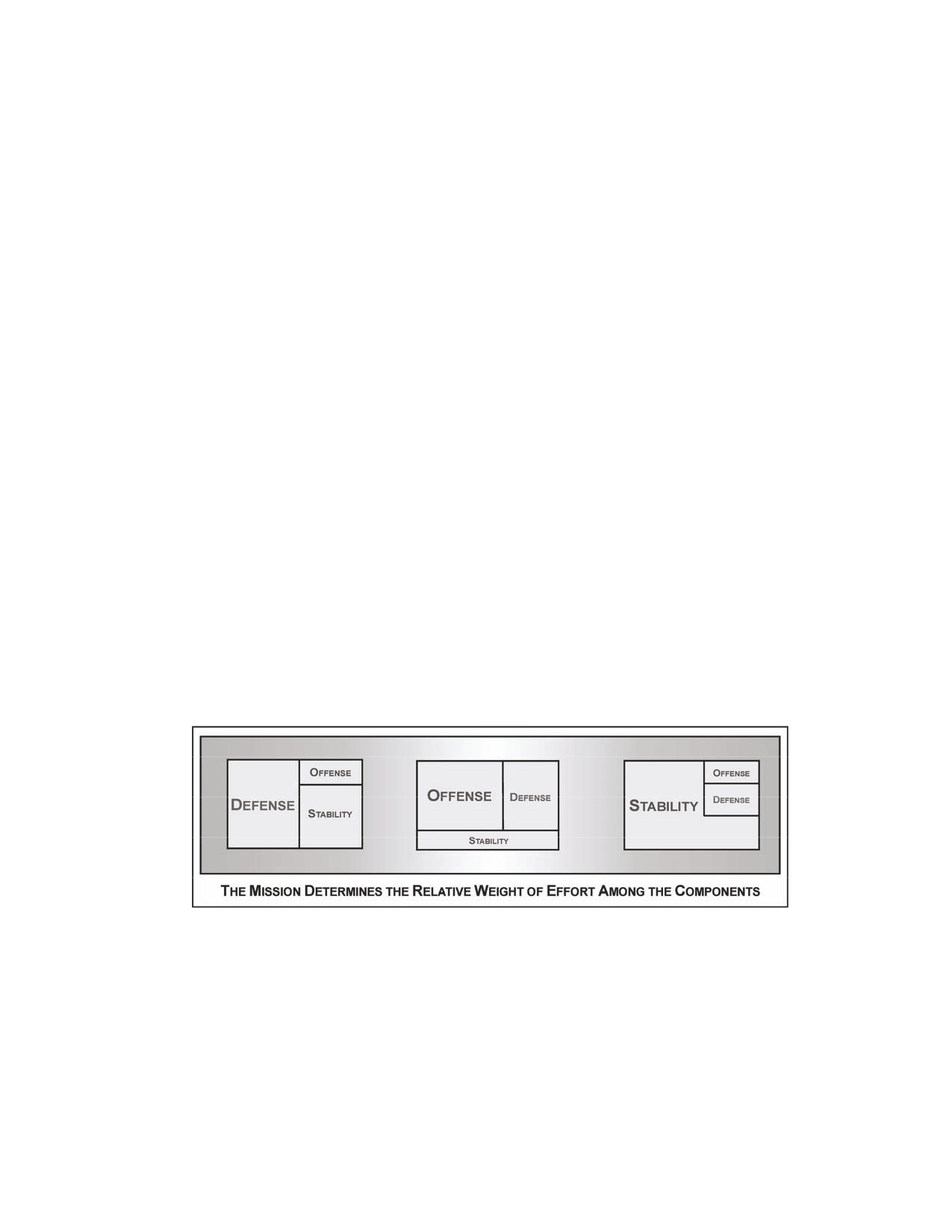
Chapter 2
Stability in Full Spectrum Operations
Repeating an Afghanistan or an Iraq—forced regime change followed by nation-building
under fire—probably is unlikely in the foreseeable future. What is likely though, even a
certainty, is the need to work with and through local governments to avoid the next
insurgency, to rescue the next failing state, or to head off the next humanitarian disaster.
Correspondingly, the overall posture and thinking of the United States armed forces has
shifted—away from solely focusing on direct American military action, and towards new
capabilities to shape the security environment in ways that obviate the need for military
intervention in the future.
Robert M. Gates
Secretary of Defense
FULL SPECTRUM OPERATIONS
2-1. Full spectrum operations apply to the joint force as well as Army forces. The foundations for Army
operations conducted outside the United States and its territories are reflected in the elements of full
spectrum operations: continuous, simultaneous combinations of offensive, defensive, and stability tasks.
These combinations are manifested in operations designed to seize, retain, and exploit the initiative using
the mutually supporting lethal and nonlethal capabilities of Army forces. This is the essence of full
spectrum operations, representing the core of Army doctrine. In full spectrum operations, the emphasis on
the individual elements changes with echelon, time, and location. (See figure 2-1.) No single element is
more important than another is; simultaneous combinations of the elements, constantly adapted to the
dynamic conditions of the operational environment, are key to successful operations. (See FM 3-0 for
doctrine on full spectrum operations.)
Figure 2-1. Full spectrum operations
2-2. This is the essence of full spectrum operations: Army forces combine offensive, defensive, and
stability or civil support operations simultaneously as part of an interdependent joint force to seize, retain,
and exploit the initiative, accepting prudent risk to create opportunities to achieve decisive results. Army
forces employ synchronized action—lethal and nonlethal—proportionate to the mission and informed by a
thorough understanding of all dimensions of the operational environment. Mission command that conveys
intent and an appreciation of all aspects of the situation guides the adaptive use of Army forces. Offensive
and defensive tasks focus on the destructive effects of combat power; stability tasks emphasize
constructive effects.
6 October 2008
FM 3-07
2-1
Chapter 2
OFFENSIVE AND DEFENSIVE OPERATIONS
2-3. Offensive and defensive operations emphasize employing the lethal effects of combat power against
an enemy force, yet they are also critical to success in stability operations. Speed, surprise, and shock are
the hallmarks of combat operations; the side better able to leverage these effects defeats its opponent
quickly and incurs fewer losses. Such victories create opportunities for exploitation. In some operations,
the effects of speed, surprise, and shock suffice to collapse organized resistance. Such a collapse occurred
in the offensive phase of Operation Iraqi Freedom in 2003.
2-4. Offensive operations compel the enemy to react, creating or revealing weaknesses that the attacking
force can exploit. Successful offensive operations tremendously pressure defenders, creating a cycle of
deterioration that can lead to their disintegration. Against a capable, adaptive enemy, the offense is the
most direct and sure means of seizing, retaining, and exploiting the initiative. Seizing, retaining, and
exploiting the initiative is the essence of the offense. Offensive operations seek to throw enemy forces off
balance, overwhelm their capabilities, disrupt their defenses, and ensure their defeat or destruction by
maneuver and fires.
2-5. Defensive operations counter the offensive actions of enemy or adversary forces. They defeat
attacks, destroying as much of the attacking enemy as possible. They also preserve control over land,
resources, and populations. Defensive operations retain terrain, guard populations, and protect critical
capabilities and resources. They can be used to gain time through economy of force so offensive and
stability tasks can be executed elsewhere.
STABILITY OPERATIONS
2-6. Stability operations leverage the coercive and constructive capabilities of the military force to
establish a safe and secure environment; facilitate reconciliation among local or regional adversaries;
establish political, legal, social, and economic institutions; and facilitate the transition of responsibility to a
legitimate civil authority. Through stability operations, military forces help to set the conditions that enable
the actions of the other instruments of national power to succeed in achieving the broad goals of conflict
transformation. Providing security and control stabilizes the area of operations. These efforts then provide
a foundation for transitioning to civilian control and, eventually, to the host nation. Stability operations are
usually conducted to support a host-nation government. However, stability operations may also support the
efforts of a transitional civil or military authority when no legitimate government exists.
2-7. Generally, the responsibility for providing for the basic needs of the people rests with the host-nation
government or designated civil authorities, agencies, and organizations. When this is not possible, military
forces provide essential civil services to the local populace until a civil authority or the host nation can
provide these services. In this capacity, military forces perform specific functions as part of a broader
response effort, supporting the activities of other agencies, organizations, and institutions.
2-8. In certain circumstances, stability operations may involve activities associated with combating
weapons of mass destruction. These activities may include actions applicable across the three strategic
pillars to combat weapons of mass destruction: nonproliferation, counterproliferation, and weapons of mass
destruction consequence management. Military forces may be directed to conduct weapons of mass
destruction elimination operations; chemical, biological, radiological, and nuclear
(CBRN) passive
defense; or CBRN consequence management. Military forces receive their direction through interagency
coordination or from the joint force commander in an effort to reduce the threat or in response to a CBRN
incident.
INITIATIVE
2-9. Initiative embodies the offensive spirit of the military force. This spirit is fundamental to how the
force operates in any situation and serves to guide leaders in performing their duties. The force embraces
risk to create opportunities to gain the initiative. It relentlessly sets the tone and tempo of operations to
ensure decisive results. Seizing the initiative within the context of a fragile state or after a disaster requires
an appropriately sized expeditionary force with a broad mix of capabilities applicable to the situation. That
expeditionary force may require the capability and capacity to either provide support to a civil
2-2
FM 3-07
6 October 2008
Stability in Full Spectrum Operations
administration or institute a transitional military authority and the support structure to provide for the well-
being of the population.
2-10. Success in stability operations depends on military forces seizing the initiative. In fragile states, the
sudden appearance of military forces typically produces a combination of shock and relief among the local
populace. Resistance is unorganized and potential adversaries are unsure of what course of action to take.
This malleable situation following in the wake of conflict, disaster, or internal strife provides the force with
the greatest opportunity to seize, retain, and exploit the initiative. By quickly dictating the terms of action
and driving positive change in the environment, military forces improve the security situation and create
opportunities for civilian agencies and organizations to contribute. Immediate action to stabilize the
situation and provide for the immediate humanitarian needs of the people begins the processes that lead to
a lasting peace. Failing to act quickly may create a breeding ground for dissent and possible recruiting
opportunities for enemies or adversaries.
2-11. Stability operations rely on military forces quickly seizing the initiative to improve the civil situation
while preventing conditions from deteriorating further. Through the initiative, friendly forces dictate the
terms of action and drive positive change. Initiative creates opportunities to rapidly stabilize the situation
and begin the process that leads to a lasting peace. In turn, this improves the security environment, creating
earlier opportunities for civilian agencies and organizations to contribute. Understanding is vital to
retaining the initiative; commanders must remain responsive to a dynamic environment while anticipating
the needs of the local populace. By acting proactively to positively influence events, Army forces exploit
the initiative to ensure steady progress toward conditions that support a stable, lasting peace.
2-12. Stability operations are conducted among the people, within the lens of the media. Therefore, during
stability operations, effective information engagement is inseparable from initiative. Information
engagement enhances the success of each primary stability task, reinforcing and complementing actions on
the ground with supporting messages. The efficacy of seizing, retaining, and exploiting the initiative often
depends on the perceptions of various audiences. Through effective information engagement, Army forces
seize, retain, and exploit the initiative, drawing on cultural understanding and media engagement to achieve
decisive results. They communicate with the local populace in an honest, consistent fashion while
providing fair and open access to media representatives. As much as practical, commanders provide the
news media with factual information to facilitate prompt, accurate reporting. (See paragraph 2-71 for a
detailed discussion of information engagement.)
LETHAL AND NONLETHAL ACTIONS
2-13. In the conduct of full spectrum operations, an inherent, complementary relationship exists between
lethal and nonlethal actions; every situation requires a different combination of violence and restraint.
Lethal actions are critical to accomplishing offensive and defensive missions. They leverage swift, decisive
force to impose friendly will on enemy forces. Nonlethal actions are vital contributors to all operations but
are typically decisive only in the execution of stability tasks. Determining the appropriate combination of
lethal and nonlethal actions necessary to accomplish the mission is an important consideration for every
commander. Every situation is unique and requires a careful balance between lethal and nonlethal actions
to achieve success.
2-14. Generally, stability operations require a greater emphasis on nonlethal actions. Nonlethal actions
expand the options available to commanders to achieve their objectives. Conditions may limit the conduct
of lethal actions, and forces must be organized appropriately to reflect this change in emphasis. Nonlethal
actions range from constructive activities focused on building institutional capacity and social well-being
to coercive activities intended to compel certain behaviors. They may include a wide range of intelligence-
gathering, disruptive, and other activities. They may also include aspects of command and control warfare,
nonlethal fires, or other technological means that aim to alter the behavior of an adversary or impair,
disrupt, or delay hostile forces, functions, and facilities. By using nonlethal actions, forces can shape the
broader situation to maintain or reestablish a safe and secure environment.
2-15. Sometimes, just the threat of violent action is enough to compel the enemy to yield to friendly will
and force a settlement. In stability operations, military forces combine various lethal and nonlethal actions
to accomplish the mission; within the security sector, for example, lethal action is often critical to
6 October 2008
FM 3-07
2-3
Chapter 2
overcoming violent opposition, yet enduring success is generally achieved through nonlethal activities.
Stability operations emphasize nonlethal, constructive actions by military forces operating among the local
populace; however, the more coercive aspects of nonlethal actions may prove equally critical to success.
2-16. Well-trained, equipped, and led forces represent a potent combination of lethal and nonlethal
capabilities. Often, the presence of military forces alone influences human behavior; demonstrating the
potential for lethal action helps to maintain order. Maintaining order is vital to establishing a safe, secure
environment. Even though stability operations emphasize nonlethal actions, the ability to engage potential
enemies with decisive lethal force remains a sound deterrent and is often a key to success. The successful
application of lethal capabilities in stability operations requires a thorough understanding of when the
escalation of force is necessary and when it might be counterproductive. It requires sound judgment
supported by constant assessment of the security situation and an intuitive sense of timing with respect to
the actions of enemies and adversaries. Adversaries may curtail their activities to avoid being engaged by
military forces that they perceive to be capable and willing to use lethal force. This allows military forces
to extend the scope and tempo of nonlethal actions.
2-17. Perception is also a major factor for military forces; the actions of Soldiers, both positive and
negative, influence how the local populace perceives the military. Therefore, in all actions, leaders focus on
managing expectations and informing the people about friendly intentions and actions. This is
accomplished through specific nonlethal means: information engagement. Commanders use information
engagement to inform, influence, and persuade the populace within limits prescribed by international law.
In this way, commanders enhance the legitimacy of the operation and the credibility of friendly forces.
(See chapter 3 for additional detail concerning information engagement tasks.)
2-18. Effective, accurate, and timely intelligence is essential to successful full spectrum operations. This is
especially true in stability operations where the ultimate success or failure of the mission often depends on
the effectiveness of the intelligence effort. In operations conducted among the people, tailored intelligence
facilitates understanding of the operational environment while emphasizing the local populace, the host-
nation government, and the security apparatus of the state. Commanders require accurate and timely
intelligence to retain the initiative during stability operations.
LINKING MILITARY AND CIVILIAN EFFORTS
2-19. The integrated approach necessary to achieve true unity of effort in a comprehensive approach to
stability operations is attained through close, continuous coordination and cooperation among the actors
involved. This is necessary to overcome internal discord, inadequate structures and procedures,
incompatible or underdeveloped communications infrastructure, cultural differences, and bureaucratic and
personnel limitations. Within the United States Government, the National Security Strategy guides the
development, integration, and coordination of all the instruments of national power to achieve national
objectives.
2-20. At the national level, the Department of State leads the effort to support interagency coordination
and integration. (See appendix A for a discussion of interagency, intergovernmental, and nongovernmental
organizations in stability operations.) During stability operations, the essential stability task matrix
facilitates coordination by providing a means of integrating activities by various actors at the tactical level.
In turn, this helps attain unity of effort across the stability sectors, focusing all activities toward a common
set of objectives and a shared understanding of the desired end state. The end state focuses on the
conditions required to support a secure, lasting peace; a viable market economy; and a legitimate host-
nation government capable of providing for its populations’ essential needs. Together, the stability sectors
and the primary tasks that comprise the stability element of full spectrum operations constitute a single,
integrated model essential to achieving unity of effort. (See figure 2-2.)
2-4
FM 3-07
6 October 2008
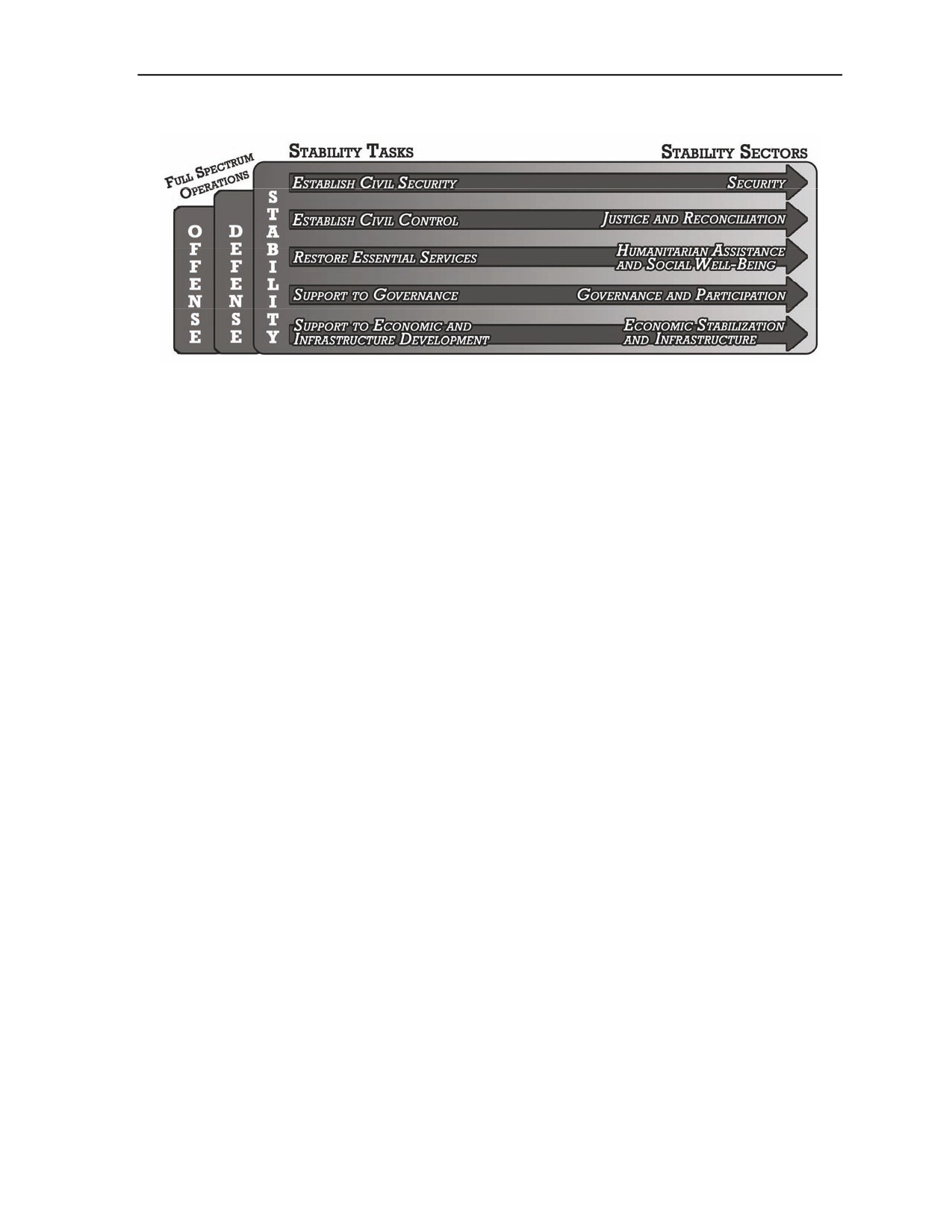
Stability in Full Spectrum Operations
Figure 2-2. An integrated approach to stability operations
2-21. Linking the basic military and civilian task frameworks creates a single model that forms the basis
for developing lines of effort. (See chapter 4 for detail on using lines of effort in stability operations.) This
model serves as the underpinning for an integrated approach to stability operations founded on unity of
effort and coordinated engagement. Thus, the conduct of full spectrum operations to support a broader
effort contributes toward the shared end state established by the actors involved. On a fundamental level,
the execution of discreet military tasks is linked to a coordinated, comprehensive effort. This ensures that
the efforts of military forces are integral to broader engagement activities. These efforts unite in the pursuit
of a common goal and shared understanding of the desired end state. A clear delineation and understanding
of the formal lines of authority enhances unity of effort. Together with the activities of the other
participants, these tasks contribute to unity of effort with the diverse array of actors involved in any
collaborative effort.
DEPARTMENT OF STATE POST-CONFLICT RECONSTRUCTION
ESSENTIAL TASKS
2-22. While national policy charges the Department of State to lead stability operations on behalf of the
Federal government, the Department of State’s Office of the Coordinator for Reconstruction and
Stabilization (S/CRS) serves as the office for the Department of State designated to coordinate United
States Government (USG) efforts in these operations. To that end, S/CRS developed a detailed list of
stability-focused, post-conflict reconstruction essential tasks (hereafter referred to as the essential stability
task matrix). The essential stability task matrix is an evolving interagency document to help planners
identify specific requirements to support countries in transition from armed conflict or civil strife to
sustaining stability. It serves as a detailed planning tool and will continue to develop as it is implemented
during operations.
2-23. The essential stability task matrix divides the tasks conducted during stability operations and their
relative time frame for execution across five broad technical areas. These areas, often referred to as
stability sectors, may be involved in an intervention (see figure 2-2):
z
Security.
z
Justice and reconciliation.
z
Humanitarian and social well-being.
z
Governance and participation.
z
Economic stabilization and infrastructure.
2-24. These sectors, which are similar in purpose and application to lines of effort, help to focus and unify
reconstruction and stabilization efforts within specific functional areas of society. (See chapter 4 for a
discussion on the use of lines of effort in stability operations.) They define and encompass integrated task
areas across a broad spectrum of interagency engagement, including the Department of Defense. The
6 October 2008
FM 3-07
2-5
Chapter 2
essential stability task matrix addresses many of the requirements necessary to support countries in
transition from armed conflict or civil strife. It serves as a means to leverage functional knowledge and
systemic thinking into planning, preparation, execution, and assessment. The essential stability task matrix
ensures that—
z
The execution of tasks is focused toward achieving the desired end state.
z
Tasks that should be executed by actors outside the USG are highlighted and responsibility for
them within the international community is identified.
z
Sector specialists understand the diversity of tasks in other sectors and the interdependence
among the sectors.
2-25. While the assignment of specific tasks and prioritization among them depends on the conditions of
the operational environment, the essential stability task matrix provides a tool to help visualize the conduct
of an operation, sequence necessary activities within an operation, and develop appropriate priorities for
those activities and resource allocation. Depending on the scope, scale, and context of the operation, those
priorities help to deconflict activities, focus limited resources, and delineate specific responsibilities.
Detailed planning is necessary to integrate and synchronize activities in time and space, identify
complementary and reinforcing actions, and prioritize efforts within and across the stability sectors.
2-26. The essential stability task matrix provides a foundation for thinking systemically about stability
operations. Many of the tasks are “crosscutting” and create effects across multiple sectors. In this respect,
the essential stability task matrix facilitates integration by allowing sector specialists to establish and
understand links among the stability sectors. In cases where the intervening actors lack the capability or
capacity to perform certain functions, the essential stability task matrix facilitates identifying gaps that
require building or leveraging specific capabilities within the international community.
2-27. The stability sectors form a framework for executing stability tasks that represent the five key areas
in which civil-military efforts focus on building host-nation capacity. Individually, they encompass the
distinct yet interrelated tasks that constitute reform activities in a functional sector. Collectively, they are
the pillars upon which the government frames the possible reconstruction tasks required for nations torn by
conflict or disaster. Although some tasks are executed sequentially, success necessitates an approach that
focuses on simultaneous actions across the operational area. These tasks are inextricably linked; positive
results in one sector depend upon the successful integration and synchronization of activities across the
other sectors.
SECURITY
2-28. Efforts in the security sector focus on establishing a stable security environment and developing
legitimate institutions and infrastructure to maintain that environment. Security encompasses the provision
of individual and collective security and is the foundation for broader success across the other sectors.
While securing the lives of local civilians from the violence of conflict and restoring the territorial integrity
of the state, intervening forces stabilize the security environment. This stability allows for comprehensive
reform efforts that are best accomplished by civilian personnel from other stakeholder agencies and
organizations.
2-29. In the most pressing conditions, expeditionary forces assume responsibility for all efforts in the
security sector. These efforts typically assemble under the activities reflected in the primary stability task,
establish civil security, but also complement and reinforce parallel efforts in other sectors. Ultimately, for
the results of these efforts to be lasting, host-nation forces—acting on behalf of the host nation and its
people—must provide security.
JUSTICE AND RECONCILIATION
2-30. The justice and reconciliation sector encompasses far more than policing, civil law and order, and
the court systems of a state. Within the sector, efforts provide for a fair, impartial, and accountable justice
system while ensuring an equitable means to reconcile past crimes and abuse arising from conflict or
disaster. Tasks most closely associated with justice focus on reestablishing a fair and impartial judiciary
and effective justice system. This system ensures public safety and helps to resolve disputes and enforce
2-6
FM 3-07
6 October 2008
Stability in Full Spectrum Operations
established contracts. Those tasks relating to reconciliation address grievances and crimes, past and
present, in hopes of forging a peaceful future for an integrated society.
2-31. An integrated approach to justice and reconciliation is central to broader reform efforts across the
other sectors. The justice and reconciliation sector is supported by eight key elements:
z
Effective and scrupulous law enforcement institutions responsive to civil authority and
respectful of human rights and dignity.
z
An impartial, transparent, and accountable judiciary and justice system.
z
A fair, representative, and equitable body of law.
z
Mechanisms for monitoring and upholding human rights.
z
A humane, reform-based corrections system.
z
Reconciliation and accountability mechanisms for resolving past abuses and grievances arising
from conflict.
z
An effective and ethical legal profession.
z
Public knowledge and understanding of rights and responsibilities under the law.
2-32. Successful interventions address the most critical gaps in capability and capacity as soon as possible.
Initial response forces that immediately account for vital issues of justice and reconciliation typically
maintain the initiative against subversive and criminal elements seeking to fill those gaps. Host-nation
involvement in planning, oversight, and monitoring of justice and reconciliation sector reforms is essential.
Generally, intervention in the justice and reconciliation sector encompasses three categories:
z
Initial response activities to institute essential interim justice measures that resolve the most
urgent issues of law and order until host-nation processes and institutions are restored.
z
An established system of reconciliation to address grievances and past atrocities.
z
Long-term actions to establish a legitimate, accountable host-nation justice system and
supporting infrastructure.
2-33. The justice and reconciliation sector closely relates to the security and governance sectors; activities
in one sector often complement or reinforce efforts in another. These relationships are further reinforced by
the inseparable nature of the tasks subordinate to each sector, which reflects the dynamic interaction
between security and justice. Due to the close relationships among the activities and functions that
comprise the security, governance, and justice and reconciliation sectors, failure to act quickly in one
sector can lead to the loss of momentum and gains in the other sectors.
HUMANITARIAN ASSISTANCE AND SOCIAL WELL-BEING
2-34. Conflict and disaster significantly stress how well the state can provide for the essential, immediate
humanitarian needs of its people. The institutions of security and governance that enable the effective
functioning of public services often fail first, leading to widespread internal strife and humanitarian crisis.
In some areas, the intense competition for limited resources may explode into full-blown conflict, possibly
leaving pervasive starvation, disease, and death as obvious outward indications of a fragile state in crisis.
(See appendix E for a discussion of humanitarian assistance principles.)
2-35. Any intervention effort is incomplete if it fails to alleviate immediate suffering. Generally, this
suffering is understood to include the immediate need for water, food, shelter, emergency health care, and
sanitation. However, solutions that focus on ensuring sustainable access to these basic needs are also
necessary to prevent the recurrence of systemic failures while assuring the social well-being of the people.
These sustainable solutions establish the foundation for long-term development. They address the root or
underlying causes of a conflict that result in issues such as famine, dislocated civilians, refugee flows, and
human trafficking. It also ensures the lasting effects of the intervention effort by institutionalizing positive
change in society.
6 October 2008
FM 3-07
2-7
Chapter 2
GOVERNANCE AND PARTICIPATION
2-36. Tasks in the governance and participation sector address the need to establish effective, legitimate
political and administrative institutions and infrastructure. Governance is the state’s ability to serve the
citizens through the rules, processes, and behavior by which interests are articulated, resources are
managed, and power is exercised in a society, including the representative participatory
decisionmaking processes typically guaranteed under inclusive, constitutional authority. Effective
governance involves establishing rules and procedures for political decisionmaking, strengthening public
sector management and administrative institutions and practices, providing public services in an effective
and transparent manner, and providing civil administration that supports lawful private activity and
enterprise. Participation includes procedures that actively, openly involve the local populace in forming
their government structures and policies that, in turn, encourage public debate and the generation and
exchange of new ideas.
2-37. Efforts to strengthen civil participation foster achieving positive, lasting change in society.
Achieving this change enables the people to influence government decisionmaking and hold public leaders
accountable for their actions. Activities that develop social capital help local communities influence
policies and institutions at local, regional, and national levels. With this assistance, communities establish
processes for problem identification, development of proposals to address critical issues, capability and
capacity building, community mobilization, rebuilding social networks, and advocacy. These social capital
development activities are founded on three pillars:
z
Human rights by promoting and protecting social, economic, cultural, political, civil, and other
basic human rights.
z
Equity and equality by advancing equity and equality of opportunity among citizens in terms
of gender, social and economic resources, political representation, ethnicity, and race.
z
Democracy and self-determination by supporting participation and involvement in public
forums and self-determination in human development.
2-38. Response efforts that seek to build local governance and participation capacity ensure host-nation
responsibility for these processes. Even when civilians are deprived of authority or the right to vote, they
must be encouraged to take the lead in rebuilding their own government. This lead is essential to
establishing successful, enduring host-nation government institutions. Even when external actors perform
certain governance functions temporarily, this process to build host-nation capacity—complemented by a
comprehensive technical assistance program—is vital to long-term success.
2-39. Military forces may assume the powers of a sovereign governing authority under two conditions:
when military forces intervene in the absence of a functioning government or when military operations
prevent a government from administering to the public sector and providing public services. Transitional
military authority is an interim solution. It is intended to continue only until the host-nation institutions and
infrastructure can resume their functions and responsibilities. (Chapter 5 has a detailed discussion of
transitional military authority during stability operations.)
ECONOMIC STABILIZATION AND INFRASTRUCTURE
2-40. Much of the broader success achieved in stability operations begins at the local level as intervening
actors engage the populace with modest economic and governance programs. These programs set the
building blocks for comprehensive national reform efforts. These efforts aim to build the institutions and
processes to ensure the sustained viability of the state. To support the progress of the state from disarray to
development, external actors and the host nation—
z
Establish the policies and regulatory framework that supports basic economic activity and
development.
z
Secure and protect the natural resources, energy production, and distribution infrastructure of
the host nation.
z
Engage and involve the private sector in reconstruction.
z
Implement programs that encourage trade and investment with initial emphasis on host-nation
and regional investors, followed at a later stage by foreign investors.
2-8
FM 3-07
6 October 2008
Stability in Full Spectrum Operations
z
Rebuild or reform essential economic governance institutions.
z
Reconstruct or build essential economic infrastructure.
2-41. Although conflict and disaster cause significant economic losses and disrupt economic activity, they
also create opportunities for economic reform and restructuring. In fragile states, elites who benefit from
the existing state of the economic situation can discourage the growth of trade and investment, stifle private
sector development, limit opportunities for employment and workforce growth, and weaken or destroy
emerging economic institutions. Intervening actors work to legitimize the host nation’s economic activities
and institutions. Such legitimate institutions provide an opportunity to stimulate reconstruction and
stabilization by facilitating assistance from the international community. This community helps develop
comprehensive, integrated humanitarian and economic development programs required to achieve
sustained success. Ultimately, such success can reduce the likelihood of a return to violent conflict while
restoring valuable economic and social capital to the host nation.
2-42. The economic recovery of the host nation is tied directly to effective governance. Sound economic
policy supported by legitimate, effective governance fosters recovery, growth, and investment. Recovery
begins at the local level as markets and enterprises are reestablished, the workforce is engaged, and public
and private investment is restored. These events help to stabilize the host-nation currency and reduce
unemployment, thus providing the tax base necessary to support the recovery of the host nation’s treasury.
In turn, this enables the host-nation government to fund the public institutions and services that provide for
the social and economic well-being of the people.
PRIMARY STABILITY TASKS
2-43. Stability operations consist of the five primary tasks shown in figure
2-2. The primary tasks
correspond to the five stability sectors adopted by S/CRS. Together, they provide a mechanism for
interagency tactical integration, linking the execution of discreet tasks among the instruments of national
power. The subordinate tasks performed by military forces under the primary stability tasks directly
support broader efforts within the stability sectors executed as part of unified action. (Chapter 3 addresses
the relationship between the stability sectors and the primary stability tasks.)
2-44. None of these primary tasks is performed in isolation. When integrated within their complementary
stability sectors, they represent a cohesive effort to reestablish the institutions that provide for the civil
participation, livelihood, and well-being of the citizens and the state. At the operational level, the primary
stability tasks may serve as lines of effort or simply as a guide to action, ensuring broader unity of effort
across the stability sectors.
(See chapter 4 for a discussion on the use of lines of effort in stability
operations.) Each primary task and stability sector contains a number of related subordinate tasks. In any
operation, the primary stability tasks, and the subordinate tasks included within each area, are integrated
with offensive and defensive tasks under full spectrum operations. (See FM 3-0 for more information on
full spectrum operations.)
2-45. The primary stability tasks are fundamental to full spectrum operations and are conducted across the
spectrum of conflict, from stable peace to general war. They may be executed before, during, or after
conflict. They may be executed to support a legitimate host-nation government, to assist a fragile state, or
in the absence of a functioning civil authority. Each situation is unique. Planning and execution must be
supported by thorough assessment and analysis to determine the ends, ways, and means appropriate to the
conditions of the operational environment.
ESTABLISH CIVIL SECURITY
2-46. Establishing civil security involves providing for the safety of the host nation and its population,
including protection from internal and external threats; it is essential to providing a safe and secure
environment. Civil security includes a diverse set of activities. These range from enforcing peace
agreements to conducting disarmament, demobilization, and reintegration. Until a legitimate civil
government can assume responsibility for the security sector, military forces perform the tasks associated
with civil security. At the same time, they help develop host-nation security and police forces. Normally,
the responsibility for establishing and maintaining civil security belongs to military forces from the onset
6 October 2008
FM 3-07
2-9
Chapter 2
of operations through transition, when host-nation security and police forces assume this role. (Chapter 4
includes additional detail on the role of transitions in stability operations.)
2-47. Civil security is resource intense; as a primary stability task, establish civil security requires more
manpower, materiel, and monetary support than any other task. However, civil security is a necessary
precursor to success in the other primary stability tasks. Civil security provides the foundation for unified
action across the other stability sectors. Well-established and maintained civil security enables efforts in
other areas to achieve lasting results.
2-48. Establishing a safe, secure, and stable environment for the local populace is a key to obtaining their
support for the overall stability operation. Such an environment facilitates introducing civilian agencies and
organizations whose efforts ensure long-term success. When the people have confidence in the security
sector providing for their safety, they cooperate. Military forces need this cooperation to control crime and
subversive behavior, defeat insurgents, and limit the effects of adversary actions. For political and
economic reform efforts to be successful, people, goods, and livestock must be able to circulate within the
region.
2-49. Establishing or reestablishing competent host-nation security forces is fundamental to providing
lasting safety and security of the host nation and its population. These forces are developed primarily to
counter external threats. However, they may also assist in other key missions including disaster relief,
humanitarian assistance, and in special cases countering certain internal military threats. Developing host-
nation security forces is integral to successful stability operations and includes organizing, training,
equipping, rebuilding, and advising various components of host-nation security forces. (See chapter 6 for a
detailed discussion of security force assistance.)
ESTABLISH CIVIL CONTROL
2-50. Establishing civil control is an initial step toward instituting rule of law and stable, effective
governance. Although establishing civil security is the first responsibility of military forces in a stability
operation, this can only be accomplished by also restoring civil control. Internal threats may manifest
themselves as an insurgency, subversive elements within the population, organized crime, or general
lawlessness. Each constitutes a significant threat to law and order and therefore to the overall effort to
establish a secure, stable peace. Civil control centers on justice reform and the rule of law, supported by
efforts to rebuild the host-nation judiciary, police, and corrections systems. It encompasses the key
institutions necessary for a functioning justice system, including police, investigative services,
prosecutorial arm, and public defense. It includes helping the state select an appropriate body of laws to
enforce; usually this is the host nation’s most recent criminal code, purged of blatantly abusive statutes.
2-51. In a fragile state, the justice system may have ceased to function altogether with absent judges and
legal professionals, looted or destroyed courts and prisons, damaged or destroyed records, and any
surviving vestiges of the justice system stripped of essentials. If transitional military authority is instituted,
intervening forces may perform both judicial and correctional functions. A key to promoting the rule of
law in these cases is ensuring that military forces themselves abide by the law and are held accountable for
any crimes committed. (See chapter 5 for a discussion of rule of law under transitional military authority.)
2-52. To provide for the safety and security of the populace successfully, an effective judiciary branch and
a functioning corrections system must complement the state’s security institutions. Together with
governance and civil security, civil control is a core element of security sector reform. This reform sets the
foundation for broader government and economic reform and successful humanitarian relief and social
development. Establishing civil control protects the integrity of the security sector reform program. Civil
control tasks prevent corruption that threatens security institutions when they lack the support of judges to
apply the law and prisons to incarcerate the convicted.
2-53. Building host-nation capacity for civil control is paramount to establishing the foundation for lasting
civil order. Community-oriented police services under civilian control that clearly separate the roles of the
police and military are essential to success. As with host-nation security forces, the development of police
forces proves integral to providing a safe, secure environment for the local populace. Military forces may
first need to restore and then maintain civil order until formed police units trained in stability policing skills
2-10
FM 3-07
6 October 2008
Stability in Full Spectrum Operations
are available to perform these functions and begin training host-nation police forces. In some cases,
military forces may also be tasked to train, or oversee the training of, host-nation police forces.
2-54. In some cases, host-nation justice system actors may have been part of a corrupt or authoritarian
regime, and their continued service in such capacities is inconsistent with institutional reform programs. As
with other elements of the civil security and governance sectors, an appropriate authority vets the judiciary,
police, and corrections staffs and oversees their activities as part of the security sector reform program.
Conducted in parallel with other reform processes, near-term efforts focus on building host-nation capacity
by restoring the components of the justice system. Long-term development aims to institutionalize a rule of
law culture within the government and society. Establishing this culture often relies on the delicate balance
between retribution and reconciliation in a state recovering from the effects of collapse. Successful
development depends on the ability of the host nation to reconcile with its past—determining whom to
punish, whom to forgive, whom to exclude, and whom to accept within the new order of the state. (See
chapter 6 for a discussion of security sector reform and its relationship to justice reform.)
RESTORE ESSENTIAL SERVICES
2-55. Efforts to restore essential services ultimately contribute to achieving a stable democracy, a
sustainable economy, and the social well-being of the population. In the aftermath of armed conflict and
major disasters, military forces support efforts to establish or restore the most basic civil services: the
essential food, water, shelter, and medical support necessary to sustain the population until local civil
services are restored. Military forces also protect them until transferring responsibility to a transitional civil
authority or the host nation. In addition, these efforts typically include providing or supporting
humanitarian assistance, providing shelter and relief for dislocated civilians, and preventing the spread of
epidemic disease. The immediate humanitarian needs of the local populace are always a foremost priority.
2-56. However, activities associated with this primary stability task extend beyond simply restoring local
civil services and addressing the effects of humanitarian crises. While military forces generally center their
efforts on the initial response tasks that provide for the immediate needs of the populace, other civilian
agencies and organizations focus on broader humanitarian issues and social well-being. Typically, local
and international aid organizations are already providing assistance, although the security situation or
obstacles to free movement may limit their access to all populations. By providing a secure environment,
military forces enable these organizations to expand their access to the entire populace and ease the overall
burden on the force to provide this assistance in isolation.
SUPPORT TO GOVERNANCE
2-57. Military efforts to support governance help to build progress toward achieving effective, legitimate
governance. Military support to governance focuses on restoring public administration and resuming public
services while fostering long-term efforts to establish a functional, effective system of political governance.
The support provided by military forces helps to shape the environment for extended unified action by
other partners. Their efforts eventually enable the host nation to develop an open political process, a free
press, a functioning civil society, and legitimate legal and constitutional frameworks.
2-58. Ultimately, the goal in a stability operation is to leave a society at peace with itself and its regional
neighbors, sustainable by the host nation without the support of external actors. Governance is the process,
systems, institutions, and actors that enable a state to function; effective, legitimate governance ensures that
these are transparent, accountable, and involve public participation. Democratization, while often an end
state condition in planning, does not ensure these outcomes. In societies already divided along ethnic,
tribal, or religious lines, elections may further polarize factions. Generally, representative institutions based
on universal suffrage offer the best means of reconstituting a government acceptable to the majority of the
citizens. This is the broad intent of developing host-nation governance.
2-59. Although the United States has a secular, representative government that clearly separates church
and state, other states have varying degrees of religious participation in their governments. Countries such
as Iran and Saudi Arabia have codified versions of Shari’a (Islamic legislation). Shari’a uses the Quran as
the foundation for the national constitution. Religion is often a central defining characteristic in some
6 October 2008
FM 3-07
2-11

Chapter 2
forms of government and cannot be discounted by external actors. Ultimately, the form of government
adopted must reflect the host-nation customs and culture rather than those of the intervening actors.
SUPPORT TO ECONOMIC AND INFRASTRUCTURE DEVELOPMENT
2-60. Military tasks executed to support the economic sector are critical to sustainable economic
development. The economic viability of a state is among the first elements of society to exhibit stress and
ultimately fracture as conflict, disaster, and internal strife overwhelms the government. Signs of economic
stress include rapid increases in inflation, uncontrolled escalation of public debt, and a general decline in
the state’s ability to provide for the well-being of the people. Economic problems are inextricably tied to
governance and security concerns. As one institution begins to fail, others are likely to follow.
2-61. Infrastructure development complements and reinforces efforts to stabilize the economy. It focuses
on the society’s physical aspects that enable the state’s economic viability. These physical aspects of
infrastructure include construction services, engineering, and physical infrastructure in the following
sectors:
z
Transportation, such as roads, railways, airports, ports, and waterways.
z
Telecommunications.
z
Energy, such as natural resources, the electrical power sector, and energy production and
distribution.
z
Municipal and other public services.
2-62. Accurate, detailed assessment is a key to formulating long-term plans for infrastructure development.
Military forces often possess the capability to conduct detailed reconnaissance of the state’s physical
infrastructure and can effectively inform planning efforts. Infrastructure reconnaissance gathers technical
information on the status of large-scale public systems, services, and facilities necessary for economic
activity. This task facilitates restoring essential services as well as spurring economic and infrastructure
development. Infrastructure reconnaissance is accomplished in two stages: infrastructure assessment—
associated with the restoration of essential services—and infrastructure survey—that supports economic
and infrastructure development. Infrastructure reconnaissance supports the operations process by providing
vital information on the quality of the local infrastructure or problems within it. It also supports how those
infrastructure issues impact military operations and the population. (FM 3-34.170 contains doctrine on
infrastructure assessment.)
STABILITY OPERATIONS FRAMEWORK
2-63. During stability operations, engagement and intervention activities are better defined in terms of the
progress toward stabilizing the operational environment. Using the spectrum that describes fragile states,
figure 2-3 illustrates conditions that characterize an operational environment during stability operations.
(See chapter 1 for a discussion of fragile states.) This spectrum also defines the environment according to
two quantifiable, complementary scales: decreasing violence and increasing normalization of the state, the
fundamental measures of success in conflict transformation. Although fragile states do not recover from
conflict or disaster according to a smooth, graduated scale, this spectrum provides a means with which to
gauge conditions of an operational environment, formulate an engagement methodology, and measure
progress toward success.
Figure 2-3. The fragile states spectrum
2-12
FM 3-07
6 October 2008
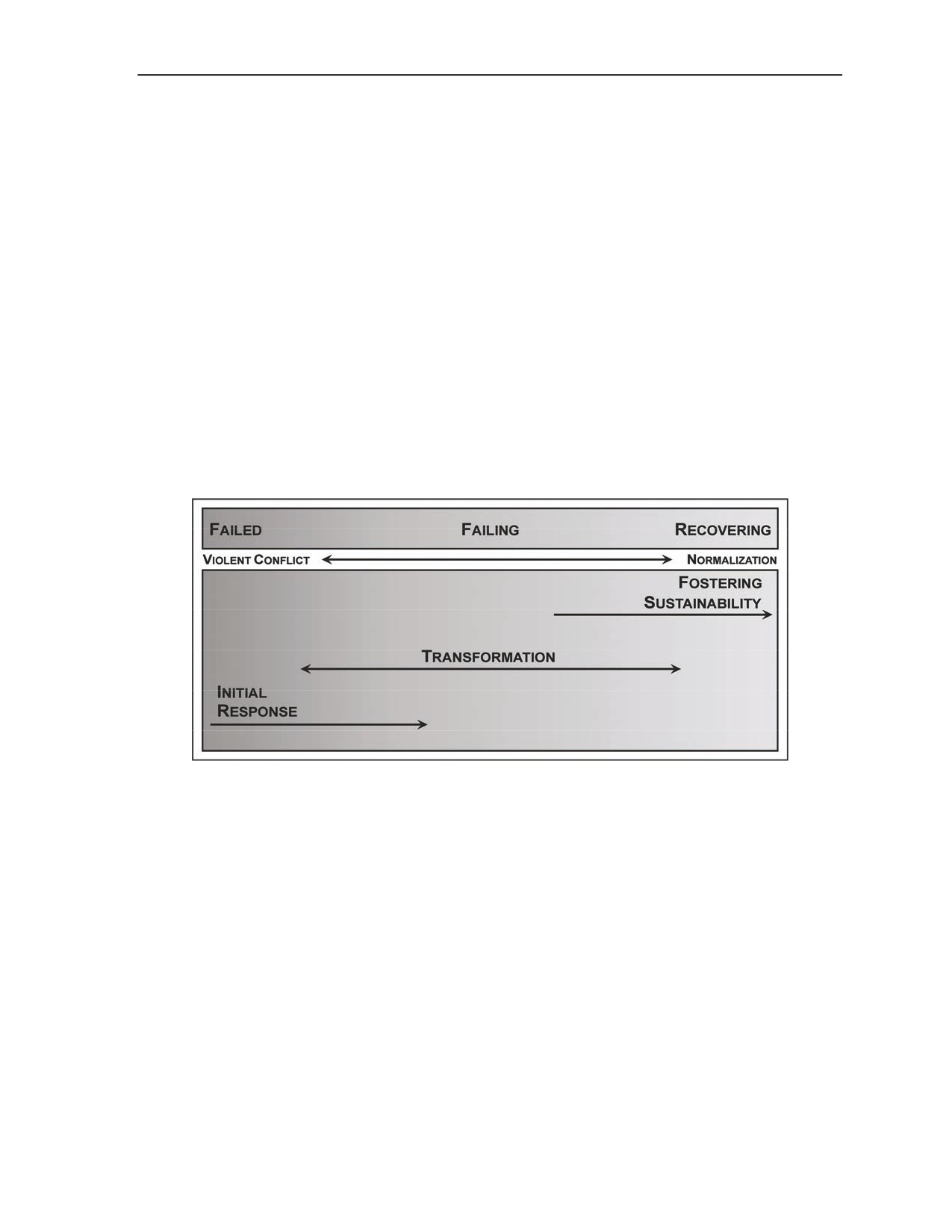
Stability in Full Spectrum Operations
2-64. Military forces can engage at any point along this spectrum. In each case, achieving the end state
requires quickly reducing the level of violence while creating conditions that support safely introducing
other government agencies and intergovernmental organizations while securing critical humanitarian
access for nongovernmental organizations. Military operations focus on stabilizing the environment and
transforming conditions of the environment and the state toward normalization. In a failed or failing state,
conditions typically require more coercive actions to eliminate threats and reduce violence. As conditions
of the environment begin to improve, the constructive capabilities of military forces focus toward building
host-nation capacity and encouraging sustained development.
PHASING INTERVENTION
2-65. The failed states spectrum is also a critical tool for understanding and prioritizing the broad range of
activities that embody unity of effort in an operational environment characterized by a fragile state. These
activities occur within distinct phases—categorized in the S/CRS essential stability task matrix as initial
response, transformation, and fostering sustainability—that collectively represent the post-conflict actions
necessary to achieve security and reestablish stable, lasting peace. Together, the failed states spectrum and
the essential stability task matrix phases provide a basic framework for stability operations. This
framework characterizes the operational environment, identifies distinct phases for intervention activities,
defines the types and ranges of tasks performed in that environment, and provides a tool with which to
measure progress toward the desired end state. (See figure 2-4.)
Figure 2-4. The stability operations framework
2-66. This framework encompasses all the tasks performed by military and civilian actors during stability
operations. It guides the understanding of the effort and commitment necessary to rebuild a nation torn by
conflict or disaster while providing a tool to shape activities during peacetime military engagement. The
intervention phases during a stability operation include the following:
z
Initial response phase.
z
Transformation phase.
z
Fostering sustainability phase.
2-67. The initial response phase generally reflects tasks executed to stabilize the operational environment
in a crisis state. During this phase, military forces perform stability tasks during or directly after a conflict
or disaster where the security situation hinders the introduction of civilian personnel. Activities during the
initial response phase aim to provide a safe, secure environment; they allow the force to attend to the
immediate humanitarian needs of the host-nation population. They support efforts to reduce the level of
violence and human suffering while creating conditions that enable other actors to participate safely in
ongoing efforts.
6 October 2008
FM 3-07
2-13
Chapter 2
2-68. The transformation phase represents the broad range of post-conflict reconstruction, stabilization,
and capacity-building tasks. These tasks are performed in a relatively secure environment free from most
wide-scale violence, often to support broader civilian efforts. Transformation phase tasks may be executed
in either crisis or vulnerable states. These tasks aim to build host-nation capacity across multiple sectors.
While establishing conditions that facilitate broad unified action to rebuild the host nation and its
supporting institutions, these tasks are essential to ensuring the continued stability of the environment.
2-69. Fostering sustainability phase encompasses long-term efforts that capitalize on capacity-building and
reconstruction activities to establish conditions that enable sustainable development. Usually military
forces perform fostering sustainability phase tasks only when the security environment is stable enough to
support efforts to implement the long-term programs that commit to the viability of the institutions and
economy of the host nation. Often military forces conduct these long-term efforts to support broader,
civilian-led efforts.
2-70. The stability operations framework helps to emphasize the training and organization of forces prior
to initial deployment and later during force generation. It spurs design and planning, serving as an
engagement paradigm. This paradigm frames response efforts and scopes the tasks to accomplish the
mission. In the simplest terms, it is a guide to action in stability operations.
INFORMATION ENGAGEMENT IN STABILITY
2-71. Successfully executing essential stability tasks also depends on informing the local populace and
influencing attitudes. Although there are more tangible objectives that mark the success of a stability
operation, the final measure of success or failure often rests with the perceptions of the people. Military
forces must go beyond defeating the enemy. They must secure the trust and confidence of the population.
This requires a mastery of information engagement: the integrated employment of public affairs to inform
United States and friendly audiences; psychological operations, combat camera, USG strategic
communication and defense support to public diplomacy, and other means necessary to influence foreign
audiences; and, leader and Soldier engagements to support both efforts (FM 3-0). Since stability operations
are conducted within a broader global and regional context, success often depends on the integration of
information engagement efforts among military forces and the various agencies and organizations
participating in the operation. Information engagement efforts must support and complement those of
higher headquarters, national interests, and broader USG policy. (When updated, FM 3-13 will include
doctrine on information engagement.)
2-72. In stability operations, leader and Soldier engagement may be the most critical component of
information engagement. It is the sustained engagement of the host-nation population that most directly
influences the attitudes and shapes the perceptions of the people. Leader and Soldier engagement amplifies
positive actions, counters enemy propaganda, and increases support among the host-nation population. It
begins with the direct interaction between Soldiers and the local populace, where the consistency between
words and deeds is most important. It includes meetings conducted with key communicators, civilian
leaders, or others whose perceptions, decisions, and actions will affect mission accomplishment.
Conducted with detailed preparation and planning, both activities often prove crucial in building local
support for military operations, providing an opportunity for persuasion, and reducing friction and mistrust.
This is essential to gaining the trust and confidence of the local populace.
2-73. Psychological operations exert significant influence on foreign target audiences and are often the
primary capability for affecting behaviors among these audiences. During stability operations,
psychological operations forces also advise the commander and staff on the psychological effects of their
operations, provide public information to the target audience to support humanitarian assistance, and assess
adversary propaganda. Effective psychological operations can support communications with the local
populace, reduce civil interference with military operations, support efforts to establish and maintain rule
of law, and influence the host-nation attitude toward external actors. The approved objectives and themes
of psychological operations are integrated through the operations process to ensure forces effectively and
efficiently apply limited resources.
2-74. Stability operations are conducted among the people, in the spotlight of international news media,
and under the umbrella of international law. The actions of Soldiers communicate American values and
2-14
FM 3-07
6 October 2008
Stability in Full Spectrum Operations
beliefs more effectively than words alone. Therefore, military forces ensure consistency in their actions and
messages. They provide the media with prompt, factual information to quell rumors and misinformation.
They grant media representatives access to information within the limits of operations security. Finally,
they understand the culture of each audience and tailor the message appropriately.
2-75. No other military activity has as significant a human component as operations that occur among the
people. With urbanization, these operations will be increasingly conducted among concentrations of people
and thus significantly affect their psyche. Human beings capture information and form perceptions based
on inputs received through all the senses. They see actions and hear words. They compare gestures and
expressions with the spoken word. They weigh the messages presented to them with the conditions that
surround them. When the local and national news media are unavailable or unreliable, people often rely on
“word of mouth” to gain information or turn to the Internet, where unverified information flows freely at
unimaginable speeds. To the people, perception equals reality. Creating favorable perceptions requires an
understanding of the psychological motivations of the populace and shaping messages according to how
people absorb and interpret information to ensure broad appeal and acceptance.
6 October 2008
FM 3-07
2-15
///////////////////////////////////////