FM 6-02.90 UHF TACSAT /DAMA MULTI-SERVICE TACTICS, TECHNIQUES, AND PROCEDURES FOR ULTRA HIGH FREQUENCY TACTICAL SATELLITE AND DEMAND ASSIGNED MULTIPLE ACCESS OPERATIONS (AUGUST 2004) - page 1
FM 6-02.90
MCRP 3-40.3G
NTTP 6-02.9
AFTTP(I) 3-2.53
FM 6-02.90
U.S. Army Training and Doctrine Command
Fort Monroe, Virginia
MCRP 3-40.3G
Marine Corps Combat Development Command
Quantico, Virginia
NTTP 6-02.9
Navy Warfare Development Command
Newport, Rhode Island
AFTTP(I) 3-2.53
Headquarters, Air Force Doctrine Center
Maxwell Air Force Base, Alabama
31 August 2004
(UHF TACSAT/DAMA)
MULTI-SERVICE TACTICS, TECHNIQUES, AND PROCEDURES
FOR ULTRA HIGH FREQUENCY TACTICAL SATELLITE AND
DEMAND ASSIGNED MULTIPLE ACCESS OPERATIONS
TABLE OF CONTENTS
Page
EXECUTIVE SUMMARY
IX
CHAPTER I
OVERVIEW/TERMINOLOGY
I-1
Introduction
I-1
Definition of Key Terms
I-1
Organizations and Functions
I-2
UHF TACSAT Usage Guidance
I-6
Description of UHF TACSAT Capabilities
I-12
Military-Standards (MIL-STD) for DAMA
I-15
Waveforms
I-15
Slave Channels
I-23
CHAPTER II
COMMUNICATIONS PLANNING CYCLE
II-1
Assess Force Structure Requirements
II-1
Distribution Restriction: Approved for public release; distribution is unlimited.
iv
Acquire Resources
II-1
Manage Resources
II-4
Issue Resources To Users
II-4
CHAPTER III
TACSAT RADIO EQUIPMENT AND OPERATIONS
III-1
Terminal
III-1
Terminal Set up and Operations
III-3
Terminal Base Address (TBA) Management
III-6
Orderwire (OW) Key Management
III-7
Samples of Checklists
III-8
Accessing a Dedicated Channel
III-9
Accessing a DAMA Channel
III-10
COMSEC Equipment
III-14
APPENDIX A
SATELLITE CHANNEL AUTHORIZATION LIST
A-1
APPENDIX B
INFORMATION REQUEST CODES
B-1
APPENDIX C
AN/PRC-117F RADIOS
C-1
AN/PRC-117F Dedicated UHF SATCOM Operation
C-1
UHF Dedicated SATCOM Programming Checklist
C-3
Dedicated UHF SATCOM Operational Steps
C-5
SATCOM 181B Data Operation Using KG-84 COMSEC
and Continuous Phase Modulation
C-6
AN/PSC-117F DAMA UHF SATCOM
C-8
APPENDIX D
AN/PSC-5 SERIES RADIOS
D-1
Line of Sight (LOS) Operations
D-1
SATCOM Operations
D-2
DAMA 5-kHz Operations
D-3
APPENDIX E
LST-5D RADIOS
E-1
LST-5D LOS Procedures (Updated: 02 APR 98)
E-1
LST-5D SATCOM Procedures
E-3
Key Variable Zeroization
E-5
LST-5D DAMA 25-kHz AC Procedures (For MOD-3 and
Below)
E-5
Cold Start Initialization
E-6
Loading LST-5D for DAMA Use
E-6
Programming Operating Modes
E-6
Fill Procedures Using A KYX-15
E-9
Key Variable Zeroization
E-9
APPENDIX F
AN/ARC-231/SKYFIRE
F-1
Skyfire Operator Training
F-1
Skyfire Characteristics and Capabilities
F-1
Capabilities and Features
F-1
Control/Fill Panel
F-2
v
Loading COMSEC
F-2
Download Presets
F-4
Save Presets Manually
F-5
Brightness Adjustment
F-6
LOS Operations
F-7
LOS Guard Operations
F-8
SATCOM Operations
F-9
APPENDIX G
AN/WSC-3
G-1
Setting Up for DAMA
G-1
APPENDIX H
EMI CHARACTERIZATION CHECKLIST
H-1
APPENDIX J
CUT SHEETS
J-1
APPENDIX K
PRIORITIZATION SCHEME
K-1
REFERENCES
..........................................................................................References-1
GLOSSARY
..............................................................................................Glossary-1
INDEX
....................................................................................................Index-1
FIGURES
Figure I-1. UHF SATCOM Functional Organization Chart
I-3
Figure I-2. Short-Range (1 to 20 kilometers) System/Mode
Decision Matrix
I-9
Figure I-3. Medium-Range (20 to 50 kilometers)
System/Mode Decision Matrix
I-10
Figure I-4. Long-Range (50 to 150 kilometers)
System/Mode Decision Matrix
I-11
Figure I-5. Over-the-Horizon (150 to 10,000 kilometers)
System/Mode Decision Matrix
I-12
Figure I-6. Military UHF Satellite Constellation and
Coverage Areas
I-13
Figure I-7. Waveform Breakout for 5-kHz DAMA
I-16
Figure I-8. Waveform Communications for 5-kHz
I-17
Figure I-9. Waveform Communications for 25-kHz DAMA
I-18
Figure I-10. A Segment Slots
I-19
Figure I-11. B Segment Slots
I-20
Figure I-12. C Segment Slots
I-21
Figure I-13. Typical Navy 25-kHz DAMA Assignments
I-22
Figure I-14. Example of 25-kHz TDMA DAMA
Assignments
I-23
Figure I-15. Slave Channels for 25-kHz DAMA
I-23
Figure I-16. Communications on 25-kHz DAMA Slave
Channels
I-25
Figure II-1. Communications Planning Cycle
II-1
Figure III-1. AN/PRC-117F
III-3
Figure III-2. AN/PSC-5 Series
III-3
Figure III-3. LST-5
III-3
Figure III-4. AN/ARC-231
III-4
vi
Figure III-5. AN/WSC-3
III-4
Figure III-6. TD-1271B/U
III-4
Figure III-7. MD-1324
III-5
Figure III-8. DMR
III-5
Figure III-9. USC-42(V)1, 2, 3
III-6
Figure III-10. AN/ARC-210
III-6
Figure C-1. UHF SATCOM Programming Sub Menu
C-4
Figure C-2. SATCOM Programming Menu
C-5
Figure C-3. Dedicated UHF SATCOM Displays
C-7
Figure C-4. Overall DAMA Programming Menu Tree
C-9
Figure C-5. DAMA Net Preset Programming Menu Tree
C-11
Figure C-6. DAMA Port Configuration Preset
Programming Menu Tree
C-14
Figure C-7. DAMA Destination Preset Programming Menu
Tree
C-16
Figure C-8. DAMA Defaults Programming Menu Tree
C-17
Figure C-9. DAMA 25-kHz AC Call Menu
C-23
Figure C-10. Twenty-five-kHz AC Paging and Link Test
C-25
Figure C-11. Call Menu 5-kHz DAMA
C-29
Figure C-12. MSG Service Call Menu, 5-kHz DAMA
C-32
Figure C-13. DAMA Network State Displays, 5-kHz and
25-kHz
C-33
Figure C-14. DAMA Service State Displays, 25-kHz
C-34
Figure C-15. DAMA Service State Displays, 5-kHz
C-35
Figure F-1. Control/Fill Panel
F-2
Figure J-1. Sample of LOS Cut Sheet
J-1
Figure J-2. Sample of SATCOM Cut Sheet
J-2
Figure J-3. Sample of DAMA Cut Sheet page 1
J-3
Figure J-4. Sample of DAMA Cut Sheet page 2
J-4
TABLES
Table I-1. Voice/Data Planning Matrix
I-8
Table III-1a. Radio Equipment
III-1
Table III-1b. Radio Equipment
III-1
Table III-1c. Radio Equipment
III-2
Table III-2. OW Key Positions
III-8
Table III-3. Checklist for 5-kHz DAMA
III-8
Table III-4. Checklist for 25-kHz DAMA
III-9
Table III-5. DAMA Points of Contact
III-12
Table A-1. Satellite Channel (Home Channel)
Authorization List
A-1
Table B-1. Information Request Codes
B-1
Table B-2. Configuration Codes
B-7
Table C-1. Dedicated UHF SATCOM Capabilities
C-1
Table C-2. MIL-STD 188-181B Data Rate Options, 5-kHz
C-2
Table C-3. MIL-STD 188-181B Data Rate Options, 25-kHz
C-2
Table C-4. UHF SATCOM Programming Parameters
C-3
Table C-5. UHF Satellite Positions
C-6
Table C-6. AN/PRC-117F DAMA SATCOM Capabilities
C-8
vii
Table C-7. DAMA Programming Checklist
C-10
Table C-8. DAMA Net Preset Parameters
C-12
Table C-9. DAMA Port Configuration Preset Parameters
C-13
Table C-10. DAMA Destination Preset Programming
Checklist
C-15
Table C-11. DAMA Defaults Programming Checklist
C-16
Table C-12. DAMA Ranging Methods
C-18
Table C-13. Link Test Data Rates, 25-kHz DAMA
C-26
Table D-1. Lind of Sight (LOS) Operations
D-1
Table D-2. I/O Data Rates for 5-kHz DAMA
D-3
Table D-3. SYN/ASYN Settings
D-6
Table D-4. Messages, 5-kHz DAMA
D-9
Table D-5. Service Assigned Errors and Warnings
D-12
Table D-6. Message Queue Errors
D-12
Table D-7. Hot Keys, 5-kHz DAMA
D-12
Table D-8. 5-kHz DAMA Operations (Same
Footprint/MHOP) Guide
D-22
Table H-1. EMI Characterization Checklist
H-1
Table K-1. SATCOM Priority Table
K-1
viii
EXECUTIVE SUMMARY
UHF TACSAT/DAMA
Multi-Service Tactics, Techniques, and Procedures
for UHF TACSAT and DAMA Operations
Chapter I identifies key players in the management of tactical satellite (TACSAT)
resources and offers critical guidance for the user to optimize this scarce resource. The
usage guidance centers on the need to consider other communications capabilities before
requesting access to TACSAT resources. The chapter concludes with sections on
TACSAT capabilities, military standards, waveforms, and slave channels. These
sections include discussions of narrowband and wideband channels, the utilization of
dedicated and demand assigned multiple access (DAMA) services, and descriptions of 5-
kHz and 25-kHz waveforms.
Chapter II provides a detailed look at the communications planning cycle of assessing
force structure, acquiring resources, managing resources, and issuing resources to users.
It discusses DAMA emission control, terminal base address (TBA) management and
precedence, common, and private networks, and disadvantaged users.
Chapter III provides techniques and procedures for UHF TACSAT equipment and
operations, TBA management, orderwire (OW) key management, and communications
security equipment. It also provides samples of 5- and 25-kHz DAMA checklists,
accessing dedicated and DAMA channels. The equipment list provides the planner with
the capability to assess communications interoperability of various elements in a Joint
Task Force (JTF). The point of contact list provides TACSAT users a means of
troubleshooting a variety of common problems with UHF TACSAT operations.
The appendices provide samples of checklists, troubleshooting guides, and other
planning resources.
ix
PROGRAM PARTICIPANTS
The following commands and agencies participated in the development of this
publication:
Joint
U.S. Joint Forces Command, Norfolk, Virginia
U.S. Central Command, MacDill Air Force Base, Florida
U.S. Strategic Command, Offutt Air Force Base, Nebraska
U.S. Special Operations Command, MacDill Air Force Base, Florida
Joint Spectrum Center, Annapolis, Maryland
Army
Headquarters, U.S. Army, Washington, DC
U.S. Army Training and Doctrine Command, Fort Monroe, Virginia
U.S. Army Space Command, Colorado Springs, Colorado
U.S. Army Forces Command, Fort McPherson, Georgia
U.S. Army Special Operations Command (USASOC), Fort Bragg, North Carolina
TRADOC System Manager for Satellite Communications, Fort Gordon, Georgia
Headquarters, United States Army Network Enterprise Technology Command/
9th Army Signal Command, Fort Huachuca, Arizona
87th Training Support Division, 2d Brigade, Birmingham, Alabama
Marine Corps
Headquarters, U.S. Marine Corps, Washington, DC
Marine Corps Combat Development Command, Quantico, Virginia
II Marine Expeditionary Force, Camp Lejeune, North Carolina
Marine Forces Atlantic, Norfolk, Virginia
Navy
Space and Naval Warfare Center, San Diego, California
Air Force
Air Force Doctrine Center, Detachment 1, Langley Air Force Base, Virginia
Air Combat Command/SCCF, Langley Air Force Base, Virginia
Air Force Frequency Management Agency, Alexandria, Virginia
x
Chapter I
Overview/Terminology
1. Introduction
This multi-Service tactics, techniques, and procedures (MTTP) publication serves as
a preparation and execution guide for the communications planner and the terminal
operators. It explores solutions to the following problems:
a. Proper preparation and utilization for the limited number of ultra high frequency
(UHF) tactical satellite (TACSAT) resources.
b. Greater efficiency in the utilization of this critical command and control
resource.
c. Proper consolidation and standardization of Service tactics, techniques, and
procedures for planning an execution of UHF TACSAT management.
2. Definition of Key Terms
a. Communications planner. For purposes of this publication, the term
“communications planner” refers to individuals responsible for developing UHF satellite
communications (SATCOM) requirements in support of the unified combatant
commander operations plan (OPLAN), exercise plan (EXPLAN), or emerging operations
(EMOP), including unit through component level. Communications planners may be
referred to in varying Service elements as frequency managers, signal noncommissioned
officer, signal officer, S6, J-6, spectrum manager, communication chief, or other similar
term.
b. Terminal operator. For purposes of this publication, the term “terminal
operator” refers to any individual who interacts (directly or indirectly) with a UHF
TACSAT terminal.
c. Frequency management. The term “frequency management” refers to the
process of requesting, issuing, and managing frequency resources in accordance with
joint policy, United States (US) and international law, and Service procedures. A
SATCOM channel consists of two frequencies managed as individual frequencies.
d. Demand assigned multiple access (DAMA). DAMA is a technique used to
increase the number of users a limited “pool” of satellite transponder space can support.
The ability to share bandwidth is based on the assumption that not all users require
simultaneous access to communication channels. DAMA systems, quickly and
transparently, assign communication links or circuits to a network control system based
on requests received from user terminals. Once a circuit is not in use, the channels are
immediately returned to the central pool for reuse. Using DAMA allows many
subscribers to be served using a fraction of the satellite resources required by dedicated,
point-to-point signal-channel-carrier networks, thus reducing the costs of satellite
networking.
I-1
e. Naval Computer and Telecommunications Area Master Station
(NCTAMS)/Satellite Management Center (SMC). The NCTAMS is a station tasked to
install, operate, man, and maintain satellite ground stations. The SMC is the DAMA
controller office responsible for configuring, monitoring, and troubleshooting DAMA
network assignments.
f. Joint UHF Military Satellite Communications (MILSATCOM) Network
Integrated (JMINI) controller. The JMINI is the hardware and software suite used by
the NCTAMS-SMC to manage 5-kilohertz (kHz) and 25-kHz DAMA networks. It is a
multiplexer controlling the technical configuration of the DAMA satellite channels to
provide functionality of the system.
g. Satellite access request (SAR). The SAR is a formal request, submitted in
preformatted message form, to the UCC communications planning office by a using unit
through the chain of command. The SAR requests satellite resources to support valid
mission requirements.
h. Satellite access assignment (SAA). The formal SAA assignment message
assigning specific resources to a unit for a specific period of time. The SAA is issued by
the regional SATCOM support center (RSSC). It is sent to the requesting unit and the
NCTAMS for controller configuring and system monitoring .
i.
Net control station (NCS). The NCS is an individual, office, communications
control center, or command responsible for facilitating shared access between terminal
operators for a particular UHF SATCOM network.
j.
Satellite database (SDB). The SDB is the base document listing validated
requirements as a result of UCC mission analysis. The document is reviewed annually
to ensure current resource requirements are included.
3. Organizations and Functions
The Joint Chiefs of Staff (JCS), United States Strategic Command (USSTRATCOM),
UCC, joint frequency management office (JFMO), global SATCOM support center
(GSSC)/RSSC, joint task force (JTF), NCTAMS, combatant commands (COCOM),
communications planners, and terminal operators play key roles in planning and
managing UHF SATCOM requirements and resources. The responsibilities of each
organization are summarized below. The functional relationships between these
organizations are depicted in Figure I-1.
I-2
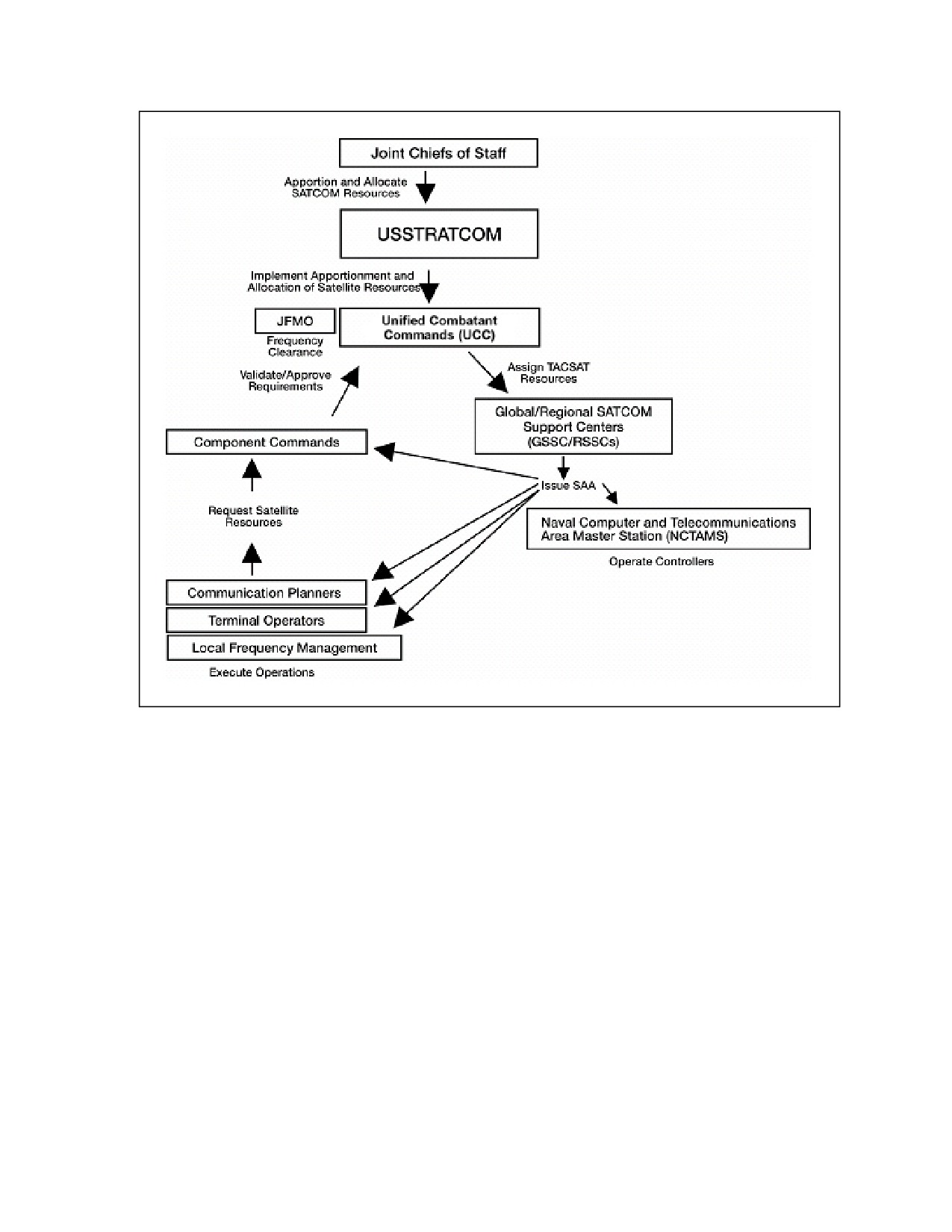
Figure I-1. UHF SATCOM Functional Organization Chart
a. Joint Staff/J-6.
(1) Provide and maintain a staffing capability to perform the following:
(a) Monitor, coordinate, and formulate actions - approved by the Chairman
of the Joint Chiefs of Staff (CJCS) - for strategic, tactical, and contingency SATCOM
operational access.
(b) Develop a coordinated Joint Staff position on SATCOM issues having
operational implications.
(c) Implement CJCS adjudication directives for SATCOM resources.
(d) Monitor the health and operational status of SATCOM systems.
(2) Assist non-Department of Defense (DOD) users in accessing SATCOM
capabilities.
(3) Ensure near-real-time visibility of all SATCOM capabilities and users.
I-3
(4) Assist in resolving international SATCOM interference issues that cannot be
resolved by COCOM.
(5) Manage the SATCOM requirements process, including the necessary
requirements for commercial SATCOM assets for contingency and war situations.
(6) Co-chair the monthly Joint SATCOM panel with USSTRATCOM.
(7) Co-chair the annual joint revalidation and approval for planning purposes of
all SATCOM access requirements contained in the SDB with USSTRATCOM.
(8) Review and assess the results of the UCC annual review of SATCOM access
requirements. Provide recommendations and corrective actions to the CJCS.
(9) Chair joint working groups addressing SATCOM issues in support of CJCS
responsibilities.
(10) Coordinate on USSTRATCOM’s recommendations for initial positioning of
satellites.
(11) Coordinate the communications message processor (CMP) within the Joint
Staff. Oversee the coordination of CMP actions between the Services.
b. USSTRATCOM.
(1) Manage and dynamically assign SATCOM resources commensurate with its
role as the single point of contact in military space operational matters.
(2) Monitor resource contention among users and facilitate resolution. Arbitrate
conflicts resulting from apportionment decisions, allocation, and spacecraft positioning.
Forward unresolved issues to the Joint Staff for adjudication by the CJCS.
(3) Serve as SATCOM operational manager for the day-to-day management of
operational SATCOM resources. (See Appendix B for definitions of functions and
responsibilities.)
(4) Serve as the advocate for, and develop annual assessment of, SATCOM
systems and capability requirements for SATCOM systems supporting operational
requirements, as described at Appendix E.
(5) Maintain a direct liaison with the Services, Joint Staff, Defense Information
Systems Agency (DISA), Office of the Secretary of Defense, and users of SATCOM
systems to identify system provisioning requirements, support DOD SATCOM
architecture development, and integrate SATCOM into the Global Information
Grid/Defense Information Systems Network.
(6) Coordinate the CMP schedules and issues with the COCOM annually.
Prioritize requirements, indicate shortfalls and operational impacts, and provide
accurate information to the Services and DISA.
c. Unified Combatant Command (UCC).
(1) Support relationship. Per JP 0-2, "Unified Action Armed Forces
(UNAFF)," the Secretary of defense establishes support command relationships between
combatant commanders for the planning and exeecution of joint operations. Operations
Allied Force and Iraqi Freedom highlighted the need to properly manage SATCOM
bandwidth, a challenge that may be exacerbated if the supported / supporting
I-4
relationship is not clearly defined. With regard to SATCOM support from
USSTRATCOM, the UCC typically will be the supported commander and, unless
limited by the establishing directive, will "have the authority to exercise general
direction of the supporting effort." When designated as the supporting commander,
Commander USSTRATCOM will determine the "methods, procedures, and
communications to be employed in providing this support" and "provide the
requested capabilities, as available, to assist the supported commander to
accomplish missions requiring additional resources."
(2) Conduct annual reviews of SATCOM requirements for each validated
OPLAN, concept of operation plan, or operational architecture in accordance with the
joint strategic capabilities plan and CJCSM 3122.01.
(3) Identify shortfalls from apportioned SATCOM capacity and Joint Strategic
Capabilities Plan guidelines. Ensure SATCOM requirements are consistent with
current plans and have a validated SDB number.
(4) Consolidate and prioritize all SATCOM requirements needed to execute the
referenced plan or mission, including requirements of components and supporting
COCOM, Services, Defense agencies, and exercise and training requirements.
(5) Forward a list of prioritized requirements, including requirements that could
not be filled using apportioned assets, to USSTRATCOM. Provide an information copy
to Joint Staff/J-6 with the annual SDB revalidation. DISA assists by providing a mix of
media assessments and modeling support.
(6) Provide operational control of subnetworks for apportioned SATCOM
resources including—
(a) Manage apportioned SATCOM capabilities.
(b) Develop allocation plans and allocate apportioned SATCOM assets.
(c) Establish access priorities for subordinate units according to appropriate
OPLAN, concept of operation plan, or mission requirements.
(7) Adjudicate SATCOM access conflicts within the respective commands.
(8) Ensure component communications staffs are trained to manage apportioned
SATCOM resources.
(9) Prepare an annual report to DISA on commercial SATCOM operational use
and associated costs. Provide an information copy to the Joint Staff/J-6 and the
Assistant Secretary of Defense (NII). Submit the reports in the first quarter of each
fiscal year to DISA. DISA consolidates the reports into one comprehensive report and
submits it (annually) to the Joint Staff/J-6 and the Assistant Secretary of Defense.
(10) Ensure proper coordination is routinely employed to obtain, defend, and
renew host nation approval for the various SATCOM systems employed by DOD.
Determine required coordination based on area of responsibility with the SATCOM
operational manager and its SATCOM system experts, the Services, and DISA.
(11) Provide an applicable satellite, terminal, control, and network management
segment information for CMP development and updates.
I-5
d. GSSC/RSSC.
(1) Perform 24-hour operations functions.
(2) Plan and manage communications for the UCC.
(3) Process SARs and issue SAAs.
(4) Provide apportionment oversight for the UCCs.
e. JTF.
(1) Exercise control over joint communications systems and establish and
maintain joint circuits, per unified command J-6 guidance.
(2) Submit frequency requirements to the theater JFMO.
(3) Validate, consolidate, prioritize, and forward UHF TACSAT requirements to
the COCOM for channel allocation.
f. JFMO.
(1) Provide frequency clearance for apportioned TACSAT channels.
(2) Assist users in resolving electromagnetic interference (EMI).
g. NCTAMS.
(1) Configure communications plans for the GSSC/RSSC.
(2) Execute communications security (COMSEC) rollovers.
(3) Provide EMI characterization.
(4) Monitor DAMA control system performance.
(5) Maintain DAMA control system equipment.
h. Component Command.
(1) Develop communications plans supporting UCC OPLAN/EXPLAN/EMOP.
(2) Validate and rank component SARs.
i.
Communications Planners.
(1) Identify resource requirements.
(2) Submit SARs.
(3) Perform local frequency deconfliction.
4.
UHF TACSAT Usage Guidance
a. UHF TACSAT bandwidth is an extremely scarce resource. Other means of
communications are considered prior to requesting a UHF TACSAT resource. UHF
TACSAT resources include dedicated channels and DAMA networks. Table I-1 presents
criteria communications planners use to determine when a UHF TACSAT resource is
necessary. A signals intelligence (SIGINT) risk assessment is performed to determine
the system and mode best suited to mitigate the SIGINT risk while accomplishing the
mission.
I-6
b. Use a logical process for communications planning. The process should include
determining the distance and evaluating the terrain between terminating points; the
type of information to be moved (voice, data, imagery, video); the systems and modes
available to move the information; and the ability of the unit to furnish, install, operate,
and maintain the systems and modes. Compare the communications requirements to
the systems and modes available to communicate.
c. Do not consider TACSAT as the default solution to any communications
requirement. Specific planning considerations drive communications planning and the
process of defining the resources required to move information. As the process of system
and mode analysis consideration proceeds, eliminate non-TACSAT systems through
accurate and defensible mission analysis before determining that TACSAT is required.
d. The planning matrix in Table I-1 represents the logical process used to analyze
the systems and modes available to a unit for its communications mission.
I-7
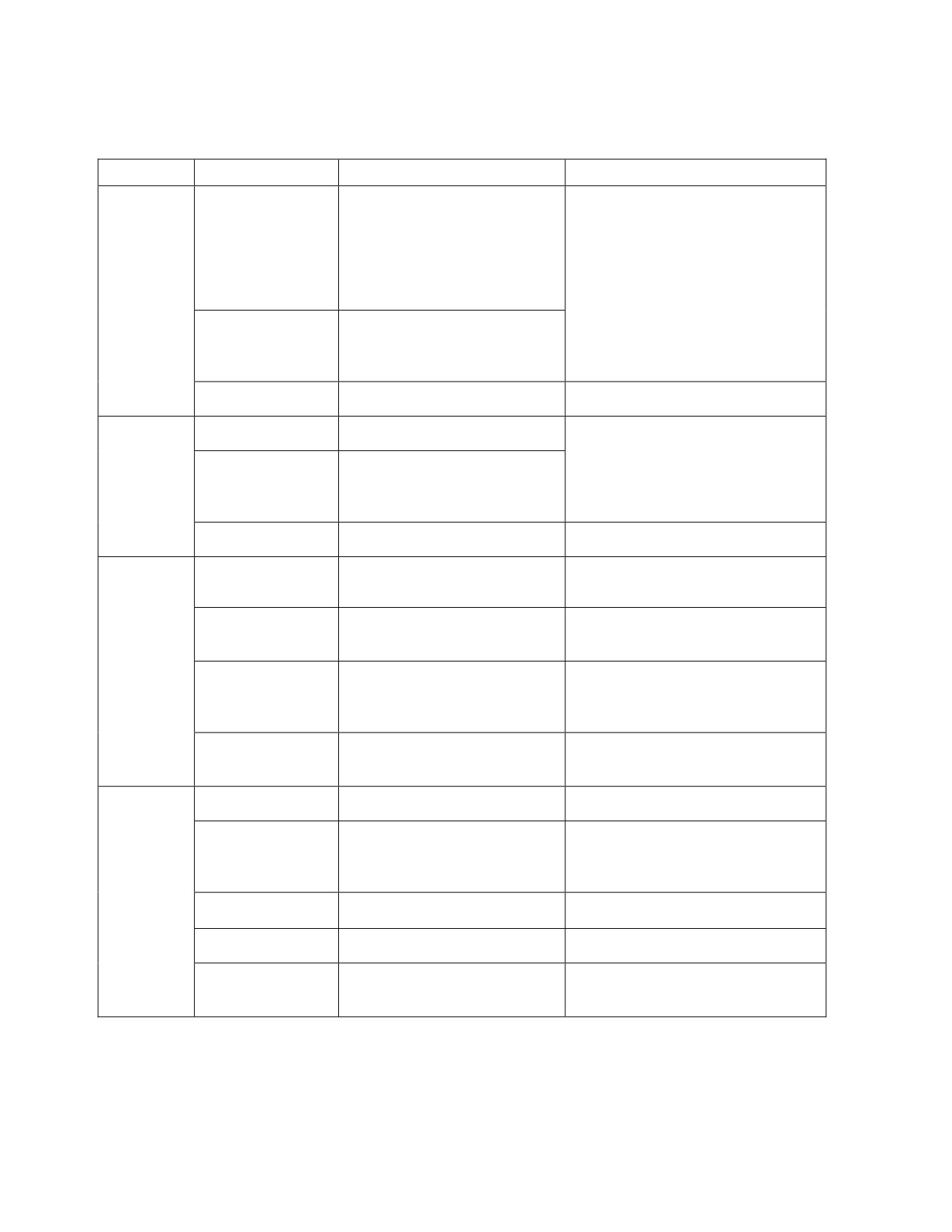
Table I-1. Voice/Data Planning Matrix
Distance
Mode
System Example
Remarks
VRC-8x/9x
MBITR
LOS (line of sight)
AN/PSC-5/A/C/D
FM Secure
AN/PRC-117F
Voice/Data
LST-5D
1 to 20
AN/TRC-176
kilometers
AN/GRC-206
(km)
AN/URC-119
PRC-104
LOS HF Voice/Data
AN/GRC-206 Pallet
AN/PRC-150
Secure
STU/STE, Iridium, GSM,
National Security Agency (NSA) Type I
Phone/Satellite
INMARSAT
Encryption Required
LOS HI PWR FM
VRC-8x/9x
Voice/Data
AN/URC-119
Plan 1 watt/km; RETRANS
PRC-104
Terrain-Dependent
20 to 50 km
LOS HF Voice/Data
AN/GRC-206 Pallet
AN/PRC-150
Secure
STU/STE, Iridium, GSM,
NSA Type I Encryption Required
Phone/Satellite
INMARSAT
LOS HI PWR FM
1 x RETRANS per 40 km;
Voice/Data,
AN/VRC-8x/9x w/RETRANS Site
Terrain-Dependent
w/RETRANS
AN/PSC-11/SCAMP
EHF (Extremely
AN/TSC-154/
High Frequency)
SMART-T
50 to 150
AN/URC-119
km
PRC-104
LOS HF Voice/Data
AN/GRC-206 Pallet
AN/PRC-150
AN/PSC-5/A/C/D
TACSAT
AN/PRC-117F
LST-5D
Connected to a Tactical Local Area
SIPRNET
SHF
Network (LAN)
AN/URC-119
PRC-104
HF
AN/GRC-206 Pallet
150 to
AN/PRC-150
10,000 km
AN/PSC-11/SCAMP
(over-the-
EHF
AN/TSC-154/ SMART-T
horizon)
Secure
STU/STE, Iridium, GSM,
NSA Type I Encryption Required
Phone/Satellite
INMARSAT
AN/PSC-5/A/C/D
TACSAT
AN/PRC-117F
LST-5D
e. Figures I-2, I-3, I-4, and I-5 are decision matrices providing a methodical process
for assessing which systems and modes to use for the communications mission. Use this
methodical process during all phases of communications planning to ensure the
appropriate system and mode are used. Using the following matrices, the
I-8
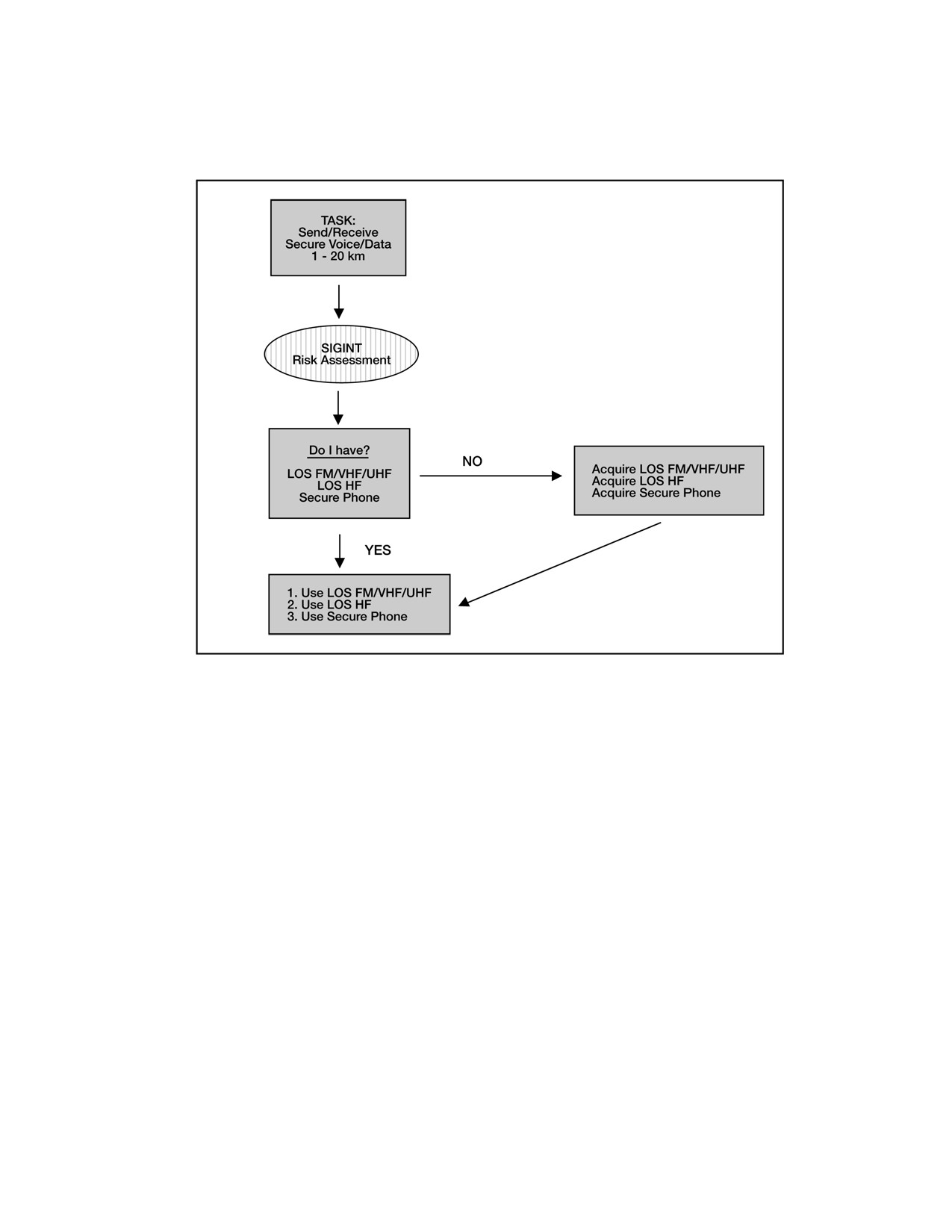
communications planner determines which system and mode meets the requirement.
Use the first system and mode identified.
Figure I-2. Short-Range (1 to 20 kilometers) System/Mode Decision Matrix
I-9
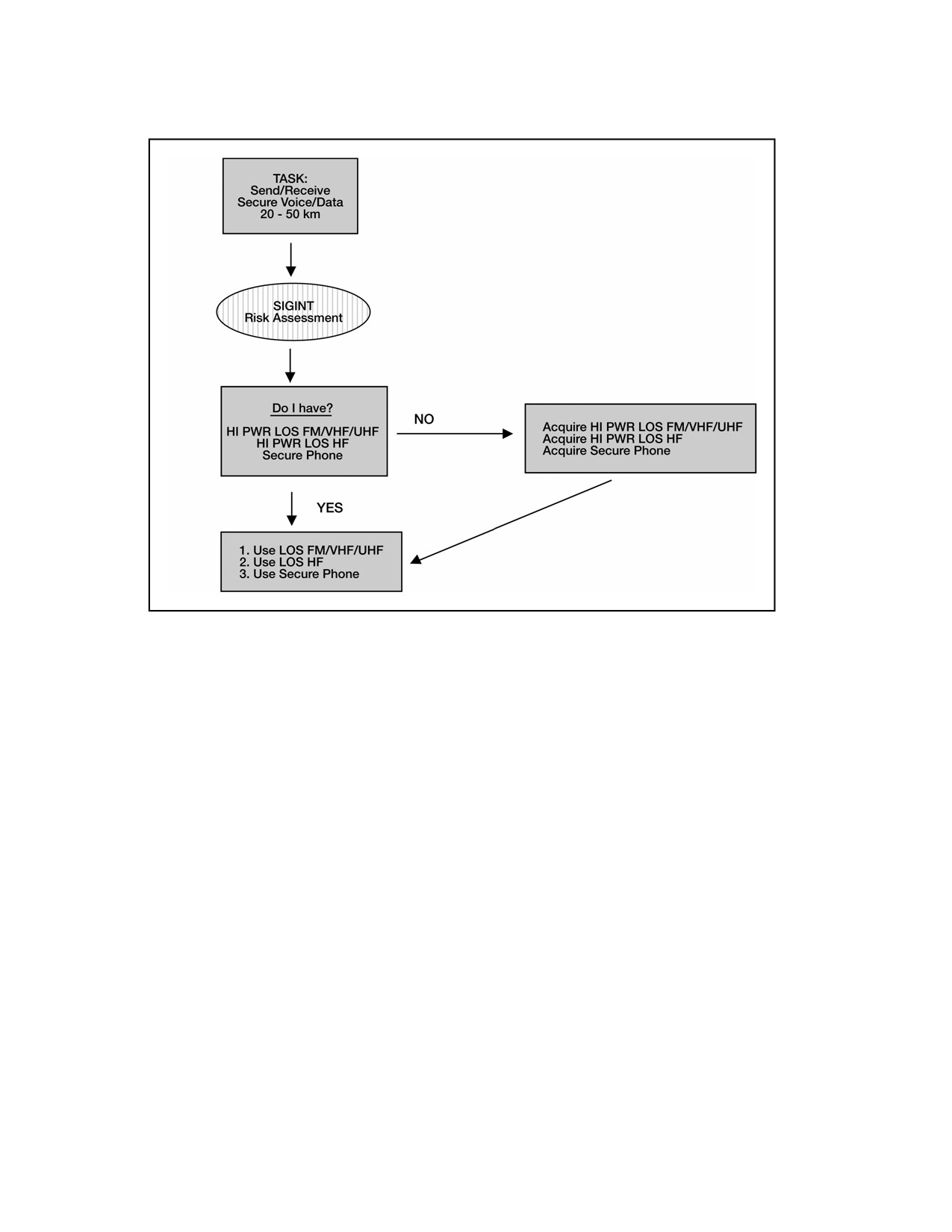
Figure I-3. Medium-Range (20 to 50 kilometers) System/Mode Decision Matrix
I-10
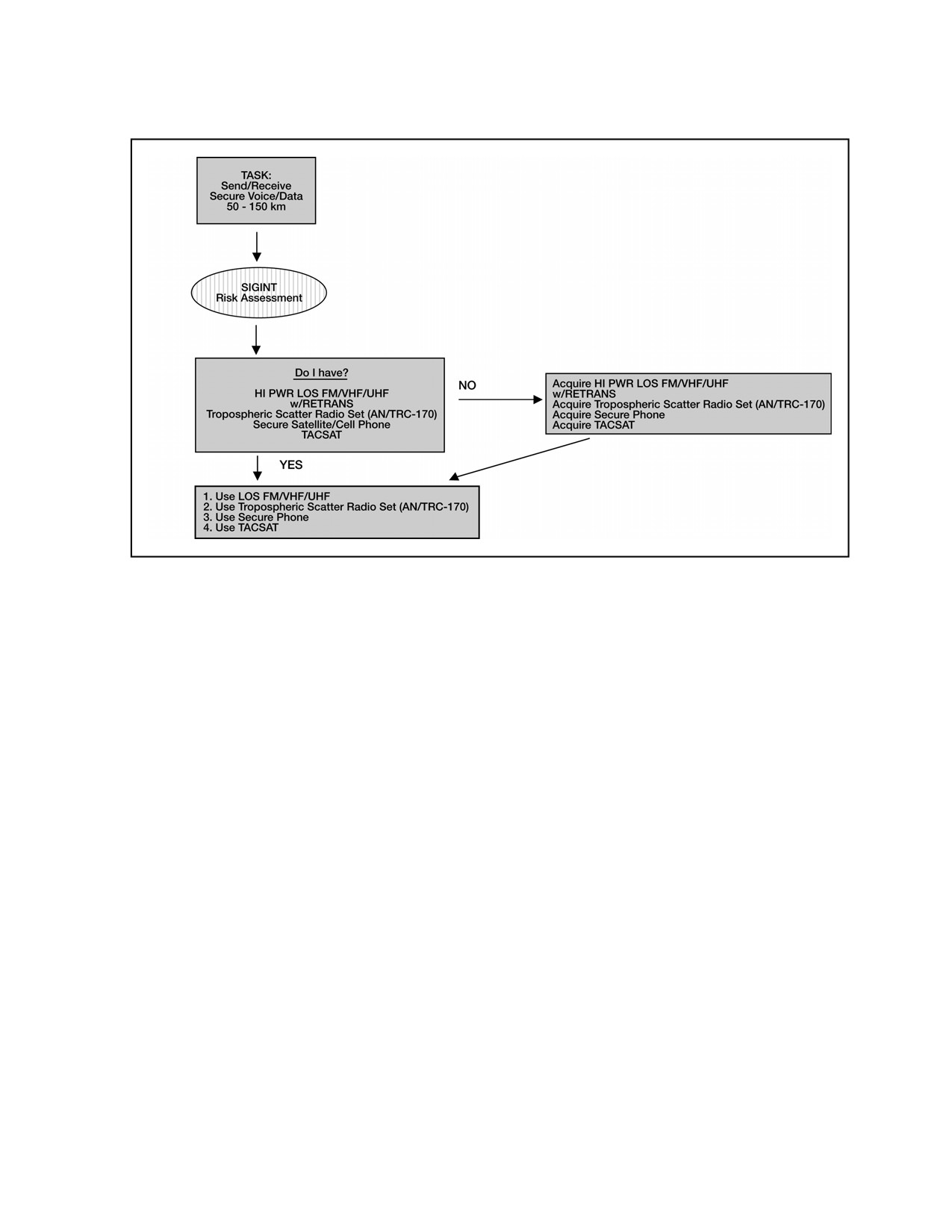
Figure I-4. Long-Range (50 to 150 kilometers) System/Mode Decision Matrix
I-11
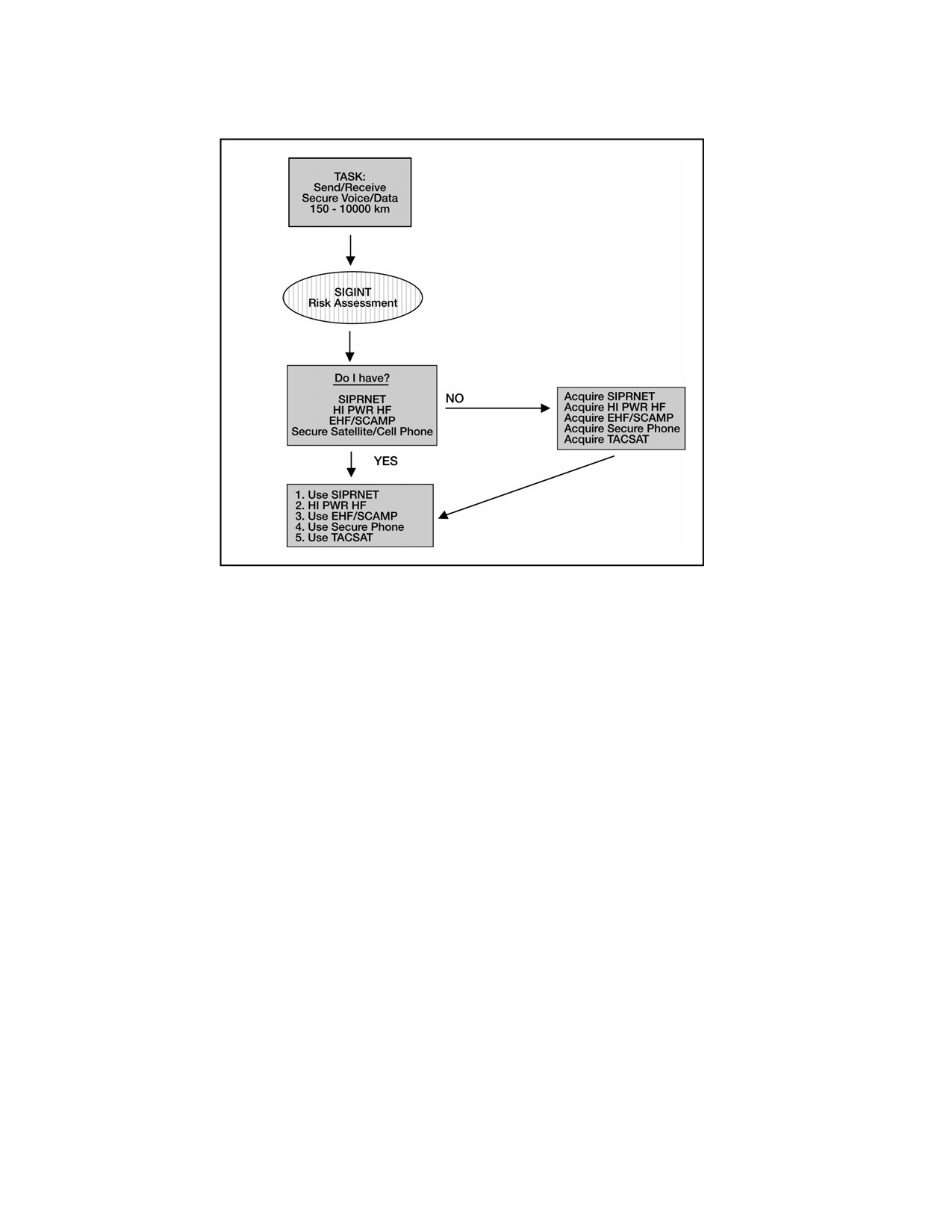
Figure I-5. Over-the-Horizon (150 to 10,000 kilometers) System/Mode Decision Matrix
5. Description of UHF TACSAT Capabilities
The following are commonly used definitions.
a. Bandwidth.
(1) Narrowband. Narrowband describes a low-capacity voicedata
communications circuit, path, or channel. This usually implies that the channel is
capable of carrying a signal bearing data at a rate of 2.4 kilobits per second (kbps) or
less.
(2) Wideband. Wideband describes a medium-capacity voice/data
communications circuit, path, or channel. This usually implies that the channel is
capable of carrying a signal bearing data at a rate greater than 2.4 kbps and up to 64
kbps.
b. When speaking within the context of communications through 5-kHz and 25-kHz
channels of the UHF satellites (per the terminology of MIL-STD 188-181B for single-
channel non-DAMA UHF SATCOM), communications up to 9.6-kbps in 5-kHz channels
are called narrowband channels; communications up to 64-kbps in 25-kHz channels are
called wideband channels.
I-12
I-13
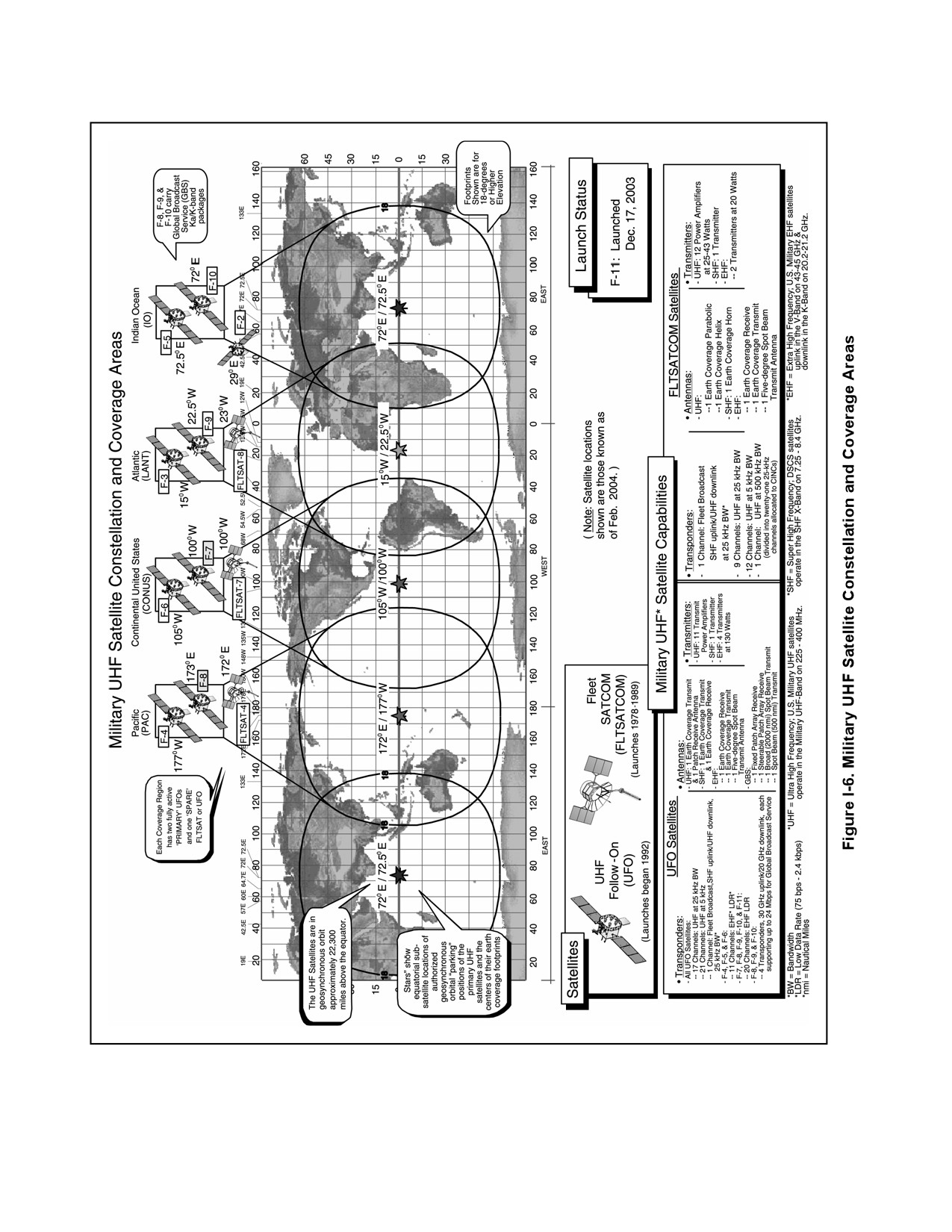
(1) The UHF follow-on satellite provides twenty-one 5-kHz channels and
seventeen 25-kHz channels. In addition to the tactical channels, the Navy uses super
high frequency (SHF)-uplink/UHF-downlink broadcast channels to disseminate data to
ships. Each footprint has two primary satellites. USSTRATCOM provides a current
reference for satellite channel availability at http://uhfweb2.usspace.spacecom.smil.mil.
(2) UHF TACSAT channels provide two types of satellite access, dedicated and
DAMA. Each type of access can support both voice and data communications.
(3) A combination of fleet satellite communications (FLTSATCOM) and UHF
follow-on satellites provides coverage. Each satellite coverage area terminates in at
least two adjacent NCTAMS/Naval computing and telecommunications station (NCTS).
This redundant coverage ensures global connectivity when using DAMA capabilities.
c. Dedicated TACSAT. All terminals in a net operate on one uplink radio frequency
paired with one downlink frequency and assigned exclusively to the net. A net’s
associated uplink frequency paired with its downlink frequency constitutes a single
channel dedicated for the net’s operational use during an assigned span of hours or
days. All stations in the net monitor its channel for calls. Each station has a unique
station identifier (or call sign) that is used to identify it to other station operators in the
net. Usually, one station in the net is designated as NCS to supervise and authenticate
the entry and exit of authorized stations.
d. DAMA. DAMA is a channel access scheme; a TACSAT channel can
accommodate multiple concurrent communications. Uuser terminals access is allocated
in accordance with demand. DAMA multiplexing channels allow dedicated access to
portions of the channel without interference and, through time division multiple access
(TDMA), enables more networks to access the channel. TDMA is accomplished when a
network controller station transmits control signals that establish precisely recurring
intervals of time (frames). A frame is typically one or more seconds in duration. Each
frame is subdivided (time-division) into precise time-slots. Certain slots in each frame
are reserved for the controller station to receive user station service requests, or to
transmit control signals via the satellite. These kinds of signals are called orderwires
(OW). Other time-slots are available for user stations to transmit signal bursts to each
other via the satellite. User nets are assigned slots within the frames on a given
channel. This allows multiple nets to access the same channel simultaneously.
e. Five-kHz DAMA. A 5-kHz DAMA channel supports one 2.4-kbps voice time-slot
(with current MIL-STD 188-182 terminals) and provides a dedicated point-to-point (or
point-to-network) connection between two outstations.
(1) Point-to-point or point-to-network private circuit is used primarily for data.
The time delays in the waveform cause extensive latency for voice and, therefore, limit
voice circuits.
(2) The users manually disconnect (teardown) from the time-slot on completion
of send/receive to make the time-slot available for other users.
f. Twenty-five-kHz DAMA voice/data. When a dedicated 25-kHz channel is
converted to DAMA, it supports up to five 2.4-kbps time-slots that support voice and
data communications. A 25-kHz DAMA channel can provide two types of service.
(1) TDMA DAMA (preassigned time-slots).
I-14
(a) A shared time-slot dedicated to one network. In this type of service, one
set of users with a common or private (guard) network address has exclusive access to
this time-slot.
(b) Delay is in proportion to the number of simultaneous users connected to
the network address.
(c) A user can be connected, monitoring traffic without interfering with
other users, much like a dedicated channel.
(2) Ad hoc DAMA (real DAMA).
(a) Point-to-point/terminal base address (TBA)-to-TBA/TBA-to-common or
private (guard) network connection, a private connection between two or more
outstations in one time-slot.
(b) No delay or interference due to the point-to-point connection capability.
(c) Users manually disconnect (teardown) from the time-slot on completion
of send/receive to make the time-slot available for other users.
g. Five-kHz DAMA multiple-hop (MHOP).
(1) A circuit can be established between two radios that are physically located in
two different satellite footprints.
(2) MHOP provides for data transmission over long distances, but has a system
delay due to data hopping across multiple satellite footprints that impairs voice
communication.
6. Military-Standards (MIL-STD) for DAMA
a. MIL-STD-188-181 (Interoperability Standard for Single Access 5-kHz and
25-kHz UHF Satellite Channels) provides guidance on the use of UHF TACSAT
channels in the dedicated mode. Revision B, the most current version, provides the
information on home channel numbers and their respective frequencies. It also includes
information on higher throughput capabilities for both 5-kHz and 25-kHz DAMA
channels.
b. MIL-STD-188-182 (Interoperability Standard for 5-kHz UHF DAMA Terminal
Waveform) provides guidance on using 5-kHz DAMA channels. Descriptions of
capabilities and OW transmissions are included. Revision A includes a shortened turn-
around time for voice communications and allows two simultaneous time-slots for voice
communications.
c. MIL-STD-188-183 (Interoperability Standard for 25-kHz UHF DAMA Terminal
Waveform) provides guidance on using 25-kHz DAMA channels. Descriptions of
capabilities, frame formats, and OW transmissions are included; revision A to this
standard allows for both 5-kHz and 25-kHz channels to be utilized as slave channels;
other changes included in the document allow the DAMA semi-automatic controller
(SAC) to be utilized by terminals conforming to this standard.
7. Waveforms
a. Five-kHz DAMA allows for the multiplexing of widely dispersed terminals over
single or multiple non-processed satellite channels. The DAMA waveform is divided
I-15
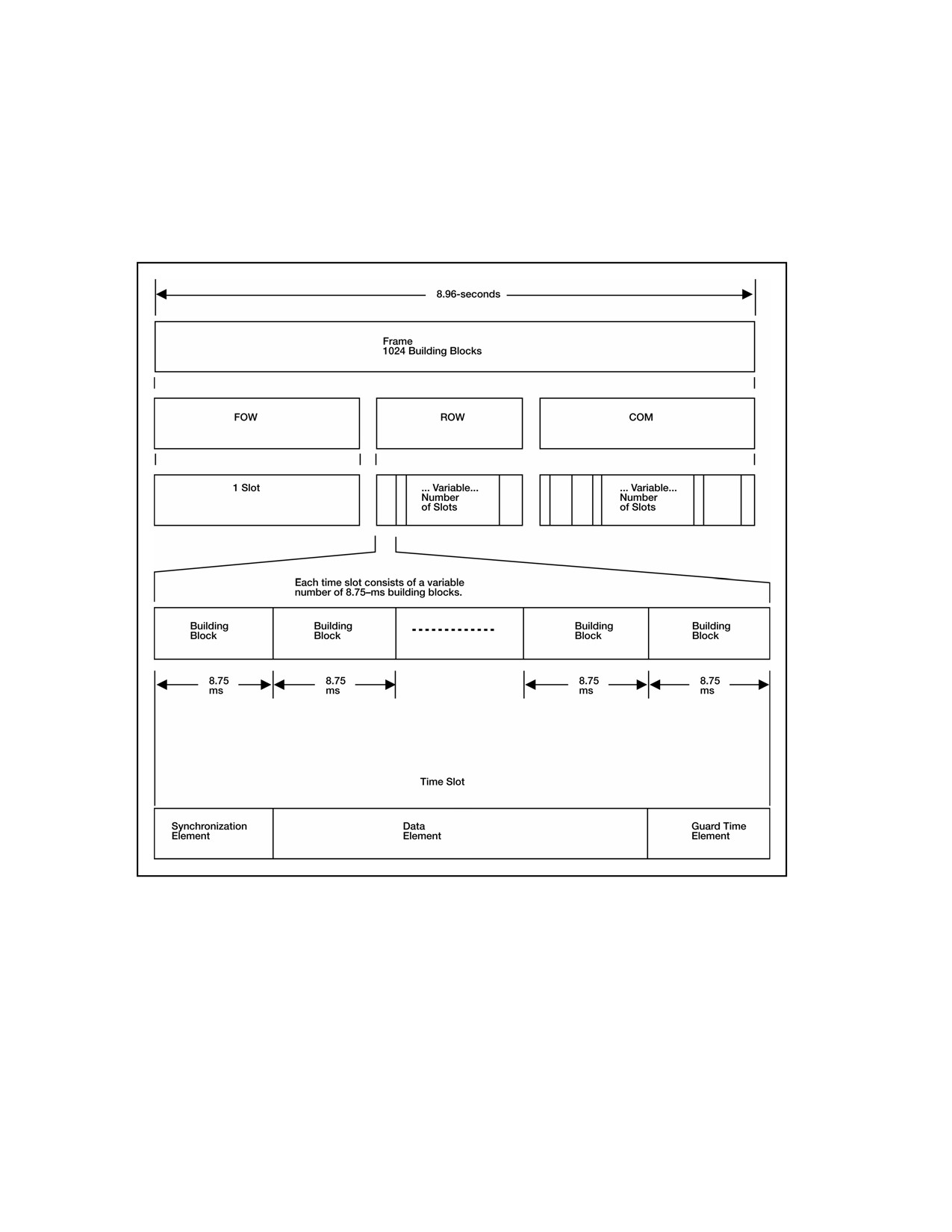
into frames of 8.96 seconds. Each frame is subdivided into 1024 building blocks with a
length of 8.75 milliseconds (ms) each. These building blocks are grouped into three
segments in each frame, two for OW transmissions and one for communications. The
OWs sent from the primary channel controller (PCC) to the terminals are forward
orderwires (FOW) and the OWs from the terminal back to the PCC are return
orderwires (ROW). The breakout of a frame is depicted in Figure I-7.
Figure I-7. Waveform Breakout for 5-kHz DAMA
b. In 5-kHz DAMA, the waveform is divided using a flexible frame format. In
flexible frame format, each frame can be different, based on the missions supported.
However, each frame has the same basic set up with the three segments. See Figure I-
8.
(1) The FOW is the first segment of all frames. It provides essential control
information to all users via one time-slot, which consists of a variable number of
building blocks. The number varies in each frame, based on the amount of information
I-16
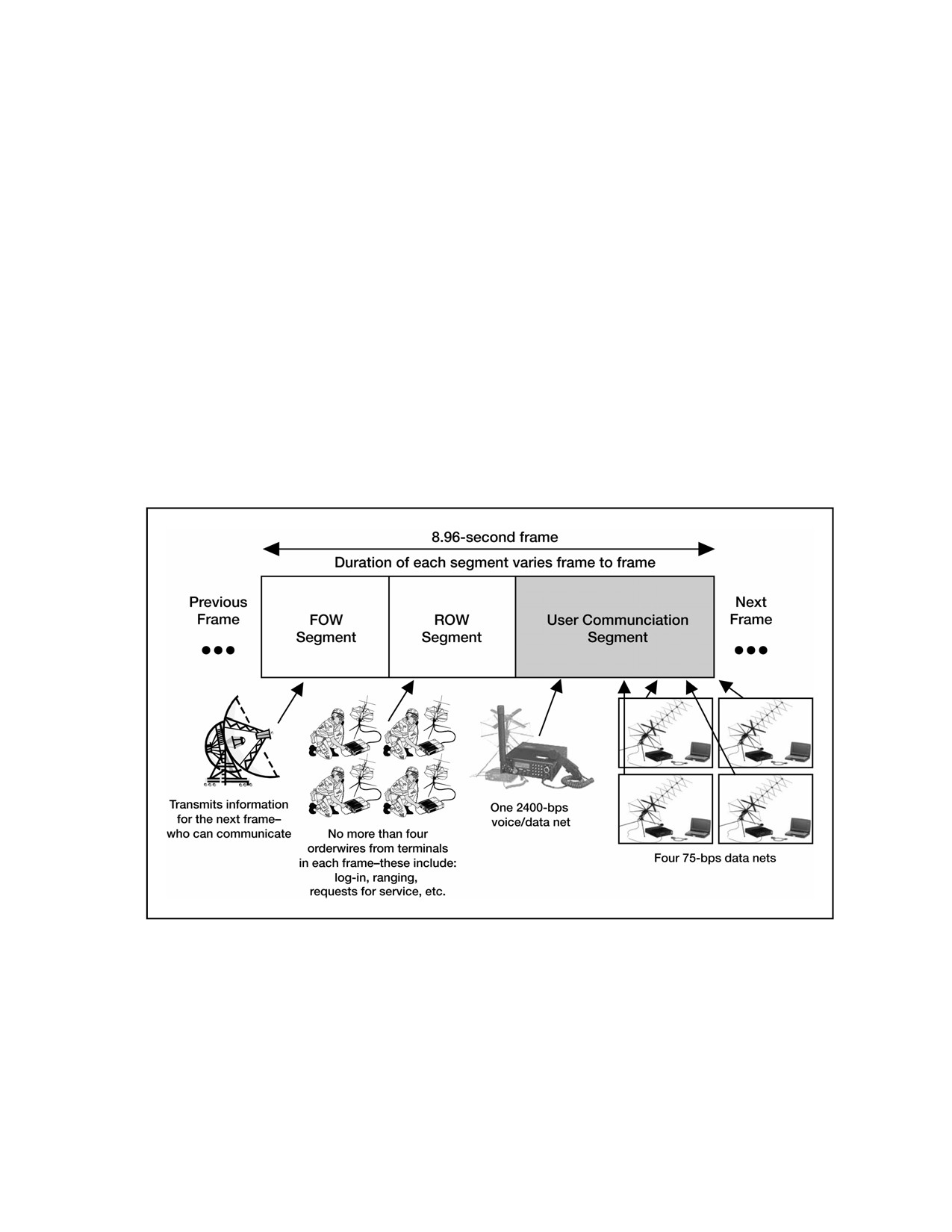
sent at that time and the number of users requiring replies from the PCC. In every
frame, the FOW contains information on the next frame.
(2) The ROW is the second segment. It consists of several time-slots, based on
the number of users sending information to the PCC. Again, the number of time-slots
and number of building blocks changes in each frame based on the number of ROWs
sent and how many terminals require ranging in that frame. To ensure there is
sufficient room for communications, the ROW slot is limited to a maximum of four user
requests in each frame.
(3) The user communications segment is the third segment. It is made up of the
remaining building blocks. The building blocks are grouped into time-slots for baseband
communications between terminals. The data rate and size of message determine how
many building blocks are required in the time-slot for a given transmission. An
additional consideration in the length of the time-slot is whether the user has a full-
duplex or half-duplex terminal. Based on the continual adjustment of frames, the
flexible frame format can technically support an infinite combination of formats. It is
also important to note that, with this waveform, the user time-slots are sequential. No
other user can begin a transmission until the current user finishes.
Figure I-8. Waveform Communications for 5-kHz
c. In 25-kHz DAMA, the frames are broken down differently than in 5-kHz DAMA.
Each frame has a fixed frame format, predetermined by the controller. The format is
based on the number of users supported and the data rates utilized by each one. Unlike
5-kHz DAMA, where each frame is continually adjusted by the changing requests of the
users, the frame format normally stays constant on a 25-kHz DAMA channel. The
frame is divided into more defined segments, as seen in figure I-9.
I-17
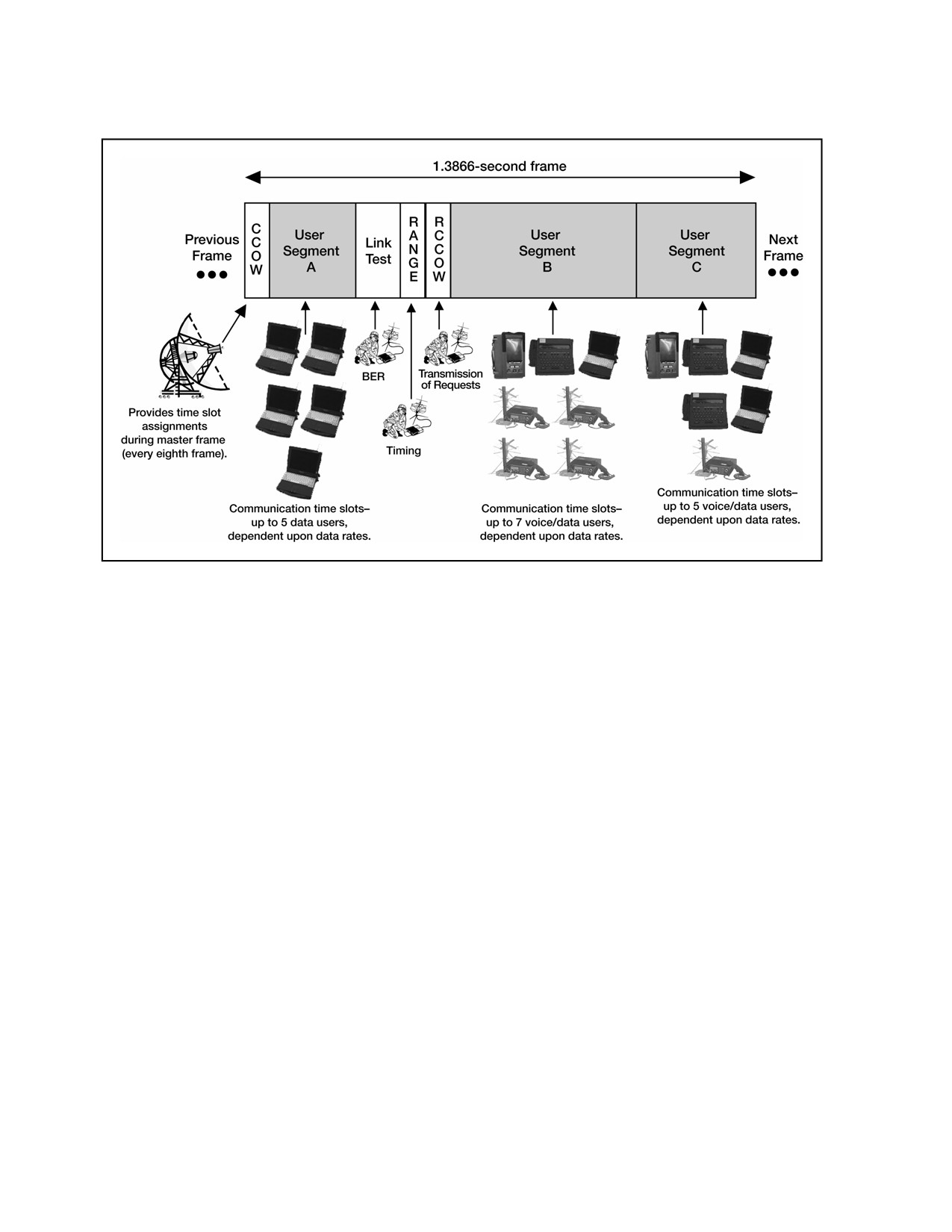
Figure I-9. Waveform Communications for 25-kHz DAMA
d. The OWs transmitted by the PCC are the channel control orderwire (CCOW) and
always start the frame. Every eighth frame is a master frame in which the information
on the frame format is provided to the terminals along with COMSEC information. In
the 25-kHz DAMA frame, the OWs sent from the terminals return channel control
orderwire (RCCOW) are divided into link test, range, and RCCOW slots. The remaining
frame is divided into three user segments, as seen in Figures I-10, I-11, and I-12. Each
segment—A, B, and C—is divided into time-slots for the users based primarily on the
data rate being utilized for communications. The row selected in each user segment
provides the controller the information required to select the frame format for the
channel, normally stated in three-digit format.
I-18
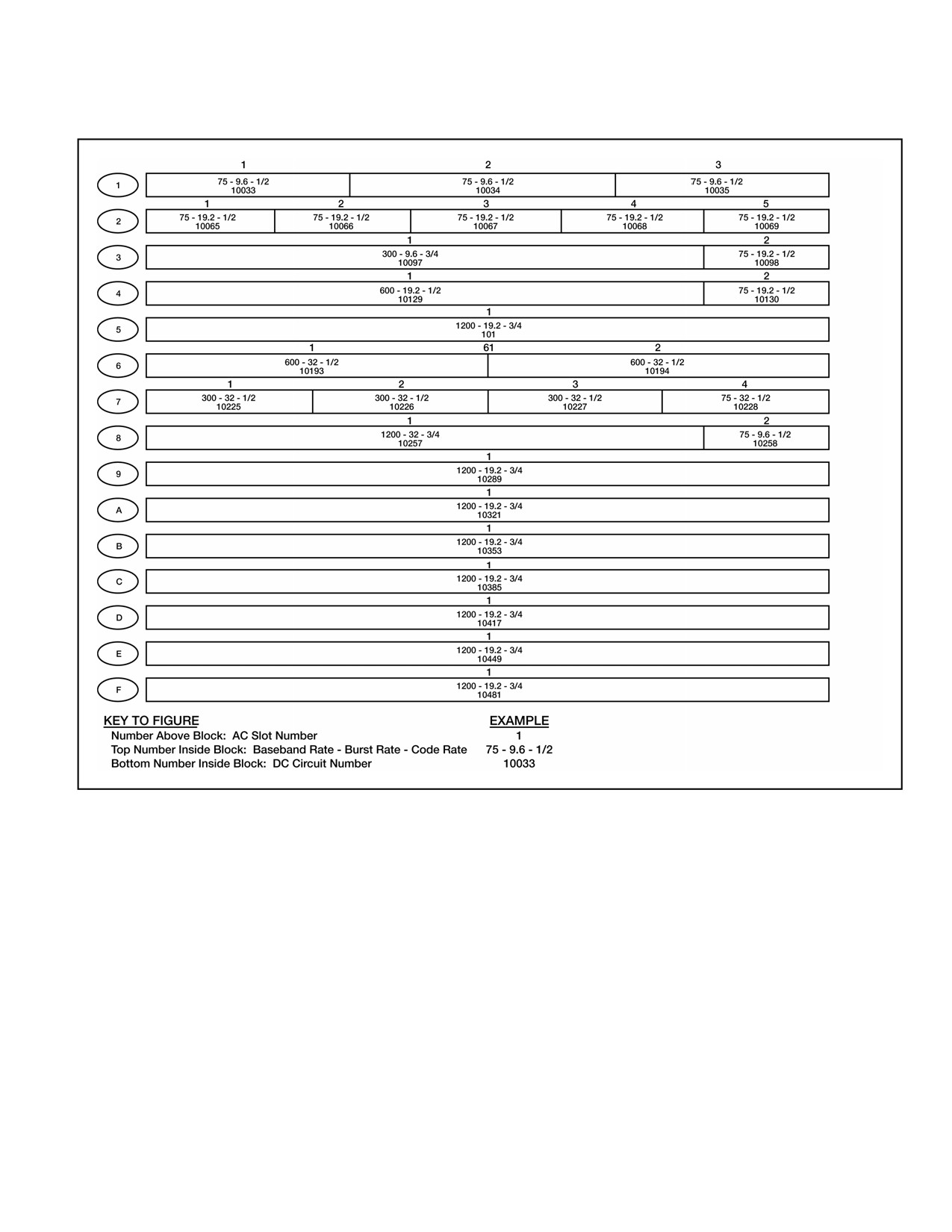
Figure I-10. A Segment Slots
I-19
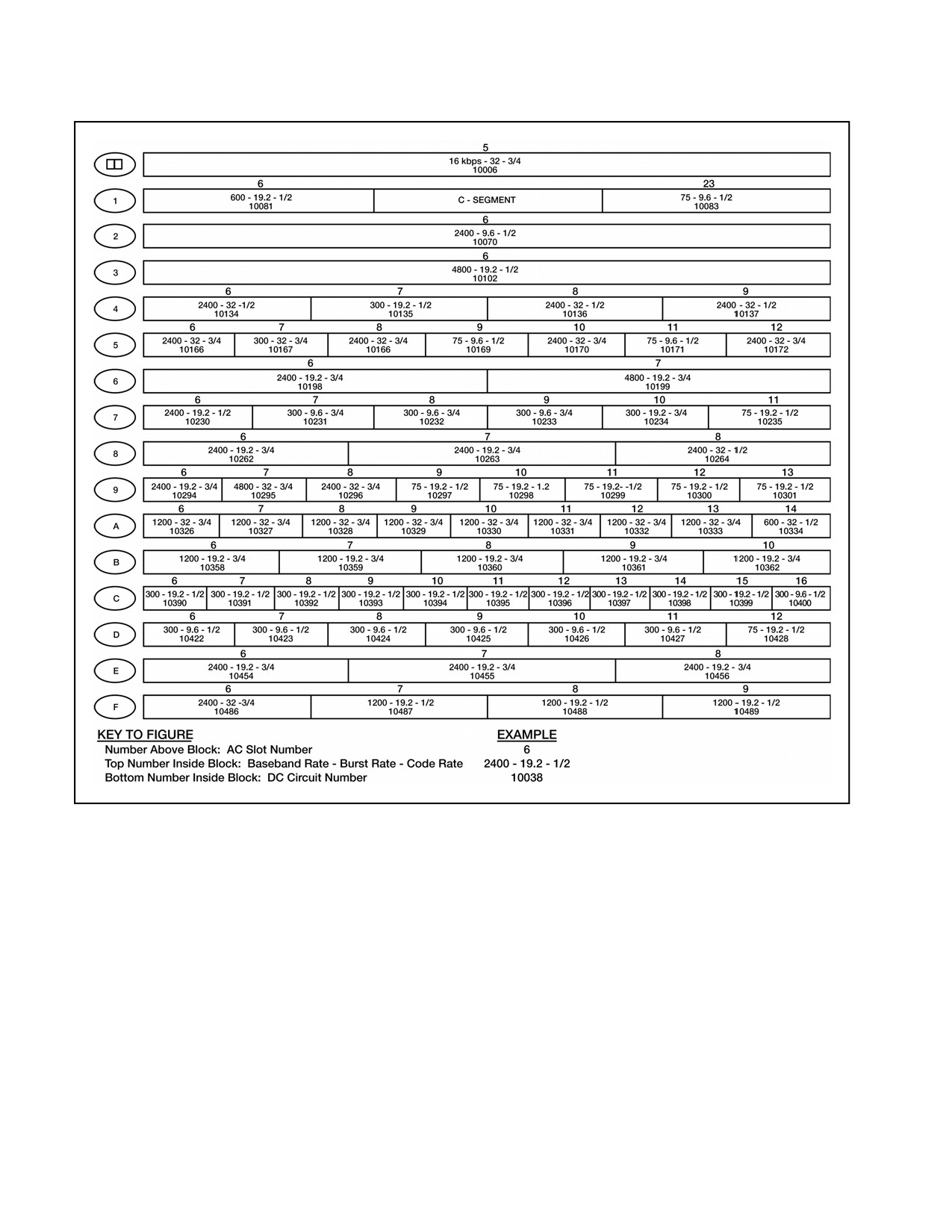
Figure I-11. B Segment Slots
I-20
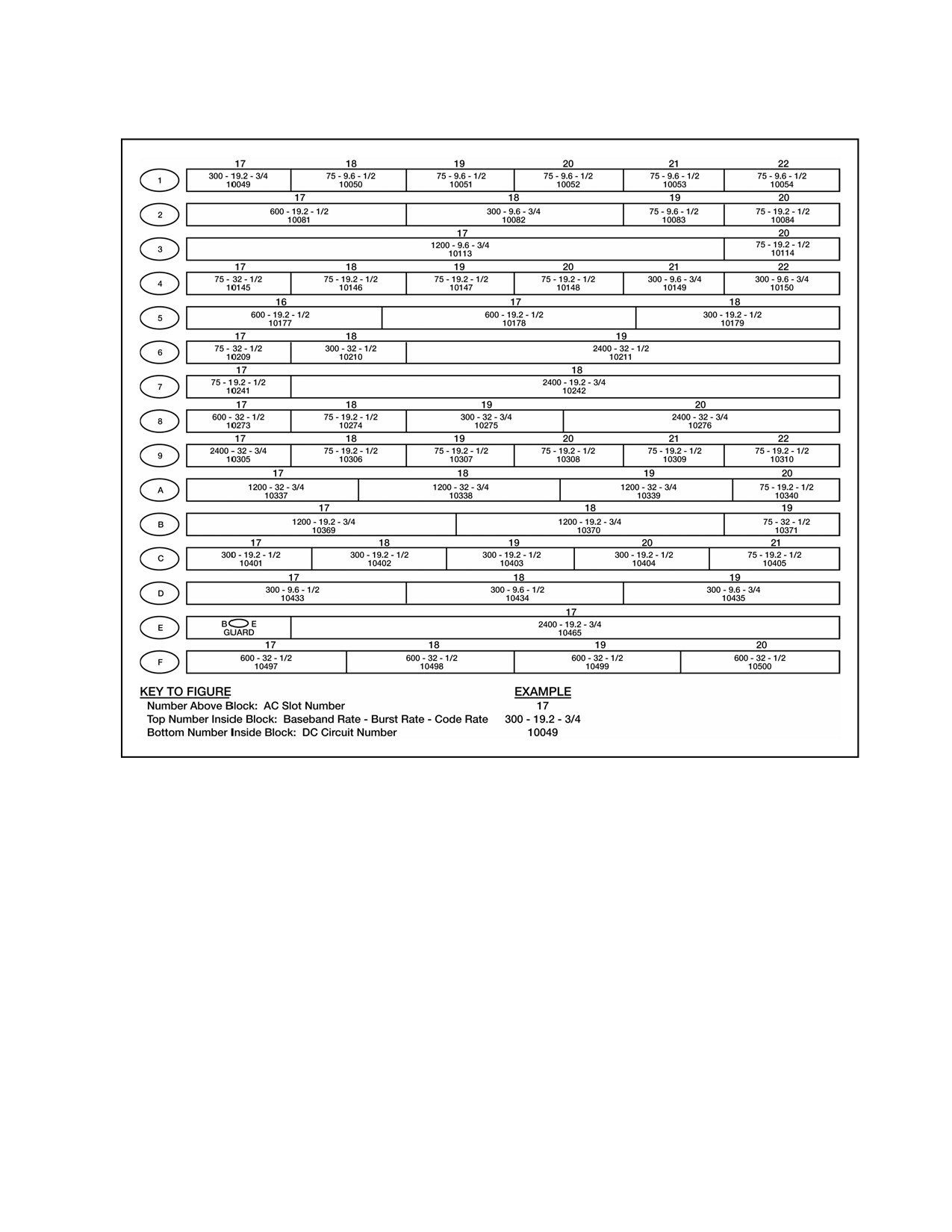
Figure I-12. C Segment Slots
e. The segments shown in Figures I-10 through I-14 are complete selections. They
facilitate understading how the controller determines the number of users that may
simultaneously use a channel without causing interference. The first item considered is
the data rate of the baseband device. This is indicated by the first number in each
block. The second item considered is the burst rate, which can be one of three
selections. On good channels, the burst rate can be as high as 32-kilosymbol(s) per
second; on noisier channels (or channels with disadvantaged users), the burst rate is
lowered to 19.2- or 9.6-kilosymbol(s) per second to increase the likelihood of successful
communication. The encoding rate also plays a major role, especially with the
disadvantaged users on the DAMA channels.
I-21
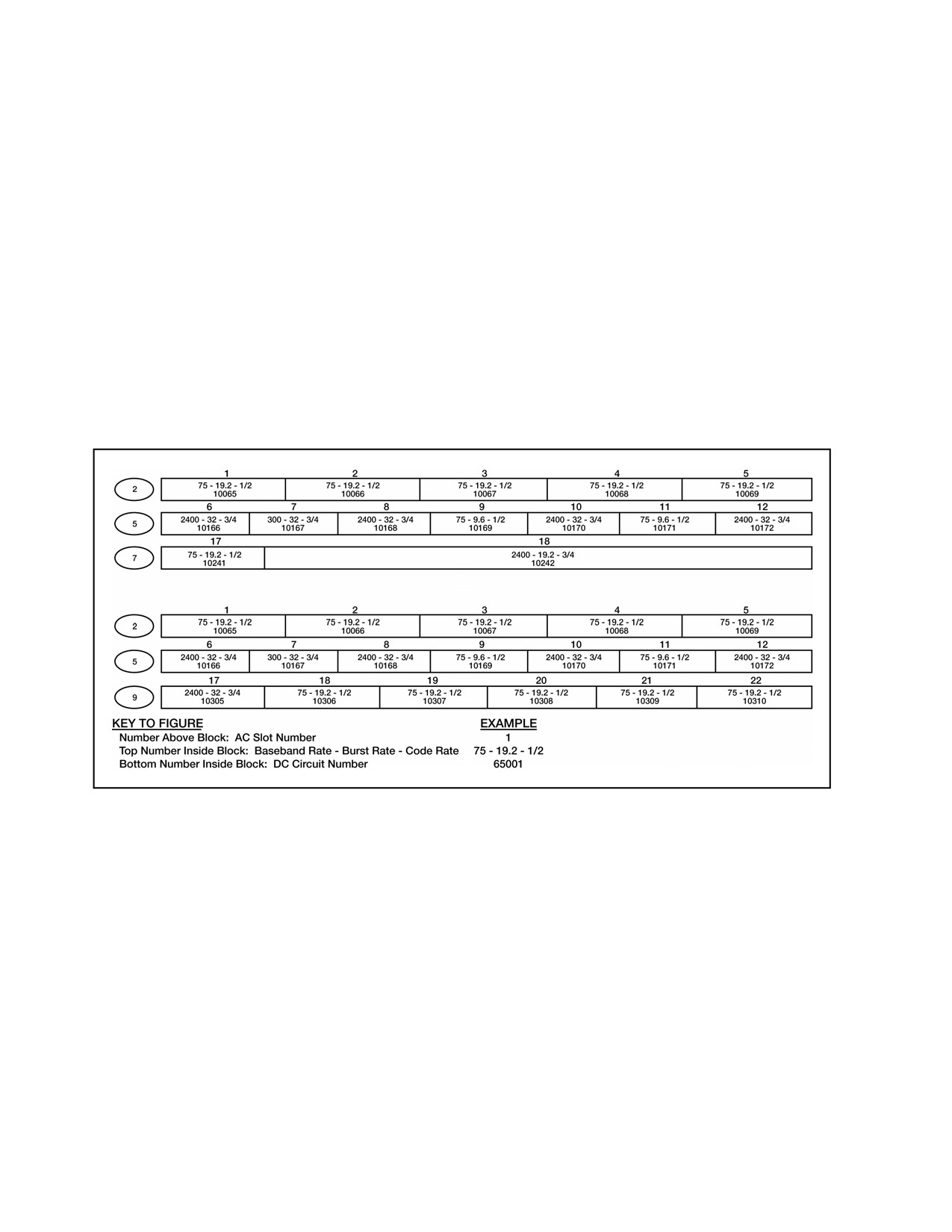
f. While there are selections that can accommodate up to 22 time-slots and
selections that can accommodate 16-kbps data/voice users, the most common Navy
selections are the 257 and 259 formats (shown in Figure I-13). These formats allow five
narrowband voice users at a 2.4-kbps data rate on the channel along with several lower
data rate users. The benefit to the user is that five voice nets can be placed on one
channel instead of five separate channels. These formats require ideal conditions in
which burst rates can be at their highest speed.
g. Adjustments to the frame format are made for different data rates and different
requirements of the users. The UCC, RSSC, or JMINI control station operator always
determines the frame format. Users only supply the requests for access to the channels
and information (such as data rates, type of communications, length of transmissions,
and disadvantaged terminals within the network) supporting the use of the time-slots.
This allows the control operators to adjust the channels to support the greatest number
of users with the highest quality communications slots available.
Figure I-13. Typical Navy 25-kHz DAMA Assignments
h. While these may be the most common frame formats used, they are not the only
formats available. Frame formats can, and should, be based on the communications
requirements submitted, then updated based on the quality of communications
provided. When a unit has disadvantaged users (such as manpack, 20w radio with a
low-look angle to the satellite) within the network, the frame format should be adjusted
to provide a more robust time-slot. This may include reducing the number of time-slots
available to allow for lower burst rates. The lower burst rates (19.2 and 9.6) allow for
communications to be established when the burst rate of 32 does not support the
majority of users.
I-22
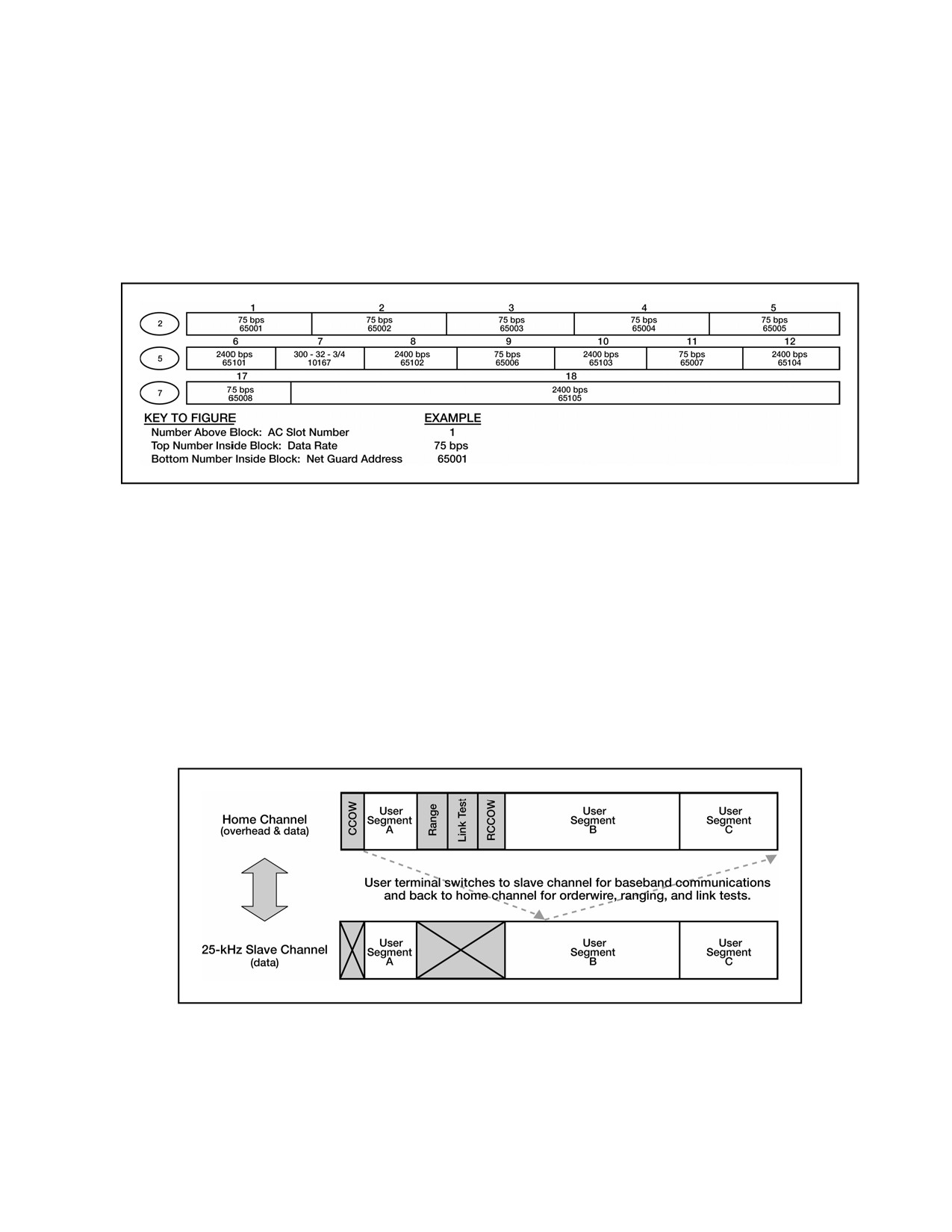
i.
For TDMA DAMA, the time-slots within the frame format for communications
are assigned to a network address. This guarantees assured access to the units. The
slot is used only by those terminals contacting the network address. TDMA DAMA does
not allow point-to-point or conference calls since all time-slots are dedicated to network
addresses as indicated in Figure I-14. In addition, use of TDMA DAMA does not allow
changing frame formats based on communications problems. The time-slots are
assigned and cannot be changed.
Figure I-14. Example of 25-kHz TDMA DAMA Assignments
8. Slave Channels
a. Slave channels capitalize on a frequency switching concept to assign services on
5-kHz and 25-kHz channels that are time-slaved to a 25-kHz DAMA control channel
(Figure I-15).
(1) DAMA control channel used for OW communications, ranging, and link tests.
(2) DAMA slave channels used for baseband communications.
(3) DAMA slave channels do not require channel control modems/radios.
Figure I-15. Slave Channels for 25-kHz DAMA
b. Only DAMA SAC supports slave channels; JMINI at full operational capability
supports—
I-23
(1) Both -183 (baseline) and -183A terminals can use 25-kHz slave channels.
(2) Only -183A terminals can use 5-kHz slave channels. New burst rates and
forward are correction rates.
(3) Set up and push-to-talk delays on 5-kHz slave channels are the same as on
any 25-kHz DAMA channel.
c. Consider slave channels a hybrid of DAMA with demand assigned single access
(DASA) capability. DASA requires—
(1) User tunes to DAMA home channel, requests timed DASA access.
(2) Radio frequency switches to DASA channel for dedicated channel use.
(3) Radio uses frequency switching technology.
d. In each frame cycle—
(1) Users tune to home channel for overhead.
(a) CCOW.
(b) RCCOW.
(c) Link test.
(d) Ranging.
(e) No OW, ranging, or link data on slave channel.
(2) Users frequency switch to slave channel for baseband communications on
appropriate data slot(s).
I-24
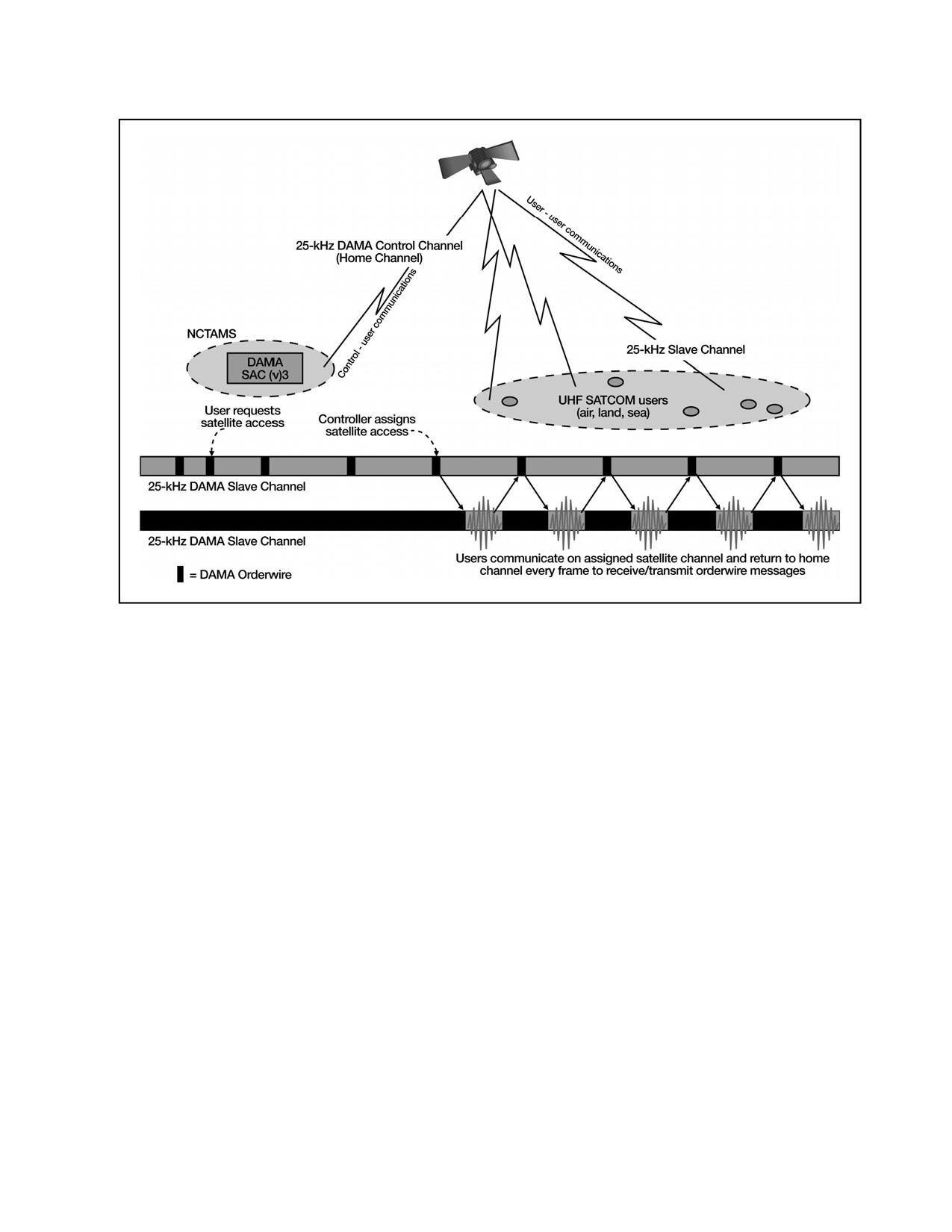
Figure I-16. Communications on 25-kHz DAMA Slave Channels
I-25
Chapter II
Communications Planning Cycle
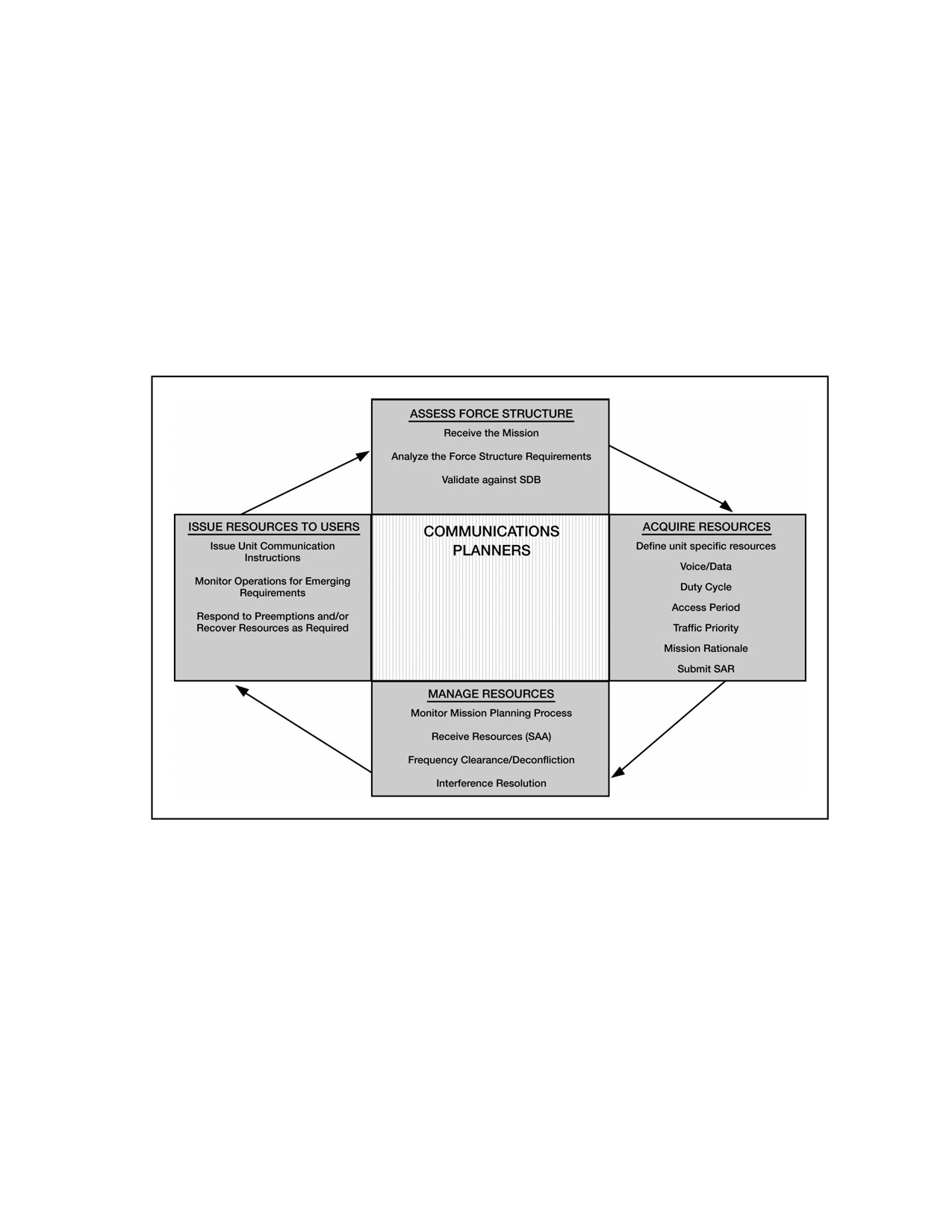
1. Assess Force Structure Requirements
a. What is the mission requirement? Who, what, where, when, why
(OPLAN/EXPLAN/EMOP)?
b. Validate mission requirements against established SDB (per
OPLANS/EXPLANS/EMOP/fragmentary order/Annex-K), and CJCSI 6250.01A priority
code.
Figure II-1. Communications Planning Cycle
2. Acquire Resources
a. Define unit specific resources. TACSAT resources are extremely constrained due
to proliferation of TACSAT capable radio systems. Based on system constraints a unit
may receive an assignment that provides for lower data rates than originally requested.
Communications planners validate all resource requirements based on mission criteria
and ensure that realistic resource requests are submitted based on mission analysis.
(1) Do not use TACSAT networks for routine traffic when other systems and
modes of communication are available.
(2) Do not request resources at a higher priority than required.
II-1
b. Voice.
(1) Bandwidth (25-kHz or 5-kHz).
(2) Mode (DAMA or dedicated).
(3) Data rate (2.4-kbps or 16-kbps).
(4) Criteria.
(a) Per the JCS, narrowband voice mandate, compatibility with advanced
narrowband digital voice terminal (ANDVT) application 3 using voice digitization at 2.4-
kbps is the joint standard for secure voice operations via UHF satellites.
(b) For a number of high priority networks, the COCOM can designate that
a network operate at 16-kbps for technical or voice recognition requirements.
c. Data.
(1) Bandwidth (25-kHz or 5-kHz).
(2) Mode (DAMA or dedicated).
(3) Data Rate (75-bps to 64-kbps).
(a) The major factors that determine data rate selection are the file size
required to be transmitted, the volume of traffic, and tolerance for delay in access to the
circuit.
(b) Larger file sizes require greater throughput speed (for example, a file
size of 50-bytes may be transmitted over a 300-baud link, but a 1.2-megabyte file may
require a nine.6-kbps link).
d. Duty cycle. (For what percentage of a 24-hour day is access to the circuit
required?)
(1) Low—1 to 2 hours access per 24-hour period.
(2) Medium—2 to 8 hours access per 24-hour period.
(3) High—8 hours or more access per 24-hour period.
e. Access period. Coordinated universal time date-time group of start access date
and stop access date with specific periods of use per day (for example, 0700Z to 1700z
daily). Request 24-hour access if mission analysis identifies the requirement.
f. Traffic priority. CJCSI 6250.01A identifies a prioritization scheme to determine
access to both the core warfighting and enterprise-wide SATCOM resource
apportionment. See Appendix J for the prioritization scheme used to determine access.
g. Mission rationale (for specific/special resource request).
(1) Equipment, platforms, or mission capabilities/limitations (such as not
capable of operating in all modes or bandwidths).
(2) Support relationships (special users, coalition users).
(3) Geographic or physical location (DAMA MHOP), footprint, look angle
constraints.
II-2
(4) DAMA emission control (EMCON) While using 25-kHz DAMA channels,
especially TDMA DAMA, periodic slot connect OWs are transmittable to the terminals.
Stating EMCON is required, ensures the DAMA controllers are ready to transmit this
OW every 2 to 7 minutes. This “pulls in” any terminal logged into the DAMA channel
with the net guard address programmed into the guard list. This eliminates some
operator errors in accessing the net guard.
(5) TBA management in TDMA DAMA networks. Access to the 25-kHz DAMA
channels is preassigned to the networks. Preassigning the channels removes the
capability to make point-to-point or conference calls and prevents preemption of time-
slots based on TBA precedence. Usually, the networks are assigned as common
networks, eliminating the need to identify which TBAs will participate in the net guard
address. Therefore, listing TBAs and requesting precedence for the TBA is not required.
(6) TBA precedence. A unit assigns each TBA a precedence for establishing
services/calls via the SAR. For 5-kHz DAMA, the precedences are routine, priority,
immediate, flash, and flash override. The precedence determines how fast the terminal
accesses the satellite channel. All accesses on 5-kHz DAMA are precedence based.
Higher precedence services preempt lower precedence services, even if already
established. The precedences for 25-kHz DAMA and 5-kHz DAMA are the same, except
emergency action is the highest precedence in 25-kHz DAMA. For ad hoc DAMA
channels, TBA precedence works much the same as on 5-kHz DAMA. Precedence is not
the only basis for preemption. Ranked networks preempt slots on the channel first,
followed by precedence. Preassigned time-slots (TDMA DAMA) cannot be preempted by
any precedence.
(7) Common network. A common network is a net guard address without a
designated list of access permitted terminals. Any terminal may participate if the net
guard address is on the guard list and it uses the configuration code assigned to the
address. The size of the network is limited to 512 addresses, because only 512 terminals
may use one 25-kHz DAMA channel (ranging limitation). The size on the 5-kHz DAMA
channel is limited to 64 terminals, based on the military standard.
(8) Private network. A private network. is a net guard address with a
designated access list of terminals. This is the standard network for 5-kHz DAMA. A
maximum of 64 TBAs are assigned to the network and designated in the SAR as
participants. Any terminal can initiate the network for a call or service and any service
is available to the network. A 25-kHz DAMA private network. is also limited to 64
TBAs and they must be stated in the SAR as participants. In addition, designate one
terminal as the NCS of the network. This is the only terminal that initiates the
network. Usually, these networks are not given preassigned time-slots. A private
network on 25-kHz DAMA may request access to a DASA channel while a common
network cannot.
(9) Disadvantaged users. Disadvantaged users are terminals with problems
accessing the satellite channels. These include, but are not limited to, manpack
terminals, aircraft, on-the-move vehicles, and terminals situated in areas with low-look
angles to the satellite (especially 20 degrees or less). Five-kHz DAMA has built in
capabilities to compensate disadvantaged users. Twenty-five-kHz DAMA must assign
frame formats to the channel to compensate these users. The assigned time-slots must
have the same data rate but lower burst rates (19.2 or 9.6) to ensure communications.
II-3
This reduces the number of time-slots on a channel, but provides better access for the
user.
h. Submit SAR. Submit the SAR to higher headquarters (to be published). A
common SAR is found at [Web site to be determined]. If unavailable, UCC guidance is
used.
3. Manage Resources
a. Monitor the mission planning process for changes and submit updates as
required.
b. Receive SAA [Web site to be determined] (to be published).
(1) Verify that frequencies are correct.
(2) For terminals using channel number, verify that the home channel number is
provided (see Appendix A).
c. Provide a copy of the SAA to the frequency management office. Based on theater
guidance, the frequency management office—
(1) Verifies that frequencies are clear in the intended area of operation.
(2) Verifies that frequency records (uplink/downlink) are included in the
electromagnetic battlespace database (such as Spectrum XXI).
(3) Tags TACSAT frequency assignments for inclusion in the joint restricted
frequency lists at the appropriate level.
(4) Assists user with resolving EMI per Chairman Joint Chiefs of Staff Manual
(CJCSM) 3320.02.
4. Issue Resources To Users
a. Incorporate appropriate information from the SAA into cut sheets, operations
orders, Annex-K, and so forth. Distribute as required. (See Appendix I for samples of
cut sheets.)
b. Monitor mission for emerging requirements or changes.
c. Coordinate extensions, preemptions, and terminations of SAAs as they occur.
II-4
Chapter III
TACSAT Radio Equipment and Operations
1. Terminal
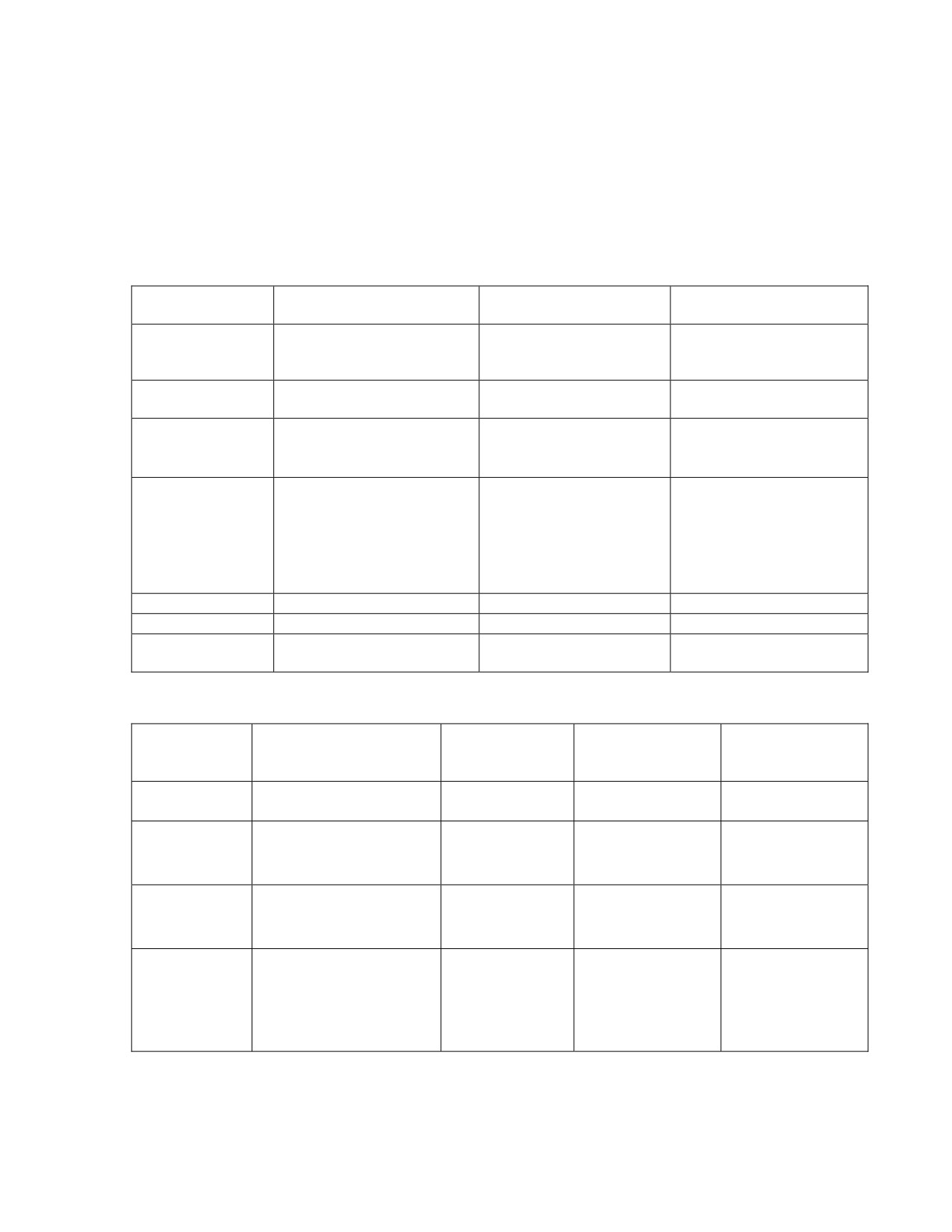
Table III-1a. Radio Equipment
AN/PSC-5C
AN/PSC-5D Multiband
Radio Item
AN/PSC-5 SPITFIRE
SHADOWFIRE
Multimission Radio
Frequency
Range
30 to 400
30 to 420
30 to 512
Megahertz (MHz)
Modes of
LOS, SATCOM, 5-kHz
LOS, SATCOM, 5-kHz
LOS, SATCOM, 5-kHz
Operations
DAMA, 25-kHz DAMA
DAMA, 25-kHz DAMA
DAMA, 25-kHz DAMA
MIL-STD 188-181
MIL-STD 188-181B
MIL-STD 188-181B
DAMA
MIL-STD 188-182
MIL-STD 188-182A
MIL-STD 188-182A
Compliance
MIL-STD 188-183
MIL-STD 188-183
MIL-STD 188-183A
VINSON
VINSON
VINSON
MELP
ANDVT
Embedded
ANDVT
ANDVT
KG-84A (Modes 1, 2, 3,
COMSEC
KG-84A (Modes 3 and 4)
KG-84A (Modes 1, 2, 3,
and 4)
FASCINATOR
and 4)
FASCINATOR
FASCINATOR
Platform
Manpack/Vehicular
Manpack/Vehicular
Manpack/Vehicular
Ports
One
One
One
Programming
Home Channel Numbers
Home Channel Numbers
Home Channel Numbers
Frequencies
Table III-1b. Radio Equipment
MD-1324
AN/WSC-3 w/
Radio Item
AN/PRC-117F
w/RT-1771 or AN/
LST-5D
TD-1271
WSC-3
Frequency
30 to 512
225 to 400
225 to 400
225 to 400
Range(MHz)
SATCOM, 5-kHz
LOS, SATCOM,
Modes of
LOS, SATCOM, 5-kHz
SATCOM,
DAMA, 25-kHz
5-kHz DAMA,
Operations
DAMA, 25-kHz DAMA
25-kHz DAMA
DAMA
25-kHz DAMA
MIL-STD 188-181B MIL-
FSCS for 25-
MIL-STD 188-181
MIL-STD 188-181
DAMA
STD 188-182
kHz DAMA
MIL-STD 188-182
MIL-STD 188-182
Compliance
MIL-STD 188-183 and A
MIL-STD 188-183
MIL-STD 188-183
VINSON
VINSON
ANDVT
ANDVT
Embedded
KG-84A (Modes 1, 2, 3,
External Crypto
External Crypto
KG-84
COMSEC
and 4)
External Crypto for
FASCINATOR
Second Port
III-1
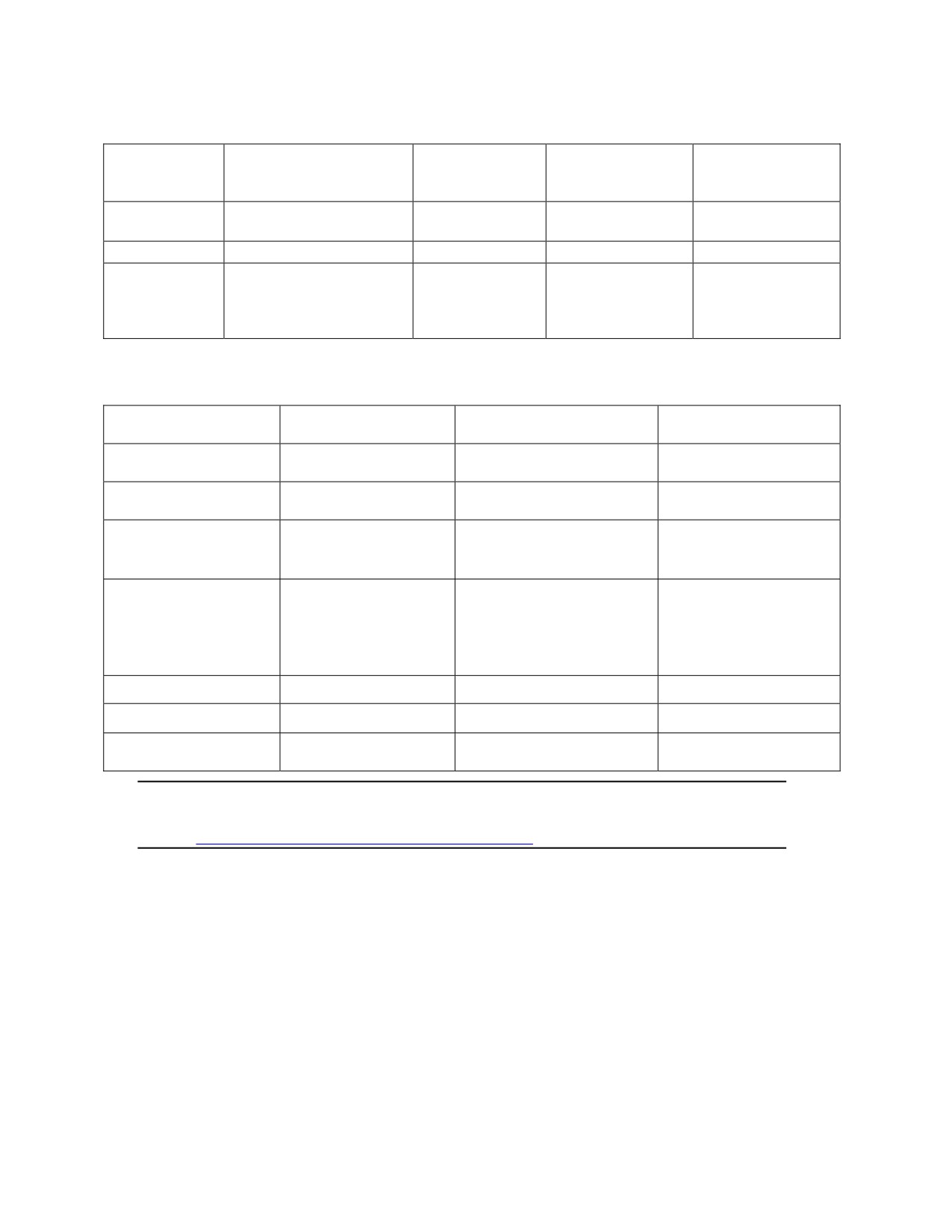
Table III-1b. Radio Equipment
MD-1324
AN/WSC-3 w/
Radio Item
AN/PRC-117F
w/RT-1771 or AN/
LST-5D
TD-1271
WSC-3
Manpack/Vehicula
Platform
Manpack/Vehicular
Mounted/Ship
Mounted/Ship
r
Ports
One
Four
Two
Two
Uplink and
Uplink and
Uplink and
Programming
Downlink
Downlink
Downlink
Home Channel Numbers
Frequencies
Frequencies and
Frequencies and
Frequencies and
Offsets
Offsets
Offsets
Table III-1c. Radio Equipment
AN/ARC-231
Mini-DAMA AN/USC-
Radio Item
DMR
SKYFIRE
42(V)1,2,3
Frequency Range
30 to 512
2 to 2000
225 to 400
(MHz)
LOS, SATCOM, 5-kHz
LOS, SATCOM, 5-kHz
Modes of Operations
LOS, SATCOM,
DAMA, 25-kHz DAMA
DAMA, 25-kHz DAMA
MIL-STD 188-181B
MIL-STD 188-181B
MIL-STD 188-181B
DAMA Compliance
MIL-STD 188-182A
MIL-STD 188-182A
MIL-STD 188-182
MIL-STD 188-183A
MIL-STD 188-183A
MIL-STD 188-183
VINSON
ANDVT
VINSON
VINSON
Embedded COMSEC
KG-84A (Modes 1, 2,
ANDVT
ANDVT
3, and 4)
KG-84A
KG-84
FASCINATOR
Platform
Airborne
Mounted/Ship
Mounted/Ship/Airborne
Ports
One
Four
Eight
Programming
Home Channel
Unknown
Unknown
Frequencies
Numbers
Note: Information on all DAMA certified equipment is available on the Joint
Interoperability Test Command (JITC) Web site:
http://jitc.fhu.disa.mil/reg/uhfdama.htm.
III-2
2. Terminal Set up and Operations
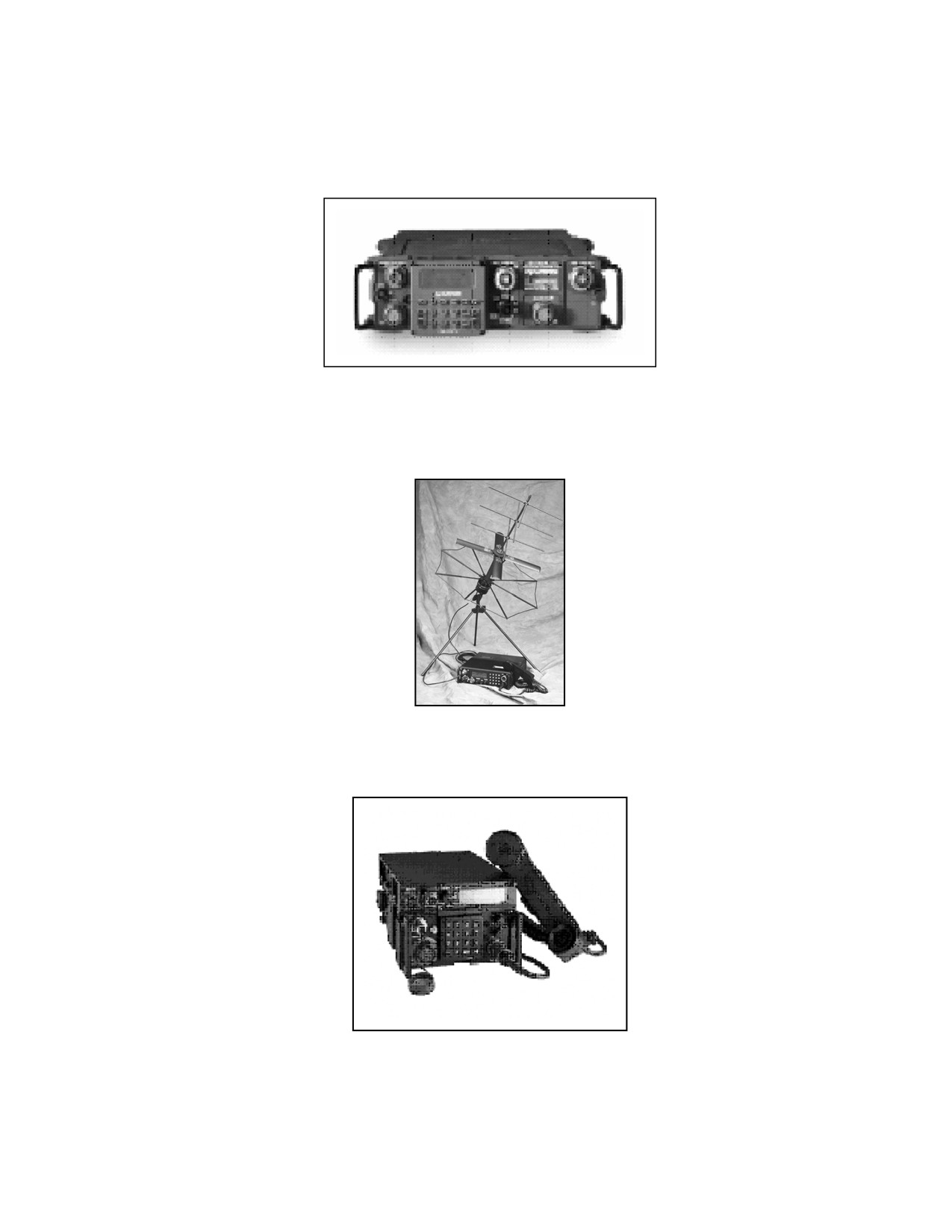
a. AN/PRC-117F. (See Appendix C.)
Figure III-1. AN/PRC-117F
b. AN/PSC-5A/C/D. (See Appendix D.)
Figure III-2. AN/PSC-5 Series
c. Lightweight satellite terminal (LST)-5D. (See Appendix E.)
Figure III-3. LST-5
III-3
///////////////////////////////////////