FM 4-20.108 Airdrop of Supplies and Equipment: Rigging Military Utility Vehicles (SEPTEMBER 2007) - page 5
Chapter 7
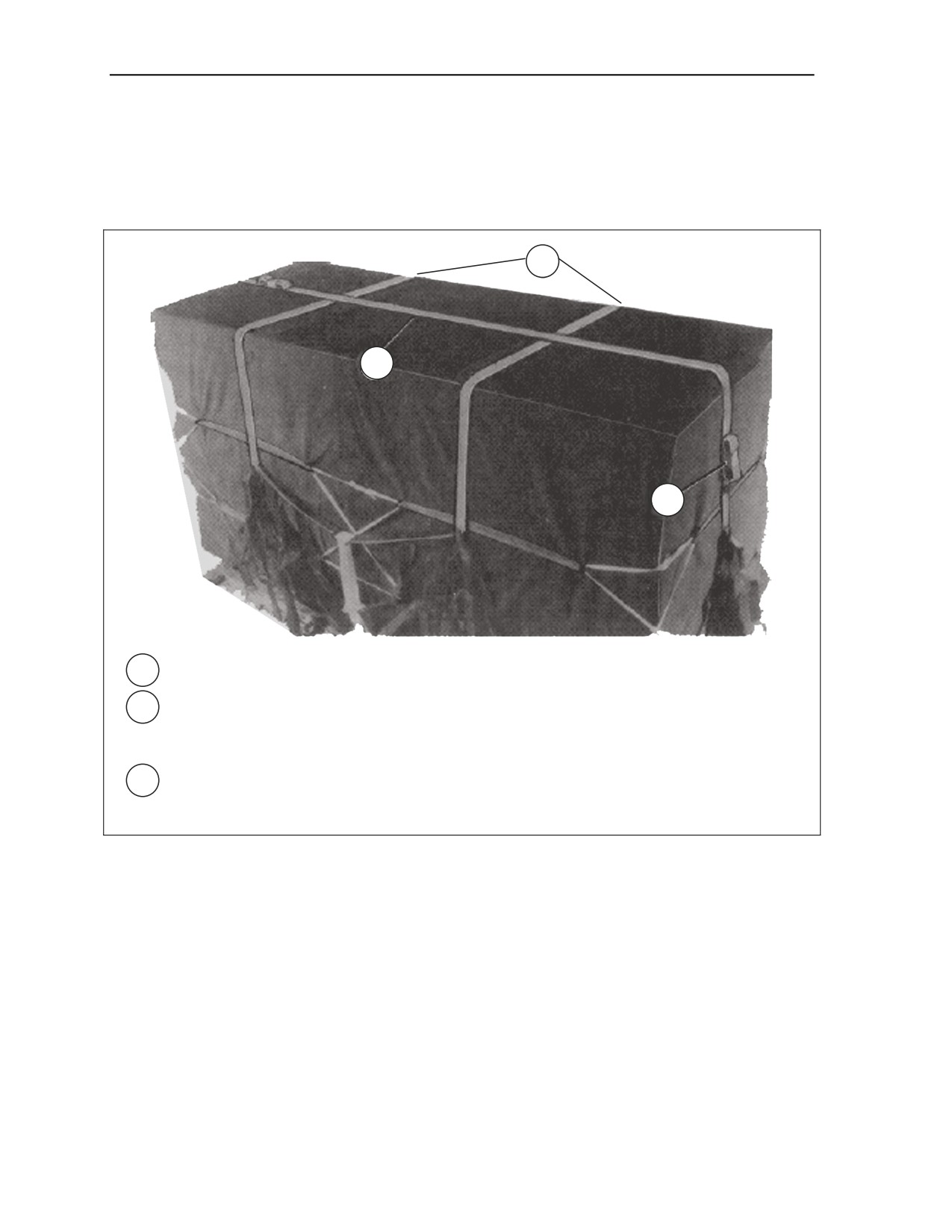
SECURING A-22 CARGO BAGS TIE-DOWN STRAPS
7-9. Secure the tie-down straps as outlined in FM 4-20.103/MCRP 3-11.3C/NAVSEA SS400-AB-MMO-
010/TO 13C7-1-11 and as shown in Figure 7-8.
1
2
3
1 Run the side tie-down straps through the friction adapters. Apply tension to the straps.
2 If necessary, attach a 36- or 60-inch type VIII nylon webbing strap to either the front or rear
tie-down strap. If used, fold and tape or tie to the sling assembly. Route the running end
through the friction adapter on the opposite end.
3 Fold the excess on the tie-down straps. Tape or tie it as shown.
Figure 7-8. A-22 Cargo Bags Tie-Down Straps Secured
7-10
FM 4-20.108 /TO 13C7-2-491
10 September 2007
Rigging Two Motorcycles for Low-Velocity Airdrop
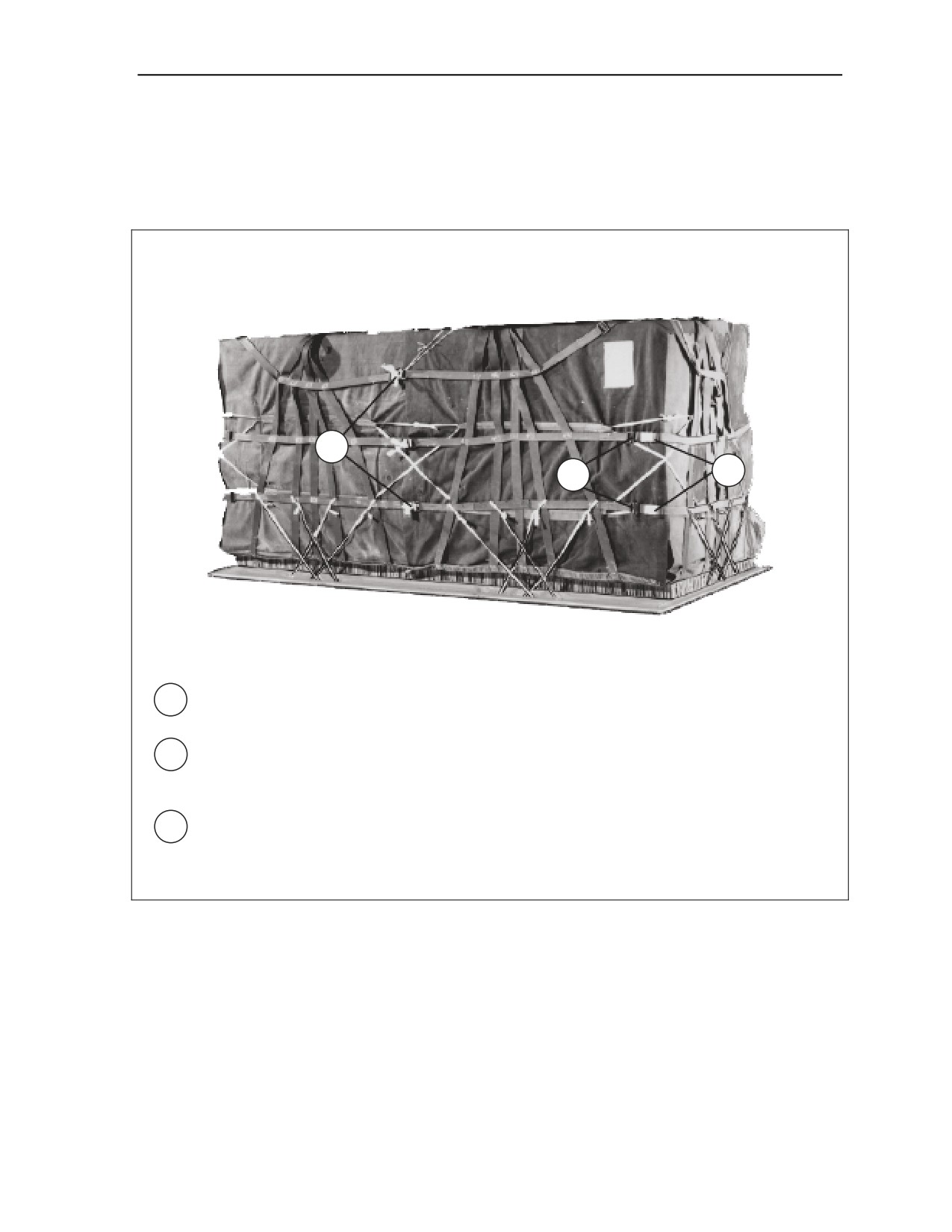
SECURING A-22 CARGO BAGS LATERAL STRAPS
7-10. Secure the A-22 cargo bags lateral straps as outlined in FM 4-20.103/MCRP 3-11.3C/NAVSEA
SS400-AB-MMO-010/TO 13C7-1-11 and as shown in Figure 7-9.
Note. If top lateral straps are on the top of the load, make sure they are loosely tightened.
2
3
1
1 Lay the remaining portions of the sling assemblies over the load. Route the lateral straps
through the friction adapters.
2 Tighten the center friction adapters and type VIII nylon webbing so that the middle
suspension web on each container is vertical. Install a knot in the running ends of the type
VIII nylon webbing about 3 inches from the friction adapters.
3 Apply equal tension on the remaining lateral straps. Fold the excess and tape or tie it in
place as shown.
Figure 7-9. A-22 Cargo Bags Lateral Straps Secured
10 September 2007
FM 4-20.108 /TO 13C7-2-491
7-11
Chapter 7
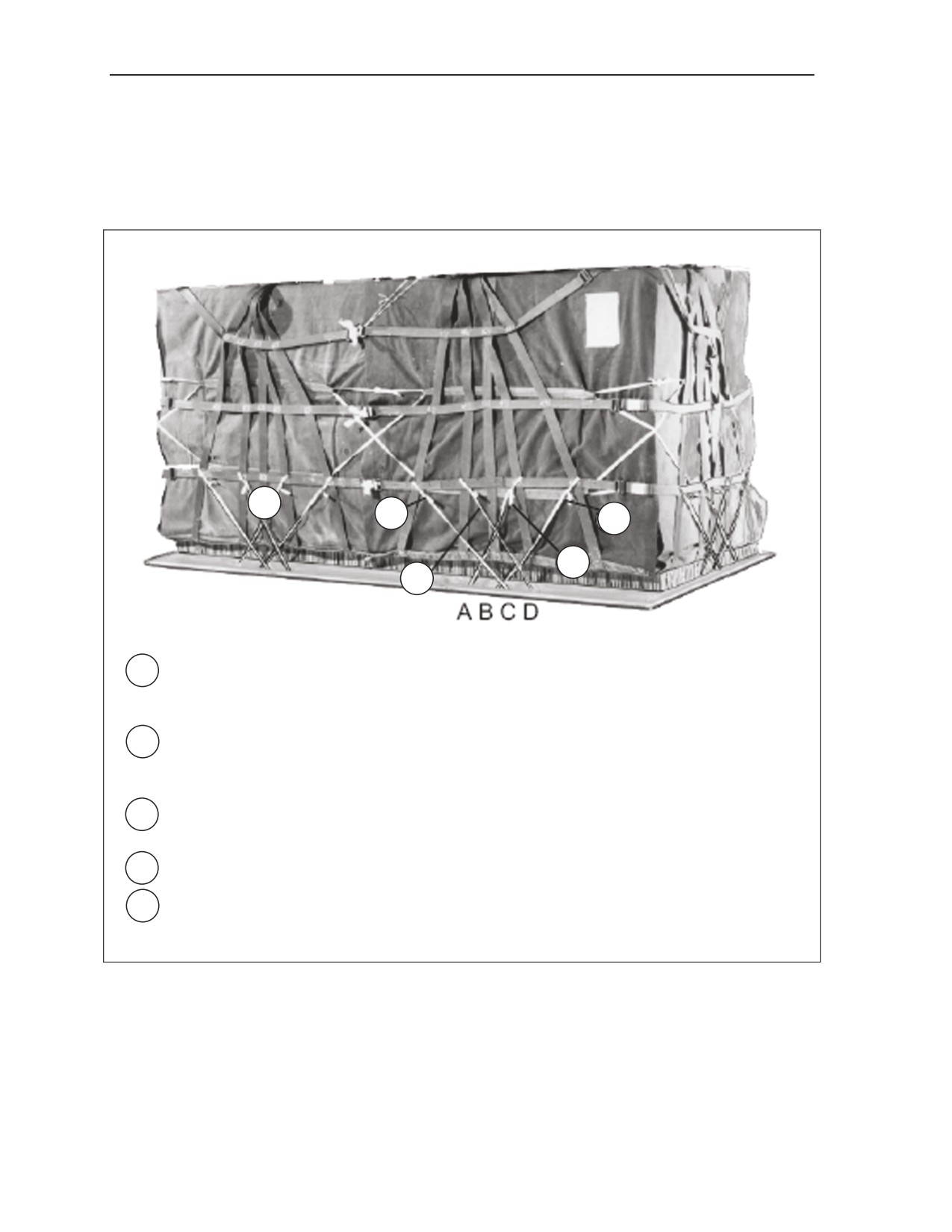
SECURING A-22 CARGO BAGS SKID BOARD TIES
7-11. Secure the A-22 cargo bags skid board ties as outlined in FM 4-20.103/MCRP 3-11.3C/NAVSEA
SS400-AB-MMO-010/TO 13C7-1-11 and as shown in Figure 7-10.
5
4
2
1
3
1 Starting at the front right side, take tie-down A and diagonally tie it around the intersection of
the lower lateral and fourth support web. Use three half-hitch knots and an overhand knot in
the running end.
2 Route tie-down B around the fifth support web and lower lateral strap intersection diagonally.
Pull the excess slack out, and tie it with a trucker’s hitch knot and an overhand knot in the
running end.
3 Repeat step 1 for tie-down D and secure it to the second intersection on the lower lateral
strap.
4 Repeat step 2 for tie-down C and secure it to the first intersection on the lower lateral strap.
5 Repeat steps 1 through 4 for the other five sets of tie-downs.
Figure 7-10. A-22 Cargo Bags Skid Board Ties Secured
7-12
FM 4-20.108 /TO 13C7-2-491
10 September 2007
Rigging Two Motorcycles for Low-Velocity Airdrop
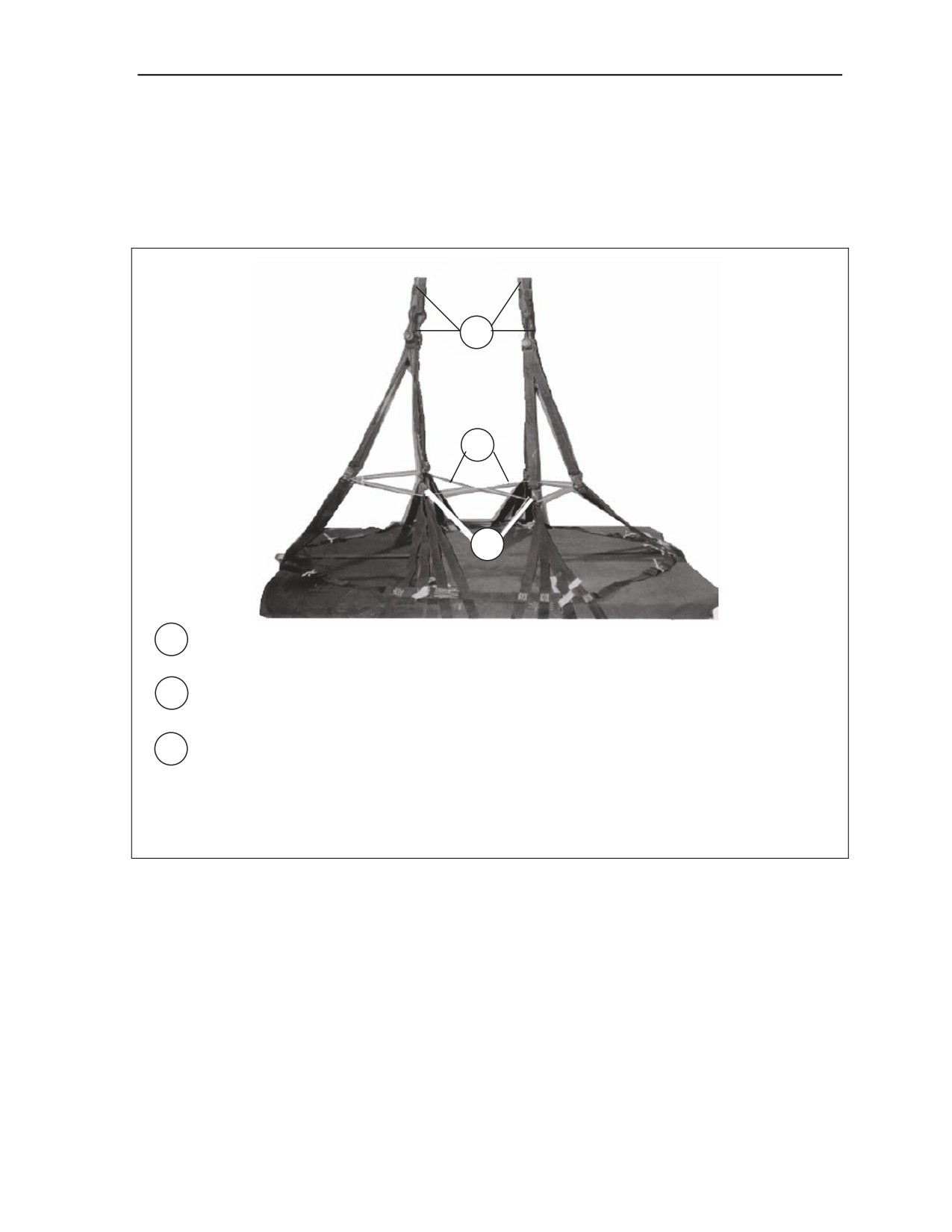
INSTALLING SUSPENSION SLINGS
7-12. Install suspension slings using six suspension webs, two 3/4-inch cargo suspension clevises, and two
3-foot (2-loop), type XXVI nylon webbing slings as outlined in FM 4-20.103/MCRP 3-11.3C/NAVSEA
SS400-AB-MMO-010/TO 13C7-1-11 and as shown in Figure 7-11.
Note. After positioning the type III nylon cord, fold and tape the excess with masking tape (Not Shown).
2
3
1
1 Attach one suspension web to each of the six D-rings. Route the snap hook from outside to
inside. Wrap each hook with masking tape.
2 Place a 3-foot (2-loop), type XXVI nylon webbing sling on each clevis. Bolt the three
suspension webs at the front of the load to one clevis. Repeat step for the rear set.
3 Route a length of type III nylon cord through the front support web D-rings. Cross the type III
nylon cord and run it rearward through the rear support web D-rings. Tie the ends together
with a surgeon’s knot and locking knot with an overhand knot in each running end. Make
sure the tie has excess to allow suspension sling movement.
Figure 7-11. Suspension Slings Installed
10 September 2007
FM 4-20.108 /TO 13C7-2-491
7-13
Chapter 7
PACKING A 15-FOOT CARGO EXTRACTION PARACHUTE FOR
USE AS A DEPLOYMENT PARACHUTE
7-13. Pack a 15-foot cargo extraction parachute as shown in Figures 7-12 through 7-17 using the following
items:
1
T-10 deployment bag with static line
Retainer bands
Type I, 1/4-inch cotton webbing
Ticket number 5, cotton thread
2
Medium cargo suspension clevises
For parachute with a 36-inch adapter web:
1
9-foot (2-loop), type XXVI nylon sling
1
Attach a two-point, 3 3/4-inch link assembly
For parachute without a 36-inch adapter web:
1
12-foot (2-loop), type XXVI nylon sling
1
60-inch nylon webbing strap (shear strap)
Note. If the standard 15-foot parachute deployment bag is attached to the parachute, remove the bag at the bag retaining line.
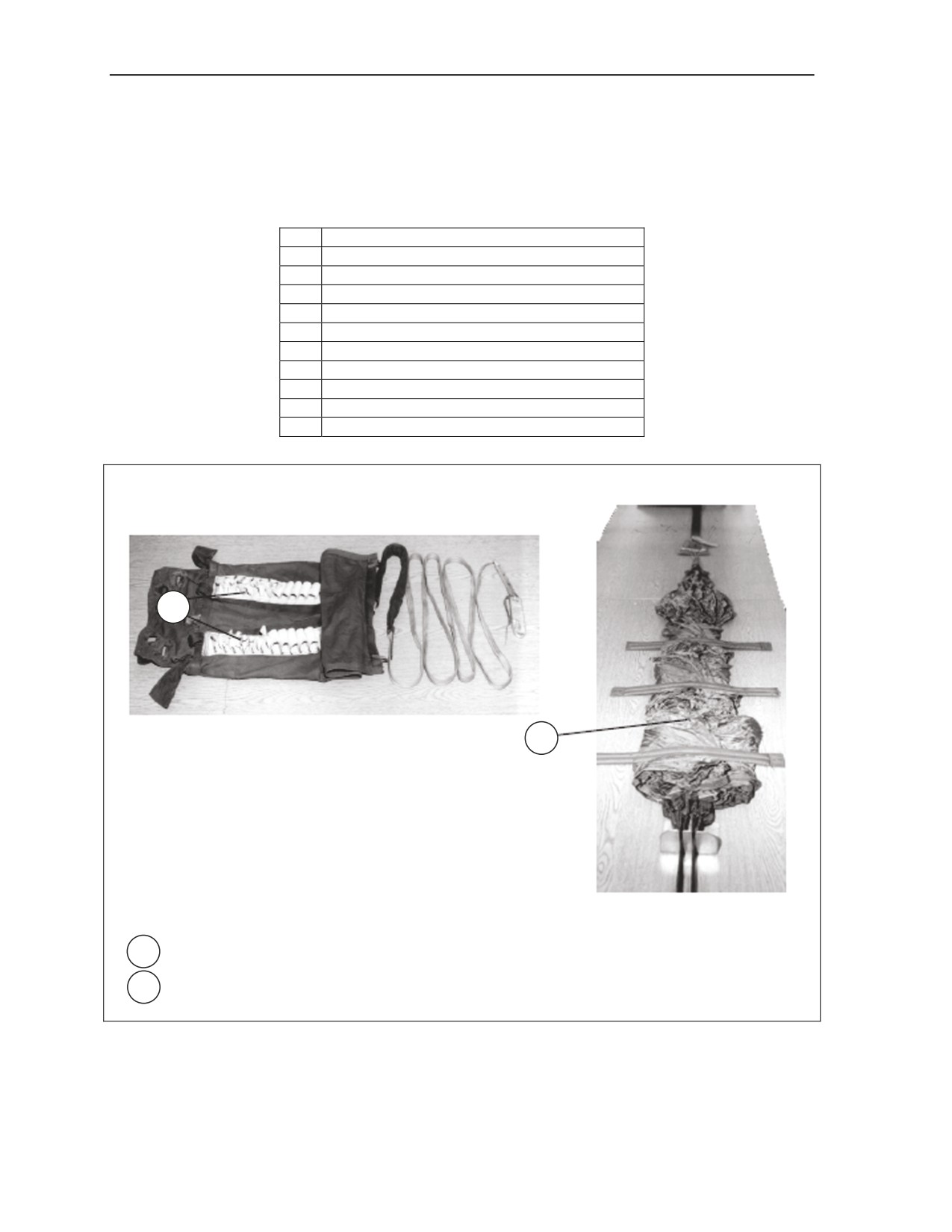
1
2
1 Attach retainer bands to the first eight stow loops on each side of the T-10 deployment bag.
2 Flat fold and long fold the canopy as outlined in TM 10-1670-278-23&P/TO 13C5-26-2.
Figure 7-12. Retainer Bands Attached and Canopy Folded
7-14
FM 4-20.108 /TO 13C7-2-491
10 September 2007
Rigging Two Motorcycles for Low-Velocity Airdrop
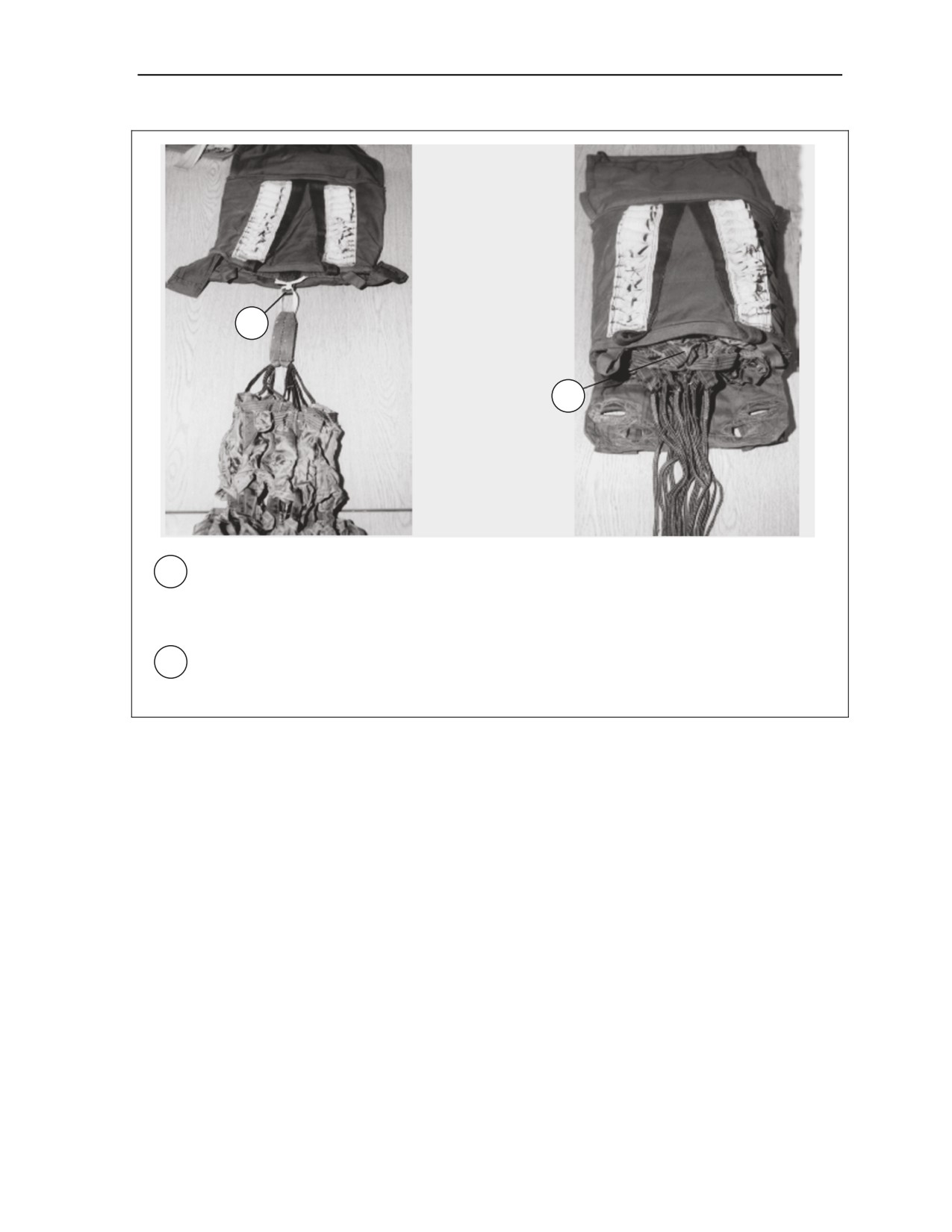
1
2
1 Pass two lengths of type I, 1/4-inch cotton webbing through the bridle loop of the canopy and
through the bridle attaching loop of the deployment bag to form a 3-inch loop. Cross the
ends of the webbing over the attaching loop, and tie them with a surgeon’s knot and locking
knot.
2 S-fold the canopy into the deployment bag starting in the upper right corner of the bag.
Figure 7-13. Deployment Bag Attached and Canopy Stowed
10 September 2007
FM 4-20.108 /TO 13C7-2-491
7-15
Chapter 7
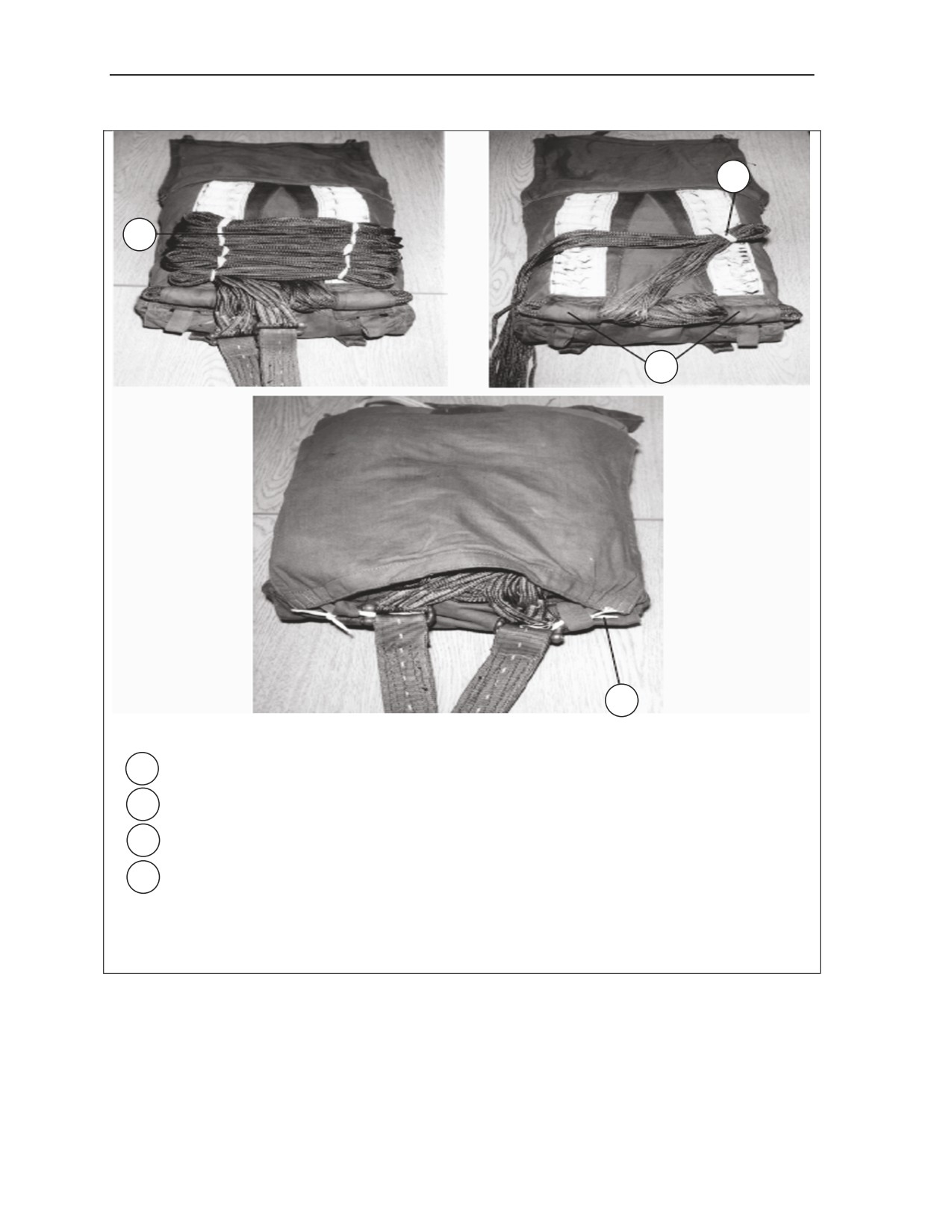
2
3
1
4
1 Make the locking stows as outlined in TM 10-1670-278-23&P/TO 13C5-26-2.
2 Make the first suspension line stow in the upper right retainer band.
3 Continue stowing the lines from side to side.
4 Pass a length of type I, 1/4-inch cotton webbing through the right side connector link, the
connector link loops, and the suspension line protector flap loop. Tie the webbing with a
surgeon’s knot and locking knot. Repeat on the left side.
Figure 7-14. Locking and Suspension Line Stows Made and Connector Links Tied
7-16
FM 4-20.108 /TO 13C7-2-491
10 September 2007
Rigging Two Motorcycles for Low-Velocity Airdrop
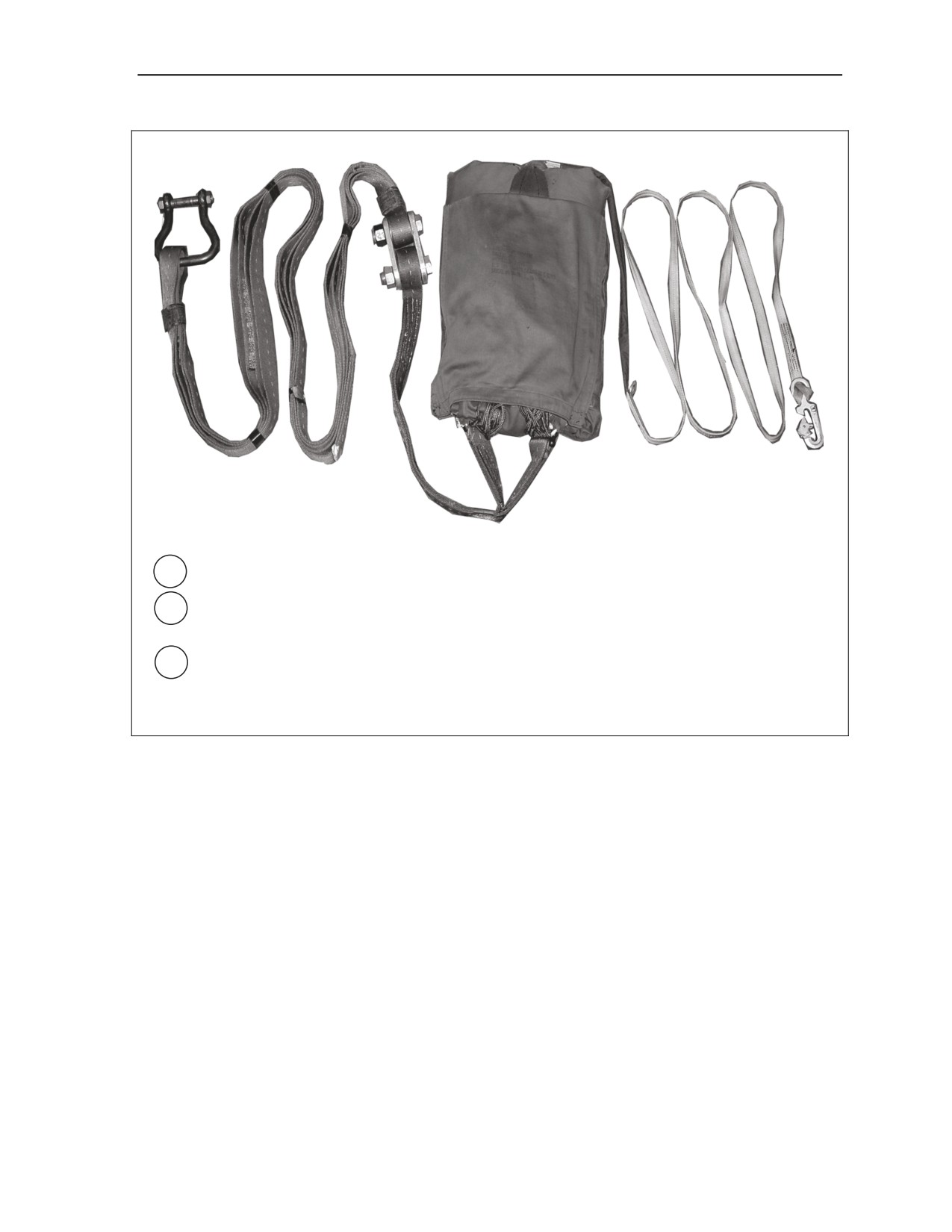
1 Attach a two-point, 3 3/4-inch link assembly or medium clevis to the 36-inch adapter web.
2 Attach a 9-foot (2-loop), type XXVI nylon webbing sling to the two-point, 3 3/4-inch link
assembly or medium clevis.
3 Bolt a medium suspension clevis (Shown) or a two-point, 3 3/4-inch link assembly to the free
end of the sling.
Figure 7-15. Deployment Line Installed on a 36-inch Adapter Web
10 September 2007
FM 4-20.108 /TO 13C7-2-491
7-17
Chapter 7
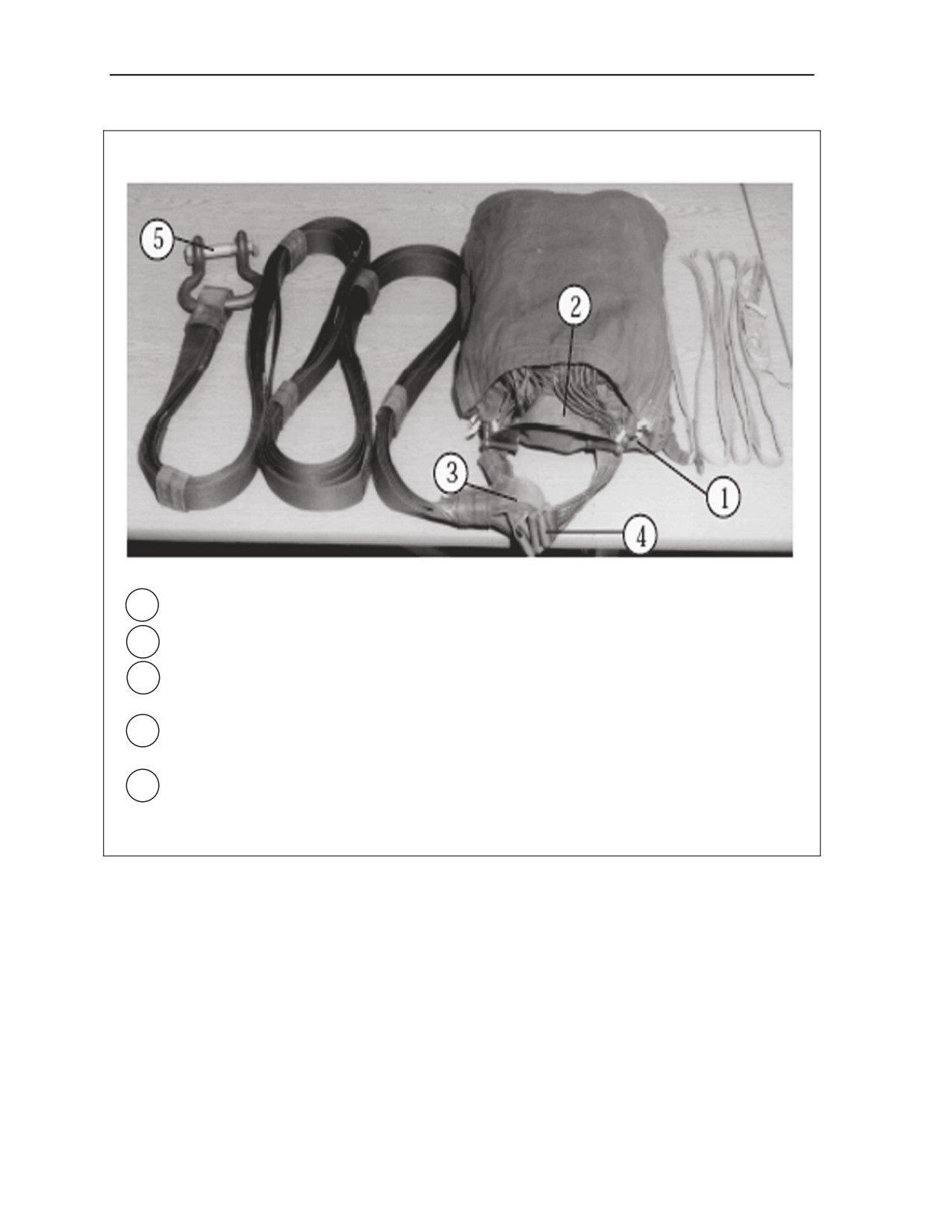
Note. These procedures are for a 15-foot cargo extraction parachute without a 36-inch adapter web.
1 Secure the parachute connector links as shown in step 4.
2 Run one end of a 60-inch shear strap through both of the parachute connector links.
3 Run one end of the 60-inch shear strap through one end of a 12-foot (3-loop), type XXVI
nylon sling.
4 Fasten the friction adapter, and adjust the shear strap to form a 12-inch loop. Tape the
excess strap.
5 Bolt a medium suspension clevis (shown) or a two-point, 3 3/4-inch link assembly to the free
end of the sling.
Figure 7-16. Deployment Line Installed on a 60-inch Adapter Web
7-18
FM 4-20.108 /TO 13C7-2-491
10 September 2007
Rigging Two Motorcycles for Low-Velocity Airdrop
1
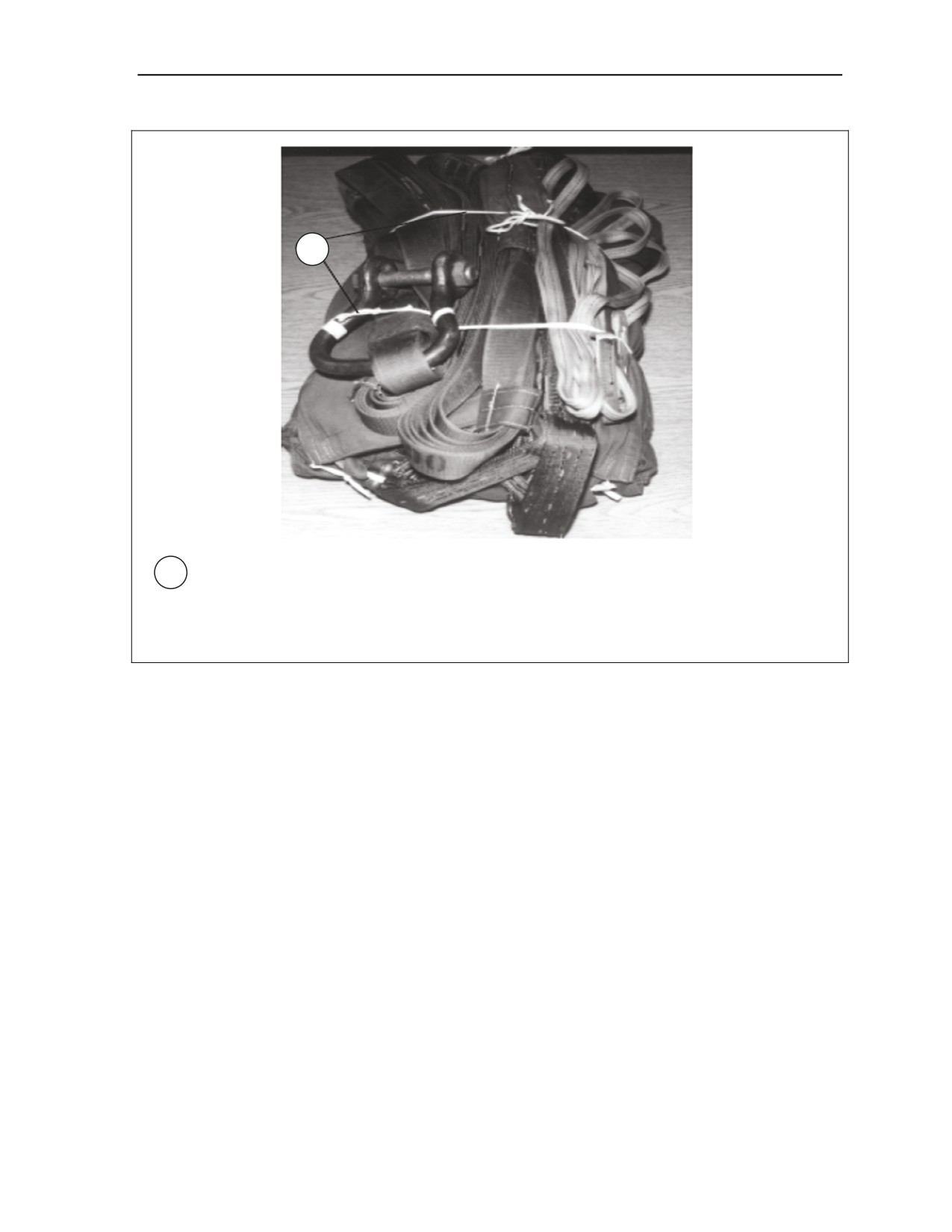
1 S-fold the deployment line and static line. Place them on top of the deployment bag. Secure
them in place with two lengths of type I, 1/4-inch cotton webbing wrapped around the lines
and bag.
Figure 7-17. Cargo Extraction Parachute Packed in a T-10 Deployment Bag
10 September 2007
FM 4-20.108 /TO 13C7-2-491
7-19
Chapter 7
PREPARING AND STOWING A G-12 CARGO PARACHUTE AND THE
15-FOOT CARGO EXTRACTION
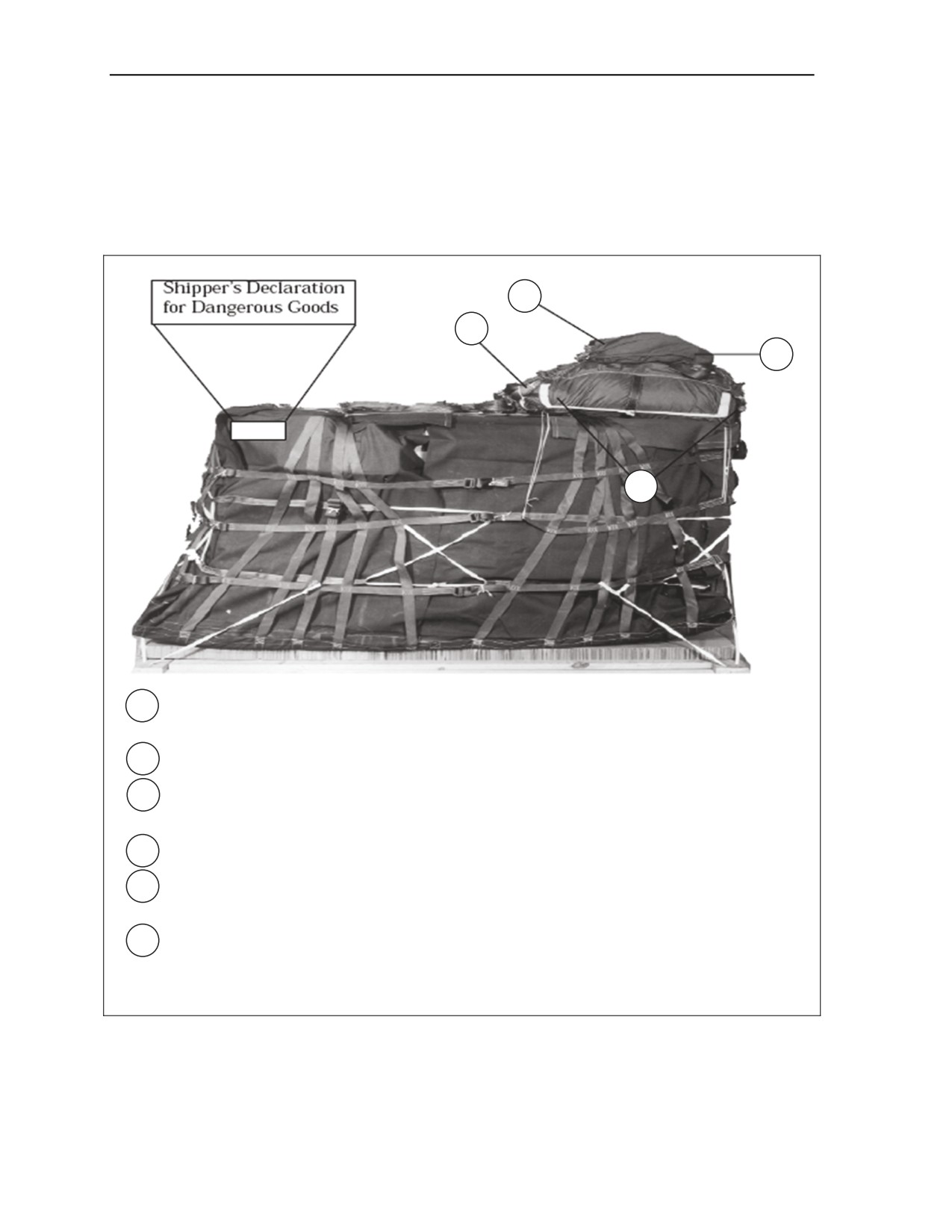
7-14. Prepare a G-12 cargo parachute. Stow the G-12 cargo parachute and the 15-foot cargo extraction
parachute on the load as shown in Figure 7-18.
1
3
5
2
1 Set the parachute on the front of the load with the riser compartment up and the deployment
bag bridle to the front.
2 Tie the parachute in place with four lengths of type I, 1/4-inch cotton webbing.
3 Bolt the 3-foot suspension slings to the parachute’s riser clevis. Fold the slings and tape or
tie the folds in place.
4 Cut the secondary bag closing tie (Not Shown).
5 Set a 15-foot cargo extraction parachute, packed in a T-10C deployment bag, on the G-12
cargo parachute. Tie it in place with ticket number 5 or 8/7 cotton thread.
6 Attach the 9-foot sling clevis to the G-12 D-bag and tie a medium clevis with type I, 1/4-inch
cotton webbing to the D-bag (Not Shown).
Figure 7-18. Parachutes Stowed on Two Motorcycles Rigged for a Low-Velocity Airdrop
7-20
FM 4-20.108 /TO 13C7-2-491
10 September 2007
Rigging Two Motorcycles for Low-Velocity Airdrop
POSITIONING EXTRACTION PARACHUTE
7-15. Select the extraction parachute and extraction line needed using the extraction line requirements
table in FM 4-20.102/MCRP 4-11.3J/NAVSEA SS400-AB-MMO-010/TO 13C7-1-5. Place the extraction
parachute and extraction line bag on the load for installation inside the aircraft.
INSTALLING PROVISIONS FOR EMERGENCY RESTRAINTS
7-16. Select and install provisions for emergency restraints according to the emergency aft restraints
requirements in FM 4-20.102/MCRP 4-11.3J/NAVSEA SS400-AB-MMO-010/TO 13C7-1-5.
MARKING RIGGED LOAD
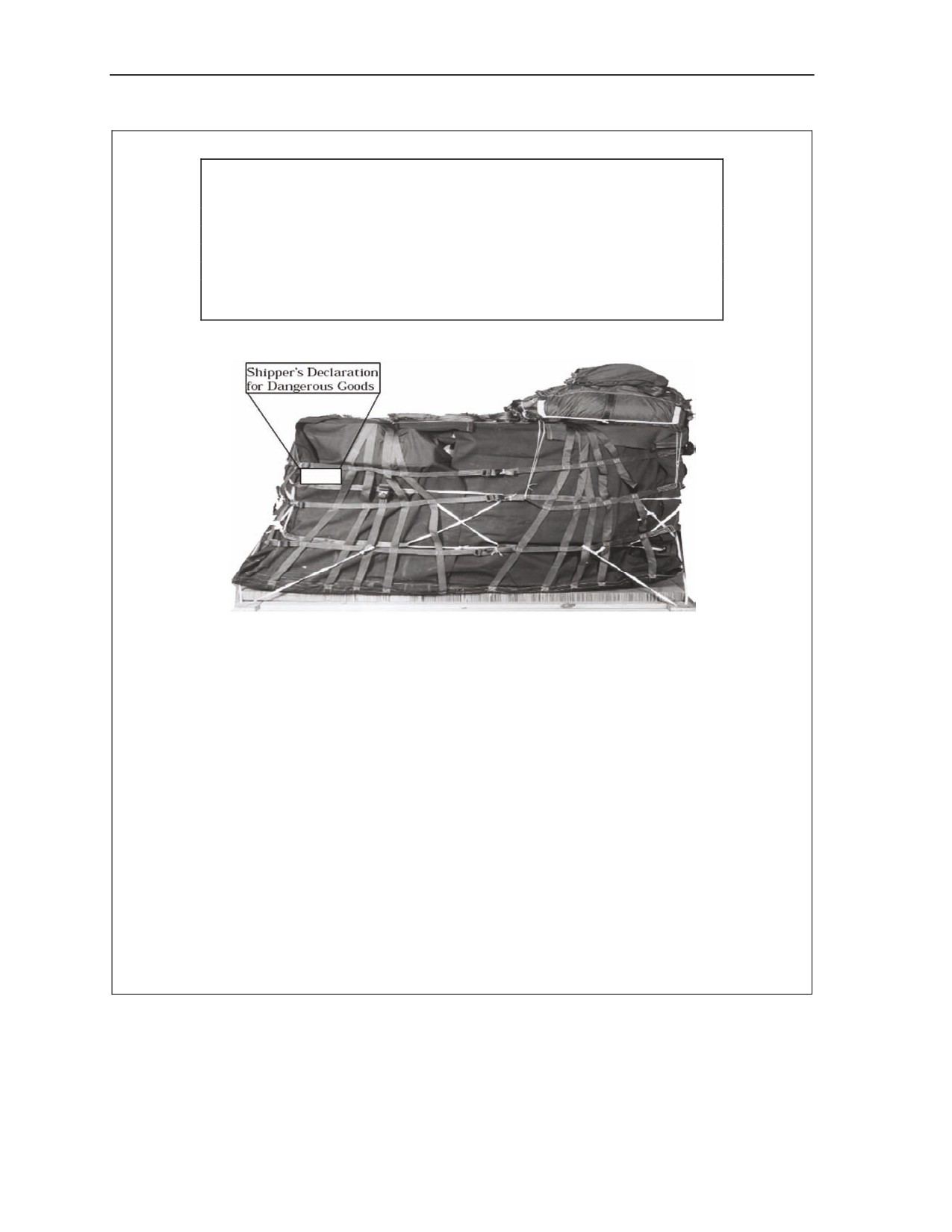
7-17. Mark the rigged load according to FM 4-20.102/ MCRP 4-11.3J/NAVSEA SS 400-AB-MMO-
010/TO 13C7-1-5 and as shown in Figure 7-19. Complete the Shipper’s Declaration for Dangerous Goods
and indicates on the form that the fuel tank has been prepared in accordance with AFJMAN 24-204/TM
38-250. If the load varies from the one shown, the weight, height, length, center of balance (CB), and
parachute requirements must be recomputed.
EQUIPMENT REQUIRED
7-18. Use the equipment listed in Table 7-1 to rig this load.
10 September 2007
FM 4-20.108 /TO 13C7-2-491
7-21
Chapter 7
CAUTION
Make the final rigger inspection required by FM 4-20.102/MCRP 4-
11.3J/NAVSEA SS400-AB-MM0-010/TO 13C7-1-5, FM 4-
20.103/MCRP 3-11.3C/NAVSEA SS400-AB-MMO-010/TO 13C7-1-
11, and AR 59-4/OPNAVINST 4630.24C/AFJ 13-210(I)/MCO
13480.1B before the load leaves the rigging site.
RIGGED LOAD DATA
Weight
892 pounds
Maximum Weight
2200 pounds
Height
75 inches
Width
48 inches
Length
96 inches
Overhang: Front
0 inches
Rear
0 inches
Center of Balance (from front edge of platform)
0 inches
Figure 7-19. Two Motorcycles Rigged for Low-Velocity Airdrop
7-22
FM 4-20.108 /TO 13C7-2-491
10 September 2007
Rigging Two Motorcycles for Low-Velocity Airdrop
Table 7-1. Equipment Required for Rigging Two Motorcycles for Low-Velocity Airdrop
National Stock Number
Item
Quantity
8040-00-273-8713
Adhesive paste, 1-gal
As required
1670-00-587-3421
Bag, cargo, A-22
2
1670-00-590-9909
*Bag, deployment, personnel parachute, T-10C
1
1670-00-568-0323
*Band, rubber, retainer
As required
4030-00-678-8562
Clevis, suspension, 3/4-inch (medium)
1
1670-00-783-5988
*Link assembly, type IV
1
5510-00-220-6146
Lumber:
2- by 6- by 48-inches
2
2- by 6- by 85-inches
2
5315-00-010-4659
Nail, steel wire, common:
8d
As required
1670-00-753-3928
Pad, energy-dissipating, honeycomb
7 sheets
Parachute:
1670-01-065-3755
Cargo,G-12E
1
1670-01-063-3715
*Cargo, extraction, 15-foot
1
5530-00-128-4981
Plywood:
3/4-in by 48- by 96- inch sheet
2
Sling, cargo, airdrop, type XXVI, nylon webbing
1670-01-062-6301
3-foot (2-loop)
2
1670-01-062-6304
*9-foot (2-loop) (deployment line)
1
1670-00-998-0117
Static line, cargo parachute, breakaway
1
7510-00-266-5016
Tape, adhesive, 2-inch, OD
As required
7510-00-266-6710
Tape, masking, 2-inch
As required
8310-00-917-3945
Thread, cotton, ticket Number 5
As required
Webbing:
8305-00-268-2411
Cotton, type I, 1/4-inch
As required
8305-00-268-2453
Nylon, tubular, 1/2-inch, natural
As required
8305-00-263-3591
Nylon, type VIII
As required
* These items are needed to pack the 15-foot cargo extraction parachute.
10 September 2007
FM 4-20.108 /TO 13C7-2-491
7-23
This page intentionally left blank.
Chapter 8
Rigging One Four Wheeled Quad-Runner on a Combat
Expendable Platform (CEP) for Low-Velocity Airdrop
DESCRIPTION OF LOAD
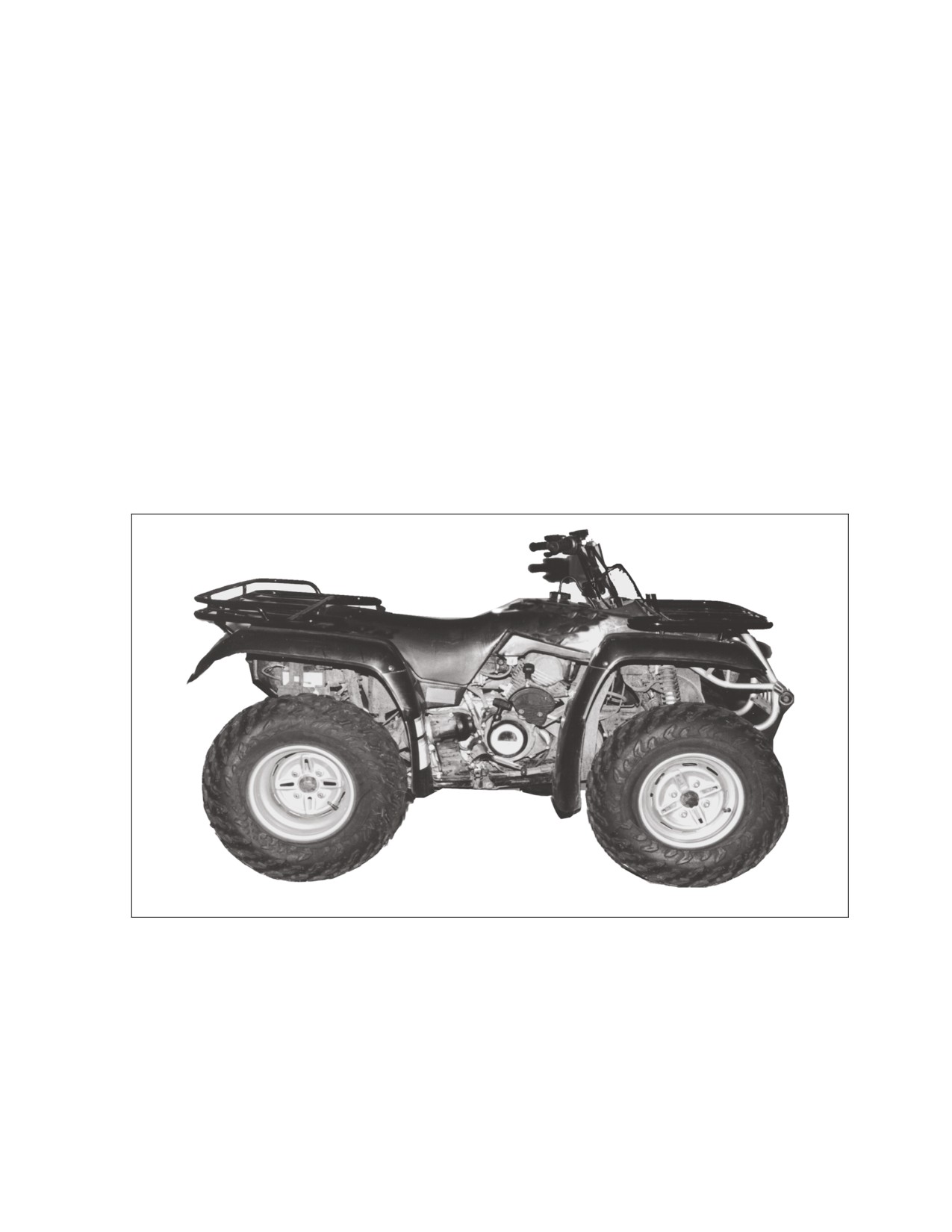
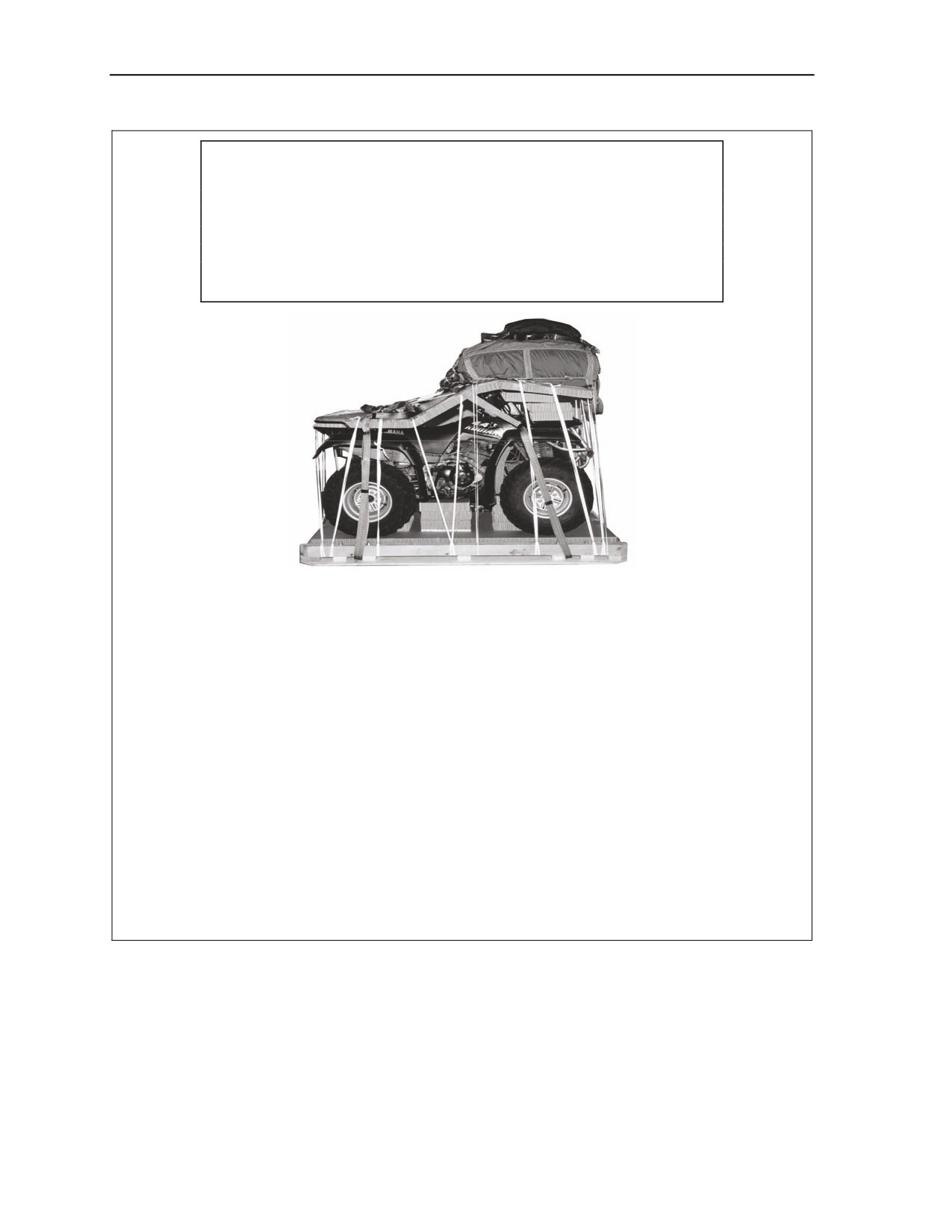
8-1. The Yamaha (350-cubic centimeter) four wheeled quad-runner (QUAD) is rigged on a 48- by 87-
inch Combat Expendable Platform (CEP) with one G-12E cargo parachute. The load is rigged for a low-
velocity airdrop of a C-130 or C-17 aircraft. The QUAD is 45 inches wide, 65 inches high, 72 inches long,
and weighs 550 pounds as shown in Figure 8-1.
BUILDING AND PREPARING COMBAT EXPENDABLE PLATFORM
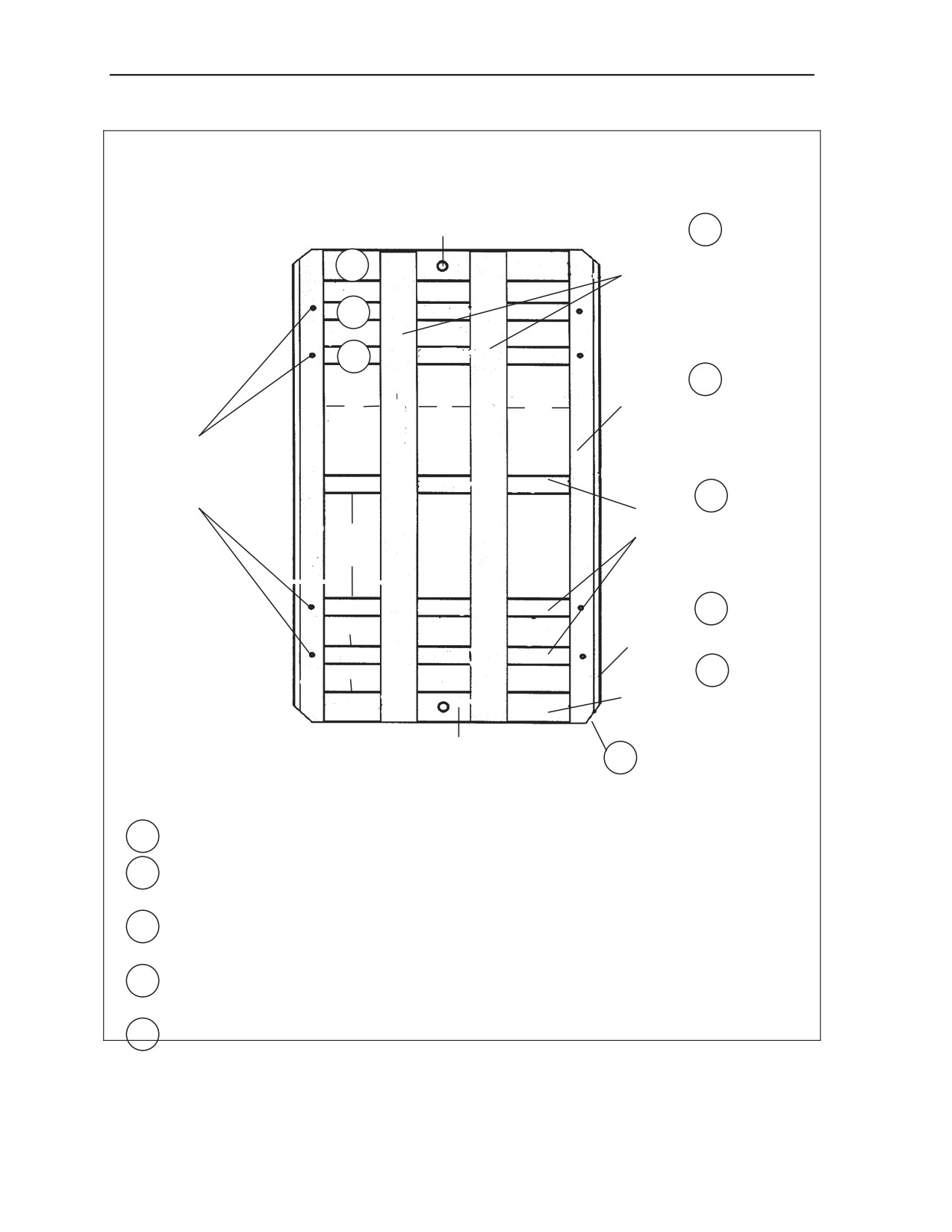
8-2. Build and prepare the 48- by 87-inch CEP as shown in Figure 8-2.
Figure 8-1. Four Wheeled Quad-Runner (QUAD)
10 September 2007
FM 4-20.108 /TO 13C7-2-491
8-1
Chapter 8
Notes.
1. Not drawn to scale.
2.
Dimensions are given in inches.
3.
Use 8d penny nails or 2-inch long, #4 wood screws
4.
Use 3/8- by 7-inch carriage bolts.
REAR
2-inch hole centered
1
3
2- by 6- by 87-inch Lumber
3
3
2
6”
16”
6”
4- by 4- by 87-inch Lumber
3/8” X 7”
Carriage Bolt
Holes
3
2- by 4- by 44-inch Lumber
22 1/2”
5
4”
3/4- by 48- by 87-inch Plywood
4”
3
2- by 6- by 44-inch Lumber
2-inch hole centered
4
FRONT
1
Place two 2- by 6- by 87-inch pieces of lumber side by side 16 inches apart. (Longitudinal)
2
Place two 4- by 4- by 87-inch pieces of lumber 6 inches to the outside of the 2- by 6- by 44-
inch pieces of lumber. (Longitudinal)
3
Place five 2- by 4- by 44-inch and two 2- by 6- by 44-inch pieces of lumber across and on top
of the lumber listed in steps 1 and 2 as shown in diagram. (Lateral)
4
Nail the pieces of lumber together with 8d penny nails. Do not nail the extreme corners of the
frame where the corners will be cut off.
5
Position and nail a 3/4- by 48- by 87-inch piece of plywood on top of the lumber leaving a 2
inch overhang on each side.
Figure 8-2. Platform Prepared
8-2
FM 4-20.108 /TO 13C7-2-491
10 September 2007
Rigging One Four Wheeled Quad-Runner on a Combat Expendable Platform (CEP) for Low-Velocity
Airdrop
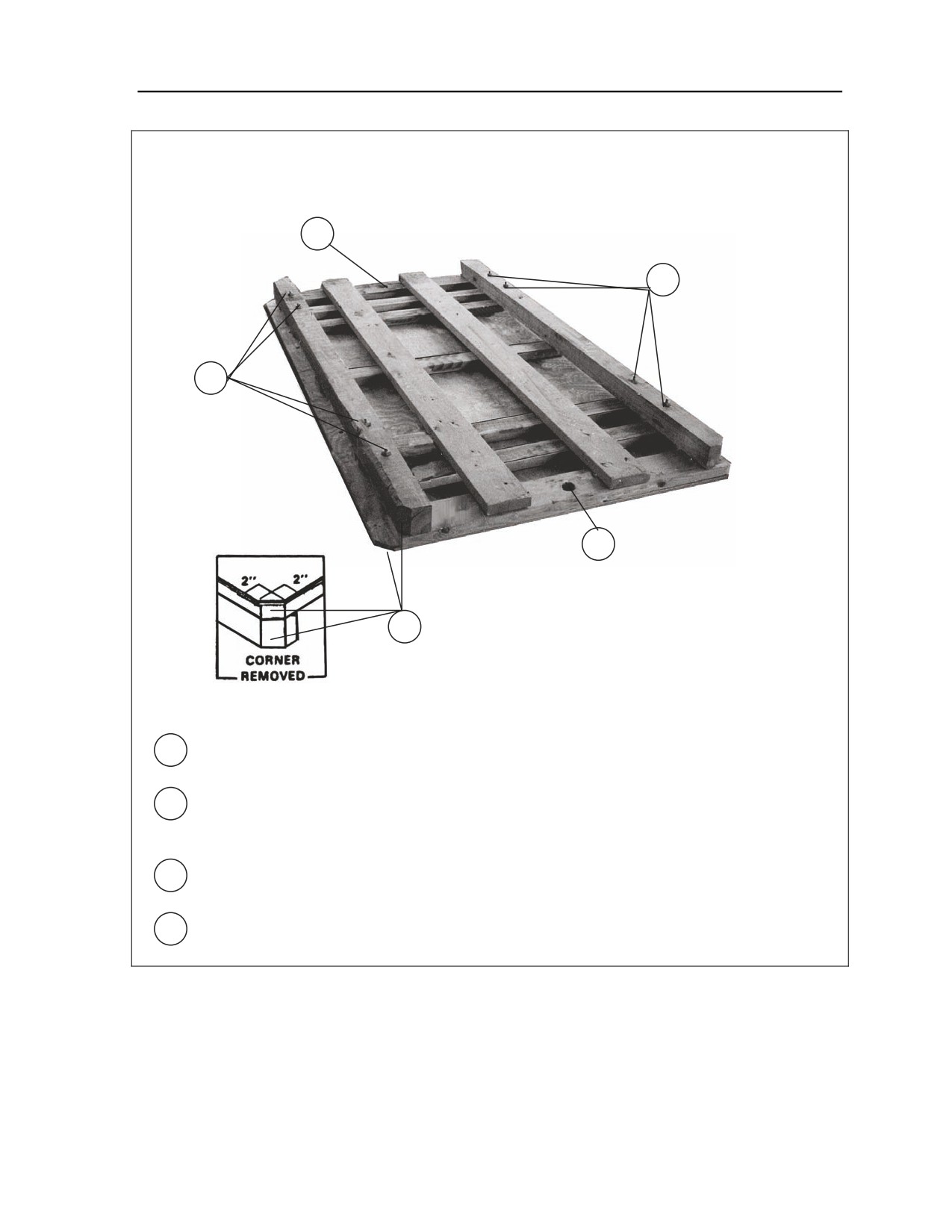
Notes.
1. Not drawn to scale.
2.
Dimensions are given in inches.
3.
Use 3/8- by 7-inch carriage bolts.
4.
Insert bolts from plywood deck side of platform and countersink carriage bolts head.
REAR
9
8
7
9
FRONT
6
6 Cut the four corners of the plywood and 4- by 4- by 87-inch pieces of lumber at 45 degree
angles (2- by 2-inch).
7 Drill eight 3/8-inch holes at the suspension sling points as shown. Ensure the holes pass
through the plywood and each end of each 2- by 4- by 44-inch lateral stringer and the 4- by
4- by 87-inch longitudinal stringers.
8 Insert a 3/8- by 7-inch carriage bolt into each hole, and bolt each of the lateral stringers to the
longitudinal stringers.
9 Drill one 2-inch hole centered on the 2- by 6- by 44-inch piece of lumber and plywood at each
end of the platform.
Figure 8-2. Platform Prepared (Continued)
10 September 2007
FM 4-20.108 /TO 13C7-2-491
8-3
Chapter 8
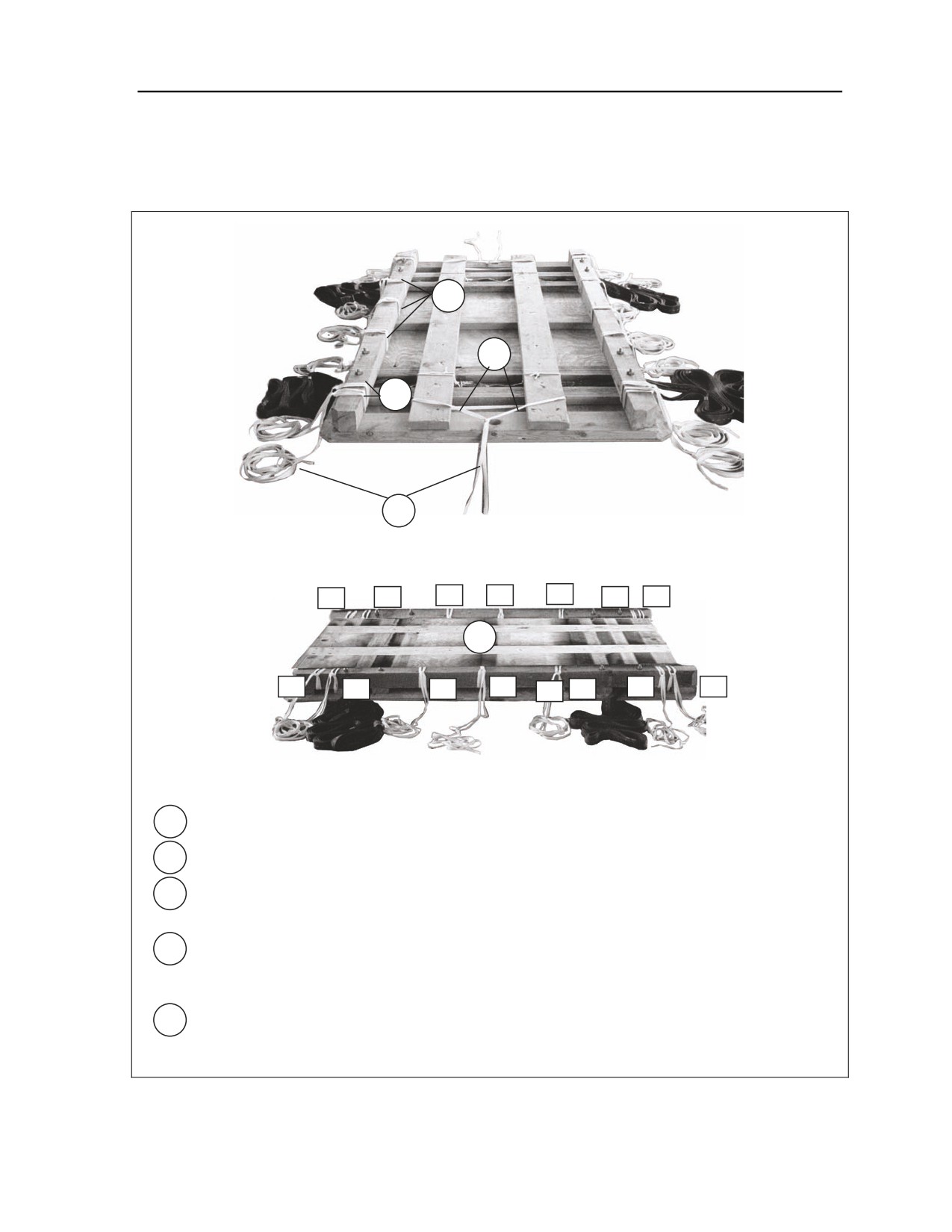
INSTALLING SUSPENSION SLINGS
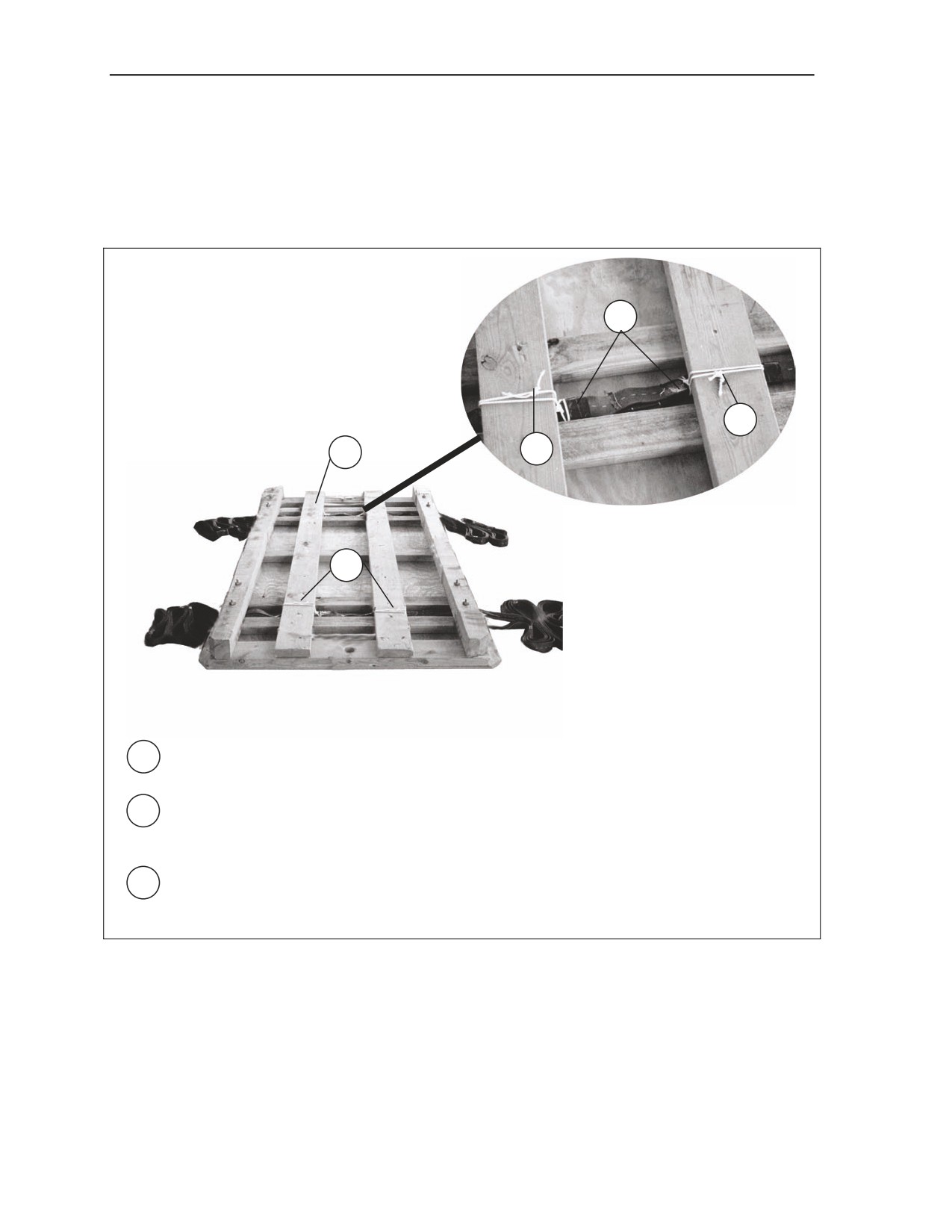
8-3. Mark the center of two 20-foot, (2-loop) suspension slings with tape. Route the slings through the
suspension points of the platform with the tape at the center of the platform. Secure the slings to the
platform as shown in Figure 8-3.
1
2
REAR
3
3
3
FRONT
1 Tape the portion of the slings that route underneath the longitudinal 2- by 6-inch piece of
lumber.
2 Cut four lengths of type III nylon cord 56 inches long. Girth hitch one length of type III nylon
cord to the inside taped portion of the sling. Route one end under and over the 2- by 6-inch
piece of lumber twice. Secure both ends on top with a surgeon’s knot and locking knot.
3 Repeat at the other three points.
Figure 8-3. Suspension Slings Secured to Platform
8-4
FM 4-20.108 /TO 13C7-2-491
10 September 2007
Rigging One Four Wheeled Quad-Runner on a Combat Expendable Platform (CEP) for Low-Velocity
Airdrop
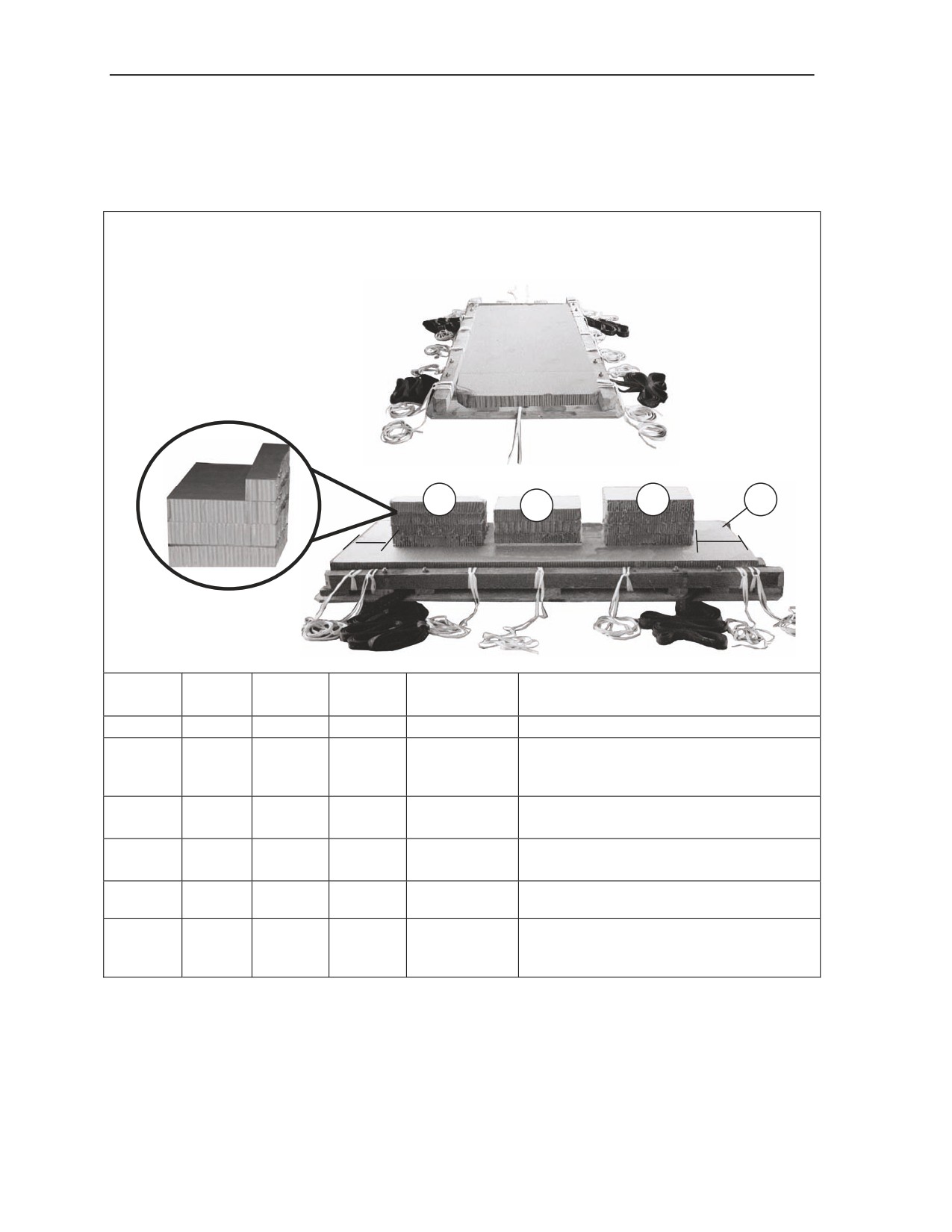
INSTALLING LOAD RESTRAINTS
8-4. Install the load restraints as shown in Figure 8-4.
REAR
3
4
2
FRONT
1
7A
6A
5A
4A
3A
2A
1A
REAR
5
FRONT
7
6
5
4
3
2
1
2
1 Cut 16 lengths of 1/2-inch tubular nylon webbing 15 feet long.
2 Girth hitch two lengths at each end of the 4- by 4-inch pieces of lumber.
3 Girth hitch three lengths of 1/2-inch tubular nylon webbing at the center of each 4- by 4-inch
piece of lumber.
4 At each end of the platform, pass one end of the 1/2-inch tubular nylon webbing underneath
the 2- by 6-inch longitudinal stringers. Match the two ends together and tie an overhead knot
close to the stringer.
5 Number the 1/2-inch tubular nylon webbing ties 1 through 7 and 1a through 7a.
Figure 8-4. Load Restraints Secured to Platform
10 September 2007
FM 4-20.108 /TO 13C7-2-491
8-5
Chapter 8
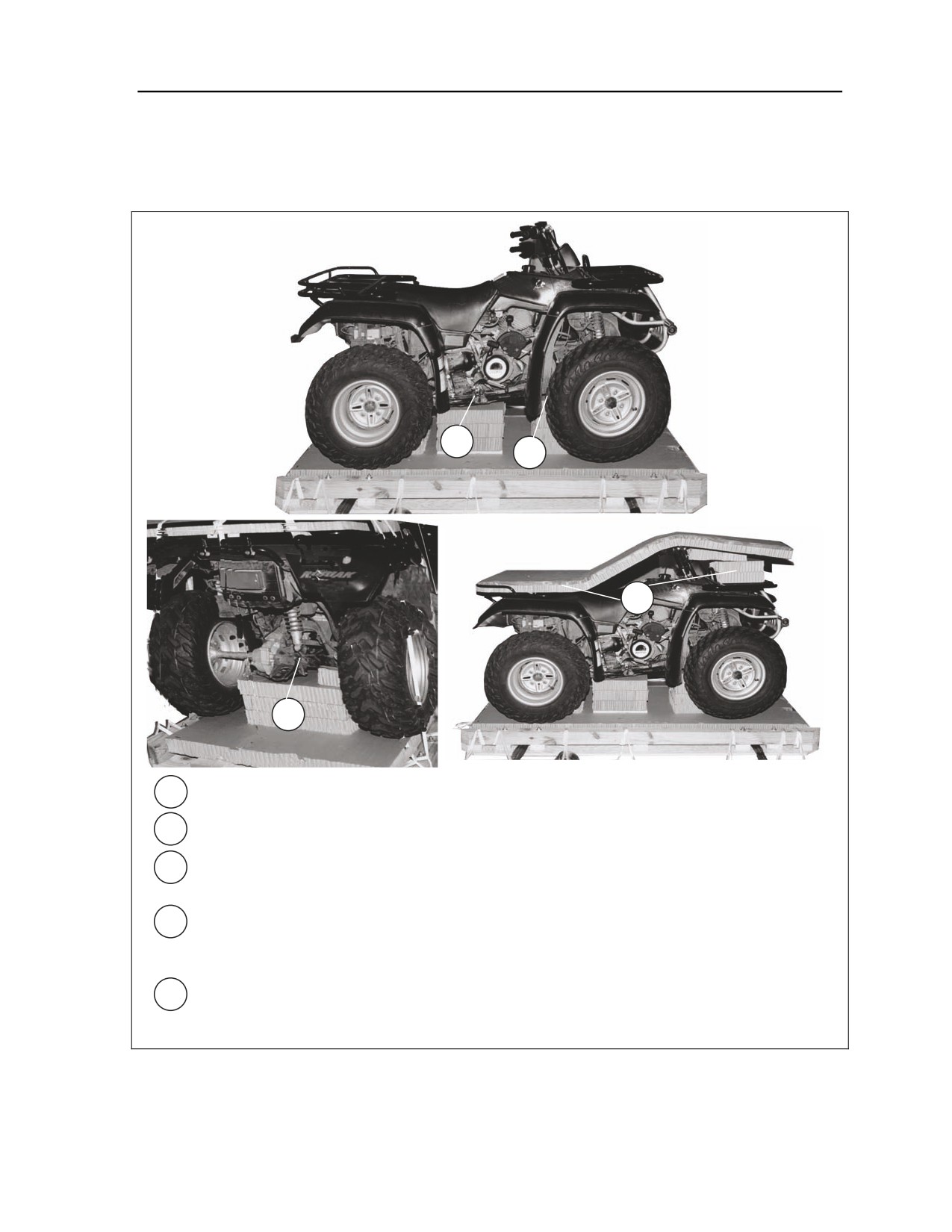
POSITIONING HONEYCOMB STACKS
8-5. Prepare and position the honeycomb stacks as shown in Figure 8-5.
Note. Glue stacks 2, 3, and 4 to stack 1 (Base).
REAR
CENTERED
FRONT
4
2
1
3
5"
FRONT
3"
REAR VIEW
11"
11"
11 1/2"
11"
8 1/2"
REAR
RIGHT
Stack
Width
Length
Pieces
Material
Instructions
Number
(inches)
(inches)
1
1
36
82
Honeycomb
Position on platform centered.
2
4
14
18
Honeycomb
Center and glue 8 ½ inches from front edge of
stack 1 and 11 inches from both sides.
3
3
14
18
Honeycomb
Center and glue 5 inches from stack 2.
1
14
18
3/4-inch
Glue to bottom of stack 3.
Plywood
4
3
14
18
Honeycomb
Center and glue to stack 1, 3 inches from
stack 3 with 11 ½ inches from rear edge.
1
4
18
Honeycomb
Glue on top of stack 4 on right side, flush to
edge.
Figure 8-5. Honeycomb Stacks Positioned
8-6
FM 4-20.108 /TO 13C7-2-491
10 September 2007
Rigging One Four Wheeled Quad-Runner on a Combat Expendable Platform (CEP) for Low-Velocity
Airdrop
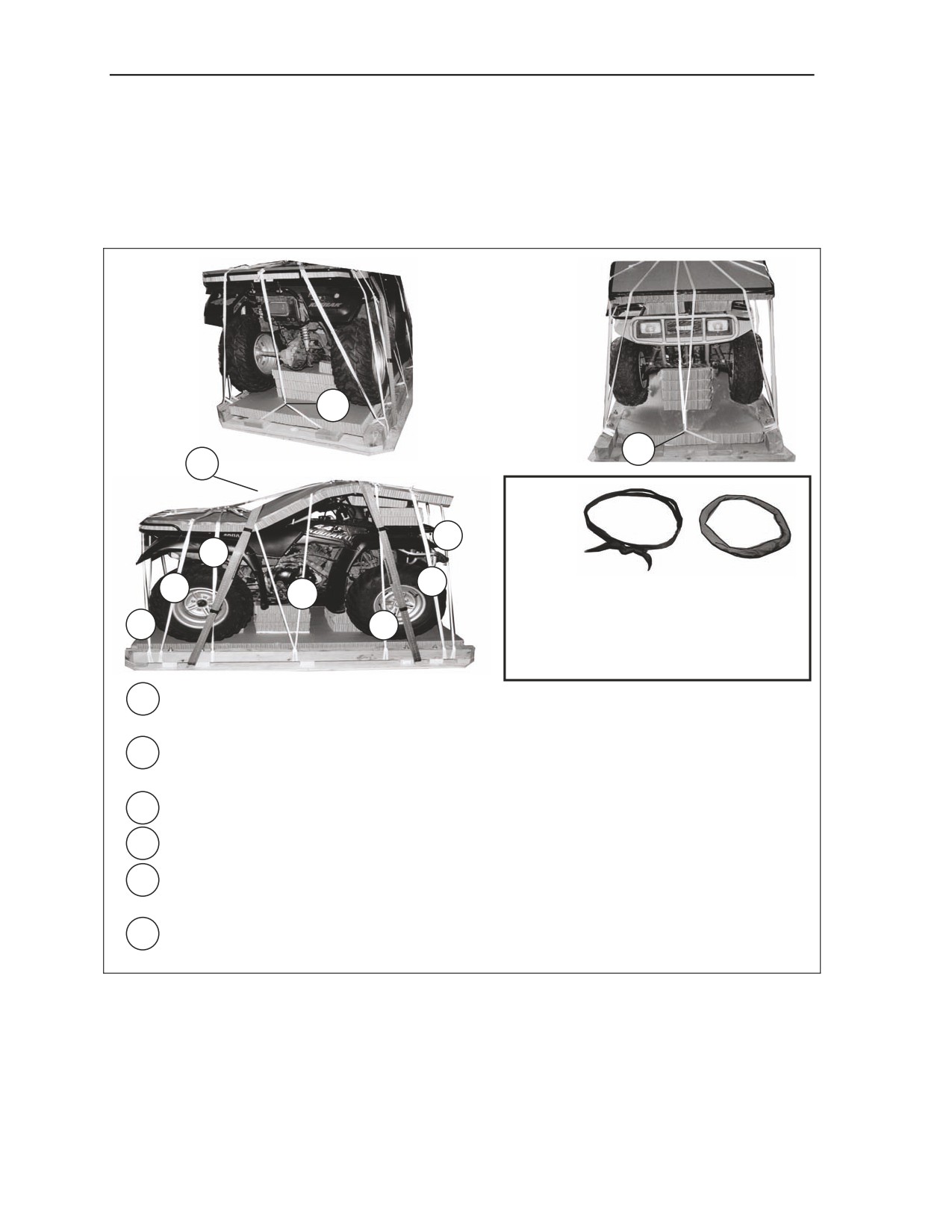
PREPARING AND POSITIONING QUAD-RUNNER
8-6. Prepare and position the quad-runner as shown in Figure 8-6.
REAR
FRONT
4
4
5
4
1 Ensure fuel is over half full but no more than three fourths full. (Not Shown)
2 Secure key with type III nylon cord safety tied to vehicle. (Not Shown)
3 Place gear shift in neutral if equipped with a shift stick. Secure with type III nylon cord.
(Not
Shown)
4 Position vehicle onto honeycomb with the front skid plate centered on stack 2. Center skid
plate rest on stack 3. Rest axle on stack 4. Wheels should be at least 1 inch above bottom
layer of honeycomb.
5 Build up around the handlebars with honeycomb to prevent movement and to protect levers
and switches. Lay a 36- by 78-inch piece of honeycomb, with edges taped, on top of the
vehicle.
Figure 8-6. Quad-Runner Prepared and Positioned
10 September 2007
FM 4-20.108 /TO 13C7-2-491
8-7
Chapter 8
SECURING LOAD TO PLATFORM
8-7. Form and tape with cloth-backed tape two tie-down rings, approximately 10-inches in diameter, with
1-inch tubular nylon webbing. (see note) Lay one ring on top of the honeycomb over the handlebars and
the other ring over the seat. Secure the load to the platform as shown in Figure 8-7.
2
REAR
2
FRONT
1
5
3
Note.
4
4
Use a 60-inch length of 1-inch nylon webbing
6
to make a two ply tie-down ring. Tie
5
3
the ends together with a square knot and
overhand knot in each end. Wrap the
ring with cloth backed tape.
1
Tie the rings together with a 40-inch length of 1/2-inch tubular nylon webbing to keep them
centered.
2
Tie the front and rear restraints of each end to the respective tie-down ring with a trucker’s
hitch knot.
3
Tie numbers 5 and 5A and 3 and 3A to the respective tie-down ring.
4
Tie numbers 6 and 6A and 2 and 2A to the respective tie-down ring.
5
Route numbers 7 and 7A and 1 and 1A around each end of the vehicle and up to the tie-
down rings.
6
Using numbers 4 and 4A split the tie and then tie one end to one tie-down ring and the other
end to the other tie-down ring.
Figure 8-7. Load Secured to Platform
8-8
FM 4-20.108 /TO 13C7-2-491
10 September 2007
Rigging One Four Wheeled Quad-Runner on a Combat Expendable Platform (CEP) for Low-Velocity
Airdrop
SECURING ACCOMPANYING LOAD
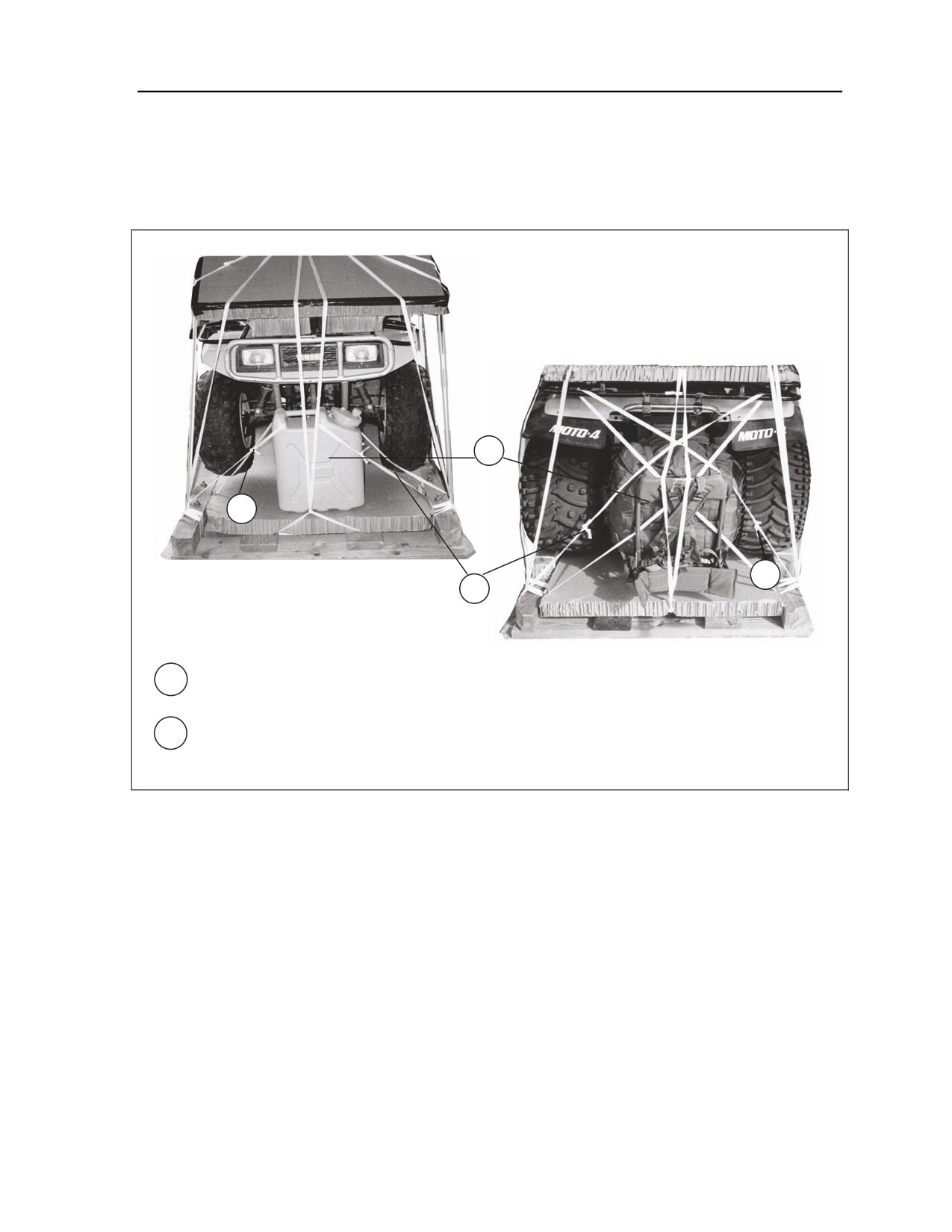
8-8. Whenever possible, the load should be kept balanced. One rucksack and one water or fuel can may
be used to keep the load balanced as shown in Figure 8-8.
1
2
2
FRONT
2
REAR
1 Place the water or fuel can between the front wheels. Place the rucksack on the honeycomb
between the rear wheels.
2 Secure to the load by girth hitching 1/2-inch tubular nylon webbing to the CEP.
Figure 8-8. Accompanying Load Secured
10 September 2007
FM 4-20.108 /TO 13C7-2-491
8-9
Chapter 8
INSTALLING DEADMAN’S TIE
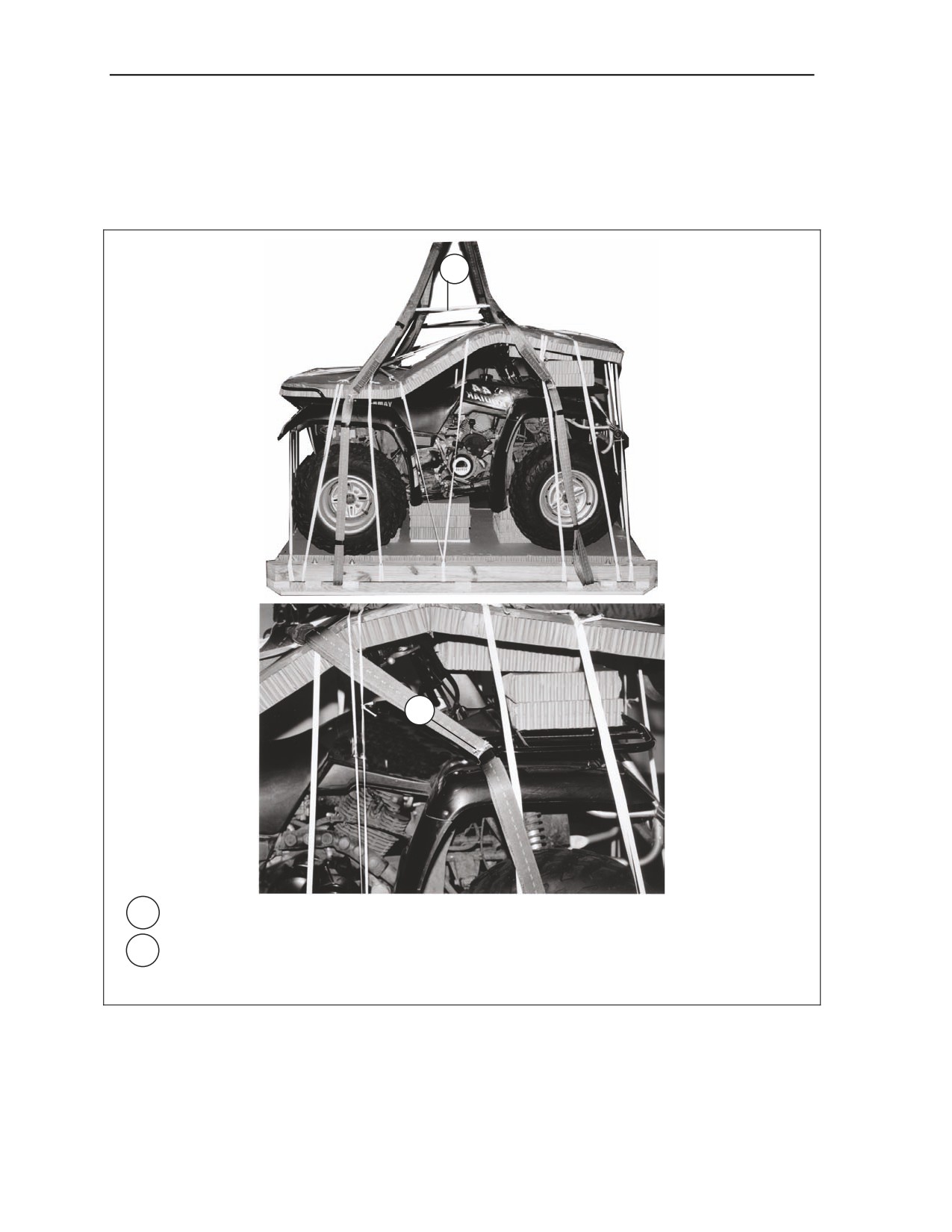
8-9. Lift and safety the suspension slings using a deadman’s tie according to FM 4-20.102/MCRP 4-
11.3J/NAVSEA SS400-AB-MM0-010/TO 13C7-1-5 and as shown in Figure 8-9.
1
FRONT
REAR
FRONT
2
REAR
1 Safety the deadman’s tie 6 to 8 inches above the highest point of the load.
2 Secure the suspension slings to the equipment rack with type I, 1/4-inch cotton webbing.
Figure 8-9. Deadman’s Tie Installed
8-10
FM 4-20.108 /TO 13C7-2-491
10 September 2007
Rigging One Four Wheeled Quad-Runner on a Combat Expendable Platform (CEP) for Low-Velocity
Airdrop
STOWING CARGO PARACHUTE
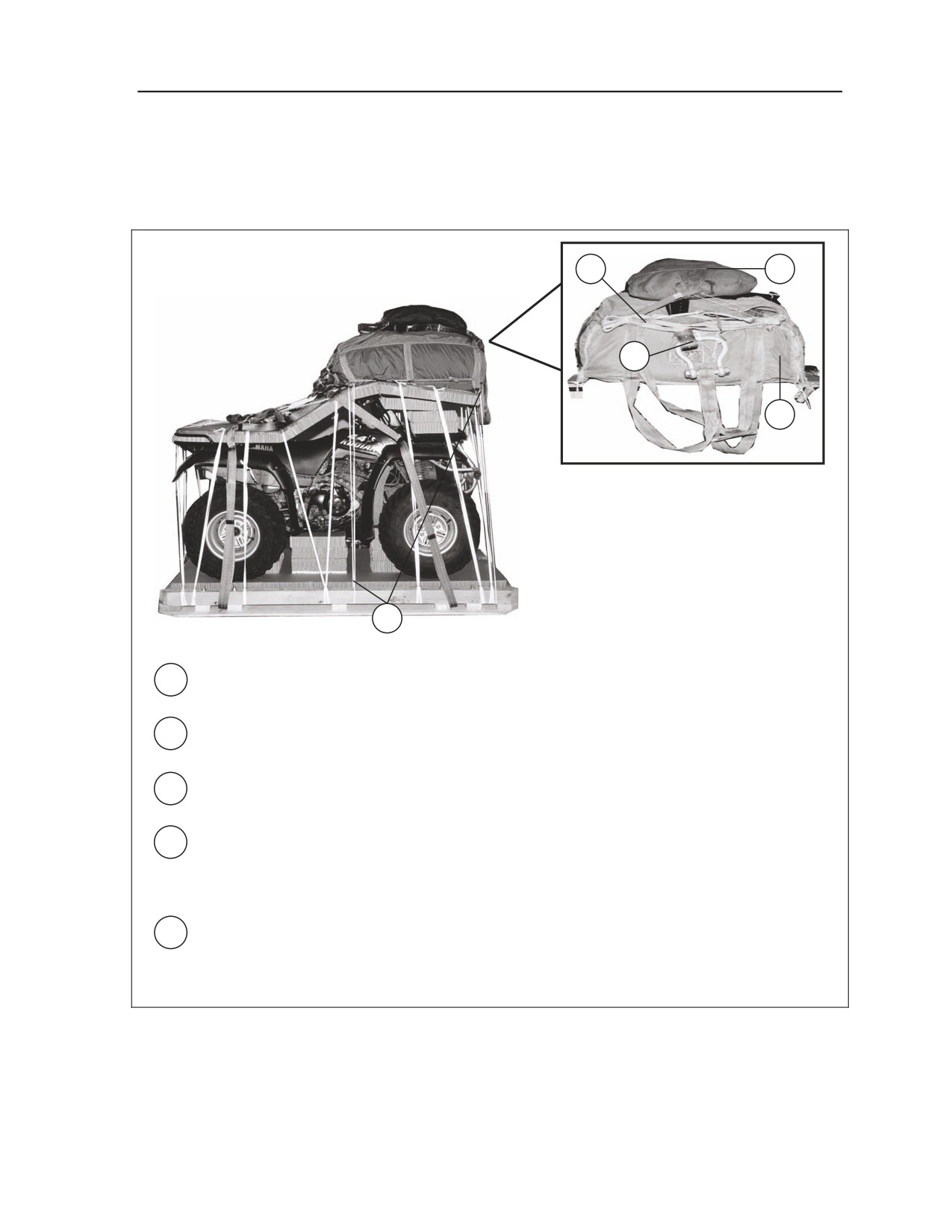
8-10. Stow one G-12E cargo parachute as shown in Figure 8-10. Prepare and pack a 15-foot cargo
extraction parachute as described in Chapter 7, paragraph 7-13.
4
5
3
1
FRONT
2
1 Place one G-12E cargo parachute on the front of the load with the riser extension
compartment up and the deployment bag bridle to the front.
2 Secure the parachute to convenient points on the platform with four lengths of type I, 1/4-inch
cotton webbing.
3 Attach the deployment line (9-foot (2-loop), type XXVI nylon webbing sling) from the packed
15-foot cargo extraction parachute to the G-12E bridle with a medium clevis.
4 S-fold the slack in the deployment line and secure the folds with type I, 1/4-inch cotton
webbing. Secure the medium clevis attached to the G-12E bridle to the riser extension tie-
down loops with a single length of type I, 1/4-inch cotton webbing. Place folds on top of the
G-12E cargo parachute.
5 Center the 15-foot cargo extraction parachute on top of the G-12E cargo parachute. Secure
to the G-12E parachute with four lengths of ticket number 8/7 cotton thread.
Figure 8-10. Cargo Parachutes Stowed
10 September 2007
FM 4-20.108 /TO 13C7-2-491
8-11
Chapter 8
INSTALLING PARACHUTE RELEASE
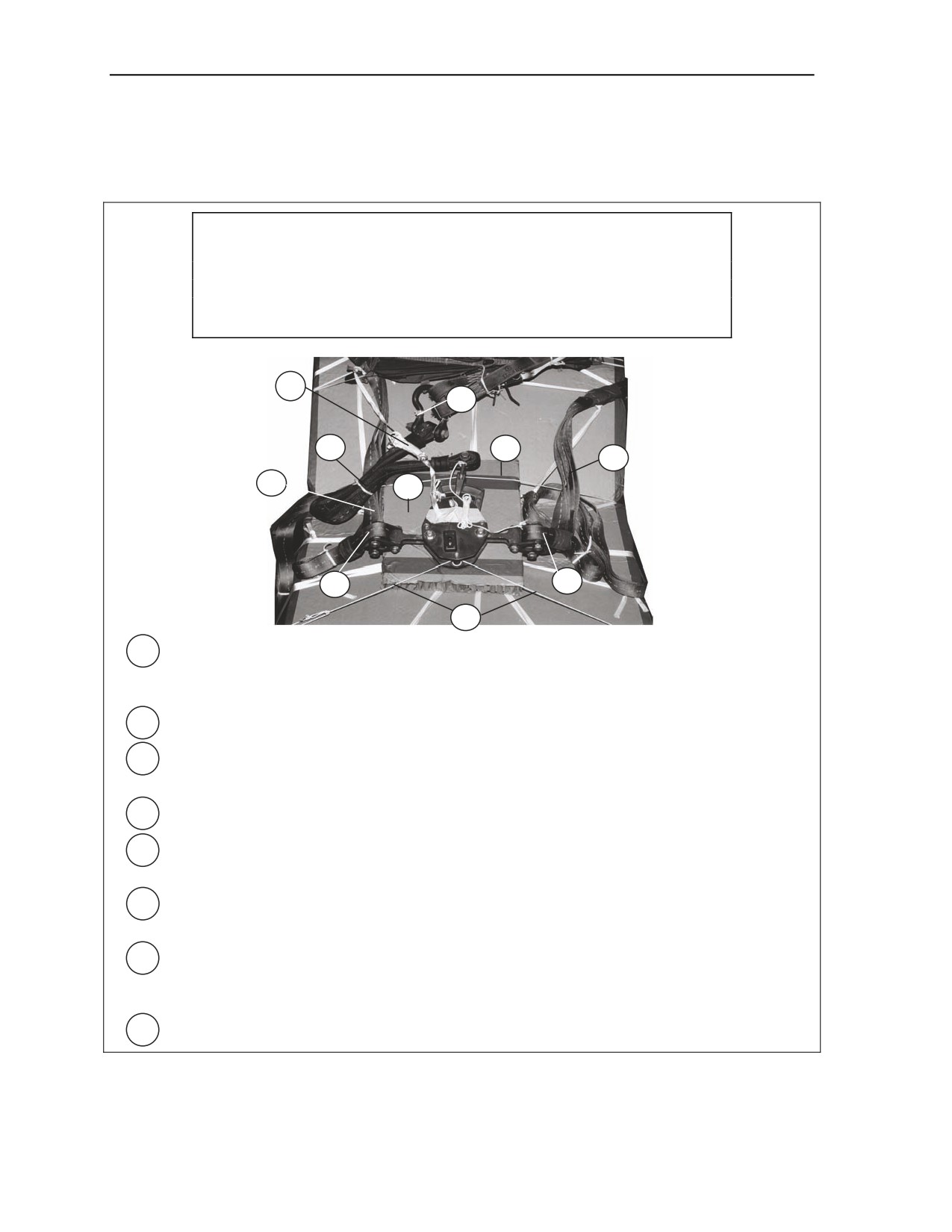
8-11. Prepare, install, and safety the M-1 release according to FM 4-20.102/MCRP 4-11.3J/NAVSEA
SS400-AB-MM0-010/TO 13C7-1-5 and as shown in Figure 8-11.
CAUTION
Make sure the arming wire lanyard is routed over all items as required
by FM 4-20.102/MCRP 4-11.3J/NAVSEA SS400-AB-MM0-010/TO
13C7-1-5.
7
8
1
6
3
3
4
2
2
5
1
Connect a 3-foot (2-loop), type XXVI nylon sling to the G-12E parachute riser clevis.
Connect the other end of the sling to the parachute connector on the M-1 release. Fold and
tie with type I, 1/4-inch cotton webbing.
2
Attach the front suspension slings to the top bolts of the lower suspension link.
3
Attach the rear suspension slings to the lower bolts of the lower suspension link. The rear
slings will have a half twist towards the parachutes.
4
Cut and place a 14- by 14-inch piece of honeycomb on top of the load under the M-1 release.
5
Run a length of type III nylon cord to encircle the lower spacer, and tie the ends of the cord to
points on the front of the load or platform.
6
Run a length of type III nylon cord over the suspension slings and through the parachute
connectors, and tie the ends of the cord to points on the rear of the load or platform.
7
Tie the lanyard to a carrying handle of a parachute with three alternating half hitches and an
overhand knot in the running end. Fold the slack in the lanyard and tape the folds in place
with one turn of masking tape.
8
Remove the left secondary bag closing tie from the G-12E parachute.
Figure 8-11. M-1 Parachute Release Installed
8-12
FM 4-20.108 /TO 13C7-2-491
10 September 2007
Rigging One Four Wheeled Quad-Runner on a Combat Expendable Platform (CEP) for Low-Velocity
Airdrop
POSITIONING EXTRACTION PARACHUTE
8-12. Select the extraction parachute and extraction line needed using the extraction line requirements
table in FM 4-20.102/MCRP 4-11.3J/NAVSEA SS400-AB-MMO-010/TO 13C7-1-5. Place the extraction
parachute and extraction line bag on the load for installation inside the aircraft.
INSTALLING PROVISIONS FOR EMERGENCY RESTRAINTS
8-13. Select and install provisions for emergency restraints according to the emergency aft restraints
requirements in FM 4-20.102/MCRP 4-11.3J/NAVSEA SS400-AB-MMO-010/TO 13C7-1-5.
MARKING RIGGED LOAD
8-14. Mark the rigged load according to FM 4-20.102/ MCRP 4-11.3J/NAVSEA SS 400-AB-MMO-
010/TO 13C7-1-5 and as shown in Figure 8-12. Complete the Shipper’s Declaration for Dangerous Goods
and indicates on the form that the fuel tank has been prepared in accordance with AFJMAN 24-204/TM
38-250. If the load varies from the one shown, the weight, height, length, center of balance (CB), and
parachute requirements must be recomputed.
EQUIPMENT REQUIRED
8-15. Use the equipment listed in Table 8-1 to rig this load.
10 September 2007
FM 4-20.108 /TO 13C7-2-491
8-13
Chapter 8
CAUTION
Make the final rigger inspection required by FM 4-20.102/MCRP 4-
11.3J/NAVSEA SS400-AB-MM0-010/TO 13C7-1-5, FM 4-
20.103/MCRP 3-11.3C/NAVSEA SS400-AB-MMO-010/TO 13C7-1-
11, and AR 59-4/OPNAVINST 4630.24C/AFJ 13-210(I)/MCO
13480.1B before the load leaves the rigging site.
RIGGED LOAD DATA
Weight
960 pounds
Maximum Weight
1200 pounds
Height
68 inches
Width
48 inches
Length
87 inches
Overhang: Front
0 inches
Rear
0 inches
Center of Balance (from front edge of platform)
0 inches
Figure 8-12. Four Wheeled Quad-Runner Rigged on CEP for Low-Velocity Airdrop
8-14
FM 4-20.108 /TO 13C7-2-491
10 September 2007
Rigging One Four Wheeled Quad-Runner on a Combat Expendable Platform (CEP) for Low-Velocity
Airdrop
Table 8-1. Equipment Required for Rigging a Quad-Runner on a Combat Expendable Platform
(CEP) for Low-Velocity Airdrop
National Stock Number
Item
Quantity
8040-00-273-8713
Adhesive paste, 1-gal
As required
1670-00-590-9909
*Bag, deployment, personnel parachute, T-10C
1
1670-00-568-0323
*Band, rubber, retainer
As required
NO NSN
Bolt, carriage, 3/8-inch diameter, 7-inch long, w/ washer
and nut
8
4030-00-678-8562
Clevis, suspension, 3/4-inch (medium)
2
5510-00-220-6146
Lumber:
2- by 4- by 44-inches
5
2- by 6- by 87-inches
2
2- by 6- by 44-inches
2
4- by 4- by 87-inches
2
5315-00-010-4659
Nail, steel wire, common:
8d
As required
1670-00-753-3928
Pad, energy-dissipating, honeycomb
9 sheets
Parachute:
1670-01-065-3755
Cargo,G-12E
1
1670-01-063-3715
*Cargo, extraction, 15-foot
1
5530-00-128-4981
Plywood:
3/4-in by 48- by 96- inch sheet
2 sheets
1670-01-097-8816
Release, cargo parachute, M-1
1
Sling, cargo, airdrop, type XXVI, nylon webbing
1670-01-062-6301
3-foot (2-loop)
2
1670-01-062-6304
*9-foot (2-loop) deployment line
1
1670-01-062-6302
20-foot (2-loop) riser extensions
2
7510-00-266-5016
Tape, adhesive, 2-inch, OD
As required
7510-00-266-6710
Tape, masking, 2-inch
As required
8310-00-917-3945
Thread, cotton, number 8/7 cord
As required
Webbing:
8305-00-268-2411
Cotton, type I, 1/4-inch
As required
8305-00-268-2453
Nylon, tubular, 1/2-inch, natural
As required
8305-00-268-2455
Nylon, tubular, 1-inch
As required
8305-00-263-3591
Nylon, type VIII
As required
* These items are needed to pack the 15-foot cargo extraction parachute.
10 September 2007
FM 4-20.108 /TO 13C7-2-491
8-15
This page intentionally left blank.
Glossary
AD
Airdrop
AFB
Air Force Base
AFI
Air Force Instruction
AFI (I)
Air Force Instruction Interservice
AFMAN (I)
Air Force Manual Interservice
AFSOC
Air Force Special Operations Command
AFTO
Air Force Technical Order
ALC
Airlift Logistics Center
AMC
Air Mobility Command
attn
attention
cap
capacity
CB
center of balance
cc
cubic centimeter
CDS
container delivery system
CEP
combat expendable platform
Chap
chapter
CVR
Container Vertical Restraint System
d
penny
DA
Department of the Army
DC
District of Columbia
DES
drogue extraction system
diam
diameter
DoD
Department of Defense
EFTC
extraction force transfer coupling
EPJS
extraction parachute jettison system
fig
figure
FM
Field Manual
FRE
first response expeditionary
ft
feet/foot
gal
gallon
HQ
Headquarters
in
inch
JAI
joint airdrop inspection
10 September 2007
FM 4-20.108 /TO 13C7-2-491
Glossary-1
Glossary
lb
pound
LV
low-velocity
M-Gator
military utility vehicle
MAJCOM
major command
MCRP
Marine Corps reference manual
mm
milli meter
NAVSEA
Navel Sea Command
No
number
OVM
operator’s vehicle maintanence
qty
quantity
TM
Technical Manual
TO
Technical Order
TRADOC
US Army Training and Doctrine Command
US
United States
USA
United States of America
w
with
yd
yard
Glossary-2
FM 4-20.108 /TO 13C7-2-491
10 September 2007
References
AR 59-4/OPNAVINST 4630.24C/AFJ 13-210(I)/MCO 13480.1B, Joint Airdrop Inspection Records,
Malfunction Investigations and Activity Reporting. 1 May 1998.
AFMAN 24-204 (I)/TM 38-250/NAVSUP PUB 505/MCO P4030119I/DLAI 4145.3, Preparing
Hazardous Materials for Military Air Shipments. 12 October 2004.
FM 4-20.102/MCRP 4-11.3J/NAVSEA SS400-AB-MMO-010/TO 13C7-1-5, Airdrop of Supplies and
Equipment: Rigging Airdrop Platforms. 8 June 2006.
FM 4-20.103/MCRP 4-11.3C/TO 13C7-1-11, Airdrop of Supplies and Equipment: Rigging
Containers. 2 September 2005.
FM 4-20.153/MCRP 4-11.3B/TO 13C7-18-41, Airdrop of Supplies and Equipment: Rigging
Ammunition. 23 October 2006.
TM 10-1670-268-20&P/TO 13C7-52-22, Organizational Maintenance Manual Including Repair Parts
and Special Tools List for Type V Airdrop Platform and Dual Row Airdrop Platform. 15
September 2002.
TM 10-1670-278-23&P/TO 13C5-26-2/TM 01109C-23&P1/NAVAIR 13-1-27, Unit and Intermediate
Direct Support (DS) Maintenance Manual (including Repair Parts and Special Tools List) for
Parachute, Cargo Type: 15-Foot Diameter, Cargo Extraction Parachute (NSN 1670-01-063-
3715) and (1670-00-052-1548) . 31 December 2004.
TM 10-1670-279-23&P/TO 13C5-27-2/NAVAIR 13-1-28, Unit and Intermediate Direct Support
Maintenance Manual (including Repair Parts and Special Tools List) for Parachute, Cargo
Type: 22-Foot Diameter, Cargo Extraction Parachute (NSN 1670-01-063-3716) and (1670-
00-687-5458). 30 August 1989.
TM 10-1670-280-23&P/TO 13C5-31-2/NAVAIR 13-1-31, Unit and Direct Support (DS) Maintenance
Manual (including Repair Parts and Special Tools List) for Parachute, Cargo Type: 100-Foot
Diameter (Model G-11B, Model G-11C, and Model G-11D, NSN 1670-01-016-7841).
15 September 2002.
TM 10-1670-281-23&P/TO 13C5-32-2/NAVAIR 13-1-32, Unit and Intermediate Direct Support (DS)
Maintenance Manual (including Repair Parts and Special Tools List) for Parachute, Cargo
Type: 64-Foot Diameter, Model G-12D (NSN 1670-00-893-2371) and Model G-12E (1670-
01-065-3755). 1 October 1990.
TM 10-1670-286-20/TO 13C5-2-41, Unit Maintenance Manual for Extraction Line Panel (Including
Stowing Procedures) (NSN 1670-01-183-2678). 15 March 2001.
10 September 2007
FM 4-20.108 /TO 13C7-2-491
References-1
References
TM 10-1670-296-20&P/TO 13C7-49-2, Unit Maintenance Manual (Including Repair Parts and
Special Tools List) for Ancillary Equipment for Low-Velocity Airdrop System
(LVADS)Line, MULTI-Loop (Extraction Lines, Deployment Lines, Bag Clusteringlines,
Riser Extension, Suspension Slings) (NSN 1670-01-062-6301)(1670-01-062-6306) (1670-
01-062-6304) (1670-01-062-6305) (1670-01-062-6311) (1670-01-063-7760) (1670-01-062-
6310) (1670-01-062-6303)(1670-01-062-6307) (1670-01-062-6312) (1670-01-063-7761)
(1670-01-062-6308) (1670-01-062-6302) (1670-01-064-4453) (1670-01-107-7651)(1670-01-
062-6309) (1670-01-064-4451) (1670-01-064-4452)(1670-01-107-7652) Coupling,
Extraction Force Transfer:(1670-00-434-5783) (1670-00-434-5785) (1670-00-434-
5787)(1670-00-434-5782) (1670-01-326-7309) Release, Cargo Parachute,M-1: (1670-01-
097-8816) Release, Cargo Parachute, M-2:(1670-01-097-8817) Link Assembly, Single
Suspension, Type IV:(1670-00-783-5988) Assembly, Heavy Duty: Link, 4-Point:(1670-00-
006-2752) Cover, Link, Type IV: (1670-01-360-0329)Clevis, Aerial Delivery: (4030-00-360-
0304) (4030-00-678-8562)(4030-00-090-5354) (4030-00-432-2516) Cover, Clevis:(1670-00-
360-0328) Strap, Parachute Release, Single Knife (1670-00-998-0116) Strap, Parachute
Release, Multi-Knife: (4340-00-040-8219) Link Assembly, Coupling, 3-Point: (1670-01-307-
0155)Bracket, Suspension: (1670-01-207-7223) Bracket, Suspension:(1670-00-078-4319)
Plate, Suspension: (1670-01-141-1522) Tiedown,Cargo, 10K: (1670-00-937-0271) Tiedown,
Cargo, Quick-Release:(1670-01-333-6082) Tiedown, Cargo, Aircraft: (1670-00-545-
9063)Drive Off Aid, Type IV: (1670-01-344-0825) Link, 2-Point, 3 3/4-In:(1670-01-493-
6418) Link, 2-Point, 5 1/2-IN: (1670-01-493-6420)Break Away Static Line, Main: (1670-01-
487-5461) Jettison System, Parachute, Extraction: (1670-01-475-1990). 30 October 2002.
TM 10-1670-298-20&P, Unit Maintenance Manual Including Repair Parts and Special Tools List for
Container Delivery System A-7A Cargo Sling (NSN 1670-00-251-1153) A-21 Aerial
Delivery Cargo Bag (1670-00-242-9173) A-22 Aerial Delivery Cargo Bag (1670-00-587-
3421) A-23 Aerial Delivery Cargo Bag (1670-01-065-3748) Capsule, Cargo, CTU-2/A(1670-
01-059-5788) Strap Connector, 60-Inches Long (5340-00-738-5878) Strap Connector, 120-
inches Long (5340-00-738-5879). 15 September 1995.
AFTO Form 22, Technical Order Publication Improvement Report.
DA Form 2028, Recommended Changes to Publication and Blank Forms.
* Shipper’s Declaration for Dangerous Goods. Locally procured form.
References-2
FM 4-20.108 /TO 13C7-2-491
10 September 2007