FM 4-02.283 TREATMENT OF NUCLEAR AND RADIOLOGICAL CASUALTIES (December 2001) - page 2

FM 4-02.283/NTRP 4-02.21/AFMAN 44-161(I)/MCRP 4-11.1B
Table 2-2. Comparison of Weapons Effects by Yield in Kilometers
WEAPON EFFECT
WEAPON YIELD (KT)
0.01 KT
0.1 KT
1 KT
10 KT
100 KT
1 MT
Blast: Lethality1
Threshold:
30 psi (3050)
0.038
0.081
0.18
0.38
0.81
1.8
50%:
50 psi (5075)
0.030
0.065
0.14
0.30
0.65
1.4
100%:
75 psi (75115)
0.025
0.055
0.12
0.25
0.55
1.2
Blast: Lung Damage
Threshold:
8 psi (815)
0.074
0.16
0.34
0.74
1.6
3.4
Severe:
20 psi (2030)
0.046
0.098
0.21
0.46
0.98
2.1
Blast: Eardrum Rupture
Threshold:
5 psi
0.096
0.21
0.44
0.96
2.1
4.4
50%: 14 psi
0.055
0.11
0.25
0.54
1.1
2.5
Thermal: Skin Burns2
50% First degree (23 cal/cm2)
0.13
0.37
1.2
3.4
8.3
17
50% Second degree (45 cal/cm2)
0.089
0.24
0.86
2.5
6.5
14
50% Third degree (68 cal/cm2)
0.073
0.18
0.71
2.1
5.6
12
Retinal burns (0.0001 cal/cm2)
10
20
33
49
66
84
Flash blindness (0.16 cal/cm2)
0.44
1.3
3.7
9
18
31
Ionizing Radiation Effects
100% death, < 1 day: 10,000 cGy
0.14
0.21
0.36
0.66
1.1
1.9
100% death, few days: 1000 cGy
0.21
0.36
0.65
1.0
1.6
2.4
50% death, weeks: 450 cGy
0.25
0.45
0.77
1.2
1.7
2.6
< 5% deaths, years: 100 cGy
0.36
0.64
1.0
1.5
2.0
3.0
Start acute effects: 50 cGy
0.43
0.75
1.1
1.6
2.2
3.1
1
Blast lethality data is only for direct pressure effects.
2
50% incidence rates are limited to exposed skin.
2-10. Radioactive Contamination Hazards
Radioactive material released to the environment can pose both internal and external contamination hazards
to forces operating in these environments. External hazards are generally associated with skin con-
tamination, and include the biological effects of cutaneous irradiation, and increased probabilities of internal
contamination. Internal contamination hazards are associated with the exposure of internal organs from
2-13
FM 4-02.283/NTRP 4-02.21/AFMAN 44-161(I)/MCRP 4-11.1B
radioactive material that has been taken into the body via inhalation, ingestion, or absorption through the skin
or a wound. For a detailed discussion of contamination see Chapter 4, Radioactive Contamination.
a. External Contamination. Significant amounts of radioactive material may be deposited on
personnel and ground surfaces after the use of nuclear weapons and/or RDD; and after the destruction of
nuclear reactors; nuclear accidents; or improper radiological waste disposal. In severe cases of fallout
contamination, lethal doses (LDs) of external radiation may be incurred if protective or evasive measures
are not undertaken. Military operations in these contaminated areas could result in military personnel
receiving sufficient radiation exposure or particulate contamination to warrant medical evaluation and
remediation. In general, the external contamination hazard to both the patient and attending medical personnel
will be so negligible that NECESSARY MEDICAL OR SURGICAL TREATMENT MUST NOT BE
DELAYED BECAUSE OF POSSIBLE CONTAMINATION. If external contamination is detected, internal
contamination may also be present.
b. Internal Contamination. In a nuclear explosion, more than 300 radioactive isotopes are
released into the biosphere, of which about 40 are produced in sufficient abundance and with sufficiently long
half-life to be of significance. This fallout may be deposited onto clothing and/or skin and, then, may enter
the body. In a nuclear reactor accident scenario, radionuclides may enter the body through wounds, or
gaseous material or particulate matter which may be inhaled and subsequently absorbed or deposited
throughout the respiratory tract. Radioactive material that falls onto food or into the water supply or that is
transferred from hand to mouth may be ingested. A source of chronic exposure is radioactive material
incorporated into the food chain, as in the case of contaminated cows milk and mushrooms in countries of
the former Soviet Union after the Chernobyl accident. Other sources of internal contamination are medical
misadministration and the internalization of radioactive materials from an RDD.
2-14

FM 4-02.283/NTRP 4-02.21/AFMAN 44-161(I)/MCRP 4-11.1B
CHAPTER 3
TREATMENT OF HIGH-DOSE RADIOLOGICAL
AND COMBINED INJURY CASUALTIES
3-1.
General
This chapter discusses the treatment of casualties who have suffered high-dose radiological injuries and/or
combined injuries. In a nuclear detonation roughly 15 percent of the casualties can result from radiation
exposure alone. Only a small percentage of the physical trauma casualties will not have some form of
radiation injury that will complicate their recovery (see Table 3-1). Casualties from a nuclear detonation
that have been exposed to extremely high doses of radiation are normally in the range where they would be
killed or severely injured by the blast and thermal effects. However, in the more likely scenarios involving
RDD or nuclear incidents, high dose radiological casualties without some form of trauma may be
encountered. Because of this, and because of the complexities involved with treating ionizing radiation
injuries, management of radiological casualties will be discussed first. Treatment of combined injuries
follows in a later section. A detailed list of medications used in treatment is presented in Appendix B. Also,
Appendix C contains patient descriptions involving radiation doses and combined injuries. These descriptions
are termed Treatment Briefs (TBs). They may help physicians and other medical staff as quick reference
material for the treatment of radiation and combined injury casualties.
Table 3-1. Predicted Distribution of Injuries Sustained from a Nuclear Detonation
INJURY TYPES
PERCENTAGE OF TOTAL INJURIES
Radiation only
15
Burn only
15
Wound only
3
Irradiation, Burns, and Wounds
17
Irradiation and Burns
40
Irradiation and Wounds
5
Wounds and Burns
5
Combined Injury Total
67
Section I. IONIZING RADIATION EFFECTS ON CELLS AND TISSUES
3-2.
General
A wide range of biological effects in cells and tissues may follow exposure to ionizing radiation. These may
include rapid death following extremely high radiation doses of penetrating whole-body radiation, or delayed
radiation effects following lower doses. Differing biological factors such as animal species and age, as well
3-1
FM 4-02.283/NTRP 4-02.21/AFMAN 44-161(I)/MCRP 4-11.1B
as radiological factors, such as the type of radiation, dose, and dose rate (see Chapter 2), produce variations
of response in biological systems.
3-3.
Cellular Effects of Ionizing Radiation
a. General. Observed cellular effects of radiation are similar for different types and doses of
ionizing radiation, and are related to two modes of action in the cell. Direct action is when the radiation hits
a particularly sensitive atom or molecule (such as deoxyribonucleic acid [DNA]) in the cell. This damage is
sometimes irreparable with the cell either dying or malfunctioning. Indirect action is when the radiation
damages a cell by interacting with water molecules within the cells of the body. The interaction with the
water molecules leads to the creation of unstable, toxic hyperoxide molecules that lead to damage in other
subcellular structures within the cell.
b. Relative Cellular Radiosensitivity. Cellular radiosensitivity tends to vary inversely with the
degree of cell differentiation. In fact, cells may be classified in decreasing order of sensitivity into four
categoriesvegetative cells, differentiating cells, totally differentiated cells, and fixed nonreplicating cells.
(1) Vegetative cells. These cells are generally the most radiosensitive. Examples include
Free stem cells of hematopoietic tissue (hemocytoblasts, primitive lymphoblasts,
primitive erythroblasts, and primitive myeloblasts).
Dividing cells deep in the intestinal crypts.
Primitive spermatogonia in the epithelium of the seminiferous tubules.
Granulosa cells of developing and mature ovarian follicles.
Basal germinal cells of the epidermis.
Germinal cells of the gastric glands.
Lymphocytes.
Mesenchymal cells.
(2) Differentiating cells. These cells are somewhat less sensitive to radiation. They are
relatively short-lived and include the first generation produced by division of the vegetative mitotic cells.
They usually continue to divide a limited number of times and differentiate to some degree between
divisions. As differentiation occurs, radiosensitivity decreases. The best examples of this type of cell are
the dividing and differentiating cells of the granulocytic and erythrocytic series in the bone marrow.
(3) Totally differentiated cells. These cells are relatively radioresistant. They normally
have relatively long life spans and do not undergo regular or periodic division in the adult stage, except under
3-2

FM 4-02.283/NTRP 4-02.21/AFMAN 44-161(I)/MCRP 4-11.1B
abnormal conditions such as following damage to, or destruction of a large number of these cells. This class
includes hepatocytes, cells of interstitial gland tissue of the gonads, smooth muscle cells, and vascular
endothelial cells.
(4) Fixed nonreplicating cells. This group of cells is the most radioresistant and includes the
long-lived neurons, striated muscle cells, short-lived polymorphonuclear granulocytes and erythrocytes,
spermatids and spermatozoa, and the superficial epithelial cells of the alimentary tract. They are highly
differentiated morphologically and highly specialized in function. They do not normally divide, and some
types, such as neurons, do not divide under any circumstances.
3-4.
Relative Tissue Radiosensitivity
The relative radiosensitivity of a specific tissue depends upon its component cell sensitivities. Table 3-2 lists
various tissues and organs in decreasing order of radiosensitivity. Characteristics of specific tissues in
critical organ systems are discussed in the following paragraphs.
Table 3-2. Relative Radiosensitivity of Various Tissues Based on Parenchymal Hypoplasia
RELATIVE
CHIEF MECHANISM OF
ORGANS
RADIOSENSITIVITY
PARENCHYMAL HYPOPLASIA
Lymphoid organs; bone marrow, testes and
High
Destruction of parenchymal cells, especially
ovaries; small intestines; embryonic tissue
the vegetative or differentiating cells
Skin; cornea and lens of eyes; gastrointestinal
Fairly high
Destruction of vegetative and differentiating
organs: cavity, esophagus, stomach, rectum
cells of the stratified epithelium
Growing cartilage; the vasculature;
Medium
Destruction of proliferating chondroblasts or
growing bones
osteoblasts; damage to the endothelium;
destruction of connective tissue cells and
chondroblasts or osteoblasts
Mature cartilage or bone; lungs; kidneys; liver;
Fairly low
Hypoplasia secondary damage to the fine
pancreas; adrenal gland; pituitary gland
vasculature and connective tissue elements
Muscle; brain; spinal cord
Low
Hypoplasia secondary damage to the fine
vasculature and connective tissue elements,
with little contribution by the direct effects on
parenchymal tissues
3-3
FM 4-02.283/NTRP 4-02.21/AFMAN 44-161(I)/MCRP 4-11.1B
a. The Hematopoietic System.
(1) The hematopoietic cells in the bone marrow have a high turnover rate. In addition, bone
marrow has a large number of hematopoietic cells in reserve. In other words, a large fraction of the
hematopoietic system in the bone marrow is normally nonfunctioning but has the potential to be functional if
required. The bone marrow contains three cell renewal systems or lines of cellsthe erythropoietic (red
cell) system, the myelopoietic (white cell) system, and the thrombopoietic (platelet) system. The time
cycles and cellular distribution patterns and postirradiation responses of these three systems are quite
different. Studies suggest that a pluripotential stem cell gives rise to these three main cell lines in the bone
marrow. Beyond this pluripotential stem cell, however, each cell renewal system or line of cells consists of
a specific stem cell compartment for the production of erythrocytes, leukocytes (lymphocytes, granulocytes,
monocytes, and so forth), or platelets; a specific compartment for dividing and differentiating erythrocytes,
leukocytes, or platelets; a specific compartment for maturing (nondividing) erythrocytes, leukocytes, or
platelets; and a specific compartment for mature, functional erythrocytes, leukocytes, and platelets.
Research studies suggest that each of these cell renewal systems operates under the influence of regulating
factors, primarily at the stem cell level, through a negative feedback system initiated in large measure by
the level of mature circulating cells in the peripheral blood.
(2) Radiation exposure at an LD50 level will deplete the hematological stem cell population
drastically. As the functional, mature cells die, they cannot be replaced, and the overall population of these
mature cells in the system decreases with the resultant clinical consequences. When the capability for stem
cells to mature is recovered, a gradual return of a functional cellular population ensues.
b. The Gastrointestinal System.
(1) The vulnerability of the small intestine to radiation is primarily due to the cell renewal
kinetics of the intestinal villi. This is where epithelial cell formation, migration, and loss occur. The four
cell compartments involved are: The stem and proliferating cell compartment, the maturation compartment,
the functional compartment, and the extrusion zone compartment. Stem cells and proliferating cells move
from crypts in the villi into a maturation compartment at the neck of the crypts. Then, functionally mature
epithelial cells migrate up the villus wall and are extruded at the villus tip. In man, the overall transit time
from stem cell to extrusion on the villus is estimated at 7 to 8 days.
(2) Because of the high turnover rate occurring within the stem cell and the proliferating cell
compartment of the crypt, marked damage occurs in this region by whole body radiation doses above the
mid-lethal range. Destruction, as well as mitotic inhibition, occurs within the highly radiosensitive
proliferating cell compartment within hours after high dose radiation exposure. Maturing and functional
epithelial cells continue to migrate up the villus wall and are extruded, although the process is slowed.
Shrinkage of villi and morphological changes in mucosal cells occur as new cell production is diminished
within the crypts. This eventually results in denudation of the intestinal mucosa. Concomitant injury to the
microvasculature of the mucosa and submucosa in combination with this epithelial cell denudation results in
hemorrhage and marked fluid and electrolyte loss contributing to shock. These events normally occur within
one to two weeks after irradiation. A second mechanism of injury has recently been detected at the lower
range of the GI syndrome, or before major denudation occurs at higher doses of radiation. This response is
3-4
FM 4-02.283/NTRP 4-02.21/AFMAN 44-161(I)/MCRP 4-11.1B
a functional increase in fluid and electrolyte secretion from the epithelial cells without visible cell damage.
This second mechanism may have important implications for fluid replacement therapy.
c.
Cardiovascular/Central Nervous Systems.
(1) At extremely high doses (2000 cGy3000 cGy and higher), damage to the central nervous
system and cardiovascular systems are severe and irreversible. The damage is related to interruptions of
the normal regulatory control systems, such as controlling responses in heart rate, respiration, blood
pressure, body temperature, and so forth. However, the visible morphological changes at the cell level of
the central nervous system (CNS) are limited to a few tissues, including the granule cell layer of the
cerebellum and the meningeal lining of the brain. Also, there is a breakdown of the blood-brain barrier that
leads to cerebral edema.
(2) Also, the microvasculature of all tissue and organ systems is susceptible to damage by
ionizing radiation exposure. The amount of tissue damage and the degree to which repair ensues are
dependent on the level and duration of exposure, on the extent of tissue exposed, and on the type of radiation.
Exposure-induced lesions on luminal surfaces of endothelial cells appear to provide initial sites for
thrombogenic foci, that not only extends endothelial damage with resulting changes in vessel wall
permeability, but also activates a reparative molecular cascade in an attempt to correct the vascular defect.
The major molecular players in this cascade include von Willenbrand factor (vWf, clotting factor-8) which
is released from damaged endothelial cells; the selected binding of angiogenic cytokines (angiogenic and
platelet-derived endothelial growth factors) which stimulate the regrowth of damaged endothelial sites; and
finally, the damage-mediated release of cytokines by blood platelets and lymphocytes. These cytokines
selectively stimulate proliferation of new perivascular elements. Within limits of exposure, this repair
sequence commonly results in a restructured, fully functional vessel.
Section II. SYSTEMIC EFFECTS OF HIGH-DOSE RADIATION
3-5.
General
This section focuses on the systemic effects of high dose radiation resulting from nuclear warfare or a high-
dose radiation incident. Examples of a high-dose radiation incident would be:
An actual nuclear detonation resulting from a special weapon accident.
When weapons or fuel-grade nuclear material is allowed to form a critical mass (a criticality
incident).
Or when an individual is exposed to a highly concentrated form of radioactive material, as
would be present in irradiator facilities or from unshielded spent nuclear reactor fuel.
Whole body irradiation is potentially the most damaging radiation. However, partial body irradiation is most
likely to occur in both tactical scenarios and in radiological incidents since terrain, obstacles, shielding, and
3-5
FM 4-02.283/NTRP 4-02.21/AFMAN 44-161(I)/MCRP 4-11.1B
so forth would preclude whole body exposure. Therefore, partial exposure would limit the amount of
radiation actually transmitted to the body. Specific organ irradiation due to internal and external
contamination is discussed in Chapter 4, Radioactive Contamination.
3-6.
Acute Radiation Syndrome
a. General. Acute radiation syndrome is a complex clinical presentation of injuries that occur
after exposure to a high dose of ionizing radiation. The clinical presentation is dependent on the type, rate,
and dose of radiation received. Acute radiation syndrome has been encountered after the detonation of
nuclear weapons, after industrial radiation accidents, after planned radiotherapy, and so forth. There are
three phases to the acute radiation syndrome: A prodromal or initial phase occurring during the first few
hours after exposure; a latent phase, which becomes shorter with increasing dose of radiation exposure; and
a manifest phase in which the clinical illness appears.
(1) Prodromal or initial phase. The prodromal symptoms (prodrome) include the rapid onset
of nausea, vomiting, and malaise. This is a nonspecific clinical response to acute radiation exposure. The
speed of onset and duration of symptoms vary with the degree of exposure to acute doses of radiation, but are
not diagnostic of the degree of radiation injury. An early onset of symptoms in the absence of associated
trauma does suggest a large radiation exposure.
(2) Latent phase. Following recovery from the prodromal phase, there will be a latent phase
during which the exposed individual will be relatively symptom free. The length of this phase varies with the
dose and the nature of the later manifest phase. The latent phase is longest preceding the bone-marrow
depression of the hematopoietic syndrome and may vary between 2 and 6 weeks. It is somewhat shorter
prior to the GI syndrome, lasting from a few days to a week. It is shortest of all preceding the neurovascular
syndrome, lasting only a matter of hours. These times are exceedingly variable and may be modified by the
presence of other disease or injury, or by medical intervention.
(3) Manifest phase. This phase is when the clinical symptoms associated with the major
organ system involved (marrow, intestine, neurovascular system) become evident. The clinical symptoms
are classified under three subsyndromes. The details of each of the three subsyndromes are described in
paragraph 3-6c.
b. Lethality/Lethal Dose.
(1) Without medical intervention. In the following sections, the term lethal dose may be used.
For example, a dose that is lethal to 50 percent of a given population within a specific time frame after
exposure is annotated as LD50. The LD50 may define acute lethality, but can be modified to allow for
mortality over a specific length of time. The common time periods used are 30 days for most small
laboratory animals and 60 days for large animals and man. The specific time period is indicated by a second
number in the subscript: LD50/30 and LD50/60 indicate 50 percent mortality within 30 days and 60 days
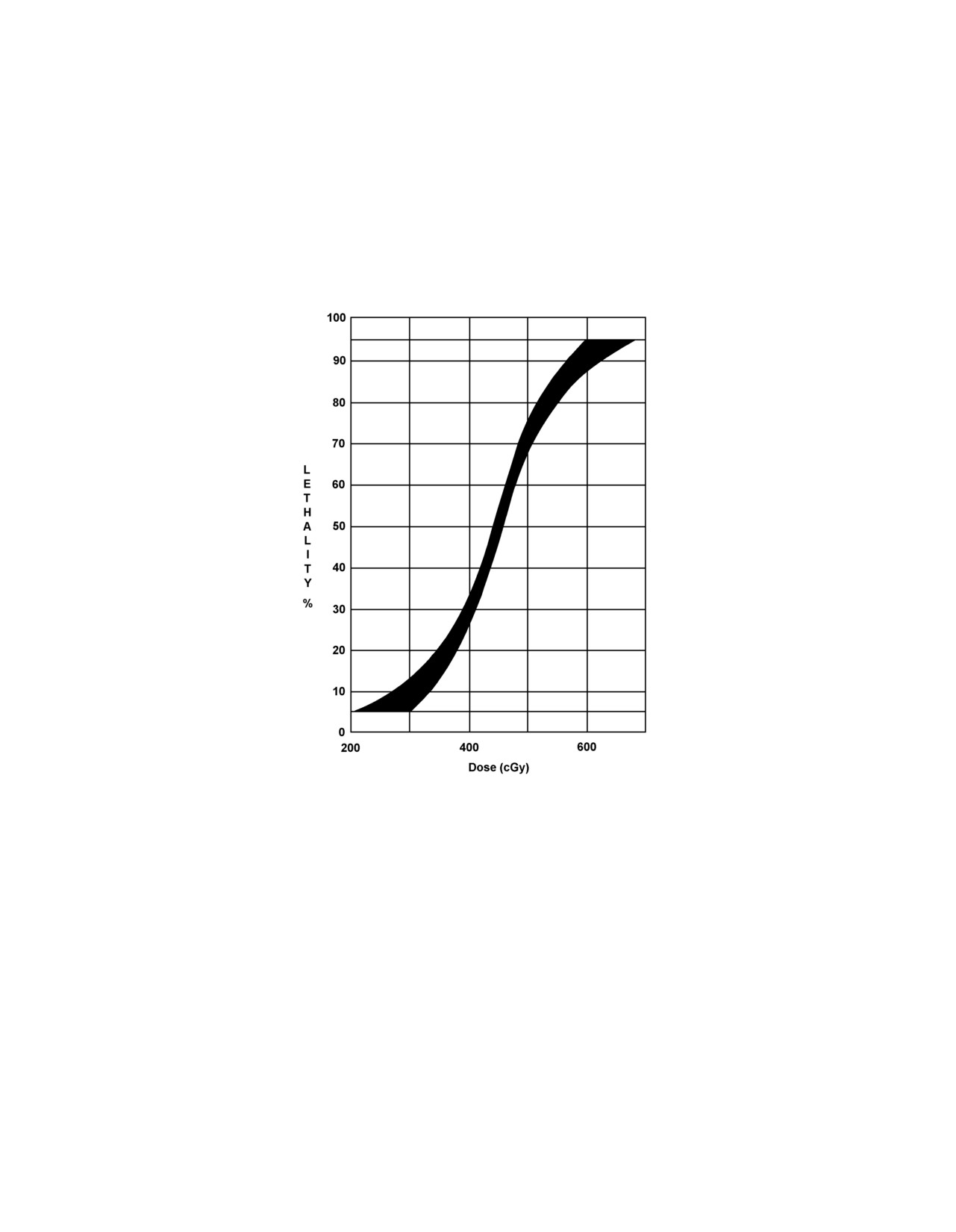
respectively. Figure 3-1 is a graphic representation of a typical mortality response to radiation. The LD50
of radiation that will kill 50 percent of exposed persons within a period of 60 days without medical
intervention (LD50/60) is an acute dose to the whole body of approximately 450 cGy, as measured in free
air. Medically, other figures of interest are the dose that will kill virtually no one (LD5) and the dose that
3-6
FM 4-02.283/NTRP 4-02.21/AFMAN 44-161(I)/MCRP 4-11.1B
will kill virtually everyone (LD95). Approximations of those doses are within the free in air ranges of 200 to
300 cGy and 600 to 700 cGy, respectively. These values are important in determining treatment priorities.
Figure 3-1. Lethality as a function of dose.
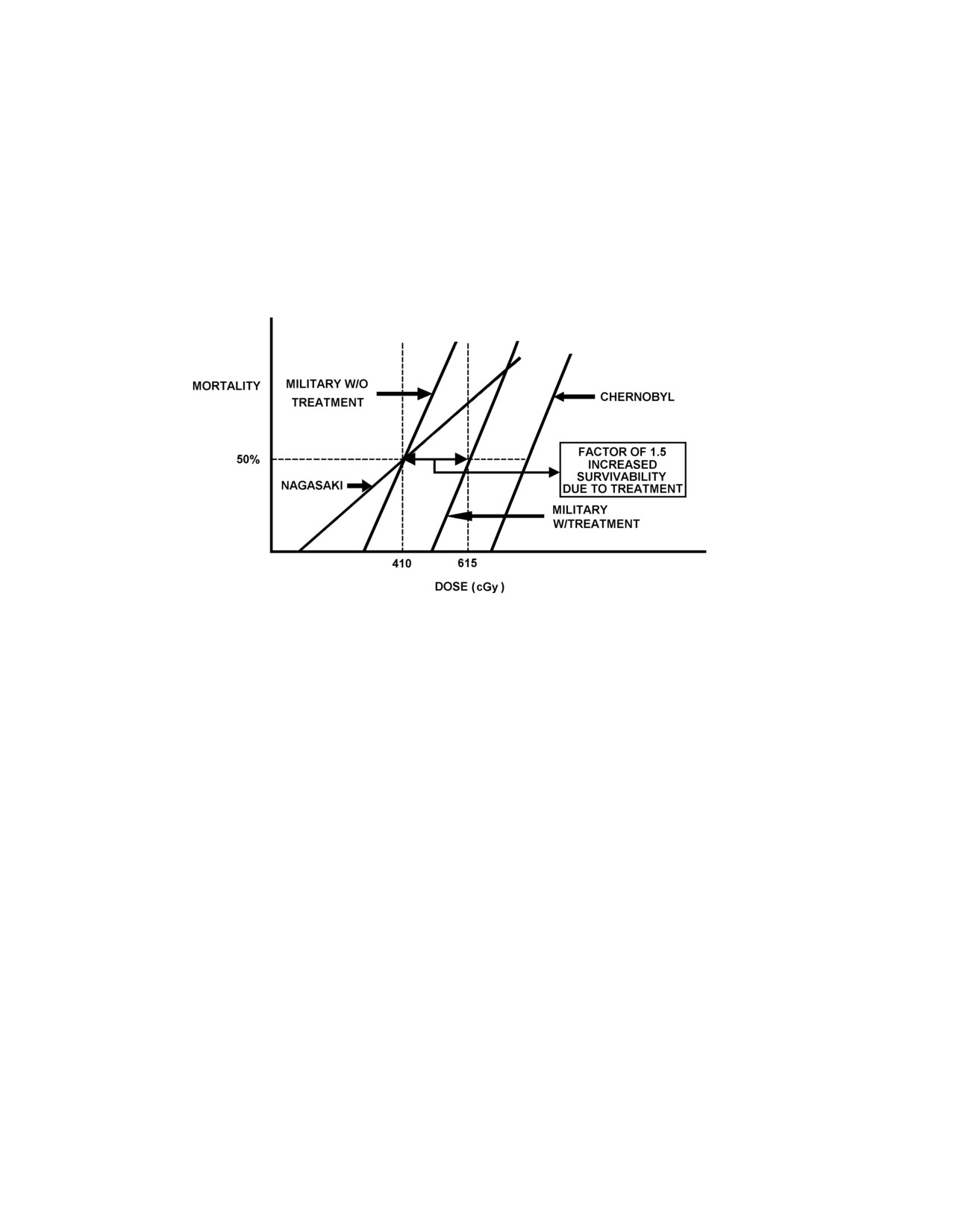
(2) With medical intervention. Adequate medical intervention significantly increases the
LD50 and markedly diminishes mortality. Figure 3-2 shows the impact of medical intervention on lethal
doses (adapted from the U.S. Army Human Response Dose Committee Meeting minutes, 10 October
2000). The LD50 for radiation moves from approximately 400 cGy to approximately 600 cGy if the exposed
service member receives timely medical treatment that is generally available within a theater of operations.
c.
Acute Radiation Subsyndromes. The subsyndromes of acute radiation syndrome include the
hematopoietic, gastrointestinal, and cardiovascular/CNS syndromes. The syndromes are dose dependent,
interrelated and cumulative. As dose is increased, the hematopoietic system, gastrointestinal system and
cardiovascular/central nervous systems are each affected in turn, based largely on the radiosensitivity of the
underlying cell and tissue system. Clearly, a dose sufficient to impact the gastrointestinal system will also
3-7
FM 4-02.283/NTRP 4-02.21/AFMAN 44-161(I)/MCRP 4-11.1B
impact the hematopoietic system. Doses sufficient to impact the CNS system result in lethality before
expression of the lower dose syndromes. The syndromes are discussed in turn below.
Figure 3-2. Estimates of medical intervention on dose effect models.
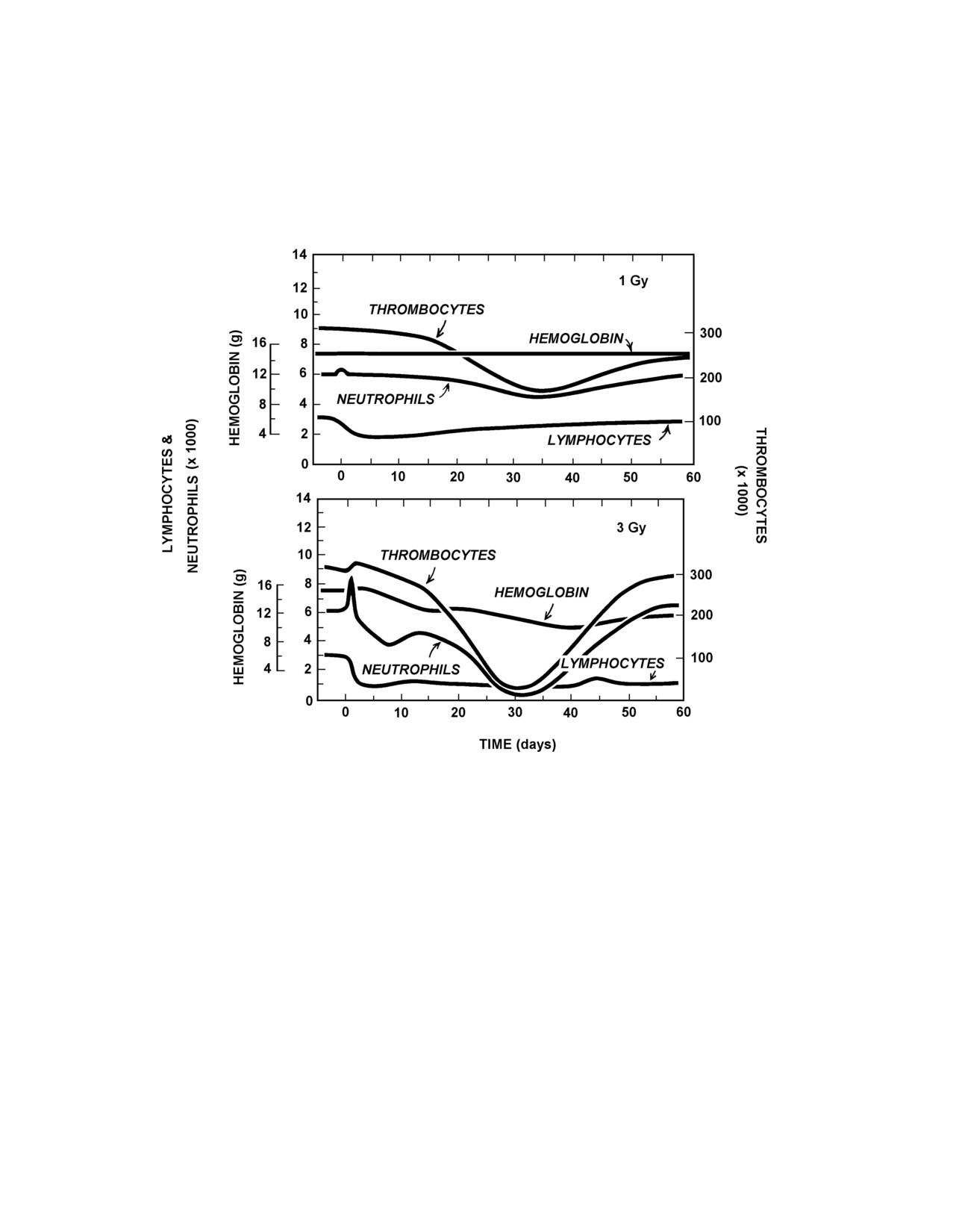
(1) Hematopoietic syndrome. Patients who received doses of radiation in the range of 200 to
600 cGy will have depression of bone marrow function with cessation of blood cell production leading to
pancytopenia. Changes within the peripheral blood profile will occur as early as 24 hours after irradiation (see
Figure 3-3). The exact time sequence of the depression of various circulating cell lines will vary. Lymphocytes
will be depressed most rapidly and erythrocytes least rapidly. Other leukocytes and thrombocytes will be
depressed somewhat less rapidly than lymphocytes. If the bone marrow depression is the result of multiple,
fractionated exposures, or to an exposure that occurs over a period of hours to days, it may be difficult to
estimate when the depression will occur. A reasonable average time for onset of clinical problems of bleeding
and anemia and decreased resistance to infection is 2 to 3 weeks. If an infection occurs, there may be little
clinical response because of the concomitantly depressed inflammatory response.
(a) Erythropoiesis. The erythropoietic system is responsible for the production of
mature erythrocytes (red cells). Because immature erythroblasts and proerythroblasts proliferate rapidly,
they are markedly sensitive to cell killing by ionizing radiation. Death of stem cells and of those within the
dividing and differentiating compartment are responsible for the depression of erythropoietic marrow. If
sufficiently severe, this depression is responsible for the subsequent radiation-induced anemia. Because of
the relatively slow turnover rate, approximately one percent loss of red cell mass per day, evidence of
anemia is usually manifested after depression of the other cell lines. This system has a marked propensity
for regeneration following irradiation. After sublethal exposures, marrow erythropoiesis normally recovers
slightly earlier than granulopoiesis and thrombopoiesis and occasionally overshoots the baseline level before
levels at or near normal are reached.
3-8
FM 4-02.283/NTRP 4-02.21/AFMAN 44-161(I)/MCRP 4-11.1B
Figure 3-3. Hematological response to whole-body exposure of 1 Gy (100 cGy) and 3 Gy (300 cGy).
(b) Lymphopoiesis. Lymphocytes are the most radiosensitive cells of the hematopoietic
system. Shortly after exposure to ionizing radiation, mature lymphocytes show early necrosis and immature
splenic lymphocytes have evidence of chromatin clumping and early necrotic changes. Lymph nodes show
nuclear debris within hours of irradiation. The number of cells in the blood forming organs is not related to
radiation dose, but further cell reproduction seems to be inhibited. Surviving lymphocytes may have either
an increased cellular metabolism or altered behavior. The greater the radiation exposure, the more
profound the lymphopenia. The leukopenia will begin within hours and proceed to its nadir within 48 to 72
hours. The fall in circulating lymphocytes can be utilized as a crude biodosimetry tool to estimate the
effective radiation dose received. The steeper the fall in circulating lymphocytes, the higher the dose and
the more severe the injury (see paragraph 3-10).
(c) Leukopoiesis. The function of the myelopoietic cell renewal system is mainly to
produce mature granulocytes (neutrophils, eosinophils, and basophils) for the circulating blood. The most
3-9
FM 4-02.283/NTRP 4-02.21/AFMAN 44-161(I)/MCRP 4-11.1B
important type in this cell line are the neutrophils because of their role in combating infection. The stem
cells and those developing cells within the dividing and differentiating compartment are the most
radiosensitive. Three to seven days are normally required for the mature circulating neutrophil to form
from its stem cell precursor stage in the bone marrow. Mature functional granulocytes are available upon
demand from venous, splenic, and bone marrow pools. Following an initial increase in circulating
granulocytes (of unknown etiology), these pools are normally depleted before granulocytopenia is evident
soon after radiation-induced bone marrow injury. Because of the rapid turnover in the granulocyte cell
renewal system (approximately 8-day cellular life cycle), evidence of radiation damage to marrow
myelopoiesis occurs in the peripheral blood within 2 to 4 days after whole-body irradiation. Recovery of
myelopoiesis lags slightly behind erythropoiesis and is accompanied by rapid increases in numbers of
differentiating and dividing forms in the marrow. Prompt recovery is occasionally manifested and is
indicated by increased numbers of band cells in the peripheral blood.
(d) Thrombopoiesis. The thrombopoietic cell renewal system is responsible for the
production of platelets (thrombocytes). Platelets are produced by megakaryocytes in the bone marrow.
Both platelets and mature megakaryocytes are relatively radioresistant, however the stem cells and immature
stages are very radiosensitive. The transit time through the megakaryocyte proliferating compartment in
man ranges from 4 to 10 days. Platelets have a life span of 8 to 9 days. The time of beginning platelet
depression is influenced by the normal turnover kinetics of cells within the maturing and functional
compartments. Thrombocytopenia is reached in 3 to 4 weeks after doses of 200600 cGy, and occurs from
the killing of stem cells and immature megakaryocyte stages with subsequent maturational depletion of
functional megakaryocytes. Regeneration of thrombocytopoiesis after sublethal irradiation normally lags
behind both erythropoiesis and myelopoiesis. Supranormal platelet numbers overshooting the preirradiation
level have occurred during the intense regenerative phase in human nuclear accident victims. Blood
coagulation defects with concomitant hemorrhage constitute important clinical sequelae during the
thrombocytopenic phase of bone marrow and GI syndromes.
(2) Gastrointestinal syndrome.
(a) The gamma radiation doses that will result in the GI syndrome are higher than those
that will cause the hematopoietic syndrome alone. An acute dose that will cause this syndrome will be at
least 800 cGy. Some facets of the GI syndrome may manifest at doses of 600 cGy depending on abdominal
dose and individual sensitivity. Conversely, exposures to high doses at low dose rates or as fractionated
exposures (multiple individual exposures totaling a specific dose) may not cause it. Regardless of the dose
involved, the GI syndrome has a very serious prognosis, because it will almost always be accompanied by
bone marrow suppression.
(b) The effects of radiation on the GI tract and the associated symptomatology can be
categorized into four major phases that correspond to the elapsed time from exposure to manifestation.
These phases are
The Prodromal Phase, in which nausea, vomiting, and diarrhea occur minutes
to hours after exposure.
The Latent Phase, which lasts a few days to a week.
3-10
FM 4-02.283/NTRP 4-02.21/AFMAN 44-161(I)/MCRP 4-11.1B
The Manifest Phase, in which the patient experiences severe fluid loss,
hemorrhage, and diarrhea. The pathologic basis for this syndrome is an early physiologic derangement of
the epithelial cells followed by a combination of severe loss of intestinal mucosa and injury to the fine
vasculature of the submucosa.
The Chronic Phase, in which survivors may develop fibrosis, bleeding, and
fistulas months to years after exposure.
(3) Cardiovascular/central nervous system syndrome. This syndrome is associated only with
very high acute doses of radiation. The lower limit is probably 2000 cGy, although hypotension (significant
decline in systemic blood pressure) may be seen at even lower doses. Because of the very high doses of
radiation required to cause this syndrome, personnel close enough to a nuclear detonation to receive such
high doses would generally be located well within the range of 100 percent lethality due to blast and thermal
effects (see paragraph 3-7).
(a) Acute radiation doses of 3000 cGy and above uniformly bring death within 72 hours
and usually between 24 to 48 hours, well before the insult to the GI or bone marrow systems becomes
clinically apparent. Doses in this range cause significant direct effects as well as the free radical overload
of the cells and basement membranes of the microcirculation system. This leads to massive loss of serum
and electrolytes through leakage into the extravascular space, circulatory collapse, edema, increased
intracranial pressure, and cerebral anoxia among other damage.
(b) In less than an hour and possibly within minutes of exposure, patients receiving
these doses begin experiencing prodromal symptoms: a burning sensation of the skin within minutes and
severe nausea and usually projectile vomiting within an hour. The symptoms, which are severe and may last
more than 24 hours, also include diarrhea that is occasionally bloody, cutaneous edema and erythema,
hypotension, hyperpyrexia, disorientation, prostration, loss of coordination, and possibly seizures. Following
the prodromal phase, there may be a brief latent phase of apparent clinical improvement; but this will last
only in the range of hours to days. Finally, the victim will succumb to a complex of gross CNS dysfunction
and total cardiovascular (CV) collapse, leading to a relatively prompt and inevitable death.
3-7.
Radiation-Induced Early Transient Incapacitation
Early Transient Incapacitation (ETI) is a temporary inability to perform physically or cognitively demanding
tasks, and is associated with very high acute doses of radiation (lower limit is approximately 2000 cGy). The
latent period is very short, varying from several hours to 1 to 3 days. Hypotension, emesis, and/or diarrhea
may accompany a progressive deteriorating state of consciousness as a result of vascular instability. Death
typically occurs within a few days. Convulsions without increased intracranial pressure may or may not occur.
a. The frequency of incapacitation produced by a given radiation dose is proportional to the
demands or the level of stress of the task being performed. Current combat casualty criteria are based on
the incapacitating dose levels for both physically demanding tasks and undemanding tasks. They do not
include combat ineffectiveness due to partially degraded performance that may result from slower reaction
to the task, task stress, or prodromal effects of acute radiation sickness. Exposure to doses of ionizing
3-11
FM 4-02.283/NTRP 4-02.21/AFMAN 44-161(I)/MCRP 4-11.1B
radiation of approximately 2000 cGy results in an immediate precipitous decline in cerebral blood flow
(CBF), which is followed by a partial recovery at 20 to 30 minutes, and subsequent slower secondary
decrease in CBF, thereafter, accompanied by parallel changes in systemic blood pressure. The activity of
certain brain enzymes involved in neurotransmitter metabolism is also considerably affected during ETI.
b. For yields of 5 KT or less, initial nuclear radiation will be the dominant casualty producer on
the battlefield. Military personnel close enough to ground zero who receive an acute incapacitation dose of
2000 cGy would more likely die due to blast and thermal effects. However, in nuclear detonations above the
atmosphere with essentially no blast, very high fluxes of ionizing radiation may extend out far enough to
result in high radiation doses to aircraft crews. Such personnel could conceivably manifest ETI,
uncomplicated by blast or thermal injury. Also, personnel protected from blast and thermal effects in
shielded areas could also sustain doses that might manifest as ETI. Doses in this range could also result
from military operations in a reactor facility or a fuel processing plant where personnel are accidentally or
deliberately injured by a nuclear criticality event. Personnel suffering from ETI will become performance
degraded almost immediately and combat ineffective within several hours. However, they will not die until
5 to 6 days after exposure unless they received other injuries that would make them more susceptible to
death from the radiation dose.
Section III. DIAGNOSIS, SEVERITY, AND TRIAGE
OF RADIATION CASUALTIES
3-8.
Clinical Findings
A precise history of exposure may be very difficult to obtain, since many individuals may not know that they
actually have been exposed to radiation, particularly if the exposure is due to fallout, or due to exposure to a
low-level radiation source. One of the sources of information available to the medical staff is the medical
military physicist (that is, the Army 72A, Air Force 43EX, 43YX, or Navy 0847 officers). Also, unit NBC
personnel and chemical defense unit personnel can provide unit operational history information and perhaps
collective unit exposure data. However, an accurate and prompt diagnosis of radiation sickness is based
primarily upon the clinical picture presented by the patient. The key signs and symptoms of radiation
sickness that would make one suspicious that radiation exposure has occurred are described below. Some of
these signs and symptoms, along with the information provided in Table 3-3, can help the clinician to
estimate the approximate severity of the potential exposure.
a. Nausea and Vomiting. Nausea and vomiting occur with increasing frequency as the radiation
dose exceeds 100 to 200 cGy. Their onset may be seen as long as 6 to 12 hours postexposure and usually
subsides within the first day for these lower doses. The occurrence of vomiting within the first two hours is
usually associated with a severe radiation dose. Vomiting within the first hour, especially if accompanied by
explosive diarrhea, is associated with doses that frequently prove fatal. Due to the transient nature of these
symptoms, it is possible that the patient will have already passed through the initial phase of GI distress
before being seen by a physician. It will be necessary to inquire about these symptoms at the initial
examination.
3-12

FM 4-02.283/NTRP 4-02.21/AFMAN 44-161(I)/MCRP 4-11.1B
NOTE
The use of antiemetics, such as granisetron, has been approved by the
FDA for prophylactic use for high-dose radiation exposure. Medical
personnel may encounter patients whose nausea and vomiting
symptoms have been reduced or mitigated by use of this drug.
b. Hyperthermia. Casualties who have received a potentially lethal radiation injury show a
significant rise in body temperature within the first few hours postexposure. Although the number of cases
is few and is frequently overlooked, this condition appears to be a consistent finding. The occurrence of
fever and chills within the first day postexposure is associated with a severe life-threatening radiation dose.
Hyperthermia may occur in patients who receive lower, but still serious radiation doses (200 cGy or more).
c.
Erythema. A person who has received a whole body dose of more than 1000 cGy will develop
erythema within the first day postexposure. Erythema is less frequently seen with lower doses (200 cGy or more).
d. Hypotension. A noticeable and sometimes clinically significant decline in systemic blood pressure
has been recorded in victims who have received a supralethal whole body radiation dose. A severe hypotensive
episode was recorded in one person who had received several thousand cGy. In persons who received several
hundred cGy, a drop in systemic blood pressure of more than 10 percent has been noted. Severe hypotension
after irradiation is associated with lethal injury. However, if the radiation dose has been determined to be
less than 1000 cGy, then a physical injury should be suspected as being responsible for the hypotension.
e.
Neurologic Dysfunction. Experience indicates that almost all persons who demonstrate obvious
signs of damage to the CNS within the first hour postexposure have received a supralethal dose. Symptoms
include mental confusion, convulsions, and coma. Intractable hypotension will probably accompany these
symptoms. Without aggressive medical support, these patients succumb within 48 hours.
Table 3-3. Dose, Onset, and Duration of Symptoms
DOSE (cGy)
SYMPTOMS
ONSET
DURATION
035
None
N/A
N/A
3575
Mild Nausea, Headache
6 Hours
12 Hours
75125
Nausea/Vomiting (30%)
35 Hours
24 Hours
125300
Nausea/Vomiting (70%)
23 Hours
34 Days
Nausea/Vomiting (90%)
2 Hours
34 Days
300530
Diarrhea (10%)
26 Hours
23 Weeks
Severe Nausea/Vomiting (90%)
1 Hour
Direct Transit into
530830
Diarrhea (10%)
18 Hours
GI Syndrome
Severe Nausea/Vomiting (90%)
310 Min
Persists Until Death
8303000
Disorientation (100%)
310 Min
30 Min10 Hours
3-13
FM 4-02.283/NTRP 4-02.21/AFMAN 44-161(I)/MCRP 4-11.1B
3-9.
Dosimetry
Dosimetry, at the present time, is useful in that it can help determine that an exposure has occurred, but it
will not give an entirely adequate picture that can be used to determine either the extent of radiation injury or
the prognosis. Dosimeters cannot tell whether a radiation exposure is whole body or partial body, and, they
do not display the dose rate of the exposure. Generally, they may not differentiate between single exposures
and multiple exposures unless they are read at regular intervals. However, in a mass casualty situation in an
operational theater where time is critical, decisions based only on dosimetric data may be all that is
practical.
3-10. Laboratory Testing
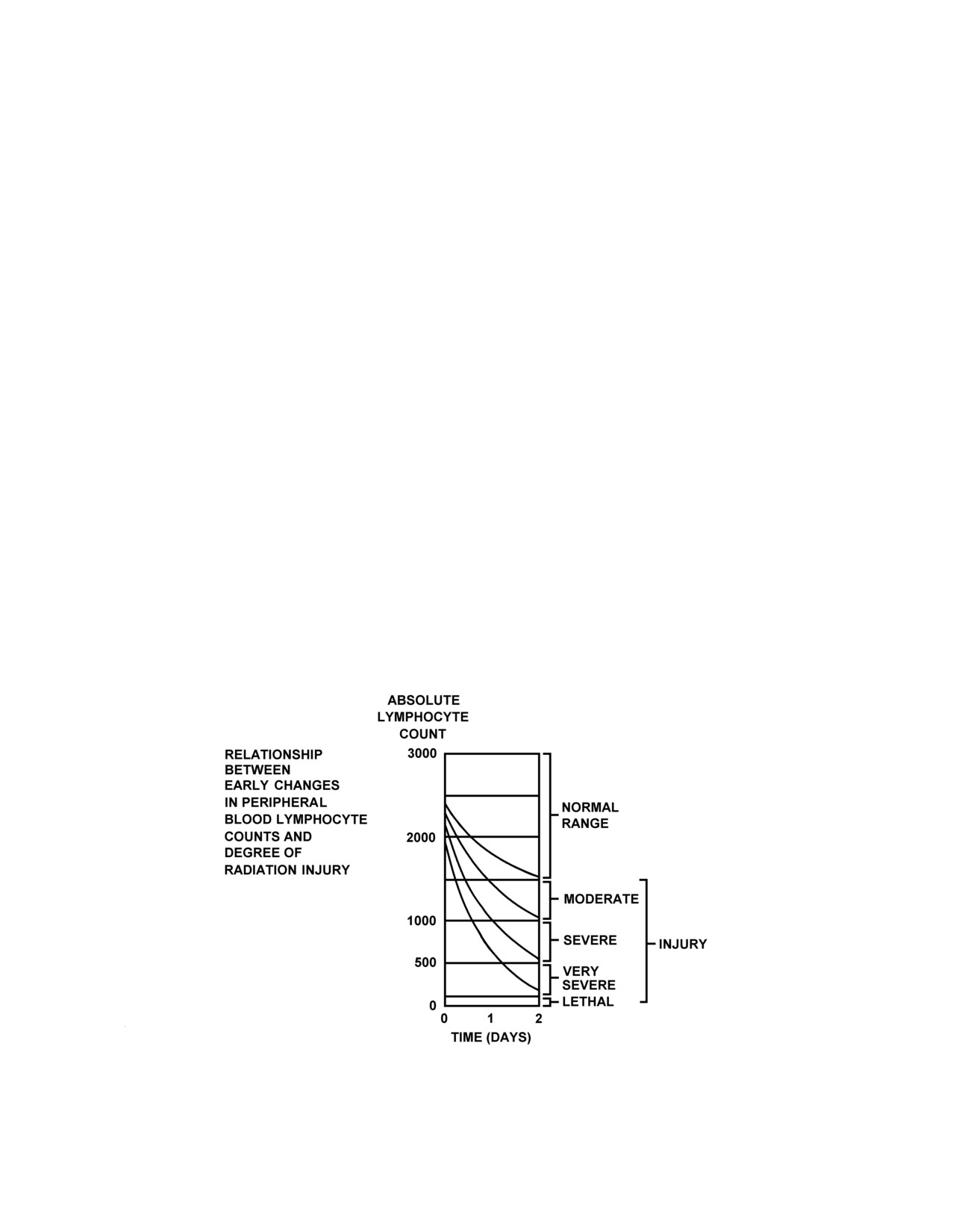
a. The most useful forward laboratory procedure to evaluate marrow depression is the peripheral
blood count. The resultant lymphocyte levels may be used as a biologic dosimeter to help make the diagnosis
and determine the severity of radiation injury only (see Figure 3-4). In the event of combined injuries, the use
of lymphocytes may be unreliable because patients who have received severe burns or multisystem trauma
often develop lymphopenia. The rate and degree of decrease in blood cells are dose dependent. An initial
baseline sample should be obtained as early as possible after irradiation. Blood samples should be taken at
least daily during the first 2 weeks. More frequent sampling will increase the reliability of dose estimates.
A useful rule of thumb: if lymphocytes have decreased by 50 percent and are less than 1.0 x 10⁹/l within
2448 hours, the patient has received at least a moderate dose of radiation. However, all personnel with
lymphocyte levels of less than 2000/mm3 at 24 hours postirradiation are candidates for treatment.
Figure 3-4. Lymphocyte nomogram.
3-14

FM 4-02.283/NTRP 4-02.21/AFMAN 44-161(I)/MCRP 4-11.1B
b. Other medical assays can be used to determine the severity of exposure. Table 3-4 (adapted
from AMedP-6(C), NATO Handbook on Medical Aspects of NBC Operations, Ratification Draft) lists
clinical laboratory test and the treatment level where they should be performed.
Table 3-4. Medical Assay of the Radiological Patient
LOCATION/FACILITY
DECONTAMINATION
MEDICAL TREATMENT
HOSPITAL
TERTIARY CARE
TEST
POINT
UNIT (LEVEL 2)
(LEVEL 3)
(LEVEL 4)
Nasal swabs for
+
inhalation of
contaminants
External contamination
+
+
Urine and stool sample for
Baseline sample
24 hour sample
+
internal contamination
Complete Blood Count
If practical
Baseline sample
Daily for 2 weeks
Daily for 2 weeks
(CBC)/platelets
and then daily
Absolute Lymphocyte
Every 412 hours
Every 412 hours
Count
for 3 days
Human Leukocyte Antigen
Draw sample
Draw sample before
Draw sample before
(HLA) subtyping
lymphocyte count falls
lymphocyte count falls
Cytomegalovirus (CMV)
+
+
Hemoglobin Agglutinin
+
+
Human Syncytial Cell
+
Virus Antibodies
Human Immunovirus
+
+
Vesiculovirus
+
Lymphocyte Cytogenetics
Draw sample
Draw sample before
+
lymphocyte count falls
+ Indicates test should be performed at this location/level of care.
3-11. Triage of Nuclear and Radiological Casualties
Casualty diagnosis and triage are linked in that diagnosis is an individual casualty determination, while triage
takes that individual casualty information and applies it to a medical unit operational priority. This is
3-15
FM 4-02.283/NTRP 4-02.21/AFMAN 44-161(I)/MCRP 4-11.1B
especially the case in a mass casualty situation in times of nuclear war or during consequence management
of a catastrophic nuclear incident. A mass casualty situation is one where the number of patients requiring
care exceeds the capabilities of treatment personnel and facilities. For example, the detonation of the high
explosive (HE) component of a nuclear weapon (such as at Palomares, Spain) in a densely populated area
can result in 50 patients requiring immediate care, yet the closest treatment facility can only provide for 10
patients. Thus, correct triage and evacuation procedures are essential.
a. Triage classifications for nuclear patients differ from conventionally injured patients. Because
survivable radiation injury is not manifested until days to weeks after exposure, triage is based primarily on
the presentation of conventional injuries and is then modified by radiation injury level. That is, triage and
care of any life-threatening injuries should be rendered without regard for the probability of radiation
exposure or contamination. The physician should make a preliminary diagnosis of radiation injury only for
those patients who display the appropriate radiation exposure symptoms, such as nausea, vomiting, diarrhea,
hyperthermia, and so forth. The DIME method of triage codes is used for patient classification. That is,
D = Delayed, I = Immediate, M = Minimal, and E = Expectant. Nuclear patient triage classifications
are as follows:
(1) Delayed treatment group (D). Those needing surgery, but whose conditions permit delay
without unduly endangering safety. Life-sustaining treatment such as intravenous fluids, antibiotics, splinting,
catheterization, and relief of pain may be required in this group. Examples are fractured limbs, spinal
injuries, and uncomplicated burns, and all casualties with only radiation injury who do not exhibit gross
neurological symptoms. In the face of trauma combined with radiation injury, all surgical procedures must
be completed within 3648 hours of radiation exposure, or delayed until at least two months after the injury.
Consequently, combined injury patients become the highest priority immediately after those requiring life or
limb-saving surgery.
(2) Immediate treatment group
(I).
Those requiring immediate lifesaving surgery.
Procedures should not be time-consuming and should concern only those with a high chance of survival, such
as respiratory obstruction and accessible hemorrhage. Pure radiation injury is not acutely life-threatening
unless the irradiation is massive. If a massive dose has been received, then the patient is classified as
expectant (E).
(3) Minimal treatment group (M). Those with relatively minor injuries who can be helped by
untrained personnel, or who can look after themselves, such those who have minor fractures or lacerations.
Buddy care is particularly important in this situation. Patients with radiological injury should have all
wounds and lacerations cleaned meticulously and then closed.
(4) Expectant treatment group (E). Those with serious or multiple injuries requiring intensive
treatment, or with a poor chance of survival. These patients receive appropriate supportive treatment
compatible with resources, which will include large doses of analgesics as applicable. Examples are severe
head and spinal injuries, widespread burns, or neurological symptoms from massive doses of radiation.
These casualties may be removed from this category as additional medical assets become available.
b. Table 3-5 provides radiation dosage, degradation of treatment, and treatment priorities for
radiation and combined injuries.
3-16

FM 4-02.283/NTRP 4-02.21/AFMAN 44-161(I)/MCRP 4-11.1B
Table 3-5. Radiation Dosage and Treatment Priority
SERIAL STARTING PRIORITY
FINAL PRIORITY
LESS THAN 150 CGY
GREATER THAN 150 CGY
GROSS NEUROLOGICAL SYMPTOMS
Radiation Only
DUTY, D, or M *
D **
E
I
I
I
E
D
I
I
E
M
D **
D
E
E
E
E
E
* Placement in one of the categories is dependent upon command guidance, the tactical situation, and availability of replacements.
Select DUTY if mission completion is mandatory regardless of casualty rate. Select M if less than 50 cGy and combat operations
are ongoing. Select D if combat personnel resources are adequate.
** Includes the probable requirements for antibiotics and transfusion at a later time. This classification does not suggest that the
patient is not in need of treatment, but rather that he does not need immediate specialized care. Marrow resuscitative therapy
should begin as soon as practical.
Section IV. TREATMENT OF RADIATION SUBSYNDROMES
3-12. First Aid
There is no direct first aid for radiological casualties. The first action in dealing with these casualties is to
administer first aid for any conventional injuries, such as combat wounds, blast injuries, and thermal burns
in accordance with the procedures in FM 21-11, First Aid for Soldiers.
3-13. Management of the Hematopoietic Syndrome
The primary goal of treating the hematopoietic patient is a reduction in both the depth and duration of
leukopenia. The therapeutic modalities for treatment will vary according to the medical facility, the current
medical knowledge and experience of the providers, the number of casualties, and the available resources to
treat the patients. In the patient with signs and symptoms consistent with hematopoietic syndrome, changes
within the peripheral blood profile can occur as early as 24 hours after irradiation. Therefore, blood
specimens should be drawn for biodosimetry analysis. The tendency toward uncontrolled hemorrhage,
decreased resistance to infection, and anemia will vary considerably from as early as 10 days to as much as
6 to 8 weeks after exposure. However, a reasonable average time for the onset of bleeding and anemia and
decreased resistance to infection is 2 to 3 weeks postexposure.
a. Conventional Therapy of Neutropenia and Infection. The prevention and management of
infection is the mainstay of therapy. There is a direct relationship between the degree of neutropenia and the
3-17
FM 4-02.283/NTRP 4-02.21/AFMAN 44-161(I)/MCRP 4-11.1B
increased risk of infectious complications. Antibiotic prophylaxis should be considered in afebrile patients
at the highest risk for infection. These patients have profound neutropenia (< 1.0 x 10⁹ cells/l or 1000 cells/
ml) with an expected duration of greater than 7 days. Although the degree of neutropenia is the greatest risk
factor for developing infection, other factors also influence the choice to start treatment and the medications
that are to be used to treat the patient. Such factors include duration of neutropenia, bactericidal functionality
of surviving neutrophils, alteration of physical defense barriers, the patients endogenous microflora, and
organisms endemic to the hospital and community. As the duration of neutropenia increases, the risk of
secondary infections such as invasive mycoses also increases. Some of the recommended medications (see
Appendix B) for prophylaxis are Ciprofloxacin as an antibiotic, Acyclovir as an antiviral agent, and
Fluconazole (Diflucan) as an antifungal agent.
b. Prevention of Infection. Initial care of medical casualties with moderate and severe radiation
exposure should probably include early institution of measures to reduce pathogen acquisition, with emphasis
on low microbial content food, acceptable water supplies, frequent handwashing (or wearing of gloves), and
air filtration. During the neutropenic period, prophylactic use of selective gut decontamination with
antibiotics that suppress aerobes but preserve anaerobes has been used, but is dependent upon the clinical
setting, provider preference, and the resources available. These measures can help control the alimentary
canal source (mouth, esophagus, and intestines) of postinjury infections. Maintenance of gastric acidity
(avoidance of antacids and H2 blockers) may prevent bacteria from colonizing and invading the gastric
mucosa and may reduce the frequency of nosocomial pneumonia due to aspiration of these organisms. The
use of Sucralfate or Prostaglandin analogues may prevent gastric hemorrhage without decreasing gastric
activity. When possible, an early oral feeding is preferred to intravenous feeding in order to maintain the
immunologic and physiologic integrity of the gut. Surgical implantation of a subcutaneously tunneled central
venous catheter can be considered to allow frequent venous access, but meticulous attention to proper care
is necessary to reduce catheter associated infections.
c.
Management of Infection.
(1) The management of established or suspected infection (neutropenia and fever) in irradiated
persons is similar to that used for other febrile neutropenic patients, such as solid tumor patients receiving
chemotherapy. First, an empirical regimen of antibiotics should be selected, based on the pattern of
bacterial susceptibility and nosocomial infections in the particular institution and the degree of neutropenia.
Broad spectrum empiric therapy with high doses of one or more antibiotics should be initiated at the onset of
fever. Aminoglycosides should be used cautiously due to associated toxicities. Therapy should be continued
until the patient is afebrile for 24 hours and the absolute neutrophil count (ANC) is greater than or equal to
0.5 x 10⁹ cells/l (500 cells/µl). Combination regimens often prove to be more effective than monotherapy.
The potential for additivity or synergy should be present in the choice of antibiotics (see Appendix B).
(2) Modifications of this initial antibiotic regimen should include a thorough evaluation of
the history, physical findings, laboratory data (including appropriate cultures and a chest radiograph), and
epidemiological information. Antifungal coverage with Amphotericin B should be added, if indicated, for
patients who remain persistently febrile for 7 days or more on antibiotic therapy in association with
clinical evidence of infection, or if they have new fever on or after day seven of treatment with antibiotics.
If there is evidence of resistant gram-positive infection, Vancomycin should be added. If diarrhea is
present, stool cultures should be examined for Salmonella, Shigella, Campylobacter, and Yersinia. If
3-18
FM 4-02.283/NTRP 4-02.21/AFMAN 44-161(I)/MCRP 4-11.1B
oral/pharyngeal mucositis and/or esophagitis are present, then empiric use of antiviral and/or antifungal
therapy should be considered.
(3) Surveillance cultures may be useful for monitoring acquisition of resistant bacteria
during prophylaxis and emergence of fungi. A once or twice weekly sampling of surveillance cultures from
natural orifices and skin folds (for example, axillae, groin) would be reasonable, but should be modified
based on the institutional patterns of nosocomial infections. A chest radiograph should be considered at
initiation of empiric therapy. This may aid in definitive diagnosis of a new pulmonary infiltrate obtained
during the course of neutropenia. The principles described above are generally applicable to the febrile
neutropenic patient and provide a foundation upon which a specific initial regimen may be selected. These
principles are summarized as follows:
Principle 1: The spectrum of infecting organisms and antimicrobial susceptibility
patterns vary both among institutions and over time.
Principle 2: Life-threatening, gram-negative bacterial infections are universal
among neutropenic patients, but the prevalence of life-threatening, gram-positive bacterial infections varies
greatly among institutions.
Principle 3: Current empiric antimicrobial regimens are highly effective for initial
management of febrile, neutropenic episodes.
Principle 4: Search for the nidus of infection, that is, look for the reason the patient
is infected, and eliminate it.
Overall recommendations for managing infections are summarized as follows:
A standardized plan for management of febrile, neutropenic patients must be devised.
Empiric regimens must contain antibiotics broadly active against gram-negative
bacteria, but antibiotics directed against gram-positive bacteria need be included only in institutions where
these infections are prevalent.
No single antimicrobial regimen can be recommended above all others, as
pathogens and susceptibility vary with time.
If infection is documented by cultures, the empiric regimen may require adjustment
to provide appropriate coverage for the isolate. This should not narrow the antibiotic spectrum while the
patient is neutropenic.
d. Immune Globulin Administration. Immune globulins have not been shown to be beneficial for
radiation casualties on a general basis. However they may be beneficial in bolstering the diminished
immunoglobulin (Ig) blood plasma levels that are critical in combating a variety of infectious agents or in
selectively controlling the pathogenic responses related to septic shock and associated overexpression of
inflammatory cytokines.
3-19
FM 4-02.283/NTRP 4-02.21/AFMAN 44-161(I)/MCRP 4-11.1B
e.
Hematopoietic Growth Factors
(Cytokines). Hematopoietic growth factors, such as
granulocyte-colony stimulating factor (G-CSF) (filgrastim [Neupogen®]) and granulocyte macrophage-CSF
(GM-CSF) (sargramostim [Leukine®]), are potent stimulators of hematopoiesis and shorten the time of
recovery of neutrophils. The risk of infection and subsequent complications are directly related to depth and
duration of neutropenia. In severe radiation-induced myelosuppression, where clinical support in the form
of antibiotics and fresh, irradiated platelets or whole blood is used concurrently with G-CSF or GM-CSF, a
marked reduction in infectious complications translates to reduced morbidity and mortality. Currently,
G-CSF is the preferred cytokine because of its relatively low cost, greater efficacy, and fewer side effects.
An additional benefit of the cytokines is their ability to increase the functional capacity of the neutrophil and
thereby contribute to the prevention of infection as an active part of cellular host defense.
f.
Thrombocytopenia and Anemia.
(1) Conventional therapy of thrombocytopenia. The requirement for platelet support depends
on the patients condition. In irradiated patients with or without other major medical problems (infection, GI
problems, or trauma), the platelets should be maintained at greater than 20 x 109/l. Analysis of platelet
counts versus hemorrhage suggests that 10 x 109/l is adequate in the absence of any indication of
accompanying frank hemorrhage. If surgery is needed, the platelet count should be greater than 50 x 109/l.
Transfusion of platelets remains the primary therapy to maintain adequate platelet counts. As general
supportive measures, one should avoid the use of aspirin and nonsteroidal, anti-inflammatory drugs. Limited
platelet support is likely to come from random donors. Should refractoriness develop, family members as
well as HLA-compatible donors from the general population can be considered as platelet donors. The use
of platelet products from which white blood cells have been removed is desirable to minimize both
allosensitization and the risk of transmission of viral illnesses, such as cytomegalovirus. All blood products
should receive 2000 cGy of radiation and should be filtered before infusion to prevent graft-versus-host
disease through infusion of mononuclear cells present in the products. If an allotransplant is contemplated,
the use of platelets from related donors should be avoided.
(2) Growth factor/cytokine therapy for thrombocytopenia. Use of thrombopoietic agents
after radiation injury is of questionable efficacy. Currently, there is no proven benefit in the bone marrow
transplant model. Further drug development may alter the accepted pattern of care.
(3) Conventional therapy of anemia. Transfusion of packed red blood cells (PRBCs) remains
the primary therapy to maintain hemoglobin above 8 gm/dl. Packed red blood cell transfusions should be
irradiated, leukocyte-filtered (whenever possible), and from an unrelated donor if allogeneic transplantation
is a consideration. Risks of PRBC transfusion may include CMV transmission and alloimmunization.
Gamma irradiation of blood products with 2000 cGy will diminish graft versus host reactions common in
radiation casualties.
(4) Erythropoietin therapy of anemia. Use of erythropoietin (Epo) after radiation injury is not
recommended even though it is likely to be safe. Endogenous Epo levels are often already elevated after
highly cytotoxic therapy and evidence of benefit is not yet available from clinical chemotherapy models.
Anemia is not generally life-threatening in this situation.
g. Bone Marrow/Stem Cell Transplantation. Stem cell transplantation usually has a limited role in
the management of radiation casualties and can only be applied at select Level 5, fixed Continental United
3-20
FM 4-02.283/NTRP 4-02.21/AFMAN 44-161(I)/MCRP 4-11.1B
States (CONUS) facilities. If possible, HLA typing should be done early. Also, the decision to pursue a
transplant must occur within two weeks of initial acute exposure to the patient. Candidates for such
transplants generally have had whole body doses in the 700 to 1000 cGy range, and only a fraction of these
patients would pass screening tests before actually receiving a tissue transplant.
3-14. Management of the Gastrointestinal Syndrome
a. During the manifest phase, fluids and electrolytes should be administered to prevent or correct
dehydration. If blood transfusions are administered, the blood should be irradiated to diminish graft versus
host reactions. Diarrhea associated with the prodromal and subacute phases of GI injury is most likely
related to neurohumoral factors affecting GI motility and transport. Loss of the epithelial cell lining is not
observed until later during the manifest phase of GI injury. As a result, treatment for postirradiation
diarrhea will require several different approaches. For the early prodromal and subacute phases of
diarrhea, agents directed against, or counteracting the effects of neurohumoral factors on GI cells should be
considered. These include antidiarrheal/antisecretory agents such as anticholinergics, Metamucil,
Amphojel, and Loperamide. Loperamide may offer distinct advantages as the drug affects both intestinal
cell transport and motility, each of which may contribute to diarrhea. Antisecretory agents, however, will
be of limited effectiveness against the acute phase of GI injury, during which the loss of epithelial cell lining
has progressed to denudation of the intestine (See Appendix B).
b. Sufficient data concerning the efficacy of cytokines on gut-related growth factors and elemental
diets in stimulating GI regeneration are not yet available. Therefore, specific therapies to stimulate
proliferation and/or to maintain the intestinal cell lining following radiation exposure cannot be recommended.
c.
The use of antibiotics should be considered for specific infections. Prophylactic use of
selective gut decontamination with antibiotics that suppress aerobes but preserve ordinarily commensal
anaerobes has been used but is dependent upon the clinical setting, provider preference, and the resources
available. In the future, the capability to maintain intestinal integrity following radiation exposure may
reduce any emphasis on gut decontamination.
d. The bactericidal effect of gastric acid on intestinal flora is well known. However, gastric acid
also stimulates pancreatic and biliary secretions, both of which have adverse effects on postirradiation GI
integrity. Reduction of gastric acidity may be beneficial in the GI syndrome. Thus, the need to maintain gut
integrity may preempt the desire to stimulate normal bactericidal mechanisms by increasing gastric acid
secretion.
e.
At the present time, it is believed that enteric feeding may be the best alternative even for those
patients with radiological enteric mucosal damage. The direct stimulation by nutrient drips appears to
stimulate mucosal crypt formation. This regeneration of the damaged mucosal barriers inhibits bacterial
movement from the lumen into the interstitial spaces. There is very limited research into this treatment
regimen in the irradiated casualty, however, in nonirradiated trauma patients, total parenteral nutrition
(TPN) is inferior to direct enteric feedings. These data have not been replicated in trauma combined with
radiation injury.
3-21
FM 4-02.283/NTRP 4-02.21/AFMAN 44-161(I)/MCRP 4-11.1B
3-15. Management of the Cardiovascular/Central Nervous System Syndrome
As mentioned earlier, this syndrome is associated with very high acute doses of radiation, probably within
the 2000 to 4000 cGy range. Shock accompanies these high doses, due to a massive loss of fluid into
extravascular tissues through leaky vascular beds. The ensuing problems from edema, increased intracranial
pressure, and cerebral anoxia can bring death in approximately 2 days. Radiation doses in this range are
uniformly fatal regardless of therapies attempted. Therefore, aggressive medical support with pressors,
fluids, steroids, and the like will bring only temporary improvement and may only serve to prolong suffering.
Thus, therapy should include only palliative measures such as opiates or tranquilizers.
3-16. Recovery
Repopulation occurs by stem cell proliferation and is a particularly important recovery mechanism for both
the bone marrow and the GI tract whenever the radiation exposure has been large enough to reduce cell
numbers. Stem cells divide normally in both these tissues, because stem cell turnover is required to
compensate for the normal continuous removal of differentiated cells. Stem cell division will be accelerated
by large doses of radiation, just as any other severe insult would do. The effects of small doses are not
recognized soon enough for accelerated proliferation to take place. In bone marrow, large macrophage
cells produce factors and cytokines that either stimulate or shut down the stem cells that are the progenitors
of the erythropoietic, granulopoietic, or thrombopoietic series of blood cells. The factor producing cells
influence one another and depress the production of one factor while the opposite is being produced. Stem
cell responses continue until the factor is changed.
3-17. Summary of Medical Aspects of Acute Radiation Injury
Tables 3-6 through 3-9 summarize the current ideas on the treatment of radiation casualties at progressively
increasing dose levels. The treatment modalities are meant as guidelines for medical officers during war
conditions. Also, see Appendix C, Treatment Briefs.
3-22
FM 4-02.283/NTRP 4-02.21/AFMAN 44-161(I)/MCRP 4-11.1B
Section V. COMBINED INJURYBLAST, THERMAL,
AND RADIOLOGICAL INJURIES
3-18. General
A combined injury is when a radiation injury is combined with the effects of blast trauma and/or thermal
burn injury from a nuclear detonation. Combined injuries will be the norm when dealing with nuclear
detonations (two-thirds of the casualties will have combinations of injuries from the detonation). Chemical
and biological weapons effects are not combined injuries in the classical sense, but are discussed in this
section since there is a potential for combined use of NBC weapons.
3-19. Blast Injuries
The blast injuries caused by nuclear weapons, or from high explosive components of nuclear weapons and
RDDs, will frequently be complicated by associated thermal and/or radiation injuries. The diagnosis of
blast injuries can often be difficult because there is often unrecognized internal injury. About half of the
patients seen will have wounds to their extremities. In those with injuries to the thorax, abdomen, and head,
the distribution is about equal. Injuries of the thorax, neck, and the head will be responsible for a large
percentage of deaths because these types of injuries have a high probability of immediate fatality.
3-20. Treatment of Blast Injuries
Normally, treatment is divided into the following four basic phases
a. Resuscitative Phase (First Aid). Missile, crush, and translational injuries are generally
manifested as wounds of the head, neck, face, chest, stomach, and extremities (fractures) and require
immediate attention at the individual level. Blast casualties will require evaluation for acute trauma in
accordance with advanced trauma life support standard therapies. Lifesaving resuscitative measures
designed to prepare the patient for definitive surgical treatment come first. These include the establishment
of the airway assuring the adequacy of respiration, replacement of lost blood and fluids, and splinting of
possible fractures, particularly those involving the cervical vertebrae. Some resuscitative measures must
be started prior to evacuation, particularly if ground transportation is used rather than helicopter evacuation.
All wounds are considered to be contaminated because of infection-producing organisms (germs) and
radiological material due to fallout. That a wound is contaminated does not lessen the importance of
protecting it from further contamination, therefore, first aid providers must dress and bandage a wound as
soon as possible to prevent further contamination. For a detailed discussion on first aid for typical blast
injury wounds, see FM 21-11, First Aid for Soldiers.
b. Surgical Phase. Definitive surgery should be done after resuscitative measures have been
used to stabilize the patient. Occasionally, lifesaving surgery must be done without delay, but normally
there is time to prepare patients for surgery if they have survived long enough to reach a treatment facility.
3-27
FM 4-02.283/NTRP 4-02.21/AFMAN 44-161(I)/MCRP 4-11.1B
The treatment of blast injuries is best managed by applying accepted principles of combat surgery as outlined
in the Textbook of Military Medicine, Part I, Volume 5, Conventional Warfare, Ballistic, Blast and Burn
Injuries (Chapters 5-9). Of note, traditionally, combat wounds are not closed primarily due to the high level
of contamination, devitalized tissue, and the subsequent morbidity and mortality associated with closed
space contamination. In the case of the radiation combined injury patient, wounds that are left open and
allowed to heal by secondary intention will serve as a potentially fatal nidus of infection. If at all possible,
wounds should be closed primarily within 36 to 48 hours of radiation exposure. If surgery is required and
cannot be completed at forward locations, patients with moderate injury will need early evacuation to a level
where surgical facilities are immediately available.
c.
Recovery Phase. In the immediate postoperative period, patients require minimal movement.
Transportation to other facilities should be delayed until the patients condition has stabilized.
d. Convalescent Phase. Patients in this phase of treatment should be evacuated back to specialized
convalescent facilities in order to keep the patient load of supporting hospitals as low as possible. Many
injuries may require a prolonged recovery period before the individual has recovered to the point where he
can resume his duties. Both the convalescent and recovery phases will be more protracted with the addition
of a radiation injury.
e.
Orthopedic Injuries. Special circumstances exist for the treatment of orthopedic injuries that
are associated with radiation exposure. Research with rabbit long bones demonstrates lack of adequate callus
formation and subsequent nonunion in the irradiated animal. That is, animals that receive no treatment for
irradiation will have nonunion of fractures. There has been no research into modern techniques of orthopedics
and wound healing in the irradiated patient. At present, it is recommended that any reconstructive surgery
be delayed until complete healing of the radiation injury has occurred. There has also been no documentation
of the effects of aggressive medical resuscitation in these patients. Primary amputation may be the most
efficacious method of dealing with severely injured extremities. Conservative attempts at salvage by
repeated debridement and reconstruction may well result in disaster for the irradiated patient.
f.
Tetanus. All personnel receive mandatory immunization with tetanus toxoid when they enter
active duty. However, members of todays professional military may serve many years after their initial
immunizations; if they have not received a recent booster, they are at risk of developing tetanus if they are
wounded. Therefore, all casualties, regardless of their injuries, will receive a tetanus toxoid booster (see
Appendix C, paragraph C-15).
3-21. Thermal Injury
Thermal burns caused by fire, hot objects, hot liquids, and gases or by a nuclear detonation or fireball often
cause extreme pain, scarring, or even death. Experimental data demonstrate that the mortality of patients
with thermal burns markedly increases when combined with exposure to radiation. Burn patients with 50
percent mortality may be transformed into more than 90 percent mortality when irradiated with doses as small
as 150 cGy. Therefore, this may be considered the most significant type of combined injury. Infection is the
primary cause of death in these patients, since full-thickness burns are ideal for naturally culturing bacteria.
3-28
FM 4-02.283/NTRP 4-02.21/AFMAN 44-161(I)/MCRP 4-11.1B
3-22. Determining Severity of Thermal Injuries
Certain factors are of prime importance in the early evaluation of burns because of their relation to overall
prognosis. These factors include
Area of the burn expressed in percentage of body surface involved.
Involvement of critical areas and organs: for example, the head and respiratory tract.
Depth of burn: superficial (first- or second-degree), deep (second-degree), and full thickness
(third-degree).
a. Area of burn. The most accurate way to estimate the severity of the burn is to measure the
extent of the body surface burned. Direct measurement is difficult, and a shortcut method of estimating the
percent of the body surface involved can be very useful. The Rule of Nines method is a simple and
reasonably reliable guide in which the various parts of the body are divided into surface areas of 9 percent
each (or multiples of 9 percent) as shown in Table 3-10.
Table 3-10. Rule of Nines for Establishing Extent of Body Surface Burned
ANATOMIC SURFACE
% OF TOTAL SURFACE
Head and Neck
9 = 9
Anterior Trunk
2 x 9 = 18
Posterior Trunk
2 x 9 = 18
Upper Limbs
9 ea = 18
Lower Limbs
18 ea = 36
Genitalia and Perineum
1 = 1
As the percent of body surface burned increases, predicted morbidity and mortality increases sharply.
Burns that cover 20 percent or more of the body surface can be fatal without treatment. Determination of the
percent of the body surface involved will aid in planning resuscitative treatment and estimating fluid
requirements during the first 48 hours after the burn injury. Patients with severe burns will suffer extensive
fluid and electrolyte losses, resulting in severe hypovolemic shock requiring aggressive fluid replacement
therapy as early as possible.
b. Involvement of critical organs. When certain organ systems are involved, the clinical effects
of burns are potentially more serious in spite of the fact that only a small fraction of the body is involved.
(1) Head and neck burns. Burns of the head and neck can be associated with upper respiratory
tract edema, which can result in respiratory obstruction.
3-29
FM 4-02.283/NTRP 4-02.21/AFMAN 44-161(I)/MCRP 4-11.1B
(2) Burns of the deep respiratory tract. These injuries may result in pulmonary edema with
a resultant high probability of mortality.
c.
Depth of burn. Burns are classified on the basis of the depth of the injury.
(1) Superficial or partial skin thickness burns. These are superficial and painful lesions
which affect only the epidermis. These burns will heal readily if treated appropriately.
(2) Deep or full-thickness burns. These burns require extensive resuscitation and surgical
intervention. They involve the full thickness of the skin and usually result in healing by scarring which
causes contractions and loss of function.
3-23. Treatment of Thermal Injuries
a. Proper first aid will minimize further injury of the burned area, and generally includes
performing the basic lifesaving measures, lifting away any clothing covering the burned area, and applying
a field dressing to the burn. For a detailed discussion on first aid for burns, see FM 21-11, First Aid for
Soldiers.
b. Initial treatment of burn patients will be resuscitative. When such patients are first seen, a
simple plan of treatment must include maintenance of airway with ventilation support as needed; adequate
fluid therapy; and careful maintenance of medical records.
(1) Maintenance of airway. This is of particular importance in head and neck burns or in
unconscious patients. If large numbers of patients are seen requiring transportation over long distances
early in the postburn period, tracheotomies or intubation may have to be done on a routine basis. These
procedures done prior to the onset of edema are much easier to perform than when they are done after
edema has resulted in respiratory obstruction. When only small numbers of patients require treatment,
tracheotomies are rarely required.
(2) Fluid therapy. The shock that is associated with an extensive burn will be severe, and
survival of these patients depends upon adequate, balanced fluid replacement therapy. Standard formulae
for determining the fluid requirements of burn patients have been developed and can be used in combat. The
basic principle in these formulae is that the amount of fluid required is proportional to the percent of body
surface burned and body weight. Detailed fluid resuscitation procedures can be found in The Textbook of
Military Medicine, Part I, Volume 5, Conventional Warfare, Ballistic, Blast and Burn Injuries, Chapter 11.
(3) Input and output records. It is extremely important to accurately follow the input and
output of fluids in burn patients even to the point of catheterizing patients to accurately track output. It would
be impossible to modify fluid therapy according to individual needs without accurate records. Combat
medical records, however, must be simple and should be attached to the patient so that they accompany him
during evacuation.
c.
Care of Burn Wound. Although the first priority in patient care is resuscitation, proper care of
the burn wound is essential both for survival as well as for optimum healing and preservation of function. As
3-30
FM 4-02.283/NTRP 4-02.21/AFMAN 44-161(I)/MCRP 4-11.1B
soon as the patients overall condition permits, after hospitalization, initial debridement and cleaning of the
burn should be done. The main purpose of this treatment is to remove foreign material and dead tissue to
minimize infection. Thorough irrigation and the application of topical antimicrobial creams such as Mafenide
Acetate Cream and Silver Sulfadiazine Cream and sterile dressings should complete the initial procedures.
Special attention should be given to critical areas such as the hands and surfaces over joints. No studies are
available regarding the use of modern skin graft techniques in these combined irradiation-burn injuries.
Also, no data is available regarding the response to clostridial infection, but strong consideration should be
given to the use of tetanus toxoid boosters as mentioned for wounds in paragraph 3-20. Patients whose burns
are contaminated by radioactive material should be gently decontaminated to minimize absorption of these
materials through the burned skin. Most radiological contaminants will remain in the burn eschar when it
sloughs. Again, see Chapter 11, The Textbook of Military Medicine, Part I, Volume 5, Conventional
Warfare, Ballistic, Blast and Burn Injuries for a detailed discussion of this issue.
3-24. Hematopoietic Effects of Combined Injury
Radiological injury significantly compounds the morbidity and mortality of patients with other injuries by
compromising the integrity of the hematopoietic and immune systems. Early healing and active biological
damage control systems rapidly deplete reserves that are then unable to regenerate due to the radiation
injury. Since reserves are depleted and consumed without adequate regeneration, pancytopenia develops
more rapidly than in the pure radiologically injured patient. Anemia results from the poor production of new
erythrocytes. Therefore, acute blood loss that occurs as a result of a physical trauma cannot be replenished
by increased marrow output. Likewise, megakaryocytes are unable to replicate as platelets are consumed.
Fibroblasts that promote wound healing are damaged by irradiation and do not replicate at a normal rate.
Immunosuppression is magnified due to the more rapid depletion and slower production of lymphocytes and
neutrophils which increases the risk of infection (see Table 3-11).
Table 3-11. Hematopoietic Effects of Combined Injury
RADIATION
TRAUMA
Anemia
Depletion of vascular reserves.
Bleeding
Abnormal clotting; increased viscosity.
Infection
Consumption of marrow progenitors.
3-25. Chemical Weapons and Radiation
Mustard agents and radiation can cause many similar effects at the cellular level. Therefore, their use in
combination will likely increase morbidity. The immediate effects of the chemical agents must be countered
before attention is paid to the effects of radiation that may not manifest for days or weeks. Research into
these combined effects is only now just beginning. For example, little is known about the combined effect of
3-31
FM 4-02.283/NTRP 4-02.21/AFMAN 44-161(I)/MCRP 4-11.1B
radiation and nerve agents. However, radiation will lower the threshold for seizure activity and thus may
enhance the effects of nerve agents on the CNS.
3-26. Biological Weapons and Radiation
There is currently insufficient data to reliably predict casualties from combined injuries of subclinical or
sublethal doses of ionizing radiation and exposure to aerosols with biological warfare (BW) agents or
exposure to infectious diseases. Research suggests a shortened fatal course of disease when a virulent strain
virus is injected into sublethally irradiated test models, since even minimally symptomatic doses of radiation
depress the immune response and will dramatically increase the infectivity and apparent virulence of
biological agents. Biological weapons may be significantly more devastating against a population which has
recently been irradiated. Alternatively, the lethality resulting from radiation exposure may be significantly
higher in populations with existing high incidence of infectious disease that may have already compromised
population health. Usually ineffective portals of infection which are made accessible by partial
immunoincompetence may cause unusual infection profiles.
3-27. Immunization and Radiation
Recent research indicates that previous immunizations may provide some protection by way of circulating
antibodies against infectious agents in casualties with significant radiological injury. Although leukocyte
numbers and function decrease following irradiation, circulating antibodies are not appreciably affected by
ionizing radiation. However, the secondary response of the irradiated immune system to previously
recognized antigens has not been thoroughly evaluated. Consequently, passive immunization against tetanus
may be indicated in the presence of tetanus-prone injuries despite a nominally adequate prior immunization
status. Killed virus vaccines may fail to elicit an adequate immunogenic response because of the loss of
lymphocytes. As a precaution, live-agent vaccines should be avoided because the use of live-agent vaccines
after irradiation injury could conceivably result in disseminated infection from the inoculated strain. No
data are available on this phenomenon, but experience with immunocompromised patients predicts its
occurrence. Preliminary investigations with nonvirulent agents and radiation injury indicate a significant
level of infection will occur. Therefore, inoculation with live-virus vaccines should be postponed until after
complete recovery of the immune system. Killed viral and bacterial vaccines may likewise fail to elicit an
adequate immunogenic response. Little data are available concerning the effect of ionizing radiation on cell-
mediated immunity.
3-32
FM 4-02.283/NTRP 4-02.21/AFMAN 44-161(I)/MCRP 4-11.1B
CHAPTER 4
RADIOACTIVE CONTAMINATION
4-1.
General
As mentioned in Chapter 2, radioactive material released into the environment can pose both internal and
external contamination hazards to personnel operating in either nuclear detonation or LLR environments.
External hazards are generally associated with skin contamination, and include the biological effects of local
tissue and cutaneous irradiation, and increased probabilities of internal contamination. Internal
contamination hazards are associated with the exposure of internal organs from radioactive material that
has been taken into the body via inhalation, ingestion, or absorption through the skin or a wound.
4-2.
Measuring Levels of Contamination
A number of methods are used to detect contamination and to estimate the extent of contamination. Direct
methods include measuring skin contamination with hand-held radiation detection, identification, and
computation (RADIAC) instruments, or internal contamination with specialized instruments placed outside
the body (in-vivo monitoring). Models of how the radionuclide is metabolized in the body are then used to
estimate the total amount of radioactivity that was originally inhaled, ingested, or introduced through a
wound. Indirect methods of assessing internal contamination measure the concentration of a given nuclide in
the urine or feces (in-vitro monitoring). Metabolic models of systemic excretion are then used to estimate
the original amount of radioactive material internalized at the time of exposure. These estimates of the
original intake of radioactive material, in turn, can be used to estimate patient organ doses, total effective
doses, and aid in determining long-term patient risks of adverse health effects, and guide treatment protocols
to reduce contamination levels.
a. Direct External Contamination Assessment. Surface detectors are usually used for skin and
wound monitoring in the field. The most common form of surface detector is the tube or pancake Geiger-
Muller probe contained as part of AN/VDR-2, AN/PDR-77, or ADM-300 RADIAC Sets. The use of these
sets allows operational forces to survey patients for external contamination, determine whether
decontamination efforts have been effective, or establish when forces have exceeded operational exposure
guidance (OEG) levels. Specialized small probes may be used for deep wounds and can be cold sterilized
for this purpose. Contaminated wounds with alpha particles are difficult to detect because blood or body
issue may block the radiation. Therefore, alpha contamination measurement usually relies on the detection
of gamma/beta radioactivity of daughter products or other contaminants.
b. Direct Internal Contamination Measurement. Direct measurement methods use instru-
mentation external to the body to measure contamination within the body. The advantage of direct
measurement is that it allows for a direct assessment of internal contamination without relying on
uncertain excretory rates that are necessary to interpret urine and fecal bioassay data. Disadvantages are
that measurements can only be made for nuclides that emit penetrating radiations (x-rays and gamma rays);
also, measurements can be influenced by external contamination and background radiation levels. Both
total- and partial-body counters exist. Partial-body counters are used for chest and thyroid measurements.
Chest counters detect respiratory tract levels of contaminants such as plutonium and uranium. Whole-body
4-1

FM 4-02.283/NTRP 4-02.21/AFMAN 44-161(I)/MCRP 4-11.1B
counters can either scan the whole body or look at the whole body to give total estimates of internal
contamination.
c.
Indirect Contamination Measurement.
(1) Skin and nasal swipes are used to indicate the extent and type of contamination that has
been internalized. Nasal swipes are taken bilaterally, using moistened, cotton-tipped applicators to swab the
nares. The swabs are then placed individually in test tubes or envelopes, which are labeled with the
subjects name and the sample collection time and date. The swipes are sent to a laboratory where
contamination can be measured, or dried and quick scanned locally. The detection of radioactive material in
the nares usually indicates respiratory inhalation. However, under some situations inhalation exposures
may not have an accompanying positive nasal result.
(2) Bioassay sampling of urine and feces provides indirect measurement of internal
contamination. Radioactivity and concentration of the nuclide in urine and feces depend on many factors,
including medical intervention and individual metabolic and clearance rates. Subsequent estimates of the
amount of radioactive material initially inhaled and ingested are prone to significant variance.5 However,
in-vitro monitoring provides the only acceptable assay technique for alpha and pure beta emitting
radionuclides which cannot be assayed through in-vivo methods. Metabolic models are used to estimate
internal contamination based on average human metabolic and clearance rates. Bioassay sampling and
excretion data are the principal methods of determining the presence of alpha and pure beta emitters, which
are the most hazardous internal contaminants. Initial samples to be used to establish baseline levels of urine
and fecal radioactivity should be obtained from a patient as soon as practical. Measures should be taken to
avoid the accidental contamination of these samples. For example, contaminated clothing from the victim
should be removed and initial skin decontamination steps should be accomplished before sampling, and
gloves should be worn by all personnel handling capture containers. Bioassay accuracy depends on baseline
levels, multiple postexposure samples, and knowledge of the precise time of contamination and type of
contaminant(s). Table 4-1 shows general guidelines for bioassay sampling. A detailed discussion of
radiation measurement techniques including bioassay sampling can be found in Chapter 4 of NCRP Report
No. 65, Management of Persons Accidentally Contaminated With Radionuclides.
Table 4-1. Guidelines for Bioassay Sampling
OPTIMUM SAMPLE TIME AFTER EXPOSURE
MATERIAL
FECES
URINE
QUANTITY
Plutonium
24 hours
23 weeks
24 hour total
Uranium
24 hours
24 hours
24 hour total
Tritium
N/A
12 hours
1 voiding
5. National Council on Radiation Protection (NCRP) and Measurements Report No. 65, 1979.
4-2
FM 4-02.283/NTRP 4-02.21/AFMAN 44-161(I)/MCRP 4-11.1B
Section I. EXTERNAL CONTAMINATION, IRRADIATION,
AND ACUTE LOCAL RADIATION INJURY
4-3.
External Irradiation
The most serious injuries resulting from radiation accidents have been due to penetrating radiation from
external sources.6 External contamination by radionuclides can occur when an individual or unit traverses a
contaminated area without appropriate protection, or remains in a hazardous downwind area when fallout
occurs. If the individual is wounded while in the contaminated area, he may become internally contaminated.
The radioactive contamination hazard of injured personnel to both the patient and attending medical personnel
will be negligible, so necessary medical or surgical treatment must not be delayed because of possible
contamination.
a. Medical personnel minimize the risk of exposure by following decontamination principles
similar to those for BW and CW agents. If circumstances allow, medical personnel should don protective
clothing before coming into contact with contamination. Protective clothing consists of gloves, overshoes,
and a plastic apron. Surgical gowns are acceptable. Contain irrigation fluid in holding tanks and bag
contaminated clothing and medical supplies and give them to radiation safety personnel. US medical
personnel are subject to the same OEG as other military personnel. It should be noted that the highest actual
dose recorded for a US health care worker was only 0.014 cGy, which occurred during the care of a
radiation accident victim of a commercial nuclear power plant accident. That dose approximates the dose
received during a single chest radiograph.
b. Use beta-gamma and alpha monitoring instruments for the initial radiation survey of the skin
and clothing. If contamination is present on the clothing, remove it and repeat the monitoring over the
patients skin. Contaminants may be held to the surface of the skin by electrostatic forces, surface tension,
or binding with skin proteins. Skin penetration is relative to the type of radiation. Alpha particles from
radionuclides on the skin surface do not reach the basal cell layer of the epidermis. Beta particles are
reduced by a factor of two for every 1 mm of skin. Skin on most areas of the body has a depth of 2 mm. The
epidermis is approximately 0.1 mm in depth, except over areas of external friction. Those areas include the
palms, digits, and soles of the feet where the thickness of the stratum corneum can reach 1.4 mm. Medical
military physicists use the estimate of skin radiation dose at the basal epithelium, since that is the area that
lies adjacent to the small blood vessels of the dermis, and is the area that can be affected by beta and gamma
radiation. Gamma-radiation emitters may cause whole-body irradiation, while beta emitters left on the skin
may cause significant burns and scarring. However, it is highly improbable for a patient to be so
contaminated that he is a radiation hazard to health care providers.
4-4.
Decontamination
Decontamination is usually performed during the care of such patients by emergency service personnel and
ideally, prior to the arrival at medical facilities. As this will not always be possible, decontamination
6. Ibid.
4-3
FM 4-02.283/NTRP 4-02.21/AFMAN 44-161(I)/MCRP 4-11.1B
procedures should be part of the operational plans and procedures of all divisions and departments. This
ensures flexibility of response and action and will prevent delay in needed medical treatment. The simple
removal of outer clothing and shoes will, in most instances, effect a 95% (military) and 90% (civilian)
reduction in the patients contamination. The presence of radiological contamination can be readily
confirmed by slowly passing a radiation detector (RADIAC) over the entire body. Open wounds should be
covered prior to decontamination of surrounding skin. Contaminated clothing should be carefully removed,
placed in marked plastic bags, and removed to a secure location within a contaminated area. Bare skin and
hair should be thoroughly washed, and if practical, the effluent should be sequestered and disposed of
appropriately. See FM 8-10-7, Health Service Support in a Nuclear, Biological, and Chemical Environment
for a detailed discussion on patient decontamination.
a. Skin Decontamination. Skin decontamination should be undertaken to decrease the risk of
acute dermal injury, to lower the risk of internal contamination of the patient, and to reduce the potential of
contaminating medical personnel and the environment. After the patients clothing is removed, washing the
patient with soap and water is 95 percent effective because soap emulsifies and dissolves contamination.
Gentle brushing or the use of an abrasive soap or abrasive granules dislodges some contamination physically
held by skin protein, or removes a portion of the horny layer of the skin. Addition of a chelating agent helps
by binding the contaminant in a complex as it is freed from the skin. The stratum corneum of the epithelium
is replaced every 12 to 15 days, thus, contamination that is not removed and is not absorbed by the body will
be sloughed within a few days.
b. Decontamination Techniques. Avoid unnecessary damage to the skin; cease washing before
abrasion occurs. If washing will not remove stubborn hand and distal extremity skin contamination, wrap
the contaminated area and, over time, sweating will decrease contamination. To decontaminate hair, use
any commercial shampoo without conditioner. Conditioners bind material to hair protein, making
contamination removal more difficult. Consider clipping hair to remove contaminants. Do not remove
eyebrows without significant cause since they grow back slowly if at all. For skin and wound decon-
tamination, use a cleaning solution. Suggested solutions are
Soap and water or normal saline.
Betadine and water.
Phisoderm and water.
Hydrogen peroxide.
Dakin solution (0.25 percent sodium hypochlorite).
0.05% chlorine solution (household bleach diluted with water at a ratio of 100 to 1).
4-5.
Local Tissue Irradiation
Local irradiation of tissues occurs when highly radioactive material, such as an industrial radiography
source, is placed in proximity to tissue. As radiation intensity increases because of increasing proximity to
4-4

FM 4-02.283/NTRP 4-02.21/AFMAN 44-161(I)/MCRP 4-11.1B
the source, the tissue immediately adjacent to the source receives a tremendous dose. The total body dosage
may be only 200 cGy, but the local skin dose can easily be in the thousands of cGy (see Table 4-2).
Table 4-2. Local Tissue Damage
DOSAGE (CGY)
SYMPTOM
TIME POST-EXPOSURE
>300
Epilation
23 weeks
~600
Erythema
Minutes to weeks
>600
Edema
Minutes to weeks
10002000
Blistering
23 weeks
~3000
Ulceration
12 months
50006000
Gangrene, necrosis, deep ulceration
Weeks
a. Initial skin changes will be similar to those of Cutaneous Radiation Syndrome (CRS) (see
paragraph 4-6), but with penetrating gamma radiation, damage will be seen in the deeper tissues over time.
Development of deep-base ulcers with marked erythema at the margins is common. Granulation tissue
develops and months can be required for healing.
b. Deep tissues respond in a similar fashion if the radioactive source is placed in their immediate
proximity. Radiotherapy literature is the best source of information concerning injury to specific tissues and
anatomic structures.
4-6.
Cutaneous Radiation Syndrome
Acute skin injury occurs with radiation doses ranging from several hundred to 2000+ cGy. Delayed, irre-
versible changes of the skin usually do not develop as a result of sublethal whole body irradiation, but instead
follow higher doses limited to the skin. These changes are a common complication in radiation therapy, but
they should be uncommon in nuclear warfare. They could occur with an RDD if there is heavy contamination
of bare skin with beta emitter materials, or due to mishandling of an industrial radiography source.
a. Cutaneous Radiation Effects. Effects follow a distinct clinical pattern that defines the CRS.
The different steps of development, including the symptoms, are summarized in Table 4-3. Within minutes
to hours after exposure an erythematous reaction develops that may be associated with a burning urticaria.
This transient prodromal phase usually lasts less than 36 hours. It is followed by a clinically inapparent
latent phase. The manifest phase is characterized by occurrence of an intensively erythematous skin, which
may show scaling and desquamation. In more severe conditions, subepidermal blisters and even ulcerations
may develop. Though similar skin lesions are produced by thermal injury, the time course and underlying
processes involved in the development of the CRS are so different from thermal burns that the term radiation
burns or beta-burns are considered inappropriate and misleading for this clinical condition and should
therefore be abandoned.
4-5