FM 4-02 (ATTP 4-02) Army Health System (August 2013) - page 1
*FM 4-02 (ATTP 4-02)
Field Manual
Headquarters
Department of the Army
No. 4-02 (ATTP 4-02)
Washington, DC, 26 August 2013
Army Health System
Contents
Page
PREFACE
vii
PART ONE ARMY HEALTH SYSTEM
Chapter 1
ARMY HEALTH SYSTEM OVERVIEW
1-2
Section I — Operational Environment
1-2
Health Threat
1-2
Section II — Warfighting Functions
1-3
Health Service Support Mission
1-3
Force Health Protection Mission
1-3
Section III — Tactical Combat Casualty Care
1-4
Care Under Fire
1-4
Tactical Field Care
1-4
Tactical Evacuation Phase
1-4
Casualty Evacuation
1-4
Medical Evacuation
1-5
Patient Evacuation
1-5
Section IV — Army Health System
1-5
Principles of the Army Health System
1-5
Roles of Medical Care
1-7
System of Systems
1-10
Executive Agent
1-10
Communications and Information Technology
1-11
Eligibility of Care Determination
1-12
Knowledge of Health Care Capabilities
1-12
Dissemination of Eligibility for Care Information
1-12
Documentation
1-12
Distribution Restriction: Approved for public release; distribution is unlimited.
*This publication supersedes ATTP 4-02 dated 7 October 2011.
i
Contents
Sample Eligibility for Care Matrix
1-13
Chapter 2
ARMY HEALTH SYSTEM MISSION COMMAND
2-1
Section I — The Army Medical Department Team
2-1
Synergy
2-1
Partnerships
2-1
Army Medical Department Team of Teams
2-2
Performance Triad and the Role of Army Medicine
2-5
Health Care and the Command Surgeon in Joint Operations
2-6
Section II — Primary Tasks
2-7
Section III — Mission Command Organizations
2-7
Medical Command (Deployment Support)
2-7
Medical Brigade (Support)
2-17
Medical Battalion (Multifunctional)
2-25
Section IV — Medical Commander, Command Surgeon, and Line
Commander
2-30
Medical Commander
2-30
Command Surgeon
2-30
Line Commander
2-34
Chapter 3
ARMY HEALTH SYSTEM AND THE EFFECTS OF THE LAW OF LAND
WARFARE AND MEDICAL ETHICS
3-1
Section I — The Law of Land Warfare
3-1
Section II — Geneva Conventions
3-1
Protection of the Wounded and Sick
3-1
Medical Repatriation
3-4
Protection and Identification of Medical Personnel
3-5
Protection and Identification of Medical Units, Establishments, Buildings,
Materiel, and Medical Transports
3-6
Loss of Protection of Medical Establishments and Units
3-8
Conditions not Depriving Medical Units and Establishments of Protection
3-9
The 1977 Protocols to the Geneva Conventions
3-10
Compliance with the Geneva Conventions
3-11
Medical Care for Retained and Detained Personnel
3-11
Section III — Medical Ethics
3-11
Ethical Considerations for the Medical Treatment of Detainees
3-11
Chapter 4
GENERATING FORCE SUPPORT TO THE OPERATIONAL ARMY
4-1
Mission Focus
4-1
Support to the Tactical Commander
4-2
Warrior Transition Units
4-3
Chapter 5
MEDICAL INTELLIGENCE
5-1
Significance of Medical Intelligence
5-1
Sources of Medical Intelligence
5-2
Medical Aspects of Intelligence Preparation of the Battlefield
5-2
Define the Operational Environment
5-2
Describe the Battlefield Effects
5-3
ii
FM 4-02
26 August 2013
Contents
Chapter 6
ARMY HEALTH SYSTEM OPERATIONS
6-1
Section I — Planning for Army Health System Support
6-1
Unified Land Operations
6-1
Operational Variables
6-1
Mission Variables
6-5
Task-Organization
6-7
Section II — Support to Decisive Action
6-7
Offensive Tasks
6-8
Defensive Tasks
6-8
Stability Tasks
6-9
Defense Support of Civil Authorities
6-10
Section III — Theater Opening, Early Entry, and Expeditionary Medical
Operations
6-11
Theater Opening and Early Entry Operations
6-11
Expeditionary Medical Operations
6-11
Section IV — Support to Detainee Operations
6-13
Focus
6-13
Medical Personnel Organic to Manuever Units
6-14
Medical Personnel Organic to Military Police Units
6-15
Army Health System Units in Support of Detainee Operations
6-15
PART TWO HEALTH SERVICE SUPPORT
Chapter 7
CASUALTY CARE
7-1
Section I — Medical Treatment (Organic and Area Support)
7-2
Organization and Personnel
7-2
Primary Tasks
7-2
Section II — Hospitalization
7-3
Combat Support Hospital
7-3
Augmentation Teams
7-3
Primary Tasks
7-3
Section III — Dental Services
7-5
Treatment Aspects
7-5
Levels of Dental Care
7-5
Categories of Dental Care
7-5
Primary Tasks
7-6
Section IV — Behavioral Health/Neuropsychiatric Treatment
7-7
Treatment Aspects
7-7
Primary Tasks
7-7
Section V — Clinical Laboratory Services
7-7
Clinical
7-7
Primary Tasks
7-8
Chapter 8
MEDICAL EVACUATION
8-1
Section I — Integrated Medical Evacuation System
8-1
Medical Evacuation System
8-1
Organizations
8-2
26 August 2013
FM 4-02
iii
Contents
Primary Tasks
8-3
Section II — Medical Regulating
8-4
Section III — Strategic Medical Evacuation/Patient Movement
8-4
Chapter 9
MEDICAL LOGISTICS
9-1
Section I — Medical Logistics Management in an Operational
Environment
9-1
Section II — Medical Logistics Mission Command Organizations
9-1
Medical Logistics System
9-1
Medical Logistics Management Center
9-1
Medical Logistics Company
9-2
Medical Detachment (Blood Support)
9-2
Medical Team Optometry
9-2
United States Army Medical Materiel Agency Medical Logistics Support
Team
9-2
Primary Tasks
9-2
Section III — Medical Logistics Support for Roles 1 and 2 Medical
Treatment Facilities
9-3
Section IV — Medical Logistics Support for Role 3 Medical Treatment
Facilities
9-3
Section V — Theater Lead Agent for Medical Materiel and the Single
Integrated Medical Logistics Manager
9-4
PART THREE FORCE HEALTH PROTECTION
Chapter 10
PREVENTIVE MEDICINE
10-1
Mission
10-2
Protection Warfighting Function
10-2
Organizations and Personnel
10-2
Primary Tasks
10-2
Chapter 11
VETERINARY SERVICES
11-1
Section I — Veterinary Services
11-1
Primary Tasks
11-1
Section II — Food Protection Mission
11-1
Section III — Animal Care Mission
11-2
Veterinary Role 1 Medical Care
11-2
Veterinary Role 2 Medical Care
11-3
Veterinary Role 3 Medical Care
11-4
Veterinary Role 4 Medical Care
11-4
Section IV — Veterinary Preventive Medicine
11-5
Chapter 12
COMBAT AND OPERATIONAL STRESS CONTROL
12-1
Section I — Responsibilities
12-1
Section II — Program and Resources
12-1
Combat and Operational Stress Control Resources
12-1
Primary Tasks
12-2
iv
FM 4-02
26 August 2013
Contents
Chapter 13
DENTAL SERVICES AND LABORATORY SERVICES (AREA MEDICAL
LABORATORY SUPPORT)
13-1
Section I — Dental Services
13-1
Preventive Dentistry
13-1
Primary Tasks
13-1
Section II — Area Medical Laboratory
13-2
Specialized Theater Laboratory
13-2
Primary Tasks
13-2
SOURCE NOTES
Source Notes-1
GLOSSARY
Glossary-1
REFERENCES
References-1
INDEX
Index-1
Figures
Figure 1-1. Army Health System principles
1-6
Figure 1-2. System of systems
1-11
Figure 2-1. Army Medical Department—a team of teams
2-3
Figure 2-2. Medical command (deployment support) coordinating staff
2-10
Figure 2-3. Medical command (deployment support) special and personal staffs
2-11
Figure 2-4. Medical brigade (support)
2-18
Figure 2-5. Medical battalion (multifunctional)
2-25
Figure 4-1. Title 10 functions
4-2
Figure 4-2. Triad of Warrior support
4-4
Figure 6-1. Example of Army Health System activities which may be conducted in
theater opening and expeditionary medical operations
6-12
Tables
Table 1-1. Health threat
1-3
Table 1-2. Sample eligibility for medical/dental care support matrix
1-13
Table 1-2. Sample eligibility for medical/dental care support matrix (continued)
1-14
Table 1-2. Sample eligibility for medical/dental care support matrix (continued)
1-15
Table 2-1. Primary tasks and purposes of the mission command function
2-7
Table 5-1. Checklist for assessing a foreign medical infrastructure
5-7
Table 5-2. Checklist for assessing foreign medical treatment facility capabilities and
services
5-8
Table 6-1. Medical aspects of the operational variables
6-2
Table 6-1. Medical aspects of the operational variables (continued)
6-3
Table 6-1. Medical aspects of the operational variables (continued)
6-4
26 August 2013
FM 4-02
v
Contents
Table 6-1. Medical aspects of the operational variables (continued)
6-5
Table 6-2. Offensive tasks, purposes, and key medical considerations
6-8
Table 6-3. Defensive tasks, purposes, and key medical considerations
6-9
Table 6-4. Stability tasks, purposes, and key medical considerations
6-10
Table 6-5. Defense support of civil authorities tasks, purposes, and key medical
considerations
6-10
Table 6-6. Focus of Army Health System support to detainee operations
6-13
Table 6-6. Focus of Army Health System support to detainee operations (continued)
6-14
Table 7-1. Primary tasks and purposes of the medical treatment (organic and area
support) function
7-2
Table 7-1. Primary tasks and purposes of the medical treatment (organic and area
support) function (continued)
7-3
Table 7-2. Primary tasks and purposes of the hospitalization function
7-4
Table 7-2. Primary tasks and purposes of the hospitalization function (continued)
7-5
Table 7-3. Primary tasks and purposes of the dental services function
7-6
Table 7-4. Primary tasks and purposes of behavioral health/neuropsychiatric
treatment
7-7
Table 7-5. Primary tasks and purposes of the clinical laboratory services
7-8
Table 8-1. Primary tasks and purposes of the medical evacuation function
8-3
Table 8-1. Primary tasks and purposes of the medical evacuation function
(continued)
8-4
Table 9-1. Primary tasks and purposes of the medical logistics function
9-3
Table 10-1. Primary tasks and purposes of the preventive medicine function
10-2
Table 10-1. Primary tasks and purposes of the preventive medicine function
(continued)
10-3
Table 11-1. Primary tasks and purposes of the veterinary services function
11-1
Table 12-1. Primary tasks and purposes of the combat and operational stress
control function
12-2
Table 12-1. Primary tasks and purposes of the combat and operational stress
control function (continued)
Error! Bookmark not defined.
Table 13-1. Primary tasks and purposes of preventive dentistry
13-1
Table 13-2. Primary tasks and purposes of the operational medical laboratory
function performed by the area medical laboratory
13-3
vi
FM 4-02
26 August 2013
Preface
This publication provides doctrine for the Army Health System (AHS) in support of the modular force. The
AHS is the overarching concept of support for providing timely AHS support to the tactical commander. It
discusses the current AHS force structure modernized under the Department of the Army (DA)-approved
Medical Reengineering Initiative and the Modular Medical Force that is designed to support the brigade combat
teams (BCTs) and echelons above brigade (EAB) units.
As the Army’s AHS doctrine statement, this publication identifies medical functions and procedures that are
essential for operations covered in other Army Medical Department (AMEDD) proponent manuals. This
publication depicts AHS operations from the point of injury, illness, or wounding through successive roles of
care within the area of operations (AO) and evacuation to the continental United States (CONUS)-support base.
It presents a stable body of operational doctrine rooted in actual military experience and serves as a foundation
for the development of AMEDD proponent manuals on how the AHS supports unified land operations.
The AHS mission falls within two warfighting functions: sustainment and protection. To clearly delineate the
two AHS missions of health service support (HSS) and force health protection (FHP), this publication is
divided into three parts.
Part One, AHS, provides a holistic view of the entire AHS and the complexities and interdependence of each
medical function in successfully accomplishing the AMEDD’s mission to conserve the fighting strength. This
part of the manual describes and provides operational guidance on the AHS’s EAB mission command
headquarters, as well as the medical aspects of the Law of Land Warfare.
Part Two, HSS, discusses the three mission sets of casualty care, medical evacuation, and medical logistics
(MEDLOG). Casualty care encompasses all of the medical functions involved with direct patient care activities
to include diagnostic medical laboratories, while medical evacuation and MEDLOG are separate medical
functions.
Part Three, FHP, encompasses preventive medicine, veterinary services, all of the preventive aspects of combat
and operational stress control (COSC) and dental services, and area medical laboratory (AML) including the
testing of suspect biological and chemical warfare agent specimens and samples.
This publication is for use by commanders and their staffs and command surgeons. It is to be used as a guide in
obtaining, as well as providing, AHS in an AO. Information in this publication is applicable to decisive actions
in support of unified land operations. It is compatible with the Army’s sustainment and protection doctrine and
is in agreement with Joint Publication (JP) 4-02.
Due to the nature of the medical profession which is highly regulated throughout both the civilian and military
communities, AMEDD doctrine is heavily influenced by—
• United States and international law.
• Policy guidance in the form of Army regulations (ARs) and Department of Defense (DOD) policy
promulgated in the form of DOD directives (DODD) and instructions (DODI) and other documents.
• Medical standards established by civilian organizations
(such as the Joint Commission on the
Accreditation of Health Care Organizations).
• Technical guidance from both military and civilian organizations charged with medical/scientific
oversight responsibilities.
Throughout this publication, as appropriate, reference is made to the major policy guidance impacting the
specific topic. These references should not be considered as the only policy guidance available. When
issues arise that require consideration of policy guidance, the issue should be thoroughly researched and, as
26 August 2013
FM 4-02
vii
Preface
appropriate, coordinated with the supporting staff judge advocate or governmental/nongovernmental agency
involved.
This publication implements or is in consonance with the following North Atlantic Treaty Organization
(NATO) Standardization Agreements (STANAGs), American, British, Canadian, Australian, and New Zealand
(Armies) (ABCA) Standards, and Quadripartite Advisory Publication 256, Coalition Health Interoperability
Handbook.
ABCA
TITLE
STANAG STANDARDS
Blood Supply in the Area of Operations
815
Identification of Medical Material for Field Medical Installations
2060
Emergency War Surgery
2068
Medical Employment of Air Transport in the Forward Area
2087
Multilingual Phrase Book for Use by the NATO Medical Services—Allied
Medical Publication-5(B)
2131
Documentation Relative to Medical Evacuation, Treatment and Cause of Death
of Patients
2132
Allied Joint Medical Support Doctrine—Allied Joint Publication 4-10(A)
2228
Road Movements and Movement Control—Allied Movement Publication-1(A)
2454
Orders for the Camouflage of Protective Medical Emblems on Land in Tactical
Operations—Allied Tactical Publicaion-79
2931
Minimum Requirements for Blood, Blood Donors and Associated Equipment
2939
Aeromedical Evacuation
3204
The proponent of this publication is the Commander, United States (U.S.) Army Combined Arms Center, Fort
Leavenworth, Kansas 66027. The preparing agency for this publication is the U.S. Army Medical Department
Center and School (USAMEDDC&S). Send comments and recommendations in a letter format directly to
Commander, USAMEDDC&S, ATTN: MCCS-FC-DL, 2377 Greeley Road, Suite D, Fort Sam Houston,
Texas 78234-7731 or to e-mail address: usarmy.jbsa.medcom-ameddcs.mbx.ameddcs-medical-doctrine@mail.mil.
All recommended changes should be keyed to the specific page, paragraph, and line number. A rationale
should be provided for each recommended change to aid in the evaluation of that comment.
Unless this publication states otherwise, masculine nouns and pronouns do not refer exclusively to men.
This publication uses joint terms where applicable. Terms for which this publication is the proponent
publication are marked with an asterisk (*) in the glossary.
This publication applies to the Active Army, the Army National Guard (ARNG)/Army National Guard of the
United States (ARNGUS), and the United States Army Reserve (USAR), unless otherwise stated.
viii
FM 4-02
26 August 2013
PART ONE
Army Health System
The AHS is a complex system of systems that is interdependent and interrelated and
requires continual planning, coordination, and synchronization to effectively and
efficiently clear the battlefield of casualties and to provide the highest standard of
care to our wounded or ill Soldiers. Part One of this publication provides a holistic
view of the AHS, what it is comprised of, and the overarching architecture of its
design and functions without regard to the specific warfighting functions under which
it operates.
This part of the publication—
● Discusses the foundations of the AMEDD and the fundamental principles
which have guided the provision of AHS support on the battlefield throughout its
history. It describes the roles of medical care which facilitate providing care at the
point of injury or wounding and describes the system of phased and incrementally
increasing capability which enables the wounded or ill Soldier to be stabilized and
evacuated to the appropriate medical treatment capability to care for his specific
medical condition and to restore him to health, limit long-term disability, and either
return him to duty or to his civilian life as a productive member of that community.
● Provides an in-depth discussion on the provisions of the Geneva Conventions,
the Law of Land Warfare, and medical ethics and their impact on conduct of AHS
operations. It describes the primary tasks of the AHS in support of operations
characterized by offensive, defensive, stability, and defense support to civil
authorities tasks. Further, it discusses AHS support to detainee operations and the
roles and responsibilities of the detainee operations medical director.
● Discusses the AHS mission command organizations, their functions, and
responsibilities. It also provides an in-depth discussion of the AMEDD team, the
medical commander, the command surgeon, and the involvement required of the line
commander.
● Provides information on the role of the generating force and the support
provided to the operational Army. It also provides a brief description of the Warrior
Transition Program for the continued care, convalescence, and rehabilitative
treatment of our returning wounded Warriors.
● Provides information on the importance of medical intelligence for the
identification of health hazards affecting deployed forces and the medical aspects of
intelligence preparation of the battlefield.
26 August 2013
FM 4-02
1-1
Chapter 1
Chapter 1
Army Health System Overview
The AHS is a component of the DOD Military Health System (MHS). It is
responsible for the operational management of the HSS and FHP missions for
training, predeployment, deployment, and postdeployment operations. The AHS
includes all mission support services performed, provided, or arranged by the
AMEDD to support HSS and FHP mission requirements for the Army and as
directed, for joint, intergovernmental agencies, and multinational forces. Although
the MHS is an interrelated system which may share medical services, capabilities,
and specialties among the U.S. Service components, it is not a joint mission
command system. Each Service component develops its medical resources to support
its Service-specific mission. This results in the development of different types of
organizations with varying levels of capability, mobility, and survivability. Although
joint medical resources may have similar nomenclature to describe the unit, they are
not usually interchangeable.
For information on joint HSS refer to
JP 4-02.
SECTION I — OPERATIONAL ENVIRONMENT
1-1. The operational environment
(OE) has evolved to an era of persistent conflict—a period of
protracted confrontation among state, nonstate, and individual actors increasingly willing to use violence to
achieve their political and ideological ends. For information on the OE see Army Doctrine Publication
(ADP) 3-0.
1-2. The AMEDD views threats from two perspectives: the general threat and the health threat.
Although the AMEDD’s primary concern is that of the health threat, the general threat must also be fully
considered as it influences the—
z
Character, types, and severity of wounds and injuries to which our forces may be exposed.
z
Enemy’s ability and willingness to disrupt AHS operations and to respect the conditions of the
Geneva Conventions in regards to the protection of AHS personnel while engaged in their
humanitarian mission.
HEALTH THREAT
1-3. The health threat faced by deployed U.S. forces is depicted in Table 1-1. The health threat is a
composite of ongoing or potential enemy actions; adverse environmental, occupational, and geographic
and meteorological conditions; endemic diseases; and employment of chemical, biological, radiological,
and nuclear (CBRN) weapons (to include weapons of mass destruction that have the potential to affect the
short- or long-term health [including psychological impact] of personnel).
1-2
FM 4-02
26 August 2013

Army Health System Overview
Table 1-1. Health threat
Diseases
Endemic and epidemic
Foodborne
Waterborne
Arthropodborne
Zoonotic
Vectors and breeding grounds
Occupational and
Climatic (heat, cold, humidity, and significant elevations above sea level)
Environmental Health
Toxic industrial materials
Hazards
Accidental or deliberate dispersion of radiological and biological material
Disruption of sanitation services/facilities (such as sewage and waste
disposal)
Disruption of industrial operations or industrial noise
Poisonous or Toxic Flora and
Toxic poisonous plants and bacteria
Fauna
Poisonous reptiles, amphibians, arthropods, and animals
Medical Effects of Weapons
Conventional (to include blast and mild traumatic brain injury/concussion)
Improvised (to include improvised explosive devices)
Chemical, biological, radiological, and nuclear warfare agents
Directed energy
Weapons of mass destruction
Physiologic and
Continuous operations
Psychological Stressors
Combat and operational stress reactions
Wear of mission-oriented protective posture ensemble
Stability tasks
Home front issues
SECTION II — WARFIGHTING FUNCTIONS
1-4. The AHS supports two warfighting functions as described in Army doctrine on unified land
operations. The HSS mission is included in the sustainment warfighting function, while the FHP mission
comes under the protection warfighting function.
HEALTH SERVICE SUPPORT MISSION
1-5. The Army HSS mission is defined as all support and services performed, provided, and arranged by
the AMEDD to promote, improve, conserve, or restore the behavioral and physical well-being of personnel
in the Army, and as directed in other Services, agencies, and organizations. This includes casualty care
(encompassing a number of AMEDD functions—organic and area medical support, hospitalization, the
treatment aspects of dental care, behavioral health [BH]/neuropsychiatric treatment, clinical laboratory
services, and the treatment of CBRN patients), medical evacuation, and MEDLOG.
FORCE HEALTH PROTECTION MISSION
1-6. The Army FHP mission is defined as the measures to promote, improve, or conserve the behavioral
and physical well-being of Soldiers. These measures enable a healthy and fit force, prevent injury and
illness, and protect the force from health hazards. They also include the prevention aspects of a number of
AMEDD functions
(preventive medicine—including medical surveillance and occupational and
environmental health [OEH] surveillance, and veterinary services—including the food inspection, animal
care missions, and the prevention of zoonotic diseases transmissible to man), COSC, dental services
(preventive dentistry), and laboratory services (AML support).
26 August 2013
FM 4-02
1-3
Chapter 1
SECTION III — TACTICAL COMBAT CASUALTY CARE
1-7. First responder capability can be usefully divided into the three phases called tactical combat
casualty care (TC3). Tactical combat casualty care occurs during a combat mission and is the military
counterpart to prehospital emergency medical treatment. Prehospital TC3 in the military is most
commonly provided by enlisted personnel and includes self-aid/buddy aid (first aid), combat lifesaver
(enhanced first aid), and enlisted combat medics in the Army, corpsmen in the U.S. Navy (USN), U.S.
Marine Corps, and U.S. Coast Guard, and both medics and pararescuemen in the U.S. Air Force (USAF).
Tactical combat casualty care focuses on the most likely threats, injuries, and conditions encountered in
combat and on a strictly limited range of interventions directed at the most serious of these threats and
conditions.
CARE UNDER FIRE
1-8. In the care under fire phase, combat medical personnel and their units are under effective hostile fire
and are very limited in the care they can provide. In essence, only those lifesaving interventions that must
be performed immediately are undertaken during this phase.
TACTICAL FIELD CARE
1-9. During the tactical field care phase, medical personnel and their casualties are no longer under
effective hostile fire and medical personnel can provide more extensive patient care. In this phase,
interventions directed at other life-threatening conditions, as well as resuscitation and other measures to
increase the comfort of the patient may be performed. Physicians and physician assistants at battalion aid
stations or during tailgate medicine support also provide advanced trauma management.
TACTICAL EVACUATION PHASE
1-10. In the tactical evacuation phase, casualties are being transported to a medical treatment facility
(MTF) by an aircraft or vehicle and there is an opportunity to provide additional medical personnel and
equipment to maintain the interventions already performed and to be prepared to deal with the potential for
the patient’s condition to change during the tactical evacuation.
Note. The TC3 initiative originated with U.S. Special Operations Command. Special
operations forces do not have a dedicated, designed, and equipped medical evacuation
capability. Therefore, they use nonmedical platforms augmented with medical personnel to
perform the evacuation function. The conventional force doctrinal categories of medical
evacuation and casualty evacuation as defined in Army doctrine on medical evacuation are not
changed. However, during this phase of TC3 both types of evacuation occur depending upon
the availability of assets and the time window available to execute the evacuation process. Time
is of the essence to remove the casualty as quickly as possible to where further treatment can be
provided.
CASUALTY EVACUATION
1-11. For the Army, casualty evacuation involves the unregulated movement of casualties using
predesignated or opportune tactical or logistic aircraft and vehicles. These vehicles/rotary-wing aircraft are
not staffed with medical personnel for en route care (unless augmentation is planned for in the operation
plan [OPLAN]). These vehicles/aircraft do not have organic medical equipment. If the combat medic is
not available to provide care en route, the combat lifesaver may accompany the casualties to monitor their
condition.
1-4
FM 4-02
26 August 2013

Army Health System Overview
WARNING
Casualties transported in this manner may not receive
proper en route medical care or be transported to the
appropriate MTF to address the patient’s medical condition.
If the casualty’s medical condition deteriorates during
transport, or the casualty is not transported to the
appropriate MTF, an adverse impact on his prognosis and
long-term disability or death may result.
MEDICAL EVACUATION
1-12. Medical evacuation refers to dedicated medical platforms staffed and equipped to provide en route
medical care. Within the joint arena, aeromedical evacuation specifically refers to USAF fixed-wing
movement of regulated casualties, using organic and/or contracted mobility airframes, with an aeromedical
evacuation aircrew trained explicitly for this mission.
1-13. Within the Army arena, medical evacuation is performed by dedicated, standardized medical
evacuation platforms, with medical professionals who provide the timely, efficient movement and en route
care of the wounded, injured, or ill persons from the point of injury or wounding and/or other locations to
MTFs. Medical evacuation is an AMEDD function that supports and is an integral part of the continuance
of care. The provision of en route care on medically equipped vehicles or aircraft greatly enhances the
patient’s potential for recovery and may reduce long-term disability by maintaining the patient’s medical
condition in a more stable manner. Medical evacuation ground/air ambulance platforms are defined as:
platforms designed especially for the medical evacuation mission with allocated medical equipment to
provide en route care by trained medical personnel.
PATIENT EVACUATION
1-14. In today’s OE, the reduced medical footprint forward and the evacuate and replace philosophy place
a high demand on en route care capabilities. Consequently, patient evacuation capabilities are even more
critical than in the past and the U.S. Army in coordination with the other Service medical elements must
integrate with lift operations, as well as with the associated capabilities of multinational forces.
SECTION IV — ARMY HEALTH SYSTEM
PRINCIPLES OF THE ARMY HEALTH SYSTEM
1-15. The principles of the AHS are the foundation—enduring fundamentals—upon which the delivery of
health care in a field environment is founded. The principles guide medical planners in developing
OPLANs which are effective, efficient, flexible, and executable. Army Health System plans are designed
to support the operational commander’s scheme of maneuver while still retaining a focus on the delivery of
health care.
1-16. The AHS principles apply across all medical functions and are synchronized through medical
mission command and close coordination and synchronization of all deployed medical assets through
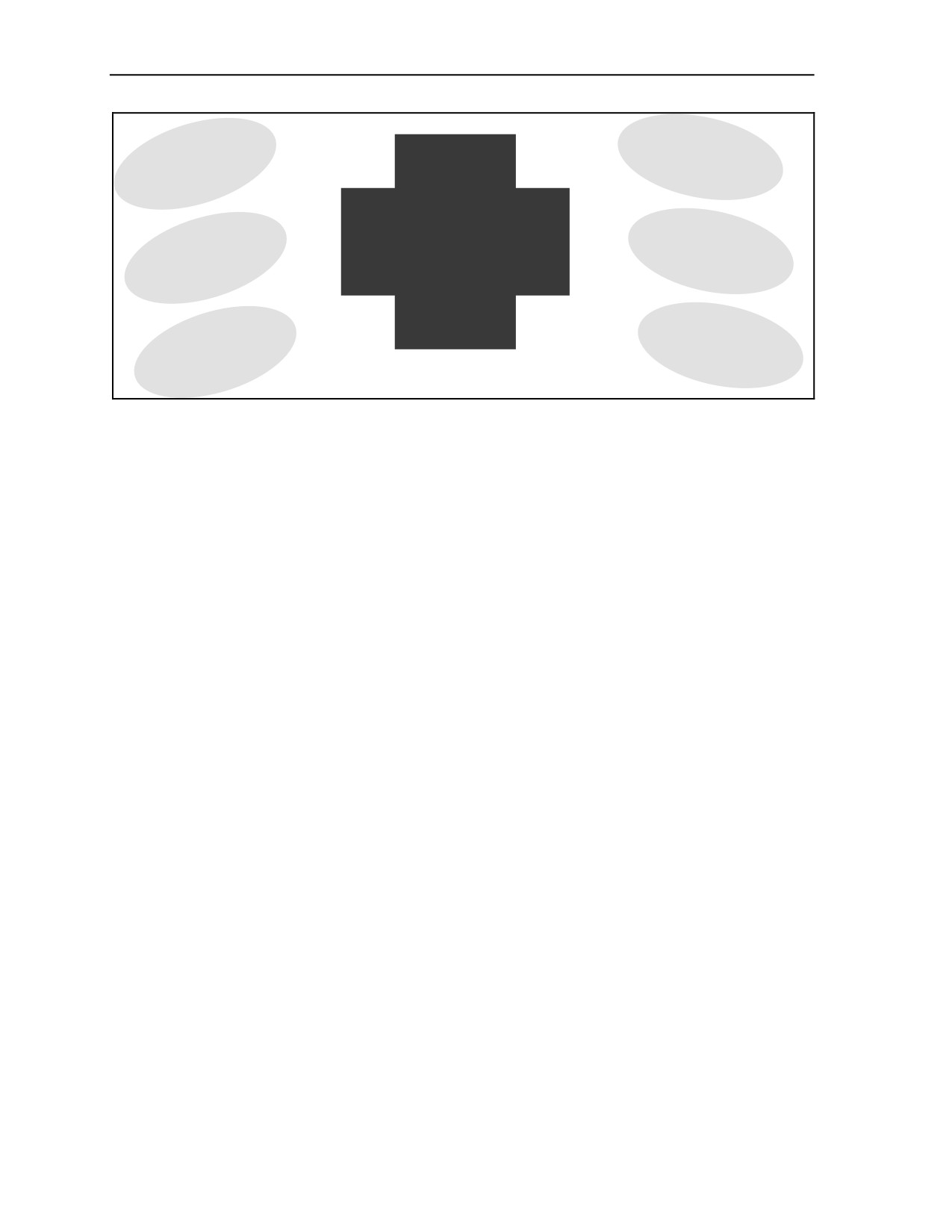
medical technical channels. Figure 1-1 depicts the AHS principles.
26 August 2013
FM 4-02
1-5
Chapter 1
CONFORMITY
FLEXIBILITY
ARMY HEALTH SYSTEM
CONTINUITY
CONTROL
PRINCIPLES
PROXIMITY
MOBILITY
Figure 1-1. Army Health System principles
CONFORMITY
1-17. Conformity with the OPLAN is the most basic element for effectively providing AHS support. In
order to develop a comprehensive concept of operations, the medical commander must have direct access
to the operational commander. Army Health System planners must be involved early in the planning
process and once the plan is established it must be rehearsed with the forces it supports. In operations with
a preponderance of stability tasks, it is essential that AHS support operations are in consonance with the
combatant commander’s AO engagement strategy and have been thoroughly coordinated with the
supporting assistant chief of staff, civil affairs (CA).
PROXIMITY
1-18. Proximity is to provide AHS support to sick, injured, and wounded Soldiers at the right time and the
right place and to keep morbidity and mortality to a minimum. Army Health System support assets are
placed within supporting distance of the maneuver forces which they are supporting, but not close enough
to impede ongoing operations. As the battle rhythm of the medical commander is similar to the operational
commander’s, it is essential that AHS assets are positioned to rapidly locate, acquire, treat, stabilize, and
evacuate combat casualties. Peak workloads for AHS resources occur during the conduct of operations.
FLEXIBILITY
1-19. Flexibility is being prepared to, and empowered to, shift AHS resources to meet changing
requirements. Changes in plans or operations make flexibility in AHS planning and execution essential. In
addition to building flexibility into the OPLAN to support the commander’s scheme of maneuver, the
medical commander must also ensure that he has the flexibility to rapidly transition from one level of
violence to another across the range of military operations. As the current era is one characterized by
persistent conflict, the medical commander may be supporting simultaneous actions characterized by
different decisive actions, such as offensive, defensive, or stability tasks. The medical commander
exercises his command authority to effectively manage his scarce medical resources so that they benefit the
greatest number of Soldiers in the AO. For example, there are insufficient numbers of forward surgical
teams (FSTs) to permit the habitual assignment of these organizations to each BCT. Therefore, the medical
commander, in conjunction with the command surgeon, closely monitors these valuable assets so that he
can rapidly reallocate or recommend the reallocation of this lifesaving skill to the BCTs in contact with the
enemy and where the highest number of Soldiers will potentially receive traumatic wounds and injuries.
As the operational situation changes within that BCT AO, the command surgeon and medical commander
monitor and execute resupply and/or reconstitute operations of that FST to prepare for follow-on
operations which could be in another BCT’s AO. This ability to rapidly re-mission these special skills
1-6
FM 4-02
26 August 2013
Army Health System Overview
maximizes the lifesaving capacity of these units, provides the highest standard of lifesaving medical
interventions to the greatest number of our combat wounded, and enhances the effectiveness of the surgical
care provided and the productivity of these teams.
MOBILITY
1-20. Mobility is the principle that ensures that AHS assets remain in supporting distance to support
maneuvering forces. The mobility, survivability (such as armor plating), and sustainability of AHS units
organic to maneuver elements must be equal to the forces being supported. Major AHS headquarters in
EAB continually assess and forecast unit movement and redeployment. Army Health System support must
be continually responsive to shifting medical requirements in an OE. In noncontiguous operations, the use
of ground ambulances may be limited depending on the security threat in unassigned areas and air
ambulance use may be limited by environmental conditions and enemy air defense threat. Therefore, to
facilitate a continuous evacuation flow, medical evacuation must be a synchronized effort to ensure timely,
responsive, and effective support is provided to the tactical commander. The only means available to
increase the mobility of AHS units is to evacuate all patients they are holding. Army Health System units
anticipating an influx of patients must medically evacuate patients on hand prior to the start of the
engagement.
CONTINUITY
1-21. Continuity in care and treatment is achieved by moving the patient through progressive, phased roles
of care, extending from the point of injury or wounding to the CONUS-support base. Each type of AHS
unit contributes a measured, logical increment in care appropriate to its location and capabilities. In
current operations, lower casualty rates, availability of rotary-wing air ambulances, and other mission,
enemy, terrain and weather, troops and support available, time available, and civil considerations factors
often enable a patient to be evacuated from the point of injury directly to the supporting combat support
hospital (CSH). In more traditional operations, higher casualty rates, extended distances, and patient
condition may necessitate that a patient receive care at each role of care to maintain his physiologic status
and enhance his chances of survival. The medical commander, with his depth of medical knowledge, his
ability to anticipate follow-on medical treatment requirements, and his assessment of the availability of his
specialized medical resources can adjust the patient flow to ensure each Soldier receives the care required
to optimize patient outcome. The medical commander can recommend changes in the theater evacuation
policy to adjust patient flow within the deployed setting.
CONTROL
1-22. Control is required to ensure that scarce AHS resources are efficiently employed and support the
operational and strategic plan. It also ensures that the scope and quality of medical treatment meets
professional standards, policies, and U.S. and international law. As the AMEDD is comprised of 10
medical functions (see paragraph 1-33) which are interdependent and interrelated, control of AHS support
operations requires synchronization to ensure the complex interrelationships and interoperability of all
medical assets remain in balance to optimize the effective functioning of the entire system. Within the AO,
the most qualified individual to orchestrate this complex support is the medical commander due to his
training, professional knowledge, education, and experience. In a joint and multinational environment it is
essential that coordination be accomplished across all Services and multinational forces to leverage all of
the specialized skills within the AO. Due to specialization and the low density of some medical skills
within the MHS force structure, the providers may only exist in one Service (for example, the U.S. Army
has the only Veterinary Corps officers in the MHS).
ROLES OF MEDICAL CARE
1-23. A basic characteristic of organizing modern AHS support is the distribution of medical resources and
capabilities to facilities at various levels of command, diverse locations, and progressive capabilities, which
are referred to as roles of care. As a general rule, no role will be bypassed except on grounds of medical
urgency, efficiency, or expediency. The rationale for this rule is to ensure the stabilization/survivability of
26 August 2013
FM 4-02
1-7
Chapter 1
the patient through TC3, advanced trauma management, and far forward resuscitative surgery is
accomplished prior to movement between MTFs (Roles 1 through 3).
ROLE 1
1-24. The first medical care a Soldier receives is provided at Role 1 (also referred to as unit-level medical
care). This role of care includes—
z
Immediate lifesaving measures.
z
Disease and nonbattle injury prevention.
z
Combat and operational stress preventive measures.
z
Patient location and acquisition (collection).
z
Medical evacuation from supported units (point of injury or wounding, company aid posts, or
casualty/patient collection points) to supporting MTFs.
z
Treatment provided by designated combat medics or treatment squads.
(Major emphasis is
placed on those measures necessary for the patient to return to duty or to stabilize him and allow
for his evacuation to the next role of care. These measures include maintaining the airway,
stopping bleeding, preventing shock, protecting wounds, immobilizing fractures, and other
emergency measures, as indicated.)
1-25. Nonmedical personnel performing first aid procedures assist the combat medic in his duties. First
aid is administered by an individual (self-aid/buddy aid) and enhanced first aid is provided by the combat
lifesavers.
Self-Aid and Buddy Aid
1-26. Each individual Soldier is trained in a variety of specific first aid procedures. These procedures
include aid for chemical casualties with particular emphasis on lifesaving tasks. This training enables the
Soldier or a buddy to apply first aid to alleviate potential life-threatening situations. Each Soldier is issued
an individual first aid kit to accomplish first aid tasks.
Combat Lifesaver
1-27. The combat lifesaver is a nonmedical Soldier selected by his unit commander for additional training
beyond basic first aid procedures. A minimum of one individual per squad, crew, team, or equivalent-sized
unit should be trained. The primary duty of this individual does not change. The additional duty of the
combat lifesaver is to provide enhanced first aid for injuries, based on his training, before the combat
medic arrives. Combat lifesaver training is normally provided by medical personnel during direct support
of the unit. The training program is managed by the senior medical person designated by the commander.
Members of Special Forces operational detachment teams receive first aid training at the combat lifesaver
level.
Medical Personnel
1-28. Role 1 medical treatment is provided by the combat medic or by the physician, the physician
assistant, or the health care specialist in the battalion aid station/Role 1 MTF. In Army special operations
forces, Role
1 treatment is provided by special operations combat medics, Special Forces medical
sergeants, or physicians and physician assistants at forward operating bases, Special Forces operating
bases, or in joint special operations task forces. Role 1 includes:
z
Tactical combat casualty care (immediate far forward care) consists of those lifesaving steps that
do not require the knowledge and skills of a physician. The combat medic is the first individual
in the medical chain that makes medically substantiated decisions based on medical military
occupational specialty-specific training.
z
At the battalion aid station, the physician and the physician assistant are trained and equipped to
provide advanced trauma management to the combat casualty. This element also conducts
1-8
FM 4-02
26 August 2013
Army Health System Overview
routine sick call when the operational situation permits. Like elements provide this role of
medical care at brigade and EAB.
ROLE 2
1-29. At this role, care is rendered at the Role 2 MTF which is operated by the area support squad, medical
treatment platoon of medical companies. Here, the patient is examined and his wounds and general
medical condition are evaluated to determine his treatment and evacuation precedence, as a single patient
among other patients. Advanced trauma management and TC3 including beginning resuscitation is
continued, and if necessary, additional emergency measures are instituted, but they do not go beyond the
measures dictated by immediate necessities. The Role 2 MTF has the capability to provide packed red
blood cells
(liquid), limited x-ray, clinical laboratory, operational dental support, COSC, preventive
medicine, and when augmented, physical therapy and optometry services. The Role 2 MTF provides a
greater capability to resuscitate trauma patients than is available at Role 1. Those patients who can return
to duty within 72 hours (1 to 3 days) are held for treatment. Patients who are nontransportable due to their
medical condition may require resuscitative surgical care from an FST collocated with a medical company.
(See Army doctrine on the FST.) This role of care provides medical evacuation from Role 1 MTFs and
also provides Role 1 medical treatment on an area support basis for units without organic Role 1 resources.
1-30. Role 2 AHS assets are located in the—
z
Medical company (brigade support battalion), assigned to modular brigades which include the
armored BCT, infantry BCT, and the Stryker BCT.
z
Medical company (area support) which is an EAB asset that provides direct support to the
modular division and support to EAB units.
Note. The Role 2 definition used by NATO forces Allied Joint Publication-4.10(A) includes the
following terms and descriptions not used by U.S. Army forces. United States Army forces
subscribe to the basic definition of a Role 2 MTF providing greater resuscitative capability than
is available at Role 1. It does not subscribe to the interpretation that a surgical capability is
mandatory at this role. The NATO descriptions are—
• A medical company with a collocated FST may be referred to as a light maneuver
Role 2 facility.
• An enhanced Role 2 MTF may be used in operations with a preponderance of stability
tasks scenarios and consists of the medical company, FST, and other specialty augmentation as
deemed appropriate by the situation. Specialty augmentation is only provided when the
situation has stabilized and it is not anticipated that the enhanced MTF will be required to
relocate.
ROLE 3
1-31. At Role 3, the patient is treated in an MTF staffed and equipped to provide care to all categories of
patients, to include resuscitation, initial wound surgery, damage control surgery, and postoperative
treatment. This role of care expands the support provided at Role 2. Patients who are unable to tolerate
and survive movement over long distances receive surgical care in a hospital as close to the supported unit
as the tactical situation allows. This role includes provisions for—
z
Evacuating patients from supported units.
z
Providing care for all categories of patients in an MTF with the proper staff and equipment.
z
Providing support on an area basis to units without organic medical assets.
26 August 2013
FM 4-02
1-9
Chapter 1
ROLE 4
1-32. Role 4 medical care is found in CONUS-based hospitals and other safe havens. If mobilization
requires expansion of military hospital capacities, then the Department of Veterans Affairs and civilian
hospital beds in the National Disaster Medical System are added to meet the increased demands created by
the evacuation of patients from the AO. The support-based hospitals represent the most definitive medical
care available within the AHS.
SYSTEM OF SYSTEMS
1-33. The AHS is a complex system of systems (Figure 1-2). The systems which comprise the AHS are
divided into medical functions which align with medical disciplines and scientific knowledge. These
systems are interrelated and interdependent and must be meticulously and continuously synchronized to
reduce morbidity and mortality and to maximize patient outcome. The ten medical functions are—
z
Medical mission command.
z
Medical treatment (organic and area support).
z
Hospitalization.
z
Medical evacuation (to include medical regulating).
z
Dental services.
z
Preventive medicine services.
z
Combat and operational stress control.
z
Veterinary services.
z
Medical logistics (to include blood management).
z
Medical laboratory services (to include both clinical laboratories and area laboratories).
1-34. The AHS supports and is in consonance with joint doctrine, as described in JP 4-02.
EXECUTIVE AGENT
1-35. The Army Surgeon General exercises Executive Agency over a number of functions and/or health
care organizations as directed by the DOD. The Army Surgeon General provides direction and
administrative and logistical support for these agencies that provide support not only to the U.S. Army but
to the sister Services or other government entities. Refer to http://www.armymedicine.mil/org/ea/ea.html
for a listing of these agencies.
1-10
FM 4-02
26 August 2013

Army Health System Overview
MEDICAL
TREATMENT
(AREA SUPPORT)
MEDICAL
LABORATORY
HOSPITALIZATION
SERVICES
COMBAT AND
OPERATIONAL
MEDICAL
STRESS CONTROL
EVACUATION
MEDICAL
MISSION COMMAND
MEDICAL
LOGISTICS
PREVE NTIVE
MEDICINE
VETERINARY
DENTAL
SERVICES
SERVICES
Figure 1-2. System of systems
COMMUNICATIONS AND INFORMATION TECHNOLOGY
1-36. The AHS uses the Medical Communications for Combat Casualty Care System to integrate, field,
and support a comprehensive medical information system enabling lifelong electronic medical records,
streamlined MEDLOG, and enhanced medical awareness. The Medical Communications for Combat
Casualty Care System employs automation and communications equipment to—
z
Assist in conserving the fighting strength by integrating medical and OEH surveillance data and
other health threat indicators. This assists in identifying disease and injury trends which
facilitate the prevention of performance deterioration and casualties due to disease and nonbattle
injury.
z
Provide seamless state-of-the-art medical information management across the range of military
operations.
z
Ensure the capability of rapid strategic deployability in exercising the medical mission command
first-in, last-out principle.
z
Enhance the capability to promptly clear the AO (locate, acquire, treat, stabilize, and evacuate
casualties).
z
Conduct split-based operations on a continuous basis.
z
Provide AHS staff virtual presence at all command levels.
z
Support joint and multinational medical forces, as directed, across the range of military
operations.
26 August 2013
FM 4-02
1-11
Chapter 1
z
Interface with Army systems, other Services, DOD, and Department of Veterans Affairs
automated systems.
z
Document patient encounters and Soldiers exposures to health threats (such as CBRN warfare
agents and toxic industrial materials) electronically.
1-37. The AHS communications network has interconnectivity to Army and joint global automated
architecture systems to access Army mission command systems and sustainment systems.
ELIGIBILITY OF CARE DETERMINATION
1-38. During interagency and multinational operations, one of the most pressing questions is who is
eligible for care in a U.S. Army-established MTF and the extent of care authorized. Numerous categories
of personnel seek care in U.S. facilities that are located in austere areas where the host-nation civilian
medical infrastructure is not sufficient to provide adequate care. A determination of eligibility and whether
reimbursement for services is required is made at the highest level possible and in consultation with the
supporting staff judge advocate. Additionally, Department of State and other military staff sections (such
as the assistant chief of staff, CA) may also need to be involved in the determination process. Each
operation is unique and the authorization for care is based on the appropriate U.S. and international law
and policies. Other factors impacting on the determination of eligibility are command guidance, practical
humanitarian and medical ethics considerations, availability of U.S. medical assets (in relationship to the
threat faced by the force), and the potential training opportunities for medical forces. The sample format
provided in Table 1-2 is just one approach to delineate and disseminate this information to MTF personnel
and may not be all-inclusive based on specific scenarios.
Note. The examples for the authority to provide treatment are only illustrative in nature and
should not be used as the basis for providing or denying medical care.
KNOWLEDGE OF HEALTH CARE CAPABILITIES
1-39. The MTF staff must be familiar with the medical care available in the AO from other sources. These
sources could include multinational force military (tactical and strategic), nongovernmental organizations
or international organizations (such as the United Nations), and local civilian resources. When appropriate,
and by knowing the level and types of care available, the MTF staff can plan for the continued care of the
patient after initial stabilization is provided in the U.S. Army MTF and the patient can be transferred to
another facility for continued care.
DISSEMINATION OF ELIGIBILITY FOR CARE INFORMATION
1-40. It is essential that eligibility for medical care guidance is disseminated and understood by the chain
of command and all civilians and military members of the deployed force. The AHS commander must be
able to articulate the basic concepts for medical eligibility determinations. This means that he will need to
condense them into simple, easily understood instructions, and widely disseminate them through electronic
means or other media (such as pocket-sized cards). As the chief planner for medical support operations,
the AHS commander must ensure that this information is contained in appropriate OPLANs and operation
orders (OPORDs) and briefed to the appropriate senior leadership of the command.
DOCUMENTATION
1-41. Basic documents required for determining eligibility of beneficiaries include AR 40-400; Field
Manual (FM) 27-10; relevant sections of Title 10, United States Code; relevant DODD and DODI;
multinational force compatibility agreements; acquisition and cross-servicing agreements; orders from
higher headquarters; interagency agreements
(memorandums of understanding and memorandums of
agreement); status of forces agreements; and appropriate multinational force or international agency
guidance for the specific operation. If contractor personnel are present, a copy of the relevant sections of
1-12
FM 4-02
26 August 2013

Army Health System Overview
their contracts should be on file to delineate specific medical services to be rendered. Additionally, for
contract personnel, points of contact for the contracting company, and for the administration of the contract
should be maintained. Finally, the political-military environment of the AO must be taken into account as
the medical mission command headquarters and its higher headquarters develop the eligibility matrix.
1-42. The eligibility matrix should be as comprehensive as possible. If necessary, it should include
eligibility determination by name (see example in Table 1-2). If individuals arrive at the emergency
medical service section of the MTF who are not included in the medical/dental support matrix, the MTF
must always stabilize the individual first and then determine the patient’s eligibility for continued care.
The command point of contact for eligibility determinations should be contacted immediately. Further,
care will be provided in accordance with the SOP pending eligibility determination. For example, a host-
nation civilian presents himself at the gate and requests medical treatment. Although on the surface it may
appear that he is not eligible for care, this determination can only be made after a medical assessment is
completed by competent medical personnel. In some cases, the individual may have to be brought into the
MTF to accomplish an adequate medical assessment. Conducting a medical assessment does not obligate
the U.S. military to provide the full spectrum of medical care. Although it does obligate the MTF to
provide immediate stabilization for life-, limb-, and eyesight-threatening medical conditions and to prepare
the patient for evacuation to the appropriate civilian or national contingent MTF when the patient’s medical
condition permits.
Note. Any individual requesting medical care should receive a timely medical assessment of his
condition. Even though the individual is not eligible for treatment, life-, limb-, or eyesight-
saving procedures warranted by the individual’s medical condition are provided to stabilize the
individual for transfer to the appropriate civilian or other nation MTF.
SAMPLE ELIGIBILITY FOR CARE MATRIX
1-43. Table 1-2 provides a sample of eligibility for care matrix for treatment in a U.S. Army MTF.
Table 1-2. Sample eligibility for medical/dental care support matrix
ELIGIBILITY FOR MEDICAL/DENTAL CARE
SUPPORT MATRIX
(DATE)
(THIS DOCUMENT IS SUBJECT TO FURTHER VERIFICATION AND/OR MODIFICATION)
MEDICAL/
CATEGORY
INFORMATION/AUTHORITY*
DENTAL
Allied military personnel
Yes1
The following nations have acquisition and cross-servicing
agreements and multinational force compatibility
agreements with the United States which are administered
by (combatant command): List nations.
Coalition military personnel
Yes1
The following nations have acquisition and cross-servicing
agreements and may have multinational force
compatibility agreements with the United States which are
administered by (combatant command): List nations.
Department of Defense civilian
Yes
Invitational travel order.
employees
United States Government
Yes2
Invitational travel order.
employees (non-Department of
Defense)
United States Embassy personnel
Yes
United States citizens on official business.
United States Congressional
Yes
United States citizens on official business.
personnel
26 August 2013
FM 4-02
1-13

Chapter 1
Table 1-2. Sample eligibility for medical/dental care support matrix (continued)
ELIGIBILITY FOR MEDICAL/DENTAL CARE
SUPPORT MATRIX
(DATE)
(THIS DOCUMENT IS SUBJECT TO FURTHER VERIFICATION AND/OR MODIFICATION)
MEDICAL/
CATEGORY
INFORMATION/AUTHORITY*
DENTAL
Army and Air Force Exchange
Yes
Invitational travel order.
Service United States citizen
employees
Army and Air Force Exchange
Yes3
United States law.
Service
Local national employees
Nonappropriated fund
Yes
Invitational travel orders.
instrumentality morale, welfare,
and recreation United States
employees
Contracted college instructors
Yes
Invitational travel orders.
United Nations personnel
Yes3
United States law.
(includes all personnel employed
by the United Nations and its
agencies, such as the United
Nations High Commissioner for
Refugees)
Contractor #2 all employees
Yes3
Contractor did not contract for the provision of medical
care by military medical treatment facilities. Contractor
stated in writing that they contracted with the host-nation
POC: Mr. Michaels
No5
medical infrastructure for the required care. NOTE: A
(XXX) XXX-XXXX
separate determination may be required for individual
ADMIN: Mr. Johns
cases, as the individual may be eligible for care under a
different provision. Contact Mr. Patrick, DSN XXX-XXXX
DSN XXX-XXXX
if additional information is required.
Contractor #4
Yes
Per Mr. Patrick, Mr. Dean is entitled to full medical and
dental support without reimbursement. The terms of the
Mr. Edward Dean
contract and the name of the contracting company are
(company name classified)
classified. Contact Mr. Patrick, DSN XXX-XXXX, if
additional information is required.
POC: Ms. Emory
(XXX) XXX-XXXX
ADMIN: Mr. Johns
DSN XXX-XXXX
Contractor #5
Yes6
Per Mr. Patrick, Mr. James is entitled to full medical and
dental support; however, this care is reimbursable. The
Mr. Michael James
terms of the contract and the name of the contracting
(company name classified)
company are classified. Contact Mr. Patrick, DSN XXX-
XXXX, if additional information is required.
POC: Ms. Emory
(XXX) XXX-XXXX
ADMIN: Mr. Johns
DSN XXX-XXXX
Dependents of United States
Yes4
Only if space is available and appropriate medical
active duty or retired military
services/care are available in the operational setting. AR
personnel
40-400. Contact Mr. Patrick, DSN XXX-XXXX, if
additional information is required.
1-14
FM 4-02
26 August 2013

Army Health System Overview
Table 1-2. Sample eligibility for medical/dental care support matrix (continued)
ELIGIBILITY FOR MEDICAL/DENTAL CARE
SUPPORT MATRIX
(DATE)
(THIS DOCUMENT IS SUBJECT TO FURTHER VERIFICATION AND/OR MODIFICATION)
MEDICAL/
CATEGORY
INFORMATION/AUTHORITY*
DENTAL
Personnel in custody of United
Yes
Enemy prisoner of war and retained or detained
States military forces
personnel. Extent of care rendered is the same as that
provided to United States military forces within the
geographical area. (Army Techniques Publication
4-02.46, and Field Manual 27-10).
Individual injured as a result of
Yes
United States and international law (Field Manual 27-10)
military operations
and status of forces agreements. If the United States
military injures an individual (such as in an automobile
accident involving a military vehicle), the United States is
responsible for providing immediate care (or paying for
local care). Coordinate with Mr. Patrick, DSN XXX-XXXX
and Lieutenant Colonel Hall, supporting staff judge
advocate, DSN XXX-XXXX.
LEGEND:
* Illustrative in nature only.
1 Allied/coalition forces member nations are provided food, water, fuel, and medical treatment pursuant to reciprocal
agreements. The amount of food, water, fuel, and medical care provided must be accounted for by the providing
nation to the assistant chief of staff, civil affairs multinational liaison. Logistical support is not permitted for those
nations with whom the United States does not have both an acquisition and cross-servicing agreement and
multinational force compatibility agreement.
However, the acquisition and cross-servicing agreement and
multinational force compatibility agreement requirements may be waived for those nations whom the commander, in
conjunction with the supporting staff judge advocate, feels are supporting the missions of the command.
2 If not working for, contracted to, or on Department of Defense multinational force compatibility agreement for logistical
support, non-Department of Defense United States Government employees must pay for meals received at
Department of Defense dining facilities.
3 Emergency medical and dental care only. Emergency care is that care required to save life, limb, or eyesight.
4 Space available.
5 Routine.
6 Reimbursable.
26 August 2013
FM 4-02
1-15
Chapter 2
Army Health System Mission Command
The complexities of the range of military operations, the myriad of medical functions
and assets, and the requirement to provide health care across unified land operations
to diverse populations
(U.S., joint, multinational, host nation, and civilian)
necessitate a medical mission command authority that is regionally focused and
capable of utilizing the scarce medical resources available to their full potential and
capacity. Each of the medical mission command organizations (medical command
[deployment support]
[MEDCOM (DS)], medical brigade [support] [MEDBDE
(SPT)], and medical battalion
[multifunctional]
[MMB]) is designed to provide
scalable and tailorable medical mission command modules for early entry and
expeditionary operations which could be expanded and augmented as the AO matures
and an Army and joint integrated health care infrastructure is established.
SECTION I — THE ARMY MEDICAL DEPARTMENT TEAM
SYNERGY
2-1. To ensure a seamless continuum of care from the point of injury or wounding to the CONUS-support
base exists, and in order to decrease morbidity and mortality and to reduce disability, a synergistic effort is
required between AMEDD table of organization and equipment (TOE) (operational forces) and table of
distribution and allowances (the generating force) organizations and resources and those found in other
sectors of the CONUS-support base. The ability of the deployed medical commander to reach into the
CONUS-support base for medical, technical, clinical, and materiel support is paramount to optimizing the
medical outcomes of our Soldiers who become wounded, injured, or ill while on deployments. This
reachback capability enhances the care given in theater and maximizes the utilization and employment of
scarce medical resources.
PARTNERSHIPS
WITH OUR NATION
2-2. The advent of the war on terrorism has presented the AMEDD with a myriad of challenges in
providing state-of-the-art care to both our deployed forces and their Family members and to be prepared to
provide care to our Nation in the event of terrorist incidents and/or natural or man-made disasters.
2-3. The American public has high expectations of the quality and scope of health care that will be
provided for our brave men and women who are wounded on the field of battle while protecting our
Nation’s freedom and way of life. That expectation includes that all measures that can be taken to protect
our Soldiers and to prevent and to mitigate exposures to health threats in the deployed environment will be
taken. It also includes an expectation that medical education and research will continue in order to enhance
these protections in future OEs.
2-4. The AMEDD must synchronize the efforts of the deployed operational medical forces and the
generating force medical resources to ensure a seamless system of health care from the point of injury or
wounding through successive roles of medical care within the theater to definitive, rehabilitative, and
convalescent care in CONUS.
26 August 2013
FM 4-02
2-1
Chapter 2
WITH THE TACTICAL COMMANDER AND OPERATIONAL ARMY
2-5. The deployed medical force ensures that the operational commander has the right mixture of medical
professional (operational, technical, and clinical) expertise to synchronize the complex system of medical
functions required to maintain the health of his command by promoting health and fitness, preventing
casualties from disease and nonbattle injury, and promptly treating and evacuating those injured in the OE.
Only a focused, responsive, dedicated medical effort can reduce morbidity and mortality and ensure that
the operational commander can maintain the health of the Soldiers and Service Members from the other
Services entrusted to his care by our Nation.
WITH OUR MULTINATIONAL PARTNERS
2-6. In the tactical environment, a unity of effort must be achieved by all participants and in many
scenarios the AMEDD will provide responsive medical care to multinational partners within the operations
determination of eligibility for care. Likewise, our multinational partners may provide first responder and
health care services for U.S. troops engaged in multinational operations. The synchronization with our
multinational partners of all health care delivery to U.S. Soldiers and allied and coalition forces is essential
to ensure the appropriate medical resources are available when needed in the tactical environment.
WITH OUR SOLDIERS AND THEIR FAMILIES
2-7. It is essential to the morale and combat effectiveness of our Soldiers and their units that Soldiers
recognize and believe they will receive the best and most effective medical care possible should they be
wounded or injured. The AMEDD must ensure that it can provide responsive medical care to our injured
or wounded Soldiers regardless of their physical location. Our Soldiers must also be confident that their
Family members will receive the highest quality, responsive, and compassionate care at their home station
while they are deployed. This confidence in the ability of the AHS to care for both the Soldier and his
Family is instrumental in reducing and mitigating some of the combat and operational stresses associated
with lengthy deployments.
ARMY MEDICAL DEPARTMENT TEAM OF TEAMS
2-8. Just as discussed in paragraph 1-33, the AHS is a system of systems (10 medical functions), the
AMEDD team is comprised of a myriad of professional medical, scientific, research, operational, and
administrative teams dedicated to the single purpose of providing the best medical care and treatment to
our Nation’s Soldiers, Sailors, Marines, and Air Force personnel and their Families, deployed DOD
civilian employees and defense contractors, and to other eligible beneficiaries in their time of need. To
achieve this aim, the AMEDD team must be ready, reliable, responsive, and relevant (Figure 2-1).
2-2
FM 4-02
26 August 2013

Army Health System Mission Command
Ready
Relevant
AMEDD
Reliable
Responsive
A Team of Teams!
(trust is at the center in all we do)
Figure 2-1. Army Medical Department—a team of teams
READY
2-9. The AMEDD views readiness from two perspectives—medical personnel and the operational Army.
Medical Personnel
2-10. Internally, the AMEDD ensures that medical personnel receive the best training possible, not only in
their professional skills but also in their Soldier skills. Medical personnel receive institutional training in
their medical specialty, as well as sustainment training
(to include medical continuing education
requirements), refresher training and, depending upon the specific specialty requirements, predeployment
training. Army Health System units (both generating force and operational Army) participate in training
and exercises focused on reinforcing Soldier skills in the field environment. Medical training and
education is a life-long pursuit to ensure medical personnel maintain currency in their medical discipline,
use state-of-the-art medical equipment and supplies, and adopt evolving and improved clinical practice
guidelines based on advances in technology and medical treatment protocols.
Operational Army
2-11. Externally, the AMEDD works with line commanders to ensure that Soldiers maintain a healthy
lifestyle, are physically and mentally fit for deployments, and are medically screened to ensure they do not
have on-going medical conditions which could be aggravated by conditions in the AO. Health promotion
programs, nutrition programs and counseling, preventive medicine measures to include health risk
communications and mitigation techniques, preventive dentistry, and COSC programs are all focused on
maintaining the Soldier’s health both in garrison and when deployed.
RELIABLE
2-12. As discussed under partnerships, the Soldier, line commander, and Families must believe that the
AMEDD will always be prepared to provide the appropriate medical care whenever and wherever it may
be required. This trust between the AHS and its beneficiaries is at the center of all that the AMEDD does.
It is imperative to the fighting morale of our forces, that each Soldier believes that if injured, he will
promptly be given medical care for those wounds and will be medically evacuated from the battlefield. It
26 August 2013
FM 4-02
2-3
Chapter 2
is also essential that the Soldier knows that should his Family face a medical emergency while he is
deployed, his Family member will receive state-of-the-art medical care. This in turn relieves some of the
stressors the Soldier must manage during separation from his Family during deployments. The AMEDD
system of health is a proven system which has provided reliable health care throughout its history
regardless of where needed on the battlefield or in garrison operations.
RESPONSIVE
2-13. Both the operational Army and the generating force must be responsive to the changing OE and the
resulting medical implications.
Operational Army
2-14. Army Health System planning must be flexible, scalable, and adaptable to optimize the full
utilization and integration of scarce medical resources in the accomplishment of the health care delivery
mission. The AMEDD must leverage all available medical resources within a theater to optimize patient
care to include medical capabilities of sister Services, U.S. governmental agencies, and multinational
forces.
Generating Force
2-15. The generating force (Chapter 4) is responsive to the health care needs of all Soldiers stationed
throughout the world. Combat developers use observations, insights, and lessons learned from on-going
operations to identify requirements and gaps in order to develop TOE medical organizations which are
more modular and adaptive to changes on the battlefield and to incorporate emerging technologies to
enhance the effectiveness and efficiency of medical materiel. Medical research and development is a vital
link between the AMEDD and the educational and industrial base within CONUS. It enables the AMEDD
to capitalize on emerging technologies and treatment protocols to refine and enhance the state-of-the-art
care provided to our Soldiers and other eligible beneficiaries. The military medical education provided
within the AHS includes leadership training, enlisted military occupational specialty skills, refresher and
sustainment training, medical continuing education, individual Soldier skills, and collective training.
Further, if training deficiencies are identified during a deployment, the USAMEDDC&S may develop
additional predeployment training packages and assist U.S. Army Forces Command with predeployment
certification of individual and unit skill sets. When appropriate, new equipment training teams provide
collective training to units located throughout the world to ensure the medical personnel are properly
trained on how to deploy and employ the new equipment. For example, during the initial stages of
Operation Enduring Freedom and Operation Iraqi Freedom a new collective protection shelter system was
fielded and training teams from the USAMEDDC&S were deployed to unit locations worldwide to
facilitate the transition and use of this new shelter system.
2-16. The generating force provides a vital link in ensuring the medical readiness of forces to be deployed.
Mobilization stations within CONUS ensure Soldiers are medically processed for overseas deployments to
include immunizations, eyewear, dental care, medications, resiliency training, and individual patient
records are initiated and/or maintained. This ensures the tactical commander has a healthy and fit force.
2-17. The generating force provides the reachback capability for deployed forces. Requirements for
medical specialty personnel generated during the conduct of operations are met by mobilizing and
deploying medical resources in the generating force to meet theater-specific requirements. Additionally,
the generating force provides definitive health care services; restorative, rehabilitative, and convalescent
care to enhance and expand on the essential care provided to Soldiers in the deployment area.
RELEVANT
2-18. The AHS must provide relevant care based on current tactical, operational, and strategic plans. The
AHS must be adaptive and use innovative approaches and solutions for identified gaps and shortfalls, such
as was done to establish the Wounded Warrior Program and to staff Warrior transition units to ensure that
our Soldiers’ medical, rehabilitative, and convalescent needs were effectively addressed, as well as
2-4
FM 4-02
26 August 2013
Army Health System Mission Command
providing the appropriate command climate and unit support to either return the Soldier to military duty or
to transition back to civilian life as a productive member of society.
PERFORMANCE TRIAD AND THE ROLE OF ARMY MEDICINE
2-19. For more than 237 years Army Medicine has been a critical partner in optimizing Soldier readiness
with health being a primary performance enabler. Our mission is optimizing Soldier performance. Soldier
performance translates to unit performance. Unit performance enables the military to mount a ready force
at any time; the health of our Soldiers and force health is a matter of National security.
2-20. It is our duty to stand alongside the Soldier from point of injury through rehabilitation and recovery,
fostering a spirit of resiliency. The AMEDD is dedicated to identifying and caring for those Soldiers who
have sustained psychological and physical trauma associated with an Army engaged in a protracted war. A
focus on wellness and prevention will ensure that our Soldiers are ready to heed the Nation’s call.
2-21. The performance triad—activity, nutrition, and sleep—is a return to emphasizing the basics of
Soldier health. Getting back to the basics of activity, nutrition, and sleep, as both leaders and health care
providers, will be key in optimizing personal and unit performance and resiliency.
2-22. To achieve optimal Soldier health, a cooperative effort between the operational force (medical
personnel and line commanders) and the generating force medical activities at all installations is required
throughout the Army Force Generation Cycle.
Activity
2-23. Physical activity encompasses more than just physical training at the gym, and it can improve health
by reducing stress, strengthening the heart and lungs, increasing energy levels, and improving mood.
Nutrition
2-24. Good nutrition promotes health and fuels individual stamina. There is a strong relationship between
nutrition and quality of life that includes maintaining a healthy weight, preventing disease, and reducing
stress.
Sleep
2-25. Poor quality sleep can have serious short- and long-term consequences—from impairing daily
function through reduced alertness and concentration to increasing risk for stroke, obesity, cardiovascular
disease and depressed mood. Adequate sleep helps the body heal.
Clinical Aspects
2-26. The clinical aspects of the operation involve the provision of medical care to sick, injured, and
wounded Soldiers (or other designated beneficiaries) and the prevention of disease and nonbattle injury by
medically trained individuals. The care extends from the place of injury or wounding and is usually
provided initially by the combat medic assigned to a movement and maneuver or fires unit or by a health
care provider at the battalion aid station through the successive roles of care to the CONUS-support base, if
the patient’s medical condition so warrants. As the patient is evacuated between roles of care, he receives
en route medical care to sustain him, thus reducing the potential for his medical condition to deteriorate
while in-transit.
Operational Aspects
2-27. The operational aspects of the mission include such military tasks as—
z
Maintaining situational understanding of the ongoing and future operations.
z
Providing timely support to the maneuver forces.
z
Maintaining the unit’s readiness posture.
26 August 2013
FM 4-02
2-5
Chapter 2
z
Ensuring the survivability of the unit (such as unit perimeter defense, hasty firing positions, and
patient bunkers).
z
Ensuring compliance with the Law of Land Warfare (to include the Geneva Conventions).
2-28. In most TOE units, when the unit is not deployed on an operation or exercise, the unit is staffed with
administrative personnel and only limited clinical resources. When the unit is mobilized, the professional
staff designated under the Professional Filler System is notified of the mobilization and is directed to report
to the unit. The administrative staff that maintains the unit’s readiness posture when the unit is not
deployed are those individuals who have worked on a daily basis with supported maneuver units and
commands. Although the TOE may indicate that an incoming officer be designated as the unit
commander/platoon leader, the appointing authority may determine that the mission can best be
accomplished by maintaining the same command structure that existed prior to mobilization.
2-29. To accomplish the AMEDD mission, a synchronization of the clinical and operational aspects must
be achieved. It accomplishes nothing for a unit to provide the best clinical care, if it cannot survive the
battle. Likewise, a unit that can execute all of its military tasks is not successful if the patients entrusted to
its care die or their conditions deteriorate because no consideration was given to their clinical needs during
an operational relocation.
2-30. A balance must be achieved in prioritizing the requirements generated from both the operational and
clinical aspects of the mission. Without synchronizing the response to the overall requirements, both
operational and clinical, a shortfall in one sphere may have serious ramifications on mission success. A
shortage of scalpel blades for an FST adversely impacts the patient care mission as would a shortage of
ammunition for use in perimeter defense which could lead to mission failure in an operational sense. If
neither item is available, the FST cannot provide the required surgical care to stabilize patients for further
evacuation and the unit cannot survive in the OE because it lacks a means for defense.
2-31. To enhance the delivery of health care in the OE and to provide a seamless medical system from the
point of injury or wounding through progressive roles of care to the CONUS-support base, the AMEDD
team must integrate their special skills and knowledge, leverage technology, maximize the use of scarce
resources, and synchronize their collective efforts. The accomplishment of the AMEDD mission
necessitates a cohesive unity of effort to provide the care our Soldiers deserve.
HEALTH CARE AND THE COMMAND SURGEON IN JOINT
OPERATIONS
2-32. In joint operations, each Service operates its own health care delivery system. However, health care
facilities, medical equipment, supplies, and personnel may be provided on a joint basis, when directed by
the joint force commander. Although joint staffing is not a requisite to joint use, staff augmentation from
Service components may be required. When one Service uses personnel or medical elements from another
Service, the borrowing Service assumes operational control over those elements. However, administrative
responsibility remains with the lending Service.
2-33. Upon activation of a joint task force, a command surgeon is designated from one of the component
Services. Joint Publication 4-02 states that a joint force surgeon should normally be appointed for each
combatant command, subunified command, and joint task force. As a specialty advisor, the joint force
surgeon reports directly to the joint force commander or the joint force land component commander. The
joint force surgeon coordinates medical matters for the joint force commander. The joint force surgeon’s
staff should be jointly manned (when possible) and should be of sufficient size to effectively facilitate joint
coordination of medical initiatives; review of plans; and integration with overall operations. The command
surgeon must assess component forces medical requirements and capabilities and provide guidance to
enhance effectiveness of health care through shared use of assets. Refer to JP 4-02 for additional
information on the duties and responsibilities of the joint force surgeon.
2-34. Liaison must be established between the joint force surgeon and each Service component command
surgeon to ensure that mutual understanding of technical medical and dental procedures, unity of purpose
and action, and joint health care is maintained.
2-6
FM 4-02
26 August 2013

Army Health System Mission Command
SECTION II — PRIMARY TASKS
2-35. All mission command headquarters perform the same basic military tasks (refer to FM 7-15).
Specific medical mission command functions are addressed in Table 2-1.
Table 2-1. Primary tasks and purposes of the mission command function
Primary Task
Purpose
Mission command
Plan, direct, execute, and synchronize Army Health System support across
the range of military operations.
Facilitate and enhance a seamless continuum of health care from the point of
injury or wounding to definitive care in the continental United States-support
base, if required.
Maximize the use of scarce medical resources.
Provide subordinate units with administrative and logistical support.
Communications and
Maintain situational understanding of Army mission command systems and
computers
the common operational picture.
Facilitate the transfer of medical information, to enhance the documentation
of medical encounters and exposures to health hazards, and to ensure the
compatibility and interoperability of medical communications for combat
casualty care.
Task-organization
Provide a scalable and tailorable medical infrastructure which ensures the
right mix of medical capabilities is available to execute the Army Health
System mission. This capability is further enhanced through the modular
design of Army Health System units.
Medical intelligence
Facilitate the identification, evaluation, and assessment of health hazards to
the deployed force.
Technical supervision
Ensure medical standards are established, implemented, and monitored
throughout the operational area.
Provide consultation and support to subordinate Army Health System
units/elements.
Provide reachback capability to the continental United States-support base in
the areas of various medical disciplines and specialties.
Regional focus
Support and facilitate the execution of the combatant commander’s theater
engagement strategy during the execution of stability tasks.
2-36. For a more detailed discussion on mission command, refer to ADRP 3-0, ADRP 5-0, and ADRP 6-0.
SECTION III — MISSION COMMAND ORGANIZATIONS
MEDICAL COMMAND (DEPLOYMENT SUPPORT)
2-37. The complexities of the OE, the myriad of medical functions and assets, and the requirement to
provide AHS support across the range of military operations to diverse populations
(U.S., joint,
multinational, host nation, and civilian) necessitates a medical mission command authority that is
regionally focused and capable of utilizing the scarce medical resources available to their full potential and
capacity. The MEDCOM (DS) conserves the fighting strength of the tactical commander through
synchronization of AHS operations and providing mission command of MEDBDE (SPT), MMBs, and/or
other AHS units assigned/attached to the headquarters providing HSS/FHP to tactical commanders and AO
forces while simultaneously conducting stability tasks.
MISSION, ASSIGNMENT, AND BASIS OF ALLOCATION
2-38. The MEDCOM (DS) serves as the medical force provider within the AO. As the medical force
provider, the MEDCOM (DS) commander identifies and evaluates health care requirements throughout his
26 August 2013
FM 4-02
2-7
Chapter 2
AO. Within the MEDCOM (DS) AO, medical resources may be dispersed over an extended area and may
include numerous areas with increased patient densities, transient troop populations, varying levels of
hostilities, and significantly different health care requirements. To successfully execute medical
operations, the MEDCOM (DS) commander must have the ability to rapidly task-organize and reallocate
medical assets across command and geographical boundaries. This ability is crucial to ensure the medical
force package is effectively tailored to optimize the use of scarce medical resources.
2-39. The MEDCOM (DS) is composed of an operational command post and a main command post that
can deploy autonomously into the AO. It possesses health to effectively and efficiently task-organize
medical elements based on specific medical requirements in the AO. The MEDCOM (DS) serves as the
medical force provider for the AO and focuses on AO medical OPLANs and medical contingency plans. It
monitors threats within each AO, ensures required medical capabilities to mitigate these health threats, and
maintains visibility and utilization of medical infrastructure, treatment, and evacuation capabilities. It
accomplishes Title 10 responsibilities and Army support to other Services for the AO. The MEDCOM
(DS) partners and trains with host-nation and multinational AHS units. It establishes a command
relationship with the theater Army and the combatant commander to influence and improve the delivery of
health care and is linked to the theater sustainment command by the MEDLOG management center for
coordination and planning. The MEDCOM (DS) is assigned to the theater Army and is allocated on a
basis of one per theater.
CAPABILITIES AND DEPENDENCIES
2-40. The MEDCOM (DS) provides—
z
Mission command of AHS units providing medical support within the AO.
z
Subordinate medical organizations to operate under the MEDBDE (SPT) and/or the MMB and
provide medical capabilities to the BCT.
z
Advice to the theater Army commander and other senior-level commanders on the medical
aspects of their operations.
z
Staff planning, supervision of operations, and administration of assigned and attached AHS
units.
z
Assistance with coordination and integration of strategic capabilities from the sustaining base to
units in the AO.
z
Advice and assistance in facility selection and preparation.
z
Coordination with the USAF theater patient movement requirements center for medical
regulating and movement of patients from Role 3 MTFs.
z
Consultation services and technical advice in all aspects of medical and surgical services.
z
Functional staff to coordinate medical plans and operations, hospitalization, preventive
medicine, operational and strategic medical evacuation, veterinary services, nutrition care
services, COSC, medical laboratory services, dental services, and area medical support to
supported units.
z
Coordination and orchestration of MEDLOG operations to include Class VIII, distribution,
medical maintenance and repair support, optical fabrication, and blood management.
z
Support and planning for single integrated MEDLOG manager, when designated.
z
Veterinary support for zoonotic disease control, investigation and inspection of subsistence, and
animal medical care.
z
Preventive medicine support for medical and OEH surveillance, potable water inspection, pest
management, food facility inspection, and control of medical and nonmedical waste.
z
Legal advice to the commander, staff, subordinate commanders, Soldiers, and other authorized
persons.
z
Health threats monitoring within the AO and identification of required capabilities to mitigate
threats.
2-8
FM 4-02
26 August 2013
Army Health System Mission Command
z
Religious support to the command. This includes coordinating with the headquarters unit
ministry team for required religious support throughout the AO and providing consultation
capability to subordinate MEDCOM (DS) unit ministry teams.
z
Maintenance personnel that will augment the maintenance capability of the unit that performs
maintenance on the unit’s organic vehicles and power generation equipment.
z
Coordination with DOD contracting authorities on addressing HSS and FHP challenges
associated with contracted services.
2-41. This unit is dependent upon appropriate elements of the theater sustainment command for
sustainment, finance, supplemental transportation, security during operational moves, sustainment area
security and area damage control, CBRN decontamination assistance, and laundry and shower facilities.
2-42. This unit requires 100 percent of its TOE and supplies to be transported in a single lift.
REGIONAL FOCUS
2-43. The MEDCOM (DS) maintains a regional focus that encompasses all of the combatant commander’s
area of responsibility. As in all regions of the world, neighboring countries often have economic, social,
and religious ties and deal with similar health issues. The issues which may be at the heart of the social
unrest in the deployment area can usually be found to exist in the other countries within the same region.
Medical forces, due to their humanitarian mission, are more acceptable to host nations than the operational
Army. The medical commander’s ability to cultivate medical professional contacts within a nation or
group of nations, facilitates the planning for and execution of regional strategies that will potentially
mitigate the underlying social, economic, cultural, health, and political conditions which can foster civil
unrest.
2-44. By establishing linkages to the civilian and governmental health care authorities in each nation, the
senior medical command headquarters can actively monitor existing health threats, develop regional
strategies to mitigate these threats, enhance the host-nation government’s legitimacy with the affected
population, and reduce human suffering. The medical commander provides the combatant commander
with an effective tool to assist in shaping the security environment by alleviating the adverse health
conditions that impact the development of strong social, economic, and political infrastructures. The
combatant commander can deploy medical experts to provide consultation, training support, and advice to
assist host nations in broadening their medical capacity in both the public and private health sectors
through the development and implementation of health care programs specifically designed to address the
particular health challenges faced by the host nation.
2-45. Military medical training exercises can be mutually beneficial to the host nation and U.S. forces.
These exercises provide a forum for training medical personnel in the identification and treatment of
diseases and conditions that are not endemic in the U.S. and provide the host-nation military or civilian
medical personnel training on emerging state-of-the-art technologies and medical protocols. The care
provided which is incidental to the training mission, assists the host nation in overcoming the adverse
impacts of the diseases/conditions treated and enhances its legitimacy in the eyes of its citizens.
2-46. The effects of focusing on interregional cooperation are to eradicate diseases or the environmental
conditions that promote the growth of disease vectors. The interregional cooperation which results may
also favorably affect the economic, social, and political fabric of the nation, remove obstacles to
interregional cooperation in other sectors, and enhance the standard of living of the host-nation residents.
STAFF ORGANIZATION
Internal Staff and Operations
2-47. Section I of this chapter combines the mission command post and operational command post of the
MEDCOM (DS) to provide a description of the composition and capabilities of the command’s
coordinating, special, and personal staff structure. For additional information on the composition, duties,
and responsibilities of the various Army staffs refer to ADRP 5-0.
26 August 2013
FM 4-02
2-9
Chapter 2
Coordinating Staff
2-48. Figure 2-2 graphically depicts the organization of the MEDCOM (DS) coordinating staff. The
coordinating staff officers are the commander’s principal staff assistants and are directly accountable to the
chief of staff. Coordinating staff officers are responsible for one or a combination of broad fields of
interest. They help the commander coordinate and supervise the execution of plans, operations, and
activities. Collectively through the chief of staff, they are accountable for the commander’s entire field of
responsibilities. The staff is not accountable for functional areas the commander decides to personally
control.
COMMANDER
CHIEF OF STAFF
CHIEF OF STAFF
SECTION
DCS
DCS
DCS
DCS
DCS
INFORMATION
SECURITY, PLANS,
PERSONNEL
LOGISTICS
COMPTROLLER
MANAGEMENT
AND OPERATIONS
PERSONNEL
MEDICAL
CURRENT
THEATER PATIENT
INTELLIGENCE
PLANS
MANAGEMENT
LOGISTICS
OPERATIONS
MOVEMENT
OPERATIONS
BRANCH
ACTIONS BRANCH
SUPPORT SECTION
BRANCH
CENTER
BRANCH
LEGEND:
DCS deputy chief of staff
Figure 2-2. Medical command (deployment support) coordinating staff
Special and Personal Staffs
2-49. The special staff depicted in Figure 2-3 helps the commander and other members of the staff in their
professional and technical functional areas. Special staffs are organized according to functional areas.
2-50. The personal staff depicted in Figure 2-3 works under the commander’s immediate control. They
also serve as special staff officers as they coordinate actions and issues with other staff members.
STAFF FUNCTIONS
Command Section
2-51. The command section provides mission command and management of all MEDCOM (DS) services.
Personnel of this section supervise and coordinate the operations and administration of the command
section.
Chief of Staff Section
2-52. The chief of staff section plans, directs, and coordinates the execution of staff functions. It reviews
organizational activities and recommends changes, as necessary, to the MEDCOM (DS) commander. This
section ensures synchronization of staff activities and ensures that required coordination is accomplished.
2-10
FM 4-02
26 August 2013
Army Health System Mission Command
COMMANDER
DEPUTY COMMANDER
COMMAND SERGEANT MAJOR
CHAPLAIN
CHIEF OF STAFF SECTION
INSPECTOR GENERAL
STAFF JUDGE ADVOCATE
AIDES
PUBLIC AFFAIRS OFFICER
CLINICAL SERVICES
DENTAL SERVICES
NUTRITIONAL CARE
VETERINARY SERVICES
SERVICES
PREVENTIVE MEDICINE
STAFF JUDGE ADVOCATE
CHIEF NURSE
PUBLIC AFFAIRS SECTION
SECTION
SECTION
INSPECTOR GENERAL
HEADQUARTERS &
CIVIL AFFAIRS SECTION
UNIT MINISTRY TEAM
SECTION
HEADQUARTERS COMPANY
Figure 2-3. Medical command (deployment support) special and personal staffs
Deputy Chief of Staff, Personnel
2-53. The deputy chief of staff, personnel serves as the advisor to the commander on personnel issues and
provides administrative services for the command. This section is responsible for establishing, monitoring,
and assessing MEDCOM (DS) human resources policies. This section coordinates responsibility for
MEDCOM (DS) strength management; finance support; casualty management; casualty estimates; morale,
welfare, and recreation activities; education; safety and accident prevention; alcohol and drug abuse
programs; and equal opportunity activities. Further, this section provides overall administrative services
for the command, to include: personnel administration, mail distribution, awards and decorations, and
leaves. This section coordinates with elements of supporting agencies for finance, human resources, and
administrative services, as required. This section receives and processes actions including promotions,
reassignments, awards, personnel security clearances, personnel accounting, and strength management.
The section prepares the MEDCOM (DS) personnel estimate and recommends priorities of fill for
replacement to the MEDCOM (DS) commander and the deputy chief of staff, security/plans/operations.
This section monitors the Professional Filler System and the integration of Professional Filler System
personnel into subordinate AHS units.
Personnel Management/Actions Branch
2-54. Personnel management/actions branch develops personnel policies for promotions, appointments,
demotions, classifications, assignments, reassignments, decorations, awards, separations, and rotations for
the MEDCOM (DS) according to theater policy. It maintains continuous personnel loss data and obtains
summarized personnel information for use in preparing support plans. In coordination with the CA
section, this branch provides policy and guidance on procurement, administration, and utilization of
civilian personnel in the command. This branch is also responsible for establishing and monitoring Family
readiness groups.
Deputy Chief of Staff, Security/Plans/Operations
2-55. Deputy chief of staff, security/plans/operations is the principal staff section in matters concerning
security, plans, intelligence, operations, organization, training, and CBRN defensive activities. It prepares
broad planning guidance, policies, and programs for command organizations, operations, and functions.
This section is responsible for plans and operations, deployment, relocation, and redeployment of the
MEDCOM (DS). It directs and coordinates medical evacuation operations, both ground and air. It
26 August 2013
FM 4-02
2-11
///////////////////////////////////////