FM 3-92 Corps Operations (November 2010) - page 1
*FM 3-92 (FM 100-15)
Field Manual
Headquarters
Department of the Army
No. 3-92 (100-15)
Washington, D.C., 26 November 2010
Corps Operations
Contents
Page
PREFACE
v
INTRODUCTION
vii
Chapter 1
THE CORPS
1-1
The Joint Environment
1-1
The Corps Headquarters
1-1
Available Forces
1-3
Chapter 2
CORPS HEADQUARTERS
2-1
Section I - Corps Headquarters Organization
2-1
Command Group
2-1
Command Post Cells and Other Command Post Organizations
2-5
Section II - Main Command Post
2-7
Coordinating, Special, and Personal Staff Officers
2-8
Main Command Post Functional Cells
2-10
Main Command Post Integrating Cells
2-28
Section III - Tactical Command Post
2-32
Intelligence Cell
2-32
Movement and Maneuver Cell
2-34
Fires Cell
2-35
Protection Cell
2-35
Sustainment Cell
2-36
Command and Control Cell
2-36
Section IV - Additional Command and Control Facilities
2-37
Mobile Command Group
2-37
Early-Entry Command Post
2-37
Centers
2-38
Section V - Air Force Support to the Corps
2-38
Distribution Restriction: This manual is approved for public release; distribution is unlimited.
*This publication supersedes FM 100-15, 29 October 1996.
i
Contents
Section VI - Corps Headquarters and Headquarters Battalion
2-38
Battalion Command Group
2-38
Battalion Staff
2-39
Headquarters Support Company
2-39
Operations Company
2-39
Intelligence and Sustainment Company
2-40
Signal Company
2-40
Civilian, Contractor, and Other Augmentation
2-41
Chapter 3
CORPS HEADQUARTERS OPERATIONS
3-1
Support to Corps Headquarters
3-1
Command and Support Relationships
3-2
Command and Control
3-2
Battle Rhythm
3-8
Chapter 4
THE CORPS IN FULL SPECTRUM OPERATIONS
4-1
Employing the Corps
4-1
Synchronizing Information Actions
4-7
Applying the Elements of Combat Power
4-8
Chapter 5
CORPS HEADQUARTERS TRANSITION TO A JOINT TASK FORCE
HEADQUARTERS
5-1
The Joint Force
5-1
The Transition Training Life Cycle
5-2
Joint Task Force Headquarters Organization
5-5
Augmentation to the Corps Headquarters
5-8
Other Augmentation or Collaborative Capabilites
5-13
Joint Task Force Headquarters Equipping Capabilities
5-14
Joint Land Operations
5-15
Appendix A
SUSTAINMENT
A-1
Appendix B
JOINT FIRES
B-1
Appendix C
CORPS SIGNAL OPERATIONS
C-1
Appendix D
AIRSPACE COMMAND AND CONTROL
D-1
Appendix E
AIR FORCE INTERFACE IN CORPS OPERATIONS
E-1
GLOSSARY
Glossary-1
REFERENCES
References-1
ii
FM 3-92
26 November 2010
Contents
Figures
Figure
1-1. Forces available to support a corps
1-3
Figure
2-1. Corps headquarters and headquarters organization
2-2
Figure
2-2. Main command post
2-8
Figure
2-3. Main command post intelligence cell
2-11
Figure
2-4. Main command post movement and maneuver cell
2-14
Figure
2-5. Main command post fires cell
2-17
Figure
2-6. Main command post protection cell
2-18
Figure
2-7. Main command post sustainment cell
2-21
Figure
2-8. Main command post command and control cell
2-25
Figure
2-9. Main command post integrating and functional cells
2-29
Figure
2-10. Corps tactical command post
2-33
Figure
2-11. Mobile command group
2-37
Figure
2-12. Headquarters battalion
2-38
Figure
2-13. Headquarters support company
2-39
Figure
2-14. Operations company
2-40
Figure
2-15. Intelligence and sustainment company
2-40
Figure
2-16. Signal company
2-41
Figure
3-1. Corps command and support relationships
3-3
Figure
3-2. Army battle command system components
3-6
Figure
3-3. Corps communications
3-7
Figure
3-4. Example of corps battle rhythm
3-9
Figure
3-5. Example of a graphic battle rhythm
3-10
Figure
4-1. Possible configurations of corps areas of operations
4-2
Figure
5-1. Transition training life cycle
5-2
Figure
5-2. Joint task force augmentation templates
5-3
Figure
5-3. Augmenting the corps staff
5-8
Figure
5-4. Standing joint force headquarters support to a corps headquarters
example
5-9
Figure A-1. Major components of the modular force sustainment structure
A-2
Figure B-1. Fires brigade
B-5
Figure C-1. The corps signal company
C-2
Figure C-2. Corps main command post G-6 section
C-4
Figure D-1. Corps main command post joint airspace connectivity
D-9
26 November 2010
FM 3-92
iii
Contents
Tables
Table 2-1. Personal and special staff officers
2-4
Table 2-2. Naming conventions for staff officers in corps
2-6
Table 2-3. Example of positions a corps colonel will fill in command post activities
2-6
Table 2-4. Main command post staff principal advisors
2-9
Table 2-5. Tactical command post staff principal advisors
2-10
Table 5-1. Common joint terms
5-1
Table B-1. Decide targeting process tasks
B-2
iv
FM 3-92
26 November 2010
Preface
PURPOSE
This manual provides direction for the corps headquarters: what it looks like, how it is organized, how its
staff operates, how it is commanded and controlled, and how it operates in full spectrum operations. This
publication replaces the previous edition of the Army’s corps operations manual and describes the
organization and operations of the corps. It reflects current doctrine on the elements of full spectrum
operations: offense, defense, and stability or civil support. This manual addresses these elements without
regard to priority. This manual—
z
Incorporates the Army’s operational concept, full spectrum operations.
z
Describes the stand alone corps headquarters.
z
Links brigade combat team and division doctrine with theater army doctrine. It describes the
principles underlying the Army modular corps.
z
Shows a corps headquarters designed for four primary employment roles—in priority—an Army
intermediate tactical headquarters, an ARFOR, a joint force land component command
headquarters, and a joint task force headquarters.
z
Recognizes that the corps headquarters normally requires augmentation with elements from
theater-level organizations for selected missions.
z
Discusses when serving as a joint task force or joint force land component command, the corps
may require a separate subordinate headquarters to serve as the ARFOR or may need
augmentation to serve as both the joint headquarters and the ARFOR.
z
Introduces a staff organization that reflects the warfighting functions discussed in Field Manual
(FM) 3-0.
z
Describes the three designated command and control facilities: main command post, tactical
command post, and mobile command group.
z
Describes the ability of the corps headquarters to readily accept joint augmentation from a
standing joint force headquarters core element or other joint manning and equipping source.
SCOPE
This publication is organized into five chapters and five appendixes:
z
Chapter 1 introduces the modular corps headquarters concept.
z
Chapter 2 discusses how the corps headquarters is organized.
z
Chapter 3 describes corps command and control.
z
Chapter 4 describes how the corps headquarters conducts full spectrum operations.
z
Chapter 5 details how a corps headquarters transitions to the headquarters of a joint task force or
joint force land component command.
z
Appendix A explains sustainment in support of the corps headquarters.
z
Appendix B discusses how the corps plans, prepares, executes, and assesses joint fires.
z
Appendix C describes how the Army Network Enterprise Technology Command/9th Signal
Command and other organizations support LandWarNet operations for the corps headquarters.
z
Appendix D describes how the corps headquarters conducts airspace command and control.
z
Appendix E describes Air Force planning considerations for corps operations.
APPLICABILITY
FM 3-92 applies to commanders and trainers at the corps echelon. It forms the foundation for corps
operations curriculum within the Army school system.
26 November 2010
FM 3-92
v
Preface
FM 3-92 applies to the Active Army, the Army National Guard/Army/National Guard of the United States,
and United States Army Reserve unless otherwise stated.
ADMINISTRATIVE INFORMATION
Most terms used in FM 3-92 that have joint or Army definitions are identified in the text. For terms defined
in the text, the term is italicized before its definition, and the number of the proponent manual follows the
definition. The glossary lists acronyms and abbreviations used in the text. Users must be familiar with Joint
Publication (JP) 1-02 and FM 1-02, listed on page References-1.
This manual uses the phrase corps forces to indicate all organizations that have a command or support
relationship to the corps assigned by a higher headquarters.
Headquarters, U.S. Army Training and Doctrine Command, is the proponent for this publication. The
preparing agency is the Combined Arms Doctrine Directorate, U.S. Army Combined Arms Center. Send
written comments and recommendations on a DA Form 2028 (Recommended Changes to Publications and
Blank Forms) to Commander, U.S. Army Combined Arms Center and Fort Leavenworth, ATTN: ATZL-
MCK-D (FM 3-92), 300 McPherson, Fort Leavenworth, KS 66027-2337; by e-mail to leav-cadd-web-
cadd@conus.army.mil; or submit an electronic DA Form 2028.
vi
FM 3-92
26 November 2010
Introduction
The United States Army has published doctrine on corps operations since the beginning of the twentieth
century. Its experience with large unit operations began during the Civil War. Leaders on both sides
realized that they could not command and control regiments, brigades, and divisions without an
intermediate headquarters between the Army-level planning and supporting field operations and the lower
echelon forces actually engaged in battle. Corps operations have been included in eleven Army field
service regulations (and later field manuals) both for larger-unit operations spanning from 1905 to 1996.
All reflected contemporary conditions and provided guidance to existing corps operations.
This manual describes the corps headquarters: a continental United States-based headquarters, with no
assigned troops other than those in its headquarters battalion, which is deployable worldwide. The Army’s
two capstone publications, Field Manual (FM) 1 and FM 3-0, along with keystone publications FM 3-07
and FM 3-24, anticipate that future United States military operations will be joint campaigns requiring
unity of effort by a team of military, civilian, joint, interagency, intergovernmental, and multinational
organizations. The corps headquarters focuses on serving as an intermediate or senior tactical land echelon
with the ability to command and control divisions, brigade combat teams, and associated functional and
multifunctional support brigades. It remains capable of transitioning to a joint task force or joint force land
component command headquarters.
The redesigned corps headquarters represents one of the biggest changes in Army organizations since
World War II. Army of Excellence doctrine established the corps headquarters at the top of an
organizational structure that contained thousands of Soldiers and numerous subordinate organizations.
While they still exist in the Army forces structure, those subordinate forces are no longer assigned to the
corps. The corps headquarters battalion contains the communications, life support, and command post
elements to accomplish required tasks.
FM 3-92 reflects an Army corps headquarters designed to—in priority—command and control Army
forces, command and control land components, and command and control joint forces for contingencies. Its
primary mission is to command and control land forces in full spectrum operations. This manual discusses
how the corps headquarters stays prepared to engage at any point across the spectrum of conflict as well as
to command and control forces engaged in conditions of limited intervention, irregular warfare, and major
combat operations.
26 November 2010
FM 3-92
vii
Chapter 1
The Corps
The Army’s transformation to a brigade-based force has produced a modular,
modified corps headquarters. This chapter introduces that organization and shows the
corps headquarters in an operational environment. It explains the priorities of the
redesigned corps headquarters able to exercise command and control over land forces
or function as a joint task force.
THE JOINT ENVIRONMENT
1-1. The Army corps fights in a joint environment, whether subordinate to an Army or other Service
headquarters. The corps is organized, trained, and employed to support the objectives of the joint force
commander. The corps provides those command and control and warfighting capabilities that contribute to
achieve unity of effort.
THE CORPS HEADQUARTERS
1-2. For the Army, the operational concept is full spectrum operations: Army forces combine offensive,
defensive, and stability or civil support operations simultaneously as part of an interdependent joint force to
seize, retain, and exploit the initiative, accepting prudent risk to create opportunities to achieve decisive
results. They employ synchronized action—lethal and nonlethal—proportional to the mission and informed
by a thorough understanding of all variables of the operational environment. Mission command that
conveys the commander’s intent and an appreciation of all aspects of the situation guides the adaptive use
of Army forces. Full spectrum operations require continuous, simultaneous combinations of offensive,
defensive, and stability or civil support tasks. (See Field Manual (FM) 3-0 for doctrine on the Army’s
operational concept.)
1-3. Full spectrum operations necessitate an expeditionary, scalable corps headquarters able to exercise
command and control of land forces for operations (first priority) and be designated a joint task force
headquarters (second priority). Each role grows increasingly complex and requires increasing amounts of
augmentation. The theater army headquarters tailors the corps headquarters to meet mission requirements.
The corps headquarters can exercise command and control over any combination of divisions, brigade
combat teams, or support brigades provided from the Army pool of forces or other Service equivalents. It
operates at either the tactical or the operational level of war, as required.
1-4. The corps headquarters has no organic troops other than its headquarters battalion. It routinely
assumes attachment, operational control
(OPCON), or tactical control
(TACON) of numerous
organizations. Until United States Army Forces Command has attached or given OPCON to units, the corps
headquarters lacks training and readiness authority over division headquarters, brigade combat teams, and
supporting brigades within the United States under the Army force generation process.
COMMAND AND CONTROL OF LAND FORCES
1-5. Exercising command and control of land forces for operations is the corps headquarters’ first
priority. If corps headquarters is not the senior Army headquarters within the area of operations, then it is
an intermediate tactical headquarters. If it is the senior Army headquarters within a joint operations area
(JOA), then it is the ARFOR for that joint task force (JTF) or multinational force. If the corps exercises
command and control over all Marine Corps forces within the JOA, then it is a joint force land component
command. If the corps also exercises command and control over multinational forces, then it is a coalition
joint force land component command.
26 November 2010
FM 3-92
1-1
Chapter 1
1-6. The corps headquarters exercises command and control of land forces for operations with little or no
augmentation. When the mission dictates, the corps headquarters identifies and fills needs for specialized
skills not organic to the corps headquarters. This is particularly true in prolonged stability operations.
Requirements for augmentation increase with the complexity of the mission. When the corps acts as a joint
force land component command, augmentation is provided according to the appropriate joint manning
document.
Intermediate Tactical Headquarters
1-7. The corps headquarters acts as an intermediate tactical headquarters when conducting command and
control of forces assigned, attached, or OPCON to it to conduct operations under a joint force land
component command with OPCON of multiple divisions (including multinational or Marine Corps
formations) or other large tactical formations. This situation occurs when another corps or a field army
(such as Eighth Army) is designated a joint force land component command. Intermediate tactical
headquarters use Army rather than joint tactics and procedures.
ARFOR
1-8. The senior tactical headquarters is the senior Army headquarters controlling multiple subordinate
tactical formations. If a joint force land component command is established, it is the senior tactical
headquarters for that JTF headquarters. Identifying the senior tactical headquarters is significant because it
receives an air support operations squadron from the Air Force. This squadron may be assigned to an
intermediate tactical headquarters in multi-corps operations or when the geography separates units. Senior
tactical headquarters function at the tactical and the operational levels of war simultaneously. They use
Army rather than joint tactics and procedures.
1-9. When the corps headquarters is the senior tactical headquarters in a JOA, it is also the ARFOR for
that JTF. The ARFOR includes both the senior Army headquarters controlling multiple subordinate tactical
formations and the actual forces placed under a joint or multinational headquarters. The ARFOR is the
Service component headquarters for a JTF or a joint and multinational force. The ARFOR commander
answers to the Secretary of the Army through the Army Service component command for most
administrative control or title 10 authorities and responsibilities (see FM 3-0, appendix B). As the senior
Army headquarters, the corps provides administrative control for all Army units within the JTF, including
those not under OPCON of the corps. The ARFOR may share some or all of its administrative control
responsibilities with other Army headquarters based on the situation.
Joint Force Land Component Command
1-10. A corps headquarters designated by the JTF commander as a joint force land component command
exercises command and control over all land force units in the JOA. Army units subordinate to it are
normally OPCON, and Marine Corps forces assigned to it are normally under TACON. Multinational
forces assigned to the joint force land component command form a combined joint force land component
command if the nations are part of an alliance. If the multinational forces are an ad hoc grouping of nations,
then it is a coalition joint forces land component command. The corps headquarters can transition to any
joint force land component command with minimal joint augmentation. For sustained operations as a
combined or coalition joint force land component command, the corps requires augmentation according to
an appropriate joint manning document. Combined or coalition joint force land component commands are
the senior tactical headquarters within a JTF headquarters. Typically, joint force land component
commands function at both the tactical and the operational levels of war simultaneously. Combined and
coalition joint force land component commands use joint rather than Army tactics and procedures.
JOINT TASK FORCE
1-11. The second priority of the corps headquarters is to transition to a JTF headquarters. Minimum joint
manning, defined as 20 other Service officers, is required for the headquarters to initiate operations as a
JTF headquarters. This includes initiating campaign planning and deploying the corps’ early entry
command post and advance elements to establish initial command and control capabilities in the JOA. (See
1-2
FM 3-92
26 November 2010
The Corps
chapter 2 for a discussion of command posts.) The headquarters can also initiate shaping operations and
coordinate with host-nation and multinational partners in the JOA. A corps headquarters acting as a JTF
headquarters requires a separate ARFOR headquarters or significant augmentation because of the differing
roles and responsibilities. JTFs focus on the operational level of war and use joint rather than Army tactics
and procedures.
1-12. The Secretary of Defense or any joint force commander can establish a JTF. The size and scope of
the force depends on the mission. A JTF can be established on a geographic or functional basis. Normally,
the commander of the JTF exercises OPCON over forces and other resources the combatant commander
allocates or apportions to the JTF. OPCON is the usual command relationship when the force conducts an
operation with a limited objective that does not require centralized control of logistics. A JTF has Service
components. It may also have subordinate JTFs or functional components. In a JTF organization, a corps
can be a Service component, the headquarters of a subordinate JTF, or a functional organization. (See Joint
Publication (JP) 1 for information on joint force organizations and interagency and intergovernmental
coordination.)
AVAILABLE FORCES
1-13. Depending on the situation, the corps receives capabilities from theater army assets, depicted in
figure 1-1, to support the operations. The theater army is a regionally focused command and control
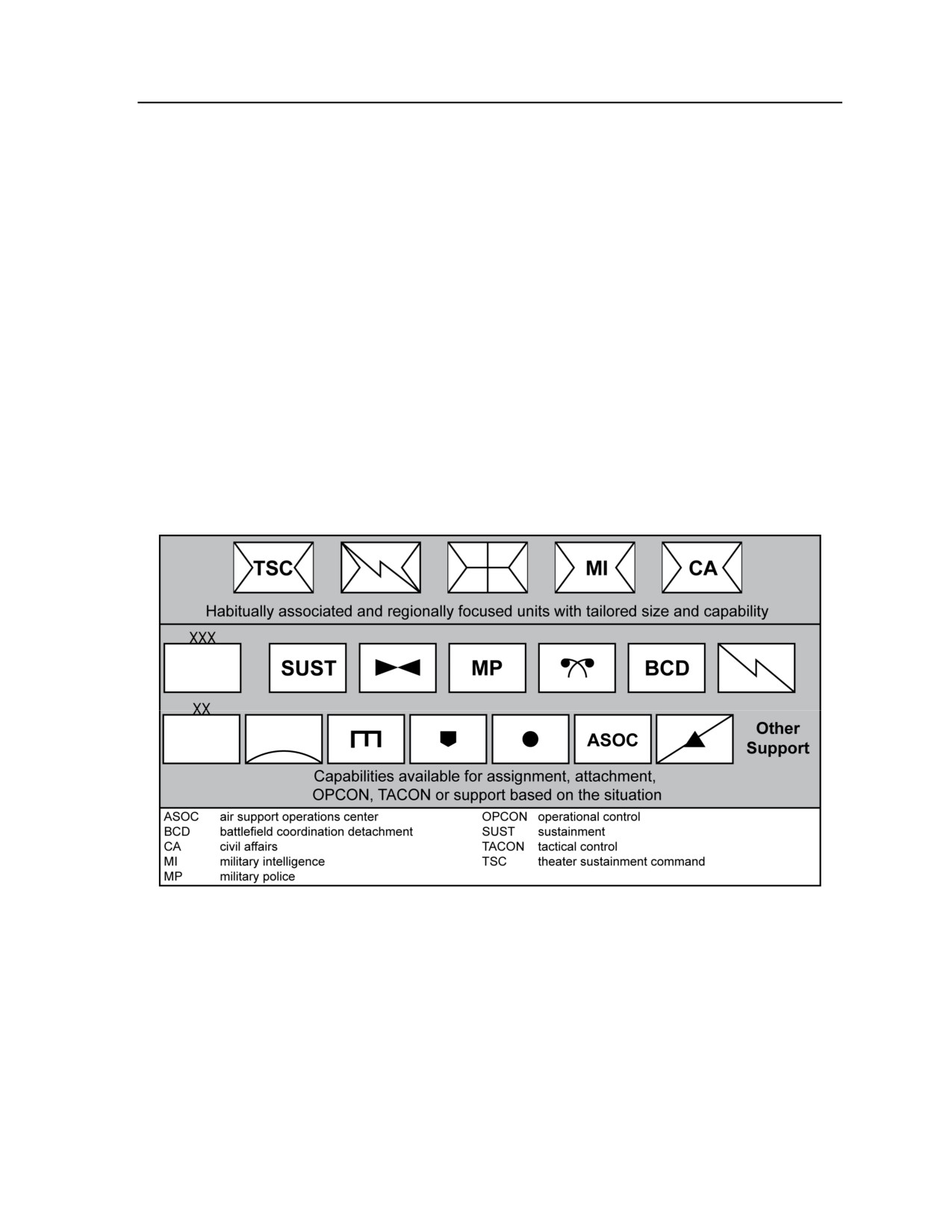
headquarters. The remaining chapters of this manual discuss the organization, command and control
procedures, and operational activities of the corps headquarters.
Figure 1-1. Forces available to support a corps
26 November 2010
FM 3-92
1-3
Chapter 2
Corps Headquarters
Transformation has impacted the corps headquarters. This chapter describes the corps
headquarters, its organization, the corps main and tactical command posts, and their
facilities. It elaborates on how the Air Force supports the corps and describes the
corps headquarters and headquarters battalion.
SECTION I - CORPS HEADQUARTERS ORGANIZATION
2-1. The corps headquarters is designed around several basic characteristics:
z
When deployed, the headquarters is organized around one main command post (CP) and one
tactical CP.
z
The commanding general (CG) has a mobile command group so the CG can exercise command
and control away from the CP. The mobile command group conducts some offensive and
stability operations. The corps also fields an early-entry CP. This command and control element
of the corps headquarters can control operations until remaining portions of the headquarters
deploy. It conducts some operations—especially reception, staging, and onward movement and
defensive operations. Normally, it locates near the tactical CP, and additional personnel from the
main CP may augment it. Often, a deputy commander, assistant commander, chief of staff, or
operations officer leads the early-entry CP. The corps headquarters battalion provides life
support and network support to the headquarters. The corps tasks its subordinate units to provide
security assets for each command and control facility. Alternatively multinational, host-nation,
or contracted assets provide security. Regardless of its source, the corps headquarters security
elements come under control of the corps headquarters battalion commander.
z
The corps does not possess a set of corps troops other than those in its headquarters battalion. It
receives attached forces. The corps exercises operational or tactical control over any mix of
brigades, division headquarters, other Service, or multinational headquarters appropriate for its
mission.
2-2. Figure 2-1 (page 2-2) depicts the corps headquarters organization consisting of a main CP, tactical
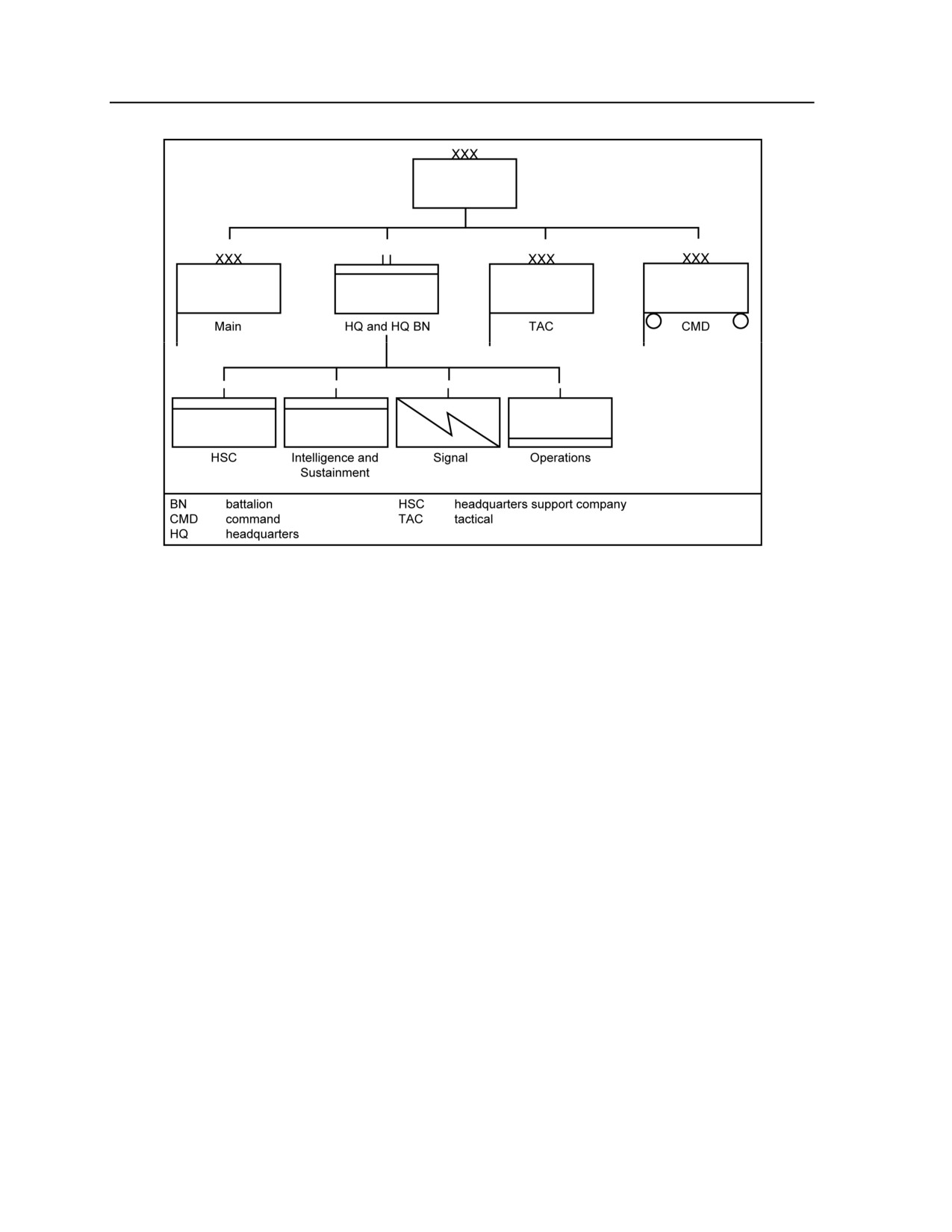
CP, mobile command group, and its organic headquarters battalion with assigned companies. The corps
main CP has three integrating and six functional cells, while the tactical CP forms a single integrating cell
with functional components.
COMMAND GROUP
2-3. Command is the authority that a commander in the armed forces lawfully exercises over subordinates
by virtue of rank or assignment. Command includes the authority and responsibility for effectively using
available resources and for planning the employment of, organizing, directing, coordinating, and
controlling military forces for the accomplishment of assigned missions. It also includes responsibility for
health, welfare, morale, and discipline of assigned personnel (Joint Publication (JP) 1). The design of the
corps identifies four general officer positions: the CG, deputy CG, chief of staff, and assistant chief of staff
for operations. Paragraphs 2-4 through 2-10 discuss the duties of the two general officers with command
responsibility, the CG and deputy CG. The duties of the chief of staff and assistant chief of staff for
operations are addressed in the discussion of the staff.
26 November 2010
FM 3-92
2-1
Chapter 2
Figure 2-1. Corps headquarters and headquarters organization
COMMANDING GENERAL
2-4. A lieutenant general commands the corps. This CG has responsibility for the corps headquarters and
all units and organizations that have a command or support relationship to the corps assigned by a higher
headquarters (corps forces). The commander also oversees the control functions performed by the staff.
Corps commanders normally position themselves where they can best exercise command and control over
their corps.
DEPUTY COMMANDING GENERAL
2-5. The deputy CG, a major general, serves as the CG’s primary assistant and second in command of the
corps. The deputy CG has specific duties described in the corps standing operating procedures or directed
by the commander. The deputy CG does not have a staff but may control certain staff elements based on
responsibilities the CG assigns. The deputy CG can request staff assistance at any time.
2-6. The deputy CG interacts with the chief of staff and staff principal advisors based on duties the CG
assigns. The deputy CG maintains situational understanding so to assume command at any time. Because of
this requirement, the deputy CG normally remains at the main CP to be physically or virtually colocated
with the CG. The deputy CG has three general responsibilities:
z
Temporarily assume the CG’s duties.
z
Serve as the CG’s successor.
z
Assume certain delegated authorities.
Temporarily Assume the Commanding General’s Duties
2-7. The deputy CG temporarily assumes command and makes decisions based on the mission and the
commander’s intent when needed. The deputy CG assumes the CG’s duties temporarily on a routine basis
during continuous operations for reasons of rest and health. A corps CG frequently leaves the main CP to
meet with military and civilian superiors, government officials, and multinational partners. These meetings
can take place outside the corps area of operations (AO), making it difficult for the CG to maintain a
2-2
FM 3-92
26 November 2010
Corps Headquarters
situational understanding of the current operation; therefore, the deputy CG steps in and assumes command
during these events.
Serve as the Commanding General’s Successor
2-8. The corps CG may be relieved, killed, wounded, or incapacitated in some way. In these situations,
the deputy CG assumes command as specified in the standing operating procedures or the current order.
Assume Certain Delegated Authorities
2-9. The corps CG delegates authority to the deputy CG for specific tasks or areas. Such tasks can include
the following:
z
Provide control of reception, staging, onward movement, and integration activities.
z
Coordinate directly with a host-nation partner.
z
Provide command of multinational forces under corps control.
z
Provide overall direction of sustainment activities.
z
Conduct a specific shaping operation, such as a vertical envelopment or an amphibious
operation.
z
Conduct a decisive operation separated in time and space from the bulk of the corps assets.
z
Serve as the chairman of any joint targeting or coordination boards established by the
headquarters if corps serves as a base for a joint task force (JTF) or JTF headquarters.
z
Supervise troops provided by the theater army that are not subordinated to a division.
2-10. Under certain conditions, the corps CG appoints a deputy commander from another Service or nation
to demonstrate solidarity or to gain expertise in an area required for the operation. Such circumstances
include when the corps serves as the base for a JTF, joint force land component command, or a
multinational force. For example, a Marine Corps general officer may serve as the deputy CG for a corps
engaging in amphibious operations.
THE STAFF
2-11. Staffs assist commanders in planning, coordinating, and supervising operations. A staff section is a
grouping of staff members by area of expertise under a coordinating, special, or personal staff officer (Field
Manual (FM) 5-0). Not all staff sections reside in one of the functional or integrating CP cells (discussed in
paragraphs 2-24 through 2-32). These staff sections maintain their distinct organizations. They operate in
different CP cells as required and coordinate their activities in meetings to include working groups and
boards established by the unit’s battle rhythm. Battle rhythm refers to a deliberate daily cycle of command,
staff, and unit activities intended to synchronize current and future operations (JP 3-33). The staff consists
of the chief of staff, personal staff, special staff, coordinating staff, staff augmentation, and command
liaison, functional liaison, and others. See chapter 3 for a discussion of battle rhythm at corps level.
Chief of Staff
2-12. The corps CG delegates supervision of the staff to the chief of staff. The chief of staff directs,
supervises, and trains the staff and is one of the CG’s principal advisors. An effective working relationship
helps the chief of staff and the CG transmit and share information and insights.
2-13. All staff principal advisors report to the chief of staff. The chief of staff is the command’s principal
integrator. This duty includes overseeing the command and control functional cell and its components of
civil affairs operations, psychological operations, information engagement, and network operations. The
chief of staff normally remains at the main CP. (FM 6-0 lists the chief of staff’s responsibilities.)
Personal Staff
2-14. The personal staff sections advise the commander, provide input to orders and plans, and interface
and coordinate with entities external to the corps headquarters. They perform special assignments as
26 November 2010
FM 3-92
2-3

Chapter 2
directed by the commander. Army regulations and public law establish special relationships between
certain staff officers and the commander. For example, Army Regulation (AR) 20-1, AR 27-1, AR 165-1,
and AR 360-1 require the inspector general, staff judge advocate, chaplain, and public affairs officer to be
members of the commander’s personal staff. Additionally, the command sergeant major and aides are part
of the commander’s personal staff. (FM 6-0 discusses the duties of the personal staff.)
Special Staff
2-15. Special staff officers help commanders and other staff members perform their responsibilities. The
number of special staff officers and their duties vary. Special staff sections are organized according to
professional or technical responsibilities. The commander delegates planning and supervisory authority
over each special staff function to a coordinating staff officer. Although special staff sections may not be
integral to a coordinating staff section, they usually share areas of common interest and habitual
association. Special staff officers routinely deal with more than one coordinating staff officer. (FM 6-0
details the types and responsibilities of special staff officers.) The members of the special staff can change
depending on the capabilities available to the corps commander and on the situation. (Table 2-1 identifies
the most common special staff members.)
Table 2-1. Personal and special staff officers
Personal Staff
Special Staff
• Staff Judge Advocate
• Air and missile defense officer
• Public affairs officer
• Aviation officer
• Political advisor
• Air mobility liaison officer
• Inspector General
• Air liaison officer
• Chaplain
• CBRN officer
• Engineer officer
• Electronic warfare officer
• Historian
• Knowledge management officer
• Operations research/systems analysis officer
• Provost marshal
• Red team officer
• Safety officer
• Staff weather officer
• Transportation officer
CBRN chemical, biological, radiological, and nuclear
Coordinating Staff
2-16. The corps coordinating staff officers are assistant chiefs of staff. They report to the chief of staff and
have functional responsibilities in addition to their roles in the functional and integrating cells in the main
and tactical CPs. Coordinating staff officers advise, plan, and coordinate actions within their areas of
expertise. They also exercise planning and supervisory authority over designated special staff officers as
described in FM 6-0.
Staff Augmentation
2-17. Depending on the situation, teams and detachments with special expertise to facilitate mission
accomplishment augment the corps headquarters. Available capabilities include civil affairs operations,
space support, combat camera, operational law, internment and resettlement, history, and public health.
2-4
FM 3-92
26 November 2010
Corps Headquarters
COMMAND LIAISON, FUNCTIONAL LIAISON, AND OTHERS
2-18. These organizations vary in size with staff depending on the situation. The corps and higher, lower,
and subordinate headquarters exchange command liaison teams. Host-nation and other nonmilitary entities
also exchange command liaison teams. Functional liaison teams work with those organizations that provide
services to the corps such as intelligence, signal, and sustainment. The corps headquarters selects, trains,
and equips liaison teams from the corps staff for their responsibilities. The corps headquarters receives,
houses, provides life support, and trains liaison teams from outside the corps headquarters to do their job
properly.
COMMAND POST CELLS AND OTHER COMMAND POST
ORGANIZATIONS
2-19. A command and control system is the arrangement of personnel, information management,
procedures, and equipment and facilities essential for the commander to conduct operations (FM 6-0). The
primary facilities of any command and control system are its command posts. A command post is a unit
headquarters where the commander and staff perform their activities (FM 5-0). Organizing the staff into
CPs expands the commander’s ability to exercise command and control and makes the command and
control system more survivable. Organizing the command posts into functional cells and integrating cells
facilitates cross-functional coordination, synchronization, and information sharing.
2-20. For most operations, the corps headquarters operates from its main CP. If the main CP is not fully
functional, the tactical CP deploys. The main CP usually does not displace during operations. However,
sometimes it may have to relocate. One example is a move from an intermediate staging base to the AO.
Another is a situation where political pressure dictates a move to another location.
2-21. A command post cell is a grouping of personnel and equipment by warfighting function or planning
horizon to facilitate the exercise of command and control (FM 5-0). Two types of CP cells exist, functional
and integrating. Functional cells group personnel and equipment by warfighting function.
(FM 3-0
discusses the warfighting functions.) Integrating cells group personnel and equipment to integrate
functional cell activities. Integrating cells normally focus on different planning horizons. All staffs sections
and CP cells—coordinating, functional, integrating, special, and personal—integrate information and
activities for mission accomplishment.
2-22. The corps headquarters design modifies the organization of the corps headquarters around the
traditional, special, or coordinating staff concept. The traditional concept uses the naming conventions
denoted in table 2-2 (page 2-6). Members of the coordinating staff serve in the functional and integrating
cells. They are always members of their coordinating staff section; however, during operations they may
simultaneously be a part of a functional cell and a part of the integrating cell.
26 November 2010
FM 3-92
2-5
Chapter 2
Table 2-2. Naming conventions for staff officers in corps
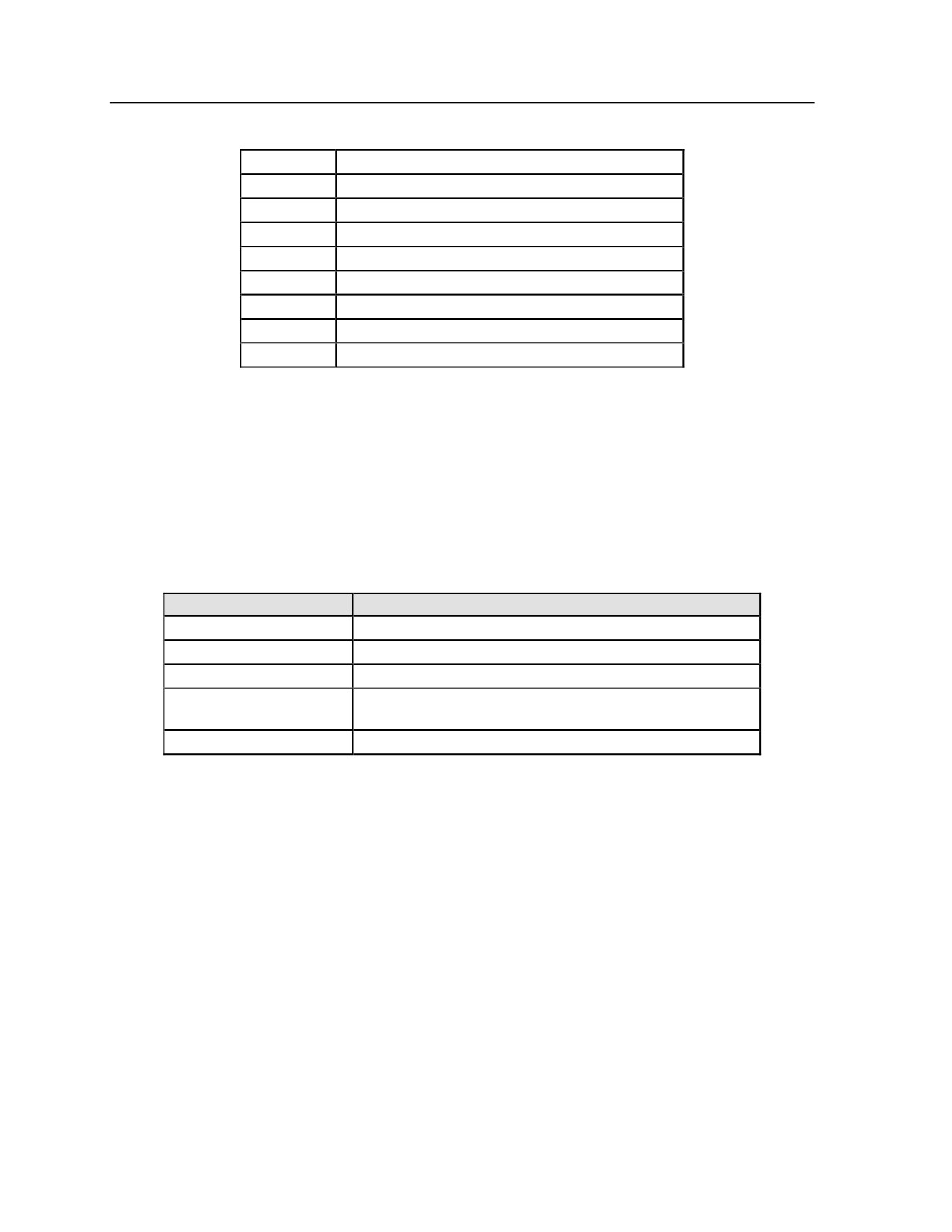
G-1
assistant chief of staff, personnel
G-2
assistant chief of staff, intelligence
G-3
assistant chief of staff, operations
G-4
assistant chief of staff, logistics
G-5
assistant chief of staff, plans
G-6
assistant chief of staff, signal
G-7
assistant chief of staff, information engagement
G-8
assistant chief of staff, financial management
G-9
assistant chief of staff, civil affairs operations
2-23. Within a CP, commanders normally organize their corps headquarters staff into six functional cells,
three integrating cells, and other groupings
(meetings) as needed. Some corps staff members are
permanently assigned to and serve one cell or element for the mission. However, others move from cell to
cell based on the need for their expertise. It is possible for one member of the corps staff to serve in five or
more components of the main or tactical CP depending on that member’s skill set and ability to contribute
to the corps mission. Table 2-3 lists the multiple positions a single colonel serving in the corps might have
to fill. Similar multitasking often occurs for senior members of the corps headquarters. This especially
applies for high-value, low-density members of the corps headquarters, such as chaplains, the political-
military advisor, and interpreters or translators. (Figure 2-2, page 2-8, shows a main CP organized into CP
cells containing staff elements and other groupings.)
Table 2-3. Example of positions a corps colonel will fill in command post activities
Activity
Position
Ad hoc grouping
Human resources policy board chair
Special staff
Main command post safety officer
Integrating cell
Plans cell replacement policy subject matter expert
Functional cell
Main command post sustainment cell deputy officer in
charge
Coordinating staff
Corps assistant chief of staff, G-1/AG (S-1), personnel
FUNCTIONAL CELLS
2-24. The six functional cells each contribute to the development and maintenance of the corps’s command
and control capabilities. Generally, the title of each functional cell describes the cell: movement and
maneuver, intelligence, fires, sustainment, command and control, and protection. Members of each cell
specialize in activities related to that function.
2-25. Not all functional cells are permanently represented in all the integrating cells. They provide
representation as required. For the staff principal advisors, this arrangement requires focus and discipline to
maintain a suitable span of control.
2-26. Personal and some coordinating and special staff officers do not reside in a CP functional cell. They
maintain a separate identity to address the areas of their special expertise. Nonetheless, they and their
sections interact continuously with other staff sections. Officers for civil affairs operations and information
engagement (see paragraph 2-116 for the definition of information engagement) and the political advisor
may contribute expertise to a civil military operations center or similar organization to provide focus on
their specialty. These staff sections maintain their distinct organization and operate in different CP cells as
required. They coordinate their activities in the various meetings (including boards and working groups)
identified in the unit’s battle rhythm. (FM 5-0 discusses battle rhythm further.)
2-6
FM 3-92
26 November 2010
Corps Headquarters
INTEGRATING CELLS
2-27. The corps headquarters has three integrating cells: current operations integration, future operations,
and plans. Integrating involves coordinating or unifying activities across functions. Integrating cells group
Soldiers and equipment to integrate the warfighting functions by planning horizon. A planning horizon is
point in time commanders use to focus the organization’s planning efforts to shape future events (FM 5-0).
2-28. Individual members of personal and special staff sections support the integrating cells as needed.
These staff section members represent their sections in addition to supporting the cells.
2-29. During operations, the lines dividing the current operations integration, future operations, and plans
cells often overlap. All people in the corps headquarters take part in planning, regardless of their positions
or titles. The flexibility required in today’s operations means that the plans, future operations, and current
operations integration cells sometimes all work on different planning horizons of the same operation.
Further, integration also occurs in the CP functional cells as they work internally and between cells to solve
the problems presented during operations.
Current Operations Integration Cell
2-30. The current operations integration cell oversees day-to-day operations. It executes tactical operations
and decisionmaking, including maintaining status and conducting update briefings. The current operations
integration cell is a vital element of the corps main headquarters. Other current operations integration cell
elements from the corps staff support it.
Future Operations Cell
2-31. The future operations cell performs mid-range planning, including preparation of branches to the
current operation. The cell tracks and processes relevant information to create an ongoing link between
current operations and plans. The future operations cell links the current operations integration and plans
cells. As required, it augments them.
Plans Cell
2-32. The plans cell performs long-range planning. It develops complete operation plans or operation
orders and sequels that the staff formally passes to the future operations or current operations cells, as
required, for additional planning or execution.
MEETINGS, INCLUDING BOARDS AND WORKING GROUPS
2-33. The corps CG and chief of staff establish meetings, including boards and working groups, to further
integrate the staff and enhance planning and decisionmaking. The CG uses boards and working groups,
such as the targeting board and assessment working group, as the situation requires. Boards and working
groups are established, modified, and dissolved as the situation evolves. The chief of staff manages the
timings of these events through the corps battle rhythm. The chief of staff uses the battle rhythm to
sequence command and control activities within a headquarters and throughout the force to facilitate
effective command and control. Some meetings convene daily at a set time; others meet on call to address
occasional requirements. The CG also identifies staff members to participate in the higher headquarters’
boards and working groups. (JP 3-31, JP 3-33, and JP 4-0 discuss boards and working groups used by JTF
and joint force land component command staffs respectively.)
SECTION II - MAIN COMMAND POST
2-34. The main CP is organized around six functional cells and three integrating cells. It synchronizes the
conduct of current operations and allocates available resources. Under the general supervision of the corps
chief of staff, it also oversees the conduct of future planning, analysis for current and future operations,
sustainment coordination, and other staff functions.
26 November 2010
FM 3-92
2-7
Chapter 2
2-35. The main CP operates from a fixed location. It normally does not displace during execution of
operations. The main CP has coordinating, personal, and special staffs. The primary components of the
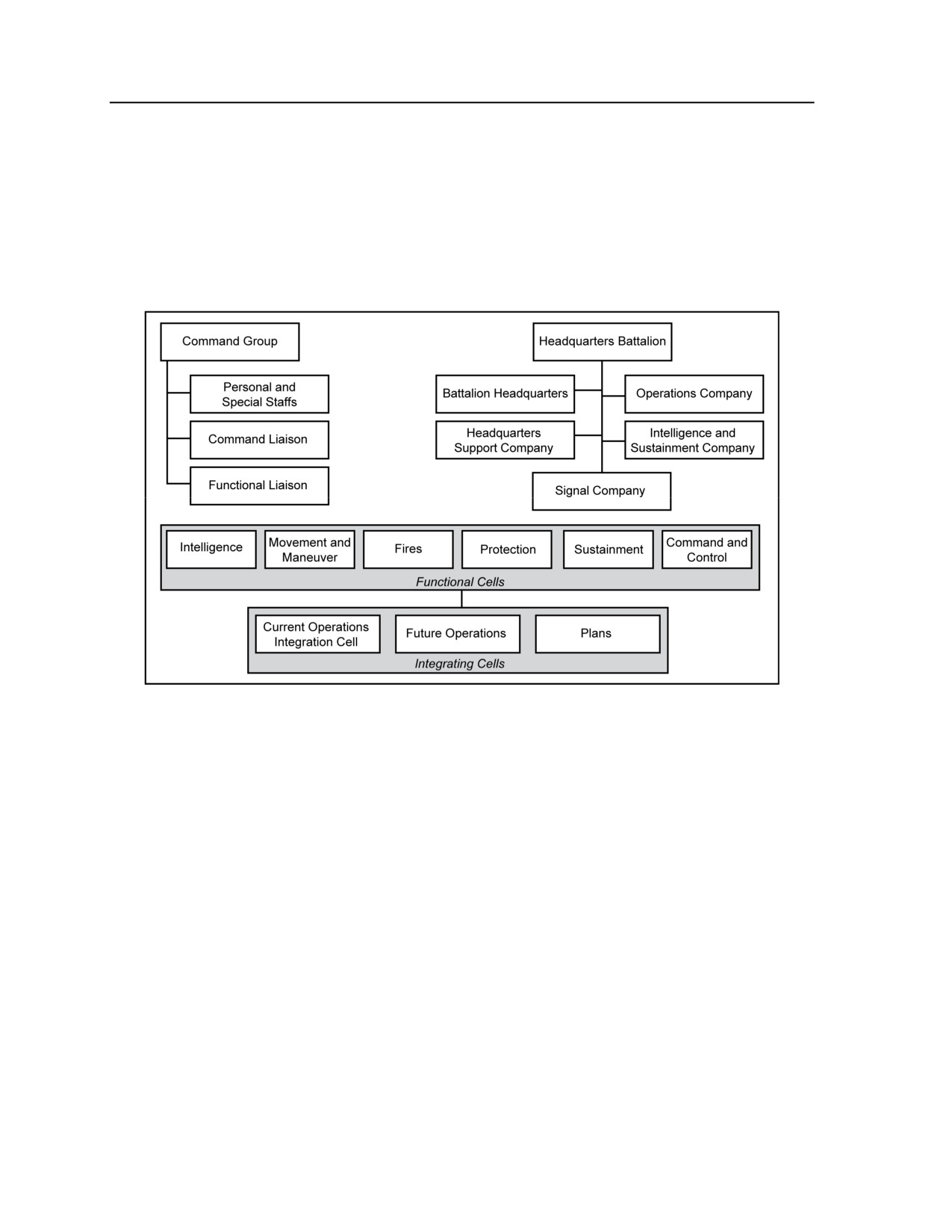
main CP are the command group, the headquarters battalion, and the functional and integrating cells. (See
figure 2-2.) The command group consists of the personal and special staff, command liaison, and functional
liaison. These assets enable the commander to exercise command and control and show command presence
away from a CP. Soldiers in the main and tactical CPs and other command and control facilities are
assigned to the headquarters battalion. In addition to the life and personal support functions, the
headquarters battalion enables the CP to support the exercise of command and control by the commander
and staff.
Figure 2-2. Main command post
COORDINATING, SPECIAL, AND PERSONAL STAFF OFFICERS
2-36. Table 2-4 (page 2-9) lists the senior leaders in the main CP. They occupy the duty locations indicated
unless directed elsewhere. As currently designed, the coordinating, special, and personal staff officers of
the corps operate in several environments simultaneously, each with slightly different responsibilities.
2-8
FM 3-92
26 November 2010

Corps Headquarters
Table 2-4. Main command post staff principal advisors
Title
Grade
Cell
Commanding general
O-9
command group
Deputy commanding general
O-8
command group
Chief of staff
O-8
command group
Assistant chief of staff, G-1/AG, personnel
O-6
sustainment
intelligence, surveillance, and
Assistant chief of staff, G-2, intelligence
O-6
reconnaissance officer in charge
movement and maneuver officer
Assistant chief of staff, G-3, operations
O-7
in charge
Assistant chief of staff, G-4, logistics
O-6
sustainment officer in charge
Assistant chief of staff, G-5, plans
O-6
plans officer in charge
Assistant chief of staff, G-6, signal
O-6
command and control
Assistant chief of staff, G-7, information
O-6
command and control
engagement
Assistant chief of staff, G-8, financial
O-6
sustainment
management
Surgeon
O-6
sustainment
Assistant chief of staff, G-9, civil affairs
O-6
command and control
operations
Chemical, biological, radiological, and nuclear
O-6
protection
officer
Chaplain
O-6
personal staff
Cultural advisor
Civ
personal staff
Engineer coordinator
O-6
movement and maneuver
Chief of fires
O-6
fires officer in charge
Air liaison officer
O-6
special staff
Inspector general
O-6
personal staff
Command liaison officer
O-6
personal staff
Operations research/systems analysis officer
O-5
special staff
Political advisor
Civ
personal staff
Chief of protection
O-6
protection officer in charge
Provost marshal
O-6
protection cell
Public affairs officer
O-6
personal staff
Red team officer
O-6
special staff
Space operations officer
O-5
movement and maneuver
Staff Judge Advocate
O-6
personal staff
2-37. Staffing the tactical CP mirrors that of the main CP with the exception of grade structure. The tactical
CP focuses on the conduct of specific current operations. Table 2-5 (page 2-10) lists the current staff
principal advisors in the tactical CP. The mission and situation determine the officer in charge of the
tactical CP. For example, a tactical CP controls a shaping operation and coordinates with a host-nation
government or armed forces while the main CP exercises command and control of decisive operations. In
26 November 2010
FM 3-92
2-9
Chapter 2
this case, the corps deputy CG becomes the officer in charge to permit general officer-to-general officer
discussion. Conversely, use of the corps tactical CP to monitor reception, staging, onward movement, and
integration at a seaport of embarkation requires an officer of lesser rank.
Table 2-5. Tactical command post staff principal advisors
Title
Grade
Cell
Tactical command post officer in charge
-
as designated
Assistant G-2
O-5
intelligence
movement and maneuver officer in
Deputy G-3, chief of operations
O-5
charge
Airspace command and control officer
O-4
movement and maneuver
Aviation officer
O-4
movement and maneuver
Engineer officer
O-4
movement and maneuver
Judge advocate officer
O-4
movement and maneuver
CBRN officer
O-4
movement and maneuver
Civil affairs operations chief
O-5
command and control
Deputy chief of fires
O-5
fires officer in charge
Air liaison officer
O-5
fires
Sustainment operations officer
O-5
sustainment officer in charge
Deputy G-6
O-5
command and control
Provost marshal
O-4
protection officer in charge
2-38. The commander and staff receive support from the headquarters battalion through its four
subordinate companies and its battalion staff. The companies and staff provide administrative, logistic, life,
and transportation support for all organic elements of the corps headquarters in garrison and when
deployed. With teams identified for the main and tactical CPs, the headquarters battalion supplies unit-level
command and control, communications, transportation, medical, food service, and maintenance support for
the command and control nodes.
MAIN COMMAND POST FUNCTIONAL CELLS
2-39. The main CP’s six functional cells coordinate and synchronize forces and activities by warfighting
function. The six functional cells have assigned personnel in the movement and maneuver current
operations integration cell to synchronize staff functions daily. These personnel are depicted as current
operations integration cell (in figures 2-3 through 2-8) under their respective functional discussions. These
current operations integration cell support elements from functional cells are an important part of the main
CP. Some current operations integration cell support members may come from personal and special staff
sections. The functional cells within a corps CP are—
z
Intelligence.
z
Movement and maneuver.
z
Fires.
z
Protection.
z
Sustainment.
z
Command and control.
INTELLIGENCE CELL
2-40. The intelligence functional cell is concerned with facilitating understanding of the operational
environment. The cell requests, receives, and analyzes information from all sources. It disseminates
2-10
FM 3-92
26 November 2010
Corps Headquarters
intelligence products to support corps operations and the CG’s situational understanding. This cell manages
the requirements for all collection assets under corps control. The assistant chief of staff, intelligence (G-2)
is normally the cell chief. The intelligence cell has three principal sections: intelligence, surveillance, and
reconnaissance (ISR) operations section; G-2 analysis control element; and counterintelligence and human
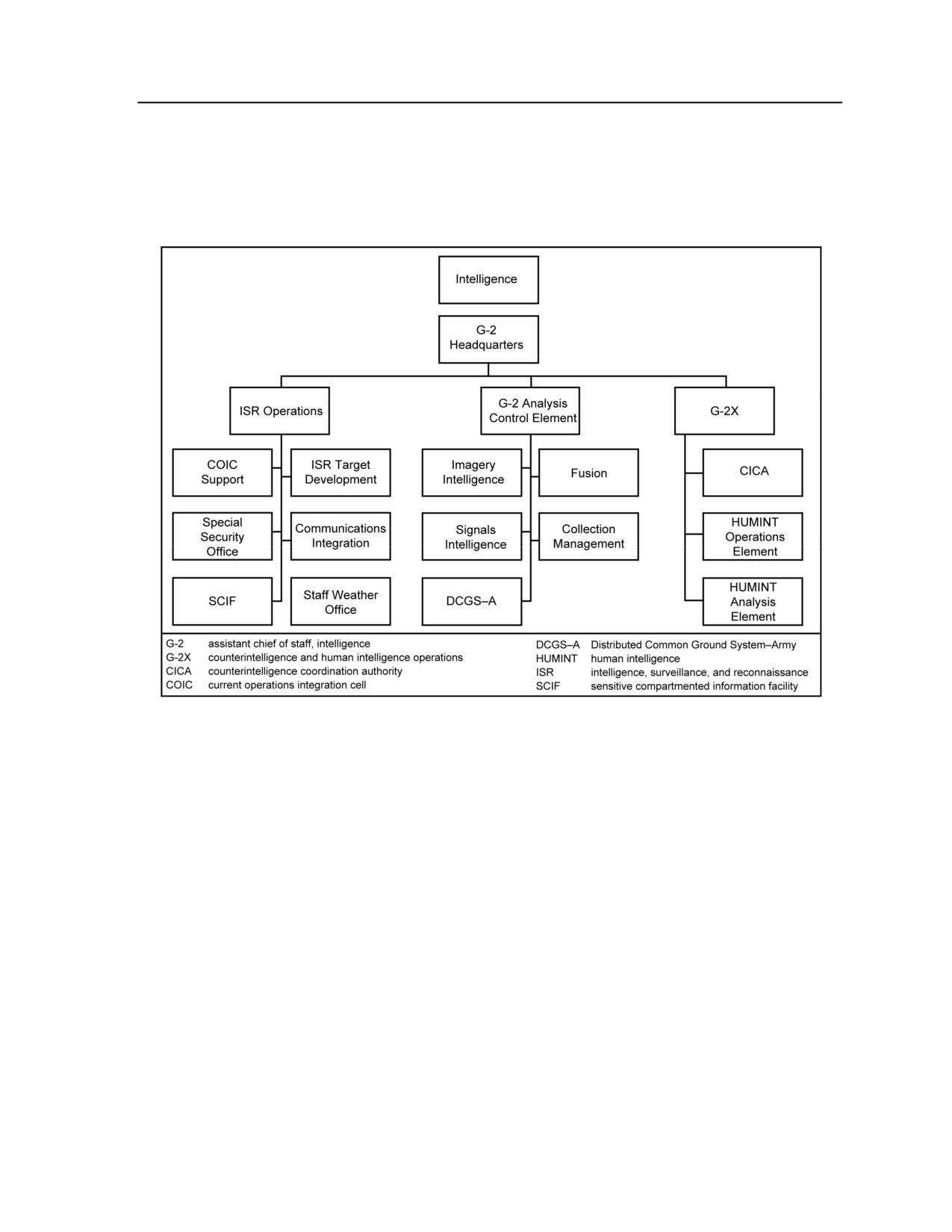
intelligence operations section (G-2X). (See figure 2-3.) The intelligence cell provides representatives to
the current operations integration cell.
Figure 2-3. Main command post intelligence cell
2-41. To support corps operations, the main CP intelligence cell—
z
Receives, processes, and analyzes information from all sources and disseminates intelligence.
z
Provides relevant intelligence to support current and future operations activities.
z
Synchronizes and integrates ISR operations.
z
Participates in the targeting process.
z
Conducts intelligence collection management, including planning, synchronizing, and
integrating assets.
z
Plans, monitors, and analyzes human intelligence and counterintelligence activities.
Intelligence, Surveillance, and Reconnaissance Operations
2-42. This section serves as the operations hub for ISR activities. It interfaces the intelligence cell with the
movement and maneuver cell to integrate intelligence products and collection activities into current
operations. It recommends ISR tasks to the senior intelligence officer for resources under corps control.
This section receives, processes, analyzes, and disseminates all-source intelligence to support current and
future operations. (See chapter 4 for more information about ISR.)
26 November 2010
FM 3-92
2-11
Chapter 2
Current Operations Integration Cell Support
2-43. This element provides intelligence capability to the main CP through the integration of intelligence
products and collection planning. Personnel in this element support the main CP current operations
integration cell.
Special Security Office and Sensitive Compartmented Information Facility
2-44. The special security office exercises oversight of sensitive compartmented information reception,
transmission, and storage. This office establishes, manages, and provides security for the corps main
sensitive compartmented information facility. This facility, an accredited area with personnel access
control, stores sensitive compartmented information. Personnel can also use, discuss, and process this
information in this facility.
Intelligence, Surveillance, and Reconnaissance Target Development
2-45. This element develops and nominates priority targets as part of the targeting process. Paragraph B-8
discusses targeting in more detail. (See JP 3-60 for additional information on the joint targeting process.)
Communications Integration
2-46. This element establishes communications connectivity with outside intelligence elements, maintains
internal and external digital communications functions, and exercises communications security oversight.
Staff Weather Office
2-47. This element, staffed by Air Force personnel, provides staff weather, forecasting, and observation
support to the corps commander and staff.
G-2 Analysis Control Element
2-48. The G-2 analysis control element performs collection management, produces all-source intelligence,
provides intelligence and electronic warfare technical control, and disseminates intelligence and targeting
data across the spectrum of conflict.
Imagery Intelligence
2-49. This element serves as the single-source intelligence point of contact for exploitation and analysis of
imagery and development of imagery products.
Signals Intelligence
2-50. This element performs signals intelligence analysis, electronic intelligence preparation of the
battlefield, and tasks signals intelligence systems to support the ongoing operation.
Distributed Common Ground System-Army: Tactical Exploitation System-Forward
2-51. This element receives, processes, exploits, and disseminates signals intelligence, imagery
intelligence, measurement and signature intelligence, and geospatial information and products. The end
result produces multisource products to support current operations.
Fusion
2-52. This element performs situation development, prepares combat assessments, and develops and
updates threat information for the ongoing and intelligence running estimate.
2-12
FM 3-92
26 November 2010
Corps Headquarters
Collection Management
2-53. This element monitors collection asset status, develops the collection plan, and integrates and
synchronizes assets to optimize intelligence collection. It focuses the employment of collection assets to
satisfy the commander’s priority intelligence requirements and information requirements.
Counterintelligence and Human Intelligence
2-54. This section advises the CG and the senior intelligence officer on employing counterintelligence and
human intelligence assets. It interfaces with external sources to synchronize and deconflict
counterintelligence and human intelligence operations.
Counterintelligence Coordination Authority
2-55. This element provides technical control, oversight, and deconfliction for counterintelligence assets.
Human Intelligence Operations
2-56. This element provides primary technical control and deconfliction for all human intelligence assets in
the corps AO.
Human Intelligence Analysis
2-57. This element serves as the single fusion point for human intelligence reporting and operational
analysis. It answers requests for information related to human intelligence.
MOVEMENT AND MANEUVER CELL
2-58. The movement and maneuver functional cell contains sections concerned with moving forces to
achieve a position of advantage in relation to the enemy. The assistant chief of staff, operations (G-3) is the
chief of the movement and maneuver cell. This functional cell forms the base of the current operations
integration, future operations, and plans integrating cells. The current operations integration cell includes
the elements shown in figure 2-4 (page 2-14). The G-3 exercises staff supervision over the integrating cells
consistent with the guidance and oversight of the chief of staff.
2-59. For the corps headquarters, the main CP movement and maneuver cell—
z
Oversees reception, staging, onward movement, and integration operations.
z
Conducts force positioning and maneuver.
z
Prepares orders and plans, including branches and sequels.
z
Monitors current operations, maintains ongoing operations, and communicates status
information throughout the command.
z
Provides airspace management and deconfliction.
z
Coordinates and synchronizes aviation operations.
z
Coordinates and synchronizes space support.
z
Provides terrain visualization and terrain products.
z
Coordinates combat engineering, general engineering, and geospatial engineering.
z
Provides liaison to and from subordinate, lateral, and higher headquarters.
26 November 2010
FM 3-92
2-13
Chapter 2
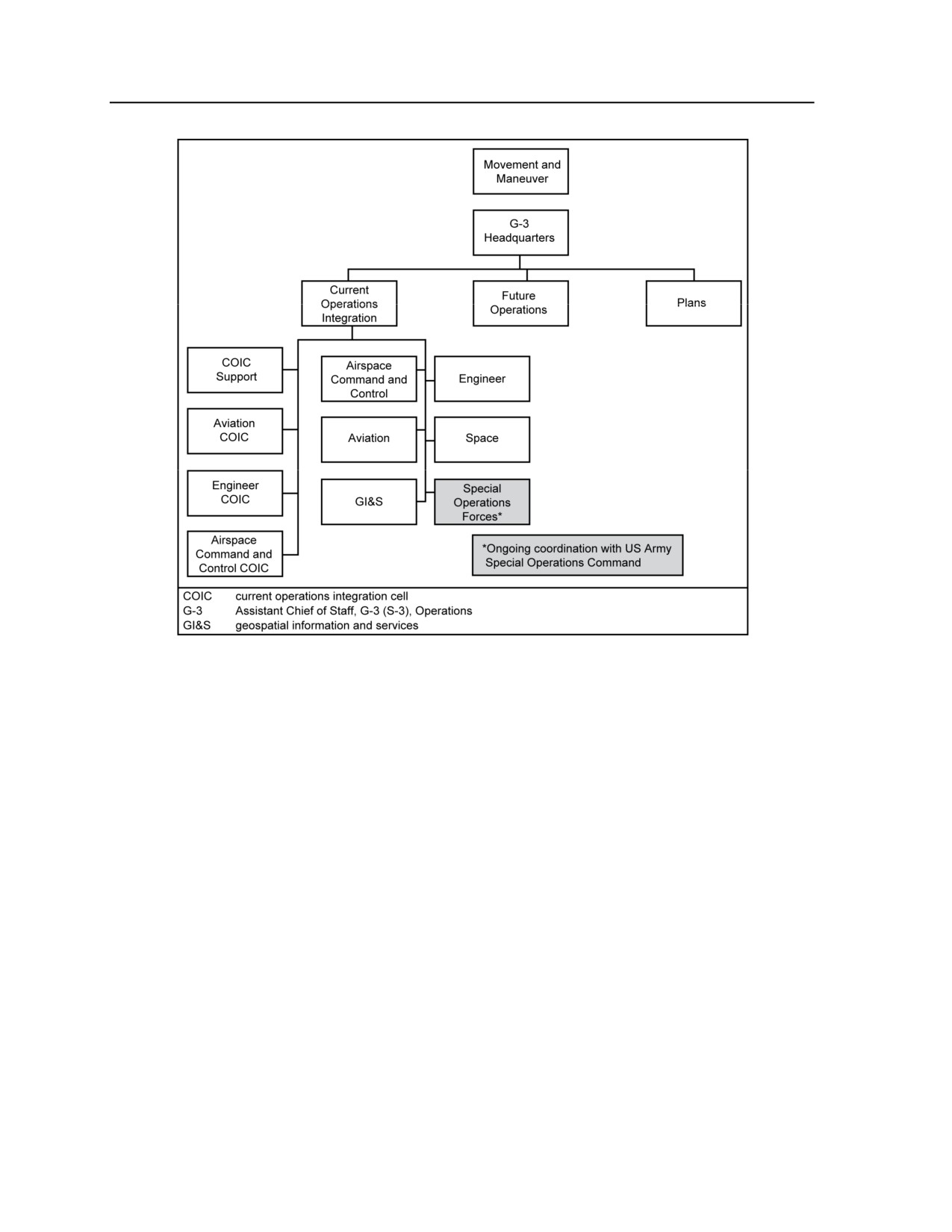
Figure 2-4. Main command post movement and maneuver cell
Current Operations Integration Cell
2-60. The current operations integration cell is the hub of the main CP. The current operations integration
cell conducts the day-to-day activities within the corps. See paragraphs 2-129 through 2-131 for more
information about current operations integration cells.
Current Operations Integration Cell Support
2-61. This movement and maneuver cell forms the core of the current operations integration cell. The chief
of operations, a colonel, has responsibility for synchronizing all the current operations integration cell
support sections. Some important functions are executing the tactical operations for the main CP, executing
decisionmaking for the main CP, and conducting CP operations.
Aviation Current Operations Integration Cell Support
2-62. This section supports the coordination and synchronization of operational and tactical aviation
maneuver support for the corps within the current operation integration cell.
Engineer Current Operations Integration Cell Support
2-63. This section within the current operations integration cell supports the functions of all engineers
assigned and attached to the corps for operations
2-14
FM 3-92
26 November 2010
Corps Headquarters
Airspace Command and Control Current Operations Integration Cell Support
2-64. This section within the current operations integration cell supports the airspace management and
deconfliction for the corps.
Airspace Command and Control Section
2-65. The airspace command and control section provides airspace management in the corps AO. It
provides input to the airspace control plan developed by the airspace control authority. The airspace
command and control section develops standing operating procedures and AC2 annexes that facilitate
standardized AC2 operations among subordinate units. These standing operating procedures and annexes
align with joint airspace and theater army CP procedures, the appropriate aeronautical information
publication, and associated plans and orders. For additional information, see appendix D.
Aviation Section
2-66. The aviation section coordinates and synchronizes the execution of operational and tactical aviation
maneuver and maneuver support and aviation maneuver sustainment operations. It also coordinates and
synchronizes unmanned aerial reconnaissance, close combat attack, mobile strike, vertical envelopment, air
assault, battle command of the move, medical evacuation, and transportation of key personnel.
Geospatial Information and Services Section
2-67. Geospatial intelligence is an intelligence discipline that draws on contributions from both the
intelligence and engineer communities to exploit imagery and geospatial information in describing the
operational environment’s effects on enemy and friendly capabilities. The geospatial information and
services section acquires, manages, and distributes geospatial data and terrain visualization products to the
CG and staff. This section includes imagery analysts and geospatial engineers from the corps’ organic
geospatial engineer team and may include augmentation from the National Geospatial-Intelligence Agency.
See JP 2-03 for more information.
Engineer Section
2-68. This section includes the corps engineer who advises the commander and staff on engineering and
the use of engineering assets. As the primary engineer section within the corps staff, it typically includes
the senior engineer on the staff, the engineer coordinator. The engineer coordinator coordinates engineer
tasks related to combat, general and geospatial engineering facilitating the functions which assure mobility,
enhance protection, enable expeditionary logistics, and facilitate capacity building. The engineer
coordinator provides guidance and reachback for the engineer section in the main CP. This section also
coordinates with the engineer element in the protection cell to address specific engineer support for
preserving the force such as base camp development planning. The engineer section coordinates and
synchronizes engineer operations within the corps and with other headquarters, between echelons, and with
multinational forces, governmental, and nongovernmental organizations. See FM
3-34 for more
information.
Space Section
2-69. The space section is the CG’s primary planner and advisor for space capabilities. To support corps
operations, it maintains space situational awareness and coordinates with higher headquarters space
elements, the Army space coordination section, the space coordinating authority staff, and managers of
space-based systems, including the director of space forces. The space section serves as the primary
coordinating element for the corps with—
z
Space operations.
z
Special technical operations.
z
Alternative or compensatory control measures.
26 November 2010
FM 3-92
2-15
Chapter 2
Special Operations Forces Section
2-70. The special operations coordination section oversees ongoing coordination between the corps and the
Army special operations command. For more detail, see FM 3-05.
Future Operations Cell
2-71. The future operations cell is an important bridge between current operations and plans. See
paragraphs 2-132 through 2-134 for more information about the future operations cell.
Plans Cell
2-72. The plans cell conducts planning for the corps. See paragraphs 2-137 through 2-140 for more
information about the plans cell.
FIRES CELL
2-73. The fires functional cell coordinates Army indirect fires, joint fires, and command and control
warfare, including nonlethal actions, through the targeting process. The cell implements the commander’s
intent by destroying enemy warfighting capabilities, applying nonlethal actions, and degrading enemy
command and control capabilities through command and control warfare. The fires cell accomplishes these
actions by developing, recommending, and briefing the scheme of fires, including both lethal fires and
nonlethal actions (electronic attack and computer network operations with the effects of other warfighting
functions) to the commander.
2-74. The corps chief of fires is a coordinating staff officer who leads the corps fire cell at the corps main
CP. The chief of fires may locate at the tactical CP or elsewhere depending on the situation. See
appendix B and FM 6-0 for further discussion of the chief of fires.
2-75. When the corps serves as the headquarters for a JTF or a joint force land component command, the
fires cell performs additional functions. See JP 3-09 and JP 3-31.
2-76. The fires functional cell works closely with the force field artillery headquarters, if one is
established. The fires cell’s responsibilities are based on the situation and may include coordination and
technical oversight. The force field artillery headquarters provides the fires cell with operational control of
all corps fires. To further facilitate fires when the corps is serving as the senior Army tactical headquarters,
the air support operations center colocates with the fires cell. The fires cell provides representatives to the
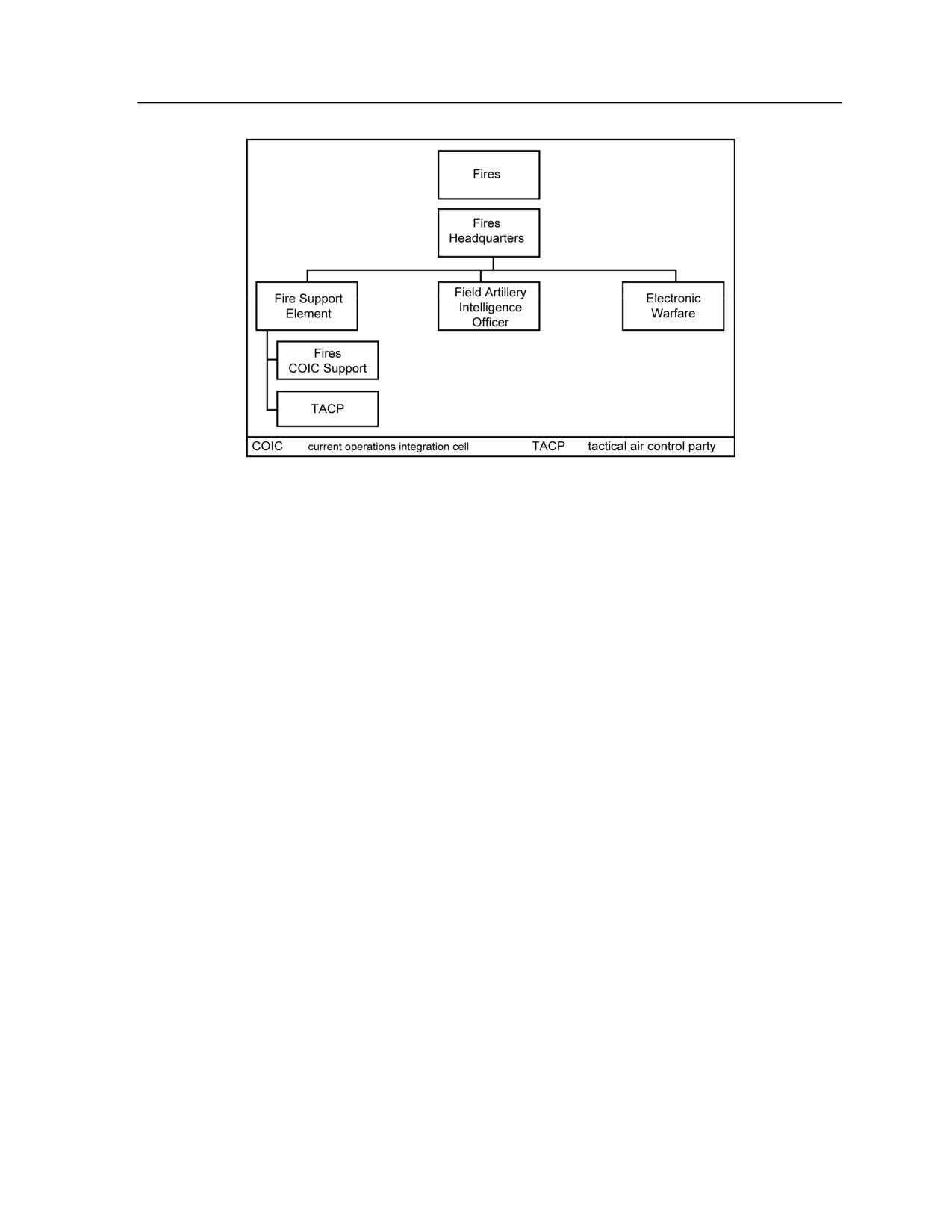
current operations integration cell. The fires cell includes the elements shown in figure 2-5 (page 2-17).
2-16
FM 3-92
26 November 2010
Corps Headquarters
Figure 2-5. Main command post fires cell
Fires Support Element
2-77. The fires support element synchronizes military and civilian, joint, and multinational lethal fires and
nonlethal actions and field artillery sensor management. It provides input to intelligence collection and the
targeting process.
Fires Current Operations Integration Cell Support
2-78. This element from the fires cell provides the personnel to support the current operations integration
cell to synchronize fires support for the corps.
Tactical Air Control Party
2-79. The tactical air control party at the main CP is the senior Air Force element in the corps and is
organized as an air execution cell. It can request and execute Type 2 and Type 3 controls of close air
support missions. (See JP 3-09.3.) Staffing is situation-dependent; however, the element includes, as a
minimum, an air liaison officer and joint terminal attack controller. The element may also include Air
Force weather and intelligence support personnel. (See appendix E for a greater discussion of the tactical
air control party.)
Field Artillery Intelligence Officer
2-80. As a participant in the corps and joint targeting process, the field artillery intelligence officer
coordinates with corps internal and external all-source intelligence elements. This officer provides input to
the development, nomination, and prioritization of targets.
Electronic Warfare
2-81. The electronic warfare section supports the commander during full spectrum operations (offensive,
defensive, and stability or civil support operations). Electronic warfare applies the capabilities to detect,
deny, deceive, disrupt, or degrade and destroy enemy combat capabilities by controlling and protecting
friendly use of the electromagnetic spectrum. These capabilities—when applied across the warfighting
functions—enable commanders to address a broad set of targets related to electromagnetic spectrum so
gaining and maintaining an advantage within the electromagnetic spectrum.
26 November 2010
FM 3-92
2-17
Chapter 2
PROTECTION CELL
2-82. The protection functional cell contains sections concerned with preserving the force so the
commander can apply maximum combat power. It coordinates, integrates, and monitors military and
civilian, joint and multinational protection support for corps units and installations. The cell provides
protection functional expertise and advises the CG in developing essential elements of friendly information,
the defended asset list, and the critical asset list. The protection functional cell provides vulnerability
mitigation measures to help reduce risks associated with a particular course of action and conducts planning
and oversight for full spectrum operations. Representatives from the protection cell may provide input to
plans and future operations cells, depending on the operational environment and the commander’s
preference. Commanders tailor and augment the protection cell with functional expertise to form a
protection working group as the mission requires.
2-83. The protection functional cell coordinates with the command and control cell concerning information
protection tasks. The cell coordinates with the surgeon concerning preventive medicine. The cell
coordinates with the fires cell concerning integrated fires protection
(formerly called counter-rocket,
-artillery, and -mortar), including planning and coverage areas.
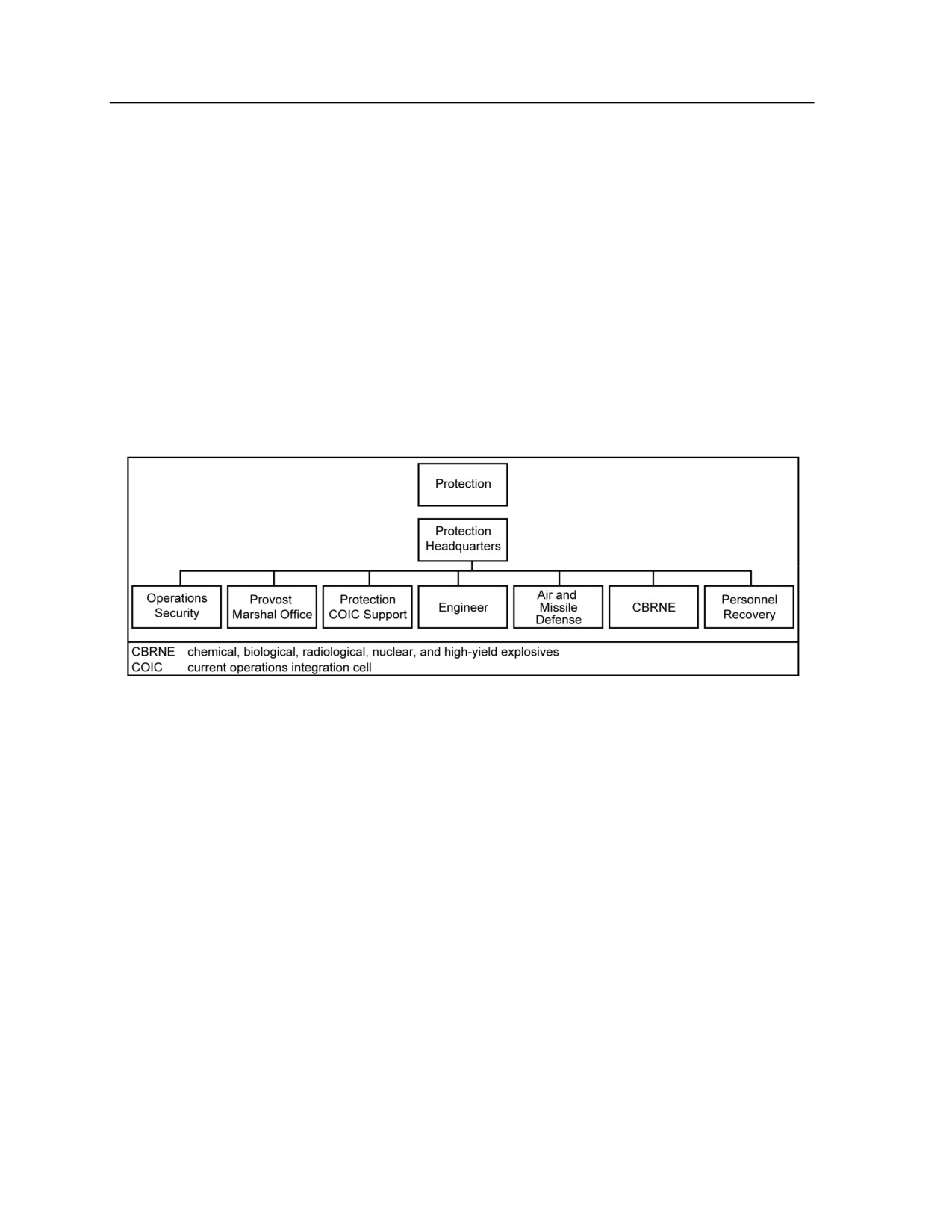
2-84. The protection cell includes the sections shown in figure 2-6.
Figure 2-6. Main command post protection cell
2-85. The main CP protection functional cell performs these tasks in support of corps operations:
z
Directs the coordination, planning, and analysis of protection activities.
z
Monitors operational security activities, including identification of essential elements of friendly
information.
z
Coordinates chemical, biological, radiological, nuclear, and high-yield explosives (CBRNE)
activities, including planning and information dissemination.
z
Synchronizes and integrates military police activities, including detainee and enemy prisoner of
war operations.
z
Synchronizes and integrates engineer operations.
z
Coordinates air and missile defense operations.
z
Integrates personnel recovery operations into orders and plans.
z
Develops and monitors safety programs for the command.
Operations Security
2-86. The operations security section—
z
Coordinates operations security activities within the corps headquarters and CPs.
z
Conducts vulnerability analysis, assesses the corps’ operations security risks, and monitors
implementation of operations security control measures by corps forces.
2-18
FM 3-92
26 November 2010
Corps Headquarters
2-87. The operations security section includes a counterintelligence branch. This branch detects, identifies,
tracks, exploits, and neutralizes the multidiscipline intelligence activities of friends, competitors,
opponents, adversaries, and enemies. Focusing primarily on passive counterintelligence, it coordinates with
the counterintelligence coordinating authority (in the intelligence cell) to deconflict actions.
Provost Marshal Office
2-88. The provost marshal is the principal advisor to the CG on military police functions. This officer
plans, analyzes, coordinates, and monitors military police functions within corps forces. Military police
functions include police intelligence, law and order, internment and resettlement, maneuver and mobility
support, and area security operations. (See FM 3-39.) The corps provost marshal may serve as the chief of
detainee operations when the corps is the senior Army unit in a joint operations area with detainees. (See
JP 3-63.)
Current Operations Integration Cell Support
2-89. The protection current operations integration cell support section provides personnel who work in the
current operations integration cell to synchronize protection operations for the corps.
Engineer Section
2-90. The engineer section in the protection cell integrates the engineer functions (combat, general, and
geospatial engineering) within the protection function by—
z
Coordinating and synchronizing engineer efforts in support of protection (such as survivability
and environmental considerations) throughout the headquarters, between echelons, and with
multinational forces and governmental and nongovernmental organizations.
z
Advising the chief of protection on—
Construction requirements and standards associated with survivability efforts
(such as
hardening facilities).
Engineer capabilities available or needed to meet protection requirements.
Environmental considerations.
Air and Missile Defense
2-91. The air and missile defense section oversees corps air and missile defense operations. The section
coordinates the four primary air and missile defense missions: air and missile defense, situational
awareness, airspace management, and force protection. It coordinates these missions by—
z
Coordinating air and missile defense activities with other CP cells, especially regarding airspace
command and control and aviation operations.
z
Disseminating weapons control status and the air tasking order.
z
Coordinating with the area air defense commander on all land-based and air and missile defense
within the corps AO.
For further information air and missile defense within a corps AO, see appendix D.
Chemical, Biological, Radiological, Nuclear, and High-Yield Explosives Section
2-92. The CBRNE section—
z
Advises the commander and staff on CBRNE issues.
z
Plans combating weapons of mass destruction elimination operations (coordinates for disposal of
weapons of mass destruction).
z
Provides oversight on weapons of mass destruction elimination operations.
z
Plans for sensitive site assessments operations, tracks sensitive site exploitation operations, and
provides reachback technical support.
z
Performs information superiority analysis (tracks key indicators).
26 November 2010
FM 3-92
2-19
Chapter 2
z
Conducts CBRNE response analysis.
z
Provides CBRNE defense, obscuration, and flame input to estimates, orders, and plans.
z
Provides consequence management planning, support, and analysis.
z
Plans support for joint operations.
z
Provides support to Army organizations, as required.
z
Identifies explosive ordnance disposal requirements and recommends and implements explosive
ordnance disposal unique skills to protect the force.
z
Tracks, prioritizes, and reinforces support to counter unexploded explosive ordnance,
improvised explosive devices, and weapons of mass destruction.
Personnel Recovery Section
2-93. Personnel recovery is inherently a joint operation. The personnel recovery section coordinates corps
personnel recovery activities with joint, multinational, and host-nation personnel recovery operations. (See
JP 3-50 and FM 3-50.1.) Personnel recovery tasks include—
z
Developing and maintaining the corps personnel recovery program, including procedures,
planning, preparation, execution, and assessment.
z
Coordinating personnel recovery issues with higher, lower, and adjacent organizations.
z
Establishing a joint personnel recovery center, if directed.
Safety Element
2-94. Safety, although not a part of the corps table of organization and equipment, is an important
augmentation to the corps staff. The safety officer is part of the commander’s personal staff. A safety
element works within the protection cell to assist the commander and staff with integrating composite risk
management for training and operations. (See FM 5-19.)
SUSTAINMENT CELL
2-95. The sustainment functional cell contains sections that provide support and services to ensure the
corps’s freedom of action, extend its operational reach, and prolong its endurance. Four staff sections
contribute sections to the sustainment cell: assistant chief of staff, personnel (G-1); assistant chief of staff,
logistics (G-4); assistant chief of staff, financial management (G-8); and the surgeon. The G-4 serves as
both the chief of sustainment cell and the logistic section chief. Elements perform specific functions within
each staff sections shown in figure 2-7 (page 2-21). (See appendix A for a detailed discussion of corps
sustainment.)
2-20
FM 3-92
26 November 2010
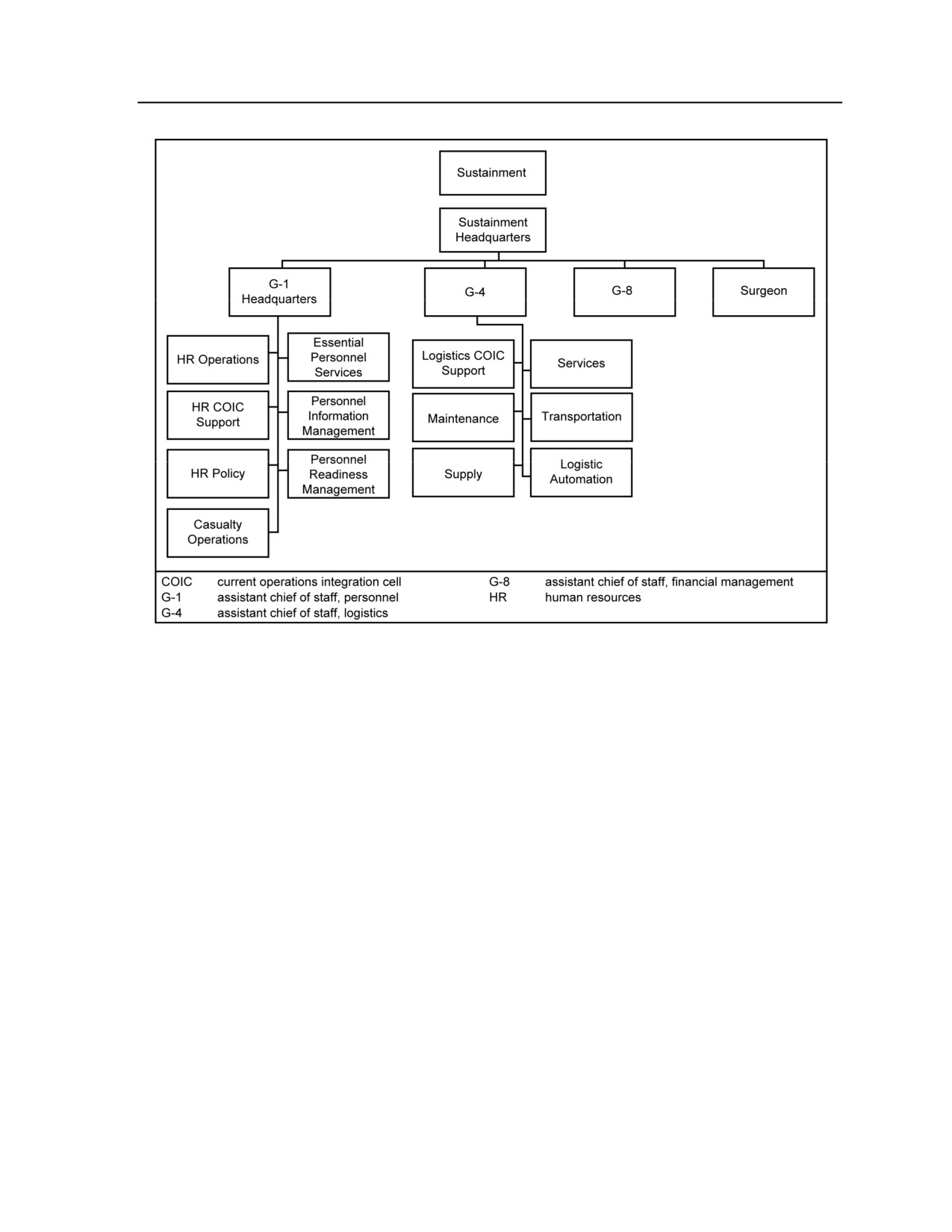
Corps Headquarters
Figure 2-7. Main command post sustainment cell
2-96. The sustainment functional cell performs these tasks to support corps operations:
z
Develop and implement human resource policies and procedures.
z
Coordinate personnel support.
z
Monitor the human resources situation and provide input to common operational picture (COP).
z
Coordinate casualty operations.
z
Synchronize and integrate logistics operations to include maintenance, supply and services,
transportation, general engineering, and mortuary affairs.
z
Provide logistics input to the COP.
z
Coordinate resource and financial management operations.
z
Synchronize and integrate Army health system operations.
Human Resources Section
2-97. The G-1 is the corps CG’s principal human resources advisor and the chief of the human resources
section. (See FM 1-0.) This section establishes human resources policies and ensures human resources
support is properly planned, resourced, and executed for corps forces. In addition, the corps human
resources section—
z
Establishes human resources policy.
z
Conducts essential personnel services.
z
Coordinates morale, welfare, and recreation.
z
Conducts casualty operations.
z
Performs strength reporting and personnel readiness management.
z
Conducts personnel information management.
26 November 2010
FM 3-92
2-21
Chapter 2
z
Manages headquarters manning.
z
Receives and processes individual augmentees.
z
Coordinates band operations.
z
Performs command interest programs.
z
Monitors postal operations.
Human Resources Operations Element
2-98. The human resources operations element conducts morale, welfare, and recreation operations;
manages command interest programs; manages retention efforts; and monitors postal operations for corps
units. It manages the information assurance program and civilian personnel programs for Department of
Defense personnel.
Human Resources Current Operations Integration Cell Support
2-99. The G-1 current operations integration cell support element provides personnel who work in the
current operations integration cell to synchronize human resources operations for the corps.
Human Resources Policy
2-100. Human resources policy responsibility involves developing, coordinating, and managing current,
mid-range, and long-term human resources personnel policies for the corps. It includes providing oversight
for executing human resources activities for corps units.
Casualty Operations
2-101. Casualty operations include collecting casualty information for preparing estimates, reporting
casualties, and conducting notification and assistance programs. Casualty information is provided by
casualty liaison teams, medical treatment facilities, mortuary affairs, and reports from corps forces.
Essential Personnel Services
2-102. The branch establishes, processes, and manages essential personnel services for the corps units.
This responsibility includes establishing processing priorities and timelines for submitting actions by corps
forces. The branch processes personnel actions requiring the CG’s signature.
Personnel Information Management
2-103. Personnel information management involves collecting, processing, storing, displaying, and
disseminating human resources information about corps Soldiers, units, and civilians. This function
includes maintaining the human resources information systems. The human resources cell coordinates with
the command and control cell as necessary to establish communication links.
Personnel Readiness Management
2-104. Personnel readiness management involves analyzing personnel strength data to determine current
combat capabilities, projecting future requirements, and assessing conditions of unit individual readiness.
Personnel readiness management directly interrelates and depends on the functions of personnel
accountability, strength reporting, and personnel information management. Strength reporting reflects the
combat power of a unit using numerical data.
Logistics Section
2-105. The G-4 oversees the corps logistic elements. This section oversees—
z
Logistic operations.
z
Maintenance.
z
Supply and services.
2-22
FM 3-92
26 November 2010
Corps Headquarters
z
Transportation.
z
Logistic automation.
See FM 4-0 for details on sustainment.
Logistics Current Operations Integration Cell Support
2-106. The G-4 current operations integration cell support element provides personnel to work in the
current operations integration cell. The support provided helps synchronize logistic operations for the
corps.
Maintenance
2-107. The logistic element performs the following maintenance-related functions:
z
Formulating policy, procedures, and directives related to materiel readiness.
z
Providing oversight of equipment and ordnance maintenance, recovery, and salvage operations.
z
Participating in joint, inter-Service and host-nation agreements to provide resources to support
corps operations.
z
Monitoring and analyzing maintenance functions and equipment readiness status.
Supply and Services
2-108. The logistic element performs the following supply and services-related functions:
z
Formulating and implementing policy and procedures for the classes of supply (less class VIII)
and related services.
z
Monitoring corps logistic operations regarding—
Supply systems.
Transportation networks.
General engineering.
Maintenance.
Miscellaneous services (mortuary affairs, food service, billeting, textile repair, clothing
exchange, and laundry and shower).
Transportation
2-109. Transportation operations involve advising the corps CG on the following to support deployment
and redeployment of forces and distribution of materiel:
z
Transportation policy.
z
Transportations systems.
z
Movement planning and execution.
z
In-transit visibility.
z
Automated systems.
2-110. The logistic element coordinates with internal and external entities regarding mobility operations.
This element includes the Air Force air mobility liaison officer who advises the corps CG on airlift
activities.
Logistic Automation
2-111. The logistic element monitors and reports the status of corps logistic automated information
systems.
Financial Management Section
2-112. The G-8 is the corps CG’s principal advisor on financial management and chief of the financial
management section. This section obtains guidance on policy, appropriations, and funding levels and
26 November 2010
FM 3-92
2-23
Chapter 2
provides guidance to tactical financial managers. It estimates, tracks, and reports costs for specific
operations to support requests to Congress as required. This element establishes the aggregate levels of
fiscal support to be allocated and imposes directed resource constraints. It provides input to the program
objective memorandum, prepares budget schedules and adjusts budgets based on program budget decisions.
The corps G-8 chairs funding boards for corps forces. In addition, the G-8 is responsible for the following
elements:
z
Plans and operations.
z
Budget execution.
z
Special programs.
Surgeon
2-113. The surgeon is charged with planning for and executing the Army Health System mission within
the corps. (See appendix A for additional information.) The surgeon performs the following functions:
z
Advises the corps commander on the health status of the command.
z
Monitors, prioritizes, synchronizes, and assesses Army Health System support.
z
Serves as medical contact officer for the corps.
z
Provides an analysis of the health threat.
COMMAND AND CONTROL CELL
2-114. Command and control of the corps is the duty of the CG. The CG is the focus of the command and
control system and the supporting warfighting functions. See figure 2-8 (page 2-25). The command and
control cell tasks for the corps include:
z
Synchronize and integrate information engagement components (public affairs, combat camera,
strategic communications, defense support to public diplomacy, and leader and Soldier
engagement).
z
Integrate civil affairs operations.
z
Coordinate psychological operations.
z
Coordinate network operations support.
z
Plan and execute computer network defense.
z
Synchronize and integrate information assurance.
z
Establish and monitor information protection and communications security.
2-24
FM 3-92
26 November 2010
///////////////////////////////////////