FM 5-415 Fire-Fighting Operations - page 2
FM 5-415
Contamination Avoidance
4-29. If attacks include CWs, firefighters must
• Avoid driving or walking through suspected chemical-agent puddles,
mists, and so forth.
• Stay under a shelter, when possible.
• Avoid leaving their vehicle during operations except to conduct a
rescue or take cover during MOPP level 4.
• Approach fires from upwind.
• Identify and isolate contaminated areas, if possible.
• Avoid dispersing chemical-agent puddles, mists, and so forth.
4-30. These measures, at a minimum, will reduce unnecessary and lengthy
decontamination procedures and allow quicker recovery after an attack.
FIRE-DEPARTMENT OPERATION PROCEDURES
4-31. Fire-department personnel will immediately assess and report damages
in their vicinity, including the presence or lack of chemicals, submunitions,
and other UXO. At the conclusion of an attack, fire crews will immediately
report the status of personnel, agents, and vehicles. War plans must address
accomplishing this task with both normal and interrupted or nonexistent
radio communications.
4-32. A fire chief directs fire vehicles to fire-fighting or rescue operations and
provides on-scene C2. He provides the base-defense operations-center (BDOC)
staff with a situation assessment regarding structural and aircraft fires; UXO
risks; vehicle, personnel, and agent status and attrition; water and agent
availability; the presence or lack of chemicals; and pavement damage. A fire
chief receives directions from a BDOC or commander and advises the
commander on whether or not to commit fire equipment. He will then employ
fire-fighting forces, as directed. If communications are out or fail, the senior
fire-protection person available at the scene will direct employing the fire-
protection resources based on information provided during preattack training.
However, he should not employ fire-fighting resources to save totally involved
aircraft or POL and other facilities. Such operations only deplete fire-fighting
resources.
4-33. Employing fire-department assets will be based on the relative value of
the response to sortie generation. Forces must be employed according to the
priority listing, which is aircraft and aircraft-support facilities. Given a choice,
a fire chief should respond to a critical aircraft-maintenance facility rather
than a single burning aircraft.
4-34. During a response, firefighters must proceed with extreme caution from
dispersed areas because of UXO. If UXO makes travel by one route
impossible, they must take alternate routes. The objective is to take the
shortest possible route with minimum UXO exposures.
4-35. To ensure that fire-department resources are expanded for maximum
support of sortie generation, the commander will direct firefighters when to
Wartime Operations 4-11

FM 5-415
carry out non-fire-related operations. After each attack, the priority list
should be revised and distributed to all concerned.
REATTACK
4-36. After receiving a reattack notice, firefighters will cease all fire-fighting
actions and take cover. With no protection for fire-department assets, aircraft,
facilities, and lives could be lost. This doctrine must be clearly stated and
understood at all levels of command. If time, distance, and UXO do not allow
the return to splinter protection, crews should take advantage of the nearest
available cover and wait out an attack. During a reattack, firefighters should
make observations and complete the reports that were discussed earlier. They
must make these observations, however, without risk of injury. At the end of a
reattack, recovery actions are the same as discussed earlier except for
previously safe routes and a facility-priority list.
VEHICLE AND MANPOWER CALCULATION
4-37. Tables 4-1 and 4-2 are from Department of Defense Instruction (DODI)
6055.6. They list the minimum number of fire trucks that are required to
support aircraft which are used during stability operations, support
operations, and regional conflicts. Tables 4-3 through 4-5, pages 4-13 and 4-
14, describe the individual TOE fire-fighting-unit authorizations for
manpower and equipment.
Table 4-1. Classification of common military and civilian aircraft
Group 1: Small-Frame Aircraft (less
Group 2: Medium-Frame Aircraft
Group 3: Large-Frame
than 4,000 gallons)
(4,001 to 15,000 gallons)
Aircraft
(15,001 or more
gallons)
A-7, A-10, A-37, AH-1G, AH-46
B-72, B-737
B-1, B-2, B-52, B-707, B-720,
B-747
C-7, C-12, C-26, C-23A, C-131,
C-9, C-20, C-130
C-140, CH-47, CH-54
DC-9
C-5, C-135, C-137, C-141
DC-8
F-111, FB-111
DC-10
F-4, F-15, F-16, F-27, F-117, FH-227
L-188
E3-A, E-4
HH-1H, HH-53, HU-16
KC-10
O-2, OH-6, OH-58, OV-1, OV-10
L-1011
T-37, T-41, T-42, T-43, TA-55, TR-1
U-1, U-3, U-4, U-6, U-8, U-9, U-10,
U-17, U-21, UH-1, UH-21, UH-60A
WU-2
NOTE: Aircraft groupings are categorized by aircraft fuel load, to include tip and drop-off
tanks.
4-12 Wartime Operations

FM 5-415
Table 4-2. DOD minimum aircraft rescue fire-fighting vehicle allowances
Airfields Operating Description
Vehicle Allowance
Permanently assigned aircraft having less than 1,000-gallon fuel
To be determined by DOD component
capacity and all helicopters
Permanently assigned aircraft, less than 75 feet in length or carrying
Two, with 2,000-gallon total capacity
ordnance
Permanently assigned aircraft, less than 100 feet in length or
Three, with 3,000-gallon total capacity
carrying ordnance
Permanently assigned aircraft, less than 175 feet in length:
Three, with 9,000-gallon total capacity
ordnance, hazardous, or high-value cargo
Permanently assigned aircraft, greater than 175 feet in length:
Four, with 12,000-gallon total capacity
ordnance, hazardous, or high-value cargo
NOTE: These minimum allowances do not include specialized ARFF vehicle requirements for
airfields, such as twin agent units, rescue vehicles, and rapid intervention vehicles.
Table 4-3. Engineer fire-fighting HQ team (TOE 05-510LA00)
Personnel
Job Title
MOS
Rank
Quantity
Fire marshal/detachment commander
21B00
1LT
1
Fire inspector
51M30
SSG
1
Fire-team chief
51M30
SSG
1
Administrative clerk
71L10
PFC
1
Total
4
Equipment
Line
Description
Quantity
Number
C68719
Cable telephone: WD-1/TT DR-8, 1/2 kilometer
1
C74517
Compressor unit RCP: air, 5 hp, gas- and diesel-driven, 5.1 cfm, 3,200 psi
1
H88468
Forced-entry-and-rescue equipment set: aircraft crash
1
J71543
Installation kit: MK-2147/VRC F/KY-57 W/AN/VRC-43 or AN/VRC-46
1
J88275
Installation kit, electronic equipment: MK-2418/VRC F/AN/VRC-46/64 or AN/GRC-160
1
M11895
Mask, CBR: protective field
4
Q20935
Radiacmeter: IM-93/UD
2
Q56783
Radio set: AN/VRC-64
1
R59160
Reeling-machine cable hand: RL-39
1
R72484
Repair and refilling kit: hose repair and dioxide fire extinguisher
1
R94977
Rifle, 5.56 millimeters: M16A1
4
T05028
Truck, utility: tactical, 3/4 ton, W/E M1009
1
T59482
Truck, Cargo: tactical, 5/4 ton, 4 by 4, W/E M1008
1
T62101
Siren, electric, motor operated: bracket mounted, W/D light, weatherproof
2
V31211
Telephone set: TA-312/PT
1
Wartime Operations 4-13

FM 5-415
Table 4-4. Engineer fire-fighting fire-truck team (TOE 05-510LB00)
Personnel
Job Title
MOS
Rank
Quantity
Crash-rescue sergeant
51M20
SGT
1
Crash-rescue specialist
51M10
SPC
2
Fire-truck operator
51M10
PFC
3
Total
6
Equipment
Line
Description
Quantity
Number
C68719
Cable telephone: WD-1/TT DR-8, 1/2 kilometer
1
E00533
Charger, radiac detector: PP-1578/PD
1
H56391
Fire-fighting equipment set: truck mounted, multipurpose
1
K87338
Installation kit: MK-1454/U F/VRC-53 64 CRC125, 160 inches, not covered by spec kit
1
M11895
Mask, CBR: protective field
6
Q20935
Radiacmeter: IM-93/UD
1
Q56783
Radio set: AN/VRC-64
1
R59160
Reeling-machine cable hand: RL-39
1
R94977
Rifle, 5.56 millimeters: M16A1
6
T59482
Truck, cargo: tactical, 5/4 ton, 4 by 4, W/E M1008
1
T62101
Siren, electric, motor operated: bracket mounted, W/D light, weatherproof
2
V31211
Telephone set: TA-312/PT
2
Table 4-5. Engineer fire-fighting water-truck team (TOE 05-510LC00)
Personnel
Job Title
MOS
Rank
Quantity
Firefighter crash/rescue specialist
51M10
SPC
1
Firefighter fire-truck operator
51M10
PFC
1
Total
2
Equipment
Line
Description
Quantity
Number
028318
Distributor, water-tank type: 6,000 gallons, semitrailer mounted (CCE)
1
K87338
Installation kit: MK-1454/U F/VRC-53 64 CRC125, 160 inches, not covered by spec
1
kit
M11895
Mask, CBR: protective field
2
Q20935
Radiacmeter: IM-93/UD
1
Q56783
Radio set: AN/VRC-64
1
R94977
Rifle, 5.56 millimeters: M16A1
2
T61171
Truck, tractor: MET 8 by 6, 75,000 GVW, W/W, C/S
1
4-14 Wartime Operations
Chapter 5
Fire-Prevention Operations
5-1. The purpose of fire prevention is to eliminate hazards and elements
that cause fires and to eliminate conditions that will contribute to a fire
spreading. In a TO, this is more important than ever. In most cases, the
available fire-fighting resources will not be adequate to handle the areas of
responsibility, which makes preventing fires more important. Effective fire
prevention requires establishing well-planned programs. Enforcing the
guidelines in these programs can save the effort and expense of
extinguishing fires and reduce the loss of life. Fire departments must have
command support and cooperation to implement and maintain these
programs.
SECTION I. PLANS AND PROCEDURES
5-2. To enhance the effectiveness of fire inspections and assistance to a
community, fire-department personnel must be well-versed in the
organizational structure of their fire department and the roles and
responsibilities of each section. An integral source in a fire-inspection process
is prefire plans. These plans provide fire personnel relevant information about
a structure or an aircraft that may be involved in a fire. The information could
significantly enhance the potential success of a fire department’s operations.
If prefire plans are properly maintained and updated, firefighter safety is
increased and firefighters will know about any special hazards or dangers in
advance.
FIRE REGULATIONS
5-3. DOD, DA, and local fire-prevention regulations must be available to all
fire personnel. An installation's fire marshal prepares local fire regulations.
They must define the fire-protection functions for all areas on an installation,
such as tenant units, assigned detachments, family housing, and quarters.
Local regulations should include the following items:
• A statement on the importance of fire prevention.
• The responsibilities of people in fire prevention. People at all levels on
an installation should be included.
• The fire-safety areas, which include the location of fire exits, first-aid
stations, and fire extinguishers. Also included should be fire-reporting
and -fighting procedures.
Fire-Prevention Operations 5-1
FM 5-415
• The policies concerning smoking, fire inspections, storage areas,
electrical wiring and appliances, static electricity, flammable liquids,
flammable compressed gases, explosive atmospheres, and
maintenance operations.
PREFIRE PLANS
5-4. Fire departments are organized so that fire personnel can protect life and
property from fire. All personnel must study their area to know what
problems exist. After analyzing the problems, they can devise prefire plans to
handle the problems. Fire-department personnel should consider the
following:
• Area one, an installation’s layout. This layout includes the streets,
roads, and alleys from a fire station to a fire scene; the location of the
water supply and the available volume and pressure; and the
buildings’ exposure.
• Area two, the availability of equipment. This area includes the types
of apparatus, vehicles, and mechanical and motorized equipment on
an installation.
• Area three, available personnel.
5-5. Prefire plans must be flexible to allow for changes in personnel and
equipment availability. The areas to consider are the—
• Location of flammable stores, hazardous-operations areas, and areas
that could be a fire’s point of origin.
• Location of hydrants and other water sources, with readings of
available amounts and pressures.
• Lengths of ladders and the proper placement spots to reach all
required areas.
• Horizontal or vertical openings, (hallways, open stairways, shafts,
false ceilings, or attics) that would be good ventilation openings.
• Best and most available apparatus for responding to a fire,
approaching buildings, conducting hose-laying procedures, and
placing water streams.
• Location of the utilities and who shuts them off and how.
• Effects of weather changes on building accessibility and response
time.
• Installed fire-protection or -detection systems, including locations and
procedures for connecting pumpers to installed extinguishing systems.
AIRCRAFT
5-6. Prefire plans for aircraft crash/rescue operations require more flexibility
than prefire plans for structural fires. Because the exact crash location is
unknown, only make general plans as to likely crash sites. When developing
prefire plans, remember the location, mission, climate, and terrain of your
installation.
5-2 Fire-Prevention Operations
FM 5-415
5-7. Prefire plans should include information on the different types of aircraft
handled at an installation. Appendix B details several Army aircraft. The
control tower can obtain specific information (number of personnel, amount of
fuel, amount and type of ordnance on board, nature of an emergency) at the
time of the emergency.
5-8. The weather, terrain, runway conditions, amount of available equipment
and remaining fuel, and crash location are some factors that govern placing
equipment at an aircraft’s crash operation. Prefire plans can only cover
general placement procedures and should allow for flexibility, based on the
situation. Other factors to consider include an aircraft's landing speed, the
wind direction and speed, and an aircraft's stopping distance. Prefire plans
should also include provisions for acquiring additional equipment.
MISSILE AND SPACE VEHICLE
5-9. Fire-protection personnel at missile and space-vehicle test or launch sites
deal with different hazardous situations. The prefire plans must include
procedures for safely storing, handling, and disposing the liquid and solid
propellants used in missile engines. Plans should include the—
• Number, type configuration, and operation of missiles or space
vehicles and related launch facilities.
• Layout of the launch site, including access roads, terrain, and water
supplies.
• Number, type, and location of support facilities.
• Location and configuration of the various propellant storage areas, the
nature of the stored materials, and the extinguishing agents which
are the safest and most effective for each type of propellant.
• Health hazards that could result from the fuels, oxidizers, other
chemicals, and additives to fuels or coolant water. Firefighters may
have to wear special protective clothing, reduce or control exposure
time, monitor instruments, or perform special procedures.
NATURAL-COVER FIRES
5-10. These fires present different problems for firefighters. Natural-cover
fires can cover various-sized areas, involve large numbers of fire-fighting
personnel, and require specialized tactics and equipment. Prefire plans are
usually limited to information about the type and quantity of available tools
and equipment, the people to contact for personnel support, the agencies
which can provide assistance, and the current weather information.
PREDISASTER
5-11. Fire-protection personnel usually assist during earthquakes, tornadoes,
and floods. Fire-fighting plans should include how to handle disasters and
how to safeguard and use the needed equipment, effectively, during a disaster.
Fire-Prevention Operations 5-3
FM 5-415
SECTION II. WATER SUPPLY
5-12. Water requirements on an installation vary daily. However, the water
supply needed for fire fighting must be met at all times. The water supply in
sources such as supply lines, wells, and pumps is often not sufficient during
high-demand periods. During low-demand periods, water should be stored for
use during high-demand periods. Stored water must also be available for
emergencies resulting from fires, power failures, breakdown of supply pumps,
or accidents. During normal use, stored water must be at or above the level
required for fire fighting.
STORAGE
GROUND STORAGE
5-13. Ground storage consists of covered tanks or reservoirs located on the
same level as a distribution system. These tanks and reservoirs are more
commonly used for receiving tanks, treatment tanks, and limited or special
storage. Some installations may have emergency reservoirs. These reservoirs
consist of small ground-storage tanks that are supplied by the distribution
system but are not permanently connected to the system.
HIGH-LEVEL STORAGE
5-14. High-level storage is the preferred storage method. Where practical, the
tanks should be located near the centers of high-water-demand areas to
equalize the pressures during periods of peak demand. One high-level-storage
method is to elevate standpipes or tanks that are mounted on columns or legs.
Another method is to locate one or more ground-storage tanks above the
distribution system. These tanks provide a head pressure similar to that of a
normal hydraulic grade line.
REQUIREMENTS
5-15. A water-supply system supplies water for domestic, industrial, and fire-
protection demands. Domestic demands include functions such as drinking,
cooking, bathing, laundering, and watering cultivated areas. Industrial
demands include requirements for areas such as central and local heating and
cooling equipment and engineering shops. Fire-protection demands include
water requirements for hose-line operations and for installed devices such as
sprinklers, standpipes, and deluge systems.
5-16. The most important factors that govern a water-supply system are the
reliability and capacity of the source, the distribution system, and the storage
facilities. A fire inspector must know of any deficiencies in a water-supply
system to cope with the available water supply during fire operations. A fire
inspector may be asked to appraise a water-supply system at an installation.
He should investigate the—
• Amount of stored water that is needed to meet an installation's
requirements.
• Type of water storage that is best suited for an installation.
5-4 Fire-Prevention Operations
FM 5-415
• Provisions for emergency supply and distribution of water.
• Type and size of a normal distribution system.
• Spacing requirements for fire hydrants in all locations.
• Amount of water that is available for fire-fighting operations at all
locations on an installation.
WATER
5-17. When practical, an installation’s primary water supply should be
acquired from a nearby municipality or private water company. When that is
not practical, the water supply may come from wells, canals, streams, rivers,
lakes, or ponds, depending on an installation’s location. The primary supply
should include a pressure source in the system. The water supply should
originate from two independent sources to ensure water availability if one
system fails.
5-18. When a supply source is groundwater, the fluctuation of the
groundwater table must be considered. When a supply source is from nearby
municipalities, a fire inspector must ensure that the water-supply system is
ample and dependable. When a water source is wells, at least two wells should
be used. At a minimum, twice as much water should be available as is
consumed during an average day. Under these conditions, standby pumping
units that have power sources independent of a main system should be
available.
DISTRIBUTION SYSTEMS
5-19. The network of mains (feeder and distributors) and fire hydrants that
make up the distribution system are laid out as either a grid or a nongrid
system. In a large water-distribution system, the mains are classified as—
• Primary feeders, which are large pipes widely spaced to feed the
smaller pipes.
• Secondary feeders, which are medium-sized pipes that help supply
water at specific locations.
• Distributors, which are small mains that feed individual fire hydrants
and other outlets.
Grid System
5-20. This system is laid out in the form of a grid iron. The piping is
interconnected from several directions. The pipes are arranged in loops and
are supplied from two or more sides. This system works best because hydrants
and other connections are fed from many directions, which will increase water
delivery. A full grid system does not have dead-end mains.
Nongrid System
5-21. This system is a one-directional flow system. Water flows from a large
primary main to smaller feeders. Generally, all feeders result in dead ends.
Some negative features of a nongrid system are an increase in friction loss, a
quick loss of pressure due to one-directional flow, an operation from dead-end
feeders, and increased deposits and foreign matter in all the piping.
Fire-Prevention Operations 5-5
FM 5-415
FIRE HYDRANTS
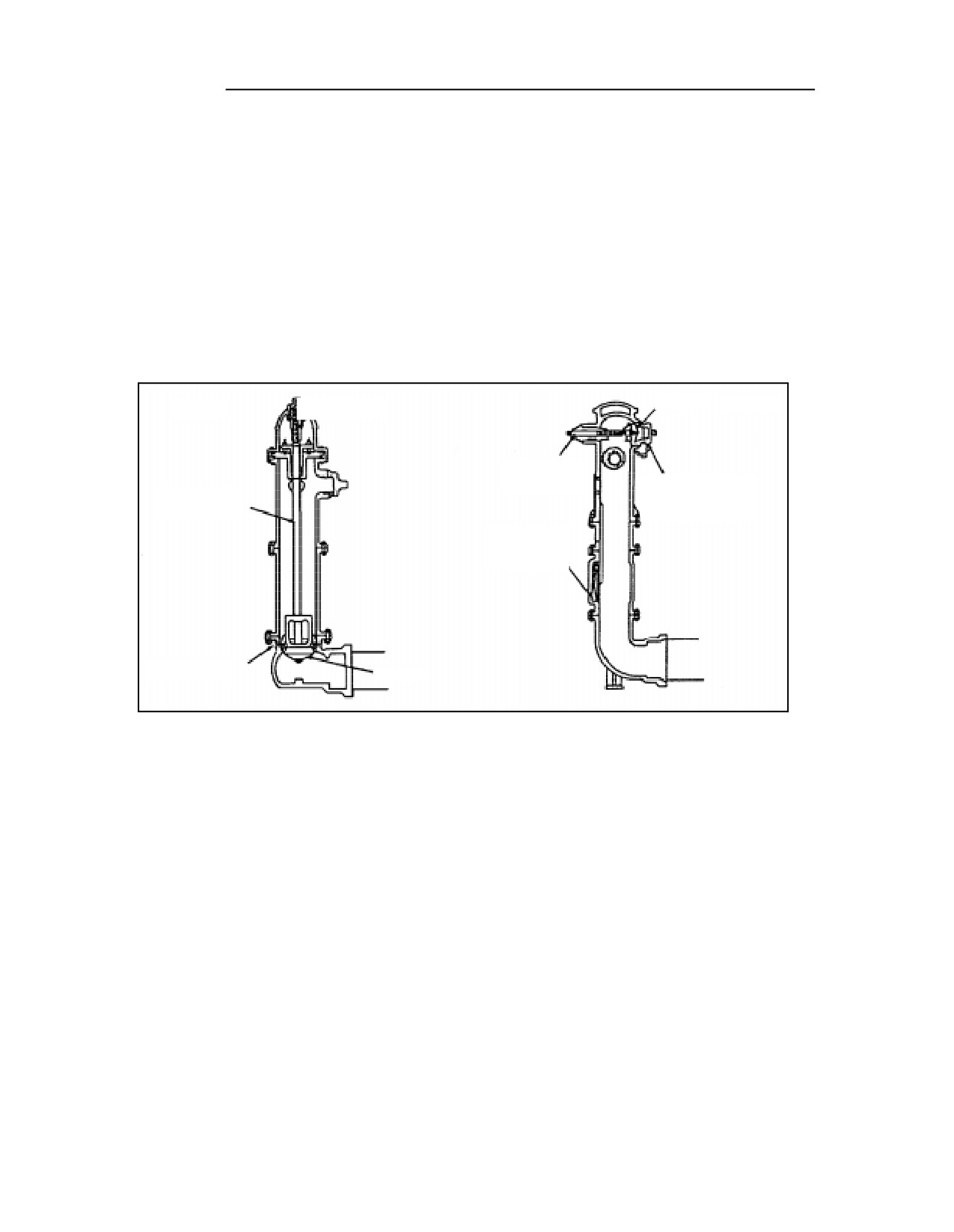
5-22. A dry-barrel-type hydrant (Figure 5-1) is used in areas that are
subjected to freezing temperatures. A valve is located below the freeze line
and is opened with the pressure or against the pressure. After it has been
opened and closed, any remaining water in a closed dry-barrel hydrant will
drain through a valve at the bottom of the hydrant.
5-23. A wet-barrel-type hydrant (Figure 5-1) is used in areas where
temperatures are milder. This hydrant has either a compression-type valve at
each outlet or one valve located in the bonnet to control the water flow to all
outlets.
Stem nut
Valve
Wet
Dry
Operating
stem
Hose outlet and
Operating
valve seat
stem
Automatic
check valve
Drain hole
Valve
Figure 5-1. Fire Hydrants
LOCATION AND SPACING
5-24. In housing areas, the hydrants should be about 400 feet apart and
placed so that two hydrants can reach every building. Firefighters should use
no more than 300 feet of hose line. In warehouse and hanger areas, the
hydrants should be about 300 feet apart. About 18 inches should be between
the lowest hydrant outlet and grade (ground), and not more than 4 feet should
be between the operating nut and grade. The principal opening (4 1/2 inches)
should face the nearest road or approach. Hydrants that cannot be located
away from traffic (loading dock or warehouse areas) should be protected with
sturdy barriers designed to prevent damage to a hydrant without obstructing
its use.
FLOW TEST
5-25. A flow test measures the pressure of a hydrant’s system. A small main
may have only two hydrants, which should provide an accurate reading. Large
mains may have as many as five hydrants; three is a normal count. One
5-6 Fire-Prevention Operations
FM 5-415
hydrant in a system is a residual hydrant and is located the furthest from the
supply mains.
5-26. To measure the pressure in a hydrant’s system, remove the cap on a
residual hydrant and install a Bourdon pressure gauge. Open the hydrant and
record the pressure. During this test, water does not flow from the residual
hydrant. The other hydrants tested in the system are called flowing hydrants.
Remove one 2 1/2-inch cap from each flowing hydrant, and measure the outlet
diameters to the nearest 1/16 inch. Open the valves of all hydrants in the test
group in succession, and read the pressure at all hydrants. The pressure at
the flowing hydrants is the velocity pressure. The pressure at a residual
hydrant is the pressure that remains in the system. The pressure at a residual
hydrant depends on the number of flowing hydrants.
5-27. You can use a pitot tube to measure velocity pressure more accurately.
Hold a tube in the center of a water stream, 1 inch from the face of an outlet.
Depending on the readings, adjust the openings of the flowing hydrants so
that the pressure at the residual hydrant is at least 10 psi. Use these pressure
readings to compute hydrant discharges. Use the following formula to obtain
the discharge of each hydrant:
Q = av
where
Q
= amount of flow, in GPM
a
= cross-section area of a stream, in inches
v
= velocity of a moving stream, in psi
5-28. The total discharge is the sum of all pressure readings of all flowing
hydrants in a system. Use DA Form 5384-R to calculate velocity pressure. The
velocity cannot exceed 20 psi.
5-29. The capacity of an installation’s distribution system is usually based on
a residual pressure of 10 psi. Using the test data, compute the capacity at 10
psi pressure using DA Form 5384-R. The results should be the maximum rate
at which water can be drawn from a system without reducing the pressure in
it to less than 10 psi. Use the instructions below to complete DA Form 5384-R:
• Determine which scale you should use.
• Plot the total discharge on the chart.
• Plot the residual pressure on the chart.
• Indicate where these two lines intersect.
• Plot the static pressure on the vertical scale.
• Draw a straight line from the static pressure point through the
residual pressure point on the water-flow scale.
• Read and record the GPM available flow at 10 psi per gallon.
5-30. The reading represents how much water is available if the pressure lost
in a fire hydrant, hydrant branch, and pump-section hose is disregarded. A
residual pressure of 10 psi is required when rating Army water systems.
Fire-Prevention Operations 5-7
FM 5-415
SECTION III. FIRE PREVENTION DURING FIELD-TRAINING EXERCISES (FTXS)/
DEPLOYMENTS
5-31. During a FTX/deployment, a commander is responsible for fire
prevention. He ensures that—
• A fire warden is appointed and actively supervises all fire-prevention
measures during the FTX/deployment.
• Bivouac areas, including tents, are inspected daily for fire hazards.
• Fire hazards are eliminated and regulations are enforced. These
include no storing of gasoline or diesel fuel inside a tent, no smoking
in bed (or in a sleeping bag), and not placing clothing or other
flammables close to lanterns, stoves, or stove pipes.
• Personnel are trained in using fire-fighting equipment, fire reporting,
and fire prevention.
• Fireguards are posted.
(One person, clothed and alert, will be
designated as fireguard and will remain inside a tent when a heater or
a gasoline lantern is burning.)
• Personnel are trained to operate and maintain POL-consuming
devices properly.
• Candles and liquid-fuel stoves and lanterns are not left unattended
while they are burning in a tent. (When all personnel in a tent are
asleep, the stove, lantern, or candle will be turned off or put out.)
• Refueling of liquid-fuel equipment or devices does not take place in
tents.
SMOKING
5-32. All personnel must be extremely cautious when disposing of smoking
materials. During a summer FTX/deployment, a space will be cleared through
the surface litter down to mineral soil. Cigars, cigarette butts, or pipe ashes
will be placed in the cleared spot and ground into the soil until they are
completely out. SMOKING IS PROHIBITED IN ANY VEHICLE and within
50 feet of any storage area. Personnel will never throw burning materials
from any vehicle. Butt cans will be provided in bivouac areas and will be
dumped into a pit covered with mineral soil or packed with snow daily.
MATCHES
5-33. Safety matches should be used. After striking any match, the person
using it will break it and feel the burnt end, ensuring that it is completely out
before throwing it away.
5-8 Fire-Prevention Operations
FM 5-415
OPEN FIRES
5-34. When hazardous conditions exist, a unit commander will prohibit open
fires. When the fire index is high, there will be no open burning. If using an
open fire is part of a summer FTX/deployment, personnel will—
• Scrape flammable materials from an area 6 feet in diameter and dig a
small hole in the center down to mineral soil for the fire.
• Keep the fire small and never build it against trees or logs or near
brush.
• Have at least one person attend the fire at all times.
• Never use gasoline or kerosene to start or quicken the fire.
• Stir the coals while soaking them with water before leaving the fire.
Likewise, they will turn and soak all sticks.
• Cover the fire pit with 6 inches of dirt that is free of leaves, twigs, and
other vegetable matter. However, before covering the pit, they will
make a final check of the ashes, ensuring that the fire is completely
out.
• Never hang wet clothing over or close to an open fire unless they post
a guard until the clothing is removed.
FLARES AND SMOKE GRENADES
5-35. Personnel who use flares or smoke grenades, or who are in an area
where they are used or dropped, will locate the remains of the device and
completely extinguish any burning residue and render any hot particles
harmless.
HEATERS
5-36. Many units rely on heaters to keep their tents warm in the winter. If
used properly, these heaters will perform well in all cold-weather regions.
However, misusing heaters can cause and has caused many fatalities in the
field. Commanders should ensure that only qualified personnel set up,
operate, and refuel these heaters. Since flames can engulf most tents in less
than 10 seconds, personnel must follow the procedures in the operator’s
manual and the guidelines discussed below:
5-37. When setting up and working with heaters, personnel must—
• Never refuel a heater that is in operation; spilled fuel could ignite.
• Always post a fireguard at night.
• Have fire extinguishers available in every tent that has a heater.
• Keep flammable materials such as pine needles or spruce boughs
away from the heater.
Fire-Prevention Operations 5-9
FM 5-415
• Always use drip pans. Without them, fuel drips directly on the ground
and could ignite.
• Never block tent exits with meals, ready to eat (MRE) cases or water
cans or by rolling snow flaps inside and holding them down with
personal gear.
TENTS
5-38. When setting up and dealing with tents, personnel must—
•
Space all 5- and 10-man tents at least 10 feet apart. For larger tents,
they should space them at least 30 feet apart.
•
Keep areas in and around the tents as free of debris as possible and
maintain the area at high standards. During the fire season, they
must clear the grass and brush from within 3 feet of 5- and 10-man
tents and within 10 feet of larger tents.
•
Securely mount and fasten fuel cans at least 1 foot from the outside
area of the tent. They must also equip fuel lines with drip
interceptors.
•
Be cautious when smoking or using flame-producing objects around
tents. Tents are not fire-resistive; they are flame-retardant, which
prevents rapid burning. They could be damage beyond economical
repair if exposed to but not destroyed by fire.
•
Not use duct-type heaters (Herman-Nelson type) inside a tent or
structure. If they do use this type heater, personnel must ensure that
a minimum of 15 feet is between a tent or structure and the heater.
They must also ensure that the heating ducts are insulated with
noncombustible material where they enter a tent or structure.
Personnel must not refuel the heater until they can touch the
combustion chamber with their bare hand. They must clean up all
spills before refueling the unit.
•
Install heaters according to the appropriate TM.
VEHICLES
5-39. When dealing with vehicles during a FTX/deployment, personnel will—
• Not refuel a vehicle while the engine is running or within 50 feet of
any flame-producing equipment.
• Ensure that vehicles are a minimum of 10 feet between each other
during refueling. Personnel will also ensure that a grounding cable is
connected between the dispensing and receiving vehicles.
• Not park vehicles within 10 feet of any tent or storage rack.
• Not stop or park vehicles in areas that have established fires lane.
However, personnel can load or unload vehicles in these areas, but
they must ensure that the vehicles are constantly attended.
5-10 Fire-Prevention Operations
FM 5-415
STORAGE AREAS
5-40. When considering and dealing with storage areas during a FTX/
deployment, personnel will—
• Select sites that have minimum vegetation. During the fire season,
they will remove or cut and maintain grass and brush to a 2-inch
height limit within the storage area and 20 feet around it.
• Limit storage piles to stacks that are 6 feet high, 10 feet wide, and 20
feet long. They will ensure that the ends of the stacks are at least 10
feet from each other and that they have 20-foot wide fire lanes
between the long sides.
• Maintain POL storage areas according to the TMs. They must ensure
that these areas are at least 50 feet from any tent or equipment and in
a location so that drainage (in case of a leak) will be away from
inhabited areas.
• Post special caution signs, when required by what is being stored.
• Police the area thoroughly every day, and remove all rubbish/trash to
the disposal pit area.
• Store reusable containers in separate piles.
• Store containers that hold flammables in a POL area, ensuring that
the lids are tightly closed.
• Store ammunition in igloos or in isolated areas that the ammunition
surveillance officer has approved.
CAMOUFLAGE
5-41. When dealing with concealing materials and devices from air-to-ground
observation, including nets and foliage, during a FTX/deployment, personnel
will—
• Not install camouflage within 1 foot of any muffler or exhaust system
or any other surface that may be heated under normal operating
conditions. They will securely fasten all materials that are near such
surfaces.
• Not start the engines of camouflaged equipment until they inspect the
equipment to ensure that all combustible material is clear of the
exhaust and its discharge.
• Frequently inspect camouflage material to ensure that it is securely
moored so that the wind or moving mooring points will not allow any
material to drop on a hot surface.
• Keep the open flames of all cooking equipment at least 5 feet away
from any camouflaged material.
Fire-Prevention Operations 5-11
FM 5-415
DISTRIBUTION OF FIRE EXTINGUISHERS
5-42. During a FTX/deployment, fire extinguishers are required as follows:
• Mess tents—two 20-pound ABC extinguishers.
• POL—four 20-pound ABC extinguishers per 15,000 gallons of POL.
• Herman-Nelson heatersone
2
1/2-pound BC extinguisher, or
equivalent.
• Vehicles—as per AR 385-55, paragraph 22.
• Maintenance tents—two 20-pound ABC extinguishers per tent.
• Sleeping tents—one
2
1/2-pound dry-chemical extinguisher,
minimum, if the tent contains any heat-producing device or open
flame.
5-12 Fire-Prevention Operations
Chapter 6
Water-Tanker Resupply Operations
6-1. Fixed water-supply systems in a combat environment will be rare.
Fire-fighting teams must be able to locate and plot all possible water
sources on a map. These areas must be secure and accessible, and if
possible, have more than one route to and from the site. Relying on water
tankers and temporary water supplies will be the standard operation.
Water tankers are allotted one per LB team.
MISSION
6-2. The mission of an LC team is two-fold. The primary mission is to provide
LB teams with an additional water supply and to maintain temporary water-
supply points when in place. An LC team must also be aware of water-
resupply points and drafting locations.
RESUPPLY OPERATIONS
6-3. When LB teams deploy to an emergency, an LC team will respond
simultaneously. Once the LB teams are in position, the LC team will set up to
resupply the primary fire-fighting unit. It can do this either through a direct
connection or by using a resupply portable drop tank, if available. Once the
tanker's water tank is empty, the crew will go to the closest water resupply/
drafting point and reload the water tank. Meanwhile, a second tanker, if
available, will be supplying the fire-fighting units.
TEMPORARY WATER SUPPLY
6-4. Temporary water-supply points will be constructed, when possible, in
high-risk areas. Each will hold 3,000 gallons of water. Temporary water-
supply points can be constructed from 3,000-gallon water-storage bladders or
lined open-top pools. The bladders or pools should be clearly marked as shown
in Figure 6-1.
For Fire-Fighting Use Only, Nonpotable.
Water-supply vehicle must have clear access into
temporary water-supply sites.
Figure 6-2. Sign markings for bladders or pools
Water-Tanker Resupply Operations 6-1
FM 5-415
DRAFTING SITES
6-5. All team members should be familiar with the locations of the water-
supply points. Drafting sites should be located during reconnaissance of an
AO and recorded on the response plans. These sites should be deep enough to
sustain continuous operations. Access to the sites should be able to sustain
continuous traffic of fully loaded water-supply tankers. Team members must
be careful when positioning the vehicles along side of the stream bank. The
banks along a lake or stream are often very unstable, and improper
positioning could result in the vehicle sliding or even overturning into the
water.
6-6. When selecting a drafting site, an LC team must ensure that the flow is
sufficient to support the draft. For example, an average stream that is 10 feet
wide and 1 foot deep will need to flow about 15 feet per minute (fpm) to supply
a 2500L fire truck. The team can measure the flow rate by throwing a stick
into the stream and measuring the distance that it floats in 1 minute.
6-7. An area the size of a football field (120 by 50 yards) that is at least 1 foot
deep will supply a 2500L for about 5 hours of continuous pumping. An LC
team should keep those figures in mind when looking at a lake or pond as a
possible drafting site. If an area has irrigation canals, the team should use
them first. The flow from such canals is over 1,000 GPM, and they usually are
easily accessible.
6-8. An LC team must maintain security during drafting operations at all
times. A drafting site is the most vulnerable area because it is usually away
from the incident site, and only a minimum number of crew members
maintain security. If possible, a security team should assist when an LC team
must resupply.
FIRE-FIGHTING OPERATIONS
6-9. An LC team performs several fire-fighting operations. It—
• Will assist LB teams in fire-fighting operations when required, unless
it is involved in water-supply/shuttle activities. When an LC team
arrives at an incident site, the senior crew member will report to the
SFO for crew assignments and instructions.
• May also fight wildland fires as a single unit or with LB teams or
other engineer assets. Because of this, an LC team needs to maintain
a minimum of 200 feet of 1 1/2-inch attack line with a combination
nozzle on its tanker.
6-2 Water-Tanker Resupply Operations
Chapter 7
Aircraft Crash/Rescue Fire-Fighting Operations
7-1. Aircraft rescue fire-fighting operations will include aircraft incidents
and accidents, MEDEVAC, search and rescue, refuel/defuel, and
maintenance standby operations.
AIRCRAFT CRASH OPERATIONS
7-2. An aircraft crash/rescue team provides support to Army aviation and to
Air Force, Navy, Marine, allied, and civil aviation assets in support of Army
operations. The types of support include, search and rescue, emergency
evacuation, forward arming resupply point (FARP), and basic life support.
7-3. The standard requirement for crash/rescue operations will be a minimum
of one LB team and one LC team. Aircraft that are over 10,000 pounds, have a
normal fuel load over 400 gallons, or have an average load of 12 or more
persons will require two LB teams and one LC team, as a minimum.
Additional LB teams can be assigned, if available.
AIRCRAFT EMERGENCY NOTIFICATION
NOTIFYING THE CONTROL TOWER
7-4. When notified of an emergency, the control tower will immediately
contact the FCC. The center will then dispatch the required response teams
and notify the subordinate support units. The control tower will supply as
much of the following information as possible:
• Location and nature of the emergency.
• Type of aircraft.
• Amount of fuel on board.
• Number of personnel on board.
• Types of hazardous cargo (explosives, radioactive, flammable, and/or
toxic).
• Estimated time of arrival.
7-5. The control tower must relay this information to the FCC as it becomes
available. The FCC transmits the information to the responding crews. Fire-
fighting crews will then proceed to predetermined standby positions
alongside, but clear of, the designated runway. Drivers and crews must be
ready to reposition as required.
NOTIFYING OTHER PERSONNEL
7-6. When other personnel are notified of an emergency, the FCC will notify
the control tower. When cleared from the tower, the FCC will then notify the
Aircraft Crash/Rescue Fire-Fighting Operations 7-1
FM 5-415
responding fire-fighting units. The dispatcher should try to get as much
information as possible from the caller.
STANDBY AND RESPONSE OPERATIONS
7-7. During emergencies and hazardous conditions, fire-fighting equipment
and crews will be stationed in the immediate vicinity of an aircraft or its
anticipated landing point. While on standby status, personnel will prepare the
equipment to maneuver and discharge the extinguishing agent without delay.
Fire-fighting crews will provide standby service according to the degree of risk
involved. The degree of risk and the response involved are as follows:
• Severe risk (all fire-fighting and rescue assets respond immediately).
Situations at this level include aircraft crashes or serious accidents,
emergency landings, and large fuel spills (over 100 gallons).
• Moderate risk (one fire-fighting vehicle and crew will respond or stand
by). Situations at this level include medium fuel spills (5 to 100
gallons), continuous fuel leaks, MEDEVAC aircraft activities, loading
munitions, welding aircraft, and working on open fuel cells.
• Mild risk (no standby required, fire-fighting crew[s] will maintain an
alert status). Situations at this level include helicopter auto-rotation
exercises, routine flight activities, routine maintenance activities,
engine starts, and small fuel spills (under 5 gallons).
COMMUNICATIONS
7-8. An installation should have at least two methods of receiving incoming
emergencies. The following describes several methods:
• A primary crash line is a direct two-way communication line between
the control tower and the FCC that can be activated from either
location. Other facilities that should be on a primary crash line are
medical and security assets, base operations, and the HQ
(commander's staff).
• A secondary crash line is any other two-way communications system
between the tower and the FCC. A two-way radio or regular phone
lines are normal. A secondary system is a back-up system to a primary
one in case of damage or failure.
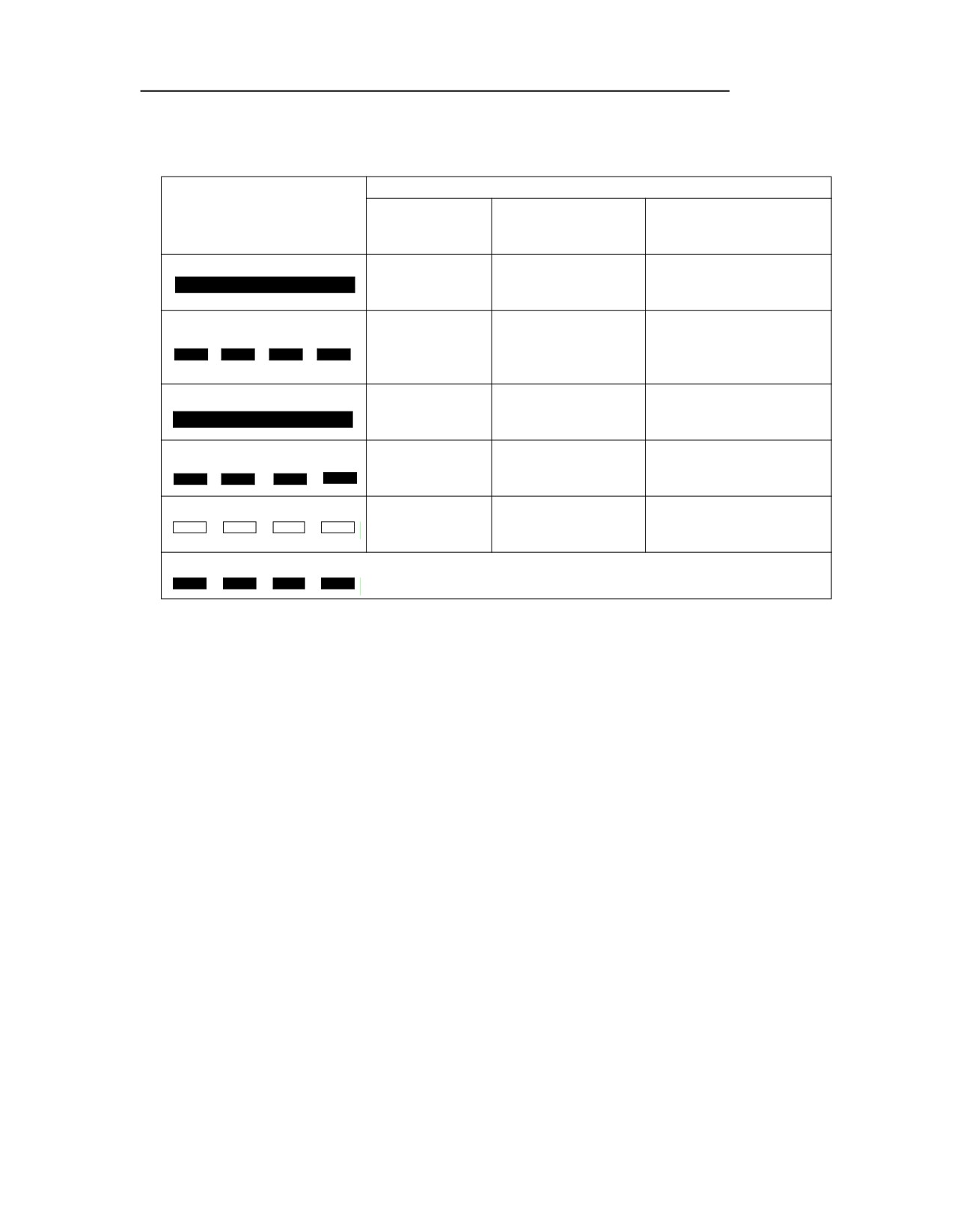
• A light signal system is a system of light codes
(no vocal
communications) that a tower uses to signal vehicles and aircraft on
an airfield (see Figure 7-1).
• An airfield-flag method is used when vehicles do not have warning
lights but may be equipped with high-visibility flags so that aircraft
can see them on an airfield. The base operations will issue the flags to
vehicle operators once they receive clearance to be on an airfield.
7-2 Aircraft Crash/Rescue Fire-Fighting Operations
FM 5-415
Meaning
Movement of
Color and
Aircraft on
Vehicles, Equipment,
Type of Signal
the Ground
Aircraft in Flight
and Personnel
Steady green
Cleared for
Cleared to land
Cleared to cross, proceed,
takeoff
go
Flashing green
Cleared to taxi
Return for landing (to
Not applicable
be followed by steady
green at the proper
time)
Steady red
Stop
Give way to other
Stop
aircraft and continue
circling
Flashing red
Taxi clear of
Airport unsafe - do
Clear the taxiway/runway
landing area/
not land
runway in use
Flashing white
Return to
Not applicable
Return to starting point on
starting point on
airport
airport
Red and green
General warning signal - exercise extreme caution
Figure 7-1. Airfield light signal system
AIRCRAFT-ACCIDENT EMERGENCY TEAMS
7-9. Aircraft-accident response teams should be made up in three separate
groups. The following lists the personnel in each group:
• Group I
(personnel are required to participate in operations
immediately). This groups consists of firefighters and crash/rescue
and medical personnel.
• Group II (personnel are required to perform related support services
as circumstances may develop). This group consists of maintenance
and wrecker personnel, a provost marshal, MP or guard personnel,
photographic personnel, and an aviation safety officer.
• Group III (personnel are required to attend if their specific duty
performance is needed). This group consists of an installation or
airfield commander, an installation fire marshal, aircraft-accident
personnel, chaplains, investigation personnel, and public affairs
personnel.
7-10. An installation commander should contact EOD personnel for help in
identifying and rendering safe all explosive hazards associated with an
aircraft. Aircraft carrying explosive cargo will require an EOD response for
technical help and disposition of explosive hazards.
Aircraft Crash/Rescue Fire-Fighting Operations 7-3
FM 5-415
EMERGENCY RESPONSE
ON AN AIRFIELD
7-11. When a potential or an actual emergency occurs on an airfield, the
following emergency crews will respond accordingly:
Fire-Fighting and Rescue Crews
7-12. The duties and responsibilities for personnel in this group are listed
below:
• The crew member who receives the notification of an emergency will
immediately dispatch and advise all other crew members of the nature
of the emergency.
• Designated fire-fighting and rescue units on duty will respond
immediately. If an alert is for a potential emergency, fire-fighting
crews will align attending vehicles near the runway at predetermined
points for prompt action. Placement of the fire-fighting equipment
along a runway could be based on the nature of an aircraft emergency
and the type of aircraft involved. Crash/rescue aircraft may be started
and flown to standby positions.
• Vehicles will not proceed onto a runway without clearance from the
control tower. Taxiing aircraft will stop and will not proceed without
clearance from the tower.
• Fire crews will respond to the crash site immediately after an aircraft
impacts. They should approach the site cautiously, watching for
injured personnel and casualties.
• Crash crews will need grid maps to locate emergencies that occur off
an airfield. When necessary, the responding aircraft should locate the
crash site and then guide fire and rescue crews to it. When not
directing fire trucks, the aircraft will circle the crash site until
released by the on-scene fire official.
Medical Personnel and Ambulance Crews
7-13. The duties and responsibilities for personnel in this group are listed
below:
• The designated medical officer, ambulance crews, and emergency
room personnel will be alerted when notified of an impending or an
actual aircraft emergency.
• The designated medical officer and ambulance crews will respond to
an accident site unless the SFO has notified them that their services
are not required.
• Off-post/HN medical and ambulance services will be requested as
required.
7-4 Aircraft Crash/Rescue Fire-Fighting Operations
FM 5-415
Fire Chief orSFO
7-14. The fire chief or SFO will—
• Respond to the scene of the emergency immediately when notified.
• Assume direct command of the fire-fighting and rescue operations
when he arrives at the site.
• Determine if additional assistance from other on- or off-post
organizations is required.
Provost Marshal,MP, orGuard Personnel
7-15. The personnel in this group will—
• Proceed to the scene of an accident.
• Secure the scene from unauthorized entry of personnel.
• Prohibit smoking or open flames in the vicinity of an accident site.
• Establish traffic-control points into and out of an accident site.
• Establish guard posts to control the security of the perimeter of an
accident site.
Aviation Maintenance Officer
7-16. An aviation maintenance officer will assist the accident investigation
team as required.
Photographic Personnel
7-17. Photographic personnel will—
• Respond to an accident site and record as much physical evidence as
possible.
• Assist an accident investigation team, as required.
Aviation Safety Officer
7-18. An aviation safety officer will—
• Respond to an accident site.
• Ensure that the request reports are submitted.
• Ensure that an investigation is conducted according to AR 385-95.
Chaplains
7-19. The chaplains will respond to an accident scene, when requested, and
will provide services as required.
Public Affairs Officer
7-20. A public affairs officer will—
• Respond to an accident scene, when requested.
• Maintain liaison with the local news services.
• Issue news releases, as required.
Aircraft Crash/Rescue Fire-Fighting Operations 7-5
FM 5-415
OFF AN AIRFIELD
7-21. When a potential or an actual emergency occurs off an airfield,
personnel involved in the operation will follow the guidelines below:
• Predesignated emergency response crews, when notified, will respond
immediately after they are released from the tower.
• Any available aircraft in an area will be used to guide the emergency
equipment into an incident site. These aircraft will also provide any
advance information that they can about an incident site.
• Emergency equipment and personnel may have to be escorted through
the community where an incident has occurred.
• All duties will be the same as an on-an-airfield response except that
there will normally be more coordination with civilian authorities and
agencies.
• Some damage-control guidelines should be put into place if an incident
has occurred on private property.
• A larger security force may be needed because security at a site may
be harder to maintain.
• Pre-arranged assistance agreements with local fire departments,
medical-response facilities, and police agencies are important.
GRID MAPS
7-22. Each flight-operations office must have local-area grid maps. They
should be of suitable scale and cover at least a 15-nautical-mile radius center
on an airfield. Copies of the grid maps will be posted in each location where
emergency calls are received. Additional maps will be located in each
responding vehicle assigned to emergency crews. All supporting vehicles and
aircraft identified in the airfield fire-fighting and rescue plan will also have
grid maps.
7-23. All personnel assigned to the fire-fighting, rescue, and medical-support
elements will acquaint themselves, as part of the training program, with the
terrain surrounding an airfield. This includes becoming familiar with the
locations and bearing capacity of the roads, bridges, culverts, trails, and other
significant terrain features within a 15-nautical-mile area of the airfield.
Personnel will do this through map orientation and personal inspection.
7-24. When notified of an incident, personnel will be given the location or
section on the grid map. They will clearly identify the area and repeat the
information back to the dispatcher. Emergency personnel will then locate the
site on the grid map and respond. All personnel assigned to the emergency
crews will be proficient in reading and locating points on a grid map and in
being able to navigate to those points.
7-6 Aircraft Crash/Rescue Fire-Fighting Operations
FM 5-415
SCHEDULED AEROMEDICAL EVACUATION
7-25. At installations where fire-fighting crews and equipment are available,
fire crews will—
• Be notified of aeromedical evacuations in advance to permit
mobilization. At least one LB fire truck with crew will respond.
• Take a strategic position for rapid response in case of a landing or a
takeoff accident.
• Stand by in the immediate area of an aircraft when incapacitated
patients are onboard and during loading and unloading.
• Ensure that an aircraft is not fueled when patients are onboard except
when absolutely necessary.
• Be required to stand by during takeoff, landing, loading, and
unloading of patients and during refueling operations. Crew members
will position the fire trucks to provide maximum fire protection to
personnel and the aircraft.
• Follow an aircraft, during takeoff, to the run-up area and remain
there until it is airborne. A crash crew will remain on alert status
until an aircraft clears the traffic pattern.
• Follow an aircraft from the ramp to the parking area during landing.
The fire crews will position themselves to provide maximum coverage
of the rescue paths, personnel, and aircraft. Fire crews will remain on
standby until all patients have been loaded or unloaded.
SEARCH AND RESCUE OPERATIONS
7-26. Fire-fighting personnel might conduct search and rescue operations with
aviation personnel and assets. If they do, they will perform rescue and life-
saving procedures from an aircraft and/or with an aircrew.
EMERGENCY EVACUATION OF THE INJURED
7-27. Firefighters can assist in the emergency evacuation of the injured. (Such
a duty is not considered primary for them.) They are trained in basic life
support and first-responder-level medical care.
FARP OPERATIONS
7-28. Fire-fighting teams will support aviation units as required. Security will
be a primary concern when operating in a forward area; therefore, fuses will
be removed from the sirens and emergency lights. Fire-fighting crews will
subdue all highly visual areas on the truck with materials available. All
driving will be conducted under blackout conditions. Fire protection will be
limited to rescuing personnel in the event of a crash and suppressing fires of
mission-essential equipment and resources. When operating out of the
immediate area of the FARP, a security force must be provided.
Aircraft Crash/Rescue Fire-Fighting Operations 7-7
FM 5-415
HAZARDOUS MATERIALS
7-29. The following list describes some HAZMATs associated with aircraft:
•
Liquid and gaseous oxygen. Oxygen is a powerful oxidizer in the liquid
and gaseous states. It is colorless, odorless, and slightly heavier than
air. Liquid oxygen is pale blue and slightly denser than water.
•
Hydrazine. At room temperature, hydrazine is a clear, oily liquid with
an odor similar to ammonia. It is a health hazard in the liquid and
vapor forms. Hydrazine is combustible and explosive.
•
Beryllium. In a dust or powder form, beryllium is a silvery material
resembling aluminum powder.
•
Magnesium. Magnesium is a silvery metal that looks like aluminum
but is lighter in weight.
•
Depleted uranium. Depleted uranium is used as counterweights in
some aircraft. The weights are coated for protection.
•
Ammonia. Anhydrous ammonia is 99.5 percent (by weight) basic
ammonia (NH3) and is normally a pungent, colorless vapor.
•
Liquid hydrogen. Liquid hydrogen is a nontoxic, transparent,
colorless, and odorless liquid of low viscosity.
•
Nitrogen tetroxide. Nitrogen tetroxide fumes vary in color from light
orange to reddish brown to blue or green, at low temperatures.
•
Carbon-graphite composite fibers. Composite fibers are bonded
together for strength to form parts for aircraft. The majority of all
operational aircraft now in use contains composite fibers in varying
amounts and locations.
•
Sulfurhexaflouride gas
(SF-6). SF-6 is colorless, tasteless, and
nontoxic. It is heavier than air and is nonflammable and noncorrosive.
This gas reacts with water to form hydrofluoric acid.
•
FC-77. FC-77 is a nonreactive, noncorrosive, nonflammable inert
liquid. When heated above 572ºF or when electricity is passed through
the solution, some forms of nerve gas may evolve.
•
Triethylborine (TEB). TEB is used as a fuel additive to provide rapid
ignition of a nonhypergolic fuel or propellant. It is an extremely toxic
and volatile liquid with a sweet, pungent odor.
•
Lithium thionylchloride. This HAZMAT is a soft, silvery, highly
reactive metallic element that is used as a heat-transfer medium in
thermonuclear weapons and alloys.
AIRCRAFT PREFIRE PLANS
7-30. Aircraft prefire plans are located in Appendix B. All Army aircraft and
primary Air Force aircraft that support Army operations are listed. Additional
information can be located in Air Force Technical Order (TO) 00-105E-9 and
Soldier Training Plan (STP) 5-51M14-SM-TG.
7-8 Aircraft Crash/Rescue Fire-Fighting Operations
FM 5-415
TECHNIQUES AND PROCEDURES OF FIGHTING AIRCRAFT FIRES
7-31. AR 420-90 states that training will be conducted according to DODI
6055.6. All personnel conducting airfield fire-fighting duties shall be DOD
certified at the level of airport firefighter. Supplemental training will be
conducted from the STP 5-51M14-SM-TG and IFSTA Manual 206.
AIRCRAFT FIRE-FIGHTING AND CRASH/RESCUE
7-32. Rescuing aircraft crash victims takes precedence over all other
operations until no further life hazards are involved. After rescuing victims,
firefighters extinguish fires and limit further damage to an aircraft. Each
rescue situation is different, and the SFO has the authority to change
procedures and use all the equipment and resources available to complete a
rescue. All installations will create and enact prefire plans to handle crash
and rescue emergencies.
AIRCRAFT ENGINES
7-33. Fixed-wing aircraft will have an opposed-cylinder or turboprop, single-
or multiple-engine configuration. Helicopters will have a gas-turbine, single-
or multiple-engine configuration. A turboprop engine creates the same type of
thrust that a jet engine creates; therefore, do not approach the aircraft from
the rear or around the exhaust. Short circuits in the electrical systems and
broken fuel and oil lines are the main sources of fires in gas engines. During
start-up and shutdown of a gas engine, you should watch for fuel being
drained or pumped through the engine.
AIRCRAFT SYSTEMS
7-34. Many of the systems in an aircraft can be potential fire hazards.
Component systems in an aircraft include the following:
• Fuel.
• Installed fire extinguishing.
• Electrical.
• Hydraulic.
• Oxygen.
• Anti-icing.
• Canopy jettison.
• Seat ejection.
• Escape.
• Ordnance.
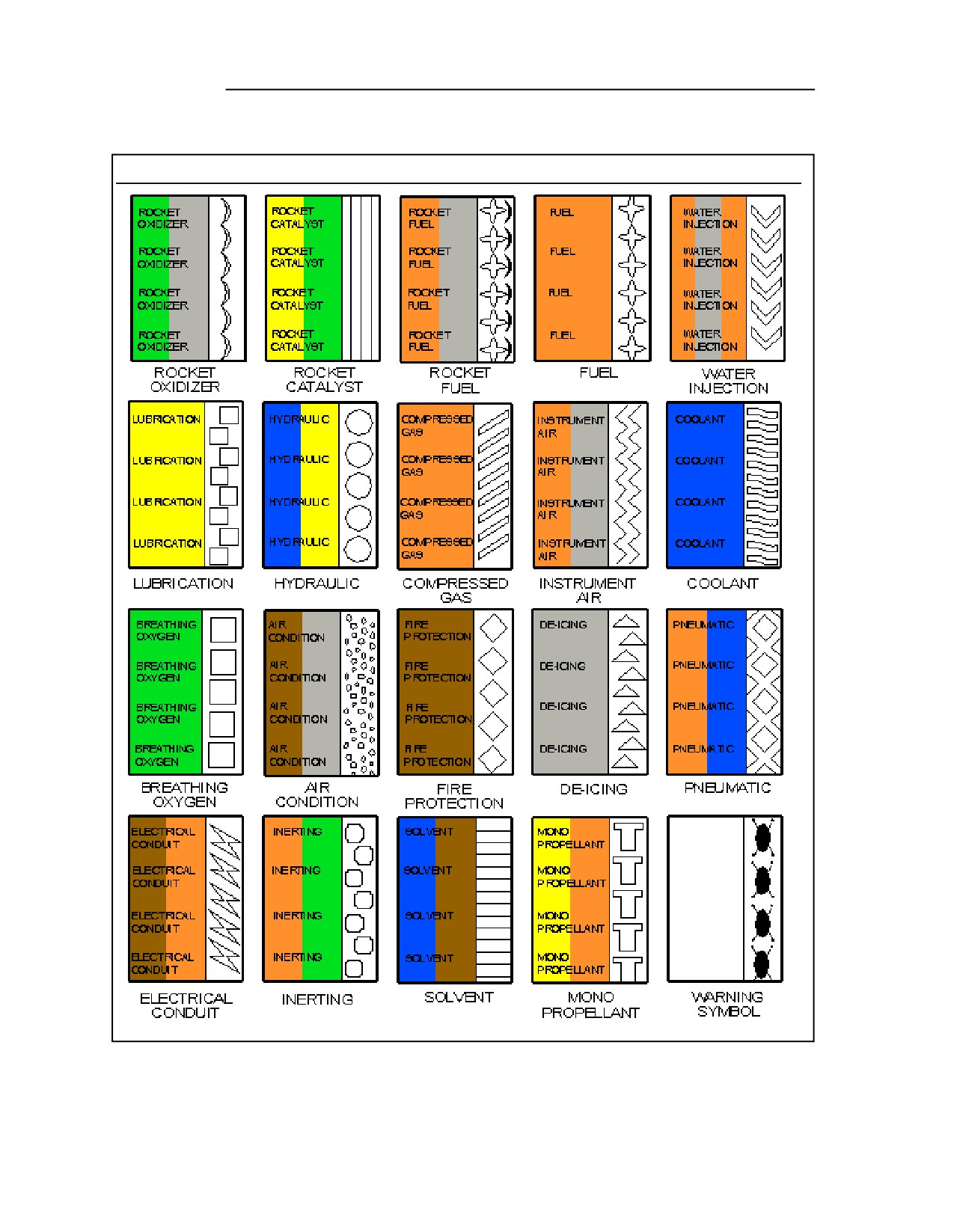
7-35. To prepare for aircraft accidents, firefighters must recognize all the
systems and potential hazards in an aircraft. Figure 7-2, page 7-10, shows the
color-code designations on the pipes for some of the aircraft systems. For
safety, firefighters should know the color codes before entering a damaged
aircraft.
Aircraft Crash/Rescue Fire-Fighting Operations 7-9
FM 5-415
Figure 7-2. Color symbols for extinguishers
7-10 Aircraft Crash/Rescue Fire-Fighting Operations
FM 5-415
FUEL
7-36. A fuel system stores and distributes fuel to the engines. Fuel tanks,
portable bladders, lines, control valves, pumps, and other components are
located throughout an aircraft. Newer aircraft are equipped with a
crashworthy fuel system that contains self-sealing tanks, breakaway valves,
and fuel vent lines. Although crashworthy, this system may still leak fuel.
When an aircraft crashes, the force of the impact can rupture fuel lines and
tanks. Sparks, electrical short circuits, static-electricity discharges, hot
surfaces, and hot exhaust gases are possible ignition sources.
7-37. Fuel tanks may be separate units installed between an aircraft’s
structural framework or built in as part of a wing. In fixed-wing aircraft, fuel
tanks are usually located in the wings and possibly in the fuselage. In most
helicopters, the fuel tanks are located in the fuselage. Some aircraft carry
auxiliary fuel tanks located under the wings or in the cargo area. Upon severe
impact, these tanks usually rupture and set the entire fuselage on fire. Fuel
lines in Army aircraft are quick-disconnect, self-sealing types. Some fuel
systems are pressurized to maintain a steady fuel flow. When these systems
develop leaks or broken lines, fuel may spray out and create a major fire
hazard.
INSTALLED FIRE EXTINGUISHING
7-38. Many aircraft are equipped with this extinguishing system. A pilot can
activate the system to extinguish fires throughout the aircraft. The system
consists of pressurized containers, tubing, nozzles, fusible devices, and
electrical or mechanical appliances for controlling the agent.
ELECTRICAL
7-39. This system supplies the current for all the electrical and avionics
equipment. The principal fire hazard is the electrical wiring short-circuiting
or arcing. In a crash, a large number of wires could be torn or damaged.
Moving the aircraft could produce sparks that ignite fuel vapors.
7-40. Batteries are usually located in the fuselage, wings, or engine nacelle.
Before an aircraft is moved after a crash or a fuel spill, disconnect and secure
the battery and the battery cable ends. Alkaline or nickel cadmium batteries
can overheat from internal shorting or thermal runaway. When a crash crew
detects an overheated battery, they should use the following guidelines:
• If flames are present, use available extinguishing agents.
• If flames are not present but smoke, fumes, or electrolytes are emitted
from the battery or vent, lower the battery temperature using a water
fog and ventilate.
• If flames, smoke, gases, or electrolytes are not emitted from the
battery or vent tubes, ventilate.
HYDRAULIC
7-41. This system consists of hydraulic-fluid reservoirs, pumps, various
appliances, and tubing. A pressure pump moves the hydraulic fluid through
the piping system. The hydraulic systems will remain pressurized even
though the engines have stopped. You must be cautious not to cut pressurized
Aircraft Crash/Rescue Fire-Fighting Operations 7-11
FM 5-415
hydraulic lines during rescue or fire operations. When a pressurized hydraulic
line ruptures or is cut, the fluid is released in a highly flammable fine mist.
When sprayed on the hot brakes, exhaust, or electrical components, the fluid
may ignite.
OXYGEN
7-42. Aircraft used for high-altitude operations have an extensive oxygen-
supply system for life support and propulsion. The oxygen is stored in a
gaseous or liquid state. Army aircraft use either a fixed or portable oxygen
system. Oxygen may be found in one or more containers located in the
fuselage. Aircraft equipped with high-altitude ejection seats will have small,
gaseous oxygen bottles as part of the survival kits. These bottles are for
emergency use when a crew member ejects at a high altitude or when the
normal oxygen system fails. You must recognize oxygen containers that have
been ripped from their locations by the impact of the crash. Leave the
containers where they are and cordon off the area until trained personnel
remove the containers.
7-43. Two hazards exist with the oxygen systems: explosion and the increased
availability of oxygen to support combustion. Oxygen intensifies fuel burning
as it is present. Danger of explosion is caused by the mixture of liquid oxygen
with flammable materials.
7-44. Another explosive situation occurs when the oxygen-storage tank or
liquid-oxygen (LOX) container is exposed to intense heat or severe impact.
LOX is light blue and transparent and has a boiling point of -297ºF. By itself,
it is not flammable, but it does contribute to the combustion of other
materials. When fighting fires involving LOX, cut off the fuel or oxygen
supply. Blanketing or smothering agents are ineffective against LOX.
ANTI-ICING
7-45. Anti-icing fluids are usually an 85 percent alcohol, 15 percent glycerin
mixture; however, some systems will use a 100 percent alcohol mixture. The
location and size of the tanks containing anti-icing fluids vary with aircraft
type. Separate tanks are provided for alcohol and alcohol-glycerin mixtures.
Single-engine aircraft and helicopters usually carry 3 to 4 gallons; larger
aircraft may carry from 6 to 40 gallons of anti-icing fluids. Although anti-icing
fluids are not considered great fire hazards, their presence must be considered
because of the alcohol in the system.
ORDNANCE AND AIRCRAFT
7-46. Ordnance in or on aircraft (small-arms ammunition, missiles, rockets,
flares, or bombs) can be cargo or armament. You must identify aircraft
carrying ordnance to prevent injuries during fire-fighting and rescue
operations. Cargo of hazardous munitions and armament are classified by
their reaction characteristics. See Chapter 11 for more information on fighting
7-12 Aircraft Crash/Rescue Fire-Fighting Operations
FM 5-415
HAZMAT fires. Ordnance materials are stored in various areas on aircraft.
The following lists some general locations for specific aircraft types:
• Under the wings and inside or along the fuselage in a fighter.
• In the forward or aft fuselage in a cargo plane.
• Under the wings and in the bomb bay in a bomber.
• Under the wings and in the nose in a helicopter.
SPECIAL HAZARDS
7-47. Crash-rescue personnel have no problem categorizing rockets, missiles,
bombs, and cannons as explosive hazards. However, there are other hazards
which are explosive and can be just as lethal as any bomb or rocket. These are
aircraft ejection seats, canopy jettisons, and explosive canopies. Almost all Air
Force fighters have canopy jettisons and/or ejection seats. The Army’s OV-1
Mohawk has a Martin-Baker ejection seat. The AH-64 Apache and AH-1
Cobra helicopters have explosive charges built into the canopies. The aircrew
or rescue crew can activate the charge. Both of these hazards require
firefighters to become very familiar with procedures to disarm them or place
them on safety. Sometimes the situation is out of a rescue crew’s hands. They
may be subject to dangerous fragments when a pilot detonates the canopy or
the force of a crash jettisons a seat. See TO 00-105E-9 for more information on
how to handle these devices safely.
DANGER
Use extreme caution when approaching
aircraft known to have special hazards!
FLAMMABLE MATERIALS IN AIRCRAFT
7-48. The following materials carried in aircraft can cause problems for
firefighters:
• Aviation gasoline (AVGAS), jet fuel, and hypergolic fuel mixtures.
• Hydraulic fluids.
• Bottled gas (oxygen).
• Anti-icing fluids.
• Pyrotechnics, ammunition, and other ordnance.
• Metals (magnesium), which were discussed above.
AVIATION GASOLINE
7-49. The flash point of AVGAS is about -49ºF. It will give off enough vapors
in any weather condition to form an ignitable mixture in the air, near the
surface of the liquid. The vapor flammability limits in the air are between 1
and 7 percent, so very small amounts of AVGAS can form sufficient vapors to
carry the flame away from the initial ignition. AVGAS flames will spread
between 700 and 800 fpm. Autoignition occurs between 825 and 960ºF.
Aircraft Crash/Rescue Fire-Fighting Operations 7-13
FM 5-415
JET FUELS
7-50. The two most common jet fuels firefighters encounter at an aircraft
incident are Jet A and Jet B. Both can represent a significant hazard to the
crash survivors and the firefighters. Firefighters need to know the
characteristics of each fuel and the best way to extinguish a fire that results
from either fuel and prevent reignition once the fire is out.
Jet A Fuel
7-51. This is a kerosene-grade fuel with a flash point between 45 and 95ºF,
depending on the mixture. Jet A fuel will mix with air above the flash point
and become flammable when the fuel-to-air mixture is just under 1 percent.
The upper flammability limit is just over 5 percent. Autoignition
temperatures range from 440 to 475ºF with a flame-spread rate of less than
100 fpm. Jet A fuels do not spread as rapidly as gasoline. Jet petroleum (JP) 5
is a Jet A fuel used in some military aircraft.
Jet B Fuel
7-52. This fuel is a blend of gasoline and kerosene with a flash point at -10ºF.
JP4 is a Jet B fuel used in military aircraft. Flammable limits range from 1
percent to just over 7 percent. The lower limit of 1 percent makes any fuel
potentially dangerous when spilled. Autoignition temperatures range between
470 and 480ºF. The flame-spread rate of Jet B fuels is 700 to 800 fpm. At
higher temperatures, the flame-spread rate across any jet fuel is increased.
HYPERGOLIC FUEL MIXTURES
7-53. These fuels are mixtures of specific fuels and oxidizers used as
propellants in some missiles and rockets. Hypergolic fuels are stored
separately and ignite when they come in contact with each other, without an
ignition source. Mixtures of fuels and oxidizers that do not react or ignite
when combined are called anergols or are anergolic mixtures. The reaction
time of hypergolic mixtures varies according to substance and temperature.
However, in cold weather, combustion may be delayed until enough fuel and
oxidizer accumulate in the firing chamber.
7-54. Other compounds, such as triethylaluminum (TEA) or TEB, react when
air or oxygen is introduced. These chemicals are termed pyrophorics and must
be maintained under an inert atmosphere. TEA and TEB are used as missile
igniters. You must wear special protective clothing and use SCBA when fires
involve oxidizers and fuels. Health hazards resulting from such fires include
poisoning, frostbite, and chemical burns.
FUEL CHARACTERISTICS
7-55. Upon impact, aircraft fuel tanks may fail, creating fuel mists. The fuels
readily ignite under aircraft impact conditions. Under these conditions, fuel
mist is as equally flammable as fuel vapors. A constant threat of reignition
(flashback) in fires involving large amounts of AVGAS or jet fuels exists. You
must be aware of flashback possibilities.
7-14 Aircraft Crash/Rescue Fire-Fighting Operations
FM 5-415
AIRCRAFT INCIDENTS
7-56. Aircraft frequently develop minor difficulties while in flight. Even
though appropriate action is taken on board to correct the problem, a standby
fire crew is required on the airfield when the aircraft arrives. Other types of
emergency situations that fire crews deal with are discussed below:
WHEEL, BRAKE, ANDTIRE FIRES
7-57. These problems occur in fixed-wing aircraft. Wheels and brakes are
compounds of combustible metals. Fire crews must know the procedures for
suppressing fires consisting of these metals. During a fire, pressure builds in
the tires. Fire crews should approach tires from the front or back, never from
the side.
WHEELS-UP LANDINGS
7-58. These landings result from hydraulic-system failure or pilot error. This
type of emergency may or may not produce a fire. Extreme heat from the
friction between the aircraft and the ground and the ruptured fuel tanks and
the lines could produce a fire.
WATER CRASHES
7-59. Fuel floating around an aircraft could come in contact with hot engine
parts and ignite, making rescue of personnel difficult. Trapped air may keep
the aircraft afloat, so any attempt to enter it should be made from under the
waterline.
NOSE-DIVE CRASHES
7-60. The impact from a nose-dive crash is so disastrous that there is usually
not much chance for rescue operations.
BUILDING CRASHES
7-61. These crashes present several problems:
• Fire spreads rapidly due to excessive fuel leakage over a wide area.
• Rescue operations involve the aircraft and the building.
• The area around the building should be searched and evacuated.
• Fuel could enter storm drains, and the fuel vapors could surface in
other areas, creating other hazards.
HILLSIDE CRASHES
7-62. With these crashes, the aircraft could disintegrate or, if it hits obstruc-
tions, cartwheel and cause structural components to break away. Also, aircraft
personnel may be thrown from the wreckage. Reaching these crashes is the
main problem for rescue personnel.
HELICOPTER CRASHES
7-63. Helicopters are of light construction and will usually break up in a
crash. The rotor system, undercarriage, and tail will disintegrate, leaving the
cabin or fuselage. Fuel leaks are the main concern. Most of the helicopter's
Aircraft Crash/Rescue Fire-Fighting Operations 7-15
FM 5-415
controls are cable systems, and in a crash, these cables could entangle the
crew and occupants.
NO-FIRE CRASHES
7-64. With these crashes, fuel spills or leaks are present but have not ignited.
You should wear protective clothing, and all nonessential personnel should
clear the area. As soon as possible, fire crews should apply a foam blanket,
stop leaks, and secure or remove the ignition sources from the area.
RESPONSE PROCEDURES TO AN AIRCRAFT EMERGENCY
7-65. Responding crews must approach a crash scene cautiously. Aircraft
personnel may have been thrown clear or escaped from the aircraft. When
responding to an aircraft emergency, fire and rescue crews should consider—
• The best route to the scene.
• Alerting the support agencies.
• The terrain.
• The weather.
• The type of aircraft.
• The weapons or armament on board.
• The presence of HAZMATs.
• The type of crash.
• The obstacles at the scene.
FIRE-TRUCK POSITIONS
7-66. The SFO at the crash scene decides where to position fire trucks. The
normal pattern is for turrets to cover the escape and rescue paths and for
hand lines to cover the secondary paths. If the aircraft is carrying armament
or has explosive jettison-type canopies, the SFO must be careful and cautious
when deciding where to position the fire apparatus. When only one truck
responds, the crew chief decides where to position the vehicle.
INITIAL ATTACK
7-67. The most effective method of quick attack is a mass application of
extinguishing agents through large-volume turrets, with minimum use of
hand lines. The priority in the initial attack is to open and secure rescue and
escape paths and to keep any spilled fuel from igniting during rescue
operations. When available, two rescue personnel will be at each entry point.
They should enter and exit through paths maintained by the turrets and hand
lines.
RESCUE ENTRANCES
7-68. The quickest way into an aircraft is through normal entrances. When
this is not possible, rescue personnel will use emergency entrances or make
cut-in entrances. Figure 7-3 shows aircraft access entrances.
7-16 Aircraft Crash/Rescue Fire-Fighting Operations
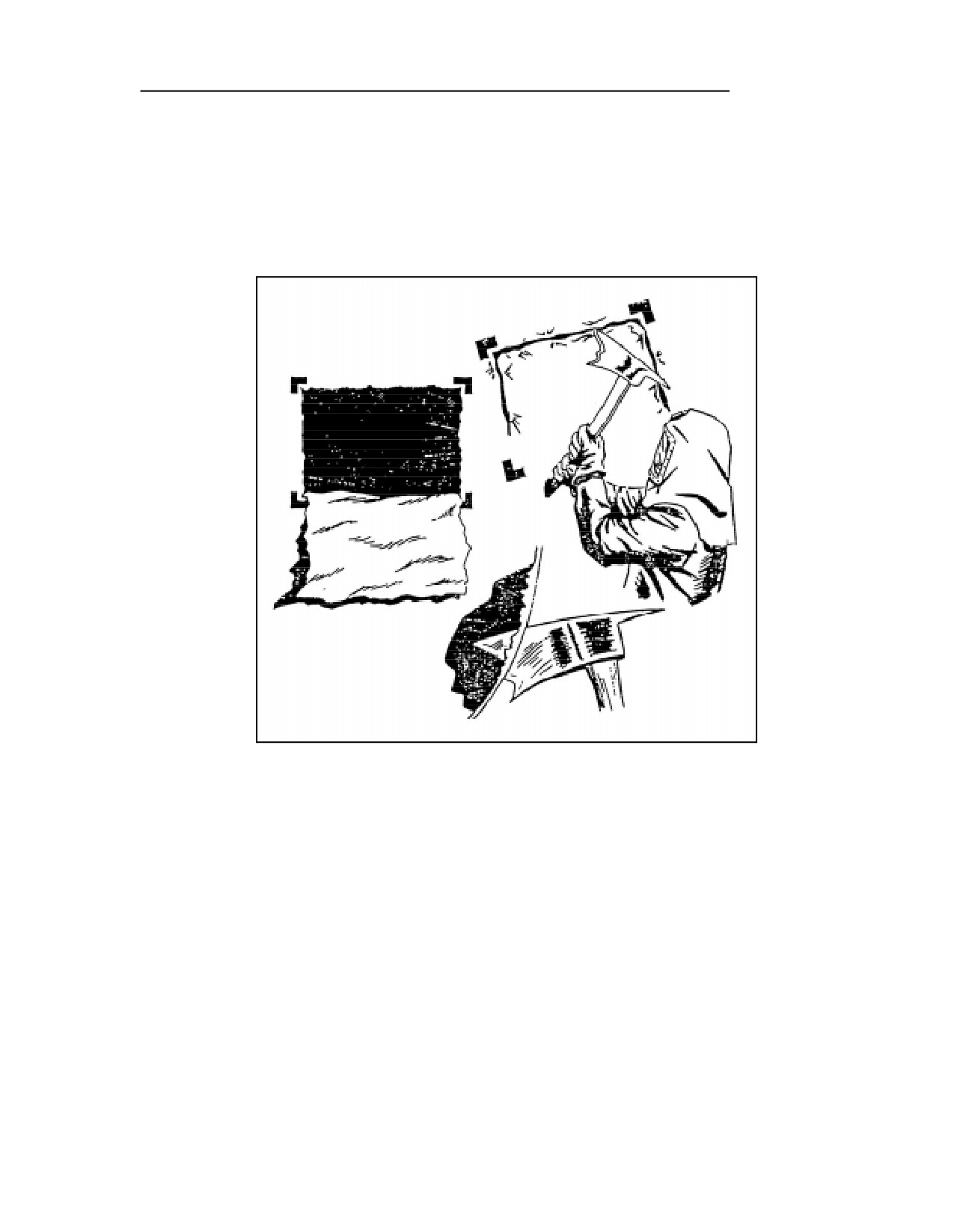
FM 5-415
Standard
7-69. Door configurations vary with aircraft type. Entrances may be located
on either side or both sides of the fuselage. Aircraft door hinges are on the
forward side and open outwardly. The opposite side of the door contains the
latch mechanism. On most aircraft, the emergency-release mechanism is on
the hinge side.
Areas which may be cut without
severing wires or tubing are
marked yellow or black or both.
Cut three
sides and
peel down.
Serrations prevent an ax
blade from going entirely
through the skin of a plane;
jamming occurs.
Figure 7-3. Aircraft access
Emergency
7-70. Some aircraft have escape hatches or escape panels made of
thermoplastic polymer or metal. The hatches usually have an external release
handle with the location and operating procedures marked on the adjacent
surface of the fuselage. If the handle is inoperable or inaccessible, rescue
personnel can use a crash ax and drive the pointed edge through the escape
hatch or panel, close to the corner or edge. They will continue to use this
procedure to knock out a section large enough for a swift entry.
Cut-In
7-71. Cut-in areas are indicated by broken yellow lines. These areas should be
free of obstacles so that rescue personnel will not cut through heavy structural
members or rupture fuel, electrical, or oxygen lines. Rescue personnel should
cut fuselage skin carefully to prevent igniting fuel vapors. They will cut along
three sides of the yellow lines and use the bottom as a hinge to pull the section
outwardly (see Figure 7-4, page 7-18).
Aircraft Crash/Rescue Fire-Fighting Operations 7-17