TAGS MULTI-SERVICE TACTICS, TECHNIQUES, AND PROCEDURES FOR THE THEATER AIR-GROUND SYSTEM (DECEMBER 2003) - page 3
is to provide liaison to air command and control agencies external to the MAGTF. As with
amphibious operations, consideration must be given to host nation airspace and air defense
networks.
c. MAGTF Employment. The MAGTF is a task-organized fighting force. The task
organization of the MAGTF is driven by the assigned or implied mission(s) for the MAGTF.
As such, its organization will vary from operation to operation. When considering the
organization of the MAGTF’s ACE, the MAGTF commander must weigh the MAGTF’s air
command and control needs against available joint force assets and joint force interface
requirements.
d. MACCS. The MACCS provides the MAGTF commander with the ability to plan and
direct air operations within the MARFOR area of operations. The MACCS must plan to
support MAGTF operations through the execution of the six functions of Marine aviation.
Categories of MACCS planning include, but are not limited to, airspace control; airspace
and air defense control measures; air control procedures; air direction; and communications
connectivity with higher, adjacent, and subordinate air command and control agencies.
5. Command and Control
a. MACCS. The MACCS provides the ACE commander with the means to command,
coordinate, and control air operations. The Marine air control group (MACG) provides the
personnel and equipment to staff, operate, and maintain principal MACCS agencies. The
MACCS provides a robust air command and control capability, which is fully capable of
conducting air support, air defense, and airspace management functions within the
framework of joint and multinational operations. The MACCS task organizes its
organization and capabilities to meet the MAGTF’s air command and control needs. It
varies in size from small air support elements (ASEs) and Marine air traffic control
detachment mobile teams (MMT) typically deployed with a MEU to a fully functional
MACCS used in MEF-level operations. The principal command and control agencies of the
MACCS are the tactical air control center (TACC)/tactical air direction center (TADC);
sector air defense center (SADC); tactical air operations center (TAOC); direct air support
center (DASC); Marine air traffic control detachment (MATCD); low altitude air defense
battalion (LAAD); Marine wing communications squadron (MWCS); and the terminal
control agencies (for direct air support).
(1) TACC. The TACC is the senior MACCS agency and the one MACCS agency that
exercises command. It serves as the ACE commander's operational command post. The
TACC provides the facility from which the ACE commander and the battlestaff plan,
supervise, coordinate, and execute all current and future MAGTF air operations. The
battle staff is divided into two sections: a future operations section and a current operations
section.
(a) The future operations section is responsible for drafting, revising, and
disseminating the MAGTF ATO. The future operations section of a joint ATO provides the
JFC with information concerning MAGTF direct support sorties, sorties in excess of
MAGTF direct support needs, or request for air support beyond the ACE’s ability to provide
for inclusion into the joint air tasking cycle/order.
(b) The current operations section is responsible for the execution of the ATO,
including both MAGTF and joint aviation assets in support of the MAGTF. Using the
principle of centralized command and decentralized control, the TACC's current operations
V-7
section supervises subordinate MACCS agencies and activities in the subordinate MACCS
agencies’ execution of the ATO. The TACC provides the MAGTF’s aviation arm with
critical guidance, direction, and supervision regarding the employment and execution of the
six functions of Marine aviation. In turn, the TACC integrates Marine aviation's six
functions into the MAGTF scheme of maneuver through its linkage with the MEF’s force
fires coordination center (FFCC) or the MAGTF’s combat operations center (COC). The
TACC also provides the functional interface and coordination for employment of MAGTF
aviation in joint/multinational and naval expeditionary operations. In joint/multinational
operations, the TACC is often referred to as the Marine TACC to avoid confusion with the
Navy tactical air control center (Navy TACC) or the USAF tanker airlift control center
(TACC). The TACC can interface with other air command and control agencies via tactical
digital information links (TADILs) A, B, and J, and North Atlantic Treaty Organization
(NATO) Link 1. All links are handled by the joint interface coordination officer (JICO).
(2) TADC. The TADC is task organized to perform all or most of the TACC’s tasks.
It is employed in a subordinate role to a senior air C2 agency, most notably during
expeditionary operations where the Marine TADC is subordinate to the Navy TACC before
the transfer of control ashore (see Chapter IV, paragraph 6). When the MAGTF assumes
control of all air operations within an amphibious objective area, the TADC becomes the
TACC. A TADC site subordinate to a Marine TACC may also be established within a
MAGTF’s area of operations to provide the ACE commander with an additional capability
to coordinate support for a specific area or time.
(3) SADC. The SADC serves as an extension of the TACC and focuses on air defense
planning and management of air defense resources within its sector. The SADC operates
from the sector air defense facility (SADF), a system of workstations with various software
applications including, but not limited to: commander’s tactical terminal (CTT), theater
battle management core system (TBMCS) intelligence operations workstation (IOW), and
others. The SADF is usually collocated with the TAOC, but does not have to be. This is
due to the SADF's reliance on the TAOC's database. Air situation information and
communications capabilities are provided to the SADF by the TAOC via interfaces with the
TAOC’s digital data and communications buses. The SADC will manage one or more
TAOCs within its sector.
(4) TAOC. The TAOC is the MACCS's principal air defense agency that conducts
airspace control and management. It provides real-time surveillance of assigned airspace,
positive control, and navigational assistance for friendly aircraft. It performs real-time
direction and control of air defense operations involving aircraft and surface-to-air
weapons. By collecting and displaying information from its own sensors, other MAGTF
sources, and external sources (other Services and nations), the TAOC controls assigned
airspace and directs and controls the fires of assigned air defense assets. The TAOC’s
primary air surveillance radar, the AN/TPS-59(V)3, can provide theater ballistic missile
cueing directly to theater ballistic missile defense units when directly attached to the TAOC
or as a Theater Missile Defense Detachment (TMD Det). The TAOC can perform limited
functions as an alternate TADC/TACC current operations section for limited periods if the
need arises. The TAOC can deploy from within itself an early warning/control (EW/C) site
from its main site to improve early warning, fill gaps in surveillance coverage, and enhance
weapons control and coordination. The TAOC and EW/C can provide data link interfaces
via TADILs A, B, C (one or two way) and J, ATDL-1, and NATO Link 1.
V-8
(a) EW/C have no set standards but are task organized and must contain at
least one radar and one Tactical Air Operations Module.
(b) A TMD detachment provides the AADC an enhanced surveillance picture
and is normally comprised of an AN/TPS 59(V)3 radar to cue TBM active defense shooters.
It also contains an air defense communications platform (ADCP) to pass information via
TADIL J or Point to Point Data Link (PPDL) to those shooters.
(5) DASC. The DASC is the principal MACCS agency responsible for the control
and direction of air operations directly supporting ground forces. It functions in a
decentralized mode of operations but is directly supervised by the TACC. Normally the
first major air control agency ashore, it lands with the GCE’s senior FSCC.
(a) The DASC, which is normally collocated with the GCE’s senior FSCC,
processes and coordinates requests for immediate air support and procedurally controls
aircraft transiting its AOR. It coordinates air missions requiring integration with ground
forces, including CAS, assault support, and designated air reconnaissance missions. The
DASC uses procedural control to route direct air support and assault support aircraft
through its designated AOR.
(b) The DASC, like all Marine units, will task organize and tailor its response
to the mission. Its air support liaison teams (ASLTs) are used to maintain liaison between
the DASC and the GCE’s senior FSCC, especially in cases where the DASC cannot be
physically collocated with the FSCC. The ASE operates primarily with the FSCC and
TACPs to assist in the control of direct air support aircraft, normally during MEU-level
operations. An airborne DASC may be employed to extend communication capabilities or to
provide DASC functions when the ground DASC is not operable because of the need to
displace or as a result of battle damage or equipment degradation.
(6) MATCD. MATCDs provide all-weather air traffic control services to forward
operating bases. They are task organized based on volume and type of air traffic, expected
duration of deployment, and external support availability. They are capable of performing
initial, transition, and sustainment phases of air traffic control as defined in MCRP 3-25A.
They have a control tower, surveillance and precision radars, and navigational aid
capabilities. Surveillance radars allow MATCD personnel to provide aircraft navigational
and separation services and early warning and detection information to other MACCS
agencies. Each MATCD can provide all-weather air traffic control services at one forward
operating base; the MATCD fields a MATCD mobile team (MMT) capable of providing air
traffic control services from temporary landing zones or fields. The MATCD ties its air
surveillance picture into the MAGTF’s integrated air defense system (IADS) through a
TADIL-B data link.
(7) Low-Altitude Air Defense (LAAD) Battalion. LAAD provides close-in, low-
altitude, surface-to-air weapons fires in defense of the MAGTF, forward combat areas,
maneuver forces, vital areas, installations, and/or units engaged in special or independent
operations. LAAD can be in direct or general support of each of the above. They usually
receive control and surveillance from the TAOC via ATDL-1 translated into ground based
data link (GBDL), but can generate their own organic picture from their tactical defense
alert radar (TDAR).
V-9
(a) Base Defense Zones (BDZ). The Marine Corps typically establishes BDZs
around airfields with a MATCD and LAAD firing units. BDZs have three main
requirements.
• First, they must have a weapons system.
• Second, they must have a radar.
• Lastly, there must be a controlling agency.
(b) MWCS. The MWCS installs, operates, and maintains expeditionary
communications for the ACE of a MAGTF, including the phased deployment of task-
organized elements. It does this by providing the connectivity backbone that links the
MACCS together and to other higher and adjacent agencies. Its headquarters element
usually resides with the TACC and can provide TRC, MUX, and single channel support.
(8) Terminal Control Agencies. Terminal control agencies perform air control
functions. That is, they manage the final delivery of ordnance, cargo, or personnel and
accomplish other specialized tasks not performed by other air controllers. Some terminal
control agencies are not organic to the ACE but integrated into the MACCS through
communications, doctrine, and procedures.
(a) TACP. A TACP plays an integral role in the MACCS but is responsible to
the supported commander for employment and coordination of assigned supporting aircraft.
TACPs, organic to the GCE, establish and maintain liaison and communications between
parent units, airspace control agencies, and supporting aircraft. A TACP participates in
fire support coordination and advises the ground unit commander concerning the
employment of supporting aircraft.
(b) FAC. The FAC controls aircraft in support of ground troops from a forward
ground position. This control aids target identification and greatly reduces the potential for
fratricide.
(c) FAC(A). The FAC(A) is a specifically trained and qualified aviation officer
who exercises control from the air of aircraft engaged in CAS of ground troops. The FAC(A)
is normally an airborne extension of the TACP.
(d) TAC(A). The TAC(A) is an experienced naval aviator operating from an
aircraft who coordinates the action of combat aircraft engaged in close support of ground or
sea forces. The TAC(A) is an airborne extension of the DASC and/or TACC. TAC(A)
assignment depends on mission requirements and aircraft availability. All TAC(A)s
provide airspace coordination and coordinate the employment of aircraft with other
supporting arms. To fulfill these responsibilities, the TAC(A) coordinates with the assault
support coordinator (airborne) (ASC(A)), TACPs, FSCC/SACC, subordinate TAC(A)s, and
artillery and NSFS units. The TAC(A) requires in-depth knowledge of the MACCS airspace
management, fire support coordination, and fixed- and rotary-wing operations and
capabilities. A TAC(A) conducts air reconnaissance/surveillance and provides terminal
control of OAS missions and artillery and NSFS spotting. TAC(A)s are an airborne
extension of the TACP and can provide radio relay for ground TACs as well as BDA. Navy
TAC(A) aircrew train routinely with Army and Marine Corps attack helicopters in JAAT
operations.
(e) Assault Support Coordinator (Airborne) ASC(A). The ACE commander
provides an ASC(A) to provide air coordination and control during helicopter operations.
V-10
The ASC(A) serves as an extension of the DASC in support of the air mission commander.
An ASC(A) provides information concerning enemy operations and weather along approach
and retirement routes and in landing zones (LZs), route alterations, and supporting arms
employment. The ASC(A) coordinates with TAC(A)s for employment of CAS. The DASC
establishes support relationships between the ASC(A) and the TAC(A). ASC(A)s and
TAC(A)s require the same type of in-depth knowledge and experience.
(f) Helicopter Support Team (HST). The HST task organizes and equips to
establish and operate helicopter pickup zones and/or LZs. The supported helicopter-borne
force and supporting helicopter unit provide personnel and equipment to establish a HST.
Normally employed in each pickup zone/LZ, the HST assists in the pickup, movement, and
landing of helicopter-borne forces, equipment, and supplies and in evacuation of casualties
and enemy prisoners of war.
(g) Fire Support Coordination System. The fire support coordination system is
the means by which the MAGTF commander focuses all fire support elements, including
air, to accomplish the mission.
• Roles. Each MAGTF element plays a part in fire support coordination.
• CE. The MAGTF CE implements the MAGTF commander's intent, focused
on the deep operation. The MAGTF’s fire support coordination center (FSCC) plans and
coordinates fire support for deep operations, tasking elements to attack targets of MAGTF
interest, establishing the FSCL, coordinating with joint/allied forces, and disseminating
information. At the MEF level, these functions are carried out within the combat
operations center and the force fires coordination center (FFCC) under cognizance of the G-
3. Within other MAGTF CEs (SPMAGTF, MEU, and so forth), these functions are carried
out in the COC under the cognizance of the operations officer.
• GCE. The size of the MAGTF involved largely determines the role of the
GCE in fire support coordination. Higher echelons of command have greater capacity to
conduct planning due to their larger staffs. Regardless of its size, the GCE has critical fire
support functions. The GCE provides pertinent information, such as the location of friendly
artillery units, fire support coordination measures, and enemy antiaircraft weapons, to
other elements of the MAGTF directly or to the MAGTF CE for further dissemination, as
required.
• ACE. The ACE provides the MAGTF air support. In addition to the
Marine Corps aviation functions described above, the ACE disseminates target data, status
of requested air support, and locations of friendly surface-to-air weapons to other elements
of the MAGTF or to the MAGTF CE for further dissemination. The ACE receives targeting
information, target guidance, and the fire support plan from the MAGTF. It also conducts
detailed aviation planning to support the MAGTF commander's concept of operations,
recommends objectives and target priorities to the MAGTF commander, and develops
requirements for SEAD.
• CSSE. The CSSE commander is normally assigned responsibility for rear
operations. Since no formal supporting arms coordination agency exists within the CSSE’s
rear area operations center (RAOC), the CSSE may be augmented with fire support
representatives. These ad hoc FSCCs perform their tasks through coordination with the
MAGTF FSCC and the GCE FSCC for fire support requests. As the battlefield extends, the
RAOC may have to interface with the TACC.
V-11
• FSCC. FSCCs provide cohesion to the fire support process. An FSCC is a
single location where communication facilities and personnel incident to the coordination of
all forms of fire support are centralized. FSCCs are established at MAGTF level and at
each GCE echelon down to battalion level. Under the staff cognizance of the G-3/S3, the
fire support coordinator (FSC) organizes and supervises the FSCC, which is collocated with
the COC. Normally, each FSCC will have an artillery liaison element, a TACP, an NSFS
element, and other liaison/operating fire support teams as required. Higher-level FSCCs
generally have a target intelligence element. The headquarters to which the FSCC belongs
provides facilities, equipment, and materiel. Supporting arms units provide
representatives and equipment necessary for conducting coordination, targeting, and
communications functions for their respective arms.
b. MAGTF Fire Support.
(1) The MAGTF FSCC
(a) Conducts targeting functions to meet the MAGTF commander's intent and
may form a targeting committee. In joint operations, targeting is conducted in conjunction
with the JFC’s targeting effort.
(b) Represents MAGTF at the JTF fire support meetings/conferences or JTCB
and arranges for fire support liaison to other Services as required.
(c) Disseminates pertinent information to other elements of the MAGTF and to
forces outside the MAGTF.
(d) Performs those functions required to coordinate/integrate supporting arms.
(e) Establishes reporting requirements, fire support coordination measures
(including the FSCL), and procedures.
(f) Resolves fire support conflicts between other MAGTF elements when they
cannot be resolved at lower levels.
(g) Provides inputs on the allocation of aviation and NSFS efforts.
(h) Requests and coordinates external fire support or target acquisition support
with higher, adjacent, and joint/allied forces.
(i) Coordinates with the GCE’s senior FSCC, MACCS, and the rear area
operations center (RAOC) to achieve air-ground integration. In amphibious operations
involving naval (that is, MAGTF and Navy) forces, the MAGTF FSCC is the landing force
FSCC and provides the landing force representation to the CATF's supporting arms
coordination center (SACC).
(2) MAGTF Air Officer (AO). Although not a part of the MAGTF FSCC, the MAGTF
AO has several fire support duties. These include providing expertise and advice on
aviation matters to the MAGTF commander and the FSCC; establishing liaison with the
ACE, GCE air officer, and the air officers of higher and adjacent headquarters on aviation
support and airspace management matters; determining MAGTF air support capabilities;
preparing an aviation estimate of supportability; consolidating air support requirements;
and preparing the air fire plan in the MAGTF operations order. In amphibious operations,
the MAGTF air officer operates landing force stations in the SACC, works closely with the
supporting arms coordinator, and maintains liaison with the air support controller (ASC) in
the Navy TACC.
V-12
(3) MAGTF Target Information Officer (TIO). A member of the MAGTF FSCC
normally performs the functions of TIO, which is needed on the MAGTF CE. When
designated, the TIO heads the target information section (TIS) of the FSCC and, in
amphibious operations, serves as the landing force TIO. The TIO uses information
provided by the target intelligence officer (TGTINTELO), a member of the G-2 section, to
perform targeting functions. During operations ashore, the MAGTF CE supports the GCE
targeting effort and ACE mission planning by rapidly responding to their requests for
target data.
c. GCE Fire Support.
(1) The GCE FSCC. The GCE’s FSCC plans and integrates fire support within the
GCE’s area of influence. The FSCC conducts targeting; plans and coordinates the delivery
of its organic fire support and the delivery of fire support provided by other means, such as
NSFS, air, or EW; and integrates fires with maneuver in close operations. The FSCC
coordinates with the other elements of the MAGTF and with adjacent external forces on fire
support matters.
(2) The Targeting Committee. Because numerous and complex factors must be
considered in the targeting process, the GCE commander needs advice from experts in
several areas. The establishment and use of a targeting committee brings these specialists
together as a matter of standard procedure.
(3) The TIS. The TIS serves as the primary source of target information in the
FSCC. It is oriented to the tactical support requirements of the command and the target
information requirements of the FSCC for planning fires. Specific functions of the TIS
include maintaining target data and target/situation maps; maintaining current target
lists, including countermortar, counterbattery, and SEAD information; publishing target
bulletins; consolidating, evaluating, and displaying target information, along with
recommending target classification and attack priorities to the FSC; collecting information
pertaining to the results of attack on targets; and coordinating with the MAGTF
TGTINTELO and artillery unit S2.
(4) The FSCC/DASC. The DASC collocates with the GCE’s senior FSCC. In cases
where the DASC cannot physically collocate with the FSCC, an air support liaison team
from the DASC is typically used in the FSCC to facilitate information exchange and
coordination between the DASC and FSCC. The FSCC/DASC organization is capable of
planning and integrating supporting arms within the GCE’s area of influence. The FSCC
and the DASC require extensive information exchange.
(a) The FSCC provides the DASC with the commander's objectives and intent,
friendly unit locations, positions of indirect fire weapons, scheme of maneuver, boundaries,
fire support coordination measures, maneuver checkpoints, and the schedule of fires. The
DASC also receives pertinent intelligence data, particularly data regarding antiair threats,
air targets requiring terminal control that exceeds the GCE's organic TACP capability, and
the status of terminal controllers within the GCE.
(b) The DASC provides the FSCC with aircraft to perform missions, aircraft
routing plans, status of outstanding requests, changes to the ATO, UAV operations,
MACCS operational status, and forward arming and refueling point status. The DASC also
provides intelligence data (via IOW), including BDA and air defense warning conditions, to
V-13
the FSCC. Finally, the DASC also makes recommendations on air allocations and fire
support control measures.
d. Division Fire Support.
(1) Division FSCC. The Marine Corps division may, in large-scale operations, be
used as an operational headquarters and perform the role of the GCE, or it may be used as
a sub-element of the GCE. When used as such, the division FSCC has a key role in
targeting due to its much greater capability to collect and analyze target information.
Division FSCC supporting arms representatives identify requirements, make estimates,
and recommend the allocation of fire support means within the division. The commanding
officer of the artillery regiment is the FSCC (division artillery officer is the division FSC)
and is supported by the fire support coordination section, which provides liaison to division
forces for artillery control and coordination. This section coordinates all supporting arms to
support the scheme of maneuver or defensive plan.
(2) TIS. The TIS is normally formed upon activation of the FSCC during the initial
planning phase. Its duties include target acquisition, dissemination of data, and attack
recommendation and evaluation. The TIS is supervised by the TIO under the staff
cognizance of the FSC and works closely with the TGTINTELO from the division G2
section.
(3) Division TACP. In the division TACP, one of the officers is a FAC-qualified
naval aviator/flight officer. Additionally, there is an air support control officer. The
division TACP is primarily concerned with executing air support and—
(a) Establishing and maintaining liaison and communications with appropriate
control agencies.
(b) Informing and advising the ground unit commander on employment of
aviation support, including antiair warfare and low-altitude air defense (LAAD).
(c) Preparing, forwarding, and coordinating air requests.
(d) Providing air support estimates.
(e) Prioritizing and resolving duplication and conflicting air support requests.
(f) Disseminating target information received through air support channels.
(g) Recommending fire support coordination measures as they relate to air
support.
(h) Maintaining an air situation map.
(4) Naval Gunfire Section. The naval gunfire section establishes and maintains
facilities for liaison and communications between supported units and appropriate control
agencies. The section informs and advises the ground commander on the employment of
NSFS, requests and controls NSFS, and controls radar beacon teams.
(5) Division Air Section. The division air section in the G-3 consists of the division
air officer, assistant air officer, and two air controllers. The air section is not a part of the
division TACP or the FSCC but works closely with both. The division air section—
(a) Advises the division commander and commanders of elements not having
TACPs on matters concerning air support.
V-14
(b) Participates in development of operation plans and orders on matters
pertaining to air employment.
(c) Participates with the FSC in targeting and determining type of support.
(d) Prioritizes and resolves conflicts in air support requests.
(e) Prepares, forwards, and coordinates air support requests.
(f) Relays pertinent information to other tactical air control agencies.
(g) Maintains close liaison with the DASC to assist in coordination of air
support.
e. Regimental Fires Support. The regimental FSCC plays a key role in planning and
using fire support. They assist the battalions in coordinating and granting clearances for
fires delivered in the regiment's zone of action beyond the battalion's zone. They also
coordinate ingress and egress routes for CAS missions when aircraft routes run through the
zone of action of units adjacent to the unit requesting the mission. Fire support planning at
the regiment attempts to influence future operations, normally 24 to 48 hours in advance of
the current battle, and is significantly larger in scope than at battalion level. The regiment
is normally the lowest level where commanders are allotted means to influence the battle
significantly with fire support. The regimental commander selects as the FSC an officer
having the requisite knowledge of fire support, usually the direct support artillery battalion
liaison officer. Organization of the FSCC is similar to battalions, except that no forward
observers or TACs are assigned.
f. Battalion Fire Support. Most fire support coordination in operations is done at
battalion level. In battalion FSCCs, calls for fire and air requests from the companies are
monitored/received and acted upon by appropriate supporting arms representatives.
Requests are checked to ensure that supporting arms are integrated with the scheme of
maneuver and that friendly forces are not needlessly endangered. The battalion FSC is the
weapons company commander. A liaison section from a supporting artillery battery, an
organic battalion TACP, a shore fire control party from the headquarters battery of the
supporting artillery battalion, and a mortar liaison party from the battalion mortar platoon
provide assistance. The senior air officer of the TACP acts in several capacities: as a special
staff officer to the battalion commander in regard to all aviation matters, as the officer in
charge of the battalion TACP, and as the air representative in the battalion FSCC.
Separate battalions operating as maneuver elements establish an FSCC that functions in
the same manner as an equivalent-level infantry unit FSCC.
g. Company Fire Support. A company does not have an FSCC, as such. The company
commander, assisted by the artillery forward observer, mortar forward observer, and, if
assigned, a TAC and NSFS spotter, performs the fire support coordination necessary at
company level. Coordination between companies is essential for effective battalion-level
fire support coordination. Such coordination reduces the frequency with which FSCC
personnel must intervene to cancel or modify requests for supporting arms and frees them
for tasks the companies cannot accomplish.
h. Liaisons. The MAGTF must ensure proper coordination and integration of Marine
forces with joint and multinational forces. Representation on joint staffs and within joint
agencies, to include liaison personnel, is essential to ensure proper employment of forces.
The ACE commander, in exercising authority to command, control, and coordinate MAGTF
V-15
air operations through the Marine TACC, should ensure joint staff/agency and liaison
representation to the joint force, the joint air operations center, and staffs of the joint force
air component commander, area air defense commander, and the ACA. The MARLO to the
JAOC is one example.
Example: Joint and multinational liaisons are extremely useful in enhancing
MAGTF support to other Services and nations. It is normally desirable to exchange
air command and control liaison personnel with multinational users of the ACE
and/or the MACCS. The exchange of liaisons greatly facilitates coordination and
control of aircraft and missiles within the MARFOR area of operations. Marine air
traffic control liaisons are examples of liaisons typically used in joint and
multinational operations.
6. Joint Force Functional Capabilities
The Marine TACC, equipped with TBMCS equipment and having access to the
communications systems necessary to coordinate and distribute the joint ATO, is capable of
hosting JAOC functions. The TACC’s ability to perform this function can be described as
an enabling or transitional capability. The TACC can host JAOC functions as the joint
force’s first principal air command and control system in theater with the intention of
passing JAOC functions to another air command and control agency as the tempo of air
operations increases. The TACC could also serve as a pass-through agency in situations
where JAOC functions are being passed from afloat to ashore or vice versa. As is the case
with all JAOCs, service liaisons and subject matter expert representatives that reflect the
makeup of the joint force are necessary to staff a TACC-hosted JAOC. Similar
considerations should be applied to the TACC when performing ACA or AADC functions.
A typical theater air defense organization includes an AADC whose duties include:
coordinating the employment of theater air defense systems to optimize joint force air
defense assets; building a seamless air defense architecture; recommending ROE to the
JFC on air defense matters; and developing the joint force’s air defense plan. Factors often
used to determine whether to subdivide the joint force’s air defense area into regions are:
the geography of the joint operations area (including size and terrain), number and
capabilities of air defense resources, and tempo of joint air operations. If air defense
regions are established, the AADC typically designates regional air defense commanders
(RADC) to oversee the implementation and supervise execution of the air defense plan. In
turn, the regions may be further subdivided into sectors, with each sector under the
supervision of a SADC responsible to an RADC. Like the AADC, RADC and SADC
functions are supervisory in nature. These individuals exercise oversight and direction of
all air defense operations within their assigned region/sector and coordinate air defense
operations between regions and sectors to ensure seamless air defense operations
throughout the joint operations area. Within the MACCS, the SADC or TAOC will provide
the JFC with the capabilities to function as a RADC or SADC. The TAOC provides the
SADF with the voice and data communications connectivity necessary to effect the
necessary interfaces to coordinate and supervise regional and sector air defense activities.
The considerations addressed for joint/allied representatives and liaisons for a Marine
JAOC apply equally to RADC and SADC functions.
V-16
7. Air Command and Control in Amphibious Operations
In situations where an amphibious objective area is established, a phased passage of air
command and control functions from afloat to ashore may occur. The phasing of the control
ashore process, where NTACS functions are incrementally phased to MACCS agencies as
they establish ashore, is discussed in detail in Appendix C.
8. Warfighting Doctrine
The Marine Corps' warfighting doctrine is based on rapid, flexible, and opportunistic
maneuvers. Maneuver forces seek to shatter the enemy's cohesion through a series of
rapid, violent, and unexpected actions. Marine Corps aviation operations support MAGTF
operations. The combined arms concept integrates various combat arms to maximize
combat power. This power presents the enemy with a no-win situation. To reduce
vulnerability to one arm of the combined power, the enemy must become vulnerable to
another. The organization employed to accomplish this is the MAGTF, with C2 of air-
ground tasks supplied by the MACCS and the fire support coordination system. The
Marine Corps' unique organization allows forces to operate as a TAGS within a TAGS.
V-17

Chapter VI
THEATER AIR-GROUND SYSTEM OPERATIONS
1. Background
The preceding chapters describe how the JFC organizes and controls the joint force and
how the various components contribute to the TAGS. This chapter describes how the TAGS
supports air-ground planning, targeting, tasking, execution, and combat assessment. It
concludes with a discussion of TAGS air defense operations.
2. Joint Force Commander Influence
The JFC influences the structure and the direction of TAGS in several ways, to include
designating a JFACC, ACA, and AADC, by assigning missions and apportioning forces.
a. The basic duties and responsibilities of the JFACC, ACA, and AADC remain the
same regardless of whether the MARFOR, NAVFOR, or AFFOR performs the function.
However, as explained in previous chapters, the MARFOR and NAVFOR JAOC capacity is
limited, and this has a direct bearing on the size of liaison elements. Table VI-1 indicates
functional equivalency (equivalent capacity not implied) of TAGS agencies across the
Services. This, along with information in Chapters 2-5, can be helpful in understanding
where and how assets interface with various JFACC options.
Table VI-1. Functional Equivalents of TAGS Elements
NAVY
MARINE
AIR FORCE
ARMY
TACC
AFAOC
ADC
TAOC
CRC
SADC
EW/C
CRC
CG/DDG
LAAM
ADA
SACC
FSCC
FSE
ASCS
DASC
ASOC
TACP
TACP
FIST
TAC(A)
TAC(A)
FO
AWACS
HAWKEYE
JSTARS
b. The JFC directs the weight of the joint air effort by providing guidance, objectives,
targeting priorities, joint target list (JTL) planning guidance, procedures, appropriate
command and movement control, joint fire support coordinating measures, ROE, and what
defines component direct support sorties. This guidance will also include the JFC’s
apportionment support.
c. Apportionment (air) is the determination and assignment of the total expected effort
by percentage and/or priority that should be devoted to the various air operations (for
example, strategic attack, air interdiction, counterair/antiair, maritime support, and CAS)
for a given period of time. Apportionment impacts all aspects of TAGS operations. The
JFACC, in consultation with other component commanders, is responsible for the air
apportionment recommendation to the JFC. Each component commander may be tasked to
support other components and/or to provide support to the joint force as a whole. The JFC’s
VI-1
guidance and objectives, with the accompanying apportionment decision, are disseminated
to all components.
3. Planning and Execution
Component C2 elements are combined to form the TAGS. Joint force components must
work together in planning and executing joint air operations that accomplish JFC-assigned
objectives, comply with JFC guidance, and satisfy various component commanders'
requirements. The challenge to personnel working within TAGS is to operate a system
responsive to all components and supported echelons to accomplish the JFC's campaign
objectives.
a. Figure VI-1 overlays varying methodologies affecting the TAGS and the conduct of
joint air operations. To be effective, the joint targeting process and the Joint ATO cycles
must be synchronized.
(1) Targeting is the process of selecting targets and matching the appropriate
response to them. The objective of the joint targeting process is to ensure an effective and
efficient joint attack against the enemy with all available assets maximized to achieve the
overall objective. Targeting is complicated by the requirement to deconflict duplicative
targeting by different forces or different echelons within the same force and to synchronize
the attack of those targets with other components of the joint force. The six steps of the
joint targeting process are depicted in Figure VI-1.
(2) Decide-Detect-Deliver-Assess (D3A). D3A is the targeting methodology used by
the Army and Marine Corps. D3A follows the same logic as the joint targeting process but
in four steps instead of six. The arrows surrounding the joint targeting process in Figure
VI-1 represent D3A.
(3) The joint ATO cycle and the joint targeting process are not synonymous. The
joint ATO cycle is used to provide efficient and effective employment of all joint air assets
for all air missions to include AI and CAS. Because AI and CAS are inextricably tied to the
joint targeting process, the ATO cycle and targeting processes must correlate. The six steps
of the joint ATO cycle are also shown in Figure VI-1.
b. Each component is involved in this methodology. Components determine support
requirements and make sorties not needed by the service component available to the JFC
for tasking by the JFACC. In addition to generating air support requirements, all
components participate in operational planning and mission execution. The JFACC
performs a key role in this process as the functional component commander responsible for
planning, coordinating, deconflicting, and directing joint air operations.
VI-2
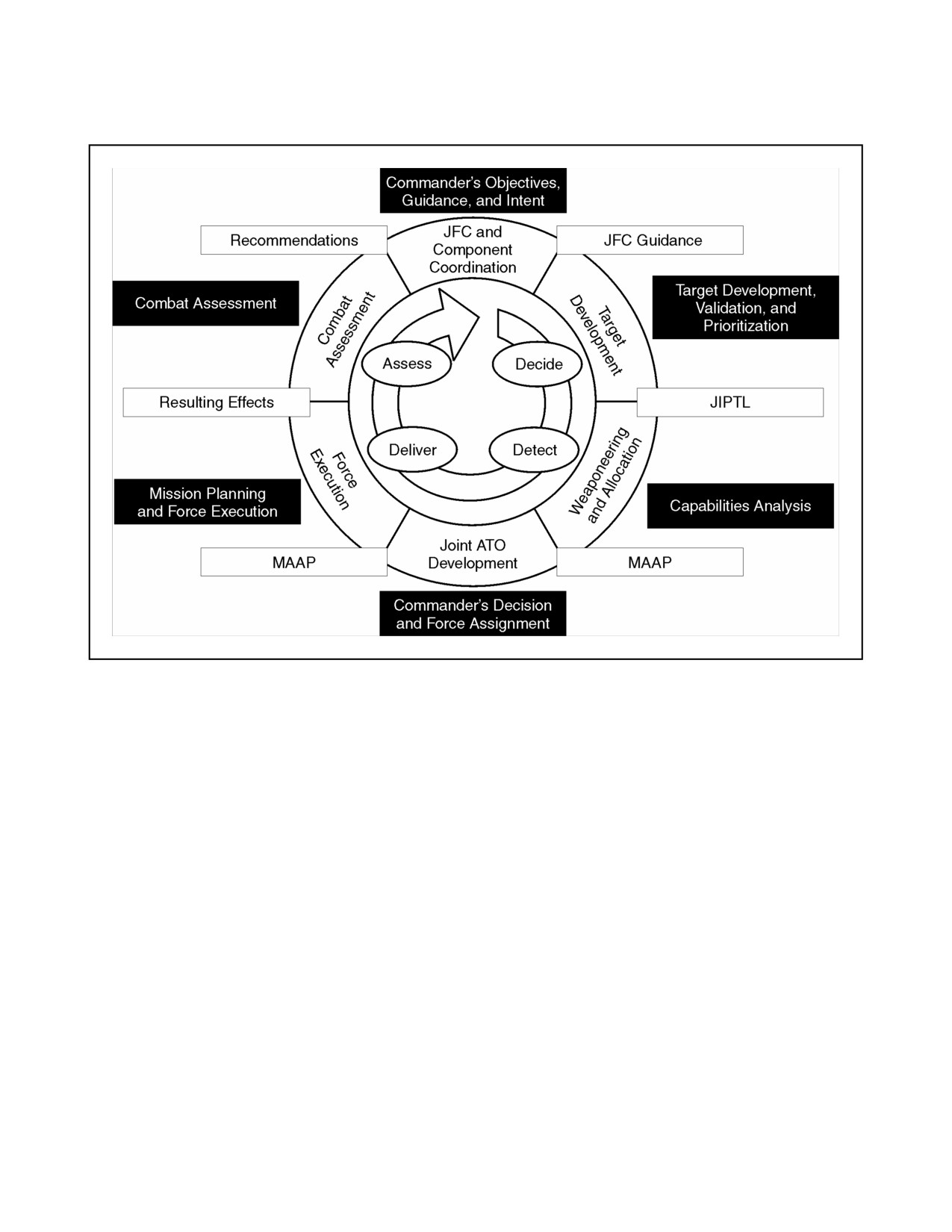
Figure VI-1. ATO Cycle Overlaid on Targeting Cycles
4. Component Considerations
The following considerations pertain to the JFC's determination of sorties available for
joint tasking:
a. Army Considerations. Rotary-wing aircraft have unique characteristics that often
make it difficult to integrate them into an ATO. They can conduct multiple takeoffs and
landings in a single fuel load and often shut down on the ground for a period of time before
resuming their mission. They are critical to the execution and success of the land
commander’s operations and often provide the decisive edge during fluid, volatile, and
changing situations. It is important to integrate all Army aviation missions into the TAGS
and ATO processes for situational awareness, when possible.
b. Maritime Component Considerations. When an amphibious operations area (AOA)
is established, the CATF maintains overall authority for operations within the AOA and
exercises command authority over the entire amphibious force (AF). The CATF will
consolidate Marine Corps air requests within ATF resources and will internally obtain
Navy air support from the supporting CVBG. The CVBG will inform the CATF if there is a
problem in supporting the CATF’s requirements. The CATF will then submit the
unfulfilled air support requirements to the JFACC. Once control is passed ashore, the
VI-3
MAGTF/commander will request air support in excess of the MAGTF’s direct air support
capabilities from the JFACC, as required.
c. Air Force Component Considerations. All Air Force component assets, with the
exception of intertheater airlift assets, will normally be available for JFC/JFACC tasking.
Intratheater airlift will remain an Air Force component responsibility and will be requested
through the Joint Movement Center (JMC) and tasked through the COMAFFOR. The
AFAOC and AME will coordinate planned airlift operations with the JFACC/ACA/AADC.
Initial CSAR is currently a service responsibility. The JFACC will coordinate with the joint
search and rescue center (JSRC) and component rescue coordination center as appropriate
for the conduct of CSAR air operations.
d. SOF Considerations. Normally, all SOF operations are planned, controlled, and
executed by the JSOTF. SOF will not normally be tasked to conduct joint air operations.
However, because SOF operate deep, planners must consider the ongoing and future
operations of all components to take advantage of operational synergies. All sorties flown
by SOF should appear on the ATO for deconfliction and coordination purposes.
5. ATO Cycle
A joint ATO cycle provides for the effective and efficient employment of available joint
air capabilities/forces. The cycle (Figure VI-2) provides a repetitive process for planning,
coordinating, allocating, tasking, and assessing joint air missions/sorties within the
guidance of the JFC. The cycle accommodates changing tactical situations or JFC guidance
as well as requests for support from other component commanders. The joint ATO cycle is
an analytical, systematic process that matches available capabilities/forces with missions to
achieve operational objectives. The joint ATO cycle begins with the JFC’s air
apportionment process and culminates with the combat assessment of previous
missions/sorties.
a. While an ATO itself covers a specific period, the ATO planning process is
continuous. At any given time, an air operations center and liaison elements will be
working with several ATOs: assessing previous days’ operations, executing the current
day’s operation; planning for tomorrow's operation; and forecasting, coordinating, and
planning the follow-on days’ operations. The long-range planners, working on the third day
out, develop apportionment and targeting recommendations for the JFC. Figure VI-2
depicts how the ATO cycles overlap. The fact that three or more ATOs may be in different
stages of development at any given time means communications pertaining to the ATO
must be precise. The timing of the JFC’s apportionment decision and ATO cycle allows the
supported component commander to inform subordinates of their respective priorities for
the air effort. The ATO phases are: JFC/Component Coordination, Target Development,
Weaponeering/Allocation, ATO Production, Force Execution, and Combat Assessment (JP
3-30).
VI-4
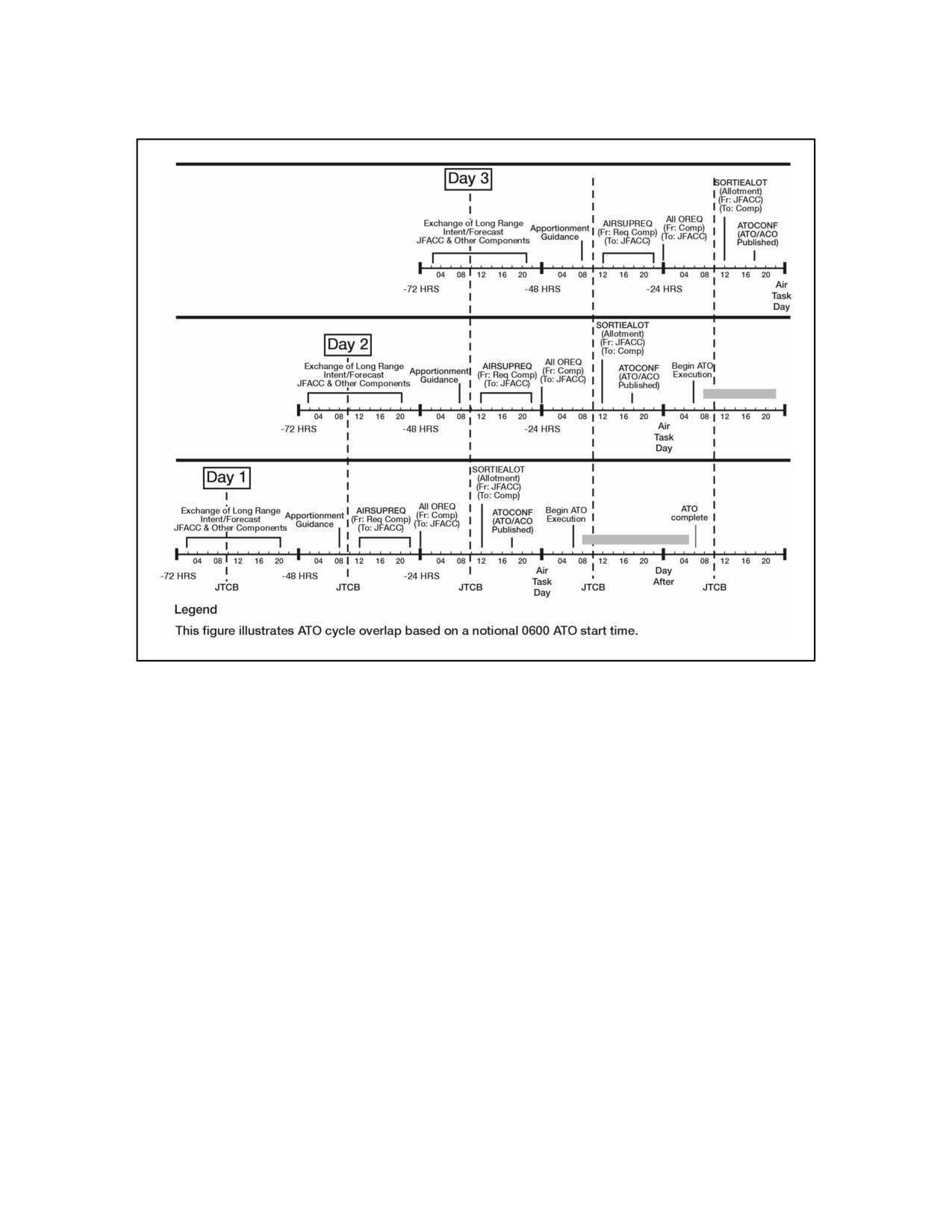
Figure VI-2. ATO Notional Timeline
b. JFC/Component Coordination. The JFC/component coordination phase starts with
receipt of the JFC’s guidance and objectives that are normally received 36-48 hours before
the beginning of the air tasking day. The JFC normally informs the components of his
apportionment decision through a guidance and intentions message. Based on the daily air
operations directive (AOD), the units respond with allocation request messages
(ALLOREQs) to tell the JFACC just what they will be able to support.
c. Target Development. Target Development produces a draft prioritized list of
targets—the draft JIPTL—that supports the objectives and conforms to guidance. This is
normally accomplished by the Guidance, Apportionment, and Targeting (GAT) team. This
phase culminates when specific targets are approved and included in the joint ATO and
assigned to forces available for joint air operations. Components may use the Target
Information Report (TGTINFOREP) to nominate targets, submit post strike assessment
information, and report data changes to existing targets. Components also use this
message to recommend no-strike targets and to cancel or renew targets.
Supported
components of the joint force prepare preplanned target requests for the next air tasking
day with the air support request (AIRSUPREQ) message. These are transmitted to the air
operations center no later than 24 hours before the air tasking day (0600L) or earlier as
directed by theater OPLAN or by the JFC.
VI-5
d. Weaponeering /Allocation. Weaponeering/allocation involves quantifying the
expected results of lethal and nonlethal weapons employment against targets on the JIPTL.
This means detailing, on “weaponeering” worksheets, recommended aim points or desired
mean points of impact (DMPI), recommended number/type of aircraft and weapons, fusing,
target identification and description, target attack objectives, target area threats, and
probability of destruction. The final prioritized targets are then included in the MAAP.
The resulting MAAP is the plan of employment that forms the foundation of the joint ATO.
As additional information regarding the requested target becomes available, the requesting
component will forward the information to the tasked component. Requesters must be able
to differentiate between the terms “preplanned,” “immediate,” “scheduled” and “on-call.”
(1) The terms “preplanned” and “immediate” refer to the requests themselves.
Preplanned requests are those submitted in time to be published in the joint ATO.
Immediate requests fulfilling operational requirements are submitted too late to be
published in the daily joint ATO.
(2) Scheduled missions refer to those missions in the ATO with specific set targets,
time-on-target (TOT) or mission times, target descriptions, target coordinates, and weapons
standard conventional load (SCL) identifiers.
(3) On-call missions require the exact time and place to be coordinated as the battle
develops. On-call CAS or AI, for instance, allow the requesting commander to indicate a
time frame, probable target type, and place where the need for CAS or AI is most likely.
Aircraft are placed on an appropriate alert status (on the ground or airborne) and then
employed when requested by the supported unit. Aircraft used to fill immediate requests
normally come from on-call missions established for this purpose. Supported commanders
are advised to submit preplanned requests for on-call missions to ensure availability of
sufficient sorties with appropriate ordnance to respond to subordinate units’ immediate
requests.
(4) The allocation portion occurs following the JFC’s air apportionment decision.
The JFACC translates that decision into total numbers of sorties by aircraft or weapon type
available for each operation/task they support. The allocation process is not complete until
the Master Air Attack Plan (MAAP) is complete. The allocation process is accomplished
through exchange of allocation request (ALLOREQ) messages between components. These
messages address three areas:
(a) On the basis of the JFC’s air apportionment decision, internal
requirements, and AIRSUPREQ messages, each air capable component prepares an
allocation request (ALLOREQ) message for transmission to the JFACC/JFC staff (normally
not less than 24 hours prior to the air tasking day). ALLOREQ messages report the
number of sorties to be flown during the air tasking day by assigned mission and type of
aircraft.
(b) Sorties not needed by the service component and available to the JFC for
tasking by the JFACC.
(c) Requests for additional air support beyond the capability of the air
components.
(5) The JFACC reviews each service component's ALLOREQ message and transmits
a sortie allotment (SORTIEALOT) message for transmission 12-18 hours before the air
tasking day (1200L) or as prescribed by theater plans. This message informs all commands
VI-6
which mission requests will be fulfilled and which will be delayed during this cycle. The
SORTIEALOT message addresses three issues:
(a) Revisions to a service component's planned allocation of sorties due to
unforeseen joint force requirements.
(b) Approval/disapproval of component requests and allotment of other
components’ excess sorties to fill the approved air support requests or other requirements
for the joint force.
(Note: The sorties provided to the JFACC for tasking are considered
returned to the parent service component if the JFACC does not allot them in a
SORTIEALOT message.)
(c) Revisions to mission data for component requests such as a changed mission
priority or TOT which usually result from coordination between the components and the
JAOC staff.
(6) CAS Sortie Distribution. The JFACC allocates total numbers of sorties to a
given mission based on the JFC’s apportionment decision. Sorties assigned as CAS
missions are then provided to the LCC who makes the distribution decision. This is a
further subdivision of the allocation process in which sorties allocated to CAS are
distributed among the various ground combat units.
e. ATO Production. The joint ATO is used to monitor and assist in the execution of
missions, to monitor supporting missions and activities, to manage unforeseen problems
caused by the fog of war, and to respond to approved immediate support requests. The joint
ATO helps to focus the intelligence collection management process for theater and
component intelligence assets. It is valid for a specified effective period, normally a 24-hour
period (for example, 0600 local (L) hours to 0600L hours). The joint ATO conveys C2
instructions, coordination guidance, deconfliction instructions, and specific mission
information. Mission information includes primary and backup targets, TOT or alert
windows, refueling data, radio frequencies, and weapons load guidelines.
(1) ATO production is a complex process in which JFC and JFACC guidance,
including the air operations directive, target worksheets, the MAAP, and component
requirements are used to finalize the ATO/SPINS/ACO. Airspace control and air defense
instruction must be provided in sufficient detail to allow components to plan and execute all
missions listed in the ACO. Twelve hours before the air tasking day begins (1800L), the
JFACC transmits the entire plan for the tasked day's operation. This may be accomplished
using either an ATO/confirmation (ATOCONF) message or the request confirmation
message (REQCONF).
(2) The ACO, discussed in Appendix A, is often transmitted with an ATO. Daily
planning for air employment is a complex process involving land, sea, and air operations
personnel in the JAOC, ASOC, DASC, and other C2 facilities. (See Appendix A for
information on how to “break out” an ATO; see JP 3-30 for more information on ATO
development.)
f. Force Execution. The JFACC directs the execution and/or deconflicts all air
capabilities/forces made available for a given joint ATO. The JAOC must be responsive to
required changes during the execution of the joint ATO. In-flight reports and initial BDA
may cause a redirection of joint air capabilities/forces before launch or a redirection once
airborne. During execution, the JAOC is the central agency for revising the tasking of joint
air capabilities/forces and coordinating and deconflicting those changes with the
VI-7
appropriate control agencies or components. When a need arises that cannot be met with
assigned scheduled or on-call missions, supported commanders may make an immediate
request, which may be satisfied at the expense of other scheduled or on-call assets. Priority
is determined by the JFC's campaign plan and overall concept of operations. The JFACC
will notify the affected component commanders, as appropriate, in the event changes are
made to the planned joint air operations during execution.
g. Combat Assessment. CA is accomplished at all levels. The JFACC or JFC staff
continuously evaluates the results of joint air operations and provides the results to the
JFC for consolidation and overall evaluation of the campaign. These results provide the
inputs for process reinitiation through updated guidance from the JFC and JFACC,
subsequent target development, weaponeering/allocation, force execution, and CA until the
desired end state is achieved.
(1) Normally, the JTF’s J-2 directs the actual dissemination guidelines for all
reports. Whenever feasible, reports should be provided directly to the JFACC, JFC, and the
initial requester to assist in air operations planning. The introduction of reconnaissance
pod systems into the service component inventories and the retirement of dedicated
reconnaissance aircraft produce competition for the same airframes for CA missions or for
the delivery of ordnance. Changes to the joint ATO must be closely coordinated with
intelligence data collection to ensure that changes to targets and TOTs are incorporated
into the CA plan.
(2) CA collection requirements must be determined during target prioritization.
Component commanders should recommend priorities for the CA efforts and/or areas for
which they have responsibility. The CA effort should be a joint program designed to
determine if the required target effects are being achieved for each of the components,
consistent with the JFC’s overall concept. Mission results obtained through the multitude
of CA sources are analyzed and provide the JFC, JFACC, and other senior commanders
feedback on the success of the JFC’s campaign.
6. Defensive Counterair
a. Air defense includes all defensive measures designed to destroy attacking enemy
aircraft or missiles in the earth's envelope of atmosphere, or to nullify or reduce the effects
of such attack. The desired end state of an effective air defense effort is to allow friendly
forces freedom of action by gaining air superiority at the desired time and place of the
commander's choosing. An effective theater air defense system includes those resources
and procedures necessary to provide the JFC with the ability to detect, identify, and destroy
enemy air threats, whether by manned or unmanned aircraft or by theater missiles. Unity
of effort and the tenet of centralized control and decentralized execution are necessary to
meet this end. Air defense can be either passive or active in nature.
(1) Passive air defense provides individual and collective protection for friendly
forces and critical assets. Passive air defense is the responsibility of every commander in
the joint force. Elements of passive air defense include early warning; camouflage,
concealment, and deception; hardening; dispersion; reconstitution; and redundancy.
Passive air defense measures do not involve the employment of lethal weapons, but do
improve survivability.
(2) Active air defense is direct defensive action taken to destroy, nullify, or reduce
the effectiveness of hostile air and missile threats against friendly forces and assets.
VI-8
Integrated employment of air-to-air and surface-to-air weapon systems is necessary to
counter enemy attacks through coordinated detection, identification, assessment,
interception, and engagement of air and missile threats. A rapid, reliable, and secure
means of identification within the airspace control area is necessary to the survival of
friendly forces.
b. Command Relationships. The JFC uses air defense operations to protect friendly
forces from attack by manned/unmanned aircraft and missiles. The JFC will provide
guidance and objectives, including apportionment decisions; establish ROE; and designate
air defense priorities for the joint force.
(1) JFC Staff. Within the function of AAD, the joint force staff will assist the JFC by:
coordinating with the AADC (if designated) and joint force command, control,
communications, computers and intelligence (C4I) systems planning for the acquisition and
dissemination of defense warning information; deconflicting AAD with other operations;
providing logistical support for AAD; and preparing long-range plans for AAD.
(2) AADC. The JFC normally designates an AADC with the authority to plan,
coordinate, and integrate overall joint force DCA operations. Normally, the AADC is the
component commander with the preponderance of air defense capability and the command,
control, communications, computers, and intelligence (C4I) capability to plan, coordinate,
and execute integrated air defense operations. When a JFACC is designated, the JFACC
will normally be assigned to function as AADC since these two functions are interrelated.
The JFC will also define the support relationship between the AADC and supporting
commanders. Components will provide representatives, as appropriate, to the AADC’s
headquarters to provide specific weapon systems expertise as well as broader mission
expertise. The responsibilities of the JFACC, AADC, and ACA are interrelated and are
normally assigned to one individual, but they may be assigned to two or more individuals
when the situation dictates. Based on the situation, if the JFC decides not to assign the
JFACC, AADC, or ACA as one individual, then close coordination between all three
positions is essential.
(3) Component Commanders. Appropriate component commanders provide the
AADC with surface, air, and sea-based active air defense capabilities and forces to
implement the air defense plan. Component commanders generally retain OPCON of their
forces and capabilities and will employ them in accordance with the air defense plan and
the weapons control procedures and measures established by the AADC.
c. Air Defense Plan. The AADC, with the support and coordination of the service and
functional commanders, develops, integrates, and distributes a JFC-approved joint air
defense plan. The air defense plan integrates the active air defense capabilities of the joint
force's components to provide a responsive air defense system that will achieve both
operational and tactical objectives. The air defense plan reflects the priorities established
by the JFC. Because air defense and airspace control and management are inherently
related areas, the air defense plan and the airspace control plan should be developed in
tandem to avoid conflicts. Among the items addressed in the air defense plan are (this list
is not exhaustive):
(1) Sensor employment.
(2) Identification procedures.
(3) Engagement procedures.
VI-9
(4) Airspace control measures.
(5) Weapons control procedures.
(6) Weapons system employment.
(7) Tactical interface (for example, TADIL) design.
(8) Dissemination of early warning.
d. Air Defense Operations. The depth and breadth of AAD and the inherent ability for
air defense targets to cross component areas of operations make air defense operations a
joint endeavor. The AADC, in coordination with component commanders, recommends
establishment of air defense regions to the JFC. The number of regions and RADCs may
vary depending upon geographical, political, and operational factors such as friendly forces,
geography, threat, and the concept of operations. For example, the AADC may recommend
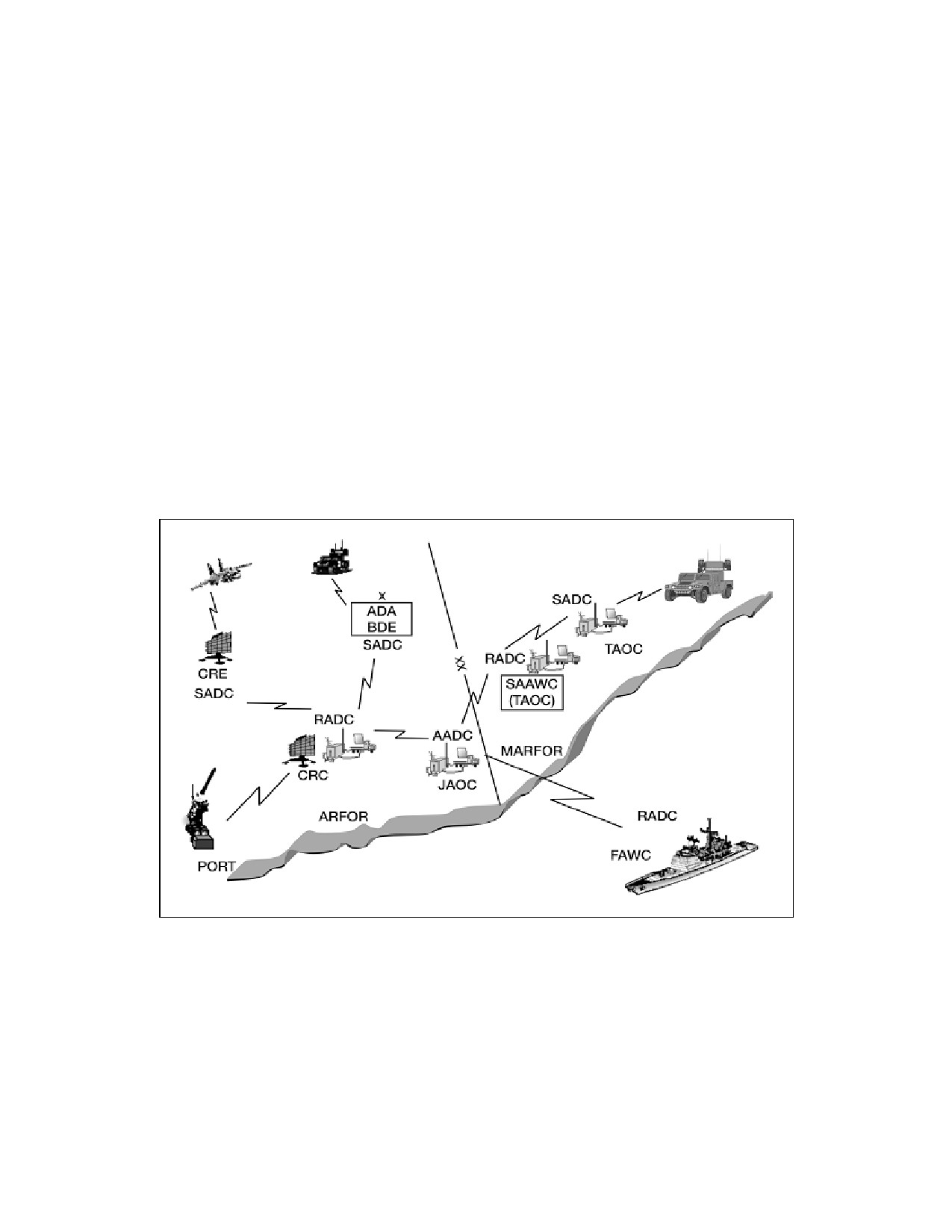
that an Aegis cruiser perform RADC duties for the maritime region of the joint operations
area. Air defense regions may be further subdivided into sectors, with sector air defense
commanders (SADCs) coordinating activities within their sector. See Figure VI-3 for an
example of region and sector air defense assignments.
Figure VI-3. Notional Area Air Defense Organization
(1) Tactical Operational Data. In conjunction with the air defense plan, the AADC
periodically publishes a tactical operational data (TACOPDAT) message to establish air
defense responsibilities in a tactical area or to provide supplementary air defense orders to
an AOR, to include air defense procedures. Among the information included in the
TACOPDAT are unit designations for RADCs and SADCs; methods of control; identification
VI-10
authority and procedures; and updates to fighter, missile, and/or joint engagement zones.
The latter procedures should be coordinated with the ACA and included in the ACO and
SPINS portions of the ATO.
(2) Execution.
(a) The AADC, RADC, and SADC have the ability to coordinate active air
defense operations at the lowest level necessary. The concept of the AADC delegating
authority to the RADC/SADC to execute operations promotes coordinated operations and
economy of force, while allowing decisions to be made at the lowest possible level. This
reduces the reaction time to threats and the likelihood of friendly losses.
(b) Based on the JFC's air defense priorities, and other factors including
available resources, the AADC builds an air defense plan designed to optimize the joint
force's air defense capabilities against enemy air attack. When employing the various
resources, the AADC considers factors such as the mutual support that support units
provide each other against the threat, and destruction in depth (the ability to engage the
enemy as far from its target as possible and to continue to engage the enemy threat with
various weapons until the target is destroyed). The JFACC allocates aircraft to perform
defensive counterair missions based on the JFC's apportionment decision. The AADC
typically allocates missions to each RADC to perform defensive counterair functions.
RADCs in turn distribute missions to subordinate SADCs, depending on expected threat
actions within their sector. SADCs may further distribute defensive counterair missions to
air defense control agencies within their sector. It is the responsibility of the controlling
agency to execute the air defense mission through the coordination, control, and integration
of aircraft and surface-to-air weapon systems under their direction.
(c) RADCs and SADCs coordinate air defense actions between regions and
sectors; evaluate the results of engagements within their sector or region and forward
observations and results of engagements to the AADC; request from the AADC or direct
(when authorized) changes to air defense alert and weapons release conditions
commensurate to the threat; and when required, request additional air defense assets from
the AADC. In turn, the AADC provides RADCs with guidance and direction for air defense
warning conditions, weapons release conditions, and changes to the ROE; and allocates
additional resources (as necessary) or requests additional airborne air defense coverage
from the JFACC.
(3) Common Operational Picture. Air defense actions, although designed to prevent
enemy air attacks on friendly forces, should also prevent fratricide. Many positive and
procedural methods exist to minimize the chances of friend-on-friend engagements
including airspace control measures; identification, friend or foe (IFF); and positive hostile
identification devices. A common frame of reference is an absolute necessity for air defense
units to integrate actions and minimize the chances of fratricide. The common frame of
reference is provided through two media: the air tasking order and the common operational
picture. The ATO provides all users with a plan for air operations, delineating IFF modes
and codes, routes of flight, and mission/target areas. The common operational picture
combines information from various sensors and reporting devices to build a comprehensive
air, ground, and sea picture of the battlespace. Air defense units contribute to the common
operational picture through the theater's data link architecture.
(4) A coordinated, comprehensive data link picture is necessary to minimize chances
of fratricide while enhancing early warning and engagement control and coordination. The
VI-11
AADC periodically publishes the Operational Tasking Data Links (OPTASKLINK) message
to establish relationships, configurations, coordination procedures, and other information
necessary to conduct data link operations.
7. Interdiction
a. The purpose of interdiction is to attack the enemy’s ability to fight primarily by
targeting their tactical and operational infrastructure. Appropriate interdiction targets
may include, but are not limited to, surface forces, C4I systems, installations and facilities,
transportation and supply systems, lines of communications (LOCs), and other vital
resources and infrastructure. The objectives of interdiction are diversion, disruption, delay,
and destruction of enemy surface military potential by either lethal or nonlethal means
before it can be used effectively against friendly forces.
b. AI operations are air operations conducted to destroy, neutralize, or delay the
enemy’s military potential before it can be brought to bear effectively against friendly
forces. AI generally occurs at such distance from friendly forces that detailed integration of
each air mission with the fire and movement of those forces is not required.
c. The JFC ultimately approves the integration of joint interdiction operations with
execution of other joint force operations. To ensure unity of command and effort throughout
a theater and/or JOA, the JFC normally delegates the planning and execution of theater-
and/or JOA-wide interdiction operations to the component commander with the
preponderance of interdiction assets within range and with the ability to control them. For
a more detailed discussion on interdiction operations see JP 3-03.
8. Conclusion
The preceding chapters and paragraphs have described the joint force, service
component, and functional component procedures and systems for air-ground operations.
The TAGS is not a formal system in itself but the sum of various component air-ground
systems. The TAGS enables the delivery of the maximum amount of combat power to the
desired place at the right time. To accomplish this, everyone working within the TAGS
must understand each component's capabilities, limitations, and contributions to the
overall system as well as competing and overlapping mission requirements. Everyone must
strive to make the TAGS work by knowing what is required to make the system work,
including system requirements and who to contact when coordination is necessary. This
document should assist TAGS practitioners in this process.
VI-12
Appendix A
JOINT AIRSPACE CONTROL PROCEDURES
1. Basic Airspace/Weapon Systems Control Principles
a. The airspace of the combat zone is a crucial dimension of the battlespace and is used
by all components of the joint and combined forces. A high concentration of friendly
surface, subsurface, and air-launched weapon systems must share airspace. The primary
goal of airspace control is to enhance air, land, maritime, and special operations force
effectiveness in accomplishing the JFC’s objectives.
b. Common combat zone airspace control procedures within the joint force AOR/JOA
enhance the effectiveness of air operations. These procedures need to allow maximum
flexibility through an effective mix of positive and procedural control measures. The control
structure needs to permit close coordination between air, land, maritime, and special
operations forces (SOF) and allow rapid concentration of combat power in a specific portion
of airspace in minimum time.
c. Procedural control needs to be uncomplicated and readily accessible to all aircrews,
air traffic controllers, air defense weapons controllers, and airspace controllers. Airspace
control procedures must prevent mutual interference from all users of the airspace,
facilitate air defense identification, and safely accommodate and expedite the flow of all air
traffic in the theater of operations.
2. Deconfliction of Joint Air Operations and Joint Weapon System Engagements
a. Close coordination is required to deconflict airspace use with regard to joint weapon
system engagements. All airspace control agencies involved in the area of joint fires should
work together as a network to deconflict airspace use and avoid fratricide. Effective
planning of joint fires is crucial to ensure that control agencies are informed of preplanned
joint fires. The joint targeting coordination board (JTCB) conducts a key step in planning
airspace deconfliction of joint fires. The JTCB approves the joint fires plan, ensuring that
all air operations are deconflicted. However, real-time coordination with airspace control
agencies and C2 nodes is often necessary in fluid situations to ensure deconfliction.
b. Airspace deconfliction methods range from positive control of all air assets in an
airspace control area to procedural control of all such assets, with any effective combination
of positive and procedural control measures between the two extremes. Airspace control
plans and systems need to accommodate these methods based on component, joint, and
national capabilities and requirements. Full positive control relies on radars and other
sensors; identification, friend or foe (IFF)/selective identification feature (SIF); digital data
links; and other elements of the air defense network C4 system to positively identify, track,
and direct air assets. Full procedural control would rely on previously agreed to and
promulgated airspace control measures such as comprehensive air defense identification
procedures and rules of engagement, low-level transit routes (LLTR), minimum-risk routes
(MRR), minimum-risk levels, aircraft identification maneuvers, fire support coordinating
measures, and coordinating altitudes. In any case, all missions remain subject to the ACO.
A list of procedural airspace control measures with an accompanying description, discussion
A-1
of uses, and considerations is contained in JP 3-52, Appendix B, “Procedural Airspace
Control Measures.”
3. Integration of Combat Zone Airspace Control and Air Defense, Command and
Control, and Air Battle Management Operations
a. Integration of combat zone airspace control and air defense, command and control,
and air battle management (also referred to as tactical-level command and control) is also
vital to successful joint/multinational air operations. Because combat zone airspace control
and air defense activities would conflict and interfere with each other if operating
independently, prioritization and integration of each mission is essential. Ultimately, the
airspace control function must be performed in close conformity with air defense operations.
Airspace control procedures assist in aircraft identification, facilitate engagement of enemy
aircraft, and provide safe passage of friendly aircraft. While the ACP provides general
guidance on the airspace control function, the ACO implements airspace control procedures
for specified time periods and is distributed as part of the ATO or as a separate document.
Normally, the ACO is published and distributed daily and contains modifications to
guidance and/or procedures in the ACP. The ACP activates and deactivates procedural
control measures and updates positive control procedures, including management of all
transponder modes/codes.
b. Procedures for developing the ACO are included in the ACP. Component
commanders consolidate, deconflict, and forward their airspace requests to the ACA by a
specified time for further consolidation with other theater-wide inputs. The ACA then
integrates all input, resolves any conflicts among the components, and prepares the ACO
for distribution.
4. Airspace Control Order
a. The ACO defines and establishes special purpose airspace for military operations as
deemed necessary by the appropriate military authority. It notifies all agencies of the
effective time of activation and the composite structure of the airspace to be used. The ACO
may include air routes, base defense zones, coordinating measures/lines, drop zones, pickup
points, restricted areas, etc. If a new area is established or an existing area deleted, a new
message should be sent.
b. Highly flexible airspace control procedures need to be devised to anticipate the
perceived threat. The procedures should allow coordinated employment of air and land or
maritime air defense systems against the threat and use the inherent flexibility of air
defense airborne platforms to mass forces to meet the enemy attackers. However, the
problem of separating friendly and enemy aircraft during the heat of battle and employing
land- or maritime-based air defenses against these enemy elements is a highly complex
task.
c. Therefore, combat zone airspace control should be fully integrated with air defense,
command and control, and air battle management activities to avoid confusion. Close
coordination between all air control agencies is essential to ensure mission success and to
minimize the potential for fratricide.
A-2
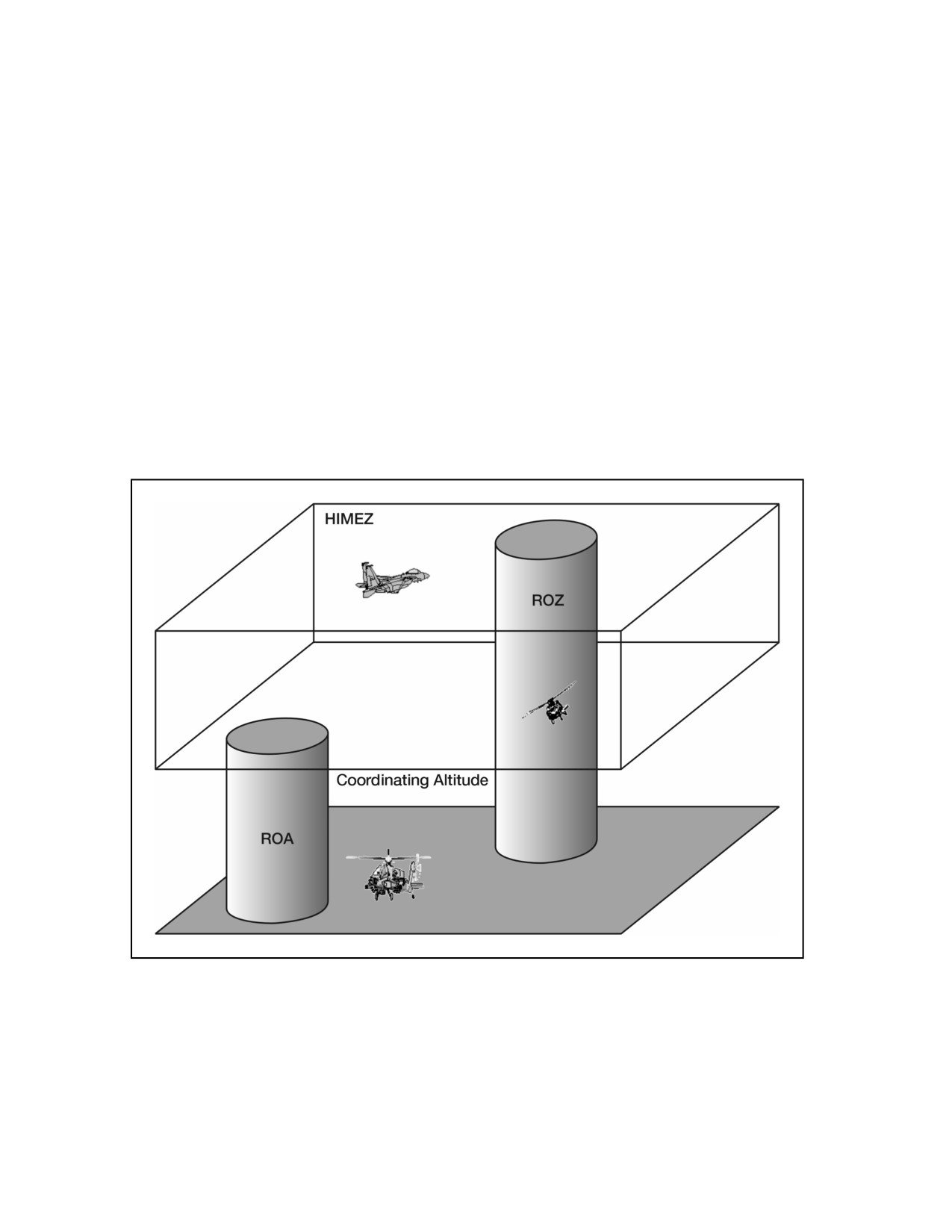
5. Examples of Airspace Control Measures
a. Coordinating Altitude. The coordinating altitude is the altitude below which fixed-
wing aircraft normally will not fly and above which rotary-wing aircraft normally will not
fly. It may include a buffer zone for small altitude deviations, and extends from the
forward edge of the communications zone to the forward line of own troops (FLOT). Fixed-
or rotary- winged aircraft planning extended penetration of this altitude will notify the
appropriate airspace control facility. However, approval acknowledgment is not required
prior to fixed-wing aircraft operating below the coordinating altitude or rotary-wing aircraft
operating above the coordinating altitude (see Figure A-1).
b. Restricted Operations Area (ROA)/Restricted Operations Zone (ROZ). ROZs and
ROAs are synonymous terms for defining a volume of airspace set aside for a specific
operational mission or requirement. This procedure restricts some or all airspace users
from this area until termination of the mission. It is normally used for drop or landing zone
activity, search and rescue operations, SEMA, etc. Controlling authority requirements for
the ROA/ROZ are similar to those required for a high density airspace control zone
(HIDACZ) (see Figure A-2).
Figure A-1. Coordinating Altitude, HIMEZ, ROA, and ROZ
c. HIDACZ. HIDACZ is a defined area of airspace with a concentrated employment of
weapons and airspace users. The zone has defined dimensions that usually coincide with
geographical features/navigational aids. Access to an air defense weapon control status
within a HIDACZ is normally controlled by the requesting authority (see Figure A-2).
A-3
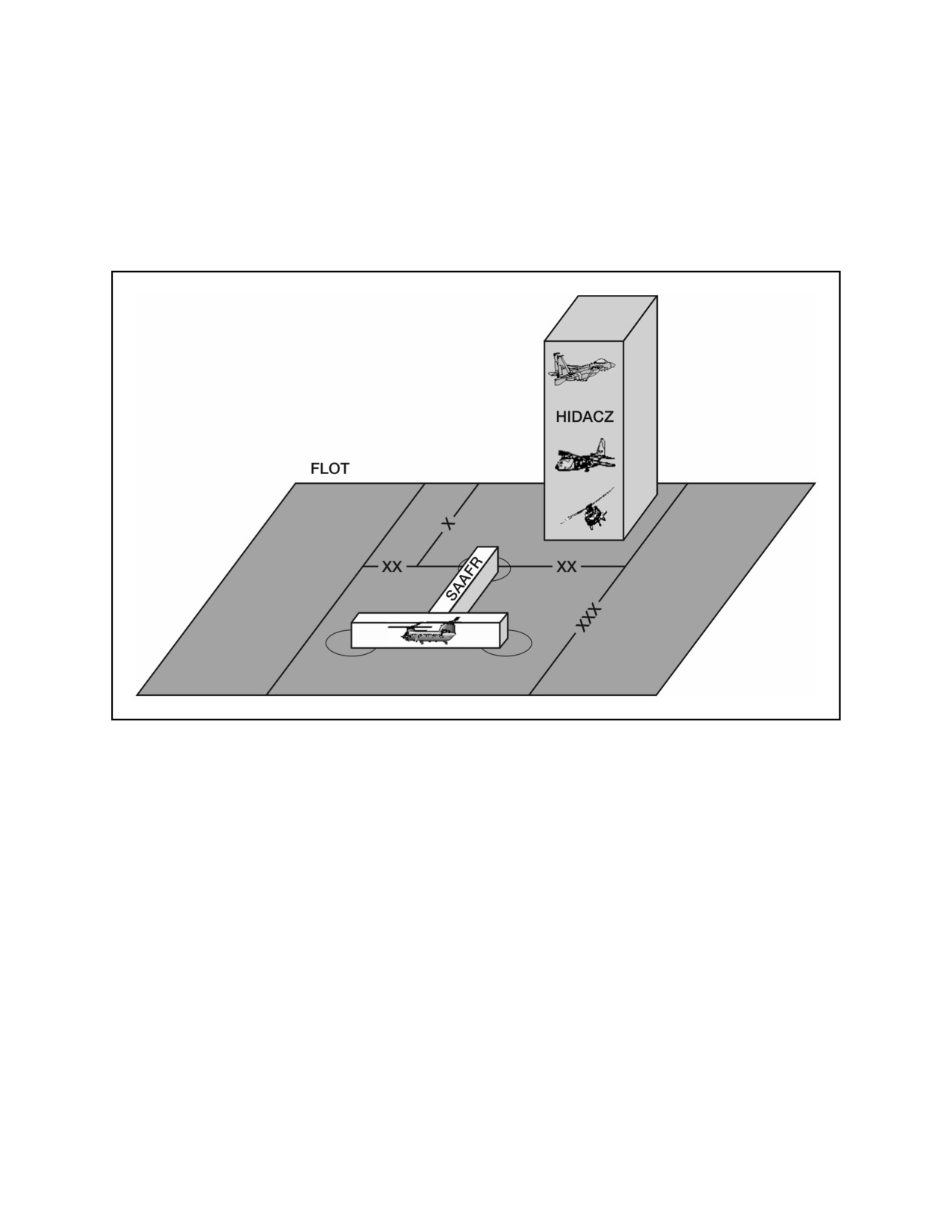
d. Standard Use Army Aircraft Flight Routes (SAAFRs). SAAFRs are routes
established below the coordinating altitude to allow the Army commander to safely route
movement of his aviation assets performing combat support and combat service support
missions. Although jointly recognized, these routes do not need airspace control authority
approval. SAAFRs normally are located in the corps through brigade rear areas but may be
extended to support logistics missions (see Figure A-2).
Figure A-2. SAAFR and HIDACZ
A-4
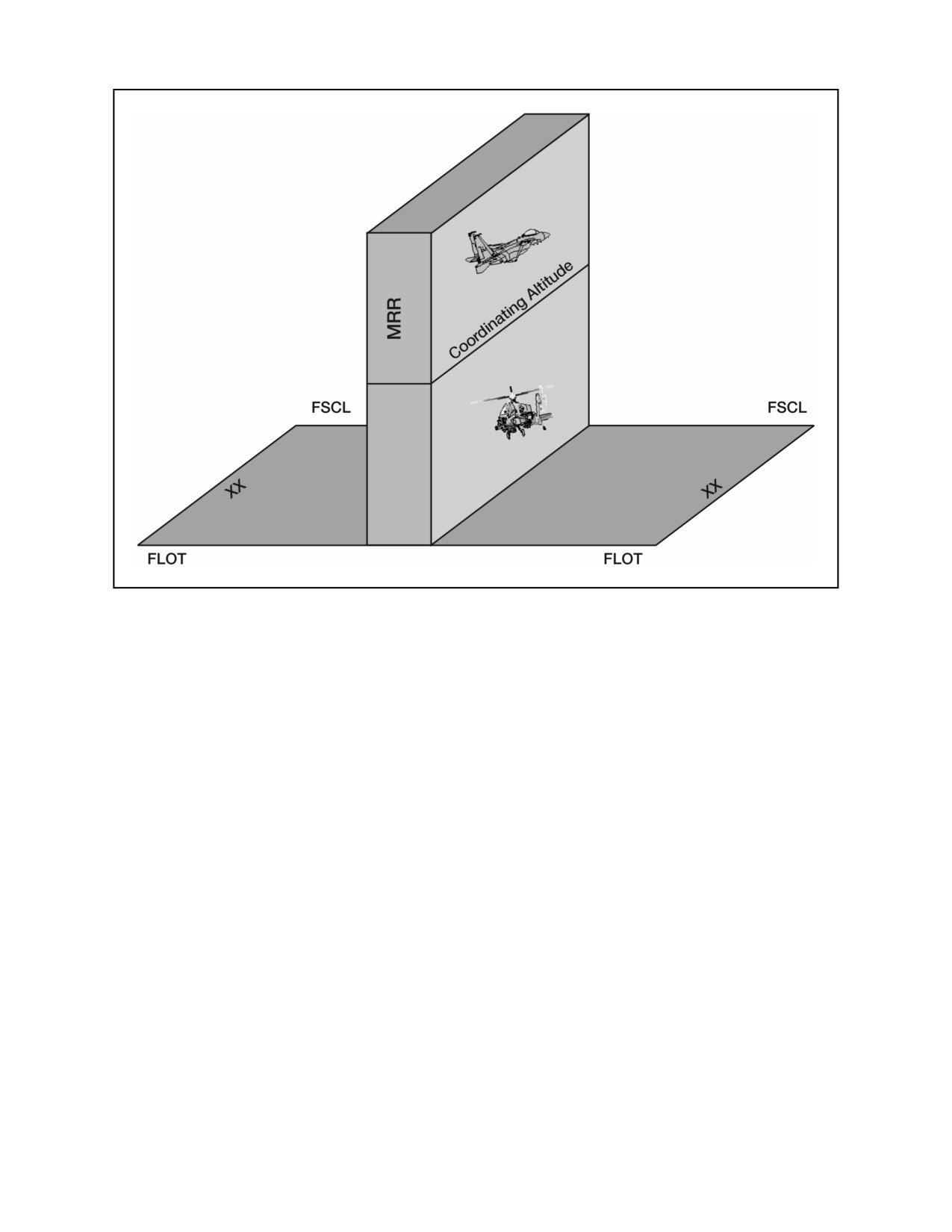
Figure A-3. Minimum Risk Routes
e. Minimum Risk Routes (MRRs). MRRs are temporary corridors of defined
dimensions recommended for use by high-speed, fixed-wing aircraft that presents minimum
known hazards to low flying aircraft transiting the theater airspace. MRRs normally
extend from the corps rear boundary to the FSCL. Low level transit routes (LLTRs) are
employed in a similar fashion in NATO (see Figure A-3).
6. Examples of Fire Support/Airspace Coordination Measures
a. Formal Fire Support/Airspace Coordination. Established by the FSCOORD with
inputs from the ALO at the appropriate level of command and control. Formal measures
are included in the fire support plan and passed to the BCD, who then coordinates with the
JAOC for inclusion in the ACO. Coordination is achieved using boundaries and permissive
or restrictive measures.
(1) Boundary. A line that defines areas of responsibility between adjacent
units/formations.
(2) Permissive Measures.
(a) Coordinated Fire Line (CFL). A line beyond which conventional or
improved conventional indirect fire means (that is, mortars, field artillery, and naval
gunfire) may fire at any time within the zone of the establishing headquarters without
additional coordination.
A-5
(b) FSCLs are permissive fire support coordinating measures. They are
established and adjusted by appropriate land or amphibious force commanders within their
boundaries in consultation with superior, subordinate, supporting, and affected
commanders. Forces attacking targets beyond an FSCL must inform all affected
commanders in sufficient time to allow necessary reaction to avoid fratricide, in the air and
on the ground. FSCLs facilitate the expeditious attack of targets of opportunity beyond the
coordinating measure. Supporting elements may attack targets beyond the FSCL, provided
the attack will not produce adverse effects on, or to the rear of, the line. The FSCL is not a
boundary—the synchronization of operations on either side of the FSCL is the
responsibility of the establishing commander out to the limits of the land or amphibious
force boundary.
(c) Free Fire Area (FFA). A designated area in which any weapon system can
fire conventional or improved munitions without additional coordination, and which is
normally established on identifiable terrain.
(3) Restrictive Measures.
(a) No-Fire Area (NFA). An area where no fires or the effects of fires are
allowed without prior clearance from the establishing headquarters, except if the
commander's force must defend against an engaging enemy force within the NFA.
(b) Restrictive Fire Area (RFA). An area where specific restrictions are
imposed and into which fires that exceed those restrictions are prohibited without prior
coordination from the establishing headquarters.
(c) Restrictive Fire Line (RFL). A line established between converging forces
that prohibits fires or the effects of fires across the line without coordination from the
establishing headquarters.
(d) Airspace Coordination Area. A three-dimensional block of airspace where
friendly aircraft are reasonably safe from friendly surface fires.
b. Informal Fire Support/Airspace Coordination. Informal fire support/airspace
coordination consists of procedures to deconflict aircraft from other fire support assets,
primarily artillery. Informal measures are established by the terminal attack controller in
response to the FSCOORD's fire support plan, and are implemented for a short period of
time to permit CAS operations. Informal measures are heavily dependent upon good
FSCOORD-ALO interface.
(1) Heading Offset. Terminal attack controller selects an initial point (IP) and
specifies the lateral offset from the IP to the target run-in to deconflict fighters from other
supporting aircraft.
(2) Heading Direct. Terminal attack controller selects an IP so that the IP to the
target run-in is deconflicted from other supporting fires by at least two nautical miles
either side of the centerline. The use of the word "direct" after giving the magnetic heading
denotes the heading is a restriction.
(3) Informal airspace coordination area. Terminal attack controller establishes a
three-dimensional area for a specific time period where fighters can operate reasonably safe
from friendly surface fires. While it should be established along easily identifiable terrain
features, it can be established using grid lines.
A-6
(4) Maximum or Minimum Ordinate (MAX or MIN ORD). Terminal attack
controller obtains the MAX or MIN ORD of supporting fires. MAX ORD will be used to fly
above low angle artillery and MIN ORD will be used to fly under high-angle artillery.
Summit will be used when operating with NSFS.
(5) Target-to-Gun Line (TGL). Terminal attack controllers provide the fighters with
the artillery impact area and the TGL for the fighter to avoid.
(6) Gun-to-Target Line (GTL). Terminal attack controllers provide the fighters with
the artillery location and the GTL for the fighters to avoid.
(7) Shift/Check Fire. Terminal attack controllers work with the FSCOORD to shift
supporting fires for a short time to another area so CAS operations can occur reasonably
safe from friendly fires. While uncommon, supporting fires can also be checked in order to
permit cyclical operations between artillery and CAS assets.
7. Examples of Air Defense Measures
a. Air Defense Action Area. An area of airspace where friendly aircraft or surface-to-
air weapons are given preference in operations except under specific conditions.
b. Air Defense Area. A specifically defined airspace for air defense.
c. Air Defense Identification Zone (ADIZ). Airspace of defined dimensions that
requires the ready identification, location, and control of airborne vehicles. This zone is
normally the transition between procedural control (outside) and positive control (inside) in
an area of operations.
d. Air Defense Operations Area. An area of airspace where mutual interference
between air defense and other operations is minimized. It may include designation of one
or more of the following: air defense action area, ADIZ, and/or firepower umbrella.
e. Weapons Engagement Zone (WEZ). Airspace of defined dimensions where the
responsibility for engagement rests with a particular weapon system. Some examples of
WEZs are:
(1) Fighter Engagement Zone (FEZ). Airspace of defined dimensions where the
responsibility for engagement rests with fighter aircraft.
(2) High Altitude Missile Engagement Zone (HIMEZ). Airspace of defined
dimensions where responsibility for engagement rests with high altitude air defense SAMs.
(3) Joint Engagement Zone (JEZ). Airspace of specific dimensions where friendly
SAMs and fighters are simultaneously employed.
(4) Low Altitude Missile Engagement Zone (LOMEZ). In air defense, that airspace
of defined dimensions where the responsibility for engagement rests with low to medium
SAMs.
(5) Short Range Air Defense Engagement Zone (SHORADEZ). In air defense, that
airspace of defined dimensions where the responsibility for engagement rests with short-
range air defense weapons. It may be established within a LOMEZ or a HIMEZ.
f. Weapons Free Zone (WFZ). An air defense zone established for the protection of key
assets where weapons systems may be fired at any target not positively identified as
friendly.
A-7
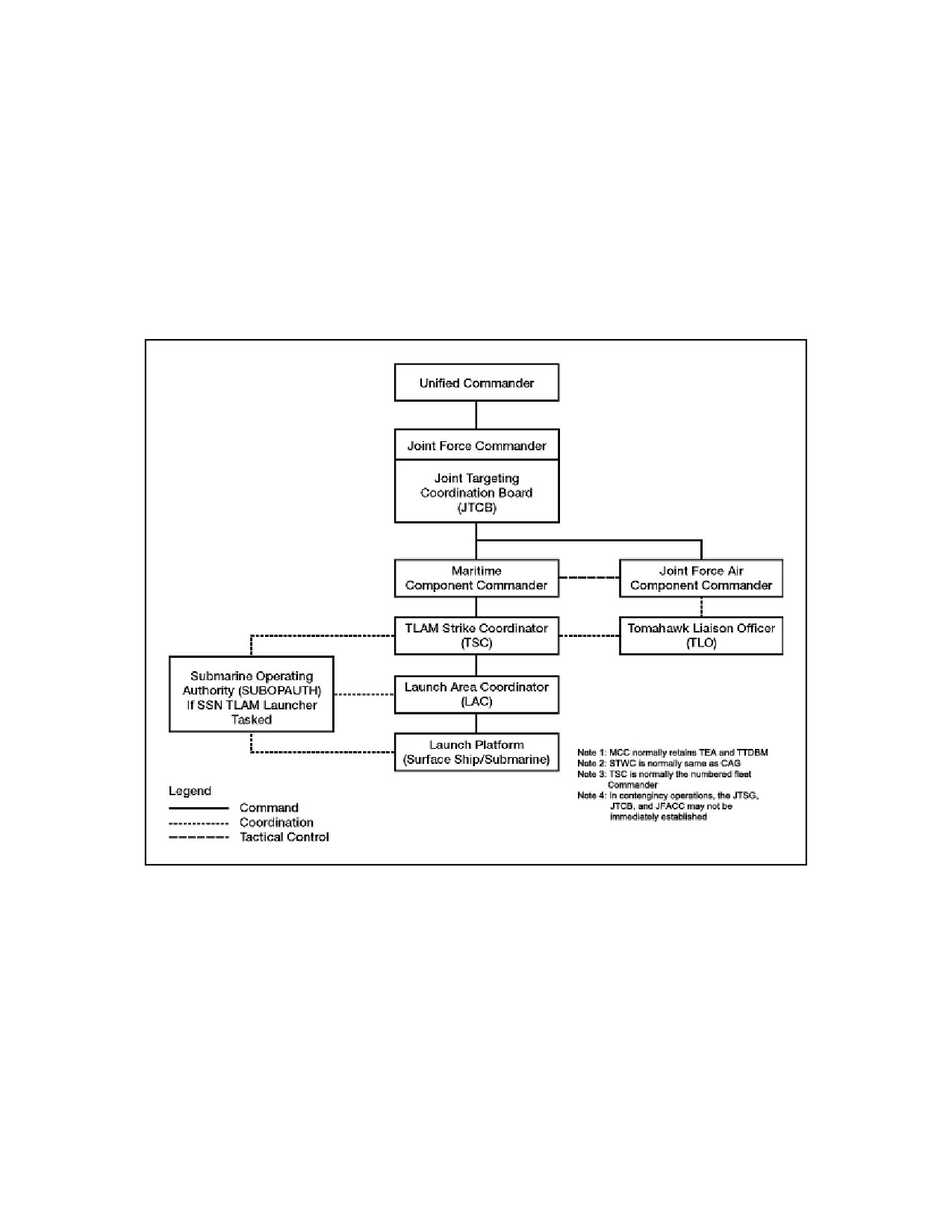
Appendix B
TOMAHAWK LAND ATTACK MISSILE OPERATIONS (TLAM)
1. C2 Relationships
A joint force operation requires TLAM integration into the unified commander’s C2
architecture. Figure B-1 illustrates the normal integration for TLAM campaign C2.
Figure B-1. Tomahawk Campaign Command and Control
2. Staff Elements and Coordination Functions.
a. Staff Elements. The following paragraphs explain a series of staff elements and
coordination functions to ensure the successful completion of a TLAM operation, from the
identification of the initial target list to the actual missile launch.
(1) Maritime Component Commander (MCC). The MCC is the principal naval
advisor to the JFC and is responsible for all naval activity in a joint force operation. During
TLAM contingency operations, the MCC acts as the direct conduit from the President,
B-1
Secretary of Defense, or unified commander through the TLAM strike coordinator (TSC)
and launch area coordinator (LAC) to the TLAM launch platform. The MCC provides
liaison officers to the JFACC and other coordination agencies to synchronize naval
contributions to the JTF mission. The unified commander normally appoints the MCC to
act as the Tomahawk executive agent (TEA) responsible for all aspects of theater
Tomahawk operations. The battle group commander is responsible for tasking in-theater
afloat planning system (APS) detachments. This tasking is coordinated with the cruise
missile support activity via the MCC.
(2) TEA. The TEA has overarching responsibility for Tomahawk logistics, strike
planning, mission data distribution, and all supporting functions. The TEA may delegate
all, some, or none of the duties and authority for these functions, including the duties of
managing the master mission library (MML) of Tomahawk missions, Tomahawk command
information (TCI), and asset management data to a Tomahawk tactical data base manager
(TTDBM). In normal practice, the MCC retains these duties. The TTDBM is not a separate
commander or coordinator; it is a duty assigned for continuity to an agent who is always in
the theater. It is possible that the TEA could appoint one or more subordinates as TSCs,
responsible for Tomahawk operations in different parts of the same theater of operations.
(3) CVBG Commander. The CVBG commander ensures effective execution of naval
missions including TLAM missions tasked by higher authority. The MCC could designate
the CVBG commander to perform the duties of the TSC. Subordinate warfare commanders
support the TSC in executing TLAM strike duties. The APS detachment reports directly to
the CVBG commander, unless the CVBG commander delegates authority for the APS to a
subordinate commander. The CVBG commander is responsible for prioritizing mission
planning requests (MPRs) tasked to attached APS detachments. The CVBG commander has
approval authority for APS missions planned in response to MPRs. For APS missions
planned in response to MCC or combatant commander tasking, the CVBG commander
reviews and forwards the missions for approval by the tasking commander prior to
distribution.
(4) TSC. The TSC is the designated agent (appointed by the MCC/TEA) responsible
for all TLAM strike planning, coordination, and reporting in a strike or series of strikes.
The actual designation and location of the TSC is determined on a case-by-case basis, based
on the following factors:
(a) Specific scenario requirements.
(b) Commands involved and their relative levels of expertise in Tomahawk
strike planning.
(c) Degree of TLAM involvement in the operation.
(d) Availability of, and access to, required communications and TLAM planning
support system.
(e) Proximity and access to JFACC TLAM strike planners.
B-2
NOTE: There may be multiple TSCs in the same theater. For example,
Commander, Sixth Fleet, could assign the responsibilities of the TSC to a
subordinate unit, if operating as a separate JTF in the Gulf of Sidra, while
retaining the responsibilities of the TSC for a task group operating in the
Adriatic Sea.
(5) Depending on the frequency and complexity of TLAM operations, face-to-face
meetings with TSC, JFACC, and strike warfare commander (STWC) may be required. At a
minimum, the TSC must be located at a site with a mission distribution system (MDS)
node. Robust, viable communications must be available between the TSC and the MCC,
JFACC, warfare commanders, LACs, and firing units. In a joint force operation, TSC
liaisons are placed with the JFACC, MCC, battle group (BG) and AF commanders,
subordinate warfare commanders, and appropriate ground force commanders to ensure
that the TLAMs are effectively integrated into daily operations. In a contingency operation,
the TSC carries out the strike guidance provided in the unified commander’s alert and
execute orders. A major concern in this effort is deconfliction of missile fly-out routes. For
TLAM missions in support of an AOA or whose launch position, flight route, or target area
is located within the AOA, the TSC must obtain BG commander concurrence before
executing the missions. The LAC, as the TSC’s single point of contact (POC) for TLAM
matters, usually conducts necessary liaison with the CATF.
(6) Tomahawk Liaison Officer (TLO). The TLO integrates TLAM planning and
operations with the JFACC. The TLO is trained and provided by the theater MCC and/or
TSC. The TLO interacts with both combat plans and combat operations in a manner similar
to other component liaison elements. The TLO is the central liaison POC for all aspects of
TLAM employment at the JFACC and works for the MCC. Integration begins during the
earliest strategic planning and continues through master air attack plan (MAAP)
development, ATO production, and strike execution. Integration concludes with battle
damage assessment analysis and restrikes. TLOs support TLAM operations, including
strike and mission planning, database management, and familiarity with MCC
organization and procedures. In addition to manning, the MCC provides TLAM-unique
support requirements such as MDS, electronic Tomahawk planning package (ETPP),
computer, and TCI net.
(7) LAC. The LAC is the TSC’s principal agent, responsible for leading the execution
of TLAM strike operations. Candidates for LAC should have access to ETPP or MDS, and
sufficient communications capability with the TSC and all Tomahawk platforms. The LAC
coordinates on-scene requirements and has the authority to control launch platform
maneuvers and stationing in TLAM launch areas. If large distances, e.g., Eastern
Mediterranean, Red Sea, and Arabian Gulf, separate launch areas, a LAC may be assigned
to each geographic area to ensure effective execution of TLAM launch operations. After
determining which command(s) is best situated to direct execution of the strike plan, the
TSC makes the assignment.
B-3

NOTE: Submarines should only serve as LACs for strikes restricted to submarine-
only launches. Submarines do not have the communications and surveillance
capabilities available on a flagship or a surface Tomahawk ship and may not
hold all of the TCI required for coordination.
(a) The LAC should know support (submarine) operations coordinating
authority (SOCA), submarine operating authority (SUBOPAUTH) procedures, and
concerns. The LAC should promptly contact the SOCA for guidance and assistance in
contacting and directing submarines to their launch areas. For TLAM operations in an
AOA, the LAC should provide the CATF specific TLAM mission information. This
information should include TLAM AOA entry points, flight corridors and altitudes,
waypoints within the AOA, first preplanned waypoint coordinates and outbound heading,
target locations (if within the AOA), and timeframes in which missiles will be in the AOA.
In the LAC intentions message, firing units should be advised of the composition of the
AOA, including dimensions and altitudes, forces assigned to support the amphibious
objectives, and deconfliction actions necessary in the area. This information should be
provided to the LAC from the CATF. When possible, the LAC should station firing units to
minimize TLAM flights through the AOA. If TLAM targets are located within the AOA, the
LAC and the CATF inform the TSC of any deconfliction issues. The TSC and LAC must
deconflict overwater routes prior to first preplanned way point for surface and subsurface
units. The TSC and LAC must provide notice to ships in applicable Tomahawk maneuver
areas.
(8) STWC. The STWC is responsible to the BG commander for executing strikes
tasked by higher authority. In joint operations, emphasis shifts from responsibility for
developing Navy-executed strike operations to coordinating joint strike operations prepared
by the JFACC. The STWC liaises with the TSC to facilitate coordination, deconfliction, and
execution of TLAM and tactical air strikes. Table B-1 depicts Tomahawk C2
responsibilities.
Table B-1. Tomahawk Functional Responsibilities
Title
Function(s)
Command
JTSG
Strategic target list
Unified combatant command staff element
Apportionment guidance
JTCB
JIPTL
JFC staff element
ROE compliance
Apportionment guidance
JFACC
ATO
Air component commander
ACO
TEA
Designate TSC
Maritime component commander
Promulgate CONOPS
Designate TTDBM
Implement Forward Pass
procedures through TTDBM
B-4

Table B-1. Tomahawk Functional Responsibilities
Title
Function(s)
Command
TSC
TLAM campaign with JFACC
Maritime component commander or BF/BG
LSP
commander
Mission planning requests
INDIGO
TLAM strike cell oversight
Advance deconfliction
TLO
Liaison between MCC and JFACC
Maritime component commander or BF/BG
for TLAM employment issues
commander
LAC
Launch
BF/BG commander
coordination/preparation/execution
Destroyer squadron commander
oversight
Launch platform commander
Over-water airspace deconfliction of
the immediate area
Consolidated reports
b. Coordination Functions.
(1) Launch Sequence Plan/INDIGO/Firing Report Messages. A launch sequence plan
assigns targets, numbers of missiles, and time on target so firing units can execute the
launch. INDIGO messages authorize/direct firing units to launch their missiles. Firing
reports indicate the number of missiles each firing unit successfully launched.
NOTE: For Tomahawk, the ATO is authority for the release and employment of
TLAM by the TSC, but the firing units must still receive the launch
sequence plan and INDIGO messages, which direct them to launch.
(2) Missile and Mission Management. Staff planners use TCI in preparing for
Tomahawk strike operations. TCI includes missile and mission data furnished by mission
planning sites through MDS tapes, ETPP disks, and hard copy messages. TCI provides the
C2 information required to employ the TLAM missions written on the data transport
devices (DTDs) held by firing units. MDUs can update TCI and DTDs from MDS nodes,
which electronically relay new information to firing units and staffs. The TEA using the
mission verification index, which is a listing of missions, may promulgate theater
requirements for TCI and mission data and TCI required for support of theater strike
plans.
(3) Communications. TCI data is required for staff planning, strike planning, and
firing unit engagements planning. Voice circuits designated for use as TLAM strike
coordination nets accomplish tactical coordination. These nets need not be dedicated to
TLAM strike planners, but must be readily accessible to the TSC, LAC, and firing units.
Hard copy record message traffic is employed to issue the TSC’s launch sequence plan,
warning orders, INDIGO mission orders, and post-firing reports. Tomahawk in-flight
position reporting system missiles use UHF fleet satellite communications channels to
relay position and status information to firing units.
B-5