FM 4-20.105-2 Airdrop of Supplies and Equipment: Dual Row Airdrop Systems, Volume II (August 2006) - page 3
Rigging the Mass Supply Load on Dual Row Airdrop System Platform
BUILDING AND POSITIONING THE MASS SUPPLY BOXES
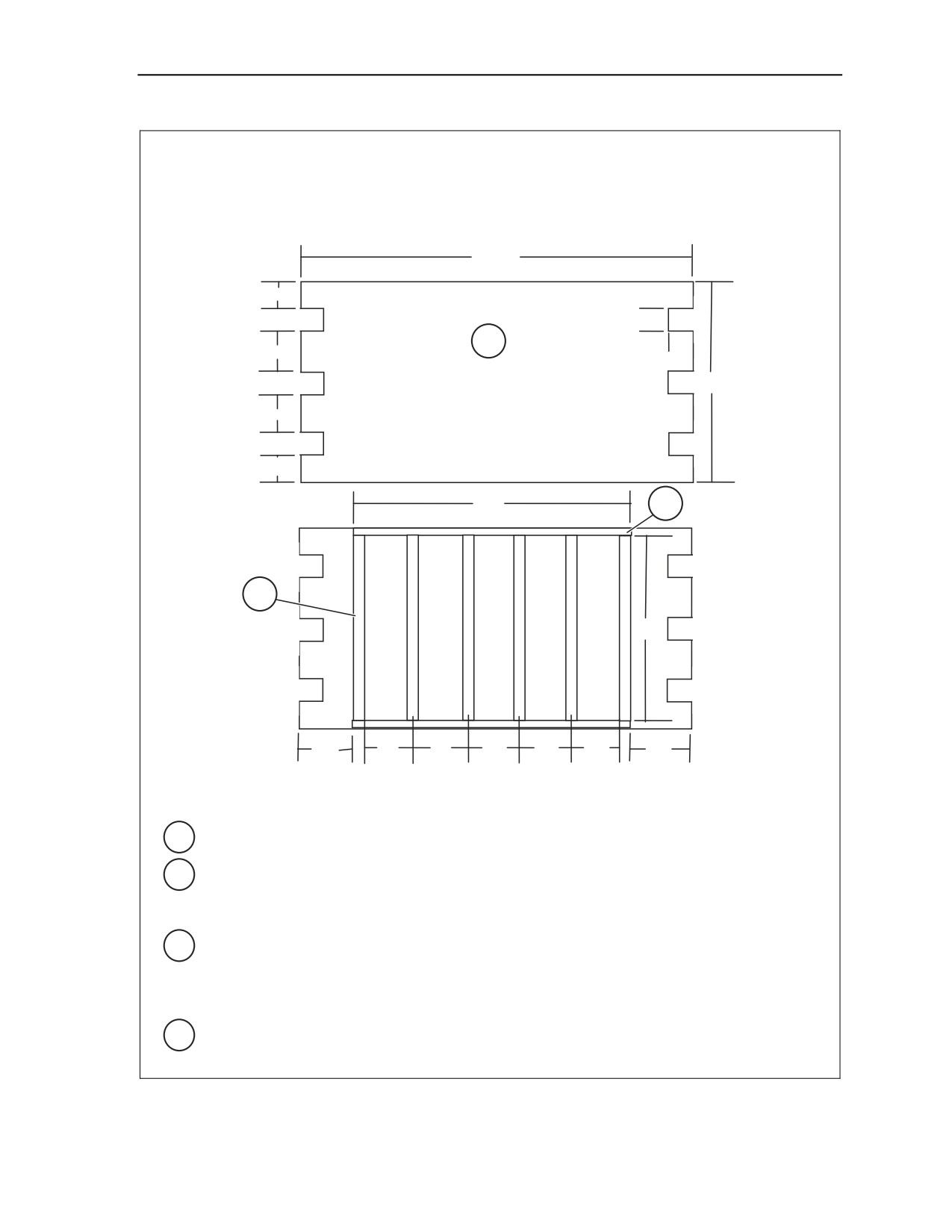
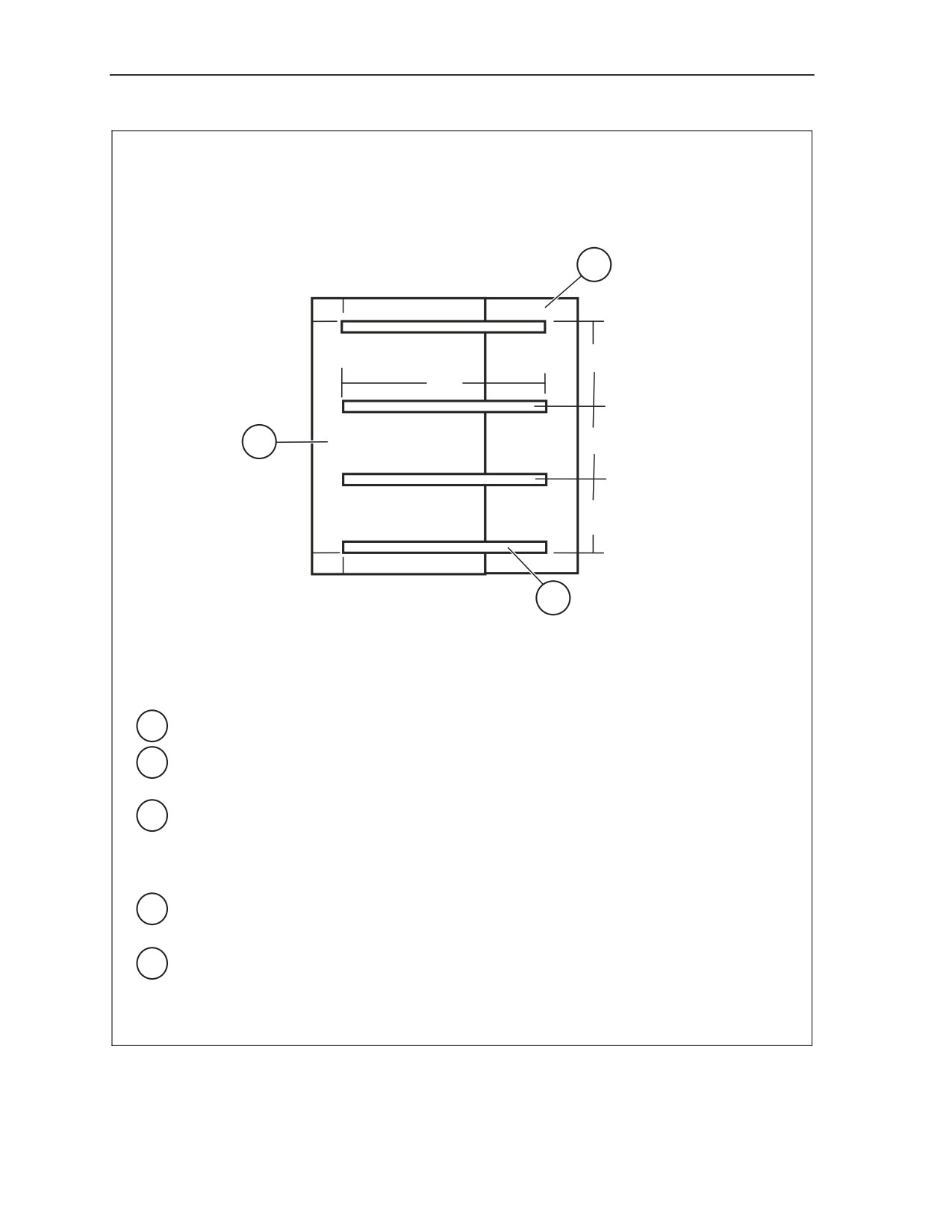
11-3. Build and position each mass supply box according as described below:
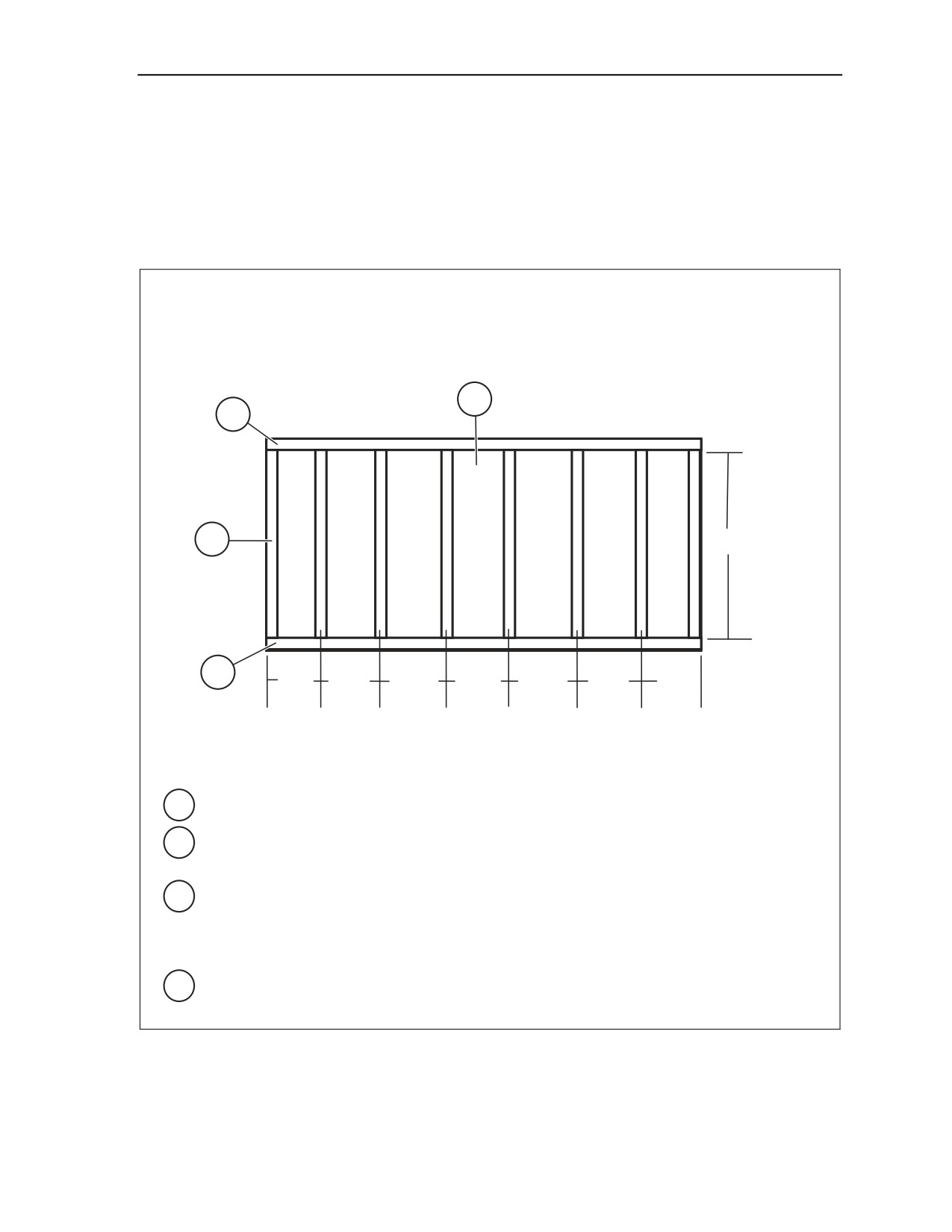
• Build box 1 as shown in Figure 11-3.
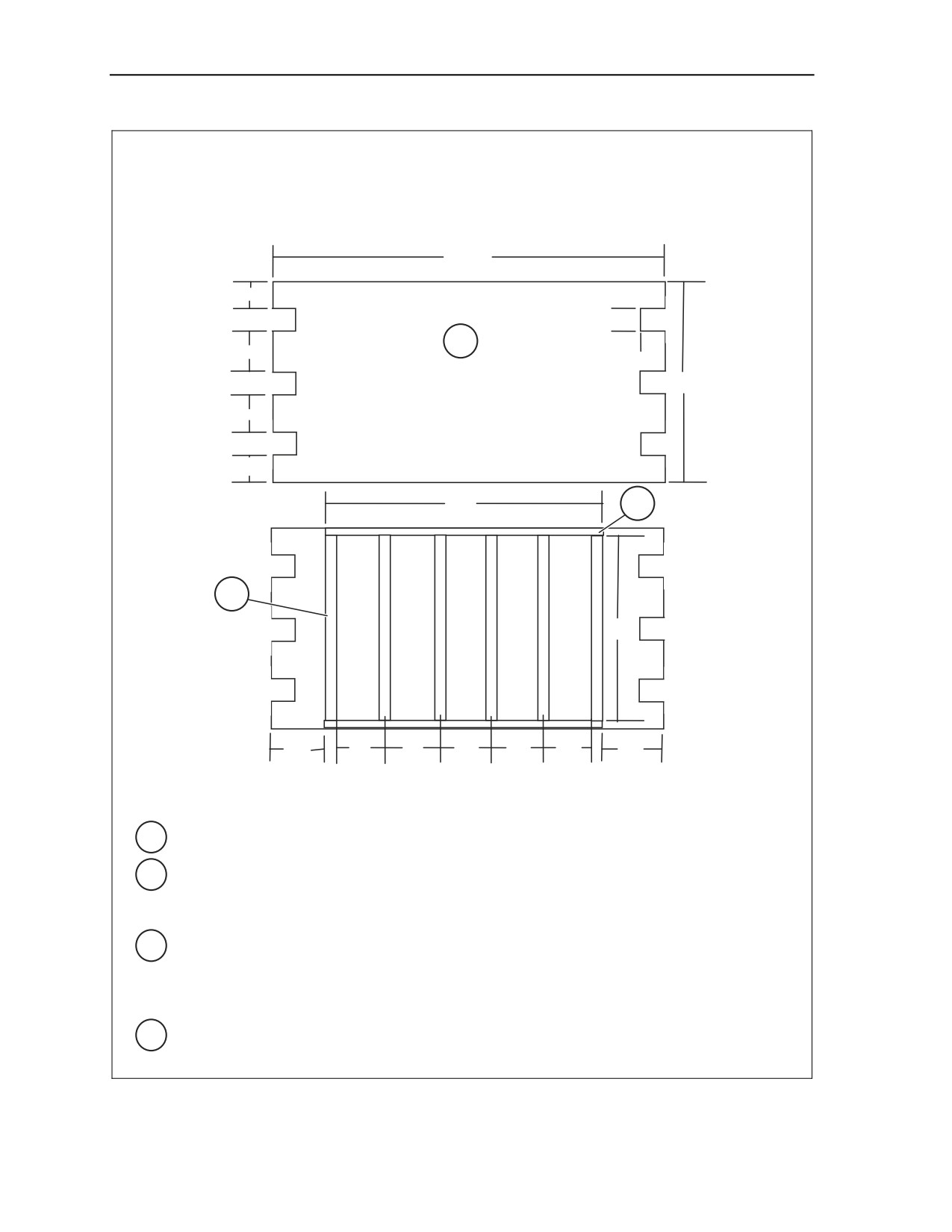
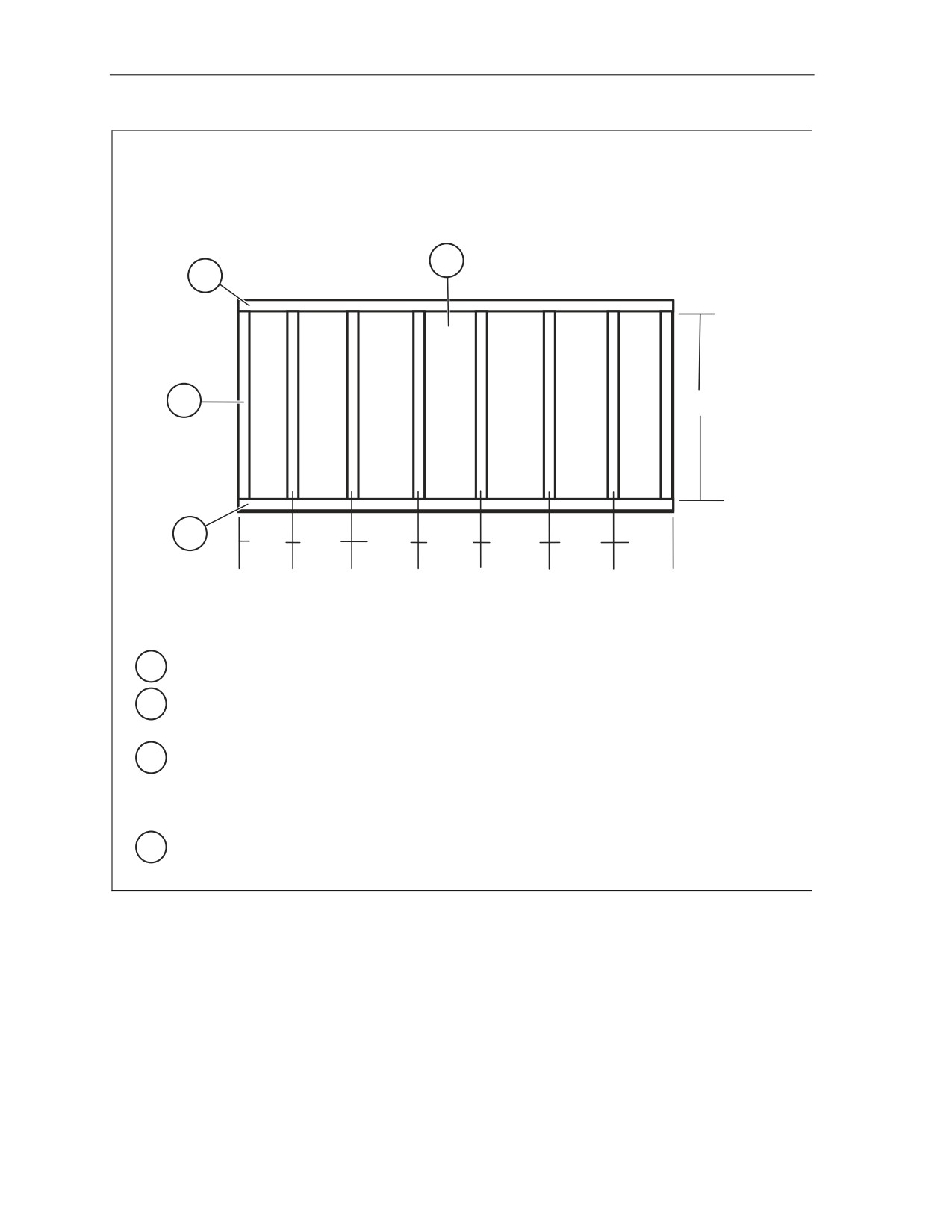
• Build box 2 as shown in Figure 11-4.
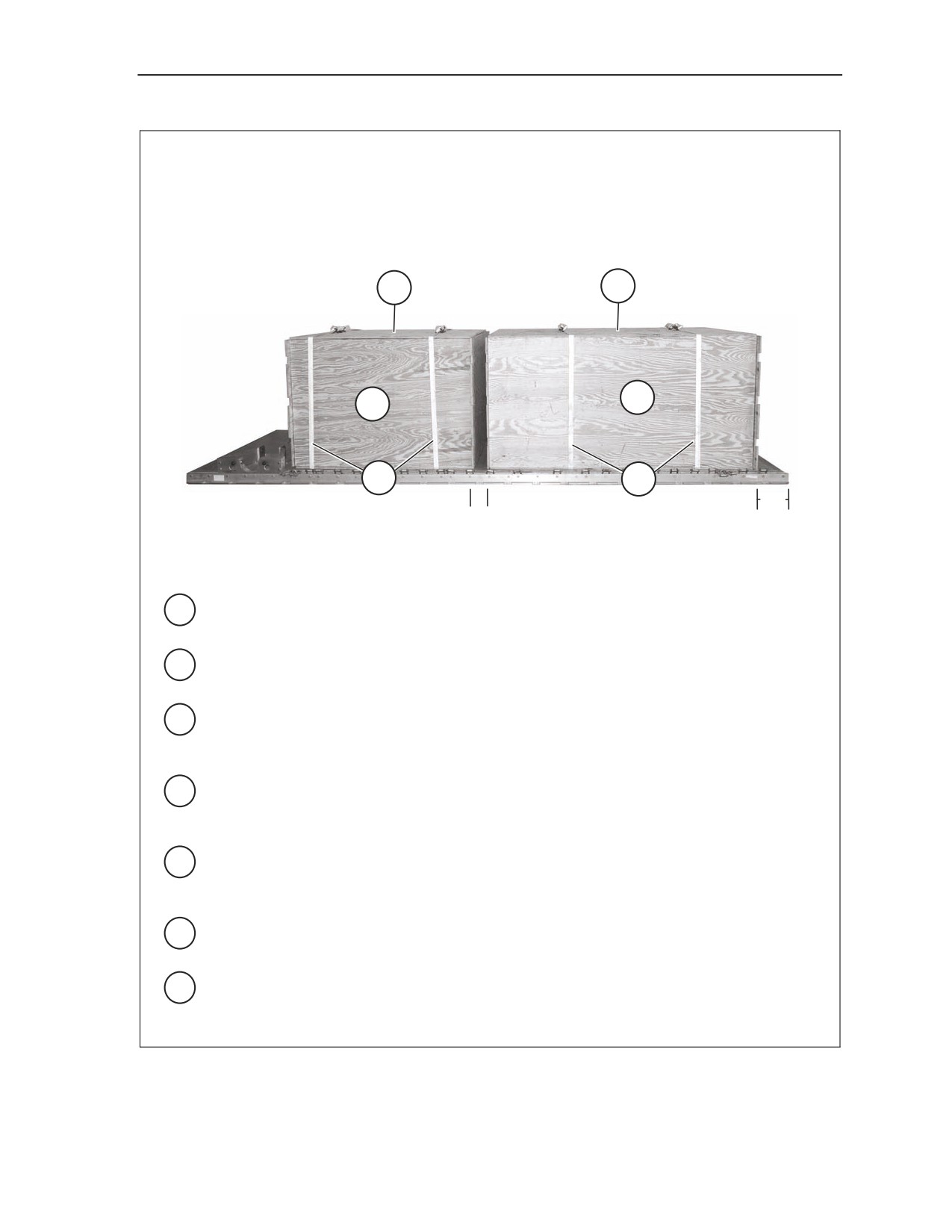
• Position the boxes as shown in Figure 11-5.
Notes: 1. All dimensions are in inches.
2. Drawing is not drawn to scale.
3. Use 8d nails.
1
2
3
45
2
13½
13½
13½
13½
13½
13½
13½
Building side boards:
1
Cut a 94 ½- by 48- by ¾-inch piece of plywood.
2
Cut two 2- by 4- by 94 ½-inch pieces of lumber. Position the 2-inch edge against the 94 ½
inch edge of the previously cut plywood. Nail in place from the plywood side.
3
Cut eight 2- by 4- by 45-inch pieces of lumber. Position two of the pieces with the 2-inch
edge flush with the 48-inch plywood edge. Position the remaining six pieces 13 ½-inches
from the outer edge of the previously positioned lumber. Nail evenly spaced in place from
the plywood side.
4 Repeat steps 1 through 3.
Figure 11-3. Mass Supply Box 1 Built
29 August 2006
FM 4-20.105-2/TO 13C7-1-51 VOL II
11-3
Chapter 11
Notes. 1. All dimensions are in inches.
2. Drawing is not drawn to scale.
3. Use 8d nails.
78
6
3
5
3
12
¾-inch plywood
48
12
9
63
6
7
45
7 ½
12
12
12
12
12
7 ½
Building end boards:
5 Cut a piece of 78- by 48- by ¾-inch plywood with cutouts as shown.
6 Cut two pieces of 2- by 4- by 63-inch lumber and position the 2-inch edge flush against the
48-inch edge and 7 ½ inches from each end of the 48-inch edge of the previously cut
plywood. Nail in place from the plywood side.
7 Cut six pieces of 2- by 4- by 45-inch lumber and position two of the pieces with the 2-inch
edge flush against the plywood and 7 ½ inches from the 48-inch plywood edge. Position
the remaining four pieces evenly spaced 12 inches from the previously positioned lumber.
Nail in place from the plywood side.
8 Repeat steps 5 through 7.
Figure 11-3. Mass Supply Box 1 Built (Continued)
11-4
FM 4-20.105-2/TO 13C7-1-51 VOL II
29 August 2006
Rigging the Mass Supply Load on Dual Row Airdrop System Platform
Notes. 1. All dimensions are in inches.
2. Drawing is not drawn to scale.
3. Use 8d nails.
10
4 ½
4 ½
29
63
9
29
29
4 ½
4 ½
11
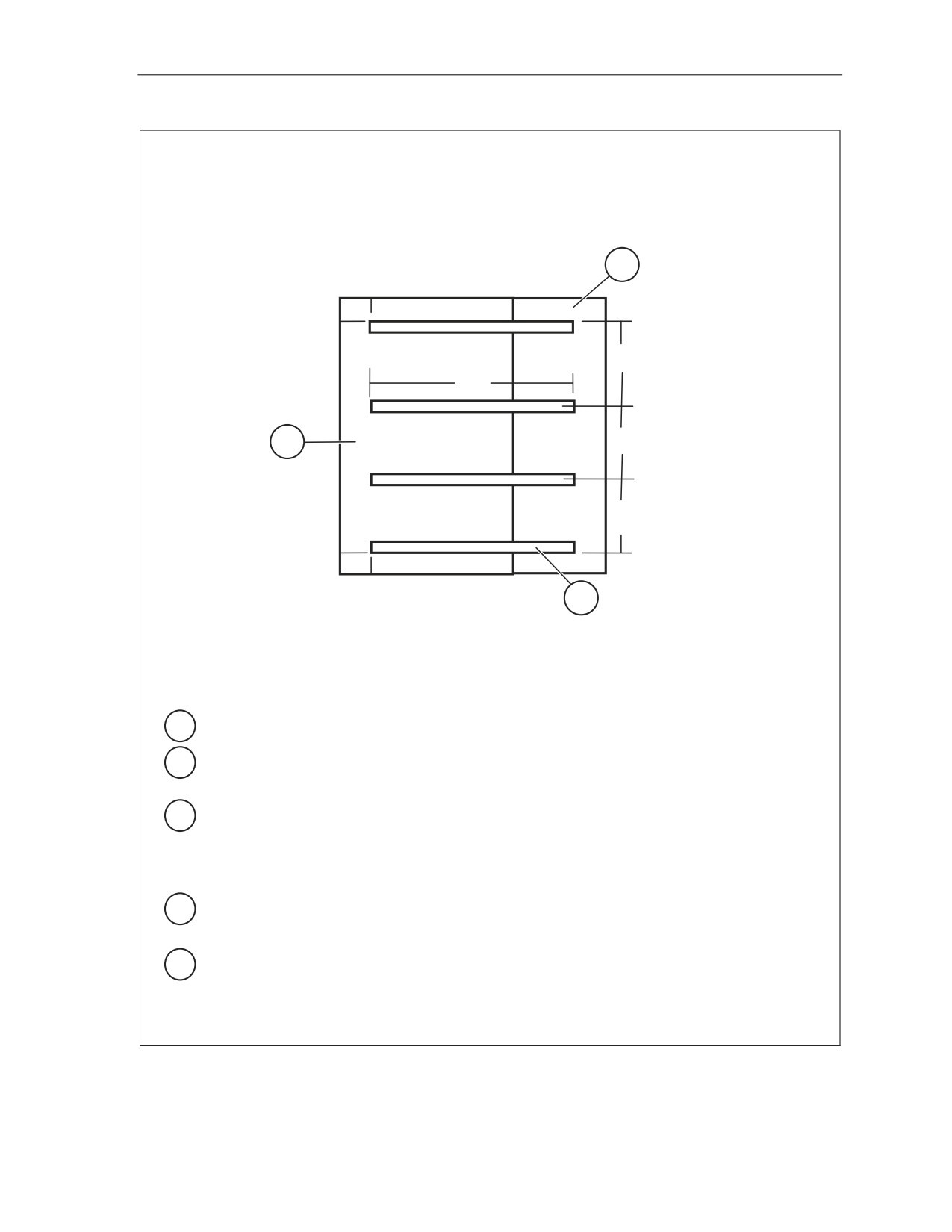
Building bottom board:
9 Cut a 48- by 96- by ¾-inch piece of plywood.
10 Cut a 24- by 96- by ¾-inch piece of plywood and position it flush against the 96-inch edge
of the previously cut piece of plywood.
11 Cut four 2- by 4- by 63-inch pieces of lumber. Position each piece as shown with 4 inch
side against the plywood.
Assembling the mass supply box:
12 Nail the assembled sides to the front and rear endboards. Nail through the plywood side
of the front and rear endboards into the 2- by 4- by 45-inch piece of lumber (not shown).
13 Turn the assembled pieces on their side. Nail the assembled bottom from the plywood
side to the side and endboards 2- by 4-inch piece of lumber (not shown).
Note. The top will be assembled later in the rigging procedures.
Figure 11-3. Mass Supply Box 1 Built (Continued)
29 August 2006
FM 4-20.105-2/TO 13C7-1-51 VOL II
11-5
Chapter 11
Notes. 1. All dimensions are in inches.
2. Drawing is not drawn to scale.
3. Use 8d nails.
1
2
3
45
2
9 ½
9 ½
9 ½
9 ½
9 ½
9 ½
9 ½
Building side boards:
1 Cut a 66 ½- by 48- by ¾-inch piece of plywood.
2 Cut two 2- by 4- by 66 ½-inch pieces of lumber. Position the 2-inch edge against the 66 ½
inch edge of the previously cut plywood. Nail in place from the plywood side.
3 Cut eight 2- by 4- by 45-inch pieces of lumber. Position two of the pieces with the 2-inch
edge flush with the 48-inch plywood edge. Position the remaining six pieces evenly
spaced 9 ½-inches from the outer edge of the previously positioned lumber. Nail in place
from the plywood side.
4 Repeat steps 1 through 3.
Figure 11-4. Mass Supply Box 2 Built
11-6
FM 4-20.105-2/TO 13C7-1-51 VOL II
29 August 2006
Rigging the Mass Supply Load on Dual Row Airdrop System Platform
Notes. 1. All dimensions are in inches.
2. Drawing is not drawn to scale.
3. Use 8d nails.
78
6
3
5
3
12
¾-inch plywood
48
12
9
63
6
7
45
7 ½
12
12
12
12
12
7 ½
Building endboards:
5 Cut a piece of 78- by 48- by ¾-inch plywood with cutouts as shown.
6 Cut two pieces of 2- by 4- by 63-inch lumber and position the 2-inch edge flush against the
48-inch edge and 7 ½ inch from each end of the 48-inch edge of the previously cut
plywood. Nail in place from the plywood side.
7 Cut six pieces of 2- by 4- by 45-inch lumber and position two of the pieces with the 2-inch
edge flush against the plywood and 7 ½ inches from the 48-inch plywood edge. Position
the remaining four pieces evenly spaced 12 inches from the previously positioned lumber.
Nail in place from the plywood side.
8 Repeat steps 5 through 7.
Figure 11-4. Mass Supply Box 2 Built (Continued)
29 August 2006
FM 4-20.105-2/TO 13C7-1-51 VOL II
11-7
Chapter 11
Notes. 1. All dimensions are in inches.
2. Drawing is not drawn to scale.
3. Use 8d nails.
10
4 ½
4 ½
19
63
9
21
19
4 ½
4 ½
11
Building bottom board:
9 Cut a 48- by 68- by ¾-inch piece of plywood.
10 Cut a 24- by 68- by ¾-inch piece of plywood and position it flush against the 68-inch edge
of the previously cut piece of plywood.
11 Cut four 2- by 4- by 63-inch pieces of lumber. Position each piece as shown with 4 inch
side against the plywood.
Assembling the mass supply box:
12 Nail the assembled sides to the front and rear endboards. Nail through the plywood side
of the front and rear endboards into the 2- by 4- by 45-inch piece of lumber (not shown).
13 Turn the assembled pieces on their side. Nail the assembled bottom from the plywood
side to the side and endboards 2- by 4-inch pieces of lumber (not shown).
Note. The top will be assembled later in the rigging procedures.
Figure 11-4. Mass Supply Box 2 Built (Continued)
11-8
FM 4-20.105-2/TO 13C7-1-51 VOL II
29 August 2006
Rigging the Mass Supply Load on Dual Row Airdrop System Platform
Note. Pad and tape all cutouts on both boxes.
5
4
1
2
7
6
4
9 ½
1
Position mass supply box 1 on top of the first and second pre-positioned lashings 9 ½
inches from the front edge of the platform and centered.
2
Position mass supply box 2 on top of the third and fourth pre-positioned lashings 4 inches
from the rear of mass supply box 1 and centered.
3
Fill the boxes with items so that the minimum and maximum weights are met for each box.
Pad the items with honeycomb or cellulose wadding as needed. Fill empty space with
honeycomb to prevent the load from shifting (not shown).
4
Cut a 48- by 96- by ¾-inch piece of plywood and a 24- by 96- by ¾-inch piece of plywood
for the top of mass supply box 1. Nail each piece of plywood on top of mass supply box 1
using 8d nails.
5
Cut a 48- by 64- by ¾-inch piece of plywood and a 24- by 68- by ¾-inch piece of plywood
for the top of mass supply box 2. Nail each piece of plywood on top of mass supply box 2
using 8d nails.
6
Secure the first and second pre-positioned lashings on top of mass supply box 1 using four
D-rings and two load binders.
7
Secure the third and fourth pre-positioned lashings on top of mass supply box 2 using four
D-rings and two load binders.
Figure 11-5. Mass Supply Boxes Positioned
29 August 2006
FM 4-20.105-2/TO 13C7-1-51 VOL II
11-9
Chapter 11
10
9
11
8
8
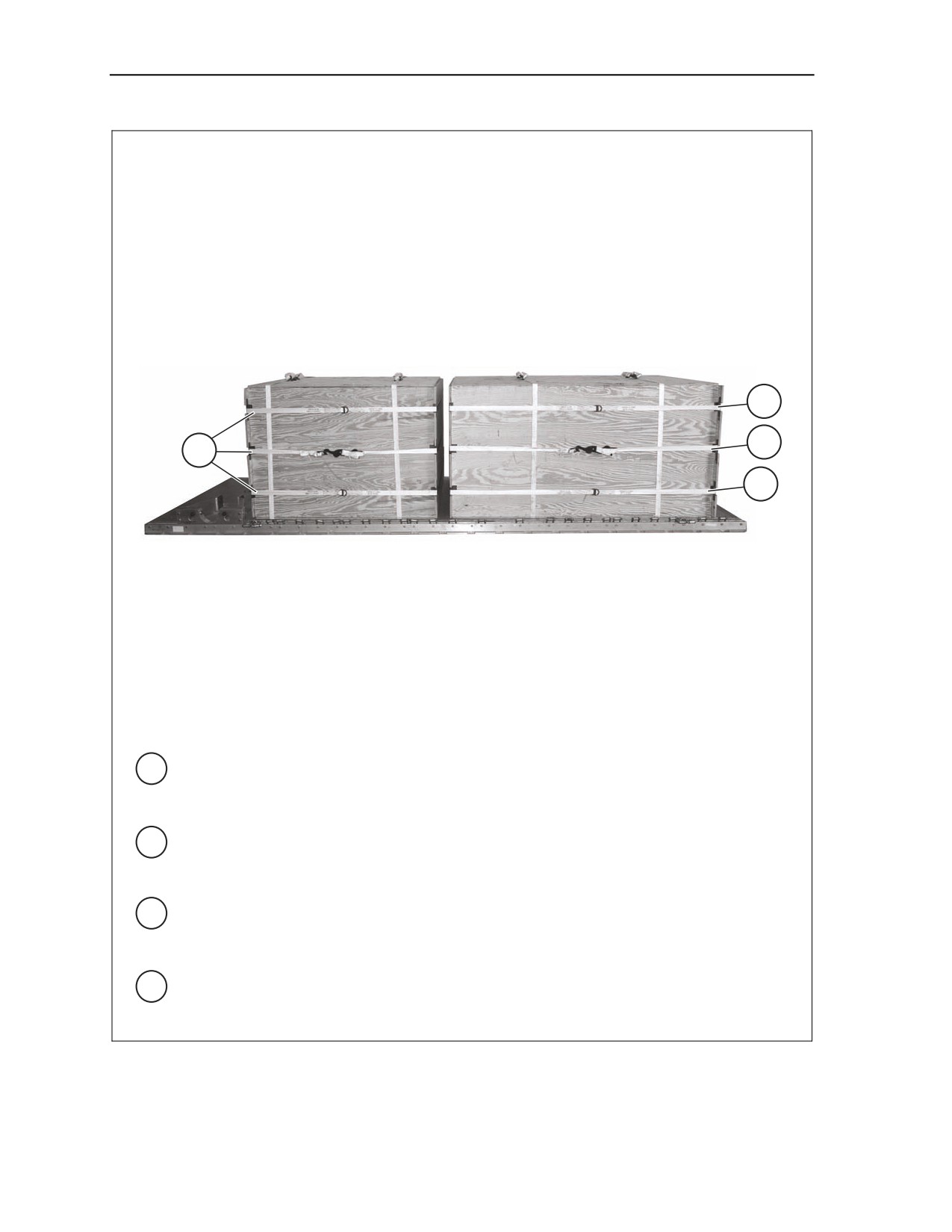
Form six 30-foot lashings. Route one 30-foot lashing horizontally through the bottom
cutouts of mass supply box 1. Secure the lashing using two D-rings and a load binder on
the left side of the box.
9
Route one 30-foot lashing horizontally through the middle cutouts of mass supply box 1.
Secure the lashings using two D-rings and a load binder on the right side of mass supply
box 1.
10
Route one 30-foot lashing horizontally through the top cutouts of mass supply box 1.
Secure the lashing using two D-rings and a load binder on the left side of mass supply
box 1.
11 Route and secure the remaining three 30-foot lashings using the procedures from steps 8
through 10 for mass supply box 2.
Figure 11-5. Mass Supply Boxes Positioned (Continued)
11-10
FM 4-20.105-2/TO 13C7-1-51 VOL II
29 August 2006
Rigging the Mass Supply Load on Dual Row Airdrop System Platform
INSTALLING LASHING ON MASS SUPPLY BOXES
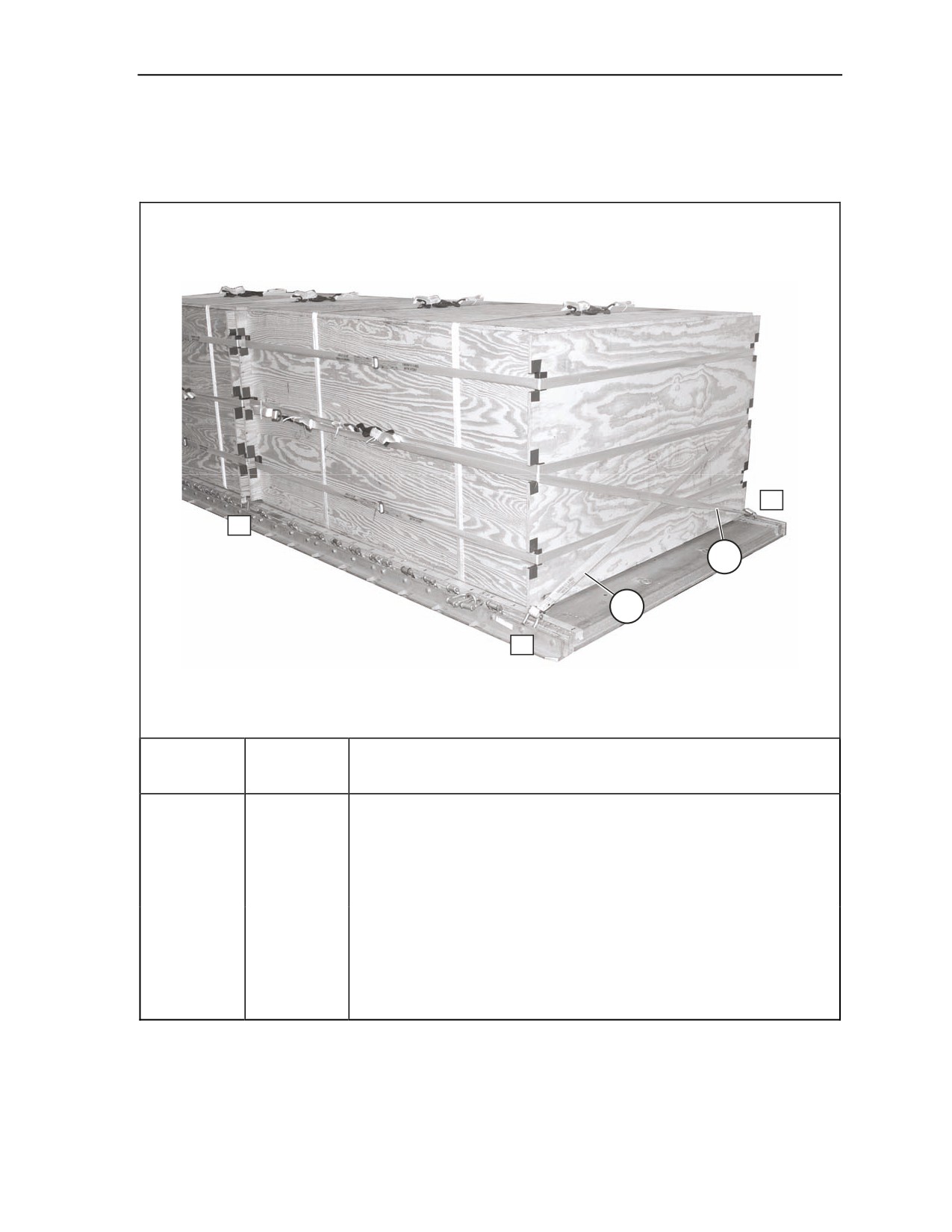
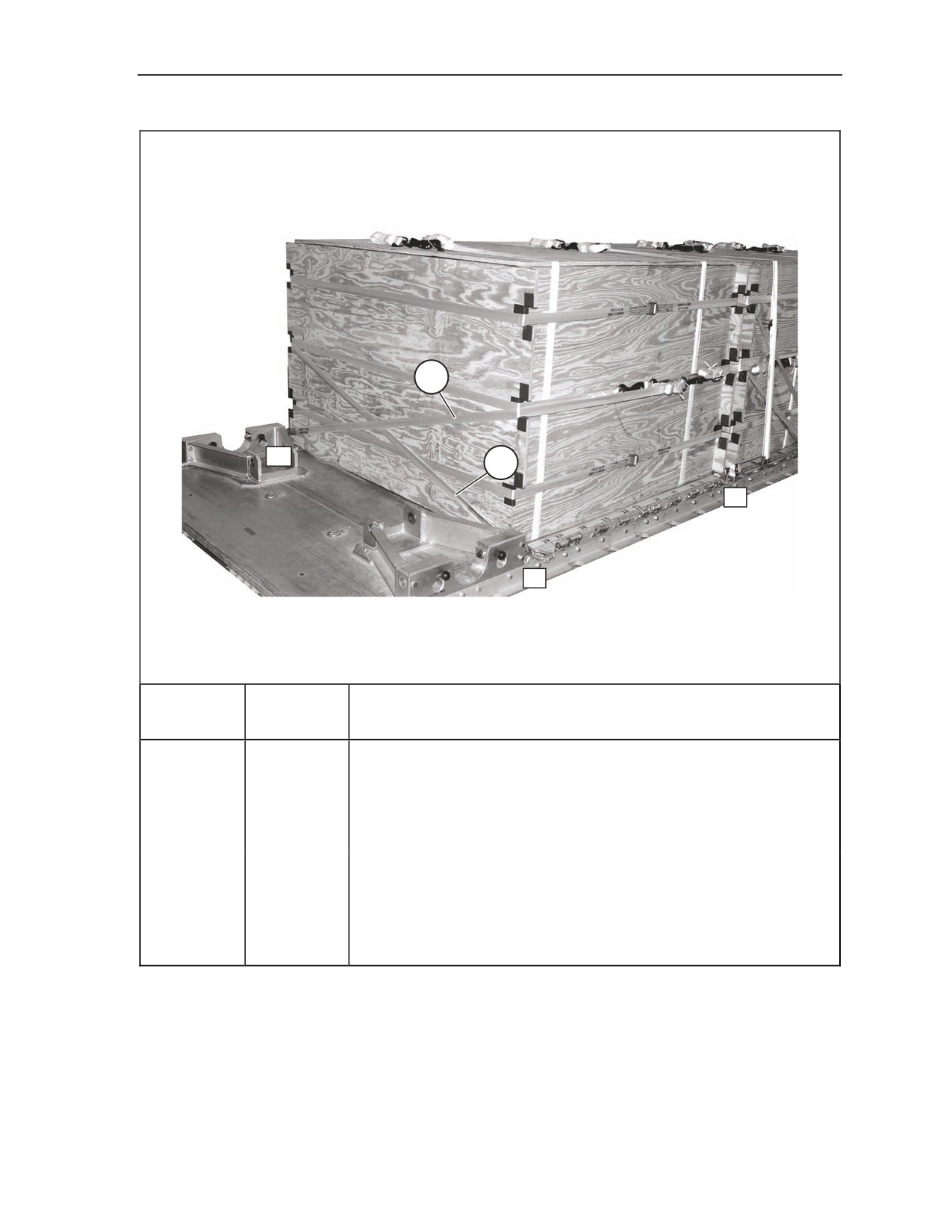
11-4. Install lashings as shown in Figures 11-6 through 11-13.
1A
15
2
1
1
Lashing
Tiedown
Instructions
Number
Clevis
Number
1
1 and 15
Route a 15-foot lashing through clevis 1 and through its own D-ring.
Route the lashing through the front left middle cutout of box 1.
Route a 15-foot lashing through clevis 15 and through its own D-
ring. Route the lashing through the rear left middle cutout of box 1.
Secure the free ends of each lashing on the left rear side of box 1
using two D-rings and a load binder.
2
1A and 15A
Route a 15-foot lashing through clevis 1A and through its own D-
ring. Route the lashing through the front right middle cutout of box
1. Route a 15-foot lashing through clevis 15A and through its own D-
ring. Route the lashing through the rear right middle cutout of box 1.
Secure the free ends of the lashings on the right rear side of box 1
using two D-rings and a load binder.
Figure 11-6. Lashings 1 and 2 Installed
29 August 2006
FM 4-20.105-2/TO 13C7-1-51 VOL II
11-11
Chapter 11
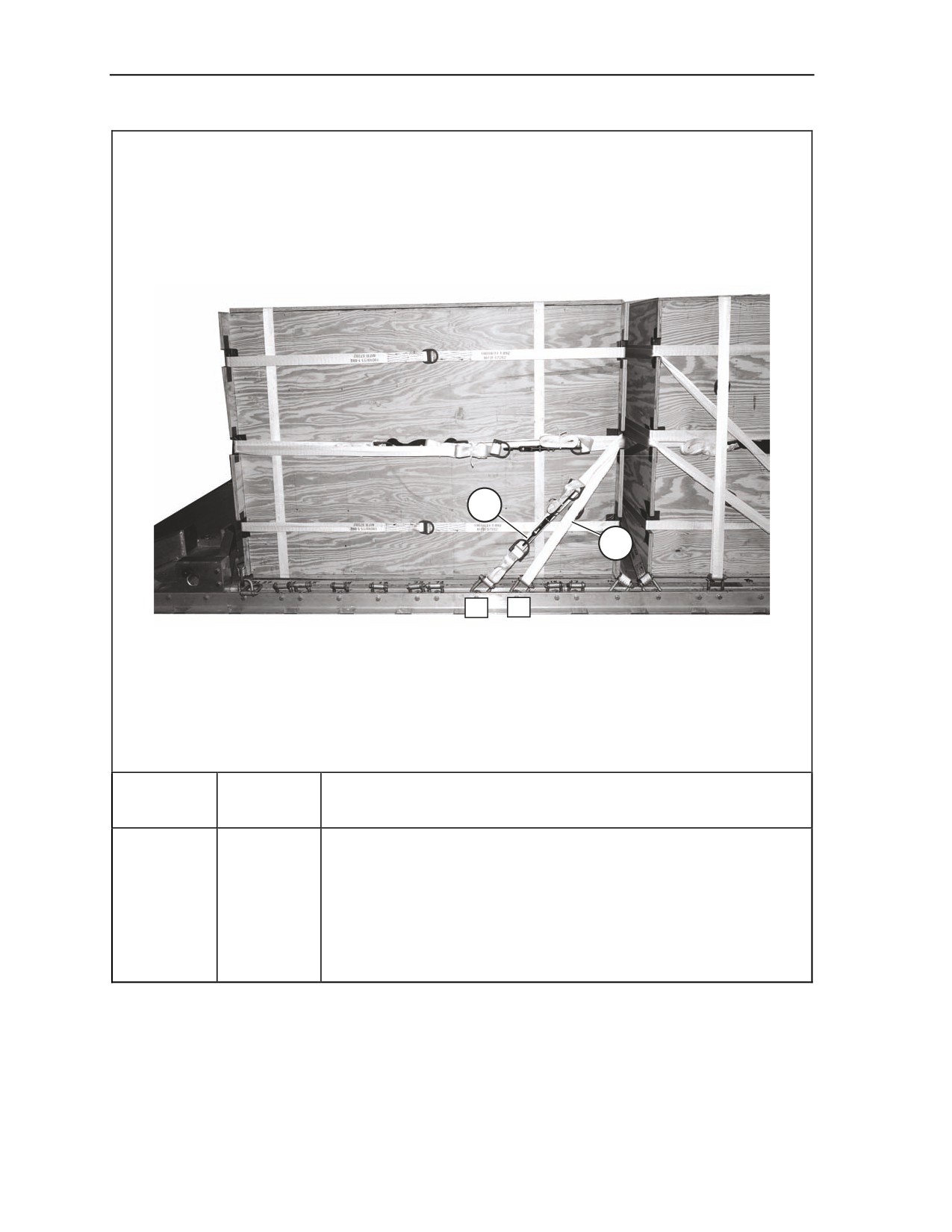
5
4
9
3
8
7
Lashing
Tiedown
Instructions
Number
Clevis
Number
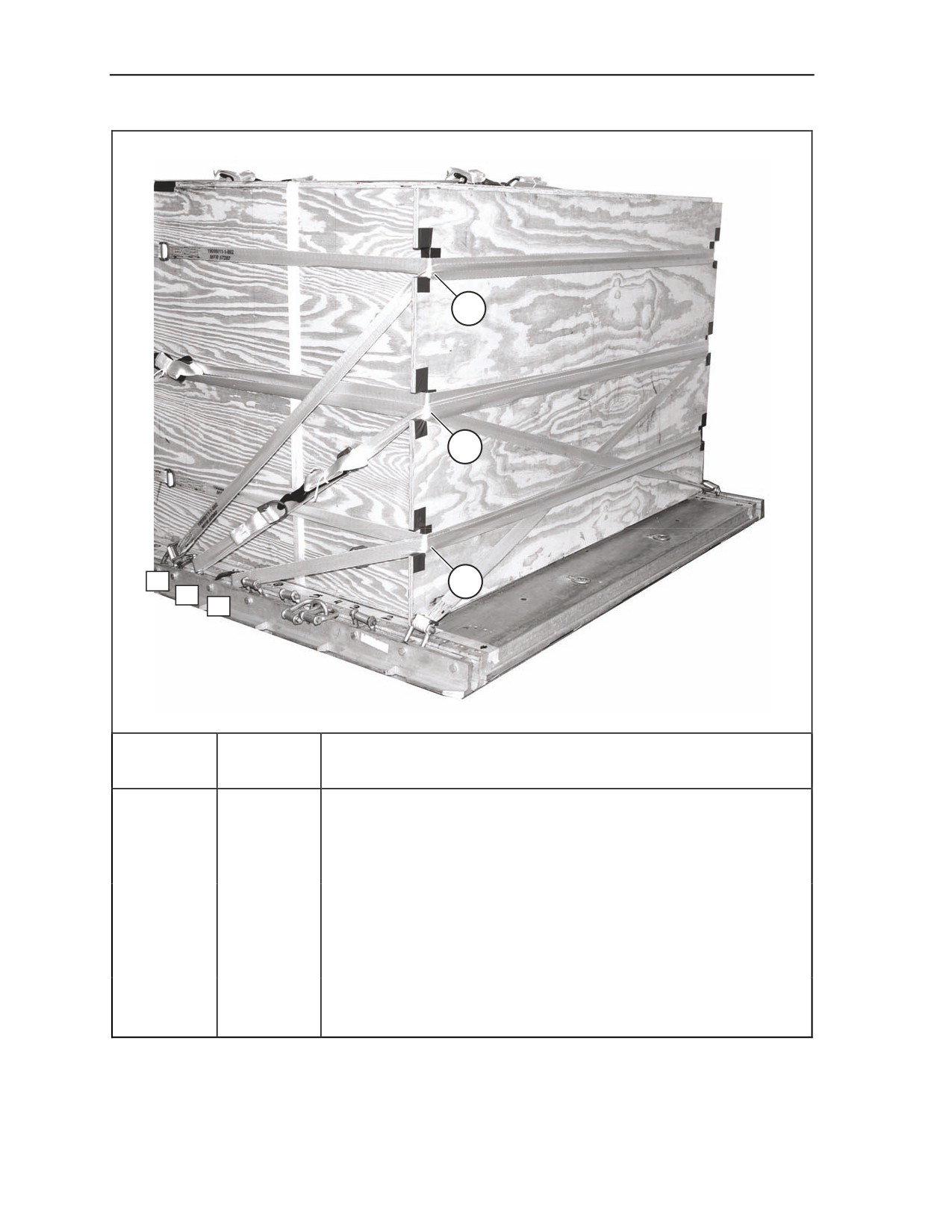
3
7 and 7A
Form a 30-foot lashing. Route the free of the ends lashing through
the front bottom cutouts of box 1 and through clevises 7 and 7A.
Route the free end from clevis 7 through both front bottom cutouts
and secure with two D-rings and a load binder on the left side of box
1.
4
8 and 8A
Form a 30-foot lashing. Route the free ends of the lashing through
the front middle cutouts of box 1 and through clevises 8 and 8A.
Route the free end from clevis 8A through both front middle cutouts
and secure with two D-rings and a load binder on the right side of
box 1.
5
9 and 9A
Route a 15-foot lashing through clevis 9 and through its own D-ring.
Route the lashing through both front top cutouts of box 1. Secure
the lashing with a D-ring and a load binder to clevis 9A.
Figure 11-7. Lashings 3 Through 5 Installed
11-12
FM 4-20.105-2/TO 13C7-1-51 VOL II
29 August 2006
Rigging the Mass Supply Load on Dual Row Airdrop System Platform
6
7
12
11
Lashing
Tiedown
Instructions
Number
Clevis
Number
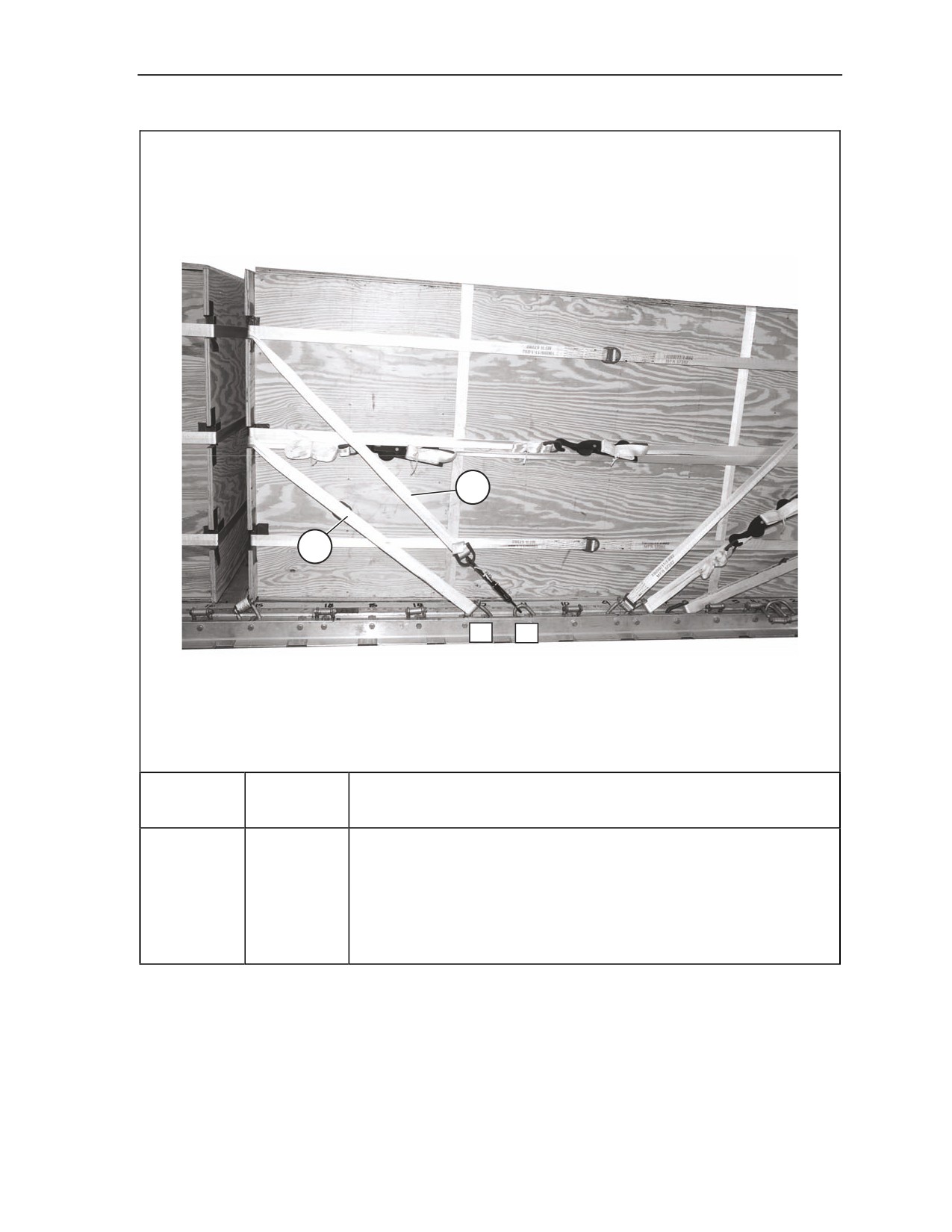
6
11 and 11A
Route a 15-foot lashing through clevis 11A and through its own D-
ring. Route the free end through both rear top cutouts of box 1.
Secure the lashing with a load binder and D-ring to clevis 11.
7
12 and 12A
Form a 30-foot lashing. Route the free ends of the lashing through
the rear middle cutouts of box 1 and through clevises 12 and 12A.
Route the free end from clevis 12 through both middle cutouts and
secure with two D-rings and a load binder on the left side of box 1.
Figure 11-8. Lashings 6 and 7 Installed
29 August 2006
FM 4-20.105-2/TO 13C7-1-51 VOL II
11-13
Chapter 11
9
10
8
14
10
3
Lashing
Tiedown
Instructions
Number
Clevis
Number
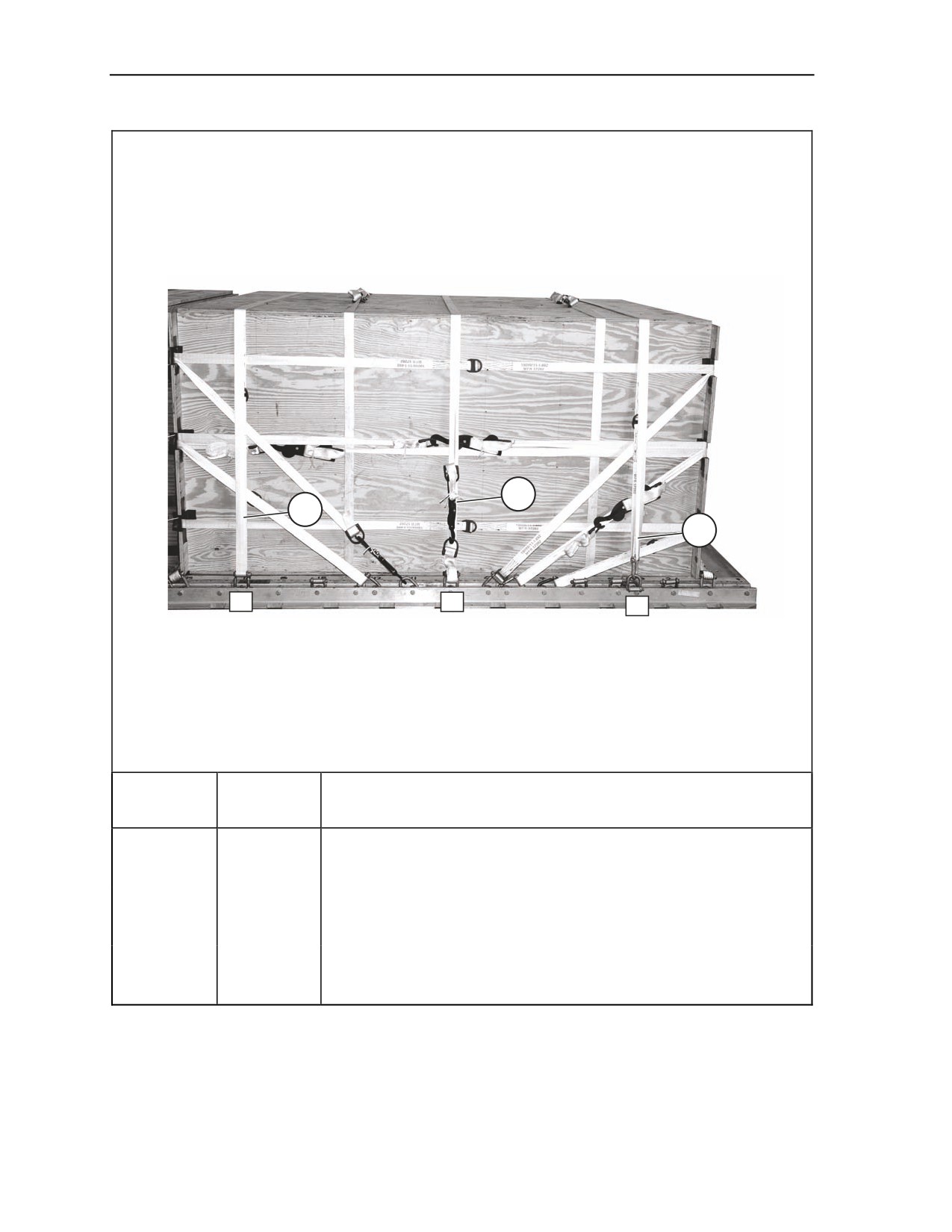
8
3 and 3A
Form a 30-foot lashing. Route the free ends through clevises 3 and
3A. Secure the free ends of the 30-foot lashing on the left side of
box 1 with two D-rings and a load binder.
9
10 and 10A
Form a 30-foot lashing. Route the free ends through clevises 10 and
10A. Secure the free ends of the 30-foot lashing on the right side of
box 1 with two D-rings and a load binder.
10
14 and 14A
Form a 30-foot lashing. Route the free ends through clevises 14 and
14A. Secure the free ends of the 30-foot lashing on the left side of
box 1 with two D-rings and a load binder.
Figure 11-9. Lashings 8 Through 10 Installed
11-14
FM 4-20.105-2/TO 13C7-1-51 VOL II
29 August 2006
Rigging the Mass Supply Load on Dual Row Airdrop System Platform
12
28A
11
16
28
Lashing
Tiedown
Instructions
Number
Clevis
Number
11
16 and 28
Route a 15-foot lashing through clevis 16 and through its own D-
ring. Route the lashing through the front left middle cutout of box 2.
Route a 15-foot lashing through clevis 28 and through its own D-
ring. Route the lashing through the rear left middle cutout of box 2.
Secure the free ends of the lashings on the front left side of box 2
using two D-rings and a load binder.
12
16A and
Route a 15-foot lashing through clevis 16A and through its own D-
28A
ring. Route the lashing through the front right middle cutout of box
2. Route a 15-foot lashing through clevis 28A and through its own
D-ring. Route the lashing through the rear right middle cutout of box
2. Secure the free ends of the lashings on the front right side of box
2 using two D-rings and a load binder.
Figure 11-10. Lashings 11 and 12 Installed
29 August 2006
FM 4-20.105-2/TO 13C7-1-51 VOL II
11-15
Chapter 11
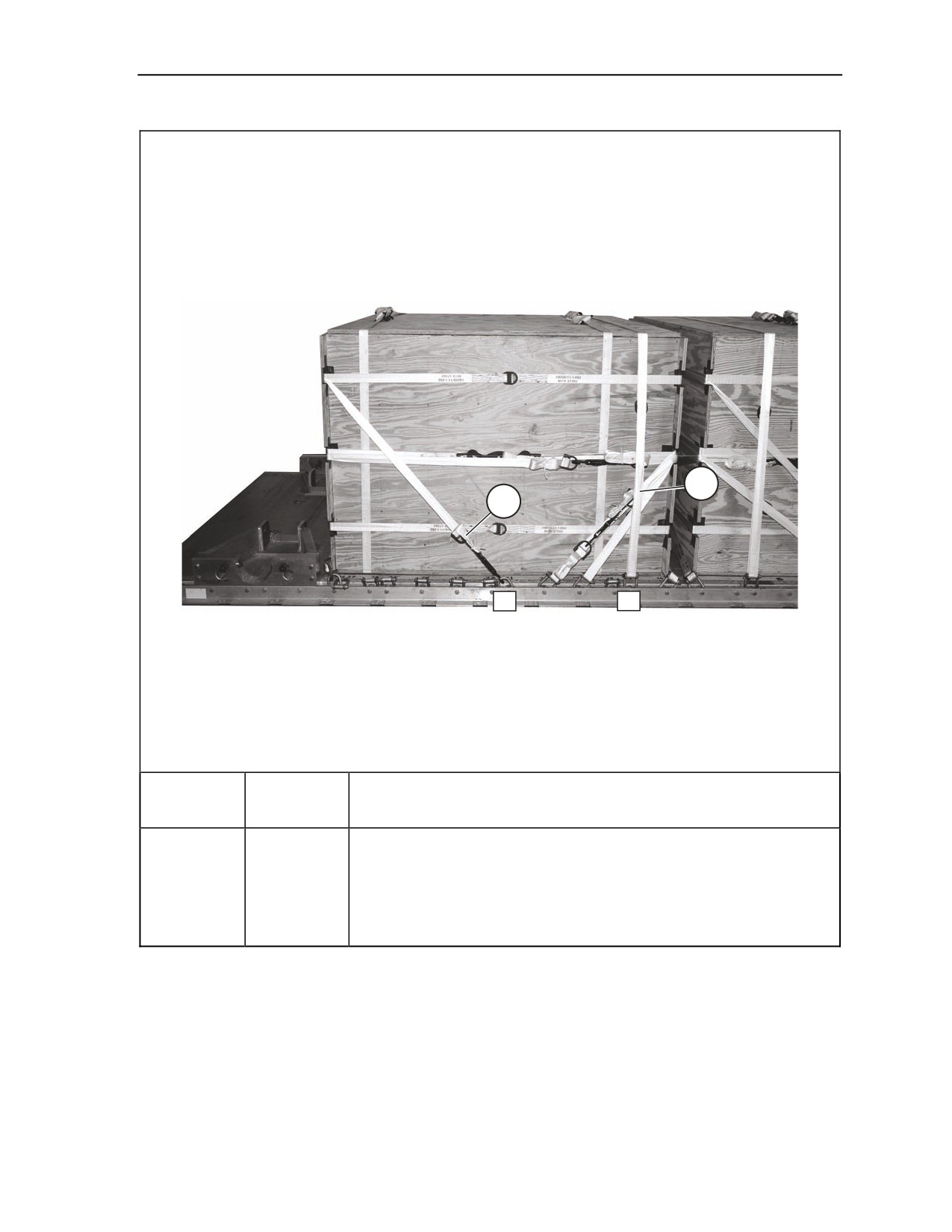
14
13
20
19
Lashing
Tiedown
Instructions
Number
Clevis
Number
13
19 and 19A
Form a 30-foot lashing. Route the free ends of the lashing through
the front middle cutouts of box 2, and through clevises 19 and 19A.
Route the free end from clevis 19 through both middle cutouts and
secure with two D-rings and a load binder on the left side of box 2.
14
20 and 20A
Form a 30-foot lashing. Route the free ends of the lashing through
the front middle cutouts of box 2 and through clevises 20 and 20A.
Route the free end from clevis 20A through both middle cutouts and
secure with two D-rings and a load binder on the right side of box 2.
Figure 11-11. Lashings 13 and 14 Installed
11-16
FM 4-20.105-2/TO 13C7-1-51 VOL II
29 August 2006
Rigging the Mass Supply Load on Dual Row Airdrop System Platform
15
16
21
17
Lashing
Tiedown
Instructions
Number
Clevis
Number
15
17 and 17A
Form a 30-foot lashing. Route the free ends through clevises 17 and
17A. Secure the free ends of the 30-foot lashing on the left side of
box 2 with two D-rings and a load binder.
16
21A and 21
Route a 15-foot lashing through clevis 21A and through its own D-
ring. Route the lashing through both rear top cutouts of the box 2.
Secure the lashing with a D-ring and a load binder to clevis 21.
Figure 11-12. Lashings 15 and 16 Installed
29 August 2006
FM 4-20.105-2/TO 13C7-1-51 VOL II
11-17
Chapter 11
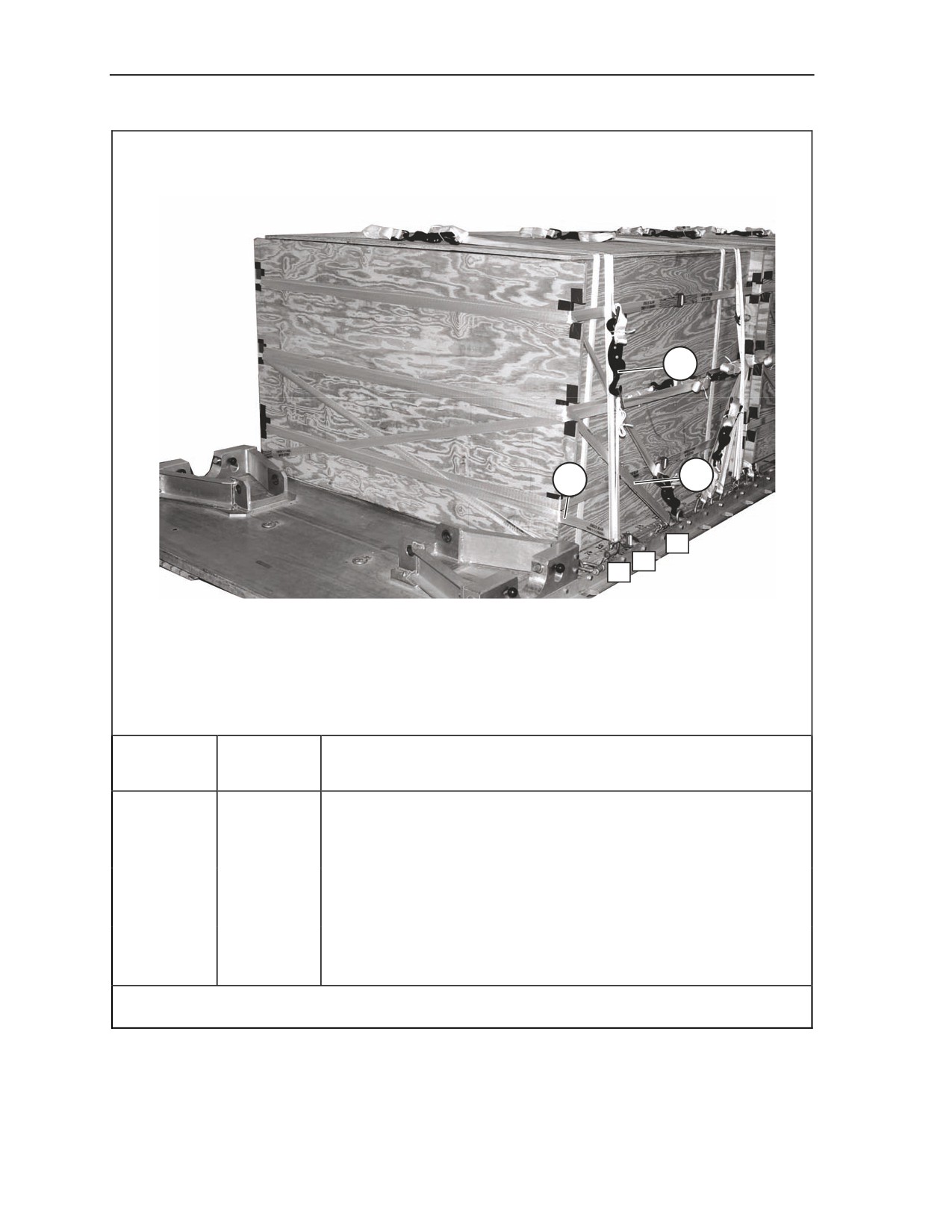
18
17
19
22
24
25
Lashing
Tiedown
Instructions
Number
Clevis
Number
17
22 and 22A
Form a 30-foot lashing. Route the free ends of the lashing through
the rear middle cutouts of box 2, and through clevises 22 and 22A.
Route the free end from clevis 22 through both middle cutouts and
secure with two D-rings and a load binder on the left side of box 2.
18
24 and 24A
Route a 15-foot lashing through clevis 24 and through its own D-
ring. Route the lashing through both rear bottom cutouts of box 2.
Secure the lashing with a load binder and D-ring to clevis 24A.
19
25 and 25A
Form a 30-foot lashing. Route the free ends through clevises 25
and 25A. Secure the free ends of the 30-foot lashing on the right
side of box 2 with two D-rings and a load binder.
Note. Fill the space between box 1 and box 2 with honeycomb and cellulose wadding. Secure
with type III nylon webbing.
Figure 11-13. Lashings 17 Through 19 Installed
11-18
FM 4-20.105-2/TO 13C7-1-51 VOL II
29 August 2006
Rigging the Mass Supply Load on Dual Row Airdrop System Platform
INSTALLING THE ATTITUDE CONTROL SYSTEM (ACS) AND
SUSPENSION SLINGS
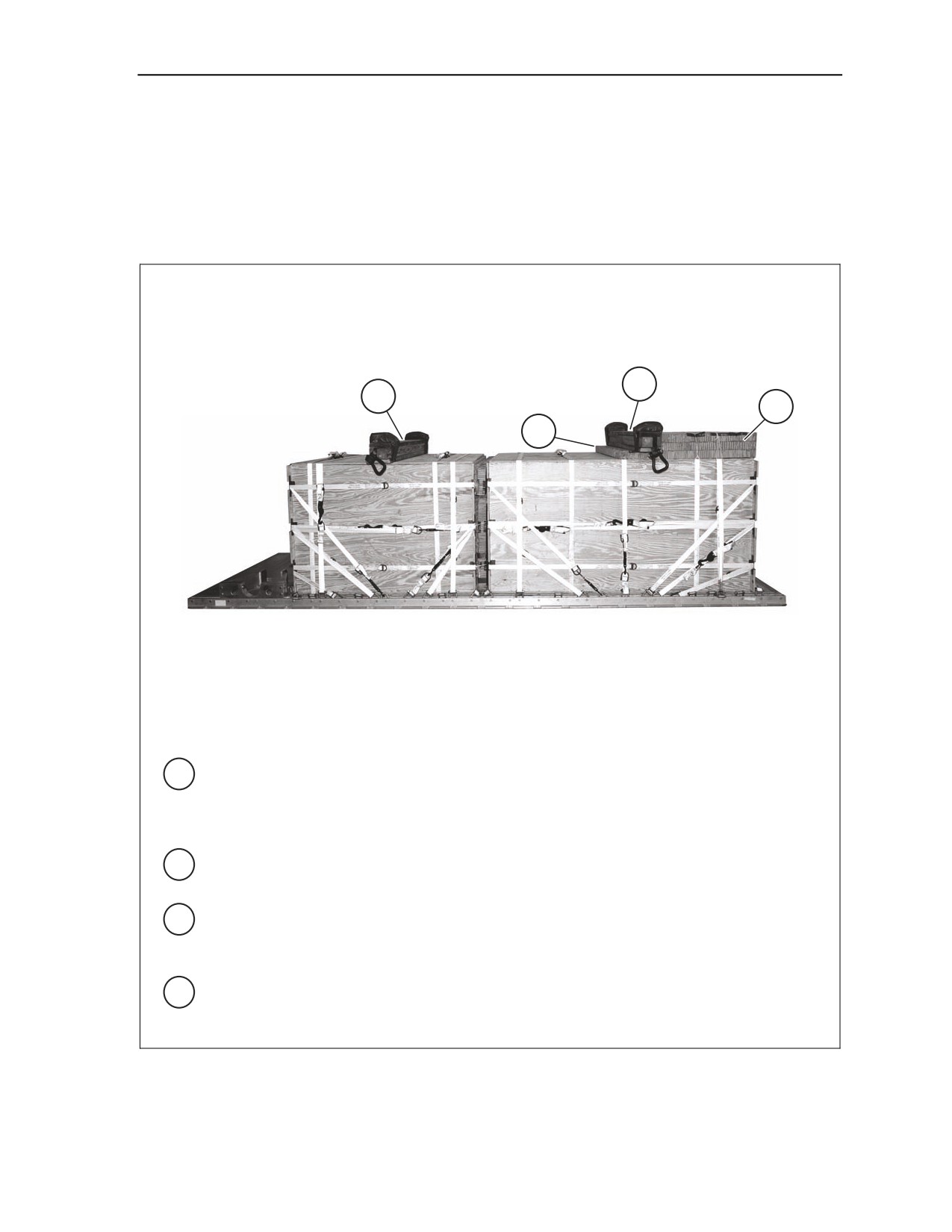
11-5. Construct, inspect and position the ACS according to Chapter 2, Volume I and as shown in Figure
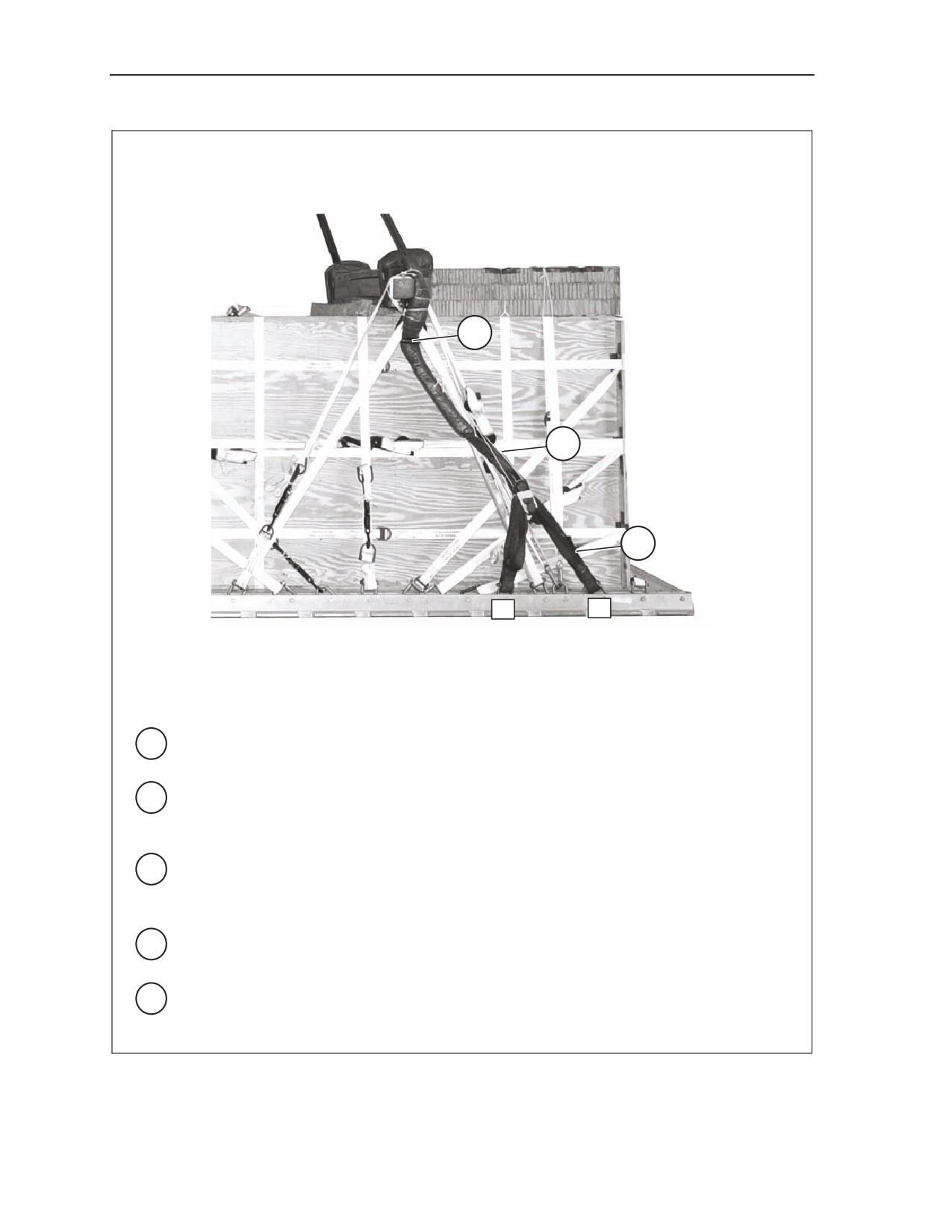
11-14. Install the suspension slings and secure the ACS according to Chapter 2, Volume I and as shown in
Figure 11-15.
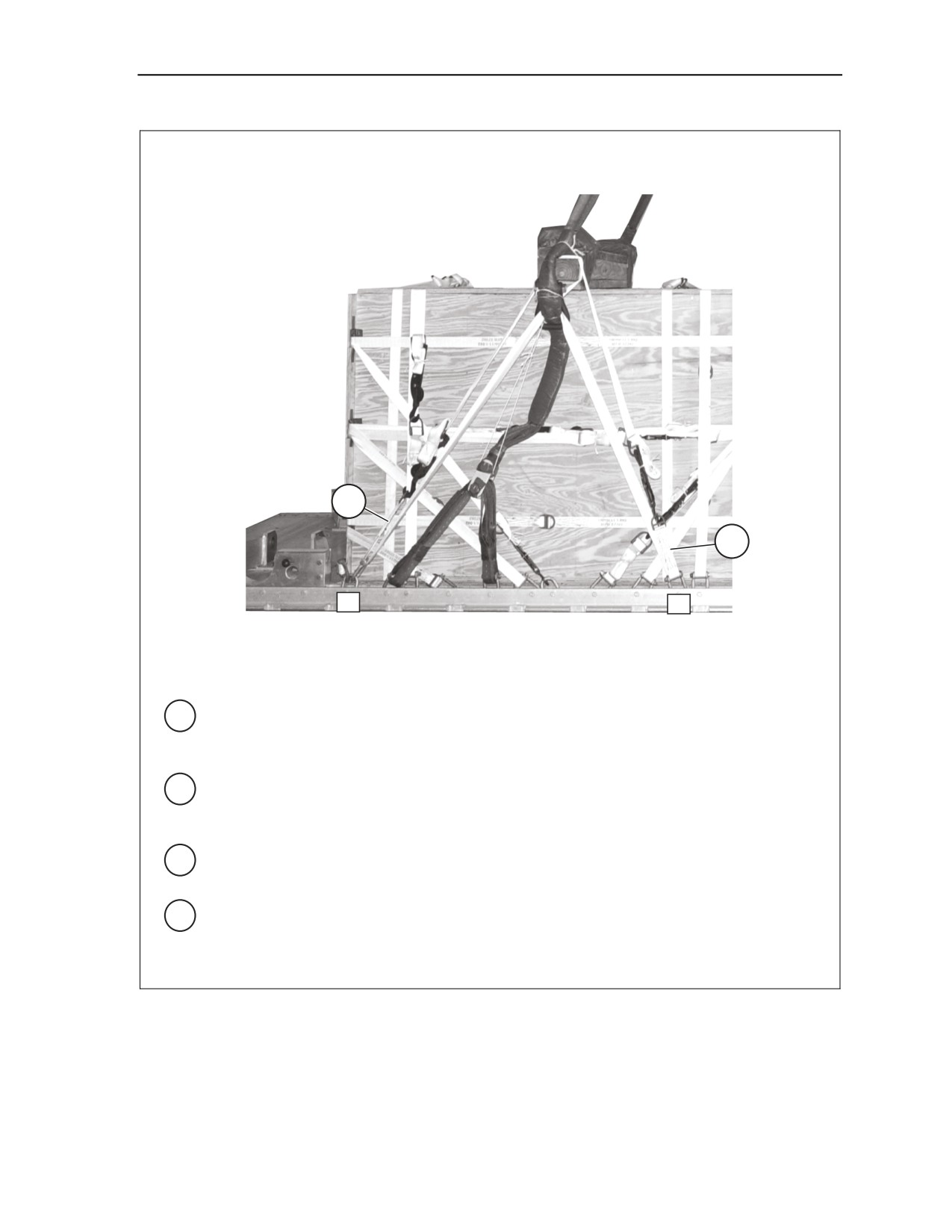
3
4
1
2
1
Cut three pieces of 36- by 72-inch honeycomb. Position the three pieces on top of one
another and flush with the front edge of box 1. Secure the pieces in place with two lengths
of type III, nylon cord to a convenient point on the load. Tape the edges where the cord
makes contact with the honeycomb.
2
Cut a 12 ½- by 72-inch piece of honeycomb. Position the piece to the rear of the 36- by
72-inch honeycomb previously installed.
3
Position the front ACS on top of the 12 ½- by 72-inch piece of honeycomb on box 1. The
ACS will set flush against the 36- by 72-inch piece of honeycomb with the 4- by 4-inch
piece of lumber to the rear.
4 Position the rear ACS on top of box 2, 32 inches from the rear edge and centered with the
4- by 4-inch piece of lumber to the front.
Figure 11-14. ACS Positioned
29 August 2006
FM 4-20.105-2/TO 13C7-1-51 VOL II
11-19
Chapter 11
2
4
1
6
2
1 Install a 3-foot (4-loop), type XXVI nylon sling to clevises 2 and 6. Connect an 11-foot (4
loop), type XXVI nylon sling to the center of the sling with a 3 ¾-inch, two-point link.
2 Route the sling through the clevis on the front ACS. Pad and tape the 11-foot (4 loop),
type XXVI nylon sling with felt from a point 6 inches below the clevis to a point 6 inches
above the ACS.
3 Install a 3-foot (4-loop), type XXVI nylon sling to the other end of the 11-foot (4 loop), type
XXVI nylon sling with a 3 ¾-inch, two-point link. Pad and tape the link with felt (not
shown).
4 Safety tie the 3 ¾-inch two-point link to the ACS clevis using one turn single, type III nylon
cord. Ensure the tie is tight.
5 Repeat steps 1 through 4 on the front left side of the load using clevises 2A and 6A (not
shown).
Figure 11-15. Suspension Slings Installed and Secured
11-20
FM 4-20.105-2/TO 13C7-1-51 VOL II
29 August 2006
Rigging the Mass Supply Load on Dual Row Airdrop System Platform
8
7
6
13
5
4
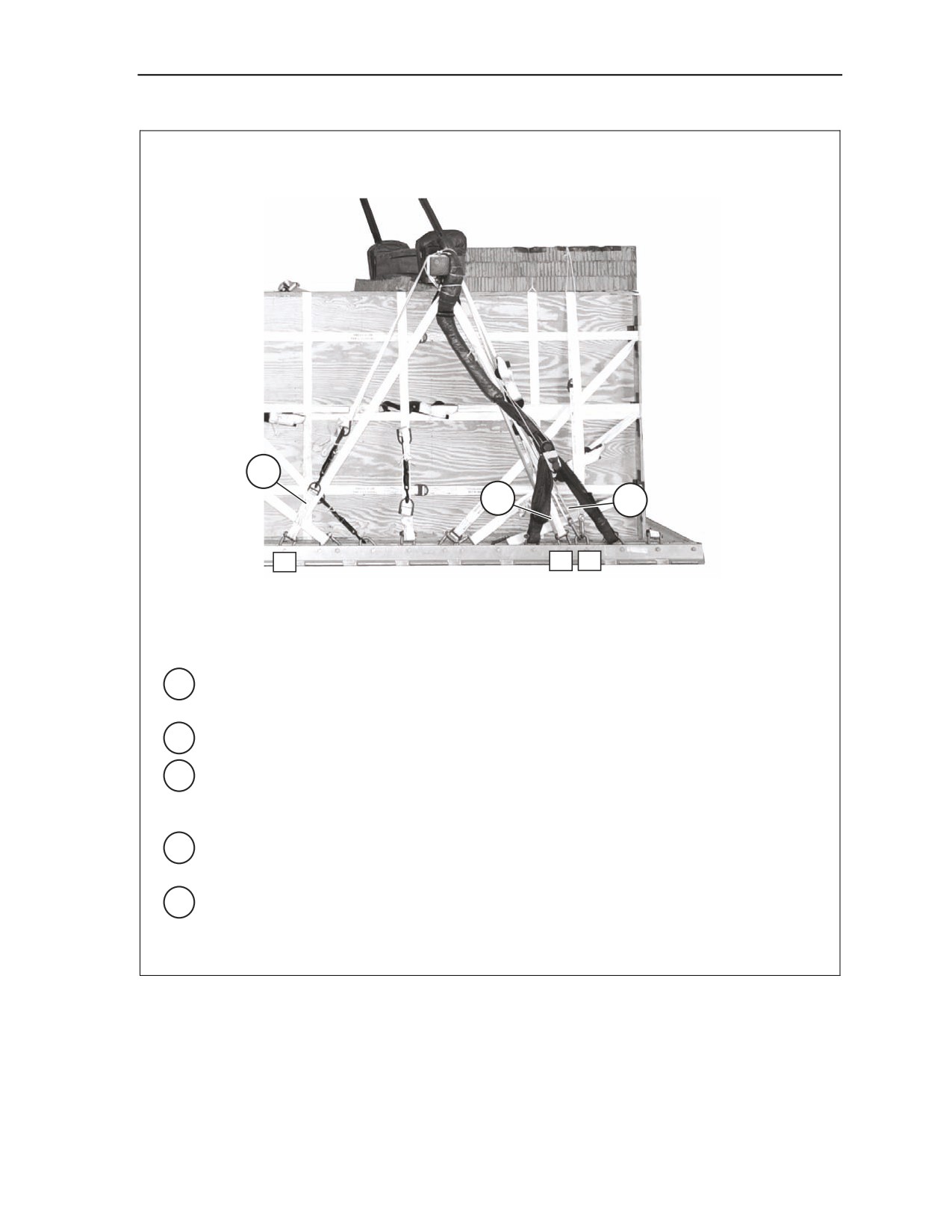
6 Route a 15-foot lashing from clevis 4 through the right front ACS clevis from outside to
inside, rear to front and around the ACS 4- by 4-inch piece of lumber and back to clevis 4.
7 Repeat above step using clevis 5.
8 Route a 15-foot lashing from clevis 13 through the right front ACS clevis from outside to
inside, front to rear and around the ACS 4- by 4-inch piece of lumber and back to clevis
13.
9 Repeat steps 6 through 8 on the left side of the load using clevises 4A, 5A, and 13A (not
shown).
10 Ensure that the ACS is straight and centered on the load. Load binders on both sides of
the load must be closed at the same time in the following sequence: 4 and 4A, 5 and 5A
and 13 and 13A.
Figure 11-15. Suspension Slings Installed and Secured (Continued)
29 August 2006
FM 4-20.105-2/TO 13C7-1-51 VOL II
11-21
Chapter 11
12
13
11
26
23
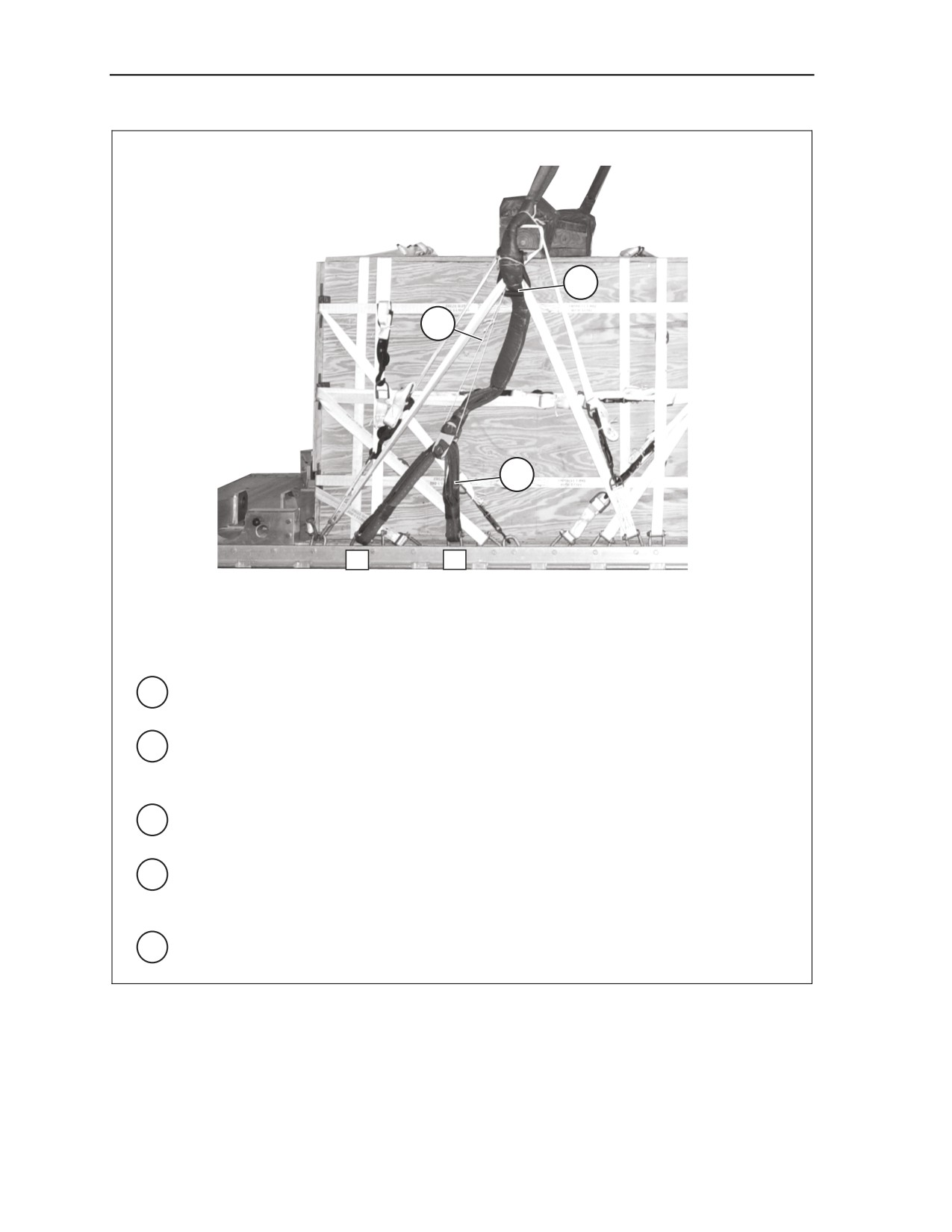
11 Install a 3-foot (4-loop), type XXVI nylon sling to clevises 23 and 26. Connect an 11-foot
(4-loop), type XXVI nylon sling to the center of the sling with a 3 ¾-inch, two-point link.
12 Route the sling through the clevis on the right rear ACS. Pad and tape the 11-foot (4 loop),
type XXVI nylon sling with felt from a point 6 inches below the clevis to a point 6 inches
above the ACS.
13 Safety tie the 3 ¾-inch, two-point link to the ACS clevis using one-turn single, type III nylon
cord. Ensure the tie is tight.
14 Install a 3-foot (4-loop), type XXVI nylon sling to the other end of the 11-foot (4 loop), type
XXVI nylon sling with a 3 ¾-inch, two-point link. Pad and tape the link with felt (not
shown).
15 Repeat steps 11 through 14 on the left side of the load using clevises 23A and 26A.
Figure 11-15. Suspension Slings Installed and Secured (Continued)
11-22
FM 4-20.105-2/TO 13C7-1-51 VOL II
29 August 2006
Rigging the Mass Supply Load on Dual Row Airdrop System Platform
17
16
27
18
16 Route a 15-foot lashing from clevis 18 through the right rear ACS clevis from outside to
inside, rear to front and around the ACS 4- by 4-inch piece of lumber and back to clevis
18.
17 Route a 15-foot lashing from clevis 27 through the right rear ACS clevis from outside to
inside, front to rear and around the ACS 4- by 4-inch piece of lumber and back to clevis
27.
18 Repeat steps 16 through 17 on the left side of the load using clevises 18A and 27A (not
shown).
19 Ensure that the ACS is straight and centered on the load. Load binders on both sides of
the load must be closed at the same time in the following sequence: 18 and 18A, and 27
and 27A.
Figure 11-15. Suspension Slings Installed and Secured (Continued)
29 August 2006
FM 4-20.105-2/TO 13C7-1-51 VOL II
11-23
Chapter 11
22
20
21
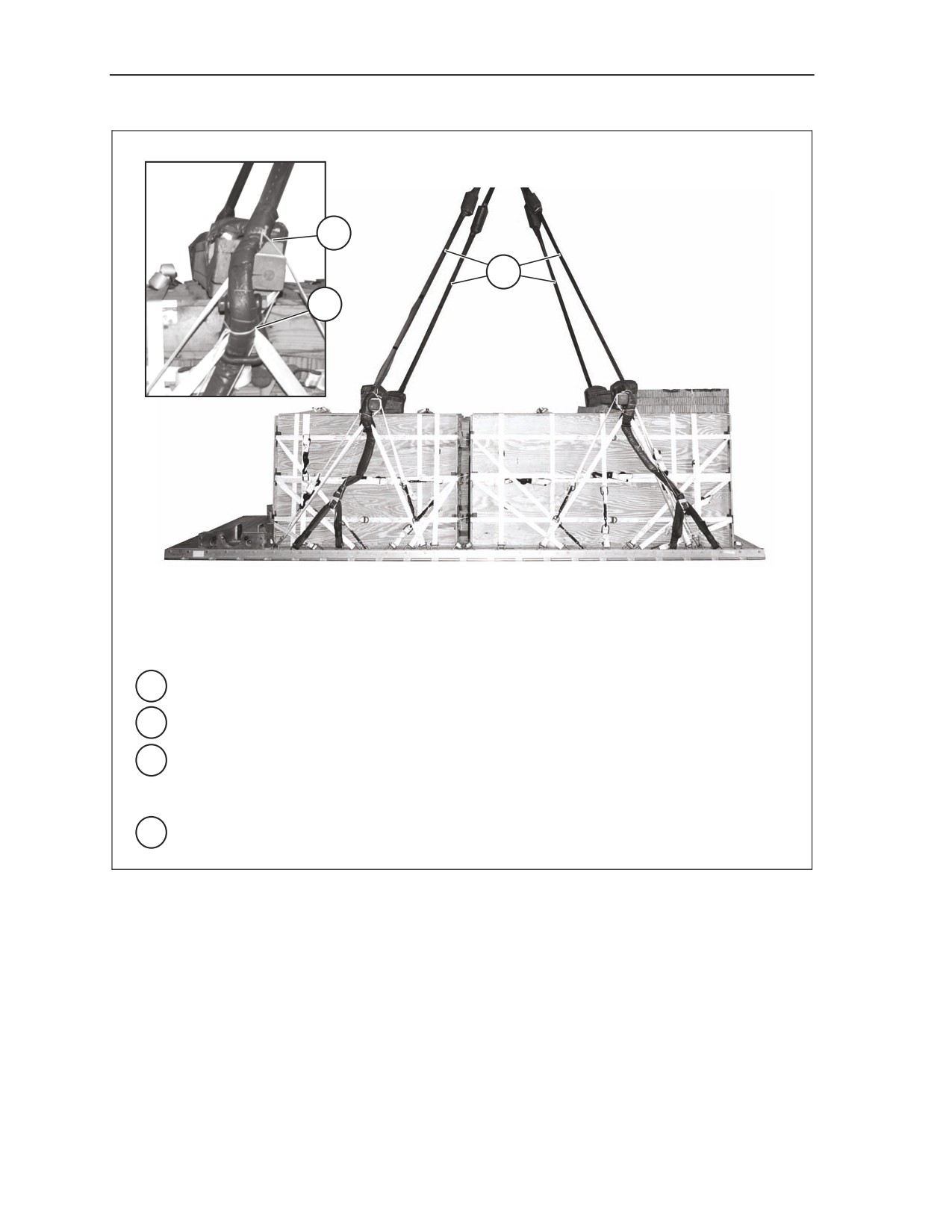
20 Extend the slings upward and remove all slack.
21 Tie a length of type III nylon cord around the 11-foot sling and the ACS sling.
22 Tie a length of type III nylon cord around the 11-foot (4 loop), type XXVI nylon sling, behind
all lashings, and around the 4- by 4-inch piece of lumber of the ACS and tie the ends
together.
23 Repeat steps 20 through 22 on all slings (not shown).
Figure 11-15. Suspension Slings Installed and Secured (Continued)
11-24
FM 4-20.105-2/TO 13C7-1-51 VOL II
29 August 2006
Rigging the Mass Supply Load on Dual Row Airdrop System Platform
INSTALLING OUTRIGGER ASSEMBLIES
11-6. Assemble, install and safety tie the mast and foot assemblies on the DRAS platform according to TM
10-1670-268-20&P/TO 13C7-52-22 and as shown in Chapter 2, Volume I, Figures 2-42 through 2-44 and
Figure 2-45, steps 1, 2, and 3.
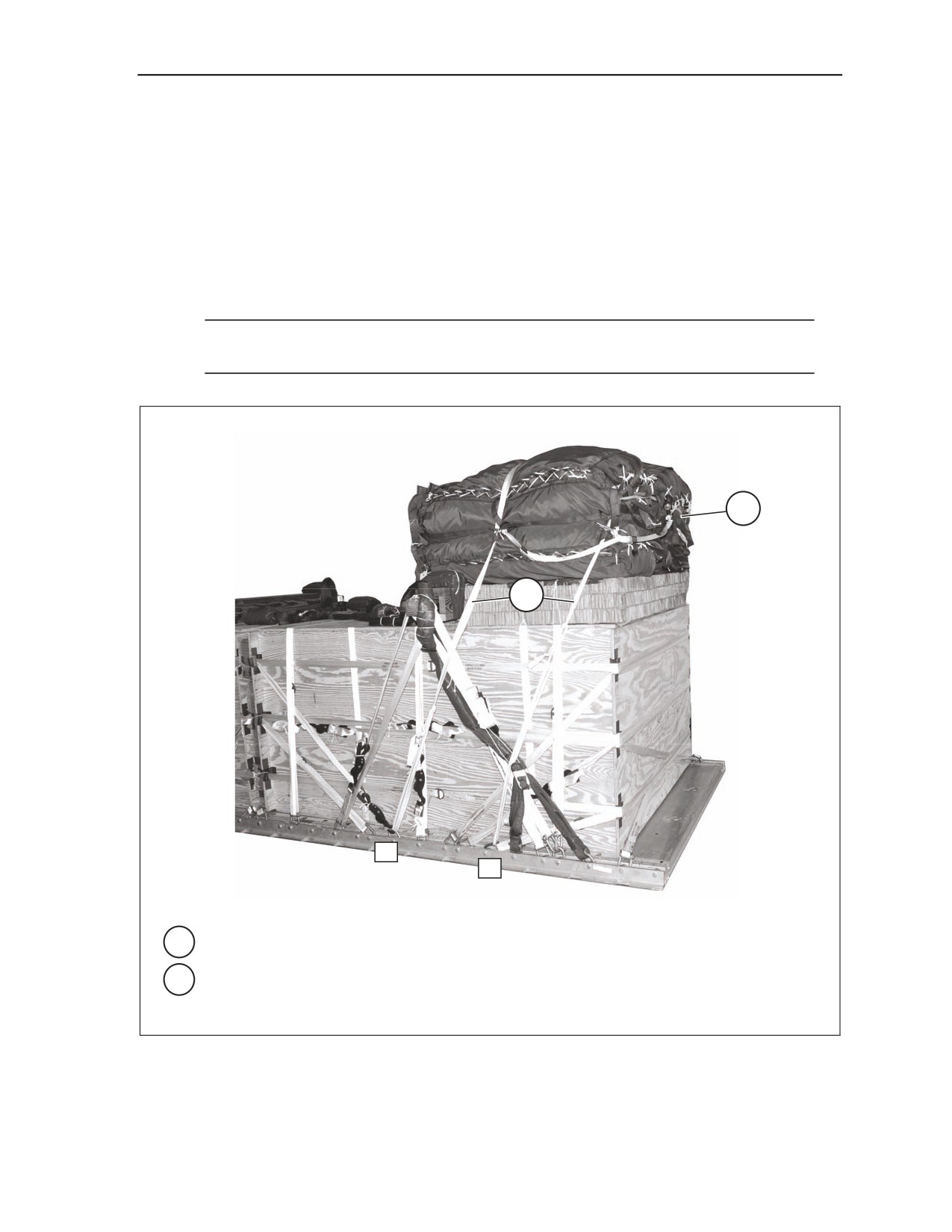
STOWING CARGO PARACHUTES
11-7. Stow and restrain four G-11D cargo parachutes on top of the stowage platform as shown in Chapter
2, Volume I and Figure 11-16.
Note. If weight differs from the load shown, the number of parachutes required must be
recomputed.
1
2
11
7
1 Prepare and stow four G-11D cargo parachutes on the parachute platform.
2 Restrain the parachutes using type VIII nylon webbing to clevises 7 and 7A, and 11 and
11A for the restraint.
Figure 11-16. Cargo Parachute Stowed
29 August 2006
FM 4-20.105-2/TO 13C7-1-51 VOL II
11-25
Chapter 11
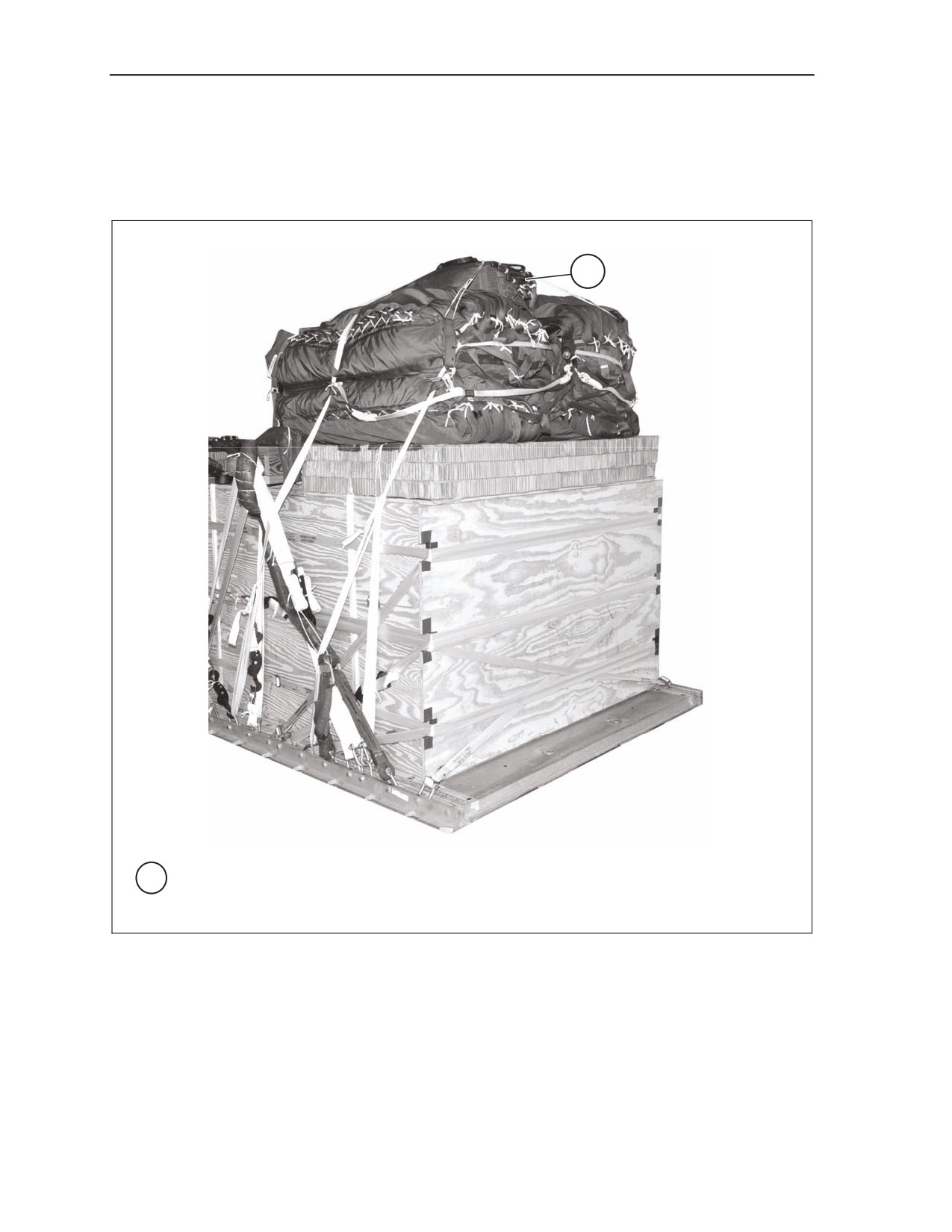
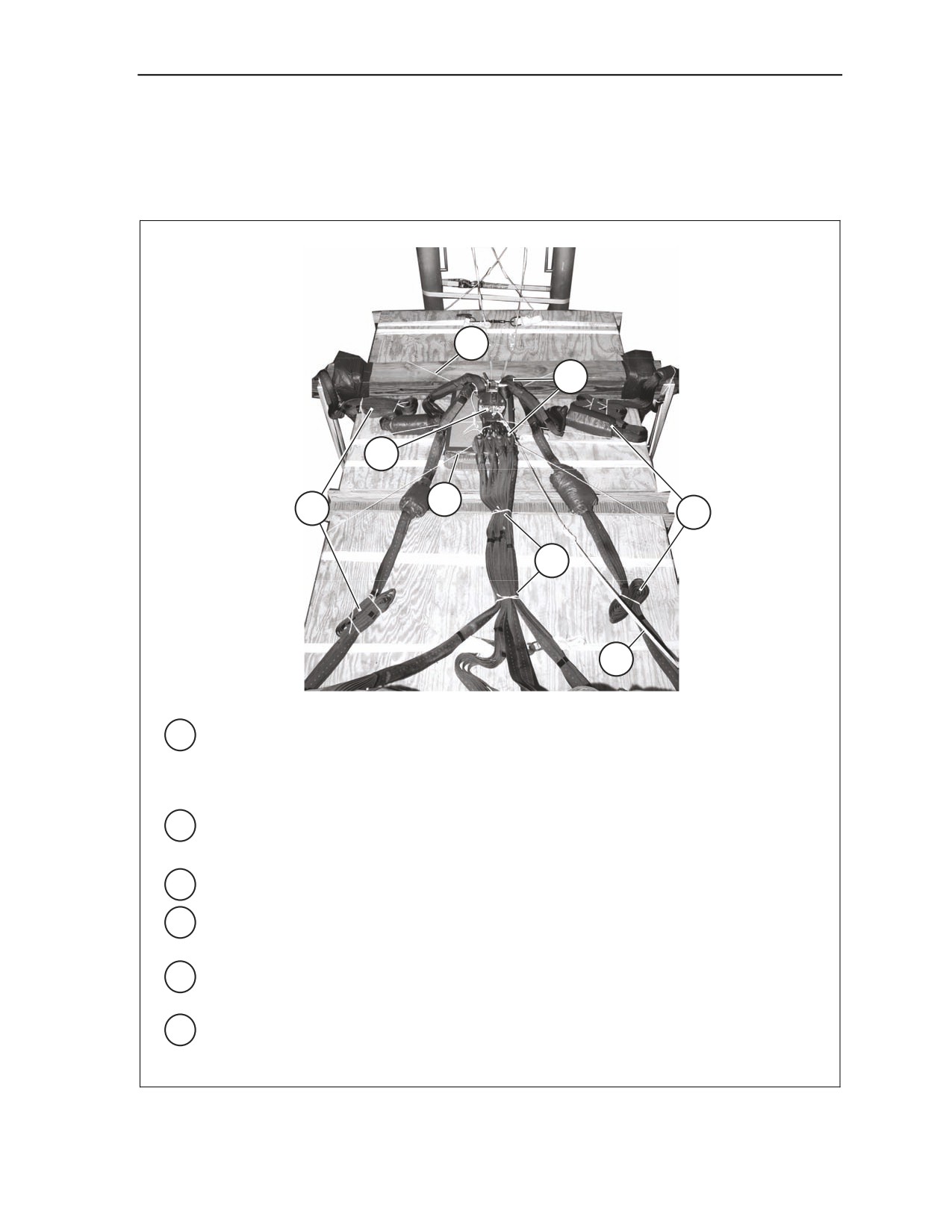
STOWING DEPLOYMENT PARACHUTE
11-8. Prepare, stow and install the deployment parachute according to Chapter 2, Section V, Volume I and
as shown in Figure 11-17.
1
1 Prepare, stow and install the deployment parachute according to Chapter 2, Section V,
Volume I and as shown above.
Figure 11-17. Deployment Parachute Installed
11-26
FM 4-20.105-2/TO 13C7-1-51 VOL II
29 August 2006
Rigging the Mass Supply Load on Dual Row Airdrop System Platform
INSTALLING PARACHUTE RELEASE SYSTEM
11-9. Build an M-1 parachute release stack, prepare and install an M-1 parachute release system according
to Chapter 2, Section VI, Volume I and as shown in Figure 11-18.
5
2
1
5
4
4
3
6
1 Cut two 12- by 18-inch pieces of honeycomb and glue together. Tape the edges and
position and center the honeycomb to the front of the rear ACS. Secure the honeycomb to
a convenient point on the load using type III nylon cord. Center the M-1 release on the
honeycomb stack.
2 Attach the riser extensions and suspension slings to the M-1 release.
Note. Remove the buffers from the ends of the suspension slings that attach to the M-1 release.
3 Group the riser extensions together and tie with type I, ¼-inch cotton webbing.
4 S-fold the slack in the front and rear suspension slings and secure with type I, ¼-inch
cotton webbing.
5 Secure the release to convenient points on the load with type III nylon cord according to
Chapter 2, Section VI, Volume I.
6 Secure the arming wire and lanyard to a parachute carrying handle with three alternating
half hitches and a knot in the running end.
Figure 11-18. M-1 Cargo Parachute Release Installed
29 August 2006
FM 4-20.105-2/TO 13C7-1-51 VOL II
11-27
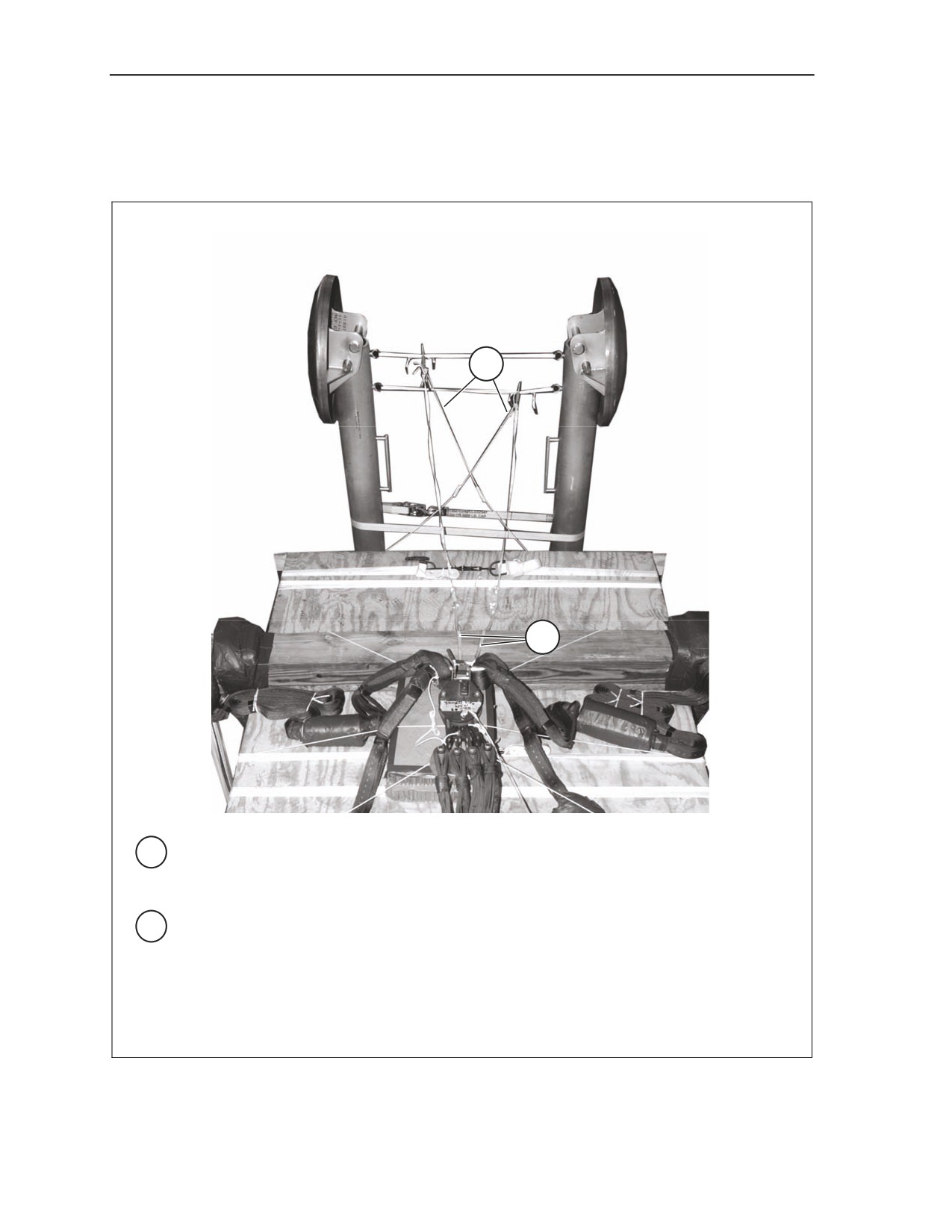
Chapter 11
INSTALLING MAST RELEASE KNIVES
11-10. Install the mast release knives as shown in Chapter 2, Volume I, Figure 2-45, steps 4 through 10
and as shown in Figure 11-19.
2
RIGHT
LEFT
1
1 The length of the left and right ½-inch tubular nylon webbing from the base of the guillotine
knives to the lower suspension links of the release is 112 inches as shown in Figure 2-45,
steps 5 and 6.
2 Tie a length of type III nylon cord from the upper guillotine knife to the left top lashing on
the rear endboard of box 2 that measures 73 inches from knot to knot. Repeat for the
lower guillotine knife attaching the type III nylon cord to the right top lashing on the rear
endboard of box 2 as shown in Figure 2-45, steps 9 and 10. Fold the slack in the type III
nylon cord and tape with 2-inch masking tape.
Note. All measurements are from knot to knot.
Figure 11-19. Mast Release Knives Installed
11-28
FM 4-20.105-2/TO 13C7-1-51 VOL II
29 August 2006
Rigging the Mass Supply Load on Dual Row Airdrop System Platform
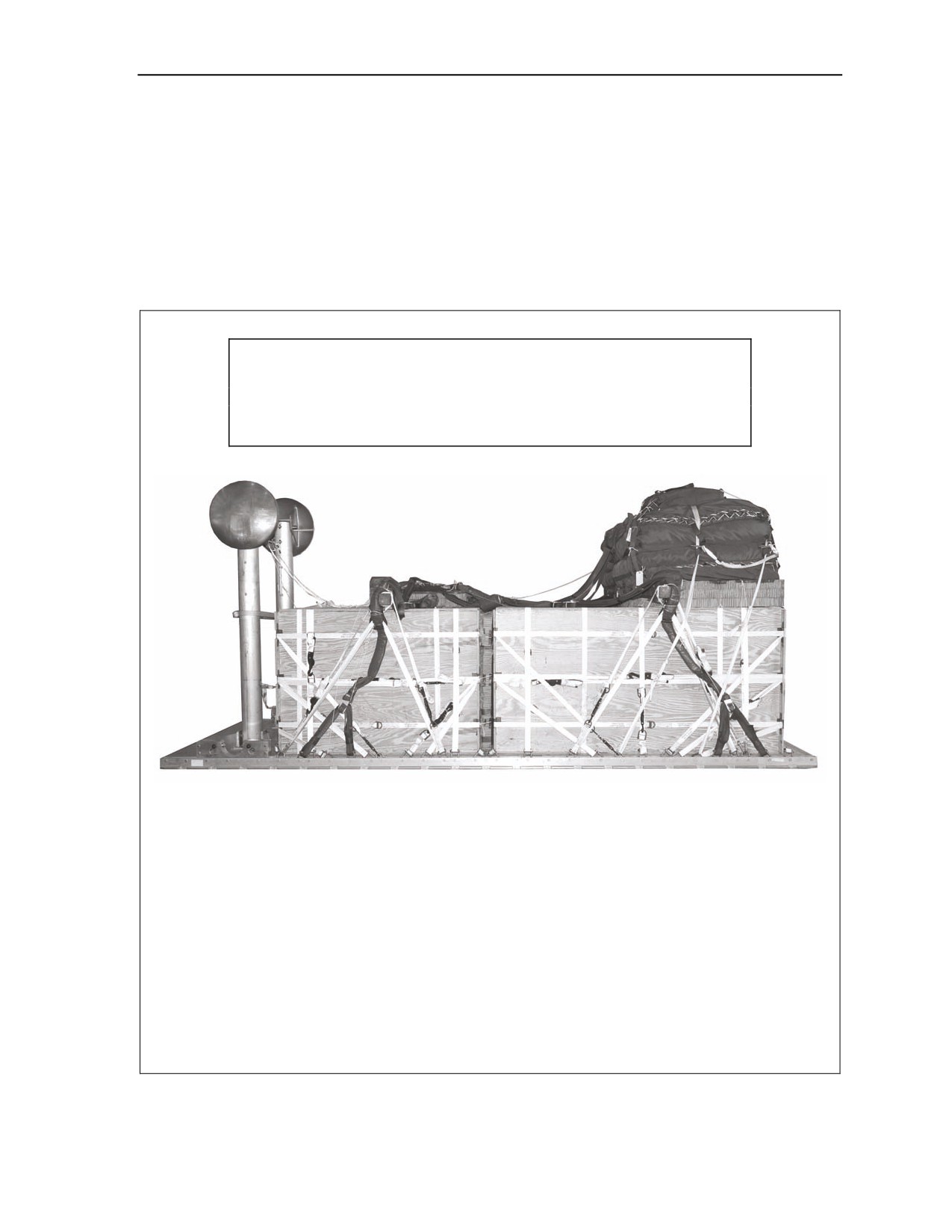
MARKING RIGGED LOAD
11-11. Mark the rigged load according to Chapter 2, Section IX, Volume I and as shown in Figure 11-20.
A Shipper’s Declaration for Dangerous Goods is required. If load varies from the one shown, the weight,
height, CB and parachute requirements must be recomputed.
EQUIPMENT REQUIRED
11-12. The equipment required to rig this load is listed in Table 11-1.
CAUTION
Make the final rigger inspection required by Chapter 2, Section IX,
Volume I before the load leaves the rigging site.
RIGGED LOAD DATA
Weight: Load shown
14,120 pounds
Maximum load allowed
14,500 pounds
Height
97 inches
Width
94 inches
Overall Length
216 inches
Overhang: Front
0 inches
Rear
0 inches
Center of Balance: (from front edge of platform):
90 inches
Figure 11-20. Mass Supply Load Rigged on DRAS Platform
29 August 2006
FM 4-20.105-2/TO 13C7-1-51 VOL II
11-29
Chapter 11
Table 11-1. Equipment Required for Rigging a Mass Supply Load on DRAS Platform
National Stock Number
Item
Quantity
8040-00-273-8713
Adhesive paste, 1-gallon
As required
4020-00-240-2146
Cord, nylon, type III, 550-pound
As required
Clevis,
4030-00-090-5354
Large
5
4030-00-678-8562
Medium
4
1670-00-360-0328
Cover, clevis, large
4
8135-00-664-6958
Cushioning material, packaging, cellulose wadding
As required
8305-00-191-1101
Felt, ½-inch
As required
1670-01-493-6418
Link assembly, two-point, 3 ¾-inch
9
Lumber:
5510-00-220-6146
2- by 4-inch
As required
5510-00-220-6148
2- by 6-inch
As required
5510-00-220-6274
4- by 4-inch
As required
5530-00-618-8073
Plywood, ¾-inch
14 sheets
5315-00-010-4659
Nail, steel wire, common, 8d
As required
1670-00-753-3928
Pad, energy dissipating, honeycomb
As required
1670-01-487-5461
Static line assembly release away
1
Parachute:
Cargo:
1670-01-016-7841
G-11D
4
1670-00-040-8135
Cargo extraction: 28-foot (deployment parachute)
1
Platform, dual row, 18-foot
1670-01-485-1654
Rail, DRAS
2
1670-01-486-1342
Roller Pad, DRAS
4
1670-01-486-1656
Panel Assembly, Main
9
1670-01-162-2372
Clevis assembly
62
1670-01-097-8816
Release, cargo parachute, M-1
1
Sling, cargo airdrop
For suspension:
1670-01-062-6310
11-foot (4-loop), type XXVI nylon webbing
4
1670-01-062-6306
3-foot (4-loop), type XXVI nylon webbing
8
For deployment:
1670-01-062-6306
3-foot (4-loop), type XXVI nylon webbing
1
For riser extension:
1670-01-062-6313
60-foot (3-loop), type XXVI nylon webbing
4
For ACS:
1670-01-063-7761
16-foot (2-loop), type XXVI nylon webbing
2
11-30
FM 4-20.105-2/TO 13C7-1-51 VOL II
29 August 2006
Rigging the Mass Supply Load on Dual Row Airdrop System Platform
Table 11-1. Equipment Required for Rigging a Mass Supply Load on a DRAS Platform
(Continued)
National Stock Number
Item
Quantity
1670-00-040-8219
Strap, parachute release, multicut
2
1670-00-937-0271
Knife release, cargo (guillotine)
6
1670-01-487-5464
Outrigger assembly
1
7510-00-266-5016
Tape, adhesive, 2-inch
As required
1670-00-937-0271
Tie-down assembly, 15-foot
64
1670-00-725-1437
Tie-down, cargo, aircraft, (CGU-1B)
5
Webbing:
8305-00-268-2411
Cotton, ¼-inch, type I
As required
Nylon:
8305-00-082-5752
Tubular, ½-inch
As required
8305-00-263-3591
Type VIII
As required
29 August 2006
FM 4-20.105-2/TO 13C7-1-51 VOL II
11-31
Appendix A
Verifying the Center of Balance on a DRAS Platform Load
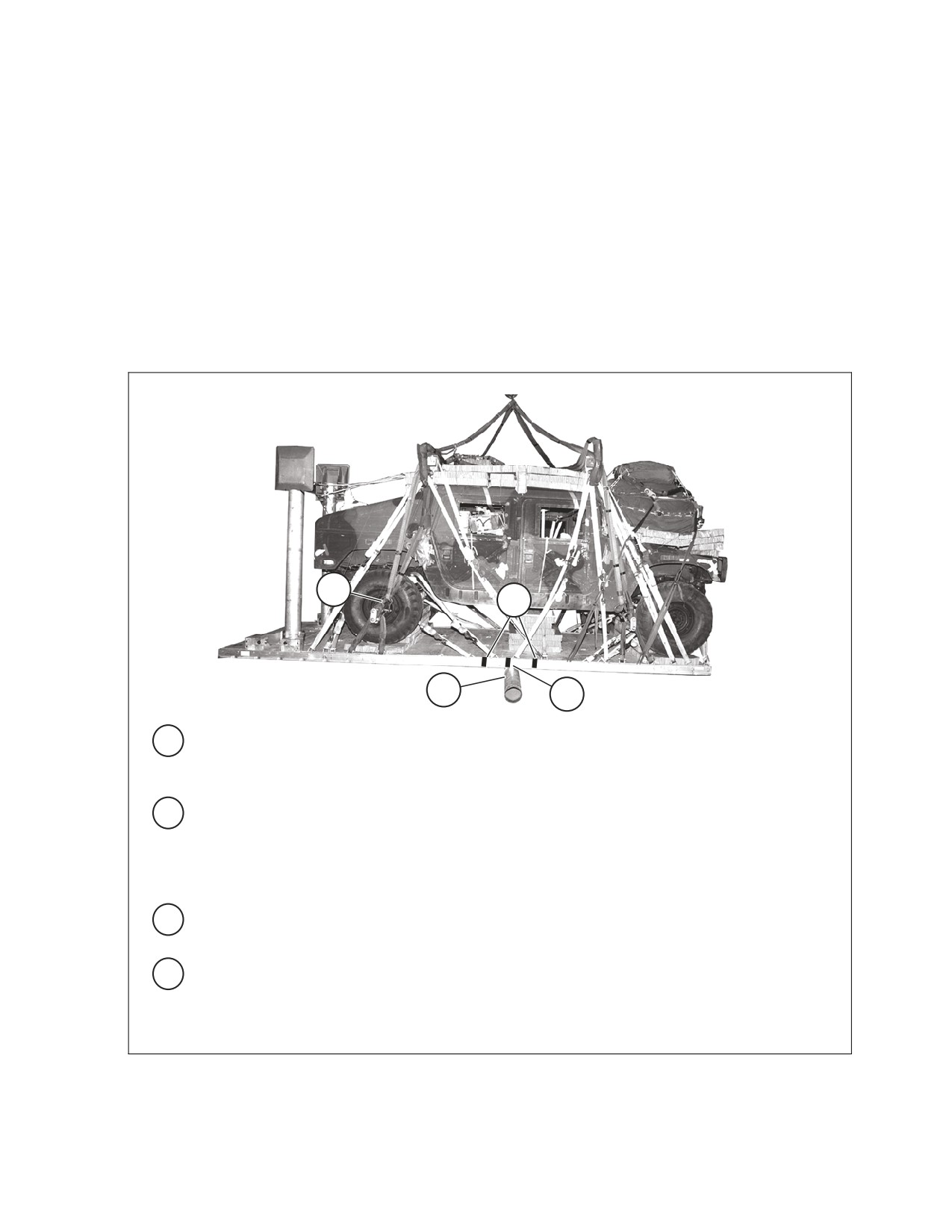
VERIFYING THE CENTER OF BALANCE
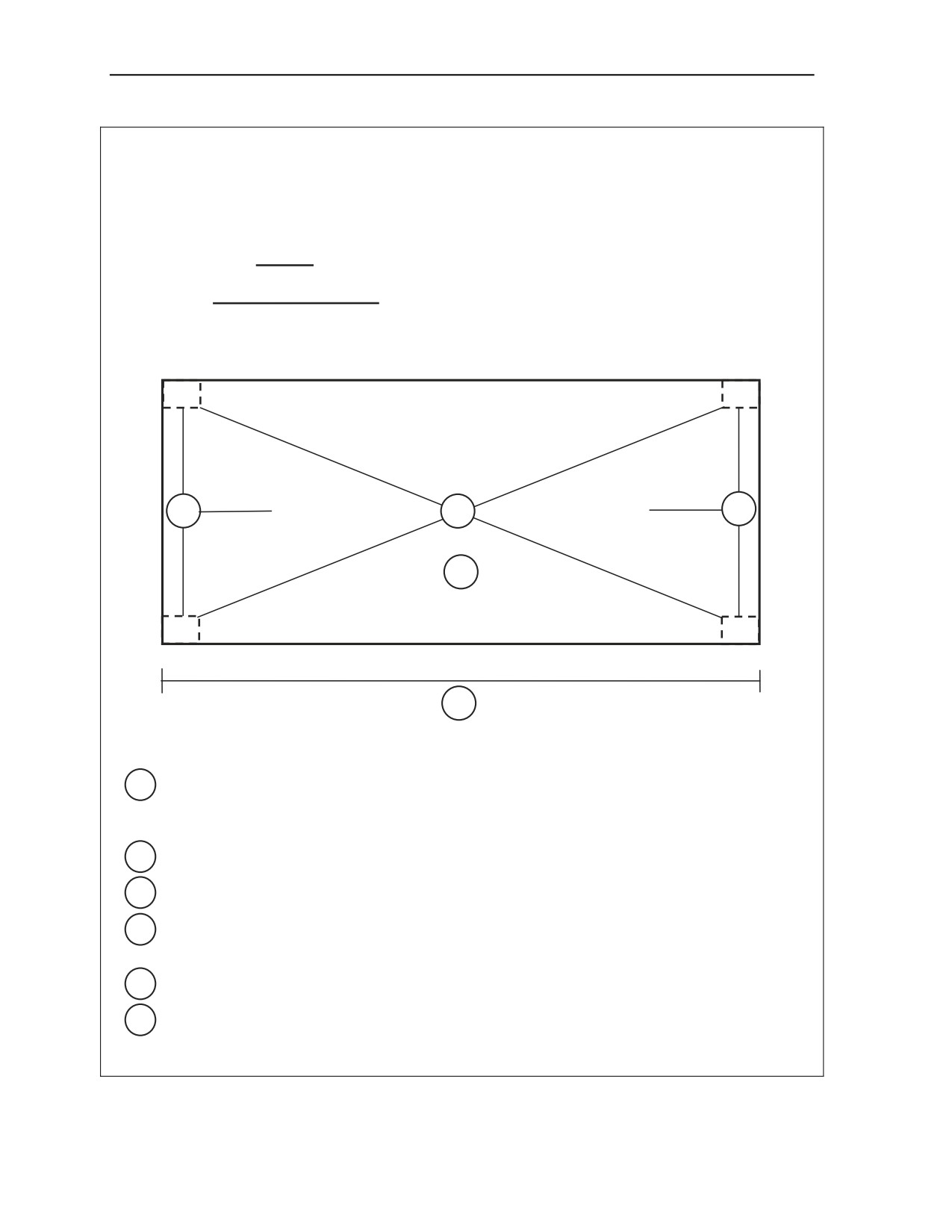
A-1. The center of balance (CB) of a DRAS load must be verified and marked on each side of the
platform. The pole method and the calculation method are two ways of verifying the CB. The instructions
for these methods are given in Figures A-1 and A-2.
2
1
3
4
1
Mark the CB range on the side of the platform by placing a piece of adhesive tape 85 inches
from the front of the platform and another piece of adhesive tape 99 inches from the front of
the platform.
2
Make a lift kit by placing four 11-foot (4-loop), Type XXVI nylon slings on a large clevis. Attach
the lift kit sling legs to the 3-foot suspension slings on the front and rear of the platform with
medium clevises (if additional length is required add a second medium clevis through the first
medium clevis). Ensure the lift kit slings are routed to the front of the front ACS and to the
rear of the rear ACS.
3
Raise the load and place a pipe or pole (minimum length of 8 feet and minimum diameter of 6
inches) under the load, perpendicular to the platform, in the CB range.
4 When the load balances, mark the CB on both sides of the platform.
Note. The center of balance MUST be within the CB range of 85 - 99 inches from the front of the
platform.
Figure A-1. CB Verified Using the Pole Method
29 August 2006
FM 4-20.105-2/TO 13C7-1-51 VOL II
A-1
Verifying the Center of Balance on a DRAS Platform Load
Note. When using the calculation method, it is best to put a 4- by 4-inch piece of lumber across the
front and rear ends of the platform. The lumber should cross the center of any portable scales used.
If the 4- by 4-inch piece of lumber is unavailable, make sure that the forward and rear edges of the
platform line up with the center of the scales.
L x RW
= CB in inches from front edge of platform
TW
216 inches x 4,162 lbs
= 86 inches from front edge of platform
10,455 lbs
C = 2,081 lbs
A = 3,147 lbs
C + D = RW
A + B = FW
3
1
2
2,081 + 2,081 = 4,162 lbs
3,147 + 3,146 = 6,293 lbs
4
FW + RW = TW
6,293 + 4,162 = 10,455 lbs
D = 2,081 lbs
B = 3,146 lbs
LENGTH = 216 INCHES
5
Note. Use the lift kit and instructions in Figure A-1, Step 2 to lift the load.
1 Place a portable scale under each corner of the DRAS platform. Label the front scales A and
B and the rear scales C and D. Place the scales the same distance from the front and rear
edge of the platform on both sides.
2 Add the weights of the front scales together (A + B = FW) (FW = Front Weight).
3 Add the weights of the rear scales together (C + D = RW) (RW = Rear Weight).
4 Add the front weight (FW) and the rear weight (RW) together. This equals the total weight
(FW + RW = TW) (TW = Total Weight).
5 Measure the platform length in inches. This equals the length (Length = L).
6 Multiply the length (L) by the rear weight (RW) and divide by the total weight (TW). This
equals the center of balance (CB) in inches from the front edge of the platform.
Figure A-2. CB Verified Using the Calculation Method
A-2
FM 4-20.105-2/TO 13C7-1-51 VOL II
29 August 2006
Verifying the Center of Balance on a DRAS Platform Load
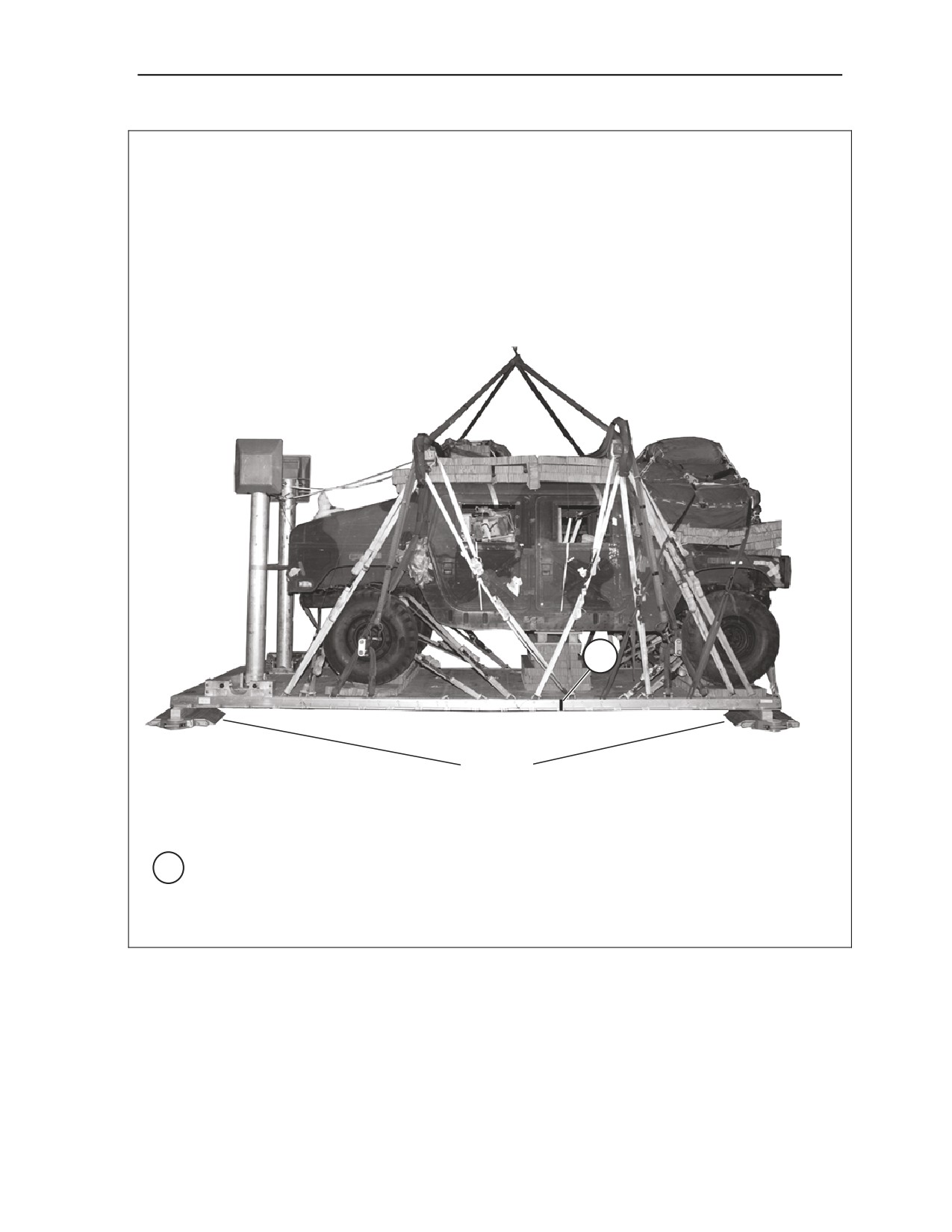
Notes.
1. Use the lift kit and instructions in Figure A-1, Step 2 to lift the load.
2. When using the calculation method, it is best to put a 4- by 4-inch piece of lumber across
the front and rear ends of the platform. The lumber should cross the center of any portable
scales used. If the 4- by 4-inch piece of lumber is unavailable, make sure that the forward
and rear edges of the platform line up with the center of the scales.
7
CB
SCALES
7
Mark the CB on both sides of the platform.
Note. The center of balance MUST be within the CB range of 85 - 99 inches from the front of the
platform.
Figure A-2. CB Verified Using the Calculation Method (Continued)
29 August 2006
FM 4-20.105-2/TO 13C7-1-51 VOL II
A-3
Glossary
ACS
attitude control system
AD
airdrop
AFB
Air Force base
AFMAN
Air Force Manual
AFR
Air Force regulation
AFTO
Air Force technical order
ALC
Airlift Logistics Center
AGL
above ground level
attn
attention
CB
center of balance
d
penny
DA
Department of the Army
DC
District of Columbia
DD
Department of Defense
diam
diameter
DRAS
dual row airdrop system
FM
field manual
HMMWV
high mobility multipurpose wheeled vehicle
HQ
headquarters
JAI
joint airdrop inspector
lb
pound
MAJCOM
Major Command
LV
low-velocity
LVOSS
light vehicle obscruation smoke system
MCRP
Marine Corps Reference Publication
mm
millimeter
NSN
national stock number
OVE
on-vehicular equipment
PFA
platform fitting assembly
TM
technical manual
TO
technical order
TOW
Tube-launched, optically tracked, wire-guided
TRADOC
US Army Training and Doctrine Command
US
United States
wt
weight
w
with
29 August 2006
FM 4-20.105-2/TO 13C7-1-51 VOL II
Glossary-1
Glossary
w/o
without
yd
yard
A-2
FM 4-20.105-2/TO 13C7-1-51 VOL II
29 August 2006
References
AFMAN 24-204(I)/TM 38-250/NAVSUP PUB 505/MCO P4030.19H/DLAI 4245.3. Preparing
Hazardous Materials for Military Air Shipments. December 2001.
FM 4-20.153/MCRP 4-11.3B/TO 13C7-18-41. Airdrop of Supplies and Equipment: Rigging
Ammunition. 1 May 2004.
TM 9-2320-280-10/TO 36A12-1A-2091-1/TM 2320-10/6B. Truck, Utility: Cargo/Troop Carrier, 1
¼-Ton, 4X4, M998 (2320-01-107-7155). 31 January 1996.
TM 9-2330-202-14&P. Operator's, Unit, Direct Support and General Support Maintenance Manual
Including Repair Parts and Special Tools List for Trailer, Cargo. 12 May 1997.
TM 10-1670-268-20&P/TO 13C7-52-22. Organizational Maintenance Manual Including Repair
Parts and Special Tools List for Type V Airdrop Platform and Dual Row Airdrop. 15
September 2002.
TM 10-1670-277-23&P/TO 13C5-28-2/NAVAIR 13-1-30. Unit and Direct Support (DS)
Maintenance Manual (Including Repair Parts and Special Tools List) for Parachute, Cargo
Type: 28-Foot Diameter, Cargo Extraction Parachute Assembly (NSN 1670-00-040-8135).
30 April 2002.
TM 10-1670-280-23&P/TO 13C5-31-2/NAVAIR 13-1-31. Unit and Direct Support (DS)
Maintenance Manual (Including Repair Parts and Special Tools List) for Parachute, Cargo
Type: 100-Foot Diameter, Model G-11B, Model G-11C, and Model G-11D (NSN 1670-01
016-7841) (Reprinted with Basic Included C1-3). 15 September 2002.
TM 10-1670-296-20&P/TO 13C7-49-2. Unit Maintenance Manual Including Repair Parts and
Special Tools List for Ancillary Equipment for Low Velocity Airdrop System. 30 October
2002
AFTO Form 22. Technical Order Publication Improvement Report
DA Form 2028. Recommended Changes to Publication and Blank Forms.
DD Form 1748 Series. Joint Airdrop Inspection Record
29 August 2006
FM 4-20.105-2/TO 13C7-1-51 VOL II
References-1