FM 4-0 Sustainment (APRIL 2009) - page 1
*FM 4-0
Field Manual
Headquarters
Department of the Army
No. 4-0
Washington, D.C., 30 April 2009
Sustainment
Contents
Page
PREFACE
iv
INTRODUCTION
vi
Chapter 1
INTRODUCTION TO SUSTAINMENT
1-1
Principles of Sustainment
1-1
The Sustainment Warfighting Function
1-4
Logistics
1-4
Personnel Services
1-5
Health Services Support
1-6
Summary
1-7
Chapter 2
ROLES AND RESPONSIBILITIES FOR PROVIDING SUSTAINMENT IN
UNIFIED ACTION
2-1
Joint Interdependence
2-1
Title 10 Responsibility
2-2
Strategic Providers
2-4
The Generating Force
2-5
Operating Force
2-10
Interagency Coordination
2-14
Multinational Sustainment Operations
2-14
Summary
2-18
Chapter 3
COMMAND AND CONTROL (C2)
3-1
Command
3-1
Control
3-1
Battle Command and Sustainment
3-2
Staff
3-8
Summary
3-11
Distribution Restriction: Approved for public release; distribution unlimited.
*This publication supersedes FM 4-0, 29 August 2003.
i
Contents
Page
Chapter 4
INTEGRATING SUSTAINMENT INTO OPERATIONS
4-1
Integrating Sustainment in the Operations Process
4-1
Planning the Sustainment of Operations
4-2
Planning Considerations for Full Spectrum Operations
4-3
Preparing for Sustainment of Operations
4-7
Executing Sustainment Operations
4-13
Basing
4-15
Distribution
4-16
In Theater Reconstitution
4-18
Assessing the Sustainment Of Operations
4-19
Summary
4-20
Chapter 5
FUNCTIONS OF SUSTAINMENT
5-1
Supply And Field Services
5-1
Transportation
5-5
Maintenance
5-9
General Engineering Support
5-10
Human Resources Support
5-12
Financial Management (FM)
5-14
Legal Support to Operations
5-16
Religious Support
5-18
Band Support
5-19
Health Service Support
5-20
Summary
5-21
Appendix A
INFORMATION SYSTEMS
A-1
Appendix B
NATO STANDARDIZATION AGREEMENTS FOR SUSTAINMENT
B-1
GLOSSARY
Glossary-1
REFERENCES
References-1
INDEX
Index-1
ii
FM 4-0
30 April 2009
Contents
Figures
Page
Figure 1. Warfighting Functions
vii
Figure 2. Sustainment Crosswalk.………………………………………………………………...viii
Figure 1-1 Principle of Sustainment
1-2
Figure 2-1 Generating Force Support to Operating Force
2-4
Figure 2-2 Multinational Operations
2-15
Figure 3-1 Battle Command
3-2
Figure 3-2 Notional Theater Army and Division or Corps Sustainment Cells
3-9
Figure 4-1 The Operations Process
4-1
Figure 4-2 Elements of Full Spectrum Operations
4-4
Figure 4-3. Army Pre-positioned Stocks (APS) Locations
4-10
Figure 4-4 Basing
4-15
Figure 4-5 ITV Architecture
4-17
Tables
. Table 5-1. U.S. Classes of Supply
5-2
30 April 2009
FM 4-0
iii
Preface
FM 4-0 is the Army’s keystone manual for sustainment. Its purpose is to provide authoritative doctrine for the
sustainment of forces in full spectrum operations. It expands on sustainment doctrine introduced in FM 3-0 to
incorporate a broader approach to sustaining the fighting force. The intent of this FM is to describe how
sustainment builds and maintains combat power, supports strategic and operational reach, and enables
endurance. This FM establishes how sustainment operations are integrated and synchronized into the overall
operations process - plan, prepare, execute, and assess.
In accordance with FM 3-0, the terms combat arms, combat support (CS), and combat service support (CSS)
are no longer used as Army doctrine lexicon. The term sustainment covers many of the functions, tasks, and
organizations formerly described under CSS although there are some differences which will be discussed in this
FM. Sustainment includes the major sub-functions logistics, personnel services, and health services support.
Sustainment as defined and discussed in this FM is compatible with the joint function, sustainment.
FM 4-0 has five chapters and two appendices. It addresses the operational environment and modular force
sustainment organizations. It introduces the roles and functions of the generating and operating forces. It
explains the art of battle command from a sustainment commander’s perspective. Finally, it explains
sustainment as one of six warfighting functions (WFF) and presents doctrine for how sustainment is planned,
prepared, executed, and continuously assessed.
• Chapter 1 is the introduction to sustainment. It covers the principles of sustainment and the
sustainment WFF.
• Chapter 2 covers the roles and responsibilities of organizations providing sustainment in
support of unified action. It links Army sustainment to joint sustainment operations. It covers
commands, organizations, and agencies that provide sustainment including Joint organizations,
Army Generating Forces, and Operating Forces. It also discusses sustainment to multinational
operations.
• Chapter 3 covers command and control. It discusses battle command from a sustainment
perspective. It also discusses modular force sustainment organization and their relationships to
Army operations.
• Chapter 4 discusses the integration of sustainment into operations. It explains how sustainment
considerations are integrated into the operations process.
• Chapter
5 provides a more detailed discussion on the major functional elements of
sustainment.
• Appendix A contains details on the various information systems.
• Appendix B lists the references for multinational Standardization Agreements (STANAGs)
impacting on the sustainment of forces.
FM 4-0 applies to the Active Army, the Army National Guard/Army National Guard of the United States, the
United States Army Reserve unless otherwise stated, and military and civilian leaders at all levels of war. It
provides guidance to our joint and multinational partners on how Army sustainment may support joint and
multinational operations. It links Army sustainment doctrine to joint sustainment doctrine as expressed in joint
doctrinal publications, specifically, JP 1-0 series and JP 4-0 series manuals.
iv
FM 4-0
30 April 2009
Preface
FM 4-0 uses joint terms where applicable. Most terms with joint or Army definitions are in the glossary and the
FM. Glossary references: Terms for which FM 4-0 is the proponent publication (the authority) have an asterisk
in the glossary. Text references: Definitions for which FM 4-0 is the proponent publication are in boldfaced
text. These terms and their definitions will be in the next revision of FM 1-02. For other definitions in the FM,
the term is italicized and the number of the proponent publication follows the definition. Headquarters, U.S.
Army Training and Doctrine Command (HQUSATRADOC), is the proponent for this publication. The
preparing agency is the Combined Arms Support Command (CASCOM), Concepts and Doctrine Directorate.
Send written comments and recommendations on a DA Form 2028 (Recommended Changes to Publications
and Blank Forms) to Commander, U.S. Combined Arms Support Command, ATTN: ATCL-CDC-DJ (FM 4-0),
2221 Adams Ave, Fort Lee, VA 23801- 2102 or by e-mail to Concepts&DoctrineDirPersonnel@conus.army.mil;
or submit an electronic DA Form 2028.
30 April 2009
FM 4-0
v
INTRODUCTION
FM 4-0, Combat Service Support, was published under the new Army doctrine numbering system on
August 2003. The manual served two purposes. First, it linked CSS and operational doctrine. Second, it
served as the bridge between joint doctrine and Army CSS doctrine. Since its publication in 2003, the
world and the Army have changed.
The new FM 4-0, Sustainment, implements the changes to our doctrine as a result of the conversion to a
modular Army. It discusses from a broad perspective how sustainment is provided to the modular Army
while conducting full spectrum operations. It also serves as the bridge between joint and Army sustainment
doctrine.
THE SUSTAINMENT OPERATIONAL CONCEPT
The Army sustainment operational concept is the provision of logistics, personnel services, and health
service support necessary to maintain and prolong operations until successful mission completion. This is
accomplished through the integration of national and global resources and ensures Army forces are
physically available and properly equipped, at the right place and time, to support the combatant
commander (CCDR). The concept leverages host nation (HN) and multinational support, contracting, and
other available capabilities to reduce over burdening military resources and at the same time maintaining a
campaign quality Army.
The Army sustainment operational concept is based on an integrated process (people, systems, materiel,
health services, and other support) inextricably linking sustainment to operations. The concept focuses on
building a combat ready Army force, delivering it to the CCDR as part of the joint force, and sustaining its
combat power across the depth of the operational area and with unrelenting endurance. This is
accomplished through generating forces, consisting of Army organizations whose primary mission is to
generate and sustain the operational Army.
It is the purposeful reliance by one Service’s forces on another Service’s capabilities to maximize the
complementary and reinforcing effects of both. Through joint sustainment interdependence, Army forces
have strategic and operational reach supported by a continuous flow of sustainment enabling CCDR’s
freedom of action to achieve national military strategy and decisive victory.
The quality of force readiness is measured by its sustainment. Sustainment builds Army forces by manning
it with trained Soldiers and leaders; equipping it with the materiel (individual and unit); maintaining
Soldier and Family readiness; and sustaining it for full spectrum operations. This is enabled by an
integrated network of information systems linking sustainment to operations. As a result, commanders at
all levels see the operational environment understand what is needed, track what is requested, and make
crucial decisions ensuring responsive sustainment.
Much has changed in the Army since September 11, 2001. The Army has transitioned from a forward
deployed force to a CONUS based force, from a division centric structure to a brigade centric structure.
We are fighting two simultaneous wars while concurrently modernizing our force. Modularity has been a
significant transformation for the Army. The remainder of the Introduction will highlight some of the
sustainment changes in doctrine and force structure.
COMBAT SERVICE SUPPORT TO SUSTAINMENT
One of the most notable changes is the title of the FM from Combat Service Support to Sustainment. The
Army made a conscious decision to rescind the terms combat arms, combat support, and combat service
support. It now uses the appropriate WFF to describe unit types and functions. The six WFFs replace the
battlefield operating systems and consist of movement and maneuver, intelligence, fires, sustainment,
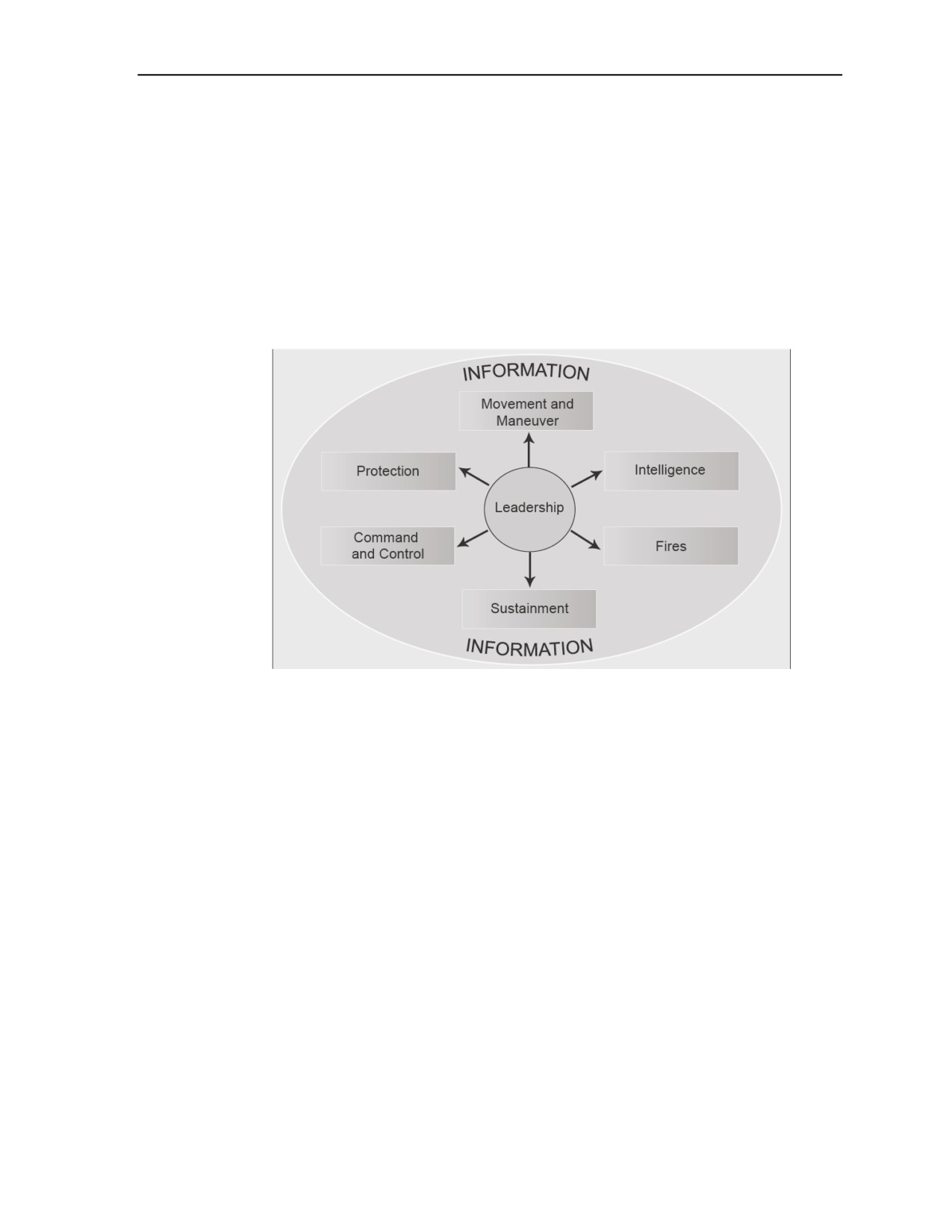
command and control (C2), and protection. The six WFFs also make up the elements of combat power tied
together by leadership and information (see Figure 1). The sustainment WFF describes both unit types and
functions.
vi
FM 4-0
30 April 2009
Introduction
The Sustainment WFF consists of three major sub-functions—logistics, personnel services, and health
services. It should be noted that there is a realignment of some of the former CSS BOS tasks across several
Army WFFs and vice versa. Some of these realignments are as follows.
z
Explosive ordnance disposal
(EOD). EOD tasks are aligned with the protection WFF.
Proponency for EOD resides with the Ordnance Center and School and the tasks are performed
by EOD forces (see FM 4-30.50).
z
Force health protection (FHP) tasks such as preventive dentistry and preventive medicine tasks
also fall under the protection WFF. Proponency for these tasks resides with the Army Medical
Department Center and School. These tasks are performed by trained medical personnel (see
FM 4-02).
Figure 1. Warfighting Functions
JOINT SUSTAINMENT AND THE ARMY SUSTAINMENT
WARFIGHTING FUNCTION
FM 4-0 serves as a bridge between joint doctrine and Army doctrine. As such, it is important to understand
the linkage between sustainment as a joint function and sustainment as an Army WFF.
The joint function sustainment is one of six joint functions; C2, intelligence, fires, movement and
maneuver, protection, and sustainment. Joint functions are related capabilities and activities grouped
together to help Joint Force Commanders (JFC) integrate, synchronize, and direct joint operations. The
joint functions are mirrored by the Army WFFs. Joint Pub 3-0 describes joint sustainment as “the provision
of logistics and personnel services necessary to maintain and prolong operations until mission
accomplishment”. Sustainment is primarily the responsibility of the supported CCDR and Service
component commanders in close cooperation with the Services, Chief of Staff of the Army (CSA), and
supporting commands (JP 4-0).
The Army sustainment WFF is one of six WFFs. A WFF is a group of tasks and systems (people,
organizations, information, and processes) united by a common purpose that commanders use to
accomplish missions and training objectives (FM 3-0). The Army sustainment WFF is fundamentally
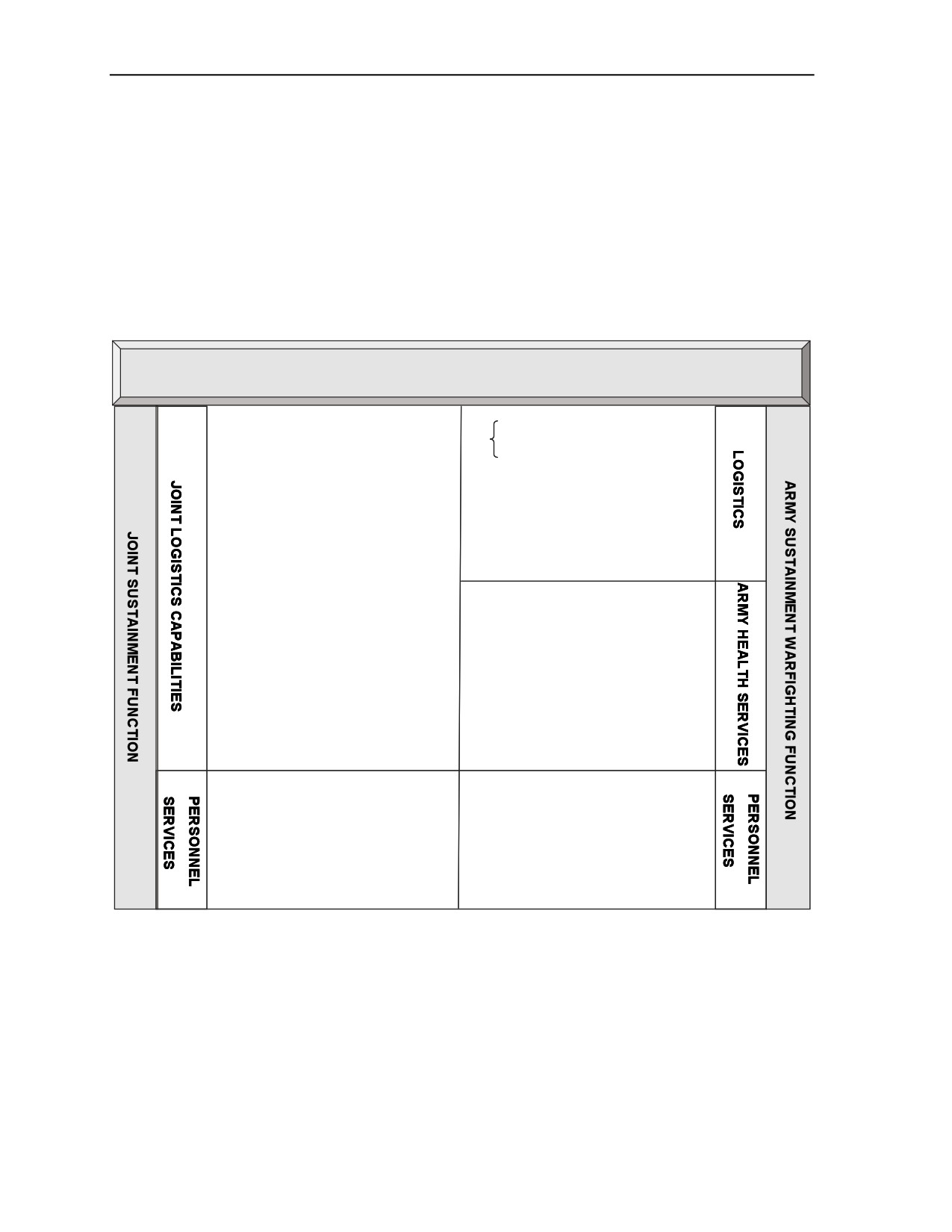
linked to the joint function sustainment, but there are subtle differences, as demonstrated in Figure 2.
30 April 2009
FM 4-0
vii
Introduction
First it should be noted that the joint functions are capability based. The JFC must rely on the Services to
provide the capabilities upon which he/she conducts joint operations. On the other hand, Army forces own
their functional capabilities and generally describe those capabilities as functions or tasks. Secondly, the
joint function sustainment is split between two staff elements, the Joint Staff (J-1), Personnel and Joint
Staff (J-4), Logistics. Doctrine for these two staff elements is found in JP 1-0, Joint Personnel Services and
JP 4-0, Joint Logistics.
Another point is the joint function sustainment consists of two major sub functions—logistics and
personnel services. The Army Sustainment WFF consists of three major sub functions—logistics,
personnel services, and health service support (HSS). In the joint function sustainment health services is a
sub function of logistics. Figure 2 crosswalks the sub functions between joint and Army sustainment.
SUSTAINMENT
SUPPLY
SUPPLY
DEPLOYMENT / DISTRIBUTION
TRANSPORTATION
DISTRIBUTION
MAINTENANCE
MAINTENANCE
LOGISTICS SERVICES
FIELD SERVICES
OPERATIONAL CONTRACTING
OPERATIONAL CONTRACTING
ENGINEERING
GENERAL ENGINEERING
ARMY HEALTH SYSTEMS SUPPORT
HOSPITALIZATION
HEALTH SERVICES
DENTAL TREATMENT
BEHAVIORAL HEALTH
LABORATORY SERVICES
CBRNE TREATMENT
MEDICAL EVACUATION
MEDICAL LOGISTICS
PERSONNEL
HUMAN RESOURCES SUPPORT
LEGAL
LEGAL SUPPORT
CHAPLAIN
RELIGIOUS SUPPORT
FINANCE
FINANCIAL MANAGEMENT
BAND SUPPORT
Figure 2. Sustainment Crosswalk
THE OPERATIONAL ENVIRONMENT
The operational environment is defined as the composite of the conditions, circumstances, and influences
that affect the employment of capabilities and bear on the decisions of the commander (FM 3-0). The
operational environment directly impacts the means by which the Army sustains operations as a part of the
joint and multinational force (MNF). It is interconnected and increasingly global. It is also extremely fluid,
with continually changing coalitions, alliances, partnerships, and new threats constantly appearing and
disappearing. The constantly changing operational environment presents many challenges to sustainment
of forces. These challenges include providing support in varied physical environments (terrain, climate,
viii
FM 4-0
30 April 2009
Introduction
and urban areas), working among multicultural populations and operating in areas where it may be difficult
to discern the enemy from non combatants. In today’s global situations, the physical environment alone in
one area of responsibility (AOR) may differ vastly from another. The biggest challenge may be providing
responsive sustainment to a rapidly deployable Army force to meet threats worldwide. Overcoming this
challenge requires more than ever, joint sustainment interdependence. All Services require logistics,
personnel services, and HSS to maintain operational readiness and combat effectiveness. Working together
as a joint team enables the U.S. military to reduce redundancies and increase efficiencies in sustainment
operations.
Therefore, the operational environment requires forging strong sustainment alliances and coalitions. It will
be rare that U.S. forces operate alone. As such, sustainment commanders must consider and plan for
interoperability with our allies and coalition forces. Commanders may be required to share technology,
processes, and procedures to ensure that our partners can deliver the same decisive operations.
Commanders should also consider contracting and host nation support (HNS) options as possible sources
of support. Contracting provides commercial supplies, services, and minor construction to supplement
military capabilities, giving the mission commander operational flexibility. HNS provides trained, skilled
labor to augment sustainment operations.
The operational environment includes the spectrum of conflict which ranges from peace to general war.
We will continue to see natural or man-made disasters. As a result, the U.S. military will find itself
providing stability to weakened, failed, or defeated governments. Sustainment provides the necessities of
life. During Stability operations, sustainment may be critical to influencing military strategy and gaining
support of affected populations. While sustainment may not be the decisive operation, it can serve to shape
the environment. Sustainment commanders must understand how to maximize benefits afforded by
working with nongovernmental organizations
(NGO), other governmental agencies
(OGA), and
intergovernmental organizations (IGO).
We face a variety of threats to our homeland ranging from natural disasters to direct attacks. The
employment of our military to assist in responding to these threats is a reality. As a result, the Army
reserves and active components must plan for and be prepared to provide the required sustainment
resources.
THE MODULAR FORCE
Numerous operations conducted over the past two decades have demonstrated that Army of Excellence
organizations were not as flexible and responsive as Joint Force Commanders (JFCs) required. They met
JFC needs, but at high costs in organizational turbulence, inefficiency, and slower response times than
desired.
The Army modular organizations provide a mix of land combat power capabilities that can be organized
for any combination of offensive, defensive, stability, or civil support operations as part of a joint
campaign. The modular force has brought about many changes to the Army’s capability to provide
sustainment. These changes cut across all of the sustainment functions and represent the Army’s
imperatives.
z
A modular
“brigade-based” Army that is more responsive to geographic combatant
commanders’ (GCC) needs, better employs joint capabilities, facilitates force packaging and
rapid deployment, and fights as self-contained units in non-linear, non-contiguous operational
environment.
z
An Army sustainment structure that is responsive to the needs of a Joint and Expeditionary
campaign quality Army.
z
Eliminates redundancy and streamlines support by reducing unnecessary layers.
z
Provides a sustainment capability that leverages emerging technologies, links support to
supported organizations, and the Army to Joint organizations - from continental United States
(CONUS) to area of operations (AO) and within area of responsibilities (AORs).
FM 4-0 will discuss these changes in greater detail in the coming chapters but a few highlighted changes
are emphasized below.
30 April 2009
FM 4-0
ix
Introduction
ARMY FORCE GENERATION (ARFORGEN)
ARFORGEN is the Army’s system for generating land power capabilities that respond to the operational
needs of JFCs and sustaining those capabilities as long as required. It is a shift from tiered readiness to
cyclic readiness and represents a change of the way the Army generating force performs its Title 10
functions. The generating force resets operational forces upon redeployment. A more detailed discussion of
generating force roles and responsibilities is found in Chapter 2.
The overarching purpose of ARFORGEN is to provide CCDRs and civil authorities with trained and ready
units. Under ARFORGEN, the US Army Materiel Command
(USAMC) is responsible, in conjunction
with the Assistant Secretary for Acquisition (ASA) Acquisition, Logistics, and Technology (ALT), for
resetting the force and providing acquisition, logistic, technology, and contingency contracting support to
globally deployed operational forces. Reset refers to the systematic restoration of deployed units to an
appropriate level of equipment, Soldier, and Family readiness in preparation for future deployments and
contingencies. Selected support activities, within an installation’s Directorate of Logistics from the
Installation Management Command (IMCOM) assist in resetting equipment and generating forces as
required.
DISTRIBUTION AND MATERIEL MANAGEMENT
Modularity brought changes to how distribution and materiel management are performed, especially at
echelons above brigade. Distribution and materiel management are combined under the distribution
management centers (DMC) of the theater sustainment command (TSC) and sustainment brigade (Sust
Bde). Unlike the Army of Excellence structure, this has streamlined the management of logistics support to
operations making it a more capable and efficient support structure.
Medical logistics material management is performed by the Medical Command (Deployment Support)
(MEDCOM (DS)), Medical Logistics Management Center (MLMC) forward support team, and medical
logistics companies in the Multifunctional Medical Battalion (MMB).
Distribution management is enabled by automation capabilities such as the Single Army Logistics
Enterprise (SALE) comprised of the enterprise elements of the Logistics Modernization Program, Global
Combat Service Support System-Army Field Tactical and the Army Enterprise System Integration
Program. The enterprise nature of the SALE with its improved supporting processes, business intelligence,
and decision support tools coupled with the situational awareness of the Battle Command Sustainment
Support System (BCS3) will provide improved support to the supported commander’s requirements. A
more detailed discussion of distribution management is in Chapter 4.
HUMAN RESOURCES SUPPORT (HRS)
Modular HRS organizations provide the commander with tailorable, flexible options to cope with the many
challenges encountered during military operations. Personnel services delivery redesign (PSDR) makes
possible independent Human Resource (HR) operations, regardless of location. The redesign leverages
web based connectivity and bandwidth to support an expeditionary Army. A combination of increased
training, new equipment, more robust communications and additional manpower, has made possible S-1-
centric HR support to the Brigade Combat Team (BCT). S-1 centric HR support directly links the S-1 with
the US Army Human Resources Command and enables the S-1 to execute all Soldier essential personnel
services (EPS) (promotions, ID cards, actions, and so on), functions and capabilities at brigade level. At
the theater level, the Human Resources Sustainment Center (HRSC), HR companies, platoons, and teams
execute and support all HR operations performing casualty, postal, and personnel accounting in the theater.
FINANCIAL MANAGEMENT (FM) OPERATIONS
FM operations have transformed to better support the Army by integrating finance and resource
management (RM) capabilities. These capabilities are executed by properly sized, modular FM structures
that provide the ability to deploy the right mix of FM units based on Mission, Enemy, Terrain and
x
FM 4-0
30 April 2009
Introduction
Weather, Troops and Support Available, Time Available and Civil Considerations (METT-TC). Within
the TSC, the Financial Management Center (FMC), FM companies and FM detachments execute finance
operations including disbursing, accounting, contracting support, and theater cash management. RM
capability is found at the Theater Army, TSC, Expeditionary Sustainment Command (ESC), Division, and
Corps.
ARMY HEALTH SYSTEM SUPPORT
The Army Medical Department (AMEDD) is transforming to a modular force with smaller deployable
units. The AMEDD modular force, as exemplified by new unit designs, is versatile, scalable, and
possesses standardized medical capability packages that can be easily deployed in support of full spectrum
operations. Among those new unit designs are the medical command (deployment support) (MEDCOM
[DS]) that serves as the theater medical force provider, the medical brigade (MEDBDE), which consists of
early entry and expansion modules tailorable to meet specific mission requirements, and the MMB that
replaces area support, medical logistics, and evacuation battalions. This new force structure emphasizes
“early entry” and improved tactical mobility operational capabilities. These and other modularization
initiatives result in the deployed medical force occupying less space in the operational environment and
placing fewer demands on transportation in terms of weight and space.
30 April 2009
FM 4-0
xi
Chapter 1
Introduction to Sustainment
Sustainment is the provision of logistics, personnel services, and HSS necessary to
maintain operations until mission accomplishment
(FM 3-0). The Sustainment
operational concept supports the Army’s operational concept of full spectrum
operations as described in FM 1 and FM 3-0. The provision of sustainment is an
integrated process (people, systems, materiel, health services, and other support)
inextricably linked to operations. From a strategic perspective sustainment builds
Army combat readiness, delivers a combat ready Army to the CCDR as part of the
joint force, and maintains combat power and endurance across the depth of the
operational area. This is supported by Army generating forces whose unbreakable
link enhances Army forces reach. It is joint interdependent, relying on and providing
to other Services with capabilities to support the CCDRs goals. At the operational
and tactical levels, sustainment is provided by highly trained modular sustainment
forces, integrated and synchronized with the operational plan. They are supported by
automated systems that precisely track requirements which give commanders the
time and information to make informed support decisions. They support commander's
needs to provide committed forces with flexible support for their operations.
This FM will discuss how sustainment supports full spectrum operations. This
chapter will begin by laying out the basics with a discussion of the principles of
sustainment and the functional elements of the sustainment WFF.
PRINCIPLES OF SUSTAINMENT
1-1. The principles of sustainment are essential to maintaining combat power, enabling strategic and
operational reach, and providing Army forces with endurance. The principles are integration, anticipation,
responsiveness, simplicity, economy, survivability, continuity, and improvisation.
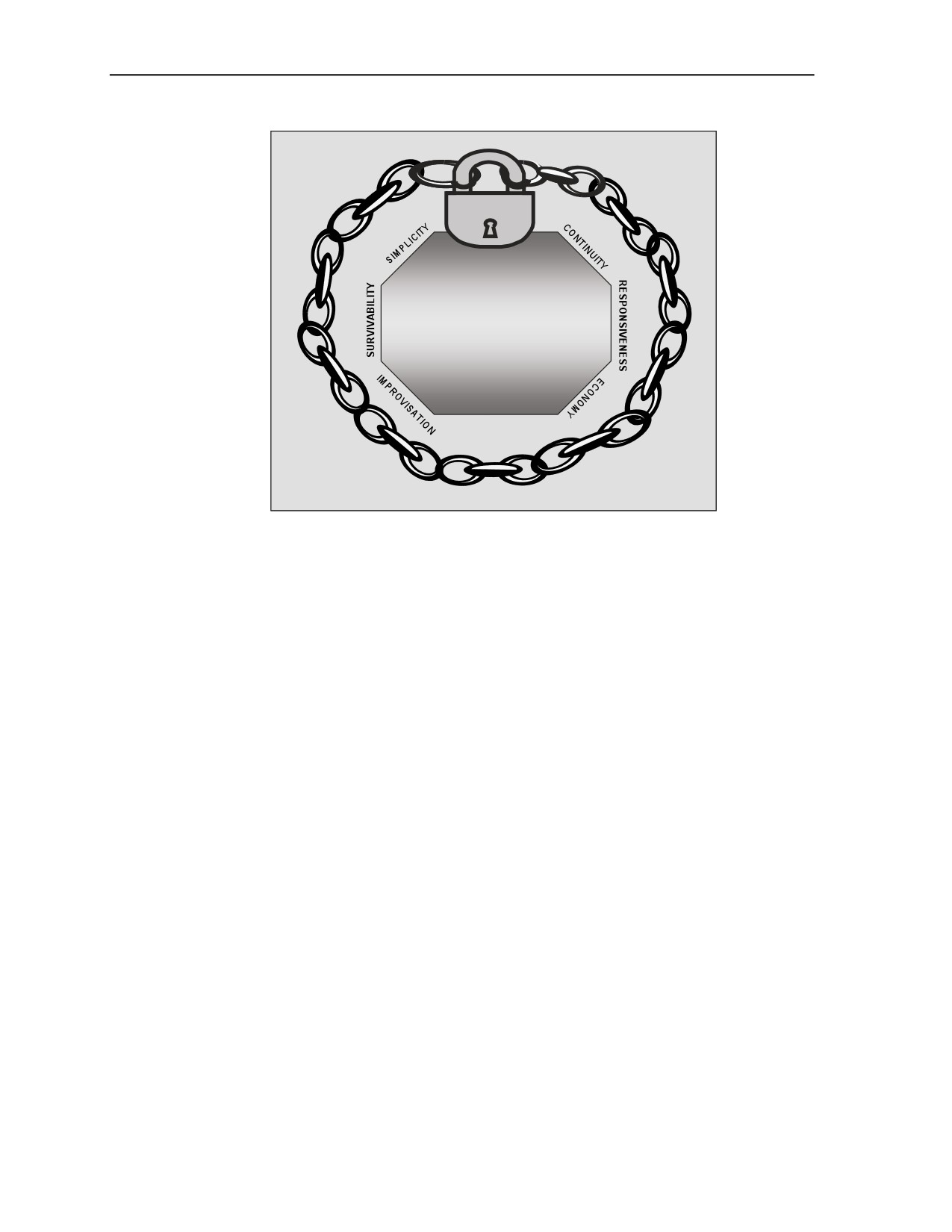
1-2. While these principles are independent, they are also interrelated (see Figure 1-1). For example, in
order for commanders to provide responsive sustainment, they must be able to anticipate requirements
based on their knowledge and understanding of future operations. Simplicity in planning and executing
sustainment increases survivability, improves efficiencies through economy, and facilitates a continuity of
resources thus reducing complexity and confusion. When the execution of plans does not proceed as
expected, commanders may improvise to meet mission requirements. The most essential principle is
integration. Without deliberate integration of Army sustainment with Joint and MNFs and OGA the
achievement of these principles becomes impossible.
30 April 2009
FM 4-0
1-1
Chapter 1
INTEGRATION
PRINCIPLES
OF
SUSTAINMENT
ANTICIPATION
Figure 1-1. Principles of Sustainment
INTEGRATION
1-3. Integration is the most critical principle. Integration is joining all of the elements of sustainment
(tasks, functions, systems, processes, and organizations) to operations assuring unity of purpose and
effort. It requires deliberate coordination and synchronization of sustainment with operations across all
levels of war. Army forces integrate sustainment with joint forces and multinational operations to
maximize the complementary and reinforcing effects from each service component’s or nation’s
competencies and resources. Integration of sustainment occurs throughout the operations process—plan,
prepare, execute, and assess. One of the primary functions of the sustainment staff is to ensure the
integration of sustainment with operations plans. Not properly integrating sustainment and operations
could result in mission failure.
ANTICIPATION
1-4. Anticipation is the ability to foresee events and requirements and initiate necessary actions
that most appropriately satisfy a response. Anticipation of sustainment facilitates responsive support. It
is based on professional judgment resulting from experience, knowledge, education, intelligence, and
intuition. Sustainment commanders and staffs visualize future operations and identify appropriate required
support. They must then start the process of acquiring the materiel or placement of support that bests
sustains the operation. Anticipation is facilitated by automation systems that provide the common
operational picture upon which judgments and decisions are based. Anticipating sustainment also means
staying abreast of operational plans (OPLANs), continuously assessing requirements, and tailoring support
to meet current operations and the changing operational environment.
RESPONSIVENESS
1-5. Responsiveness is the ability to meet changing requirements on short notice and to rapidly
sustain efforts to meet changing circumstances over time. It is providing the right support in the right
place at the right time. It includes the ability to see and forecast operational requirements. Employing
appropriate information systems enables the commander to make rapid decisions. Responsiveness involves
identifying, accumulating, and maintaining sufficient resources, capabilities, and information necessary to
1-2
FM 4-0
30 April 2009
Introduction to Sustainment
meet rapidly changing requirements. A responsive sustainment system is crucial to maintaining endurance;
it provides the commander with flexibility and freedom of action. It also maintains the tempo of operations
and the ability to retain and exploit the initiative. Through responsive sustainment, commanders maintain
operational focus and pressure, set the tempo of friendly operations to prevent exhaustion, replace
ineffective units, and extend operational reach.
SIMPLICITY
1-6. Simplicity strives to minimize the complexity of sustainment. Simplicity relates to processes and
procedures. Unnecessary complexity of processes and procedures compounds the confusion. Simplicity
fosters efficiency throughout the operations process and allows for more effective control of sustainment.
Clarity of tasks, standardized and interoperable procedures, and clearly defined command relationships
contribute to simplicity. Simplicity enables economy and efficiency in the use of resources, while ensuring
effective support of forces.
ECONOMY
1-7. Economy means providing sustainment resources in an efficient manner to enable a
commander to employ all assets to generate the greatest effect possible. The commander achieves
economy through efficient management and discipline by prioritizing and allocating resources. Staffs look
for ways to eliminate redundancies and capitalize on joint interdependencies. They also apply discipline in
managing resources minimizing waste and unnecessary stockpiling. Disciplined sustainment assures the
greatest possible tactical endurance of the force and constitutes an advantage to commanders who achieve
economy of force in sustainment. Staffs also achieve economy by contracting for support or using HN
resources that reduce or eliminate the use of limited military resources. Economy reflects the reality of
resource shortfalls, while recognizing the inevitable friction and uncertainty of military operations.
Economy enables strategic and operational reach by reducing unnecessary use of transportation
requirements. Additionally, it reduces unnecessary storage and warehouse support.
SURVIVABILITY
1-8. Survivability is the ability to protect personnel, information, infrastructure, and assets from
destruction or degradation. It includes all aspects of protecting personnel (includes FHP), materiel, and
organizations while deceiving the enemy. The ability of adversaries to disrupt the flow of sustainment
could significantly degrade forces’ ability to conduct operations as well as sustain them. Planners integrate
survivability with operational planning to maximize survivability. Dispersion and decentralization of
sustainment functions enhances survivability. The commander may have to balance risk with survivability
in considering redundant capabilities and alternative support plans. The ability to protect lines of
communications promotes survivability, helping to ensure operational reach and endurance.
CONTINUITY
1-9. Continuity is the uninterrupted provision of sustainment across all levels of war. Continuity is
achieved through a system of integrated and focused networks linking sustainment to operations.
Continuity is enabled through joint interdependence, linked organizations, distribution systems, and
information systems. Continuity assures confidence in sustainment allowing commanders freedom of
action, operational reach, and endurance. It requires commanders to track resources and make critical
decisions eliminating backlogs or bottlenecks. Sustainment staffs at all levels work hand in hand with
operational staffs ensuring synchronization of requirements over the entire course of the operation.
IMPROVISATION
1-10. Improvisation is the ability to adapt sustainment operations to unexpected situations or
circumstances affecting a mission. It includes creating, inventing, arranging, or fabricating what is
needed from what is available. It may also involve changing or creating methods that adapt to an enemy
that quickly evolves. This requires commanders, their staffs, and Soldiers to improvise other possible
30 April 2009
FM 4-0
1-3
Chapter 1
means to accomplish an operation. The sustainment commander must apply operational art to visualize
complex operations and understand what is possible at the tactical level. These skills enable commanders to
improvise operational and tactical actions when enemy actions or unexpected events disrupt sustainment
operations.
THE SUSTAINMENT WARFIGHTING FUNCTION
1-11. The sustainment WFF is related tasks and systems that provide support and services to ensure
freedom of action, extend operational reach, and prolong endurance (FM 3-0). The endurance of Army
forces is primarily a function of their sustainment. Sustainment determines the depth and duration of Army
operations. Successful sustainment enables freedom of action by increasing the number and quality of
options available to the commander. It is essential to retaining and exploiting the initiative. The
sustainment WFF consists of three major sub-functions: logistics, personnel services, and health services
support. A summary of the categories and functions of sustainment is outlined below. Chapter 5 provides a
detailed discussion of the elements of the sustainment WFF.
1-12. FM
3-0 places Internment/Resettlement
(I/R) operations under the sustainment WFF.
Internment/Resettlement operations take or keep selected individuals in custody or control as a result of
military operations to control their movement, restrict their activity, provide safety, and/or gain
intelligence (FM 3-19.40). I/R operations comprise those measures necessary to guard, protect, sustain,
and account for people that are captured, detained, confined, or evacuated from their homes by the U.S.
armed forces.
LOGISTICS
1-13. Logistics is the planning and executing the movement and support of forces. It includes those
aspects of military operations that deal with: design and development, acquisition, storage, movement,
distribution, maintenance, evacuation, and disposition of materiel; movement, evacuation, and
hospitalization of personnel; acquisition or construction, maintenance, operation, and disposition of
facilities; and acquisition or furnishing of services (JP 4-0). As noted in Figure 2, there are some differences
from joint and Army logistics. For example Army HSS is not considered a logistics function.
SUPPLY
1-14. Supply is the procurement, distribution, maintenance while in storage, and salvage of
supplies, including the determination of kind and quantity of supplies. There are ten classes in the
U.S. supply system: CL I Subsistence; CL II Clothing and Individual Equipment; CL III, Petroleum and
Solid Fuels; CL IV, Construction Materiel; CL V, Ammunition; CL VI, Personal Demand Items; CL VII,
Major end Items, CL VIII, Medical Materiel; CL IX, Repair Parts and Components; and CL X, Non
Military Materiel. While munitions is a class of supply, it is unique due to the complexities of activities
associated with its handling. Munitions are devices charged with explosives, propellants, pyrotechnics,
initiating composition, or nuclear, biological, or chemical material for use in military operations, including
demolitions. Munitions require special shipping and handling, storage, accountability, surveillance, and
security. Munitions operations include the critical functions of maintenance, repair, recovery,
demilitarization, as well as initial control and management of captured enemy ammunition.
FIELD SERVICES
1-15. Field services maintain combat strength of the force by providing for its basic needs and
promoting its health, welfare, morale, and endurance. They include clothing repair and exchange,
laundry and shower support, mortuary affairs (MA), aerial delivery, food services, billeting, and sanitation.
All field services receive the same basic Army-wide priority, but the commander decides which are most
important. FM 4-20.1 provides a full discussion on field services.
1-4
FM 4-0
30 April 2009
Introduction to Sustainment
MAINTENANCE
1-16. Maintenance is all actions taken to retain materiel in a serviceable condition or to restore it to
serviceability. It consists of two levels, field and sustainment maintenance. It includes inspection, testing,
servicing, and classification as to serviceability, repair, rebuilding, recapitalization, reset, and reclamation.
It also includes all supply and repair actions taken to keep a force in condition to carry out its mission.
TRANSPORTATION
1-17. Transportation is the moving and transferring of personnel, equipment, and supplies to
support the concept of operations, including the associated planning, requesting, and monitoring.
Transportation plays a key role in facilitating deployment and distribution. Transportation includes
military, commercial, and multinational capabilities. Transportation assets include surface and air modes,
terminal and movement control units, activities, and infrastructure. See Chapter 5 for more detail and FM
55-1 for a discussion of transportation operations.
DISTRIBUTION
1-18. Distribution is defined as the operational process of synchronizing all elements of the logistics
system to deliver the right things to the right place and right time to support the CCDR. It is a diverse
process incorporating distribution management and asset visibility. See Chapter 4 for more detail and FM
4-01.4.
OPERATIONAL CONTRACT SUPPORT
1-19. Operational contract support is the process of planning for and obtaining supplies, services,
and construction from commercial sources in support of operations along with the associated
contractor management functions. Deployed U.S. forces rely increasingly on contracting to supplement
organic sustainment capabilities and on contractors to perform a growing percentage of many sustainment
functions. JP 4-10 and FMI 4-93.42 cover the roles and responsibilities for planning and managing
contracting in support of operational commanders.
GENERAL ENGINEERING SUPPORT
1-20. General engineering includes those engineering capabilities and activities, other than combat
engineering, that modify, maintain, or protect the physical environment. Examples include: the
construction, repair, maintenance, and operation of infrastructure, facilities, lines of communication and
bases, and terrain modification and repair and selected explosive hazard activities (JP 3-34). Engineering
provides construction support, real estate planning and acquisition, and real property maintenance
responsive to environmental considerations. General engineering support is discussed further in Chapter 5.
See FM 3-34 and FM 3-34.400 for more information.
PERSONNEL SERVICES
1-21. Personnel services include HR support, religious support, FM, legal support, and band support.
Personnel services are those sustainment functions maintaining Soldier and Family readiness and
fighting qualities of the Army force. Personnel services complement logistics by planning for and
coordinating efforts that provide and sustain personnel (FM 3-0).
HUMAN RESOURCE (HR) SUPPORT
1-22. HR support includes the human resources functions of manning the force, HR services, personnel
support, and HR planning and operations. HR support maximizes operational effectiveness and facilitates
support to Soldiers, their Families, Department of Defense (DOD) civilians, and contractors who deploy
with the force. HR support includes personnel readiness management (PRM); personnel accountability;
strength reporting; personnel information management (PIM); casualty operations; EPS, band support,
postal operations; reception, replacement, return-to-duty, rest and recuperation, and redeployment
operations; morale, welfare, and recreation (MWR); and HR planning and staff operations. (see FM 1-0,
FMI 1-0.01, and FMI 1-0.02).
30 April 2009
FM 4-0
1-5
Chapter 1
RELIGIOUS SUPPORT
1-23. Religious support facilitates the free exercise of religion, provides religious activities, and advises
commands on matters of morals and morale. The First Amendment of the U.S. Constitution and Army
Regulation (AR) 165-1 guarantee every American the right to the free exercise of religion. Commanders
are responsible for those religious freedoms within their command. Chaplains perform and provide
Religious Support (RS) in the Army to ensure the free exercise of religion (see FM 1-05).
FINANCIAL MANAGEMENT (FM) OPERATIONS
1-24. FM is comprised of two mutually supporting core functions: Finance and Resource Management
operations. Finance operations include developing policy, providing guidance and financial advice to
commanders; disbursing support to the procurement process; banking and currency; accounting; and
limited pay support. RM operations include providing advice to commanders; maintaining accounting
records; establishing a management internal control process; developing resource requirements;
identifying, acquiring, distributing, and controlling funds; and tracking, analyzing, and reporting budget
execution (see FM 1.06).
LEGAL SUPPORT
1-25. Legal support is the provision of professional legal services at all echelons. Legal support
encompasses all legal services provided by judge advocates and other legal personnel in support of units,
commanders, and Soldiers in an area of operation (AO) and throughout full spectrum operations. Judge
Advocate General’s Corps personnel assist Soldiers in personal legal matters and advise commanders on a
wide variety of operational legal issues. These include the law of war, rules of engagement, lethal and
nonlethal targeting, treatment of detainees and noncombatants, fiscal law, claims, contingency contracting,
the conduct of investigations, and military justice. (see FM 1-04).
BAND SUPPORT
1-26. Army bands provide critical support to the force by tailoring music support throughout military
operations. Music instills in Soldiers the will to fight and win, foster the support of our citizens, and
promote our national interests at home and abroad (see FM 1-0 and FM 1-19).
HEALTH SERVICES SUPPORT
1-27. Health services support is all support and services performed, provided, and arranged by the
AMEDD to promote, improve, conserve, or restore the mental and physical well being of personnel
in the Army and, as directed in other Services, agencies and organizations. Army Health System
(AHS) support includes both HSS and force health protection (FHP). The HSS mission is a part of the
sustainment WFF. The FHP mission falls under the protection WFF, but will be included to provide an
accurate description of AHS support. This includes casualty care (encompassing a number of AMEDD
functions—organic and area medical support, hospitalization, the treatment aspects of dental care and
behavioral health (BH)/neuropsychiatric treatment, clinical laboratory services, and the treatment of
chemical, biological, radiological, and nuclear
[CBRN] patients), medical evacuation, and medical
logistics. See FM 4-02.12 for a full description of AHS support.
OTHER SUSTAINMENT RELATED FUNCTIONS
1-28. As a result of the movement from battlefield operating systems to the WFF construct, some tasks are
realigned. Two of those tasks are explosive ordnance disposal and Interment/Resettlement operations.
1-6
FM 4-0
30 April 2009
Introduction to Sustainment
EXPLOSIVE ORDNANCE DISPOSAL
1-29. Explosive Ordnance Disposal is the detection, identification, on-site evaluation, rendering safe,
recovery and disposal of explosive ordnance (EO) /improvised explosive devices (IEDs), weapons of mass
destruction (WMD) which threaten forces, citizens, facilities, critical infrastructure, or operations. The
Army EOD mission is to support national security strategy and national military strategy by reducing or
eliminating EO/IED/WMD during operations. From a WFF perspective, EOD falls under the Protection
WFF (see FM 4-30.50 for details).
INTERNMENT AND RESETTLEMENT OPERATIONS
1-30. Internment and Resettlement (I/R) operations are included under the Sustainment WFF (FM 3.0).
While not a major sub-function of the sustainment WFF; I/R are supported by logistics, personnel services,
and HSS. The Army is the DOD executive agent (EA) for all detainee operations. Within the Army, and
through the CCDR, the Military Police
(MP) are tasked with coordinating shelter, protection,
accountability, and sustainment for detainees. The I/R function addresses MP roles when dealing with
detainees, dislocated civilians, and US military prisoners. The MPs support the battlefield commander by
relieving him/her of the problem of handling detainees with combat forces. The MPs perform the
internment and resettlement functions of collecting, evacuating, and securing detainees (see FM 3-19.1
Military Police Operations and FM 3-19.40, Internment/Resettlement Operations). Sustainment in support
of internment and resettlement will be discussed in Chapter 4.
SUMMARY
1-31. Sustainment builds and maintains combat power and provides strategic and operational reach and
endurance. Sustainment supports full spectrum operations. It is one of six Army WFFs. The eight
principles of sustainment must be considered throughout the operations process to achieve successful
support of full spectrum operations. The principles are not a checklist but a guide for planners and leaders
to incorporate the commander’s intent for sustainment throughout the operations process. The sustainment
WFF consists of three major sub-functions: logistics, personnel services, and Army health systems support
Chapter 5 includes a more detailed discussion of the functional elements of sustainment.
30 April 2009
FM 4-0
1-7
Chapter 2
Roles and Responsibilities for Providing Sustainment in
Unified Action
Unified action is the synchronization, coordination, and/or integration of the
activities of governmental and nongovernmental entities with military operations to
achieve unity of effort
(FM 3-0). Unified action involves the application of all
instruments of national power, including actions of OGA and multinational military
and non military organizations. It requires joint integration. All Services must
effectively operate together. Sustainment of unified action is pivotal to achieving
campaign end state. The combination of diverse sustainment capabilities generate and
sustain combat power that is more potent than the sum of its parts. The integration of
sustainment capabilities maximizes efficiencies in delivering support to campaigns.
This chapter will discuss the roles and functions of the Army, joint, interagency,
intergovernmental, and multinational organization’s contribution to the sustainment
of unified actions.
JOINT INTERDEPENDENCE
2-1. Joint interdependence is the purposeful reliance by one Service’s forces on another Service’s
capabilities to maximize the complementary and reinforcing effects of both. Army forces operate as part
of an interdependent joint force. One area of joint interdependence is joint sustainment. Sustainment is
inherently joint. All services use logistics, personnel services, and health services to support their forces.
The mutual reliance on joint sustainment capabilities makes for a more effective utilization of sustainment
resources. Combinations of joint capabilities defeat enemy forces by shattering their ability to operate as a
coherent, effective force.
SUSTAINMENT OF JOINT FORCES
2-2. Sustainment of joint forces is the deliberate, mutual reliance by each Service component on the
sustainment capabilities of two or more Service components (FM 3-0). Effective sustainment determines
the depth to which the joint force can conduct decisive operations; allowing the JFC to seize, retain, and
exploit the initiative (JP 3-0). It provides JFCs with flexibility to develop any required branches and
sequels and to refocus joint force efforts as required. Sustainment is crucial to supporting operations.
CCDRs and their staffs must consider a variety of sustainment factors including defining priorities for
sustainment and common user logistics (CUL) functions and responsibilities.
2-3. CUL is materiel or service support shared with or provided by two or more Services, DOD agencies,
or multinational partners to another Service, DOD agency, non-DOD agency, and/or multinational partner
in an operation (JP 4-07). It can be restricted by type of supply and/or service and to specific unit(s) times,
missions, and/or geographic areas. Service component commands, DOD Agencies (such as Defense
Logistics Agency (DLA)), and Army commands (such as USAMC), provide CUL to other service
components, multinational partners, and other organizations (such as NGOs).
2-4. The Army Service Component Command (ASCC) is responsible for providing support to Army
forces and common-user logistics to other Services as directed by the CCDR and other authoritative
instructions. The TSC is the logistic C2 element assigned to the ASCC and is the Army logistic
headquarters (HQ) within a theater of operations. When directed, the TSC provides lead Service and
30 April 2009
FM 4-0
2-1
Chapter 2
executive agency support for designated CUL to OGA, MNFs, and NGOs. Additionally, the
MEDCOM(DS) provides AHS support to other services when directed.
TITLE 10 RESPONSIBILITY
2-5. Each Service retains responsibility for the sustainment of forces it allocates to a joint force. The
Secretary of the Army exercises this responsibility through the Chief of Staff the Army (CSA) and the
ASCC assigned to each combatant command. The ASCC is responsible for the preparation and
administrative support of Army forces assigned or attached to the combatant command.
2-6. The ASCC is responsible for all Army Title 10 functions within the CCDR’s AOR. When an ASCC
is in support of a GCC, it is designated as a Theater Army. The Theater Army commander exercises
administrative control (ADCON) over all Army forces within the CCDR’s AOR. He/She is responsible
for preparing, training, equipping, administering, and sustaining Army forces assigned to combatant
commands.
2-7. Title
10, United States Code
(USC) specifies that individual services retain responsibility for
sustainment, but the purposeful combination of complimentary service capabilities to create joint
interdependent forces is often the most effective and efficient means by which to sustain a joint force.
Additionally, common user support may be controlled and provided by other means. Options for
executing sustainment of a joint force include any combination of the following:
z
Executive agent (EA). The Secretary of Defense (SECDEF) or the Deputy Secretary of
Defense, may designate the head of a DOD component (such as Chief of a Service, CCDR, or
director of a Combat Support Agency) as an EA for specific responsibilities, functions, and
authorities to provide defined levels of support for operational missions, administrative, or
other designated activities that involve two or more DOD components. By definition, the
designation as an EA makes that organization responsible for a joint capability within the
boundaries of the EA designation.
z
Lead Service. The CCDR may choose to assign specific CUL functions, to include both
planning and execution to a Lead Service. These assignments can be for single or multiple
common user functions and may also be based on phases and/or locations within the AOR. The
CCDR may augment the Lead Service logistics organization with capabilities from another
component’s logistics organizations as appropriate. The Lead Service must plan issue
procedures and sustainment funding for all items issued to other Services as well as a method
for collecting items from other Services.
z
Subordinate logistics command. The CCDR may assign joint logistics responsibilities to a
subordinate Service component and establish a joint command for logistics (see JP 4-0). In order
for the subordinate logistics command to be successful, the CCDR must augment it with the
capabilities needed to integrate and control the delivery of theater support to meet the joint force
requirements. This joint functional component must also be capable of integrating personnel,
requirements, processes, and systems from all the joint force components.
2-8. The Theater Army’s ADCON of Army forces entails providing administrative
(legal, human
resources, and finance) and logistics support to Army forces. When designated as an EA, the Army also
enters into inter-Service, interagency, and intergovernmental agreements for certain responsibilities.
These may include:
z
General engineering support.
z
Common-user land transportation.
z
Disaster assistance.
z
Force protection.
z
Mortuary services.
z
Detainee operations.
z
Bulk fuel management.
z
Postal operations.
2-2
FM 4-0
30 April 2009
Roles and Responsibilities for Providing Sustainment in Unified Action
2-9. The Theater Army commander’s principal focus is on operational-level theater support involving
force generation and force sustainment during campaigns and other joint operations. The Theater Army
commander matches sustainment requirements for a campaign to the capabilities of the Army forces. In
all joint operations, sustainment is a service responsibility unless otherwise directed by EA directives,
CCDR lead service designations, or interservice support agreements (ISSAs).
2-10. The Theater Army, in concert with their associated geographic CCDRs, is responsible for
identifying sustainment requirements, coordinating responsibilities, and establishing requisite Army C2
for sustainment. Furthermore, the Theater Army commander is responsible for properly executing all
Army lead service or ISSA and related common support requirements within the theater.
2-11. Title 10 also includes two other CCDR’s responsibilities and authorities that overlap the military
departments’ Title 10 functions. These are joint training and directive authority for logistics (DAFL). We
will only discuss DAFL.
Directive Authority for Logistics (DAFL)
2-12. DAFL is the CCDR authority to issue directives to assigned forces. It includes peacetime measures
to ensure the effective execution of approved OPLANs, effectiveness and economy of operation,
prevention or elimination of unnecessary duplication of facilities, and overlapping of functions among the
Service component commands. The President or SecDef may extend this authority to attached forces
when transferring forces for a specific mission, and should specify this authority in the establishing
directive or order.
2-13. CCDRs exercise DAFL and may delegate directive authority for a common support capability.
The CCDR may delegate directive authority for as many common support capabilities to a subordinate
JFC as required to accomplish the subordinate JFC’s assigned mission. When the CCDR gives a service
component CUL responsibility, he/she must specifically define the responsibilities. For some commodities
or support services common to two or more Services, one Service may be given responsibility for
management based on DOD designations or ISSAs. However, the CCDR must formally delineate this
delegated directive authority by function and scope to the subordinate JFC or Service component
commander.
2-14. The CCDR may elect to assign responsibility to establish a joint command for logistics to a
subordinate Service component. The senior logistics HQ of the designated Service component will
normally serve as the basis for this command. This may be an organization joint by mission (such as
campaigns, major operations, and humanitarian missions), but not by design. When exercising this option,
the CCDR retains DAFL and must specify the control and tasking authorities being bestowed upon the
subordinate joint command for logistics, as well as the command relationships it will have with the
Service components.
Other Combatant Command Authority
2-15. Besides logistics, the CCDR has the authority to direct certain other functional activities. These
activities include personnel services and health services support.
Personnel Services
2-16. The CCDR’s command authority allows him/her to direct and approve those personnel services
necessary to carry out assigned missions. It also allows for the standardization of personnel policies
within the command.
Health Services Support (HSS)
2-17. The CCDR requires medical capabilities that are scalable to the requirement, interoperable with
other medical forces, and capable of rapid deployment into the joint operations area (JOA). Each Service
has organic medical units with capabilities that are tailored for their traditional roles and missions and are
normally capable of meeting other Services’ requirements. The joint force surgeon provides
recommendations to the JFC on the effective employment of all HSS capabilities. The AHS provides
support to other Services when directed by the CCDR.
30 April 2009
FM 4-0
2-3
Chapter 2
2-18. The theater surgeon recommends a theater evacuation policy through the CCDR and the Joint
Chiefs of Staff (JCS) for approval by the SECDEF. The evacuation policy establishes the number of days
an injured or ill Soldier may remain in the theater before returning to duty.
STRATEGIC LEVEL PROVIDERS
2-19. Strategic providers enable U.S. forces to maintain combat power and enable strategic reach and
ensure endurance. Strategic providers include DOD agencies and commands. They link the national base
to the theater. These agencies and commands provide sustainment to joint and Army forces.
INDUSTRIAL BASE
2-20. The industrial base consists of privately owned and government-owned industrial capability and
capacity for manufacture, maintenance, modification, overhaul, and/or repair of items required by the U.S.
and selected allies. It includes the production base and maintenance base. Active plants and production
lines have some capability to surge. Repair parts manufacturers may be able to surge production for items
that sustain deployed weapon systems. National policy requires the use of commercial materiel as much as
possible.
DEFENSE LOGISTICS AGENCY (DLA)
2-21. DLA provides support for military departments and the GCC during peace and war. DLA is the
focal point for the industrial base and is the EA for consumable supply items. DLA procures, stores, and
distributes items to support the military Services and other customers. It also buys and distributes
hardware and electronic items used in the maintenance and repair of military equipment. Excluded supply
items are munitions, missiles, and military Service unique items.
2-22. DLA provides contract administration services to all DOD components and administers and
supervises:
z
The Federal Catalog System.
z
The Defense Personal Property Reutilization Program.
z
The DOD Industrial Plant Equipment Reserve.
z
The Defense National Stockpile.
2-23. DLA provides reutilization and marketing services at the strategic through operational levels.
Initially, salvage and excess materiel destined for the Defense Reutilization and Marketing Office is
collected in theater areas. As the theater matures, DLA-directed activities may use HN or contractor
support to assist in retrograding this materiel for inspection, classification, and disposal.
U.S. TRANSPORTATION COMMAND (USTRANSCOM)
2-24. USTRANSCOM is responsible for providing common-user and commercial air, land, and sea
transportation (including patient movement), terminal management, and aerial refueling to support global
deployment, employment, sustainment, and redeployment of U.S. forces. This ability makes possible
projecting and maintaining national power where it is needed with the required speed, agility, high
efficiency, and accuracy. The USTRANSCOM commander has the authority to procure commercial
transportation services
(such as Logistics Civil Augmentation Program
(LOGCAP)), through its
transportation component commands and to activate, with approval of the SECDEF, the Civil Reserve Air
Fleet and Ready Reserve Fleet.
2-25. USTRANSCOM is DOD’s Distribution Process Owner (DPO). As the DPO, USTRANSCOM is
responsible for monitoring and managing the global distribution network. The DPO ensures the flow of
force movement and sustainment for the supported GCC.
2-26. USTRANSCOM is composed of three component commands which remain under the combatant
command of USTRANSCOM in contingency operations; Air Mobility Command (AMC), Military Sealift
Command (MSC), and the Military Surface Deployment and Distribution Command (SDDC). These
2-4
FM 4-0
30 April 2009
Roles and Responsibilities for Providing Sustainment in Unified Action
component commands provide inter-modal transportation to meet our national security objectives. While
these commands normally remain under the C2 of USTRANSCOM in contingency operations,
operational command (OPCON) or tactical control (TACON) could be delegated to a theater upon request
of the GCC and approval of Commander, USTRANSCOM.
DEFENSE FINANCE AND ACCOUNTING SERVICE (DFAS)
2-27. The DFAS is responsible for the delivery of responsive accounting and finance services. DFAS is
an agency supporting the Office of the Under Secretary of Defense-Comptroller, the principal advisor to
the SECDEF for budgetary and fiscal matters. It is DFAS’s responsibility to coordinate and collaborate
with all civilian defense agencies, military services, and the combatant commands that provide
warfighting capabilities.
U.S. ARMY HUMAN RESOURCES COMMAND (USAHRC)
2-28. The USAHRC integrates, manages, monitors, and coordinates HRS to develop and optimize Army
human resources across the spectrum of conflict. The commander of USAHRC is the Army functional
proponent for the military personnel management system and operates within the objectives set by the
Army G-1. USAHRC major functions include the following:
z
Execute the nine major functional categories of the Army personnel life cycle: force structure,
acquisition, individual training and development, distribution, deployment, sustainment,
professional development, compensation, and transition.
z
Man the force and provide personnel support and human resources services to Soldiers, their
Families, and organizations.
z
Synchronize all military personnel activities to achieve efficient and cost effective execution of
all human resources processes on an Army-wide basis to ensure current and future personnel
requirements are defined.
z
Interact with human resource organizations, including U.S. Army training centers, U.S. Army
garrisons, divisions and corps, installations, and forward deployed bases to ensure policy,
procedures, and service delivery systems support operational requirements at all levels.
U.S. ARMY FINANCE COMMAND (USAFINCOM)
2-29. The USAFINCOM is an operating agency of the Assistant Secretary of the Army (Financial
Management & Comptroller)
(ASA(FM&C)). USAFINCOM provides advice and management
information to the ASA(FM&C) and interacts between the Army staff, Army commands, units, and DFAS
on matters concerning finance and accounting policy, systems, procedures, and reporting.
GENERATING FORCE
2-30. The generating force consists of those Army organizations whose primary mission is to generate
and sustain the operational Army’s capabilities for employment by JFCs. The generating force activities
include support of readiness, ARFORGEN, and the routine performance of functions specified and
implied in Title 10. As a consequence of its performance of functions specified and implied by law, the
generating force also possesses operationally useful capabilities for employment by or in direct support of
JFCs. Generating force capabilities include analyzing, understanding and adapting, and generating
operational forces tailored to the specific context in which they will be employed.
2-31. The generating force’s ability to develop and sustain potent land power capabilities is useful in
developing partner security forces and governmental institutions, with its capability to develop, maintain,
and manage infrastructure. Moreover, an increasingly pervasive information environment, combined with
improved transportation capabilities, allow the effective application of capabilities from outside the area
of operations.
2-32. The generating force is responsible for moving Army forces to and from ports of embarkation.
They also provide capabilities to assist in the management and operation of ports of embarkation and
30 April 2009
FM 4-0
2-5
Chapter 2
debarkation and provide capabilities to GCC to conduct reception, staging, onward movement, and
integration (RSO&I).
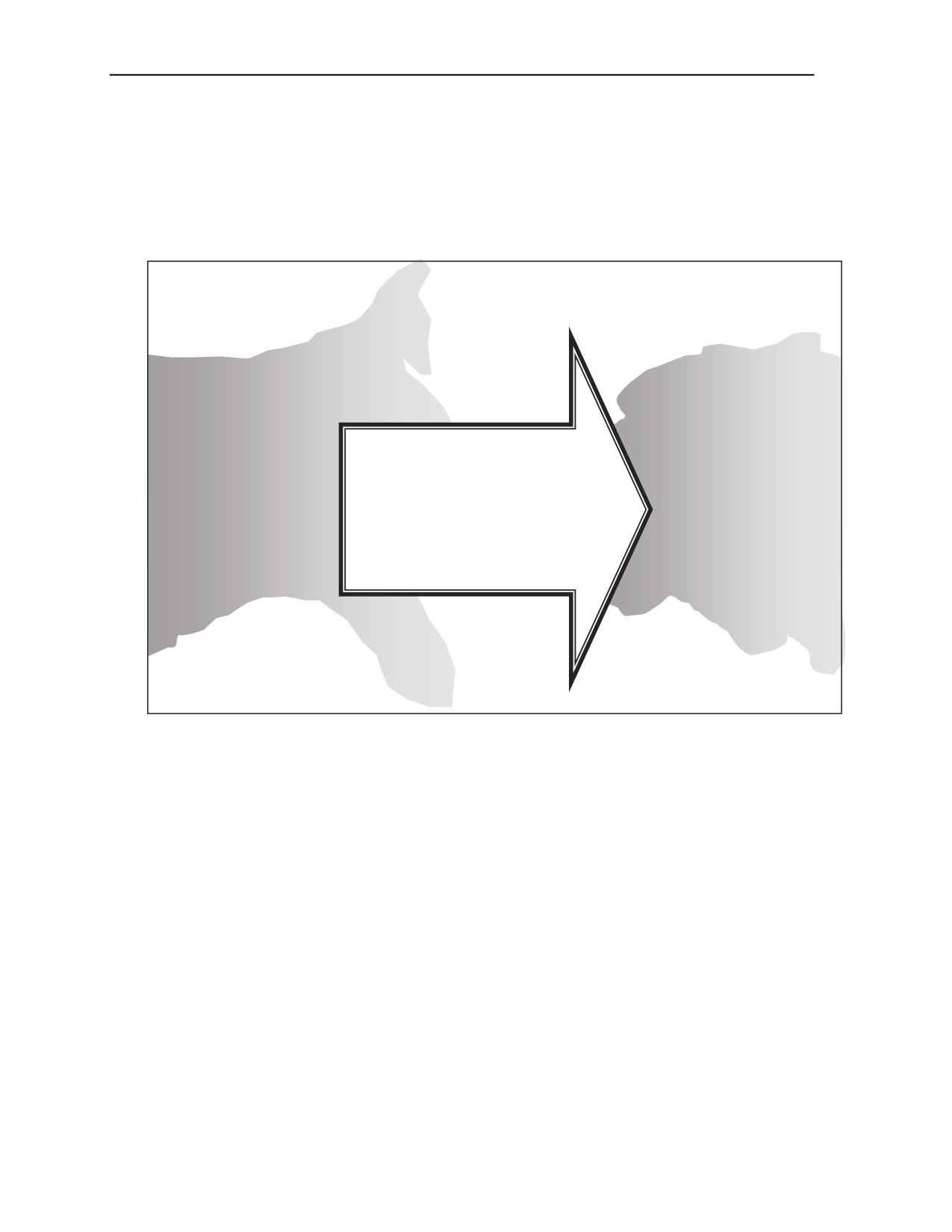
2-33. Generating force organizations provide a continuum of support that integrates the sustainment
base with operating forces (see Figure 2-1). For example, USAMC is part of the generating force. It
deploys certain organizations forward with an operational focus and role, such as the Army Field Support
Brigade (AFSB), Logistic Support Element, Army Field Support Battalion, Brigade Logistics Support
Team, and Contracting Support Brigade (CSB).
Generating Force to Operating Force
OPERATING FORCE
GENERATING FORCE
TSC/ESC
SOSCOM
GENERATES AND SUSTAINS
MEDCOM(DS)
USAFORSCOM
MEDICAL SPT
SUPPLY
HRSC
USAMEDCOM
MATERIEL DEV
DOCTRINE
FMC
USAMC
TRAINING
FORCES
SUST BDE
USATRADOC
BSB
FINANCE SPT
TECHNOLOGY
ASB
CONTRACT SPT
Figure 2-1. Generating Force Support to Operating Force
U.S. ARMY TRAINING AND DOCTRINE COMMAND (USATRADOC)
2-34. USATRADOC is designated by the Secretary of the Army (SECARMY) as an Army command
(ACOM) under the direction of Headquarters, Department of the Army (HQDA) and is assigned to carry
out certain roles and functions of the SA pursuant to 10 USC 3013(b) with regard to Army forces
worldwide. It recruits and trains uniformed personnel, manages the Army’s education system, and
operates the Army’s training centers. TRADOC leads Army requirements determination; integrates
doctrine, organization, training, materiel, leadership, and education’ personnel and facilities (DOTLM-
PF) developments to support required capabilities; and coordinates, synchronizes, and integrates Army
capabilities developments with other ACOMs, the Combatant commands, the Joint Staff, and other
military departments (AR 10-87).
2-35. TRADOC’s training and education missions include preparing leaders of all branches and
specialties
(including sustainment branch leaders) for combined arms operations. Its doctrinal
publications establish and support the Army operational concept. Sustainment leaders throughout the
Army, but notably in the Sustainment Center of Excellence (SCOE), work with TRADOC to ensure the
integration of sustainment related DOTLM-PF elements with Army operations. TRADOC’s array of
centers and schools develop comprehensive and integrated sustainment solutions for the Army through
coordination with USAMC, U.S. Army Medical Department Center and School, Judge Advocate
General’s Legal Center and School, and the U.S. Army Chaplain Center and School.
2-6
FM 4-0
30 April 2009
Roles and Responsibilities for Providing Sustainment in Unified Action
U.S ARMY MATERIEL COMMAND (USAMC)
2-36. USAMC equips and sustains the Army, providing strategic impact at operational speed. It
provides logistics technology, acquisition support, contracting and contractor management, and selected
logistics support to Army forces. It also provides related common support to other Services, multinational,
and interagency partners. The capabilities of USAMC are diverse and are accomplished through its
various major subordinate commands and other subordinate organizations.
2-37. USAMC is the lead for the Army’s national-level maintenance and supply programs which are
managed and executed by its subordinate Life Cycle Management Commands (LCMCs). These USAMC
LCMCs coordinate with the USAMC staff as well as related ASA(ALT) Program Executive Officers
(PEOs) and Product/Project Managers offices. Together, these USAMC LCMC and ASA(ALT) elements
work to ensure support for fielded weapon systems and equipment for their entire life cycle. The LCMCs
support to deploying and deployed forces is coordinated through the Army Sustainment Command (ASC)
and is executed under the control of the supporting AFSB. LCMCs are discussed in more detail below.
2-38. In addition to the functions performed by the LCMCs, USAMC exercises overall responsibility of
sustainment maintenance for the Army and managing secondary items through the National Maintenance
Program, whose tenets are as follows:
z
Managing sustainment maintenance unit workloads to meet national requirements.
z
Ensuring all component repairs are performed to a national standard.
z
Ensuring sustainment maintenance providers possess the facilities, tools, test, measurement, and
diagnostic equipment, skills, and workforce required to meet national standards.
z
Facilitating quality assurance by ensuring that maintainers use documented quality systems and
are technically certified to repair to standards.
2-39. USAMC is also the lead, but not sole, Army organization responsible for providing contracting
services to the Army. USAMC contracting support includes the LOGCAP. Through its subordinate
contracting commands, USAMC provides both institutional and operational contract support planning
assistance and contract execution support to all Army forces.
2-40. USAMC, through its subordinate organizations, determines the optimum sustainment maintenance
capability to maximize supply flow within CONUS through the coordination between the TSC and AFSB
in theater.
MATERIEL ENTERPRISE (ME)
2-41. The ME executes Army-wide materiel lifecycle management. The Commanding General, USAMC
chairs the Enterprise Governance Board with oversight provided by the ASA (ALT). The ME develops
and then uses the approved Army’s Equipping Strategy to deliver and sustain equipment readiness. It also
advises the SECARMY on Army-wide materiel issues to enhance materiel readiness. The ME supports
ARFORGEN by providing the most effective and sustainable equipment for Soldiers.
USAMC DIRECTOR OF MATERIEL (DOM)
2-42. The Army’s Enterprise Initiative aligns ammunition, supply, and maintenance functions formerly
performed by the Installation Management Command (IMCOM), Director of Logistics (DOL) to USAMC
as the Director of Materiel (DOM). This alignment assures the efficiencies and core competencies of the
ME. USAMC DOMs workload the ammunition, supply, and maintenance functions as an integral part of
the industrial base in order to sustain equipment readiness in support of the ARFORGEN process.
USAMC SUBORDINATE COMMANDS
2-43. USAMC has several subordinate commands. These commands are discussed below.
30 April 2009
FM 4-0
2-7
Chapter 2
Surface Deployment and Distribution Command (SDDC)
2-44. SDDC is a subordinate command of USAMC and the ASCC of U.S. TRANSCOM. It provides
inter-modal transportation to meet national security objectives.
The Aviation and Missile Life Cycle Management Command (AM LCMC)
2-45. The AM LCMC integrates functions across their commodity and sustains aviation, missile, and
unmanned aerial vehicle systems, ensuring weapons systems readiness with seamless transition to combat
operations. It assists materiel developers (PEO/PM) with the development, acquisition, and fielding of
aviation, missile systems, and related equipment. The LCMC performs applied research, integrated
logistics support, materiel readiness management, and maintenance support for Army aviation, missile
weapon systems, subsystems, and associated equipment.
The CECOM Life Cycle Management Command (CECOM LCMC)
2-46. The CECOM LCMC integrates functions across their commodity and sustains command, control,
communications, computers, intelligence, surveillance, and reconnaissance (C4ISR) information systems
for joint interoperability. It assists materiel developers (PEO/PM) with the development, acquisition, and
fielding of C4ISR systems. The LCMC performs applied research, integrated logistics support, materiel
readiness management, and maintenance support and provides technical support capabilities to deploying
and deployed Army forces.
The Tank-Automotive and Armaments Life Cycle Management Command (TA LCMC)
2-47. The TA LCMC integrates functions across their commodity and sustains Soldier and ground
systems for the operating force. This is accomplished through the integration of effective and timely
acquisition, logistics, and technology. The TA LCMC is responsible for integration of initial fielding
requirements with current item sustainment. It provides acquisition support of TACOM commodity end
items, spare parts, and supplies for U.S. and Allied weapon systems and overhauls, modernizes, and
repairs TACOM commodity equipment.
The Joint Munitions and Lethality Life Cycle Management Command (JM&L LCMC)
2-48. The JM&L LCMC manages research, development, production, storage, distribution, and
demilitarization of conventional ammunition. The JM&L LCMC consists of the Program Executive
Office for Ammunition, the Joint Munitions Command
(JMC), and the Armament, Research,
Development and Engineering Center (ARDEC). The JM&L LCMC serves as the Single Manager for
Conventional Ammunition
(SMCA) and serves as the SMCA Field Operating Activity. PEO
Ammunition develops and procures conventional and leap ahead munitions to increase combat firepower
to execute total ammunition requirements. ARDEC is the principal researcher, technology developer, and
sustainer of current and future munitions. JMC serves as the logistics and readiness arm; producing,
storing, issuing, and demilitarizing conventional ammunition for all U.S. Services, other U.S. agencies,
and allied nations. The JMC also provides munitions training through its Defense Ammunition Center for
Quality Assurance Specialist (Ammunition Surveillance) and Ammunition Manager Career programs as
well as explosive safety training for all munitions handlers.
U.S. Army Sustainment Command (ASC)
2-49. The ASC is responsible for coordinating generating force support to the operating force. The ASC
works in close coordination with other USAMC and national level sustainment and distribution
organizations such as DLA and USTRANSCOM and the respective deployed TSCs. The ASC executes
its operating force mission through its deployable AFSBs. The AFSB integrates system support
contracting into the overall theater support plan. Theater support contracting, to include LOGCAP, is
planned, coordinated, and executed by the ASCC supporting CSB under the C2 of U.S. Army Contracting
Command’s (USACC) Expeditionary Contracting Command (ECC). The ASC provides continuous
equipment and materiel readiness to CONUS forces through planning, resourcing, and materiel
2-8
FM 4-0
30 April 2009
Roles and Responsibilities for Providing Sustainment in Unified Action
management in accordance with the ARFORGEN process. This is achieved by synchronizing strategic
materiel management and by integrating acquisition, logistics, and technology.
2-50. In conjunction with LCMCs, the ASC through its DMC, workloads maintenance, supply, and
ammunition functions at U.S. Army installations. It may also workload Field Logistics Readiness Centers,
depots, and contractors to support ARFORGEN. The ASC also integrates the Logistics Assistance
Program (LAP) in support of contingency operations. Most importantly, the ASC generates and projects
combat power to support expeditionary operations.
U.S. Army Contracting Command (USACC)
2-51. The SECARMY directed the establishment of the USACC to consolidate most Army contracting
under a single command. This includes most of the active component contingency contracting force
structure. This change in structure represents a fundamental change in the C2 and support relationships of
contingency contracting force structure. USACC provides contracting support through its two subordinate
commands: the ECC and the Mission and Installation Contracting Command (MICC). In addition, the
USACC provides reach back contracting support from its CONUS based acquisition centers. The ECC is
responsible for theater support contracting in support of deployed forces and garrison contracting in
support of all OCONUS Army installations and associated forward station units. The ECC also
coordinates LOGCAP planning and assists in the integration of LOGCAP support through its CSBs. The
MICC, through its continental Unites States (CONUS) director of contracting offices, is responsible for
providing supplies, services, and construction contracts in support of all CONUS installations.
2-52. The CSB is a Table of Organization and Equipment (TOE) unit of USAMC assigned to the
USACC. The CSB consolidates all theater support contracting capabilities into one command. The CSB
serves under the C2 and procurement authority of the ECC, providing direct support to the theater or
mission TSC as described in their contracting support plan when deployed. The CSB commander is also
the ASCC Principal Assistant Responsible for Contracting (PARC). Like the AFSB, the CSB is regionally
aligned and provides theater support contracting and planning in support of the ASCC, Army forces, and
their subordinate commands.
U.S. ARMY RESEARCH DEVELOPMENT AND ENGINEERING COMMAND (RDECOM)
2-53. The RDECOM rapidly transitions state of the art technology to the force. RDECOM develops
supplies and equipment from combat rations, clothing, battledress, to weapons, vehicles, and future
combat systems for the force.
U.S. ARMY SECURITY ASSISTANCE COMMAND (USASAC)
2-54. USASAC manages Army security assistance that provides program management, including
planning, delivery, and life cycle support of equipment, services, and training to and co-production with
U.S. allies and multinational partners.
U.S. ARMY CHEMICAL MATERIALS AGENCY (USACMA)
2-55. The USACMA provides safe and secure storage of the chemical stockpiles and recovered
chemical warfare material; and destroys all chemical warfare materials.
U.S. ARMY MEDICAL COMMAND (USAMEDCOM)
2-56. The USAMEDCOM provides Army health support for mobilization, deployment, sustainment,
redeployment, and demobilization. USAMEDCOM is a direct reporting unit. The Surgeon General is the
Commander, USAMEDCOM. The USAMEDCOM provides enterprise-level AHS support to the joint
force, ensuring complete continuity of care. The USAMEDCOM integrates the capabilities of its
subordinate operational Army medical units with generating force assets such as medical treatment
facilities
(MTFs) and research, development, and acquisition capabilities. The USAMEDCOM’s
30 April 2009
FM 4-0
2-9
Chapter 2
generating force capabilities not only augment those of operating forces but also provide significant
assistance in coping with unanticipated health threats.
2-57. The USAMEDCOM simultaneously maintains the capability to provide continuity of patient care,
while ensuring it retains the ability to care for patients returning from theaters. The USAMEDCOM also
provides individual AMEDD training and medical materiel and research and development activities to
support the Army mobilization force. The USAMEDCOM’s strategic AHS Support focuses on:
z
US Army Dental Command.
z
US Army Medical Research and Materiel Command.
z
US Army Veterinary Command.
z
US Army Medical Department Center and School.
z
US Army Center for Health Promotion and Preventive Medicine.
2-58. The USAMEDCOM also has regional medical commands responsible for oversight of day-to-day
operations in military treatment facilities, exercising C2 over the MTFs in the supported region. See
FM 4-02 and FM 1-01 for additional information.
U.S. ARMY FORCES COMMAND (USAFORSCOM)
2-59. The USAFORSCOM is the Army component of U.S. Joint Forces Command. Joint Forces
Command’s mission is to provide U.S. military forces where needed throughout the world and to ensure
they are integrated and trained as unified forces ready for any assigned task. The FORSCOM commander
functions as commander of the Army forces of this unified command and provides military support to
civil authorities, including response to natural disasters and civil emergencies.
2-60. FORSCOM trains, mobilizes, deploys, and sustains combat ready forces capable of responding
rapidly to crises worldwide. FORSCOM develops and cares for Soldiers, optimizes resources, develops
installations, and establishes facilities to project power globally.
OPERATING FORCE
2-61. The operating forces are those forces whose primary missions are to participate in combat and the
integral supporting elements thereof (see FM1-01). By law, operational Army units are typically assigned
to CCDRs. The Army normally executes its responsibilities to organize, train, and equip operational Army
units through ASCCs.
ARMY SERVICE COMPONENT COMMAND (ASCC)/THEATER ARMY (TA)
2-62. When an ASCC is in support of a GCC, it is designated as a Theater Army. The TA is the primary
vehicle for Army support to joint, interagency, intergovernmental, and MNFs. The TA HQ performs
functions that include RSO&I; logistics over-the-shore operations; and security coordination.
2-63. The TA exercises ADCON over all Army forces in the area of responsibility unless modified by
DA. This includes Army forces assigned, attached, or OPCON to the combatant command. As such, the
TSC is assigned to the TA. The TA coordinates with the TSC for operational sustainment planning and
management. The TA defines theater policies and coordinates with the TSC for technical guidance and
execution of force projection and sustainment.
CORPS
2-64. The corps provides a HQ that specializes in operations as a land component command HQ and a
joint task force for contingencies. When required, a corps may become an intermediate tactical HQ under
the land component command, with OPCON of multiple divisions (including multinational or Marine
Corps formations) or other large tactical formations.
2-65. The corps HQ is designed to, in priority, C2 Army forces, leverage joint capabilities, and C2 joint
forces for small-scale contingencies. Its primary mission is to C2 land forces in land combat operations.
2-10
FM 4-0
30 April 2009
Roles and Responsibilities for Providing Sustainment in Unified Action
The corps HQ has the capability to provide the nucleus of a joint HQ. However, the ability of the corps to
transition to a joint task force (JTF) HQ or joint force land component command (JFLCC) HQ is heavily
dependent on other Service augmentation. The transition of a modular corps HQ to a joint HQ relies on a
timely fill of joint positions, receipt of joint enabling capabilities, and comprehensive pre-activation
training as a joint HQ.
DIVISION
2-66. Divisions are the Army’s primary tactical warfighting HQ. Their principal task is directing
subordinate brigade operations. Divisions are not fixed formations. Therefore, they may not have all types
of BCTs in an operation or they may control more than one of a particular type of BCT. A division can
control up to six BCTs with additional appropriate supporting brigades during major combat operations.
The types of support brigades are combat aviation, fires, maneuver enhancement, battlefield surveillance,
and sustainment. The Sust Bde normally remains attached to the TSC but supports the division. The
division may have OPCON of a Sust Bde while conducting large-scale exploitation and pursuit
operations.
BRIGADE COMBAT TEAM (BCT)
2-67. As combined arms organizations, BCTs form the basic building block of the Army’s tactical
formations. They are the principal means of executing engagements. Three standardized BCT designs
exist: heavy, infantry, and Stryker. Battalion-sized maneuver, fires, reconnaissance, and Brigade Support
Battalion (BSB) are organic to BCTs.
THEATER SUSTAINMENT COMMAND (TSC)
2-68. The TSC serves as the senior Army sustainment HQ for the Theater Army. The TSC
provides C2 of units assigned, attached, or under its OPCON. The mission of the TSC is to provide
theater sustainment (less medical). See FM 4-93.4 for more information on the TSC.
2-69. The TSC is capable of planning, preparing, executing, and assessing logistics and human resource
support for Army forces in theater or JFC. It provides support to full spectrum operations. As the
distribution coordinator in theater, the TSC leverages strategic partnerships and joint capabilities to
establish an integrated theater-level distribution system that is responsive to Theater Army requirements.
It employs Sust Bdes to execute theater opening (TO), theater sustainment, and theater distribution
operations.
2-70. The TSC includes units capable of providing multifunctional logistics: supply, maintenance,
transportation, petroleum, port, and terminal operations. Other specialized capabilities, such as MA, aerial
delivery, human resources, sustainment to I/R operations, and FM, are available from the force pool. The
combination of these capabilities gives the TSC commander the ability to organize and provide tailored
support.
EXPEDITIONARY SUSTAINMENT COMMAND (ESC)
2-71. Expeditionary Sustainment Commands (ESC) are force pooled assets that, under a command and
control relationship with the TSC, command and control sustainment operations in designated areas of a
theater. The ESC plans, prepares, executes, and assesses sustainment, distribution, theater opening, and
reception, staging, and onward movement operations for Army forces in theater. It provides operational
reach and span of control. It may serve as a basis for an expeditionary joint command when directed by
the GCC or designated multinational or joint task force commander. It normally deploys to provide
command and control when multiple Sust Bdes are employed or when the TSC determines that a forward
command presence is required. This capability provides the TSC commander with the regional focus
necessary to provide effective operational-level support to Army or JTF missions.
30 April 2009
FM 4-0
2-11
Chapter 2
HUMAN RESOURCE SUSTAINMENT CENTER (HRSC)
2-72. The HRSC is a multifunctional, modular organization (staff element) assigned to a TSC that
provides HR support to the theater. The HRSC integrates and ensures execution of HR support for
postal, casualty, and personnel accountability operations throughout the theater as defined by the policies
and priorities established by the ASCC G-1. The HRSC has a defined role to ensure that the theater HR
support plan is developed and then supported with available resources.
2-73. The HRSC provides operational planning and technical support to the DMC in the TSC and
support operations (SPO) in the ESC. The HRSC also provides technical guidance to the HR Operations
Branch in Sust Bdes and ESCs, HR companies and teams, and theater S-1s/G-1s (see FMI 1-0.02).
FINANCIAL MANAGEMENT CENTER (FMC)
2-74. The FMC Director, in coordination with the Theater Army G8, is the principal advisor to the
commander on all aspects of finance operations. The FMC is assigned to the TSC and provides technical
oversight and coordination of all theater finance operations to include companies and detachments in
theater. The FMC negotiates with HN banking facilities, is the U.S. Treasury account holder for central
funding, advises unit commanders on the use of local currency, and coordinates with national providers
(U.S. Treasury, DFAS, ASA(FM&C), and USAFINCOM) to establish FM support requirements. The
FMC sustains Army, joint, and combined operations by providing technical oversight to timely
contractual and procurement payments and theater disbursing capability (see FM 1-06).
ARMY FIELD SUPPORT BRIGADE (AFSB)
2-75. AFSBs are assigned to the ASC. An AFSB provide integrated and synchronized acquisition
logistics and technology (ALT) support, less medical, to Army operational forces. AFSBs are
regionally aligned to a Theater Army and will normally be in direct support to the TSC or the lead theater
logistics commander. AFSBs serve as ASC’s link between the generating force and the operational force.
They are responsible for the integration of ALT capabilities in support of operational and tactical
commanders across full spectrum operations. The AFSB integrates theater support contracting into the
overall ALT support plan, in coordination with the USA ECC CSB Commander/Principal Assistant
Responsible for Contracting (PARC), supporting the ASCC. This includes coordinating for ALT strategic
reach capabilities via a technical reach or call-forward process (see FM 4-93.41).
SUSTAINMENT BRIGADE (SUST BDE)
2-76. When deployed, the Sust Bde is a subordinate command of the TSC, or by extension the ESC. The
Sust Bde is a flexible, multifunctional sustainment organization, tailored and task organized
according to METT-TC. It plans, prepares, executes, and assesses sustainment operations within an area
of operations. It provides C2 and staff supervision of sustainment operations and distribution
management. Selected functions previously performed by Army of Excellence corps and division support
commands and area support groups are consolidated with the Sust Bde. As a result it serves as a single
operational echelon providing operational level C2 of logistics support (see FM 4-93.2).
2-77. Sust Bdes are primarily employed in a support relationship. Under certain METT-TC conditions,
they may be OPCON to the Army forces commander when operating as the senior sustainment command
or TACON for operational area security or other types of operations.
Combat Sustainment Support Battalion (CSSB)
2-78. The CSSB is a flexible and responsive unit that executes logistics throughout the depth of an
area of operations including transportation, maintenance, ammunition, supply, MA, airdrop, field
services, water, and petroleum. The CSSB is attached to a Sust Bde and is the building block upon
which the Sust Bde capabilities are developed. The CSSB is tailored to meet specific mission
requirements. Employed on an area basis, the CSSB plans, prepares, executes, and assesses logistics
2-12
FM 4-0
30 April 2009
Roles and Responsibilities for Providing Sustainment in Unified Action
operations within an area of operations. The CSSB also supports units in or passing through its
designated area.
2-79. The CSSB may operate remotely from the Sust Bde and therefore must maintain communications
with the Sust Bde. The CSSB establishes voice communications to support C2 and convoy operations as
well as to monitor, update, and evaluate the logistics posture (see FM 4-93.2).
MEDICAL COMMAND (DEPLOYMENT SUPPORT) (MEDCOM [DS])
2-80. The MEDCOM (DS) serves as the senior medical command within the theater in support of the
CCDR. The MEDCOM (DS) provides the medical C2 for medical units delivering health care in support
of deployed forces. The MEDCOM (DS) is a regionally focused command and provides subordinate
medical organizations to operate under the MEDBDE and/or MMB and forward surgical teams or other
augmentation required by supported units.
2-81. The MEDCOM (DS) is a versatile, modular medical C2 structure composed of a main command
post (MCP) and an operational command post (OCP). The operational command post provides medical
C2, policy development, and technical guidance for subordinate medical units. It also provides interface
and liaison with supported theater forces at echelons above brigade and subordinate BCTs. The MCP is a
deployable augmentation module which completes the staffing of the MEDCOM (DS) HQ. The MCP
facilitates medical C2, policy development, and technical guidance to subordinate MEDBDEs and
provides interface and liaison with supported theater forces. See FM 4-02.12 for more information.
MEDICAL BRIGADE (MEDBDE)
2-82. The MEDBDE provides a scalable expeditionary medical C2 capability for assigned and attached
medical functional organizations task-organized for support of the BCTs and supported units at echelons
above brigade (EAB). The MEDBDE provides all of the medical C2 and planning capabilities necessary
to deliver responsive and effective AHS support. The MEDBDE ensures the right mixture of medical
professional (operational, technical, and clinical) expertise to synchronize the complex system of medical
functions.
2-83. The MEDBDE has the capability to provide an early entry module, an expansion module, and the
campaign module, thus enabling its capability to be tailored to METT-TC factors of a specific operation.
As the supported forces grow in size and complexity, the MEDBDE can deploy additional modules that
build upon one another to support full spectrum operations. When required, a MMB may be employed to
provide medical C2 and operational planning for task-organized medical functional teams, detachments,
and companies.
MULTIFUNCTIONAL MEDICAL BATTALION (MMB)
2-84. The MMB is designed as a multifunctional HQ. It provides medical C2, administrative assistance,
medical logistics
(MEDLOG) support, and technical supervision for assigned and attached medical
functional organizations (companies, detachments, and teams) task-organized for support of a division
and its BCTs. It can also be deployed to provide medical C2 to expeditionary forces in early entry
operations and facilitate the RSO&I of theater medical forces. All EAB medical companies, detachments,
and teams in theater may be assigned, attached, or placed under the OPCON of an MMB. The MMB is
under the C2 of the MEDBDE/MEDCOM (DS).
SUSTAINMENT BRIGADE (SPECIAL OPERATIONS) SUST BDE (SO)
2-85. The Sust Bde (SO) is a subordinate command of the U.S. Army Special Operations Command. Its
mission is to provide limited sustainment, FHP, and signal support to Army Special Operations Forces
(ARSOF). ARSOF are not logistically self-sufficient. ARSOF units rely upon the GCC theater
infrastructure for virtually all of their support above their organic capabilities. The planning and execution
of logistics support to ARSOF must be nested within the GCC’s concepts of operation and support, as
30 April 2009
FM 4-0
2-13
Chapter 2
well as tailored to interface with the theater logistics structures. For further information on ARSOF
logistics capabilities refer to FM 3-05.140.
BRIGADE SUPPORT BATTALION (BSB)
2-86. BSBs are organic components of BCT, Fires, and Maneuver Enhancement Brigades. The BSB is
tailored to support the particular brigade to which it is organic. For example, the BSB of a heavy brigade
combat team (HBCT) has more fuel distribution capabilities and maintenance than does a fires brigade
BSB. The battalion provides supply, maintenance, motor transport, and medical support to the supported
brigade. The BSB plans, prepares, and executes, logistics operations in support of brigade operations.
AVIATION SUPPORT BATTALION (ASB)
2-87. The ASB is the primary aviation logistics organization organic to combat aviation brigade (CAB)
and the theater aviation brigade. The ASB performs the BSB mission. Combat aviation brigades typically
conduct attack, reconnaissance, security, movement to contact, air assault, air movement, aero medical
evacuation, personnel recovery, and C2 support missions. It provides aviation and ground field
maintenance, brigade-wide satellite signal support, replenishment of all supplies, and medical support to
the aviation brigade. The ASB has been optimized to support the CAB’s forward support companies,
aviation maintenance companies, and the brigade HQ and HQ company (see FM 4-90.23).
INTERAGENCY COORDINATION
2-88. Interagency coordination is the coordination that occurs between elements of Department of
Defense and engaged U.S. Government agencies for the purpose of achieving an objective (FM 3-0). It is
an essential characteristic of unified action. Military operations must be coordinated with the activities of
other agencies of the United States government, IGO, NGO, and activities of various HN agencies.
2-89. The SECDEF may determine that it is in the national interest to task U.S. military forces with
missions that bring them into close contact with (if not in support of) IGOs and NGOs. In such
circumstances, it is mutually beneficial to closely coordinate the activities of all participants. Unity of
effort between IGOs, NGOs, and military forces should be the goal. Taskings to support IGOs and NGOs
are normally for a short-term purpose due to extraordinary events. In most situations, sustainment,
communications, mobility, and security are the capabilities most needed.
2-90. For some operations, sustainment forces may be employed in quantities disproportionate to their
normal military roles and in nonstandard tasks. Furthermore, they may precede other military forces or
may be the only forces deployed. They also may have continuing responsibility after the departure of
combat forces in support of MNFs, OGAs, IGOs, or NGOs. In such cases, they must adhere to any
applicable status-of-forces agreements (SOFA) and acquisition cross service agreements (ACSAs) to
which the United States is a party.
2-91. In a national emergency or complex contingency operation, DOD and the U.S. military often serve
in a supporting role to other agencies and organizations. Commanders and their staffs should develop an
understanding of how military operations and capabilities can be coordinated with those of other agencies
and organizations to focus and optimize the military’s contributions to accomplish the desired end state.
US agencies, the UN, IGOs, NGOs, and MNFs provide for their own sustainment. However, US military
sustainment capabilities are frequently requested and provided to these organizations. The JTF may be
asked to assume all or part of the burden of logistics for these organizations after arrival. This support
may include intertheater and intratheater airlift, ground transportation of personnel, equipment, and
supplies, airfield control groups, and port and railhead operations groups.
MULTINATIONAL SUSTAINMENT OPERATIONS
2-92. A major objective when Army forces participate in the sustainment of multinational deployments
is to maximize operational effectiveness. Support provided and received in multinational operations must
2-14
FM 4-0
30 April 2009

Roles and Responsibilities for Providing Sustainment in Unified Action
be in accordance with existing legal authorities. There are two types of multinational operations; alliances
and coalitions.
ALLIANCE
2-93. An alliance is the relationship that results from a formal agreement (such as a treaty) between two
or more nations for broad, long-term objectives that further the common interests of the members (see
JP1-02). The North Atlantic Treaty Organization (NATO) is an example of an alliance. An alliance may
use an integrated staff, instead of merely augmenting the staff of one nation’s organization with other
national representatives. Each primary staff officer could be a different nationality and usually the deputy
commander represents a major participant other than the lead nation.
COALITION
2-94. A coalition is an ad hoc arrangement between two or more nations for common action (see JP1-
02). Many coalitions are formed under the guidance of the United Nations (UN). The UN does not have a
military organization; and therefore, no preplanned formal military structures. The American, British,
Canadian, Australian, and New Zealand (ABCA) Armies Program represent a coalition of English
speaking nations. ABCA forces have never been employed under the program however. However, the
ABCA nations have served together in ad hoc coalitions on numerous occasions to pursue common
objectives (ABCA Publication 332). Figure 2-2 demonstrates the differences between an alliance and
coalition.
2-95. In multinational operations, sustainment of forces is primarily a national responsibility. However,
relations between the United States and its NATO allies have evolved to where sustainment is viewed as a
collective responsibility (NATO Military Committee Decision [MCD] 319/1). In multinational operations,
the multinational commander must have sufficient authority and control mechanisms over assets,
resources, and forces to effectively achieve his/her mission. For each nation of an alliance or coalition to
perform sustainment functions separately would be inefficient and expensive. It would also hinder the
multinational commander’s ability to influence and prioritize limited resources to support his/her
operation and accomplish his/her mission.
MULTINATIONAL OPERATIONS
ALLIANCE (FORMAL NATO)
COALITION (AD HOC: ABCA, MNF-I)
ESTABLISHED
ORGANIZATION
US COORDINATES
LOGISTICS SUPPORT
WELL DEVELOPED
** STANDARDS
DOCTRINE
** ACSA
MUTUAL LOGISTICS
COLLECTIVE LOGISTICS
SUPPORT
RESPONSIBILITY
COOPERATION AND
COORDINATION
** STANAGS
Figure 2-2. Multinational Operations
30 April 2009
FM 4-0
2-15
Chapter 2
NATO LOGISTICS OPTIONS
2-96. NATO doctrine allows for the formation of a Combined Joint Force Land Component Command
(CJFLCC). The CJFLCC HQ can be set at a sub-regional command level or formation level. The CJFLCC
commander establishes requirements and sets priorities for support of forces in accordance with the
overall direction given by the Joint Force Commander. The commander coordinates sustainment
operations with all participating nations.
2-97. Merging national sustainment systems into multinational support systems requires the willingness
to share the control of vital support functions with a NATO commander and requires technical
interoperability of national support assets. STANAGs provide agreed policy and standards to NATO
nations and contribute to the essential framework for specific support concepts, doctrine procedures, and
technical designs. Non-NATO nations will be expected to comply with NATO publications while on
NATO-led operations.
2-98. The basic sustainment support options for multinational operations may range from totally
integrated multinational sustainment forces to purely national support. NATO Allied Publication 4.2
provides details on the following support options.
National Support Element (NSE)
2-99. A NSE is any national organization or activity that supports national forces that are a part of a
MNF. Their mission is nation-specific support to units and common support that is retained by the nation.
It should also be noted that NSEs operating in the NATO commander’s AO are subject to the SOFA,
memorandums of agreements, and other HN arrangements.
Host Nation Support (HNS)
2-100. HNS is civil and military assistance rendered by a nation to foreign forces within its territory
during peacetime, crises or emergencies, or war based on agreements mutually concluded between
nations. Many HNS agreements have already been negotiated between NATO nations. Potential HNS
agreements may address labor support arrangements for port and terminal operations, using available
transportation assets in country, using bulk petroleum distribution and storage facilities, possible supply
of Class III (Bulk) and Class IV items, and developing and using field services. The U.S. initiates and
continually evaluates agreements with multinational partners for improvement. They should be
specifically worded to enable planners to adjust for specified requirements. Additionally, the commander
should assess the risk associated with using HNS, considering operational area security and operational
requirements.
Contracting Support to Multinational Operations
2-101. A deployed force may be required to set up contractual arrangements with local (and non-local)
contractors. These are normally negotiated individually with vendors to make use of whatever resources
are available. Coordination between contributing nations and the in-place NATO HQ in their contractual
dealings is essential. Coordination should be accomplished at the highest appropriate level.
Multinational Integrated Logistics Units (MILU)
2-102. A MILU is formed when two or more nations agree, under OPCON of a NATO commander, to
provide logistics support to a MNF. MILUs are designed to provide specific logistics support where
national forces cannot be provided, or could be better utilized to support the commander’s overall
sustainment plan.
Lead Nation
2-103. A Lead Nation for Logistic Support has agreed to assume overall responsibility for coordinating
and/or providing an agreed spectrum of sustainment for all or part of a MNF within a defined
2-16
FM 4-0
30 April 2009
///////////////////////////////////////