FM 3-01.20 JAOC / AAMDC Coordination (JANUARY 2001) - page 1
CHAPTER II COMMAND, CONTROL, COMMUNICATIONS, COMPUTERS, AND
INTELLIGENCE
Background
II-1
Connectivity Between JAOC and AAMDC
II-1
Connectivity Between C2 Nodes
II-2
Activities and Exchanges
II-4
Management of Exchange
II-4
Intelligence Preparation of the Battlespace
II-4
Intelligence Support
II-7
Collaboration and Integration
II-10
Exchange and Coordination
II-11
Challenges
II-11
Conclusion
II-13
CHAPTER III PASSIVE DEFENSE
Background
III-1
Planning and Development
III-1
Operations
III-3
Conclusion
III-5
CHAPTER IV ACTIVE DEFENSE
Background
IV-1
Active Defense Systems
IV-1
Defended Asset List
IV-1
Air Defense Operations
IV-2
Army Air Defense Operations
IV-5
Conclusion
IV-7
CHAPTER V JTMD ATTACK OPERATIONS
Background
V-1
Objectives
V-1
Organization
V-1
Key Activities
V-3
Conclusion
V-9
APPENDIX A AAMDC LNO RESPONSIBILITIES AND REQUIREMENTS
A-1
APPENDIX B COORDINATION CHECKLIST
B-1
APPENDIX C DEEP OPERATIONS COORDINATION CELL
C-1
APPENDIX D JOINT INTERFACE CONTROL OFFICER
D-1
APPENDIX E REPORTS
E-1
REFERENCES
References-1
v
GLOSSARY
....................................................................................................... Glossary-1
INDEX
............................................................................................................ Index-1
FIGURES
I-1 Notional USAF-Based JAOC with Core, Specialty, and Support
Teams
I-6
I-2 BCD Organization
I-11
I-3 AAMDC LNO Team and BCD AD Section Functions
I-14
I-4 Command and Control Relationships
I-15
I-5 AAMDC Organization
I-16
I-6 AAMDC’s TOC (AMDPCS Tactical Layout)
I-20
I-7 External Information Links to the AAMDC TOC
I-20
I-8 Sea-Based JFACC/AADC
I-26
II-1 Active and Passive Defense Connectivity
II-2
II-2 Attack Operations Connectivity
II-3
II-3 Categories of IPB
II-7
II-4 INTEL Agencies and Cells Involved in TM IPB
II-8
III-1 TBM Warning Architecture
III-3
V-1 Attack Operations Subtasks
V-2
V-2 Attack Operations Process Flow
V-6
C-1 DOCC Targeting Methodology
C-2
C-2 ARFOR Attack Operations Decision-Making Process
C-4
E-1 Example of a SAM/SHORAD Tactical Order
E-2
E-2 Example of a HIMAD SAMSTATREP
E-5
E-3 Example of a TBM Engagement Report
E-6
E-4 Example of a HIMAD Engagement Roll-up Report
E-7
E-5 Example of a TBM Data Roll-up Report
E-8
TABLES
II-1 Information Exchange Matrix
II-5
II-2 Intelligence Exchange Matrix
II-12
IV-1 Critical AD Operations Responsibilities
IV-4
V-1 Key Activities Supporting Attack Operations
V-4
vi
EXECUTIVE SUMMARY
Multiservice Procedures for
Joint Air Operations Center (JAOC)
and Army Air And Missile Defense Command (AAMDC) Coordination
This publication documents one aspect of air and missile defense operations: the
TTP necessary to coordinate operations between a JAOC established by a COMAFFOR
designated JFACC/AADC/ACA and the AAMDC. The AAMDC is a fully integrated,
multifunctional air and missile defense organization whose primary purpose is to
perform theater-level air defense (AD) and joint theater missile defense (JTMD)
planning, integration, coordination, and execution (less attack operations) functions
for the COMARFOR. The AAMDC commander serves as the TAAMDCOORD to the
ARFOR and as deputy area air defense commander (DAADC) to the AADC for AD.
Countering air and missile threats is a challenge that becomes easier as the
knowledge of other component forces and their contributions to the mission increases.
This publication identifies key Air Force and Army organizations and their respective
functions. It also addresses JAOC/AAMDC coordination and integration procedures
for C4I, passive and active defense, and support of joint attack operations against theater
missiles (TMs).
By capturing methods used to coordinate JAOC and AAMDC operations, C2
relationships are defined with regard to AD and JTMD. As the ARFOR’s principal
liaison to the JFACC, the US Army BCD’s role is also addressed. All of the principles
and some of the relationships and processes will apply in other circumstances, such as
when the Navy or USMC is designated as the JFACC, AADC, or ACA. This publication
provides a common frame of reference for establishing effective working relationships.
Chapters
Chapter I identifies the key Air Force and Army organizations involved and discusses
their respective functions and operational methods.
Chapter II provides the reader an understanding of C4I and how these systems are
organized to support JTMD. It also outlines C4I direct communications and liaison
connectivity requirements for conducting JTMD.
Chapter III presents the key elements of the TBM early-warning architecture,
including detection, communications nodes, and warning notifications for respective
AFFOR/ARFOR units.
Chapter IV discusses the integration of AFFOR and ARFOR assets into the overall
AD system as directed by the AADC.
vii
Chapter V focuses exclusively on attack operations against TMs and the supporting
role the AAMDC plays in facilitating these operations.
Appendixes
Appendix A describes the AAMDC LNO team responsibilities and requirements when
deployed to the JAOC in support of the AADC and DAADC.
Appendix B offers a baseline coordination checklist to assist the JAOC, the BCD,
and the AAMDC in integrating resources for effective AD, including JTMD.
Appendix C provides details on DOCC organization and responsibilities for planning,
preparing, and executing deep operations in the ARFOR’s AO.
Appendix D explains the joint interface control officer’s (JICO’s) responsibilities for
managing the multidata link network from the JAOC.
Appendix E discusses the use of reports to issue orders and track the readiness of
Patriot units, availability of missiles, and status of engagements.
viii
PROGRAM PARTICIPANTS
The following commands and agencies participated in the development of this
publication:
Joint
Joint Warfighting Center, Fort Monroe, VA
JTAMDO, Pentagon, Washington, D.C.
Joint Staff, J38, Pentagon, Washington, D.C.
Unified
US Atlantic Command, JT2, Suffolk, VA
US Force Korea, J3-ADA, Korea
Army
US Army Training and Doctrine Command, ATTN: ATDO-A, Fort Monroe, VA
US Army Europe, BCE, Germany
Third Army Deep Operations Coordination Cell, Fort McPherson, GA
1st Battlefield Coordination Detachment (BCD), Fort Bragg, NC
Space and Missile Defense Command, Colorado Springs, CO
32d Army Air and Missile Defense Command, Fort Bliss, TX
Army Deep and Simultaneous Attack Battle lab, Fort Sill, OK
Army Field Artillery School, Fort Sill, OK
Army Space and Missile Defense Battlelab, Colorado Springs, CO
Marine Corps
Marine Corps Combat Development Command, Joint Doctrine Branch (C427), Quantico, VA
Navy
Naval Doctrine Command, N310, Norfolk Naval Base, Norfolk, VA
COMCRUDESGRU TWO, N3, Norfolk Naval Base, Norfolk, VA
2nd Fleet, Norfolk Naval Base, Norfolk, VA
Air Force
Headquarters Air Force Doctrine Center, Det 1, Langley Air Force Base, VA 23665
Headquarters Air Combat Command (ACC/DIFT), Langley Air Force Base, VA
Aerospace Command and Control and Intelligence Surveillance Reconnaissance Center, Langley Air
Force Base, VA
ix
USAF Command and Control Training and Innovation Center (AFC2TIC), Hurlburt Field, FL
Space Warfare Center, Schriever Air Force Base, CO
AF TMD Experimentation Division, AFC2TIC, Hurlburt Field, FL505th Operations Squadron, Hurlburt
Field, FL
607th Air Operations Group, Osan Air Force Base, ROK
607th Combat Operations Squadron, Osan Air Force Base, ROK
608th Combat Operations Squadron, Barksdale Air Force Base, LA
609th Combat Operations Squadron, Shaw Air Force Base, SC
612th Combat Operations Squadron, Davis-Monthan Air Force Base, AZ
613th Air Operations Group, Guam
Other
BMDO, AQJ, Pentagon, Washington, D.C.
x
Chapter I
CONCEPT AND ORGANIZATION
1. Background
a. The Threat.
(1) As seen during the 1991 Persian Gulf War, United States (US) forces are
not immune to air and missile threats. The growing diversity of these threats and
the rapid and continuing proliferation of advanced weapons and technology
exacerbate the complexity of attaining air superiority and protecting friendly forces
and vital interests. Effectively countering these ever-increasing threats requires a
more responsive, flexible, and integrated defense. To this end, all of the services
have undertaken initiatives to improve their capabilities and interoperability with
other components. This publication is a continuation of those efforts.
(2) Force protection and freedom of action are inherent objectives of all
operations. Critical to achieving these objectives is the joint force’s ability to defeat
air and missile threats. Joint force commanders (JFCs) use offensive and defensive
operations to destroy, neutralize, or minimize air and missile threats both before
and after launch. To achieve military objectives, combatant commanders and
subordinate JFCs integrate assigned forces’ capabilities. The JFC apportions
components’ capabilities and/or forces and determines appropriate command
relationships between designated subordinates such as the joint force air component
commander (JFACC), the area air defense commander (AADC), and the airspace
control authority (ACA).
(3) Operations in an established theater may employ large numbers of air,
land, and naval forces whose commanders cooperate and coordinate to defeat air
and missile threats. The level of cooperation and coordination will determine the
efficiency of operations and their degree of success. This publication documents one
aspect of air and missile defense: the tactics, techniques and procedures (TTP)
necessary to coordinate operations between a joint air operations center (JAOC)
established by a commander, Air Force forces (COMAFFOR) designated JFACC/
AADC/ACA, and the Army Air and Missile Defense Command (AAMDC).
b. Doctrine and Terminology. Each service’s approach to countering air and
missile threats includes associated and often unique doctrine and terminology. Also
included is approved joint doctrine that affects employment of joint forces. The
following terms are discussed here to clarify subsequent material in this publication.
(1) Joint force land component commander (JFLCC)/Army forces (ARFOR).
The term JFLCC/ARFOR in this publication refers to the AAMDC commander’s role
as the theater army air and missile defense coordinator (TAAMDCOORD) to the
ARFOR or an ARFOR-designated JFLCC. The AAMDC commander could work for a
Marine forces (MARFOR) designated JFLCC if the situation warrants or the JFC
directs such a relationship.
I-1
(2) COMAFFOR. For the purposes of this publication, the COMAFFOR is
the JFACC, AADC, and ACA. Singular use, such as AADC, is to focus on aspects
associated with that particular function and associated coordination efforts.
(3) JAOC. A JAOC is one that has been formed by a COMAFFOR designated
JFACC/AADC/ACA.
(4) Counterair (CA). CA’s objectives are to facilitate friendly forces’
operations against the enemy and to protect these forces and vital assets by
attaining air superiority. Air superiority is that degree of dominance that permits
the conduct of operations at a given time and place without prohibitive interference
from the opposing force. Air superiority limits interference with air, space, or
surface forces’ operations and helps assure freedom of actions and movement.
Countering air and missile threats is inherent to achieving air superiority. The two
components of CA are offensive counterair (OCA) operations and defensive
counterair (DCA) operations.
(a) Offensive counterair. OCA consists of offensive measures to destroy,
disrupt, or neutralize enemy aircraft, missiles, and launch platforms and their
supporting structures and systems. Missions intended to disrupt or destroy
selected targets on the ground are referred to as OCA attack operations. These
operations are directed against enemy air and missile threats and their support
infrastructure before launch to prevent enemy assets from being employed.
(b) Defensive counterair. DCA comprises all defensive measures
designed to detect, identify, intercept, and destroy or negate enemy air and missile
forces attempting to attack or penetrate the friendly air environment. Its objective,
which is synonymous with air defense (AD), is to protect friendly forces and vital
interests from enemy air and missile attacks. DCA employs both active and passive
measures to protect US or multinational forces, assets, population centers, and
interests.
(5) Air defense. AD comprises all defensive measures designed to destroy
attacking enemy aircraft or missiles or to nullify or reduce the effectiveness of an
attack. Air defense artillery (ADA) units and weapons used in an AD role are the
Army’s contribution to joint DCA operations (Joint Pub 1-02).
(6) Joint theater missile defense (JTMD). All operational forces use the term
JTMD as described in Joint Publication (JP) 3.01-5, Joint Theater Missile Defense.
JTMD is the integration of joint force capabilities to destroy enemy theater missiles
prior to launch or in flight, or to otherwise disrupt the enemy’s theater missile (TM)
operations through an appropriate mix of mutually supportive operations. The four
operational elements of JTMD are passive defense; active defense; attack
operations; and command, control, communications, computers, and intelligence
(C4I).
(7) Theater missiles. A TM may be a ballistic missile, a cruise missile, or an
air-to-surface missile whose target is within a given theater of operations. Not
included are short-range, nonnuclear, direct-fire or wire-guided missiles, bombs, or
rockets such as Maverick.
I-2
(8) JTMD command relationships. Applying a flexible range of command
relationships identified in JP 0-2, Unified Action Armed Forces (UNAAF), enhances
unity of effort in joint forces. The two most frequently used command relationships
when addressing JTMD operations are tactical control (TACON) and direct support
(DS).
(a) Tactical control. TACON, which is inherent in operational control
(OPCON), is command authority over assigned or attached forces or commands, or
military capability or forces made available for tasking. It is limited to the detailed
and, usually, local direction and control of movements or maneuvers necessary to
accomplish missions or assigned tasks. TACON may be delegated to, and exercised
at any level at or below, the level of combatant command. Typically, air and naval
force air sorties are provided TACON to a mission.
(b) Direct support. DS requires one force to support another, authorizing
the DS force to answer directly to the supported force’s request for assistance.
Army units may be assigned DS missions in support of the JFACC or AADC.
c. Multinational Operations. Requirements, responsibilities, and organizational
considerations for conducting multinational operations are similar to those for joint
operations. However, special considerations and emphasis are needed to ensure
unity of effort with other national forces. Even within formal alliances, varying
national interests must be identified and considered. Differences in doctrine,
training, equipment, and organization must also be considered when determining
multinational interoperability requirements. Because each theater and each
country is unique, this publication does not address multinational effects on JAOC-
AAMDC coordination procedures.
d. Organizational Relationships. A necessary requisite for any discussion of
coordination procedures is a fundamental understanding of the organizations
involved and how they operate. The remainder of this chapter provides information
on US Air Force (USAF), US Army (USA), and US Navy (USN) component forces and
associated liaisons.
SECTION A - AIR FORCE FORCES (AFFOR)
2. Joint Force Air Component Commander
The JFC may designate the COMAFFOR as the JFACC responsible for
integrating the capabilities and command and control (C2) of joint air assets. The
JFC defines the JFACC’s authority and responsibilities, which may include, but are
not limited to, planning, coordinating, allocating, and tasking for joint CA operations
based on the JFC’s concept of operations and air apportionment decisions. Other
JFACC responsibilities relating to joint CA operations include:
a. Developing, coordinating, and integrating the joint CA plan with operations
of other components for JFC approval.
b. Recommending air apportionment to the JFC after consulting with other
component commanders.
I-3
c. Directing the allocation and the tasking of joint CA capabilities and forces
made available by the JFC.
d. Performing the duties of the AADC and/or ACA when directed by the JFC.
e. Providing command and control warfare (C2W) strategies to neutralize enemy
air and missile threats and to protect friendly air and missile capabilities.
f. Developing the joint air and space operations plan (JASOP), which includes
the broad concept for deploying, employing, and sustaining major air-capable joint
forces.
3. Area Air Defense Commander
Within a unified command, subordinate unified command, or joint task force
(JTF), the commander will assign overall responsibility for AD to a single AADC.
Normally, the AADC is the component commander with the preponderance of AD
and command, control, and communications (C3) capability to plan and execute
integrated AD operations (JP 1-02). Other components provide representation, as
appropriate, to the AADC’s headquarters. The JFC grants the AADC the necessary
command authority to deconflict and control engagements and to exercise real-time
battle management. Regardless of the command relationships established, all active
defense forces made available for DCA are subject to the rules of engagement (ROE),
airspace and weapons control measures, and fire control orders established by the
AADC and approved by the JFC. The AADC’s primary responsibilities include:
a. Integrating AD forces and operations to defend the joint force against enemy
air and missile attack.
b. Developing, integrating, and distributing a JFC-approved joint air defense
plan (ADP).
c. Developing and executing—in coordination with the JFC staff’s operations
directorate (J3) and command, control, communications, and computers (C4)
directorate (J6)—a detailed plan to disseminate timely air and missile warning and
cueing information to component forces, allies, coalition partners, and civil
authorities, as appropriate.
d. Developing and implementing identification and engagement procedures
appropriate to the air and missile threat.
e. Ensuring timely and accurate track reporting among participating units to
provide a consistently common operational picture.
f. Establishing sectors or regions, as appropriate, to enhance decentralized
execution of DCA operations.
4. Airspace Control Authority
The ACA is the commander designated to assume overall responsibility for the
operation of the airspace control system in the airspace control area (JP 1-02). The
ACA develops policies and procedures for airspace control and incorporates them
I-4
into an airspace control plan (ACP). They are promulgated throughout the theater
via the airspace control order (ACO), to which all CA forces are subject. The flow of
air traffic that the JFACC requires to execute an effective air campaign significantly
influences the ACP, as do the needs of the ground commander’s scheme of maneuver.
The AADC’s ADP and the ACA’s ACP are developed jointly to ensure their
synchronization.
5. Joint Air Operations Center
When the JFC designates the COMAFFOR as the JFACC/AADC/ACA, the
COMAFFOR exercises C2 of air operations from a JAOC.
a. Organization.
(1) The JAOC is the JFC’s focal point for joint air and space operations
planning and execution. It is structured to operate as a fully integrated facility and
is staffed to meet all of the JFACC’s responsibilities. JFACC organizations may
differ based on the specific requirements and operations of the area of responsibility
(AOR) or joint operations area (JOA). Although equipped with organic
communications and shelters, the JAOC will, in some situations, prefer the use of
fixed facilities and/or supplemental communications.
(2) The JAOC staff should be organized and manned to reflect the
composition of the joint force. While a JAOC must be jointly manned, the majority of
the staff normally comes from the service designated as the JFACC and will
normally reflect that service’s basic organization.
b. Employment. The JAOC director assists the JFACC in exercising OPCON
and TACON over assigned or attached forces and in planning and conducting all
joint air operations. Mission requirements, scope of operations, level of integration
required between theater-directed missions, and other theater operations
determine the size of the JAOC. The air staff supports the JAOC director by
supervising JAOC team personnel. The JAOC breaks down information barriers
between traditional JAOC cells by placing various experts in integrated teams to
accomplish strategy development, operational-level assessment, detailed planning,
air-tasking-order (ATO) production, and execution functions. The number and size
of teams vary according to the scope of the operation. A USAF-based air operations
center (AOC) has four divisions with 10 integrated core teams and numerous
specialty and support teams (Figure I-1). For more information on organization and
employment of a JAOC, see JP 3-56.1, Command and Control of Joint Air
Operations, 14 Nov 94.
(1) Divisions and core teams.
(a) Strategy division. The strategy division develops, refines,
disseminates, and assesses the progress of the JFACC’s air and space strategy. The
two core teams associated with this division are the strategy plans team and the
combat assessment team. Representatives from a range of functional areas, such as
operations, intelligence (INTEL), communications, logistics, and space, are principal
members of the division. Key functions of the strategy division that affect joint CA
operations include:
I-5
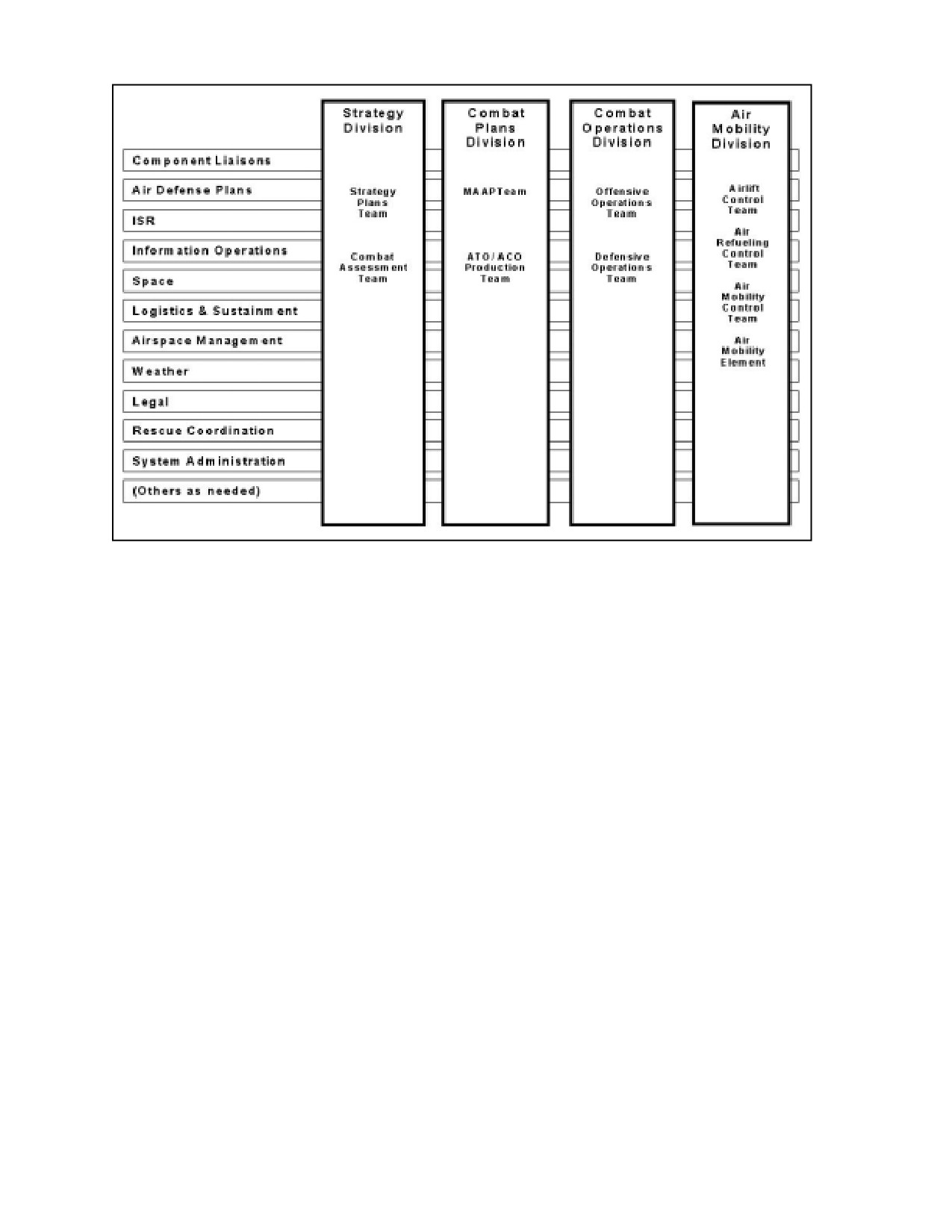
Figure I-1. Notional USAF-Based JAOC with Core, Specialty, and Support Teams
• Serving as the JFACC’s focal point for overall development and
coordination of the JASOP in support of the JFC’s theater campaign.
• Translating National Command Authorities (NCA), JFC, and JFACC
guidance into target sets for planning and executing the ATO.
• Generating a recommended apportionment decision for the JFC and
determining target sets.
• Monitoring and assessing the JASOP’s progress and providing overall
operational-level combat assessment of the air and space objectives.
(b) Combat plans division. The combat plans division is responsible for
the JAOC’s near-term air and space operations planning function. The two core
teams associated with this division are the master air attack plan (MAAP) team and
the ATO/ACO production team. This division develops detailed plans for applying
air and space resources based on JFACC-approved guidance from the strategy
division. These plans include near-term guidance, allocation and apportionment,
and tasking instructions for assigned and attached forces, which are accomplished
through ATOs. The combat plans division transmits the ATO to the combat
operations division and all other affected forces for execution. The director or chief
of the combat plans division is directly responsible for all aspects of planning the
employment of air assets, including CA assets. Planners develop and include
specific CA operations in the ADP. Key functions of the combat plans division that
affect joint CA operations include—
I-6
• Assessing combat operations to determine progress toward JFC and
JFACC objectives.
• Determining the optimal combination of target, platform, weapon, and
timing for missions included in the ATO.
• Ensuring air and space tasking supports the overall JTF campaign.
• Generating special instructions (SPINS) and the daily ACO or ACO
updates.
(c) Combat operations division. The combat operations division executes
the ATO. It analyzes, prioritizes, and, if necessary, recommends to the JFACC or
designated representative the redirection of assets. The two associated core teams
are the offensive and defensive operations teams. The director or chief of combat
operations (CCO) is directly responsible for execution, to include coordinating and
integrating all joint air operations and providing centralized control for assigned
assets. Time-sensitive target (TST) and/or theater missile defense (TMD) cells, if
constituted, work within the combat operations division. ACA and AADC
representatives, along with component liaison officers (LNOs), are part of the
combat operations division decision-making process. Key functions of the combat
operations division that affect joint CA operations include—
• Executing the current ATO through constant monitoring of air missions.
• Changing and publishing changes to the ATO in response to battlespace
dynamics, that is, eliminating targets that are no longer valid, designating higher
priority targets, warning of threatening enemy action.
• Coordinating emergency and immediate air-support requests.
• Monitoring and recommending changes to defensive operations.
(d) Air mobility division (AMD). The AMD plans, coordinates, tasks, and
executes the air mobility mission. Key functions that affect joint CA operations are
planning, tasking, and scheduling aerial refueling in support of intratheater air
operations.
(2) Specialty teams. Specialty teams provide the JAOC with diverse
capabilities to help orchestrate theater aerospace power. Specialty team personnel
are integrated throughout the JAOC to assist with air and space assessment,
planning, and execution. Specialty teams that directly affect joint CA operations are
discussed below.
(a) Intelligence, surveillance, and reconnaissance (ISR) team. The ISR
team provides personnel to all JAOC divisions and to subordinate tactical air
control system (TACS) agencies for the integration of INTEL operations. ISR
personnel in the strategy division provide initial detailed research and analysis of
I-7
the operational environment, conduct continuous intelligence preparation of the
battlespace (IPB), and ensure ISR assets are focused to support theater operations.
ISR personnel in the combat plans division integrate intelligence into ATO planning
and combat assessment, provide all-source threat analysis for targeting, and report
current situation/threat activity for adjusting combat plans. ISR personnel in the
combat operations division support execution of an ATO by monitoring ongoing
intelligence operations and responding to the fluid battlespace situation by
providing attack indsications and warnings and near-real-time (NRT) all-source
intelligence.
(b) ADP team. The ADP team plans and coordinates the employment of
air and ground air defense C2 systems assigned to COMAFFOR or JFACC. The focal
point for the effective integration of all C3 systems into the combined/joint TACS,
this team of fully qualified operators represents the C2 systems assigned or available
to JFACC. The size and composition of the team may be tailored to the operational
environment. Air defense planning officers—
• Develop, coordinate, and promulgate the ADP, concept of operations
(CONOPS), and air defense ROE upon approval of the AADC or JFC.
• Develop, coordinate, and negotiate agency-to-agency agreements and
maintain liaison with host nations, allies, and service components on all matters
relating to command, control, and employment of air defense forces and resources.
• In coordination with other planning teams, plan the employment of
specific AD resources, including fighters, missiles, and C2 systems and platforms.
• Develop, coordinate, and promulgate theater data-link tasking
documents, including tactical operations data (TACOPDAT) and operations task link
(OPTASKLINK).
• Incorporate host-nation, allied, and other service component inputs into
the C2 portions of the ATO, SPINS, and data-link tasking document.
• Monitor system and facility status, capabilities, and mission tasking and
advise combat operations on best possible adjustments of AOR, sector boundaries,
and resource allocations.
• Coordinate with JAOC systems control (SYSCON) and the TACS
directorate to develop a comprehensive communications plan with the required
frequency management and appropriate support to communications and information
(C&I) systems. This plan must be coordinated through the JTF J6 staff to update
and deconflict the theater communications architecture.
(c) Space support team (SST). An SST serves as a force enabler to the
JAOC. In support of JTMD operations, the SST enhances the C4I network and
provides initial launch detection and warning dissemination for passive defense.
Space forces can provide cueing against airborne targets for DCA and aid in-ground
target detection, nomination, and prosecution of OCA operations.
I-8
c. Key Products. Two key JAOC products relevant to CA operations are the
ATO with associated ACO and the ADP.
(1) Air tasking order. ATO development is an iterative process that begins
with receipt of objectives and guidance from the strategy division. An ATO normally
covers a 24-hour period; therefore, normally three or more ATOs are in some stage of
development at any given time. The MAAP team is responsible for developing and
weaponeering targets and integrating other component requirements and support
operations into the ATO. The ATO/ACO production team is responsible for the
technical production and dissemination of the ATO. The combat operations division
is responsible for executing and changing the current ATO. The strategy division’s
combat assessment team monitors and assesses the effectiveness of current
operations to influence the development of future ATOs. Tasks and targets
identified, prioritized, and nominated for inclusion in the ATO must support the
JFC’s overall campaign priorities within the capabilities of available resources. Air
operations complexity and the AD threat are two of the most significant problems in
designing flexible CA operations. In addition, the elusive nature of enemy TM
operations means incorporating late or higher priority requests into the ATO or,
when necessary, publishing a change to the ATO. The CCO is responsible for
changes required outside the ATO’s effective period.
(2) Air defense plan. Starting with deliberate planning and continuing
through execution, area air defense (AAD) planners at the JAOC assess the situation
and identify assets required to accomplish the commander’s DCA objectives. The
AADC, with the support of service or functional component commanders and the
JFC’s approval, develops, integrates, and distributes the joint ADP. Based on the
JFC’s AD priorities, the AADC builds an ADP designed to optimize the joint force’s
AD capabilities. Factors affecting ADP development include available forces,
support that units can provide one another, and the need to create a multilayered
defense-in-depth, that is, the ability to engage the enemy as far from its target as
possible and to continue to engage until the target is destroyed. Collaborative
planning begins when the JTF or AADC staff planners develop and distribute a
rough, first-order ADP to the components. Regional air defense commanders
(RADCs) and component air defense coordinators—for example, AAMDC—
collaboratively review the plan, develop exact positioning and defense design
information, identify issues, and provide input and feedback to the AADC staff. The
AD planners finalize, obtain JFC approval, and distribute the joint ADP. RADCs
may refine details and, collaboratively with their components, supplement the plan.
Because AD and airspace control and management are inherently related, the ADP
and the ACP should be developed in tandem to avoid conflict. Furthermore, the
appropriate command relationship with US Space Command (USSPACECOM) and
its components must be established for JTMD operations so missile-warning
functions are totally integrated. The ADP should address the following areas. This
list is not exhaustive:
(a) Prioritized defended asset list (DAL).
(b) Sensor employment.
I-9
(c) Identification procedures.
(d) Engagement procedures.
(e) Airspace control measures (ACM).
(f) Weapons control measures.
(g) Weapons system employment.
(h) Tactical interface—for example, tactical digital information link
(TADIL)— design.
(i) Dissemination of early warning.
6. Liaisons to the Joint Air Operations Center
Representing their respective commanders, senior component LNOs, perform
duties throughout the JAOC to facilitate competent integration. Typical are the
special operations liaison element (SOLE), the Marine LNO (MARLO), the Army
battlefield coordination detachment (BCD), and the naval and amphibious liaison
element (NALE). In addition, an AAMDC LNO team (see Appendix A) will deploy to
the JAOC to support the AADC/deputy area air defense commander (DAADC).
a. SOLE. The SOLE coordinates all theater special operations forces (SOF)
efforts and assets in support of the JASOP. SOF can provide critical and timely
surveillance and reconnaissance information on deployed enemy operations, as well
as the means to destroy targets. To prevent fratricide, all services must coordinate
with the SOLE prior to engaging targets in current or known former SOF operating
areas.
b. MARLO. The senior air combat element (ACE) representative in the JAOC,
the MARLO is responsible for effective presentation and adjudication of MARFOR
aviation and targeting issues that the JFACC controls or affects. The MARLO’s
liaison element to the JAOC may consist of an assistant combat operations officer,
fighter duty officer, joint search and rescue liaison, electronic combat
representative, airspace representative, air defense representative, Marine air-
ground task force (MAGTF) BCD LNO, senior Marine planner, Marine aviation
planner, strategy officer, Marine AD planner, and Marine airspace management
planner. For a more detailed discussion of their duties in the JAOC, see US Marine
Corps (USMC) Warfighting Publication (MCWP) 3-25.4, Marine Tactical Air
Command and Control (TACC) Handbook.
c. BCD. The BCD is the Army component commander’s liaison to the AOC and/
or the component—that is, the JFACC—the JFC designates to plan, coordinate, and
I-10

deconflict air operations. Responsible for exchanging detailed operation and
intelligence information and coordinating operations, the BCD is staffed to support
the JFACC/AADC/ACA. The ARFOR can tailor the BCD to support contingency
operations as required.
(1) The BCD consists of 39 Army personnel organized into a headquarters
element and six sections: operations, AD, plans, INTEL, airspace management, and
airlift (Figure I-2).
(2) The BCD ensures that the JFACC is aware of the commander, Army
force’s (COMARFOR’s) intent, scheme of maneuver, and concept of operations in the
ARFOR area of operations (AO). The BCD monitors and interprets the land battle
for the JAOC staff and integrates planning, coordination, and execution of the
following functions: battle command; AD, to include JTMD; plans; INTEL; airspace
management, airlift; C2W; and fires.
(3) The BCD passes ARFOR operational and planning data and operational
support requirements—including close air support (CAS), air interdiction (AI), ISR,
and joint suppression of enemy air defenses (JSEAD)—from the COMARFOR to the
JFACC/AADC/ACA and participating multinational forces. The BCD does not
participate directly in the ARFOR command estimate or decision-making process,
but does communicate COMARFOR’s decisions and interests to the JFACC. To
facilitate this process, the BCD provides ARFOR staff elements information on the
JASOP and current operations concerning all battlefield operating systems and
functions. The COMARFOR may delegate decision-making authority for specific
events or situations to the BCD commander.
(4) The COMARFOR specifies that the BCD’s role is to assist in coordinating
JTMD, which may include—
(a) Assisting the strategy division in developing an attack strategy to
meet the JFC’s targeting guidance and objectives, including high-priority and
politically sensitive JTMD targets.
(b) Maintaining coordination with component staffs to ensure compliance
with JFC guidance.
HQ
ELEMENT
OPNS
AIR DEFENSE
PLANS
INTEL
AIRSPACE
AIRLIFT
SECTION
SECTION
SECTION
SECTION
MANAGEMENT
SECTION
SECTION
Figure I-2. BCD Organization
I-11
(c) Coordinating ARFOR intelligence requirements with the JAOC ISR
team.
(d) Monitoring the quantity, operational status, and location of air
defense and attack assets for CA operations.
(e) Processing JFACC-allocated Army Tactical Missile System (ATACMS)
requests for use against TST, to include TMs.
(5) Through JAOC sources, the BCD may at times be the first ARFOR agency
aware of a TM target. The BCD AD section normally collocates with the USAF TMD
or TST cell, when established. BCD sections facilitate the rapid attack of targets,
requiring coordination as follows:
(a) Operations section:
• Confirm targets.
• Assist the Army deep operations coordination cell (DOCC) fire support
element (FSE) in target prosecution.
• Receive guidance from the ARFOR.
• Implement guidance from the chief of the combat operations division for
integrating and synchronizing JTMD efforts.
• Coordinate with the senior offensive duty officer (SODO), senior air
defense officer (SADO), SOLE, MARLO, NALE, AAMDC LNO, and others as
required.
• Coordinate ATACMS and multiple-launch rocket system (MLRS)
missions as authorized by the ARFOR DOCC.
(b) AD section.
• Maintain situational awareness of unit status, ARFOR AD, and JTMD
priorities and engagement reports in coordination with the AAMDC LNO team.
• Coordinate ARFOR input to the ADP with the ARFOR air defense
element (ADE) in the operations section when the AAMDC is not in theater.
• Assist the AAMDC LNO team and JAOC TMD cell as required.
• Maintain Army AD status on the floor of the JAOC; synchronize
activities with AAMDC LNO team.
• Maintain operational and logistics data on corps ADA forces.
I-12
• Provide AAMDC LNO personnel information on theater-specific JAOC
standing operating procedures (SOP).
(c) Plans section:
• Assist the strategy team in developing a TM attack strategy.
• Represent the COMARFOR during the MAAP team’s guidance,
apportionment, and targeting (GAT) meetings.
• Coordinate with the DOCC on all planned targets, including TMs.
(d) INTEL section:
• Facilitate exchange of TM IPB between component analysis elements.
• Confirm TM target locations with ARFOR INTEL agencies as required.
(e) Airspace management section:
• Coordinate airspace for preplanned and immediate ATACMS missions.
• Integrate and deconflict ARFOR airspace requirements with the AOC
airspace management section.
(f) Airlift section: Maintain situational awareness of all airlift and airlift
support requests that affect ARFOR operations.
d. NALE. The NALE consists of personnel from the maritime components—
USN/USMC—who support the AOC in integrating navel air, naval fires, and
amphibious operations into the theater air campaign. They are also points of contact
within the AOC for the exchange of current INTEL/operational data with the
maritime components.
e. AAMDC LNO. The AAMDC commander serves as the TAAMDCOORD to the
ARFOR and, when tasked, serves as a DAADC (para 9b(2) discusses the AAMDC
commander as the DAADC). As the DAADC, the AAMDC commander becomes the
principal integrator of land-based air-land missile defense for the AADC and deploys
a liaison element to assist in performing these duties. The AAMDC LNO team, as
the senior Army ADE at the AADC’s location, is the primary interface at the JAOC
for all land-based active defense force operations. The BCD AD section coordinates
its activities with the AAMDC LNO team and may augment the team as needed.
Figure I-3 depicts major functions the BCD AD section and AAMDC LNO team
perform at the JAOC. Chapter 4, Active Defense, and Appendix B, Coordination
Checklist, detail the AAMDC LNO team/BCD AD section/JAOC synchronization and
coordination procedures. Appendix A, AAMDC LNO Responsibilities and
Requirements, includes detailed information on the AAMDC LNO team composition,
workspace, and communications requirements.
I-13

AAMDC LNO Team Functions:
BCD AD Section Functions:
• Integrate land-based TMD active defense
• Coordinate with USSPACECOM
and ADA forces into the DCA plan.
elements, and the TMD cell regarding
TBM warning.
• Advise the AADC regarding weapons
control procedures and measures. Air
• Coordinate active, passive, and attack
Defense Warnings (ADW), Weapons
operations for TMD mission.
Control Status (WCS), and Emissions
Control (EMCON) measures.
• Coordinate with AAMDC for TBM alert
dissemination procedures.
• Assist the AADC in the ADP
development.
• Coordinate AD airspace needs with the
JAOC airspace management and BCD
• Advise the AADC on matters regarding
airspace management sections.
active missile defense operations and
ensure integration into the DCA plan.
• Monitor the status of TBM weapon
systems.
• Advise the AADC on AD weapons
capabilities.
• Coordinate the following with the
AAMDC LNO team:
Location of ADA assets
Engagement reporting
ADA weapons engagement zones
Receipt of AD annexes to
OPLANS/OPORDS
Figure I-3. AAMDC LNO Team and BCD AD Section Functions
SECTION B - ARMY FORCES
7. The COMARFOR
As the component commander responsible for all army forces in theater, the
COMARFOR may serve as the JFLCC if so designated. A COMARFOR is normally a
numbered army or corps commander depending on the theater and size of Army
forces involved. Army-level commands and above are often referred to as echelons
above corps (EAC). The COMARFOR establishes a tactical operations center (TOC)
to control combat operations, deploys a BCD to the JAOC to effect coordination and
liaison with the JAOC, and commands an AAMDC to coordinate and execute Army
AD and JTMD operations within the designated AO (Figure I-4).
8. The ARFOR Staff
The ARFOR staff follows the general staff concept of G1 (Personnel), G2
(Intelligence), G3 (Operations/Plans) and G4 (Logistics). Key staff elements within
the G2 and G3 directorates that affect AD and JTMD operations are the ADE, the
ACE, and the DOCC.
I-14
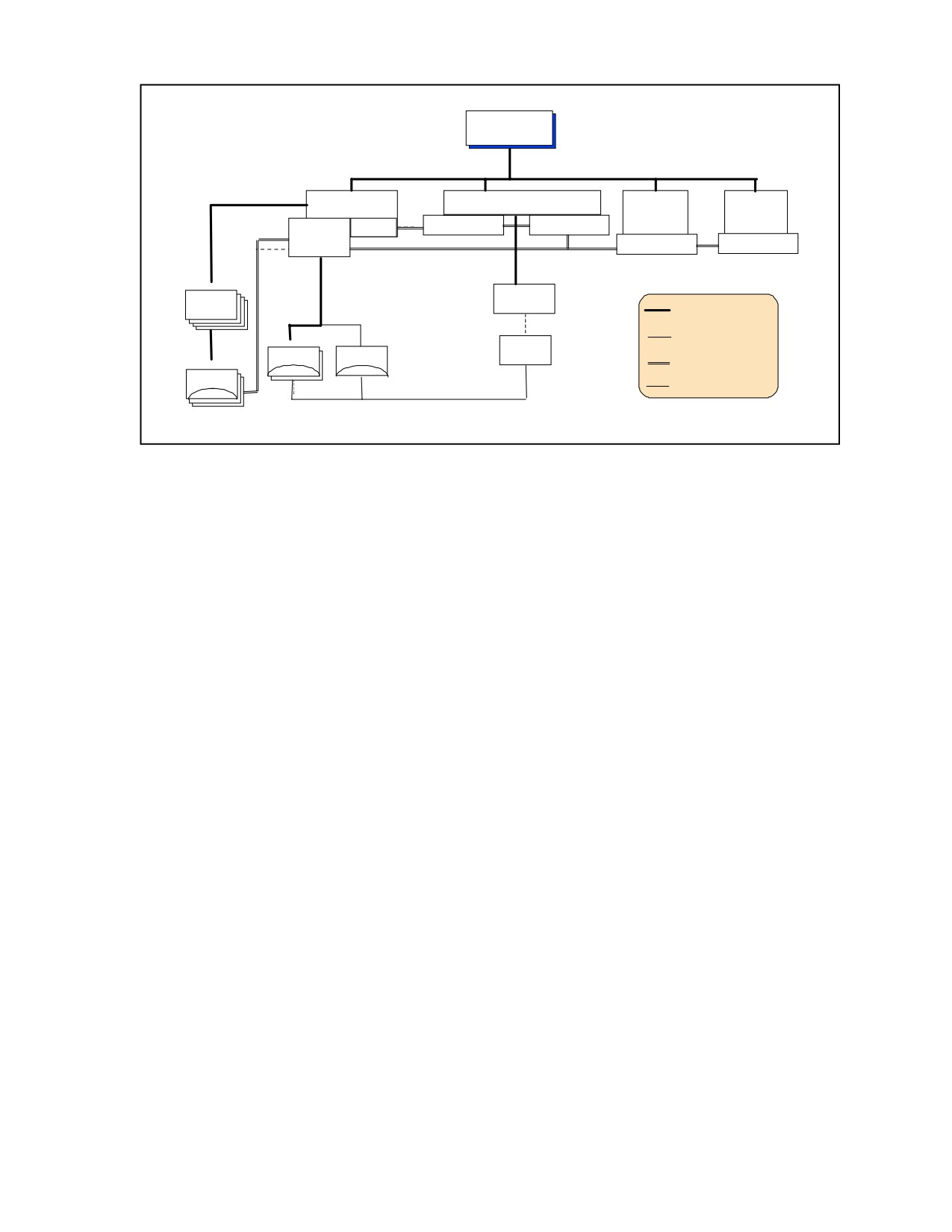
JFC
JFLCC
JFACC / AADC / ACA
JSOTF
JFMCC
DOCC
BCD
AAMDC LNO
AAMDC
AAMDC LNO
AAMDC LNO
XXX
RADC
COMMAND
AS DESIGNATED
x
BY THE JFC
ASSIGNED
SADC
X
ALLIED
COORDINATION
EAC
FORCES
OPCON
Figure 1-4. Command and Control Relationships
a. Air Defense Element. The ADE is a small permanent-party staff element
within the ARFOR G3 responsible for daily planning and coordination of air and
missile defense operations. During contingencies, the ADE facilitates integration of
the AAMDC into ARFOR operations. The ADE, with AAMDC augmentation, then
serves as the AAMDC LNO team to the ARFOR headquarters. If the AAMDC is not
deployed, the ADE may function as a higher-level staff for Patriot forces in theater,
providing direct early warning to ARFOR units as appropriate. In the absence of
the AAMDC, the TAAMDCOORD, the BCD AD section, and the ADE work to
integrate corps and EAC ADA assets into theater DCA operations. The AAMDC,
ADE, and BCD AD section are typically linked through secure voice and automated
data links.
b. Analysis and Control Element. The ACE manages the collection of
intelligence, produces all-source intelligence, provides technical control of
intelligence and electronic warfare (IEW), and disseminates intelligence and
targeting data. An ACE supports the commander at each command echelon in
executing battle command and planning future missions across the range of military
operations. Centralizing analysis and collection management under OPCON of the
G2, the ACE provides balance to all-source analysis products and synergy to the
execution of counterintelligence (CI), human intelligence (HUMINT), imagery
intelligence (IMINT), and signals intelligence (SIGINT) operations. At theater army
level, the ACE works closely with the theater joint intelligence center (JIC) to
support the intelligence requirements of the theater army commander and
subordinates. Coordinating continuously with the ACE, AAMDC LNOs participate
in the analysis and laydown of the TM threat.
c. Deep Operations Coordination Cell. The ARFOR conducts operations
throughout the assigned AO and may establish a DOCC to facilitate integration of all
operations against targets deep in the ARFOR’s battlespace. Deep operations
enable commanders at each level to shape their battlespace, set operational tempo,
I-15
set the conditions for success, and protect the force. The DOCC is responsible for
integrating all operational-level fires in the AO and for coordinating JAOC-related
activities through the BCD. Appendix C, Deep Operations Coordination Cell,
discusses more completely the DOCC and its support of attack operations. An
AAMDC LNO team works with the DOCC to help focus attack operations against
TMs.
9. Army Air and Missile Defense Command
The AAMDC is a multifunctional organization whose primary purpose is to
perform theater-level AD and JTMD planning, integration, coordination, and
execution (less attack operations) functions for the COMARFOR or, when
designated, the JFLCC. The AAMDC is a fully integrated air and missile defense
organization that is entirely mobile, maintaining its own organic C4I systems and
shelters within the Air and Missile Defense Planning and Control System
(AMDPCS). However, it requires external connectivity support as part of an
integrated C4 joint system to link combined/JTF (C/JTF), joint special operations
task force (JSOTF), deployed service components, and the defense communications
system. When deployed in theater, the AAMDC assumes primary responsibility for
integrating land-based AD operations for the AADC. Key AAMDC players are the
commander, who serves as the TAAMDCOORD to the ARFOR and as DAADC to the
designated AADC for AD integration; the attack operations officer; the active
defense officer; the passive defense officer; the C4I systems integrator; the G2; the
G3; and the battle captain (BC).
a. The AAMDC Staff.
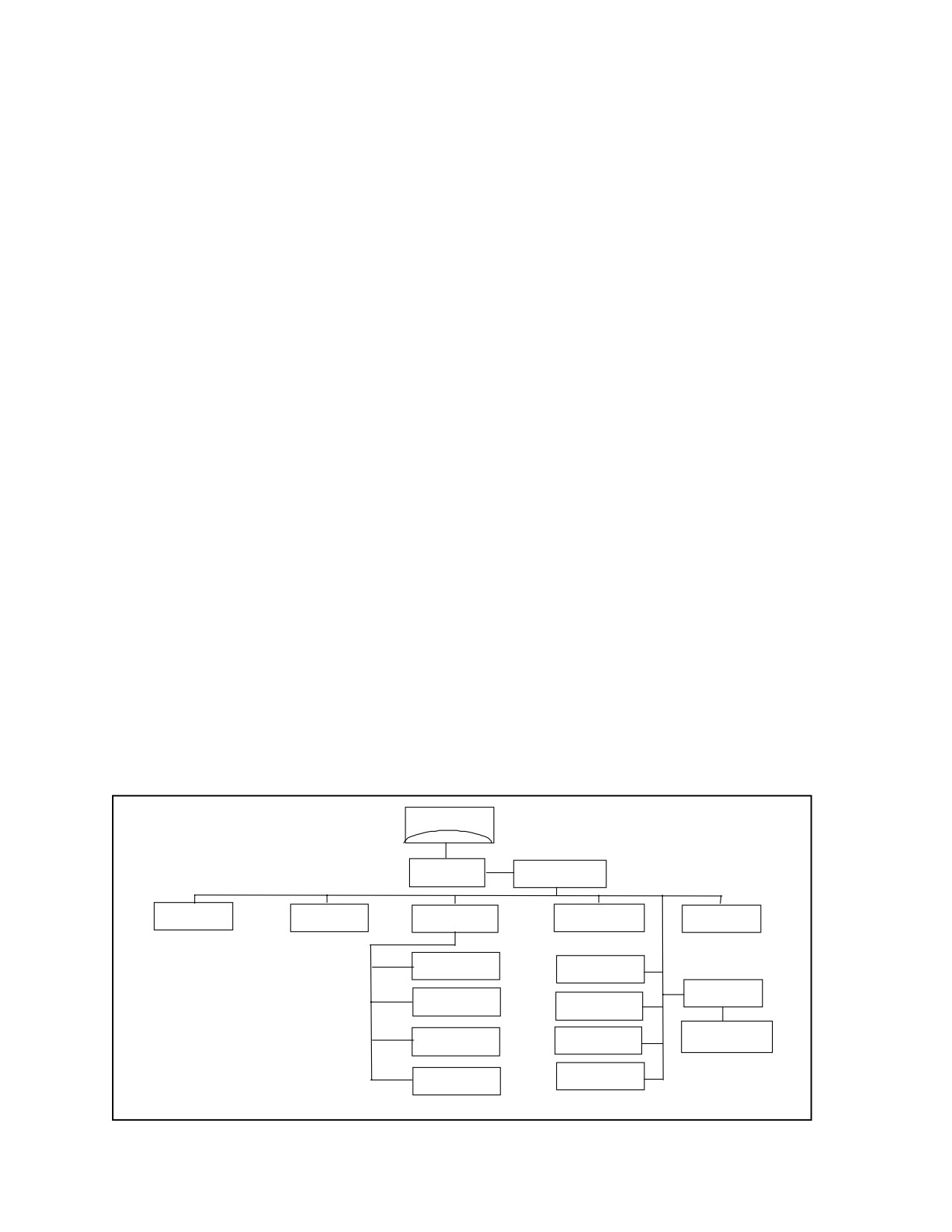
(1) The AAMDC staff consists of active and reserve component personnel who
assist in commanding the organization (Figure I-5) and assigned EAC ADA assets.
The AAMDC executes Army AD and contributes to JTMD operations through its
TOC, which includes all staff sections and the AMDPCS equipment. The TMD
operational element (pillars) chiefs—attack operations officer, active defense officer,
AAMDC
COMMAND
CHIEF OF STAFF
SECTION
SECTION
G-1
G-2
G-3
G-4
G6
SECTION
SECTION
SECTION
SECTION
SECTION
ACTIVE
HQ COMDT
DEFENSE
SECTION
BTRY
PASSIVE
IG
HQ
DEFENSE
SECTION
MOTOR MAINT
ATTACK
PUBLIC
SECTION
OPNS
AFFAIRS SEC
SJA
COORD
SECTION
TEAMS
Figure I-5. AAMDC Organization
I-16
passive defense officer, and C4I systems integrator—and the BC in the TOC perform
the functions associated with the TAAMDCOORD’s duties .
(2) The command section and its subordinate staff’s major functions are
summarized below:
(a) Command section. The command section exercises C2 of the AAMDC
and subordinate units and ensures that functions pertaining to the overall operation
of the AAMDC are planned, coordinated, and executed. This section also performs
battle management functions and oversees the planning, initial entry, and combat
operations for air and missile defense functions.
(b) Chief of staff section. The chief of staff section directs and coordinates
the activities of the subordinate staff—to include the special staff, public affairs (PA)
section, chaplain, inspector general (IG), and staff judge advocate (SJA)—and
ensures that assigned tasks are promptly and efficiently completed.
(c) Personnel section. The focal point for all personnel-related matters,
the personnel section is responsible for personnel administration and manpower
management. It advises and assists the commander in personnel services and
replacements, records management and reports, discipline, morale, and welfare.
(d) INTEL section. The focal point for all military intelligence,
counterintelligence, security operations, operational plans, and operations security
(OPSEC) measures, the INTEL section monitors intelligence systems, determines
intelligence communication requirements, assists in developing physical security
plans and in identifying priority intelligence requirements (PIRs), and coordinates
intelligence and security drills. It also participates in various intelligence
production, dissemination, and support activities. These activities include analyzing
intelligence reports and messages, refining and validating the IPB, developing and
refining the intelligence estimate, processing requests for information, and
apprising the commander of intelligence capabilities and limitations and their
potential impact on operations.
(e) Operations section. The operations section coordinates, integrates,
and synchronizes all AAMDC operations. It directs the emplacement of the AMDPCS
and monitors the operational status, location, and engagement capabilities of land-
based air and missile defense units. This section coordinates unit movements and
maintains situational awareness of the theater AMD battle. To facilitate the conduct
of air and missile defense operations, it establishes and maintains LNOs at major
theater and ARFOR C2 nodes. For example, in the event of a missile launch, the
operations section receives launch and TBM impact points, disseminates early
warning, and, after analysis, recommends targeting of the enemy’s launch platforms
and associated infrastructure to the DOCC. The operations section prepares the
AMD annex to the ARFOR’s operations plan (OPLAN)/operations order (OPORD)
and develops plans to support future operations. It also assists in integrating TMD
time-sensitive and planned ATO target missions and in developing the theater ADP.
I-17
(f) Logistics section. The logistics section coordinates supply,
maintenance, transportation, and services for the command. It determines current
and future ADA supply needs, recommends logistical allocations and priorities, and
assists the operations section in preparingplanning for service support. It monitors
equipment readiness and unique ADA classes of supply: Class V and IX. The
logistics section prepares the movement annex to OPLANs/OPORDs, coordinates
and schedules transportation operations, and advises units on current transport
requirements and movement restrictions.
(g) Communications-electronics (C-E) section. The C-E section provides
data and voice communications, information systems planning, coordination, and
support to the AAMDC and to joint, multinational, and external organizations as
required.
(h) Headquarters battery. The headquarters battery provides the full
range of personnel management and administrative support for the battery. It is the
administrative link for requesting replacements, reporting casualties, and
conducting personnel actions.
(i) Maintenance section. The maintenance section performs maintenance
and services on all assigned conventional equipment, such as vehicles and
generators.
(j) Headquarters commandant section. This section exercises OPCON,
providing security, food service, quartering, medical support, field sanitation, and
supply for headquarters personnel. It also arranges for the reception and
integration of augmentees to support the AAMDC mission.
(k) IG section. The IG section integrates the commander’s organizational
inspection program, conducts inspections and investigations, and assists the
commander in determining the state of the discipline, efficiency, morale, training,
readiness, and overall welfare of the command.
(l) PA section. The PA section plans and supervises the command’s PA
program and evaluates the effectiveness of PA plans and operations. It monitors
media and public opinion, informs the commander of the implications of planned or
implemented operations, and serves as the command’s spokesperson for all
communications with the external media.
(m) SJA section. The SJA section advises the commander on military,
domestic, and foreign laws and laws relating to armed conflict. It also provides legal
services for the command, supervises the administration of military justice, and
ensures that individuals’ rights are protected and the interests of justice are served.
b. The TOC. The TOC, which comprises the AMDPCS, is the AAMDC’s initial-
entry capability providing the TAAMDCOORD and staff the necessary equipment to
I-18
plan, coordinate, deconflict, and monitor the execution of ARFOR AD and JTMD
operations through all phases of force projection. AAMDC TOC operations are
divided into five principal cells responsible for managing operations related to the
four operational elements of JTMD. Figure I-6 depicts the AAMDC TOC’s current
tactical layout, and Figure I-7 shows external information links to it.
(1) Operations. Air and missile defense functions are accomplished under
one or a mix of the following operational elements:
(a) Active defense cell. The active defense cell supports development of
the joint force ADP and is responsible for coordinating and executing Army active
defense operations throughout the JOA according to that plan. This cell assists the
AAMDC G3 plans in developing the air and missile defense annex to the ARFOR’s
plan and incorporating corps AD requirements into plans. During hostilities, the
active defense cell passes enemy TBM launch information to the attack operations
and passive defense cells and contributes an active defense perspective to TM IPB
development. The active defense cell monitors friendly and threat airspace
operations through a combined display of unit locations/AMD coverage and a joint
integrated AD picture.
(b) Passive defense cell. The passive defense cell assesses TM
vulnerability for the ARFOR or JFLCC, recommending design of the early-warning
architecture and providing early warning to affected units and/or local populace
within the ARFOR’s AO. The passive defense cell supports the ARFOR’s scheme of
maneuver by using IPB, imagery, and displays to determine which friendly assets
are fully protected, which are partially protected, and which are not protected at all.
The cell also monitors and displays the friendly ground situation.
(c) Attack operations cell. In conjunction with AAMDC INTEL personnel,
the attack operations cell supports ARFOR and the joint force OCA operation by
analyzing TM NRT mobile targets. Included are developing TM information
requirements (IRs), contributing to TM IPB development, building tracking profiles,
identifying trigger events, and analyzing launch events and countermobility.
Validated TM target nominations are forwarded to the DOCC for integration into
plans or for immediate prosecution via the Advance Field Artillery Tactical Data
System (AFATDS). This request for fire (RFF) is immediately available to the BCD
operations section on their AFATDS terminal to assist in battlespace deconfliction or
target handoff.
(d) G3 plans/communications cell. This cell performs various planning
and communications support activities, which include assisting in developing
OPLANs/OPORDs, determining communications and data link requirements, and
maintaining communications equipment. It provides the C4 required to integrate
and monitor execution of Army AD and JTMD operations within a joint
environment. Capabilities include the ability to record and display TBM track
history; to reduce sensor-to-shooter timelines via direct data transfer; to rapidly
assess inputs from national intelligence assets; to display selected enemy order-of-
battle; and to display relevant INTEL, records, and TOC operational data.
I-19
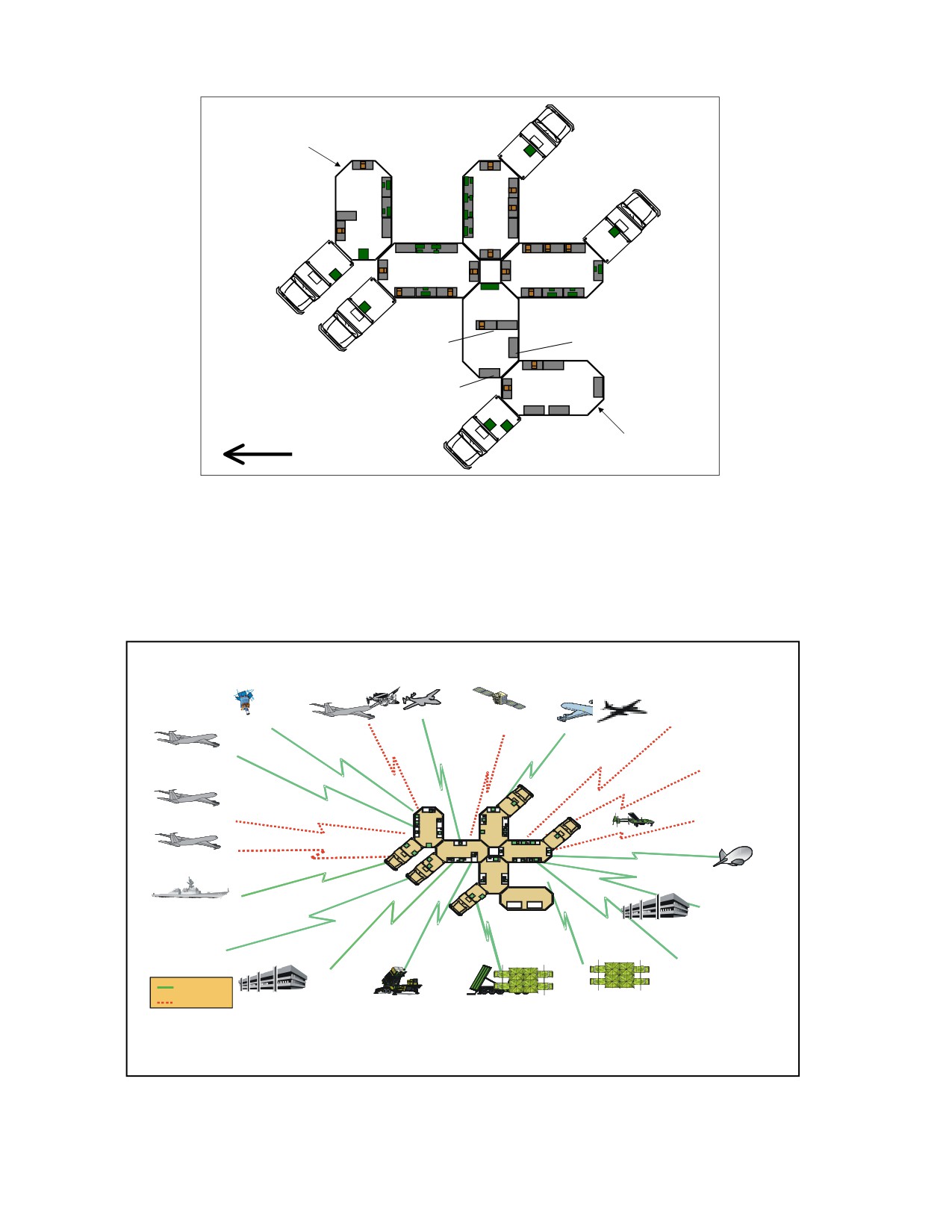
ATTACK OPERATIONS
MAIN
VAN
ENTRANCE
ACTIVE DEFENSE
A
G3
A
VAN
PLANS
A
T
L
Y
A
S
K
G6
E
S
O
C4I
COMMUNICATIONS
P
G2 CURRENT
LNO TEAMS
VAN
PASSIVE DEFENSE
ACTIVE DEFENSE
WORK
CHIEF OF STAFF
BATTLE CAPTAIN
AREA
PASSIVE DEFENSE
VAN
COMMANDER
G1/G4
LNO TEAMS TO
COMMAND
OTHER COMPONENTS
G1/G4 STAFF
ENTRANCE
VAN
Figure I-6. AAMDC’s TOC (AMDPCS Tactical Layout)
E2C
DSP / SBIRS
N ATL
RIVET
U2
SENSOR
AWACS
JOINT
JOINT STARS
GUARDRAIL
COMMON SENSOR
COBRA BALL
U AV
ABCCC
JLENS
AEGIS
THEATER
NBCCC
SIPRNET
DIRECT
INDIRECT
DOCC
ACE
PATRIOT
THAAD
AOC / BCD
Figure I-7. External Information Links to the AAMDC TOC
I-20
(e) Administration/logistics (ADMIN/LOG) cell. This cell monitors and
advises the commander on the status of AMD logistics functions.
(2) Coordination. Key to integration of AAMDC operations is the deployment
of LNOs or coordination teams. The AAMDC deploys LNOs or coordination teams
to all major theater elements and JTMD C2 nodes, to include the joint force
headquarters, the JFACC/AADC (JAOC), JFLCC or ARFOR headquarters, joint force
maritime component commander (JFMCC), JSOTF, DOCC, ACE, and allies as
necessary to coordinate and integrate Army AD, including JTMD operations.
c. AAMDC Support Function.
(1) Support to ARFOR. Three critical roles the AAMDC commander performs
during AMD operations are to command the AAMDC and its subordinate EAC ADA
brigades, to perform the functions of the TAAMDCOORD for the COMARFOR or
JFLCC, and to perform the functions of the DAADC for the AADC. The AAMDC
normally locates with the ARFOR headquarters, but may collocate with the JAOC
depending on mission, enemy, terrain and weather, troops and support available,
time available, and civil considerations (METT-TC). METT-TC also determines the
commander’s location and role.
(2) Support to AADC. The AAMDC commander may also be designated
DAADC. Based on METT-TC, the JFC and AADC determine whether to designate a
DAADC. Although the AAMDC commander may serve as a “deputy” AADC, the
DAADC would not assume the role of the AADC if the AADC were incapacitated.
Not a true deputy commander, the DAADC’s primary responsibilities are to assist
the AADC in planning, coordinating, integrating, and synchronizing land-based air
and missile defense operations. Neither the AAMDC commander nor his staff has
the tactical, technical, or procedural expertise and capability to perform all of the
functions of an AADC in a joint environment. The DAADC—
(a) Integrates land-based active defense and ADA forces with the DCA
plan.
(b) Advises the AADC regarding weapons control procedures and
recommended or implemented airspace control and EMCON measures, ADWs, and
WCS.
(c) Assists the AADC with ADP development.
(d) Advises the AADC regarding active missile defense operations and
ensure effective integration of ARFOR assets into the ADP.
(e) Advises the AADC on Army AD weapons capabilities.
I-21
(3) Support of AD operations by force projection stage.
(a) Mobilization/predeployment. Mobilization/predeployment stages are
initiated in response to a situation as required. The ARFOR uses the AAMDC to
plan, coordinate, deconflict, and execute AD within the assigned AO according to the
AADC’s guidance. AAMDC establishes communications with and sends liaisons to
the ARFOR staff and other units, organizations, and agencies as required. Although
planning is an ongoing process, the AAMDC works in coordination with the
COMARFOR and his staff to convert the command’s contingency plan (CONPLAN) to
an OPLAN. The AAMDC analyzes/assesses, participates in the decision-making
process, and assists in developing the OPORD. The AAMDC uses automated
planning capabilities to develop the air and missile defense annexes to the ARFOR’s
plan and to synchronize them with the combatant commander (CINC), AADC, and
other components’ OPLANs. Planning cells within the AAMDC conduct detailed
planning and assessment for entry and follow-on operations. During the
mobilization/predeployment stage, numerous concurrent planning and execution
activities continue. The ARFOR uses the AAMDC to validate possible TM threat
scenarios and OPLANs. The TM IPB serves as the basis for determining the most
effective deployment strategy, developing the ARFOR’s intelligence plan, and
appropriately mixing weapons, sensors, and capabilities to counter the anticipated
TM and air threat for each phase of the operation. During this stage, the AAMDC—
• Coordinates with the designated AADC.
• Conducts AD and TM IPB.
• Participates in theater AD and JTMD planning.
• Plans ARFOR AD and JTMD operations.
• Assesses AD architecture and recommends changes as needed.
• Develops force packages for subsequent force projection stages.
• Assesses unit readiness.
• Plans LNO team deployment as required.
• Plans communications and multi-TADIL network architecture.
• Assesses passive defense capabilities.
• Plans follow-on AD and JTMD operations.
• Plans for logistics support operations (sustainment requirements).
• Plans for movement.
I-22
(b) Deployment/entry. Rapid deployment of forces into the theater of
operations characterizes deployment/entry operations. Three types of entry
operations are unopposed, opposed, and forcible entry. As part of the Army’s initial
force-projection capability, the AAMDC deploys to the theater under OPCON of the
ARFOR/JFLCC. This force includes the TOC, command group, LNO teams, and
essential staff sections. Upon arrival in theater, the AAMDC establishes
connectivity through the Army’s C4I architecture and joint interfaces as required and
establishes linkages to joint, multinational, and national C4I systems. The AAMDC
represents the ARFOR or JFLCC during joint planning with the designated AADC
on AD issues. Once in theater, the AAMDC monitors enemy activities using all
available INTEL sources. The AAMDC continuously processes and reviews INTEL
information, collects battle damage assessment (BDA), and assesses the enemy
situation, deploying LNO teams as required. During this stage the AAMDC—
• Establishes liaison.
• Coordinates with the JFACC/AADC/ACA as required.
• Participates in JFLCC J3 or ARFOR G3 planning by providing AD and
JTMD input to the air operations plan.
• Integrates INTEL from deployed sensors to provide the ARFOR/JFLCC
situational awareness.
• Refines the TM IPB picture and requirements.
• Analyzes criticality, vulnerability, recuperability, and threat (CVRT).
• Recommends changes to improve passive defense.
• Monitors OPSEC.
• Monitors friendly and enemy air operations.
• Recommends AD architecture designs.
• Recommends AD priorities in coordination with maneuver plans.
• Executes logistics support functions.
• Coordinates and implements AD attack warning procedures.
• Assists in coordinating TM targets and targeting priorities.
• Provides theater AD and JTMD expertise.
• Monitors ADA unit locations and status.
I-23
(c) Operations. The AAMDC supports the ARFOR or JFLCC by providing
effective ground-based defense to protect maneuver forces and the JFC’s priority
assets. The AAMDC assists in implementing passive defense measures throughout
the AO and recommends TM attack strategy to the ARFOR and JFACC staff for
planning and coordinating preplanned and immediate missions. The AAMDC plans,
coordinates, monitors, deconflicts, and sustains Army AD operations and
recommends adjustments to the DAL. During this stage the AAMDC—
• Serves as the TAAMDCOORD to the ARFOR or JFLCC.
• Serves as DAADC if designated.
• Integrates Army AD operations and contributes to JTMD.
• Provides LNO team to AADC.
• Monitors theaterwide combat service support (CSS) for ADA units,
including allocation of missile and repair parts to corps and EAC ADA brigades
according to the JFC’s priorities.
• Warns of attacks according to warning release criteria.
• Supports the ARFOR/JFLCC by processing and disseminating AD and
TM intelligence to EAC, corps, and division C2 nodes. The AAMDC intelligence
section—
•• Provides accurate air and ground situational awareness and the
latest information on those activities and vulnerabilities.
•• Receives TM track updates throughout flight.
•• Cues active defense units for engagement of TMs.
•• Warns applicable units of possible TM impact.
•• Continuously assesses vulnerability.
•• Synchronizes countermeasures with attack operations.
•• Disseminates TM impact information for analysis and warning.
(d) Postconflict/redeployment. Postconflict/redeployment operations
generally occur after the deployed force has accomplished its primary mission.
Reconstitution activities support redeployment. Some forces capable of conducting
AD operations maintain an alert or ready status during this stage and ARFOR AD
elements may remain behind for stability operations. During this stage the
AAMDC—
I-24
• Consolidates forces for redeployment and reconstitutes remaining air
and missile defense forces to a full readiness capability.
• Requests theater sensors and INTEL resources in sufficient numbers to
provide continuous—though possibly reduced—early warning and INTEL coverage
during postconflict stability operations.
• Recommends to the COMARFOR/JFLCC and JFC the size, composition,
and mission guidelines for stay-behind forces.
SECTION C - NAVY FORCES (NAVFOR)
10. The Commander, Navy Forces (COMNAVFOR)
If the COMNAVFOR is designated the JFACC, the JFACC and AADC functions
could be performed from different ships, and AD functions would likely be conducted
where workspace is at a premium. Therefore, Navy operations require special
considerations under these conditions, the usual BCD and AAMDC liaison functions
may have to split in order to provide support to the JFACC and AADC. Because the
JFACC and AADC functions may transition ashore, joint planning is required to
ensure that a smooth transition occurs between all elements, including liaisons.
11. Command and Control Structure
The basic warfighting structure within the NAVFOR and MARFOR afloat is
spelled out in Navy Warfare Publication (NWP) 10-1, Composite Warfare
Commander’s Manual. The officer in tactical command (OTC) has overall
responsibility for successfully accomplishing the force’s mission. The OTC may
delegate certain defensive aspects to the composite warfare commander (CWC), but
retains responsibility for mission objectives—sea control, power projection, and so
forth. The air warfare commander (AWC) within the Navy C2 structure works for
the CWC when assigned, or the OTC when not assigned. The AWC may be
designated as the AADC or the JOA may be subdivided into several regions with
corresponding regional air defense commanders (RADCs) responsible to the AADC
for their regions. In a configuration employing RADCs, the AADC may serve as both
the AADC and one of the RADCs.
12. Liaison
a. While automation and digitization are making battle management easier,
combat operations still require LNOs to facilitate efficient integration of joint forces.
Therefore, if sufficient personnel are available, the AADC has LNOs on the staffs of
the CJTF, JFACC, JFMCC, JFLCC/ARFOR, and MARFOR. The JFACC, JFMCC,
JFLCC/ARFOR, and MARFOR have LNOs on the AADC staff (see Figure I-8). The
LNOs are responsible for coordinating details of the ADP with their respective
staffs. Important to recognize is that LNOs work directly for their respective parent
I-25
Sea-Based JFACC/AADC
JFC
BCD LNOs
JFACC
AAMDC LNOs
TLAM
TACAIR
AADC
AAMDC LNOs
BCD LNOs
SAMs
TACAIR
(Control Only)
Figure I-8. Sea-Based JFACC/AADC
component or unit commander and represent that commander to the unit or
commander to which they are temporarily assigned.
b. The BCD and AAMDC send LNO teams to the JFACC—probably embarked in
the numbered fleet commander’s command ship—to begin planning and coordinating
OCA operations. These teams consist of approximately 10 BCD and 2 AAMDC
personnel. In addition, they send teams of approximately 5 AAMDC and 2 BCD
personnel to the AADC, likely embarked aboard an AEGIS, to plan and coordinate
DCA operations. If the JFACC location has sufficient space, the BCD brings an air
and missile defense workstation (AMDWS), which requires an air defense systems
integrator (ADSI) with forward area air defense (FAAD) data link (FDL) capability.
The BCD team also requires five Secret Internet Protocol Router Network
(SIPRNET) lines for laptop computers and up to five secure telephones. The
AAMDC team aboard the AEGIS also brings an AMDWS requiring FDL connectivity
and up to three SIRPNET lines and two secure telephones.
c. If the battle group (BG) commander is designated as the JFACC, the BCD
collocates with the BG/airwing staffs and ship’s company departments as follows: air
INTEL officer (AIO), air warfare officer, air operations officer, strike operations
officer, combat systems officer, and others as required.
13. Transition to Ashore Operations
The BCD and AAMDC discharge their inherent responsibilities and integrate
follow-on forces as they arrive in theater. Each command’s remaining personnel link
I-26
///////////////////////////////////////