FM 3-19.50 Police Intelligence Operations (July 2006) - page 1
FM 3-19.50
Field Manual
Headquarters
Department of the Army
No. 3-19.50
Washington, DC, 21 July 2006
Police Intelligence Operations
Contents
Page
PREFACE
iv
Chapter 1
INTRODUCTION
1-1
Background
1-1
Role of Police Intelligence Operations
1-1
Development of an Effective Police Intelligence Operations Network
1-6
Common Police Intelligence Operations Definitions
1-7
Application of Police Intelligence Operations
1-7
Army Law Enforcement Policy
1-8
Chapter 2
LEGAL DOCUMENTS AND CONSIDERATIONS
2-1
Executive Order 12333
2-1
Department of Defense Directive 5200.27
2-2
Army Regulation 190-45
2-3
Army Regulation 195-1
2-4
Army Regulation 195-2
2-4
Army Regulation 380-13
2-4
Army Regulation 381-10
2-4
Army Regulation 525-13
2-5
Criminal Investigations Division Regulation 195-1
2-6
Department of Defense Directive 2000.12 and Department of Defense
Instruction 2000.16
2-7
USA Patriot Act
2-7
Status of Forces Agreements and International Law
2-8
Chapter 3
POLICE INTELLIGENCE OPERATIONS AS EMERGING DOCTRINE
3-1
Effective Police Intelligence Operations Development
3-1
Command Staff Process
3-1
Police Information Collection Process
3-7
Reconnaissance and Surveillance
3-9
Distribution Restriction: Approved for public release, distribution is unlimited.
i
Contents
Chapter 4
THE CRIMINAL INTELLIGENCE PROCESS IN SUPPORT OF POLICE
INTELLIGENCE OPERATIONS
4-1
Criminal Intelligence Process
4-1
Databases
4-7
Centralized Criminal Intelligence Analytical Support Element and Database
4-7
Police Records Management
4-9
Chapter 5
POLICE INTELLIGENCE OPERATIONS IN URBAN OPERATIONS
5-1
Urban Threats
5-1
Army Law Enforcement in Urban Operations
5-3
Intelligence Preparation of the Battlefield in Urban Operations
5-3
Urban Intelligence, Surveillance, and Reconnaissance
5-4
Chapter 6
POLICE INTELLIGENCE OPERATIONS ON INSTALLATIONS
6-1
Responsibilities of the Installation Management Agency
6-1
Authority to Conduct Police Intelligence Operations
6-1
Management of Police Intelligence Operations on Installations
6-2
Chapter 7
POLICE INTELLIGENCE OPERATIONS NETWORKING
7-1
Nontactical Networks
7-1
Tactical Networks
7-2
Defining Network Participants
7-2
Forums and Threat Working Groups
7-4
Appendix A
INTEGRATING POLICE INTELLIGENCE OPERATIONS PLANNING
IN THE MILITARY DECISION-MAKING PROCESS
A-1
Appendix B
SAMPLE CRIMINAL INTELLIGENCE PRODUCTS
B-1
Appendix C
SAMPLE POLICE INTELLIGENCE OPERATIONS CHEKLIST
C-1
Appendix D
TACTICAL QUESTIONING
D-1
Appendix E
QUESTION TO ASK DETAINEES
E-1
Appendix F
DEBRIEFING AND/OR AFTER-ACTION REVIEWS
F-1
Appendix G
SOURCES
G-1
GLOSSARY
Glossary-1
REFERENCES
References-1
INDEX
Index-1
Figures
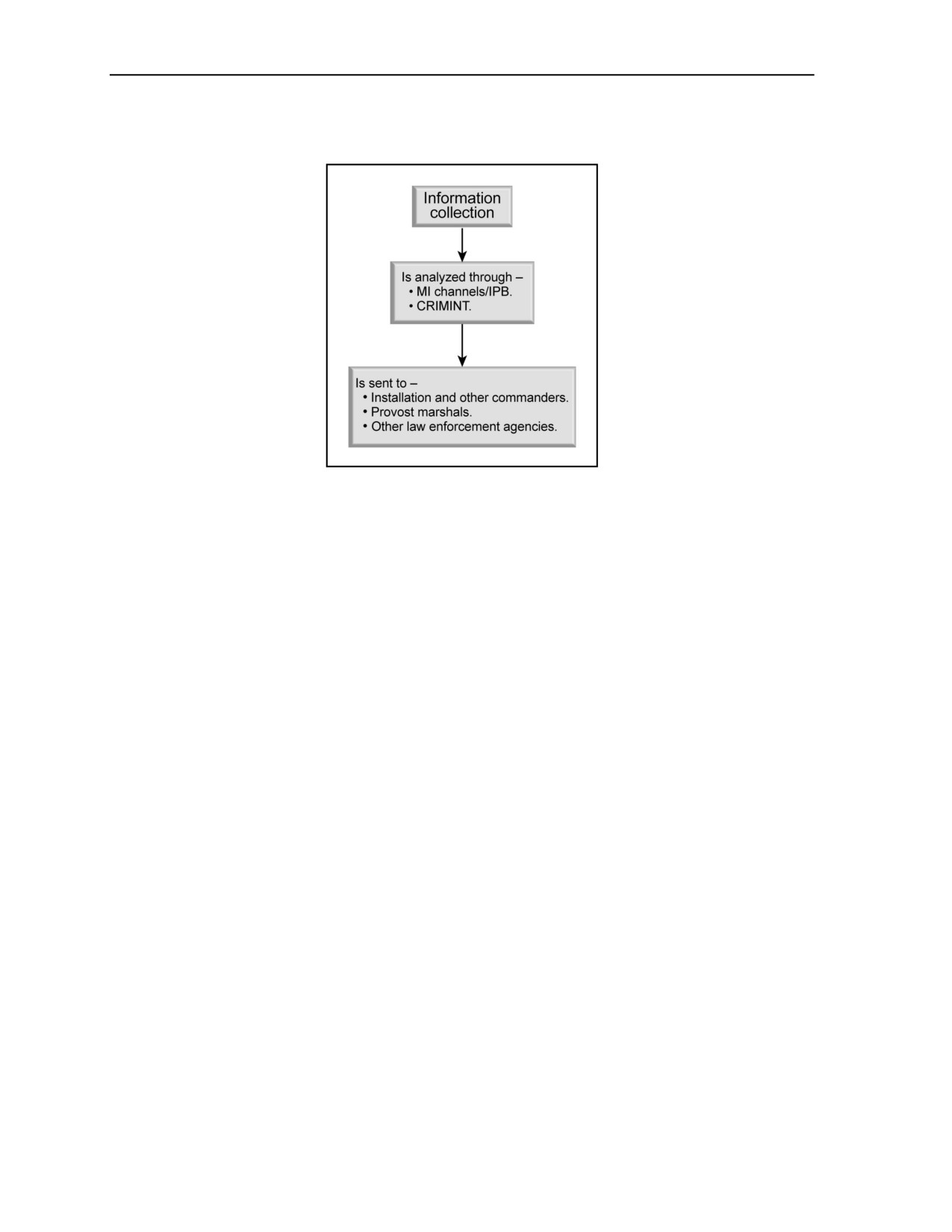
Figure 1-1. Information Sharing Through PIO
1-8
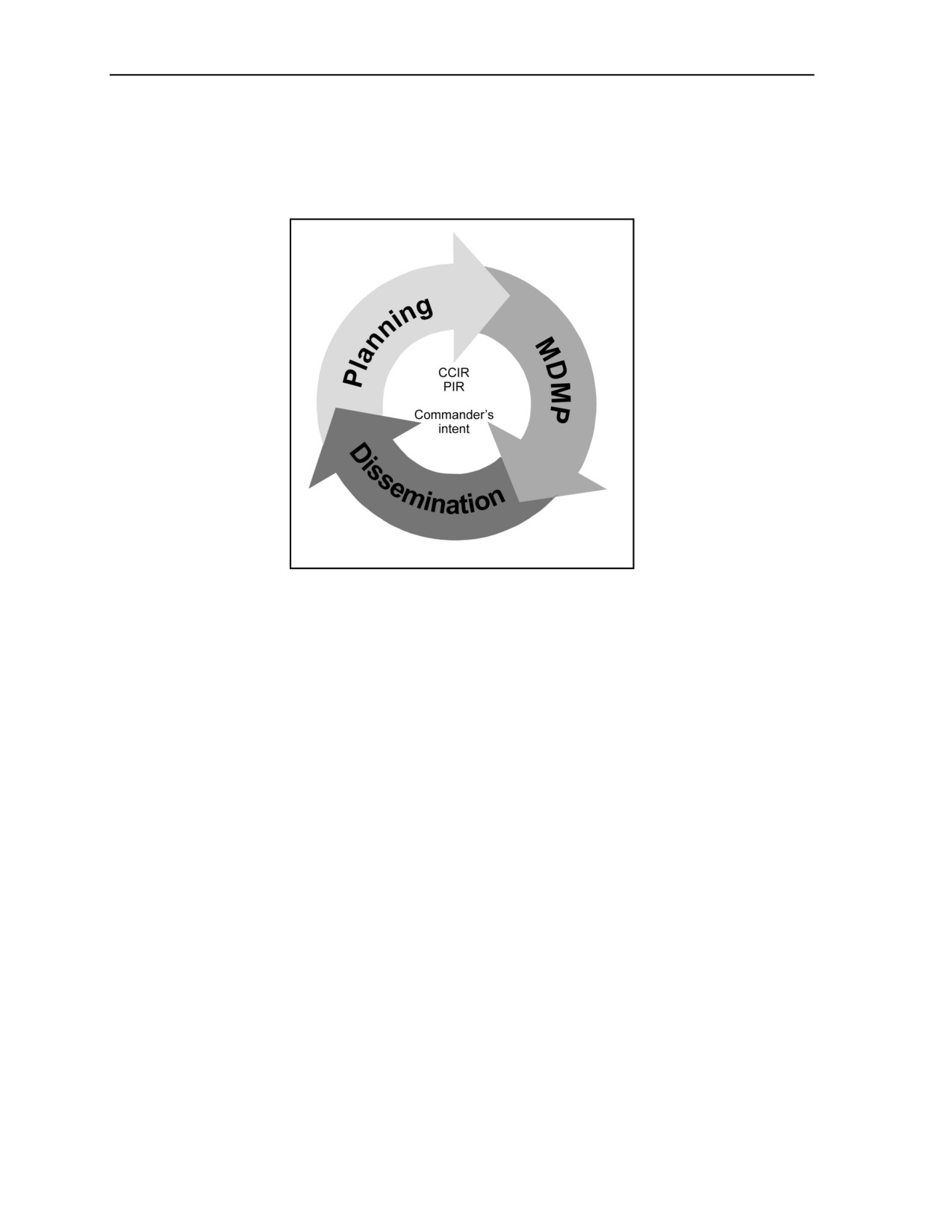
Figure 3-1. Command Staff Process
3-2
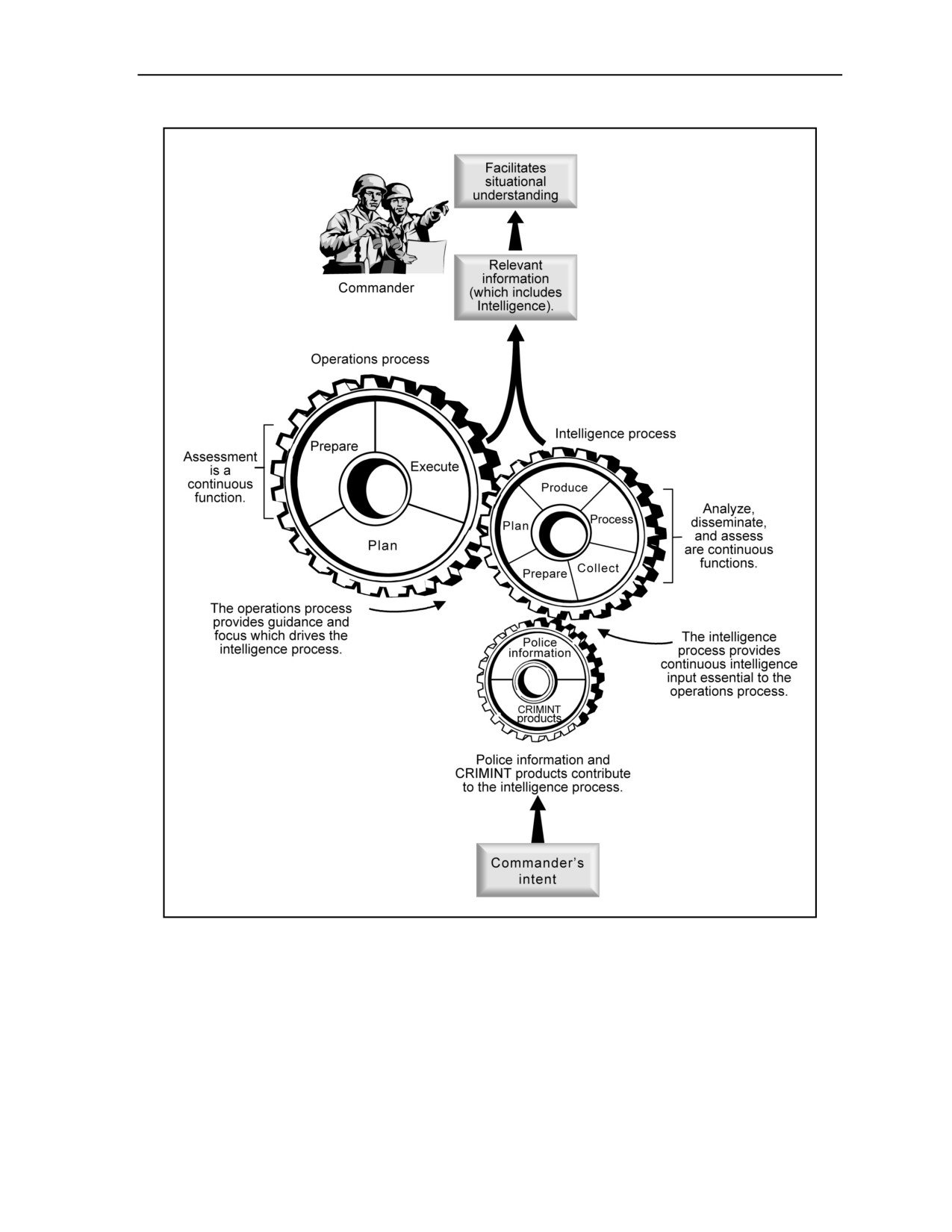
Figure 3-2. Police Information and CRIMINT Products Input into the Intelligence
Process
3-3
Figure 3-3. Police Information Collection Process
3-6
Figure 3-4. SALUTE Report
3-9
Figure 4-1. CRIMINT Process
4-2
ii
FM 3-19.50
21 July 2006
Contents
Figure 4-2. Police Intelligence Process Model
4-5
Figure 4-3. Sample of Planning for and Execution of PIO Functions
4-8
Figure 6-1. US Army Installation Threat and Crime Model
6-3
Figure 7-1. Nontactical PIO Network
7-2
Figure 7-2. Tactical PIO Network
7-3
Figure 7-3. Organizational Chart
7-4
Figure A-1. MDMP
A-1
Figure A-2. PIO Criminal Dimension and the MDMP
A-5
Figure B-1. BOLO Alert
B-2
Figure B-2. Sample of an Open-Source Intelligence Daily Report
B-2
Figure B-3. Sample of a US Postal Inspection Wanted Poster
B-6
Figure B-4. Sample of an FBI Wanted Poster
B-7
Figure B-5. Link Analysis Chart
B-8
Figure C-1. Sample PIO Checklist
C-1
Tables
Table 1-1. Primary Intelligence Tasks
1-3
21 July 2006
FM 3-19.50
iii
Preface
Field Manual (FM) 3-19.50 is a new FM and is the Military Police Corps' manual for police intelligence
operations (PIO) doctrine. It describes—
• The fundamentals of PIO.
• The legal documents and considerations affiliated with PIO.
• The PIO process.
• The relationship of PIO to the Army's intelligence process.
• The introduction of police and prison structures, organized crime, legal systems, investigations,
crime-conducive conditions, and enforcement mechanisms and gaps (POLICE)—a tool to assess
the criminal dimension and its influence on effects-based operations (EBO).
• PIO in urban operations (UO) and on installations.
• The establishment of PIO networks and associated forums and fusion cells to affect gathering
police information and criminal intelligence (CRIMINT).
This manual is targeted specifically for the military police battalion staff, the Criminal Investigation Division
Command (CID), the director of emergency services (DES), the provost marshal (PM), other military police
leaders, and Army law enforcement (ALE) personnel who are responsible for managing and executing the PIO
function. ALE includes military police and Department of the Army (DA) police and security guards.
This publication applies to the Active Army, the Army National Guard (ARNG)/the Army National Guard of
the United States, and the United States Army Reserve.
The proponent of this publication is the United States Army Training and Doctrine Command (TRADOC).
Send comments and recommendations on DA Form 2028 (Recommended Changes to Publications and Blank
Forms) directly to Commandant, United States Army Military Police School
(USAMPS), ATTN:
ATSJ-MP-TD, 401 MANSCEN Loop, Suite 2060, Fort Leonard Wood, Missouri 65473-8926.
Unless stated otherwise, masculine nouns or pronouns do not refer exclusively to men.
iv
FM 3-19.50
21 July 2006
Chapter 1
Introduction
Over the last several years, the senior military police leadership has recognized the
value and role that PIO play in bridging the information gap in a commander's
situational understanding and force protection (FP) programs. With the events of
11 September 2001 and the initiation of offensive combat actions in Operation Iraqi
Freedom (OIF) and Operation Enduring Freedom (OEF), emerging doctrine, and the
expanding role the US military is playing in "nation building," there has been a
renewed interest in police intelligence efforts and support to installation and
maneuver commanders. The military police component addresses this interest
through the PIO function, which includes a review of the environment in a holistic
approach, analyzing both the criminal threat and the capabilities of existing law
enforcement agencies. This review is an assessment of the criminal dimension when
considering the civil environment in mission, enemy, terrain and weather, troops and
support available, time available, and civil considerations (METT-TC).
BACKGROUND
1-1. PIO are a military police function that supports, enhances, and contributes to a commander's
situational understanding and battlefield visualization and FP programs by portraying the relevant criminal
threat and friendly information, which may affect his operational and tactical environment. They are a
function (consisting of systems, processes, and tools) that capitalizes on military police capabilities to
analyze police information and develop criminal intelligence through the integration and employment of
ALE assets and other police organizations. Like the military intelligence (MI) officer (intelligence staff
officer [S2] and assistant chief of staff, intelligence [G2]) uses the intelligence preparation of the battlefield
(IPB) process to analyze the threat and the environment continuously in a specific geographical area,
military police leaders use PIO to assist the G2 and to collect, organize, and analyze police information
continuously as part of the IPB process. As described in this and later chapters, PIO contribute to the IPB;
they are not a substitute for the IPB.
1-2. Department of Defense Directives (DODDs) 2000.12 and 2000.16 direct and give commanders the
authority to task subordinate organizations to gather, analyze, and disseminate terrorism threat information.
Army Regulation (AR) 525-13 tasks commanders similarly when collecting and analyzing criminal threat
information. It is under the authority of these legal instruments and those outlined in Chapter 2 that the
function of PIO is executed and managed. The purpose of PIO is twofold:
z
It provides lethal (kinetic) or nonlethal (nonkinetic) targeting to the commander and PM with
CRIMINT, targeting criminal threat systems and elements that threaten a mission or operation
and the safety and security of the installation and its personnel and resources.
z
It provides nonlethal or nonkinetic information to the commander and PM with a situational
understanding of the capabilities and challenges of the criminal justice system within a given
area of operation (AO).
ROLE OF POLICE INTELLIGENCE OPERATIONS
1-3. Due to the complexity of the environment, units often need to respond to multiple threats. The
commander must understand how current and potential threat systems (along with the system of friendly
agencies) organize, equip, and employ their forces.
21 July 2006
FM 3-19.50
1-1
Chapter 1
1-4. In tactical environments, PIO will occur as a routine part of conducting other military police
missions, but they can also serve as a primary function in order to support intelligence-driven operations.
During offensive and defensive operations, PIO serve to identify systems (criminal or police) within the
environment in order to indicate the conditions needed to establish stability. As operations become more
protracted and conventional, threat levels are reduced from a traditional military threat to a more
asymmetric threat, where the environment between criminal, terrorist, and insurgent activities normally
associated with stability operations becomes blurred. PIO serve as a contributing function, which enables
the S2/G2 to accurately articulate to the commander the environment and those who oppose stability. This
is especially true during stability operations where the role of the military police focuses on developing a
country's ability to protect its communities and enforce the laws. When PIO are planned for and conducted
in stability operations, they foster the success of the operation and meet the commander's desired outcome.
In nontactical environments, PIO provide essential products and services in support of military operations.
In particular, PIO can work to reduce threats against Army installations; provide threat intelligence for in-
transit security; and focus the development and implementation of threat countermeasures to safeguard
Army personnel, material, and information. Regardless of the operational environment (OE), PIO help
bridge the information gap between what a commander does and does not know. PIO provide direct
support to the MI cycle and provide the most reliable information through developing effective PIO
networks.
BRIDGING THE INFORMATION GAP
1-5. When the S2/G2 identifies a gap in the commander's knowledge of the threat and the current threat
situation, that gap may be included as priority intelligence requirements (PIR) or selected as indications
and warnings (I&W). The S2/G2 will then develop a collection plan to assist the commander in filling this
information gap. Part of the commander's collection strategy is to select the best collection asset available
to cover each information requirement. After a thorough analysis (which includes availability, capability,
and performance history), the collection manager identifies which collection asset can best be used. When
the military police, CID, and DA police and security guards—henceforth referred to as ALE—are tasked
with the police information collection mission, they are provided with specific guidelines and a prioritized
collection requirement (see FM 34-2). In the continental United States (CONUS), effective PIO can
provide installation commanders with situational understanding and address any information gaps to ensure
that threat assessments are both valid and reliable. According to DODD 5200.27, "where collection
activities are authorized to meet an essential requirement for information, maximum reliance shall be
placed upon domestic civilian investigative agencies, federal, state, and local." PIO emphasize connectivity
between installation law enforcement and civilian domestic agencies.
1-6. The above paragraph discusses the direct tasking of ALE assets in support of the PIO function when
an information gap has been identified. It must be recognized that combat service support patrols and
presence patrols conducted by infantry and armor units may provide input to the police collection effort by
virtue of their presence at a given location and time.
SUPPORTING MILITARY INTELLIGENCE WITH POLICE INTELLIGENCE OPERATIONS
1-7. Within the intelligence warfighting function
(WFF), personnel and organizations conduct four
primary intelligence tasks that facilitate the commander's visualization and understanding of the threat and
the battlespace (see FM 2-0). These tasks are as follows:
z
Support situational understanding.
z
Support strategic responsiveness.
z
Conduct intelligence, surveillance, and reconnaissance (ISR).
z
Provide intelligence support to effects.
1-8. These tasks are interactive and often take place simultaneously. Table 1-1 shows these tasks tailored
to the commander's needs.
1-9. It is within the critical intelligence task "support situational understanding" that PIO best support the
MI cycle. PIO are essential to this task, particularly where asymmetric threats (criminals, terrorists, and
1-2
FM 3-19.50
21 July 2006
Introduction
insurgents) threaten the security of US forces and military operations. UO are an example of where there
may be a high volume of asymmetric threats and where the demand for directed police information
collection is required and appropriate. Emerging with equal importance is the support PIO provide to
intelligence efforts concerning effects. As the role of the military focuses on developing a country's
infrastructure, the military police staff will serve as the subject matter expert on building an effective law
enforcement agency within that country's criminal justice system. This will require an analysis of current
capabilities and the necessary actions needed to stand up or improve an agency.
1-10. Support to situational understanding centers on providing military information and intelligence to the
commander, which facilitates his understanding of the enemy and the environment. This task supports the
command's ability to make sound decisions.
Table 1-1. Primary Intelligence Tasks
Intelligence Tasks
Commander's Focus
Commander's Decisions
Support situational understanding.
Plan a mission.
Which course of action (COA) should be
• Perform IPB.
implemented?
• Perform situation development.
Execute the operation.
• Provide intelligence support to FP.
Which enemy actions are expected?
• Conduct PIO.
Secure the force.
Support strategic responsiveness.
Should the unit's level of readiness be
• Interpret I&W.
increased?
Orient on
• Ensure intelligence readiness.
contingencies.
• Conduct area studies of foreign countries.
Should the operation plan (OPLAN) be
implemented?
• Support sensitive site exploitation.
Which decision points (DPs), high-payoff
targets (HPTs), and so forth are linked to
Conduct ISR.
enemy actions?
• Perform intelligence synchronization.
Plan, prepare, execute,
• Perform ISR integration.
Are assets available and in position to
and assess the mission.
• Conduct tactical reconnaissance.
collect on the DPs, HPTs, and so forth?
• Conduct surveillance.
Have assets been repositioned for the
contingency mission?
Provide intelligence support to effects.
Destroy, suppress, or
Is fire (lethal or nonlethal) and maneuver
• Provide intelligence support to targeting.
neutralize targets.
effective?
• Provide intelligence support to host nation
(HN) organizations.
Reposition intelligence
Should the same targets be refired
• Provide intelligence support to combat
or attack assets.
upon?
assessment.
Perform Intelligence Preparation of the Battlefield
1-11. The S2/G2 is the staff proponent for IPB. There is only one IPB performed in each headquarters; this
IPB includes the input received from all affected staff cells. During the IPB process, the S2/G2 uses all
available databases and intelligence sources and/or products (such as the analysis control element [ACE]
and other joint, interagency, and multinational agencies and related MI disciplines) to analyze the threat
and the environment. During the IPB process, the military police planner provides an in-depth assessment
of the criminal dimension using the acronym POLICE (see paragraph 1-16). The military police planner
(in conjunction with the civil affairs officer [S5] and/or assistant chief of staff, civil affairs [G5]), supports
this process by providing the S2/G2 with collected police, criminal, and combat information that can
directly or indirectly affect the commander's lines of operations. By conducting a thorough review of
existing police capabilities and known criminal activities, the military police planner identifies potential
risks in each COA developed and significantly contributes to the success of the MI effort. In addition to the
combat information, the PIO function provides additional information on possible criminal threats and
COAs that may support the IPB process and that can be used by the commander to upgrade the FP posture.
21 July 2006
FM 3-19.50
1-3
Chapter 1
Perform Situation Development
1-12. Situation development is a process for analyzing information and producing current MI about the
enemy and the environment during operations. This process helps the MI officer recognize and interpret
the indicators of enemy intentions, objectives, combat effectiveness, and potential enemy courses of action
(ECOAs). This task allows the S2 to identify information gaps quickly. The military police representative
to the G2 reviews raw data and intelligence to determine if any patterns, trends and associations exist
within the criminal dimension. When analyzing the environment, the military police representative looks
for patterns and trends that indicate the environment as crime-conducive or becoming crime-conducive.
For example, a surge in kidnappings, the bombing of police stations, or simple graffiti represents patterns
or trends of an organized effort to develop a sanctuary for criminal activity. The military police
representative will then compare this information with previous activity in other areas to determine the
group and the organized system.
Perform Intelligence Support to Force Protection
1-13. Intelligence support to FP consists of monitoring and reporting the activities, intentions, and
capabilities of adversarial groups and determining their possible COA. Detecting the adversary's methods
in today's OE requires a higher level of situational understanding. This type of threat drives the need for
predictive intelligence based on an analysis of focused information from intelligence, law enforcement, and
security activities.
Conduct Police Intelligence Operations
1-14. PIO provide situational understanding and visualization across the OE and are essential to the
success of Army protective programs. When PIO are conducted in coordination with other law
enforcement, security, and intelligence organizations, they can expand visualization beyond the AO to
include the entire area of interest
(AI). PIO consist of the staff's actions and processes the police
information collection process
(described in Chapter
3), and the CRIMINT process
(described in
Chapter 4), all of which input and result in the development of police intelligence products.
1-15. PIO play another important role in situational understanding through their review of the criminal
dimension. (Criminal dimension planning considerations are included under the discussion of the military
decision-making process
[MDMP] in Appendix A.) Often, in stability operations, the nature of the
operation becomes more criminal and begins to influence friendly lines of operation, or the campaign plan.
Because of this influence, it is necessary for military police planners to assess the presence of criminal
aspects during major combat operations to help set the conditions of stability operations.
1-16. A tool that military police planners can use to assess the criminal dimension is POLICE. The
components of POLICE can be useful in the assigning of tasks based on the desired effects (see
Appendix A). Although useful throughout PIO, the criticality of using POLICE to analyze the criminal
dimension before deployment cannot be overstated, especially for stability operations follow-on missions.
The "P" in POLICE tells military police planners what police and prison structures exist. It will answer
important questions such as the following:
z
Is the indigenous police force corrupt?
z
How is the indigenous police force received by the community?
z
Can the indigenous police force be relied on as an asset to assist US and joint forces?
z
What equipment, communications, and other capabilities does the indigenous police force have
if it is reliable?
z
How many prison structures exist within the AO and are they operational?
z
How many police stations exist in the AO and are they operational?
Note: This list is not intended to be all-inclusive, but rather to act as a starting point.
1-4
FM 3-19.50
21 July 2006
Introduction
1-17. The "O" in POLICE indicates the presence of organized crime and its purpose, such as to collect
funding for insurgents or terrorists. Organized crime impacts the local inhabitants and military operations.
It threatens military operations more because it strives to control illicit and legitimate activities among local
and regional political, economic, financial, and informational systems to accumulate power. Organized
criminals, insurgents, and terrorists use violence to gain control. The structured nature of organized crime
often makes link and association methodologies effective tools to identify people, patterns, and locations
that can be targeted for a desired effect.
1-18. The "L" in POLICE tells military police planners what the legal system is composed of. It will
answer important questions such as the following:
z
Is there a law-enforcing mechanism? If so, what is it?
z
Is there an adjudicating body?
z
Is there a correctional or prison system?
Assessing these components of the legal system may significantly expand the effectiveness of prolonged
efforts to ensure safety and security in a complex environment. Tactical and operational transitions are
often well planned and rehearsed in military operations and their synchronization is often essential for
mission success. Functional transitions, like those that comprise a regional legal system, may occur in a
manner that leaves commanders unprepared. The challenge of Operation Restore Hope was increasing the
effectiveness of the Haitian policing effort without strengthening the Haitian judicial capabilities. OIF has
shown that quickly installing Iraqi judges and penitentiaries is meaningless without a self-reliant police
force. Maintaining or developing all major components of a regional legal system is key to success.
1-19. The "I" in POLICE indicates the necessity to conduct investigations in all environments, whether to
demonstrate command responsibility, assess critical failures, or capture lessons learned. Military operations
in close proximity to civilians, social institutions, and culturally sensitive sites are inherently prone to cause
collateral damage or unintended consequences. Belligerents and the inhabitants of complex environments
have the capability to leverage information technologies in a manner that makes operations more
transparent than in the past. This increase in transparency demands objectivity in the investigative process.
Developing a framework through which internal and external investigations, inquiries, and assessments are
initiated, managed, tracked, and reported is key to demonstrating responsibility in a transparent
environment. Although they require methodical and meticulous work, successful investigations restore
confidence and protect lives.
1-20. The "C" in POLICE represents the assessment of crime-conducive conditions that may lead to
criminal activity and may become the basis for other threat activity in a complex environment. The
crime-conducive conditions represent a relationship between three variables:
z
A specific resource (such as food).
z
A particular location (such as a food resupply point).
z
An enforcement gap (such as a lack of lighting or security persons conducting spot checks).
Crime-conducive conditions must be reduced or prevented because they will ultimately cost commanders
combat power and can threaten mission accomplishment at any level of operations. Military police leaders
must analyze all phases of tactical operations to identify crime-conducive conditions and their potential
impact on operations. Crime-conducive conditions at points of embarkation and debarkation can enable the
pilferage or diversion of logistical resources, or they may degrade the fighting spirit of Soldiers if they lead
to crimes against persons (such as assault, robbery, or rape in reception and staging areas or base camps).
They may threaten lines of communication or maneuver operations. Remove one of the three variables, and
the crime-conducive environment no longer exists.
1-21. The "E" in POLICE provides for the analysis of enforcement mechanisms and gaps. Many of the
traditional and more obvious enforcement mechanisms present in an OE may be assessed during the IPB
process and may be initially listed as friendly or enemy. They could include police and security forces, the
border control, the National Guard, or militia organizations. Enforcement mechanisms also include strong
and structured religious, ethnic, or family influences as well as organized criminal elements. Deliberately
eliminating or degrading enforcement mechanisms identified as threat forces in mission planning can result
in the creation of enforcement gaps unless other enforcement mechanisms are present or deliberately
21 July 2006
FM 3-19.50
1-5
Chapter 1
introduced to the environment. When an enforcement gap is created in physical proximity to valuable
resources and key terrain or locations, they result in crime-conducive conditions and can destabilize
an area. Replacing or replicating an enforcement mechanism can be manpower intensive and vulnerable to
cultural sensitivities. Therefore, the process of assessing enforcement mechanisms and enforcement gaps
must be carefully considered for every phase of an operation to determine which mechanisms require
strengthening vice elimination or transformation.
1-22. POLICE is critical because it provides the tools to military police planners on what areas the G2 and
the assistant chief of staff, operations and plans (G3) need to focus on and how to synchronize such
collection methods within a fusion cell. Accordingly, the military police planners using POLICE identify
key tasks and/or information requirements (IR) for the G2 and G3 to incorporate into subsequent MDMP
efforts and taskers for subordinate units.
DEVELOPMENT OF AN EFFECTIVE POLICE INTELLIGENCE
OPERATIONS NETWORK
1-23. Synchronization among information collection agencies is accomplished through the development of
a PIO network. A PIO network is a network of agencies with the potential to provide police information
and CRIMINT and mutual support to other agencies for targeting, collecting, and interdicting purposes or
for any other specified intelligence purpose. In addition to CRIMINT, network support can include joint
planning, training, and law enforcement operations; consultation for special services such as forensics or
investigations; technology support; and resource sharing. In essence, an effective PIO network can provide
synergies encompassing CRIMINT activities and law enforcement operations ranging from planning to
execution.
1-24. The end state to developing a PIO network is to create a seamless, real-time information network
capable of providing actionable intelligence against the full range of threats affecting the OE. ALE
personnel must identify and develop partnerships with all available international, military, federal, state,
and local agencies in order to develop a successful PIO network. A well-developed and comprehensive
PIO network may include the following:
z
Law enforcement agencies.
z
Criminal, military, and civilian intelligence organizations.
z
Security agencies.
z
FP agencies.
z
Emergency responder services.
z
Medical services.
z
Other intelligence collectors and analysts, as appropriate.
1-25. Chapter 7 describes the development of PIO networks in various OEs and the development and
management of forums and fusion cells.
1-26. In order for commanders and ALE managers to understand fully how PIO contributes to MI
operations, they must first understand ISR and how ISR is synchronized and integrated into the unit's
orders production and planning activities. ISR is a critical intelligence task that facilitates the commander's
visualization and understanding of the threat and the battlefield. ALE units and organizations contribute
information through various detection methods and systematic observations, reconnaissance, and
surveillance activities (see FM 2-0).
1-27. With staff participation, the S2 synchronizes intelligence support to the ISR effort by focusing
intelligence collection, processing, analysis, and products on the critical needs of the commander. The
operations officer, in coordination with the S2, tasks and directs the available ISR assets to answer the
commander's critical information requirements (CCIR). The ISR task is a continuous process that has the
following subtasks:
z
Perform intelligence synchronization.
z
Perform ISR integration.
1-6
FM 3-19.50
21 July 2006
Introduction
z
Conduct tactical reconnaissance.
z
Conduct surveillance.
For more information on these subtasks, see Chapter 3.
COMMON POLICE INTELLIGENCE OPERATIONS DEFINITIONS
1-28. The following definitions are provided to clarify the ambiguities sometimes associated with the PIO
function. These definitions, with exception to PIO and CRIMINT, are from FM 1-02. CRIMINT is from
AR 525-13.
z
PIO are a military police function that support, enhance, and contribute to the commander's
situational understanding, common operational picture, and FP program.
z
Human Intelligence (HUMINT) is a category of intelligence derived from information collected
and provided by human sources.
z
CRIMINT is the product that results from the collection, analysis, and interpretation of all
available information concerning known and potential criminal threats and vulnerabilities of
supported organizations.
z
Information is unprocessed data of every description which may be used in the production of
intelligence. It is the meaning that a human assigns to data by means of the known conventions
used in the data's representation. Additionally, information is raw, unanalyzed data that
identifies persons, evidence, and events.
z
Intelligence, as it relates to foreign sources, is the product resulting from the collection,
processing, integration, analysis, evaluation, and interpretation of available information
concerning foreign countries or areas. It is also the information and knowledge about an
adversary obtained through observation, investigation, analysis, or understanding. It is under the
auspices of this second definition that ALE personnel perform PIO.
z
Law enforcement sensitive (LES) classification is information or intelligence that is obtained
for, processed through, or managed by law enforcement organizations. It is essential that this
data is restricted to law enforcement channels, unless otherwise directed by competent authority.
APPLICATION OF POLICE INTELLIGENCE OPERATIONS
1-29. PIO bridge the information gap for commanders and leaders. They do so through the police
information collection process and the CRIMINT process (described in Chapters 3 and 4) in concert with
the MDMP. PIO are a stand-alone military police function that—
z
Is conducted throughout the full spectrum of Army operations.
z
May be conducted in conjunction with the other military police functions of maneuver and
mobility support (MMS), area security (AS), law and order (LO), and internment/resettlement
(I/R) operations (see Figure 1-1, page 1-8). The PIO function may be complemented by other
forces that collect police information as described in paragraph 1-5.
1-30. PIO are conducted across the full spectrum of operations—peace, conflict, and war. At one end of
the spectrum, PIO are integrated with other military police support to continuously refine the commander's
battlefield visualization, focus targeting and interdiction, or plan counterthreat measures. At the other end
of the spectrum, ALE personnel have experienced an increasingly significant role in countering
asymmetric threats often associated with criminal and terrorist activity. Chapter 5 describes PIO in UO, an
environment in which commanders face diverse challenges not faced elsewhere and where perhaps PIO are
best performed and achieved. Chapter 6 describes the challenges faced by DESs and PMs who conduct the
PIO function on installations.
1-31. The collection and study of facts, data, events, or experiences that are related to criminal-oriented
behavior and the manner in which the information is processed and applied is an investigative function and
core competency of the Military Police Corps and the United States Army Criminal Investigations
Command (USACIDC). Critical to this competency is the ability of analysts to identify crime patterns and
21 July 2006
FM 3-19.50
1-7
Chapter 1
trends to assist patrols and investigative units and to aid in the development of the MI community's threat
picture and the IPB.
Figure 1-1. Information Sharing Through PIO
1-32. PIO use the CRIMINT process (described in Chapter 4) to produce actionable police intelligence
products used by the Army and the joint community in joint operations in both tactical and nontactical
environments. CRIMINT products include criminal threat assessments and strategic and OPLANs to
support local HN law enforcement in—
z
Combating crime and/or neutralizing criminal threats to military operations based on trend and
pattern analysis.
z
Disseminating police information and CRIMINT (as applicable) to law enforcement entities.
Appendix B and Chapter 4 discuss these products and procedures, as well as the databases used
to capture the police information and CRIMINT to be analyzed. Police intelligence products
serve to focus police operations, which in turn contribute to FP and mission success. PIO
provide the developed CRIMINT product to the MI community for incorporation and fusion,
which contributes to the overall intelligence picture.
1-33. Commanders and military police leaders must ensure the accountability of the PIO function. The
execution of the PIO function is most pervasive when engaging in antiterrorism (AT) operations. Providing
timely, accurate, and complete information is critical in preventing and deterring terrorist activities and is
just as crucial when countering terrorist activities. These same information characteristics apply to
organized and entrepreneurial crime, from drug trafficking and the associated crime of money laundering
to transnational computer crime (such as Internet fraud or identity theft cartels) and street crime (such as
bicycle theft rings). Receiving credible and reliable police information is imperative to developing effective
CRIMINT to address criminal and terrorist threats.
ARMY LAW ENFORCEMENT POLICY
1-34. ALE activities are driven by jurisdiction of and compliance with the law. Jurisdiction is distinctly
different for the CONUS than outside the continental United States (OCONUS), as are the applicable laws.
Chapter 2 of this manual describes the legal instruments that ALE personnel are bound by when
performing the duties of collecting, analyzing, and storing information on personnel.
1-35. It is ALE policy to establish common standards, policies, and practices to help expedite CRIMINT
sharing. ALE personnel do this while protecting the privacy and rights of citizens as afforded under the
laws described in Chapter 2.
1-8
FM 3-19.50
21 July 2006
Chapter 2
Legal Documents and Considerations
ALE managers, analysts, and police information collectors manage, analyze, and
collect police information and CRIMINT under the legal instruments of national and
international laws, federal statutes, Department of Defense (DOD) and DA directives
and regulations, and the status of forces agreements (SOFAs). ALE personnel are
governed by information acquisition regulations, most notably DODD 5200.27, and
not intelligence regulations. Addressed in this chapter are those documents most
prevalent to the PIO collection efforts. A summary of each document (with respect to
its relevancy and applicability to the PIO function) and its restrictions and provisions
to the ALE's PIO function are described in the following paragraphs.
EXECUTIVE ORDER 12333
2-1. Executive Order (EO) 12333 provides direction to US intelligence activities and is intended to
enhance human and technical collection techniques. While serving that purpose, nothing within the order is
to be construed to apply or interfere with any authorized civil or criminal law enforcement responsibility of
any department or agency (see paragraph 2-2).
2-2. This order provides for nonconsensual physical searches in the United States by the Federal Bureau
of Investigations (FBI) and other law enforcement activities in specific situations such as "searches by
counterintelligence elements of the military services directed against military personnel within the United
States or abroad for intelligence purposes, when authorized by a military commander empowered to
approve physical searches for law enforcement purposes, based upon a finding of probable cause to believe
that such persons are acting as agents of foreign powers."
2-3. The laws governing the sharing of police information and CRIMINT between the law enforcement
and intelligence communities are very specific. Generally, intelligence agencies cannot collect, gather, or
store information from law enforcement agencies. For exception to this requirement, see EO 12333,
paragraph 2.5.
2-4. The collection of national foreign intelligence OCONUS is coordinated with the Central Intelligence
Agency (CIA) if not otherwise obtainable. Such collection within CONUS is coordinated with the FBI.
2-5. EO 12333 allows intelligence agencies to—
z
Cooperate with appropriate law enforcement agencies for the purpose of protecting the
employees, information, property, and facilities of any agency within the intelligence
community.
z
Participate in law enforcement activities to investigate or prevent clandestine intelligence
activities by foreign powers or international terrorist or narcotics activities, unless otherwise
precluded by law or this order.
z
Provide specialized equipment, technical knowledge, or assistance of expert personnel for use
by any department or agency or, when lives are endangered, to support local law enforcement
agencies. The provision of assistance by expert personnel is approved in each case by the
general counsel of the providing agency.
z
Render any other assistance and cooperation to law enforcement authorities not precluded by
applicable law.
21 July 2006
FM 3-19.50
2-1
Chapter 2
2-6. EO 12333, paragraph 1.6a, also directs the heads of all executive branch departments and agencies
(according to law and relevant procedures approved by the Attorney General under this order) to cooperate
with the Director of Central Intelligence in providing information relevant to the national intelligence
needs of the United States and to consider requests of the Director of Central Intelligence for appropriate
support for intelligence community activities.
DEPARTMENT OF DEFENSE DIRECTIVE 5200.27
2-7. The purpose of DODD 5200.27 is to establish the general policy, limitations, procedures, and
operational guidance pertaining to the collecting, processing, storing, and disseminating of information
concerning persons and organizations not affiliated with the DOD. While serving this purpose, nothing in
this directive is to be construed to—
z
Prohibit the prompt reporting to law enforcement agencies of any information indicating the
existence of a threat to life or property or the violation of law, nor to prohibit keeping a record
of such a report (paragraph 6.1).
z
Restrict the direct acquisition of information by overt means (paragraph 6.2). Information
acquired under this directive will be destroyed within 90 days unless its retention is required by
law or unless its retention is specifically authorized under criteria established by the Secretary of
Defense (SECDEF) or his designee.
2-8. DODD 5200.27 provides for the acquisitioning of information concerning the activities of—
z
Individuals and organizations (not affiliated with the DOD) within the 50 states, the District of
Columbia, the Commonwealth of Puerto Rico, and US territories and possessions.
z
Non-DOD affiliated US citizens anywhere in the world (paragraphs 2.2, 2.2.1, and 2.2.2).
2-9. DOD policy prohibits the collecting, reporting, processing, or storing of information on individuals
or organizations not affiliated with the DOD, except in those limited circumstances where such information
is essential to the accomplishment of DOD missions. Information-gathering activities will be under overall
civilian control, with a high level of general supervision and frequent inspections at the field level. Where
collection activities are authorized to meet an essential requirement for information, maximum reliance will
be placed upon domestic civilian investigative agencies, federal, state, and local. In applying the criteria for
the acquisition and retention of information established pursuant to DODD 5200.27, due consideration will
be given to the need to protect DOD functions and property in the different circumstances existing in
geographic areas OCONUS. Relevant factors include—
z
The level of disruptive activity against US forces.
z
The competence of HN investigative agencies.
z
The degree to which US military and HN agencies exchange investigative information.
z
The absence of other US investigative capabilities.
z
The unique and vulnerable position of US forces abroad.
2-10. DODD 5200.27, paragraph 4, authorizes ALE personnel to gather information to accomplish the
following defense missions:
z
Protection of DOD functions and property. Information may be acquired about activities
threatening defense, military, and civilian personnel and defense activities and installations,
including vessels, aircraft, communications equipment, and supplies. Only the following types
of activities justify acquisition of information under the authority of this paragraph:
Subversion of loyalty, discipline, or morale of DOD military or civilian personnel by
actively encouraging the violation of law, disobedience of lawful order or regulation, or
disruption of military activities.
Theft of arms, ammunition, or equipment or the destruction or sabotage of facilities,
equipment, or records belonging to DOD units or installations.
Acts jeopardizing the security of DOD elements or operations or compromising classified
defense information by unauthorized disclosure or by espionage.
2-2
FM 3-19.50
21 July 2006
Legal Documents and Considerations
Unauthorized demonstrations on active or reserve DOD installations.
Direct threats to DOD military or civilian personnel in connection with their official duties
or to other persons who have been authorized protection by DOD resources.
Activities endangering facilities that have classified defense contracts or that have been
officially designated as key defense facilities.
Crimes for which the DOD has responsibility for investigating or prosecuting.
z
Personnel security. Investigations may be conducted in relation to the following categories of
personnel:
Members of the armed forces, including retired personnel, members of the reserve
components, and applicants for commission or enlistment.
DOD civilian personnel and applicants for such status.
Persons having need for access to official information requiring protection in the interest of
national defense under the DOD Industrial Security Program or being considered for
participation in other authorized DOD programs.
z
Operations related to civil disturbance. The Attorney General is the chief civilian officer in
charge of coordinating all federal government activities relating to civil disturbances. Upon
specific prior authorization of the SECDEF or his designee, information may be acquired that is
essential to meet operational requirements flowing from the mission assigned to the DOD to
assist civil authorities in dealing with civil disturbances. Such authorization will only be granted
when there is a distinct threat of a civil disturbance exceeding the law enforcement capabilities
of state and local authorities.
2-11. DODD 5200.27 identifies those instances in which ALE personnel are prohibited from collecting
information on individuals and organizations. The prohibitions are—
z
That the acquisition of information on individuals or organizations not affiliated with the DOD
will be restricted to that which is essential to the accomplishment of assigned DOD missions
under this directive.
z
That no information will be acquired about a person or organization solely because of lawful
advocacy of measures in opposition to government policy.
z
That there will be no physical or electronic surveillance of federal, state, or local officials or of
candidates for such offices.
z
That there will be no electronic surveillance of any individual or organization, except as
authorized by law.
z
That there will be no covert or otherwise deceptive surveillance or penetration of civilian
organizations unless specifically authorized by the SECDEF or his designee.
z
That no DOD personnel will be assigned to attend public or private meetings, demonstrations, or
other similar activities for the purpose of acquiring information, the collection of which is
authorized by DODD 5200.27, without specific prior approval by the SECDEF or his designee.
An exception to this policy may be made by the local commander concerned, or higher
authority, when, in his judgment, the threat is direct and immediate and time precludes obtaining
prior approval. In each such case, a report will be made immediately to the SECDEF or his
designee.
z
That no computerized data banks will be maintained relating to individuals or organizations not
affiliated with DOD unless authorized by the SECDEF or his designee.
ARMY REGULATION 190-45
2-12. CRIMINT and its purpose in determining whether or not an investigation is warranted is discussed in
AR 190-45. The following fundamentals are covered in paragraphs 2-5a through 2-5e of this AR:
z
CRIMINT is gathered to identify individuals or groups of individuals in an effort to anticipate,
prevent, or monitor possible criminal activity.
z
CRIMINT will be actively exchanged between DOD law enforcement agencies; military police;
USACIDC; and local, state, federal, and international law enforcement agencies.
21 July 2006
FM 3-19.50
2-3
Chapter 2
z
Written extracts from local police intelligence files provided to an authorized investigative
agency must have the following included on the transmittal documents: THIS DOCUMENT IS
PROVIDED FOR INFORMATION AND USE. COPIES OF THIS DOCUMENT,
ENCLOSURES THERETO, AND INFORMATION THEREFROM, WILL NOT BE
FURTHER RELEASED WITHOUT THE PRIOR APPROVAL OF THE INSTALLATION
PM.
z
Local police intelligence files may be exempt from certain disclosure requirements by AR 25-55
and the Freedom of Information Act (FOIA).
ARMY REGULATION 195-1
2-13. AR 195-1 prescribes responsibilities, mission, objectives, and policies pertaining to the USACIDC. It
requires commanders to report suspected criminal activity to ALE personnel and requires investigative
services to be initiated once notification is made. Criminal incidents in the Army are reported to the
military police. Serious criminal incidents, as defined by AR 195-2, are reported to CID personnel.
ARMY REGULATION 195-2
2-14. AR 195-2 requires that the focus of the police information, program be to detect, analyze, and
prevent criminal activity from affecting the Army. In part, the purpose of this program is to conduct
criminal investigations and crime prevention and CRIMINT activities, to include personnel security,
internal security, and criminal and other law enforcement matters, all of which are essential to the effective
operations of the Army. This regulation, like AR 190-45, requires close coordination between DOD law
enforcement agencies; military police; USACIDC; and local, state, federal, and international law
enforcement agencies and that police information, and CRIMINT be actively exchanged between them.
This interaction between the different agencies allows for the creation of networks, forums, and fusion
cells that are described in Chapter 6. These shared, fused systems enhance the ability of ALE personnel to
produce timely, accurate, and relevant intelligence that is crucial to the commander's decision-making
ability.
ARMY REGULATION 380-13
2-15. AR 380-13, paragraph 9, states that no information will be acquired about a person or organization
solely because of lawful advocacy of measures in opposition to US government policy or because of
activity in support of racial and civil rights interests. It provides other restrictions on the types of
information that may be collected as they apply to the intelligence community. Paragraph 10 allows for
prompt reporting to ALE personnel of any information that indicates the existence of a threat to life or
property and the violation of a law.
ARMY REGULATION 381-10
2-16. AR 381-10 is an MI community regulation. However, to clarify what ALE personnel can expect in
terms of assistance from MI, the following information is provided. It is important for ALE personnel to
understand that the procedures of this regulation do not apply to them. If during an Army intelligence
component investigation, evidence surfaces that provides reasonable belief that a crime has been
committed, details of the investigation will be relinquished to the USACIDC or the appropriate military
police investigating agency, according to ARs 195-2, 190-45, and 381-20.
2-17. Agencies from within the MI community are authorized to—
z
Cooperate with law enforcement agencies for the purpose of protecting the employees,
information, property, and facilities of any agency within the intelligence community.
z
Participate in law enforcement activities to investigate or prevent clandestine intelligence
activities by foreign equipment or technical knowledge or to provide assistance of expert
personnel for use by any department or agency or, when lives are endangered, to support local
law enforcement agencies unless otherwise precluded by law or AR 381-10. The provision of
2-4
FM 3-19.50
21 July 2006
Legal Documents and Considerations
assistance by expert personnel will be approved in each case by the general counsel of the
providing agency.
z
Render any other assistance and cooperation to law enforcement authorities not precluded by
applicable law.
2-18. ALE personnel can expect cooperation (consistent with DODD 5525.5) from the MI community for
the purpose of—
z
Investigating or preventing clandestine intelligence activities by foreign powers, international
narcotics activities, or international terrorist activities.
z
Protecting DOD employees, information, property, and facilities.
z
Preventing, detecting, or investigating other violations of law.
2-19. A significant item that AR 381-10 highlights is the definition of "collect." Within the text of this AR,
its use is different from that of everyday common usage such as to assemble or to gather. Within
AR 381-10, collect includes the intent to use or retain the information received and also includes using
information received from cooperating sources in the collection effort. The intent of this definition,
although not stated within this regulation, is also the intent of information collection efforts by ALE
personnel.
ARMY REGULATION 525-13
2-20. AR 525-13, paragraph 2-17, states that the USACIDC will—
z
Collect, analyze, and disseminate to affected commands CRIMINT pertaining to threat
activities, within the provisions of applicable statutes and regulations.
z
Maintain a capability to analyze and disseminate collected, time-sensitive information
concerning the criminal threat against Army interests.
z
Provide appropriate threat-related CRIMINT to Headquarters, Department of the Army (HQDA)
(Antiterrorism Operations Intelligence Cell [ATOIC]), the Intelligence and Security Command
(INSCOM), and Army Counterintelligence Center (ACIC).
z
Investigate threat incidents of Army interest and to monitor such investigations when conducted
by civilian, HN, military, or other police agencies. Provide applicable results of terrorist-related
investigations to HQDA (ATOIC), ACIC, and the Center for Army Lessons Learned (CALL).
z
Provide trained hostage negotiators to support Army AT operations worldwide.
z
Plan and coordinate the protection of high-risk personnel for DOD, DA, and foreign officials as
directed by HQDA.
z
Serve as the Army's primary liaison representative to federal, state, and local agencies and HN
agencies to exchange CRIMINT.
z
Ensure that those personal security vulnerability assessments (PSVAs) conducted in support of
high-risk person (HRP) security programs consider potential attacks by terrorists.
z
Establish procedures to ensure appropriate liaison at all levels between USACIDC, INSCOM,
and PM/security officer (SO) elements operating in support of the AT program.
z
Immediately notify the affected installation PM/SO and HQDA
(in accordance with
Appendix C) upon receipt of time-sensitive threat information.
z
Conduct domestic CRIMINT collection efforts and disseminate information on domestic
criminal threats against the Army.
z
Implement criminal investigative measures, crime prevention efforts, and criminal investigations
to protect the Army's command and control (C2) systems and to respond to criminal attacks and
intrusions.
z
Consolidate relevant C2 protect AT inputs and provide to the Office of the Deputy Chief of
Staff for Operations and Plans (ODCSOPS) in support of information operations (IO) policy.
z
Assess specific and general Army C2 vulnerabilities open to criminal activity, and recommend
corrective actions to eliminate or mitigate them in coordination with the Land Information
Warfare Activity (LIWA).
21 July 2006
FM 3-19.50
2-5
Chapter 2
z
Perform criminal threat and vulnerability assessments for Army personnel, installations,
systems, operations, and other interests as directed by HQDA and/or based on Army
commanders' operational requirements.
z
Provide technical personnel support to ODCSOPS-designated assessment teams, as required.
z
Investigate all incidents of suspected terrorism as criminal acts, to include safeguarding of
evidence, collection testimony, preparation of investigative reports, and presentation to
appropriate judicial officials. Investigations will be conducted jointly with federal, state, local,
and foreign law enforcement agencies, as appropriate.
z
React to and assess Army computer security incidents (that is, unauthorized root use or access,
denial of service, and so forth) to determine if criminal acts were perpetrated, and investigate
those related crimes as appropriate in coordination with the Army Computer Emergency
Response Team (ACERT) and INSCOM.
z
Conduct computer crime and information assurance vulnerability assessment in conjunction
with director of information systems for command, control, communications, and computers
(DISC4) and the LIWA, examining for early I&W of terrorist and/or criminal activities
involving Army or DOD information systems.
z
Provide liaison to the Joint Task Force-Computer Network Defense for law enforcement and
criminal investigative matters involving attacks on Army information systems.
z
Provide domestic terrorism analysis and threat assessments to the ATOIC in support of Army
requirements and the AT program.
z
Ensure a sufficient USACIDC CRIMINT capability to monitor and report on the activities,
intentions, and capabilities of domestic threat groups according to applicable regulations and
directives.
2-21. AR 525-13, paragraph 4-3, directs that commanders at installation level and above will have a fully
integrated foreign, domestic, and CRIMINT AT intelligence program focused and based on PIR that
provide the appropriate threat information to protect personnel, family members, facilities, material, and
information in all locations and situations. Commanders will also ensure that the appropriate intelligence
and law enforcement organizations within their command collect and analyze criminal threat information.
Paragraph 4-3 also mandates that collection operations be conducted consistent with the requirements of
ARs 381-10, 381-12, 380-13, DODD 5200.27, and other regulations and directives and that the command
have appropriate connectivity to receive threat-related information from all available sources, such as the
FBI and Intelink-S.
2-22. Paragraph 4-3 also states the following:
z
Threat information prepared by the intelligence community, USACIDC, and the Provost
Marshal Office (PMO) will be used when conducting threat assessments as well as technical
information from information management.
z
Threat assessments will serve as a basis and justification for AT plans, enhancements,
program/budget requests, and the establishment of force protection conditions (FPCONs).
z
Threat assessments will be part of a leader's reconnaissance in conjunction with deployments
and follow-on threat and vulnerability assessments will be conducted as determined by the
commander.
z
Consolidated MI and CRIMINT data identified in threat assessments (on US persons) cannot be
filed, stored, or maintained as an intelligence product, according to AR
381-10. These
assessments must be filed, stored, and maintained within operational channels.
CRIMINAL INVESTIGATIONS DIVISION REGULATION 195-1
2-23. CID Regulation 195-1 defines CRIMINT as "information obtained, compiled, and indexed for use
during the conduct of investigations, and to anticipate, analyze, prevent, or monitor possible or potential
criminal activity directed at or affecting the US Army, or Army personnel."
2-6
FM 3-19.50
21 July 2006
Legal Documents and Considerations
2-24. Additional ARs that may provide assistance to ALE personnel in the conduct of PIO (specifically
information and reporting) are—
z
AR 190-6.
z
AR 190-27.
z
AR 190-40.
DEPARTMENT OF DEFENSE DIRECTIVE 2000.12 AND DEPARTMENT
OF DEFENSE INSTRUCTION 2000.16
2-25. DODD 2000.12 and Department of Defense Instruction (DODI) 2000.16 provide direction to ALE
personnel on their role in threat assessment. DODD 2000.12, paragraph 5.16.10, states that—
z
An assessment of the capability of the military departments, the combatant commands, and the
defense intelligence and security organizations to collect, receive, evaluate, analyze, and
disseminate all relevant data on terrorist activities, trends, and indicators of imminent attack will
be conducted.
z
An assessment of the capability to fuse suspicious activity reports from military security, law
enforcement, and counterintelligence organizations with national-level ISR collection activities
will also be conducted.
2-26. Paragraph 5.17.15 directs commanders to ensure that a capability exists to collect, receive, evaluate,
analyze, and disseminate all relevant data on terrorist activities, trends, and indicators of imminent attack
and develop the capability to fuse suspicious activity reports from military security, law enforcement, and
counterintelligence organizations with national-level ISR collection activities.
2-27. DODI 2000.16, paragraph E3.1.1.8, directs commanders to task the appropriate organizations under
their command to gather, analyze, and disseminate terrorism threat information, as appropriate.
Paragraph E3.1.1.8.1 states that services should continually ensure that forces are trained to maximize the
use of information derived from law enforcement liaison and intelligence and counterintelligence processes
and procedures. This includes intelligence procedures for handling priority intelligence requests for in-
transit units and the implementation of procedures to conduct IPB and mission analysis.
2-28. Paragraphs E3.1.1.8.2 and E3.1.1.8.3 highlight the fact that identifying potential terrorism threats is
the first step in developing an effective AT program and that commanders who understand this threat can
assess their ability to prevent, survive, and prepare to respond to an attack. In order to make these
assessments, the analysis of all available information must be made. In addition to the information
collection tasking, commanders should encourage personnel under their command to report information on
individuals, events, or situations that could pose a threat to the security of DOD personnel, families,
facilities, and resources.
USA PATRIOT ACT
2-29. The Patriot Act allows investigators to use the tools that were already available to investigate
organized crime and drug trafficking. It allows—
z
Law enforcement to use surveillance against crimes of terror.
z
Federal agents to follow sophisticated terrorists trained to avoid detection.
z
Law enforcement to conduct investigations without tipping off terrorists.
z
Federal agents to ask a court for an order to obtain business records in national security
terrorism cases.
2-30. The Patriot Act has had the greatest impact on—
z
Enhancing the federal government's capacity to share intelligence.
z
Strengthening the criminal laws against terrorism.
z
Removing obstacles to investigating terrorism.
z
Updating the law to reflect new technology.
21 July 2006
FM 3-19.50
2-7
Chapter 2
2-31. The realization of the Patriot Act for ALE personnel is that under the—
z
Old law, grand jury information could only be disclosed by court order under restricting rules
and there was no provision for sharing national security information discovered (Section 203).
z
New law, the disclosure of foreign intelligence, counterintelligence, or foreign intelligence
information to any federal law enforcement, intelligence, protective, immigration, national
defense, or national security official is allowed in order to assist in official duties, as the court
may direct.
z
Old law, wiretap information was allowed to be disclosed (full-content voice and electronic
communications) to assist in criminal investigations.
z
New law, investigative or law enforcement officers are allowed to disclose foreign intelligence
information without a court order to any other federal law enforcement, intelligence, protective,
immigration, national defense, or national security official in order to assist in official duties.
The new law also allows disclosure of foreign intelligence information from criminal
investigations to any federal law enforcement, intelligence, protective, immigration, national
defense, or national security official in order to assist in official duties.
z
Old law, enforcement officers could use search warrants for voice recording on an answering
machine inside a criminal's home
(easier), but required a wiretap order for voice
communications with a third party provider (Section 209).
z
New law, stored voice (wire) communications are acquired under Title 18 United States Code
(USC) 2703 (18 USC 2703) (including search warrants).
z
Old law, subpoenas were limited to the customer's name, address, length of service, and means
of payment (Section 210).
z
New law, the records that are available by subpoena are expanded. Subpoenas can now obtain
the means and source of payment, credit card or bank account numbers, records of session times
and durations, and any temporarily assigned network address.
z
Old law, law enforcement had restricted to most cable company records. The customer was
required to have prior notice and was entitled to the right to a hearing. Disclosure would only
result if clear and convincing evidence of reasonable suspicion of a crime was present
(Section 211). (Cable companies also provide Internet and telephone services.)
z
New law, the Electronic Communications Privacy Act and trap and trace rules that govern cable
company records for telephone and Internet services are much clearer. The act keeps the same
procedures for ordinary cable television programming. The importance of this new provision is
that it brings cable communications services into line with other communication mediums.
STATUS OF FORCES AGREEMENTS AND INTERNATIONAL LAW
2-32. The requirements of these legally binding instruments will vary from one location to the next. Since
1975, a provision known as Section 660 of Title 22 USC 2420 (22 USC 2420) has restricted the use of
foreign assistance funds for foreign law enforcement, including training. These restrictions were designed
to distance the US from controversy over police violations of human rights and do not apply in countries
with longstanding democratic traditions. A variety of exceptions to Section 660 have been exacted over the
years, but it still restricts DOD's role in foreign law enforcement training. Commanders must consult with
their local staff judge advocate (SJA) regarding these instruments to determine their restrictions on PIO
collection efforts in a given area.
2-8
FM 3-19.50
21 July 2006
Chapter 3
Police Intelligence Operations as Emerging Doctrine
Traditionally, ALE personnel performed many of today's police intelligence activities
at local levels using informal systems. They focused primarily on collecting,
reporting, and processing and placed less emphasis on analysis and production,
dissemination and integration, and staff responsibilities. Given current national trends
that emphasize intelligence-led policing, PIO doctrine can be expected to expand for
the foreseeable future. PIO can work to reduce threats against Army installations;
provide threat intelligence for in-transit security; and focus the development and
implementation of threat countermeasures to safeguard Army personnel, materials,
and information. Effective PIO provide commanders with situational understanding,
contribute to achieving the desired results of EBO, and address information gaps to
ensure that threat assessments are both valid and reliable.
EFFECTIVE POLICE INTELLIGENCE OPERATIONS
DEVELOPMENT
3-1. The success of the PIO function depends on the following processes:
z
Command staff process.
z
Police information collection process.
z
CRIMINT process (see Chapter 4).
COMMAND STAFF PROCESS
3-2. The command staff is comprised of division, brigade, and battalion commanders and/or PM staff, (to
include the CRIMINT analyst when assigned). The personnel responsible for the command staff process
direct the PIO function and conduct the criminal analysis. They request, receive, and update the IPB. Once
they have made an assessment of the IPB, they use the MDMP and determine the COA for the criminal
threat and the CCIR for police information collection efforts. CCIR are those elements of information
required by commanders that directly affect decision making and dictate the successful execution of
military operations. The commander decides what information is critical based on his experience; the
mission; the higher commander's intent; and the command staff's input, such as the initial IPB, police and
other information or intelligence, and recommendations (see FM 3-0). When in doubt, commanders should
consult with the SJA to ensure that the CCIR are aligned with DODD 5200.27, the information acquisition
directive for ALE units. Figure 3-1, page 3-2, depicts the actions of the command staff process and the
continuous nature of those actions.
3-3. The command staff develops the police information collection plan using the requirements of the
ISR plan. The police information collection plan will be sent to ALE units to initiate collection efforts and
to criminal analysts who may use it during CRIMINT development. Military police conduct reconnaissance
and surveillance (R&S) in support of PIO and the ISR plan collection efforts. Through various detection
methods and systematic observation, military police conduct R&S (described later in this chapter) to obtain
required information to support the CCIR. The results of ALE collection efforts will be fed into the
CRIMINT process and the intelligence process. Products resulting from the CRIMINT process will be fed
21 July 2006
FM 3-19.50
3-1
Chapter 3
into the intelligence process. The results of the police information collection effort and the products of the
CRIMINT process will ultimately contribute to situational understanding. Some of the considerations a
staff must make for a police information collection plan are provided. These considerations may be
modified to meet the needs of the mission.
Figure 3-1. Command Staff Process
3-4. Figure 3-2 depicts how police information and CRIMINT products augment the intelligence process
(see FM 2-0) in support of the operations process (see FM 3-0).
PLANNING AND DIRECTING
3-5. The first responsibility of the staff is to plan and direct PIO. The S2 or operations staff officer (S3) is
responsible for the day-to-day operations of PIO or critical activities such as planning and directing or
analysis and production (see Appendix C). The PIO manager, whether a PM, brigade or battalion S2/S3,
company operation officer, or fusion cell manager, provides oversight by—
z
Understanding the overall PIO function and its processes.
z
Disseminating and nominating the CCIR.
z
Reviewing intelligence flow to synchronize tasks and resources.
z
Planning and directing PIO and preparing the police information collection plan.
z
Establishing guidelines to minimize the discretion of information collectors.
z
Establishing procedures to debrief collectors to gather detailed information not recorded in their
reports.
3-2
FM 3-19.50
21 July 2006
Police Intelligence Operations as Emerging Doctrine
Figure 3-2. Police Information and CRIMINT Products
Input into the Intelligence Process
21 July 2006
FM 3-19.50
3-3
Chapter 3
3-6. The commander's intent, planning guidance, and CCIR drive the planning of CRIMINT operations.
Planning and directing identifies the CCIR, sets priorities for collection or interdiction, and provides
guidance for the management of collection or interdiction assets. Planners should consider the following
factors:
z
What activities or indicators will confirm the threat?
z
Where are probable locations positioned? Locations include named areas of interest (NAIs) and
points of vulnerability or target value, such as mission-essential vulnerability areas (MEVAs)
and high-risk targets (HRTs).
z
When will the threat event occur? This may be predicted by I&W, such as the following in the
case of a demonstration:
Orientation. Crowd dynamics change from people milling around and talking among
themselves in isolated groups to a more collective focus concentrated on a single objective,
such as a government figure or specific agitators.
Massing. The crowd begins to mass or tighten into a large contiguous body from a loose
formation to a static congregation located in a more concentrated area. Unchecked massing
can provide anonymity and a collective feeling of invulnerability. This change in group
dynamics could provide ideal conditions for a civil disturbance.
Outside influence. The presence of people from outside of the community may indicate
more sophisticated planning and resourcing than would otherwise be expected from local
community members. Although instigators, outside people may feel insulated from
responsibility for local actions and, therefore, provide a dangerous catalyst for a violent
civil disturbance.
Surveillance. Individuals who are conducting surveillance or countersurveillance for
unknown reasons.
z
What justifies the CRIMINT requirement? This justification prioritizes collection and
interdiction efforts.
3-7. Collection involves the gathering of relevant data and raw information or intelligence products to
produce actionable intelligence. To be effective, collection efforts are generated and driven by the MDMP;
they must be planned, focused, and directed based on the commander's critical information and CRIMINT
requirements. This implies developing a collection strategy, tasking specific collectors, and supervising the
collection effort.
3-8. The collection of police information and CRIMINT is enabled by, and subject to, the laws,
regulations, and polices described in Chapter 2. These documents ensure the proper conduct of CRIMINT
operations. They include the following:
z
The USC.
z
An EO.
z
National Security Council Intelligence Directives.
z
ARs.
z
SOFAs.
z
Rules of engagement (ROE).
z
Other international laws and directives.
DEVELOPING A POLICE INFORMATION COLLECTION STRATEGY
3-9. After a thorough evaluation of the availability, capability, and disposition of the potential collecting
resources, ALE leaders select which asset is suitable to perform the collection mission. A good collection
strategy answers the following:
z
Are organic ALE personnel the best collectors for this mission?
z
Are special-skilled personnel required? If so, who?
3-4
FM 3-19.50
21 July 2006
Police Intelligence Operations as Emerging Doctrine
z
Is specialized equipment needed? If so, what kind?
z
Should the collection effort be conducted while personnel are performing one of the other
military police functions (MMS, AS, or L&O)?
3-10. Part of the collection strategy includes coordinating with the S2/G2, SJA, CID, and other agencies
before initiating the collection mission. This coordination will help eliminate duplication of effort,
interference with an ongoing effort, or violation of legal limitations.
3-11. Once priorities have been set and a collection strategy developed, a police information collection
plan is prepared based on the intelligence requirements, commander's guidance, available collection assets,
and other factors, including time and self-protection.
DEVELOPING THE POLICE INFORMATION COLLECTION PLAN
3-12. Planning, managing, and coordinating police information collection operations are continuous
activities necessary to obtain police information and produce CRIMINT essential to decision making. Once
the commander receives the police information collecting and reporting mission from higher headquarters,
he initiates the MDMP identified in Appendix A.
3-13. CRIMINT analysts assist the commander and his staff in identifying the gaps in IR that will help
complete the threat picture. This process is described in Chapter 4.
3-14. The commander selects and prepares collection assets based on their capabilities and limitations.
ALE personnel are trained collectors, highly adaptable to any collection plan. They operate in direct
contact with the local population, allowing them to spot, assess, and interact with potential sources of
information. ALE personnel can effectively collect data—
z
As an independent mission.
z
While conducting any of the other military police functions.
z
While providing support to FP.
3-15. In tactical environments and UO, as enemy forces are bypassed or as other threats emerge, ALE
personnel may be tasked as the primary collectors of information on enemy forces operating along
extended lines of communications and on main supply routes (MSRs). As threat levels are reduced from a
military threat to a more asymmetric threat (such as criminal activity associated with stability operations),
ALE personnel provide the main effort for police information collection. On military installations, ALE
personnel provide the lead for targeting, collecting, and interdicting against a broad range of threat
activities including terrorism, organized crime, contraband trafficking, and illegal activities associated with
civil disturbance.
3-16. Missions that may result in police information collection opportunities include—
z
Patrols (mounted and dismounted).
z
Cordon and search operations.
z
Checkpoints and roadblocks.
z
Traffic control points (TCPs).
z
R&S.
z
Law enforcement raids.
z
Emergency responder services.
z
Criminal investigations.
z
Field interviews.
z
Dislocated civilian operations.
z
Access control operations.
z
Physical security inspections.
21 July 2006
FM 3-19.50
3-5
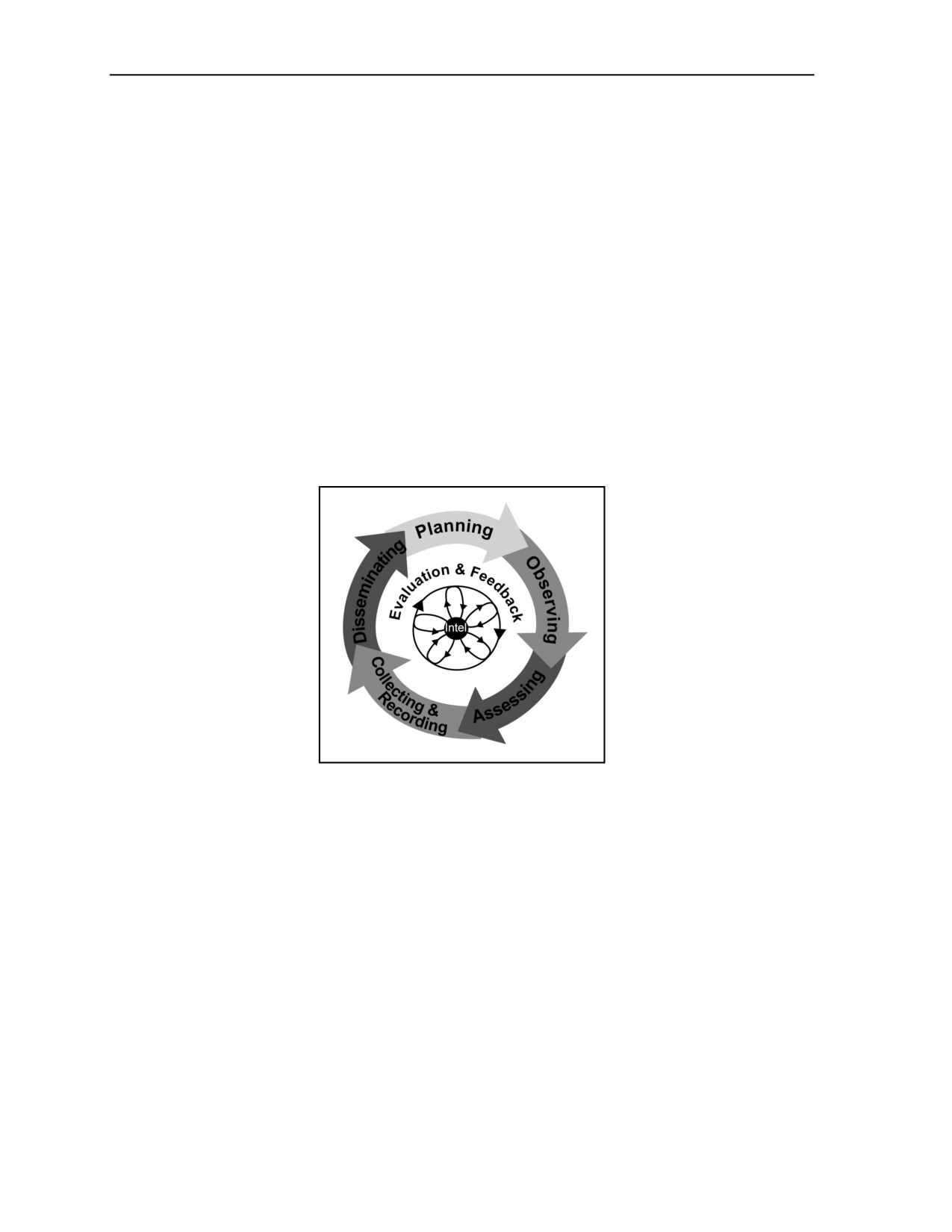
Chapter 3
3-17. The staff develops the collection plan, which is used in the police information collection process.
This process is described in paragraphs 3-23 and 3-24, page 3-8, and depicted in Figure 3-3. The staff
provides detailed information and instructions to each subordinate unit that may include—
z
The method the unit will use to get to its assigned area (routes, passage points, boundaries, and
so forth).
z
The collection objectives.
z
The specific collection tasks (PIR with indicators) and where to look (NAI).
z
The start and termination times for collection or surveillance operations and the time the
information is needed.
z
The report procedures (for example, to whom and on what frequency net to report).
z
The location and activity of other units operating in the AO.
z
The identification and coordination for linguists or special skills personnel (such as HN police,
psychological operations [PSYOP], civil affairs [CA], and MI).
3-18. The most common collection efforts are accomplished through R&S
(which is discussed in
Chapter 1). When performing an R&S mission, it is important to orientate the collection asset on the NAI
in a timely manner, report all information rapidly and accurately, complete the mission within the specified
time, and answer the IR. The ALE version of the R&S plan most typically used is the patrol distribution
plan (PDP). This plan is described later under the CRIMINT process (see Chapter 4).
Figure 3-3. Police Information Collection Process
TASKING COLLECTORS
3-19. The missions that will be tasked to respective collectors must be determined. Information collectors
can be tasked with more than one mission at a time. However, it is imperative that their tasks be prioritized
based on mission requirements and time available. The appropriate tasking or request chain must be used to
request linguists, MI, CA, and PSYOP personnel or other special skill personnel such as USACIDC special
agents.
3-20. In order for collectors to provide effective information, they must—
z
Understand the overall PIO function and its processes as it relates to collection.
z
Understand and execute the collection plan.
3-6
FM 3-19.50
21 July 2006
Police Intelligence Operations as Emerging Doctrine
z
Understand the priority for collection based on the CCIR that were developed according to
information, acquisition laws and regulations, and the commander's guidance.
z
Alert leaders to immediate actionable information.
z
Network with other agencies for police information collection.
z
Familiarize themselves with the questioning tools in Appendixes D and E and understand how
they serve as a source of information collection.
ASSESSING AND SUPERVISING THE COLLECTION PLAN
3-21. During PIO execution, the staff continues assessing the effectiveness of the collection effort and the
results and products derived from it. The critical aspects of assessments at this point are to determine if the
PIR have been answered, which collection efforts are most effective, and which efforts should be adjusted
or eliminated. The continual assessment of PIO, collection assets, available information and intelligence,
and the dynamics of the OE are critical to—
z
Ensure that the CCIR are answered.
z
Ensure that CRIMINT requirements are met.
z
Redirect collection assets to support changing requirements.
z
Ensure that all relevant information is analyzed and disseminated.
CONDUCTING A DEBRIEFING OR AN AFTER-ACTION REVIEW
3-22. The battalion staff is responsible for conducting a debriefing or an after-action review (AAR) at the
completion of a mission. Leaders should not consider the mission complete and the personnel released until
the reporting and debriefing actions have occurred. All Soldiers, to include leaders returning from
meetings, are a potential source of information and must be debriefed by a designated person, such as the
S2 or S3 to ensure that collected information gets into the intelligence system. See Appendix F for
debriefing and AAR considerations.
POLICE INFORMATION COLLECTION PROCESS
3-23. The success of the police information collection process depends on its skillful management and
execution. When the collection unit being tasked, such as a combat support military police company,
receives the collection plan, the company commander and his operations section have the following
responsibilities:
z
Review the higher headquarters police information collection plan (which will be identified
within the MDMP products) and identify the collection requirements.
z
Implement the plan by—
Tasking subordinate collection elements.
Specifying the parameters in which to make discretionary decisions regarding police
information collection efforts.
z
Update the collection plan as necessary.
z
Perform combined police IO by—
Maintaining liaison with HN authorities, military and civilian police agencies, and other
organizations.
Collecting police information.
Assessing police information.
Exchanging police information with HN authorities, military and civilian police agencies,
and other organizations.
21 July 2006
FM 3-19.50
3-7
Chapter 3
z
Perform police information collection efforts by—
Maintaining liaison with HN authorities, military and civilian police agencies, and other
organizations.
Collecting police information.
Exchanging police information with HN authorities, military and civilian police agencies,
and other organizations.
z
Perform operational intelligence collection efforts by—
Maintaining liaison with HN authorities, military and civilian police agencies, and other
organizations.
Collecting information according to the ISR collection plan.
z
Report police information and CRIMINT through appropriate channels (such as the S2/G2,
S3/G3, S5/G5, and military police and intelligence channels) by—
Forwarding operational information and CRIMINT to the S2/G2 by means of formal and
informal reports and a debriefing or an AAR.
Forwarding police information and CRIMINT to the CRIMINT analyst.
3-24. These responsibilities compose the first phase
(planning) of the police information collection
process. The subordinate collection elements of the company execute all phases of the police information
collection process. Appendixes E and F may further assist in the collection efforts.
z
Planning. The collector implements the higher headquarters plan.
z
Observing. The collector observes the area and/or activity.
z
Assessing. The collector determines the value and application of what he has observed to the
CCIR and the police information collection requirements.
z
Collecting and recording. The collector documents his observations through reports, sketches,
photographs, and other means.
z
Disseminating. The collector sends his recorded observations and assessments through
established channels. The report phase involves many considerations and, as such, will be
discussed at length.
z
Evaluation and feedback. The collector uses evaluation and feedback to determine whether or
not the requested information was provided and whether or not it supports the PIR and CCIR.
REPORTING PROCEDURES
3-25. Timely and accurate reporting of information is a critical activity of police information collection
that is performed by all police agencies. However, the most critical information is worthless if it is not
reported in a timely manner. For ALE personnel, the natural flow of police information is through
established systems and protocols, such as communications links, reports, and database sequencing. During
the collection efforts of directed police information and CRIMINT, collectors must be provided with
specific reporting guidelines. ALE assets must know when, how often, and what format to use when
reporting police information and CRIMINT. Police information and collection reporting procedures must
be described in unit standing operating procedures (SOPs) and operation orders (OPORDs). Information of
immediate interest to the commander should be transmitted to the S2 or senior criminal analyst as soon as
the situation allows.
3-26. Reports can be transmitted by verbal means or in writing by using Internet protocol services. Reports
are also recorded and submitted as hard copy. Commanders and staff must not delay reports for the sole
purpose of editing and ensuring the correct format. There are numerous ALE reports used for a variety of
activities such as military police reports, investigation reports, situation reports (SITREPs), debriefing
reports, and spot reports. The Army's recognized means of reporting information is through a size, activity,
location, unit, time, and equipment (SALUTE) report (see Figure 3-4).
3-27. The most common report format used by a patrol to report information gathered is the SALUTE
report. Before reporting the elements of this report, the patrol identifies itself and its location.
3-8
FM 3-19.50
21 July 2006
Police Intelligence Operations as Emerging Doctrine
3-28. The SALUTE report format requires brief entries which require the collector to break information
into basic elements: who, what, where, when, why, and how. This allows for efficient reporting via an
electronic or a hard-copy medium. It allows the analyst to scan multiple reports quickly to find specific
information.
Line One - (S)ize/Who: Expressed as a quantity and an echelon or size (for example, 1 x tank). If multiple
units are involved in the activity being reported, there can be multiple entries (for example, 1 x tank; 10 x foot
Soldiers). Nonstandard units are reported as such (for example, bomb-making class; support staff, 150
chemical rounds).
Line Two - (A)ctivity/What: This line relates to the PIR being reported on and should be a concise bullet
statement.
Line Three
-
(L)ocation/Where: Generally a grid coordinate, including the
100,000-meter grid zone
designator. This line can also be an address, if appropriate, but still should include an 8-digit grid coordinate.
If the activity being reported involves movement (for example, advance, withdrawal), the location entry will
include "From" and "To" entries. The route used will be reported under "Equipment/How."
Line Four - (U)nit/Who: This line identifies who is performing the activity described in the "Activity/What" line.
Include the complete designation of a military unit, the identification of a civilian or insurgent group, or the full
name of an individual, as appropriate.
Line Five - (T)ime/When: This line is when the unit will begin an activity. Ongoing events are reported as
such.
Line Six - (E)quipment/How: The information reported in this line clarifies, completes, and/or expands upon
information reported in any of the previous entries. It includes information concerning equipment involved,
tactics used, and any essential elements of information (EEI) not reported in the previous paragraph.
Note: This sample SALUTE report is for guidance and not meant as a strict requirement. SALUTE reports of combat
activity may only contain a word or two in each line, whereas intelligence reports tend to include more detail.
Figure 3-4. SALUTE Report
REPORTING ENTRY POINTS
3-29. While the means for transmitting reports can vary, it is important that reporting is standardized and
that reporting through data entry points is fully understood by all collectors to ensure report timeliness.
Entry points may include the following:
z
Military police battalion operations center.
z
Military police desk sergeant (military police station).
z
Installation emergency operations center (EOC).
z
Tactical operations center.
z
Joint law enforcement operation center.
z
CID resident agency.
3-30. Units may require classified and unclassified network connections for their equipment. If elements of
the unit will be working outside the range of the unit's communications systems, then it is necessary to
coordinate for global or extended range communications. In order to retain and account for reported police
information, reporting entry points maintain databases, which are discussed in Chapter 4.
RECONNAISSANCE AND SURVEILLANCE
3-31. Military police are a critical part of the commander's on-the-ground information and intelligence
gathering assets. Military police teams are mobile over large geographical areas and routinely travel the
battlefield and road networks as part of their security mission. They routinely move off-road for area
reconnaissance and key terrain observation.
21 July 2006
FM 3-19.50
3-9
Chapter 3
CONDUCT RECONNAISSANCE
3-32. Reconnaissance is a mission undertaken to obtain, by visual observation or other detection methods,
information about the activities and resources of an enemy or potential enemy and the meteorological,
hydrographic, or geographic characteristics of an AO.
3-33. MI personnel and organizations can conduct reconnaissance by obtaining information derived from
signals, imagery, measurement of signatures, technical characteristics, human interaction, and other
detection methods.
3-34. The military police conduct area, zone, and route reconnaissance while performing military police
functions such as MMS, AS, L&O, and PIO. While conducting various reconnaissance missions, military
police often operate in close contact with the local population, allowing for human interaction to spot,
assess, and observe potential threat activity (see FM 7-15).
3-35. When performing reconnaissance, it is important to—
z
Orientate the reconnaissance asset on the NAI and/or reconnaissance objective in a timely
manner.
z
Report all information rapidly and accurately.
z
Complete the reconnaissance mission not later than the time specified in the order.
z
Answer the requirement that prompted the reconnaissance task.
CONDUCT SURVEILLANCE
3-36. Conducting surveillance means systematically observing the airspace, surface areas, subsurface
areas, places, persons, or things in the AO by visual, aural, electronic, photographic, or other means. Other
means may include, but are not limited to, space-based systems and special chemical, biological,
radiological, and nuclear (CBRN); artillery; engineer; and air defense equipment (see FMs 7-15 and 3-90).
3-37. The military police often conduct visual, electronic, and photographic surveillance activities while
conducting L&O and PIO functions. The military police maintain continuous surveillance of NAIs or
enemy reconnaissance avenues of approach into a particular sector. This is accomplished by setting up a
series of observation posts (OPs). Military police may conduct active mounted patrols to extend their
observation limits or to cover dead space and the area between OPs (see FM 3-19.4).
3-38. Surveillance activities include—
z
Orientating the surveillance asset on the NAI and/or the surveillance objective in a timely
manner.
z
Reporting all information rapidly and accurately.
z
Completing the surveillance mission not later than the time specified in the order.
z
Answering the requirement that prompted the surveillance task.
3-10
FM 3-19.50
21 July 2006
Chapter 4
The Criminal Intelligence Process in Support of Police
Intelligence Operations
CID Regulation
195-1 describes the duties of the persons responsible for the
CRIMINT program beginning with the office of the Deputy Chief of Staff for
Operations, Headquarters, USACIDC down through the CRIMINT manager who acts
as the focal point for all CRIMINT within his area of responsibility (AOR), to the
special agent in charge (SAC). The CID has the primary responsibility for operating
the CRIMINT program, which is designed to obtain, record, analyze, and disseminate
information concerning criminal activities directed against, involving, or affecting
US Army operations, material, or personnel. CRIMINT is also used to develop,
analyze, and report on the methods of operations used in criminal activities and
assess the vulnerability of Army operations to crimes. The focus of the CRIMINT
program is the detection, collection, analysis, dissemination, and prevention of
criminal activity affecting the Army. It is from these directives and responsibilities
that the CRIMINT process has evolved.
CRIMINAL INTELLIGENCE PROCESS
4-1. The CRIMINT process, conducted by the CRIMINT analyst, is an integral aspect of PIO. It is used
to develop the criminal threat picture, which contributes to the overall threat picture in the IPB. Its purpose
is to convert police information and raw data into usable and/or actionable CRIMINT. On military
installations, the military police CRIMINT analyst, in coordination with the CID's senior intelligence
manager, is generally the primary police information and CRIMINT manager. Likewise, when in support
of a military police combat support unit where police information, is being collected, analyzed, and stored,
the analyst assumes the role of CRIMINT manager for the commander.
4-2. In military police combat support units where a CRIMINT analyst is assigned, the analyst supports
the battalion S2 in the intelligence efforts. The analyst's responsibilities include identifying individuals or
groups of individuals in an effort to anticipate, prevent, or monitor possible criminal activity. In concert
with the S2, the analyst may be required to manage PIO. These activities include—
z
Prioritizing incoming data according to collection and production requirements.
z
Organizing police intelligence by category, such as crime or threat, and by particular product or
user.
z
Entering information into databases.
z
Collating actionable police intelligence into interim products.
Note: Products are rarely considered final because analysts rarely have all the information they
want to develop CRIMINT since the information evolves as gaps are identified.
4-3. The discussion of this process is not to be misconstrued as or confused with the actions of the
battalion (or brigade) staff. Many actions of a CRIMINT manager parallel those taken by the staff. It is
important to understand that these procedures are used by the CRIMINT manager to effectively manage
and execute the CRIMINT process and to provide the most accurate and timely criminal threat picture to
21 July 2006
FM 3-19.50
4-1
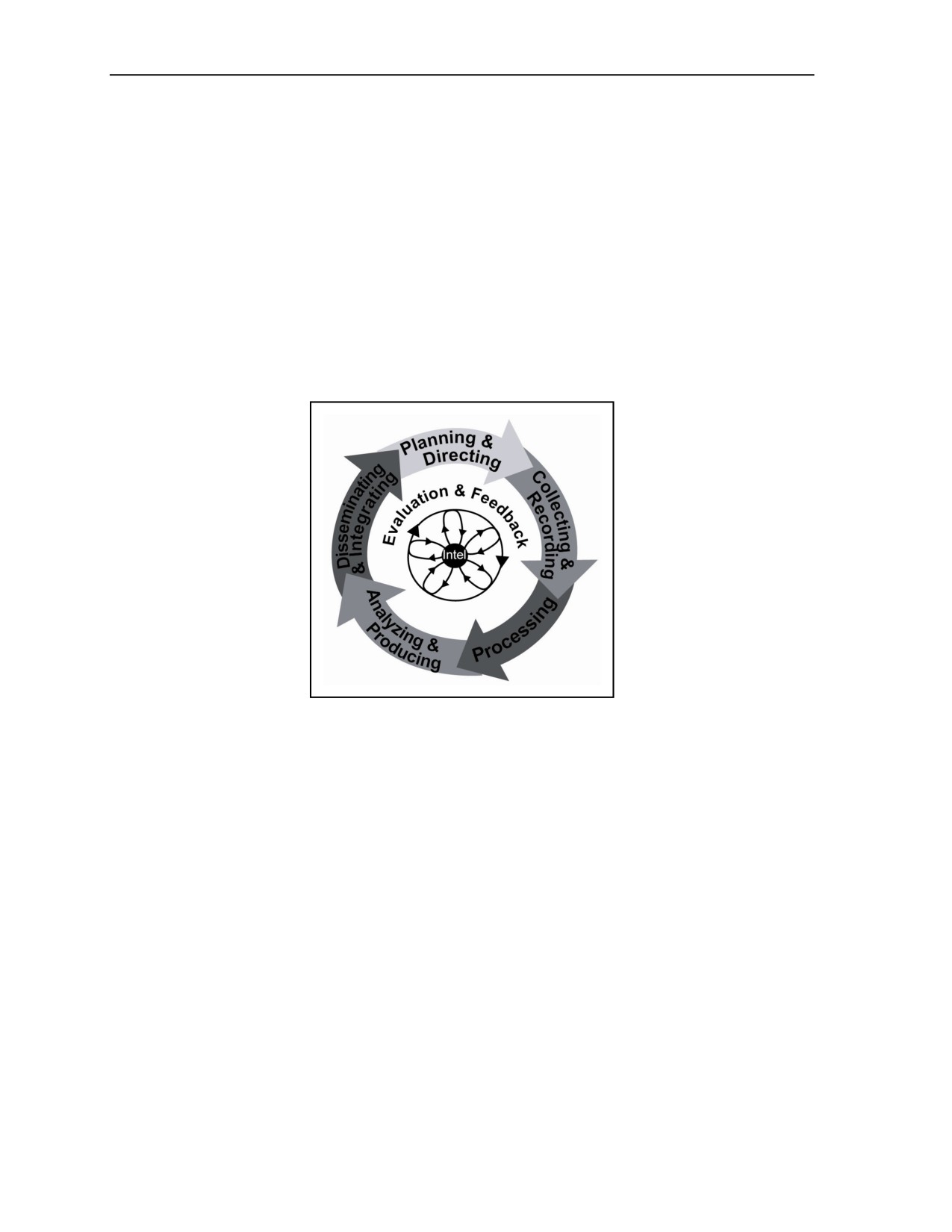
Chapter 4
the S2/S3 or PM. It is critical that the analyst understand the CCIR and the commander's intent when
planning the collection efforts of police information, in the CRIMINT process. This process contributes to
the efforts of the battalion staff in the information collection process.
4-4. The CRIMINT process consists of the following six phases, as depicted in Figure 4-1:
z
Planning and directing.
z
Collecting and recording.
z
Processing.
z
Analyzing and producing.
z
Disseminating and integrating.
z
Evaluation and feedback.
The six phases are discussed in the following paragraphs, such as what occurs within each phase, how each
phase of the process connects to the other phases, and how the process as a whole connects to the
command process and the police information collection process.
Figure 4-1. CRIMINT Process
PLANNING AND DIRECTING
4-5. This phase of the CRIMINT process outlines the overall effort of CRIMINT development, from
identifying the need for information to delivering the CRIMINT product to the commander, staff, or end
user. The end user includes everyone with an authenticated need to know, such as the staff directing the
PIO function, the installation or combatant commander, ALE operators at all levels, and the MI
community. As in any military operation, planning is the first step in the CRIMINT process.
4-6. In this phase, the CRIMINT analyst identifies the commander's intent, reviews the CCIR, sets
priorities, and provides guidance for the management of collection or interdiction assets. Consideration is
given to the same factors identified under the planning and directing section of the police information
collection plan: what, where, when, why, and who.
4-7. Once the priorities have been established, a collection plan is prepared based on the CRIMINT
requirements, available collection assets, and other factors including time and self-protection.
COLLECTING AND RECORDING
4-8. The collection process is the gathering of police information from all available sources. This
includes raw data obtained by ALE personnel or significant data which appears substantive enough to
4-2
FM 3-19.50
21 July 2006
The Criminal Intelligence Process in Support of Police Intelligence Operations
merit further investigative efforts. Such data may or may not have been analyzed by other law enforcement
intelligence agencies. The collection effort occurs at all levels and across the full spectrum of tactical and
nontactical environments. To be most effective, however, the collection effort must be planned, focused,
and directed based on the CCIR and intent.
4-9. One of the most important aspects of collecting and recording police information is complying with
laws and regulations. Some of the most important laws affecting CRIMINT analysts are EO 12333,
DODD 5200.27, and AR 525-13. These laws and regulations are designed to protect the rights of citizens
and police information collectors. The best legal source a CRIMINT analyst has is the SJA. Chapter 2
describes the laws and regulations that are applicable to ALE personnel.
4-10. ALE personnel uses the PDP as a means of collection. Police information and CRIMINT that may
impact the mission can be quickly and effectively gathered by focusing on the NAI. The PDP is used to—
z
Synchronize the CRIMINT requirements with the collection efforts by prioritizing the collection
tasks.
z
Assign ALE and security assets for collection and interdiction coverage (patrols, checkpoints,
access control points, and so forth) with emphasis on NAIs, MEVAs, HRTs, or other designated
areas.
z
Manage collection assets.
z
Provide any special instructions to the collection assets.
4-11. In the collecting and recording phase, specific tasks must be completed. These tasks are discussed in
the following paragraphs.
Determine the Requirements
4-12. This task includes identifying such things as NAIs and suspected vulnerability points, locations,
facilities, and people. People may include businesses or groups and organizations of people. When
focusing on criminal investigations, collection efforts related to people may require developing additional
probable cause.
Identify the Assets and Resources
4-13. Collection assets and resources include available human resources, equipment, budget, and other
resources or collection capabilities that can be directly or indirectly accessed to support the police
collection effort. Collection assets include law enforcement sources that use overt, covert, and open or
nonopen sources (described in Appendix G).
Apply the Collection Plan
4-14. When CRIMINT analysts apply the brigade or battalion staff's or the PM's collection plan, they
focus on what was requested. The analysts' focus on how the police collection effort will be accomplished
and considers the information collection requirements, the available assets, and the CCIR. The CRIMINT
analysts are able to decipher what information must be analyzed in order to meet the commander's intent
and what information should be passed through other channels to expedite support to the commander, the
staff, or the PM. A collection plan that does not provide relevant, timely information to the commander is
weak at best.
Specify Criminal Intelligence Analyst Tasks
4-15. In this task, individual and team responsibilities are identified. Each team member should know his
role and the roles of others. When individuals know how their roles contribute to the overall plan, they are
better equipped to support it. Collection responsibilities are tasked based on the ability of the CRIMINT
analyst to successfully gather and analyze the assigned information.
21 July 2006
FM 3-19.50
4-3
Chapter 4
Report and Process Police Information Into Data Streams
4-16. This information/intelligence can be varied in content, substance, and form and may originate from a
myriad of sources, such as field interview cards, military police reports, CID investigation reports, and
other reports obtained from other agencies.
Manage (Track) the Collection Effort
4-17. Part of managing the collection effort is ensuring that CRIMINT analysts know their collecting and
recording responsibilities. The most predominant and effective aspect of this task is managing the
information as it is reported. A delay in managing information can cause confusion and possibly delay
relevant information from getting to the commander or PM in a timely manner. This delay may cause a
"domino effect," creating an impact on the IPB, the MDMP and, ultimately, the CCIR. Incorrect
information may be the direct result of inadequate information management. One of the last measures a
CRIMINT analyst takes when managing information is to brief the ALE personnel involved in the
collection efforts as to what happens to the information they collect. In the reporting aspect of this phase,
the CRIMINT analyst ensures that resulting CRIMINT is put into the production stream or, when
applicable, back into the data stream (see Figure 4-2). The police intelligence process is divided into three
phases. The phases are described as follows:
z
Phase 1, Common Training. Focuses on collecting and reporting information and is taught
during Military Police Officer Education System (OES)/Noncommissioned Officer Education
System (NCOES) instruction as part of the PIO function.
z
Phase 2, Specific Training. Focuses on processing and analyzing information and is taught
during specific Military Police OES/NCOES blocks with emphasis on link, pattern, and case
analysis.
z
Phase 3, Special Training. Focuses on analytical software and is used for intelligence analysis
and production.
Receive the Information
4-18. This task identifies who will receive the information and determines the actual process or procedure
for collection personnel to report information. Reporting procedures include the reporting channels for
those efforts. Most often, the reporting channels are established by the commander directing the police
information collection effort.
Distinguish Between Information and Intelligence
4-19. During collection efforts, raw information and CRIMINT may be collected from different sources.
Regardless of the source, the CRIMINT analyst reads and reviews all data to determine its immediate value
in the analysis process or its impact as CRIMINT, which may not require additional analysis.
Record the Information
4-20. Recording consists of systematically cataloging the information. At a minimum, recording defines
the source, subject, and the time and date the information was collected. Recording information can be
performed by writing it down or by entering it into a database system. Databases are briefly described at
the end of this chapter. The information is recorded by the CRIMINT analyst. If the information later
becomes CRIMINT, it is provided to the S2 and/or the DES and PM for action when OCONUS. When in
CONUS, due to the restrictions placed on information gathered on US citizens, CRIMINT must be
provided to the S3 and/or DES and PM for further action.
PROCESSING
4-21. Police intelligence processing occurs at set points to reduce raw data into manageable portions for
analysis and production. Processing involves an initial evaluation to ensure that the police intelligence is
valid, reliable, and sufficient. During processing, police intelligence information is prioritized according to
4-4
FM 3-19.50
21 July 2006
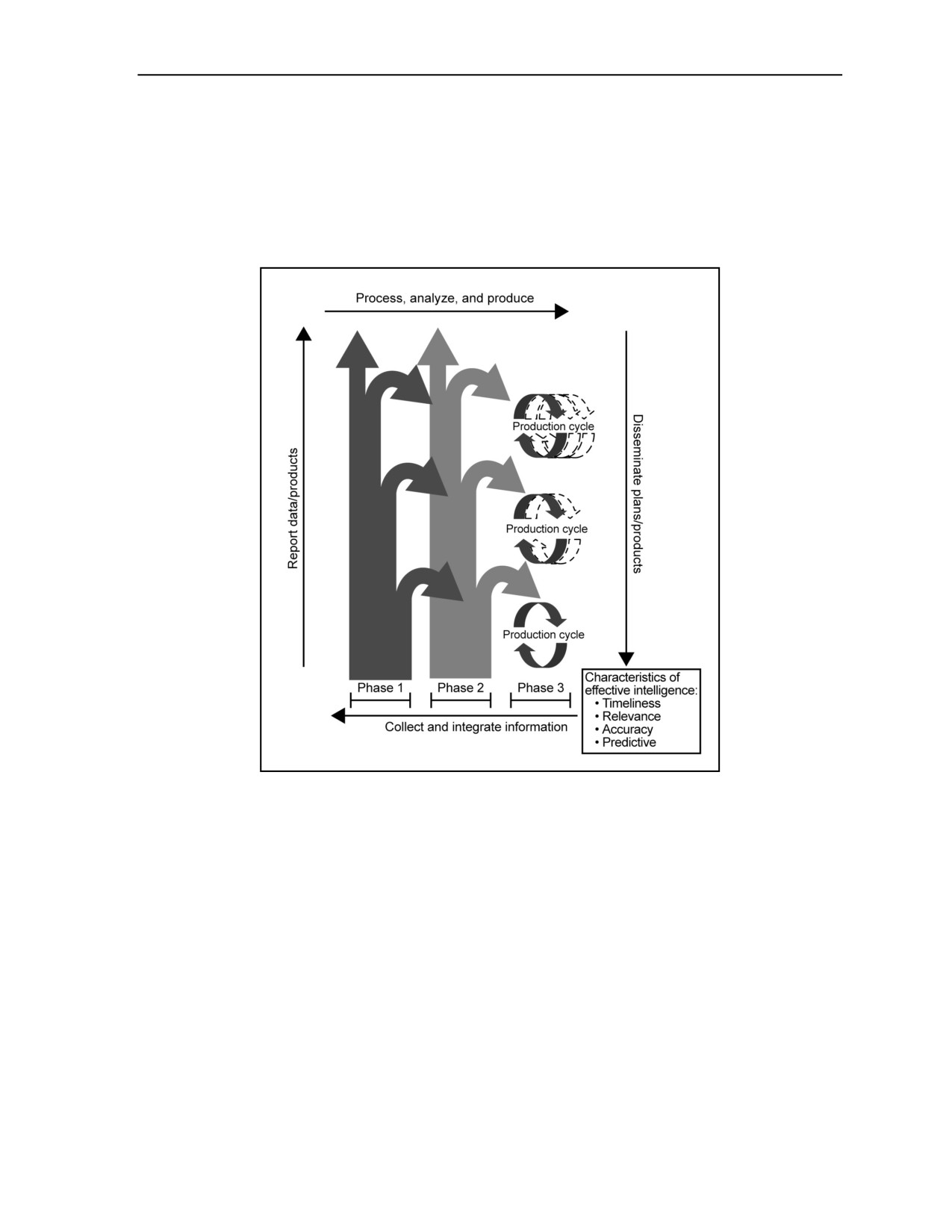
The Criminal Intelligence Process in Support of Police Intelligence Operations
current collection and production requirements. During processing, police intelligence information
managers—
z
Prioritize incoming data according to collection and production requirements.
z
Organize police intelligence by category, such as crime or threat, and by particular product or
user.
z
Enter the information into databases.
z
Collate actionable police intelligence information into interim products.
Figure 4-2. Police Intelligence Process Model
ANALYZING AND PRODUCING
4-22. In this phase of CRIMINT analysis, police information and raw data are converted into CRIMINT.
Analysis is based on CRIMINT and requires the CRIMINT analyst to have all the available information to
date in order to develop viable COAs (predictive analysis) for the criminal threat(s). Unlike the staff that
identifies the COA for the mission during the IPB, the CRIMINT analyst determines the COA that the
criminal threat is likely to take (hence predictive analysis), in order to identify possible counter-COAs. It is
in this phase that the CRIMINT analyst develops hypotheses to prove or disprove the meaning of police
information. This analytical process continues throughout CRIMINT analysis. During this phase,
CRIMINT analysts ensure that they have a clear understanding of the commander's, DES's, and PM's intent
and CCIR. All police information is viewed in relation to what the commander, DES, and PM want to
accomplish. The analysis and production phase includes the following:
z
Evaluation. The relevancy, reliability, and timeliness of police information are determined
during evaluation. Information may seem irrelevant during initial evaluation; however, it should
be indexed, queried, and periodically reviewed for future analysis. When reevaluated, this
21 July 2006
FM 3-19.50
4-5
Chapter 4
fragmentary information may help define the bigger operational picture. Part of evaluating
police information includes determining whether the information is relevant to the CCIR.
Additionally, it must be determined whether the police information is reliable as it is presented
or whether additional confirmation is required. Lastly, it must be decided if the police
information is timely.
z
Integration. How police information fits into the commander's operational picture is determined
during integration. The CRIMINT analyst also determines whether pieces of police information
are related to each other. As police information continues to be collected, reported, recorded,
and analyzed, the bigger picture begins to emerge, and as the police information is analyzed and
integrated with other police information, interpretation begins. Integrating police information in
tactical plans exploits the intelligence gathered, thereby promoting emergence of the bigger
operational picture.
z
Interpretation. The interpretation of police information stems from the analysis this information
and the hypotheses resulting from that analysis. During this phase, CRIMINT analysts must be
open-minded to interpretation, willing to consider alternative hypotheses, and mindful of what is
not known.
z
Preparation. Preparation is the final stage of analysis that results in the production of CRIMINT
products. This culminates in the final phase of the CRIMINT process dissemination and
integration.
DISSEMINATING AND INTEGRATING
4-23. Preparing CRIMINT products results in the dissemination and integration of those products.
CRIMINT analysts must identify the users of the CRIMINT products well in advance in order that the right
products get to the right people at the right time. Generally, the users are the individuals who initiated the
CRIMINT requirements and those whom they have further identified as needing the products.
4-24. CRIMINT analysts must also determine what method will be used to disseminate the CRIMINT
products. Methods of dissemination may vary from such tools as military police reports and CRIMINT
bulletins to threat assessments, information briefs, and so forth. See Appendix B for sample CRIMINT
products. Regardless of the method used, CRIMINT analysts must ensure that the products are delivered to
the appropriate users when, where, and in the proper form needed. The dissemination of timely and
relevant CRIMINT products is most valuable to the user.
4-25. Dissemination occurs at several levels and is entered in the data stream for continued analysis, when
applicable. Oftentimes, when the CRIMINT products are delivered, additional police information
collection requirements are identified.
Note: Local police intelligence files may be exempt from certain disclosure requirements by
AR 25-55 and FOIA. When a written extract from local police intelligence files is provided to an
authorized investigative agency, the following will be included on the transmittal documents:
THIS DOCUMENT IS PROVIDED FOR INFORMATION AND USE. COPIES OF THIS
DOCUMENT, ENCLOSURES THERETO, AND INFORMATION THEREFROM, WILL
NOT BE FURTHER RELEASED WITHOUT THE PRIOR APPROVAL OF THE
INSTALLATION PROVOST MARSHAL.
EVALUATION AND FEEDBACK
4-26. This function within the CRIMINT analysis process helps determine whether or not the requested
information was provided and whether or not it supports the PIR or CCIR. The evaluation and feedback
function also acts as a type of quality control. If the information provided was inadequate or insufficient for
the requestor, the CRIMINT analyst will conduct the necessary research and analysis again based on the
updated criteria provided by the requestor. The evaluation and feedback function helps requestors refine
their requests and the CRIMINT analysts refine the scope of their research and analysis. When the
4-6
FM 3-19.50
21 July 2006
The Criminal Intelligence Process in Support of Police Intelligence Operations
information meets the needs of the requestor, the CRIMINT analyst can catalogue it for possible future use,
thereby amassing an organizational library of successful practices.
4-27. Figure 4-3, page 4-8, reflects how a military police battalion staff in support of OIF in eastern
Baghdad effectively planned for and executed the PIO function. The command allowed only military
police investigator personnel or Reid Interrogation Course graduates (or equivalent) to conduct the initial
interviews. This is not a necessary requirement of PIO in that all ALE personnel are trained to conduct
field and initial interviews. This requirement was the result of a command decision. Using all available
ALE assets would maximize the results of the police information collection effort. It is critical that
commanders and leaders ensure that their Soldiers do not interrogate detainees in enemy prisoner of war
(EPW)/detainee operations. This responsibility must be relinquished to MI according to established
regulations, as necessary.
4-28. Where specific criminal threats exist, the battalion can organize a separate PIO team responsible for
collecting, analyzing, and reporting information as it relates to criminal activity within the battalion AOR.
The PIO team—
z
Investigates criminal offenses of coalition forces and local nationals within the battalion AOR.
z
Tracks criminal investigations.
DATABASES
4-29. Advances in database technology, combined with an explosion in information sharing and
networking among police agencies, has resulted in the development and expansion of these robust
information repositories. ALE personnel continue to access the National Crime Information Center (NCIC)
database, but can also turn to databases containing fugitive information from corrections systems and
terrorist threat information from Homeland Security (HLS) and FBI systems. DOD proprietary automation
systems such as the Centralized Operator's Police Suite (COPS) Information Management System and the
Army Criminal Investigative Information System (ACI2) greatly improve interoperability and eliminate
seams that criminal and other threats might otherwise exploit.
4-30. Access to local, theater, DOD, non-DOD, and commercial databases allow analysts to leverage
stored knowledge on topics ranging from basic demographics to order of battle information. A validated
DIA customer number (acquired by the joint intelligence section (J2), G2, and S2) in combination with a
Secret Internet Protocol Network (SIPRNET) and Joint Worldwide Intelligence Communications System
(JWICS) connectivity establishes access to most of the databases online. The challenge for an analyst is to
gain an understanding of the structure, contents, strengths, and weaknesses of the database regardless of
the database type. Additionally, the procedures are often difficult for extracting portions or downloading
and transferring the database to unit level automated information systems.
4-31. Each intelligence discipline has unique databases established and maintained by a variety of
agencies. Database access is accomplished through unit or agency homepages via SIPRNET (Intelink-S)
and JWICS (Intelink).
CENTRALIZED CRIMINAL INTELLIGENCE ANALYTICAL
SUPPORT ELEMENT AND DATABASE
4-32. The Centralized Criminal Intelligence Analytical Support Element
(CIASE) and database are
reach-back capabilities that enhances the ability of ALE personnel to readily maintain and access police
information and CRIMINT. With the advancements in digital communications and centralized computer
databases, the implementation of a CIASE and database would greatly support deploying commanders.
21 July 2006
FM 3-19.50
4-7

Chapter 4
The battalion organized the PIO team as a separate section of the battalion S2 section. The PIO team was
responsible for collecting, analyzing, merging, and reporting intelligence information as it related to criminal and
combat activity within the battalion AOR. The battalion PIO team—
• Investigated criminal and combat offenses involving coalition forces and local nationals within the battalion
AOR.
• Acted as the spearhead in creating targeting packages at the battalion level from actionable intelligence.
• Tracked detainee activities and criminal investigations for the command.
• Compiled CRIMINT for the development of criminal activity patterns within the battalion AOR in concert with
the battalion S2.
• Established liaison with other agencies, such as the Defense Criminal Investigative Services (DCIS), FBI, CIA,
Defense Intelligence Agency (DIA), National Security Agency (NSA), and the maneuver tactical human
intelligence team (THT).
The battalion allowed only military police investigators or Reid Interrogation Course (or the equivalent) qualified
personnel to conduct an initial interview with full interrogation responsibility being relinquished to MI according to
established regulations, as necessary.
The battalion established several PIO products and tools to assist in the PIO function, some of which included
the following:
PRODUCTS
TOOLS
PIO reports. These reports consisted of numerous
types of reports that documented interviews and
Databases. These databases supported crime-related
interrogations,
resulting
CRIMINT,
prisoner
queries and Iraqi police blotter analysis.
accountability, and prisoner apprehensions and
transfers.
Blotter overlay. This overlay depicted reported crimes.
Map overlays. These overlays consisted of two types of
overlays. The criminal incident overlay plotted all
Detainee tracker spreadsheet. This spreadsheet
substantiated information to provide a quick reference
enabled the tracking and apprehension of Iraqis
of evolving crime trends within the battalion AOR. This
committing crimes against or attacking coalition forces
overlay was updated daily and maintained per month.
and local nationals.
The active investigations overlay plotted active law
enforcement investigations within the battalion AOR.
PIO informant report. This report was generated after
Targeting packages. These packages were prepared
every initial interview from walk-in informants to
within the concepts of the IPB with considerations to
provide for continuity in repeat informants.
observation and fields of fire, avenues of approach, key
PIO informant summary. This summary consolidated
terrain, obstacles and movement, and cover and
PIO informant reports, which were published and sent
concealment (OAKOC) and contingent upon METT-TC.
to adjacent battalions, maneuver THTs, and higher
The packages included such things as digital photos
echelons.
depicting the target from all avenues of approach,
aerial imagery of the target's location depicting the
Association matrix/link diagram. The matrix and
surrounding area, and sketches depicting the target
diagram were made available to identify criminal
area.
organizations/gang members.
Figure 4-3. Sample of Planning for and Execution of PIO Functions
CENTRALIZED CRIMINAL INTELLIGENCE ANALYTICAL SUPPORT ELEMENT AND DATABASE
FILES
4-33. Today when commanders deploy to operational areas, there is a lack of CRIMINT/law enforcement
databases. A database must be established to assist commanders in developing the criminal threat picture.
The establishment of a CIASE and database within the different operational areas would fill that void. The
files would consist of—
z
Intelligence obtained from previous operations.
z
Spatial analysis (crime maps).
z
Source operations information (data regarding sources).
z
Current and previous investigative efforts with a possibility for the departing unit's suggestions
for follow-on investigations.
4-8
FM 3-19.50
21 July 2006
The Criminal Intelligence Process in Support of Police Intelligence Operations
4-34. These files support the commander, enhance the analytical capability of analysts in the field, and
provide historical CRIMINT operational files. CIASE helps prevent the possibility of fostering corruption.
Consider the following situation: A criminal passing as a source is willing to assist ALE personnel. The
question is what is the source's motivation? Is this person—
z
Using his position to gain operational information?
z
Attempting to misdirect ALE personnel?
z
Attempting to update local criminal groups regarding ALE agency targets of interests, ongoing
investigations, or military operations?
z
Selling information to ALE personnel that is of little or no use?
4-35. When a CIASE and database are established and left in place, the above type of source would be
discovered and excluded. The source's information would be maintained in the database advising the new
unit of his motives. Likewise, if a source was producing good information, that information also would be
stored. The database would allow newly arriving units to verify, develop, and use sources and would also
provide the information necessary to alert MI regarding a source.
ADDITIONAL USES
4-36. The use of a CIASE and database enhances crime-mapping capabilities. As units update information
in their respective databases, the CRIMINT analysts are able to produce an overview of the criminal
activity in each sector and in the operational theater. This crime-mapping capability provides a relevant
criminal threat picture in a limited period of time. It also allows the CRIMINT analyst to manipulate the
information quickly to keep the criminal threat picture current.
4-37. The database and the analyzed police information, would work in direct support of the IPB process
for an incoming commander. Additionally, a commander could use the information to determine the
specialized training needs of his Soldiers
(such as additional military police investigator CRIMINT
analysis training) prior to deployment. The use of a CIASE and database in deployments are rare. If
CIASEs and databases were implemented, they would save commanders and the collectors and analyzers
of police information and CRIMINT valuable time, producing valuable police information and CRIMINT
products.
POLICE RECORDS MANAGEMENT
4-38. Intelligence information files will be maintained by the CRIMINT manager, who will keep them
separate from other investigative files in the office and control access to them. The following files, at a
minimum, will be maintained where a CRIMINT manager has been appointed:
z
DA Form 2804, Crime Records Data Reference.
Note: DA Form 2804 is a multicopy form designed to be used as an input document to the
intelligence process. This form can be used to input data into a manual retrieval system and
serve as a cross reference or index card.
z
Raw data.
z
Significant data and target analysis.
z
Criminal alert notices.
z
CRIMINT reports.
z
CRIMINT bulletins.
Note: When there is matching or similar information, the CRIMINT manager and the operations
officer SAC will review the form(s) to determine what action to take.
21 July 2006
FM 3-19.50
4-9
Chapter 5
Police Intelligence Operations in Urban Operations
Today military operations are conducted in a dynamic, multidimensional, and
increasingly interconnected global OE. The world situation is complicated and split
into many different factions with many possible conflicts. Different threats require
intelligence operations to adapt to the ever-changing OE. Commanders plan for and
continually assess the security of their forces operating in high-threat areas and
constantly review protection measures. Detecting asymmetric threats' methods of
operations requires a higher level of situational understanding, based on continuous
intelligence support. These threats drive the need for predictive intelligence based on
analysis of focused information from law enforcement, intelligence, and security
activities. Establishing a robust police information collection effort that can
determine the intentions and capabilities of the criminal and/or terrorist threat can
greatly enhance FP for Army forces operating in high-threat areas.
Transnational groups and nonstate actors conduct a range of activities that threaten
US interests and citizens at home and abroad. Such activities include terrorism,
illegal drug trading, illicit arms and strategic material trafficking, international
organized crime, piracy, and deliberate environmental damage. Additionally, ethnic
disputes, religious rivalries, and human disasters contribute to huge refugee
migrations. These further the threat to the environment and a region's stability.
Collectively, these transnational threats may adversely affect US interests and
possibly result in military involvement.
URBAN THREATS
5-1. Of all the environments in which to conduct operations, the urban environment confronts Army
commanders with a combination of difficulties rarely found elsewhere. Its distinct characteristics result
from an intricate topography and high population density. The topography's complexity stems from
man-made features and supporting infrastructure superimposed on the natural terrain.
5-2. As the strategic environment has become less stable, more uncertain, and more dangerous, Army and
joint forces must continue to train to address urban threats. These threats range from regional conventional
military forces, paramilitary forces, guerrillas, and insurgents to terrorists, criminal groups, and angry
crowds. UO require ALE personnel to provide in-depth coordination with international, national, and HN
law enforcement, security, and intelligence organizations.
URBAN INSURGENTS
5-3. As urban migration increases in the developing world, rural guerrillas appear to follow. This
transition of insurgencies from rural to urban areas occurs because urban areas offer a rich field of targets
for insurgent attacks. People immediately notice any disruption of urban infrastructure, which results in
great propaganda value. A concentrated urban population is often more susceptible to propaganda and
political organization. Insurgents can easily arrange mass demonstrations using available communications
facilities, both overt and covert. Travel is effortless and large urban populations provide cover and
concealment. Urban areas provide a fertile environment for guerrillas to apply their rural insurgent
21 July 2006
FM 3-19.50
5-1
Chapter 5
strategies. However, even with a rural-based insurgency, operations in urban areas offer distinct
opportunities to disrupt, discredit, and demoralize the government.
5-4. The crime-conducive component of POLICE, described in Chapter 1, contributes to the collection
efforts affiliated with civil areas, structures, capabilities, organizations, people, and events (CASCOPE)
that CA personnel perform. Under CASCOPE, CA personnel collect information on the criminal
environment. However, the collection efforts lack the definition as to what the contributing factors are for
the criminal sanctuary to exist. The crime-conducive component provides this connectivity. When the three
variables of a specific resource, a particular location, and an enforcement gap are present, they represent
I&W of criminal activity. More specifically, they represent the existence of crime-conducive conditions in
the AO, providing military police planners with a clearer picture of what and where the threat is.
OTHER THREATS
5-5. Some threats in underdeveloped countries may not be considered as conventional threats or
insurgents. These threats may consist of such groups as personal armies of warlords (as in Somalia),
organized criminals, groups of thugs loosely organized under the control of an individual (as in Haiti), or
the local police force.
5-6. A characteristic of many recent stability operations has been the deterioration or complete collapse
of political authority in the country or urban area in crisis. In some cases, warlords have attempted to fill
the power vacuum. These individuals often have no particular claim to legitimacy. Their power comes
from their weapons, not from their political skills, human services provided, or popular consent (although
they must have some popular support to remain in their relative position of authority).
5-7. Organized criminal groups have become common in urban areas. They have also become an
important part of the urban social structure (gangs for example) and can exert considerable influence on
governments, people, and military forces conducting UO. Some large criminal organizations relying on
international connections often have better resources and equipment than their insurgent counterparts.
Their large financial resources, long-reaching connections, and ruthlessness provide them with the means
to corrupt or intimidate local officials and government institutions. In any operation, but especially stability
operations, they may violently confront and oppose Army forces during mission execution.
5-8. The tactics of urban criminal groups parallel those of insurgents. They have developed an intuitive
cultural understanding of slum neighborhoods and the ability to lure civilians into criminal activities. They
have also mastered the management of mobs. They recruit teenagers and young adults in their efforts
against rivals and authorities, just as insurgents muster armies from the youth of rural villages. In many
developing nations, there exists an alliance between insurgents and organized criminal groups. In these
alliances, the insurgents defend the criminals and the criminals fund the insurgents. During many UO
(particularly during or following combat, civil disturbances, or large natural disasters), organized or
unorganized looting may become a critical concern. Therefore, UO may often require a combined law
enforcement and military response.
5-9. When Army forces work closely with local law enforcement agencies, commanders may not need to
assess the effect of street patterns on the assignment of boundaries. Instead, commanders may assign
boundaries overlaid on existing administrative boundaries used by the local law enforcement agencies to
increase interoperability and aid in unity of effort.
5-10. Not all criminal groups are a threat to military operations. Most criminals are only interested in
money and not in interfering with friendly forces. However, groups and individuals can be influenced into
assisting either the friendly or opposing force. People will also act opportunistically, shifting support and
alliances as perceived advantages arise. Even seemingly law-abiding members of the urban society may
conduct themselves in unexpected ways given the right conditions (coercion, threats, or bribes). These
changes in behavior and attitude must be detected early, before belligerents and insurgents gain control and
align civilian interests and intentions with their own.
5-2
FM 3-19.50
21 July 2006
Police Intelligence Operations in Urban Operations
5-11. The potential for asymmetric threats puts a premium on IPB and the other intelligence tasks, to
include performing situation development and conducting PIO. The goal is to provide I&W for the
commander. Operational success requires identifying enemy (criminal/terrorist) modus operandi (MO),
capabilities (strengths and vulnerabilities), intentions, and COAs.
ARMY LAW ENFORCEMENT IN URBAN OPERATIONS
5-12. Urban environments are conducive to a full range of serious criminal activities. In fact, during
smaller scale contingencies or stability operations, serious crime may be formally designated as a
destabilizing factor to a safe and secure OE. Under such conditions, ALE personnel may provide the lead
for targeting, collecting information on, and interdicting a broad range of criminal and terrorist threat
activities. ALE personnel operate in close contact with local nationals daily, while patrolling, responding to
incidents, operating TCPs and checkpoints, and/or conducting interviews.
5-13. If used correctly, police information collection efforts can complement the intelligence collection
process (especially HUMINT), which is necessary to understand the dynamic societal component of the
urban environment and detect significant change.
5-14. Urban areas transitioning from war to stability operations may also be characterized by a large surge
in the number of civilian law enforcement and security agencies such as United Nations (UN) civilian
police, UN border police, or the Organization for Security and Cooperation in Europe. These agencies
provide an important service during the transition from conflict to postconflict by—
z
Assisting HN law enforcement personnel to develop and train new law enforcement agencies.
z
Providing legal oversight for the adjudication of preconflict crimes.
5-15. ALE personnel can assist US military forces, HN police, and international law enforcement agencies
by providing continuity during and after the transition from military to civilian law enforcement primacy.
ALE personnel can develop police intelligence networks to assist UN and HN law enforcement in gaining
situational awareness and assessing, targeting, and interdicting threats. USACIDC may assist civilian law
enforcement agencies by consulting with them on investigations, forensic recovery, threat trends, or
security assessments. ALE networks also provide US forces with police information regarding ongoing UN
or HN police intelligence, investigations, and law enforcement operations.
5-16. PIO can help synchronize international and HN law enforcement operations with those of maneuver
commanders. By leveraging their police networks, ALE personnel provide liaison, guidance, and training
to maneuver commanders and their staffs on legal implications associated with transitioning to civilian law
enforcement. This may include identifying and articulating probable cause for search and seizure,
preparing intelligence to apply for warrants, or recovering evidence. See Chapter 7 for information on PIO
networks, forums, and fusion cells.
INTELLIGENCE PREPARATION OF THE BATTLEFIELD IN URBAN
OPERATIONS
5-17. The IPB process remains unaffected by urban areas (see FM 34-130). Although complex and
difficult to penetrate with many intelligence collection assets, the terrain is the most recognizable aspect of
an urban area. The internal space further challenges command, control, and intelligence collection
activities and increases the combat power required to conduct UO.
5-18. A primary goal of any IPB is to accurately predict the threat's likely COAs, which may include
political, social, religious, informational, economic, and military actions. Commanders then can develop
their own COAs that maximize and apply combat power at decisive points. Understanding the decisive
points in UO allows commanders to select objectives that are clearly defined, decisive, and attainable.
Decisive points may include key structures or systems used by threat forces.
21 July 2006
FM 3-19.50
5-3
///////////////////////////////////////