EOD MULTI-SERVICE TACTICS, TECHNIQUES, AND PROCEDURES FOR EXPLOSIVE ORDNANCE DISPOSAL IN A JOINT ENVIRONMENT (OCTOBER 2005) - page 1
*FM 4-30.16
MCRP 3-17.2C
NTTP 3-02.5
AFTTP(I) 3-2.32
FM 4-30.16
US Army Training and Doctrine Command
Fort Monroe, Virginia
MCRP 3-17.2C
Marine Corps Combat Development Command
Quantico, Virginia
NTTP 3-02.5
Navy Warfare Development Command
Newport, Rhode Island
AFTTP(I) 3-2.32
Headquarters, Air Force Doctrine Center
Maxwell Air Force Base, Alabama
27 October 2005
EOD
MULTI-SERVICE TACTICS, TECHNIQUES, AND PROCEDURES FOR
EXPLOSIVE ORDNANCE DISPOSAL IN A JOINT ENVIRONMENT
TABLE OF CONTENTS
Page
EXECUTIVE SUMMARY
viii
CHAPTER I
EOD WITHIN THE DEPARTMENT OF DEFENSE
I-1
Mission
I-1
Threat
I-1
Capabilities
I-1
Common Characteristics
I-1
Interoperability
I-2
CHAPTER II
EOD IN A JOINT ENVIRONMENT
II-1
Operations
II-1
Employment Options
II-2
Service Component Responsibility with DIRLAUTH Option
II-3
Lead-Service Component (with or without TACON or OPCON)
Option
II-4
Stand-alone or Subordinate EOD JTF Option
II-6
DISTRIBUTION RESTRICTION: Approved for public release; distribution is unlimited.
* This publication supersedes FM 4-30.16, MCRP 3-17.2C, NTTP 3-02.5, AFTTP(I) 3-2.32, 15 February 2001.
27 October 2005
FM 4-30.16, MCRP 3-17.2C, NTTP 3-02.5, AFTTP(I) 3-2.32
v
Information Management and Reporting
II-7
CHAPTER III
ARMY EOD OPERATIONS
III-1
Interservice Responsibilities
III-1
Mission
III-1
Doctrine
III-1
Organizations
III-5
EOD Company Capabilities
III-6
Training
III-8
CHAPTER IV
MARINE CORPS EOD OPERATIONS
IV-1
Interservice Responsibilities
IV-1
Mission
IV-1
Doctrine
IV-1
Organizations
IV-1
Capabilities
IV-3
Training
IV-5
CHAPTER V
NAVY EOD OPERATIONS
V-1
Interservice Responsibilities
V-1
Mission
V-1
Doctrine
V-1
Organizations
V-2
Capabilities
V-3
Training
V-8
CHAPTER VI
AIR FORCE EOD OPERATIONS
VI-1
Interservice Responsibilities
VI-1
Mission
VI-1
Doctrine
VI-1
Organizations
VI-3
Capabilities
VI-5
Training
VI-7
APPENDICES
A. Multi-Service EOD Capabilities Matrix
A-1
B. EOD Planning Checklist for Joint Operations
B-1
C. Establishing an EOD JTF
C-1
D. Standardized EOD Reports
D-1
E. EOD Recurring Support Operations
E-1
REFERENCES
.......................................................................................... References-1
GLOSSARY
.............................................................................................. Glossary-1
INDEX
.................................................................................................... Index-1
FIGURES
Figure II-1. Service Component Responsibility (with
DIRLAUTH) Organization
II-4
Figure II-2. Lead-Service (with or without TACON/OPCON)
Organization
II-6
Figure II-3. EOD JTF Organization
II-7
vi
FM 4-30.16, MCRP 3-17.2C, NTTP 3-02.5, AFTTP(I) 3-2.32
27 October 2005
Figure III-1. Modular EOD Support Matrix/Force Structure
III-3
Figure III-2. National Guard EOD Force Structure
III-4
Figure III-3. US Army CBRNE Force Structure
III-6
Figure IV-1. USMC EOD Platoon (1 MEF Example)
IV-2
Figure IV-2. USMC EOD Section, Marine Wing Support
Squadron
IV-3
Figure V-1. Atlantic Fleet and European EOD Organization
V-2
Figure V-2. Pacific Fleet EOD Organization
V-3
Figure VI-1. Air Force Peacetime EOD Organization
VI-4
Figure VI-2. Air Force Wartime EOD Organization
VI-5
Figure C-1. Notional EOD JTF Staff Organization
C-2
TABLES
Table A-1. Multi-Service EOD Capabilities Matrix
A-1
Table A-1. Multi-Service EOD Capabilities Matrix (continued)
A-2
Table A-1. Multi-Service EOD Capabilities Matrix (continued)
A-3
Table A-1. Multi-Service EOD Capabilities Matrix (continued)
A-4
Table D-1. Sample Explosive Hazard Spot Report
D-2
Table D-2. Sample EOD Incident Report
D-3
Table D-3. Unclassified Sample PRETECHREP
D-4
Table D-4. Unclassified Sample COMTECHREP
D-5
27 October 2005
FM 4-30.16, MCRP 3-17.2C, NTTP 3-02.5, AFTTP(I) 3-2.32
vii
EXECUTIVE SUMMARY
EOD
Multi-Service Tactics, Techniques, and
Procedures for Explosive Ordnance Disposal in a Joint Environment
This manual -
• Describes Service-specific EOD organizations, capabilities, equipment, doctrine, and
training.
• Provides joint EOD command and control (C2) considerations.
• Provides guidance for planning and conducting EOD operations in a joint
environment.
• Establishes procedures for information management (IM) and operational and
intelligence reporting.
Introduction
This publication documents the C2 considerations and procedures for conducting EOD
operations in a joint environment. These TTP are necessary to coordinate and integrate multi-
Service EOD operations to facilitate efficient and safe joint EOD operations. The EOD force
performed in a joint capacity during many recent operations; however, most of the command
relationships and coordination requirements were ad hoc. Each Service routinely deploys EOD
forces into a theater and assigns the force based on Service needs rather than the theater
needs as a whole. This MTTP provides many considerations for employing EOD forces in a joint
capacity and provides C2 options for the geographic combatant commander and commander,
joint task force (CJTF) to consider. This MTTP also highlights the EOD capabilities and force
structures for each Service.
Concept and Organization
Chapters I and II highlight the significant joint C2 issues when preparing to employ EOD
forces. The focus of the Service chapters (chapters III-VI) is for the benefit of non-EOD
commanders and staff and EOD commanders and staff from other Services to gain an
understanding of the personnel/equipment and doctrine utilized within the other Services.
Finally, in an effort to expedite C2 requirements for the senior theater EOD commander, the
MTTP offers standardized EOD reporting formats which each Service has agreed to use when
operating in a joint environment. Countering unexploded explosive ordnance (UXO) and the
threat it creates during all operations is challenging. This MTTP provides the necessary
command structure to assist (rather than impair) efficient EOD operations. This challenge
becomes easier as the level of knowledge regarding other Services’ EOD forces and their
contributions to the mission increase.
viii
FM 4-30.16, MCRP 3-17.2C, NTTP 3-02.5, AFTTP(I) 3-2.32
27 October 2005
Command and Control
By capturing methods used to coordinate joint EOD operations, this publication offers three
command relationship options in how to best employ the entire EOD force:
• Service-component responsibility (with direct liaison authorized [DIRLAUTH]).
• Lead-Service component (with or without tactical control [TACON] or operational
control [OPCON] of other Service EOD forces).
• Subordinate EOD Joint Task Force (EOD JTF).
Other C2 considerations when utilizing these task organization options include:
a. The geographic combatant commander or CJTF can modify or mix these options to the
theater mission, threat, and situation.
b. This MTTP publication establishes methods for creating a joint EOD operations center
(JEODOC) to assist and streamline the management of EOD operations at a single command,
normally under the direction of the J-3.
c. The JEODOC is useful whenever joint EOD management requirements are beyond the
capability of the J-4 and/or the subordinate EOD force headquarters. Both the Army and Navy
have existing C2 EOD units around which a JEODOC or EOD JTF headquarters can be built.
Specifically, the Army’s battalion (O-5 command) and group (O-6 command) headquarters, or
the Navy’s Mobile Unit (O-5 command) and group (O-6 command), provide a ready EOD
headquarters unit to quickly manage or command joint EOD operations.
Chapters
Chapter I - Introduces the Department of Defense (DOD) EOD mission, capabilities, and
common characteristics of the EOD force. This chapter also provides a historical perspective
of EOD operations and the impact the threat has had on US operations.
Chapter II - Describes the purpose for conducting EOD operations as a joint force, provides
historical examples, and employment options for the joint force commander (JFC) to
consider when employing EOD forces. This chapter also provides guidance for standing up
a JEODOC.
Chapter III - Discusses Army EOD operations to include the Army EOD mission, Service
doctrine, Army organizations and capabilities, and specific Army EOD training.
Chapter IV - Discusses Marine Corps EOD operations to include the Marine Corps EOD
mission, Service doctrine, Marine Corps organizations and capabilities, and specific Marine
Corps EOD training.
Chapter V - Discusses Navy EOD operations to include the Navy EOD mission, Service
doctrine, Navy EOD organizations and capabilities, and specific Navy EOD training.
Chapter VI - Discusses Air Force EOD operations to include Air Force EOD mission,
Service doctrine, Air Force organizations and capabilities, and specific Air Force EOD
training.
27 October 2005
FM 4-30.16, MCRP 3-17.2C, NTTP 3-02.5, AFTTP(I) 3-2.32
ix
Appendices
Appendix A - Offers a multi-Service EOD capabilities matrix for commanders and planners
to understand what capabilities each Service can and cannot provide.
Appendix B - Provides a CJTF staff or EOD staff officer with a logical checklist of
necessary EOD planning requirements during each stage of an operation.
Appendix C - Describes the procedures for standing up an EOD JTF and the
responsibilities of each Service’s EOD force. Also identifies EOD-specific EOD JTF staff
requirements and provides an example of a notional EOD JTF staff.
Appendix D - Formulates and describes the required EOD reports and standardizes
reporting requirements when operating in a joint environment.
Appendix E - Captures the recurring EOD operations each Service routinely conducts.
x
FM 4-30.16, MCRP 3-17.2C, NTTP 3-02.5, AFTTP(I) 3-2.32
27 October 2005
PROGRAM PARTICIPANTS
The following commands and agencies participated in the development of this publication:
Joint
DOD EOD Technology and Training Secretariat, Indian Head, MD
Joint Warfighting Center, Fort Monroe, VA
Joint Staff, J-34, Combating Terrorism, Washington, DC
Commandant, Naval School EOD, Eglin AFB, FL
Army
HQ, DA, ATTN: DALO-AMA-EOD, Washington, DC
HQ, TRADOC, Futures Center, Requirements Directorate, Joint and Allied Doctrine
Division (ATFC-RD), Fort Monroe, VA
US Army Pacific, ATTN: EODCT, Fort Shafter, HI
TRADOC Munitions System Manager, Redstone Arsenal, AL
HQ, 52d Ordnance Group (EOD), Fort Gillem, GA
HQ, 79th Ordnance Battalion (EOD), Fort Sam Houston, TX
HQ, 184th Ordnance Battalion (EOD), Fort Gillem, GA
US Army Technical Detachment, NAVEODTECHDIV, Indian Head, MD
Army EOD Training Representative, Fort Lee, VA
Army Engineer School, Fort Leonard Wood, MO
Marine Corps
Marine Corps Combat Development Command, Joint Doctrine Branch (C427) and
Ground Branch (C422), Quantico, VA
Marine Corps Detachment, Naval School EOD (NAVSCOLEOD), Eglin AFB, FL
Marine Corps Detachment, Naval EOD Technology Division (NAVEODTECHDIV),
Indian Head, MD
HQ, USMC LPE, (EOD Advocacy), Washington, DC
2d Marine Air Wing, Cherry Point, NC
I Marine Expeditionary Force, Camp Pendleton, CA
II Marine Expeditionary Force, Camp Lejeune, NC
MCAS Miramar, COMCAB West, CA
MCAS Cherry Point COMCAB EAST, NC
Navy
NWDC, ALSA Liaison Officer (LNO), Norfolk Naval Base, Norfolk, VA
Commander, Maritime Force Protection Command, Norfolk, VA
Commander, EOD Group ONE, San Diego, CA
Commander, EOD Group TWO, Norfolk, VA
Air Force
HQ USAF/CE, Washington, DC
HQ Air Force Doctrine Center, Maxwell AFB, AL
HQ Air Combat Command, CE/EOD Division, Langley AFB, VA
Air Force CE Support Agency, Tyndall AFB, FL
HQ Air Force Special Operations Command, CE/EOD Division, Hurlburt Field, FL
HQ Air Force Materiel Command, CE/EOD Division, Wright-Patterson AFB, OH
HQ Air Force Space Command, CE/EOD Division, Peterson AFB, CO
27 October 2005
FM 4-30.16, MCRP 3-17.2C, NTTP 3-02.5, AFTTP(I) 3-2.32
xi
HQ Air Mobility Command, CE/EOD Division, Scott AFB, MO
HQ Air Education Training Command, CE/EOD Division, Randolph AFB, TX
HQ United States Air Forces in Europe, CE/EOD Division, Ramstein AFB, GE
HQ Pacific Air Forces, CE/EOD Division, Hickam AFB, HI
56th CE Squadron, Luke AFB, AZ
75th CE Group, Hill AFB, UT
HQ United States Central Command Air Forces, USAF EOD Liaison Officer, Tampa, FL
Detachment 63, Aircraft and Armament Center, Indian Head, MD
HQ Air Force Reserve Command, CE/EOD Division, Robins AFB, GA
xii
FM 4-30.16, MCRP 3-17.2C, NTTP 3-02.5, AFTTP(I) 3-2.32
27 October 2005
Chapter I
EOD WITHIN THE DEPARTMENT OF DEFENSE
1. Mission
The mission of DOD EOD is to support the JFC to neutralize hazards from foreign and
domestic, conventional, chemical, biological, radiological, nuclear, high-yield explosives
(CBRNE) UXO and improvised explosive devices (IEDs) that present a threat to operations,
installations, personnel, or materiel.
2. Threat
The increasing potential of UXO resulting from the proliferation of arms, ammunition, and
explosives throughout the world, coupled with the increasing asymmetric nature of the threat,
provide a significant challenge to the JFC to ensure the mobility and survivability of the joint
force. Area denial-type munitions containing anti-disturbance, influence, self-destruct, remote
control, booby-trap, or contact fuzing also directly threaten US forces. The increasing
availability of CBRNE material, components, and weapons raises the possibility of terrorists
using these weapons, or conventional IEDs, in an attack against civilian populations or military
facilities and units. Wherever US forces operate, these threats exist.
3. Capabilities
Military EOD personnel and equipment provide a variety of capabilities to commanders.
Joint regulations and DOD directives prescribe specific responsibilities for each Service.
Common EOD training, equipment, and technical manuals provide each Service with the
capability to detect, identify, field evaluate, render safe, recover, and make final disposition of
conventional or CBRNE UXO and IEDs, both foreign and domestic. Due to specific training and
safety measures, equipment capabilities, and technical issues, only EOD-qualified personnel
can provide safe and effective EOD support to US military operations. See Appendix A, “Multi-
Service EOD Capabilities Matrix,” and the individual Service chapters (chapters III-VI) for a
detailed listing of specific Service EOD capabilities.
4. Common Characteristics
a. History. The development of the US military EOD force was an outgrowth of the bitter
experience of the British at the beginning of World War II, when the Germans dropped
thousands of bombs and mines containing large explosive charges on land and in the waters
around Great Britain. The US started an EOD Service shortly before entering World War II by
sending representatives from each of the military branches to England for bomb disposal
training. Those representatives returned to the US and established separate Army and Navy
bomb disposal schools. By 1960, DOD combined the Army and Navy schools under Navy
cognizance to become the Naval School EOD. In 1971, DOD designated the Secretary of the
Navy as the single manager for EOD technology and training.
b. Multi-Service EOD School. The Naval School EOD (NAVSCOLEOD) located at Eglin
AFB, FL, is a Navy command, staffed by Army, Navy, Air Force, and Marine Corps instructors.
The EOD course of instruction is approximately 6 months in length for Army, Air Force, and
Marine Corps personnel and 12 months long for Navy personnel. Navy personnel receive
additional instruction in diving procedures and underwater ordnance operations. NAVSCOLEOD
trains officer and enlisted personnel from all Services in munitions identification, render-safe
27 October 2005
FM 4-30.16, MCRP 3-17.2C, NTTP 3-02.5, AFTTP(I) 3-2.32
I-1
procedures, explosives safety, and EOD-unique equipment. The school’s mission is to provide
EOD-trained individuals to the operating forces of all US Services and to provide training to
various federal agencies and international students.
c. EOD Research and Development. The Navy is assigned as the single manager for all
DOD EOD research and development, training and evaluation, and common-type training. The
Naval EOD Technology Division (NAVEODTECHDIV), Indian Head, MD, is a Navy command
with collocated detachments of all Services, which is responsible for research and development
of specialized EOD tools, equipment, techniques, and procedures common to two or more
Services. This research and development assists EOD units in maintaining a modern capability
to detect/locate, render safe, or dispose of UXO and associated hazards. All Services can
submit requirements to the NAVEODTECHDIV for equipment development and can provide
input to the prioritization and selection of projects for development. The Services also provide
final approval and acceptance of developed items.
d. EOD Technical Manuals. All Services use the same EOD technical manuals as the basis
for EOD training and technical procedures. The NAVEODTECHDIV develops and publishes
these technical manuals and receives joint Service input and approval prior to publication. The
NAVEODTECHDIV limits access to EOD publications to EOD-qualified personnel who are
performing EOD duties. The NAVEODTECHDIV regularly exchanges information with both US
national agencies and allied ordnance experts to stay abreast of the latest UXO trends and
threats.
e. Common Equipment. All military EOD teams possess the same basic EOD tools to
detect, identify, evaluate, render safe, and perform final disposition of explosive devices and
associated hazards. These tools include portable x-ray equipment, robots, specialized
demolition charges, and specialized tools for removing fuzes. Each Service has specialized
EOD equipment to perform Service-unique EOD missions.
5. Interoperability
The existing multi-Service training and technical manuals, common equipment, and jointly
supported research and development program make EOD one of the most interoperable
specialties in the US military. Multi-Service EOD forces have worked side by side in numerous
operations during recent contingencies and conflicts. These joint EOD operations demonstrate
the potential for greater planning and operational efficiency in the future.
I-2
FM 4-30.16, MCRP 3-17.2C, NTTP 3-02.5, AFTTP(I) 3-2.32
27 October 2005
Chapter II
EOD IN A JOINT ENVIRONMENT
1. Operations
a. Background. UXO and other hazardous devices (e.g., IED) in a theater of operations will
likely threaten military forces and operations. US personnel have been killed or injured by
UXO/IED in virtually every conflict or contingency in which the US has participated. The
UXO/IED threat is even more serious to non-military members of the force (e.g., DOD civilians
and contractor personnel) and other civilians located in the operational area since these
individuals are unfamiliar with military ordnance. While Service components usually deploy with,
and are supported by, their own EOD assets, the number of these assets is very limited and in
high demand. In many situations, the geographic combatant commanders, through their
directive authority for logistics, can achieve economy of effort by organizing their EOD forces
using common servicing. Common servicing may allow the JFC to provide more efficient and
effective EOD support to the joint force depending on the operational scenario. The JFC should
also include integration of coalition/alliance, host nation and/or contracted EOD forces in a
joint/multinational EOD task force.
Note: Other sources of EOD forces are not always trained to the same high standards
as US EOD forces. When contracting out EOD support, the JFC contracting
officer must take special care to ensure that commercial EOD firms meet an
acceptable level standard of training and equipment as determined by US military
EOD experts.
b. Historical Examples. During previous US contingencies/operations, EOD assets from
different Services combined their efforts to maximize the efficiency of EOD operations. While
effective, most were accomplished in an ad hoc manner, often improvised on site between the
local EOD commanders.
(1) Operation DESERT STORM. During the major UXO cleanup effort in Kuwait
immediately after Desert Storm, EOD forces from each of the Services were organized into a de
facto subordinate EOD JTF under Task Force Freedom. The JTF dealt with the large numbers
of UXO remaining in Kuwait City. This organizational technique allowed the task force and
subordinate EOD commanders to focus all available EOD assets on the major UXO clean-up
effort in an organized and efficient manner, thus reducing the need for individual Services to
bring more EOD assets into the country.
(2) Somalia. In Somalia, EOD forces from the Army, Air Force, and Marines operated
together to remove UXO by sharing response sectors in Mogadishu. Navy EOD personnel
supplemented Army EOD soldiers in destroying captured enemy ammunition (CEA) at an
improvised demolition range.
(3) Bosnia. In support of continued peacekeeping efforts in Bosnia, US EOD forces were
integrated to provide EOD services for the elimination of UXO and to support
conventional/special operations and coalition forces.
(4) Operations ENDURING FREEDOM/IRAQI FREEDOM. During major UXO/IED/CEA
efforts in these areas, EOD assets from all the Services combined their efforts to maximize the
effectiveness of EOD operations.
27 October 2005
FM 4-30.16, MCRP 3-17.2C, NTTP 3-02.5, AFTTP(I) 3-2.32
II-1
c. Planning. A common servicing approach for EOD support is often the most efficient
means to address the UXO/IED threat, especially when a limited number of EOD forces are
available. Factors affecting the structure of a joint EOD force include intelligence and terrorist
threats, parent unit mission (e.g., flight operations, demining, or support to special operations
forces [SOF]). Appendix B, “EOD Planning Checklist for Joint Operations,” provides general
EOD planning guidance to support contingency operations. The JFC at all levels should have an
EOD staff cell in their Plans/Operations Center.
2. Employment Options
a. Background. The magnitude of the UXO/IED threat in the joint operations area (JOA),
coupled with the overall operational situation, normally determines the value added and degree
of common servicing desired for EOD support.
b. JFC Options. This chapter provides three options for structuring a joint EOD force to
accomplish the theater mission. Each option and organizational example depict the use of
Service forces to accomplish the EOD mission. If the geographic combatant commander uses a
functional command structure for the theater, the JFC operations directorate of a joint staff (J-3)
would still have overall responsibility, with Service forces performing the EOD mission. In each
organizational option, there should be a 24/7 joint EOD operations center (JEODOC)
established. Based on the situation, the CJTF can modify or mix any of the following options:
(1) Service-component responsibility (with DIRLAUTH).
(2) Lead-Service component (with or without TACON or OPCON) of other Service EOD
forces.
(3) Subordinate EOD JTF.
c. Forming a JEODOC. All JTFs, possibly even up to the sub-unified command-level,
should have a JEODOC to track and coordinate JOA-wide EOD support. The JEODOC would
be formed from existing major EOD commands such as an Army’s battalion (O-5 command)
and group (O-6 command) headquarters or the Navy’s mobile unit (O-5 command) and group
(O-6 command). In every case, other Service EOD staff officers and noncommissioned officers
would augment the primary Service EOD staff.
d. JEODOC Functions. The JEODOC operating under the JTF J-3, or lead Service
operations staff, or as part of the EOD JTF J-3 staff, provides oversight over all EOD operations
in theater, tracks critical EOD assets, monitors and recommends changes in priorities, and
resolves issues between Service components. Its primary purpose is to manage theater-level
UXO/IED hazard-reduction operations and EOD planning, integrating, coordinating, and tasking
functions (through the direction and authority of the commander). When not part of an EOD JTF,
the JEODOC tasking authority enables the JTF to change Service-component EOD force
responsibilities as the operation transitions through different phases. This allows Service EOD
support to increase or decrease based upon operational tempo or the theater EOD mission. The
major functions resident in the JEODOC are:
(1) Operations Section. This section monitors, synchronizes, and reports EOD operations
to ensure maximum efficiency throughout the JOA. It ensures current theater-EOD operations
are synchronized with CJTF intent. It develops and maintains the operational needs statement
and manages the Army Corps of Engineers EOD cell that controls all contracted EOD support.
(2) Intelligence Section. This section also monitors and interprets the enemy and friendly
situation for the commander and informs forces of significant changes in operations, objectives,
and priorities.
II-2
FM 4-30.16, MCRP 3-17.2C, NTTP 3-02.5, AFTTP(I) 3-2.32
27 October 2005
(3) Administrative/Logistics (Admin/Log) Section. The admin/log section identifies
immediate or potential problems in the support or materiel system. This section determines
logistics support resource requirements, coordinates airlift requests, and special transportation
requirements, and provides feedback (on request) for mission-essential repair and support
items.
(4) Communications-Electronics Section. This section provides information systems
planning, coordination, and support to the JEODOC and all joint, multinational, and external
organizations, as required.
3. Service Component Responsibility with DIRLAUTH Option
a. Utilization. The Service-component responsibility employment option is used when each
Service component provides for and controls its own EOD forces and requirements. In this
option, DIRLAUTH would be authorized between the senior EOD command of each Service
component which allows the local EOD commander to support other Service requirements on a
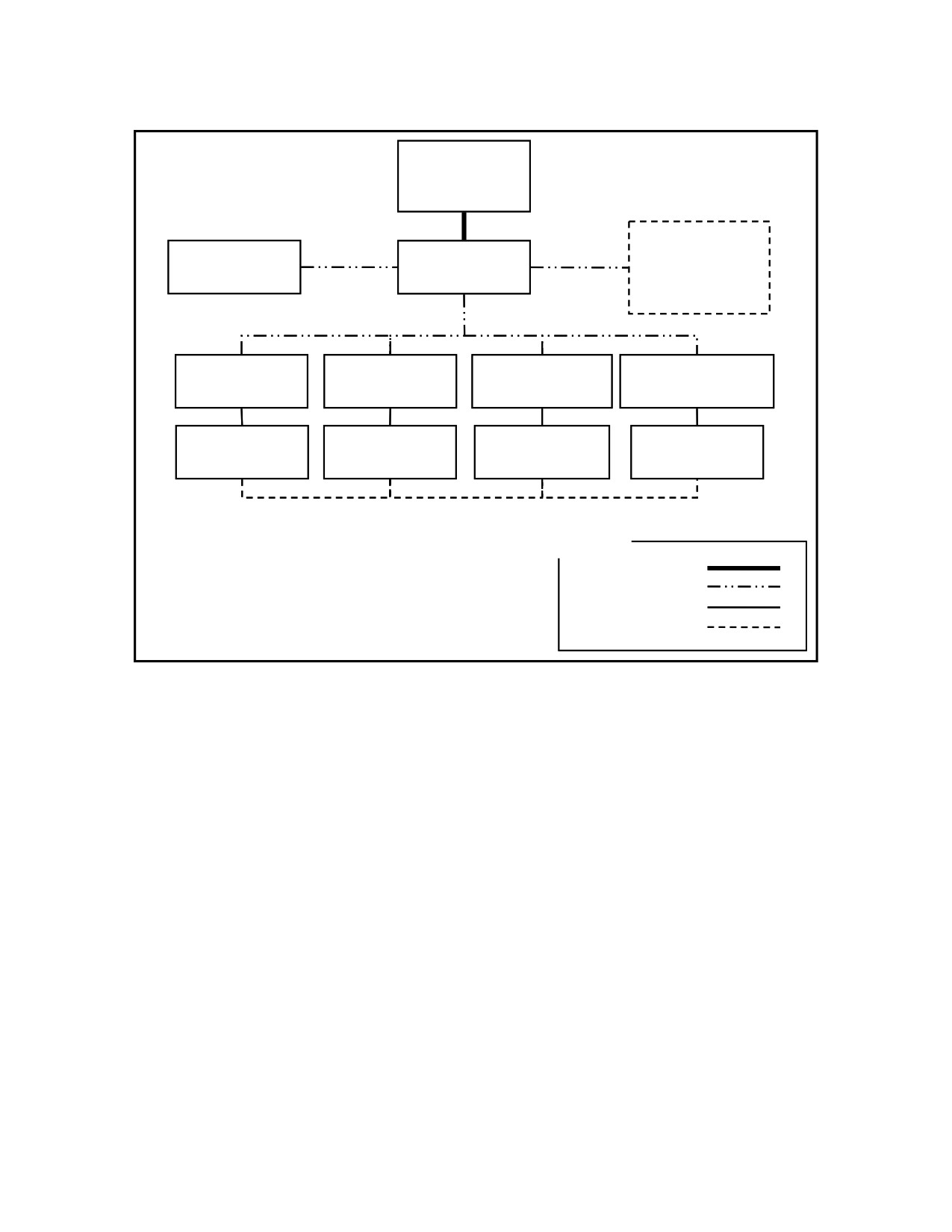
case-by-case basis (figure II-1). Historically, this has been the most common method of
employing EOD forces, although this organizational option often does not provide the most
effective or balanced use of EOD assets across the entire JOA.
b. Benefits and Drawbacks.
(1) Benefits.
(a) The Service component’s EOD responsibilities are relatively clear and easy to
control within their area of operations (AO) and/or bases.
(b) Allows Service components direct control of their own Service EOD forces.
(c) Allows the local EOD commander to provide EOD support to other Service
component forces (per the owning Service component commander’s priorities/requirements).
(2) Drawbacks.
(a) May cause severe inequities in EOD support for different forces or areas within
a JOA.
(b) Lack of JFC control and reduced flexibility in meeting critical/unexpected EOD
requirements that cross Service component lines.
27 October 2005
FM 4-30.16, MCRP 3-17.2C, NTTP 3-02.5, AFTTP(I) 3-2.32
II-3
Geographic
Combatant
Commander
Joint Special
JTF
Operations TF
JEODOC
(1)
(JSOTF)
(2)
Army Forces
Navy Forces
Marine Forces
Air Force Forces
(ARFOR)
(NAVFOR)
(MARFOR)
(AFFOR)
EOD Force
EOD Force
EOD Force
EOD Force
LEGEND
Command Authority
Note (1): Any Service lead.
TACON or OPCON
Note (2): If used, receives direct support (DS) EOD personnel
from Service components as directed by
Assigned/Attached
OPLAN/OPORD..
DIRLAUTH
Figure II-1. Service Component Responsibility (with DIRLAUTH) Organization
4. Lead-Service Component (with or without TACON or OPCON) Option
a. Utilization. The combatant commander may use the lead-Service component option to
support a limited duration mission or to provide more efficient EOD support, especially in a short
notice, austere environment mission. In this option, the combatant commander, through his Title
10 authority, attaches specific EOD personnel to a specific Service-component with or without
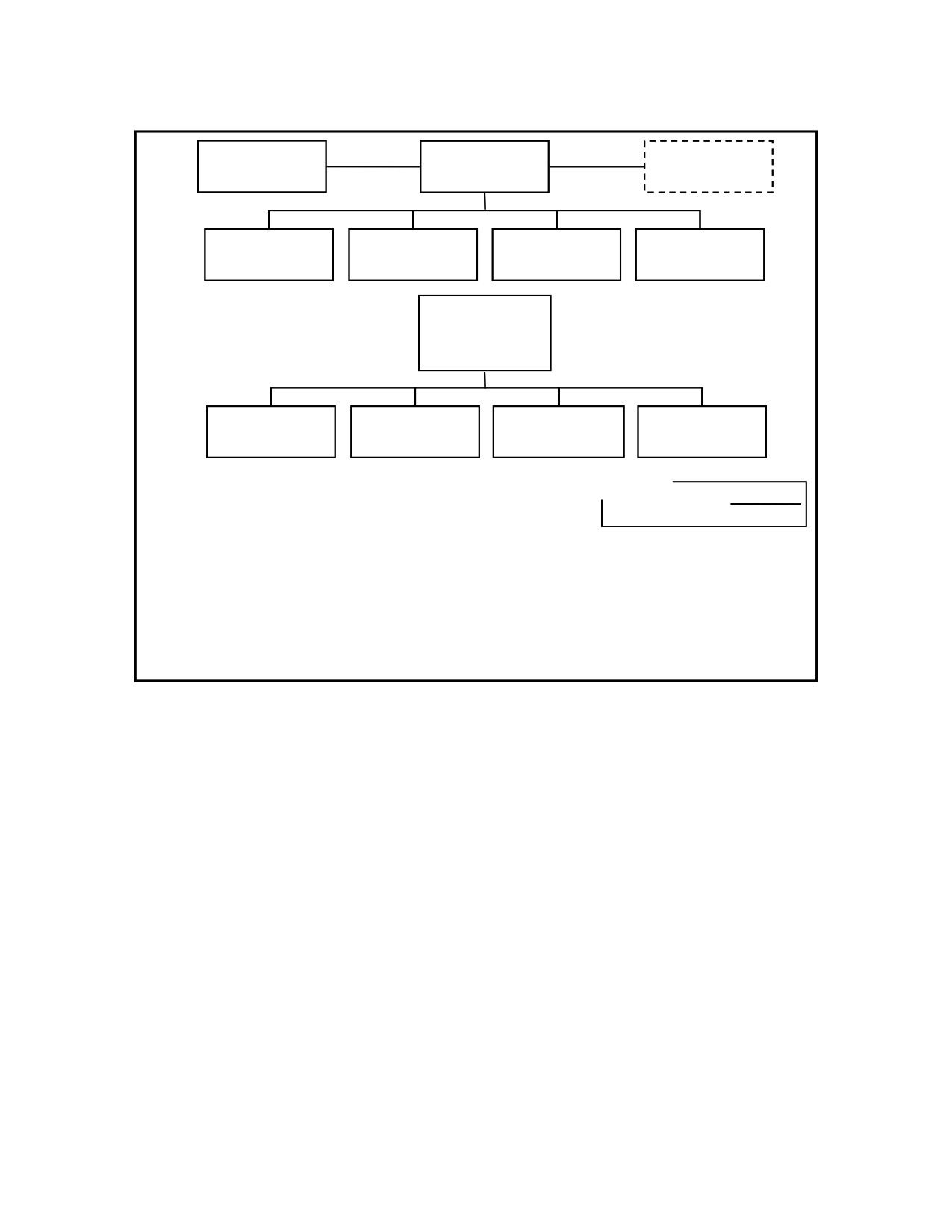
TACON/OPCON of other Services’ EOD forces (figure II-2).
b. Formation. To establish a lead-Service component, the combatant commander, in
consultation with his/her subordinate JFC and Service-component commanders, assigns
specific common EOD tasks to a lead-Service component. Normally, the lead-Service
component for EOD functions is the Service component with the majority of EOD requirements
and capabilities in theater. The combatant commander may temporarily place selected EOD
assets from one or more of the other Service components TACON or OPCON to the lead-
Service component EOD commander to assist in accomplishing the assigned tasks. In this
organizational option, the JEODOC may be formed and operated under the control of the lead
Service. In any case, other Services providing forces to the lead Service should provide, or be
directed to provide, staff augmentation (e.g., liaison officers [LNOs]) to the lead-Service EOD
commander’s staff. Having the JEODOC under the lead Service expedites planning,
coordination, and mission execution. This option must include a support relationship for
administrative/logistics support.
II-4
FM 4-30.16, MCRP 3-17.2C, NTTP 3-02.5, AFTTP(I) 3-2.32
27 October 2005
c. Employment Considerations. The lead-Service component option:
(1) Allows more efficient use of limited EOD assets for JTF-specific missions of limited
duration or high priority. This option is not used to provide EOD support for specific Service-
related missions (to include aircraft support, harbor clearances, and carrier battle-group
support). Each Service retains select EOD forces to accomplish Service-specific missions.
(2) Centralizes JEODOC functions to include EOD operation taskings and data tracking
with a single point of contact (POC), normally the lead-Service component EOD unit operations
officer.
(3) Improves technical intelligence acquisition and dissemination to all EOD forces.
(4) May benefit the JFC and staff by placing the JEODOC function under the lead
Service to assist in managing the EOD mission.
(5) Provides a mechanism that plans for fluctuations of Service EOD force
responsibilities as the operation transitions through different phases. Allows Service EOD
support to increase or decrease based on operational tempo or the theater EOD mission.
27 October 2005
FM 4-30.16, MCRP 3-17.2C, NTTP 3-02.5, AFTTP(I) 3-2.32
II-5
JEODOC
JSOTF
JTF
(3)
(4)
ARFOR
NAVFOR
AFFOR
MARFOR
(2)
(2)
(2)
(2)
* Lead EOD
Commander
(1)
Army EOD
Navy EOD
Air Force EOD
Marine EOD
(5)
(5)
(5)
(5)
LEGEND
* Combatant commander directs attachment/assignment of a lead EOD
TACON or OPCON
commander under a Service component.
Note (1): Any Service can have the joint EOD force responsibility.
Note (2): Parent Service retains administrative control over EOD forces that are
TACON or OPCON to another Service component.
Note (3): See chapter II, paragraph 6.
Note (4): If used, receives DS EOD personnel from Service-component EOD
units as directed in the OPLAN/OPORD.
Note (5): Select forces from other Service components placed TACON or
OPCON to the lead Service. Each Service retains a portion of their
EOD force to conduct Service-specific EOD missions.
Figure II-2. Lead-Service (with or without TACON/OPCON) Organization
5. Stand-alone or Subordinate EOD JTF Option
a. Utilization. In some operational situations, it may be desirable to form a JTF or
subordinate JTF that has a primary EOD function. This JTF would be formed from a major
Service EOD unit and would control (via TACON/OPCON for attached units) two or more
Service-component EOD organizations and would be jointly staffed. Task organizing EOD
forces under a JTF organizational option allows the JFC to focus limited EOD assets where they
are needed most and provides an opportunity to optimize EOD mission capabilities. In this
option, the JTF would provide the JEODOC function, but will also exercise combatant command
(command authority) (COCOM), as opposed to staff management, over any attached EOD units
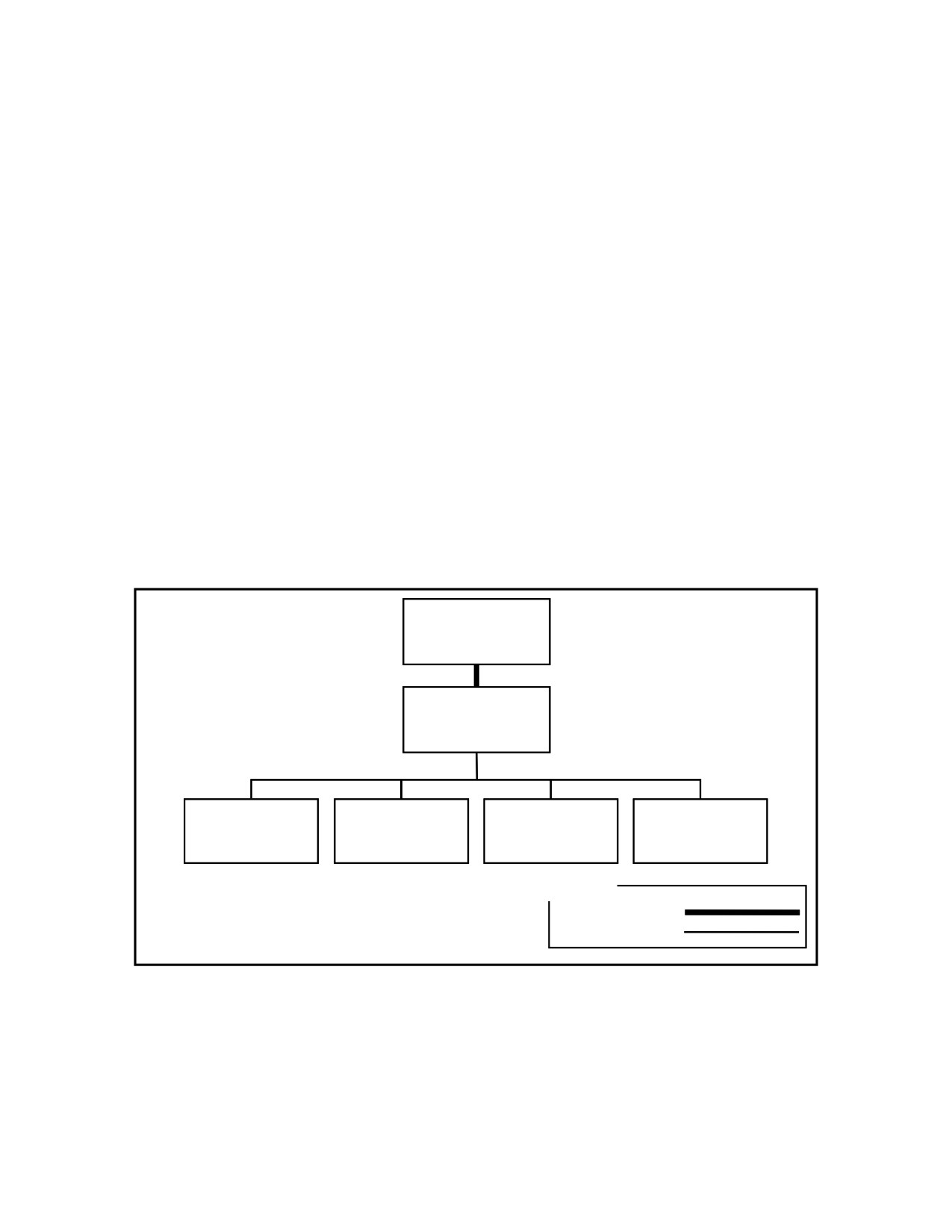
(figure II-3).
b. Formation. The JFC should base the decision to establish an EOD JTF on specific
mission needs, while also considering ongoing Service component EOD requirements. The
EOD JTF headquarters normally is built around an existing Service-component EOD command,
with augmentation from other Service EOD staff personnel. Based on JFC guidance and other
considerations, such as an operation plan (OPLAN) and existing agreements, each Service
component provides assets to fulfill common EOD support requirements within the JOA.
However, even when an EOD JTF is established, Service-unique EOD requirements and
selected EOD units may remain under the control of the individual Service components. The
II-6
FM 4-30.16, MCRP 3-17.2C, NTTP 3-02.5, AFTTP(I) 3-2.32
27 October 2005
combatant and subordinate JFCs should consider the common support requirements needed to
allow Service-components the ability to execute their Service-specific requirements. When
standing up an EOD JTF, the JFC must ensure that adequate security, administrative, logistical,
and medical support is available. See Appendix C for more details on establishing an EOD JTF.
c. Employment Considerations. The EOD JTF option:
(1) Delegates the authority to organize forces to accomplish the EOD mission, based on
the JFC’s concept of the operation.
(2) Provides the EOD force with unity of effort, centralized planning, and decentralized
execution.
(3) Consolidates the capabilities of each Service’s EOD force in a joint effort to solve
JOA-wide UXO/IED hazards.
(4) Facilitates the JFC control over EOD forces and missions.
(5) Expedites technical intelligence/data acquisition and dissemination to end-users.
(6) Provides a command structure for the integration and control of multinational EOD
forces.
(7) May be most appropriate for munitions storage/transportation disasters, or large scale
post-hostilities UXO clean-up operations.
(8) Parent Service retains administrative control over EOD forces that are TACON or
OPCON to another Service component.
JTF
EOD JTF*
Army
Navy
Air Force
Marine
EOD
EOD
EOD
EOD
LEGEND
TACON or OPCON
*Includes necessary EOD forces from two or more Services.
Assigned/Attached
NOTE: Any Service can have the joint EOD force responsibility.
Figure II-3. EOD JTF Organization
6. Information Management and Reporting
a. Information Management (IM). IM refers to the processes a JEODOC uses to obtain,
manipulate, direct, and control vital EOD-related information. IM for EOD operations includes all
processes involved in the creation, collection and control, dissemination, storage and retrieval,
27 October 2005
FM 4-30.16, MCRP 3-17.2C, NTTP 3-02.5, AFTTP(I) 3-2.32
II-7
protection, and destruction of critical EOD information. The goal of IM for EOD operations is to
provide a timely flow of quality information, enabling the commander of any EOD force to
anticipate and understand the consequences of changing conditions. See FM 3-99.4 (FM 101-
4)/MCRP 6-23A/NWP 3-13.1.16/AFTTP(I) 3-2.22, Multi-Service Procedures for Joint Task
Force-Information Management.
b. Reporting Requirements. See Appendix D, “Standardized EOD Reports.”
II-8
FM 4-30.16, MCRP 3-17.2C, NTTP 3-02.5, AFTTP(I) 3-2.32
27 October 2005
Chapter III
ARMY EOD OPERATIONS
1. Interservice Responsibilities
Army Regulation (AR) 75-14, Marine Corps Order (MCO) 8027.1D, Chief of Naval
Operations Instruction (OPNAVINST) 8027.1G, Air Force Joint Instruction (AFJI) 32-3002,
Interservice Responsibilities and Procedures for Explosive Ordnance Disposal; and AR 75-15,
Explosive Ordnance Disposal, defines the Army’s responsibilities as the following:
a. To provide EOD support to Army installations/activities and to render safe/dispose of
explosive ordnance and IEDs that threatens forces and property in the physical possession of
the Army.
b. To provide EOD support in the form of actions and/or advice, when requested from
federal agencies or civilian authorities in the interest of public safety. (When available) to
provide military support to civil authorities (MSCA)/military assistance to civil authorities (MACA)
response to military munitions within the designated area of responsibility.
c. To provide initial response force support to nuclear weapons accidents IAW DOD
Directive 3150.8-M, Nuclear Weapon Accident Response Procedures (NARP), 22 February
2005.
2. Mission
The Army EOD mission is to support national security strategy by providing the capability to
neutralize hazards from conventional UXO, CBRNE and associated materials, and IED (both
explosive and CBRNE), that present a threat to operations, installations, personnel, and/or
material. Army EOD forces also may dispose of hazardous foreign or US ammunition, UXO,
individual mines, booby-trapped mines, and chemical mines. Breaching and clearance of foreign
or US minefields is the primary responsibility of the Army/Marine engineers. EOD provides the
Army with a rapidly deployable support package for the elimination of hazards from chemical,
biological, radiological, nuclear, and high yield explosives (CBRNE) hazards in any operational
environment. The EOD force serves as a combat multiplier by neutralizing UXO/IED that restrict
freedom of movement and deny access to or threaten supplies, facilities, and other critical
assets. Army EOD forces are equipped, trained, and organized to support tactical land forces
across the spectrum of operations (i.e., major combat operations, military operations other than
war (MOOTW) including support and stability operations (SASO), MSCA, MACA, and support of
combatant commander activities (e.g., humanitarian demining, military to military exchanges,
partnership exercises, etc.).
3. Doctrine
a. Force structure rules of allocation (figure III-1).
(1) EOD Group (GP):
(a) Existing rules of allocation are 1 EOD GP per 1-2 Armies, 1 EOD GP with 2-5
EOD battalion (BN), and 1 EOD GP (-) with 1 EOD BN.
(b) Workload rules of allocation are based on mission, enemy, terrain and weather,
time, troops available and civil considerations (METT-TC) and military decision making process
(MDMP).
27 October 2005
FM 4-30.16, MCRP 3-17.2C, NTTP 3-02.5, AFTTP(I) 3-2.32
III-1
•
1 EOD GP or EOD GP (-) per Armies, Corps, or JTF
•
1 EOD GP in support of outside the continental United States (OCONUS)
homeland defense
•
1 EOD GP per 3-5 EOD BN
•
1 EOD GP (-) per 1-2 EOD BN
(2) EOD BN:
(a) Existing rules of allocation: 1 EOD BN per 1-3 Corps/Divisions, 1 EOD BN with
3-7 EOD company (CO), and 1 EOD BN (-) with 1-2 EOD CO.
(b) Workload rules of allocation are based on METT-TC and MDMP.
•
1 EOD BN or EOD BN (-) per 1-4 Corps/Divisions
•
1 EOD BN per 3-7 EOD CO
•
1 EOD BN (-) per 1-2 EOD CO
•
1 EOD BN (-) per JTF with 2 or less EOD CO
•
2 EOD BN in support of continental United States (CONUS) homeland
defense
•
1 EOD BN per special forces (SF) GP/Ranger BN
•
1-5 EOD BN per Armies
(c) The BN LNO rule of allocation is: 1 per G-3 cell, Corps/Division, and/or
maneuver enhancement (ME) chemical, biological, radiological, nuclear and high yield
explosives (CBRNE) cell.
(3) EOD CO:
(a) Existing rules of allocation: 1 EOD CO per brigade combat team (BCT), 1/3
EOD CO per SF GP/Ranger BN.
(b) Workload rules of allocation are based on METT-TC and MDMP.
•
1 EOD CO per 1-2 BCT during MOOTW including SASO
•
1 EOD CO per BCT during combat shaping operations
•
1 EOD CO per aerial port of embarkation/aerial port of
debarkation/reception, staging, onward movement, and integration area
•
1 EOD CO per 60 sq km
•
11 EOD CO per support to homeland defense CONUS support operations
•
6 EOD CO per Corps/Division
b. C2.
(1) The EOD group provides C2 for all Army EOD assets and operations in the Armies or
joint operating AO or as assigned. An EOD group (-) may deploy as the senior C2 element for
Army EOD operations in a given Armies operation. EOD battalions remain under the command
of their EOD group; depending on the operational situation, they may be placed
TACON/OPCON to another unit. When using the TACON/OPCON C2 option, the EOD group
retains administrative control (ADCON) of their subordinate battalion(s).
III-2
FM 4-30.16, MCRP 3-17.2C, NTTP 3-02.5, AFTTP(I) 3-2.32
27 October 2005

(2) The EOD battalions provide C2, technical intelligence operations, acquisition and
management, and limited administrative and logistical support for up to seven EOD companies
operating in a JOA. EOD battalions, or battalions (-), may deploy as the senior C2 element for
Army EOD operations in a given JTF or Corps/Division operation.
(3) EOD companies remain under the command of the battalion; depending on the
operational situation, they may be placed TACON/OPCON to another unit. When using the
TACON/OPCON C2 option, the battalion retains ADCON of their subordinate companies. EOD
companies provide general support (GS) on an area basis or direct support (DS) to specified
BCTs in support of operations. The combatant commander’s planning staff tailors EOD forces to
support specified operations down to a BCT. Responsibilities of the EOD commander at all
levels include:
(a) Recommend policy and distribute EOD assets.
(b) Monitor EOD support missions and establish workload priorities.
(c) Coordinate EOD technical intelligence (TECHINT) operations.
(d) Coordinate GS and DS EOD support.
(e) Provide EOD guidance to force protection procedures to meet existing threat.
(f) Coordinate administrative and logistical support, as required, from the
supported command.
MODULAR EOD SUPPORT
MATRIX
1 OD GP (EOD) per 1-2 Armies
Armies
HHD EOD
GP
1 OD GP (EOD) with 2-5 OD BN (EOD)
(09627A0)
1 OD GP (EOD) ( ) with 1 OD BN (EOD)
JTF/Corps/
HHD EOD
HHD
1 OD GP (EOD) with 2-5 OD BN (EOD)
GP
EOD BN
1 OD BN (EOD) with 3-7 OD CO (EOD)
CSB(ME)
(09627A0)
(09446A0)
1 OD BN (EOD) ( ) with 1-2 OD CO (EOD)
1 EOD BN per 1 1-3 Division
HHD
Division
EOD BN
(09446A0)
1 EOD BN with 3 3-7 OD CO (EOD)
1 EOD BN (-) with 0-2 OD CO (EOD)
1 OD CO (EOD) per 1-2 BCT
BCT
EOD CO
(09477A0)
1 OD CO (EOD) per 60 sq/km
.333 EOD CO per SOF/Ranger BN
Port
EOD CO
(09477A0
1 EOD Co per APOE/ RSO&I Area
LEGEND
APOD
arial port of debarkation
APOE
aerial port of embarkation
BCT
brigade combat team
BN
battalion
CO
company
CSB(ME)
combat support brigade (maneuver enhancement)
GP
group
HHD
headquarters and headquarters detachment
JTF
joint task force
RSO&I
reception, staging, onward movement, & integration
SOF
special operations forces
Figure III-1. Modular EOD Support Matrix/Force Structure
27 October 2005
FM 4-30.16, MCRP 3-17.2C, NTTP 3-02.5, AFTTP(I) 3-2.32
III-3
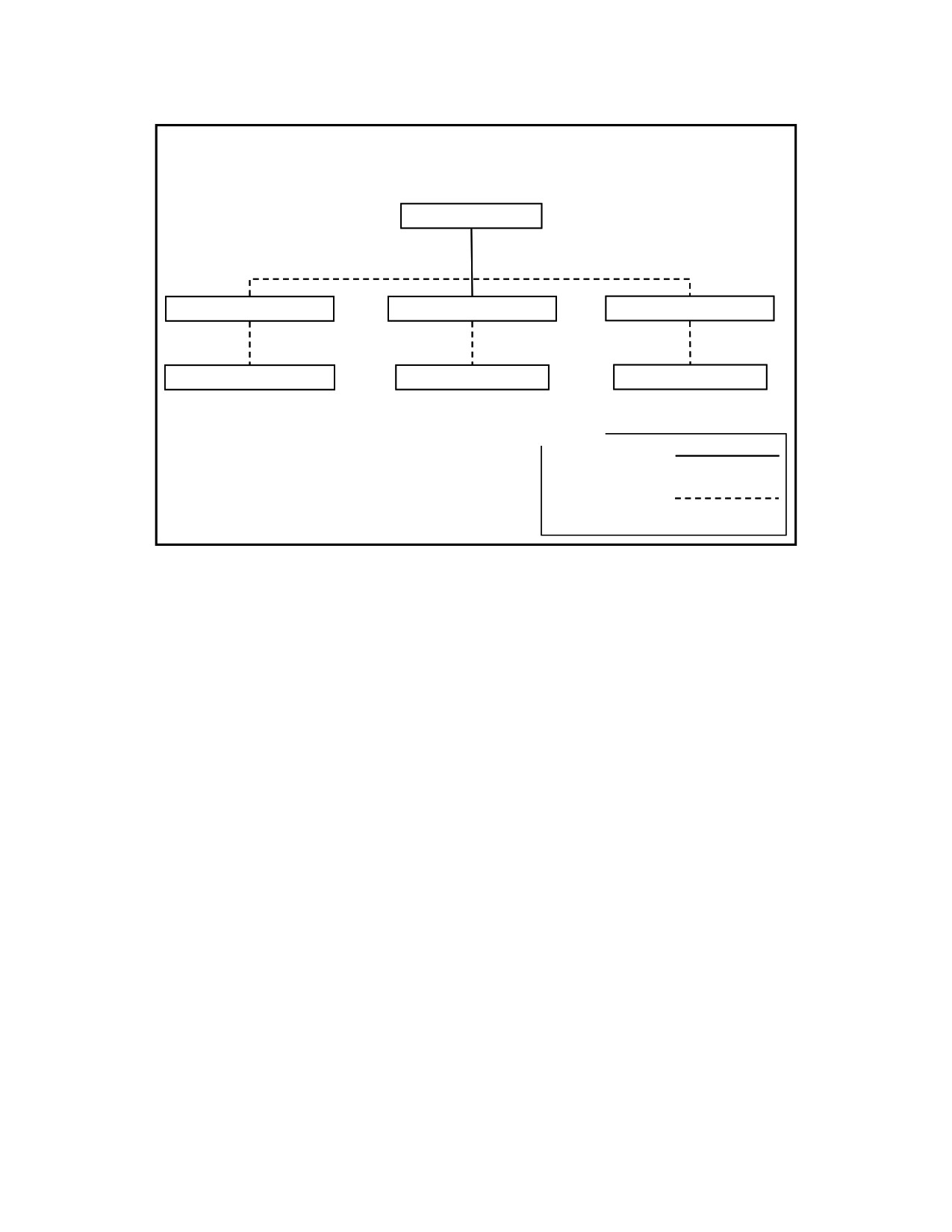
EOD Force Structure - Army National Guard
Fiscal Year 2006
111TH EOD GROUP
441ST EOD BATTALION
741ST EOD BATTALION
501ST EOD BATTALION
5 X EOD COMPANIES
5 X EOD COMPANIES
4 X EOD COMPANIES
LEGEND
Direct C2
Training Readiness
Oversight Only
Figure III-2. National Guard EOD Force Structure
(g) Ensure each EOD unit establishes provisions for communications at each level
to support EOD operations.
(h) Supplement other theater force protection procedures to meet the existing
threat.
(i)
Coordinate administrative and logistical support, as required, from the
supported command.
c. Armies Strategic Planning.
(1) The Armies G-3 CBRNE EOD cell plans for Army and assigned EOD Armies strategic
EOD requirements in support of the geographic combatant commander’s campaign plan. The
Armies G-3 CBRNE cell accomplishes the planning by using the Joint Operation Planning and
Execution System (JOPES) and coordinates the planning effort with the combatant
commander’s EOD staff officer. The EOD group commander may provide LNOs to the Armies
G-3.
(2) The LNO ensures:
(a) Mutual cooperation and understanding between Armies and the EOD group
commander.
(b) Coordination on tactical matters to achieve mutual purpose, support, and
action.
(c) Precise understanding of stated or implied coordination measures to achieve
synchronized results.
d. Corps/Division and Combat Support Brigade (CSB) (ME) Operational Planning.
III-4
FM 4-30.16, MCRP 3-17.2C, NTTP 3-02.5, AFTTP(I) 3-2.32
27 October 2005
(1) The Corps/Division G-3 EOD cell provides staff planning for Army EOD operations
throughout the Corps/Division AO, and EOD special staff to the Corps/Division commander.
Corps/Division G-3 EOD cells are responsible for providing the EOD annex to all respective
OPLANs/OPORDs. The CSB (ME) G-3 EOD cell provides staff planning for Army EOD
operations in support of CSB (ME) operations and is also responsible for providing the EOD
annex to all respective CSB (ME) OPLANs/OPORDs. This imbedded EOD staff capability
ensures that EOD forces fully understand and support the maneuver commander’s operations
and provides for force protection throughout the Corps/Division AO. The EOD BN may provide
an LNO to the supported Corps/Division and/or CSB (ME), as determined by METT-TC and
JOA task organization.
(2) LNO duties include:
(a) Mutual cooperation and understanding between Corps/Division, CSB (ME),
EOD GP and EOD BN commanders.
(b) Coordination on tactical matters to achieve mutual purpose, support, and
action.
(c) Precise understanding of stated or implied coordination measures to achieve
synchronized results.
e. BCT/CSB (ME) Battalion Operational Planning.
The BCT/CSB (ME) Battalions do not maintain an organizational EOD planning staff
capability; rather, they rely upon the supporting EOD company for that capability. The EOD
company may provide an operations officer and/or noncommissioned officer (NCO) to the BCT
in order to provide appropriate EOD planning and to perform LNO duties, which ensure:
(1) Mutual cooperation and understanding between BCT/ME commanders and staffs and
the EOD BN and CO commanders.
(2) Coordination on tactical matters to achieve mutual purpose, support, and action.
(3) Precise understanding of stated or implied coordination measures to achieve
synchronized results.
f.
Combined Operations Planning.
Combined operations involve the military forces of two or more nations acting together with
a common purpose. The Armies or Corps/Division G-3 CBRNE EOD cell considers military
doctrine and training, equipment, cultural differences, and language barriers when providing
TACON or OPCON of alliance or coalition EOD forces. Lessons learned indicate that few
linguists have both the technical expertise and depth of understanding to cross both language
and doctrinal boundaries and be fully understood when dealing with UXO and technical EOD
procedures. Combined operations require a significant resource commitment to dedicated
liaison and linguist teams from alliance or coalition EOD forces.
4. Organizations
The Army assigns EOD organizational assets to specified major command areas (figure III
3). The Army numbers all EOD units for support to specified OPLANs. Major EOD commands
and their locations are:
27 October 2005
FM 4-30.16, MCRP 3-17.2C, NTTP 3-02.5, AFTTP(I) 3-2.32
III-5
CBRNE Force Structure - Active Component
Fiscal Year 2006
20TH SUPPORT COMMAND
(CBRNE)
52ND EOD GROUP
71ST EOD GROUP
22ND CHEMICAL BATTALION
110TH CHEMICAL BATTALION
(TECH ESCORT)
(TECH ESCORT)
63RD EOD BATTALION
3RD EOD BATTALION
EOD COMPANIES
EOD COMPANIES
184TH EOD BATTALION
79TH EOD BATTALION
EOD COMPANIES
EOD COMPANIES
192ND EOD BATTALION
242ND EOD BATTALION
EOD COMPANIES
EOD COMPANIES
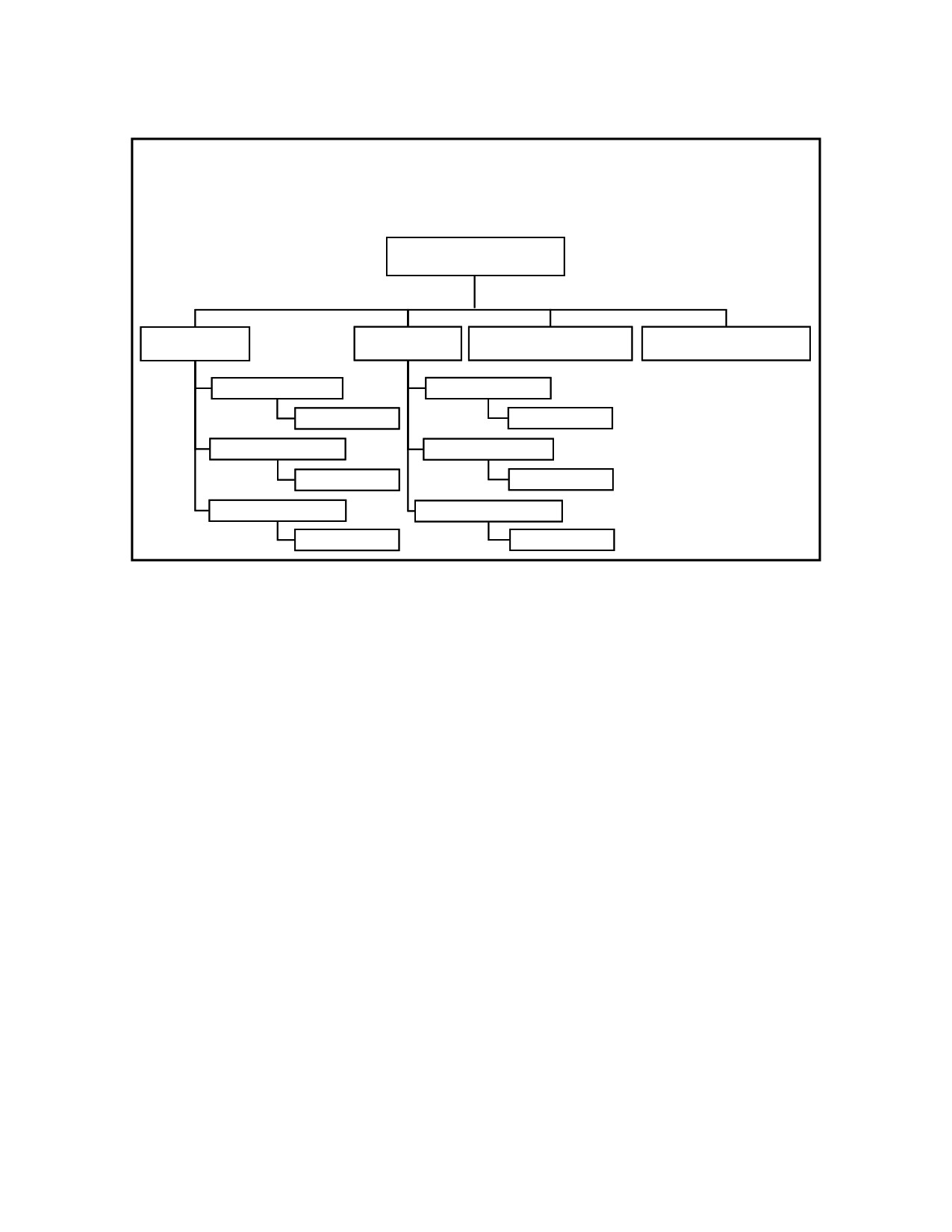
Figure III-3. US Army CBRNE Force Structure
a. US Army Forces Command: 20th Support Command, 2 EOD GPs , 7 EOD BNs, and 44
EOD COs.
b. Seventh US Army, European Command: EOD cell, 191st Ordnance Battalion, and 2
EOD COs.
c. US Army, Pacific Command: EOD control team and 2 EOD COs.
d. Eighth US Army, Republic of Korea: EOD control team and 1 EOD CO.
e. US Army National Guard: 1 EOD GP, 3 EOD BNs, and 14 EOD COs.
5. EOD Company Capabilities
a. The EOD Company—Mission. Each EOD company is authorized 23 soldiers, comprising
20 EOD-qualified technicians, including the commander and first sergeant, and three support
soldiers (personnel clerk, mechanic, and supply sergeant). The EOD companies provide
support in a DS, GS, and GS-reinforcing relationships throughout the BCT Army force and/or
joint force land component commander area of operations. EOD battalion commanders
typically task organize their companies in direct support to BCTs. Due to the limited support
personnel, EOD companies depend on the supported unit for administrative and logistical
support. Additionally, BCTs and/or their subordinate units will be required to provide security for
movement of EOD teams in support within the area of operation.
b. The EOD Company—Force Capabilities. The activity of EOD intensifies based upon the
operational tempo of the battle and may or may not stabilize as the theater matures. The EOD
force within a theater of operations can expect to conduct operations in a myriad of situations
and locations. An EOD company can field up to seven EOD teams, consisting of a minimum of
III-6
FM 4-30.16, MCRP 3-17.2C, NTTP 3-02.5, AFTTP(I) 3-2.32
27 October 2005
one EOD team leader and one EOD team member. Each team can operate for a period up to
72 hours and may conduct 8-10 EOD incidents in a 24-hour period. This is dependent on the
mission, enemy, terrain and weather, troops and support available--time available (METT-T).
Manpower intensive EOD operations (multiple UXO, CBRNE operations, and ammunition
supply point accidents) require several EOD teams at one time to complete the mission. EOD
commanders can task organize their teams as necessary to complete the mission.
c. The EOD Company—Operational Capabilities. Organic to each EOD company are
personnel and equipment to identify, mitigate, neutralize, remove, and dispose of conventional
or CBRNE explosive hazards. These hazards may arise from domestic or foreign ordnance or
IED that degrades the commander’s mobility or that threaten personnel, operations, or
installations. Many of the capabilities are non-Service specific. To avoid repetition in the Service
chapters, Appendix E provides those capabilities that are recurring, non-Service specific EOD
requirements. Key Army-specific EOD operational capabilities are:
(1) Improvised Explosive Devices (IED). EOD teams maintain capabilities for remote
investigation, identification, and movement of IED, as well as emplacement/operation of
disruption tools and disposal methods. Larger IED, such as large vehicle borne IED (VBIED),
may require additional EOD support (personnel and equipment) to augment the initial EOD
response team.
Note: EOD personnel are the only personnel authorized to respond to requests for IED
assistance. EOD personnel are the only personnel equipped, manned, and
trained to perform IED render safe procedures (RSP).
(2) Force Protection. Army EOD provides the bomb disposal component of the Army’s
force protection program. In addition to actual response to explosive devices, Army EOD forces
can also provide training in UXO/explosives recognition and reporting, bomb threat search
procedures and evacuation, site vulnerability assessments, and unit standard operating
procedure (SOP) preparation and validation. This training increases the effectiveness of the
maneuver commander’s force protection program.
(3) Very Important Person Protective Support Activity (VIPPSA). Army EOD is the
executive agent (EA) for coordination and tasking of all military EOD support for the Department
of State (DOS) and US Secret Service (USSS) for the protection of the President, Vice
President, and designated foreign heads of state.
(4) Amnesty Programs. Army EOD units assist in the collection and disposal of
hazardous munitions and components as part of the maneuver commander’s force protection
program, to ensure the continued safety of military personnel.
(5) Stuck Rounds. Each EOD team performs specialized procedures to remove stuck
rounds in mortars, artillery, and other weapon systems.
(6) Mortuary Services. Immediate recovery and clearance of deceased persons is a
priority of the Services. The presence of UXO being found on or imbedded in deceased persons
adversely impacts the recovery of coalition or US personnel. Therefore, Army planners normally
involve EOD-qualified leaders in planning and conducting recovery and processing of deceased
personnel.
(7) CEA. EOD performs initial munitions assessment of CEA sites, disposal/render safe
of munitions that pose an immediate threat, evaluates and identifies CEA for TECHINT and
recommends disposition of CEA to capturing unit.
27 October 2005
FM 4-30.16, MCRP 3-17.2C, NTTP 3-02.5, AFTTP(I) 3-2.32
III-7
6. Training
a. Required Individual EOD Training. All Army EOD specialists attend the Army-specific
material/equipment training (Phase II) at Redstone Arsenal, Alabama. Army EOD personnel
also receive continuous technical sustainment training and evaluations at their units of
assignment.
b. Specialized Training Opportunities. Select EOD soldiers may also attend specialized
training such as technical escort specialist, advanced access and disablement, advanced EOD,
and a variety of nuclear and chemical operations courses. A limited number of specially
selected EOD soldiers also attend Federal Bureau of Investigation (FBI) civilian EOD training or
foreign EOD courses, such as the British Army Engineer IED Disposal and Advanced Manual
Techniques Course, the Canadian Military Forces IED Disposal Course, and the French Military
Demining School.
c. Combat Training Centers. EOD companies and company elements provide support to
maneuver forces (battalions, brigades, and division task force (TF) headquarters) undergoing
training at the Joint Readiness Training Center, Louisiana; National Training Center, California;
and the Combat Maneuver Training Center, Germany. Specifically, countering UXO hazards
with EOD teams prevents needless deaths, injuries, and destruction of the commander’s
combat power. During reception, staging, onward movement, and integration, supporting EOD
teams provide UXO danger awareness and risk management, fratricide prevention, and other
safety instruction to JTF personnel.
III-8
FM 4-30.16, MCRP 3-17.2C, NTTP 3-02.5, AFTTP(I) 3-2.32
27 October 2005
Chapter IV
MARINE CORPS EOD OPERATIONS
1. Interservice Responsibilities
AR 75-14, MCO 8027.1D, OPNAVINST 8027.1G, AFJI 32-3002, Interservice
Responsibilities and Procedures for Explosive Ordnance Disposal, defines the Marine Corps
responsibilities as follows:
a. USMC EOD forces provide EOD Services on USMC installations, in assigned
operational areas of the land mass dispatched for support as the nearest available EOD team,
and for explosive ordnance in the physical possession of the Marine Corps.
b. USMC EOD supports SOF in missions requiring tactical delivery and extraction of
personnel and equipment by unconventional methods and in missions requiring unconventional
small unit tactics, to include direct action (DA) missions.
2. Mission
The USMC EOD mission is to support Marine operating forces, national security strategy,
and force protection by locating, accessing, identifying, rendering safe, neutralizing, and
disposing of hazards from foreign and domestic, CBRNE, UXO, IEDs, and weapons of mass
destruction (WMD) that present a threat to operations, installations, personnel, or materiel.
3. Doctrine
a. Operational Concept. Marine EOD forces provide uniquely/specially/advanced trained
personnel to support the Marine air-ground task force (MAGTF) operational concept by
eliminating and mitigating all explosive hazards encountered in all spectrums of military
operations.
b. C2. Command, control, and coordination of EOD assets falls under the EOD Operations
Center (EODOC). The EODOC is located within the MAGTF operations section and staffed with
an EOD officer and senior enlisted EOD staff noncommissioned officer (SNCO). The EOD
officer is a special staff officer to the MAGTF commander The MAGTF EOD officer tracks all
requests for EOD support, plans and prioritizes missions, and provides a liaison capability when
conducting joint operations.
c. Operational Planning. For planning, the EOD staff officer (G-3) at Marine Forces, Atlantic
(MARFORLANT); Marine Forces, Pacific (MARFORPAC); and Marine Expeditionary Forces
(MEFs) advises the commander on all EOD operations. This Marine is responsible to the
commander for providing the EOD appendix 13 of annex C for OPLANs/OPORDs to ensure full
EOD support in all phases of the operation.
4. Organizations
a. Marine EOD Forces. Marine EOD forces within the MEFs consist of an EOD platoon
within the Marine logistics group (MLG) and one EOD team within each Marine wing support
squadron (MWSS) of the Marine wing support groups (MWSG) with the Marine aircraft wings
(MAW).
(1) The EOD platoon within the MLG is located with the engineer support battalion
(ESB). In order to fully leverage the EOD capability across the entire spectrum of MAGTF
27 October 2005
FM 4-30.16, MCRP 3-17.2C, NTTP 3-02.5, AFTTP(I) 3-2.32
IV-1
operations, particularly during combat and contingency operations, it has been proven over the
last 20 years that EOD is best utilized and effective when placed in the MAGTF command
element operations section.
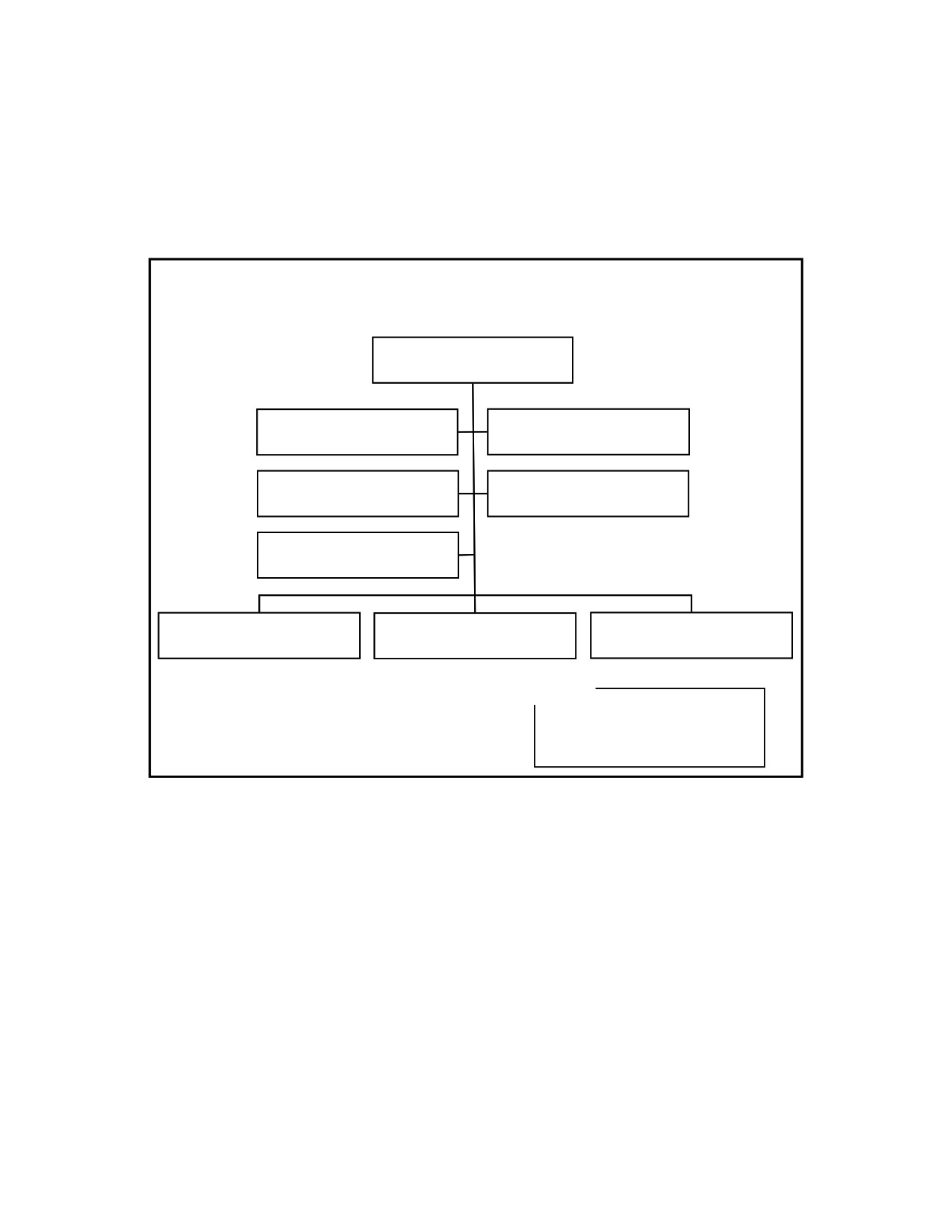
(2) An EOD platoon can be task organized in several different ways in order to support
Marine operating forces. When an entire MEF is deployed, a typical breakdown of the EOD
platoon is depicted below (figure IV-1).
Table of Organization
9/96
HQ Element
1/1
General Support Element
Operations Element
1/17
1/6
MEU-13
MEU-11
1/8 DS
1/8 DS
MEU-15
1/8 DS
RCT-1
RCT-5
RCT-7
1/16 DS
1/16 DS
1/16 DS
LEGEND
HQ
headquarters
MEU
Marine expeditionary unit
RCT
rescue coordination team
Figure IV-1. USMC EOD Platoon (1 MEF Example)
(3) EOD teams are routinely deployed as MAGTF teams with one officer and eight
enlisted personnel. This organizational concept is normally used to support Marine
expeditionary unit (special operations capable) [MEU(SOC )] deployments.
(4) The MWSS EOD team consists of one officer and eight enlisted personnel and
primarily supports the air combat element, but they are equipped and capable to support all
aspects of MAGTF operations. As with the MAGTF, MWSS EOD officers are special staff
officers to the MWSS commander (figure IV-2).
IV-2
FM 4-30.16, MCRP 3-17.2C, NTTP 3-02.5, AFTTP(I) 3-2.32
27 October 2005
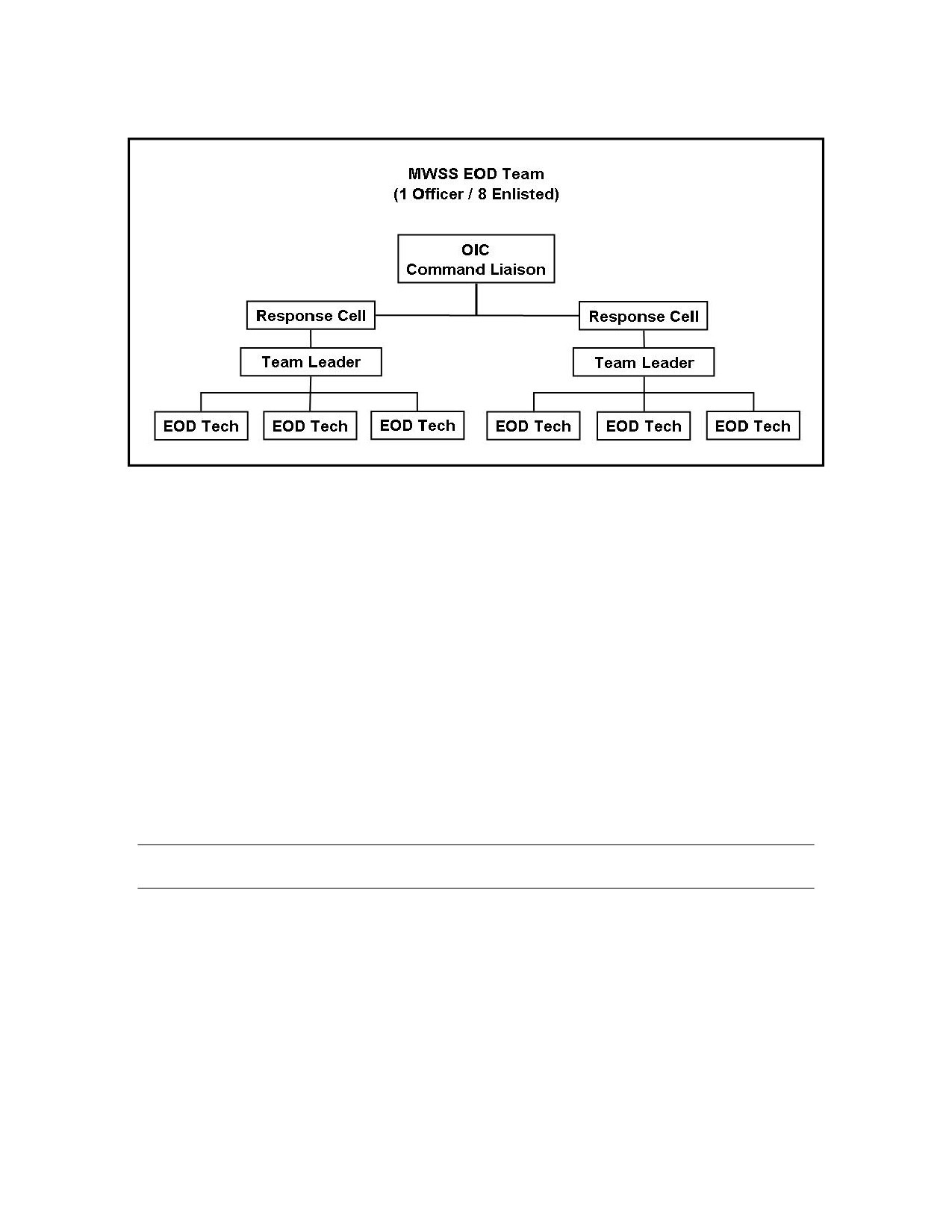
Figure IV-2. USMC EOD Section, Marine Wing Support Squadron
b. Marine Installation EOD Forces.
Marine Corps Installations East and West (MCIEast, MCIWest). The Marine Corps assigns
these EOD teams as a special staff section to the installation commanding officer. The EOD
team usually consists of one officer and eight enlisted personnel and provides all support in the
conduct of operations and training aboard bases and stations that fall under the MCI
commander's area of responsibility. EOD teams remain under the operational and
administrative control of installation commanders. These teams support local communities, as
well as the installation, with military munition response and IED response in support of
homeland defense operations, or if there is not a local bomb squad in the area. In order to
maximize the limited EOD assets, most installation EOD teams will stand a combined 24-hour-
response duty with the MEF EOD teams aboard that installation.
5. Capabilities
Marine EOD Team Capabilities. In addition to the recurring operations provided in
Appendix E, Marine EOD organically possess or can support the following capabilities:
Note: For additional information on Marine EOD capabilities, refer to MCWP 3-17.2,
Explosive Ordnance Disposal, (MAGTF EOD)
a. Conventional MAGTF Operations:
(1) Explosive Threat and Countermunitions Operations.
(2) Maritime Operations:
(a) Visit, board, search, and seizure (VBSS), (Surface and Air insertion).
(b) Small boat raids.
(3) UXO clearance, RSP, Disposal.
(4) Aviation Ground Support.
27 October 2005
FM 4-30.16, MCRP 3-17.2C, NTTP 3-02.5, AFTTP(I) 3-2.32
IV-3
(5) Base Recovery After Attack.
(6) Military operations in urban terrain (MOUT).
(7) CEA.
(8) Tactical Recovery of Aircraft and Personnel.
(9) Stuck Round Removal.
(10) Download/Safing US and Foreign Weapons Systems/Vehicles.
(11) Battlefield Vehicle Recovery Operations.
(12) Stand-off Munitions Disruption.
(13) Ordnance Exploitation/Inerting.
b. Specialized Advanced Skills:
(1) Counterterrorism Driving.
(2) Personnel Security Details (PSD).
(3) Close Quarters Battle (CQB).
(4) Technical Intelligence.
(5) Basic Airborne.
(6) Helicopter Rope Suspension Training.
(7) Advanced Access and Disablement.
(8) Advanced IED Neutralization.
(9) Sensitive Site Exploitation.
c. Weapons of Mass Destruction:
(1) Radiological Emergency Team Operations School.
(2) WMD Command, Control, and Communications (C3).
(3) Radiological Accident C2 (RAC 3).
(4) CBRNE.
d. Specialized Demolitions:
(1) Dynamic Entry.
(2) Target Analysis.
(3) Advanced Explosive Techniques.
e. Anti-Terrorism/Force Protection:
(1) Vulnerability Assessment.
(2) Blast Mitigation.
(3) Post-blast Investigation.
(4) Technical Intelligence.
(5) Crater Analysis.
(6) Large Vehicle Improvised Explosive Devices.
IV-4
FM 4-30.16, MCRP 3-17.2C, NTTP 3-02.5, AFTTP(I) 3-2.32
27 October 2005
(7) Field Exploitation.
(8) National Security Special Events (NSSE).
6. Training
Team/Individual Qualification Requirements. All EOD personnel, officer/enlisted, must be
graduates of the basic course, Naval School Explosive Ordnance Disposal, Eglin Air Force
Base, Florida. EOD personnel attend formal advanced training, to include but not limited to, the
following schools:
•
Joint Nuclear EOD School
•
Radiological Emergency Team Operational School
•
Dynamic Entry Basic and Advanced (Instructor) Course
•
Hazardous Device School
•
Advanced IED Disposal (AIEDD) School
•
British IED School
•
Canadian IED School
•
Technical Escort School
•
ATF/FBI Post Blast Course
•
40 Hr Hazardous Waste Operators (HAZWOPER) Course
•
Confined Space Training
•
Radiological Accident C2 (RAC 3) Course
•
Nuclear Weapons Orientation Course
•
Target Analysis Course
•
Proliferation, Terrorism, and Response Course
•
Weapons of Mass Destruction, C3 Course
•
Basic Airborne School
•
Global Antiterrorism Operational Readiness Course (GATOR)
•
Advanced Explosives Destruction Techniques (AEDT) - ATF
•
Advanced Explosive Investigative Techniques (AEIT) - ATF
•
Andros Operations and Maintenance (REMOTECH)
•
LVBIED Course - FBI
•
Dynamics of International Terrorism
•
18C Course Phase 2
27 October 2005
FM 4-30.16, MCRP 3-17.2C, NTTP 3-02.5, AFTTP(I) 3-2.32
IV-5
Chapter V
NAVY EOD OPERATIONS
1. Interservice Responsibilities
AR 75-14, MCO 8027.1D, OPNAVINST 8027.1G, AFJI 32-3002, Interservice
Responsibilities and Procedures for Explosive Ordnance Disposal, defines the Navy
responsibilities as follows:
US Navy (USN) EOD provides Services on naval installations; within oceans and contiguous
waters, up to the high water mark of harbors, rivers and coastal environments; and emergency
response to land mass not specifically assigned as a responsibility of the Army, Marine Corps,
or Air Force.
2. Mission
The USN EOD mission is to support national security strategy by providing forces capable of
conducting land and underwater detection, identification, render safe, recovery, field evaluation,
and disposal of explosive ordnance.
3. Doctrine
The Navy generally categorizes EOD operations into three types: maritime operations,
contingency operations, and ordnance intelligence and acquisition.
a. Maritime Operations. The Navy conducts EOD operations to enhance ship survivability,
preserve fleet warfighting capabilities, and enable naval, expeditionary, and joint forces to
achieve and maintain battlespace dominance through the reduction or elimination of explosive
hazards. The Navy assigns EOD forces to carrier strike groups (CSGs), expeditionary strike
groups (ESGs), combat expeditionary support (CES), amphibious ready groups (ARGs), Naval
Special Warfare Squadrons (NSWRON), and mine countermeasures (MCM) forces. In addition,
USN EOD forces are assigned to special contingency operations at sea and ashore (Naval
Special Warfare [NSW] and Commanders In-Extremis Force [CIF]), and where continuing EOD
requirements exist. Operational commanders employ these forces as necessary to meet theater
objectives.
b. Contingency Operations. EOD forces support contingency operations in support of US
forces and operations in the interest of national security and safety. Their flexibility and
interoperability facilitate partnership with Special Warfare and Marine Corps forces when threats
involve conventional ordnance or WMD. From their dedicated fleet and shore assignments,
EOD forces support federal and local authorities in the rendering safe and disposal of
explosives and explosive devices and assist the USSS in presidential and very important person
(VIP) protection. EOD forces also support the Coast Guard in counternarcotics operations and
participate in MOOTW such as maritime interdiction, noncombatant evacuation operation
(NEO), disaster relief, and security assistance surge operations.
c. Ordnance Intelligence and Acquisition. Navy EOD personnel are qualified divers and can
recover ordnance items on land or underwater, make the ordnance explosively safe, and return
the item for exploitation. EOD detachments gather immediate preliminary intelligence on threat
ordnance in the field. This intelligence is then disseminated to those requiring it in the AO until
the detachment or other asset can conduct a more detailed exploitation. Data collected
27 October 2005
FM 4-30.16, MCRP 3-17.2C, NTTP 3-02.5, AFTTP(I) 3-2.32
V-1
contribute to the development of render safe procedures and support the development of
countermeasures, as well as determine the location of enemy stockpiles, types of launch
platforms, and tactics.
4. Organizations
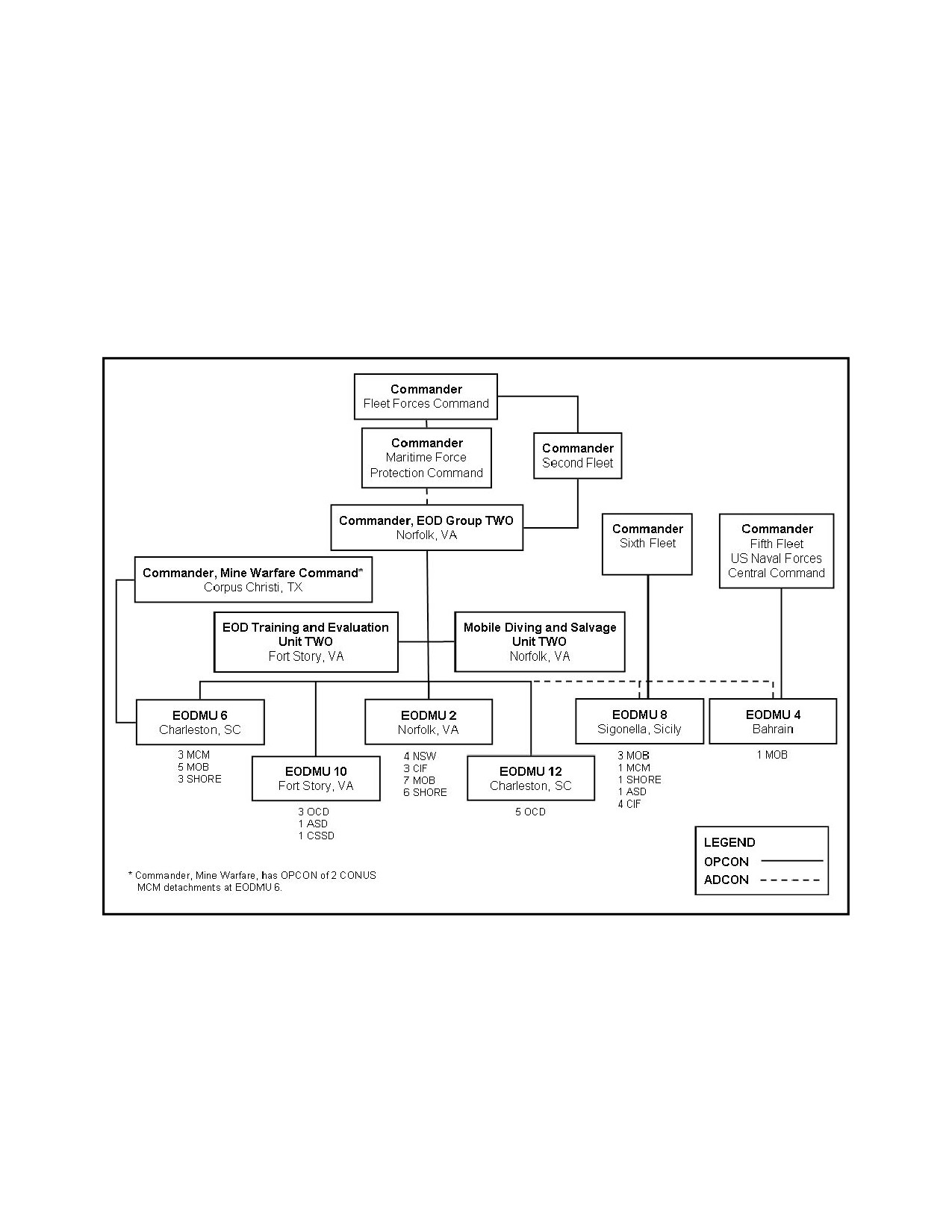
The Navy organizes EOD forces to support the geographic combatant commanders. The
geographic combatant commander has OPCON of EOD forces through the fleet commanders
and numbered fleet commanders. Staff officers within each of these organizations provide C2
and staff planning support for operational EOD activities. See figure V-1 for a depiction of the
Atlantic Fleet and European EOD organizational structure and figure V-2 for the EOD
organizational structure of the Pacific Fleet.
Figure V-1. Atlantic Fleet and European EOD Organization
V-2
FM 4-30.16, MCRP 3-17.2C, NTTP 3-02.5, AFTTP(I) 3-2.32
27 October 2005
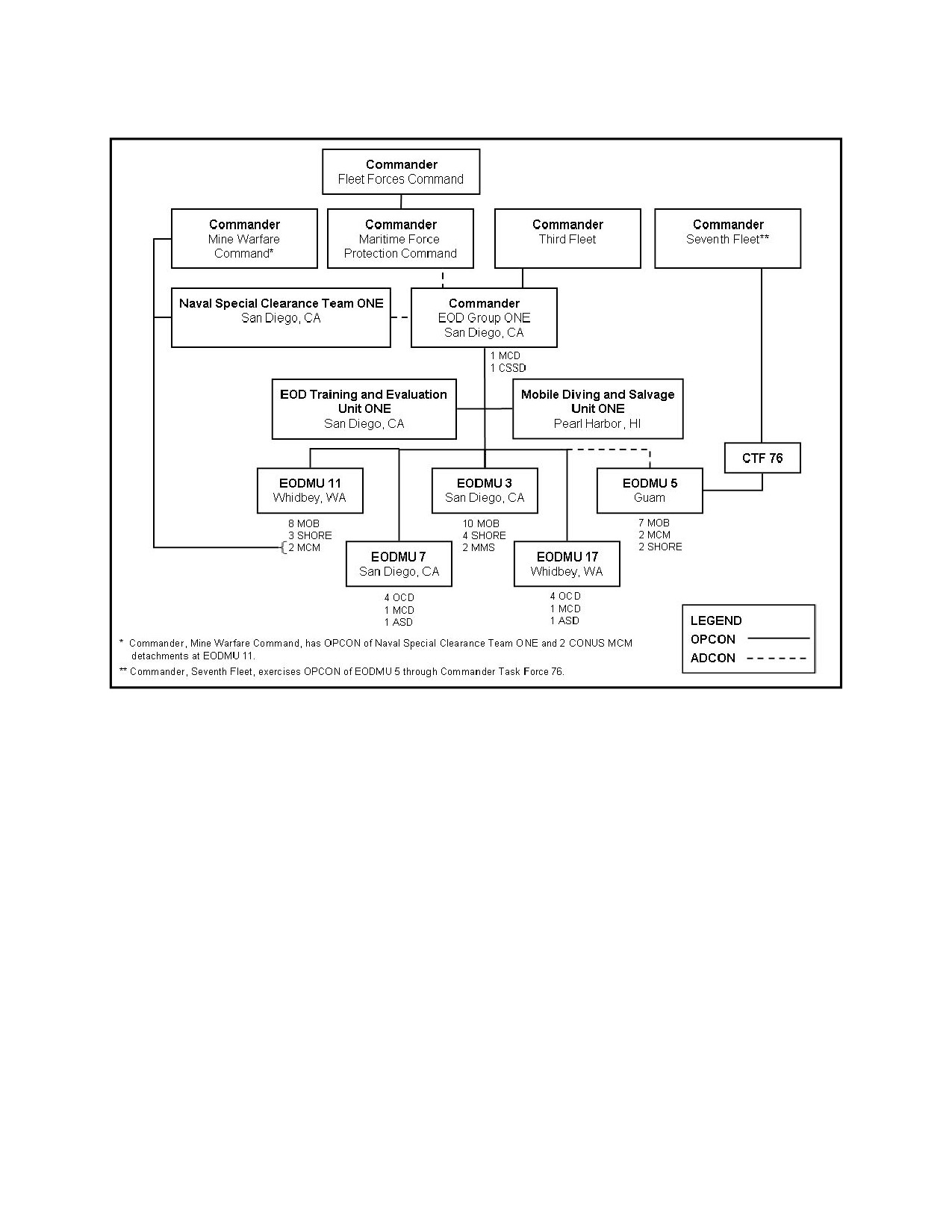
Figure V-2. Pacific Fleet EOD Organization
5. Capabilities
The fundamental operational entity within EOD is the detachment. A detachment is a
subordinate element varying from four to eight personnel, capable of independent operations,
with assignment to EOD Mobile Units (EODMUs). The best method to describe Navy EOD
capabilities is by listing the EOD detachment types. Appendix A identifies specific mission
capabilities of each of the major Navy EOD detachments.
a. EOD Mobile (MOB) Detachments. These detachments provide EOD support to CSGs,
ESGs, ARGs, NSWRONs, CES/CIF detachments, and theater commanders. The Navy tasks
MOB detachments with a variety of contingency operations to include range clearance, USSS
support, organic MCM, humanitarian demining operations (HDO), riverine, port security/harbor
defense operations, and to augment SOF. The EOD MOB detachment can perform in one of
three main configurations—a CSG deployment, an ESG deployment, an ARG deployment, and
contingency deployments.
(1) EOD MOB Detachments—CSG Deployments.
(a) Mission. The MOB detachment's mission is to provide an EOD warfare
capability to the deployed CSG commander. Navy EOD provides response during flight deck
27 October 2005
FM 4-30.16, MCRP 3-17.2C, NTTP 3-02.5, AFTTP(I) 3-2.32
V-3
operations involving live, fuzed ordnance and ordnance replenishment evolutions. Also, Navy
EOD provides a rapid response to ordnance incidents within the CSG and a forward deployable
capability for response to contingencies outside of the CSG. MOB detachments also provide
support to maritime interdiction forces, NEO, and other contingency operations in a MOOTW
environment and participate in bilateral multinational exercises. MOB detachments can perform
a limited amount of minor ships underwater repair tasks. Mobility capabilities include fastrope,
rappel, helicopter cast and recovery, specialized personnel insertion/extraction (SPIE) and
helicopter deployment of combat rubber raiding craft (CRRC). EOD personnel from these
detachments may split into smaller response elements. Normal manning is one officer and
seven enlisted personnel.
(b) Assignment. The Navy assigns an EOD MOB detachment to each deploying
CSG as a task element. To coordinate C2 of the MOB detachment within the CSG, assignment
of the detachment is to the CSG commander. A separate EOD officer and senior enlisted EOD
technician is collocated on the CSG commander’s platform with the EOD officer performing
duties as the task element commander. The EOD officer that performs the task element
commander functions also acts as the EOD LNO to plan and direct the employment of
detachments/elements as appropriate.
(2) EOD MOB Detachment—ARG Deployment.
(a) Mission. The mission and capabilities are similar to those provided to an ESG
with the additional emphasis of supporting amphibious operations afloat and ashore.
(b) Assignment. The Navy assigns an EOD MOB detachment to each ESG or
ARG. The ESG or ARG further assigns the detachments to the deployed amphibious
squadron/amphibious group. To best coordinate C2 of the MOB detachments within the ARG,
the ARG commander has OPCON of the detachment. The ARG commander assigns the
detachments as task elements under the amphibious task group. The host ship(s) have TACON
of the detachments. Normal manning is one officer and seven enlisted personnel.
(3) EOD MOB Detachments—Contingency Operations Deployment. When the Navy
tasks an EOD MOB detachment to perform in a MOOTW environment, the detachment provides
EOD personnel to support primary forces engaged in contingency operations including
insurgency/counterinsurgency, counterterrorism/antiterrorism, peacekeeping, maritime
interdiction, NEO, disaster relief, counterdrug, and security assistance surge operations. Normal
manning is one officer and seven enlisted. The EOD MOB detachment performs the following
operations in support of contingency operations:
(a) Special Operations Support. EOD forces frequently operate in support of SOF.
In Vietnam, Grenada, Panama, and the Persian Gulf, EOD provided direct mission support to
dispose of antipersonnel devices, IEDs, and UXO that impeded operations. Any MOB
detachment can perform contingency operations in a MOOTW environment such as VBSS or
insurgency/counterinsurgency action in support of special operations. Additionally, the Navy
permanently assigns a limited number of EOD personnel to the Navy Special Warfare
Development Group.
(b) Counternarcotics. The increase in the use of IEDs in the narcotics trade has
significantly expanded EOD-force participation in counternarcotics operations. EOD personnel
conduct diving and search operations in support of the US Coast Guard, US Treasury, and US
Customs Service in counternarcotics and drug interdiction.
(c) EOD Support to Non-DOD and Civilian Organizations. The executive manager
for EOD technology and training provides EOD research, technology, and training support to the
USSS, the FBI, the Central Intelligence Agency, the US Coast Guard, and the Federal Aviation
V-4
FM 4-30.16, MCRP 3-17.2C, NTTP 3-02.5, AFTTP(I) 3-2.32
27 October 2005
Administration. The executive manager provides assistance to other organizations designated
by the Secretary of Defense. The Navy provides EOD assistance to render safe and dispose of
IEDs, nonmilitary commercial explosives, and similar dangerous articles upon request from
federal agencies or civil authorities.
b. Fleet Antiterrorist Security Team (FAST) Company. The commander, EOD Group TWO
assigns a detachment from EODMU 2 to support these operations. This detachment augments
a Marine company on a rotational basis, as required. Their mission is to support geographical
areas experiencing heightened tension resulting from a terrorist threat or regional instability.
Normal manning is one officer and seven enlisted personnel.
c. Shore-Based (SHORE) Detachments. The Navy locates EOD SHORE detachments at
shore activities that require continuous EOD support. Their mission is to provide an EOD
capability to the activity to which they are assigned. EOD support includes general ordnance
handling, transportation, storage, disposal and/or safety missions, live-fire training, range
clearance, and underwater ordnance testing. The operational commander may deploy the
assigned detachment for area or regional response in support of military and civilian incidents or
accidents requiring EOD warfare skills. The specific mission determines the actual manning
requirements of a SHORE detachment.
d. MCM Detachments.
(1) Mission. EOD MCM detachments are part of the dedicated mine warfare force and
are specialized detachments that locate, identify, neutralize, recover, exploit, and dispose of sea
mines. These detachments provide the MCM commander with an underwater capability. They
normally conduct integrated operations with surface mine countermeasures (SMCM) and
airborne mine countermeasures (AMCM) units and are also capable of limited independent
operations. MCM detachments maintain basic warfighting capabilities equivalent to those of
MOB detachments in the conventional ordnance and IED threat response areas. MCM
detachments have special low-influence signature (magnetic and acoustic) equipment and
capabilities. The detachments are also responsible for recovering new mine types and
subsequently conducting tactical field exploitation of the recovered mines, a mission critical to
the effectiveness of all MCM operations. Normal manning is one officer and seven enlisted
personnel.
(2) Assignment. The Navy often assigns MCM detachments under OPCON of an MCM
squadron commander. Each deploying MCM squadron normally consists of a command/support
ship, an AMCM unit, an SMCM unit, and an underwater mine countermeasures (UMCM) unit.
The UMCM command task unit is normally the commanding officer of EODMU THREE or
EODMU SIX (or their designated representative). The UMCM task unit normally consists of two
or more MCM detachments and other EOD detachments as assigned. The EOD command task
unit is the MCM squadron commander's primary advisor for planning and executing safe and
efficient UMCM operations.
e. Marine Mammal System (MMS) Detachments. MMS detachments provide an enhanced
capability to detect, identify, mark, render safe, recover, and neutralize objects within the water
column as well as those that have become buried under the ocean’s floor. All MMS
detachments are mobile systems that can rapidly deploy to most areas of the world on short
notice utilizing fixed-wing aircraft, helicopters, trucks, boats, amphibious ship well decks, or
command ship. The Navy’s current marine mammal program has one fleet operational site and
one fleet support facility, both located in San Diego, California. These highly mobile, reliable,
and effective systems provide a trained, contingency response capability in the following
mission areas:
27 October 2005
FM 4-30.16, MCRP 3-17.2C, NTTP 3-02.5, AFTTP(I) 3-2.32
V-5
(1) Mark (MK) 4 Module (MOD) 0 MMS (Close-Tethered, Deep-Moored Mine hunting,
and Neutralization System). This MMS detachment is an underwater surveillance and detection
system which employs dolphins for object location, marking, and recovery with the mission of
detecting and neutralizing close-tethered, deep-moored mines. The system provides an
effective tool for port break-in and breakout missions as well as MCM operations at naval choke
points, anchorages, along known/suspected mine routes (Q-routes) and in vital sea lanes.
Normal manning is one officer and 18 enlisted personnel.
(2) MK 5 MOD 1 MMS (Pingered Object Recovery System). This MMS detachment is a
recovery system that uses sea lions to locate and attach recovery hardware to mines and test
ordnance with acoustic pingers attached to them. Normal manning is one officer and 13
enlisted.
(3) MK 6 MOD 1 MMS (Swimmer Detection and Defense System). This MMS
detachment is a waterside security system that uses dolphins to protect harbors, anchorages,
and individual assets against unauthorized swimmers, divers, and swimmer delivery vehicles. It
can be employed in MOOTW, antiterrorist, or traditional port and anchorage scenarios. Normal
manning is one officer and 20 enlisted personnel.
(4) MK 7 MOD 1 MMS (Bottom and Buried Minehunting and Neutralization System). This
MMS detachment is a mine detection, location, and neutralization system that uses dolphins to
detect and neutralize proud mines (mines on the ocean floor) and mines buried under the ocean
bottom. Normal manning is one officer and 25 enlisted personnel.
f.
Area Search Detachments (ASDs).
(1) ASD Underwater Systems. ASDs detect and locate underwater ordnance on the
ocean bottom by using side-scan sonar, towing hardware/cables, and precise navigation
systems. The sonar and associated equipment are portable and have a relatively small logistic
footprint for employment on an ASD craft of opportunity. Although ASDs are flexible and mobile,
their effectiveness is largely limited to areas of smooth and hard bottoms. Buried mines, certain
mine shapes, cluttered and uneven bottoms, and moored mines reduce the effectiveness of
ASDs for MCM operations. Normal manning is one officer and four enlisted personnel.
(2) ASD Deployment and Mission. ASDs deploy from EODMUs or mobile diving and
salvage units (MDSU) to perform underwater search operations to locate salvageable objects
such as aircraft or large debris to be removed from sea lanes. These operations occur during
channel conditioning operations and support the conduct of port breakouts and overseas port
facility recovery operations. ASDs also use their assets to reacquire mine-like objects previously
detected by other MCM assets and systems. EOD ASDs provide a limited mine-detection
capability when a low-profile presence or very rapid response is desired, and the increased risk
to the host platform is acceptable. ASDs can pass position data and mark contacts for
prosecution by EOD MCM detachments and can operate in both salt and fresh water.
g. Fly-Away Recompression Chamber Detachment. This detachment provides emergency
hyperbaric recompression treatment for personnel who experience diving-related injuries when
a local chamber is not available. The fly-away recompression chamber can locate on an MCM
command/support ship, a craft of opportunity, or ashore. Normal manning is three divers, one
diving medical technician, and one diving medical officer.
h. Naval Special Clearance Team.
(1) Very shallow water (VSW) Mission. The mission of the VSW MCM detachment is to
provide a small cadre of specially trained and equipped forces to conduct low-visibility mine
exploration and reconnaissance operations in the VSW zone (10-40 feet). Primary functional
V-6
FM 4-30.16, MCRP 3-17.2C, NTTP 3-02.5, AFTTP(I) 3-2.32
27 October 2005
areas include: confirming the presence or absence of mines in selected VSW areas, re
acquiring and identifying previously detected mine-like contacts in the VSW zone, and providing
the tactical commander with data from VSW zone exploratory and reconnaissance missions to
predict mine density. Supporting functional areas involves diving and demolition operations.
VSW MCM forces must apply primary and supporting functional areas described above by
employing specific VSW MCM-unique equipment, procedures, and tactics to counter the VSW
mine threat.
(2) VSW Assignment and Operations. VSW serves as a component of the Navy’s
dedicated MCM forces under OPCON of commander, mine warfare command, and ADCON of
commander, EOD Group ONE. The detachment participates in fleet MCM exercises and
conducts regular fleet training to develop and refine VSW MCM tactics. Additionally, they serve
as a warfighting laboratory for assessing the performance of new technologies to address MCM
reconnaissance in the VSW zone. In the event of contingency operations, the VSW detachment
maintains a 48-hour fly-away capability for short-notice embarkation in advance force platforms
assigned under the commander, amphibious task force (CATF) and the MCM commander when
the MCM commander is assigned under the CATF. The VSW detachment can mobilize with
specialized equipment and tactics to enhance advance force and pre-assault MCM capabilities
in support of amphibious operations in a mined environment. Current manning totals 70
personnel—seven officers and 46 enlisted personnel from the Navy and one officer and 16
enlisted from the Marine Corps.
i.
EOD Command, Control, Communications, Computers, and Intelligence (C4I) Cell.
Individual EOD and MDSU detachments are currently assigned in support of various
plans/contingency plans. As multiple detachments deploy, EOD forces may deploy as a single
unit under the control of their commanding officer. Operations may require employment of EOD
detachments simultaneously in close proximity or rapidly dispersed to remote areas for
independent operations. Accordingly, an EOD C4I capability is required to assist in eliminating
fratricide and providing force identification and logistical support. Experience during Operation
DESERT STORM, numerous exercises, and MOOTW have routinely demonstrated that an
EOD C4I cell provides effective C4I, logistics, and medical support to the deployed EOD and
MDSU detachments. The deployed EOD C4I cell also facilitates organic support capabilities to
sustain operations for long periods. Normal manning is two officers and seven enlisted
personnel.
j.
Naval Reserve Force (NRF) Detachments. NRF detachments are maintained within the
NRF EODMUs. They provide contributory support during peacetime and crisis response during
MOOTW, major regional conflicts, and contingency operations. NRF detachments are
comprised of selected reserve personnel, who maintain capabilities in diving, basic demolition,
ordnance location, identification, and disposal. There are three types of NRF detachments:
ordnance clearance detachments (OCDs), mobile communications detachments (MCDs), and
ASDs.
(1) OCDs provide diving and demolition support, perform manpower-intensive EOD-
related tasks that enable EOD detachments to be available for more technical procedures, and
act as force multipliers when integrated with regular forces. OCDs can locate, identify, and
destroy conventional ordnance, but they do not perform render-safe or exploitation procedures.
OCDs conduct routine hull/pier/underwater searches, locate/identify/destroy underwater
ordnance in support of MCM port clearance operations, and provide contributory support in the
areas of search-and-rescue retrograde ordnance/explosives disposal and range clearance
operations. For MCM operations, OCDs work in conjunction with other MCM assets to provide
additional identification and neutralization capabilities. Normal manning is one officer and six
enlisted personnel.
27 October 2005
FM 4-30.16, MCRP 3-17.2C, NTTP 3-02.5, AFTTP(I) 3-2.32
V-7
(2) MCDs provide a deployable field communications cell for integrated command post
tactical and strategic communications in support of EOD forces in the field. Capabilities include
Global Command and Control System, secure voice, data, and imagery radio-frequency
communications in the high frequency, ultrahigh frequency line of sight, satellite
communications, and very high frequency spectrum. Normal manning is one officer and four
enlisted personnel.
(3) ASDs were described in paragraph 5f above.
k. MDSUs. In addition to assigned EOD units, EOD Group ONE and EOD Group TWO
have ADCON over MDSU ONE and MDSU TWO, respectively. MDSUs provide mission-
capable active and naval reserve detachments to perform diving, salvage/recovery, and
underwater ship-repair operations in ports or harbors. They can operate from ports, US Navy
and Military Sealift Command vessels, or commercial contract salvage or repair vessels. In
addition, the MDSU detachments provide limited self-defense. Each MDSU has mobile diving
and salvage detachments and fleet maintenance diving detachments. These detachments can
simultaneously deploy to different areas of the world in support of their assigned mission areas.
6. Training
a. Diver Training. Navy EOD Candidates attend and must complete EOD diver training,
conducted at the Naval Diving and Salvage Training Center, Panama City, FL prior to attending
EOD Technician School. Students are taught self-contained underwater breathing apparatus
(SCUBA) and MK16 mixed gas (UBA).
b. Tactical Insertion/Extraction. Navy EOD Technicians perform tactical insertion and
extraction of personnel and equipment by unconventional methods (e.g. SPIE, rappel, fastrope,
casting, CRRC) in areas that cannot be accessed/reached by conventional means. Select
mobile and shore detachments maintain land and water parachute insertion capabilities (PIC)
for emergent worldwide support. Tactical Insertion/Extraction training is taught at EODTEU ONE
in San Diego, CA immediately following EOD school.
c. EOD Training and Evaluation Units (EODTEUs). EODTEUs provide readiness
improvement training to EOD detachment personnel preparing for operational deployments.
Detachments are guided through advanced TTP classroom training, followed by advanced
practical exercises in all core mission areas. EODTEUs provide similar training to shore and
naval reserve detachment personnel. Additionally, training units provide specialized, high-risk
supervisory training for demolition/burn range operations, SPIE/rappel/fast rope operations,
SCUBA/MK-16 underwater breathing apparatus operations and field communications
procedures. EODTEUs also conduct field evaluation of new and experimental EOD tools and
equipment prior to distribution to operational units.
V-8
FM 4-30.16, MCRP 3-17.2C, NTTP 3-02.5, AFTTP(I) 3-2.32
27 October 2005
Chapter VI
AIR FORCE EOD OPERATIONS
1. Interservice Responsibilities
AR 75-14, MCO 8027.1D, OPNAVINST 8027.1G, AFJI 32-3002, Interservice
Responsibilities and Procedures for Explosive Ordnance Disposal, defines the Air Force EOD
responsibilities as follows:
a. Air Force EOD teams furnish their services on Air Force installations, dispersal bases
(which include DOD installations from which air reserve component forces operate), in assigned
operational areas, or for the disposal of explosive ordnance in the physical possession of the Air
Force.
b. When requested by other Services, federal agencies, or civil authorities, Air Force EOD
teams respond to any incident site to prevent or limit damage and injury.
c. They provide Initial Response Force (IRF) and Response Task Force (RTF) support to
nuclear weapons accidents IAW DOD Directive 3150.8-M.
2. Mission
The Air Force EOD mission is to protect people, facilities, and resources from the damaging
effects of UXO, hazardous components, and devices. The EOD personnel locate, identify,
disarm, neutralize, recover, and dispose of hazardous explosives, CBRNE, and incendiary
items. They also neutralize criminal and terrorist bombs when requested or directed by proper
authority, clear areas of explosives-related contamination, and dispose of unserviceable and
outdated munitions. The EOD force supports the USSS and the DOS in their protection of the
President, Vice President, foreign dignitaries, and VIPs. EOD forces train other Air Force
personnel on ordnance recognition, hazards, and precautions and provide EOD support to the
global engagement mission.
3. Doctrine
a. Concept. The Air Force organizes EOD force packages into unit type codes (UTCs) to
provide flexible structures to support contingency missions. The Air Force designs these
packages to meet specific manning and equipment requirements based on the mission and
threat. Planners can combine the UTCs in building-block fashion to provide coverage for
location-specific missions.
b. C2. In peacetime, Air Force assigns EOD units to an Air Force wing under the base civil
engineer (BCE) and further assigns the wings to the major commands (MAJCOMs) through the
Numbered Air Forces. During deployed operations, Air Force assigns EOD units under the
deployed BCE (when one is assigned). If no BCE is assigned, EOD units normally work for the
deployed wing/unit commander. At the wing level during increased threat conditions, the wing
establishes a survival recovery center (SRC) for wing C2. The senior EOD representative
performs duties at the SRC to control all EOD operations at the deployed location.
c. Operational Planning. The Air Force provides basic UTC packages for planners to
develop capabilities at deployed locations. These UTCs form capabilities to respond to the
various threat levels. This building-block approach allows the maximum flexibility in EOD force
employment. Air Force EOD UTCs are:
27 October 2005
FM 4-30.16, MCRP 3-17.2C, NTTP 3-02.5, AFTTP(I) 3-2.32
VI-1
///////////////////////////////////////