IADS MULTI-SERVICE TACTICS, TECHNIQUES, AND PROCEDURES FOR AN INTEGRATED AIR DEFENSE SYSTEM (OCTOBER 2004) - page 2
engagements into an IADS by providing ground-controlled intercept, target assignment, surveillance, and
coordination for combat air patrols and surface-to-air weapons. MACCS agencies, positive and
procedural control measures, and communications provide the elements necessary for C2 of air defense.
Non-organic assets, including airborne early warning and special information systems aircraft, can
enhance or augment C2 of MAGTF air defense assets.
a. Command. The ACE commander executes command of all MAGTF aviation. He exercises
centralized command and decentralized control authority of MAGTF air defense assets as the tactical air
commander from the TACC. The tactical air commander typically delegates the authority for
management of air defense assets in the MAGTF air defense sector(s) to the SADC for execution of air
defense operations.
b. Control. The ACE commander normally delegates the authority for real time control of air
defense assets to the TAOC. The TACC commands and the TAOC executes control of the MAGTF
IADS. Control of air defense operations can be decentralized or centralized. The maximum degree of
decentralized control is achieved through the establishment of effective procedural control measures,
including weapons engagement zones, ROE and return to forces (RTF) procedures. When operating
under a decentralized control mode, weapons platforms conduct engagements based on the established
WCS and ROE. In a centralized control mode, weapons platforms evaluate targets based on the
established WCS and ROE, then request permission to engage the target from the TAOC. Engagements
are conducted only upon direction of the competent controlling authority unless the target meets the
criteria for self-defense.
c. Communications. Communications provide the means to execute C2 of air defense operations.
Communications paths throughout the MACCS are critical to the successful execution of air defense
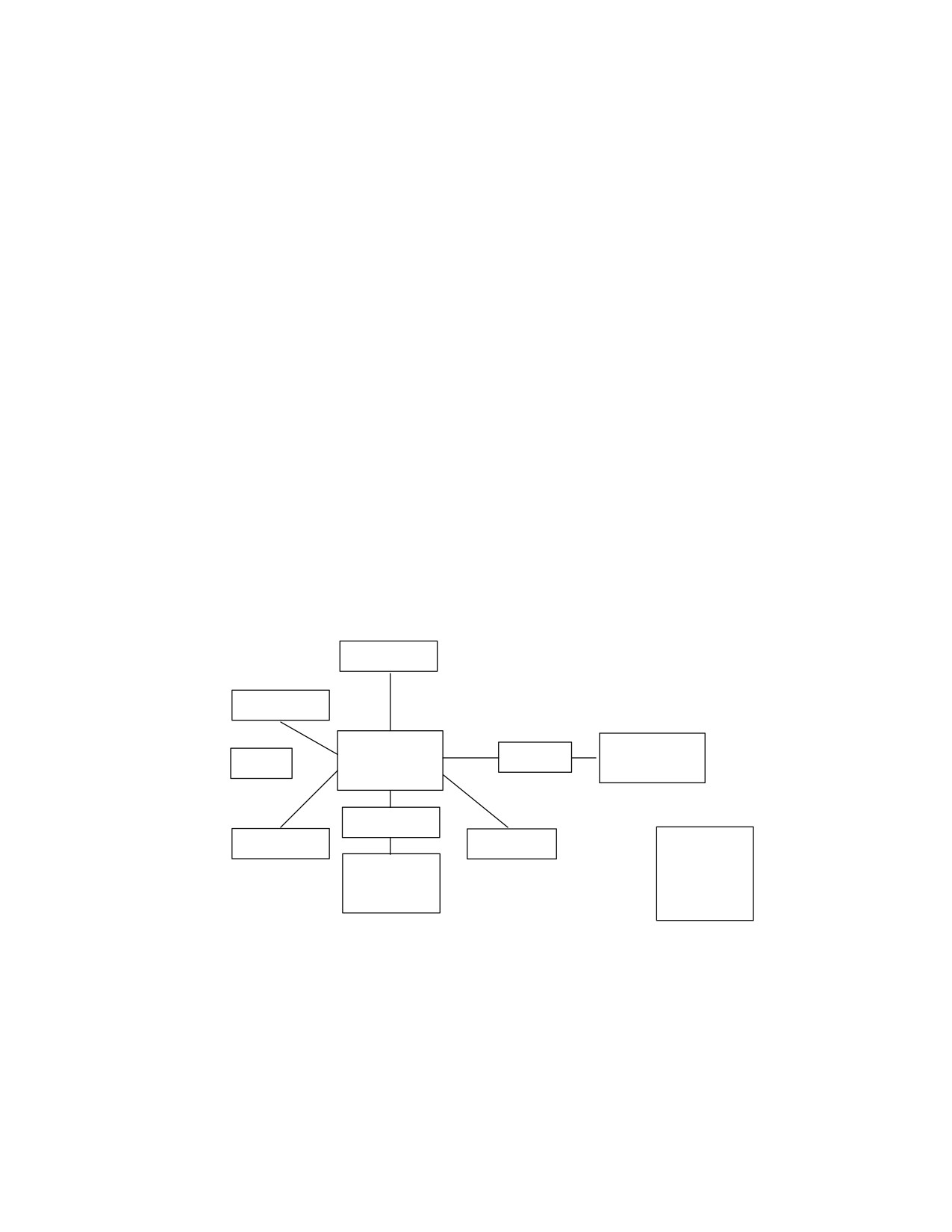
operations. Figure IV-2 illustrates the complexity of the voice and data paths required to successfully
employ the MAGTF IADS.
CAP A/C
V, J, A, C
E-2 / E-3
V, J, A
TAOC
V, J, B, A, D
V, D
JOINT
V, J, B, A
TACC
CRC
SADF
AGENCIES
V, D
V, B
V, J, B, A
LAAD BN
A = Link 11
PATRIOT
V, D
MATCD
B = Link 11B
C = Link 4
LAAD
J = Link 16
BATTERY
V = Voice
D = Other data
Figure IV-2. Notional MACCS Communications
IV-7

5. Weapon Systems
The weapons, sensors, and C2 agencies listed in Table IV-1 represent the key elements of the
MAGTF integrated air defense system. Obtain additional information through the MAWTS-1 website
(928) 269-3679.
Table IV-1. MAGTF Integrated Air Defense Weapons, Sensors, and C2
Platform
Employment
Air-Air/
Data Link
Radar
COMM/SEC
Surface-to-Air
F/A-18C/D
AAW- OAAW
AIM-120
Link 4A
APG-73
1 AN/ARC-210, UHF,
Hornet
FAC (A)
AIM-7
Link 16
AN/AAS-38
VHF
TAC (A)
AIM-9
FLIR
SINCGARS
SEAD (w/HARM)
20 mm gun
Navigation
Have Quick
W
OAS-CAS/DAS
FLIR
KY-67
E
Interdiction
MIDS
A
Night Attack
P
Escort
O
AV-8B Harrier
OAAW
AIM-9
N/A
APG-65
2 AN/ARC-182, UHF,
N
II+
SEAD (w/A-G ordinance)
25 mm gun
Lightning II
VHF
S
OAS
(external)
targeting and
KY-58
CAS
navigation FLIR
DAS
Interdiction
Night Attack
Assault Support Escort
STINGER
LAAD
FIM-92D Stinger
ground-
TDAR.
MANPAD-
(MANPAD/
Missile
based data
SINCGARS
Avenger/ LAV
link (GBDL)
Avenger- 2
(AD)
SINCGARS
LAV (AD)- HF and
SINCGARS
Platform
Mission
Type
Band
Range
Altitude
AN/TPS-59(V)3
Long-range Surveillance
3D w/IFF
L
300/400 nm
100/500k
(ABT/TBM)
AN/TPS-63
Medium-range Surveillance (ABT)
2D w/IFF
L
160 nm
60k
S
Gap-filler/EW
E
AN/UPS-3
Short-range, low altitude EW and
2D
L
10 nm
10k
N
tactical
cueing
S
defense alert
O
radar (TDAR)
R
AN/TPS-73
ATC surveillance radar
2D w/IFF
S
60 nm pri
60k
S
120 nm sec
IV-8

Table IV-1. MAGTF Integrated Air Defense Weapons, Sensors, and C2 (Continued)
Agency
Mission
C2 System
Data Link
Comm
Reference
TACC
Senior agency of MACCS ACE
Multi-source
Link 11
HF, UHF, VHF,
(MCWP) 3-25.4
commander CP
correlation
Link 11B
SatCom Have
C C
system (MSCS),
LINK 16
Quick
O O
AN/TSQ-124
NATO
ADCP,
M N
LINK 1
TBMCS, JRE,
M & T
CTT
A R
TAOC
Surveillance and ID
AN/TYQ-23(v)4,
LINK 11
HF, UHF, VHF,
MCWP 3-25.7
N O
Intercept Control
AN/TSQ-124
LINK 11B
Have Quick,
D L
Itinerant air traffic control
ADCP
LINK 16
LINK 4A,
ATDL-1,
NATO
Link-1,
CTT
MATCD
Terminal Area air traffic control
AN/TSQ-131
LINK 11B
HF, UHF, VHF
MCWP 3-25.8
Cueing and control for BDZ
control and
LINK 4A
communication
subsystem
6. Planning and Execution
a. Within the MAGTF, AAW planning supports deep operations to shape the battlespace and
achieve battlespace dominance. It supports close operations to engage in decisive combat, and supports
rear operations to provide force sustainment. The effective conduct of AAW operations requires
integrated planning at all levels and with each element of the MAGTF. The MAGTF commander must
outline clearly AAW planning responsibilities within the MAGTF. (Commanders at all levels are
responsible for the planning and execution of appropriate passive air defense measures.)
b. The ACE commander directs the ACE staff and subordinate commanders and their staffs to plan
air defense to support the MAGTF deep, close, and rear operations. Air defense planning is based on the
MAGTF mission, commander’s intent, designation of the main effort, air defense priorities, and other
guidance. The MAGTF commander may designate the ACE as the main effort to conduct AAW
operations, especially during the initial stages of a conflict. This could include offensive AAW and air
defense, or other shaping efforts during which AAW could play a significant role.
c. During AAW planning, the SADC and TAOC staffs will normally augment the ACE with
several air defense specialists to assist in preparing the MAGTF operations order. Critical decisions,
including air defense apportionment and planning to achieve air superiority, must be addressed and
answered during this phase. The site selections for air defense agencies (TAOC, LAAD, etc.) are also
finalized.
7. Summary
The MACCS exercises command and control of MAGTF air defense assets. The senior agency of the
MACCS, the TACC, is responsible for planning and coordinating MAGTF air defense operations with
the AADC. The SADC assists in the near-term coordination and management of all air defense resources
supporting the MAGTF. The TAOC is the MAGTF principal air defense agency responsible for the real-
time execution of air defense operations. The TAOC, through the SADC, coordinates its activities with
adjacent sector and regional IADS nodes and shares track data via TDL and voice communications.
IV-9
Chapter V
NAVY AIR DEFENSE
1. Introduction
Naval forces provide aircraft carrier-based tactical/C2 aircraft, surface combatants, and land-based
aircraft that are capable of integrating with other Services’ air defense systems in order to defend those
assets prescribed by the JTF Commander.
2. Mission
The Navy conducts warfare in three distinct areas: on the surface (to include overland), subsurface,
and in the air. The goal is battlespace dominance in all three dimensions. This includes providing an air
defense umbrella for friendly assets while simultaneously conducting offensive operations.
3. Organization
The unique nature of maritime operations shapes the organization of Navy assets and affects how
these forces fit into the overall military structure. Vast distances, wide dispersion of forces with
associated C2 challenges, and the complexities of conducting warfare in a three-dimensional battlespace
characterize maritime operations.
a. Chain of Command. The operational chain of command flows from the unified or specified
commander, through the naval component commander, to the numbered fleet commanders. Subordinate
to the numbered fleet commander, commands are organized by operational tasks (task force, task group,
and task unit) to conduct the naval warfare tasks mentioned above. These commands are the basic
operating units of naval warfare.
b. Officer in Tactical Command. Under the Composite Warfare Commander (CWC) concept, the
officer in tactical command, who is the senior naval commander, has overall C2 of the assigned forces.
He is responsible for accomplishing the mission, allocating assigned forces, and providing for safety of
the force.
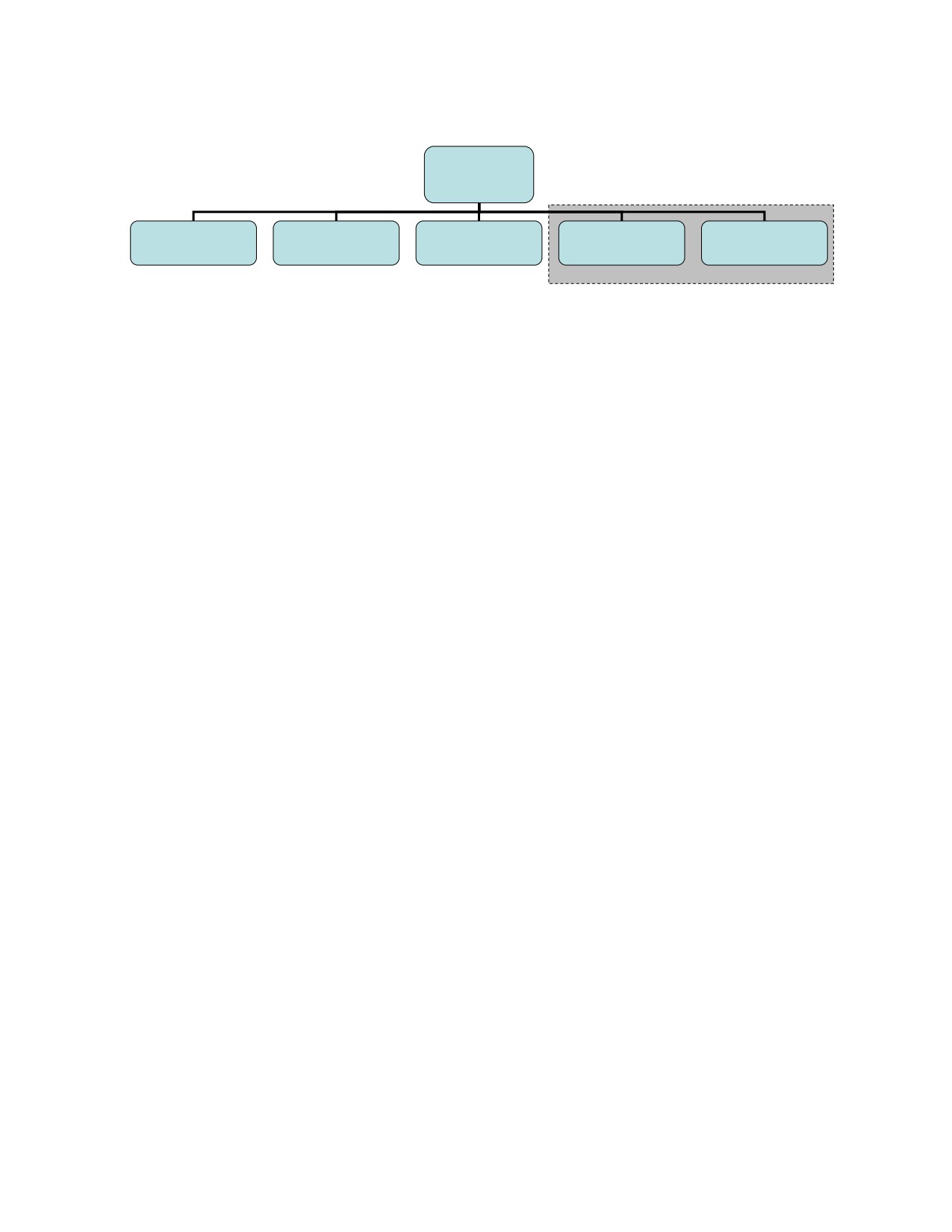
c. Principal Warfare Commanders. In accordance with the CWC (Figure V-1), there are normally
five principal warfare commanders that are assigned responsibility for directing actions in each of the
naval warfare tasks. They are:
(1) Air defense commander (ADC). In cases where the Navy will be the first air defense C2 asset
to arrive on scene, the ADC may assume the role of AADC. Typically, in an established theater, the JFC
assigns the role of either a RADC or SADC to the ADC for an over water sector.
(2) Anti-Submarine Warfare Commander.
(3) Surface Warfare Commander.
(4) Strike Warfare Commander.
(5) Information Warfare Commander.
(6) The surface warfare commander and anti-submarine warfare commander may be combined
under a single commander referred to as the Sea Combat Commander (SCC). Additional information on
the organization and doctrinal employment schemes of Navy forces can be found in Naval Warfare
Publication (NWP) 3-56, CWC Manual.
V-1
OTC/CWC
(Overall C2)
STWC
ADC
IWC
SUWC
ASWC
(Tactical Control)
(Tactical Control)
(Tactical Control)
(Tactical Control)
(Tactical Control)
SCC (if assigned)
Figure V-1. Naval C2/CWC
4. Command and Control
Navy CWC doctrine is predicated on the concept that individual warfare commanders are trained and
equipped to recognize and effectively counter rapidly developing threats, especially in a multi-threat
environment with respect to their assigned warfare task. A wide range of options are available to the
CWC in delegating command authority to the subordinate warfare commanders. These options range
from full delegation of authority to no delegation at all, depending on the threat and tactical situation.
Regardless of the authority delegated, the CWC always retains the option of control by negation. Control
by negation is a C2 philosophy in which a subordinate commander has the freedom of action to direct and
execute those operations necessary to accomplish assigned and implied missions unless overridden by the
superior commander.
a. Command Considerations. It is important to note that individual combatants typically conduct
simultaneous, multi-warfare missions. For instance, a cruiser, while assigned duties as ADC, may also be
actively engaged in Tomahawk Land-Attack Missile (TLAM) strike operations, while simultaneously
conducting anti-submarine warfare operations. Because of the C2 complexities created as a result of this
multi-mission capability, planners must be acutely aware of Navy asset command relationships and
operational constraints when developing task assignments. For example, unit stationing that supports
TLAM operations may not be optimal for air defense.
b. Navy Air Defense Precepts. Navy air defense is focused on the protection of high-value assets
(HVA) to include the strike group (SG) and assigned joint/multinational forces, against hostile air
platforms and weapons (i.e., TBMs, CMs, and aircraft). These functions are controlled by the ADC.
Some of the responsibilities of the ADC are to:
(1) Plan the protection of assigned forces against the air threat.
(2) Execute TACON of assigned assets.
(3) Collect and disseminate tactical information and intelligence pertinent to air defense
operations.
(4) Coordinate air defense plans and actions with the AADC, RADC, SADC, CWC and other
warfare commanders and coordinators.
(5) Assist in coordinating and promulgating ROE and airspace control zones and areas.
(6) Assist in establishing, publishing, and implementing airspace coordination measures.
(7) Manage all SG TDL architectures, as directed/assigned.
c. ADC Control Process.
V-2
(1) Under the CWC construct, and when a specific mission has been assigned, the CWC will
promulgate general duties, functional assignments, and command guidance using a general operation
message (OPGEN). Subordinate warfare commanders, in turn, use either operational tasks (OPTASKs)
or operational orders (OPORDs) and associated supplements to deal with specific instructions for their
warfare areas.
(2) The Navy-wide air defense plan (OPTASK Air Defense) is the primary reference for guidance
in conducting SG air defense. Joint and multi-national operations are conducted in accordance with the
appropriate theater guidance. The Navy-wide air defense plan describes the following:
(a) The maritime air defense role.
(b) Missions for SG and independently deployed ships and aircraft.
(c) FEZ/MEZ/JEZ guidance.
(d) Specific air control procedures.
(e) Weapons employment procedures.
(f) Air surveillance schemes.
(g) Targeting priorities.
(h) ID criteria.
(3) Specific SG air defense plan supplementary messages or annexes are promulgated to provide
more detailed guidance on such items as SG ID policy;, TBM operations,; cooperative engagement
capability (CEC) operations and TDL employment procedures.
d. Practical Integration. Each major surface air defense asset is equipped with a combat system
that consolidates the input of its shipboard sensors (radar, IFF, sonar, electronic signal intercept, and so
forth) and displays this information to decision makers for action. Most naval surface combatants are
capable of Link 11 and Link 16 information exchange. Some naval assets are capable of satellite Link
11 and Link 16 operations. All E-2s are Link 11 and Link 16 capable. All F/A-18 E/F, F-14 D, as well
as some F/A-18 C/Ds are Link 16 capable.
(1) Joint Employment.
(a) In a joint environment, the ADC may be assigned the role of RADC or SADC by the
AADC, coordinating with Navy or joint assets to provide a CTP to the AADC. In the pursuit of a CTP,
the ADC optimizes asset employment to maintain track integrity, correctly identify friendly aircraft
operating in the air defense region, and positively identify all aircraft operating in the classification,
identification, engagement area before they enter the vital area. The ADC also has authority to assign
capable assets to perform duties as an air control unit (ACU). Aegis cruisers (CG), Aegis destroyers
(DDG), and airborne early warning aircraft are typically assigned duties as an ACU. CV/CVN and
LHA/LHD platforms are also ACU-capable.
(b) Link 16 is the Navy’s primary data link. However, several naval platforms will never
upgrade to Link 16. Other surface assets such as Oliver Hazard Perry-class frigates (FFG) and Spruance-
class destroyers (DD) will continue to rely on Link 11. It is also important to consider whether the
platform is a Model 4 or 5 combat system as well, since there are significant differences which may
impact the overall TDL architecture.
5. Weapon Systems
The goal of Navy air defense is to protect HVAs and other defended assets. Navy surface platform
capabilities are listed in Table V-1. Navy aviation platform capabilities are listed in Table V-2.
V-3
detailed Navy air defense systems capabilities and limitations.
Table V-1. Navy Surface Platforms
Ship Type
Primary Role
Air Search
Weapon
ID
Data Link
Comms
Air Defense
Radar
Systems
Capabilities
Capabilitie
Capabilities
Capabilities
Systems
s
/Air Assets
Amphibious
C2
N/A
CIWS
IFF
Link 11
HF
AADCS
Command
Satellite
EHF
Module*
Ship (LCC)
Link 11
UHF/VHF
JAOC
Numbered
Link 16
HAVEQUICK
(TBMCS)
Fleet
Satellite
UHF-SATCOM
Command
Link 16
SHF
TCP/IP
Aircraft
Fixed-Wing
AN/SPS-48E
NSSMS
IFF
Link 11
HF
48 x Fighters
Carrier
(CV),
Aircraft
(3D)
CIWS
CV Auto ID
Satellite
EHF
(F-14 / F-18)
Aircraft
Operations
AN/SPS-49
RAM
CEC *
Link 11
UHF/VHF
4 x E-2
Carrier,
(2D)
SSES
Link 4
HAVEQUICK
ACU
Nuclear
MK23 TAS
SLQ-32
Link 16
UHF-SATCOM
(TBMCS)
(CVN)
SPQ-9
SLQ-20
Satellite
SHF
Link 16
TCP/IP
ADSI
Guided
SG Air
SPY-1B
TLAM
IFF
Link 11
HF
ACU
Missile
Defense
(3D)
SM2 BLK 3/4
CEC *
Satellite
EHF
Cruiser (CG)
Missile
SPQ-9
2 x 5 in 54
SSES
Link 11
UHF/VHF
Defense
CIWS
Aegis Auto ID
Link 4
HAVEQUICK
NCTR *
Link 16
UHF-SATCOM
SLQ-32
Satellite
SHF
SLQ-20 *
Link 16
TCP/IP
Guided
Air Defense
SPY-1D
TLAM
IFF
Link 11
HF
ACU
Missile
Missile
(3D)
SM2 BLK 3/4
CEC *
Satellite
EHF
Destroyer
Defense
1 x 5 in 54
SSES
Link 11
UHF/VHF
(DDG)
CIWS
Aegis Auto ID
Link 4
HAVEQUICK
SLQ-32
Link 16
UHF-SATCOM
SLQ-20
Satellite
SHF*
Link 16
TCP/IP
Guided
Surveillance
AN/SPS-49
1 x 76 mm
IFF
Link 11
HF
Missile
(2D)
Gun
SLQ-32
Satellite
UHF/VHF
Frigate
CIWS
Link 11
HAVEQUICK
(FFG)
UHF-SATCOM
TCP/IP
Spruance
Anti-Sub /
AN/SPS-40
TLAM
IFF
Link 11
HF
Destroyer
Surface
(2D)
NSSMS
SLQ-32
Satellite
EHF
(DD)
MK-23 TAS
RAM *
Link 11
UHF/VHF
2 x 5 in 54
HAVEQUICK
CIWS
UHF-
SATCOM
TCP/IP
Amphibious
Sea/Air
AN/SPS-48E
RAM
IFF
Link 11
HF
ACU
Helicopter
Landing
(3D)
CIWS
SLQ-32
Satellite Link
EHF
6 x AV-8B
Assault Ship
Force Assault
11
UHF/VHF
(TBMCS)
(LHA)
Link 4
HAVEQUICK
Link 16
UHF-SATCOM
Satellite Link
SHF
16
TCP/IP
Amphibious
Sea/Air
AN/SPS 48E
NSSMS
IFF
Link 11
HF
ACU
Helicopter
Landing
(3D)
RAM
CEC *
Satellite
EHF
6 x AV-8B
Dock
Force Assault
MK-23 TAS
CIWS
SLQ-32
Link 11
UHF/VHF
(TBMCS)
Ship
Link 4
HAVEQUICK
(LHD)
Link 16
UHF-SATCOM
Satellite
SHF
Link 16
TCP/IP
Note: * Only some assets have this capability.
V-4
Table V-2. Naval Aviation Air Defense Weapon Systems
Platform
Primary Role
Air
Weapon
ID
Data Link
Comms
In-flight
Type
Search
Systems
Capabilities
Capabilities
Capabilities
Refueling
Radar
Capable
Systems
(Drogue)
E-2C
Air Surveillance
APS-145
None
IFF
Link 11
HF/HF
No
Group II /
and Aircraft
ES-capability
Link 4
SIPRNET*
Hawkeye
Control
Link 16
UHF/VHF
2000
UHF-
SATCOM
Link 16 FTM
HAVEQUICK
F-14 A/B/D
Air Intercept,
AWG-9
AIM-7
IFF
Link 4
UHF/VHF
Yes
Strike
(A/B)
AIM-9
infrared
Link 16
HAVEQUICK
APG-71(D)
20mm
search and
(D-only)
tracking
(IRST)/NCTR
(D- only)
TCS/FLIR
F/A-18C/D
Air Intercept,
APG-65/73
AIM-120
IFF *
Link 4
UHF/VHF
Yes
Strike
AIM-7
NCTR
Link 16 *
HAVEQUICK
AIM-9
FLIR
20mm
F/A-18E/F
Air Intercept,
APG-73
AIM-120
IFF
Link 4
UHF/VHF
Yes
Strike, Tanking
AIM-7
NCTR
Link 16
HAVEQUICK
AIM-9
FLIR
20mm
E/A-6B
EW
None
None
ES
Link 4
UHF/VHF
Yes
Communications
HAVEQUICK
S-3B
Tanking
None
None
IFF
Link 11
HF
Yes
ESM
ES
Link 4
UHF/VHF
Strike
(1-way)
HAVEQUICK
EP-3E
ES /
None
N/A
IFF
Link 11
HF
No
Communications
ES
Link 16 *
UHF/ VHF
Comm-ID
HAVEQUICK
UHF-
SATCOM
SHF *
AV-8B
CAS, Air
APG-65 *
AIM-9
FLIR *
None
UHF/ VHF
Yes
Intercept
25 mm
HAVEQUICK
(Limited),
Strike
Note: * Only some assets have this capability.
6. Planning
a. The ADC, in coordination with the strike group and air wing staff, will conduct primary air
defense planning afloat. CV/CVN, LHA/LHD, and amphibious command ship (LCC) have significant
planning capabilities to include a very robust intelligence and cryptographic collection capabilities. The
CV/CVN and LHA/LHD are equipped with TBMCS and a host of other tools for collaborative planning.
These platforms provide liaison officers to the AADC and can host LNOs from other services.
b. The CV/CVN and LCC have a capability to perform air command and control functions. As the
complexity and scale of the operation expands, these functions will most likely be transferred to a more
robust command organization such as an AOC. However, the CV/CVN, CGs, and DDGs can continue
to provide considerable support as RADC/SADC and as an interface control officer (RICO/SICO).
c. Planning Considerations.
V-5
(1) CVW planning is typically accomplished on a 72-hour timeline that coincides with the ATO
production cycle. Aircraft operations are usually conducted in a cyclic manner, with launches and
recoveries typically on a 1+15 (75-minute) or 1+30 (90-minute) schedule. A typical 1+30 cycle consists
of 15-20 sorties exclusive of those aircraft whose endurance allows them to fly double cycles. Shorter
cycles limit the number of aircraft that can be launched and recovered. Longer cycles allow for larger
launches but increase requirements for airborne tanking. The principal constraint in sustained carrier
flight operations is flight deck personnel manning. Units can sustain 14-16 hour fly days with careful
management. With a single CV/CVN, 24-hour carrier operations are not possible. Such operations will
require at least two CV/CVNs.
(2) Fighter aircraft remaining airborne for more than a single cycle require in-flight refueling.
Units can accomplish this either organically, using limited air wing assets such as the S-3B or F/A-18
E/F, or inorganically, utilizing drogue-configured joint/coalition tanker assets (i.e., KC-10/KC-130/KC-
135/VC-10).
d. Planning Considerations for Surface Ship Stationing. ADU platforms may be used in area,
point, or self-defense roles. Aegis platforms have limited TBM-tracking, reporting and cueing capability
and a TBM engagement-capability is under development. Coordinate with Navy LNO to determine
operational limitations when conducting TBM related missions.
e. Area Air Defense. Dependent on the threat, an ADU will be stationed along the expected threat
axis to conduct engagements against airborne targets. Aegis platforms are the only ships capable of
performing this mission.
(1) Point Defense (“Shotgun”). This unit is tasked with guarding an HVA. Typically, the
shotgun unit will remain in close proximity to the HVA.
(2) Self-Defense. Most naval ships have some type of self-defense capability.
f.
REDCROWN/GREENCROWN. An ADU-capable ship is assigned to identify all aircraft
approaching the carrier strike group (REDCROWN), or expeditionary strike group (GREENCROWN).
7. Operations
a. The Naval SG operates everywhere from open-ocean or “blue-water” to the littorals. In the open-
ocean, the Navy’s primary air defense mission is to protect SG assets, utilizing defense-in-depth. The
Navy will typically operate with a JEZ, versus the traditional MEZ/FEZ. When operating in the littorals,
the Navy SG may take on additional air defense responsibilities, to include the protection of units ashore.
b. To illustrate the defense-in-depth concept, a typical DTE sequence begins with a long-range
sensor detection of a threat from an asset such as an E-2 or CG/DDG. Track information is passed to
interceptor aircraft under E-2 or CG/DDG control to confirm identification and engage, if warranted. If
fighter assets are not available, the next weapon system of choice would be a long-range Standard
missile. Final engagement opportunities include self-defense weapons such as 5-in/76 mm gun, the
Close-in Weapon System (CIWS), Rolling Airframe Missile (RAM), or NATO Sea Sparrow Missile
System (NSSMS).
8. Summary
The Navy brings a robust air defense capability to the fight. Most naval air assets are allocated to the
JFACC and very few are retained for direct support of the SG at sea. Navy surface combatants are multi-
mission capable and can/do provide self-protection, protection of the HVA, and simultaneously perform a
host of other warfare functions. TDL-capable ships and aircraft can provide information on overland
tracks while maintaining the over water picture. Although specific capabilities vary, all naval SGs arrive
in theater prepared to conduct integrated air defense operations.
V-6
Chapter VI
AIR FORCE AIR DEFENSE
1. Introduction
The Air Force Theater Air Control System (TACS) is constructed on the tenet of centralized control
and decentralized execution. It is responsible for offensive, defensive, and support of air and space
operations in the theater and is configured to meet the needs of the specific theater of operation.
2. Mission
Air defense is a significant part of the greater Air Force mission in theater. The mission of theater air
defense is to gain and maintain air superiority over designated friendly territory and protect designated
friendly assets. Air superiority allows offensive air, land, and sea-based operations to proceed without
prohibitive interference by the enemy air and missile systems. Elements of air defense include planning
and execution of surveillance, identification, command and control, weapons employment and integration
with joint and combined air defense capabilities.
3. Organization
The USAF organization for planning and executing air defense is fairly simple, although embedded
within the organization responsible for all air and space operations. The AOC serves as the senior
element of the TACS and translates guidance and directives into actionable tasking (the ATO/ACO etc.).
Subordinate elements such as the CRC, the E-3 and the Air Defense Sectors (for air defense within the
CONUS, Alaska, and Hawaii) function as the TACS C2 execution nodes.
4. Command and Control
The Commander, Air Force forces (COMAFFOR) exercises centralized control through the AOC and
decentralized execution through the subordinate elements of the TACS. When the Commander, Air Force
forces (COMAFFOR) is designated JFACC, the AOC becomes the core of the JAOC. The JFACC
normally assumes responsibility for airspace control and air defense unless separate ACA and AADC are
designated.
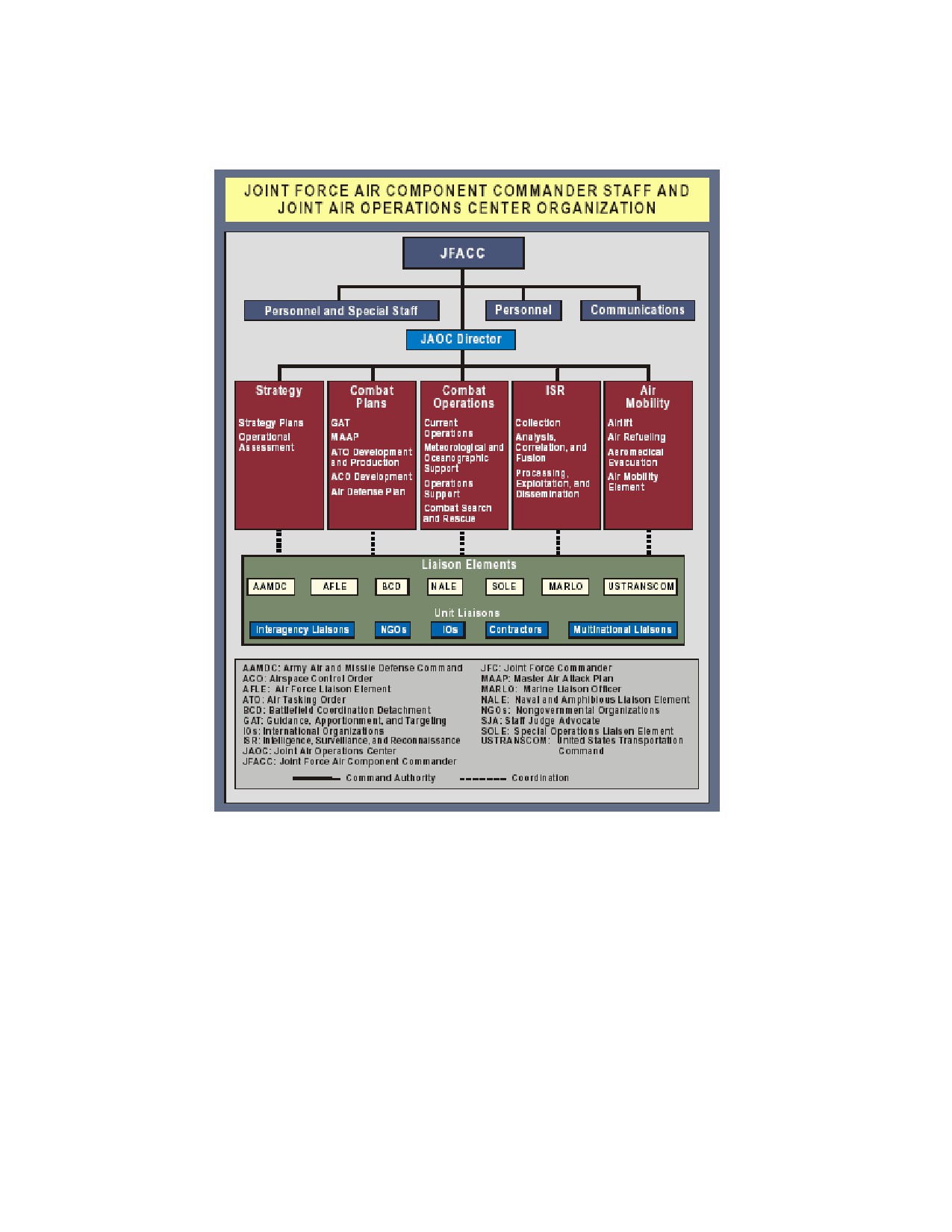
a. Air Force Air and Space Operations Center. The AOC is led by an AOC director and has five
divisions with subordinate core teams, and numerous specialty and support teams and liaison elements.
Figure VI-1 depicts the approved JAOC organization that is used when the COMAFFOR is designated
JFACC.
(1) The AOC director is focused on planning, coordinating, allocating, tasking, and monitoring
execution, and sustaining and assessing air power operations in the AOR/JOA based on commanders’
guidance. It is the director’s responsibility to ensure the AOC functions necessary to complete air and
space planning and execution are conducted in a timely and efficient manner.
(2) Defensive specialists in the strategy and plans divisions, in coordination with the ISR division
and liaison elements and other components produce the planning and guidance documents related to air
defense and provide input to airspace control, communications, sensor, and command and control
architectures which are common to defensive and offensive operations.
(3) The Defensive team within the combat operations division (COD) monitors and directs the
execution of the defensive portions of the ATO and performs air and missile defense duties, including
alerts and warnings administration, IAW guidance.
VI-1
(4) The COMAFFOR may designate alternate command elements, stationed at ground facilities or
onboard airborne platforms, to assume part or all of COD duties.
Figure VI-1. JAOC Organization
b. Control and Reporting Center. The CRC is a C2 asset that supports the COMAFFOR
requirement for tactical level command and control, commonly referred to as air battle management. It
is the Air Force’s most forward link in the Joint Battle Management Command and Control family of C2
systems. It is capable of effective integration vertically with operational level C2 systems, and
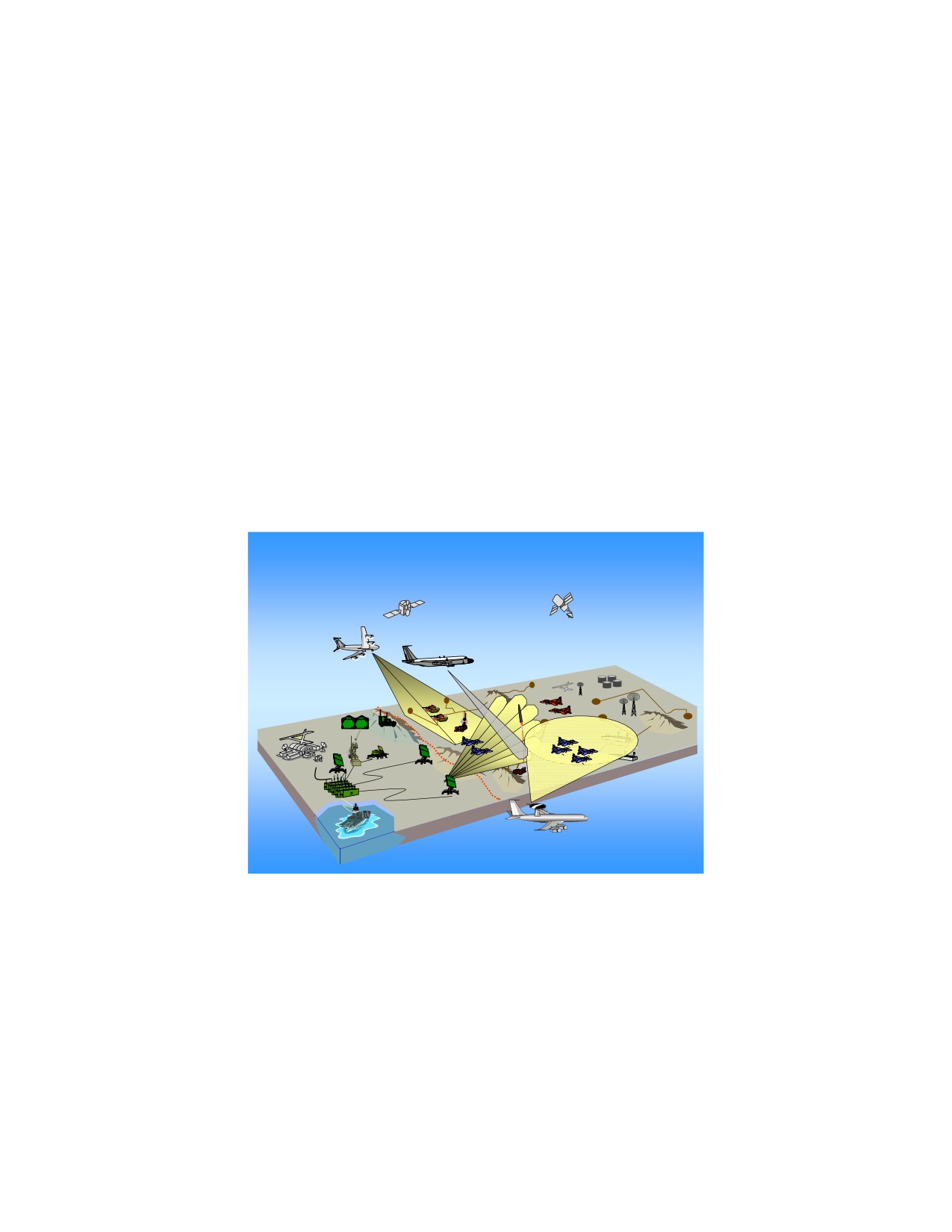
horizontally with other tactical C2 elements (see Figure VI-2). The CRC is charged with decentralized
execution of the air defense and airspace control functions. Within its operational area, the CRC may be
employed alone or in combination with other elements of the TACS C2 architecture. The CRC may be
assigned responsibility as a sector air defense commander (SADC), and is normally designated Sector
ICU. The CRC is capable of conducting airspace control, weapons control, surveillance, and aircraft
identification. When directed by the JAOC, the CRC may be used as the conduit with Service
components and multinational forces to exchange airspace management and air defense data from C2
VI-2
systems via tactical data links. Through the use of TDLs, the CRC is capable of receiving and
transmitting data link information from the various C2 platforms established in the MTN network (see
Table VI-I). The CRC meets mission requirements using the concept of core and follow-on unit type
codes (UTC), which may be deployed incrementally or simultaneously depending on the COMAFFOR
desired effects. Each UTC is tailored to meet theater specific objectives and provides flexibility to
support various contingencies. A CRC consists of four core UTCs:
c. Interface Coordination Cell (ICC) . The ICC provides the JFACC with tactical digital
information link capability (Link 11/11B/4/16, ATDL-1, NATO Link 1). The ICC consists of at least
one operations module (OM), one JTIDS module (JM) and associated support equipment.
d. Deployable Radar (DR). The DR consists of a radar and associated communications and support
equipment. It can be collocated with the CRC, or operate from a remote location.
e. Wide Area Surveillance and Identification (WASID). The WASID provides the JFACC with
wide area detection, tracking, identification, reporting, and warning of air breathing and non-air
breathing threats. The WASID consists of at least two OMs, two radar sets, and associated support
equipment.
f.
Air Battle Execution (ABE). The ABE consists of at least four OMs, one radar set, and
associated support equipment. This UTC provides the JFACC a decentralized ABE (decentralized
management, Army air defense artillery, naval surface vessel interface) and weapons control capability.
Joint STARS
Rivet Joint
ASOC TACP
AOC
DR
CRC
DR
AWACS
Figure VI-2. Notional Diagram of the USAF Theater Air Control System
VI-3

Table VI-1. Typical CRC Equipment
Major
Description
Function
Equipment
TYQ-23
C2 Operator
ATO Execution
Operations
Consoles
Datalinks
Modules
Management,
(OMs)
Surveillance, ID
AN/TPS-75
Mobile radar
Local or remote mode
Radar
equipment
radar application
AN/TSC-147
JTIDS Module
JTIDS connectivity
AN/TSC-100A
SHF SATCOM
Tactical data links
AN/TRC-170
Communications
Data/Voice
Nets/Links, BLOS with
relay
AN/TER-170
Line-of-sight
Remote sighting of
microwave
radios
AN/TTC-42
Automatic
Telephone Switch
Telephone
Central
AN/TRC-175
Remote Radio
Remote operations of
Secure Voice
radar and radios
System
AN/TSQ-146
Multiplexer
Communications
Terminal
Switching Node
Note: See AFTTP 3-1, Vol 26, for further details.
g. Air Defense Sectors. Within the CONUS, Alaska, and Hawaii, the functionality of the CRC is
accomplished through the Air Defense Sector (ADS). The ADSs are fixed facilities that provide
airspace control, weapons control, surveillance, and aircraft identification using Federal Aviation
Administration (FAA) and Department of Defense (DOoD) radars linked to an automated computer
processor. The ADS is equipped with tactical data links and secure communications. For further
information and specific detail on ADS capabilities and limitations, see FM 3-01.1/NTTP 3-
26.1.1/AFTTP(I) 3-2.50, Multi-Service Tactics, Techniques, and Procedures for Air Defense of the
United States.
h. E-3 B/C AWACS. AWACS is a highly mobile and flexible surveillance and C2 capable
platform. The E-3 carries pulse and pulse Doppler surveillance radars, IFF interrogator/receiver and a
passive detection system which provides limited electronic warfare support. The aircraft carries a varied
suite of UHF, VHF, SATCOM, and HF radios as well as tactical data links (J, A, and C). The AWACS
crew can be tailored to perform specific duties as required and can host Airborne Command Element
(ACE) personnel.
(1) The E-3 may be the first USAF TACS element on scene and function autonomously or under
the TACON of other components in the early period of a contingency. In a mature theater, AWACS
operates as a part of the TACS architecture.
(2) In planning the tasking for AWACS, consideration must be paid to the limits of crew size and
communications capability to ensure appropriate span of control and avoid over tasking. AOC planners
VI-4

coordinate among all mission areas requiring AWACS support, as well as with the AWACS unit, to
prioritize duties and ensure adequate coverage is provided. During execution, AOC defensive team
members must be sensitive to the multi-task nature of the AWACS when considering altering an orbit
location or defensive tasking.
i.
Theater ISR. Defensive planners coordinate the services of various ISR platforms, typically
including Rivet Joint and Senior Scout, to assist in combat identification. ISR capabilities are usually in
short supply and tasked to perform diverse duties supporting various missions and agencies within the
theater. As with AWACS, careful coordination during planning and awareness of the greater mission
during execution are required.
5. Weapons Systems
Table VI-2 is a matrix illustrating air and ground operations capabilities, while Table VI-3 highlights
additional capabilities for AWACS and CRC.
Table VI-2. Air and Ground Operations Capabilities Matrix
Platform
COMM/SECURE
Data Link
Aircraft
RADAR
AAI
References
Armament
Capable
F-15C
UHF/Yes
Link 16
AIM-120/7/9
A/A
yes
AFTTP 3-1
(air-to-air)
Vol. 4
F-15E
UHF/Yes
Link 16
AIM-120/7/9
A/A
yes
AFTTP 3-1
Vol. 17
F-16C
UHF/VHF/Yes
Block 30 F-
AIM-120/9
A/A
no
AFTTP 3-1
16 SADL
Vol. 5
equipped
F-16CJ
UHF/VHF/Yes
Link 16
AIM-120/9
A/A
no
AFTTP 3-1
HARM
Vol. 5
F-16ADF
UHF/VHF/HF/Yes
n/a
AIM-120/7/9
A/A
no
AFTTP 3-1
Vol. 5
E-3
UHF/VHF/HF/
Link 11, C,
n/a
A/A
yes
AFTTP 3-1
SatCom/Yes
J
Vol. 15
AOC
UHF/VHF/HF/SatC
Link 11, B
n/a
n/a
n/a
AFTTP 3-1
om/Yes
Vol. 26
CRC
UHF/VHF/HF/SatC
Link 11,
n/a
G/A
yes
AFTTP 3-1
om/Yes
B,C, J,
Vol. 26
ATDL-1
ADS
UHF/HF/SATCOM/
Link 11,B, J
n/a
G/A
yes
AFTTP(I)3-2.50
Yes
Note: DCA weapons systems assigned to the particular AOC may include a variety of defensive
and dual mission capable aircraft as well as airborne C2 platforms.
VI-5
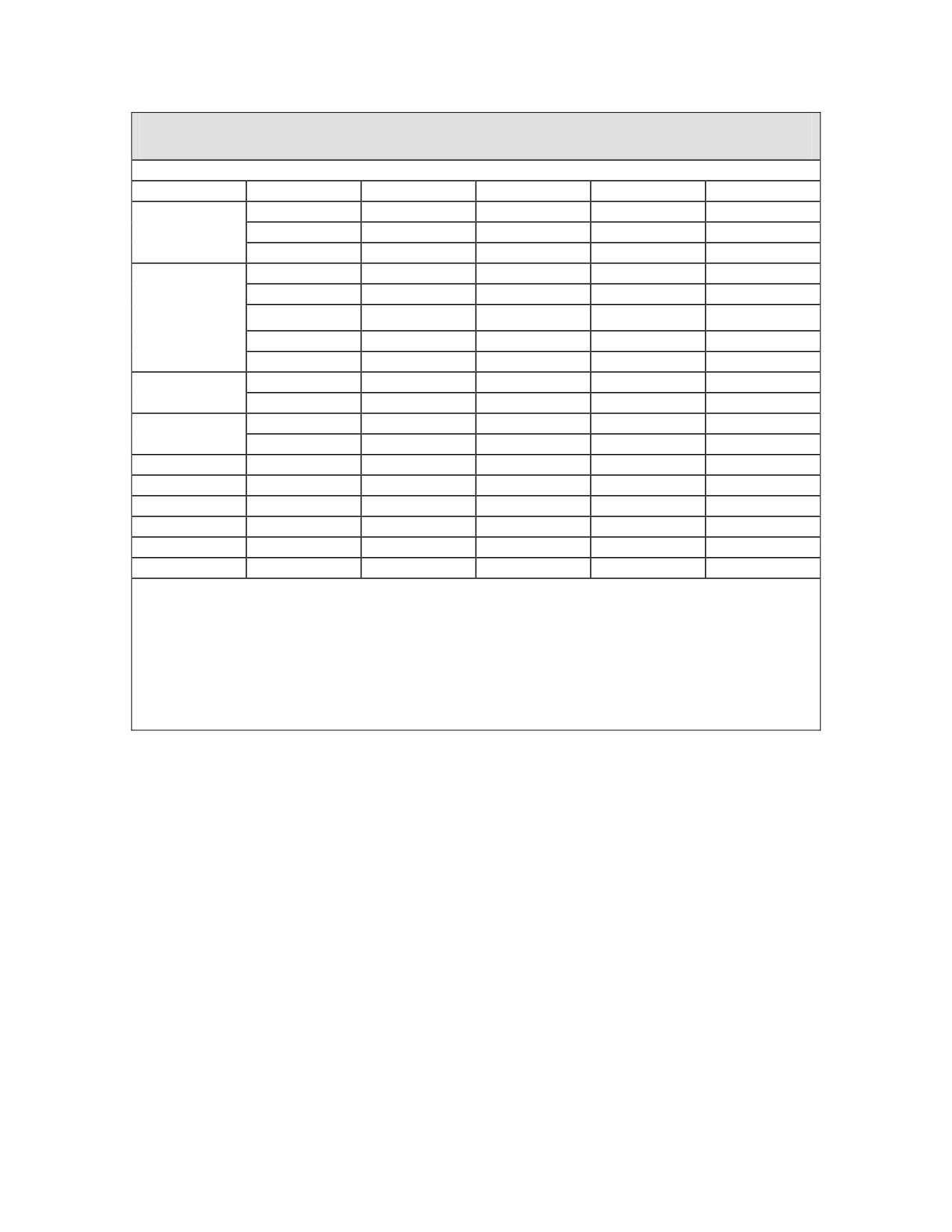
Table VI-3. Voice/Data Capability (E-3 B/C and CRC UTCs)
CRC UTCs
Frequency
Equipment
E-3B/C
ICC
WASID
ABE
Number
13
4
8-12
16-20
UHF
HQ
4
4
8-12
12-16
Secure
10
4
8-12
16-20
Number
3
3(5)
6-9(5)
12-15(5)
AM
2
--
--
--
VHF
FM
1
3(5)
6-9(5)
12-15(5)
Secure
--
3
6-9
12-15
SINCGARS
--
3(5)
6-9(5)
12-15(5)
Number
3
2
4-6
8-10
HF
Secure
1
2
4-6
8-10
Number
3
3(5)
6-9(5)
12-15(5)
UHF SatCom
Secure
2
3
6-9
12-15
LINK 11
KG-40
1
1
1
1
LINK 11B
KG-84
--
7
9
9
LINK 4
-
--
12
12
12
LINK 16
--
1
1
NATO LINK 1
KG-84
--
1
1
1
ATDL-1
KG-84
--
7
14
14
(1) Radios internal to CRC Operations Modules (OM). CRC possesses capability to add multiple
UHF/VHF/HF/UHF station radios externally.
(2) ICC: 1 OM/1 JTIDS Module
(3) WASID: 2-3 OMs/1 TPS-75
(4) ABE: 4-5 OMs/2 TPS-75
(5) Each OM has three positions for VHF radios; SINCGARS and UHF SATCOM use VHF
positions; for each SINCGARS and UHF SATCOM added internally, one VHF FM must be
removed.
6. Planning
AOC personnel are responsible for planning, directing the execution of, and assessing air and space
operations and directing changes as the situation dictates. Primary AOC functions with regard to air
defense are:
a. Develop air operations strategy and planning documents that integrate air, space, and information
operations to meet commanders’ air defense objectives and guidance.
b. Task and direct the execution of day-to-day air operations, coordinate and deconflict weapons
employment, and integrate the total air effort.
c. Incorporate component airspace requirements for air defense systems and develop airspace
control measures (i.e., missile engagement zones) for inclusion in the ACO and coordinate airspace
control activities.
d. Provide overall direction of theater air defense, (includes both air and missile threats).
e. Conduct operational level assessment to determine air operations effectiveness.
VI-6
f.
Coordinate with other IADS participants in the production of defensive sections of the ATO and
ATO changes and other periodic planning documents.
g. Plan and task various missions, including air refueling, which support DCA and C2 aircraft.
h. Develop and disseminate the OPTASKLINK and TACOPDAT.
7. Operations
a. Force Operations. The COMAFFOR directs the planning and execution of all capabilities/forces
made available for a given ATO. The combat operations division (COD) of the AOC is responsible for
directing and monitoring the execution of the ATO and processes recommended changes to the ATO.
received from any source. It is also charged with coordinating and deconflicting those changes with the
appropriate components and control agencies.
b. The COMAFFOR may delegate C2 authority to ground or airborne C2 platform mission
commanders. It is essential, however, to notify the COD section of all redirected missions.
8. Integration
a. Missile defense systems present an integration challenge for the AOC. For example, some Army
ADA units may be tasked to defend entities on the DAL, while others are tasked to support land
component maneuver forces. For units tasked against the DAL, the chain of command proceeds from the
COMAFFOR through the SADO in the AOC to the CRC (or AWACS). However, the chain of command
for ADA units in support of maneuver forces stems from the maneuver force commander.
b. The best way of achieving unity of effort (for land based missile defense systems) is through the
ADAFCO (see Chapter II for description). The SADO coordinates with maneuver units through the
BCD (AAMDC representative, if present) (see Figure VI-3). Because coordination between components
is critical, clearly articulate it in the AADP (to include engagement priorities and communications
channels). The SADO needs awareness of the location and movement of the maneuver ADA units to
avoid fratricide and to promote effective airspace control. The AADC must establish procedures for
routing fixed-wing aircraft around active air defense sites. In addition, the AADP, SPINS, and ACO
must specify procedures for operating near and around active air defense sites.
Note: The coordination conduit for Marine Corps ADA units is the Marine liaison officer
(MARLO).
c. The ADAFCO needs awareness of the location and movement of the maneuver ADA units for
effective employment of missile defense systems. Maneuver units require timely updates to the ATO,
ACO, and SPINS in addition to dynamic updates to avoid fratricide.
d. Navy air defense units (i.e. AEGIS Cruiser) may be capable of providing DAL coverage while
simultaneously providing fleet defense. If dual tasked, any changes to the ability to meet the DAL
tasking should be identified to the SADO through the Naval Amphibious Liaison Element (NALE).
VI-7
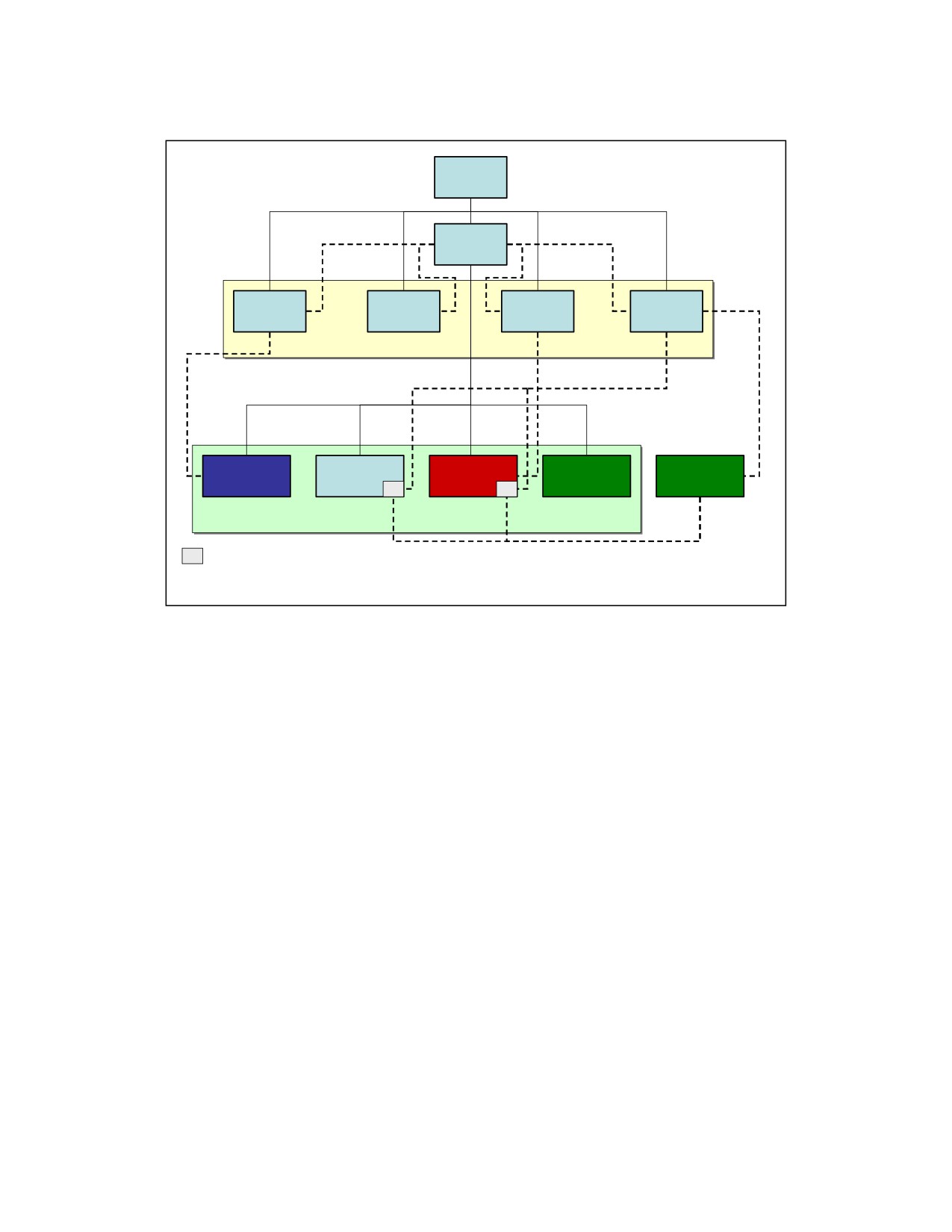
AOC
SADO
NALE
SOLE
MARLO
BCD
Liaison Elements
CORPS
MANEUVER
USN
CRC
TAOC
ADA BDE
ADA BDE
ADP Tasked Units
= ADAFCO
Figure VI-3. SADO Integration
9. Summary
a. The functions of airspace control and air defense and their attendant responsibilities are normally
integrated under a single commander in order to provide unity of effort for air operations. These
functions include developing, coordinating, and publishing airspace control procedures, operating the
airspace control system, and integrating the joint force air defense effort. The AOC is structured to
operate as a fully integrated facility and staffed to fulfill all responsibilities. Two common AOC
functions are combat plans (future joint air operations) and combat operations (execution of the daily
ATO).
b. The Air Force provides air defense by conducting offensive and defensive counterair operations
throughout the operational area, while conducting other missions and support activities. This is
primarily done through the planning and execution of counterair operations through the USAF TACS.
VI-8
Appendix A
MULTINATIONAL CONSIDERATIONS
1. Multinational Force Commander
The Multinational Force (MNF) commander may designate an AADC to ensure an integrated defense
effort by the MNF. Because of the interrelationship between airspace control, air defense, and other air
operations, the ACA, AADC, and air component commander duties are normally performed by the same
person.
2. Multinational operations planning considerations
a. Host Nation (HN) Training Levels and Air Defense Order of Battle (OB). When required to
operate as part of a MNF, understanding types and numbers of participating nation’s air defense systems
and capabilities is important. Operations may or may not include integration with host nation air defense
systems, ATC, and C2 architecture.
b. Interoperability. Always consider integrating US and foreign nation weapon systems in order to
optimize defense design. Several countries own and operate US designed weapons systems such as
Patriot and Hawk air defense systems. However, just as US systems must upgrade, so must foreign
government systems. Based on foreign military sales case agreements, US forces going into a
multinational theater may find incompatibilities with like systems. Therefore, planning and conducting
interoperability training with foreign governments becomes even more critical.
c. Disclosure of Critical Air Defense Information. When operating as part of a MNF, US forces
rely on classified sophisticated intelligence and operations databases. Although sharing this information
is critical to successful conduct of the mission, much of this information is not usually releasable to
foreign governments. For air defense, this critical information includes accessibility to the different data
links. The US forces commander must carefully consider national disclosure policy guidance, along
with intent and concept of the operation when determining whether to request release of additional
source information to specific countries. In some instances, during the execution of combat operations,
the commander may have to make a determination to release previously non-disclosed information if
release of the information serves to protect the interests or safety of US forces.
d. CID. The Mark XII IFF/SIF system is used by US forces (Modes 1-4). When conducting
multinational operations, the MNF will usually only be equipped with some of these Modes. US forces
must work closely with the MNF to establish a combination of procedural and positive means for
effective combat identification when the MNF forces are not capable of the full range of Mark XII
Modes (refer to CID in Chapter 2). Due to the recent NSA decertification of the Mark XII Mode 4
system [DIRNSA message 081811Z Oct 03] ID planners should refer to FM 3 01.61/MCWP 3-
25.11/NTTP 6-02.4/AFTTP(I) 3-2.39, Multi-Service Tactics, Techniques, and Procedures for Mk XII
IFF Mode 4 Security Issues in a Joint Integrated Air Defense System.
e. ROE. US forces operating in a multinational environment must follow Chairman Joint Chiefs of
Staff Instruction (CJCSI) 3121.01 Change 1, Standing Rules of Engagement for US Forces. The JFC
will normally be asked to submit additional supplemental ROE for approval by the Joint Staff. In many
cases, commanders of deployed member forces may lack the authority to speak on behalf of their nation
in the ROE development process. The force commander must reconcile differences as much as possible
early on in the planning process if complete consensus is not achievable.
A-1
3. Air Defense Considerations
a. Ground ROE. Ground ROE when operating in a foreign country can differ significantly if the
HN is willing or insists on providing some type of ground security or force protection. When this is the
case, a typical arrangement is for the HN to provide overall base or facility security, and for US forces to
provide local or perimeter security for each of their units. In any case, language barriers can prove to be a
hindrance. Establish standard operating procedures (SOPs) that closely coordinate security and force
protection measures.
b. Air ROE. Usually, US forces will provide air defense protection for their defended assets using
a separate DAL. This is the preferred method of providing air defense as it reduces conflicts that arise
from differences in ROE among multinational partners. In cases where US forces and HN forces are
providing mutual protection to a defended asset, it must be clear who is controlling engagements. Where
differences in ROE for either ABT or TBM exists, it is important to establish detailed procedural control
measures for friendly airspace users to reduce the possibility of fratricide. One technique is to prepare
an SOP of mutually agreed-upon ROE for each weapon system in theater. TBM ROE should be less
difficult as classification of this threat is much easier. In any case, the US forces must not be denied the
right to self-defense.
c. Passive Defense/Early Warning (EW). Most nations have an EW system to alert military and
civilian populations of impending attacks. It is important to determine what I&W are available and to
use them as necessary to maximize force protection. Commanders should not rely solely on host nation
systems, but should deploy with their own EW capability. One technique is to establish voice and data
TBM early warning systems and publish them in the operations order. Establish voice early warning
nets and radios at each C2 node.
d. Liaison. Depending on level of operations security, conducting early liaison with the host nation
to establish an air defense C2 structure is critical to a successful multinational IADS. Establish an SOP
to provide for liaisons at critical C2 nodes within the JOA. Liaison duties will include deconfliction of
ROE and procedural control measures at critical levels in the chain of command.
e. Language Barriers. Depending on the country, language can impose significant hardships on
commanders who must communicate their military plans. This is especially important when operating
under OPCON or TACON of foreign military leadership. Work out SOPs for communicating prior to
the execution phase of any operation to ensure continuity and clarity. Make every effort to deploy with
adequate linguists who understand military terminology to ensure clear communications. In cases where
the language barrier is less significant, exchanging liaison officers and positioning them at critical C2
nodes may be adequate.
A-2
Appendix B
TRACK ID/CLASSIFICATION CONSIDERATIONS
Coordinate the air defense ID policy with the JICO to prevent or mitigate ID-related interoperability
issues. Address the following specific technical issues for each TDL capable IADS node:
a. Identify primary and secondary interface capabilities.
b. Identify the ID set processed by the system (Link 11/11B or Link 16).
(1) Link 11/11B-based systems:
(a)
Specific ID, Primary Amplification (Pri Amp), and ID Amplification (ID Amp) data
elements implemented.
(b)
System translation of ID data elements received from Link 16.
(2) Link 16-based systems:
(a)
Specific ID, Platform, Type, Activity, and Nationality/Alliance data elements
implemented.
(b)
System translation of ID data elements transmitted to Link 11/11B.
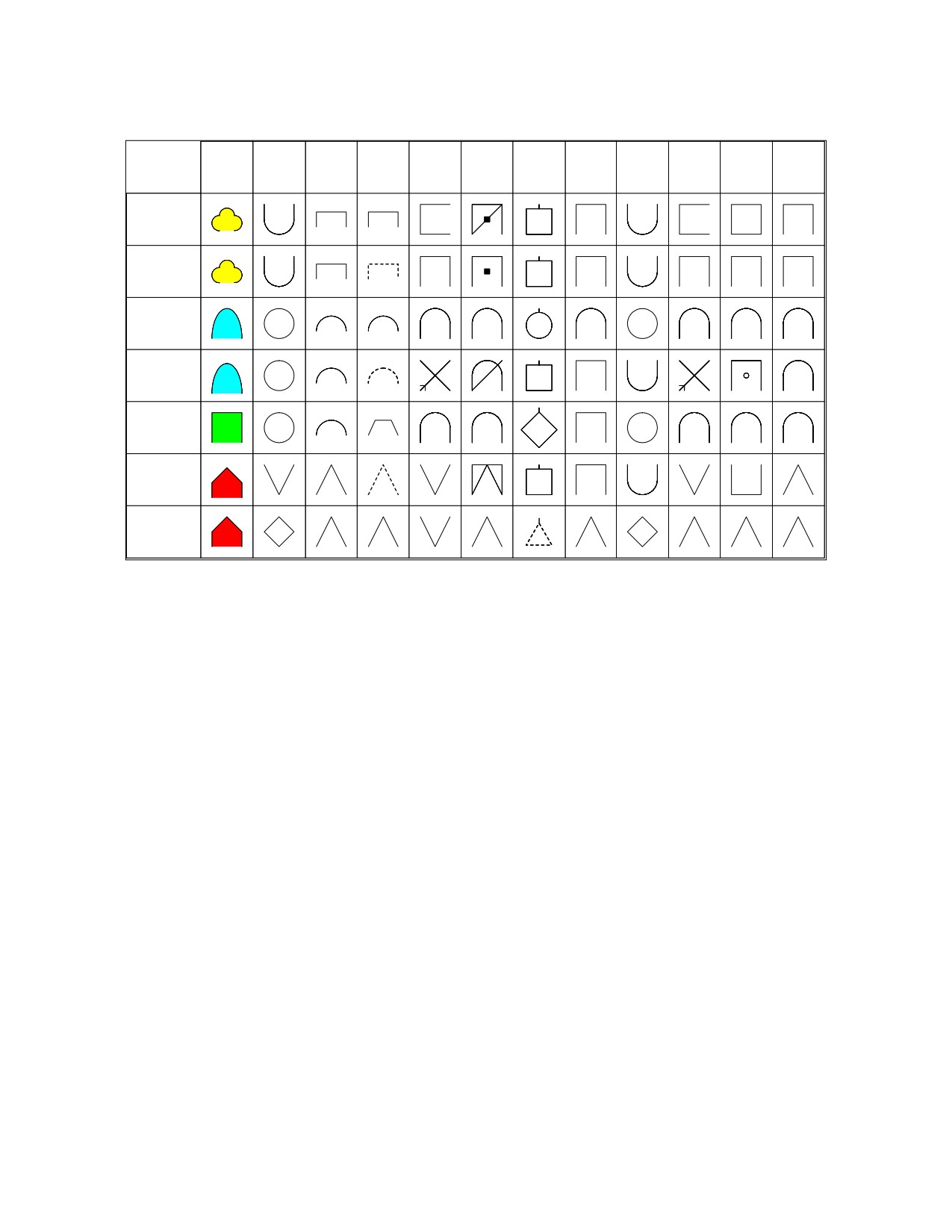
c. Identify the ID symbology displayed to the operator. (See Figure B-1.)
(1) Are friends and unknown assumed friends displayed with the same symbol? If so, can the
operator access more detailed information to discern friend and unknown assumed friend tracks, and is
this an acceptable risk to situational awareness?
(2) Are hostile and unknown assumed enemies (suspects) displayed with the same symbol? If so,
can the operator access more detailed information to discern hostile and unknown assumed enemy
(suspect), does a hostile symbol cause automatic system engagement actions, and is this an acceptable
risk?
(3) Are neutrals displayed with a unique symbol?
B-1
TAOC (J)
MIL-STD
Aegis
Aegis
F-14D
TAOC
Rivet
ABMOC
AWACS
E-2C
F-15C
Patriot
CRC
2525B
Model 4
Model 5
F/A-18C/D
(A/B)
Joint
CRE
Pending
?
Unknown
Friend
Assumed
?
S
Friend
Neutral
N
?
Suspect
Hostile
Figure B-1. Sample Track ID Table
B-2
Appendix C
NOTIONAL AREA AIR DEFENSE PLAN TABLE OF CONTENTS
AREA AIR DEFENSE PLAN (U)
TABLE OF CONTENTS
Basic Plan
Annex A: Air Defense Task Organization
Annex B: Intelligence
Annex C: Operations
Appendix 1: Launch Warning Reports
Tab A: Theater Voice Warning Report Format
Tab B: CFACC Tier II Voice Early Warning
Tab C: CFLCC Tier II Voice Early Warning
Appendix 2: Combat Air Patrol Management and Control
Appendix 3: Air Defense Warning Conditions
Appendix 4: Critical Asset List/Defended Asset List
Tab A: Critical Asset List
Tab B: Phase I Defended Asset List
Tab C: Phase II Defended Asset List
Tab D: Phase III Defended Asset List
Tab E: Phase IV Defended Asset List
Appendix 5: Air Defense Artillery (ADA) Procedures
Tab A: Low Missile Procedures
Tab B: Fire Control Orders
Tab C: SAM SHORAD Tactical Order (SSTO) Format
Tab D: Alert States (AS)
Tab E: Weapons Control Status (WCS)
Tab F: ABT Engagement Reports
Tab G: TBM Engagement Reports
Tab H: SAM Status Report (SAMSTATREP) Format
Tab I: Self-Defense Criteria
Tab J: TAMD Airspace Control Order Form
Appendix 6: Flush Procedures
Appendix 7: Kill Box Grid System
C-1
Appendix 8: Commander’s Critical Information Requirements (CCIR)
Appendix 9: OPTASKLINK
Appendix 10: RADC/SADC/WOC Reports
Appendix 11: Operations Security
Annex D through Annex I: Not used.
Annex J: Air Defense Command Relationships.
Appendix 1: Air Defense Area, Region, and Sector Boundaries
Annex K: Command, Control, Communications, and Computer Systems
Appendix 1: JRE and C2 Voice Connectivity
Appendix 2: TDL Network
Appendix 3: JICO Cell Communications
Appendix 4: Sensor Network
Appendix 5: ADA Brigade Network 1
Appendix 6: ADA Brigade Network 2
Appendix 7: ADA Battalion Network
Appendix 8: Link 16 Network
Annex L: Coalition Forces
Appendix 1: Theater Ballistic Missile Shared Early Warning to Coalition Forces
Annex M through Annex Y: Not used.
Annex Z: Distribution
Enclosure 1: References
Enclosure 2: Terms and Definitions
Enclosure 3: Acronyms
C-2
REFERENCES
Joint Publications
JP 0-2, Unified Action Armed Forces (UNAAF). 10 July 2001.
JP 1-02, DOD Dictionary of Military and Associated Terms. 12 April 2001.
JP 3-01.5, Doctrine for Joint Theater Missile Defense. 22 February 1996.
JP 3-02, Joint Doctrine for Amphibious Operations. 19 September 2001.
JP 3-03, Doctrine for Joint Interdiction Operations. 10 April 1997.
JP 3-09.3, Joint Tactics, Techniques, and Procedures for Close Air Support (CAS).
3 September 2003.
JP 3-16, Joint Doctrine for Multinational Operations. 5 April 2000.
JP 3-30, Command and Control for Joint Air Operations. 5 June 2003.
JP 3-52, Doctrine for Joint Airspace Control in the Combat Zone. 22 July 1995.
JP 3-60, Joint Doctrine for Targeting. 17 January 2002.
Multi-Service
FM 3-01.1; NTTP 3-26.1.1; AFTTP(I) 3-2.50, Multi-Service Tactics, Techniques, and Procedures for
Air Defense of the United States. 22 March 2004.
FM 3-01.15; MCRP 3-25E; NTTP 3-01.8; AFTTP(I) 3-2.31, Multi-Service Procedures for a Joint
Integrated Air Defense System (JIADS). 8 June 2001.
FM 3-01.20; MCRP 3-25.4A; NTTP 3-01.6; AFTTP(I) 3-2.30, Multi-Service Procedures for Joint
Air Operations Center and Army Air and Missile Defense Command Coordination (JAOC/AAMDC). 1
January 2001.
FM 3-52.2; MCRP 3-25F; NTTP 3-56.2; AFTTP(I) 3-2.17, Multi-Service Tactics, Techniques, and
Procedures for the Theater Air-Ground System (TAGS). 8 December 2003.
FM 6-02.85; MCRP 3-40.2A; NTTP 3-13.1.16; AFTTP(I) 3-2.22, Multi-Service Tactics, Techniques,
and Procedures for Joint Task Force Information Management. 10 September 2003.
FM 6-24.8; MCWP 3-25C; NWP 6-02.5; AFTTP(I) 3-2.27, Introduction to Tactical Digital
Information Link J and Quick Reference Guide. 30 June 2000.
Army
FM 3-0, Operations. 14 June 2001.
FM 3-01.7, ADA Brigade Operations. 31 October 2000.
FM 3-13, Information Operations. 27 August 1996.
FM 3-21.31, The Stryker Brigade Combat Team. 13 March 2003.
FM 3-01.12, Army Theater Missile Defense Operations. 31 March 2000.
FM 3-52, Army Airspace Command and Control in a Combat Zone. 1 August 2002.
FM 24-16, Communications-Electronics Operations, Orders, and Reports. 4 July 1978.
References-1
FM 24-18, Tactical Single-Channel Radio Communications Techniques. 30 September 1987.
FM 24-22, Communications-Electronics Management System. 30 June 1977.
FM 3-01.87, Patriot Tactics, Techniques, and Procedures. 25 September 2000.
FM 3-01.94, Army Air and Missile Defense Command Operations. 31 March 2000.
FM 3-01, US Army Air and Missile Defense Operations. 15 June 2000.
Navy
NWP 3-56 (Rev. A), Composite Warfare Commander (CWC) Manual. 1 August 2001.
NWP 3-01.10, Anti-Air Warfare Commander’s Manual. 01 August 1990.
NWP 3-01.1, Fleet Air Defense (draft submitted Aug 2003).
NWP 3-01.5, Aegis Core Tactics. 1 July 2000.
NWP 3-03.4, Naval Strike and Air Warfare. 1 August 2000.
TOPGUN Manual
Marine Corps
MCDP 1-0, Marine Corps Operations. 27 September 2001.
MCDP 3, Expeditionary Operations. 16 April 1998.
MCRP 3-25.10A, Low Altitude Air Defense (LAAD) Gunner's Handbook. 6 November 2000.
MCWP 3-2, Aviation Operations. 9 May 2000.
MCWP 3-22, Antiair Warfare. 23 June 2000.
MCWP 3-25, Control of Aircraft and Missiles. 26 February 1998.
MCWP 3-25.3, Marine Air Command and Control System Handbook. 2 December 1997.
MCWP 3-25.4, Marine Tactical Air Command Center Handbook. 21 September 1998.
MCWP 3-25.5, Direct Air Support Center Handbook. 16 September 1996.
MCWP 3-25.8, Marine Air Traffic Control Detachment Handbook. 1 August 1997.
MCWP 3-25.10, Low Altitude Air Defense Handbook. 12 June 1998.
MCWP 5-1, Marine Corps Planning Process. 5 January 2000.
Air Force
AFI 13-1AOC, Volume 3, Operational Procedures—Aerospace Operations Center. 1 July 2002.
AFDD 1, Air Force Basic Doctrine. 1 September 1997.
AFDD 2, Organization and Employment of Aerospace Power. 17 February 2000.
AFDD 2-1.1, Counterair Operations. 6 May 1998.
AFDD 2-8, Command and Control. 16 February 2001.
AFPD 13-1, Theater Air Control System. 11 May 1995.
References-2
Other
Chairman Joint Chiefs of Staff Manual (CJCSM) 6120.01C, Joint Multi-Tactical Data Link
Operating Procedures (JMTOP), with Change 1 (1 June 2003). 1 August 2002.
Chairman Joint Chiefs of Staff Manual (CJCSM) 3115.01, Joint Data Network (JDN) Operations. 1
October 2000.
Military-Standard (MIL-STD)-6011C, DOD Interface Standards, TADIL J Message Standard.
Military-Standard (MIL-STD)-6016, DOD Interface Standards, TADIL A/B Message Standard.
Department of Defense Airman’s Information Manual 86-100B, Operation and Maintenance
Overview General Triservice Mode 4 Handbook, May 1987.
Allied Communications Publication, IFF/SIF Operational Procedures, ACP 160, the Joint Chiefs of
Staff, Washington, D.C., 1978.
Allied Communications Publication, IFF Mark XII Standing Operating Procedures for the
Idenitification of Friendly Military Aircraft and Ships (U), ACP 160 US Supp 1 (C) (S).
Allied Communications Publication, Policy and Procedures of IFF (NATO) Supplement No. 1) (U),
ACP 160 NATO Supp 1 (B) (S).
US Army Forces Command, Joint Tactical Air Operations (JTAO) Procedural Handbook. 1
September 2000.
References-3
GLOSSARY
PART I - ABBREVIATIONS AND ACRONYMS
A
A/A
air-to-air
A2C2
Army airspace command and control
AADC
area air defense commander
AADP
area air defense plan
AAMDC
Army Air and Missile Defense Command
AAW
antiair warfare
ABT
air-breathing threat; air-breathing target (USMC)
ACA
airspace control authority
ACE
aviation combat element (USMC); airborne command element (USAF)
ACO
airspace control order
ACP
airspace control plan
ACR
armored cavalry regiment
ACU
air control unit
ADA
air defense artillery
ADAFCO
air defense artillery fire coordination officer (Army)
ADAM
Air Defense Airspace Management
ADC
air defense commander (USN)
ADCCN
air defense command and control net
ADCP
air defense communications platform
ADS
Air Defense Sector
ADSI
air defense system integrator (USA)
ADU(S)
air defense unit (secondary)
ADW
air defense warning
AFDC
Air Force Doctrine Center
AFDD
Air Force Doctrine Document
AFFOR
Air Force forces
AFI
Air Force Instruction
AFPD
Air Force Policy Document
AFTTP
Air Force tactics, techniques, and procedures (inter-Service)
ALSA
Air Land Sea Application Center
Glossary-1
AMDCOORD
air and missile defense coordinator (USA)
AMDPCS
air and missile defense planning and control system (USA)
AMDWS
air and missile defense workstation (USA)
ANDVT
advanced narrow band digital voice terminal
ANG
Air National Guard
AO
area of operations
AOC
air operations center
AOR
area of responsibility
ARFOR
Army forces
ARG
amphibious ready group
ARNG
Army National Guard
ASCIET
All Service Combat Identification Evaluation Team
ASIT
adaptable surface interface terminal
ASM
air-to-surface missile
ASW
antisubmarine warfare
ATC
air traffic control
ATDL1
Army tactical data link 1
ATO
air tasking order
AWACS
airborne warning and control system
B
BCD
battlefield coordination detachment
BDZ
base defense zone
C
C2
command and control
C2WC
command and control warfare commander (USN)
C4I
command, control, communications, computers, and intelligence
CAOC
combined air operations center
CAS
close air support; combined antenna system
CATF
commander, amphibious task force
CAV
cavalry (USA)
CCB
configuration control board
CCD
central communication display (USA)
CCS
control and communication subsystem
Glossary-2
CDS
combat direction system
CEC
cooperative engagement capability
CG
guided missile cruiser
CGS
common ground station
CGS RWS
JSTARS Common Ground Station Remote Work Station
CID
combat identification
CIDC
combat identification coordinator
CIDS
combat identification systems
CIWS
Close-in Weapon System (USN)
CJCSI
Chairman of the Joint Chiefs of Staff Instruction
CLF
commander, landing force
CM
cruise missile
COC
combat operations center
COD
combat operations division
COMAFFOR
Commander, Air Force forces
CONOPS
concept of operations
CP
command post
CRC
control and reporting center
CTP
common tactical picture
CTT-3
commander's tactical terminal - 3
CV
aircraft carrier
CVBG
carrier battle group
CVN
aircraft carrier, nuclear
CVW
carrier air wing
CWAR
continuous wave acquisition radar
CWC
composite warfare commander
D
DAADC
deputy area air defense commander
DAL
defended asset list
DAS
direct air support
DCA
defensive counter air
DCN
data link coordination network
DD
navy destroyer
DDG
guided missile destroyer
Glossary-3
DII
defense information infrastructure
DII COE
defense information infrastructure common operating environment
DISA
Defense Information Systems Agency
DISE
Deployable Intelligence Support Element
DISN
Defense Information Systems Network
DLRP
data link reference point
DNC
data network coordinator
DNMFL
Dual Net Multi Frequency Link
DNVT
digital non-secure voice terminal
DS
direct support; database specification
DSCS
Defense Satellite Communications System
DSP
Defense Support Program
DSVT
digital secure voice telephone
DTE
detect-to-engage
E
EA
electronic attack
EAC
echelons above corps
EHF
extremely high frequency
EMCAP
electromagnetic compatibility analysis program
EMT
expert missile tracker
EO
engagement operations
EOB
enemy order of battle
EPLRS
Enhanced Position Location Reporting System
EW
electronic warfare; early warning
EWS
early warning station
F
FA
formation assessment
FAAD
forward area air defense
FAC (A)
forward air controller (airborne)
FCR
fire control radar
FDL
FAAD data link
FEZ
fighter engagement zone
FFG
guided missile frigate
FJUA
forwarding JTIDS unit, TADIL J - TADIL A
Glossary-4
FJUAB
forwarding JTIDS unit, TADIL J - TADIL A/B
FJUB
forwarding JTIDS unit, TADIL J - TADIL B
FLIR
forward-looking infrared
FM
field manual
FO
force operations
FOB
forward operations base; friendly order of battle
FPU
forwarding participating unit
FRU
forwarding reporting unit
FSCOORD
fire support coordinator
FSE
fire support element
G
G/A
ground to air
G-2
Army or Marine Corps component intelligence staff officer (Army
G-3
Army or Marine Corps component operations staff officer (Army
GALE
Generic Area Limitation Environment (USA)
GBDL
ground-based data link
GBS
Global Broadcast Service
GCCS
Global Command and Control System
GCI
ground control intercept
GCSS
Global Combat Support System
GEM
guidance enhanced missile
GRU
grid reference unit
GS
general support
GS-R
general support reinforcing
H
HARM
high-speed anti-radiation missile
HDR
high data rate
HEU
higher echelon unit
HF
high frequency
HIMAD
high-to-medium altitude air defense
HMMWV
high mobility multipurpose wheeled vehicle
HN
host nation
HS
helicopter ASW squadron (USN)
HVA
high-value assets
Glossary-5
I
I&W
indications and warning
IADS
integrated air defense system
IAW
in accordance with
IBS
Integrated Broadcast Service
ICBM
intercontinental ballistic missile
ICC
information coordination center
ICO
interface control officer
ID
identification
IFF
identification, friend or foe
IJMS
interim JTIDS message standard
INF
infantry (USA)
INS
inertial navigation system
IPAWS
Interim Pager Alert Warning System (USA)
IPB
intelligence preparation of the battlespace
IRST
infrared search and tracking
ISR
intelligence, surveillance, and reconnaissance
IST
interswitch trunk
IU
interface unit
J
J-3
Operations Directorate of a joint staff
J-6
Command, Control, Communications, and Computer Systems Directorate
of a joint staff
JAOC
joint air operations center
JBC
joint command, control, communications, computers, intelligence, surveillance,
and reconnaissance battle center
JDISS
Joint Deployable Intelligence Support System
JDN
joint data network
JEZ
joint engagement zone
JFACC
joint force air component commander
JFC
joint force commander
JIC
Joint Intelligence Center
JICO
joint interface control officer
JICU
joint interface control unit
Glossary-6
JMTOP
joint multi-TDL operating procedures
JNL
JTIDS network library
JOA
joint operations area
JPN
joint planning network
JSIPS
Joint Services Imagery Processing System
JSTARS
Joint Surveillance Target Attack Radar System
JSWS
JSTARS Work Station
JTAGS
joint tactical ground station
JTDC
joint track data coordinator
JTF
joint task force
JTIDS
Joint Tactical Information Distribution System
JTMD
joint theater missile defense
JTOC
joint tactical operations center
JU
JTIDS unit
JVMFGW
Joint Variable Message Format Gateway
JWARN
joint warning
JWICS
Joint Worldwide Intelligence Communications System
K
KM
kilometers
L
LAAD
low-altitude air defense
LAN
local area network
LAV (AD)
light armored vehicle (air defense)
LCC
amphibious command ship
LDR
low data rate
LHA
general purpose amphibious assault ship
LHD
general purpose amphibious assault ship (with internal dock)
LNO
liaison officer
LOS
line of sight
M
MACCS
Marine Air Command and Control System
MACS
Marine Air Control Squadron
MAGTF
Marine air-ground task force
Glossary-7
MAMD
Maneuver Air and Missile Defense
MANPADS
Man-Portable Air Defense System
MARFOR
Marine Corps forces
MATCD
Marine air traffic control detachment
MAWTS 1
Marine Aviation Weapons and Tactics Squadron One
MCAS
Marine Corps Air Station
MCCDC
Marine Corps Combat Development Command
MCE
modular control equipment
MCPDS
Marine Corps Publication Distribution System
MCRP
Marine Corps Reference Publication
MCS/P
Maneuver Control System/Phoenix (USA)
MCWP
Marine Corps Warfighting Publication
MDA
Missile Defense Agency
MDR
medium data rate
MDU
mission data update
MEF
Marine expeditionary force
METT-T
mission, enemy, terrain and weather, troops and support available, time available
METT-TC
mission, enemy, terrain and weather, troops and support available, time available,
and civilians
MEU
Marine expeditionary unit; mission essential units (USN)
MEZ
missile engagement zone
MILSTRIP
military standard requisitioning and issue procedure
MMT
master message terminal
MNF
Multinational Force
MRR
minimum risk route
MSCS
multi-source correlation system (USMC)
MSE
multiple subscriber equipment
MSI
multi-spectral imagery
MSTS
Multiple Source Tactical System (USA)
MTI
moving target indicator
MWCS
Marine wing communications squadron
N
NATO
North Atlantic Treaty Organization
NAVMACS
Naval modular automated communication system
Glossary-8
NAVSOP
Navy standing operating procedures
NBC
nuclear, biological, and chemical
NCS
net control station
NCTR
non-cooperative target recognition
NGA
National Geospatial Intelligence Agency
NIPRNET
Unclassified but Sensitive Internet Protocol Router Network
NM
nautical mile
NSSMS
NATO Sea Sparrow Missile System
NSWC PHD
Naval Surface Warfare Center, Port Hueneme Division
NTDC
non-tactical data collection
NTDS
Naval tactical data system
NTR
network time reference
NWDC
Navy Warfare Development Command
NWP
naval warfare publication
O
OAAW
offensive antiair warfare
OAS
offensive air support
OB
order of battle
OCA
offensive counterair
OIC
officer in charge
OM
operations module
OPCON
operational control
OPLAN
operation plan
OPR
office of primary responsibility
OPTASK
operational task
OPTASKLINK
operational tasking data link
OTC
officer in tactical command
OTCIXS
officer in tactical command information exchange system
OTH
over the horizon
P
PAC-2
Patriot Advanced Capability-2
PAC-3
Patriot Advanced Capability-3
PADIL
Patriot digital information link
PFU
Patriot firing unit
Glossary-9
PGM
precision-guided munition
PPLI
precise participant location and identification
PR
position references
PTL
primary target line
PU
participating unit
R
R
reinforcing
RADC
regional air defense commander
RAM
rolling airframe (USN)
RCU
remote control unit
RCV
receive
RICO
regional interface control officer
ROE
rules of engagement
RSR
remote sensor relay
RTF
return to force
RTU
remote terminal unit
RU
reporting unit
S
S3
battalion or brigade operations staff officer (Army; Marine Corps battalion
or regiment)
SAAWC
sector anti-air warfare coordinator (USMC)
SAAWF
sector antiair warfare facility
SADC
sector air defense commander
SADF
Sector Air Defense Facility
SADO
sector air defense officer
SAM
surface-to-air missile
SAR
synthetic aperture radar
SATCOM
satellite communication
SCC
system coordinate center (USA); sea combat commander (USN)
SDZ
surface danger zone
SEAD
suppression of enemy air defenses
SES
ship-based electronic system
SG
strike group
SHF
super high frequency
Glossary-10
SHORAD
short-range air defense
SICO
sector interface control officer
SINCGARS
Single-channel Ground and Airborne Radio System
SIPRNET
SECRET Internet Protocol Router Network
SM
surface missile
SME
subject matter expert
SOC
sector operations center
SOP
standard operating procedure
SPINS
special instructions
SROE
standing rules of engagement
SSS
system subsystem specification
STU-III
secure telephone unit III
STWC
strike warfare commander (USN)
SUWC
surface warfare commander (USN)
T
TAAMDCOORD
Theater Army air and missile defense coordinator
TAC (A)
tactical air coordinator (airborne)
TACC
tactical air command center (USMC); tactical air control center (USN)
TACDR
tactical detection and reporting (USA)
TACINTEL
tactical intelligence
TACON
tactical control
TACOPDAT
tactical operational data
TACS
tactical air control system; Theater Air Control System
TADC
tactical air direction center
TADIL
tactical digital information link
TADIXS
tactical data information exchange system
TAMD
theater air and missile defense
TAOC
tactical air operations center
TASM
tactical air to surface missile
TATC
tactical air traffic control
TBM
theater ballistic missile
TBMCS
Theater Battle Management Core System
TCS
target control system; television camera system
TDAR
tactical defense alert radar
Glossary-11
TDDS
TRAP Data Dissemination System
TDS
tactical data systems
TDL
tactical data link
TF
task force (USN)
TG
task group (USN)
TIBS
tactical information broadcast service
TLAM
Tomahawk land-attack missile
TM
theater missile
TOC
tactical operations center
TRADOC
US Army Training and Doctrine Command
TRITAC
tri-service tactical communications
TSN
track supervision network
TTP
tactics, techniques, and procedures
U
UAV
unmanned aerial vehicle
UHF
ultra high frequency
USMC
United States Marine Corps
USMTF
United States message text format
USN
United States Navy
USWC
undersea warfare commander (USN)
UTC
unit type codes
V
VAQ
tactical EW squadron (USN)
VAW
carrier airborne early warning squadron (USN)
VF
fighter squadron (USN)
VFA
strike fighter squadron (USN)
VHF
very high frequency
VMF
variable message format
W
WCS
weapons control status
Glossary-12
PART II - TERMS AND DEFINITIONS
air tasking order (ATO) - A method used to task and disseminate to components, subordinate units, and
command and control agencies projected sorties, capabilities and/or forces to
targets and specific missions. Normally provides specific instructions to include
call signs, targets, controlling agencies, etc., as well as general instructions.
(JP
1-02).
airspace control order (ACO) - An order implementing the airspace control plan that provides the
details of the approved requests for airspace control measures. It is published
either as part of the air tasking order or as a separate document. (JP 1-02)
area of operations (AO) - An operational area defined by the JFC for land and naval forces. Areas of
operation do not typically encompass the entire operational area of the JFC, but
should be large enough for component commanders to accomplish their missions
and protect their forces.
area of responsibility (AOR) - The geographical area associated with a combatant command within
which a combatant commander has authority to plan and conduct operations. In
naval usage, a predefined area of enemy terrain for which supporting ships are
responsible for covering by fire on known targets or targets of opportunity and by
observation.
battlefield coordination detachment (BCD) - An Army liaison provided by the Army component or
force commander to the air operations center and/or to the component designated
by the joint force commander to plan, coordinate, and deconflict air operations.
The BCD processes Army requests for air support, monitors and interprets the
land battle situation for the air operations center, and provides the necessary
interface for exchange of current intelligence and operational data. (JP 1-02)
control and reporting center (CRC) - A mobile command, control, and communications radar element
of the US Air Force theater air control system subordinate to the air operations
center. The CRC possesses four Modular Control Equipment operations modules
and integrates a comprehensive air picture via multiple data links from air, sea,
and land-based sensors as well as from its surveillance and control radars. It
performs decentralized command and control of joint operations by conducting
threat warning, battle management, theater missile defense, weapons control,
combat identification, and strategic communications.
fighter engagement zone (FEZ) - In air defense, that airspace of defined dimensions within which the
responsibility for engagement of air threats normally rests with fighter aircraft.
high-payoff target (HPT) - A target whose loss to the enemy will significantly contribute to the success
of the friendly course of action. High-payoff targets are those high-value targets
that must be acquired and successfully attacked for the success of the friendly
commander’s mission. (JP 1-02)
high-value target (HVT) - A target the enemy commander requires for the successful completion of the
mission. The loss of high-value targets would be expected to seriously degrade
important enemy functions throughout the friendly commander’s area of interest.
(JP 1-02)
Glossary-13
intelligence estimate - The appraisal (written or oral) of available intelligence relating to a specific
situation or condition with a view to determining the courses of action open to
the enemy or potential enemy and the order of probability of their adoption.
intelligence preparation of the battlespace (IPB) - An analytical methodology employed to reduce
uncertainties concerning the enemy, environment, and terrain for all types of
operations. Intelligence preparation of the battlespace builds an extensive
database for each potential area in which a unit may be required to operate. The
database is then analyzed in detail to determine the impact of the enemy,
environment, and terrain on operations and presents it in graphic form.
Intelligence preparation of the battlespace is a continuing process. (JP 1-02)
intelligence process - The process by which information is converted into intelligence and made
available to users. There are six phases in the process: planning and direction;
collection; processing and exploitation; analysis and production; dissemination
and integration; and evaluation and feedback.
intelligence - The product resulting from the collection, processing, integration, analysis, evaluation, and
interpretation of available information concerning foreign nations, hostile or
potentially hostile elements, or areas of actual or potential operations. The term
is also applied to the activity that results in the product and to the organization
engaged in such activity.
joint engagement zone (JEZ) - In air defense, that airspace of defined dimensions, within which
multiple air defense systems (surface-to-air missiles and aircraft) are
simultaneously employed to engage air threats. (JP 1-02)
missile engagement zone (MEZ) - In air defense, that airspace of defined dimensions within which the
responsibility for engagement of air threats normally rests with surface-to-air
missiles.
(JP 1-02)
M-Series Messages - The messages used to exchange information over Link 11.
near real time (NRT) - Pertaining to the timeliness of data or information that has been delayed by the
time required for electronic communication and automatic data processing. This
implies that there are no significant delays.
tactical operational data (TACOPDAT) - The TACOPDAT is used to permit the joint operational
commander to establish air defense and antiair warfare responsibilities in a
tactical area and to permit an area commander to provide supplementary orders
for his area of responsibility.
track - To display or record the successive positions of a moving object.
Glossary-14