IADS MULTI-SERVICE TACTICS, TECHNIQUES, AND PROCEDURES FOR AN INTEGRATED AIR DEFENSE SYSTEM (OCTOBER 2004) - page 1
FM 3-01.15
MCRP 3-25E
NTTP 3-01.8
AFTTP(I) 3-2.31
FM 3-01.15
US Army Training and Doctrine Command
Fort Monroe, Virginia
MCRP 3-25E
Marine Corps Combat Development Command
Quantico, Virginia
NTTP 3-01.8
Navy Warfare Development Command
Newport, Rhode Island
AFTTP(I) 3-2.31
Headquarters, Air Force Doctrine Center
Maxwell Air Force Base, Alabama
12 October 2004
IADS
MULTI-SERVICE TACTICS, TECHNIQUES AND PROCEDURES
FOR AN INTEGRATED AIR DEFENSE SYSTEM
TABLE OF CONTENTS
Page
EXECUTIVE SUMMARY
viii
CHAPTER I
OVERVIEW
I-1
Background
I-1
Threat
I-1
Principles of an Integrated Air Defense System
I-1
Conclusion
I-2
CHAPTER II
IADS INTEGRATION
II-1
Command Relationships
II-1
IADS Planning and Execution
II-4
Communications Architecture
II-11
Conclusion
II-11
DISTRIBUTION RESTRICTION: Distribution authorized to DOD and DOD contractors only to protect technical or operational information from automatic dissemination under the
International Exchange Program or by other means. This determination was made on 12 February 2004. Other requests for this document will be referred to HQ TRADOC,
ATTN: ATDO-A, Fort Monroe VA 23651-5000; HQ MCCDC, ATTN: C427, Quantico VA 22134-5021; NWDC, ATTN: Code N5, Newport RI 02841-1207; HQ AFDC, ATTN: DJ,
Maxwell AFB AL 36112-6112.
v
CHAPTER III
ARMY AIR DEFENSE
III-1
Introduction
III-1
Mission
III-1
Organization and Function
III-1
Command and Control
III-5
Weapon Systems
III-11
Planning
III-12
Operations
III-13
Summary
III-15
CHAPTER IV
MARINE CORPS AIR DEFENSE
IV-1
Introduction
IV-1
Mission
IV-1
Organization
IV-1
Command and Control
IV-6
Weapon Systems
IV-8
Planning and Execution
IV-9
Summary
IV-9
CHAPTER V
NAVY AIR DEFENSE
V-1
Introduction
V-1
Mission
V-1
Organization
V-1
Command and Control
V-2
Weapon Systems
V-3
Planning
V-5
Operations
V-6
Summary
V-6
CHAPTER VI
AIR FORCE AIR DEFENSE
VI-1
Introduction
VI-1
Mission
VI-1
Organization
VI-1
Command and Control
VI-1
Weapons Systems
VI-5
Planning
VI-6
Operations
VI-7
Integration
VI-7
Summary
VI-8
APPENDIX A
MULTINATIONAL CONSIDERATIONS
A-1
APPENDIX B
TRACK ID/CLASSIFICATION CONSIDERATIONS
B-1
vi
APPENDIX C
NOTIONAL AREA AIR DEFENSE PLAN TABLE OF
CONTENTS
C-1
REFERENCES
................................................................................................References-1
GLOSSARY
.................................................................................................. Glossary-1
FIGURES
Figure II-1. Sample Combat Identification Matrix
II-7
Figure II-2. Engagement Zones
II-10
Figure III-1. AMDPCS Configuration for AAMDC
III-7
Figure III-2. Army Air and Missile Defense Data Architecture
III-8
Figure IV-1. Typical Marine Air Control Group Organization
IV-2
Figure IV-2. Notional MACCS Communications
IV-7
Figure V-1. Naval C2/CWC
V-2
Figure VI-1 JAOC Organization
VI-2
Figure VI-2. Notional Diagram of the USAF Theater Air Control
System
VI-3
Figure VI-3. SADO Integration
VI-8
Figure B-1. Sample Track ID Table
B-2
TABLES
Table III-1. Roles/Tasks of the AAMDC Commander
III-3
Table III-2. Army Tactical Operations Center Equipment
III-6
Table III-3. Key Army Interfaces and Their Characteristics
III-9
Table III-4. Army Unit Communications Capability Matrix
III-10
Table III-5. Weapon Systems Characteristics
III-11
Table III-6. ADA Support Relationships
III-14
Table IV-1. MAGTF Integrated Air Defense Weapons, Sensors, and
C2
IV-8
Table V-1. Navy Surface Platforms
V-4
Table V-2. Naval Aviation Air Defense Weapon Systems
V-5
Table VI-1. Typical CRC Equipment
VI-4
Table VI-2. Air and Ground Operations Capabilities Matrix
VI-5
Table VI-3. Voice/Data Capability (E-3 B/C and CRC UTCs)
VI-6
vii
EXECUTIVE SUMMARY
IADS
Multi-Service Tactics, Techniques, and
Procedures for an Integrated Air Defense System
An integrated air defense system (IADS) is not a formal system in itself but the aggregate of
component air defense systems operating in a theater or specific area of operations. It is applicable to all
levels of conflict in which a joint task force may be employed.
The purpose of this publication is to provide guidance for command, control, and communications-
specific planning, coordination, and interoperability for an IADS. It facilitates decision making by
highlighting link and communications architecture and interoperability capabilities that should be
considered by the JFC and subordinate functional and Service component commanders responsible for
developing an IADS plan. The target audience is component and functional commanders, joint force
commander/joint task force staff planners, and those unit commanders participating in and providing
assets to theater operations. Additionally, it provides the warfighter and planner with a single-source
reference for specific Service air defense capabilities and limitations. Joint interface control cell support
to the IADS is also addressed in this publication.
Chapter I provides a brief introduction and general IADS principles. Chapter II is the key portion of
this publication; it addresses command and control (C2) relationships, communications architecture, and
planning and execution of an IADS. Chapters III through VI provide an overview of Service-specific air
defense C2, weapon systems capabilities/limitations, and planning and employment considerations.
Appendix A provides considerations for an IADS in a multinational environment. Appendix B provides
track ID/classification considerations, and Appendix C provides a notional outline of an air defense plan.
It is recommended that this publication be used in conjunction with FM 3 01.20/AFTTP(I) 3-2.30,
Multi-Service Tactics, Techniques, and Procedures for Joint Air Operations Center and Army Air and
Missile Defense Command Coordination (JAOC/AAMDC), and FM 3-52.2/MCRP 3-25F/NTTP 3-
56.2/AFTTP(I) 3-2.17, Multi-Service Tactics, Techniques, and Procedures for the Theater Air-Ground
System (TAGS), and FM 3-01.61/MCWP 3-25.11/NTTP 6-02.3/AFTTP(I) 3-2.39, Multi-Service Tactics,
Techniques, and Procedures for Mk XII IFF Mode 4 Security Issues in a Joint Integrated Air Defense
System (IFF).
viii
PROGRAM PARTICIPANTS
The following commands and agencies participated in the development of this publication:
Joint
US Joint Forces Command, Norfolk, VA
US European Command, Vaihingen, GE
US Pacific Command, Camp H.M. Smith, HI
Army
US Army Air Defense Artillery School, Fort Bliss, TX
US Army Field Artillery School, Fort Sill, OK
US Army Forces Command, Fort McPherson, GA
US Army Space and Missile Defense Command, Arlington, VA
US Army Training and Doctrine Command, Fort Monroe, VA
6th Air Defense Artillery Brigade, Fort Bliss, TX
11th Air Defense Artillery Brigade, Fort Bliss, TX
32d Army Air and Missile Defense Command, Fort Bliss, TX
Marine Corps
Marine Corps Combat Development Command, Quantico, VA
Marine Aviation Weapons and Tactics Squadron One, Yuma, AZ
Navy
Aegis Training and Readiness Center, Dahlgren, VA
Navy Warfare Development Command (Norfolk Detachment), Norfolk, VA
Space and Naval Warfare Systems Command, San Diego, CA
US Second Fleet, Norfolk, VA
US Third Fleet, San Diego, CA
US Sixth Fleet, Gaeta, Italy
Carrier Group Two, Norfolk, VA
Air Force
Air Force Doctrine Center/DJ, Maxwell AFB, AL
Air Combat Command/DOYA, Langley AFB, VA
32nd Air Operations Squadron, Ramstein AB, FRG
505th Operations Squadron, Hurlburt Field, FL
607th Combat Plans Squadron, Osan AB, ROK
612th Combat Operations Squadron, Davis-Monthan AFB, AZ
729th Air Control Squadron, Hill AFB, UT
ix
Chapter I
OVERVIEW
1. Background
a. An integrated air defense system (IADS) is comprised of sensors; weapons; command, control,
communications, computers, and intelligence systems; and personnel. In combination, they provide
defense against missiles and aircraft for an operational area. Integrating the Services’ air defense systems
enhances the employment of each Service’s capabilities and enhances the level of defense provided to
friendly forces.
b. A number of factors drive the requirement for a robust IADS capability. These include the
proliferation of enemy missile systems with the capability to deliver weapons of mass destruction, which
may create the necessity for US forces to operate and fight in more compressed battlespace with reduced
warning and reaction time. In today’s battlespace, the JFC must take full advantage of increasingly
capable sensors, weapons, and C2 systems to counter enemy capabilities.
c. During recent joint operations the lack of connectivity; interoperable systems; and common
tactics, techniques, and procedures (TTPs) forced the segregation of the battlespace into Service-specific,
exclusive operational areas. As a result, individual Service air defense systems were sub-optimized and
the IADS could not function to its full capability.
2. Threat
a. The threat is comprised of two elements: aircraft (manned and unmanned) and theater missiles
(TMs), including theater ballistic missiles (TBMs), intercontinental ballistic missiles (ICBMs), cruise
missiles (CMs), and air-to-surface missiles (ASMs). All air and missile threats must be neutralized or
destroyed as far away as practical from friendly forces.
b. Theater air and missile threats vary by region and in technological sophistication. Technology
transfers and weapons proliferation complicate our ability to assess all potential threats with certainty.
The number of countries with TM capability is likely to increase. Improved technology and increases in
the number of enemy deployed TM systems pose increased risks to United States (US) forces. Many
countries also possess and continually upgrade modern combat aircraft. The proliferation of CMs, TBMs,
ASMs, and unmanned aerial vehicles (UAVs) complicates the tasks of providing force protection and
attaining air superiority. Plans should anticipate the effects of electronic warfare, combat losses, and
communications degradation on system operations.
3. Principles of an Integrated Air Defense System
a. Centralized Planning and Direction. Centralized planning and direction is essential for
controlling and coordinating the efforts of the forces. It maintains unity of effort and optimizes the
contributions of all forces.
b. Decentralized Execution. Decentralized execution permits timely, decisive action by tactical
commanders without compromising the ability of operational-level commanders to control operations.
Decentralized execution is essential because no one commander can control the detailed actions of a large
number of units or individuals.
c. Planned Responses. Planned responses support prompt, decisive tactical action by exploiting
prior testing and development of optimal net setup, Service doctrines, force operations, and courses of
action.
I-1
d. Effective and Efficient Communications. Efficient communications support timely data and
information exchange, and optimize net effectiveness, and maintains operational tempo by avoiding
unnecessary communications.
e. Layered Defense. Layered defenses provide multiple opportunities to engage attacking aircraft
and missiles, ideally at the maximum range from friendly forces.
f.
360-Degree Coverage. 360-degree coverage guards against unpredictable targets, pop-up targets,
and multi-threat/multi-axis attacks.
g. Early Detection, Discrimination, Classification, and Identification. Early detection,
discrimination, classification, and identification support prompt warning of attacks and timely cueing;
they also enable prompt, informed decision support for engaging time-sensitive targets.
4. Conclusion
Competing demands for air and missile defense resources require detailed planning so that every air
defense asset is employed to the full extent of its capability. Developing an IADS enables a more
effective and efficient use of those resources.
I-2
Chapter II
IADS INTEGRATION
1. Command Relationships
a. Combatant Commands. The Unified Command Plan establishes combatant commands. Initial
IADS planning should begin during the peacetime deliberate planning process at the combatant
command. Baseline IADS plans must include component systems, manning, and training requirements.
The combatant commander may assign responsibility for IADS command, control, communications,
computers, and intelligence (C4I) systems planning requirements to subordinate JFCs.
b. Joint Force Commander.
(1) Primary responsibilities of the JFC as they apply to counterair include the following:
(a) Develop and maintain a system to unify the employment of subordinate forces in
carrying out assigned counterair missions.
(b) Develop and produce joint operation plans for counterair and airspace control or
delegate authority to subordinate commanders.
(c) Establish appropriate command relationships for the component commanders.
(d) Define and assign areas of operation (AOs) for land and naval force commanders.
(e) Establish plans, policies, programs, priorities, and overall requirements for intelligence
activities.
(f) Assign tasks, functions, and responsibilities to, and direct coordination among, the
subordinate commands to ensure unity of effort in accomplishing joint counterair missions.
(g) Establish, coordinate, and disseminate rules of engagement (ROE) to all subordinate
commanders.
(2) JFC Staff. The JFC’s staff assists the JFC in the decision-making and execution process.
c. Joint Force Air Component Commander (JFACC). The JFACC is given the authority necessary
to accomplish the missions and tasks assigned by the JFC. The JFACC typically exercises tactical
control (TACON) over air capabilities/forces made available for tasking. The JFC may also establish
supporting and supported relationships between the JFACC and other components to facilitate
operations. The JFACC conducts joint air operations in accordance with the JFC’s intent and concept of
the operation. When the JFC designates a JFACC, the JFACC normally assumes the area air defense
commander (AADC) and airspace control authority (ACA) responsibilities, since air defense and
airspace control are an integral part of joint air operations. As the designated commander for joint air
operations, the responsibility for planning, coordinating, and developing airspace control procedures and
operating an airspace control system also rests with the JFACC. When the situation dictates, the JFC
may designate a separate AADC and/or ACA. In those joint operations where separate commanders are
required and designated, close coordination is essential for unity of effort, prevention of fratricide, and
deconfliction of joint air operations (JP 3-30).
d. Area Air Defense Commander (AADC). The JFC normally designates an AADC with the
authority to plan, coordinate, and integrate overall joint force defensive counterair (DCA) operations.
The JFC will also define the support relationship between the AADC and supporting commanders. With
the support of Service or functional component commanders, the AADC develops, integrates, and
distributes a JFC-approved joint area air defense plan. Components will provide representatives, as
appropriate, to the AADC’s headquarters to provide specific weapon systems expertise as well as
broader mission expertise. With the support of Service or functional component commanders, the
II-1
AADC develops, integrates, and distributes a JFC-approved joint air defense plan. A critical feature of a
joint, integrated plan is a reliable, consistent, and common operational picture (i.e., a fused and
correlated air, ground, and maritime picture) available in all supporting C2 facilities. This plan should
include IO strategies for counterair. The plan should also contain detailed weapons control and
engagement procedures that are integral to all joint counterair operations. The plan should be closely
integrated with the airspace control plan (ACP), and the AADC establishes weapons control procedures
and measures for all DCA weapon systems and forces. However, this does not restrict commanders’
authority to use all necessary means and take all appropriate actions to protect their forces from a hostile
act or demonstrated hostile intent. Primary responsibilities of the AADC include the following:
(1) Develop, integrate, and distribute a JFC approved joint area air defense plan.
(2) Develop and execute a detailed plan to disseminate timely air and missile warning and cueing
information to components, forces, allies, coalition partners, and civil authorities, as appropriate.
(3) Develop and implement identification and engagement procedures that are appropriate to the
air and missile threats.
(4) Ensure timely and accurate track reporting among participating units to provide a consistent
common operational picture.
e. Regional Air Defense Commander (RADC)/Sector Air Defense Commander (SADC). The
AADC may elect to divide the JOA into regions and/or sectors, depending on the size of the area, the
magnitude of the operation, and the complexity of the force’s command and control structure. If the
JOA is divided into regions/sectors, the JFC will designate commanders for these areas.
f. Airspace Control Authority (ACA). The JFC normally designates an ACA who has overall
responsibility for establishing and operating the airspace control system. The ACA also develops
policies and procedures for airspace control that are incorporated into an ACP and promulgated
throughout the theater. A key responsibility of the ACA is to provide the flexibility needed within the
airspace control system to meet contingency situations that necessitate rapid employment of forces. The
ACA coordinates through the ACP the use of airspace, including integration with the host nation and
deconfliction of user requirements. The ACP is implemented through the airspace control order (ACO).
All forces affecting joint air operations are subject to the ACO.
g. Component Commanders. The term component commander may refer to Service, functional, or
subordinate commanders. Component commanders will advise the JFC on the employment of forces
and the direction and control of those forces. Each component commander plans and executes a portion
of the total air effort, interacts with the other components and as directed by the JFC, conducts active
defense in accordance with weapon control procedures and measures established by the AADC. Subject
to the authority of the JFC, each component commander within a joint force—
(1) Coordinates and prioritizes their operations and needs with the JFC and other component
commanders.
(2) Employs air defense weapon systems in accordance with the rules of engagement (ROE) and
the area air defense plan (AADP).
(3) Coordinates and deconflicts the employment of assigned and attached forces with other
subordinate commands. Coordination for combat airspace control may be facilitated by through
collocating key airspace control facilities, air defense, and fire support coordination agencies.
(4) Provides airspace control in designated areas in accordance with the ACP. Is prepared to
assume airspace control in other areas when combat or other factors degrade the ACS.
(5) Forwards requests for airspace control measures (ACMs) in accordance with the ACP.
II-2
(6) Develops detailed airspace control instructions, plans, and procedures in accordance with ACP
guidance. Keep these detailed instructions, plans, and procedures consistent with JFC-approved airspace
control guidance in the ACP.
(7) Provides necessary facilities and personnel for airspace control functions in assigned areas and
identifies these facilities and personnel for inclusion in the ACP.
h. C4I Manager. The JTF C4I manager is responsible to plan, oversee, and maintain the C4I
infrastructure to support operations. This is both a peacetime and contingency requirement and must
account for force flow. Close coordination with other combatant command C4I managers is essential to
ensure continuity of communications and information sharing as forces flow between theaters. The C4I
manager provides the critical voice and data connectivity necessary to support IADS operations.
i.
Joint Data Network (JDN) Operations Officer. The JTF JDN operations officer is responsible
for all JDN operations, including the intelligence network, ground network, multi-tactical data link
(TDL) network (MTN) and, when applicable, the sensor network. The JDN operations officer ensures
interoperability and integrates joint forces information systems that provides the JDN input to the
common operational picture. Close coordination with the JTF C4I manager is essential to integrate and
support warfighters across component boundaries. For more information, see CJCSM 3115.01, Joint
Data Network (JDN) Operations.
j.
Joint Interface Control Officer (JICO). The challenge of managing the joint force TDL networks
led to the development of the JICO. With regard to the IADS, the JICO cell is responsible for planning,
establishing, and maintaining the MTN and provides a common tactical picture input to the JDN for
integration into the common operational picture. CJCSM 6120.01C, Joint Multi-Tactical Data Link
Operating Procedures (JMTOP), provides necessary guidance for planning and executing the MTN.
Commanders may establish regional/sector interface control officer (RICO/SICO) for each
RADC/SADC. The RICO/SICO will report to the RADC/SADC to develop and maintain their portion
of the common tactical picture (CTP). RICOs and SICOs will coordinate with and answer to the JICO
for planning and execution functions that cross regional boundaries or impact the theater-wide JDN. The
JICO may recommend resolution of architectural and data coordination issues between RICO/SICO
cells. For more detailed information on JICO responsibilities, see CJCSM 6120.01C.
k. Other Network Managers Supporting the IADS. Network managers also exist for intelligence
networks, ground networks, and composite track networks and are subordinate to the JDN operations
officer. The JDN operations officer will coordinate systems and information exchange requirements for
all network managers.
l.
Liaison Officers (LNOs) and Augmentees.
(1) LNOs. Effective liaison between forces is essential for coordinated IADS operations and is a
key factor in the success of joint operations. LNOs serve as their parent commanders’ eyes and ears as
well as their representative on matters of Service capabilities and limitations. LNOs need to have clearly
defined parameters to take action and make decisions on operational matters. Functional component
commanders, who may also be Service component commanders, will use parent Service liaison elements.
Additional information for LNOs is available in FM 5-01.12/MCRP 5-1B/ NTTP 5 02/AFTTP(I) 3-2.21,
Multi-Service Tactics, Techniques, and Procedures for Joint Task Force Liaison Officer Integration
(JTF-LNO).
(2) Augmentees. Staffs may determine a need for augmentation to fulfill the requirements for
additional planning and mission execution. When requesting augmentees, the staffs must specify exact
qualifications and experience levels of personnel desired. Augmentees are integral parts of the staffs to
which they are assigned.
II-3
(3) Air Defense Artillery Fire Control Officer (ADAFCO). The ADAFCO is a special LNO and
acts as a single Army point of contact between land-based air and missile defense (AMD) fire direction
centers and the controlling authority, e.g. tactical air operations center (TAOC) or control and reporting
center (CRC). The ADAFCO coordinates and monitors the information exchange between the controlling
authority and the information coordination center. The ADAFCO understands and can explain Army
weapons capabilities and employment parameters to the controlling authority. The ADAFCO executes
engagement operations, battle management, and “friendly protect” functions for ground based air defense
forces.
2. IADS Planning and Execution
a. General. Basic planning for an IADS is derived from JFC objectives, guidance, and intent. The
sophistication of the threat, the scope of defended assets, the volume of airspace in which air superiority
is required, and location of IADS assets determine specific design requirement for forces. Planning
requires representatives from the various component commanders’ planning staffs to provide expertise on
component assets and capabilities. IADS information and systems exchange requirements are included in
the AADP. Planning the IADS begins with mission analysis, including critical areas such as ROE, threat,
friendly theater air and missile defense resources, and the JFC’s critical asset list (CAL). Further
considerations that are vital to the success of an IADS are aircraft employment, C2 integration, tanker
support, airborne C2 warfare/ISR availability, chain of command, air tasking order (ATO) production
cycle, and civil air traffic flow. Based on the outcome of mission analysis, position air and missile
defense assets to maximize the detection, tracking, identification, decision (battle management), and
engagement of hostile aircraft and missiles.
b. Command and Control. The integration of air and missile defense systems presents a challenge
for the AADC and IADS planners. For example, some Army air defense artillery (ADA) units will
defend assets on the defended asset list (DAL), while others support land component maneuver forces.
For units tasked against the DAL, the chain of command proceeds from the AADC. However, the chain
of command for ADA units in support of maneuver forces stems from the maneuver force commander.
The Army Air and Missile Defense Command (AAMDC) commands and employs the echelons above
corps (EAC) ADA brigades in support of the AADC and coordinates the integration of corps ADA
brigades that support the land component maneuver forces. One way of facilitating unity of effort for
land based missile defense systems is through the ADAFCO (located at TAOC or CRC) for Army ADA,
and through the Marine Liaison Officer (MARLO), normally located at the JAOC, for the Marine Corps
air defense units. Coordination between components is critical and must be clearly articulated in the
AADP (to include engagement priorities and communications channels). Mobile IADS units must
receive timely updates to the ATO, ACO, and special instructions (SPINS) in addition to dynamic
updates to avoid fratricide.
c. The RADC/SADC (when the JOA is divided into regions and/or sectors) needs awareness of the
location and movement of all the mobile IADS assets to avoid fratricide and to promote effective
airspace control. The ADAFCO must know locations and scheme of maneuver for ADA units in order
to ensure effective employment of missile defense systems by the RADC/SADC. Navy air defense units
(ADU) may be capable of providing DAL coverage while simultaneously providing fleet defense. If
ADUs are dual tasked, any changes in their ability to meet the DAL tasking should be identified to the
Naval and Amphibious Liaison Element (NALE) through the RADC/SADC.
d. Area Air Defense Plan (AADP). The JFC establishes objectives and guidance for employment
in the theater operations plan (OPLAN) or concept of operations (CONOPS). The OPLAN or CONOPS
serves as a framework for planning. The AADP is based on the JFC’s operational concept and allocation
decisions and establishes air and missile identification (ID) procedures. The AADP is developed to
effectively integrate the capabilities of all Services. See Appendix C for an example of an AADP. In
preparing the AADP, the AADC will consider the entire range of enemy air threats, likely courses of
II-4
action, and the capabilities and limitations of friendly air defense systems. The AADC normally
develops additional products during the planning process. These include inputs into operational tasking
data links (OPTASKLINK), which is the guidance for establishing the link architecture, and inputs into
the tactical operational data (TACOPDAT), which is used to establish air defense and antiair warfare
responsibilities in a tactical area. Other products requiring coordination are the ATO, SPINS and ACO.
e. Intelligence. Intelligence includes, at a minimum, the enemy order of battle (EOB), the friendly
order of battle (FOB), and intelligence preparation of the battlespace (IPB). IPB is a continuing process
employed to reduce uncertainties concerning the enemy, environment, and terrain. The primary
intelligence organization providing support to the joint force is the supported combatant command’s
Joint Intelligence Center (JIC). The JIC integrates the intelligence support capabilities of all services
and combat units within a central activity. AADC intelligence planners will use the Global Command
and Control System (GCCS), resident intelligence support systems, and other systems to perform IPB in
support of AMD planning. These systems will host, maintain, and provide a gateway to various
intelligence-related databases (e.g., the EOB). During IPB, the database is analyzed in detail to
determine the impact of the enemy, environment, and terrain on operations. In conjunction with the
component commanders, the operations directorate of a joint staff (J-3) shall compile and distribute the
FOB.
f.
Critical Asset List/Defended Asset List. The CAL is a prioritized list of critical assets, identified
by phase of the operation. It is developed by the J-5 with component input, coordinated through the J-3,
and approved by the JFC or the combatant commander. The CAL is the critical component in the
AADC’s positioning of active air defense forces. The AADC uses the CAL, EOB, and IPB in planning
the arrangement of forces; surveillance and ADWs; and in establishing weapons control status (WCS),
aircraft, and missile ID procedures. The DAL is a prioritized list of those assets from the CAL, which
available resources will defend. It is included in the OPLAN and AADP. The DAL is subject to change
as operations progress.
g. Theater ROE Considerations. ROE is a critical part of the IADS planning and employment
process. Planners should continuously evaluate the impact of ROE on accomplishing the IADS mission
and ensure that the AADP is consistent with current theater ROE. All forces supporting the air defense
mission must comply with current ROE. Supplemental ROE is normally requested in order to support
the IADS mission. Clearly delineate self defense criteria in the AADP and SPINS, down to the specific
platform (e.g., Patriot) to ensure all friendly forces have a thorough understanding of self defense ROE.
Flight profiles and routes (e.g. minimum risk routes, low level transit routes, and standard army flight
routes) are intricately linked to self defense criteria; properly annotate them in the ACP and ACO to
minimize potential for fratricide.
h. Surveillance Planning/Execution Considerations.
(1) Detection. The types of sensors and their placement determine the detection capability of the
IADS. The threat, threat axis, terrain, weather, time-distance analysis, defended assets, desired
engagement zone, and surveillance requirements will affect sensor placement. Various predictive sensor
coverage planning tools exist (e.g., Improved-Many-On-Many (IMOM), Joint Defensive Planner (JDP),
Falcon View, etc.) to assist planners. Sensor plans must also consider a number of other factors such as
accessibility, connectivity, force protection, mutual interference, and host nation support.
(2) Tracking. The surveillance plan will directly contribute to the ability of the IADS to
consistently and efficiently track airborne objects. The three most commonly accepted plans include
mutual support (preferred method), track/report by exception, and track production areas (or a
combination). Each has advantages depending on the mix of platforms and their degree of
interoperability. Regardless of the surveillance plan adopted, surveillance and data link planners must
consider the following factors to minimize the effects of gaps in interoperability:
II-5
(a) Track Deconfliction. The assumption that all C2 participants will always see the same
tracks, with the same identity, and in the same place is not valid and leads to misunderstanding and
mistakes. Robust voice communication among C2 agencies is critical to resolving track discrepancies.
Platform sensor differences aggravate preexisting problems of miscorrelation and dual tracking. This can
cause the following:
• C2 surveillance tracks not updating/tracking aircraft.
• C2 surveillance tracks that appear to be tracking aircraft but are not.
• C2 surveillance tracks that “swap” or “jump” from one aircraft to another.
• Identification, friend or foe (IFF) modes and codes swapped among tracks.
• Dual Tracks. Dualing is the occurrence of multiple tracks on one target. It results in an
air picture with more tracks than actual aircraft. This occurs frequently within the IADS. Failure of some
surveillance systems to correlate contacts with Precise Participant Location Identifier (PPLI) tracks can
also cause dual tracking.
(b) Correlation Problems. Correlation problems include varying size of correlation windows,
auto correlation system differences, or lack thereof, radar-measured altitude differences between systems,
IFF conflicts by systems, sensor registration/gridlock problems, and lack of familiarization of other
Service system capabilities and operations. Track correlation problems can create ID conflicts, which are
dangerous and can result in loss of situational awareness. All combat systems introduce a certain amount
of ambiguity into the “Link” and though TDL message standards are common to all services, the
implementation of those standards is inconsistent and selective. Combat system software baselines and
ID doctrine can also introduce uncertainty into shared data. It is incumbent on the combat system and
TDL operator to ensure tracks are correctly identified. Every opportunity within tactical timelines should
be taken to resolve all track and ID ambiguities prior to engagement by the firing unit. Details of tracking
shortfalls are contained in Joint Combat Identification Evaluation Team (JCIET) evaluation reports (see
i.
Combat Identification (CID). CID is the process of attaining an accurate characterization of
detected objects in the battlespace to the extent that high confidence, timely application of tactical
military options and weapons resources can occur. Depending on the situation and the operational
decisions that must be made, this characterization may be limited to, “friend," “enemy," or “neutral”.
Other situations may require other characterizations, including, but not limited to, class (TBM, CM and
UAV), type, nationality, and mission configuration. CID characterizations, when applied with the
combatant commander’s ROE, enable engagement decisions and the subsequent use, or prohibition of
use, of lethal and non-lethal weaponry to accomplish military objectives. CID is used for force
posturing, command and control, situation awareness, and shoot/no-shoot employment decisions (see the
CID Capstone Requirements Document). The use of positive ID measures (visual observation and/or
electronic ID systems) is the preferred method of operation. In the absence of positive ID, procedural ID
(which employs previously established and promulgated airspace control measures) is used. Generally,
some combination of positive and procedural ID will be used. However, the risk of fratricide may make
the positive ID of hostile a requirement for meeting the defined CID threshold for “attaining an accurate
characterization” in theater ROE. Technological challenges also make this currently the biggest limiting
factor in the kill chain. Within tactical timelines, all attempts to acquire positive CID should be
exhausted before engaging suspected targets.
(1) CID Matrix Development Versus TDL Track ID/Classification Implementation. Track
ID/classification shared over a TDL may not support the CID process. Planners must consider
participating force TDL system implementation of track ID/classification in deciding how to portray a
particular track in C2 systems. The JICO cell planners will provide a list of TDL-supported track
ID/classification to the AADC in support of developing the CID plan.
II-6
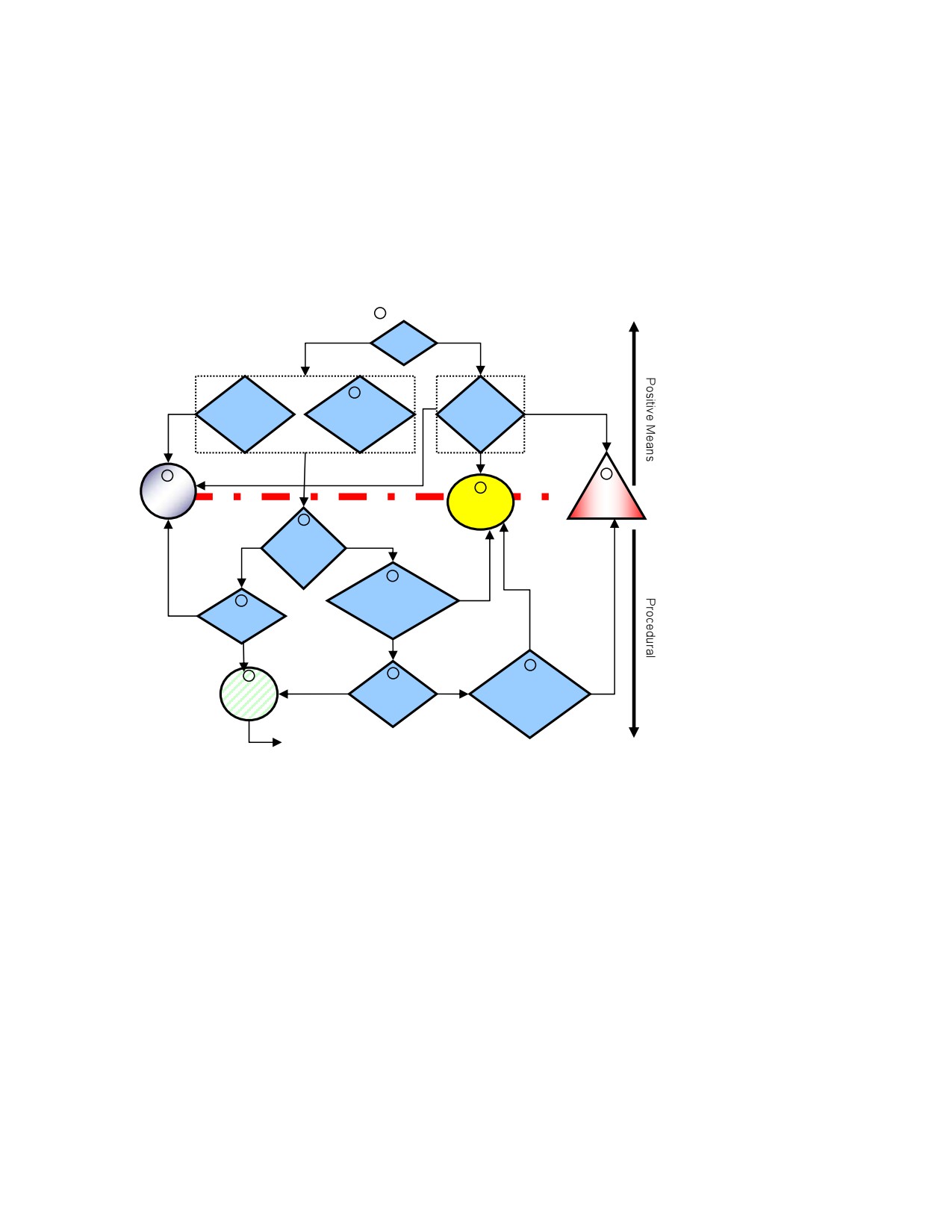
(a) The CID matrix must take into consideration the limitations inherent in the employed
systems that will implement the CID procedures. Once the track symbology set is determined, the use of
voice prowords for these symbols must be aligned. Pay particular attention to the “BANDIT” codeword
versus the system’s HOSTILE track symbol. See Appendix B for more information.
(b) Build the CID matrix to the lowest common denominator, i.e. what everyone can
classify/transmit/receive/forward, in order to support the shooter, or the risk of fratricide exists.
(c)
Figure II-1 provides a notional CID matrix for tracks.
1
Detection
IDBO
Positive Friendly
or
2
Mode 4
CIDS/
Positive Hostile
or
Red/Green
VID
IDBO - Identification
PPLI
Crown
by Origin
IR - Instrumentation
Positive Neutral
Route
5
Positive Friendly
5
5
Hostile
MMR - Minimum
Friend
Neutral
Risk Route
3
POO - Point of Origin
Valid
Y
Mode
PPLI - Precise
1 or 2
Participant Location
Yes
and Identification
4
Yes
SAAFR - Standards Use
4
Air route and
Army Aircraft Flight
Mode 3/C
MRR/
Routes
SAAFR*
Yes
VID - Visual
Identification
4
4
VR - Visual Route
5
Flight profile
MRR/
Unknown
- Fish finding
SAAFR*
Yes
No
- Oil rig route
Reevaluate track
1.
Update IDs at any level in the ID matrix; IDBO or POO considerations
2.
ID Friend by voice/data link verification
3.
In accordance with daily ATO/SPINS
4.
RTF/MRR and civilian air routes listed in ACOs and Annex F (Airspace)
and does not include military VR and IR training routes
5.
In accordance with track classification guide.
Figure II-1. Sample Combat Identification Matrix
(2) ID Criteria. ID criteria are used to support current ROE as well as standing rules of
engagement (SROE) in light of weapon systems capabilities. The AADC is responsible for developing
IADS ID criteria and submitting the same for JFC approval. ID criteria will be published in the AADP
with specific instructions in the ATO and/or SPINS.
(3) ID Considerations. The AADC may use the following considerations when developing ID
criteria consistent with and in support of SROE and current ROE:
(a) IFF Modes (I-IV per the ATO).
II-7
(b) PPLI.
(c) Procedural measures (for example, minimum risk routes).
(d) A radar contact correlated with a voice (position) report from an air or ground control
agency.
(e) Off-board/on-board combat identification systems.
(f) Visual ID.
(g) Formation Assessment (FA) (“guilt by association”). FA is a procedural ID that can be
used to identify all members in a group of targets. This group ID is based on the ID (IAW the ID criteria)
of at least one member of the group. Factors such as similarity to known threat tactical formations and
relative spatial relationships (distance, speed, and altitude) must contribute to the FA ID of these groups.
Once the group has been identified, if the group is observed to split, all contacts in each of the resulting
groups maintain the ID. This ID methodology requires that one or more radar systems (e.g. fighter or C2)
continuously monitor the group or groups during the split. The group is considered “continuously
tracked” if not lost/faded for more than one sweep/cycle.
Note: Army AD radars do not use group IDs and procedurally each track is manually evaluated
using current ID criteria.
(h) Point of origin.
(i) Track maneuvers (e.g., noncompliance with airspace control measures).
(j) Validate kinetics versus threat.
(4) Positive ID considerations.
(a) Positive ID is a high-confidence ID derived from visual observation and/or electronic ID
systems. When available, positive ID is used because it provides the most rapid, reliable, and transferable
means of identification. Most enemy positive hostile IDs are derived from technology-based ID systems
that exploit the physical or electronic characteristics of a target (e.g., noncooperative target recognition
(NCTR), signals intelligence, and electronic support measures). During planning and execution phases
for air defense, all participants must consider the capabilities and limitations of available platforms such
as the RC-135 Rivet Joint, E-3 Airborne Warning and Control System (AWACS), EC-130 Senior Scout,
E- 2 Hawkeye, EP-3 Aries II, Patriot, and Aegis (depending on ship configuration). For example, all are
voice product net capable and all have TDL capability. IADS planners should ensure that integrated
broadcast service (IBS-I) producers are included in the forces (or requested).
(b) Not all participants may see the same ID-related information. This is dependent
primarily on system implementation, J-series vs. M-series message standards, and operator display
capabilities. Because of the different implementation of TDL messages, planners should consider
limiting the number of track classification symbols to reduce confusion and the potential for fratricide.
Positive ID (either on-board or off-board) or visual ID will always be part of the ID process.
Note: Due to the recent NSA decertification of the Mark XII Mode 4 system [DIRNSA message
081811Z Oct 03] ID planners should refer to FM 3 01.61/MCWP 3-25.11/NTTP 6-
02.4/AFTTP(I) 3-2.39, Multi-Service Tactics, Techniques, and Procedures for Mk XII IFF
Mode 4 Security Issues in a Joint Integrated Air Defense System.
(5) Procedural ID. Procedural ID is another identification method that relies on airspace control
measures promulgated through the ACP, ACO, and SPINS. Procedural ID separates airspace users by
geography, altitude, and time. Normally, a combination of positive and procedural ID is used to identify
friendly and hostile tracks.
II-8
(6) Auto-ID Systems. Many systems, including aircraft carrier Auto ID, Aegis, and Patriot, have
the capability to execute an auto-ID function. Planners and operators must ensure that the level of use of
auto-ID is consistent with theater CID policies and procedures. Properly implemented, auto-ID can
reduce the workload of operators and improve the timeliness of the ID process; improperly implemented,
it can result in mistaken-IDs and increase the potential for fratricide. Auto-ID should be explicitly
expressed in the ROE. Automation does not replace the judgment of operators in a tactical situation.
Details of ID considerations are contained in JCIET evaluation reports (see the JCIET website at
j.
Decide (Battle Management). The AADC has certain systems and authorities to control the
battle. These include air defense warning conditions, weapons control status, ID authority, commit
authority, and engagement authority. The JFC may divide the operational area into air defense regions
and air defense sectors, as appropriate. Each region and sector will have respective RADCs and SADCs.
For example, the SADC may be subordinate to a RADC who in turn is subordinate to the AADC. The
AADC may decentralize the battle by delegating some or all AADC authorities to the RADC/SADCs.
The following are two tools used in air defense battle management, which are issued concurrently:
(1) Air Defense Warning Condition (ADWC). The ADWC is a degree of air raid probability
based on the threat assessment. The AADC establishes the baseline ADW for the joint force, which may
be different for an air breathing threat and a missile threat. Subordinate air defense commanders may
issue higher, but not lower ADW for their region or sector. ADWs are disseminated though C2 channels
to all air and missile defense elements and fire units.
(a) ADWC White: an attack by hostile aircraft or missile is improbable.
(b) ADWC Yellow: an attack by hostile aircraft or missile is probable.
(c) ADWC Red: an attack by hostile aircraft or missile is imminent or in progress.
(2) Weapons Control Status. WCS includes free, tight, hold/safe. They describe the relative
degree of control of air defense fires. The AADC establishes the WCS for the joint force, which may be
different for an air breathing threat and a missile threat. This authority originates with the AADC and can
be delegated to any subordinate commander. Different weapons control statuses may be applied
simultaneously to different weapons systems, and/or volumes of airspace.
(a) Weapons Hold/Safe: fire only in self defense or in response to a formal order.
(b) Weapons Tight: fire only on targets positively identified as hostile in accordance with
current ROE.
(c) Weapons Free: fire at targets not identified as friendly in accordance with current ROE.
(3) ID Authority. The AADC will establish the ID policy and will promulgate it via the SPINS
and/or an OPTASKLINK supplement. Execution of the ID policy is normally delegated to the tactical
level; however, take care that the tactical commander is capable of performing the ID function in real
time. Units can reliably share three IDs across the IADS: friend, hostile, and unknown. Units can also
share neutral ID; however, there are inconsistencies in how “neutral” is interpreted and displayed by some
systems (see Appendix B). Proper and consistent execution of the ID policy is extremely important in
order to minimize fratricide. Note that the TDL hostile ID and symbol does not necessarily constitute
authority to engage. Therefore, as previously stated, potential TDL ambiguities should be resolved within
tactical timelines before allowing weapons employment to avoid fratricide. Proper application of ROE in
effect must be taken in conjunction with ID and WCS (free, tight, or hold/safe) to constitute authority to
engage.
(4) Commit Authority. Commit authority describes the air defense control echelon that may
dedicate an asset to prepare to engage an entity (e.g., position a DCA fighter to intercept or direct an ADA
unit to track and target). Commit authority does not imply engagement authority. Further permission is
II-9
required to engage an entity that has been committed upon unless the unit committing the resource also
holds engagement authority. Commit and engagement authorities are typically split during the transition
phase of a major campaign or during containment and show of force operations in order to avoid
accidental escalation of conflict.
(5) Engagement Authority. The JFC is vested with authority to prosecute engagements within the
theater/JOA consistent with ROE currently in effect. For air defense engagements within the IADS, the
authority is normally delegated to the AADC who may further delegate the engagement authority to
tactical levels. Keep the degree of delegation consistent with the ROE, the DAL, and the inherent right of
self-defense.
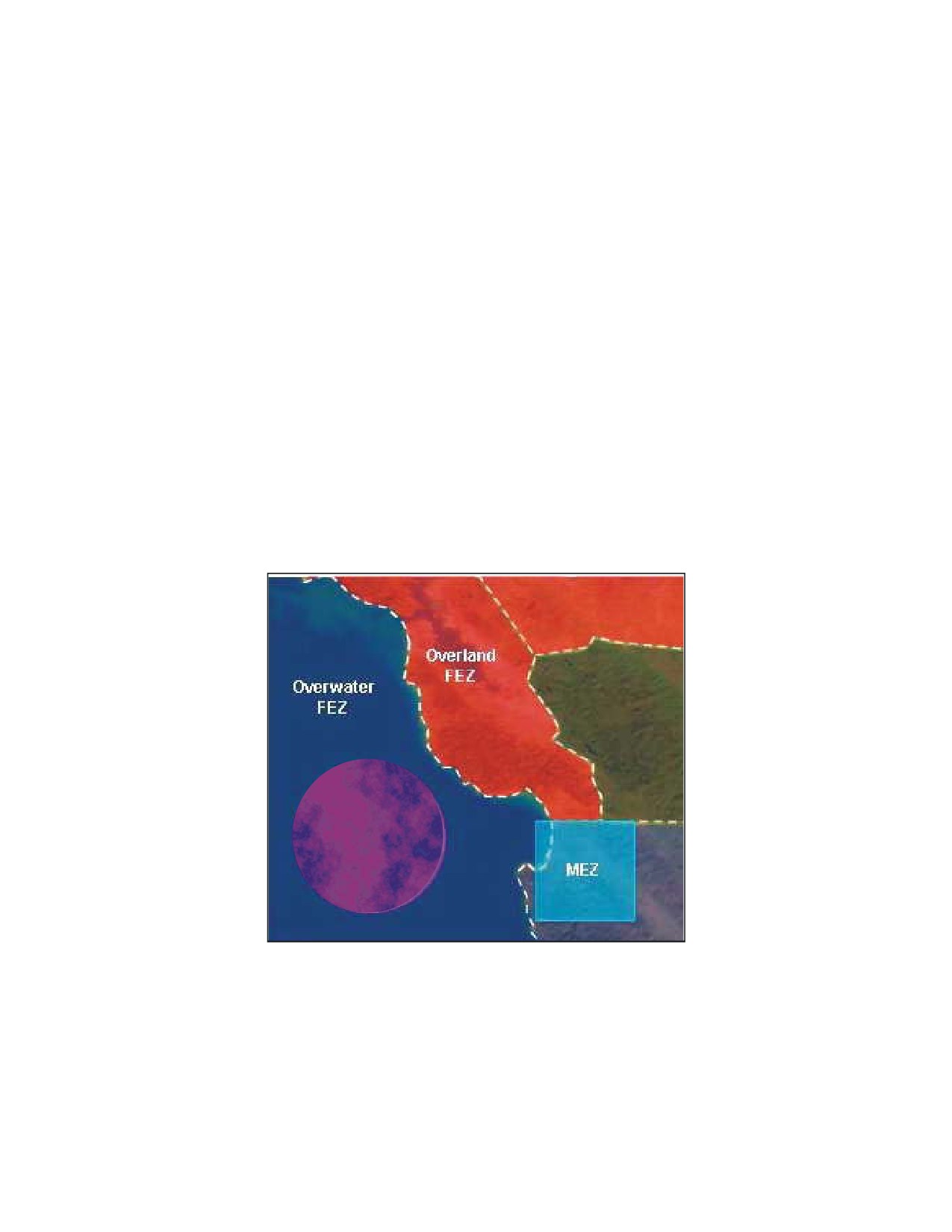
k. Engagement. Early warning of hostile air and missile threats is vital for layered defense. Air
defense assets are layered to provide point and area defense. Although defensive operations are reactive
in nature, conduct them as far from the friendly forces or operational area as feasible. To counter enemy
air and missile threats, the engagement process must continue throughout the approach to, entry into, and
departure from the friendly operational area. Weapons system placement is closely tied to the DAL. A
combination of fighter engagement zones (FEZ), missile engagement zones (MEZ), and joint
engagement zone (JEZ) will be established to maximize engagement efficiency among all air defense
platforms. Integrated operations in a JEZ require robust and reliable communications. See JP 3-52,
Doctrine for Joint Airspace Control in the Combat Zone and FM 3-52.2/MCRP 3 25F/NTTP 3-
56.2/AFTTP(I) 3-2.17, Multi-Service Tactics, Techniques, and Procedures for the Theater Air-Ground
System (TAGS) for more information on engagement zones. Figure II-2 shows a graphical representation
of engagement zones.
JEZ
Figure II-2. Engagement Zones
l.
Tactical Warning. Tactical warning is the act of disseminating warning information of a
threatening or hostile act to personnel within the area of risk. Base this warning on an evaluation of
information from all available sources. Though the AADC has overall responsibility for providing
II-10
tactical warning, the responsibility for providing warning to assigned forces lies with all commanders.
All personnel must respond to tactical warning information IAW their assigned responsibilities.
m. Planning Applications. Air defense planning tools include Joint Defensive Planner (JDP),
Command, Control, Battle Management, and Communications System (C2BMC), Theater Battle
Management Core System (TBMCS), Area Air Defense Command System (AADCS), Air and Missile
Defense Workstation System (AMDWS), GCCS, and the Patriot Tactical Planner.
3. Communications Architecture
Effective employment of the IADS relies on effective voice, network, and data communications.
IADS communications requirements are a subset of the overall JTF communications requirements and
will compete with other mission areas for limited bandwidth and frequency allocations. Use simplicity
and redundancy to ensure the capacity for dynamic bandwidth management and graceful degradation.
Due to differing communications equipment, media capability, and cryptographic capabilities at the units
that constitute the IADS, there are significant challenges to interoperability and integration. Follow-on
forces flowing into theater must understand the existing JTF communications architecture to ensure they
bring the correct capabilities to integrate into the numerous IADS voice and data nets. Normally, the JFC
operational order (OPORD) Annex K and the AADP Annex K lay the foundation for communications
architecture.
4. Conclusion
An IADS is not a formal system in itself, but the sum of component air defense systems. For each of
these systems to operate within an integrated whole, it is imperative that everyone working within the
system understand the various components’ capabilities, limitations, and how to best utilize them within
the IADS. Coordinated planning between the AADC and component commanders’ planning staffs is
required. While planning is important for establishing an efficient defense architecture, it is critical that
all weapons system operators be thoroughly familiar with aircraft and missile flight profiles and
characteristics and on-going friendly air operations (through the ATO, ACO and SPINS) to develop the
situational awareness that will avoid fratricide. Chapters III-VI provide an overview of each Service’s air
defense systems, capabilities, and limitations. Each Service chapter provides detailed information on
mission, organization, command and control, weapon systems, planning, and operations.
II-11
Chapter III
ARMY AIR DEFENSE
1. Introduction
Synchronizing and integrating Army capabilities in air and missile defense operations is a complex
process. It involves coordinating C2 organizations and capabilities with specific data links,
communications and intelligence capabilities, weapon systems capabilities, and data architecture. For the
joint planner, understanding the planning considerations in support of the IADS is very important.
2. Mission
a. The air defense artillery (ADA) mission is: Army air and missile defense (AMD) forces with
other elements of the joint, interagency, and multinational (JIM) team at strategic, operational, and
tactical levels;, will provide AMD and contribute to situational awareness/understanding;, airspace
management; , and operational force protection to deter or defeat enemy air and missile threats, protect
the force and high value assets, enable freedom of maneuver. This mission is normally executed within a
combined theater and requires integration and close coordination of Army AMD with other joint forces.
Mission sets for AMD forces are:
(1) Provide air and missile defense.
(2) Contribute to situational awareness/understanding.
(3) Contribute to airspace management.
(4) Contribute to operational force protection.
b. Integration of the air and missile defense mission into the IADS is accomplished by the Army’s
ADA units.
3. Organization and Function
Within a theater or AO, all elements of the Army air defense structure are not required to be in place
in order for Army elements to interface in a joint operation. When in place, Army air defense forces are
organized as follows:
a. AAMDC.
(1) AAMDC Role.
The AAMDC is normally under the OPCON of the ARFOR commander or joint forces land
component commander (JFLCC). When directed by the JFC, AAMDC assets may be placed in direct
support of the JFACC / AADC as appropriate. The roles of the commanding general of the AAMDC are
Senior Army ADA commander, theater Army air and missile defense coordinator (TAAMDCOORD),
and DAADC. Coordination and liaison functions between all three are essential to effective air and
missile defense operations within a given theater. The AAMDC and JAOC intelligence personnel build a
collaborative TAMD IPB, which serves as the basis for JTAMD strategies and plans. The AAMDC
(attack operations section in coordination with the intelligence section) submits TM target nominations
directly to the JAOC for inclusion as JFACC nominated targets. The AAMDC also sends a robust LNO
team (active defense, intelligence, and attack operations personnel) to support the JFACC, AADC, and
DAADC requirements and may deploy the AAMDC TOC (Main) to the JFACC, AADC location. As the
senior Army air defense element at the AADC’s location, the AAMDC LNO team serves as the primary
interface at the JAOC for all land-based active air defense (see Table III-1).
(2) AAMDC Functions.
III-1
(a)
Deputy Area Air Defense Commander (DAADC). The JFC and AADC will determine
whether a DAADC should be designated. Normally, the commander of the AAMDC assumes the role of
the DAADC to serve as an advocate for land-based air and missile defense and because the AAMDC
possesses the C2 assets to perform DAADC responsibilities. This designation formalizes the relationship
between the land-based air and missile defense assets dedicated to theater level missions and the AADC,
and helps to ensure fully integrated and synchronized air and missile defense operations.
• Integrate land-based AMD into theater DCA operations.
• Advise the AADC regarding rules of engagement (ROE) [weapon control status,
weapon control procedures, states of readiness/emission, fire control orders (FCOs), etc.], airspace control
measures (ACMs), weapon control measures, and air defense warning (ADWs).
• Assist the AADC with air defense plan development.
• Advise the AADC on matters regarding land-based air and missile defense operations
and capabilities.
(b) Senior Army ADA Commander. The senior Army ADA commander is the Army
proponent for the air and missile defense combat functions and has the responsibility for active air and
missile defense planning within the Army forces. When assigned for the entire land force, the senior
Army ADA commander provides the following functions:
• Single POC for Army AMD in theater.
• Conducts AMD operational-level planning.
• Conducts defense design/ operational-level planning.
• Recommends DAL.
• Commands all EAC Patriot units.
• Plans for recovery and reconstitution.
(c) TAAMDCOORD. The TAAMDCOORD is an integral member of the ARFOR or
JFLCC’s staff planning team and provides the following:
• Develops and maintains TAMD IPB/situation template.
• Provides LNOs to higher and JTAMD C2 nodes and accepts LNOs from lower
elements and components.
• Synchronizes missile defense operations.
• Develops AMD Annex for ARFOR/JFLCC.
• Provides vulnerability analysis/NBC reporting.
• Disseminates early warning.
• POC for operational protection (OP).
• Plans and synchronizes all OP tasks.
• Input to target nomination process.
• Assists in target definition.
• ISR recommendations.
III-2

Table III-1. Roles/Tasks of the AAMDC Commander
Theater Army Air and
Deputy Area Air
Senior ADA
TAMD
Missile Defense Coordinator
Defense Commander
Commander
(TAAMDCOORD)
(DAADC
C4I
Single POC for Army
Synchronizes missile defense
Integrates Army AMD in
AMD in theater
operations
theater
Develops and maintains
Integrates two levels of
TAMD/situation template
modernized force
Provides LNOs to higher and
Provides LNOs
JTAMD C2 nodes and accepts
(ADAFCO) to
LNOs from lower elements
CRC/TAOC/Aegis
and components
Integrates AMD
communications
(data/voice)
Active
Conducts AMD
Develops AMD Annex for
Chairs coordination
Defense
operational-level
ARFOR/JFLCC
(reprioritization) board
planning
Recommends CAL/DAL
Conducts defense
with CVT methodology
design/ operational-
Assists with AADP
level planning
development
Recommends DAL
Issues SAM Tactical
Commands all EAC
Order (STO)
Patriot units
Advises on coalition AMD
integration
Passive
Plans for recovery and
POC for operational protection
Assists in theater early
Defense
reconstitution
(OP)
warning
Plans and synchronizes all OP
tasks
Disseminates early warning
Provides vulnerability
analysis/NBC reporting
AO
Assists in target definition
Assists in target definition
ISR recommendations
ISR recommendations
Input to target nomination
Input to target nomination
process
process
b. The Army ADA brigade and divisional ADA battalions accomplish the majority of tactical air
and missile defense missions. The corps ADA brigades and the divisional ADA battalions, respectively,
are the corps and division commanders' primary air and missile defense resources. The corps
commander's requirement to provide air and missile defense resources to forces is no different from the
requirement to provide maneuver and fire support resources. The corps commander must ensure that
forces at all levels have air defense protection and must reinforce those defenses when necessary. Of
particular importance is the corps commander's requirement to provide high-to-medium altitude air
defense (HIMAD) protection to divisions, with specific emphasis on giving support to offensive
operations. The division commanders require corps support for HIMAD air defense and any additional
SHORAD weapons needed for mission accomplishment.
(1) The ADA brigade mission is to protect forces and selected geopolitical assets from air and
missile attacks and surveillance. This mission may require the brigade to deploy within or to a theater of
operations with tactical lift assets or strategic lift assets. Elements of the brigade may deploy early to
protect a lodgment or early entry operations. The brigade may operate initially under the OPCON of the
JFLCC or in direct support of the JFACC as forces flow into theater. During all phases of the operation,
III-3
the brigade must be integrated into the theater air defense system and provide early warning of and defend
against theater missiles (TMs), manned, and unmanned aircraft. ADA brigade missions range from TM
defense of corps or JFC activities or assets to reinforcing coverage of a divisional tactical maneuver ADA
brigade.
(a) EAC ADA Brigade.
• The EAC ADA brigade force protection missions include the protection of theater level
sustaining bases, military or political headquarters, or ports of debarkation against air and missile attack.
The EAC ADA commander is responsible for the planning and execution of ADA plans and missions at
the tactical level and ensures that the brigade is integrated and synchronized with adjacent, higher and
lower ADA operations. The EAC ADA brigade commander may also function as the AMDCOORD.
• EAC brigades may deploy early into the theater to protect Aerial Ports of Debarkation
(APODs), Sea Ports of Debarkation (SPODs), early arriving forces, and critical supplies. As entry forces
move into tactical assembly areas (TAA) for expansion operations, ADA forces maneuver and reposition
to force protection. As the lodgment is expanded, ADA conduct operations to defend designated critical
assets such as C2 nodes, locations of political importance and military forces.
• Units conducting active defense at theater level normally consist of one or more EAC
ADA brigades that provides command and control over assigned forces. The brigade commander task
organizes active defense forces to protect designated assets identified on the DAL.
(b) Corps ADA Brigade.
The corps ADA brigade commander is the corps air defense officer and serves as the corps
commander’s air and missile defense coordinator (AMDCOORD). Air and missile defense
responsibilities include the following:
• Ensuring corps air and missile defense requirements are integrated into theater air and
missile defense plans.
• Coordinating the overall AMD planning with the corps higher headquarters (ARFOR),
adjacent corps, subordinate elements within the corps and with EAC brigades and the AAMDC as
appropriate.
• Developing and recommending to the corps commander air and missile defense
priorities in conjunction with the G3 plans and other corps staff elements.
• Preparing the air defense estimate and annex for corps plans and orders.
• Advising the corps commander on overall AMD integration, synchronization, and
employment to include monitoring organic and attached unit status and locations down to battery level,
and divisional, regimental, separate ADA brigade status down to battery level. This also includes
nominating appropriate targets for attack operations as part of the TMD fight.
• Informing the corps commander of the AMD rules of engagement and procedures
applicable to AMD assets operating within the corps sector.
• Assessing the air and missile threat, in concert with the corps G2, and assisting the G2
in preparation of the integrated IPB.
• Making recommendation to the corps commander on reconstitution or reorganization of
AMD assets within the corps.
(2) The ADA battalion is the basic operational ADA unit.
III-4
(a) Patriot battalions have five firing batteries and are assigned to EAC and corps Brigades
to defend against aircraft and lower-tier missile threats.
(b) Maneuver air defense units have four firing batteries per battalion. The division
maneuver air defense battalions have Avenger and Linebacker air defense systems supported by the
forward area air defense (FAAD) C4I system using the Sentinel Radar.
4. Command and Control
a. Command and Control. The AAMDC normally commands all ADA forces defending echelon
above corps units/assets (EAC AD units). These ADA forces are normally organized into brigades. The
AAMDC may also have other forces assigned or attached under its command. ADA units defending
Corps and divisional units/assets remain under the command of those commanders vice the AAMDC.
The AAMDC does not directly execute air defense engagement operations; this function is the
responsibility of the engagement authority (EA). The AADC is the engagement authority and normally
will not delegate EA for air threats below the SADC, RADC, or CRC level.
(1) All components of the joint force share the AOR and/or JOA airspace for offensive and
defensive operations. Airspace control is very complex; close coordination between components is
critical and must be clearly articulated in the AADP (to include engagement priorities and
communications channels). ADA brigades assign an ADAFCO to the SADC to act as a single point of
contact for Army AD units to coordinate and resolve airspace control, ID, battle management, and
friendly protect issues. The ADAFCO/MARLO works with the AADC/SADC to deconflict the airspace
and execute AD engagement operations. The ADAFCO advises the AADC/SADC on ground-based air
defense capabilities and limitations. Airspace control should maximize the effectiveness of combat
operations without adding undue restrictions and with minimal adverse impact on the capabilities of any
Service or functional component.
(2) Army air defense C2 encompasses multiple echelons in the planning and operations of Army
air and missile defense systems. C2 is enabled through the use of a tactical operations center (TOC).
TOCs exist in some form at every command level: AAMDC, EAC, and corps ADA brigade level—TOC;
battalion level—tactical command system (TCS); and battery level—battery command post (BCP).
TOCs provide a common, integrated, and digitized C4I capability that automates and integrates the
performance of engagement operations (EO) and force operations (FO) functions for air and missile
defense (battery through AAMDC) as well as joint force elements. Contained within the TOC is an
integrated system of hardware and software known as the air and missile defense planning and control
system (AMDPCS). The AMDPCS contains the computers, communications, and ancillary equipment
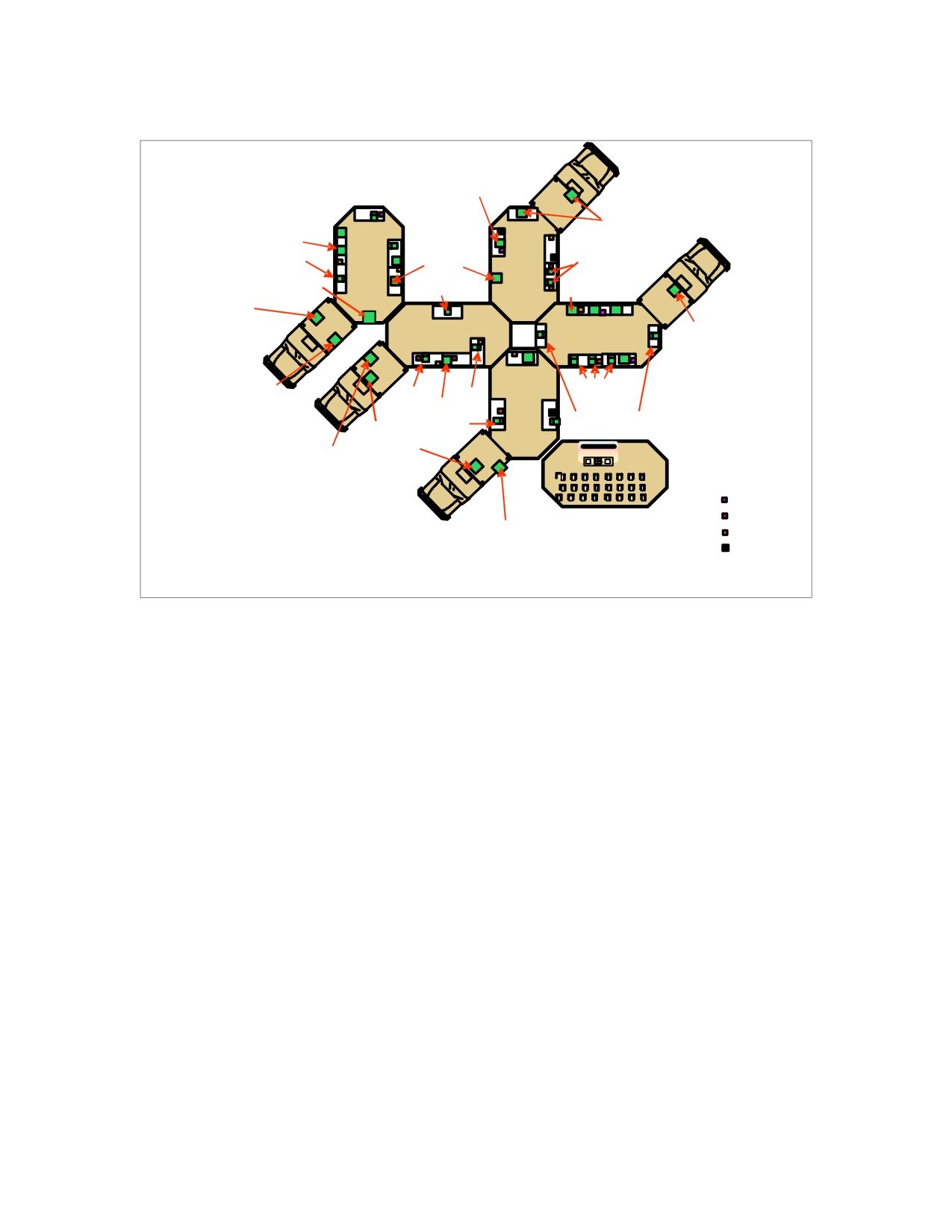
required to plan and execute air and missile defense operations. Table III-2 summarizes the systems and
functions of AMDPCS TOC equipment interface. The AMDPCS that constitutes the AAMDC TOC is
shown in Figure III-1. The AMDPCS is tailored to each echelon and can perform the following
functions:
(a) Monitor the execution of operations.
(b) Synchronize combat activities to sustain tempo and adjust the plan to the situation.
(c) Maintain situational awareness.
(d) Sustain the tempo of operations by ensuring a continuity of combat consumables.
(e) Provide a focal point for the receipt and development of intelligence.
(f) Plan future operations.
(g) Monitor combat operations of supported, adjacent, and higher echelon organizations.
(h) Provide situational information to higher headquarters.
III-5
(i) Conduct air defense engagement operations.
Table III-2. Army Tactical Operations Center Equipment
Systems
Functions
Air Defense Systems Integrator (ADSI)
EO and FO functions at brigade level and above.
Air and Missile Defense Workstation
Provides near real-time air picture as a planning tool for radar
(AMDWS)
coverage and system firing fans.
All Source Analysis System (ASAS)
Displays EOB; assists in analysis; and receives, prints, and
plots intelligence reports and imagery.
AN/ARC-187/210 UHF Radio
Receives UHF TDL-A data.
Advanced Field Artillery Tactical Data
Assists in fire support management, passes launch points, and
System (AFATDS)
accesses friendly artillery database.
Automated Deep Operations
Displays units and airspace control means; used to plan deep
Coordination System (ADOCS)
targets through the corps’ Deep Operations Coordination Cell
(DOCC); provides situational awareness to targeting officer.
Commanders Tactical Terminal (CTT-3,
Receives UHF for IBSI/IBSS.
CTT-HR) and Joint Tactical Terminal
(JTT)
Generic Area Limitation Environment
Terrain analysis using resident database; can do location
(GALE)
suitability modeling for threat systems.
Global Command and Control System
Multi-Service C4I data.
(GCCS)
Harris RF-350 HF Transceiver
Receives HF TDL-A data.
Interim Pager Alert Warning System
Provides missile warning/force warning through pagers.
(IPAWS)
Joint Deployable Intelligence Support
Provides automated/connectivity to facilitate collection and
System (JDISS)
coordination of intelligence information.
Joint Services Work Station (JSWS)
Provides moving target indicator (MTI)/synthetic aperture radar
(SAR) data, and initiates remote sensor relay (RSR).
JSTARS Common Ground Workstation
Provides MTI/SAR data and initiates RSR.
(CGWS)
Joint Tactical Information Distribution
Receive and transmits TDL-J data.
System (JTIDS) and Multi-Functional
Information Distribution System (MIDS
LVT-2)
Joint Warning (JWARN)
Receives, displays, and transmits nuclear, biological, and
chemical (NBC) messages.
LST-5/PST-5 SATCOM Radio
Receives LOS UHF secure data and voice communications.
Maneuver Control System (MCS)
Provides comprehensive friendly force info and inbound missile
warning.
Patriot Task Force Planner (PTFP)
Provides real time air picture as a planning tool for Patriot radar
coverage, defense design, and system firing fans.
Worldwide Origin and Threat System
Receives and correlates JTAGS, ALERT, and TACDR reports
(WOTS)
and alerts.
Forward Area Air Defense EO
Provides automated EO functions in support of the FAAD TOC.
III-6
ACTIVE DEFENSE VAN
•
ADSI DISPLAY x2
GCCS
• AMDWS x1
•
GCCS x1
G-2
ADSI REMOTE
G
3
W/S
GALE
PLAN S
G-2 PLANS
LAPTOP W/S
LAPTOP
AMDWS
COMMS
G-3
LAN HUB
/MAINT
LAPTOP
ACTIVE
GALE
CTT3 RADIO
DEFENSE
COMMS VAN
PASSIVE
ATTACK
AFATADS
DEFENSE
OPS
• ADSI (MAIN) x1
•CTT-3 RADIO x1
BATTLE CPT
COMM TECH ADSI W/S
ADOCS
JWARN
WOTS
GCCS
G-1
PASSIVE DEFENSE VAN
G-4
G-2 ANALYSIS/ OPS
MCS / P
ULLS-4
LAPTOPS
•
ASAS (RWS) x1
G-4
• GCCS x1
AN/PSC-7 SATCOM
AMDWS
• MCS/P x1
RADIO
• GALE x1
• WOTS Laptop x1
IST phone
• AMDWS x1
DNVY Phone
G-1
BRIEFING
• JWARN Laptop x1
AMDWS
TENT
SECTEL
G-1/G-4 STAFF VAN
Printer
•
AMDWS x2
Figure III-1. AMDPCS Configuration for AAMDC
(3) Air Defense Airspace Management (ADAM). The ADAM cell deploys with the Stryker
Brigade Combat Team (SBCT) or with other divisional units that do not possess an organic air defense
battalion. It conducts continuous air and missile defense planning and coordination, monitors aerial
situational awareness within the SBCT/assigned unit's AO, and performs Army airspace command and
control (A2C2) with Army aviation assets. The ADAM cell has only A2C2 capabilities and possesses no
organic air defense weapon systems. Other air defense assets are task-organized based on the SBCT or
divisional unit's mission and potential threat. The ADAM cell integrates and provides data connectivity
with IADS and establishes initial operational capability. (See Table III-3 and Table III-4.)
b. FAAD C4I provides maneuver air defense weapons and C2 centers with digital automated target
information from Sentinel and joint sensors with battle command information. Along with the
AMDWS, it provides automated EO and FO capabilities in maneuver air defense battalions. FAAD EO
capabilities include near real-time early warning and cueing information for maneuver air defense
weapon systems, friendly aircraft identification, and air battle management. AMDWS FO capabilities
include automated mission and staff planning for interoperability with other Army battlefield control
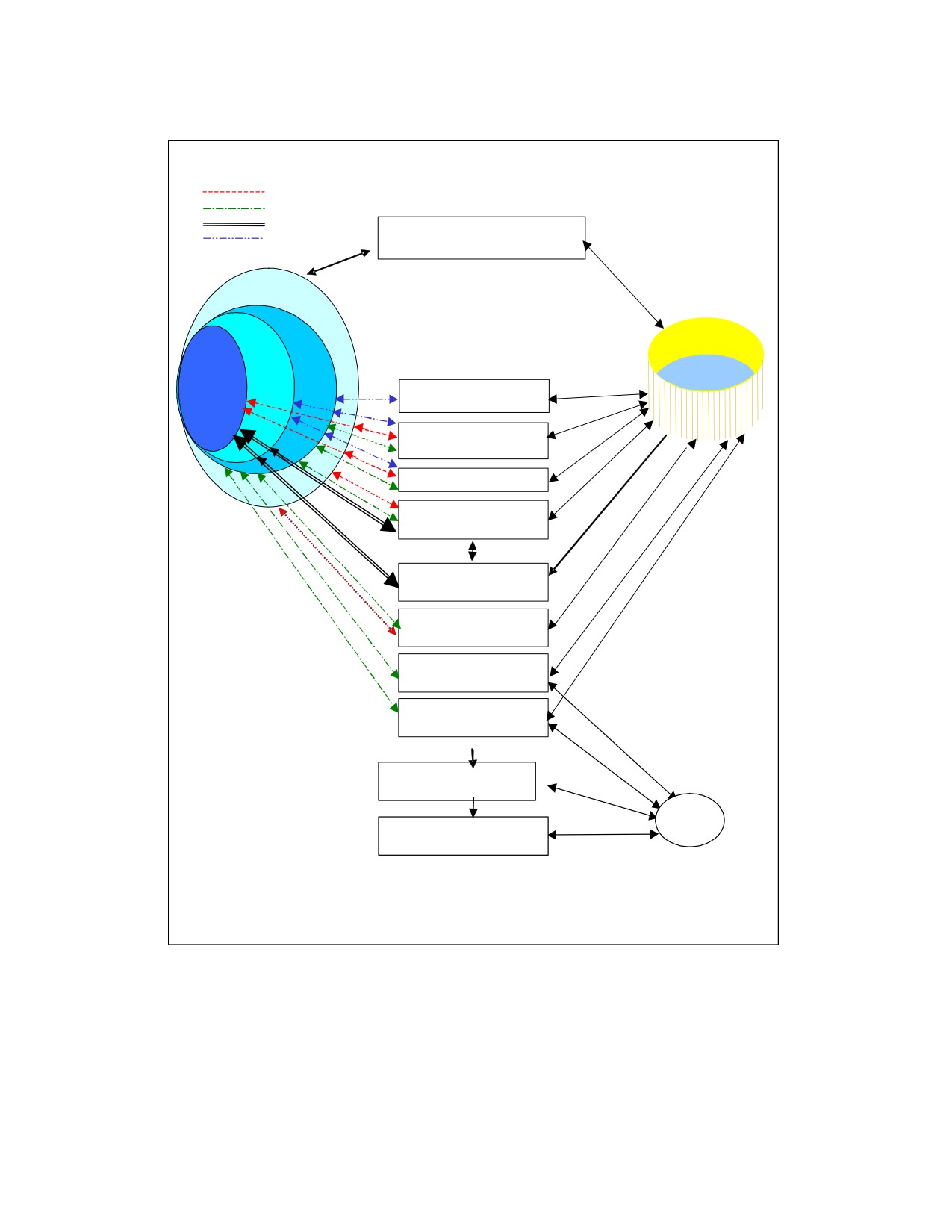
system components. The C2 data architecture of Army air and missile defense units is implemented as
shown in Figure III-2.
III-7
Data Link Architecture
ALTERNATIVE
TADIL-A
TADIL-B
SERIAL-J
Other Services/Coalition Forces
Note 6
Note 6
UHF/
HF
MSE/
TRITAC
Fiber
TADIL -J
Tactical
Optic
Joint Tactical Air
Satellite
Cable
Ground Station
Note 1
Note 1
Army Air & Missile
Defense Command
ADA BRIGADE
PATRIOT
BATTALION
UHF PADIL
Note2
PATRIOT BATTERY
Note 3
ADAM CELL
MANEUVER DIVISION
A2C2
MANEUVER
BATTALION ABMOC
Notes:
SINCGARS
1. Requires special interface and coordination
2. When Battery command post present
MANEUVER SENSORS
3. Only one SHORAD C2 element transmits track
data
4. 1
st
CAV, 3 rd
INF, 4 th
INF only
SINCGARS
5. Army Class 2M terminal is IJMS and TADIL-J
FDL
EPLRS
capable
Note 4
6. Service/Coalition force dependent
MANEUVERWEAPONS
Figure III-2. Army Air and Missile Defense Data Architecture
c. The Joint Tactical Air Ground Station (JTAGS) is a national level information processing
system that receives and processes in-theater, direct down-linked data from Defense Support Program
(DSP) satellites. JTAGS disseminates warning, alerting, and cueing information on TBMs and other
tactical events of interest throughout the theater using existing communications networks. Its in-theater
III-8
location provides the earliest warning, and units can tailor it for and link it to theater-unique terrestrial
C4I systems.
d. The Joint Tactical Air Ground Station (JTAGS) is a national level information processing
system that receives and processes in-theater, direct down-linked data from Defense Support Program
(DSP) satellites. JTAGS disseminates warning, alerting, and cueing information on TBMs and other
tactical events of interest throughout the theater using existing communications networks. Its in-theater
location provides the earliest warning, and units can tailor it for and link it to theater-unique terrestrial
C4I systems.
Table III-3. Key Army Interfaces and Their Characteristics
Interface
AAMDC and
Army Patriot
Army
Air Defense Air
ARMY
Characteristics
ADA Brigades
Information
Patriot
Space
Maneuver Air
Coordination
Battery
Management
Defense With
Center (ICC)
Command
(ADAM) Cell
FAAD C4I
Post (BCP)
(Sentinel
Radar)
1. Missions
Threat Detection and
Threat Detection Tracking
Situational
Threat Detection
Threat Detection
Warning
Identification
Awareness
Tracking
SAM Control
and Warning
Dissemination
SAM Control
Air Defense Management
Tracking
Warning
Air Defense
Management
Identification
Cueing
Tracking
Air Defense Management
Air Battle
Identification
Management
2. Technical Functions
PPLI
PPLI
PPLI
PPLI
PPLI
(Includes Mission
Air Surveillance
Air Surveillance
Air Surveillance
Air Surveillance
Categories for Weapons
Weapons Coordination
Weapons Coordination
Weapons Coordination
Weapons
Coordination and
and Management
and Management
and Management
Coordination and
Management and
Information
Information Management
Information Management
Management
Control)
Management
Point Surveillance
Point Surveillance
Information
Mission Management
Management Mission
Point Surveillance
Management Point
Surveillance
3. Types of Tracks
Air
Air
Air
Air
Maintained and reported
EW
EW
EW
to interface
Points
Points
Points
4. Interface data link
TDL B
TDL A
TDL J
TDL A
TDL-J
capability/limitations
TDL J
TDL B
TDL B
FDL
SERIAL J
TDL J
TDL J
TDL- B
TDL A
ATDL1
FDL
IJMS
Army tactical data link 1
PADIL
IJMS
(ATDL1)
IJMS
FDL
IJMS
5. Track position data
Within 1024 data miles
For unit locations:
Within 1,024 data miles
410 KM
base limits
of the system coordinate
+/- 1,023.5 data miles
of the SCC
center (SCC)
from own SCC. The
other track positional data
+/- 511.75 data miles
from own SCC.
6. Maximum display
1024 Data Miles
1,024 KM x 768 KM
1,024 Data Miles
400 KM x 400 KM
area
7. Data registration
Done automatically with
Done automatically with
Done automatically with
Manual input to
respect to the DLRP.
respect to the DLRP.
respect to the DLRP.
coordinate converting
parameters.
8. Track number
OPTASKLINK
OPTASKLINK
OPTASKLINK
OPTASKLINK
OPTASKLINK
III-9

Table III-3. Key Army Interfaces and Their Characteristics (Continued)
9. Track Identification
Automatic
Automatic with
(passive/active)
manual override
Manually
adjustable
(passive/active)
parameters
10. Voice Communications
Air Defense Command and
ADCCN/DCN/
ADCCN/DCN/
ADCCN/DCN/
ADCCN/DCN/
requirements/capabilities
Control Net
TSN
TSN
TSN
TSN
(ADCCN)/DCN/
UHF**
SC TACSAT/UHF
HF
track supervision network
(TSN)
SC TACSAT/UHF/HF
11. Correlation
Automatic if within 5 data
Automatic (correlation
Automatic if within 5
Automatic
miles when in Auto Track
block size is variable
data miles when in Auto
correlation from
Mode. No correlation done
as a function of
Track Mode. No
Sentinel Radar feed
over joint interface.
aircraft position).
correlation done over
at Sensor C2 Node.
joint interface.
Table III-4. Army Unit Communications Capability Matrix
BDE/FDC/
ADAM
User→
AAMDC
BDE TOC
BN TOC
BN ICC
BTRY
FAAD
ADAFCO
CELL
↓COMMS
LINK 11 HF
X
X
X
X
LINK 11
X
X
X
X (2)
X
UHF
LINK 11B
X
X
X
X
X
X
LINK 16
X
X
X
X
X w/BPC
X
X
IBS-I
X
X
X
X
X
IBS-S
X
X
X
X
SCTACSAT
X
X
X
X
X (1)
X (1)
X
X (1)
NIPR
X
X
X
X
X
X
SIPR
X
X
X
X
X
X
CHAT
X
X
X
X
X
X
PADIL
X
X
UHF VOICE
X
X
X
X
X
X
X
X (1)
SECURE
X
X
VTC
DSN
X
X
X
X
X
X
TAC PHONE
X
X
X
X
X
X
X
AMDWS
X
X
X
X
X
X
X
TAC
X
X
PLANNER
ADSI
X
X
X
X
GALE
X
GCCS
X
WOTS
X
PAWS
X
JSWS
X
ASAS LITE
X
X
X
CSPC
X
X
III-10

5. Weapon Systems
Table III-5 describes the following weapon systems characteristics:
a. Avenger. The Avenger weapon system is a lightweight, day and night, limited adverse weather
fire unit. The fire unit consists of two turret-mounted Stinger/MANPADS missile pods, a .50-caliber
machine gun, a forward-looking infrared (FLIR) system, a laser rangefinder, and an IFF system. The
FAAD C4I provides targeting information to assist in target acquisition. The fully rotating turret is
mounted on a high mobility multipurpose wheeled vehicle (HMMWV). The sensor components and
armament system are gyro-stabilized for shoot-on-the-move capability and can slew-to-cue in response to
early warning (EW) information. The gunner operates the system from inside the turret or from a remote
control unit (RCU) away from the HMMWV when static. On-board communications equipment provides
for radio and intercom operations.
b. Linebacker. The Bradley Linebacker is mounted on an M6 Bradley vehicle and has a crew of
four personnel with an integrated, externally mounted Stinger/ Man-Portable Air Defense System
(MANPADS) launcher, which is mounted in place of the tube-launched, optically tracked, wire-guided
(TOW) missiles. The Bradley Linebacker can fire while moving, maintaining pace with the armored
forces. The crew remains under armor protection during engagements and missile reloading. An
integrated position, navigation, and north-seeker capability allows for on-the-move cueing. The FAAD
C4I provides targeting information to assist in target acquisition.
c. Patriot is a mobile, medium-to-high altitude air and missile defense system that protects critical
assets and maneuver forces from TBMs and air-breathing threats (ABTs), and CMs. Patriot is the
centerpiece of the Army’s TAMD force. The Patriot system currently has four fielded missile versions:
Patriot Advanced Capability-3 (PAC-3), Patriot Advanced Capability-2 (PAC-2), the Guidance
Enhanced Missile (GEM), and the GEM+. The PAC-3 missiles are kinetic hit-to-kill, whereas the PAC-
2, GEM, and GEM+ missiles are proximity fuse burst kill. Contact the TRADOC Systems Manager
Lower Tier Office, Ft. Bliss, Texas, telephone DSN: 978-7410/2241 or commercial (915) 568-
7410/2241 for more information on Army weapons systems.
Table III-5. Weapon Systems Characteristics
Weapon Characteristics
Patriot
Maneuver Air Defense
Avenger/Linebacker
Targets
TBM
Airplanes
CM
Helicopters
TASM
CM
UAV
Sensor range/
Classified
Sentinel Radar 40 km
planning range
(Dependent on location of
radar). On-board detection is
visual or FLIR/ISU
ID capability
IFF/SIF Weighted system
IFF
Visual
Number of fire units per
5
Heavy Division: 36(Avenger)
battalion
24(Linebacker)
ACR
Number of missiles loaded
4 GEM/GEM+/PAC-2 or 16
Avenger (8)
per launcher and platform
PAC-3
Linebacker (4) with 6 on-board
reloads
Coverage angle of
Track and search sectors are
360 degrees
supporting radar
classified
up to 30,000 feet
Engagement range
69 KM
4 KM
(planning)
III-11
6. Planning
The AAMDC Commander and other representatives in the Service component headquarters are
responsible for active air and missile defense planning. The AAMDC assists in integrating air defense
and TAMD priorities into the force’s defended asset prioritization process. Active, passive, and other
combined arms air defense measures are included in the air defense estimate. The AAMDC also ensures
coordination between higher and lower air defense echelons, as well as at adjacent units for vertical and
horizontal integration of air defense coverage throughout the battlefield. In force-projection operations,
this will include integration with joint or multinational counterair and TBMD participants. If the
AAMDC commander is the senior air defense commander in theater, then the AAMDC commander is
designated as the TAAMDCOORD, which may expand the scope and role as a theater coordinator.
a. Operational Planning.
(1) The focus of air and missile defense planning at the operational level is on protection of forces
and assets IAW the commander’s intent. The AAMDC allocates ADA units to EAC and corps ADA
brigades based upon the CAL and the concept of operations for land operations. While planning for air
and missile defense of the ARFOR AO, the ARFOR also considers the contributions of the other
components to protect the force from air and missile attack.
(2) In the air and missile defense plan, the JFC may task the AAMDC and the EAC ADA
brigades to protect theater assets such as airbases, logistics facilities, seaports, and geopolitical assets, as
well as maneuver forces in assembly areas. In addition to corps asset defense, the JFC may also task
commanders to protect theater assets within their AO to provide economy of force.
b. Operational Planning Process.
(1) Air defense planning at the operational level is an iterative process. Once the AADC develops
the air defense concept for the theater, the ARFOR, through the AAMDC cell within the air operations
center (AOC), provides an air defense estimate to the AADC. Once the AADC develops the DCA
portion of the plan and allocates air assets for various missions, the AAMDC determines whether EAC or
corps have sufficient air and missile defense coverage. Based on the CAL/DAL, the AAMDC
recommends which assets Army ADA units can protect and integrates that coverage into the AADC/DCA
planning process. Coordination between AAMDC and corps brigades deconflict asset coverage
prioritization.
(2) The ARFOR allocates resources and assigns tasks to the corps which then can sub-allocate
corps assets and assign air and missile defense missions to divisions. In each corps and division main
command post (CP), within the G-3 plans section, the air and missile defense coordinator
(AMDCOORD), with input from the G-2, the A2C2 cell, and fire support element (FSE), incorporates the
air defense mission requirements into the maneuver plan.
(3) The TAAMDCOORD develops and recommends air and missile defense priorities to the
commander for approval. Part of the TAAMDCOORD responsibility involves coordinating input from
TBMD planning into the offensive counterair (OCA) and interdiction targeting process. The
TAAMDCOORD works with the fire support coordinator (FSCOORD) to incorporate the approved
priorities into the fire support annexes of the maneuver plan. Coordination between TAAMDCOORD
and FSCOORD ensures that the Army TAMD portions of the IADS complement theater OCA plans. The
integration and synchronization of OCA and TAMD attack operations by the TAAMDCOORD and
FSCOORD prevent mutual interference and maximize unity and economy of effort.
c. Active Air Defense Planning.
(1) Integration and prioritization permit Army ADA units the flexibility to support the
commander’s concept of the operation. The AADC integrates low-, medium-, and high-altitude air
defense systems with airborne counterair resources to optimize DCA.
III-12
(2) The appropriate ground force commander will tactically position Army ADA units. Because
of their limited numbers, ADA resources are allocated based on specific air and missile defense priorities
and commander’s intent.
7. Operations
Army ADA forces are either organic to the echelon they are defending or are task organized for the
mission. ADA units remain under the operational control (OPCON) of their component commander,
assigned headquarters, or as directed by the JFC; they conduct operations IAW the JFC, AADC, and
ACA approved and promulgated priorities, plans, and ROE. The AADC/RADC/SADC executes air
defense operations through subordinate C2 nodes, such as the CRC/TAOC, or AWACS. The ADAFCO
monitors engagement activity to ensure compliance with existing guidance. If this data link to the higher
echelon units (HEU) is inoperable, units revert to established ROE. The ADA unit commander is the
senior TAMD advisor to the force commander at each echelon.
a. C2 Relationships. The ARFOR commander, AAMDC commander, and corps/division
commanders establish C2 relationships for ADA units. ADA forces assigned to corps and lower
maneuver elements are under the OPCON of the echelon commander. At EAC, ADA forces are under
the ARFOR or AAMDC.
b. Special Command Relationships. Placing the ADA unit under OPCON, TACON, or attachment
to another unit can form special command relationships. These control measures create special
operational, training, administrative, and logistical relationships among the ADA unit, its parent
organization, and the receiving unit.
c. Attachment. Attachment is the temporary placement of a unit within another organization.
Subject to the limitations imposed by the attachment order, the commander of the organization receiving
the ADA element will exercise the same degree of C2 over attached units as over organic units. This
includes administrative and logistical support. The parent ADA unit commander retains the
responsibility for administrative functions.
d. Control Chain. Regardless of whom they defend, all battalions, whether in the EAC or corps
ADA brigade, are data linked to the established AADC/RADC/SADC control networks. Patriot units
are typically data linked to their HEU for ID authority and ABT engagement unless otherwise delegated.
TBM engagement authority is decentralized to the fire unit level. Patriot units conduct all IADS
operations in accordance with the JFC/AADC/ACA established plans, procedures and ROE. Maneuver
Air Defense battalions also operate in accordance with the joint processes, but without electronic
engagement control and monitoring. Maneuver Air and Missile Defense (MAMD) battalions are data-
linked into the IADS through the battalion air battle management center (ABMOC). However they do
use the ACO and the AADC promulgated WCS to guide the conduct of their engagements.
e. Support Relationships. Support relationships define specific arrangements and responsibilities
between supporting and supported units (see Table III-6). There are four ADA support relationships.
(1) General Support (GS). An ADA unit in GS provides support for the force as a whole. It is not
committed to any specific element of the supported force. It does not support a specific unit within the
larger unit’s AO.
(2) General Support-Reinforcing (GS-R). An ADA unit with a GS-R mission provides support
for the force as a whole and secondarily augments the support provided by another ADA unit. ADA units
with a GS-R mission have a primary responsibility to provide support to the force as a whole within a
specific area, but must coordinate with the supported ADA unit to reinforce the coverage of assets in the
AO.
III-13

(3) Reinforcing (R). A reinforcing ADA unit augments the coverage of another ADA unit and
strengthens the air defense of the force being defended. A reinforcing ADA unit is positioned to protect
one or more of the reinforced unit’s priorities as specified by the supported ADA unit commander.
(4) Direct Support (DS). A DS ADA unit provides dedicated air defense for a specific element of
the force that has no organic air defense. The supporting ADA unit coordinates its movement and
positioning with the supported unit.
Table III-6. ADA Support Relationships
ISSUE
DIRECT SUPPORT
GENERAL
REINFORCING
GENERAL SUPPORT
SUPPORT
REINFORCING
Who establishes
The supported
The ADA
The supported
ADA commander who
priorities?
commander
commander who
commander
established the support
established the support
relationship
relationship.
Who positions*
The ADA
The ADA
The ADA commander
The ADA commander
ADA fire units?
commander with the
commander in
with approval of reinforced
in coordination with
approval of the
coordination with local
ADA commander.
reinforced ADA
supported commander
ground commander.
commander.
Who coordinates
The supported
The ADA
The reinforced ADA
The ADA commander
for terrain used by
commander
commander who
commander
who established the support
ADA fire units?
established the support
relationship.
relationship.
With whom
The supported
As required
As required and the
As required and the
should liaison be
unit
reinforced ADA unit
reinforced ADA unit
established?
With whom
The supported
As required
As required and the
As required and the
should communications
unit
reinforced ADA unit
reinforced ADA unit
be established?
*The term “positions” specifies the selection of the exact placement of individual fire units within the AO. The parent ADA commander
retains responsibility for administration and logistics.
f.
ADA Coordination. ADA forces at every level coordinate with each higher echelon and
adjacent ADA element in order to provide appropriate C4I to subordinate units. Coordination is
essential in disseminating the information necessary to operate an IADS. The ATO, ACO, SPINS,
theater air defense and airspace management plans, real-time alerts, air defense warnings, WCS and
control data are examples of where this coordination must take place. Coordination also synchronizes
the commander’s priorities at each level and resolves conflicts of intent. In most theaters, the majority of
air defense coordination of interest to ADA occurs among the AADC, JFACC, and the joint force land
component commander. Close coordination with the AADC ensures proper integration of Army
capabilities into joint air and missile defense efforts. Each component provides a liaison representative
to the AADC. The representatives function as the necessary interface among the Service component
headquarters. For the ARFOR, this coordination is accomplished by the battlefield coordination
detachment (BCD), which collocates part of its staff with the AADC. If the AFFOR or NAVFOR is
designated AADC, the TAAMDCOORD plans and conducts operations from the AOC. If the
MARFOR is designated AADC, the Marine Corps tactical air command center (TACC) conducts the
joint air defense activities.
g. Detect-to-Engage (DTE) Sequence. The DTE sequence is divided into detection, acquisition,
identification, engagement, and destruction. The DTE sequence may be different for Maneuver Air
Defense and high-to-medium altitude air defense (HIMAD) weapon system engagements. During the
III-14
operation, DTE must have the flexibility to respond to changes in mission, enemy, terrain and weather,
troops and support available, time available, and civilians (METT-TC).
(1) Detection. ADA systems must discern the presence of TBMs and aircraft that are or may
become a threat. Early detection demands continuous surveillance of the battlespace. Detection of
TBMs by HIMAD systems is dependent on reliable intelligence on enemy launch locations. TAMD
weapon systems will detect the threat while in the active radar surveillance mode; when in the passive
mode, they may be cued by external systems. In the case of Maneuver Air Defense weapon systems, the
threat is normally detected visually or is cued by surveillance radar or passed from a TAMD unit.
(2) Acquisition. ADA systems must obtain data defining the position of the enemy TBM or
aircraft. The data must be sufficiently accurate to provide targeting information to the weapon
platforms. Early detection of TBMs is critical to classification and engagement by TAMD systems.
Enemy air elements are acquired to determine the threat to defended assets.
(3) Classification and ID. For TBMD, ADA units use classification in lieu of ID. This enables
ADA units to classify targets as air-to-surface missile (ASM), CM, or TBM to engage those threatening
defended assets consistent with theater ROE. Threats classified as aircraft are addressed separately and
are identified in accordance with specifically defined theater identification procedures. In order to
prevent fratricide, friendly aircraft must conform to airspace control measures and supplemental
procedures established by the AADC and the ACA.
(4) Engagement and Destruction. Air defense elements having detected, acquired, and identified
the target tracks, must prioritize them for engagement and destruction. TAMD systems receive
engagement authority before engagement of aircraft. For HIMAD systems, manned aircraft
engagements are normally centrally controlled. Centralized engagement authority is received from the
AADC through the RADC/SADC in coordination with the ADAFCO, although self-defense is never
denied.
h. Maneuver air defense units conduct decentralized engagement in accordance with established
ROE and AADC weapon control measures. Established ROE specify circumstances permitting and
limiting aircraft engagement.
8. Summary
The Patriot, Avenger, Linebacker, and associated C2 provide primary defenses against TBMs and
aircraft. These systems can link into a joint data network using a variety of tactical data links and voice
communications. The radar systems provide quality track information on friendly, hostile, and neutral
tracks. The combination of weapon and sensor systems, integrated with the force, support the air and
missile defense mission. The various ADA units, providing support to the ARFOR at all echelons,
continuously coordinate their internal and IADS-based operations with each other and their joint
counterparts. This facilitates the most efficient use of resources for the IADS.
III-15
Chapter IV
MARINE CORPS AIR DEFENSE
1. Introduction
The Marine Corps conducts air defense as part of antiair warfare (AAW). AAW is a US Marine
Corps term used to indicate the actions required to destroy, or reduce to an acceptable level, the enemy air
and missile threat. The six functions of Marine aviation are: AAW, assault support, offensive air support,
air reconnaissance, electronic warfare, and control of aircraft and missiles. This chapter will focus on
how the Marine Corps conducts active air defense, and the relevant aspects of control of aircraft and
missiles. Air defense combines active and passive measures to protect our forces against attack from
enemy aircraft and missiles.
2. Mission
Marine Air-Ground Task Force (MAGTF) air defense assets are employed based on the commander’s
guidance for supporting the ground scheme of maneuver. The planning and employment will also be
based on an intelligence estimate of the threat and MAGTF defended assets.
3. Organization
a. The Marine Corps employs its forces as a task organized MAGTF. The three basic MAGTFs for
deployment (largest to smallest) are the Marine Expeditionary Force (MEF), Marine Expeditionary
Brigade (MEB), and Marine Expeditionary Unit (MEU). The composition and size of the MAGTF may
vary, but the organizational structure will always be a single command element, a ground combat
element, an aviation combat element (ACE), and a combat service support element.
b. The MAGTF commander normally delegates the authority for air operations to the ACE
commander. The ACE commander exercises authority through the Marine Air Command and Control
System (MACCS). The MACCS provides the ACE commander with the means for effective command,
coordination, and control of all MAGTF air operations and the effective functioning of the MAGTF
IADS.
c. With all MAGTF operations, the MACCS task-organizes its resources based on a mission
analysis and various planning factors. Although the MACCS is comprised of personnel and agencies
from all three elements of the MAGTF, the ACE performs the majority of functions for AAW. Most
MACCS agencies and activities involved in MAGTF AAW are elements of the Marine Air Control
Group and include the organizations in Figure IV-1. (Note: Figure IV-1 does not reflect tactical
command relationships).
IV-1
MACG
Headquarters
MTACS
MASS
MACS
(TACC)
(DASC)
(SADF)
(TAOC)
(EW/C)
(MATCD)
LAAD Bn
MWCS
Figure IV-1. Typical Marine Air Control Group Organization
Note: Direct air support center (DASC) and Marine wing communications squadron (MWCS) do
not have active air defense roles.
d. Tactical Air Command Center.
(1) The TACC is the senior MACCS agency and the focal point for C2 of MAGTF aviation. The
Marine Tactical Air Command Squadron fields the TACC, and is the ACE commander's operational
command post. The TACC serves as a facility from which the ACE commander and staff plan and
execute MAGTF aviation and aviation support operations. Note: The airspace control functions that it
performs are analogous to the Navy Tactical Air Control Center and the Air Force Air and Space
Operations Center.
(2) The TACC consists of three mutually supporting, cross-functional operational sections
supported by a centralized intelligence organization. The TACC includes the following operational
sections:
(a) Current Operations: Executes the daily ATO, and assesses its effectiveness, and reports
this to Future Operations. Current Operations is organized by sections, divided into cells to promote the
rapid distribution of relevant information necessary to make sound decisions. The cells within Current
Operations which are most relevant for air defense include: Airspace Control, Interface
Coordination/Track Data, and Air Defense.
• The Airspace Control Cell is responsible for all airspace issues. It will monitor changes
to the ACP/ACO/SPINS, informing the rest of Current Operations of those changes as they occur.
Additionally, the Airspace Control Cell will coordinate with external agencies for any immediate/current
ATO changes to the airspace that the ACE requires.
• The Interface Coordination/Track Data Cell is responsible for ensuring an accurate
situational display, data link connectivity, and track data coordination for the MACCS. The Interface
Coordination/Track Data Cell includes the Interface Coordination Officer (ICO) who may be assigned the
RICO or SICO function.
• The Air Defense Cell is responsible for coordinating air defense within the MAGTF
AO. This cell will monitor, supervise, and direct the control of aircraft and missiles (for air defense) by
IV-2
subordinate MACCS agencies. It will also coordinate air defense operations within the MACCS and with
external agencies.
(b) Future Operations: Develops the ATO and prepares orders for the ACE’s mission the
next day. Ensures assets are available for the execution of the ATO and performs detailed analysis of the
enemy order of battle, matching available missions to prioritized targets.
(c) Future Plans: Future Plans is responsible for developing plans and orders for operations
48 hours or more in advance.
(3) Air Combat Intelligence. The three operational sections of the TACC are supported by air
combat intelligence, which is the focal point of all aviation intelligence activities supporting the ACE. It
produces and disseminates aviation-specific all-source intelligence, including assessments of adversary
capabilities and vulnerabilities, target analysis, battle damage assessment and the current status of targets
to assist in making changes to the current ATO.
e. Tactical Air Direction Center (TADC).
(1) The commander, landing force (CLF) can establish a TADC while phasing control ashore.
The TADC purpose is to coordinate between the MACCS agencies ashore and the commander,
amphibious task force's (CATF) Navy Tactical Air Control Center (TACC) afloat. Once the CLF is
ashore and ready to assume control of air operations and airspace management functions, the CATF
transfers control of all air operations within the amphibious objective area to the CLF. The CLF Marine
TADC then becomes the TACC ashore, and the Navy TACC reverts to a TADC. The Marine TADC
normally mirrors the TACC in organization, with limited facilities and capabilities.
(2) The essential difference between the TACC and TADC is the volume of responsible airspace
and the scope of assigned tasks. A Marine TADC is typically assigned specific tasks pertaining to air
operations in the landward sector of the amphibious objective area. In the case of AAW, a TADC may
be delegated the authority to coordinate landward sector air defense, offensive antiair warfare (OAAW),
or both.
(3) Marine Tactical Air Command Squadron Capabilities and Limitations:
(a) Equipment: Multi-source correlation system (MSCS), AN/TSQ-124, TBMCS, JRE,
CTT, GCCS, automated deep operations coordination system (ADOCS), advanced field artillery tactical
data system (AFATDS).
(b) TDLs: 1 x Link 11 (UHF or HF), 8 x Link 11 B, Link 16 SatCom/Serial/TCP IP (JRE),
NATO Link-1.
(c) Communication: HF, UHF, VHF, SatCom HaveQuick.
(4) The TACC is receive-only on Link-16 due to equipment limitations. The TACC does not
have any organic sensors, and is dependent on other elements of the IADS for situational awareness.
f.
Sector Air Defense Facility (SADF).
(1) The SADC is the MAGTF commander's air defense battle manager, whose authority is
determined by the ACE commander. The SADC is located in the SADF, which is typically collocated
with the TAOC. The SADC coordinates and manages all active air defense within his assigned sector.
In amphibious operations, the Marine SADC may also be the landing force SADC.
(2) SADC responsibilities focus on the coordination and planning of air defense and OAAW
operations in the Marine AOR. The SADF is subordinate to the TACC, and serves as the command
element for the TAOC. Representatives from various units of the Marine Air Control Group and the
ACE battlestaff also staff the SADF. SADC functions in AAW operations typically include:
IV-3
(a) Managing air defense resources, including aircraft and surface-to-air weapons within his
assigned sector.
(b) Managing airborne tankers.
(c) Recommending air defense control measures to the TACC, ACA, and RADC/SADC as
appropriate.
(d) Recommending the employment of AAW resources to support future operations.
(e) Recommending ADWC and WCS changes to the TACC.
(f) Recommending changes to the DAL via the ACE commander to the MAGTF
commander.
(g) When delegated, launching alert aircraft or diverting airborne aircraft to engage time
critical targets.
(h) When directed by the AADC, functioning as a RADC/SADC for joint air defense
operations.
(3) SADF Capabilities and Limitations:
(a) Equipment: AN/TYQ-87, SunSparc workstations, connected via a gateway and fiber
optic cable to the TAOC’s Tactical Air Operations Modules (TAOMs), Commander’s Tactical Terminal
(CTT-3) (variable message format (VMF)1, tactical information broadcast service (TIBS)/TRAP Data
Dissemination System (TDDS), IBS2), TBMCS Remote Workstation.
(b) Communications and TDL capabilities are dependent on the TAOC, or MWCS support
(i.e., HF and SATCOM radios).
Note: Reference the TAOC communication and data link capabilities (below) for the SADC.
g. Tactical Air Operations Center.
(1) The TAOC is part of the Marine Air Control Squadron (MACS). The TAOC is subordinate
to the SADC and the TACC, and is the primary AAW agency within its assigned sector. When
necessary, the TAOC, along with the SADC and staff, may perform alternate TACC functions (current
operations only) for the remainder of the current ATO.
(2) The TAOC provides positive control, management, and surveillance for its assigned airspace.
The TAOC detects, identifies, and controls the intercept of hostile aircraft and missiles with aircraft and
surface-to-air weapons. It also provides en route air traffic control and navigational assistance for
friendly aircraft. The Marine TAOC is similar to the USAF CRC. A typical TAOC has 4 x TAOMs, 1 x
AN/TPS-59v3, 1 x AN/TPS 63, and 2 x AN/MSQ-124 air defense control platforms (ADCPs).
(3) A TAOC has two types of organic surveillance radars, located up to two kilometers from the
main TAOC site, or at a remote site.
(a) The AN/TPS-59 radar provides long-range, 3D, air surveillance and TBM detection. It
has an IFF interrogation capability and is capable of operating in three modes:
• TBM Mode: In this mode, the radar rotates at 12 rpm with the capability of detecting
and tracking TBMs at ranges to 400 nm and at altitudes over 500,000 feet without external cueing. In the
TBM mode, the AN/TPS-59 also provides launch and impact circular probability ellipses, projected
missile trajectory, and missile time to impact.
• Air-Breathing Target (ABT) Mode: In this mode, the radar rotates at 6 rpm with the
capability of tracking ABTs at distances out to 300 nm, up to 100,000 feet.
IV-4
• Combined Mode: The combined mode offers tracking of both air breathing and
ballistic missile targets; air breathing targets at distances to 230 nm and altitudes to 100,000 feet; ballistic
missile targets at distances to 350 nm and altitudes to 100,000 feet. In this mode, the radar rotates at 12
rpm.
(b) The AN/TPS-63 is a 2D radar, providing mid-range (up to 160 nm) detection up to
60,000 feet. The AN/TPS-63 radar is ordinarily used as an early warning or gap-filler radar.
(4) The TAOC has the ability to deploy a subordinate Early Warning or Early Warning and
Control (EW/C) site. Task organized by the TAOC, this site can perform some or all of the functions of
a TAOC. A typical EW/C has two organic TAOMs, one AN/TPS-59 (v3) and one ADCP, but may
deploy with as little as an AN/TPS-63 and one TAOM.
(5) The TAOC shares the air picture built by its organic radars with data link-equipped aircraft,
missile units, other MACCS agencies, and joint air defense agencies and facilities. The TAOC is
capable of forwarding data link information between link participants. For units not capable of receiving
information via data link, the TAOC can provide voice reports (manual cross tell) for early warning and
situational awareness.
(6) To effectively integrate into the MAGTF and an IADS, TAOC directors should conduct
liaison and develop habitual working relationships with their counterparts at external agencies. (For
example, the TAOC Senior Air Director (SAD) would coordinate closely with the Mission Crew
Commander (MCC) at the CRC, the MCC on AWACS, and the Air Defense Cell at the Marine TACC.
The Surveillance/Identification Director (SID) would do the same with the CRC Air Surveillance Officer
(ASO), the Interface Control Officer (ICO) at the TACC, and the JICO at the JAOC/combined air
operations center (CAOC). Developing these relationships allows for a nearly seamless integration of air
control agencies and command agencies into an effective air defense system.
(7) TAOC Capabilities and Limitations:
(a)
4 x AN/TYQ-23 (V) 4 x Tactical Air Operations Modules, 2 x AN/MSQ-124 Air
Defense Communications Platforms—JTIDS Class 2H AN/URC-107(V)10.
(b) TDLs: 1 x Link 1, Link 4A (12 two-way, 60 one-way), 1 x Link 11 (HF & UHF), using
AN/USQ-12 Data Terminal Set, 9 x Link 11B, ATDL-1 (14 links; 9 using a single TAOM), Link 16.
(c) Radios per TAOM: 4 x AN/GRC-171(V)4 UHF-AM/FM, 2 x RT3200E HF, 3 x RT
524/R442 VHF.
(d) Encryption: KGV-8C, KG-40, KG-84C, KY-58, KV-7, KY-68.
Note: The TAOC is movable, not mobile.
h. Marine Air Traffic Control Detachment (MATCD).
(1) The MATCD, like the TAOC, is a detachment of the MACS and supports the TAOC
surveillance plan. Each MACS may have multiple MATCDs. The MATCD is the principal MACCS
organization responsible for terminal air traffic control. The MATCD uses its organic radar to provide
airspace control, management, and surveillance within its sector.
(2) The MATCD contributes to the MAGTF integrated air defense system by exchanging air
traffic information to air command and control units via digital data link (Link 11B) and voice reports.
The MATCD normally conducts Link 11B with the TAOC. The MATCD is also normally responsible
for the activation of a designated base defense zone (BDZ) and providing early warning and cueing to
surface-to-air weapons units within the BDZ.
IV-5
(3) The MATCD air surveillance radar is the AN/TPS-73 Air Traffic Control Subsystem
(ATCS). The TPS-73 has a detection range of 60 nm for radar and 120 nm for IFF, to a maximum
altitude of 60,000 feet.
(4) MATCD Capabilities and Limitations:
(a) AN/TSQ-131 Command & Communication Subsystem: 2 x shelters, 4 x consoles per
shelter (AN/UYQ-34 multi-mode display).
(b) TDLs: Link 4A, Link 11B.
(c) Data: VMF1.
(d) Voice: HF, VHF, and UHF.
(e) Crypto: KY-58, KY-75.
(f) Radars: AN/TPN-22 Precision Approach Radar, AN/TPS -73 Surveillance Radar.
(g) ILS AN/TPN-30 Instrument Landing System.
(h) TACAN AN/TRN-44.
(i) Tower: AN/TSQ-120 ATC Tower, AN/TRC-195 Control Central
Note: The MATCD is only capable of Link 4A and Link 11B.
i.
Low Altitude Air Defense Battalion (LAAD).
(1) The LAAD Battalion consists of a headquarters and service battery and two LAAD firing
batteries. The LAAD Battalion uses the Stinger missile to provide close-in, low-altitude air defense of
forward combat areas, installations, and vital areas. It also provides surface-to-air weapons support for
units engaged in special operations and independent operations. The LAAD Battalion may establish a
combat operations center (COC) collocated with the SADF and assign a LNO to the SADF crew.
(2) Each firing battery has three platoons with each firing platoon consisting of three firing
sections. Each firing section includes five firing teams. Each battalion has 30 man-portable air defense
systems—the shoulder fired version of the Stinger missile—and 60 Avenger vehicles. The battalion,
batteries, platoons, and sections are task organized with a mix of these weapon systems.
(3) The AN/UPS-3 Tactical Defense Alert Radar (TDAR) is organic to the LAAD Battalion. It
has a short-range (10 nm), low-altitude (under 10,000 feet), early warning, alerting, and cueing
capability. The AN/UPS-3 is employed at the section level.
(4) LAAD units are normally assigned either in general support (GS) of the MAGTF or in direct
support (DS) of a specific unit. Depending on its size, a LAAD unit can provide both GS and DS close-
in air defense by task organizing its assets. When operating in a GS role, LAAD units typically receive
tasking from the MAGTF commander via the ACE commander and are positioned to provide close-in,
point defense of MAGTF vital areas and designated maneuver elements. When operating in DS, LAAD
units provide defense of those resources designated by the supported unit commander.
j.
Marine Wing Communications Squadron. The MWCS provides communications support and
coordination for the ACE and the MACCS. MWCS is responsible for providing the communications
backbone which ties together the MAGTF IADS nodes. The MWCS also enables the MACCS to tie into
the joint communications architecture.
4. Command and Control
C2 coordinates and integrates the execution and employment of air defense assets after the AADP and
ACP/ACO are promulgated and the MAGTF ATO is issued. This ties individual missions and
IV-6
///////////////////////////////////////