Fire and Rescue Manual Volume 2. Fire Service Operations Incident Command (3rd Edition 2008) - part 1
Contents
Chapter 1 - Fire and Rescue Service Incident Command Doctrine
7
1.1
The Incident Command System
7
1.2
Leadership
7
1.3
The Operational Environment
9
1.4
The Incident Command Environment
9
1.5
Leadership in Operation
10
1.6
The Incident Commander’s Leadership Role
12
1.7
Operating within the Multi-Agency Bronze, Silver and Gold Structure
14
1.8
The Operational Commander’s Competence
17
1.9
Incident Management and Decision Making
17
Chapter 2 - Organisation on the Incident Ground
19
2.1
General
19
2.2
The Role of the Incident Commander
19
2.3
Levels of Command
20
2.4
Duties of the Incident Commander at Operational (Bronze) Level
21
2.5
Duties of the IC at Tactical (Silver) Level
22
2.6
Duties of a Strategic (Gold) Level Commander
24
2.7
Structuring an Incident
24
2.8
Managing Crews on the Incident Ground
29
2.9
Line of Command
30
2.10
Span of Control
30
2.11
Roles and Responsibilities within Incident Command
31
2.12
Identification of Command Roles
35
2.13
Briefing & Information
44
2.14
Communications
44
2.15
Inter-Agency Liaison
44
2.16
Cordon Control
45
2.17
The Closing Stage of the Incident
46
2.18
Maintaining Control
46
2.19
Welfare
46
2.20 Debriefing
47
2.21
Post-Incident Considerations
47
Chapter 3 - Command within the UK Resilience Framework
51
3.1
Introduction
51
3.2
Local and Regional Structures
52
3.3
Central Government’s Role
54
3.4
Roles of the Emergency Services and Military
55
3.5
Structured Response to a Major Incident
57
3.6
FRS Resilience
57
Chapter 4 - Incident Risk Management
63
4.1
Introduction
63
4.2
FRS Operational Risk Philosophy
64
4.3
Risk Assessment in the Fire Service
65
4.4
Managing the Risk
68
4.5
The Tactical Mode
71
4.6
Announcement and Recording of Tactical Mode
73
4.7
Using Tactical Mode when Sectors are in Use
73
4.8
Responsibilities within Tactical Mode
77
4.9
Examples of Application of Tactical Mode
78
4.10
Analytical Risk Assessment
79
4.11
Risk Control Measures
80
4.12
The Role of a Safety Officer
81
4.13
Closing Stages of the Incident
83
4.14
Summary
84
Chapter 5 - Command Competence
85
5.1
Introduction
85
5.2
Definition of Competence
85
5.3
National Occupational Standards
86
5.4
Unit
86
5.5
Element
86
5.6
Performance Criteria
87
5.7
Knowledge and Understanding
87
5.8
Workplace Assessment
87
5.9
Knowledge and Understanding in Incident Command
88
5.10
Evidence
89
5.11
Personal Development Records
90
5.12
Continuing Personal Development
90
5.13
Guidance for assessors
92
Appendices
Appendix 1 - Analytical Risk Assessment Process
96
Appendix 2 - Incident Command System
100
Appendix 3 - The Psychology of Command
107
Appendix 4 - Decision Making Model
119
Appendix 5 - Response Arrangements in Wales
132
Appendix 6 - Response Arrangements in Scotland
135
Appendix 7 - Response Arrangements in Northern Ireland
138
Glossary of Terms
141
References and Bibliography
144
Further Reading
146
Acknowledgements
147
Chapter
Incident Command
1
Chapter 1 - Fire and Rescue Service
Incident Command Doctrine
1.1
The Incident Command System
framework. Building upon changes to legislation
and supporting guidance2 the broader role of Fire
The Incident Command System (ICS) constitutes
and Rescue Services in incidents other than fire is
the doctrine of the Fire and Rescue Service (FRS)
considered in relation to the capacities, objectives,
in the context of operational incident management,
and constraints of other responding agencies.
leadership, and the functional command and
control processes that flow from it.
The Incident Command System and supporting
processes described in the following chapters
The Incident Command System is the recognised
constitutes a template against which incident
“nationwide safe and effective system for managing
command policies and procedures can be written in
operations”.1 It presents the key elements of
FRSs, and the training and assessment of individuals
effective incident command in three functional
and teams to operate those systems safely and
areas; these are:
effectively can be conducted. Any amendment to
this template should be proposed to the Chief Fire
●● Organisation on the Incident Ground - this
and Rescue Adviser’s Unit (CFRAU).
gives the Incident Commander a recognised
system from which to work when organising
The Incident Command System itself operates
and using resources at an Incident.
within a wider framework of policies, values and an
●● Incident Risk Management - the principal
in depth understanding of operational issues which
consideration of Incident Commanders is
must be taken into account by staff in all roles in
the safety of their personnel. Therefore,
the FRS. Some of these are considered below.
prior to deciding upon the tactics an
assessment of risk must be performed. The
1.2
Leadership
Incident Commander must identify the
hazards, assess the risks, and implement
The Fire and Rescue Service in England and
all reasonable control measures before
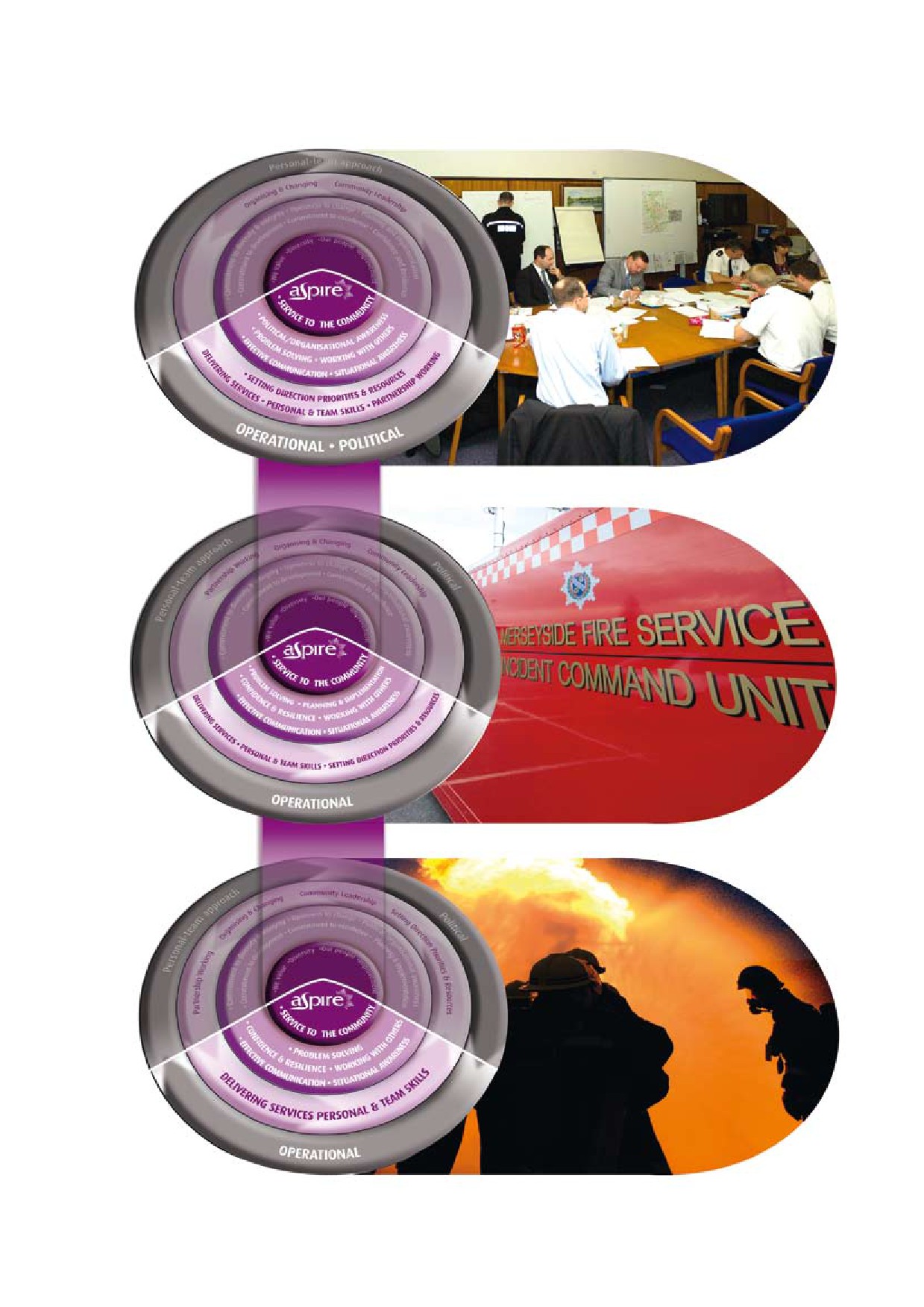
Wales has chosen to express its values and vision
committing crews into a risk area.
of leadership in the form of a simple model. The
●● Command Competence - considers the skills
model has been named “Aspire”. It has at its heart,
knowledge and understanding required by an
the core values of the service; which are:
Incident Commander and the importance of
maintaining such competencies.
●● Diversity
●● Our People
Additionally, this edition of the manual reflects the
●● Improvement
need for FRSs to be able to work effectively within
●● Service to the Community
a broader multi-agency incident management
1 Framework Document 2006-08
2 Fire and Rescue Services Act 2004, Civil Contingencies Act 2004, HM Government Emergency Response and Recovery (Non-statutory
guidance document) and Emergency Preparedness (Statutory guidance do cument)
Incident Command
7

Although not usually discussed in the context of
Leadership Capacities:
incident command, it can be seen that the values
are intrinsic to everything we strive to achieve at
●● Organising and Changing
an operational incident, where we routinely serve
●● Partnership Working
all of our communities equally and professionally,
●● Delivering Services
with the safety and well being of our own crews
●● Community Leadership
at the forefront of our mind and reflecting on how
●● Setting Direction
well we have done in order to be better next time.
●● Priorities and Resources
●● Personal and Team Skills
The core values inform and underpin the personal
qualities and attributes (PQAs) at each role level.
These are practiced in the three Leadership
Thereafter the model describes the “Leadership
Domains:
Capacities” and “Leadership Domains”, which take
the model a stage closer to the actual behaviours
●● Operational
and outcomes:
●● Political
●● Personal-team approach
Core Values
PQAs
Leadership Qualities
Leadership Domains
8
Fire Service Manual
Command and Control of operational incidents
●●
Time sensitivity/ tempo of activity. Time
is inextricably linked with the Aspire model and
pressure on the requirement to make
the values of the Service. Operational incident
decisions and act upon them is arguably
command represents an area where leadership
the major contributory factor in the
takes on a risk critical and central role. In recent
determination of incident criticality. Further
years the Fire and Rescue Services has advanced
to that, time pressure on decision-making
the notion of leadership in many ways that appear
will, by definition, drive the tempo of
to be allied to, but distinct from, the operational
activity in any incident response.
context. The identification of core values and the
●●
Complexity. Critical incidents may be
expression of key domains provide an excellent
accompanied by a degree of complexity that
platform upon which to build a robust command
will result in uncertainty about outcomes.
and control doctrine. It is sometimes thought
●●
Moral Pressure. Critical incidents involving
that such work is left behind when the “bells go
people and property at risk will generate
down”, and the service is called into action in its
moral pressure on those responding who may
key operational intervention role. This is not the
feel under pressure to quickly take action.
case. Perhaps the clearest example of the area
●●
Duty of Care. Closely related to the above
where strong leadership and the ethic of the FRS
characteristic will be the duty of care by
comes into play is in the area of Dynamic Risk
those in command at critical incidents to
Assessment (DRA). The concept that “firefighters
avoid exposing their people to unnecessary
will take some risk to save saveable lives”3 has to be
exposure to risk.
professionally, ethically and effectively managed.
●●
Retrospective Scrutiny. Those in positions of
authority at critical incidents must expect to
Leadership in the domain of critical incident
have their decisions and subsequent actions
command is often characterised by the need to
publicly scrutinised.
deal with uncertainty in demanding timeframes.
The role of the leader in such circumstances
1.4
The Incident Command
was described by Henry Kissinger, who stated
Environment
that: “The most important role of a leader is to
In general, incidents will generate an increasingly
take on his shoulder the burden of ambiguity
intense command environment as the complexity
inherent in difficult choices. That accomplished,
and scale increases. However, the commander must
his subordinates have criteria and can turn to
realise that intensity is also relative to the position
implementation”. (Kissinger, 1982).
and circumstances perceived by any individual
involved in such an incident.
1.3
The Operational Environment
The Nature of Critical Incidents
For example, a firefighter in breathing apparatus,
operating in offensive mode at a dwelling fire in
The requirement to develop and apply an incident
which persons are reported, will be subject to a
command system is driven by the critical nature of
more intense and narrowly focused experience of
many of the incidents which the FRS responds to.
the incident than the officer outside the building in
These incidents often share common characteristics,
a position of command. Such an example can be
including:
developed through increasing layers of command
present at complex larger scale incidents, further
removing the overall incident commander from a
3 See 4.2 in this manual.
Incident Command
9
multitude of high-pressure situations. Therefore,
by the Health & Safety Executive in HSG654
a critical success factor in responding to any
provides an essential framework for designing
incident will be the commander’s understanding of
and implementing organisational structures and
the whole context and the complete environment
processes for managing successfully and safely.
within which command is to be exercised.
HSG65 has five key elements which make up the
framework.
Of the three Leadership Domains identified within
the “Aspire” Leadership Model, incident command
1.5.1
Policy
resides largely within the operational context. This
There should be effective policies which set a clear
assumption is more valid at operational levels of
direction for the organisation to follow, contributing
response. However, the reference above to the
to all aspects of business performance. Fire
requirement for commanders to fully understand
and Rescue Service’s policies should set out the
the incident command environment is of increasing
approach to delivering effective incident command.
relevance here. As the complexity/scale/intensity of
The model described in this manual provides a
incidents escalates, so too does the requirement for a
consistent approach that can ensure interoperability
broader understanding across the three Leadership
throughout the UK. Interoperability is critical both
Contexts. At the lower end, incident commanders
for routine cross border mutual aid operations and
will address, in the main, internal factors i.e.
for larger scale incidents involving deployment of
those confined largely to the incident ground. As
national assets, for example major emergencies
the complexity, scale and intensity increases, the
requiring urban search and rescue or mass
incident commander will be faced with a greater
decontamination. Apparently minor modifications,
degree and frequency of issues regarding external
for example a change in terminology, can cause
FRS support, multi-agency considerations, as
confusion when fire and rescue services have to
well as media, legal and political considerations.
work together.
Therefore, the demands of the FRS Leadership
Model directly reflect the demands of competent
1.5.2
Organising
incident command throughout a successful FRS
There needs to be an effective management
career at all levels.
structure and arrangements in place to deliver the
policies. The arrangements should be underpinned
1.5
Leadership in Operation
by effective staff involvement and participation
and be sustained by effective communication and
The Incident Command
promotion of competence. All involved should
Policy Framework
understand the Fire and Rescue Service’s approach
The procedures that form the Incident Command
and objectives in relation to the command function,
System should be an integral part of a Fire
in particular the procedures associated with their
and Rescue Service’s organisational systems
area of responsibility.
for managing risk. The approach published
4 HSG65 Successful health and safety management 2nd Edition ISBN 0 7176 1276 7
10
Fire Service Manual
Incident Command
11
1.5.3
Planning
Incident Command System, involving the constant
development of policies, systems and techniques
There should be a planned and systematic approach
for delivering an effective and safe response.
to implementing the policies through an effective
management system. The aim is to deliver an
effective response which minimises risks. Risk
assessment techniques should be used to decide
on priorities and set clear objectives for the
incident response. Generally there is a hierarchy
of control measures with preference being given
to eliminating or controlling hazards rather than
relying on systems of work or personal protective
equipment. In the context of the Fire and Rescue
Service operational incidents it is not always
possible to eliminate hazards although this should
be done by the selection and design of equipment
and processes wherever possible. Risks should be
minimised through appropriate physical controls
1.6
The Incident Commander’s
or, where these are not possible, through systems
Leadership Role
of work and personal protective equipment.
It is the duty of the Fire and Rescue Service
Incident Commander at an operational incident to
1.5.4
Measuring performance
exercise authority over fire service resources on
Performance should be measured against agreed
the incident ground.
standards to reveal when and where improvement
is needed. Active self-monitoring reveals how
The Incident Commander has much to consider
effectively the management system is functioning,
when dealing with an emergency and the task
looking at equipment, processes and individual
will become more complex with increased scale
behaviour/performance. If the incident response is
and duration. Clearly, no officer can be expected
ineffective or health and safety controls fail, reactive
to remember everything, so the system of incident
monitoring discovers why, by both determining the
command described in this manual will provide
immediate causes of the sub-standard performance
operational and managerial prompts to reinforce
and identifying the underlying causes, with the
those given by the incident itself and the personnel
implications for the design and operation of the
in support roles.
management system.
The Incident Commander must ensure that adequate
1.5.5 Auditing and reviewing
resources are available and that arrangements have
performance
been made to control them. At larger incidents these
Fire and Rescue Services should learn from all
will normally be delegated as the responsibility of
relevant experience and apply these lessons.
supporting officers in the command structure.
There needs to be a systematic review of incident
command performance by Fire and Rescue Services
Good communication between personnel, on
based on monitoring data and independent audits
and off scene, is essential throughout the incident
of the management system. There should be both
but especially at the time of the handing over of
internal reference to key performance indicators
command, which can result in confusion if it is not
and an external comparison with relevant best
done properly. The accumulated knowledge of the
practice. There should be a strong commitment
to continuous improvement in the delivery of the
12
Fire Service Manual
site, the incident, the risks and the actions taken so
The following paragraphs illustrate the model
far need to be communicated, in an easily assimilated
of command and control used by the emergency
form, to the officer taking over.
responders in the UK. There are many cases
where the roles may appear to overlap. This is
An Incident Commander should be prepared to brief
to be expected, as the strength in a system lies
a more senior officer at any time so that a decision
in its flexibility and adaptability. Adapting the
can be made whether or not to assume command.
model to fit particular circumstances, based on
If the senior officer decides to take command then
a deep understanding of how the model would
this intention must be made clear to the existing
normally be applied is entirely different to failing
IC, by using some form of words such as “I am
to adhere to the model because of poor procedures,
taking over”. The change of command must also be
understanding or weak command. For example,
relayed to Fire Control. Having assumed command
whereas decision making levels are clearly defined,
the senior officer will in all likelihood want to
common sense dictates that where a tactical
retain the previous commander in the command
decision has to be taken by an officer of relatively
structure to provide advice and continuity.
junior rank in the absence of a senior officer, it will
be taken. Equally, someone operating at tactical
It is the duty of officers being relieved to give the
level will not overlook an urgent operational issue
officer who is assuming command all the relevant
that arises that can easily be dealt with, merely on
information they possess concerning the incident.
the grounds that it is not an appropriate task for
Handover of command to more junior officers
their command level.
as the incident is being reduced in size must be
equally thorough.
The FRS Incident Commander must focus on
the safe and effective resolution of the incident,
When taking over a command role on the incident
working at a tactical level, in conjunction with
ground, it is necessary to bear in mind the key
other services and agencies as necessary, to return
elements of the role. It is essential to assume
circumstances to normality as soon as possible. In
command at the appropriate time, according to
the UK emergency services context, tactics can
either standard operating procedures or to the
be summarised as the deployment of personnel
senior officer’s judgement of how the incident
and equipment on the incident ground within set
is developing. Every effort should be made to
objectives and priorities to achieve the overall aims.
avoid a ‘time lag’ during handover, where no one
The IC is therefore principally concerned with the
is focussed on making vital decisions due to the
tactical co-ordination of tasks in progress, which
exchange of information at the handover. The new
will be based on approved operational procedures.
IC must make it clear that a single team is now
operating under their leadership. Key elements of
Operations can best be described as tasks that
the leadership role are:
are carried out on the incident ground to achieve
desired objectives, using prescribed techniques and
●● the maintenance of shared situational
procedures in accordance with the tactical plan to
awareness by effective communications;
achieve the strategic aims of Gold where that level
●● clear planning and setting of operational
of Command is in operation.
priorities;
●● direction and focusing of activity in pursuit
At the smaller incidents all decision making will
of objectives;
be the responsibility of one individual (the IC),
●● ensuring subordinates have freedom and
in conjunction with the Service’s policies and
resources to carry out their role safely within
procedures. This is likely to be the first arriving
the plan.
Crew Commander, who will be very much
concerned with the tactics and operational tasks
Incident Command
13
in the initial stages, delegating responsibility for
the first two being located on the incident ground.
the operational level if sufficient resources are
These terms need to be understood in the context
available. At larger incidents the team of officers
of the incident command structure. This section
responsible for the various command functions
of the manual describes the broad command and
will be organised by the Incident Commander to
leadership remit of each level, with more detail
discharge the operational tasks, while the Incident
about the functions and lines of communication
Commander retains overall tactical command.
being found in subsequent chapters.
Whereas it is highly unlikely that strategic decisions
will have to be made at this level, if the need were
In the following paragraphs, it must be borne in
to arise, the responsibility to deal with the issues at
mind that most incidents are managed without the
hand resides with the most senior officer available.
need for an elaborate structure. The vast majority of
fires and Road Traffic Collisions (RTCs) are likely
Therefore, at any incident, the Incident and/or
to be dealt with by crews being managed by their
Sector Commanders have a set of tactical priorities
line supervisors. Even if an FRS incident escalates
to follow. These can be found in Chapter 2.
and more senior fire officers assume command, it
should not be assumed that the multi-agency Bronze,
Silver, Gold system will be applied. However, it is
1.7
Operating within the Multi-
important to understand what the levels mean, and
Agency Bronze, Silver
what functions they have responsibility for if the
and Gold Structure
structure is implemented.
Bronze, Silver and Gold, reflecting operations,
tactics and strategy, are the descriptions given to
the managerial levels of fire service involvement,
14
Fire Service Manual
1.7.1
Operational (Bronze) Level Command
may also need to consider whether there is the need
At the start of every incident for which there has
for a Gold or Strategic level of command if one is
been no warning, the ‘operational level’ will be
not already in place, and if so communicate this
activated first. The IC will attend the scene, (or
upwards.
as close as is deemed safe to do so depending
upon the nature of the incident and resulting risk
A key task of the Silver Command function is
assessment). The role of the IC is to:
to give early consideration to the ‘consequence
management’ and recovery phases of the incident.
●● Assess the extent of the incident, the number
This consideration may also suggest that a Gold
of resources, hazards and risks.
Command would help to address such issues,
●● Consider the appropriate level of command.
leaving the tactical command to be undertaken
●● Prioritise objectives.
from the scene.
●● Develop and implement plan taking into
account SOP and DRA.
Where there is an identifiable geographical
●● Communicate and control the plan.
focus of an incident, tactical management or
●● Evaluate the effectiveness of plan.
Silver Command is usually undertaken from an
Incident Control Point normally adjacent to the
The findings of the above assessment will prompt
scene of operations. Other agencies however, may
the IC to consider whether to request additional
choose to discharge their functions from a remote
resources should they be required, either in the form
location, i.e. the Police may adopt a Police Station
of specialist equipment or purely for additional
for example or the Local Authority may chose to
personnel. Any such request at an incident may
operate from their administrative offices. In such
trigger the attendance of a more Senior Officer(s)
cases it is vitally important to co-operate through
and a dedicated Command Support Officer
liaison officers who would provide a vital transfer
(Team).
of information. If the incident is geographically
dispersed, such as wide area flooding, riot situations
If the incident becomes multi-agency and other
or perhaps the consequences of an air crash, the
services are operating their command structures at
senior fire commander will make a decision about
similar levels, then the FRS ‘Incident Commander’
where the optimum location should be.
would assume the role of ‘Fire Silver’. Likewise,
Sector Commanders would become ‘Fire Bronzes’.
In a developing situation and where the use of either
Bronze Commanders must motivate and control
a significant additional resources or specialist
crews doing difficult, dangerous, and sometimes
equipment is required, the Silver Commander may
distressing work. They frequently have to lead
be assisted by an FRS specialist advisor. These
from the front. Consequently, their timeframes are
advisors are specialists in their particular fields
typically short, with quick decisions and ongoing
and may be mobilised by the FRS National Co-
appraisals of the developing risks (Dynamic Risk
ordination Centre (FRSNCC) to attend an incident
Assessment) being necessary a lot of the time.
to offer tactical advice to the IC. It is not intended
that they take charge of any incident.
1.7.2
Tactical (Silver) Level Command
The value of an FRS advisor at a tactical level
The Silver Commander’s role is to manage the
has been recognised because FRS officers cannot
overall incident, determining priorities, allocating
be expected to have a complete and detailed
resources and obtaining additional resources
knowledge and understanding of every policy
as required. It will be necessary to plan and co-
and procedure surrounding the diverse roles
ordinate tasks to be undertaken and liaise with other
of Urban Search and Rescue (USAR), Mass
agencies wherever necessary to co-ordinate efforts
Decontamination (MD), High Volume Pumping
to achieve this. The Silver on-scene commander
Incident Command
15
(HVP) etc. When utilising resources provided by
need to be addressed strategically through Gold or
the New Dimension Programme (often referred to
the Strategic Co-ordinating Group (SCG) as it may
as “national assets”) special provisions have become
be referred to, or possibly even the Regional Civil
necessary. This includes a ‘Convoy Procedure’ for
Contingencies Committee (RCCC), see Chapter 3.
moving a number of vehicles, potentially over
large distances throughout the country, a ‘Strategic
SCG members are representatives drawn from
Holding Area’ for holding the vehicles close to
all relevant agencies with the authority to
the scene of operations prior to deployment, and
make executive decisions appropriate to the
Enhanced Command Support (ECS) which will be
circumstances.
adopted to support the existing command structure
and assist in the control and co-ordination of these
The Gold Commander will typically:
additional assets.
●●
Be located away from the scene. Most
1.7.3
Strategic (Gold) Level Command
agencies have dedicated facilities for such
occurrences.
Most incidents, and the early stages of more
●●
Establish a framework for the overall
serious incidents, may only require operational, or
management of the incident(s).
operational and tactical, levels of command. If it
●●
Establish a policy within which Silver
becomes apparent that the scale of resources or level
Commanders will work, also known as
of decision making required are beyond the tactical
setting ‘tactical parameters’ an example of
commander’s capacity or authority, or if there is
which may be ‘allowing a fire to burn itself
the need to co-ordinate more than one incident/
out’ where ‘run off water’ could cause an
scene, then a Strategic or ‘Gold’ Command will be
environmental catastrophe as oppose to
necessary. Gold will be a major support to Silver,
airborne pollution.
often discussing tactics and their implications and
●●
Determine strategic objectives that should be
acting as an advisor.
recorded and periodically reviewed.
●●
Provide resources, or determine limitations
The strategic or “Gold” level is the most senior in an
upon levels of resourcing.
organisation and rarely comes into play in pure Fire
●●
Prioritise the demands from a number
Service operations. However, it can often feature in
of Silver Commanders and allocation of
multi-service operations such as major incidents,
resources.
large-scale civil disorder, wide area flooding or
●●
Ensure that there are clear lines of
other protracted and serious incidents. Whereas
communication.
“Gold” does not directly deal with operations on
●●
Ensure that there is long term resourcing and
the ground, at tactical or “Silver” level, it can often
expertise for command resilience.
involve political considerations and policy level
●●
Undertake appropriate liaison with strategic
decisions that extend beyond a single organisation.
managers in other agencies.
‘Gold’ or strategic command is invariably exercised
●●
Plan beyond the immediate response phase
at a distance from the scene of the incident. It is
for recovering from the emergency and
intended to take the longer view of the situation;
returning to a state of ‘new normality’.
the time frame of Gold, or strategic command, is
in days rather than hours or minutes.
The requirement for strategic management may not
apply to all responding agencies owing to different
Major incidents may place considerable demands
levels of engagement; however emergencies are
on the resources of the responding organisations,
invariably multi-agency and rarely remain with a
with consequent disruption of day to day activities,
single agency. It may therefore be appropriate for
and they may have long-term implications for a
an agency not involved at strategic level to send
community or the environment. Such matters will
16
Fire Service Manual
a liaison officer to the meeting of the SCG. SCG
supporting and leading incident management from
members are representatives drawn from all relevant
a strategic perspective. Roles within the ICS will
agencies with the authority to make executive
draw on those standards as appropriate, and some
decisions appropriate to the circumstances.
variations in application will necessarily be found,
reflecting particular circumstances of the incident,
The SCG should be based at a pre-planned
the organisations involved, the capabilities of the
location, away from the noise and confusion of
command team, etc.
any disaster scene, normally in the first instance
police headquarters. On most occasions it will be
1.9
Incident Management
the responsibility of the police to establish and
and Decision Making
chair the group. However this may change to the
The processes associated with the management
‘lead’ organisation, for example the local authority
and command of serious or large scale operational
during the recovery phase when the emergency
incidents are complex and detailed. Much work
services have little or no involvement.
has been done to assist Incident Commanders and
others charged with operational responsibilities to
In the event of a wide scale emergency the SCG
understand the cognitive and emotional processes
will need to liaise with neighbouring SCGs and in
that occur at such times. Appendix 3 to this manual
the recovery phase, the appropriate Government
gives an insight into the psychological processes
Office of the region or devolved administration.
involved. Understanding these will help in dealing
with ones own reactions to challenging situations
A member of one of the Fire and Rescue Service’s
as they arise.
specialist advisory teams may be mobilised to
advise the Fire Gold Commander at an incident
However, such a description of the cognitive
which may be unusually large, protracted or
processes is not a tool. In the search for a device
“catastrophic”.
to practically assist commanders in the discharge
of their responsibilities, experienced officers have
1.8
The Operational
reported the value they have derived from the
Commander’s Competence
Decision Making Model developed by the London
Because of the widely differing demands of the
Fire Brigade. See Figure 1 overleaf.
various command and operational roles within major
incident management, the competences associated
This is a cyclical process control model, not unlike a
with each level are necessarily different. Chapter 5
Deming “Plan, Do, Check, Action” cycle (Deming
outlines this in more detail, and gives guidance to
W E, “Out of the Crisis”, Cambridge, Press
those responsible for development and assessment
Syndicate, 1982), which may assist commanders in
of commanders at key levels. The key levels are
achieving their operational objectives. An obvious
reflected in the National Occupational Standards
application is in the analytical phase of the risk
(NOS), WM.7 for those working at the operational
assessment. The full explanatory note is appended
level of command and EFSM.2 for those responsible
at Appendix 4, courtesy of London Fire Brigade.
for tactical or incident ground levels of command.
EFSM.1 describes the role of those tasked with
Incident Command
17
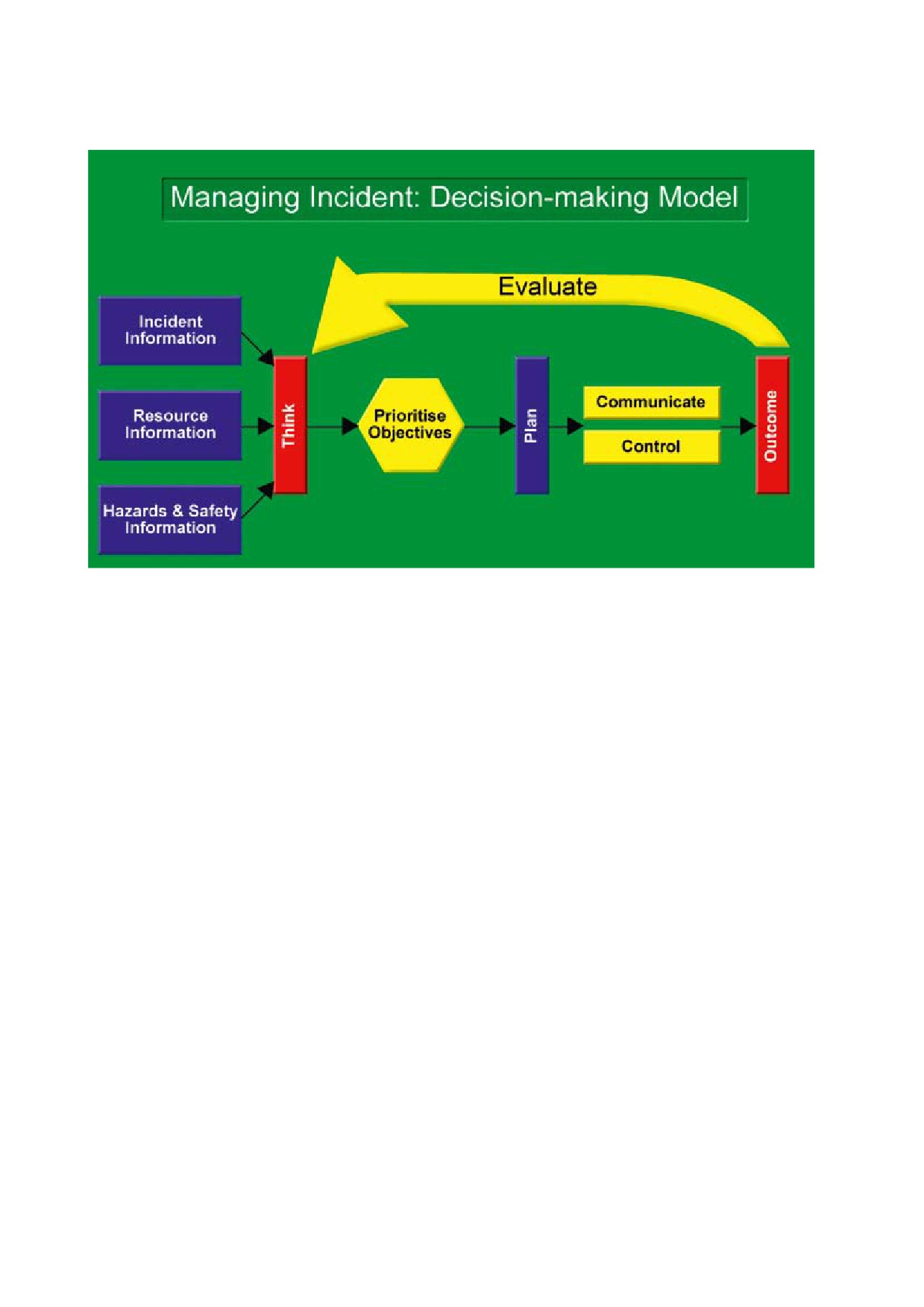
Figure 1
18
Fire Service Manual
Chapter
Incident Command
2
Chapter 2 - Organisation on
the Incident Ground
2.1
General
in readiness for not only localised incidents, but
for cross border and national incidents of varying
This chapter focuses on organising and controlling
complexity.
operations on the incident ground, including the
specialist support to operational sectors from
2.2
The Role of the Incident
support sectors and advisors.
Commander
The Incident Command System (ICS) provides a
The FRS Incident Commander at an operational
clear framework to assist the Incident Commander
incident is the ‘nominated competent person’,
to organise and deploy available resources in a
usually identified by wearing the IC’s surcoat. This
safe and efficient manner. It provides the IC with
role need not invariably be fulfilled by the most
a ready to use organisational structure that can
senior officer present, but the senior officer present
be adapted to fit every incident, from a one pump
does have a moral and organisational responsibility
attendance to the largest most complex incident.
within the overall command structure that cannot
It is therefore essential that the ICS is adopted in
be divested. This arrangement allows an officer
full and becomes familiar to all personnel so that
more senior to the IC to adopt a mentoring or
the ‘language’ and concepts are fully understood
monitoring role.
Incident Command
19
As each operational incident is different, IC’s will
2.3
Levels of Command
need to adapt the strategic plans and systems of
There are three levels of command and control that
work, which are based on generic risk assessments,
may be brought into play at a multi-agency incident,
in the light of the specific circumstances of the
known as Bronze, Silver and Gold. The terms
incident, and the resources actually available to
are used to describe tiers of joint, multi-agency
deal with those risks.
emergency management and will normally only be
utilised where a combined multi-agency response
At any incident, the Incident and/or Sector
is necessary. The adoption of this nationally agreed
Commanders (SCs) have to set tactical priorities. The
management framework will assist to integrate
following is an example of a typical list of objectives
plans and procedures between agencies ensuring
that have to be prioritised at a structure fire.
that roles and responsibilities are understood.
1.
Perform rescues and ensure medical support is
The UK’s emergency responders model (Strategic
called for casualties without delay.
- Gold, Tactical - Silver and Operational - Bronze),
2.
If the building is already fully involved in fire,
which is described in more detail in Chapter one,
take steps to prevent spread to exposure risks.
can be summarised as follows.
3.
Contain the spread of fire within the building
or affected portions of it as soon as possible.
●●
Operational - which is the level at which
4.
Extinguish the fire.
command of immediate “hands-on” or task
5.
Commence damage control operations as soon
level work is undertaken at the scene of
as conditions and resources allow.
an incident. If the incident develops with
6.
Commence ventilation as soon as conditions
several agencies needing to work effectively
and resources allow.
together, each sector would become a Bronze
7.
Commence cutting away and investigations
Command in line with other agencies. It
to ensure all cavities and voids have been
must be emphasised that even if the incident
covered.
is “multi-agency”, the operational level role
8.
Consider the welfare of victims or those who
would not be formally labelled “Bronze”
have suffered loss at the earliest possible time,
unless a tactical or silver level was in place,
calling in external support as necessary.
and usually when a multi-agency “Silver”
group had been formed.
This assumes an appropriate risk assessment has
●●
Tactical - which is the level of overall
been completed, has been properly announced and
command on the incident ground and which
is under continual review (see Chapter 4). These
ensures that the Operational levels are
tactical priorities will also be helpful at debriefs
supported, and if there are several sectors
and when ICs or Sector Commanders are self
operating to ensure their operations are co-
assessing their own, and their teams’, performance
ordinated to achieve maximum effectiveness.
at an incident:
Again, if the incident develops along multi-
agency lines this role would become Silver
The IC has much to consider when dealing with an
Command. An incident may be formally
incident and this will become even more complex
structured with multi-agency Bronze and
with increased scale and duration. Clearly, no
Silver Commands functioning without a
officer can be expected to handle every aspect of
‘Gold’ being in place.
the operations in progress personally, so the system
●●
Strategic - may be invoked where an event
of incident command described in this manual
or situation may have significant impact
will provide operational and managerial tools and
on resources, probably involving a large
support.
number of agencies or has impact for an
20
Fire Service Manual
extended duration. This will be referred
for purposes of effective inter-service liaison that
to as Gold Command and will normally
the levels of command and the labelling associated
be implemented as a multi-agency group
with them are understood but not interpreted too
(SCG, see Chapter 3) bringing together Gold
rigidly. Also, it needs to be understood that because
Commanders from relevant organisations. It
an incident might be serious for one service, e.g.,
is possible, but not usual, to designate a Gold
large fire for the fire service or a murder for the
Commander solely within an FRS operation
police, it does not necessarily involve other services,
of very large scale which is not impacting
either at all, or at the same command level.
upon other organisations to any great extent.
Whereas an incident may be structured up to
2.4
Duties of the Incident
Silver level without Gold necessarily being
Commander at Operational
brought into play, if a Gold is formed, the
(Bronze) Level
levels below will invariably be structured as
Upon arrival at an incident the IC has a wide base
Silver(s) and Bronze(s).5
of information to consider and this will become
even more complex and onerous as the incident
It should be borne in mind that different services,
escalates. It is therefore essential that consideration
depending on the circumstances of the specific
is given as soon as possible to start laying the
incident, may choose to exercise command at
foundations of the Incident Command System.
similar levels from different locations. The most
This will include the following:
common example of this is where the police Silver
Commander chooses to locate in a police HQ or
●●
Consider all of the relevant information,
communications facility, whereas the FRS IC
whether from the pre-planning stage or that
(or Fire Silver), chooses to co-ordinate the Fire
available on the scene prior to forming a plan.
Bronzes, or Sector Commanders, from the incident
●●
Identify the hazards and risks to crews
ground communications facility, most frequently
and third parties, and select a safe system
a command unit. When the Fire Silver needs to
of work ensuring that a ‘Tactical Mode’ is
attend a multi-agency liaison meeting at the police
declared and communicated to all those on
commander’s HQ, or elsewhere, the incident
the incident ground and to central mobilising
ground will be left under the supervision of another
where it will be documented on your behalf.
senior member of the Silver Command team for the
●●
Assess the available resources against
duration of the absence. In these circumstances,
the objectives of the incident and request
the designation of “IC” will rest with the officer
additional support where required.
on-scene.
●●
Form a robust plan to meet the objectives of
the incident, prioritising where necessary
If a fire incident, or multi-agency incident with
if the resources are not adequate to achieve
a FRS controlled “hot zone”, e.g. a USAR or
them simultaneously. The failure to prioritise
mass decontamination event, escalates to Gold
may compromise a plan and put personnel at
level, it is entirely possible that the Fire IC, who
risk (see Decision Making Model in Chapter 1)
may be a Principal Officer, will assume incident
●●
Consider environmental issues such as run
command, sending a lower ranking officer, with the
off water or airborne pollution as soon as
appropriate experience and authority to act, as the
practicable and where appropriate inform the
FRS representative at Gold. It is the responsibility
relevant authorities, working within recognised
of the Principal Officer to assume the Gold role
protocols agreed with other agencies.
as soon as circumstances permit. This reflects the
positions are role related. It is, therefore, important
5 It should be borne in mind that the NATO hierarchy of Strategic, Operational and Tactical levels doesn’t align directly to the
structure of the UK Emergency Services, therefore allowances will have to be made where the military are deployed.
Incident Command
21
●●
Establish effective arrangements for
●●
Confirm the existing plan according to the
communications, both on the incident ground
agreed tactical priorities.
itself and to provide regular updates to central
●●
Confirm the risk assessment and Tactical
control and oncoming supporting officers.
Mode, ensuring that safe systems of work are
●●
Establish and maintain effective liaison with
being utilised.
other agencies, whose knowledge may be
●●
Ensure that the requested resources are
critical in helping to achieve the objectives.
adequate and effectively deployed to reflect
●●
Give early consideration to welfare, both of
the tactical priorities. If the incident is under
fire crews and any other party affected by
resourced a request for further assistance
the incident.
should be made.
●●
Prepare to brief a more senior officer using
●●
Ensure that communications are effective
all available relevant information so that
and well structured informative messages
a decision can be made as to whether that
have been passed on and documented.
officer should assume command.
●●
Review the command structure of the
●●
Establish support in order to provide a
incident and ensure that no one is fulfilling a
reporting and holding area for oncoming
role beyond their experience and capability
resources, to assist with communications
and that the spans of control of individuals
from the incident ground and to document
remain manageable.
necessary information, this will be formally
●●
Evaluate the tactical plan against all
referred to as Command Support.
available information, ensuring that a risk v
●●
Constantly update the risk assessment and
benefit analysis is performed (see Chapter 4).
subsequent plan based on the availability of
●●
Confirm that adequate measures have been
additional information.
taken to address any welfare issues that may
●●
Communicate plan to Sector Commanders
arise from the incident.
and ensure regular updates are given and
●●
Maintain effective liaison with other
received on progress.
agencies ensuring that each are working
towards a common set of objectives.
●●
Initiate any necessary investigations as
2.5
Duties of the IC at
soon as practicable, ensuring that possible
Tactical (Silver) Level
evidence is recovered or preserved and
On arrival at an incident the Tactical officer
witness statements are taken. Where legal
must report to Command Support and book in
proceedings may follow the police should be
attendance, ensuring that mobilising control is
involved in the operational decision making
made aware. Contact must be made with the IC as
process at the earliest possible time and full
soon as practicable and the exchange of relevant
co-operation afforded to them.
information regarding the incident undertaken. A
●●
Consider any relevant points that would
decision whether to take over the incident, remain
be of benefit during the debrief, including
at the incident in a mentoring or monitoring role, or
good and bad practices, success or failure of
allow the existing IC to remain in charge, must be
equipment or policies and the performance
taken and effectively communicated to all relevant
of crews.
parties. To ensure that there is no doubt about the
‘handover’, the process would be confirmed by the
The IC is responsible for securing and controlling
exchange of the IC’s tabard.
resources on the incident ground. The assessment
of resources will include consideration of the need
Where the decision to take over the incident
for additional:
is undertaken, the following points must be
considered:
22
Fire Service Manual
Operational Sectors
Sector 1
Multi-Agency
Fire Silver
Incident
Commander
Sector 2
Silver
Command
Location determined
by the nature of
the incident
Command Support
Support Sectors
USAR
Water
Sector 3
Safety
Mass Decon
Support Sectors
Operational Sectors
●● Appliances
●● Decontamination
●● Personnel
●● Water
●● Equipment
●● Foam
●● Firefighting media
●● Relief Management
●● Consumables (e.g. fuel, BA cylinders)
●● Crew Rehabilitation and Welfare
●● Safety
The degree of control an IC will need to maintain
●● Communications
will depend, in part, on the size and demands of
●● Press Liaison
the incident. At larger incidents specific areas of
resource control may be delegated to appointed
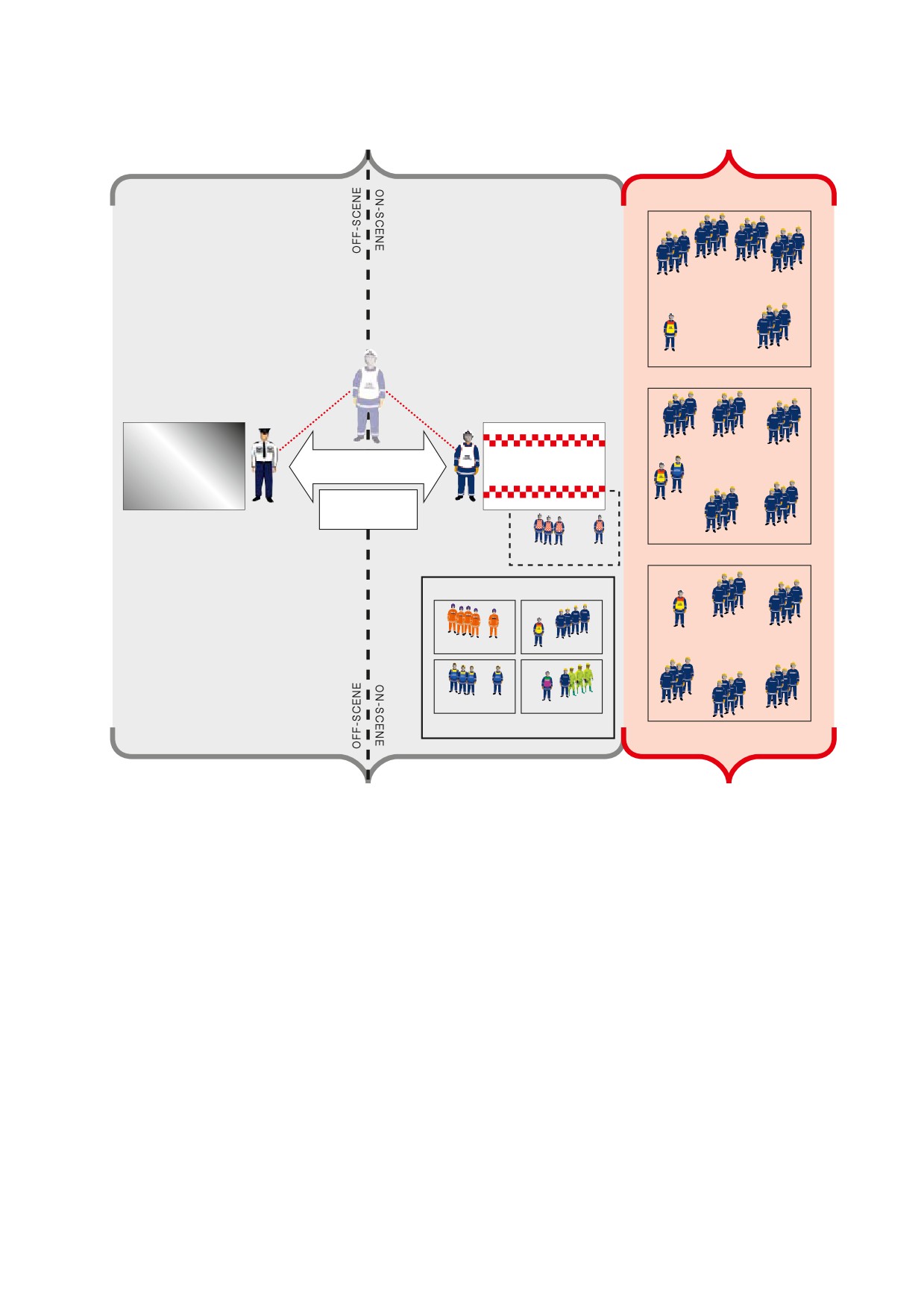
Each of these functions may be assigned by the
officers. Such areas may include:
IC to support sectors if the scale of the operation
demands it. If this occurs, the support Sector
●● Operational Sectors
Commander will report in the line of command to
●● Command support
the Command Support Officer, who has a similar
●● Marshalling
command responsibility level to an Operations
●● BA Main Control
Commander (see Chapter 2.11.2).
●● Logistics
Incident Command
23
Where complex or technical operations such as
Gold Commander will direct or take charge of
High Volume Pumping, Mass Decontamination
operations on the actual incident ground. The Fire
or Urban Search and Rescue are being carried
Gold Commander will participate in the multi-
out in operational sectors, they can be assisted by
agency Gold group where one has been deemed
support sectors in the same way as BA operations
appropriate, and from that position:
are supported by a BA Main Control. The IC must
ensure that there is never any misunderstanding
●● Determine and promulgate a set of strategic
or confusion about the Incident or Sector
aims and objectives and review them
Commander’s direct line of operational command
regularly.
as opposed to the support and advice provided by
●● Set tactical parameters for Silver to operate
support sectors and their staff, some of which may
within.
hold rank higher than those in the sectors being
●● Prioritise the demands of the Silver
supported. It is important that mutual assistance
Commander(s) and allocate personnel and
arrangements and standard operating procedures
resources to meet requirements.
fully address these issues.
●● Formulate and implement media handling
and communication with the public.
●● Direct planning and operations beyond the
2.6
Duties of a Strategic (Gold)
immediate response in order to facilitate
Level Commander
recovery.
This paragraph refers to the role of the senior FRS
●● Support and advise Silver.
officer who will discharge the responsibilities
●● Work with partner agencies.
of a strategic commander when a multi-agency
Strategic Co-ordinating Group (SCG) is brought
2.7
Structuring an Incident
into play during an operational incident. The task
is to take overall organisational responsibility for
The ICS is based on a framework that assists with the
the management of that incident and to establish
management of resources at an incident. It enables
the policy and strategic framework within which
the IC to delegate responsibility for a range of tasks
Silver(s) will work. It is not intended that the Fire
and functions during what may be a stressful,
24
Fire Service Manual
rapidly developing situation whilst remaining very
Sectorisation should be introduced when the
much in control. The main elements of the standard
demands placed upon an IC make it imperative that
ICS framework are:
responsibility and authority are delegated to ensure
appropriate command and safety monitoring of all
●● A clear, defined and visible line of command;
activities, and to reduce officers’ spans of control.
●● Management of the span of control of key
Even if it is possible for the IC to oversee all
commanders;
operations, the need to sectorise will arise if there is
●● Appropriately shared responsibility and
so much going on that the IC risks being distracted
authority, with a clear definition and
and unable to give sufficient attention to each task.
understanding of roles and responsibilities.
This would indicate that the IC’s span of control is
●● A consistent and predictable pattern of
in danger of becoming too great. Where spans of
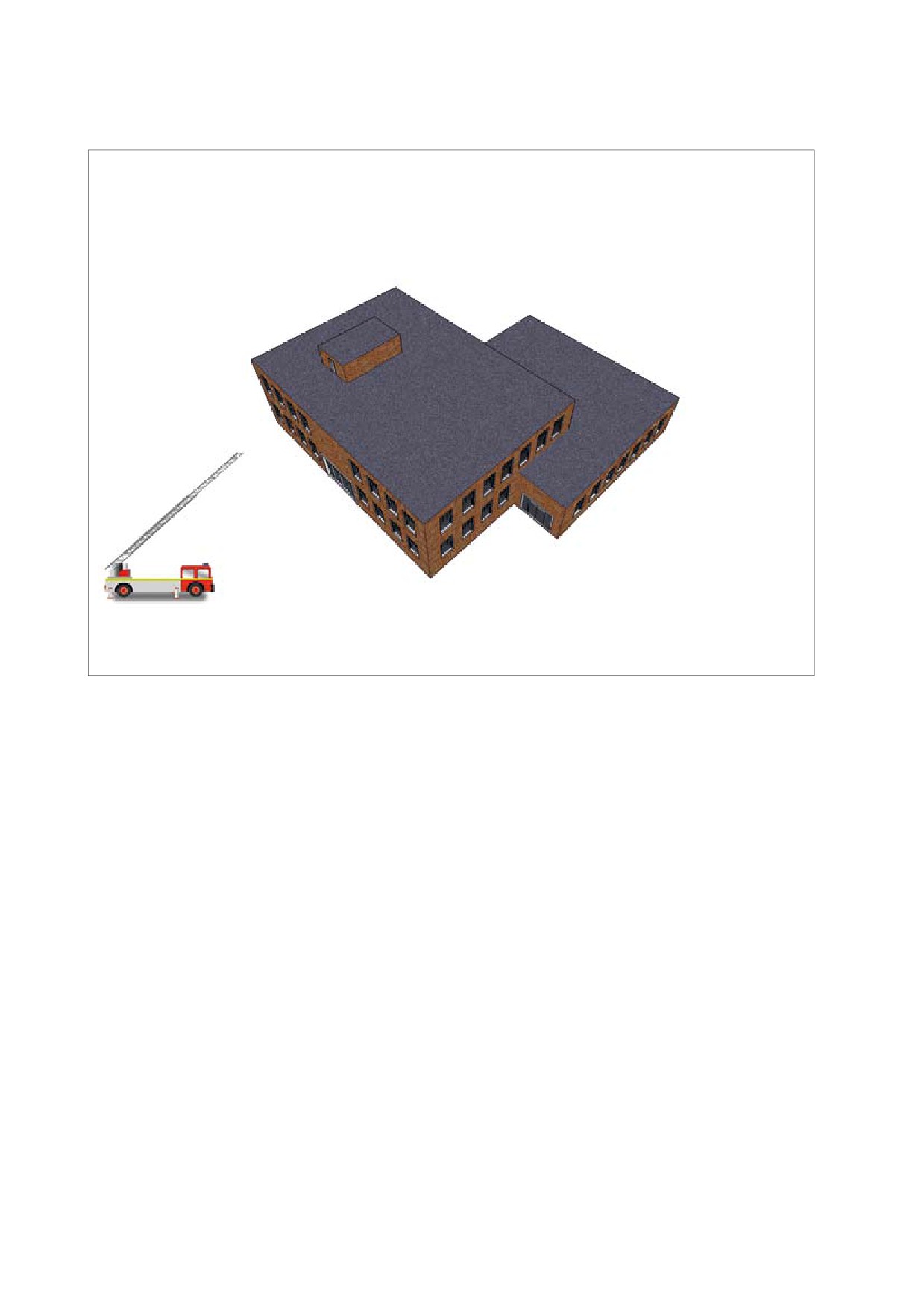
sectorisation e.g. at a four sided building the
control begin to reach or exceed 5 lines of direct
front or main scene of operations becomes
communication at a working incident, it is possible
Sector 1, and Sectors 2, 3 and 4 are allocated
that performance will be adversely affected.
in a clockwise rotation, Sector 3 being the
rear. In unusual buildings or sites the IC
The creation of sectors will only be done on
should sectorise in a way as consistent with
the instructions of the IC who will sectorise
the model as possible
appropriately to meet the demands of the incident
following the standard model. Other than in
Understanding the concept of ‘Span of Control’
exceptional circumstances, sectorisation must
is key to managing large volumes of activity and
follow this standard model. Using this approach,
information and is discussed more fully in 2.10,
Sector 1 is invariably located at the front (or main
however, sectorisation is key to managing these
scene of operations) progressing thereafter in a
volumes of activity and providing a clear line of
clockwise direction, with Sector 3 normally at the
reporting for everyone on the incident ground.
rear. (see examples in the following diagrams).
Research has shown that at large incidents, ICs
This will ensure continuity at major or cross border
were not only making decisions about tactics,
incidents where crews from two or more Fire and
resources, logistics etc, but also mentally building
Rescue Services would likely attend.
an organisational chart at the same time. The use
of a standard and predictable model of incident
In buildings or environments that don’t lend
organisation, to be applied during the early stages
themselves to the ‘preferred model’, then it is vitally
of escalation, eases this task considerably. However
important when delegating the responsibility of
it must be done correctly and consistently.
sectors that a thorough understanding of both
the physical boundary and parameters in which
Adherence to common terminology is also very
to operate are communicated to all who need to
important as an aid to developing a common
understand the layout to avoid confusion.
understanding of the situation which is being
dealt with. The ICS uses ‘roles’ to describe
Frequently, operations take place in more than one
responsibilities thus allowing individual FRSs
location during an incident, for example at the front
to assign each function according to their own
and rear of a building. In such cases the IC’s span
particular circumstances. The standard model
of control may only be small. At a typical semi-
allows the structure of the incident to develop in a
detached house fire the IC has the ability to monitor
predictable and manageable way.
tasks at front and back simply by moving to and fro,
and therefore it is unlikely that there will be a need
2.7.1
Sectorisation of Incidents
to sectorise. However, if the house is mid terrace
with no quick access from front to rear, then despite
Incidents are best managed if they are kept as simple
the small span of control it is unlikely that the IC
as possible, if it is not necessary to sectorise, then
will be able to adequately manage operations and
to reduce the possibility of barriers to information
flow between crews and the IC, it is best not to.
Incident Command
25
Typical Example of Sectorisation
Structure Fire
Sector 3
Sector 2
Main Entrance
Sector 1
Sector 4
Primary Source
of Operations
supervise safety at both locations simultaneously.
The principle to be borne in mind is that sectorisation
In this case the most appropriate response would
is driven by the need to delegate responsibility and
be for the IC to retain command of the front of the
authority in order to ensure appropriate command
building, and to assign all operations at the rear of
and safety monitoring of all activities.
the building to another officer of appropriate level
and experience.
2.7.2
Vertical Sectorisation
In buildings or structures with multi-floors where
It is important to note that where this happens at
operations may be spread over several levels, i.e.
small scale incidents only, it is not mandatory that
high rise buildings or ships, the suggested model
this officer is nominated as a Sector Commander
above would not prove to be effective or easy to
and equally does not necessarily mean that a
execute. The vertical sectorisation model is based
separate Sector Commander has also to be created
on maintaining effective spans of control when
for the front of the building.
Sector Commanders cannot follow the normal
practice of being physically present in the sector,
Similarly, at an RTC there may be no need to
due to smoke, heat etc.
formally sectorise, however if crews are assigned
to a vehicle, which has come to rest 30 metres
At an incident in a multi-storey building external
down an embankment remote from the main
sectorisation may be necessary as well as internal,
scene of operations on the roadway, it may be
for example if aerial appliances are being used
necessary to assign that vehicle as a separate area
of responsibility, which might be a Sector.
26
Fire Service Manual
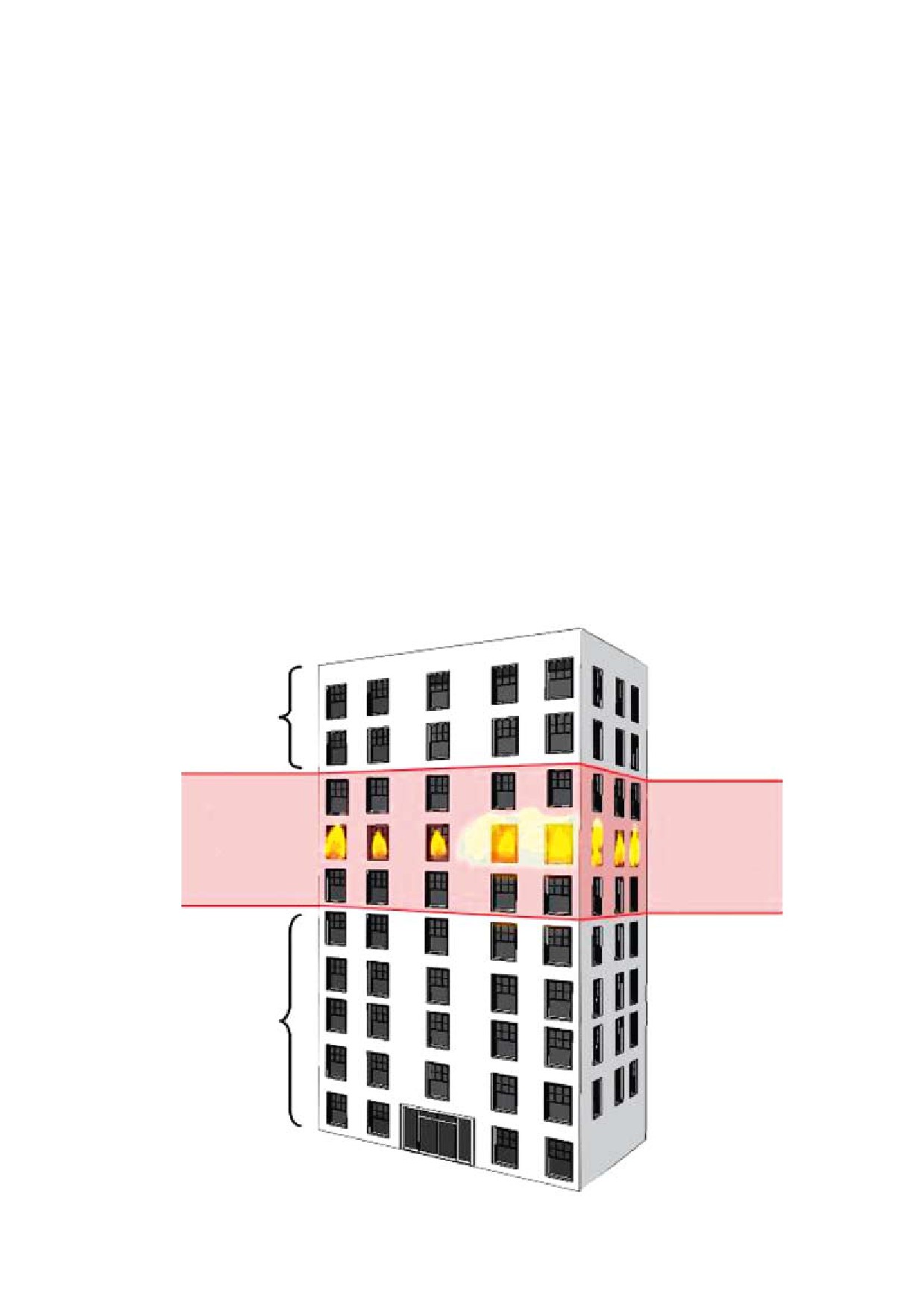
for access or rescue. External sectorisation would
●● Fire Sector - this is an operational sector
follow the normal model, identifying the sectors
and would be the main area of firefighting
by number.
and rescue operations, consisting of the
floor/s directly involved in fire, plus one level
Internal sectorisation has to recognise the particular
above and one level below. If crews involved
constraints of operating in an environment where
in this exceed acceptable spans of control,
the “fire floor” constitutes a barrier to the areas
consideration should be given to activating a
above, and to some extent the entire area from
Search Sector..
above the bridgehead, which is conventionally
●● Search Sector - this is an operational sector
located two floors beneath the fire floor, must be
and would be the area of operations in a high
considered a hazard zone. It may only be necessary
rise, above the ‘fire sector’ where search
to operate a single operational sector internally,
and rescue, venting and other operations
with external and support sectors operating outside
are taking place. In a basement scenario the
as described above. However, at an incident where
Search Sector could extend from fresh air
a large number of personnel are firefighting,
to the lowest level. If the distance from the
searching, or ventilating etc. more than one internal
ground floor lobby to the bridgehead is more
sector may be required to ensure that the Sector
than two or three floors and spans of control
Commander’s span of control is not exceeded. The
require it, consideration should be given to
zones of activity within the structure (e.g. internal
activating a Lobby Sector.
firefighting operations) could then be identified as
in the following examples:
Search Sector
Fire
Fire
Sector
Sector
Lobby Sector
Figure 2.1 High-rise fire
Incident Command
27
●● Lobby Sector - this is a support sector and
All support sectors must report to the IC via the
would cover the area of operations from the
command support function. This is important to
ground floor lobby to the bridgehead, which
preserve spans of control. At more serious incidents,
is normally two floors below the fire floor.
it is likely that the command support function will
The Lobby Sector Commander will act as
be headed by an officer of some seniority and
the co-ordinator of all the logistics needs of
experience.
the fire and search Sector Commanders, who
will, on most occasions, need to be located at
Although the diagrams give examples of five,
the bridgehead directing operations via radio
eight, fifteen etc, pump incidents, this is illustrative
and liaising with the BAECO’s. The Lobby
only and the range is, of course, variable and
Sector Commander would also co-ordinate
dependent on the requirements of the incident and
all operations beneath the bridgehead level,
the resources of the individual FRS.
including salvage and ventilation, liaising with
fellow Sector Commanders in the usual way.
Services and organisations listed to the right of the
command support function, police and press, etc.,
It is not intended that the system be over-prescriptive
(40 pump incident, p43) are examples only, and
and situations may arise where other approaches
the list is far from exhaustive. It may include any
may need to be taken, for example in a large or
or all of the agencies that are stakeholders in the
complex building it may be necessary to introduce
incident.
more than one sector on a floor. This system was
necessary at an actual incident, where two sectors
The larger number of crew members in the vicinity
were required each with its own bridgehead,
of Command Support that appear in the diagrams
operating in different stairwells and an Operations
after a command unit is in place, represent those
Commander co-ordinating the sectors from the
allocated as command support and radio operators
lobby area.
etc. Individual FRSs will have different ways of
managing this requirement.
All other aspects of the structure, e.g. lines of
responsibility, lines of communication and reporting
2.7.3
Location of Sector Commanders
for the Sector Commander would function in the
It must be emphasised that Sector Commanders
normal manner. See figure 2.1 for an example of
should be in direct communication with personnel
vertical sectorisation.
in their sector. Sector Commanders provide direct
and visible leadership at each sector and need to
These principles can be readily applied to other
remain directly accessible to the Crew Commanders
situations where vertical, internal sectorisation
for whom they are responsible. In cases where it is
may be necessary.
essential that an IC requires a Sector Commander
to leave their post, for a briefing or another purpose,
The diagrams on p37-p43 are examples of the
they must be replaced by someone with appropriate
Incident Command structure applied to incidents,
competence and authority to maintain continuity
and how the command structure expands to match
of supervision. Any such replacement must be
the demands of an escalating incident.
communicated to all those operating in the sector.
The layout is not intended to be prescriptive, but
2.7.4
Support or Functional Sectors
certain features are considered “standard”. For
Not only may incidents be sectorised geographically
example, external operational sectors are generally
as described above, but they may be sectorised
numbered not named. All operational sectors report
by ‘function’ or support sectors, e.g. water,
direct to the IC or to the Operations Commander if
decontamination etc, such sectors are designated
one is in place.
as the IC sees fit and may be grouped according to
availability of officers and resources to suit the need.
28
Fire Service Manual
It is important that established lines of command
2.7.5
Assuming and Handing-
are observed, Commanders of support sectors
over Command of Sectors
should report directly to Command Support.
When command of an incident changes for what
ever reason it must be done in a disciplined and
Examples of support sectors include:
formal manner. This includes the appointment of,
or change of a Sector Commander. In every case a
●● Command Support
clear and precise exchange of information must be
●● Marshalling
undertaken to confirm the status of the incident or
●● Logistics
sector prior to assuming command or delegating
●● Safety
responsibility.
●● Communication
●● Water
2.8
Managing Crews on the
●● Foam
Incident Ground
●● Decontamination
●● BA Main Control
Where possible, crews should be kept intact and
●● Welfare
work as a team on the incident ground. An IC should
remember that, for a variety of reasons, crews can
Incident Command
29
be tempted to self-deploy. This must be avoided
The potential for post-incident stress must be
as it is essential to account for all of the available
recognised and officers should be trained to identify
resources. A thorough briefing of crews must take
signs of this. At protracted and complex incidents
place prior to deployment so that safety critical
support and counselling may need to begin on the
information can be shared. The main priority of
incident ground and must in any case be addressed
any Incident Commander is the safety of personnel
as a post-incident consideration.
under their control. This must be established by
identifying the risks that are present, adopting
2.9
Line of Command
appropriate control measures and ensuring that
For the ICS to work effectively it is essential that
safe systems of work are used. Using this approach
all of those involved at each incident:
firefighters can carry out their duties and remain
safe whilst doing so.
●● are adequately trained,
●● are competent,
At large and sectorised incidents in particular,
●● are confident in their ability,
it is important for crews to be aware of the IC’s
●● know who they are responsible for,
intentions and the overall objectives which have
●● know who they need to report to,
been set for the incident. This will form the
●● know what their operational brief is.
parameters within which they are deployed in their
sectors and crews.
The system provides for a line (or chain) of
command to form to ensure that every activity on
Once crews have been briefed they must follow
the incident ground, be it within a crew or a sector,
those requirements and work safely. This will
is working under the responsibility of a competent
include wearing the appropriate personal protective
person. The system must be flexible enough to
equipment (PPE) and ensuring that access and
meet the demands of every incident regardless of
egress is properly secured at all times. The IC and
size or complexity, however, these principles are
Sector Commanders where appropriate will need
central to the system.
to maintain a position where, as far as practicable,
progress can be monitored. Where the level of risk
requires it, the appointment of one or more safety
2.10
Span of Control
officers must be considered to act as advisors at
One facet of the span of control is the pivotal need
key levels.
to maintain lines of communications, which at
times may be numerous, in order to achieve the
Once crews are at work they will require a level of
objectives of the incident. This may consist of
supervision and support, this may mean having the
direct or indirect reports from individuals, crews
necessary resources available (e.g. BA cylinders
or sectors.
and servicing facilities etc) and to ensure that their
welfare needs are addressed. Care must be taken to
Communications will also be received from
give crews sufficient rest, relief and refreshment.
other emergency services, assisting agencies
The frequency of relief’s will depend upon the
and control centres. When analysing the span of
demands of the incident and the individual policies
control, careful consideration should be given as
of each FRS. A recognised problem exists at
to how communications will be managed, and the
protracted rescues where personal commitment
pressures that may be placed upon the Incident
to the victims is high. Under these circumstances
Commander.
the level of fatigue must be measured against the
continued desire to work. A balance must be found
The system requires that direct lines of
between safe operations and crew morale.
communication and areas of involvement need
to be limited to manageable levels to enable the
30
Fire Service Manual
commander to cope with the flow of information.
to supervise the sectors. Likewise, if the number
Failure to do so could, and indeed often does, result
of sectors continues to grow, the IC may need to
in essential, risk critical information being badly
group the sectors under more than one Operations
communicated or overlooked, the result of which
Commander. Naturally, incidents on such a scale
could be catastrophic.
are rare, nevertheless the system must be able to
cope with them, and commanders must understand
The span of control for tactical roles should
clearly how such a scale is dealt with by proper
ideally be as narrow as possible. No individual
application of the standard ICS model.
should be responsible for so many aspects of the
incident that it is difficult or impossible to give
In the diagram on page 34, an IC is responsible for
sufficient attention to each. In most cases the
3 working crews at an incident and has detailed
span of control should be limited to five lines of
a firefighter to carry out a specific task, possibly
direct communications, however this may in some
Command Support, which involves regular contact.
cases be excessive depending upon the intensity of
The span of control for this IC is 4.
activity of those lines. Where this is apparent, for
example during the fast moving early stages of an
2.11
Roles and Responsibilities
incident, the direct lines may need to be reduced or
within Incident Command
limited further to ensure that commanders do not
In order to manage a large incident effectively
become overburdened. In a rapidly developing or
the IC may decide to delegate responsibility and
complex incident where the intensity is great, the
devolve authority for some of the operations. This
span of control may need to be as small as 2 to 3,
can be achieved by sectorising the incident, either
whereas later on, in more a stable situation, up to 6
geographically or by functions as described in
or 7 may be acceptable.
Paragraph 2.7.4.
The span of control for support roles, e.g.
The Incident Commander remains at all times
the Command Support Officer, may in some
responsible for the overall management of the
circumstances be wider, however this depends
incident and will focus on the command and
very much on the circumstances of the case and
control, deployment of resources, tactical planning
the stage of the incident.
and co-ordination of the sector operations and
running the incident itself.
Therefore the ICS offers a structure within which
an appropriate span of control can be maintained
at all times by providing for additional roles to be
2.11.1 Sector Commander
introduced into the incident command structure
The Sector Commander will report to the IC or
when the demands on any individual’s attention
to the Operations Commander if one is in place,
become excessive.
taking responsibility for the resources and the
achievement of operational objectives within that
At small incidents where the area of operations
sector. The Sector Commander will principally
is easily manageable and the use of sectors not
focus on command and control, deployment
required, the IC may oversee all aspects of the
of resources, tactical planning, BA search co-
incident directly. As the number of crews increases
ordination and most importantly health and safety
beyond 4 or 5, and the burden of supervision
of personnel. The progress of operations in each
becomes more challenging, the IC should consider
sector must be communicated fully to the Incident or
stepping back and appointing two or more Sector
Operations Commander to enable them to monitor
Commanders to supervise the crews. If the number
the overall progress towards resolution of the
of sectors has to increase beyond 4 or 5, the IC
incident. A Sector Commander has a high degree of
may choose to appoint an Operations Commander
operational independence in determining how the
Incident Command
31
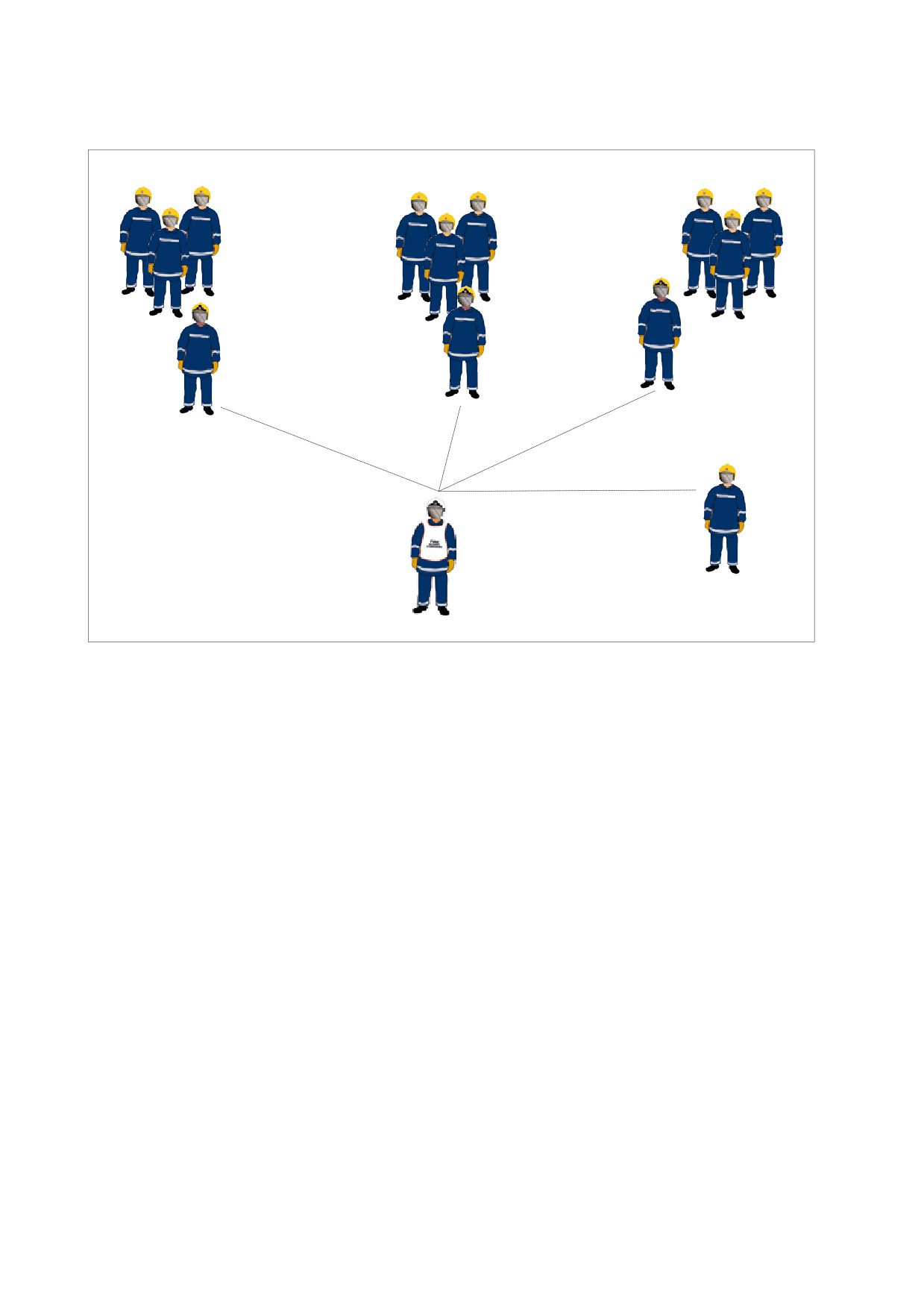
objectives agreed with the IC are to be delivered,
the press, police, public and other agencies, the
but must at all times ensure that the IC is aware of
number of lines of communication will potentially
the tactical mode being employed. Any change in
become unmanageable.
tactics must have the IC’s explicit approval, (or the
approval of the operations commander where one
The function of the Operations Commander is to
is appointed), other than to withdraw personnel
supervise and co-ordinate the operations within
immediately from a potentially hazardous area. In
sectors. The Operations Commander will also
such a case the IC must be informed as soon as is
assume the responsibility on behalf of the IC of
practicable and the tactical mode should be updated
approving changes of tactical mode. The Operations
accordingly. The officer assigned to command of a
Commander is a member of the command team and
sector must assume the incident ground radio call
operates on behalf of the IC at Tactical/Silver level.
sign for that sector e.g. Sector Two Commander,
sometimes just shortened to “Sector Two”.
The Operations Commander should avoid
becoming involved in support activities or
2.11.2 Operations Commander
dealing with the press etc, these functions being
addressed by Command Support. This allows
The purpose of the Operations Commander is to
the Operations Commander to co-ordinate the
allow the IC to maintain a workable span of control
Sector Commanders, offering support, addressing
when an incident develops in size or complexity.
resourcing issues, and ensuring that risk
If, for example, an incident has more than four
assessments have been performed at the proper
operational sectors and some support or functional
times, are of the expected quality, and have been
sectors such as water, decontamination, and damage
appropriately recorded.
control for example, then taking into consideration
the likelihood that the IC would need to liaise with
32
Fire Service Manual
///////////////////////////////////////