Snowmobile Polaris 600 Switchback / 800 Switchback (2013 year). Instruction - part 11
 

  Index      Snowmobiles / ATV     Snowmobile Polaris 600 Switchback, 600 Switchback Pro-R, 600 Switchback Adventure, 800 Switchback, 800 Switchback Pro-R, 800 Switchback Pro-R Adventure - instruction 2013 year


Search            copyright infringement  


Content   ..  9  10  11  12   ..


Snowmobile Polaris 600 Switchback / 800 Switchback (2013 year). Instruction - part 11


44

FEATURES

Instrument Cluster

Rider Information Center

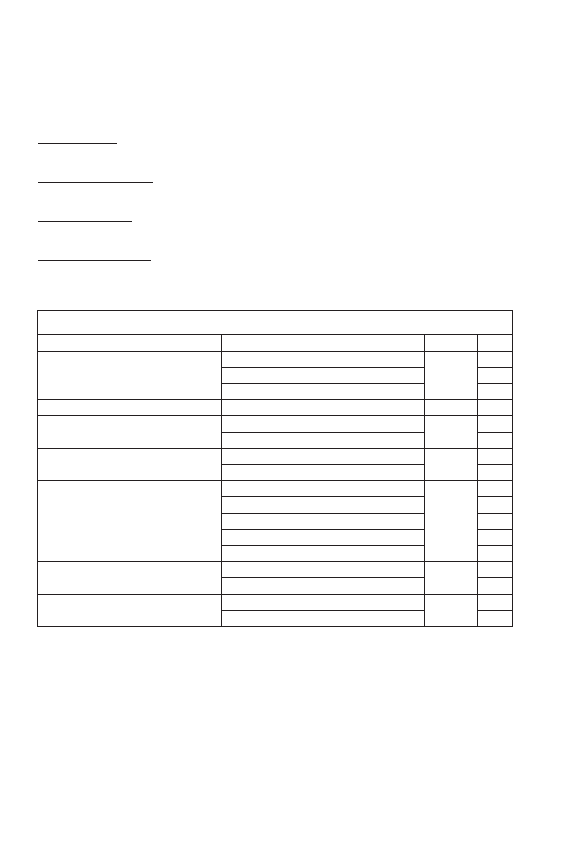
Diagnostic Display Code Definitions
Open Load: There is a break in the wires that lead to the item listed in 
the chart (injector, fuel pump, etc.), or the item has failed.
Short-to-Ground: The wire is shorted to ground between the electronic 
control unit and the item listed in the chart. 
Shorted Load: The wires leading to the item listed in the chart are 
shorted together, or the item has shorted internally. 
Short-to-Battery: The wire leading from the item listed in the chart to 
the electronic control unit is shorted to a wire at battery voltage.

Diagnostic Codes

Component

Condition

SPN

FMI

Throttle Position Sensor
 

Voltage Too High

51

3

Voltage Too Low

4

Abnormal Rate of Change

10

Vehicle Speed Sensor 

Data Erratic, Intermittent or Missing

84

2

Intake Air Temperature Sensor
 

Voltage Too High

105

3

Voltage Too Low

4

Barometric Pressure Sensor
 

Voltage Too High

108

3

Voltage Too Low

4

Engine Temperature Sensor
 

Voltage Too High

110

3

Voltage Too Low

4

Temperature Too High

16

Engine Overheat Shutdown

0

Temperature Above Normal Range

15

Alternator Power Supply 
Potential (DC Chassis Voltage)

Voltage Too High

167

3

Voltage Too Low

4

Exhaust Temperature Sensor
 

Voltage Too High

173

3

Voltage Too Low

4

45

FEATURES

Instrument Cluster

Rider Information Center

Diagnostic Display Code Definitions

Diagnostic Codes

Component

Condition

SPN

FMI

ECU Memory

Checksum/CRC Error

628

13

Injector 1 (MAG) (Port Injector)

Driver Circuit Open/Grounded

651

5

Driver Circuit Short to B+

3

Injector 2 (PTO) (Port Injector)

Driver Circuit Open/Grounded

652

5

Driver Circuit Short to B+

3

Knock Sensor 1

Voltage Too Low

731

4

Ignition Coil Primary Driver 1 
(MAG)

Driver Circuit Open/Grounded

1268

5

Fuel Pump Driver Circuit

Driver Circuit Open/Grounded

1347

5

Knock Level Cylinder 1 (MAG)

Maximum Detonation Correction 
Limit Reached

1352

0

Knock Above Critical Level

16

Knock Level Cylinder 2 (PTO)

Maximum Detonation Correction 
Limit Reached

1353

0

Knock Above Critical Level

16

Sensor Supply Voltage 1 (TPS/
TMAP Sensor Power)

Voltage Too Low

3509

4

Sensor Supply Voltage 2 
(Ground Speed Sensor)

Voltage Too Low

3510

4

ECU Output Supply Voltage 2 
(Injection Supply PWR)

Voltage Too High

3598

3

Voltage Too Low

4

Throttle Release Signal

Voltage Too High

520194

3

Voltage Too Low

4

Throttle Stuck

7

Chassis Relay

Driver Circuit Open/Grounded

520208

5

Driver Circuit Short to B+

3

Exhaust Valve Solenoid

Driver Circuit Grounded

520215

5

Driver Circuit Short to B+

3

Injector 1 (MAG) (Case Injector)

Driver Circuit Open/Grounded

520216

5

Driver Circuit Short to B+

3

Driver Circuit Grounded

4

Injector 2 (PTO) (Case Injector)

Driver Circuit Open/Grounded

520217

5

Driver Circuit Short to B+

3

Driver Circuit Grounded

4

Fuel Type Selected

Voltage Too High

524007

3

Voltage Too Low

4

Signal Out Of Range

2

46

THE PERFECT FIT

Suspension Quick Set-Up Guide

The suspension on this snowmobile is incredibly easy to adjust to your 
weight and riding style. Just remember three simple steps:

1. Set up rear shock spring preload for rider weight.

2. Adjust the rear spring to tune vehicle balance (ski pressure and 

weight transfer).

3. Adjust shock clickers to tune ride quality (stiffer or softer ride).

The following Quick Set-Up Guide walks you through what you need to 
know to get started, and additional detail is available on the pages 
immediately following the guide. See pages 48-49 for factory and initial 
suspension charts for the standard spring as well as for accessory 
springs that are available for heavier or lighter riders.

Step 1: Set up rear shock spring preload for rider weight.

Before riding for the first time, use the gauge supplied with your snow-
mobile to adjust rear spring preload to the appropriate setting for the 
rider’s weight.

Position the narrow end of 
the gauge flush with the 
spring retainer. Turn the 
spring until the rider’s 
weight setting aligns with 
the junction of the shock 
body and end cap. 

Make no other suspension 
adjustments at this time. 
Test ride the snowmobile in 
various terrain to fully expe-
rience the existing suspen-
sion settings before making 
adjustments.

Spring Retainer/Adjustment Nut

Shock Body/End Cap 

Junction

47

THE PERFECT FIT

Suspension Quick Set-Up Guide

Step 2: Adjust the rear spring to tune vehicle balance.

After the initial test ride, make adjustments to the rear shock spring to 
improve vehicle balance. Increasing preload will increase ski pressure 
and result in less weight transfer, flatter cornering and more precise 
steering response. Decreasing preload will decrease ski pressure and 
result in more weight transfer, or less weight on the skis when accelerat-
ing. 

Step 3: Adjust shock clickers for ride quality.

After making spring adjustments, adjust shock clickers to control bot-
toming. Turning a clicker counter-clockwise decreases damping for a 
softer ride. Turning a clicker clockwise increases damping for a stiffer 
ride and less bottoming. 

NOTICE: Always adjust the clicker at least one click below full stiff (full clock-

wise) or shock damage will occur. 

Test ride the snowmobile and continue making spring and clicker 
adjustments until you achieve the perfect ride.

TIP: Initially, heavier riders may want to set the shock clickers 2-4 clicks higher 

than lighter riders.

Ride Experience

Adjustment

Too much weight transfer
•Ski pressure is too light
•Skis push

Turn rear shock spring 
retainer clockwise (see 
page 55)

Too little weight transfer
•Ski pressure is too heavy
•Steering is heavy

Turn rear shock spring 
retainer counter-clockwise 
(see page 55)

Ride Experience

Clicker

to Adjust

Adjustment

See 

Page

Bottoming in the IFS

IFS shock - after 
150 mi. (240 km) 
break-in

Clockwise

52

Bottoming in the center

Front track shock

Clockwise

54

Bottoming in the rear

Rear shock

Clockwise

55

No bottoming, but ride is 
harsh in front or rear

IFS shock (after 
break-in), Front 
track shock, Rear 
shock

Counter-clockwise

52
54
55

Harsh in chatter/bumps

Front track shock, 
Rear shock

Counter-clockwise

54
55


Content   ..  9  10  11  12   ..