Asylum Report 2023 - page 3
EUROPEAN UNION AGENCY FOR ASYLUM
failure would render the transfer decision irremediably unlawful or should the applicant prove
that the outcome of the transfer decision would have had been different if the requesting
Member State provided the information and held the interview. In relation to the interpretation
of Article 27(1) does the provision of information and the personal interview form part of the
effective remedy, and if so, can a court re-examine the substance of the transfer decision,
even when the requested Member State has accepted its responsibility for the asylum
application?
The French Council of State ruled that an appeal against a refusal to requalify was admissible
only if the person is able to establish that the transfer period had expired or that another new
circumstance had developed.
4.2.4. Decisions on outgoing Dublin requests
Decisions on outgoing Dublin requests include decisions in response
to take back requests (under Articles 18(1b-d) and 20(5) of the Dublin
III Regulation) and take charge requests (under Articles 8-16 and
17(2)), but they exclude decisions taken under the sovereignty clause
(Article 17(1)). Thus, the data on outgoing Dublin requests cover all
persons included in a decision received by the reporting country in
response to a request to have a partner country take responsibility
for the asylum application. This does not mean that the transfer was
necessarily carried out, but it does mean that the partner Member
State replied to the request, whether it was accepted or rejected,
within the time limit or there was an implicit acceptance due to the
expiration of the time limit
In 2022, 163,000 decisions were issued in response to outgoing Dublin requests,xx according
to provisional data which are regularly exchanged between the EUAA and 29 EU+ countries.xxi
This represented an increase by more than two-fifths compared to 2021, resulting in the
highest annual total since at least 2016. Since the second half of the year, the number of
decisions steadily rose to an unprecedented level in December 2022. The increase in
decisions coincided with a rise in asylum applications in EU+ countries during the same
period.
Overall, the annual ratio of decisions received on Dublin requests to asylum applications
lodged was 16%, on par with 2021. Although some decisions on Dublin requests concerned
family reunion cases, the stable ratio of decisions to applications suggests that in 2022 an
increased number of asylum seekers moved from the first country of arrival to another to
lodge a new application (referred to as secondary movements), impacting asylum caseloads
overall.
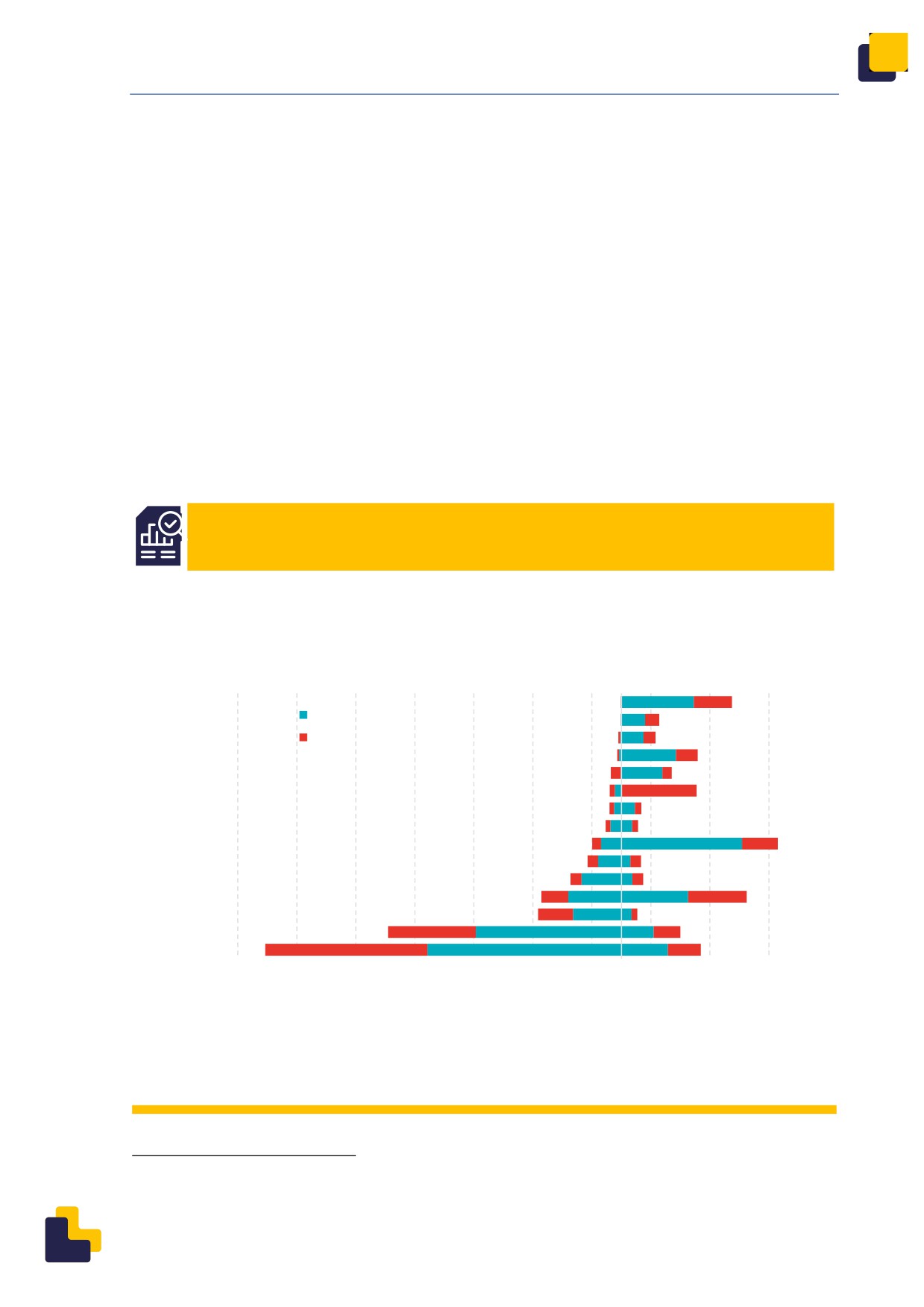
At the country level, Germany and France continued to receive the most decisions in response
to their requests (see the left side of Figure 7), jointly accounting for over three-fifths of the
EU+ total. Germany received almost two-thirds more responses than in 2021, whereas
xx This includes both decisions on requests and re-examination requests.
xxi EPS data were not available for Iceland and Liechtenstein.
100
ASYLUM REPORT 2023
responses received by France rose by around one-seventh. Most other countries received
more responses to Dublin requests in 2022, with the most notable relative increases in Spain,
Norway, Cyprus, Austria, Portugal and Czechia (in descending order).xxii In contrast, some
countries received fewer responses in absolute terms, notably Greece, Ireland, Slovakia,
Croatia, Romania and Malta (in descending order).
As in previous years, Italy issued the most decisions overall on Dublin requests. However, for
the first time on record, Austria and Bulgaria emerged as second and third countries issuing
the most decisions, overtaking Germany and Greece (see the right side of Figure 7). While Italy
issued one-third more decisions than in 2021, decisions issued by Austria and Bulgaria almost
tripled compared to the previous year, in fact, rising to the most in at least 6 years.
At lower levels, important relative increases also took place in Lithuania, Cyprus, Portugal,
Croatia and Poland (in descending order).xxiii Lithuania issued five times as many decisions as
in 2021, decisions by Cyprus more than tripled, and decisions by Croatia, Poland and Portugal
more than doubled from 2021. In contrast, fewer decisions were issued by Romania, Greece
and Germany (ordered from largest to smallest absolute decrease).
Germany and France received the most decisions on Dublin
requests, while Italy responded to the most requests
Figure 7. Decisions on outgoing Dublin requests by selected countries receiving a decision
(left) and responding to a request (right), 2022
Receiving a decision Responding to a request
Bulgaria
Accepted
Poland
Romania
Refused
Spain
Croatia
Greece
Sweden
Slovenia
Italy
Switzerland
Netherlands
Austria
Belgium
France
Germany
65,000 55,000 45,000 35,000 25,000
15,000
5,000
5,000
15,000
25,000
Note: The selection of countries includes the Top 10 countries receiving requests and the Top 10 countries
responding to requests. The figure does not include decisions issued and received in 2022 with a reported
‘unknown’ legal basis, which accounted for less than 1% of all decisions received and issued. For each Member
State, received decisions are self-reported, while reported replies are based on data from receiving countries.
Source: EUAA EPS data.
xxii Only countries which received at least 200 decisions in 2022 were considered.
xxiii
Only countries which received at least 500 decisions in 2022 were considered.
101
EUROPEAN UNION AGENCY FOR ASYLUM
4.2.4.1. Citizenship of applicants in the Dublin procedure
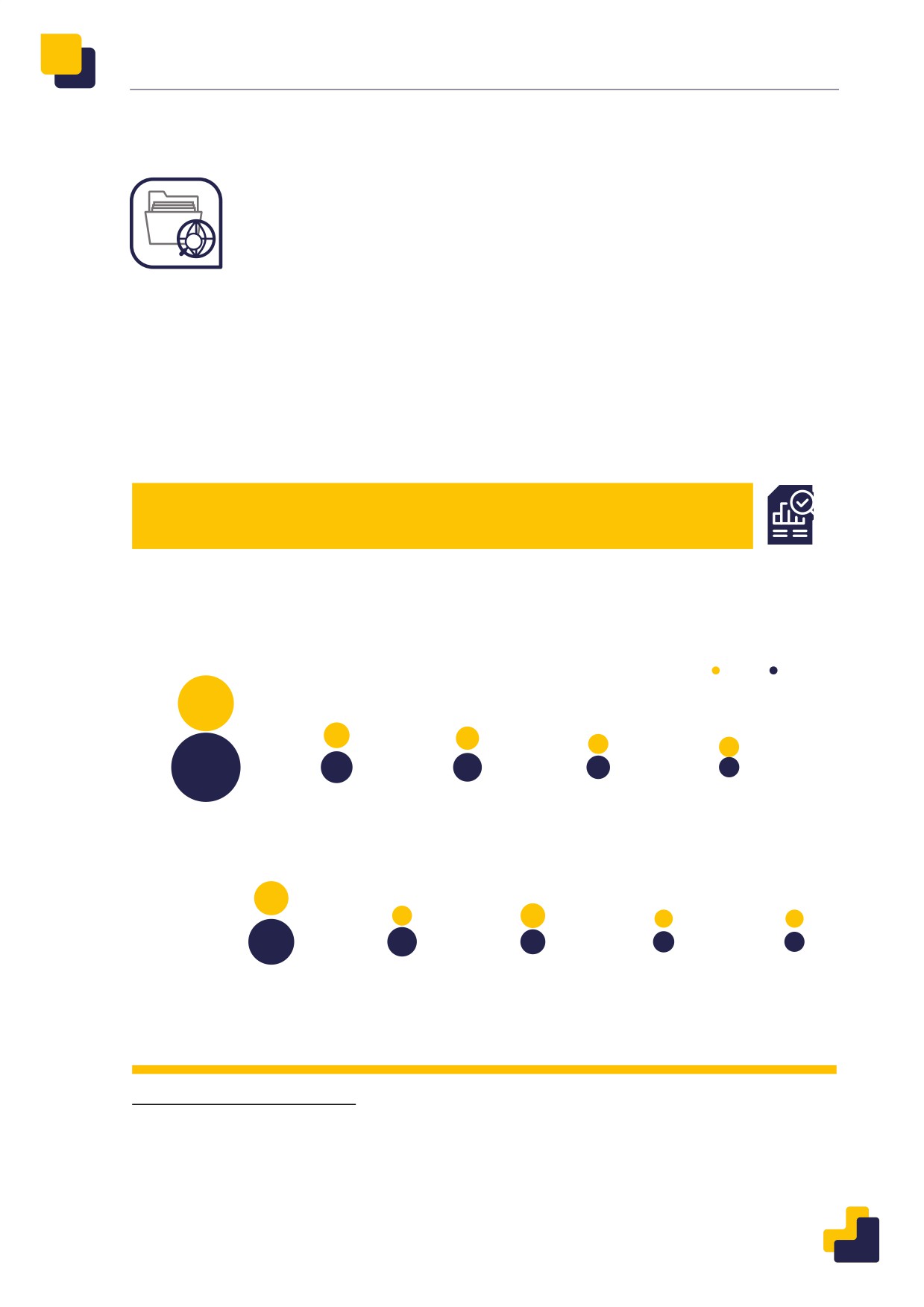
Afghan citizens received the most decisions on Dublin requests in 2022,
accounting for one-quarter of all decisions.xxiv This was one and a half times as
many as in 2021 (see Figure 8). Decisions for nationals of Syria followed and
surged to an even greater extent, increasing by four-fifths from the previous
year and reaching an unprecedented level.
A rise in decisions on Dublin cases was noted for other nationalities as well. Decisions for Iraqi
and Pakistani nationals increased by one-half from the previous year, and for Turks, the
number more than doubled. For all three nationalities, this was the most in several years.
At lower levels, marked increases in decisions were recorded for nationals of Burundi, India,
the Democratic Republic of the Congo, Armenia and Russia (in descending order).xxv In
contrast, decisions for Nigerians remained stable at low levels, while those for nationals of
Côte d’Ivoire declined by one-tenth from 2021.
One-quarter of decisions on Dublin requests concerned
Afghan citizens
Figure 8. Top 10 nationalities receiving decisions on Dublin requests, 2022 compared to
2021
2021
2022
Afghanistan
Iraq
Pakistan
Morocco
Nigeria
Syria
Türkiye
Algeria
Guinea
Somalia
Source: EUAA EPS data.
xxiv Citizenship was not reported in 6% of decisions. In the third quarter of 2022, France started reporting both the
legal basis and the citizenship of applicants who received decisions. This explains the lower level of unreported
citizenships at the EU+ level compared to 2021 (13%) and may account for some of the increases observed for
several nationalities.
xxv Only citizenships which received at least 1,000 decisions in 2022 were considered.
102
ASYLUM REPORT 2023
4.2.4.2. Acceptance rate for Dublin requests
The acceptance rate for decisions in response to a Dublin request measures the
share of decisions accepting responsibility (explicitly or implicitly) for an
application out of all decisions issued. The overall acceptance rate in 2022 was
60% (6 percentage points higher than in 2021), increasing for the first time in
5 years at the EU+ level.
At the country level, the acceptance rate remained stable or increased from the previous year
in most countries. The most notable increases were in Hungary (+29 percentage points),
Bulgaria (+24 percentage points) and Malta (+16 percentage points). In contrast, a significant
decrease was recorded in Spain (-9 percentage points ).xxvi Acceptance rates varied from
over 80% in Croatia and Lithuania to 1% in Greece.
4.2.4.3. Decisions on take back and take charge requests
The Dublin III Regulation distinguishes between two categories of
requests: take back and take charge. A Member State may send a
take back request (Articles 18(1b-d) and 20(5)) asking another
Member State to take responsibility for an applicant who applied for
international protection within the reporting country but had already
applied in the first Member State or because the other Member State
previously accepted responsibility through a take charge request.
Conversely, a Member State may send a take charge request
(Articles 8-16 and 17(2)) asking another Member State to take
responsibility for an applicant who has not applied for international
protection in the requesting Member State but criteria under the
Dublin III Regulation indicate that the other Member State should be
responsible. The criteria include family reunion (in particular for
unaccompanied minors), documentation (visas, residence permits),
entry or stay reasons (using information from Eurodac) and
humanitarian reasons.
About 71% of all decisions (with a reported legal basis) issued in EU+ countries in 2022 were
for take back requests.xxvii This is a decline from the previous year, when decisions on take
back requests accounted for more than three-quarters of the total. However, marked
differences were noted at the country level. In particular, the share of decisions received on
take charge requests was relatively high for Greece (95%) and Cyprus (90%).
xxvi Only countries which responded to at least 500 requests in 2022 were considered.
xxvii
EUAA data do not contain information on the specific article of the Dublin III Regulation which was used as a
basis for sending a request, but they do distinguish between responses to take charge and take back requests.
Since the second quarter of 2022, data for France are disaggregated according to the type of request, thus the
share of decisions with an unknown legal basis decreased from 30% in 2021 to 12% in 2022.
103
EUROPEAN UNION AGENCY FOR ASYLUM
The acceptance rate for take back requests in 2022 was 57% (8 percentage points higher
than in 2021) and for take charge requests, it was 66% (up by 7 percentage points). The
increase in the acceptance rate for take back requests was driven by more positive decisions
issued by Bulgaria, Austria and Croatia (in descending order) and fewer negative decisions by
Greece and Romania. Meanwhile, the increase in the acceptance rate for take charge
requests was due to many more positive decisions by Italy and Spain.
4.2.5. Use of the discretionary clause
Discretionary clauses are defined in Article 17 of the Dublin III
Regulation. Article 17(1) is also referred to as the sovereignty clause,
which allows a Member State to examine an application for
international protection lodged by a third-country national or a
stateless person, even if such an examination is not its responsibility
under the criteria laid down in the regulation.
In the context of the discretionary clause, a partner country is the
country to which a take back or take-charge request could have
been sent before invoking the clause.
Article 17(1) was invoked about 4,800 times in 2022, increasing for the first time in 4 years but
still well below pre-pandemic levels. It was applied most frequently by Belgium, followed at a
distance by France, Germany and the Netherlands. The discretionary clause was used mostly
for Afghan citizens in Belgium and Germany; Syrians in the Netherlands and Belgium; and
Turks in the Netherlands.
For the first time, Bulgaria was identified as the main partner country to which requests could
have been sent, mostly in relation to Afghan applicants. This was followed closely by Greece,
for which the discretionary clause was evoked mostly in relation to Turkish applicants. Other
commonly identified partner countries included Italy and, at lower levels, Spain, Germany and
France (in descending order).xxviii
4.2.6. Assessing transfers to specific countries
Serious and systematic infringements of EU law
Following two similar cases, the Regional Court of Den Bosch referred a case to the CJEU for
a preliminary ruling on the divisibility of mutual trust between Member States in the
Dublin procedure. The previous two referrals were submitted in October 2021 and
March 2022,338 but they were later withdrawn as the appeals of the decisions were revoked.
xxviii
The share of ‘unknown’ partner countries decreased from 22% in 2021 to 1% in 2022. Therefore, the actual
number of times a particular country was deemed responsible by another Member State in 2021 may have been
underestimated.
104
ASYLUM REPORT 2023
National courts inquired if serious and systematic infringements of EU law by the potentially
responsible Member State would preclude a Dublin transfer to that state or would the
infringements imply that the requesting Member State cannot rely on the principle of mutual
trust, necessitating it to examine and demonstrate that the applicant would not be in a
situation contrary to the Charter of Fundamental Rights of the EU, Article 4. The courts also
inquired about the types of evidence that can be used and the standard of proof.
Differences in protection policies
The Icelandic Immigration Appeals Board examined the possibility of transferring an applicant
to Sweden, where an application for international protection was rejected, the applicant was
issued a return order to Palestine, lost the right to material reception conditions and was
homeless for 5 months. The board noted that the procedure for assessing the principle of
non-refoulement in return procedures in Sweden provided sufficient guarantees to ensure that
the applicant’s life would not be at risk. The rejected applicant also retained the right to
essential health care until departure, and the board concluded that this is adequate in the
particular case. In addition, the applicant did not have a condition that would require treatment
that is only available in Iceland and not in Sweden. Finally, the board acknowledged that
applicants with a negative decision lose their right to accommodation in Sweden, but as an
exception, vulnerable persons could still be accommodated. Thus, the board confirmed the
transfer decision.
Similarly, the Dutch Council of State confirmed that a more restrictive policy in Sweden related
to applicants from Syria in itself does not indicate that there would be a shortcoming in the
asylum procedure or that the applicant would run a real risk of indirect refoulement if he were
transferred back. Based on the principle of mutual trust, the court highlighted that the
authorities can assume that a Member State’s asylum system is effective and in compliance
with fundamental rights enshrined in the Charter of Fundamental Rights of the EU, the ECHR
and the Geneva Convention. The burden of proof is on the applicant to demonstrate that he
would not be offered international protection in the Member State responsible on the basis of
its protection policy, while in principle he would receive this in the Netherlands. This means
that the applicant should substantiate that there is an obvious and fundamental difference in
protection policies and that both the administrative authority and the courts in the Member
State responsible would not protect him against refoulement. If this burden of proof is met,
then the Dutch authorities are responsible to further investigate and remove all doubts of a
possible risk, if the transfer is implemented.
The Regional Court of The Hague declared a Pakistani applicant’s appeal as inadmissible,
noting that the fact that the legal representative’s secretariat confused the case with another
appeal was not an excusable justification for lodging the appeal with a delay. The court still
analysed whether the specific circumstances of the case would render it admissible. It
concluded that the fact that the Netherlands, unlike Germany, considers Ahmadis from
Pakistan a risk group cannot be considered as evidence of a fundamental difference in
protection between the two countries. The court added that it could not ascertain in advance
whether the Netherlands would grant the applicant international protection. Also, the applicant
did not substantiate that the German authorities would not protect against refoulement.
When assessing transfers to Denmark (202106573/1/V3 and 202105784/1/V3), the Dutch
Council of State found “obvious and fundamental differences” in asylum policies between
Denmark and the Netherlands related to Syrian applicants. The Council of State held that the
applicants met the burden of proof by providing evidence that the policy of the determining
105
EUROPEAN UNION AGENCY FOR ASYLUM
authority in Denmark was to return Syrian applicants, and this was endorsed by the Danish
Refugees Appeals Board. The Council of State noted that the State Secretary did not conduct
a further investigation to eliminate any doubts about a possible real risk of refoulement.
Access to the asylum procedure and non-refoulement
The situation at the Croatian border (see Section 4.1) was at the focus of several appeals in
many EU+ countries in the context of the Dublin procedure. For example, the Belgian CALL
ordered the suspension of transfers to Croatia in several cases due to inadequate material
reception conditions and a possible risk of refoulement.339 The Croatian Ministry of the Interior
signalled that the Dublin Procedure Department did not receive an official revocation of
transfers from Belgium to Croatia. The ministry added that as of December 2022, an individual
guarantee is submitted to Belgium for applicants who accepted through the Dublin procedure,
with each response accepting responsibility to examine the request for international
protection. Dublin returns to Croatia did continue throughout 2022.
The Federal Administrative Court (FAC) in Switzerland annulled SEM’s transfer decision of two
applicants to Croatia, noting that the authority had not sufficiently clarified the facts of the case
which are relevant for the determination of the state responsible for the asylum applications.
In addition, the applicants substantiated in a credible manner their detention and acts of
torture by police officers at the border, while SEM had based its decision on old reports to
conclude that there were no systemic flaws in Croatia’s asylum system. At the beginning of
2023, FAC noted that it is highly probable that unlawful removals constitute a regular practice
in Croatia, but for Dublin transfers, it was not a primary concern whether it was extremely
difficult for an applicant to reach the Croatian territory. The court underlined that there was no
indication that Dublin returnees to Croatia were being unlawfully removed despite expressing
their wish to apply for international protection. The Croatian Ministry of the Interior added that
Dublin returnees are issued a certificate of registration after they express their intention to
apply for international protection, and they are instructed to report to the reception facility in
Zagreb (families with children are transported to the facility in an official vehicle without a
police label).
The Dutch Council of State cancelled several transfers to Croatia (for example, of an applicant
from Egypt and an applicant from Algeria), noting that various sources and reports indicated
that the risk of pushbacks existed for third-country nationals transferred to Croatia from other
Member States. The court also noted that there was clear evidence of pushbacks at the
border and the Dutch authorities could no longer assume that Croatia complies with its
international obligations toward third-country nationals. Thus, Dutch authorities could no
longer transfer applicants to Croatia based on the Dublin III Regulation without further
investigation on whether the country complies with the requirements of the ECHR, Article 3.
The Croatian Ministry of the Interior shared that a non-paper was sent to the Dutch authorities
about the situation of nationals of Egypt and Algeria and it expressed the possibility of
providing individual guarantees for transferred applicants for international protection, if
requested. The authorities underlined in the non-paper their conviction that the Dublin III
Regulation is implemented fully and consistently, and that applicants’ rights are protected in
accordance with EU and national legislation and international obligations.
Similarly, in Germany, the Regional Administrative Courts of Freiburg, Hanover and Stuttgart
annulled transfers to Croatia. All courts mentioned the recent incidents of pushbacks as an
indication of a risk of treatment contrary to the ECHR, Article 3 and the Charter of
Fundamental Rights of the EU, Article 4, and noted systemic deficiencies in the asylum and
106
ASYLUM REPORT 2023
reception systems. The Stuttgart court highlighted that applications from persons who were
transferred back under the Dublin III Regulation were treated as subsequent ones, and there
was a risk that the applicants were denied a substantive examination of the merits of their
asylum claim and, thus, were not offered adequate protection against refoulement.
Nevertheless, other courts - like the Regional Administrative Courts of Ansbach, Leipzig340
and Hannover341 - decided that there are no systemic flaws in the Croatian asylum system.
For Dublin transfers to Hungary, a new legal position was published in Sweden. The Swedish
Migration Agency (SMA) continued to send requests and take transfer decisions when
Hungary was identified as the Member State responsible, but it also continued to suspend the
implementation of transfers to Hungary as long as the situation persists. The legal position
was issued to assess the impact of the ‘embassy procedure’ (see Section 4.1) and underlined
that there was no legal clarity on whether applicants transferred back to Hungary may lodge
an application on the territory of Hungary. In addition, the legal position found that a claim by a
transferred applicant would be treated as a subsequent application and noted that this was
contrary to Dublin III Regulation, Article 18. The document added that there were also doubts
about the possibility to access an effective remedy. The position underlined that suspending
the implementation of transfers to Hungary does not mean that the transfer time limit is
suspended according to Dublin III Regulation, Article 29(1).342
The Regional Administrative Court of Arnsberg in Germany ordered the suspension of the
transfer of an Uzbek applicant to Hungary. He entered the country through Ukraine in
March 2022 and continued his journey to Germany without asking for international protection.
The court highlighted serious reasons to assume systemic flaws in the Hungarian asylum
procedure and violations of the non-refoulement principle. The court underlined that, despite
a request from the German authorities, the Hungarian authorities did not provide written
guarantees that the applicant’s case would be managed in line with the recast APD.
The AIDA report for the Netherlands observed that transfers to Hungary from the Netherlands
were not undertaken in 2022 by applying the sovereignty clause in cases where it was
established that Hungary is the Member State responsible (a practice which was started
in 2015).
When assessing transfers to Lithuania, courts in Germany and Estonia took a different
approach. The Regional Administrative Court of Hanover found that the German authorities
should not have determined Lithuania as the state responsible for the asylum application
merely on the basis of the Dublin III Regulation, Article 13 (irregular entry), but they should
have continued the examination whether another Member State could have been designated
as responsible, referring to potential systemic flaws in asylum and reception conditions. The
court noted that, due to increased border crossings in the summer of 2021 and concerns
around the possibility to access the asylum procedure and adequate material reception
conditions, the asylum and reception systems in Lithuania showed signs of systemic
weaknesses, which could result in inhuman or degrading treatment. At the same time, other
courts in Germany (see for example here and here343) have concluded that there are no
systemic flaws in the Lithuanian asylum system.
In contrast, the Estonian Circuit Court assessed that the shortcomings in accommodation in
Lithuania due to mass arrivals could not lead to a conclusion that the transfer could not be
implemented. It found that since the applicant could contest the negative decision before a
court, it suggested that there were no deficiencies in the system. The court also considered
107
EUROPEAN UNION AGENCY FOR ASYLUM
that the situation of the applicant, who arrived from Belarus in 2020, was not comparable to
those who arrived on a mass scale in the summer of 2021.
For transfers to Spain, the Icelandic Immigration Appeals Board analysed the possibility of the
applicant to access the asylum procedure, receive material reception conditions, including
appropriate health care, and be protected against refoulement. The board upheld the transfer
decision by the Directorate of Immigration.
Access to and quality of reception conditions in the country responsible for the application
The court cases cited above involving transfers to Croatia, Lithuania and Spain also looked
into the applicant’s possibility of accessing reception conditions and the quality of these
conditions. Concerns around inadequate reception conditions for individual applicants has led
to cancelling transfers to Croatia and Lithuania. The Croatian Ministry of the Interior added that
the authorities made efforts to improve the reception system and accommodation through
projects co-financed with AMIF. For example, improvements were made to the reception
centre in Kutina and the reception centre in Zagreb was in the process of being reconstructed.
Projects implemented in previous years, such as the cooperation with Médecins du Monde
Belgique on health care services and psychosocial support from the Croatian Red Cross, have
continued in 2022 as well (see Section 4.7).
In January 2022, the Belgian Immigration Office confirmed to the Flemish Refugee Action that
it no longer took Dublin transfer decisions for Bulgaria.344
For transfers to Italy, selected jurisprudence pointed more and more towards a trend of courts
concluding that there was no evidence of systemic flaws in the asylum and reception systems
following legislative changes in 2020. However, the approach may change in the beginning of
2023, after Italy notified other Member States in December 2022 that it would not accept
incoming transfers due to a lack of reception places.
In January 2023, the Court of The Hague concluded that the Italian government’s circular
must be regarded as a temporary obstacle to implementing transfers and should not be
considered as an indication of structural and fundamental shortcomings. The court underlined
that the presumption of mutual trust remains.
The German Federal Administrative Court confirmed on 27 January 2022 the decision of the
Higher Administrative Court of North Rhine Westphalia in July 2021, halting the transfer of a
single man to Italy. The transfer was ruled to be unlawful due to the lack of accommodation in
Italy, based on an alleged lack of sufficient consideration of the facts on the ground.
The Swiss Federal Administrative Court established a different approach to take charge and
take back requests to Italy. In 2022, the obligation previously introduced by the court in
December 2019 to obtain individual guarantees from Italian authorities for applicants with
serious health problems (with regard to adequate accommodation and immediate access to
medical care) was lifted for take charge procedures. For take back procedures, guarantees
were still required. The court reasoned this with the risk of being excluded from
accommodation in take back cases.
The Swiss Refugee Council continued its work on monitoring reception conditions in Italy for
Dublin returnees. In February 2022, the organisation published a report which assesses the
situation specifically for applicants with mental health problems. The organisation continued to
advocate against Dublin transfers to Italy.345
108
ASYLUM REPORT 2023
The Regional Court of the Hague underlined that Dutch authorities may rely on the principle of
mutual trust, although it considered that there were still certain shortcomings in the Italian
asylum and reception systems. It found that the applicant in the specific case, who had
diabetes, had access to medical treatment upon a return and would not be faced with a
situation that would be in violation of the ECHR, Article 3.
However, the Portuguese Central Administrative Court concluded in another case that the
applicant’s medical conditions needed to be assessed as a vulnerability factor and upheld the
lower court’s decision to oblige the authorities to reconsider the applicant’s transfer to Italy.
The Icelandic Immigration Appeals Board concluded that better living conditions in Iceland
than in Italy did not justify cancelling a Dublin transfer decision. In the case, the court noted
that the applicant was living in an overcrowded reception centre and faced discrimination
against applicants and beneficiaries of international protection, but the applicant had a valid
residence permit on grounds not related to international protection, was in good health, found
work and studied in Italy, and did not appear to have any special ties with Iceland.
The regional court in Brno, Czechia, ruled in February 2022 on an applicant’s transfer to
France. It reiterated that Czechia was obliged to consider properly, individually and thoroughly
if there existed a risk of breaching the ECHR, Article 3.
In another case, the Portuguese Supreme Court found that the fact that the applicant was not
granted accommodation in kind could not be considered as a systemic failure of the French
reception system. The court considered that the EUR 400 cash benefit and access to free
health care should be sufficient for the applicant to cover his needs.
In October 2022, the Swiss FAC examined the Dublin transfer to Bulgaria of an Afghan
applicant, who suffered from health problems and drug addiction. SEM used text modules to
substantiate the decision and the request sent to Bulgaria did not contain information on the
applicant’s medical state. Thus, the court considered that not all legally-relevant medical facts
were examined. In addition, the court was not convinced that the Bulgarian authorities took
sufficient account of the principle of non-refoulement. Lastly, the court added that SEM had
also failed to take into account the impact of the war in Ukraine on the Bulgarian asylum and
reception system.346
The Court of the Hague annulled a Dublin transfer to Belgium after the ECtHR issued interim
measures against the country (see Section 4.7). The burden of proof on reception conditions
thus shifted from the applicant to the national authorities to demonstrate that the applicant
would be provided with adequate material reception conditions following a transfer to
Belgium.
Use of detention
Approaches to Dublin transfers to Malta seemed to have converged, and several transfers
were halted due to the country’s detention policy (see Section 4.8). For example, the Tribunal
of Rome annulled the transfer decision of an applicant who had been detained in Malta for
16 months, fell ill due to the conditions and had to be hospitalised for 2 months.
Likewise, the Dutch Council of State upheld a case concerning two applicants, including a
child who suffered trauma in Malta and experienced PTSD. The court stated that the child
would be at risk of a significant and irreversible impact on her health if transferred back to
Malta. The council added that, even though the medical advice concluded that the child was
109
EUROPEAN UNION AGENCY FOR ASYLUM
physically fit to travel, the Dutch authorities should have been more active to fulfil their duty to
clarify any serious doubts about the impact of the transfer on the child’s health. According to
its own manual, SEM does not transfer vulnerable asylum seekers to Malta if they are facing
detention.347
The Constitutional Court in Austria disagreed with a decision by the Federal Administrative
Court (BVwG) when the court found a planned transfer of a Syrian national to Malta to be
admissible. The Syrian national claimed that he would be detained upon a return to Malta and
that the conditions in detention in Malta would violate his rights guaranteed by the ECHR,
Articles 2 and 3. The BVwG did not assess the situation in detention in Malta .
The practice of detaining children and conditions in detention in Poland led to a case being
referred back by a Regional Administrative Court to BAMF. The court found several reports
from various, reliable sources on concerns about the detention of children and concluded that
BAMF must undertake further investigation to assess whether the applicants would be at risk
of a situation contrary to the Charter of Fundamental Rights of the EU, Article 4.
Impact of the war in Ukraine on neighbouring EU+ countries
Courts had different approach towards Dublin transfers to EU+ countries which were the most
impacted by the arrival of Ukrainians, such as Poland and Romania. In Germany, the Regional
Administrative Court in Aachen noted in March 2022 that Poland sent a circular on
25 February 2022 temporarily suspending all incoming transfers as of 28 February 2022 until
further notice. Hence, the court annulled a transfer.
In June 2022, the Czech Supreme Administrative Court did not make reference to this circular,
but it sent back a case to the regional court, noting that the lower court did not provide
sufficiently relevant and up-to-date reports to determine whether the number of people
arriving from Ukraine led to systemic flaws in the Polish asylum and reception systems.
For transfers to Romania, in July 2022, the Regional Administrative Court of Arnsberg in
Germany noted that the Romanian authorities announced on 28 February 2022 that Dublin
transfers would be accepted only in urgent cases and, thus, the court annulled a Dublin
transfer.
In October 2022, the Civil Court of Rome annulled an applicant's transfer to Romania
according to Article 3(2) of the Dublin III Regulation and Article 4 of the EU Charter of
Fundamental Rights, considering systemic deficiencies existing in the country. The court
observed that the country was already unprepared to accommodate asylum seekers before
the Ukrainian crisis and that with the arrival of thousands of people from Ukraine the situation
had reached a critical level. In January 2023, the Civil Court of Rome confirmed its previous
orientation, annulling a transfer to Romania.
However, the Dutch Council of State concluded that the fact that Romania intended to
suspend incoming transfers would not mean that Romania refused the requests. The council
found that it was an indication of a temporary measure and noted that the letter from the
Romanian authorities allowed urgent transfers, such as the transfer of applicants in detention
or transfers with a close deadline.
110
ASYLUM REPORT 2023
4.2.7. Implementing Dublin transfers
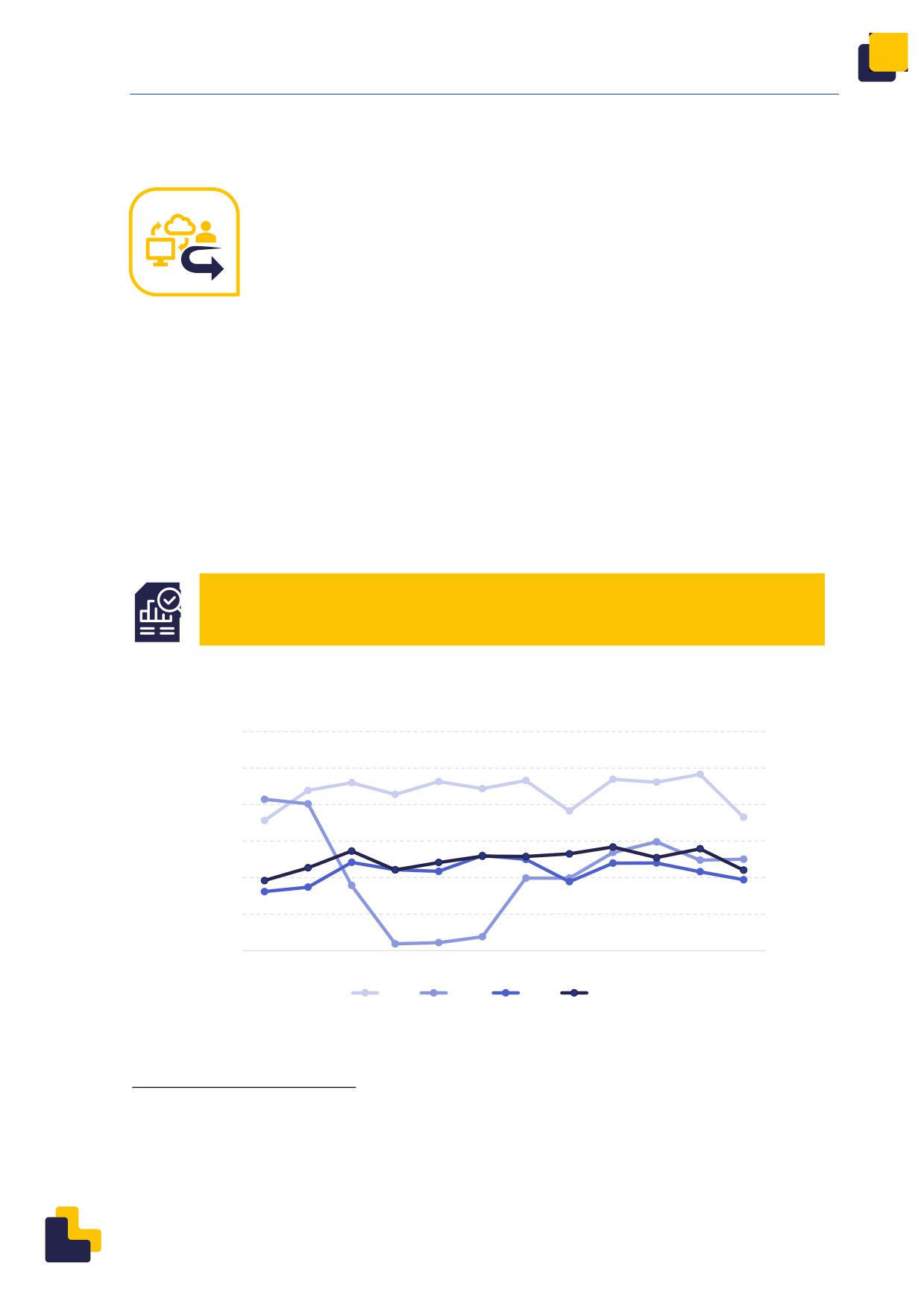
After dropping to very low levels on account of the COVID-19 pandemic in
2020 and 2021, the number of Dublin transfers which were implemented in
2022 remained low. Overall, about 15,000 transfers were undertaken in
2022,xxix which was about one-seventh more than in 2021, yet about two-fifths
lower than the number in 2019. Transfers were partially hampered by the
increased pressure on staff and reception systems following the activation of
the Temporary Protection Directive in the wake of the Russian invasion of Ukraine.
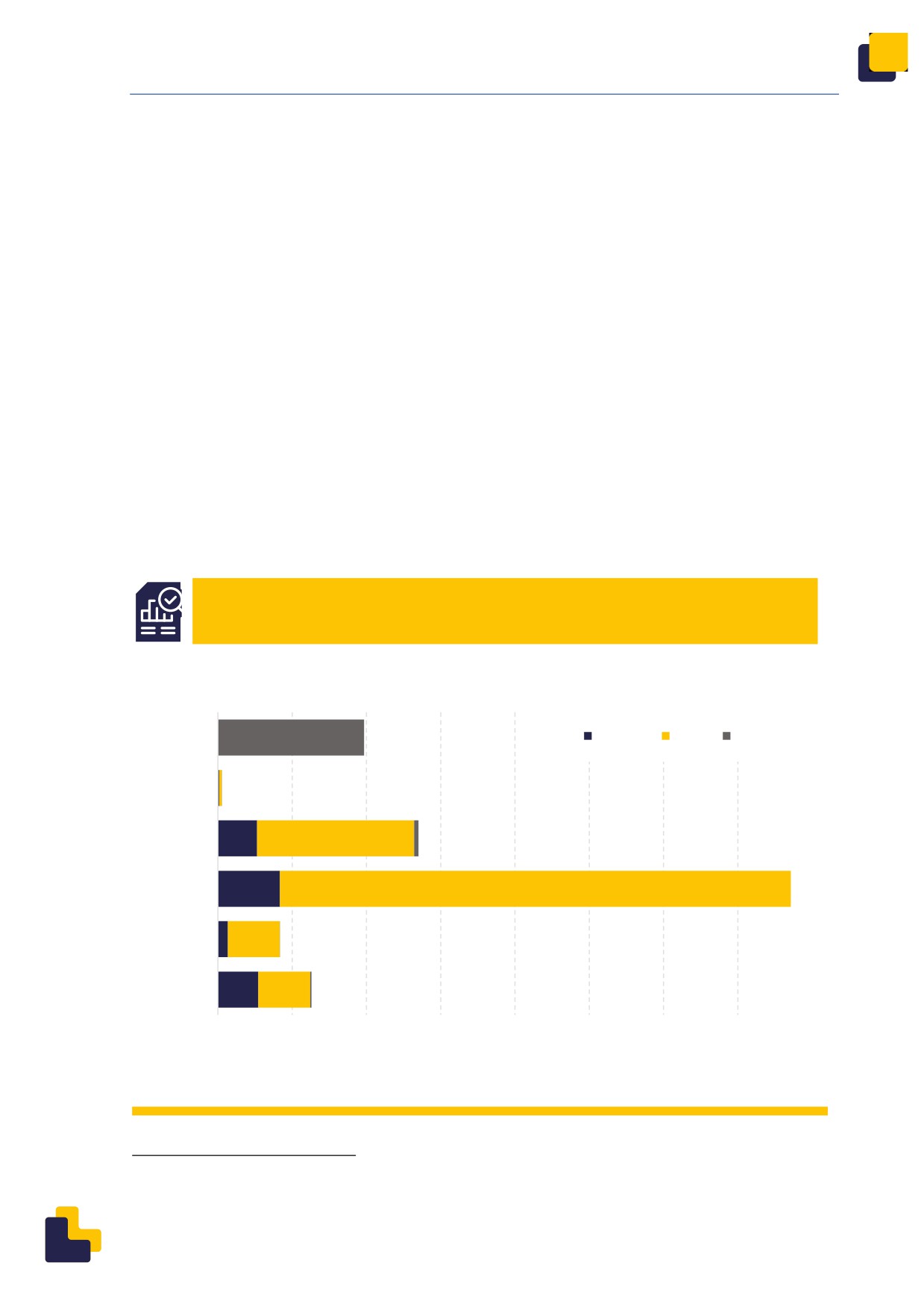
In 2022, implemented transfers fluctuated moderately throughout the year (see Figure 9). The
low number of transfers in 2022, combined with a slight increase in accepted requests,
resulted in a lower ratio of implemented transfers to accepted requests: just under one to
seven,xxx down from one to five in 2021 and one to four in 2020.xxxi
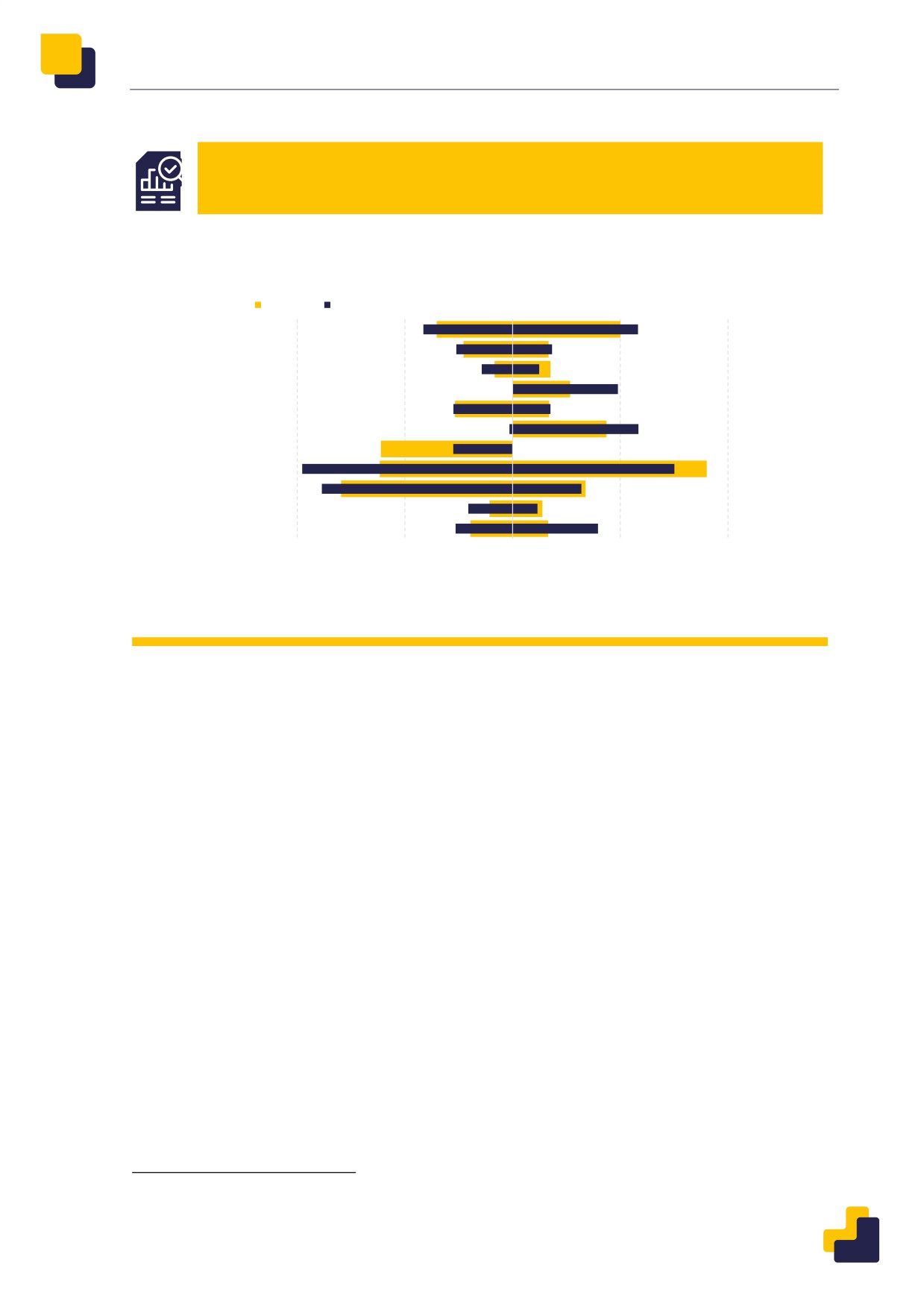
Germany and France implemented one-half of all transfers in 2022. Transfers implemented by
Germany increased by about three-fifths compared to 2021 (see Figure 10, left side). The
surge was mainly due to many more Afghan, Syrian, Turkish and Iraqi applicants (in
descending order) who were transfered. Transfers implemented by France increased by one-
tenth from 2021 and continued to involve mainly Afghans and Guineans.
A low number of Dublin transfers were implemented in 2022
Figure 9. Number of outgoing Dublin transfers implemented in EU+ countries by month,
January 2019-December 2022
3,000
2,500
2,000
1,500
1,000
500
0
Jan Feb Mar Apr May Jun
Jul
Aug Sep Oct Nov Dec
2019
2020
2021
2022
Note: Data were missing for Denmark. For the purpose of comparison, data on transfers from and to the United
Kingdom in the periods when it was part of the EU were not included.
Source: EUAA EPS data
xxix Data were missing for Denmark.
xxx This calculation was made excluding data for Denmark for 2022.
xxxi The ratio of transfers following accepted requests should be used with caution to assess a Member State’s
capability to successfully implement transfers, due to the lack of cohort data and a substantial time lapse between
an accepted transfer request and a physical transfer. This time lapse distorts the calculation of the rates if the
number of acceptances is not stable over time.
111
EUROPEAN UNION AGENCY FOR ASYLUM
Germany and France implemented one-half of all Dublin
transfers
Figure 10. Number of outgoing Dublin transfers implemented by sending (left) and
receiving country (right) for selected countries, 2022 compared to 2021
2021
2022
Other
Switzerland
Sweden
Spain
Netherlands
Italy
Greece
Germany
France
Belgium
Austria
4,000
2,000
0
2,000
4,000
Note: Data were missing for Denmark as a sending/reporting country. For each Member State, implemented
transfers are self-reported while received transfers are based on data from all other receiving countries.
Source: EUAA EPS data.
Among the countries implementing the most transfers, Greece undertook less than one-half as
many transfers as in 2021 (on account of an important drop in Afghan transfers), while those
carried out by the Netherlands remained stable.
At lower levels, more transfers were implemented by Austria (where Afghans remained the top
transferees but numbers grew considerably for Algerians, Indians and Moldovans), Belgium
(due to more Algerians, Afghans and Moroccans), Portugal (due to more Gambians) and
Sweden (on account of an unprecedented number of transfers of Russian and Uzbek
nationals).
The largest absolute increases in receiving countries occurred in Austria, Spain and Italy (in
descending order) (see Figure 10, right side). Transfers to Austria increased to the most in at
least 6 years, mainly due to more Afghans, Syrians and Turks. Such increases were offset by
declines in Germany, Romania, Sweden and Belgium (in descending order), mainly driven by
fewer transfers of Afghans.xxxii
As in the previous year, in 2022, most transferees were Afghans, accounting for just under
one-fifth (17%) of the total. They were followed at some distance by Algerians (8%),
Syrians (7%), Guineans, Moroccans and Iraqis (5% each). The transfer of Afghan nationals
declined by one-tenth from 2021 but remained above the pre-pandemic level of 2019.
Germany transferred more than twice as many Afghan citizens as in 2021, while transfers of
Afghans from Greece declined by almost two-thirds to the lowest level in at least 6 years.
xxxii
Only countries where the surplus of transfers in 2021 compared to 2022 exceeded 140 are considered.
112
ASYLUM REPORT 2023
Around 1,200 Algerians were transferred in 2022, which was about one-sixth more than in the
previous year and the most in at least 7 years. Transfers of Syrians increased slightly
compared to 2021, while transfers of Iraqis and Moroccans both rose by more than one-
quarter. In contrast, after dropping in 2020 and 2021, transfers of Nigerians declined further
in 2022.
Most asylum applicants who were transferred through a Dublin procedure in 2022 were adult
males (see Figure 11), but children under 18 years represented at least 14% of all
transferees.xxxiii In 2022, transfers of minors declined by around one-fifth compared to 2021,
but there were variations between the age groups. While the transfer of minors in the younger
age group (under 14 years of age) remained stable, significantly fewer minors aged between
14 and 17 were transferred. The decline was due to a steep fall in the number of minors
transferred from Greece, likely linked to fewer transfers executed under the relocation
scheme. Nevertheless, Greece remained the top country for the implementation of transfers
involving minors, carrying out two-fifths of all such transfers, but it was followed closely by
Germany, which accounted for around 30% of the total.
Transfers of female minors remained stable compared to 2021, with minor girls representing
one-third of all transferred minors. In the lower age group (under 14 years), minor girls
represented roughly two-fifths of the total.
The number of minors being transferred declined for the
top two nationalities of transferees
Figure 11. Transferees in the Dublin procedure by age group and sex, 2022
Unknown
Female
Male
Unknown
65+
35-64
18-34
14-17
0-13
0
1,000
2,000
3,000
4,000
5,000
6,000
7,000
Note: Data were missing for Denmark for 2022.
Source: EUAA EPS data.
xxxiii
This proportion includes transferees for whom EU+ countries had not reported the age, which accounted for
13% of the cases.
113
EUROPEAN UNION AGENCY FOR ASYLUM
As in previous years, most minors who were transferred in 2022 were Afghans, followed at a
distance by nationals of Syria, Pakistan, Iraq, Türkiye, Russia, Somalia and Bangladesh (in
descending order). Transfers of Afghan and Syrian minors declined by around one-half and
over two-fifths, respectively from the previous year, whereas those involving Pakistani minors
remained stable. Conversely, transfers of Iraqi minors increased by more than one-third.
Overall, the main receiving countries for children were Germany, Italy, Switzerland, France and
Spain (in descending order).
114
ASYLUM REPORT 2023
Section 4.3.
Special procedures
to assess
protection needs
Countries may opt to use special
In the EU context, in addition to regular
procedures to assess an asylum
examination procedures, the recast APD
application in an accelerated
sets the framework to examine applications
manner out of the regular
for international protection at first instance
procedure. This can be done, for
under special conditions involving
example, when there are special
accelerated procedures when:
protection needs or when an
an application is presumably unfounded;
application is likely to be
applications are made at border or transit
unfounded. Also, when an
zones; or
applicant presents a subsequent
when the admissibility of the application is
application without new evidence,
in question.
the application may be dismissed
as inadmissible without an
In addition to special procedures, countries
examination on the merits, on the
may also introduce policies to process
basis of the res judicata principle.
specific categories of cases with priority and
In these special procedures, the
ahead of other pending cases (see
duration of the procedure is
Section 4.4).
shortened without undercutting
procedural safeguards or a
complete examination.
115
EUROPEAN UNION AGENCY FOR ASYLUM
In 2022, jurisprudential developments took the lead in the area of special procedures. Several
EU+ countries revised their national lists of safe countries of origin, and some legislative
developments changed border procedures and accelerated procedures. Concerns persisted
around the use of border procedures and around the risks of acceleration based on the safe
country concept and subsequent applications.
4.3.1. Border procedures
Many applications for international protection are made at the border of a
country or in a transit zone before an applicant gains entry into the territory. In
well-defined circumstances under the recast APD, a Member State can handle
the application directly in such a location, either to assess its admissibility or to
fully determine the case on the merits of the application.
In 2022, Finland and Greece initiated changes to their legislative framework on
border procedures. The Finnish government submitted a legislative proposal to the parliament
suggesting the introduction of a border procedure. The procedure could be triggered by a
government decision if an exceptionally large number of migrants arrive in a short period of
time or if hybrid activities aiming to exploit migration were directed against Finland. The
procedure would allow authorities to process potentially unfounded asylum applications at the
border. The procedure could not be applied to vulnerable applicants if they cannot be
guaranteed the special support they need.348 The legislative proposal forms part of a more
comprehensive legislative package of proposed amendments, which aim to ensure that the
country is prepared in case of hybrid activities.349 However, the parliament did not manage to
consider the proposal by the end of the electoral term (29 March 2023) and it was allowed to
lapse. The next government will decide if the changes will be proposed again.
The Finnish Refugee Advice Centre commented on the plans and highlighted, for example,
that remote interviewing should only be applied in this procedure if the applicant consents.
The organisation underlined that an applicant’s access to legal aid should clearly be
guaranteed. The centre also emphasised that detention should remain a last resort, and
alternatives to detention should be prioritised.350
The application of the Joint Ministerial Decision that provided for the application of the
exceptional border procedure in Greece was not renewed after 31 December 2021. Since the
beginning of 2022, the general provisions of Law No 4939/2022, Article 90(1)-(2) apply. The
government noted that the change was necessary, as the number of applications decreased
and a mass influx no longer existed. Following the change, according to the law, border
procedures apply only to applicants for international protection who arrive on the islands of
Lesvos, Chios, Samos, Kos and Leros and live in a RIC or a CCAC. The border procedure can
be applied for the period of the reception and identification procedure, for a maximum of 25
days.
The Greek Refugee Council observed that legal aid practitioners in Lesvos reported that,
since June 2022, the Regional Asylum Office (RAO) automatically applied non-border
procedures for applicants for whom the first instance decision had not been notified within
28 days from registration, without however issuing any decision for a referral to the normal
procedure (as it is not foreseen in the law, according to RAO). In these cases, the deadline for
the appeal is automatically extended as follows: for admissibility, the 10 days convert
automatically to 20 days and for eligibility they are extended from 10 to 30 days. This practice
116
ASYLUM REPORT 2023
is based on Article 95(2) of Law No 4939/2022, however the Joint Ministerial Decision
regulating this procedure was not issued for 2022. In Kos during 2022, all asylum applications
were examined under the border procedure, regardless of whether a first instance decision
had been issued and served to asylum seekers within 28 days of the registration of the
application.351
A report by Equal Rights Beyond Borders, HIAS Greece and Refugee Support Aegean
observed delays in the registration of asylum applications and often there was too little time
between the summons for the interview and the interview itself. The organisations highlighted
delays in vulnerability assessments and expressed concern that interviews were conducted
before this assessment, and thus, special procedural guarantees could not be applied.352
In France, the border procedure was applied during the disembarkation of 234 people from
the ship Ocean Viking in November 2022. While unaccompanied minors (44 minors) were
taken directly into care by the child protection system, the remaining persons (190 people)
were placed in a waiting zone and their asylum applications - if there was any - were
examined under the border procedure. In total, 66 persons had their asylum application
considered as not manifestly unfounded. However, a total of 186 people were eventually
admitted by the judicial or administrative authorities to the territory to register their asylum
application and were referred to accommodation.
4.3.2. Safe country concepts
In the context of asylum, the term 'safe country' refers to countries which
do not generally generate protection needs for their people or countries in
which asylum seekers are protected and are not in danger. EU law
provides four safe country concepts which can be applied:
Safe country of origin: Under specific circumstances, certain countries
can be designated as generally safe for their nationals or former
residents. As a result, asylum applications from such countries are likely
to be unfounded, and Member States may accelerate or prioritise their
examination. The concept is described in the recast APD, Article 36.
Safe third country: A safe country with which the applicant has a
genuine connection and where he/she should have applied for
international protection. Unlike the safe country of origin concept, this
concept is not related to the substance of the application and the
application may be declared inadmissible.
First country of asylum: Asylum seekers and refugees may be returned
to a country where they have, or could have, sought international
protection and where their safety would not be jeopardised, whether in
that country or through a return from the first country to the country of
origin. The concept of first country of asylum is defined in the recast
APD, Article 35.
European safe third country: Certain European third countries observe
particularly high human rights and refugee protection standards.
117
EUROPEAN UNION AGENCY FOR ASYLUM
These concepts are regulated in the recast APD, which states that Member States should
conduct regular reviews of the situation in safe countries based on a range of sources of
information. When a significant change related to the human rights situation occurs in a
country which has been designated as safe, Member States must evaluate the situation as
soon as possible and, where necessary, assess the designation of that country as safe.
The national courts of EU+ countries remain the primary guardians of CEAS within the national
framework. When necessary, they review the practical implementation of safe country
concepts in line with their relevant competences. In addition, CJEU interprets the relevant
rules in the context of preliminary rulings or assesses their implementation in cases of
infringement procedures. The ECtHR indirectly reviews safe country concepts when
examining human rights violations.
Additional resources on safe country concepts
The application of the safe country concept in EU+ countries is presented in the EUAA
report, Applying the Concept of Safe Countries in the Asylum Procedure.
The Who is Who in International Protection interactive platform supplements this
report by presenting the EU+ countries which apply the concept, the competent
authorities responsible and national lists of safe countries.
4.3.2.1. Recent changes in national lists of safe countries
During periodic reviews, new countries may be determined as safe and others may be
withdrawn from the national list.
Safe country of origin
In 2022, several EU+ countries revised their lists of safe countries. The main changes occurred
in Cyprus,353 Estonia,354 Greece,355 Iceland,356 Norway357 and Slovenia.358 Belgium was the
only country where no changes were introduced,359 although in March 2023, the Council of
Ministers approved the removal of Georgia from the list.360
In the Netherlands, the State Secretary announced in 2021 that 12 countries will be removed
because there was no substantial interest or relevance to keep them on the list.361 In addition,
it maintained the United States,362 Armenia (with the exception of LGBTIQ applicants and
persons who have been placed in criminal detention),363 and Trinidad and Tobago (with the
exception of LGBTIQ applicants)364 as safe countries of origin.
On 5 April 2022, the Council of State ruled that specific groups within a country can be
excluded from the designation of a safe country of origin. Until this ruling was delivered, the
Netherlands could opt to pay special attention to specific groups that did not completely meet
the threshold to be excluded from the safe country of origin designation. Therefore, the
accelerated procedure in Track 2 still applied. With the new ruling, all groups to which special
attention was given in Track 2 were subsequently excluded from the safe country of origin
designation.
In Ireland, the International Protection Act was amended to allow for the prioritisation of
applications from safe countries of origin and for the acceleration of the appeal procedure in
front of the International Protection Appeals Tribunal (IPAT).365 Under the revised procedure,
118
ASYLUM REPORT 2023
applicants from safe countries of origin receive a date for their substantive interview within 4
to 6 weeks of making the initial application.366
In October 2022, a fast-track procedure was re-introduced in Switzerland for certain countries
of origin: countries on the list of safe countries of origin, visa-exempt countries, and - because
of the high number of insufficiently-justified claims - Algeria, Morocco and Tunisia. This
procedure merges the normally separate procedures of the Dublin interview and interviews in
the national asylum procedure according to AsylA, Articles 26 and 29. According to the SEM,
this would allow the asylum procedure to be completed more quickly.367
For specific groups of applicants, aditus strongly criticised the presence of a number of
countries on the safe country list in Malta because they discriminate and criminalise
LGBTIQ individuals. The organisation pointed out that this practice undermines the proper
safeguards at second instance for these individuals who are fleeing persecution on the basis
of their sexual orientation and gender identity, especially in cases where the first instance
decision rejects the application as manifestly unfounded.368 The International Protection
Agency stated that all procedural guarantees apply within the accelerated procedure.
Following the Russian invasion in February 2022, Ukraine was removed or de facto
suspended in all EU+ countries that had previously designated Ukraine as a safe country of
origin (Austria,369 Cyprus,370 Czechia, Estonia, Greece,371 Iceland,372 Italy373, Luxembourg and
the Netherlands374).
The change in the security situation in Ukraine led the Supreme Administrative Court in
Czechia to accept appeals lodged before February 2022 by Ukrainian nationals based on the
safe country of origin concept and held that these cases should be re-considered due to the
ongoing armed conflict.
In S.H. v Malta (Application No 37241/21), the ECtHR found that there had been violations of
Article 13 in conjunction with Article 3 of the Convention when Malta ordered the return of an
applicant to Bangladesh, which the International Protection Act deems as a safe country of
origin. Under Rule 39 of the Rules of the Court, the ECtHR indicated to the Maltese
government not to expel the applicant.
Similarly, the Tribunal of Catania overturned a negative decision and stated that Tunisia
cannot be considered a safe country of origin due to the deteriorating the security situation.
The Court of the Hague overturned decisions given to some applicants from safe countries of
origin. In one case it found that the determining authority had not asked sufficient questions
during the interview with an applicant from Georgia, and in another, there was insufficient
investigation of the individual circumstances of the applicant from Armenia.
The Dutch Council of State underlined that even when a country is considered as a safe
country for origin for unaccompanied children, the authority should examine if adequate
reception is available in the return country.
In contrast, national courts upheld the designation of some countries as safe countries of
origin. There was no information available to challenge the designation for Cameroon, Egypt,
Georgia and Morocco.
The Irish High Court sent several cases back to IPAT to re-examine whether Georgia can be
considered as safe for victims of domestic violence (see Section 5.2).
119
EUROPEAN UNION AGENCY FOR ASYLUM
Safe third country
Only a few changes were reported for national lists of safe third countries in 2022. Following
the Russian invasion, Estonia removed Ukraine from the list on 25 May 2022.
Greece introduced the list in June 2021, specifying Türkiye as a safe third country for certain
nationalities.375 The list was further supplemented in December 2021 with the addition of
applicants entering from Albania and North Macedonia.376
The retention of Türkiye as a safe third country on 12 December 2022377 drew a strong
reaction from civil society organisations.378 15 NGOs addressed a letter to the Director of the
Asylum Service, noting that the latest European Commission report on Türkiye
(SWD(2022) 333)379 counters Greece’s designation of Türkiye as a safe third country for
refugees.380 The lack of readmission leading to prolonged detention on the islands was also
criticised by NGOs.381
Members of the European Parliament (E-001347/2022) raised with the European Commission
the issue of the applicability of the recast APD, Article 38(4) as Türkiye had suspended all
transfers from Greece.382 The European Commission underlined that if the applicant is not
permitted to enter the safe third country, in particular if the underlying situation preventing
entry persists since 2018 or 2020, the Member State should ensure that access to the asylum
procedure is given, in accordance with the recast APD.383 The Refugee Support Aegean and
the Greek Refugee Council submitted an annulment of this piece of legislation to the Greek
Council of State, which referred questions to the CJEU for a preliminary ruling.384
However, despite the suspension of returns to Türkiye since March 2020, applications lodged
by applicants falling under the scope of Joint Ministerial Decision 42799/2021
(FEK B’ 2425/07.06.2021) in 2022 were still examined in the context of the safe third country
concept and the fast-track border procedure. The Appeals Committee does not apply
Article 38(4) of the Procedural Directive to applications rejected as inadmissible on the basis
of the safe third country concept with regard to Türkiye, despite the fact that readmissions to
Türkiye have been suspended since March 2020. It is only in a limited number of cases that
the Appeals Committee proceeded to an in-merit examination of an application. UNHCR
continued its advocacy for the examination on the merits, based on its public statement issued
in August 2021.385
Challenges were also brought up by the Norwegian Organisation of Asylum Seekers (NOAS)
about the application of the concept of the safe third country. NOAS proposed a series of
legislative and procedural changes to ensure that asylum seekers who are returned to a safe
third country following the Immigration Act, Section 32(1d) are not exposed to the risk of
refoulement, including chain refoulement.386
120
ASYLUM REPORT 2023
4.3.3. Admissibility procedures
Admissibility procedures are conducted when a Member State does not
have to examine whether an applicant qualifies for international protection
because of specific circumstances, for example:
Another Member State is responsible for the application under the
Dublin III Regulation;
Another Member State has already granted protection;
Another country is considered to be the first country of asylum or a safe
third country for the applicant;
The application is a subsequent one with no new elements; or
A dependent lodges an application after consenting to be a part of
another application.
In these special cases, a Member State conducts an admissibility procedure
to verify if the application may still be admitted for examination.
In 2022, jurisprudential developments shaped the framework established for admissibility
procedures. Following the CJEU’s judgment in November 2021, the Asylum Law was
amended in Hungary.387 The inadmissibility ground was repealed from the Asylum Law, which
allowed the asylum authority to reject a case when the applicant had arrived through a
country where the person was not exposed to persecution or at risk of serious harm. This
provision gave rise to an infringement procedure by the European Commission.388
Nonetheless, the Hungarian Helsinki Committee underlined that the corresponding provisions
still remained in the Fundamental Law of Hungary, allowing authorities to continue using this
inadmissibility ground in practice.389
The CJEU ruled that a new application in a Member State from an applicant who had
previously been rejected by Denmark cannot be considered as a subsequent application, and
thus dismissed it as inadmissible, since Denmark does not implement the recast QD and the
recast APD (see Section 2.6). The court also ruled on the admissibility of an asylum application
lodged by a minor whose family members were already beneficiaries of international
protection in another Member State (see Sections 2.6 and 4.2).
The German Regional Administrative Court of Minden referred questions to the CJEU for a
preliminary ruling, inquiring whether an application could be considered as a subsequent one
and dismissed as inadmissible when the applicants in the meantime had returned to their
country of origin. Another Regional Administrative Court asked the CJEU whether national
legislation was in line with EU law if it considers a subsequent application to be admissible
only if the factual or legal position changed in favour of the applicant, and whether a ruling
from the CJEU must be treated as a new element, even if that ruling found that national
legislation was in line with EU law.
These questions referred to the practice of BAMF between 2019 and April 2022 of
deprioritising applications from applicants who had already been granted international
protection in Greece, until BAMF started processing them again in April 2022. BAMF stated
121
EUROPEAN UNION AGENCY FOR ASYLUM
that it planned to assess each case again on its merits, instead of accepting the decision to
grant international protection from another Member State, and to only deem applications
inadmissible “in justified individual cases” where no threat of violation of the ECHR, Article 3 or
EU Charter of Fundamental Rights, Article 4 exists. Over the course of 2022, this led to cases
where asylum applications were rejected, although protection had been granted by Greek
authorities.
The Federal Administrative Court of Leipzig in Germany referred questions for a preliminary
ruling on secondary movements. The court inquired whether a Member State was prevented
from examining an asylum application in an open-ended manner if another Member State had
already granted international protection, but a return to the first Member State would entail a
risk of violating the Charter of Fundamental Rights of the EU, Article 4.
Indeed, the trend of recognised beneficiaries of international protection moving onto other
Member States and applying for international protection persisted in 2022. The Swiss
Refugee Council published a legal analysis and presented some recent case law related
specifically to returning applicants who had been granted international protection in
Greece.390
In addition, an EUAA publication on Jurisprudence on Secondary Movements by Beneficiaries
of International Protection highlights the changing approach of courts when assessing these
cases and some of the practical and procedural issues faced by judges.391 Following the
publication of the report, the number of relevant cases registered in the EUAA Case Law
Database continued to grow, for example with Belgium, Finland, France, Germany, Iceland and
the Netherlands assessing individual situations against the Ibrahim threshold and examining
whether national authorities fulfilled the duty to sufficiently investigate the circumstances.
4.3.4. Accelerated procedures
According to the recast APD, when an application for international
protection is likely to be unfounded or where there are specific grounds,
such as the applicant is from a safe country of origin or presented false
information, Member States may accelerate the examination of the
application. This can be done by introducing shorter, but reasonable, time
limits for certain procedural steps without compromising the right to a fair
process or the applicant’s access to basic rights and guarantees. In the
circumstances when a procedure can be accelerated - which are the same
circumstances to examine an application at the border or in transit zones
(see Section 4.3.1), the directive allows Member States to consider an
application as manifestly unfounded.
While several Member States undertook steps to speed up the regular asylum procedure (see
Section 4.4), relatively few developments were reported specifically related to accelerated
procedures.
Changes to national lists of safe countries of origin (see Section 4.3.2) had an impact on
accelerated procedures. For example, Russia was removed from the ÅGH country list in
Denmark, which meant that applications from that country could not be processed in the
122
ASYLUM REPORT 2023
expedited version of the manifestly unfounded procedure. However, the Danish Immigration
Service underlined that applications from Russian citizens could still be processed in the
manifestly unfounded procedure on other grounds, with the agreement of the Danish Refugee
Council.392
The appeal timeline for an accelerated procedure was shortened in Cyprus with an
amendment to the "Law on the rules of procedure for the Administrative Court for International
Protection”.393
The Lithuanian Red Cross underlined that, since summer 2021, applicants from certain
nationalities arriving from Belarus were automatically referred to an accelerated procedure.
While the law requires the authorities to assess the cases within 10 days in this procedure, the
organisation observed that applicants often had to wait 6 months or more for a decision.394
In Malta, the First Hall Civil Court ruled that there was a breach of parts of the Maltese
Constitution and the applicant’s rights when a rejected application is automatically reviewed
by the International Protection Appeals Tribunal without hearing the applicant and without a
clear possibility of a further appeal. The case was further appealed to the Constitutional Court,
which delivered its judgment in January 2023. The court concluded that there was no violation
of the constitution, as it found that the rights in asylum were not part of civil rights and
obligations. In 2022, concerning the case of a different applicant, the ECtHR held that the
accelerated asylum procedure did not offer effective guarantees to protect the applicant from
an arbitrary removal.
4.3.5. Subsequent applications
A former applicant may lodge a new asylum application when their
situation has changed or new circumstances have arisen. Lodging a new
application has however sometimes been used by applicants to prevent or
delay a return decision. When an applicant makes a subsequent
application without presenting new evidence or arguments, it would be
disproportionate to oblige a Member State to carry out a new, full
examination.
In these cases, a Member State has the possibility to dismiss an application
as inadmissible in accordance with the res judicata principle (that the
matter has been decided on its merits and cannot be litigated again
between the same parties). When an application is not examined in
accordance with the Dublin III Regulation, a Member State is not required
to examine whether the applicant qualifies for international protection as
the application is already considered to be inadmissible after a preliminary
examination pursuant to the recast APD.
Similar to admissibility procedures, in 2022 jurisprudence influenced the procedural
framework of subsequent applications. As mentioned earlier, the CJEU ruled that a Member
State may not consider an application as a subsequent one after a first application was
rejected in Denmark (see Sections 2.6 and 4.3.3).
123
EUROPEAN UNION AGENCY FOR ASYLUM
The Turku Regional Administrative Court in Finland ruled on the scope of people who can
submit an appeal against a subsequent application and concluded in this case that the spouse
of the applicant does not have a right to appeal.
The Dutch Council of State assessed the concept of new evidence in subsequent applications.
It confirmed that the analysis of a report should be considered as separate evidence, thus if
the authorities considered only the report itself, the analysis should be considered as new.
The council also noted that the authorities cannot reject evidence arguing that it could have
been introduced sooner, as outlined in the recast APD, Article 40(4). This provision applies
only if a Member State transposed it in national law, and this was not the case for the
Netherlands.
The Czech Supreme Administrative Court considered the subsequent application of a
Ukrainian national and concluded that the case should be reconsidered as a result of Russia’s
invasion of Ukraine. The court also noted that it cannot be presumed that the applicant is
entitled to temporary protection, as he arrived long before the beginning of the war.
A report by Equal Rights Beyond Borders, HIAS Greece and Refugee Support Aegean
highlighted that the Greek authorities did not accept as a new element and did not declare
subsequent applications admissible when readmission to Türkiye was not plausible. Health
concerns or risk of torture or violence in the country of origin had also been seen to be
dismissed as non-substantial new elements. The report underlined that a judicial review was
still pending at the Greek Council of State, assessing a measure from September 2021 which
required asylum applicants to pay a EUR 100 fee for a second and further subsequent
applications.395
Assessing procedural requirements, the Court of The Hague annulled the IND’s decision in a
subsequent application when it did not distinguish between the two phases of examining the
admissibility of a subsequent application, as outlined in the CJEU’s LH ruling. However, the
court confirmed that the IND was not obliged to hear the applicant during the admissibility
assessment, and it confirmed that the legal consequences of the decision could be
maintained, even if the decision itself was annulled.
In a case concerning an applicant’s conversion to Christianity, the Dutch Council of State
overturned the inadmissibility decision in a subsequent application. The council emphasised,
that the IND should better recognise in its policy the importance that a growth in faith is
procedure-transcending. The authority should assess all information in combination with the
previous asylum procedure and examine whether a different outcome would result in the
credibility assessment.
The Austrian Supreme Administrative Court referred questions to the CJEU related to the
status which may be granted in a subsequent application when an applicant converts to a faith
after the first application was rejected. The Federal Office for Immigration and Asylum (BFA) as
the first instance court and the BVwG as the appeal court had considered the subsequent
application credible, but due to the fact that the risk of persecution emerged based on
circumstances that the applicant created by his own decision and relying on the Asylum Act,
Article 3(2) (transposing into national law the recast QD, Article 5(3)), it granted subsidiary
protection instead of refugee status. The court wanted to verify the compliance of this
interpretation with EU law. In relation to this preliminary reference, UNHCR published a written
statement in which it reiterated that individuals who are objectively at risk of persecution are
124
ASYLUM REPORT 2023
entitled to protection. This is irrespective of their motivations or intentions and of whether
these constitute a continuation of previously-held convictions or orientations.396
German courts also referred questions to the CJEU related to the admissibility of subsequent
applications (see Section 4.3.3).
4.3.5.1. Data on subsequent applications
A subsequent application is a legal term based on the recast APD,
Articles 2(q) and 40. It refers to situations where a person submits a new
application for international protection after a final decision has been
made on a previous application.xxxiv
The proportion of subsequent applications lodged in the same EU+ country to total asylum
applications decreased to 1 in 12 in 2022, from 1 in 7 in the previous year.xxxv The notable
decline was due to a decrease in the number of subsequent applications overall
(76,000 submitted in 2022 compared to 91,000 in 2021), coupled with a two-thirds increase in
first-time applications.
Subsequent applications declined in 12 out of 27 reporting countries. As illustrated on the left
side of Figure 12, subsequent applications in Germany declined the most in absolute terms
(26,000 in 2022 compared to 42,000 in 2021).xxxvi Despite this decline, Germany was still the
main receiving country, accounting for over one-third of the total.
With an increase from the previous year, France followed with 19,000 subsequent
applications, representing one-quarter of total subsequent applications. With the exceptions of
Greece (11%), Italy (9%) and Belgium (6%), all other EU+ countries received 3% or less each of
the total subsequent applications in 2022.
Close to three-quarters of all subsequent applicants in 2022 were male, most of whom were
aged 18 to 34. Applicants older than 35 years submitted over one-quarter of all subsequent
applications, while minors made up 22%.
For certain countries, around one in five applications was a subsequent application. This was
the case in Czechia, Finland, Greece and Poland. For other countries, the share dropped to
around one in ten applications - this included Belgium, France, Germany, Italy, Latvia and
Lithuania. In all remaining EU+ countries, subsequent applications were relatively rare.
As shown on the right side of Figure 12, nationals of Afghanistan, Nigeria, Pakistan, Iraq and
Syria lodged the most subsequent applications in 2022. The latter submitted far fewer
repeated applications than in the previous year, with 3,400 in 2022 compared to 17,000 in
2021. The peak in 2021 resulted from Syrians in Germany lodging an exceptionally high
number of subsequent applications following a ruling by the CJEU.
xxxiv
xxxv At the time of writing, data on subsequent applications were missing for Cyprus, Denmark, Iceland and Sweden.
xxxvi
Subsequent applications in Germany increased to unprecedented levels in 2021 following a CJEU ruling
relating to Syrian nationals and the Taliban takeover in Afghanistan.
125
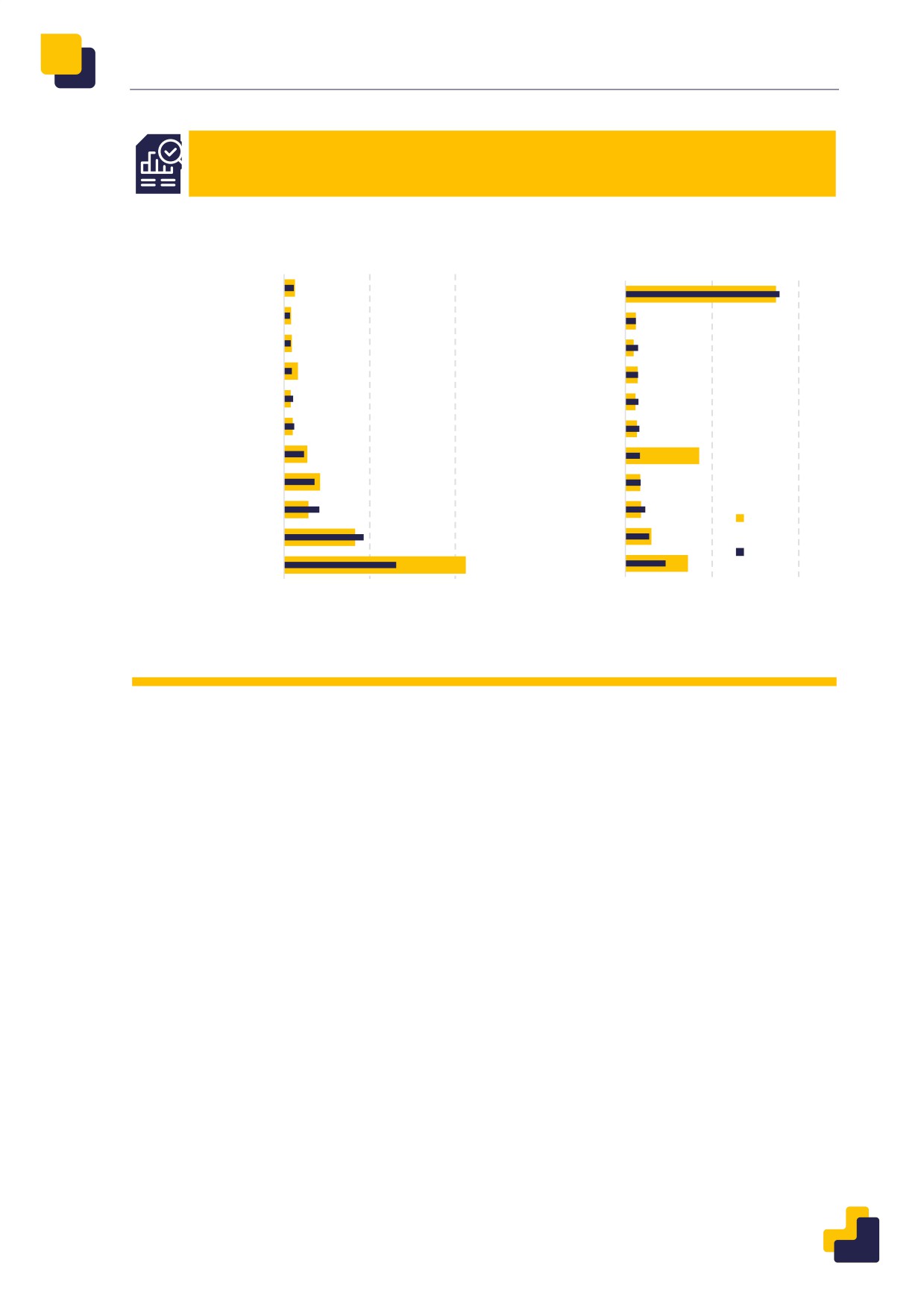
EUROPEAN UNION AGENCY FOR ASYLUM
Subsequent applications by nationals of Syria and Afghanistan
declined from peak levels in 2021, particularly in Germany.
Figure 12. Receiving countries (left) and countries of origin (right) with the most
subsequent applications, 2022 compared to 2021
Other EU+ countries
Other Nationalities
Switzerland
Albania
Netherlands
Türkiye
Spain
Moldova
Poland
North Macedonia
Austria
Russia
Belgium
Syria
Italy
Iraq
Greece
Pakistan
2021
France
Nigeria
2022
Germany
Afghanistan
0
20,000
40,000
0
20,000
40,000
Note: Data on subsequent applications were missing for Cyprus, Denmark, Iceland (the law on foreigners does not
clearly define subsequent applications) and Sweden.
Source: Eurostat [migr_asyappctza] as of 13 April 2023.
Although still significantly higher than in earlier years, citizens of Afghanistan also submitted
fewer subsequent applications in 2022 (9,300 compared to 14,000 in 2021 when the Taliban
takeover in Afghanistan began). Afghans continued to lodge subsequent applications mainly
in Germany.
Subsequent applications by nationals of Nigeria (5,500) also declined from their peak in 2021,
but they were the second-largest applicant group in this category. As in previous years, the
majority of the subsequent applications by Nigerians were concentrated in Italy.
In contrast, subsequent applications by nationals of Türkiye and Pakistan (in descending
order) increased the most in absolute terms in 2022. Both increased significantly in France,
while repeated applications lodged by citizens of Pakistan increased the most in Greece,
where they more than doubled from the previous year. Subsequent applications by several
other countries in the vicinity of the EU also increased significantly in 2022, including nationals
of Russia (3,200), North Macedonia (3,000), Moldova (2,900), Georgia (2,400), Ukraine and
Serbia (1,800 each).
126
ASYLUM REPORT 2023
Section 4.4.
Processing
asylum applications
at first instance
The procedures foreseen in the recast APD
CEAS is based on the principle of
aim to ensure that decisions on applications
common standards to grant and
for international protection are taken on the
withdraw international protection,
basis of facts and by persons with
while ensuring fair and efficient
appropriate knowledge and training, after an
procedures. The aim is that similar
adequate and complete examination has
asylum cases are treated in a
been undertaken without undue delay and
similar manner in all Member
subject to remedies. Within this framework,
States, leading to uniform
Member States have established their
decision-making and convergence
asylum systems and procedures in various
across the EU, while ensuring that
ways.
an individual assessment is
provided in each case.
127
EUROPEAN UNION AGENCY FOR ASYLUM
In 2022, the number of applicants for international protection increased considerably,
alongside millions of displaced persons from Ukraine in need of temporary protection, leading
to increased pressure on first instance processing capacity. To carry out the examination of
applications and, at the same time, complete registrations for temporary protection, national
authorities were faced with the need to split already-limited resources and staff.
EU+ countries responded to this challenge by adopting measures to increase the efficiency of
the overall asylum system and to speed up the asylum procedure. Recruitment of new staff
and the reorganisation of determining authorities were initiated, and additional territorial
offices were created to increase presence and facilitate applicants’ access to the asylum
procedure and competent authorities. Studies were commissioned to analyse the organisation
of migration structures to identify best practices. Some EU+ countries introduced prioritisation
policies and guidelines for certain profiles, extended time limits to issue a decision at first
instance, and shortened or omitted certain steps in the procedure when the outcome would
be favourable to the applicant.
Overall reforms of international protection systems at the national level were initiated in
several EU+ countries, for example by launching new digitalisation projects to improve the
efficiency of the procedure. Some proposed legislative changes aimed to further accelerate
the asylum procedure, but civil society organisations reacted critically noting that, while
governments express the intention to keep the quality of the procedure, in practice the
changes may lead to a limitation of procedural safeguards for applicants. In other countries,
policies that aimed to exclude more people from international protection drew heavy criticism
from civil society organisations.
The CJEU ruled on an applicant’s right to access a copy of the administrative file and the
meaning of communication ‘in writing’ of the administrative decision, thus interpreting
Articles 23(1), 46(1) and 46(3) of the recast APD (see Section 2.6), while the ECtHR examined
the effectiveness of asylum applications in specific EU+ countries. In addition, national courts
contributed with interpretations provided in areas that needed clarification through judicial
reviews, such as the way in which personal interviews were carried out, the use of specific
software during the personal interview and the use of mobile phone data to determine the
identity and nationality of applicants.
4.4.1. Reorganisation and future restructuring
To enhance the effectiveness of asylum systems, in 2022, EU+ countries
reorganised their determining authorities, increased their presence and, where
necessary, updated their internal organisational rules.
In June 2022, the government of Iceland approved the Prime Minister’s
proposal to appoint a temporary Council of Ministers for Immigrants and Refugees. The
purpose of the council is to work systematically on increasing the speed and efficiency of
processing asylum cases, as well as build trust and transparency in decisions of immigration
authorities.397
Poland reorganised the Department for Refugee Proceedings at the Office for Foreigners to
have more specialised teams that could work with specific categories of applicants, such as
detained applicants or applicants from specific countries of origin.
128
ASYLUM REPORT 2023
In Sweden, the Migration Agency’s services were offered in eleven new locations since
January 2022 (see Section 4.9.1.1).398
In Bulgaria, the State Agency for Refugees, under the Council of Ministers, updated and
published rules governing access to and activities for national and international NGOs in the
territorial units of the agency.399
Several EU+ countries were considering changing the structure of competent authorities
involved in the international protection procedure. For example, in Belgium, the State
Secretary for Asylum and Migration announced that it considered plans to merge the
Immigration Office, the Office of the Commissioner General for Refugees and Stateless
Persons (CGRS) and Fedasil. This was based on an audit of the Belgian asylum process in
2021, which concluded that it would be better to merge the three services. Discussions were
ongoing on the feasibility of this plan, including how to safeguard the independence
assessing applications for international protection within this new system.
With the purpose of developing the best model of administration structures, the Ministry of the
Interior in Finland commissioned a study to analyse the organisation of migration structures in
Denmark, Germany and Sweden.400
In Greece, an amendment was presented to the parliament to establish a Fundamental Rights
Officer at the Ministry for Migration and Asylum. The officer would have competence in
evaluating complaints of fundamental rights violations during the international protection
procedure and referring possible complaints to other competent authorities.401
In Portugal, a new asylum and migration agency was announced by the Minister of Home
Affairs to expand capabilities to welcome, host and integrate refugees. The responsibilities of
the Immigration and Border Service (SEF) will be reorganised, including three law enforcement
agencies, with the Criminal Police (Polícia Judiciária), the Public Security Police and the
National Republican Guard cooperating to ensure border security, integrated management,
and countering illegal practices and human trafficking.402
4.4.2. Legislation and policy changes
New migration packages with comprehensive laws and policies on
international protection, as well as amendments to existing legislation, were
drafted in several EU+ countries or were in the process of negotiation.
Belgium is drafting a new Migration Code to clarify and enhance legislation on
immigration and, for example, to improve the efficiency of the asylum
procedure. The Belgian Council of Ministers approved its structure, which includes the general
principles of the code, such as a reasonable time for managing cases, a more coherent
appeals system, a more dynamic reception system, a clearer legal framework for the return of
rejected applicants and the protection of persons in vulnerable situations.403
Czechia amended its national law in August 2022 to expand the exclusionary clause of
Sections 15 and 15a of the Act on Asylum to cases where the foreigner is subject to
international sanctions, namely a ban on entry or residence. In addition, subsidiary protection
cannot be granted to a foreigner who committed criminal offenses outside the territory, if the
person left the country of origin or the state of last permanent residence solely with the aim of
129
EUROPEAN UNION AGENCY FOR ASYLUM
avoiding criminal prosecution, provided that in Czechia the criminal offenses are punishable
with a prison sentence.
In July 2022, the German government approved the first migration package presented by the
Federal Minister of the Interior. The draft law was subsequently adopted by the German
parliament on 2 December 2022. The package includes a bill to accelerate the asylum
procedure to reduce the burden on BAMF by providing the possibility to have the personal
interview through video-conferencing and without the presence of the legal representative
(Asylum Act, amended Sections 12a and 25) (see Section 4.10) and speed up court procedures
(Asylum Act, amended Sections 77-78) (see Section 4.5). The law also has the objective to
strengthen legal certainty to harmonise and achieve faster decisions in the asylum procedure.
It also provides for the additional possibility to reject an asylum application due to an implicit
withdrawal, while re-shaping the time limits for processing an asylum application (Asylum Act,
amended Section 24).404
A new code of laws entered into force in Greece (Law No 4939/2022), systematically
classifying all laws on international protection, reception and temporary protection.
Malta amended the International Protection Act in December 2022. The amendments cover
several aspects and steps in the asylum procedure, including provisions on subsidiary
protection and manifestly unfounded applications. Article 22(3) of the International Protection
Act was amended to include the criteria for exclusion from subsidiary protection, while
Article 22(2) was amended to provide that exclusion from subsidiary protection must be in
accordance with Article 17(3) of the International Protection Act, namely when an applicant has
committed one or more crimes prior to entering Malta. Article 23 was amended to state that
applications may only be considered as manifestly unfounded if the International Protection
Agency established that the applicant does not qualify for international protection.405
The International Protection Act was also amended for the subsequent application procedure
(see Section 4.3), the application procedure for children in need of care (see Section 5.6) and
the procedure for temporary humanitarian protection (a national form of protection) (see
Section 4.14). Aditus presented comments on the proposed legislative amendments in June
2022. It welcomed a number of provisions, notably the clarification of the nature of the appeal
procedure, in line with EU law and jurisprudence.406
Slovakia amended its Act on Asylum in June 2022 to regulate the hierarchy of national and
international protection statuses, prioritising the consideration and granting of subsidiary
protection based on serious injustice over the granting of asylum for the purpose of family
reunification, and over the granting of asylum on humanitarian grounds. Thus, the first step will
be to assess the need for international protection, and if the conditions for granting
international protection are not met, then the possibility of granting a national status will be
considered.
In Iceland, a Steering Committee on Immigration kicked off its activities on 23 January 2023 to
formulate a detailed policy on immigration and refugee issues.407 Prior to the creation of the
committee, on 16 June 2022, the parliament adopted a resolution for the implementation of an
action plan for immigration for 2022-2025 focused on five pillars (society, family, education,
the labour market and refugees). A clear and coherent long-term strategy for immigrants,
refugees and multiculturalism is one of the main strategic objectives of the plan, with special
emphasis on social rights, health care, education and employment.408
130
ASYLUM REPORT 2023
In Sweden, the Asylum Commission (Asylkommissionen), a collaborative project between civil
society organisations, researchers and professionals, was carried out between 2019 and 2022
to review the impact of changes made to asylum law in 2015. The commission found many
detrimental effects, including long waits in the procedure and unpredictable asylum
processes, and stressed the importance of research-based knowledge on the experiences of
asylum applicants to form policy design.409
Civil society organisations in Sweden protested against the Tidö Agreement, a draft
government policy to transform the Swedish migration policy by increasing evidentiary
requirements for asylum applicants and limiting the right to interpretation and legal
assistance.410
4.4.3. Case load management and prioritisation policies
In 2022, the elimination of backlogs remained a priority,411 while the number of
applications for international protection increased in several EU+ countries.
The arrival of displaced persons from Ukraine brought further challenges to
national asylum systems.
In Ireland, the Economic and Social Research Institute identified COVID-19,
conflicts and the war in Ukraine as key drivers for the surge in asylum applications.412 The
latter was an additional pressure on the asylum system, which meant that first instance
resources were diverted from processing asylum applications to registering displaced persons
from Ukraine for temporary protection (see EUAA Situational Analysis on Providing Temporary
Protection to Displaced Persons from Ukraine. A Year in Review, March 2023).
Some EU+ countries took additional measures to address the high influx of cases, such as
introducing prioritisation policies for certain profiles, extending time limits to issue a decision
at first instance, shortening or omitting certain steps in the procedure when the outcome
would be favourable to the applicant and recruiting additional staff. Furthermore, UNHCR
published a paper compiling good practices to guide asylum authorities in effectively
processing applications through robust structures, close cooperation between relevant actors,
and the involvement of legal aid providers and civil society organisations to address systemic
issues.413
In Austria, the number of decisions taken in the fast-track procedure increased significantly
in 2022. The practice of fast-track processing focused on applicants from safe countries of
origin and applicants who had already been sentenced by a criminal court.414
Belgium prioritised certain categories of applicants who were in the reception system.
Targeted action was taken for countries with high recognition rates, which made it possible to
take a decision granting an international protection status for certain profiles without the
organisation of a personal interview and only based on the information in the file (including the
interview at registration) (for example for applicants from Eritrea, Somalia and Syria).
The Immigration Service in Denmark extended processing time limits and reallocated
personnel to prioritise applications submitted under the Special Act on Residence Permits for
Displaced Persons from Ukraine.415
131
EUROPEAN UNION AGENCY FOR ASYLUM
Similarly, due to the large number of cases received over the last year and the arrival of a
large number of asylum seekers from Afghanistan and people fleeing from Ukraine, in
September 2022 the IND in the Netherlands decided to extend the time limit for a decision by
9 months for all cases where the 6-month time limit had not yet expired on 27 September
2022. In addition, for all asylum applications lodged after 27 September 2022, the time limit
was pre-emptively extended by 9 months, meaning that the IND could take a maximum of
15 months to decide on an asylum application lodged after 27 September and before
1 January 2023. At the start of January 2023, it was uncertain whether this general extension
of the decision-making period would be prolonged for asylum applications lodged after
1 January 2023.
On 23 November 2022, the Regional Court of Den Bosch ruled in favour of the general
extension of the time limit. In contrast, on 6 January 2023, the Regional Court of Amsterdam
issued a judgment declaring the time limit extension to be unlawful. The court maintained that,
even though there was an increase in the number of asylum applications, it was not of such
magnitude that the threshold included in the Aliens Act, Article 42(4b) was reached.416
In Ireland, the International Protection Office (IPO) introduced a new case load management
system to improve the efficiency of the asylum procedure by channelling specific cases to
different procedures. For example, cases related to minors were prioritised (see Section 5.6).
In addition, Ireland omitted asylum interviews for certain profiles of applicants to speed up
processes (this was the case for applicants from Afghanistan, Eritrea and Somalia).417 In
November 2022, IPO introduced a revised asylum application procedure. In accordance with
the European Communities (International Protection Procedures) Regulations 2022, an
applicant making an application at IPO would be required to complete the International
Protection Questionnaire onsite at IPO, in addition to completing their preliminary interview.
The questionnaire was reduced significantly to 24 questions in order to enable applicants to
complete the questionnaire at the time of making their application.418
UNHCR reported that the Spanish Asylum and Refugee Office (OAR) created a unit focusing
on cases of vulnerable applicants, and it improved its practices on the assessment of cases
related to gender-based persecution. The two organisations worked together to improve
prioritisation procedures and the quality of assessments of international protection cases.
In June 2022, the IND in the Netherlands published its first Performance Update, concluding
that deciding quickly on applications was becoming more difficult due to the migration flows
and complex laws and regulations. Cases involving religious conversion or LGBTIQ applicants,
in particular, led to longer processing times and more time spent on training staff.419 Another
report published in the Netherlands by the investigation agency Anderson Elffers Felix
concluded that a project-based approach to eliminate backlogs or process applications by a
specific group proved valuable in order to provide legal certainty to a large number of asylum
applicants.420
Overall, the capacity of the IND to examine asylum cases was considered insufficient in 2022
and measures were taken to mitigate the lack of capacity and limit waiting times. Measures
included the ongoing recruitment of case officers in various locations, shorter interviews for
applicants likely to be provided international protection and further acceleration of
applications if applicants already requested protection in another EU Member State or came
from a safe country of origin.421
132
ASYLUM REPORT 2023
Furthermore, from 26 September 2022, the Netherlands increased the time limit for deciding
on applications for international protection from 6 months to 15 months for first asylum
applications submitted until 1 January 2023, subsequent applications and family reunification
cases for which the statutory decision period did not expire on 27 September 2022.422
On 8 February 2023, the Advisory Division of the Dutch Council of State issued advice on the
bill extending decision periods in asylum and family reunification cases (see
Section 4.14.2.4).423
4.4.4. New general guidelines to assess applications
In Bulgaria, the State Agency for Refugees reviewed internal guidelines and
rules and prepared an analysis of national jurisprudence for internal use. The
aim was to improve procedures and reduce the number of cases that courts
send back to the agency following an appeal.
In Germany, the Federal Ministry of the Interior issued new guidelines,
according to which, as of 1 October 2022, for applicants who fear persecution on the basis of
their sexual orientation or gender identity, the decision on the risk of return is to be based on
the assumption that the applicant will openly express their sexual orientation or gender
identity upon a return to the country of origin.424
In February 2022, it was reported that the Irish Department of Justice was omitting interviews
for certain profiles (such as applicants from Afghanistan, Eritrea and Somalia) in order to speed
up the asylum procedure.425 In July 2022, the UN Human Rights Committee published
Concluding Observations on Ireland’s Human Rights Record and urged Ireland to significantly
reduce processing times for applications for international protection.In Norway, the Ministry of
Justice and Public Security issued a new instruction No 15/22, “Assessment of the conditions
for asylum in the Immigration Act, Section 28(1) when the applicant already has a residence
permit in Norway”, for example as family immigrants or after family reunification with a
beneficiary of international protection. The ministry noted that if the applicant has a permanent
residence permit in Norway or a temporary residence permit based on which a permanent
residence permit may be issued, in principle there will not be a well-founded fear of
persecution or a real risk of ill treatment under Section 28(1) of the Immigration Act, but the
UDI must make an individual assessment of whether the negative decision will in fact lead to
the person having to return to their country of origin, taking into consideration for example
whether revocation proceedings have already been instituted, whether the applicant has
separated/divorced from their spouse or whether the applicant is a registered resident at a
different address.426
Through judicial reviews, courts provided guidance to determination authorities on various
complex issues that may arise during the first instance procedure. National courts examined
decisions to exclude applicants for whom there were serious reasons to believe that they had
committed war crimes (see here and here), serious non-political crimes outside the country of
refuge,427 including human trafficking, or where there were serious reasons for considering
that they had been guilty of acts contrary to the purposes and principles of the UN.
In Belgium, CALL overturned a decision on the exclusion of an applicant on the basis that the
Kurdistan Workers' Party (PKK) cannot be considered a terrorist organisation and the applicant
should not be excluded under Article 1F(c) of the Geneva Convention. Considering different
sources of information on the nature, structure, activities and methods of the PKK, CALL noted
133
EUROPEAN UNION AGENCY FOR ASYLUM
that the acts committed by the organisation cannot be qualified as terrorist acts contrary to the
purposes and principles of the UN. CALL added, however, that another exclusion clause may
be applicable in the particular case. Therefore, the case was referred back to the CGRS for
further assessment if the applicant was individually liable for any war crimes committed by the
PKK, within the meaning of Article 1F(a) of the Geneva Convention.428
In Germany, the Federal Administrative Court pronounced a judgment in February 2023 on
BAMF’s use of mobile data carriers to determine the identity and nationality of an asylum
applicant. The court held that the evaluation of digital data carriers to determine the identity
and nationality of an asylum applicant was not lawful without considering other information
and documents. It was only permitted if the purpose of the measure, based on the time it was
ordered, cannot be achieved by less severe means. It noted that, according to the findings of
the administrative court, more lenient means were available to BAMF, such as a marriage
certificate or register comparisons and inquiries about linguistic abnormalities. In this particular
case, the request to hand over the access data for the evaluation of the mobile phone was
assessed to be unlawful.
In Ireland, in the case of a Georgian applicant who falsely claimed international protection
based on sexual orientation, IPAT rejected his credibility in a new claim as well, based on
political opinion. The High Court found that the tribunal failed in not assessing the new claim
at all. The admittedly false claim should have been an element in the general credibility
assessment.
The Italian Supreme Court of Cassation highlighted the manner in which the determining
authority must assess cases involving victims of torture who request international protection
(see Section 5). In addition, the Tribunal of Rome allowed an appeal lodged against a
subsequent application decision and ruled that the procedure should be classified as ordinary
due to the violation of the time limit for a decision in an accelerated procedure.
With regard to the use of medical reports in the examination of an asylum application, the
Council of State in the Netherlands ruled in December 2022 that the ‘component requirement’
was no longer tenable. The ‘component requirement’ means that, if in a forensic medico-legal
report the examiner (for instance, the Dutch Institute for Human Rights and Medical
Assessment (iMMO)) has come to the conclusion that the physical and psychological situation
of the asylum seeker may have affected (heavily) their ability to tell their asylum story in a
complete, consistent and coherent manner during the interviews with the IND, the examiner
should be able to pinpoint directly which components of the asylum story were effected. The
component rule was laid down by the Council of State in its landmark ruling of 27 June 2018.
However, those with relevant expertise (e.g. iMMO) pointed out that from a medical and
scientific point of view the component requirement could not be met satisfactorily for the IND
and the legal courts. Accordingly, in its judgment the Council of State abandoned the view it
adopted in 2018.429
134
ASYLUM REPORT 2023
4.4.5. National policies on cases lodged by specific
profiles and nationalities
Ukrainian applicants
Following the Russian invasion of Ukraine in February 2022, many EU+ countries changed
their policies with regard to applicants from Ukraine. In Bulgaria, the Administrative Court of
Sofia City and the Administrative Court of Varna found in several cases that the termination of
proceedings for international protection were unlawful for Ukrainian applicants who also
applied for temporary protection.430 Belgium, the Netherlands and Sweden suspended
decisions and returns of applicants from Ukraine.431
In Denmark, following a decision by the Refugee Appeals Boards’ coordination committee on
24 February 2022, all asylum cases lodged by Ukrainian citizens were put on hold and the
applicants were notified. It was further noted that foreign nationals displaced from Ukraine
who did not have the criteria to obtain a temporary residence permit under the Special Act
could apply for a residence permit or international protection under the rules and procedures
of the Danish Aliens Act.432
Read more in the EUAA’s: Providing Temporary Protection to
Displaced Persons from Ukraine: A Year in Review
Afghan nationals
Since August 2021 when the Taliban took power in Afghanistan, some EU+ countries
suspended the decision-making process for applicants from Afghanistan and gradually
resumed the decision process in 2022.
In Belgium, the CGRS resumed the assessment of asylum claims lodged by Afghan applicants
in March 2022,433 noting in several cases that, considering the situation in Afghanistan, there
was no reason to grant subsidiary protection. On 31 March 2022, CALL annulled the decision
of CGRS, noting that the situation did not seem to establish the need to grant subsidiary
protection within the meaning of the recast QD, Article 15(c), but underlined that the situation
remained unstable and changes in the dynamics of the conflict were very recent. It assessed
that the situation in Afghanistan did not allow to make a correct and forward-looking
assessment. On 12 and 13 October 2022, in a chamber of three judges, CALL issued five
rulings, two granting refugee status, two denying refugee status and one annulling the
CGRS’ decision.434, 435 In subsequent judgments, CALL ruled that sufficient and correct
information was available to make an assessment, and since then, CALL mostly handed down
judgments following the assessment of the CGRS.
In the Netherlands, the IND, which had applied a moratorium on decisions and departures for
Afghan applicants since August 2021, resumed the decision process on 30 June 2022 on a
case-by-case basis. It assessed the security and human rights situation, while considering
specific groups who may fear persecution or a risk of inhuman treatment.436
135
EUROPEAN UNION AGENCY FOR ASYLUM
In Sweden, a new legal position on the examination of protection needs for citizens from
Afghanistan, in particular the situation of women and girls, was published on 6 December
2022. According to the legal position, the fundamental rights of women in Afghanistan are
violated, therefore women and girls from Afghanistan seeking international protection should
be recognised as refugees on the grounds of membership in a particular social group. The
new legal position allowed for the re-examination of previous cases.437
In December 2022, the EUAA completed the Country Guidance report on Afghanistan,438 and
the recommendations were followed soon after by Germany who announced in early 2023
that it would change its policy on Afghan women, adapting its decision-making practice
towards this profile of applicants.
Similarly, in Denmark, the Refugee Appeals Board eased evidentiary requirements for this
profile of applicants in December 2022439 and subsequently decided to change the Danish
practice and as a main rule provide refugee protection to Afghan women and girls solely
because of their gender. This was applied to all pending cases and cases which received a
negative decision were reopened for this profile of applicants.440 In February 2023, the
Refugee Appeals Board granted international protection to an Afghan woman and her
daughter following the change of practice in Denmark.
In addition, the Immigration Service in Finland announced in February 2023 that gender alone
would constitute a sufficient reason to grant protection to Afghan women and girls.441
In December 2022, the Immigration Service updated its guidelines on processing applications
from Afghans of Hazara background, considering that their situation had deteriorated in
Afghanistan. This aspect was highlighted in the overall assessment of protection needs and
individual circumstances which increased the risk of persecution, including gender,
participation in religious activities and living in an area where the Islamic State-Khorasan
Province (ISKP) had operational capacity and carried out attacks. The Finnish Immigration
Service also announced in March 2023 that it had gathered sufficient, updated country
information from Afghanistan on the security situation of different provinces and had been
able to start making decisions for all Afghan applicants, for some of whom decision-making
had been suspended since July 2021.442
More recently, UNHCR updated its Guidance Note on the International Protection Needs of
People Fleeing Afghanistan, in which it analysed the situation of women and girls and
highlighted other profiles with increased protection needs, such as Afghans associated with
the former government or with the international community, former members of the Afghan
national security forces and Afghans associated with the former international military forces,
journalists and other media professionals, human rights defenders and their defence lawyers,
members of minority religious or ethnic groups, and members of the LGBTIQ community.443
Further clarification on applications from Afghan nationals were provided in Latvia by the
District Administrative Court of Riga, which ruled that the analysis for Afghan applicants should
focus on a larger social group of persons with links with the former Afghan government and
their family members, instead of the group of persons whose family members have been
abducted by the Taliban. In the particular case, the court confirmed the provision of subsidiary
protection.
136
ASYLUM REPORT 2023
Applicants from Ethiopia
After suspending the processing of cases by Ethiopian nationals on 16 December 2021,444 the
Coordination Committee of the Refugee Appeals Board in Denmark lifted the suspension on
24 February 2022. The Appeals Board later stated that the general situation in Addis Ababa
was not of such a nature that any person of Tigrayan ethnicity would be at risk of being
arrested, mistreated or abused. Thus a concrete assessment would determine if an applicant's
circumstances met the conditions for issuing a residence permit according to Section 7.445
New risk groups in Egypt
In the Netherlands, new risk groups of applicants from Egypt were defined in February 2022
based on a report from the Ministry of Foreign Affairs. The risk groups include journalists,
human rights defenders, political opponents and activists who have voiced significant criticism
against the authorities or government policy, and LGBTIQ persons.446
Risk groups in Iran
Following the crackdown of demonstrations in Iran through violent means, NOAS requested
the Norwegian Immigration Service to reassess cases of applicants from Iran, particularly
women who fled gender-related persecution, political opponents, activists for minority rights,
converts and those who were politically active in Norway against the Iranian regime.447
Applicants from Iraq
The SMA in Sweden updated its legal position on Iraq on 1 July 2022, following closely the
EUAA Country Guidance on Iraq, published in June 2022.448 The legal position refers to
specific sections of the EUAA guidance, namely the actors of persecution, actors who inflict
serious harm and guidance for special profiles. The SMA noted that there was a high level of
indiscriminate violence in Diyala, Dohuk and Ninewa, lower levels in Anbar, Baghdad, Erbil,
Kirkuk and Salah al-Din, and very low levels in Sulaymaniya, Babil, Basra, Kerbala, Missan,
Muthanna, Najaf, Qadissiya, Thi-Qar and Wass.449
Applicants from specific regions of Mali
In Belgium, CALL changed the policy toward applicants from Mali due to major upheavals and
a significantly-deteriorated security situation. CALL concluded that the indiscriminate violence
in northern and central Mali caused any civilian applicant from the area to face a serious and
individual threat to their lives. It added that other specific circumstances were not necessary.
The council also underlined that, given the situation in Mali, there was no internal flight
alternative for applicants from northern or central Mali.
On 28 October 2022, CALL pronounced four judgments on the security situation prevailing in
southern Mali. CALL noted that the security situation prevailing in the south of Mali was not
uniform and that a distinction must be made depending on the region of origin of the
applicant. For the district of Bamako and the region of Kayes, CALL ruled that they were not in
the grip of indiscriminate violence as defined by the CJEU, despite a volatile security situation
which must be closely monitored and which should encourage asylum authorities to show
great caution in examining requests for international protection from Malian nationals from
these regions. For the regions of Sikasso and Koulikoro, CALL concluded that there was a
situation of indiscriminate violence but not of an intensity that any civilian ran a real risk of
harm by mere presence in those regions. For these applicants, CALL noted that it was
137
EUROPEAN UNION AGENCY FOR ASYLUM
necessary to consider an applicant’s individual circumstances. This analysis of the security
situation is also applied at first instance by the CGRS.
In Italy, the Tribunal of Catanzaro granted subsidiary protection to a national of Mali due to the
indiscriminate violence and general situation of insecurity in the country of origin and
particularly in the region of Segou.
In the Netherlands, the State Secretary for Justice and Security informed the parliament in
January 2023 about the results of the investigation into the general security situation in parts
of Mali. The State Secretary noted that there was indiscriminate violence in the provinces of
Gao, Menaka and Mopti, in many cases specifically aimed at civilians.450
Applicants from Myanmar
In 2023, the Refugee Appeals Board referred two cases back to the Danish Immigration
Service for a new assessment based on updated country of origin information for Myanmar,
following the military coup in February 2021. The Danish Refugee Council (DRC) reported that
in one of these cases the first instance authority provided international protection.451
Applicants from Somalia
On 23 June 2022, the SMA in Sweden published a new legal position on the examination of
protection needs of Somali nationals. The legal position emphasised that the EUAA's
guidance452 in its entirety should be the basis for the assessment of conditions in Somalia. The
document noted that an individual assessment must be made of whether the applicant
belongs to a vulnerable group or has a risk profile based on current country information. In
addition, indiscriminate violence was not assessed to occur at such an exceptionally-high level
in any part of Somalia.453
In July 2022, the National Court of Asylum (CNDA) in France updated its assessment of
indiscriminate violence resulting from a situation of armed conflict which prevailed in
12 regions of Somalia. The CNDA referred particularly to the EUAA Country Guidance: Somalia
from June 2022, the reports of the UN Secretary General of 8 February and 13 May 2022, and
the EUAA COI Report - Somalia: Targeted profiles from September 2021. The court concluded
that indiscriminate violence was taking place in the regions of Bay, Benadir and Lower
Shabelle, however the intensity of this violence was not such that there were serious and
proven reasons to believe that every civilian would face a real risk of serious harm simply
because of their presence in these regions.
Applicants from Sudan
Following a judgment of the Dutch Council of State pronounced on 15 December 2021, the
Netherlands put in place a moratorium on decisions and returns of political opponents from
Sudan between 24 February and 24 August 2022.This allowed the State Secretary for Justice
and Security to investigate the developments that took place in Sudan after the military coup
of 25 October 2021.454
Applicants from Syria
On 6 July 2022, the Dutch Council of State found in two judgments “obvious and fundamental
differences” in asylum policies between Denmark and the Netherlands related to Syrian
applicants. The Council of State held that the applicants met the burden of proof by providing
138
ASYLUM REPORT 2023
evidence that the policy of the determining authority in Denmark was to return Syrian
applicants, and this was endorsed by the Danish Refugees Appeals Board. The Council of
State noted that the State Secretary did not conduct a further investigation to eliminate any
doubts about a possible real risk of refoulement.455
In Germany, following a 2021 decision by the CJEU according to which there was a ‘strong
presumption’ that a refusal to perform military service in the context of the Syrian civil war
relates to one of the reasons to be granted refugee status, the Federal Administrative Court
ruled in January 2023 that the risk of persecution must still be established in each individual
case, based on a connection between the ground for persecution and the type of persecution
feared.456
The legal position published by the Swedish SMA on 11 November 2022 noted the security
situation in Syria, in particular in the provinces (Hassakah, Hama, Homs, Aleppo, Deir ez-Zourt,
Idlib and Raqqa) and highlighted that the city of Damascus could be a reasonable internal
protection alternative for those with sufficiently favourable social and economic conditions.
The SMA concluded that substantial and permanent changes on the conditions in Syria had
not occurred.457
Refusal to perform military service
In the context of several conflicts and wars, many EU+ countries placed moratoriums on
decisions and the courts provided clarification on the assessment of these applications for
international protection.
In the Netherlands, on 29 June 2022, the IND introduced a temporary 6-month suspension of
decisions and departures for Russian conscripts (men aged 18 to 27) who had deserted or
refused to perform service. The decision did not apply to professional Russian soldiers who
deserted and other categories of Russian applicants, such as critics of the invasion of
Ukraine.458 The decision and departure moratorium was extended in December 2022 until
29 June 2023.459
The SMA in Sweden published on 11 November 2022 a new legal position on the assessment
of applications for international protection lodged by Syrian nationals. The SMA considered
that Syrians summoned for military service or who deserted ran a general risk of
persecution.460
The Supreme Administrative Court in Czechia ruled that a refusal to perform military service,
followed by criminal prosecution and punishment, may be considered an act of persecution.
In France, the CNDA confirmed OFPRA’s decision to refuse international protection to an
asylum applicant of Kurdish origin who refused to fulfil his military obligations in Türkiye. In this
judgment, the CNDA defined conscientious objection to military service as “a real personal
conviction, having a proven degree of force or importance, consistency and seriousness for
the person concerned to oppose any fight, motivated by a serious and insurmountable conflict
between the obligation of service in the army and its own conscience or its own sincere and
profound convictions, in particular of a political, religious, moral or other nature”.
Courts in Germany examined claims from applicants refusing to perform military service in
Syria. The Higher Administrative Court of Bautzen found no indications of possible political
persecution for a Syrian applicant who alleged a risk of conscription to military service. The
court noted individual circumstances which led it to conclude that the applicant would not be
139
EUROPEAN UNION AGENCY FOR ASYLUM
obliged to perform military activities, including war crimes, within the meaning and
requirements set up in the CJEU judgment of EZ v Bundesrepublik Deutschland (Federal
Republic of Germany).
In January 2023, the Federal Administrative Court in Germany ruled in several cases
concerning military draft evasion and the benefit of refugee protection for beneficiaries of
subsidiary protection from Syria. The Federal Administrative Court overturned the appealed
judgments and referred the proceedings back to the Higher Administrative Court, holding that
it is for the competent national authorities and courts to assesses the plausibility for the strong
presumption that the refusal to perform military service was related to a reason for
persecution in light of all the circumstances.
For Eritrea, Lower Saxony’s Higher Administrative Court highlighted the necessity to
distinguish the military and civilian components of national service when assessing the cases
of married and pregnant women and mothers.
The UN Committee against Torture (UNCAT) found that the deportation by Switzerland of an
Eritrean woman facing military service would violate Article 3 of the UN Convention against
Torture.
Applicants with religious-based claims, including apostates or atheists
In February 2022, the IND in the Netherlands published revised work instructions on the
assessment of applications from apostates and atheists.461 The need for the revision arose
after two judgments of the Council of State pronounced on 19 January 2022 (202102293/1/V2
and 202005668/1/V2) ruled that the way in which the IND carried out the investigation and
assessment of applications from apostates or atheists from Iran, but also in general, was not
sufficiently clear and the IND should develop a working method to assess credibility. It should
also sufficiently distinguish between asylum applications from apostates and those from
atheists, which it could later use for an assessment of applications from foreign nationals who
claim to have converted to Christianity.462
The Dutch Gave Foundation noted that the IND’s new instructions on the assessment of
applications from apostates still lacked clarity and consistency. The concepts, such as ‘forms
of apostacy’ and ‘types of apostacy’, are vague and not well defined.463
In addition, in September 2022, the Dutch Council of State overturned an inadmissibility
decision in a subsequent application concerning converting to Christianity and found that the
IND had insufficiently assessed the growth of faith since the first asylum application. The
Council of State considered that statements about a growth in faith can generally be sufficient
for a new substantive credibility assessment of the conversion. Thus, the Council of State
ruled that the State Secretary must then assess the statements from the earlier application
and those made in the subsequent asylum application jointly.
Applicants who claim persecution based on political opinion
In Ireland, the High Court provided guidance to IPO and IPAT on how to examine claims of
persecution based on political opinion. The court held that the principles drawn by the UK
Supreme Court in the judgment HJ (Iran) v SSHD, which concerned the concealment of sexual
orientation upon a return to the country of origin, were applicable in situations where an
applicant for international protection would be expected to conceal their political beliefs to
avoid persecution.
140
ASYLUM REPORT 2023
Seeking guidance from the CJEU on CEAS provisions, the Dutch Council of State referred
questions for a preliminary ruling on the recast QD, Article 10, for persecution based on
political opinion. The council asked whether a political opinion was sufficient to be invoked as
a motive for persecution and what weight should be given to the strength or the importance of
that political opinion or thought in the assessment of an application for international
protection. Moreover, the Council of State asked about the criterion to be applied and
whether the political opinion must be deeply-rooted and the applicant would be expected to
refrain from expressing it if returned to the country of origin in order not to trigger negative
attention from an actor of persecution.
4.4.6. Personal interviews
In 2022, EU+ countries adopted legislative changes involving personal
interviews during the asylum procedure. They also examined the reliability of
specific software and used new IT tools to assist case officers during the
personal interview. In addition, courts reviewed claims that personal
interviews were conducted unlawfully, while civil society organisations raised
specific concerns about the manner in which personal interviews were
carried out in several EU+ countries.
In Cyprus, a legislative proposal was approved by the Council of Ministers amending the
Refugees Act of 2000. If adopted by the parliament, the Asylum Service will be obliged to
obtain a health care professional’s advice for an applicant’s ability to be interviewed.464 The
NGO I Have Rights noted that interview conditions in Samos, Greece did not allow applicants
to fully express their grounds for asylum.465 In Belgium, the legal basis for remote interviews
was established (see Section 4.4.12).
After the conclusion of the pilot project “Written Interviews” (schriftelijk horen) in
October 2022, the IND in the Netherlands started another pilot offering written interviews to
Syrian, Turkish and Yemeni nationals (“Paper and Ink procedure”). The invitation to partake in
a written interview is sent 1 week before the start of the written interview, which was deemed
insufficient by lawyers. The IND is planning to extend this period to 4 weeks.466 In addition,
the IND introduced the practice of interviewing certain applicants at their accommodation
place, instead of the applicant making an appointment and visiting the IND. 467
The Court of The Hague annulled a negative decision due to the failure of the determining
authority to send the registration interview to the legal representative, thus depriving the
applicant of procedural safeguards.
In Lithuania, the Supreme Administrative Court ordered the Migration Department to re-
examine an applicant’s request for international protection after concluding that the personal
interview had not been conducted in a lawful manner. The court noted that the applicant was
ill when he was interviewed, had not consented to the absence of his lawyer and was
interrupted by Migration Department staff because another applicant was waiting to have an
interview.
In Czechia, the Organisation for Aid to Refugees observed instances when only parts of the
evidence were used, while others were disregarded. In one case, which reached the Regional
Court in Brno, the court concluded that the Ministry of the Interior was trying to find
141
EUROPEAN UNION AGENCY FOR ASYLUM
inaccuracies in the applicant’s statement in order to claim he was untrustworthy, in addition to
using only parts of country of origin information to prove its conclusions.468
Fundación Cepaim noted that personal interviews in Spain were not carried out by the
determining authority but by police officers without adequate training, in an inadequate
environment and without the necessary legal counsel and information. The NGO further noted
that some applicants were not provided with copies of their statements at the end of the
interview. The organisation added that the online portal through which applicants may submit
additional observations does not function properly and it was not guaranteed that additional
documents were received.469 In order to improve the quality of interviews, UNHCR provided
the police with a training plan on interviewing techniques. Together with the EUAA, a new
training programme was developed in 2022 for new OAR case officers.
4.4.7. Decisions issued on first instance asylum
applications
An asylum application is considered to be closed at first instance once a
decision has been issued by a national authority. According to Regulation (EU)
2020/851 amending Regulation (EC) 862/2007,470 there are five decision
outcomes that should be reported by EU+ countries:
Refugee status (as per the 1951 Geneva Convention);
Subsidiary protection status;
Authorisation to stay based on humanitarian reasons under national law
(humanitarian protection);xxxvii
Temporary protection status (under EU legislation) - this is not analysed in
this section;xxxviii and
A negative decision resulting in the rejection of the application.
Decisions granting humanitarian protection are considered to be negative
decisions for international protection.
In 2022, asylum authorities in EU+ countries issued approximately 646,000 first instance
decisions, which was one-fifth more than in 2021 and the most since 2017. At the same time,
many more applications were lodged in 2022 (up by one-half), particularly in the second half
of the year.
Overall, more applications were lodged than first instance decisions issued (see Figure 13), as
seen in previous years. During the first half of 2022, the number of decisions taken lagged
behind the number of applications received by around one-third. Following a surge in
applications in the second half of the year, the gap widened further, with two-thirds more
xxxvii
Granting humanitarian protection is not harmonised at the EU level and is only reported to Eurostat by 23 out
of 31 EU+ countries (Austria, Cyprus, Croatia, Czechia, Denmark, Estonia, Finland, Germany, Greece, Hungary,
Iceland, Italy, Liechtenstein, Lithuania, Malta, the Netherlands, Norway, Poland, Romania, Slovakia, Spain, Sweden
and Switzerland). In addition, various forms of humanitarian protection can be granted separate from the asylum
procedure, and thus, the positive decisions may not be reported to Eurostat under this indicator.
xxxviii
Based on the Temporary Protection Directive, Regulation 2001/55/EC.
142
ASYLUM REPORT 2023
asylum applications than decisions at first instance. By the end of 2022, applications
outnumbered first instance decisions by 345,000, leading to more cases pending at first
instance across most EU+ countries than a year earlier (see Section 4.6).
As in previous years, around one-half of decisions on first instance asylum applications were
issued to 18-to-34-year-old applicants. Over one-quarter of all decisions were issued to minors.
In total, women and girls received one-third of all decisions.
Applications outnumber first instance decisions
for a second year in a row
Figure 13. Applications for international protection and first instance decisions in
EU+ countries, Q1 2021-Q4 2022
Decisions at first instance
Applications for international protection
300,000
200,000
100,000
0
2021
2022
Source: Eurostat [migr_asydcfstq] and [migr_asyappctzm] as of 13 April 2023.
Three EU+ countries issued nearly two-thirds of all first instance decisions in 2022:
Germany (31%), France (20%) and Spain (13%). These were followed by Italy (8%), Austria (6%)
and Greece (6%) (see Figure 14).
Ireland, Estonia, Iceland, Latvia and Slovenia issued the most first instance decisions on
record. Austria and Germany issued the most first instance decisions since 2017, the
Netherlands and Slovakia the most since 2016, Bulgaria since 2015 and Poland since 2009.
143
EUROPEAN UNION AGENCY FOR ASYLUM
The increase in Germany was predominantly due to decisions issued to Afghan nationals. But
the number of decisions also rose for other main nationalities, as seen for applicants from
Syria, Iraq and Türkiye (in descending order). In addition, nationals of Colombia, Georgia,
Moldova and Yemen received the most decisions on record in Germany.
For the second consecutive year, Austria issued roughly twice as many decisions than in the
previous year, especially to applicants from India, Morocco, Pakistan, Syria, Tunisia, and, to a
lesser extent, Afghanistan and Somalia.
646,000
decisions issued on first instance asylum
applications in 2022
of first instance decisions issued granted an
EU-harmonised protection status (refugee or
39%
subsidiary protection)
of Syrian applicants were granted
protection in the EU
93%
144
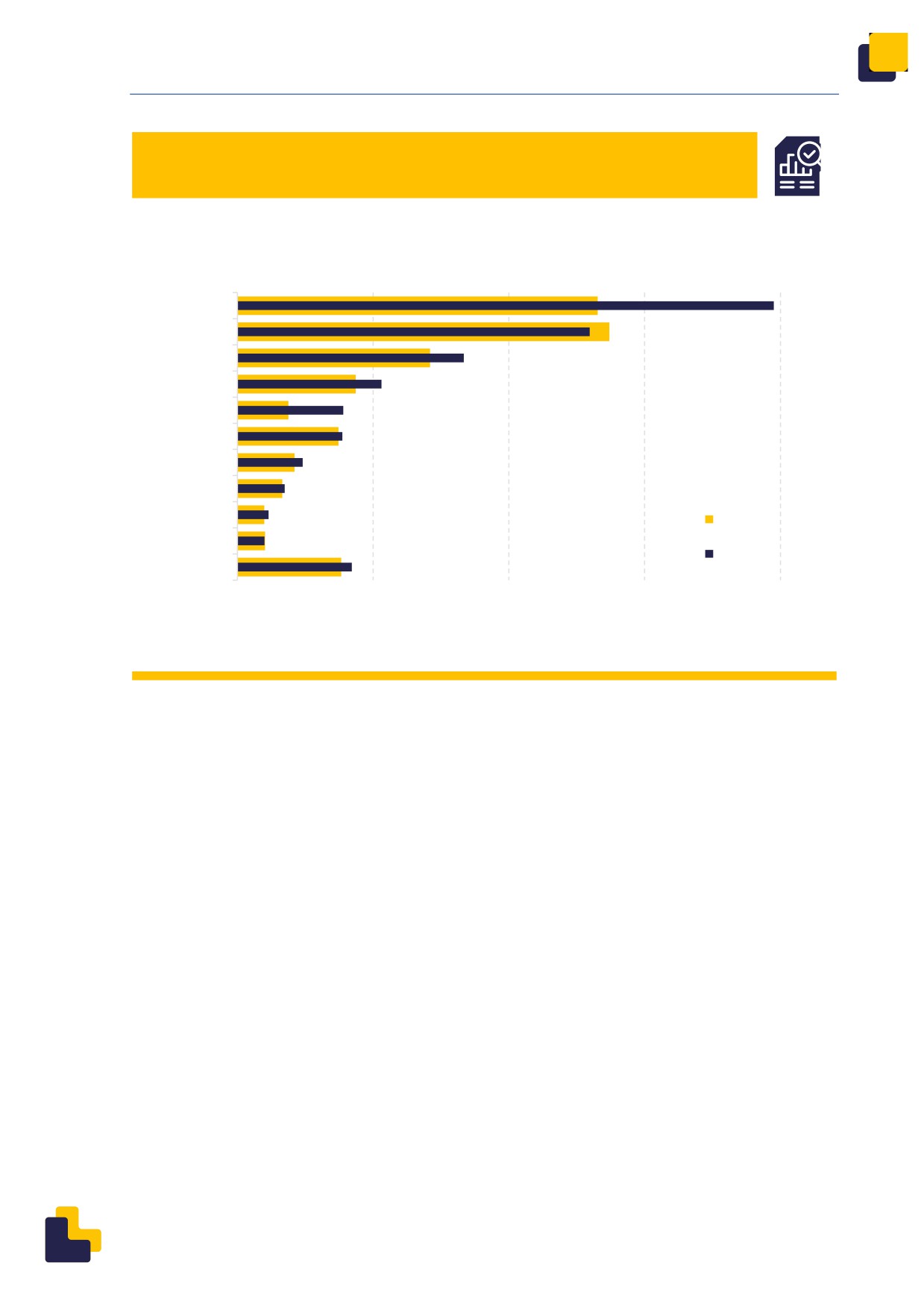
ASYLUM REPORT 2023
Germany issued the most first instance decisions since 2017.
Figure 14. First instance decisions by Top 10 EU+ countries in issuing decisions, 2022
compared to 2021
Germany
+49%
France
-5%
Spain
+17%
Italy
+22%
Austria
+108%
Greece
+4%
Belgium
+14%
Netherlands
+5%
Switzerland
+16%
2021
Sweden
-2%
2022
Other
+10%
0
50,000
100,000
150,000
200,000
Source: Eurostat [migr_asydcfsta] as of 13 April 2023.
First instance decision-making in Spain also rose from 2021, along with the rising number of
applications. Nonetheless, decisions remained lower than during the peak in 2020. Spain
continued to issue the majority of decisions to Venezuelans, Colombians and several other
Latin American nationalities.
Estonia, which usually issues fewer than 200 decisions annually, reached 2,200 decisions in
2022, almost entirely because of applications lodged by Ukrainian nationals.
In contrast, first instance decision-making by France decreased slightly compared to 2021,
despite rising applications. France issued fewer decisions to multiple nationalities, including
applicants from Bangladesh, Guinea, Côte d’Ivoire and Nigeria. Nonetheless, decisions for
some main citizenships - namely Albanians, Georgians and Turks - increased.
Despite increases in decisions on first instance applications between 2021 and 2022, the vast
majority of EU+ countries had new applications outweighing the number of decisions issued,
adding pressure to national asylum systems. Exceptionally, Greece issued more first instance
decisions than it received applications in 2022.
Most first instance decisions in EU+ countries were issued to nationals of Syria and
Afghanistan (see Figure 15), accounting for 3 out of 10 decisions issued in 2022. Both
citizenships received decisions predominantly in Germany. In fact, Germany issued almost
two-thirds of all decisions in the EU+ to Syrians and more than two-fifths of decisions to
Afghan applicants.
145
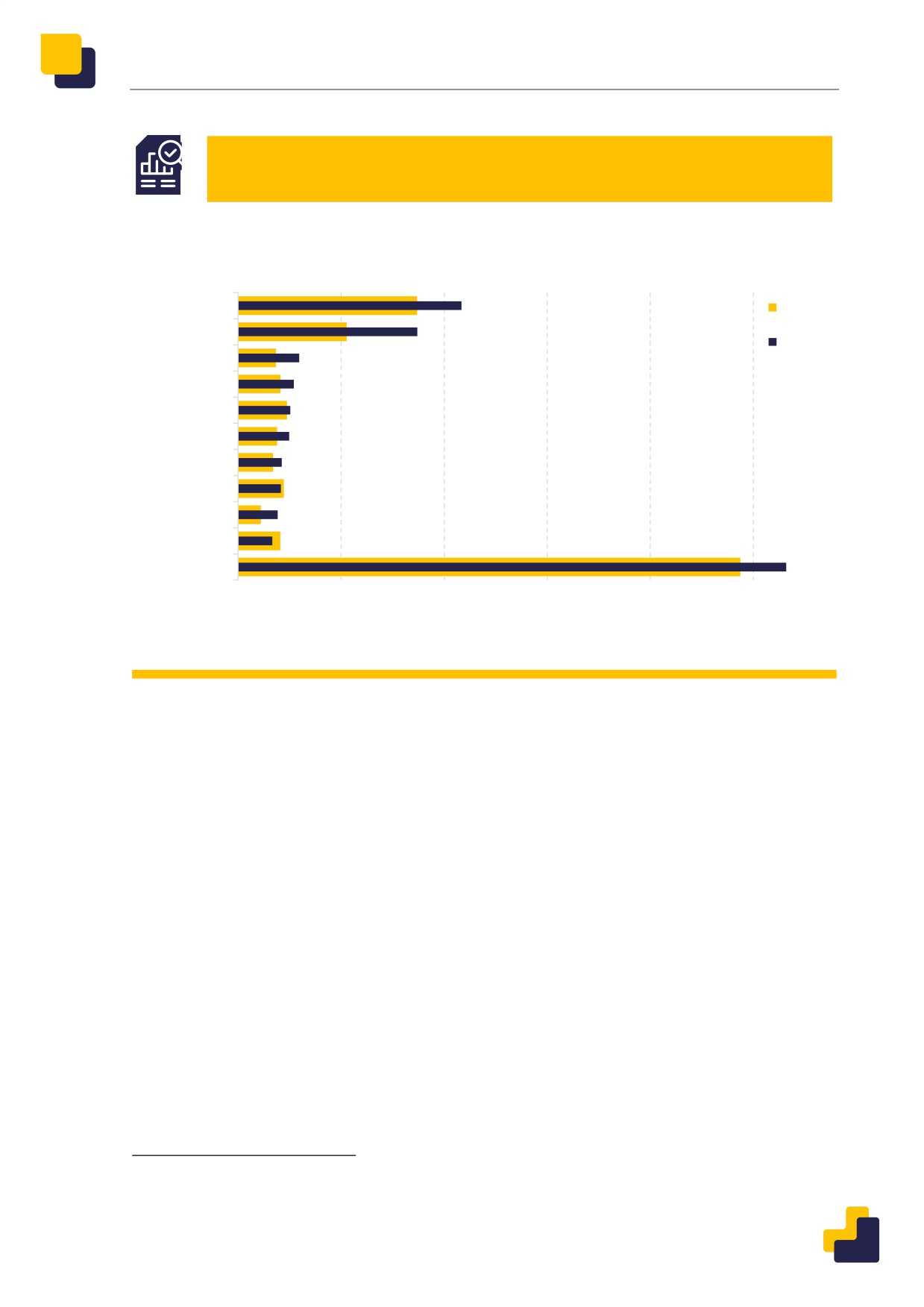
EUROPEAN UNION AGENCY FOR ASYLUM
More first instance decisions issued in 2022 to nearly all
main countries of origin
Figure 15. First instance decisions in EU+ countries by Top 10 countries of origin receiving
decisions, 2022 compared to 2021
Syria
+25%
2021
Afghanistan
+65%
2022
Venezuela
+61%
Iraq
+31%
Pakistan
+7%
Türkiye
+31%
Bangladesh
+25%
Colombia
-7%
Georgia
+74%
Nigeria
-19%
Other
+9%
0
50,000
100,000
150,000
200,000
250,000
Source: Eurostat [migr_asydcfsta] as of 13 April 2023.
In addition, Germany issued more than one-half of all decisions for citizens of Iran, Iraq,
Moldova, North Macedonia, Serbia and others. Meanwhile, Spain issued 9 out of 10 decisions
to applicants from Venezuela.
Nationals of Türkiye (25,000), Bangladesh (21,000) and Georgia (19,000) received the most
decisions on record, mainly in Germany and France for Georgians and Turks and in France
and Italy for Bangladeshis. Decisions issued to citizens of Afghanistan, Egypt, Georgia, India,
Mali, Morocco, North Macedonia, Tunisia and Venezuela increased at least by one-half from
the previous year.xxxix
While increases in decisions were widely reported, a few citizenships had fewer decisions in
2022 than in 2021, namely applicants from Colombia, Côte d’Ivoire, Eritrea, Guinea, Iran,
Moldova, Nigeria and Russia.xl In fact, decision-making on applications submitted by nationals
of Iran and Russia decreased for the fifth consecutive year.
xxxix
Only nationalities with at least 5,000 decisions issued in 2022 were considered.
xl Only nationalities with at least 5,000 decisions issued in 2022 were considered.
146
ASYLUM REPORT 2023
4.4.8. Withdrawn applications
An asylum application can be withdrawn for various reasons before a final
decision has been issued, regardless of whether an application is pending
at first or at higher instances. For reporting purposes, withdrawn
applications can be measured based on two indicators:
‘explicit’ withdrawals refer to cases where the applicant no longer
needs international protection and notifies the authorities to
withdraw the application; and
‘implicit’ withdrawals concern cases where the authorities fail to
locate the applicant and therefore it is considered that the
applicant has abandoned the procedure. Data on implicit
withdrawals may cover cases prior to the reference year since an
applicant may have absconded long before the withdrawal was
noted and reported.
In 2022, about 140,000 applications were withdrawn in EU+ countries, which was twice as
many as in 2021 and the most since 2016. At the same time, the number of asylum
applications lodged in EU+ countries increased steadily (one-half more than in 2021) but at a
slower rate than the rise in withdrawals. The ratio of withdrawn applications to applications
lodged thus rose from about 1 in 10 in the previous 4 years to 1 in 7 in 2022. Over two-fifths of
the withdrawals occurred in the last 4 months of 2022, with peak occurrences in October and
November 2022.
Around four in every five withdrawals were by male applicants and almost three-fifths by
applicants between 18 and 34 years of age. In 2022, the most withdrawals since at least 2008
were recorded for younger applicants (14-17 years old), which was twice as many as in 2021.
Furthermore, the number of withdrawn applications by older applicants (65 years or older)
tripled from 2021, reaching 960 applications, which was the most since 2016.
At least four-fifths of all withdrawn applications in 2022 were implicit.xli In most EU+ countries
with available data,xlii the majority of withdrawals were implicit. The most notable exceptions
included Cyprus, Denmark, Finland, France, Ireland and Norway, where explicitly withdrawn
xliii
applications ranged between 66% and 94% of all withdrawn applications.
It is possible that
an asylum applicant implicitly withdraws their application from one EU+ country in order to
apply again in another one, thus indicating secondary movements towards other EU+
countries. In this regard, there was a pattern of many implicit withdrawals, and thus secondary
movements, from the countries along the Balkan route and countries at the EU’s external
borders.
Almost all EU+ countries recorded more withdrawals in 2022 compared to 2021. Exceptions
included Greece, Latvia and Malta, where withdrawals decreased, and France, where they
remained stable. The sharpest rise took place in Austria and Bulgaria, where five times as
many withdrawals were recorded compared to the previous year (see Figure 16). For the first
time on record, in 2022, Austria became the top EU+ country for withdrawn applications,
xli In 7% of cases, the type of withdrawal was not reported. Most of these cases concerned Romania.
xlii Romania did not report data on the type of withdrawal.
xliii
Analysis was restricted to EU+ countries with at least 300 reported withdrawals in 2022.
147
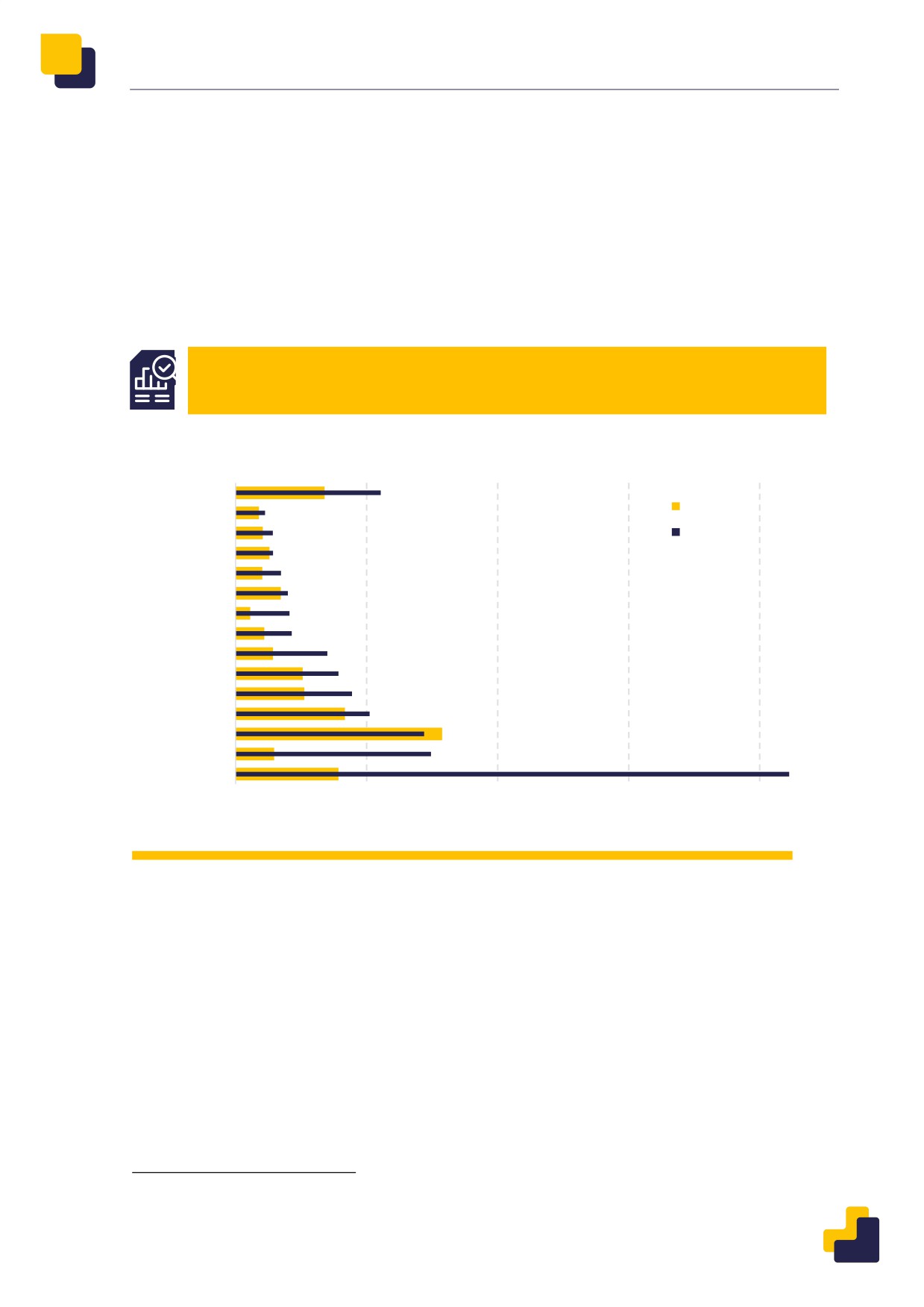
EUROPEAN UNION AGENCY FOR ASYLUM
accounting for almost one-third of the total. Bulgaria followed at a distance, accounting for
one-tenth of the total.
At lower levels, important relative increases took place in Denmark (five times as many as
in 2021), Poland (almost four times as many) and Cyprus (over twice as many). In addition,
several countries recorded the most withdrawals since 2008, including Austria, Bulgaria,
Czechia, Lithuania, the Netherlands, Portugal, Romania, Slovakia and Slovenia, whereas
Cyprus recorded the most since 2010 and Croatia since 2013.xliv While recording a decline of
one-tenth from 2021, Greece continued to receive the third-most withdrawals.
The number of withdrawn applications in 2022 increased in
most countries, notably in Austria and Bulgaria
Figure 16. EU+ countries with the most withdrawals, 2022 compared to 2021
Other
2021
Netherlands
Sweden
2022
Belgium
Croatia
Slovenia
Poland
Spain
Cyprus
Romania
Germany
Italy
Greece
Bulgaria
Austria
0
10,000
20,000
30,000
40,000
Source: Eurostat [migr_asywitha] as of 13 April 2023.
In terms of nationality, one-quarter of all withdrawals were by Afghan nationals. Afghans
withdrew over 35,000 applications in 2022 compared to 18,000 in 2021, largely in Austria and
Bulgaria (see Figure 17). Furthermore, in 2022, Afghans accounted for almost one-half of all
withdrawn applications by minors and represented two-thirds of all withdrawals in the
14-17 age group.
In 2022, Indians emerged as the second nationality to withdraw the most applications in
EU+ countries. The surge in withdrawals by applicants from India was staggering, with over
nine times as many withdrawn applications as in the previous year. The vast majority were
withdrawn by this citizenship in Austria, followed at a distance in Cyprus and Slovenia.
xliv Analysis was restricted to EU+ countries with at least 300 reported withdrawals in 2022.
148
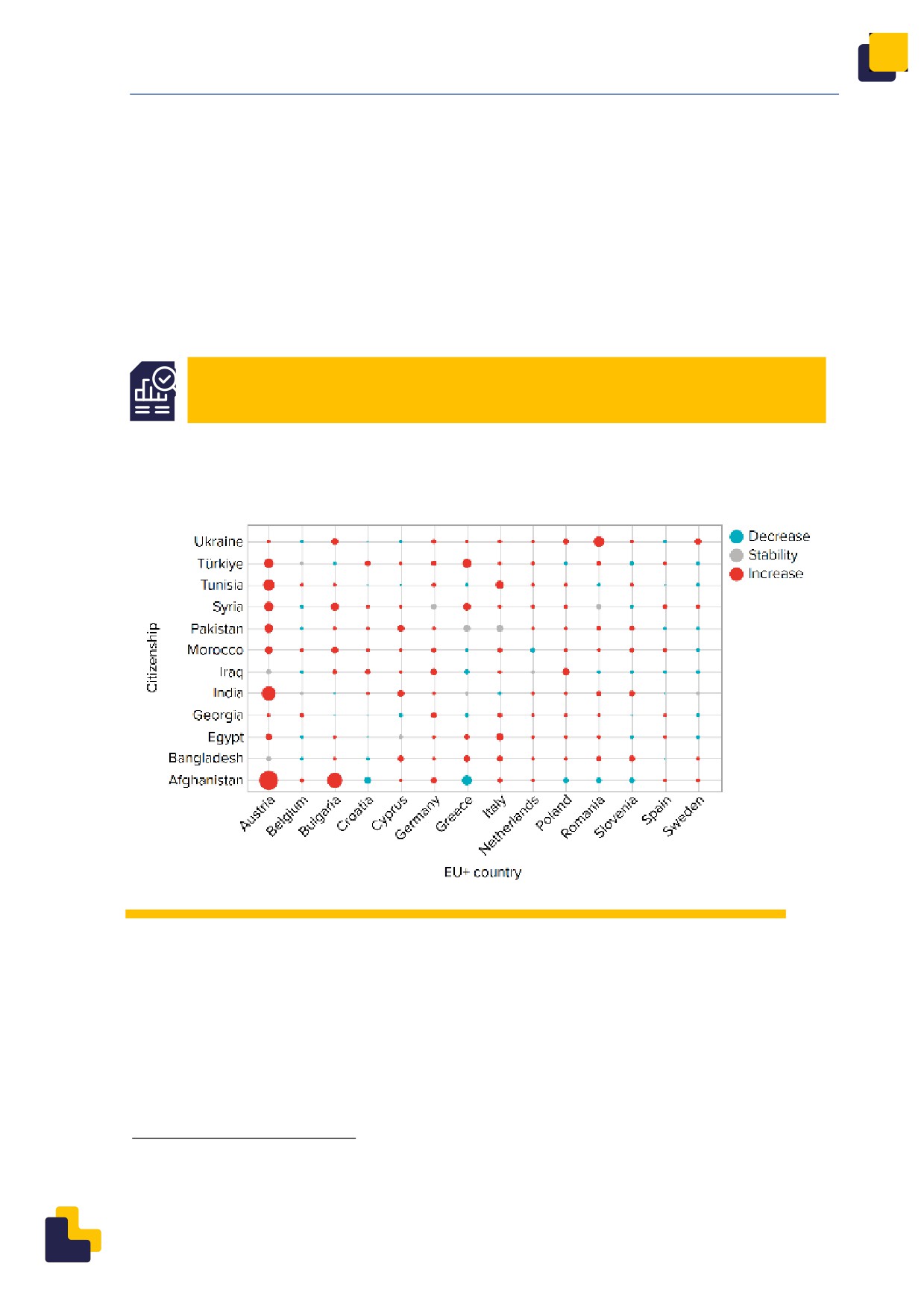
ASYLUM REPORT 2023
All withdrawals in Austriaxlv and Slovenia were implicit, suggesting strong secondary
movement flows across the Balkan route towards other destination countries. The flow of
Indian applicants through the Balkan route was enabled by Serbia’s visa-free policy.471
Syrians, Ukrainians, Turks, Pakistanis and Tunisians (in descending order) also withdrew a high
number of applications. All recorded large-scale increases compared to 2021, with the most
notable rises for Ukrainians (15 times as many withdrawals as in 2021) and Tunisians (over
3 times as many). The high level of withdrawn applications by Ukrainians is likely related to the
activation of the Temporary Protection Directive, after which many Ukrainians withdrew their
asylum application and instead registered for temporary protection.
Austria was the main country for withdrawn applications
across most citizenships
Figure 17. Citizenships with the most withdrawn applications by EU+ countries recording
the most withdrawals, 2022 (bubbles) compared to 2021 (legend)
Source: Eurostat [migr_asywitha] as of 13 April 2023.
Austria was the top country for withdrawals by Syrians, Turks, Pakistanis and Tunisians,
whereas Romania accounted for over two-fifths of the withdrawals by Ukrainians. Other
notable instances of withdrawals by Syrians were in Bulgaria and Greece, while a large
number of Ukrainian applications were also withdrawn in Bulgaria, as well as in Denmark and
Sweden.
On a smaller scale, withdrawals rose significantly for Egyptians (mainly in Italy and Austria),
Russians (mainly in Poland), Colombians (largely in Spain) and Moroccans (mainly in Austria
and Bulgaria), in descending order.xlvi
xlv According to Article 25(2) of the Austrian Asylum Act of 2005, in Austria it is not possible to withdraw an asylum
application explicitly.
xlvi Analysis was restricted to citizenships with at least 1,000 reported withdrawals in 2022.
149