Air Operator Certification Manual - Helicopters (2017) - page 2
CAP 3400
Air Operator
Certification Manual -
Appendix D
Helicopters
Revision 1
June 2018
CL 13 (DGCA/OP/CL/13)
Certification of Applicants for Air Transport Operations in India
CHECKLIST 13 - Operational Control
Name of the Applicant ……………………………………………………………….
(The Satisfactory column is the outcome subsequent to the review of all below items )
Date & Review
Sat
Item
A.
Pre-Departure Functions
1.
Crew assignment.
2.
Load planning
3.
Aircraft routing.
4.
Flight planning.
5.
Release of the aircraft from maintenance.
6.
Control of MEL and CDL limitations.
7.
Compliance with flight ops limitations.
8.
Performance Planning
9.
NOTAM availability
B.
Dispatch Briefing
C.
Original Release.
1.
Guidelines for conditions of release
2.
Guidelines for conditions of re-routing
3.
Guidelines for conditions of delay
4.
Guidelines for cancellation
D.
Flight-Following.
1.
Flight-Following Requirements
2.
Flight crew reporting procedures
3.
Procedures when report not received
4.
Record of communications
5.
En-route information to flights.
Page 35 of 94
CAP 3400
Air Operator
Certification Manual -
Appendix D
Helicopters
Revision 1
June 2018
Sat
Item
Date & Review
E.
Inability to Proceed as Released.
1.
Procedures in case of diversion or holding
2.
Procedures in case of an emergency.
F.
Weather.
1.
Updating of weather information.
2.
Updating of weather information enroute.
G.
Heliport Operating Minima.
H.
Minimum En Route Altitudes.
I.
Selection of Alternates.
1.
Take off
2.
En-route
3.
Destination
J.
Minimum fuel procedures
K.
Engine Out Performance
Considerations.
L.
Emergency Procedures. Available for:
1.
In-flight Emergency.
2.
Crash.
3.
Overdue or missing aircraft.
4.
Bomb threat.
5.
Hijacking.
6.
In-flight Emergency.
7.
Crash.
Signature …………………………………
Date ………/ ………/ ……….
Name of the Principal Operations Inspector
Page 36 of 94
CAP 3400
Air Operator
Certification Manual -
Appendix D
Helicopters
Revision 1
June 2018
CL 14 (DGCA/OP/CL/14)
Certification of Applicants for Air Transport Operations in India
CHECKLIST 14 - Flight Operations Inspectors Final Report
Name of the Applicant ……………………………………………………………….
(The Satisfactory column is the outcome subsequent to the review of all below items )
Sat
Item
Date & Review
A.
Formal Application
B.
Declaration of Conformance to CARs
C.
Key Personnel Satisfactory:
1.
Accountable Manager
2.
Head of Flight Operations
3.
Head of Training
4.
Head of SMS
5.
Head of Flight Safety
6.
Head of Cabin Safety - if applicable.
D.
Document Evaluation
1.
Operations Manual (CL-04)
2.
Rotorcraft Flight Manual (CL-06)
3.
Other Manuals/ SOPs
E.
Inspections
1.
Organisational Structure and Staffing
Inspection (CL- 05)
2.
Administration Facility Inspection (CL -05)
3.
Records System Inspection (CL-08)
4.
Crew Scheduling Inspection (CL -13)
Page 37 of 94
CAP 3400
Air Operator
Certification Manual -
Appendix D
Helicopters
Revision 1
June 2018
Sat
Item
Date & Review
5.
Inspection of Facilities for provision of
Operational Information to crew (CL-07)
6.
Inspection of Operational Support Services
(CL-11)
7.
Load Control Inspection (CL-09)
8.
Passenger handling and Public Safety
Inspection (CL-11)
9.
Training Facilities Inspection (CL-12)
10
Inspection of Operating Ports Inspection
(CL-11)
11
Demonstration of emergency Evacuation
Procedures
12
Ditching Demonstration (If Applicable)
F.
Approvals
1.
Head of Training and Checking
2.
TRI/TRE/CP
3.
Persons Appointed to Conduct Emergency
Procedure Tests
4.
Ground Instructors
5.
Approved Load and Trim Sheet Personnel
6.
Approved Dangerous Goods Course
Instructors
H.
Organisations Requiring Approval
1.
Training and Checking Organisation
2.
Delegations
I.
Facilities Requiring Approval
1.
Ground Training Facilities
2.
Audio-Visual Briefing Facilities
Page 38 of 94
CAP 3400
Air Operator
Certification Manual -
Appendix D
Helicopters
Revision 1
June 2018
Sat
Item
Date & Review
3.
Accreditation of Flight Simulators
J.
Other Special Operations Approvals
1.
PBN
2.
HEMS
3.
Dangerous Goods Training Courses
K.
Conditions to be included on AOC
(Attach list)
L.
Heliports and Routes/ Areas Assessed
as Satisfactory (Attach list)
Recommendations: I am satisfied that the applicant has complied with, or is
capable of complying with, the provisions of the Aircraft Act, the Civil Aviation
Requirements that relate to safety, including provisions about the competence of
persons to do anything that is covered by the Air Operators Permit.
I recommended that:
…………………………………………………………………………………………
Signature …………………………………
Date ………/ ………/ ……….
Name of the Principal Operations Inspector
Page 39 of 94
CAP 3400
Air Operator
Certification Manual -
Appendix D
Helicopters
Revision 1
June 2018
CL 15 (DGCA/OP/CL/15)
Certification of Applicants for Air Transport Operations in India
CHECKLIST 15 - Proving Flight
Name of the Applicant …………………………………………………………………
Type of Operator Permit
1.
Members of the Inspection Team
2.
3.
Helicopter Type
Helicopter Regn. No.
Sector
Date
Note: This Checklist is required to be filled separately for each sector
(The Satisfactory column is the outcome subsequent to the review of all below items )
Sat
Item
Date & Review
1.
Flight Time Limitations - Crew schedules in
accordance with flight and duty limits
2.
Pre/ Flight Documents (available and
correct)
►
Met
►
NOTAMS
►
►
Flight Plans
►
Fuel load in accordance with Ops Manual
►
Helicopter performance data
Landing / Overflight approvals from States
concerned (for International ops only)
Helicopter and Operational Documents
3.
(on board)
i Certificate of Registration;
ii Certificate of Airworthiness;
iii Airworthiness Review Certificate (ARC);
Page 40 of 94
CAP 3400
Air Operator
Certification Manual -
Appendix D
Helicopters
Revision 1
June 2018
Sat
Item
Date & Review
iv A document attesting Noise Certification
of the helicopter/ helicopter;
v Licences for each member of the flight
crew;
vi Journey Log Book or equivalent
documents approved by the DGCA;
vii Operations Manual;
viii Minimum Equipment List;
ix Flight Manual ;
x Cabin Crew Manual (if applicable)
xi Cockpit and Emergency Check List
xii Helicopter/ Helicopter search procedure
checklist;
xiii Maintenance Release/ Certificate to
release to service;
xiv
LOPA (Layout of Passenger
Arrangement);
xv. Route guides
xvi. Current and suitable navigation charts/
maps for the planned flight route and all
other routes along which it is reasonable to
expect that the flight may be diverted;
xvii. Weight Schedule ;
xviii. Load and Trim Sheet;
xix. If carrying passengers, a list of their
names and places of embarkation and
destination;
xx. If carrying cargo, a manifest and detailed
declarations of the cargo; and
xxi. If carrying dangerous goods, a list of
such goods. This list must be specifically
brought to the notice of Pilot-in-Command,
before the flight.
4.
►
Passenger Handling and Loading
Method of passenger weight calculation in
Page 41 of 94
CAP 3400
Air Operator
Certification Manual -
Appendix D
Helicopters
Revision 1
June 2018
Sat
Item
Date & Review
►
accordance with Operations Manual
Handicapped, sick or injured persons not
►
hazardous to other occupants
►
Passenger safety on tarmac vehicles/rotors
“Carry on” baggage in accordance with
►
Operations Manual
Method of baggage weight calculation in
accordance with Operations Manual
5.
Baggage and Cargo Loading /
Unloading
►
Baggage loaded in assigned compartment
►
Cargo restraint
►
Handling of Dangerous Goods
6.
Load Control
►
Communications with
●
Baggage loader
●
Refueller
►
Compilation of load sheet
►
Last Minute Changes (LMCs) to flight crew
7.
Refuelling Procedures
►
Proximity of buildings and helicopter
►
Refuelling equipment is mobile
►
No-smoking signs on tarmac
►
Two or more fire extinguishers available
8.
Pre-Flight Procedures
Flight Crew drills and procedures in
accordance with Operations Manual
● Walk-around inspection
● Use of checklist
●
Confirmation of load control documents.
●
Confirmation of dangerous Goods info.
●
Calculation of AUW.
●
Navigation systems preparation.
►
Flight deck to cabin communications in
accordance with Operations Manual (if
applicable)
Cabin crew drills and procedures in
accordance with Operations Manual
●
Check of emergency equipment
Page 42 of 94
CAP 3400
Air Operator
Certification Manual -
Appendix D
Helicopters
Revision 1
June 2018
Sat
Item
Date & Review
●
Passenger restraints and seats upright.
●
Stowage of loose articles
●
Aisles and exits clear
►
Passenger briefing cards
●
Correct
●
In place
9.
Taxi/ Pre-take-off Procedures
►
Use of checklist
►
Crew briefing as per Operations Manual
►
Passenger briefing covers
● No smoking (including Toilets)
● Seat belts
● Emergency exits
● Survival equipment (if carried)
►
Check of passenger seat belts
10.
Flight Phase
►
Flight deck drills and procedures in
accordance with Operations Manual
●
Monitoring of flight path
●
Adherence to clearances
●
Crew coordination
●
Use of checklist
●
Altimetry/ height awareness
●
Navigation
●
Communications
●
Helicopter Systems Operations
●
Fuel Management and recording
●
Weather considerations
●
Operational Control Considerations
●
Monitoring/Human Factors
●
Approach briefing (inspector to
nominate instrument approach
procedure)
●
Approach /speed control
●
Procedures at minima
●
Airfield layout knowledge
●
ATC requirements and procedures
●
En route knowledge
Page 43 of 94
CAP 3400
Air Operator
Certification Manual -
Appendix D
Helicopters
Revision 1
June 2018
Sat
Item
Date & Review
►
Cabin crew duties and procedures in
accordance with Operations Manual
● Passenger control
● Response to flight deck signals
● Location of emergency equipment
● Fire extinguishers
● Oxygen
● Protective breathing equipment
● Response to simulated emergency
● Onboard cabin fire
● Bomb threat procedures
● Toilet fire
● Handling of incapacitated pax
● Handling of disorderly pax
● Response to turbulence warning
(simulate if necessary)
● Knowledge of emergency
procedures
● Ditching
● Crash landing
11.
►
Helicopter and Equipment
►
Belt/no-smoking signs
Life jackets
►
►
Rafts/emergency beacon (if required)
►
Galley equipment/security
PA/Intercom equipment
►
►
Fixed oxygen system
Portable oxygen system
►
Protective breathing equipment
12.
Intermediate airport/Turn-around (Flight
crew considerations)
►
Airfield layout/Knowledge
►
Parking arrangements
►
Refuelling arrangements
►
Update of operational information
●
Met
●
NOTAMS
●
Flight plans
►
Recording/ rectification of defects
►
Use of the MEL (simulated problem)
Page 44 of 94
CAP 3400
Air Operator
Certification Manual -
Appendix D
Helicopters
Revision 1
June 2018
Sat
Item
Date & Review
►
Maintenance arrangements
13.
Airport Facilities Capable of Supporting
the Services
►
Passenger handling
►
Baggage and cargo handling
►
Tarmac vehicle control
►
Maintenance arrangements
14.
Security Arrangements
►
Control of access to the cockpit
►
Security arrangement in the cabin
►
Sterility of passengers
►
Sterility of Cargo
►
Sterility of Cabin (with reference to items
introduced from outside such as catering,
newspapers, servicing etc)
►
Preventive measures of any onboard
unlawful interference
15.
Meets scheduled turn-around times
16.
Capacity to notify relevant persons of
operational changes
17.
Overall operational control including
support from contracting parties
Remarks:
…………………………………
……………………
…………………..
Inspector’s Name
Signature
Date
Page 45 of 94
CAP 3400
Air Operator
Certification Manual -
Appendix D
Helicopters
Revision 0
January 2017
CL - 20 (DGCA/OP/CL/020)
Certification of Applicants for Air Transport Operations in India
CHECKLIST - 20 - Maintenance Organizational Structure and Staffing
Applicant :……………………………..
Location
………………………….
[When an item is marked to be unsatisfactory, indicate reasons under the Remarks column in detail]
Status
Item
Remarks
Sat
Unsat
A.
Organizational Structure
1.
Organization suitable with regard to the
size and scope of the proposed
operation
2.
Chain of command appropriate to
ensure airworthiness and
maintenance control of helicopter
3.
Numbers of management positions
including Maintenance controller(s) is
adequate for the size and scope of the
proposed operation
B.
Qualified and Competent Employees
Organization has sufficient number of
suitably qualified and competent
employees to control and perform the
following functions
1.
Maintenance planning
2.
Recording of flight hours and cycles
3.
Preservation and transfer of
maintenance records
4.
Accomplishment and control of
Airworthiness Directives
5.
Analysis of effectiveness of
maintenance program
Page 46 of 94
CAP 3400
Air Operator
Certification Manual -
Appendix D
Helicopters
Revision 0
January 2017
Status
Item
Remarks
Sat
Unsat
6.
Management of MEL/CDL time limits (if
applicable)
7.
Technical Library
8.
Maintenance training
9.
Monitoring of maintenance activities
carried out by a Contractor
10.
Reliability Program (if applicable)
11.
Defect reporting and Investigations
12.
Stores Control
13.
Amendment of MCM (if applicable)
14.
Internal audit and administrative support
Remarks:
……………………………….
………………………….
…………………
Name of Airworthiness Inspector
Signature
Date
Page 47 of 94
CAP 3400
Air Operator
Certification Manual -
Appendix D
Helicopters
Revision 0
January 2017
CL - 21 (DGCA/OP/CL/021)
Certification of Applicants for Air Transport Operations in India
CHECKLIST - 21 - Maintenance Control Manual (CAME)
Applicant:…………………………………… Location ……………………………
[When an item is marked to be unsatisfactory, indicate reasons under the Remarks column in
detail]
Status
Item
Remarks
Sat
Unsat
A.
General
1.
Does the manual identify itself as
Maintenance Control Manual (CAME)?
2.
Does the manual state the operator’s name
3.
If the operator does not hold the C of R for
the helicopter, does the manual state the
name of its C of R holder?
4.
Are all the helicopter to which this manual is
applicable identified by their type
designations and registration markings?
5.
Is the manual in loose-leaf format with each
page bearing page identification and revision
dated?
6.
Does the manual have amendment record
sheet?
7.
Is there a list of effective pages?
8.
Are the manual contents adequately
indexed?
9.
Are there adequate methods of recording
revisions?
10.
Is there a Foreword or Introduction indicating
that the procedures contained in the manual
apply to helicopter engaged in commercial
operation and requiring employees and
contractors to abide by the contents of the
manual?
Page 48 of 94
CAP 3400
Air Operator
Certification Manual -
Appendix D
Helicopters
Revision 0
January 2017
Status
Item
Remarks
Sat
Unsat
11.
Is there a distribution list for the manual?
12.
Does each copy of the manual bear a
manual control number?
13.
Does the manual include instructions for its
amendments, which adequately cover?
a.
Procedures for notifying the Maintenance
Controller of the need for amendment and
the details of any proposed changes?
Note: This procedure should provide for
notifications to be made both by the
Operator’s staff and by the contracting
maintenance organization’s staff
b.
Procedures for investigating any proposed
changes to verify that are technically sound
and in compliance with CARs and Circulars
c.
Procedures for notifying DGCA regarding
amendments
d.
Procedures for ensuring that all holders of
the manual are notified of amendments and
that all copies of the manual are amended
B.
Organization
1.
Does the manual have a section, which
provides the details of and describes the
duties and responsibilities of the
maintenance control organization?
2.
Is the organization suitable with regard to
the size and scope of the proposed
operation?
3.
Is the chain of command appropriate to
ensure airworthiness and maintenance
control of helicopter?
4.
Is the numbers of management positions,
including maintenance controller(s) is
adequate for the size and scope of the
proposed operation
5.
Is the maintenance controller(s), for each
type of helicopter, nominated by the operator
and approved by DGCA?
Page 49 of 94
CAP 3400
Air Operator
Certification Manual -
Appendix D
Helicopters
Revision 0
January 2017
Status
Item
Remarks
Sat
Unsat
a.
What other duties does this person have in
the operator’s organization?
b.
Taking into account those other duties, is it
likely that maintenance controller will be able
to satisfactory exercise maintenance control
functions?
c.
Is a copy of maintenance controller’s
approval included in the manual?
d.
Are officiating arrangements when the
approved Maintenance Controller is not
readily available to perform duties,
satisfactory?
6.
Has the organization sufficient number of
suitably qualified and competent employees
to perform the following functions
a.
Maintenance planning?
b.
Recording of flight hours and cycles?
c.
Preservation and transfer of maintenance
records/
d.
Accomplishment and control of
Airworthiness Directives?
e.
Analysis of effectiveness of maintenance
program?
f.
Management of MEL/CDL time limits (if
applicable)?
g.
Maintenance Training?
h.
Liaison with maintenance contractor(s) and
DGCA?
i.
Monitoring of maintenance activities carried
out by a contractor?
j.
Reliability program (if applicable)?
k.
Defect reporting and investigate ons?
l.
Amendment of MCM?
Page 50 of 94
CAP 3400
Air Operator
Certification Manual -
Appendix D
Helicopters
Revision 0
January 2017
Status
Item
Remarks
Sat
Unsat
m.
Technical library?
n.
Internal audit and Administrative support?
o.
Are the persons who will be responsible for
the above functions in the absence of the
persons normally responsible, named for the
function?
C.
Procedures
1.
Maintenance Release / Technical Log
a.
Is the maintenance release identified in the
maintenance control manual as such?
b.
Has the maintenance release been designed
to accommodate?
i.
The name of the certificate of approval
holder issuing the maintenance release
ii.
The identify and signature of the person
authorized to sign it
iii.
Place, date and time of issue
iv.
The helicopter type and registration
v.
The type of operations for which it is issued
vi.
The helicopter’s TTIS on a daily basis
vii.
The date and TTIS when the maintenance
release ceases to remain in force
viii
All requirements and conditions relating to
maintenance during the period it remains in
force
ix.
Endorsements in relation to defects and
permissible un-serviceabilities?
x.
When the Maintenance release does not
make provisions for the endorsement
referred above are alternative documents
approved
c.
Are the procedures for the following included
in the MCM, including any persons
overseas, for:
Page 51 of 94
CAP 3400
Air Operator
Certification Manual -
Appendix D
Helicopters
Revision 0
January 2017
Status
Item
Remarks
Sat
Unsat
i.
Issue and signing of the maintenance
release within India and overseas, as
applicable
ii.
Specify the persons who may sign it
iii.
Indicate by cross reference to the system of
maintenance for particular helicopter type,
when it must be issued?
iv.
Specify what certification action must be
taken before the Maintenance Release is
issued
v.
Give instructions on the procedures for
issuing the Maintenance Release?
d.
Recording and clearing of defects on the
maintenance release - do the procedures:
i.
Require all defects and major damage to be
recorded
ii.
Ensure inclusion of the statement “aircraft is
unairworthy” when circumstances of the kind
specified in Aircraft Rules and CAR exist
iii.
Ensure that the endorsements will only be
cleared in accordance with rules
iv.
Provide for cancellation of an endorsement
made under Rules in accordance with rules
v.
Ensure endorsement of the Maintenance
Release with details of conditions and other
information applicable to defects or damage
which are permissible unserviceability
vi.
Ensure that all persons using the
Maintenance Release are instructed in its
use
vii.
Ensure that, when issued the Maintenance
Release is available to the pilot
viii
Retention of the Maintenance Release
required by rules
ix.
Procedures for amendment of the
maintenance release
x.
Is sample of the Maintenance Release /
Technical Log included in the manual?
2.
Time/Cycle Recording and Maintenance
Records, Retention and access
Page 52 of 94
CAP 3400
Air Operator
Certification Manual -
Appendix D
Helicopters
Revision 0
January 2017
Status
Item
Remarks
Sat
Unsat
a.
Are the following procedures for flight hours
and cycles recording satisfactory/
i.
How the maintenance control personnel
have access to the current flight hours cycle
information in general and on a daily basis in
particular?
ii.
How it is processed?
b.
Does the manual specify what documents
are for the recording of maintenance
completed?
i.
If documents other than Helicopter, Engine,
Propeller or Radio Log books are used, does
the manual clearly specify?
ii.
All of the documents to be used, and include
samples of those documents
iii.
Adequate procedures for their use
iv.
Have all such documents been assessed for
suitability?
v.
Does the manual contain procedures to
ensure complete, up-to-date and accurate
maintenance records keeping? That is, what
data or information are required to be
recorded and what are the recording period
requirement for each of them
vi.
Does the manual clearly specify the periods
for which records are to be retained and
adequate procedures for custody and
retention?
vii.
Are procedures to ensure that all records, or
copies of those records that contain
certifications, are received from the
approved maintenance organization(s)
satisfactory?
ix.
Are procedures for transfer of maintenance
records satisfactory- that is, which records
have to be transferred to the C of R holder
and who is responsible for the coordination
of the transfer?
3.
Accomplishment and Control of DGCA
Mandatory Modifications (Airworthiness
Page 53 of 94
CAP 3400
Air Operator
Certification Manual -
Appendix D
Helicopters
Revision 0
January 2017
Status
Item
Remarks
Sat
Unsat
Directives)
a.
Are the procedures for DGCA mandatory
modification/AD information sources and
distribution satisfactory?
b.
Are the procedures for making decisions on
the applicability of, and the planning for
compliance with DGCA mandatory
modifications/ ADs satisfactory?
c.
Do the procedures ensure
i.
All non-recurring DGCA mandatory
modifications/ ADs will be complied with
ii.
All recurring DGCA mandatory
modifications/ ADs will be complied with
within the initial compliance time
iii.
All recurring DGCA mandatory
modifications/ ADs will be incorporated into
the system of maintenance to ensure
recurring compliance
iv.
All required certifications for DGCA
mandatory modifications/ ADs are made
v.
DGCA mandatory modifications/ AD
compliance status can be established from
the maintenance records
vi.
DGCA mandatory modifications/ AD
compliance will not be confirmed prior to the
required compliance time
vii.
An helicopter will not be flown if an
applicable DGCA mandatory modifications/
AD is not complied with
viii
Where maintenance has been
subcontracted, it is clear where responsibility
lies for compliance with DGCA mandatory
modifications/ ADs
4.
Helicopter weight and Balance Control
a.
Has the operator provided an appropriately
qualified weight control authority (WCA)
holder?
b.
Are procedures for recording of helicopter
mass alternation satisfactory
Page 54 of 94
CAP 3400
Air Operator
Certification Manual -
Appendix D
Helicopters
Revision 0
January 2017
Status
Item
Remarks
Sat
Unsat
c.
Are procedures for helicopter mass control
during modification satisfactory?
d.
Are procedures for preparation and approval
offloading data satisfactory?
e.
Does the applicant has procedures for issue
of helicopter’s load data sheet each time:
i.
The helicopter is re-weight or the weight and
balance is validated
ii.
The weight and balance tolerances recorded
in the weight and balance record are
exceeded
iii.
There is a change to the helicopter’s fixed
equipment which affects the helicopter’s
weight and balance
iv.
Are procedures for ensuring that the current
load data sheet to be incorporated in the
helicopter’s Flight Manual or alternative
approved document and helicopter’s
logbook and is accessible to the pilot in
command to assist the correct loading of the
helicopter satisfactory?
v.
Are procedures for conducting helicopter
weighting in compliance with CAR and are
satisfactory?
5.
Configuration Deviation List
(CDL)/Minimum Equipment List(MEL)
a.
Does the operator have an approved MEL
for each helicopter?
b.
If so, is the MEL incorporated into the
approved system of maintenance for each
helicopter?
c.
Where the operator uses one document to
include the MELs for a number of helicopter,
does the MEL refer to individual helicopter
differences, if any?
d.
Is the procedure for using the MEL
satisfactory?
e.
Is the procedure for using the CDL
satisfactory?
Page 55 of 94
CAP 3400
Air Operator
Certification Manual -
Appendix D
Helicopters
Revision 0
January 2017
Status
Item
Remarks
Sat
Unsat
f.
Is the procedure for acceptance of
helicopter, with permissible unserviceability
covered by the MEL, by the flight crew
satisfactory?
g.
Is procedure for management of the MEL
time limits satisfactory?
6.
Defect Reporting
a.
Does the manual provide a system for
investigation and reporting of defects?
b.
Does the manual adequately cover?
i.
Procedures for notifying the Maintenance
Controller of the occurrence of a defect?
ii.
Procedures and responsibilities for analysing
the defect reports?
iii.
Procedures for investigation of a defect
iv.
Procedures for notification of the defects to
DGCA?
v.
Maximum time period for notification to the
Maintenance controller and to DGCA of the
occurrence of a defect?
vi.
Has the operator defined deferred defect
policy?
vii.
Has the operator established procedures to
be followed in order to be sure that the
deferment of any defect will not lead to any
safety concern?
Vii
Are specimens of all documents used
i.
include in the manual?
7.
System of Maintenance
a.
If the operator is not the holder of the C of R,
is a satisfactory agreement in place to
ensure the C of R holder’s responsibilities
are met?
b.
For each helicopter type operated, does the
manual contain a page stating the inspection
schedule to be observed?
Page 56 of 94
CAP 3400
Air Operator
Certification Manual -
Appendix D
Helicopters
Revision 0
January 2017
Status
Item
Remarks
Sat
Unsat
c.
Does the manual include (or reference to) an
approved System of Maintenance (SOM)
appropriate to the helicopter’s configuration
for each type of helicopter?
d.
Does the SOM take into account
i.
The equipment currently fitted to the
helicopter?
ii.
The manufacturer’s recommendations for
the type of operation?
e.
Does the SOM include procedures for
performing routine and non-routine
maintenance, inspections, repairs,
modifications and servicing at base and line
stations or a reference to that system such
as:
i.
Parking helicopter in high winds
ii.
Short-term storage
iii.
Long-term storage
iv.
Towing
v.
Emergency procedures
vi.
Run-up/taxi personnel authorisations
vii.
Helicopter ground run-up
viii
Taxing helicopter
ix.
Jacking, lifting and hoisting
x.
Use of landing gear ground lock
xi.
Helicopter cleaning, including material used
for cleaning and flame-proofing materials
after dry cleaning
xii.
Engine change
Page 57 of 94
CAP 3400
Air Operator
Certification Manual -
Appendix D
Helicopters
Revision 0
January 2017
Status
Item
Remarks
Sat
Unsat
xiii
Propeller change
xiv
Cylinder change
xv.
High oil consumption
xvi
Oxygen and nitrogen servicing
xvi
Are procedures to keep the SOM current, in
i.
relation to the manufacturer’s and DGCA’s
requirements satisfactory?
xvi
Are procedures to ensure that certain
ii.
helicopter systems and navigation
equipment are fully serviceable for
appropriate categories of approach and
landing operations, satisfactory?
xix
Does the operator receive the
manufacturer’s service information?
xx
Does the operator have adequate
procedures to assess and act promptly upon
the manufacturer’s service information?
xxi
Does the manual contain satisfactory
procedures for analysis of effectiveness of
the system of maintenance?
8.
Technical Data
a.
Are there satisfactory procedures in the
manual that amendments to manuals that
must be approved by DGCA are approved
prior to incorporation into manuals
b.
Does the manual include procedures for :
i.
The supply of amendments
ii.
Maintenance personnel to be notified of
amendments?
iii.
Supply of additional technical information
relevant to the work undertaken?
Page 58 of 94
CAP 3400
Air Operator
Certification Manual -
Appendix D
Helicopters
Revision 0
January 2017
Status
Item
Remarks
Sat
Unsat
c.
Are there procedures to ensure maintenance
manual information recorded on microfilm,
microfiche or disk is checked at regular
intervals and at all locations for amendment
status and legibility?
d.
Does the manual contain procedures to
ensure maintenance personnel are made
aware of and have access to temporary
amendments?
e.
Have arrangements been made for all
technical drawings to be suitably stored and
for procedures to ensure that only correct
issues are released?
f.
Has a person been made responsible for
maintaining a drawing register and for
notifying departments of superseded issues?
g.
Are there provisions for the supply of
manuals/sections of manuals, schedules,
service information etc. at each location, and
procedures to ensure such information is
kept up to date?
h.
Are facilities available for microfiche and
compact disc viewing and printing available
at each location
i.
Have adequate arrangements been made
for regular servicing and repair of the
equipment?
j.
Are arrangements in place to ensure that all
relevant service information is received in a
timely manner?
9.
Monitoring of maintenance Control
Activities
a.
Does the manual sets out procedures for:
i.
Ensuring the Maintenance Controller is kept
informed of the helicopter current time in
service, defects, unscheduled component
changes, unscheduled maintenance and the
operations planned for the helicopter?
ii.
Monitoring that all maintenance is carried
out by an appropriately approved
maintenance organization
Page 59 of 94
CAP 3400
Air Operator
Certification Manual -
Appendix D
Helicopters
Revision 0
January 2017
Status
Item
Remarks
Sat
Unsat
iii.
The maintenance controller to ensure all
requested maintenance has been completed
by the maintenance contractor using the
current edition of approved maintenance
data?
iv.
Monitoring that all contracted maintenance is
carried out in accordance with the contract,
including sub-contractors used by the
maintenance contractor?
v.
Liaison between the helicopter’s
maintenance controller and the maintenance
contractor where the operator has
contracted out maintenance?
vi.
Where a number of helicopter types are
operated, with same type(s) under the
control of one Maintenance Controller and
others, a different Maintenance Controller,
and the MCM has been sub-divided,
provisions should be made to ensure that
each Maintenance Controller receives all
applicable parts and amendments when
issued
10.
Helicopter Servicing, Spares Holding and
Stores Control
a.
Does the manual provide a system to ensure
materials used in servicing of the helicopter
at all locations
i.
Conform to the appropriate specification?
ii.
Are protected from damage, deterioration
and contamination?
iii.
Are controlled to ensure shelf-life limits are
observed?
b.
Are procedures to ensure that superseded
parts are obtained from acceptable sources
within the criteria of CAR satisfactory?
c.
Are procedures to ensure that superseded
spares, or those without or of unknown
modifications status, are removed from
helicopter
d.
Are procedures to ensure compliance with
DGCA mandatory modifications/ ADs and
other mandatory requirements, while parts
are in storage, satisfactory?
Page 60 of 94
CAP 3400
Air Operator
Certification Manual -
Appendix D
Helicopters
Revision 0
January 2017
Status
Item
Remarks
Sat
Unsat
11.
Training Policy
a.
Does the manual contain a satisfactory
training policy for all staff engaged in
helicopter maintenance or maintenance
control including pilots authorised for
maintenance, as required by Rules?
b.
Is the operator’s training program approved
by DGCA? ( If yes please note details
otherwise advise operator to get the same
approved by DGCA)
12.
Contractual Arrangements
a.
Does the manual describes contractual
arrangements for maintenance of helicopter
between the operator and holder(s) of
certificate(s) of approval in a manner which
covers the following functions:
i.
Custody and maintenance of helicopter
records
ii.
Planning of maintenance
iii.
Conduct and certification of maintenance
iv.
Provision of maintenance facilities and
maintenance data?
v.
Defect reporting and investigations
vi.
Amendment of the manuals
b.
Clearly indicates which party to the contract
is primarily responsible for the particular
functions
c.
Indicates the duties of the parties in respect
of functions for which they are not primarily
responsible?
d.
Are the responsibilities of the person who is
to control maintenance specified in the
manual in a detailed and comprehensive
manner which adequately cover the
following responsibilities
Page 61 of 94
CAP 3400
Air Operator
Certification Manual -
Appendix D
Helicopters
Revision 0
January 2017
Status
Item
Remarks
Sat
Unsat
i.
Satisfactory functioning of the control,
certification and recording systems specified
in the manual?
ii.
Ensuring that maintenance contractors
continue to provide adequate facilities and
equipment and to hold adequate and current
edition of data for maintenance of the
operator’s helicopter
iii.
Ensuring that the conditions of maintenance
contracts are adhered to?
iv.
Liaison with DGCA
D.
Recommendations
1.
Is the manual presented in a logical, well
edited and readily comprehensible format?
2.
Does the manual adequately describe the
organizational arrangements for control and
conduct of helicopter maintenance?
3.
Would any of the procedures specified in the
manual conflict with the requirements of the
rules or CARs?
4.
Are there any procedures in the manual not
covered by this checklist? (If yes, describe
the system in the attached Remarks Sheet,
and indicate whether the procedures are
satisfactory and recommended for
acceptance)
Page 62 of 94
CAP 3400
Air Operator
Certification Manual -
Appendix D
Helicopters
Revision 0
January 2017
Status
Item
Remarks
Sat
Unsat
Remarks:
………………………….
…………………….
……………..
Name of the Inspector
Signature
Date
Page 63 of 94
CAP 3400
Air Operator
Certification Manual -
Appendix D
Helicopters
Revision 0
January 2017
CL - 22 (DGCA/OP/CL/022)
Certification of Applicants for Air Transport Operations in India
CHECKLIST - 22 - Technical Data
Applicant :……………………………………… Location …………………………….
[When an item is marked to be unsatisfactory, indicate reasons under the Remarks column in detail]
Status
Item
Remarks
Sat
Unsat
A.
Are there procedures in place to
ensure that amendments to Manuals
that must be approved by DGCA are
approved prior to incorporation into
manuals?
B.
Is the technical library to personnel?
C.
Has a person been appointed to be
responsible for the technical library?
D.
Are arrangements in place for
1.
The supply of amendments?
2.
Maintenance personnel to be notified of
amendments?
3.
Supply of addition technical information
relevant to the work undertaken?
E.
Is there a system in place to ensure
maintenance manual information
recorded on microfilm, microfiche or
disk is checked at regular intervals and
at all locations for amendment state and
legibility?
F.
Are procedures in place to ensure
maintenance personnel are made
aware of and have access to temporary
amendments?
G.
Have arrangements been made for all
technical drawings to be suitably stored
and for procedures to ensure that only
Page 64 of 94
CAP 3400
Air Operator
Certification Manual -
Appendix D
Helicopters
Revision 0
January 2017
Status
Item
Remarks
Sat
Unsat
correct issue are released?
H.
Has a person been made responsible
for maintaining a drawing register and
for notifying departments of superseded
issues?
I.
Are there provisions for the supply of
manuals/sections of manuals,
schedules, service information etc. at
each location, and procedures to ensure
information is kept up to date?
J.
Are facilities available for microfilm,
microfiche and compact disc viewing
and printing available at each location?
K.
Have adequate arrangements been made
for regular servicing and repair of the
equipment?
L.
Are arrangements in place to ensure that all
relevant service information is received in a
timely manner?
Remarks:
…………………………………. ………………………….
………………
Name of Inspector
Signature
Date
CL - 23 (DGCA/OP/CL/023)
Page 65 of 94
CAP 3400
Air Operator
Certification Manual -
Appendix D
Helicopters
Revision 0
January 2017
Certification of Applicants for Air Transport Operations in India
CHECKLIST - 23 - Fuelling of Helicopter
Applicant :……………………………………… Location …………………………….
[When an item is marked to be unsatisfactory, indicate reasons under the Remarks column in detail]
Status
Item
Remarks
Sat
Unsat
A.
Does the operator have procedures to
ensure compliance with the Aircraft Rules
and CAR, if applicable including:
1.
The location of helicopter during fuelling
and de-fuelling
2.
Passenger safety and precautions
3.
Helicopter electrical system safety
precautions
4.
Safety precautions external to the
helicopter
5.
Action to be taken in the event of a fire
hazard
6.
Ground Operation of helicopter radar
equipment
7.
Fuel spillage precautions during starting
and ground operations
B.
Fuel Quality Control
1.
Does the operator have provisions in
place to :
a.
Ensure fuel quality and quantity are
correct
b.
Check fuel supplier audit reports or audit
fuel quality
c.
Prevent contamination of dispensed fuel
Page 66 of 94
CAP 3400
Air Operator
Certification Manual -
Appendix D
Helicopters
Revision 0
January 2017
Status
Item
Remarks
Sat
Unsat
d.
Record the fuelling at each refuelling
location where fuel is uplifted indicating
company and person responsible for
monitoring the fuel supplier
e.
Institute a fuel sampling programme
f.
Guide and train flight crew, fuel distributor
and ground staff
g.
Conduct the fuel quality audit programme
2.
Have the fuel servicing procedures been
incorporated into operator’s ground handling
and servicing procedures manual or similar
document which is available to flight and
ground staff
C.
Fuelling Overseas or in Remote Areas
1.
Where the operator is likely to refuel
overseas or in remote areas are adequate
measures in place to ensure that the quality
and quantity of fuel uplifted is correct?
2.
Do these measures take into account
a.
Since hydrant system re-fuelling in locations
subject to monsoonal flooding may not be a
safe practice, is re-fuelling restricted to tanker
re-fuelling only? (Where the normal filtering
system can be closely monitored)
b.
Other operator’s experience?
c.
If testing shows that fuel does not contain an
antistatic additive, are procedures in place to
ensure that passengers are disembarked
before re-fuelling?
Page 67 of 94
CAP 3400
Air Operator
Certification Manual -
Appendix D
Helicopters
Revision 0
January 2017
Status
Item
Remarks
Sat
Unsat
d.
The need for any special precautions?
Remarks:
………………………………
……………………..
……………………
Name of the Inspector
Signature
Date
Page 68 of 94
CAP 3400
Air Operator
Certification Manual -
Appendix D
Helicopters
Revision 0
January 2017
CL - 24 (DGCA/OP/CL/024)
Certification of Applicants for Air Transport Operations in India
CHECKLIST - 24 - Maintenance Facilities
Applicant :……………………………………… Location ……………………………
[When an item is marked to be unsatisfactory, indicate reasons under the Remarks column in detail]
Status
Item
Remarks
Sat
Unsat
A.
Base facilities
1.
Do the facilities include
a.
Suitable premises to provide protective
cover for largest type of helicopter
proposed?
b.
Suitable premises, tooling, equipment,
test apparatus and technical data/
c.
Storage facilities which ensure
segregation of helicopter components
and materials , including protection
against deterioration, contamination or
damage?
d.
A person or position appointed to
coordinate and control all activities
carried out at the base or port?
e.
A system to control the quality of work?
f.
A record and maintenance planning
system?
g.
Sufficient qualified employees at each
base or out-station to perform and
certify fir the maintenance?
h.
An engineering organisation for the
control of design, modification and
repair to helicopter and helicopter
components? (This may be met through
the operator’s main base or by contract
with another organisation.)
Page 69 of 94
CAP 3400
Air Operator
Certification Manual -
Appendix D
Helicopters
Revision 0
January 2017
Status
Item
Remarks
Sat
Unsat
B.
Out-station Facilities
1.
Are there sufficient numbers of suitably
qualified staff at each out-station to
perform the tasks allocated to it?
2.
Are shift arrangements in place?
3.
Are arrangements in place to ensure
incoming shifts are made fully aware of
any outstanding or incomplete task(s)?
4.
Are instructions included so that
scheduled or planned maintenance is
only allocated to stations with sufficient
staff, helicopter down-time, facilities and
suitable conditions?
5.
Are arrangements in place to ensure that
each out-station will be provided with
a.
A list of the technical date provided for the
station?
b.
An amendment service and periodic check
of currency?
c.
A list of station spares holding with an
indication of which items are held for priority
purposes?
d.
Company procedures and technical
instruction appropriate to the helicopter
type?
e.
Extracts from the maintenance instructions
covering the maintenance to be performed
at each station?
f.
Access to deferred and repetitive defect
information and trouble-shooting
information?
g.
Details of any subcontracts for out-station
support, fuel supply, loading and ground
handling?
6.
Are maintenance facilities and working
accommodation appropriate to the scale of
work and undertakings of the station,
including unscheduled maintenance?
Page 70 of 94
CAP 3400
Air Operator
Certification Manual -
Appendix D
Helicopters
Revision 0
January 2017
Status
Item
Remarks
Sat
Unsat
7.
Is ground support equipment appropriate,
including equipment for ground de-icing and
anti-icing of helicopter as necessary?
8.
Are all procedures related to facilities
documented and available to those who
need to know?
C.
Overseas Maintenance Facilities
1.
Where the operator anticipates operations
outside Indian territory, are procedures in
place to ensure that all maintenance
performed on the helicopter outside Indian
territory
a.
Will be carried out by persons specified in
CARs?
b.
Will be carried out in accordance with the
helicopter’s approved system of
maintenance or, if an approved SOM is not
required for the helicopter, in accordance
with CAR?
c.
Will be certified in accordance with
rules/CAR
d.
That maintenance releases will be issued
only by a person authorised by DGCA
e.
Provisions for overseas maintenance are
documented and available to those who
need to know including flight crew?
Remarks:
……………………………….
……………………
………………….
Name of the Inspector
Signature
Date
Page 71 of 94
CAP 3400
Air Operator
Certification Manual -
Appendix D
Helicopters
Revision 0
January 2017
CL - 25 (DGCA/OP/CL/025)
Certification of Applicants for Air Transport Operations in India
CHECKLIST - 25 - Weight & Balance Control
Applicant :…………………………………… Location ………………………………
[When an item is marked to be unsatisfactory, indicate reasons under the Remarks column in detail]
Status
Item
Remarks
Sat
Unsat
A.
Has the operator provided an
appropriately qualified weight control
authority (WCA) holder
B.
Are procedures for recording of
helicopter mass alteration satisfactory?
C.
Are procedures for helicopter mass
control during modification satisfactory?
D.
Are procedures for preparation and
approval of loading data satisfactory?
E
Does the applicant have procedures for
the issue of an helicopter’s load data
sheet each time?
1.
The helicopter is re-weighted or the
weight and balance is validated?
2.
The weight and balance tolerances
recorded in the weight and balance
records are exceeded?
3.
There is a change to the helicopter’s
fixed equipment, which affects the
helicopter’s weight and balance?
F.
Are there satisfactory procedures for
ensuring that the current load data sheet
will be incorporated on to the
helicopter’s flight manual (or alterative
approved document) and the
helicopter’s logbook, and are these
procedures accessible to the pilot in
command to assist with correct loading
of the helicopter?
Page 72 of 94
CAP 3400
Air Operator
Certification Manual -
Appendix D
Helicopters
Revision 0
January 2017
Status
Item
Remarks
Sat
Unsat
G.
Are procedures for conducting helicopter
weighing satisfactory and do they
comply with CARs
Remarks:
……………………………….
………………………
………………….
Name of the Inspector
Signature
Date
Page 73 of 94
CAP 3400
Air Operator
Certification Manual -
Appendix D
Helicopters
Revision 0
January 2017
CL - 26 (DGCA/OP/CL/026)
Certification of Applicants for Air Transport Operations in India
CHECKLIST - 26 - Helicopter Servicing, Spares Holding & Stores Control
Applicant :………………………………… Location ………………………….
[When an item is marked to be unsatisfactory, indicate reasons under the Remarks column in detail]
Status
Item
Remarks
Sat
Unsat
A.
Helicopter Servicing
1.
Are procedures in place and
available to those who need to know
to ensure that materials used in
servicing of the helicopter at all
locations
a.
Conform to the appropriate
specifications?
b.
Are protected from damage,
deterioration and contamination?
c.
Are controlled to ensure shelf-life limits
are observed?
B.
Spares Holding
1.
Are provisions in place for sufficient
spares to be available at each location?
2.
Has account been taken of the
operator’s MEL (if applicable)?
3.
Are numbers of spares adequate for
support in relation to routes, frequency
of flights and numbers of helicopter?
4.
Are procedures in place to ensure that
all spares are obtained from acceptable
sources.
5.
Are procedures in place for review of
spares holdings at regular intervals at
all locations?
Page 74 of 94
CAP 3400
Air Operator
Certification Manual -
Appendix D
Helicopters
Revision 0
January 2017
Status
Item
Remarks
Sat
Unsat
C.
Stores Control Procedures
1.
Are procedures in place to ensure:
a.
That all spares are stored so that they
remain airworthy?
b.
That parts are used in rotation?
c.
Control of return to stores of items
which are no longer needed, especially
where the item has been installed in the
helicopter and subsequently removed?
d.
The removal of components from
completed assemblies is rigidly
controlled?
e.
Control of shelf life of spares, materials and
consumable products?
f.
Traceability of parts?
2.
Are procedures in place at all locations to
ensure?
a.
Redundant items are removed?
b.
Superseded parts, or those without or of
unknown modification status, are removed
for replacement or updating?
3.
Are procedures in place to ensure
compliance with DGCA Mandatory
modifications/ Airworthiness Directives and
other mandatory requirements, while parts
are in storage, before affected parts are
installed on an helicopter?
Remarks:
…………………………….
…………………
…………………
Name of the Inspector
Signature
Date
Page 75 of 94
CAP 3400
Air Operator
Certification Manual -
Appendix D
Helicopters
Revision 0
January 2017
CL - 27 (DGCA/OP/CL/027)
Certification of Applicants for Air Transport Operations in India
CHECKLIST - 27 - Minimum Equipment List / Configuration Deviation List
Applicant :………………………………… Location ……………………………
[When an item is marked to be unsatisfactory, indicate reasons under the Remarks column in detail]
Status
Item
Remarks
Sat
Unsat
A.
Deviation List
1.
Does the operator have an approved
MEL for each helicopter type?
2.
If so, is the MEL incorporated into the
operator’s Operations Manual,
documented and available to those who
need to know, and included in the
Maintenance Control Manual where
required?
3.
Where the operator uses one document
to include the MELs for a number of
helicopter, does the MEL refer to
individual helicopter differences, if any?
4.
Is the procedure for using the MEL
satisfactory?
5.
Is the procedure for using the CDL
satisfactory?
6.
Is the procedure for acceptance of
helicopter with inoperative item(s)
covered under the MEL/CDL by the crew
satisfactory?
7.
Is the procedure for management of
the MEL/CDL time limits satisfactory?
Page 76 of 94
CAP 3400
Air Operator
Certification Manual -
Appendix D
Helicopters
Revision 0
January 2017
Status
Item
Remarks
Sat
Unsat
Remarks:
…………………..………
……………………………
………………….
Name of the Inspector
Signature
Date
Page 77 of 94
CAP 3400
Air Operator
Certification Manual -
Appendix D
Helicopters
Revision 0
January 2017
CL - 28 (DGCA/OP/CL/028)
Certification of Applicants for Air Transport Operations in India
CHECKLIST - 28 - Maintenance Release
Applicant:……………………………… Location ……………………………
[When an item is marked to be unsatisfactory, indicate reasons under the Remarks column in detail]
Status
Item
Remarks
Sat
Unsat
A.
Has the operator published a
maintenance release (MR)?
B.
Is the maintenance release identified in
the Maintenance Control Manual as
such?
C.
Has the maintenance release been
designated to accommodate:
1.
The name of the certificate of approval
holder issuing the maintenance release?
2.
The signature of the person authorised
to sign it?
3.
Place, date and time of issue?
4.
The helicopter type and registration?
5.
The helicopter’s Total Time in Service
(TTIS)
6.
The date and TTIS when the
maintenance release ceases to remain
in force?
7.
All requirements and conditions
relating to maintenance during the
period it remains in force?
D.
Are the procedures included in the
Maintenance Control Manual and
available to those who need to know,
including any persons overseas, for:
1.
Issue and signing of the maintenance
release?
2.
Use of the maintenance release?
Page 78 of 94
CAP 3400
Air Operator
Certification Manual -
Appendix D
Helicopters
Revision 0
January 2017
Status
Item
Remarks
Sat
Unsat
3.
Ensuring all persons using the
maintenance release are instructed in its
use and have ready access to a copy of
the procedures for its use?
4.
Ensuring that, when issued, the
maintenance release is available to the
pilot and a copy retained by the person
issuing it?
5.
Retention of the maintenance releases
required by rules/ CAR?
6.
Amendment of the maintenance
release?
Remarks:
……………………………
…….………………………… …………………
Name of Inspector
Signature
Date
Page 79 of 94
CAP 3400
Air Operator
Certification Manual -
Appendix D
Helicopters
Revision 0
January 2017
CL - 29 (DGCA/OP/CL/029)
Certification of Applicants for Air Transport Operations in India
CHECKLIST - 29 - Accomplishment, and Control of Mandatory Modifications/
Airworthiness Directives
Applicant :……………………………… Locality ……………………………………
[When an item is marked to be unsatisfactory, indicate reasons under the Remarks column in detail]
Status
Item
Remarks
Sat
Unsat
A.
Are the procedures for DGCA
Mandatory Modifications/ AD
information sources and distribution
satisfactory?
B.
Are the procedures for making
decisions on the applicability of, and the
planning for, compliance with DGCA
Mandatory Modifications/ ADs
satisfactory?
C.
Are procedures in place to ensure that
all applicable DGCA Mandatory
Modifications/ Airworthiness Directives
(ADs) are complied with and certified
within the compliance times specified in
the DGCA Mandatory Modifications/
ADs?
D.
Are the necessary technical personnel
available?
E.
Do the procedures ensure-
All non-recurring DGCA Mandatory
Modifications/ ADs will be complied
with?
All recurring DGCA Mandatory
Modifications/ ADs will be complied with
within the initial compliance time?
All recurring DGCA Mandatory
Modifications/ ADs will be incorporated
into the System of Maintenance to
Page 80 of 94
CAP 3400
Air Operator
Certification Manual -
Appendix D
Helicopters
Revision 0
January 2017
Status
Item
Remarks
Sat
Unsat
ensure recurring compliance?
All required certifications for DGCA
Mandatory Modifications/ ADs are
made?
DGCA Mandatory Modifications/ ADs
compliance status can be established
from the maintenance records?
DGCA Mandatory Modifications/ ADs
compliance will be confirmed prior to
the required compliance time?
An helicopter will not be flown if an
applicable DGCA Mandatory
Modification/ AD is not complied with?
Where maintenance has been
subcontracted, it is clear where
responsibility lies for compliance with
DGCA Mandatory Modifications/ ADs?
Remarks:
………
………………………….
………………… Name of the Inspector
Signature
Date
Page 81 of 94
CAP 3400
Air Operator
Certification Manual -
Appendix D
Helicopters
Revision 0
January 2017
CL - 30 (DGCA/OP/CL/030)
Certification of Applicants for Air Transport Operations in India
CHECKLIST - 30 - Airworthiness Inspection of Helicopter
Applicant: …………………………………………………………………………………
Helicopter Registration …………………….
Helicopter Serial
Number…………………..
[When an item is marked to be unsatisfactory, give details thereto in the Remarks Column]
Status
Item
Remarks
Sat
Unsat
A.
General
1.
Helicopter has a Type Certificate
2.
Serial Number matches with the
documents
B.
Compliance with the Conditions of
Certificate of Airworthiness
1.
Helicopter registration marking is
correctly applied
2.
Fire-proof plate is correctly installed
3.
Placarding for correctness and legibility
in accordance with
a.
Applicable ADs
b.
CTA/TCDS
c.
Flight Manual
d.
Modifications etc
e.
Helicopter data plate and helicopter
records align
4.
Correct installation of role equipment iaw
the approved data for the equipment
5.
General condition of the helicopter
C.
Operational Equipment and Avionics
1.
Basic operational requirements for the
type of Operation
Page 82 of 94
CAP 3400
Air Operator
Certification Manual -
Appendix D
Helicopters
Revision 0
January 2017
Status
Item
Remarks
Sat
Unsat
a.
Provision for oxygen (if applicable)
b.
Emergency and lifesaving equipment
c.
Basic Operational equipment
2.
Check that the following avionics
equipment as fitted on the helicopter as
specified in the CAR
a.
IFR operations systems
b.
Radio communication system
c.
Survival radio equipment
d.
Radio Navigation System
e.
Traffic Alert and Collision Advance System
f.
Airborne weather radar
g.
SSR(transponder)
h.
GPWS/EGPWS
i.
GPS
D.
Helicopter Configuration, Interior and
Exterior
1.
Passenger seats do not obstruct emergency
exits or Aisles
2.
Passenger seating does not exceed
maximum number approved in type
certificate
3.
Helicopter configuration is in accordance
with weight and balance report(s)
4.
Exits outlined externally
5.
Slip resistant route on wing
6.
Operating instructions are placarded on door
7.
Escape tape/rope and attachment points are
secure
Page 83 of 94
CAP 3400
Air Operator
Certification Manual -
Appendix D
Helicopters
Revision 0
January 2017
Status
Item
Remarks
Sat
Unsat
8.
Exit locator sign present and operable
9.
Exit can be opened from inside and outside
10.
Visual means to inspect locking mechanism
11.
Unobstructed passageway between
compartments
12.
On one aisle helicopter, no more than three
seats abreast on each side
13.
Seat backs are locked upright where they
may obstruct to an exit
14.
Seat back provides a firm handhold
15.
Self stowing mechanism of shoulder harness
is operable, if installed
16.
Inertia type shoulder harness operate and
lock engage
17.
Slip resistant surface on galley floor
18.
Lavatory floor has a slip resistant surface
19.
Slide-inflatable
a.
Floor brackets and girt bar are serviceable
b.
Pressure gauge or other means, is visible
and reading indicates serviceable
c.
Slide cover/ stowage is secure
20
Slide Rafts
a.
Correct capacity with respect to persons on
board
b.
Pressure is visible and reading indicates
serviceable
c.
Slide cover / stowage is secure
d.
Floor brackets and girt bar are serviceable
E.
Maintenance Release is valid for the
operation
Page 84 of 94
CAP 3400
Air Operator
Certification Manual -
Appendix D
Helicopters
Revision 0
January 2017
Status
Item
Remarks
Sat
Unsat
Remarks:
…………………………………
…………………………
……………….
Name of the Inspector
Signature
Date
Page 85 of 94
CAP 3400
Air Operator
Certification Manual -
Appendix D
Helicopters
Revision 0
January 2017
CL - 31 (DGCA/OP/CL/031)
Certification of Applicants for Air Transport Operations in India
CHECKLIST - 31 - Inspection of Maintenance Systems
Applicant: ………………………………………………………………………………..
Helicopter Registration ……………………
Helicopter Serial
Number……………………
[When an item is marked to be unsatisfactory, give details thereto in the Remarks Column]
Status
Item
Remarks
Sat
Unsat
A.
Maintenance System
1.
In case the operator has helicopter on wet
lease, is a satisfactory agreement in place
to ensure the C of R holder’s
responsibilities are met?
2.
Does the helicopter have an approved
System of Maintenance (SOM)
appropriate to the helicopter’s
configuration?
3.
Does the helicopter have a maintenance
schedule appropriate to the helicopter’s
configuration?
4.
Does the SOM/maintenance schedule
take into account
a.
The requirement fitted to the helicopter?
b.
The manufacture’s recommendations?
c.
CARs, ADs, etc.?
5.
Where the manufacturer offers a choice f
maintenance schedules, can all
conditions be met for the selected
schedule?
6.
Are airworthiness requirements for aging
helicopter above MTOW 5700 kg
applicable to the helicopter
Page 86 of 94
CAP 3400
Air Operator
Certification Manual -
Appendix D
Helicopters
Revision 0
January 2017
Status
Item
Remarks
Sat
Unsat
7.
Do other of this type or with similar
equipment have a history of poor
reliability?
8.
Are procedures in place to keep the SOM
/ maintenance schedule current, in
relations to the manufacturer’s and
DGCA’s requirements?
9.
Does the operator receive the
manufacturer’s service information?
10.
Does the operator have adequate
procedures to assess and act promptly
upon the manufacturer’s service
information?
11.
Can conditions recommended by the
manufacturer, if any, be met?
12.
Is a reliability program required?
B.
Reliability Programs
1.
Is a condition-monitoring or reliability program
required?
2.
If yes, is it approved by DGCA?
3.
If so, has a direction under CAR been issued
to provide periodic reporting to DGCA of:
a.
A summary of defects and corrective action
taken?
b.
A summary of unscheduled component
removals?
c.
A summary of in-flight engine shutdowns?
d.
A summary of in-flight propeller feathering (if
applicable)
e.
A summary of delays/cancellations/diversions
due to technical/maintenance reasons?
f.
The helicopter , engine and propeller hours
for the reporting period and the total time in
service of the airframe, engine and propeller?
g.
The number of unscheduled engine removals
and reasons for removal?
Page 87 of 94
CAP 3400
Air Operator
Certification Manual -
Appendix D
Helicopters
Revision 0
January 2017
Status
Item
Remarks
Sat
Unsat
h.
The unscheduled engine removal rate per
1000 engine hours?
i.
The in-flight engine shutdown rate per 1000
engine hours?
j.
The in-flight propeller feathering rate per
1000 propeller hours (if applicable)?
4.
Are the investigation procedures to be
undertaken in the event of an unsatisfactory
reliability of condition alter in place?
5.
Does the operator’s training program include
a Reliability program?
6.
Does the operator have procedures for
reporting required information to DGCA
and/or the manufacturer?
C.
Cargo Restraint Equipment
1.
Are maintenance tasks of cargo restrain
equipment and/or Unit Load Devices (ULDs)
adequate and included in the approved
system of maintenance of the helicopter?
2.
Are maintenance tasks of cargo restraint
equipment adequate and included in a
separately controlled system within the
maintenance program of the fleet of
helicopter and that is approved by DGCA?
3.
Are procedures in place for the control of
maintenance of cargo restraint equipment?
4.
Are procedures in place to ensure the
effectiveness of restraint capabilities of
a.
Containers (ULD)?
b.
Pallets?
c.
Nets?
d.
Straps?
e.
Other restraint equipment?
5.
Are procedures in place to ensure no
item/unit is used which is damaged beyond
the manufacturer’s specified limits?
Page 88 of 94
CAP 3400
Air Operator
Certification Manual -
Appendix D
Helicopters
Revision 0
January 2017
Status
Item
Remarks
Sat
Unsat
6.
Are instructions in place to ensure cargo is
correctly loaded into the helicopter , onto
pallets and into containers and to ensure the
correct methods of restraint are used?
7.
Do contracts with cargo agencies state
clearly how cargo is to be loaded and
restrained?
8.
Are procedures in place to enable monitoring
of the contractor’s performance?
9.
Are controls in place to ensure that ULDs
and pallets are maintained as helicopter
components?
10.
Is documentation covering these procedures
available to those who need to know?
D.
Role Equipment
1.
Does the operator have procedures in place
to ensure
a.
That equipment attached to the helicopter for
role equipment is maintained as helicopter
components?
b.
Compliance with the maintenance
requirements of role equipment?
c.
That installation and removal of role
equipment is carried out in accordance with
approved data?
d.
Maintenance control of role equipment?
2.
Does the role equipment require flight manual
supplement?
3.
Does the operator have procedures to ensure
all conditions for flight manual supplement(s)
(if any) are complied with?
4.
Is documentation available, to those who
need to know?
Remarks:
Page 89 of 94
CAP 3400
Air Operator
Certification Manual -
Appendix D
Helicopters
Revision 0
January 2017
Status
Item
Remarks
Sat
Unsat
………………………………
…………………………
………………….
Name of the Inspector
Signature
Date
CL - 32(DGCA/OP/CL/032)
Certification of Applicants for Air Transport Operations in India
CHECKLIST - 32 - Time-In-Service and Maintenance Records
Applicant: …………………………………………………………………
[When an item is marked to be unsatisfactory, give details thereto in the Remarks Column]
Status
Item
Remarks
Sat
Unsat
A.
Are the following procedures for hours and
cycles recording satisfactory?
1.
How the maintenance control personnel
have access to the current flight hours and
cycle information
2.
How it is processed
B.
Does the operator have procedures and
documentation in place to ensure
complete, up-to-date and accurate
maintenance records are kept? (including
the type of company document(s) that are
required to be recorded, the recording
period requirement for each of them, and
the person responsible for retention of
those documents)
C.
Are procedures to ensure that all records,
or copies of those records that contain
certifications, are received from the
approved maintenance organization(s)
satisfactory?
Page 90 of 94
CAP 3400
Air Operator
Certification Manual -
Appendix D
Helicopters
Revision 0
January 2017
Status
Item
Remarks
Sat
Unsat
Are procedures for maintenance records
D.
preservation satisfactory? This includes
the means provided to protect the records
from deterioration, as well as the specific
procedures in place to guarantee that the
records will not be altered during the
retention period
E.
Are there satisfactory procedures for the
transfer o maintenance records? That is,
which records have to be transferred to
the c of R holder and who is responsible
for the coordination of the transfer?
F.
Are these procedures adequately
documented and available to those who
need to know?
Remarks:
………………………………
…………………
………………….
Name of the Inspector
Signature
Date
Page 91 of 94
CAP 3400
Air Operator
Certification Manual -
Appendix D
Helicopters
Revision 0
January 2017
CL - 33 (DGCA/OP/CL/033)
Certification of Applicants for Air Transport Operations in India
CHECKLIST - 33 - Contractual Arrangements
Applicant: ………………………………………………………………………….
[When an item is marked to be unsatisfactory, give details thereto in the Remarks Column]
Status
Item
Remarks
Sat
Unsat
A.
General
1.
Are contractual arrangements in place for
engineering support and maintenance?
2.
Are full details of the division of
responsibilities included in the agreement
between the two parties?
3.
Are the following matters addressed in the
agreement?
a.
General arrangements for the support of
the operation by the maintenance
organization?
b.
Arrangements for liaison between the
operator and the maintenance
organization?
c.
How maintenance is to be performed at
the approved location of the maintenance
organization?
d.
Provision of sufficient appropriately
licensed maintenance personnel?
e.
Training of maintenance personnel
including, where necessary, the operator’s
personnel?
f.
Arrangements for maintenance and
ground handling at the operator’s out-
stations, including major unscheduled
maintenance?
Page 92 of 94
CAP 3400
Air Operator
Certification Manual -
Appendix D
Helicopters
Revision 0
January 2017
Status
Item
Remarks
Sat
Unsat
g.
Control and development of the System of
Maintenance or maintenance schedule as
appropriate?
h.
The management and operation of
reliability programs?
i.
The preparation of documentation needed
to implement the maintenance schedule?
j.
Arrangements for approval of changes to
the maintenance schedule?
k.
Defect reporting to the manufacturer and
DGCA?
l.
Airworthiness control, including the control
of deferred and repetitive defects?
m.
Maintenance of log books and other
records?
n.
The transmission of daily flight
information, or equivalent, from the
operator to the maintenance controller
o.
Procedures for the receipt, assessment
and incorporation of manufacturer’s
service bulletins/information, modifications
and manufacturer’s technical data in to the
helicopter’s System of Maintenance?
p.
Compliance with mandatory
requirements?
q.
Provision for acceptance and storage of
spares, materials and consumable
products?
r.
Availability of tools and equipment?
s.
Provision for suitable maintenance
facilities where maintenance is to take
place?
t.
Quality auditing of the maintenance
arrangements?
u.
Are the following matters addressed?
Page 93 of 94
CAP 3400
Air Operator
Certification Manual -
Appendix D
Helicopters
Revision 0
January 2017
Status
Item
Remarks
Sat
Unsat
i.
Person in the maintenance organization to
be contacted for maintenance control
purposes?
ii.
Where a maintenance controller is not
required, the person in the operator’s
organization responsible for liaison with
the maintenance organization?
iii.
The responsibilities of each organization if
more than one maintenance organization
is contracted?
iv.
Has the contract been examined?
B.
Contracting Out-station Support
1.
Is there an agreement between the
operator and the contract maintenance
organization for out-station support?
2.
Are arrangements documented by the
operator and the maintenance
organizations, so that responsibilities,
procedures and communication paths are
made clear to all personnel concerned?
3.
Are these included in the operator’s MCM
and the maintenance organization’s
procedures manual as applicable?
4.
Does the organization contracting the
maintenance hold a certificate of approval
or equivalent approval for the
maintenance in an ICAO Contracting
State?
5.
Do the qualifications of the maintenance
personnel employed by the line
maintenance contractor conform to the
requirements of CAR, as applicable?
6.
Are there procedures to ensure continuing
satisfactory performance by contracted
organization(s)?
7.
Are there arrangements for the training of
maintenance staff?
Page 94 of 94
CAP 3400
Air Operator
Certification Manual -
Appendix D
Helicopters
Revision 0
January 2017
Status
Item
Remarks
Sat
Unsat
C.
Contracting Ground Handling
1.
Has the operator entered into a ground
handling agreement?
2.
If yes, does an agreement exist detailing
the tasks to be performed on behalf of the
operator?
3.
Are there provisions to be maintenance
and flight crew are aware of terms of the
agreement that affect their
responsibilities?
4.
Are there arrangements to ensure
continuing satisfactory performance by
contracted organization(s)?
5.
Are there arrangements for the training of
ground handling staff?
General Remarks:
……………………………………
……………………..
………………….
Name of the Inspector
Signature
Date
Page 95 of 94
CAP 3400
Air Operator
Certification Manual -
Appendix D
Helicopters
Revision 0
January 2017
CL - 34 (DGCA/OP/CL/034)
Certification of Applicants for Air Transport Operations in India
CHECKLIST - 34 - Assessment of Head of Maintenance
Applicant: ………………………………………………………………………………
[When an item is marked to be unsatisfactory, give details thereto in the Remarks Column]
Status
Item
Remarks
Sat
Unsat
A.
Is the applicant capable of establishing an
operator’s engineering support structure
for helicopter maintenance control?
1.
Is the applicant able to demonstrate a
working knowledge of the Act, the
pertinent CARs and airworthiness
requirements governing continued
airworthiness of the helicopter or
helicopter fleet?
2.
Is the applicant able to demonstrate
adequate technical understanding of the
maintenance control requirements of
helicopter operated by the operator,
including the ability to assess Instructions
for Continued Airworthiness issued by the
helicopter, engine and component
manufacturers?
3.
Does the applicant have knowledge and
understanding of the operator’s
Maintenance Control Manual?
4.
Does the applicant have a proven working
knowledge of helicopter maintenance
planning/scheduling?
5.
Does the applicant have a sound
knowledge and understanding of the
legislative framework relating to helicopter
engineering and maintenance?
Page 96 of 94
CAP 3400
Air Operator
Certification Manual -
Appendix D
Helicopters
Revision 0
January 2017
Status
Item
Remarks
Sat
Unsat
B.
Does the applicant have the ability and
experience to liaison within the operator’s
organization, and with contracting
maintenance
organization(s),
manufacturer’s of helicopter, engine,
components and with DGCA on matters
governing airworthiness?
Remarks:
…………………………………
…………………………
……………….
Name of the Inspector
Signature
Date
Page 97 of 94
CAP 3400
Air Operator
Certification Manual -
Appendix D
Helicopters
Revision 0
January 2017
CL - 35 (DGCA/OP/CL/035)
Certification of Applicants for Air Transport Operations in India
CHECKLIST - 35 - Inspection of Defect Reporting System
Applicant: …………………………………… Location
………………………………
[When an item is marked to be unsatisfactory, give details thereto in the Remarks Column]
Status
Item
Remarks
Sat
Unsat
A.
Are procedures for defect reporting
satisfactory?
B.
Are procedures and responsibilities for
analysing
the
defect
reports
satisfactory?
C.
Does the operator have procedures for
liaison with manufacturers and DGCA?
D.
Has the operator defined a deferred
defect policy?
E.
Has the operator established a
procedure to be followed in order to be
sure that the deferment of any defect
will not lead to any safety concern?
F.
Are these procedures adequately
documented and availability to those
who need to know?
Remarks:
………………………
…………………………
……………………
Name of the Inspector
Signature
Date
Page 98 of 94
CAP 3400
Air Operator
Certification Manual -
Appendix D
Helicopters
Revision 0
January 2017
CL - 36 (DGCA/OP/CL/036)
Certification of Applicants for Air Transport Operations in India
CHECKLIST - 36 - Airworthiness Team Leader’s Final Report
Name of Applicant: ……………………………………………………………….
Item
Tick
Initials
1. Formal application Complete
2. Compliance Statement Complete
3. Document Evaluation
● Maintenance Control Manual [ CL-21 ]
4. Inspections
●
Organizational Structure and Staffing [ CL-20 ]
●
Head of Helicopter Maintenance [ CL-34 ]
●
Inspection of helicopter [ CL-30 ]
●
Technical Data [ CL-22 ]
●
Weight and Balance Control [ CL-25 ]
●
Accomplishment and Control of Airworthiness
Directives[CL-29]
●
Fuelling [ CL-23 ]
●
Maintenance Control [ CL-24 ]
●
Time-in-Service and Maintenance Records [ CL-32 ]
●
Defect Reports [ CL-35 ]
●
Maintenance Systems [ CL-31 ]
●
Helicopter Servicing, Spares Holding and Stores
Control [ CL-26 ]
●
Maintenance Facilities [ CL-24 ]
●
Contractual Arrangements [ CL-33 ]
●
Maintenance Release/Helicopter Technical Log [
CL-28 ]
●
Configuration Deviation List/ Minimum Equipment
List [ CL-27]
Page 99 of 94
CAP 3400
Air Operator
Certification Manual -
Appendix D
Helicopters
Revision 0
January 2017
5. Certification
Maintenance Controller / Head of Maintenance
Operator’s Maintenance Personnel Training Program
6. Conditions (if any) to be included on AOP/ AOC
(Attach list)
7. Completion Certificate and Airworthiness Recommendations:
I am satisfied that the applicant has complied with, or is capable of complying with, the
provisions of the Aircraft Act, 1934, Aircraft Rules, 1937 and Civil Aviation Requirements
and the directives/instructions issued by DGCA in respect of matters relating to safety,
including provisions about the competence of persons to do anything that is covered by
the Air Operators Permit and I certify that the applicant has satisfied all airworthiness
requirements for issue of the Air Operators Permit.
Signature……………………………..
Date ……/……/…….
Team Leader Airworthiness
Page 100 of
CAP 3400
Air Operator
Certification Manual -
Appendix E
Helicopters
Revision 0
July 2017
APPENDIX E - Format of Air Operator’s Permit and Operations Specifications
AIR OPERATOR CERTIFICATE
1
STATE OF THE OPERATOR2
1
ISSUING AUTHORITY3
AOC #4:
OPERATOR NAME6
OPERATIONAL POINTS
OF CONTACT10
Expiry date5:
Contact details, at which
Dba trading name7:
operational management
Operator address8:
can be contacted without
undue delay, are listed in
Telephone9:
11.
Fax:
E-mail:
This certificate certifies that
12 is authorized to perform
commercial air operations, as defined in the attached operations specifications, in
accordance with the operations manual and the
13.
Date of issue14:
Name and signature15:
Title:
Notes.-
1. For use of the State of the Operator.
2. Replace by the name of the State of the Operator.
3. Replace by the identification of the issuing authority of the State of the Operator.
Page 1 of 5
CAP 3400
Air Operator
Certification Manual -
Appendix E
Helicopters
Revision 0
July 2017
4. Unique AOC number, as issued by the State of the Operator.
5. Date after which the AOC ceases to be valid (dd-mm-yyyy).
6. Replace by the operator’s registered name.
7. Operator’s trading name, if different. Insert “dba” before the trading name (for “doing
business as”).
8. Operator’s principal place of business address.
9. Operator’s principal place of business telephone and fax details, including the
country code. E-mail to be provided if available.
10. The contact details include the telephone and fax numbers, including the country
code, and the e-mail address (if available) at which operational management can be
contacted without undue delay for issues related to flight operations, airworthiness,
flight and cabin crew competency, dangerous goods and other matters as appropriate.
11. Insert the controlled document, carried on board, in which the contact details are
listed, with the appropriate paragraph or page reference. e.g.: “Contact details are
listed in the operations manual, Gen/Basic, Chapter 1, 1.1” or “… are listed in the
operations specifications, page 1” or “… are listed in an attachment to this document”.
12. Operator’s registered name.
13. Insert reference to the appropriate civil aviation regulations.
14. Issuance date of the AOC (dd-mm-yyyy).
15. Title, name and signature of the authority representative. In addition, an official
stamp may be applied on the AOC.
3. Operations specifications for each aircraft model
3.1 For each helicopter model in the operator’s fleet, identified by helicopter make,
model and series, the following list of authorizations, conditions and limitations shall
be included: issuing authority contact details, operator name and AOC number, date
of issue and signature of the authority representative, aircraft model, types and area
of operations, special limitations and authorizations.
3.2 The operations specifications (Op Specs) layout referred to in Para 2.2.1.6, shall
be as follows:
Page 2 of 5
CAP 3400
Air Operator
Certification Manual -
Appendix E
Helicopters
Revision 1
June 2018
OPERATIONS SPECIFICATIONS
(Subject to the approved conditions in the operations manual)
ISSUING AUTHORITY CONTACT DETAILS1
Telephone
Fax:
E mail:
AOP/
AOC#2
Operator
name3
Date4
Signature
Dba trading name:
Aircraft model5:
Type of operations: Commercial air transportation
Pa
sse
ngers
Cargo
Other:6
Area (s) of operations7:
Special Limitations8:
SPECIFIC APPROVAL
YES
NO
DESCRIPTION9
REMARKS
Dangerous goods
Low visibility operations
Approach & landing
CAT10:
RVR:
m
DH:
ft
Take- off
RVR11:
m
12
Operational credit (s)
13
AR navigation
specifications
for PBN operations
14
Continuting airworthiness
15
EFB
Other 16
Page 3 of 5
CAP 3400
Air Operator
Certification Manual -
Appendix E
Helicopters
Revision 0
July 2017
Notes.-
1. Telephone and fax contact details of the authority, including the country code. E-
mail to be provided if available
2. Insert the associated AOC number.
3. Insert the operator’s registered name and the operator’s trading name, if different.
Insert “dba” before the trading name (for “doing business as”).
4. Issuance date of the operations specifications (dd-mm-yyyy) and signature of the
authority representative.
5. Insert the Commercial Aviation Safety Team (CAST)/ICAO designation of the
helicopter make, model and series, or master series, if a series has been designated
(e.g. Bell-47G-3 or SIKORSKY-S55). The CAST/ ICAO taxonomy is available at:
6. Other type of transportation to be specified (e.g. emergency medical service).
7. List the geographical area(s) of authorized operation (by geographical coordinates
or specific routes, flight information region or national or regional boundaries).
8. List the applicable special limitations (e.g. VFR only, day only).
9. List in this column the most permissive criteria for each approval or the approval
type (with appropriate criteria).
10. Insert the applicable instrument approach operation classified as Type B (CAT II,
etc.). Insert the minimum RVR in metres and decision height in feet. One line is used
per listed approach category.
11. Insert the approved minimum take-off RVR in metres. One line per approval may
be used if different approvals are granted.
12. List the airborne capabilities (i.e. automatic landing, HUD, EVS, SVS, CVS) and
associated operational credit(s) granted.
13. Performance-based navigation (PBN): one line is used for each PBN AR
navigation specification approval (e.g. RNP AR APCH), with appropriate limitations
listed in the “Description”.
Page 4 of 5
CAP 3400
Air Operator
Certification Manual -
Appendix E
Helicopters
Revision 1
June 2018
14. Insert the name of the person/organization responsible for ensuring that the
continuing airworthiness of the helicopter is maintained and the regulation that
requires the work, i.e. within the AOC regulation or a specific approval (e.g. EC
2042/2003, Part M, Subpart G).
15. List the EFB functions with any applicable limitations.
16. Other authorizations or data can be entered here, using one line (or one multi-
line block) per authorization (e.g. special approach authorization, specification of
which performance class(es) the aircraft can be operated in), Authorisation for
undertaking Helicopter Special Operations e.g. HEMS etc.
Page 5 of 5
CAP 3400
Air Operator
Certification Manual -
Appendix F
Helicopters
Revision 0
July 2017
APPENDIX F - Certification of Applicants for Air Transport Operations Work Sheet
Name of Applicant
Name of the Representative
Date and Time
Location
Reason for visit (Use both columns)
1.
2.
3.
4.
Action of DGCA Inspectors
1.
2.
3.
4.
Signature of DGCA Inspector(s)
Date
Page 1 of 1
CAP 3400
Air Operator
Certification Manual -
Appendix G
Helicopters
Revision 0
July 2017
APPENDIX G - Introducing a type of helicopter that is not already in service in
India - Special additional requirements
1. Items for Consideration
The following items must be considered where an applicant is planning to introduce
a new type in to service in India.
1.1 Application.
a. Formal application.
b. Applicable fee.
1.2 Helicopter.
a. Type / Model
b. Certification
c. Number / delivery dates
d. Dates of entry in to service
e. Valid Insurance Certificate
1.3 Flight Deck.
a. Configuration.
b. Instrument / nav. / comm. fit
c. Oxygen / smoke masks
d. Microphones / ICS
e. Checklist presentation
f. Stowage facilities
g. Special equipment
h. Safety equipment
Page 1 of 5
CAP 3400
Air Operator
Certification Manual -
Appendix G
Helicopters
Revision 0
July 2017
1.4 Cabin.
a. Configuration
b. Galleys
c. Cabin Crew seating
d. PA / ICS
e. Safety equipment
f. Special equipment
1.5 Flight Crew Training:
a. Initial group
i.number
ii.status / qualifications
iii.proposed training
iv. venue / organization / dates
v. concessions sought
b. Second group
i.number
ii.status / qualifications
iii.proposed training
iv. venue / organization / dates
v. concessions sought
c. Mainstream
i. proposed training
Page 2 of 5
CAP 3400
Air Operator
Certification Manual -
Appendix G
Helicopters
Revision 0
July 2017
ii.venue / dates
d. Flight Simulator:
i.Type / Model / Visual system
ii.Number / acceptance dates
iii. Accreditation dates
iv. Date of entry in to use
v. Certificate of approval of the State of Manufacturer.
1.6 Inspector involvement
a. proposed training
b. venue / organization / dates
c. approval of initial group training
i.
ground
ii. simulator
iii. flight
iv. observation associated with concessions sought
d. approval of second group training
i.
ground
ii.
simulator
iii. flight
iv. observation associated with concessions sought
1.7 Cabin crew training
a. proposed training
Page 3 of 5
CAP 3400
Air Operator
Certification Manual -
Appendix G
Helicopters
Revision 0
July 2017
1.8 Operations
a. Proposed route structure
b. Destination aspects
c. Navigation aspects
d. Meteorological aspects
e. Special handling
f. Special ATC requirements
g. Noise abatement aspects
h. Flight planning handling
i.
Low weather aspects
j.
Normal landing minima
k. PBN aspects
l.
Low visibility take-offs
m. Special requirements
n. Nav system approval
o. Data collection
p. Heliport compatibility
q. Helicopter size and weight
r. Training of DGCA Inspectors
1.9 Documentation
a. Rotorcraft Flight Manual
b. Operations manual
Page 4 of 5
CAP 3400
Air Operator
Certification Manual -
Appendix G
Helicopters
Revision 0
July 2017
c. Maintenance manual
d. MMEL/MEL
1.10 Maintenance aspects
a. Engineering licence
b. Requirements
c. Experience
d. Engineering training
e. Training of Company personnel
f.
Training of DGCA Inspectors
g. Maintenance Review Board
h. System of Maintenance
i.
Support equipment
1.11 Maintenance trainer
a. Type/ model
b. Number/ acceptance date
c. Date of entry into use
d. Certificate of approval of the State of Manufacture
Page 5 of 5
CAP 3400
Air Operator
Certification Manual -
Appendix H
Helicopters
Revision 0
July 2017
APPENDIX H - Recommended Qualifications for Nominated Post Holders
1.
Nomination of Post Holders
1.1. Nominated post holders must satisfy Director General of Civil Aviation, India
that they possess the appropriate experience and licensing requirements (if
applicable) which are listed below.
1.2. In particular cases (as an exception) the Director General of Civil Aviation,
India, may accept a nomination which does not meet requirements in full. In
such a circumstance the nominee should be able to demonstrate his
experience/ qualifications which the DGCA will accept as being comparable.
Such acceptance will depend upon the ability of nominee to perform effectively
the functions associated with the post and the scale of operation.
1.3. The nominated post holders should have practical experience and expertise in
the application of aviation safety standards and safe operating practices.
1.4. To enable the Director General of Civil Aviation, India to clearly identify the
persons responsible for different aspects of the operation, the applicant must
nominate and seek approval for those personnel selected for following
positions. The nomination shall be accompanied by a complete and accurate
resume of the person nominated.
1.5. Any subsequent change in approved Nominated post holders should be
effected only with the approval of Director General of Civil Aviation, India.
2. Positions:
2.1. Accountable Manager (General Manager / Chief Executive Officer)
Responsible for the overall functioning of the operation, who has corporate
authority to ensure that all operations and maintenance activities can be
financed and carried out to the standard required by the Director General of
Civil Aviation, India.
2.2. Director Flight Operations
Responsible for the conduct and standard of flight operations
2.3. Director Engineering and Maintenance
Page 1 of 4
CAP 3400
Air Operator
Certification Manual -
Appendix H
Helicopters
Revision 0
July 2017
Responsible for the conduct and standard of engineering and maintenance
2.4.
Director Training
Responsible for the conduct and standards for all training as required in
Operations Manual Part D, for persons involved with aircraft operations
2.5.
Director Security
Responsible for the standard of operator security
2.6.
Director Cabin Safety
Responsible for cabin crew (cabin safety functions). This post holder shall
function under the authority of the Director Flight Operations.
2.7.
Director Quality
Responsible for the airline quality system
2.8.
Director Flight Safety (FS)
Responsible for the airline flight safety.
2.9.
Director Safety management (SMS)
Responsible for the airline Safety Management system
Note 1: Some of the above positions may be combined or separated, depending on
the size and complexity of the Operation, if the management structure is acceptable
to Director General of Civil Aviation, India.
Note 2: It is not obligatory to use the titles above; however, the offices responsible for
the duties listed in paragraph above must be clearly identified.
Note 3: As the qualifications and level of experience of the nominated post holders will
vary according to the scope and size of the proposed operation, DGCA Inspectors will
use judgment in deciding whether or not particular experience and qualifications are
acceptable.
3. Desirable qualifications of nominated post holders
3.1. Accountable Manager (General manager / Chief executive Officer)
To be agreed with Director General of Civil Aviation, India.
Page 2 of 4
CAP 3400
Air Operator
Certification Manual -
Appendix H
Helicopters
Revision 0
July 2017
3.2. Director Flight Operations
The nominee shall have at least the following or comparable qualifications.
●
2000 hours flight time in operations identical or substantially similar to those
proposed
●
1000 hours in command of aircraft of the same type or a type substantially
similar to the major type of aircraft proposed to be operated.
●
Indian Licence, rating(s) appropriate to the proposed category of operation.
●
Before the commencement of revenue services, hold a P1 endorsement on the
major type of aircraft proposed to be operated. Should the fleet change in the future,
the head of line operations must maintain a first class endorsement on at least one
major type in current operation.
●
The candidate’s performance within the past 5 years, should be such that there
is no doubt as to his character, integrity or judgment in relation to flight operations. He
should also have a history of maintenance of and compliance with regulatory
requirements.
Note: It is not necessary that the head of line operations actually operates the
company’s aircraft in revenue service, although the person appointed may choose to
do so. The requirement is that the head of line operations be personally experienced
in the manner in which the company requires its major type of aircraft to be operated.
3.3. Director Engineering and Maintenance
●
The Head of Maintenance/ Engineering or Director Maintenance (as
applicable), is responsible to the DGCA for ensuring that the terms and conditions
stipulated in the CAME approved by the DGCA are complied with. This will guarantee
that responsibility for taking corrective action for any deficiencies that will be identified
by the DGCA is vested at the highest level in the organization management structure,
thus ensuring that the executive authority is in place for safe practices.
●
The holder of this position should be approved by the DGCA and it must be
filled with an officer who satisfies the requirements as stipulated in CAR M.
3.4. Director Training
●
1000 hours flight time in operations identical or substantially similar to those
proposed
Page 3 of 4
CAP 3400
Air Operator
Certification Manual -
Appendix H
Helicopters
Revision 0
July 2017
●
1000 hours in command of aircraft of the same type or substantially similar to
those proposed to be operated.
●
Endorsed as TRE/ TRI/ check pilot on the same type of aircraft or an aircraft
substantially similar
●
Hold a license and rating(s) appropriate to the proposed operations, and
●
The candidate’s performance within the past 5 years should be such that there
is no doubt as to his character, integrity or judgment in relation to flight operations and
maintenance of regulatory requirements.
3.5. Director Security
●
As required and acceptable by Bureau of Civil Aviation Security (BCAS).
3.6. Director Cabin Safety
●
Two years’ experience as an instructor handling cabin crew in an airline; or
●
Person acceptable to the DGCA with knowledge in related regulations
pertaining to aviation.
3.7. Director Quality
●
The Manager Quality Assurance is responsible to CEO to manage the Quality
standards of the organization, administer and monitor the standards necessary to
ensure full compliance with the terms of approval. Vest all requirements pertaining to
the airworthiness of aircraft, its equipment and supporting facility.
●
The position should be filled with a person holding the qualifications as
stipulated in CAR M and shall be approved by DGCA.
3.8. Director Flight Safety (FS)
●
Director Flight Safety’s responsibility and qualifications are stipulated in CAR
Section 5 Series F Part I.
3.9. Director Safety Management (SMS)
●
Safety Manager’s prime responsibility is to encompass an effective Flight
Safety Programme in the airline. The requirements for the Safety Manager shall be as
stipulated in CAR Section 1 Series C Part I.
Page 4 of 4
CAP 3400
Air Operator
Appendix I
Certification Manual -
Helicopters
Revision 0
July 2017
APPENDIX I - Pre Certification Facility Inspections
1.
General
1.1
DGCA inspectors will conduct pre-certification inspections to ensure that the
requirements of Rules and CARs are met with respect to facilities, staff and
equipment. Facilities and equipment provided for staff must be adequate to
allow them to carry out their duties in compliance with regulations.
1.2
The following paragraphs provide guidance to the operator preparing for a pre-
certification inspection.
2.
Management and Executive Staff
2.1
The duties and responsible of managers and senior executive must be clearly
defined in writing, and chains of responsibilities firmly established. Furthermore,
it is important that the operational management should have proper status in
the organization. The number and nature of appointments will vary with the size
and complexity of the organization and the DGCA must be satisfied that the
management organization is adequate and properly matched to the operating
network and commitments.
2.2
The correct balance must be established with respect to the amount of flying
performed by managerial pilots. They must fly with sufficient frequency in order
that their flying performance is maintained at an acceptable level.
2.3
The DGCA must be given notice of any intended change in appointments or
functions.
3.
Administration Facilities
3.1
It is important that office services of a suitable nature and size are provided.
Clerical staff, typists, duplicating equipment, etc., must be sufficient to ensure
that operational instructions and information can be produced and circulated to
all concerned without delay. Where the provision of printing facilities for
manuals, manual amendments and other necessary documentation is not
warranted by the size of the company, efficient alternative arrangements must
be in existence.
4.
Record Keeping
4.1
The quantity and scope of records which must be kept should not be
underestimated. Some records, for example those covering crew flight and duty
times require constant updating and continuous access. Adequate staff must
Page 1 of 20
CAP 3400
Air Operator
Appendix I
Certification Manual -
Helicopters
Revision 0
July 2017
be employed to ensure accurate maintenance of records in the areas of
operations, operations personnel, loading, servicing and helicopter
maintenance. Operations and / or maintenance may be required around the
clock, accordingly, records staff may be required to cover shifts.
4.2
Although an efficient operation is mainly a commercial concern to the company
there are times when the DGCA is interested in the level of efficiency achieved.
One such occasion concerns the ability of certain company personnel to access
records.
5.
Retention of records
5.1
The minimum retention period for training records must ensure that a person’s
pertinent training and qualification status can be determined for any given date
during the request period, which may vary between operators but could up to
36 months. The minimum retention period must ensure that record of any
training and/ or qualification that is a prerequisite for a crew member’s current
(including the previous 12 calendar months) assignment is maintained until
superseded by the next training or qualification. Records of cyclic events are to
be retained such that a full and complete record of the current cycle is available.
For example, records of a captain’s route/ area qualification will be updated
each time the captain re-qualifies on a route/ area; the previous history of the
captain’s experience of that route or area is not required.
5.2
With respect to records of a crew member’ s flight times, the record must go
back at least 12 months to ensure compliance with all relevant orders.
5.3
All other records must be retained as stipulated in the relevant CAR.
5.4
For each helicopter operated, maintenance records as must be accurate and
up to date.
6.
Operations Library
6.1
At each operating base the operator should maintain at adequate and
appropriate library of Aviation Regulations, requirements, AIP, Company
Operations Manual, Flight Supplement, IAP Charts, Enroute Charts, Rotorcraft
Flight Manuals, Helicopter Operating Manuals, Standard Operating
Procedures, maps, and other documents needed for reference and planning
purposes, and for carriage in flight. The library should be kept in an orderly
manner.
6.2
Maps, charts and flight guides should cover the whole of the region for which
the operator is or wishes to be certificated.
Page 2 of 20
CAP 3400
Air Operator
Appendix I
Certification Manual -
Helicopters
Revision 0
July 2017
6.3
Arrangements should be made for the amendment of manuals, flight guides
etc, and for notifying the amendments to the helicopter crew and other
operating staff concern. A record should be kept of the distribution of the
manuals and amendments.
7.
Crew Scheduling
7.1
The commercial aspects of efficient scheduling is the operator’s business. The
DGCA’s interest is in adherence to flight and duty time regulations and the
scheduling of only qualified crew. Accordingly, the operator must have facilities
to ensure that these requirements are met.
8.
Crew room
8.1
Arrangements must be in place to ensure crew members are provided with
manual amendments, document revisions and operational notices in an
appropriate and timely manner. One acceptable method is to place boxes or
pigeon holders, one for each crew member based at that location, in or close
to the crew room. The crew room notice board can form a suitable point of
contact between the company and its flight crew for urgent operational
messages.
8.2
A convenient location for the flight crew - If the Crew Room is adjacent to the
scheduling office, it is an arrangement which would allow close liaison between
the scheduler and the technical crew members.
9.
Operations Planning
9.1.1
An operations planning facility must be provided to satisfy the following
activities;
9.1.1
To conduct planning of new routes or new helicopter types on existing routes
in advance of the operations (An operation planning room should be provided
and stocked with maps, charts, documents and manuals).
9.1.2
To ensure control of helicopter documents and operational documents issued
to crewmembers.
9.1.3
To ensure the integrity of data which is fed to an helicopter automatic navigation
system (that is, any helicopter navigation system which does not require the
crew to insert the co-ordinates of each way point).
9.1.4
To provide the crew with documents with which they can check the accuracy of
computer stored information.
Page 3 of 20
CAP 3400
Air Operator
Appendix I
Certification Manual -
Helicopters
Revision 0
July 2017
9.1.5 To provide the crew with fuel consumption figures and helicopter performance
data for take-off, en-route and landing.
9.1.6 The operations planning room and its library are normally controlled by a
company operations support officer who should liaise closely with operations
management.
9.2 The company officer responsible for the remaining functions above must be
nominated and the appointment must be acceptable to the DGCA. In accepting
the company proposal for operations planning, the DGCA will assess the
suitability both of the personnel involved and of the facilities provided to them.
The proposed type of operation, geographical area of operations, and the size
of the operator are considerations.
10.
Flight Planning Facilities
10.1
There are two operations with respect of flight planning. Preparation of the flight
plan may be undertaken by a specialist and checked by the captain, or the plan
may be prepared by the captain. The method chosen depends on the
qualifications of and the responsibilities given to the specialist officer
concerned. The flight plan may be prepared manually, or where approved by
the DGCA, by computer. In the latter case facilities should also permit manual
flight planning to cover non-availability of the computer.
10.2
A company operating its own flight planning facility will need to collect weather
and operational information (NOTAM) from the various sources. The flight
planning facility will need to transmit the completed flight plan both to air traffic
control and to company personnel at intended ports of call. Alternative means
of transmission of the flight plan, for example by telephone, should be
considered, although not mandatory, display of weather diagrams would be
beneficial, as would a system whereby arriving crew brief the flight planning
office on the weather conditions they encountered.
11.
Operational control
11.1
While operating helicopter operational control will rest solely with the pilot in
command. Operators should consider the guidance they wish to provide their
pilots to help them exercise this responsibility. Operators should also review the
operational information service provided by the DGCA and provide any
additional information they consider necessary.
12.
Load Control
12.1
The operator is responsible for establishing an approved system of load control,
Page 4 of 20
CAP 3400
Air Operator
Appendix I
Certification Manual -
Helicopters
Revision 0
July 2017
and the proposed system must be approved by the DGCA and described in the
operations manual. Subsequent variations to the system also require approval.
12.2
Calculation of helicopter weight and balance using the approved system may
be the responsibility of the flight crew, although it is more usual to employ a
separate load control officer. Whichever method is used a reasonable accurate
helicopter weight is needed at the flight planning stage for comparison with
performance chart to determine limiting conditions. To allow for last minute
changes, which are accepted as being unavoidable, it is permissible to have a
traffic officer bring the final version of the load sheet to the flight deck,
immediately prior to closing the doors.
12.3
If a separate load control facility is used, a means of communication between
the flight planning facility and the load controller is required so that the zero fuel
weight can be passed to the flight planner and fuel loads transmitted to load
control. The personnel employed in load control facility shall be competent and
approved for the purpose.
12.4
It is important that the load be placed aboard the helicopter in the manner
assumed by the load control calculations. Close liaison between load and the
loading staff will be necessary to achieve this.
12.5
General cargo and baggage should be protected against breaches of security
while being loaded, and provision must be made for the safe loading and
security of dangerous goods.
13.
Passenger Handling & Facilities
13.1
Passenger handling facilities will be inspected only as they affect safety and
security. The comfort and convenience of passengers are left to the commercial
judgment of the company and to building regulations which will address aspects
such as provision of toilets and fire safety.
13.2
The DGCA will determine the acceptability of the following areas;
a.
Passenger protection from rotors, moving helicopters, and moving
vehicles/ equipment.
b.
The possibility of falling from passenger loading devices.
c.
The feasibility of timely evacuation, if it is planned to refuel helicopter
with passengers onboard.
13.3
It will be necessary for the facilities to be inspected during both daylight and at
night time if night operations are also planned. Facilities, notices and
Page 5 of 20
CAP 3400
Air Operator
Appendix I
Certification Manual -
Helicopters
Revision 0
July 2017
procedures which are obvious and effective in daylight hours can be confusing
and inadequate in the hours of darkness.
14.
Training Facilities
14.1
In case the company proposes to outsource its training to a DGCA approved
ATO/ GTO the certification team would only establish the adequacy of the
training arrangements.
14.2
Training facilities and instructors will be scrutinized. Training will generally be
an ongoing requirement and the amount of associated effort is easy to
underestimate.
14.3
Traffic and loading staff must be trained on handling dangerous goods and on
security requirements, whilst servicing and loading staff must be indoctrinated
in Ramp safety. Little in the way of training aids is required as the practical skills
are best taught on the job. Consequently, the facilities, which must be provided
to train traffic, loading and servicing staff, are in general limited to the usual
classroom accommodations and equipment. However, sufficient classroom
accommodation must be provided so that the training of ancillary ground staff
does not lead to conflict with training of flight crew, cabin crew and dispatchers.
14.4
The DGCA will consider the following when classroom facilities are being
inspected;
a. The visibility to the students of the instructor, training aids and the board;
b. The sound system so that the students hear the training;
c. The visual or aural distractions;
d. The reflections on the board or visual aids;
e. Considering the passage of the sun throughout the day, and
f. Considering the effect of night lighting.
g. The adequate heating, cooling and/ or ventilation;
14.4
If flight simulator training is proposed, the simulator facilities will require detailed
assessment and approval.
14.5
The instructors will require specific approval to conduct their proposed tasks.
Such staff should be prepared to demonstrate competence in the area of their
proposed expertise by showing the following;
Page 6 of 20
CAP 3400
Air Operator
Appendix I
Certification Manual -
Helicopters
Revision 0
July 2017
a.
that they understand the subject or the principles of operation of the
equipment involved.
b.
that they are proficient in operating the equipment ( if equipment is
involved).
c.
that they are proficient in operating such training aids as may be
available for the subject.
d.
that they can impart information to the class or student.
e.
that they can adequately assess the results achieved by the class or
student.
14.6
The DGCA inspectors are required to individually assess instructors in the
following categories;
a.
Ground instructors employed to teach flight crew technical training
courses or parts thereof.
b.
Flight simulator instructors.
c.
Check pilots or check flight engineers.
d.
Cabin Crew
e.
Dangerous Goods
15.
Helicopter Servicing
15.1
Helicopter servicing falls in to the following areas;
a.
Passenger and commercial servicing (for example, cabin cleaning and
galley replenishment).
b.
Re-fuelling
c.
Baggage handling / loading..
d.
Potable water replenishment.
e.
Toilet servicing
15.2
The servicing of helicopter toilets and drinking water are not glamorous jobs,
but carelessness can have safety implications. Company procedures should
Page 7 of 20
CAP 3400
Air Operator
Appendix I
Certification Manual -
Helicopters
Revision 0
July 2017
adequately address these areas.
15.3
Inspectors will check that safe ground handling practices are carried out during
the proving flights.
16.
Inspection of Helicopter
16.1
The helicopters, which are proposed to be used in revenue operations, will be
inspected by flight operations inspectors and airworthiness inspectors of the
DGCA. The basis of this inspection is as follows;
a.
To determine that the cabin layout and equipment meets safety
standards.
b.
To ensure that the communications and navigation equipment is
appropriate to the proposed operation.
c.
To ensure that the flight deck controls and equipment match the
description in the operations manual and conform to the helicopter
checklist.
16.2
The helicopter inspections may be carried out at any time prior to certification
but it would be desirable to have the helicopter inspected before they are used
for training or route proving to gain maximum benefit to the operating and
training personnel.
16.3
Each helicopter in the fleet will be inspected even where a number of
supposedly identical machines are acquired. Portions of the inspections may
be combined with surveillance of training or proving flights and consideration
must be given to the use of applicable items of equipment at night.
16.4
Inspection of the safety equipment in the flight deck and cabin is to ensure the
equipment meet the safety intention of the regulations. Airworthiness inspectors
will determine that the equipment are of certified standard and Flight Operations
and Cabin Safety Inspectors will establish that the equipment is positioned so
that it is a available at the appropriate time, that warnings / cautions are obvious
and unambiguous and that operations manual materials is pertinent.
17.
Inspection of operating bases (Stations)
17.1
It is usual for an operator to have one main base and additional operating
bases. The main base will usually contain the company headquarters, training
establishments, and be the majority of company personnel including flight
crewmembers. The bases or destinations, which the applicant intends to serve,
will be either major bases or minor bases depending on the facilities provided.
Page 8 of 20
CAP 3400
Air Operator
Appendix I
Certification Manual -
Helicopters
Revision 0
July 2017
Pre-certification inspection of facilities will tend to concentrate on the main
base.
17.2
A base would be considered a major one if;
a.
Flight crew are based at the port (e.g. a temporary contract location); or
b.
Maintenance (other that transient maintenance) is scheduled.
17.3
The DGCA will normally inspect all company port facilities before the AOP/ AOC
is issued. Inspection at a minor port may require only a few minutes and this
may be possible during the turn-round of a proving flight. The inspection of a
major port will occupy a much longer period, which will vary with the functioning
of the port.
18.
Proving/ Validation Flights
18.1
Proving flight readiness check (Table-top exercise)
The readiness check is a ground exercise that gives the AOP/ AOC applicant
the opportunity to test the concerns held by DGCA and decide if they are ready
for the proving flight. If the AOP/ AOC applicant or the DGCA project team
identifies the need to modify or amend certain elements in the procedures, the
amendments will need to be completed to DGCA’s satisfaction before the
proving flight is conducted. (Appendix O - Proving Flight Readiness Check)
Where the readiness check demonstrates that the AOP/ AOC applicant’s
processes and procedures function as planned, the DGCA Project Team and
the AOP/ AOC applicant will work on finalising the conduct of the proving flight.
18.2
Conducting a readiness check
During the readiness check the DGCA project team will:
• Create sample scenarios including non-normal situations.
• Intimate the AOP/ AOC applicant, a suitable time and location for the
readiness check.
• Brief all DGCA participants on their roles during the readiness check
Depending on the AOP/ AOC applicant’s responses during the readiness
check, the team members will discuss with the AOP/ AOC applicant whether
further preparation or amendments to their processes and procedures need to
be made, prior to the conduct of a proving flight.
Page 9 of 20
CAP 3400
Air Operator
Appendix I
Certification Manual -
Helicopters
Revision 0
July 2017
The DGCA Project Manager will notify the AOP/ AOC applicant of the decision
as soon as possible after the readiness check. If the project team concluded
the AOP/ AOC applicant is not ready, the applicant will be advised of their
decision and the reasons for the decision.
The specific scenarios used during the readiness check will not be the same as
those prepared for the proving flight. A successful outcome of the readiness
check will not have any bearing on the actual proving flight.
18.3
Proving flight planning.
DGCA Project Manager will give a written notice that clearly outlines the matters
relating to the proving flight containing a proposed date for the conduct of the
proving flight, the areas to be assessed and route the proving flight will follow.
After receiving the notice, the AOP/ AOC applicant will provide a detailed plan
for the conduct of the proposed proving flight. The plan should include specific
schedules for the en-route phase, showing departure and arrival dates, times
and destinations.
18.4
Conditions applicable to proving/ validation flights
The following conditions apply to proving/ validation flights:
i.
Flight shall be operated with the normal compliment of regular flight and
cabin crew.
ii.
Compliance with safety regulations at all times. If a DGCA Inspector
believes that safety may be jeopardised, the exercise will be terminated.
iii.
Adequate time must be planned at each heliport to allow for inspection
of the AOP/ AOC applicant’s:
a. Ground staff, procedures and facilities
b. Dispatch preparation
c. Helicopter loading
d. Passenger processing
e. Helicopter servicing
iv.
A proving flight must include a representative selection of the
destinations intended to be serviced.
Page 10 of 20
CAP 3400
Air Operator
Appendix I
Certification Manual -
Helicopters
Revision 0
July 2017
v.
Carriage of passengers: Revenue passengers or revenue cargo must
not be carried on proving flights. The operator will be required to carry
non-revenue passengers that could be company staff or invited guests
to simulate a normal passenger load. Non-revenue company cargo or
equipment may also be carried. Validation (revenue) flights may be
conducted for the purpose of air operator re-certification and special
authorizations, such as HEMS, Hill Ops, Offshore etc.
18.5
Scope of the proving/ validation flight assessment
The following functions (where applicable), should be demonstrated in
accordance with the provisions of the Operations Manual during proving flights:
● Compliance with an approved flight crew flight and duty time system
●
Flight planning
●
Suitability of helicopter performance information
●
Demonstration of all operational planning
●
Flight dispatch
●
Recording and rectification of defects encountered and where applicable the
use of the maintenance release and the MEL
●
Ground support and communications
●
Passenger handling
●
Ground operations including baggage and/or cargo loading and unloading
●
Load control including weight & balance
●
Refuelling procedures
●
Pre-flight walk around
●
Scheduled turn-around times and on-time departures
●
In-flight fuel management and recording in accordance with Operations Manual
●
Flight and cabin crew compliance with duties and company procedures
Page 11 of 20
CAP 3400
Air Operator
Appendix I
Certification Manual -
Helicopters
Revision 0
July 2017
●
Flight and cabin crew decision making
●
Normal, and abnormal, situations
●
Critical system failures
●
Critical communication systems
●
Communication with aeronautical service providers
●
Capacity to notify relevant persons of operational changes
●
Suitability of route/ area qualification training
●
Turn around procedures
●
Capacity of heliport facilities to support the services
●
Operational control
●
The management of the operation, including support from contracted parties
18.6
Finalisation of plan for proving/ validation flight
A meeting of all team members participating in the flight phase and those
involved at the operator’s main base will be held for finalising the proving flight
plan and to coordinate inspection activities to ensure that all the planned checks
will be accomplished during the proving flight phase with minimum distraction.
18.7
Conduct of proving/ validation flight
A meeting of the DGCA team and the AOP/ AOC applicant’s nominated staff
will be held prior to the flight. The purpose of this meeting is to ensure that the
AOP/ AOC applicant’s staff is fully aware of the process the project team will
follow and the objectives to be achieved during the proving flight(s).
The DGCA team will normally allow the proving flight to run without intervention
- that is, the crew will not normally be required to divert from the flight plan.
DGCA Inspectors may, however, request demonstrations of specific
operations, such as a particular form of departure, arrival or instrument
approach. DGCA Inspectors may also ask questions of flight deck and cabin
crew to confirm the crewmembers’ knowledge and familiarity with company
procedures.
In addition, flight crew members are expected to demonstrate adequate
Page 12 of 20
CAP 3400
Air Operator
Appendix I
Certification Manual -
Helicopters
Revision 0
July 2017
knowledge of the layout of airfields, parking and fuelling arrangements at the
various destinations and ATC requirements en route.
Cabin crew are expected to demonstrate their familiarity with safety-related
company procedures. Areas covered may include:
• Passenger handling arrangements
• In-flight emergency procedures
• Actions when encountering unexpected turbulence
• The handling of incapacitated passengers.
18.8 Scenarios
DGCA team will introduce “scenarios”, or simulated exercises, mainly cabin/
passenger in nature that are typical with day-to-day passenger operations.
There will also be some abnormal exercises and an emergency exercise to test
the cabin and flight crew’s ability to implement appropriate actions. The
operator’s crew may be questioned on their actions and their knowledge of
company procedures. None of these scenarios will impact on the profile, or
progress of the flight.
The DGCA team must prepare suitable scenarios simulating unusual conditions
that should be demonstrated-for example:
• The handling of disabled passengers
• Passenger incapacitation in flight
• A cabin fire
• Cabin crew knowledge on the location and operation of emergency equipment
• Actions when encountering unexpected turbulence
It is important that scenarios are pre-planned, realistic and achievable, and that
all crew are aware of the simulated nature of the demonstration.
Safety is paramount and should any crew member or DGCA person believe
that safety may be jeopardised as a consequence of a scenario, it shall be
terminated. Similarly, if any person on the flight becomes distressed with the
conduct of a scenario, the exercise shall be terminated.
Page 13 of 20
CAP 3400
Air Operator
Appendix I
Certification Manual -
Helicopters
Revision 0
July 2017
The Pilot-in-command has absolute authority to take whatever action is deemed
appropriate, in consideration of the conduct and safety of the flight. The DGCA
team will ensure that this is discussed and understood at the pre-flight meeting.
DGCA inspector(s) shall introduce each scenario with the words, “this is a
simulated exercise”, or words to this effect. DGCA shall conclude each
scenario with the words, “This simulated exercise is complete”, or words to this
effect. If a message relating to a scenario is passed down a line of
communication, it shall be identified as a simulated exercise.
18.9 At the completion of the proving/ validation flight, the DGCA team will meet to
decide whether further proving/validation flights are required and the need for
and extent of corrective action required by the AOP/ AOC applicant.
The DGCA team shall assess the AOP/ AOC applicant against one of the three
outcomes listed below.
1. Outcome 1 - Another proving/ validation flight is required
2. Outcome 2 - Any areas of deficiencies can be addressed without further
proving/ validation flights
3. Outcome 3 - The result was satisfactory
Outcome 1: The DGCA team finds deficiencies in the AOP/ AOC applicant’s
compliance with Operations Manual processes and procedures or regulatory
requirements. If the DGCA determines the deficiencies are such that on-ground
testing would not be appropriate to verify the AOP/ AOC applicant has
satisfactorily addressed the deficiencies then the applicant will be deemed to
have failed the proving flight and a further proving flight will be necessary.
Outcome 2: The DGCA team finds deficiencies in the AOP/ AOC applicant’s
compliance with Operations Manual processes and procedures or regulatory
requirements. If the DGCA determines a ground exercise can verify the
outcome of remedial action additional proving flights may not be required.
The AOP/ AOC applicant will rectify the deficiencies and DGCA will verify the
deficiencies have been addressed satisfactorily before the proving flight is
accepted.
Outcome 3: The proving flight meets the standard DGCA expects an AOP/ AOC
applicant to achieve. No further proving flights required.
The DGCA team will then meet with the AOP/ AOC applicant to discuss the
outcome and the resolution of any deficiencies found.
18.10 The DGCA team will complete Appendix D - Checklist 19 confirming all the
Page 14 of 20
CAP 3400
Air Operator
Appendix I
Certification Manual -
Helicopters
Revision 0
July 2017
planned assessments have been completed.
19. Emergency Evacuation Demonstration.( For helicopters with cabin crew)
19.1 Procedures For Evacuation Demonstration. The applicant must submit the
following information for the proposed evacuation and ditching demonstration;
● Letter of request to DGCA for the evacuation and ditching demonstration
containing;
-
Type and model of helicopter to be used including seating capacity
-
Number of cabin attendants and their assigned positions
-
Proposed date, time and location of the demonstration
-
Name and telephone number of the operator’s coordinator.
● Description of how the operator proposes to initiate the demonstration, signals to
be used for timing the event, blocking of exits not to be used for demonstration.
● The following attachments should accompany the letter of request;
-
Diagram representing the helicopter to be used indicating the designation
of exits and assigned seating location of each crew member.
-
Interior cabin configuration showing location of passenger seats, aisles,
lavatories, passenger partitions and bulkheads, as applicable.
-
Location type and description of the emergency equipment such as fire
extinguishers, megaphones, crash axes, emergency ropes, life rafts/ slide
rafts, individual flotation devices first aids and medical kits, pyrotechnic
flares portable oxygen bottles and masks, etc as applicable.
-
Description of emergency equipment installed including the type and model
of each equipment.
-
Description of emergency equipment such as life raft and survival gear.
-
Copies of crew member manual pages describing the duties and
responsibilities for emergency evacuation and ditching.
-
Copy of the passenger information card.
-
List of crew members qualified to participate in the demonstration
19.2 The following procedures will be followed in conducting an emergency
evacuation demonstration:
•
A planning meeting will be held with the operator in advance of the
demonstration in order to discuss the exact procedures to be followed and the criteria
for a successful demonstration.
Page 15 of 20
CAP 3400
Air Operator
Appendix I
Certification Manual -
Helicopters
Revision 0
July 2017
•
The operator will provide for the demonstration an aircraft of the type, model,
and cabin configuration for which approval is sought, along with complete complement
of crew members.
•
For operators undertaking IFR operations, the demonstration will be conducted
in darkness, either on an apron at night or in a hangar with the lights extinguished.
•
Crewmembers will simulate complete preparation for takeoff, including the
execution of all checklists up to and including the takeoff checklist. Engine operation
will be simulated. Cabin Crew, if carried, will be seated at their normal stations.
•
The flight crew will simulate the commencement of flight followed by a forced
landing due to an engine fire or other appropriate simulated malfunction. The crew will
be required to ask passengers to assume braced position.
•
The evacuation of the helicopter will be signaled through the failure of normal
electrical power (by disconnecting the external power unit or APU).
•
Immediately upon failure of the normal electrical system procedure all
occupants would need to unbuckle their safety harnesses, leave their seats, ascertain
which exits are usable, open the usable exits, and escape. Inspectors would ask some
occupants to simulate incapacitation and the crew would be required to assist in
evacuation of these passengers from the helicopter.
•
To monitor and evaluate the demonstration, DGCA personnel will be positioned
in the cockpit, cabin and at each exit of the helicopter.
19.3 Evaluation Of The Partial Evacuation Demonstration. Specific points to be
noted during the evacuation demonstration are
•
Adherence by flight and cabin crew members to the execution of assigned
duties and responsibilities both in the helicopter and on the ground;
•
Effectiveness of the Pilot in Command in the exercise of command
responsibilities;
•
Succession to command in event of casualties;
•
Effectiveness of crew members in performing their assigned evacuation duties;
•
Shortcomings, deficiencies or delays encountered.
19.4 Emergency Evacuation Demonstration Report. The report to be used for
documenting the emergency evacuation demonstration should contain:
(a) Name of operator:
(b) Date/time of demonstration:
(c) Aircraft type/model:
(d) Number of installed seats:
Page 16 of 20
CAP 3400
Air Operator
Appendix I
Certification Manual -
Helicopters
Revision 0
July 2017
(e) Crewmember names: (List name and crew position of each participant)
(f) Results: D Satisfactory D Unsatisfactory
(g) Remarks: (Include description of which exits were used and any significant
shortcomings)
(h) Flight Operations Inspector's name, signature and date
20. . Ditching Demonstrations (For off shore operations)
Although not normally required, a ditching demonstration is be required during the
operational inspection phase of the certification process for each helicopter type,
model and configuration which will be operated on extended flights over water routes
(on any route beyond autorotative distance from land). The purpose of the
demonstration is to evaluate the operator's ability to safely prepare passengers,
helicopter, and ditching equipment for a landing on water. Prior to conducting this
demonstration the DGCA should determine whether the aircraft has an airworthiness
certification covering ditching. If the aircraft is not certificated for ditching, extended
flights over water should not be authorized. During the demonstration, the following
four areas are evaluated:
•
Emergency training programme
•
Ditching procedures
•
Crewmember competency
•
Equipment adequacy and reliability
20.1 Partial Ditching Demonstration. The following procedures will be followed in
conducting a partial ditching demonstration:
•
The demonstration must be conducted during daylight hours or in a lighted
hanger/ apron if conducted at night.
•
All required crewmembers must be available and used
•
Passenger participants (company personnel other than crewmembers who are
acting as "passengers") will be used only when the operator's procedures require
passengers to assist in the removing and launching of life rafts. If used, passengers
will not receive any instructions before the demonstration except what is contained in
the operator's manual for being given during pre-flight briefing.
•
To commence the demonstration, the crewmembers will simulate, in a parked
helicopter, a normal takeoff and climb to cruise flight. Engine start will be simulated
and all checklists will be accomplished. Upon the DGCA team leader's signal, the
captain will order the crew to prepare for ditching. After the simulated water landing,
all life rafts must be removed from storage. This action is not timed; however, the
Page 17 of 20
CAP 3400
Air Operator
Appendix I
Certification Manual -
Helicopters
Revision 0
July 2017
crew members/ nominated passengers must demonstrate competency in removing
the rafts from storage and the raft must be capable of being removed from the
helicopter for deployment in a reasonable period of time.
•
When the ditching signal is given, each evacuee must put on a life preserver in
accordance with the operator's manual and the flight attendants' briefing.
•
Each life raft must be removed from stowage for inspection.
•
One life raft, selected by the DGCA, will be inflated and launched and the
evacuees assigned to that raft will get in it. The crewmembers assigned to the raft
will locate and describe the use of each item of emergency equipment contained in
the raft.
Note: For the purpose of the demonstration, "launching" a life raft means to remove
it from stowage, manipulate it out of the helicopter by means of stands or ramps, and
position it on the ground before inflation.
20.3 Evaluation Of The Ditching Demonstration. The following are specific points
to be noted and evaluated during the ditching demonstration:
•
A sufficient number of items of emergency equipment, i.e. life rafts, life
jackets, medical kits, first aid kits, emergency locator transmitter, etc., are carried on
board.
Emergency equipment is properly stowed and can be readily removed or ejected from
the aircraft in the time specified.
•
Means are provided and utilized to prevent emergency equipment from drifting
away from survivors;
•
life jackets and life rafts inflate fully within acceptable time and other emergency
equipment functions properly, including proper deployment of inflatable slides;
•
Selection of emergency exits to be utilized and that such exits can be opened
readily;
•
Emergency procedures and related checklists are adequate and are properly
used by the crew members.
•
Crew is properly trained.
•
Crew members are familiar with and adhere to the timely execution of their
assigned duties and responsibilities;
•
Crew members, using available emergency equipment and following the
procedures outlined in the operations manual, can facilitate the evacuation of the
aircraft under those critical conditions expected during the short period of time the
aircraft would remain afloat; and
•
Adequate safety precautions are followed by the crew members to prevent
possible injury to evacuees or themselves.
Page 18 of 20
CAP 3400
Air Operator
Appendix I
Certification Manual -
Helicopters
Revision 0
July 2017
In assessing the effectiveness of the ditching demonstration the DGCA inspector
should record the following:
•
Time from start of ditching until each exit door or emergency exit to be utilized
is open;
•
Time when each life raft is launched;
•
Time required to inflate each life raft; and
•
Time when life rafts are boarded.
Any deficiencies noted during the ditching demonstration regarding the evacuation
procedures or related emergency equipment such as inflatable slides, emergency
exits, life rafts, etc., must be rectified by the applicant. This may require additional
demonstrations before these emergency procedures can be considered acceptable by
the DGCA.
20.4 Reporting Procedures. The report to be used for documenting the emergency
evacuation demonstration should contain:
(a) Name of operator:
(b) Date/time of demonstration:
(c) Aircraft type/model:
(d) Number of installed seats:
(e) Crewmember names: (List name and crew position of each participant)
(f) Times.
(i) From start of demonstration until each exit door or emergency exit to be
utilised is opened:
(ii) Time when raft is launched:
(iii) Time required to inflate raft:
(g) Results: D Satisfactory D Unsatisfactory
(h) Remarks: (Include description of which exits were used and any significant
shortcomings)
(i) Flight Operations Inspector's name, signature and date
Page 19 of 20
CAP 3400
Air Operator
Certification Manual -
Appendix J
Helicopters
Revision 0
July 2017
APPENDIX J - Checklist for the Issuance of an AOP/ AOC
GOVERNMENT OF INDIA
CIVIL AVIATION DEPARTMENT
OFFICE OF THE DIRECTOR GENERAL OF CIVIL AVIATION
TECHNICAL CENTRE, OPP. SAFDARJUNG AIRPORT, NEW DELHI-110003
Checklist for Issue of Air Operator’s Permit
Name of Applicant
No.
Description
Yes
No
Folio
1.
General
Statement of Intent
Letter of NOC
Fees for issue of SOP/NSOP
Formal application
Security clearance for the Directors
(List of Board of Directors)
Issue of permission for import of
helicopter
Approval of the base of operation
2.
Administrative
Checklists 01
Ops Checklists 02-14
Checklists 20 - 36
Completed Compliance Statement
Management Personnel
3.
acceptance
Accountable Manager (General
manager / Chief executive Officer)
Director Flight Operations
Page 1 of 4
CAP 3400
Air Operator
Certification Manual -
Appendix J
Helicopters
Revision 0
July 2017
Name of Applicant
No.
Description
Yes
No
Folio
Director Engineering and
Maintenance
Director Quality
Director Safety Management
Director Flight Safety
Director Training
Director Security - acceptable to
BCAS
Director Cabin Safety - if applicable
Documentation and its approval/
acceptance
*
Operations Manual
Safety & Emergency Procedures
Manual
*
Flight Safety Manual
Safety Management Systems
*
Manual
*
Security Manual
Dangerous Goods Manual
*
Flight Duty Time Limitation Scheme
Flight Crew Qualifications
Rotorcraft Flight Manual
Cockpit Normal and Emergency
Checklists
Weight and Balance Manual/ Load
*
and Trim Sheet
Route and Heliport Manual
*
Minimum Equipment List (MEL)
Maintenance Control Manual/
*
CAME
Page 2 of 4
CAP 3400
Air Operator
Certification Manual -
Appendix J
Helicopters
Revision 0
July 2017
Name of Applicant
No.
Description
Yes
No
Folio
*
Helicopter Journey Log book
Deicing Manual (if applicable)
*
Maintenance Program
*
Flight Safety Documents System
Passenger Briefing Cards
Training programmes (flight crew,
*
flight despatchers and cabin crew)
Simulator/ flight training device
*
evaluation and approvals
Helicopter search procedure
checklist
Company’s Security Manual
(approved by BCAS)
Approval of Dangerous Goods
*
Training Programme
Training Manual for maintenance
*
personnel
Ground Handling arrangements
including Ground Handling Manual
*
Special authorizations
HEMS
PBN
Company Administrative
Procedures Policy
Additional Information
5.
requirement for endorsement on
Permit
Certificates of Registration of
helicopter to be endorsed on the
permit.
Certificates of Airworthiness of
helicopter
Page 3 of 4
CAP 3400
Air Operator
Certification Manual -
Appendix J
Helicopters
Revision 0
July 2017
Name of Applicant
No.
Description
Yes
No
Folio
Proof of requisite insurance
coverage of helicopter
Continuing Airworthiness
(Continuous Maintenance
Organization Approval - CAMO)
Approval of Schedules (for area(s)
of operations)
Page 4 of 4

CAP 3400
Air Operator
Certification Manual -
Appendix K
Helicopters
Revision 0
July 2017
APPENDIX K - Suggested Timelines for Completion of Certification Process
including time lines for completion of major events for induction of helicopter.
Appendix K-1 Time Line for Completion of Certification Process for Grant Of
AOP/ AOC
S/N
EVENTS
STARTING
ENDING
ACTION
PERIOD
PERIOD
OFFICE
Pre-application Phase
Submission of State of Intent by the
applicant
1.
AOC cell
Within 2
weeks of the
Pre-application meeting
receipt of
Statement of
Intent
Formal application Phase
Submission of formal application for
2.
D-90
AOC cell
grant of AOP/ AOC
1st Review Meeting with Operator
D-75
Document Evaluation Phase
D-80
D-15
3.
AOC cell
2nd Review Meeting with Operator
D-50
Inspection and Demonstration
D-50
D-10
Phase
4.
3rd Review Meeting with Operator
D-40
AOC cell
4th Review Meeting with Operator
D-30
Final Review Meeting with Operator
D-15
5.
Certification Phase
D-10
D-5
AOC cell
Page 1 of 4
CAP 3400
Air Operator
Certification Manual -
Appendix K
Helicopters
Revision 0
July 2017
1. D is the estimated first day of commercial operation with new type of
helicopter. The above are suggestive times for completion of the
certification process.
2. The Project Manager shall be responsible for arranging and conduct of
the review meetings mentioned above.
3. There may be a need to have less or more number of review meetings
suggested above.
Page 2 of 4

CAP 3400
Air Operator
Certification Manual -
Appendix K
Helicopters
Revision 0
July 2017
Appendix K-2 - Time Line for Completion of Major Events for Induction of
Helicopter
S/N
EVENTS
STARTING
ENDING
ACTION
PERIOD
PERIOD
OFFICE
1.
Application for induction of new
D-90
type of Helicopter.
Note: In case of a new operator,
AOC cell
the formal application for grant
of AOP/ AOC is also required
90 days in advance.
Meeting with Operator
D-80
2.
Application for Type Approval/
D-80
acceptance
AED
Note: For new type of helicopter
inducted into India.
Type Approval
D-60
3.
Training for AMEs &
D-60
Airworthiness Inspectors
AW
Completion training of AW Inspectors
D-60
4.
Submission of Operation
D-80
Manual
Ops
Approval of OM
D-30
5.
Training for pilots, FOIs & Cabin
D- 60
crews, Simulator
Ops
facilities/Training
Completion of training of FOIs
D-60
6.
Submission of Manuals: MEL,
D-60
MCM, Training Manual, DG
AW+Ops
manual, Security Manual
Approval of Manuals
D-30
7.
Inspection of operators facilities
D-50
for the preparation of
accommodating the new
AW+Ops
helicopter
Approval of AMO/contract maintenance
D-20
8.
Application for Technical
D-20
AW+Ops
Inspection of Helicopter
Page 3 of 4
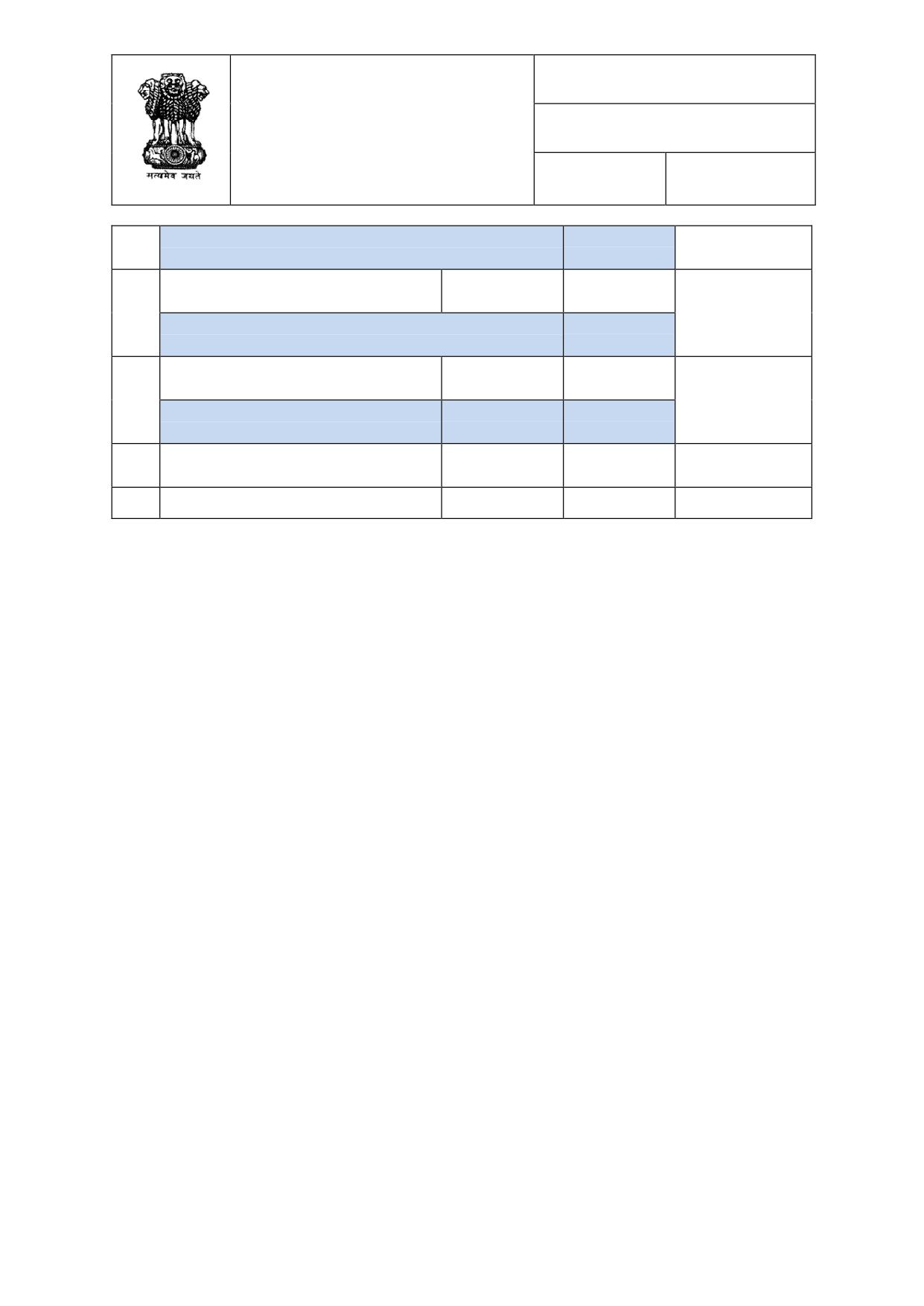
CAP 3400
Air Operator
Certification Manual -
Appendix K
Helicopters
Revision 0
July 2017
Issuance of Technical Clearance; Certificate of
D-10
Registration Certificate of Airworthiness
9.
Inspection of operator’s
D-20
outstation facilities
AW+Ops
Approval for Transit Certification & Ground
D-10
Handling
10.
Application for Special
D-40
Authorization
AW+Ops
Approval for Special
D-15
Authorisations
11.
Demonstration for emergency
D-15
D-10
AW+Ops
evacuation & ditching
12.
Proving Flight(s)
D-2
AOC Cell
1.
D is the estimated first day of commercial operation with new type of
helicopter.
2.
Starting and ending periods are approximate values to facilitate
coordination between DGCA & Operator.
Page 4 of 4
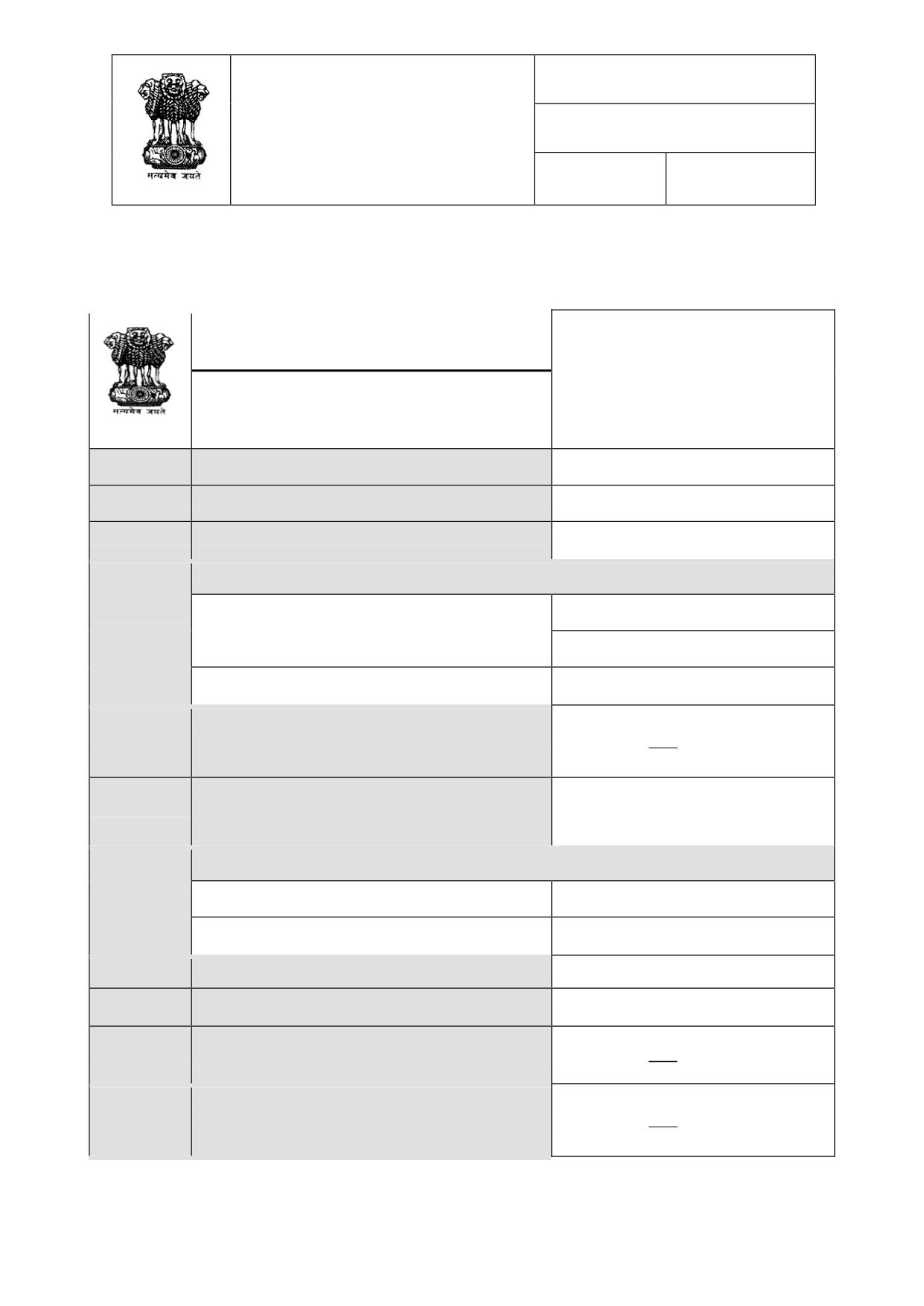
CAP 3400
Air Operator
Certification Manual -
Appendix L
Helicopters
Revision 0
July 2017
APPENDIX L - Renewal of an AOP/ AOC
Form No. : DGCA/OP/002
GOVERNMENT OF INDIA
Application for renewal of
DIRECTOR GENERAL OF CIVIL AVIATION
Air Operator’s Permit
1.
Name of Operator
2.
AOP/ AOC No.
3.
Validity
Accountable Manager (General Manager/ Chief Executive Officer)
Telephone:
4.
Name
Fax:
Designation
Email:
If change in Board of Directors since last
5.
renewal, provide Security clearance for the
Attached at
new Directors
Helicopter Details
6.
As per Attachment A
(Entered on the Permit)
Maintenance Organisation
7.
CAMO (CAR M Subpart G) Approval No.:
Valid upto:
CAR 145/ CAR M Subpart F Approval No.:
Valid upto:
8.
Manuals
As per Attachment B
9.
Helicopter Personnel
As per Attachment C
Summary of Internal Audit and closure of
10.
Attached at
actions of findings since last renewal
Summary of Regulatory Audit by DGCA and
11.
closure actions of findings since last
Attached at
renewal
Page 1 of 6
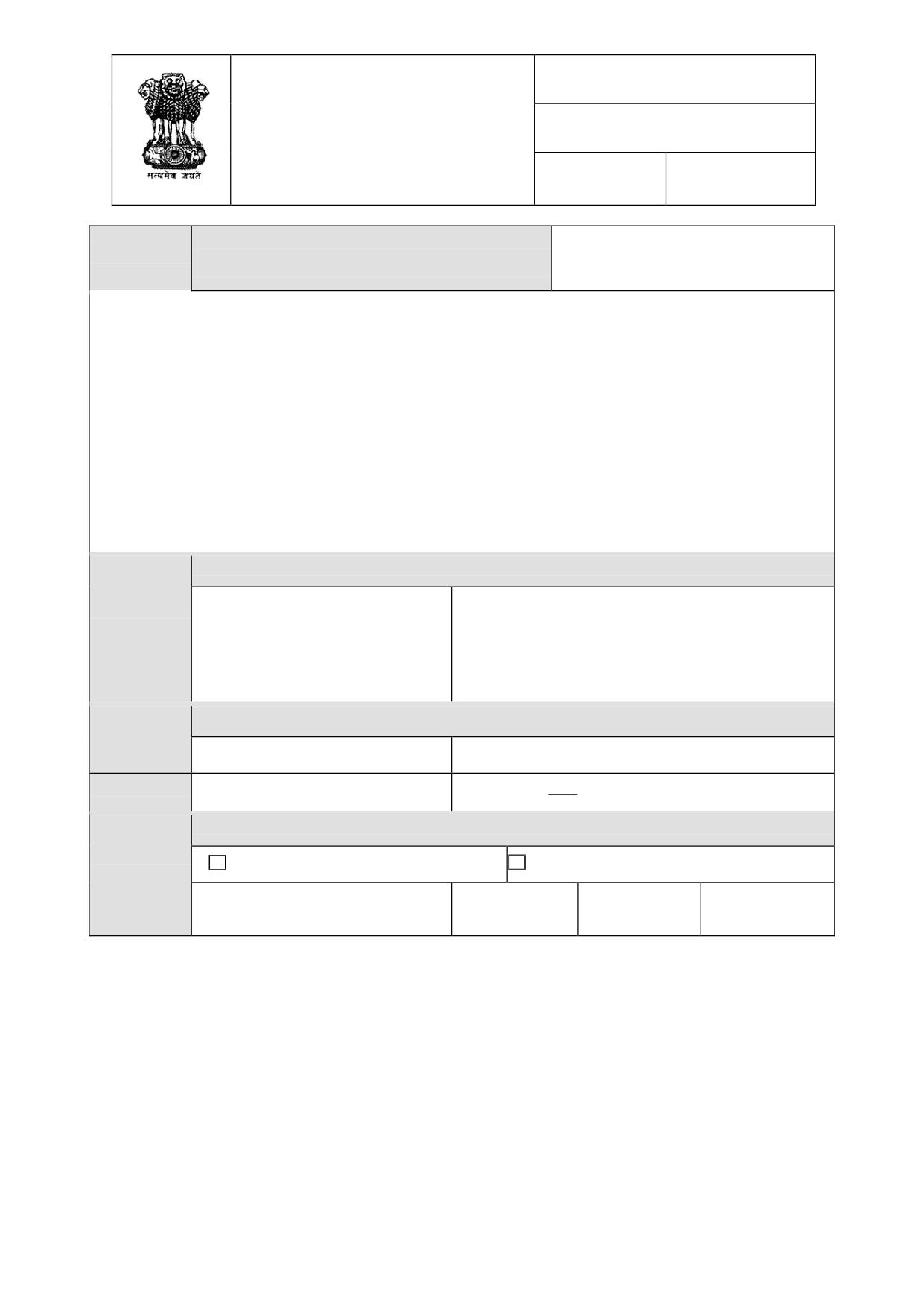
CAP 3400
Air Operator
Certification Manual -
Appendix L
Helicopters
Revision 0
July 2017
Fees Details
12.
(Amount, DD No., dated)
Certified that the organization has continuously maintained the capability at which the permit was
originally accorded by DGCA and is continually complying with the applicable Aircraft Rules, Civil
Aviation Requirements, Aeronautical Information Circulars and such other instructions issued by
DGCA from time to time as are relevant to the scope of permit.
Further certified that at no time the capability of the organization has degraded to a level below
that approved by DGCA
Date:
Signature of Chief Executive of the operator & seal
FOR OFFICE USE ONLY
Proposed Date of Inspection
13.
for renewal
Inspection Team comprising of
14.
Inspection Report
Date of Inspection for renewal
14.
Inspection Results/ Report
Attached at
Renewal Action
15.
Recommended for renewal
Not Recommended for renewal
Name of Officer
Designation
Signature
Date
Page 2 of 6
CAP 3400
Air Operator
Certification Manual -
Appendix L
Helicopters
Revision 0
July 2017
Attachment A to Form for Renewal of AOP/ AOC
Helicopter Details
(Entered on the Permit)
Number of
Insurance Coverage
Sl.
C of A
Type
Regn.
hours flown
No.
Validity
till date
Insurance No.
Validity
Page 3 of 6
CAP 3400
Air Operator
Certification Manual -
Appendix L
Helicopters
Revision 0
July 2017
Attachment B to Form for Renewal of AOP/ AOC
Manuals
Documentation and its approval/
Revision No.
Whether approval/
acceptance
and Date of last
acceptance of DGCA
revision
obtained
(Items marked * have the approval/
acceptance of DGCA)
(Y/N)
*
Operations Manual
Safety & Emergency Procedures
*
Manual
*
Flight Safety Manual
Safety Management Systems
*
Manual
*
Flight Duty Time Limitation Scheme
*
Rotor Flight Manual (RFM)
*
Normal and Emergency Checklists
*
Load and Trim Sheet
*
Route and Heliport Manual
*
Minimum Equipment List (MEL)
*
Maintenance Control Manual/ CAME
*
Helicopter Journey Log book
*
Maintenance Deferred Defects Log
*
Weight and Balance Manual
Ground Handling arrangements
including Ground Handling Manual
*
Maintenance Program
*
Flight Safety Documents System
*
Passenger Briefing Cards
Page 4 of 6
CAP 3400
Air Operator
Certification Manual -
Appendix L
Helicopters
Revision 0
July 2017
Documentation and its approval/
Revision No.
Whether approval/
acceptance
and Date of last
acceptance of DGCA
revision
obtained
(Items marked * have the approval/
acceptance of DGCA)
(Y/N)
Training programmes (flight crew,
*
flight despatchers and cabin crew)
Simulator/ flight training device
*
evaluation and approvals
Helicopter search procedure
*
checklist
Company’s Security Manual
(approved by BCAS)
Approval of Dangerous Goods
*
Training Programme
Training Manual for maintenance
*
personnel
Training Manual for flight crew, cabin
*
crew, operations personnel and
ground personnel
Special authorizations
PBN
HEMS
*
Page 5 of 6
CAP 3400
Air Operator
Certification Manual -
Appendix L
Helicopters
Revision 0
July 2017
Attachment C to Form for Renewal of AOP/ AOC
Helicopter Personnel
(as applicable)
Number of Persons
Sl.
Description
No.
Indian
Foreigners
1.
Captains
2.
First Officers
Helicopter Maintenance
3.
Engineers
4.
Helicopter Technicians
Station Managers/
5.
Flight Operations
Officers
6.
Cabin Crew Members
Pilots:
Pilots:
Approved Instructors -
7.
Flight crew (Pilots,
Cabin crew)
Cabin crew:
Cabin crew:
Maintenance Release
8.
Engineers
Page 6 of 6
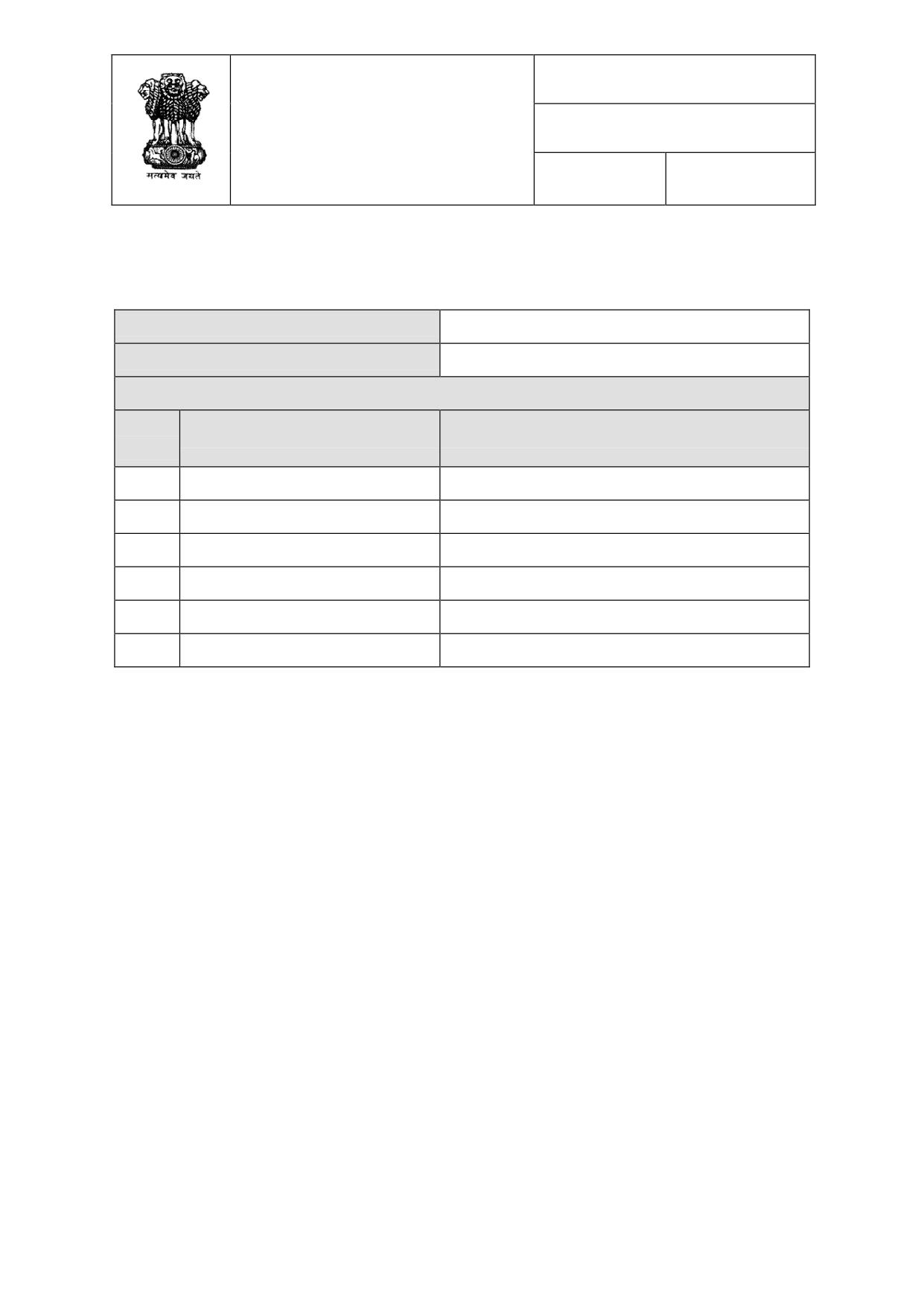
CAP 3400
Air Operator
Certification Manual -
Appendix M
Helicopters
Revision 0
July 2017
Appendix M - Application for Amendments to the Operations Specifications
Form No. : DGCA/OP/003
Name of Operator:
AOP/ AOC No.:
Details of Amendment:
Sl.
Existing Ops Spec Details
Proposed Amendment
No.
Supporting documents are attached:
1.
2.
3.
4.
5.
Date :……………………………
………………………….…….
Signature of Authorized Person
Page 1 of 1
CAP 3400
Air Operator
Appendix N
Certification Manual -
Helicopters
Revision 0
July 2017
Appendix N - Requirements for International Operations
1.
Only those operators whose substantial ownership and effective control are vested in
the Government of India or Indian nationals may be designated. For this purpose, the
Government of India or the Indian nationals shall not be deemed to have “substantial
ownership and effective control of the operator” unless they, in addition to the
ownership of the major part of the assets of the designated operator, also have:
a. Effective control in the management of the designated operator;
b. Ownership and effective control of the major part of the fleet of helicopter and
equipment of the designated operator.
2.
The operator shall have a valid Air Operator Permit and meet the criteria for operating
internationally.
3.
A detailed security programme prepared in accordance with the provisions contained
in Annex 17 to the Convention on International Civil Aviation, the ICAO Security
Manual (Doc 8973) and instructions issued by the BCAS shall be filed with the
Commissioner of Security (Civil Aviation), Janpath Bhawan, ‘A’ Wing, 3rd Floor,
Janpath, New Delhi - 110001 for approval. A copy of the approval granted by the
BCAS shall be furnished to DGCA.
4.
The Chief Executive of the operator shall furnish an undertaking to this office that the
laws, rules, regulations and requirements of the country to which operations are
proposed to be undertaken shall be complied with.
5.
A certificate to the effect that local representative(s) of the operator is/ are conversant
with the laws and regulations of the country to which operations are proposed to be
undertaken shall be furnished by the Chief Executive Officer of the operator.
6.
A copy of the insurance policy covering the liability of the operator in accordance with
the provisions of the Carriage by Air Act, 1972 as amended by the Carriage by Air
(Amendment) Act, 2009 giving effect to the Montreal Convention, 1999.
Page 1 of 2
CAP 3400
Air Operator
Appendix N
Certification Manual -
Helicopters
Revision 0
July 2017
7. The operator shall ensure that all the pilots are familiar with laws, regulations and
procedures prescribed for areas to be traversed, the standard operating procedures
of the heliports to be used and the air navigation facilities relating thereto.
8. The operator shall ensure that the appropriate charts for the area of operation are
carried on board.
9. The operator shall prescribe route and area qualification requirements.
10. The operator shall develop procedures to assess the suitability of the heliport for safe
operations of the type of helicopter intended to be operated, particularly from the point
of view of one-engine Inoperative approach, take-off and climb procedures, adequacy
of firefighting and rescue facilities, clearance of enroute obstacles in case of an engine
failure and other safety related conditions.
11. The operator shall establish Aerodrome Operating Minima for international flights as
per the Minima approved by the competent authority of the country to which operations
are proposed to be undertaken.
12. The operator shall comply with laid down requirements pertaining to the Flight Duty
Time Limitation.
13. The operator shall have arrangements for carrying out pre-flight medical checks of the
crew members.
14. The operator shall have trained ops support personnel duly approved by this office.
15. All equipment as required by the route and destination must be installed.
16. A copy of the ground handling agreement on type of helicopter shall be provided.
17. Arrangements for availability of essential No-Go spares shall be ensured.
18. All the requisite Manuals such as Operations Manual/ Trouble Shooting Manual/ Fault
Isolation Manual, Maintenance Manual etc. shall be available at the foreign station.
19. Proving flight readiness check may be carried out before operations to a new
international destination.
Page 2 of 2
CAP 3400
Air Operator
Appendix O
Certification Manual -
Helicopters
Revision 0
July 2017
Appendix O - Proving Flight Readiness Check
PROVING FLIGHT READINESS CHECK
TABLETOP SCENARIO WORKSHEET
APPLICANT:
SCOPE: OPS/ AW/ CABIN
SCENARIO NUMBER:
of
SCENARIO:
EXPECTED OUTCOME:
ACTUAL OUTCOME:
SAT/ UNSAT
DATE:
TEAM MEMBER (NAME):
Page 1 of 1
CAP 3400
Air Operator
Certification Manual-
Appendix P
Helicopters
Review Check List -
Rev
June 2018
Reporting of Deficiencies
1
Name of the Operator
Date of receiving:
Review No :
Manual / Document
Type of Operator:
Date of issue of
observation:
Aeroplane
Reason for review :
Helicopter
Other
Name of the Inspector (s)
conducting the review:
Sl
Provision
Deficiencies
Ref CAR /
No
Standards
The operator is required to take corrective action and submit the same.
Signature (with date) of the Inspector (s) conducting the review:
Page 1 of 1