Technology of watch production - part 90
 

  Index      Books     Technology of watch production (Tarasov) 1964 year


Search            


Content   ..  88  89  90  91   ..


Technology of watch production - part 90


C o p  p e r - p  1 a t  i n  g  is  used as  an undercoating for nickel,  chromium , 

or  silver plating.  The  copper-coating thickness  does not exceed  1 5  

!l . 

The 

use  of copper-plating for  protective  and  decorative  coatings  is  not  advisable ,  

a s   copper  has  a  high  electropositive  potential  and  cannot  protect  iron 
against corrosion.  In addition,  copper is  easily oxidized and tarnished in 

atmospheric  air. 

Electrolytes  used for copper-plating are of the acid o r  the cyanide  type. 

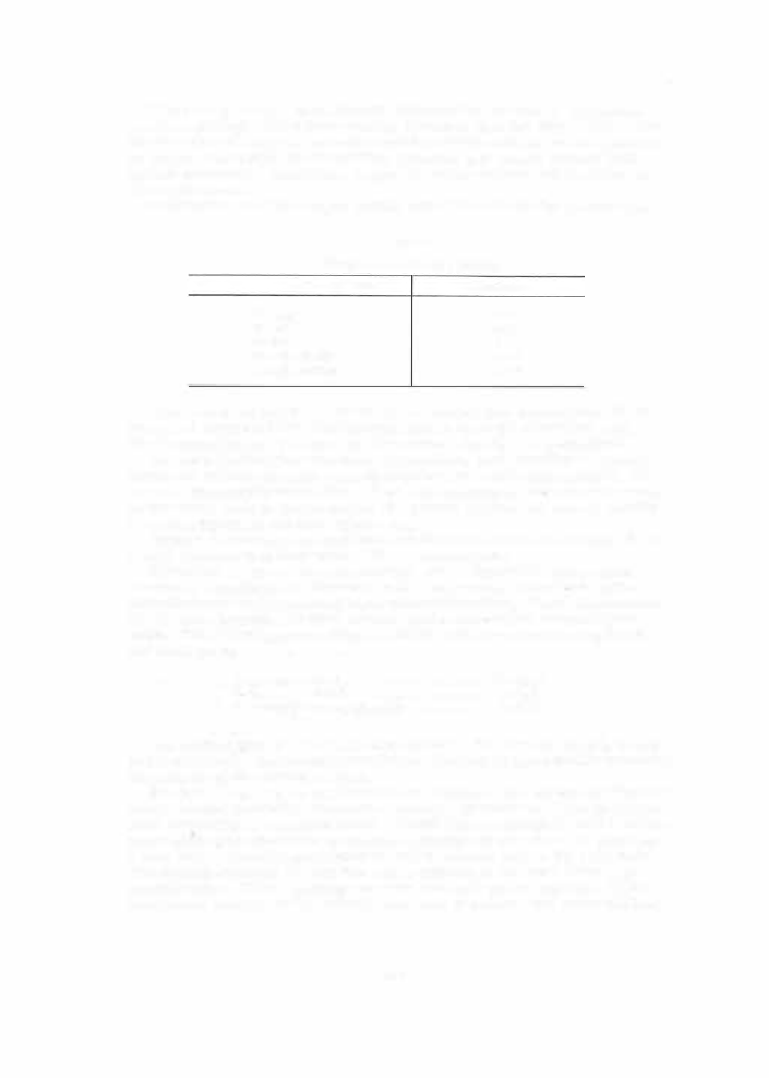
TABLE  1 1  

The 

pH  numbers  of various solutions 

Reaction  of solution 

pH  number 

Strongly  acid 
Weakly  acid 
Neutral 

Weakly  alkaline 
Strongly  aikaline 

1- 3 
4-6 


8-1 0  

11- 14 

T h e   a c i d   c o p p e r   e l e c t r o l y t e s  include two  components:  2 00  to 

2 5 0  g/1  of  copper  sulfate  (CuS04· 5Hz0 )  and  50  to  6 0  g/1 of sulfuric  acid. 

The temperature  is  18  to  2 5°C  and the current density  1  to  3  amp / dm 2 . 

The  acid electrolytes  are  stable  in operation,  less  s ensitive  to  contami ­

nation a n d  suitable f o r  high current densities  (up  to 2 0  t o  3 0  amp/ dm2 ) .   The 

current efficiency is  near  1 00 % .   Their  shortcoming is  their poor throwing 

power which leads to  the  formation of a  coarse- grained and  porous  coating 

of uneven thicknes s  and poor adherenc e .  

Cyanide  electrolytes are therefore gene rally used for the  first layer  ( 2 - 3 

!l 

thick),  which  is  then increased to  2 0 ft  in  an  acid bath. 

C y a n i d e   c o p p e r   e 1 e c t r o 1 y t e s  give  a  deposit of  fine - grained 

s tructure,  showing  good  adherence  to  the  base  metal .  They have  better 

throwing power and  operate at lower current densities .   Their sho rtcoming 

lies  in their toxicity .  Various coppe r  cyanide  electrolyte  compos itions 

exist .   The  following composition is widely used for  copper-plating b rass 

and  steel  parts : 

Copper  cyan ide CuCN 

.  .  .  .  .  .  .  .  .  •  . 

.  .  .  .  .  .  .  . 

Sodium  cyanide  NaCN, 

. . . . . . . . . . . • . . . 

Sodium hyposulfite  Na2s2o3 ·5H20  . . . . . . . . .  

12-18 g/1 

4-6  g/1 

1-2  g/1 

The  holding time  is  1  to  2  min at  3 0  to  4 0°C .  The  current density  is  0 . 5  

to  0 . 8  amp / dm 2 .  Satisfactory results  are  obtained by  periodically  revers ing 
the  polarity  of the  plating current. 

N i c k  e 1 - p 1 a t  i n  g  is used both as an underlayer for  chrome-plating and 

as  an external protective - decorative  coating.  Its  wide  use  is  due to  the  phy­

sical  prope rties  of  deposited nickel.  Nickel like  chromium  readily becomes 

pass ivated  and is  therefore  corrosion- resistant and preserves its gloss for 

a long tim e .   It can be  well polished,  and it  adheres  well  to  the  base m etal . 

The  deposit structure  is  very fine  and  is  difficult to  see even under high 

magnification.  Nickel  coatings  are  very hard  and  wear- resistant.  Nickel 

coatings  on iron are  of  the  cathodic  type  and,  if porous ,  will  cause  the  base 

3 5 7  

metal  to  corrode .  Nickel  c oatings  on b rass  and  copper are  2  to  5 

It 

thick. 

Parts  working in atmospheric air are  s ubjected to a  multipl e -layer  coating, 

whose total  thickness is  5 - 1 0  

It · 

Nickel  electrolytes  are  very  varied in composition.  The  following bath 

composition,  used in  several watch plants,  can be  recomm ended for  de­

corative coating of bras s :  

Nickel  sulfate  (NiS04 · ?H20 )   2 0 0  t o  300 g / 1   (contains  2 1 .4 %  metallic 

nickel ) .  

Common  (table )  salt  (NaCl )  5  t o  2 5  g/1 .  A dded for the  prevention  of 

anode  passivation. 

Boric acid (H3B03 )  2 5  to  3 0  g/1 .  A dded for sustaining the bath  acidity 

within  specified limits .  The  bath  temperature  is  2 0  to  4 0°C  and the  current 

density  1  to  3  amp / dm 2 .  The  holding time  is  1 2  to  20  min. 

For b right- nickel-plating  2  to  4  g/1  of disulfonaphthalic  acid and 4  to  6 

g/1 of sodium  or  potassium  fluoride  are  added to  the  s olution .  The  common­

salt content is  reduced to  between 5 and  1 5  g/1.  A  1  to  2 

It 

thick bright- nickel 

coating is us ed for  corrosion protection of  steel  watch parts  such  as the 

pawl  and  the  regulator .  

B l a c k - n i c k  e 1  p 1 a t  i n  g  i s  used t o  obtain a  glo s sy  black field  on 

dials .  The  dials  are  first degreased chemically,  pickled twice ,  and  then 

plated in an electrolyte  of the  following  compos ition: 

NiS04 (NH4 )2S04 

· 

6 H20 - 6 0 g/1;  ZnS04 

· 

7 H20 - 7. 5  g/1;  NH4CNS - 15 g/1 .  

The  current  density i s  0 . 1 0  amp / dm 2 ,  the  electrolyte i s  used a t  room 

temperature ,  the  holding time  is  20 min,  and  the  plated  parts  are  rinsed 

in cool  water . 

Nickel  baths  are  m ore  sensitive  to  contamination  than  any  other  electro­

lyte .  Iron,  zinc ,  and copper are  detrimental  admixtures and pass  to  the 

cathode  together with  the  nickel.  This  results in a  darkened  coating surface 

with point- corrosion marks  and the  plated layer is b rittle  and  peels  off 

easily. 

Poor- quality nickel plating is often due  to  changes  in the electrolyte  aci­

dity,  and therefore in the  current efficiency,  which is linked with the l iber­
ation  of gas .  The  pH number for nickel  baths  is  usually between 4 . 5  and 6 .  

The  deposits  obtained  from  an  electrolyte  with low p H  ( relatively high 

acidity)  have  a  finer  structure  and are  harde r  and  more b rittle  than are 

deposits  obtained from low-acidity baths . 

Nickel- base  electrolytes  must be  agitated  and  filtered periodically. 
C h r o m i u m   p l a t i n g   is one of the  m ain plating p rocesses  used in 

watch p roduction.  C hromium  is  a  hard,  brittle  metal,  with a  silve r- steel 

color which  strongly  resists  mechanical  wear and the  action of  organic 

acids,  nitric  acid,  alkaline  solutions,  ammonia,  and the  s olutions  of  many 

salts .  It is  dissolved in hydrochloric  and  s ulfuric  acid.  Although  the  elec­

trode potential  of chromium  is more negative  than  that  of iron,  it  is  easily 

passivated  and  so  becomes  cathodic  relative  to  iron.  A  distinct  advantage 

of chromimum  over  nickel  and  s il ver is  that chromium  retains  its  luste r 

if exposed to  air for a  long tim e ,   even at  temperatures  of  the  order  of 4 50 

to  500°C .  Another  distinct advantage,  this  time  over nickel  and  copper 

platings ,  is  that no polishing is  needed to  achieve  a  mirror  finish .  

Porosity i s  the  m ain  shortcoming o f  chromium  coatings .  Decorative 

chromium  plating is  accordingly applied on copper and  nickel undercoatings , 

which  are  buffed  to  a  mirror  finish before  the  chromium  layer is  applie d .  

3 5 8  

The  chromium  layer is usually not more  than  1  to  2 

fl 

thick but  may  be  as 

much as  4  to  6 

fl 

in  certain  cases  (wrist- and  pocket- watch cases ) .  

Hard- chromium  plating,  the  object of which is  increased service life  for 

dies ,   gage s ,   and  other tools  rather than decoration,  is  another type of 

chromium  plating.  The life  of chromium-plated tools  is  increased  5  to  8 

times  compared  with  unplated  tools .  No  copper  or  nickel  undercoating is 

used for hard-chromium  coatings  and  the  layer  is  usually  5  to  1 0  

fl 

thick, 

although in  some  cas e s  a  thickness  of  80 

fl 

is  obtained .  

Chromium - plating considerably  differs  from  other electroplating pro­

cesses,  both  with  respect to the  electrolyte  composition and to  the  working 

conditions .  The  electrolytes  basically  consis t  of  chromic  acid  (chromic 

anhydride ) and sulfuric acid .  The minimum current density is 5 to 7 amp/ dm 2 

and  the  current  efficiency  1 2 - 1 5 % .  Chromium  precipitates  with  con­

siderable  liberation  of hydrogen,  which  carries  along droplets  of the toxic 

chromic  acid .  Special  exhausters  mounted  on the  bath are used to  draw off 

chromic- acid  vapors . 

A  shortcoming  of  chromium - plating is  the  poor throwing power  of  the 

electrolyte .  A dditional  anodes  and  screens  are  accordingly  used for chrom ­

ium - plating contoured parts .  In addition,  the  chromium - plating bath  works 

with insoluble  lead  anode s ,   so  that the  electrolyte  composition  must be ad­

justed more often .  The  electrochemical  equivalent  of  chromium  is  very 

low  (0 . 32 3  g/amp. hr),  making it  necessary  to  use  higher current densities 
and longer holding times than  for other plating processes .  The high current 

densities  necessitate  a  reliable  contact between the part and  its  suspension 

and  the cathode rod. 

The  following electrolyte  compositions and working conditions  are used 

for decorative  chromium - plating of wrist- and pocket- watch  cases: 

Chromic  acid (Cr03) 

. .

.

. . . . . . .

. .

..

·  ·  ·  ·  · 

Sulfuric  acid (HzS04) 

. .

.

. .

.

. . . . . .

. .  

·  . . .  

Current  density  . . . . . . . . . . . . . . . . . . . . . .  

Temperature  . . . . . . . . . . . . . . . . . . . . . . . .  

Holding time  . . . . . . . . . . . . . . . . . . . . . . . .  . 

35D-400 g/1 

3-4 g/1 

4- 5  amp/dm2 

4o-4s•c 
4D-50  min 

Z i n c - p l a t i n g   is  applied  to  seve ral  internal  parts  of  alarm  clocks 

and  wall  clocks .  Zinc  protects  iron against corrosion because  it  has  a 

more negative  electrode potential  than  iron.  Zinc  coatings  diss olve  in  all 

acids  and  alkalies,  and  are  rapidly destroyed by moisture .  The  zinc  layer 

must  accordingly be  5  to  1 2  

f.l 

thick in  order  to  ensure  the  protection of the 

base  metal  against corrosion .  Three  types of electrolytes  are  used  for 

zinc - plating:  acid,  cyanide,  and  alkaline . 

A c i d   e l e c t r o 

y t e s  can  be  used  at higher current  densities  than 

cyanide  o r  alkaline  electrolytes,  their efficiency approaches  l O O o/o ,   and 

they are  very  stable  in  operation.  Zinc  coatings obtained from  acid  elec­

trolytes  adhere  well  to the bas e  metal but the throwing power of these  elec­

trolyte s  is poor and the  deposit  has  a  coarse- grained  structure . 

C y a n i d e   e 1 e c t r o l y t e s  are  characterized by a  high  throwing power .  

They  give coatings  of fine- grained  structure  and high  corrosion  resis tance .  
The  current efficiency i s  5 0  to  7 5 %  and lower current densities can b e  used 

with  such electrolytes .  Their shortcoming is  their toxicity,  as  was  men­

tioned  earlie r  in  connection  with  copper-plating. 

3 5 9  

A 1 k a 1 i n e  ( z i n c a t e  )  e 1 e c t r o 1 y t e s  have 

power,  are  less  s table  than  acid  electrolytes ,   and 

current  efficiency  is  90  to  95 o/o. 

Acid  electrolytes  differ  widely in  composition. 

Zinc sulfate  . . . . . . . . . . . . . . . . . . . . . . . .  

Sodium sulfate 

. . . . . . . . . . . . . . . • . . . . . . . .  

Aluminum sulfate or aluminum-potassium alums  . .  

Current density  . . . . . . . . . . . . . . . . . . . . . .  

Temperature  . . . . . . . . . . . . . . . . . . . . . . . .  

pH value  . . . . . . . . . . . . . . . . . . . . . . . . . .  

satisfactory  throwing 

require  heating.  The 

The  simplest is : 

30D-400 g/1 

4D- 50 g/1 
3D-45 g/1 

0.3-1  amp/dm2 

15-20'C 

4.D-4.5 

Disulfonaphthalene  acid salt is added to the  electrolyte  if a brighter and 

more  lustrous  coating is  required. 

Cyanide  electrolytes  als o  differ widely in composition.  The  following 

composition  is  widely used in  stationary and  rotating- barrel  tanks: 

Zinc oxide 

. . . . . . . . . . . . . . . . . . . . . . . . . • 

Sodium cyanide  . . . . . . . . . . . . . . . . . . . . . .  

Caustic soda 

.  .  •  .  . 

.  .  .  .  .  .  .  .  .  . 

.  .  .  . .

.

.  . 

Current density  . 

.  .  .  .  .  .  .  .  .  .  .  .  .  .  .  .  . 

. .

. .  . 

Temperature 

. . • . . . . . . . . . . . . . . . • . . . . . .  

Current efficiency  . .  

,  ,  .  ,  .  ,  . .  ,  . . . . . . . . .  . 

4D-45 g/1 

8D-85 g/1 
4D-60 g/1 

1 .5-2 amp/dm2 

18-25'C 

7D-85o/o 

Cyanide  electrolytes  are  very sensitive  to  contamination by the  salts 

of iron and lead and by other admixtures .  

The  composition of alkaline  (zincate )  electrolytes  is : 

Zinc  oxide  . . . . . . . . . . . . . . . . . . . . . . . . .  

Caustic soda  . . . . . . . . . . . . . . . . . . . . . . .  

,  , 

Tin chloride 

(SnCl2 or SnCl4) . . . . . . . . . . . . . . . . . . . . .  

Bath temperature  . .  

,  ,  ,  ,  .  ,  ,  . . .  ,  .  ,  ,  ,  ,  .  ,  . .  

Current density  . 

,  ,  ,  .  ,  , 

.

. . . .  ,  ,  ,  .  ,  ,  ,  . . .  . 

Current efficiency  . 

,  . . .  ,  ,  . . . .  ,  ,  ,  ,  . . . . .  . 

4-12 g/1 

6D-90 g/1 

0.15- 0.25 g/1 

50'C 

0.3-1 .2  amp/dm2 

95o/o 

The  dials  of  pocket- and  wristwatches  are usually  s i 1 v e r - p 1 a t e  d .  

A  silver layer is  characterized b y  a  beautiful  color and  a m a t  finish.  Only 

cyanide  electrolytes  are  used for  silver-plating dial s .   The  basic  electro ­

lyte  salts  are  the  complex cyanide  salt  of  s ilver  (KA g (CN )2 ),  and  free  po ­

tassium  cyanide  (KCN). Potash  (K2C03 )  is  added to  the  electrolyte  in  order 
to improve the electroconductivity and to  obtain an  even s ilver deposit on 

the surfac e .  

The  bath  composition and  the  working conditions  are a s  follows : 

Metallic silver 

. . . . . . . . • . . . . . . . . . . .  ,  . . .  

Potassi urn cyanide  . 

.  .  ,  .  .  ,  .  .  .  .  .  .  ,  ,  ,  ,  ,  ,  . .  

Potash  . . . . . . . . . . . . . . . . . . . . . . . . . . . .  

Anodes . . . . . . . . . . . . . . . . . . . . . . . . . . . .  

Layer thickness  . . . . . . . . . 

,  ,  . . . . . . . .  ,  ,  .  , 

Current density  . 

,  ,  ,  ,  .  ,  .  .  .  .  ,  .  .  ,  ,  .  .  .  .  ,  ,  , 

Holding  time  . . . . .  

,  .  ,  ,  ,  ,  . . . .  ,  ,  ,  ,  . . . . .  . 

Temperature  . . . . . . . . .  

,  ,  .  ,  . . .  ,  ,  .  ,  .  ,  ,  . .  

3 6 0  

2D-30 g/1 

1 0-17 g/1 

8-1 0  g/1 

99, 99o/o pure 

2-3 

fl 

0.3- 0.5 amp/dm2 
12- 1 6  min 

Room temperature 


Content   ..  88  89  90  91   ..