Technology of watch production - part 81
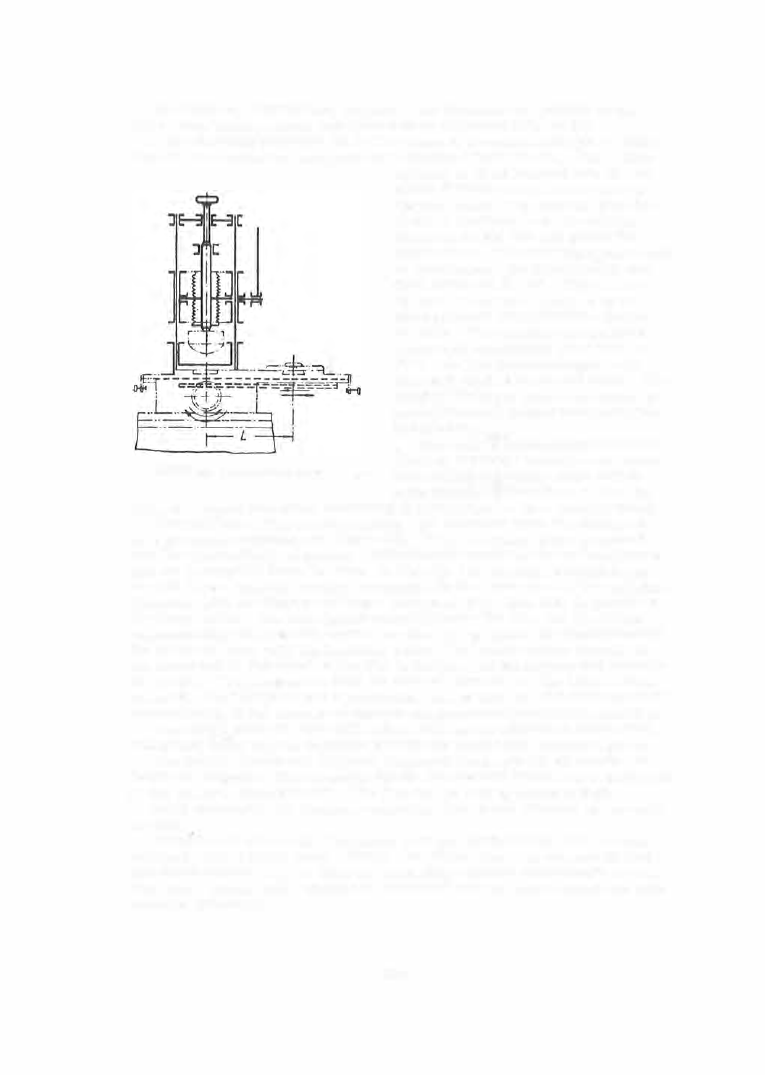
The figures , ins criptions , symbols , and divisions are printed on the
dials using bench presses and india- rubbe r cylinders (Figure 55 ).
A die carrying p rinte r ' s ink in its recess is mounted on the press table .
The dial i s mounted on a support at a distance
1
from the die . The rubber
FIGURE 55. Press for dial printing
cylinder is first lowered onto the die
where it takes a negative imprint of
the dial scale . The table is then dis
placed a dis tance
1
and the cylinder
descends on the dial and prints the
entire s cale . The printing is performr:d
in two stage s , with intermediate and
final drying at 40-45°. The ink must
be laid in a uniform layer, 4 to 5
fl
thick, without discontinuities (gaps )
or leaks . The printing is inspected
under a 5 X magnifying glass and the
dials are then varnished again with
the same BMK - 5 resin and dried. The
finished dials are packed in stacks to
prevent damage during transportation
and storage .
Dials with a black glossy field and
white or luminous symbols are manu
factured by a process which differs
from that described above in that the
dials are dipped into baths containing special mixtures (see Chapter Nine ).
The printing of figures and symbols with luminous paste is performed
on a pneumatic printing set (Figure 56 ). Thick
1
uminous paste is poured
into the upper cylinder of the s et. A lid with rubber padding closes the cylinder
and air is supplied from the s ide. A die with 7 to 10 small through holes
in each figure (symbol ) contour is mounted in the lower part of the cylinder.
The dial, with the figures and signs printed on it in white ink, is placed on
the lower table . The table is fed manually under the die, and then lifted
pneumatically and pressed against the die . Air pres sure is simultaneously
fed to the cylinder with the luminous paste . The paste pass e s through the
die holes and is deposited on the dial in the form of the figures and symbols
in the die . The pressure is held for several seconds and the table is then
lowere d . This machine has a production rate of 1 2 0 0 to 1 5 00 dials per shift ,
independently of the number of figures and symbols to be printed on each dial .
The manufacture of dials with either pink mat or embossed silver field,
and gilded relief figures is different from the processes described above .
The raised figures and field are embossed in one stroke on knuckle or
frictional presses . The recesses for the figures and s ymbols are embossed
in the die by a smooth punch . The figures are 0 . 2 5 to 0 . 3 5 mm high.
A fter emboss ing the dials are annealed, etched and trimmed on the outer
contour .
Watch hands are made of polished 1 0 M low- carbon steel strip or from
polished LS6 3 - 3 brass strip . Hands , like dials, are very diverse in shape
and finish (Figure 5 7 ). A different hand shape usually corresponds to each
dial shape (Figure 5 8 ) . Hands are classified into two types - blind and with
windows (skeleton ),
3 2 1