Military reference books and manuals (2009-2023, Volume 4) - page 24

Azerbaijan SPU Internal & External Material Release Reporting & Notification Procedure
Page 18 of 19
Environmental Major
Projects Department
5210340/0503209418
EXAMPLE
INCIDENT NOTIFICATION
(Verbal Notification)
Report No. 26
Incident date and time:
08/08/2010, 03:00
Description:
Internal plate in bookcell has burned out
When commencing the job of weekly bookcell cleaning, it was
found out, that one of the bookcell plates burned out. The system
was isolated to replace the bookcell and therefore raw sewage had
to be drained through the surge tank to the sea. The bookcell has
been replaced and system was back online.
Location:
East Azeri Platform, spill to sea.
Mitigation measures:
Maintenance interventions will be made to relief the problem and
reduce the level of effluent in withholding tank.
Actions planned:
Including next communication/reporting to regulator.
Spill Review (Y/N):
n/a
Company contact:
Saadat Gaffarova/Faig Askerov
Title
Date
Signature/e-mail approval
PU/Asset Manager
23 June 2010
E-mail approval is available
AZERI OA Delivery
Manager
Trevor Barker
AZSPU Regulatory
23 June 2010
E-mail approval is available
Compliance and
Environment Manager
Faig Askerov
Legal Advisor
23 June 2010
Informed through Cc of correspondents
Saida Ibrahimova
Amendments/additional
To include amended/additional information provided to the
information provided:
regulator(s) following completion of the incident investigation
report (if applicable) e.g. volume of unrecovered material,
preventative actions etc.
Notification status
Date &Time
Name/Position of
Who notified
Comments
Notifier
23 June, 2010
Saadet Gaffarova,
MENR
Environmental
Khaliqverdi Huseinov,
Control Tier:
2
Revision Date: 18 October 2010
Document Number:AZSPU-HSE-DOC-00075-2
Print Date: 01/02/2011
PAPER COPIES ARE UNCONTROLLED. THIS COPY VALID ONLY AT THE TIME OF PRINTING.
The control version of this document can be found at: http://docs.bpweb.bp.com/dkazspu/
Azerbaijan SPU Internal & External Material Release Reporting & Notification Procedure
Page 19 of 19
At 2.00 pm
Permitting Specialist
Director
of
the
Department
for
The message
Environment
provided through his
Protection,
assisstant of the
439 67 87/ 438 71
head of
81/ 050 513 30 78
Department/4396787
At 2.10 pm
Panah
Hidayatov,
Acting
Head of
At 2.20 pm
CCEMA
3713901 /
0504756700
SOCAR
Agamahmud Sirajov,
At 2.30 pm
Deputy Director of
Env. Major Projects
Department
5210340/0503209418
Control Tier:
2
Revision Date: 18 October 2010
Document Number:AZSPU-HSE-DOC-00075-2
Print Date: 01/02/2011
PAPER COPIES ARE UNCONTROLLED. THIS COPY VALID ONLY AT THE TIME OF PRINTING.
The control version of this document can be found at: http://docs.bpweb.bp.com/dkazspu/
AZSPU Legionella Control Management Programme
AZSPU Legionella Control Management
Programme
AZSPU-HSSE-DOC-00259-2
Authority:
AzSPU Health Manager
Custodian:
AzSPU Industrial Hygiene Advisor
Scope:
AzSPU All Operations
Document
Administrator:
Document Asset Technician Name
Issue Date:
02 October 2008
Issuing Dept:
HSE&TD
Revision Date:
20 May 2009
Control Tier:
2
Next Review
20 May 2010
Date:
Control Tier:
<<2>>
Revision Date: <<20 May 2009>>
Document Number: << AZSPU-HSSE-DOC-00259-2>
Print Date: 2/1/2011
PAPER COPIES ARE UNCONTROLLED. THIS COPY VALID ONLY AT THE TIME OF PRINTING. THE
CONTROLLED VERSION OF THIS DOCUMENT CAN BE FOUND AT
AZSPU Legionella Control Management Programme
1.0 Purpose/Scope
This document gives advice concerning the risk from exposure to Legionella
bacteria.
Legionnaires’ disease is a potentially fatal form of pneumonia which can affect
anybody, but which principally affects those who are susceptible because of age,
illness, immunosupression, smoking, etc. Legionella bacterial can also cause
less serious illnesses which are not fatal or permanently debilitating, e.g. Pontiac
or Lochgoilhead fevers.
Legionella bacteria are common and can be found naturally in environmental
water sources such as rivers, lakes and reservoirs, usually in low numbers. As
Legionella bacteria are commonly encountered in environmental sources they
may eventually colonise manufactured water systems and be found in cooling
tower systems, hot and cold water systems and other plant which use or store
water. To reduce the possibility of creating conditions in which the risk from
exposure to Legionella bacteria is increased, it is important to control the risk by
introducing
measures
which:
Do not allow proliferation of the organisms in the water system; and
Reduce so far as reasonably practicable, exposure to water droplets and
aerosol.
This controlled document applies to Azerbaijan Strategic Performance Unit
(SPU) engaged in the exploration, drilling, production and transportation of oil;
including all related activities.
2.0 General Requirements and principles
2.1 Requirements for identifying, assessing, and controlling health hazards are
included in the following BP Group and International standards:
BP Getting Health Right
OGP Managing health for field operations in oil & gas activities.
Approved Code of Practice and guidance:
’The control of Legionella
bacteria in water systems’
Control of Substances Hazardous to Health Regulations (COSHH)
2.2 Principles
Control Tier:
<<2>>
Revision Date: <<20 May 2009>>
Document Number: << AZSPU-HSSE-DOC-00259-2>
Print Date: 2/1/2011
PAPER COPIES ARE UNCONTROLLED. THIS COPY VALID ONLY AT THE TIME OF PRINTING. THE
CONTROLLED VERSION OF THIS DOCUMENT CAN BE FOUND AT
AZSPU Legionella Control Management Programme
The principles of Legionella Risk Prevention Program are following:
Minimize the risk to human health and the environment.
Consider cost-effectiveness and operational feasibility.
Consider community values.
Take a leadership role by educating employees and contractors and
promoting an environmentally-sound, integrated approach to Legionella Risk
Prevention (LRP) management.
Apply Legionella Risk Prevention principles when planning, designing,
constructing and renovating projects.
Ensure accountability in water system treatment chemical use through
regular risk assessment and reporting system.
Applying sparing and safe methods of the best international practice
3.0 Legionella control
3.1 Legionella risk assessments
To prevent the occurrence of legionnaire’s disease, companies which operate
purpose-built water systems (e.g. BP AzSPU, contractors, etc.) must comply with
regulations, requiring them to manage, maintain and treat them properly. This
means that a risk assessment must be carried out to determine which systems
pose a threat and whether the water must be treated and the system cleaned
regularly.
All workplaces will have water systems which should be taken account of within
the water treatment risk assessment. Examples include:
Drinking water: normally an open circuit direct from the mains supply to tap
outlets but can also be supplied to vending machines, water fountains or
water
coolers;
Domestic cold water: normally an open circuit with tanked storage
Domestic hot water; normally an open circuit supplied from point of use
heaters, or from hot water storage devices e.g. immersion heaters or
calorifiers
with
and without
tanked
cold
water
storage
Control Tier:
<<2>>
Revision Date: <<20 May 2009>>
Document Number: << AZSPU-HSSE-DOC-00259-2>
Print Date: 2/1/2011
PAPER COPIES ARE UNCONTROLLED. THIS COPY VALID ONLY AT THE TIME OF PRINTING. THE
CONTROLLED VERSION OF THIS DOCUMENT CAN BE FOUND AT
AZSPU Legionella Control Management Programme
Low pressure hot water heating: either closed circuit or tanked header
Medium pressure hot water heating: closed circuit
Chilled water: closed circuit
Evaporative condenser cooling water: open and closed circuits
Humidifier water: open and closed circuit
Cooling towers: open and closed circuits
Fire sprinkler and hose reel water: open circuit
There are also less commonly encountered water systems including spa baths
and pools, steam boilers, car/bus washes, air washers, wet scrubbers, machine
tool coolant systems, ornamental fountains and water features, horticultural
irrigation and misting systems, emergency showers and eye wash sprays.
The risk assessment should achieve the following:
Identification of all systems that poses a risk
An assessment of the risks from exposure to Legionella bacteria and
other relevant biological or chemical agents associated with all these
water systems
Compliance with AzSPU Water quality assurance programme and
establishment of records system for the prevention and control of the
risks
A system to ensure that risk assessments are reviewed at least every two
years, or following an incident
See also key documents section: Legionella - guide to risk assessment
3.2 Water testing:
Ref. AzSPU Water quality management programme
3.3 Water treatment:
Ref. AzSPU Water quality management programme
3.4 Monitoring:
Ref. Legionella guide to water sampling and analytical techniques
Control Tier:
<<2>>
Revision Date: <<20 May 2009>>
Document Number: << AZSPU-HSSE-DOC-00259-2>
Print Date: 2/1/2011
PAPER COPIES ARE UNCONTROLLED. THIS COPY VALID ONLY AT THE TIME OF PRINTING. THE
CONTROLLED VERSION OF THIS DOCUMENT CAN BE FOUND AT
AZSPU Legionella Control Management Programme
3.5 Education and information:
Ref. Legionella guide to information and training
3.6 Recordkeeping:
Ref. Legionella guide to recordkeeping
4.0 Key responsibilities
In many instances the overall responsibility, the associated duties, and the
operational procedures, in respect of compliance with the regulations may fall to
separate parties.
4.1 Health Team Industrial Hygienists or Technical Authority assigned by
Health Manager shall
Periodically review and update this programme.
Assess and evaluate Legionella Risk Prevention contractor and its
compliance with the requirements as outlined in this document and best
international standards.
Ensure the ongoing monitoring and risk assessment of the adequacy of the
existing Legionella Risk Prevention provisions.
Review and audit Legionella Risk Prevention contractor activities to ensure
acceptable standards are being applied and all relevant Environmental
aspects encountered.
Periodically (annual basis) review contractor qualifications and performance.
Providing information and advice on new
/ forthcoming legislation or
measures to improve pest control services.
Ensuring lessons learned and best practices are communicated between
operational site
Ensure adequate training programme identified
Ensure all those involved in the process of Legionella control on sites are
trained.
4.2 BP Site Manager shall
Ensure that a risk assessment is undertaken and maintained for all water
systems presenting a reasonably foreseeable risk of exposure to Legionella
bacteria and also for work activities that may lead to an exposure to
Legionella bacteria
Control Tier:
<<2>>
Revision Date: <<20 May 2009>>
Document Number: << AZSPU-HSSE-DOC-00259-2>
Print Date: 2/1/2011
PAPER COPIES ARE UNCONTROLLED. THIS COPY VALID ONLY AT THE TIME OF PRINTING. THE
CONTROLLED VERSION OF THIS DOCUMENT CAN BE FOUND AT
AZSPU Legionella Control Management Programme
Ensure control measures and other precautions, including any remedial
actions as recommended by the risk assessment are implemented and
maintained to protect all personnel from exposure to Legionella bacteria
Confirm the necessary monitoring and system checks are undertaken to
ensure that the controls remain effective and action is taken to rectify any
deficiencies.
Define responsibilities and document an effective communication process for
all relevant parties, including contractors, involved in assessing the risk,
implementing and maintaining the control measures and conducting
monitoring and system checks.
Ensure that BP personnel involved in the Legionella control programme are
suitability informed, instructed and trained, and when required that they
engage competent, qualified and experienced contractors.
Establish adverse incident management protocol and have arrangements in
place to ensure they are informed of any adverse incidents, e.g. a
microbiological result exceeding specified action levels, any incident with
potential to significantly increase the risk of legionellosis or a case or
suspected case of legionellosis.
Act as the focal point for work, related to Legionella control and co-ordinate
Legionella control activities on site.
Ensure all opportunities for proactive Legionella risk management are given
due consideration when new water systems are installed or existing systems
are modified or refurbished.
Ensure all required notifications relating to Legionella control activities (e.g.
cooling tower registration, are made to relevant authorities in a timely manner.
Ensure all related record keeping is maintained.
Audit the risk management and control programme on a regular basis and
provide a written report of such audits.
4.3 Site HSE Advisors and PU Health Advisors
Conduct Legionella risk assessments at their site with guidance of the
Central IH staff
Identify and assess sources of risk on their respective sites. This includes
checking whether conditions are present which will encourage bacteria to
multiply.
Implementing the scheme of prevention and or controlling the risks.
Implement, manage and monitor precautions.
Monitor work at their sites to ensure that specified health hazard controls
are being implemented.
Ensure regular water testing following the schedule as per AzSPU Water
quality assurance programme takes place.
Keep records of the precautions
Control Tier:
<<2>>
Revision Date: <<20 May 2009>>
Document Number: << AZSPU-HSSE-DOC-00259-2>
Print Date: 2/1/2011
PAPER COPIES ARE UNCONTROLLED. THIS COPY VALID ONLY AT THE TIME OF PRINTING. THE
CONTROLLED VERSION OF THIS DOCUMENT CAN BE FOUND AT
AZSPU Legionella Control Management Programme
4.4 Site Employees shall
Complete assigned health hazard communication training.
Assure hazards have been assessed for tasks they are about to do.
Apply controls further to water and cooling systems’ assessments
Notify supervisors when controls are unclear, non-functioning, or
unworkable for the task.
4.5 Maintenance contractors
The responsibilities of water treatment and maintenance companies in
implementing and maintaining the control measures should be determined by the
BP responsible person (Legionella management programme technical authority)
and incorporated into a service agreement. Specific duties will be dependent on
the type of water systems and BP site requirements, including:
Maintain water treatment and cleaning regimes for higher risk systems,
e.g. cooling towers, in accordance with the recommendations given in the
risk assessment and required by the relevant national/local legislation to
control exposure to Legionella bacteria.
Maintain water systems and equipment in accordance with manufacturers
instructions to ensure they can be operated safely and efficiency and
risks of exposure to Legionella are minimized.
Ensure they deploy competent and appropriately experienced and
qualified personnel to carry out their duties.
Ensure any non-compliances are rectified in a timely manner and
deficiencies beyond their control are reported to the responsible person
for action by others.
Ensure all related record keeping is maintained.
5.0
Procedure
Procedures by which all work on water systems which are, or are likely to be,
contaminated with Legionella bacteria should be subject to a thorough,
documented risk assessment.
Procedures by which all work on water systems which are, or are likely to be,
contaminated with Legionella bacteria should be subject to a thorough,
documented risk assessment. The site’s Control of Work and Permit to Work
program should explicitly address positive control of potential exposure to
Legionella bacteria. This should include work which involves the potential for
exposure to aerosols contaminated or likely to be contaminated with Legionella
bacteria.
Prior to permitting any work which may involve exposure to
Control Tier:
<<2>>
Revision Date: <<20 May 2009>>
Document Number: << AZSPU-HSSE-DOC-00259-2>
Print Date: 2/1/2011
PAPER COPIES ARE UNCONTROLLED. THIS COPY VALID ONLY AT THE TIME OF PRINTING. THE
CONTROLLED VERSION OF THIS DOCUMENT CAN BE FOUND AT
AZSPU Legionella Control Management Programme
contaminated aerosols, a risk assessment should be made addressing the risk of
exposure to Legionella bacteria in addition to other hazardous substances (e.g.
chemicals used during the cleaning operation), and the appropriate measures
required to control exposure should be identified and implemented before the
work is started. Control measures and methods should be documented, audited
and approved by a competent person before a permit to work is approved
5.1
Risk Assessment - Guide (Appendix 1)
Risk assessment format approved within AzSPU could be used for Legionella
risk assessment purpose.
5.2
Hot & Cold Water Services Management checklist (Appendices 2/2.1)
5.3
Cooling system water management checklist (Appendices 3/3.1/3.2/3.3)
6.0
Information and Training
The management of water systems requires some basic knowledge of the
inherent risks and more specific training when responsible for managing and
controlling risk of exposure to Legionella. Persons involved in Legionella
management and control must be properly trained, ensuring that tasks
undertaken are carried out in a safe and technically competent manner. A
training programme outlining general awareness for personnel involved in
Legionella control is appended.
The level of competence required will be dependant upon the needs of the
situation and the nature of the risks involved.
7.0
Record keeping
The following records must be available for relevant site personnel and service
providers:
Contact details and reporting arrangements
Water system asset list
Risk assessment
System data and schematics
Written control scheme detailing precautionary measures and
responsibilities, water quality control criteria and requirements for
corrective actions
Water management programme schedule
Training and competency certificates
Water treatment and equipment details
Site testing and inspection reports
Water treatment supplier reports
Control Tier:
<<2>>
Revision Date: <<20 May 2009>>
Document Number: << AZSPU-HSSE-DOC-00259-2>
Print Date: 2/1/2011
PAPER COPIES ARE UNCONTROLLED. THIS COPY VALID ONLY AT THE TIME OF PRINTING. THE
CONTROLLED VERSION OF THIS DOCUMENT CAN BE FOUND AT
AZSPU Legionella Control Management Programme
Independent monitoring reports
Cleaning / disinfecting reports
Method statements
Management review records
Product information / Safety data sheets / COSHH assessments
Local authority Notification (for cooling towers / evaporative condensers)
Remedial and Emergency action procedures
7.1
Key Documents/Tools/References
1. Guide to Legionellosis and Legionella
2. Legionella: Guide to Risk Control Schemes
3. Legionella: Guide to Emergency Response Plans
4. Legionella: Guide to Record Keeping
5. Guide to Legionella Control for Humidification Systems
6. Legionella awareness and management training
7. BP OMS Guidance for Legionella Control
8. Legionella: Guide to Risk Management Plans
9. Guide to Sampling and Analytical Techniques for Legionella
10. Guide to Duties of Responsible Persons and Contractors
11. Guide to Information and Training
12. Guide to Legionella control for Miscellaneous Systems
13. Guide to Regulations for Legionella Control
14. Guide to Legionella Control and Water Treatment Contracts
15. Guide to Legionella Control for Evaporative Cooling Systems
16. Legionnaires disease: approved code of practice and guidance
17. AzSPU Water quality management programme
Control Tier:
<<2>>
Revision Date: <<20 May 2009>>
Document Number: << AZSPU-HSSE-DOC-00259-2>
Print Date: 2/1/2011
PAPER COPIES ARE UNCONTROLLED. THIS COPY VALID ONLY AT THE TIME OF PRINTING. THE
CONTROLLED VERSION OF THIS DOCUMENT CAN BE FOUND AT
AZSPU Legionella Control Management Programme
Control Tier:
<<2>>
Revision Date: <<20 May 2009>>
Document Number: << AZSPU-HSSE-DOC-00259-2>
Print Date: 2/1/2011
PAPER COPIES ARE UNCONTROLLED. THIS COPY VALID ONLY AT THE TIME OF PRINTING. THE
CONTROLLED VERSION OF THIS DOCUMENT CAN BE FOUND AT
AZSPU Legionella Control Management Programme
APPENDIX 1
Guide to Risk Assessment
Introduction
An assessment of risk of exposure to Legionella bacteria from a water system is
required whenever:
the condition of the water within any part of the system could permit
proliferation of Legionella bacteria; and
an aerosol could be created containing this water; and
persons could inhale this aerosol.
The assessment should determine whether existing measures to prevent or
minimise the risk of legionellosis are adequate and effective and, if not, to
identify what further precautionary measures need to be taken. The assessment
should also consider the susceptibility of those persons likely to be exposed to
aerosols potentially contaminated with Legionella bacteria.
Given that legionella bacteria will, from time to time, find their way into and
potentially colonise all water systems operating at water temperatures within the
range 20-45C, this effectively means that all such systems (e.g. domestic hot &
cold water systems, air conditioning systems, spas, fire fighting systems, etc.)
should be considered to pose a significant risk. Other systems normally
operating outside these temperatures but sometimes, e.g. during equipment
shutdown or maintenance, are allowed to stand at ambient temperatures may
also pose a risk and require a risk assessment. Where the BP leases or
otherwise occupies premises managed by other persons, the BP Responsible
Person should ensure that the landlord or managing agent for the premises can
demonstrate a suitable and sufficient risk assessment for exposure to Legionella
bacteria prior to occupation by the BP.
Requirements
Risks assessments must meet local legislative requirements and the
assessment should, as a minimum, consider the following factors:
a) Water System Design and Condition
In addition to a description of the water system layout and operation, there
should be an appraisal of the condition of component parts, paying particular
attention to those factors which could support microbial growth, e.g. sludge,
scale, debris, corrosion, fouling and the use of materials that can release
nutrients for microbial growth. There should also be an assessment of the
suitability of system design for prevention of water stagnation and contamination,
e.g. dead legs or blind ends, standby pumps and plant, water holding capacity
and turnover, and poorly fitting covers and screens on water storage tanks. The
Control Tier:
<<2>>
Revision Date: <<20 May 2009>>
Document Number: << AZSPU-HSSE-DOC-00259-2>
Print Date: 2/1/2011
PAPER COPIES ARE UNCONTROLLED. THIS COPY VALID ONLY AT THE TIME OF PRINTING. THE
CONTROLLED VERSION OF THIS DOCUMENT CAN BE FOUND AT
AZSPU Legionella Control Management Programme
assessment should also consider the adequacy of measures for minimising
aerosol generation and preventing exposure, e.g. drift eliminators on cooling
towers, and removal of redundant or infrequently used showers.
b) Water Quality
An internal visual inspection can tell the assessor a great deal about the water
quality, e.g. presence of slimes, cloudiness, etc. However, the lack of these
visual indicators does not necessarily mean that the water will be of a
satisfactory standard in terms of its bacteriological and chemical qualities. Whilst
microbiological monitoring is not always required to support a risk assessment, if
properly done, it can provide a certain degree of assurance, particularly where
such sampling is not already routinely undertaken as part of a written control
scheme, and should always be used where there is cause for concern or to
support investigations into adverse incidents. Water sampling and analysis are
discussed in BP Guide Sampling and Analytical Techniques.
c) Water Temperature
As Legionella bacteria are much more likely to proliferate where water
temperatures are between 20 to 45°C for prolonged periods, water temperature
monitoring should be used to identify parts of the system where such
temperatures occur and whether they significantly contribute to the risks present.
Where alternative measures, e.g. biocide dosing in cooling towers, are used to
control bacteriological growth then the risk assessor should confirm the
adequacy of such measures by reference to test results from on-site records and
where required carry out confirmatory testing.
d) Written Scheme of Maintenance and Monitoring
As risk assessments are only a snap-shot in time and may not be reviewed for
anything up to 24 months, the assessment should critically review the suitability
of the written scheme to control the risk of exposure to Legionella bacteria over
this period from such influences as, for example, the adequacy of supporting
management arrangements, changes in plant operating conditions and seasonal
effects.
e) Record Keeping
The assessment should review all relevant records since the previous
assessment/audit took place to check that the system is being adequately
managed, including the water quality logbook, remedial action implementation
records, availability and suitability of schematic or other plans/drawings of the
system, compliance with the written scheme and the safety management
arrangements (e.g. adverse incident records and their management).
Control Tier:
<<2>>
Revision Date: <<20 May 2009>>
Document Number: << AZSPU-HSSE-DOC-00259-2>
Print Date: 2/1/2011
PAPER COPIES ARE UNCONTROLLED. THIS COPY VALID ONLY AT THE TIME OF PRINTING. THE
CONTROLLED VERSION OF THIS DOCUMENT CAN BE FOUND AT
AZSPU Legionella Control Management Programme
f) Management Arrangements
The assessment should review the suitability of the appointments in place to
manage the risks and of the arrangements in place to manage adverse
incidents, including those for assessing reporting and implementing emergency
mitigation measures, and procedures to communicate the risk to potentially
affected persons.
The level of detail of the assessment should reflect the degree of risk present,
providing prioritised recommendations for remedial action where the risks
identified are unacceptable. As can be seen from points a) to f) above, it is
important that the risk assessment is not considered as simply a system
condition survey, but assesses the suitability of all aspects of the management of
this risk.
The risk assessor should be independent of those who supply water treatment,
cleaning and disinfection and other related contract services so as to avoid
conflicts of interest. Assessment of complex water systems will require specialist
input from experienced risk assessors with knowledge of environmental
microbiology, system design and engineering and water quality.
The system assessment should be kept up to date and reviewed at least every
two years.
Control Tier:
<<2>>
Revision Date: <<20 May 2009>>
Document Number: << AZSPU-HSSE-DOC-00259-2>
Print Date: 2/1/2011
PAPER COPIES ARE UNCONTROLLED. THIS COPY VALID ONLY AT THE TIME OF PRINTING. THE
CONTROLLED VERSION OF THIS DOCUMENT CAN BE FOUND AT
AZSPU Legionella Control Management Programme
Hot & Cold Water Services Management Checklist
This checklist reflects good practice but should not take precedence over local regulations
if more stringent.
Location:
Name of Auditor:
Date of Audit:
Date of Review (minimum 2 yearly):
Section 1 - Risk Assessment
Y
N
1.
Is there any relevant National, State, or Regional Legislation or
Codes of Practice etc., at your location, which address legionella
issues?
Y
N
2.
Has elimination of the risk been considered?
Y
N
3.
Was the person undertaking the assessment competent, or did
they have access to advice and guidance from a suitable
competent person, during the assessment process?
Y
N
4.
Have the significant findings of the assessment been recorded?
Y
N
5.
Has there been consultation with employees, relevant contractors,
JV artners etc. on the assessment and recommended control
measures?
Y
N
6.
Does the assessment include identification of circumstances that
would require the assessment to be reviewed?
Y
N
7.
Is there a suitable “single point of accountability” (SPA)
identified and recorded who will be responsible for managing or
coordinating the legionella prevention & control programme?
Control Tier:
<<2>>
Revision Date: <<20 May 2009>>
Document Number: << AZSPU-HSSE-DOC-00259-2>
Print Date: 2/1/2011
PAPER COPIES ARE UNCONTROLLED. THIS COPY VALID ONLY AT THE TIME OF PRINTING. THE
CONTROLLED VERSION OF THIS DOCUMENT CAN BE FOUND AT
AZSPU Legionella Control Management Programme
Y
N
8.
Does the above SPA have a nominated deputy?
Y
N
9.
Are contact details of the above persons readily available - for
instance in the event of an emergency (see Q62)?
10. Are the roles & responsibilities of all persons involved in the
Y
N
legionella prevention & control programme defined in writing -
this includes contractors and others?
Y
N
11. Have they all been trained appropriately?
Y
N
12. Is there a written procedure for the above training programme,
which includes refresher training and measures/assesses
competency?
13. Has the competency of any contractors or third parties, such as
Y
N
laboratories etc, involved in any aspect of the legionella
prevention & control programme been checked?
Y
N
14. Have all other HSE issues been considered? -
Section 2 - Type of System(s)
Tick as Appropriate
Gravity without recirculation
Gravity with recirculation
Pressurised
Other (describe below)
Control Tier:
<<2>>
Revision Date: <<20 May 2009>>
Document Number: << AZSPU-HSSE-DOC-00259-2>
Print Date: 2/1/2011
PAPER COPIES ARE UNCONTROLLED. THIS COPY VALID ONLY AT THE TIME OF PRINTING. THE
CONTROLLED VERSION OF THIS DOCUMENT CAN BE FOUND AT
AZSPU Legionella Control Management Programme
Section 3 - Risk Management Programme
Y
N
15. Is there a written risk management programme, which covers the
control of risks associated with any exposures to legionella
bacteria?
Y
N
16. Is an up-to-date plan of the system included?
17.
Does the plan show and identify: -
Y
N
All system plant, for example water softeners, filters, pumps,
non-return valves and all outlets, i.e. showers wash hand
basins etc.?
Y
N
All system isolation valves
Y
N
All standby equipment, e.g. spare pumps etc.?
Y
N
The location of system bleed valves?
Y
N
All associated storage and header tanks?
Y
N
All associated pipe work?
Y
N
The location of chemical dosing points and/or injection
points
Y
N
The location of the system drain valve?
The origin of the water supply?
Y
N
Any parts which may be capable of being taken temporarily
Y
N
out of use?
Control Tier:
<<2>>
Revision Date: <<20 May 2009>>
Document Number: << AZSPU-HSSE-DOC-00259-2>
Print Date: 2/1/2011
PAPER COPIES ARE UNCONTROLLED. THIS COPY VALID ONLY AT THE TIME OF PRINTING. THE
CONTROLLED VERSION OF THIS DOCUMENT CAN BE FOUND AT
AZSPU Legionella Control Management Programme
Y
N
18. Does the programme contain all relevant operating, cleaning &
maintenance procedures and instructions (see Q)?
Y
N
19. Does the programme detail the steps necessary to control the risk
of exposure to legionella bacteria (see Q36-40)?
Y
N
20. Does the programme list details of the types and frequencies of
checks/tests necessary to ensure that the programme remains
effective
(see Q41-52)?
Section 4 - Design & construction
Y
N
21. In the case of installation of new, or extensive modification of
existing, water services do the processes exist under your
legionella prevention & control programme to:-
Y
N
Consider the use of only materials or fittings that cannot
support the growth of microrganisms?
Y
N
Consider the use of low corrosion materials?
Y
N
22. If fitted, are thermostatic mixing valves (TMVs) sited as close as
possible to the point of use?
NOTE ideally TMVs should not be fitted to multiple outlets, but
if they are use, the mixed water pipe work should be kept as short
as possible.
Cold water system
Y
N
23. Are low use outlets installed upstream of higher use outlets?
Y
N
24. Has cold-water storage been assessed and minimised, i.e. holds
enough for a day‟s use only?
Y
N
25. Is all piping insulated and kept away from heat sources (wherever
possible)?
Control Tier:
<<2>>
Revision Date: <<20 May 2009>>
Document Number: << AZSPU-HSSE-DOC-00259-2>
Print Date: 2/1/2011
PAPER COPIES ARE UNCONTROLLED. THIS COPY VALID ONLY AT THE TIME OF PRINTING. THE
CONTROLLED VERSION OF THIS DOCUMENT CAN BE FOUND AT
AZSPU Legionella Control Management Programme
26. Is the cold-water tank:-
Y
N
Fitted with a cover and insect screen(s) on any pipe work or
vents open to the atmosphere?
Y
N
Located in a cool place and protected from extremes of
temperature?
Y
N
Accessible?
Hot water system
Y
N
27. Does the calorifier storage capacity meet daily fluctuations in
hot water use while maintaining a supply temperature of at
least 50 C?
Y
N
28. Are the hot water distribution pipes insulated?
Y
N
29. If more than one calorifier is used, are they connected in
parallel?
30. Does the calorifier have the following fitted:-
Y
N
Drain valve?
Y
N
Inlet & Outlet Temperature Gauge?
Y
N
Access Panel?
Section 5 - Operation and maintenance
Y
N
31. If the water supplied to your building is not mains supply, has the
water been pre-treated to make sure it is the same quality as
Control Tier:
<<2>>
Revision Date: <<20 May 2009>>
Document Number: << AZSPU-HSSE-DOC-00259-2>
Print Date: 2/1/2011
PAPER COPIES ARE UNCONTROLLED. THIS COPY VALID ONLY AT THE TIME OF PRINTING. THE
CONTROLLED VERSION OF THIS DOCUMENT CAN BE FOUND AT
AZSPU Legionella Control Management Programme
mains-supplied water?
Y
N
32.
Is the entire content of the calorifier, including the base, heated to
60C for an hour each day, for example by using a shunt pump?
Y
N
33.
Are all outlets that are no longer required, cut back as far as the
main pipe run?
Y
N
34.
Are there procedures in place to operate standby equipment e.g.
calorifiers, pumps etc., into routine use?
Y
N
35.
If little used outlets have not been removed, are there
arrangements in place to either
Y
N
Flush them through on at least a weekly basis (with records
kept of this)?
or
Y
N
carry out a safe purge of stagnant water before use
NOTE It is important that this purge is carried out with the
minimum production of aerosols, e.g. by piping directly into
a drain.
Y
N
36.
If thermostatic mixing valves are fitted, are they included in the
maintenance schedule?
Section 6 - Water treatment programme
Y
N
37. Is there a water treatment regime in place?
Y
N
38. Is temperature used as a control method?
Y
N
39. Are biocides used as a control method?
Control Tier:
<<2>>
Revision Date: <<20 May 2009>>
Document Number: << AZSPU-HSSE-DOC-00259-2>
Print Date: 2/1/2011
PAPER COPIES ARE UNCONTROLLED. THIS COPY VALID ONLY AT THE TIME OF PRINTING. THE
CONTROLLED VERSION OF THIS DOCUMENT CAN BE FOUND AT
AZSPU Legionella Control Management Programme
Provide details of the methods used below.
Section 7 - Monitoring
Temperature
Y
N
40.
If there is a risk of scalding are thermostatic mixing valves fitted?
Y
N
41.
Is the temperature of sentinel hot and cold water outlets checked
on a monthly basis (The first and last taps on a recirculating
system)?
NOTE for cold water the temperature should be 20C or below
and for hot water, at least 50C.
42.
Y
N
43.
If fitted, is the temperature of the water supply to thermostatic
mixing valves checked on a monthly basis?
Y
N
44.
Is the temperature of the water in the outlet and return pipes of the
calorifier checked on a monthly basis?
NOTE calibrated temperature measurement devices should
additionally be used, at an appropriate interval (at least annually)
to crosscheck Calorifier temperature gauges and any deviations
corrected and recorded.
Y
N
45.
Is the temperature of the incoming cold water supply checked on
a six monthly basis?
Y
N
46.
Is the temperature of a representative number of hot and cold
outlets checked on an annual basis?
Biocides
Y
N
47. Is the control level required known and recorded in the system-
operating manual?
Control Tier:
<<2>>
Revision Date: <<20 May 2009>>
Document Number: << AZSPU-HSSE-DOC-00259-2>
Print Date: 2/1/2011
PAPER COPIES ARE UNCONTROLLED. THIS COPY VALID ONLY AT THE TIME OF PRINTING. THE
CONTROLLED VERSION OF THIS DOCUMENT CAN BE FOUND AT
AZSPU Legionella Control Management Programme
Y
N
48.
Is the rate of release/rate of addition of biocide known and
recorded?
Y
N
49.
Is the concentration of the biocide at sentinel outlets checked on a
monthly basis?
50.
Is the concentration of biocide checked at representative outlets
Y
N
on an annual basis?
51.
On an annual basis is there a:
Y
N
Visual check of the cold water tank and its contents?
Y
N
Check to see if there is reasonable flow through the cold
water tank, i.e. good tangential flow across the tank
Y
N
Drain down of the calorifier and a check for debris
Y
N
Check on the plans for the hot & cold water circuits to make
sure they are up-to-date?
Y
N
Check on the existence of all water connections to outside
services
52.
Are all test results and checks recorded together with details of
Y
N
any remedial actions taken (this should include identification of
the people involved).
Microbiological
Y
N
53. Are there procedures in place to identify circumstances where
either general microbiological monitoring or sampling for
legionella would be appropriate?
Y
N
54. If there are procedures in place, do these identify where samples
should be taken and the frequency and actions required?
Y
N
55. Are all check and test results examined on a regular basis to
identify and investigate any trends?
Control Tier:
<<2>>
Revision Date: <<20 May 2009>>
Document Number: << AZSPU-HSSE-DOC-00259-2>
Print Date: 2/1/2011
PAPER COPIES ARE UNCONTROLLED. THIS COPY VALID ONLY AT THE TIME OF PRINTING. THE
CONTROLLED VERSION OF THIS DOCUMENT CAN BE FOUND AT
AZSPU Legionella Control Management Programme
Section 8 - Cleaning & Disinfection
Y
N
56.
Have the circumstances when cleaning & disinfection of the water
services would be appropriate been identified?
57.
If cleaning where to be carried out which of the following
Y
N
methods would be used
Thermal
Y
N
Chemical
Y
N
58.
Are procedures in place for the chosen method of cleaning and
disinfection?
59.
Does the cleaning & disinfection procedures include:-
Y
N
Initial concentration of biocide in use for the pre- and post-
cleaning disinfection stages?
Y
N
Contact time for each disinfection stage?
Y
N
Methods for carrying out cleaning?
Y
N
60.
Are measures taken to protect any person involved in the cleaning
& disinfection of the system? - list these below
Section 9 - Actions in the Event of an Emergency
Y
N
61. Have plans been drawn up which investigate the potentially
affected areas should an outbreak of infection occur and specify
appropriate communications with local authorities?
Y
N
62. Are these plans fully explained in the system-operating manual?
Control Tier:
<<2>>
Revision Date: <<20 May 2009>>
Document Number: << AZSPU-HSSE-DOC-00259-2>
Print Date: 2/1/2011
PAPER COPIES ARE UNCONTROLLED. THIS COPY VALID ONLY AT THE TIME OF PRINTING. THE
CONTROLLED VERSION OF THIS DOCUMENT CAN BE FOUND AT
AZSPU Legionella Control Management Programme
Y
N
63. Are all emergency contacts and external communication routes
identified and recorded in the operating manual?
Actions arising
A simple proforma that can be used to record and track actions arising is appended.
Control Tier:
<<2>>
Revision Date: <<20 May 2009>>
Document Number: << AZSPU-HSSE-DOC-00259-2>
Print Date: 2/1/2011
PAPER COPIES ARE UNCONTROLLED. THIS COPY VALID ONLY AT THE TIME OF PRINTING. THE
CONTROLLED VERSION OF THIS DOCUMENT CAN BE FOUND AT

AZSPU Legionella Control Management Programme
Appendix 2.1
Action Register
All actions identified should be entered into this Form, together with a target date and details of
the person to whom the action has been assigned. This form should be reviewed regularly to
ensure that all actions are completed. Target dates should not be allowed to pass without
comment or re-scheduling.
Location:
Action Item
By Date
By Whom
Completed
Comments
Name of Auditor:
Signature:
Date:
…
Actions Approved by:
………. Date:
…..
Control Tier:
<<2>>
Revision Date: <<20 May 2009>>
Document Number: << AZSPU-HSSE-DOC-00259-2>
Print Date: 2/1/2011
PAPER COPIES ARE UNCONTROLLED. THIS COPY VALID ONLY AT THE TIME OF PRINTING. THE
CONTROLLED VERSION OF THIS DOCUMENT CAN BE FOUND AT
AZSPU Legionella Control Management Programme
Cooling Water Management Checklist
This checklist reflects good practice but should not take precedence over local regulations if more
stringent.
Location:
Name of Auditor:
Date of Audit:
Date of Review (minimum 2 yearly):
Section 1 - Risk Assessment
Y
N
64.
Is there any relevant National, State, or Regional Legislation or
Codes of Practice etc., at your location, which address legionella
issues?
Y
N
65.
Has prevention (elimination or substitution) of the risk been
considered?
Y
N
66.
Was the person undertaking the assessment competent, or did
they have access to advice and guidance from a suitable
competent person, during the assessment process?
Y
N
67.
Have the significant findings of the assessment been recorded?
Y
N
68.
Has there been consultation with employees, relevant contractors,
JV partners etc. on the assessment and recommended control
measures?
Y
N
69.
Does the assessment include identification of circumstances that
would require the assessment to be reviewed?
Y
N
70. Is there a suitable “single point of accountability” (SPA)
identified and recorded who will be responsible for managing or
Control Tier:
<<2>>
Revision Date: <<20 May 2009>>
Document Number: << AZSPU-HSSE-DOC-00259-2>
Print Date: 2/1/2011
PAPER COPIES ARE UNCONTROLLED. THIS COPY VALID ONLY AT THE TIME OF PRINTING. THE
CONTROLLED VERSION OF THIS DOCUMENT CAN BE FOUND AT
AZSPU Legionella Control Management Programme
coordinating the legionella prevention & control programme?
Y
N
71.
Does the above SPA have a nominated deputy?
Y
N
72.
Are contact details of the above persons readily available - for
instance in the event of an emergency (see Q61)?
Y
N
73.
Are the roles & responsibilities of all persons involved in the
legionella prevention & control programme defined in writing -
this includes contractors and others?
Y
N
74.
Have they all been trained appropriately?
Y
N
75.
Is there a written procedure for the above training programme,
which includes refresher training and measures/assesses
competency?
Y
N
76.
Has the competency of any contractors or third parties, such as
laboratories etc, involved in any aspect of the legionella
prevention & control programme been checked?
Y
N
77.
Have all other HSE issues been considered? - (e.g. health risk
assessments for handling water treatment chemicals, manual
handling, ergonomics, working at heights, working above water,
working in confined spaces, working with electricity, lock out tag
out, environmental discharges etc.).
Section 2 - Cooling Towers
Record details of all cooling towers (i.e. make,
model, year of manufacture, type, construction
materials, plans, Engineer Finished Drawing’s etc.)
Control Tier:
<<2>>
Revision Date: <<20 May 2009>>
Document Number: << AZSPU-HSSE-DOC-00259-2>
Print Date: 2/1/2011
PAPER COPIES ARE UNCONTROLLED. THIS COPY VALID ONLY AT THE TIME OF PRINTING. THE
CONTROLLED VERSION OF THIS DOCUMENT CAN BE FOUND AT
AZSPU Legionella Control Management Programme
78. Have the cooling towers been notified to your local authority? (in
Y
N
some areas legislation requires that location and usage details are
provided to local authorities - elsewhere this should be
considered as good practice)
Section 3 - Risk Management Programme
79. Is there a written risk management programme, which covers the
Y
N
control of risks associated with any exposures to legionella
bacteria?
Y
N
80. Is an up-to-date plan of the system included?
81. Does the plan show: -
Y
N
All cooling towers?
Y
N
All system control valves
Y
N
All standby equipment, e.g. spare pumps etc.?
Y
N
The location of system bleed valves?
Y
N
All associated storage tanks?
Y
N
All associated pipe work?
Y
N
The location of chemical dosing points and/or injection
points
Y
N
The location of the system drain valve?
Y
N
The origin of the water supply?
Control Tier:
<<2>>
Revision Date: <<20 May 2009>>
Document Number: << AZSPU-HSSE-DOC-00259-2>
Print Date: 2/1/2011
PAPER COPIES ARE UNCONTROLLED. THIS COPY VALID ONLY AT THE TIME OF PRINTING. THE
CONTROLLED VERSION OF THIS DOCUMENT CAN BE FOUND AT
AZSPU Legionella Control Management Programme
Y
N
Any parts which may be capable of being taken temporarily
out of use?
Y
N
82. Does the programme contain all relevant operating, cleaning &
maintenance procedures and instructions (see Q31-35 &Q53 -
58)?
Y
N
83. Does the programme detail the steps necessary to control the risk
of exposure to legionella bacteria (see Q36-40)?
Y
N
84. Does the programme list details of the types and frequencies of
checks/tests necessary to ensure that the programme remains
effective
(see Q41-52)?
Section 4 - Cooling systems: Design & construction
Y
N
85. In the case of installation of new, or extensive modification of
existing, cooling towers do the processes exist under your
legionella prevention & control programme to consider the
location of any new tower(s) in relation to:
Y
N
Air conditioning & ventilation inlets?
Y
N
Opening windows
Occupied areas (consider local population densities and
Y
N
proximity to people who may have greater vulnerability to
infection i.e. hospitals, care homes etc.)?
Y
N
86. Are towers constructed from impervious materials?
Y
N
87. Are drift eliminators fitted?
88. Are such drift eliminators: -
Y
N
Control Tier:
<<2>>
Revision Date: <<20 May 2009>>
Document Number: << AZSPU-HSSE-DOC-00259-2>
Print Date: 2/1/2011
PAPER COPIES ARE UNCONTROLLED. THIS COPY VALID ONLY AT THE TIME OF PRINTING. THE
CONTROLLED VERSION OF THIS DOCUMENT CAN BE FOUND AT
AZSPU Legionella Control Management Programme
Y
N
Fitted correctly?
Effective?
Y
N
NOTE drift eliminators will not completely stop any drift, but should reduce it
significantly. Eliminators that control the release of small water droplets should
be used - wooden slats cannot achieve this and should be replaced.
Y
N
89. Is the area above the pond as enclosed as possible?
90. Are all surfaces visibly free from significant levels of:-
Y
N
Slime or algae?
Y
N
Scale?
Y
N
Corrosion?
Y
N
91. Is the water correctly distributed and does it flow evenly across
the tower packing?
92. Have the following been removed or minimised as far as
possible:-
Y
N
Dead-legs/stop ends?
Y
N
Redundant pipe work?
Y
N
Redundant plant or equipment?
Control Tier:
<<2>>
Revision Date: <<20 May 2009>>
Document Number: << AZSPU-HSSE-DOC-00259-2>
Print Date: 2/1/2011
PAPER COPIES ARE UNCONTROLLED. THIS COPY VALID ONLY AT THE TIME OF PRINTING. THE
CONTROLLED VERSION OF THIS DOCUMENT CAN BE FOUND AT
AZSPU Legionella Control Management Programme
Y
N
93. Are any parts of the tower capable of becoming wet, accessible
and/or removable for cleaning?
Section 5- Operation and maintenance
Y
N
94. Is the system in regular operation
(if no, see Q34 & 35)?
Y
N
95. Are there procedures in place to operate standby equipment on a
rotational basis?
Y
N
96. Is there a comprehensive operating manual for the cooling
system?
97. If the tower is operated intermittently or is required at short
Y
N
notice, is it run at least once per week, to ensure appropriate
dispersal of water treatment chemicals to all parts of the system?
Y
N
98. If the tower is likely to be out of action for longer than a week, do
procedures exist to re-commission it safely?
Section 6 - Water treatment programme
Y
N
99. Is there a water treatment regime in place?
Y
N
100.Are chemicals/biocides used to control:
Y
N
Scale?
Y
N
Corrosion?
Fouling?
Y
N
Control Tier:
<<2>>
Revision Date: <<20 May 2009>>
Document Number: << AZSPU-HSSE-DOC-00259-2>
Print Date: 2/1/2011
PAPER COPIES ARE UNCONTROLLED. THIS COPY VALID ONLY AT THE TIME OF PRINTING. THE
CONTROLLED VERSION OF THIS DOCUMENT CAN BE FOUND AT
AZSPU Legionella Control Management Programme
Y
N
Microbiological activity?
If the answer to any of the above is no - please list the alternative methods used
below.
Y
N
101.If non-oxidising biocides are used, are two used on an alternating
basis?
102.Are chemicals dosed automatically?
Y
N
103.If the answer to Q39 is yes, are dosing pumps calibrated
Y
N
regularly?
Section 7 - Monitoring
Y
N
104.Are daily checks undertaken to ensure that the system is operating
within the parameters described in the operating manual?
Y
N
105.Are daily visual checks of water cleanliness performed?
Y
N
106.Is the physical condition of the whole system checked at least
once per week?
107.Is the composition of the cooling and make-up water monitored
Y
N
on a regular basis
(see appendix 1 for details)?
Y
N
108.Are safe operating limits, for each parameter being
measured/monitored defined and recorded in the operating
manual?
Y
N
109.Are corrective actions for all “out of limit” circumstances,
detailed in the operations manual?
Control Tier:
<<2>>
Revision Date: <<20 May 2009>>
Document Number: << AZSPU-HSSE-DOC-00259-2>
Print Date: 2/1/2011
PAPER COPIES ARE UNCONTROLLED. THIS COPY VALID ONLY AT THE TIME OF PRINTING. THE
CONTROLLED VERSION OF THIS DOCUMENT CAN BE FOUND AT
AZSPU Legionella Control Management Programme
Y
N
110.Are all test results and checks recorded together with details of
any remedial actions taken (this should include identification of
the people involved).
Y
N
111.Are dip slides tests performed at least once per week?
Y
N
112.Are slides incubated in a proper incubator (at 30C for 48 hours)?
Y
N
113.Are samples for legionella taken at least quarterly
(see appendix 2 for action levels)?
Y
N
114.Have any circumstances where more frequent testing may be
appropriate been identified and recorded in the risk assessment?
Y
N
115.Are all results examined on a regular basis to identify and
investigate any trends?
Section 8 - Cleaning & Disinfection
Y
N
116.Do the written procedures for the system include regular cleaning
& disinfection?
Y
N
117.Is this undertaken at least every 6 months (if the answer is no - see
question 57)?
Y
N
118.Does the cleaning & disinfection procedures include:-
Y
N
Initial concentration of oxidising biocide in use for the pre- and
post-cleaning disinfection stages?
Y
N
Contact time for each disinfection stage?
Control Tier:
<<2>>
Revision Date: <<20 May 2009>>
Document Number: << AZSPU-HSSE-DOC-00259-2>
Print Date: 2/1/2011
PAPER COPIES ARE UNCONTROLLED. THIS COPY VALID ONLY AT THE TIME OF PRINTING. THE
CONTROLLED VERSION OF THIS DOCUMENT CAN BE FOUND AT
AZSPU Legionella Control Management Programme
Y
N
Methods for carrying out cleaning, including the removal of
packing?
Y
N
119.If packing materials cannot be removed, are there alternative
methods of making sure they remain clean?
List methods below
Y
N
120.If the system is not shutdown every six months, list reasons and
alternative measures available to ensure the cleanliness of the
system below.
121.Are measures taken to protect any person involved in the cleaning
& disinfection of the system? - list these below
Y
N
122.Have plans been drawn up which investigate the potentially
affected areas should an outbreak of infection occur and specify
appropriate communications with local authorities?
Y
N
123.Are these plans fully explained in the system-operating manual?
Y
N
124.Are all emergency contacts and external communication routes
identified and recorded in the operating manual?
Y
N
125.Do these plans specify plant or system shutdown “trigger” events
e.g. high monitoring results etc.
126.Do these plans consider precautionary system shutdown in the
Y
N
event of a legionella outbreak, which although in the local area,
may not be associated with your facility?
Control Tier:
<<2>>
Revision Date: <<20 May 2009>>
Document Number: << AZSPU-HSSE-DOC-00259-2>
Print Date: 2/1/2011
PAPER COPIES ARE UNCONTROLLED. THIS COPY VALID ONLY AT THE TIME OF PRINTING. THE
CONTROLLED VERSION OF THIS DOCUMENT CAN BE FOUND AT

AZSPU Legionella Control Management Programme
Actions arising
A simple proforma that can be used to record and track actions arising is appended.
Appendix 1
Typical on-site monitoring checks recommended for good operating practice
Timing
Parameter
Make-up Water
Cooling Water
Calcium Hardness as
Monthly
Monthly
mg/l CaCO3
Magnesium hardness as
Monthly
Monthly
mg/l CaCO3
Total Hardness as
Monthly
Monthly
mg/l CaCO3
Total alkalinity as
Quarterly
Quarterly
mg/l CaCO3
Chloride as
Monthly
Monthly
mg/l Cl
Sulphate as
Quarterly
Quarterly
mg/l SO4
Conductivity µs
Monthly
Weekly
(total dissolved solids)
Suspended solids mg/l
Quarterly
Quarterly
Inhibitor(s) mg/l
-
Monthly
Oxidising biocide mg/l
-
Weekly
Temperature oC
-
Quarterly
pH
Quarterly
Weekly
Soluble iron as
Quarterly
Quarterly
mg/l Fe
Total iron as
Quarterly
Quarterly
mg/l Fe
Concentration factor
-
Monthly
Control Tier:
<<2>>
Revision Date: <<20 May 2009>>
Document Number: << AZSPU-HSSE-DOC-00259-2>
Print Date: 2/1/2011
PAPER COPIES ARE UNCONTROLLED. THIS COPY VALID ONLY AT THE TIME OF PRINTING. THE
CONTROLLED VERSION OF THIS DOCUMENT CAN BE FOUND AT
AZSPU Legionella Control Management Programme
Microbiological factor
Quarterly
Weekly
Legionella
-
Quarterly
(Source: Legionnaires disease: The control of legionella bacteria in water systems. Approved
Code of Practice and Guidance. Health and Safety Executive, L8, 2000. HSE Books, ISBN 0
7176 1772 6)
Control Tier:
<<2>>
Revision Date: <<20 May 2009>>
Document Number: << AZSPU-HSSE-DOC-00259-2>
Print Date: 2/1/2011
PAPER COPIES ARE UNCONTROLLED. THIS COPY VALID ONLY AT THE TIME OF PRINTING. THE
CONTROLLED VERSION OF THIS DOCUMENT CAN BE FOUND AT
AZSPU Legionella Control Management Programme
Appendix 2
Action levels following microbial monitoring for cooling towers
AEROBIC COUNT
Legionella bacteria
ACTION REQUIRED
cfu/ml at 30oC
cfu/l
(minimum 48 hours
incubation)
10 000 or less
100 or less
System under control
More than 10 000 and up to 100
More than 100 and up to 1000
Review programme operation - A review of
000
the control measures and risk assessment should
be carried out to identify any remedial actions
and the count should be confirmed by immediate
resampling.
More than 100 000
More than 1000
Implement corrective action - The system
should immediately be re-sampled. It should then
be „shot dosed‟ with an appropriate biocide, as a
precaution. The risk assessment and control
measures should be reviewed to identify remedial
actions.
(Source: Legionnaires disease: The control of legionella bacteria in water systems. Approved
Code of Practice and Guidance. Health and Safety Executive, L8, 2000. HSE Books, ISBN 0
7176 1772 6)
Control Tier:
<<2>>
Revision Date: <<20 May 2009>>
Document Number: << AZSPU-HSSE-DOC-00259-2>
Print Date: 2/1/2011
PAPER COPIES ARE UNCONTROLLED. THIS COPY VALID ONLY AT THE TIME OF PRINTING. THE
CONTROLLED VERSION OF THIS DOCUMENT CAN BE FOUND AT
AZSPU Legionella Control Management Programme
Appendix 3 - Action Register
All actions identified should be entered into this Form, together with a target date and details of
the person to whom the action has been assigned. This form should be reviewed regularly to
ensure that all actions are completed. Target dates should not be allowed to pass without
comment or re-scheduling.
Location:
Action Item
By Date
By Whom
Completed
Comments
Name of Auditor:
Signature:
Date:
…
Actions Approved by:
………. Date:
…..
Control Tier:
<<2>>
Revision Date: <<20 May 2009>>
Document Number: << AZSPU-HSSE-DOC-00259-2>
Print Date: 2/1/2011
PAPER COPIES ARE UNCONTROLLED. THIS COPY VALID ONLY AT THE TIME OF PRINTING. THE
CONTROLLED VERSION OF THIS DOCUMENT CAN BE FOUND AT
AZSPU Legionella Control Management Programme
Revision Log
Revision Date
Authority
Custodian
Revision Details
02/10/2008
Almaz
Hijran Jafarova
Initial issue
Agazade
20 May 2009
Almaz
Eldar
Revised
Agazade
Yarmamedov
Control Tier:
<<2>>
Revision Date: <<20 May 2009>>
Document Number: << AZSPU-HSSE-DOC-00259-2>
Print Date: 2/1/2011
PAPER COPIES ARE UNCONTROLLED. THIS COPY VALID ONLY AT THE TIME OF PRINTING. THE
CONTROLLED VERSION OF THIS DOCUMENT CAN BE FOUND AT
AzSPU
AzSPU Lessons Learned Process
AZSPU-HSSE-DOC-00137-2
Authority:
Mike Barnes,
Custodian:
Adalat Mamedov
HSE & Engineering VP
HSE Reporting and Risk
Management TL
Scope:
AzSPU
Document
AzSPU HSSE MS Doc Coordinator
Administrator:
Issue Date:
12 April 2008
Issuing Dept:
AzSPU PPL team
Revision
15 October 2010
Control Tier:
2
Date:
Next Review
15 October 2011
Date:
Control Tier: 2
Revision Date: 15.10.2010
Document Number: AZSPU-HSSE-DOC- 00137-2
Print Date: 01/02/2011
PAPER COPIES ARE UNCONTROLLED. THIS COPY VALID ONLY AT THE TIME OF PRINTING. THE
CONTROLLED VERSION OF THIS DOCUMENT CAN BE FOUND AT
AzSPU-HSSE-DOC-00137-2
Page 2 of 17
AzSPU Lessons Learned Process
CONTENTS
1. INTRODUCTION
3
2. OBJECTIVES
3
3. SCOPE
3
4. ROLES AND RESPONSIBILITIES
3
5. SPU LL PROCESS
6
5.1 GATHERING AND PRE-SCREENING OF LL MATERIALS
6
5.2 SME GROUPS
7
5.3 FOLLOW UP ON RECOMMENDED IMPROVEMENT ACTIONS
9
5.4 LL WORKGROUP MEETINGS
10
6. E&P HIGH VALUE LEARNING EVENTS
11
7. MEASUREMENT AND METRICS
11
8. AZSPU INCIDENTS TREND ANALYSIS
11
9. SKILLS AND COMPETENCY
13
10. DOCUMENTS USED FOR LESSONS LEARNED COMMUNICATION IN AND OUTSIDE
OF AZSPU
13
APPENDIX 1: AZSPU SUBJECT MATTER EXPERT (SME) GROUPS
14
APPENDIX 2. DOCUMENTS USED FOR LL COMMUNICATION
15
Control Tier: 2
Revision Date: 15.10.2010
Document Number: AZSPU-HSSE-DOC- 00137-2
Print Date: 01/02/2011
PAPER COPIES ARE UNCONTROLLED. THIS COPY VALID ONLY AT THE TIME OF PRINTING. THE
CONTROLLED VERSION OF THIS DOCUMENT CAN BE FOUND AT
AzSPU-HSSE-DOC-00137-2
Page 3 of 17
AzSPU Lessons Learned Process
1. INTRODUCTION
This procedure describes the lesson learned (LL) process within AzSPU and seeks to
prevent reoccurrence of incidents by communication incident findings and acting on
these leanings, as required. This also ensures our internal LL process is set to address
the recommendations from High Value Learning Events
(HVLE) issued by
Group/E&P Segment.
The procedure intends to meet the requirements in BP‟s Operating Management
System Framework (OMS) which, under section 2.4, states:
„BP requirements and practices are continuously improved and modified to
incorporate learnings from within and outside the company‟
2. OBJECTIVES
The objectives of the Lessons Learned process are:
1. Provide a system to gather lessons learned from the various sources available
2. Provide a system whereby lessons are reviewed by specialists or group of
specialists in certain subject areas who would advise how the lessons could be
embedded into operations
3. Detail how actions resulting from lessons will be agreed, implemented and
tracked to closure
4. Provide a system whereby trend analysis of incidents are performed for
identification of improvement opportunities in our systems and processes
5. Provide a mechanism for effective communication of lessons to the SPU
Using this process, the Azerbaijan Strategic Performance Unit (AzSPU) will be able
to review the potential learning events, provide recommendations for avoiding similar
events in AzSPU, as well as being able to demonstrate progress to closure of any
actions taken as a result.
3. SCOPE
This process applies to the entire AzSPU operations.
Note: The lessons identified at the AzSPU level will be shared with Projects as
applicable
4. ROLES AND RESPONSIBILITIES
This is a multi-discipline process and is coordinated by the HSE Reporting and Risk
Management Team. It requires engagement and dedication by key roles in various
parts of organisation for effective implementation of the process and achieving of the
objectives. These roles are described below
Control Tier: 2
Revision Date: 15.10.2010
Document Number: AZSPU-HSSE-DOC- 00137-2
Print Date: 01/02/2011
PAPER COPIES ARE UNCONTROLLED. THIS COPY VALID ONLY AT THE TIME OF PRINTING. THE
CONTROLLED VERSION OF THIS DOCUMENT CAN BE FOUND AT
AzSPU-HSSE-DOC-00137-2
Page 4 of 17
AzSPU Lessons Learned Process
The VP HSSE & Engineering is accountable for maintaining this process and
ensuring its rigorous use. This accountability is delegated to the Planning,
Performance and Learning Manager, who will be responsible for the process and
its effective operation
The role of the Subject Matter Experts (SMEs) is to provide thorough technical
review of the “lessons learned materials”, such as incident reports and incidents‟
trend analysis, MIA/HIPO LL one-pager reports, safety flashes, etc.
Responsibilities include but not limited to:
o review of lessons learned materials for applicability to the AzSPU
organization
o provide well grounded recommendations on what changes in plant, systems,
process or organisation are required to avoid similar failures
o where necessary, review the recommended actions with functional and
operations leaders to secure commitment for implementation
o where necessary, support actions owners with implementation of the actions
stemming from the LL review
SMEs roles are further detailed in Subsection 5.2
The AzSPU LL Coordinator is accountable for coordination of the lessons
learned process. The responsibilities will include, but not limited to the
followings:
o develop and issue LL communications to the SPU organization
o do pre-screening of the LL materials for applicability and relevance to certain
subject areas and provide the selected materials to the SME‟s for review
o support SME Groups, in particular facilitate the SME Groups‟ review
meetings as necessary
o measure and monitor effectiveness of the SPU LL procedure and report to
management
o organize and facilitate LL Workgroup meetings
o ensure SME‟s recommendations are communicated to operations/functional
leads for endorsement and for inclusion in their work plans
The HSE Performance Analyst role will support the LL Coordinator in
implementing the above responsibilities. The HSE Performance Analyst‟s
responsibilities include, but not limited to the followings:
o gather learning materials and deposit them in a shared folder
o review HSE KPI‟s statistics, do incident‟s trend analysis for AzSPU and draw
conclusions together with the SME‟s in certain discipline areas
o help the LL Coordinator to develop and issue AzSPU Lessons Learned
communications
o monitor and track implementation of the LL recommendations by the action
owners
o facilitate the SME‟s review meetings when necessary
Control Tier: 2
Revision Date: 15.10.2010
Document Number: AZSPU-HSSE-DOC- 00137-2
Print Date: 01/02/2011
PAPER COPIES ARE UNCONTROLLED. THIS COPY VALID ONLY AT THE TIME OF PRINTING. THE
CONTROLLED VERSION OF THIS DOCUMENT CAN BE FOUND AT
AzSPU-HSSE-DOC-00137-2
Page 5 of 17
AzSPU Lessons Learned Process
Operations and functional leadership will review the outcomes of LL reviews
conducted by the SMEs Groups in the light of current business priorities and
endorse recommendations to be implemented in their area of responsibility. They
are responsible for:
o interpret agreed recommendations into specific actions
o dedicate resources to implementation of LL actions within their area of
responsibility
o hold people under their leadership accountable for LL actions assigned to them
o in cases of rejecting of a LL improvement recommendation, provide written
justification
They will also participate in the LL Workgroup meetings organized by the LL
Coordinator
Control Tier: 2
Revision Date: 15.10.2010
Document Number: AZSPU-HSSE-DOC- 00137-2
Print Date: 01/02/2011
PAPER COPIES ARE UNCONTROLLED. THIS COPY VALID ONLY AT THE TIME OF PRINTING. THE
CONTROLLED VERSION OF THIS DOCUMENT CAN BE FOUND AT

AzSPU-HSSE-DOC-00137-2
Page 6 of 17
AzSPU Lessons Learned Process
5. SPU LL PROCESS
LL process consists of various step-by-step activities, these are undertaken by key
roles, which are discussed in the previous section. LL Coordinator is key to the
process who‟s primary role is to integrate these activities into a single framework.
Overall LL process is described in Figure below
The process steps are discussed in the following subsections:
5.1 Gathering and pre-screening of LL materials
AzSPU LL Coordinator will gather LL materials from various sources. A lesson can
come from many and varied sources. Some of the sources are discussed below:
- Key source of the LL materials is the BP‟s MIA/HIPO database, where MIAs and
HiPOs information are entered in the form of one page LL documents. These will
also include Segment High Value Learning Events (HVLE‟s)
In addition, some lessons learned information will be disseminated through
Segment LL CoP network. AzSPU PPL Manager is part of the LL CoP and he
will ensure the information reaches the AzSPU LL Coordinator.
Control Tier: 2
Revision Date: 15.10.2010
Document Number: AZSPU-HSSE-DOC- 00137-2
Print Date: 01/02/2011
PAPER COPIES ARE UNCONTROLLED. THIS COPY VALID ONLY AT THE TIME OF PRINTING. THE
CONTROLLED VERSION OF THIS DOCUMENT CAN BE FOUND AT
AzSPU-HSSE-DOC-00137-2
Page 7 of 17
AzSPU Lessons Learned Process
- AzSPU internal incident investigations may have important learning opportunity
that is applicable across the SPU. There is Operating Area level LL process,
where all the incidents happening at the OA or VP level are reviewed on regular
basis with Operations and HSE leaders for potential lessons. When those lessons
are deemed to be applicable cross SPU, then these will be forwarded to the LL
Coordinator for dissemination across the SPU
In addition, AzSPU internal incidents are subject to trend analysis by subject
matter experts (SMEs). As a result of trend analysis they will derive appropriate
learnings for the SPU. This part of the process is described in Section 8 in detail.
- Another source of LL material is the Safety flashes and learnings or warnings
issued by various reputable institutions as learnings from serious failures in oil
and gas industry. Also, these could be warnings by manufacturers or service
companies
The LL materials are deposited in the LL Common Folder
(\\bp1bakis003\Baku_Office\AzSPU_LL_Committee_Folder) which is accessible by all
AzSPU employees.
The LL Coordinator will then issue monthly communication to AzSPU community
informing of the new LL materials gathered, and key lessons from these incidents.
The monthly communication will also be issued to AzSPU‟s strategic contractors.
In the LL communication text there will be a linkage to the AzSPU LLs Follow Up
Register, where details of actions and communication taken for each particular lesson
will be provided
As a next step, the LL Coordinator will do pre-screening of the LL materials gathered
for applicability to AzSPU and certain subject areas. The Coordinator will send the
materials to appropriate SME Group Leads for review, also will ensure these are
reviewed and discussed as appropriate.
5.2 SME Groups
For convenience of reviewing, the LL materials are attributed into separate subject
areas. The materials will be made available or provided to the identified SME‟s for
review.
There are four SME‟s Groups are set up. These are:
Lifting and DO SME‟s Group lead by the AzSPU Lifting TA in Operations
H&S team
Driving/Transportation SME Group lead by the Transportation Functional
Authority in Midstream H&S team
LOPC and Process Safety SME Group lead by the Process Safety TA in
EA‟s team
COW SME‟s Group lead by the COW Leader in Operations H&S team
Control Tier: 2
Revision Date: 15.10.2010
Document Number: AZSPU-HSSE-DOC- 00137-2
Print Date: 01/02/2011
PAPER COPIES ARE UNCONTROLLED. THIS COPY VALID ONLY AT THE TIME OF PRINTING. THE
CONTROLLED VERSION OF THIS DOCUMENT CAN BE FOUND AT
AzSPU-HSSE-DOC-00137-2
Page 8 of 17
AzSPU Lessons Learned Process
These specific SME groups are set up with consideration of the most frequently
occurring serious incidents in AzSPU that requires closer and more professional focus
for addressing their causes. Apart from these groups, there are other SME‟s within the
SPU who will be engaged in review of learning materials pertinent to their subject
areas as necessary. In addition, specialists in Contractor Companies may be called in
for professional consultation when necessary
The roles of the SME Groups are as follows:
• Review the LL materials pertinent to their subject area, determine applicability
to the SPU organisation and whether there is anything that the SPU can do to
embed learnings, and finally recommend improvements to our internal
systems, processes or plants;
• Monitor the AzSPU incidents pertinent to their subject area, also ensure
investigations are thorough and deep enough, and that actions are sufficiently
addressing the identified root causes. In addition, provide specialist support to
investigations as necessary;
• Do trend analysis on AzSPU incidents pertinent to their subject area, provide
outcomes, along with recommendations for improvement, to the appropriate
functional/operations management and work with them to push for real
changes in our internal systems, processes or plants;
• Work closely with BP segment/global and industrial networks on their subject
area to gain access to the best practices that are applicable to our operations
and consider their implementation in AzSPU.
The SME groups consist of various subject matter experts/professionals across the
organisation, but the content may change depending on organisational moves and
other circumstances. It is the SME Groups Leader‟s responsibility to form and
manage the group content
Each of the SME groups‟ leader determines a meeting schedule for their meeting and
how frequently they need to meet - this would typically be once a month depending
on workload intensity.
Outcomes of the SME meetings will be recorded and communicated to the LL
Coordinator. The LL Coordinator will support the SME groups in various ways,
which may include participation in and facilitating the SMEs meetings, subject to
availability. The LL Coordinator will update the LL Follow Up register based on
outcomes of the SME Groups meetings, also ensure actions are entered into Traction.
The SME Groups will have close review of the learning materials provided. In some
cases, they may need more or specific information on AzSPU‟s existing systems and
processes that may not be immediately available. Therefore, they will engage with the
owners of those systems to get the details they need in order to make meaningful
conclusions.
Control Tier: 2
Revision Date: 15.10.2010
Document Number: AZSPU-HSSE-DOC- 00137-2
Print Date: 01/02/2011
PAPER COPIES ARE UNCONTROLLED. THIS COPY VALID ONLY AT THE TIME OF PRINTING. THE
CONTROLLED VERSION OF THIS DOCUMENT CAN BE FOUND AT
AzSPU-HSSE-DOC-00137-2
Page 9 of 17
AzSPU Lessons Learned Process
The followings are the expected outcomes from the SME Groups‟ review depending
on the learning case:
1. Conclusion that there is no applicability of the reviewed learning to AzSPU.
2. The learning is relevant to our processes or systems, but the SPU does not need to
change any of its processes or systems, or do anything differently. This conclusion
may came out from situations when there is no obvious or potential gap or
deficiency in our existing systems or processes that would potentially lead to the
similar incident reoccurring. Or there may be conclusion that changing the
existing systems or processes may pose additional or unacceptable level of risk to
the AzSPU. Reasons for choosing this one should be clearly recorded in the LL
Follow Up Register.
3. There may be a decision to communicate a piece of important/critical information
to relevant employees or teams. The purpose of the communications may be to
refresh peoples understanding of certain hazards or risks, or remind when they
need to behave in a certain way or follow certain instructions, rules, procedures in
order to prevent similar incident from reoccurrence.
4. Verification requests can be done when it is necessary to check certain parts of
AzSPU processes, systems or plants to ensure they are free of potential gaps,
issues or deficiencies that were part of reasons leading to an incident that occurred
elsewhere. As an outcome from the completed verifications, clear actions, or
communications may follow.
5. Recommended improvements to the AzSPU existing plants, processes or systems.
Process for follow up on recommended improvements are described below
5.3 Follow up on recommended improvement actions
Recommended improvements will be communicated to appropriate people within the
organisation for taking actions. In some cases, where these are applicable to teams
within the HSE & Engineering function, the recommendations will be directly
communicated to the relevant TL‟s for taking actions.
Where the recommendations have cross functional applicability, the SME Group
Leader with work with his/her manager to take it to the relevant operations/functions
management for discussion and implementation. Those recommendations that should
be implemented by offshore operations can be discussed and agreed first with the
OIM Network Leaders, which will take the message further down to OIMs and site
leaders and secure their commitment
In all cases, the SME Group Leader should use persuasive approach to ensure
recommended improvements are adopted and interpreted into specific actions. Where
Control Tier: 2
Revision Date: 15.10.2010
Document Number: AZSPU-HSSE-DOC- 00137-2
Print Date: 01/02/2011
PAPER COPIES ARE UNCONTROLLED. THIS COPY VALID ONLY AT THE TIME OF PRINTING. THE
CONTROLLED VERSION OF THIS DOCUMENT CAN BE FOUND AT
AzSPU-HSSE-DOC-00137-2
Page 10 of 17
AzSPU Lessons Learned Process
the recommendations cannot be implemented for some operational reasons or other
circumstances, or where implementation need to be deferred, then these reasons
should be documented
Once reviewed and endorsed by the relevant operational and functional leaders, the
actions will be assigned specific target dates and responsible parties, and these will be
entered into Traction for implementation
Whatever actions are entered into Traction for implementations, the LL Coordinator
will update the LL Follow Up Register
5.4 LL Workgroup Meetings
LL Workgroup Meetings will be run at least twice a year facilitated by the LL
Coordinator. It will chaired by the Planning, Performance and Learning Manger and
coordinated by the Lessons Leaned Coordinator.
The objective of the LL Workgroup Meetings:
-
review the LL process and strategy, and identify improvements where possible
-
review progress on LL reviews and follow up on improvements
-
reporting on system performance measures
-
discuss key actions that are taken as a result of LL review, if necessary
-
when high-value lessons shall be embedded in the organisation, propose
appropriate actions and completion timescale
The following people will be invited to the SPU LL Workgroup meetings:
-
Operations VP, Midstream VP, D&C VP
-
Midstream Area Operations Manager - at least one from Operations and one from
Midstream
-
Drilling Manager(s)
-
Engineering managers
-
Drilling Integrity IM lead
-
HSE & Engineering VP
-
PPL Manager
-
AzSPU EA
-
Process & Process Safety TA
-
Operations H&S Manager
-
Midstream H&S Manager
-
Health Manager
-
HSE Performance Reporting and Risk Management TL
Minutes of the meeting will be recorded and any follow up actions will be tracked
through Traction.
Control Tier: 2
Revision Date: 15.10.2010
Document Number: AZSPU-HSSE-DOC- 00137-2
Print Date: 01/02/2011
PAPER COPIES ARE UNCONTROLLED. THIS COPY VALID ONLY AT THE TIME OF PRINTING. THE
CONTROLLED VERSION OF THIS DOCUMENT CAN BE FOUND AT
AzSPU-HSSE-DOC-00137-2
Page 11 of 17
AzSPU Lessons Learned Process
6. E&P HIGH VALUE LEARNING EVENTS
E&P HVLEs are issued through the E&P networks for immediate implementation. All
E&P HVLEs will be passed to the AzSPU LL Coordinator for addition to the Lessons
Learned shared folder.
When a HVLE is received, the LL Coordinator will organise a consultation with the
relevant subject SME or SMEs Group Leader. The SME/SMEs Group Leader will
have a discussion with his/her functional leader and the HSE & Engineering VP if
necessary, updating on them actions and mechanism of delivery of the actions
Based on outcomes of the discussion and through consultation with others as relevant,
the LL Coordinator will create a new Other Event in Tr@ction for each AzSPU VP
organisation, owned by the appropriate VP. This particular event will be appropriately
titled with the title of the High Value Learning Event. Every action relating to high-
value lessons will then be added to the appropriate Other Event report in each VP,
again using the previously set up action item type „High-value Learning‟.
Subject to agreement with the relevant SME or SME Group Leader and LL
Coordinator, an ad-hoc LL Workgroup meeting may be called to review progress on
the HVLE follow up actions and determine further interventions where needed.
Once the follow up actions are completed, the LL Coordinator may need to send a
note to the Segment about completion of the HVLE action(s) in AzSPU
7. MEASUREMENT AND METRICS
As part of the annual LL performance report submitted to the ALT, the following
metrics will be used:
-
Percentage of high value learning actions closed out on time
-
The number of HSSE and Engineering lessons captured each month
-
The number of improvement recommendations made by each of the SME
Groups per number of actions are followed up
These metrics shall be tracked and reported by the Lessons Learned Coordinator.
Reporting on metric will be part of the LL communications
8. AZSPU INCIDENTS TREND ANALYSIS
AzSPU incidents will be analysed for trends on regular basis. The trends may be
positive and negative.
At the SPU level, the trend analysis will be performed as per the following subject
areas:
CoW related incidents (excluding Lifting/DO and Driving). Incidents in this
category will be analysed by the CoW SMEs Group
Control Tier: 2
Revision Date: 15.10.2010
Document Number: AZSPU-HSSE-DOC- 00137-2
Print Date: 01/02/2011
PAPER COPIES ARE UNCONTROLLED. THIS COPY VALID ONLY AT THE TIME OF PRINTING. THE
CONTROLLED VERSION OF THIS DOCUMENT CAN BE FOUND AT
AzSPU-HSSE-DOC-00137-2
Page 12 of 17
AzSPU Lessons Learned Process
Lifting/DO related incidents. Incidents in this category will be analysed by the
Lifting and Dropped Object SMEs Group
LOPC& Process Safety related incidents. Incidents in this category will be
analysed by the LL and Process Safety SMEs Group
Transportation related incidents. Incidents in this category will be analysed by
the Driving Compliance Technical Authority
Marine related incidents. Incidents in this category will be analysed by the
SPU Marine Authority
Aviation related incidents. Incidents in this category will be analysed by the
Aviation Authority
Health related incidents and medevac cases will be analysed by the Health
Manager and her team
HSE Performance Analyst in PPL team will support the SMEs with trend analysis and
provide necessary data. The scope of this analysis will be covering all incidents
happening in SPU
In addition to the above, trend analysis also performed at the Operating area and
facility level. These are performed mainly by the Operating Area H&S Advisors to
track trends at the OA level and draw recommendations for internal usage. In case, a
trend is deemed to be significantly important to the rest of the business, the HSE
advisors will forward the outcomes to a relevant SMEs Group for consideration for
the SPU wide interventions and recommendations
Frequency of the analysis should be quarterly, however, ad-hoc trend analysis is also a
possibility
Scope of the trend analysis varies and will include the followings as minimum:
Immediate and system causes from injury cases
Causes of near misses
Analysis of incident potentials.
Based on outcomes of the trend analysis, the SME Group Leaders will develop
recommendation(s) for improvements: these could be a one off action, or an education
programme or other improvement programme. In any case, the improvement
recommendations, along with necessary justifications, will be taken to discussion with
the relevant operations/functional leaders
Control Tier: 2
Revision Date: 15.10.2010
Document Number: AZSPU-HSSE-DOC- 00137-2
Print Date: 01/02/2011
PAPER COPIES ARE UNCONTROLLED. THIS COPY VALID ONLY AT THE TIME OF PRINTING. THE
CONTROLLED VERSION OF THIS DOCUMENT CAN BE FOUND AT
AzSPU-HSSE-DOC-00137-2
Page 13 of 17
AzSPU Lessons Learned Process
9. SKILLS AND COMPETENCY
LL Coordinator: basic incident investigation, 4-5 years analyst role in HSE
Competency of people doing trend analysis: basic incident investigation
training, 5+ years experience in particular field to be able to draw meaningful
message and offer improvement options
Competency of SME‟s are part of the Engineering and HSE personnel competency
review & assessment process and not discussed here.
10. DOCUMENTS USED FOR LESSONS LEARNED COMMUNICATION IN
AND OUTSIDE OF AZSPU
There are several documents used in AzSPU processes for communication of HSE
Learnings from incidents which feed into the lessons learned process.
One pager lessons learned documents developed from MIA/HiPo incidents
AzSPU Safety Flash/Alert documents
See Appendix 2 for details of the document
Note: Outside Distribution of Lessons Learned One-Pagers, HiPlus and similar
documents should not go from individual assets but from SPUL office.
Control Tier: 2
Revision Date: 15.10.2010
Document Number: AZSPU-HSSE-DOC- 00137-2
Print Date: 01/02/2011
PAPER COPIES ARE UNCONTROLLED. THIS COPY VALID ONLY AT THE TIME OF PRINTING. THE
CONTROLLED VERSION OF THIS DOCUMENT CAN BE FOUND AT
AzSPU-HSSE-DOC-00137-2
Page 14 of 17
AzSPU Lessons Learned Process
APPENDIX 1: AZSPU SUBJECT MATTER EXPERT (SME) GROUPS
Lifting and Dropped Object SMEs Group:
AzSPU Lifting TA (operations) - the SME Group’s Leader
Mod‟s Project Manager
DC&I H&S TL
Sangachal Lifting Coordinator
Logistics H&S TL
Major Projects Lifting TA
LL and Process Safety SMEs Group:
AzSPU Process Safety TA - the SME Group’s Leader
AzSPU Process TA
Sangachal Senior Process Engineer
Pipelines IM Lead
ACG Lead Mechanical Engineer
Offshore Process Engineer
HSE Reporting and Risk Management TL
CoW SMEs Group:
COW/Safety Systems Lead - the SME Group’s Leader
Operaions H&S TLs
Midstream H&S TL‟s
Incident investigation specialist
Transportation/Driving SME
Driving Compliance Technical Authority
Other SMEs who could also be involved in review of learning materials include, but
not limited to:
Marine -
SPU Marine TA
Electrical -
SPU Electrical TA (If required)
Corrosion -
SPU Materials/Welding TA
Mechanical - SPU Mechanical TA (or delegate)
Operations - SPU Operations Advisor
Control Tier: 2
Revision Date: 15.10.2010
Document Number: AZSPU-HSSE-DOC- 00137-2
Print Date: 01/02/2011
PAPER COPIES ARE UNCONTROLLED. THIS COPY VALID ONLY AT THE TIME OF PRINTING. THE
CONTROLLED VERSION OF THIS DOCUMENT CAN BE FOUND AT
AzSPU-HSSE-DOC-00137-2
Page 15 of 17
AzSPU Lessons Learned Process
APPENDIX 2. DOCUMENTS USED FOR LL COMMUNICATION
“One-Pager” Lessons Learned Report
“One-Pager” report is the key corporate document for Lessons Learned
communication. One Pager report will be issued for all Major and HiPo incidents as a
minimum. The sample of the One-Pager Lesson Learned Report presented in the
Appendix 2 and shall contain the following details:
Title of incident;
Summary of the incident;
Country of incident;
Location of occurrence,
Date and time of incident;
Description of incident;
Conclusions;
What went Wrong/Well
Actual and Potential Losses;
Lessons Learned;
Key Messages;
Picture of the incident;
Date of issue of “One-Pager” Report;
Tr@ction number and
Contact name
Safety Flash
A AzSPU Safety Flash/Alert should be issued if: as a result of an incident, important
information is to be issued promptly to a wider population.
Safety Flash/Alert document can be also issued in case if some important safety issue
observed from repetitive or similar incidents reported from AzSPU and it is required
to highlight the reasons and precautions via broader communication to prevent the
like incidents from happening again.
A proforma for AzSPU Safety Flash/Alert is shown in Appendix 4. All AzSPU Safety
Flashes/Alerts must be approved by AzSPU Central HSSE department prior to issue.
Installations are recommended to provide photos or video clips to better describe the
incident.
AzSPU Safety Flash/Alert should be issued if, as a result of an incident, important
information is to be issued promptly to a wider population.
Control Tier: 2
Revision Date: 15.10.2010
Document Number: AZSPU-HSSE-DOC- 00137-2
Print Date: 01/02/2011
PAPER COPIES ARE UNCONTROLLED. THIS COPY VALID ONLY AT THE TIME OF PRINTING. THE
CONTROLLED VERSION OF THIS DOCUMENT CAN BE FOUND AT
LL DOCUMENT TEMPLATE
Lessons Learned Document
Type Title Here
INCIDENT:
SUMMARY OF SYSTEM CAUSES:
TYPE OF INCIDENT:
BUSINESS UNIT:
LOCATION OF INCIDENT:
COUNTRY:
Tr@ction No:
DATE OF INCIDENT:
SUMMARY OF LOCAL ACTIONS:
BRIEF ACCOUNT OF INCIDENT:
KEY REMINDERS:
NEW LESSONS LEARNED:
WHAT WENT WRONG
(CRITICAL
FACTORS):
PHOTOGRAPH:
SUMMARY OF IMMEDIATE CAUSES:
CONTACT:
Control Tier: 2
Revision Date: 15.10.2010
Document Number: AZSPU-HSSE-DOC- 00137-2
Print Date: 01/02/2011
PAPER COPIES ARE UNCONTROLLED. THIS COPY VALID ONLY AT THE TIME OF PRINTING. THE
CONTROLLED VERSION OF THIS DOCUMENT CAN BE FOUND AT
AZSPU-HSSE-DOC-00137-2
Page 17 of 17
AzSPU Lessons Learned Procedure
Safety Flash Template
SAFETY
FLASH
Subject
:
Sites
:
Dates
:
Page 1 of 1x
What Happened:
Key Lessons:
Recommendations:
Contacts for Further Information:
Originator
:
Control Tier: 2
Revision Date: 15.10.2010
Document Number: AZSPU-HSSE-DOC- 00137-2
Print Date: 01/02/2011
PAPER COPIES ARE UNCONTROLLED. THIS COPY VALID ONLY AT THE TIME OF PRINTING. THE
CONTROLLED VERSION OF THIS DOCUMENT CAN BE FOUND AT
AzSPU Manual Handling Management Programme
AzSPU Manual Handling Management
Programme
AZSPU-HSSE-DOC-00081-2
Authority:
AzSPU Health Manager
Custodian:
AzSPU Industrial Hygiene Advisor
Almaz Agazade
Hijran Jafarova
Scope:
AzSPU
Document
Administrator:
Document Asset Technician Name
Issue Date:
16/07/2007
Issuing Dept:
HSE&TD
Revision Date:
16/07/2010
Control Tier:
2
Next Review
16/07/2011
Date:
Control Tier:
<<2>>
Revision Date: <<16/07/10>>
Document Number: << AZSPU-HSSE-DOC-00081-2>
Print Date: 2/1/2011
PAPER COPIES ARE UNCONTROLLED. THIS COPY VALID ONLY AT THE TIME OF PRINTING. THE
CONTROLLED VERSION OF THIS DOCUMENT CAN BE FOUND AT
AzSPU Manual Handling Management Programme
1.0 Purpose/Scope
BP is committed to the HSE policy of “no harm to people” and so recognizes that
manual handling is an area where ill health can arise.
This controlled document describes programme that should be established
to ensure that potential risks to health and safety from manual handling
activities are assessed and that appropriate corrective actions are taken to
control the risks. This programme reflects the minimum requirements of EC
Directive 90/269/EEC.
This document applies to the Azerbaijan Business Unit including exploration,
drilling, production and transportation of oil.
2.0 General Requirements
Manual Handling Guidance, BP Group
EC Directive 90/269/EEC on the minimum health and safety requirements for
the manual handling of loads. This Directive states that all manual handling
activities, which involve a risk particularly of back injury should be avoided,
and that where this is not feasible an assessment must be undertaken and
control measures implemented to reduce the risks to an acceptable level.
3.0 Introduction
All manual handling activities which involve a risk particularly of back injury
should be avoided and that where this is not feasible an assessment must be
undertaken and control measures implemented to reduce the risks to an
acceptable level.
The Manual Handling Program seeks to prevent injury to any part of the
body - including:
Muscular strains and sprains
Cuts
Fractures
Amputations
Thermal injury
Such injuries can be eliminated or significantly reduced by adopting good
ergonomic principles. This involves looking at manual handling activities in
their entirety and for each activity taking into account all relevant factors
such as:
The nature of the task(s)
The load(s)
Control Tier:
<<2>>
Revision Date: <<16/07/10>>
Document Number: << AZSPU-HSSE-DOC-00081-2>
Print Date: 2/1/2011
PAPER COPIES ARE UNCONTROLLED. THIS COPY VALID ONLY AT THE TIME OF PRINTING. THE
CONTROLLED VERSION OF THIS DOCUMENT CAN BE FOUND AT
AzSPU Manual Handling Management Programme
The working environment
Individual capability
A seven-stage approach to managing risks to health and safety associated
with manual handling use is advocated, as illustrated in Figure 1.
1) Understand the issues
2) Get organized
3) Asses the Risks
4) Reduce the Risks identified
5) Train and Inform
6) Manage any episodes of ill-health
7) Monitor program effectiveness
Control Tier:
<<2>>
Revision Date: <<16/07/10>>
Document Number: << AZSPU-HSSE-DOC-00081-2>
Print Date: 2/1/2011
PAPER COPIES ARE UNCONTROLLED. THIS COPY VALID ONLY AT THE TIME OF PRINTING. THE
CONTROLLED VERSION OF THIS DOCUMENT CAN BE FOUND AT
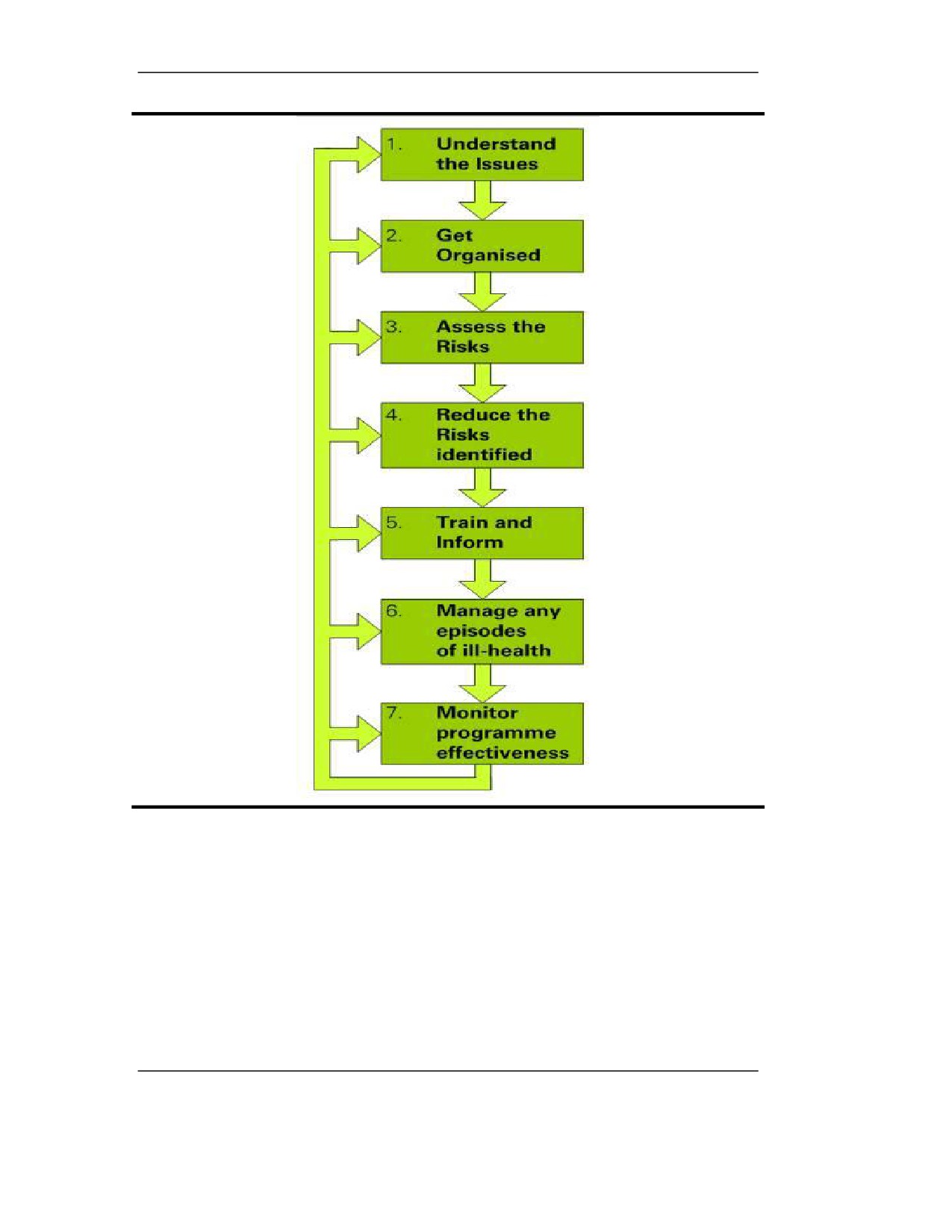
AzSPU Manual Handling Management Programme
Figure 1.
The Seven-stage approach in managing risks to health and safety associated
with Manual Handling use is advocated.
Control Tier:
<<2>>
Revision Date: <<16/07/10>>
Document Number: << AZSPU-HSSE-DOC-00081-2>
Print Date: 2/1/2011
PAPER COPIES ARE UNCONTROLLED. THIS COPY VALID ONLY AT THE TIME OF PRINTING. THE
CONTROLLED VERSION OF THIS DOCUMENT CAN BE FOUND AT
AzSPU Manual Handling Management Programme
4.0 Key Definitions
4.1 Manual Handling of Loads
Means the transporting or supporting of a load by hand or bodily force including;
The lifting
The putting down
The pushing
The pulling
The carrying
The moving
Manual handling of loads does not include via mechanical handling equipment
such as by conveyor or forklift truck.
The human effort may be applied directly to the load or indirectly by hauling on a
chain or pulling on a lever. Mechanical assistance may reduce but not eliminate
manual handling as human effort is invariably required to move, steady or
position the load(s).
It should be noted that the application of human effort for a purpose other than
transporting or supporting a load does not constitute a manual handling activity -
including;
Lifting a control lever on a machine
Pulling on a rope while lashing down a cargo on the back of a vehicle
Using hand tools
4.2 Injury and Load
Guidance on interpretation of the terms „injury‟ and „load‟ are as follows;
4.3 Injury
Injury resulting from the weight, shape, size, external state, rigidity or lack of
rigidity of a load or from the movements of its contents.
It does not include injury resulting from the condition or properties of a load.
External properties of a load which may affect grip or cause direct injury must be
considered e.g. roughness, sharp edges and temperature extremes.
4.4 Load
A discrete movable object including any item, person or animal
Control Tier:
<<2>>
Revision Date: <<16/07/10>>
Document Number: << AZSPU-HSSE-DOC-00081-2>
Print Date: 2/1/2011
PAPER COPIES ARE UNCONTROLLED. THIS COPY VALID ONLY AT THE TIME OF PRINTING. THE
CONTROLLED VERSION OF THIS DOCUMENT CAN BE FOUND AT
AzSPU Manual Handling Management Programme
5.0 Key Responsibilities
5.1 Employees Duties
Employees are required to;
Cooperate with their employer in making decisions
Observe safe systems of work
Use safety equipment correctly
Report defects in equipment or systems of work
Participate in training
Notify the employer of any physical condition which might affect their
ability to handle loads safely
Ensure that manual handling activity has been evaluated by MH assessor
prior to start the work
5.2 Line Managers/Supervisors shall:
Be responsible for the implementation of Manual Handling programme
Identify manual handling activities under their supervision
Ensure that an effective manual handling assessment is carried out and
potential risks to health arising from manual handling operations are
assessed
Ensure that appropriate corrective actions are taken to control the risks
identified
Ensure that the assessments are recorded (in writing or electronically)
and kept readily accessible
Conduct quarterly Manual Handling risk assessment review (see Section
11.1)
Ensure that Manual Handling assessment tools introduced are duly
implemented and used
Line managers may appoint a MHO assessor to undertake this work on their
behalf. When appointing MHO Assessor Line managers should ensure that
individuals have necessary competencies and adequate time to be able to
perform this task, i.e. consider individual‟s capabilities and their level of
training, knowledge and experience. Once a MHO assessor has been
appointed it remains the line manager‟s responsibility to support and promote
the manual handling program.
5.3 Manual Handling Operations Assessors (MHOA) shall:
Be responsible for ensuring that the requirements of the Manual handling
programme are successfully implemented on their respective sites.
Assessor‟s duties are summarized in Figure 2 below;
Control Tier:
<<2>>
Revision Date: <<16/07/10>>
Document Number: << AZSPU-HSSE-DOC-00081-2>
Print Date: 2/1/2011
PAPER COPIES ARE UNCONTROLLED. THIS COPY VALID ONLY AT THE TIME OF PRINTING. THE
CONTROLLED VERSION OF THIS DOCUMENT CAN BE FOUND AT
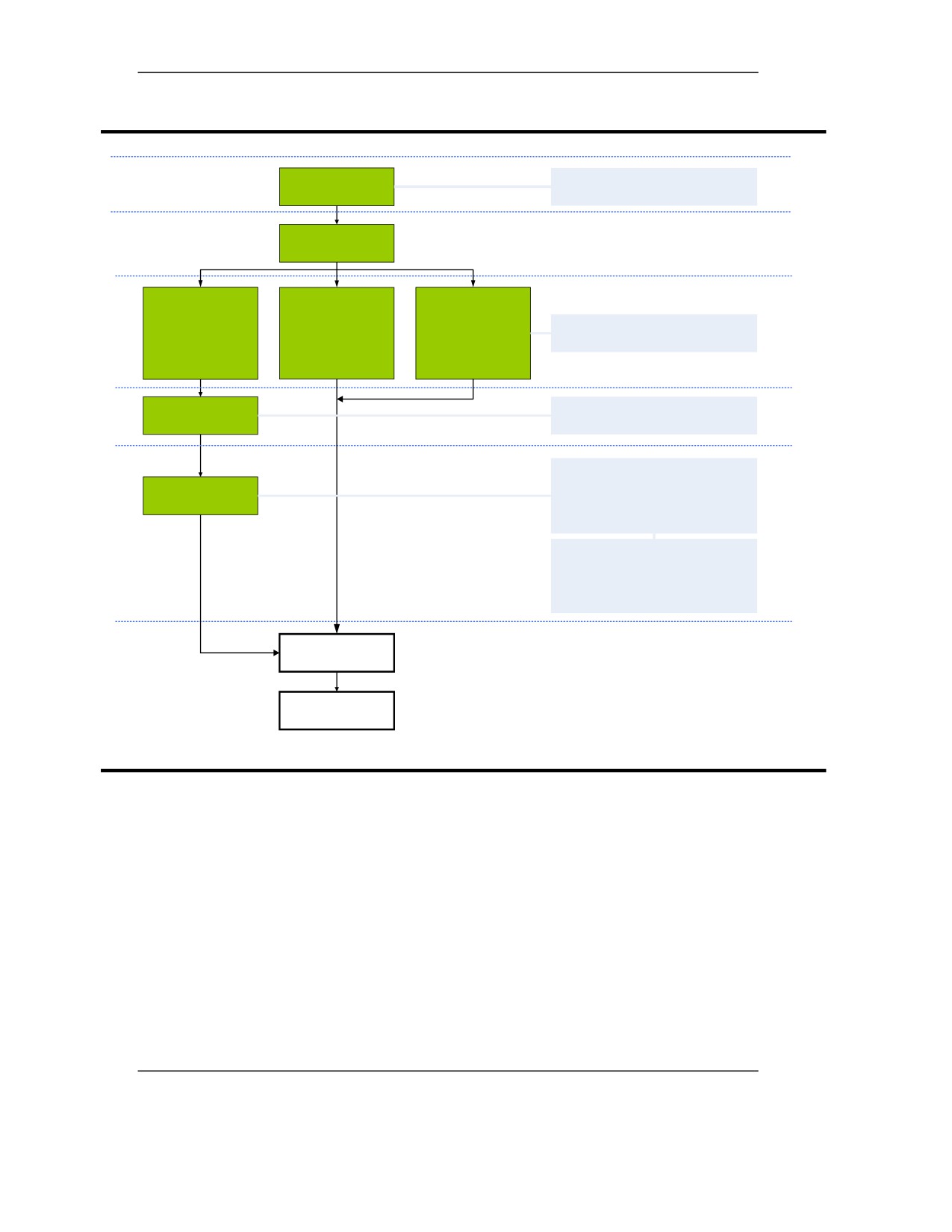
AzSPU Manual Handling Management Programme
Identify all manual handling activates undertaken within
Identify all Manual Handling
your area of responsibility and to complete an initial
Activities
appraisal of the risk of injury
Classify each individual
activity into one of three
categories
Category 3
Category 2
Category 1
Activities for which the
Activities which indicate a
Activities which involved a
No further action is required unless changes/
possibility of injury is
risk of injury but the
risk that can be classified as
circumstances occur that question the validity of the
indicated buy avoidance of
conclusion is that avoidance
minimal
conclusion
manual handling is not
of the activities is
reasonably practical
reasonably practicable
A detailed assessment is required for all those manual
Perform Detailed
handling activities that fall into Category 3 following the
Assessments
initial appraisal
Based on the responses to the questions from the
detailed assessment your observations, knowledge of
the work area and manual handling activities undertaken
Specify remedial measures
you are likely to be able to determine the measures
needed to reduce any risk of injury to an acceptable
level (guidance in Appendix….) Where this is not
feasible - seek assistance
All remedial measure identified as a result of the
detailed assessment should be recorded, together with
a target date and the details of the person to whom the
action has been assigned. The completed form should
not be allowed to pass its target date without
commitment or rescheduling.
End of Exercise
Review
Figure 2.
Manual Handling Assessor‟s Duties
5.4
Health Manager or designee shall
Periodically review and update this document
Ensure that the Manual Handling program is implemented effectively,
monitored and reviewed at regular intervals
Appoint Manual Handling Coordinator
Control Tier:
<<2>>
Revision Date: <<16/07/10>>
Document Number: << AZSPU-HSSE-DOC-00081-2>
Print Date: 2/1/2011
PAPER COPIES ARE UNCONTROLLED. THIS COPY VALID ONLY AT THE TIME OF PRINTING. THE
CONTROLLED VERSION OF THIS DOCUMENT CAN BE FOUND AT
AzSPU Manual Handling Management Programme
5.5
Manual Handling Coordinator/ Industrial Hygiene Advisor shall
Be responsible for ensuring that the requirements of the Manual Handling
program are successfully implemented in Az BU
Be responsible for the provision of both initial and refresher training for
Manual Handling Operations Assessors
Provide up-to-date technical and professional advice
Assist in carrying out manual handling assessments if required
Assist in management of concerns and problems arising
Advise on and assist with purchase of mechanical aids required
6.0
Procedure
6.1
Assess the risks
6.2
Avoidance of Manual Handling
Any manual handling activity which involved a risk of injury should be avoided
so far as is reasonably practical. Consequently - the first question to ask is
whether the activity can be eliminated. If not, consider whether the activity
can be automated or mechanized.
6.3
Appraisal of Manual Handling Activities
There is a requirement for an initial appraisal for all manual handling
activities. Any job, activity or team effort which involves one of more of the
activities listed below should be appraised.
Lifting
Lowering
Carrying
Pushing
Pulling
Dropping
Throwing
The initial appraisal should highlight the activities and necessary remedial
actions in response to:
What is the risk of injury?
What can be eliminated from the activity?
What can be automated?
What can be mechanized?
All other manual handling activities need to be assessed subsequently in
more detail to identify remedial measures. Where the risk can be avoided by
elimination, automation or mechanization the remedial measures should be
Control Tier:
<<2>>
Revision Date: <<16/07/10>>
Document Number: << AZSPU-HSSE-DOC-00081-2>
Print Date: 2/1/2011
PAPER COPIES ARE UNCONTROLLED. THIS COPY VALID ONLY AT THE TIME OF PRINTING. THE
CONTROLLED VERSION OF THIS DOCUMENT CAN BE FOUND AT
AzSPU Manual Handling Management Programme
specified
(RAT Tool, Appendix 1) and progress on their implementation
recorded.
6.4 Manual Handling Risk Assessment
Manual Handling shall be assessed to ensure that the precautions which
need to be taken are related to the risks created by the work. Manual
Handling risk assessment should follow an ergonomic approach to ensure
tasks are designed to suite individuals‟ capabilities and limitations.
A meaningful assessment can only be based on a thorough practical
understanding of:
The type of manual handling activity undertaken
The loads to be handled
The working environment in which the activities are carries out
The capability of the individuals performing the activities
Line managers are best placed to know about the manual handling activities
conducted within their areas of responsibility. They should be assisted as
necessary by Manual Handling Assessors and IH specialists if required.
6.5 Numerical Guidelines
Numerical guidelines to assist in making the initial judgment are given below.
The following figures set out an approximate weight and force limit within which
manual handling activities are unlikely to create a risk of injury sufficient to
warrant a more detailed assessment.
The guideline figures give protection to nearly all mean and 50-70% of women.
Where differential guidelines are not given between the sexes to provide the
same degree of protection fro women the figures should be reduced by one
third.
6.6 Lifting and Lowering
Guideline information is given in Figure 3. Indicated values shall be applied
with absolute caution in addition to the following assumptions;
The load is readily grasped with both hands
The activity takes place in reasonable working conditions
The operator is in a stable position
Control Tier:
<<2>>
Revision Date: <<16/07/10>>
Document Number: << AZSPU-HSSE-DOC-00081-2>
Print Date: 2/1/2011
PAPER COPIES ARE UNCONTROLLED. THIS COPY VALID ONLY AT THE TIME OF PRINTING. THE
CONTROLLED VERSION OF THIS DOCUMENT CAN BE FOUND AT

AzSPU Manual Handling Management Programme
Figure 3.
Guideline Figures for Lifting and Lowering
Account is taken of both the weight of the load and its horizontal and vertical
position during the operation. If the hands pass through more than one box
zone during the activity the lower weight figure would be used.
6.7 Twisting or Frequent Lifting / Lowering
The guideline figures illustrated in figure 3 should be reduced if the task
involves any twisting or frequent lifting / lowering. Where the activity involves
these tasks the following guidance should be followed;
6.7.1 Twisting
The guideline figures for lifting and lowering should be reduced by 10%
where the operator twists through 45° and about 20% when the operator
twists through 90° as illustrated in Figure 4.
Control Tier:
<<2>>
Revision Date: <<16/07/10>>
Document Number: << AZSPU-HSSE-DOC-00081-2>
Print Date: 2/1/2011
PAPER COPIES ARE UNCONTROLLED. THIS COPY VALID ONLY AT THE TIME OF PRINTING. THE
CONTROLLED VERSION OF THIS DOCUMENT CAN BE FOUND AT

AzSPU Manual Handling Management Programme
Figure 4.
Assessing Twists
6.7.2 Frequent Lifting / Lowering
Effects of frequency on the maximum acceptable weight of lift can be more
significant than box size effects. The guideline figures are for relatively
infrequent activities - up to approximately 30 per hour. For activities which
do not fall under this bracket follow the guidance in Table 1.
Frequency of activity per minute
Reduction level
Reduce guideline figure by
30%
Activity repeated 1 - 2 times per minute
e.g. 10 kg becomes 7 kg
or 22 lb becomes 15.4 lb
Reduce guideline figure by
Activity repeated 5 - 8 times per minute
50%
e.g. 10 kg becomes 5 kg
Control Tier:
<<2>>
Revision Date: <<16/07/10>>
Document Number: << AZSPU-HSSE-DOC-00081-2>
Print Date: 2/1/2011
PAPER COPIES ARE UNCONTROLLED. THIS COPY VALID ONLY AT THE TIME OF PRINTING. THE
CONTROLLED VERSION OF THIS DOCUMENT CAN BE FOUND AT
AzSPU Manual Handling Management Programme
or 22 lb becomes 11 lb
Reduce guideline figure by
Activity repeated more than 12 times per
80%
minute
e.g. 10 kg becomes 2 kg
or 22 lb becomes 4.4 lb
Table 1.
Frequency reduction levels
6.7.3 Guidelines for Carrying
Use the guideline information illustrated in Figure 3 though carrying should
not normally be undertaken with the hands below knuckle height. The
guidance assumes that;
The load is held against the body
The load is not carried further than 10 meters without resting
6.7.4 Guidance for Pushing and Pulling
It is widely accepted pushing a load is easier than pulling it. For pushing and
pulling operations (including loads which are slid, roller or supported on
wheels) the guideline figures assume the force is applied with the hands,
between knuckle and shoulder height. It is assumed that the distance
moved is no more than 20 meters over which the load is pushed as well as
adequate opportunities for rest and recovery
Guidance figures for pushing or pulling a load is illustrated in Table 2.
Men
Women
Guideline figure for
20 kg / 44 lb
15 kg / 33 lb
stopping or starting the
(approx. 200 newtons)
(approx. 150 newtons)
load
Guideline for keeping
10 kg / 22 lb
7 kg / 15.4 lb
the load in motion
(approx. 100 newtons)
(approx 70 newtons)
Table 2.
Guideline pushing and pulling figures
Moving an object over soft or uneven surface requires higher forces. On an
uneven surface the force needed to start the load moving could increase by
10% of the load weight.
Control Tier:
<<2>>
Revision Date: <<16/07/10>>
Document Number: << AZSPU-HSSE-DOC-00081-2>
Print Date: 2/1/2011
PAPER COPIES ARE UNCONTROLLED. THIS COPY VALID ONLY AT THE TIME OF PRINTING. THE
CONTROLLED VERSION OF THIS DOCUMENT CAN BE FOUND AT
AzSPU Manual Handling Management Programme
6.7.5 Guidance for Handling whilst Seated
The guidelines figures for handling operations whilst seated are illustrated in
Figure 5.
Control Tier:
<<2>>
Revision Date: <<16/07/10>>
Document Number: << AZSPU-HSSE-DOC-00081-2>
Print Date: 2/1/2011
PAPER COPIES ARE UNCONTROLLED. THIS COPY VALID ONLY AT THE TIME OF PRINTING. THE
CONTROLLED VERSION OF THIS DOCUMENT CAN BE FOUND AT