Military reference books and manuals (2009-2023, Volume 2) - page 37
10 September 2009 FM 3-07.10 / MCRP 3-33.8A / NTTP 3-07.5 / AFTTP 3-2.76
27
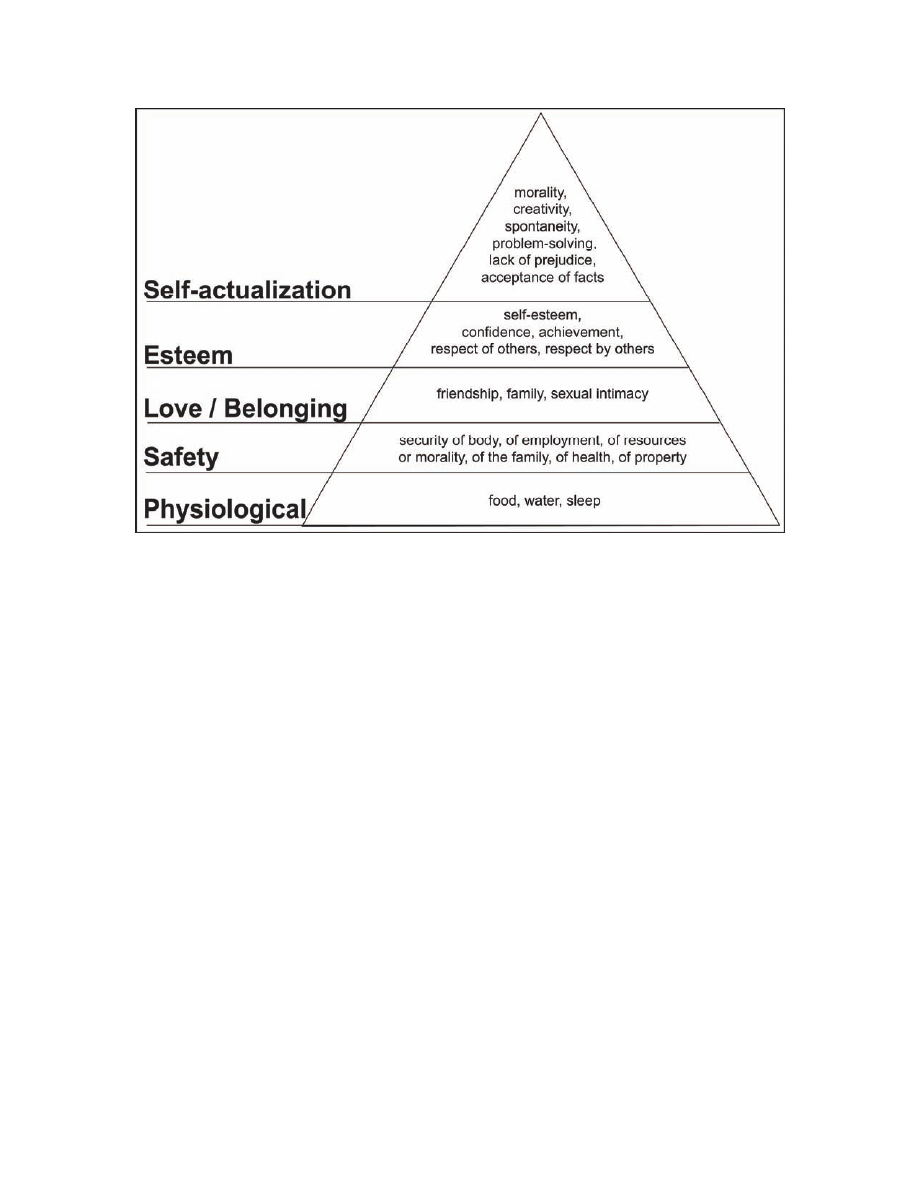
Figure 6. Maslow’s Hierarchy of Needs
(b) Maslow's Hierarchy of Needs is represented as a pyramid with the more
basic needs at the bottom. The basic needs of an individual must be met first
and are essential for life and health. The higher needs only become important
when the lower needs have been satisfied. Once an individual has moved
upwards to the next level, the needs in the lower level will no longer be
prioritized. However, if a lower set of needs is no longer being met, the individual
will temporarily re-prioritize those needs by focusing attention on the unfulfilled
needs. The needs are described as:
•
Physiological Needs. Physiological needs of the organism take first
precedence. These consist mainly of: eating, drinking, sleeping, and
shelter. If some needs are not fulfilled, a human's physiological needs take
the highest priority. Physiological needs can control thoughts and
behaviors, and can cause people to feel sickness, pain, and discomfort.
•
Safety Needs. When physiological needs are met, the need for safety will
emerge. When one stage is fulfilled, a person naturally moves to the next.
These include: personal, and family, security from violence, security against
unemployment, health and well-being, safety against accidents/illness.
•
Social Needs/Love/Belonging. After physiological and safety needs are
fulfilled, the third layer of human needs is social. This psychological aspect
involves emotionally-based relationships in general, such as: friendship,
intimacy, and having a supportive and communicative family. Humans need
to feel a sense of belonging and acceptance, whether it comes from a large
social group (such as clubs, work culture, religious groups, professional
organizations, sports teams, gangs) or small social connections (family