Guidelines for Using the IUCN Red List Categories and Criteria Version 15.1 (July 2022) - page 2
Red List Guidelines
30
where the summations are from age (x) 0 to the last age of reproduction; mx is (proportional
to) the fecundity at age x; and lx is survivorship up to age x
(i.e., lx = S0 · S1 ··· Sx-1 where S is annual survival rate, and l0 =1 by definition). This formula
is implemented in an associated spreadsheet file (see below). To use this formula, follow
the instructions in the file, noting the exact definitions of the parameters required.
2.
1/adult mortality + age of first reproduction. This approximation is useful if annual
mortality after the age of first reproduction is well known, and if mortality and fecundity
do not change with age after the age of first reproduction (i.e., there is no senescence).
Many species exhibit senescence, with mortality increasing and fecundity decreasing with
age; for these species, this formula will overestimate generation length (in such cases, use
the spreadsheet mentioned above). For age of first reproduction, use the age at which
individuals first produce offspring in the wild (which may be later than when they are
biologically capable of reproducing), averaged over all reproducing individuals. If first
reproduction (production of offspring) typically occurs by 12 months, use 0, not 1; if it
occurs between 12 and 24 months, use 1, etc. (See below for further discussion on
definition of "age").
3.
Age of first reproduction + [ z * (length of the reproductive period) ], where z is a number
between 0 and 1; z is usually <0.5, depending on survivorship and the relative fecundity
of young vs. old individuals in the population. For example, for mammals, two studies
estimated z= 0.29 and z=0.284 (Pacifici et al. 2013, Keith et al. 2015). For age of first
reproduction, see (2) above. This approximation is useful when ages of first and last
reproduction are the only available data, but finding the correct value of z may be tricky.
In general, for a given length of reproductive period, z is lower for higher mortality during
reproductive years and it is higher for relative fecundity skewed towards older age classes.
To see how generation length is affected by deviation from these assumptions, you can use
the spreadsheet mentioned above. Note that the length of the reproductive period depends
on longevity in the wild, which is not a well-defined demographic parameter because its
estimate often depends very sensitively on sample size.
4.
Generation length (as well as age of first reproduction for (2) and (3) above) should be
calculated over all reproducing individuals. If the estimate of generation length differs
between males and females it should be calculated as a weighted average, with the
weighting equal to the relative frequency of reproducing individuals of the two sexes.
However, if the two sexes are impacted differentially by some threat, this should be taken
into account and pre-disturbance generation length should be used for both sexes before
calculating the weighted average (see below for further discussion on pre-disturbance
generation length).
5.
For partially clonal taxa, generation length should be averaged over asexually and sexually
reproducing individuals in the population, weighted according to their relative frequency.
6.
For plants with seed banks, use juvenile period + either the half-life of seeds in the seed
bank or the median time to germination, whichever is known more precisely. Seed bank
half-lives commonly range between <1 and 10 years. If using the spreadsheet for such
species, enter seed bank as one or several separate age classes, depending on the mean
residence time in the seed bank.
The formula given in option 1 is implemented in the workbook (spreadsheet)
file
Generation_Length_Workbook.xls, which is available at
https://www.iucnredlist.org/resources/generation-length-calculator.
This
Red List Guidelines
31
workbook is also useful for exploring the effects of various assumptions in
options 2 and 3 on the calculated generation length.
The correct use of the methods described above requires that "age" is defined in a specific way.
The definition affects, for instance, the age of first reproduction for equations in (2) and (3) above,
as well as fecundity (F) as a function of age for the equation in (1) and in the spreadsheet. For
purposes of these methods, an individual is zero-years old until its first birthday. For species with
a distinct reproductive season (e.g., many species in temperate regions), F(0) is the number of
offspring produced per individual in the reproductive season that is after the one in which the
individual was born, regardless of how age is reckoned. In general (including other types of life
histories, such as species with no specific, or a much longer, "reproductive season"), F(0) is the
number of offspring produced per individual in its first 12 months. If an alternate definition is
used, the formulae need to be modified to reflect the definition. For example, if age is defined
such that age of first reproduction is 1 (not zero) when the first reproduction occurs by 12 months,
then the formula in (2) should be "1/adult mortality + age of first reproduction - 1" (see Bird et
al. 2020 for an example of the application of this formulation).
Options 2 and 3 are still appropriate if the interbirth interval is more than one year; a more precise
calculation can be made in this case by using the spreadsheet (see above), and for each age class
averaging fecundity over all individuals (or females) in that age class (regardless of whether they
actually reproduced at that age). The turnover rate mentioned in the definition is not directly
related to the interbirth interval; it reflects the average time it takes one group of reproducing
individuals to be replaced by its progeny.
It is not necessary to calculate an average or typical generation length if some subpopulations of
the taxon differ in terms of generation length. Instead, use each subpopulation's generation length
to calculate the reduction over the appropriate number of generations, and then calculate the
overall population reduction (for criterion A) or overall estimated continuing decline (for criterion
C1) using a weighted average of the reductions calculated for each subpopulation, where the
weight is the size of the subpopulation three generations ago (see detailed explanation and
examples in section 4.5.3).
The reason IUCN (2001, 2012b) requires using "pre-disturbance" generation length for exploited
populations is to avoid a shifting baseline effect. This would arise because using current, shorter
generation length (under disturbance, such as harvest) may result in a lower threat category
(because a shorter period is used to calculate the reduction), which may lead to further harvest.
Thus, using generation length under harvest would represent a case of shifting baseline based on
a change caused by human impacts. Harvest mortality shifts the age structure and the survival
rates, and in some cases (e.g., some terrestrial mammals) harvest of older individuals allows
younger individuals, whose reproduction had been suppressed by the older individuals, to
reproduce. In addition, in many cases, the reduction in generation length is a demographic
response (rather than a genetic response) resulting from overexploitation; this may result in
reduced bet-hedging (risk-spreading) capacity and a lower, more variable population growth rate,
which then increases the probability of extinction. Even in cases where the response has a genetic
basis, it represents an artificial selection that would still lead to the shifting baseline described
above.
Red List Guidelines
32
4.5 Reduction (criterion A)
“A reduction is a decline in the number of mature individuals of at least the amount (%) stated
under the criterion over the time period (years) specified, although the decline need not be
continuing. A reduction should not be interpreted as part of a fluctuation unless there is good
evidence for this. The downward phase of a fluctuation will not normally count as a reduction.”
(IUCN 2001, 2012b)
In the subsections below, various approaches to calculating population reduction are discussed,
including statistical methods (4.5.1) and population models (4.5.2). Main issues involved in
calculating population reduction using statistical methods include the patterns of decline, and the
methods of extrapolation based on these patterns. Finally, methods for combining information
from multiple regions or subpopulations to calculate the reduction for the taxon are discussed
(4.5.3). The methods discussed in these sections also apply to calculating estimated continuing
decline (4.6), except that the time period for calculating estimated continuing decline depends on
the category (e.g., for CR, the longer of 1 generation or 3 years).
Many of the calculations discussed in the sections below are implemented in the
workbook (spreadsheet) file CriterionA_Workbook.xls, which is available at
in the file.
4.5.1 Calculating population reduction using statistical methods
Statistical models can be used to extrapolate population trends so that a reduction of three
generations can be calculated. The model to be fitted should be based on the pattern of decline
(which may be exponential, linear, accelerated, or a more complex pattern), which may be inferred
from the type of threat. The assumed pattern of decline can make an important difference.
Assessors should indicate the basis on which they have decided the form of the decline function.
The best information about the processes that contribute to changes in population size should be
used to decide what form of decline function to apply over the three-generation period.
Specifically, if a model is fitted, the assumptions of the model must be justified by characteristics
of life history, habitat biology, pattern of exploitation or other threatening processes, etc. For
example:
(1) If a taxon is threatened by exploitation, and the hunting mortality
(proportion of
individuals taken) does not change as the population size declines, then the population is
likely to be declining exponentially, and this model should be fitted.
(2) A linear model is appropriate when the number of individuals removed from the
population on an annual basis (rather than their proportion to the total population) remains
the same as the population changes. For example, if a taxon is threatened with habitat loss,
and a similar sized area of habitat is lost every year, this could lead to a linear decline in
the number of individuals.
(3) A model with an accelerating decline rate is appropriate if the threat processes have
increased in severity over time and these are affecting the population in an increasingly
severe manner.
(4) No model need be fitted in cases where there are only two estimates of population size (at
the start and end of the time period specified in the criteria) - the reduction can be
calculated from these two points.
The population data from which a reduction can be calculated are likely to be variable, and it may
not be obvious how a reduction should best be calculated. Depending on the shape of the data, a

Red List Guidelines
33
linear or exponential model may be fitted (see section 4.5.2), and the start and end points of the
fitted line used to calculate the reduction. Fitting a model in this way helps to eliminate some of
the variability in the data that may be attributable to natural fluctuations, which should not be
included. Fitting a time series longer than three generations or 10 years (as applicable) may give
a more representative estimate of the long-term population reduction, especially if populations
fluctuate widely, or oscillate with periods longer than the generation time (Porszt et al. 2012).
However, regardless of the length of the time series fitted, the reduction should be calculated for
the most recent three generations or 10 years, as applicable (Akçakaya et al. 2021). Figure 4.1
shows an example where the three-generation period is from 1920 to 2000, but data are available
from 1900. The relationship between the number of mature individuals and time is based on all
the data (dashed line) but the reduction is calculated over years 1920 to 2000.
Figure 4.1. Example of using data for more than three generations (1900 to 2000) to estimate a reduction
over the period 1920 to 2000.
Here, we briefly discuss various assumptions, and where they might be applicable. Consider a
species with a 20-year generation time, and suppose population size was estimated as 20,000 in
1961 and 14,000 in 1981 (these are shown as square markers in the graphs below). To calculate
past reduction, we need to extrapolate back in time to 1941 and forward to 2001.
The simplest assumptions are those that involve no change in early or late years. For example, if
it is assumed that decline did not start until the early 1960s, the reduction can be based on the
initial population of 20,000. If it can be assumed that the decline stopped before 1981, then 14,000
can be used as the current population size (Figure 4.2a), resulting in a 30% reduction (1-
(14,000/20,000)). However, it is necessary to make an assumption about the pattern of decline if
some decline is suspected to have occurred outside this period. The documentation should include
a rationale for the assumed pattern of decline.
Exponential decline
Exponential decline can be assumed in cases where the proportional rate of decline of the
population is believed to be constant. For example, an exponential decline can be assumed if the
taxon is threatened by exploitation, and the hunting mortality (proportion of individuals taken)
does not change as the population size declines. For the case where there are estimates of
population size, the reduction is calculated using the equations:

Red List Guidelines
34
Reduction = 1 - (Observed Change)(3Generations /Observed Period)
where “Observed Change” is the ratio of the second population size to the first population size (in
this case N(1981)/N(1961)), and “Observed Period” is the number of years between the first and
last observation years. For example, in Figure 4.2b, the Observed Change is 14,000/20,000 and
the Observed Period is 20 years. Thus, the 60-year reduction is 65.7% [=1-(14,000/20,000)(60/20)].
The annual rate of change is calculated as:
Annual Change = (Observed Change)(1/Observed Period)
For this case, the annual rate of change is 0.9823, which suggests about 1.8% annual rate of
decline. The population size three generations ago can be estimated as
28,571
[=20,000/0.9823^20], and the current population as 9,800 [=14,000*0.9823^20] (Figure 4.2b).
The worksheet “Exponential decline” in the spreadsheet CriterionA_Workbook.xls mentioned
above can be used to calculate reductions.
Figure 4.2. Examples of calculating past population reduction, for an assessment made in 2001 of a
species with a generation length of 20 years. Population size was estimated as 20,000 in 1961 and 14,000
in
1981; extrapolations were made because past reduction is to be calculated over the last three
generations, from 1941 to 2001. Calculations assume: (a) no change from 1941 to 1961 and from 1981 to
2001, (b) exponential change between 1941 and 2001, (c) linear decline between 1941 and 2001, and (d)
accelerated decline from 1941 to 2001.
Red List Guidelines
35
Linear decline
In some cases, the number of individuals removed from the population (rather than their
proportion to the total population) may remain constant. For example, if a species is threatened
with habitat loss, and a similar sized area of habitat is lost every year, this could lead to a linear
decline in the number of individuals. Note that this means that the rate of decline is increasing
every year, because the same amount of habitat is lost out of a decreasing amount of remaining
habitat. So, we cannot calculate a single rate of decline (as a percentage or proportion of
population size), as we did in the exponential case. Instead, we can calculate annual reduction in
units of the number of individuals:
Annual Reduction in N= (First N - Second N)/(Observed Period)
where "First N" is the population size observed at the start of the observed period, and "Second
N" is the population size observed at the end. For the example, the annual reduction is 300
individuals ((20,000-14,000)/20). Now, we need to calculate the population sizes at the start and
end of the 3-generation period. To do this, we first calculate:
Abundance1 = First N + (Annual Reduction * Period1)
Abundance2 = larger of zero or: Second N - (Annual Reduction * Period2)
where Abundance1 is the calculated population size at the start of the 3-generation period and
Abundance2 is the calculated population size at the end of the 3-generation period. Abundance1
and Abundance2 are calculated from the calculated annual reduction in mature numbers, the two
population sizes and the number of years between when the population sizes were obtained.
Period1 is the difference in the number of years between the start of the 3-generation period and
the year for which the first population size observation is available (1941 and 1961 for the
example) and Period2 is the difference in the number of years between the end of the 3-generation
period and the year for which the second population size observation is available (1981 and 2001
for the example). Finally, we calculate the 3-generation proportional (percentage) reduction as
follows:
Reduction = (Abundance1 - Abundance2) / Abundance1
For the example, the annual reduction is 300 individuals per year so the number of individuals in
1941 and 2001 would be 26,000 [20,000+(300*20)] and 8,000 [14,000-(300*20)] respectively
(triangle markers in Figure 4.2c), giving a 3-generation reduction of about 69.2%. In this case,
the rate of decline is only 23% for the 1st generation, but increases to 43% for the 3rd generation.
The worksheet “Linear decline” in the spreadsheet CriterionA_Workbook.xls mentioned above
can be used to calculate reductions.
Accelerated decline
Although a linear decline in the number of individuals means that the rate of decline is increasing,
this increase can be even faster, leading to an accelerated decline in the number of individuals.
This may happen when the exploitation level increases, for example when the number of
individuals killed is larger every year because of increasing human population, or improving
harvest efficiency.
To extrapolate under an assumption of accelerated decline, it is necessary to know or guess how
the rate of decline has changed. For instance, in the above example, the observed 1-generation
decline (from 1961 to 1981) is 30%. One assumption might be that the rate of decline doubled in
each generation, from 15% in the 1st generation to 30% in the 2nd and 60% in the 3rd. This

Red List Guidelines
36
assumption would lead to population size estimates of 23,529 for 1941 (20,000/(1-0.15)) and
5,600 for 2001 (14,000*(1-0.6)), giving a 3-generation past reduction of about 76% (Figure 4.2d).
Of course, different assumptions about how the rates of decline may have changed in the past will
give different results.
The same approach can be used to make the calculation based on an assumption of decelerating
decline.
Complex patterns of decline
It is possible to assume different patterns of decline for different periods. For example, decline
can be assumed to be zero until the first observation, and then exponential. This would give a
population of 20,000 for 1941 and 9,800 for 2001, giving a three-generation past reduction of
about 51%.
The examples in Figure 4.2 were based on two values for the number of individuals. When
multiple estimates of population size are available the data need to be smoothed, using for example
regression (Figure 4.1). When applying regression, it is important to check that the fitted line goes
through the data well. For example, Figure 4.3 shows a case where a linear model is not an
adequate fit to the data. In this case a past reduction could be calculated as the ratio of the average
population size for the last 8 years (10,329) to that for the years before overexploitation occurred
(19,885). The reduction would be 48% (1-(10,329/19,885)).
Figure 4.3. An example of calculating past reduction for a population that is initially stable but then subject
to overexploitation followed by recovery. Reduction is based on the average population sizes of the last
few years and the years before overexploitation occurred.
Calculating reductions by the ratio of the average population size at the start of the 3-generation
period to the average population size at the end of the 3-generation period is appropriate when
there is evidence for change in trend (e.g., due to changes in threatening processes). In contrast,
regression (linear or exponential) should be used to calculate reductions if there is no such
evidence or the population size estimates are very imprecise.
Red List Guidelines
37
Finally, when there is no basis for deciding among various patterns of decline, the rate of decline
can be specified as an uncertain number, based on the declines predicted by the different patterns.
For example, in the set of four examples in Figure 4.2 above, the rate of decline can be expressed
as the interval 66%-69%, if both exponential and linear patterns of decline are considered
plausible, or as the interval 30%-76%, if all four possibilities discussed are considered plausible.
4.5.2 Calculating population reduction using population models
Past and future population reduction can be calculated using population models, provided that: (i)
the model meets the requirements outlined in section 9 ("Guidelines for Applying Criterion E"),
(ii) the effects of future levels of threat are included in the population model, represented as
changes in model parameters, and (iii) the model outputs are not inconsistent with expected
changes in any estimated or inferred current or recent rates of decline. When using a population
model to project a reduction under criterion A3, the median or mean of the projections for a range
of plausible scenarios should be used to calculate a best estimate of the magnitude of the projected
reduction. Assessments may be based on the best estimate, lower or upper bound but, for reasons
of transparency, assessors must justify the rationale for their choice if a value other than the best
estimate is used. The projected variability may be used to quantify uncertainty. For example,
upper and lower quartiles of the projected magnitude of the future reduction (i.e., reductions with
25% and 75% probability) may be considered to represent a plausible range of projected reduction,
and used to incorporate uncertainty in the assessment, as described in sections 3.2 and 4.5.3. The
bounds on the plausible range should incorporate uncertainty about the model used for projection,
as well as measurement error; or a justification of the model structure, and why it is the most
appropriate in the face of model uncertainty, should be provided.
4.5.3 Taxa with widely distributed or multiple subpopulations
This section addresses the issues related to the presentation and use of information from
subpopulations (or from parts of the range) of a widely distributed taxon, in assessing the taxon
against criterion A. For such taxa, it is recommended that the available data on past reduction be
presented in a table that lists all known subpopulations (or parts of the range), and gives at least
two of the following three values for each subpopulation:
1. the estimated population size at a point in time close to three generations ago1, and the year
of this estimate;
2. the most recent estimated population size and its year; and
3. estimated, suspected or inferred reduction (in %) over the last three generations.
If there are estimates of abundance for years other than those reported in (1) or (2), these should
also be reported in separate columns of the same table. Any qualitative information about past
trends for each subpopulation should be summarized in a separate column, as well as quantities
calculated based on the presented data (see examples below). Population sizes and reductions
should be estimated separately for each subpopulation using the methods described above, taking
into account that different subpopulations may exhibit different patterns of decline.
There are three important requirements:
(a) The values should be based on estimates or indices of the number of mature individuals.
If the values are based on indices, a note should be included that explains how the index
1 The criteria are defined in terms of the maximum of 10 years or three generations. However, for clarity of
presentation, reference is only made in this section to “three generations”.

Red List Guidelines
38
values are expected to relate to the number of mature individuals, and what assumptions
are necessary for this relationship to hold.
(b) The subpopulations should be non-overlapping. This does not mean that there is no or
infrequent dispersal among subpopulations. The point of this requirement is to avoid
double-counting as much as possible.
(c) Together, the subpopulations should include all of the taxon. If this is not possible, a
“subpopulation” named Remainder should include an estimate of the total number of
mature individuals not included in the listed subpopulations. This estimate, like others, can
be uncertain (see below).
If these requirements cannot be met, the taxon cannot be assessed under criterion A.
In this section, we refer to subpopulations, but the discussion applies to any type of non-
overlapping subunits of the taxon, such as parts of the taxon’s range. In the next subsection on
Estimating overall reduction, we discuss the basic methods of using the data table outlined above
for assessing a taxon under criterion A. In many cases, there will be uncertainty, because the
population sizes are not known precisely, are in different units for different subpopulations, or are
available only from one or few subpopulations. These cases will be discussed later, in a subsection
on Dealing with uncertainty.
4.5.4 Estimating overall reduction
To assess a taxon against criterion A, it is necessary to estimate the overall reduction over three
generations or 10 years. All available data should be used to calculate a reduction as an average
over all subpopulations, weighted by the estimated size of each subpopulation at the beginning of
the period. Inferences regarding reductions should not be based on information for any single
subpopulation (whether it is the fastest declining, most stable, largest or smallest)2.
The recommended methods for estimating reduction are explained below by a series of examples.
All examples are for calculating past reduction for a taxon with a generation length of 20 years,
assessed in 2001 (i.e., for these examples, the “present” is 2001 and "three generations ago" is
1941). All examples of this section are based on data with the same units for all subpopulations;
the issue of different units is discussed in the next subsection (Dealing with uncertainty).
The worksheet “Multiple populations” in the spreadsheet CriterionA_Workbook.xls (mentioned
at the start of section 4.5) can be used to calculate reductions using data from multiple populations.
Example 1: Estimates are available for past (three generations ago) and current population sizes.
Subpopulation
Past
Present
Pacific Ocean
10,000 (1941)
5,000 (2001)
Atlantic Ocean
8,000 (1941)
9,000 (2001)
Indian Ocean
12,000 (1941)
2,000 (2001)
Overall
30,000 (1941)
16,000 (2001)
In this (simplest) case, all past population sizes are added up (30,000) and all present population
sizes are added up (16,000), giving an overall reduction of 46.7% [(30-16)/30]. Note that the
changes in individual subpopulations are 50% reduction, 12.5% increase and 83.3% reduction.
An average of these numbers, weighted by the initial population sizes, gives the same answer
[(-
0.5*10+0.125*8-0.833*12)/30].
2 However, see “Dealing with uncertainty” below for a discussion of exceptions to this rule.

Red List Guidelines
39
Example 2: Estimates are available for various past population sizes.
Subpopulation
Past
Present
Notes
Pacific Ocean
10,000 (1930s)
7,000 (1995)
most of the decline in the last 20 yr
Atlantic Ocean
8,000 (1975)
believed to have been stable
Indian Ocean
10,000 (1961)
4,000 (1981)
In this case, the “past” and “present” population estimates are not from the same year for all
subpopulations. Thus, it is necessary to calculate reduction for each subpopulation in the same
time period. For example it is necessary to project the population from the “past” census (in the
1930s) to 1941 (three generations ago) as well as from the most recent census (in 1995) to the
present.
These calculations depend on the pattern of decline (see section 4.5.1). Any information about
past trends can be valuable in making such projections (as in the “Notes” in the example). For
instance, given that most of the decline in the "Pacific Ocean" subpopulation has occurred in recent
years, the estimate in the 1930s can be assumed to also represent the population in 1941 (three
generations ago). However, in this case, it is necessary to make a projection from the most recent
estimate (in 1995) to 2001. If the estimated decline from 10,000 to 7,000 occurred in 20 years,
then assuming a constant rate of decline during this period, annual rate of decline can be calculated
as 1.77% [1-(7,000/10,000)(1/20)], giving a projected reduction of about 10.1% in the six years
from the last census
(in
1995) to
2001, and a projected
2001 population of
6,290
(=7,000*(7,000/10,000)(6/20)). This means a three-generation reduction of 37% (10,000 to 6,290).
When there is no evidence that the rate of decline is changing, exponential decline can be assumed.
For example, for the “Indian Ocean” subpopulation, the 20-year reduction from 1961 to 1981 is
60% per generation; corresponding to 4.48% per year [-0.0448=(4,000/10,000)(1/20)-1]. Thus,
three-generation decline can be estimated as 93.6% [-0.936=(4,000/10,000)(60/20)-1].
The “Atlantic Ocean” subpopulation has been stable, so a reduction of 0% is assumed. Combining
the three estimates, the weighted average of reduction for the taxon is estimated as 63% [(-
0.37*10+0*8-0.936*25)/43]. Note that it is incorrect to calculate a simple (unweighted) average
of the 3-generation reduction amounts of the different subpopulations. As mentioned above,
reductions of the different subpopulations must be weighted by their initial population sizes (i.e.,
for A1 and A2, the population size 3 generations ago).
When such calculations are used in estimating the overall reduction, the calculated reductions and
calculated subpopulation sizes should be given in different columns of the table than those that
are used for the data (see completed table below).
Subpop.
Past
Present
Notes
Population
Current
Estimated
3-
3 gen. ago
population
generation
(calc*.)
(calc*.)
reduction
Pacific
10,000
7,000
Most of the decline
10,000
6,290
37.1%
Ocean
(1930s)
(1995)
in the last 20yr
Atlantic
8,000
Believed to have
8,000
8,000
0%
Ocean
(1975)
been stable
Indian
10,000
4,000
25,000
1,600
93.6%
Ocean
(1961)
(1981)
Overall
43,000
15,890
63.0%
*calc: calculated based on information in the previous columns

Red List Guidelines
40
Example 3: Estimates are available for various past population sizes for some subpopulations
only.
Subpopulation
Past
Present
Reduction
Notes
Pacific Ocean
unknown
5,000 (1990)
50%
suspected reduction over 3 generations
Atlantic Ocean
8,000 (1955)
9,000 (1998)
Indian Ocean
unknown
2,000 (1980)
70%
inferred reduction over 3 generations
In this case, for some regions, there is no information about the past subpopulation size, but there
is a suspected or inferred reduction. In this case, such suspected or inferred values must be
averaged, weighted by the population size three generations ago. Since this number is not known,
it must be projected using the present estimates and the inferred or suspected reduction amount,
using the methods discussed under Example 2. Assuming exponential decline or growth, the table
is completed as follows.
Subpop.
Past
Present
Reduction
Population
3
Current
3-generation change
gen.
ago
population (calc.)
(calc.)
Pacific
?
5,000
50%
8,807a
4,403a
50% suspected
Ocean
(1990)
(suspected)
reduction
Atlantic
8,000
9,000
7,699b
9,074b
17.9% estimated
Ocean
(1955)
(1998)
increase
Indian
?
2,000
70%
4,374c
1,312c
70% inferred reduction
Ocean
(1980)
(inferred)
Overall
20,880
14,789
29.2% reduction
a Annual proportional population change is 0.9885 [=(1-0.5)(1/60)], which is a 1.15% decrease per year. Population
change from 1941 until the census in 1990 is 0.5678 [=0.9885(1990-1941)]. Thus, population size in 1941 is 8,807
(5,000/0.5678). Population change from the census in 1990 to 2001 is 0.8807 [=0.9885(2001-1990)]. Thus, population
size in 2001 is 4,403 (5,000*0.8807).
b Population change from 1955 to 1998 is 1.125 (=9,000/8,000; 12.5% increase). Thus, annual change is 1.00274, or
0.27% increase per year [=1.1251/(1998-1955)]. Population size in 1941 is 7,699 [=8,000/1.00274(1955-1941)]. Population
size in 2001 is 9,074 [=9,000*1.00274(2001-1998)].
c Annual population change is 0.9801 [=(1-0.7)(1/60)]. Population change from 1941 until the census in 1980 is 0.4572
[=0.9801(1980-1941)]. Thus, population size in 1941 is 4,374 (2,000/0.4572). Population change from the census in
1980 to 2001 is 0.6561 [=0.9801(2001-1980)]. Thus, population size in 2001 is 1,312 (2,000*0.6561).
Example 4: Multiple estimates are available for various past population sizes.
Subpopulation
Past-1
Past-2
Past-3
Present
Pacific Ocean
10,000 (1935)
10,200 (1956)
8,000 (1977)
5,000 (1994)
Atlantic Ocean
8,000 (1955)
9,000 (1998)
Indian Ocean
13,000 (1946)
9,000 (1953)
5,000 (1965)
3,500 (1980)
In this case, as in example 2, the “past” and “present” population size estimates are not from the
same year for all subpopulations. However, there are estimates for additional years, which provide
information for making projections. For example, for the "Pacific Ocean" subpopulation, the
annual rate of change has changed from a 0.09% increase in the first period (1935 to 1956) to a
1.15% decrease in the second and a 2.73% decrease in the third period, suggesting an accelerated
decline. One option is to assume that the final rate of decline will apply from 1994 to 2001 as well.
Another option is to perform a non-linear regression. For example, a 2nd degree polynomial
regression on the natural logarithms of the four population estimates predicts population size as
exp(-1328+1.373t -0.0003524t2), where t is year from 1935 to 2001. This equation gives a 1941
population of 10,389 and a 2001 population of 3,942, which correspond to a 62% reduction. The
"Indian Ocean" subpopulation shows a different pattern; the annual rate of decline decelerates
from 5.12% in the first period to 4.78% in the second and 2.35% in the third period. The same
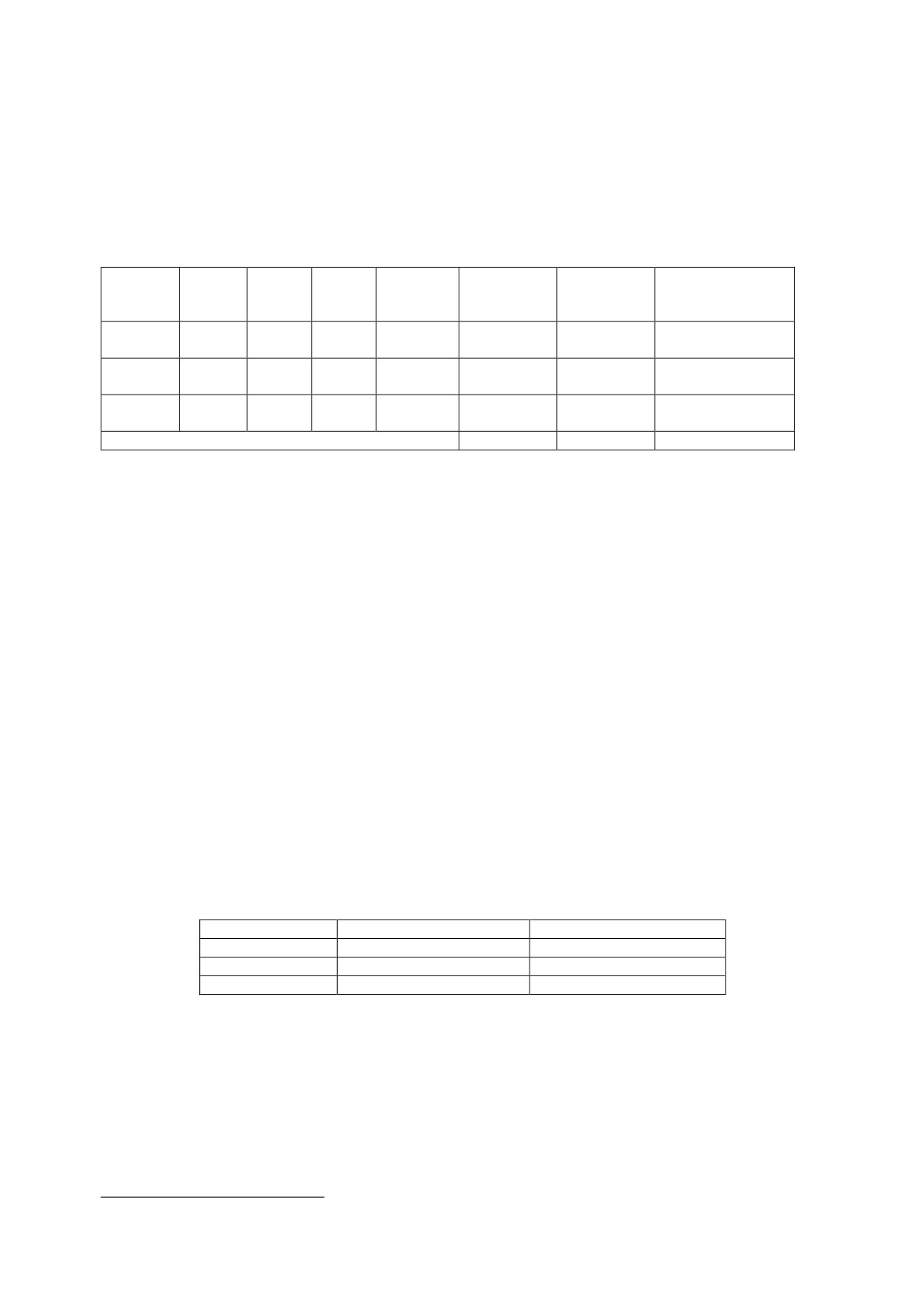
Red List Guidelines
41
regression method predicts population size as exp(2881-2.887t+0.0007255t2), giving a 1941
subpopulation of 18,481 and a 2001 subpopulation of 3,538, which correspond to a 80.9% decline
(thus, the regression has predicted a slight increase from 1980 to 2001). The completed table is
below.
Subpop.
Past-1
Past-2
Past-3
Present
Population 3
Current
Estimated
3-
(closest to
gen.
ago
population
generation change
2001)
(1941; calc.)
(2001; calc.)
Pacific
10,000
10,200
8,000
5,000
10,389
3,942
62.1% reduction
Ocean
(1935)
(1956)
(1977)
(1994)
Atlantic
8,000
9,000
7,699
9,074
17.9% increase
Ocean
(1955)
(1998)
Indian
13,000
9,000
5,000
3,500
18,481
3,538
80.9% reduction
Ocean
(1946)
(1953)
(1965)
(1980)
Overall
36,569
16,554
54.7% reduction
4.5.5 Dealing with uncertainty
In many cases, data from some or even most of the subpopulations (or regions) will be unavailable
or uncertain. Even for taxa with very uncertain data, we recommend that the available data be
organized in the same way as described above. Section 4.5.1 discusses how to calculate population
sizes for the present and three generations ago.
Using uncertain estimates
Uncertain values can be entered as plausible and realistic ranges (intervals). In specifying
uncertainty, it is important to separate natural (temporal or spatial) variability from uncertainty
due to lack of information. Because criterion A refers to a specific period, temporal variability
should not contribute to uncertainty. In other words, the uncertainty you specify should not include
year-to-year variation. Criterion A refers to the overall reduction of the taxon, so spatial variability
should not contribute to uncertainty. For example, if the reduction in different subpopulations
ranges from 10% to 80%, this range ([10,80]%) should not be used to represent uncertainty.
Instead, the estimated reduction in different subpopulations should be averaged as described
above.
This leaves uncertainty due to lack of information, which can be specified by entering each
estimate as an interval, as in the following table.
Subpopulation
Past
Present
Pacific Ocean
8,000 - 10,000 (1941)
4,000 - 6,000 (2001)
Atlantic Ocean
7,000 - 8,000 (1941)
8,000 - 10,000 (2001)
Indian Ocean
10,000 - 15,000 (1941)
1,500 - 2,500 (2001)
In this case, a simple approach is to calculate the minimum and maximum estimates for the
reduction in each subpopulation using the lower and upper estimates3. For example, for the
“Pacific Ocean” subpopulation, the minimum reduction can be estimated as a reduction from
8,000 to 6,000 (25%) and the maximum reduction can be estimated as 60% (from 10,000 to 4,000).
If “best” estimates for past and present population sizes are also available, they can be used to
estimate the best estimate for reduction. Otherwise, the best estimate for reduction can be
3 This is the method used in RAMAS Red List to calculate reduction based on abundances, when you click the
“Calculate” button in the Value editor window for past or future reduction.
Red List Guidelines
42
estimated as 44% (9,000 to 5,000), using the midpoints of the intervals for the past and the present
population sizes.
If similar uncertainty exists for all subpopulations (as in this example), a simple approach is to
add all lower and all upper bounds of estimates. In this case, the total population size would be
25,000-33,000 in the past and 13,500-18,500 in the present. Using the same approach as outlined
above, the best estimate of reduction can be calculated as 45% (29,000 to 16,000), with plausible
range of reductions from 26% (from 25,000 to 18,500) to 59% (from 33,000 to 13,500).
An alternative method is to use a probabilistic (Monte Carlo) approach. If the uncertainty of past
and present population sizes are given as probability distributions, and the correlation between
these distributions are known, then the probability distribution for the reduction can be calculated
by randomly selecting a pair of past and present population sizes (using the given distributions),
calculating the reduction based on this pair, and repeating this with hundreds (or thousands) of
randomly selected pairs.
Using data with different units
The examples discussed above assumed that the population data were in the same units (number
of mature individuals). In some cases, data from different populations may be in different units
(such as CPUE or other indices). In such cases, it is recommended that a separate table be prepared
for each data type. If the past and current population sizes are in the same units for any
subpopulation, they can be used to calculate (perhaps with extrapolation as discussed above) the
reduction for that subpopulation. Such a calculation assumes that the index is linearly related to
the number of mature individuals. The assessment should discuss the validity of this assumption,
and make the necessary transformation (of the index to one that linearly relates to the number of
mature individuals) before reduction is calculated (also see requirement (a) at the start of this
section).
It is also important that an effort be made to combine the tables by converting all units to a
common one. This is because it is necessary to know the relative sizes of the subpopulations to
combine the reduction estimates, unless the subpopulations are known to be similar sizes or have
declined by similar percentages. If the percent reduction is similar (within one or two percentage
points) for different subpopulations, their relative sizes will not play an important role, and a
simple (arithmetic) average can be used instead of a weighted average. If population sizes were
known to be similar three generations ago (e.g., the smallest subpopulation was not any smaller
than, say, 90% of the largest), again a simple average can be used.
If population sizes and reduction amounts differ among subpopulations, then reductions (in
percent) based on different units can be combined only if the relative sizes of the subpopulations
can be estimated. However, this need not be a very precise calculation. Ranges (intervals) can be
used to calculate uncertain results. For example, suppose that the estimates of reduction in two
subpopulations are 60% and 80%, and that precise estimates of relative population sizes are not
available (because these reduction estimates are based on different indices). In this case, crude
estimates of relative sizes can be used. If the relative size of the first subpopulation is estimated
to be between 0.40 and 0.70 of the total population, then the overall reduction can be calculated
as follows. The high estimate would be (60%*0.4)+ (80%*0.6), or 72%. The low estimate would
be (60%*0.7)+(80%*0.3), or 66%. Thus, the overall reduction can be expressed as the interval
66%-72%.
Red List Guidelines
43
Using data from a few subpopulations
In some cases, reliable data exist from only one or few subpopulations. In such cases, the available
data can be used under the following conditions.
1. If the subpopulation for which a reduction estimate is available was by far the largest
subpopulation three generations ago, then this estimate can be used for the whole taxon. This
process can also be formalized using the methods outlined above. For example, suppose that the
largest subpopulation has declined by 60%, and that it had represented 90 to 99% of the mature
individuals in the taxon three generations ago. If there is no information on the rest of the
subpopulations (representing 1-10% of mature individuals), these subpopulations can be assumed
to have declined by 0 to 100% (although, of course, this range does not include all the possibilities,
as it excludes the possibility that the other subpopulations have increased). With these
assumptions, the low estimate would be 54% (if the rest of the subpopulations had 10% of the
individuals, and declined by 0%), and the high estimate would be 64% (if the rest of the
subpopulations had 10% of the individuals, and declined by 100%). Thus, the overall reduction
can be expressed as the interval 54%-64%, which includes the estimate (60%) based on the largest
subpopulation, but also incorporates the uncertainty due to lack of knowledge from other
subpopulations.
2. If it can be assumed that all (or all the large) subpopulations are declining at the same rate, then
the reduction estimated for a subset of the subpopulations can be used for the whole taxon. In this
case, it is important to document any evidence that indicates that the rates are the same, and discuss
and rule out various factors that may lead to different rates of reduction in different
subpopulations.
4.5.6 Fluctuations vs. reduction
The downward phase of a fluctuation will not normally count as a reduction (section 4.5) or a
continuing decline (section 4.6); therefore, an observed decline or reduction should not be
considered a fluctuation unless there is evidence for this. When fluctuations occur at periods
shorter than the assessment period (e.g., annual fluctuations over a 10-year/3-generation period),
the methods described in section 4.5.1 can minimize the increase in the uncertainty of the
calculated decline (Akҫakaya et al. 2021).
However, fluctuations with periods similar to or longer than the assessment period may be difficult
to distinguish from declines. In such cases, knowing the causes of the population changes (e.g.,
climatic fluctuations such as El Niño-Southern Oscillation or successional responses to
disturbance regimes such as fires or floods) would help attribute the change to a fluctuation. If
such verified causal information is not available, these long-term population changes should not
be assumed to be part of a fluctuation; they should instead be interpreted as directional changes
(population increases or declines).
In rare cases, population changes that occur as a result of cessation of human activities can be
considered fluctuations. If a population had previously increased because of a human activity not
related to conservation, and that activity has recently changed or stopped, resulting in a decline in
the population, that decline can be considered as part of a fluctuation, if there is evidence that the
population is returning to a pre-impact level. For example, over-fishing and discarding of fish at
sea have artificially led to higher population sizes for some species (Wilhelm et al. 2016). As more
sustainable fishing practices are adopted, these populations may decline to previous levels.
Red List Guidelines
44
Because the decline is reversing a previous human-caused increase that was not related to
conservation, the decline can be considered as part of a fluctuation.
4.6 Continuing decline (criteria B and C)
“A continuing decline is a recent, current or projected future decline (which may be smooth,
irregular or sporadic) which is liable to continue unless remedial measures are taken. Fluctuations
will not normally count as continuing declines, but an observed decline should not be considered
as a fluctuation unless there is evidence for this.” (IUCN 2001, 2012b)
Continuing declines are used in two different ways in the criteria. Continuing declines at any rate
can be used to qualify taxa under criteria B or C2. This is because taxa under consideration for
criteria B and C are already characterized by restricted ranges or small population size. Estimated
continuing decline (under criterion C1) has quantitative thresholds, and requires a quantitative
estimate, which can be calculated using the same methods as for population reduction (see section
4.5). The concept of continuing decline at any rate is not applicable under criterion C1 (or under
criterion A).
Under criteria B1b, B2b, and C2, continuing declines can be observed, estimated, inferred or
projected. Although not explicitly mentioned in criteria B or C2, estimated continuing declines
are permissible. Under criterion C1, continuing declines can only be observed, estimated or
projected. A continuing decline under criteria B or C can be projected, thus, it does not have to
have started yet. However, such projected declines must be justified and there must be high degree
of certainty that they will take place (i.e., merely 'plausible' future declines are not allowed).
Rates of continuing decline over long generation times (in the same way as reductions) may be
estimated from data over shorter time frames. For example, evaluating a taxon under criterion C1
for the Vulnerable category requires estimating a continuing decline for three generations or 10
years, whichever is longer (up to a maximum of 100 years). When extrapolating data from shorter
time frames, assumptions about the rate of decline remaining constant, increasing or decreasing,
relative to the observed interval must be justified with reference to threatening processes, life
history or other relevant factors.
Note that a continuing decline is not possible without a population reduction (which, however,
may not be large enough to meet any thresholds under criterion A), but a reduction is possible
without a continuing decline: if a reduction has ‘ceased’ under criterion A, there cannot be a
continuing decline. However, continuing declines need not be continuous; they can be sporadic,
occurring at unpredictable intervals, but they must be likely to continue into the future. Relatively
rare events can be considered to contribute to a continuing decline if they happened at least once
within the last three generations or 10 years (whichever is longer), and it is likely that they may
happen again in the next three generations or 10 years (whichever is longer), and the population
is not expected to recover between the events.
A potentially confusing aspect of the criteria is that “estimated continuing decline” under criterion
C1 is conceptually very similar to “moving window reduction” under criterion A4. The differences
are (i) criterion A4 is always evaluated for three generations/10 years, whereas criterion C1 is
evaluated for one, two or three generations, depending on the category, (ii) the thresholds are
lower under criterion C1 (e.g., for VU, 10% under criterion C1 and 30% under criterion A4), (iii)
criterion C1 also requires small population size, and (iv) under criterion C1, the decline must be
Red List Guidelines
45
observed, estimated or projected, whereas under criterion A4, the reduction can be observed,
estimated, inferred, projected or suspected.
If habitat is declining (in area or quality) but abundance is not, this may be because (i) there is a
delay in the population's response to lower carrying capacity, perhaps because the population is
below the carrying capacity for other reasons (such as harvest), (ii) habitat is declining in areas
not currently occupied by the taxon, or (iii) habitat is not correctly identified. In the case of (i),
the population will eventually be impacted; in the case of (ii) the loss of recolonization options
may eventually impact the population. In both cases, criteria B1b(iii) or B2b(iii) may be invoked
even if the population is not undergoing a continuing decline. Incorrect habitat identification (case
iii) can be resolved using a more precise definition of "habitat." When determining continuing
decline in area, extent and/or quality of habitat (criteria B1b(iii) and B2b(iii)), assessors should
define "habitat" in the strict sense, i.e., as the area, characterized by its abiotic and biotic
properties, that is habitable by a particular species. In particular, they should avoid using generic
classifications such as "forest" that indicate a biotope, a vegetation type, or a land-cover type,
rather than a species-specific identification of habitat. In addition, they should document the
location of declines in relation to the species' range, and if possible, quantify the proportion of the
range affected, the magnitude or rate of the decline, and how the species is responding to the
decline.
Note that continuing decline is different from "current population trend", which is a required field
in IUCN Red List assessments, but not used when applying the criteria. There is not a simple
correspondence between these two terms. The current population trend may be stable or
increasing, with a continuing decline projected in the future. If the current population trend is
declining, then there is continuing decline, but only if the trend is liable to continue into the future
and it is not the declining phase of a fluctuation.
4.7 Extreme fluctuations (criteria B and C2)
“Extreme fluctuations can be said to occur in a number of taxa where population size or
distribution area varies widely, rapidly and frequently, typically with a variation greater than one
order of magnitude (i.e., a tenfold increase or decrease).” (IUCN 2001, 2012b)
Extreme fluctuations are included in criteria B and C in recognition of the positive relationship
between extinction risk and variance in the rate of population growth (Burgman et al. 1993).
Populations that undergo extreme fluctuations are likely to have highly variable growth rates, and
are therefore likely to be exposed to higher extinction risks than populations with lower levels of
variability.
Population fluctuations may vary in magnitude and frequency (Figure 4.4). For the ‘extreme
fluctuations’ subcriterion to be invoked, populations would need to fluctuate by at least 10-fold
(i.e., an order of magnitude difference between population minima and maxima). Fluctuations
may occur over any time span, depending on their underlying causes. Short-term fluctuations that
occur over seasonal or annual cycles will generally be easier to detect than those that occur over
longer time spans, such as those driven by rare events or climatic cycles such as El Niño.
Fluctuations may occur regularly or sporadically (i.e., with variable intervals between successive
population minima or successive population maxima).
The effect of extreme fluctuations on the extinction risk will depend on both the degree of isolation
and the degree of synchrony of the fluctuations between subpopulations.
Red List Guidelines
46
If there is regular or occasional dispersal (of even a small number of individuals, seeds, spores,
etc.) between all (or nearly all) of the subpopulations, then the degree of fluctuations should be
measured over the entire population. In this case, the subcriterion would be met only when the
overall degree of fluctuation (in the total population size) is larger than one order of magnitude.
If the fluctuations of different subpopulations are independent and asynchronous, they would
cancel each other to some extent when fluctuations of the total population size are considered.
If, on the other hand, the subpopulations are totally isolated, the degree of synchrony between the
populations is not as important and it is sufficient that a majority of subpopulations each show
extreme fluctuation to meet the subcriterion. In this case, if most of the subpopulations show
fluctuations of an order of magnitude, then the criterion would be met (regardless of the degree of
the fluctuations in total population size).
Between these two extremes, if dispersal is only between some of the subpopulations, then the
total population size over these connected subpopulations should be considered when assessing
fluctuations; each set of connected subpopulations should be considered separately.
Population fluctuations may be difficult to distinguish from directional population changes, such
as continuing declines, reductions or increases. Figure 4.4 shows examples where fluctuations
occur independent of, and in combination with, directional changes. A reduction should not be
interpreted as part of a fluctuation unless there is good evidence for this. Fluctuations must be
inferred only where there is reasonable certainty that a population change will be followed by a
change in the reverse direction within a generation or two. In contrast, directional changes will
not necessarily be followed by a change in the reverse direction.
There are two main ways that extreme fluctuations may be diagnosed: (i) by interpreting
population trajectories based on an index of abundance appropriate for the taxon; and (ii) by using
life history characteristics or habitat biology of the taxon.
i) Population trajectories must show a recurring pattern of increases and decreases (Figure
4.4). Normally, several successive increases and decreases would need to be observed to
demonstrate the reversible nature of population changes, unless an interpretation of the
data was supported by an understanding of the underlying cause of the fluctuation (see ii).
Successive maxima or minima may be separated by intervals of relatively stable
population size.
ii) Some organisms have life histories prone to boom/bust dynamics. Examples include fish
that live in intermittent streams, granivorous small mammals of arid climates, and plants
that respond to stand-replacing disturbances. In these cases there is dependence on a
particular resource that fluctuates in availability, or a response to a disturbance regime that
involves predictable episodes of mortality and recruitment. An understanding of such
relationships for any given taxon may be gained from studies of functionally similar taxa,
and inference of extreme fluctuations need not require direct observation of successive
increases and decreases.
In all cases, assessors must be reasonably certain that fluctuations in the number of mature
individuals represent changes in the total population, rather than simply a flux of individuals
between different life stages. For example, in some freshwater invertebrates of intermittent water
bodies, the number of mature individuals increases after inundation which stimulates emergence

Red List Guidelines
47
from larval stages. Mature individuals reproduce while conditions remain suitable, but die out as
the water body dries, leaving behind immature life stages (e.g., eggs) until the next inundation
occurs. Similarly, fires may stimulate mass recruitment from large persistent seed banks when
there were few mature individuals before the event. As in the previous example, mature plants
may die out during the interval between fires, leaving a store of immature individuals (seeds) until
they are stimulated to germinate by the next fire. Such cases do not fall within the definition of
extreme fluctuations unless the dormant life stages are exhaustible by a single event or cannot
persist without mature individuals. Plant taxa that were killed by fire and had an exhaustible
canopy-stored seed bank (serotinous obligate seeders), for example, would therefore be prone to
extreme fluctuations because the decline in the number of mature individuals represents a decline
in the total number.
100
100
10
10
1
(a)
1
(b)
100
100
10
10
(c)
1
(d)
1
100
100
(e)
(f)
10
10
1
1
100
(g)
100
(h)
10
10
1
1
100
(i)
10
1
Time
Figure 4.4. Fluctuations without directional change in population size (a-d),
population reductions or declines without fluctuations (e, f), population reductions in
combination with fluctuations (g-i).
Red List Guidelines
48
4.8 Severely fragmented (criterion B)
“The phrase ‘severely fragmented’ refers to the situation in which increased extinction risks to the
taxon results from the fact that most of its individuals are found in small and relatively isolated
subpopulations (in certain circumstances this may be inferred from habitat information). These
small subpopulations may go extinct, with a reduced probability of recolonization.” (IUCN 2001,
2012b)
In the IUCN Red List Criteria, the term 'severely fragmented' refers to fragmentation of the
population, which often results from, but is different to, habitat fragmentation. The two attributes
of subpopulations of a severely fragmented taxon mentioned in the above quote (small and
isolated) must be assessed by considering taxon-specific characteristics. However, as stated in the
definition (and discussed below), for criterion B, population fragmentation can be inferred from
habitat fragmentation. When making this inference, species-specific information
(such as
dispersal distances and home range sizes) should be used, as discussed below, whenever available;
and "habitat" should be defined in the strict sense, i.e., as the area, characterized by its abiotic and
biotic properties, that is habitable by the species being assessed. In particular, habitat should not
be defined in the generic sense (e.g., as a biotope, a vegetation type, or a land-cover type).
Fragmentation must be assessed at a scale that is appropriate to biological isolation in the taxon
under consideration. In general, taxa with highly mobile adult life stages or with a large production
of small mobile diaspores are considered more widely dispersed, and hence not so vulnerable to
isolation through fragmentation of their habitats. Thus, the same degree of habitat fragmentation
may not lead to the same degree of population fragmentation for species with different levels of
mobility. Taxa that produce only small numbers of diaspores (or none at all), or only large ones,
are less efficient at long distance dispersal and therefore more easily isolated. If natural habitats
have been fragmented (e.g., old growth forests and rich fens), this can be used as direct evidence
for fragmentation for taxa with poor dispersal ability.
Similarly, fragmentation must be assessed at a scale that is appropriate to population densities of
the taxon under consideration. All else being equal, the same level of habitat fragmentation will
more likely lead to severe fragmentation for a species with lower population densities, because
each habitat fragment will be more likely to have a small number of individuals.
The following criterion can be used to decide whether there is severe fragmentation in cases where
data are available on (i) the distribution of area of occupancy (i.e., detailed maps of occupied
habitat), (ii) some aspect of the dispersal ability of the taxon (e.g., average dispersal distance), and
(iii) average population density in occupied habitat (e.g., information on territory size, home range
size, etc.), then: A taxon can be considered to be severely fragmented if most (>50%) of its total
area of occupancy is in habitat patches that are (1) smaller than would be required to support a
viable population, and (2) separated from other habitat patches by a large distance relative to
dispersal kernel of the species (see below).
Criterion B is often used in the absence of any information on population size, density or structure.
Therefore, for (1), the area for a viable population (or, the interpretation of "small" in the definition
of severely fragmented) should be based on rudimentary and generic estimates of population
density, and on the ecology of the taxon. For example, for many vertebrates, subpopulations of
fewer than 100 individuals may be considered too small to be viable. For (2), the degree of
isolation of patches should be based on dispersal distance of the taxon. For example,
subpopulations that are isolated by distances several times greater than the (long-term) average
Red List Guidelines
49
dispersal distance of the taxon may be considered isolated. On the other hand, separation of
subpopulations by non-habitat areas (e.g., islands in an archipelago) does not necessarily mean
isolation, if the taxon can disperse between the subpopulations.
Note that the existence (or even a large number) of small and isolated patches is not sufficient to
consider the taxon severely fragmented. For meeting this criterion, more than half of the
individuals (or, more than half of the occupied habitat area) must be in small and isolated patches.
On the other hand, a taxon with a single subpopulation can also be severely fragmented, if that
subpopulation is too small to be viable (because a single population is by definition isolated).
Similarly, a taxon with two subpopulations can be severely fragmented if they are isolated from
each other, and both are too small to be viable.
For many taxa, the information on population density and dispersal distance can be based on other
similar taxa. Biologically informed values can be set by the assessors for large taxonomic groups
(families or even orders) or for other groupings of taxa based on their biology. For example in
bryophytes, information on the effects of isolation of subpopulations is often lacking. For
bryophytes, it is recommended that in most circumstances, a minimum distance greater than 50
km between subpopulations of taxa without spore dispersal can indicate severe fragmentation, and
a distance of between 100 km and 1,000 km for taxa with spores (Hallingbäck et al. 2000).
The definition of severe fragmentation is based on the distribution of subpopulations. This is often
confused with the concept of "location" (see section 4.11), but is independent of it. A taxon may
be severely fragmented, yet all the isolated subpopulations may be threatened by the same major
factor (single location), or each subpopulation may be threatened by a different factor (many
locations). Also, severe fragmentation does not require an ongoing threat; small and isolated
subpopulations of a severely fragmented taxon can go extinct due to natural, stochastic
(demographic and environmental) processes.
4.9 Extent of occurrence (criteria A and B)
Extent of occurrence is defined as "the area contained within the shortest continuous imaginary
boundary which can be drawn to encompass all the known, inferred or projected sites of present
occurrence of a taxon, excluding cases of vagrancy" (IUCN 2001, 2012b).
Extent of occurrence (EOO) is a parameter that measures the spatial spread of the areas currently
occupied by the taxon. The intent behind this parameter is to measure the degree to which risks
from threatening factors are spread spatially across the taxon’s geographical distribution. The
theoretical basis for using EOO as a measure of risk spreading is the observation that many
environmental variables and processes are spatially correlated, meaning that locations that are
close to each other experience more similar (more correlated) conditions over time than locations
that are far away from each other. These processes include both human threats (such as diseases,
invasive species, oil spills, non-native predators, habitat loss to development, etc.) and natural
processes (fluctuations in environmental variables such as droughts, heat waves, cold snaps,
hurricanes and other weather events, as well as other disturbance events such as fires, floods, and
volcanism). Higher correlation leads to higher overall extinction risk, so that, all other things
being equal, a set of populations spread in a small area have higher extinction risk overall than a
set of populations spread over a larger area.
EOO is not intended to be an estimate of the amount of occupied or potential habitat, or a general
measure of the taxon’s range. Other, more restrictive definitions of “range” may be more
Red List Guidelines
50
appropriate for other purposes, such as for planning conservation actions. Valid use of the criteria
requires that EOO is estimated in a way that is consistent with the thresholds set therein.
In thinking about the differences between EOO and AOO (area of occupancy; discussed in section
4.10), it may be helpful to compare species that have similar values for one of these spatial metrics
and different values for the other. All else being equal, larger EOOs usually result in a higher
degree of risk spreading (and hence a lower overall risk of extinction for the taxon) than smaller
EOOs, depending on the relevant threats to the taxa. For example, a taxon with occurrences
distributed over a large area is highly unlikely to be adversely affected across its entire range by
a single fire because the spatial scale of a single occurrence of this threat is narrower than the
spatial distribution of the taxon. Conversely, a narrowly distributed endemic taxon, with the same
AOO as the taxon above, may be severely affected by a fire across its entire EOO because the
spatial scale of the threat is larger than, or as large as, the EOO of the taxon.
In the case of migratory species, EOO should be based on the minimum of the breeding or non-
breeding (wintering) areas, but not both, because such species are dependent on both areas, and
the bulk of the population is found in only one of these areas at any time.
If EOO is less than AOO, EOO should be changed to make it equal to AOO to ensure consistency
with the definition of AOO as an area within EOO.
"Extent of occurrence can often be measured by a minimum convex polygon (the smallest polygon
in which no internal angle exceeds 180 degrees and which contains all the sites of occurrence)”
(IUCN 2001, 2012b). The IUCN Red List Categories and Criteria state that EOO may exclude
“discontinuities or disjunctions within the overall distribution of the taxa”. However, for
assessments of criterion B1, exclusion of areas forming discontinuities or disjunctions from
estimates of EOO is strongly discouraged. Exclusions are not recommended for criterion B1,
because disjunctions and outlying occurrences accurately reflect the extent to which a large range
size reduces the chance that the entire population of the taxon will be affected by a single
threatening process. The risks are spread by the existence of outlying or disjunct occurrences
irrespective of whether the EOO encompasses significant areas of unsuitable habitat.
Inappropriate exclusions of discontinuities or disjunctions within the overall distribution of a
taxon will underestimate EOO for the purpose of assessing criterion B and consequently will
underestimate the degree to which risk is spread spatially for the taxon.
When there are such discontinuities or disjunctions in a species distribution, the minimum convex
polygon (also called the convex hull) yields a boundary with a very coarse level of resolution on
its outer surface, resulting in a substantial overestimate of the range, particularly for irregularly
shaped ranges (Ostro et al. 1999). The consequences of this bias vary, depending on whether the
estimate of EOO is to be used for assessing the spatial thresholds in criterion B or whether it is to
be used for estimating or inferring reductions (criterion A) or continuing declines (criteria B and
C). The use of convex hulls is unlikely to bias the assessment of EOO thresholds under criterion
B, because disjunctions and outlying occurrences often do contribute to the spatial spread of risk
(see above). This is also true for "doughnut distributions" (e.g. aquatic species confined to the
margins of a lake) and elongated distributions (e.g., coastal species). In the case of species with
linear elongated distributions, minimum convex polygon may lead to an overestimate of extinction
risk. Nevertheless, given the paucity of practical methods applicable to all spatial distributions,
and the need to estimate EOO consistently across taxa, minimum convex polygon remains a
pragmatic measure of the spatial spread of risk.

Red List Guidelines
51
However, the bias associated with estimates based on convex hulls, and their sensitivity to
sampling effort, makes them less suitable as a method for comparing two or more temporal
estimates of EOO for assessing reductions or continuing declines. If outliers are detected at one
time and not another, this could result in erroneous inferences about reductions or increases.
Therefore, a method such as the -hull (a generalization of a convex hull) is recommended for
assessing reductions of continuing declines in EOO because it substantially reduces the biases that
may result from the spatial arrangement of habitat (Burgman and Fox 2003). The -hull provides
a more repeatable description of the external shape of a species’ range by breaking it into several
discrete patches when it spans uninhabited regions. For -hulls the estimate of area and trend in
area also converges on the correct value as sample size increases, unless other errors are large.
This does not necessarily hold for convex hulls. Kernel estimators may be used for the same
purpose but their application is more complex.
To estimate an -hull, the first step is to make a Delauney triangulation of the mapped points of
occurrence (Figure
4.5). The triangulation is created by drawing lines joining the points,
constrained so that no lines intersect between points. The outer surface of the Delauney
triangulation is identical to the convex hull.
Figure 4.5. Illustration of -hull. The lines show the Delauney triangulation (the
intersection points of the lines are the taxon’s occurrence locations). The sum of
the areas of darker triangles is EOO based on the -hull. The two lighter coloured
triangles that are part of the convex hull are excluded from the -hull.
The second step is to measure the lengths of all of the lines, and calculate the average line length.
The third step is to delete all lines that are longer than a multiple () of the average line length.
(This product of and the average line length represents a “discontinuity distance”.) The value of
can be chosen with a required level of resolution in mind. The smaller the value of , the finer
the resolution of the hull. Experience has shown that an value of 2 is a good starting point for
some species (however, the value to use for specific cases of assessing reductions in EOO should
be based on a compromise between minimizing the potential bias associated with incomplete
sampling of outlying occurrences and minimizing the departure from a convex hull). This process
results in the deletion of lines joining points that are relatively distant, and may subdivide the total
range into more than one polygon. The final step is to calculate the extent of occurrence by
summing the areas of all remaining triangles. When this exercise is repeated to estimate EOO
from a second temporal sample of points (and hence assess change in EOO), the same
discontinuity distance between points should be used as a threshold for deleting lines (rather than
Red List Guidelines
52
the same value of ). This will reduce bias due to variation in sampling effort between the two
surveys and the bias due to changing average line length with more or fewer occurrences.
Extent of occurrence and area of occupancy are measures of the current distribution, i.e. they
should not include areas where the species no longer exists. On the other hand, these measures
should not only include the actually known sites, but also inferred or projected sites (see section
4.10.7). For instance, sites can be inferred from presence of known appropriate habitat, but where
the species has not yet been searched for. In doing so, it will be important to judge to what extent
the taxon has been looked for. Incorporating inferred sites results in a range of plausible values,
which may give a range of plausible Red List Categories (see sections 3.1 on Data availability,
inference and projection, and 3.2 on Uncertainty).
4.10 Area of occupancy (criteria A, B and D)
Area of occupancy (AOO) is a scaled metric that represents the area of suitable habitat currently
occupied by the taxon. Area of occupancy is included in the criteria for two main reasons. The
first role of AOO is as a measure of the ‘insurance effect’ (Keith et al. 2018), whereby taxa that
occur within many patches or large patches across a landscape or seascape are ‘insured’ against
risks from spatially explicit threats. In such cases, there is only a small risk that the threat will
affect all occupied patches within a specified time frame. In contrast, taxa that occur within few
small patches are exposed to elevated extinction risks because there is a greater chance that one
or few threats will affect all or most of the distribution within a given time frame. Thus, AOO is
inversely related to extinction risk. Species at high risk because of their small AOO are often
habitat specialists. Secondly, there is generally a positive correlation between AOO and
population size. The veracity of this relationship for any one species depends on spatial variation
in its population density (Gaston 1996). Nonetheless, AOO can be a useful metric for identifying
species at risk of extinction because of small population sizes when no data are available to
estimate population size and structure (Keith 1998).
As with EOO, in the case of migratory species, AOO should be based on the minimum of the
breeding or non-breeding (wintering) areas, but not both, because such species are dependent on
both areas, and the bulk of the population is found in only one of these areas at any time.
To ensure valid use of the criteria and maintain consistency of Red List assessments across taxa
it is essential to scale estimates of AOO using 2 2 km grid cells. Estimates of AOO are highly
sensitive to the spatial scale at which AOO is measured (Figure 4.6 below, Hartley and Kunin
2003, Nicholson et al. 2009). Thus, it is possible to arrive at very different estimates of AOO from
the same distribution data if they were calculated at different scales (see “Problems of scale” and
Figure 4.6 below). The resolution (grid size) that maximizes the correlation between AOO and
extinction risk is determined more by the spatial scale of threats than by the spatial scale at which
AOO is estimated or shape of the taxon's distribution (Keith et al. 2018). The thresholds of AOO
that delineate different categories of threat in criteria B2 and D2 are designed to assess threats that
affect areas in the order of 10 - 2,000 km2, and therefore assume that AOO is estimated at a
particular spatial scale. These Guidelines require that AOO is scaled using 2 2 km grid cells
(i.e., with area of 4 km2) to ensure that estimates of AOO are commensurate with the implicit scale
of the thresholds. Use of the smallest available scale (finest grain) to estimate AOO (sometimes
erroneously called "actual area" or "actual AOO") is not permitted, even though mapping a
species' distribution at the finest scale may be desirable for purposes other than calculating AOO.
It should be noted that the scaling estimates of AOO to a standard spatial grain in criteria B2 and
Red List Guidelines
53
D2, and scaling of rates of population decline by generation length in criterion A, are both essential
procedures to promote consistency in Red List assessments. The scale requirement only applies
to calculation of AOO because of its role as a measure of insurance effects on extinction risk,
rather than a precise measure of occupied habitat area (Keith et al. 2018). Habitat maps with
higher resolutions can be used for other aspects of a Red List assessment, such as calculating
reduction in habitat quality as a basis of population reduction for criterion A2(c) or estimating
continuing decline in habitat area for B2(b), as well as for conservation planning.
Recognizing the role of AOO and the importance of valid scaling, IUCN (2001, 2012b) includes
the following text: “Area of occupancy is defined as the area within its 'extent of occurrence' (see
4.9 above), which is occupied by a taxon, excluding cases of vagrancy. The measure reflects the
fact that a taxon will not usually occur throughout the area of its extent of occurrence, which may
contain unsuitable or unoccupied habitats. In some cases, (e.g., irreplaceable colonial nesting sites,
crucial feeding sites for migratory taxa) the area of occupancy is the smallest area essential at any
stage to the survival of existing populations of a taxon. The size of the area of occupancy will be
a function of the scale at which it is measured, and should be at a scale appropriate to relevant
biological aspects of the taxon, the nature of threats and the available data (see below). To avoid
inconsistencies and bias in assessments caused by estimating area of occupancy at different scales,
it may be necessary to standardize estimates by applying a scale-correction factor. It is difficult to
give strict guidance on how standardization should be done because different types of taxa have
different scale-area relationships.”
4.10.1 Problems of scale
Red List assessments based on the area of occupancy (AOO) may be complicated by problems of
spatial scale. Estimating the quantity of occupied habitat for taxa with markedly different body
sizes, mobility and home ranges intuitively requires different spatial scales of measurement.
Nevertheless, many of the major threats that impact those same taxa operate at common landscape
and seascape scales. For this reason, the Red List Criteria specify fixed range size thresholds to
identify taxa at different levels of extinction risk. The use of fixed range size thresholds is also
important for pragmatic reasons to maintain the parsimony of the Red List Criteria. Use of
different thresholds for different groups of taxa would greatly amplify the complexity of the
criteria and guidelines, as well as the risks of inconsistent applications.
The need to scale estimates of AOO consistently follows logically from the adoption of fixed
AOO thresholds in the Red List criteria and the sensitivity of AOO estimates to measurement
scale. “The finer the scale at which the distributions or habitats of taxa are mapped, the smaller
the area will be that they are found to occupy, and the less likely it will be that range estimates …
exceed the thresholds specified in the criteria. Mapping at finer spatial scales reveals more areas
in which the taxon is unrecorded. Conversely, coarse-scale mapping reveals fewer unoccupied
areas, resulting in range estimates that are more likely to exceed the thresholds for the threatened
categories. The choice of scale at which AOO is estimated may thus, itself, influence the outcome
of Red List assessments and could be a source of inconsistency and bias.” (IUCN 2001, 2012b).
The following sections first describe a simple method of estimating AOO, then specify the
appropriate reference scale, and finally we describe a method of standardization (or scaling) for
cases where the available data are not at the reference scale.
Red List Guidelines
54
4.10.2 Methods for estimating AOO
There are several ways of estimating AOO, but for the purpose of these guidelines we assume
estimates have been obtained by counting the number of occupied cells in a uniform grid that
covers the entire range of a taxon (see Figure 2 in IUCN 2001, 2012b), and then tallying the total
area of all occupied cells:
AOO = no. occupied cells area of an individual cell
(equation 4.1)
The ‘scale’ of AOO estimates can then be represented by the area of an individual cell in the grid
(or alternatively the length of a cell, but here we use area). There are other ways of representing
AOO, for example, by mapping and calculating the area of polygons that contain all occupied
habitat. The scale of such estimates may be represented by the area of the smallest mapped
polygon
(or the length of the shortest polygon segment), but these alternatives are not
recommended because it is more difficult for different assessors to produce consistent estimates
using such approaches.
If different grid locations (starting points of the grid) result in different AOO estimates, the
minimum estimate should be used.
4.10.3 The appropriate scale
In all cases, 4 km2 (2 2 km) cells are recommended as the reference scale for estimating AOO
to assess criteria B2 and D2. If an estimate was made at a different scale, especially if data at
different scales were used in assessing species in the same taxonomic group, this may result in
inconsistencies and bias (Keith et al. 2018). Scales of 3.2 3.2 km grid size or coarser (larger) are
inappropriate because they do not allow any taxa to be listed as Critically Endangered (where the
threshold AOO under criterion B is 10 km2). Scales finer (smaller) than 2 2 km grid size tend
to list more taxa at higher threat categories than the definitions of these categories imply.
Assessors should avoid using estimates of AOO at other scales. The scale for AOO should not be
based on EOO (or other measures of range area), because AOO and EOO measure different factors
affecting extinction risk (see below).
If AOO can be calculated directly at the reference scale of 4 km2 (2 2 km) cells, you can skip
sections 4.10.4 and 4.10.5. If AOO cannot be calculated at the reference scale (e.g., because it
has already been calculated at another scale and original maps are not available), then the
methods described in the following two sections may be helpful.
4.10.4 Scale-area relationships
The biases caused by use of range estimates made at different scales may be reduced by
standardizing estimates to a reference scale that is appropriate to the thresholds in the criteria.
This and the following section discuss the scale-area relationship that forms the background for
these standardization methods, and describe such a method with examples. The method of
standardization depends on how AOO is estimated. In the following discussion, we assume that
AOO was estimated using the grid method summarized above.
The standardization or correction method we will discuss below relies on the relationship of scale
to area, in other words, how the estimated AOO changes as the scale or resolution changes.
Estimates of AOO may be calculated at different scales by starting with mapped locations at the
finest spatial resolution available, and successively doubling the dimensions of grid cells. The
relationship between the area occupied and the scale at which it was estimated may be represented
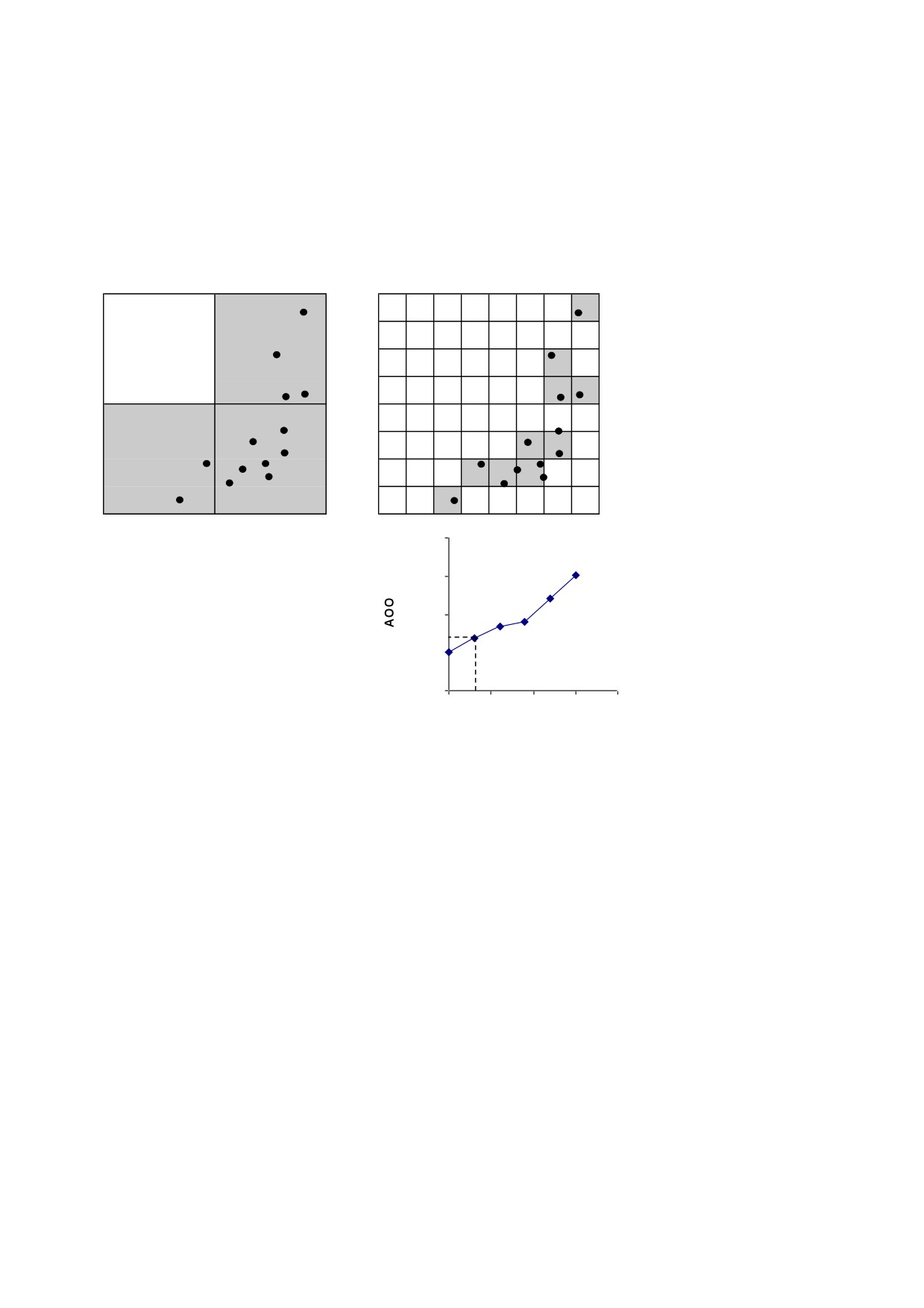
Red List Guidelines
55
on a graph known as an area-area curve (e.g., Figure 4.6). The slopes of these curves may vary
between theoretical bounds, depending on the extent of grid saturation. A theoretical maximum
slope = 1 is achieved when there is only one occupied fine-scale grid cell in the landscape (fully
unsaturated distribution). A theoretical minimum slope = 0 is achieved when all fine-scale grid
cells are occupied (fully saturated distribution).
10000
grid grid area AOO
1000
length
1
1
10
100
2
4
24
10
4
16
48
8
64
64
1
16
256
256
1
10
100
1000
10000
32
1,024
1,024
Scale (grid area)
Figure 4.6. Illustration of scale-dependence when calculating area of occupancy. At a fine scale (map on
right) AOO = 10 x 1 = 10 units2 (based on Equation 4.1). At a coarse scale (map on left) AOO = 3 x 16 =
48 units2. AOO may be calculated at various scales by successively doubling grid dimensions from
estimates at the finest available scale (see Table). These may be displayed on an area-area curve (above).
4.10.5 Scale correction factors
Estimates of AOO may be standardized by applying a scale-correction factor. Scale-area
relationships (e.g., Figure. 4.6) provide important guidance for such standardization. It is not
possible to give a single scale-correction factor that is suitable for all cases because different taxa
have different scale-area relationships. Furthermore, a suitable correction factor needs to take into
account the reference scale (i.e., 2 2 km grid size) that is appropriate to the area of occupancy
thresholds in criterion B2. The example below shows how estimates of AOO made at fine and
coarse scales may be scaled up and down, respectively, to the reference scale to obtain an estimate
that may be assessed against the AOO thresholds in criterion B2.
Example: Scaling Up
Assume that estimates of AOO are available at 1 1 km grid resolution shown in Figure 4.6 (right)
and that it is necessary to obtain an estimate at the reference scale represented by a 2 2 km grid.
This may be done cartographically by simply doubling the original grid dimensions, counting the
number of occupied cells and applying equation 4.1. When the reference scale is not a geometric
multiple of the scale of the original estimate, it is necessary to calculate an area-area curve, as
Red List Guidelines
56
shown in Figure 4.6, and interpolate an estimate of AOO at the reference scale. This can be done
mathematically by calculating a scale correction factor (C) from the slope of the area-area curve
as follows (in all equations below, "log" means logarithm to base 10):
C = log(AOO2/AOO1) / log(Ag2/Ag1)
(equation 4.2)
where AOO1 is the estimated area occupied from grids of area Ag1, a size close to, but smaller
than the reference scale, and AOO2 is the estimated area occupied from grids of area Ag2, a size
close to, but larger than the reference scale. An estimate of AOOR at the reference scale, AgR, may
thus be calculated by rearranging equation 2 as follows:
AOOR = AOO1*10C*log(AgR / Ag1) , or AOOR = AOO2*10C*log(AgR / Ag2)
(equation 4.3)
In the example shown in Figure 4.6, estimates of AOO from 1 1 km and 4 4 km grids may be
used to verify the estimate AOO at the reference scale of 2 2 km as follows:
C = log(48/10) / log(16/1) = 0.566, and using equation 4.3 with this value of C, the AOO
estimate at the larger scale (AOO2=48), and the grid sizes at the larger and reference scales
(AgR=4; Ag2=16), the AOO estimate at the reference scale is calculated as:
AOO = 48 * 100.566*log(4/16) = 22 km2
Note that this estimate differs slightly from the true value obtained from grid counting and
equation 1 (24 km2) because the slope of the area-area curve is not exactly constant between the
measurement scales of 1 1 km and 4 4 km.
Example: Scaling Down
Scaling down estimates of AOO is more difficult than scaling up because there is no quantitative
information about grid occupancy at scales finer than the reference scale. Scaling therefore
requires extrapolation, rather than interpolation of the area-area curve. Kunin (1998) and He and
Gaston (2000) suggest mathematical methods for this. A simple approach is to apply equation 4.3
using an approximated value of C.
An approximation of C may be derived by calculating it at coarser scales, as suggested by Kunin
(1998). For example, to estimate AOO at 2 2 km when the finest resolution of available data is
at 4 x 4 km, we could calculate C from estimates at 4 4 km and 8 8 km as follows.
C = log(64/48) / log(64/16) = 0.208
However, this approach assumes that the slope of the area-area curve is constant, which is unlikely
to hold for many taxa across a moderate range of scales. In this case, AOO at 2 2 km is
overestimated because C was underestimated.
AOO = 48 * 100.208*log(4/16) = 36 km2.
While mathematical extrapolation may give some guidance in estimating C, there may be
qualitative information about the dispersal ability, habitat specificity and landscape patterns that
could also provide guidance. Table 4.1 gives some guidance on how these factors may influence
the values of C within the range of scales between 2 2 km and 10 10 km grid sizes.
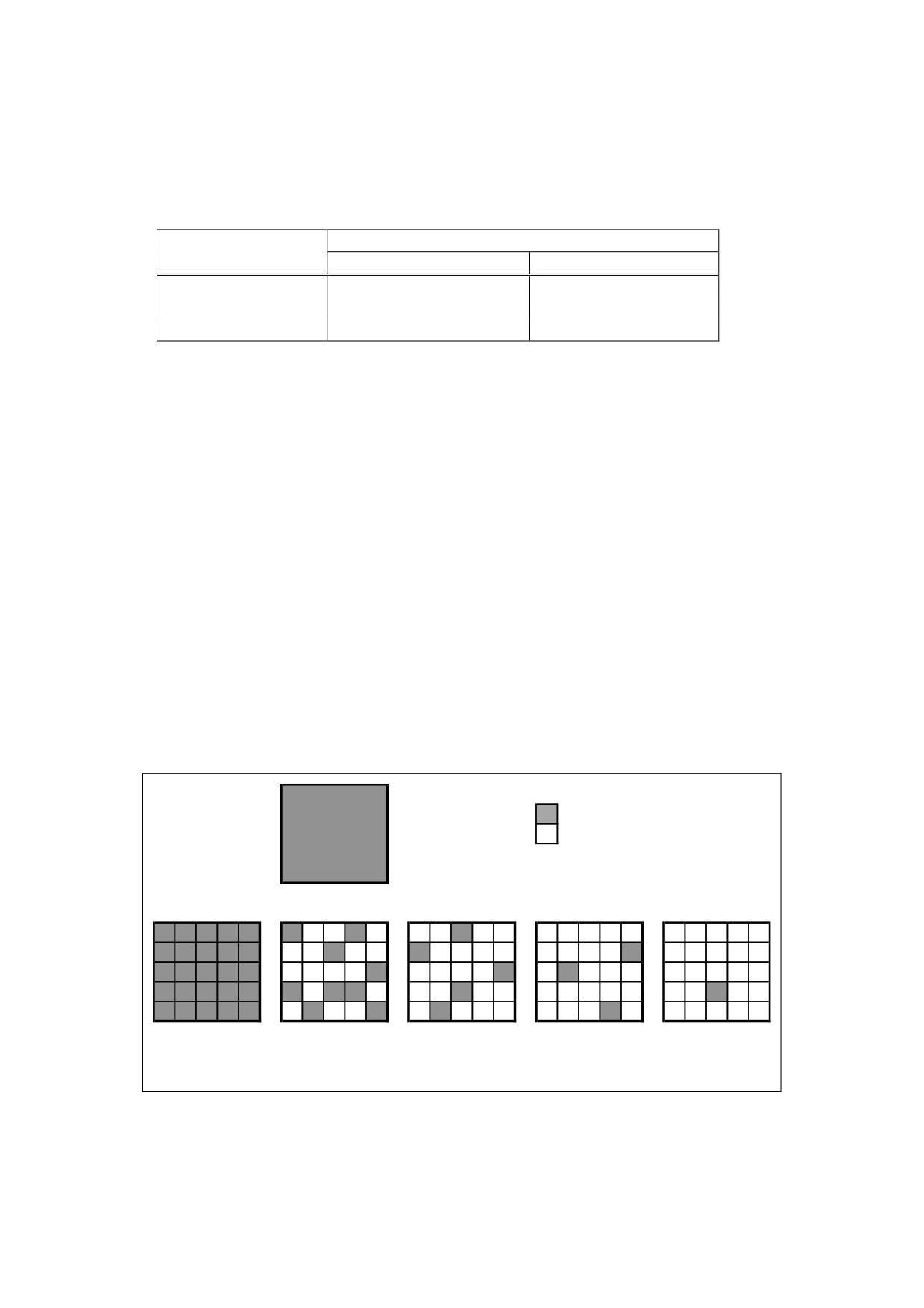
Red List Guidelines
57
Table 4.1. Characteristics of organisms and their habitat that influence the slope of
the scale-area relationship, and hence the scale-correction factor, C, within the range
of spatial scales represented by 2 2 km and 10 10 km grid cells.
Biological
Influence on C
characteristic
small (approaching 0)
large (approaching 1)
Dispersal ability
Wide
localized or sessile
Habitat specificity
Broad
Narrow
Habitat availability
Extensive
Limited
For example, if the organism under consideration was a wide-ranging animal without specialized
habitat requirements in an extensive and relatively uniform landscape (e.g., a species of camel in
desert), its distribution at fine scale would be relatively saturated and the value of C would be
close to zero. In contrast, organisms that are either sessile or wide ranging but have specialized
habitat requirements that only exist in small patches within the landscape (e.g., migratory sea birds
that only breed on certain types of cliffs on certain types of islands) would have very unsaturated
distributions represented by values of C close to one. Qualitative biological knowledge about
organisms and mathematical relationships derived from coarse-scale data may thus both be useful
for estimating a value of C that may be applied in equation 4.3 to estimate AOO at the reference
scale. Uncertainty in the value of C can be represented through the use of interval or fuzzy
arithmetic to propagate uncertainty through the assessment as described in section 3.2.
Finally, it is important to note that if unscaled estimates of AOO at scales larger than the reference
value are used directly to assess a taxon against thresholds in criterion B, then the assessment is
assuming that the distribution is fully saturated at the reference scale (i.e., assumes C = 0). In other
words, the occupied coarse-scale grids are assumed to contain no unsuitable or unoccupied habitat
that could be detected in grids of the reference size (see Figure 4.7).
Present
Absent
Observed 10km cell
C = 0
C = 0.32
C = 0.5
C = 0.66
C = 1
Examples of assumed distributions within the same 100km2 area, at the reference scale of
2x2km, with different C values
Figure 4.7. Demonstration of the consequences of different assumed C values. The available map is at
10 x 10 km resolution, so a presence observed at this scale corresponds to 25 cells at the reference scale
of 2 x 2 km. Assuming C = 0 (i.e., using the unscaled estimate directly as AOO) assumes that all of these
25 cells are occupied. At the other extreme, a value of C = 1 assumes that only one 2 x 2 km cell is
occupied.
Red List Guidelines
58
4.10.6 "Linear" habitat
There is a concern that grids do not have much ecological meaning for taxa living in "linear"
habitat such as in rivers or along coastlines. Although this concern is valid, for the purpose of
assessing taxa against criterion B, it is important to have a measurement system that is consistent
with the thresholds, and that leads to comparable listings. If AOO estimates were based on
estimates of length x breadth of habitat, there may be very few taxa that exceed the VU threshold
for criterion B2 (especially when the habitats concerned are streams or beaches a few metres
wide). In addition, there is the problem of defining what a "linear" habitat is, and measuring the
length of a jagged line. Thus, we recommend that the methods described above for estimating
AOO should be used for taxa in all types of habitat distribution, including taxa with linear ranges
living in rivers or along coastlines.
4.10.7 AOO and EOO based on habitat maps and models
Both AOO and EOO may be estimated based on “…known, inferred or projected sites of present
occurrences…” (IUCN 2001). In this case, ‘known’ refers to confirmed extant records of the
taxon; ‘inferred’ refers to the use of information about habitat characteristics, dispersal capability,
rates and effects of habitat destruction and other relevant factors, based on known sites, to deduce
a very high likelihood of presence at other sites; and ‘projected’ refers to spatially predicted sites
on the basis of habitat maps or models, subject to the three conditions outlined below.
Habitat maps show the distribution of potential habitat for a species. They may be derived from
interpretation of remote imagery and/or analyses of spatial environmental data using simple
combinations of GIS data layers such as land-cover and elevation (Brooks et al. 2019), or by more
formal statistical habitat models (e.g., generalized linear and additive models, decision trees,
Bayesian models, regression trees, etc.). These habitat models are also referred to as ecological
niche models, species distribution models, bioclimatic models and habitat suitability models.
Habitat maps can provide a basis for estimating AOO and EOO and, if maps are available for
different points in time, rates of change can be estimated. They cannot be used directly to estimate
a taxon’s AOO or EOO because they often map an area that is larger than the occupied habitat
(i.e., they also map areas of potential habitat that may presently be unoccupied). However, they
may be a useful means of estimating AOO or EOO indirectly, provided the three following
conditions are met.
i) Maps must be justified as accurate representations of the habitat requirements of the species
and validated by a means that is independent of the data used to construct them.
ii) The mapped area of potential habitat must be interpreted to produce an estimate of the area
of occupied habitat.
iii) For AOO, the estimated area of occupied habitat derived from the map must be scaled to the
reference scale (see section 4.10). For EOO, the occupied habitat areas must be used to
estimate the area of the minimum convex polygon (see section 4.9).
Habitat maps can vary widely in quality and accuracy (condition i). A map may not be an accurate
representation of habitat if key variables are omitted from the underlying model. For example, a
map would over-estimate the habitat of a forest-dependent montane species if it identified all
forest areas as potential habitat, irrespective of altitude. The spatial resolution of habitat resources
also affects how well maps can represent habitat. For example, specialized nest sites for birds,
such as a particular configuration of undergrowth or trees with hollows of a particular size, do not
lend themselves to mapping or modelling at coarse scales. Any application of habitat maps to Red
List assessments should therefore be subject to an appraisal of mapping limitations, which should
lead to an understanding of whether the maps over-estimate or under-estimate the area of potential
Red List Guidelines
59
habitat. A critical evaluation of condition
(i) should include both biological and statistical
considerations. For example, the selection of predictor variables should be based on knowledge
of the biology of the species and not simply fitted statistically from a pool of candidate variables
that are conveniently available. Statistically, appropriate methods of model evaluation should be
employed (e.g., cross validation). See section 12.1.12.
Habitat maps may accurately reflect the potential habitat, but only a fraction of potential habitat
may be occupied (condition ii). Conversely, depending on survey effort, the set of ‘known’
occurrences may underestimate the area of occupied habitat (see section 4.10.8). Low habitat
occupancy may result because other factors are limiting - such as availability of prey, impacts of
predators, competitors or disturbance, dispersal limitations, etc. In such cases, the area of mapped
habitat could be substantially larger than AOO or EOO, and will therefore need to be adjusted
(using an estimate of the proportion of habitat occupied) to produce a valid estimate. This may be
done by random sampling of suitable habitat grid cells, which would require multiple iterations to
obtain a stable mean value of AOO. To determine what portions of predicted potential habitat
should be identified as ‘projected’ sites that may be used to estimate AOO and EOO, assessors
should consider which sites are very likely to be occupied based on: predicted habitat suitability
values; ecologically relevant characteristics of the locality; the taxon's dispersal capability;
potential dispersal barriers; physiological and behavioural characteristics of the taxon; proximity
to confirmed records; survey intensity; the effect of predators, competitors or pathogens in
reducing the occupied fraction of available habitat; and other relevant factors.
Habitat maps are produced at a resolution determined by the input data layers (satellite images,
digital elevation models, climate surfaces, etc.). Often these will be at finer scales than those
required to estimate AOO (condition iii), and consequently scaling up will be required (see section
4.10.5). In other words, the area of potential habitat (also called extent of suitable habitat, ESH)
measured at a finer scale (higher resolution) than 2 2 km grid cells, even after correction for
occupancy (due to a taxon not occupying all of the suitable habitat identified), cannot be used
directly to compare against AOO thresholds, and certainly not against EOO thresholds. For AOO
the area needs to be measured at the reference scale (see section 4.10.5), and for EOO the area must
be used to calculate the minimum convex polygon that includes all the identified habitat areas (see
section 4.9).
In those cases where AOO is less than the area of potential habitat, the population may be
declining within the habitat, but the habitat may show no indication of change. Hence this method
could be both inaccurate and non-precautionary for estimating reductions in population change.
However, if a decline in mapped habitat area is observed
(and the map is a reasonable
representation of potential habitat - condition i), then the population is likely to be declining at
least at that rate. This is a robust generalisation because even the loss of unoccupied habitat can
reduce population viability. Thus, if estimates of AOO are not available, then the observed decline
in mapped habitat area can be used to invoke "continuing decline" in criterion B, and the rate of
such decline can be used as a basis for calculating a lower bound for population reduction under
criterion A. Observed decline in mapped area can be used to invoke "continuing decline" in
criterion C2 if the relationship between habitat area and the number of mature individuals was
known (and positive).