FM 3-11.3 PROCEDURES FOR CHEMICAL, BIOLOGICAL, RADIOLOGICAL, AND NUCLEAR CONTAMINATION AVOIDANCE (FEBRUARY 2006) - page 1
*FM 3-11.3
MCRP 3-37.2A
NTTP 3-11.25
AFTTP(I) 3-2.56
FM 3-11.3
US Army Training and Doctrine Command
Fort Monroe, Virginia
MCRP 3-37.2A
Marine Corps Combat Development Command
Quantico, Virginia
NTTP 3-11.25
Navy Warfare Development Command
Newport, Rhode Island
AFTTP(I) 3-2.56
Headquarters Air Force Doctrine Center
Maxwell Air Force Base, Alabama
2 February 2006
Multiservice Tactics, Techniques, and Procedures
for
Chemical, Biological, Radiological, and Nuclear Contamination
Avoidance
TABLE OF CONTENTS
Page
EXECUTIVE SUMMARY
xx
CHAPTER I
INTRODUCTION
Background
I-1
Sense, Shape, Shield, and Sustain
I-1
Sense
I-1
Shape
I-1
Shield
I-2
Sustain
I-2
Fundamentals and Principles
I-2
Fundamentals of CBRN Defense
I-2
Contamination Avoidance
I-3
Tenets of Contamination Avoidance
I-4
Fixed and Mobile Operations
I-4
Knowledge of Hazards
I-4
Principles of Avoidance
I-4
DISTRIBUTION RESTRICTION: Approved for public release; distribution is unlimited.
*This manual supersedes FM 3-3/FMFM 11-17, 16 November 1992, and FM 3-3-1/FMFM 11-18,
9 September 1994.
iv
FM 3-11.3/MCWP 3-37.2A/NTTP 3-11.25/AFTTP(I) 3-2.56, C1
30 April 2009
Vulnerability Reduction
I-5
Active Measures
I-5
Passive Measures
I-6
Chemical, Biological, Radiological, and Nuclear Battle
Management
I-7
CBRNWRS
I-7
CBRN IM
I-7
Commander and Staff Interactions in Meeting Chemical,
Biological, Radiological, and Nuclear Defense Challenges
I-9
Chemical, Biological, Radiological and Nuclear Operations
I-10
CBRN Defense Planning and Considerations
I-10
Chemical Defense Planning and Considerations
I-11
Biological Defense Planning and Considerations
I-12
Nuclear and Radiological Defense Planning and
Considerations
I-13
Radiological Weapons Defense Planning and
Considerations
I-13
ROTA and TIM Defense Planning and Considerations
I-14
CHAPTER II
DEVELOPING THE CHEMICAL, BIOLOGICAL, RADIOLOGICAL,
AND NUCLEAR COMMON OPERATIONAL PICTURE
Background
II-1
Chemical, Biological, Radiological, and Nuclear Common
Operational Picture Functions
II-1
Detection
II-1
Identification
II-1
Contamination Marking
II-1
Warning and Reporting
II-1
Chemical, Biological, Radiological, and Nuclear Information
Management
II-2
CBRN Processes
II-2
CBRN IM Activities
II-3
CBRN IM Capabilities
II-3
Chemical, Biological, Radiological, and Nuclear Information
Flow Strategy
II-4
Common Operational Picture Management
II-6
Information Inputs
II-6
Standardization
II-6
CBRN Information Network Applications
II-8
CHAPTER III
CHEMICAL, BIOLOGICAL, RADIOLOGICAL, AND NUCLEAR
WARNING AND REPORTING SYSTEM
Background
III-1
Organization
III-1
CBRN Warning and Reporting Areas
III-1
CBRN Warning and Reporting Centers and Cells
III-1
Information Management
III-1
Gathering Information
III-2
Evaluating Information
III-3
30 April 2009 FM 3-11.3/MCWP 3-37.2A/NTTP 3-11.25/AFTTP(I) 3-2.56, C1
v
Transmitting Information
III-3
Types of Reports
III-4
Standard CBRN Reports
III-4
The Merchant Warning System (MERWARN)
III-6
Strike Warning (STRIKWARN)
III-7
MET and Weather Reports
III-7
Mandatory Entries in Nuclear, Biological, and Chemical
Reports
III-7
Classification and Precedence
III-15
Classification
III-15
Precedence
III-15
Decision Support Tools
III-15
Technical Reach-Back Capabilities
III-16
General
III-16
Technical Reach-Back Capabilities
III-16
Avoidance Tools
III-19
APPENDIX A
SAMPLE CHEMICAL, BIOLOGICAL, RADIOLOGICAL, AND
NUCLEAR CONTAMINATION AVOIDANCE CHECKLISTS
A-1
Background
A-1
Chemical, Biological, Radiological, and Nuclear Preattack
Checklist
A-1
Chemical, Biological, Radiological, and Nuclear
During-Attack Checklist
A-3
Chemical, Biological, Radiological, and Nuclear Postattack
Checklist
A-4
Chemical, Biological, Radiological, and Nuclear Recovery
Checklist
A-5
APPENDIX B
CHEMICAL, BIOLOGICAL, RADIOLOGICAL, AND NUCLEAR
CENTER AND CELL OPERATIONS
B-1
Background
B-1
Responsibilities
B-1
Theater, Corps, Air Force, and Fleet Levels of
Command
B-1
Area and Maritime HQ
B-2
Fixed-Site, Division, Regiment, Brigade, and
Designated Shipboard and Wing Levels of Command .. B-2
Unit Level of Command and Designated Observers
B-3
Coordination
B-4
Responsibilities
B-4
Overlap and Duplication
B-6
Correlation of Nuclear, Biological, and Chemical Reports
B-6
vi
FM 3-11.3/MCWP 3-37.2A/NTTP 3-11.25/AFTTP(I) 3-2.56, C1
30 April 2009
APPENDIX C
MANAGEMENT OF EXPOSURE TO RADIOLOGICAL
HAZARDS
C-1
Background
C-1
Exposure Control
C-1
Data Recording
C-1
Rotation of Assets
C-1
Information Management—Operational Exposure Guide
C-2
Nuclear and Radiological Exposure Control
C-2
Radiation Exposure Control
C-2
Low-Level Radiation (LLR)
C-3
Medical Effects of LLR
C-4
Command Radiation Exposure Guidance
C-4
Personnel Evacuation From a Radiological Area
C-5
RDD
C-5
Radiological Exposure
…C-5
Radiation Exposure During War
C-5
RES
C-7
Nuclear Risk Criteria
C-8
Radiation Exposure During Military Support to Civil
Authorities
C-13
Radioactive Materials of Military Significance
C-14
Americium
C-14
Cesium
C-14
Cobalt
C-15
DU
C-15
Iodine
C-15
Nickel-63
C-16
Phosphorus
C-16
Plutonium
C-16
Radium
C-16
Strontium
C-17
Thorium-232
C-17
Tritium
C-17
Uranium
C-17
APPENDIX D
WEATHER EFFECTS ON NUCLEAR, BIOLOGICAL, AND CHEMICAL
AGENTS AND METEOROLOGICAL REPORTS
D-1
Background
D-1
MET Operations
D-1
USN
D-1
Weather Effects on Chemical, Biological, Radiological, and
Nuclear Agents
D-1
Nuclear
D-1
Biological
D-3
Chemical
D-5
Overview of Meteorological Reports
D-8
BWR
D-8
EDR
D-8
30 April 2009 FM 3-11.3/MCWP 3-37.2A/NTTP 3-11.25/AFTTP(I) 3-2.56, C1
vii
CDR
D-9
MET Report Fields
D-9
Common Report (ADP) Field Explanations
D-10
MET Report (ADP) Field Explanations
D-15
Basic Wind Reports (Details and Examples)
…D-21
BWRs
D-21
Wind Vector Plot
D-21
Effective Downwind Reports (Details and Examples)
D-27
Chemical Downwind Reports (Details and Example)
D-31
General Preparation
D-31
CDM Preparations Without Weather Service Support ... D-32
Naval CDM
D-34
APPENDIX E
CHEMICAL-CONTAMINATION AVOIDANCE TACTICS,
TECHNIQUES, AND PROCEDURES
E-1
Background
E-1
Chemical-Contamination Avoidance Procedures
E-1
Before the Attack
E-1
During the Attack
E-2
After the Attack
E-2
NBC1 CHEM Report
E-3
Precedence
E-3
Report Preparation
E-3
Sample
E-3
NBC2 CHEM Report
E-4
NBC3 CHEM Report
E-5
Chemical Contamination Prediction and Plotting
E-6
Definitions Used in Chemical Hazard Predictions
E-6
Types of Chemical Attacks
E-6
Means of Delivery
E-6
Prediction of the Downwind Hazard
E-6
Attack Chronology
E-8
Principles of Chemical Predictions and Limitations
E-8
Simplified Hazard Prediction (Land)
E-9
Detailed Type A Attack Downwind Hazard Prediction
(Land)
E-11
Detailed Type B Attack Downwind Hazard Prediction
(Land)
E-15
Type C Attack Downwind Hazard Prediction (Land)
E-26
Adjusted Hazard Prediction (Land)
E-26
MERWARN
E-39
MERWARN Plotting
E-40
Simplified Procedure Requirements (Sea)
E-41
Detailed Procedure Requirements (Sea)
E-44
Determination of the Downwind Hazard Area
E-46
Change in MET Conditions
E-49
NBC4 CHEM Report
E-53
NBC5 CHEM Report
E-54
NBC6 CHEM Report
E-54
viii
FM 3-11.3/MCWP 3-37.2A/NTTP 3-11.25/AFTTP(I) 3-2.56, C1
30 April 2009
APPENDIX F
BIOLOGICAL-CONTAMINATION AVOIDANCE TACTICS,
TECHNIQUES, AND PROCEDURES
F-1
Background
F-1
Biological-Agent Dissemination Methods
F-1
Aerosol Dissemination
F-1
Vector Dissemination
F-2
Covert Dissemination
F-2
Avoidance Procedures
F-3
Aerosol Avoidance Procedures
F-3
Vector Avoidance Procedures
F-4
Covert Avoidance Procedures
F-5
Biological-Contamination Reporting, Predicting, and Plotting
F-6
NBC1 BIO Report
F-6
Precedence
F-6
Preparation
F-6
Sample
F-6
NBC2 BIO Report
F-7
NBC3 BIO Report
F-8
Definitions
F-9
Types of Biological Attacks
F-9
Hazard Prediction
F-12
Downwind Travel Distances
F-12
Determining Initial Hazard Areas
F-14
Prediction of the Initial Hazard
F-15
Adjusted Hazard Prediction
F-23
Hazards Spanning Multiple CDM Messages
F-25
Termination of Biological Hazard Assessment
F-25
Hazard Duration
F-27
NBC4 BIO Report
F-27
NBC5 BIO Report
F-28
NBC6 BIO Report
F-28
APPENDIX G
NUCLEAR-CONTAMINATION AVOIDANCE TACTICS,
TECHNIQUES, AND PROCEDURES
G-1
Background
G-1
Nuclear-Contamination Avoidance Procedures
G-2
Preattack
G-2
During Attack
G-3
Postattack
G-4
Nuclear Information Management
G-5
Collection of Nuclear Information
G-6
Monitoring, Survey, and Reconnaissance Data
G-6
Evaluation of Nuclear Information
G-6
Transmission of Nuclear Information
G-6
Designated Observer System
G-6
Nondesignated Observers
G-8
Determination That a Nuclear Attack has Occurred
G-8
NBC1 NUC Report
G-9
30 April 2009 FM 3-11.3/MCWP 3-37.2A/NTTP 3-11.25/AFTTP(I) 3-2.56, C1
ix
Introduction
G-9
Observer Position
G-10
DTG of the Attack
G-10
Attack Location or GZ
G-11
Type of Burst
G-11
Flash-to-Bang Time
G-11
Angular Cloud Width
G-11
Cloud Top or Cloud Bottom Height
G-12
Stabilized Cloud Top Angle
G-12
Stabilized Cloud Bottom Angle
G-13
NBC2 NUC Report
G-13
Introduction
G-13
Strike Serial Number
G-13
Location of GZ (Line FOXTROT)
G-14
Methods of Determining the Yield (Line NOVEMBER) . G-16
NBC3 NUC Calculation Procedures
G-22
Fallout Prediction
G-22
Fallout Area Zones
G-23
Significance of the Fallout Ashore Versus at Sea
G-23
Multiple-Burst Fallout
G-24
Simplified Fallout Prediction
G-24
Ship Fallout Template
G-33
Detailed Fallout Prediction
G-38
NBC3 NUC Report
G-46
General
G-46
Plotting Detailed Fallout Predictions (NBC3 NUC)
G-47
Contamination Prediction System for Merchant Ships
at Sea
G-50
Time of Completion of Fallout
G-53
NBC4 NUC Report
G-53
Locating and Reporting Nuclear Contamination
G-53
Message Precedence
G-54
Shielding
G-55
Measuring Nuclear Data
G-56
Surveys
G-58
Reporting Instructions
G-58
Evaluation of Nuclear Information
G-60
Calculation of H hour or Time of Burst (TOB)
G-60
Fallout Determination of Decay
G-60
Determination of the Decay Rate
G-61
Period of Validity for the Decay Rate (n)
G-62
Normalizing Factor (NF)
G-63
Outside Correlation Factor (OCF)
G-64
NBC5 NUC Report
G-64
Purpose
G-64
Message Precedence
G-65
Plotting Data and Producing an NBC5 NUC Report
G-65
Reporting Data
G-68
Determining the Dose Rate for an Arbitrary Time
G-69
x
FM 3-11.3/MCWP 3-37.2A/NTTP 3-11.25/AFTTP(I) 3-2.56, C1
30 April 2009
Determining the Time That Given Dose Rate is
Expected
G-72
Total Dose Reduction
G-72
Total Dose Procedures
G-73
Crossing a Fallout Area
G-76
Optimum Time of Exit from Fallout Areas
G-76
Neutron-Induced Radiation Areas
G-79
NBC6 NUC Report
G-88
Purpose
G-88
Message Precedence
G-88
APPENDIX H
RELEASE-OTHER-THAN-ATTACK CONTAMINATION
AVOIDANCE TACTICS, TECHNIQUES, AND PROCEDURES
H-1
Background
H-1
General
H-1
Characteristics
H-1
Release-Other-Than-Attack Contamination Avoidance
Procedures
H-2
Preattack
H-2
During Attack
H-2
Postattack
H-3
Release-Other-Than-Attack Information Management
H-4
Collecting ROTA Information
H-4
Consolidating ROTA Data
H-4
Evaluating ROTA Information
H-5
Transmitting ROTA Information
H-5
NBC1 ROTA Report
H-5
Purpose
H-5
Precedence
H-5
Information Included
H-5
Preparation
H-5
NBC2 ROTA Report
H-6
Purpose
H-6
Precedence
H-6
Preparation
H-6
Subsequent Data
H-6
NBC3 ROTA Report
H-7
Purpose
H-7
Precedence
H-7
Preparation
H-7
Types of Releases
H-8
Procedures and Constraints
H-9
ROTA Types and Cases
H-10
Hazard Prediction Methods
H-11
NBC4 ROTA Report
H-17
Purpose
H-17
Precedence
H-17
Preparation
H-18
NBC5 ROTA Report
H-18
30 April 2009 FM 3-11.3/MCWP 3-37.2A/NTTP 3-11.25/AFTTP(I) 3-2.56, C1
xi
Purpose
H-18
Precedence
H-18
Preparation
H-19
Reporting Data
H-20
NBC6 ROTA Report
H-21
Purpose
H-21
Precedence
H-21
Preparation
H-21
Submission
H-21
APPENDIX I
STRIKE WARNING
I-1
Background
I-1
Friendly Nuclear-Attack Warning
I-1
Nuclear STRIKWARN
I-1
Responsibilities
I-1
Recipients
I-1
Warnings
I-1
NBC3 Reports
I-2
Units of Measurement
I-2
Line Items Used in STRIKWARN Messages
I-2
Zones of Warning and Protection Requirements
I-3
Plotting a STRIKWARN Message
I-4
Single Burst
I-4
Multiple Bursts
I-4
APPENDIX J
NOMOGRAMS, TABLES, AND GRAPHS
J-1
APPENDIX K
CALCULATIONS
K-1
APPENDIX L
REPRODUCIBLE EXAMPLE FORMS
L-1
REFERENCES
References-1
GLOSSARY
Glossary-1
INDEX
Index-1
FIGURES
I-1
CBRN Operational Elements
I-2
I-2
Fundamentals of CBRN Defense
I-3
I-3
Excerpt From Joint Vision 2020
I-7
I-4
CBRN IM
I-8
II-1
IM Cycle
II-2
III-1
Flow of NBC Reports
III-4
C-1
LLR Decision Making
C-3
D-1
Example Wind Vector Plot
D-26
D-2
EDM Work Sheet
D-28
D-3
Wind Vector Plot with Cloud and Stem Radial Lines
(2 KT)
D-29
D-4
Naval Air Stability
D-35
xii
FM 3-11.3/MCWP 3-37.2A/NTTP 3-11.25/AFTTP(I) 3-2.56, C1
30 April 2009
E-1
Sample NBC1 CHEM Report
E-4
E-2
Sample NBC2 CHEM Report
E-5
E-3
Sample NBC3 CHEM Report
E-5
E-4
Simplified Type A Chemical Predictor
E-10
E-5
Hazard Area From Type A Attack, Case 1 (Wind Speed
≤10 kph)
E-12
E-6
Hazard Area From Type A Attack, Case 2 (Wind Speed
>10 kph)
E-14
E-7
Hazard Area From Type B Attack, Case 1 (Wind Speed
≤10 kph)
E-17
E-8
Hazard Area From Type B Attack, Case 2 (Radius of
Attack Area ≤1 km, Wind Speed >10 kph)
E-18
E-9
Hazard Area From Type B Attack, Case 3 Attack Area
(Radius >1 km but ≤2 km, Wind Speed <10 kph)
E-20
E-10
Hazard Area From Type B Attack, Case 4 Attack Area
(Radius >1 km but ≤2 km, Wind Speed >10 kph)
E-21
E-11
Hazard Area From Type B, Case 5 (Any Dimension of
Attack Area >2 km, Wind Speed ≤10 kph)
E-23
E-12
Hazard Area From Type B Attack, Case 6 (Any
Dimension of Attack Area >2 km, Wind Speed
>10 kph)
E-24
E-13
Type C Attack
E-26
E-14
Recalculation of Downwind Hazard Area Type A
Attack (Change in Wind Speed From ≤10 kph
to >10 kph)
E-29
E-15
Recalculation of Downwind Hazard Area Type A Attack
(Change in Wind Speed From >10 kph to ≤10 kph)
(Example 1)
E-31
E-16
Recalculation of Downwind Hazard Area Type A Attack
(Change in Wind Speed From >10 kph to ≤10 kph)
(Example 2)
E-32
E-17
Recalculation of Downwind Hazard Area Type A Attack
(Change In Wind Speed From >10 kph to ≤10 kph)
(Example 3)
E-33
E-18
Recalculation of Downwind Hazard Area Type A,
Case 2 Attack (Change in Downwind Direction
by ≥30°)
E-34
E-19
Recalculation of Downwind Hazard Area Type A,
Case 2 Attack (Change in Stability Category and/or
Downwind Speed)
E-35
E-20
Recalculation of Downwind Hazard Area Type B,
Case 6 Attack (Change in Downwind Direction)
E-38
E-21
Air Stability Category (Sea)
E-41
E-22
Ship Chemical Template (Example)
E-44
30 April 2009 FM 3-11.3/MCWP 3-37.2A/NTTP 3-11.25/AFTTP(I) 3-2.56, C1
xiii
E-23
Sample CDM and CPDS
E-45
E-24
Chemical Downwind Hazard Area Plot
E-47
E-25
Downwind Hazard Area, Type A Attack, Wind Speed
≥10 Knots
E-48
E-26
Downwind Hazard Area, Type A Attack, Wind Speed
≤5 Knots or Variable
E-49
E-27
Recalculation of Downwind Hazard Area, Type A Attack
After Change in Downwind Direction at Point B
E-51
E-28
Sample NBC4 CHEM Report
E-53
E-29
Sample NBC5 CHEM Report
E-54
E-30
Sample NBC6 CHEM Report
E-55
F-1
Sample NBC1 BIO Report
F-7
F-2
Sample NBC2 BIO Report
F-8
F-3
Sample NBC3 BIO Report
F-9
F-4
Type P, Case 1, Attack
F-15
F-5
Type P, Case 2, Attack
F-16
F-6
Type Q, Case 1, Attack
F-17
F-7
Type Q, Case 2, Attack
F-19
F-8
Type R, Case 1, Attack
F-20
F-9
Type R, Case 2, Attack
F-21
F-10
Type S, Cases 1 and 2, Attacks
F-22
F-11
Type Q, Case 2, Attack With Constant Wind Speed
F-23
F-12
Type Q, Case 2, Attack, (1 Hour Into CDR, Changing
Downwind Direction)
F-24
F-13
Sample NBC4 BIO Report
F-27
F-14
Sample NBC5 BIO Report
F-28
G-1
Unit Organic Optical Equipment Ideal for Sighting
Measurements
G-7
G-2
Growth of a Nuclear Cloud
G-9
G-3
Sample NBC1 NUC Report
G-10
G-4
Angular Cloud Width
G-12
G-5
Stabilized Cloud Top and Cloud Bottom Angle and
Height Measurements
G-12
G-6
NBC2 NUC Report
G-14
G-7
Polar Plot Method
G-16
G-8
Yield Estimation, Cloud Width and Flash-to-Bang Time/
Distance to GZ (Example)
G-17
G-9
Stabilized Cloud and Stem Parameters—Cloud Top/
Bottom Height (Example)
G-18
G-10
Yield Estimation, Angle to Top/Bottom of Cloud and
Flash-to-Bang Time/Distance to GZ (Example)
G-20
xiv
FM 3-11.3/MCWP 3-37.2A/NTTP 3-11.25/AFTTP(I) 3-2.56, C1
30 April 2009
G-11
M4A1 Nuclear Yield Calculator
G-21
G-12
Multiple-Burst Detailed Fallout Prediction (Example)
G-25
G-13
Simplified Fallout Template With Fallout Prediction
G-26
G-14
Simplified Fallout Template, M5A2 (Example)
G-27
G-15
EDM Work Sheet
G-29
G-16
Determination of Zone I, Downwind Distance
(Example)
G-32
G-17
Ship Fallout Template (Example)
G-34
G-18
Ship Fallout Template
G-35
G-19
Wind Vector Plot with Cloud and Stem Radial Lines
(50 KT) (Example)
G-37
G-20
Detailed Fallout Prediction Work Sheet (Example)
G-39
G-21
Stabilized Cloud and Stem Parameters for Detailed
Fallout Prediction (Example)
G-40
G-22
Determination of Zone I, Downwind Distance
(Example)
G-42
G-23
FY/TY Adjustment Factor (Example)
G-43
G-24
HOB (Kiloton) Adjustment Factor (Example)
G-44
G-25
HOB (Megaton) Adjustment Factor (Example)
G-45
G-26
Sample NBC3 NUC Report
G-47
G-27
Detailed Fallout Prediction
G-48
G-28
Example Detailed Fallout Prediction With Wind Speed
Less Than 8 kph
G-49
G-29
Shipboard Fallout Template (Example)
G-52
G-30
Sample NBC4 NUC Report
G-54
G-31
Sample NBC4 NUC Reports
G-58
G-32
Sample NBC5 NUC Report
G-65
G-33
Example Fallout Pattern Plotted From Survey Data
G-67
G-34
Sample NBC5 NUC Contamination Overlay
G-68
G-35
Determining a Dose Rate at an Arbitrary Time
(Example)
G-71
G-36
Total Dose Fallout (n=1.2) (Example)
G-75
G-37
MF (Example)
G-78
G-38
Keller Nomogram for Neutron-Induced Areas From
10-100 Kilotons
G-80
G-39
Keller Nomogram for Neutron-Induced Areas From
0.1 to 10 Kilotons
G-81
G-40
Example of Plotted Neutron Induced Area
G-82
G-41
Total Dose-Induced Radiation (Example)
G-86
G-42
Sample NBC6 NUC Report
G-88
H-1
Sample NBC1 ROTA Report
H-6
2 February 2006 FM 3-11.3/MCRP 3-37.2A/NTTP 3-11.25/AFTTP(I) 3-2.56
xv
H-2
Sample NBC2 ROTA Report
H-7
H-3
Sample NBC3 ROTA Report
H-8
H-4
Sample Decision Flowchart for ROTA Types and
Cases
H-12
H-5
Type T, Case 4: Small Methyl Isocyanate
(UN/NA ID #2480) Spill at Night
H-15
H-6
Type T, Case 5
H-16
H-7
Type T, Case 4: GB Rocket Stockpile Fire During the
Day
H-17
H-8
Sample NBC4 ROTA Report
H-18
H-9
Sample NBC5 ROTA Report
H-19
H-10
Sample NBC5 ROTA Report Overlay (Without
Marginal Data)
H-20
H-11
Sample NBC6 ROTA Report
H-21
I-1
STRIKWARN Plot Showing MSD 1 and MSD 2, Single-
Burst
I-4
I-2
STRIKWARN Plot Showing Multiple Bursts
I-5
J-1
Map Scales
J-10
J-2
Hairline
J-11
J-3
Radioactive Cloud and Stem Parameters Nomogram
(Stabilized at H+10 Minutes)
J-12
J-4
Radioactive Cloud and Stem Parameters (Graph)
J-13
J-5
Safety Distance as a Function of Weapon Yield
J-13
J-6
Yield Estimation, Angular Cloud Width and
Flash-to-Bang Time/Distance to GZ
J-14
J-7
Yield Estimation, Angle to Top/Bottom of Cloud and
Flash-to-Bang Time/Distance to GZ
J-15
J-8
Determination of Zone I, Downwind Distance
J-16
J-9
Fallout Decay Nomogram (n=0.2)
J-17
J-10
Fallout Decay Nomogram (n=0.3)
J-18
J-11
Fallout Decay Nomogram (n=0.4)
J-19
J-12
Fallout Decay Nomogram (n=0.5)
J-20
J-13
Fallout Decay Nomogram (n=0.6)
J-21
J-14
Fallout Decay Nomogram (n=0.7)
J-22
J-15
Fallout Decay Nomogram (n=0.8)
J-23
J-16
Fallout Decay Nomogram (n=0.9)
J-24
J-17
Fallout Decay Nomogram (n=1.0)
J-25
J-18
Fallout Decay Nomogram (n=1.1)
J-26
J-19
Fallout Decay Nomogram (n=1.2)
J-27
J-20
Fallout Decay Nomogram (n=1.3)
J-28
J-21
Fallout Decay Nomogram (n=1.4)
J-29
xvi
FM 3-11.3/MCRP 3-37.2A/NTTP 3-11.25/AFTTP(I) 3-2.56
2 February 2006
J-22
Fallout Decay Nomogram (n=1.5)
J-30
J-23
Fallout Decay Nomogram (n=1.6)
J-31
J-24
Fallout Decay Nomogram (n=1.7)
J-32
J-25
Fallout Decay Nomogram (n=1.8)
J-33
J-26
Fallout Decay Nomogram (n=1.9)
J-34
J-27
Fallout Decay Nomogram (n=2.0)
J-35
J-28
Total Dose (Fallout) (n=0.2)
J-36
J-29
Total Dose (Fallout) (n=0.3)
J-37
J-30
Total Dose (Fallout) (n=0.4)
J-38
J-31
Total Dose (Fallout) (n=0.5)
J-39
J-32
Total Dose (Fallout) (n=0.6)
J-40
J-33
Total Dose (Fallout) (n=0.7)
J-41
J-34
Total Dose (Fallout) (n=0.8)
J-42
J-35
Total Dose (Fallout) (n=0.9)
J-43
J-36
Total Dose (Fallout) (n=1.0)
J-44
J-37
Total Dose (Fallout) (n=1.1)
J-45
J-38
Total Dose (Fallout) (n=1.2)
J-46
J-39
Total Dose (Fallout) (n=1.3)
J-47
J-40
Total Dose (Fallout) (n=1.4)
J-48
J-41
Total Dose (Fallout) (n=1.5)
J-49
J-42
Total Dose (Fallout) (n=1.6)
J-50
J-43
Total Dose (Fallout) (n=1.7)
J-51
J-44
Total Dose (Fallout) (n=1.8)
J-52
J-45
Total Dose (Fallout) (n=1.9)
J-53
J-46
Total Dose (Fallout) (n=2.0)
J-54
J-47
Graphical Method for Determining Normalization Factor
(H+1)
J-55
J-48
Graphical Method for Determining Normalization Factor
(H+48)
J-56
J-49
Multiplication Factor
J-57
J-50
Decay of Induced Radiation (Soil Type I)
J-58
J-51
Decay of Induced Radiation (Soil Type II)
J-59
J-52
Decay of Induced Radiation (Soil Type III)
J-60
J-53
Decay of Induced Radiation (Soil Type IV)
J-61
J-54
Total Dose (Induced Radiation)
J-62
2 February 2006 FM 3-11.3/MCRP 3-37.2A/NTTP 3-11.25/AFTTP(I) 3-2.56
xvii
TABLES
II-1
Reports Matrix (Sample)
II-7
II-2
Shared Message Folders (Sample)
II-9
III-1
Standard Format and Line Items
III-5
III-2
Required Information by Line
III-8
III-3
Types of Agents
III-14
III-4
Agent Name
III-15
III-5
Technical Reach-Back Points of Contact
III-16
A-1
Preattack Checklist for CBRN Attacks (Sample)
A-1
A-2
During-Attack Checklist for CBRN Attacks (Sample)
A-3
A-3
Postattack Checklist for CBRN Attacks (Sample)
A-4
A-4
Recovery Checklist for CBRN Attacks (Sample)
A-5
B-1
CBRN Cell at Theater, Corps, Air Force, or Fleet Level
(Sample)
B-1
C-1
Projected Radiation Intensities After a Nuclear Attack
(cGy per hour)
C-6
C-2
Effects by Nuclear Weapon Yield in Kilometers
From GZ
C-6
C-3
Radiation Injuries and Effects of Radiation Exposure
to Personnel
C-7
C-4
Nuclear Radiation cGy Exposure Status and Degree of
Risk Exposure
C-9
C-5
Physiological Effects of Radiation
C-10
C-6
First-Responder Exposure Limits
C-14
C-7
International System of Units—Conversions
C-18
C-8
Radiation Type/Quality Factor
C-18
D-1
Weather Effects on Biological Dissemination
D-4
D-2
Weather Effects on Aerosol Chemical Agents
D-5
D-3
Common Message Headings for MET Reports
D-9
D-4
NBC MET Reports
D-10
D-5
Map Distance for Wind Speed (Map Scale 1:50,000)
D-22
D-6
Map Distance for Wind Speed (Map Scale 1:100,000)
D-22
D-7
Map Distance for Wind Speed (Map Scale 1:250,000)
D-23
D-8
Map Distance for Wind Speed (Map Scale 1:50,000)
D-23
D-9
Map Distance for Wind Speed (Map Scale 1:100,000)
D-24
D-10
Map Distance for Wind Speed (Map Scale 1:250,000)
D-24
D-11
Weighting Factor Table
D-27
D-12
Wind Vector Lengths
D-27
D-13
Air Stability Category Basic Chart
D-33
D-14
Air Stability Category Adjustment Chart
D-34
E-1
Types and Cases of Chemical Attacks
E-7
xviii
FM 3-11.3/MCRP 3-37.2A/NTTP 3-11.25/AFTTP(I) 3-2.56
2 February 2006
E-2
DHD Versus Wind Speed (kph) and Air Stability, Land
E-10
E-3
Type A Case 2 Attack Downwind Distance of Hazard
Area
E-11
E-4
Type B Attack, Probable Time After Ground
Contamination at Which Personnel May Safely
Remove Protective Masks
E-16
E-5
Cases and Types of Attacks
E-27
E-6
DHD Versus Wind Speed (Knots) and Air Stability
(Sea)
E-42
F-1
Types and Cases of Attacks
F-11
G-1
Preselected Yield Groups
G-28
G-2
Half-Thicknesses (X ½) of Certain Materials
G-55
G-3
TFs/CFs
G-57
G-4
Radii of Neutron-Induced Contamination
G-79
G-5
Soil Types for Induced Radiation Calculations
G-83
G-6
TFs for Common Structures
G-83
H-1
ROTA Types and Cases
H-11
I-1
Line Items for STRIKWARN Messages
I-3
J-1
Map Distance, in cm, Map Scale 1:50,000, Wind Speed in
KM/H
J-1
J-2
Map Distance, in cm, Map Scale 1:50,000, Wind Speed in
Knots
J-1
J-3
Map Distance, in cm, Map Scale 1:100,000, Wind Speed in
KM/H
J-2
J-4
Map Distance, in cm, Map Scale 1:100,000, Wind Speed in
Knots
J-2
J-5
Map Distance, in cm, Map Scale 1:250,000, Wind Speed in
KM/H
J-3
J-6
Map Distance, in cm, Map Scale 1:250,000, Wind Speed in
Knots
J-3
J-7
Conversion Table, Degrees to Mils
J-4
J-8
Conversion Table and Distance Conversion Factors
J-5
J-9
TFs/PFs
J-6
J-10
Normalizing Factors (Correction to H+1 Hour)
J-7
J-11
Determination of Stability Category
J-8
J-12
Stability Category Adjustment
J-8
J-13
Radioactive Cloud and Stem Parameters (Stabilized at
H+10 Minutes)
J-9
2 February 2006 FM 3-11.3/MCRP 3-37.2A/NTTP 3-11.25/AFTTP(I) 3-2.56
xix
EXECUTIVE SUMMARY
Multiservice Tactics, Techniques, and Procedures
for
Chemical, Biological, Radiological, and Nuclear Contamination
Avoidance
Chapter I
Introduction
Chapter I introduces new emerging terms and the joint structure of CBRN defense.
The terms are outlined in the Joint Requirements Office (JRO) concept for CBRN defense.
This chapter also provides information on the overall structure for how CBRN
contamination avoidance operations are managed, controlled, and executed. This chapter
stresses the importance of preparedness and addresses key education and training
considerations for CBRN contamination avoidance.
Chapter II
Developing the Chemical, Biological, Radiological, and Nuclear Common
Operational Picture
Chapter II provides the functions of the CBRN common operational picture (COP).
It also describes CBRN information management (IM) processes, activities, and
capabilities. The chapter provides CBRN information flow strategy and COP management
procedures.
Chapter III
Chemical, Biological, Radiological, and Nuclear Warning and Reporting System
Chapter III provides an overview of the Chemical, Biological, Radiological, and
Nuclear Warning and Reporting System (CBRNWRS); organizations; and responsibilities.
It also describes how the CBRNWRS provides and integrates IM, decision support tools
(DST), and reach-back capabilities.
xx
FM 3-11.3/MCRP 3-37.2A/NTTP 3-11.25/AFTTP(I) 3-2.56
2 February 2006
PROGRAM PARTICIPANTS
The following commands and agencies participated in the development of this publication:
Joint
Joint Requirements Office, 401 MANSCEN Loop, Suite 1309, Fort Leonard Wood, MO 65473
Army
United States Army Chemical School, 464 MANSCEN Loop, Suite 2617, Fort Leonard Wood,
MO 65473
United States Army Medical Department Center and School, 1400 E. Grayson Street, Fort Sam
Houston, TX 78234
United States Army Edgewood Chemical and Biological Center, Aberdeen Proving Ground, MD
21040
Marine Corps
United States Marine Corps Combat Development Command, 3300 Russell Road, Suite 318A,
Quantico, VA 22134-5021
Navy
United States Navy Warfare Development Command, 686 Cushing Road, Sims Hall, Newport,
RI 02841
Air Force
HQ Air Force Doctrine Center, ATTN: DJ, 155 North Twining Street, Maxwell AFB, AL 36112
6112
United States Air Force Civil Engineer Support Agency, 139 Barnes Drive, Suite 1, Tyndall
AFB, FL 32403
2 February 2006 FM 3-11.3/MCRP 3-37.2A/NTTP 3-11.25/AFTTP(I) 3-2.56
xxi
THIS PAGE IS INTENTIONALLY LEFT BLANK.
Chapter I
INTRODUCTION
1.
Background
a.
The best defense against CBRN weapons is using the fundamental principles of
contamination avoidance. Avoid the hazard by deterring or preventing it from being
released in the first place; or know exactly where, what, and how much CBRN hazard is
present in the area of operations (AO) and do not enter that area unless it is vital to
mission success.
b.
Successful contamination avoidance prevents disruption to operations and
organizations by minimizing unnecessary time in cumbersome protective postures and by
minimizing decontamination requirements. Successful avoidance may be achieved by
bypassing contamination or calculating the best time to cross contaminated areas using the
procedures described in this manual. Avoiding contamination requires the ability to
recognize the presence or absence of CBRN hazards in the air; on water, land, personnel,
equipment, and facilities; and at short and long ranges.
c.
Surveillance and detection capabilities enable forces to recognize CBRN hazards.
The fusion of these capabilities with information from other sources yields an overall COP,
supporting decisions for specific avoidance, protection, and decontamination actions.
d.
These surveillance and detection results also establish requirements for other
avoidance measures, such as sounding alarms, marking hazards, and warning forces. To
support commanders’ decisions on contamination avoidance implementation measures are
executed to avoid or limit exposure, such as increasing the use of shelters during CBRN
employment windows and providing key information for movement before, during, and
after CBRN attacks.
2.
Sense, Shape, Shield, and Sustain
CBRN defense has four operational elements that serve as key capability categories.
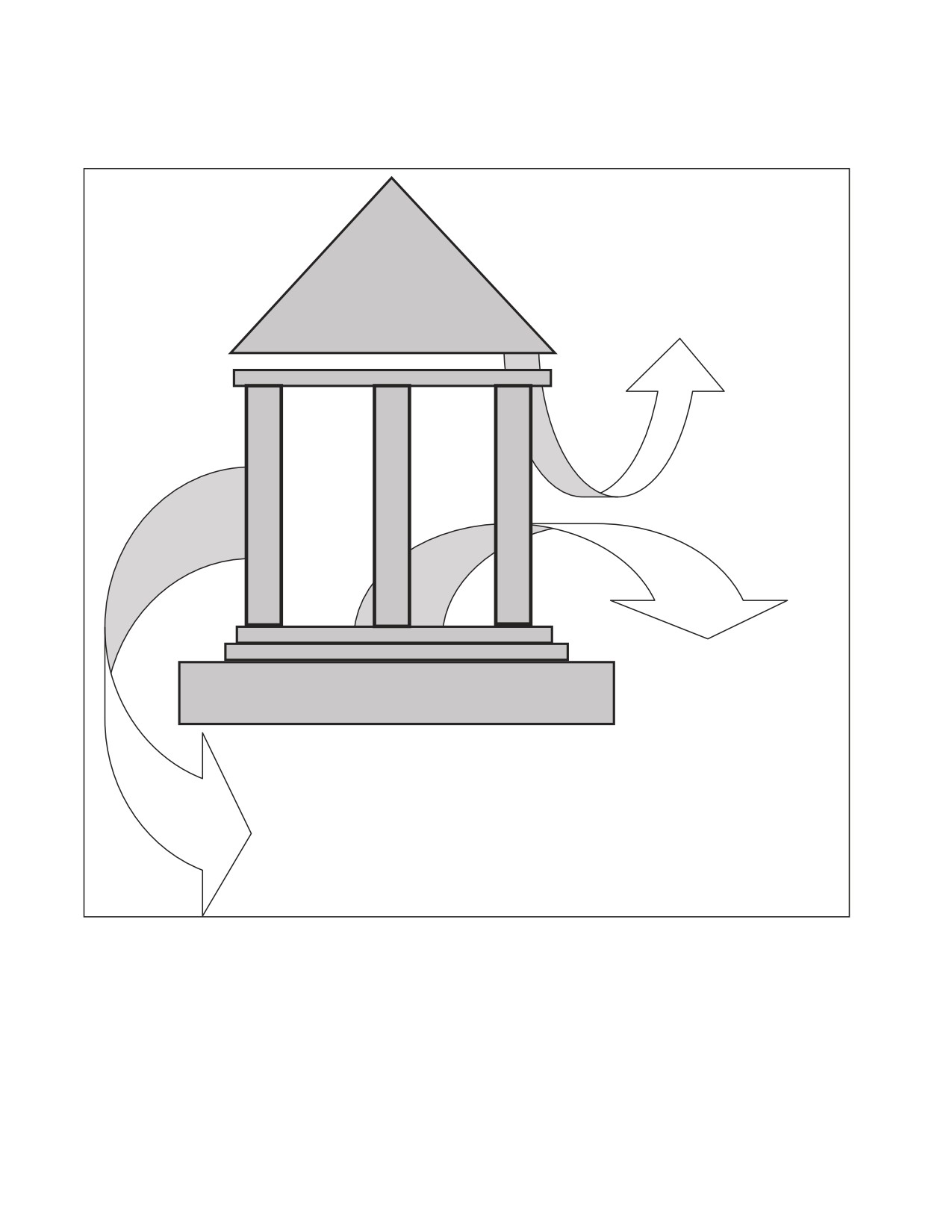
Figure I-1, page I-2, displays the interrelationship between these four operational
elements—sense, shape, shield, and sustain. The elements interrelate to varying extents,
with shape having the most influence on the other operational elements.
a.
Sense. Sense is the capability to continually provide updated and accurate
information about the CBRN situation at a specific time and place. Contamination
avoidance implements this element by detecting, identifying, and quantifying those CBRN
hazards in all physical states (solid, liquid, gas) with sensors, arrays, and detectors.
b.
Shape. Shape provides the ability to characterize the CBRN hazard. The force
commander’s staff collects and assimilates information from sensors, intelligence, and
medical assets in near-real time to provide actual and potential impacts of CBRN hazards.
This information allows the commander to develop a clear understanding of the current and
predicted CBRN situation.
2 February 2006 FM 3-11.3/MCRP 3-37.2A/NTTP 3-11.25/AFTTP(I) 3-2.56
I-1

Sustain
Shield
Shape
Sense
Figure I-1. CBRN Operational Elements
c.
Shield. Shield provides the capability to shield the force from harm caused by
CBRN hazards by preventing or reducing individual and collective exposures, applying
prophylaxis to prevent or mitigate negative physiological effects, and protecting critical
equipment. Avoidance, mitigation, and active- and passive-defense measures assist the
commander with the shield of personnel and equipment.
d.
Sustain. Sustain is the ability to conduct decontamination and medical actions
that enable the quick restoration of combat power, maintain or recover essential functions
that are free of the effects of CBRN hazards, and facilitate the return to preincident
operational capability as soon as possible.
3.
Fundamentals and Principles
The possibility that an adversary will use CBRN weapons against the United States
and its allies continues to increase daily. If these weapons are used, our forces must be
ready to implement the principles of CBRN defense. The first of these is contamination
avoidance, which if successful, may limit the need for individual and collective protective
equipment or the need to conduct time- and labor-intensive decontamination activities. In
addition to the current arsenals of CBRN weapons systems, almost all areas of the world
have various types of factories, research facilities, pharmaceutical production lines, and
power plants that contain large quantities of materials which may be hazardous when
released into the atmosphere. Experiences with the chemical release at Bhopal, India, and
the nuclear contamination release at Chernobyl, Ukraine, demonstrate that toxic industrial
material (TIM) can be just as hazardous as military weapons. A release other than attack
(ROTA), whether intentional or due to collateral damage, presents a potential challenge for
our forces.
a.
Fundamentals of CBRN Defense. The three fundamentals of CBRN defense are
contamination avoidance, protection, and decontamination (see Figure I-2). Executed at all
levels and coupled with an effective retaliatory response, these fundamentals will increase
the likelihood of a US victory. While avoiding contamination is always desirable, the
mission may force individuals and units to occupy or cross a contaminated area. Units can
I-2
FM 3-11.3/MCRP 3-37.2A/NTTP 3-11.25/AFTTP(I) 3-2.56
2 February 2006
minimize their performance degradation and limit exposure to contamination by following
the principles and procedures outlined in this manual.
Conduct decontamination to
restore combat power
degraded by the
CBRN Defense
contamination of individuals,
equipment, or
mission-essential areas.
A
P
D
v
r
e
o
c
o
t
o
i
e
n
d
c
t
a
t
a
n
i
m
c
o
i
e
n
n
a
t
i
o
n
Apply individual and
collective protection to
CBRN BM
conserve combat power.
Anticipate and use sensors to avoid
hazards before contamination
influences the operations.
Figure I-2. Fundamentals of CBRN Defense
b.
Contamination Avoidance. Contamination avoidance is defined as taking actions
to avoid or reduce the effects of a CBRN attack and to minimize the effects of CBRN or TIM
contamination hazards. There are active and passive measures that can be taken to avoid
contamination. Passive-defense measures include those measures taken to avoid being
targeted and hit by a weapons system. These include operational security, camouflage and
concealment, hardening positions, and the dispersion of service members and equipment.
Contamination avoidance includes the following four CBRN-specific steps:
2 February 2006 FM 3-11.3/MCRP 3-37.2A/NTTP 3-11.25/AFTTP(I) 3-2.56
I-3
(1)
Implement passive-defense measures.
(2)
Warn and report CBRN or TIM events.
(3)
Locate, identify, track, and predict CBRN or TIM hazards.
(4)
Limit exposure to CBRN or TIM hazards.
c.
Tenets of Contamination Avoidance. The doctrinal tenets of contamination
avoidance are sound and can be applied to all situations at all levels. The TTP of applying
contamination avoidance will vary according to mission, the type of agent encountered, and
the environmental conditions. Some TIM are not detected by standard military detectors.
For example, the TTP applied to a large, fixed facility, such as an airfield, will differ from
those selected for a mobile unit. The following list outlines some of the skills and
procedures necessary to implement contamination avoidance:
(1)
Knowledge of potential hazards.
(2)
Intelligence preparation of the battlespace (IPB).
(3)
Vulnerability analysis.
(4)
Situational awareness (SA) (based on the three items listed above and the
actual data from the location of the contamination).
d.
Fixed and Mobile Operations. Units and activities can generally be
characterized as fixed or mobile. In a similar manner, contamination within the battlespace
is confined to a specific location or is being carried across the terrain by wind. Since the
services currently have a very limited capability to perform standoff detection, most
detection will occur in close proximity to, or in the midst of, a unit. In many cases, the
warning to a unit of a potential hazard will come from another unit that has become
contaminated. At higher echelons, specialized units (CBRN reconnaissance, biological
detection) provide attack indications through the CBRNWRS. Each unit provides CBRN
information commensurate with its detection capability. The fusion of data from many
sources provides the commander with SA of CBRN contamination and its potential effect on
his scheme of maneuver.
e.
Knowledge of Hazards. Contamination avoidance begins with the knowledge of
hazards that may be encountered. This includes the physical characteristics, field behavior,
and employment techniques that may be used. A thorough IPB is also essential to
avoidance. Understanding the threat’s CBRN capabilities and delivery systems allows the
joint force commander (JFC) to employ the assets necessary to protect the force. Because
the detectors have technical and practical limitations, they should be integrated and
networked throughout the battlespace in order to provide maximum coverage against
threats.
f.
Principles of Avoidance. The principles of avoidance include the elements of
detecting, identifying, predicting, warning, reporting, marking, relocating, and rerouting.
(1)
Detecting. In CBRN environments, detection is the act of locating CBRN
hazards by using detectors or monitoring and survey teams. The implications of detection
include the following:
(a) Warning. Standoff detection provides the warning of an approaching
cloud (not a specific chemical-biological [CB] agent) in sufficient time to implement
protective measures before an agent contamination occurs.
I-4
FM 3-11.3/MCRP 3-37.2A/NTTP 3-11.25/AFTTP(I) 3-2.56
2 February 2006
(b) Treatment (Medical Surveillance [MEDSURV]). Detection for
treatment focuses on identifying the type of agent dispersed in an attack so that the best
possible treatment can be rendered as early as possible.
(c)
Verification (Reconnoitering and Monitoring). Detection for
verification provides critical information to support decisions regarding national strategic
direction and integration.
(d) Surface Contamination (Monitoring). Detection for surface
contamination assists the commander with their decision making process. The results of
monitoring will allow them to make decisions, such as whether decontamination is
necessary or whether bypass routes are needed.
(e) Unmasking (Dewarning). Detection for unmasking is a means of
detecting the reduction of contamination to acceptable levels. A comparison of methods and
results from the earlier detection of an agent will be an important aspect of determining
when to unmask.
(2)
Identifying. Identification allows commanders to take the measures
required for protection and treatment. Follow-on surveys and sampling can then be used
for the verification.
(3)
Predicting. CBRN personnel prepare hazard predictions for CBRN attacks,
as the attack is not confined to the area directly attacked. The resulting aerosol or fallout
travels with the wind and can cover a large area downwind of the attack area. To prevent
casualties, units quickly estimate the possible hazard area and warn units within that area.
The estimates of the hazard areas are only approximations. Terrain, weather, and delivery
system variations modify the hazard area. In addition, the methods used to predict the
downwind hazard are “safe-sided” for personnel safety. This ensures that the hazard
should be within the predicted area, giving units in the area time to take appropriate
precautions.
(4)
Warning and Reporting. Warning and reporting informs US forces, allies,
and friendly forces of the impending or actual use of CBRN weapons.
(5)
Marking. Contamination is marked to warn friendly personnel. Units or
CBRN reconnaissance teams mark all likely entry points into the area and report
contamination to higher headquarters (HQ).
(6)
Relocating and Rerouting. Relocation may be an option, depending on the
tactical situation and the mission. This is a viable option for units that are mobile, but is
not valid for fixed sites, ports, and airfields.
4.
Vulnerability Reduction
Active measures prevent the enemy from using CBRN weapons; passive measures
increase survivability. Individual and unit collective measures are only discussed briefly
here. See Multiservice Tactics, Techniques, and Procedures for Nuclear, Biological, and
Chemical (NBC) Protection for detailed information.
a.
Active Measures. Active measures are those measures taken to find and destroy
munitions and delivery systems. The destruction of the delivery systems and munitions is
the best method of reducing the chances of being attacked. The destruction of stockpiles of
CBRN munitions and production facilities is usually beyond the capabilities of lower-level
2 February 2006 FM 3-11.3/MCRP 3-37.2A/NTTP 3-11.25/AFTTP(I) 3-2.56
I-5
commanders. Strategic levels of command will have the responsibility and the assets to
find and destroy these targets. Operational and tactical level commanders do not have the
capability to locate and destroy stockpiles or production facilities, but they do have the
capability to find and destroy delivery systems.
b.
Passive Measures. It may not be possible to destroy all threat CBRN munitions
and delivery systems; units must always take precautions to avoid being targeted and to
reduce the effects of an attack if one does occur. These are passive measures. All units
must use passive measures as part of normal operations to reduce the effects of operating
under CBRN conditions. These measures include—
(1)
Planning Ahead. Commanders must take the time to carefully plan courses
of action (COAs) and allow for the additional time requirement. This is commonly referred
to as war-gaming. A bad decision could cause the unit to become contaminated or suffer
casualties. See Appendix A for preattack checklists.
(2)
Avoiding Detection. Avoiding detection is the best way to prevent CB
attacks. Do this by employing operations security (OPSEC) measures. These include
camouflage, light discipline and, especially, signal security. Active and passive measures
must be used to prevent the enemy from gaining target information.
(3)
Providing Warning. If the unit is unable to avoid CBRN attacks, the early
warning of battlefield hazards is very important. The CBRNWRS notifies units that
adjacent units have been attacked or that a downwind hazard is present.
(4)
Seeking Protection. Seek protection in hardened facilities or bunkers. If
they are not available, natural terrain may provide shelter from some effects of CBRN
weapons. However, ditches, ravines, and natural depressions allow the accumulation of
chemical agents. Heavy forests and jungles protect against liquid chemical agents, but
vapor hazards will increase.
(5) Dispersing Assets. Dispersion must reduce vulnerability, but not hinder
operations or prevent the unit from concentrating when necessary. Supplies (especially
food; petroleum, oil, and lubricants [POL]; and ammunition) must be dispersed so that they
will not all be destroyed at once. The degree of acceptable dispersion will depend on the
mission, enemy, terrain and weather, troops available and civilian (METT-TC)
considerations.
NOTE: The USMC and joint doctrine use the term mission, enemy, terrain and
weather, troops and support available—time available (METT-T). Civilian
considerations are inherently measured within the context of this acronym.
(6)
Remaining Mobile. Mobility gives the commander the best chance for
avoidance. Constant movement prevents the enemy from pinpointing locations and
accurately employing CBRN weapons.
(7)
Covering Supplies and Equipment. Store supplies and equipment under
cover to prevent contamination.
I-6
FM 3-11.3/MCRP 3-37.2A/NTTP 3-11.25/AFTTP(I) 3-2.56
2 February 2006
5.
Chemical, Biological, Radiological, and Nuclear Battle Management
Future requirements for CBRN defense must contribute to the achievement of full
force protection (FP) as envisioned by Joint Vision 2020 (see Figure I-3). Currently, our
ability allows us to incorporate existing sensors into a manual system with “man-in-the-
loop.” Future artificial intelligence applications will reduce, but not eliminate, human
judgment requirements. Combining service capabilities, coalition partners, and available
civil defense assets into a standardized warning and reporting system provides the best
opportunity to produce CBRN awareness. The sensors collect data, the data is turned into
information by using the CBRN report formats, the information is processed into knowledge
by experts who provide hazard predictions and contamination overlays, and the knowledge
is used by commanders as the basis of understanding for subsequent planning and order
development. CBRN battle management (BM) requires the consideration of risks
associated with an adversary CBRN employment and the friendly CBRN defense actions.
It includes the proper employment of the CBRNWRS and applies principles of IM to the
CBRN defense challenges facing the command.
“The potential of such asymmetric approaches is perhaps the most serious danger the United States faces
in the immediate future—and this danger includes long-range ballistic missiles and other direct threats to
US citizens and territory. The asymmetric methods and objectives of an adversary are often far more
important than the relative technological imbalance, and the psychological impact of an attack might far
outweigh the actual physical damage inflicted. An adversary may pursue an asymmetric advantage on the
tactical, operational, or strategic level by identifying key vulnerabilities and devising asymmetric concepts
and capabilities to strike or exploit them. To complicate matters, our adversaries may pursue a
combination of asymmetries, or the United States may face a number of adversaries who, in combination,
create an asymmetric threat. These asymmetric threats are dynamic and subject to change, and the US
Armed Forces must maintain the capabilities necessary to deter, defend against, and defeat any adversary
who chooses such an approach. To meet the challenges of the strategic environment in 2020, the joint
force must be able to achieve full spectrum dominance.”
Figure I-3. Excerpt From Joint Vision 2020
a.
CBRNWRS. The CBRNWRS provides data and information to support the
CBRN BM process. Input and output from the CBRNWRS provides a means to inform
friendly units of possible contamination. For the CBRNWRS to be effective, units send
information on first use by the fastest communications means available. For example, first-
use reports require FLASH precedence. Units send subsequent information by any reliable
communications means.
b.
CBRN IM. CBRN IM (see Figure I-4, page I-8) refers to the processes a
commander uses to obtain, manipulate, direct, and control information. IM includes all
processes involved in the creation, collection, control, dissemination, storage, and retrieval
of information. CBRN SA of the operations environment allows the commander to
anticipate future conditions and accurately assesses risks. Graphic depictions of CBRN
hazard estimates/plots with text files (e.g., messages, reports) are very useful versus sole
reliance on map boards and overlays. The vertical and horizontal exchange of CBRN-
related information keeps different commands and staff personnel informed. The CBRN
staff determines the need for specific types of CBRN information (i.e., the when and where
of the CBRN attack). Positioning the required information at its anticipated points of need
speeds the flow and reduces demands on communications systems. The information
received from sensor networks also helps to provide an assessment of the current situation
by detecting and identifying CBRN hazards in air, on water, or on land. It detects and
2 February 2006 FM 3-11.3/MCRP 3-37.2A/NTTP 3-11.25/AFTTP(I) 3-2.56
I-7
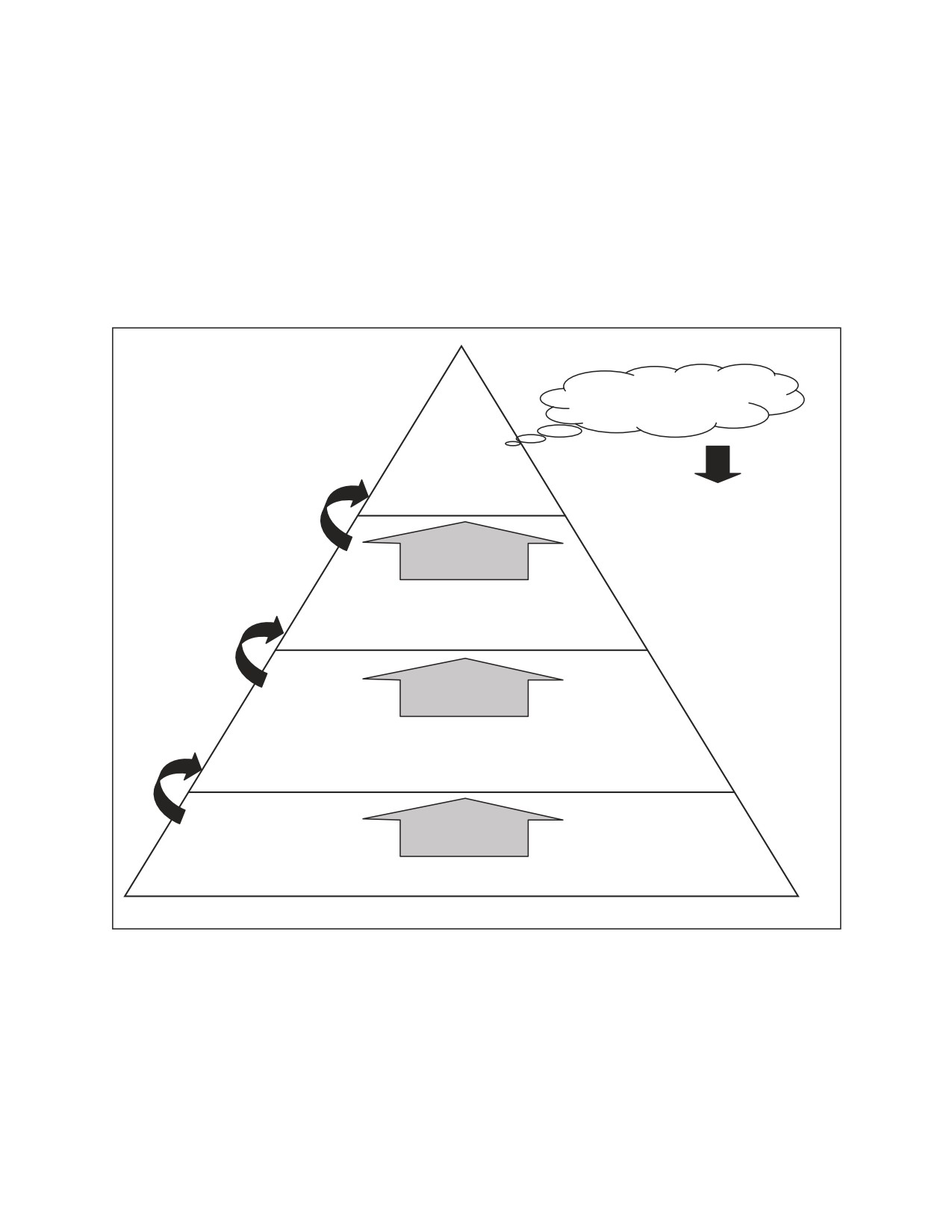
identifies CBRN hazards affecting personnel, equipment, or facilities and the physical state
of such hazards (gas, liquid, or solid). The detection of hazards is a key enabler and
provides a visualization of the CBRN environment. This visualization helps to develop a
clear understanding of the current and predicted CBRN situation, envision the end state
(mission accomplishment without CBRN casualties and operating tempo [OPTEMPO]
degradation), and anticipate the sequence that moves the force from its current state to the
desired end state. The commander’s SA and risk assessment leads to decisions to
implement measures to protect the force and maintain an advantage in the OPTEMPO
while preventing casualties under CBRN conditions by reducing the threat, reducing
operational vulnerability, and avoiding contamination.
Man-in-the-Loop
Assessment
Common CBRN SA
• Validation
• Feedback
• False Alarms
Understanding
• Technical Reach-Back
• Protective Measures/ Risk
• Dewarning
Control Measures
•
Commander’s Intent
•
Prioritization (Mission
Importance)
Judgment
•
Orders and Execution
•
Integrated CBRN Defense
•
Risk Management
Knowledge
• Risk Assessment: Hazard Prediction/
COA Analysis/MOPP Guidance
Cognition
• Risk Assessment
• CBRN Threat Status
Information
• CBRN Reports
• Impact of MOPP on Units
• Exposure Guidance
Processing
• Unit Protection Guidance
• Work Rate
Data
• Weather Guidance
Figure I-4. CBRN IM
(1)
Actions. The CBRN staff translates all source information into an
understanding of the CBRN threat and the operational environment for CBRN defense
actions. This process requires—
•
Timely conduct to assess vulnerability.
•
Specific COAs for reducing vulnerability and countering specific threats.
I-8
FM 3-11.3/MCRP 3-37.2A/NTTP 3-11.25/AFTTP(I) 3-2.56
2 February 2006
•
CBRN warning and reporting on potential and actual CBRN attacks to
facilitate risk assessments and actions and to minimize the short- and long-term health
effects of toxic exposures.
(2)
Enablers. To maintain SA, units conduct CBRN IM by—
•
Obtaining the relevant battlespace data.
•
Processing data into relevant information.
•
Gaining knowledge by determining the impact of the information on
operations.
•
Developing a plan based on the knowledge of the situation (knowing what
has occurred and what to do about it).
•
Supporting CBRN defense execution through orders and risk management.
•
Maintaining SA with man-in-the-loop assessment.
(3)
Data. The CBRN staff focuses on knowing what data is relevant,
determining what data can be collected prior to events, and developing a data collection
plan to obtain other data.
(4)
Information. The CBRN staff processes data into operationally significant
information and develops a collection plan to obtain additional data if information is
incomplete.
(5)
Knowledge. The CBRN staff uses their military decision-making process to
translate information into knowledge. It estimates and assesses hazards to develop
possible COAs.
(6)
Understanding. Understanding requires SA; the commander uses this
awareness to communicate intent and issue orders that mitigate risk through the
application of various CBRN defense measures.
6.
Commander and Staff Interactions in Meeting Chemical, Biological,
Radiological, and Nuclear Defense Challenges
a.
CBRN defense challenges call for close commander and staff interactions.
Operations in CBRN environments demand close attention to technical details by CBRN
staff experts and the integration of CBRN defense knowledge into the organization plans
and actions. Technical experts must be fully familiar with the organization mission and
capabilities and the current situation so that their assessments and recommendations
provide meaningful options for action by the commander.
b.
In addition to applying the principles of CBRN defense and exercising CBRN BM
capabilities in the most effective manner, CBRN staff experts must be aware of the military
and civilian environments in which the organization operations are unfolding. While the
primary responsibility of the commander and the military organization as a whole is to
accomplish the mission and care for the lives and welfare of individuals in uniform, the
military exists in an interdependent mode with its surrounding community. Therefore, due
to consideration in risk assessments, other recommendations and plans must be given to
the broader environment, including the civilian populace, in order to make militarily
effective plans that are not frustrated by adversary damage inflicted on the civilian
community. See Appendix B for information on CBRN cells.
2 February 2006 FM 3-11.3/MCRP 3-37.2A/NTTP 3-11.25/AFTTP(I) 3-2.56
I-9
7.
Chemical, Biological, Radiological, and Nuclear Operations
CBRN operations require detailed planning to be successful.
a.
CBRN Defense Planning and Considerations.
(1)
Operational Implications. At the operational level, the analysis of the
battlespace environment should concentrate on—
•
The capability of transportation networks to support movement.
•
Logistic support to CBRN weapons.
•
Zones of entry into and through the operational area and area of interest.
•
The impact of large geographic features (such as mountains, large forests,
deserts, and archipelagos) on military operations.
•
Seasonal climatic efforts on CBRN weapons effects.
CBRN defense planning and analysis assists the commander and staff in visualizing and
assessing the full spectrum of adversary offensive CBRN weapons capabilities across all
dimensions of the battlespace. The following is a list of items to be considered when
planning CBRN defense:
(a) Intelligence Collection, Analysis, and Production. Assessments should
identify threat agents and weapons and industrial sites containing TIM that would present
a hazard to deployed forces if sabotaged or destroyed.
(b) SA. Ensure that the CBRNWRS is operational as quickly as possible
after entry into a theater. Assets such as the Biological Integrated Detection System
(BIDS) should be deployed to monitor high-value assets. Detection systems for CBRN
agents should be deployed and networked to provide a warning of attack.
(c)
Common Planning, Training, and Equipment Standards. Gaps in the
CBRN defense capabilities of multinational forces are identified to promote effectiveness in
planning and operations.
(d) Medical CBRN Defense. Medical CBRN defense is integrated into the
planning process to support unit readiness. See Appendix C for detailed information on
radiological exposure
(e) Protection of the Joint Rear Area and Theater Sustainment
Capabilities. A successful adversary CBRN attack on an essential port of debarkation or
other critical logistics facility can degrade joint-force OPTEMPO and force generation
capabilities.
(f)
Logistics Burden of CBRN Attacks. The resupply of protective
clothing, equipment, repair parts, medical supplies (antidotes and antibiotics), and other
resources must be factored into computation of resource requirements.
(g) In-Theater, Active-Defense Systems. Planners should consider
deployment configurations and concepts of operations that maximize the use of active-
defense systems.
(h) Preplanning for Attack Operations. Attack operations are prioritized
and may be a high strategic or national priority at any point in a crisis, during the
I-10
FM 3-11.3/MCRP 3-37.2A/NTTP 3-11.25/AFTTP(I) 3-2.56
2 February 2006
transition to war, or during hostilities as a means to deny an adversary the capability to
produce, store, transport, or employ CBRN weapons.
(i)
Effects of CBRN Attacks on Command, Control, Communications,
Computers, and Intelligence (C4I). Limitations will result from the requirement to operate
in CBRN protective equipment, from the contamination of equipment, and from the effects
of electromagnetic pulse (EMP) on electrical and electronic equipment.
(j)
Capabilities and Limitations of Multinational Forces. The planning
process should consider the implications and feasibility of diverting US assets and
capabilities to support host nations (HNs) and other multinational members in meeting
common operational objectives.
(k) In-Theater Consequence Management (CM). Plans for in-theater CM
include the mitigation and management of the effects of CBRN attacks within a theater of
operations (see Multiservice Tactics, Techniques, and Procedures for Nuclear, Biological,
and Chemical Aspects of Consequence Management).
(2)
Tactical Implications. At the tactical level, the size and location of
battlespace are influenced by the physical location of adversary land, air, naval, space, and
other forces that could pose a direct threat to the security of the friendly force or the success
of its mission. The extent to which the effects of the battlespace environment are analyzed
at the tactical level is largely dependent on the mission and planning time available. At a
minimum, tactical level forces should analyze the battlespace environment in terms of
military objectives, avenues of approach, and the effects of a CBRN environment on
personnel, military operations, weapons systems, and force mobility. CBRN defense at the
tactical level will be based on, and result in, a higher degree of detail than would be
necessary at higher levels of military operations.
(3)
Homeland Defense Implications. A challenge for commanders conducting
CM operations is the requirement to adequately protect personnel, and materiel from a
CBRN incident. There is a need for a response capability to save lives, contain an incident,
and recover to a point that permits operations to resume. Confronting this challenge
requires a comprehensive and integrated approach from threat mitigation to incident
response and recovery. Military units develop deliberate plans to respond to CBRN attacks
within their assigned regions. Response plans should be updated regularly and coordinated
with the appropriate response agencies in the region. Plans should focus on the
unanticipated event and potential terrorist targets, such as special events, high-profile
buildings, medical and scientific research centers, and air and rail transportation
platforms. Response elements should also prioritize planning efforts in coordination with
the other response agencies within their region. Planning efforts should be prioritized based
on the most likely threats.
b.
Chemical Defense Planning and Considerations. (See Appendixes D and E.)
(1)
Operational Implications. Chemical warfare (CW) can be used to
contaminate ground and resources with persistent chemical hazards. Nonpersistent vapor
hazards and the vapor from persistent contamination can spread downwind and pose a
hazard over a significant portion of the AOs given the right meteorological (MET)
conditions. Commanders will need to consider the avoidance and evacuation of hazard
areas. CW protection will be needed for forces that remain in the area. Operational
capability and tempo are likely to be degraded because of the need for the force to adopt
2 February 2006 FM 3-11.3/MCRP 3-37.2A/NTTP 3-11.25/AFTTP(I) 3-2.56
I-11
CBRN defense detection, warning, protection, and control measures. Chemical detection,
identification, protection, and decontamination will put a burden on the theater logistics
system.
(2)
Tactical Implications. Forces remaining in or near CW hazard areas will
probably need to remain in CBRN protection until the commander determines that the
personnel should reduce their mission-oriented protective posture (MOPP) level. This can
cause some loss of OPTEMPO due to the fact that it may—
(a) Cause personnel to work in individual protective equipment (IPE),
degrading performance, increasing fatigue, and possibly lowering force cohesion and
morale.
(b) Reduce the overall speed, cohesion, and freedom of movement of forces
in the local area because of contaminated areas and assets.
(c)
Restrict the local use of ground and operational assets, cause resource-
intensive decontamination of key assets, and distort the logistics chain.
(3)
Homeland Defense Implications. The use of chemical agents can cause
psychological and physiological effects and also cause contamination or damage that will
restrict the use of facilities, equipment, or supplies. Fear and panic are the normal
reactions to discussions of chemical agents, and most civilian authorities will need
considerable assistance in locating, containing, and recovering from a chemical incident.
c.
Biological Defense Planning and Considerations. (See Appendix F.)
(1)
Operational Implications. The potential impact of biological warfare (BW)
attacks at the operational level can be wide-ranging and significant, particularly if the
detection and identification of an attack proves difficult and countermeasures are difficult
to implement. Large numbers of casualties can reduce the operational capability of the joint
force, reduce morale, and divert medical and logistics resources from current operations.
When combined, these factors may reduce OPTEMPO.
(2)
Tactical Implications. There will be some loss of operational capability by
those forces remaining in or near BW hazard areas. The following factors may hinder
personnel effectiveness:
(a) Remaining in CBRN protection for long periods of time.
(b) Maintaining frequent and regular health monitoring of personnel,
increased standards of hygiene, and protection of rations and water.
(c)
Avoiding the use of contaminated areas and assets.
(d) Decontaminating key assets.
(3)
Homeland Defense Implications. One of the dangers of biological weapons
is amplified by the fact that exposure to the agents would probably not be known until
symptoms appear (sentinel casualty). Personal protection generally consists of individual
protection and medical measures, such as immunization or the application of some other
postincident medical treatment (antibiotics). Biological-agent dissemination could be
accomplished by measures such as aerosol dissemination, food or water contamination, and
vector release. Biological agents can be produced in the laboratory or purchased from a
number of medical-research firms. For planning purposes, individual protection at any
suspected biological incident is of the utmost importance. Mobile laboratories can process
I-12
FM 3-11.3/MCRP 3-37.2A/NTTP 3-11.25/AFTTP(I) 3-2.56
2 February 2006
samples and identify pathogens. Early identification is essential in order to begin
treatment protocols.
d.
Nuclear and Radiological Defense Planning and Considerations. (See
Appendixes G and H.)
(1)
Operational Implications. The devastation resulting from a nuclear burst
is likely to require that a significant portion of the joint force assets be deployed to assist in
recovery in the area of the nuclear burst. The fallout from the nuclear detonation will cover
a portion of the joint operational area, and measures to control the contamination and
exposure of all personnel in the area will be needed. The operational capability of the joint
force is likely to be degraded for a considerable period. The potential for mass casualties in
the local civilian population is also likely to place a burden on the operational command and
staff.
(2)
Tactical Implications. In the area of a nuclear detonation, the operational
capability of the joint force will be seriously degraded. Degradation will be caused by the
loss of personnel, equipment, and resources; and the need to rescue and treat injured
personnel and fight possible fires will require a significant expenditure of resources. The
blocking of transportation routes and mobility corridors by debris and trees may also
degrade recovery. There will also be a need to deploy assets to assist other agencies and the
HN. The immediate area of the nuclear detonation is likely to be highly contaminated, and
movement, except to save life, will be severely limited. Fallout and induced radiation
patterns will require that units follow the operational exposure guidelines in Appendix C.
(3)
Homeland Defense Implications. While the detonation of a nuclear device
is perhaps the least likely scenario for a terrorist incident, it has the potential to cause the
greatest damage in terms of destruction and psychological damage (fear and panic). The
effects of a nuclear detonation include thermal, blast, and nuclear radiation. Even for a
small nuclear device, the number of casualties from blast, thermal, and initial nuclear
radiation could number in the hundreds. The presence of an induced radiation pattern and
downwind fallout will require a large number of monitors using radiac equipment and
might require the evacuation of a large number of people until the radiation decays to a
safe level.
e.
Radiological Weapons Defense Planning and Considerations. (See Appendixes G
and H.)
(1)
Operational Implications. Radiological warfare can be used to contaminate
ground and resources with radioactive hazards. Commanders will need to consider the
avoidance and evacuation of the hazard areas, particularly during military operations other
than war (MOOTW). Radiological protection will be needed for forces that remain in the
area. Operational capability and tempo are likely to be degraded because of the need for
the joint force to adopt CBRN defense detection, warning, protection, and control measures.
(2)
Tactical Implications. There will be some loss of operational capability by
those forces remaining in or near radiological hazard areas. This will be caused by the need
to—
(a) Remain in CBRN protection for long periods of time.
(b) Manage exposure to radioactive hazard and rotate personnel,
particularly during MOOTW.
2 February 2006 FM 3-11.3/MCRP 3-37.2A/NTTP 3-11.25/AFTTP(I) 3-2.56
I-13
(c)
Avoid the use of contaminated routes, areas, and assets.
(d) Decontaminate key assets.
(3)
Homeland Defense Implications. A terrorist could wrap an improvised
explosive device (IED) with radiological materials to create an incident in which the initial
explosion may kill or injure persons in the immediate vicinity of the device. Following the
incident, the possible ingestion and inhalation of radioactive particles would also pose a
health risk. Simple radiological dispersal is an act intended to spread radioactive material
not involving an explosive device. A terrorist need only secure a supply of radiological
material (e.g., gamma, beta, or alpha emitters) from a medical laboratory, industrial
facility, or other site and disperse the material.
f.
ROTA and TIM Defense Planning and Considerations. (See Appendix H.)
(1)
Operational Implications. The sites of significant TIM facilities in the joint
operations area need to be plotted and, whenever and wherever possible, avoided during
operations. Contingency plans need to be made with the HN to control and contain the
hazards if TIM facilities are damaged. Whatever the circumstances of a TIM release, the
impact on military capability will need to be assessed. A large-scale release from TIM
facilities, particularly if there are also large fires, has the potential to spread toxic aerosols
and smoke across a significant percentage of the operational area. Such hazards will need
to be avoided by the joint force or protection will be needed, particularly during MOOTW.
This is likely to restrict the freedom of action of the joint force and may degrade
OPTEMPO. Damage to nuclear facilities, even without a breach to core containment, may
also spread radioactive aerosols and smoke. In addition, if threat CBRN weapon production
or storage sites are targeted and hit, downwind hazard prediction should be accomplished
to determine if there is any threat to the force or HN personnel.
(2)
Tactical Implications. Forces that remain in the area will probably need to
adopt protection. Because of the nature of the TIM, countermeasures may not be within
the CBRN defense capability of the joint force. In this case, a specialist in the field of
hazardous materials (HAZMAT) management will be needed from the HN or outside the
theater. If conflict takes place in the area of TIM storage facilities, the risk of collateral
damage and the release of TIM must be assessed. Unused industrial sites with hardstands
and warehouses often provide ideal logistics facilities, but need to be checked for all forms
of TIM before use. Particular note of TIM needs to be taken when accommodations for
personnel are selected.
(3)
Homeland Defense Implications. TIM are substances that may create signs
and symptoms similar to CBRN exposure. These materials are found throughout the
normal transaction of daily business in the United States and are transported on our
railways, roadways, and waterways. They may or may not be precursors to CBRN agents.
Most of the materials contain volatile organic compounds, which are materials that contain
hydrocarbons and possibly other hazardous elements. They may be naturally occurring or
man-made and may evaporate easily based on agent characteristics. Testing has proven
that extended exposure may lead to debilitating injury. Some are carcinogenic, such as
benzene, or mutagenic, such as hexane (nervous system disorder). Technological
innovations and the widening proliferation of CBRN hardware and scientific expertise
increase the likelihood that states, nonstate actors, or transnational groups could threaten
the US homeland and population directly and, in times of conflict, deny US access to critical
overseas and domestic infrastructures. Terrorism remains one of the deadliest and most
I-14
FM 3-11.3/MCRP 3-37.2A/NTTP 3-11.25/AFTTP(I) 3-2.56
2 February 2006
persistent threats to US security. The motives, perpetrators, and methods of terrorist
groups are evolving in ways that complicate analysis, collection, and counteraction and
require the ability to respond flexibly and quickly. Sophisticated detection, analytical, and
protective equipment is required to detect and identify the TIM and the special protective
equipment that may be needed.
2 February 2006 FM 3-11.3/MCRP 3-37.2A/NTTP 3-11.25/AFTTP(I) 3-2.56
I-15
THIS PAGE IS INTENTIONALLY LEFT BLANK.
Chapter II
DEVELOPING THE CHEMICAL, BIOLOGICAL, RADIOLOGICAL, AND
NUCLEAR COMMON OPERATIONAL PICTURE
1.
Background
a.
CBRN avoidance measures can consist of passive measures as described in
Chapter I. However, the reporting of critical information will support time-sensitive
decisions to warn and protect our forces. The effective and efficient processing of CBRN
information will support the unit mission and the commander’s FP decision making.
Timely CBRN IM is built on integrating NBC report input into the command and staff
COP.
b.
A CBRN COP provides the commander and his forces with information that is
accurate, timely, usable, precise, and reliable. As defined in Joint Publication (JP) 1-02,
COP is a single identical display of relevant information shared by more than one
command. A COP facilitates collaborative CBRN planning and assists all echelons to
achieve SA. While the COP is intended to support the unit mission, the CBRN staff will
display information specifically designed to support their operations (e.g., NBC reports,
hazard predictions). The key consideration is that the information must be organized and
easily understood. The CBRN staff supports the preparation of the COP through the
following:
•
Identifying information requirements (e.g., adversary CBRN capabilities,
potential time and place of attacks).
•
Collecting and processing information (e.g., collection, analysis, and
dissemination of NBC reports).
•
Providing information to build the COP and displays (e.g., hazard overlays, areas
of contamination).
•
Developing understanding (e.g., supporting the commander’s decision-making
process to take avoidance or protective measures).
2.
Chemical, Biological, Radiological, and Nuclear Common Operational Picture
Functions
There are four representative functions that support CBRN COP operations. They
are—
a.
Detection. Detection is the act of locating CBRN hazards by the use of CBRN
detectors or monitoring and/or survey teams.
b.
Identification. Identification is the process of determining the benign or
hazardous character of an unknown detected substance.
c.
Contamination Marking. Contamination marking is used to provide warning to
friendly forces of the presence of contamination.
d.
Warning and Reporting. The warning and reporting of a CBRN attack is done
using the CBRNWRS.
2 February 2006 FM 3-11.3/MCRP 3-37.2A/NTTP 3-11.25/AFTTP(I) 3-2.56
II-1
3. Chemical, Biological, Radiological, and Nuclear Information Management
CBRN IM is providing quality information to the right person at the right time in a
usable form to facilitate understanding and decision making. CBRN IM uses the
CBRNWRS as a tool to provide relevant, precise, accurate, timely, usable, and complete
information.
NOTE: An automated version of the CBRNWRS (joint warning and reporting
network [JWARN]) is currently being integrated into existing C4I systems in
order to collect, process, store, protect, display, and disseminate CBRN
information.
a.
CBRN Processes. CBRN IM supports the commander in three main areas:
achieving SA/understanding, making decisions, and communicating execution information
to implement those decisions. CBRN IM is cyclical in nature and has four basic steps
(Figure II-1).
1.
Identify Information Requirements
Mission
Commander’s Input &
Approval
Staff Analysis
IR
Action
CCIR
Collect
Decision
Process
Store
IM
Understanding
Protect
Display
Disseminate
IM
Activities
COP
Dispose
3.
Provide Information to Build
2.
Collect and Process
a COP/Display
Information
Figure II-1. IM Cycle
(1)
Identify Information Requirements. Information requirements are the
criteria that must be known about the battlespace to enable mission accomplishment.
Information requirements such as MET data; friendly unit locations; enemy CBRN
capabilities; the likelihood of CBRN weapons use; and where, how, and what CBRN
materials may have already been employed against friendly forces will all have a direct
impact on information requirements.
II-2
FM 3-11.3/MCRP 3-37.2A/NTTP 3-11.25/AFTTP(I) 3-2.56
2 February 2006
(2)
Collect and Process Information. The process continues with the collecting
and processing of information to fulfill information requirements. The receipt of NBC1 or
NBC4 reports will require processing in accordance with Appendixes E through H and will
directly contribute to fulfilling and identifying information requirements.
(a) Collect. Obtain information on a CBRN attack from the NBC1 and
NBC4 reports in any manner, including direct observation or other reconnaissance and
surveillance (R&S) means.
(b) Process. Discern the meaning of the data; and filter, format, compile,
organize, correlate, plot, and evaluate the CBRN information.
(c)
Store. Retain the CBRN information in any form for orderly, timely
retrieval and documentation until needed.
(d) Protect. Take measures to ensure the availability of information and
information systems.
(e) Display. Represent the CBRN information in a usable, easily
understood audio or visual form tailored to the needs of the user. The display conveys the
COP for decision making and exercising C2 functions. Historically, the display of CBRN
information has taken the form of formatted charts, written reports, verbal narrative
reports, and graphic map displays.
(f)
Disseminate. Communicate the evaluated information (such as
NBC2, NBC3, or NBC5 reports), and coordinate the procedures to disseminate the
applicable information to be incorporated into the standard operating procedure (SOP).
(g) Dispose. Take action on inactive records. These include destroying
and archiving information.
(3)
Provide Information to Build a COP/Display. CBRN information that is
accurate, timely, usable, complete, precise, and reliable is used to build a COP. COP is a
single, identical display of information shared by more than one command. CBRN
information contributes to the COP. The impact of a CBRN attack can affect more than one
command. Each command affected requires relevant information on the CBRN attack (e.g.,
when, where, impact).
(4)
Develop an Understanding. Awareness is achieved by the provided
information, but it takes an understanding of the information to make prompt, correct
decisions (such as changing a route to avoid contamination or adjusting the MOPP level).
b.
CBRN IM Activities. The CBRN IM includes seven basic activities—collecting,
processing, storing, protecting, displaying, disseminating, and disposing of the information.
c.
CBRN IM Capabilities. The capability to receive and report CBRN attack
information varies from command to command. The CBRN staff makes an assessment of
the capability that exists within their command. Capabilities may range from detectors
and alarms that are not integrated to fully integrated sensors at selected locations.
(1)
Currently, many CBRN-agent detector and alarm arrays operate as
independent units. When a CBRN attack is detected, only those personnel in the
immediate vicinity hear the alarm. Adjacent units need to be notified by radio, wire
communications, or audible or verbal means. CBRN calculations and computations in
support of CBRN hazard prediction are often done manually.
2 February 2006 FM 3-11.3/MCRP 3-37.2A/NTTP 3-11.25/AFTTP(I) 3-2.56
II-3
(2)
To assist commanders and improve and automate the information
gathering and sharing process, several government off-the-shelf (GOTS) and commercial
off-the-shelf (COTS) systems have been developed and are in use throughout the US
military (see Chapter III for more information).
4.
Chemical, Biological, Radiological, and Nuclear Information Flow Strategy
The effective flow of information is paramount to CBRN defense operations.
a.
The CBRN IM procedures must provide for the rapid vertical and horizontal flow
of information. Traditional staff arrangements have determined that the flow of CBRN
information should logically flow to the CBRN cells. However, it should not form a firewall
to the exchange of CBRN information with the other staff elements (e.g., operations,
intelligence, and logistics) or commands. Optimum information flow within a HQ requires
speed and clarity of transfer, without creating fragmented or useless information. The
effective flow of CBRN information requires the information to be—
•
Positioned properly. Positioning the required information at its anticipated
points of need speeds the flow (e.g., using public folders or web pages to post the required
CBRN information, such as MET reports).
•
Mobile. Information flow must be immediately adjusted to support the vertical
and lateral flow of information between adjacent forces (e.g., collaborative planning system
on the integration of CBRN R&S assets).
•
Accessible. All levels of command must be able to pull the information they need
to support concurrent or parallel planning and mission execution (e.g., graphic depiction of
CBRN forces in a COP).
•
Fused. Information is received from many sources, in many mediums, and in
different formats. It is blended into an accurate summary (e.g., a CBRN threat assessment
disseminated in graphic form on an automated COP system).
b.
The information flow provides input for the commander’s decision support
matrix (DSM). The DSM identifies key decisions, expected events, and planned friendly
actions that the commander expects to make during the next stage or phase of the
operation. The DSM links information to key CBRN decisions. The CBRN staff provides
input to help develop a DSM during the planning process. The DSM identifies the
commander’s critical information requirement (CCIR) needed to make decisions and
achieve the desired results. (For more information on DSMs refer to Marine Corps
Warfighting Publication [MCWP] 3-40.2)
c.
Implementing the CBRN information flow strategy provides for the required
input for the decision-making process. The CBRN staff performs the following
representative functions that furnish information to support the COP and the
decision-making process:
•
Collect and analyze sensor inputs (e.g., detector data, detector alarms, medical
alerts).
•
Maintain information on the status of CBRN networked sensor grids.
•
Format and forward NBC reports to facilitate the warning of personnel.
II-4
FM 3-11.3/MCRP 3-37.2A/NTTP 3-11.25/AFTTP(I) 3-2.56
2 February 2006
///////////////////////////////////////