FM 4-20.105-1 Airdrop of Supplies and Equipment: Dual Row Airdrop Systems (Volume, August 2006) - page 1
*FM 4-20.105-1/TO 13C7-1-51 VOL I
Field Manual
Headquarters
Department of the Army
No. 4-20.105-1
Department of the Air Force
Technical Order
Washington, DC, 29 August 2006
No. 13C7-1-51 Volume I
Airdrop of Supplies and Equipment:
Dual Row Airdrop Systems
Volume I
Contents
Page
PREFACE
viii
Scope
viii
Chapter 1
AIRDROP INFORMATION
1-1
Responsibilities
1-1
Safety Precautions
1-1
Type and Method of Airdrop
1-1
Commonly Used Items
1-2
Inspection of Items
1-6
Maximum Rigged Weight
1-6
Accompanying Loads
1-6
Stowing Accompanying Load
1-6
Preparing Drop Items
1-6
Covering Load
1-6
Center of Balance
1-7
Items and Loads Dropped in Cold Climates
1-7
Knots
1-8
Chapter 2
RIGGING AND PROCEDURAL INFORMATION
2-1
Section I - Dual Row Airdrop Platform
2-1
General Information
2-1
Platform Limitations
2-1
Platform Preparation
2-2
Distribution Restriction: Approved for public release; distribution is unlimited.
*This publication supersedes FM 4-20.105/TO 13C7-1-51 dated 1 April 2002.
i
Contents
Preparing the Platform
2-2
Building Honeycomb Stacks
2-4
Placing Honeycomb Stacks
2-5
Drive-Off Aid Airdrop
2-6
Section II - Suspension Slings
2-7
Cargo Slings
2-7
Requirements
2-8
Attaching Slings and Safety Tieing Suspension Slings
2-9
Section III - Lashings
2-11
Use
2-11
Components and Strengths
2-11
Fitting D-Rings
2-13
Lashing Load
2-13
Safety Tieing Load Binder Handles
2-15
Forming a 30-Foot, 45-Foot, or Greater Length Tiedown Strap
2-16
Section IV - Cargo Parachutes
2-17
Use
2-17
Types
2-17
Riser Extension Requirements
2-17
Riser Extensions
2-18
Stowing Riser Extensions
2-19
Stowing Cargo Parachutes
2-22
Using Deployment Lines
2-22
Restraining Two to Four Parachutes
2-26
Section V - Deployment Line and Parachute
2-32
Use
2-32
Inspecting and Maintaining
2-32
Attaching the Deployment Line
2-32
Positioning and Securing the Deployment Parachute and Line
2-33
Section VI - Release Assemblies
2-36
Use
2-36
Description
2-36
Inspecting and Maintaining
2-37
Operation
2-37
Preparing the M-1 Cargo Parachute Release
2-39
Attaching Parachute Risers to the Parachute Release
2-48
Section VII - Attitude Control Systems
2-49
Attitude Control System
2-49
Section VIII - Outrigger Assembly
2-51
Use
2-51
Inspecting and Maintaining
2-51
Platform Fitting Assembly (PFA) Weldment and Link Assemblies
2-52
Outrigger Mast and Foot
2-52
Section IX - Load Marking and Inspection
2-56
Marking Rigged Load
2-56
Section X - Transportation of Rigged Loads
2-56
ii
FM 4-20.105-1/TO 13C7-1-51 VOL I
29 August 2006
Contents
Responsibilities
2-56
Typical Loading and Transporting Equipment
2-56
Chapter 3
RIGGING M998/M1038/M097 CARGO/TROOP CARRIER HMMWV
ON DUAL ROW AIRDROP SYSTEM PLATFORM
3-1
Section I - Rigging the M998/M1038/M1097 Cargo/Troop Carrier
3-1
Description of Load
3-1
Preparing Platform
3-2
Building and Placing Honeycomb Stack
3-3
Installing Drive-Off Aids on Platform
3-6
Preparing Truck
3-6
Stowing Accompanying Load
3-19
Lifting and Positioning Truck and Installing Optional Drive-Off Aids
3-23
Lashing Truck
3-24
Installing Suspension Slings and Rear Attitude Control System
3-28
Installing Outrigger Assemblies
3-33
Stowing Cargo Parachutes
3-33
Stowing Deployment Parachute
3-34
Installing Parachute Release System
3-35
Installing Mast Release Knives
3-37
Marking Rigged Load
3-38
Equipment Required
3-38
Section II - Rigging the M1097 Variant Cargo/Troop Carrier
3-40
Description of Load
3-40
Preparing Platform
3-41
Building and Placing Honeycomb Stacks
3-41
Installing Optional Drive-Off Aid on Platform
3-41
Preparing Truck
3-42
Stowing Accompanying Load
3-45
Building the Cab Support
3-49
Lifting and Positioning Truck and Installing Optional Drive-Off Aids
3-51
Lashing Truck
3-51
Installing Suspension Slings and the Attitude Control System
3-56
Installing Outrigger Assemblies
3-59
Stowing Cargo Parachutes
3-59
Stowing Deployment Parachute
3-59
Installing Parachute Release System
3-60
Installing Mast Release Knives
3-61
Marking Rigged Load
3-62
Equipment Required
3-62
Chapter 4
RIGGING M1025/M1121/M1114 ARMAMENT/TOW CARRIER HMMWV
ON DUAL ROW AIRDROP SYSTEM PLATFORM
4-1
Section I - Rigging M1025/M1121 Armament/TOW Carrier HMMWV
4-1
Description of Load
4-1
Preparing Platform
4-2
Building and Placing Honeycomb Stack
4-2
Installing Optional Drive- Off Aid on Platform
4-2
29 August 2006
FM 4-20.105-1/TO 13C7-1-51 VOL I
iii
Contents
Preparing M1025/M1121 Truck
4-2
Stowing Accompanying Load on M1025 Armament Carrier
4-8
Stowing Accompanying Load in M1121 TOW Carrier
4-14
Preparing Roof of TOW Carriers
4-17
Lifting and Positioning Truck and Installing Optional Drive-Off Aids
4-19
Lashing Truck
4-19
Installing Suspension Slings and Attitude Control System
4-19
Installing Outrigger Assemblies
4-26
Stowing Cargo Parachutes
4-26
Stowing Deployment Parachute
4-27
Installing M-1 Release System
4-28
Installing Mast Release Knives
4-29
Marking Rigged Load
4-30
Equipment Required
4-30
Section II - Rigging M1114 Up-Armored Armament Carrier HMMWV
4-33
Description of Load
4-33
Preparing Platform
4-34
Building and Placing Honeycomb Stacks
4-35
Preparing M1025/M1121 Truck
4-40
Stowing the Accompanying Load
4-45
Preparing Roof
4-47
Lifting and Positioning Truck and Installing Optional Drive-Off Aids
4-49
Lashing Truck
4-49
Installing Attitude Control System And Suspension Slings
4-54
Installing Outrigger Assemblies
4-58
Stowing Cargo Parachutes
4-58
Stowing Deployment Parachute
4-59
Installing M-1 Parachute Release System
4-60
Installing Mast Release Knives
4-61
Marking Rigged Load
4-62
Equipment Required
4-62
Chapter 5
RIGGING M119 105-MILLIMETER HOWITZER AND ACCOMPANYING
LOAD ON DUAL ROW AIRDROP SYSTEM PLATFORM
5-1
Description of Load
5-1
Preparing Platform
5-1
Stowing Accompanying Load
5-3
Building and Placing Honeycomb Stacks
5-9
Preparing Howitzer
5-13
Lifting and Positioning Howitzer
5-25
Stowing Fuse Boxes
5-26
Building and Placing the Attitude Control System (ACS) Bridge Support
5-28
Lashing Howitzer
5-30
Installing ACS and Suspension Slings
5-32
Installing Outrigger Assemblies
5-37
Stowing Cargo Parachutes
5-37
Stowing Deployment Parachute
5-40
Installing Parachute Release System
5-41
iv
FM 4-20.105-1/TO 13C7-1-51 VOL I
29 August 2006
Contents
Installing Mast Release Knives
5-42
Marking Rigged Load
5-43
Equipment Required
5-43
Chapter 6
RIGGING M101A1 OR M101A2, ¾-TON CARGO TRAILER WITH
ACCOMPANYING LOAD ON DUAL ROW AIRDROP SYSTEM PLATFORM 6-1
Description of Load
6-1
Preparing Platform
6-1
Positioning and Lashing Accompanying Loads on Platform
6-3
Building and Placing Honeycomb Stack
6-11
Preparing the Trailer
6-14
Stowing Accompanying Load and Trailer Components in Trailer
6-16
Securing Trailer Support Stand and Installing Lifting Slings
6-23
Positioning Trailer
6-24
Lashing Trailer
6-25
Building and Installing Parachute Stowage Platform
6-27
Building and Positioning Attitude Control System (ACS) Stacks
6-29
Installing Suspension Slings and Attitude Control System (ACS)
6-31
Installing Outrigger Assemblies
6-36
Stowing Cargo Parachutes
6-36
Stowing Deployment Parachute
6-37
Installing Parachute Release System
6-38
Installing Mast Release Knives
6-39
Marking Rigged Load
6-40
Equipment Required
6-40
Chapter 7
RIGGING T200 BOBCAT COMPACT TRACK LOADER ON DUAL
ROW AIRDROP SYSTEM PLATFORM
7-1
Section I - T200 Bobcat Compact Track Loader
7-1
Description of Load
7-1
Preparing Platform
7-1
Building and Placing Honeycomb Stack
7-3
Positioning and Securing the Roller and Bucket
7-8
Preparing the Loader
7-10
Lifting and Positioning the Loader
7-13
Lashing the Loader
7-14
Installing Suspension Slings and Attitude Control System (ACS)
7-20
Installing Outrigger Assemblies
7-28
Stowing Cargo Parachutes
7-28
Stowing Deployment Parachute
7-31
Installing Parachute Release System
7-32
Installing Mast Release Knives
7-33
Installing Vehicle Body Protection
7-34
Marking Rigged Load
7-35
Equipment Required
7-35
Section II - T200 Bobcat Compact Track Loader Accessory Load
7-37
Description of Load
7-37
29 August 2006
FM 4-20.105-1/TO 13C7-1-51 VOL I
v
Contents
Preparing Platform
7-38
Building, Placing, and Packing the Accessory Box
7-39
Lashing the Accessory Box
7-44
Positioning and Lashing the 500-Gallon Water Drum
7-47
Preparing, Positioning and Lashing the Concrete Mixer
7-49
Preparing, Positioning and Lashing the Sweeper
7-53
Covering the Load
7-57
Building and Positioning the Parachute Stowage Platform
7-58
Installing Suspension Slings and Attitude Control System (ACS)
7-60
Stowing Cargo Parachutes
7-64
Stowing Deployment Parachute
7-65
Installing Parachute Release System
7-66
Installing Outrigger Assemblies
7-67
Installing Mast Release Knives
7-67
Marking Rigged Load
7-68
Equipment Required
7-68
Chapter 8
RIGGING GUIDED MISSILE, SURFACE, ATTACK JAVELIN CONTAINER
ON DUAL ROW AIRDROP SYSTEM PLATFORM
8-1
Section I - Rigging Javelin (Metal) Containers
8-1
Description of Load
8-1
Preparing Platform
8-1
Constructing Supply Box
8-2
Positioning Supply Box
8-4
Lashing Supply Box
8-7
Preparing Honeycomb Stacks
8-10
Positioning Honeycomb Stacks
8-11
Positioning and Securing Javelins on Stack 1
8-12
Positioning and Securing Javelins on Stack 2
8-17
Constructing Endboards
8-19
Lashing Endboards and Load for Stack 1
8-20
Lashing Endboards and Load for Stack 2
8-24
Positioning Attitude Control System (ACS) and Installing Suspension Slings .8-29
Installing Outrigger Assemblies
8-35
Stowing Cargo Parachutes
8-35
Stowing Deployment Parachute
8-36
Installing Parachute Release System
8-37
Installing Mast Release Knives
8-39
Marking Rigged Load
8-40
Equipment Required
8-40
Section II - Rigging Javelin (Plastic) Containers
8-42
Description of Load
8-42
Preparing Platform
8-42
Preparing Honeycomb Stacks
8-44
Positioning Honeycomb Stacks
8-45
Positioning and Securing Javelins on Stack 1
8-46
Positioning and Securing Javelins on Stack 2
8-49
Positioning and Securing Javelins on Stack 3
8-51
vi
FM 4-20.105-1/TO 13C7-1-51 VOL I
29 August 2006
Contents
Constructing Endboards
8-53
Lashing Endboards to Load
8-54
Lashing Load to Platform
8-55
Positioning the Attitude Control System (ACS) and Installing Suspension
Slings
8-64
Stowing Cargo Parachutes
8-71
Stowing Deployment Parachute
8-72
Installing Parachute Release System
8-73
Installing Mast Release Knives
8-74
Marking Rigged Load
8-75
Equipment Required
8-75
Volume II
Chapter 9
RIGGING 105-MILLIMETER (MM) AMMUNITION MASS SUPPLY LOAD
ON DUAL ROW AIRDROP SYSTEM PLATFORM
9-1
Description of Load
9-1
Preparing Platform
9-1
Building Honeycomb Stacks
9-3
Positioning Honeycomb and Securing First Ammunition Stack
9-4
Constructing and Placing Endboards
9-8
Installing Lashings on First Ammunition Stack
9-10
Positioning and Securing Second Ammunition Stack
9-16
Installing Lashings on Second Ammunition Stack
9-17
Installing the Attitude Control System (ACS) and Suspension Slings
9-21
Installing Outrigger Assemblies
9-27
Stowing Cargo Parachutes
9-27
Stowing Deployment Parachute
9-28
Installing Parachute Release System
9-29
Installing Mast Release Knives
9-30
Marking Rigged Load
9-31
Equipment Required
9-31
Chapter 10
RIGGING M-GATOR WITH ACCOMPANYING LOAD ON DUAL ROW
AIRDROP SYSTEM PLATFORM
10-1
Description of Load
10-1
Preparing Platform
10-1
Building and Positioning the Honeycomb Stacks
10-3
Preparing the M-Gator
10-6
Positioning the M-Gator
10-9
Lashing the M-Gator
10-10
Building M-Gator Box
10-13
Positioning M-Gator Box
10-16
Lashing M-Gator Box
10-17
Constructing Endboards for Ammunition Stack 1
10-20
Positioning First Ammunition Stack
10-21
Lashing Endboard of First Ammunition Stack
10-23
Constructing Endboards for Second Ammunition Stack
10-25
Positioning Second Ammunition Stack
10-26
29 August 2006
FM 4-20.105-1/TO 13C7-1-51 VOL I
vii
Contents
Lashing Endboard of Second Ammunition Stack
10-28
Positioning the Attitude Control System (ACS) and Installing Suspension
Slings
10-30
Installing Outrigger Assemblies
10-35
Stowing Cargo Parachutes
10-35
Stowing Deployment Parachute
10-36
Installing Parachute Release System
10-37
Installing Mast Release Knives
10-38
Marking Rigged Load
10-39
Equipment Required
10-39
Chapter 11
RIGGING THE MASS SUPPLY LOAD ON DUAL ROW AIRDROP
SYSTEM PLATFORM
11-1
Description of Load
11-1
Preparing Platform
11-1
Building and Positioning the Mass Supply Boxes
11-3
Installing Lashing on Mass Supply Boxes
11-11
Installing the Attitude Control System (ACS) and Suspension Slings
11-19
Installing Outrigger Assemblies
11-25
Stowing Cargo Parachutes
11-25
Stowing Deployment Parachute
11-26
Installing Mast Release Knives
11-28
Marking Rigged Load
11-29
Equipment Required
11-29
Appendix A
VERIFYING THE CENTER OF BALANCE ON A DRAS PLATFORM LOAD . A-1
GLOSSARY
Glossary-1
REFERENCES
References-1
viii
FM 4-20.105-1/TO 13C7-1-51 VOL I
29 August 2006
Preface
SCOPE
The purpose of this manual is to provide the latest approved procedures for rigging Dual Row Airdrop System
(DRAS) platforms. This manual is written for use by the parachute rigger.
The procedures contained in this manual are typical and serve as the standard from which all DRAS platform
rigging is derived. Due to the uniqueness of some equipment and items, the procedures in a specific rigging
chapter may be different from those in chapters 1 and 2. When procedures are different, those in the
specific chapter will be followed. When an item of equipment is specified to be used for which its
minimum or maximum capacity is exceeded, a notice of exception will be printed at the beginning of each
paragraph in each rigging chapter where the exception is authorized.
Chapters 1 and 2 contain specific limitations and general information about the rigging of DRAS airdrop
platform loads for low-velocity airdrop from the C-17 (Globemaster) aircraft, shows and tells how to prepare,
attach, and safety tie some of the components and systems used in the specific rigging chapters of the FM 4-
20.105-1-1/TO 13C7-1-51 VOL I.
USER INFORMATION
This publication applies to the Active Army, the Army National Guard/Army National Guard of the United
States, and United States Army Reserve, unless otherwise stated.
The proponent of this publication is the United States Training and Doctrine Command (TRADOC). You are
encouraged to report any errors or omissions and to suggest ways of making this a better manual.
Army personnel, send your comments on DA Form 2028 directly to:
Director
Aerial Delivery and Field Services Department
USA Quartermaster Center and School
710 Adams Avenue
Fort Lee, Virginia 23801-1502
Air Force personnel, send your reports on AFTO Form 22 through your respective command Weapons and
Tactics to:
Headquarters
Air Mobility Command (AMC/A39T)
402 Scott Drive, Unit 3AI
Scott AFB, Illinois 62225-5302
Air Force personnel in Special Operations Command, send your reports on AFTO Form 22. HQ AMC/A39T
will consolidate and forward changes to:
Director
Aerial Delivery and Field Services Department
USA Quartermaster Center and School
710 Adams Avenue
Fort Lee, Virginia 23801-1502
Also send an information copy of AFTO Form 22 to:
542d MSUG/GBMUDE
380 Richard Ray Blvd
STE 104
Robins AFB, Georgia 31098-1640
29 August 2006
FM 4-20.105-1/TO 13C7-1-51 VOL I
ix
This page intentionally left blank.
Chapter 1
Airdrop Information
RESPONSIBILITIES
1-1. US Air Force personnel are responsible for loading rigged Dual Row Airdrop System (DRAS)
platform loads into the C-17 (Globemaster) aircraft and installing and operating the airdrop system.
SAFETY PRECAUTIONS
1-2. Safety precautions MUST be closely followed when airdrop platform loads are rigged. Failure to
follow the precautions could result in serious injury to personnel or damage to the drop item or aircraft.
The following safety precautions shall be taken by the rigger:
• Make sure that when lifting heavy items, the lifting device has a rated lifting capacity that exceeds
the weight of the item to be lifted.
• Make sure that items being lifted are secured to the lifting device.
• Avoid working under equipment suspended above a DRAS platform unless absolutely necessary.
• Cover all wet cell batteries in service with plastic or nonflammable material.
• Check fuel tanks to ensure that they do not exceed the fuel level of the specific rigging chapter.
Check fuel tanks of small engines to make sure they are drained. Check fuel cans to make sure
they are performance-oriented packaging approved. When stowing fuel cans, use cellulose
wadding or other suitable material to prevent metal-to-metal contact.
• Package, mark, and label hazardous materials according to AFMAN 24-204(I)/TM 38-250.
CAUTION
Only ammunition listed in FM 4-20.153/MCRP 4-11.3B/TO 13C7-18-41
may be airdropped.
TYPE AND METHOD OF AIRDROP
1-3. As used in this manual, DRAS allows platforms to be loaded side-by-side inside C-17 aircraft.
DRAS airdrop is designed to supplement the usual surface methods of delivering supplies and equipment
to forces in the field.
• Type of airdrop. Currently the only type of airdrop used to deliver platform loads is low-velocity
airdrop. DRAS low-velocity airdrop delivers platform loads from C-17 aircraft. The G-11D cargo
parachutes are used to slow the descent of the loads to ensure minimum landing shock. The
number of cargo parachutes can vary as shown in Table 1-1. Loads with different quantities of the
same type parachute may be airdropped from the same aircraft or element provided the following
conditions are met:
■ Airdrop altitude for the aircraft or element will be determined by the type and number of
parachutes on the load requiring the highest airdrop altitude.
■ Aircraft or elements with lower airdrop altitudes will drop before aircraft or elements with
higher airdrop altitudes.
29 August 2006
FM 4-20.105-1/TO 13C7-1-51 VOL I
1-1
Chapter 1
■ The transported force accepts strike report responsibility for loads other than the first
platform to exit the aircraft or element lead for formation airdrops.
Table 1-1. Type and Number of Parachutes for Low-Velocity Airdrop
Minimum Drop Altitude (Feet AGL)
Parachutes
1,200
2 to 4 G-11D
CAUTION
Drop altitudes reflect MINIMUM drop altitudes.
• Method of airdrop. The gravity method is used for DRAS platform loads delivered by low-
velocity airdrop. The aircraft flies at an incline of approximately 4 degrees, the locks holding the
platforms are removed, and the loads roll out of the aircraft by gravitational pull.
COMMONLY USED ITEMS
1-4. Items commonly used for rigging DRAS platform loads are described in this section. Each rigging
chapter in FM 4-20.105-1-1/TO 13C7-1-51 VOL I contains one or more tables of equipment required.
These tables list the NSN, item, and quantity of each item needed to prepare and rig the load covered in
that chapter. Standard DRAS hardware items are shown in Figure 1-1. Standard DRAS straps and canvas
items are shown in Figure 1-2. Some textile, wood, and miscellaneous items are described below.
• Textile Items. The most common textile items and their uses are as follows:
■ Type III nylon cord is used to make safety ties and to hold items in place. It has a tensile
strength of 550 pounds.
■
½-inch tubular nylon webbing is used to secure items during airdrop. It has a tensile
strength of 1,000 pounds.
■
5/8-inch or 9/16-inch tubular nylon webbing may be used for parachute clustering ties in
place of ½-inch tubular nylon webbing. Five eighths inch tubular nylon webbing has a
tensile strength of 2,250 pounds and 9/16-inch tubular nylon webbing has a tensile strength
of 1,500 pounds.
■
¾-inch tubular nylon webbing is used to secure items during airdrop. It has a tensile
strength of 2,300 pounds.
■ Type VIII nylon webbing is used for parachute restraint and to safety tie the rectangular
outrigger foot assembly. It has a tensile strength of 4,000 pounds.
■ Type I ¼-inch cotton webbing is used to make safety ties and to hold items in place. It has
a tensile strength of 80 pounds.
• Wood Items. Wood items used when DRAS loads are rigged for specific airdrop are made
locally. Details for building these wood items are in the rigging chapter.
Note. Plywood will be grade AC or AD.
• Miscellaneous Items. Miscellaneous items that may be used when a platform load is rigged are
discussed below. The proper use of these items will be covered in detail in the specific rigging
chapter for the load.
■ Adhesive tape (masking tape), 2 inches wide, is used to secure folds of excess webbing. It
is also used to protect honeycomb from being cut by type III nylon cord and to hold
padding in place. It can be used for other tasks also.
1-2
FM 4-20.105-1/TO 13C7-1-51 VOL I
29 August 2006
Airdrop Information
■ Type IV, cloth-backed adhesive tape, 2 inches wide, is used to protect honeycomb from
being cut by type III nylon cord and to hold padding in place. It can be used for other tasks
also.
■ Cellulose wadding and felt sheets have many uses. They may be used to pad fragile items,
to prevent sharp edges from cutting, and to protect slings during airdrop.
■ Energy-dissipating pads (honeycomb) are used to absorb the landing shock. Honeycomb
is also used to level, pad, and fill empty spaces.
2
1
3
4
5
6
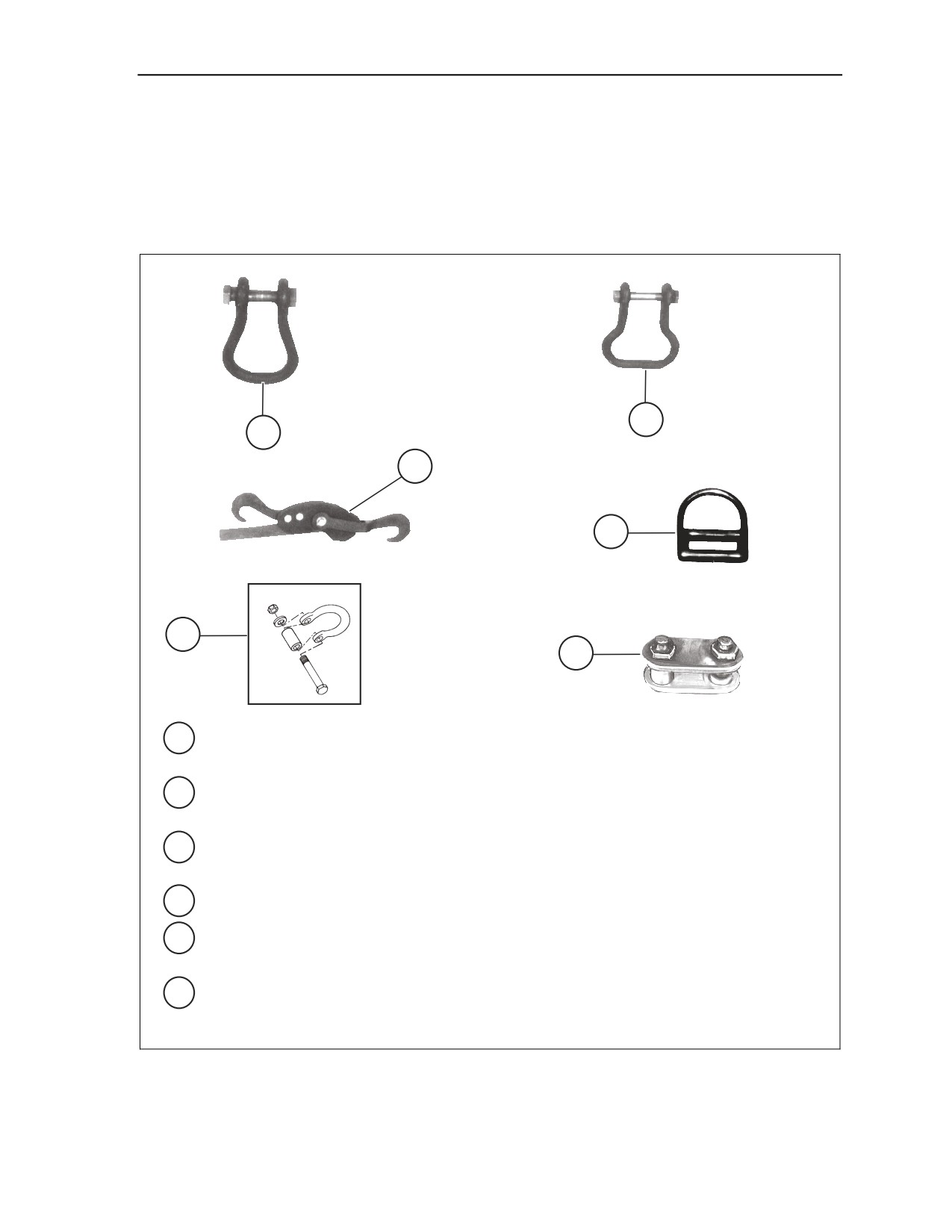
1 The large clevis is used to group bridles and attach riser extensions to the G-11D cargo
parachute. The clevis is used in other places, as indicated in the specific rigging chapter.
2 The medium clevis is used as a guide for the suspension slings on the attitude control
system. Other uses are given in the specific rigging chapter.
3 The 10,000-pound load binder is used to hook two D-rings together or to hook a D-ring to a
platform tiedown clevis on the airdrop platform.
4 The heavy-duty D-ring is used with a 15-foot tiedown strap.
5 The platform clevis is attached to the side rails of the DRAS platform in order to secure the
load.
6 The 3 ¾-inch, two-point link assembly is used to join suspension slings and to attach the
deployment line to the deployment parachute adapter web.
Figure 1-1. Hardware Items Used for Rigging DRAS Loads
29 August 2006
FM 4-20.105-1/TO 13C7-1-51 VOL I
1-3
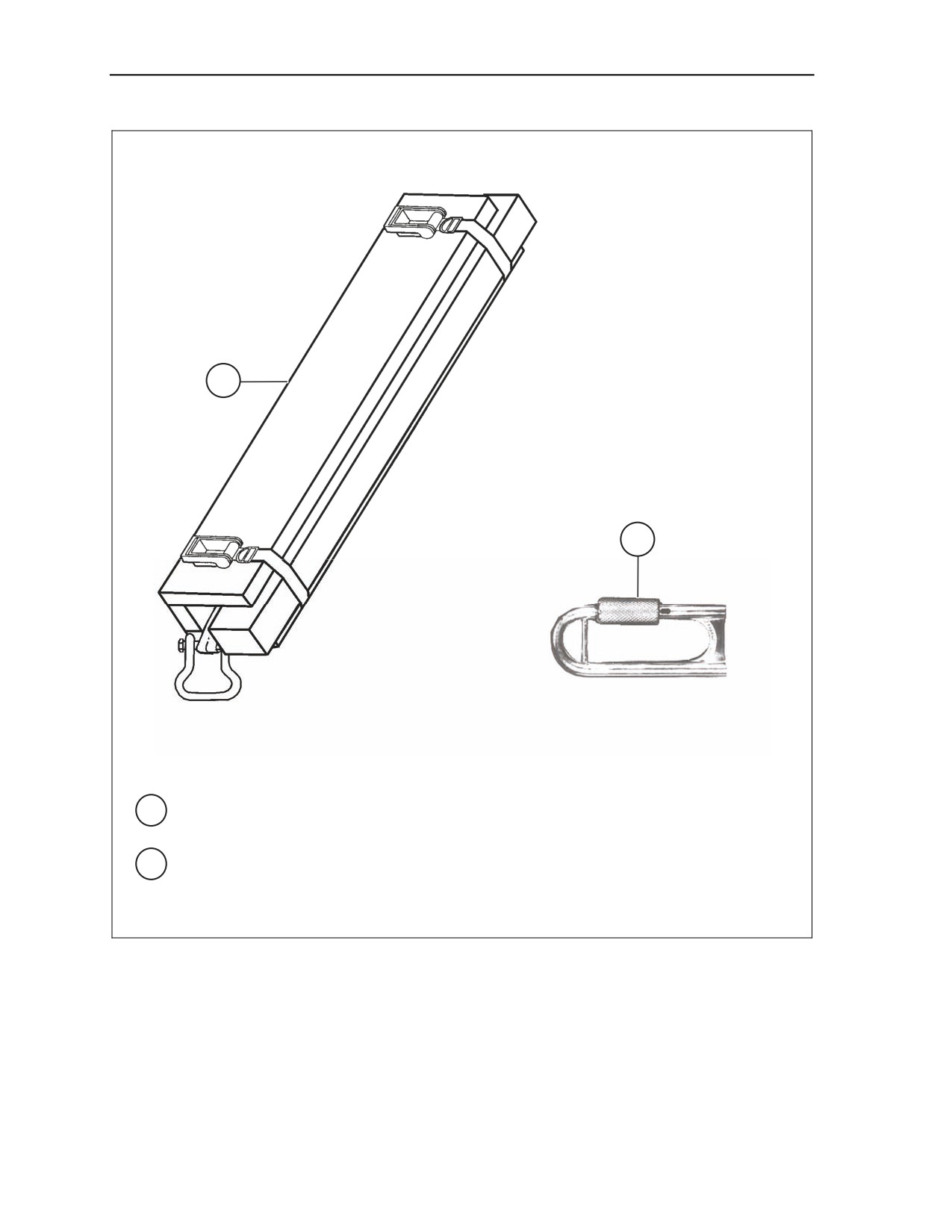
Chapter 1
8
7
7 The guillotine-type knife is used on parachute release straps to cut the parachute restraint
straps. The guillotine knife is also used to cut the outrigger vertical restraint ties.
8 The attitude control system (ACS) is a locally fabricated item used as a spreader bar on all
loads. The ACS also helps to control the attitude of the platform during extraction of the
load. Each load requires two ACSs. The fabrication procedures are shown in Figure 2-40.
Figure 1-1. Hardware Items Used for Rigging DRAS Loads (Continued)
1-4
FM 4-20.105-1/TO 13C7-1-51 VOL I
29 August 2006
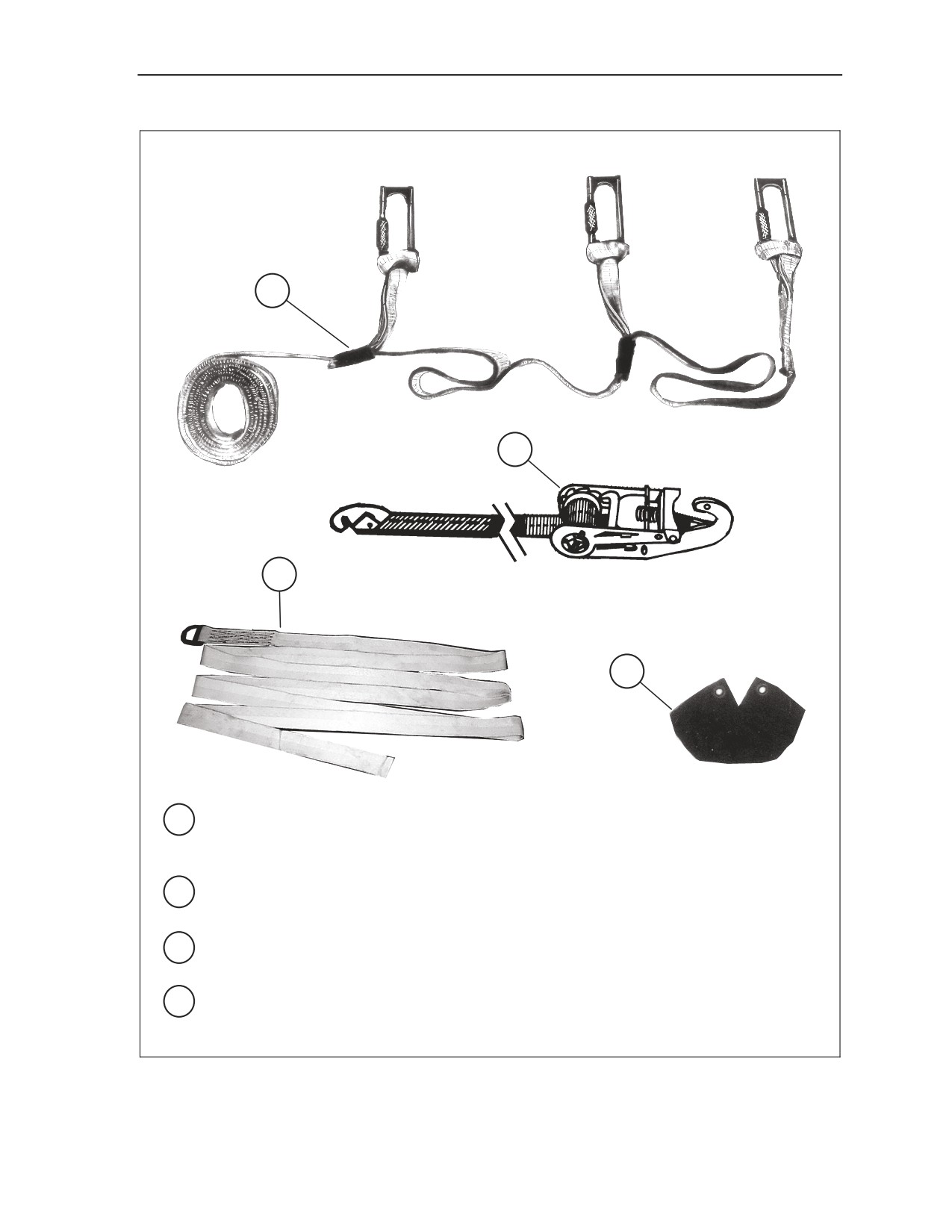
Airdrop Information
KNIFE 1
KNIFE 2
KNIFE 3
1
2
3
4
1 The multicut parachute release strap is used to cut one to three parachute restraint straps
on a DRAS load. The strap comes with three guillotine-type release knives. Knives that are
not being used are removed. This release strap is always used in pairs.
2 The CGU-1/B aircraft cargo tiedown is used to safety the outriggers in the vertical position
and on the ACS. The strap is removed from the outriggers prior to airdrop.
3 The 15-foot dacron tiedown strap is used to lash a DRAS load to the platform. Other uses
of this strap are covered in the specific rigging chapter.
4 The large clevis cover is used on the large clevis when the clevis is used to join the risers
of a cargo parachute to a riser extension.
Figure 1-2. Straps and Canvas Items Used for Rigging DRAS Loads
29 August 2006
FM 4-20.105-1/TO 13C7-1-51 VOL I
1-5
Chapter 1
INSPECTION OF ITEMS
1-5. Canvas, metal, webbing, and wood items are inspected according to TM 10-1670-296-20&P/TO
13C7-49-2.
MAXIMUM RIGGED WEIGHT
1-6. The weight cited in the rigged load data for each specific load is typical for the load as shown. Some
amount of overweight is allowed as long as load dimensions and rigging procedures are not changed. The
maximum rigged weight for a DRAS platform is 14,500 pounds.
Note. When a maximum allowable rigged weight is specified in the rigged load data, this weight
is the absolute maximum and will not be exceeded.
ACCOMPANYING LOADS
1-7. Accompanying loads are items of supplies and equipment that may be added to a primary load. Each
airdrop chapter states whether an accompanying load is authorized.
STOWING ACCOMPANYING LOAD
1-8. Each specific rigging chapter contains the weight limitations, placement, and any additional
restrictions on accompanying loads.
CAUTIONS
1. Accompanying loads may vary, however, accompanying load
locations will not.
2. Only ammunition listed in FM 4-20.153/MCRP 4-11.3B/TO 13C7
18-41 may be rigged for airdrop.
3. Hazardous materials must be packaged, marked, and labeled as
required by AFMAN 24-204(I)/TM 38-250.
4. At least two layers of honeycomb must be placed under all
ammunition rigged for airdrop unless the specific rigging chapter states
differently.
PREPARING DROP ITEMS
1-9. Some items need to be prepared for rigging. This preparation can include removing, reinforcing,
stowing, and securing components. Detailed preparation instructions will be included in the specific
rigging chapter.
COVERING LOAD
1-10. Covers may be needed to protect the load and keep the suspension slings from fouling. To keep the
load from being damaged by falling hardware such as parachute releases, it may be necessary to cover
portions of the load with honeycomb or cloth protectors. If a cover is needed, the specific rigging chapter
will include this information and the procedures for its installation.
1-6
FM 4-20.105-1/TO 13C7-1-51 VOL I
29 August 2006
Airdrop Information
CENTER OF BALANCE
1-11. The center of balance (CB) of a DRAS airdrop platform load is based on the total rigged weight and
is given in the rigging chapter for a particular item. The CB must fall between 85 and 99 inches from the
front of the platform. The CB of each load must be verified. Methods for computing the CB are in
Appendix A.
ITEMS AND LOADS DROPPED IN COLD CLIMATES
1-12. Some items to be dropped may have been modified for use in cold climates by the installation of
extra equipment. Special rigging procedures may be needed when the drop item has been so modified.
When loads are to be dropped in cold climates, all excess webbing of suspension slings and tie-down straps
must be folded and tied with type I, ¼-inch cotton webbing.
29 August 2006
FM 4-20.105-1/TO 13C7-1-51 VOL I
1-7
Chapter 1
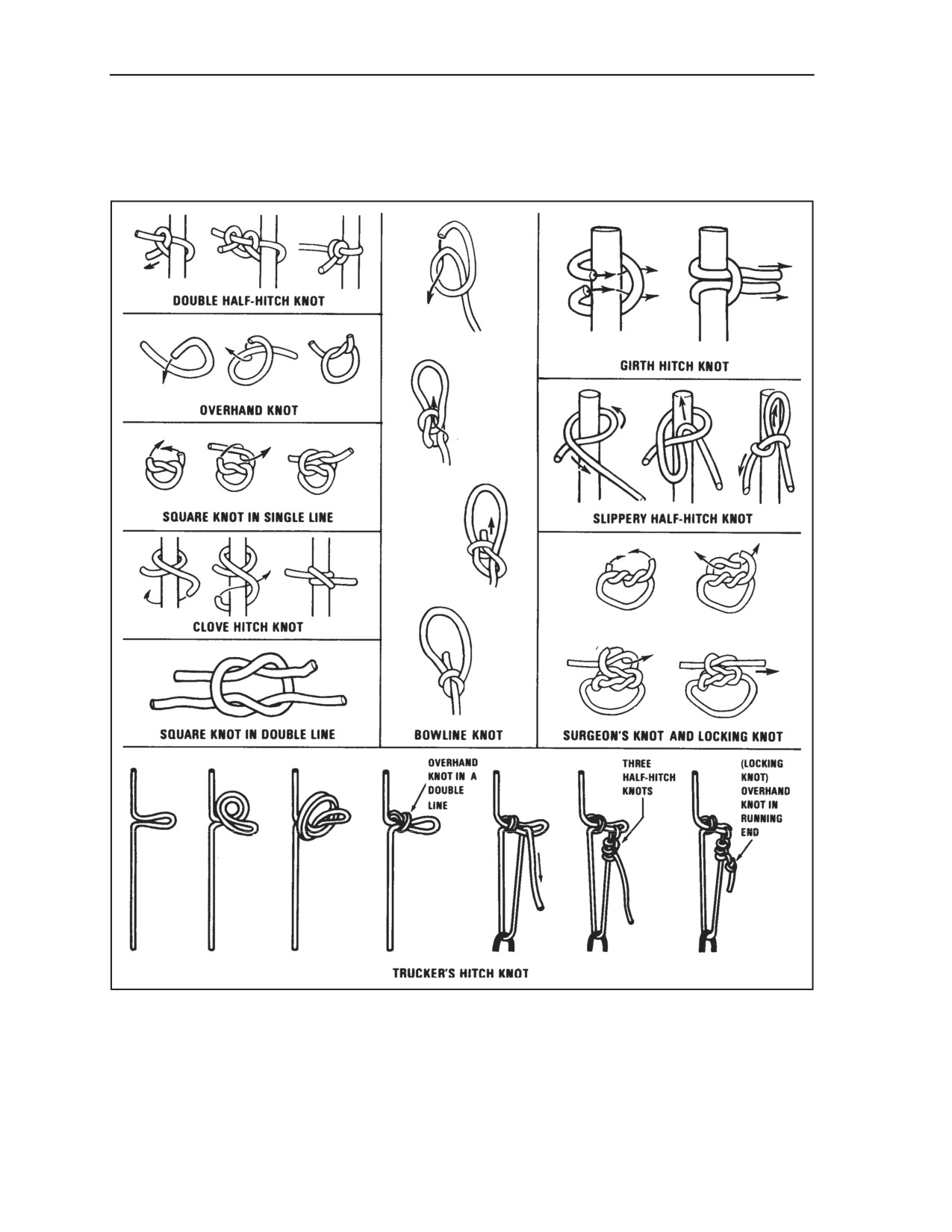
KNOTS
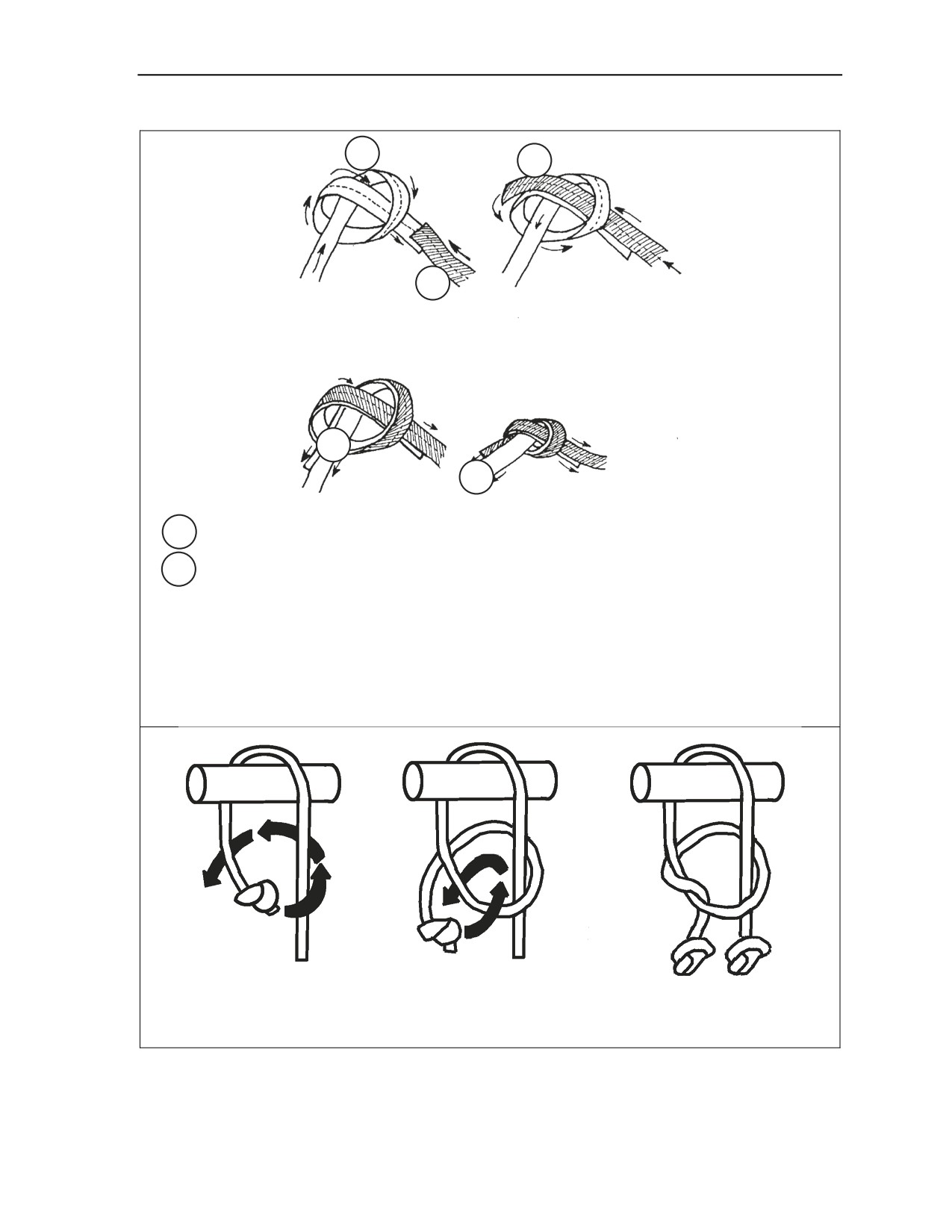
1-13. Some of the knots used for rigging platform loads are shown in Figure 1-3.
Figure 1-3. Knots Used During Rigging
1-8
FM 4-20.105-1/TO 13C7-1-51 VOL I
29 August 2006
Airdrop Information
1
2
2
2
2
1 Make an overhand knot in one end.
2 Follow the curve back to the reverse direction with the other end.
Notes.
1. There is no need to safety tie the ends when webbing is used.
2. Be sure the knot is neat, so as to tell if it is tied correctly.
3. This knot will jam after heavy loading.
Ring Bend Knot Used on Drive-off Aid
Note. Draw knots tight.
Slip Knot
Figure 1-3. Knots Used During Rigging (Continued)
29 August 2006
FM 4-20.105-1/TO 13C7-1-51 VOL I
1-9
This page intentionally left blank.
Chapter 2
Rigging and Procedural Information
SECTION I - DUAL ROW AIRDROP PLATFORM
GENERAL INFORMATION
2-1. The DRAS platform, as shown in Figure 2-1, serves as the base on which supplies and equipment are
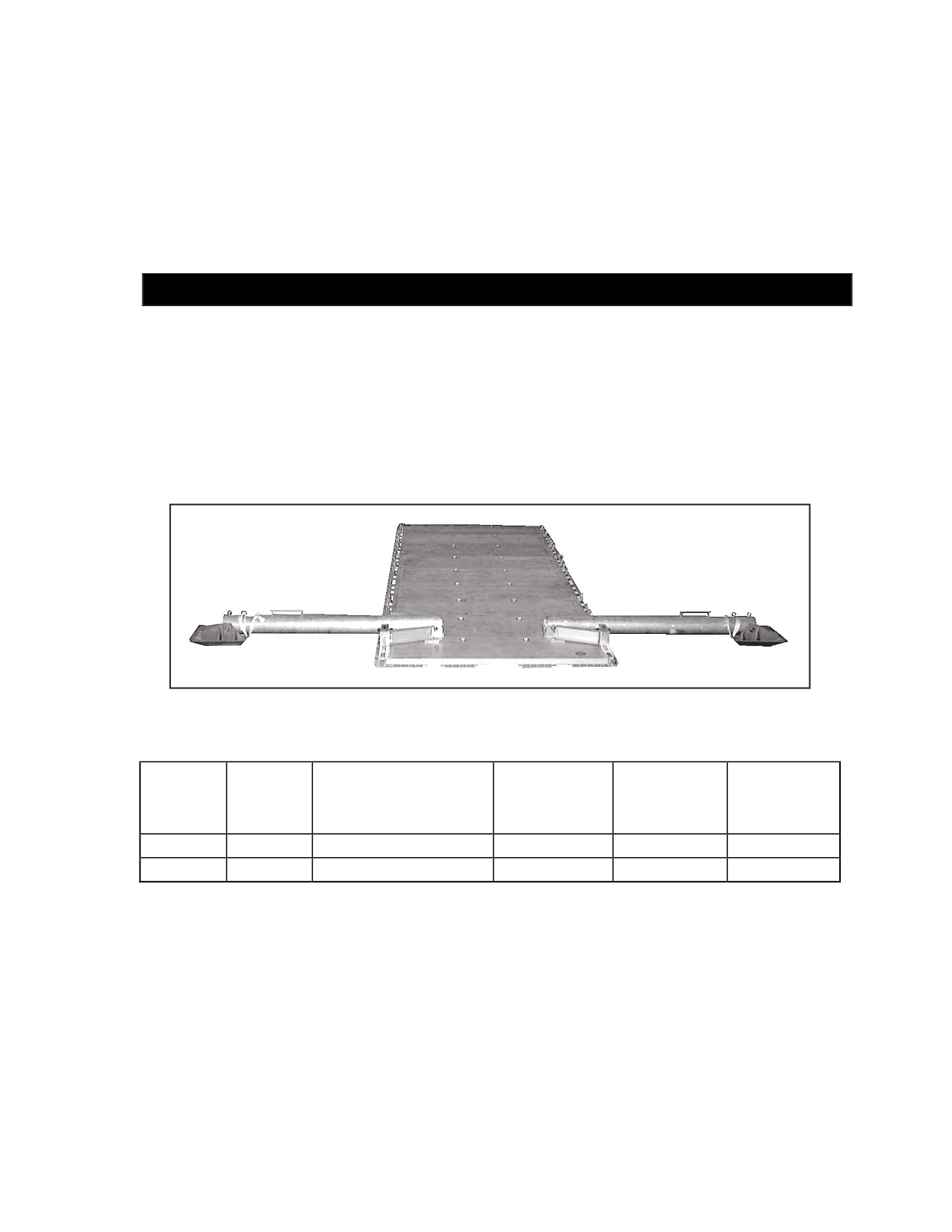
restrained. This platform also supports the load during the extraction, parachute deployment, suspension,
and recovery phases. The DRAS platform is used for low-velocity airdrop. The DRAS platform is 18 feet
long. The assembled platform is 88 inches wide. A detailed description of this platform is in TM 10-1670
268-20&P/TO 13C7-52-22. The DRAS platform spreads the shock of ground impact. The outrigger
assembly helps to prevent the platform from rolling over. Limitations for the DRAS platform are listed in
Table 2-1.
Figure 2-1. Dual Row Airdrop System Platform
Table 2-1. Limitation for DRAS Platform when Dropping from a C-17 Aircraft
Minimum
Maximum
Platform
Length
Width
Rigged
Rigged
Weight (Pounds)
Surface
(Feet)
(Inches)
Weight
Weight
(Square Feet)
(Pounds)
(Pounds)
18
88
1,590 w/o outriggers
132
5,040
14,500
18
88
1,942 w/outriggers
132
5,040
14,500
PLATFORM LIMITATIONS
2-2. The C-17 (Globemaster) aircraft is specifically designed to deliver supplies and equipment using the
DRAS during airborne operations. Platform loads are generally restricted to a height of 118 inches.
Platform loads are generally restricted to a weight of 14,500 pounds. For multiple platforms, up to 116,000
pounds of airdrop load may be airdropped. The aircraft has a capability of eight DRAS platforms, six on
the floor and two on the ramp.
29 August 2006
FM 4-20.105-1/TO 13C7-1-51 VOL I
2-1
Chapter 2
PLATFORM PREPARATION
2-3. The DRAS platform is inspected, or assembled and inspected, as outlined in TM 10-1670-268
20&P/TO 13C7-52-22.
PREPARING THE PLATFORM
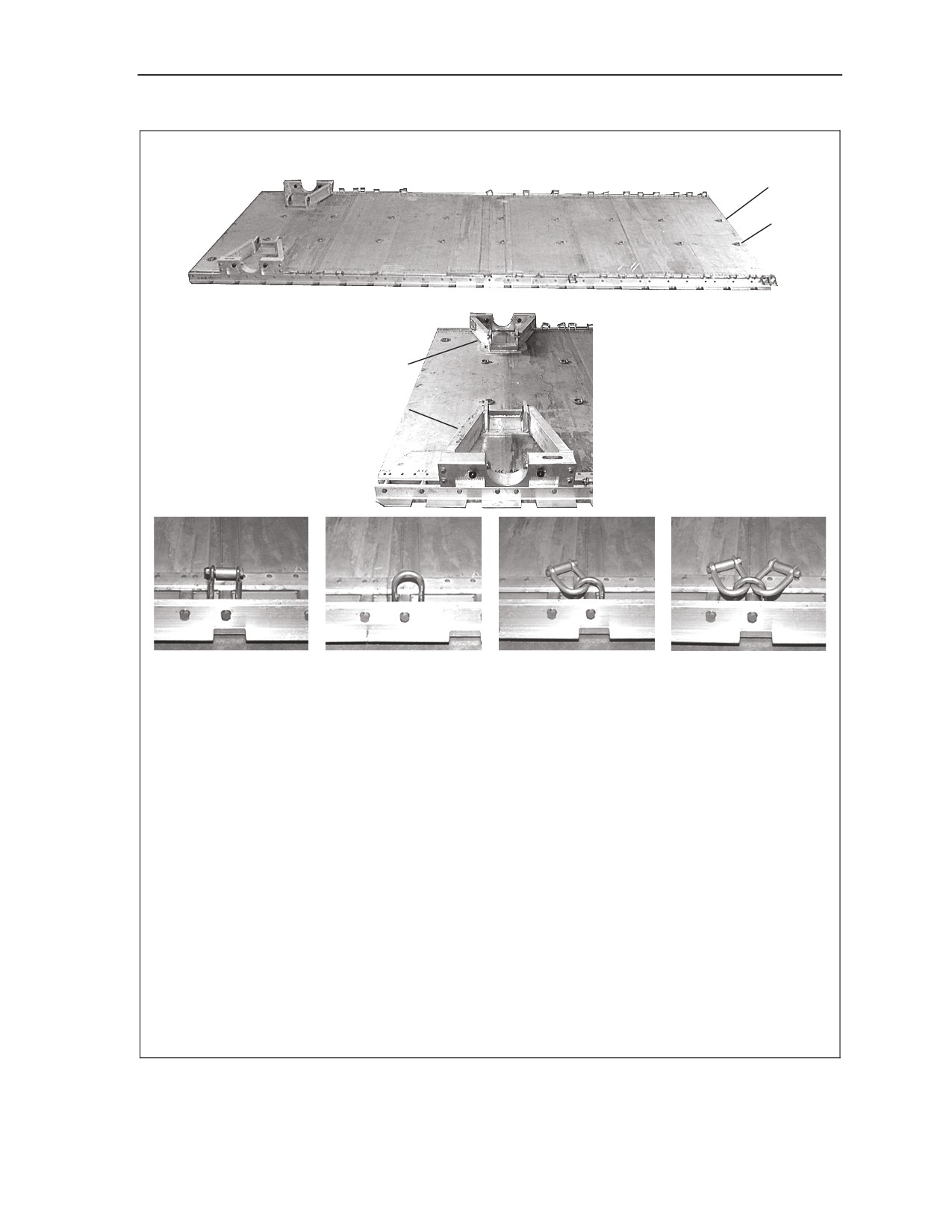
2-4. The platform must be prepared by attaching outrigger link assemblies and the outrigger platform
support weldments according to TM 10-1670-268-20&P/TO 13C7-52-22. Install the clevises according to
the specific rigging chapter. Figure 2-2 gives an example of how to bolt the clevises to the bushings in the
platform side rails and how to number them.
2-2
FM 4-20.105-1/TO 13C7-1-51 VOL I
29 August 2006
Rigging and Procedural Information
TIE-DOWN RINGS
LEFT SIDE
ROW B
B1
ROW A
REAR
A1
FRONT
RIGHT SIDE
PLATFORM
SUPPORT
WELDMENT
SINGLE CLEVIS
INVERTED CLEVIS
DOUBLE CLEVIS
TRIPLE CLEVIS
Step:
1. Install the outrigger link assembly and the outrigger platform support weldment according
to TM 10-1670-268-20&P/ TO 13C7-52-22.
2. Bolt the clevises to the bushings in the platform rails as shown in the specific rigging
chapter.
3. Starting at the front of the platform, number the clevises bolted to the right side beginning
with 1 and those bolted to the left side beginning with 1A.
4. Starting at the front of the platform, number the two tiedown rings in the panels A and B
from right to left. Starting with the first panel, number the tiedown rings beginning with 1
from front to rear.
Notes.
1. The single clevis is sometimes installed in an inverted manner if the specific rigging chapter
calls for it.
2. One clevis is sometimes installed on another inverted clevis. This is called a double clevis.
3. Two clevises attached to an inverted clevis is called a triple clevis. The two clevises will be
numbered as two separate clevises. Do not number the inverted clevis.
Figure 2-2. DRAS Platform Prepared
29 August 2006
FM 4-20.105-1/TO 13C7-1-51 VOL I
2-3
Chapter 2
BUILDING HONEYCOMB STACKS
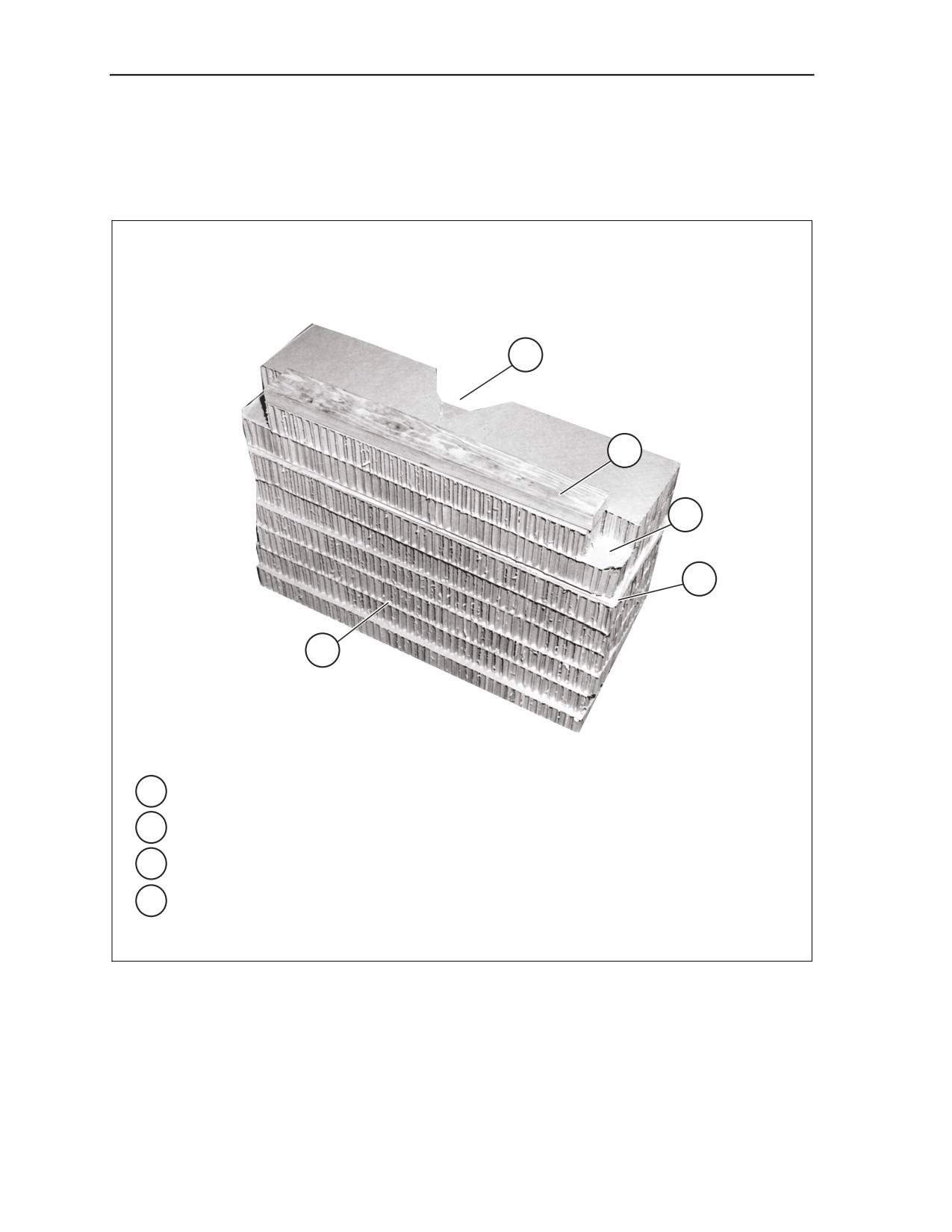
2-5. Honeycomb stacks must be prepared according to the specific rigging chapter. Honeycomb is used
to absorb the landing shock. Figure 2-3 shows a typical honeycomb stack.
Note. When honeycomb stacks are longer than 96 inches or wider than 36 inches, alternate the
layers to build a solid, cohesive stack.
3
1
3
2
4
1 Lumber.
2 Plywood.
3 Cutouts or notches.
4 Layers of honeycomb.
Note. Glue the layers of the stack together.
Figure 2-3. Typical Honeycomb Stack
2-4
FM 4-20.105-1/TO 13C7-1-51 VOL I
29 August 2006
Rigging and Procedural Information
PLACING HONEYCOMB STACKS
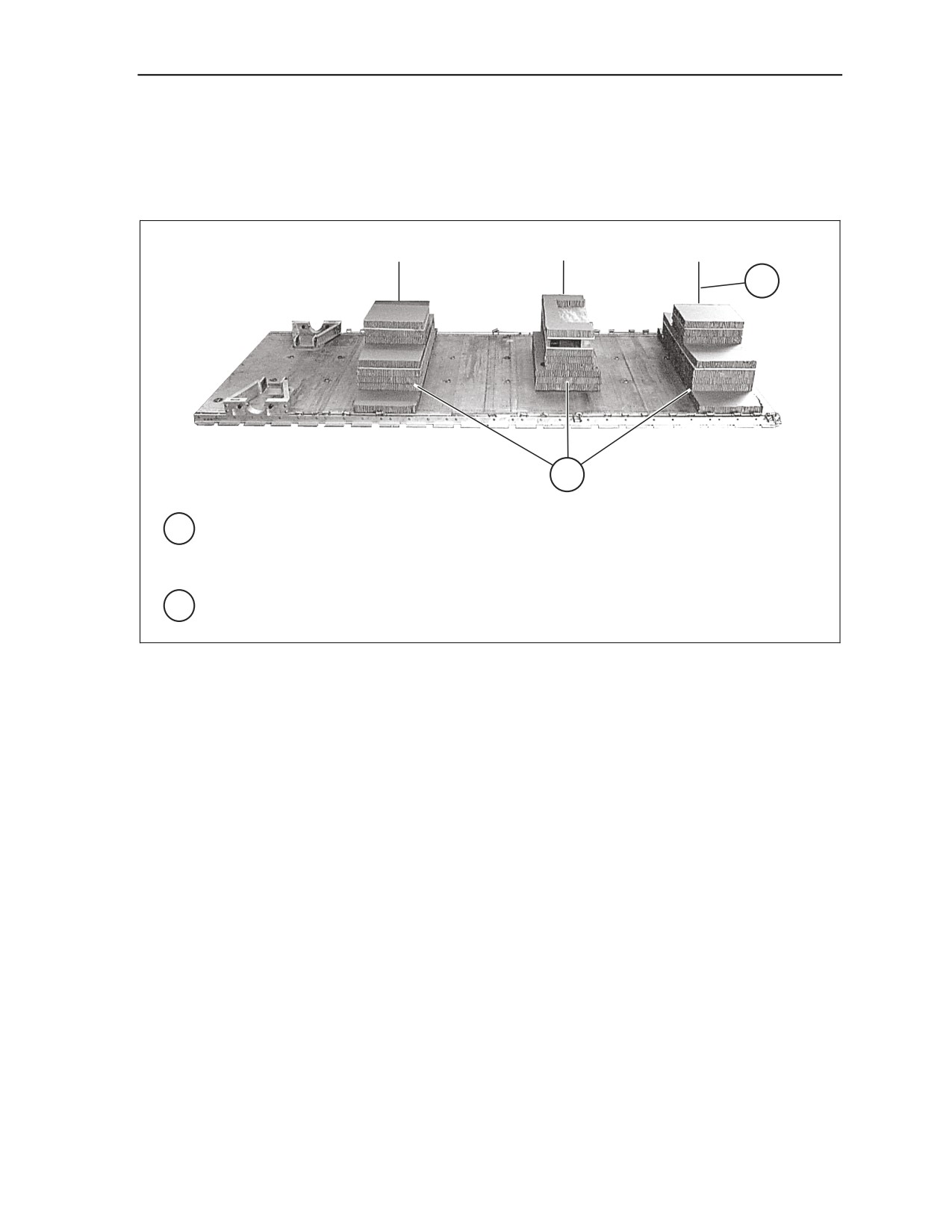
2-6. Honeycomb stacks must be set on the platform according to instructions in the specific rigging
chapter. Figure 2-4 shows a typical placement of honeycomb stacks on a DRAS platform.
STACK 3
STACK 2
STACK 1
2
REAR
FRONT
1
1 Place the honeycomb stacks on the platform according to instructions in the specific
rigging chapter.
Note. Do not glue the stacks to the platform.
2 Number the stacks from front to rear in a numerical sequence with 1 at the front of the
platform.
Figure 2-4. Typical Placement of Honeycomb on DRAS Platform
29 August 2006
FM 4-20.105-1/TO 13C7-1-51 VOL I
2-5
Chapter 2
DRIVE-OFF AID AIRDROP
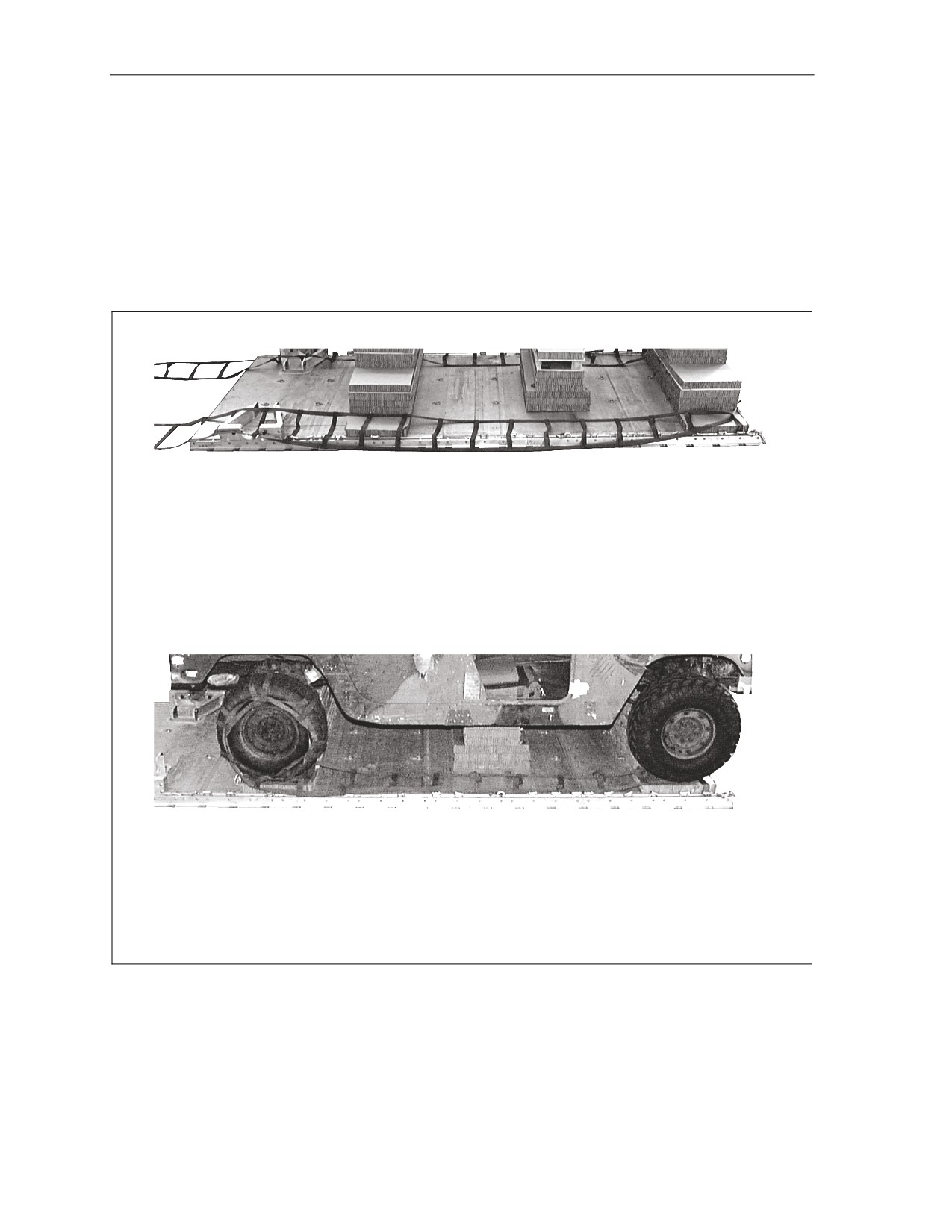
2-7. The drive-off aid may be used with the HMMWV truck. The drive-off aid, showing the front
platform attachment (Figure 2-5), consists of a fabric track constructed of type X webbing sewn into a
ladder-type configuration. The system is placed on two of the identified vehicle’s tires and attached to the
DRAS platform with type V webbing or 1-inch tubular nylon webbing. There are two tracks to each
system. Each track is 30 feet long and 22 inches wide and weighs 21 pounds. When powered up, the
vehicle (with tiedown assemblies removed), will progressively wrap the webbed ladder around the two
tires (using the platform for leverage) and pull itself clear of the honeycomb and platform.
FRONT PLATFORM ATTACHMENT
Note. If the vehicle is to be driven off the front of the platform, tie a length of type V nylon webbing
or 1-inch tubular nylon webbing from the first bushing through the end loop of the drive-off aid, and
through the nearest tie-down ring. When attaching the drive-off aid to the platform using type V or
1-inch tubular webbing, tie the free ends with a ring bend knot as shown in Figure 1-3. Tie the
drive-off aid to tie-down rings or platform bushings with type I, ¼-inch cotton webbing.
Note. Wrap the drive-off aid around the wheel of the vehicle on each side as shown. Tie the end
loop of each drive-off aid to the nearest cross piece with a doubled length of type I, ¼-inch cotton
webbing. Wrap the drive-off aid around the wheel until the webbing lays flat on the platform, but is
not under tension. Tie the drive-off aid to adjacent tie-down rings or platform bushings on each side
with type I, ¼-inch cotton webbing.
Figure 2-5. Drive-Off Aids Installed on Platform
2-6
FM 4-20.105-1/TO 13C7-1-51 VOL I
29 August 2006
Rigging and Procedural Information
SECTION II - SUSPENSION SLINGS
CARGO SLINGS
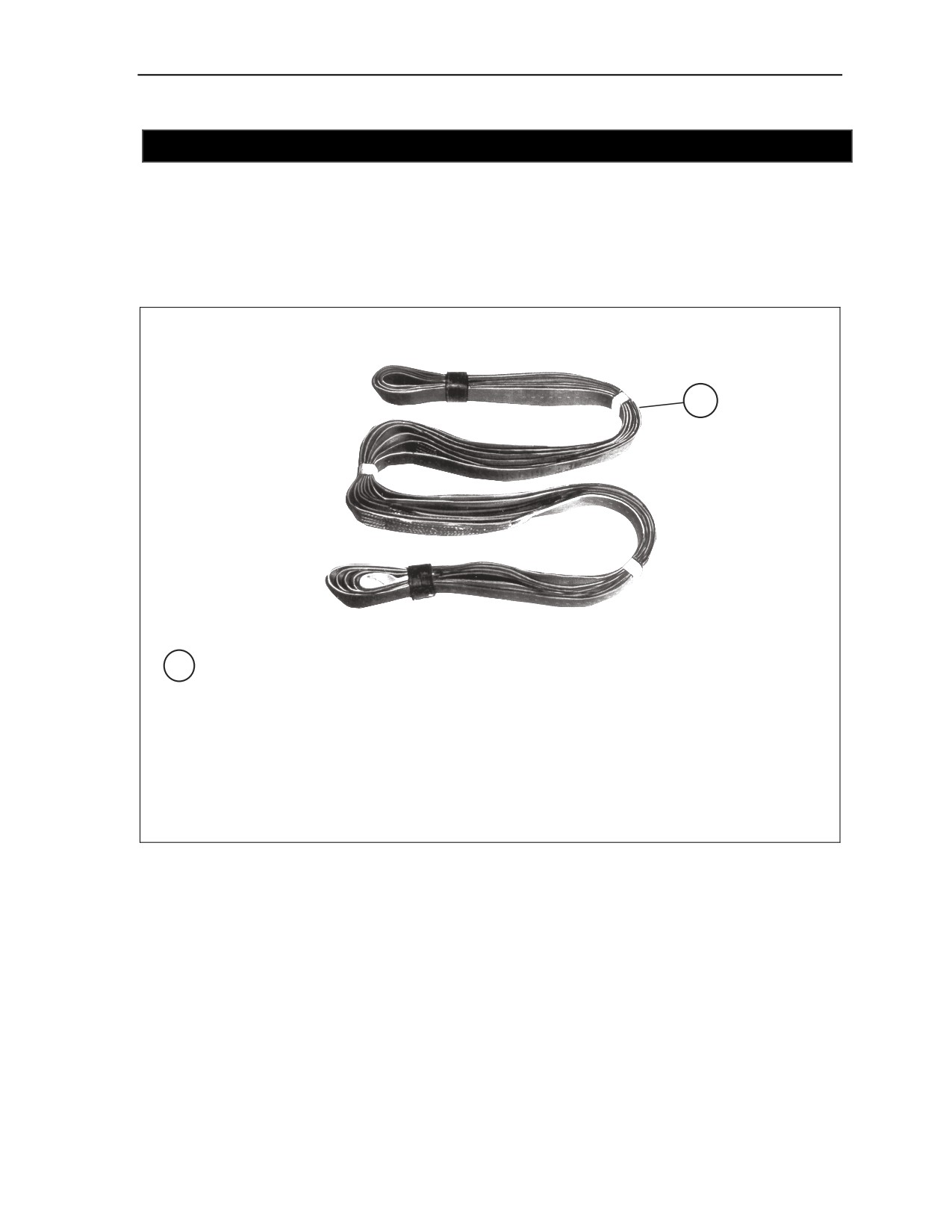
2-8. Cargo slings (Figure 2-6) are used as suspension slings on DRAS loads. These slings suspend the
load under the cargo parachutes during descent. Suspension slings connect the cargo parachute to the load
using a parachute release assembly. Cargo slings may also be used as deployment lines and to extend the
risers of cargo parachutes. Cargo slings are also used in the fabrication of the ACS.
1
1
Each sling is made with continuous loops. The loops are 1 ¾-inch-wide, type XXVI nylon
webbing. They are held together with keepers of 1-inch, nylon reinforced tape. Each sling
has a sliding webbing keeper and a cotton or nylon buffer at each end.
Notes.
1. The keeper at each end of the sling must be drawn snugly against the object on which the sling
is fitted.
2. Suspension slings on DRAS loads will have the nylon buffers removed to fit on the lower
suspension links of the M-1 parachute release assembly.
Figure 2-6. Cargo Slings
29 August 2006
FM 4-20.105-1/TO 13C7-1-51 VOL I
2-7
Chapter 2
REQUIREMENTS
2-9. Loads rigged for use on the DRAS platform require 4-loop, type XXVI nylon suspension slings.
The type and length of cargo slings authorized for use on a DRAS load are listed in Table 2-2.
Table 2-2. Cargo Slings for DRAS Airdrop
National Stock Number
Length (Feet)
Number of Loops
Used for
1670-01-062-6306
3
4
Suspension sling
1670-01-062-6310
11
4
Suspension sling
1670-01-063-7761
16
2
Attitude control system
1670-01-062-6302
20
2
Riser extension
1670-01-062-6313
60
3
Riser extension
2-8
FM 4-20.105-1/TO 13C7-1-51 VOL I
29 August 2006
Rigging and Procedural Information
ATTACHING SLINGS AND SAFETY TIEING SUSPENSION SLINGS
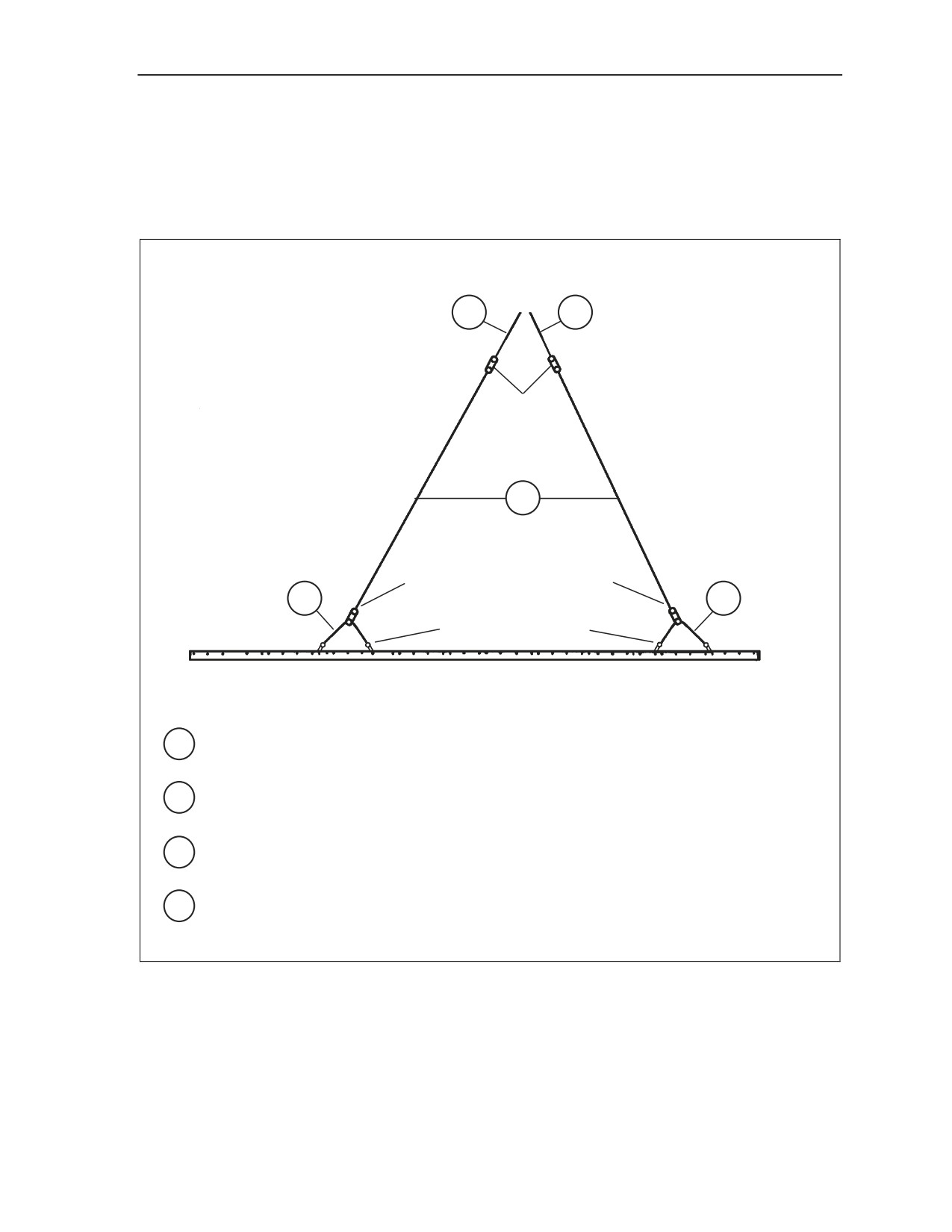
2-10. The DRAS platform is suspended using 3-foot and 11-foot (4-loop), type XXVI nylon slings as
shown in Figure 2-7. The clevis positions will be given in the specific chapter for the load being rigged.
Safety tie the suspension slings as shown in Figure 2-7.
Note. This drawing is not drawn to scale.
3
3
3 ¾-INCH
TWO-POINT
LINK
2
3 ¾-INCH TWO-POINT LINK
1
1
PLATFORM CLEVIS
1
Attach a 3-foot (4-loop), type XXVI nylon sling to the platform clevises listed in the specific
rigging chapter.
2
Connect an 11-foot (4-loop), type XXVI nylon sling to the center of each 3-foot sling with a
3 ¾-inch two-point link.
3
Connect an additional 3-foot (4-loop), type XXVI nylon sling to the end of each 11-foot sling
with a 3 ¾-inch two-point link.
4 Pad the top 3 ¾-inch two-point links with felt and secure the felt with cloth-backed tape (not
shown).
Figure 2-7. Suspension System and Safety Ties Installed
29 August 2006
FM 4-20.105-1/TO 13C7-1-51 VOL I
2-9
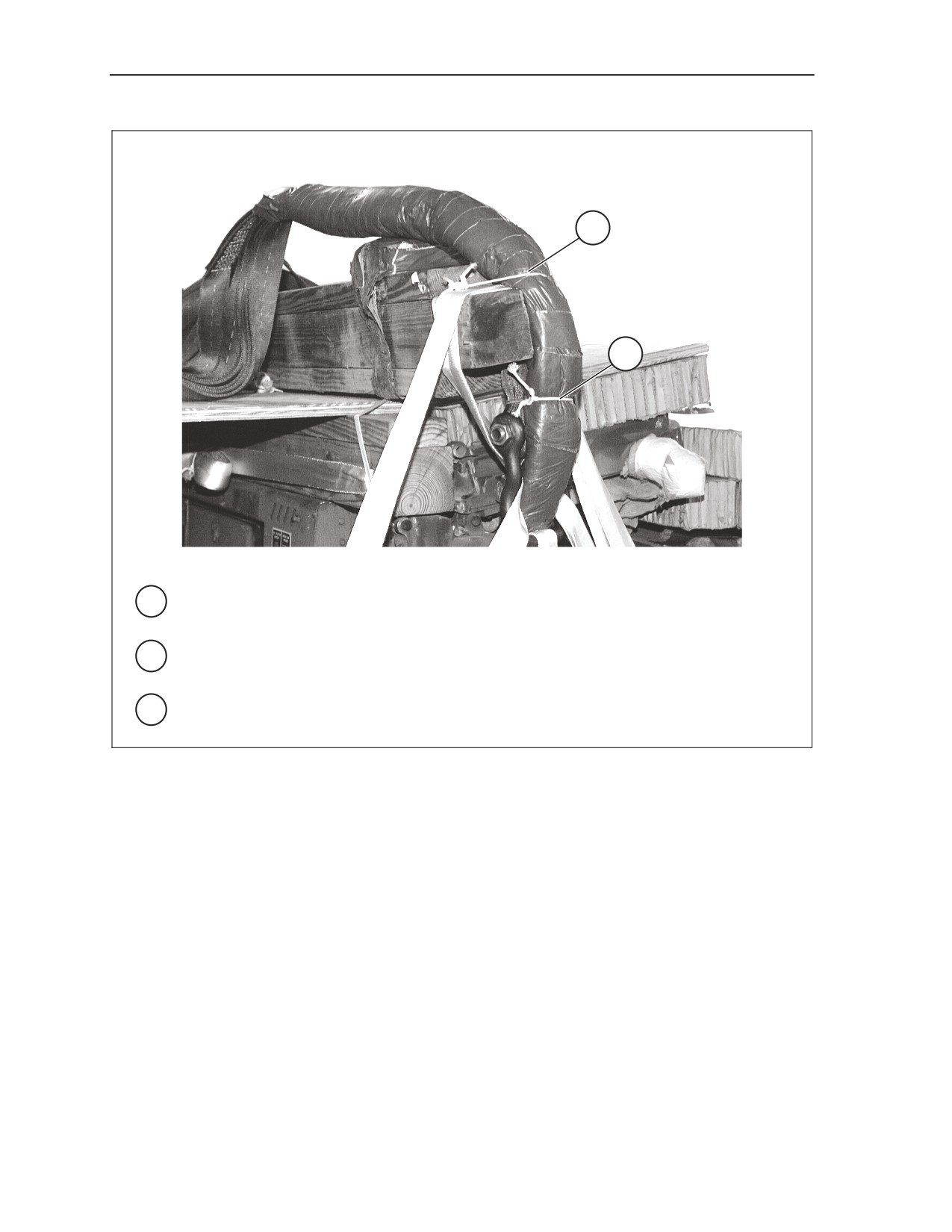
Chapter 2
6
5
5
Remove all slack from the slings. Tie a length of type III nylon cord around the 11-foot sling
and the ACS sling.
6
Tie a length of type III nylon cord around the 11-foot nylon sling, behind all lashings, and
around the 4- by 4-inch piece of lumber of the ACS and tie the ends together.
7 Repeat steps 5 and 6 on all slings (not shown).
Figure 2-7. Suspension System and Safety Ties Installed (Continued)
2-10
FM 4-20.105-1/TO 13C7-1-51 VOL I
29 August 2006
Rigging and Procedural Information
SECTION III - LASHINGS
USE
2-11. The drop item and the accompanying load are lashed to the platform to prevent damage to the load or
to the aircraft during airdrop. The accompanying load is lashed to the platform to withstand the same force
as the drop item.
COMPONENTS AND STRENGTHS
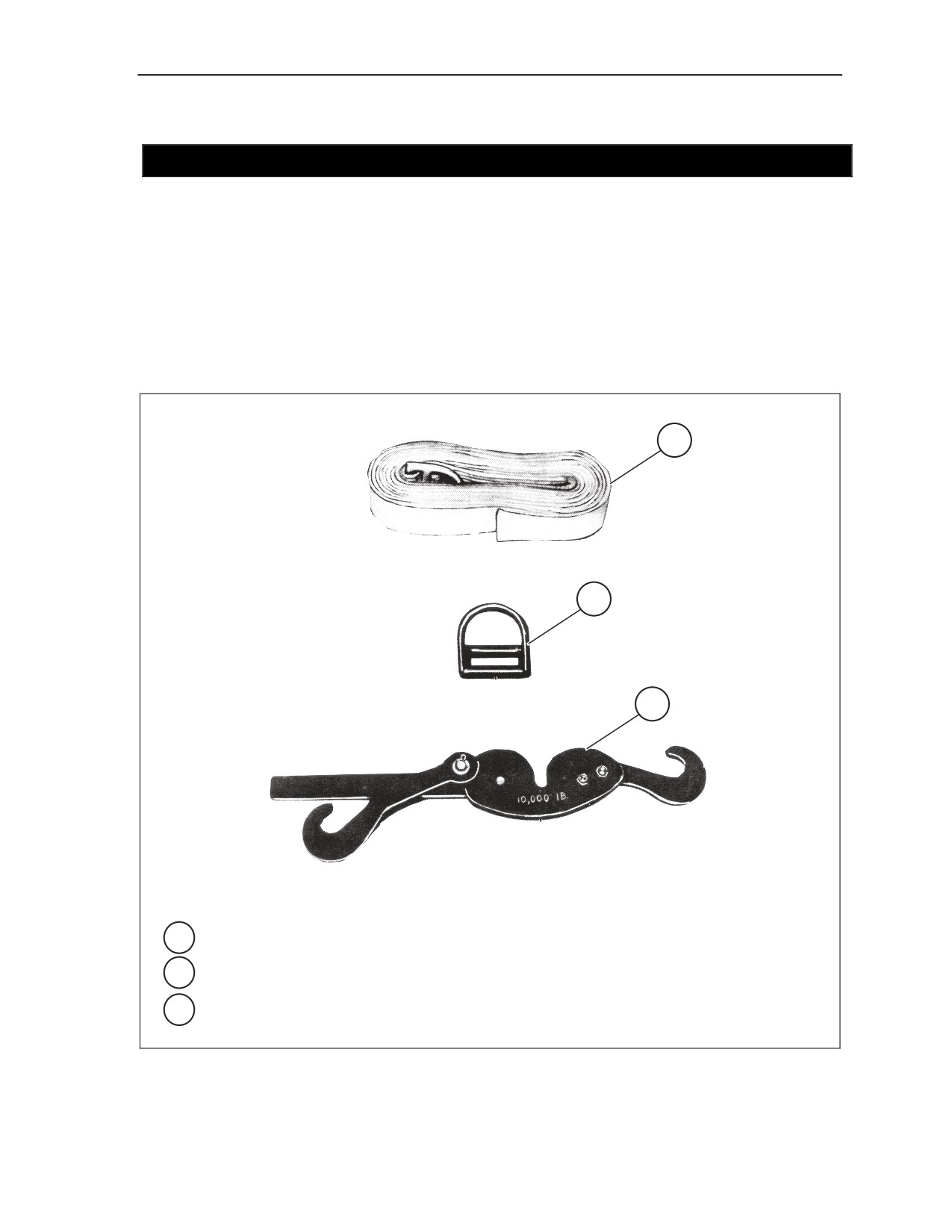
2-12. The components of the lashings used on DRAS loads are shown in Figure 2-8. The maximum
strengths of the various forms of lashings are given in Figure 2-9.
1
2
3
1
15-foot dacron tiedown strap.
2
Heavy-duty D-ring.
3
10,000-pound-capacity load binder.
Figure 2-8. Components of a Tiedown Assembly
29 August 2006
FM 4-20.105-1/TO 13C7-1-51 VOL I
2-11
Chapter 2
1
Platform
Platform
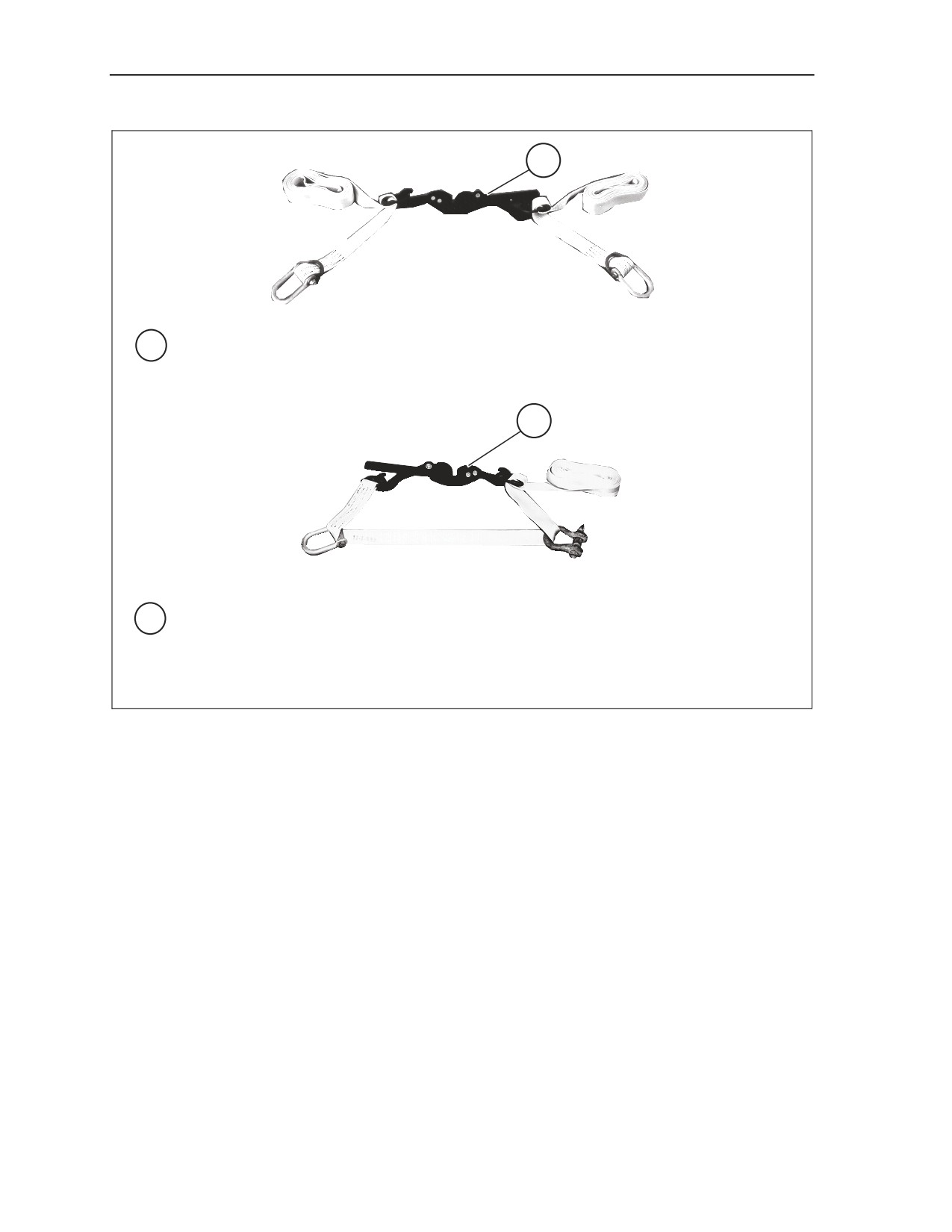
1 Single line configuration. A dacron lashing routed in a single line configuration has a
maximum strength of 6000 pounds when attached to a DRAS platform side rail and a
tiedown clevis. It has a maximum strength of 4,000 pounds when attached to a panel
tiedown ring.
2
Platform
Item
2 Double line (floating binder) configuration. A dacron lashing routed in a double line
configuration has a maximum strength of 10,000 pounds when attached to a DRAS
platform side rail and a tiedown clevis. It has a maximum strength of 4,000 pounds when
attached to a panel tiedown ring.
Figure 2-9. Maximum Strength of Lashings
2-12
FM 4-20.105-1/TO 13C7-1-51 VOL I
29 August 2006
Rigging and Procedural Information
FITTING D-RINGS
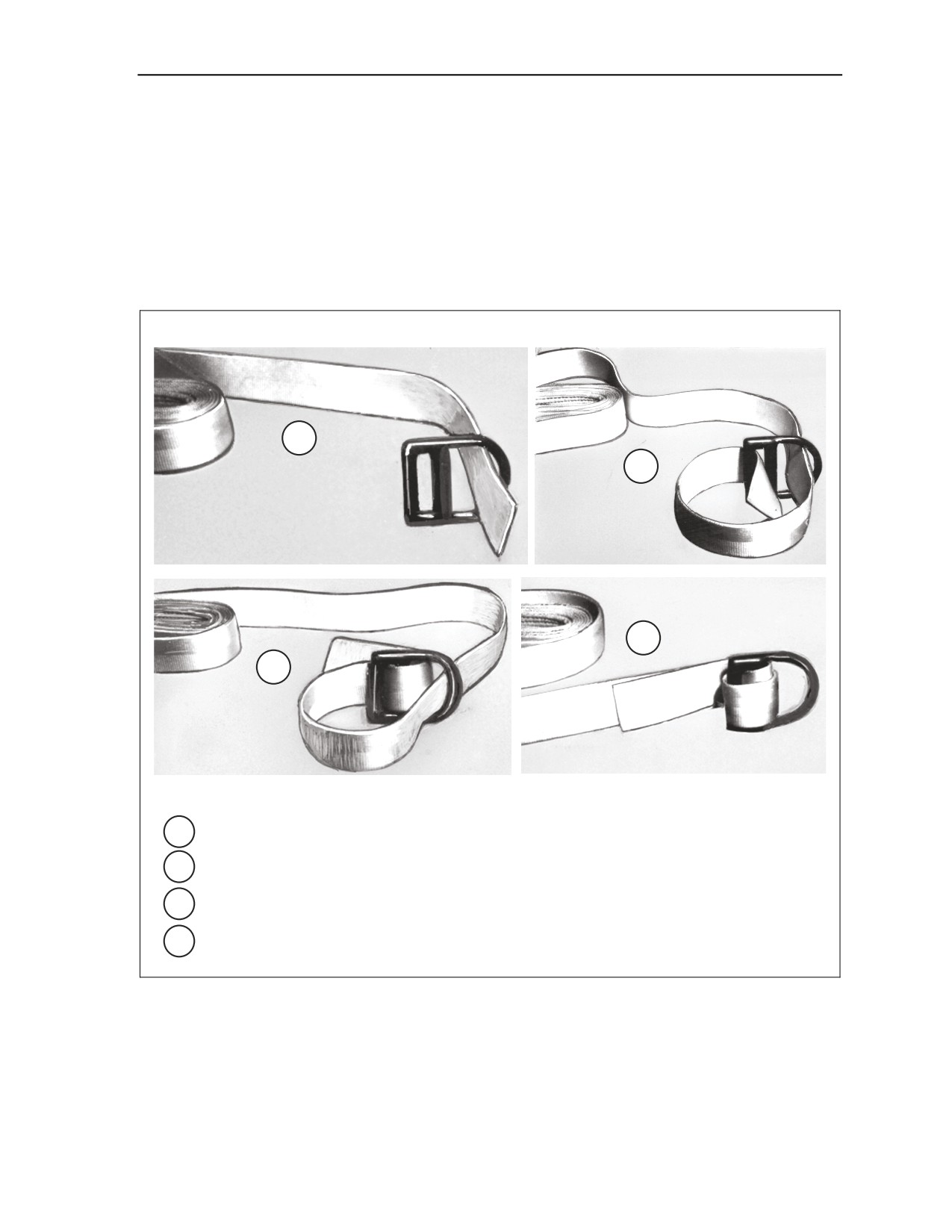
2-13. Fit a D-ring to the end of each tiedown strap as shown in Figure 2-10.
LASHING LOAD
2-14. Lash a DRAS load to the platform according to the instructions in the specific rigging chapter. Install
the lashings as shown in Figures 2-11 and 2-12.
1
2
4
3
1
Run the free end of the tiedown strap through the large opening in the D-ring.
2
Run the strap around and through the small opening in the D-ring.
3
Run the strap back through the large opening in the D-ring.
4 Pull the strap taut.
Figure 2-10. D-Ring Fitted to Tiedown Strap
29 August 2006
FM 4-20.105-1/TO 13C7-1-51 VOL I
2-13
Chapter 2
CAUTION
Do not tighten the lashings so tight that they cause the platform to
bow especially in the aircraft.
3
3
1
5
3
4
2
1 Pass the free end of one tiedown strap through a clevis on the right rail and through its
own D-ring. Pull the strap taut.
2 Run the free end of the strap up over the load.
3 Pass the free end of a second tiedown strap through a clevis on the left rail and through its
own D-ring. Pull the strap taut.
4 Run the free end of the strap up over the load.
5 Fit a D-ring on the free end of each strap as described in Figure 2-10, and place the D-
rings on the hooks of a load binder. Safety the binder handle closed as shown in Figure
2-13.
Notes.
1. When the tiedown strap length is not a factor, it is permissible to use a single tiedown strap and
D-ring with a load binder attached directly to a side rail clevis or tiedown ring.
2. Pad all sharp edges that may touch the strap with cellulose wadding or other suitable material.
Figure 2-11. Single Line Lashing Installed
2-14
FM 4-20.105-1/TO 13C7-1-51 VOL I
29 August 2006
Rigging and Procedural Information
3
2
1
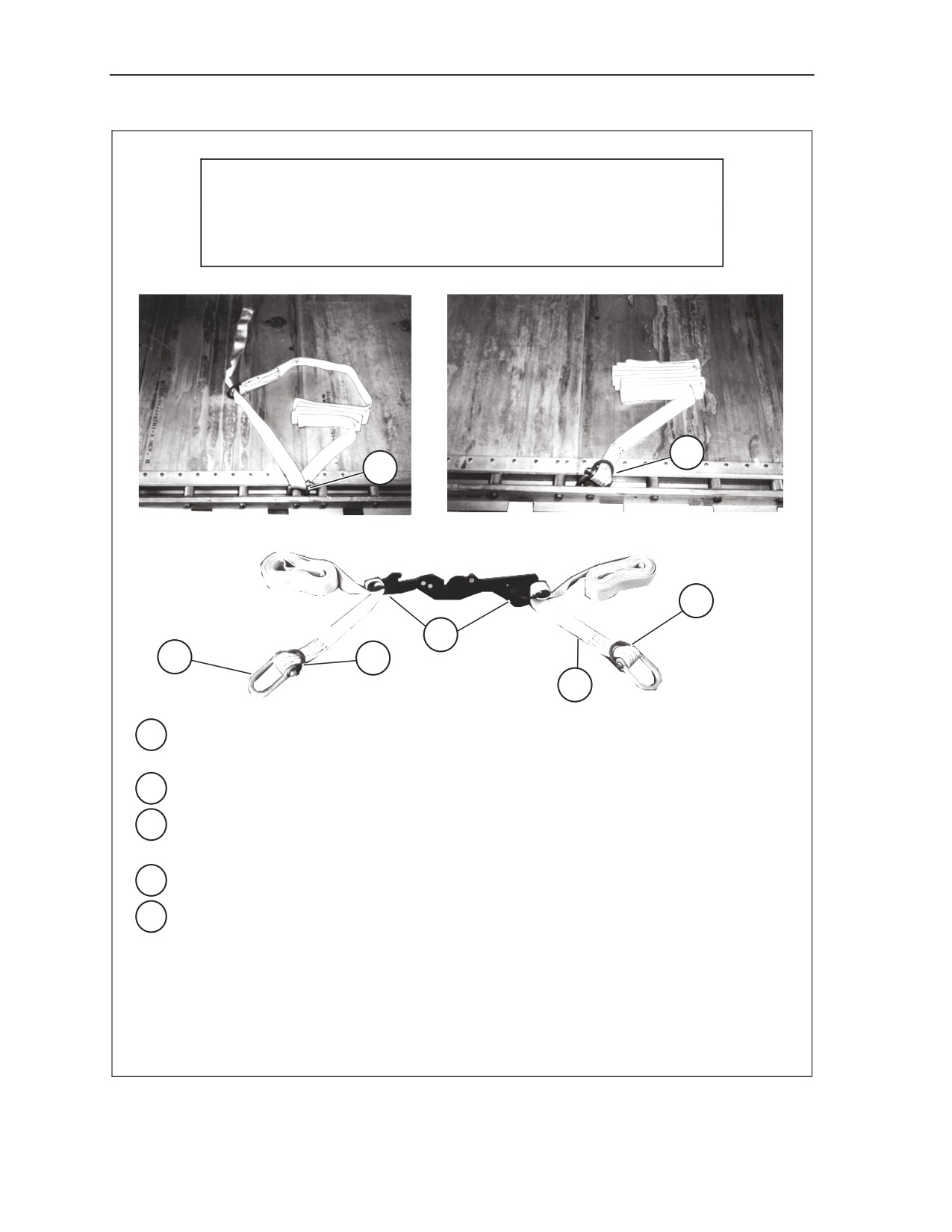
1 Pass the free end of a tiedown strap through a clevis on a rail and up and over, around, or
through the indicated tiedown provision on the load. The tiedown provision will be listed in
the specific rigging chapter for a particular load. Run the strap back toward the clevis.
2 Fit a D-ring to the free end of the strap (Figure 2-10), and place the D-rings on the hooks of
a load binder. Close the handle of the load binder pointing toward the load.
3 Safety tie the binder handle closed as shown in Figure 2-13.
Figure 2-12. Looped (Floating Binder) Lashing
SAFETY TIEING LOAD BINDER HANDLES
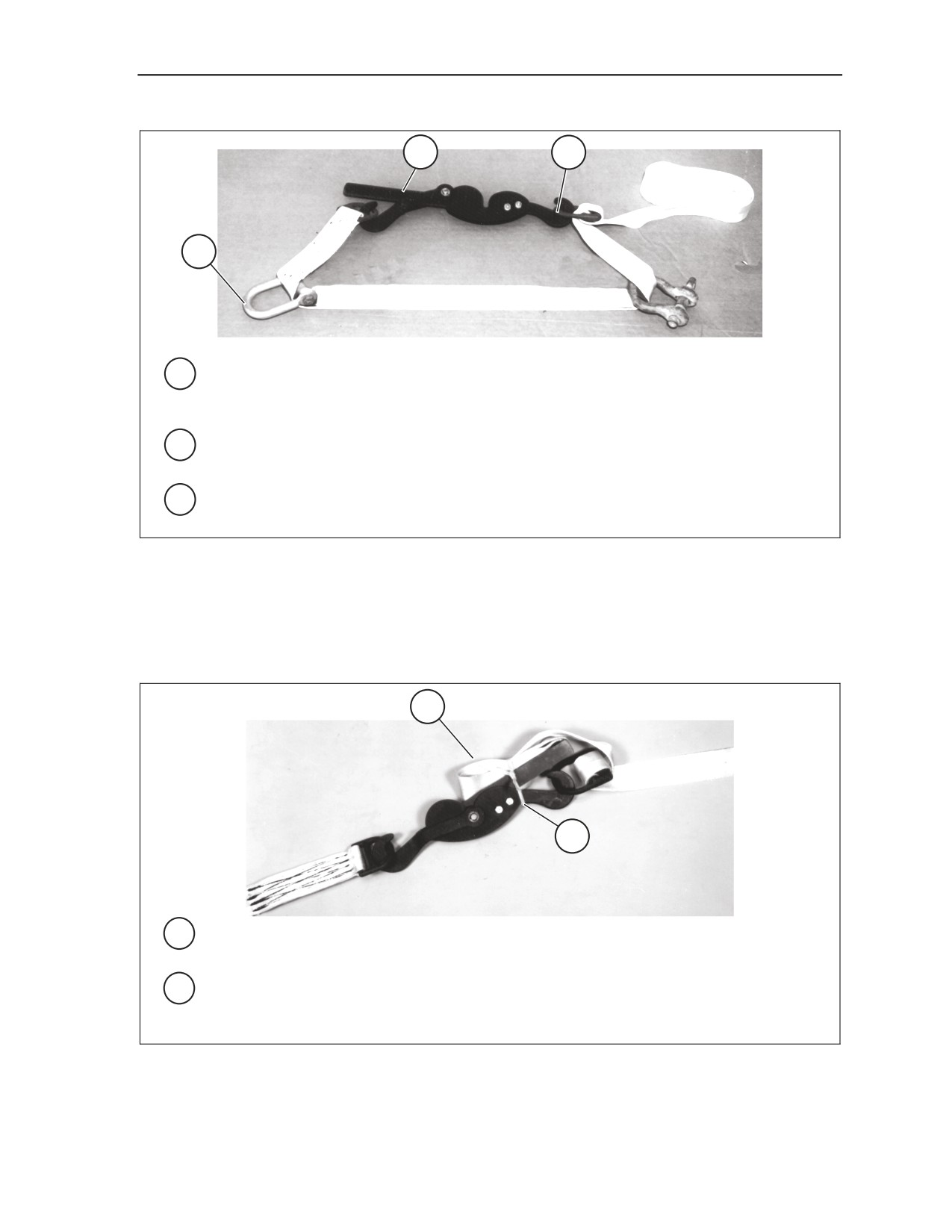
2-15. Fold the excess tiedown strap, and place the folds alongside the load binder handle. Safety tie the
load binder handle closed as shown in Figure 2-13.
1
2
1 After the handle of the load binder has been closed, fold or roll any excess tiedown strap
and place the folds alongside the load binder handle.
2 Tie the folded webbing to the binder and the binder handle closed with a single length of
type I, ¼-inch cotton webbing.
Figure 2-13. Load Binder Handle Safety Tied
29 August 2006
FM 4-20.105-1/TO 13C7-1-51 VOL I
2-15
Chapter 2
FORMING A 30-FOOT, 45-FOOT, OR GREATER LENGTH TIEDOWN
STRAP
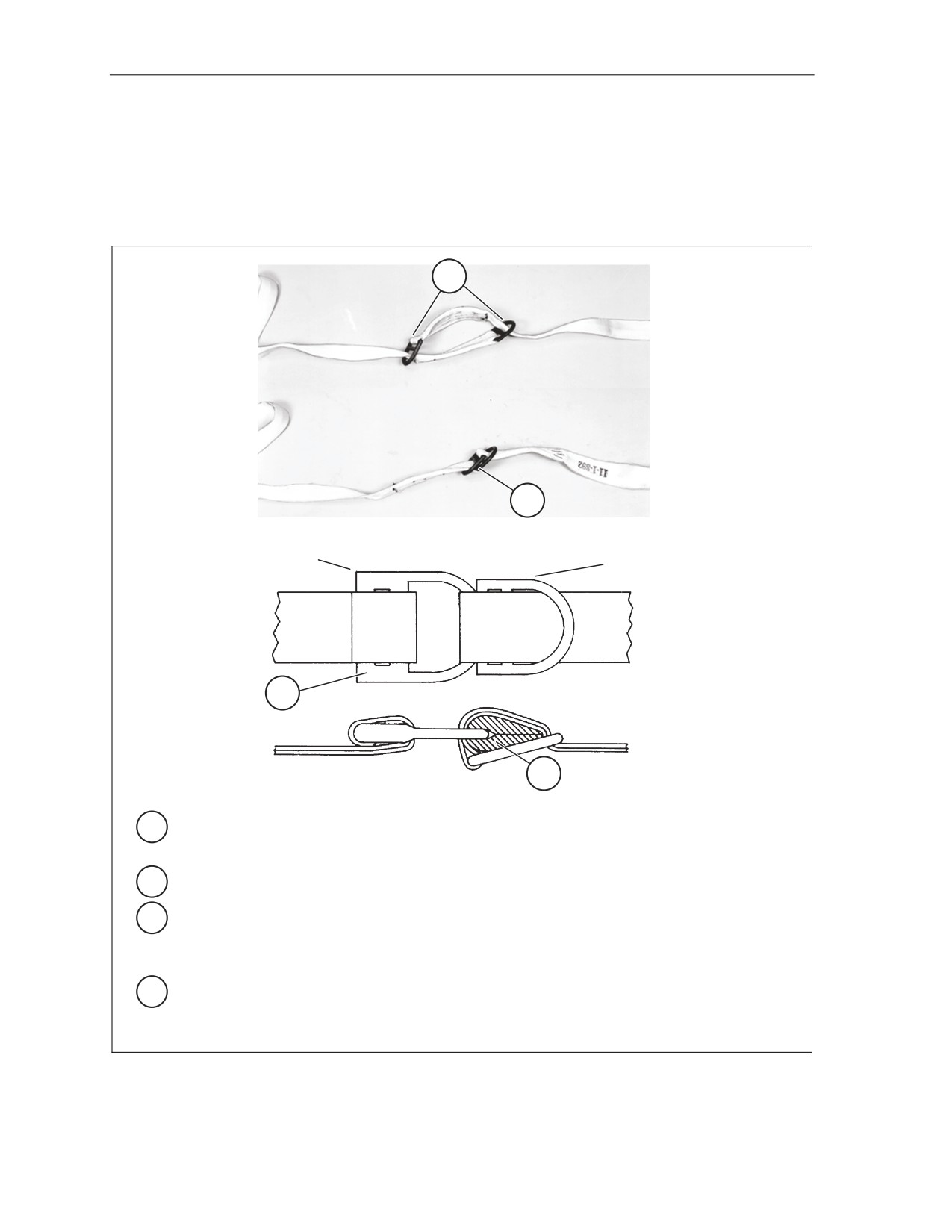
2-16. When needed, attach 15-foot tiedown straps together to form a 30-foot, 45-foot, or greater length
tiedown strap as shown in Figure 2-14.
1
2
INSTALLED D-RING
SEWN D-RING
3
4
1 Run the free end of two 15-foot tiedown straps through the D-ring of the opposite strap to
form a 30-foot strap.
2 Pull the straps taut.
3 Install a D-ring on a free end of the 30-foot strap. Pass the free end of a 15-foot tiedown
strap through the installed D-ring and back through its own D-ring to form a 45-foot or
greater strap.
4 Insert a 2- by 5-inch piece of ½-inch felt around the installed D-ring.
Note. Make sure the felt is centered around the installed D-ring.
Figure 2-14. A 30-Foot, 45-Foot, or Greater Length Tiedown Strap Formed
2-16
FM 4-20.105-1/TO 13C7-1-51 VOL I
29 August 2006

Rigging and Procedural Information
SECTION IV - CARGO PARACHUTES
USE
2-17. Cargo parachutes, also called recovery parachutes, are used to slow the descent of a DRAS platform
load. Table 2-3 lists the weight limitations for cargo parachutes used with DRAS platform loads.
Table 2-3. General Weight Limitation for Cargo Parachutes
Parachutes
Minimum Suspended Weight*
Maximum Suspended Weight*
(pounds)
(pounds*)
G-11D
2
6,950
8,500
3
8,501
12,750
4
12,751
13,400
*Suspended weight in pounds is the total rigged weight less the weight of the cargo parachutes.
TYPES
2-18. The G-11D cargo parachute is used when loads are rigged for DRAS. The parachute has a 100-foot
diameter canopy. It has 120 suspension lines (35-foot, type III nylon cord). The parachute has four 2
second cutters and four 12-foot reusable reefing lines. When packed, the assembly weighs 250 pounds.
RISER EXTENSION REQUIREMENTS
2-19. Cargo parachutes are used in a cluster. When parachutes are used in a cluster, the risers of each
parachute are lengthened so the canopies remain almost vertical as they descend to increase the
effectiveness of each canopy. The length of a riser extension and the number of stows used in stowing the
extensions are given in Table 2-4.
Table 2-4. Riser Requirements for G-11D Cargo Parachute Clusters
Number of Parachute in
Length of Riser
Type XXVI Nylon
Number of Stows
Cluster
Extension (feet)
Webbing Slings
2
20
2
20-foot (2-loop)
3 or 4
60
8
60-foot (3-loop)
Note. All riser extensions must be continuous type XXVI nylon slings and each must be the
same length.
29 August 2006
FM 4-20.105-1/TO 13C7-1-51 VOL I
2-17
Chapter 2
RISER EXTENSIONS
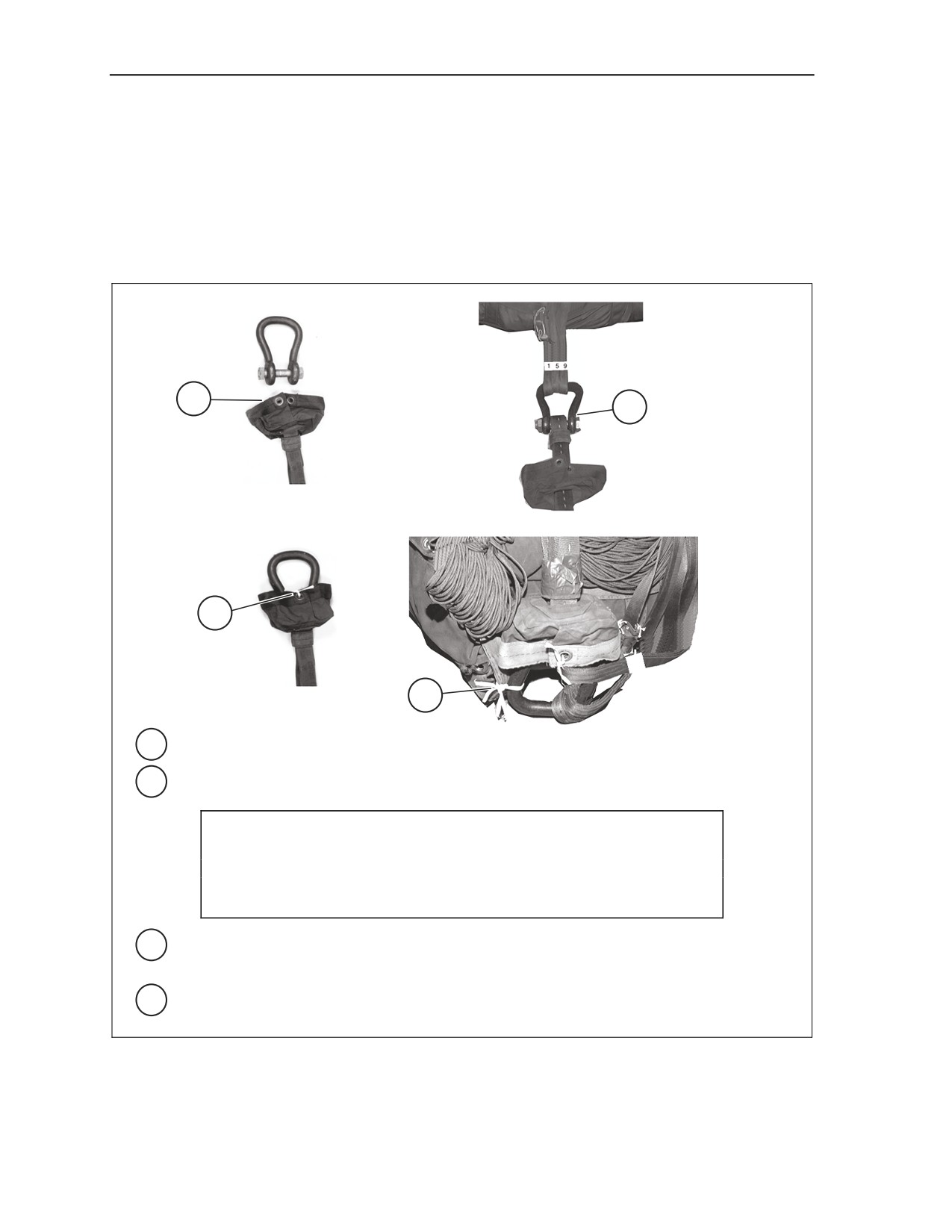
2-20. The risers of a cluster of G-11D cargo parachutes used on DRAS loads must be extended
(lengthened). The length of the extension needed for the cluster is given in Table 2-4.
• Forming extensions. Only continuous riser extensions may be used.
• Bolting extensions to risers. Bolt the riser extension to the risers of a cargo parachute as shown
in Figure 2-15.
1
2
3
4
1 Slip a clevis cover on one end of a riser extension.
2 Fit the sling on the bolt of the clevis running through the parachute risers.
CAUTION
The nuts must be tight enough to keep them from loosening during
transport and airdrop.
3 Slide the clevis cover up over the bolt of the clevis, and tie the cover in place with a length
of type I, ¼-inch cotton webbing. Pass the tie through the grommets of the cover.
4 Tie the clevis to the left bottom bag carrying handle with one double length of type I, ¼
inch cotton webbing.
Figure 2-15. Riser Extension Bolted to Risers
2-18
FM 4-20.105-1/TO 13C7-1-51 VOL I
29 August 2006
Rigging and Procedural Information
STOWING RISER EXTENSIONS
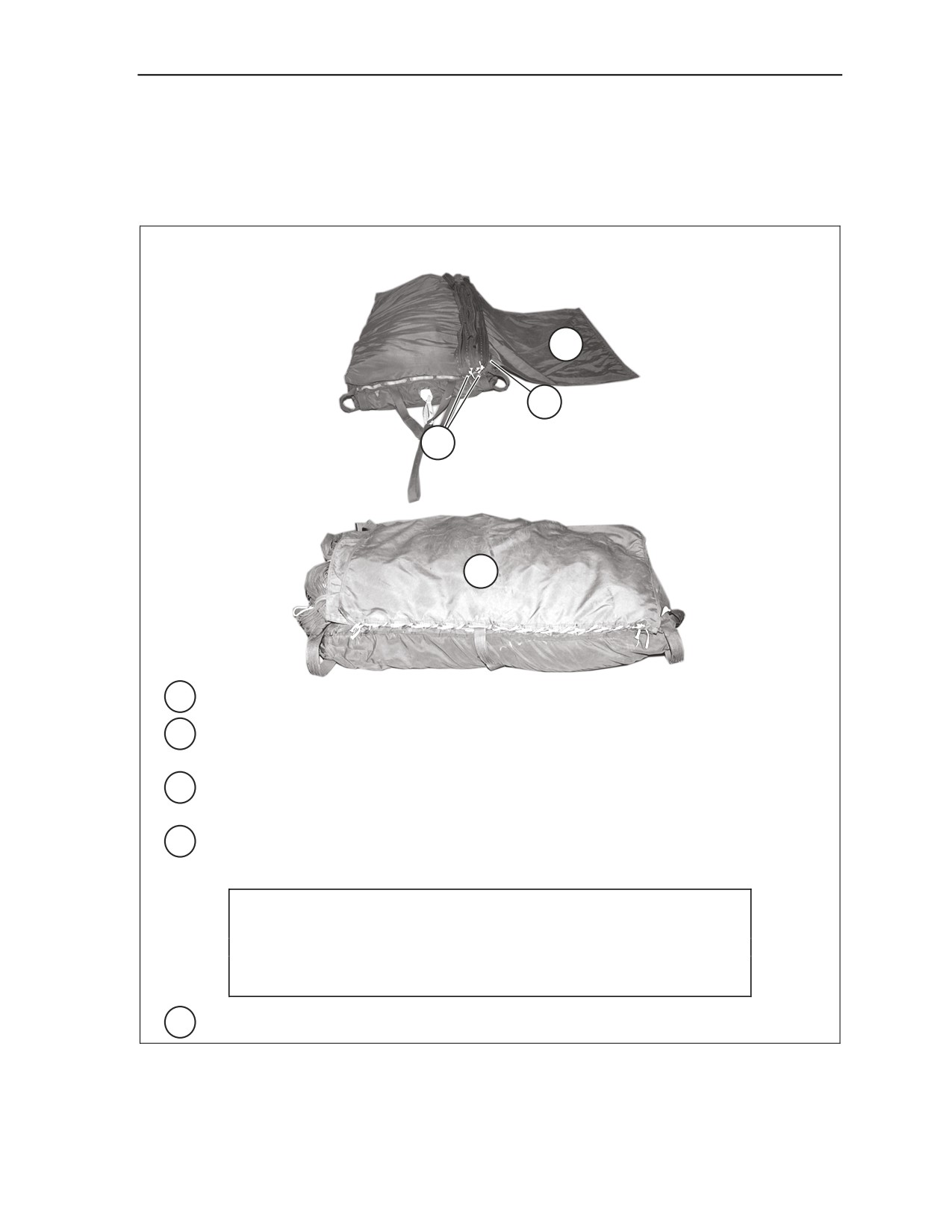
2-21. The riser extensions for the G-11D cargo parachutes must be stowed as shown in Figures 2-16
through 2-18.
Note. The nylon deployment bags have the riser extension securing line permanently attached.
1
2
4
5
1
Open the riser extension flap which is attached with type I, ¼-inch cotton webbing.
2
Start at the end of the riser extension fitted to the clevis and S-fold the extension into the
riser extension compartment.
3
Leave approximately 3 feet of the free end of the extension outside the riser end of the
compartment. (Not shown)
4
Tie each stow to the riser extension securing line with one turn double, type I, ¼-inch
cotton webbing.
CAUTION
Do not girth hitch the type I, ¼-inch cotton webbing ties to the riser
extension securing line.
5 Close the riser flap according to TM 10-1670-280-23&P/TO 13C5-31-2.
Figure 2-16. Riser Extension Stowed on Nylon Bag
29 August 2006
FM 4-20.105-1/TO 13C7-1-51 VOL I
2-19
Chapter 2
5
2
6
4
1
3
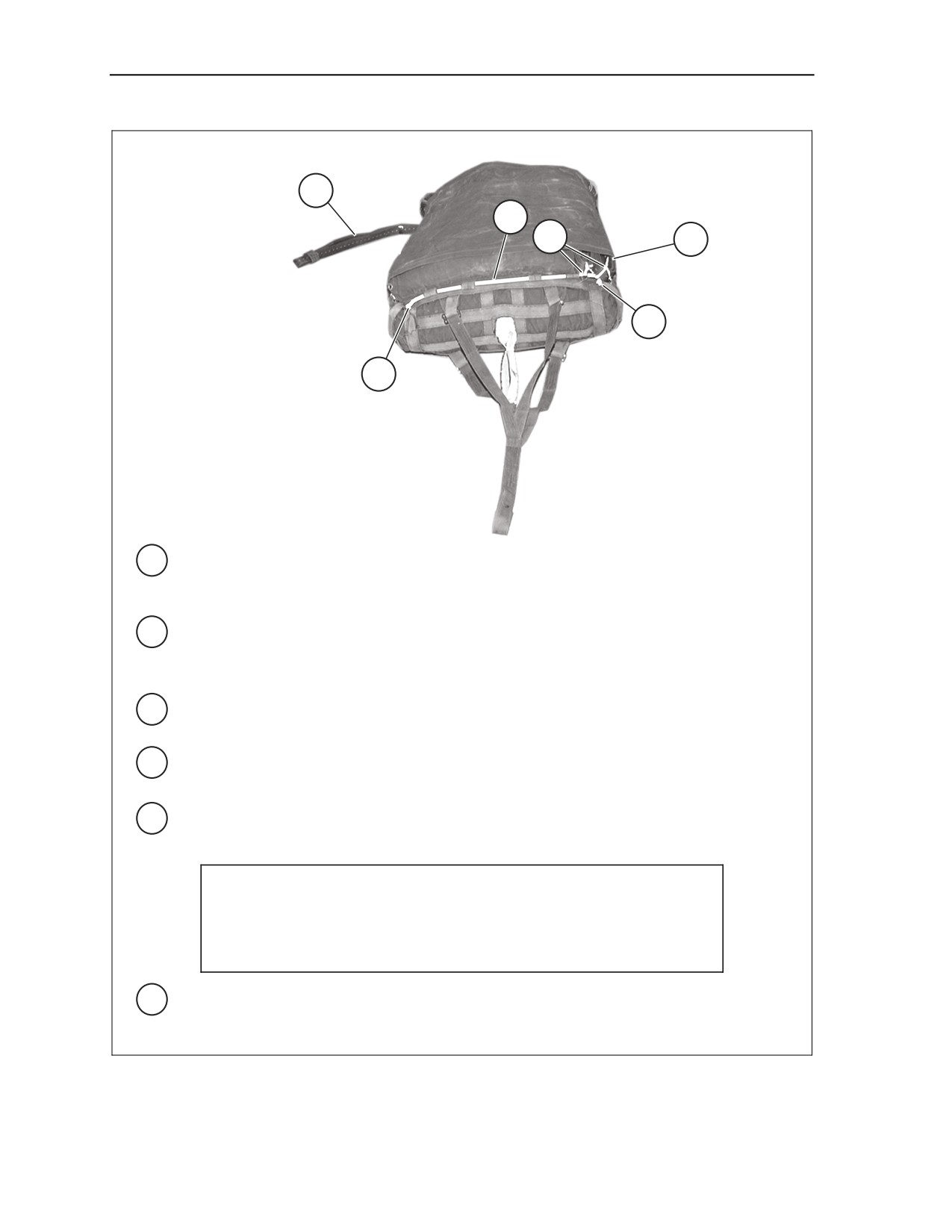
1 Fold an 8-foot length of ½-inch tubular nylon webbing in half lengthwise. Run the loop in
the folded end through the left carrying handle. Run the free ends of the webbing through
this loop, and pull the webbing taut.
2 Run the webbing across the parachute, passing it through the riser extension retaining
loops (end tabs).
Note. Do not pull the webbing tight across the parachute.
3 Tie the webbing to the right top carrying handle with three alternating half hitches and an
overhand knot in each free running end.
4 Start at the end of the riser extension fitted to the clevis and S-fold the riser extension into
the riser extension compartment.
5 Leave about 3 feet of the free end of the extension outside the riser end of the
compartment.
CAUTION
Do not girth hitch the type I, ¼-inch cotton webbing ties to the riser
extension securing line.
6 Tie each stow to the riser extension securing line with ties of one turn double type I, ¼-inch
cotton webbing.
Figure 2-17. Riser Extension Stowed on Cotton Bag
2-20
FM 4-20.105-1/TO 13C7-1-51 VOL I
29 August 2006
///////////////////////////////////////