FM 3-11.19 MULTISERVICE TACTICS, TECHNIQUES, AND PROCEDURES FOR NUCLEAR, BIOLOGICAL, AND CHEMICAL RECONNAISSANCE (JULY 2004) - page 2
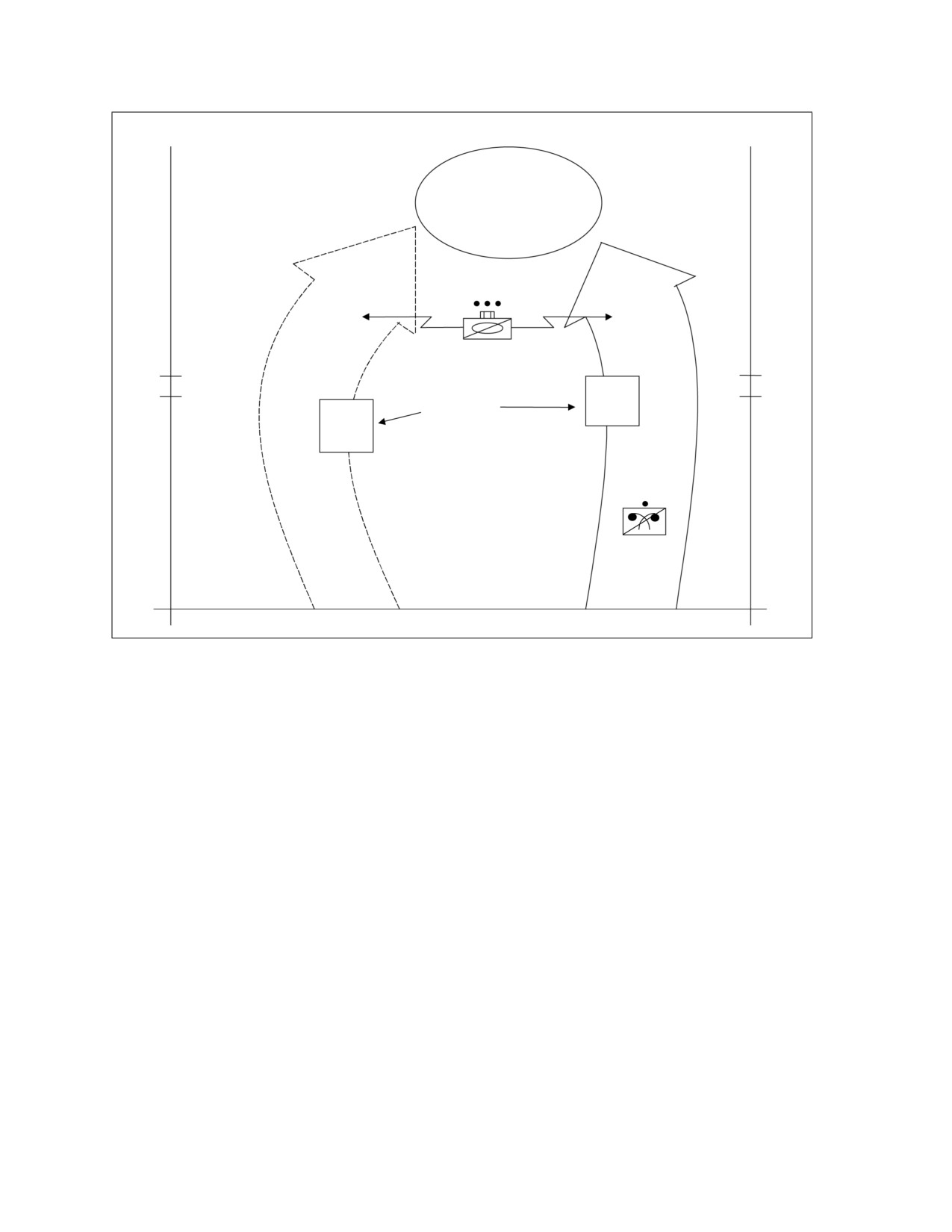
OBJ
NEW JERSEY
AXIS
THUNDER
Templated
NAI
enemy
29
NAI
contaminated
31
areas
NOTE: The NBC reconnaissance
squad confirms or denies NAI
contamination.
AXIS
ALTERNATE
LD
LD
Figure III-5. NBC Reconnaissance Squad Supporting a Battalion TF
• Prepare to encounter enemy stockpiles of NBC weapons.
• Prepare to encounter the effects of destroying enemy NBC
weapons stockpiles, facilities, and commercial chemical and
nuclear facilities.
• Focus NBC reconnaissance assets to retain freedom of
maneuver.
• Prioritize NBC reconnaissance support to lead maneuver forces.
(b) An adversary may use NBC weapons to slow or impede the pursuit
force so that it can reorganize, reconstitute, and regain the initiative. For this reason,
NBC reconnaissance assets can be placed just behind the lead TF to react to any
contamination the pursuit force may encounter.
(6) River Crossing Operations.
(a) A river crossing may be conducted as part of an offensive action, and
it presents a lucrative target for enemy NBC weapons. NBC reconnaissance units can be
employed in a contamination avoidance role on the farside of the river to allow the
momentum of the operation to continue. They are also prepared to respond to NBC
attacks in the crossing areas. NBC reconnaissance elements need to be positioned to
support the crossing sites and the routes to the crossing sites. They may also move with
III-16
the lead maneuver force across the river to find clear routes around contaminated areas
on the farside. The following operational factors are considered:
• Focus NBC reconnaissance operations to provide flexibility and
speed to the commander.
• Recognize the high probability of enemy NBC attacks.
• Focus NBC reconnaissance assets to retain freedom of
maneuver in the crossing area.
• Prepare to shift NBC reconnaissance assets to the farside with
the initial assault force.
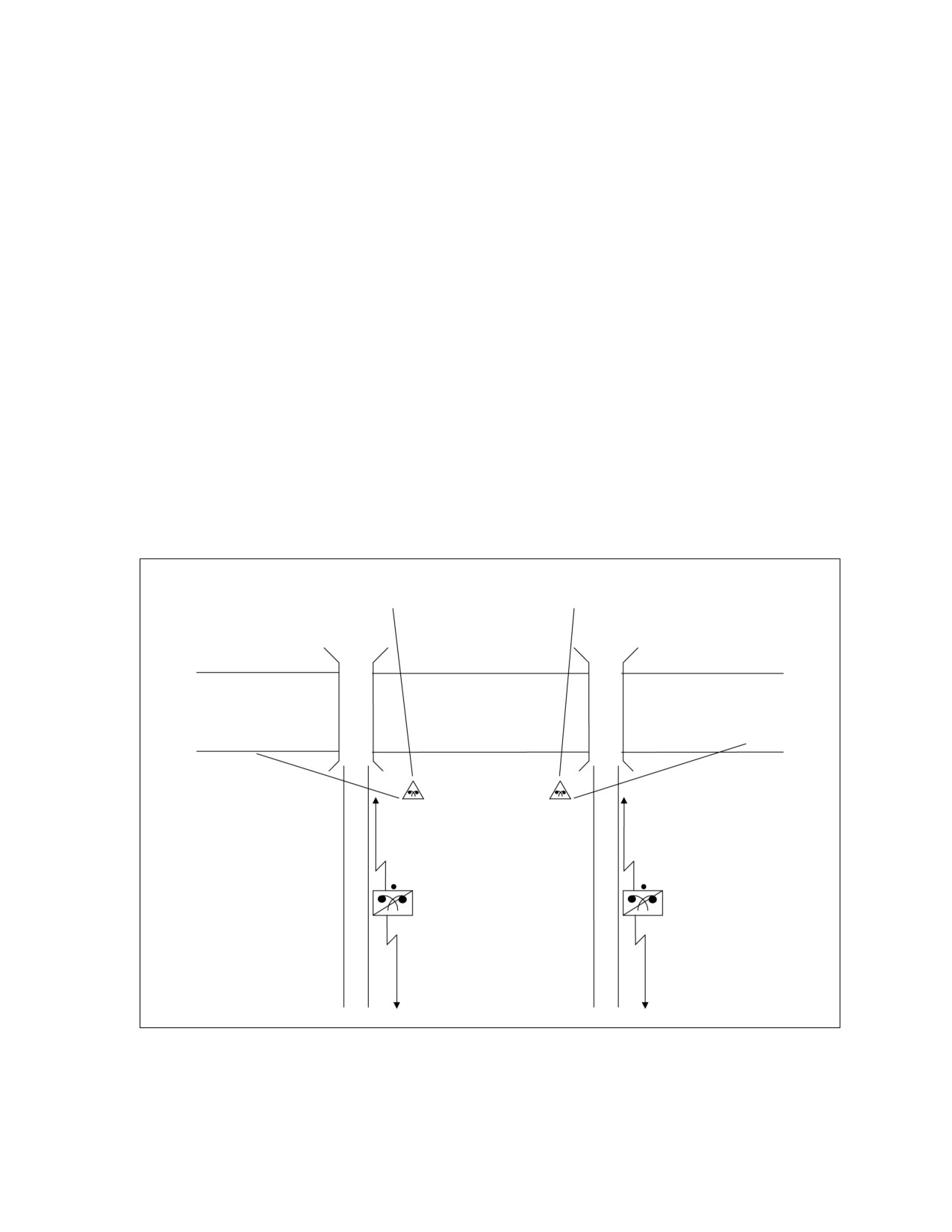
(b) Figure III-6 shows a regiment conducting a deliberate river crossing.
The brigade is being supported by an NBC reconnaissance squad. The IPB has identified
that the best time for the enemy to employ chemical weapons is when the bridges are
across the river. This will slow the tempo of the crossing effort and allow enemy forces to
reposition and possibly counterattack. The NBC reconnaissance unit has the primary
mission of providing NBC reconnaissance on the bridging sites. If chemical weapons are
used on a crossing site, the NBC reconnaissance unit will identify the agent and the
extent of contamination. This information will allow the commander to make a decision
to continue using the crossing site, shift all forces to the other crossing site, or initiate
another crossing operation.
CROSSING
CROSSING
SITE B
SITE A
RIVER
RIVER
ONE
ONE
VEHICLE
VEHICLE
ROUTE
ROUTE
WHITE
RED
ONE
ONE
VEHICLE
VEHICLE
Figure III-6. NBC Reconnaissance Squad Supporting a River Crossing Operation
III-17
d. Land Component, Defensive Operations.
(1) The purpose of a defensive operation is to defeat enemy attacks. Defensive
operations retain ground, gain time, deny the enemy access to an area, and damage or
defeat attacking forces. NBC reconnaissance units are integrated throughout the depth
of the battle area to provide flexibility to the security force commander and to enhance
his agility. NBC reconnaissance units in the rear area help retain the freedom of
maneuver and enhance the survivability of forces.
(2) The three types of defensive operations are mobile, area, and retrograde.
• Mobile. A mobile defense orients on the destruction of an enemy
force by trading terrain to expose the enemy to a counterattacking
mobile reserve.
• Area. An area defense focuses on denying the enemy access to
designated terrain for a specified time, rather than focusing on the
outright destruction of the enemy.
• Retrograde. A retrograde operation is a movement to the rear or
away from the enemy.
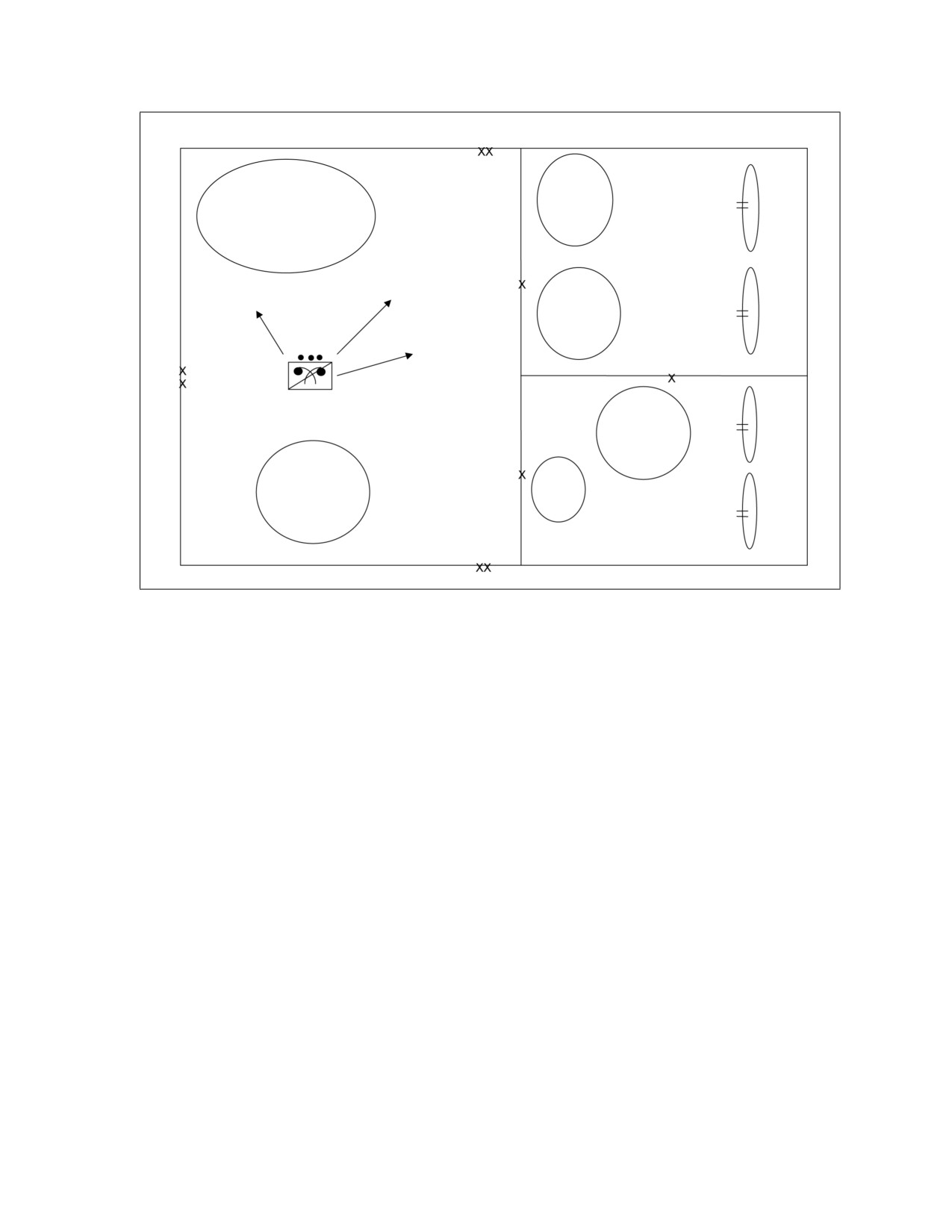
(3) The main focus of NBC reconnaissance in the defense (Figure III-7) is to
identify NBC hazards that could hinder maneuver and support forces and to decrease the
survivability of the defending forces. By identifying and marking hazards,
counterattacking or repositioning forces can avoid them. This allows the defender to gain
time, concentrate forces elsewhere, control key or decisive terrain, and wear down enemy
forces as a prelude to offensive operations. The overall goal is to improve the
commander’s ability to retain his initiative in operations where he could be facing a
numerically superior force. The positioning of NBC reconnaissance units is critical for
supporting defensive operations. For example, a division may use an assigned or
attached NBC reconnaissance unit to support missions, such as—
• Performing route reconnaissance of MSRs.
• Confirming or denying NBC hazards in NAIs.
• Performing NBC reconnaissance as part of a quartering party.
(4) Close coordination with the supported unit is also necessary during
defensive operations. NBC reconnaissance units operating forward of the supported
unit’s defensive positions must understand the unit’s scheme for counterreconnaissance.
This will reduce the possibility of fratricide. The NBC unit must coordinate all
movements in the main defensive area to prevent losses to friendly minefields, obstacles,
and counterreconnaissance efforts.
e.
Land Component, Fixed-Site Operations.
NOTE: The NBC reconnaissance considerations addressed during fixed-site
operations could impact all components.
(1) The ability to sustain combat operations in the joint rear area (JRA) is
vital to operational success. If contaminated by attack, units identify clear areas and
move along predesignated routes from contaminated areas in order.
III-18
BSA
DSA
QUARTERING
PARTIES
MSRs
BRIGADE
RESERVE
NAIs
BRIGADE
RESERVE
BRIGADE
BSA
RESERVE
Figure III-7. NBC Reconnaissance Units Supporting a Defensive Operation
(2) Units in the JRA may fall within the range of adversary air and surface
weapon delivery systems armed with NBC warheads; and an adversary may choose to
use persistent agents on deep areas, fixed sites, MSRs, or flank areas. Industrial
facilities subject to attack may also release TIM that could produce hazards to personnel.
(3) The areas of greatest vulnerability are large fixed sites (e.g., ports of
debarkation [PODs]), staging and marshaling areas, hubs, bases, assembly areas, and
MSRs adjacent to sites involved in early force buildup activities.
(4) NBC reconnaissance operations in the JRA are based on service and site
requirements, but are coordinated with the joint rear area coordinator (JRAC) and base
cluster commanders, when designated. One of the JRAC’s responsibilities is NBC
defense integration of reconnaissance assets. Component commanders will incorporate
NBC reconnaissance plans into their area and base cluster defense plans. They will also
position NBC reconnaissance assets to support current mission requirements and
facilitate future operations according to directives and priorities of the joint force
commander (JFC) and the area commander. Coordinated reconnaissance detection and
marking are needed, and civilian workers should also be trained to conduct self-
assessment activities to detect possible contamination in their work areas. However, a
military unit trained and equipped to deal with NBC contamination will normally be
necessary to support these surveys.
(5) APODs and en route fixed sites may also be targeted to disrupt or inhibit
US military deployments. Because it is unlikely that all of the operational areas of an
APOD will be contaminated at any one time, it is particularly important that the
III-19
commander know the location of hazard areas, the requirements for working and
parking areas, and the availability of runways and taxiways.
(6) SPODs may also be attractive targets for NBC attack. NBC attacks may
result in contamination of some operating surfaces, and the size of the contaminated
area may be small compared to the size of the port. However, the capability to identify
those areas and facilities within the port that escaped contamination is key to sustaining
throughput operations.
(7) The vulnerability of MSRs to NBC attacks can also have an adverse
impact if there are few major MSRs, limited alternative routes, and limited off-road
capability. NBC reconnaissance units will be employed in rear areas at critical points,
such as APODs and MSRs. NBC reconnaissance assets play a significant role by locating,
marking, and finding bypasses around contaminated areas to ensure continuous support.
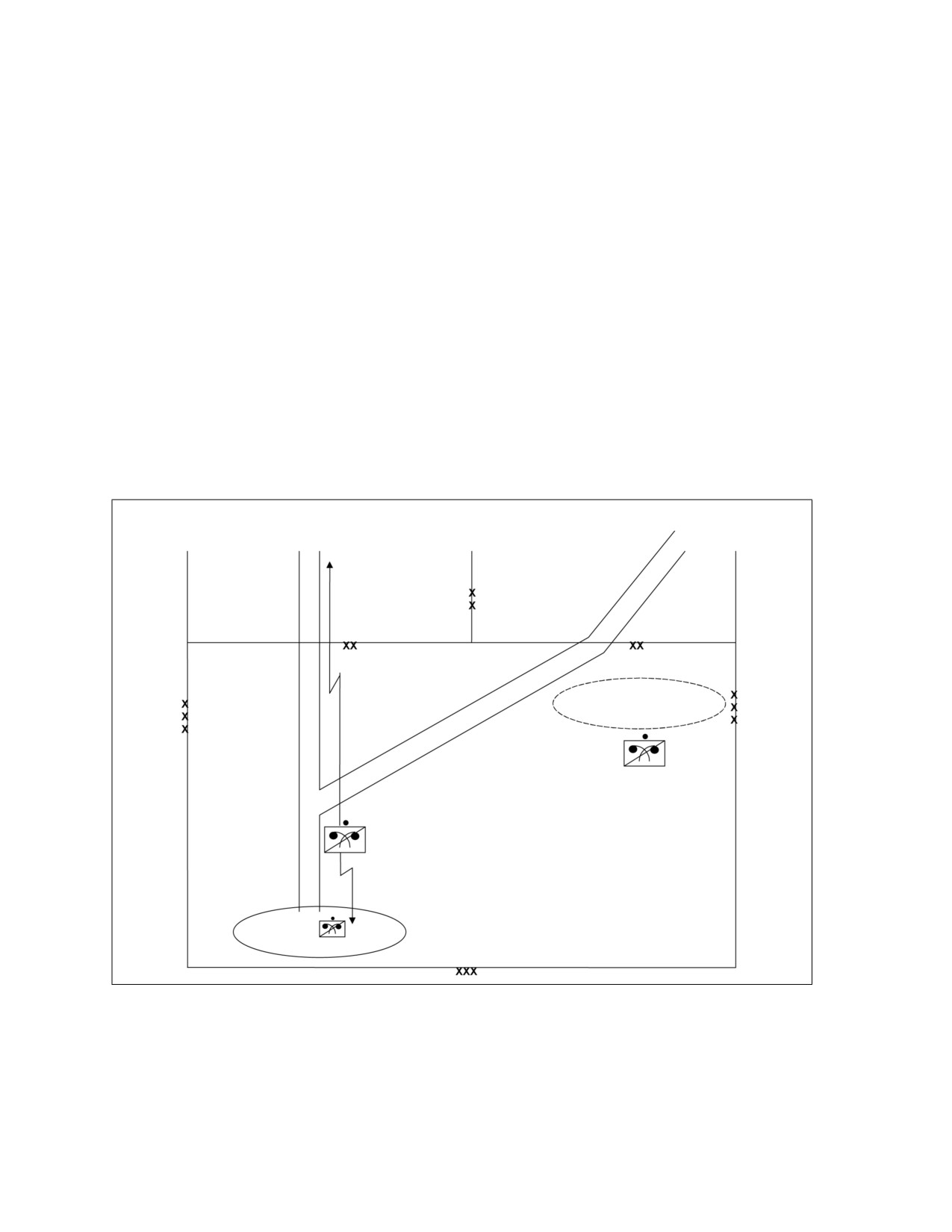
(8) In rear areas, NBC reconnaissance units also respond to reports of NBC
attacks to determine the type and extent of contamination. NBC reconnaissance units
may also be assigned NBC search and surveillance missions to observe designated areas
for NBC attacks. MSRs and areas to be occupied by logistics and C2 facilities may also be
checked for NBC hazards before their occupation (Figure III-8).
MSR
WHITE
MSR
BASE CLUSTER
YELLOW
Area reconnaissance
of new base cluster
Surveilling
along MSR
NOTE: The quick-reaction
force determines the type
APOD
and extent of reported
NBC attacks.
Figure III-8. NBC Reconnaissance Units Supporting Rear Area Operations
III-20
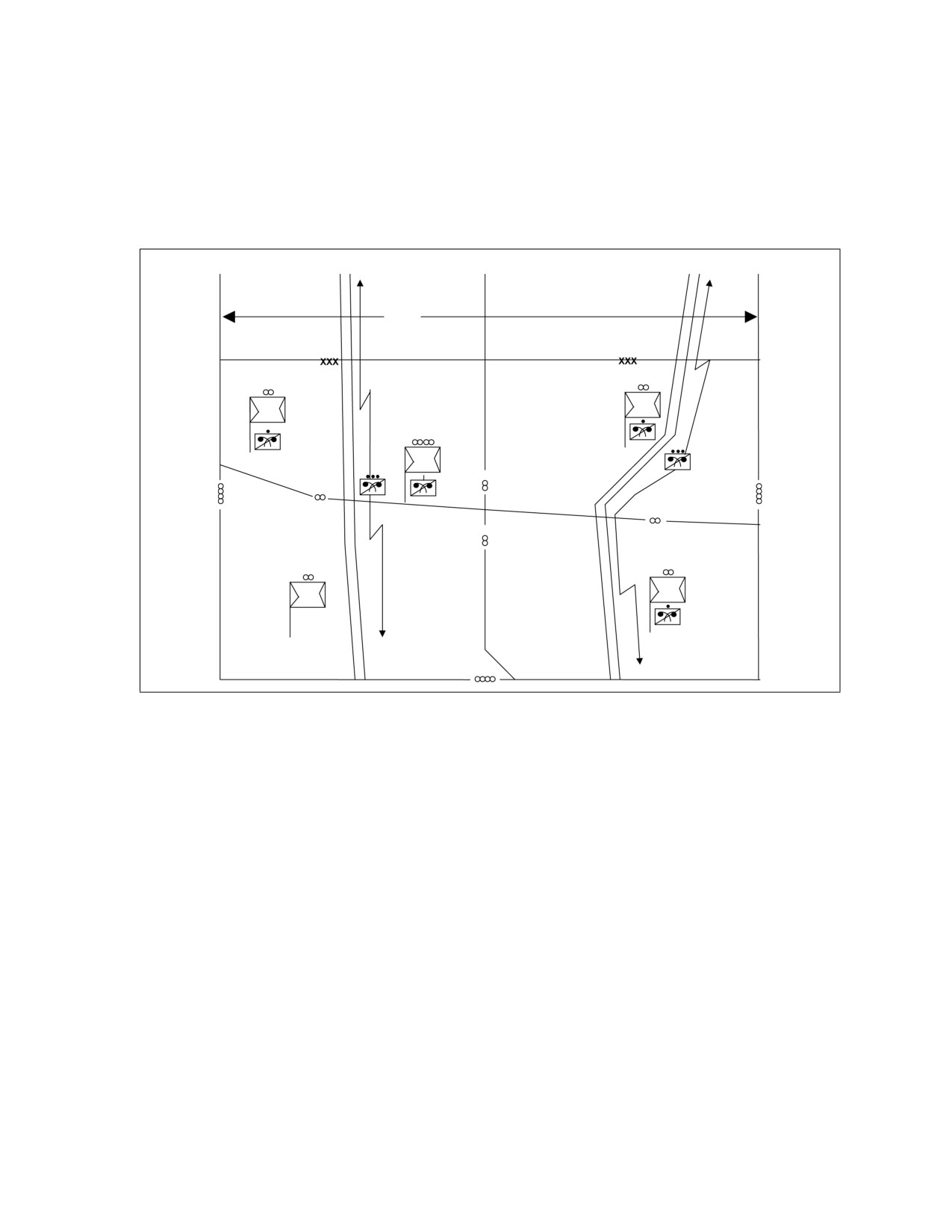
(9) The JRAC develops and coordinates missions for NBC reconnaissance
units in the JRA. The NBC center associated with the JRAC commits NBC
reconnaissance assets based on priorities that the commander establishes. NBC
reconnaissance units provide support to the affected bases and base clusters, and those
supporting the JRA must also expect to operate with other services and the HN (Figure
III-9).
JRA
MSR
RED
MSR
BLUE
Figure III-9. NBC Reconnaissance Operations in the Corps Theater Rear Area
f.
Forcible-Entry Operations.
(1) A forcible entry is an offensive operation for seizing and holding a military
lodgment in the face of armed opposition. There are three types of forcible-entry
operations—air, parachute, and amphibious assaults. The Army specializes in parachute
and air assaults. The USMC specializes in amphibious assaults and usually conducts air
assaults as part of an amphibious operation. Air and parachute assaults permit JFCs to
introduce combat power very quickly.
(2) Forcible-entry operations are complex, and they are normally joint
operations. Often, only hours separate alert and deployment. Operations are carefully
planned and rehearsed at training and marshaling areas. Joint and service commanders
carefully balance C2, combat, combat support (CS) (including NBC reconnaissance), and
combat service support (CSS) assets to quickly obtain the maximum combat power.
(3) Enemies possess the motives and means to interrupt the deployment flow.
Threats to deploying forces may include advanced conventional weaponry, NBC
weapons, or TIM. NBC reconnaissance assets would be very useful at APODs and
SPODs. They are particularly vulnerable targets since they are the entry points for
forces and equipment. POD operations involve relatively soft targets. In addition to the
III-21
presence of military forces and material, HN support personnel, contractors, and
civilians may be working there. Many of these lucrative targets are within the range of
enemy forces. A successful attack on a POD can have a major impact on force projection
momentum. Commanders at all levels focus attention on security actions (such as NBC
reconnaissance) that can help reduce vulnerabilities. To avoid threats to entry
operations, the force may operate through intermediate staging bases.
g.
Nonlinear Operations. Nonlinear operations are now more common than ever.
Operation Just Cause and the last 36 hours of Operation Desert Storm featured large-
scale, nonlinear operations.
(1) In nonlinear operations, maneuver units may operate in noncontiguous
areas throughout the AO. Even when operating in contiguous AOs, maneuver forces may
orient on objectives without geographic reference to adjacent forces. Mobile NBC
reconnaissance assets are essential to enable the identification of clean bypass routes so
that the force can maintain the required mobility. Nonlinear operations typically focus
on multiple decisive points. LOCs often diverge from lines of operation, and sustaining
operations may depend on the use of NBC reconnaissance assets with standoff detection
capabilities.
(2) Nonlinear and linear operations are not mutually exclusive. Depending
on the perspective and the echelon, operations are often combined. For example, a corps
may employ its forces in noncontiguous areas, operating simultaneously against multiple
decisive points. A brigade combat team in the same corps, operating within an urban
area, may employ units in a linear array.
6.
Conflict Termination
Conflict termination generally results in the end of hostilities; however, the
presence of NBC or TIM can still present a volatile situation. During conflict
termination, the following tasks will likely integrate NBC reconnaissance capabilities:
• IPB.
• Force protection (FP).
• Decontamination and mitigation of residual hazards.
• Control and recovery of adversary NBC capabilities.
• Coordination with nonmilitary entities.
• Health service support (HSS).
• Accurate record keeping.
• Contaminated material retrograde.
a.
IPB. Intelligence collection and analysis continue to be focused on adversary
NBC capabilities and provide for surveillance of adversary NBC assets (e.g., known or
suspected NBC capabilities that have yet to be captured or destroyed).
b.
FP. Units maintain NBC detection capabilities to help deter and mitigate the
possible effects of NBC attacks. An adversary’s armed forces or terrorists may still seek
to strike (CONUS/OCONUS) during the reduction in US force levels.
III-22
c.
Decontamination and Mitigation of Residual Hazards. Commander
maintenance of SA enables rapid identification of those areas that are contamination
hazards. Containment and mitigation actions previously taken are assessed to determine
whether follow-on actions (e.g., low-level monitoring, weathering, isolation,
containerization) should be conducted. Operations may require the application of
specialized NBC detection assets having detection capabilities that exceed (e.g., lower
detection thresholds) those found in most military units. These activities may require
intensive coordination and cooperation with multinational forces, HN civil authorities,
and other US Government (USG) agencies that offer specialized capabilities and skills.
The commander will determine when emergency or routine equipment retrograde
procedures will be undertaken. This command decision entails accepting higher
contamination risk when warranted by immediate (emergency) mission requirements.
d. Control and Recovery of Adversary NBC Capabilities. As a commander
considers NBC-related objectives associated with disabling or destroying NBC
capabilities, planning provides NBC detection capabilities to monitor and survey
designated areas. Recovery, search, identification, and control plans include NBC
specialists for monitoring and survey operations as required.
e.
Coordination With Nonmilitary Entities. Nonmilitary international
organizations, nongovernmental organizations (NGOs), and private volunteer
organizations could play significant roles during conflict termination to help activities,
such as NBC detection and management of contamination hazards. For example, these
organizations could be a source of information on possible contaminated areas, local
populace experiencing suspected agent symptoms, or other data that could support unit
NBC defense IR.
f.
HSS. During termination, HSS includes continuing medical surveillance,
providing selected health and medical care, and monitoring individual exposure as part
of the required record-keeping process.
g.
Accurate Record Keeping. During conflict termination, the commander
addresses two areas—documenting lessons learned and identifying after-operation
follow-up. Summaries may be prepared that outline when, where, and how NBC attacks
or TIM incidents occurred. Accurate record keeping also addresses the monitoring of
incidents involving personnel for long-term health problems that could be operational-
related.
h. Contaminated Material Retrograde.
(1) Goals for contaminated material retrograde from the theater are mission
support, forces and resource protection from NBC hazards, and contamination control.
To assist with requirements for contaminated material retrograde, the JRAC may
organize a support TF to accomplish tasks from marking equipment to monitoring
contamination. Personnel safety is of foremost concern during the retrograde of
equipment with potential, residual, or low-level NBC contamination. Services and other
responsible military agencies must develop and implement specific precautionary
procedures for handling and transporting their equipment. Any equipment present in
the attack or downwind hazard areas may possess residual contamination. NBC
detectors (such as the improved CAM) with sensitivities that exceed those found in most
military units may be required at specified sites in the JRA to monitor for residual
contamination.
III-23
(2) Personnel assisting the JRAC with detection, monitoring, and
preparation of equipment will require stringent personal protection and specialized
detectors. These preparations may require continuous operations for weeks or months.
As suspect equipment is consolidated for monitoring, decontamination, and weathering,
security and buffer zones around the consolidation site provide additional contamination
control measures to protect US and multinational forces and HN personnel. Ships
requiring depot level chemical and radiological decontamination at a shipyard will
proceed en route as operations permit.
(3) Air quality control and related legal requirements are additional
considerations requiring legal advice and review before equipment retrograde. Once in
CONUS, precautionary measures continue throughout the remaining equipment life
cycle, including DOD control requirements, premaintenance monitoring, and other
periodic monitoring.
III-24
Chapter IV
PLANNING
1.
Background
NBC reconnaissance planning follows the MDMP, with increased emphasis on IPB
and the development of PIR. The NBC reconnaissance plan provides guidance by
assigning missions and priorities to answer the commander’s PIR. The IPB and PIR
determine what the commander wants or needs to know about the enemy (to include
NBC capabilities), the enemy’s purpose, and terrain and weather considerations. The
IPB process also supports determining and assessing the capabilities of the unit or
adjacent friendly units.
2.
Levels
a.
Tactical Planning. Tactical planning concentrates on NBC reconnaissance
capabilities of organic, supporting, and adjacent units. It also focuses on the size and
location of the battlespace within the AO. See Appendixes B and C for a standing
operating procedure (SOP) outline and an NBC reconnaissance operations checklist,
respectively, which are tools that support tactical planning.
b.
Operational Planning. Operational planning focuses on NBC reconnaissance
capabilities to support air, maritime, and ground operations. IPB evaluates the
adversary’s capabilities and assesses what detection assets may be required to mitigate
identified vulnerabilities and capabilities. For example, adjusting the TPFDL may be
necessary to add technical escort units (TEUs), theater area medical laboratories, Navy
forward deployable PVNTMED units, or other biological detection units.
c.
Strategic Planning. Strategic planning prioritizes and provides required assets
(i.e., NBC reconnaissance units, detection equipment) to support missions within
CONUS and OCONUS. Applicable strategic level intelligence information is also
furnished to provide timely and effective IPB.
3.
Concept
NBC reconnaissance planning balances multiple considerations, including the
threat, the battlespace environment, available systems and resources, risk assessments,
and the commander’s guidance. By maximizing the effect of the overlapping factors
contributing to NBC reconnaissance, a synergy is established. This synergy drives the
effective probability of mission success, ensures that the operational concept is
executable, and ensures that the NBC reconnaissance plan is logistically supportable.
The concept of NBC reconnaissance is presented in Figure IV-1, page IV-2.
4.
Military Decision-Making Process
The MDMP is a process that can result in the generation and approval of operation
plans (OPLANs) and operation orders (OPORDs) to support NBC reconnaissance. The
MDMP steps used to develop an NBC reconnaissance plan include—
IV-1

Threat and
System and
environment
resources
Risk and
guidance
Risk and Guidance
System and Resources
Threat and Environment
Mission
Number of systems available
Background environment
Capability holes
Types of systems in the AO
Size and type of the AO
Time available
Downwind detection capability
Threat to the system
Uncertainty
Amount of resources available
Topography
Commander’s risk level
Logistics supportability
Agent
Other specific guidance for false
Delivery mechanism
alarms, decision time, etc.
Weather
Figure IV-1. Concept of NBC Reconnaissance
• Mission receipt.
• Mission analysis.
• COA development.
• COA analysis (war gaming).
• COA comparison.
• COA approval.
• Orders preparation.
a.
Mission Receipt. During this phase of the MDMP, the commander issues initial
guidance on the NBC reconnaissance. This is communicated to NBC reconnaissance
assets through a warning order (WARNORD) issued by the operations section. The NBC
staff provides input for the WARNORD.
b. Mission Analysis.
(1) During the mission analysis phase, the commander and the NBC staff—
IV-2
•
Analyze the higher headquarters order for NBC reconnaissance
guidance.
•
Conduct an initial NBC IPB (see Appendix D).
•
Determine specified, implied, and essential tasks for NBC
reconnaissance.
•
Review available NBC reconnaissance assets.
•
Determine constraints.
•
Identify critical facts and assumptions.
•
Conduct an NBC risk assessment and vulnerability analysis.
•
Determine NBC-related CCIR.
•
Develop the initial NBC reconnaissance annex.
•
Plan the use of available time.
•
Write the restated mission.
•
Conduct a mission analysis briefing.
•
Approve the restated mission.
•
Develop the commander’s intent for NBC reconnaissance.
•
Issue the commander’s guidance for NBC reconnaissance.
•
Issue a WARNORD.
•
Review the facts and assumptions.
(2)
During mission analysis, the commander may identify NBC CCIR and
PIR that are critical to SA. This could change his assessment of the battlespace and
affect his plan (e.g., identifying contaminated movement routes, determining if the
enemy has NBC weapons in range). It may also lead to the issuance of an NBC
reconnaissance fragmentary order (FRAGORD) by the operations section for NBC
reconnaissance assets to collect information to support NBC CCIR and PIR. For
example, the FRAGORD may direct NBC reconnaissance assets to confirm or deny the
presence of contamination.
(3) Based on the initial IPB and CCIR and PIR guidance from the
commander, the staff (NBC, medical, and intelligence sections) identifies gaps in the
available NBC intelligence. An initial NBC reconnaissance plan to acquire information
based on available NBC reconnaissance assets is developed. The operations section
approves the initial NBC reconnaissance annex ordering NBC reconnaissance assets to
begin their collection effort. This initial NBC reconnaissance annex should contain, as a
minimum—
• Location of the AO for NBC reconnaissance.
• Mission statement.
• Task organization.
• NBC reconnaissance objective.
• NBC PIR and IR and the initial NBC NAIs.
IV-3
• LD and line of contact times.
• Routes to and through the AO and the instructions for the passage of
lines.
• Communications, NBC warning and reporting system, and logistics
support.
• Fire support measures.
• HSS.
• Sample evacuation plans (see Appendix E).
• Other NBC support required (i.e. decontamination, escort, medical
laboratories).
(4) The NBC reconnaissance annex initiates NBC reconnaissance collection
actions. As more information becomes available, it is incorporated into updates for the
NBC reconnaissance annex of the OPORD. Figure IV-2 shows the OPORD annex format
and contains suggested items for inclusion. As NBC reconnaissance assets collect
information and other NBC intelligence sources fill information gaps, the taskings to
NBC reconnaissance assets are updated to reflect new or revised CCIR and PIR.
c.
COA Development.
(1) After receiving guidance, the staff develops COAs for analysis and
comparison. During this phase, the NBC staff further refines development of the NBC
reconnaissance plan for support of each COA being developed. The annex also indicates
what support is required for the NBC reconnaissance effort. The plan is adjusted based
on any reports from NBC reconnaissance operations in progress. The NBC
reconnaissance plan is integrated into the unit ISR plan to ensure visibility and unity of
effort for each COA.
(2) During the development of COAs, the NBC staff (primary and additional
duty personnel) is aware of the capabilities of the unit organic NBC reconnaissance
assets and the supporting specialized NBC reconnaissance unit assets (see Appendix F).
The following actions should be considered when preparing COAs for NBC
reconnaissance operations, whether using supporting NBC reconnaissance assets or an
organic unit:
• Identify AOIs for NBC ISR.
• Coordinate with organic, subordinate, and supporting NBC
reconnaissance assets.
• Pre-position NBC reconnaissance assets to support requirements.
• Assess the time and distance factors associated with movement
formations (see Appendix G) and surveillance techniques (see
Appendix H) for conducting NBC reconnaissance.
• Orient the mission execution to provide timely notification of critical
information to support tactical decisions.
• Orient the NBC reconnaissance on the presence or absence of NBC
contamination in AOIs.
IV-4
ANNEX X (NBC RECONNAISSANCE) TO OPORD _______
1.
SITUATION.
a.
CCIR (PIR, friendly force information requirements, and EEFI).
b.
IPB outputs related to NBC reconnaissance (NAIs, TAIs, vulnerability, risk).
2.
MISSION (search; survey; surveillance; sample; or route, zone, or area reconnaissance).
3.
EXECUTION.
a.
Scheme of support. State the overall NBC reconnaissance objective and plan, including tasks and
purposes. Detail how NBC reconnaissance assets operate in relation to the rest of the force. State the method
that NBC reconnaissance forces will use to get to the assigned area (passage through friendly forces,
infiltration, penetration of enemy security zone, passage of lines). (Refer to the NBC reconnaissance overlay.)
b.
Tasks to subordinate units. Each task to a subordinate NBC reconnaissance asset must include the
following:
•
How the unit will get to its assigned area (routes, passage points).
•
The NBC reconnaissance objective for the unit.
•
Specific NBC collection tasks (PIR with indicators) and where to conduct reconnaissance (NAIs)
as identified in the NBC reconnaissance plan matrix. State when to conduct the NBC
reconnaissance operation and when the information is needed.
c.
Coordinating instructions. Include the following:
•
MOPP level guidance.
•
Automatic masking criteria.
•
Troop safety criteria.
•
Locations of linkup points for decontamination sites.
•
Locations of medical facilities for treating NBC casualties.
•
Designated turn-in point and procedures for handling NBC samples.
•
Civilian and military facilities whose destruction could create significant NBC or TIM hazards.
•
Operational exposure guidance, if applicable.
•
Procedures for limiting EMP effects.
•
Identification of designated observer units.
•
Identification of procedures for providing support to local populations.
4.
SERVICE SUPPORT. Include the following:
•
Decontamination support.
•
Medical support.
n
Prophylaxis and treatments.
n
Laboratory analysis for samples.
n
Medical evacuation.
•
Technical escort of samples.
•
CLS.
•
Maintenance support.
•
PPE, chemical defense equipment, and resupply after decontamination.
•
Aviation support (standoff detection and aerial surveys).
•
Mortuary affairs and disposition of contaminated remains.
5.
COMMAND AND SIGNAL.
a.
Command (centralized versus decentralized).
b.
Signal.
•
Who to report collected NBC information to and by what means.
•
The retransmission plan to support the operation.
•
NBC warning and reporting system.
Figure IV-2. NBC Reconnaissance OPORD Annex
IV-5
•
Plan the resupply (logistics) activities to sustain NBC
reconnaissance operations.
•
Determine the possible locations for after-mission decontamination.
•
Plan security to protect NBC reconnaissance assets.
•
Determine the rules of engagement (ROE) to prevent fratricide.
•
Plan to deploy and integrate automatic detection, identification, and
warning systems with individual detection and identification
equipment. Ensure maximum coverage of critical areas with
automatic systems. Rely on manual systems to expand or back up
the coverage.
•
Use operational exposure guidance (OEG) to support radiological
search and survey guidance (see Appendix I).
•
Plan to use the data provided by the fielded detectors and the
primary or additional NBC staff to determine the unit status. The
actual presence or absence of contamination should be confirmed by
multiple detection systems. The following indicators could be
included in unit SOPs to determine the presence or absence of
contamination:
n
Agent symptoms in personnel and wildlife. (Some chemical
agents manifest themselves several hours after an attack; some
biological agents manifest themselves several days or weeks
after an attack.)
n
Tactics and weapon systems used in the attack.
n
The presence of suspicious clouds, vapors, powders, or liquids.
n
Intelligence data supporting the likely or actual use of CB
agents in theater.
n
Reports from personnel, teams, and automatic systems.
•
Plan to request specialized assets (such as NBC reconnaissance
teams, damage assessment and response teams, and contamination
control teams) to verify initial positive indications, identify agents,
and survey unmonitored areas.
•
Establish command or support relationships to ensure
responsiveness and flexibility when using a supporting NBC
reconnaissance unit.
d.
COA Analysis (War Gaming). During this phase, the staff war-games the
COAs they have developed. The staff evaluates each COA, revises the NBC
reconnaissance plan, adjusts the CCIR and PIR, identifies missions for subordinate
units, defines the task organization, prepares staff estimates and products, and develops
matrices/sketches to support the COAs. Logistics considerations, the NBC warning and
reporting system structure (e.g., decentralized or centralized reporting, communications
resources designated for use), and sample evacuation plans for NBC reconnaissance are
further developed and war-gamed for each COA.
IV-6
e.
COA Comparison. The COA comparison is conducted by establishing criteria,
war-gaming results, and developing a decision matrix. At the end of this phase, a
decision briefing is given.
f.
COA Approval. After the decision briefing, the commander decides on the COA
he believes to be the most advantageous. Once the commander has selected a COA, he
may refine his intent statement, CCIR, and PIR to support the selected COA. He then
issues any additional guidance on priorities for CS or CSS activities (particularly for
NBC reconnaissance resources he needs to preserve his freedom of action), orders
preparation, rehearsals, and mission execution.
g.
Orders Preparation. Based on the commander’s decision and final guidance on
NBC reconnaissance, the NBC staff refines the COA and completes the NBC
reconnaissance annex to the OPLAN. The NBC staff prepares its portion of the order to
implement the selected COA by turning it into a clear, concise concept of NBC
reconnaissance operations that supports the commander’s intent. The COA sketch can
become the basis for the NBC reconnaissance operation overlay. OPORDs and OPLANs
provide all the necessary information that subordinates require for execution of the NBC
reconnaissance plan, but without unnecessary constraints that would inhibit
subordinate initiative. The NBC staff also assists subordinate staffs as needed with their
NBC reconnaissance planning and coordination.
IV-7
Chapter V
CAPABILITIES
1.
Background
a.
This chapter focuses on the NBC reconnaissance organizations, capabilities,
and equipment. All service components possess organic NBC reconnaissance, and other
organizations are available within each component to support specialized NBC
reconnaissance requirements. Appendix F provides more information on unit level NBC
reconnaissance equipment and service capabilities.
b.
The armed forces of the US must be prepared to conduct prompt, sustained,
and decisive combat operations in NBC environments. Each service and its functional
components have the capability to operate in an NBC environment. Inherent in this
effort is the need for up-to-date information on adversary NBC capability and
employment. This information is obtained through NBC reconnaissance efforts.
c.
NBC reconnaissance is a multiechelon process that begins at the national level
and ranges down to include the alert watchfulness of each individual. Operationally,
NBC reconnaissance focuses on providing key information to support the commander’s
SA. Tactically, NBC reconnaissance is a routine part of conventional land or maritime
operations.
2.
Equipment Capabilities
a.
USAF, USN, USMC, and USA units have organic capabilities for conducting
NBC reconnaissance. Most units can detect selected chemical-agent liquid and vapors
and gamma and beta radiation. Capabilities available to most military units include—
• ACAA.
n
M8A1-series point alarm detects nerve-agent vapors.
n
M22 alarm detects nerve and blister agents.
n
M90 automatic agent detector detects nerve- and blister-agent vapors.
n
Maritime chemical-agent point detection system detects nerve agents.
n
Improved chemical-agent point detection system detects nerve and blister
agents.
• Improved CAM. This point monitor detects nerve- and blister-agent vapors.
• Chemical-agent detection paper.
n
M8 detector paper detects liquid nerve (types G and V) and blister (type
H) agents.
n
M9 detector paper provides nonspecific detection for nerve and blister
agents.
• M256A1 chemical-agent detector. This portable, disposable detection kit
detects nerve-, blood-, and blister-agent vapors.
V-1
• Dosimeter. This device provides a total absorbed dose for radiation exposure.
• Radiac sets. These devices (such as the AN/VDR-2, a portable radiac
instrument) are used for area surveys and personnel monitoring.
• M272 chemical-agent water testing kit. The M272 detects cyanide,
mustard, lewisite, and nerve agents when present in concentrations greater
than the short-term or emergency limit.
• NBCRS and NBC reconnaissance vehicle (NBCRV). These systems can
detect a wide variety of chemical agents and radiation. The NBCRS can
conduct point biological-agent detection and point and standoff chemical
detection.
b.
NBC reconnaissance units can operate in CONUS and OCONUS during all
phases of operations. They are integrated into the overall ISR plans; their efforts must be
focused by the IPB and the commander’s PIR and IR. Service NBC reconnaissance assets
can provide additional or specialized capabilities that support requirements of other
components.
NOTE: See Appendix F for details on special support units and assets for NBC
reconnaissance.
3.
United States Army
a.
Allocation. The numbers, types, and locations of NBC units and headquarters
depend on the operational situation. The allocation of some NBC assets is theater-
dependent. Exact numbers of NBC units in a specific AO may vary because of the
theater-specific differences in NBC support requirements. NBC support requirements
are based on the priorities established by the commander. Those requirements must be
identified in OPLANs to ensure that NBC support is incorporated into the TPFDL.
b.
Division Area. Some infantry divisions still retain an organic NBC defense
company. Most mechanized and armored divisions do not have an organic NBC defense
company; however, they do retain NBC reconnaissance platoons. For additional NBC
reconnaissance support, the division relies on corps augmentation. Light infantry
divisions do not have an organic NBC company; they rely on corps augmentation for
NBC reconnaissance. Separate brigades have an NBC platoon (smoke/decontamination/
reconnaissance) in the brigade headquarters and headquarters company (HHC).
NOTE: Mechanized and armored divisions are in a transition period; their
organic NBC defense companies are being moved to echelons above division.
c.
Corps Area. The corps has an assigned NBC brigade, and the numbers and
types of NBC units assigned to the brigade depend on the corps mission and its
organization. This brigade is a mix of NBC reconnaissance, mechanized smoke, smoke/
decontamination, reconnaissance/decontamination, and biological detection units beyond
those that are organic to the division. It allows the corps commander to send additional
resources where they are needed. The planning allocation for a corps NBC brigade,
which includes NBC reconnaissance and C2 assets, is as follows:
• A brigade headquarters and headquarters detachment (HHD).
• One NBC reconnaissance company and one NBC reconnaissance/
decontamination company per light ACR and SPOD.
V-2
• Two or more NBC battalion headquarters to provide C2 for assigned
companies.
• One biological detection company, which operates directly under the NBC
brigade.
d. Communications Zone (COMMZ). A JRA is not a safe haven from combat
operations because enemy force capabilities may present a significant NBC threat. The
COMMZ has assets (such as a biological point detection capability [i.e., portal shield]) to
monitor for and identify biological agents (see Appendix F). The planning allocation for
the COMMZ NBC brigade, which includes NBC reconnaissance and C2 capabilities, is as
follows:
• A brigade HHD.
• Two or more NBC battalion headquarters to provide C2 for assigned
companies.
• One biological detection company.
• One NBC reconnaissance company.
• One NBC reconnaissance/decontamination company (one per SPOD).
NOTE: See Appendix J for details on USA NBC reconnaissance tactics,
techniques, and procedures (TTP).
4.
United States Marine Corps
a.
Individual Units. USMC unit capabilities are based on unit equipment and
training in NBC detection, protection, and decontamination operations. USMC units
have organic NBC personnel and equipment within each organization, down to the
battalion and squadron levels. NBC personnel provide training and operational support
for NBC defense. The personnel-intensive tasks (such as NBC reconnaissance
operations) are performed by additional duty marines from within the unit. The USMC
typically uses the same NBC defense equipment as other services. NBC reconnaissance
teams consist of two or three marines, down to the company and squadron levels. These
NBC reconnaissance teams can detect and locate most NBC hazards and provide unit
commanders with information about where contamination may or may not be present.
Collected data is forwarded to higher headquarters via communications nets (e.g., radio,
digital nets, and the joint warning and reporting network). If more information is
required, detailed surveys can be conducted.
b.
Structured NBC Defense Units.
(1) NBC Reconnaissance Platoons. These platoons are equipped with the
M93A1 or the joint-service, lightweight NBCRS. The M93A1 NBC reconnaissance
platoons are currently located within each USMC division, are attached to the light
armor reconnaissance battalion, and provide the commander with a mobile platform to
conduct NBC reconnaissance. The joint-service, lightweight NBCRS is assigned to the
Marine division and force service support groups to provide improved detection.
(a) In the forward combat area, the joint-service, lightweight NBCRS
(light armored vehicle [LAV]) will be integrated into the overall ISR effort to confirm or
deny contaminated areas in support of combat operations. It supports the
forward-deployed combat elements through all phases of force projection and may be
V-3
employed with, or independent of, other LAVs required to support the scheme of
maneuver.
(b) The joint-service, lightweight NBCRS (high-mobility, multipurpose
wheeled vehicle [HMMWV]) will be used in the rear areas to monitor MSRs, logistics
bases, airfields, ports, and key C2 centers for NBC hazards. It may be employed to
support military operations other than war (MOOTW) when forces are operating near
industrial areas that pose a TIM threat and in response to, or to mitigate, an NBC or
TIM terrorist threat.
(2) Chemical-Biological Incident Response Force (CBIRF). Comprised of
about 350 marines and sailors, the unit can provide NBC reconnaissance, personnel and
casualty decontamination, medical support, and expert advice through the Electronic
Reach-Back Advisory Group. This group is an organization chartered to assist with the
development, training, and operations of the CBIRF; and it is comprised of nationally
and internationally recognized civilian experts in science and medicine. The CBIRF has
state-of-the-art monitoring and detection equipment for identifying, sampling, and
analyzing NBC hazards, including TIM. It is self-contained, self-sufficient, and rapidly
deployable worldwide. (Appendix F includes additional information on the CBIRF.)
5.
United States Air Force
a.
Reconnaissance Forces. USAF NBC reconnaissance forces are structured to
support AB survivability and operations. Each AB civil engineering (CE) squadron
contains a readiness flight (office symbol CEX). This flight is the focal point for
nonmedical NBC defense. CE readiness flight personnel are NBC technicians. They are
responsible for managing and supporting (nonmedical) NBC planning, training, and
operations on the base. All other units on the base support NBC defensive operations, as
necessary, with their own organic resources (primarily unit decontamination teams and
postattack reconnaissance sweep teams). CE readiness flights establish and operate the
base NBC detection grid (point and standoff detectors), conduct NBC reconnaissance
missions on and near the AB, operate the NBC center, and perform NBC warning and
reporting system functions.
(1) CE readiness flights and unit type codes (UTCs) have organic vehicles.
They use equipment such as ACAAs, chemical point monitors, chemical detection kits,
biological sampling kits, radiacs, and other NBC equipment. They deploy to contingency
operating locations and are assigned to the CE organization at the forward location.
(2) USAF units may operate without support from ABs (such as air control
[ground-based radar warning] squadrons), and they may have NBC detection equipment
and a CE readiness technician organic to their unit.
(3) All deployable USAF units and personnel are trained to perform basic
postattack reconnaissance in their immediate work area by using M8/M9 detector paper.
Organic security forces may have M256A1 kits and improved CAMs issued to them by
CE readiness flights.
b.
Postattack Actions.
(1) The base SRC assesses initial reports from the base defense operations
center (BDOC), control tower, and CE postattack reconnaissance teams to determine the
V-4
nature of the attack and identify obvious damage to the base. The SRC uses this
information to determine when unit postattack reconnaissance team surveys begin.
(2) Base CE postattack reconnaissance teams begin surveys and report
contamination, UXO, damage, fire, and other incidents as found. The SRC uses this
information to determine what type of attack occurred and when unit postattack
reconnaissance team surveys begin.
(3) The SRC identifies contamination hazards and directs MOPP levels and
alarm conditions for base zones and sectors. Contamination marking and clear
communication of the contaminated zones are critical to successful execution and
contamination avoidance.
(4) Personnel remain under cover and conduct physical checks of the outside
area and inside facilities for UXO, casualties, and facility or equipment damage. All
positive results are reported to the unit control or work center.
(5) When directed by the unit control center or other authority, unit
postattack reconnaissance teams begin sweeps over predesignated unit areas. Teams
check pre-positioned M8 detector paper for signs of contamination and look for passive
indicators, such as dead or dying wildlife. Teams also determine if sufficient
uncontaminated assets remain to allow the use of only these assets, and they separate
and properly mark contaminated assets from uncontaminated resources.
(6) Unit control centers and the SRC collect postattack reconnaissance
information, determine the effect on operations, prioritize actions, and recommend COAs
to the wing operations center (WOC) and the commander. The NBC cell plots any
contamination that is found and identifies the type of agent. Medical NBC personnel
perform a health risk assessment and team with CE NBC personnel to provide the SRC
director, and subsequently the wing commander, with an overall risk assessment that
includes NBC zones, sector alarm conditions, and MOPP levels and determines potential
hazard duration. The SRC continually evaluates and adjusts protective measures as
hazards decrease or if the wind direction shifts. CE and NBC personnel will advise on
the use of MOPP variations to reduce thermal burden and maintain an appropriate level
of protection.
(7) Bioenvironmental engineer personnel integrated into the postattack
reconnaissance team conduct environmental sampling and surveillance to identify the
extent and persistency of contamination in contaminated areas or formerly contaminated
areas. With unit support, they also compile exposure information from dosimeters,
individual sampling badges, and NBC defense cell data to assist in the medical-
treatment process and document exposure.
(8) When directed to resume mission-critical operations or tasks, personnel
continue to look for evidence of contamination, watch for hazard-marking signs or
indications, and mark contaminated assets. When directed by the SRC unit control
center, personnel replace contaminated M8/M9 detector paper and protective covers (e.g.,
plastic over vehicles and equipment).
6.
United States Navy
a.
Afloat. Shipboard CBR defense capabilities focus on the survivability of the
unit and are conducted primarily by the shipboard damage control organization. Threat
V-5
analysis, hazard prediction, and message reports are the responsibility of the ship
operation department. The primary advisor to the commanding officer (CO) for CBR
defense actions is the damage control assistant. The damage control assistant is
responsible for maintaining the ship CBR defense bill, which outlines NBC procedures
and assigns personnel for NBC duties for the ship. The damage control organization
includes personnel assigned as standoff detector operators, ventilation control personnel,
on-station monitors, survey teams, decontamination teams, and personnel
decontamination station operators.
b.
Ashore. Within each disaster preparedness functional AOR, there are
organized units assigned to perform specific tasks by the Navy shore activity
commander. These units, called disaster preparedness teams, are composed of the
smallest number of personnel required to perform the stated function with assigned
equipment. Standard teams may include control and communication, security,
engineering, fire fighting, and CBR defense. CBR defense teams support survey,
decontamination, and contingency response.
NOTE: The Navy does not operate with specialized NBC organizations afloat or
ashore.
V-6
Chapter VI
TASKS
1.
Background
a.
NBC reconnaissance is conducted to obtain information by visual observation
or other methods and to confirm or deny the presence of NBC hazards or attacks. It may
include gathering information on the enemy use of NBC weapons, associated hazards, or
meteorological data for NBC hazard predictions. NBC reconnaissance also includes
finding clean areas and detours around NBC-contaminated areas. Tasks may include
search; survey; surveillance; sampling; and route, zone, and area reconnaissance.
b.
The goal of NBC reconnaissance is to produce information that allows friendly
force elements to avoid contaminated areas. It also provides technical intelligence
concerning enemy offensive NBC capability and is part of the overall intelligence
collection effort. It is performed during preparation for operations, during sustained
combat operations, and after conflict resolution to provide information used by the
commander to support IPB requirements.
NOTE: For detailed information, see Appendix G for search and survey
movement techniques, Appendix H for surveillance techniques, and Appendix I
for search and survey detection methods.
2.
Search
a.
Searches are initially conducted to find contamination. They are conducted on
a continuous basis to detect hazards along routes, in areas, or in selected zones or sectors
of interest. When the NBC reconnaissance unit encounters contamination, it uses a
series of actions (critical tasks) to develop the situation. The unit—
• Reports. When the reconnaissance unit finds contamination, it stops and
reports its presence. The team may use a size, activity, location, unit,
time, and equipment (SALUTE) report or an NBC 1 or 4 initial report (see
Chapter VIII and Appendix K for further information on NBC reporting).
If enemy contact is expected, the NBC reconnaissance unit remains in a
covered and concealed position to minimize exposure to the
contamination.
• Determines the agent type or the radiation intensity. If possible,
the NBC reconnaissance unit develops the situation by determining the
agent type or the radiation intensity. Security elements move to covered
and concealed positions to provide overwatch.
• Performs follow-on tasks. The unit conducts follow-on tasks (marking,
bypassing, and sampling) as required.
• Chooses a COA. Once the leader has gathered enough information, he
makes a decision and selects a COA. The COA should adhere to the
commander’s intent, be within the capability of the unit, and allow the
unit to resume its mission as soon as possible (ASAP). COAs include
VI-1
conducting an NBC survey to determine the exact boundaries of the
contaminated area, searching and bypassing to facilitate the bypass, or
bypassing the contaminated area to find the shortest, safest route across
the contaminated area.
• Implements the commander’s decisions. The commander acts on the
information reported by the reconnaissance unit. The impact of the
reported contamination is analyzed against the current and future
operations. The commander may decide to alter the scheme of maneuver
to avoid the contamination, or he may increase the protective posture.
b.
Search techniques can use point or standoff capabilities to find contaminated
areas. All search techniques require applied judgment based on METT-TC. The terrain
and the enemy dictate which technique to use and the level of detail possible. More than
one technique may be executed during a single mission. There are three search
techniques that can be employed during reconnaissance operations to locate
contaminated areas—zigzag, lane, and cloverleaf (see Appendix G). Each technique can
be performed mounted or dismounted. The detection equipment varies based on the
situation and the threat. Equipment and system operating instructions are found in
applicable operator and crew service and technical publications.
3.
Survey
a.
After contamination is detected, survey techniques (Figure VI-1) determine the
location and size of the contamination. This resource-intensive operation is typically
conducted in rear areas to prevent units from unknowingly entering the contaminated
area.
Figure VI-1. NBC Survey
b.
The following are critical tasks conducted during an NBC survey:
• Locate the general boundaries of the contaminated area.
• Place warning markers at specified intervals around the contaminated
area and at all entry points.
VI-2
• Determine the intensity of the contamination.
• Report information via an NBC 4 report.
c.
NBC surveys define the boundaries of contaminated areas. All survey
techniques require applied judgment based on METT-TC. The mission, the terrain, and
the enemy indicate the technique that should be used. There are three survey techniques
that can be employed when the contamination is located—nearside-farside, box, and star
(see Appendix G). The techniques are usually performed mounted to minimize the
exposure of survey personnel to NBC hazards; however, they can be performed
dismounted.
d. There are two types of surveys—complete and incomplete. A complete survey
occurs when the entire extent of the contamination has been identified. An incomplete
survey occurs when the entire extent of the contamination has not been identified, such
as when an NBC reconnaissance unit must conduct a survey to find a bypass route. The
detection equipment used to conduct surveys varies based on the situation and the
threat. Equipment and system operating instructions are found in applicable operator
and crew service and technical publications.
4.
Surveillance
a.
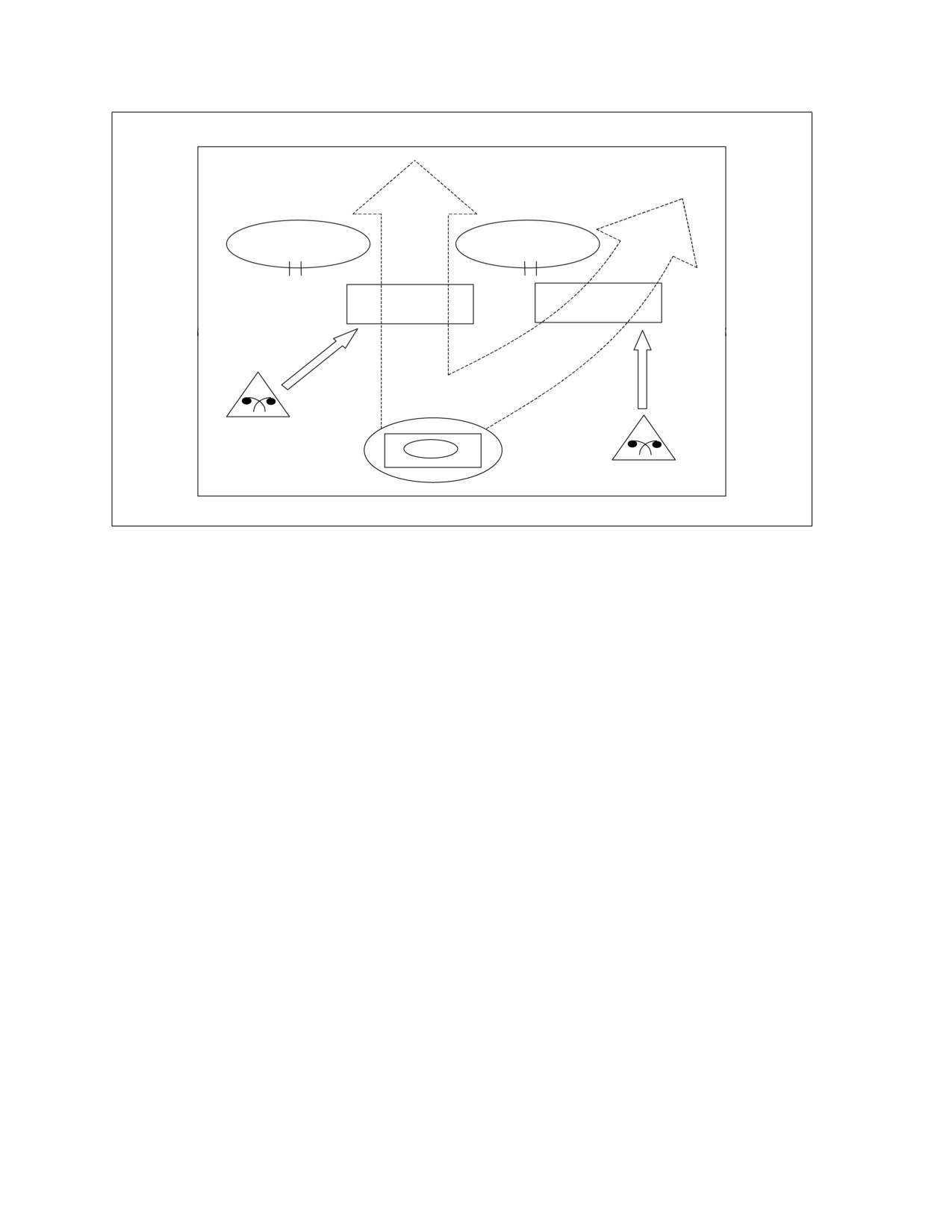
Surveillance (Figure VI-2, page VI-4) is the systematic observation of
aerospace, surface and subsurface areas, places, persons, and things by visual, aural,
electronic, or other means. All units perform a type of NBC surveillance. They monitor
their areas to provide early warning by using detection systems, such as ACAAs. They
can also be given the mission to perform NBC surveillance by observing specified areas
(e.g., NAIs) for indications of an attack. NBC surveillance can be supported by several
systems, such as the M21 remote sensing chemical-agent alarm; joint-service,
lightweight, standoff chemical-agent detector; and biological point detector (biological
integrated detection system). After observing the indications of an NBC attack, the
reconnaissance element has the following options:
• Conduct an NBC survey to define the boundaries of the contamination.
• Locate and mark clear bypass routes.
• Terminate the mission, and move to the coordinated decontamination
point.
• Continue the mission.
b.
The following critical tasks are conducted during an NBC surveillance:
• Occupy OPs to overwatch the designated area.
• Report all indications of an NBC attack.
c.
Specialized units (conventional and special operations) also support NBC
surveillance with point or mobile, standoff LOS detectors to detect NBC agents. NBC
surveillance capabilities are integrated to form a detection network. The network
requires the following capabilities to maximize the probability of detection:
• Determine whether contamination is present in contact (liquid or solid) or
vapor form.
VI-3
NAI
NAI
3
2
X
X
X
Figure VI-2. NBC Surveillance
• Detect and locate contamination from an attack that could impact on a
unit location or upwind.
• Identify the type of agent, if possible, based on the available capability.
• Quantify the intensity of the hazard.
• Consolidate and communicate report information to the NBC center.
• Determine when the hazard has diminished to enough to allow MOPP
level reduction.
NOTES:
1. See Appendix L for TTP on USA special operations NBC reconnaissance
units.
2. See Appendixes M and N for TTP on joint-service, lightweight, standoff
chemical-agent detectors and joint-service, lightweight NBCRS.
5.
Sampling
a.
Sampling is the process or technique of selecting, packaging, and documenting
the collection of material. Sampling supports operational requirements and IR. The
processing of samples includes verification that an attack has occurred (detect to verify)
to support protection, prevention, and treatment decisions (detect to treat). The
processing of the sample includes collection, handling, transferring, and chain of custody.
Chain-of-custody and transfer procedures are established by each TO.
b.
The following critical tasks are conducted during NBC sampling:
VI-4
• Collect the sample.
• Prepare the sample documentation that describes the material.
• Maintain the chain of custody.
• Handle the sample properly.
NOTE: See Appendix E for detailed information on sampling.
6.
Route Reconnaissance
a.
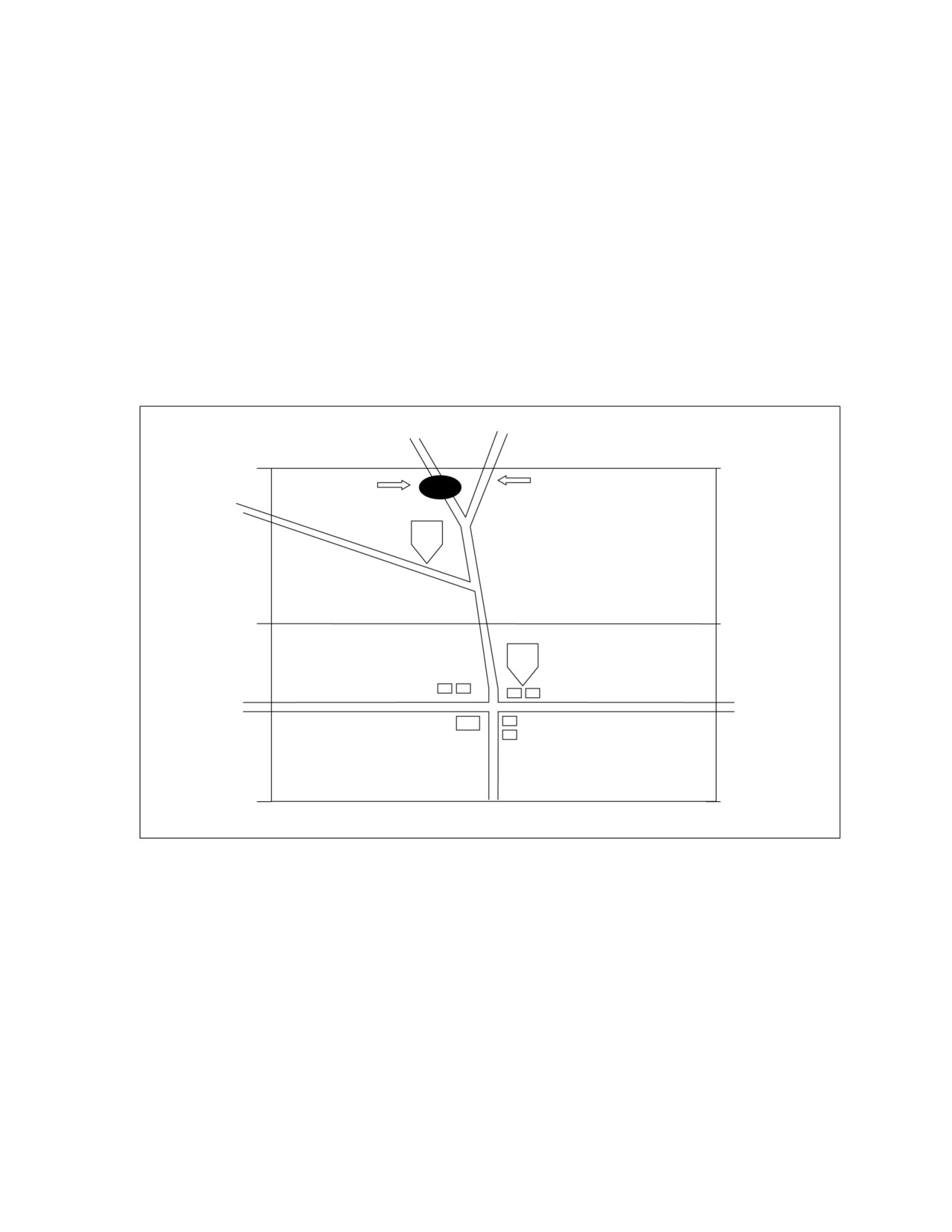
Route reconnaissance (Figure VI-3) is a form of reconnaissance that focuses
along a specific LOC, such as a road, railway, or cross-country mobility corridor. A route
may encompass a single road, or it could be an axis of advance. Typically, a unit performs
an NBC route reconnaissance as part of the overall operation.
PL
PL
APRIL
Contaminated
Possible
APRIL
area
bypass
8
PL
PL
LINDA
LINDA
3
PL
PL
LEE
LEE
(LD)
(LD)
Figure VI-3. NBC Route Reconnaissance
b.
When the commander’s IPB indicates that there is a high likelihood of
contamination along the route, a unit (particularly an NBC reconnaissance element) is
given the specific mission to conduct an NBC route reconnaissance. The NBC route
reconnaissance proceeds faster than an NBC zone reconnaissance. The size of the route
and the time available dictate the size of the reconnaissance element. Once
contamination is detected, the reconnaissance element has the following options:
• Conduct an NBC survey to define the boundaries of the contamination.
• Locate and mark clear bypass routes.
VI-5
• Terminate the mission, and move to the coordinated decontamination
point.
• Continue the mission.
c.
Critical tasks must be accomplished during a route reconnaissance. The IPB
and previous NBC reports indicate the possible locations of contamination. The following
critical tasks are conducted during a route reconnaissance:
• Reconnoiter the route, and determine the location of any contamination.
• Locate and mark bypass routes if contamination is encountered.
• Report and mark all NBC hazards along the route.
7.
Zone Reconnaissance
a.
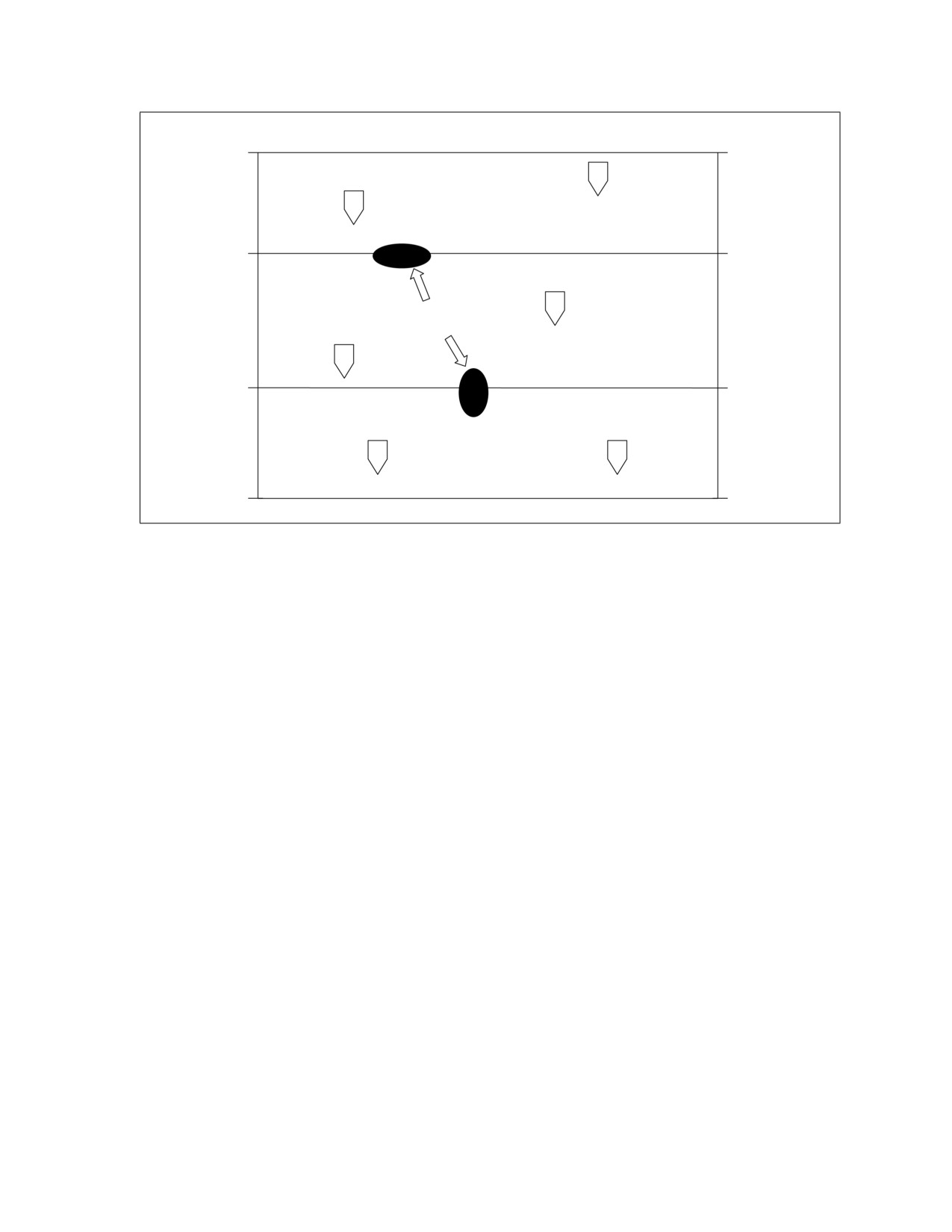
A zone reconnaissance (Figure VI-4) is a directed effort to obtain detailed
information on NBC hazards within a specific zone. It is appropriate when previous
knowledge of the area is limited and there are indications or reports of NBC hazards.
Typically, a zone reconnaissance is performed to determine the suitability for large unit
assembly areas or logistics bases. Previous reports or intelligence may indicate a high
probability of past NBC attacks within the zone. A zone reconnaissance may include
several area or route reconnaissance missions assigned to subordinate elements. Once
contamination is detected, the reconnaissance element has the following options:
• Conduct an NBC survey to define the boundaries of the contamination.
• Locate and mark clean bypass routes.
• Terminate the mission, and move to the coordinated decontamination
point.
• Continue the mission.
b.
Unless specifically directed by the commander, critical tasks must be
accomplished during a zone reconnaissance. The commander may direct the
reconnaissance toward specific IR only, based on the time available and his intent. The
following critical tasks are conducted during a zone reconnaissance:
• Reconnoiter all terrain within the zone for contamination.
• Locate all previously reported NBC attack areas, and determine if there is
still a hazard.
• Locate all possible contamination within the zone.
• Check all water sources for contamination (e.g., conduct sampling and
forward samples for testing).
• Verify the location of commercial TIM facilities, and check for possible
contamination.
• Report all information.
• Mark contaminated areas.
• Locate routes to bypass contamination.
VI-6
LOA
LOA
7
5
PL
PL
SIBERT
SIBERT
3
Contaminated
areas
21
PL
PL
FRIES
FRIES
25
4
LD
LD
Figure VI-4. NBC Zone Reconnaissance
8.
Area Reconnaissance
a.
Area reconnaissance (Figure VI-5, page VI-8) focuses on obtaining detailed
information about the terrain or enemy activity within a prescribed area. An area
reconnaissance is a specialized form of zone reconnaissance, but it proceeds faster since
the effort is focused on a specific piece of terrain. It may also be referred to as a point
reconnaissance to obtain information of specific terrain features or facilities (e.g., an
enemy storage facility). An area reconnaissance is typically assigned when employing a
unit to reconnoiter a reported NBC attack area. Once contamination is detected, the
reconnaissance element usually performs a survey to define the boundaries of the
contamination. If contamination is found, the NBC reconnaissance unit has the following
options:
• Conduct an NBC survey to determine the extent of the contamination.
• Locate and mark all NBC hazards within the area.
• Terminate the mission with permission of the headquarters controlling
the mission.
• Continue the mission.
b.
The following critical tasks are conducted during an area reconnaissance:
• Reconnoiter all terrain within the area.
• Locate and mark all NBC hazards within the area.
• Locate bypass routes around identified contaminated areas.
• Report all information.
VI-7
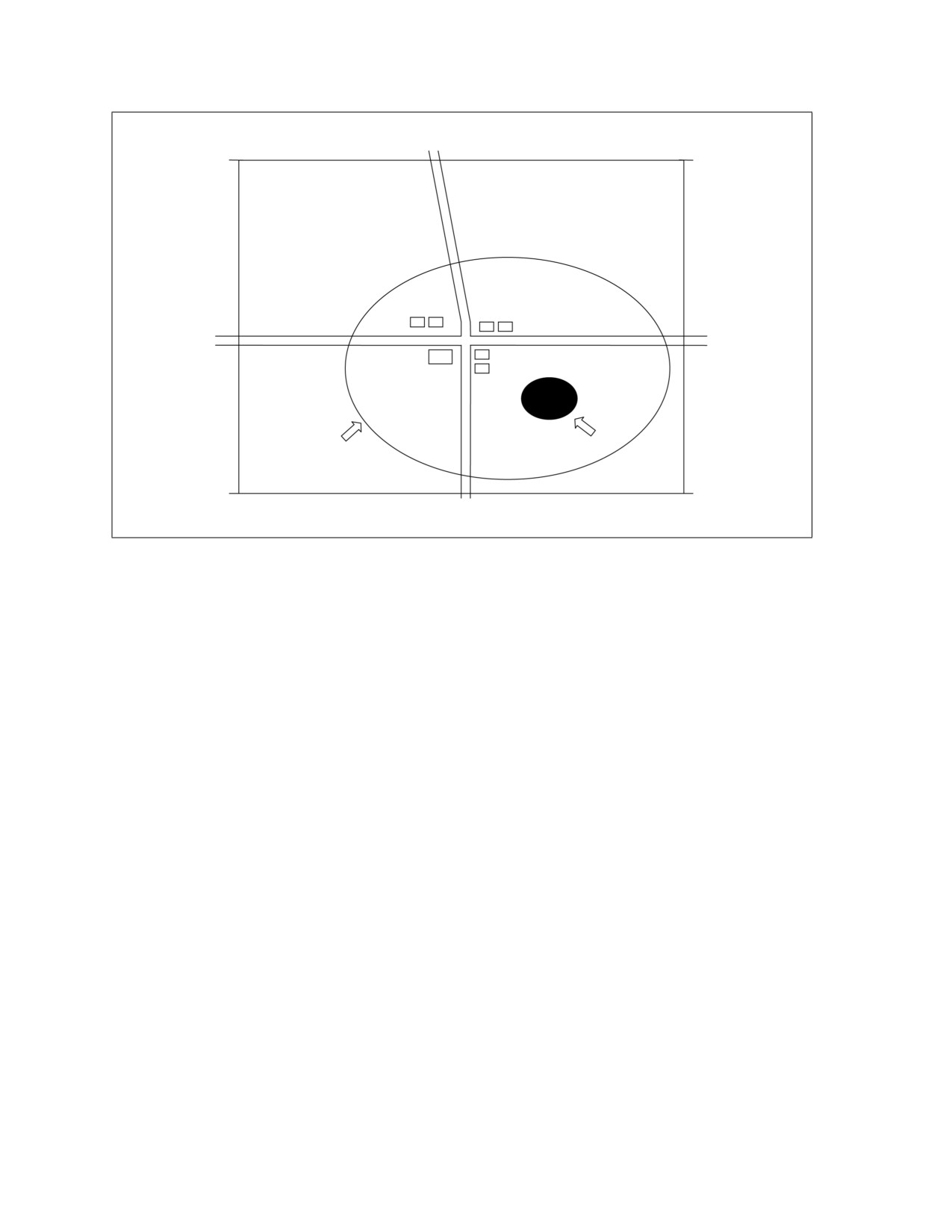
PL
PL
NEW
NEW
ROUTE
RED
Reconnaissance
Reported
area
chemical attack
PL
PL
VERMONT
VERMONT
(LD)
(LD)
Figure VI-5. NBC Area Reconnaissance
VI-8
Chapter VII
SAMPLING OPERATIONS
1.
Background
Sampling is the process or technique of selecting, packaging, and documenting the
collection of NBC material. Sampling represents a coordinated effort that occurs between
the collection assets (e.g., weapons of mass destruction [WMD] civil-support team,
biological detection unit, PVNTMED element), the escort unit who accepts the chain of
custody of the sample from the collection asset, and the supporting medical laboratory
that performs field confirmatory identification of samples. Further, a CCIR can be
directly supported by information products from the sampling process. The decision to
detect to protect and treat can be directly impacted by analysis results from the sampling
process.
NOTE: Appendix E provides further detail on the sampling plan, sampling
operations guidance, packaging and sampling procedures, and sample transfer
point operations.
2.
Agent Indicators
a.
Typical indicators of the presence of NBC agents on the battlefield or at an
incident site include—
• Activation of automatic agent detector alarms.
• Smoke, aerosol, or spray emanating from aircraft, vehicles, shells, or
other munitions.
• Suspicious odors, liquids, films, or particulate matter that are not
normally associated with high-explosive weapons.
• Casualties with signs and symptoms that display the presence of NBC
agents, such as—
n
Many patients with the same illness.
n
Nonendemic infection.
n
Compressed epidemic curve.
n
Symptoms that are unusual for a patient’s age.
n
Dead animals.
n
Multiple simultaneous outbreaks.
b.
When suspicious events occur, the use of NBC agents against US, allied, or
coalition forces must be verified. Evidence must be scientifically valid, and any samples
must have a legal chain of custody from the point of collection to presentation. Available
units may carry out a rapid, on-site search or survey using available medical or NBC
detection equipment to determine the nature and extent of contamination to support
the—
VII-1
• Verification that an agent release has occurred.
• Verification of the viability and virulence of an agent.
• Identification of areas and surfaces that require decontamination.
• Determination of the handling and disposal procedures for expendable
items.
• Verification of the decontamination completeness.
3.
Sample Collection
a.
Quality sample collection is especially critical for analyzing and identifying CB
agents. In-theater agent identification is generally conducted by the supporting medical
laboratories to support the commander’s IR. Definitive identification is conducted only at
selected CONUS laboratories (e.g., US Army Medical Research Institute of Infectious
Diseases [USAMRIID]). They provide definitive identification and confirmation for the
President and SecDef; specifically, biological-agent identification and BW levels that
support critical IR—presumptive, field confirmatory, and definitive.
•
Presumptive. This is the identification of a suspect biological agent by
means of devices, materials, or technologies. It is based on detecting
biological markers using a single methodology. The biological markers
and methodologies used at this level, or the differentiation among a
family of similar agents, may not be possible. Presumptive identification
is equivalent to the Laboratory Response Network Level A and the USA
Biological Integrated Detection System. Examples might include
identification by sensor triggering, handheld devices (handheld assays),
initial systems, or laboratory analysis employing one screening
methodology (microscopic morphology, antibody/protein, or nucleic acid-
based test).
•
Confirmatory. This is the identification of a suspect biological agent by
means of devices, materials, or technologies. It is based on detecting
biological markers using two or more independent biological marker
results. Examples might include the findings of the presumptive
biological marker identification with the addition of a positive polymerase
chain reaction or enzyme-linked immunosorbent assay. Field
confirmatory identification can be conducted by forward-deployed or
forward-positioned laboratories, such as the USAF biological
augmentation team, theater area medical lab, or forward deployable
PVNTMED unit.
•
Definitive. This is the specific identification of a suspect biological agent
as to genus and species, serological type, or toxin by means of devices,
materials, or technologies. It is based on two or more independent
biological marker results, using different methodologies available and
highly skilled testing personnel, thus providing the highest levels of
accuracy. Sample and specimen identification can be accomplished by
nationally recognized laboratories, such as USAMRIID.
VII-2
b.
Exercise extreme care when taking samples containing CBR material. It may
be necessary to take multiple samples. Careful storage, handling, and transporting are
necessary to support accurate reporting of whether or not an attack occurred and what
agent was used. For example, in many parts of the world, some biological agents are
endemic to the natural environment. The detection of an endemic disease must not be
mistaken for a biological attack. Quality control and safety are essential when taking
samples. Some considerations include—
• Biological samples. Biological samples may include living
microorganisms. Keeping the sample at the proper temperature during
evacuation is essential to maintaining agent viability. Due to the
perishability of some biological material, timeliness is also critical when
transferring a biological sample. Quality packaging is a key factor to
prevent spillage or breakage during transport.
• Radiological samples. Radiological samples present further challenges.
Packaging and transporting samples require key radiation safety
considerations (such as shielding distance and time) to minimize or
preclude the occurrence of a hazard.
• Chemical samples. Chemical samples may include very toxic material.
Packaging may be further complicated by the fact that munition
fragments or other material (solid or liquid) may be included as part of
the sample.
c.
The following sample collection practices are common to all sampling
procedures to ensure sample quality:
• Use properly sized and prepared containers with an airtight seal.
• Keep the empty containers in a clean bag or box.
• Open the sample container only to add the sample.
• Use the proper tools to collect samples.
• Ensure that sampling equipment is disposable or that enough clean
spares are available to allow single use during a sampling mission.
• Properly decontaminate the sampling equipment between sample
locations.
• Collect a sufficient number of samples for accurate laboratory analysis.
Generally, collect as much of a sample as the container will safely allow.
• Mark and record the sample locations for quality control, and note if
additional samples must be taken.
• Sequentially number and label the sample containers and collection
forms.
• Complete the sampling form during the sample collection.
• Tape or seal the container cap after closing.
• Double-bag the samples.
VII-3
d. If there is not enough time to conduct an elaborate, systematic sample
collection procedure, devote the effort to collecting samples in a manner that minimizes
sampling errors. The following are typical sampling errors:
• Taking too few samples.
• Taking samples of an incorrect size.
• Assuming a contaminated material is homogeneous when, in fact, the
contamination occurred in a heterogeneous manner.
• Placing multiple samples in the same sample container.
• Taking improper background samples or not taking background samples.
• Taking samples with contaminated collection equipment (e.g., using the
same sample collection instrument to collect more than one sample).
• Taking samples and not using appropriate PPE.
• Improperly documenting the collection of samples and incorrectly
preparing shipping documents.
• Prioritizing sample evacuation operations not occurring.
e.
Samples must be packaged and transported to a supporting laboratory. Avoid
introducing false contamination (intentional or otherwise) before the analysis is
conducted.
(1) The sample may first be transported to a supporting medical laboratory in
theater (such as the theater area medical laboratory) where the sample may be split.
However, personnel and time constraints may preclude sending a sample to the
supporting medical laboratory for analysis. The medical laboratory analyzes the sample
to provide in-theater field confirmation identification to support medical protective and
preventive treatment recommendations. The rest of the sample is repackaged and sent to
a designated CONUS laboratory for definitive identification and confirmation. Further,
based on existing agreements, a portion of a sample may be analyzed by a supporting HN
laboratory.
(2) If possible, transport actual or suspected biological samples that contain
suspected materials at temperatures that preserve the sample (i.e., 1° to 4°C unless
otherwise indicated). Do not freeze samples.
f.
Trained personnel collect, package, transport, and analyze samples as rapidly
as possible to ensure that timely information is provided. The sample must also be
expeditiously handled based on its potential perishability, especially biological-agent
samples.
NOTE: Generally, an unrefrigerated sample remains viable for about 6 hours
and a refrigerated sample remains viable for 24 to 48 hours. A sample can be
quick-frozen to -107°C, and a theater area medical laboratory can add a
stabilizer to a sample to help maintain viability.
g.
Precise records must be sent with each sample. These records are used to
expedite the analysis and guide the analysts in the choice of instrumentation and
procedures. The records may also be used as evidence at a later stage. Positive and
negative control and an unbroken chain of custody must be maintained for the samples
VII-4
due to their critical nature. See Appendix E for additional information on chain-of-
custody guidance.
4.
Responsibilities
a.
Operational Theater Commander. The commander is responsible for sampling
and identification. When operations involve a known or likely potential for
contamination, commanders may consider the establishment of an integrated crisis
action team from the staff (including operations, logistics, intelligence, medical, and NBC
personnel) for managing sampling operations in an area that is subject to attack or
contamination. (See Figure VII-1, page VII-6, for an outline of the sampling process.)
When preparing a sampling plan, commanders should provide early guidance on the—
• Number of teams to be used and their taskings.
• FP guidance, such as the OEG and individual protection guidance.
• Allocation of operational resources. Missions may result in contamination
of equipment, vehicles, and aircraft.
• Intended use of HN assets. The plan may require liaison with diplomats,
fire fighters, police, medical personnel, and other HN assets.
• Media issues, such as rules for engaging the media regarding missions.
• Requirement for secure communications.
• Designation of logistical priorities, regarding handling and transporting
samples and transporting sampling teams.
• Intended final disposition and ownership of materials collected.
(1) The commander may order a sample collection for the support of
intelligence and operational requirements, which include—
• Verification that an attack has occurred.
• Identification of agents used.
• Delivery systems and their nation of origin.
• Determination of the level of CB warfare technology involved.
(2) Sample processing includes collection, handling, transferring, chain-of-
custody, and administrative procedures. After laboratory analysis of the sample,
medical, NBC, and intelligence personnel analyze the data to support multiple
requirements (Figure VII-2, page VII-6).
(3) The nature and extent of a hazard may change as the mission continues
and additional information is made available. The commander and the local military
commander may need to adjust the nature and scope of the resources allocated to the
mission. There will be a need for continual liaison and reassessment between operational
commanders and unit staffs.
b. NBC Staff. The NBC staff develops and implements environmental sampling
plans for NBC reconnaissance assets. The preparation of this plan should be coordinated
with medical and intelligence sections to support the unity of effort for the commander’s
VII-5
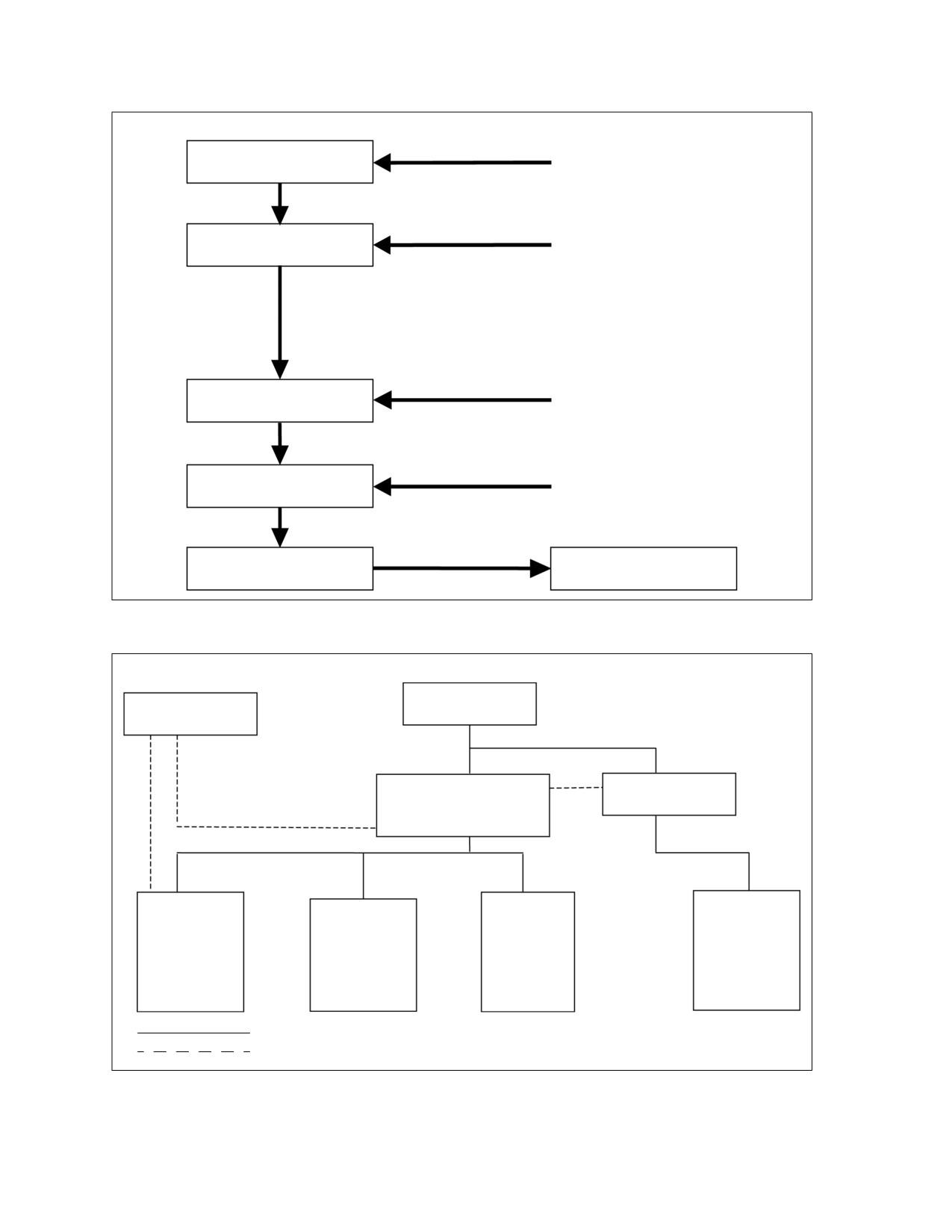
Sample collection
Preliminary identification
(includes identification of
sample transfer and
decontamination points)
Handling and transfer
Administrative procedures
for tracking the chain of
custody and technical
escort transport preferred
Intelligence analysis
Theater area medical and
CONUS laboratories
Laboratory analysis
Intelligence feedback
through normal channels
Improved combat
Commander’s PIR
effectiveness
Figure VII-1. Sampling Process
Operational
National laboratory
commander
Operations center
Subordinate units
(intelligence, NBC,
medical, logistics)
Specialist
Field
sampling
Unit NBC
deployable
Escort unit
teams (e.g.,
survey teams
laboratory
(e.g., TEU)
SOF,
(e.g., theater
PVNTMED)
area medical
laboratory)
Direct chain of command
Potential additional support
Figure VII-2. Suggested Operational Structure for a Sampling Mission
VII-6
intelligence and IR. Depending on the type of mission and the resources available, the
OPLAN should address the—
• Base structure, operations security (OPSEC), and logistics considerations.
• Augmentation to the staff with on-site military or civilian scientific
advisors and the issuance of related WARNORDs to parent organizations
within and outside the theater or organizations having an off-site
technical reach-back capability to contact required subject matter experts
(SMEs).
• Augmentation to the command with trained sampling teams and the
issuance of related WARNORDs to parent organizations within and
outside the theater.
• Need for air assets (e.g., aerial surveys, rapid transport of samples).
The NBC staff may also conduct, or acquire the results of, manual or computer-assisted
modeling of potential area and downwind hazards. When practical, the modeling will be
completed before the teams deploy.
c.
Operational Commander.
(1) The commander may designate and allocate the necessary military assets
to carry out the sampling missions. The commander’s staff serves as the nerve center for
sampling operations and will command, coordinate, and control all sampling operations.
(2) The commander’s staff may receive reports from the following
subordinate elements, depending on the nature and extent of the hazard:
• Specialist sampling and survey teams.
• Surgeons.
• Supporting medical laboratories.
• Sample control sites.
• Security forces.
• Escort units.
(3)
The responsibilities of the unit staff may include—
• Supporting specialist sampling teams with transportation,
interpreters, security, navigation and communications equipment,
food, shelter, medical care, decontamination, and other functions
needed to carry out the mission.
• Ensuring that sample chain-of-custody requirements are met.
• Establishing report protocols with the NBC staff and command.
• Maintaining reports.
• Coordinating the technical escort of samples.
• Establishing and manning a sample control site.
• Routinely updating the downwind modeling.
VII-7
• Providing status reports to the operational commander and major
subordinate units affected by sampling operations.
• Coordinating sample transport to regional and national
identification laboratories for detailed analysis.
• Coordinating special storage, packaging, and handling requirements
to ensure the integrity of samples and the safety of personnel
escorting or handling the samples.
d. Sample Control Site. Samples generated from survey and sampling teams may
be routed to a single sample control site (e.g., theater area medical laboratory) that
supports incident operations. It is responsible for receiving samples, providing field
confirmation identification, and preparing the sample for shipment to a CONUS
laboratory.
e.
Technical Assistants. These assistants are drawn from military/civilian
national assets (on site or through technical reach-back). They will have detailed
knowledge of the agents and sophisticated sampling procedures, and their expertise can
be used for the—
• Conduct of risk management (RM).
• Definition of incident source terms.
• Result interpretation.
• Plume modeling and environmental transport simulation.
• Aerial reconnaissance.
• Specialized air sampling, including personal breathing zone sampling.
• Decontamination and waste management.
• Risk communication and public affairs (PA).
• Transportation of hazardous materials (HAZMAT).
• Medical management of casualties (surgeon).
f.
Unit NBC Reconnaissance Teams.
(1) Unit reconnaissance teams conduct, record, and report surveys of known
or suspected incidents. They provide prompt estimates of the severity and extent of
hazards using an NBC warning and reporting message.
(2) The teams are responsible for collecting, documenting, and initially
packaging any samples taken. Prior coordination with intelligence and medical units
may be necessary for initial sampling operations. The teams must adhere to any special
sampling tasks provided by the unit commander in the OPORD, and they must comply
with FP guidance for the mission. Decontamination may be required for sampling
operations and should be coordinated before beginning sampling missions.
g.
Specialist Sampling and Survey Teams.
(1) Specialist teams may be used for sampling missions. They are responsible
for conducting proper collection, documentation, custody, handling, packaging,
transportation, and field analysis of environmental samples (e.g., soil, water, air, and
some urban samples). These teams are composed of unit NBC survey and/or PVNTMED
VII-8
personnel who have training in sampling procedures. These teams are expected to have
specific knowledge of general sampling procedures.
(2) The teams bring sufficient sampling and survey equipment and a base
load of supplies to perform their assigned missions. They are equipped to detect the
presence of various agents and equipped and trained to take samples in the suspected
attack area. The teams are qualified to take environmental samples only; they are not
qualified to take medical specimens. They will immediately report significant safety
hazards when such hazards are discovered.
h. Supporting Laboratories. National laboratories and deployable military
medical laboratories will be identified to support sampling operations. These laboratories
support field confirmation or definitive identification and confirmation.
5.
Execution
a.
The OPORD that supports sample planning considers multiple factors,
including—
• The identification of vulnerable facilities in potential AOs, sites with large
inventories of TIM, or sites with TIM sources (e.g., nuclear power plants,
research reactors, nuclear fuel facilities, medical and industrial
irradiators, nuclear waste dumps).
• Potential threat scenarios.
• The use of decision support tools to model potential threats.
• Likely transportation routes and staging areas.
• Critical resupply (transportation, self-contained breathing apparatus)
areas.
• Specific logistics requirements.
• Identification of time estimates to accomplish the sampling.
• FP and ROE to ensure protection for the sampling team.
• Detailed maps of the AOR.
• Terrain and weather data.
• The impact of NBC environments on mission completion.
• The number of trained forces needed to adequately support a large-scale
incident.
b.
NBC reconnaissance units are responsible for collecting and initially
packaging agent samples. PVNTMED personnel are responsible for environmental-
health sampling and exposure surveillance. Medically trained sampling teams are
responsible for collecting biomedical specimens. Technical intelligence and medical
personnel may augment NBC reconnaissance teams for the collection of biomedical
specimens.
(1) Units designated to collect samples include—
• NBC reconnaissance.
VII-9
• Technical intelligence.
• PVNTMED.
• Veterinarian.
(2) Designated sampling units train on packaging and transporting samples.
Only authorized and trained elements can collect biomedical samples.
(3) The specific sample collection and processing performed by NBC
reconnaissance units and sampling teams vary. Unit missions, capabilities, and
authorized equipment cause differences in how samples are collected and processed. For
example, the methods used to collect and process samples by biological detection assets
(i.e., portal shield, Biological Integrated Detection System) will vary. The procedures
used to collect and process samples are addressed in system level technical manuals
(TMs) and technical orders (TOs), unit-specific TTP manuals, unit SOPs, and
contingency plans.
c.
The intelligence, medical, or NBC section may generate a mission requirement
for sampling operations. The NBC section may also coordinate with the intelligence or
medical section and recommend that other collection assets (e.g., scouts, PVNTMED)
conduct NBC-related sampling operations. Sampling missions should be coordinated
with the intelligence section. The mission is approved by the commander via the
operations section.
(1) The NBC officer or NCO advises the commander on the proper use and
employment of units capable of conducting NBC sampling operations, provides
information, and recommends missions for the sampling units (except medical and
veterinary). The NBC section generates the mission requirement for NBC sampling units
and elements, and the NBC officer or NCO determines the best method for completing
the requirement. The NBC officer or NCO uses the following considerations to determine
which sampling assets are tasked:
• The intent of the IR.
• The location of the sampling target.
• The effect of sampling on current and future operations.
• Medical treatment facilities (MTFs).
• Support requirements (e.g., decontamination needs).
• Security requirements.
• Escort unit requirements (e.g., identifying other trained assets for
sample escort if TEU assets are unavailable).
(2) Collected samples are packaged and transported to a sample transfer
point, which may be the decontamination point. A qualified escort must accompany the
suspected sample during the entire evacuation process to ensure safety and to maintain
the chain of custody. Technical escort is preferred during the entire evacuation process,
but may not always be practical because of the limited number of TEUs.
(3) After the supporting theater area medical laboratory withdraws an
aliquot for testing, it turns the sample over to the escort for delivery to the CONUS
laboratory for definitive identification. A technical escort accompanies the sample from
VII-10