FM 8-42 COMBAT HEALTH SUPPORT IN STABILITY OPERATIONS AND SUPPORT OPERATIONS (October 1997) - page 3
FM 8-42
stressors come from being in an unfamiliar land far from home; having limited privacy; being among
unfamiliar and perhaps hostile people; and operating under restrictive ROE. There is also often ready
access to drugs and alcohol from local sources. Enemy tactics attempt to magnify these stressors and to
provoke misconduct stress behaviors. These behaviors (such as insubordination and abuse of power) can
turn the local population against the US.
b. The HN may have rudimentary concepts and resources for psychiatric care, MH promotion,
and social services delivery. These limitations could be the focus of enhancing the HN governments
stability, but only if cultural differences are fully taken into account.
c.
Combat stress control and MH personnel have provided commanders with effective service in
many previous stability and support operations. They have and will continue to provide MH support to all
activities in stability and support operations. For example, MH personnel
Provided support to soldiers in Vietnam and more recently in Somalia, Haiti, and Bosnia.
Provided stress control for US personnel and psychiatric inpatient and outpatient care for
Cuban and Haitian refugees at Guantanamo, Cuba.
Were members of numerous peacekeeping TFs assigned to the Middle East.
Organized stress management teams which provided assistance to soldiers, civilians, and
family members exposed to terrorist actions, or natural or man-made disasters.
Advised a friendly government in the prevention and treatment of stress casualties among
its military and paramilitary forces.
d. The stress control assets in stability and support operations are task-organized and may include
elements of the MH sections of division units, area support medical battalions (ASMBs), and corps CSC
detachments and companies. The neuropsychiatric personnel of hospitals can also be used to provide
proactive stress control interventions. United States Air Force and USN MH assets in theater should also be
identified and coordination accomplished when required.
e.
For further information on CSC, refer to Appendix O of this manual, FM 8-51 and FM 22-51.
4-17. Combat Stress Control Support to Stability and Support Operations
a. Stress management teams are an integral part of the militarys approach to helping personnel
involved in combatting terrorism operations. The teams mission is to support rapid return to effectiveness
and to preclude post-traumatic stress disorders in captives and those persons closely associated with a
terrorist activity. This team is a multidisciplinary group and should be on call to rapidly deploy to a selected
site. Experiences with the bombing of the Beirut US Marine Corps Force, the Oklahoma City Federal
Office Building, the Kohbar Towers in Dhahran, and other incidents have demonstrated the requirement for
4-25
FM 8-42
stress management teams. The prevention and treatment principles and approaches parallel those used in
the treatment of BF.
b. Selected MH staff should accompany US peacekeeping TFs. Historically, these TFs require
reinforced organic logistics and CHS. Mental health staff have been used effectively to support a variety of
peacekeeping missions.
Mental health officers can assist commanders in
Completing predeployment unit effectiveness surveys.
Providing training and consultation related to stress management and unit cohesion.
Completing MH screenings and evaluations on all soldiers during pre- and post-
deployment and on selected individuals during deployment.
Conducting predeployment family support briefings.
During peacekeeping operations, the focus is on MH assessment and consultation.
c.
Mental health activities in support of insurgency and counterinsurgency operations are designed
to meet specific missions. As the level of combat intensity and the duration of the mission increase, combat
stress-related problems also increase. It is expected that BF rates will not normally exceed 1:10 per WIA.
Organic MH staff use the combat stress principles of proximity, immediacy, expectancy, and simplicity in
treating BF soldiers. However, the main problem will be misconduct stress behaviors. These misconduct
stress behaviors can include substance abuse, acts of indiscipline, and some criminal acts. Misconduct
stress behaviors may seriously interfere with the stability and support operational mission unless prevented.
It is expected that soldiers will suffer from adjustment reactions, endemic psychiatric disorders, and drug
and alcohol abuse.
d. Due to the limited duration of most NEO, CSC personnel will not normally accompany the
deployed force. However, once the NEO force and the evacuees reach the ISB or safe haven, CSC
interventions in the form of after-action debriefings may reduce the incidence of stress-related problems.
e.
Mental health assistance may be required in some domestic support operations. Mental health
activities (preventive measures and acute interventions) may be used to manage stress-related problems/
reactions arising from traumatic experiences (such as natural or man-made disasters or a singular incident
such as a school bus accident which results in the deaths of or serious injuries to the students). The adverse
effect of the stress not only affects the victims of the incident but also family members, friends, rescue
workers, and care givers. Critical incident stress debriefings (for victims, families, and friends) and after-
action debriefings (for care givers and rescuers) enable the victims/participants to express their feelings,
gain perspective from others involved in the experience, and to better understand the incident and their
feeling concerning it. These activities may reduce the incidence of post-traumatic stress disorders in this
population.
4-26
FM 8-42
Section VIII. COMBAT HEALTH LOGISTICS
4-18. General
a. Combat health logistics plays a significant role in the delivery of health care in stability and
support operations. As most missions in stability and support operations are conducted within an immature
theater, the full complement of logistics capabilities and services may not be in place. The CHL planner
must be flexible and innovative to be able to bridge the gap between requirements generated by the
operation and the capability to provide the necessary Class VIII supplies and equipment.
b. In order to ensure that the correct mix of medical supplies and equipment is obtained, the
command surgeon must coordinate his specific requirements with the CHL element.
c.
The CHS commander is responsible for ensuring that medical and industrial waste generated
by CHS operations is correctly handled, transported, and disposed of according to applicable regulations,
agreements, and laws. Improper management of these wastes may adversely impact the health of the
deployed force and local population.
d. In joint operations, the major subordinate US Army CHL agency may be appointed as SIMLM
which is the DOD Executive Agent for all Class VIII supplies and equipment. This necessitates the early
involvement of the CHL planner in the planning process. For additional information on the SIMLM, refer
to Joint Pub 4-02.
4-19. Combat Health Logistics Support to Stability and Support Operations
a. Prior to the deployment in NEO, the senior medical person accompanying the force determines
if there are any special medical supply or equipment requirements which the deploying force must take
along to provide continuous medical support to the evacuees. For example, if a significant number of
evacuees will be infants and children, MESs must be augmented with pediatric medicines and medical
equipment. Under most circumstances, the Class VIII supplies and equipment the force brings with them is
all that they will have to operate with. In a permissive NEO, it may be possible to obtain some medical
supplies and equipment locally, if the available supplies meet with US medical supply standards.
(Medical
equipment purchased locally may not be able to be maintained due to nonavailability of repair parts within
the CHL systems. It should be purchased for a one time use only.) Caution must be exercised when
acquiring medical equipment locally, as the equipment may not be approved for use aboard USAF aircraft.
b. In disaster assistance operations, the management of Class VIII supplies and equipment is
critical to the successful completion of the support operation.
(1) A task-organized CHL element is established to provide for the management, receipt,
sorting, storage, repackaging, distribution, and accounting for donated medical supplies and equipment. It
is also responsible for the requisition, receipt, and accountability of Class VIII resources required which
cannot be met through donated materiel. Normally within a disaster area, there is no one organization that
4-27
FM 8-42
would accomplish this type of function. The medical supplies and equipment donated in relief operations
come in all different types of packaging, sizes, and amounts. It must be received, sorted, repacked, and
distributed to areas of need. A task-organized CHL element can provide this necessary support.
(2) An assessment of the disaster area (to include coordination with other agencies/countries
providing assistance) must be accomplished to determine what types and quantities of supplies and equipment
are available or are anticipated to be donated, and how many customers the element will support.
(3) The size of the CHL element deployed is dependent upon the size and anticipated
duration of the operation, the quantity of materials to be handled, and the number of customers to be
supported.
c.
In humanitarian assistance operations, the CHL planner must obtain and coordinate
transportation, and receive, sort, store, and distribute Class VIII materiel. Depending upon the scope of the
operation, there may also be donated medical supplies and equipment which must be handled, stored, and
distributed. Due to the remoteness of the operational site in humanitarian assistance operations, the task of
getting the supplies and equipment to the target location may be difficult. The CHL planner must consider
the METT-T factors and the
Scope of the operation and its unique requirements.
Availability of HN support.
Availability of Class VIII supplies and services within the local community.
Coordination requirements with non-DOD agencies, allies, coalition partners, HN, and
religious and charitable organizations.
Quantities and types of donated Class VIII materiel.
Requirements for handling, repackaging, storing, and distributing donated materiel.
Sources of funding for Class VIII materiel.
Availability of structures for storage of materiel (to include refrigeration capability).
Delivery mode and transportation requirements.
Security and accountability of controlled substances.
Cultural and ethical implications of certain medical items (such as blood and blood products).
d. In nation assistance programs, CHL personnel can assist a HN by conducting an assessment of
the military CHL and civilian medical logistics infrastructures and industries.
4-28
FM 8-42
(1) In many countries, a formal CHL system is not established or is rudimentary in nature.
By establishing and institutionalizing this type of system, the HN can
Develop a usage history on Class VIII items.
Develop a standardized formulary.
Reduce costs by
Purchasing in bulk.
Obtaining the best price through competitive shopping.
Establishing accountability procedures.
Managing stockage levels and cross-leveling inventories between MTFs.
Lessening inventory losses due to improper storage, inadequate refrigeration,
and outdated medications.
Identify critical shortfalls.
Establish product specifications.
(2) Combat health logistics personnel can provide training and instruction in the numerous
functional areas within this field. Assistance may be provided in such areas as
Materiel handling techniques.
Storage requirements and techniques.
Requisition procedures and formats.
Control and accountability of medical equipment, supplies, and blood and blood products.
Spectacle fabrication and assembly.
Distribution techniques.
Medical equipment set configuration.
Stock rotation.
e.
In peace support operations, the CHL mission is the traditional support to a deployed force.
Due to the austere staffing and troop ceiling placed on many of these missions, the CHL element may be
4-29
FM 8-42
restricted in size. Other than delivery of the materiel, the functions of receiving, storing, accounting for,
requisitioning, repackaging, fabricating spectacles, and managing blood and blood products may be
accomplished in another country or safe haven. Planning considerations include
Anticipated duration of the operation.
Support available from allies, coalition forces, and HN.
Size of the in-country element.
Level of hostilities to be encountered.
Delivery mode and transportation requirements.
Number of customers to be supported.
Design and maintenance of unique MESs to meet mission requirements.
f.
Combat health logistics support for attacks and raids is primarily in the planning and
preparation phases of these operations. Rapid insertion of combat forces and equally rapid extrication or
reinforcement will not necessitate extensive resupply operations. Planning for CHL then focuses on the
worst case of a force taking large numbers of casualties with delayed extrication or reinforcement. The
command surgeon should consider the following issues and make recommendations to the tactical
commander:
Increase the number of dressings and bandages carried by the individual soldier. The
current first-aid pouch will easily hold two dressings or a dressing and bandage.
Have each soldier or every other soldier carry one 500 milliliters (ml) of IV fluid to treat
dehydration or hypovolemia.
(In cases of heat injury, if an IV starter kit is not available, the soldiers can
drink the solution.)
Develop a medical push package with emphasis on IV fluids, dressings, bandages, and
splints, and with other components at the discretion of the command surgeon. Class VIII containers must be
clearly marked and not include nonmedical items.
Section IX. MEDICAL LABORATORY SUPPORT
4-20. General
Depending upon the size of the force deployed, the specific mission to be accomplished, and the anticipated
duration of the operation, medical laboratory assets may be employed in stability and support operational
4-30
FM 8-42
scenarios. If the deployment includes deploying an Echelon II or above MTF in its entirety, then the
organic medical laboratory assets will be deployed. However, in short-duration operations where the CHS
element is task-organized for the specific mission, a medical laboratory may not be deployed. Any required
medical laboratory support would be provided by a facility outside the AO.
4-21. Medical Laboratory Support to Stability and Support Operations
a. Medical laboratory services are usually not a factor in NEO. Medical laboratory personnel
and equipment are normally not included in the task-organized medical element that accompanies the NEO
force due to the short duration of these operations. If the AO is suspected of being contaminated with a BW
or CW agent, NEO personnel should request assistance from the supporting PVNTMED team, chemical
detection team, or in-theater laboratories which are trained to handle and identify BW and CW agents (such
as the theater area medical laboratory
[TAML]/area medical laboratory [AML] or USN land-based
laboratory). In the absence of these supporting units, the NEO force should refer to FM 8-10-7 for
instructions on the collection and management of specimens/samples contaminated with suspected BW and
CW agents.
b. Medical laboratory capabilities will differ with the types of forces deployed in a given AO. As
terrorist incidents can occur at any location, the supporting MTF must coordinate with the supporting
PVNTMED team, veterinary team, or in-theater to obtain a full range of investigative services to identify
suspected BW and CW agents and to test food and water for possible contamination.
c.
Due to the sophistication of health services within the US, many medical laboratories
throughout the nation have state-of-the-art equipment and are readily available. Community assistance and
disaster relief assistance at the local level initially may require the use of organic medical laboratory
capabilities of the military unit providing support. However, once a domestic support operation exceeds the
local community level and the FRP is activated, the USPHS and the Centers for Disease Control have ready
access to whatever level of sophisticated laboratory procedures/equipment they require.
4-31
FM 8-42
APPENDIX A
ANTITERRORISM AND FORCE PROTECTION
A-1. General
Preventive and protective security measures should be taken by military units and individual soldiers to
protect themselves and their ability to accomplish their mission while deployed. The commander develops
an antiterrorism plan to institute passive defense measures. The commander must constantly evaluate
security plans and measures against the terrorist threat in order to effectively identify security requirements.
A-2. Terrorism Considerations
a. As commanders and staffs address terrorism, they must consider several relevant characteristics
of terrorists and their activities. The first consideration is that anyone can be a victim.
(Some terrorists still
operate under cultural restraints, such as a desire to avoid harming women, but the planner cannot count on
that.) Essentially, there are no innocents. Secondly, attacks which may appear to be senseless and random
are not. To the perpetrators, their attacks make perfect sense. Acts, such as bombing public places of
assembly and shooting into crowded restaurants, heighten public anxiety. This is the terrorists immediate
objective. Third, the terrorists need to publicize their attack. If no one knows about it, it will not produce
fear. The need for publicity often drives the target selection; the greater the symbolic value of the target,
the more publicity the attack brings to the terrorists and the more fear it generates. Finally, a leader
planning for antiterrorism must understand that he cannot protect every possible target all of the time. He
must also understand that terrorists will likely shift from more protected targets to less protected ones. This
is the key to defensive measures.
b. Medical units have specific protections afforded to them under the provisions of the Geneva
Conventions. The CHS commander must understand that these protections probably will not be recognized
nor adhered to by terrorist elements. The CHS commander in developing his force security plan should not
consider the Geneva Conventions as a protection from attack by terrorist elements.
c.
Terrorists rely on surprise and the victims confusion at the time of the incident. Antiterrorism
involves physical security, OPSEC, and the practice of personal protective measures by all personnel.
Commanders and staffs must plan their response to terrorist threats and incidents. Combatting terrorism is
an aspect of force protection and is the responsibility of commanders at all levels at all times. Properly
planned and executed, the Army antiterrorism program will reduce the probability of surprise while
discouraging attack by raising the risk to the attackers.
A-3. Estimate of the Situation for a Security Assessment
The commander and his staff should complete a thorough estimate of the situation, using METT-T and
political planning factors, in developing a security assessment. The following questions (Table A-1) may
assist in formulating the estimate.
A-1

FM 8-42
Table A-1. Mission, Enemy, Terrain, Troops, Time Available, and Political Planning Factors
MISSION
1.
WHAT TYPE OF MISSION IS TO BE CONDUCTED (SUCH AS HUMANITARIAN ASSISTANCE, NATION ASSISTANCE,
DISASTER RELIEF, OR CONVENTIONAL CHS)?
2.
WHERE IS THE MISSION TO BE PERFORMED (SUCH AS WITHIN A SECURE COMPOUND, IN LOCAL VILLAGES/CITIES,
IN A FIELD ENVIRONMENT)?
3.
IS THE ENTIRE UNIT OPERATING TOGETHER (SUCH AS ESTABLISHING A CLEARING STATION), OR ARE SEPARATE
TEAMS BEING DEPLOYED TO REMOTE LOCATIONS (SUCH AS A TREATMENT TEAM VISITING AN ISOLATED
VILLAGE)?
4.
IS THIS A MEDICAL TF MISSION WHERE CHS UNITS ARE DEPLOYED PRIOR TO COMBAT AND CS FORCES?
5.
ONCE DEPLOYED, DOES A CHANGE OF MISSION OCCUR?
ENEMY (OPPOSITION GROUPS, TERRORIST FACTIONS)
1.
WHO ARE THE POTENTIAL TERRORISTS?
2.
WHAT IS KNOWN ABOUT THE TERRORISTS?
3.
HOW DO THE TERRORISTS RECEIVE INFORMATION?
4.
HOW MIGHT THE TERRORISTS ATTACK? (THINK LIKE THE TERRORIST. WOULD YOU AMBUSH OR RAID? WOULD
YOU USE SNIPERS, MORTARS, ROCKETS, AIR OR GROUND ATTACKS, SUICIDE ATTACKS, FIREBOMBS, OR BICYCLE,
CAR, OR TRUCK BOMBS?)
5.
DOES THE UNIT HAVE ROUTINES OR PUBLISHED OPERATING HOURS (SUCH AS STATED CLINIC HOURS FOR THE
CARE OF HN PERSONNEL)?
6.
WILL AN ATTACK GAIN SYMPATHY FOR THE TERRORISTS FROM THE POPULATION BEING SUPPORTED?
7.
WHAT IS THE PERCEIVED TERRORIST THREAT POTENTIAL FOR VIOLENCE?
TERRAIN
1.
WHAT ARE THE STRENGTHS/WEAKNESSES OF UNIT AREA AND LOCAL SURROUNDINGS?
2.
WHAT ARE THE AVENUES OF APPROACH?
3.
ARE THERE OBSERVATION AREAS, DEAD SPACES, FIELDS OF FIRE, ILLUMINATION, OR NO-FIRE AREAS?
4.
ARE THERE TALL BUILDINGS, WATER TOWERS, OR TERRAIN, EITHER EXTERIOR OR ADJACENT TO THE PERIMETER
THAT COULD BECOME CRITICAL TERRAIN IN THE EVENT OF AN ATTACK?
5.
WHEN TEAMS MUST BE DEPLOYED TO OUTLYING AREAS TO ACCOMPLISH THE MISSION (SUCH AS PROVIDING
HUMANITARIAN ASSISTANCE TO VILLAGES WITHOUT MEDICAL RESOURCES), WHAT IS THE CONDITION OF THE
ROADS AND TERRAIN THAT MUST BE TRAVERSED (PAVED ROADS OR UNIMPROVED DIRT TRACKS) AND WHAT IS
THE POTENTIAL FOR ATTACK WHILE IN TRANSIT?
TROOPS
1.
DETERMINE WHAT THE FRIENDLY SITUATION IS.
2.
ARE OTHER US FORCES AND EQUIPMENT AVAILABLE?
3.
ARE ENGINEERS IN THE AREA? WILL THEY BE ABLE TO PROVIDE SUPPORT?
4.
ARE MILITARY POLICE OR OTHER COMBAT/CS RESOURCES AVAILABLE TO PROVIDE FORCE PROTECTION FOR
MEDICAL UNITS?
5.
ARE THERE MWD TEAMS AVAILABLE TO CONDUCT SEARCHES FOR EXPLOSIVE MATERIALS IN THE UNIT AREA?
6.
WHAT ARE THE HNS RESPONSIBILITIES, CAPABILITIES, AND ATTITUDES TOWARD PROVIDING ASSISTANCE?
7.
WHAT ARE THE ROE?
A-2

FM 8-42
Table A-1. Mission, Enemy, Terrain, Troops, Time Available, and Political Planning Factors (Continued)
TIME
1. WHAT IS THE DURATION OF THE MISSION?
2. ARE THERE TIME CONSTRAINTS?
3. WILL THERE BE SUFFICIENT TIME TO CONSTRUCT FORCE PROTECTION FACILITIES (SUCH AS BARRIERS AND
FENCES, AND THE INSTALLATION OF LIGHTS)?
POLITICAL PLANNING FACTORS
1. ARE THERE HN CONCERNS OR ATTITUDES WHICH WILL IMPACT ON THE SITUATION?
2. WILL THE SITUATION BE INFLUENCED BY THE EXISTENCE OF ANY RELIGIOUS, ETHNIC, OR CULTURAL CONCERNS?
3. IS THE ACCOMPLISHMENT OF THE CHS MISSION ALLEVIATING PART OF THE REASON FOR THE UNREST WITHIN THE
COUNTRY (SUCH AS BETTER ACCESS TO HEALTH CARE OR CURBING MORBIDITY AND MORTALITY RATES FOR
CHILDREN)?
A-4. Force Protection and Security Measures
a. Force protection is a complex process in which each action impacts upon many others.
Planning for force protection is a continuous process. Force protection in stability and support operational
scenarios can pose significant challenges.
b. The CHS commander is responsible for providing security for his unit and the patients under
his care. In some scenarios, a combat or CS unit may provide security forces to assist in the defense of
CHS units. In other situations, the CHS unit may not be collocated with other types of CSS units and the
CHS commander must then provide completely for his own security.
c.
In stability and support operations, medical units may be deployed into a given geographical
area prior to the deployment of combat and CS forces. During humanitarian assistance and disaster relief
operations, the perceived terrorist threat may be low, but the commander must ensure that his security
measures are adequate for the appropriate threat level. Further, he must ensure he has the capability to
increase these protective measures should the operational scenario change and mission creep occur. If the
political, social, or economic status of the HN or region deteriorates, an increase in the potential for
terrorist activity may also be experienced. The CHS commander must continuously evaluate the potential
for terrorist activity and adjust his force protection plan accordingly.
d. Unit and individual protective measures are discussed in detail in Joint Pub 3-07.3.
A-3
FM 8-42
APPENDIX B
INTERAGENCY OPERATIONS
B-1. General
a. Interagency operations facilitate unity and consistency of effort, maximize use of national
resources, and reinforce primacy of the political element. Interagency operations involve many of the US
government agencies, such as the DOS and the USAID. Interagency operations facilitate the implementation
of all elements of national power and provide a vital link uniting the DOD and other governmental agencies.
b. Interagency operations can also include international organizations, agencies of foreign nations,
public and private charitable agencies, and religious organizations.
B-2. Unity of Effort
Military commanders and their agency (civilian or governmental) counterparts will have to create ad hoc
organizations to integrate their efforts. They must reach agreement on missions and allocation of resources
through negotiation. Military officers cannot exercise command under these circumstances. Instead, they
must persuade and compromise, employing their leadership skills, knowledge, and the force of their logic.
When agreements are reached, they should be recorded in memoranda of understanding, terms of reference,
or other similar documents. Although such agreements are usually reached at the highest levels of command,
it is also likely that local commanders and agency supervisors can make agreements for cooperation within
their AOR. Commanders and staff officers must be cognizant of the legal restrictions on how funds,
materiel, and personnel can be used. Therefore, they should consult with their Staff Judge Advocates
throughout this process.
B-3. Operations Within the United States
a. The DOD may be required to work with other federal agencies on operations occurring within
the US (such as disaster relief, community assistance, law enforcement, or counterdrug operations). The
other governmental agencies may have the primary responsibility for the operation, while the DOD plays a
supporting role. These agencies include, but are not limited to
Department of Agriculture. As the lead agency for food and fire fighting under the FRP,
the USDA has significant responsibilities in disaster assistance operations. The US Forest Service (USFS),
an agency under the USDA, is responsible for leading fire-fighting efforts as well as protecting forest and
watershed land from fire.
American Red Cross. The American Red Cross (ARC), under charter from Congress, is
the USs official volunteer disaster relief agency. It has a major role in disaster assistance operations,
having been designated as the lead agency for mass care under the FRP.
Department of Commerce. The Department of Commerce (DOC) provides fire and
weather forecasting as needed by the National Interagency Fire Center (operated jointly with the Department
of the Interior [DOI]) or from a nearby weather forecasting facility. Through the National Oceanic and
B-1
FM 8-42
Atmospheric Administration, it provides scientific support for response and contingency planning in coastal
and marine areas.
Department of Education. The Department of Education (DOEd) establishes policy for,
administers, and coordinates most federal assistance to education. It supports information and planning for
disaster and environmental assistance operations. The DOEd may also become involved in selected Army
community assistance programs that address education and training.
Department of Energy. The Department of Energy (DOE) is the FRPs lead agent for
energy. It provides the framework for a comprehensive and balanced national energy plan through the
coordination and administration of the federal governments energy functions.
Environmental Protection Agency. As lead agency for hazardous material response
under the FRP, the Environmental Protection Agency (EPA) has a significant role and responsibilities in
both disaster and environmental assistance operations. It provides for a coordinated response by federal
departments and agencies, state and local agencies, and private parties to control hazardous material spills.
Federal Emergency Management Agency. The FEMA is the federal governments
executive agency for implementing federal assistance to a state and its local governments. In most cases, it
implements assistance in accordance with the FRP.
General Services Administration. The General Services Administration (GSA) is the lead
agency for resource support under the FRP. Having extensive expertise, both in contracting and providing
services, GSA is an invaluable player in disaster relief and environmental assistance operations.
Department of Health and Human Services. The DHHS is the lead agency for health and
medical services under the FRP. The USPHS, an agency under DHHS, leads this effort by directing the
activation of the NDMS. The DHHS is also responsible for assisting with the assessment of health hazards
at a response site and the protection of both response workers and the general public.
Department of the Interior. As a support agency under the FRP, the DOI provides
support for disaster and environmental assistance operations.
Department of Justice. The Department of Justice (DOJ) plays a significant role in law
enforcement and counterdrug operations. The Drug Enforcement Agency (DEA) is the DOJs lead agency
for counterdrug operations. As the governments legal representative, the DOJ becomes involved in law
enforcement operations, community assistance operations, and disaster and environmental assistance
operations.
Department of Labor. The Department of Labor (DOL), through the Occupational
Safety and Health Administration, conducts safety and health inspections of hazardous waste sites and
responds to emergencies.
Department of State. The DOS advises the President in the formulation and execution of
foreign policy. Its primary mission in the foreign relations arena is to promote the interests of the US
B-2
FM 8-42
overseas. In this capacity, the DOS manages USAID and the US Information Agency. The DOS also has a
support role in disaster and environmental assistance events or domestic counterdrug operations having
international implications.
Department of Transportation. As the lead agency for transportation under the FRP, the
Department of Transportation (DOT) coordinates federal transportation in support of federal agencies,
volunteer agencies, and state and local governments.
Department of Treasury. The Department of Treasury, through its agency the US
Customs Service (USCS), regulates goods, people, and vehicles entering or leaving the US and its territories.
National Weather Service. The National Weather Service (NWS) predicts, tracks, and
warns of severe weather and floods.
National Communications System. The National Communications System (NCS) is the
lead agency for communications under the FRP. It consists of representatives from 23 federal agencies and
operates under the authority of the GSA. The NCS provides communications support to federal, state, and
local response efforts and is charged with carrying out the National Telecommunications Support Plan to
ensure adequate communications following disasters.
Nuclear Regulatory Commission. The Nuclear Regulatory Commission (NRC) is
responsible for the Federal Radiological Emergency Response Plan (FRERP). Its responds to the release of
radioactive materials by its licensees.
b. For additional information on these agencies, refer to FM 100-19.
B-4. Operations Outside the United States
a. The DOS is organized to provide
Foreign policy advice to the President.
Nation-to-nation representation throughout the world.
United States interdepartmental coordination in various nations with whom the US has
relations.
Worldwide information services.
b. Key planners within the DOS include
Secretary of State. He is the principal foreign policy adviser to the President and is
responsible for the overall direction, coordination, and supervision of US foreign relations and for the
interdepartmental activities of the US government overseas.
B-3
FM 8-42
Ambassador and United States country team. The US country team is composed of
senior representatives of all in-country US government departments. The ambassador represents the
President as Chief of Mission (COM), but takes policy guidance from the Secretary of State through
regional bureaus. He is responsible for all US activities within the country to which accredited and
interprets US policies and strategies regarding the nation. The composition of the country team varies
widely depending on specific US national interests in the country, the desires of the COM, the situation
within the country, and the number and level of presence of US agencies. The ambassadors authority does
not, however, include the direction of US military forces operating in the field when such forces are under
the command of a US area military command. The CINC usually participates as a member of the country
team, even though he is not a member of the diplomatic mission and may not be physically located in the
country.
Political advisor. A political advisor (POLAD) is a foreign service officer from the
DOS. The DOS assigns a POLAD to each combatant commander and may authorize one to the American
operational commander during multinational operations. The POLAD is a valuable asset possessing
appropriate regional knowledge and language skills who can assist the combatant commander in translating
political objectives into military objectives. Further, the POLAD can facilitate cooperation between the
primary US political and military actors. The POLAD often has the ability to move freely throughout an
AO and work with a wide range of different parties that might not work with US military personnel.
Nongovernmental organizations/private volunteer organizations. The primacy of political
considerations in multinational operations demands a recognition of the importance of nonmilitary
participants. Nongovernmental organizations and PVOs are frequently on the scene before military forces
and are willing to operate in high-risk areas. They will most likely remain long after military forces have
departed. The sheer number of lives they affect and resources they provide enables the NGO and PVO
community to wield a great deal of power. Because of their capability to respond quickly and effectively to
crisis, NGOs and PVOs can lessen the CMO resources that a commander would otherwise have to devote to
an operation. Examples of such organizations include
International Society of the Red Cross and Red Crescent.
United Nations High Commissioner for Refugees.
Medecine Sans Frontieres.
Others.
B-5. Military Effort
As mentioned in paragraph B-2, the military may not be the lead player in interagency operations.
In OCONUS operations, the Office of the Secretary of Defense and the joint staff coordinate
interagency operations at the strategic level. This coordination establishes the framework for coordination
by commanders at the operational and tactical levels.
B-4
FM 8-42
The combatant commander is the central point for plans and implementing theater and regional
strategies that require interagency coordination. The combatant commander may establish an advisory
committee to link his theater strategy to national policy goals and objectives of DOS and concerned
ambassadors. Military personnel may coordinate with other US government agencies while operating
directly under the ambassadors authority, while working for a SAO, or while assigned to a regional
combatant commander.
Coordination among DOD and other US government agencies may occur in a country team or
within a combatant command. Military personnel working in interagency operations must ensure that the
ambassador and the combatant commander know and approve of all programs. Legitimizing authorities
determine specific command relationships for each operation.
B-6. Combat Health Support Implications in Interagency Operations
Depending upon the type of operation (such as disaster relief, domestic support, or nation assistance), the
type and scope of CHS will vary. This support is based on the unique requirements for the operation, the
desired end state, and the duration of the operation. The delivery of health care, health education, or advice
and consultation by military CHS personnel will usually play a supporting role in the overall operation
rather than a primary one. The CHS commander must ensure that
Legal guidance throughout the operation is obtained to ensure that he adheres to any
legal restrictions on the use of military personnel, materiel, and funds.
A determination as to who is eligible for care by military health care professionals or in
military MTFs is made and correctly implemented.
Credentialing, scope of practice, and malpractice liability requirements are established
and enforced for nonmilitary medical professionals operating within a US military MTF or sponsored
program.
Combat health support planners have a complete understanding of the capabilities
available from other agencies involved in the operation.
(Comprehensive planning will ensure that a
duplication of services between agencies is avoided, that the use of scarce resources is maximized, and that
the cost of the operation is contained. The CHS planner must also document sources for the reimbursement
of expenses [resources expended] [personnel and materiel], where applicable.)
The CHS contingent receives or develops SOPs that describe its functions,
responsibilities, and procedures for each CHS functional area. This ensures the efficient and effective
delivery of health care by delineating responsibilities, identifying sources of support, and minimizing
confusion in the implementation of support.
Preventive medicine assets are available to ensure adequate field sanitation and food
hygiene measures are taken in US troop areas when housing and food support is provided for by non-US
governmental agencies.
B-5
FM 8-42
Veterinary assets are available to ensure food wholesomeness and quality when food
procurement and support are provided by non-US governmental agencies.
B-6
FM 8-42
APPENDIX C
RISK ASSESSMENT
C-1. General
Risk assessment is the thought process of making operations safer without compromising the mission.
Commanders must continually perform a risk assessment of the conditions under which they operate to
prevent the unnecessary loss of personnel or equipment and the degradation of mission success.
C-2. Risk Assessment
a. Risk assessment is a five-step approach for ensuring that operations and mission
accomplishment are not compromised by accidents.
b. The five steps of risk assessment are
(1) Identify hazards. Identify the most probable hazards for the mission. Hazards are
conditions with the potential of causing injury to personnel, damage to equipment, loss of material, or
lessening the ability to perform a task or mission. The most probable hazards are those created by readiness
shortcomings in the operational environment. When a list of frequently recurring hazards is applied to a
specified task or mission, the most probable hazards can be identified.
(2) Assess hazards. Once the most probable hazards are identified, analyze each to determine
the probability of its causing an accident and the probable effect of the accident. Also identify control
options to eliminate or reduce the hazard. A tool to use in this assessment is the Army standard risk
assessment matrix (Figure C-1). A discussion of the factors used in the Army standard risk assessment
matrix is contained in Table C-1.
(3) Make risk decisions. Weigh the risk against the benefits of performing the operation.
Accept no unnecessary risks and make any residual risk decisions at the proper level of command.
(4) Implement controls. Integrate specific controls into plans, orders, tactical standing
operating procedures (TSOPs), and rehearsals. Communicate controls down to the individual soldier.
(5) Supervise. Determine the effectiveness of controls in reducing the probability and effect
of identified hazards. Ensure that risk control measures are performing as expected. Include follow-up
reviews during and after actions to ensure all went according to plan, reevaluating or adjusting the plan as
required, and developing lessons learned.
C-3. Rules of Risk Assessment
The rules which guide the risk assessment process are
a. Integrate risk assessment into planning.
C-1

FM 8-42
HAZARD PROBABILIT Y
FREQUENT
L IKEL Y
OCCAS IONAL
SELDOM
UNLIKEL Y
A
B
C
D
E
E
EXT REMELY
CAT AS T ROPHIC I
HIGH
MEDIUM
HIGH
F
F
CRIT ICAL
II
HIGH
MEDIUM
E
MODERAT E
III
HIGH
MEDIUM
C
T
NEGLIGIBL E
IV
MEDIUM
L OW
Figure C-1. Army standard risk assessment matrix.
b. Accept no unnecessary risks.
c.
Make risk decisions at the proper
level.
d. Accept risk if benefits outweigh the cost.
C-4. Three-Tier Approach
The Army has established a three-tier approach to risk assessment.
a. The foundation tier is command level. This level is responsible for a safety plan, setting
standards, training consistent with abilities of those being trained, providing resources, and making risk
acceptance decisions.
b. The leader level is next. The leader places emphasis on adherence to standards, assesses and
balances risks, and is the implementor of the safety controls to eliminate or control risks. Further, he
teaches the individual soldier his responsibilities within the risk assessment process.
c.
The individual level is last. The individual soldier must understand safety responsibilities,
recognize unsafe conditions and acts, and perform to standard.
C-2

FM 8-42
Table C-1. Factors Used in the Army Standard Risk Assessment Matrix
EFFECT
I.
CATASTROPHIC: DEATH OR PERMANENT AND TOTAL DISABILITY, SYSTEM LOSS, MAJOR PROPERTY DAMAGE.
II.
CRITICAL: PERMANENT PARTIAL DISABILITY, TEMPORARY TOTAL DISABILITY IN EXCESS OF 3 MONTHS, MAJOR
SYSTEM DAMAGE, SIGNIFICANT PROPERTY DAMAGE.
III.
MODERATE: MINOR INJURY, LOST WORKDAY ACCIDENT, COMPENSABLE INJURY/ILLNESS, MINOR SYSTEM
DAMAGE, MINOR PROPERTY DAMAGE.
IV.
NEGLIGIBLE: FIRST AID OR MINOR SUPPORTIVE MEDICAL TREATMENT, MINOR SYSTEM IMPAIRMENT.
PROBABILITY
A.
FREQUENT: INDIVIDUAL SOLDIER/ITEM OCCURS OFTEN IN CAREER/EQUIPMENT SERVICE LIFE. ALL SOLDIERS
EXPOSED OR CONTINUOUSLY EXPERIENCED.
B.
LIKELY: INDIVIDUAL SOLDIER/ITEM OCCURS SEVERAL TIMES IN CAREER/EQUIPMENT SERVICE LIFE. ALL
SOLDIERS EXPOSED OR OCCURS FREQUENTLY.
C.
OCCASIONAL: INDIVIDUAL SOLDIER/ITEM OCCURS SOMETIME IN CAREER/EQUIPMENT SERVICE LIFE. ALL
SOLDIERS EXPOSED OR OCCURS SPORADICALLY OR SEVERAL TIMES IN INVENTORY SERVICE LIFE.
D.
SELDOM: INDIVIDUAL SOLDIER/ITEM POSSIBLE TO OCCUR IN CAREER/EQUIPMENT SERVICE LIFE.
E.
UNLIKELY: INDIVIDUAL SOLDIER/ITEM CAN ASSUME WILL NOT OCCUR IN CAREER/EQUIPMENT SERVICE LIFE. ALL
SOLDIERS EXPOSED, OR POSSIBLY BUT IMPROBABLY EXPOSED; OCCURS VERY RARELY.
NOTE: UNIT EXPERIENCE AND EXPOSURE AFFECT PROBABILITY OF OCCURRENCE.
RISK LEVELS
EXTREMELY HIGH RISK: LOSS OF ABILITY TO ACCOMPLISH MISSION.
HIGH RISK: SIGNIFICANTLY DEGRADES MISSION CAPABILITIES IN TERMS OF REQUIRED MISSION STANDARDS.
MEDIUM RISK: DEGRADES MISSION CAPABILITIES IN TERMS OF REQUIRED MISSION STANDARDS.
LOW RISK: LITTLE OR NO IMPACT ON ACCOMPLISHMENT OF MISSION.
C-5. Levels of Risk
There are four levels of risk. These levels are
a. Low Risk. Low risk operations are where normal caution, supervision, and safety procedures
ensure a successful and safe mission.
b. Medium Risk. There is the probable occurrence of minor, nonlife-threatening personnel
injuries and equipment damage in medium risk operations. These operations have a remote possibility that
severe injury or death will occur. These operations require complete unit involvement.
C-3
FM 8-42
c.
High Risk. In high risk, mission capabilities are significantly degraded and there is a probability
that severe personnel injuries, death, and major equipment damage will occur.
d. Extremely High Risk. In this level, the unit will be unable to accomplish its mission and there
is the probability that mass casualties or deaths will occur, plus the complete destruction of equipment.
C-6. Factors to Consider in Risk Assessment
Some factors that might be considered in the risk assessment process are presented in this paragraph. This
is not a complete listing of all factors that should be considered, but rather some of the more routine
categories. Factors for each mission will be dependent to some respect on the actual mission and where it is
to be executed.
a. Level of Activity. This can include both individual and unit activity. With regard to the
individual, it can include the type of activity (such as heavy, physical labor or sedentary desk work) or the
pace required (such as continuous work with few, if any, breaks). With regard to the level of unit activity,
it can include the tempo of the operation (such as a mass casualty situation or the slower pace of running
daily sick call) or the phase of the operation (such as setting up or disestablishing the unit area, reinforcing
hasty defensive positions, or the unit standing down).
b. Inherent Dangers of Equipment Used. Inherent dangers of the equipment used by the unit can
include the potential for accidents if the equipment is used improperly or if it is not working correctly. In
medical units if the medical equipment is not correctly calibrated or is otherwise malfunctioning, it presents
a danger not only to the operator but also to the patient (such as an improperly calibrated x-ray machine).
Further, in the unit there is an abundance of medical and nonmedical equipment which could cause fires or
explosions, resulting in collateral damage to personnel or equipment if the equipment malfunctioned.
c.
Hazardous Materials Used or Produced. In medical units, there are numerous hazardous
materials that are used to perform unit functions or are produced as a by-product of the mission (medical
waste). Units must ensure that hazardous materials are properly handled and disposed of to ensure that they
do not create a hazard for medical personnel, patients, and the environment.
d. Environmental Concerns. Environmental concerns encompass a number of areas which must
be considered by a medical unit. Extremes in temperature can cause heat/cold injuries to medical personnel
and increase the patient work load. Commanders must ensure that areas occupied by soldiers/units are free
from industrial contamination, such as that found around chemical plants, petroleum storage areas, or iron
foundries. Terrestrial elevations upon which operations are conducted can lead to mountain illness and
increased numbers of impact injuries. Commanders must also consider the effect of the mission on the
environment. Such effects can cause an imbalance in the ecosystem, which may lead to unhealthy conditions
for soldiers and for indigenous and refugee populations.
(Refer to Training Circular 5-400 for information
on evaluating environmental risks.)
e.
Availability of Protective Equipment. This factor includes items common to all military units
(such as fire extinguishers, MOPP gear, or ear plugs) as well as items that are primarily found in medical units
C-4
FM 8-42
(such as patient protective wraps and items used for universal protective measures). Medical units must
consider the equipment available to the unit members as well as that required for the patients in their care.
f.
Accident Frequency. The commander should focus on what types of accidents occur in the
unit, their frequency, and areas in which they occur. If the frequency of accidents increases or if the
accidents continue to occur in one operational area, it may be necessary to tighten control measures in these
specific areas while instituting more generalized measures throughout the other operational areas.
g. Supervision. Supervision can serve as a control measure in areas where the frequency of
accidents and/or other indications of hazards exist. The lack of supervision or inadequate supervision can
result in an increase of hazards and accidents. The commander is challenged by the need to balance
supervision to decrease hazards, but not stifle productivity.
h. Weather. Weather conditions can increase the hazards of accomplishing the CHS mission as
they can make it difficult to accomplish tasks and increase the risk associated with operating equipment/
vehicles/aircraft. For example: Weather which impacts adversely on the use of air ambulances results in
increasing the patient load and the number of missions that are accomplished by ground ambulance.
Adverse weather may also result in a BAS or clearing station having to hold patients longer than is normally
required. This can result in overcrowding the facility and rapidly depleting the stocks of medical supplies
during a time when resupply may be difficult or impossible to accomplish.
i.
Operational Conditions. These will vary with each mission. Units operating in remote
locations or in underdeveloped areas have a higher potential of exposure to endemic and epidemic diseases
(medical threat). Unimproved roads, rudimentary sanitation, and difficult terrain coupled with extremes in
weather can create hazards not previously experienced in operational conditions.
j.
Condition of Personnel. Soldiers who are well conditioned physically, acclimated to the
climate in the operational area, and well trained and motivated perform tasks to a higher standard than do
soldiers who are not. Continuous operations which restrict the amount of rest soldiers receive, strenuous
activity in soldiers who are not acclimated to the climate, untrained and unmotivated soldiers, and those
who are not physically well conditioned are some factors which can result in
More frequently occurring accidents.
Job performance standards not being met.
Preventive maintenance not being accomplished on unit equipment.
k.
Personnel/Organizational Proficiency. Combat health support personnel are normally well
trained within their medical specialties due to the length of training and the standards required to be met for
award of their specialties. Many CHS personnel, however, are not as familiar with field duties as they are
with those performed in TDA facilities. The commander must assess how familiar his soldiers are with the
field medical equipment contained in their MESs and with the common soldier tasks they are required to
perform in the field.
C-5
FM 8-42
l.
Adequacy of Site. The CHS commander must carefully evaluate the area assigned for the
establishment of the MTF. Sufficient real estate must be allotted for establishing the MTF, providing an
ambulance turnaround point, establishing a helicopter landing area, permitting augmentation of the medical
assets, providing a patient decontamination area, and permitting the establishment of administrative areas
and sleep areas. Trying to establish an MTF in too restrictive of an area can increase traffic jams, resulting
in accidents and injuries to personnel, not permitting the safe location of hazardous equipment within the
unit area, and disrupting the patient flow within the facility, which can degrade the care rendered to
patients.
m. Level of Planning. Planning is the key to mission success and the safe operation of the unit.
Planning includes more than the planning required to support the tactical plan. Every phase of the operation
requires detailed and continuous planning to ensure that deployment, mission execution, and redeployment
are accomplished in the most efficient and safe manner possible. For example, if the unit field sanitation
plan is not developed and executed, combat ineffectiveness can result from the spread of disease and
contamination.
n. Complexity of Movement. When a unit is deploying or redeploying, a number of transportation
means may be used to accomplish the move (such as by rail to a port of embarkation, by ship to the port of
debarkation, or by convoy from the port of debarkation to the operational area). Each of these modes of
transportation have special requirements to ensure that the personnel, vehicles, and equipment are safely
transported from one point to another. The commander must evaluate the plan for the move, assess the
hazards it presents, and institute controls to ensure the move is accomplished in a safe manner. This same
planning and hazard assessment is required for moves of much smaller scope such as when an Echelon II
unit deploys a treatment team forward to augment an Echelon I BAS using organic vehicles.
o. Adequacy of Directions Given. Leaders must always ensure that the directions they give are
clear and complete and that the soldiers receiving the directions understand what they are expected to do.
Accidents, substandard job performance, and mission failure can result if the personnel performing the tasks
do not understand what they are to do, when they are to do it, and how they are to do it.
C-6
FM 8-42
APPENDIX D
MULTINATIONAL OPERATIONS
D-1. General
Multinational operations are those military actions that encompass two or more countries. These operations
serve two purposes. First is the simple combination of numbers. Countries associate themselves in military
operations to bring their separate military forces together into a more powerful combined force.
Increasingly, however, multinational operations serve a political purpose. The combined efforts of two or
more countries lend legitimacy to the enterprise, demonstrating broad international approval of the operation.
For example, in the Persian Gulf War of 1991 (Operation Desert Storm), even token military contributions
by small countries added their moral and political backing to the international effort to force Iraq out of
Kuwait.
D-2. Alliances and Coalitions
There are two types of multinational forces: alliances and coalitions. These forces must create a structure
that meets the needs, diplomatic realities, constraints, and objectives of the participating nations.
a. Alliances. Alliances are long-standing agreements between or among nations for the
attainment of broad, long-term objectives. An example of an alliance is the North Atlantic Treaty
Organization (NATO).
b. Coalitions. Coalitions, on the other hand, are ad hoc agreements between two or more nations
for a common action (the attainment of a short-term objective).
D-3. Command Structure of Multinational Forces
a. Alliances.
(1) Alliances are characterized by years of cooperation among nations. In alliances
Agreed-upon objectives exist.
Standard operating procedures have been established.
Appropriate plans have been developed and exercised among the participants.
A developed TO exists, some equipment interoperability exists, and command
relationships have been firmly established.
(2) Alliances are normally organized under an integrated command structure that provides
unity of command in a multinational setting. The key ingredients in an integrated alliance command are that
a single commander will be designated, that his staff will be composed of representatives from all member
D-1
FM 8-42
nations, and that subordinate commands and staffs will be integrated to the lowest echelon necessary to
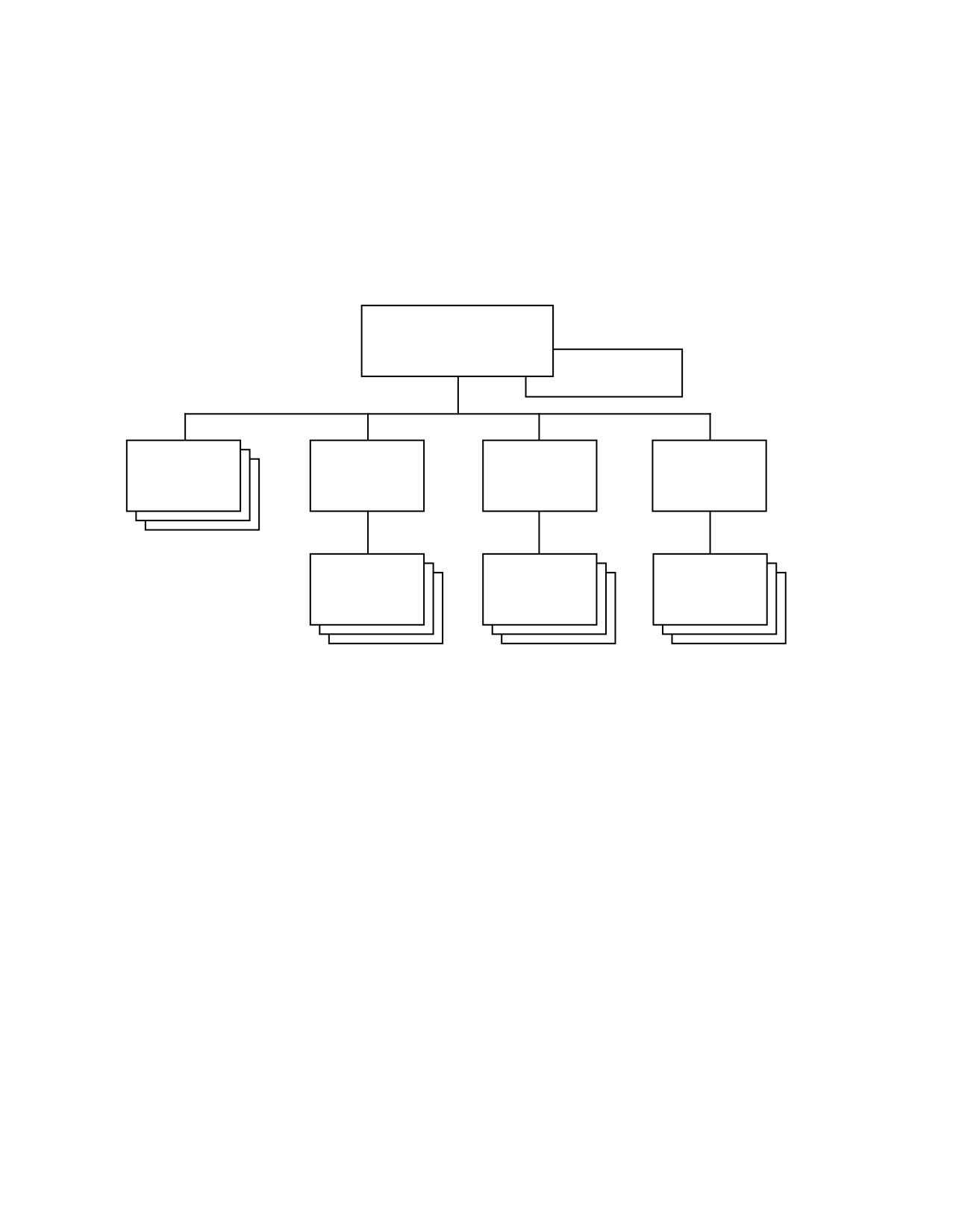
accomplish the mission. Figure D-1 depicts a multinational alliance under an integrated command structure.
ALLIANCE MULTINATIONAL
ARMY COMPONENT
COMMANDER
INTEGRATED
STAFF
ALLIED ARMY
US ARMY
ALLIED ARMY
MULTINATIONAL
COMPONENT
COMPONENT
COMPONENT
FORCES
COMMANDER
COMMANDER
COMMANDER
ALLIED ARMY
US ARMY
ALLIED ARMY
FORCES
FORCES
FORCES
Figure D-1. Multinational army command structure alliance (national subordinate formations).
(3) Another form of alliance is the lead nation command structure. This structure may exist
in a developing alliance when all member nations place their forces under the control of one nation. This
means that the lead nations procedures and doctrine form the basis for planning and coordinating the
conduct of operations. Although this type of arrangement is unusual in a formal alliance, such a command
structure may have advantages under certain treaty circumstances. A lead nation command in an alliance
may be characterized by a staff that is integrated to the degree necessary to ensure cooperation among
multinational or national subordinate army formations.
b. Coalitions. Coalitions are normally formed as a rapid response to an unforeseen crises and, as
stated above, are ad hoc arrangements between two or more nations for a common action.
(1) During the early stages of such a contingency, nations rely upon their military command
systems to control the activities of their forces. Therefore, the initial coalition arrangement will most likely
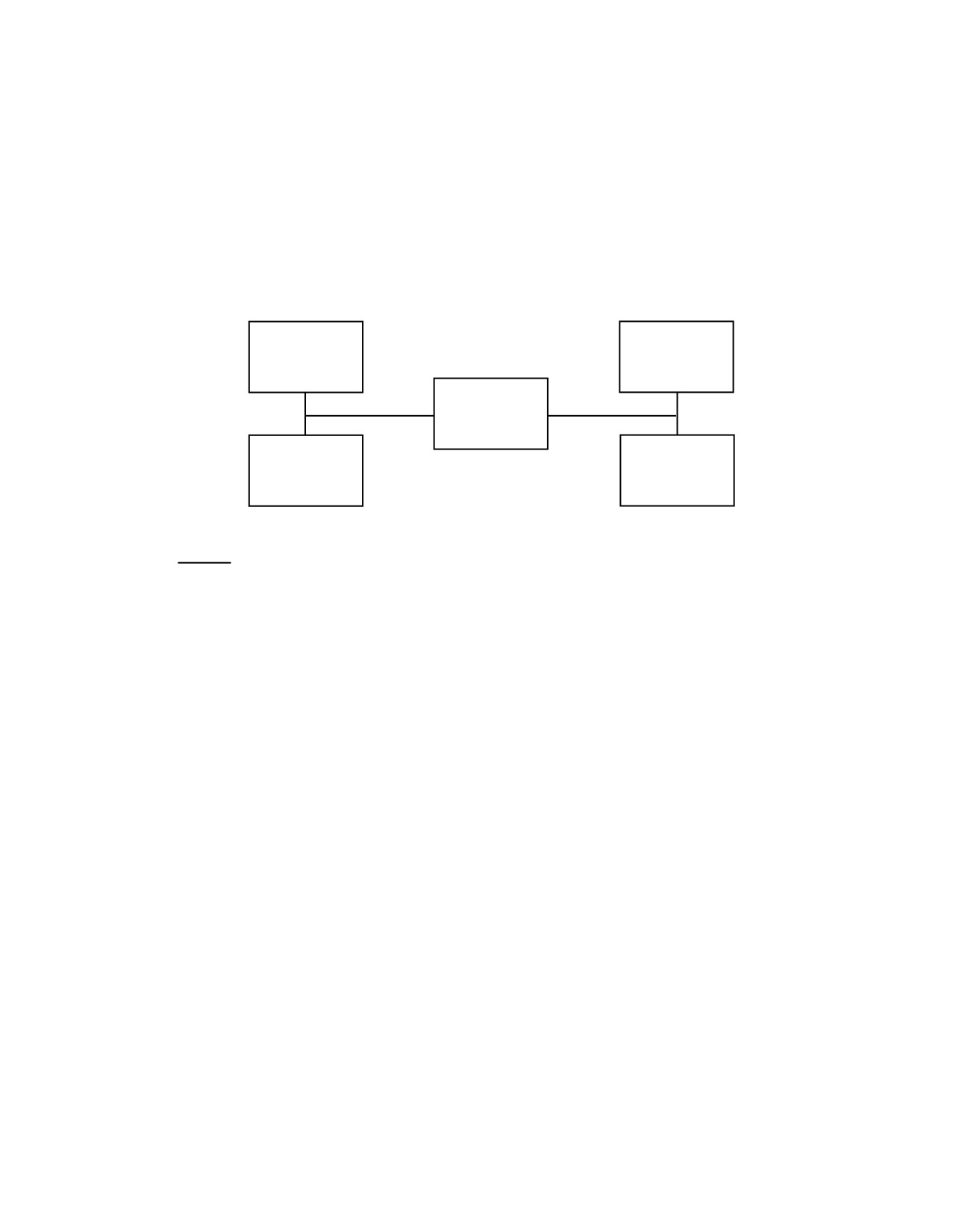
involve a parallel command structure (Figure D-2). Under a parallel command, no single multinational
army commander is designated. Usually member nations retain control of their national forces. Coalition
decisions are made through a coordinated effort among the participants. A coalition coordination,
communications, and integration center (C3IC) can be established to
Facilitate exchange of intelligence and operational information.
D-2
FM 8-42
Ensure coordination of operations among coalition forces.
Provide a forum for resolving routine issues among staff sections.
US ARMY
ALLIED ARMY
COMPONENT
COMPONENT
COMMANDER
COMMANDER
C3IC
US ARMY
ALLIED ARMY
FORCES
FORCES
LEGEND:
COMMAND
Figure D-2. Coalition parallel command structure (forces under national control).
(2) As a coalition matures, the members may choose to centralize their efforts through
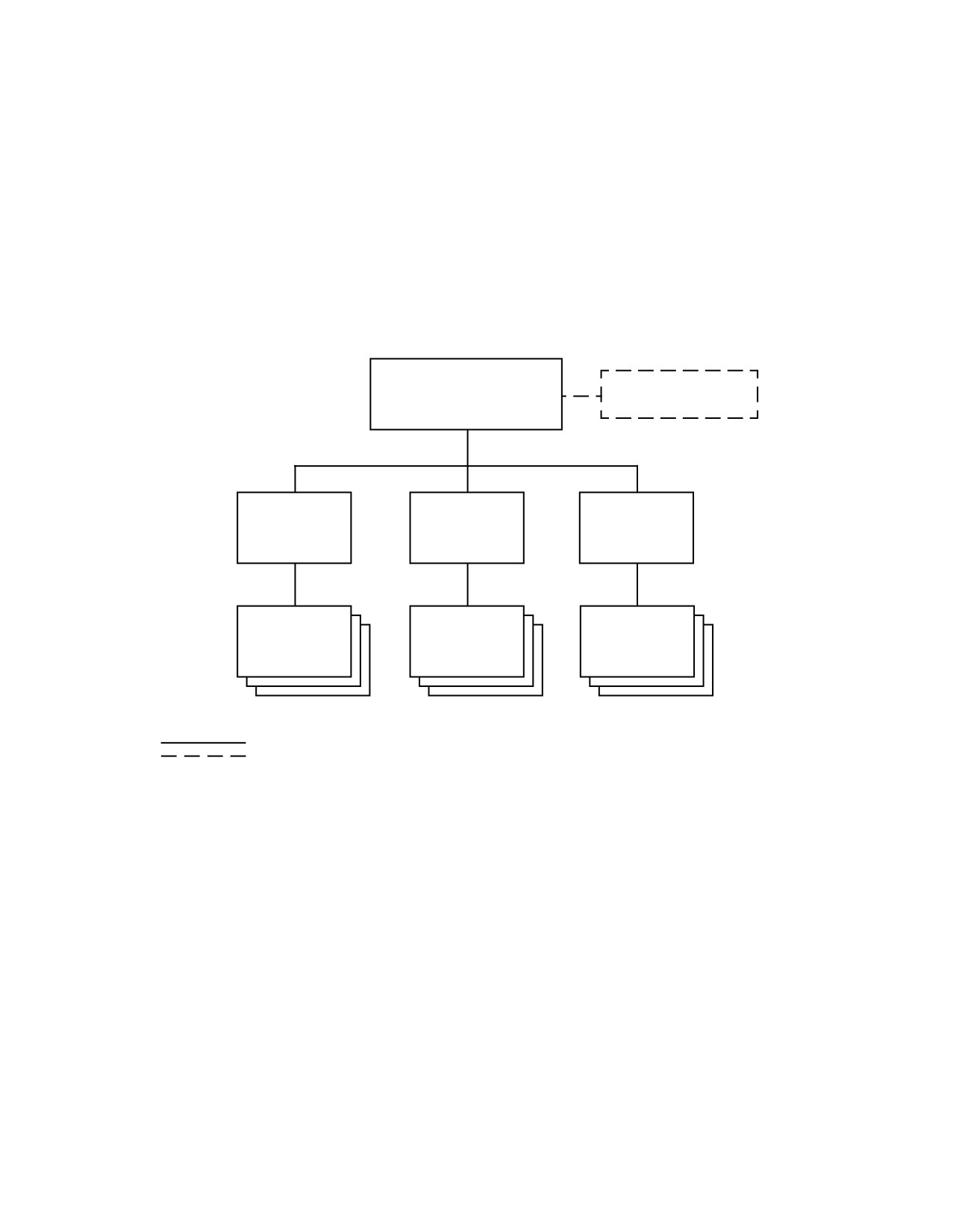
establishing a lead nation command structure (Figure D-3). A lead nation command is one of the less
common command structures in an ad hoc coalition. A coalition of this makeup sees all coalition members
subordinating their forces to a single partner, usually the nation providing the preponderance of forces and
resources. Still, subordinate national commands maintain national integrity. The lead nation command
establishes integrated staff sections, with the composition determined by the coalition leadership.
D-4. Rationalization, Standardization, and Interoperability
One of the most difficult aspects of multinational operations concerns the rationalization, standardization,
and interoperability (individually defined in the Glossary) of equipment, supplies, and procedures. This
task is compounded by differences in terminology, language, and doctrine.
a. Communications. To ensure mission success, it is imperative that communications are quickly
established with all participating nations.
(1) Initial communications can be facilitated by exchanging liaison teams who will provide
direct interface with the participating nations. When possible, liaison personnel should be deployed early in
the planning/organization phase of the operation.
(2) Compatible communications equipment may pose a severe problem for the multinational
force. Even within joint operations, the US experiences interoperability problems with communications
D-3
FM 8-42
equipment; these difficulties are magnified when US forces are engaged in multinational operations.
Depending upon the size of the multinational force, one nation may be required to provide communications
equipment to all elements for C2 purposes. The planning for and effective use of messengers and wire
communications may also assist in alleviating this situation.
LEAD NATION
AUGMENTED
ARMY COMPONENT
STAFF
COMMANDER
NATIONAL
NATIONAL
NATIONAL
COMPONENT
COMPONENT
COMPONENT
COMMANDER
COMMANDER
COMMANDER
NATIONAL
NATIONAL
NATIONAL
FORCES
FORCES
FORCES
LEGEND:
COMMAND AND CONTROL
LIAISON/COORDINATION
Figure D-3. Lead nation command structure (augmented staff and multinational subordinate formations).
b. Standardization. Within alliances, standardization can be accomplished in many areas. The
specifications and requirements for equipment, treatment protocols, and procedures can be developed by
working groups and adopted for use by each nation. An example of this is the NATO standard litter which
can be interchangeably used in all ambulances employed by the member nations. In coalitions there is not
sufficient time permitted to reach standardization agreements of this nature. Due to the short duration and
limited purpose of these arrangements, there is usually only sufficient time to standardize principles and
time-sensitive procedures, such as report formats or radio frequencies to be used, rather than materiel
development issues.
c.
Command and Control. As coalitions are ad hoc agreements of countries sharing a common
interest, it may not be possible to establish C2 over all participants as each nation may have its own specific
requirements which limit the authority it will permit international or national commanders to exercise over
D-4
FM 8-42
its forces. Thus, command in the formal sense may not exist, and a system of cooperation may be required
in its place. Hasty agreements must be made to formulate workable methods. These are always specific to
the situation and must be decided by commanders and staffs, taking into consideration the mission,
requirements, and capabilities of the participating forces.
D-5. Combat Health Support Issues
The US military has a sophisticated, state-of-the-art field health care delivery system. When engaged in
multinational operations, the US may be called upon to provide health care to the forces of allied or coalition
partners engaged in the ongoing operation. Factors which may impact on the delivery of this care include
a. Eligible Beneficiaries. Early in the CHS planning process, a determination must be made as to
who will be eligible beneficiaries for care in US MTFs. This determination should be made at the highest
possible level with the advice of the Staff Judge Advocate as it will impact on the medical force structure to
be deployed and the expenditure of funds on Class VIII materiel required to support the eligible population.
b. Funding. The funding and/or reimbursement aspects of the operation should be clearly
delineated at the outset of the operation. Multinational operations are often conducted under the auspices of
nongovernmental agencies, such as the UN. The CHS planner must know what the mechanisms for
reimbursement are and what methods of resupply are to be used.
c.
Differences in Languages. Interpreters will be required to assist medical personnel in treating
soldiers from other nations who do not speak English. Department of the Army Pamphlet 40-3 provides
basic medical questions and responses in the languages of the NATO members, but must be supplemented
by locally produced guides for languages not included.
d. Endemic Disease. When treating soldiers from other nations, the health care provider must be
familiar with the endemic diseases in the soldiers native homeland. These diseases may or may not be
endemic in the AO. Treating soldiers with varying endemic diseases may require medications not normally
stocked by the treatment element. As these diseases may not be familiar to the health care providers,
additional consultation with specialists may be required.
e.
Religious and Cultural Differences. Religious and cultural differences will exist between the
different forces. Health care providers must be aware of any cultural norms or religious beliefs which
affect the delivery of health care. These differences may be encountered in areas such as the use of blood
and blood products or dietary restrictions. By the health care provider being aware of and considering these
cultural differences and religious beliefs, cooperation of the patient for the treatment regime may be
facilitated.
f.
Nuclear, Biological, and Chemical Threat. Each nation will have different methods and
materiels for safeguarding their troops from the effects of NBC weaponry. This may result in different
levels of protection for the various forces participating in the operation. The CHS planner must consider
the various levels of protection to ensure that adequate health care support can be provided in the event that
NBC weaponry is employed.
D-5
FM 8-42
D-6. Combat Health Support Considerations
The command surgeon will be required to establish policies and procedures which will affect the type and
quantity of CHS available to the participating forces. As a minimum, the following factors should be
considered
a. Patient Evacuation and Medical Regulating.
The evacuation policy for the theater/operation must be established during the initial
planning phase because much of the medical force structure to be deployed is dependent upon this policy.
It must be established who will perform medical evacuation missions and what assets
(platforms and personnel) will be used.
(Is one nation the primary evacuator or will each nation evacuate
their own patients?)
It must further be determined where patients from the different member nations will
be evacuated to (such as to the nearest facility regardless of nationality or to a facility established by their
own nation).
The communications interface (type of radio, frequency, and request format) must be
standardized to facilitate the receipt of the request and expedite the dispatch of the evacuation platform.
Additional policies may be required on the exchange of litters, blankets, and other types
of medical equipment accompanying the patient, on the backhaul of Class VIII and blood on ambulances,
and on transferring a patient from one nations evacuation system to another.
b. Hospitalization. The array of hospital assets within a TO or deployed for an operation is
dependent upon the nature and duration of the operation, the anticipated patient work load, and the theater
evacuation policy. In multinational operations, it needs to be determined which nations will provide
hospitalization and, once that is established, what capabilities these assets have. Standards of medical care,
credentialing, scope of practice, and ancillary care available will differ between participating nations. A
clear understanding of the medical capabilities of each nations facilities is an essential requirement for the
CHS planner to ensure that a duplication of services does not occur and that all elements of care are
provided for. Further, the participating nations must establish at what point a patient within the health care
delivery system of one nation will be returned to his own nations system.
c.
Combat Health Logistics. Different nations have different standards for collecting and testing
blood as well as for the production of pharmaceuticals and medical equipment. Due to the stringent
regulation of blood and blood products and the production of pharmaceuticals in the US, these Class VIII
items will normally only be procured through the US forces Class VIII system for use with US troops.
Funding and reimbursement mechanisms must be identified and formalized if the US Class VIII system is
used to resupply other nations MTFs.
d. Preventive Medicine Services. Preventive medicine programs are essential in reducing
morbidity and mortality due to DNBI. In a multinational force, the PVNTMED personnel must be familiar
D-6
FM 8-42
with the cultural and religious differences of the participating nations. Field sanitation and personal hygiene
practices are not universally the same in all nations; in some nations, these practices do not exist. To ensure
that endemic diseases of a particular nation are not introduced to the other participating forces, disease
surveillance, pest management, and personal protective measure programs must be initiated and enforced.
Inspection of bivouac areas, feeding facilities, potable water supplies, and waste disposal and sanitation
facilities must be an ongoing effort. In addition, ensuring that operations are in compliance with federal,
state, local, and HN environmental laws, regulations, policies, and standards will help to prevent an
imbalance from occurring in the ecosystem. Such an imbalance occurring in the ecosystem should be
avoided because it could make human health and disease conditions worsen.
e.
Dental Services. Dental services within the multinational force may be the responsibility of
each participating nation. If care is to be provided by one nation, it would normally only consist of
emergency dental procedures to provide for the immediate relief of pain and discomfort.
f.
Area Medical Support. A comprehensive plan must be established to ensure that all participants
have access to medical care and services. Whether one nation provides all of the essential services or each
nation is responsible for its own care (or some combination of the two), a comprehensive plan which
delineates the access to and interconnectivity of support must be provided. Units or elements without
organic CHS resources must receive Echelons I and II support on an area support basis and these support
requirements must be incorporated into the supporting units OPLAN.
g. Veterinary Services. The AMEDD is the DOD Executive Agent for Veterinary Services
within the US Army. Its missions of ensuring food wholesomeness and quality and providing medical care
to government-owned animals are an essential service in stability and support operations. The US forces
may have the only deployable veterinary resources and may be required to perform their missions for
the entire multinational force.
D-7
FM 8-42
APPENDIX E
COMBAT HEALTH SUPPORT ASSESSMENT CHECKLIST
E-1. General
a. This appendix provides a tool for use in assessing the health care delivery system and the
medical needs of a HN or US-backed group. This checklist is intended only as a guide and may be modified
for use as the situation dictates.
b. This checklist is arranged by category of information. The more detailed the information
obtained, the better this checklist will aid the CHS planner in correctly identifying the medical threat,
assessing the medical requirements, and developing the requisite programs for alleviating the identified
deficiencies. Additional information in the form of brochures, magazine or newspaper articles, or
advertisements of medical facilities, health service education programs, and medical equipment or supplies
available will also assist in the planning effort.
c.
The mission reconnaissance checklist presented in Appendix M is more limited in scope and is
intended for the assessment of a specific village, town, or district.
d. Predeployment medical assessments may be available through supporting CA units.
E-2. Sample Medical Assessment Checklist
COUNTRY ___________________________________________ DATES VISITED _____________________TO ________________
I.
GENERAL INFORMATION
Name of Location ______________________________________________________________________________________________
Map Grid Coordinates _________________________________________________________________________________________
Topography (such as mountains or desert) ______________________________________________________________________
Climate (such as tropic or arctic) ________________________________________________________________________________
Temperature Ranges:
Summer
__________ to__________
Winter
__________ to__________
Significant Seasonal Variants (such as monsoon season) _________________________________________________________
Availability of Water
Source
Quality
Quantity
Contaminants
______________________________________________________________________________________________________________
______________________________________________________________________________________________________________
______________________________________________________________________________________________________________
______________________________________________________________________________________________________________
E-1
FM 8-42
Epidemiology
Disease
Occurrence
______________________________________________________________________________________________________________
______________________________________________________________________________________________________________
______________________________________________________________________________________________________________
______________________________________________________________________________________________________________
Leading Cause of Death
______________________________________________________________________________________________________________
______________________________________________________________________________________________________________
______________________________________________________________________________________________________________
______________________________________________________________________________________________________________
Status of Sanitation Impacting on the Overall Health
______________________________________________________________________________________________________________
______________________________________________________________________________________________________________
______________________________________________________________________________________________________________
______________________________________________________________________________________________________________
Insects, Plants, and Animals of Medical Importance
______________________________________________________________________________________________________________
______________________________________________________________________________________________________________
______________________________________________________________________________________________________________
______________________________________________________________________________________________________________
Religious, Social, and/or Political Factors of Medical Importance
______________________________________________________________________________________________________________
______________________________________________________________________________________________________________
______________________________________________________________________________________________________________
______________________________________________________________________________________________________________
II.
CIVILIAN HEALTH SERVICES
Organization and Administration (to include public and private)
______________________________________________________________________________________________________________
______________________________________________________________________________________________________________
______________________________________________________________________________________________________________
______________________________________________________________________________________________________________
E-2
FM 8-42
Public Health Laws
______________________________________________________________________________________________________________
______________________________________________________________________________________________________________
______________________________________________________________________________________________________________
______________________________________________________________________________________________________________
Accessibility to Care (to include both physical, social, and financial barriers)
______________________________________________________________________________________________________________
______________________________________________________________________________________________________________
______________________________________________________________________________________________________________
______________________________________________________________________________________________________________
______________________________________________________________________________________________________________
Comments on Overall Quality of Civilian Health Care
______________________________________________________________________________________________________________
______________________________________________________________________________________________________________
______________________________________________________________________________________________________________
______________________________________________________________________________________________________________
______________________________________________________________________________________________________________
Significant Individuals
Name
Title
______________________________________________________________________________________________________________
______________________________________________________________________________________________________________
______________________________________________________________________________________________________________
______________________________________________________________________________________________________________
______________________________________________________________________________________________________________
III.
MILITARY MEDICAL SERVICES
Force Strength
Active ______________________ Reserve _______________________
Organization and Administration
______________________________________________________________________________________________________________
______________________________________________________________________________________________________________
______________________________________________________________________________________________________________
______________________________________________________________________________________________________________
E-3
FM 8-42
Policies and Programs
______________________________________________________________________________________________________________
______________________________________________________________________________________________________________
______________________________________________________________________________________________________________
______________________________________________________________________________________________________________
______________________________________________________________________________________________________________
Physical Fitness Standards
______________________________________________________________________________________________________________
______________________________________________________________________________________________________________
______________________________________________________________________________________________________________
______________________________________________________________________________________________________________
Medical Logistics and blood Management
______________________________________________________________________________________________________________
______________________________________________________________________________________________________________
______________________________________________________________________________________________________________
______________________________________________________________________________________________________________
Medical Evacuation and Regulating
______________________________________________________________________________________________________________
______________________________________________________________________________________________________________
______________________________________________________________________________________________________________
______________________________________________________________________________________________________________
______________________________________________________________________________________________________________
Hospitalization
______________________________________________________________________________________________________________
______________________________________________________________________________________________________________
______________________________________________________________________________________________________________
______________________________________________________________________________________________________________
______________________________________________________________________________________________________________
Preventive Medicine
______________________________________________________________________________________________________________
______________________________________________________________________________________________________________
______________________________________________________________________________________________________________
______________________________________________________________________________________________________________
E-4
FM 8-42
Dental
______________________________________________________________________________________________________________
______________________________________________________________________________________________________________
______________________________________________________________________________________________________________
______________________________________________________________________________________________________________
Veterinary
______________________________________________________________________________________________________________
______________________________________________________________________________________________________________
______________________________________________________________________________________________________________
______________________________________________________________________________________________________________
Pharmacy, Laboratory, and X-ray
______________________________________________________________________________________________________________
______________________________________________________________________________________________________________
______________________________________________________________________________________________________________
______________________________________________________________________________________________________________
______________________________________________________________________________________________________________
Combat Stress/Neuropsychiatric
______________________________________________________________________________________________________________
______________________________________________________________________________________________________________
______________________________________________________________________________________________________________
______________________________________________________________________________________________________________
______________________________________________________________________________________________________________
Nursing
______________________________________________________________________________________________________________
______________________________________________________________________________________________________________
______________________________________________________________________________________________________________
______________________________________________________________________________________________________________
______________________________________________________________________________________________________________
Paraprofessionals
______________________________________________________________________________________________________________
______________________________________________________________________________________________________________
______________________________________________________________________________________________________________
______________________________________________________________________________________________________________
E-5
FM 8-42
Military Medical Training and Education Programs
Course/School
Location
Type of Training
______________________________________________________________________________________________________________
______________________________________________________________________________________________________________
______________________________________________________________________________________________________________
______________________________________________________________________________________________________________
Comments on the Overall Quality of Military Care
______________________________________________________________________________________________________________
______________________________________________________________________________________________________________
______________________________________________________________________________________________________________
______________________________________________________________________________________________________________
Significant Individuals
Name
Title
______________________________________________________________________________________________________________
______________________________________________________________________________________________________________
______________________________________________________________________________________________________________
______________________________________________________________________________________________________________
IV.
MEDICAL MATERIEL
Production Capability
Product
Quantity
Demand
______________________________________________________________________________________________________________
______________________________________________________________________________________________________________
______________________________________________________________________________________________________________
______________________________________________________________________________________________________________
______________________________________________________________________________________________________________
Stockpiles
Product
Quantity
Demand
______________________________________________________________________________________________________________
______________________________________________________________________________________________________________
______________________________________________________________________________________________________________
______________________________________________________________________________________________________________
______________________________________________________________________________________________________________
E-6
FM 8-42
Products Obtained from Outside Sources
Product
Quantity
Demand
______________________________________________________________________________________________________________
______________________________________________________________________________________________________________
______________________________________________________________________________________________________________
______________________________________________________________________________________________________________
Equipment Repair Capability
Type of Equipment
Source of Repair
______________________________________________________________________________________________________________
______________________________________________________________________________________________________________
______________________________________________________________________________________________________________
______________________________________________________________________________________________________________
V.
MEDICAL RESEARCH AND DEVELOPMENT
Institutes
Name
Location
______________________________________________________________________________________________________________
______________________________________________________________________________________________________________
______________________________________________________________________________________________________________
______________________________________________________________________________________________________________
Significant Individuals
Name
Title
______________________________________________________________________________________________________________
______________________________________________________________________________________________________________
______________________________________________________________________________________________________________
______________________________________________________________________________________________________________
VI.
CIVILIAN MEDICAL TRAINING
Course/School
Location
Type of Training
______________________________________________________________________________________________________________
______________________________________________________________________________________________________________
______________________________________________________________________________________________________________
______________________________________________________________________________________________________________
E-7
FM 8-42
Other Comments
______________________________________________________________________________________________________________
______________________________________________________________________________________________________________
______________________________________________________________________________________________________________
______________________________________________________________________________________________________________
E-8
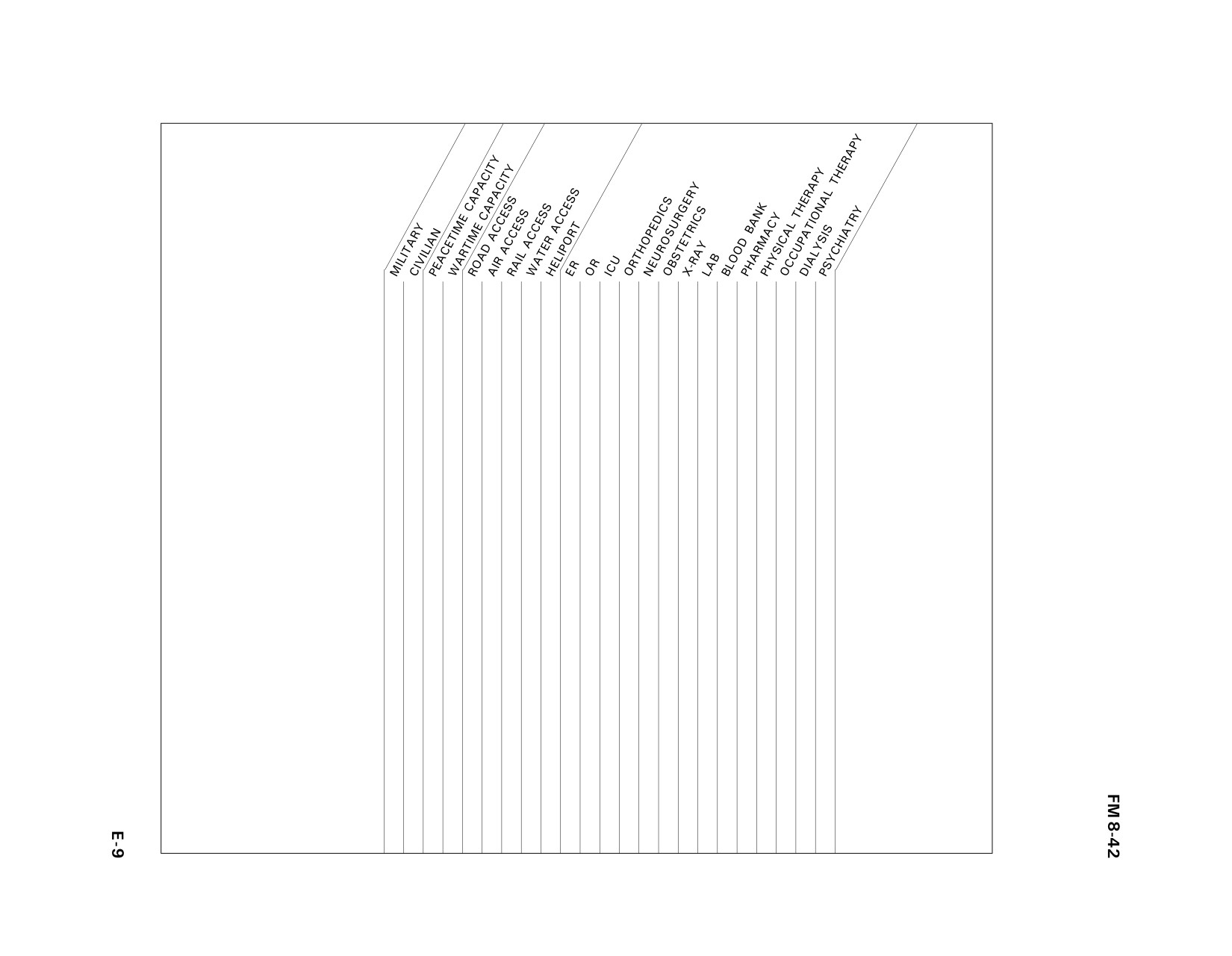
VII. HOSPITAL DATA
Please rate capabilities
1 (minimal) through 5 (excellent)
NAME
LOCATION
COMMENTS
____________________________________________________________________________________________________________________________________
____________________________________________________________________________________________________________________________________
____________________________________________________________________________________________________________________________________
____________________________________________________________________________________________________________________________________
____________________________________________________________________________________________________________________________________
____________________________________________________________________________________________________________________________________
____________________________________________________________________________________________________________________________________
____________________________________________________________________________________________________________________________________
____________________________________________________________________________________________________________________________________
____________________________________________________________________________________________________________________________________
____________________________________________________________________________________________________________________________________
____________________________________________________________________________________________________________________________________
____________________________________________________________________________________________________________________________________
____________________________________________________________________________________________________________________________________
____________________________________________________________________________________________________________________________________
____________________________________________________________________________________________________________________________________
____________________________________________________________________________________________________________________________________
____________________________________________________________________________________________________________________________________
____________________________________________________________________________________________________________________________________
____________________________________________________________________________________________________________________________________
____________________________________________________________________________________________________________________________________
____________________________________________________________________________________________________________________________________
____________________________________________________________________________________________________________________________________
FM 8-42
APPENDIX F
COMBAT HEALTH SUPPORT ASSESSMENT PLANNING FOR
STABILITY OPERATIONS AND SUPPORT OPERATIONS
Section I. COMBAT HEALTH SUPPORT ESTIMATE
F-1. General
a. Planning for CHS operations in stability and support operations is the same process as used for
traditional CHS operations. The CHS estimate of the situation is the basic tool used by the CHS planner. A
detailed discussion of each subparagraph of the CHS estimate is provided in FM 8-55. The information
contained in this appendix supplements the discussion in FM 8-55. The considerations are similar; however,
the range of options and COAs are expanded. These expanded options include missions and functions not
accomplished during the more traditional CHS operations (such as the assessment of the HN medical
infrastructure).
b. All of the categories of the CHS estimate are presented in paragraph F-2. Some of the
categories may seem contrived when applying them to a stability and support operational situation. The
CHS planner must, therefore, interpret the categories and apply the pertinent information or modify the
category to fit the operational scenario. In some stability and support operational scenarios, there may not
be a recognizable enemy; the enemy and friendly situation paragraphs of the estimate can be thought of as
negative and positive factors impacting on the successful accomplishment of the mission. For example, in a
discussion of opposition groups, it is conceivable that an organized opposition may not be apparent in a
country where a humanitarian assistance program or disaster relief effort is being conducted. The CHS
planner should, therefore, consider those situations and factors which could foster an insurgency or the
formation of opposition groups and focus the CHS operations to correct anticipated deficiencies, thereby
eliminating the possible threat.
c.
Paragraphs F-3 through F-7 contain a format for preparing the veterinary, PVNTMED,
dental, CSC, and CHL estimates.
d. The examples provided in this section do not include all possible scenarios or information
needed to complete an estimate. They are intended to be thought provoking and are included for illustrative
purposes only.
F-1
FM 8-42
F-2. Sample Format for the Combat Health Support Estimate
(Classification)
Headquarters
Location
Date, time, and zone
COMBAT HEALTH SUPPORT ESTIMATE OF THE SITUATION
References: List all maps, overlays, charts, or other documents required to understand the plan.
Reference to a map will include the map series number and country or geographic area, if
required; sheet number and name, if required; edition; and scale.
1. MISSION
(Statement of the overall CHS mission and type of activity to be supported [such as
support for insurgency or counterinsurgency, combatting terrorism, peace support or domestic support
operations].)
2. SITUATION AND CONSIDERATIONS
a.
Enemy (Opposition) Situation/Negative Factors. (In stability and support operations, this can
include terrorist groups, insurgents, renegade forces, or other opposition groups or political factions found
in the particular country. This subparagraph is viewed as groups opposed to the US-backed and supported
groups, HN, and US national interests. In disaster relief or domestic support operations where there is no
recognizable enemy, this could include looters or other lawlessness, continued danger from recurring
earthquakes, storms, or floods, or an increased medical threat due to disruption of sanitation and services.)
(1) Strength and disposition.
(Included in this category are strongholds, areas sympathetic
to the opposition group, or the size and type of organization of the opposition group.)
(2) Combat efficiency. (Information on actual combat units or guerrilla forces, their training
status, and their level of experience and expertise can be identified here. The level of their medical training
and their health care delivery system can also be discussed.)
(3) Capabilities.
(Information on the actual capabilities of an opposition group to wage
armed combat or the potential of the group to initiate such action is included. Consideration should be
given to the possibility of an opposition force being able to employ NBC and DE weaponry/devices.)
(4) Logistics situation.
(This can include information on how well supplied the opposition
force is with food, clothing, or other vital logistics factors. The financial backing and availability of future
support from outside individuals [such as from narcotics traffickers] or other countries can also be included.)
(Classification)
F-2