FM 4-20.113 Airdrop of Supplies and Equipment: Rigging Trailers (March 2009) - page 1
*FM 4-20.113/TO 13C7-3-51
Field Manual
Headquarters
No. 4-20.113
Department of the Army
Department of the Air Force
Technical Order
Washington, DC, 27 March 2009
No. 13C7-3-51
AIRDROP OF SUPPLIES AND EQUIPMENT:
RIGGING TRAILERS
Contents
Page
PREFACE
vi
Scope
vi
User Information
vi
Chapter 1
GENERAL INFORMATION
1-1
Description of Items
1-1
Special Instructions
1-1
Chapter 2
RIGGING THE M101, M101A1, OR M101A2, ¾-TON CARGO TRAILER FOR LOW-
VELOCITY AIRDROP
2-1
Description of Load
2-1
Preparing Platform
2-2
Positioning and Lashing Accompanying Loads on the Platform
2-3
Building and Positioning Honeycomb Stacks
2-11
Preparing the Trailer
2-14
Stowing Accompanying Load and Trailer Components in Trailer
2-16
Installing Suspension Slings
2-25
Lifting and Positioning Trailer
2-26
Lashing Trailer
2-26
Lashing Trailer
2-27
Building and Installing Parachute Stowage Platform
2-29
Installing and Safety Tieing Suspension Slings
2-31
Stowing Cargo Parachutes
2-32
Installing the Extraction System
2-33
Installing the Release System
2-34
Installing Provisions for Emergency Restraints
2-34
Installing Provisions for Emergency Restraints
2-35
Placing Extraction Parachute
2-35
Marking Rigged Load
2-35
Distribution Restriction: Approved for public release; distribution is unlimited.
*This publication supersedes FM 4-20.113/TO 13C7-3-51, 20 JULY 2003, FM 10-532/TO13C7-3-361, 16
APRIL 1979, FM 10-540, 17 NOVEMBER 1978, FM 10-555, 23 MAY 1986, FM 10-569, 27 DECEMBER 1988, &
FM 10-591, 17JUNE 1977.
i
Contents
Equipment Required
2-35
Chapter 3
RIGGING THE M1101 HIGH MOBILITY TRAILER, LIGHT VARIANT, ¾-TON
CARGO TRAILER ON A 12-FOOT, TYPE V PLATFORM FOR LOW-VELOCITY
AIRDROP
3-1
Description of the Load
3-1
Preparing Platform
3-2
Building and Positioning Honeycomb Stacks
3-3
Preparing the Trailer and Accompanying Load Endboards
3-7
Position the Accompanying Load in the Trailer
3-12
Lash the Ammunition in the Trailer
3-15
Positioning and Securing the Bows and Tarp and Preparing the Trailer
3-18
Lifting and Positioning the Trailer
3-21
Installing Side Boards
3-23
Lashing Load to Platform
3-24
Building and Installing the Parachute Stowage Platform
3-26
Installing and Safety Tieing the Suspension Slings
3-28
Stowing Cargo Parachutes
3-29
Installing Parachute Release System
3-30
Installing Extraction System
3-31
Placing Extraction Parachute
3-32
Installing Provisions for Emergency Restraints
3-32
Marking Rigged Load
3-32
Equipment Required
3-32
Chapter 4
RIGGING THE 1 ½-TON TRAILER ON A 12-FOOT, TYPE V PLATFORM FOR
LOW-VELOCITY AIRDROP
4-1
Description of the Load
4-1
Preparing Platform
4-2
Building and Positioning Honeycomb Stacks
4-3
Preparing the Trailer
4-7
Stowing the Accompanying Load and Trailer Components
4-9
Building Body Protection Boards
4-16
Lashing Body Protection Boards and Accompanying Load to Trailer
4-17
Lifting and Positioning the Trailer
4-19
Lashing Load to Platform
4-21
Installing and Safety Tieing the Suspension Slings
4-22
Building and Installing the Parachute Stowage Platform
4-23
Stowing Cargo Parachutes
4-25
Installing Parachute Release System
4-26
Installing Extraction System
4-27
Placing Extraction Parachute
4-28
Installing Provisions for Emergency Restraints
4-28
Marking Rigged Load
4-28
Equipment Required
4-28
Chapter 5
RIGGING 400-GALLON CAPACITY WATER TRAILER ON A 12-FOOT, TYPE V
PLATFORM FOR LOW-VELOCITY AIRDROP
5-1
Description of the Load
5-1
Preparing Platform
5-2
ii
FM 4-20.113/TO 13C7-3-51
27 March 2009
Contents
Building and Positioning Honeycomb Stacks
5-3
Preparing the Trailer
5-8
Lifting and Positioning the Trailer
5-10
Lashing Load to Platform
5-11
Preparing and Positioning the Parachute Stowage Platform
5-12
Installing Load Cover
5-14
Installing and Safety Tieing the Suspension Slings
5-15
Stowing Cargo Parachutes
5-16
Installing Parachute Release System
5-17
Installing Extraction System
5-18
Placing Extraction Parachute
5-19
Installing Provisions for Emergency Restraints
5-19
Marking Rigged Load
5-19
Equipment Required
5-19
Chapter 6
RIGGING AMMUNITION TRAILER ON A 12-FOOT, TYPE V PLATFORM FOR
LOW-VELOCITY AIRDROP
6-1
Description of the Load
6-1
Preparing Platform
6-2
Stowing Platform Accompanying Loads
6-3
Building and Positioning Honeycomb Stacks
6-12
Preparing the Trailer
6-13
Stowing Accompanying Load in Trailer
6-14
Lifting and Positioning the Trailer
6-15
Lashing Load to Platform
6-16
Installing and Safety Tieing the Suspension Slings
6-18
Preparing and Positioning the Parachute Stowage Platform
6-19
Stowing Cargo Parachutes
6-21
Installing Parachute Release System
6-22
Installing Extraction System
6-23
Placing Extraction Parachute
6-24
Installing Provisions for Emergency Restraints
6-24
Marking Rigged Load
6-24
Equipment Required
6-24
Chapter 7
RIGGING MINE CLEARING LINE CHARGE, 2 ½-TON TRAILER, ON A 12-FOOT,
TYPE V PLATFORM FOR LOW-VELOCITY AIRDROP
7-1
Description of the Load
7-1
Preparing Platform
7-2
Building and Positioning Honeycomb Stacks
7-3
Preparing MICLIC and Trailer
7-10
Stowing Accompanying Load on Platform
7-13
Lifting and Positioning the MICLIC
7-15
Lashing Load to Platform
7-16
Installing and Safety Tieing the Suspension Slings
7-18
Preparing the Parachute Stowage Platform
7-19
Stowing Cargo Parachutes
7-20
Installing Parachute Release System
7-21
Installing Extraction System
7-22
27 March 2009
FM 4-20.113/TO 13C7-3-51
iii
Contents
Placing Extraction Parachute
7-23
Installing Provisions for Emergency Restraints
7-23
Marking Rigged Load
7-23
Equipment Required
7-23
Chapter 8
RIGGING 15-TON TILT BED TRAILER, ON A 24-FOOT, TYPE V PLATFORM FOR
LOW-VELOCITY AIRDROP
8-1
Description of the Load
8-1
Preparing Platform
8-2
Building and Positioning Honeycomb Stacks
8-3
Preparing Trailer
8-8
Lifting and Positioning the tRAILER
8-13
Lashing Trailer to Platform
8-14
Installing and Safety Tieing the Suspension Slings
8-17
Preparing the Parachute Stowage Platform
8-18
Stowing Cargo Parachutes
8-21
Installing Parachute Release System
8-22
Installing Extraction System
8-23
Placing Extraction Parachute
8-24
Installing Provisions for Emergency Restraints
8-24
Marking Rigged Load
8-24
Equipment Required
8-24
Chapter 9
RIGGING INGERSOL-RAND MODEL, 250-CFM, TRAILER-MOUNTED
AIRCOMPRESSOR, ON A 16-FOOT, TYPE V PLATFORM FOR LOW-VELOCITY
AIRDROP
9-1
Description of the Load
9-1
Preparing Platform
9-2
Building and Positioning Honeycomb Stacks
9-3
Preparing Trailer
9-9
Lifting and Positioning the Trailer
9-20
Lashing Trailer to Platform
9-22
Installing and Safety Tieing the Suspension Slings
9-24
Preparing the Parachute Stowage Platform
9-25
Stowing Cargo Parachutes
9-27
Installing Parachute Release System
9-28
Installing Extraction System
9-29
Placing Extraction Parachute
9-30
Installing Provisions for Emergency Restraints
9-30
Marking Rigged Load
9-30
Equipment Required
9-30
Chapter 10
RIGGING TRAILER-MOUNTED ENGINEER ELECTRICAL TOOL OUTFIT ON A
12-FOOT, TYPE V PLATFORM FOR LOW-VELOCITY AIRDROP
10-1
Description of the Load
10-1
Preparing Platform
10-2
Building and Positioning Honeycomb Stacks
10-3
Preparing Trailer
10-6
Lifting and Positioning the Trailer
10-9
Lashing Trailer to Platform
10-10
iv
FM 4-20.113/TO 13C7-3-51
27 March 2009
Contents
Preparing the Parachute Stowage Platform
10-11
Installing and Safety Tieing the Suspension Slings
10-12
Stowing Cargo Parachutes
10-13
Installing Parachute Release System
10-14
Installing Extraction System
10-15
Placing Extraction Parachute
10-16
Installing Provisions for Emergency Restraints
10-16
Marking Rigged Load
10-16
Equipment Required
10-16
GLOSSARY
Glossary-1
REFERENCES
References-1
INDEX
Index-1
27 March 2009
FM 4-20.113/TO 13C7-3-51
v
Preface
SCOPE
This manual tells and shows how to prepare and rig the M101, M101A1,M101A2, M1101 3/4-ton trailer, the 1
½-ton trailer, the 400 gallon capacity water trailer, the 15-ton tilt bed trailer, the 1 ½-ton ammunition trailer,
mine-clearing line charge (MICLIC) on a 2 ½-ton trailer, the Ingersol-Rand model 250 CFM trailer mounted air
compressor, and the trailer-mounted engineer electrical tool outfit which are rigged for low-velocity (LV)
airdrop from a C-130 and C-17 aircraft.
This publication applies to the Active Army, the Army National Guard (ARNG)/Army National Guard of the
United States (ARNGUS), and the United States Army Reserve (USAR) unless otherwise stated.
This manual combines FM 4-20.113, FM 10-532, FM 10-540, FM 10-555, FM 10-569, and FM 10-591 into
one manual, as well as, adding the M1101 High Mobility Trailer, Light (HMT-L) ¾-ton trailer.
USER INFORMATION
The proponent of this publication is United States Army Training and Doctrine Command (TRADOC). You are
encouraged to report any errors or omissions and to suggest ways to make this a better manual. Army
personnel, send your comments on DA Form 2028 (Recommended Changes to Publications and Blank Forms)
directly to:
Director
Aerial Delivery and Field Services Department
USA Quartermaster Center and School
710 Adams Avenue
Fort Lee, Virginia 23801-1502
Air Force personnel, route your reports on AFTO Form 22 (Technical Order Publications Improvement Report)
through: respective command Weapons and Tactics to:
Headquarters
Air Mobility Command (AMC/A39T)
402 Scott Drive, Unit 3AI
Scott AFB, Illinois 62225-5302,
Air Force personnel in Special Operations Command, send reports on AFTO Form 22. HQ AMC/A39T will
consolidate and forward changes to:
Director
Aerial Delivery and Field Services Department
USA Quartermaster Center and School
710 Adams Avenue
Fort Lee, Virginia 23801-1502
Also send an information copy of AFTO Form 22 to:
584 CBSS/GBMUDE
380 Richard Ray Blvd, Suite 104
Robins AFB, Georgia 31098-1640
Unless this publication states otherwise, masculine nouns and pronouns do not refer exclusively to men.
vi
FM 4-20.113/TO 13C7-3-51
27 March 2009
Chapter 1
General Information
DESCRIPTION OF ITEMS
The description and unrigged data for the items covered in this manual are described below.
z
M101, M101A1, or M101A2, ¾-Ton Cargo Trailer. The M101, M101A1, or M101A2, ¾-ton
cargo trailer weighs 1,340 pounds. The unrigged trailer is 147 inches long and 71 inches wide
The height of the trailer is 82 inches (reducible to 51 inches). An accompanying load, which
consists of 22 boxes of 105-millimeter ammunition is also rigged with the load. The ammunition
weighs 2,440 pounds.
z
High Mobility Trailer, Light. The high mobility trailer, light weighs 1,360 pounds. The
unrigged trailer is 135 inches long and 87 ½ inches wide The height of the trailer is 99 ½ inches
(reducible to 52 ½ inches). An accompanying load is also rigged in the trailer bed. The
accompanying load must not exceed 2,040 pounds.
z
1 ½-Ton Cargo Trailer. The 1 ½-ton cargo trailer weighs 2,650 pounds. The unrigged trailer is
166 ½ inches long and 83 inches wide The height of the trailer is 98 inches (reducible to 55
inches). An accompanying load, which consists of 24 boxes of ammunition is also rigged with
the load. The ammunition weighs 2,280 pounds and must not exceed 3,000 pounds.
z
400-Gallon Capacity Water Trailer. The 400-gallon capacity water trailer (model numbers
M107A1, M107A2, M149A1, and M149A2) weighs 2,720 pounds empty and 6,150 when filled.
The unrigged trailer is 162 inches long and 81 inches wide The height of the trailer is 79 inches
empty and 75 inches filled.
z
1 ½-Ton Ammunition Trailer. The 1 ½-ton ammunition trailer weighs 2,660 pounds. The
unrigged trailer is 148 inches long and 85 inches wide The height of the trailer is 64 inches
(reducible to 58 inches). The trailer may be dropped empty or with an accompanying load. The
accompanying load may weigh up to a maximum of 3,300 pounds.
z
Mine Clearing Line Charge. The mine clearing line charge in its container weighs 2,855
pounds. It is mounted on a 2 ½-ton M200A1 trailer. The rocket projectile, in its shipping
container, weighs 270 pounds and is rigged on the platform.
z
15-Ton Tilt Bed Trailer. The 15-ton tilt bed trailer weighs 8,630 pounds. The unrigged trailer
is 292 inches, long, however the length may vary by 2 inches, and 96 inches wide. The height
of the trailer is 52inches.
z
The Ingersol-Rand Model, 250-CFM, Trailer-Mounted Air Compressor. The Ingersol-Rand
model, 250-CFM, trailer mounted air compressor weighs 7,345 pounds with the fuel tank ½ full.
The unrigged trailer is 204 inches, long and 96 inches wide. The height of the trailer is 77
inches.
z
The Trailer-Mounted Engineer Electrical Tool Outfit. The trailer-mounted engineer
electrical tool outfit weighs 2,720 pounds. The unrigged trailer is 147 inches, long and 75
inches wide The height of the trailer is 71 inches. Other trailer-mounted engineer electrical tool
outfits may also be rigged for airdrop by adapting these procedures.
SPECIAL INSTRUCTIONS
Special considerations for this manual are given below.
z
The loads covered in this manual may include hazardous materials as defined in AFMAN 24-
204(I)/TM
38-250/NAVSUP PUB
505/MCO P
4030.19I/DLAI4145.3. If included, the
27 March 2009
FM 4-20.113/TO 13C7-3-51
1-1
Chapter 1
hazardous materials must be packaged, marked, and labeled as required by AFMAN 24-
204(I)/TM 38-250/ NAVSUP PUB 505/MCO P 4030.19I/DLAI4145.3.
z
A copy of this manual must be available to the joint airdrop inspectors during the before- and
after-loading inspection.
z
All mounting bolts holding the compressor unit to the trailer must be the correct size and
properly installed
CAUTION
Only ammunition listed in FM4-20.153/MCRP 4-11.3B/TO 13C7-18-41
may be airdropped.
1-2
FM 4-20.113/TO 13C7-3-51
27 March 2009
Chapter 2
Rigging the M101, M101A1, or M101A2, ¾-Ton Cargo
Trailer for Low-Velocity Airdrop
DESCRIPTION OF LOAD
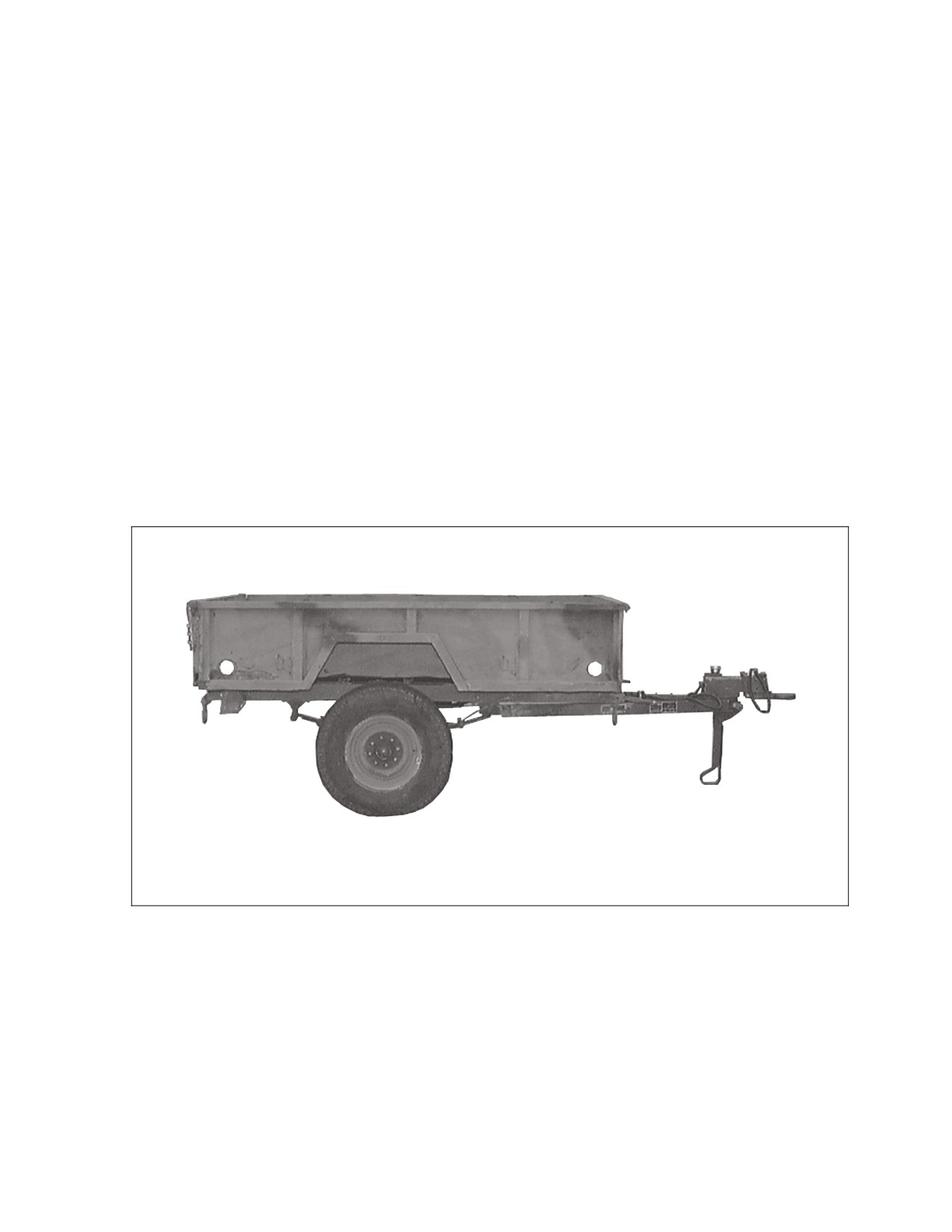
2-1. The M101, M101A1 or M101A2, 3/4-ton cargo trailer (Figure 2-1) with accompanying loads is
rigged on a 12-foot type V platform for low velocity airdrop. The load shown is rigged with an
accompanying load consisting of 22 boxes of 105-millimeter ammunition and weighing 2,440 pounds. The
3/4-ton cargo trailer is rigged with one or two G-11B cargo parachutes depending on the rigged weight.
The 3/4-ton cargo trailer may also be rigged with an accompanying load weighing a
maximum of 1,500 pounds which is stowed in the trailer. Additional accompanying loads
may be stowed on the platform as long as the maximum rigged weight does not exceed 8,000
pounds. The unrigged trailer weighs 1,340 pounds. It is 147 inches long and 71 inches wide.
The height of the trailer is 82 inches, reducible to 51 inches.
Figure 2-1. M101A2, ¾-Ton Cargo Trailer
27 March 2009
FM 4-20.113/TO 13C7-3-51
2-1
Chapter 2
PREPARING PLATFORM
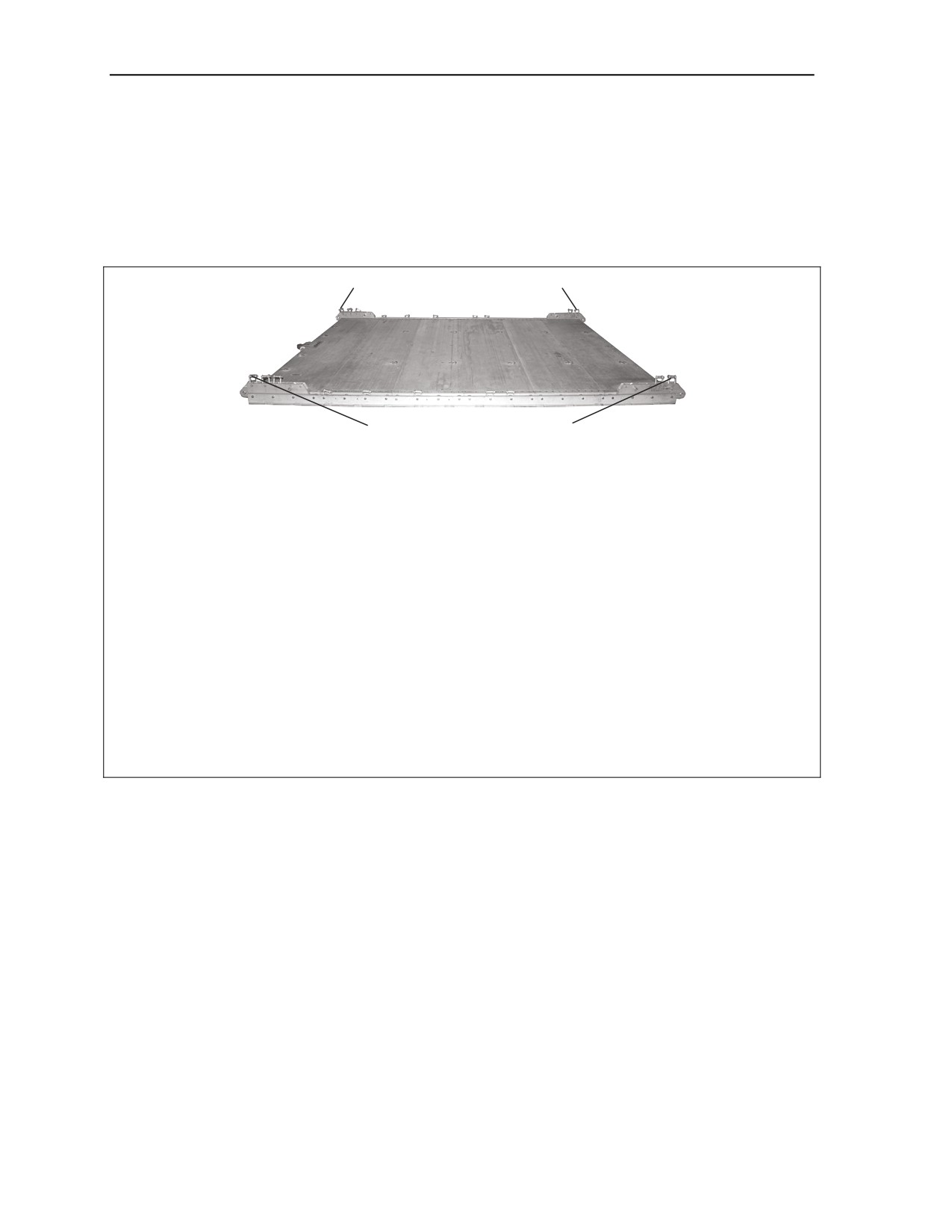
2-2. Prepare a 12-foot, type V platform using two tandem links and 20 tie-down clevises as shown in
Figure 2-2.
CLEVISES 10A THROUGH 1A
REAR
FRONT
CLEVISES 10 THROUGH 1
Step:
1. Inspect, or assemble and inspect, a 12-foot, type V platform as outlined in TM 10-1670-268-
20&P/TO 13C7-52-22.
2. Install a tandem link to the front of each platform side rail using holes 1, 2, and 3.
3. Install a clevis on bushings 1 and 2 of each front tandem link.
4. Install a tandem link to the rear of each platform side rail using holes 22, 23, and 24.
5. Install a clevis on bushings 2, 3, and 4 of each rear tandem link
6. Starting at the front of each platform side rail, install clevises on the bushings bolted to holes
10, 11, 15, 18, and 20.
7. Starting at the front of the platform, number the clevises 1 through 10 on the right side, and
1A through 10A on the left side
8. Label the tie-down rings according to FM 4-20.102/MCRP 4-11.3J/NAVSEA SS400-AB-
MMO-010/TO 13C7-1-5.
Figure 2-2. Platform Prepared
2-2
FM 4-20.113/TO 13C7-3-51
27 March 2009
Rigging the M101, M101A1, or M101A2, ¾-Ton Cargo Trailer for Low-Velocity Airdrop
POSITIONING AND LASHING ACCOMPANYING LOADS ON THE
PLATFORM
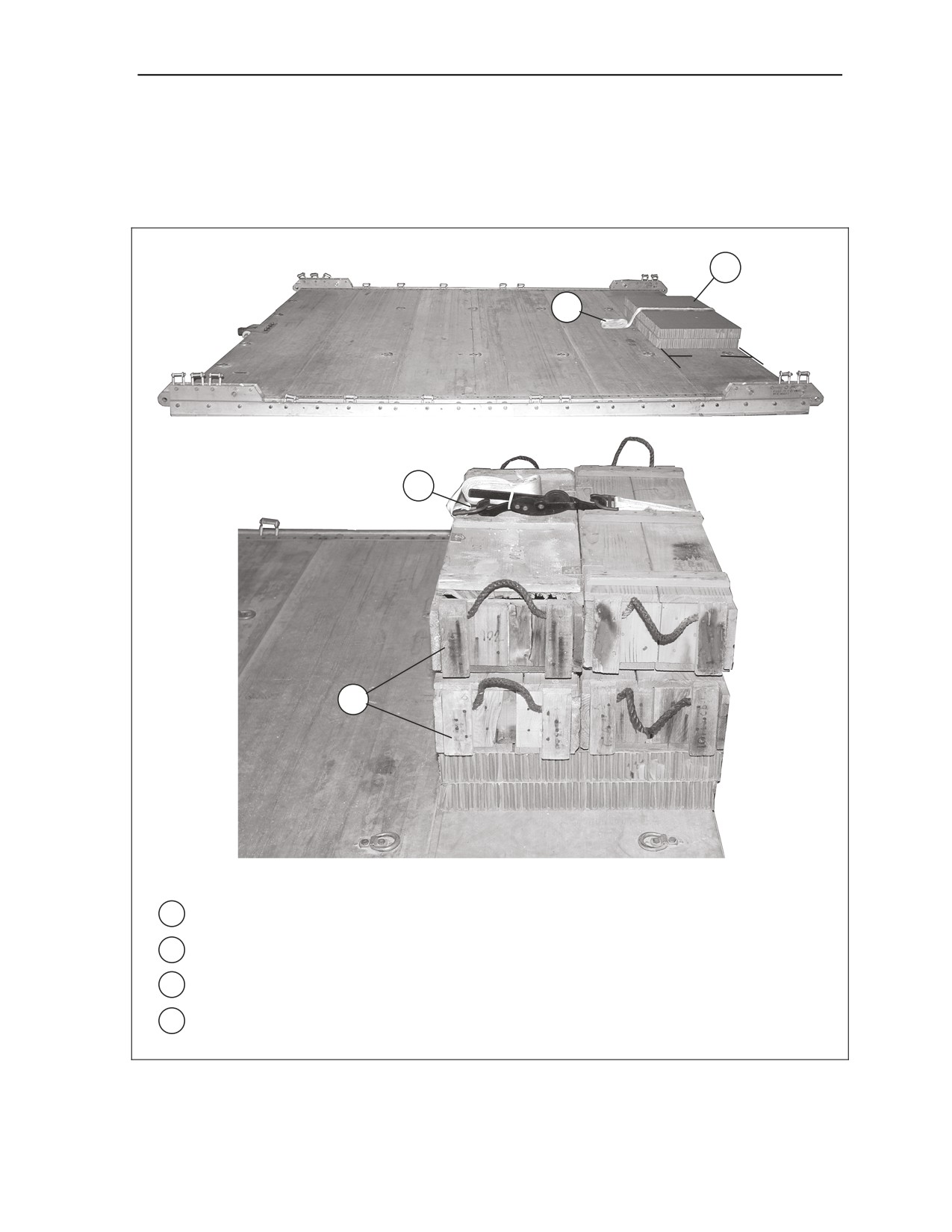
2-3. Position and lash the accompanying loads on the platform as shown in Figures 2-3 through 2-6.
1
2
FRONT
REAR
24
4
FRONT
3
1 Center two 36- by 24-inch pieces of honeycomb on the front edge of the platform.
2 Center a 15-foot lashing from front to rear across the top piece of honeycomb.
3 Place four ammunition boxes in two stacks of two on top of the honeycomb.
4 Bind the boxes together using the pre-positioned lashing, a D-ring, and a load binder.
Figure 2-3. Ammunition Boxes Positioned on the Front of the Platform
27 March 2009
FM 4-20.113/TO 13C7-3-51
2-3
Chapter 2
1
B2
FRONT
A2
FRONT
2
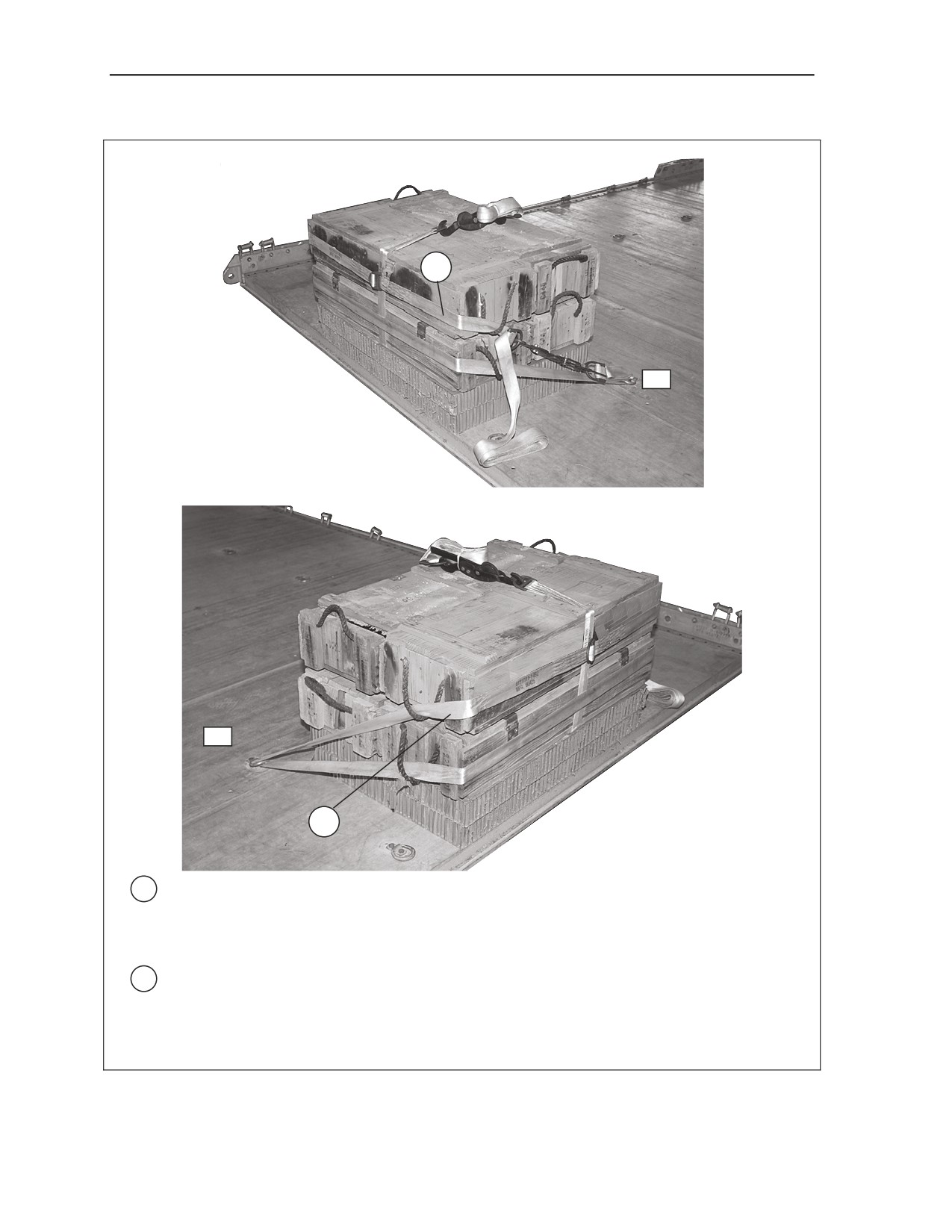
1 Form a 30-foot lashing according to FM 4-20.102/MCRP 4-11.3J/NAVSEA SS400-AB-MMO-
010/TO 13C7-1-5. Starting on the front, pass one end through the carrying handle of the top
front box on the left side. Attach a D-ring and a load binder to the end. Do not secure the
lashing at this time.
2 Pass the free end of the lashing through the carrying handle of the top front box on the right
side, down through tie-down ring A2, and through the carrying handle of the bottom front box
on the right side. Continue to pass the lashing around the front of the bottom box, through
the carrying handle of the bottom front box on the left side, through tie-down ring B2. Attach
D-ring to the lashing and load binder. Do not secure the lashing at this time.
Figure 2-4. Ammunition Boxes Lashed and Secured on the Front of the Platform
2-4
FM 4-20.113/TO 13C7-3-51
27 March 2009
Rigging the M101, M101A1, or M101A2, ¾-Ton Cargo Trailer for Low-Velocity Airdrop
4
3
5
FRONT
A1
FRONT
5
B1
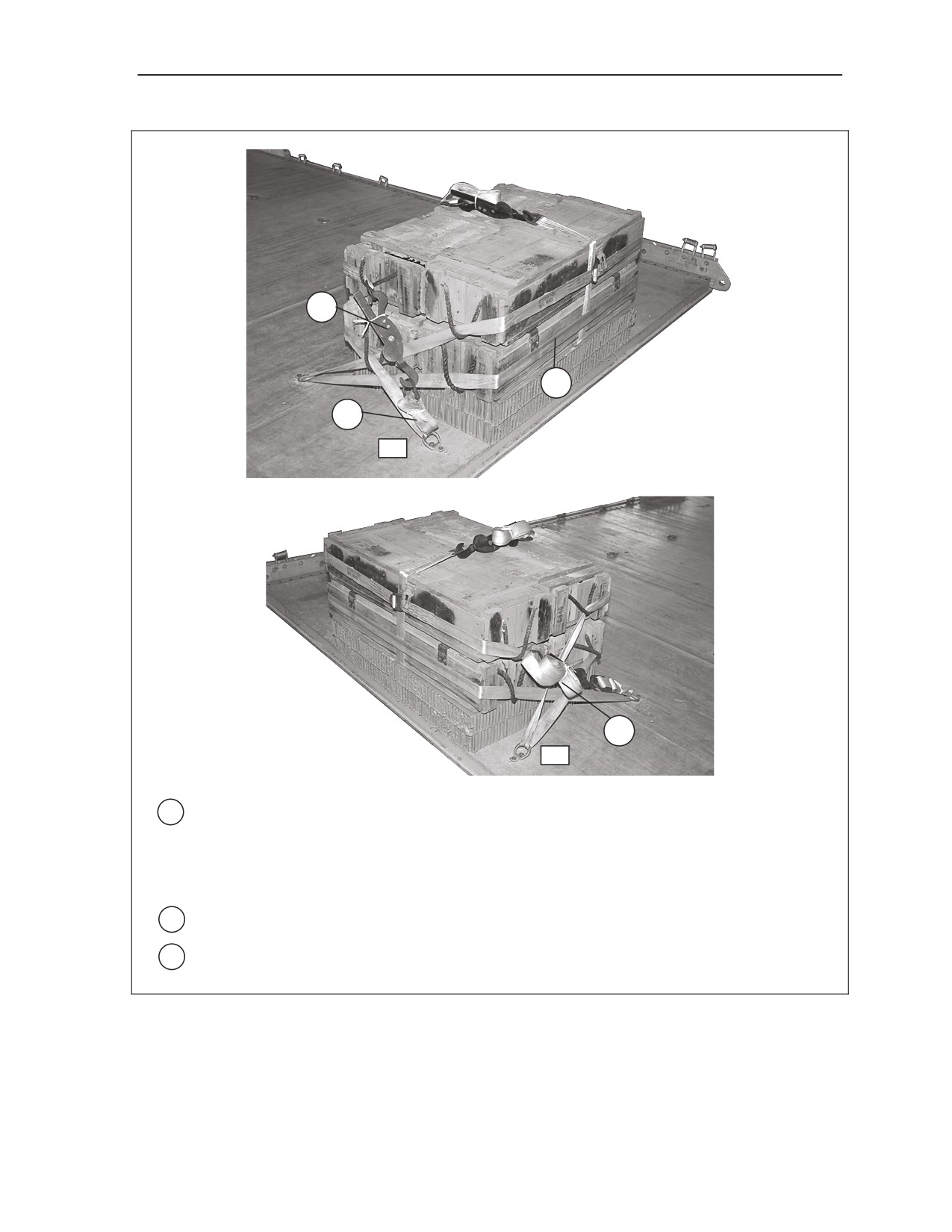
3 Starting on the right side, pass a 15-foot lashing through the carrying handle of the top rear
box, around the rear of the top box, through the carrying handle of the top rear box on the left
side, and through tie-down ring B1. Continue to pass the lashing through the carrying handle
of the bottom rear box on the left side, around the bottom of the rear box, through the
carrying handle of the bottom rear box on the right side, and through tie-down ring A1.
4 Attach a D-ring and a load binder to the end. Do not secure the lashing at this time.
5 Secure each front and rear load binder simultaneously.
Figure 2-4. Ammunition Boxes Lashed and Secured on the Front of the Platform (Continued)
27 March 2009
FM 4-20.113/TO 13C7-3-51
2-5
Chapter 2
FRONT
7
6
A2
A1
6
FRONT
7
B2
B1
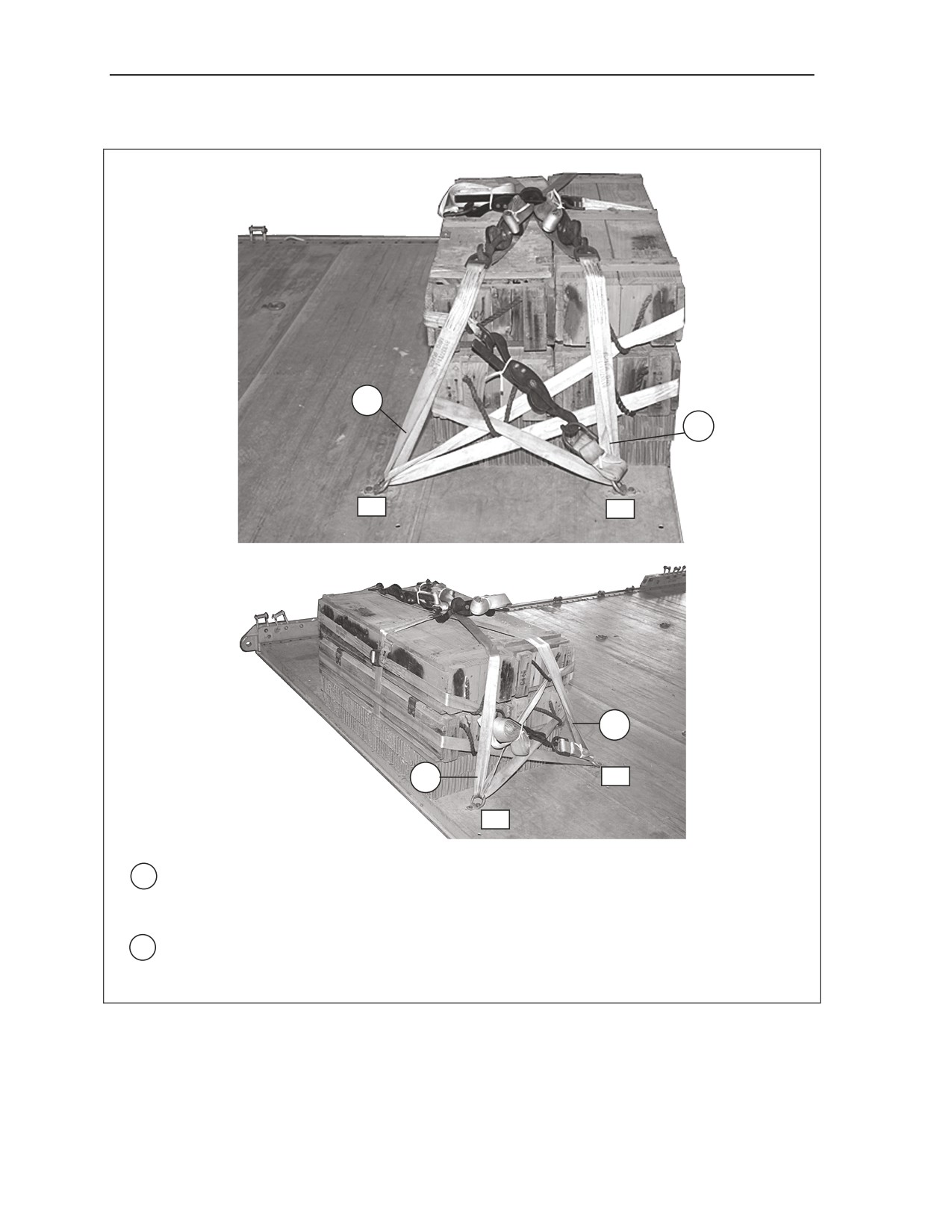
6 Pass a 15-foot lashing through tie-down ring A1, across the top of the boxes and through tie-
down ring B2. Secure the lashing with a D-ring and a load binder. Attach a D-ring and a load
binder to the end. Do not secure the lashing at this time.
7 Pass another 15-foot lashing through tie-down ring B1, across the top of the boxes, and
through tie-down ring A2. Secure the lashing with a D-ring and a load binder.
Figure 2-4. Ammunition Boxes Lashed and Secured on the Front of the Platform (Continued)
2-6
FM 4-20.113/TO 13C7-3-51
27 March 2009
Rigging the M101, M101A1, or M101A2, ¾-Ton Cargo Trailer for Low-Velocity Airdrop
2
REAR
1
4
3
REAR
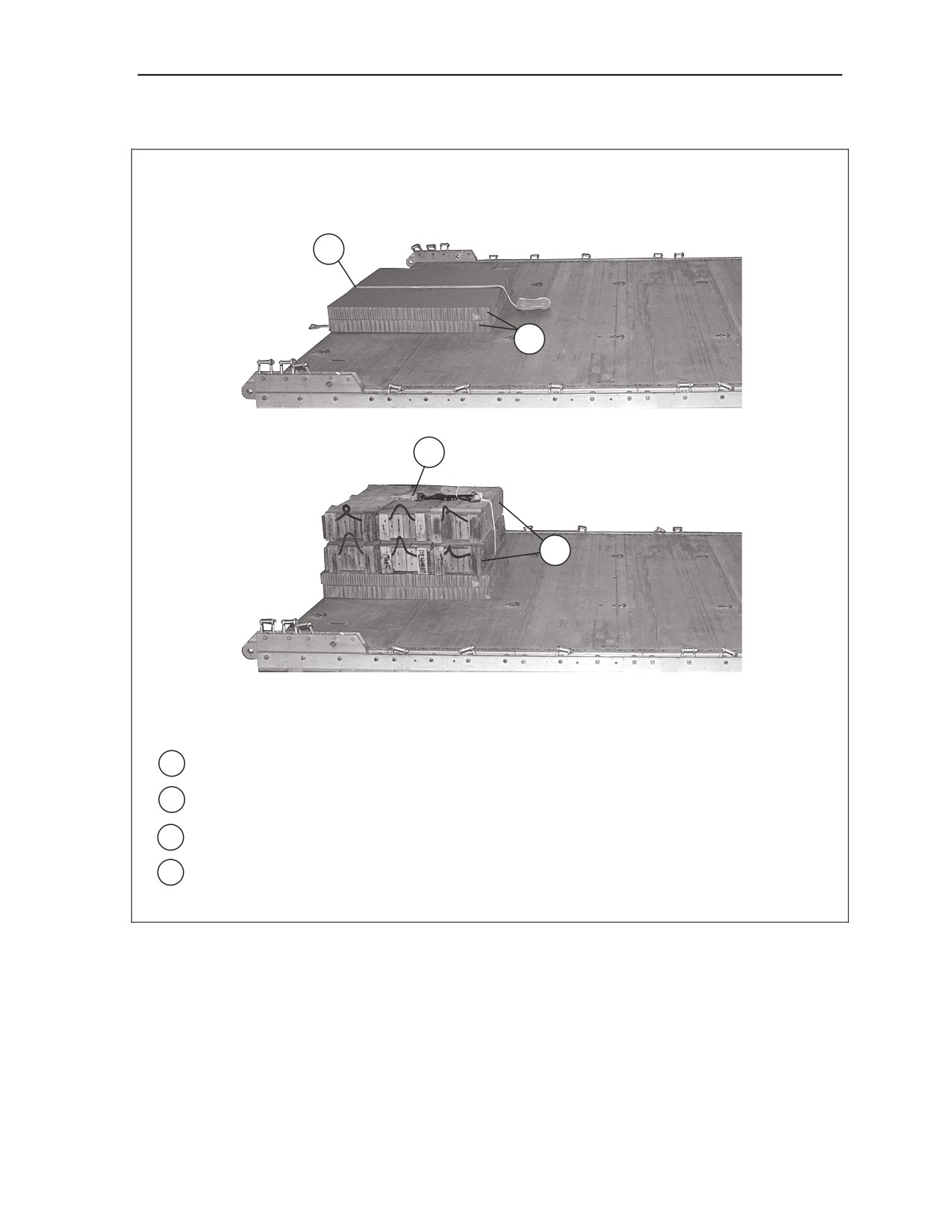
1 Center two 36- by 38-inch pieces of honeycomb on the rear edge of the platform.
2 Center a 15-foot lashing from front to rear across the top piece of honeycomb.
3 Place six ammunition boxes in three stacks of two each on top of the honeycomb.
4 Bind the boxes together using the pre-positioned lashing, a D-ring, and a load binder.
Figure 2-5. Ammunition Boxes Positioned on the Rear of the Platform
27 March 2009
FM 4-20.113/TO 13C7-3-51
2-7
Chapter 2
2
REAR
1
A5
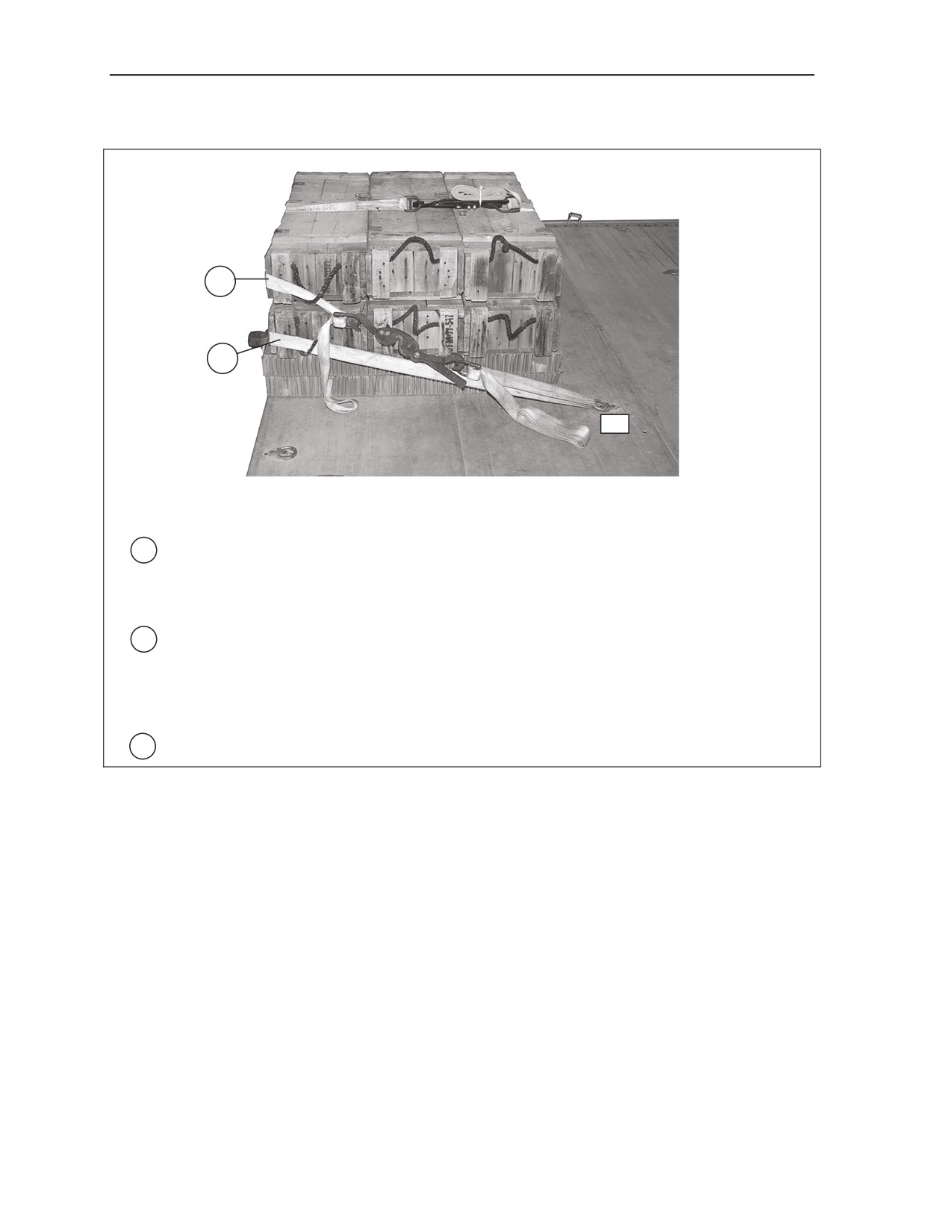
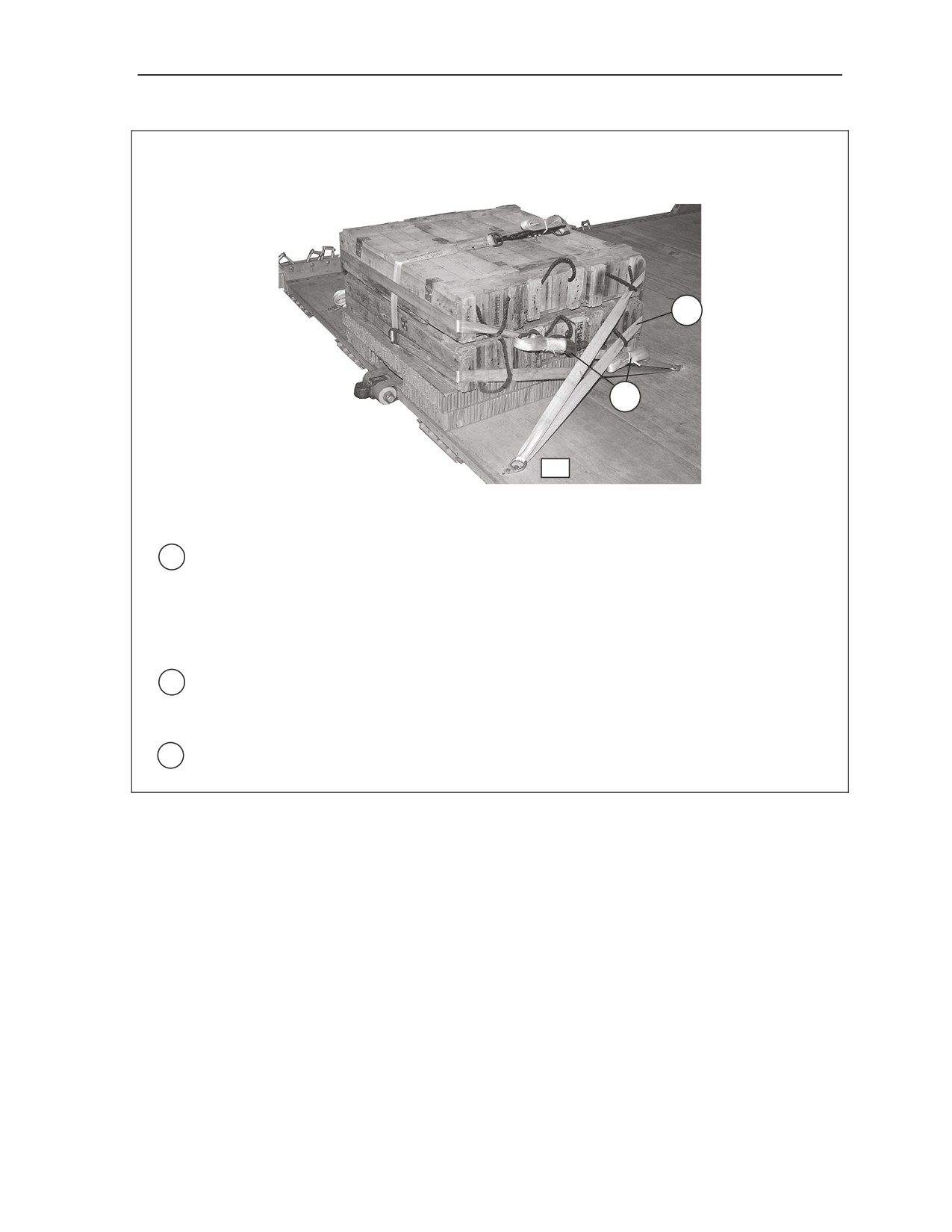
1 Form a 30-foot lashing according to FM 4-20.102/MCRP 4-11.3J/NAVSEA SS400-AB-MMO-
010/TO 13C7-1-5. Starting on the right rear side, run the lashing across the rear of the
bottom row of boxes. Pass the free end of the lashing through the carrying handle of the
bottom rear box and through tie-down ring A5.
2 Pass the other free end of the lashing on the left side through the carrying handle of the
bottom rear box and through tie-down ring B5. Continue passing the lashing up through the
carrying handle of the rear top box on the left side, around the rear of the top rear box and
through the carrying handle of the top rear box on the right side. Place six ammunition boxes
in three stacks of two each on top of the honeycomb.
3 Do not secure lashing at this time.
Figure 2-6. Ammunition Boxes Lashed and Secured on the Rear of the Platform
2-8
FM 4-20.113/TO 13C7-3-51
27 March 2009
Rigging the M101, M101A1, or M101A2, ¾-Ton Cargo Trailer for Low-Velocity Airdrop
4
REAR
6
A6
4 Form a 30-foot lashing according to FM 4-20.102/MCRP 4-11.3J/NAVSEA SS400-AB-MMO-
010/TO 13C7-1-5. Starting on the right front side, run the lashing across the bottom row of
boxes. Pass the free end of the lashing through the carrying handle of the bottom front box
and through tie-down ring A6. Continue passing the lashing up through the carrying handle
of the top front box on the right side, around the front of the top box and through the carrying
handle of the top front box on the left side.
5 Pass the other free end of the lashing around the front of the bottom row of boxes and
through the carrying handle of the bottom front box on the left side to tie-down ring D6 (not
shown).
6 Secure each side load binder simultaneously.
Figure 2-6. Ammunition Boxes Lashed and Secured on the Rear of the Platform (Continued)
27 March 2009
FM 4-20.113/TO 13C7-3-51
2-9
Chapter 2
10
8
9
A5
REAR
7
A6
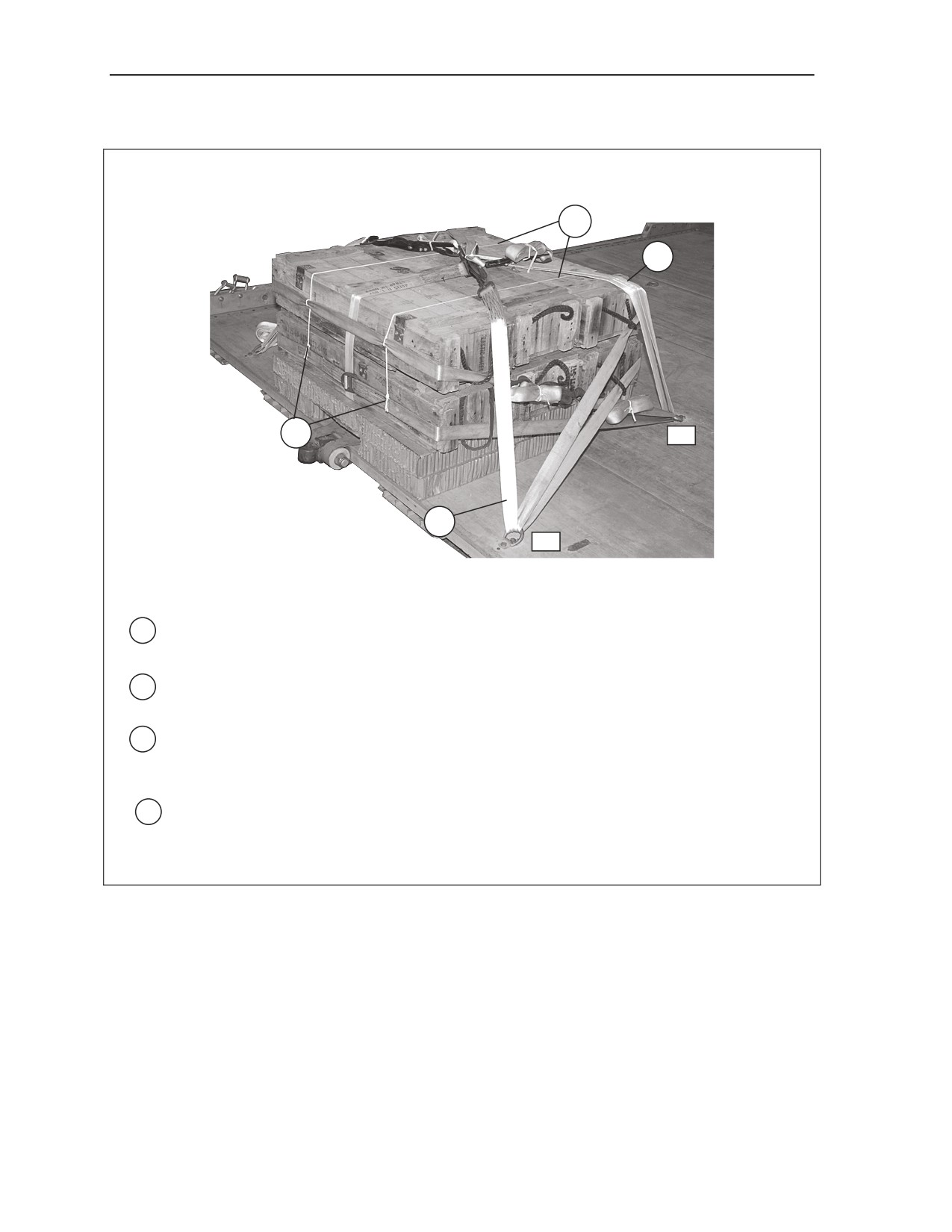
7 Pass a 15-foot lashing from tie-down ring A6 across the top of the boxes to tie-down ring B5.
Secure the lashing with a D-ring and load binder.
8 Pass another 15-foot lashing from tie-down ring A5 across the top of the boxes to tie-down
ring D6. Secure the lashing with a D-ring and load binder.
9 Safety tie the lashings in place using two lengths of type III nylon cord. Tie three alternating
half hitches around the bottom of the lashing. Pass the cord around the top of the lashing
and tie another half hitch.
10 Pass the free end of the cord over the top of the boxes and form a half hitch around the top of
the lashing on the other side. Secure the lashing to the bottom lashing using three
alternating half hitches and an overhand knot on the running end.
Figure 2-6. Ammunition Boxes Lashed and Secured on the Rear of the Platform (Continued)
2-10
FM 4-20.113/TO 13C7-3-51
27 March 2009
Rigging the M101, M101A1, or M101A2, ¾-Ton Cargo Trailer for Low-Velocity Airdrop
BUILDING AND POSITIONING HONEYCOMB STACKS
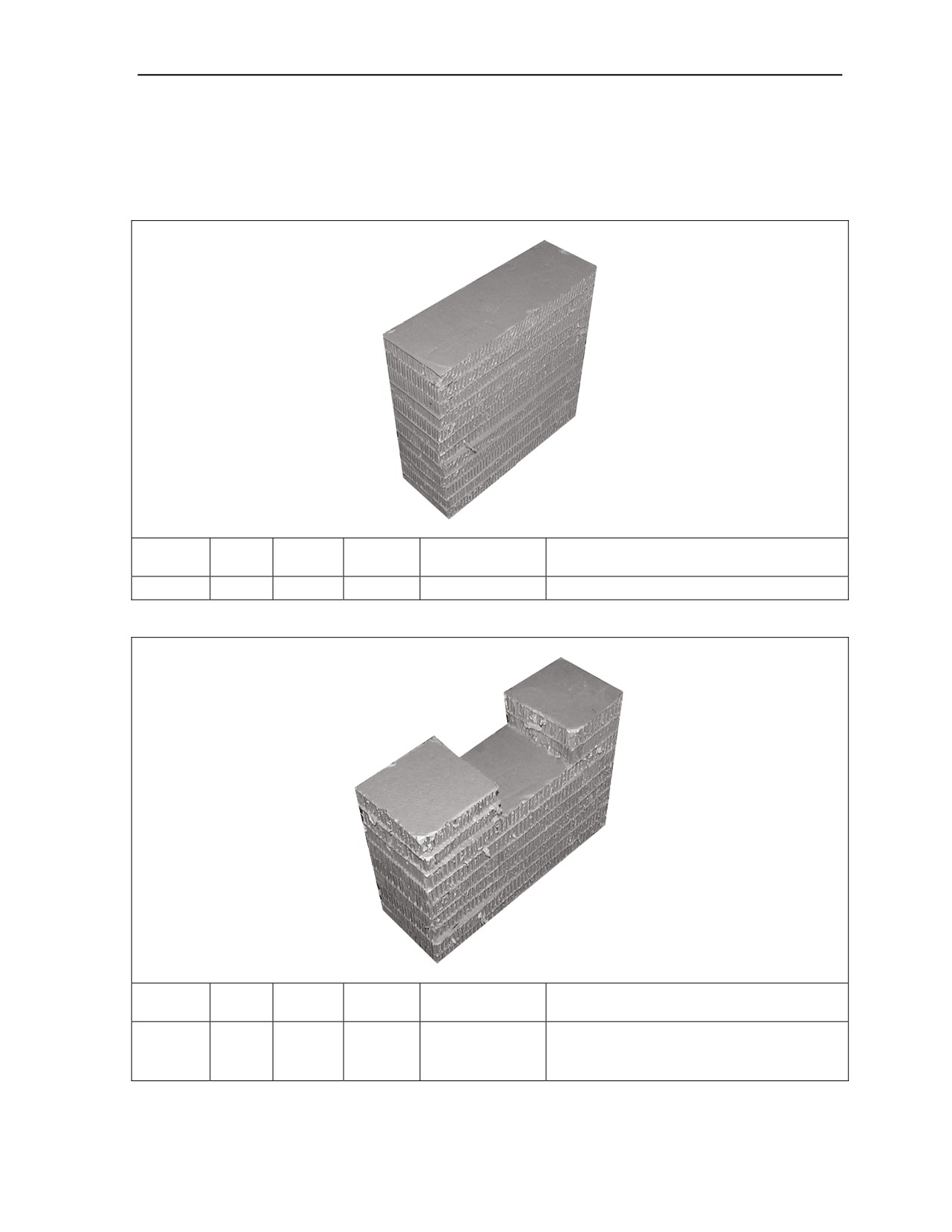
2-4. Prepare the honeycomb stacks as shown in Figures 2-7 through 2-9. Position the stacks as shown in
Figure 2-10.
Stack
Pieces
Width
Length
Number
(Inches)
(Inches)
Material
Instructions
1
12
36
12
Honeycomb
Glue to form base stack.
Figure 2-7. Honeycomb Stack Number I Prepared
Stack
Pieces
Width
Length
Number
(Inches)
(Inches)
Material
Instructions
2
7
36
12
Honeycomb
Glue to form base stack.
4
12
12
Honeycomb
Glue two pieces flush on each side of the
base.
Figure 2-8. Honeycomb Stack 2 Prepared
27 March 2009
FM 4-20.113/TO 13C7-3-51
2-11
Chapter 2
Stack
Pieces
Width
Length
Number
(Inches)
(Inches)
Material
Instructions
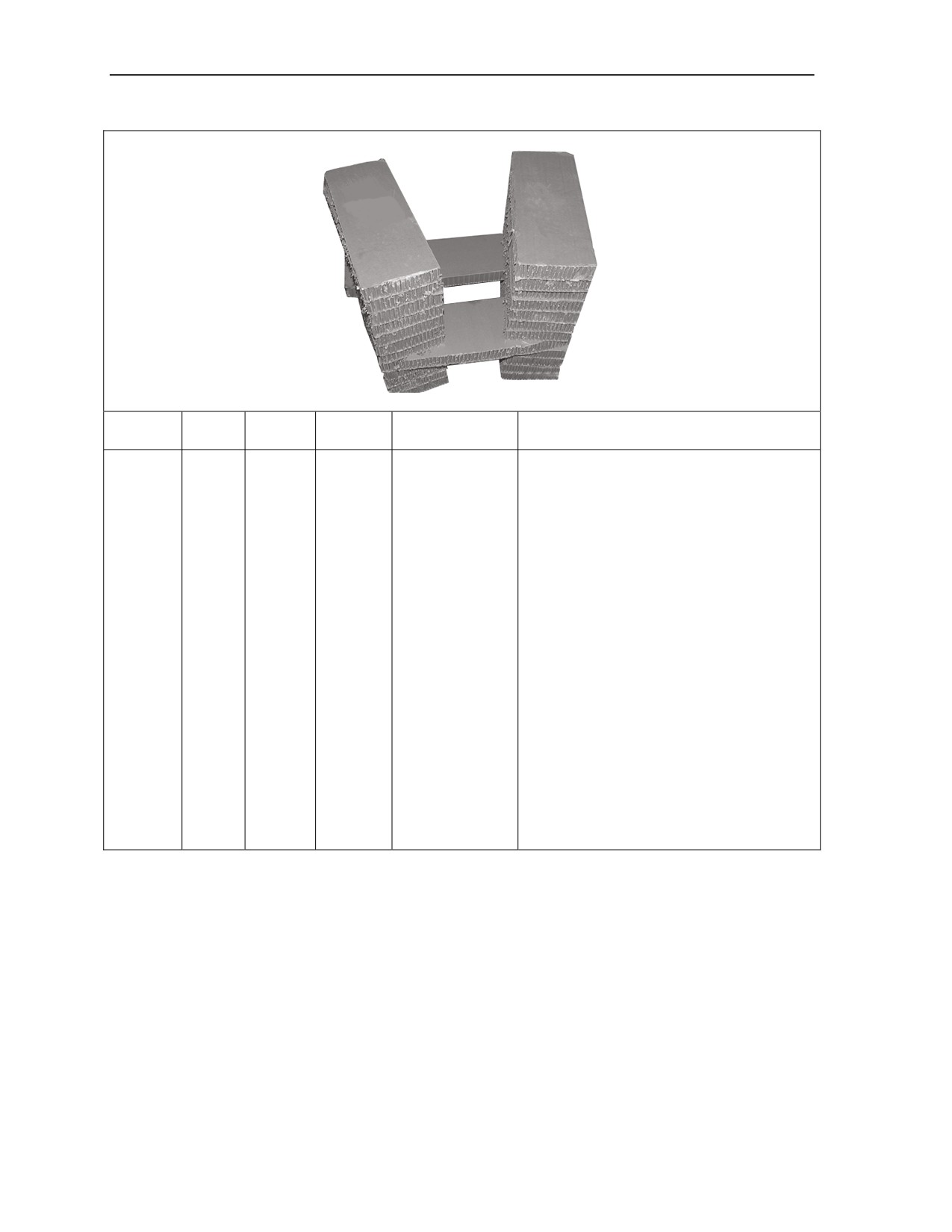
3
8
12
32
Honeycomb
Form two base stacks of four layers each
in a “V” shape. Cut a 10- by 6-inch
cutout on the front outside of the bottom
two layers. Place the stacks 25 inches
apart in the front and 11 inches apart in
the rear.
1
36
12
Honeycomb
Place honeycomb over the rear of the
base stacks to form a bridge. Place the
honeycomb so the rear edge of the
bridge is aligned with the rear outside
corners of the base stacks.
1
48
12
Honeycomb
Place honeycomb over the front of the
base stacks to form a bridge. Place the
honeycomb so the front edge of the
bridge is aligned with the front outside
corners of the base stacks.
14
12
32
Honeycomb
Form two stacks of seven layers each.
Place each stack on top of the bridge
and align it with each base stack.
Figure 2-9. Honeycomb Stack 3 Prepared
2-12
FM 4-20.113/TO 13C7-3-51
27 March 2009
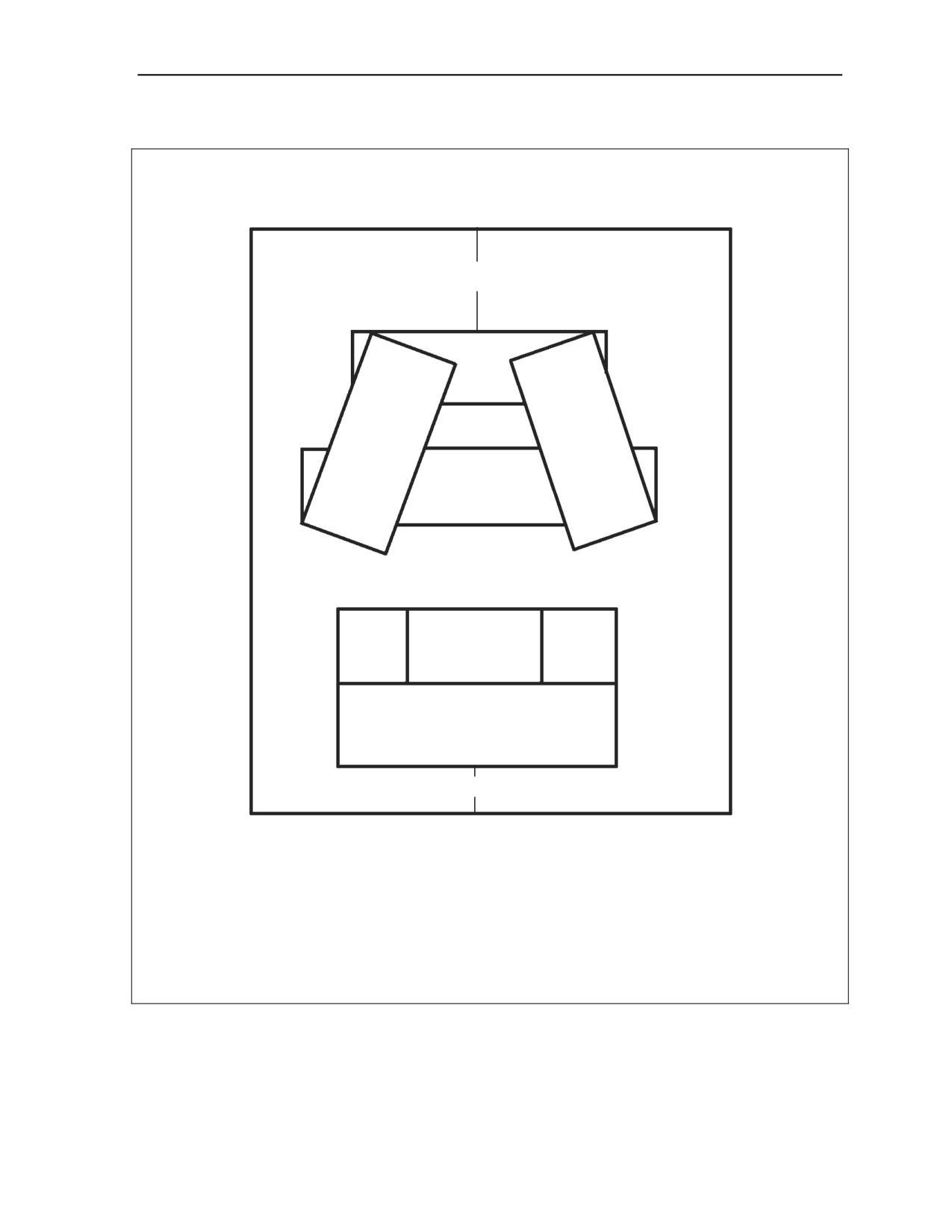
Rigging the M101, M101A1, or M101A2, ¾-Ton Cargo Trailer for Low-Velocity Airdrop
Notes. 1. All measurements are given in inches.
2. This drawing is not drawn to scale.
REAR
38
STACK 3
LEFT
RIGHT
STACK 2
STACK 1
28
FRONT
Step:
1. Center the stack one 28 inches from the front edge of the platform.
2. Center stack 2 flush against the rear of stack 1.
3. Center stack three 38 inches from the rear edge of the platform.
Figure 2-10. Honeycomb Stacks Positioned on the Platform
27 March 2009
FM 4-20.113/TO 13C7-3-51
2-13
Chapter 2
PREPARING THE TRAILER
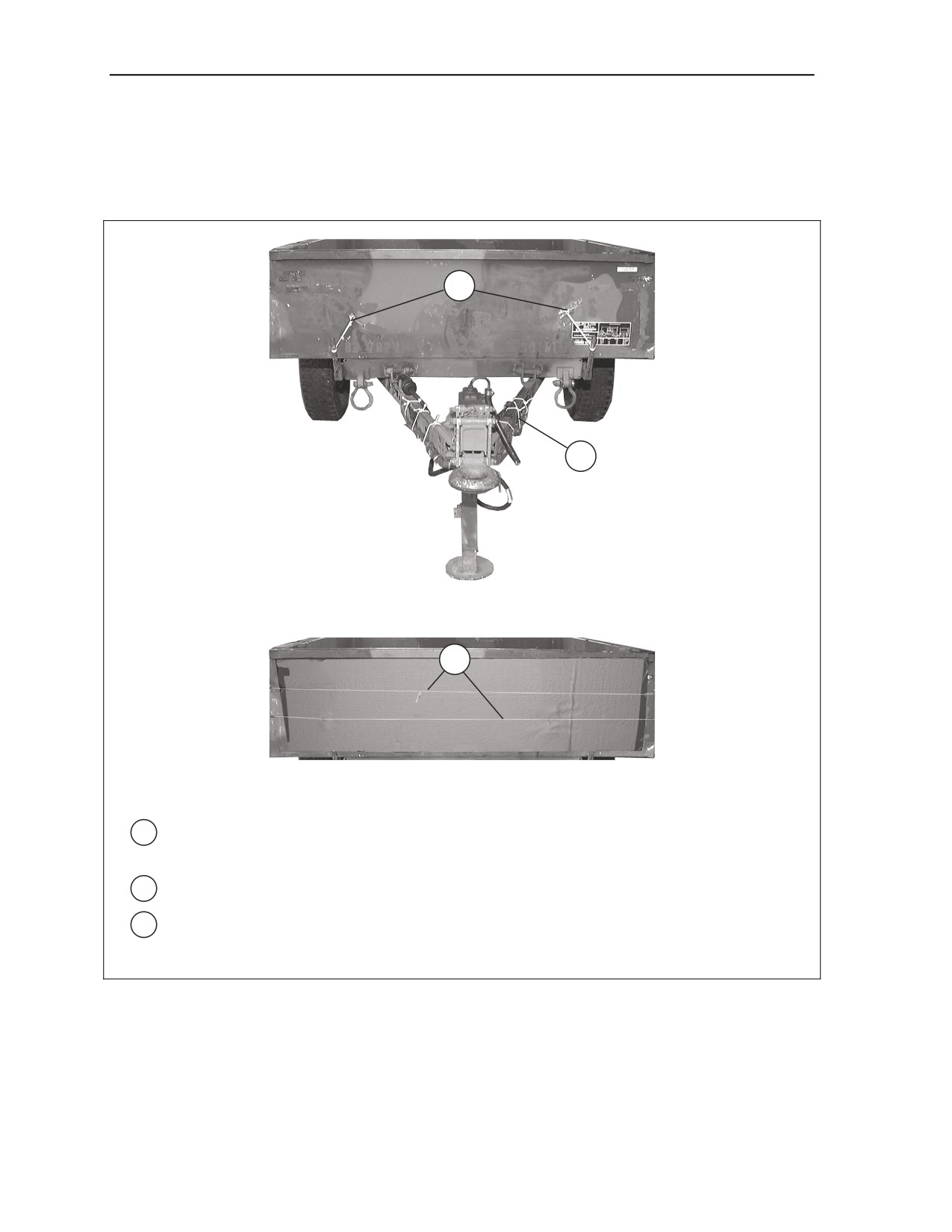
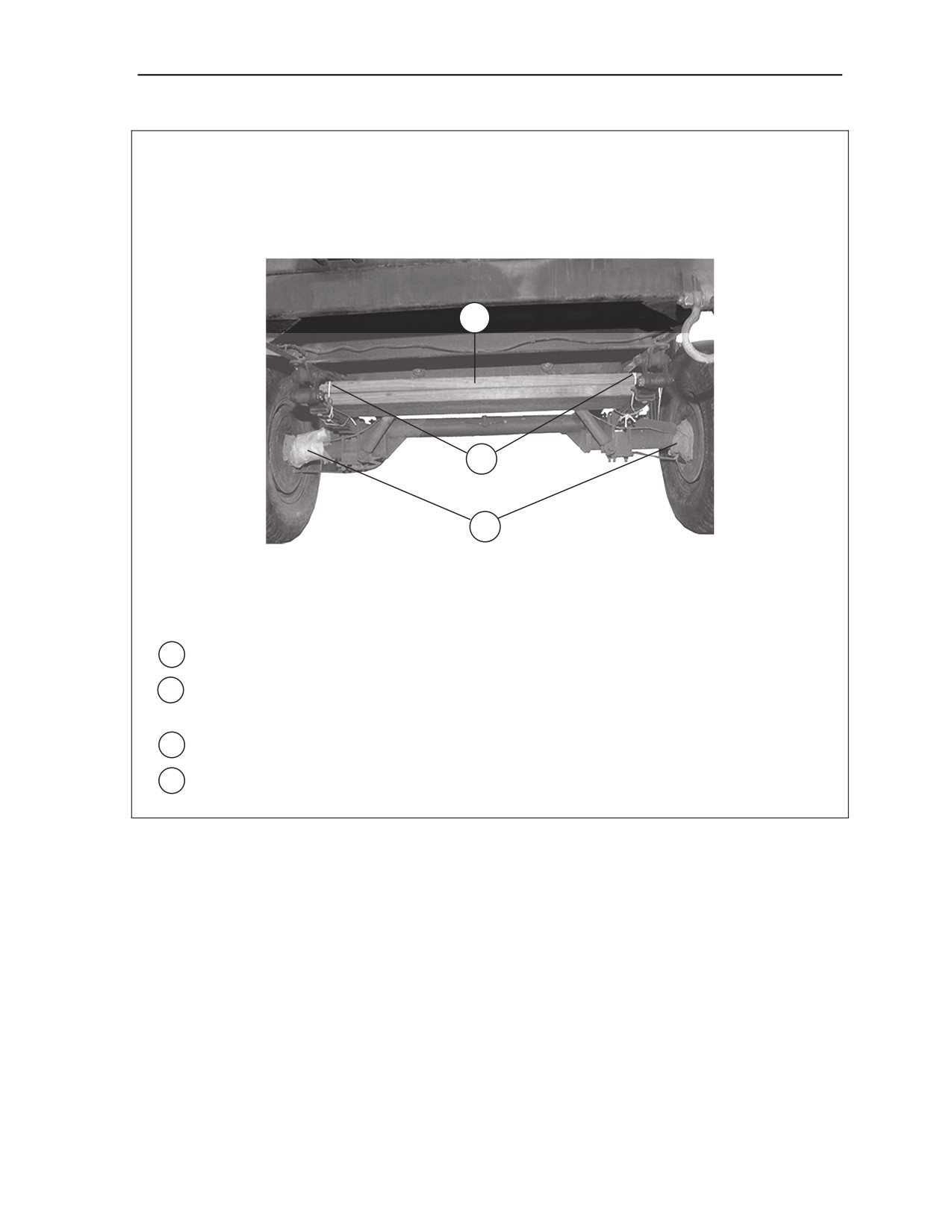
2-5. Prepare the trailer as shown in Figures 2-11 and 2-12. Remove the tarpaulin, bows, and side racks
according to TM 9-2330-202-14&P.
2
1
3
1 Secure the safety chains and inter-vehicular cable to the drawbar frame with type III nylon
cord or tape.
2 Secure the hand brake in the OFF position with two lengths of type III nylon cord.
3 Place a 24- by 60-inch piece of honeycomb on the drawbar frame in front of the hand brake.
Secure the honeycomb with a length of type III nylon cord.
Figure 2-11 Front of Trailer Prepared
2-14
FM 4-20.113/TO 13C7-3-51
27 March 2009
Rigging the M101, M101A1, or M101A2, ¾-Ton Cargo Trailer for Low-Velocity Airdrop
2
1
3
1 Lay a piece of 2- by 8- by 46-inch lumber on top of the leaf springs and the frame.
2 Place a piece of 2- by 12- by 46-inch lumber on top and centered on the 2- by 8- by 46-inch
piece of lumber. Secure them with type III nylon cord.
3 Pad axles with cellulose wadding.
4 Tie the rear leg up to the frame with a length of type III nylon cord (not shown).
Figure 2-12. Rear of Trailer Prepared
27 March 2009
FM 4-20.113/TO 13C7-3-51
2-15
Chapter 2
STOWING ACCOMPANYING LOAD AND TRAILER COMPONENTS
IN TRAILER
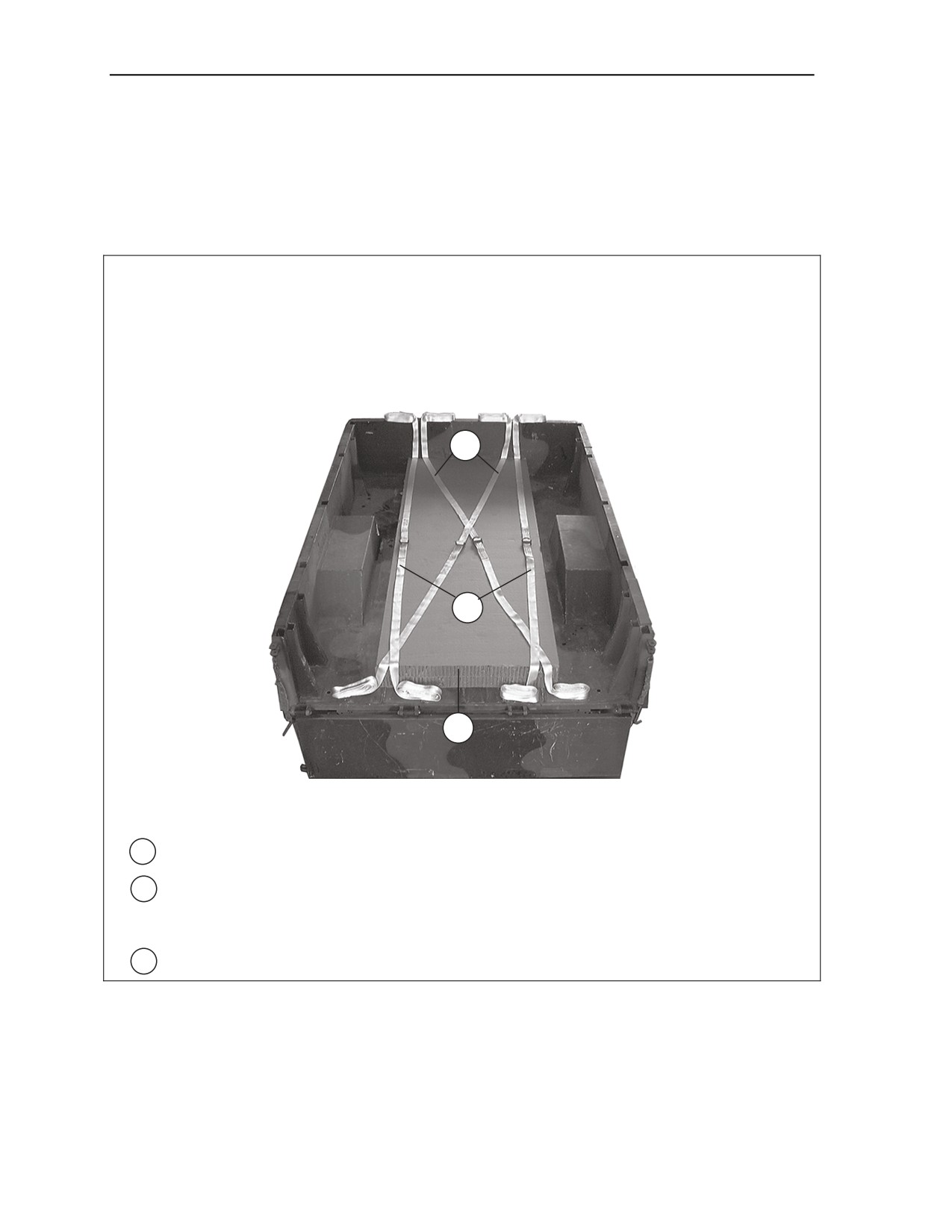
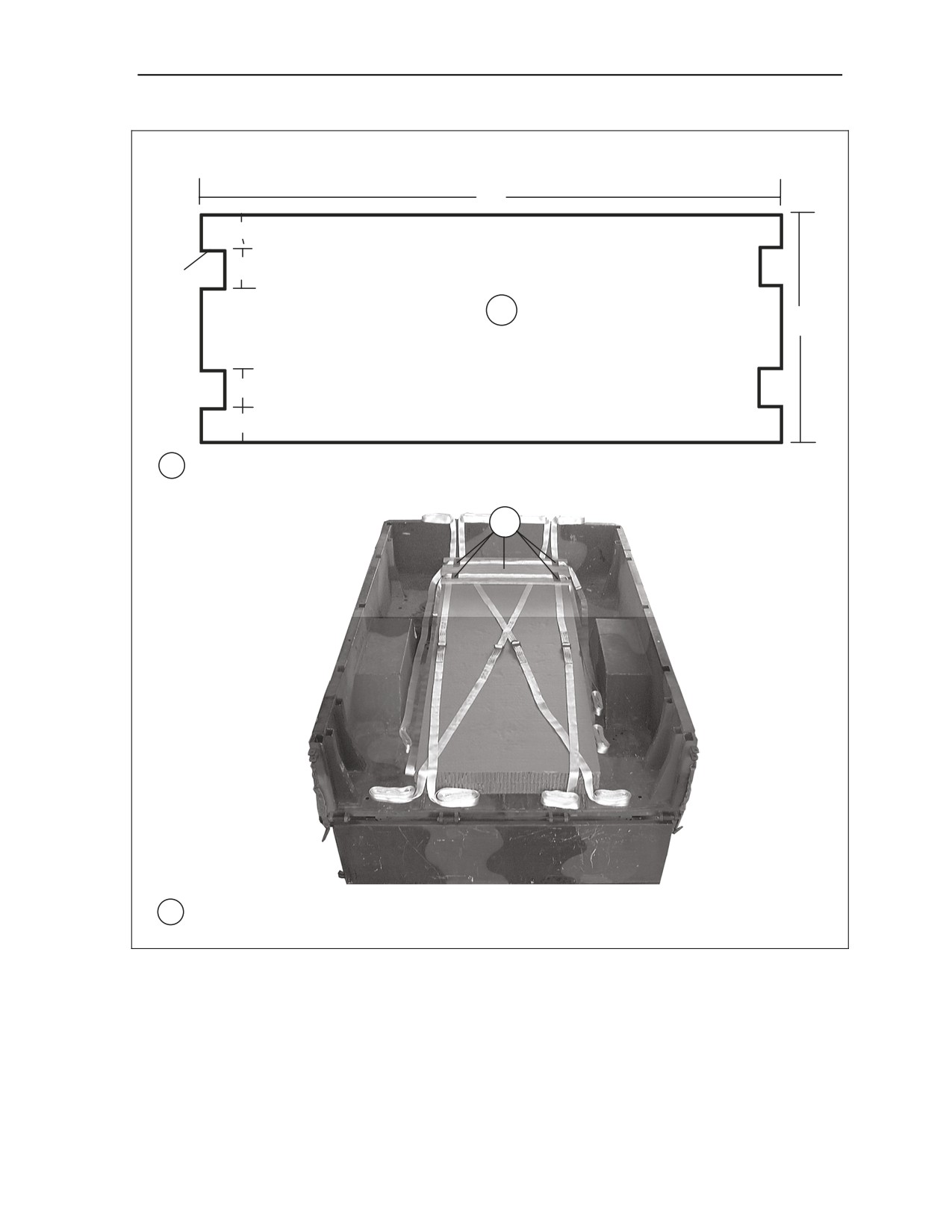
2-6. Stow the accompanying load of 12 ammunition boxes in the trailer as shown in Figures 2-13 and 2-
14. Stow the trailer components as shown in Figure 2-15.
2
3
1
REAR
1 Center two 36- by 92-inch pieces of honeycomb in the trailer bed.
2 Form six 30-foot lashings according to FM 4-20.102/MCRP 4-11.3J/NAVSEA SS400-AB-
MMO-010/TO 13C7-1-5. Place two 30-foot lashings on top of the honeycomb from front to
rear crossing at the center.
3 Place two 30-foot lashings on top of the honeycomb from front to rear 22 inches apart.
Figure 2-13. Honeycomb, Lashings, and End Boards Positioned in the Trailer
2-16
FM 4-20.113/TO 13C7-3-51
27 March 2009
Rigging the M101, M101A1, or M101A2, ¾-Ton Cargo Trailer for Low-Velocity Airdrop
Notes. 1. All measurements are given in inches.
2. This drawing is not drawn to scale.
37
2
3
1 ½
4
15 ½
3
2
4 Cut two end boards as shown above using 3/4-inch piece of plywood.
5
5 Place end boards in the front of the trailer on top of the honeycomb. Place two 30-foot
lashings on the back of the two end boards, and tape the lashings in place.
Figure 2-13. Honeycomb, Lashings, and End Boards Positioned in the Trailer (Continued)
27 March 2009
FM 4-20.113/TO 13C7-3-51
2-17
Chapter 2
6
7
8
9
10
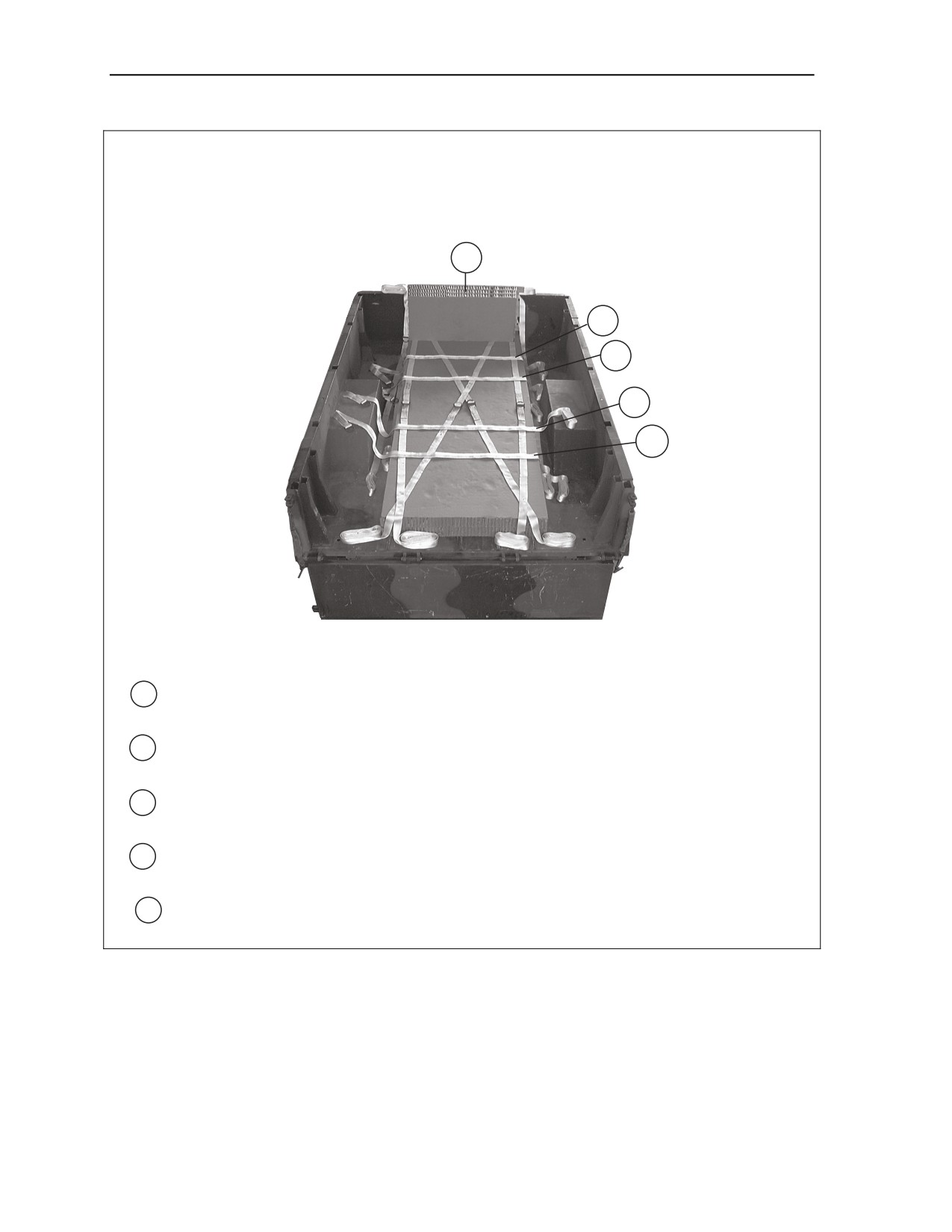
6 Place the end boards against the front of the trailer bed. Cut and position three 15- by 36-
inch pieces of honeycomb against the end board.
7 Place one 15-foot lashing on the top of the honeycomb from left to right 16 inches from the
front of the trailer.
8 Place one 15-foot lashing on the top of the honeycomb from left to right 27 inches from the
front of the trailer.
9 Place one 15-foot lashing on the top of the honeycomb from left to right 57 1/2 inches from
the front of the trailer.
10 Place one 15-foot lashing on the top of the honeycomb from left to right 70 inches from the
front of the trailer.
Figure 2-13. Honeycomb, Lashings, and End Boards Positioned in the Trailer (Continued)
2-18
FM 4-20.113/TO 13C7-3-51
27 March 2009
Rigging the M101, M101A1, or M101A2, ¾-Ton Cargo Trailer for Low-Velocity Airdrop
3
1
2
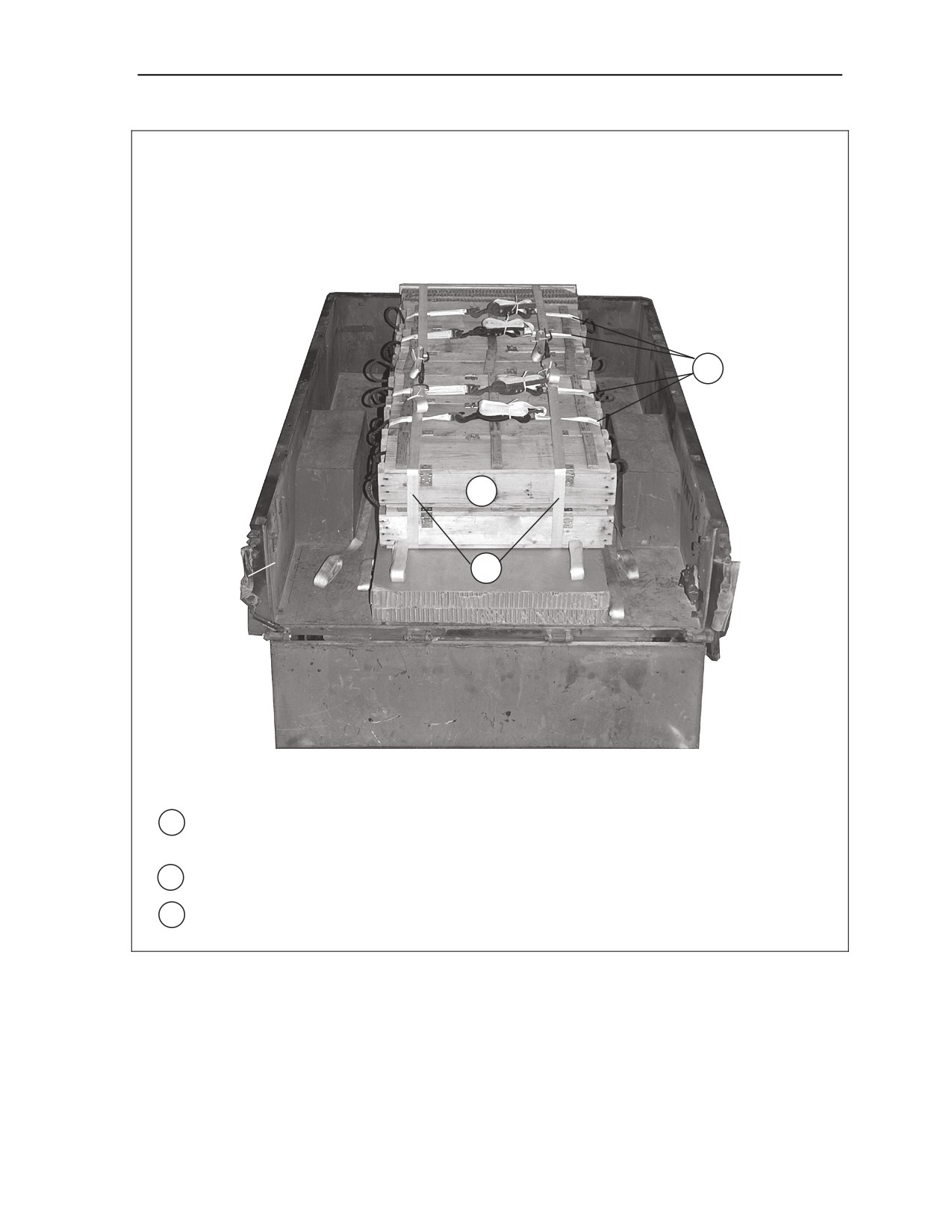
1 Place 12 ammunition boxes in two layers of six each on top of the honeycomb. Place them
flush against the three pieces of honeycomb.
2 Secure the boxes in place with the two pre-positioned lashings running front to rear.
3 Secure the boxes in place with the four pre-positioned lashings running left to right.
Note. The lashings may need to be adjusted slightly after the ammunition boxes are set in place.
Figure 2-14. Ammunition Boxes Lashed and Secured in the Trailer
27 March 2009
FM 4-20.113/TO 13C7-3-51
2-19
Chapter 2
4
5
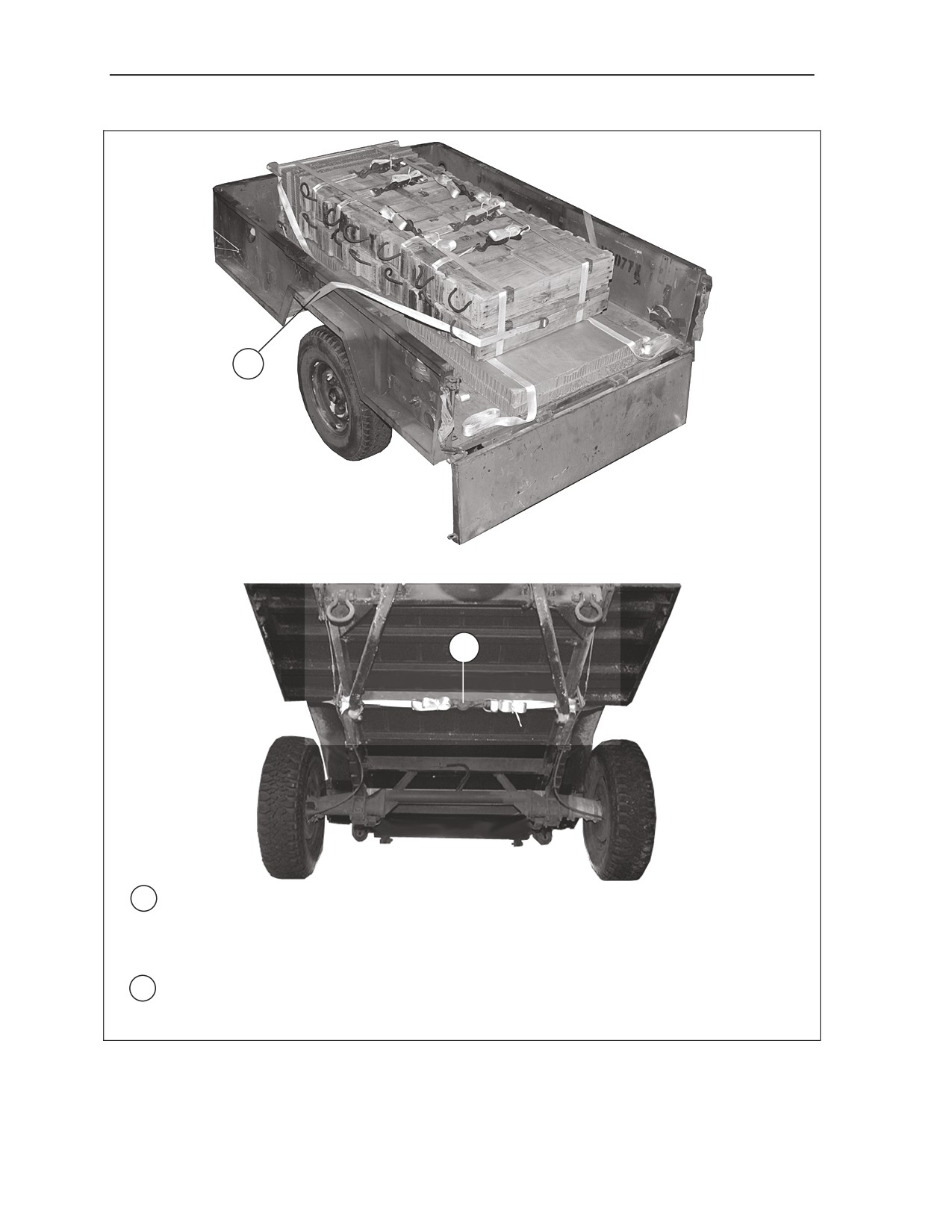
4 Form a 30-foot lashing according to FM 4-20.102/MCRP 4-11.3J/NAVSEA SS400-AB-MMO-
010/TO 13C7-1-5. Run the lashing across the rear bottom box. Pass each free end through
the carrying handle of the rear bottom box and over the side panel of the trailer, in front of the
wheel well.
5 Secure the lashing in front of the second cross member of the trailer with two D-rings and a
load binder.
Figure 2-14. Ammunition Boxes Lashed and Secured in the Trailer (Continued)
2-20
FM 4-20.113/TO 13C7-3-51
27 March 2009
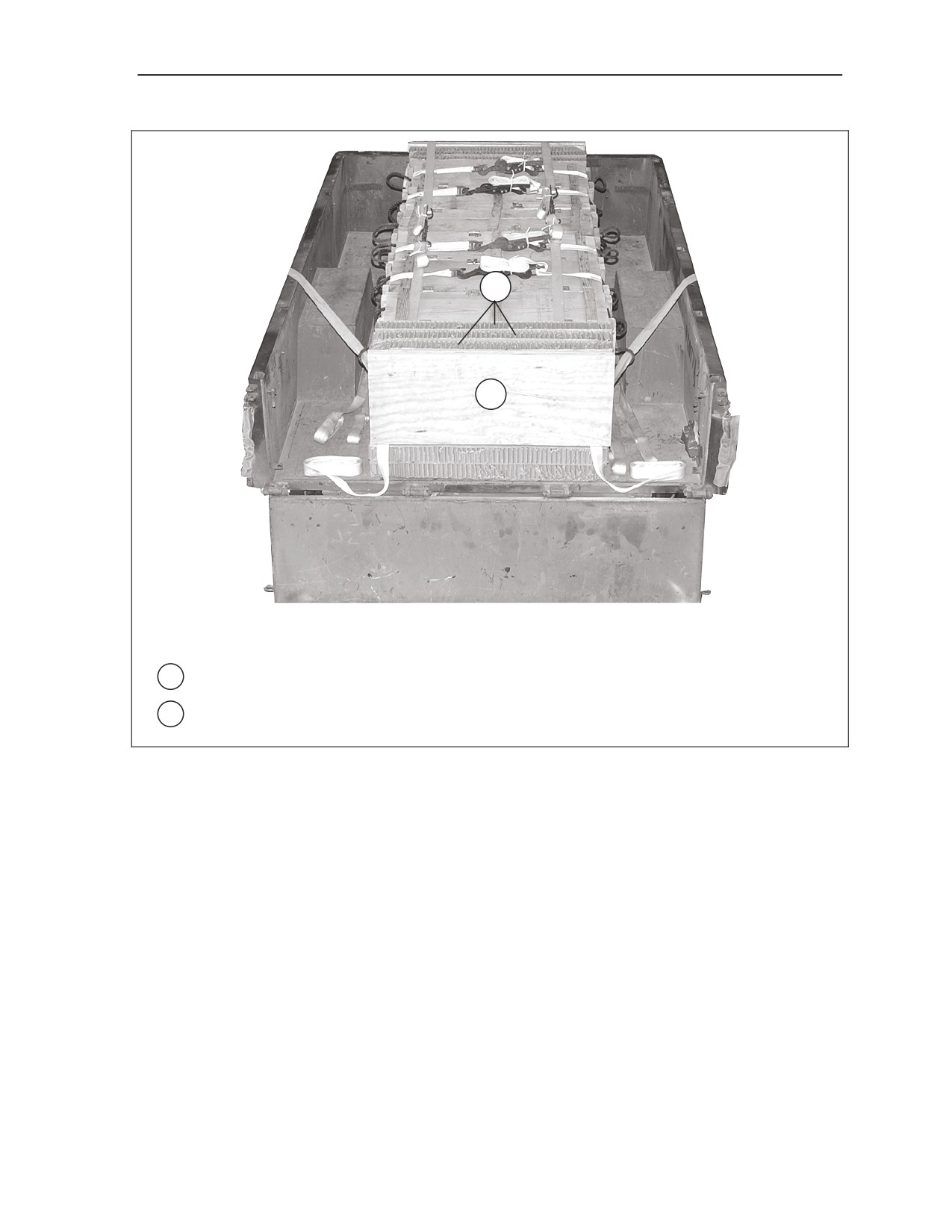
Rigging the M101, M101A1, or M101A2, ¾-Ton Cargo Trailer for Low-Velocity Airdrop
6
7
6 Place three 15- by 36-inch pieces of honeycomb flush against the rear ammunition boxes.
7 Cut and place two 3/4- by 15- by 36-inch pieces of plywood flush against the honeycomb.
Figure 2-14. Ammunition Boxes Lashed and Secured in the Trailer (Continued)
27 March 2009
FM 4-20.113/TO 13C7-3-51
2-21
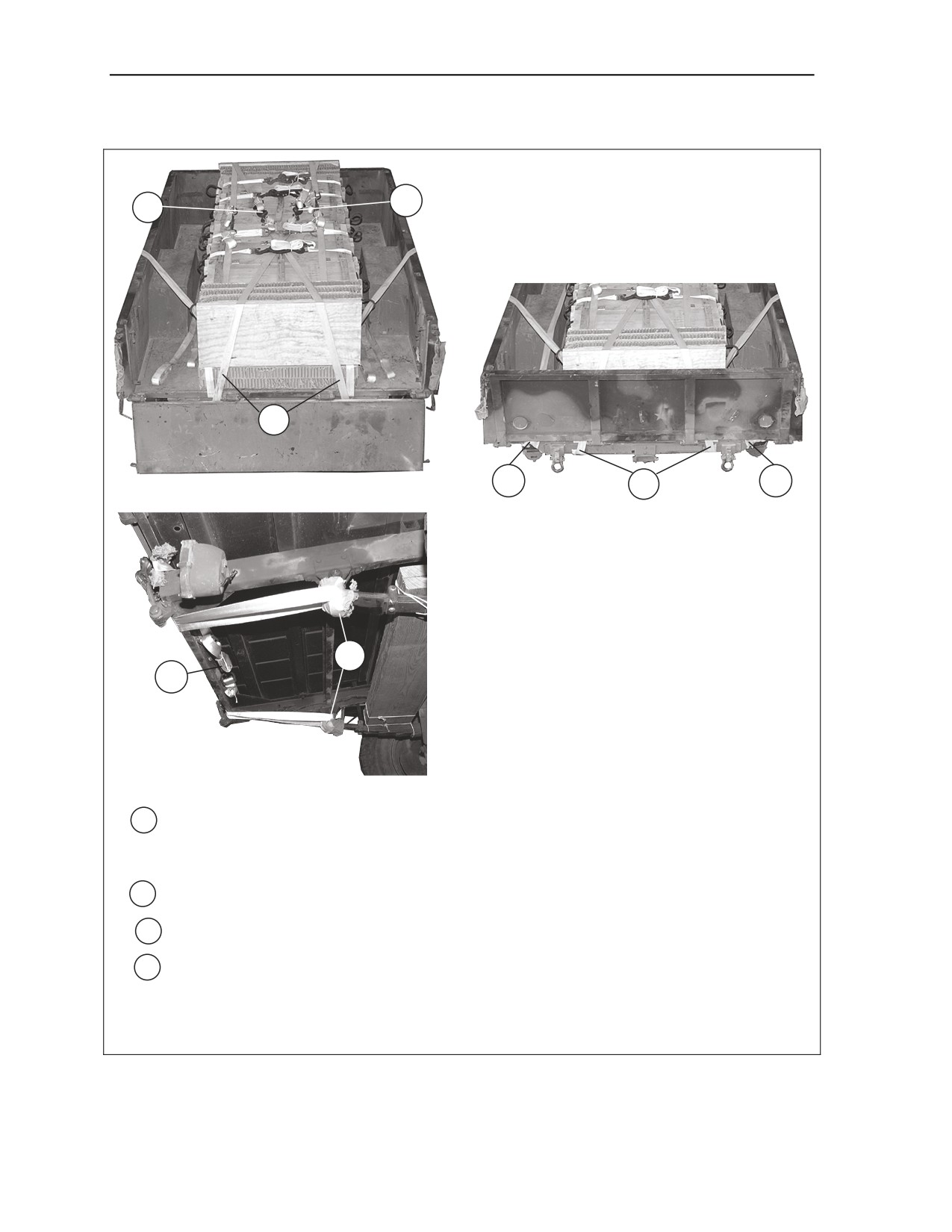
Chapter 2
10
9
8
11
8
11
8
11
8 Pass the free end of each pre-positioned lashing (on the rear of the trailer) between the
tailgate and the cargo bed. Pass the ends around the bumper and back up to the top of the
load.
9 Secure the left rear lashing to the right front lashing with a D-ring and a load binder.
10 Secure the right rear lashing to the left front lashing with a D-ring and a load binder.
11 Pass the free end of each pre-positioned 30-foot lashing (attached to the front end board)
between the tailgate and the cargo bed. Run each lashing down between the mainframe and
under the cargo bed. Secure the lashings with D-rings and load binders.
Note: Pad sharp areas that touch lashings to avoid contact.
Figure 2-14. Ammunition Boxes Lashed and Secured in the Trailer (Continued)
2-22
FM 4-20.113/TO 13C7-3-51
27 March 2009
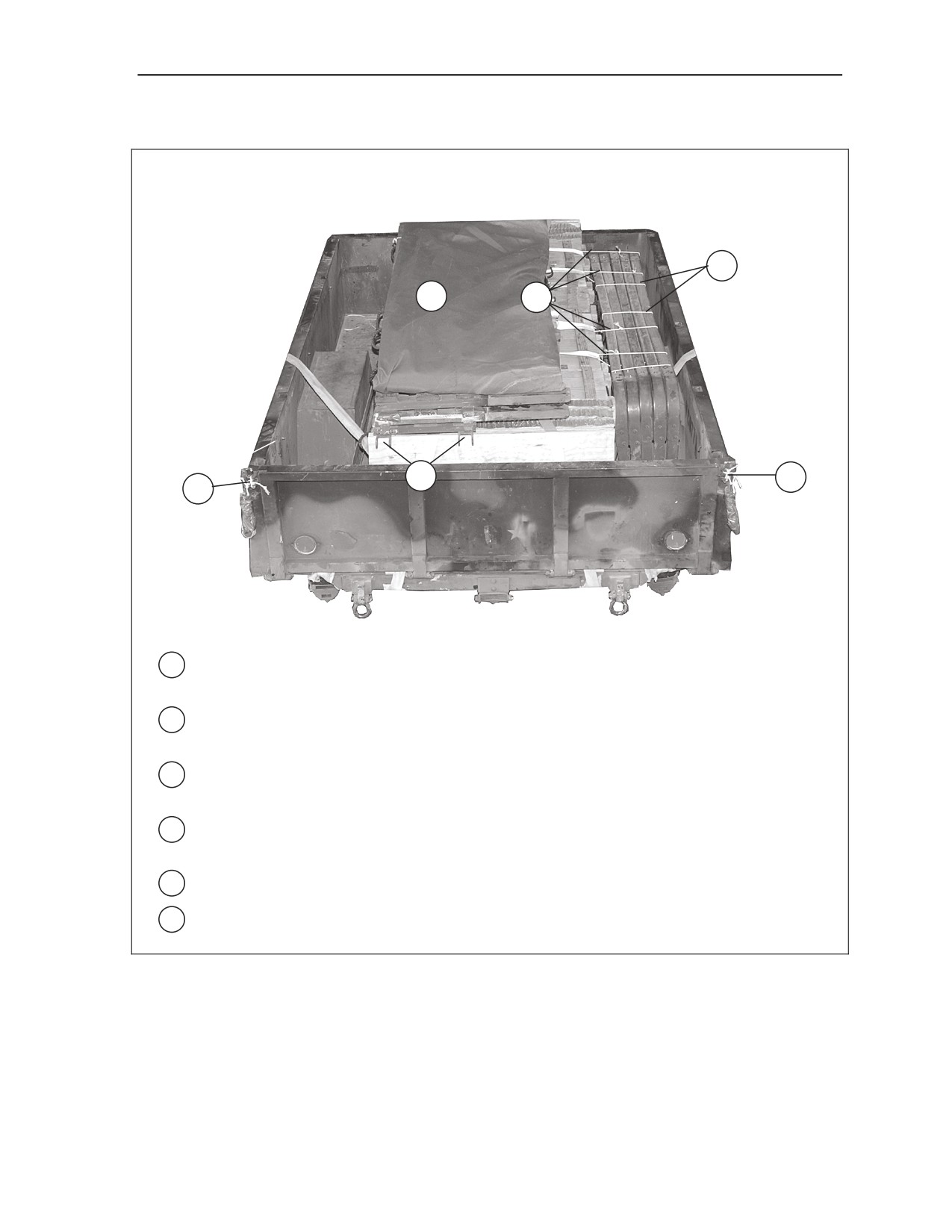
Rigging the M101, M101A1, or M101A2, ¾-Ton Cargo Trailer for Low-Velocity Airdrop
1
5
2
3
6
6
1 Tie the bows together with type III nylon cord, and place them inside the trailer on the right
side.
2 Tie the bows with type III nylon cord to the lashings which run from left to right across the top
of the ammunition boxes.
3 Cover the ends of the side racks with cellulose wadding and tape. Tie the side racks
together with type III nylon cord, and place them on top of the ammunition boxes.
4 Tie the side racks with type III nylon cord to the lashings which run from left to right across
the top of the ammunition boxes (not shown).
5 Fold the tarpaulin and center it on top of the accompanying load.
6 Close the tailgate, and tie the latches with type III nylon cord.
Figure 2-15. Trailer Components Stowed.
27 March 2009
FM 4-20.113/TO 13C7-3-51
2-23
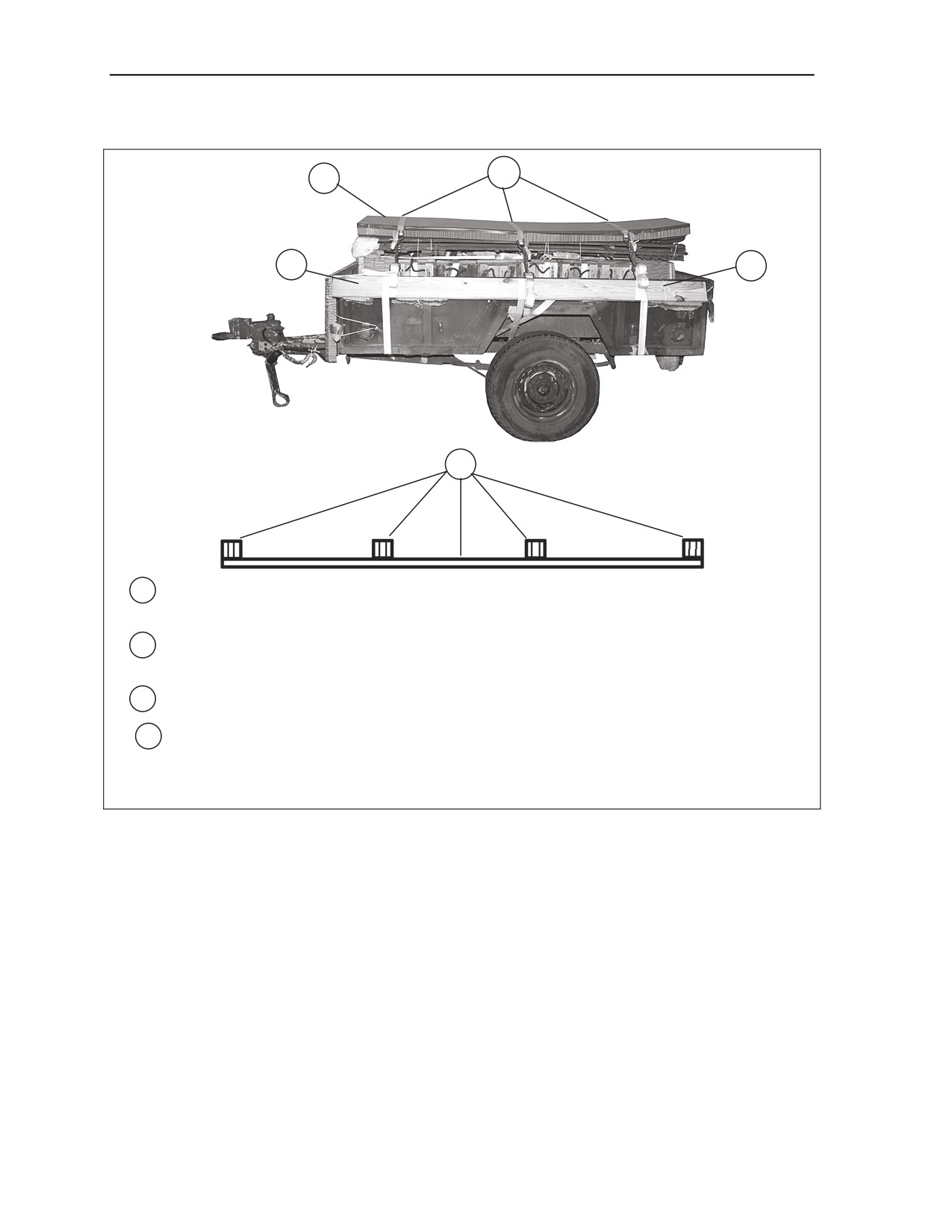
Chapter 2
10
7
9
9
8
7 Place a 36- by 96-inch piece of honeycomb on top of the tarpaulin. Tape the edges of the
honeycomb where the lashings will touch.
8 Cut two 2- by 6- by 96-inch pieces of lumber to serve as side boards. Cut eight 6- by 6-inch
pieces of honeycomb. Glue four pieces of the honeycomb to each side board.
9 Tie the side boards to the trailer with type III nylon cord.
10 Form three 30-foot lashings according to FM 4-20.102/MCRP 4-11.3J/NAVSEA SS400-AB-
MMO-010/TO 13C7-1-5. Secure the load and trailer components by passing each lashing
under the trailer body and looped around the side boards. Secure the lashing ends together
on the left side of the trailer between the honeycomb and side board.
Figure 2-15. Trailer Components Stowed (Continued)
2-24
FM 4-20.113/TO 13C7-3-51
27 March 2009
Rigging the M101, M101A1, or M101A2, ¾-Ton Cargo Trailer for Low-Velocity Airdrop
INSTALLING SUSPENSION SLINGS
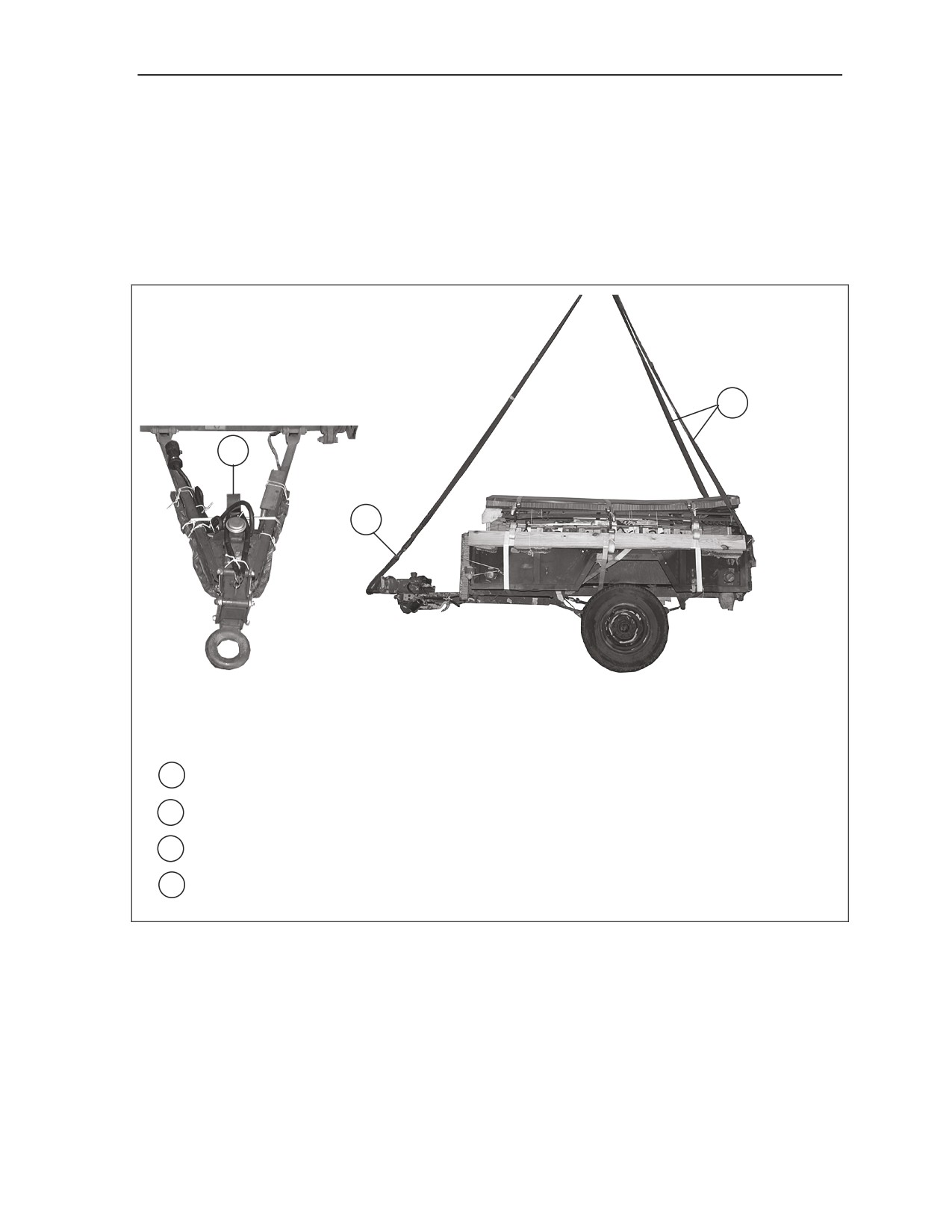
2-7. Raise and secure the trailer support stand as shown in Figure 2-16. Use three 12-foot (2-loop), type
XXVI nylon webbing slings; one 3-foot (2-loop), type XXVI nylon webbing sling; and three medium
suspension clevises to lift the trailer.
3
1
4
1 Raise the support stand, and tie it with 1/2-inch tubular nylon webbing.
2 Place the bell portion of each clevis in the end loop of each 12-foot sling (not shown).
3 Attach the two rear lifting slings to the tie-down provisions on the rear of the trailer.
4 Pass a 3-foot sling through the lunette on the trailer. Secure both ends of the 3-foot sling to
the medium suspension clevis.
Figure 2-16. Lifting Slings Installed
27 March 2009
FM 4-20.113/TO 13C7-3-51
2-25
Chapter 2
LIFTING AND POSITIONING TRAILER
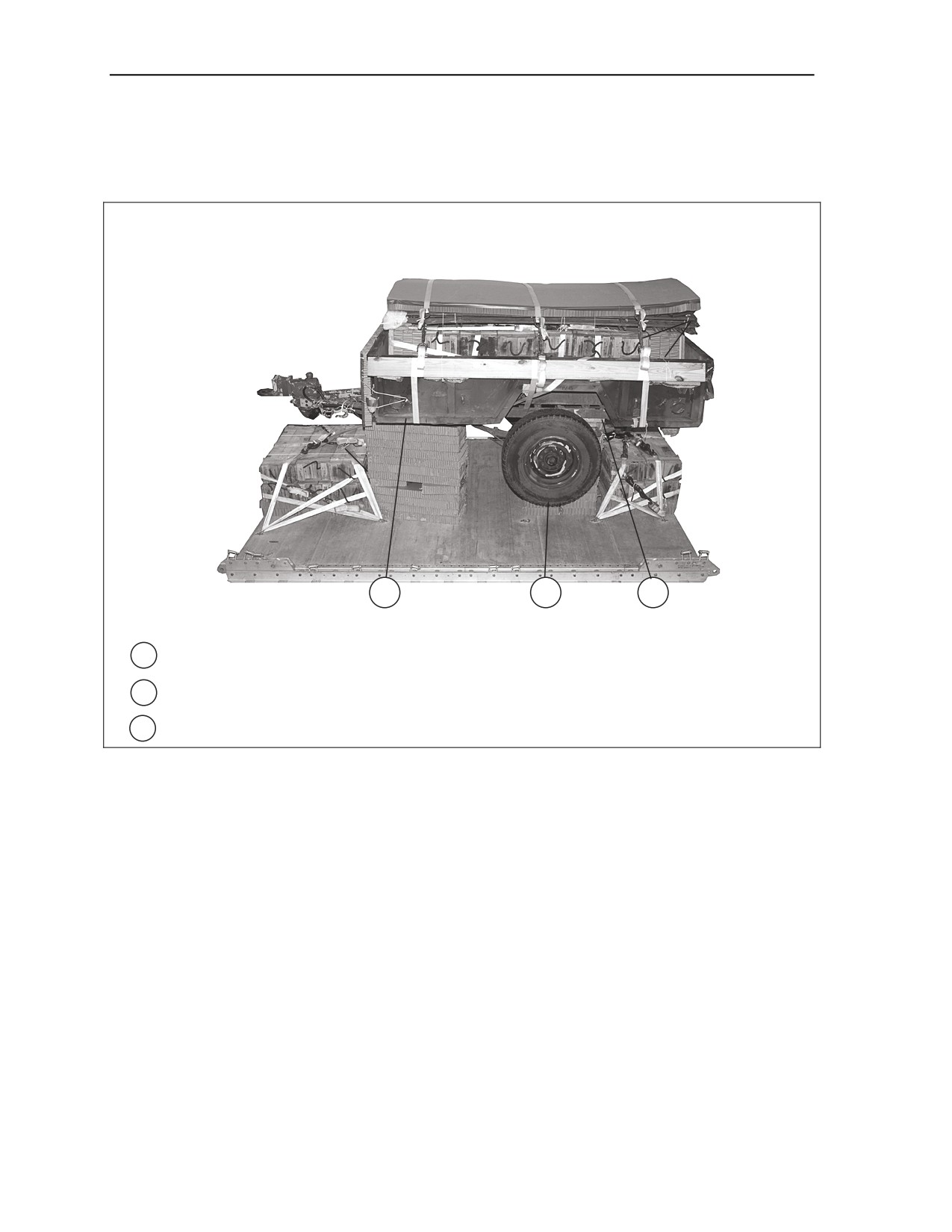
2-8. Lift the trailer using the slings and position it on the honeycomb stacks as shown in Figure 2-17.
3
2
1
1 Position the frame support board on stack 1.
2 Position the axle on stack 2.
3 Position the drawbar on stack 3.
Figure 2-17. Trailer Positioned
2-26
FM 4-20.113/TO 13C7-3-51
27 March 2009
Rigging the M101, M101A1, or M101A2, ¾-Ton Cargo Trailer for Low-Velocity Airdrop
LASHING TRAILER
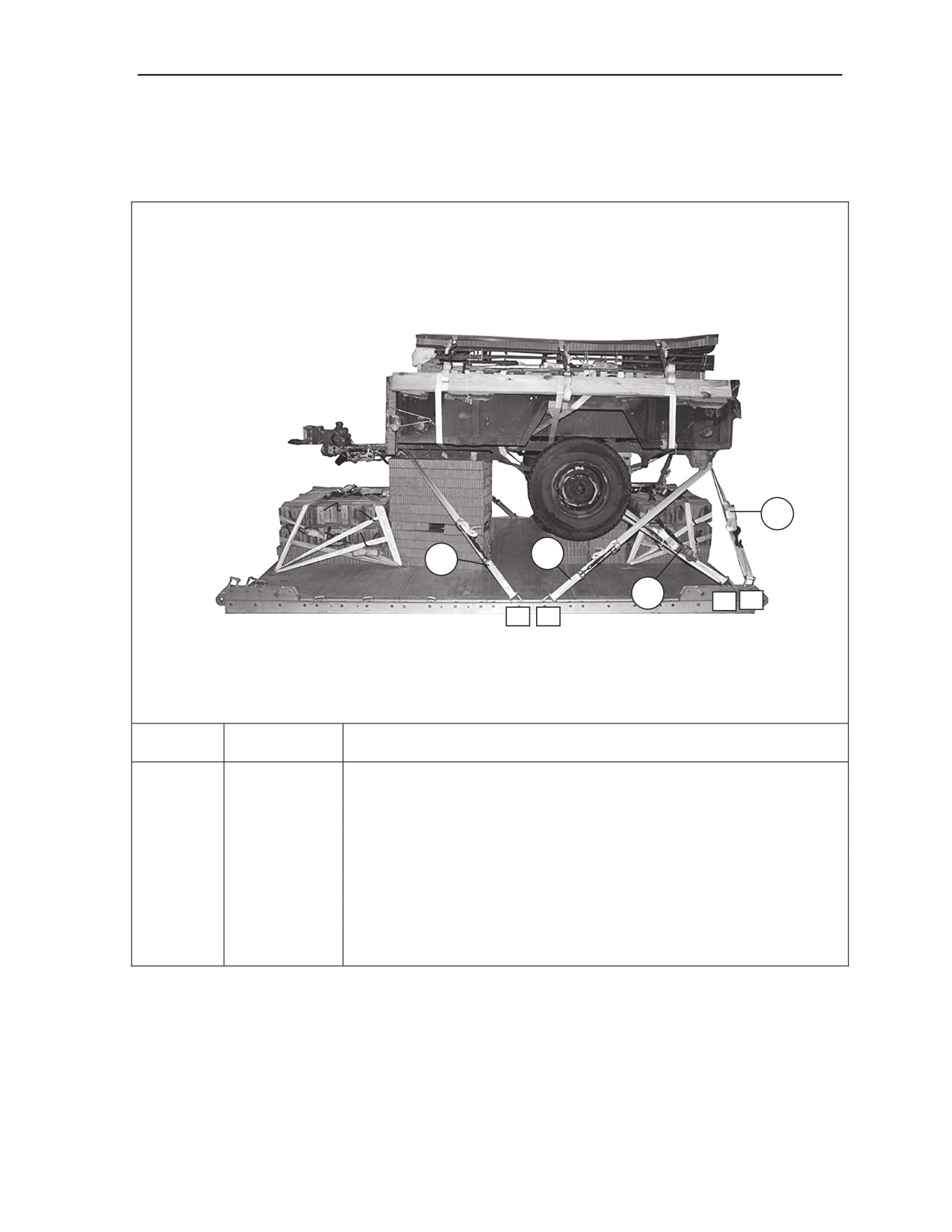
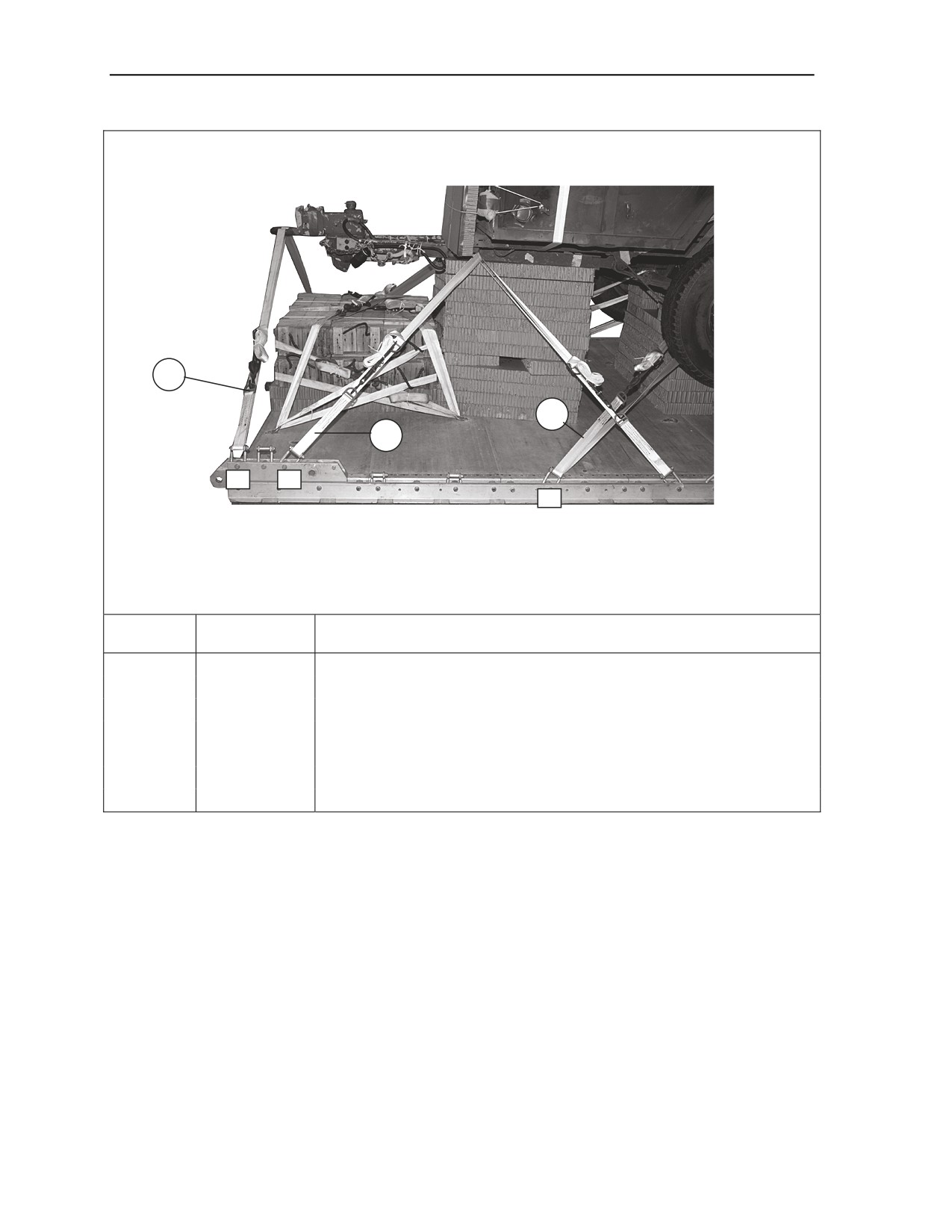
2-9. Lash the trailer to the platform according to FM 4-20.102/MCRP 4-11.3J/NAVSEA SS400-AB-
MMO-010/TO 13C7-1-5 and as shown in Figures 2-18 and 2-19.
1
5
7
3
2
1
4
3
Note: Left and right refer to the vehicle not the platform.
Lashing
Tie-down
Instructions
Number
Clevis Number
Pass lashing:
1
1
Through the left rear lifting shackle.
2
1A
Through the right rear lifting shackle.
3
2
Around the left side of the axle.
4
2A
Around the right side of the axle.
5
3
Through the left rear lifting shackle.
6
3A
Through the right rear lifting shackle.
7
4
Through the left front lifting shackle.
8
4A
Through the right front lifting shackle.
Figure 2-18. Lashings 1 through 8 Installed
27 March 2009
FM 4-20.113/TO 13C7-3-51
2-27
Chapter 2
13
9
11
10
8
5
Note: Left and right refer to the vehicle not the platform.
Lashing
Tie-down
Instructions
Number
Clevis Number
Pass lashing:
9
5
Around the left side of the axle.
10
5A
Around the right side of the axle.
11
8
Through the left front lifting shackle.
12
8A
Through the right front lifting shackle.
13
10
Through the lunette.
14
10A
Through the lunette.
Figure 2-19. Lashings 9 through 14 Installed
2-28
FM 4-20.113/TO 13C7-3-51
27 March 2009
Rigging the M101, M101A1, or M101A2, ¾-Ton Cargo Trailer for Low-Velocity Airdrop
BUILDING AND INSTALLING PARACHUTE STOWAGE PLATFORM
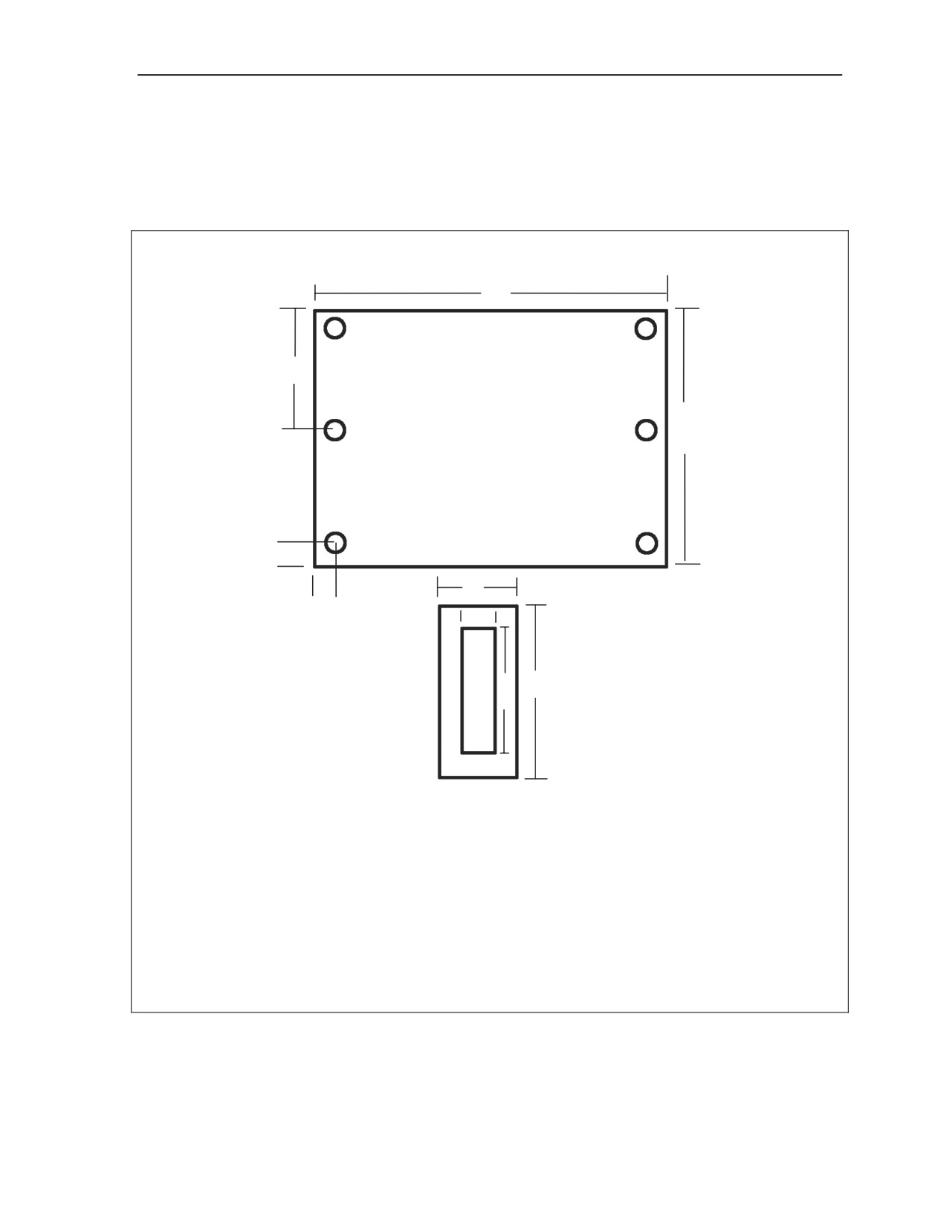
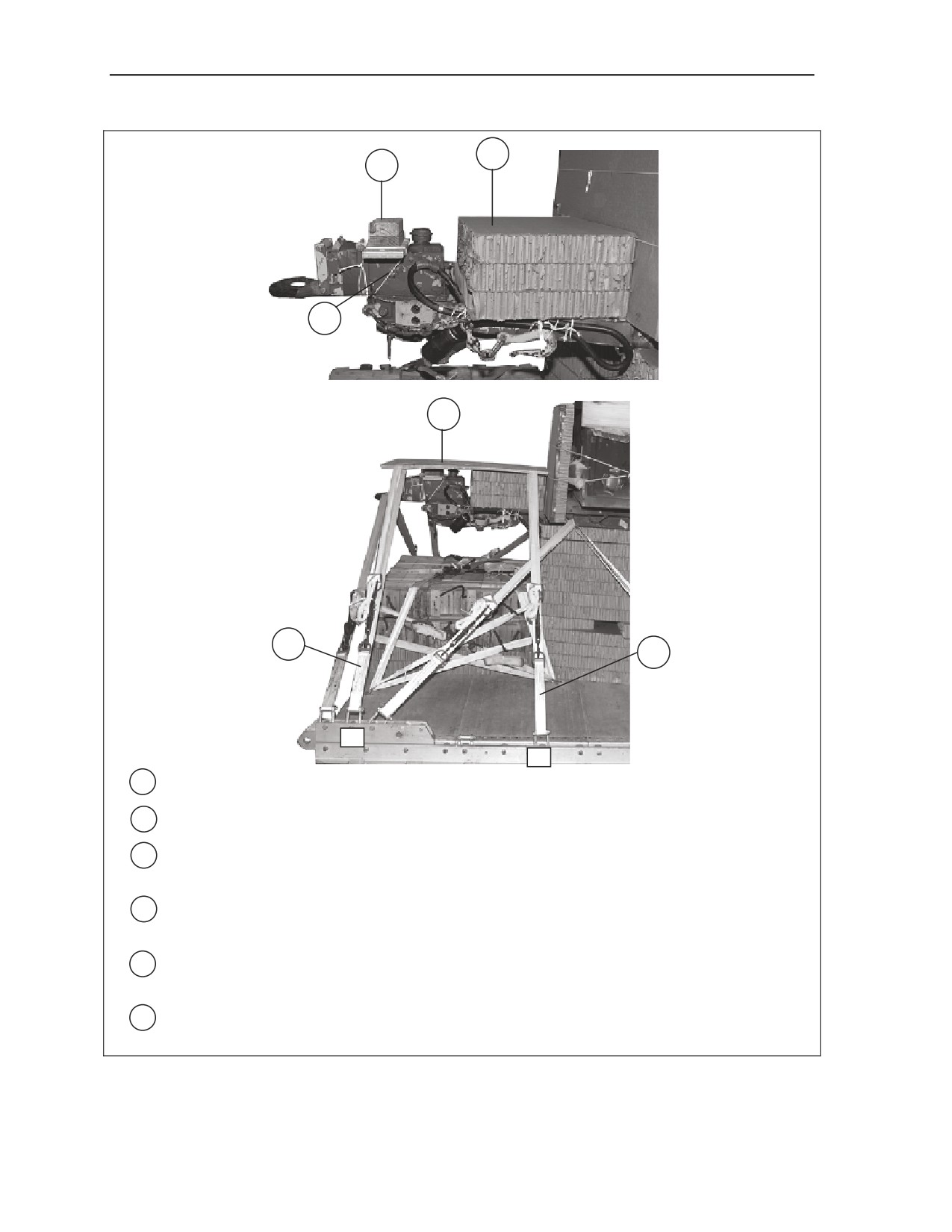
2-10. Build the parachute stowage platform as shown in Figure 2-20. Install the parachute stowage
platform using four 15-foot tie-down assemblies as shown in Figure 2-21.
Notes. 1. All measurements are given in inches.
2. This drawing is not drawn to scale.
3. All holes are 2-inches in diameter.
36
18
36
3
3
5
4
13
7
Step:
1. Cut a 3/4- by 36- by 36-inch piece of plywood.
2. Drill a 2-inch hole 3 inches from each corner of the platform.
3. Drill a 2-inch hole 3 inches from the side and center of the left and right side of the platform.
4. Cut a 3/4- by 5- by 13-inch piece of plywood.
5. Cut two 2- by 4- by 7-inch pieces of lumber and nail together using 16d nails.
6. Center the two 2- by 4- by 7-inch pieces of lumber on top of the 3/4- by 5- by 13-inch piece of
plywood and nail together using 16d nails.
Figure 2-20. Parachute Stowage Platform Built
27 March 2009
FM 4-20.113/TO 13C7-3-51
2-29
Chapter 2
3
1
2
4
6
5
9
6
1 Place the wooden support on top of the brake housing.
2 Secure the wooden support down to the brake housing with type III nylon cord.
3 Cut and position three 17- by 22-inch pieces of honeycomb on top of the drawbar flush
against the honeycomb on the front of the trailer.
4 Place the parachute stowage platform on top of the honeycomb with the smooth side of
plywood facing up.
5 Run the free end of a 15-foot lashing from clevis 6 through the front hole of parachute
stowage platform. Secure with D-ring and a load binder. Repeat for clevis 6A.
6 Run the free end of a 15-foot lashing from clevis 9 through the rear hole of parachute
stowage platform. Secure with D-ring and a load binder. Repeat for clevis 9A.
Figure 2-21 Parachute Stowage Platform Installed
2-30
FM 4-20.113/TO 13C7-3-51
27 March 2009
Rigging the M101, M101A1, or M101A2, ¾-Ton Cargo Trailer for Low-Velocity Airdrop
INSTALLING AND SAFETY TIEING SUSPENSION SLINGS
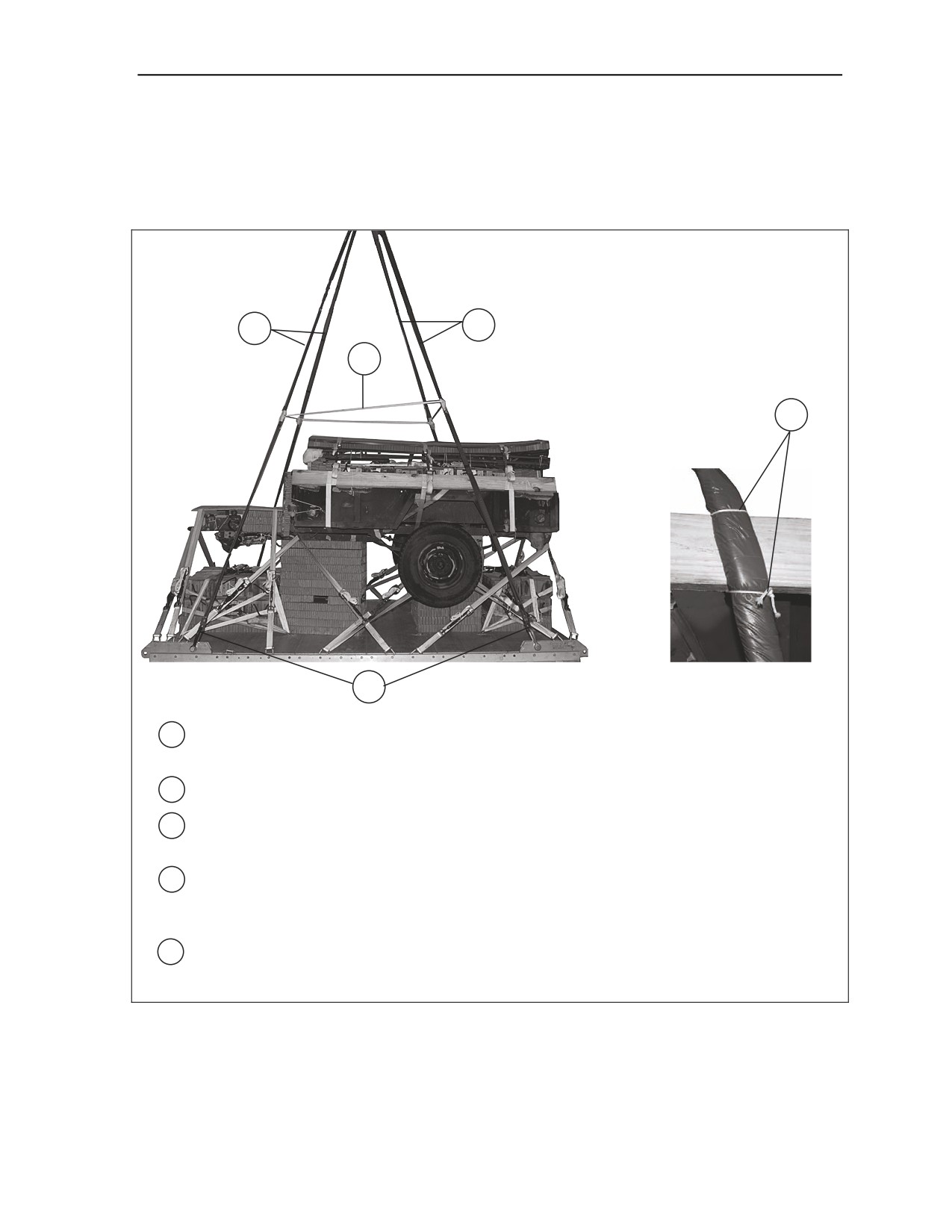
2-11. Install and safety tie the suspension slings according to FM 4-20.102/MCRP 4-11.3J/NAVSEA
SS400-AB-MMO-010/TO 13C7-1-5 and as shown in Figures 2-22.
2
2
3
5
1
1 Attach a 16-foot (2-loop), type XXVI nylon webbing sling to each tandem link using a large
suspension clevis.
2 Raise the suspension slings above the load.
3 Safety the suspension slings with a deadman’s tie according to FM 4-20.102/MCRP 4-
11.3J/NAVSEA SS400-AB-MMO-010/TO 13C7-1-5.
4 Pad the suspension slings with 12 by 36-inch felt and tape. The front will be 34 inches up
from the front suspension clevises. The rear will be 42 inches up from the rear suspension
clevises (not shown).
5 Lower the suspension slings and secure them to the side boards using type III nylon cord.
Figure 2-22 Suspension Slings Installed and Safety Tied
27 March 2009
FM 4-20.113/TO 13C7-3-51
2-31
///////////////////////////////////////