FM 4-02.12 Army Health System: Command and Control Organizations (26 May 2010) - page 1
*FM 4-02.12
Field Manual
Headquarters
Department of the Army
No. 4-02.12
Washington, DC, 26 May 2010
Army Health System Command and
Control Organizations
Contents
Page
PREFACE
ix
Chapter 1
ARMY HEALTH SYSTEM IN ECHELONS ABOVE BRIGADE
1-1
Section I — Operational Environment
1-1
Threats
1-1
Mitigation
1-2
Operational Variables
1-3
Mission Variables
1-4
Section II — Introduction to the Army Health System in Echelons Above
Brigade
1-4
System of Systems
1-4
Focus of the Army Health System
1-5
Principles of the Army Health System
1-7
Army Medical Department Battlefield Rules
1-8
Health Threat
1-9
Medical Intelligence
1-9
Section III — Medical Commander and the Command Surgeon
1-10
Medical Commander
1-10
Command Surgeon
1-10
Standard of Care
1-13
Army Service Component Command Surgeon
1-13
Corps Surgeon
1-14
Division Surgeon
1-15
Chapter 2
MEDICAL COMMAND (DEPLOYMENT SUPPORT)
2-1
Section I — Headquarters and Headquarters Company, Medical
Command (Deployment Support)
2-1
Mission and Assignment
2-1
Distribution Restriction: Approved for public release; distribution is unlimited.
*This publication supersedes FM 4-02.12 dated 2 February 2004.
i
Contents
Regional Focus
2-2
Capabilities and Limitations
2-2
Organization and Functions
2-3
Deputy Chief of Staff, Comptroller
2-25
Joint Augmentation
2-44
Section II — Medical Command (Deployment Support) (Operational
Command Post)
2-45
Mission and Assignment
2-45
Capabilities and Limitations
2-45
Organization and Functions
2-46
Section III — Medical Command (Deployment Support) (Main Command
Post)
2-56
Mission and Assignment
2-56
Capabilities and Limitations
2-56
Organization and Functions
2-57
Chapter 3
MEDICAL BRIGADE (SUPPORT)
3-1
Section I — Headquarters and Headquarters Company, Medical Brigade
(Support)
3-1
Mission and Assignment
3-1
Capabilities and Limitations
3-1
Organization and Functions
3-2
Coordination of Clinical Operations
3-22
Section II — Early Entry Module, Headquarters and Headquarters
Company, Medical Brigade (Support)
3-26
Mission and Assignment
3-26
Capabilities and Limitations
3-26
Organization and Functions
3-27
Section III — Expansion Module, Headquarters and Headquarters
Company, Medical Brigade (Support)
3-31
Mission and Assignment
3-31
Capabilities and Limitations
3-31
Organization and Functions
3-32
Section IV — Campaign Module, Headquarters and Headquarters
Company, Medical Brigade (Support)
3-36
Mission and Assignment
3-36
Capabilities and Limitations
3-37
Organization and Functions
3-37
Chapter 4
MEDICAL BATTALION (MULTIFUNCTIONAL)
4-1
Section I — Headquarters and Headquarters Company, Medical
Battalion (Multifunctional)
4-1
Mission and Assignment
4-1
Capabilities and Limitations
4-2
Organization and Functions
4-3
Section II — Headquarters and Headquarters Company, Medical
Battalion (Multifunctional), Early Entry Element
4-20
Mission and Assignment
4-20
Capabilities and Limitations
4-20
ii
FM 4-02.12
26 May 2010
Contents
Organization and Functions
4-21
Section III — Headquarters and Headquarters Company, Medical
Battalion (Multifunctional), Campaign Support Element
4-26
Mission and Assignment
4-26
Capabilities and Limitations
4-26
Organization and Functions
4-27
Chapter 5
ARMY HEALTH SYSTEM OPERATIONS
5-1
Section I — Operational Themes
5-1
Character of the Operation
5-1
Section II — Army Medical Department Command and Control
Operations
5-5
Section III — Offense
5-11
Offensive Operations
5-11
Army Health System Support to the Offense
5-12
Section IV — Defense
5-13
Defensive Operations
5-13
Army Health System Support to the Defense
5-14
Section V — Stability Operations
5-14
Army Health System Support to Stability Operations
5-15
Section VI — Civil Support Operations
5-15
Civil Support Operations
5-15
Section VII — Expeditionary and Campaign-Quality Medical Operations 5-18
Expeditionary Medical Operations
5-19
campaign-Quality Medical Operations
5-20
Section VIII — Enemy Prisoner of War and/or Detainee Medical Care
Operations
5-21
Appendix A
ELIGIBILITY DETERMINATION FOR MEDICAL/DENTAL CARE
A-1
Appendix B
COMMAND POST OPERATIONS
B-1
Appendix C
MEDICAL UNITS WHICH MAY BE ASSIGNED OR ATTACHED TO A MEDICAL
COMMAND (DEPLOYMENT SUPPORT), MEDICAL BRIGADE (SUPPORT), OR
MEDICAL BATTALION (MULTIFUNCTIONAL)
C-1
Appendix D
PLANNING CONSIDERATIONS FOR JOINT AND MULTINATIONAL
OPERATIONS
D-1
GLOSSARY
Glossary-1
REFERENCES
References-1
INDEX
Index-1
Figures
Figure 1-1. Threats and medical capabilities
1-3
Figure 1-2. The Army Health System—a system of systems
1-5
Figure 2-1. Medical command (deployment support) coordinating staff
2-4
Figure 2-2. Medical command (deployment support) special and personal staffs
2-5
26 May 2010
FM 4-02.12
iii
Contents
Figure 4-1. The multifunctional medical battalion
4-2
Figure 5-1. Integrated Military Health System
5-7
Figure 5-2. Army Medical Department command and control organizations for
support to the modular force
5-10
Tables
Table
1-1. Health threat
1-9
Table
2-1. Command section
2-5
Table
2-1. Command section (continued)
2-6
Table
2-2. Chief of staff section
2-7
Table
2-3. Deputy chief of staff, personnel
2-8
Table
2-4. Personnel management/actions
2-10
Table
2-5. Deputy chief of staff, security/plans/operations
2-11
Table
2-6. Current operations branch
2-12
Table
2-7. Plans branch
2-13
Table
2-8. Intelligence/operations branch G-2/G-3
2-14
Table
2-9. Theater patient movement center
2-16
Table
2-10. Deputy chief of staff, logistics
2-17
Table
2-11. Medical logistics support section
2-19
Table
2-12. Civil affairs section
2-22
Table
2-13. Deputy chief of staff, information management
2-23
Table
2-14. Deputy chief of staff, comptroller
2-26
Table
2-15. Clinical services
2-28
Table
2-16. Dental services
2-31
Table
2-17. Veterinary services
2-32
Table
2-18. Nutrition care services
2-32
Table
2-19. Chief nurse
2-33
Table
2-20. Preventive medicine section
2-34
Table
2-21. Inspector general section
2-36
Table
2-22. Public affairs section
2-37
Table
2-23. Staff judge advocate
2-38
Table
2-24. Company headquarters
2-40
Table
2-24. Company headquarters (continued)
2-41
Table
2-25. Unit ministry team
2-44
Table
2-26. Command section element (operational command post)
2-46
Table
2-26. Command section element (operational command post) (continued)
2-47
Table
2-27. Chief of staff section element (operational command post)
2-47
Table
2-28. Deputy chief of staff, personnel section element (operational command
post)
2-47
Table 2-29. Personnel management/actions element (operational command post)
2-48
iv
FM 4-02.12
26 May 2010
Contents
Table 2-30. Current operations branch element (operational command post)
2-48
Table 2-31. Plans branch element (operational command post)
2-49
Table 2-32. Intelligence/operations G-2/G-3 element (operational command post)
2-49
Table 2-33. Theater patient movement center element (operational command post)
2-50
Table 2-34. Deputy chief of staff, logistics section element (operational command
post)
2-50
Table 2-35. Medical logistics support section element (operational command post)
2-51
Table 2-36. Civil affairs section element (operational command post)
2-51
Table 2-37. Deputy chief of staff, information management element (operational
command post)
2-52
Table 2-38. Deputy chief of staff, comptroller element (operational command post)
2-52
Table 2-39. Clinical services element (operational command post)
2-53
Table 2-40. Veterinary services element (operational command post)
2-53
Table 2-41. Preventive medicine element (operational command post)
2-54
Table 2-42. Inspector general section element (operational command post)
2-54
Table 2-43. Public affairs section element (operational command post)
2-54
Table 2-44. Staff judge advocate element (operational command post)
2-55
Table 2-45. Company headquarters element (operational command post)
2-55
Table 2-45. Company headquarters element (operational command post)
(continued)
2-56
Table 2-46. Unit ministry team element (operational command post)
2-56
Table 2-47. Command section element (main command post)
2-57
Table 2-47. Command section element (main command post) (continued)
2-58
Table 2-48. Chief of staff section element (main command post)
2-58
Table 2-49. Deputy chief of staff, personnel element (main command post)
2-59
Table 2-50. Personnel management/actions element (main command post)
2-59
Table 2-51. Deputy chief of staff, security/plans/operations G-2/G-3 element (main
command post)
2-60
Table 2-52. Current operations branch element (main command post)
2-60
Table 2-53. Plans branch element (main command post)
2-60
Table 2-54. Intelligence/operations G-2/G-3 element (main command post)
2-61
Table 2-55. Theater patient movement center element (main command post)
2-61
Table 2-56. Chief of staff, logistics element (main command post)
2-61
Table 2-56. Chief of staff, logistics element (main command post) (continued)
2-62
Table 2-57. Medical logistics support section element (main command post)
2-62
Table 2-58. Civil affairs section element (main command post)
2-63
Table 2-59. Deputy chief of staff, information management element (main command
post)
2-63
Table 2-60. Deputy chief of staff, comptroller element (main command post)
2-64
Table 2-61. Clinical services element (main command post)
2-64
Table 2-61. Clinical services element (main command post) (continued)
2-65
Table 2-62. Dental services element (main command post)
2-65
Table 2-63. Nutrition care element (main command post)
2-65
26 May 2010
FM 4-02.12
v
Contents
Table
2-64. Chief nurse element (main command post)
2-66
Table
2-65. Preventive medicine section element (main command post)
2-66
Table
2-66. Inspector general section element (main command post)
2-66
Table
2-67. Public affairs section element (main command post)
2-67
Table
2-68. Staff judge advocate element (main command post)
2-67
Table
2-69. Company headquarters element (main command post)
2-68
Table
2-70. Unit ministry team element (main command post)
2-69
Table
3-1. Command section
3-2
Table
3-2. S-1 section
3-4
Table
3-3. S-2 section
3-5
Table
3-4. S-3 section
3-6
Table
3-5. S-3 operations branch
3-7
Table
3-6. S-3 plans branch
3-8
Table
3-7. Intratheater patient movement center
3-9
Table
3-8. S-4 section
3-11
Table
3-9. S-4 logistics operations branch
3-12
Table
3-10.
S-4 logistics plans branch
3-13
Table
3-11.
S-6 section
3-14
Table
3-12.
S-9 section
3-15
Table
3-13.
Clinical operations section
3-16
Table
3-14.
Command judge advocate section
3-19
Table
3-15.
Company headquarters
3-20
Table
3-16.
Unit ministry team
3-22
Table
3-17.
S-1 section (early entry module)
3-27
Table
3-18.
S-2 section (early entry module)
3-27
Table
3-19.
S-3 section (early entry module)
3-28
Table
3-20.
S-3 operations branch (early entry module)
3-28
Table
3-21.
S-3 plans branch (early entry module)
3-29
Table
3-22.
Intratheater patient movement center (early entry module)
3-29
Table
3-23.
S-4 section (early entry module)
3-29
Table
3-24.
S-6 section (early entry module)
3-30
Table
3-25.
S-9 section (early entry module)
3-30
Table
3-26.
Clinical operations section (early entry module)
3-31
Table
3-27.
Company headquarters (early entry module)
3-31
Table
3-28.
Command section (expansion module)
3-32
Table
3-29.
S-2 section (expansion module)
3-33
Table
3-30.
S-3 section (expansion module)
3-33
Table
3-31.
S-3 operations branch (expansion module)
3-33
Table
3-32.
S-3 plans branch (expansion module)
3-34
Table
3-33.
S-3 patient movement branch (expansion module)
3-34
Table
3-34.
S-4 section (expansion module)
3-34
vi
FM 4-02.12
26 May 2010
Contents
Table
3-35. S-4 logistics operations branch (expansion module)
3-35
Table
3-36. S-4 logistics plans branch (expansion module)
3-35
Table
3-37. S-6 section (expansion module)
3-35
Table
3-38. Clinical operations section (expansion module)
3-36
Table
3-39. Company headquarters (expansion module)
3-36
Table
3-40. Command section (campaign module)
3-37
Table
3-41. S-1 section (campaign module)
3-38
Table
3-42. S-2 section (campaign module)
3-38
Table
3-43. S-3 operations branch (campaign module)
3-38
Table
3-44. S-3 plans branch (campaign module)
3-39
Table
3-45. S-3 patient movement branch (campaign module)
3-39
Table
3-46. S-4 section (campaign module)
3-39
Table
3-47. S-4 logistics plans branch (campaign module)
3-40
Table
3-48. S-6 section (campaign module)
3-40
Table
3-49. Clinical operations section (campaign module)
3-40
Table
3-50. Command judge advocate section (campaign module)
3-41
Table
3-51. Company headquarters (campaign module)
3-41
Table
3-52. Unit ministry team (campaign module)
3-42
Table
4-1. Battalion command section
4-4
Table
4-2. S-1 section
4-5
Table
4-3. S-2/S-3 section
4-6
Table
4-4. S-4 section
4-8
Table
4-5. Force health protection operations section
4-8
Table
4-6. Medical logistics section
4-9
Table
4-7. Medical operations section
4-11
Table
4-8. Preventive medicine section
4-13
Table
4-9. Mental health section
4-14
Table
4-10. S-6 section
4-15
Table
4-11. Detachment headquarters
4-16
Table
4-12. Battalion maintenance section
4-18
Table
4-13. Unit ministry team
4-19
Table
4-14. Battalion command section (early entry element)
4-21
Table
4-15. S-1 section (early entry element)
4-21
Table
4-16. S-2/S-3 section (early entry element)
4-22
Table
4-17. S-4 section (early entry element)
4-22
Table
4-18. Force health protection operations (early entry element)
4-23
Table
4-19. Medical logistics section (early entry element)
4-23
Table
4-20. Medical operations section (early entry element)
4-24
Table
4-21. Preventive medicine section (early entry element)
4-24
Table
4-22. Mental health section (early entry element)
4-24
Table
4-23. S-6 section (early entry element)
4-25
26 May 2010
FM 4-02.12
vii
Contents
Table 4-24. Detachment headquarters (early entry element)
4-25
Table 4-25. Battalion maintenance section (early entry element)
4-26
Table 4-26. Battalion command section (campaign support element)
4-27
Table 4-27. S-1 section (campaign support element)
4-27
Table 4-28. S-2/S-3 section (campaign support element)
4-28
Table 4-29. S-4 section (campaign support element)
4-28
Table 4-30. Force health protection operations (campaign support element)
4-28
Table 4-31. Medical logistics section (campaign support element)
4-29
Table 4-32. Medical operations section (campaign support element)
4-29
Table 4-33. Preventive medicine section (campaign support element)
4-30
Table 4-34. Mental health section (campaign support element)
4-30
Table 4-35. S-6 section (campaign support element)
4-30
Table 4-36. Detachment headquarters (campaign support element)
4-31
Table 4-37. Battalion maintenance section (campaign support element)
4-31
Table 4-38. Unit ministry team (campaign support element)
4-31
Table 5-1. Offensive operations—primary tasks, purposes, and key medical
considerations
5-12
Table 5-2. Defensive operations—primary tasks, purposes, and key medical
considerations
5-13
Table 5-3. Stability operations—primary tasks, purposes, and key medical
considerations
5-14
Table 5-4. Civil support operations—primary tasks, purposes, and key medical
considerations
5-16
Table A-1. Sample eligibility for medical/dental care support matrix
A-2
Table A-1. Sample eligibility for medical/dental care support matrix (continued)
A-3
Table A-1. Sample eligibility for medical/dental care support matrix (continued)
A-4
Table A-1. Sample eligibility for medical/dental care support matrix (continued)
A-5
Table B-1. Sample report submission schedule
B-2
Table C-1. Medical Reengineering Initiative units
C-1
Table C-1. Medical Reengineering Initiative units (continued)
C-2
Table C-2. Medical Force 2000 units
C-3
Table C-2. Medical Force 2000 units (continued)
C-4
Table C-3. Units designed to support the Modular Army
C-5
viii
FM 4-02.12
26 May 2010
Preface
This field manual (FM) establishes command and control (C2) doctrine for the provision of Army Health
System (AHS) support in echelons above brigade (EAB). It discusses all roles of care within the theater. The
AHS is the overarching concept of support for providing timely medical support to the tactical commander.
This publication is designed for use by medical commanders and their staffs that are involved in the planning
and execution of medical operations in the EAB.
This publication implements or is in consonance with the following North Atlantic Treaty Organization
(NATO) International Standardization Agreements (STANAGs) and American, British, Canadian, Australian,
and New Zealand (ABCA) standards and publication:
ABCA
ABCA
TITLE
STANAG
Standard
Publication
Coalition Health Interoperability Handbook
256
Identification of Medical Material for Field
Medical Installations
2060
248
Emergency War Surgery
2068
Multilingual Phrase Book for Use by the NATO
Medical Services—AMedP-5(B)
2131
Documentation Relative to Medical Evacuation,
Treatment and Cause of Death of Patients
2132
470
Morphia Dosage and Casualty Markings
2350
Road Movements and Movement Control—
AMovP-1(A)
2454
Orders for the Camouflage of the Red Cross and
the Red Crescent on Land in Tactical Operations
2931
Medical Requirements for Blood, Blood Donor and
Associated Equipment
2939
Aeromedical Evacuation
3204
The proponent of this publication is the United States (US) Army Medical Department Center and School
(USAMEDDC&S). This publication applies to the Active Army, the Army National Guard (ARNG)/Army
National Guard of the United States (ARNGUS), and the United States Army Reserve (USAR) unless
otherwise stated. Send comments and recommendations in a letter format directly to Commander,
USAMEDDC&S, ATTN: MCCS-FCD-L, 1400 East Grayson Street, Fort Sam Houston, Texas 78234-
5052 or to e-mail address: medicaldoctrine@amedd.army.mil. All recommended changes should be keyed to
the specific page, paragraph, and line number. A rationale should be provided for each recommended change
to aid in the evaluation of that comment.
The organizational structures presented in this publication reflect those established in the G-edition tables of
organization and equipment (TOEs) in effect on the date of this publication. For a copy of your modified TOE,
contact the Authorizations Documentation Directorate, 9900 Belvoir Road, Suite 120, ATTN: MOFI-FMA,
Fort Belvoir, Virginia 22060-2287.
Unless this publication states otherwise, masculine nouns and pronouns do not refer exclusively to men.
26 May 2010
FM 4-02.12
ix
Chapter 1
Army Health System in Echelons Above Brigade
The AHS is a complex system of interrelated and interdependent systems comprised
of ten medical functions. The synchronization of these systems is essential to ensure
that all of the capabilities resident in the AHS can be optimally employed to provide a
seamless health care continuum from the point of injury or wounding, through the
successive roles of essential care within the area of operations (AO) to the continental
United States (CONUS)-support base for definitive, rehabilitative, and convalescent
care. The medical functions align with medical disciplines and specialty training and
the capabilities required to provide state-of-the-art care to Soldiers regardless of
where they are physically assigned. These functions include: medical C2, medical
treatment
(area support), hospitalization, dental services, preventive medicine
(PVNTMED) services, combat and operational stress control (COSC), veterinary
services, medical evacuation, medical logistics (MEDLOG), and medical laboratory
services. The ability of AHS commanders and leaders to coordinate health service
support (HSS) and force health protection (FHP) requirements and to synergistically
task-organize and augment lower roles with medical specialties and medical materiel,
when required, maximizes the utilization of scarce medical resources, enhances
patient care capabilities, and ensures the AHS is responsive to the tactical
commander’s concept of operations.
SECTION I — OPERATIONAL ENVIRONMENT
1-1. Operational environments are a composite of the conditions, circumstances, and influences that
affect the employment of capabilities and bear on the decisions of the commander. The myriad of factors
that combine and interact to define the operational environment in which forces are deployed is always
changing and will continue to change during the deployment. Our forces are engaged in an era of
persistent conflict—a period of protracted confrontation among state, nonstate, and individual actors
increasingly willing to use violence to achieve their political and ideological ends.
THREATS
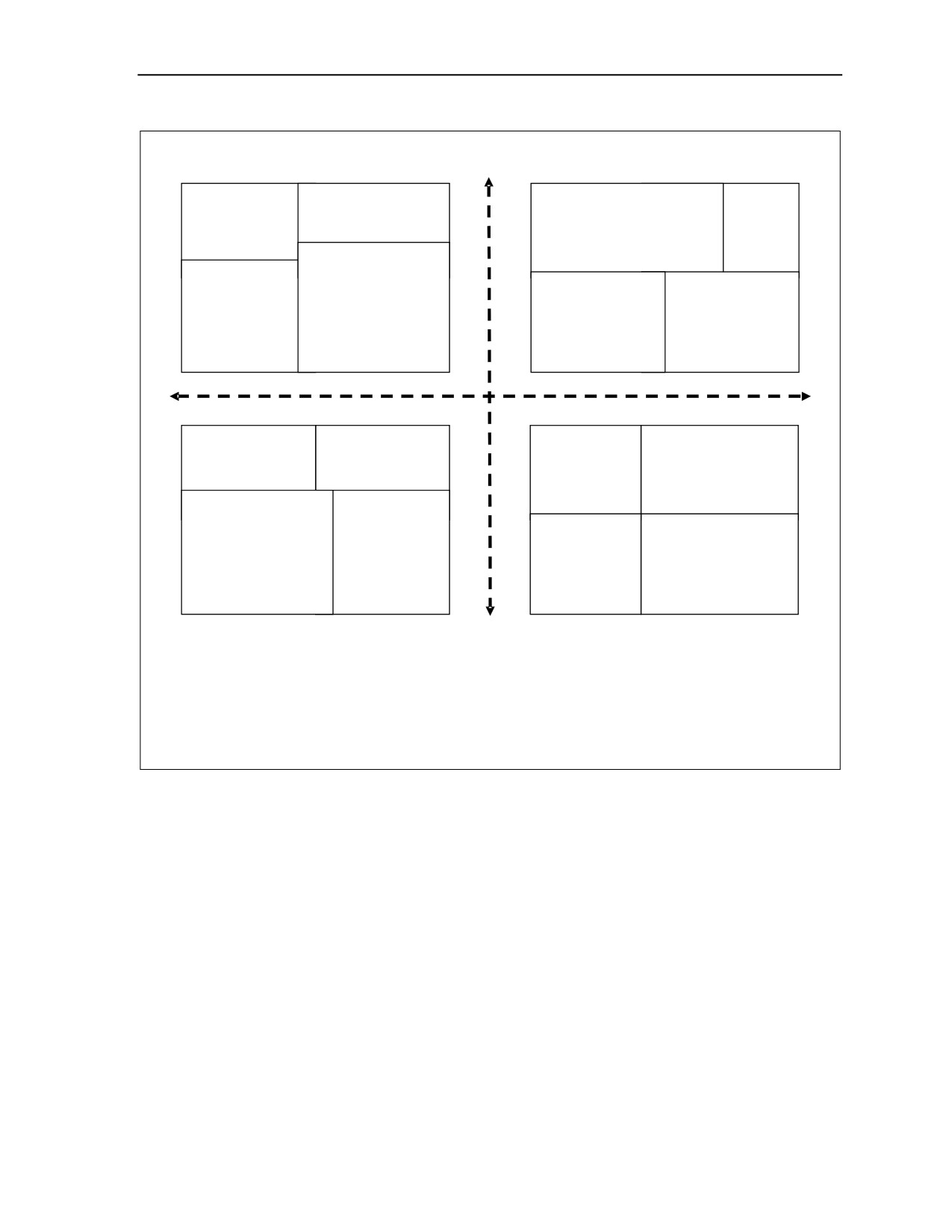
1-2. There are four categories of threat which are defined. An adversary may use elements from within
each of the threat groups to achieve an end. For a discussion on the health threat refer to Figure 1-1. The
four categories of threat are—
z
Traditional threats emerge from states employing recognized military capabilities and forces in
understood forms of military competition and conflict.
z
Irregular threats are posed by an opponent employing unconventional, asymmetric methods and
means to counter traditional US advantages, such as terrorist attacks, insurgency, and guerrilla
warfare.
z
Catastrophic threats involve the acquisition, possession, and use of chemical, biological,
radiological, and nuclear (CBRN) weaponry, often referred to as weapons of mass destruction.
z
Disruptive threats involve an enemy using new technologies that reduce US advantages in key
operational domains.
26 May 2010
FM 4-02.12
1-1
Chapter 1
MITIGATION
1-3. Regardless of the type of threat faced, the supporting AHS organizations can assist the commander
in mitigating the adverse health effects of deployed Soldiers. The Army Medical Department (AMEDD)
generating force conducts continuous medical research to field technologically advanced medical
equipment and medications/vaccines to counter the health threats faced by the deployed force. The
regional medical centers and educational programs train health care providers to provide state-of-the-art
care to trauma casualties and devise new and innovative treatment protocols to enhance care and reduce
morbidity, mortality, and long-term disability. Prior to deployment, AHS personnel have a key role in
ensuring a healthy and fit force through training, promotion of a healthy lifestyle, individual medical
readiness activities
(such as immunizations, dental examination and treatment, vision readiness
examinations, eyewear, and protective mask inserts), and health risk communications. During deployments
through the use of comprehensive medical and occupational and environmental health (OEH) surveillance
activities, the specific health threats posed by the deployment are identified and corrective actions are taken
to prevent or to mitigate the exposure and/or the effects of the particular threats. Medical treatment assets
within the deployed AO provide essential care to Soldiers who become wounded or ill during the
operation.
1-4. The most critical AMEDD function across all threats and full spectrum operations is medical C2.
Medical C2 provides the synchronization, coordination, and synergy required to effectively harness and
manage the HSS (casualty care, MEDLOG, and medical evacuation) and the FHP (casualty prevention)
aspects of operations. Leader-developed medical professionals are required to deconflict separate and
often disparate priorities across the complex system of systems and leverage the resources resident, not
only in the AHS, but across all Services and often from the civilian medical and educational communities,
to ensure our Soldiers receive timely and effective medical care, regardless of the type of injury or illness
or the Soldier’s location. Figure 1-1 is a graphic representation of the threats with an example of the
critical medical areas for initial consideration. However, since the AHS is a composite of subsystems, all
10 medical functions must be considered to ensure that effective and comprehensive care is provided
throughout the continuum of care.
1-2
FM 4-02.12
26 May 2010
Army Health System in Echelons Above Brigade
IRREGULAR
HIGHER
CATASTROPHIC
EPW
DISPLACED
DETAINEE
DISPLACED
EPW
CIVILIAN
CARE
CIVILIAN
DETAINEE
CARE
CARE
CARE
COMBAT
HN/NGO
COMBAT
CASUALTY
SUPPORT
HN/NGO
CASUALTY
CARE
SUPPORT
CARE
TRADITIONAL
DISRUPTIVE
DISPLACED
EPW
CIVILIAN
DETAINEE
DISPLACED
EPW
CARE
CARE
CIVILIAN
DETAINEE
CARE
CARE
COMBAT
HN/NGO
CASUALTY
COMBAT
SUPPORT
HN/NGO
CASUALTY
CARE
CARE
SUPPORT
LIKELIHOOD
Nature of mission dictates proportion and priority of support of Army Health System assets
LEGEND:
EPW enemy prisoner of war
HN host nation
NGO nongovernmental organization
Figure 1-1. Threats and medical capabilities
OPERATIONAL VARIABLES
1-5. The joint force commander and component commanders devote considerable efforts to analyzing the
operational environment and providing that analysis to their subordinates. Subordinate headquarters
continue the analysis of the operational variables (using the memory aid of PMESII-PT [Political, Military,
Economic, Social, Information, Infrastructure, Physical environment, and Time]) concentrating on the
variables that most influence their plans. Analysis of the operational variables develops a broader
understanding of the operational environment and equips commanders to visualize the unit’s role in the
larger operation. This makes it much easier to understand the higher commanders’ intent. It also prepares
commanders and staffs to extract out of PMESII-PT the information that is most important given the
situation that exists at the time they receive an order. The commander and staff can then go through the
decisionmaking process for that mission focused on the situation in terms of the mission variables, or
mission, enemy, terrain and weather, troops and support available, time available, and civil considerations
(METT-TC).
26 May 2010
FM 4-02.12
1-3
Chapter 1
1-6. The AHS planners of the regionally focused medical command (deployment support) (MEDCOM
[DS]) (paragraph 2-4) can use this construct to provide an in-depth analysis of underlying health care
issues within the geographic combatant commander’s (GCC’s) area of responsibility. This enables the
medical commander to develop plans to target the underlying social, economic, and environmental issues
impacting the health of a region in support of the GCC’s theater engagement plan.
MISSION VARIABLES
1-7. The mission variables (METT-TC factors) used by the tactical commander are influenced, to a
degree, by the operational variables used in strategic planning. As the operational variables describe the
human aspects of the operational environment, they must be carefully considered by the medical
commander and the AHS planner. In addition to supporting the tactical commander during major
operations, AHS assets are often simultaneously engaged in providing humanitarian care during stability
operations.
1-8. The AHS planner must accurately anticipate and forecast the medical requirements of the full
spectrum of military operations. If the AHS planner at the tactical level is not aware of or conversant with
the characteristics of the operational environment within the AO, the additional workload generated by
emerging civilian medical requirements will adversely impact the support provided to the tactical
commander. The humanitarian nature of medical care and assistance and the potential of the enemy
exploiting the human suffering of the civilian population to his own purposes could result in some of the
medical resources being diverted from their primary mission of supporting the deployed forces to
supporting civilian health care emergencies. The AHS planner, in conjunction with the regionally focused
MEDCOM (DS), must ensure that a thorough analysis has been accomplished of the existing health threat
and the host nation’s ability to mitigate or reduce the threat and that threat analysis is used in the
development of the medical requirements for a given operation. Most importantly, the AHS planner must
ensure that his actions and plans are integrated and synchronized with the task, purpose, and intent of the
tactical commander.
SECTION II — INTRODUCTION TO THE ARMY HEALTH SYSTEM IN
ECHELONS ABOVE BRIGADE
SYSTEM OF SYSTEMS
1-9. The AHS (Figure 1-2) promotes wellness and provides the tactical commander with a medically fit
and ready force. Pre- and postdeployment health assessments document the Soldier’s health baseline and
create a mechanism to document OEH hazard exposures encountered during deployments. The state-of-
the-art medical care provided the Soldier and his Family while at home station build the Soldier’s trust and
confidence in the military health care delivery system, so that he knows that if he is injured in battle he will
receive the same responsive, dedicated medical care in the deployed setting. The confidence instilled by
knowing that responsive medical care is always available translates to increased morale and esprit de corps
in our Soldiers. Additionally, knowing that his Family will be medically cared for while he is deployed
effectively reduces some of the stress of deployment and Family separation.
1-4
FM 4-02.12
26 May 2010

Army Health System in Echelons Above Brigade
MEDICAL
TREATMENT
(AREA SUPPORT)
MEDICAL
LABORATORY
SERVICES
HOSPITALIZATION
COMBAT AND
MEDICAL
OPERATIONAL
EVACUATION
STRESS CONTROL
MEDICAL
COMMAND AND CONTROL
MEDICAL
PREVENTIVE
LOGISTICS
MEDICINE
VETERINARY
DENTAL
SERVICES
SERVICES
Figure 1-2. The Army Health System—a system of systems
1-10. To ensure a seamless, continuum of care from the point of injury or wounding to the CONUS-
support base exists, in order to decrease morbidity and mortality and to reduce disability, a synergistic
effort is required between Army TOE and generating force medical organizations and resources and those
found in other sectors of the CONUS-support base. The ability of the deployed medical commander to
reachback into the CONUS-support base for medical technical, clinical, and materiel support is paramount
to optimizing the medical outcomes of our Soldiers who become wounded, injured, or ill while on
deployments. This reach capability enhances the care given in theater and maximizes the utilization and
employment of scarce medical resources.
1-11. The AHS supports both the protection warfighting function with FHP operations and the sustainment
warfighting function with HSS operations.
FOCUS OF THE ARMY HEALTH SYSTEM
1-12. As the operational environment becomes increasingly complex and lethal, sustaining the health of
the fighting forces becomes a critical factor in the success or failure of the mission. Comprehensive
planning enhances the capability of medical units to provide effective AHS support, and ultimately,
increases the chances for survival of the wounded Soldier.
1-13. The provision of timely and effective AHS support is a team effort which integrates the clinical and
operational aspects of the mission. Coordination and synchronization are key elements to ensure that a
seamless system of health care delivery exists from the point of injury through successive roles of care to
the CONUS-support base, is achieved. Refer to FM 4-02 for additional information.
26 May 2010
FM 4-02.12
1-5
Chapter 1
1-14. Consistent with military operations, AHS support also operates in a continuum across strategic,
operational, and tactical levels. In addition to maintaining a healthy and fit deployable force, the
effectiveness of the AHS is focused and measured on its ability to—
z
Provide prompt medical treatment consisting of those measures necessary to locate, recover,
resuscitate, stabilize, and prepare patients for evacuation to the next role of care and/or return to
duty. These resources provide Role 1 and Role 2 medical treatment on an area support basis for
those units without organic medical resources.
z
Employ standardized air and ground medical evacuation units/resources and provide en route
medical care to patients being evacuated. Evacuation by air ambulance is the preferred means of
transporting seriously wounded or injured personnel in most situations. Its use, however, is
METT-TC driven and can be affected by weather, availability of resources, CBRN conditions,
and air superiority issues. Evacuation from Roles 1 and 2 is a Service responsibility; however,
when designated by the GCC, the US Army may provide this support to the other Services
operating in the AO. Further, the US Army doctrinally provides Army support to other Services
such as US Marine Corps personnel for evacuation from shore-to-ship/ship-to-shore mission.
z
Field flexible, responsive, and deployable hospitals designed and structured to support a
Modular Army and its varied missions, as required. These hospitals provide essential care to all
patients who are evacuated out of theater and definitive care to those Soldiers capable of
returning to duty within the theater evacuation policy.
z
Provide a MEDLOG system (to include blood management) that is anticipatory, responsive, and
tailored to continuously support missions throughout full spectrum operations. The battle
rhythm of AMEDD is similar to that of the tactical commander. Medical supplies, equipment,
and medical equipment maintenance and repair support is required continually throughout all
phases of the operation as peak patient loads occur during combat operations. Due to the time-
sensitive nature of combat wounds and traumatic injuries, patients may not survive their injuries
or may have long-term disabilities which will adversely affect their quality of life if the
medications and medical equipment necessary to provide treatment are not available. Refer to
FM 4-02.1 for additional information.
z
Establish PVNTMED programs to prevent casualties from disease and nonbattle injury (DNBI)
through medical surveillance, OEH surveillance, health assessments, PVNTMED measures, and
personal protective measures. Refer to Army Regulation (AR) 40-5, Department of Army (DA)
Pamphlet 40-11, FM 4-02.17, FM 4-25.12, and FM 21-10 for additional information on
PVNTMED services.
z
Provide veterinary services to enhance the health of the command through three broad-based
functions—food inspection services, animal medical care, and veterinary PVNTMED
(to
include the prevention of zoonotic diseases transmissible to man). As the Department of
Defense (DOD) Executive Agent, the Army provides veterinary medicine support to the US Air
Force (USAF) (minus food inspection support on USAF installations), US Navy, US Marine
Corps, and Army forces, as well as other federal agencies, host nation, and multinational forces,
when directed. For additional information on veterinary operations and activities refer to
FM 4-02.18.
z
Provide dental services to maximize the quick return to duty of dental patients by providing
operational dental care and maintaining the dental fitness of theater forces. For additional
information on dental services operations and activities refer to FM 4-02.19.
z
Provide COSC to enhance unit and Soldier effectiveness through increased stress tolerance and
positive coping behaviors. For additional information, refer to FM 6-22.5 and FM 4-02.51.
z
Provide medical laboratory services in support of AHS operations to—
Assess disease processes (diagnosis).
Monitor the efficacy of medical treatment.
Identify and confirm use of suspect biological warfare and chemical warfare agents by
enemy forces.
1-6
FM 4-02.12
26 May 2010
Army Health System in Echelons Above Brigade
PRINCIPLES OF THE ARMY HEALTH SYSTEM
1-15. The six principles that must be applied to AHS operations are conformity, proximity, flexibility,
mobility, continuity, and control.
CONFORMITY
1-16. Conformity with the tactical plan is the most basic element for effectively providing AHS support.
In order to develop a comprehensive concept of operations, the medical commander must have direct
access to the tactical commander. Army Health System planners must be involved early in the planning
process and once the plan is established it must be rehearsed with the forces it supports. In stability
operations, it is essential that AHS support operations are in consonance with the GCC’s theater
engagement plan and have been thoroughly coordinated with the supporting assistant chief of staff, civil-
affairs (G-9). Army Health System plans in stability operations must be coordinated with all participating
organizations and multinational forces.
PROXIMITY
1-17. The principle of proximity is to provide AHS support to sick, injured, and wounded Soldiers at the
right time and to keep morbidity and mortality to a minimum. Army Health System support assets are
placed within supporting distance of the maneuver forces which they are supporting, but not close enough
to impede ongoing combat operations. As the battle rhythm of the medical commander is similar to the
tactical commander’s, it is essential that AHS assets are positioned to rapidly locate, acquire, stabilize, and
evacuate combat casualties. Peak workloads for AHS resources occur during combat operations.
FLEXIBILITY
1-18. Flexibility is being prepared to and empowered to shift AHS resources to meet changing
requirements. Changes in tactical plans or operations make flexibility in AHS planning and execution
essential. In addition to building flexibility into operation plans
(OPLANs) to support the tactical
commander’s scheme of maneuver, the medical commander must also ensure that he has the flexibility to
rapidly transition from one level of violence to another across the spectrum of conflict. As the current era
is one characterized by persistent conflict, the medical commander may be supporting simultaneous actions
along the continuum from stable peace through general war. The medical commander exercises his
command authority to effectively manage his scarce medical resources so that they benefit the greatest
number of Soldiers in the AO. For example, there are insufficient numbers of forward surgical teams
(FSTs) to permit the habitual assignment of these organizations to each brigade combat team (BCT).
Therefore, the medical commander, in conjunction with the command surgeon, closely monitors these
valuable assets so that he can rapidly reallocate or recommend the reallocation of this lifesaving skill to the
BCTs in contact with the enemy and where the highest rates of Soldiers will potentially receive traumatic
wounds and injuries are anticipated. As the tactical situation changes within that BCT AO, the command
surgeon and medical commander monitor and execute resupply and/or reconstitute operations of that FST
to prepare for follow-on operations which could be in another BCT’s AO. This ability to rapidly re-
mission these special skills maximizes the lifesaving capacity of these units, provides the highest standard
of lifesaving medical interventions to the greatest number of our combat wounded, and enhances the
effectiveness of the surgical care provided and the productivity of these teams.
MOBILITY
1-19. The principle of mobility is to ensure that AHS assets remain in supporting distance to support the
maneuvering operational Army forces. The mobility, survivability (such as armor plating and other
survivability measures), and sustainability of medical units organic to maneuver elements must be equal to
the forces being supported. Major AHS headquarters in EAB continually assess and forecast unit
movement and redeployment. Army Health System support must be continually responsive to shifting
medical requirements in the operational environment. In noncontiguous operations, the use of ground
ambulances may be limited depending on the security threat in unassigned areas and as stated in
26 May 2010
FM 4-02.12
1-7
Chapter 1
paragraph 1-4, air ambulance use may be limited by environmental conditions and enemy air defense
threat. Therefore, to facilitate a continuous evacuation flow, medical evacuation must be a synchronized
effort to ensure timely, responsive, and effective support is provided to the tactical commander.
CONTINUITY
1-20. Continuity in care and treatment is achieved by moving the patient through progressive, phased roles
of care, extending from the point of injury or wounding to the CONUS-support base. Each type of AHS
unit contributes a measured, logical increment in care appropriate to its location and capabilities. In
current operations, lower casualty rates, availability of rotary-wing air ambulances and other situational
variables often times enables a patient to be evacuated from the point of injury directly to the supporting
combat support hospital (CSH). In more traditional combat operations, higher casualty rates, extended
distances, and patient condition may necessitate that a patient receive care at each role of care to maintain
his physiologic status and enhance his chances of survival. The medical commander, with his depth of
medical knowledge, his ability to anticipate follow-on medical treatment requirements, and his assessment
of the availability of his specialized medical resources can adjust the patient flow to ensure each Soldier
receives the care required to optimize patient outcome.
CONTROL
1-21. Control is required to ensure that scarce AHS resources are efficiently employed and support the
tactical and strategic plan. It also ensures that the scope and quality of medical treatment meet professional
standards, policies, and US and international law. As the AMEDD is comprised of 10 medical functions
which are interdependent and interrelated, control of AHS support operations requires synchronization to
ensure the complex interrelationships and interoperability of all medical assets remains in balance to
optimize the effective functioning of the entire system. Within the theater, the most qualified commander
to orchestrate this complex support is the medical commander due to his training, professional knowledge,
education, and experience. In a joint and multinational environment it is essential that coordination be
accomplished across all Services and multinational forces to leverage all of the specialized skills within the
theater. Due to specialization and the low density of some medical skills within the Military Health System
(MHS) force structure, the providers may only exist in one Service (for example, the US Army has the only
Veterinary Corps officers in the MHS).
ARMY MEDICAL DEPARTMENT BATTLEFIELD RULES
1-22. The AMEDD has developed the battlefield rules to aid in establishing priorities and in resolving
conflicts between competing priorities within AHS activities. These battlefield rules are (in order of their
priority) to—
z
Be there (maintain a medical presence with the Soldier).
z
Maintain the health of the command.
z
Save lives.
z
Clear battlefield of casualties.
z
Provide state-of-the-art medical care.
z
Ensure early return to duty.
1-23. These rules are intended to guide the medical planner to resolve system conflicts encountered in
designing and coordinating AHS operations. Although medical personnel always seek to provide the full
scope of AHS support and services in the best possible manner, during every combat operation there is an
inherent possibility of conflicting support requirements. The planner or operator applies these rules to
ensure that the conflicts are resolved appropriately.
1-24. The rationale for the battlefield rules is based on the prevention of disease and injury and the
evolving clinical concept, which demonstrates that with good medical care the trauma victim will probably
survive the injury.
1-8
FM 4-02.12
26 May 2010

Army Health System in Echelons Above Brigade
HEALTH THREAT
1-25. The term health threat is defined as a collective term used to designate all potential or continuing
enemy actions and environmental situations that could adversely affect the combat effectiveness of friendly
forces, to include wounds, injuries, or sickness incurred while engaged in a joint operation.
1-26. In addition to wounds and injuries from conventional weapons and munitions, the health threat is
comprised of the categories discussed in Table 1-1.
Table 1-1. Health threat
Diseases
Endemic and epidemic
Foodborne
Waterborne
Arthropodborne
Zoonotic
Vectors and breeding grounds
Occupational and environmental health hazards
Climatic (heat, cold, humidity, and significant
elevations above sea level)
Toxic industrial materials
Accidental or deliberate dispersion of
radiological and biological material
Disruption of sanitation services/facilities
(such as sewage and waste disposal)
Disruption of industrial operations or
industrial noise
Poisonous or toxic flora and fauna
Poisonous reptiles, amphibians, arthropods,
and animals
Toxic poisonous plants and bacteria
Medical effects of weapons
Conventional
Chemical, biological, radiological, and nuclear
warfare agents
Directed energy
Weapons of mass destruction
Physiologic and psychological stressors
Continuous operations
Combat and operational stress reactions
Wear of mission-oriented protective posture
ensemble
Stability operations
Home front issues
1-27. For additional information on the health threat refer to FM 4-02.17.
MEDICAL INTELLIGENCE
1-28. Medical intelligence is the product resulting from the collection, evaluation, analysis, integration,
and interpretation of all available general health and bioscientific information. Medical intelligence is
concerned with one or more of the medical aspects of foreign nations or the AO and which is significant to
AHS or general military planning. Until medical information is processed or analyzed, it is not considered
to be medical intelligence. Medical information pertaining to foreign nations is processed by the National
Center for Medical Intelligence. For additional information on medical intelligence, refer to FM 4-02 and
FM 4-02.17.
26 May 2010
FM 4-02.12
1-9
Chapter 1
SECTION III — MEDICAL COMMANDER AND THE COMMAND SURGEON
MEDICAL COMMANDER
1-29. The medical commander exercises C2 (authority and direction) over his subordinate medical
resources. As discussed in FM 3-0, the commander is the focus of C2 and uses two processes in
decisionmaking. He uses an analytic approach to evaluate information and data systematically, proposes
courses of action, and determines which course of action will provide the optimal results. The commander
also makes decisions intuitively. For the medical commander, the intuitive decisionmaking process is
guided by professional judgment gained from experience, knowledge, education, intelligence, and
intuition. Experienced staff members use their intuitive ability to recognize the key elements and
implications of a particular problem or situation, reject the impractical, and select an adequate solution.
1-30. The leader-developed medical professional has been trained in critical thinking, assessing situations,
determining requirements for follow-on services, and decisive decisionmaking skills since the beginning of
his professional career. These are essential and critical skills which have been taught, nurtured, and
cultivated throughout his professional medical education and training. The medical commander’s
experience base cannot be viewed from a purely military perspective of when he entered the Army, but
must be viewed holistically to encompass all of the training, education, and experience he received prior to
and after his military career began. The military and leader development training, education, and
experience coupled with his proven critical thinking skills and ability to take decisive action make him the
most qualified commander to determine how medical assets will be employed in support of the tactical
commander and to successfully accomplish his Title 10 responsibilities for the care of his Soldiers.
1-31. The construct of mission command provides for centralized planning and decentralized execution
and is driven by mission orders. Successful mission command demands that subordinate leaders at all
echelons exercise disciplined initiative, acting aggressively and independently to accomplish the mission
within the commander’s intent. Mission command gives the subordinate leaders at all echelons the greatest
possible freedom of action.
While mission command restrains higher-level commanders from
micromanaging subordinates, it does not remove them from the fight. Rather, mission command frees
these commanders to focus on accomplishing their higher commander’s intent and on critical decisions
only they can make. Within the medical C2 structure it enables the MEDCOM (DS) commander to retain a
regional focus in support of the GCC’s and Army service component command’s (ASCC) theater
engagement plan, while still providing effective and timely direct support to the supported tactical
commanders and providing general support on an area basis to theater forces at EAB (such as those
conducting aerial ports of debarkation, sea ports of debarkation, and tactical assembly areas operations or
to other temporary or permanent troop concentrations). One consequence of the enduring regional focus of
the ASCC is to drive specialization in its subordinate MEDCOM (DS) since unique health threats, local
needs and capabilities, other Service capabilities, and geographic factors are distinctly related to a
particular region. This characteristic is in contrast to some other staff and subordinate unit functions that
are performed in much the same ways regardless of region.
COMMAND SURGEON
DUTIES AND RESPONSIBILITIES
1-32. At all levels of command, a command surgeon is designated. This AMEDD officer is a special staff
officer charged with planning for and executing the AHS mission. At the lower levels of command, this
officer may be dual-hatted as a medical unit commander; further, he may have a small staff section to assist
him in his planning, coordinating, and synchronizing the AHS effort within his AO.
1-33. The command surgeon is responsible for ensuring that all AMEDD functions are considered and
included in running estimates, OPLANs, and operation orders (OPORDs). The command surgeon retains
technical supervision of all AHS operations. At the higher levels of command, the scope of duties and
responsibilities expand to include all subordinate levels of command.
1-10
FM 4-02.12
26 May 2010
Army Health System in Echelons Above Brigade
1-34. Through mission command, the command surgeon may be empowered to act somewhat
independently, however, the nonmedical commander can retain the authority to make the decisions which
he feels are critical. Mission command, to be successful, requires an environment of trust and mutual
understanding which may be challenging to establish for newly assigned staff members who have not had a
previous supporting relationship with the command. Sustainment unit commanders who previously
commanded multifunctional battalions earlier in their careers may want to rely on that experience rather
than the medical judgment and experience of a newly assigned command surgeon without realizing the
complexities of managing the full array of medical specialty units and personnel. The effectiveness,
responsiveness, and the efficiency of the deployed resources may be adversely impacted and Soldier
survival rates may decrease and DNBI rates may rise.
1-35. The duties and responsibilities of command surgeons may include, but are not limited to—
z
Advising the commander on the health of the command.
z
Developing and coordinating the HSS and FHP portion of OPLANs to support the
combatant/tactical commander’s decisions, planning guidance, and intent.
z
Determining the medical workload requirements (patient estimates) based upon the casualty
estimate developed by the assistant chief of staff, personnel and/or personnel staff officer (S-1).
z
Determining, in conjunction with the staff judge advocate (SJA) and the chain of command, the
eligibility for medical care in a US Army medical treatment facility (MTF). Refer to Appendix
A for additional information.
z
Maintaining situational understanding by coordinating for current AHS information with
surgeons of the next higher, adjacent, and subordinate headquarters.
z
Recommending task organization of medical units/elements to satisfy all mission requirements.
z
Recommending policies concerning support of civil-military operations (CMO).
z
Monitoring the availability of and recommending the assignment, reassignment, and utilization
of AMEDD personnel within his AO.
z
Developing, coordinating, and synchronizing health consultation services.
z
Evaluating and interpreting medical statistical data.
z
Monitoring implementation of Army medical information programs.
z
Recommending policies and determining requirements and priorities for MEDLOG (to include
blood and blood products, medical supply/resupply, medical equipment maintenance and repair,
production of medicinal gases, optometric support, and fabrication of single- and multivision
optical lens and spectacle fabrication and repair).
z
Recommending medical evacuation policies and procedures.
z
Monitoring medical regulating and patient tracking operations.
z
Determining AHS training requirements.
z
Developing policies, protocols, and procedures pertaining to the medical and dental treatment of
sick, injured, and wounded personnel. These policies, protocols, and procedures will be in
consonance with applicable regulations, directives, and instructions; higher headquarters
policies; standing operating procedures; applicable STANAGs and ABCA standards;
memorandums of understanding or agreement; and Status of Forces Agreements.
z
Ensuring field medical records and/or electronic medical records, when available, are
maintained on each Soldier at the primary care MTF according to AR 40-66 and FM 4-02.4.
z
Ensuring compliance with the theater blood bank service program.
z
Ensuring a viable veterinary program (to include inspection of subsistence and outside the
continental US food production and bottled water facilities, veterinary PVNTMED, and animal
medical care) is established.
z
Ensuring a medical laboratory capability or procedures for obtaining this support from out of
theater resources are established for the identification and confirmation of the use of suspect
biological warfare and chemical warfare agents by opposition forces. This also includes the
capability for collecting specimens/samples, packaging, and handling requirements and
escort/chain of custody requirements. Refer to FM 4-02.7 for additional information.
26 May 2010
FM 4-02.12
1-11
Chapter 1
z
Planning for and implementing PVNTMED operations and facilitating health risk
communications (to include PVNTMED programs and initiating PVNTMED measures to
counter the health threat). Refer to FM 4-02.17 for additional information on the health threat.
z
Planning for and ensuring pre- and postdeployment health assessments are accomplished.
z
Establishing and executing a medical surveillance program (refer to DOD Directive [DODD]
6490.2, DOD Instruction [DODI] 6490.03, Joint Chiefs of Staff Memorandum MCM 0028-07,
AR 40-66, and FM 4-02.17 for an in-depth discussion).
z
Establishing and executing an OEH surveillance program (FM 3-100.4).
z
Recommending COSC, behavioral health (BH), and substance abuse control programs.
z
Coordinating for medical intelligence with the supporting intelligence officer/section/unit.
Pursuing other avenues to obtain medical intelligence and/or medical information such as the—
National Center for Medical Intelligence.
United States Army Center for Health Promotion and Preventive Medicine.
Centers for Disease Control and Prevention.
United States Public Health Services.
International organizations (such as the United Nations, the World Health Organization, or
the Pan American Health Organization, and other nongovernmental organizations [NGOs]).
Information gathered from site visits to host nation medical facilities.
z
Identifying commander’s critical information requirements, priority intelligence requirement,
essential elements of friendly information, and friendly forces information requirements as they
pertain to the health threat; ensuring they are incorporated into the command’s intelligence
requirements.
z
Coordinating for foreign humanitarian assistance, disaster relief, and medical response to
weapons of mass destruction or terrorist incidents, and civil support operations, when
authorized.
z
Advising commanders on AHS CBRN defensive actions (such as immunizations, use of
chemoprophylaxis, pretreatments, and barrier creams).
z
Ensuring individual informed consent is established before the administration of investigational
new drugs as described in Executive Order 13139 and AR 40-7.
z
Assessing special equipment and procedures required to accomplish the AHS mission in specific
environments such as urban operations, mountainous terrain, extreme cold weather operations,
jungles, and deserts. Requirements are varied, depending upon the scenario, and could
include—
Obtaining pieces of equipment or clothing not usually carried (piton hammers, extreme cold
weather parka, jungle boots, or the like).
Adapting medical equipment sets for a specific scenario to include adding items based on
the forecasted types of injuries to be encountered (such as more crush injuries and fractures in
urban operations or mountain operations). In certain scenarios (such as urban operations), some
medical supplies and equipment may not be carried into the fight initially (such as sick call
materials), but rather brought forward by follow-on forces. In mountain operations, bulky or
heavy items (such as extra tentage) may not accompany the force because of the difficulty in
traversing the terrain.
Having individual Soldiers carry additional medical items, such as bandages and
intravenous fluids.
z
Recommending disposition instructions for captured enemy medical supplies and equipment.
Under the provisions of the Geneva Conventions, medical supplies and equipment are protected
from intentional destruction and should be used to initially treat sick, injured, or wounded
enemy prisoners of war (EPWs) and detainees. Refer to FM 4-02 for additional information on
the Geneva Conventions.
z
Submitting to higher headquarters those recommendations on medical problems/conditions that
require research and development.
1-12
FM 4-02.12
26 May 2010
Army Health System in Echelons Above Brigade
z
Recommending theater policy for medically evacuating contaminated patients.
z
Coordinating and monitoring patient decontamination operations to include—
Theater policies on patient decontamination operations.
Layout and establishment of patient decontamination site.
Use of collective protection.
Use of nonmedical Soldiers to perform patient decontamination procedures under medical
supervision.
This paragraph implements STANAGs 2132 and 2350
STANDARD OF CARE
1-36. The command surgeon is responsible for the standard of care which is provided to sick, wounded,
and injured Soldiers by subordinate medical personnel.
PAIN MANAGEMENT
1-37. The command surgeon must ensure that standardized protocols for the alleviation of pain (to include
the administration of pain relief medications by nonphysician health care providers) are established and
disseminated. Further, he must ensure and certify that each combat medic (or other military occupational
specialty [MOS] 68W provider), working under the supervision of a physician, has received sufficient
training to—
z
Recognize when pain management measures and medications are required.
z
Provide pain management measures (elevation, immobilization, and ice [when available]).
z
Select the appropriate medication
(such as acetaminophen, ibuprofen, or morphine sulfate);
determine the mode of administration (oral or parenteral); and be knowledgeable of the possible
side effects and how to treat them; and administer the appropriate medication.
z
Document the treatment provided (DA Form 7656, Tactical Combat Casualty Care Card, or
Department of Defense Form 1380, U.S. Field Medical Card) to include the marking of
individuals who have received morphine sulfate.
CONTROLLED SUBSTANCES
1-38. The command surgeon is also responsible for ensuring that all controlled substances are stored,
safeguarded, issued, and accounted for according to the provisions of AR 40-3. The medical equipment
sets for the combat medic includes morphine sulfate. When the mission supported involves a high risk of
trauma, the command surgeon may authorize the combat medic to carry morphine sulfate to alleviate
severe pain caused by trauma or wounding. This medication must be accounted for when issued to the
combat medic and upon mission completion.
ARMY SERVICE COMPONENT COMMAND SURGEON
1-39. Each combatant command and subordinate commands have an ASCC assigned. The ASCC supports
the GCC by conducting Army operations in support of the GCC’s established objective. The Army
contributes forces to perform combat, sustainment, and support activities in the theater. Under Army
Modularity principles, at echelons below the ASCC, there are no fixed relationships among units or
headquarters and few assets dedicated to any particular region. However, in the case of the ASCC, the
enduring link between the command and a particular region of the world requires the ASCC surgeon to
develop specialized capabilities and a particular understanding of its region. In the case of HSS and FHP,
unique medical and environmental threats, local capabilities and needs, other Service capabilities, and
geographic factors require a degree of regional specialization and expertise that is not shared by many
other commanders or special staff officers. This specialized regional expertise is necessary in order to
26 May 2010
FM 4-02.12
1-13
Chapter 1
support the GCC and ASCC commanders’ theater engagement plans, as well as ensure state-of-the-art
medical support for operations.
1-40. Army Health System support for the Army component in a theater is the responsibility of the ASCC
commander. The command surgeon is on the commander’s special staff.
1-41. The ASCC command surgeon is the senior medical staff officer on the ASCC commander’s staff.
The ASCC command surgeon is a separate position from the MEDCOM (DS) commander. The ASCC
command surgeon—
z
Has staff responsibility for health care provided to the theater.
z
Has staff responsibility for planning, coordinating, and developing policies for the AHS support
of Army forces.
z
Provides advice concerning the health of the command and the occupied or friendly territory
within the ASCC AO.
z
Determines the health threat and provides advice concerning the medical effects of the
environment and of CBRN weapons on personnel, military working dogs (MWDs), rations, and
water.
z
Recommends changes to the theater evacuation policy and provides input and personnel to the
theater patient movement requirements center (TPMRC), as required.
z
Determines the policy for the requisition, procurement, storage, maintenance, distribution,
management, and documentation of Class VIII materiel, blood and blood products, and special
medical-peculiar items of subsistence. This includes recommendations for establishment or
designation of a theater lead agent for medical materiel and the assignment of missions for the
single integrated MEDLOG manager (SIMLM).
z
Develops and monitors mass casualty plans.
z
Recommends priority of fills for all AMEDD officer and warrant officer (WO) vacancies and
makes recommendations concerning the assignment of enlisted personnel with AMEDD
specialties within the command.
CORPS SURGEON
1-42. Corps is the largest tactical units in the US Army. They are the instruments by which higher
echelons of command conduct operations at the operational level. Higher headquarters tailor corps for the
theater and the mission for which they are deployed. They contain organic maneuver and sustainment
capabilities to sustain operations for a considerable period (when deployed as part of a larger ground
force). For a more detailed discussion of corps operations, see FM 100-15.
1-43. The corps surgeon is a special staff officer in the corps headquarters. This officer has a 13-man staff
section to assist him in planning and executing staff requirements. The corps surgeon has direct access to
the corps commander on all AHS support matters. With input from the MEDCOM (DS) commander, he
keeps the corps commander and his staff informed on all matters concerning the health of the command,
medical readiness, and the AHS aspects of combat operations and effectiveness. As command surgeon, he
advises the corps commander and staff on all AHS support matters related to personnel, health threat,
operations, and MEDLOG. The surgeon’s cell is normally functionally organized under the sustainment
warfighting function, but may be directly under the corps chief of staff depending on the desires of the
corps commander. He establishes coordination with surgeons and medical commanders of higher,
subordinate, and adjacent headquarters through command channels, except for technical matters, which are
coordinated through technical channels.
1-44. The duties of a command surgeon are discussed in paragraph 1-35. In addition to these duties, the
corps surgeon and his staff—
z
Provide current information on the corps AHS support situation to surgeons of the next higher,
adjacent, and subordinate headquarters.
z
Develop health consultation services within the corps.
z
Evaluate and interpret AHS statistical data.
1-14
FM 4-02.12
26 May 2010
Army Health System in Echelons Above Brigade
z
Develop, in conjunction with higher headquarters, corps evacuation policies.
z
Determine corps AHS training policies and programs as required.
z
Ensure compliance with the theater blood bank service program.
z
Initiate PVNTMED programs (to include medical surveillance and OEH surveillance) and
procedures within the corps.
z
Coordinate access to intelligence of medical interest with the deputy chief of staff,
security/plans/operations (DCSSPO) and ensure that the health threat, medical intelligence, and
intelligence of medical interest are integrated into AHS OPLANs and OPORDs.
DIVISION SURGEON
1-45. The division surgeon is a Medical Corps officer (area of concentration [AOC] 60A00). He is a
division-level special staff officer and normally works under the staff supervision of the division chief of
staff.
1-46. The principle duties and responsibilities of the division surgeon are advising the commanding
general on the health of the command. As chief of the division surgeon section, the division surgeon is
able to contribute to the division’s warfighting capability by providing timely and effective AHS support
planning (to include developing patient estimates) for inclusion in the division planning process and the
conduct of full spectrum operations. The division surgeon operating from within the division surgeon
section coordinates for EAB medical support and ensures that the information is integrated into the
commander’s ground tactical plan. The division surgeon is responsible for the technical supervision of all
subordinate medical officers assigned to the command. He provides oversight and coordinates of all HSS
and FHP activities throughout the division AO.
26 May 2010
FM 4-02.12
1-15
This page intentionally left blank.
Chapter 2
Medical Command (Deployment Support)
The complexities of the operational environment, the myriad of medical functions
and assets, and the requirement to provide health care across full spectrum operations
to diverse populations (US, joint, multinational, host nation, and civilian) necessitates
a medical command authority that is regionally focused and capable of utilizing the
scarce medical resources available to their full potential and capacity. The
MEDCOM (DS) conserves the fighting strength of the tactical commander through
synchronization of AHS operations and commanding and controlling medical
brigades
(MEDBDEs) (support), medical battalions
(multifunctional)
(MMBs),
and/or other medical units assigned/attached to the headquarters providing HSS/FHP
to tactical commanders and theater forces and simultaneously conduct of stability
operations.
SECTION I — HEADQUARTERS AND HEADQUARTERS COMPANY, MEDICAL
COMMAND (DEPLOYMENT SUPPORT)
MISSION AND ASSIGNMENT
2-1. The headquarters and headquarters company (HHC), MEDCOM (DS) (TOE 08640G000) provides
C2, administrative assistance, and technical supervision of assigned and attached units. Medical units
which may be assigned or attached to this organization are provided in Appendix C.
2-2. The MEDCOM (DS) serves as the medical force provider within the theater. As the medical force
provider, the MEDCOM (DS) commander identifies and evaluates health care requirements throughout his
AO. Within the MEDCOM (DS) AO, medical resources may be dispersed over an extended area and may
include numerous areas with increased patient densities, transient troop populations, varying levels of
hostilities, and significantly different health care requirements. To successfully execute AHS operations,
the MEDCOM (DS) commander must have the ability to rapidly task-organize and reallocate medical
assets across command and geographical boundaries. This ability is crucial to ensure the medical force
package is effectively tailored to optimize the use of scarce medical resources.
2-3. The MEDCOM (DS) is composed of an operational command post (OCP) and a main command post
(MCP) that can deploy autonomously into the AO. It possesses a centralized capability to effectively and
efficiently task-organize medical elements based on specific AHS requirements in the AO. The MEDCOM
(DS) serves as the medical force provider for the AO and focuses on AO medical OPLANs and medical
contingency plans. It monitors threats within the AO, ensures required medical capabilities to mitigate
these health threats, and maintains visibility and utilization of medical infrastructure, treatment, and
evacuation capabilities. It accomplishes its Title 10 responsibilities and Army support to other Services for
the AO. The MEDCOM (DS) partners and trains with host nation and multinational medical units. It
establishes a command relationship with the ASCC commander and the GCC to influence and improve the
delivery of health care and is linked to the theater sustainment command by the medical logistics
management center for coordination and planning. The MEDCOM (DS) is assigned to the ASCC and is
allocated on a basis of one per theater.
26 May 2010
FM 4-02.12
2-1
Chapter 2
REGIONAL FOCUS
2-4. The MEDCOM (DS) maintains a regional focus that encompasses all of the GCC’s area of
responsibility. As in all regions of the world, neighboring countries often have economic, social, and
religious ties and are dealing with similar health issues. The issues which may be at the heart of the social
unrest in the deployment area can usually be found to exist in the other countries within the same region.
Medical forces, due to their humanitarian mission, have always been more acceptable to host nations than
the operational Army. The medical commander’s ability to cultivate medical professional contacts within a
nation or group of nations, facilitates the planning for and execution of regional strategies that will
potentially mitigate the underlying social, economic, cultural, health, and political conditions which can
foster civil unrest.
2-5. By establishing linkages to the civilian and governmental health care authorities in each nation, the
senior medical command headquarters can actively monitor existing health threats, develop regional
strategies to mitigate these threats, enhance the host nation government’s legitimacy with the affected
population, and reduce human suffering. The medical commander provides the GCC with an effective tool
to assist in shaping the security environment by alleviating the health conditions which impact the
development of strong social, economic, and political infrastructures. The GCC can deploy medical
experts to provide consultation and advice to assist host nations in broadening their medical capacity in
both the public and private health sectors through the development and implementation of health care
programs specifically designed to address the particular health challenges faced by the host nation.
2-6. Military medical training exercises can be mutually beneficial to the host nation and US forces.
These exercises provide a forum for training medical personnel in the identification and treatment of
diseases and conditions that are not endemic in the US and provide the host nation military or civilian
medical personnel training on emerging state-of-the-art technologies and medical protocols. The care
provided which is incidental to the training mission, assists the host nation in overcoming the adverse
impacts of the diseases/conditions treated and enhances its legitimacy in the eyes of it citizens.
2-7. The effects of focusing on interregional cooperation are to eradicate diseases or the environmental
conditions that promote the growth of disease vectors. The interregional cooperation which results may
also favorably affect the economic, social, and political fabric of the nation, remove obstacles to
interregional cooperation in other sectors, and enhance the standard of living of the host nation residents.
CAPABILITIES AND LIMITATIONS
2-8. The MEDCOM (DS) provides—
z
Command and control of theater medical units providing AHS support within the AO.
z
Subordinate medical organizations to operate under the MEDBDE and/or MMB and to provide
medical capabilities to the BCT.
z
Advice to the ASCC commander and other senior-level commanders on the medical aspects of
their operations.
z
Staff planning, supervision of operations, and administration of assigned and attached medical
units.
z
Assistance with coordination and integration of strategic capabilities from the sustaining base to
units in the AO.
z
Advice and assistance in facility selection and preparation.
z
Coordination with the USAF TPMRC for medical regulating and movement of patients from
MTFs.
z
Consultation services and technical advice in all aspects of medical and surgical services.
z
Functional staff to coordinate medical plans and operations, hospitalization, PVNTMED,
tactical and strategic medical evacuation, veterinary services, nutrition care services, COSC,
medical laboratory services, and area medical support to supported units.
2-2
FM 4-02.12
26 May 2010
Medical Command (Deployment Support)
z
Coordination and orchestration of MEDLOG operations to include Class VIII supplies/resupply,
distribution, medical maintenance and repair support, optical fabrication, and blood
management.
z
Planning and support for SIMLM, when designated.
z
Veterinary support for zoonotic disease control, investigation and inspection of subsistence, and
animal medical care.
z
Preventive medicine support for medical and OEH surveillance, potable water inspection, pest
management, food facility inspection, and control of medical and nonmedical waste.
z
Legal advice to the commander, staff, subordinate commanders, Soldiers, and other authorized
persons.
z
Health threats monitoring within the AO and ensuring required capabilities to mitigate threats
are identified.
z
Religious support to the command. This includes coordinating with the headquarters unit
ministry team for required religious support throughout the AO and providing consultation
capability to subordinate MEDCOM (DS) unit ministry teams.
z
Minimum mission essential wartime requirements for personnel and equipment.
2-9. This unit is dependent upon appropriate elements of the theater sustainment command for
sustainment, health care, finance, supplemental transportation, security during tactical moves, sustainment
area security and area damage control, CBRN decontamination assistance, and laundry and bath.
2-10. This unit requires 100 percent of its TOE equipment and supplies to be transported in a single lift,
while using its authorized organic vehicles.
ORGANIZATION AND FUNCTIONS
INTERNAL STAFF AND OPERATIONS
2-11. Section I of this chapter combines the MCP and OCP of the MEDCOM (DS) to provide a
description of the composition and capabilities of the command’s coordinating, special, and personal staff
structure. For additional information on the composition, duties, and responsibilities of the various Army
staffs refer to FM 5-0.
Coordinating Staff
2-12. Figure 2-1 graphically depicts the organization of the MEDCOM (DS) coordinating staff. The
coordinating staff officers are the commander’s principal staff assistants and are directly accountable to the
chief of staff. Coordinating staff officers are responsible for one or a combination of broad fields of
interest. They help the commander coordinate and supervise the execution of plans, operations, and
activities. Collectively through the chief of staff, they are accountable for the commander’s entire field of
responsibilities. The staff is not accountable for functional areas the commander decides to personally
control.
26 May 2010
FM 4-02.12
2-3
Chapter 2
COMMANDER
CHIEF OF STAFF
CHIEF OF STAFF
SECTION
DCS
DCS
DCS
DCS
DCS
INFORMATION
SECURITY, PLANS,
PERSONNEL
LOGISTICS
COMPTROLLER
MANAGEMENT
AND OPERATIONS
PERSONNEL
MEDICAL
CURRENT
THEATER PATIENT
INTELLIGENCE
PLANS
MANAGEMENT
LOGISTICS
OPERATIONS
MOVEMENT
OPERATIONS
BRANCH
ACTIONS BRANCH
SUPPORT SECTION
BRANCH
CENTER
BRANCH
LEGEND:
DCS deputy chief of staff
Figure 2-1. Medical command (deployment support) coordinating staff
Special and Personal Staffs
2-13. The special staff depicted in Figure 2-2 helps the commander and other members of the staff in their
professional and technical functional areas. Special staffs are organized according to functional areas.
2-14. The personal staff depicted in Figure 2-2 works under the commander’s immediate control. They
also serve as special staff officers as they coordinate actions and issues with other staff members.
2-4
FM 4-02.12
26 May 2010
Medical Command (Deployment Support)
COMMANDER
DEPUTY COMMANDER
COMMAND SERGEANT MAJOR
CHAPLAIN
CHIEF OF STAFF SECTION
INSPECTOR GENERAL
STAFF JUDGE ADVOCATE
AIDES
PUBLIC AFFAIRS OFFICER
CLINICAL SERVICES
DENTAL SERVICES
NUTRITIONAL CARE
VETERINARY SERVICES
SERVICES
PREVENTIVE MEDICINE
STAFF JUDGE ADVOCATE
CHIEF NURSE
PUBLIC AFFAIRS SECTION
SECTION
SECTION
INSPECTOR GENERAL
HEADQUARTERS &
CIVIL AFFAIRS SECTION
UNIT MINISTRY TEAM
SECTION
HEADQUARTERS COMPANY
Figure 2-2. Medical command (deployment support) special and personal staffs
COMMAND SECTION
2-15. The command section (Table 2-1) provides C2 and management of all MEDCOM (DS) services.
Personnel of this section supervise and coordinate the MEDCOM (DS) operations and administrative
services.
Table 2-1. Command section
Paragraph title
AOC/MOS
Grade
Title
Branch
00B00
O8
Commander
GO
00B00
O7
Deputy commander**
GO
01A00
O3
Aide-de-camp
IMM
01A00
O2
Aide-de-camp**
IMM
Command section
00Z5O
E9
Command sergeant major
NC
42A3O
E6
Executive administrative assistant
NC
88M3O
E6
Senior vehicle driver
NC
92G3O
E6
Enlisted aide**
NC
26 May 2010
FM 4-02.12
2-5

Chapter 2
Table 2-1. Command section (continued)
Paragraph title
AOC/MOS
Grade
Title
Branch
92G3O
E6
Enlisted aide
NC
Command section (continued)
88M2O
E5
Vehicle driver**
NC
LEGEND
**MEDCOM (DS) (Operational Command Post) Staff
MOS military occupational specialty
AOC area of concentration
MS Medical Service Corps
GO general officer
NC noncommissioned Officer
IMM immaterial
Commander
2-16. The commander (Major General/O8, AOC 00B00) directs, coordinates, and controls assigned and
attached medical units in the theater to accomplish the mission. The commander deploys with the MCP.
Deputy Commander
2-17. The deputy commander (Brigadier General/O7, AOC 00B00) also serves as the commander of the
OCP. He must remain informed of the operations so he can assume command, if necessary. The deputy
commander assumes command functions as directed by the commander or in his absence. The deputy
commander deploys with the OCP.
Aide-de-Camps
2-18. The aide-de-camp (Captain [CPT]/O3, AOC 01A00) performs such duties as directed by the
commanding general. The aide-de-camp deploys with the MCP.
2-19. The aide-de-camp (Lieutenant/O2, AOC 01A00) performs such duties as directed by the deputy
commander. The aide-de-camp deploys with the OCP.
Command Sergeant Major
2-20. The command sergeant major (CSM) (CSM/E9, MOS 00Z5O) is the principal enlisted representative
to the commander. He advises the commander and staff on all matters pertaining to the welfare and morale
of enlisted personnel in terms of assignment, reassignment, promotion, and discipline. He provides
counsel and guidance to noncommissioned officers (NCOs) and other enlisted personnel of the MEDCOM
(DS). He is also responsible for the reception of newly assigned enlisted personnel into the unit. The CSM
evaluates the implementation of individual Soldier’s training on common Soldier tasks and supervises the
MEDCOM (DS) NCO professional development program. The CSM deploys with the MCP.
Executive Administrative Assistant
2-21. The executive administrative assistant
(Staff Sergeant
[SSG]/E6, MOS
42A3O) provides
administrative assistance, prepares and edits correspondence for signature by the commander and deputy
commander, maintains and tracks correspondence and suspense’s, and prepares reports, as required. The
executive assistant deploys with the MCP.
Senior Vehicle Driver
2-22. The senior vehicle driver (SSG/E6, MOS 88M3O) operates the wheeled vehicles in the command
section for the commander. The senior vehicle driver deploys with the MCP.
2-6
FM 4-02.12
26 May 2010

Medical Command (Deployment Support)
Enlisted Aides
2-23. The enlisted aides (SSG/E6, MOS 92G3O) provide administrative assistance to the commander and
deputy commander. One enlisted aide deploys with the OCP and one with the MCP.
Vehicle Driver
2-24. The vehicle driver
(Sergeant
[SGT]/E5, MOS 88M2O) operates the wheeled vehicles in the
command section for the deputy commander. The vehicle deploys with the OCP.
CHIEF OF STAFF SECTION
2-25. The chief of staff section (Table 2-2) plans, directs, and coordinates the execution of staff tasks and
functions. It reviews organizational activities and recommends changes, as necessary, to the MEDCOM
(DS) commander. This section ensures synchronization of staff activities and ensures that required
coordination is accomplished.
Table 2-2. Chief of staff section
Paragraph title
AOC/MOS
Grade
Title
Branch
67A00
O6
Chief of staff
MS
Chief of staff section
67A00
O4
Secretary general staff**
MS
67A00
O4
Secretary general staff
MS
LEGEND
MS Medical Service Corps
**MEDCOM (DS) (Operational Command Post) Staff
MOS military occupational specialty
AOC area of concentration
Chief of Staff
2-26. The chief of staff (Colonel [COL], AOC 67A00) is the MEDCOM (DS) commander’s principal
assistant for directing, coordinating, supervising, and training the special and coordinating staffs, except in
those areas the commander reserves for himself. The MEDCOM (DS) commander delegates the necessary
executive management authority to the chief of staff. The chief of staff frees the commander from routine
details and passes pertinent data, information, and insights from the staff to the commander and from the
commander to the staff. For an in-depth discussion of the duties and responsibilities of the chief of staff,
refer to FM 5-0. The chief of staff deploys with the MCP.
Secretary General Staff
2-27. The secretaries general staff (Major (MAJ)/O4, AOC 67A00) act as the executive officers for the
chief of staff. They perform such duties as the chief of staff may direct in each respective command post.
There are two officers assigned to this section. One secretary general staff deploys with the MCP and one
with the OCP.
DEPUTY CHIEF OF STAFF, PERSONNEL
2-28. The deputy chief of staff, personnel
(DCSPER) (Lieutenant Colonel [LTC]/O5, AOC 70F67)
(Table 2-3) serves as the principal staff element for all internal MEDCOM (DS) matters pertaining to
human resource (HR) activities. This section is responsible for establishing, monitoring, and assessing
MEDCOM (DS) HR policies. This section has primary or coordinating responsibility for MEDCOM (DS)
strength management; finance support; casualty management; casualty estimates; morale, welfare, and
recreation (MWR) activities; education; safety and accident prevention; alcohol and drug abuse programs;
26 May 2010
FM 4-02.12
2-7

Chapter 2
and equal opportunity activities. Further, this section provides overall administrative services for the
command, to include: personnel administration, mail distribution, awards and decorations, and leaves.
This section coordinates with elements of supporting agencies for finance, HR, and administrative services
as required. This section receives and processes actions including promotions, reassignments, awards,
personnel security clearances, personnel accounting, and strength management. The section prepares the
MEDCOM (DS) personnel estimate and recommends priorities of fill for replacement to the MEDCOM
(DS) commander and the DCSSPO. Refer to FM 1-0 and FM 5-0 for additional information. This section
monitors the Professional Filler System and the integration of Professional Filler System personnel into
subordinate medical units.
Table 2-3. Deputy chief of staff, personnel
Paragraph title
AOC/MOS
Grade
Title
Branch
70F67
O6
Deputy chief of staff, personnel
MS
70F67
O5
Health services personnel officer**
MS
42B00
O4
Personnel management officer
AG
42B00
O4
Personnel management officer**
AG
42A5O
E9
Chief human resources sergeant
NC
Deputy chief of staff,
personnel
42A4O
E7
Senior human resources sergeant**
NC
42A2O
E5
Human resources sergeant**
NC
42A1O
E4
Human resources specialist
42A1O
E4
Human resources specialist**
42A1O
E3
Human resources specialist**
LEGEND
** MEDCOM (DS) (Operational Command Post) Staff
MS Medical Service Corps
AG Adjutant General Corps
MOS military occupational specialty
AOC area of concentration
NC noncommissioned officer
Deputy Chief of Staff, Personnel
2-29. The DCSPER (COL/O6, AOC 70F67) advises the commander and staff on matters pertaining to all
aspects of health services HR management. He is responsible to the chief of staff for the personnel
functions within the command. The DCSPER deploys with the MCP.
Health Services Personnel Officer
2-30. The health services personnel officer (LTC/O5, AOC 70F67) advises the deputy commander and
staff on all aspects of health services HR management in the OCP. This includes matters/policy pertaining
to active duty AMEDD personnel, deployed Reserve Component personnel, civilian staff, contractors
accompanying US forces, and patients. He plans, develops, and directs administrative management
activities and services in medical organizations, to include: distribution, publications, correspondence,
document reproduction, records and files management, and application of sophisticated administrative
2-8
FM 4-02.12
26 May 2010
Medical Command (Deployment Support)
techniques such as desktop publishing and micrographics. He plans, develops, and directs personnel
systems that support and implement programs concerning the eight personnel management life cycle
functions. Included are strength accounting, maintenance of personnel records, personnel requisitioning,
reassignments, reenlistments, promotions, casualty reporting, eliminations, and awards and decorations.
This officer manages the activities of personnel operational elements providing support to the MEDCOM
(DS) and its subordinate units. He trains military and civilian personnel in HRs support, organizational
administration, and develops policy/procedures for these operations for AMEDD field and combat
applications. The health services personnel officer deploys with the OCP.
Personnel Management Officers
2-31. The personnel management officers (MAJ/O4, AOC 42B00) plans, develops, and directs personnel
systems which support and implements programs including strength accounting, maintenance of personnel
records, personnel requisitioning, reassignment, reenlistment, promotions, casualty reporting, eliminations,
and awards and decorations. This officer manages the activities of personnel operational elements
providing specific support to the organizations, headquarters, and individuals. They operate the personnel
and administrative subsystem that supports personnel programs and activities. They integrate all aspects of
personnel systems within an organization/headquarters and controls the interaction of the various subparts
of each. There are two officers assigned to this section. One personnel management officer deploys with
the OCP and one with the MCP.
Human Resources Personnel
2-32. The chief HR sergeant (Sergeant Major [SGM]/E9, MOS 42A5O) is responsible to the DCSPER for
specific personnel functions which include personnel management, records, actions, and preparation of
Electronic Military Personnel Office changes. He ensures coordination between subordinate unit HR and
the MEDCOM (DS). He advises the MEDCOM (DS) commander, DCSPER, and other staff members on
personnel administrative matters. He also supervises the activities of subordinate personnel. The chief HR
sergeant deploys with the MCP.
2-33. The senior HR sergeant (Sergeant First Class [SFC]/E7, MOS 42A4O) performs duties of and
supervises the functions of subordinates to include the quality assurance of tasks performed and products
prepared. He advises the DCSPER and other staff members on personnel administration activities and
supervises subordinate HR personnel. The senior HR sergeant deploys with the OCP.
2-34. The HR sergeant (SGT/E5, MOS 42A2O) provides technical guidance to subordinate Soldiers in
accomplishment of his duties in the OCP. The HR sergeant deploys with the OCP.
2-35. The HR specialists (Specialist [SPC]/E4, MOS 42A1O) prepare and process awards, evaluations,
promotions, officer/enlisted personnel records, classification/reclassification actions, retention, casualty
documents, letters of sympathy, transfers, reassignments, discharges, retirement, qualifications for special
assignment, orders, and requests for orders. They process applications for officer candidate school,
warrant officer flight training/other training, identification cards/tags, leaves, passes, line of duty
determinations, military personnel data, temporary duty, travel, personnel/transition processing, security
clearances, training and reassignment, military and special pay programs, personnel accounting, meal
cards, training file, and unit administration. They prepare personnel accounting and strength reports.
These specialists requisition and maintain office supplies, blank forms, and publications and military and
nonmilitary correspondence in draft/final copy. Further, they maintain files, post changes to Army
regulations/publications, and initiate actions for passports and visas. They monitor the appointment of line
of duty officer/investigations, survivor assistance, and summary court officers. One HR specialist deploys
with the OCP and one with the MCP.
2-36. The HR specialist (Private First Class (PFC)/E3, MOS 42A1O) performs duties as described in
paragraph 2-35 and is the vehicle driver for the section. The HR specialist deploys with the OCP.
26 May 2010
FM 4-02.12
2-9

Chapter 2
PERSONNEL MANAGEMENT/ACTIONS
2-37. Personnel management/actions (Table 2-4) develop personnel policies for promotions, appointments,
demotions, classifications, assignments, reassignments, decorations, awards, separations, and rotations for
the MEDCOM (DS) according to theater policy. It maintains continuous personnel loss data and obtains
summarized personnel information for use in preparing support plans. In coordination with the civil affairs
(CA) section, this branch provides policy and guidance on procurement, administration, and utilization of
civilian personnel in the command. This branch is also responsible for establishing and monitoring Family
readiness groups.
Table 2-4. Personnel management/actions
Paragraph title
AOC/MOS
Grade
Title
Branch
70F67
O4
Personnel staff officer
MS
42A5O
E8
Senior human resources sergeant**
NC
Personnel
management/actions
42A2O
E5
Human resources sergeant
NC
42A1O
E4
Human resources specialist
LEGEND
** MEDCOM (DS) (Operational Command Post) Staff
MS Medical Service Corps
AOC area of concentration
NC noncommissioned officer
MOS military occupational specialty
Personnel Staff Officer
2-38. The personnel staff officer (MAJ/O4, AOC 70F67) serves as the branch chief and advises the
DCSPER and staff in all aspects of health services HR management. This includes matters/policies
pertaining to active duty AMEDD personnel, civilian staff, and patients. The personnel staff officer
deploys with the MCP.
Human Resources Personnel
2-39. The senior HR sergeant
(Master Sergeant
(MSG)/E8, MOS 42A5O) performs duties of and
supervises subordinate HR personnel while performing specialized or all encompassing HR functions.
Serves as the DCSPER noncommissioned officer in charge in the OCP. The senior HR sergeant deploys
with the OCP.
2-40. The HR sergeant (SGT/E5, MOS 42A2O) performs duties at preceding skill levels and provides
technical guidance to subordinate Soldiers in accomplishment of these duties. The HR sergeant deploys
with the MCP.
2-41. This Soldier assists in the duties as discussed in paragraph 2-35. The HR specialist deploys with the
MCP.
DEPUTY CHIEF OF STAFF, SECURITY/PLANS/OPERATIONS
2-42. Deputy chief of staff, security/plans/operations (Table 2-5) is the principal staff section in matters
concerning security, plans, intelligence, operations, organization, training, and CBRN defensive activities.
It prepares broad planning guidance, policies, and programs for command organizations, operations, and
functions. This section is responsible for plans and operations, deployment, relocation, and redeployment
of the MEDCOM (DS). It directs and coordinates medical evacuation operations, both ground and air. It
provides 24-hour continuous operations capability. This section develops policies and guidance for
training and training evaluation of the command. This section has four principal functional elements—the
2-10
FM 4-02.12
26 May 2010

Medical Command (Deployment Support)
current operations branch, the plans branch, the intelligence/operations branch, and the theater patient
movement center (TPMC). For additional information on the responsibilities of this staff section, refer to
FM 5-0.
Table 2-5. Deputy chief of staff, security/plans/operations
Paragraph title
AOC/MOS
Grade
Title
Branch
Deputy chief of staff,
70H67
O6
MS
security/plans/operations
Deputy chief of staff,
security/plans/operations
Chief medical noncommissioned
68Z5O
E9
NC
officer
LEGEND
AOC area of concentration
MS Medical Service Corps
MOS military occupational specialty
NC noncommissioned officer
Deputy Chief of Staff, Security/Plans/Operations
2-43. The DCSSPO (COL/O6, AOC 70H67) is the principal staff officer for the commander in matters
concerning operations, plans, organization, and training. His duties require a high degree of coordination
with other staff members. The DCSSPO deploys with the MCP.
Chief Medical Noncommissioned Officer
2-44. The chief medical NCO (SGM/E9, MOS 68Z5O) is the principal NCO who supervises and performs
related duties as the senior advisor to the DCSSPO. The chief medical NCO deploys with the MCP.
CURRENT OPERATIONS BRANCH
2-45. The current operations branch (Table 2-6) is responsible for all operational planning functions to
include deployment, relocation, and redeployment of the MEDCOM (DS).
26 May 2010
FM 4-02.12
2-11

Chapter 2
Table 2-6. Current operations branch
Paragraph title
AOC/MOS
Grade
Title
Branch
70H67
O5
Medical operations officer**
MS
70H67
O4
Medical operations officer
MS
70H67
O4
Medical operations officer (2)**
MS
74B00
O4
Chemical officer**
CM
Current operations branch
74B00
O3
Assistant chemical officer**
CM
68Z5O
E9
Chief operations sergeant**
NC
68W5O
E8
Operations noncommissioned officer
NC
Operations noncommissioned
68W5O
E8
NC
officer**
Chemical operations
74D5O
E8
NC
noncommissioned officer**
LEGEND
** MEDCOM (DS) (Operational Command Post) Staff
MOS military occupational specialty
AOC area of concentration
MS Medical Service Corps
CM Chemical Corps
NC noncommissioned officer
Medical Operations Officers
2-46. The medical operations officer (LTC/O5, AOC 70H67) serves as the DCSSPO and is the principal
advisor to the DCSSPO in the areas of field medical operations and evacuation. This officer serves as the
chief of the branch. The medical operations officer deploys with the OCP.
2-47. The medical operations officers (MAJ/O4, AOC 70H67) are responsible to the branch chief for the
operations and training functions of the MEDCOM (DS). They supervise all AHS operations in support of
tactical operations conducted by the MEDCOM (DS) to include planning and relocation of each command
post. They are responsible for the formulation of the tactical standing operating procedure (TSOP) and
production of OPORDs. There are three medical operations officers assigned to this section. Two medical
operations officers deploy with the OCP and one with the MCP.
Chemical Officers
2-48. The chemical officer (MAJ/O4, AOC 74B00) is the technical advisor to the MEDCOM (DS)
commander and DCSSPO on matters pertaining to CBRN operations. He plans CBRN defensive
operations and advises subordinate units on contamination avoidance and personnel and equipment
decontamination operations. The chemical officer deploys with the OCP.
2-49. The assistant chemical officer
(CPT/O3, AOC 74B00) assists the chemical officer with the
performance of his planning responsibilities. The assistant chemical officer deploys with the OCP.
2-12
FM 4-02.12
26 May 2010

Medical Command (Deployment Support)
Chief Operations Sergeant
2-50. The chief operations sergeant (SGM/E9, MOS 68Z5O) is responsible to the medical operations
officer for preparation of OPORDs and map overlays. He also supervises subordinate staff and serves as
the CSM’s representative in the OCP. The chief operations sergeant deploys with the OCP.
Operations Noncommissioned Officers
2-51. The operations NCOs (MSG/E8, MOS 68W5O) are responsible to the chief operations sergeant and
the medical operations officer for operations and training functions of the MEDCOM (DS). They
supervise the establishment and operation of the tactical operations center and are involved in the planning
for and relocation of each command post. They assist in the formulation of the TSOP and production of
OPORDs. One operations NCO deploys with the OCP and one deploys with the MCP.
Chemical Operations Noncommissioned Officer
2-52. The chemical operations NCO (MSG/E8, MOS 74D5O) provides CBRN operations advice and
support to the chemical officer. The chemical operations NCO deploys with the OCP.
PLANS BRANCH
2-53. The plans branch (Table 2-7) authenticates and publishes OPLANs and OPORDs. This branch
exercises staff supervision over medical activities, assists the commander in developing and training the
unit’s mission essential task list, and identifies training requirements based on medical missions and the
unit’s training status. This branch is responsible for developing and implementing training programs,
directives, and orders and maintaining the unit readiness status reports of each unit in the MEDCOM (DS).
Table 2-7. Plans branch
Paragraph title
AOC/MOS
GRADE
Title
Branch
70H67
O5
Medical plans officer
MS
70H67
O4
Medical plans officer
MS
Plans branch
70H67
O4
Medical plans officer**
MS
68W5O
E8
Plans noncommissioned officer**
NC
LEGEND
MOS military occupational specialty
** MEDCOM (DS) (Operational Command Post) Staff
MS Medical Service Corps
AOC area of concentration
NC noncommissioned officer
Medical Plans Officers
2-54. The medical plans officer (LTC/O5, AOC 70H67) is the principal advisor to the DCSSPO in the
areas of field medical plans and contingency plans. The medical plans officer deploys with the MCP.
2-55. The medical plans officers (MAJ/O4, AOC 70H67) are responsible to the senior medical plans
officer for future planning and analysis of MEDCOM (DS) planning factors. There are two officers
assigned to this branch. One medical plans officer deploys with the OCP and one with the MCP.
26 May 2010
FM 4-02.12
2-13

Chapter 2
Plans Noncommissioned Officer
2-56. The plans NCO (MSG/E8, MOS 68W5O) is responsible to the senior medical plans officer, and
assists in the formulation of OPLANs and analysis of MEDCOM (DS) planning factors. The plans NCO
deploys with the OCP.
INTELLIGENCE/OPERATIONS BRANCH
2-57. The intelligence/operations branch (assistant chief of staff, intelligence [G-2]/assistant chief of staff,
operations
[G-3]) (Table 2-8) acquires, analyzes, and evaluates intelligence, to include health threat
information and medical and OEH surveillance data. In coordination with the PVNTMED officer, it
identifies DNBI trends and processes data accordingly. It identifies the commander’s critical information
requirements and other intelligence requirements. It also presents intelligence assessments, evaluations,
and recommendations to the DCSSPO. The staff provides threat analysis to support operations security
planning. It develops plans and requirements for terrain studies, mapping, and charting. It collects and
distributes weather data. This branch assists the DCSSPO in preparing OPLANs. Further, this section
provides advice and consultation on all activities comprised by the protection warfighting function and
composite risk management.
Table 2-8. Intelligence/operations branch G-2/G-3
Paragraph title
AOC/MOS
Grade
Title
Branch
70H67
O5
Medical operations officer
MS
70H67
O4
Intelligence officer**
MS
70H67
O3
Medical operations officer**
MS
Chief medical noncommissioned
68Z5O
E9
NC
officer
Intelligence/operations
G-2/G-3 branch
68W5O
E8
Intelligence medical sergeant
NC
68W5O
E8
Intelligence medical sergeant**
NC
31B4O
E7
Force protection supervisor**
NC
35F3O
E6
Technical intelligence analyst
NC
LEGEND
MS Medical Service Corps
** MEDCOM (DS) (Operational Command Post) Staff
MOS military occupational specialty
AOC area of concentration
NC noncommissioned officer
Medical Operations Officers
2-58. The medical operations officer (LTC/O5, AOC 70H67) is responsible for all protection warfighting
functions and medical intelligence for the MEDCOM (DS). He serves as the assistant staff officer,
security/intelligence and is the principal advisor to the commander in the areas of tactical, physical, and
personnel security, and medical intelligence. The medical operations officer deploys with the MCP.
2-59. The medical operations officer (CPT/O3, AOC 70H67) serves as the assistant intelligence officer
and is responsible to the intelligence officer for medical intelligence products for the MEDCOM (DS). He
is responsible for the intelligence products required by the planning and operations staff and assists with
2-14
FM 4-02.12
26 May 2010
Medical Command (Deployment Support)
operations security and communications security (COMSEC) staff assistance for subordinate organizations.
The medical operations officer deploys with the OCP.
Intelligence Officer
2-60. The intelligence officer (MAJ/O4, AOC 70H67) is responsible to the medical operations officer for
the acquisition and analysis of medical intelligence information. He interfaces with the ASCC G-2 for
relevant tactical intelligence and ensures this information is disseminated to subordinate commands. He
functions as the operations security and COMSEC officer for the MEDCOM (DS). The intelligence officer
deploys with the OCP.
Chief Medical Noncommissioned Officer
2-61. The chief medical NCO (SGM/E9, MOS 68Z5O) serves as the chief security NCO. He is
responsible to the DCSSPO for physical security, to include the MEDCOM (DS) defense plan, preparation
of the unit plan, OPORDs, map overlays, and intelligence information and records. He supervises
subordinate staff and assists in managing the MCP. The chief medical NCO deploys with the MCP.
Intelligence Medical Sergeants
2-62. The intelligence medical sergeants (MSG/E8, 68W5O) assist the intelligence officer and supervise
and provide technical guidance within the AMEDD and Army special staff activities in each command
post. One intelligence medical sergeant deploys with the OCP and one with the MCP.
Force Protection Supervisor
2-63. The force protection supervisor (SFC/E7, MOS 31B4O) coordinates with military police platoons,
detachments and sections. He supervises and performs duties as provost sergeant and coordinates with the
chief operations sergeant for defense of the MEDCOM (DS) in the OCP. He prepares plans and OPORDs
in support of security of resources and facilities occupied by the MEDCOM (DS). He deploys with the
OCP.
Technical Intelligence Analyst
2-64. The technical intelligence analyst
(SSG/E6, MOS 35F3O) assists the intelligence officer and
provides tactical intelligence products relevant to the MEDCOM (DS) AO. He provides interface between
the ASCC operational intelligence cell and the MEDCOM (DS) for health threat information and tactical
intelligence requirements. The technical intelligence analyst deploys with the MCP.
THEATER PATIENT MOVEMENT CENTER
2-65. The TPMC (Table 2-9) is responsible to the DCSSPO for maintaining 24-hour continuous operations
and conducting split-based operations. The TPMC is responsible for medical regulating of all patients in
the theater and preparation of patient statistical reports. This center coordinates with the TPMRC for
intertheater evacuation of all patients leaving the theater and for specific patient movement item
requirements and medical attendant requirements. The TPMC interfaces with the TPMRC for intratheater
air evacuation when evacuation distances exceed the capabilities of Army rotary-wing aircraft. This
section synchronizes intratheater evacuation plans with the intertheater evacuation plan to ensure a
seamless transition between tactical and strategic evacuation systems. This section performs patient
tracking procedures and monitors in-transit visibility of MEDCOM
(DS) patients. Refer to Joint
Publication (JP) 4-02 and FM 4-02.2 for additional information on medical evacuation and medical
regulating. Additionally this section provides advice and consultation on the maintenance and disposition
of medical records. Refer to AR 40-66, AR 40-400, and FM 4-02.4 for information on the maintenance
and disposition of medical records for deployed forces. This staff section was previously referred to as the
medical regulating office.
26 May 2010
FM 4-02.12
2-15
///////////////////////////////////////