TAGS MULTISERVICE PROCEDURES FOR THE THEATER AIR-GROUND SYSTEM (JULY 1998) - page 4
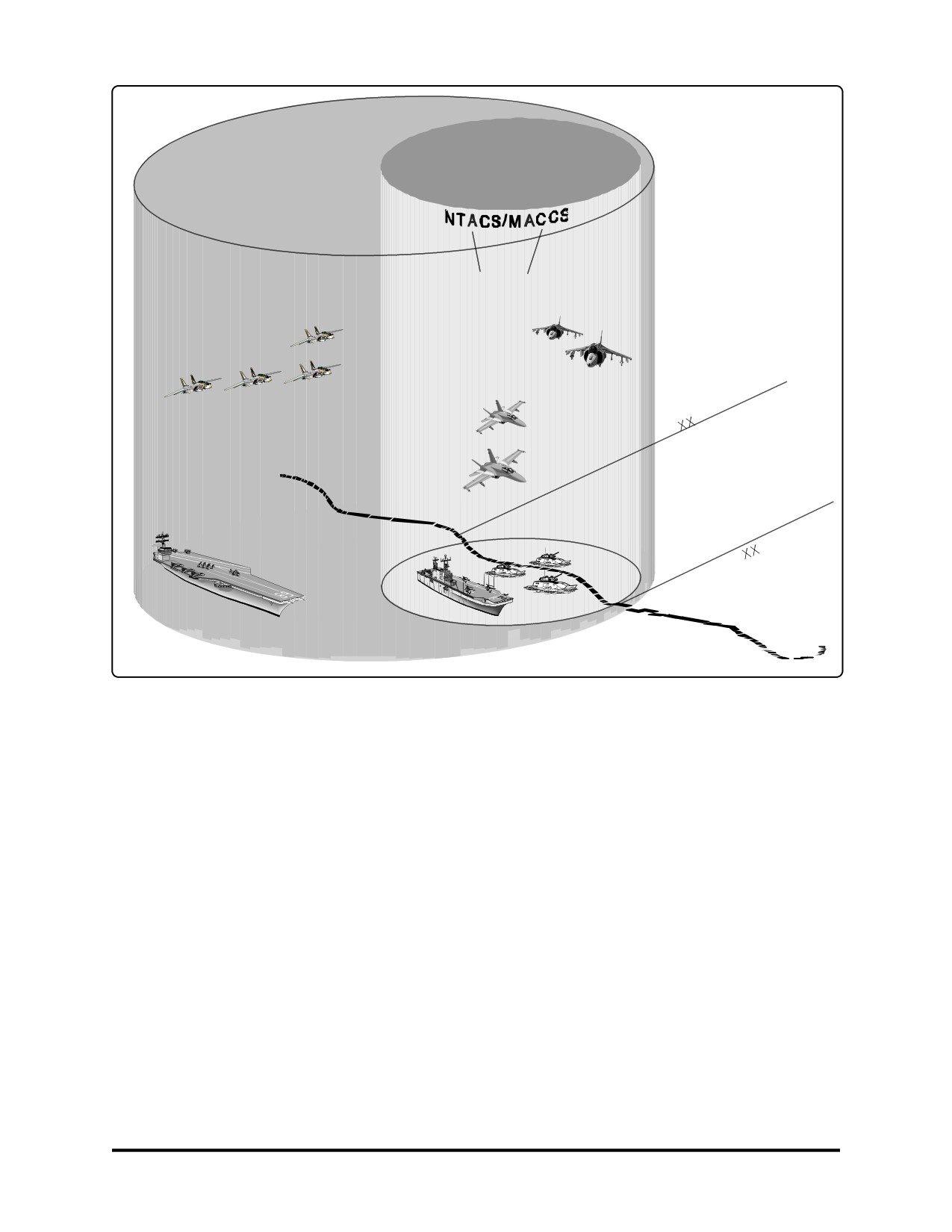
AMPHIBIOUS
OBJECTIVE
CWC
AREA
CONCEPT
AMPHIBIOUS
T
AC
T
ICAL AIR CONTROL SYST
EM
( AT AC S )
Figure D-1. Naval Littoral Operations
(1) TACC/TADC. The Navy TACC
(a) Air Traffic Control Section
(afloat) is the primary air control agency
(ATCS). The ATCS exercises control and
for controlling air operations in support of
coordination of all air traffic entering,
the amphibious operation. It is generally
operating within, or traversing the AOA,
established aboard the CATF’s flagship and
and it coordinates search and rescue
may be collocated with the CDC or located
operations.
in a separate facility. The Navy TACC
controls air support and air warfare forces
(b) Air Support Control Section
in the AOA until control of these operations
(ASCS). The ASCS exercises OPCON and
pass to the CLF. If the need arises for
coordination of all rotary- and fixed-wing
another air control agency in the battle
aircraft (offensive air) assigned to strike
area, a TADC is created as a backup to the
TACC and is assigned specific areas of oper-
warfare or troop support missions. The air
ation in the battle area. The tactical air
support coordinator advises the SACC of
weapons loads, fuel status, and other data
officer is responsible for overall operation
that will aid in mission assignment or
of the TACC. The TACC is divided into five
coordination.
During amphibious
sections: air traffic control, air support
control, helicopter coordination, air
operations the ASCS serves as a DASC
warfare, and plans and support.
until the DASC is established ashore.
D-2
(c) Helicopter Coordination
communications facilities centrally exist for
Section. Transport helicopter operations
coordinating of artillery, air, and NSFS.
are controlled by the helicopter direction
The SACC is the naval counterpart to the
centers located aboard aviation-capable
landing force’s FSCC. The Navy TACC and
amphibious ships. The helicopter coordina-
the SACC function as separate
tion section provides oversight of all
organizations but work closely in planning,
helicopter direction centers in the
controlling, and coordinating offensive air
amphibious force, coordinates all transport
and assault support. The TACC supports
helicopter operations, ensures requests for
the SACC by providing information on air
helicopter support are met, and controls
operations, while the SACC supports the
specific helicopter missions as required.
TACC by exercising overall responsibility
for coordination of supporting fires. The
(d) AWS. The AWS coordi-
air support controller (ASC) provides the
nates all air warfare (AW) operations
interface between the TACC and the SACC.
including assigned aircraft, antiaircraft
ATF personnel in the SACC include the
artillery (AAA), SAM, and air warning
supporting arms coordinator (SAC), ASC,
systems in the designated area of
landing force personnel, and other ATF
responsibility. The AWS acts as an
personnel.
interface between the CATF and the AWC.
Actual control of AW assets usually
(1) SAC. The SAC is a naval officer
remains with the AWC.
who, as the CATF’s representative in the
(e) Plans and Support Section
SACC, is responsible for supervising or
(PSS). The PSS conducts current and future
planning and exercising overall
planning, assembles and distributes the
coordination of the delivery of supporting
daily air plan or ATO, assembles reports,
fires.
and provides all communications support.
Since the CATF is not the JFACC, the PSS
(2) ASC. The ASC is a naval aviator
passes request for support up the chain of
provided by the tactical air control group
command for inclusion in the JFACC's
or tactical air control squadron to the
ATO.
CATF. The air support controller
supervises the ASCS. The ASCS and DASC
(2) Terminal Control Agencies.
may be considered the functional
NTACS also includes several terminal
equivalents of an Air Force ASOC in the
control agencies that perform air control
TAGS.
functions by managing final delivery of
ordnance, cargo, or personnel, and
(3) Landing Force Personnel.
accomplish other specialized tasks not
Landing force personnel in the SACC
performed by other air controllers.
representing the CLF include a landing
Besides TACPs, TAC(A)s, and FAC(A)s
force fire support coordinator (LFFSC), a
discussed in Chapter V, an additional
landing force air officer, an artillery officer,
terminal control agency is the Naval
a landing force naval gunfire officer, a low-
Aviation Observer (NAO). The NAO is an
altitude air defense representative, an
aircrew member trained in collecting
electronic warfare officer, and an ACE
intelligence information and calling for,
LNO.
adjusting, coordinating, and reporting the
results of artillery, naval surface fire
(4) Other ATF Personnel. Other key
support (NSFS), and CAS. NAOs are also
ATF personnel include the naval gunfire
trained to select helicopter landing zones,
control officer, the gunfire support officer,
deliver sensors, and conduct aerial
and the target intelligence officer.
reconnaissance.
b. SACC. A SACC is located aboard an
c. MACCS and FSCCs were discussed
amphibious command ship in which all
in detail in Chapter V.
D-3
support focuses on providing immediately
3. Fire Support Coordination in
responsive close fires to the assault
Amphibious Operations
elements, suppressing hostile shore
defenses, and isolating the landing area.
Amphibious operations are complex
Post H-hour support encompasses
military operations that require a common
protecting friendly units during initial
understanding of standard fire support
advance inland and consolidation, breaking
coordination procedures between Navy and
counterattacks, and conducting aggressive
Marine Corps forces. The amphibious
counterfire.
assault is an offensive operation; therefore,
the principles of offensive fire support
c.
Control and Coordination.
apply. As the buildup of combat power
Generally, the most critical task in
ashore begins from a base of zero, the FSC
amphibious operations is the early
must plan to increase supporting arms
establishment of FSCCs ashore. The
support ashore gradually throughout the
necessary facility for control of NSFS from
assault. The difficulty of placing artillery
ashore is the LF/MAGTF FSCC. Once the
ashore in the first hours of the assault
LF and subordinate FSCCs are ashore and
places an even heavier than usual burden
operating effectively, control and
on mortars, NSFS, and OAS. The CLF
coordination of supporting arms can be
controls artillery ashore through the
passed from the CATF to the CLF and from
commander of the GCE.
the SACC to the LF’s FSCC.
During amphibious operations, the
4. Passage of Control Ashore
CATF will initially retain control and
coordination of NSFS and air operations.
The nature of amphibious operations
Once control of air operations has been
requires a formal system of passage of
passed to the CLF, the ACE will assume
control to ensure that continuous fire
control of coordinating air operations in the
support is provided to the landing force.
objective area, including air warfare, but
When the GCE commander is confident
excluding antisubmarine warfare, sea
that the necessary facilities, communica-
mining, and mine countermeasures
tions, and information are available to
operations. The ACE and FSCC provide
coordinate fires effectively within the GCE
representation to the SACC throughout the
area of influence, the GCE informs the CLF
assault.
by message. The ACE commander does
likewise for air operations. Because
a. Fire Support Planning. Fire support
various aviation functions may be phased
planning in amphibious operations involves
ashore incrementally, the ACE specifies
making detailed, simple, and executable
those aviation functions that can be
fire plans that provide the assault
performed as those capabilities become
battalions flexibility. Planning should
available.
facilitate speed in execution while
maintaining uninterrupted support. Fire
a. Air control is normally phased
support coordination measures allow the
ashore as MACCS facilities become
CATF to attack deep targets while
functional. The DASC is normally the first
providing close support to the landing force.
major MACCS agency established ashore.
Frequently, the CATF will initially transfer
b. Fire Support Tasks. Preassault fire
control of OAS and retain control of other
support tasks include assisting in gaining
aviation functions. When this occurs, the
air superiority, destroying or neutralizing
CATF will apportion and allocate between
those targets that can prevent the execution
the various mission requirements, just as
of the landing, and providing fire support
the CLF/MAGTF commander will do once
as part of the deception effort. D-day fire
D-4
he controls all air support. The CLF will
When the LF/MAGTF CE, GCE, and ACE
distribute sorties allocated for OAS to
C2 facilities are ashore and functional, the
subordinate commanders. This process is
CLF submits a request to the CATF to
usually repeated every 24 hours. The
assume responsibility for air operations
LFFSC in the SACC must ensure that the
and supporting arms coordination. The
CATF’s staff is aware of the landing force’s
CATF will indicate approval of the transfer
projected requirements for the next 24
of control and coordination by formal
hours before the CATF makes the
message. Upon approval of the passage of
apportionment decision.
control and overall responsibility of
supporting arms, the CLF will complete the
b. Once the GCE and the ACE C2
sequence by notifying the GCE and ACE of
elements are semiestablished ashore and
the date and time specified for the passage
as the tactical situation permits, the LF/
to occur. At the specified time, the ACE
MAGTF CE begins establishing the LF/
TACC and LF/MAGTF FSCC assume
MAGTF command operations center
tactical control and the Navy TACC (now a
ashore. Some LF/MAGTF FSCC personnel
TADC) and SACC become backups to the
move ashore and establish the LF/MAGTF
MACCS and FSCC, respectively. Once the
FSCC. Remaining LF/MAGTF personnel
transfer of control ashore is complete the
continue to man spaces in the SACC to
JFMCC will dissolve the AOA and its
assist the SAC in fire support coordination.
associated ATACS.
D-5
Appendix E
TRANSITION SEA- AND LAND-BASED JFACC
1. Background
System [CIS], USN: Naval Intelligence
Processing System [NIPS]/Joint Maritime
In the course of conducting exercise or
Command Information Strategy [JMCIS])
contingency air operations, it may become
involved in the transfer:
(1) CIS to NIPS,
necessary to transfer JFACC responsibility
(2) NIPS to CIS, (3) CIS to CIS, and
for planning and executing the ATO. This
(4) NIPS to NIPS.
document details the basic requirements for
conducting that transfer. Specifically, it
3. Data Requirements
identifies the different scenarios under
which a transfer would occur, the data
All JAOCs should use this information
required to ensure the new JFACC can
to plan for such transfer operations and
immediately assume planning activities,
tailor the procedures as the environment
the methods and timeline in which to
changes. This will ensure the gaining
conduct the transfer, and special
JFACC will be able to assume responsibility
considerations affecting the transfer. The
for ATO production and execution with
theater CINCs and their respective
minimum disruption to air operations.
CONOPS should specify theater specific
Timing of file transfers is situation
JFACC transfer procedures. The
dependent but where possible should follow
procedures described in this appendix are
the ATO planning cycle. These procedures
possible methods for conducting JFACC
assume that the gaining JFACC will
transition and assumes reader familiarity
already have a mature intelligence
with CTAPS terminology.
database for the theater and that the
JFACC will manually synchronize the
2. Scenarios
database with the intelligence data
transferred from the relinquishing JFACC.
Since we cannot dictate the conditions
The general data elements required to
for all contingency operations, it is
transfer JFACC responsibility are as
impossible to predict which service may
follows:
initially assume JFACC responsibility in a
given situation. Once the operation is
a. Planning data (Advanced Planning
underway, conditions/objectives may
System [APS]).
require a transfer of JFACC responsibility
b. Airspace data (Airspace Deconflic-
from the initial unit/service. A transfer of
tion System [ADS]).
JFACC responsibilities from one service or
command center to another may be
c. Operations data
(Computer-
required in any theater of operations at any
Assisted Force Management System-X
time. Operationally, seven transfer
Windows [CAFMS-X]).
scenarios are possible:
(1) USAF to USN,
(2) USN to USAF, (3) USAF to USMC,
d. Targeting data (RAAP).
(4) USMC to USAF, (5) USN to USMC,
(6) USMC to USN, and (7) Same service
e. Order of battle (OB) data (CIS; NIPS/
transfer. From a technical standpoint,
JMCIS).
these scenarios reduce to four, dependent
on the intelligence system used by the
f. Configuration/security data.
units/services (USAF: Combat Intelligence
E-1
4. Method of Transfer
(f) Transmit ATO/ACO (assumes
JFACC approval).
Transfer of the nonintelligence
databases
(APS, ADS, CAFMS-X,
(g) Transfer ATO to operations.
configuration/security) occur primarily
through a simple backup and recovery file
(7) Execute ATO (CAFMS-X).
procedure, although a master system
backup and recovery procedure can also be
b. Procedures. Procedures are based
used. Both functions are compatible among
on the notional JFACC data transfer plan
all systems/scenarios. This is not true,
using a 24-hour planning cycle. There are
however, for the transfer of intelligence
numerous variations to this plan (Table
data. Due to the incompatibility of the
E-1 is one example). In an emergency
intelligence systems used, special
JFACC transfer, all data could be sent
procedures are required to transfer the
simultaneously. To facilitate unplanned
necessary intelligence tables between
JFACC transfers, it may be necessary to
systems.
perform daily backup, storage, and/or
transfer of data to possible gaining JFACC
5. Notional JFACC Transfer Timeline
locations. Table E-2 reflects a graduated
data transfer schedule for ATO's I, J, K, and
Transfer of data occurs along the ATO
L over a 5-day period until complete. New
timeline. This process can be summarized
as follows:
JFACC in control by Day 3, ATO K.
a. General.
6. Remote Transfer
(1) CJTF guidance.
To transfer remotes from relinquishing
JFACC to gaining JFACC use the following
(2) Reconnaissance inputs.
procedures:
(3) Component target nominations
a. Gaining JFACC loads addresses of
(JIPTL).
remote sites. Use “vi” to view network
configuration data in the transferred
(4) Target nomination list (TNL).
“layout.cfg” file.
(5) Airspace deconfliction (ACO).
b. Relinquishing JFACC changes
passwords on remotes to generic.
(6) Planning Stage (air battle plan—
[ABP]).
c. Relinquishing JFACC cuts com-
(a) JFACC Guidance.
munication lines to remotes.
(b) MAAP.
d. Gaining JFACC establishes com-
munication to remotes.
(c) Support sortie development
(AETACS, alert).
e. Remote sites configured into gaining
JFACC by contingency theater automated
(d) ATO production/component
planning system officer of primary
direct sorties (APS).
responsibility (CTAPSOPR) or gaining
JFACC completes configuration from host
(e) Airspace adjustments to
site.
support MAAP.
E-2
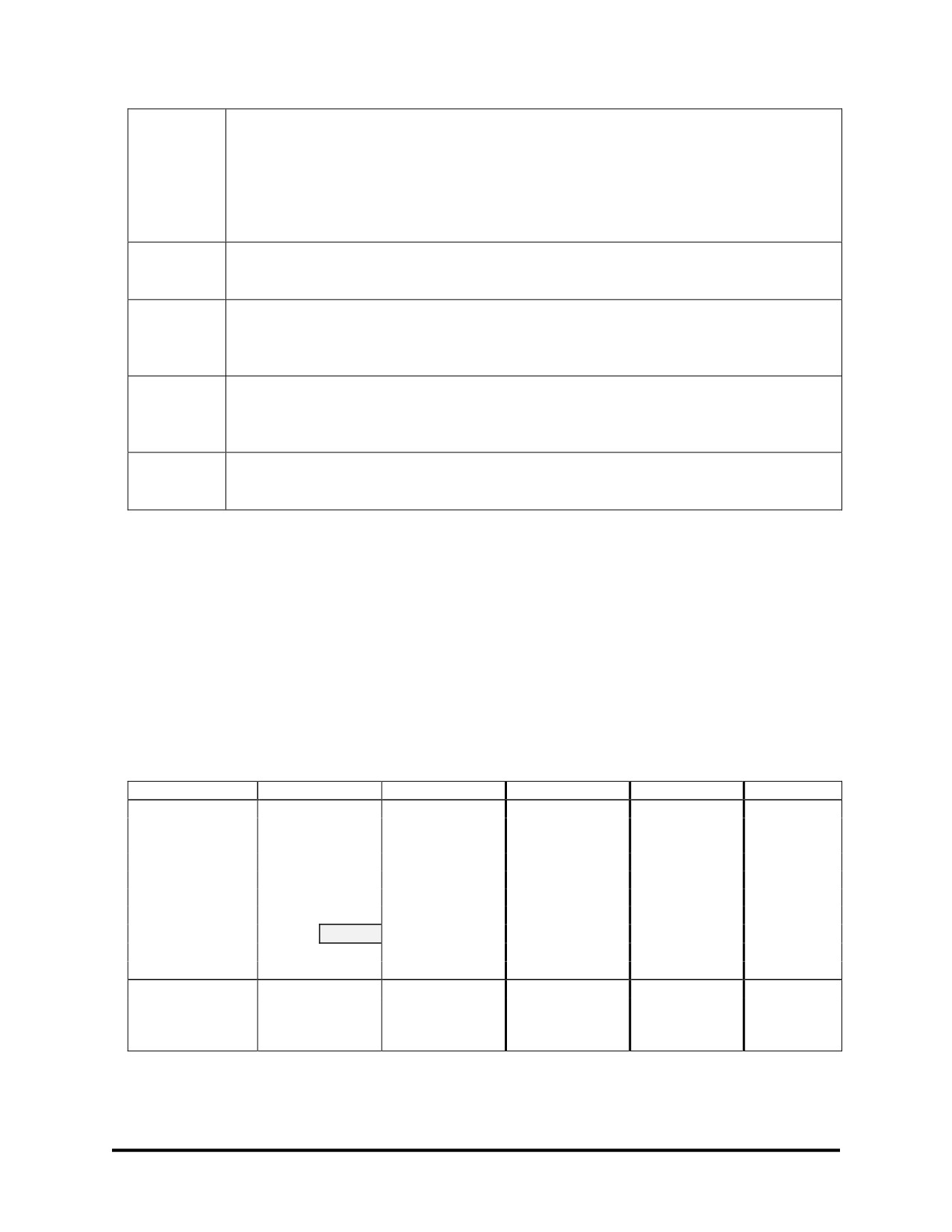
Table E-1. Sample JFACC Transfer Plan
DAY 0
Gaining JFACC receives JFC guidance.
Relinquishing JFACC transfers intelligence collection management
(Nonautomated) and current intelligence and planning data to new JFACC.
DAY 1
Gaining JFACC builds the CTL and TNL for ATO K (Table 2)
DAY 2
Gaining JFACC combat plans uses the TNL and transferred planning data to build
the ABP and produce ATO K (Table 2))
DAY 2-3
Between Day 2 and 3, execution authority is transferred from the relinquishing
JFACC to the gaining JFACC.
DAY 3
Gaining JFACC executes ATO K.
Table E-2. Sample JFACC Data Transfer Schedule
DAY 0
DAY 1
DAY 2
DAY 3
DAY 4
CJTF
K
L
Guidance
RECCE
J
K
L
JIPTL
J
K
L
TNL
J
K
L
ACO
I
J
K
L
ABP
I
J
K
L
Execute
H
I
J
K
L
Data required
(E),(D),(B),
(C),(B)
(C),(B)
(para 3, pg E-1)
(A),(F)
E-3
USAF. The USAF CIS does not merge the
7. Transfer of intelligence database
tables back into the database; it overwrites
these tables, resulting in a loss of existing
If the gaining JFACC does not already
data. The following is a workaround
have an extensive intelligence database for
procedure which can be used until software
the AOR, it may choose to overwrite the
capability problems are resolved:
theater database with the data transferred
from the relinquishing JFACC. Otherwise,
a. Transfer the intelligence data tables
targeting personnel will use the data
into an empty/available intelligence
transferred to the database to manually
database (for example, the exercise or
update the data in the theater database.
coalition database).
Another source of transferred order of
battle (OB) data can come from the JPITL
b. Dump the entire JPITL into a TNL;
transferred with the ATO. The JPITL
transfer the TNL files into the CIS
added to the APS backup can be used as an
database; or import the TNL into APS.
initial TNL to aid in planning while
intelligence targeting personnel manually
c. Produce future ATOs from the TNL
synchronize the data between the theater
import or the transferred data tables.
and exercise intelligence databases. The
incompatibility of intelligence systems
d. Manually compare the transferred
requires special procedures to transfer
tables with those in the CIS theater
intelligence data. This situation can be
database; identify and update new
illustrated by focusing on a JFACC transfer
information into the theater database.
between USN and USAF. The USN JMCIS
only requires 34 RAAP and enemy OB
8. Authorship
tables to be transferred from USAF CIS.
These tables are merged into the NIPS
These procedures were developed by
database and data differences are
the air operations staffs of the 12th Air
highlighted so an analyst can inspect/verify
Force and Second Fleet. Contact the
the new information and incorporate it into
Second Fleet Air Ops staff at (DSN 564-3430
the theater intelligence database. This
or commercial 1-(757)-444-3430) for detailed
process works successfully (from USAF to
CTAPS instructions for conducting the
USN). Problems arise, however, in
transfer.
transferring these tables from USN to
E-4
Appendix F
TAGS ADDITIONAL INFORMATION
1. Intelligence
Therefore, the JFC must request support
from national intelligence agencies and
The targeting process places great
direct support from component assets. The
demands on intelligence capabilities. A
JFC requirements for national intelligence
particular command will rarely possess the
are sent to DIA by the J-2. The CINC’s Joint
capability to collect all necessary targeting
Intelligence Center (JIC) or the JFC’s Joint
intelligence and must compete for
Intelligence Support Element (JISE) is
intelligence collection assets. Components
responsible for all intelligence production
nominate intelligence requirements to the
related to the theater and JOA,
JFC and priorities are established for
respectively. Augmented by the national
intelligence collection tasking, data fusion,
intelligence organizations, the JIC/JISE
and CA collection and analysis. The
supports indications and warning (I&W),
massive amount of data produced creates
targeting through all-source intelligence
intelligence fusion problems. The targeting
analysis of enemy target sets, and collection
effort may be supported more effectively by
to aid the JFC staff in determining enemy
accepting less-than-desired certainty. For
centers of gravity.
example, if 75 percent certainty of a target
location from two sources rather than 98
c. Space Support Team (SST) Concept.
percent certainty from all-source analysis
Previously called the forward space
is acceptable, less burden is placed on the
support in theater (FSST), the SST concept
system. Components should be aware of
provides support to the air component
the following intelligence collection
commander (ACC) in both peacetime and
agencies:
wartime. In peacetime, the SST, in
conjunction with the space operations
a. National.
National-level
officer (SOO)/space liaison officer (SLO),
intelligence collection agencies include the
works to ensure theater commands
Defense Intelligence Agency
(DIA),
understand of how to use space systems by
National Security Agency (NSA), Central
participating in planning, exercises, and
Intelligence Agency (CIA), the National
wargaming. In wartime, the SST deploys
Imagery and Mapping Agency (combined
to the theater at the ACC’s request and
Central Imagery Office and Defense
works in the AOC to provide direct support
Mapping Agency), the Central Measure-
to the commander’s staff. The SST serves
ment and Signature Intelligence (MASINT)
as a problem/solution facilitator within the
Office, the National Reconnaissance Office
AOC and will serve as the interface
(NRO), and Department of State. Each has
between the JFACC/ACC, 14th Air Force
a responsibility to support military
(14 AF) Commander, Air Force Space
requests for intelligence gathering. These
Command
(COMAFSPACE) and
national agencies task technical
COMAFSPACE’s Crisis Action Team, and
intelligence collection systems, which can
the Space Warfare Center (SWC). The SST
significantly contribute to joint operational
will provide the 14 AF Commander with
needs.
on-site representation and a firsthand look
at the combat situation from the supported
b. Joint. JFCs normally possess
commander’s perspective. SST members
limited intelligence collection assets.
will ensure proper coordination and
F-1
execution of space operations, related
a hostile act or hostile intent. The two
support between the theater JFACC/AOC
elements of self-defense are necessity and
and 14 AF, as well as other space support
proportionality. For necessity, a hostile act
entities. This will likely involve the theater
must occur or there must be a demon-
CINC/JFC (joint space support team [JSST]
strated intent to commit a hostile act. The
at the joint operations center [JOC]) and
threat posed by the hostile act or intent
the US Commander in Chief Space
must be imminent. Proportionality infers
(USCINCSPACE). Working closely with
that the use of force must be reasonable in
intelligence, communications, air defense,
intensity, duration, and magnitude and
and all other AOC elements, the SST
must be consistent with the threat to
provides the AOC and JFACC with timely
ensure safety of the force. Individuals must
and accurate assessment of the friendly and
always be prepared to act in self-defense
enemy space reliance/space superiority
and nothing in the ROE limits that right.
situation and ways to ensure optimum use
of space assets for air operations planning
3. Communications
and execution.
The entire ATO process is com-
d. SLO. SLOs are already embedded
munications intensive and dependent. The
in the Numbered Air Force infrastructure.
service
component with JFACC
These personnel are permanent party and
responsibility is responsible for establish-
work daily Numbered Air Force issues
ing communications links to support the
related to space support and IW.
JFACC mission. The services have recently
2. ROE
adopted the CTAPS for ATO production
and dissemination software as the joint
ROE. The Chairman, Joint Chiefs of
standard software for tasking air missions.
Staff, has issued CJCSI 3121.01, Standing
Approved USMTF format allows interface
Rules of Engagement for US Forces, that
with processing communications systems.
applies to and may be supplemented for a
Communications are complicated when
particular mission. The ROE will never
agencies use nonstandard formats to
limit the inherent right and obligation of
process requests or to transmit infor-
individual and unit to self-defense. Even
mation. TBMCS is the follow-on system to
if there are no forces declared hostile,
CTAPS.
commanders will defend their units against
F-2
REFERENCES
Joint
CJCSI 3121.01, Standing Rules of Engagement for US Forces, 1 Oct 94
JFACC Primer, Feb 94
Joint Pub 0-2, Unified Action Armed Forces (UNAAF), 24 Feb 95
Joint Pub 1-02, DOD Dictionary of Military and Associated Terms, 23 Mar 94
Joint Pub 3-03, Doctrine for Joint Interdiction Operations, 10 Apr 97
Joint Pub 3-05, Doctrine for Joint Special Operations, 28 Oct 92
Joint Pub 3-09.3, Joint Tactics, Techniques, and Procedures for Close Air Support
(CAS), 1 Dec 95
Joint Pub 3-13.1, Joint Doctrine for C2 Warfare, 7 Feb 96
Joint Pub 3-52, Joint Airspace Control in the Combat Zone, 3 Dec 93
Joint Pub 3-56.1, Command and Control for Joint Air Operations, 14 Nov 94
Joint Pub 5-00.2, JTF Planning, 3 Sep 91 (Revision Pending)
Multiservice
FM 100-103-1/FMFRP5-61/NWP 3-52.1/AFTTP(I) 3-2.16, Multiservice Procedures for
Integrated Combat Airspace Command and Control (ICAC2), 3 Oct 94
FM 90-38/MCRP 3-25B/NWP 6-02.1/AFTTP(I) 3-2.5, Multiservice Air-Air, Air-Surface,
Surface-Air Brevity Codes, 25 Apr 97
FM 90-21/MCRP 3-23A/NWP 3-01.03/AFTTP(I) 3-2.10, Multiservice Procedures for
Joint Air Attack Team (JAAT) Operations,
3 Jun 98
Army
FM 100-13, Battlefield Coordination Detachment (BCD), 5 Sep 96
FM 100-103, Army Airspace Command and Control in a Combat Zone, Oct 87
References-1
Marine
FMFM 5-50, Antiair Warfare, 22 Jun 94
FMFM 5-60, Control of Aircraft and Missiles, 22 Jun 93
MCWP 3-25.3, MACCS Handbook (Draft)
MCWP 3-25.4, TACC Handbook (Draft)
MCWP 3-25.5, DASC Handbook, 16 Sep 96
MCWP 3-25.6, SAAWC Handbook, 1 Aug 97
MCWP 3-25.7, TAOC Handbook, 13 Sep 96
MWCP 3-25.8, MATCD Handbook, 1 Aug 97
Navy
NWP 3-56, Composite Warfare Commander’s Manual, (Revision Pending)
NWP 3-09.11M, Supporting Arms in Amphibious Operations, 1 Mar 95
Forward... from the Sea, Mar 93
Air Force
ACCI 13, AOC Vol 3 Air Operations Center, Feb 95
AFI 13-106, Air Support Operations Centers and Tactical Air Control Parties,
16 Jan 95
AFDD1, Air Force Basic Doctrine, Sep 97
AFPD 13-1, Theater Air Control System, 11 May 95
Other
USSOCOM Pub 1, Special Operations in Peace and War, 25 Jan 96
References-2
Glossary
A
A2C2
Army airspace command and control
A/A
air to air
AAA
antiaircraft artillery
AAD
area air defense
AADC
area air defense commander
AAGS
Army Air-Ground System
AAMDC
Army Air and Missile Defense Command
ABCCC
airborne battlefield command and control center
ABP
air battle plan
AC
air corridor
A/C
aircraft
ACA
airspace control authority
ACC
Air Combat Command
ACE
aviation combat element (MAGTF)
ACO
airspace control order
ACP
airspace control plan
ADA
air defense artillery
ADIZ
air defense identification zone
ADS
Airspace Deconfliction System
AF
Air Force
AFAC
airborne forward air controller
AFARN
Air Force air request net
AFATDS
Advanced Field Artillery Tactical Data System
AFDC
Air Force Doctrine Center
AFDD1
Air Force Doctrine Document 1
AFFOR
Air Force forces
AFI
Air Force Instruction
AFLE
Air Force liaison element
AFSCOORD
assistant fire support coordinator
AFSOC
Air Force special operations component
AFSOF
Air Force special operations forces
AI
air interdiction
AIRSUPREQ
air support request
AIRTASK
air tasking
ALLOREQ
air allocation request
ALCT
airlift control team
ALO
air liaison officer
ALSA Center
Air Land Sea Application Center
alt
altitude
AMC
Air Mobility Command
AMCT
air mobility control team
AMDWS
Air and Missile Defense Warning System
AME
air mobility element
AMLS
airspace management liaison section
AMPN
amplification
AMOCC
air mobility operations control center
ANGLICO
air/naval gunfire liaison company
ANDVT
advance narrow digital voice terminal
ANGPLT
air/naval gunfire platoon
Glossary-1
APB
air battle plan
APS
Advance Planning System
AO
area of operations
AOA
amphibious objective area
AOC
air operations center (USAF)
AOR
area of responsibility
ARCT
aerial refueling control team
AREC
air resource element coordinator
ARFOR
Army forces
ARG
amphibious ready group
ARSOC
Army special operations component
ARSOF
Army special operations forces
ASC
air support controller
ASE
air support element
ASC(A)
assault support coordinator (airborne)
ASCS
air support control section
ASLT
air support liaison team
ASOC
air support operations center
ATACS
amphibious tactical air control system (USMC)
ATACMS
Army Tactical Missile System
ATC
air traffic control
ATCS
air traffic control section
ATDL-1
Army Tactical Data Link-1
ATF
amphibious task force
ATO
air tasking order
ATOCONF
air tasking order confirmation
AW
air warfare
AWACS
Airborne Warning and Control System
AWC
air warfare commander
AWS
air warfare section
B
BALO
battalion air liaison officer
BBS
Bulletin Board System
BCD
battlefield coordination detachment
BDA
bomb or battle damage assessment
BDE
brigade
BGIC
battle group intelligence center (USN)
BGO
battle group orestes
BN
battalion
BOS
battlefield operating systems
BP
battle position (USA)
BWC
battle watch captain
C
C2
command and control
C2BM
command and control battle management
C2W
command and control warfare
C2WC
command and control warfare commander
C3
command, control, and communications
C4
command, control, communications, and computers
Glossary-2
C4CM
command, control, communications, and computers
countermeasures
C4I
command, control, communications, computers, and intelligence
CA
combat assessment
CAFMS-X
Computer-Assisted Force Management System-X Windows
CAP
combat air patrol
CAS
close air support
CATF
commander, amphibious task force
CBT
combating terrorism
CCT
combat control team
CDC
combat direction center
CE
command element (MAGTF)
CFL
coordinated fire line
CG
guided missile cruiser
CIA
Central Intelligence Agency
CINC
commander in chief; commander of a combatant command
CIS
Combat Intelligence System
CJCSI
Chairman, Joint Chiefs of Staff Instruction
CLF
commander, landing force
CMO
central masint office
CO
company
COC
combat operations center
COG
center of gravity
COCOM
combatant command (command authority)
COMAFFOR
Commander, Air Force Forces
COMAFSPACE
Commander, Air Force Space Command
COMCARGRU
Commander, Carrier Group
COMCVW
Commander, Carrier Air Wing
comm
communications
comp
component
CONUS
continental United States
coord
coordination
COP
common operational picture
CP
command post; contact point; counter proliferation (special
operations)
CRC
control and reporting center
CRE
control and reporting element
CSAR
combat search and rescue
CSSE
combat service support element (MAGTF)
CTAPS
contingency theater automated planning system
CTAPSOPR
contingency theater automated planning system officer of
primary responsibility
CTL
consolidated target list
CTF
commander, task force; combined task force
CV
carrier
CVBG
carrier battle group
CVBGLC
CVBG logistics coordinator (USN)
CVN
nuclear carrier
CVW
carrier air wing
CWC
composite warfare commander
Glossary-3
D
D-day
day of execution
D3A
decide, detect, deliver, assess
DA
direct action; Department of the Army
DAS
direct air support
DASC
direct air support center
DASC(A)
direct air support center (airborne)
DCA
defensive counterair
DCI
defensive counterinformation
DDG
destroyer guided missile cruiser
DETS
detachments
DIA
Defense Intelligence Agency
DII
Defense Information Infrastructure
DIRMOBFOR
Director of Mobility Forces
DIV
division
DIVARTY
division artillery
DMPI
desired mean point of impact
DOCC
deep operations coordination cell
DS
direct support
DTG
date-time group
E
E2C AWCS
E2C Airborne Warning and Control System (USN)
EA
engagement area
EAC
echelon above corps
EFF
effective
EST
establishing
ETAC
enlisted terminal attack controller
EW
electronic warfare
EW
early warning
EW/C
early warning/control
E&E
evasion and escape
exer
exercise
F
FA
field artillery
FAAD C3I
forward area air defense command, control, communications and
intelligence
FAC
forward air controller
FAC(A)
forward air controller (airborne)
FAWC
fleet air warfare coordinator
FEZ
fighter engagement zone
FFA
free-fire area
FFCC
force fires coordination center
FID
foreign internal defense
FIST
fire support team
FLOT
forward line of own troops
FMFRP
Fleet Marine Force Reference Publication
FO
forward observer
FOB
forward operational base
Glossary-4
FOTC
force over-the-horizon track coordinator (USN)
fr
from
FRAGORDER
fragmentary order
FSC
fire support coordinator
FSCC
fire support coordination center
FSCL
fire support coordination line
FSCM
fire support coordinating measure
FSCOORD
fire support coordinator
FSE
fire support element
FSO
fire support officer
FSST
forward space support in theater
G
G-2
Army or Marine Corps component intelligence staff officer (Army
division or higher staff, Marine Corps brigade or higher staff)
G-3
Army or Marine Corps component operations staff officer (Army
division or higher staff, Marine Corps brigade or higher staff)
G-4
Army or Marine Corps component logistics staff officer (Army
division or higher staff, Marine Corps brigade or higher staff)
GAT
guidance, apportionment, targeting
GBDL
ground based data link
GBS
Global Broadcast System
GCE
ground combat element (MAGTF)
GCCS
Global Command Control System
GLO
ground liaison officer
GMF
ground mobile forces
GS
general support
GSM
ground station module
GTL
gun target line
H
H-hour
hour of execution
HCS
helicopter coordination section
HEC
helicopter employment coordinator
HELO
helicopter
HF
high frequency
HIDACZ
high density airspace control zone
HIMAD
high-medium altitude air defense
HIMEZ
high altitude missile engagement zone
HPT
high-payoff target
HPTL
high-payoff target list
HST
helicopter support team
HVT
high-value target
HQ
headquarters
I
I&W
indication and warning
ID
identification
IFF
identification, friend or foe
INFOSEC
information security
Glossary-5
IP
initial point
IPB
intelligence preparation of the battlespace
ISR
intelligence, surveillance and reconnaissance
ITG
initial terminal guidance
IW
information warfare
J
J-2
Intelligence Directorate of a joint staff; Intelligence Directorate,
Joint Staff, Defense Intelligence Agency
J-3
Operations Directorate of a joint staff
J-5
Plans Directorate of a joint staff
J-6
Command, Control, Communications, and Computer Systems
Directorate of a join staff
JAAT
joint air attack team
JAOC
joint air operations center
JASOP
joint air and space operation plan
JEZ
joint engagement zone
JFACC
joint force air component commander
JFC
joint force commander
JFMCC
joint force maritime component commander
JFSOC
joint force special operations command
JFSOCC
joint force special operations component commander
JIC
joint intelligence center
JISE
joint intelligence support element
JIPTL
joint integrated prioritized target list
JMCIS
joint maritime command information strategy
JOA
joint operations area
JOC
joint operations center
JOPES
Joint Operation Planning and Execution System
JRC
joint reconnaissance center
J-SEAD
joint suppression of enemy air defenses
JSOA
joint special operations areas
JSOACC
joint special operations air component commander
JSOTF
joint special operations task force
JSRC
joint search and rescue center
JSST
joint space support team
Joint STARS
Joint Surveillance, Target Attack Radar System
JTCB
Joint Targeting Coordination Board
JTF
joint task force
JTIDS
Joint Tactical Information Distribution System
JTL
joint target list
JTO
joint tasking order
JUH-MTF
Joint Users Handbook - Message Text Formats
L
L
local
LAAD
low-altitude air defense (USMC)
LAI
light armored infantry (USMC)
LANTIRN
low-altitude navigation and targeting infrared for night
LAWC
local air warfare coordinator
Glossary-6
LCC
land component commander
LF
landing force
LFFSC
landing force fire support coordinator
LLTR
low-level transit route
LMST
light weight multiband satellite terminals
LNO
liaison officer
LOC
line of communications
LOMEZ
low-altitude missile engagement zone
LRP
long range plans
LZ
landing zone
M
MAAP
Master Air Attack Plan
MACCS
Marine Air Command Control System
MACG
Marine Air Control Group
MAGTF
Marine air-ground task force
MAJCOM
major command
MARFOR
Marine Corps forces
MARLO
Marine liaison officer
MASINT
measurement and signature intelligence
MATC
Marine air traffic control
MATCD
Marine air traffic control detachment
MAX
Maximum
MAW
Marine aircraft wing
MCC
maritime component commander
MCCDC
Marine Corps Combat Development Command
MCPDS
Marine Corps Publication Distribution System
MCWP
Marine Corps Warfighting Publication
MEF
Marine expeditionary force
MEF (FWD)
Marine expeditionary force (forward)
METOC
meteorological and oceanographic
MEU-SOC
Marine expeditionary unit-special operations capable
MICK
Mobility Initial Communications Kit
MILSATCOM
military satellite communications
MILSTRIP
Military Standard Requisitioning and Issue Procedure
MMT
Marine air traffic control detachment mobile team
MOOTW
military operations other than war
MPA
mission planning agent
MSN
mission
MRR
minimum-risk route
MTTP
multiservice tactics, techniques, and procedures
N
NALE
naval and amphibious liaison element
NAO
naval aviation observer
NARR
narrative
NATO
North Atlantic Treaty Organization
NAVFOR
Navy forces
NAVSOC
naval special warfare special operations component
NAVSOF
naval special warfare forces
NAVSOP
Navy Standing Operating Procedures
Glossary-7
NCA
National Command Authorities
NCO
noncommissioned officer
NDC
Naval Doctrine Command
NFA
no-fire area
NGFO
naval gunfire officer
NGFS
naval gunfire support
NGFS REP
naval gunfire support representative
NIPS
Naval Intelligence Processing System
NRO
National Reconnaissance Office
NSA
National Security Agency
NSFS
naval surface fire support
NTACS
Navy Tactical Air Control System
NTDS
Navy Tactical Data System
NSWF
Navy special warfare forces
O
OAS
offensive air support (USMC)
OB
order of battle
OCA
offensive counterair
OCI
offensive counterinformation
ODA
operational detachment-Alpha
OOTW
operations other than war
OPCON
operational control
OPGEN
operational general
OPLAN
operation plan
OPORD
operation order
OPR
office of primary responsibility
OPSEC
operations security
OPS
operations
OPSTAT
operational status
OPTASK
operational tasking
OPTASKLINK
operational tasking data link
ord
ordinate
OTC
officer in tactical command (USN)
P
PACAF
Pacific Air Forces
PC
personal computer
PICP
PACAF Initial Communications Package
PIRAZ
positive identification radar advisory zone
POL
petroleum, oils, and lubricants
PSS
plans and support section
PSYOP
psychological operations
pub
publication
PZ
pickup zone
R
RADC
regional air defense commander
RAOC
rear area operations center
Glossary-8
RAAP
rapid application of airpower
REAR
rear
RECCE
reconnaissance
REGT
regiment
REQCONF
request conformation
RFA
restricted fire area
RFI
request for information
RFL
restricted fire line
RGT
regiment
RMKS
remarks
ROA
restricted operations area
ROE
rules of engagement
ROZ
restricted operations zone
RP
release point
RTF
return to force
S
S2
battle or brigade intelligence staff officer (Army; Marine Corps
battalion or regiment)
S3
battle or brigade operations staff officer (Army; Marine Corps
battalion or regiment)
S4
battle or brigade logistics staff officer (Army; Marine Corps
battalion or regiment)
SAAFR
standard use army aircraft flight route
SAAWC
sector antiair warfare coordinator (USMC)
SAAWF
sector antiair warfare facility
SAC
supporting arms coordinator
SACC
supporting arms coordination center
SADC
sector air defense commander
SALT
supporting arms liaison team (USMC)
SAM
surface-to-air missiles
SAR
search and rescue
SATCOM
satellite communications
SAWC
sector air warfare coordinator
SCC
surface component commander; sea combat commander
SCDL
surveillance control data link
SCL
standard conventional load
SEAD
suppression of enemy air defenses
SEAL
sea-air-land team
SEMA
special electronic mission aircraft
SF
special forces
SFOD A/B/C
special forces operational detachment-A/B/C
SHORAD
short-range air defense
SHORADEZ
short-range air defense engagement zone
SIF
selective identification feature
SLO
space liaison officer
SO
special operations
SOA
special operations aviation
SOC
special operations command
SOCA
submarine operations coordinating authority
SOCCE
special operations command and control element
SOE
schedule of events (USN)
SOF
special operations forces
Glossary-9
SOLE
special operations liaison element
SOO
space operations officer
SORTIEALOT
sortie allotment
SOTAC
special operations terminal attack controller
SPINS
special instructions
SPMAGTF
special purpose marine air-ground task force
SQDNS
squadrons
SQ FT
square foot
SR
special reconnaissance
STRATLAT
strategic liaison team
SST
space support team
STT
special tactics team
STWC
strike warfare commander
SUWC
surface warfare commander
SWC
space warfare center
T
T
time
TAADCOM
theater army air defense command
TAC
tactical
TAC(A)
tactical air coordinator (airborne) (USMC); terminal attack controller
(airborne) (USAF)
TACAIR
tactical air
TACC
tactical air command center (USMC); tanker/airlift control center
(USAF); tactical air control center (USN)
TAC CP
tactical command post
TACON
tactical control
TACOPDAT
tactical operations data
TACP
tactical air control party
TACRON
tactical air control squadron (USN)
TACS
theater air control system
TAD
tactical air direction
TADC
tactical air direction center
TADIL (A,B,C,J)
tactical digital information link
TAGS
theater air-ground system
TALCE
tactical airlift control element
TAOC
tactical air operations center (USMC)
TARBUL
target bulletin
TBMCS
Theater Battle Management Core System
TDC
theater deployable communications
TFCC
tactical flag command center
TGL
target-to-gun line
TGO
terminal guidance operations
TGTINFOREP
target information report
TGTINTELO
target intelligence officer
TIO
target information officer
TIS
target information section
TMD
theater missile defense
TNL
target nomination list
TOC
tactical operations center
TOT
time on target
TRADOC
United States Army Training and Doctrine Command
Glossary-10
TRI-TAC
Tri-Service Tactical Communications Program
TTP
tactics, techniques, and procedures
TVA
target value analysis
U
UAV
unmanned aerial vehicle
UHF
ultra high frequency
UNAAF
unified action armed forces
US
United States
USA
United States Army
USAF
United States Air Force
USAFAGOS
United States Air Force Air-Ground Operations School
USTRANSCOM
United States Transportation Command
USCINCSPACE
Commander in Chief, United States Space Command
USMTF
US message text format
USMC
United States Marine Corps
USN
United States Navy
USSOCOM
United States Special Operations Command
USTRANSCOM
United States Transportation Command
USWC
undersea warfare command
UW
unconventional warfare
V
VHF
very high frequency
W
WCB
warfare commander board
WCCS
Wing Command and Control System
WEZ
weapons engagement zone
WFZ
weapons free zone
WG
wing
WICP
wing initial communications package
WMD
weapons of mass destruction
WOC
wing operations center
Glossary-11