FM 4-20.167 Airdrop of Supplies and Equipment: Rigging Tracked Personnel–Cargo Carriers (November 2006) - page 1
FM 4-20.167/TO 13C7-16-171
Field Manual
Headquarters
No. 4-20.167
Department of the Army
Department of the Air Force
Technical Order
Washington, DC, 16 November 2006
No. 13C7-16-171
Airdrop of Supplies and Equipment:
Rigging Tracked Personnel - Cargo Carriers
Contents
Page
PREFACE
iii
INTRODUCTION
iv
Chapter 1
RIGGING IC45 CRAWLER CARRIER ON A TYPE V PLATFORM FOR LOW-
VELOCITY AIRDROP
1-1
Description of Load
1-1
Preparing Platform
1-2
Building and Positioning Honeycomb Stacks
1-3
Preparing the IC45 Crawler Carrier
1-8
Installing Lifting Slings and Positioning the Carrier
1-16
Lashing the Crawler Carrier
1-17
Installing and Lashing the Front Attitude Control Bar (ACB)
1-19
Building the Parachute Stowage Platform
1-22
Installing and Restraining the Parachute Stowage Platform
1-23
Installing the Rear ACB
1-25
Installing Suspension Slings
1-29
Padding, Securing and Safety Tieing Suspension Slings
1-30
Stowing Cargo Parachutes
1-31
Installing M-2 Release Assembly
1-32
Installing Extraction System
1-34
Installing Provisions for Emergency Restraints
1-35
Placing Extraction Parachute
1-35
Marking Rigged Load
1-35
Equipment Required
1-35
Chapter 2
RIGGING IC45-2 IHI CRAWLER CARRIER ON A TYPE V PLATFORM FOR
LOW-VELOCITY AIRDROP
2-1
Description of Load
2-1
Preparing Platform
2-2
Building and Positioning Honeycomb Stacks
2-3
Preparing the IC45-2 IHI Crawler Carrier
2-9
Distribution Restriction: Approved for public release, distribution is unrestricted.
*This publication supersedes FM 4-20.167/TO 13C7-16-171, 11 May 2005.
i
Contents
Installing Lifting and Suspension Slings
2-31
Lashing IC45-2 IHI Crawler Carrier
2-33
Building the Parachute Stowage Platform
2-38
Installing and Restraining the Parachute Stowage Platform
2-39
Padding, Securing and Safety Tieing Suspension Slings
2-41
Stowing Cargo Parachutes
2-42
Installing Extraction System
2-43
Installing M-2 Release Assembly
2-44
Installing Provisions for Emergency Restraints
2-45
Placing Extraction Parachute
2-45
Marking Rigged Load
2-45
Equipment Required
2-45
Chapter 3
RIGGING M973A, 1 ½ -TON CARGO CARRIER SMALL UNIT SUPPORT VEHICLE
(SUSV) ON A TYPE V PLATFORM FOR LOW-VELOCITY AIRDROP
3-1
Description of Load
3-1
Preparing Platform
3-2
Building and Positioning Honeycomb Stacks
3-3
Positioning Accompanying Load on the Platform
3-5
Building Endboards and Lashing the Accompanying Load
3-6
Lashing the Accompanying Load
3-7
Preparing the SUSV
3-8
Positioning the SUSV on the Platform
3-15
Preparing the SUSV after Positioning
3-16
Lashing the SUSV
3-18
Installing Suspension Slings
3-22
Padding and Securing Suspension Slings
3-24
Building the Parachute Stowage Platform
3-25
Installing Parachute Stowage Platform
3-26
Stowing Cargo Parachutes
3-27
Installing the M-2 Parachute Release Assembly
3-28
Installing Extraction System
3-29
Installing Provisions for Emergency Restraints
3-30
Placing Extraction Parachute
3-30
Marking Rigged Load
3-30
Equipment Required
3-30
GLOSSARY
Glossary-1
REFERENCES
References-1
ii
FM 4-20.167/TO 13C7-16-171
16 November 2006
Preface
SCOPE
The purpose of this manual is to provide the latest approved procedures for rigging the IC45 crawler carrier,
IC45-2 IHI crawler carrier and the M973A, 1 ½-ton cargo carrier small unit support vehicle (SUSV) on the type
V platform for low-velocity airdrop from C-130 and C-17 aircraft. This manual is written for use by all
parachute riggers.
This publication applies to the Active Army, the Army National Guard (ARNG)/Army National Guard of the
United States (ARNGUS), and the United States Army Reserve (USAR) unless otherwise stated.
USER INFORMATION
The proponent of this publication is United States Army Training and Doctrine Command (TRADOC). You are
encouraged to report any errors or omissions and to suggest ways of making this a better manual.
Army personnel, send your comments on DA Form 2028 (Recommended Changes to Publications and Blank
Forms) to:
Director,
Aerial Delivery and Field Services Department
USA Quartermaster Center and School
710 Adams Avenue
Fort Lee, Virginia 23801-1502
Air Force personnel, route your reports on AFTO Form 22 through your respective command Weapons and
Tactics to:
Headquarters, Air Mobility Command (AMC/A3DT),
402 Scott Drive, Unit 3AI,
Scott AFB, Illinois 62225-5302,
HQ AMC/A3DT will consolidate and forward changes to:
Director, Aerial Delivery and Field Services Department
USA Quartermaster Center and School
710 Adams Avenue
Fort Lee, Virginia 23801-1502
Also send an information copy of AFTO Form 22 to:
584th CBSS/GBMUDE
380 Richard Ray Blvd STE 104
Robins AFB, Georgia 31098-1640
16 November 2006
FM 4-20.167/TO 13C7-16-171
iii
Introduction
DESCRIPTION OF LOAD
• The IC45 crawler carrier is a small commercial off the shelf tracked dump truck. The IC45
crawler carrier is 98 ½ inches high (reducible to 77 ½ inches with the removal of the roll over
protection system (ROPS) and canopy cover), 175 inches long, 101 ½ inches wide (reducible to
88 ½ inches with removal of the side mirrors) and weighs 12,790 pounds.
• The IC45-2 IHI crawler carrier is a small commercial off the shelf tracked dump truck with an
attachment assembly. The IC45-2 IHI crawler carrier is 97 ½ inches in height (reducible to 81 ½
inches with the removal of the roll over protection system and canopy cover), 103 inches in
width, 200 inches long, and weighs 16,500 pounds.
• The M973A, 1 ½-ton cargo carrier small unit support vehicle (SUSV) is a tracked vehicle with a
driver’s compartment and a cargo-troop carrier compartment attached to the rear. The vehicle is
271 inches long, 74 inches wide, 90 ½ inches high, and weighs 10,000 pounds. The vehicle must
be rigged with an accompanying load that weighs at least 2,000 pounds but not more than 2,100
pounds. The accompanying load shown in this manual is 105-millimeter ammunition rigged on
the front end of the platform; however other equipment may be used.
SPECIAL CONSIDERATIONS
CAUTION
Only ammunition listed in FM 4-20.153/MCRP 4-11.3B/TO 13C7-18-41
may be airdropped.
• The loads covered in this manual include hazardous material as defined in AFMAN 24-204(I)/
TM 38-250/NAVSUP PUB 505.MCOP4030. The hazardous materials must be packaged, marked
and labeled as required by AFMAN 24-204(I)/TM 38-250/NAVSUP PUB 505/MCO P4030.19H.
• A copy of this manual must be available to the Joint Airdrop Inspectors during the before and
after loading inspection in accordance with AR 59-4/OPNAVINST 4630.24C/AFI 13-210(I)/
MCO 13480.1B.
iv
FM 4-20.167/TO 13C7-16-171
16 November 2006
Chapter 1
Rigging IC45 Crawler Carrier on a Type V Platform for Low-
Velocity Airdrop
DESCRIPTION OF LOAD
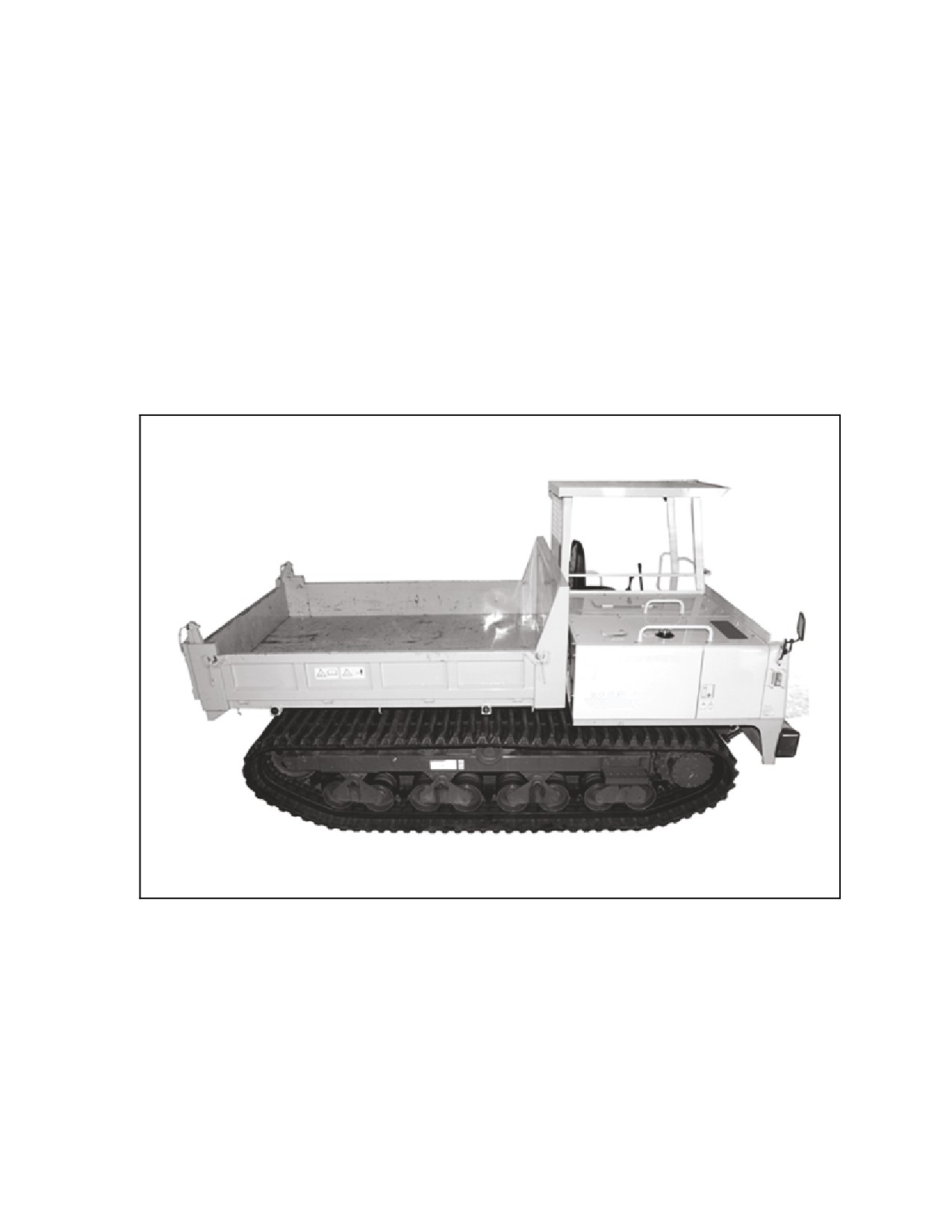
1-1. The IC45 crawler carrier is described in the introduction. The IC45 crawler carrier is rigged on a 16-
foot, type V airdrop platform. The total rigged weight of the load is 17,480 pounds and this load requires
four G-11 cargo parachutes. The IC45 crawler carrier is shown in Figure 1-1.
Figure 1-1. IC45 Crawler Carrier
16 November 2006
FM 4-20.167/TO 13C7-16-171
1-1
Chapter 1
PREPARING PLATFORM
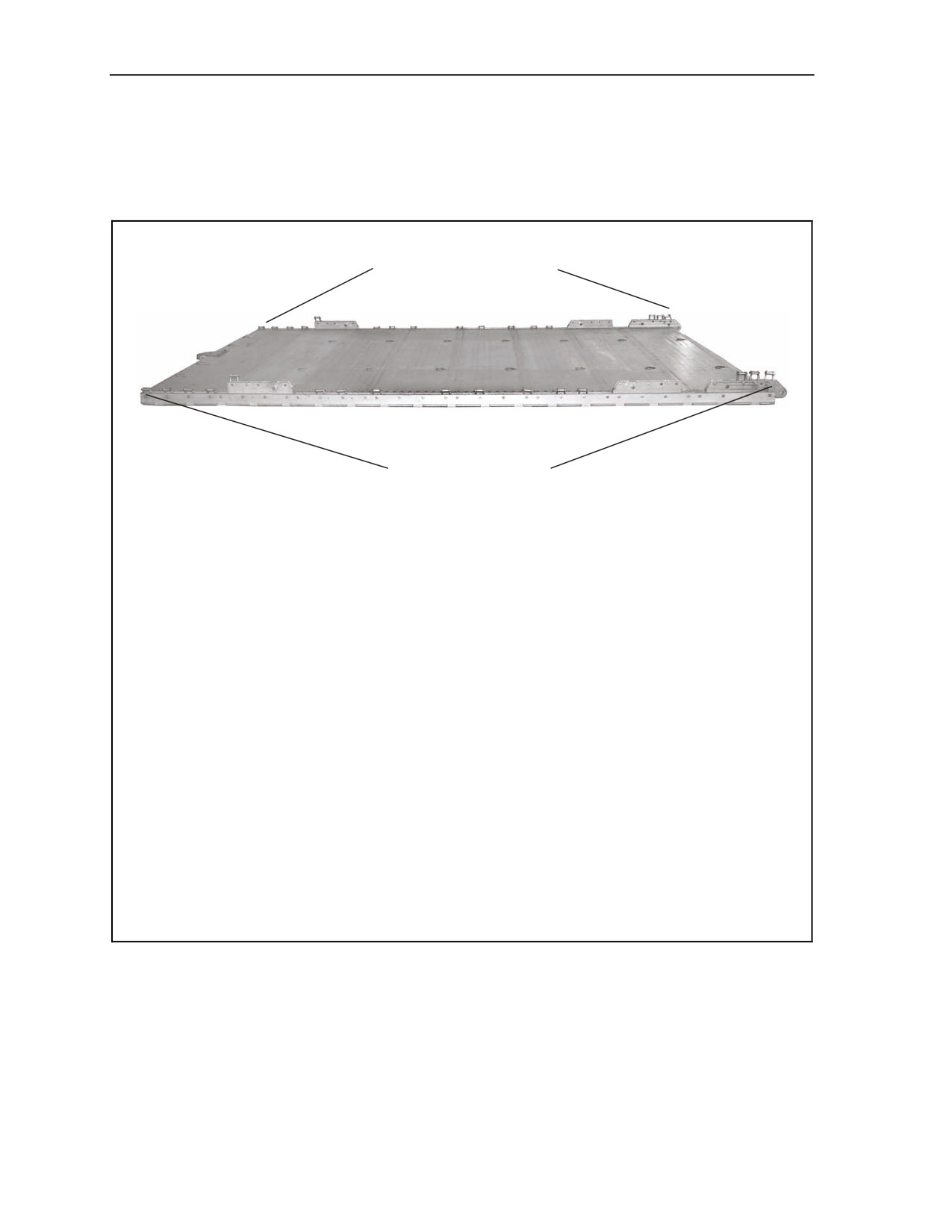
1-2. Prepare a 16-foot, type V airdrop platform according to TM 10-1670-268-20&P/TO 13C7-52-22.
Install 2 tandem links, 4 suspension brackets and 32 tiedown clevis assemblies as shown in Figure 1-2.
Clevises 16A through 1A
Left
Rear
Front
Right
Clevises 16 through 1
Steps:
1. Inspect, or assemble and inspect, the platform according to TM 10-1670-268-20&P/TO 13C7-52-
22.
2. Install a tandem link on each platform side rail holes 1, 2, and 3.
3. Install a suspension bracket in holes 6, 7, and 8 on each platform side rail.
4. Face the flat part of the link to the front of the rail.
5. Install a suspension bracket in holes 25, 26, and 27 on each platform side rail.
6. Face the flat part of the link to the rear of the rail.
7. Install a clevis on bushings 1, 2 and 3 on each tandem link.
8. Install a clevis on bushing 4 on each rear suspension bracket.
9. Starting at the front of each platform side rail, install clevises on each platform side rail using
bushings bolted on holes 10, 11,13, 15, 17, 20, 22, 23, 29, 30, 31, and 32.
10. Starting at the front of each platform side rail, number the clevises bolted to the right side from 1
through 16 and those bolted to the left side from 1A through 16A.
11. Label the tiedown rings according to FM 4-20.102/ MCRP 4-11.3J/NAVSEA SS400-AB-MMO-
010/TO 13C7-1-5.
Figure 1-2. Platform Prepared
1-2
FM 4-20.167/TO 13C7-16-171
16 November 2006
Rigging IC45 Crawler Carrier on a Type V Platform for Low-Velocity Airdrop
BUILDING AND POSITIONING HONEYCOMB STACKS
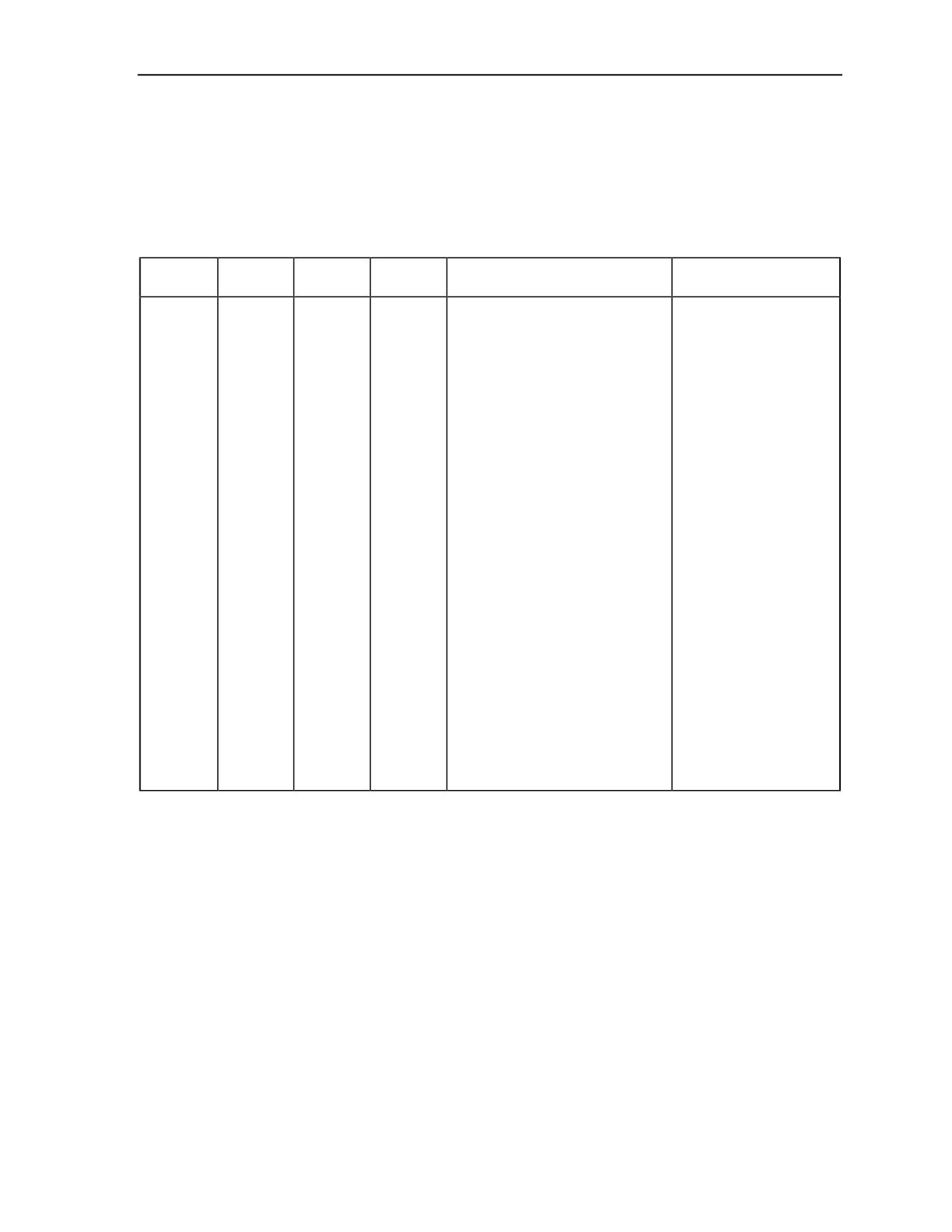
1-3. Build honeycomb stacks as shown in Figures 1-3 through 1-5 using the materials listed in Table 1-1.
Position the honeycomb stacks on the platform as shown in Figure 1-6.
Table 1-1. Materials Needed for Honeycomb Stacks
Stack
Pieces
Width
Length
Material
Instructions
Number
(Inches)
(Inches)
1
8
36
29
Honeycomb
See Figure 1-3.
4
36
29
¾ inch Plywood
6
4 X 4
29
Lumber
1
36
19
½ inch Plywood
2
8
36
19
Honeycomb
See Figure 1-4.
4
36
19
¾ inch Plywood
6
4 X 4
19
Lumber
2
2 X 4
19
Lumber
2
2 X 6
19
Lumber
Honeycomb
3
8
36
19
See Figure 1-5.
¾ inch Plywood
3
36
19
Lumber
6
4 X 4
19
½ inch Plywood
1
36
19
Lumber
2
2 X 8
19
½ inch Plywood
1
21
19
¾ inch Plywood
1
21
19
Honeycomb
4 and 5
8
18
96
See Figure 1-5.
16 November 2006
FM 4-20.167/TO 13C7-16-171
1-3
Chapter 1
Notes.
1. Not drawn to scale.
2. All dimensions are given in inches.
4
4
3
5
2
3
1
2
FRONT
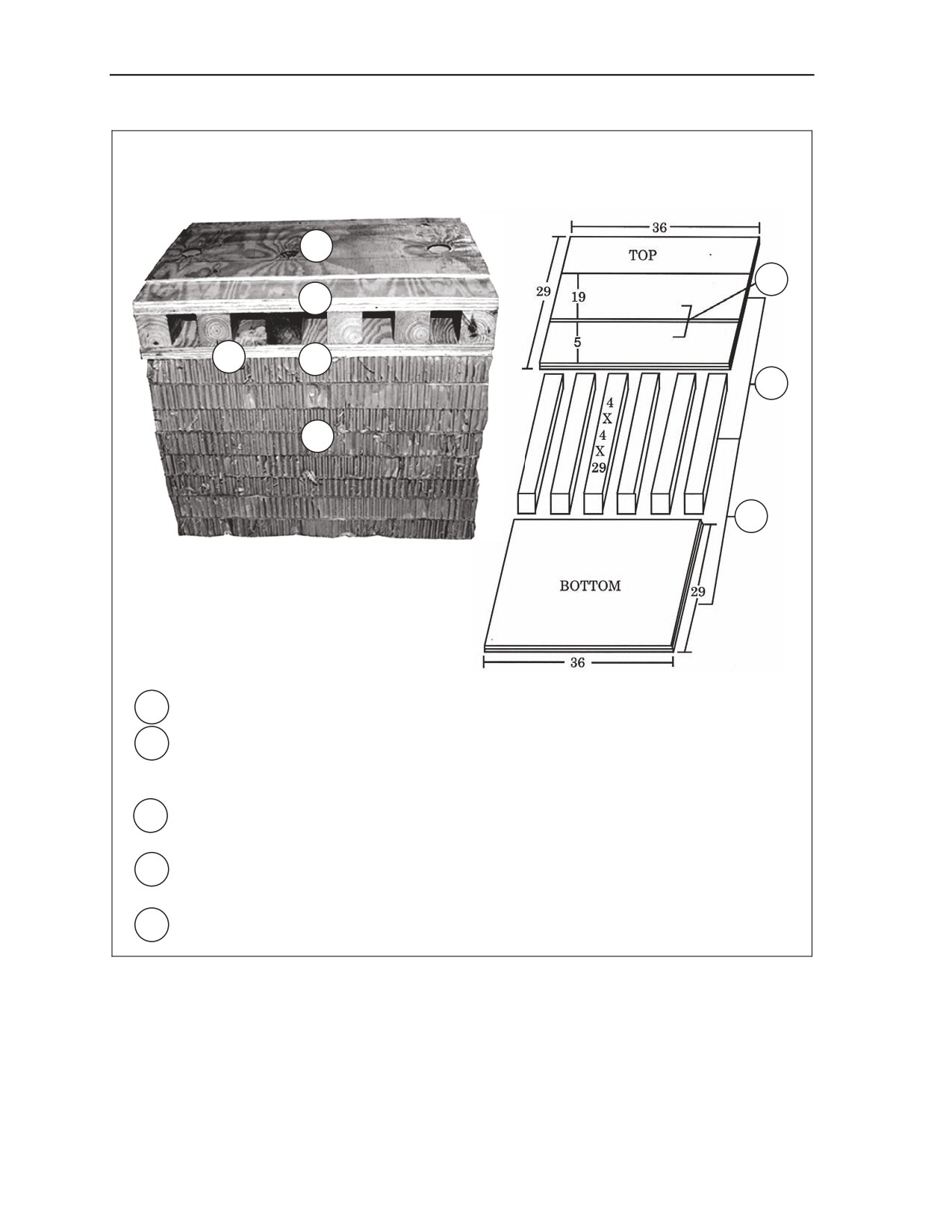
1 Glue eight 29- by 36-inch pieces of honeycomb together to form a base.
2 Place and nail six 4 -by 4- by 29-inch pieces of lumber on top of two 29- by 36- by ¾-inch
pieces of plywood. Place the 4- by 4-inch pieces of lumber flush with sides, front, back
and evenly spaced.
3 Nail two 29- by 36- by ½-inch pieces of plywood flush on top of the six 4- by 4-inch pieces
of lumber.
4 Place and nail a 19- by 36- by ½-inch piece of plywood flush with the sides and 5 inches
from the front on top of the plywood placed in step 3.
5 Glue the wood stack on the honeycomb stack made in step 1.
Figure 1-3. Honeycomb Stack 1 Prepared
1-4
FM 4-20.167/TO 13C7-16-171
16 November 2006
Rigging IC45 Crawler Carrier on a Type V Platform for Low-Velocity Airdrop
Notes.
1. Not drawn to scale.
2. All dimensions are given in inches.
4
3
4
5
2
1
3
2
FRONT
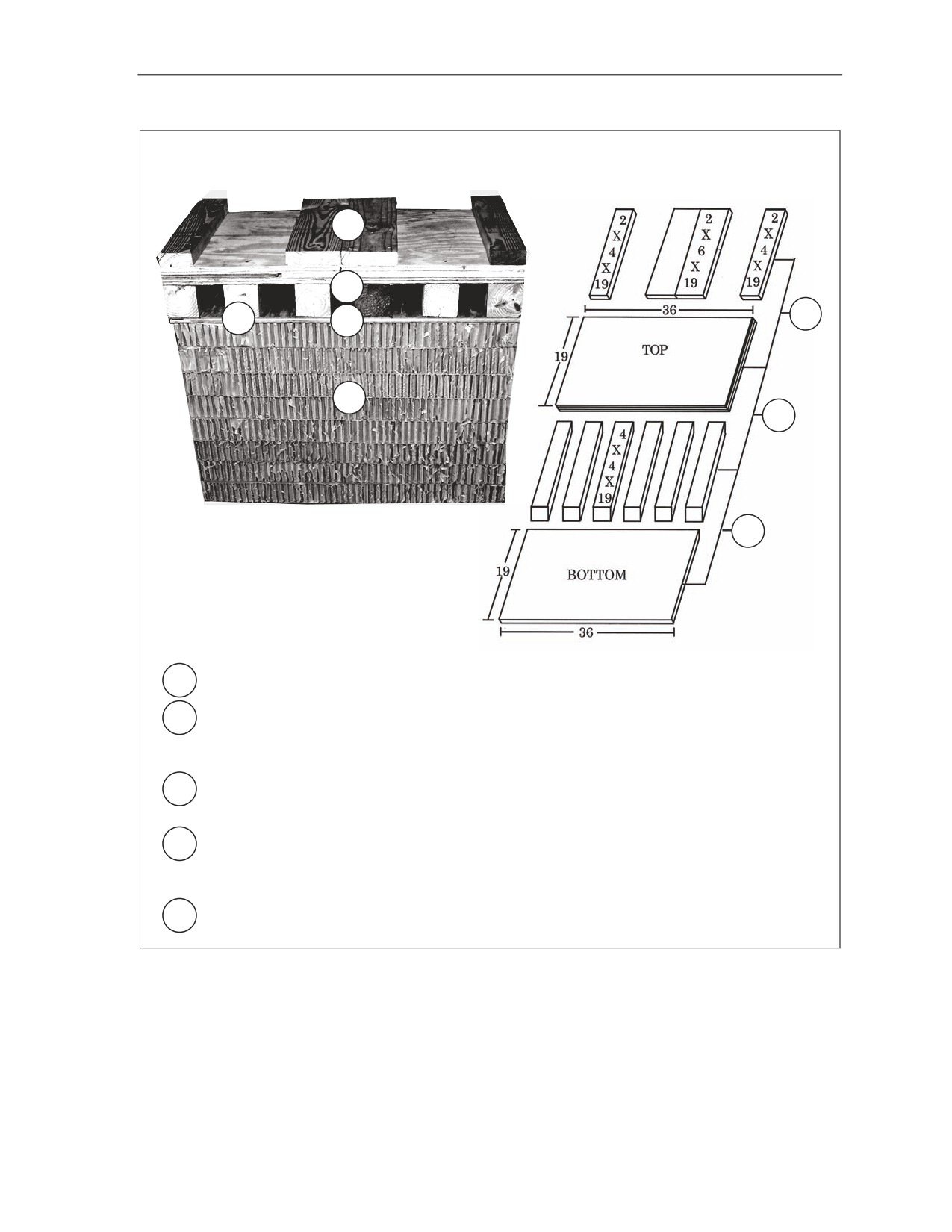
1 Glue eight pieces of 19- by 36-inch honeycomb together to form a base.
2 Place and nail six 4- by 4- by 19-inch pieces of lumber on top of one 19- by 36- by ¾-inch
piece of plywood. Place the 4 by 4 pieces of lumber flush with sides, front, back and
evenly spaced.
3 Nail three 19- by 36- by ¾-inch pieces of plywood flush on top of the six 4- by 4-inch
pieces of lumber.
4 Place and nail one 2- by 4- by 19-inch piece of lumber on the left and right edge, flush with
the front and back. Place and nail two 2- by 6- by 19-inch pieces of lumber side by side in
the center on top of the 19- by 36- by ¾-inch piece of plywood placed in step 3.
5 Glue and place wood stack on honeycomb stack made in step 1.
Figure 1-4. Honeycomb Stack 2 Prepared
16 November 2006
FM 4-20.167/TO 13C7-16-171
1-5
Chapter 1
Notes.
1. Not drawn to scale.
2. All dimensions are given in inches.
4
5
4
3
4
2
6
1
3
2
FRONT
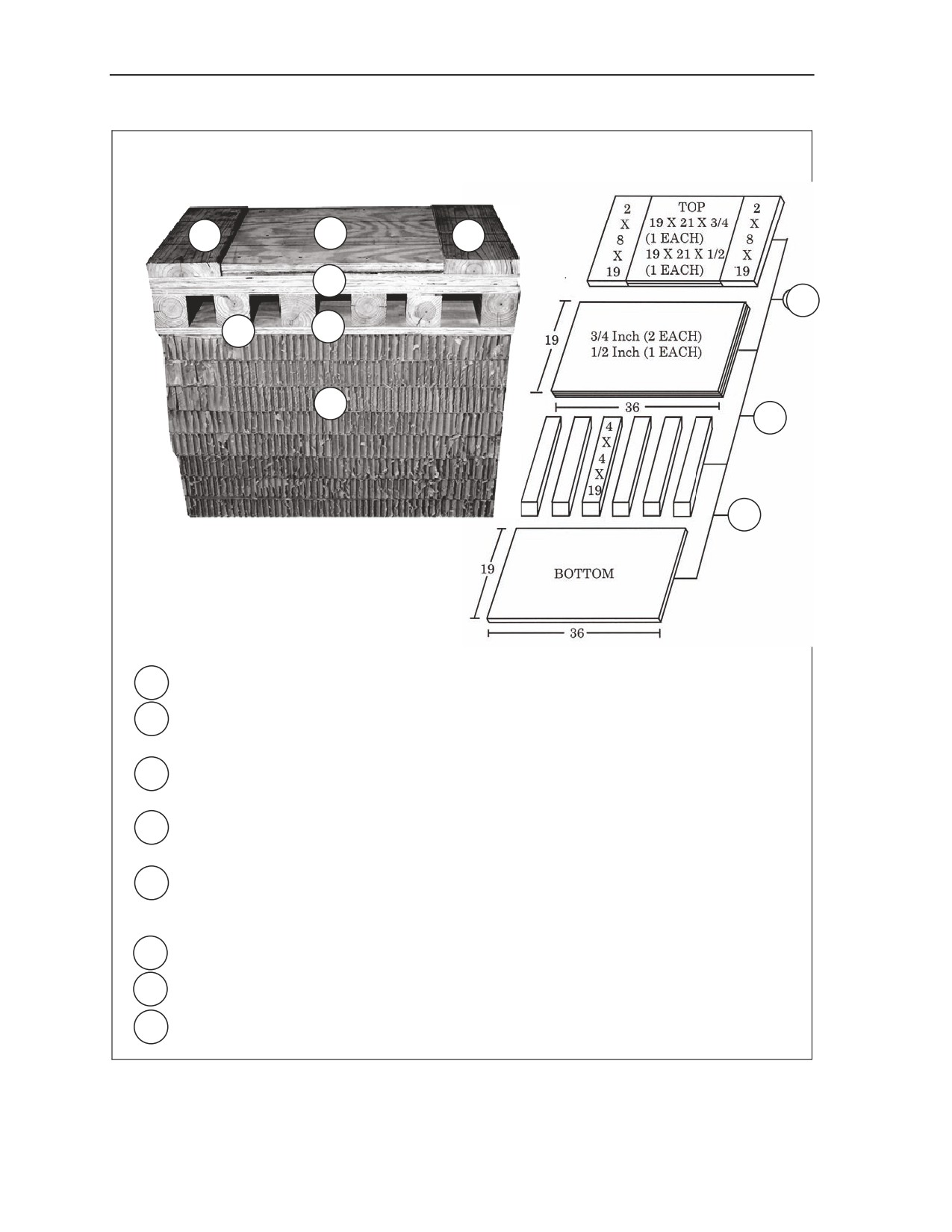
1 Glue eight pieces of 19- by 36-inch honeycomb together to form a base.
2 Place and nail six 4- by 4- by 19-inch pieces of lumber on top of one 19- by 36- by ¾-inch
piece of plywood. Place the 4 by 4’s flush with sides, front, back and evenly spaced.
3 Nail two 19- by 36- by ¾-inch pieces and one 19- by 36- by ½-inch piece of plywood flush
on top of the six 4- by 4-inch pieces of lumber.
4 Place and nail one 2- by 8- by 19-inch piece of lumber on the left and right edge, flush with
the front and back on top of the plywood positioned in step 3.
5 Place and nail one piece of 19- by 21- by ½-inch plywood and one piece of 19- by 21- by
¾-inch plywood on top of the 19- by 36- by ¾-inch piece of plywood in step 3 and in
between the lumber in step 4 flush with the front and back.
6 Glue and place wood stack on top of the honeycomb stack made in step 1.
7 To form stack 4, glue four 18- by 96-inch pieces of honeycomb together (Not Shown).
8 To form stack 5, glue four 18- by 96-inch pieces of honeycomb together (Not Shown).
Figure 1-5. Honeycomb Stack 3, 4 and 5 Prepared
1-6
FM 4-20.167/TO 13C7-16-171
16 November 2006
Rigging IC45 Crawler Carrier on a Type V Platform for Low-Velocity Airdrop
Notes.
1. Not drawn to scale.
2. All dimensions are given in inches.
11 ½
Stack 5
41 ½
86
Stack 2
29
Stack 1
Stack 3
16 ½
28
121 ½
Stack 4
41 ½
11 ½
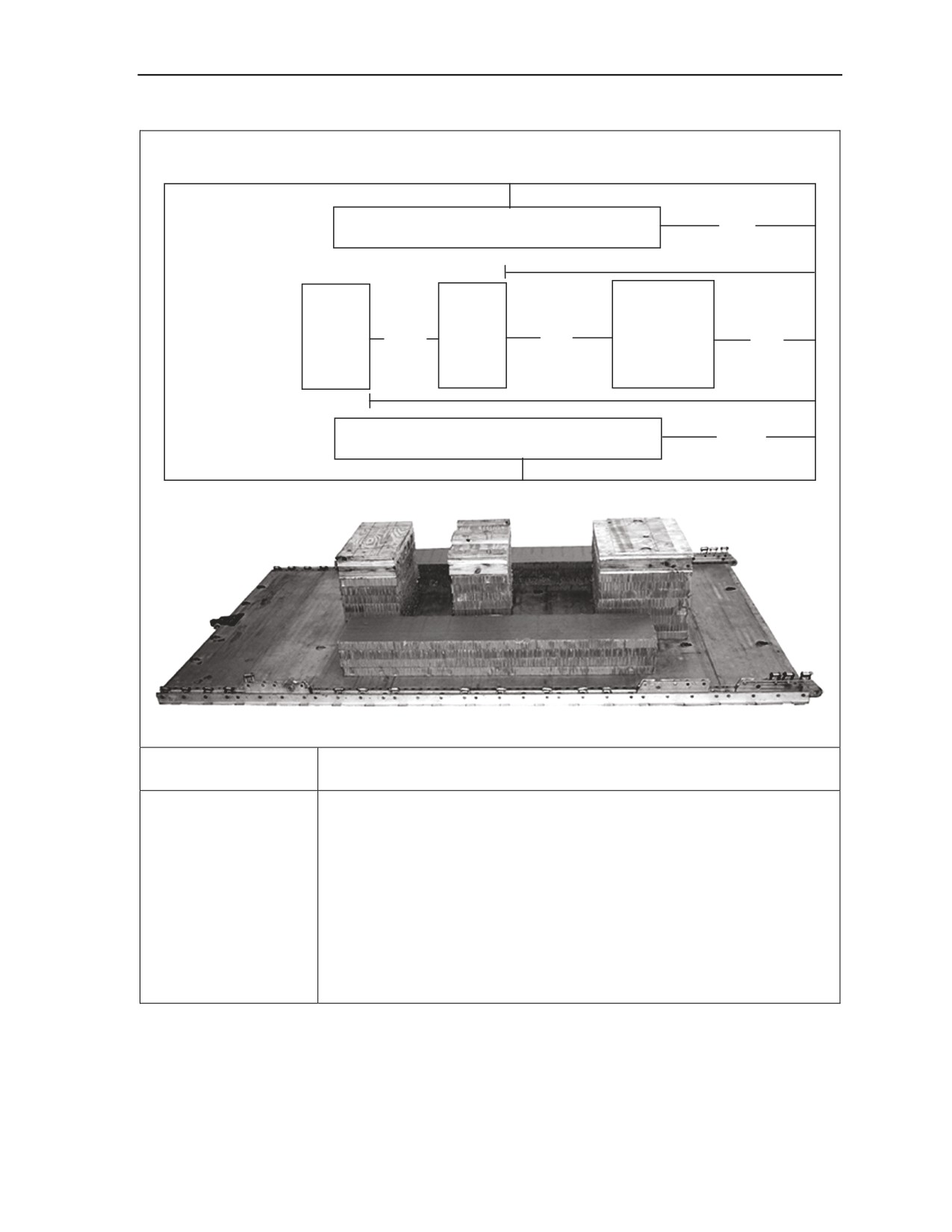
FRONT
Stack
Position of Stacks on the Platform
Number
Place stack:
1
Centered 28 inches from the front edge of the platform.
2
Centered 29 inches from stack 1 or 86 inches from the front edge of the
platform.
3
Centered 16 ½ inches from the rear edge of stack 2 or 121 ½ inches
from the front edge of the platform.
4
41 ½ inches from the front edge of the platform and 11 ½ inches from the
right side of the platform.
5
41 ½ inches from the front edge of the platform and 11 ½ inches from the
left side of the platform.
Figure 1-6. Honeycomb Stacks Positioned on the Platform
16 November 2006
FM 4-20.167/TO 13C7-16-171
1-7
Chapter 1
PREPARING THE IC45 CRAWLER CARRIER
1-4. Prepare the IC45 crawler carrier as follows: Make sure the fuel tank is no more than ¾ full. Make
sure the battery and battery compartment complies with AFMAN 24-204(I)/ TM 38-250. Prepare the rest
of the IC45 crawler carrier using Table 1-2 and as shown in Figures 1-7 through 1-11.
CAUTION
Make sure all equipment is removed by a qualified operator or qualified
maintenance personnel.
Table 1-2. Materials Required to Prepare the Bed and Build the Canopy Cover and Cab
Protective box
Pieces
Width
Length
Material
Instruction
1
6
18
Honeycomb
See Figure 1-7
1
6
18
¾” Plywood
See Figure 1-7
1
32
75
Honeycomb
See Figure 1-9
1
36
75
Honeycomb
See Figure 1-9
1
22
75
Honeycomb
See Figure 1-9
1
31 ½
51
¾“ Plywood
See Figure 1-9
2
3
20
Honeycomb
See Figure 1-9
2
32
33
¾” Plywood
Cut a 6 ½ - by 21-inch piece out of
each side. See Figure 1-10
1
33
50 ½
2 X 4 Lumber
See Figure 1-10
2
2 X 4
33
2 X 4 Lumber
See Figure 1-10
2
2 X 4
12
¾” Plywood
See Figure 1-10
1
12
50 ½
¾” Plywood
See Figure 1-10
1
32
52
¾” Plywood
See Figure 1-10
1-8
FM 4-20.167/TO 13C7-16-171
16 November 2006
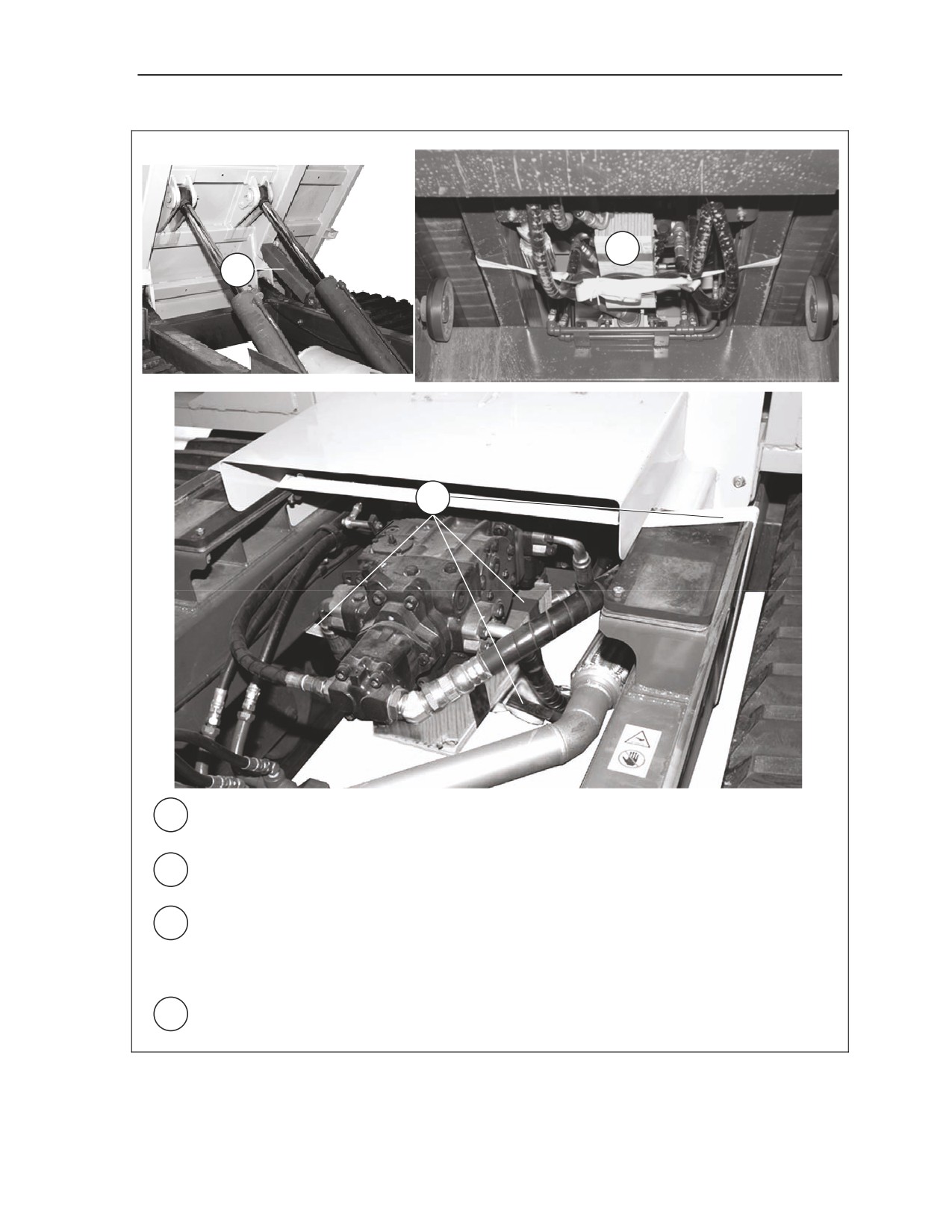
Rigging IC45 Crawler Carrier on a Type V Platform for Low-Velocity Airdrop
3
1
3
1 Raise the dump body to the up position. Place the red safety bar in the bracket under the
body to prevent the body from falling while lashing the hydraulic pump.
2 Cut a 6- by 18- by ¾-inch piece of plywood and a 6- by 18-inch piece of honeycomb and tape
them together. (Not Shown)
3 Route a 15-foot lashing from the hydraulic pump, up around the frame, over the top of the
frame to the other side and down along the frame. Place the 6- by 18-inch piece of plywood
and honeycomb, with the honeycomb against the hydraulic pump. Secure the lashing with a
D-ring and load binder on the piece of plywood.
4 Remove the safety bar and lower the dump body to the down position (Not Shown).
Figure 1-7. Dump Body Prepared
16 November 2006
FM 4-20.167/TO 13C7-16-171
1-9
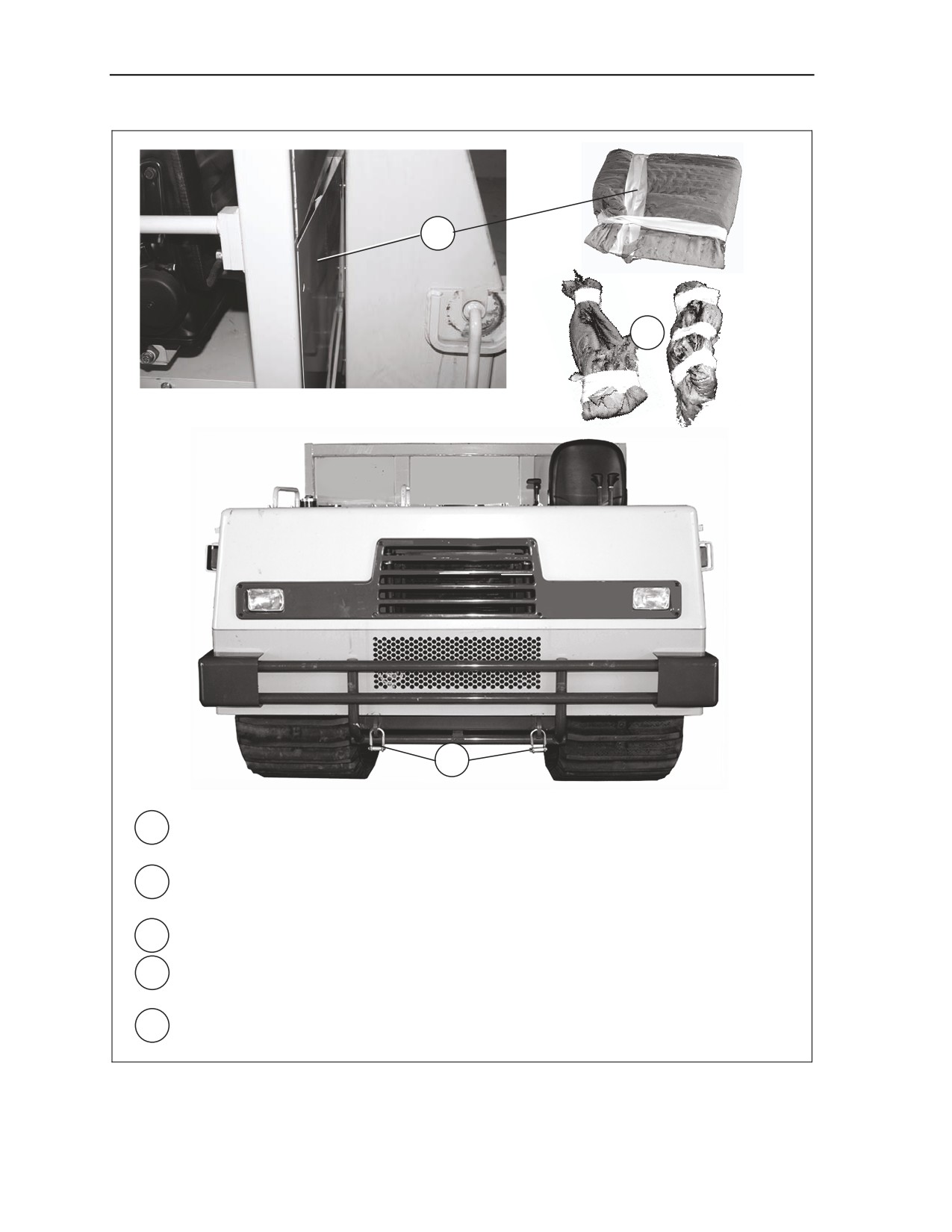
Chapter 1
1
2
5
1 Remove the panel from behind the driver’s seat. This panel must be removed prior to
removing the canopy cover. Wrap the panel with cellulose wadding and tape.
2 Remove the mirrors. Wrap the mirrors separately with cellulose wadding and tape.
Note:
The panel and the mirrors will be stowed in Figure 1-9, step 11.
3 Remove the canopy cover. (Not Shown)
4 Tape all gauges and lights on the inside and outside of the vehicle with 2” masking tape.
(Not Shown).
5 Place one type V platform clevis on each front towing hook.
Figure 1-8. Components Stowed
1-10
FM 4-20.167/TO 13C7-16-171
16 November 2006
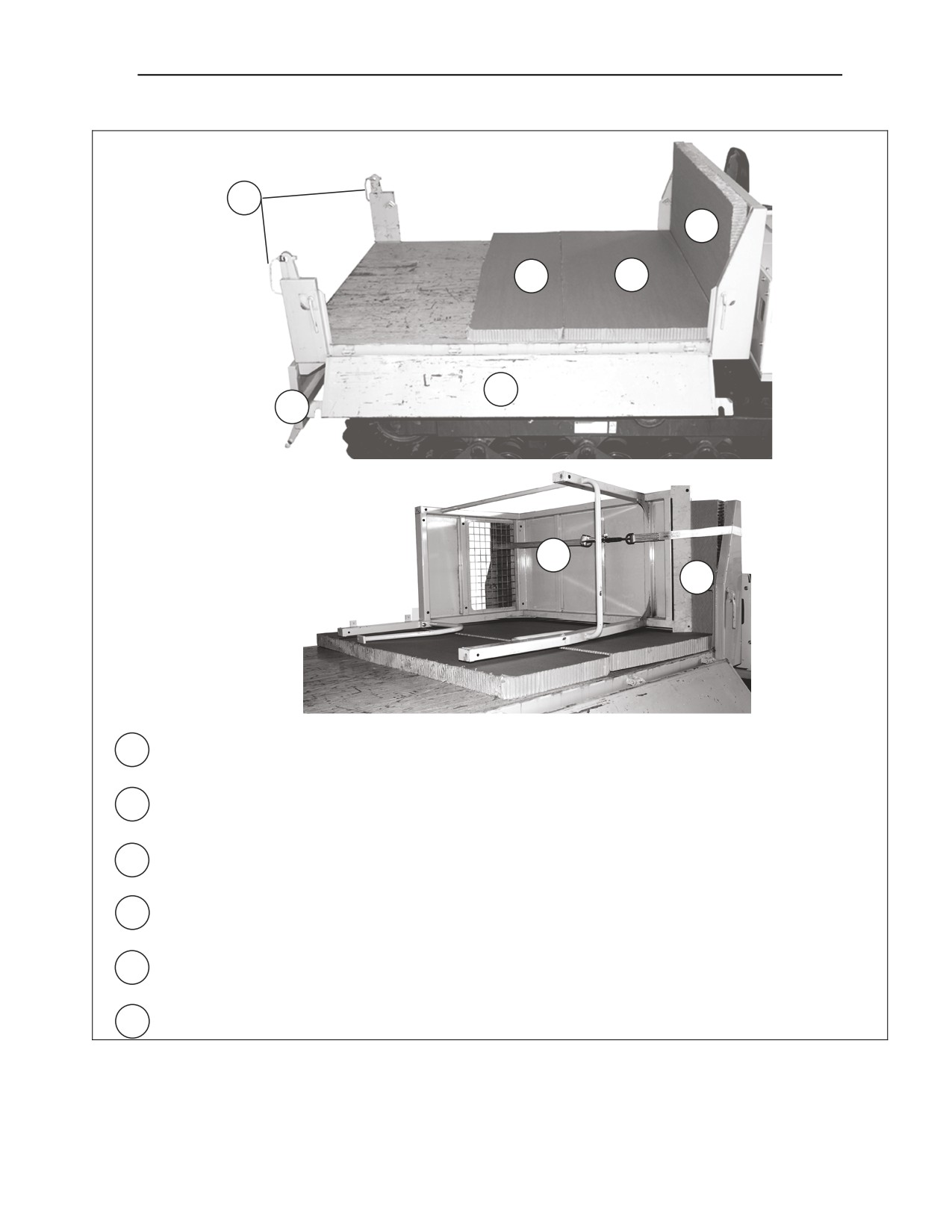
Rigging IC45 Crawler Carrier on a Type V Platform for Low-Velocity Airdrop
1
2
4
3
1
1
6
5
z
1 Lower the dump body’s side and rear gate panels. Move the gate locking levers to the down position.
2 Cut a 32- by 75-inch piece of honeycomb. Position the honeycomb flush against the forward end of the
dump body in the vertical position.
3 Cut a 36- by 75-inch piece of honeycomb. Position the honeycomb flush against the honeycomb placed
in step 2.
4 Cut a 22- by 75-inch piece of honeycomb. Position the honeycomb flush against the honeycomb placed
in step 3.
5 Place the cab canopy cover top against and centered on the honeycomb placed in step 2 through 4.
Place the rear of the cab canopy cover to the left side of the dump body.
6 Route a 15-foot lashing around the front of the dump body and around the cab canopy cover. Secure
the lashing with a D-ring and load binder inside the cab canopy cover.
Figure 1-9. Dump Body, Gates, and Cab Canopy Cover Prepared
16 November 2006
FM 4-20.167/TO 13C7-16-171
1-11
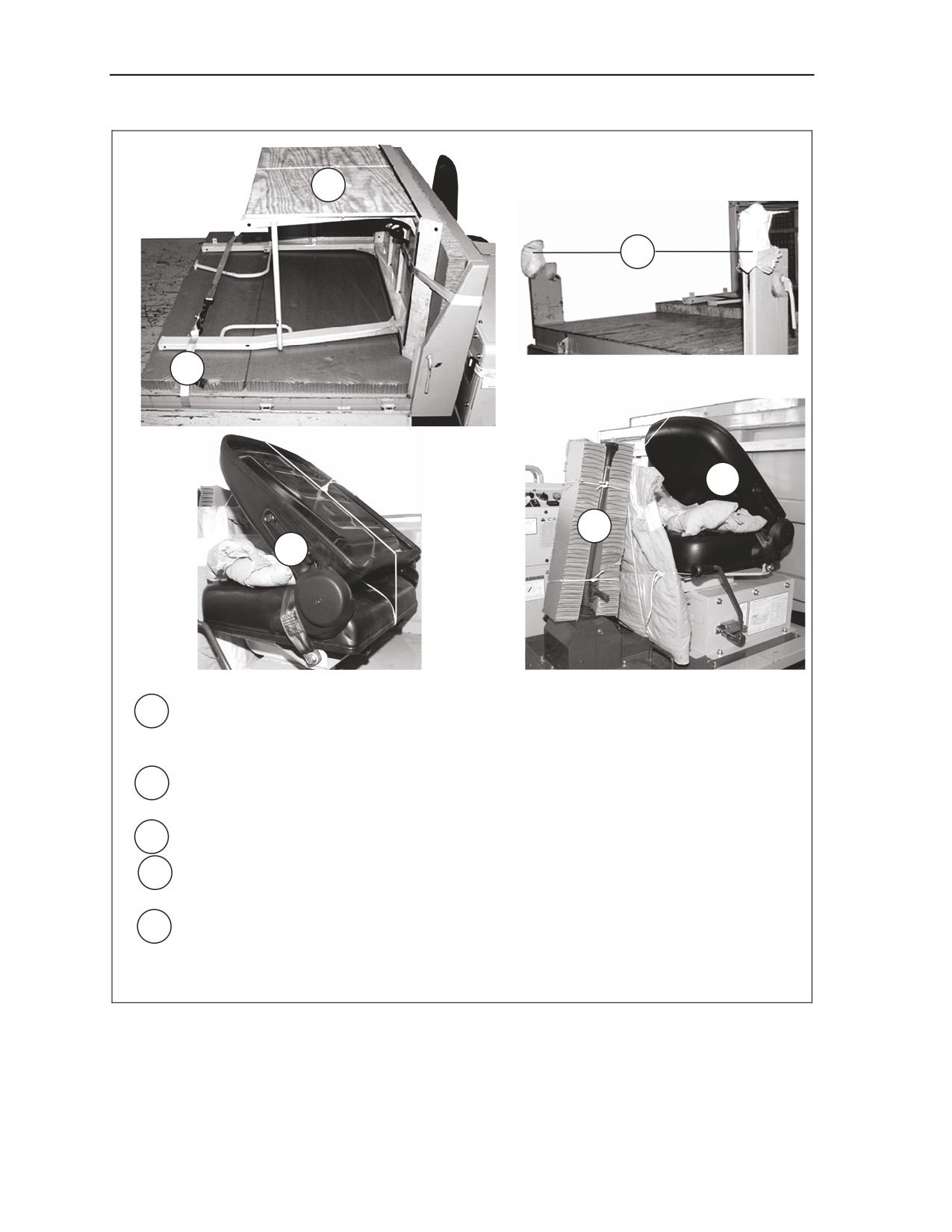
Chapter 1
8
9
7
11
10
11
7 Route a 15-foot lashing between the side gate and the dump body, behind the track, under
the main frame, up behind the opposite track, and up over the cab canopy cover. Secure
the lashing in the center of the legs with a D-ring and load binder.
8 Cut a 31 1/2- by 51- by ¾-inch piece of plywood. Position the plywood on top of the
canopy cover and secure it to the canopy cover with type III nylon cord.
9 Pad the rear upper gate hinges with cellulose wadding and tape.
10 Cut and place two 3- by 20-inch pieces of honeycomb on the forward and rear sides of the
travel levers. Secure the honeycomb with tape and type III nylon cord.
11 Place the padded mirrors, removed in step 2 of Figure 1-8, in the operator’s seat. Place
the padded panel in front of the operator’s seat. Fold or tilt the operator’s seat forward and
secure the items and the seat with type III nylon cord.
Figure 1-9. Dump Body, Gate’s, and Cab Canopy Cover Prepared (Continued)
1-12
FM 4-20.167/TO 13C7-16-171
16 November 2006
Rigging IC45 Crawler Carrier on a Type V Platform for Low-Velocity Airdrop
Notes.
1. Not drawn to scale.
2.
All dimensions are given in inches.
3.
The box is shown on its side for building clarification.
FRONT
REAR
1
3
2
LEFT SIDE
4
12
6 ½
21
32
1
25 ½
33
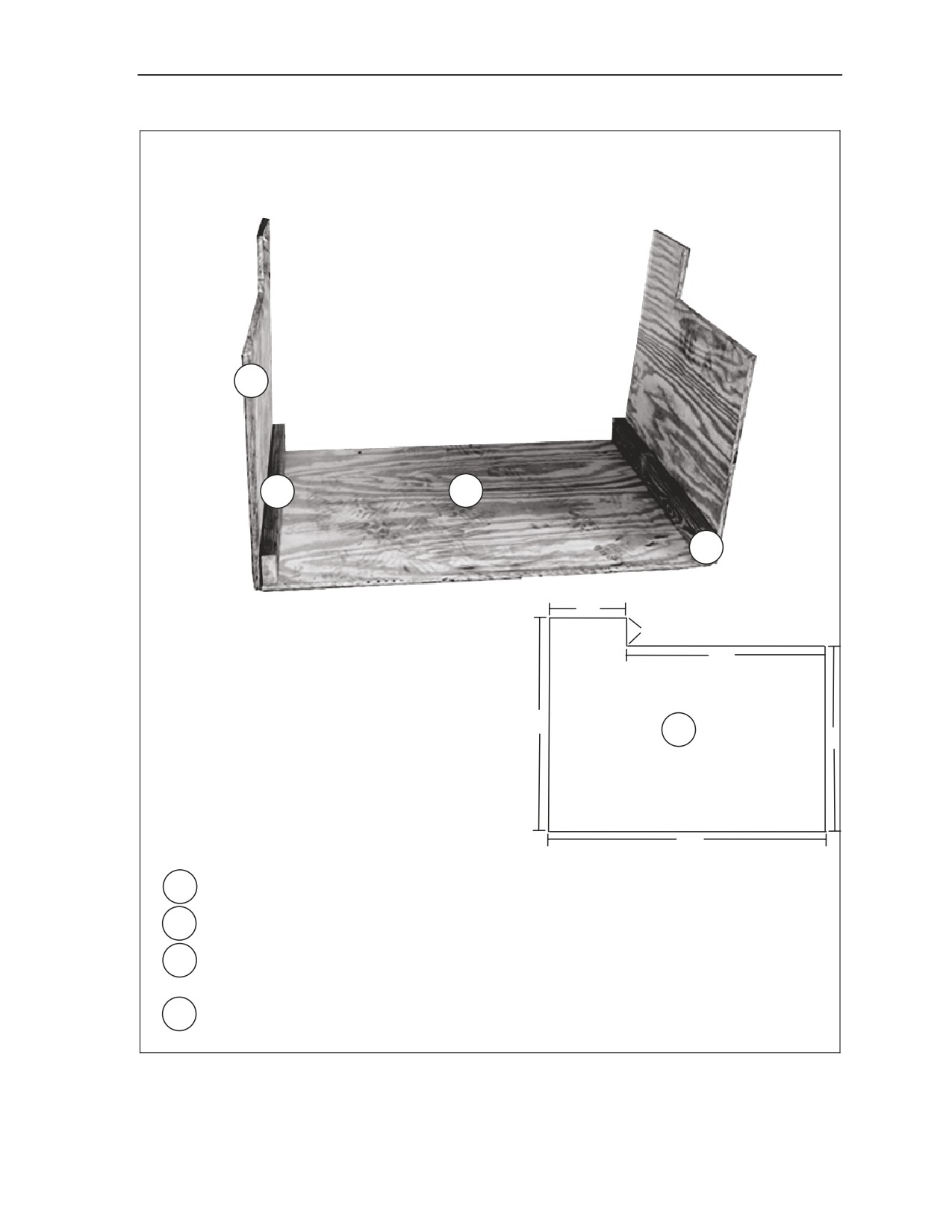
1 Cut two 32- by 33- by ¾-inch pieces of plywood as shown above for the front and rear. .
2 Cut one 33- by 50 ½- by 3/4-inch piece of plywood for the left side.
3 Cut two 2- by 4- by 33-inch pieces of lumber. Nail lumber to the left side on the front and
rear ends with 8d nails.
4 Nail the front and rear to the 2- by 4-inch lumber on the left side.
Figure 1-10. Protective Cab Box Built
16 November 2006
FM 4-20.167/TO 13C7-16-171
1-13
Chapter 1
Notes.
1. Not drawn to scale.
2.
All dimensions are given in inches.
3.
The box is shown on its side for building clarification.
6
RIGHT SIDE
8
7
9
FRONT
10
TOP
REAR
LEFT SIDE
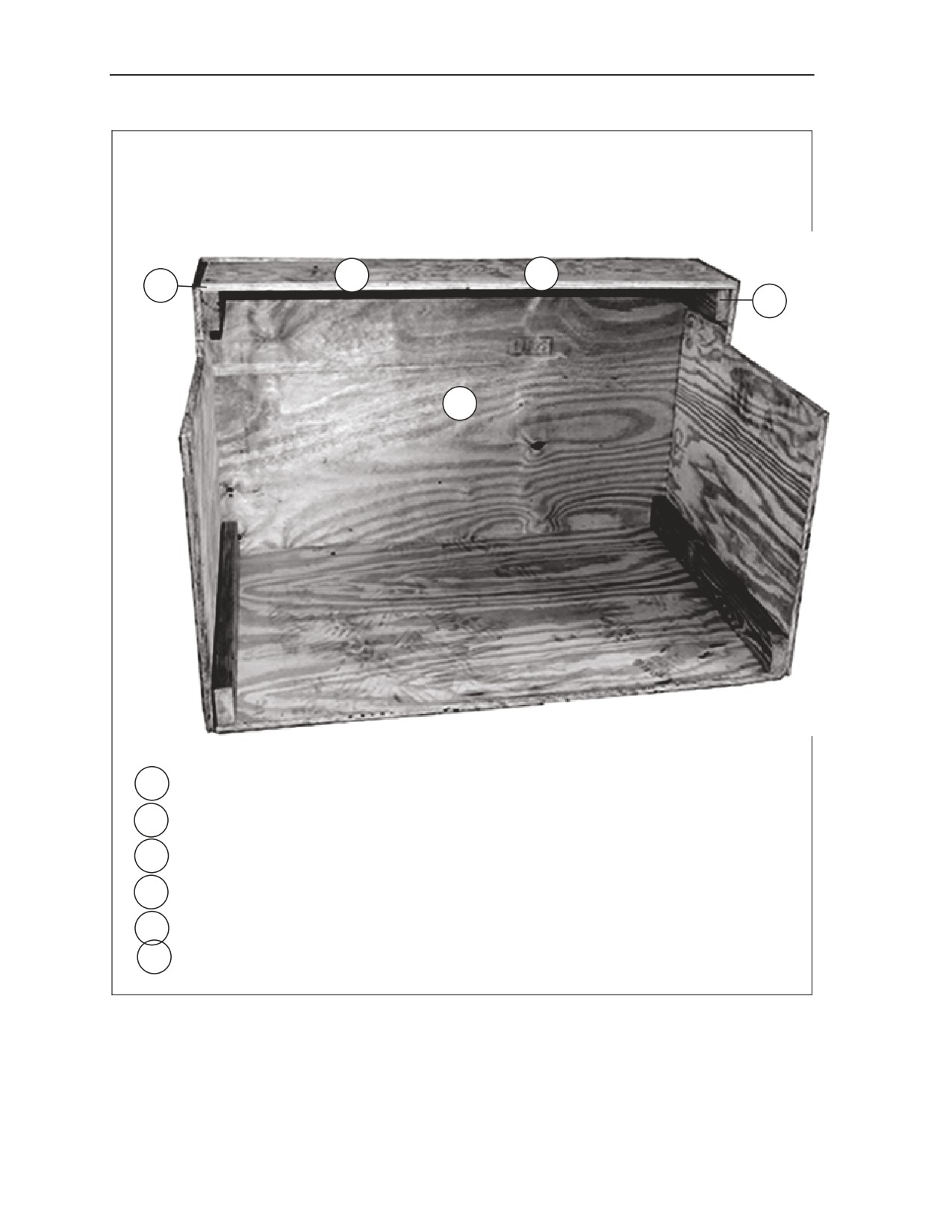
5 Cut two 2- by 4- by 12-inch pieces of lumber. (Not Shown)
6 Cut a 12- by 50 ½- by ¾-inch piece of plywood for the right side.
7 Nail the right side to the 2- by 4- by 12- inch piece of lumber with 8d nails.
8 Place the right side in between the front and rear pieces.
9 Nail the front and rear to the right side with 8d nails.
10 Cut a 32- by 52- by ¾-inch piece of plywood for the top. Nail the top to the sides, the front
and the rear with 8d nails.
Figure 1-10. Protective Cab Box Built (Continued)
1-14
FM 4-20.167/TO 13C7-16-171
16 November 2006
Rigging IC45 Crawler Carrier on a Type V Platform for Low-Velocity Airdrop
2
1
3
4
6
5
5
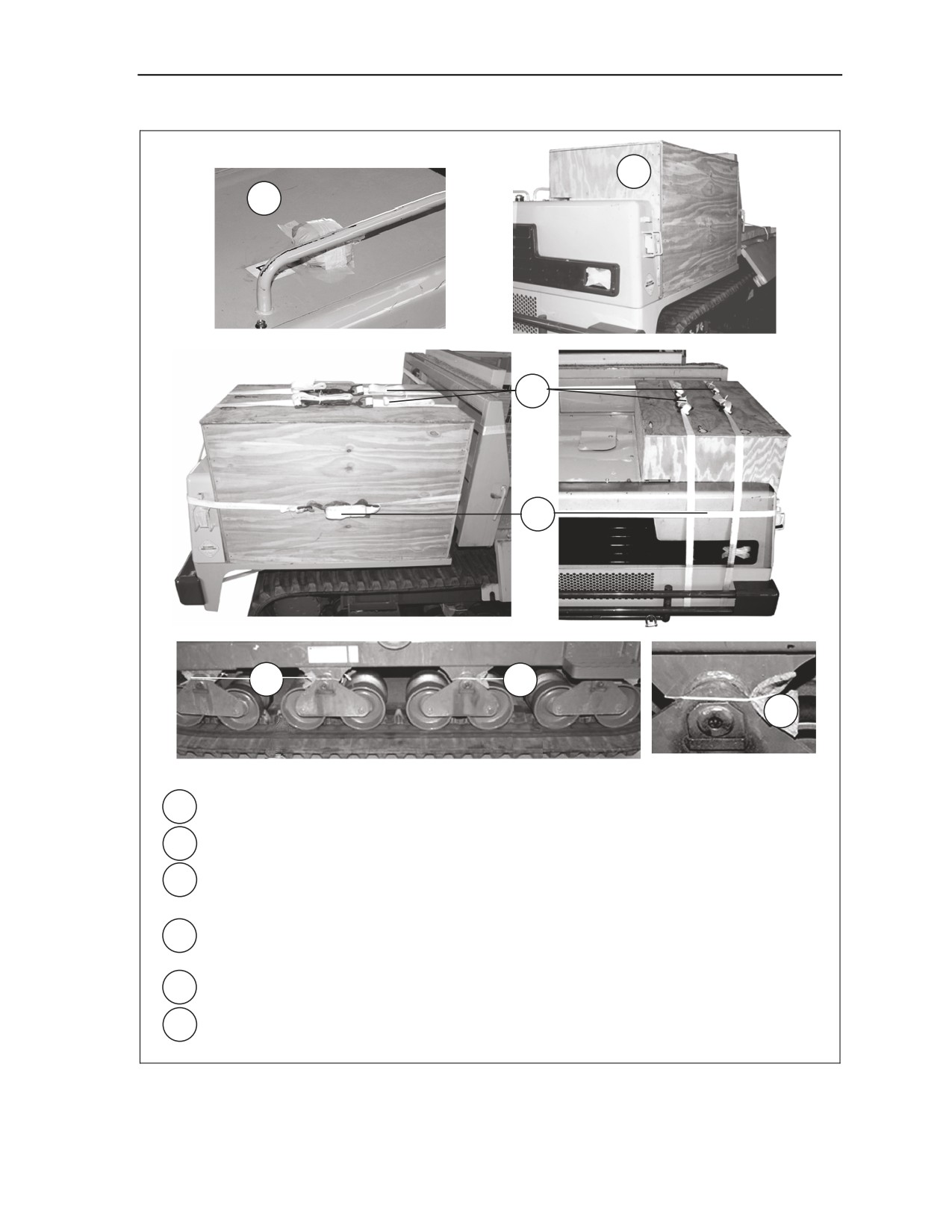
1 Pad with cellulose wadding and tape the fuel tank cap on the cab.
2 Position the protective cab box on the cab compartment.
3 Form two 30-foot lashings. Route them vertically around the cab box from front to rear and
secure them on top with two D-rings and a load binder.
4 Form a 30-foot lashing and route it horizontally around the cab from side to side. Secure it
on the left side of the carrier and on the cab box with two D-rings and a load binder.
5 Pad the front two rotary link brackets (see insert) with felt toward the front of the carrier.
6 Pad the last two rotary link brackets with felt toward the rear of the carrier. Secure the felt
with type III nylon cord.
Figure 1-11. Protective Cab Box, Fuel Cap and Brackets Prepared
16 November 2006
FM 4-20.167/TO 13C7-16-171
1-15
Chapter 1
INSTALLING LIFTING SLINGS AND POSITIONING THE CARRIER
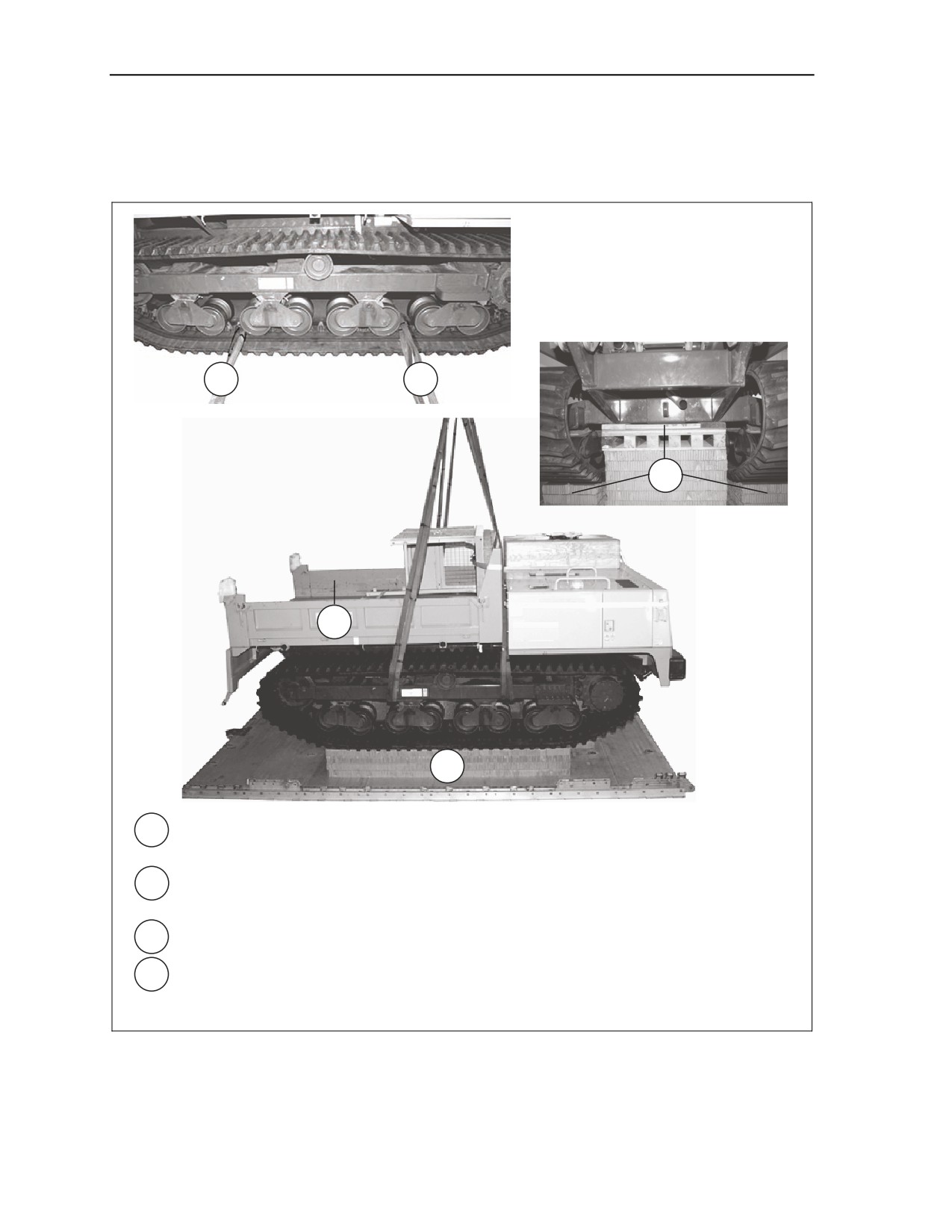
1-5. Install lifting slings and position the IC45 crawler carrier as shown in Figure 1-12.
2
1
4
3
4
1 Route a doubled 60-foot (three loop), type XXVI nylon sling between the second and third
lower rollers and through the other side.
2 Route a doubled 60-foot (three loop), type XXV nylon sling between the sixth and seventh
lower rollers and through the other side.
3 Raise and close the side gates. Lock them in place with both side gate locking levers.
4 Lift and position the carrier with the front bumper flush with the front edge of the platform.
Center the carrier’s cross frame member on the honeycomb stack 1. Center the tracks on
honeycomb stacks 4 and 5.
Figure 1-12. Carrier Positioned
1-16
FM 4-20.167/TO 13C7-16-171
16 November 2006
Rigging IC45 Crawler Carrier on a Type V Platform for Low-Velocity Airdrop
LASHING THE CRAWLER CARRIER
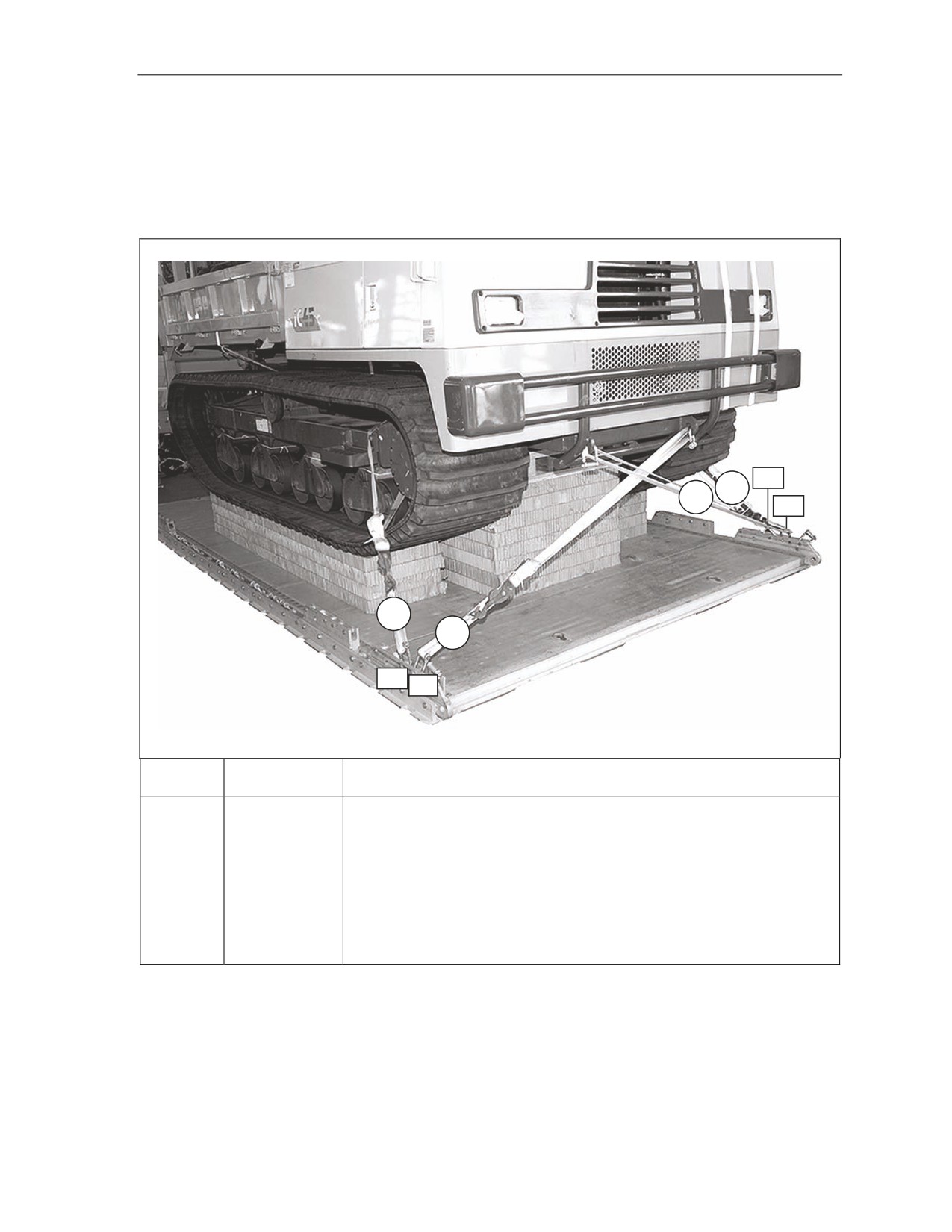
1-6. Lash the IC45 crawler carrier to the platform with sixteen 15-foot tiedown assemblies according to
FM 4-20.102/MCRP 4-11.3J/NAVSEA SS400-AB-MMO-010/TO 13C7-1-5 and as shown in Figures 1-13
and 1-14. Pad all sharp edges the lashings may come into contact with.
3A
4
2
2A
3
1
3
2
Lashing
Tiedown Clevis
Instructions
Number
Number
Pass lashing:
1
2
Through the carrier’s left front towing hook. Make sure the platform
clevis is forward of the lashing.
2
2A
Through the carrier’s right front towing hook. Make sure the platform
clevis is forward of the lashing.
3
3
Around the carrier’s right front track frame.
4
3A
Around the carrier’s left front track frame.
Figure 1-13. Lashings 1 Through 4 Installed
16 November 2006
FM 4-20.167/TO 13C7-16-171
1-17
Chapter 1
11
7
9
5
9
8
7
5
13
15
12
13
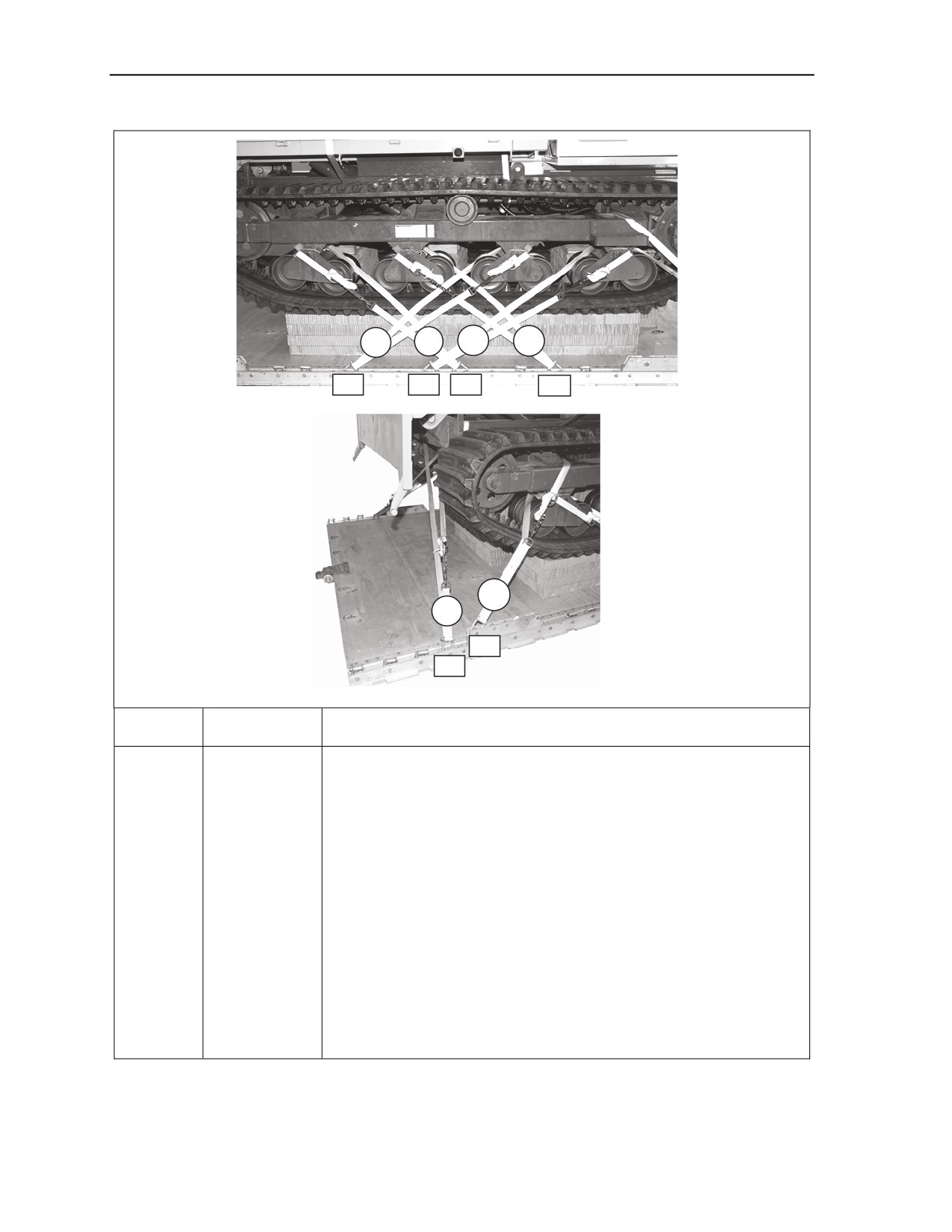
Lashing
Tiedown Clevis
Instructions
Number
Number
Pass lashing:
5
5
Around the carrier's right side third rotary link bracket.
6
5A
Around the carrier's left side third rotary link bracket.
7
7
Around the carrier's right side fourth rotary link bracket.
8
7A
Around the carrier's left side fourth rotary link bracket.
9
8
Around the carrier's right side first rotary link bracket.
10
8A
Around the carrier's left side first rotary link bracket.
11
9
Around the carrier's right side second rotary link bracket.
12
9A
Around the carrier's left side second rotary link bracket.
13
12
Around the carrier's right rear track frame.
14
12A
Around the carrier's left rear track frame.
15
13
To the carrier's left side main frame.
16
13A
To the carrier's right side main frame.
Figure 1-14. Lashings 5 Through 16 Installed
1-18
FM 4-20.167/TO 13C7-16-171
16 November 2006
Rigging IC45 Crawler Carrier on a Type V Platform for Low-Velocity Airdrop
INSTALLING AND LASHING THE FRONT ATTITUDE CONTROL
BAR (ACB)
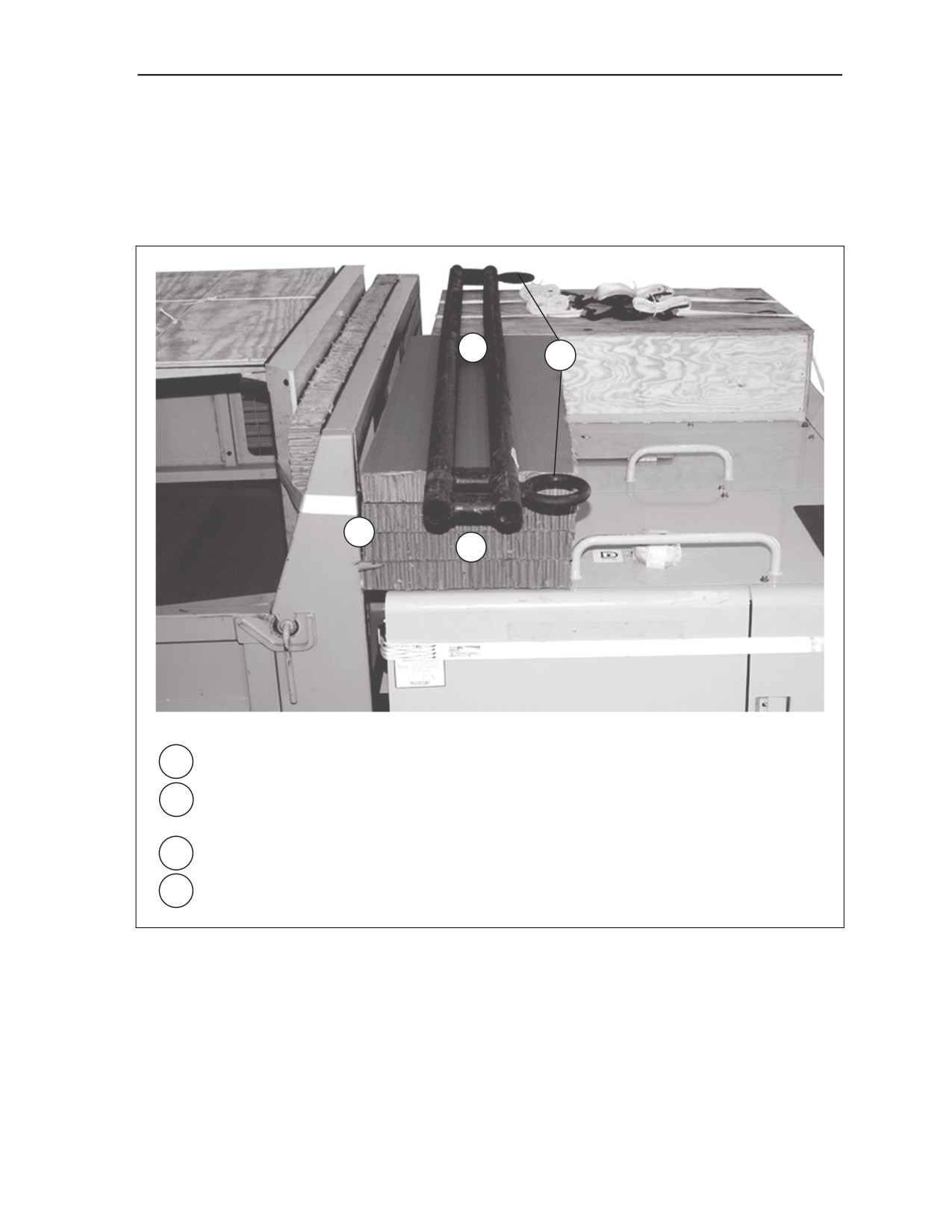
1-7. Install and lash the front ACB to the platform using eight 15-foot tiedown assemblies. Install the
lashings as shown in Figure 1-15.
3
4
2
1
REAR
FRONT
1 Cut four 19- by 51-inch pieces of honeycomb. Glue all four pieces together to form a stack.
2 Position the honeycomb stack flush against the right side cab box and against the cab side
of the forward dump body.
3 Position an ACB centered from side to side and front to rear on the honeycomb from step 1.
4 Ensure the eyelets (round holes) of the ACB are facing forward.
Figure 1-15. Front ACB Lashed
16 November 2006
FM 4-20.167/TO 13C7-16-171
1-19
Chapter 1
5
6
7
1
11
4
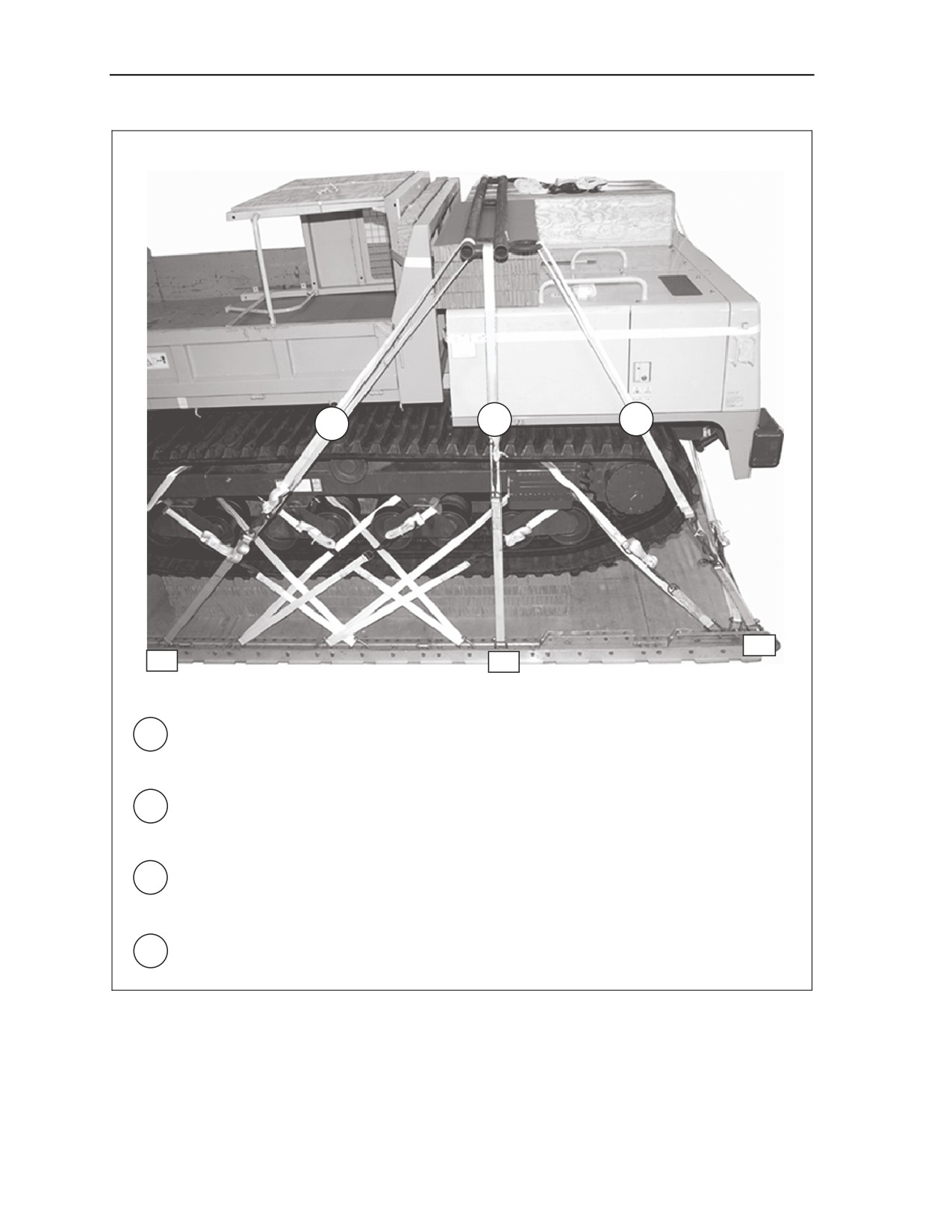
5 Route a 15-foot lashing through clevis 4, up between the outside center bar of the ACB
and back down. Place a D-ring and load binder on the lashing but do not tighten the
lashing at this time. Repeat this step on the opposite side of the load using clevis 4A.
6 Route a 15-foot lashing through clevis 1, up through the round hole of the ACB and back
down. Place a D-ring and load binder on the lashing but do not tighten at this time.
Repeat this step on the opposite side using clevis 1A.
7 Route a 15-foot lashing through clevis 11, up through the outside rear bar of the ACB and
back down. Place a D-ring and load binder on the lashing but do not tighten at this time.
Repeat this step on the opposite side using clevis 11A.
8 Tighten all the lashings at the same time with an equal amount of tension. (Not Shown)
Figure 1-15. Front ACB Lashed (Continued)
1-20
FM 4-20.167/TO 13C7-16-171
16 November 2006
Rigging IC45 Crawler Carrier on a Type V Platform for Low-Velocity Airdrop
10
9
9
10
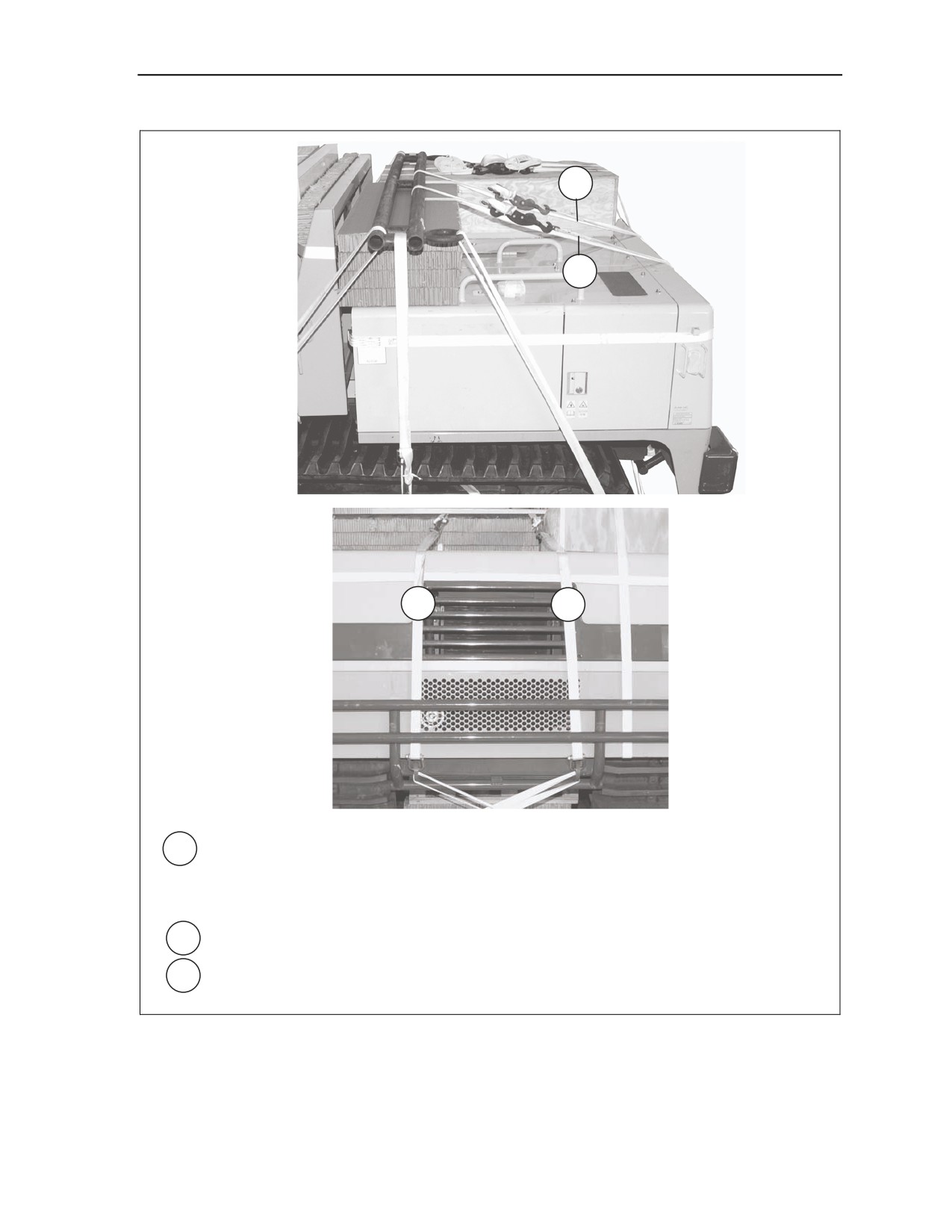
9 Route a 15-foot lashing through the platform clevis attached to the right front towing hook.
Route the lashing between the engine cover and the front bumper around the front bar of
the ACB. Place the D-ring and load binder on the lashing, but do not tighten at this time.
The load binder will be on top of the engine cover.
10 Repeat step 9 on the left side using the clevis attached to the left front towing hook.
11 Tighten both lashings equally. (Not Shown)
Figure 1-15. Front ACB Lashed (Continued)
16 November 2006
FM 4-20.167/TO 13C7-16-171
1-21
Chapter 1
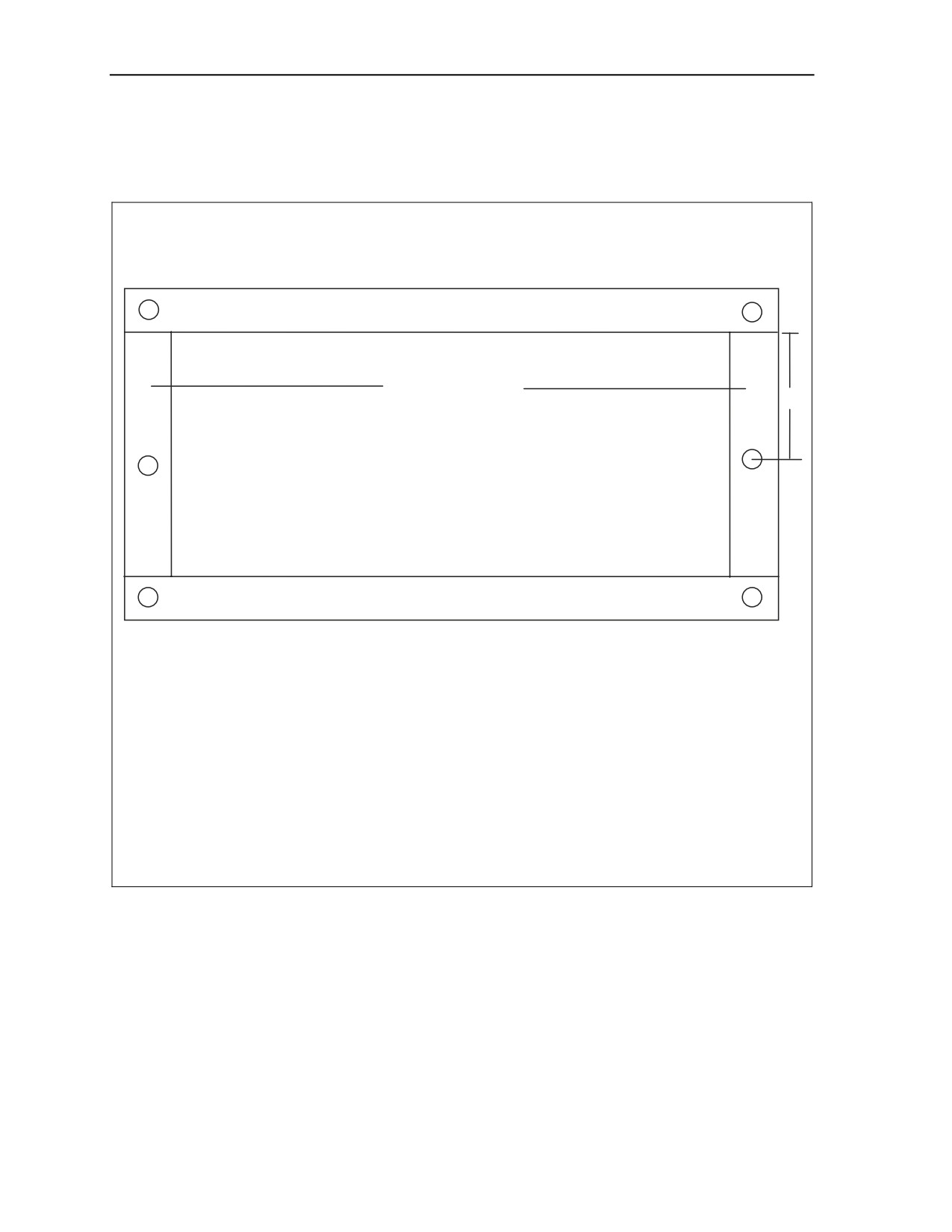
BUILDING THE PARACHUTE STOWAGE PLATFORM
1-8. Build a parachute stowage platform as shown in Figure 1-16.
Notes.
1. Not drawn to scale.
2. All dimensions are given in inches.
2 x 6 x 60 lumber
2 x 6 x 37 lumber
18 ½
48 x 60 x ¾ plywood
2 x 6 x 60 lumber
Steps:
1. Use a 48- by 60- by ¾-inch sheet of plywood as a base.
2. Cut two 2- by 6- by 60-inch pieces of lumber. Nail each piece of lumber flush with the front, rear
and sides using 8d nails.
3. Cut two 2- by 6- by 37-inch pieces of lumber. Nail the lumber flush with one piece on each side
between the front and rear pieces using 8d nails.
4. Drill six 2-inch holes centered in the 2- by 6-inch lumber as shown above.
Figure 1-16. Parachute Stowage Platform Built
1-22
FM 4-20.167/TO 13C7-16-171
16 November 2006
Rigging IC45 Crawler Carrier on a Type V Platform for Low-Velocity Airdrop
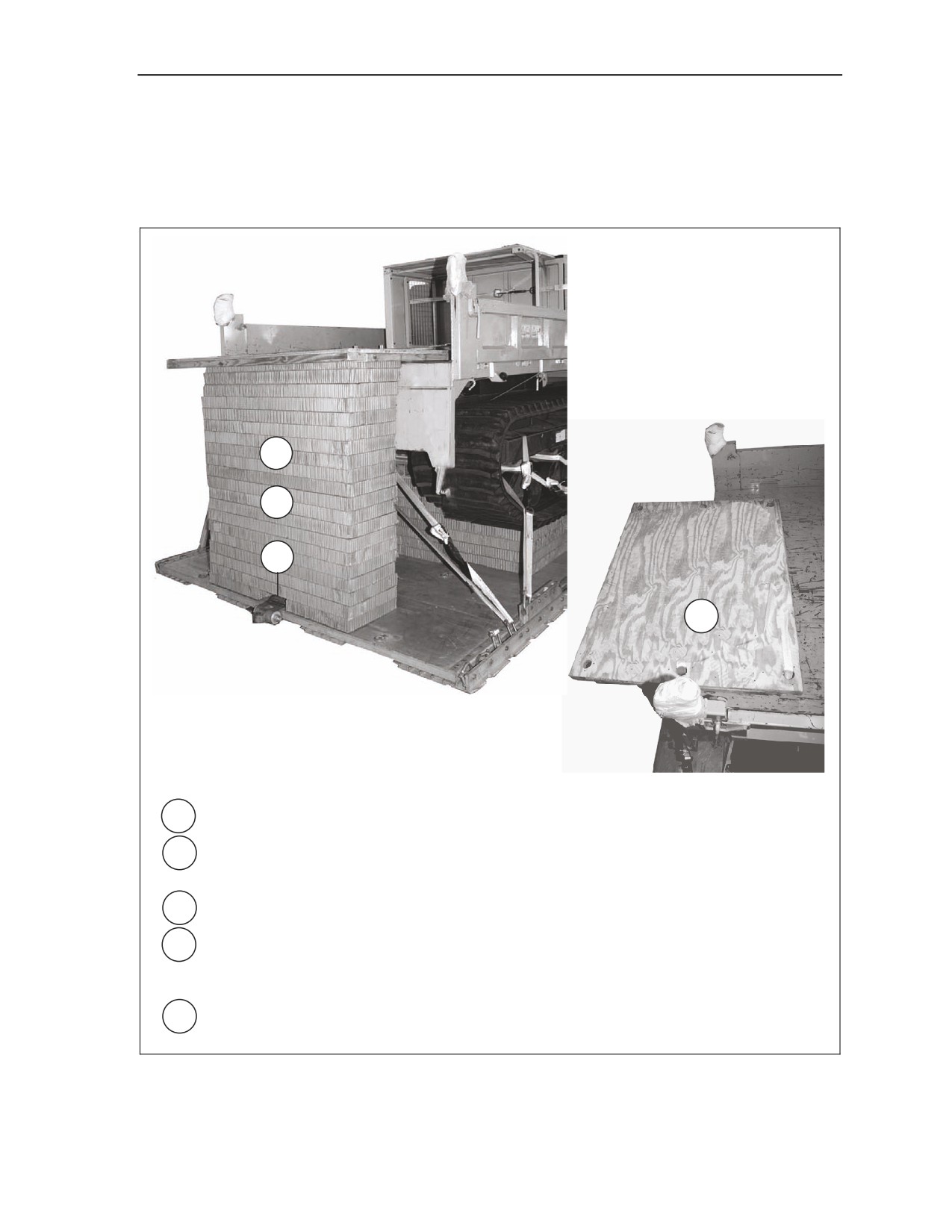
INSTALLING AND RESTRAINING THE PARACHUTE STOWAGE
PLATFORM
1-9. Install the parachute stowage platform as shown in Figure 1-17.
1
3
2
4
1 Cut and glue twenty 17- by 49-inch pieces of honeycomb to form a stack.
2 Make a cutout on the bottom of the stack, towards the rear of the 49-inch edge, for access
to the extraction force transfer coupling (EFTC) extraction bracket.
3 Position the stack, centered from side to side and flush with the rear edge of the platform.
4 Position the parachute stowage platform on top of the honeycomb stack and the bed of the
dump truck. The parachute platform will overhang the rear edge of the airdrop platform 6
inches.
5 Lower the side gates of the dump body. (Not Shown)
Figure 1-17. Parachute Stowage Platform Installed
16 November 2006
FM 4-20.167/TO 13C7-16-171
1-23
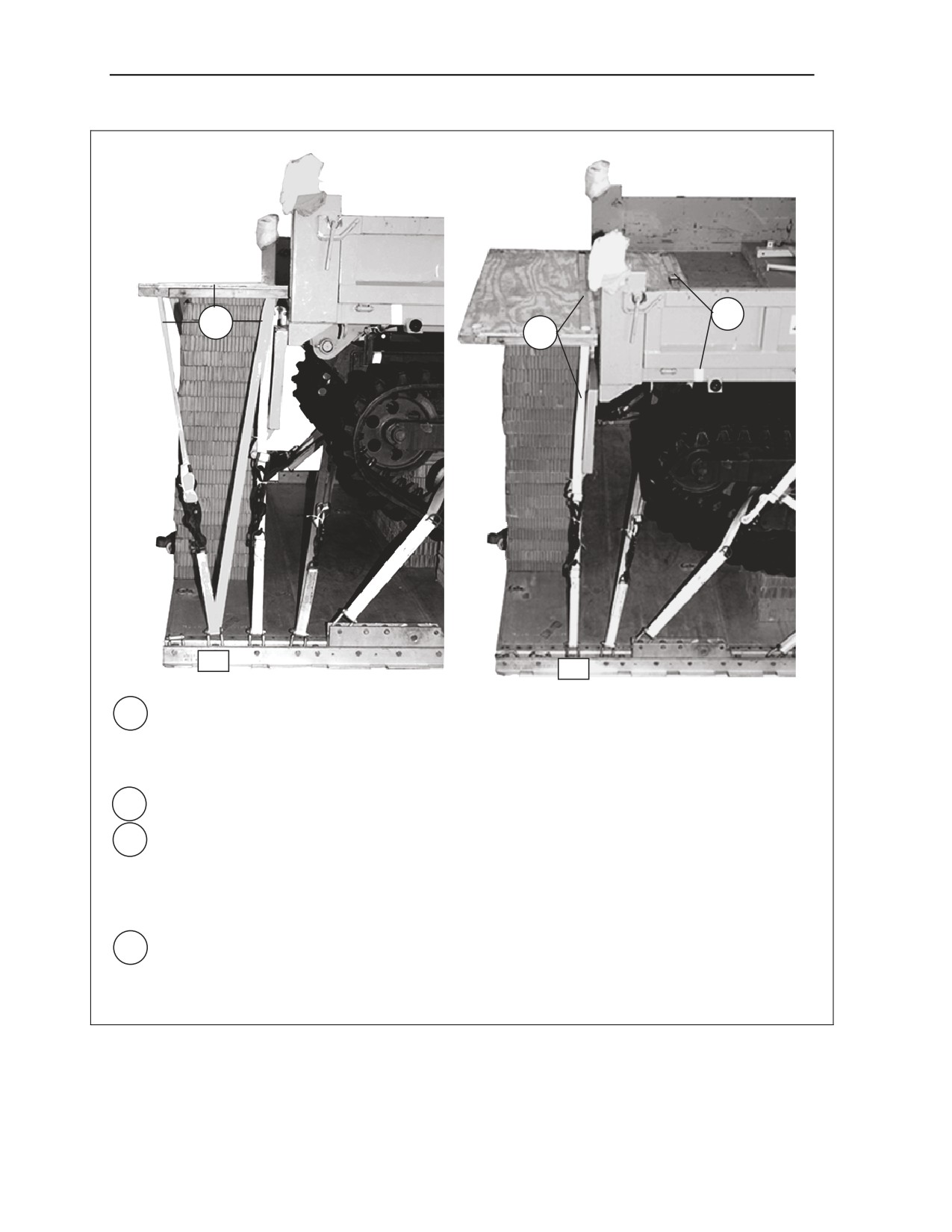
Chapter 1
6
9
8
15
14
6 Form a 30-foot lashing and route the free ends down through the front holes of the parachute
stowage platform and between the side gates of the dump body on both sides. Continue running
both free ends underneath the bed and secure the lashing underneath the bed between the
frame with two D-rings and a load binder.
7 Raise and close the side gates of the dump body. (Not Shown)
8 Form a 30-foot lashing and route one end up through the middle left side hole in the parachute
stowage platform. Run the lashing across the parachute platform and down through the middle
right side hole and through clevis 14. Route the other free end through clevis 14A and back up
through the middle left side hole, across the platform, and down through the middle right side
hole. Secure the lashing with two D-rings and a load binder on the right side.
9 Route a 15-foot lashing through clevis 15, up through the right side center hole, and down
through the right side rear hole. Secure the lashing with a D-ring and a load binder. Repeat on
the left side using clevis 15A.
Figure 1-17. Parachute Stowage Platform Installed (Continued)
1-24
FM 4-20.167/TO 13C7-16-171
16 November 2006
Rigging IC45 Crawler Carrier on a Type V Platform for Low-Velocity Airdrop
INSTALLING THE REAR ACB
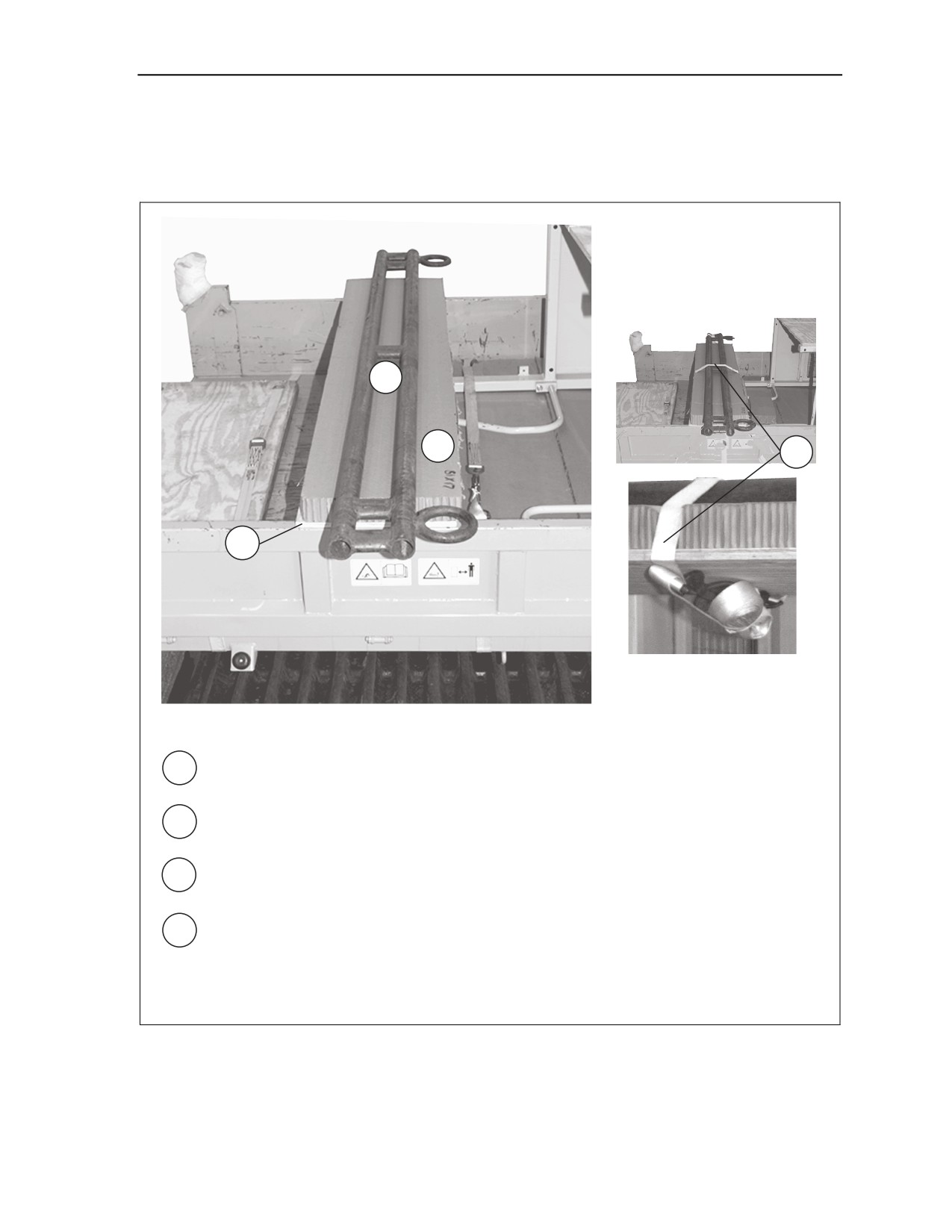
1-10. Install the rear ACB as shown in Figure 1-18.
3
REAR
2
FRONT
4
1
1 Cut a 17- by 81- by ¾-inch piece of plywood. Place the rear edge of the plywood 30
inches from the rear edge of the tailgate latch frame on top of the side gates of the dump
body.
2 Cut a 17- by 81-inch piece of honeycomb. Place the honeycomb flush with and on top of
the plywood.
3 Position ACB on top of the honeycomb centered from side to side and front to rear. There
will be an overhang on the sides. The round eyelets should be facing forward.
4 Place a 15-foot lashing, centered from side to side, and route the lashing all the way
around the ACB, honeycomb and plywood. Secure with a D-ring and a load binder
underneath the plywood.
Figure 1-18. Rear ACB Installed and Secured
16 November 2006
FM 4-20.167/TO 13C7-16-171
1-25
Chapter 1
7
5
6
16
10
6
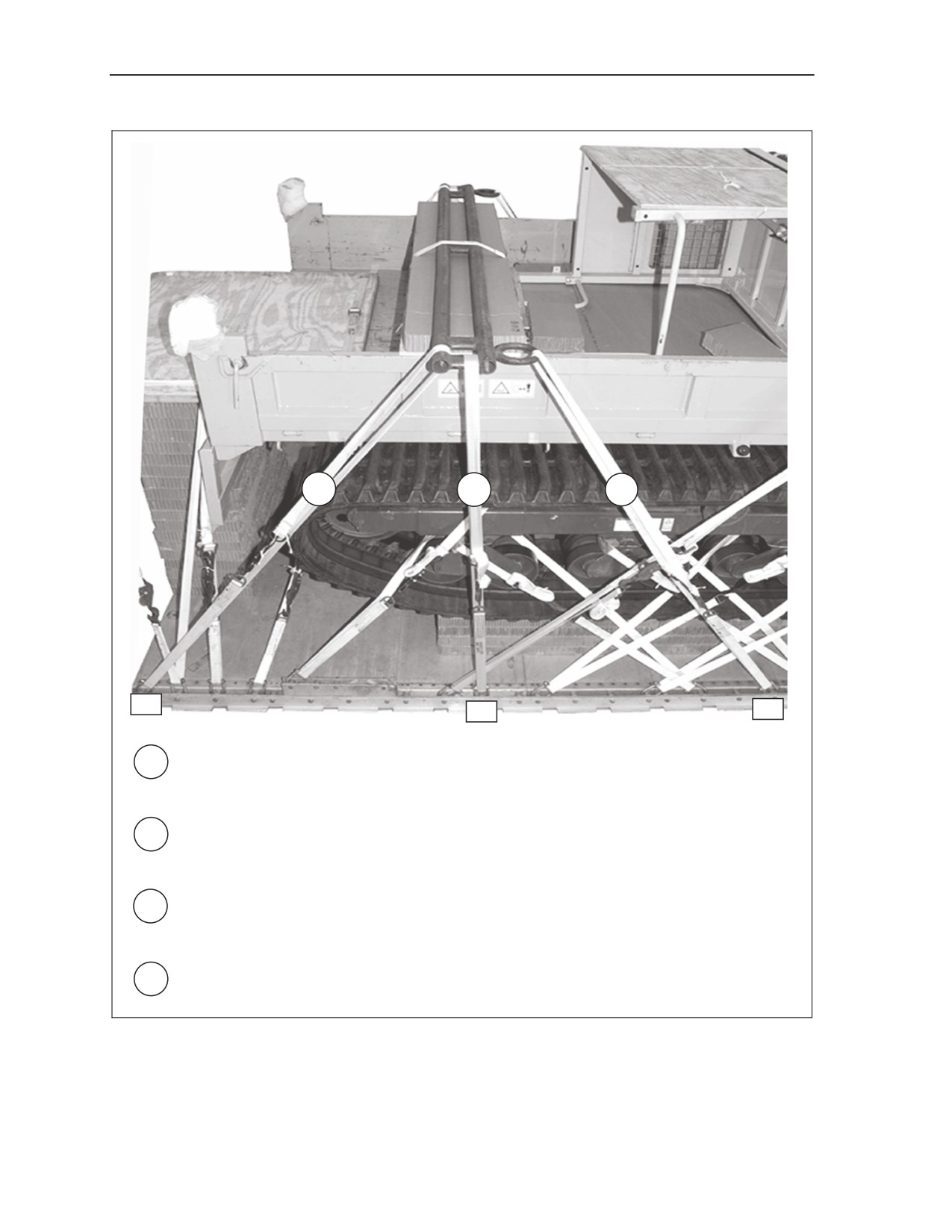
5 Route a 15-foot lashing through clevis 10, up between the outside center bar of the ACB
over the top of the bar and back down. Place a D-ring and a load binder on the lashing but
do not tighten at this time. Repeat for the opposite side using clevis 10A.
6 Route a 15-foot lashing through clevis 6, up through the round eyelet of the ACB and back
down. Place a D-ring and load binder on the lashing but do not tighten at this time.
Repeat this procedure on the opposite side using clevis 6A.
7 Form a 15-foot lashing and route the lashing through clevis 16, up through and around the
rear bar of the ACB and back down. Place a D-ring and a load binder on the lashing but
do not tighten at this time. Repeat this step on the opposite side using clevis 16A.
8 Tighten all lashings equally at this time. (Not Shown)
Figure 1-18. Rear ACB Installed and Secured (Continued)
1-26
FM 4-20.167/TO 13C7-16-171
16 November 2006
Rigging IC45 Crawler Carrier on a Type V Platform for Low-Velocity Airdrop
10
9
11
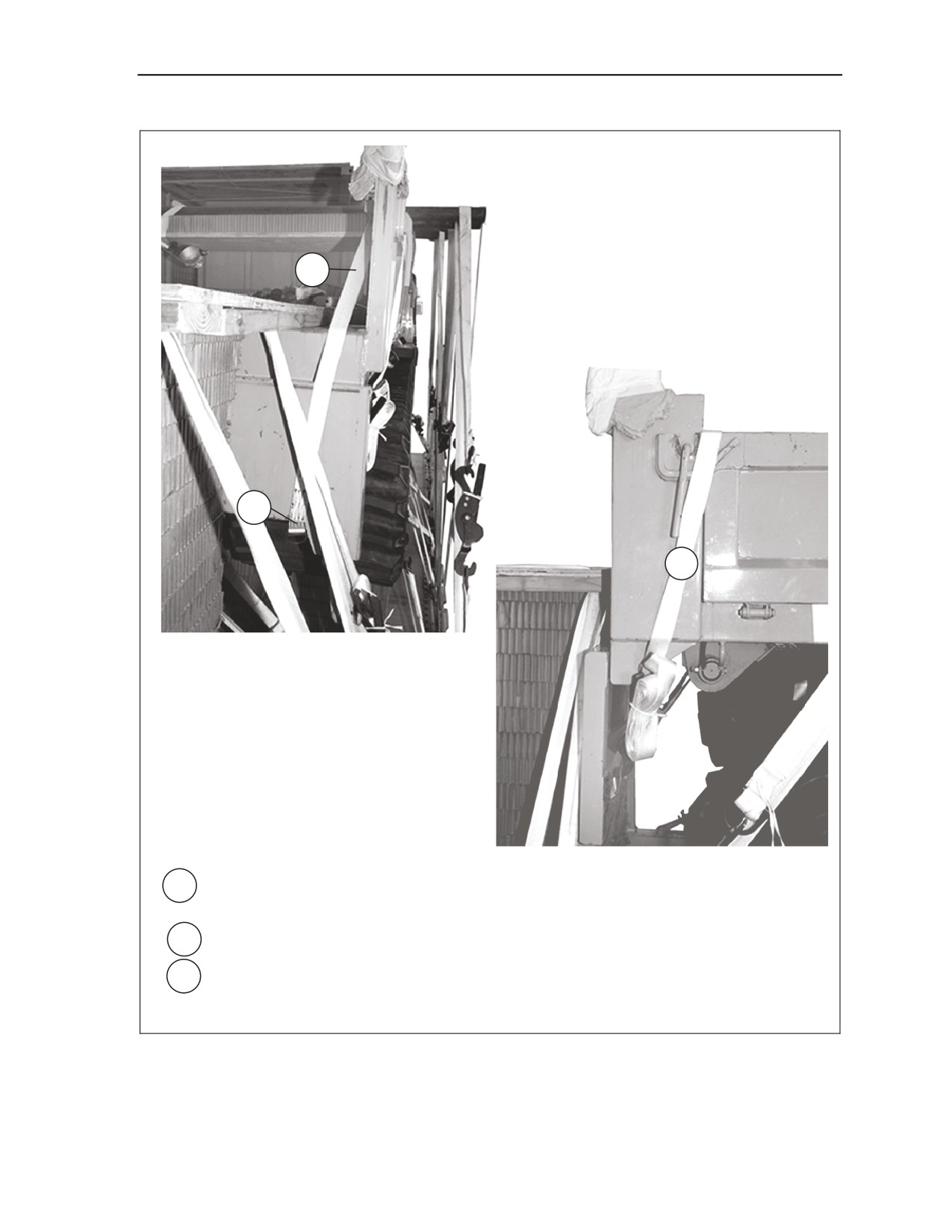
9 Place the D-ring of a 15-foot lashing 2 inches below the bottom of the tailgate on the
carrier’s right side.
10 Route the lashing up across the tailgate.
11 Continue routing the lashing up and around the rear of the side gate and back down to the
D-ring at the bottom of the tailgate.
Figure 1-18. Rear ACB Installed and Secured (Continued)
16 November 2006
FM 4-20.167/TO 13C7-16-171
1-27
Chapter 1
12
14
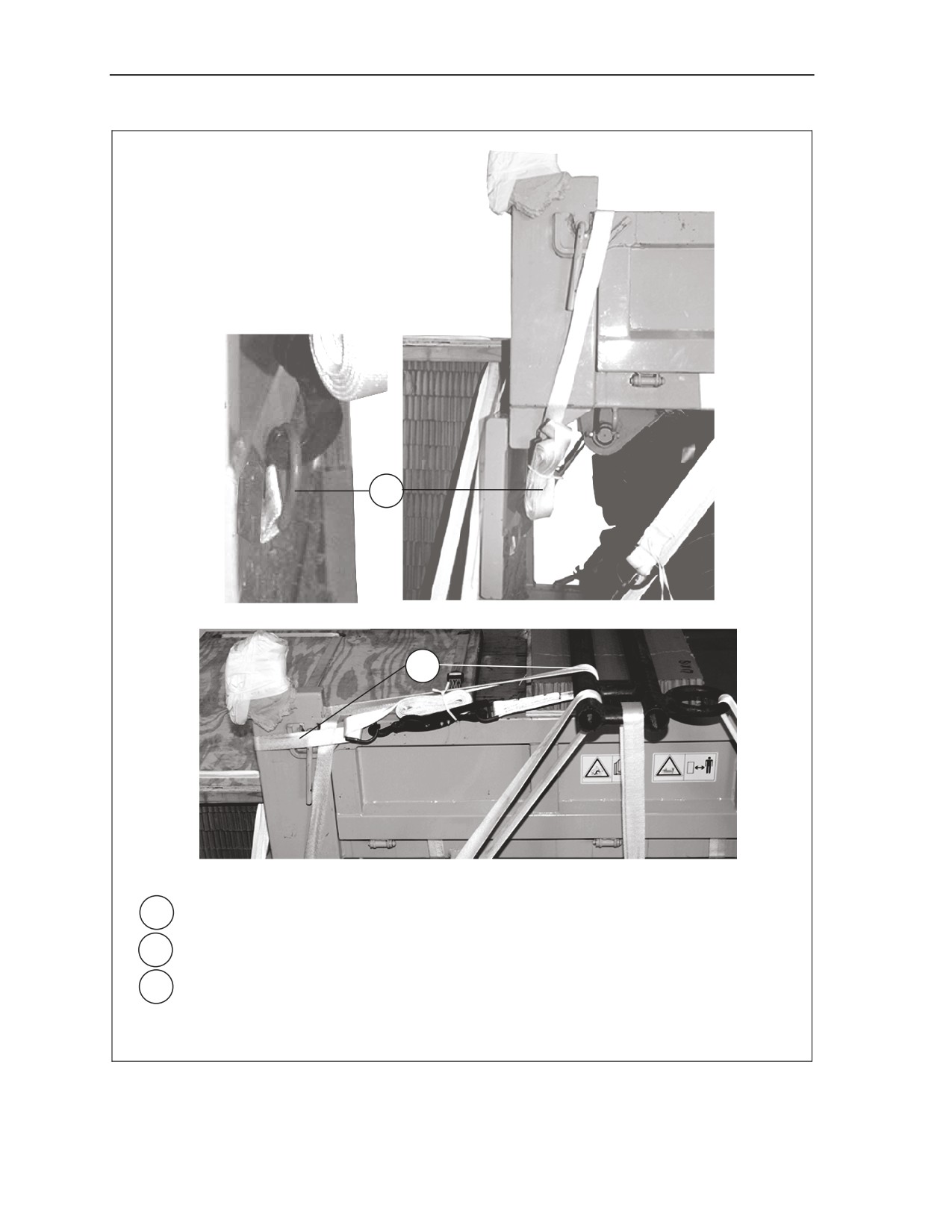
12 Secure the lashing on the front side of the tail gate with a D-ring and load binder.
13 Repeat steps 9 through 12 for the left side. (Not Shown).
14 Route a 15-foot lashing up through and around the rear bar of the ACB on the right side,
around the upper tail gate hinge. Secure the lashing with a D-ring and load binder.
Repeat step 14 for the left side.
Figure 1-18. Rear ACB Installed and Secured (Continued)
1-28
FM 4-20.167/TO 13C7-16-171
16 November 2006
Rigging IC45 Crawler Carrier on a Type V Platform for Low-Velocity Airdrop
INSTALLING SUSPENSION SLINGS
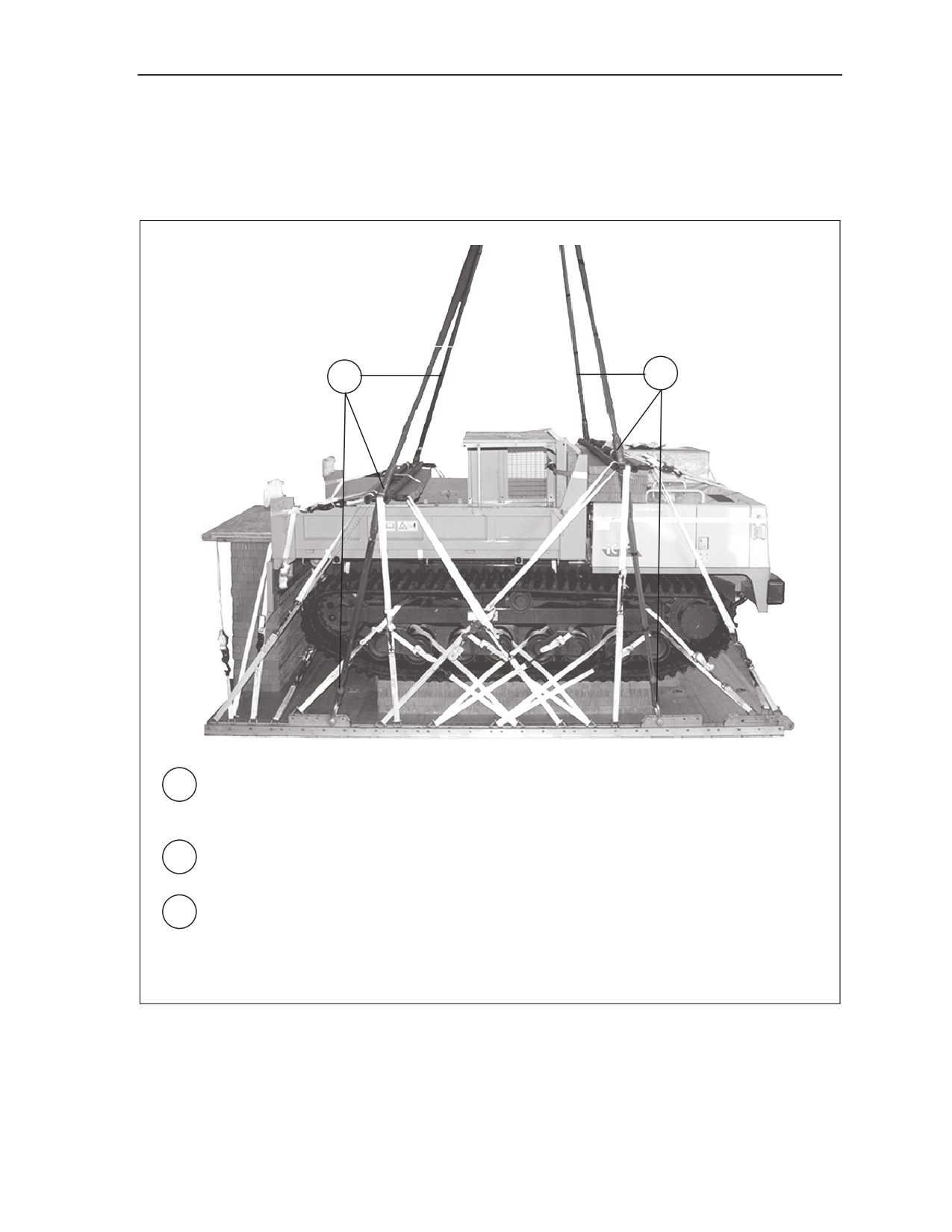
1-11. Install the suspension slings according to FM 4-20.102/MCRP 4-11.3J/NAVSEA SS400-AB-
MMO-010/TO 13C7-1-5 and as shown in Figure 1-19.
Note: Pad and tape any sharp areas the suspension slings may come into contact with.
3
1
1 Attach a 16-foot (4-loop), type XXVI nylon sling to each front suspension bracket with a
large clevis. Route each 16-foot (4-loop), type XXVI nylon sling through the front ACB on
each side.
2 Attach a 3-foot (4-loop), type XXVI nylon sling to the top of each 16-foot (4-loop), type
XXVI nylon sling with a 5 1/2 -inch two-point link. Pad each link with felt and tape. (Not
Shown)
3 Attach a 20-foot (4-loop), type XXVI nylon sling to each rear suspension bracket with a
large clevis. Route each 20-foot (4-loop), type XXVI nylon sling through the rear ACB on
each side.
Figure 1-19. Suspension Slings Installed
16 November 2006
FM 4-20.167/TO 13C7-16-171
1-29
Chapter 1
PADDING, SECURING AND SAFETY TIEING SUSPENSION SLINGS
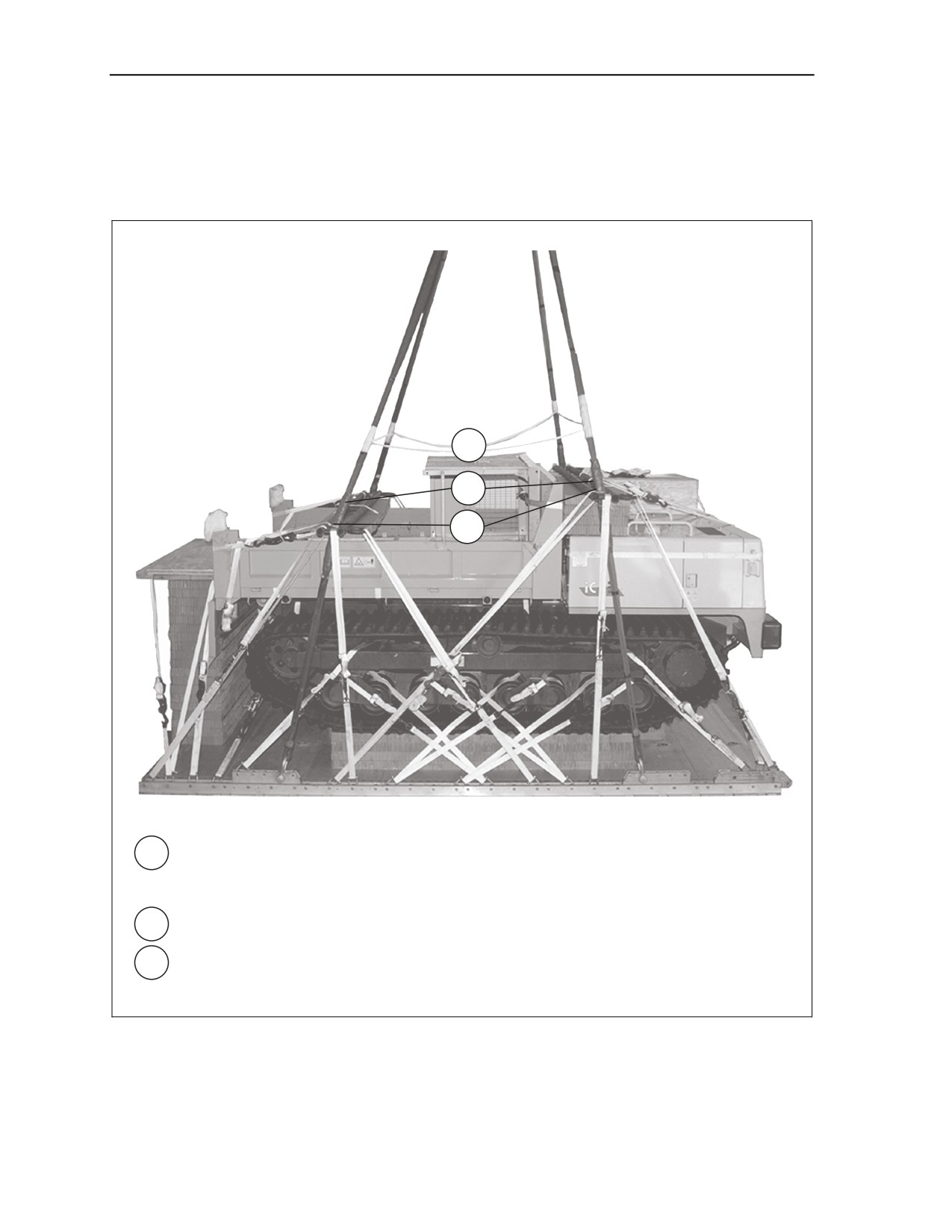
1-12. Pad, secure and safety tie the suspension slings according to FM 4-20.102/MCRP 4-11.3J
/NAVSEA SS400-AB-MMO-010/TO 13C7-1-5 and as shown in Figure 1-20.
3
1
2
1 Cut four 12- by 26-inch pieces of felt. Place the bottom of the felt 12 inches below the
point where the sling goes through the ACB. Tape the felt to the slings with 2-inch
adhesive tape.
2 Secure each sling to the ACB with a length of type III nylon cord.
3 Raise the suspension slings and install the safety tie according to FM 4-20.102/NAVSEA
SS400-AB-MMO-010/TO13C7-1-5.
Figure 1-20. Suspension Slings Padded, Secured and Safe Tied
1-30
FM 4-20.167/TO 13C7-16-171
16 November 2006
///////////////////////////////////////