FM 4-02.51 COMBAT AND OPERATIONAL STRESS CONTROL (JULY 2006) - page 3
Chapter 10
MOVEMENT
10-6. Movement of Soldiers from one line of Soldier restoration to another that has greater capabilities or
security may be required. When movement of these Soldiers is required, vehicles used to transport them
should be nonambulance vehicles, if possible, and accompanied by escorts from their unit. If nonmedical
unit members are not available to perform escort duties, medical augmentation may be required.
PRINCIPLES AND PROCEDURES OF SOLDIER RESTORATION
10-7. Initial Soldier restoration begins as close to the Soldier’s unit as possible, normally near an MTF
where the Soldier can get a reprieve from extreme stress but at the same time can be close to his unit.
Normally, Soldier restoration facilities are established in the BSA near or adjacent to the FSMC/BSMC
Level II MTF. Soldier restoration is not feasible at locations that are consistently under artillery, air, or
direct-fire attack, but ideally are still within the sound of the artillery or other reminders of battle. If there
is potential for attack, there must be cover and defensive positions. The location should not be one from
which a move is likely within 24 hours. If there is a significant possibility of a move, only those cases that
can participate actively in the move with minimal supervision should be managed at this location. The
specific site of the Soldier restoration facility should be adjacent to the medical company's area and be out
of the immediate (close) sight of the medical triage and treatment areas
REASSURANCE
10-8. Immediate reassurance is given to the Soldier with COSR beginning with the COSC triage as
discussed in Chapter 8. Tell the Soldiers that they are temporarily joining the unit, not as patients, but as
Soldiers who need a few days to recover from COSR. Emphasize that COSR is a normal response to
extremely abnormal conditions. Rapid recovery is also normal and RTD is expected. Reassure the
Soldiers about safety and what to do in the event of an attack or march order. Lastly, orient the Soldiers to
the Soldier restoration program.
STRUCTURED MILITARY ENVIRONMENT
10-9. An emphasis should be placed on maintaining a highly structured military unit environment and
schedule of activities in order to keep the Soldier from adopting a patient role. Assign the Soldier to a
squad under supervision of a specific squad leader. The squad leader may be a CSC unit/MH section
member or a member of the BSB subordinate unit. The squad leader may also be one of the Soldiers there
for Soldier restoration, if their condition allows. The newly arrived Soldier is assigned to a tent that has
been designated/erected for the Soldier restoration program. Soldiers with more dramatic COSR or BH
symptoms should be temporarily quartered separately from other Soldiers receiving Soldier restoration. In
remaining consistent with the principle of treating Soldiers with COSR as Soldiers instead of patients, it is
recommended that Soldier restoration facilities do not display the Red Cross as displayed on the MTF.
This could affect their protection under the Geneva Conventions. See FM 4-02 for information on the
Geneva Conventions.
SUPPORT THE SOLDIER’S MILITARY IDENTITY
10-10. Maintain appropriate rank distinctions, titles, and military courtesies within the confines of the
tactical situation. Expect the Soldier to maintain military bearing and personal appearance. They should be
in duty uniform. Conduct basic Soldiering skills. Do not take personal possessions away from the Soldier.
This includes weapons, unless there is significant concern for the Soldier’s safety. If the Soldier arrives
with a weapon, SOPs of the AO will guide whether or not the weapon is secure for the Soldier. Also,
encourage the unit to maintain contact with its Soldier.
REPLENISHMENT OF PHYSIOLOGICAL STATUS
10-11. Get the Soldier under shelter and cool down if overheated, warm up if cold, and dry off if wet.
Providing hot beverages and/or soup will also assist with restoring body temperature. Replenish hydration
with palatable beverages and meals. Unless the Soldier is totally exhausted, institute some personal
10-2
FM 4-02.51
6 July 2006
Combat and Operational Stress Control Soldier Restoration
hygiene. If the Soldier needs uniforms or equipment, coordinate with the BSB S4 or supporting logistic
element. Restorative sleep should be as normal as possible. Soldiers are typically able to fall asleep when
reassured of safety, and do not routinely require medication to induce sleep. They should be informed that
they may awaken with vivid and frightening dreams, and be instructed on quick relaxation techniques to go
back to sleep. If those measures are insufficient, one-time medication with a sedative/hypnotic may be
considered, coordinated, and prescribed by a physician or PA from the supporting medical company. The
duration of sleep should be sufficient to make substantial progress in repaying the sleep debt. It should also
begin the process of restoring a reasonable sleep/wake cycle that is consistent with the Soldier’s duties in
his unit.
RESTORE CONFIDENCE
10-12. Restoring a Soldier’s confidence may include—
z
Providing regularly scheduled formations to keep Soldiers informed of daily activities and the
tactical situation, including information about their unit, when available.
z
Providing therapeutic occupations that are based on the Soldier’s current functional ability.
The OT (or COSC team members under the guidance of the OT) selects therapeutic
occupations that support the Soldier’s military identity and enhance the Soldier’s sense of
competence. Therapeutic occupations may include activities of daily living (such as physical
fitness or uniform maintenance); educational activities
(selected common and collective
Soldier task training or life skills training); work/productive activities (militarily relevant
tasks such as vehicle maintenance or site maintenance); leisure/recreational activities
(enjoyable, relaxing activities, games, and sports); social participatory activities
(cooperative/competitive sports, games, ceremonies, or celebrations).
Therapeutic
occupations provide the casualty with a challenge but afford successful performance that
shows the Soldier that he is still capable and competent. This realization plays the dominant
role in restoring the Soldier’s sense of confidence, functional capacity, and ability to RTD.
z
Training and teaching Soldier on methods for managing excessive stress.
z
Facilitating factional review of precipitating event that has caused the Soldier’s COSR
through talking (ventilating) and coaching. Combat and operational stress control personnel
(or health care providers trained by COSC personnel) facilitate these discussions. They help
Soldier restore perspective with questions and coaching. The factual review (debriefing) is
often best done individually unless several Soldiers experienced the same event.
SECTION II — LINES OF SOLDIER RESTORATION
FIRST-LINE SOLDIER RESTORATION
10-13. First-line Soldier restoration is usually provided at the BSMC/FSMC in the BSA. It is provided by
personnel organic to the BSMC/FSMC usually assisted and supervised by COSC personnel organic to the
medical company and/or from CSC unit personnel. This also applies to a cavalry regiment. Because of the
high mobility of the BSMC/FSMC, Soldier restoration will often be a 24- to 72-hour process. First-line
Soldier restoration also may occur in relative secure locations in division, corps, and theater AOs.
First-line Soldier restoration in the division is provided near and supported by a Level II MTF such as a
MSMC with its organic MH and/or minimal augmentation from a CSC unit. First-line Soldier restoration
in corps and theater is provided by ASMCs with responsibility for their AO. It is provided by COSC
personnel organic to the medical company and/or from CSC unit personnel. The MSMC and ASMCs will
be relatively unlikely to move on short notice so Soldier restoration up to 72 hours should be feasible.
Support provided for Soldier restoration is a responsibility of the MH sections of supporting medical
companies. Tasking for support of Soldier restoration programs is accomplished through the command
surgeon.
6 July 2006
FM 4-02.51
10-3
Chapter 10
SECOND-LINE SOLDIER RESTORATION (SOLDIER
RESTORATION CENTER)
10-14. Each of the first-line Soldier restoration locations listed above should be backed up by a
second-line Soldier restoration capability at a location that is less likely to have to move on short notice and
has more COSC capabilities. Soldier restoration centers may be located near the MSMC, ASMC, or with a
CSC medical company or detachment. They can be located in the BSA near the BSMC/FSMC when it is at
a stable base camp. The Soldier restoration center may receive hold cases that are transferred from the
first-line medical companies, as well as Soldiers from nearby units. Second-line Soldier restoration has
more equipment and a greater range of COSC expertise. This permits a 72-hour holding capacity for a
stable well-organized Soldier restoration center and may provide full stabilization.
THIRD-LINE SOLDIER RESTORATION
10-15. In some scenarios, units with Soldiers in need of Soldier restoration may be significantly closer to
a Level III MTF such as a CSH than to a medical company or CSC unit. On order, a Soldier restoration
program may be conducted by the CSH specialty clinic NP staff, which may also be augmented with
personnel from a medical company/medical detachment, CSC. In such cases, a Soldier restoration program
may be conducted by the CSH specialty clinic NP staff. It may be augmented with personnel from the
medical company or detachment, CSC. Soldier restoration near a CSH must be kept clearly separate from
the patient ward. It may be done at a MCW or in separate tents.
RETURN TO DUTY OF RECOVERED COMBAT AND OPERATIONAL
STRESS REACTION SOLDIERS
10-16. Most COSR symptoms do not necessarily improve completely while the prospect of combat
continues. The Soldiers should be given the positive expectation that they will RTD. Every possible effort
should be made to return Soldiers to their original unit. The RTD of Soldiers following Soldier restoration
depends on how near the Soldier’s unit is, the availably of a means of transportation, and the tactical
situation. Ideally, their units are contacted to send someone to get the Soldier or he may be returned to his
unit by way of the personnel replacement company. Mental health personnel coordinate directly with the
unit to which the Soldier is returning and/or with COSC, other medical personnel, or UMT supporting the
unit’s AO. These contacts can consult with the leaders of the Soldier’s unit and facilitate the Soldier’s
acceptance back into his unit.
DOCUMENTATION
10-17. Soldiers receiving Soldier restoration interventions must be tracked from the initial contact until
they are returned to their unit. A record must be maintained of interventions and activities provided during
Soldier restoration, as well as the Soldier’s response. A notation of the dates, any pertinent medical data,
and providing unit is entered in the Soldier’s medical record. An administrative summary of Soldier
restoration services may be developed, stored, and disposed of as directed by the Soldier restoration center
SOP. If the Soldier received BH treatment, documentation should be maintained as delineated in AR 40-
66. A statistical record is maintained and sent to higher medical headquarters according to SOP.
10-4
FM 4-02.51
6 July 2006
Chapter 11
Behavioral Health Treatment
SECTION I — BEHAVIORAL HEALTH CARE
TREATMENT FOR BEHAVIORAL DISORDERS
11-1. Behavioral health treatment exists when there is an explicit therapist-patient or therapist-client
relationship. Behavioral health treatment is provided for Soldiers with behavioral disorders to sustain them
on duty or to stabilize them for referral/transfer. This is usually brief, time-limited treatment as dictated by
the operational situation. Behavioral health treatment includes counseling, psychotherapy, behavior
therapy, occupational therapy, and medication therapy. Treatment assumes an ongoing process of
evaluation, and may include assessment modalities such as psychometric testing, neuropsychological
testing, laboratory and radiological examination, and COSC providers’ discipline-specific evaluations.
COMBAT AND OPERATIONAL STRESS CONTROL BEHAVIORAL HEALTH PROVIDER
11-2. There are five professional disciplines and two enlisted specialties that serve as BH/COSC providers,
see Chapter 3. Army BH/COSC providers are officers who hold active individual clinical privileges
granted by an MTF according to AR 40-68. Providers also include enlisted medical specialist who do not
hold individual clinical privileges, but who work under direct supervision of a professional COSC provider.
Behavioral health treatment is provided within the scope of the providers’ clinical privilege, training, and
experience.
SECTION II — BEHAVIORAL HEALTH TREATMENT PROTOCOLS AND
MEDICATIONS
BEHAVIORAL HEALTH TREATMENT FOR SOLDIERS
11-3. Behavioral health treatment is provided to Soldiers with diagnosed behavioral disorders
(see
Chapter 8), and who require more intentions for their diagnoses. It is both inappropriate and detrimental to
treat Soldiers with COSR as if they are a BDP. A therapeutic relationship may promote dependency and
foster the “patient” role. Likewise, medication therapy and the highly structured treatment modalities
imply the “patient” role. Medication for transient symptom relief (insomnia or extreme anxiety) may not
be detrimental if there is no expectation that medication will continue to be prescribed.
BEHAVIORAL HEALTH PROTOCOLS AND PROCEDURES FOR TREATMENT
11-4. Behavioral health treatment is provided within a context of preventing symptoms of behavioral
disorder from progressing in severity and improving the level of functioning. The principles of BICEPS
apply. Treatment should not impede activities for other prevention levels
(for example, universal,
selective, and indicated). Treatment should not interfere with the Soldier’s duties or the unit’s mission.
The COSC provider should emphasize Soldier’s identity as a Soldier despite having a diagnosis.
Transportation of the Soldier to the provider (or vice versa) and ability to assure reliable meeting times can
be limiting factors, depending on the operational environment. Medication refills must be coordinated for
availability.
6 July 2006
FM 4-02.51
11-1
Chapter 11
Standards of Treatment
11-5. Treatment standards are the same in the deployed environment as in garrison. When operational
requirements dictate that clinical standards of treatment/care are waived or relaxed, it must be approved by
the AO COSC consultant.
(AR 40-68 provides additional information.) Treatment should be tailored to
the anticipated availability of the Soldier and COSC provider. Short-term interventions are more practical
than long-term commitments. If longer-term treatment is necessary, design the intervention in time-limited
modules. Under no circumstances should treatment diminish the Soldier’s ability to provide self-care and
to defend himself. Exceptions include emergency stabilization and preparation for evacuation. In addition,
the VHA/DOD Clinical Practice Guidelines website (http://www.oqp.med.va.gov/cpg/cpg.htm ) offer clinicians
evidence-based assessment and treatment algorithms for acute stress disorder, PTSD, and many other
behavioral disorders.
Army Regulations Governing Evaluations
11-6. Fitness for duty evaluations are conducted as necessary within the priorities of the supported
commanders according to AR 40-501; psychiatrists should not initiate a medical evaluation board without
first ensuring the Soldier has received adequate treatment. This treatment may not be available in theater.
Command-directed evaluations are conducted as necessary within the priorities of the supported
commanders according to DODD 6490.1 and MEDCOM Regulation 40-38. Clinical documentation should
be safeguarded according to AR 40-66 and local command policy. Treatment should be conducted in a
location that is as private as possible. Information can be released to a third party if the Soldier consents.
Combat and operational stress control providers need to notify command when the Soldier’s safety is in
question
(suicidal, homicidal) or if the Soldier is removed from his unit for medical observation.
Additional release of information to command is on a need-to-know basis. For any questions on release of
information on COSR and NP patients, consultation with supporting JAG office is advised. Also,
maintaining the Soldiers health record with clinical data is required and accomplished according to
AR 40-66 and supplemental theater policy as appropriate. Treatment should occur throughout the
evacuation process and follow-up is expected at home station.
11-2
FM 4-02.51
6 July 2006
Chapter 12
Reconditioning
SECTION I — RECONDITIONING PROGRAM
LOCATION
12-1. Reconditioning programs are intensive efforts to restore those Soldiers triaged as a refer case, but
who still have good potential for RTD. Referral to reconditioning can be from Level II MTF, COSC
Soldier restoration program, or from Level III MTF. Reconditioning includes the rehabilitation of Soldiers
with mental disorders, such as substance abuse/dependency. Reconditioning programs are conducted by
COSC personnel and Soldiers usually participate for up to 7 days. Soldier participation may be extended
by a case-by-case exception to theater evacuation policy. Reconditioning is conducted only in a theater
where there are adequate COSC elements and supplies. When COSC resources are needed for other
functional areas, any ongoing reconditioning program reduces its scope of services or closes.
Reconditioning is provided at first-, second-, or third-line centers determined by location and available
resources.
PROVIDERS
12-2. Conducting reconditioning programs is a mission of the medical company, CSC and the medical
detachment, CSC (MRI). Reconditioning can also be done on a small-scale by a CSC medical detachment
(MF2K) under some circumstances.
SECTION II — TENETS AND PROCEDURES OF RECONDITIONING
RECONDITIONING
12-3. Reconditioning may be considered an extension of Soldier restoration. Reconditioning is similar to
Soldier restoration, but with potentially longer stay, treatment strategies focus on preventing atrophy of
skills and assisting Soldiers in regaining skills needed for duty. Reconditioning makes more use of BH
treatment modalities.
STRUCTURED MILITARY ENVIRONMENT TO SUSTAIN SOLDIER’S IDENTITY AS A SOLDIER
12-4. Like Soldier restoration, reconditioning emphasizes a highly structured military unit environment
and schedule of activities in order to keep the Soldier from adopting a “patient” role. Maintaining a
military environment is even more critical when colocated with hospitals or other service support elements.
REPLENISHMENT OF PHYSIOLOGIC STATUS AND CONFIDENCE
12-5. Reconditioning initially emphasizes physical replenishment and hygiene, but later shifts the
emphasis to more closely match the conditions that the Soldier should expect when RTD. In order to
restore confidence in the Soldier, unit formations are held on a regularly scheduled basis, and include the
Soldiers receiving reconditioning.
OCCUPATIONAL THERAPY
12-6. Therapeutic occupations may include—
z
Activities of daily living (for example, hygiene, physical fitness, and uniform maintenance).
6 July 2006
FM 4-02.51
12-1
Chapter 12
z
Educational activities (for example, common and collective Soldier task training, and life skills
training).
z
Militarily relevant work details according to the current functional level and MOS/duties of the
Soldier.
z
Leisure/recreational activities (for example, enjoyable, relaxing activities, including cooperative
physical and mental activities, and basic relaxation techniques).
z
Social participatory activities (for example, games and ceremonies).
z
Group training in relaxation techniques.
z
Ventilation and coaching where COSC (or medics trained by COSC personnel) encourage
discussion about stressors and their impact on mental well-being. This technique helps the
Soldier to restore personal perspective with questions and coaching. Individual counseling and
therapy may improve the Soldier’s functions as well.
12-7. When reclassification recommendations are considered, an adjacent CS or CSS unit may be able to
provide a job that will match the Soldier’s abilities. This provides an opportunity to demonstrate the
Soldier’s abilities and build confidence. The reconditioning personnel may recommend to S1/G1 that the
Soldier be reclassified to another MOS.
FIRST-LINE RECONDITIONING PROGRAM
12-8. First-line reconditioning programs in the corps are staffed by task-organized CSC elements from the
CSC company or by an MRI CSC detachment. Reconditioning can be conducted by an MF2K CSC
detachment, but would preempt its Soldier restoration capability. If the inpatient NP workload is light, a
small reconditioning center may be staffed by personnel from the NP ward and consultation service of an
MF2K CSH. The first-line reconditioning center usually collocates with a CSH but must maintain its
separate, nonhospital identity. It should not be situated among the hospital wards, or near the morgue,
triage area, or helicopter pad. Within a theater/AO, the preferred option is to have one or two
reconditioning centers placed such as to allow easy access from Soldier restoration centers. Under major,
prolonged combat conditions, it may be more appropriate to have one reconditioning center behind each
division. The reconditioning center is dependent on the hospital for support. The reconditioning center
works with the supporting hospital by sending work parties of Soldiers in the program to assist in food
preparation and delivery and cleanup chores. These Soldiers may also be used for assisting with work
details throughout the hospital, but must be under direct supervision of either hospital or BH personnel.
The reconditioning center uses the supporting hospital’s medical records section to maintain the permanent
case records. Cases in the reconditioning center are counted as patients in the reconditioning center on the
daily hospital census. The cases are not counted as occupied beds when reporting the hospital bed
occupancy. Upon disposition from the reconditioning center, whether for RTD, retraining for other duty, or
evacuation, the reconditioning center prepares the chart for further evacuation or writes the discharge
summary and closes the hospital’s chart.
12-9. Some reconditioning cases will be able to return to far forward CS or CSS duty. However, many of
the Soldiers who need reconditioning will be unable to return to their original unit, due to combat
operations or the nature of their symptoms. Soldiers who undergo a 4- to 7-day Soldier restoration program
in the corps should not be crossed off the division’s personnel rolls
(as specified in AR
40-216).
Continuing contact with the unit increases RTD rates. For Soldiers who recover but are no longer on the
division’s rolls, every feasible effort should be made to return them to their original units. The chief,
division MH and the CSC unit teams that are attached to reinforce the division should maintain frequent
contact with the reconditioning centers that support the division. Coordination efforts, through the division
support command (DISCOM) sustainment brigade and the personnel replacement system by division BH
personnel, should attempt to facilitate return of recovered Soldiers to their original units. If recovered
Soldiers cannot be returned to their previous small unit, consider forming them into cohesive pairs or small
groups which can be reassigned to a new unit together. The standard corps evacuation policy is seven days,
but some Soldiers with good potential for RTD may need a few more days at the reconditioning center.
The corps evacuation policy is at the discretion of the theater commander. The principle purpose of a short
12-2
FM 4-02.51
6 July 2006
Reconditioning
evacuation policy is to keep hospital beds available for mass casualties and to minimize the expense and
labor required to treat serious surgical and medical cases.
SECTION III — EVACUATION POLICY
EXTENDING THE THEATER EVACUATION POLICY
12-10. If need assessment indicates that a longer period of time (more than seven days) will achieve a
Soldiers’ RTD, the theater COSC consultant can request permission to extend the theater evacuation policy
(up to 14 days). He submits the request for authority via the commander, MEDBDE, through the corps
surgeon to the corps commander. The following facts apply: The reconditioning program, because of its
austerity, is not a significant logistical burden to the corps. Soldiers in reconditioning perform useful work
details and perimeter defense. Lastly, the increase in RTD is important in operations such as stability and
reconstruction operations, where reducing personnel attrition becomes an important factor.
EVACUATION
12-11. Reconditioning cases that do not recover sufficiently to return to some duty within the designated
evacuation period are evacuated from corps to EAC. They are best transported in cargo trucks and buses,
bus ambulances, or an ambulance train. In the latter two cases, they should be assigned helper tasks. Use
air evacuation only if there is no other alternative.
SECOND-LINE RECONDITIONING
12-12. Second-line reconditioning is conducted in the intermediate staging base outside the CZ in the
theater. This center could be at a CSH, a fixed MTF, or a CSC unit element. The second line
reconditioning center continues to emphasize physical fitness, Soldier skills, work details, and
individual/group counseling/psychotherapy. Cases will be retrained for CSS duties at corps and theater
levels. As soon as the recovering Soldiers are ready, the retraining site can shift to on-the-job training at a
nearby CSS unit.
THIRD-LINE RECONDITIONING
12-13. Third-line reconditioning is for Soldiers with COSR and/or mental disorders who did not improve
sufficiently at lower lines of reconditioning but still have RTD potential. These Soldiers are transferred to
a reconditioning program at a regional MEDCEN or home station MEDDAC. These reconditioning
centers, like the others, must maintain a military atmosphere and provide opportunities to engage in
occupational therapy. Some Soldiers may also require retraining for other duty/MOS reclassification.
6 July 2006
FM 4-02.51
12-3
Appendix A
Combat and Operational Stress Control
and Religious Support
ROLE OF UNIT MINISTRY TEAM
A-1. This appendix addresses the general role of the UMT in the commander’s program for COSC. The
UMT, imbedded within units down to battalion level, provide immediate support to leaders in fulfilling
their COSC responsibilities. The UMTs also assist in training leaders to recognize combat and operational
stress identification and intervention responsibilities. In cooperation with unit medical personnel, UMTs
serve as a primary referral agency to BH resources.
RELIGIOUS SUPPORT FOR COMBAT AND OPERATIONAL STRESS CONTROL
A-2. Soldiers’ inner resources are generally rooted in their religious and spiritual values. In combat,
Soldiers often show more interest in their religious beliefs. When religious and spiritual values are
challenged by the chaos of combat, Soldiers may lose connection with the inner resources that have
sustained them. The UMT is the primary resource available to Soldiers experiencing such dilemmas and is
a valuable resource in assisting them as they seek to refocus their spiritual values.
Unit Ministry Team Support for Combat and Operational Stress Control
A-3. The UMT provides preventive, immediate, and restorative spiritual, emotional support and care to
Soldiers experiencing COSR.
Preventive Religious Support for Combat and Operational Stress Reaction
A-4. The UMT assists in preventing COSR and misconduct stress disorders through spiritual fitness
training. Ministry of presence with Soldiers, assigned Department of Army civilians, and contractors is
critical. The UMT provides a stabilizing influence on personnel and assists them in strengthening and
regaining personally held spiritual values. Preventative activities include—
z
Worship opportunities.
z
Private and group prayer opportunities.
z
Religious literature and materials.
z
Scripture readings.
z
Sacraments and ordinances.
z
Assistance to personnel and families prior to deployment, emphasizing family strengths.
Immediate Religious Support for Combat and Operational Stress Reaction
A-5. The UMT assists commanders in the identification of personnel experiencing negative reactions to
combat and operation stress, COSR, and misconduct stress behaviors. The UMT works closely with the
unit’s leaders and medical personnel to care for COSR cases through religious support and comfort.
Immediate religious support activities may include—
z
Conversation focused upon fears, hopes, and other feelings.
z
Prayer for fallen comrades and memorial ceremonies and services.
z
Rites, sacraments, and ordinances, as appropriate.
z
Sacred scripture.
6 July 2006
FM 4-02.51
A-1
Appendix A
Restorative Religious Support for Combat and Operational Stress Control
A-6. Following an operation, a unit may require reconstitution. Surviving Soldiers may need to rebuild
emotional, psychological, and spiritual strength. Depending upon the spiritual, emotional, and physical
condition of the unit’s Soldiers, the organic UMT may need augmentation from higher echelons or other
units. Restorative religious support activities may include—
z
Worship, sacraments, rites, and ordinances.
z
Memorial ceremonies and services.
z
Religious literature and materials.
z
Grief facilitation and counseling.
z
Reinforcement of the Soldiers’ faith and hope.
z
Opportunities for Soldiers to talk about combat experiences and to integrate those experiences
into their lives.
A-2
FM 4-02.51
6 July 2006
Appendix B
Medical Detachment, Combat and
Operational Stress Control
CONCEPT OVERVIEW
BACKGROUND
B-1. The current medical units, CSC in the Army inventory were initially developed over ten years ago.
The MF2K redesign resulted in the development of the MRI. Recent events in the Global War on
Terrorism in both Afghanistan and Iraq have indicated a need to update these units from MRI medical
detachment, CSC to a multifunctional COSC detachment. The 2003 US Army Surgeon General’s Mental
Health Advisory Team (MHAT) report and observations indicate a need to update the unit in terms of
modularity, multifunctionality, and its working relationship with support units and command surgeons from
brigade to theater levels.
PROPOSED MEDICAL DETACHMENT, COMBAT AND OPERATIONAL STRESS CONTROL
B-2. The proposed medical detachment, COSC (TOE 08660G000) consists of a detachment headquarters,
a main support section, and a forward support section. The main support section consists of its
headquarters and an 18-Soldier BH team made up of social workers, clinical psychologists, psychiatrists,
occupational therapists, psychiatric nurses, MH specialists, and OT specialists. The forward support
section consists of an 18-Soldier BH team only. Each BH team is capable of breaking into six 3-person
subteams, for battalion/company prevention and fitness support activities. This provides for a total of 12
subteams for each detachment, giving supported commanders more teams and more flexibility in the
utilization of those teams, yet maintaining all of the capabilities of COSC.
Operational Environment
B-3. Soldiers will continue to experience the physical and mental impacts of high stress in both combat
and stability and reconstruction operational environments. Advances in technology which will increase
effectiveness, and the impact of the individual Soldier, will also increase dispersion and add to isolation
and stress levels of Soldiers. The enemy of the future will look for methods that will have the greatest
psychological impact on our future Soldiers; future enemies will not be our technological equals and will
increasingly rely on terror and nontraditional methods to unnerve, injure, and demoralize both Soldiers and
civilians. There is an identified need to update COSC units in terms of flexibility, modularity,
multifunctionality, and its relationship to supported units and the surgeons responsible to commanders for
the BH mission. The current configuration of the COSC units resulted in an uneven use of available COSC
resources and that there was a greater need for preventive and limited fitness services forward.
Commanders have communicated there is a greater need for active outreach and consultation.
Assumptions
B-4. Power projection will likely remain the fundamental strategic and operational imperative of our
forces for the foreseeable future. The new medical detachment, COSC will be well suited to the future
force, designed to move with and support the division and corps of the future force, and division and corps
equivalents. The medical detachment, COSC will be assigned to a MEDBDE, MMB, or MEDCOM and
will be operationally attached to supported units.
B-5. Each BCT has a MH section with one BH officer and one MH specialist and that all division and
brigade MH sections are filled. The medical detachments, COSC will be able to augment BCTs MH
6 July 2006
FM 4-02.51
B-1
Appendix B
sections. The medical detachment, COSC will require additional logistical, finance, maintenance,
personnel, legal, FHP, and administrative services support.
Implication for Combat and Operational Stress Control
B-6. Future forces must be emotionally and mentally fit before deploying and resilient in battle in order to
endure the fast pace and intense lethality of the battlefield. Commanders will need to be able to apply
COSC capabilities at every level quickly and effectively. Reorganization of the medical detachment, CSC
to a combined, multifunctional medical detachment, COSC will provide greater flexibility and greatly
increase outreach and preventive services while maintaining capability for the entire spectrum of COSC.
Operational Concept, Mission
B-7. The medical detachment, COSC may be attached to a theater or division medical C2 headquarters in
order to provide COSC casualty prevention, treatment, and management on an area basis.
B-8. The AUTL (see FM 7-15 ) linkage includes―
z
ART 6.5. Provide Force Health Protection in a Global Environment.
z
ART 6.5.1. Provide Combat Casualty Care.
z
ART 6.5.1.5. Provide Mental Health/Neuropsychiatric treatment.
z
ART 6.5.4. Provide Casualty Prevention.
z
ART 6.5.4.5. Provide Combat Operational Stress Control Prevention.
Method of Employment
B-9. The medical detachment, COSC deploys with a division-sized force into a theater or with a task force
of up to 25,000 Soldiers in stability and reconstruction operations. The medical detachment, COSC is
attached for OPCON to the division/corps/theater medical C2 headquarters. The medical detachment,
COSC is assigned to the MMB of units that have reorganized under the future force design. It is normally
tasked by the command surgeon to support units within the command. The detachment commander as
authorized by his medical C2 headquarters will coordinate operations with the command surgeon or the
division/corps/theater psychiatrist. In the absence of a psychiatrist, the detachment commander will advise
and consult with the command surgeon and the commander as required. Subteams may be task-organized
and further attached for operational control to maneuver BCTs, and will operate in and forward from BSA,
working closely with medical assets and combat religious support team
(CRST). The detachment
commander will coordinate efforts with the division and the CRST to provide in-theater prevention
programs as required (suicide prevention, reunion, COSC training, TEM, and PTE stress management).
Detachment Headquarters
B-10. Plans, supervises and monitors the activities of the medical detachment, COSC in support of the
COSC mission. See Table B-1 for a listing of personnel assigned to the detachment headquarters. The
commander will establish a command post (CP) collocated with the supported unit surgeon (either division
or sustainment brigade) and coordinate all activities of the detachment through the surgeon section. The
detachment commander provides C2 and works closely with supported unit surgeon to provide logistics
and other required services for the detachment. The field medical assistant and/or the detachment sergeant
also establishes and coordinates logistics and required services support through the supported command
staff for all detachment personnel and operations.
B-2
FM 4-02.51
6 July 2006
Medical Detachment, Combat and Operational Stress Control
Table B-1. Detachment headquarters personnel
Detachment Commander (LTC/05, AOC 05A00)
Medical Operations Officer (CPT/03, AOC 70B67, MS )
Chaplain (CPT/03, AOC 56A00, CH)
Detachment Noncommissioned Officer in Charge (NCOIC) (SFC/E7, MOS 68X40)
Supply Sergeant (SGT/E5, MOS 92Y20)
Human Resources Specialist (SPC/E4, MOS 42A10)
Wheeled Vehicle Mechanic (SPC/E4, MOS 63B10)
Patient Administration Specialist (SPC/E4, MOS 68G10)
Religious Support Specialist (SPC/E4, MOS 56M10)
Cook (PFC/E3, MOS 92G10)
Note. The position of detachment commander may be filled by a (LTC, AOCs 73A00, 73B00, 60W00, 65A00 or 66C00). For
description of duties, see Section I of the TOE and Department of Army (DA) Pamphlet 611-21.
Main Support Section
B-11. Included in the main support section is the detachment headquarters personnel identified in Table B-
1 above and an 18-personnel BH team. See Table B-2 for list of personnel assigned to the BH team. This
BH team can break into 6 three-person subteams, each with one officer, one NCO, and one specialist to
conduct prevention and limited fitness operations in the battalion/company level in a maneuver BSA.
Teams are collocated with a BCT medical unit. Modularized subteams may be combined and task-
organized to provide or support any other COSC function, which includes larger scale Soldier restoration
reconstitution, or any other COSC or BH mission as determined by its headquarters. Tasks for the main
support section BH team includes:
z
Consultation and coordination with commanders at team level (battalion and company).
z
Coordination with CRST.
z
Prevention and fitness support activities.
z
Reconstitute any other COSC function as required.
B-12. When attached for support to any medical company Level II MTF, the grouped subteams are
dependent on the supporting medical company for logistical support and quarters. The subteam can
provide 3-day restoration for up to 50 Soldiers. With additional logistical support and quarters from
supported command, the team can accommodate additional Soldiers under surge conditions.
Table B-2. Main section behavioral health team
Team Leader/Psychiatrist (MAJ/04, AOC 60W00)
Occupational Therapist (MAJ/04, AOC 65A00)
Social Work Officer (MAJ/04, AOC 73A67)
Behavioral Science Officer (CPT/03, AOC 67D00)
Clinical Psychologist (CPT/03, 73B67)
Psychiatric Nurse (CPT/03, 66C7T)
Occupational Therapy NCO (Four)—(Two SSGs/E6 and Two SGTs/E5, MOS 68W30/68W20)
Mental Health NCO (Four)—(One SSG/E6 and Three SGTs/E5, MOS 68X30/68X20)
Mental Health Specialist (Six)—(SPC/E4, MOS 68X10)
Note. For description of duties, see Section I of the TOE and DA Pamphlet 611-21.
Forward Support Section
B-13. This section consists of an 18-Soldier BH team. It is comprised of a section leader and five other BH
officers, six MH/OT NCOs, and six MH specialists. This BH team can break into six three-person
subteams, each with one officer, one NCO, and one specialist to conduct prevention and limited fitness
operations in the BCT medical company in the BSA. Modularized subteams may be combined and
6 July 2006
FM 4-02.51
B-3
Appendix B
task-organized to provide or support any other COSC function, which includes larger scale Soldier
reconstitution, or any other COSC or BH mission as determined by its headquarters. The forward support
section is dependent on the supported unit for C2 and logistical support. See Table B-3 for list of personnel
assigned to the forward support section BH team.
Table B-3. Forward support section behavioral health team
Team Leader/Psychiatrist (MAJ/04, AOC 60W00)
Psychiatric Nurse (MAJ/04, 66C7T)
Clinical Psychologist (MAJ/04, 73B67)
Occupational Therapist (CPT/03, AOC 65A00)
Social Work Officer (CPT/03, AOC 73A67)
Behavioral Science Officer (CPT/03, AOC 67D00)
Occupational Therapy NCO (Two)—(One SSG/E6 and One SGT/E5, MOS 68W30/68W20)
Mental Health NCO (Four)—(One SSG/E6 and Three SGTs/E5S, MOS 68X30/68X20)
Mental Health Specialist (Six)—(SPC/E4, MOS 68X10)
Note. For description of duties, see Section I of the TOE and DA Pamphlet 611-21.
Organizational Concept
B-14. Required capabilities require the unit to—
z
Deploy to power projection platform or point of debarkation and deploy with supported unit or
deploy to theater and join supported unit.
z
Provide all functions of COSC from company to theater level in close coordination with and
under the direction of the supported unit surgeon.
z
Provide prevention, assessment, treatment, and referral BH activities.
z
Provide consultation with commanders from company to theater level.
z
Conduct and coordinate administrative and logistical support to sustain operations.
Basis of Allocation Total Army Analysis
B-15. The basis of allocation is 0.333 per BCT; 1 per division; 2 per theater. In support of a theater, a
COSC detachment provides support on an area basis and provides additional support to the division/corps
on order. See Figure B-1 for breakdown of separate standard requirement codes (SRCs) of the medical
detachment, COSC sections.
B-4
FM 4-02.51
6 July 2006

Medical Detachment, Combat and Operational Stress Control
Medical
Detachment
TOE:
COSC
08660G000
15/0/31/46
COSC
Forward
Detachment
Support
SRC:
Headquarters
Section
08667GB00
3/0/7/10
6/0/12/18
SRC:
08667GA00
Main
Support
Section
6/0/12/18
Figure B-1. Medical detachment, combat and operational stress control
Concept of Transition
B-16. Transition begins with the four active component detachments, one at a time. Personnel,
transportation, and equipment changes will be minimal; transition should take a short amount of time and
money to accomplish. Changes in the detachments are congruent with Force Modernization designs and
personnel proponency issues. The proposed COSC detachment is designed with the Future Force in mind.
Patient Medical Records
B-17. The Surgeon General’s MHAT report notes that there is a need to standardize BH reporting and
documentation. The BH charts were inconsistently maintained and documentation did not always
accompany patients through the evacuation chain. An additional finding was that there was no
standardized method of collecting BH workload or clinical data and that no database that tracked evacuees
provided reliable clinical information. The patient administration specialist (MOS 68G10) will supervise
or perform functions as outlined in DA Pamphlet 611-21 for the Soldier caseload; maintain Soldier/patient
accountability and records; interface with patient administration division of supported/collocated medical
units.
Role of Religious Support Specialist
B-18. Findings of the MHAT include the need for chaplains to be aware of their role in COSC and that an
aggressive chaplain outreach program should be executed. This requires that supervisory chaplains be
involved in CRST integration with BH and primary care providers, and educate primary players in role of
CRST in COSC. These activities require that the COSC chaplain be mobile and have an active presence in
the maneuver brigades. This position is required to fulfill the full-time force protection requirements for
the chaplain while in theater. The religious support specialist assists the COSC chaplain by screening
individuals seeking counseling, coordinates for convoy security when the CRST goes out on site visits;
assists chaplain with fund request; develops and coordinates needed religious support projects within the
6 July 2006
FM 4-02.51
B-5
Appendix B
unit; coordinates with detachment for all vehicle services, communication system repairs, detachment
training requirements and section accountability. This Soldier is cross-trained to develop skills for COSC.
Multifunctionality
B-19. The MH sections have a priority of prevention activities, but also have the capability to conduct or
support any combat operational stress function as required. The COSC teams will be outfitted to a standard
to gain the capability of prevention and limited fitness activities.
Modularity, Command and Control
B-20. The medical detachment, COSC attached early to supported units will have a better-integrated
relationship. Detachment commanders and NCOICs will collocate with and coordinate all activities
through supported unit surgeons. Detachments are designed to support a division in combat or a joint task
force of up to 25,000 personnel in noncombat operations. The BH teams are designed to support and
operate within maneuver BCTs in support of maneuver battalions for area coverage, collocating in BSA
with the BSMC. Teams may be combined for task-organization to meet the entire spectrum of COSC as
required.
Limitations
B-21. The medical detachment, COSC does not have its own logistics or services capability and must
depend on the supported unit for logistical, legal, FHP, food service, finance, and personnel and
administrative services. The COSC teams are small (one or two vehicles) and are dependent upon
supported units for convoy and security operations. The logistical support necessary (space, tents, cots, and
so forth) to provide Soldier restoration/reconstitution functions must be furnished by the supported element
(division, corps, or theater).
Assumptions
B-22. Wartime activities will continue to cause physical and mental impacts of extremely high stress in
both direct combat and the support operational environment. Advances in technology will impact the
individual Soldier by increasing dispersion, and adding to their isolation and stress levels. The enemy of
the future will look for methods that will have the greatest psychological impact on our future Soldier;
future enemies will not be our technological equals and will increasingly rely on terror and nontraditional
methods to unnerve, injure, and demoralize both Soldiers and civilians. Commanders will need to be able
to quickly and effectively apply COSC capabilities at every level of the unit.
B-6
FM 4-02.51
6 July 2006
Appendix C
Medical Company and Medical Detachment,
Combat Stress Control (Medical Force 2000)
SECTION I — MEDICAL COMPANY, COMBAT STRESS CONTROL (TOE
08467L000) (MEDICAL FORCE 2000)
MISSION
C-1. The mission of the AOE medical company, CSC is to provide comprehensive COSC support through
directed interventions activities and COSC training for supported corps units. It provides DS to maneuver
brigades lacking organic BH officers; augments units with BH assets; and provides area support. The
medical company, CSC reconstitutes other COSC assets. The medical company, CSC provides COSC
interventions and activities to indigenous populations as directed in stability and reconstruction operations,
to include domestic support operations, humanitarian assistance, disaster relief, peace support operations,
and detention facility operations. The medical company, CSC provides COSC interventions and activities
to units in support of their readiness preparation and throughout their deployment cycle.
ASSIGNMENT
C-2. The AOE medical company, CSC (TOE 08467L000) is assigned to a corps MEDBDE (TOE
08422A100) or corps MEDCOM (TOE 08411A000).
EMPLOYMENT
C-3. Company headquarters usually locates with the corps medical headquarters. The employment of its
teams includes their dispersal throughout the corps AO. Teams may be attached to an ASMB; a division or
brigade medical company; a CSH; or other corps medical unit headquarters.
CAPABILITIES
C-4. At TOE Level 1, the medical company, CSC includes—
z
Dividing the preventive section into six mobile COSC preventive teams.
z
Dividing the restoration section into four mobile restoration teams with each team being
equipped to hold 40 Soldiers at the same time. With additional logistical support, each team can
accommodate additional Soldiers under surge conditions.
z
Assisting higher headquarters BH staff with planning and coordination of COSC support,
identifying the stress threat and mental and physical stressors, and the implementation of COSC
functional areas.
DEPENDENCY
C-5. This unit is dependent on—
z
Appropriate elements of the corps for legal; finance; field feeding; personnel and administrative
services support; laundry and clothing exchange; mortuary affairs support; and security of EPW,
detainee, and US prisoner patients.
z
The medical headquarters to which it is assigned/attached for FHP; medical administration;
logistics
(including MEDLOG); medical regulating of patients; evacuation; coordination for
RTD; and unit-level equipment and CE maintenance.
6 July 2006
FM 4-02.51
C-1
Appendix C
MOBILITY AND SECURITY
C-6. This unit is 100-percent mobile. It requires 100 percent of its organic personnel and equipment be
transported in a single lift, using its organic vehicles. Upon relocation, Soldiers being held will require
additional transportation. This unit is responsible for perimeter defense of its immediate operational area.
However, it is dependent on appropriate elements of the corps for additional security, to include security of
convoy operations. Personnel of the company (except the chaplain) are provided weapons for their
personal defense and for the defense of their patients and/or held Soldiers.
ORGANIZATION
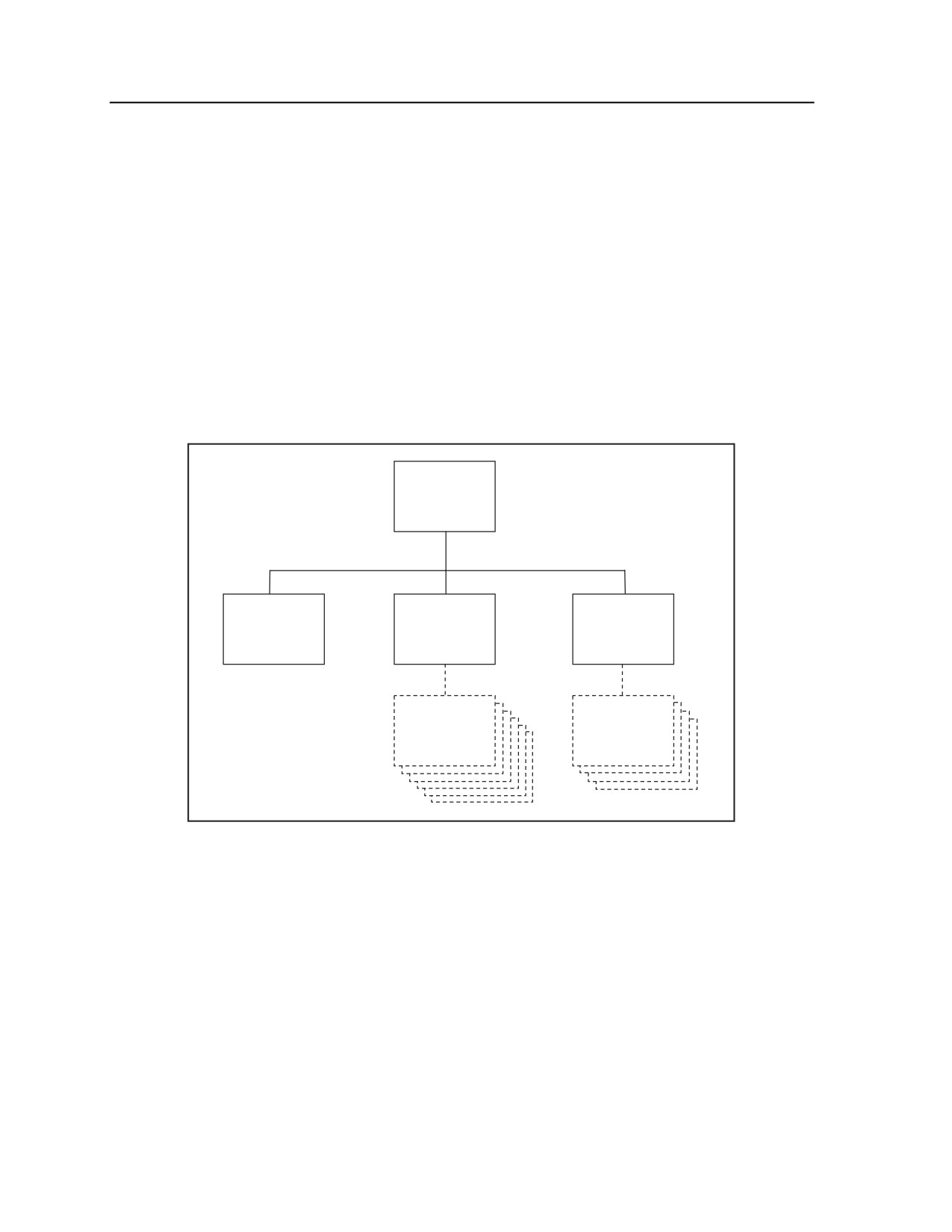
C-7. The AOE medical company, CSC (Figure C-1) is organized into a headquarters section, a preventive
section with six (modular) CSCP, and a restoration section with four (modular) combat stress control
restoration
(CSCR) teams. The medical company, CSC is only present in the MF2K and is an RC
organization that is programmed to be in the Army inventory until the year 2010. Under the MRI a new
medical detachment, CSC, TOE 08463A000, will replace this unit.
Medical Company
Combat Stress
Control
Company
Preventive
Restoration
Headquarters
Section
Section
CSCP
CSCR
Team
Team
Figure C-1. Medical company, combat stress control
Company Headquarters Section
C-8. The company headquarters section provides C2 and unit-level administrative and maintenance
support to its subordinate sections when they are collocated with the company. Personnel from the
headquarters section are deployed with teams or task-organized COSC elements, as required. Personnel
assigned to this section are identified in Table C-1.
C-2
FM 4-02.51
6 July 2006
Medical Company and Medical Detachment, Combat Stress Control (Medical Force 2000)
Table C-1. Company headquarters section personnel 3/0/14
Company Commander (LTC/05, AOC 60W00, MC)
Chaplain (CPT/03, AOC 56A00, CH)
Field Medical Assistant (CPT/03, AOC 70B67, MS)
First Sergeant (1SG/E8, MOS 68W5M)
Mental Health NCO (SFC/E7, MOS 68X40)
Motor Sergeant (SSG/E6, MOS 63B30)
Supply Sergeant (SGT/E5, MOS 92Y20)
Equipment Record/Parts Sergeant (SGT/E5, MOS 92A20)
Wheeled Vehicle Mechanic (SGT/E5, MOS 63B20)
Human Resource Specialist (SPC/E4, MOS 42A10)
Nuclear, Biological, and Chemical Specialist (SPC/E4, MOS 74D10)
Wheeled Vehicle Mechanic (SPC/E4, MOS 63B10)
Unit Supply Specialist/Armorer (SPC/E4, MOS 92Y10)
Power-Generation Equipment Repairer (SPC/E4, MOS 52D10)
Cook (Three)— (Two SPC/E4 and One PFC/E3, MOS 92G10)
Note. The cook is deployed to assist the unit providing food service support to the company. He may participate in other CSC
unit missions including outreach surveillance and stress control training.
Preventive Section
C-9. The 24-person preventive section staff is identified in Table C-2. The preventive section is task-
organized to conduct COSC interventions and activities. Preventive section personnel may be task-
organized with personnel of the COSC restoration section into teams for specific missions. The preventive
section can divide into six CSCP teams. The section (and team) leader position may be held by any of the
officers assigned to the section. The preventive section can augment or reconstitute the medical
detachment, CSC teams.
Table C-2. Preventive section personnel 12/0/12
Psychiatrist (Three)—(MAJ/04, AOC 60W00)
Social Worker (Two)—(MAJ/04, AOC 73A67)
Psychiatrist (Three)—(CPT/03, AOC 60W00)
Social Worker (Four)—(CPT/03, AOC 73A67)
Team Chief (Six)—(SGT/E5, MOS 68X20)
Mental Health Specialist (Six)—(SPC/E4, MOS 68X10)
Restoration Section
C-10. The 44-person restoration section staff is identified in Table C-3. The restoration section may be
task-organized to perform its COSC mission. Combat stress control restoration section personnel may also
be task-organized with personnel of the CSCP section into teams for specific missions. This section can be
divided into four CSCR teams. Each CSCR team can deploy a four-person mobile team using their
HMMWV.
6 July 2006
FM 4-02.51
C-3
Appendix C
Table C-3. Restoration section personnel 12/0/32
Occupational Therapist (MAJ/04, AOC 65A00)
Psychiatric/Mental Health Nurse (Two)—( MAJ/04, AOC 66C00/7T)
Clinical Psychologist (MAJ/04, AOC 73B67)
Occupational Therapist (Three)—(CPT/03, AOC 65A00)
Psychiatric/Mental Health Nurse (Two)—(CPT/03, AOC 66C00/7T)
Clinical Psychologist (Three)—(CPT/03, AOC 73B67)
Mental Health NCO (Two)—(SFC/E7, MOS 68X40)
Occupational Therapy NCO (SSG/E6, MOS 68W30/N3)
Team Chief (Four)—(SSG/E6, MOS 68X30)
Patient Administration NCO (SGT/E5, MOS 68G20)
Occupational Therapy Sergeant (Two)—(SGT/E5, MOS 68W20/N3)
Mental Health NCO (Four)—(SGT/E5, MOS 68X20)
Patient Administration Specialist (Three)—(Two SPC/E4 and One PFC/E3, MOS 68G10)
Occupational Therapy Specialist (Five)—(SPC/E4, MOS 68W10/N3)
Mental Health Specialist (Ten)—(Six SPC/E4 and Four SPC/E3, MOS 68X10)
SECTION II — MEDICAL DETACHMENT, COMBAT STRESS CONTROL (TOE
08463L000) (MEDICAL FORCE 2000)
MISSION
C-11. The mission of the AOE MF2K medical detachment, CSC is to provide COSC interventions and
activities to supported units in its AO. It augments division and brigade MH sections; provides direct
support to combat brigades without organic BH officers; and provides area support in its AO. The medical
detachment, CSC reconstitutes other brigade and division COSC assets. The medical detachment, CSC
provides COSC interventions and activities to indigenous populations as directed in stability and
reconstruction operations, to include domestic support operations, humanitarian assistance, disaster relief,
peace support operations, and detention facility operations. The medical detachment, CSC provides COSC
interventions and activities between deployments to units in support of their readiness preparation and
throughout their deployment cycle. Under MRI this detachment will be replaced with medical detachment,
CSC, TOE 08463A000.
Note. The MF2K and MRI medical detachments, CSC conduct COSC support operations very
similarly. However, in the MRI medical detachment, CSC, psychiatry assets are assigned to the
restoration section and psychology assets are assigned to the preventive section whereas in the
MF2K detachment, the manning strategy for psychology and psychiatry is reversed:
psychologists are in the restoration section and psychiatrists are on the preventive teams.
ASSIGNMENT
C-12. The MF2K medical detachment, CSC (TOE 08463L000), is assigned to a corps MEDBDE (TOE
08422A100), or a corps MEDCOM (TOE 08411A000), or other medical task force C2 elements. Its teams
may be attached to a medical company, CSC (TOE 08467L000); an ASMB (TOE 08456A000); a brigade
or divisional medical company; or a CSH.
C-4
FM 4-02.51
6 July 2006
Medical Company and Medical Detachment, Combat Stress Control (Medical Force 2000)
EMPLOYMENT
C-13. Detachment headquarters is usually located in the DSA. Its teams disperse and are employed
throughout its AO.
CAPABILITIES
C-14. The MF2K medical detachment, CSC provides—
z
Mobile COSC interventions from the preventive section which can divide into three preventive
teams.
z
Holding for 40 Soldiers by the restoration team for COSC interventions such as restoration.
With additional logistical support, the team can accommodate additional Soldiers under surge
conditions.
STAFF RESPONSIBILITIES
C-15. The medical detachment assists the C2 headquarters (to which it is assigned or attached) regarding
planning and coordination of COSC support, stress threat, mental and physical stressors, stress behaviors,
principles of COSC, and implementation of COSC functional areas.
DEPENDENCY
C-16. This unit is dependent on—
z
Appropriate elements of the supporting unit for FHP; religious support; legal; finance; field
feeding; personnel and administrative services support; laundry and clothing exchange; mortuary
affairs support; and security of EPW, detainee, and US prisoner patients.
z
Supporting unit for medical administration; logistics (including MEDLOG); medical regulating;
evacuation; coordination for RTD; and unit-level equipment and CE maintenance.
MOBILITY AND SECURITY
C-17. This unit is 100-percent mobile. It requires 100 percent of its organic personnel and equipment be
transported in a single lift, using its organic vehicles. Upon relocation, Soldiers being held will require
additional transportation. This unit is responsible for perimeter defense of its immediate operational area.
However, it is dependent on appropriate elements of the supporting unit for additional security, to include
security of convoy operations. Personnel of the detachment are provided weapons for their personal
defense and for the defense of their patients and/or held Soldiers.
ORGANIZATION
C-18. This 25-person unit (see Table C-4) is composed of a headquarters, a combat stress preventive
section with three preventive teams, and a CSCR. The modular CSC teams found in the MF2K CSC
medical detachment are similar to those found in the CSC medical company.
Table C-4. Detachment teams
Headquarters
Preventive Section
Restoration Section
CSCP#1
CSCR
CSCP#2
CSCP#3
C-19. The detachment headquarters provides C2 for the detachment. It is responsible for planning,
coordinating, and implementing COSC interventions and activities for supported units. It consists of three
personnel: a detachment Commander (05, 60W00, MC), a detachment sergeant (E7, 68X40), and a
wheeled-vehicle mechanic (E4, 63B10). The detachment commander also serves as a treating physician
with the preventive section. The detachment NCOIC (a senior MH NCO) also serves as the restoration
team sergeant. Detachment officers and NCOs from the prevention team and the restoration team may be
6 July 2006
FM 4-02.51
C-5
Appendix C
assigned additional duties, which enhance the overall effectiveness of the headquarters section. See
Table C-5 for personnel assigned to detachment headquarters.
Table C-5 Detachment headquarters personnel
Commander (LTC/05, AOC 60W00)
Detachment Sergeant (SFC/E7, MOS 68X40)
Wheeled Vehicle Mechanic (SPC/E4, MOS 63B10)
Note. The commander also serves as the psychiatrist in the preventive section.
Preventive Section
C-20. The 12-person preventive section staff is identified in Table C-6. The preventive section may be
task-organized to conduct its COSC mission. Preventive section personnel may also be task-organized with
personnel of the restoration section into teams for specific missions. The preventive section can divide into
three preventive teams. The section (and team) leader position may be held by any of the officers assigned
to the section. This section’s COSC interventions and activities are⎯
z
Unit needs assessment; consultation and education; critical event and transition management;
COSC triage; stabilization (emergency); and BH treatment.
z
Assisting with restoration and reconditioning at the CSC detachment program. Overseeing a 1-
to 3-day COSC restoration program in a brigade, division, or ASMC holding section or in
another area suitable for Soldiers experiencing COSR and/or other stress-related disorders.
Table C-6. Preventive section 7/0/6
Psychiatrist (LTC/05, AOC 60W00)
Clinical Psychologist (Three)—(MAJ/04, AOC 73B67)
Social Worker (Three)—(CPT/03, AOC 73A67)
Team Chief (Three)—(SGT/E5, MOS 68X20)
Mental Health Specialist (Three)—(SPC/E4, MOS 68X10)
Note. The psychiatrist is also counted in the headquarters section.
Restoration Team
C-21. The 9-person restoration team staff is identified in Table C-7. The restoration team is task-organized
to provide COSC interventions and activities. Restoration team personnel may also be task-organized with
personnel of the CSC preventive section into teams for specific missions. Each restoration team can deploy
a four-person mobile team with a HMMWV. The CSCF usually collocates with a supported divisional
medical company to provide mobile COSC support within a DSA and conduct restoration programs, as
required. The CSCF provides staff and equipment for operating a restoration or reconditioning center.
This section’s COSC interventions and activities are⎯
z
Unit needs assessment; consultation and education; critical event and transition management;
COSC triage; stabilization; and BH treatment.
z
Conducting Soldier restoration and reconditioning programs.
z
Assisting the CSH psychiatric section when psychiatric ward capability is required (refer to
FM 8-10-14).
C-6
FM 4-02.51
6 July 2006
Medical Company and Medical Detachment, Combat Stress Control (Medical Force 2000)
Table C-7. Restoration team 3/0/6
Psychiatrist (MAJ/04, AOC 60W00)
Psychiatric/Mental Health Nurse (MAJ/04, AOC 66COO/7T)
Occupational Therapist (CPT/03, AOC 65A00)
Occupational Therapy NCO (SSG/E6, 68W30/N3)
Team Chief (SSG/E6, MOS 68X30)
Occupational Therapy Sergeant (SGT/E5, MOS 68W20/N3)
Mental Health NCO (SGT/E5, MOS 68X20)
Mental Health Specialist (Two)—(One SPC/E4 and One PFC/E3, MOS 68X10)
6 July 2006
FM 4-02.51
C-7
Glossary
SECTION I — ACRONYMS AND ABBREVIATIONS
AAR
after-action review
ABCA
American, British, Canadian, and Australian
ACR
armored cavalry regiment
AMEDD
Army Medical Department
AN
Army Nurse Corps
AO
area of operations
AOC
area of concentration
AOE
Army of Excellence
AR
Army regulation
ART
Army tactical task
ASMB
area support medical battalion
ASMC
area support medical company
AUTL
Army Universal Task List
BAS
battalion aid station
BCT
brigade combat team
BDP
behavioral disordered patient
BF
battle fatigue
BH
behavioral health
BICEPS
brevity, immediacy, contact, expectancy, proximity, and simplicity (See
Section II for definition.)
BSA
brigade support area
BSB
brigade support battalion
BSMC
brigade support medical company
C
Centigrade
C2
command and control
C4I
command, control, communications, computers, and intelligence
CBRN
chemical, biological, radiological, and nuclear
CE
communications-electronics
CH
chaplain
CHL
combat health logistics
CHS
combat health support
COA
course(s) of action
CONUS
continental United States
COSC
combat and operational stress control
(See Section II for definition.)
COSR
combat and operational stress reaction
(See Section II for definition.)
6 July 2006
FM 4-02.51
Glossary-1
Glossary
CP
command post
CPT
captain
CRST
combat religious support team
CS
combat support
CSC
combat stress control
CSCF
combat stress control fitness
CSCP
combat stress control preventive
CSCR
combat stress control restoration
CSH
combat support hospital
CSR
combat stress reaction
CZ
combat zone
DA
Department of the Army
DD
Department of Defense
DEPMEDS
Deployable Medical Systems
DISCOM
division support command
DMHS
division mental health section
DNBI
disease and nonbattle injury(ies)
DOD
Department of Defense
DODD
Department of Defense Directive
DODI
Department of Defense Instruction
DS
direct support
DSA
division support area
EAB
echelons above brigade
EAC
echelons above corps
EAD
echelons above division
EMT
emergency medical treatment
EPW
enemy prisoner(s) of war
ETOD
end-of-tour debriefing
F
Fahrenheit
FAP
Family Advocacy Program
FHP
force health protection
1LT
first lieutenant
1SG
first sergeant
FM
field manual
FMC
United States Field Medical Card (Department of Defense Form 1380)
FRAGO
fragmentary order
FSB
forward support battalion
FSMC
forward support medical company
G-1
Assistant Chief of Staff (Personnel)
G-2
Assistant Chief of Staff (Intelligence)
G-3
Assistant Chief of Staff (Operations and Plans)
Glossary-2
FM 4-02.51
6 July 2006
Glossary
G-4
Assistant Chief of Staff (Logistics)
G-5
Assistant Chief of Staff (Plans and Policy)
G-9
Assistant Chief of Staff (Civil-Military Affairs)
GP
general purpose
HBCT
heavy brigade combat team
HHD
headquarters and headquarters detachment
HIP
help-in-place
HMMWV
high-mobility multipurpose wheeled vehicle
HSL
health service logistics
HSS
health service support
IED
improvised explosive device
JAG
Judge Advocate General
LTC
lieutenant colonel
MAJ
major
MC
Medical Corps
MCW
minimal care ward
MEDBDE
medical brigade
MEDCEN
medical center
MEDCOM
medical command (US Army)
MEDDAC
medical department activity
MEDLOG
medical logistics
METT-TC
mission, enemy, terrain and weather, troops and support available, time
available, and civil considerations
MF2K
Medical Force 2000
mg
milligram(s)
MH
mental health
MHAT
Mental Health Advisory Team (US Army)
MMB
multifunctional medical battalion
MOS
military occupational specialty
MP
military police
MRI
Medical Reengineering Initiative
MRO
medical regulating officer
MS
Medical Service Corps
MSB
main support battalion
MSMC
main support medical company
MTF
medical treatment facility
MTOE
modification table of organization and equipment
NATO
North Atlantic Treaty Organization
NCO
noncommissioned officer
NCOIC
noncommissioned officer in charge
NP
neuropsychiatric
6 July 2006
FM 4-02.51
Glossary-3
Glossary
OEF
Operation Enduring Freedom
OIF
Operation Iraqi Freedom
OPCON
operational control
OPLAN
operation plan
OPORD
operation order
OPTEMPO
operational tempo
OSAT
operational stress assessment team
OSR
operational stress reaction
OT
occupational therapy
PA
physician assistant
PCP
phencyclidine hydrochloride
PD
psychological debriefing
PERSTEMPO
personnel tempo
PIES
proximity, immediacy, expectancy, and simplicity
POC
point of contact
PTE
potentially traumatizing event
PTSD
posttraumatic stress disorder
pub
publication
PVNTMED
preventive medicine
R&R
rest and relaxation
RC
Reserve Component
RTD
return to duty
S1
Adjutant (US Army)
S2
Intelligence Officer (US Army)
S3
Operations and Training Officer (US Army)
S4
Supply Officer (US Army)
SBCT
Stryker Brigade Combat Team
SGT
sergeant
SOI
signal operation instructions
SOP
standing operating procedure
SP
Army Medical Specialty Corps
SPC
specialist
SRC
standard requirement code
SSG
staff sergeant
TC
training circular
TDA
table of distribution and allowances
TEM
traumatic events management
TEMPER
tent, expandable, modular, personnel
TG
technical guide
TOE
table(s) of organization and equipment
TRADOC
United States Army Training and Doctrine Command
Glossary-4
FM 4-02.51
6 July 2006
Glossary
TSOP
tactical standing operating procedures
UCMJ
Uniform Code of Military Justice
UMT
unit ministry team
UNA
unit needs assessment
US
United States
USAMEDDC&S
United States Army Medical Department Center and School
USAMRMC
United States Army Medical Research and Materiel Command
USAR
United States Army Reserve
USMC
United States Marine Corps
VHA
Veterans Health Adminstration
SECTION II — TERMS
brevity, immediacy, contact, expectancy, proximity, and simplicity
An acronym used for the management of combat and operational stress reactions—brevity (usually less
than 72 hours); immediacy (as soon as symptoms are evident); contact (chain of command remains
directly involved in the Soldiers recovery and return to duty), expectancy (combat stress control unit
personnel expectation that casualties will recover); proximity (of treatment at or as near the front as
possible); simplicity (the use of simple measures such as rest, food, hygiene, and reassurance). Also
known as BICEPS.
combat and operational stress control
A coordinated program for the prevention of and actions taken by military leadership to prevent,
identify, and manage adverse combat and operational stress reactions in units. Also known as COSC.
combat and operational stress reaction
The expected, predictable, emotional, intellectual, physical, and/or behavioral reactions of Service
members who have been exposed to stressful events in combat or military operations other than war.
Also known as COSR.
5 R’s
Actions used for combat and operational stress reaction control that include—Reassure of normality;
Rest (respite from combat or break from the work); Replenish bodily needs (such as thermal comfort,
water, food, hygiene, and sleep); Restore confidence with purposeful activities and contact with his
unit; Return to duty and reunite Soldier with his unit.
reconditioning program
An intensive 4- to 7-day program (may be extended by exception to theater evacuation policy) of
replenishment, physical activity, therapy, and military retraining for combat and operational stress
control casualties and neuropsychiatric cases
(including alcohol and drug abuse) who require
successful completion for return to duty or is evacuated for further neuropsychiatric evaluation.
Soldier restoration
A 24- to 72-hour (1- to 3-day) program in which Soldiers with combat and operational stress reactions
receive treatment.
stabilization
The initial short-term management and evaluation of severely behaviorally disturbed Soldiers caused
by an underlying combat and operational stress reaction, behavioral health disorder, or alcohol and/or
drug abuse reaction.
6 July 2006
FM 4-02.51
Glossary-5
References
SOURCES USED
These are the sources quoted or paraphrased in this publication.
DEPARTMENT OF DEFENSE
These documents are available online at: http://www.dtic.mil/whs/directives/
DODD 6490.1, Mental Health Evaluations of Members of the Armed Forces, 1 October 1997
DODD 6490.2, Comprehensive Health Surveillance, 21 October 2004
DODD 6490.5, Combat Stress Control (CSC) Program, 23 February 1999
DODI 6490.4, Requirements for Mental Health Evaluations of Members of the Armed Forces,
28 August 1997
MULTISERVICE PUBLICATION
FM 6-22.5/MCRP 6-11C/NTTP 1-15M, Combat Stress, 23 June 2000
ARMY PUBLICATIONS
These publications are available online at: https://akocomm.us.army.mil/usapa
AR 40-216, Neuropsychiatry and Mental Health, 10 August 1984
FM 7-15, The Army Universal Task List, 31 August 2003
FM 22-51, Leaders’ Manual for Combat Stress Control, 29 September 1994
DOCUMENTS NEEDED
These documents must be available to the intended users of this publication.
DEPARTMENT OF DEFENSE FORMS
These forms are available online at: https://akocomm.us.army.mil/usapa
DD Form 1380, US Field Medical Card
DD Form 2795, Pre-Deployment Health Assessment
DD Form 2796, Post-Deployment Health Assessment
MULTISERVICE PUBLICATION
AR 190-8/OPNAVINST 3461.6/AFJI 31-304/MCO 3461.1, Enemy Prisoners of War, Retained
Personnel, Civilian Internees, and Other Detainees, 1 October 1997
ARMY PUBLICATIONS
These publications are available online at: https://akocomm.us.army.mil/usapa
AR 25-1, Army Knowledge Management and Information Technology Management, 15 July 2005
AR 40-3, Medical, Dental, and Veterinary Care, 12 November 2002
AR 40-61, Medical Logistics Policies, 28 January 2005
6 July 2006
FM 4-02.51
References-1
References
AR 40-66, Medical Record Administration and Health Care Documentation, 20 July 2004
AR 40-68, Clinical Quality Management, 26 February 2004
AR 40-400, Patient Administration, 12 March 2001
AR 40-501, Standards of Medical Fitness, 1 February 2005
AR 340-21, The Army Privacy Program, 5 July 1985
DA Pamphlet 611-21, Military Occupational Classification and Structure, 31 March 1999
FM 4-02, Force Health Protection in a Global Environment, 13 February 2003
FM 4-02.6, The Medical Company—Tactics, Techniques, and Procedures, 1 August 2002 (Change 1,
9 April 2004)
FM 4-02.7, Health Service Support in a Nuclear, Biological, and Chemical Environment—Tactics,
Techniques, and Procedures, 1 October 2002
FM 4-02.10, Theater Hospitalization, 3 January 2005
FM 4-02.16, Army Medical Information Management—Tactics, Techniques, and Procedures,
22 August 2003
FM 4-02.17, Preventive Medicine Services, 28 August 2000
FM 4-25.12, Unit Field Sanitation Team, 25 January 2002
FM 8-10-6, Medical Evacuation in a Theater of Operations—Tactics, Techniques, and Procedures,
14 April 2000
READINGS RECOMMENDED
These sources contain relevant supplemental information.
JOINT OR MULTISERVICE PUBLICATIONS
Most joint publications are available online at: http://www.dtic.mil/doctrine/
Joint Pub (JP) 1-02, Department of Defense Dictionary of Military and Associated Terms,
12 April 2001 (As amended through 9 June 2004)
JP 3-0, Doctrine for Joint Operations, 9 September 2001
JP 4-02, Doctrine for Health Service Support in Joint Operations, 30 July 2001
FM 1-02/MCRP 5-12A, Operational Terms and Graphic, 21 September 2004
FM 4-25.11/NTRP 4-02.1.1/AFMAN 44-163(I)/MCRP 3-02G), First Aid, 23 December 2002
(Change 1, 15 July 2004)
FM 8-9/NAVMED P-5059/AFJMAN 44-151V1V2V3, NATO Handbook on the Medical Aspects of
NBC Defensive Operations AMedP-6(B), Part I⎯Nuclear, Part II⎯Biological, Part
IIII⎯Chemical, 1 February 1996
FM 8-284/NTRP 4-02.23(NAVMED P-5042)/AFMAN (I) 44-156/MCRP 4-11.1C, Treatment of
Biological Warfare Agent Casualties, 17 July 2000 (Change 1, 8 July 2002)
FM 8-285(4-02.285)/NAVMED P-5041/AFJMAN 44-149/FMFM 11-11, Treatment of Chemical
Agent Casualties and Conventional Military Chemical Injuries, 22 December 1995
FM 21-10/MCRP 4-11.1D, Field Hygiene and Sanitation, 21 June 2000
References-2
FM 4-02.51
6 July 2006
References
ARMY PUBLICATIONS
Most of these publications are available online at: https://akocomm.us.army.mil/usapa
AR 71-32, Force Development and Documentation—Consolidated Policies, 3 March 1997
AR 635-200, Active Duty Enlisted Administrative Separations, 6 June 2005
FM 3-0, Operations, 14 June 2001
FM 3-06.11, Combined Arms Operations in Urban Terrain, 28 February 2002
FM 3-07, Stability Operations and Support Operations, 20 February 2003
FM 3-19.40, Military Police Internment/Resettlement Operations, 1 August 2001
FM 3-21.21, The Stryker Brigade Combat Team Infantry Battalion, 8 April 2003 (Change 1,
31 July 2003)
FM 3-21.31, The Stryker Brigade Combat Team, 13 March 2003
FM 3-90.3, The Mounted Brigade Combat Team, 1 November 2001
FM 5-0, Army Planning and Orders Production, 20 January 2005
FM 4-0, Combat Service Support, 29 August 2003
FM 4-02.4, Medical Platoon Leaders’ Handbook—Tactics, Techniques, and Procedures,
24 August 2001 (Change 1, 18 December 2003)
FM 4-02.19, Dental Service Support in the Theater of Operations, 1 March 2001
FM 4-02.21, Division and Brigade Surgeons’ Handbook (Digitized)—Tactics, Techniques, and
Procedures, 15 November 2000
FM 4-02.24, Area Support Medical Battalion— Tactics, Techniques, and Procedures, 28 August 2000
FM 4.25.10, Field Hygiene and Sanitation, 20 June 2002
FM 8-10-14, Employment of the Combat Support Hospital Tactics, Techniques, and Procedures,
29 December 1994 (will be revised as FM 4-02.14)
FM 8-42, Combat Health Support in Stability Operations and Support Operations, 27 October 1997
(will be revised as FM 4-02.42)
FM 8-50, Prevention and Medical Management of Laser Injuries, 8 August 1990 (will be revised as
FM 4-02.50)
FM 8-55, Planning for Health Service Support, 9 September 1994 (will be revised as FM 4-02.55)
FM 10-27-4, Organizational Supply and Services for Unit Leaders, 14 April 2000 (will be revised as
FM 4-20.05)
FM 27-1, Legal Guide for Commanders. 13 January 1992 (will be revised as FM 1-04.1)
FM 27-10, The Law of Land Warfare, 18 July 1956 (Reprinted with basic including Change 1,
15 July 1976) (will be revised as FM 1-04.10)
FM 63-20, Forward Support Battalion, 26 February 1990 (will be revised as FM 4-93.20)
FM 63-21, Main Support Battalion, 7 August 1990 (will be revised as FM 4-93.21)
FM 100-9, Reconstitution, 13 January 1992 (will be revised as FM 4-100.9)
FM 100-17, Mobilization, Deployment, Redeployment, and Demobilization, 28 October 1992 (will be
revised as FM 3-35)
FM 100-17-5, Redeployment, 29 September 1999 (will be revised as FM 3-35)
MEDCOM Regulation 40-38, Command-Directed Mental Health Evaluation, 1 September 2001
6 July 2006
FM 4-02.51
References-3
References
TC 25-20, A Leader’s Guide to After-Action Reviews, 30 September 1993
TRADOC Pamphlet 600-22, Leaders Guide for Suicide Prevention Planning, 16 February 2005
United States Army Center for Health Promotion and Preventive Medicine
Most of these publications are available online at: http://chppm-www.apgea.army.mil/dhpw/
USACHPPM TG 240, Combat Stress Behaviors, June 2004
USACHPPM TG 241, Combat Operational Stress Reaction (COSR) (“Battle Fatigue”), June 2004
USACHPPM TG 242, Combat Operational Stress Reactions (COSR) Prevention: Leader Actions,
June 2004
USACHPPM TG 243, Combat Stress Card, May 1999
Tables of Organization and Equipment
TOE 08411A000, Medical Command, Corps (MRI)
TOE 8422A100, Medical Brigade, Corps (MRI)
TOE 08456A000, Area Support Medical Battalion
TOE 08457A000, Area Support Medical Company
TOE 08463A000, Medical Detachment, Combat Stress Control (MRI)
TOE 08463L000, Medical Detachment, Combat Stress Control (MF2K)
TOE 08467L000, Medical Company, Combat Stress Control (MF2K)
TOE 08660G000, Medical Detachment, Combat Operational Stress Control (Force Development
Update)
DEPARTMENT OF VETERANS AFFAIRS
Veterans Health Administration, Clinical Practice Guidelines (Mental Health), available online at:
References-4
FM 4-02.51
6 July 2006