Snowmobile Polaris Touring and WideTrack (2005 year). Instruction - part 14
 

  Index      Snowmobiles / ATV     Snowmobile Polaris Touring and WideTrack - instruction 2005 year


Search            


Content   ..  12  13  14  15   ..


Snowmobile Polaris Touring and WideTrack (2005 year). Instruction - part 14


54

PRE-RIDE INSPECTIONS

Before Starting the Engine
n

Hydraulic Brakes

Properly functioning brakes

are critical to your safety.

Always check the following

items to assure proper

operation before starting the

engine.

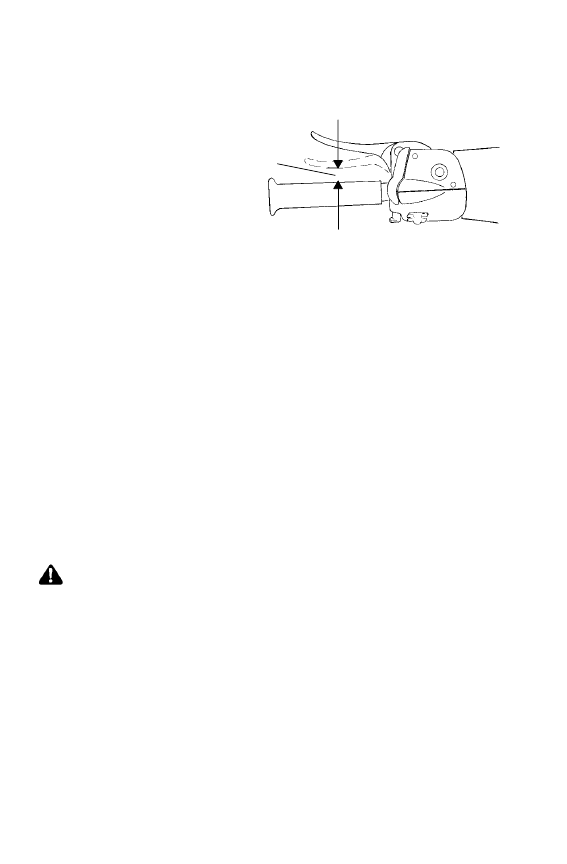
Brake Lever Travel
When the brake lever is

squeezed, it should move no

closer to the handgrip than

1/2″ (1.3 cm) (A). A

distance less than this indicates low brake fluid level or air in the

hydraulic system. Refer to the brake bleeding information on page 105.

Lever Feel
A hydraulic system multiplies the force of your hand squeezing the

brake lever. Proper operation depends on an adequate supply of air and

moisture-free hydraulic brake fluid in the system. If the brake lever

feels “spongy” when squeezed, check the level and condition of the

fluid. Also check for the presence of air in the fluid system. Refer to

page 105 for more information, or see your dealer for service.
Replace brake fluid at least every two years with Polaris DOT 3 high

temperature brake fluid. All DOT 3 brake fluid is not alike. Use only

Polaris brake fluid. See page 132 for the part numbers of Polaris

products.

WARNING

Continued use of “spongy” brakes may cause a complete loss of

brakes, which could result in serious injury or death. Always have

the brakes serviced at the first sign of sponginess.

A

55

PRE-RIDE INSPECTIONS

Before Starting the Engine

Mechanical Brakes

Brake Lever Travel
Firmly depress the brake lever. Measure

the distance (A) between the lever and

brake block. The distance should be

no more than 3/4″ (1.9 cm).
If the distance is greater than

this recommendation, the brake

cable must be adjusted. Refer to

mechanical brake adjustment

information on page 106.

n

Park Brake Lever Lock

The park brake lock, on equipped models, is located over the brake

lever. Use the brake lever lock only when you want the machine to

remain stationary; for example, when parked on an incline for a period

of five minutes or less.
To apply the lock, squeeze the brake handle and push forward on the

brake lever lock. Hold the lock forward and release the brake handle.
If the brake handle is squeezed tightly enough, the lock will move

freely into place. Do not force the lock or it may break. To release the

lock, squeeze the brake handle until the lever returns to the unlock

position. The park brake light on the console will light up when the

park brake lever lock is set and the engine is running. It will also be lit

when the service brake is in use. If the park brake light does not come

on when the park brake or service brake is in use, have it serviced by

your dealer.
1. Brake Handle

2. Park Brake Lever Lock (not

all models have a park brake)

3. Master Cylinder Reservoir /

Cover

4. Fluid Level Indicator

WARNING

If the park brake lever lock is partially or entirely engaged while

riding, overheating of the brakes could occur, resulting in brake

damage. In extreme cases it could cause a fire, which could

result in serious injury or death.

A

4

3

1

2

56

PRE-RIDE INSPECTIONS

Before Starting the Engine
n

Check for Proper Operation of Steering System

Manually turn the skis completely to the right and to the left. If any

difficulty is encountered, check for ice and snow build-up that may be

obstructing the steering linkage. Make sure all greasable components

are properly lubricated.

n

Track Inspection

WARNING

Always inspect the track for damage before using the vehicle.

Operating the snowmobile with a damaged track increases the

possibility of track failure, which could cause loss of control

resulting in serious injury or death.

Use of traction products such as studs increases the possibility of track

damage and/or failure. Driving at high speeds for extended periods of

time in marginal lubrication could severely damage track rods, break

track edges, and cause other track damage. Examples of marginal

lubrication would include frozen bodies of water without snow cover,

icy trails, and no-snow conditions.

NOTE: Track damage or failure caused by operation on ice or poor

lubrication conditions voids the track warranty.

n

Check Hood Latches

The hood of the snowmobile protects the operator from moving parts

as well as aiding in sound emission control and other functions. Under

no circumstances should your snowmobile be operated with the hood

open or removed. Always ensure that the hood straps are in good

condition and that the latches are securely in place before operating the

snowmobile.

n

Check Recoil Rope

Inspect the recoil rope and handle for excessive wear, and make sure

the knot securing the rope inside the handle is secure. If excessive

wear is found, see your Polaris dealer for replacement.

n

Check Seat Latches

If your snowmobile is equipped with a removeable seat, ensure that the

seat latches are securely in place before every use of the snowmobile.

57

PRE-RIDE INSPECTIONS

Start the Engine and Check

n

Transmission: Make sure the reverse is not engaged before

starting your machine.

n

Engine Stop Switch: Check the auxiliary shut-off switch for

proper operation. Push down to stop the engine. Pull up to release

and start the engine.

n

Tether Switch: If your machine has a tether switch, remove the

tether from the switch to ensure the engine stops immediately.

Make sure the tether strap is in good condition.

n

Lighting: Check the headlight (high and low beam), taillight, and

brake light for normal operation.

n

Mirror Adjustment: If equipped, adjust your mirrors so they can

be used to their full advantage.

n

Check Surroundings to Verify Clear Operating Area: Make

sure you have a clear area all around your snowmobile, including

an area clear of bystanders. There’s always the possibility of some

sideways vehicle movement, of applying a little more throttle than

intended, or of debris being thrown by the track. If the

surrounding area is clear you before you start, you can devote your

full attention to operating the snowmobile.

n

Ignition Switch: Make sure

the engine stops when the

ignition switch is turned to OFF.


Content   ..  12  13  14  15   ..