Snowmobile Polaris DEEP SNOW (2005 year). Instruction - part 56
REAR SUSPENSION
11.22
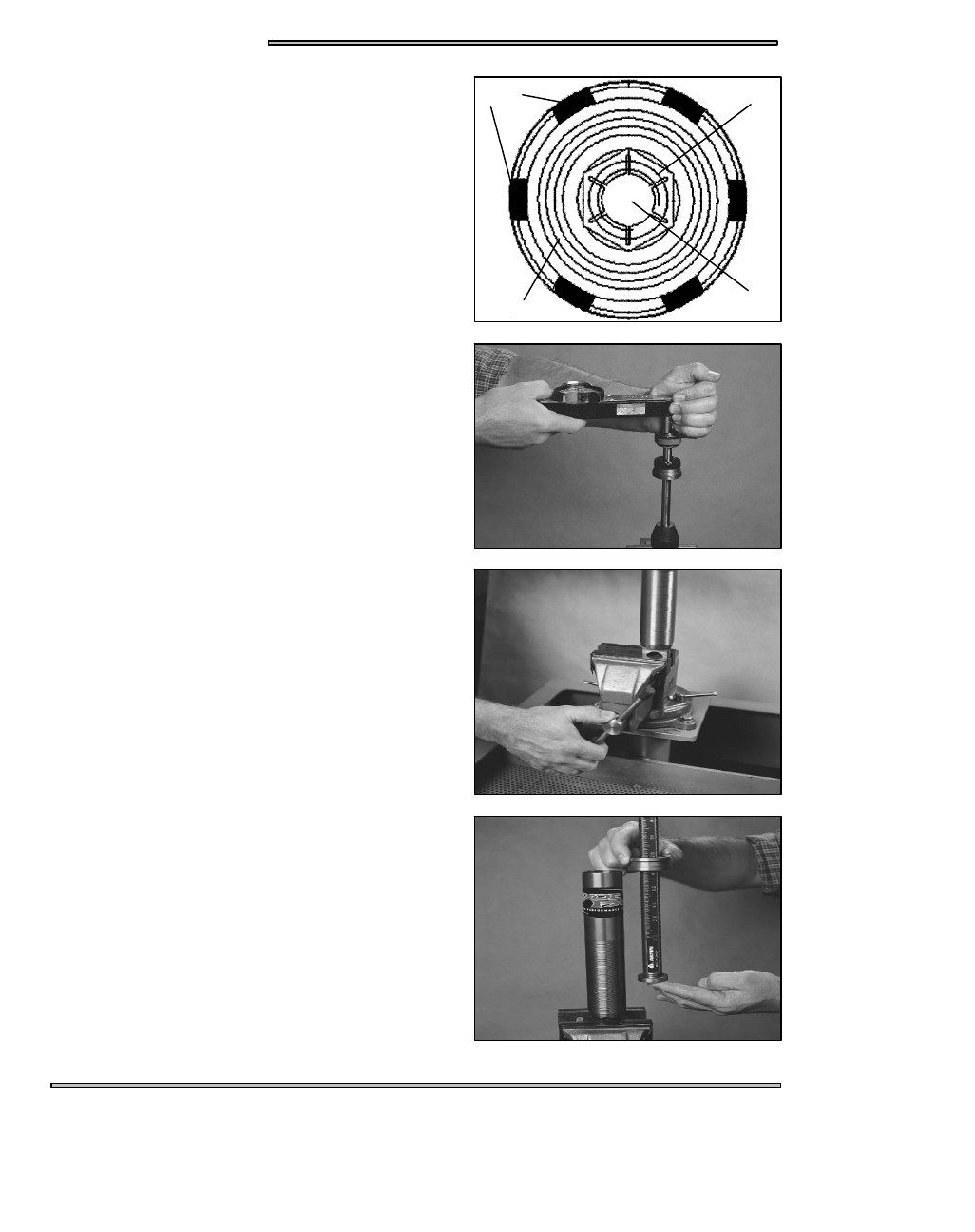
Place the shock piston rod upper mount in bench vise, begin pis-
ton and valve removal. Arrange parts removed in the sequence of
disassembly. The piston should have the flat slots facing the nut
end (as highlighted in black).
Items to inspect: Piston rod for straightness, nicks or burrs. Cylin-
der Head Assembly / DU Bearing clean, inspect, or replace. In-
side of shock body for scratches, burrs or excessive wear. Teflon
piston and I.F.P wear band for cuts, chipped or nicked edges, or
excessive wear. O--rings for nicks, cuts, or cracks. Cap and rod
seals for nicks, cuts or cracks. Valve discs for kinks or waves.
Compression bumpers (ski shocks only) for chipping, cracking or
being missing.
Should any of these items be in question replacement is recom-
mended.
ASSEMBLY:
Place the piston rod upper mount into the vise. Reassemble
damper rod assembly in the reverse order of disassembly. Spe-
cial attention should be paid the order of the Rebound and Com-
pression disc (shim) stacks, ensuring that they are in the same
order prior to disassembly. Tighten the lock nut to 15--20 ft--lb of
torque. (PICTURE 10)
DO NOT OVER--TORQUE. If excessive torque is applied, dam-
age to the piston and valves will occur.
Secure the shock body by its lower mount in vise. The use of soft
jaws is recommend to prevent damage or marks to the shock.
(PICTURE 11)
It is important that the gas shock be retained in the vice by the
lower mount. Any other method of securing the shock body dur-
ing these procedures may deform the shock body cylinder.
The next points on IFP are not applicable for emulsion shocks.
Proceed to assembly of the pressure valve on next page.
Thread the positioning head onto the I.F.P locator tool and adjust
the top of the value indicator to the appropriate measurement.
(PICTURE 12)
Depending on which shock absorber is being worked on, adjust
the piston location tool to the specified depth indicated in the
shock specification chart.
Flats
Shims
Nut
Shaft
10
11
12