Snowmobile Polaris 800 RMK / 800 Pro-RMK / 800 RMK (2010 year). Instruction - part 10
 

  Index      Snowmobiles / ATV     Snowmobile Polaris 800 RMK / 800 Pro-RMK / 800 RMK - instruction 2010 year


Search            copyright infringement  


Content   ..  8  9  10  11   ..


Snowmobile Polaris 800 RMK / 800 Pro-RMK / 800 RMK (2010 year). Instruction - part 10


41

FEATURES

Instrument Cluster

Rider Information Center

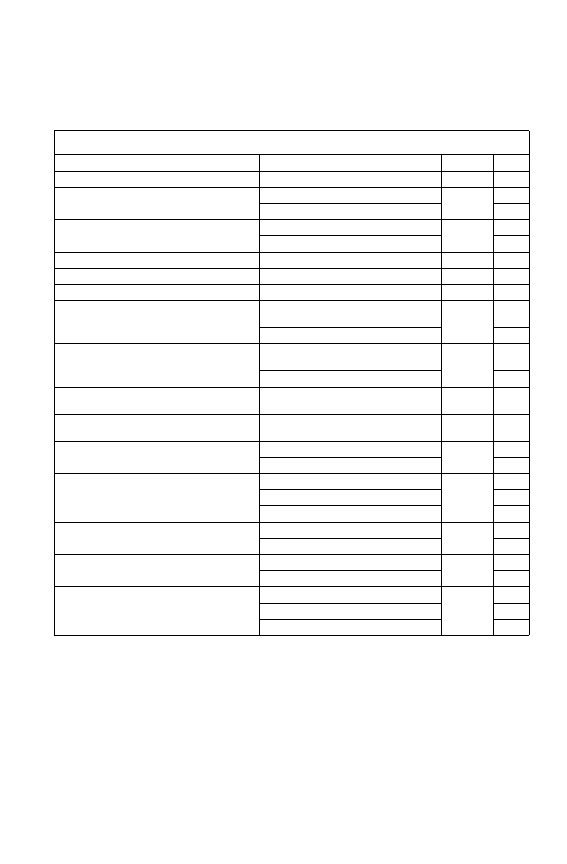
Diagnostic Display Code Definitions

Diagnostic Codes

Component

Condition

SPN

FMI

ECU Memory

Checksum/CRC Error

628

13

Injector 1 (MAG) (Port Injector)

Driver Circuit Open/Grounded

651

5

Driver Circuit Short to B+

3

Injector 2 (PTO) (Port Injector)

Driver Circuit Open/Grounded

652

5

Driver Circuit Short to B+

3

Knock Sensor 1

Voltage Too Low

731

4

Ignition Coil Primary Driver 1 (MAG)

Driver Circuit Open/Grounded

1268

5

Fuel Pump Driver Circuit

Driver Circuit Open/Grounded

1347

5

Knock Level Cylinder 1 (MAG)

Maximum Detonation 
Correction Limit Reached

1352

0

Knock Above Critical Level

16

Knock Level Cylinder 2 (PTO)

Maximum Detonation 
Correction Limit Reached

1353

0

Knock Above Critical Level

16

Sensor Supply Voltage 1 (TPS/
TMAP Sensor Power)

Voltage Too Low

3509

4

Sensor Supply Voltage 2 (Ground 
Speed Sensor)

Voltage Too Low

3510

4

ECU Output Supply Voltage 2 (Injec-
tion Supply PWR)

Voltage Too High

3598

3

Voltage Too Low

4

Throttle Release Signal

Voltage Too High

520194

3

Voltage Too Low

4

Throttle Stuck

7

Chassis Relay

Driver Circuit Open/Grounded

520208

5

Driver Circuit Short to B+

3

Exhaust Valve Solenoid

Driver Circuit Grounded

520215

5

Driver Circuit Short to B+

3

Fuel Type Selected

Voltage Too High

524007

3

Voltage Too Low

4

Signal Out Of Range

2

42

THE PERFECT FIT

Suspension Adjustments

Factory settings, combined with user adjustments to the rear track shock 
spring (RTSS), should be all that’s necessary to provide the best riding 
experience for most riders. The primary adjustment for overall vehicle 
balance is RTSS preload. Perform this adjustment first.

NOTICE: Never adjust spring preload to an installed length longer than the 

maximum or shorter than the minimum lengths in the following chart. 
Damage to the suspension could result.

Spring Type

Maximum 

Installed Length

Minimum Installed 

Length

RMK Factory Spring

10 3/4" (27.3 cm)

9 5/8" (24.5 cm)

PRO-RMK Factory Spring

11" (28 cm)

9 3/4" (24.8 cm)

ASSAULT RMK Factory Spring

11" (28 cm)

9 3/8" (23.8 cm)

250# Optional Heavy Spring

10 7/8" (27.6 cm)

9 7/8" (25 cm)

Installed Length 

Measurement

43

THE PERFECT FIT

Suspension Adjustments

For riders who weigh 160-220 lbs. (73-100 kg), test ride at factory 
settings, then make fine-tuning adjustments. See page 44.

For riders outside the 160-220 lbs. (73-100 kg) weight range, adjust the 
factory-set preload to the following installed lengths as a starting point, 
then test ride before making fine-tuning adjustments. Do not exceed the 
minimum and maximum installed length requirements. See page 42.

TIP: If adjustments to the factory-installed springs are not sufficient for riders 

over 300 lbs. (136 kg), optional heavy springs are available. Please see 
your POLARIS dealer.

Initial RTSS Preload Settings

(Measure spring length with suspension off the ground)

Rider Weight

Model

Installed Length

For Factory-Installed Springs

Under 160 lbs.

Under 73 kg

RMK/PRO-RMK

10 3/4"

27.3 cm

ASSAULT RMK

10 7/8"

27.6 cm

160-220 lbs

73-100 kg

RMK/ASSAULT 

RMK

*10 1/4"

*26 cm

PRO-RMK

*10 3/8"

*26.4 cm

220-280 lbs.

100-127 kg

RMK/PRO-RMK

10 1/8"

25.7 cm

ASSAULT RMK

10"

25.4 cm

280-340 lbs.

127-154 kg

RMK/PRO-RMK

9 3/4"

24.8 cm

ASSAULT RMK

9 1/2"

24.1 cm

*Factory Setting

For Optional 250-Pound Heavy Springs

250-300 lbs.

113-136 kg

ALL

10 1/8"

25.7 cm

300-350 lbs.

136-159 kg

ALL

10"

25.4 cm

44

THE PERFECT FIT

Suspension Adjustments

Fine-Tuning Your Suspension Set-Up

The primary adjustment for overall vehicle balance is RTSS preload. 
Adjust the factory-set preload to the recommended setting for your 
weight and then test ride. Additional minor adjustments can then be 
made to the spring preload to adjust the feel of the vehicle. Do not 
exceed the minimum and maximum installed length requirements. See 
page 42.

For more ski lift (transfer), reduce spring preload by increasing the 
installed length. Rotate the spring 1-2 full turns counter-clockwise 
(when viewed from bottom). This will enhance maneuverability, mak-
ing the snowmobile more “flickable” although it may hinder climbing 
performance.

For less ski lift (transfer), increase spring preload by reducing the 
installed length. Rotate the spring 1-2 full turns clockwise (when viewed 
from bottom). This will improve climbing ability and rider control.

To control the overall balance of the vehicle use the following guideline:

• More rear track shock spring preload increases ski pressure. Less pre-

load decreases ski pressure. 

• Spring preload can affect bottoming resistance. More preload means 

less bottoming. Less preload means a softer ride (and more bottom-
ing). Both adjustments will affect overall balance and ski pressure.

After adjusting RTSS preload to your satisfaction, the front track shock 
(FTS) spring preload and independent front suspension (IFS) spring pre-
load can also be adjusted. See page 46.


Content   ..  8  9  10  11   ..