Emergency War Surgery (2004) - page 2
Emergency War Surgery
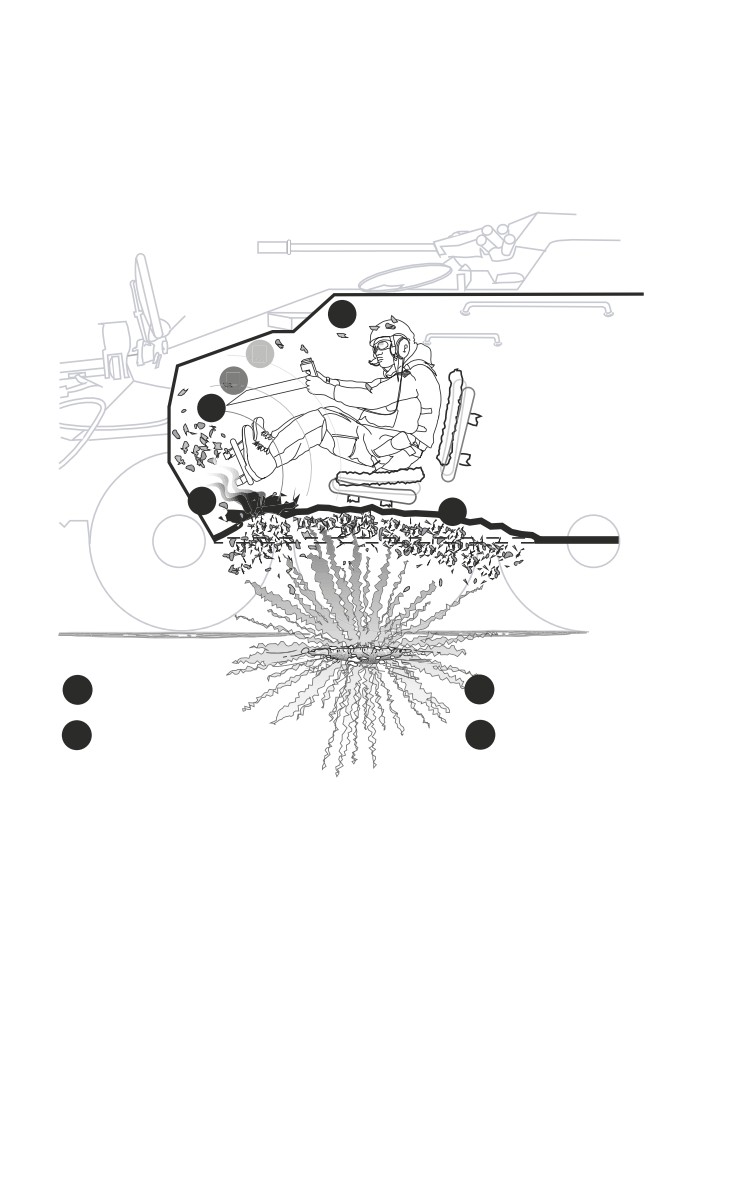
Mechanisms of Injury (Fig. 1-9)
Ballistic injuries take place as the result of defeated armor as
described above.
D
C
C
C
B
A
A Translational blast
C
Blast overpressure
injury
B
Toxic gases
D
Missiles
Fig. 1-9. Injuries sustained as a result of defeated armor, (a) translational
blast injury, (b) toxic gases, (c) blast overpressure, (d) penetrating
missile wounds.
Thermal. Burns occur because of ignited fuel, ammunition,
hydraulic fluid, or as the direct result of the antiarmor device.
ο Two large studies, one from British WWII tank crewmen
and one from Israeli casualties in Lebanon, showed that
about 1⁄3 of living wounded casualties have burns.
1.12
Weapons Effects and Parachute Injuries
ο The severity of burns range from a mild 1st degree burn to
full thickness burns requiring skin coverage. Most burns
are superficial burns to exposed skin, most often of the
face, neck, forearms, and hands. These are often combined
with multiple fragment wounds.
Blast overpressure occurs from the explosion occurring
inside a confined space. One study from WWII showed 31%
of armored crewmen casualties had ear injury due to blast
overpressure, including ruptured tympanic membranes.
Toxic Fumes are secondary to phosgene-like combustion
byproducts in Teflon coated interiors of armored vehicles
(antispall liners).
ο HCL is produced at the mucous membrane.
ο Treatment is supportive and may require IV steroids (1,000
mg methylprednisolone, single dose).
ο Surgical triage considerations. Emergent if pulmonary
edema, expectant if hypotensive and cyanotic. Reevaluate
nonemergent patients q 2 h.
Blunt Trauma is due to acceleration mechanisms.
Unexploded Ordnance (UXO)
UXOs are embedded in the casualty without exploding.
ο Rockets, grenades, mortar rounds.
ο Some UXO must travel a distance (50-70 m) in order to arm.
ο Fuses are triggered by different stimuli (impact,
electromagnetic, laser).
Notify explosive ordnance disposal immediately!
31⁄31 victims lived after removal (from recent review).
The casualty should be triaged as nonemergent, placed far
from others, and operated on last.
Preplan for how to handle both transport and operation.
ο Transport.
♦ If by helicopter, ground the casualty to the aircraft
(there is a large electrostatic charge from rotors).
ο Move into safe area.
♦ Revetment, parking lot, or back of building.
ο Operate in safe area, not in main OR area.
Operative management.
ο Precautions for surgeon and staff.
1.13
Emergency War Surgery
♦ Sandbag operative area, use flak vests and eye protection.
ο Avoid triggering stimuli.
♦ Electromagnetic (no defibrillator, monitors, Bovie
cauterizer, blood warmers, or ultrasound or CT
machines).
♦ Metal to metal.
♦ Plain radiography is safe. It helps identify the type of
ammunition.
ο Anesthesia.
♦ Regional/spinal/local preferred.
♦ Keep oxygen out of OR.
♦ Have anesthesiologist leave after induction.
ο Operation: The surgeon should be alone with the patient.
♦ Employ gentle technique.
♦ Avoid excessive manipulation.
♦ Consider amputation if other methods fail.
♦ Remove en-bloc if possible.
The decision to remove a chemical/biological UXO is a
command decision.
Immediately after removal, hand to explosive ordnance
disposal (EOD) personnel for disposal.
Parachute Injuries
Dependent on several factors: Weather (wind), day/night,
drop zone hazards/terrain, low drop altitude, and level of
opposition (enemy resistance) at the drop zone.
Caused by improper aircraft exit, parachute malfunction,
hazards (including enemy) on descent or in the landing zone,
entanglements, or an improper parachute landing fall (PLF).
Peacetime rate of injuries is 0.8%.
Combat injury rate is historically higher (subject to above
listed factors).
ο As high as 30% overall.
ο Majority of injuries are minor.
ο 8% to 10% of total jumpers are rendered either combat
ineffective or significantly limited.
1.14

Weapons Effects and Parachute Injuries
Injury Site/Type
%
Injury Site/Type
%
Ankle
20
Sprain/Strains
37.7
Back
11.1
Contusions
30.1
Knee
10.7
Lacerations
14.7
Head/Neck
8.7
Closed Fractures
11.1
Leg
8.3
Concussions
2.0
Open Fractures
2.0
—
—
Fractures result in a higher percentage of removal from
combat.
Fractures of the calcaneus are associated with fractures of
the axial skeleton (10%). Patients should be placed on spinal
precautions until such injuries are ruled out.
1.15
Chapter 2
Levels of Medical Care
Military doctrine supports an integrated health services support
system to triage, treat, evacuate, and return soldiers to duty in
the most time efficient manner. It begins with the soldier on the
battlefield and ends in hospitals located within the continental
United States (CONUS). Care begins with first aid (self-aid/
buddy aid, and combat lifesaver), rapidly progresses through
emergency medical care (EMT) and advanced trauma manage-
ment (ATM) to stabilizing surgery, and is followed by critical
care transport to a level where more sophisticated treatment
can be rendered.
There are five levels of care (also known as “roles”), previously
referred to as echelons by NATO and ABCA (USA, Britain,
Canada, Australia) countries. Levels should not to be confused
with American College of Surgeons use of the term in US
trauma centers. Different levels denote differences in capability,
rather than the quality of care. Each level has the capability of
the level forward of it and expands on that capability. Soldiers
with minor injuries can be returned to duty after simple
treatments at forward locations, all others are prepared for
evacuation with medical care while en route to a higher level.
Level I
Immediate first aid delivered at the scene.
ο First aid and immediate life-saving measures provided by
self-aid, buddy aid, or a combat lifesaver (nonmedical
team/squad member trained in enhanced first aid).
ο Care by the trauma specialist (91W) (combat medic),
assigned to the medical platoon, trained as an Emergency
Medical Technician-Basic (EMT-B). Some other primary
2.1
Emergency War Surgery
care providers, with various levels of training, include the
Special Forces Medical Sergeant 18D, Special Operations
Combat Medic 91W, SEAL Independent Duty Corpsman,
Special Boat Corpsman, Pararescueman, and Special
Operations Medical Technician.
ο Initial treatment of nuclear, biological, and chemical
casualties, treatment of toxic industrial material casualties,
primary disease prevention, combat stress control
measures, and nonbattle injury prevention.
Level I medical treatment facility (MTF) (commonly referred
to as the Battalion Aid Station [BAS]).
ο Provides triage, treatment, and evacuation.
ο Physician, Physician Assistant (PA), and medics.
ο Return to duty, or stabilize and evacuate to the next level.
ο Can be chem/bio protected.
ο No surgical or patient holding capability.
US Marine Corps (USMC): Shock Trauma Platoon (STP).
ο Small forward unit supports the Marine Expeditionary
Force (MEF).
ο Stabilization and collecting/clearing companies.
ο 2 physicians.
ο No surgical capability.
ο Patient holding time limited to 3 hours.
Level II
Increased medical capability and limited inpatient bed space.
Includes basic primary care, optometry, combat operational
stress control and mental health, dental, laboratory, surgical
(when augmented) and X-ray capability.
100% mobile.
Each service has a slightly different unit at this level.
Army.
ο Level II MTFs operated by the treatment platoon of
divisional/nondivisional medical companies/troops.
♦ Basic/emergency treatment is continued.
♦ Packed RBCs (Type 0, Rh positive and negative), limited
X-ray, laboratory, and dental.
♦ 20-40 cots with 72-hour holding.
2.2
Levels of Medical Care
♦ Can be chem/bio protected.
♦ No surgical capability.
ο
Forward Surgical Team (FST).
♦ Continuous operations for up to 72 hours.
♦ Life-saving resuscitative surgery, including general,
orthopedic, and limited neurosurgical procedures.
♦
20-person team with 1 orthopedic and 3 general
surgeons, 2 nurse anesthetists, critical care nurses and
technicians.
♦ The supporting medical company must provide
logistical support and security. (Doctrinally, the FST is
collocated with a Medical Company.)
♦ ~1,000 sq ft surgical area.
♦ Can be chem/bio protected.
♦ Operational within 1 hour of arrival at the supported
company.
♦ May be transported by ground, fixed wing, or helicopter;
some fleet surgical teams (FSTs) are airborne deployable.
♦
2 operating tables for a maximum of 10 cases per day
and for a total of 30 operations within 72 hours.
♦ Post-op intensive care for up to 8 patients for up to 6
hours.
♦ X-ray, laboratory, and patient administrative support
provided by the supporting medical company.
♦ Requires additional electricity, water, and fuel from the
supporting medical company.
♦ The FST is not designed, staffed, or equipped for stand
alone operations or conducting sick-call operations.
Augmentation requirements are discussed in FM 4-02.25.
Air Force.
ο Mobile Field Surgical Team (MFST).
♦ 5-person team (general surgeon, orthopedist, anesthetist,
emergency medicine physician, and OR nurse/tech).
♦ 10 life/limb saving procedures in 24-48 hours from five
backpacks (350 lb total gear).
♦ Designed to augment an aid station or flight line clinic.
♦ Not stand alone, requires water, shelter of opportunity,
communications, among other things.
2.3
Emergency War Surgery
♦ Integral to remainder of Air Force (AF) Theater Hospital
System.
ο
Small Portable Expeditionary Aeromedical Rapid
Response (SPEARR) team.
♦ 10-person team: 5-person MFST, 3-person CCATT (see
Chapter 4, Aeromedical Evacuation) and a 2-person
preventive medicine (PM) team (flight surgeon, public
health officer).
♦ Stand alone capable for 7 days, 600 sq ft tent.
♦ 10 life/limb saving procedures in 24-48 hours.
♦ Designed to provide surgical support, basic primary
care, post-op critical care, and PM for early phase of
deployment.
♦ Highly mobile unit, with all equipment fitting in a one-
pallet-sized trailer.
ο
Expeditionary Medical Support (EMEDS) Basic.
♦ Medical and surgical support for an airbase, providing
24-hour sick call capability, resuscitative surgery, dental
care, limited laboratory and X-ray capability.
♦ 25 member staff includes SPEARR team.
♦ 4 holding beds, 1 OR table, 3 climate controlled tents,
and 3 pallets.
♦ 10 life/limb saving procedures in 24-48 hours.
♦ ~2,000 sq ft.
ο
EMEDS + 10.
♦ Adds 6 beds to EMEDS Basic, for total of 10.
♦ No additional surgical capability.
♦ 56-person staff.
♦ 6 tents, 14 pallets.
♦ Can be chemically hardened.
Navy.
ο Casualty Receiving & Treatment Ships (CRTS). CRTSs
are part of an Amphibious Ready Group (ARG) and
usually comprise one landing helicopter assault or
amphibious (LHA) Tarawa-class or landing helicopter deck
(LHD) Wasp-class ship, which are Marine amphibious
2.4
Levels of Medical Care
assault helicopter carriers that function as casualty
receiving platforms. An ARG includes up to 6 ships with
surgical capability only on the CRTS.
♦ 47-48 beds, 4-6 ORs, 17 ICU beds.
♦ 300 additional medical care beds may be available once
Marines diseembark.
♦ Fleet Surgical Teams (FSTs): 3-4 physicians, 1 surgeon,
1 CRNA or anesthesiologist and support staff.
♦ Usually 2 general surgeons and 2 orthopedic surgeons.
OMFS (oral maxillofacial surgery) support available
through the dental department. Can be substantially
augmented.
♦ Laboratory, X-ray.
♦ Excellent casualty flow capability (large helicopter flight
deck and landing craft units [LCU] well deck).
♦ Mass casualty (MASCAL) capability with triage area
for 50 casualties.
♦ Doctrinally, holding capability is limited to 3 days.
Aircraft Carrier (CVN) Battle Group.
ο 1 OR, 40-60 beds, 3 ICU beds.
ο 1 surgeon, 5 other medical officers.
ο Up to 9 ships, but usually only the CVN has physicians.
Medical assets aboard aircraft carriers are intended for use
by the aircraft carrier and its task force. Aircraft carriers
are NOT casualty receiving ships and are not figured into
medical assets for support to ground forces.
USMC.
ο Surgical Company.
♦ Provides surgical care for a MEF (Marine Expeditionary
Force). Basis of allocation is 1 per infantry regiment.
♦ 3 ORs, 60-bed capability.
♦ Patient holding time up to 72 hours.
♦ Stabilizing surgical procedures.
ο Forward Resuscitative Surgical System (FRSS).
♦ Embedded organically as part of the TO&E of the
surgical company, if employed reduces the capability
of its parent surgical company.
2.5
Emergency War Surgery
♦ Rapid assembly, highly mobile.
♦ Resuscitative surgery for 18 patients within 48 hours
without resupply.
♦ 1 OR, 2 surgeons.
♦ No holding capability.
♦ No intrinsic evacuation capability.
♦ Chem/bio protected.
♦ Stand alone capable.
Level III
Represents the highest level of medical care available within
the combat zone with the bulk of inpatient beds. Most
deployable hospitals are modular, allowing the commander to
tailor the medical response to expected or actual demand.
Army.
ο
Two different Corps-level Combat Support Hospital (CSH)
designs.
♦ Medical Force 2000 (MF2K) CSH.
♦ Medical Reengineering Initiative (MRI) CSH will
replace the MF2K.
ο
Combat Support Hospital.
♦ MF2K CSH.
◊ Resuscitation, initial surgery, post-op care, and either
return to duty or stabilize for further evacuation.
◊ Up to 296 patients, typically divided into 8 ICUs (96
ICU beds), and 7 Intermediate Care Wards (ICWs)
(140 beds), 1 neuropsychiatric (NP) ward (20 beds),
and 2 minimal care wards (40 beds).
◊
175 officers, 429 enlisted; specialty attachments may
increase numbers.
◊ Up to 8 OR tables for a maximum of 144 operating
hours per day.
◊ General, orthopedic, urologic, neurosurgical, dental
and oromaxillofacial surgery.
◊ Blood bank, laboratory, X-ray/computer tomography
(CT); nutrition, physical therapy and NP capabilities.
◊ Dependent on a number of Corps support elements
for personnel, finance, mortuary, legal, laundry,
2.6
Levels of Medical Care
security, and enemy prisoners of war (EPW)
management, support.
◊
Transportation support required for both incoming
and outgoing patient evacuation, and to transport
the hospital.
◊
Transported via semitrailer, railcar, air cargo, or ship.
◊
Fully deployed CSH (including motor pool, billeting,
heliport, and other life support activities) covers 30.3
acres.
◊
Divided into modules, deployed as a single unit or
separately as the mission dictates. The main modules
are the Hospital Unit-Base (HUB) and the Hospital
Unit-Surgical (HUS).
HUB is the infrastructure of the CSH.
Up to 236 patients, divided into 36 ICU, 140
intermediate, 40 minimal, and 20 NP beds.
Two operating modules with specialty
surgical care capability.
HQ, administrative, personnel, chaplain,
laboratory, pharmacy, X-ray, and blood bank
services.
Part of the HUB can be chem/bio protected
(FM 4-02.7).
HUS capabilities.
60 ICU patients, 2 OR modules, X-ray.
Dependent on the HUB for all logistical
support.
Can be deployed forward, separate from the
HUB, for brief periods as the mission dictates.
MRI CSH (Corps).
ο Provides hospitalization and outpatient services for all
classes of patients in the theater, either returned to duty
or stabilized for further evacuation.
ο Headquarters/headquarters detachment: 15 officers and
44 enlisted.
ο Up to 248 patients, typically divided into an 84-bed
hospital company and a 164-bed hospital company, with
split base operations capability.
2.7
Emergency War Surgery
♦
84-bed hospital company.
◊
24 ICU beds.
◊ Up to 2 OR tables, maximum of 36 operating hours
per day.
◊
3 ICWs (total 60 beds, including NP patients).
◊
56 officers and 112 enlisted personnel.
Some patient care areas can be chem/bio protected.
♦
164-bed hospital company.
◊
24 ICU beds.
◊ Up to 4 OR tables, maximum of 60 operating hours
per day.
◊
7 ICWs (total 140 beds, including NP patients).
◊
84 officers and 169 enlisted personnel.
Some patient care areas can be chem/bio protected.
♦ Applicable to 84-, 164-, and 248-bed (see CSH [Echelon
of Care, EAC] below) hospital companies.
◊ General, orthopedic, urologic, thoracic, OB/GYN,
neurosurgical, dental and oromaxillofacial surgery.
◊ Blood bank, laboratory, X-ray, nutrition, and physical
therapy.
◊ Dependent on EAC support elements for personnel,
finance, mortuary, legal, laundry services, security
and EPW support.
◊ Parts can be chem/bio protected.
◊ Transportation support required for both incoming
and outgoing patient evacuation, and to transport
the hospital.
◊ Transported by semi-trailer, railcar, air cargo, or ship.
◊ Fully deployed, covers 5.7 acres.
◊ Minimal care wards are provided by an attached
minimum care detachment.
Air Force.
ο EMEDS +25.
♦ 25-bed version of EMEDS Basic.
♦ 84 personnel, 2 OR tables, 9 x 600 sq ft tents, and 20
pallets.
♦ 20 operations in 48 hours.
♦ Can be chemically hardened.
2.8
Levels of Medical Care
♦ Additional specialty modules can be added, including
vascular/cardiothoracic, neurosurgery, OB/GYN, ear,
nose and throat (ENT), ophthalmology teams; each
comes with own personnel and equipment.
Navy.
ο Fleet Hospital.
♦ 500-bed hospitals, 80 ICU beds, and 6 ORs.
♦ 1,000 personnel.
♦ Stand alone; full ancillary services.
♦ 8-10 days to be operational.
♦ Large footprint — 28 acres, 450 isolation (ISO) shelters.
♦ No limit on holding capability.
ο Hospital Ships (TAH) — USNS Mercy and USNS Comfort.
♦ 1,000 beds, 100-bed ICU capability, and 12 ORs.
♦ 1,000 staff, over 50 physicians.
♦ Extensive laboratory and X-ray capabilities.
♦ Patient holding is doctrinally limited to 5 days.
Level IV
Definitive medical and surgical care outside the combat zone,
yet within the communication zone/EAC of the theater of
operations (TO).
Patients requiring more intensive rehabilitation or special
needs.
Traditionally includes the MF2K Field Hospital (FH) and
General Hospital (GH).
In some situations, the MF2K CSH or a fixed hospital may
act as a Level IV facility (eg, Landstuhl Army Regional
Medical Center, Germany).
ο Field Hospital.
♦ Semipermanent hospital that provides primarily
convalescent care.
♦ At least 2 OR tables for 24 OR hours per day.
♦ General, orthopedics, OB/GYN, urologic, oral surgery,
and dental services.
♦ Up to 504 patients, with 2 ICUs (24 patients), 7 ICWs
(140 patients), 1 NP ward (20 patients), 2 minimum care
wards (40 patients), and 7 patient support sections (280
patients).
2.9
Emergency War Surgery
ο General Hospital.
♦ Usually a permanent or semipermanent facility.
♦ At least 8 OR tables for 144 OR hours per day.
♦ General, orthopedic, gynecologic, urologic, and oral surgery.
♦ Dental and optometry services.
♦ Outpatient specialty and primary care services.
♦ Up to 476 patients, with 8 ICUs (96 patients), 16 ICWs
(320 patients), 1 NP ward (20 patients), and 2 minimum
care wards (40 patients).
The MRI CSH Echelon Above Corps (EAC) will replace
the FH and GH.
CSH (EAC).
ο Headquarters/headquarters detachment: 17 officers and
33 enlisted.
ο Cannot operate in a split-based mode like the CSH (Corps).
ο 248-bed hospital company.
♦ 4 ICUs (total 48 ICU beds), and 10 ICWs (total 200 beds,
including NP patients). A specialty clinic section that
can treat NP patients. Minimal care wards are provided
by attached minimum care detachments.
♦ 140 officers, 244 enlisted personnel.
♦ Up to 6 OR tables for 96 operating hours per day.
♦ Fully deployed (including motor pool, troop billeting,
heliport, and other life support activities), covers 9.3
acres.
♦ See other general characteristics under MRI CSH
(Corps).
Level V
This level of care is provided in the CONUS. Hospitals in the
CONUS sustaining base will provide the ultimate treatment
capability for patients generated within the theater. Department
of Defense (DoD) hospitals (military hospitals for the tri-
services) and Department of Veterans Affairs (DVA) hospitals
will be specifically designated to provide the soldier with
maximum return to function through a combination of medical,
surgical, rehabilitative, and convalescent care. Under the
2.10
Levels of Medical Care
National Disaster Medical System, patients overflowing DoD
and DVA hospitals will be cared for in designated civilian
hospitals.
2.11
Chapter 3
Triage
Introduction
Modern combat casualty evacuation has become so immediate
and efficient that it can result in a mass casualty situation at
military treatment facilities (MTFs) within the military medical
care system. Consequently, a method of dealing with the
conflicting factors of severity of injury, the tactical situation, the
mission, and the resources available for treatment and
evacuation is essential. Triage is an attempt to impose order
during chaos and make an initially overwhelming situation
manageable.
Triage is the dynamic process of sorting casualties to
identify the priority of treatment and evacuation of the
wounded, given the limitations of the current situation, the
mission, and available resources (time, equipment,
supplies, personnel, and evacuation capabilities).
Triage occurs at every level of care, starting with buddy and
medic care, extending through the OR, the ICU, and the
evacuation system.
The ultimate goals of combat medicine are the return of
the greatest possible number of soldiers to combat and the
preservation of life, limb, and eyesight in those who must
be evacuated.
The decision to withhold care from a wounded soldier who in
another less overwhelming situation might be salvaged, is
difficult for any surgeon or medic. Decisions of this nature are
infrequent, even in mass casualty situations. Nonetheless, this
is the essence of military triage.
3.1
Emergency War Surgery
Triage Categories
It is anticipated that triage will be performed at many levels,
ranging from the battlefield to the battalion aid station to the
field hospital. Traditional categories of triage are Immediate,
Delayed, Minimal, and Expectant. This classification scheme
is useful for mass casualties involving both surgical and medical
patients. An additional category of Urgent has been used to
describe surgical patients who need an operation but can wait a
few hours.
Immediate: This group includes those soldiers requiring life-
saving surgery. The surgical procedures in this category
should not be time consuming and should concern only those
patients with high chances of survival (eg, respiratory
obstruction, unstable casualties with chest or abdominal
injuries, or emergency amputation).
Delayed: This group includes those wounded who are badly
in need of time-consuming surgery, but whose general
condition permits delay in surgical treatment without unduly
endangering life. Sustaining treatment will be required (eg,
stabilizing IV fluids, splinting, administration of antibiotics,
catheterization, gastric decompression, and relief of pain).
The types of injuries include large muscle wounds, fractures
of major bones, intra-abdominal and/or thoracic wounds,
and burns less than 50% of total body surface area (TBSA).
Minimal: These casualties have relatively minor injuries (eg,
minor lacerations, abrasions, fractures of small bones, and
minor burns) and can effectively care for themselves or can
be helped by nonmedical personnel.
Expectant: Casualties in this category have wounds that are
so extensive that even if they were the sole casualty and had
the benefit of optimal medical resource application, their
survival would be unlikely. The expectant casualty should
not be abandoned, but should be separated from the view of
other casualties. Expectant casualties are unresponsive
patients with penetrating head wounds, high spinal cord
injuries, mutilating explosive wounds involving multiple
anatomical sites and organs, second and third degree burns
in excess of 60% TBSA, profound shock with multiple injuries,
and agonal respiration. Using a minimal but competent staff,
provide comfort measures for these casualties.
3.2
Triage
Alternative Triage Categories
In practice, however, the division of patients into these four
categories is not useful for a surgical unit. The casualties should
be divided into emergent, nonemergent, and expectant. These
divisions are useful in dividing casualties into those requiring
further surgical triage (emergent), and those that are less injured,
still require care, but have little chance of dying (nonemergent).
It is anticipated that 10%-20% of casualties presenting to a
surgical unit will be in the emergent category, requiring urgent
surgery. The vast majority of wounded will not require intensive
decision-making, intervention, and care.
Emergent: Although this category has been historically
subdivided into Immediate (unstable and requiring attention
within 15 minutes) and Urgent (temporarily stable but
requiring care within a few hours), except in the most
overwhelming circumstances, such division is rarely of
practical significance. This group of wounded will require
attention within minutes to several hours of arriving at the
point of care to avoid death or major disability.
ο Types of wounds include:
♦ Airway obstruction/compromise (actual or potential).
♦ Uncontrolled bleeding.
♦ Shock.
◊ Systolic BP < 90 mm Hg.
◊ Decreased mental status without head injury.
♦ Unstable penetrating or blunt injuries of the trunk,
neck, head, and pelvis.
♦ Threatened loss of limb or eyesight.
♦ Multiple long-bone fractures.
Nonemergent: This category was historically divided between
Delayed (would require intervention, however, could stand
significant delay) and Minimal. This is the group of patients
that, although injured and may require surgery, does not require
the attention of the emergent group and lacks significant
potential for loss of life, limb, or eyesight. Examples include:
ο Walking wounded.
ο Single long-bone fractures.
ο Closed fractures.
ο Soft tissue injuries without significant bleeding.
ο Facial fractures without airway compromise.
3.3
Emergency War Surgery
Expectant: This group of wounded, given the situation and
resource constraints, would be considered unsalvageable.
Examples may include:
ο Any casualty arriving without vital signs or signs of life,
regardless of mechanism of injury.
ο Transcranial gunshot wound (GSW).
ο Open pelvic injuries with uncontrolled bleeding; in shock,
with decreased mental status.
ο Massive burns.
Special categories: Patients who do not easily fit into the
above categories and casualties who pose a risk to other
casualties, the medics, and the treatment facility, may require
special consideration:
ο Wounded contaminated in a biological and/or a chemical
battlefield environment. The threat posed by these
patients mandates decontamination prior to entering the
treatment facility. Appropriately protected medical
personnel may treat emergent casualties prior to
decontamination.
ο Retained, unexploded ordnance: These patients should
be segregated immediately. See Chapter 1, Weapons Effects
and Parachute Injuries, which describes the special
handling of these wounded.
ο Enemy Prisoners of War (EPWs)/Internees: Although
treated the same as friendly casualties, it is essential that
the threat of “suicide bombers” and “human booby traps”
be prevented by carefully screening all EPWs prior to
moving into patient areas, including the triage area. See
Chapter 34, Care of Enemy Prisoners of War/Internees.
Combat stress: Rapid identification and immediate
segregation of stress casualties from injured patients will
improve the odds of a rapid recovery. With expeditious care
these casualties can be returned to duty (80%). Do not use
them as litter bearers as this may increase the trauma you
seek to treat.
ο Place patient in one of two groups.
♦ Light stress: Immediate return to duty or return to unit
or unit’s noncombat support element with duty
limitations and rest.
3.4
Triage
♦ Heavy stress: Send to combat stress control restoration
center for up to 3 days reconstitution.
♦ Use BICEPS mnemonic where resources/tactical
situations allow.
◊
Brief: Keep interventions to 3 days or less of rest,
food, reconditioning.
◊
Immediate: Treat as soon as symptoms are
recognized—do not delay.
◊
Central: Keep in one area for mutual support and
identity as soldiers.
◊
Expectant: Reaffirm that we expect return to duty
after brief rest; normalize the reaction and their duty
to return to their unit.
◊
Proximal: Keep them as close as possible to their unit.
This includes physical proximity and using the ties
of loyalty to fellow unit members. Do this through
any means available. Do not evacuate away from
the area of operations or the unit, if possible.
◊
Simple: Do not engage in psychotherapy. Address
the present stress response and situation only, using
rest, limited catharsis, and brief support (physical
and psychological).
◊
Or, refer: Must be referred to a facility that is better
equipped or staffed for care.
If battlefield casualties do not have physical injuries, DO
NOT send them out of the battle area, as this will worsen
stress reactions, and possibly start evacuation syndromes!
Triage is a fluid process at all levels, with altered situations
and resources requiring a change in category at any time
and in any setting. In the extreme example, a casualty may
be triaged from emergent to expectant during surgery,
abruptly terminating the procedure (“on-the-table triage”).
Resource Constraints
Including all of the factors that influence triage decision
making would be encyclopedic and of little benefit. Rather, a
3.5
Emergency War Surgery
framework for thinking about this process in a logical fashion
is presented here.
External factors. The surgeon/medic may have limited
knowledge of and no control over external issues.
Nonetheless, optimal casualty care requires at least an
assessment of these factors.
ο
Tactical situation and the mission. The decision to commit
scarce resources cannot be based on the current tactical/
medical/logistical situation alone. One severely wounded,
resource-consuming casualty may deplete available
supplies, and thus prevent future, less seriously injured
casualties from receiving optimal care. Liaison with the
tactical force operating in your area is essential to making
sound triage decisions. Operational security may make this
kind of information difficult to obtain in a timely fashion.
Education of, and communication with, line commanders
about the critical nature of this information is essential.
ο
Resupply: Having a sense of how and when expended
internal resources will be resupplied may prove critical to
making the decision to treat or not treat the individual
casualty.
ο
Time.
♦ Evacuation to the MTF. The shorter this time interval,
expect the complexity of triage decisions to increase,
especially sorting the worst emergent patients from the
expectant. Longer intervals will result in the opposite, with
“autotriage” of the sicker patients from the emergent to
the expectant/dead on the battlefield category.
♦ Time spent with the individual casualty. In a mass
casualty situation, time itself is a resource that must be
carefully triaged/husbanded. All patients receive an
evaluation, but only some receive operative
intervention. Time on the OR table is usually the choke
point. Apply the concepts of damage control to
minimize the time casualties spend in surgery. On-table
triage to expectant may be necessary due to
deteriorating casualty physiologic response and/or the
pattern of injury
(aorta-vena cava GSW, dual
3.6
Triage
exsanguination sites, extensive pancreatic-duodenal
injury, and so forth).
♦ Evacuation out. Casualties must move expeditiously
to the next echelon of care (EOC), otherwise valuable
local resources will be consumed in maintaining
patients, thereby preventing additional patients from
receiving care.
Internal factors. These issues are known to the surgeon/
nurse/medic and should be factored into triage decisions.
ο
Medical supplies. These supplies include equipment,
drugs, oxygen, dressings, sutures, sterilization capability,
blood, etc. Immediate liaison with the logistics system in
the MTF and the theater of operation is essential to ensure
the availability and timely resupply of these items, to
include “surge” capabilities and local resource availability.
ο
Space/Capability. This category includes the number of
OR tables and ICU beds: the holding capacity and ward
capacity; and the available diagnostic equipment—
ultrasound (US), X-ray, computed tomography (CT)—and
laboratory tests. For example, if your MTF has the only
CT scanner in theater, plan for an increased number of
head-injured patients.
ο
Personnel. This includes knowing the professional
capability (type and experience of individual physician/
nurse/medic), and the emotional stability, sleep status, and
so forth, of your hospital personnel. This perishable
resource must be preserved; for example, 24 hours of
continuous operation may exhaust your only OR crew, and
may necessitate diversion of casualties to another facility.
ο
Stress. Soldiers, including medical personnel, are
affected by the consequences of war; individual and unit
capability is degraded during sustained operations. The
personal impact of military triage on the medical team
cannot be overemphasized. It is extremely emotional,
and measures should be undertaken to minimize these
effects. This is best provided by trained staff. Cohesive
groups may tolerate stress better and assist each other
in dealing with traumatic events when allowed to
3.7
Emergency War Surgery
process the event in a group format according to their
own traditions.
Triage Decision Making
The complexity of decision making in triage varies greatly, often
depending on the level of training and experience of the triage
officer, as well as the location where the triage decision is being
made. At the front line, the medic must make a decision about
whether or not to evacuate patients from the battlefield and how
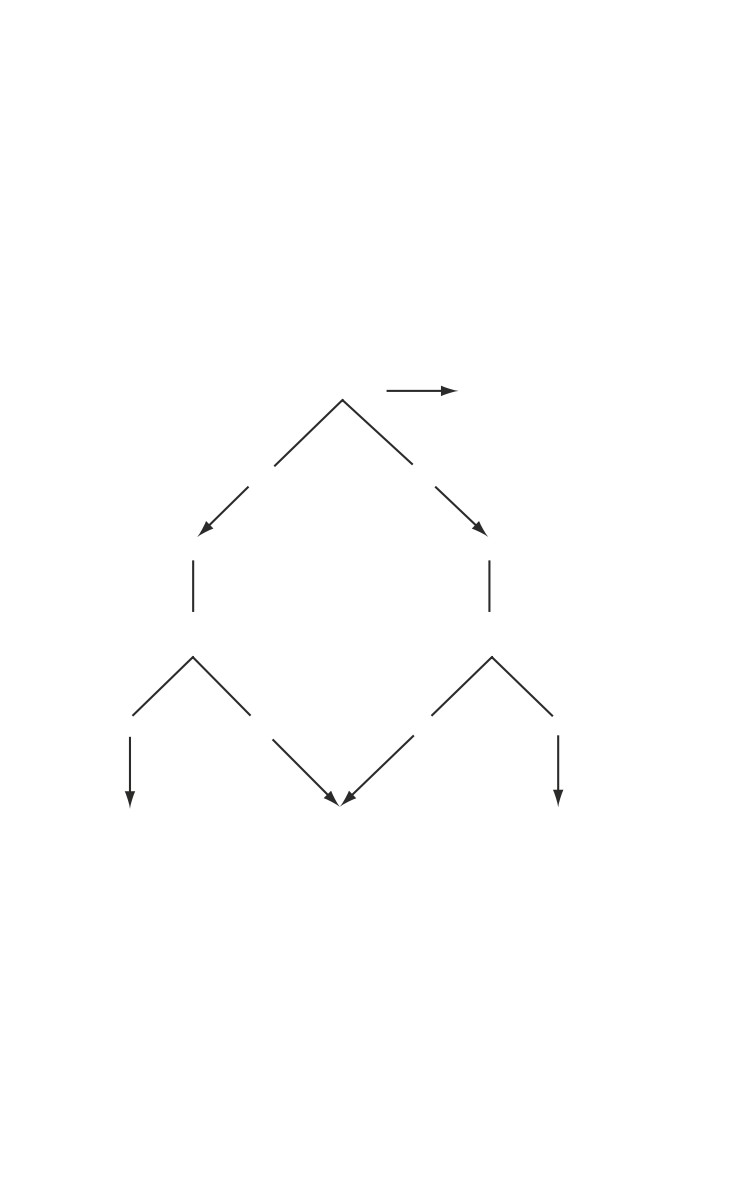
fast. The following decision tree is an example of a triage tool
that may be used in the field as an initial decision-making aid.
Walking
NONEMERGENT
Responsive to shake and shout
YES
NO
Palpable radial pulse and
Breathing with airway open
comfortable breathing
or with simple maneuver
YES
NO
YES
NO
NONEMERGENT
EMERGENT
EXPECTANT/DEAD
In the emergent treatment area, the surgeon must make decisions
about whether surgery is needed, the timing of the surgery, and
the priority of multiple surgical patients. Regardless of the type
of triage decision needed, the following information is of critical
importance in reaching that decision:
Initial vital signs. Pulse (rate and quality), mentation,
difficulty breathing (eg, a casualty with normal mentation
3.8
Triage
and radial pulse quality is nonemergent). Respiratory rate
alone is not predictive of the appropriate triage category.
Pattern of injury. A historical perspective aids the triage
decision maker in understanding the distribution of wounds
encountered on the modern battlefield and the likely
mortality associated with those wounds. The majority of
combat wounded will suffer nonfatal extremity injuries.
In general, these will be triaged as nonemergent.
Response to initial intervention. Does the shock state
improve, remain unchanged, or worsen with initial
resuscitative efforts? A patient who fails to respond rapidly
to initial fluid resuscitation should be triaged ahead of a
patient with a good response to minimal fluid replacement;
alternatively, this nonresponder in a mass casualty situation
may need to be placed in the expectant category.
The following data from the Vietnam War indicate the numerical
distribution of diagnoses that were seen in the low-intensity
light-infantry combat that characterized that war. Casualties from
armored combat can be expected to have a higher prevalence of
burns and multiple injuries. Of 100 injured in combat:
ο
30%—Minor or superficial wounds (minor burns,
abrasions, intraocular foreign body, ruptured tympanic
membrane/deafness).
ο
16%—Open comminuted fractures of a long bone. Several
patients with multiple fractures and injuries to named
nerves and blood vessels.
ο
10%—Major soft tissue injury or burn requiring
general anesthesia for treatment. Several had an injury
to major nerves.
ο
10%—Had laparotomies, two of which were negative, and
several involved extensive, complicated procedures.
ο
6%—Open comminuted fractures of hand, fingers, and feet.
ο
5%—Required closed thoracostomy and had soft tissue
wounds.
ο
4%—Major multiple trauma.
ο
3%—Major amputations (above the knee [AK], below the
knee [BK], below the elbow [BE], above the elbow [AE]).
In three out of four cases, the surgical procedure simply
required completion of the amputation.
3.9
Emergency War Surgery
ο 3%—Craniotomies. Two were for fragments and one for
a depressed skull fracture.
ο 3%—Vascular repair (one was to repair a femoral artery, and
another involved named nerves or fractures).
ο 3%—Major eye injuries, one involving enucleation.
ο 2%—Minor amputations (toes, fingers, hand, foot).
ο 2%—Maxillofacial reconstructions (one half were
mandibular injuries, and most of the rest were maxillary).
ο 1%—Formal thoracotomy.
ο 1%—Neck exploration.
ο 1%—“Miscellaneous.”
Data from more recent American combat operations in Iraq (OIF)
and Afghanistan (OEF), 2003-2004, indicating the spectrum of
injury type (Table 3-1), mechanism (Table 3-2), and anatomical
location (Table 3-3) are found below.
Table 3-1. Type of Injury.*
Type of Injury
Frequency
Percent
Penetrating
645
35.7%
Blast
425
23.5%
Blunt
410
22.7%
Unknown
84
4.6%
Crush
63
3.5%
Mechanical
49
2.7%
Thermal
48
2.7%
Undetermined
21
1.2%
Other
16
0.9%
Chemical agent
10
0.6%
Bites/Stings
8
0.4%
Degloving
8
0.4%
Electrical
7
0.4%
Heat Injury
7
0.4%
Inhalation
3
0.2%
Multiple Penetration System
3
0.2%
Total
1807
100%
*
A casualty may have more than one type of injury. These numbers are based
on 1530 Level III casualties.
3.10
Triage
Table 3-2. Mechanism of Injury.*
Mechanism of Injury
Frequency
Percent
IED
310
18.4%
MVA
207
12.3%
Gun Shot Wound (GSW)
188
11.1%
Grenade (includes RPG)
170
10.1%
Shrapnel/Fragment
141
8.3%
Unknown
119
7.0%
Machinery or Equipment
95
5.6%
Fall or Jump from height
90
5.3%
Mortar
84
5.0%
Burn
53
3.1%
Aggravated Range of Motion
31
1.8%
Landmine
29
1.7%
Other
27
1.6%
Knife or other sharp object
21
1.2%
Helicopter Crash
19
1.1%
Blunt object (eg, rock or bottle)
17
1.0%
Pedestrian
16
0.9%
Free Falling Objects
14
0.8%
Bomb
12
0.7%
None
12
0.7%
UXO
10
0.6%
Environmental
9
0.5%
Exertion/overexertion
5
0.3%
Flying debris
5
0.3%
Building Collapse
2
0.1%
Hot Object/Substance
2
0.1%
Altercation, fight
1
0.1%
Total
1689
100%
A casualty may have more than one mechanism of injury. These numbers are
based on 1530 Level III casualties.
Setup, Staffing, and Operation of Triage System
Initial Triage Area.
All casualties should flow through a single triage area and
undergo rapid evaluation by the initial triage officer.
Casualties will then be directed to separate treatment areas
(emergent, nonemergent, and expectant), each with its own
triage/team leader. The expectant will have a medical
attendant, ensuring optimal pain control. The dead should
3.11
Emergency War Surgery
Table 3-3. Anatomical Location of Injury.*
Anatomical Location
Frequency
Percent
Multiple Sites
761
49.7%
Lower Extremity
248
16.2%
Upper Extremity
223
14.6%
Head/Face
174
11.4%
Thorax/Back
48
3.1%
Neck
20
1.3%
None
20
1.3%
Abdomen
16
1.0%
Unknown
9
0.6%
Buttock
6
0.4%
N/A
3
0.2%
Genitalia
1
0.1%
Soft Tissue
1
0.1%
Total
1530
100%
*
Casualties with more than one injury location are included in ‘Multiple Sites’.
These numbers are based on 1530 Level III casualties.
be sent to the morgue and must remain separate from all other
casualties, especially the expectant. Unidirectional flow of
patients is important to prevent clogging the system. Reverse
patient flow in any treatment area is highly discouraged.
No significant treatment should occur in the triage area.
Casualties should be rapidly sent to the appropriate
treatment area for care.
ο Qualities of an ideal initial triage area should include
♦ Proximity to the receiving area for casualties—LZ,
ground evacuation, decontamination area.
♦ One-way flow both into and out of the triage area
through separate routes to easily identified, marked
(signs, colors, chemical lights, etc.) treatment areas.
♦ Well-lit, covered, climate-controlled (if possible) area
with sufficient space for easy access, evaluation, and
transport of casualties in and out.
♦ Dedicated casualty recorders to identify, tag, and record
initial triage/disposition.
3.12
Triage
◊ Using an indelible marker to place numbers on the
casualty’s forehead is an easy, fast way to track patients.
Any method that is reproducible and simple will suffice.
◊ If resources allow, casualty tracking may include
stationing administrative personnel at every entry/exit.
♦ Sufficient litter bearers (controlled by an NCO) to
ensure continuous casualty flow.
ο Initial triage office.
♦ Ideally, a surgeon experienced in dealing with combat
trauma should be used in this capacity. Unfortunately,
using a surgeon outside of the OR is a luxury that most
small forward surgical units cannot afford.
♦ It is essential that another person with clinical
experience be trained to assume this function. Using
mass casualty exercises or limited mass casualty
situations is one way to train/identify the right person
to fill this role in the absence of a surgeon.
Emergent treatment area.
ο
Setup.
♦ Close proximity to initial triage area with direct access.
♦ Administrative personnel stationed at entry and exit
doors to record patient flow. Ideally, a display board or
a computer should be used to record patient identity,
location, and disposition.
♦ Series of resuscitation bays (number depends on
available resources/personnel).
◊ Allow sufficient room for 3-person team to work.
◊ Easy access in and out of bay.
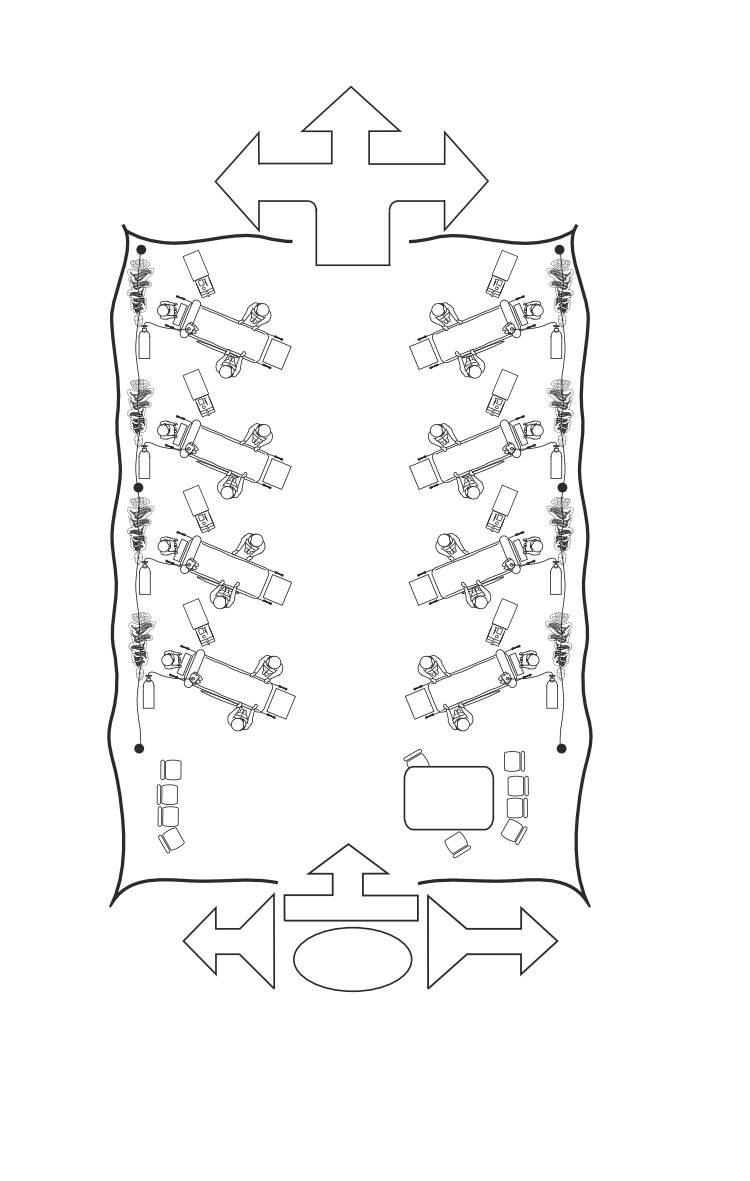
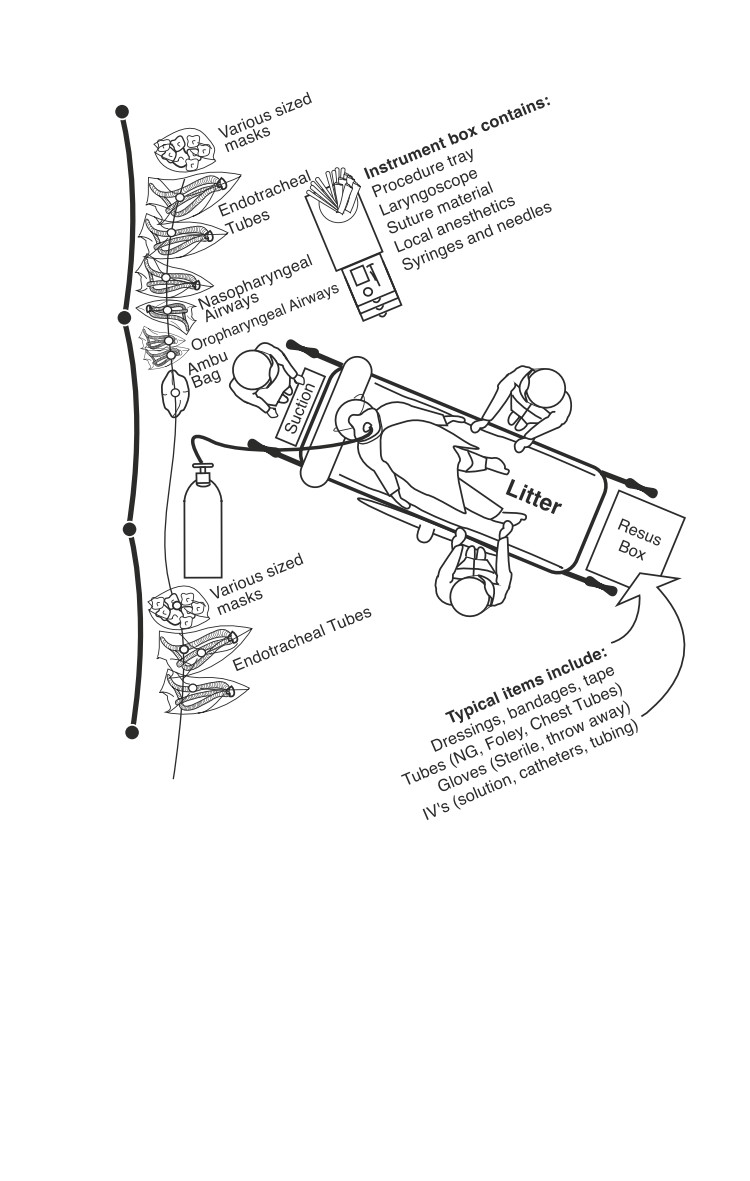
◊ Availability of equipment needed for ATLS style
resuscitation (Fig. 3-1 a,b).
ο
Staffing.
♦ Team leader: a surgeon serves as the surgical triage officer.
◊ Responsible for determining priority for operative
interventions.
◊ Needs to identify patients that require early evacuation.
◊ If a surgeon is unavailable, may be a physician who main-
tains close communication with the operating surgeons.
♦ Administrative person. Responsible for recording flow
of patients through unit.
3.13
Emergency War Surgery
OR
Holding
Ward
X-ray
ADMIN
Emergent Triage
Expectant
Non-Emergent
Triage Area
Fig. 3-1a. Triage.
3.14
Triage
O2
line
Fig. 3-1b. Resuscitation Station.
♦ Resuscitation team. A physician, nurse, and medical
technician, ideally.
◊ Each individual treatment team will coordinate
movement of its patient via the team leader.
ο Operation.
♦ Manpower team delivers patient.
3.15
Emergency War Surgery
♦ Team Leader retriages patient and assigns resuscitation
team to patient.
♦ Resuscitation team treats patient and determines required
disposition (surgery, ICU, ward, air evacuation).
♦ Resuscitation team communicates to Team Leader the
recommended disposition.
♦ Team Leader coordinates movement of patient to next stop.
♦ Administrative person records disposition.
Nonemergent treatment area.
An empty ward, a cleared out supply area, or other similar
space can be utilized. Appropriate medical and surgical
supplies should be stockpiled and easily identifiable. A
team consisting of a physician and several nurses and
medical technicians can form the nucleus of the treatment
team. Lacerations can be sutured, closed fractures splinted,
IVs placed, and radiographs taken. The team leader should
be alert to changing vital signs, mental status changes, and
any failure to respond to appropriate treatment measures.
Any evidence of deterioration should prompt a retriage
decision and a possible transfer to the emergent treatment
area.
Expectant area.
Ideally, expectant casualties should be kept in an area away
from all other treatment areas. The team leader can be anyone
capable of giving parenteral pain medications. The patient
should be kept comfortable. After all other patients have
been treated, a retriage of these patients should be done
and treatment instituted if appropriate.
Additional Triage Operation Tips
Diversion of casualties to another facility should be
considered. These options (sister service, local national
assistance, or local NATO assets) should be established prior
to the mass casualty event.
As the casualties finally clear the OR suites, the pace will
slow for the surgeons. ICU and ward care will supplant
operative procedures. Casualties initially undertriaged
(~10%) will be discovered and will require care. The
recovery room and ICUs will become crowded, nursing
3.16
Triage
shifts will have to be extended, and fatigue will rapidly
become a hospital-wide factor.
Numerous authors have stated that after the first 24 hours
of a mass casualty ordeal, the activities of the care
providers must be decreased by 50%, allowing for recovery
and rest for the participants, and a new rotation must be
established to sustain a modified but continuous effort.
Once the press is over, personnel must be encouraged to
rest rather than to socialize. Rest must be enforced because
the entire scenario may recur at any time.
Prior to an actual mass casualty situation, all deployable
units should exercise a variety of triage scenarios to ensure
smooth patient flow and identification. ”Driving” litters
without running into things can be difficult unless
practiced! These scenarios should evaluate personnel,
supplies, and equipment.
Conclusion
Small, highly mobile units, either Special Operations or
conventional forces, are currently performing military
operations around the globe. These units are usually
supported by highly mobile, small footprint surgical elements
that have limited diagnostic, operative, holding, and resupply
capability. Evacuation may entail an extremely long transport
from point of wounding to the forward surgery team, then
another long transport directly to a Level IV/V. Air
superiority may be in question, especially the use of
helicopters for initial patient evacuation. In these situations
the tactical, logistic, and physiologic integration of triage
concepts becomes of paramount importance and needs to be
considered and extensively discussed prior to arrival of the
first casualty.
3.17
Chapter 4
Aeromedical Evacuation
Introduction
Evacuation of injured personnel using aircraft, fixed or rotary
wing, has revolutionized the rapid transport of casualties from
areas where there is either inadequate or no care available to
medical treatment facilities (MTFs) where essential and/or
definitive care can be rendered. While an aircraft can decrease
transport time, the aeromedical environment creates unique
stresses on the injured patient. The following are terms that
describe evacuation of patients using aircraft.
Casualty evacuation (CASEVAC): The movement of a
casualty from the point of injury to medical treatment by
nonmedical personnel. Casualties transported under these
circumstances do not receive en route medical care; if the
casualty’s medical condition deteriorates during transport,
an adverse impact on the casualty’s prognosis and long-term
disability may result. Traditionally, this situation involves a
helicopter mission returning from the battlefield.
Medical evacuation (MEDEVAC): The timely, efficient
movement and en route care provided by medical personnel
to the wounded being evacuated from the battlefield to MTFs,
using medically equipped vehicles or aircraft. Examples
include civilian aeromedical helicopter services and Army
air ambulances. This term also covers the transfer of patients
from the battlefield to an MTF or from one MTF to another
by medical personnel, such as from a ship to shore.
Aeromedical evacuation (AE): Providing USAF fixed-wing
intratheater (Tactical Evacuation [TACEVAC]: from the
combat zone to points outside the combat zone, and between
points within the communications zone) and intertheater
(Strategic Evacuation [STRATEVAC]: from out of the theater
4.1
Emergency War Surgery
of operations to a main support area) movement of sick or
injured personnel, with enroute care provided by AE
crewmembers and critical care air transport teams (CCATTs),
to locations offering appropriate levels of medical care.
Enroute care: Maintenance of treatment initiated prior to
evacuation and sustainment of the patient’s medical condition
during evacuation.
Medical Considerations for Patients Entering the Medical
Evacuation System
Medical Considerations/Requirements
Medical evacuation request includes requirement for
surgical equipment and/or providers.
Patient is sufficiently stabilized for the anticipated mode
and duration of travel.
Patient’s airway and breathing is adequate for
movement.
Patient’s IV lines, drainage devices, and tubes are fully
secured and patent.
Patient at high risk for barotrauma should be considered
for prophylactic chest tube placement before prolonged
aeromedical evacuation.
Heimlich valves on chest tubes are functioning.
Foley catheters and nasogastric (NG) tubes are placed
and allowed to drain.
Patient is securely covered with both a woolen and
aluminized blanket for air transport, cold environment,
or postoperative hypothermia.
3 litter straps are used to secure the patient to the litter.
Personal effects and all medical records accompany the
patient.
The evacuation of a patient is initiated by the surgeon
according to established procedures. The support patient admin-
istration personnel normally provide the administrative
details and coordination required to accomplish the
evacuation. Due to differences in the type of evacuation assets
used and their effect on the patient’s medical condition (such
4.2
Aeromedical Evacuation
as flying in the pressurized cabin of an aircraft), patients
entering the USAF AE system must also be validated for
evacuation by the supporting flight surgeon.
For patients evacuated from Level II MTFs or forward surgical
teams (FST), the brigade surgeon (or designee) determines the
evacuation precedence for all patients requiring evacuation
from that facility. This is done in consultation with the
forward surgical team’s chief surgeon and/or senior nurse.
When a patient is readied for evacuation from the forward
surgical team by USAF assets, the supporting patient move-
ment requirements center (PMRC) should be established at
the earliest possible time. This allows the PMRC sufficient
time to coordinate airlift and patient movement items
requirements.
Implications of Aviation Environment
General Considerations Prior to Transport.
ο
Due to altitude effects, limited mobility, decreased staffing
enroute, and unpredictable evacuation times, the referring
physician should tailor vital signs (VS) monitoring
requirements, and frequency of wound and neurovascular
checks.
ο
Some therapies that might not be used in a fixed MTF are
appropriate for AE.
♦ For example, patients with significant medical or
surgical conditions should have Foley catheters, NG
tubes, provisions for IV pain medications, extended
duration IV antibiotics.
ο
Consider liberal use of fasciotomies/escharotomies.
ο
Consider securing airway with prophylactic endotracheal
(ETT) tube.
ο
Wounds dressed for delayed primary closure. Unless
directed otherwise, AE crew should not routinely re-dress
wounds. If a patient develops fever or sepsis enroute,
wounds must be inspected.
ο
Casts must be bivalved. If the cast is over a surgical wound
site, “window” the cast to allow for tissue expansion and
emergency access. Document neurovascular checks prior
to and frequently during flight.
4.3
Emergency War Surgery
Decreased Barometric Pressure.
ο The diameter of a gas bubble in liquid doubles at 5,000 ft
above sea level, doubles again at 8,000 ft, and doubles again
at 18,000 ft. Cabin pressures in most military aircraft are
maintained at altitudes between 8,000 and 10,000 feet. If
an aircraft has the capability, the cabin altitude can be
maintained at lower levels, with increased flight time and
fuel.
Consider a Cabin Altitude Restriction (CAR) for the
following:
ο Penetrating eye injuries with intraocular air.
ο Free air in any body cavity.
ο Severe pulmonary disease.
ο Decompression sickness and arterial gas embolism require
CAR at origination field altitude. Destination altitude
should not be higher than origination altitude. Transport
on 100% oxygen (by aviator’s mask if available).
Pneumothorax: Chest tube required, even for small,
asymptomatic lesions. A Heimlich valve or collection system
must be in place prior to patient transfer to the flight line.
Air Splints: Should not be used if alternate devices are
available. Because air expands at altitude, air splints require
close observation and adjustments during flight.
Ostomy Patients: Vent collection bags to avoid excess gas
dislodging the bag from the stoma wafer. Use a straight pin
to put two holes in the bag above the wafer ring.
Decreased Partial Pressure of Oxygen: Ambient partial
pressure of oxygen decreases with increasing altitude. At sea
level, a healthy person has an oxygen saturation of 98%-100 %.
At a cabin altitude of 8,000 ft, this drops to 90%, which corrects
to 98%-100% with 2 L/min of oxygen.
Neurosurgical Patients: Hypoxia may worsen neurological
injury. Adjust ventilator settings to meet increased oxygen
demands at altitude.
Gravitational Stress: Traumatic brain injury patients can
experience transient marked increases in intracranial pressure
during takeoff or landing. Patient positioning onboard the
aircraft helps minimize this risk (head forward on takeoff,
head rearward on landing).
4.4
Aeromedical Evacuation
Thermal Stress: Plan for cabin temperature changes from 15°C
(59°F) to 25°C (77°F) on winter missions, and from 20°C (68°F)
to 35°C (95°F) on summer missions.
Noise: Exposure to noise can produce problems with
communication and patient evaluation (auscultation is
impossible — use noninvasive blood pressure [NIBP] and
an arterial line). Provide hearing protection. Audible medical
equipment alarms are useless.
ο Decreased Humidity: Airplanes have very low cabin
humidity at altitude. Evaporative losses will increase;
therefore, patients will require additional fluids, especially
those with large burns, and those at risk for mucous
plugging.
Patient movement in nuclear, biological and chemical (NBC)
environments.
ο Nuclear and chemical casualties must be externally
decontaminated, and time allowed for off-gassing of
residual chemical agent.
ο Movement of biological casualties varies by the nature of
the agent, its mechanism of transmission, and the period
of communicability during the course of illness.
ο Any NBC AE movement may be delayed due to the
following:
♦ Aircraft decontamination time.
♦ Availability of noncontaminated aircrew.
♦ Cohorting of similarly exposed patients.
♦ Quarantinable diseases (eg, plague and smallpox)
require special approval (command and diplomatic)
before AE.
Medical Evacuation Precedences
Depending on the Service and the type of evacuation assets
used, the timeframes for affecting evacuation differ. Refer to
Table 4-1.
4.5
Emergency War Surgery
Table 4-1. Evacuation Precedences.
Army, Navy,
Movement
Marine
Precedence
(MEDEVAC) Air Force (AE) Description
Urgent
Within 2 h.
ASAP
Immediate AE to save life,
limb, or eyesight.
Priority
Within 4 h.
Within 24 h.
Prompt medical care not
available locally.
Medical condition could
deteriorate and patient
cannot wait for routine
AE.
Routine
Within 24 h.
Within 72 h or
Condition is not expected
next available
to deteriorate significantly
mission.
while awaiting flight.
Concept of Operations. The USAF AE system.
ο Command and control (C2) of casualty movement by air
transport.
ο AE personnel and equipment for inflight supportive
patient care and flight line support operations.
ο Organic communication network for medical facilities and
airlift C2 agencies.
♦ Aeromedical Evacuation Liaison Team (AELT): 4-6
person communication team, usually collocated with
an MTF, to coordinate requests with the AE system.
ο Facilities and personnel at airheads for the administrative
processing, staging, and limited medical care of casualties
entering or transiting the AE system. Patients are normally
held only for 2-6 hours prior to evacuation.
♦ USAF units provide aeromedical staging support
through incrementally sized elements ranging in size/
capability from forward deployed special operations
forces (SOF) to 100-bed facilities.
Reporting a Patient for AE. Originating physician consults
with local FS to determine the en route care plan and timing
of evacuation.
4.6