MANUAL OF NATO SAFETY PRINCIPLES FOR THE STORAGE OF MILITARY AMMUNITION AND EXPLOSIVES (May 2010) - page 4

AASTP-1
(Edition 1)
c)
Process and Storage Building
1)
Building materials are generally ineffective in affording EM protection to
EED. Structures provide no protection at all in transmission loss from
frequencies below 1 MHz but may provide some protection in the form of
reflection loss if the polarization and angle of incidence of the EM energy
happens to be favourable, although this is rarely the case. Also, bars in
reinforced concrete do not provide any significant degree of protection.
2)
For all practical purposes, it should be assumed that the field strength which
exists inside a building is as high as it would be if the building did not exist.
However, if the protection level across the frequency spectrum for a specific
building has been determined (screened room) then this level may be used to
determine a safe distance from sources of electromagnetic radiation although it
should be borne in mind that, if doors or windows are opened, the screening
integrity may be adversely affected.
3)
EED and systems containing EED should be stored/processed in authorized
depot and unit process and storage areas. These areas should be sited taking
into account the following:
-
The susceptibility of the EED, store or weapon system during
processing or storage as appropriate.
-
The radiated power of transmitters in the area related to the
susceptibility radius of the most sensitive EED present.
1.6.0.5.
Assessment of Hazard
a)
It will
be evident from the previous paragraphs that degrees of risk of unintended
operation arise in any situation in which EED are introduced into close proximity with
RF fields. The degree of risk ranges from negligible to acute in terms of both the
susceptibility of the EED and the power output of the transmitters creating the RF field.
b)
There are no simple rules or procedures for assessing risk. An Electromagnetic Radiation
Hazard Assessment should be conducted by a trained and competent person to ensure the
latest information and guidance found in AECTP 500 (category 508) are applied.
-I-6-3-
Change 3

AASTP-1
(Edition 1)
1.6.0.6.
System Susceptibility
a)
Each situation requires individual examination which must consider the:
1)
Susceptibility of EED whether:
-
Installed.
-
Exposed.
-
Packaged.
-
Specifically protected.
2)
Characteristics of transmitters.
3)
Distance between the EED and radiating systems such as radios etc.
b)
For systems with an unknown susceptibility pending a detailed inspection, ie structural
or packaging, the restrictions below on RF transmissions in the immediate vicinity
should be imposed:
-
No radio to be allowed within 2 metres.
-
No radio to be allowed within 10 metres unless authorised as being
intrinsically safe.
-
No radio with an ERP greater than 5 watts to be allowed within 50 m.
-I-6-4-
Change 3

AASTP-1
(Edition 1)
CHAPTER 7 - FIRE FIGHTING PRINCIPLES AND PROCEDURES
Section I - General
1.7.1.1.
Introduction
The aim of these principles is to establish measures and procedures to ensure a minimum
practicable risk in fighting fires involving ammunition and explosives at explosives areas.
These identification measures are based on the classification of fires into four fire divisions
according to the hazard they present. This Chapter also establishes minimum guidelines for the
development of emergency plans, including safety, security, and environmental protection, which have
to be coordinated with local authorities.
Firefighting procedures, training of firefighting personnel, the use and maintenance of
firefighting equipment and vehicles, the provision of water supply and alarm systems, the first aid
measures, and other measures required in firefighting are outside the scope of this Chapter and
shall be the responsibility of the national authority.
The ammunition hazard symbols and supplemental symbols including chemical agent
symbols (see Figure F.2 below) are for firefighting situations only and are not necessarily
applicable to normal operating conditions.
-I-7-1-
Change 3

AASTP-1
(Edition 1)
Section II - Fire Divisions
1.7.2.1.
Ammunition and Explosives Hazard Divisions involved:
1.1
Mass explosion hazard
1.2
Projection hazard but not a mass explosion hazard
1.3
Fire hazard and either a minor blast hazard or minor projection hazard or both,
but a mass explosion hazard
1.4
No significant hazard
1.5
Very insensitive subsatances which have a mass explosion hazard
1.6
Extremely insensitive articles which do not have a mass explosion hazard
1.7.2.2.
Fire Divisions Involved:
Fire division 1 indicates the greatest hazard. The hazard decreases with ascending fire
division numbers as follows:
Hazard Division
Fire Division
Hazard involved
1.1; 1.5
1
Mass explosion
1.2; 1.6
2
Explosion with projection
1.3
3
Mass fire, or fire with minor blast or projections
1.4
4
No significant hazard
The fire divisions are synonymous with the Storage Hazard Divisions
1.1 through
1.4 ammunition and explosives. But in this case, as described in Part I, Chapter 3, the HD 1.5
belongs to Fire Division 1 (mass explosion) and HD 1.6 belongs to Fire Division 2 (non mass
explosion). Fire Division 1 indicates the greatest hazard. The hazard decreases with ascending fire
division numbers as follows:
1.7.2.3.
Fire Division Symbols:
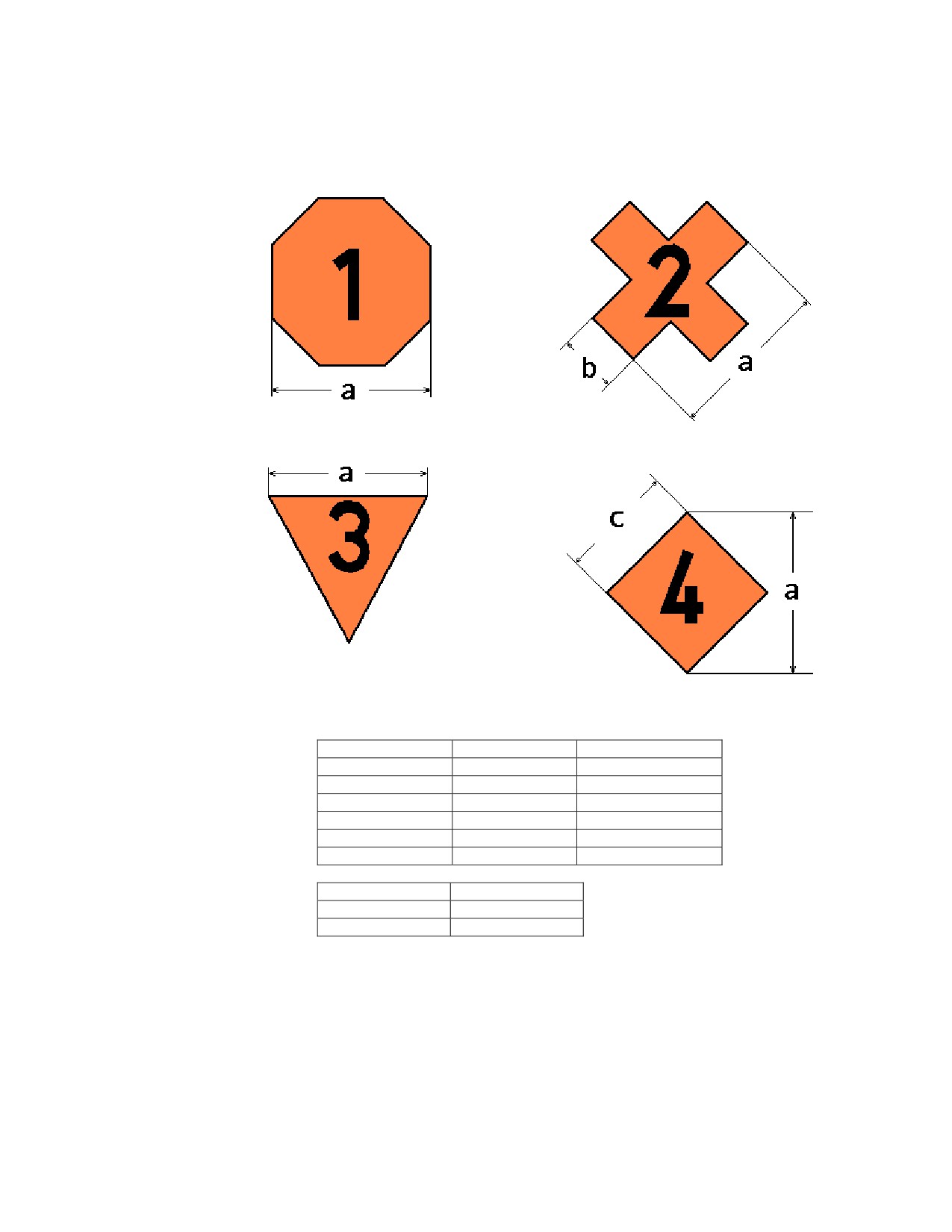
Each of the four fire divisions is indicated by distinctive symbols (see Figure F.1) in
order to be recognized by fire-fighting personnel approaching a scene of fire. To assist with
identifying at long range, the symbols differ in shape as follows:
-I-7-2-
Change 3

AASTP-1
(Edition 1)
Shape F
ire Division
Octagon
1
Cross
2
Inverted triangle
3
Diamond
4
-
The colour of all four symbols is orange in accordance with the colour on UN and IMCO
labels for Class 1 (Explosives).
-
The use of the specified fire division numbers is left to the discretion of national authorities.
When numbers are used they are painted in black.
1.7.2.3.
Supplementary Symbols:
a)
Due to the peculiarity of hazardous substances in certain types of ammunition
(Compatibility Groups G,H,J and L), the storage of this ammunition requires
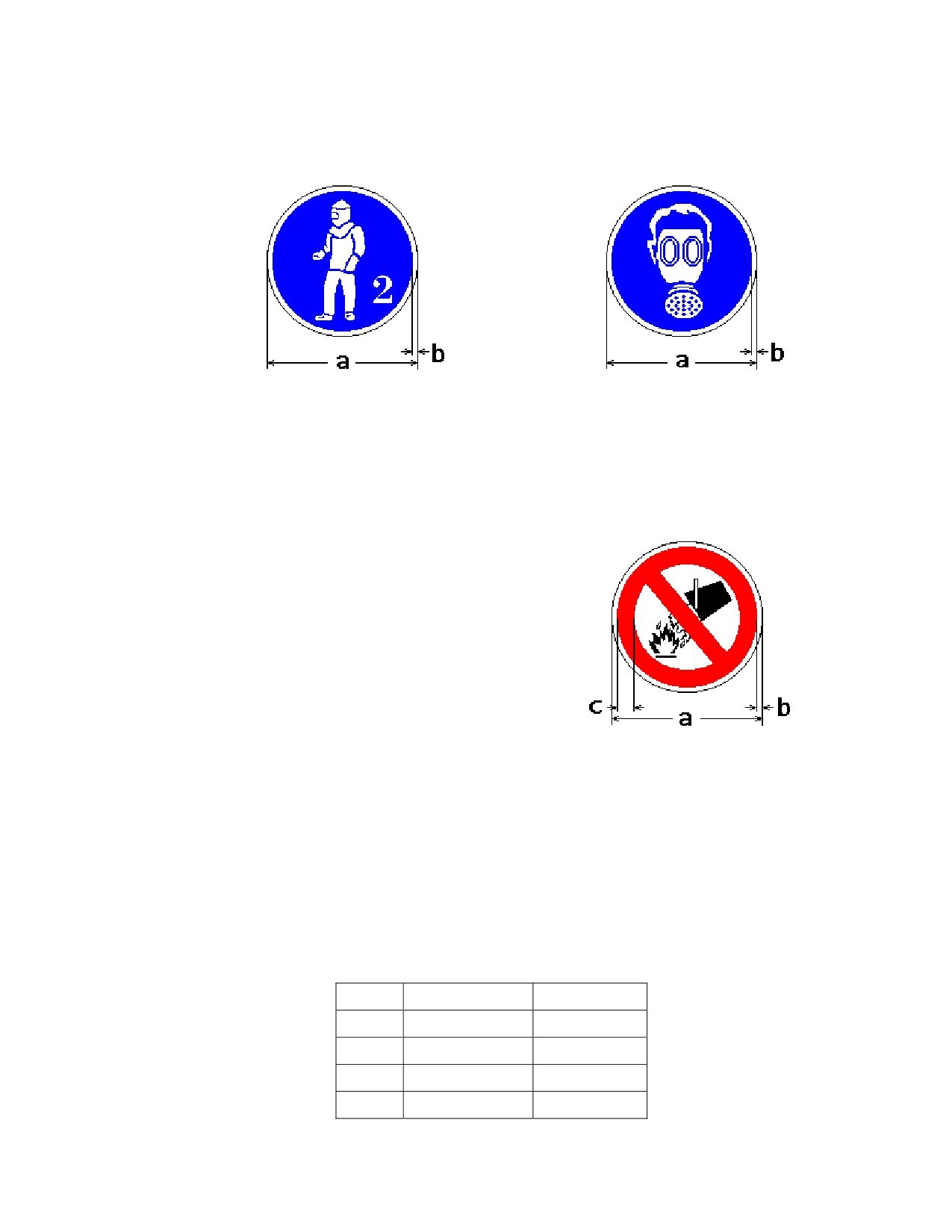
supplementary symbols. Those supplementary “Chemical Hazards Symbols“ are used to
indicate the precautions to be taken against the additional hazards proceeding from the
chemical agents of that ammunition (see Figure F.2). The Chemical Hazard Symbols
indicate the following precautions:
b)
wear full protective suit,
c)
wear respirator facepiece,
d)
apply no water.
e)
All three Chemical Hazard Symbols are circular in shape. They correspond to the
ISO 3864 "Safety colours and safety signs". The symbols, their meanings and their sizes
are shown in Figure F.2.
f)
The Apply No Water(symbol No. 3 of Figure F.2) may be placed together with one of the
other if required.
g)
The indicating the requirement to wear full protective clothing should also indicate the
type of full protective clothing to be worn, as the different kinds of chemical agents
demand different protective measures. The type of full protective clothing to be worn at a
chemical ammunition storage site and the method by which this is indicated are the
responsibility of the nation concerned.
h)
The chemical agents mostly used in ammunition, the compatibility groups of that
ammunition and the required in storage are specified in Table T.1
-I-7-3-
Change 3

AASTP-1
(Edition 1)
1.7.2.4.
Protective Clothing:
The following sets of full protective clothing are recommended:
- Protective clothing against casualty agents, consisting of protective respirator
facepiece, impermeable suit, hood and boots, protective footwear and splash suit.
- Protective clothing against harassing agents, consisting of protective respirator
facepiece.
- Protective clothing against white phosphorus (WP) smoke, consisting of fire-resistant
gloves, chemical safety goggles and respirator facepiece.
The different sets of full protective clothing to be worn may be indicated by:
- a white number, corresponding to the set-no., on the blue background of the symbol,
or
- a white rectangular plaque placed below the symbol listing in black letters the
components of protective clothing to be worn.
-I-7-4-
Change 3

AASTP-1
(Edition 1)
Section III - Firefighting Principles
1.7.3.1.
Fire Prevention (preventive fire protection)
Preventive fire protection comprises all measures suited to prevent the development and
spreading of a fire. These are to develop a plan based on an estimate of the hazards and risk.. This
analysis should comprise:
- employees,
- infrastructure and stockpile,
- exposed sites,
- public and the local environment.
The following measures are to addressed in all cases:
1.7.3.2
Constructional Fire Prevention Measures
The following basic criteria apply:
-
Buildings designed for the processing or storage of ammunition shall be built of non-
combustible or at least fire-resistant., (according to national standards) construction
material. Supporting and surrounding structural elements shall resist to fire for at least
30 minutes in accordance with national standards.
-
Chimneys in an explosives area must be provided with a trap to prevent flying sparks.
-
Heating systems must not have uncovered glowing parts. The temperatures of
exposed heating surfaces and lines must not exceed 120° C.
-
An efficient fire alarm system shall be installed and maintained.
-
Ammunition sites are to be equipped with an adequate fire fighting water supply
according to national standards. Fire fighting water supply points shall not be sited
closer than 25m to any process or storage building. They are to be positioned beside
-not in - roads or traffic-ways and be provided with an area of clearance, such that
vehicles will not cause an obstruction. Where alternative water supply points are not
available, protection should be provided for the fire fighting vehicle and it's crew (e.
g. barriers or traverses).
-
Type, quantity and locations of fire fighting equipment are determined according to
facility-related assessments and shall be adapted to the local conditions during annual
fire fighting demonstrations.
-I-7-5-
Change 3

AASTP-1
(Edition 1)
- Fire prevention also includes lightning protection.
1.7.3.3
Organizational Fire Prevention Measures:
These are to be organized according to national regulations within the scope of general
fire protection taking into account the following criteria:
- order and cleanness as well as strict observance of safety precautions count among the
most effective fire prevention measures, equal to prohibition of smoking, fire and
naked light,
- handling of flammable substances,
- prevention of additional fire loads such as stacking material, packaging material and
the like,
- fire hazards of machines, equipment and tools during ammunition operations or in the
case of overload of electrical lines,
- inflammable undergrowth, laying out fire lanes,
- clear zones, trimming of branches and the like,
- regular instruction of the personnel about actions to be taken in case of fire and in the
use of first aid fire fighting equipment,
- preparation of an emergency planning2 and an emergency map3:
2 emergency planning: see section V
3 emergency map: a map containing the essential details of a facility or an installation from the
point of view of fire protection.
-I-7-6-
Change 3

AASTP-1
(Edition 1)
Section IV - Fire- Fighting Procedures
1.7.4.1.
General
a)
According to the stage of the fire, ammunition fires are divided into:
b)
The following regulations deal with the special hazards connected with ammunition fires.
- developing ammunition fires and
- established ammunition fires.
1) Developing ammunition fires are fires in the vicinity of ammunition, but which do not
immediately hazard it. The fire brigade should be notified as soon as possible if a fire is
developing in the vicinity of ammunition. Evacuate all non-essential personnel and fight
the fire for as long as it is safe to do so, in accordance with the pre-arranged plan. On
arrival of the fire brigade, the competent person will advise them of the state of the fire.
Provided that the explosives are still not hazarded, they will take immediate action to
fight it. A close watch must be kept upon the fire, so that evacuation of the remaining
personnel can be ordered immediately if it appears that the explosives are about to
become hazarded.
2) Established ammunition fires are those which are hazarding or about to hazard the
explosives.
The term 'established ammunition fire' will be applied to all fires which cannot be
positively identified as 'developing ammunition fires'.
Firefighters of ammunition and explosives fires shall have a thorough knowledge of the
specific reactions of ammunition and explosives exposed to the heat or to the fire itself.
The firefighting forces and other essential personnel shall be briefed before approaching
the scene of the fire. They shall be informed of the known hazards and conditions
existing at the scene of the fire before proceeding to the location of the fire.
Fire involving ammunition and explosives shall be fought according to the hazard
classification, fire division, the stage of the fire, and the procedures specified by the
Defense Component concerned. Special firefighting instructions addressing ammunition
hazards shall be developed according to the needs of the Defense Components.
-I-7-7-
Change 3

AASTP-1
(Edition 1)
All fires starting in the vicinity of ammunition or explosives shall be reported and shall be
fought immediately with all available means and without awaiting specific instructions.
However, if the fire involves explosive material or is supplying heat to it, or if the fire is
so large that it cannot be extinguished with the equipment at hand, the personnel involved
shall evacuate and seek safety. Before fighting ammunition fires in an unknown
situation, the fire brigade has to analyze the situation.
The presence of buildings, earth barricades etc. to protect fire-fighting personnel during
operations is a crucial factor for effective fighting of fires involving ammunition or
explosives. The fire-fighting personnel, their vehicles and equipment must not be
endangered unnecessarily.
1.7.4.2.
Detailed Fire Fighting Procedures
Fires of ammunition and explosives are fought according to their classification in fire
divisions and the stage of the fire.
(a)
Fire Division 1
1.
Fully developed fire: these must not be fought. The fire alarm will be sounded
and all personnel must evacuate immediately to a safe distance and take cover,
in accordance with the pre-arranged plan. The fire brigade will be called from
the vicinity of this point, giving its location and emphasizing that the fire is
fully developed. If the brigade has already been summoned (e. g. from the
incident site during the developing stage), a further call must be made to warn
the fire brigade the fire is now fully developed. The brigade will rendezvous at
the evacuation point to be briefed by the competent person.
2.
Once the mass explosion has taken place, fire fighters should assess the
situation and extinguish any secondary fires, concentrating upon those which
hazard other explosives stores, as advised by the Control Officer, who should
be available by this time.
-I-7-8-
Change 3

AASTP-1
(Edition 1)
(b)
Fire Division 2
1.
Established ammunition fire: In the case of earth covered or heavy walled
ammunition storage magazines the effects of the exploding ammunition will be
contained within the magazine except possibly for those in the direction of the
headwall or doors. Therefore external fires can be fought in close proximity of
the magazines except in the direction of the head-wall or doors. An established
fire must not be fought inside such a magazine nor external fires in front of it
and no firefighting at all in case of light structure magazines. In all cases the
fire alarm will be sounded, all personnel must evacuate immediately to a safe
distance and take cover, in accordance with the pre-arranged that may take
account of the above. The fire brigade is to be withdrawn behind the front wall
line of the magazine or completely from the vicinity of this point, giving its
location and emphasizing that the fire is fully developed. If the brigade has
already been summoned (e. g. from the incident site during the developing
stage), a further call must be made to warn the fire brigade that the fire is now
fully developed. The brigade will rendezvous at the evacuation point to be
briefed by the competent person.
2.
Once the explosives have become involved, lobbed and self propelled items
can be expected, some of which may function on impact. Secondary fires may
be started. Where these hazard other explosives, attempts should be made to
extinguish them without exposing crews to undue risk.
(c)
Fire Division 3
1.
Fully developed fire: these must not be fought. The fire alarm will be sounded
and all personnel will evacuate immediately to a safe distance and take cover
in accordance with the pre-arranged plan. The fire brigade is to be called from
the vicinity of this point, giving its' location and emphasizing that the fire is
fully developed. If the brigade has already been summoned (e. g. from the
incident site during the developing stage), a further call must be made to warn
the fire brigade that the fire is now fully developed. The brigade will
rendezvous at the evacuation point to be briefed by the competent person.
2.
Once the explosives have become involved a particularly intense fire can be
expected, with high levels of radiant heat, probably with flame jets from
-I-7-9-
Change 3

AASTP-1
(Edition 1)
openings in the building. Packages may burst, some violently, but there will be
no explosions. Secondary fires may be started by radiation or projected fire
brands. Once the main fire is seen to be reducing to a level that enables these
to be fought, action should be taken to extinguish them, keeping crews away
from openings in the building. Visors and gloves are advised.
(d)
Fire Division 4
1
Fires involving items of Fire Division 4 may be fought as dictated by the
situation.
2
After an extended period of time the ammunition may explode sporadically.
For protection against fragments and missiles the fire-fighting forces should
not approach the scene of fire any closer than necessity dictates, certainly not
any closer than 25 m. When possible the fire should be fought from a protected
location.
(e)
Ammunition requiring Supplementary Symbols
Ammunition containing explosives and additional hazardous agents
(see
Figure F.2) requires special attention and precautions in fire-fighting. Such
ammunition belongs to different fire divisions depending on the kind and
quantity of explosives contained in the ammunition. Such fires are fought in
accordance with the fire division(s) involved taking into account the
precautions indicated by the supplementary l. The issue of the corresponding
special fire-fighting regulations is left to the discretion of the national
authorities.
(f)
Ammunition Containing Depleted Uranium:
1.
Combustion of DU
i)
The combustion properties of DU metal must be taken into account
when dealing with a fire involving DU ammunition.
(ii)
The colour of smoke produced by burning DU may be yellow but the
absence of colour is not a reliable indication that DU metal is not
involved; therefore it is prudent to assume from the outset that DU is
burning and that DU oxide smoke is being produced and to apply the
appropriate precautions, as follows.
-I-7-10-
Change 3

AASTP-1
(Edition 1)
2.
Precautions
Once uranium metal has ignited and a vigorous self-sustaining oxidation
reaction is started, the application of small quantities of conventional
extinguishing agents is likely to be ineffective and may even add to the spread
of the fire by dispersing the burning uranium. For example, insufficient water
to cool the fire would react with hot uranium metal to form hydrogen. For a
small fire involving uranium and no explosives, the most effective
extinguishing agent is one of the inert powdered smothering agents (e. g.
Pyromet) but when explosives are present the closeness of approach necessary
to deliver such an extinguishing agent to the seat of the fire would be
hazardous to the firefighters. In particular, propellants, the most likely
explosives to be closely associated with the DU, may produce intense radiant
heat, firebrands and some ejected fragments. The firebrands may be only small
glowing of packaging materials but it is possible that they could be fiery
fragments of burning propellant
3.
Fire Fighting Methods
i)
In all cases, treat as a radiological risk
- i. e. wear respirator
facepiece, ensure all parts of the body are covered and fight fire from
up-wind direction. Put down smoke with spray jet. Prevent water from
flowing-off, if possible (dikes).
(ii)
DU without an explosive component. Use copious water at optimum
jet/spray range. Do not use halons. No projections are likely, other
than the minor spallations associated with metal fires hit by water.
(iii)
DU with an explosive component. Fight in accordance with the fire
division concerned.
-I-7-11-
Change 3

AASTP-1
(Edition 1)
Section V - Emergency Planning
1.7.5.1.
Standard Operating Procedures
Installations or responsible activities shall develop standard operating procedures (SOPs)
or plans designed to provide safety, security and environmental protection. Plans shall be
coordinated with the applicable national, regional and local emergency response authorities (e.g.
law enforcement, fire departments and hospitals etc.) and any established Local Emergency
Planning Committees (LEPC).
At a minimum, those SOPs or plans shall include the following:
-
Specific sections and guidance that address emergency preparedness, contingency
planning and security. For security, those SOPs or plans shall limit access to trained and
authorized personnel.
-
Procedures that minimize the possibility of an unpermitted or uncontrolled detonation,
release, discharge or migration of military munitions or explosives out of any storage unit
when such release, discharge or migration may endanger human health or the
environment.
-
Provisions for prompt notification to emergency response and environmental agencies
and the potentially affected public for an actual or potential detonation or uncontrolled
release, discharge or migration (that may endanger human health or the environment).
To produce the necessary SOP's is in the responsibility of national authorities.
The commanding leaders of the installations are responsible for the training of their
personnel and the coordination with the LEPC. They also have to ensure that all SOP's and
Emergency Plans belonging to the special installation are reachable to external security and
emergency authorities.
Competent persons belonging to the depot or to an external fire brigade are to be
regularly trained to be available to advise the fire chief and external fire fighters.
Emergency withdrawal distances for nonessential personnel are intended for application
in emergency situations only and are not to be used for facility siting.
Emergency withdrawal distances depend on fire involvement and on whether or not the
hazard classification, fire division and quantity of explosives are known. The withdrawal distance
for essential personnel at accidents shall be determined by emergency authorities on site.
Emergency authorities shall determine who are essential personnel.
-I-7-12-
Change 3

AASTP-1
(Edition 1)
If a fire involves explosives or involvement is imminent, then the initial withdrawal distance
applied shall be at least the inhabited building distance while the appropriate emergency
withdrawal distance for nonessential personnel is being determined. When emergency authorities
determine that the fire is or may become uncontrollable and may result in deflagration and/or
detonation of nearby ammunition or explosive material, all nonessential personnel shall be
withdrawn to the appropriate emergency withdrawal distance listed in Table.T.2
-I-7-13-
Change 3

AASTP-1
(Edition 1)
Table T.1 Compatibility Gr oup an d C hemical Hazard Symbols
Required
for Storage of Chemical Ammunition and Substances.
Breath-
Compati-
Apply
Chemical Ammunition and
ing
bility
Full Protective Clothing
No
Substances
Appara-
Group
2
Water
tus
Set 1
Set 2
Set 3
1
2
3
4
5
6
7
Toxic Agents1
K
X
Tear Gas, O-Chlorobenzol
G
X
Smoke, Titanium Tetrachloride
G
X
(FM)
Smoke,
Sulpher
trioxide-
chlorosulphonic acid solution
G
X
(FS)
Smoke, Aluminum-zinc oxide-
G
X
X
hexachloroethane (HC)
White Phosphorous (WP)
H
X
White Phosphorous plasticized
H
X
(PWP)
Thermite or Thermate (TH)
G
X
X
Pyrotechnic Material (PT)
G
X
X
Calcium Phosphide
L
X
X
Signaling Smokes
G
X
Isobutyl methacrylate with oil
J
X
(IM)
Napalm (NP)
J
X
X
X
Triethylaluminim (TEA)(TPA)
L
X
X
Notes:
1 Toxic Agents without explosives components that normally would be assigned to Hazard Division 6.1
may be stored as compatibility group K.
2 See Chapter 2.
-I-7-14-
Change 3

AASTP-1
(Edition 1)
Table T.2 Emergency Withdrawal Distances for Nonessential Personnel.
HD
Unknown Quantity
Known Quantity
Unknown, located in facility,
truck
1250m
1250m
and or tractor trailer
Unknown, located in railcar
1500m
1500m
For transportation,
≤ 7500kg ˘ 870m;
7500<NEM≤16000 kg ˘ 1120m
Same as unknown
1.11 and 1.5
1.5 ˘
1100m
facility, truck trailer or
For facilities,
railcar as appropriate
≤7000kg ˘ 850m
7000 <NEM≤ 25000kg ˘ 1300m
>25000kg ˘ 1300m - 44,4 Q1/3
1.21 and 1.6
560m
560m
1.32
405m
6,4 Q1/3 with a 120m minimum.
1.4
100m
100m
Notes:
1 For HD 1.1 and HD 1.2 AE, if known, the maximum range fragments and debris will be thrown (including the
interaction effects of stacks of items, but excluding lugs, strongbacks, and/or nose and tail plates) may be used
to replace the distances given.
2 Emergency withdrawal distances do not consider the potential flight range of propulsion units.
-I-7-15-
Change 3
AASTP-1
(Edition 1)
Figure F.1 Fire Division Symbols
Fire Division 1
Fire Division 2
Fire Division 3
Fire Division 4
Sizes
large
small
[mm]
[mm]
a
600
300
b
200
100
c
~424
~212
Letters (height)
~315
~158
Letters (width)
~50
~25
Colours*
Background
orange
Numbers
black
* The specification of the colours is left to the discretion of the national authorities.
(Specification of signs and colours - except orange - is given in ISO 3864 "Safety colours and safety signs")
-I-7-16-
Change 3
AASTP-1
(Edition 1)
Figure F.2 Chemical Hazard Symbols
Symbol 1 Wear full protective clothing
Symbol 2 Wear breathing apparatus
Colours:*
Colours:*
Background is blue
Background is blue
Figure and rim are white
Figure, rim and number are white when
set-no. is indicated by number;
Figure and rim when used to indicate
set-no. by colour:
• Red for Set 1 Protective Clothing
• Yellow for Set 2 Protective Clothing
• White for Set 3 Protective Clothing
Symbol 3 Apply no water
Colours:*
Background is white
Circle and diagonal are red
Figure is black
* The specification of the colours is left to the discretion of the national authorities.
(Specification of signs and colours - except orange - is given in ISO 3864 "Safety colours and safety signs")
Sizes
Large
small
[mm]
[mm]
a
630
315
b
12
6
c
63
32
-I-7-17-
Change 3
AASTP-1
(Edition 1)
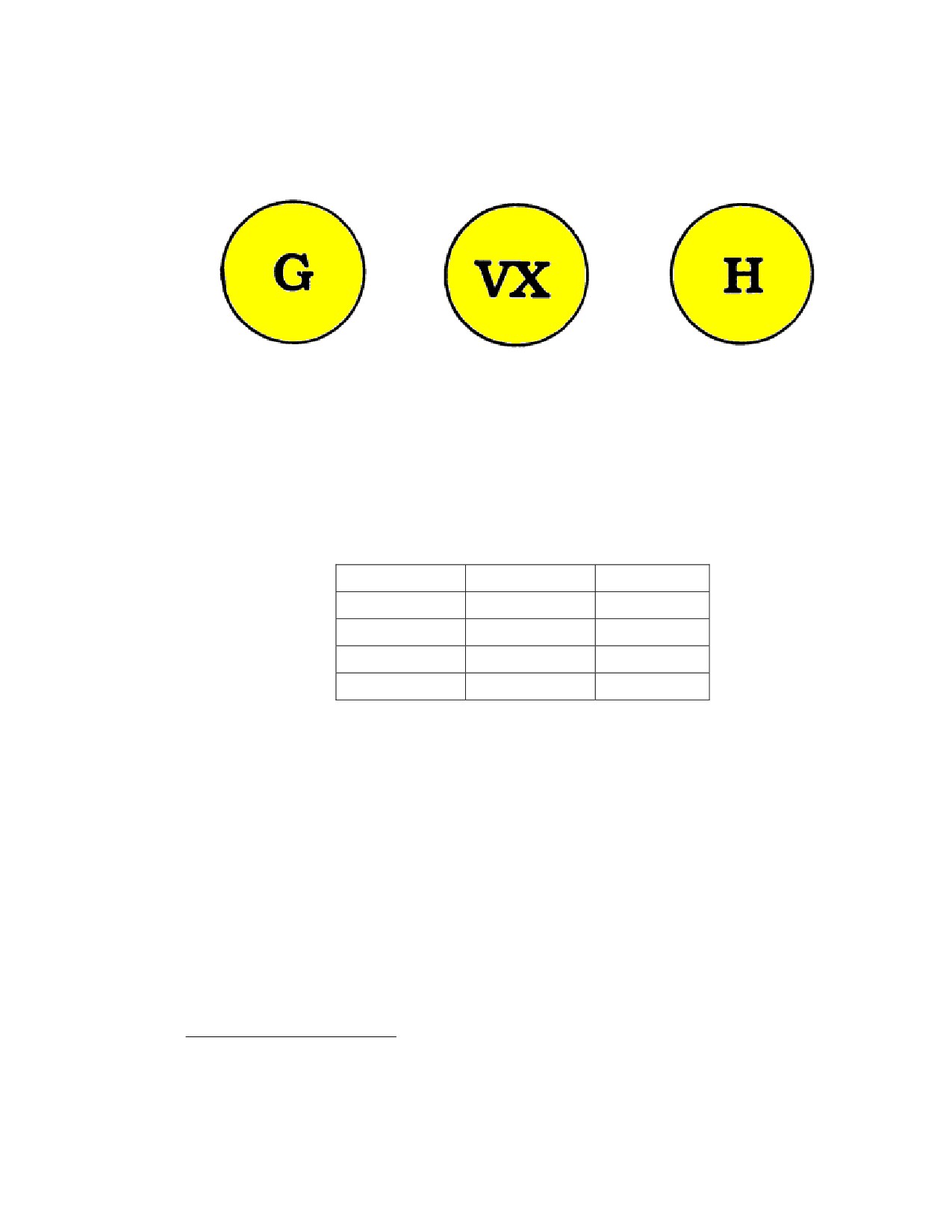
Figure F.3 Supplemental Chemical Hazard Symbols.4
G - Type Nerve Agents
VX Nerve Agents
H - Type Mustard Agents
Colours:*
Background: yellow
Letters: black
*The specification of the colours is left to the discretion of the national authorities.
(Specification of signs and colours - except orange - is given in ISO 3864 "Safety colours and safety signs")
large
small
[mm]
[mm]
Diameter
630
315
Letters (height)
315
158
Letters (width)
50
25
4 Given as an example; Nations may use additional symbols which may differ in size, form and colour.
-I-7-18-
Change 3

AASTP-1
(Edition 1)
CHAPTER 8 - REPORTS ON ACCIDENTAL EXPLOSIONS
1.8.0.1.
Information Required
In order that reports on damage resulting from accidental explosions be of value to the
"NATO Group of Experts on the Safety Aspects of Transportation and Storage of Military
Ammunition and Explosives (AC/326)" and useful in verifying the safety principles, the information
should include the following:
1)
Type and quantity of ammunition or explosives in the stack or building where the
accident occurred.
2)
NEQ and name of filling and weight of filled items.
3)
Method of packing of the ammunition or explosives where the initial accident occurred
and material of packages.
4)
Distances between the articles in the packages.
5)
Method of storing the ammunition or explosives where the initial accident occurred.
6)
Information as above for neighbouring storage places of ammunition and explosives
stating whether such neighbouring stacks were set off or otherwise affected.
7)
The thickness of walls and roofs if ammunition or explosives were stored in buildings
and whether there were windows through which fragments or debris got into the
buildings.
8)
Distances between buildings, or stacks, if buildings were not used.
9)
The presumed influence of barricades upon the protection of neighbouring buildings and
stacks.
-I-8-1-
Change 3

AASTP-1
(Edition 1)
10)
Fire-fighting measures (attempts to fight fire).
11)
The time between the first and last propagation from stack to stack.
12)
The general effect on inhabited buildings in the vicinity and their inhabitants.
13)
A map indicating the size and distribution of fragments and debris.
14)
A brief summary of the causes and the effects.
1.8.0.2.
Summary Report
A summary report is first required for translation and distribution by NATO. A full report
should be forwarded to NATO as soon as possible. This report would be available on loan to NATO-
countries in the language of the country of origin. A copy of the report should be forwarded to:
Armaments Directorate Secretary, Defense Investment Division, Rm J34 5 , NATO Headquarters,
B1110 Brussels.
-I-8-2-
Change 3

AASTP-1
(Edition 1)
CHAPTER 9 - DEPLETED URANIUM AMMUNITION
1.9.0.1.
Use of Depleted Uranium
Ammunition containing Depleted Uranium (DU) has been developed as an improved
armour piercing weapon, mainly for anti-tank warfare. A round of DU ammunition may consist of a
DU penetrator made of DU metal (or of a DU alloy) and a propellant charge which may be integral
with the penetrator or loaded into the gun separately. The use of DU in armour piercing ammunition
exploits the high density of the metal, which, when propelled at high velocity, results in the delivery
of sufficient kinetic energy to effect penetration. The penetration is accompanied by disintegration of
the projectile and a violent combustion of the fragments thus formed.
1.9.0.2.
Radioactivity
DU is mildly radioactive at a level that is low enough to permit handling and transportation
with simple precautionary measures. DU has a chemical toxicity at the same level as other heavy
metals such as Lead, allowing handling and transportation in authorized packaging without abnormal
risk. The mechanisms whereby radioactivity and toxicity might lead to harmful effects are if:
(1) Personnel are in close contact with DU over extended periods, or
(2) If DU is involved in a fire or explosion in which Uranium Oxides from the
ammunition could be dispersed and inhaled by personnel sited downwind from the
event.
For detailed information on DU, refer to the United Nations Website:
http://www.who.int/ionizing_radiation/env/du/en.
Also refer to World Health Organisation (WHO) Guidance on Exposure to Depleted
Uranium: (WHO/SDE/OEH/01.12.2001):
1.9.0.3.
Storage Facilities
Storage facilities for DU ammunition will usually be located in military controlled sites, at
distances from the nearest point of public access beyond which the predictable explosive, inhalation
and surface contamination effects would be acceptable. Thus, any accidental contamination requiring
-I-9-1-
Change 3

AASTP-1
(Edition 1)
remedial action should be confined to areas under military control and therefore restriction of access
necessary during such action should not interfere significantly with normal public life.
1.9.0.4.
Principles of Segregation
The separate storage of the DU and explosive components of the ammunition, or, at least,
the separate storage of DU ammunition from other types must be regarded as offering positive safety
advantages and should be adopted whenever practicable.
1.9.0.5.
Fire-fighting
a)
The combustion properties of DU metal should be taken into account when dealing with a
fire involving DU ammunition. It is prudent to assume from the outset that DU is burning
and that DU oxide smoke is being produced and to apply the appropriate precautions, as
follows:
1)
Once uranium metal has ignited and a vigorous self-sustaining oxidation reaction
has commenced, the application of small quantities of conventional extinguishants is likely
to be ineffective and may even add to the spread of the fire by dispersing the burning
uranium. For example, insufficient water to cool the fire would react with hot uranium metal
to form hydrogen gas. For a small fire involving uranium and no explosives, the most
effective extinguishant is an inert powdered smothering agents, but when explosives are
present the closeness of approach necessary to deliver such an extinguishant to the seat of
the fire would be hazardous to the fire fighters. In particular, propellants, the most likely
energetic material to be closely associated with the DU, may produce intense radiant heat,
firebrands and some ejected fragments. The firebrands may be only small pieces of
packaging materials but it is possible that they could be fiery fragments of burning
propellant.
2)
The most practicable method is to drench the fire with copious quantities of water
delivered from a safe distance with the aim of rapidly cooling the combustibles. Normal
precautions in dealing with an explosives fire such as the fire crew sheltering behind
protective barriers should be observed. Self-contained breathing apparatus should be worn
and, where practicable, the fire should be tackled from the windward side. Care should be
taken to ensure that the fire is completely extinguished and that the remaining ashes and
debris are cold and thoroughly saturated with water.
3)
Disposition of water contaminated with DU particulates should be based on the
advice of the local National Authority.
-I-9-2-
Change 3

ANNEX I-A
AASTP-1
(Edition 1)
ANNEX I-A
QUANTITY-DISTANCE TABLES FOR ABOVEGROUND STORAGE
Net Explosives Quantities in Kilograms
Quantity-Distances in Metres
It is essential to study the text in Chapter 3
when using this Annex since they are complementary.
-I-A-1-
Change 3

ANNEX I-A
AASTP-1
(Edition 1)
SECTION I : GENERAL NOTES AND EXPLANATION OF SYMBOLS
A.1.1 Quantity-Distance Criteria
Quantity-Distance criteria and the formulae used to generate values in the Q-D Tables are given in
Part II Annex II-A.
A.1.2 Rounding of Quantity-Distances
The values of quantity-distances in the Q-D Tables 1 to 3 have been rounded up in accordance
with the Table below. It is permitted to determine a QD using the formulae at the foot of the
appropriate column. A calculated distance, in full metres, rounded up in accordance with the table
below, may be used in place of any value in the QD Tables. If an NEQ is back calculated from a
distance, using the appropriate QD formula, the answer should be rounded down to the nearest kg.
ROUNDING OF QUANTITY-DISTANCES
Range of value of Quantity-Distance
Rounding up the nearest
(m)
(m)
3 to <100
1
≥ 100 to < 500
5
≥ 500 to < 1000
10
≥ 1000
20
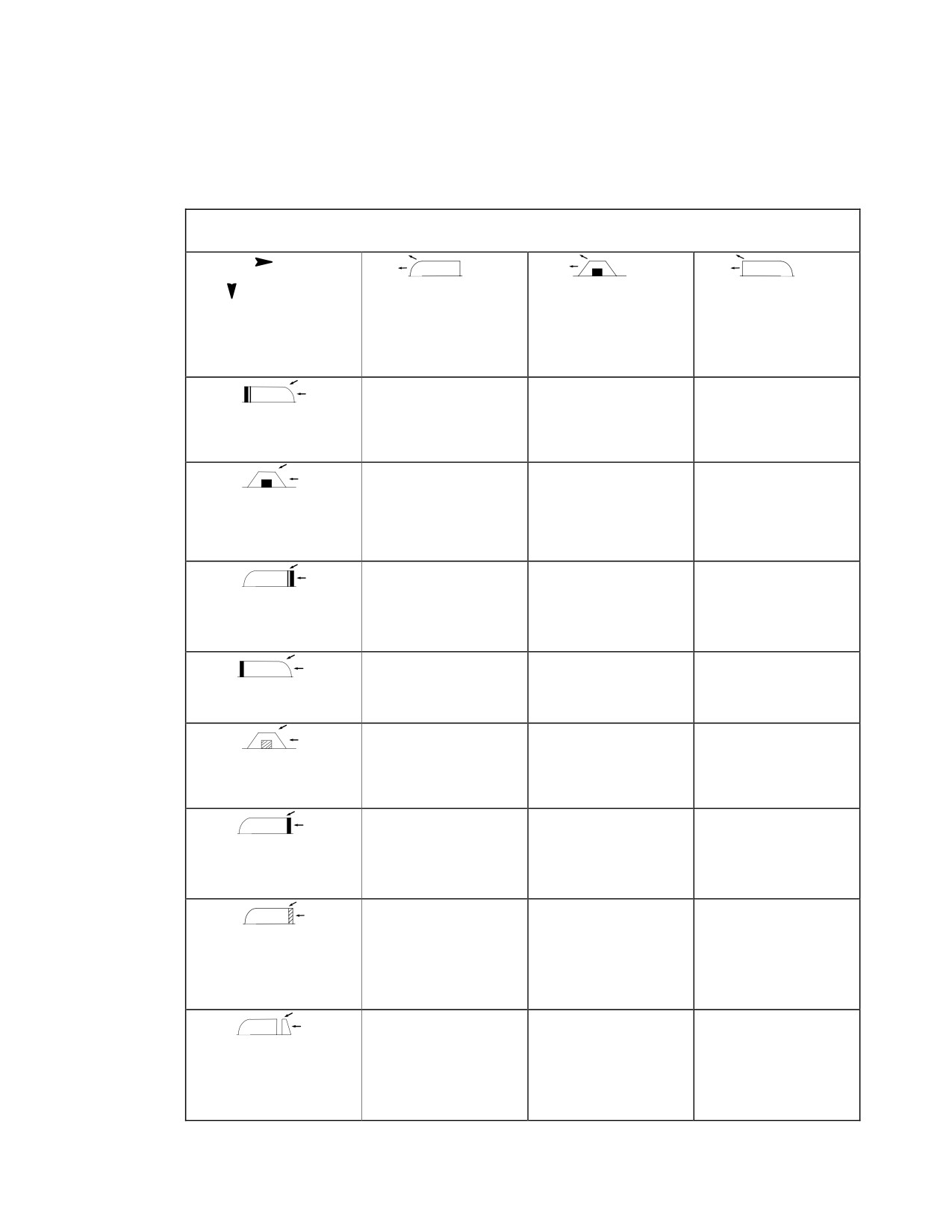
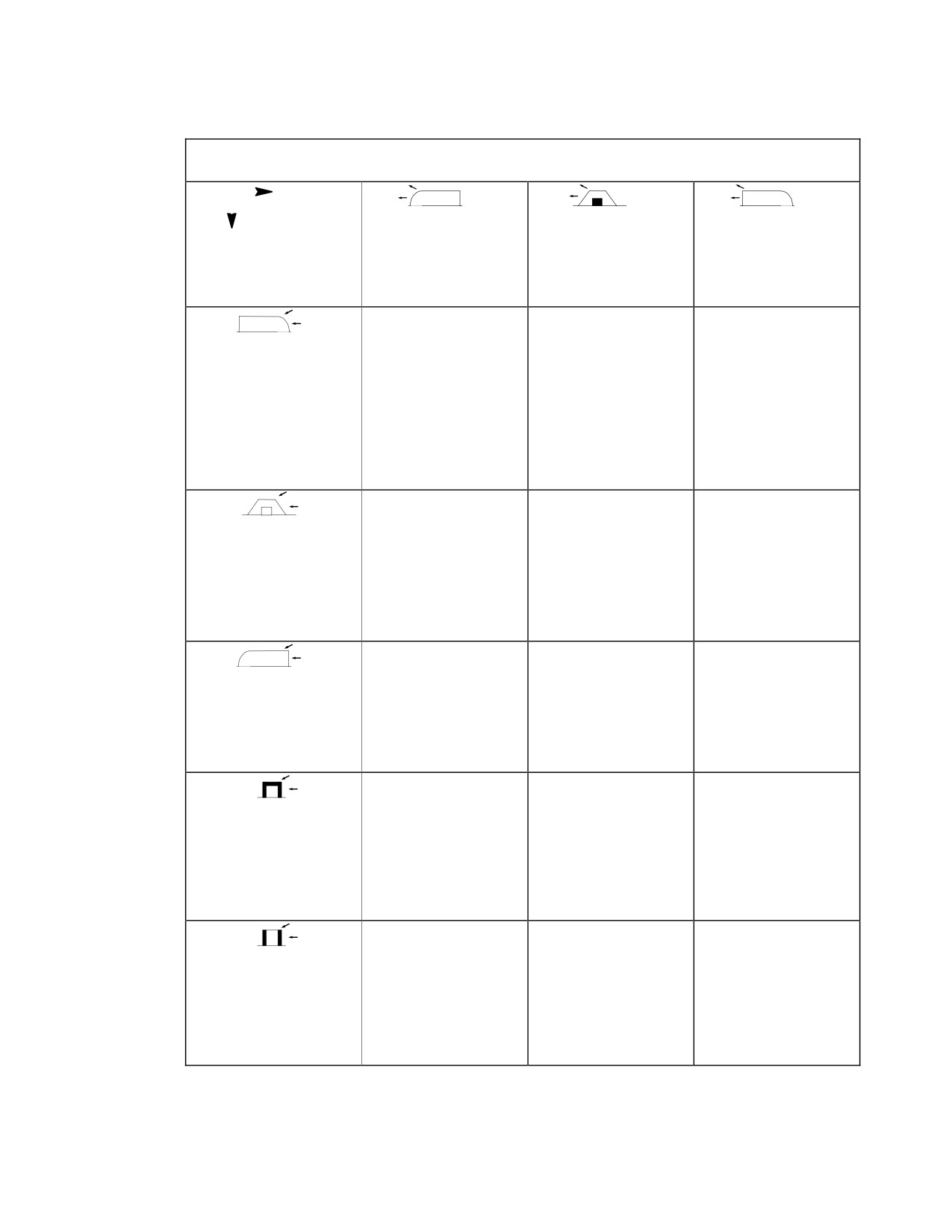
A.1.4 General Note on Pictographs
The pictographs are intended to simplify the presentation of information in the Q-D Tables. The
tables are intended to be used in conjunction with the principles given in the text of this Leaflet.
The pictographs are purely diagrammatic; their shapes do not imply that actual structures should
have similar shapes and proportions. The orientation shown is intended to indicate the direction of
principal concern for blast, flame, radiant heat and projections as shown by arrows. In an actual
situation every direction must be considered in turn. At a Potential Explosion Site there are
relatively few significant variations but at an Exposed Site it is necessary to distinguish among
different types of construction and among different functions of buildings.
-I-A-2-
Change 3
ANNEX I-A
AASTP-1
(Edition 1)
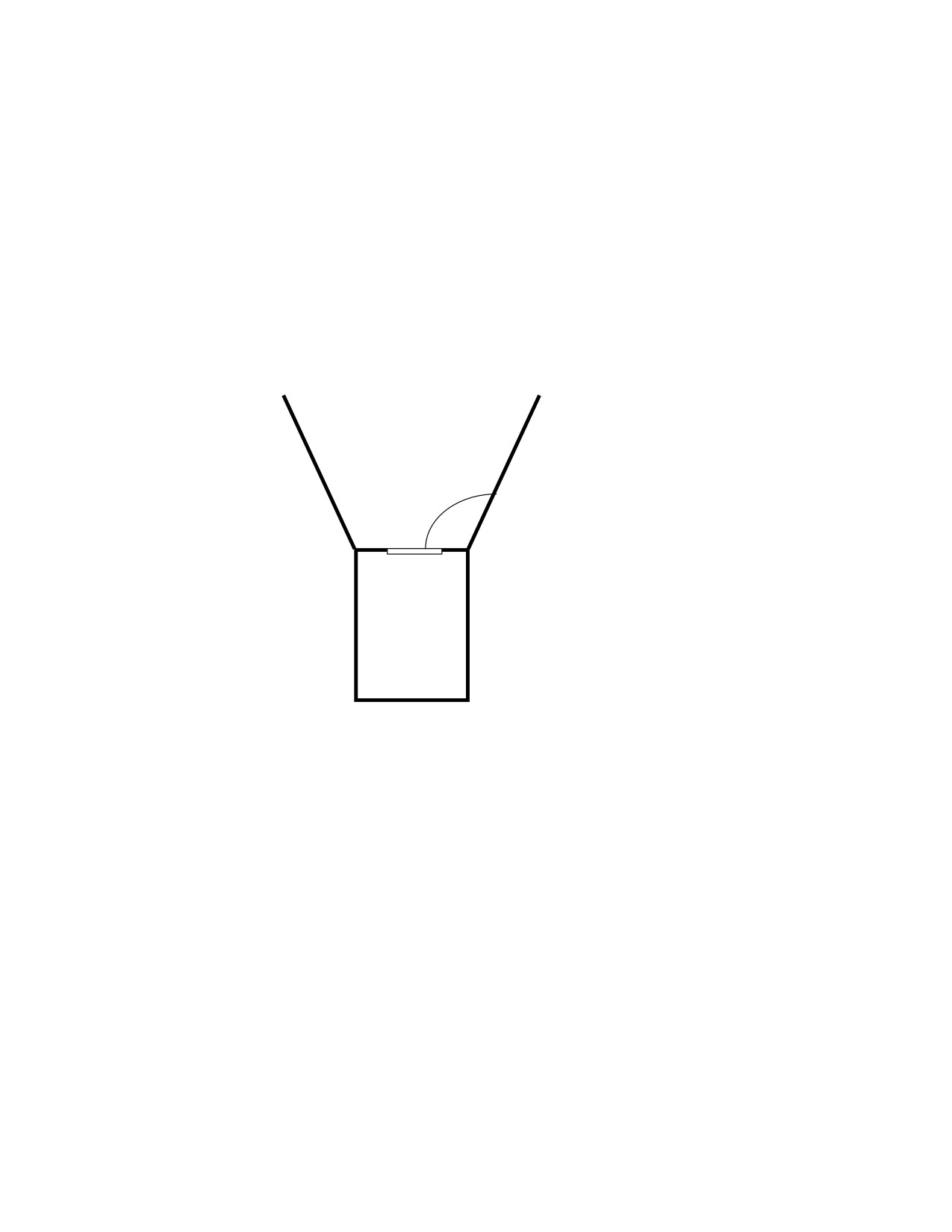
A.1.5 DEFINITIONS OF FRONT/SIDE/REAR CONFIGURATIONS FOR EARTH-COVERED
BUILDINGS
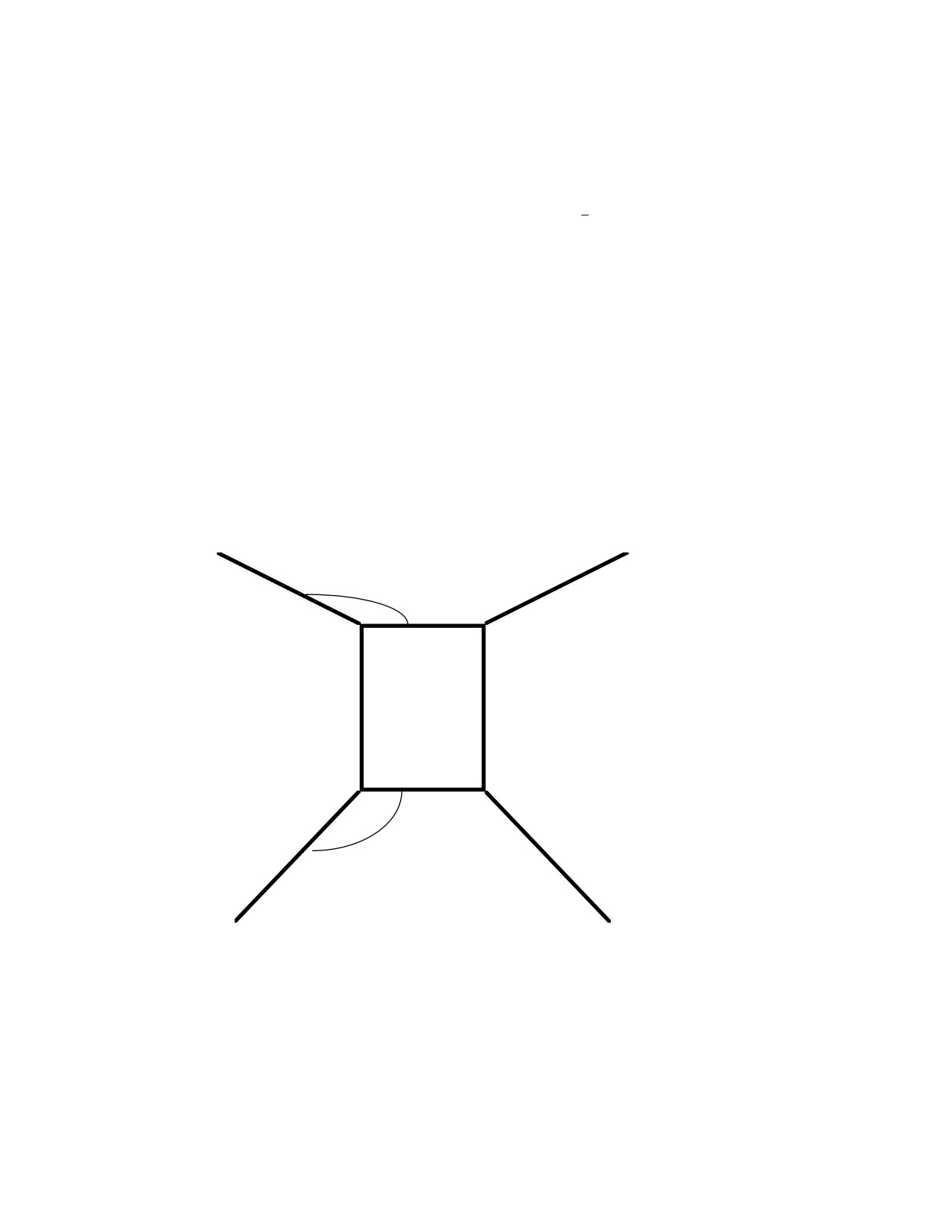
A.1.5.1 DIRECTIONAL EFFECTS FROM IGLOOS WITH HD 1.1
The directional effects for HD 1.1 or HD 1.3 from buildings which meet the design criteria for
standard igloos are considered to occur :
a. through the front in the area bounded by lines drawn at 150o to the front face of the PES from
its front corners.
b. through the rear in the area bounded by lines drawn at 135o to the rear face of the PES from its
rear corners.
c. all area around a PES not included in a. or b. above are considered to be to the side of the PES.
In those cases where an Exposed Site (ES) lies on the line separating rear/side etc. of a PES, the
greater quantity-distance should be observed.
1500
FRONT
REAR
1350
-I-A-3-
Change 3
ANNEX I-A
AASTP-1
(Edition 1)
A.1.5.2 DIRECTIONAL EFFECTS FROM IGLOOS WITH HD 1.2
The directional effects for HD 1.2 from buildings which meet the design criteria for standard
igloos or HD 1.2 containment buildings are considered to occur through the front in the area
bounded by lines drawn at 100o to the front face of the PES from its front corners.
1000
Door
or
aperture
-I-A-4-
Change 3
ANNEX I-A
AASTP-1
(Edition 1)
SECTION II - QUANTITY DISTANCES TABLES (Q-D TABLES)
It is essential to study the text in Chapter 3 when using this table since they are
complementary. Where “No QD” is shown on the matrix practical considerations will
dictate actual separation distances.
Table 1A HD 1.1 QD Matrix for Earth Covered Storage
PES
Building with earth on the roof
Building with earth on the roof
Building with earth on the roof
ES
and against
three
walls.
and against
three
walls.
and against
three
walls.
Directional effects through the
Directional effects through the
Directional effects through the
door and headwall are away from
door
and
headwall
are
door and headwall are towards an
an Exposed Site.
perpendicular to the direction of
Exposed Site
an ES.
(a)
(b)
(c)
D3
D3
D4
Virtually complete protection
Virtually complete protection
Virtually complete protection
1 Standard NATO Igloo, designed
1.3.3.5 No primary explosives
1.3.3.5 No primary explosives
1.3.3.5 No primary explosives
for 7 bar in accordance with Part 2,
with the door facing away from
PES
D3
D3
D5
Virtually complete protection
Virtually complete protection
Virtually complete protection
2 Standard NATO Igloo, designed
1.3.3.5 No primary explosives
1.3.3.5 No primary explosives
1.3.3.5 No primary explosives
for 7 bar in accordance with Part 2,
with
the
door
facing
perpendicularly to the direction of
PES
D4
D5
D8
Virtually complete protection
Virtually complete protection
High degree of protection
3 Standard NATO Igloo, designed
1.3.3.5 No primary explosives
1.3.3.5 No primary explosives
1.3.5.6 a1 Effect of high velocity
for 7 bar in accordance with Part 2,
projections
with the door towards a PES
or D4
1.3.5.6 a2 Effect of lobbed
High degree of protection
ammunition
D3
D3
D4
Virtually complete protection
Virtually complete protection
Virtually complete protection
4 Igloo designed for
3 bar in
1.3.3.5 No primary explosives
1.3.3.5 No primary explosives
1.3.3.5 No primary explosives
accordance with Part 2, with the
door facing away from PES
D3
D3
D5
Virtually complete protection
Virtually complete protection
Virtually complete protection
5 Igloo designed for
3 bar in
1.3.3.5 No primary explosives
1.3.3.5 No primary explosives
1.3.3.5 No primary explosives
accordance with Part 2, with the
door facing perpendicularly to the
direction of PES
D6
D6
D8
Virtually complete protection
Virtually complete protection
High degree of protection
6 Igloo designed for
3 bar in
1.3.5.6 a1 Effect of high velocity
accordance with Part 2, with the
projections
door towards a PES
1.3.5.6 a2 Effect of lobbed
ammunition
D4
D4
D9
High degree of protection
High degree of protection
Limited degree of protection
7 Earth-covered building not
1.3.3.5 No primary explosives
1.3.3.5 No primary explosives
1.3.5.6 a2 Effect of lobbed
complying with Part 2, but with a
1.3.5.3 No items vulnerable to
1.3.5.3 No items vulnerable to
ammunition
headwall and door(s) resistant to
spall
spall
high velocity projections
(see
1.3.5.6 a). The door faces a PES.
or D7
or D7
High degree of protection
High degree of protection
D4
D4
D9
High degree of protection
High degree of protection
High degree of protection
8 Earth-covered building not
1.3.3.5 No primary explosives
1.3.3.5 No primary explosives
complying with Part 2, but with a
1.3.5.3 No items vulnerable to
1.3.5.3 No items vulnerable to
door barricade,
(see
1.3.6.4-
spall
spall
1.3.6.6). The door faces a PES.
or D7
or D7
High degree of protection
High degree of protection
-I-A-5-
Change 3
ANNEX I-A
AASTP-1
(Edition 1)
Table 1A HD 1.1 QD Matrix for Earth Covered Storage
PES
Building with earth on the roof
Building with earth on the roof
Building with earth on the roof
ES
and against
three
walls.
and against
three
walls.
and against
three
walls.
Directional effects through the
Directional effects through the
Directional effects through the
door and headwall are away from
door
and
headwall
are
door and headwall are towards an
an Exposed Site.
perpendicular to the direction of
Exposed Site
an ES.
(a)
(b)
(c)
D4
D4
D4
Virtually complete protection
Virtually complete protection
High degree of protection
9 Earth-covered building not
1.3.3.5 No primary explosives
1.3.3.5 No primary explosives
1.3.3.5 No primary explosives
complying with Part
2, with or
1.3.5.3 No items vulnerable to
1.3.5.3 No items vulnerable to
1.3.5.3 No items vulnerable to
without a headwall and door(s)
spall
spall
spall
resistant to fire and low velocity
1.3.5.6 a2 Effect of lobbed
projections, (see 1.3.5.6 b), but the
or D5
or D5
ammunition
door faces away from a PES.
Virtually complete protection
Virtually complete protection
1.3.3.5 No primary explosives
1.3.3.5 No primary explosives
or D6
Virtually complete protection
1.3.5.6 a2 Effect of lobbed
ammunition
D6
D6
D6
Virtually complete protection
Virtually complete protection
Limited degree of protection
10 Earth-covered building not
1.3.5.6 a2 Effect of lobbed
complying with Part
2, with or
or
or
ammunition
without a headwall and door(s)
D4
D4
resistant to fire and low velocity
High degree of protection
High degree of protection
projections, (see 1.3.5.6 b), but the
1.3.3.5 No primary explosives
1.3.3.5 No primary explosives
door faces perpendicularly to the
1.3.5.3 No items vulnerable to
1.3.5.3 No items vulnerable to
direction of a PES.
spall
spall
D4
D4
D9
High degree of protection
High degree of protection
Limited degree of protection
11 Earth-covered building not
1.3.3.5 No primary explosives
1.3.3.5 No primary explosives
1.3.5.6 a2 Effect of lobbed
complying with Part
2, with or
1.3.5.3 No items vulnerable to
1.3.5.3 No items vulnerable to
ammunition
without a headwall and door(s)
spall
spall
resistant to fire and low velocity
projections,
(see
1.3.5.6 b), with
or D7
or D7
the door facing a PES
High degree of protection
High degree of protection
D4
D4
D7
High degree of protection
High degree of protection
High degree of protection
12 Building of non-combustible
1.3.3.5 No primary explosives
1.3.3.5 No primary explosives
construction with walls of nominal
1.3.5.3 No items vulnerable to
1.3.5.3 No items vulnerable to
450 mm RC
(680 mm brick or
spall
spall
D5
equivalent) and protective roof of
High degree of protection
150 mm RC with suitable support.
or D7
or D7
1.3.3.5 No primary explosives
The door is barricaded if it faces a
High degree of protection
High degree of protection
1.3.5.3 No items vulnerable to
PES.
spall
D4
D4
D7
High degree of protection
High degree of protection
High degree of protection
13 Building of non-combustible
1.3.3.5 No primary explosives
1.3.3.5 No primary explosives
construction with walls of nominal
1.3.5.3 No items vulnerable to
1.3.5.3 No items vulnerable to
450 mm RC
(680 mm brick or
spall
spall
D5
equivalent), without a protective
High degree of protection
roof. The door is barricaded if it
or D7
or D7
1.3.3.5 No primary explosives
faces a PES.
High degree of protection
High degree of protection
1.3.5.3 No items vulnerable to
spall
-I-A-6-
Change 3