Military reference books and manuals (2009-2023, Volume 6) - page 12
Title: RManagement of
Doc No: UNIF-HSE-PRO-205-C1
Formatted
Radioactive Materials and
Rev No: 01
Page 26 of 38
Radiation Generators adioactive
Sources Management Procedure
Dated: SeptemberOctober, 2004
Originating Dept: HSE
5 MONITORING FOR RADIATION AND CONTAMINATION
Calibrated radiation dose rate monitors, appropriate to the radiation being used, must
be available wherever radioactive sources are likely to be used.
These monitors must be thoroughly examined and tested at least once in every
period of 12 months. A qualified and certified Contractor company shall undertake
the examination and test of radiation dose rate monitors.
The certificate resulting from such a test must be retained for two years from the date
of the test.
If a radiation-monitoring instrument is damaged such that the accuracy of the
calibration may have been affected, then the instrument must be repaired and re-
calibrated.
Only individuals who have been trained in their safe use may use these monitors.
Individuals who have been trained in their safe use may only use these monitors.
Under normal operating conditions, dose rates around sites/installations, which
incorporate a radioactive source shall be monitored monthly or following any work
which has been carried out which could affect the adequacy of the shielding.
The Radiation Protection Supervisor or his delegate will carry out this activity. The
results of such monitoring shall be recorded and retained on the facility for 2 years.
The controlled version of this document can be found at: http://baku.bpweb.bp.com/dep/hse/safe/
Next Revision Date: 30/1009/2005
Print Date: 24/07/201015/11/200412/10/2004
PAPER COPIES ARE UNCONTROLLED. THIS COPY VALID ONLY AT THE TIME OF PRINTING
Title: RManagement of
Doc No: UNIF-HSE-PRO-205-C1
Formatted
Radioactive Materials and
Rev No: 01
Page 27 of 38
Radiation Generators adioactive
Sources Management Procedure
Dated: SeptemberOctober, 2004
Originating Dept: HSE
Appendix A
Glossary of terms
TERM
DEFINITION
Absorbed Dose
Quantity of energy imparted by ionising radiation to unit mass
of matter such as tissue. Unit gray, Symbol Gy. Gy = 1 joule
per kilogram.
Activity
Measure of an amount of a radionuclide. Describes the rate at
which transformations occur in it. Unit becquerel. Symbol Bq. 1
Bq = 1 transformation per second.
Classified Person
Classified person is a person who is likely to receive an
effective dose in excess of 6 mSv per year or an equivalent
dose that exceeds three-tenths of any relevant dose limit.
Classified person should be informed if he/she is so
designated. Classified person should be over 18 years old and
has a health record certified by doctor confirming he/she is fit
for this job.
Contamination
Loose unsealed radioactive material/substance.
Contingency Plan
Document the purpose of which is to restrict any exposure that
arises from an accident both to the employees themselves and
to others, including emergency services personnel, who may
be affected by it.
Controlled Area
Controlled Area is the area where:
1.
It is necessary for any person who enters or works in
the area to follow special procedures designated to
restrict significant exposure to ionising radiation in that
area or prevent or limit the probability and magnitude of
radiation accidents or their effects; or
2.
Any person working in the area is likely to receive an
effective dose greater that
6 mSv a year or an
equivalent dose greater than three-tenths of any
relevant dose limit in respect of an employee aged 18
years or above.
Decay
The process of spontaneous transformation of a radionuclide.
The decrease in activity of a radioactive substance.
Designated Area
Designated Areas include Controlled and Supervised Areas.
Disposal
In relation to radioactive waste, dispersal or emplacement in
any medium without the intention of retrieval.
Dose
General term for quantity of radiation. See absorbed dose,
equivalent dose, and effective dose.
Dose Limit
Dose Limit in relation to persons of a specified class is the limit
on effective dose or equivalent dose in relation to a person of
that class.
Dose Rate
Dose Rate, in relation to a place, is the rate at which a person
or part of a person would receive a dose of ionising radiation
from external radiation if he were at that place being a dose
rate at that place averaged over one minute.
The controlled version of this document can be found at: http://baku.bpweb.bp.com/dep/hse/safe/
Next Revision Date: 30/1009/2005
Print Date: 24/07/201015/11/200412/10/2004
PAPER COPIES ARE UNCONTROLLED. THIS COPY VALID ONLY AT THE TIME OF PRINTING
Title: RManagement of
Doc No: UNIF-HSE-PRO-205-C1
Formatted
Radioactive Materials and
Rev No: 01
Page 28 of 38
Radiation Generators adioactive
Sources Management Procedure
Dated: SeptemberOctober, 2004
Originating Dept: HSE
Effective Dose
The quantity obtained by multiplying the dose equivalents to
various tissues and organs by the tissue weighting factor
appropriate to each and summing the products. Unit sievert,
symbol Sv. Frequently abbreviated to dose.
Equivalent Dose
The quantity obtained by multiplying the absorbed dose by a
weighting factor to allow for the different effectiveness of the
various ionising radiations in causing harm to tissue. Unit
sievert, symbol Sv. Usually the factor for gamma rays, X-rays
and beta particles is 1 but for alpha particles is 20.
External Radiation
External radiation, in relation to a person, is the ionising
radiation coming from outside the body of that person.
Internal Radiation
Internal radiation, in relation to a person, is the ionising
radiation coming from inside the body of that person.
Ionising Radiation
Gamma rays, x-rays or corpuscular radiations such as alpha
and beta, which are capable of producing ions either directly or
indirectly.
Local Rules
Set of working procedures written in accordance with the
Ionising Radiations Regulations, 1999, to enable work with
ionising radiations to proceed safely, and in accordance with
the Health and Safety at Work Act, 1974. Incorporating
Contingency Plans.
LSA Scale
Inorganic based chemical scale produced in conjunction with
oil and gas production and containing low levels of naturally
occurring radioactive material.
Non-ionising radiation
Radiation that does not produce ionisation in matter. Examples
are ultraviolet radiation, light, infrared radiation, and radio
frequency radiation.
NORM
Naturally Occurring Radioactive Material produced with oil and
gas deposits within process equipment.
Overexposure
Any exposure of a person to ionising radiation to the extent
that the dose received by that person causes a dose limit
relevant to that person to be exceeded or causes a proportion
of a dose limit relevant to any employee to be exceeded.
Practice
Practice means work involving:
1. The production, processing, handling, use, holding,
storage, transport or disposal of radioactive substances;
or
2. The operation of any electrical equipment emitting
ionising radiation and containing components operating
at a potential difference of more than 5Kv,
that can increase the exposure of individuals to radiation from
an artificial source, or from a radioactive substance containing
naturally occurring radionuclides that are processed for their
radioactive, fissile or fertile properties.
Radiation
The process of emitting energy as waves or particles.
Radiation accident
Accident where immediate action would be required to prevent
The controlled version of this document can be found at: http://baku.bpweb.bp.com/dep/hse/safe/
Next Revision Date: 30/1009/2005
Print Date: 24/07/201015/11/200412/10/2004
PAPER COPIES ARE UNCONTROLLED. THIS COPY VALID ONLY AT THE TIME OF PRINTING
Title: RManagement of
Doc No: UNIF-HSE-PRO-205-C1
Formatted
Radioactive Materials and
Rev No: 01
Page 29 of 38
Radiation Generators adioactive
Sources Management Procedure
Dated: SeptemberOctober, 2004
Originating Dept: HSE
or reduce the exposure to ionising radiation of employees or
any other persons.
Radiation control
Obtaining information about radiation state in the organisation,
in the environment and of the level of exposure to radiation
(includes dozsimetric and radiometric control)
Radiation Protection
Person or body consulted in accordance with the Ionising
Adviser
Radiations Regulations, 1999, to give advice on radiation
protection.
Radiation Protection
Person appointed in accordance with the Ionising Radiations
Supervisor
Regulations, 1999 who is responsible for day-to-day
supervision of work with ionising radiation.
Radioactive Material
Substance in any aggregated state containing active
radionuclids
Radioactive Waste
Waste material containing radionuclides. Frequently
categorised, in the nuclear power industry, according to
activity content and other criteria, as low level, intermediate
level, and high-level waste.
Radioactivity
The property of radionuclides of spontaneously emitting
ionising radiation.
Radionuclid source
Source of ionising radiation containing radionuclid or a mixture
of radionuclids
Risk Assessment
Assessment that must be carried out in accordance with the
Ionising Radiations Regulations, 1999. Forms basis of
Contingency Plans. See Local Rules.
Source of ionising
Radioactive substance or device emitting or capable of
radiation
emitting ionising radiation
Sealed Source
Radiation source containing a radioactive material and
constructed to certain standards to prevent loss of that
material.
Unsealed Radioactive
Radioactive material not in the form of a sealed source, e.g.
Materials
gas, liquids or solid powder.
Waste Management
The control of radioactive waste from creation to disposal.
Written System of Work
A written method of work that permits non-classified workers
who to enter a controlled area.
The controlled version of this document can be found at: http://baku.bpweb.bp.com/dep/hse/safe/
Next Revision Date: 30/1009/2005
Print Date: 24/07/201015/11/200412/10/2004
PAPER COPIES ARE UNCONTROLLED. THIS COPY VALID ONLY AT THE TIME OF PRINTING
Title: RManagement of
Doc No: UNIF-HSE-PRO-205-C1
Formatted
Radioactive Materials and
Rev No: 01
Page 30 of 38
Radiation Generators adioactive
Sources Management Procedure
Dated: SeptemberOctober, 2004
Originating Dept: HSE
Appendix B
Written System of Work
1.
This written system of work applies to all non-classified workers who are
required to enter controlled areas.
2.
Before work begins in a controlled area, each individual worker must be given
a copy of the written system of work form attached below. The RPS is
responsible for ensuring the details of the form are completed.
3.
No non-classified person may enter a controlled area where the external dose
rate is more than 30 microsieverts per hour without reference to the radiation
protection adviser.
4.
No non-classified person may work in controlled areas for more than 200
hours in any calendar year.
5.
No person will remain in a controlled area for longer than is necessary.
6.
No person will enter a controlled area unless a Permit to Work has been
issued. This Permit to Work shall include the following details:
A description of the work to be done
The precautions to be used to minimise the effects of any hazard
A copy of the relevant local rule
The period of time for which the permit is valid.
7.
The Permit to Work will be signed by the Area Authority and countersigned by
the RPS.
8.
The following conditions will apply when the controlled area has been
established because of the presence of uncontained radioactive material:
All persons entering the controlled area will use the appropriate personal
protective equipment.
Washing, changing and monitoring facilities will be provided as close as
reasonably practicable to the exit from the controlled area.
Eating, drinking, smoking and chewing gum are prohibited in the
controlled area.
Minor cuts, grazes etc. must be covered with a suitable waterproof
dressing before entry to the controlled area. Any cuts received in the
controlled area must be reported to the RPS and appropriate first aid
treatment obtained.
All reasonably practicable steps will be taken to eliminate the production
of airborne radioactive material and to control surface contamination to
prevent the spread of contamination outside the controlled area.
The controlled version of this document can be found at: http://baku.bpweb.bp.com/dep/hse/safe/
Next Revision Date: 30/1009/2005
Print Date: 24/07/201015/11/200412/10/2004
PAPER COPIES ARE UNCONTROLLED. THIS COPY VALID ONLY AT THE TIME OF PRINTING
Title: RManagement of
Doc No: UNIF-HSE-PRO-205-C1
Formatted
Radioactive Materials and
Rev No: 01
Page 31 of 38
Radiation Generators adioactive
Sources Management Procedure
Dated: SeptemberOctober, 2004
Originating Dept: HSE
9. The RPS will frequently carry out radiation dose rate and contamination
measurements in and around the controlled area to ensure the precautions in
place are effective.
The controlled version of this document can be found at: http://baku.bpweb.bp.com/dep/hse/safe/
Next Revision Date: 30/1009/2005
Print Date: 24/07/201015/11/200412/10/2004
PAPER COPIES ARE UNCONTROLLED. THIS COPY VALID ONLY AT THE TIME OF PRINTING
Title: RManagement of
Doc No: UNIF-HSE-PRO-205-C1
Formatted
Radioactive Materials and
Rev No: 01
Page 32 of 38
Radiation Generators adioactive
Sources Management Procedure
Dated: SeptemberOctober, 2004
Originating Dept: HSE
Written System of Work
Name of Worker_______________________________________
Radiation dose for year to date _____________ mSv
(confirmed by RPS)
Time spent in controlled areas this year____________ hours (confirmed by RPS)
Description of Work Area:
____________________________________________
Brief Description of Work:
____________________________________________
___________________________________________
Permit to Work Reference
____________________________________________
This area has been designated as a Controlled Area. The radiation protection
supervisor for this area is _______________________________.
The maximum radiation dose rate in this area is _________________ microsieverts
per hour.
The average level of surface contamination in this area is _________________
Becquerels per cm2.
While in this area you must use the protective equipment selected by the radiation
protection supervisor. You will be instructed in the use of any equipment with which
you are not familiar. You must not eat, drink or smoke in the controlled area. Any cuts
must be covered.
Any contaminated clothing must be left inside the controlled area. You will be
monitored for contamination when you leave the controlled area. You should then go
to the locker room and wash before eating. The radiation protection supervisor must
monitor any tools or equipment before being removed from the controlled area.
Contaminated equipment must be suitably bagged or wrapped and labelled before
being removed from the controlled area.
The log sheet on the other side of this form will be kept to record each time you enter
and leave the controlled area. You must make sure this is completed every time you
enter and leave the area.
Issued by __________________________________ (RPS)
Date __________
I understand and will comply with the conditions contained in this written system of
work:
Signed __________________________
Print
_________________
Date
__________________________
The controlled version of this document can be found at: http://baku.bpweb.bp.com/dep/hse/safe/
Next Revision Date: 30/1009/2005
Print Date: 24/07/201015/11/200412/10/2004
PAPER COPIES ARE UNCONTROLLED. THIS COPY VALID ONLY AT THE TIME OF PRINTING
Title: RManagement of
Doc No: UNIF-HSE-PRO-205-C1
Formatted
Radioactive Materials and
Rev No: 01
Page 33 of 38
Radiation Generators adioactive
Sources Management Procedure
Dated: SeptemberOctober, 2004
Originating Dept: HSE
Record of Entries into Controlled Areas
Date
Time of Entry
Time of Exit
Time Spent in
Free of
Initialled
Controlled
Contamination
by RPS
Area (1)
(3)
Yes/No (2)
Total Time in
Area (hours)
(1) Rounded up to nearest half hour.
(2) All contamination MUST be removed before worker can leave the area.
(3) RPS or appointed deputy.
On completion of the work one copy of this form is sent to the worker’s
employer and one is retained on the installation for two years.
The controlled version of this document can be found at: http://baku.bpweb.bp.com/dep/hse/safe/
Next Revision Date: 30/1009/2005
Print Date: 24/07/201015/11/200412/10/2004
PAPER COPIES ARE UNCONTROLLED. THIS COPY VALID ONLY AT THE TIME OF PRINTING
Title: RManagement of
Doc No: UNIF-HSE-PRO-205-C1
Formatted
Radioactive Materials and
Rev No: 01
Page 34 of 38
Radiation Generators adioactive
Sources Management Procedure
Dated: SeptemberOctober, 2004
Originating Dept: HSE
Appendix C
Contractors Checklist
Details of contractor using radioactive material
Contractor’s Name and Address
Contract Company’s RPA:
Contract Company’s RPS on site
Nature of work:
Has hazard assessment been seen and accepted?
Yes No N/A
Valid Registration Seen
Yes No N/A
Valid Authorisation Seen
Yes No N/A
Local Rules Seen and Acceptable
Yes No N/A
Notification Given to HSE
Yes No N/A
Are Workers classified?
Yes No
Is Personal Dosimeter Available?
Yes No
Is Functioning Dose rate Meter Available?
Yes No N/A
Test certificate seen?
Yes No
Is Functioning Contamination Meter Available?
Yes No N/A
Test certificate seen?
Yes No
Is Neutron Monitor Available?
Yes No N/A
Test certificate seen?
Yes No
Source Movement Notification Details
Container/Packing Adequate?
Yes No
Are Source Leakage Tests Available?
Yes No N/A
Intended Source Storage Location on site
Responsible Person when Contractor
not on site
Details of Emergency Equipment/
Warning Notices
Special Precautions
........................................................…
Comments:
Signed
Facilities RPS…
Contractor
......................................………
Print
…….. Print
………
The controlled version of this document can be found at: http://baku.bpweb.bp.com/dep/hse/safe/
Next Revision Date: 30/1009/2005
Print Date: 24/07/201015/11/200412/10/2004
PAPER COPIES ARE UNCONTROLLED. THIS COPY VALID ONLY AT THE TIME OF PRINTING
Title: RManagement of
Doc No: UNIF-HSE-PRO-205-C1
Formatted
Radioactive Materials and
Rev No: 01
Page 35 of 38
Radiation Generators adioactive
Sources Management Procedure
Dated: SeptemberOctober, 2004
Originating Dept: HSE
Date
……. Date
The controlled version of this document can be found at: http://baku.bpweb.bp.com/dep/hse/safe/
Next Revision Date: 30/1009/2005
Print Date: 24/07/201015/11/200412/10/2004
PAPER COPIES ARE UNCONTROLLED. THIS COPY VALID ONLY AT THE TIME OF PRINTING
Title: Management of Radioactive
Doc No: UNIF-HSE-PRO-205-C1
Formatted
Materials and Radiation
Rev No: 01
Page 36 of 38
Generators Radioactive Sources
Management Procedure
Dated: SOctoeptember, 2004
Originating Dept: HSE
Appendix D
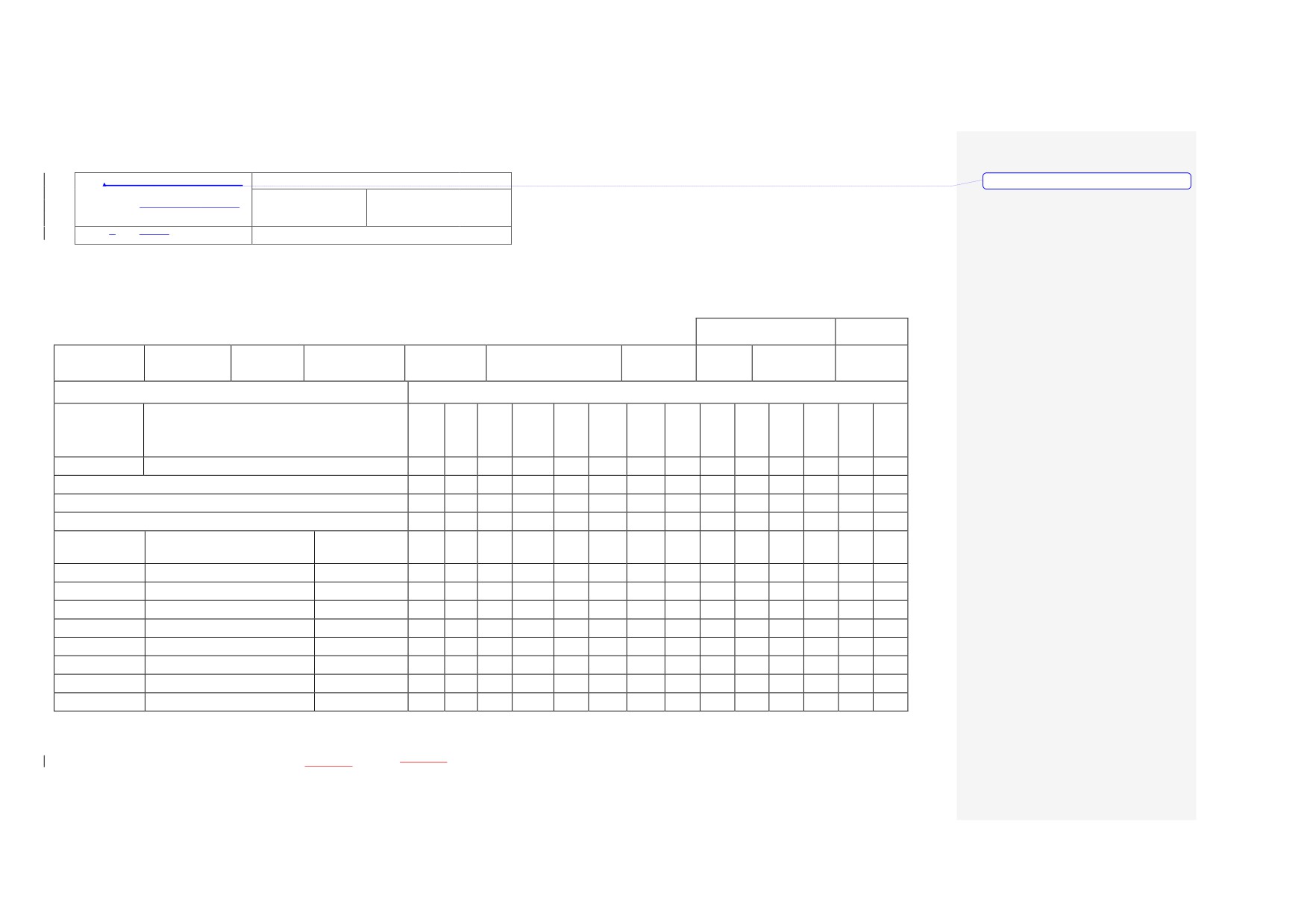
Sealed Radioactive Source Management & Accountancy Register
Local I.D. No.
(if applicable)
Distinguishing
Nature of
Radioactive
Date
Date of
Element
Strength
Measured
Receipt
Mark No
Address of Normal Location of Source
Initial Date Source Accounted For.
Year:
Location
Date
JAN
FEB
MAR
APR
MAY
JUN
JUL
AUG
SEP
OCT
NOV
DEC
Date
Dept/Area
Site
Used for
Source Movements/Inspection Comments
Date and
New Location of Source
Mover.
Time
(Inspector:
Signature)
The controlled version of this document can be found at: http://baku.bpweb.bp.com/dep/hse/safe/
Next Revision Date: 30/1009/2005
Print Date: 24/07/201015/11/200412/10/2004
PAPER COPIES ARE UNCONTROLLED. THIS COPY VALID ONLY AT THE TIME OF PRINTING
Title: RManagement of
Doc No: UNIF-HSE-PRO-205-C1
Formatted
Radioactive Materials and
Rev No: 01
Page 37 of 38
Radiation Generators adioactive
Sources Management Procedure
Dated: SOctobereptember, 2004
Originating Dept: HSE
Appendix E
References
The Ionising Radiations Regulations 1999 SI 1999/3232 Stationery Office
1999.
Work with Ionising Radiation. Ionising Radiations Regulations
1999.
Approved Code of Practice and Guidance HSE Books (L121) 2000.
Health and Safety at Work etc. Act 1974 HMSO 1974.
”Council Directive 96/29 Euratom of 13 May 1996 laying down basic safety
standards for the protection of health of workers and the general public
against the dangers arising from ionising radiation” Official Journal of the
European Communities 1996 39(L159) 1-114.
“Council Directive 97/43 Euratom of 30 June 1997 on health protection of
individuals against the dangers of ionising radiation in relation to medical
exposure” Official Journal of the European Communities 1997 40 (L180).
Radioactive Substances Act 1993 HMSO 1993.
Radiation doses - assessment and recording IRIS (rev) HSE Books 2000.
Radiation protection - sealed radioactive sources - leakage test methods ISO
9978: 1992.
Atomic Energy and Radioactive Substances: Radioactive Material
(Road
Transport) (Great Britain) Regulations 1996 HMSO 1996.
Packaging, Labelling and Carriage of Radioactive Material by Rail
Regulations 1996 SI 1996/2090 HMSO 1996.
Reporting of Injuries, Diseases and Dangerous Occurrences Regulations
1995 SI 1995/3163 HMSO 1995.
The controlled version of this document can be found at: http://baku.bpweb.bp.com/dep/hse/safe/
Next Revision Date: 30/1009/2005
Print Date: 24/07/201015/11/200412/10/2004
PAPER COPIES ARE UNCONTROLLED. THIS COPY VALID ONLY AT THE TIME OF PRINTING

Title: RManagement of
Doc No: UNIF-HSE-PRO-205-C1
Formatted
Radioactive Materials and
Rev No: 01
Page 38 of 38
Radiation Generators adioactive
Sources Management Procedure
Dated: SOctobereptember, 2004
Originating Dept: HSE
Appendix F
Correlation
Between SI system of units and Off-system Units of Activity and
Radiation Field Features
Value and its
Name and symbol of units
Relation between the units
symbol
SI unit
Off-system unit
Activity (А)
Becquerel (Bq)
Curie (Ci)
1 Ci = 3.700 *1010 Bq;
equals to one
1 Bq = 1 dec../s;
disintegration per
1 Bq = 1 dec../s = 2.703 * 10-11
second (dec../s)
Ci
Absorbed Doze
Gray (Gy) equals to
Rad (rad)
1 rad = 100 erg/g = 1*10-2 J/kg
(D)
one joule per
=
kilogram (J/kg)
= 1*10-2 Gy;
1 Gy = 1 J/kg;
1 Gy = 1 J/kg = 104 egr/g = 100
rad.
Equivalent Doze
Sievert (Sv) equals to
Rem (Rem)
1 Rem = 1 rad/Q = 1*10-2 J/kg /
(H)
one gray per Quality
Q =
coefficient
= 1* 10-2 Gy/Q = 1*10-2 Sv;
[1 Gy/Q = 1 (J/kg)/Q]
1 Sv = 1 Gy/Q = 1 J/kg/Q =
100 rad/Q=
= 100 Rem.
Equivalent Doze
Sievert per second
Rem per
1 Rem/s = 1 *10-2 Sv/s;
rating(Н)
(Sv/s)
second (Rem/s)
1 Sv/s = 100 Rem/s
Exposure Doze
Coulomb per
Roentgen (R)
1 R = 2.58*10-4 C/kg (exact);
(Х)
kilogram (C/kg)
1 C/kg = 3.88 103 R
(approximately)
Kerma (К)
Gray (Gy) equals to
Rad (rad)
1 rad = 100 erg/g = 1*10-2 J/kg
one joule per
=
kilogram (J/kg)
= 1*10-2 Gy;
1 Gy = 1 J/kg;
1 Gy = 1 J/kg = 104 egr/g = 100
rad.
The controlled version of this document can be found at: http://baku.bpweb.bp.com/dep/hse/safe/
Next Revision Date: 30/1009/2005
Print Date: 24/07/201015/11/200412/10/2004
PAPER COPIES ARE UNCONTROLLED. THIS COPY VALID ONLY AT THE TIME OF PRINTING
AZERBAIJAN BUSINESS UNIT
(AzBU)
Procedure for:
Leak Testing
Issued for
C1
09.09.04
G.Stacey
SSoW WG
N. McCleary
G. Campbell
use
Rev
Date
Reason for
Prepared by
Checked by
Approved by
Endorsed by
Issue
Notes:
HSE - SAFETY
Azerbaijan BU Document Reference
Asset Code
Dept Code
Document Type
Sequence No
Revision
Code
UNIF
HSE
PRO
241
C1
The controlled version of this document can be found at: http://baku.bpweb.bp.com/dep/hse/safe/
Next Revision Date: 30/09/2005
Print Date: 24/07/2010
PAPER COPIES ARE UNCONTROLLED. THIS COPY VALID ONLY AT THE TIME OF PRINTING
Title: Leak Testing Procedure
Doc No: UNIF-HSE-PRO-241-C1
Rev No: C1
Page 2 of 18
Dated: September, 2004
Originating Dept: HSE
TABLE OF CONTENTS
1 INTRODUCTION
3
1.1
PURPOSE
3
1.2
DEVIATIONS
3
1.3
SCOPE
3
1.4
DOCUMENT REVIEW
3
1.5
SSOW SPECIFIC CROSS REFERENCES
4
1.6
LANGUAGE FACILITATION
4
2 ROLES AND RESPONSIBILITIES
5
2.1
OFFSHORE INSTALLATION MANAGER / SITE MANAGER / SITE CONTROLLER
5
2.2
AREA AUTHORITY
5
2.3
PERFORMING AUTHORITY
5
3 COMPETENCY, TRAINING AND AWARENESS
6
3.1
COMPETENCY
6
3.2
UNDERSTANDING
6
3.3
AW ARENESS
6
3.4
NEW INDIVIDUALS
6
4 SELECTION OF TEST TYPE
7
4.1
GENERAL
7
4.2
HYDRAULIC
7
4.3
NITROGEN
7
4.4
LIQUID FILL AND NITROGEN SQUEEZE
8
4.5
NITROGEN - HELIUM
8
4.6
SERVICE
8
5 LEAK TESTING GUIDELINES
9
5.1
COMMUNICATION
9
5.2
TEST AREA ACCESS
9
5.3
TEST EQUIPMENT
9
5.4
TEST BOUNDARY
9
5.5
ISOLATIONS
10
5.6
VENTS AND SAFETY VALVES
10
5.7
APPLYING THE TEST
10
5.8
MONITORING AND INSPECTION
11
5.9
DEPRESSURISING AND RETURN TO SERVICE
11
5.10 SAFETY CONSIDERATIONS IN NITROGEN LEAK TESTING
12
6 RECORDS (CERTIFICATION)
13
7 REGISTERS
13
8 CONTRACTORS
13
9 AUDIT AND REVIEW
13
APPENDIX A - LIST OF DEFINITIONS
14
APPENDIX B - PRESSURE TESTING CHECKLIST
15
APPENDIX C - GUIDANCE NOTES
17
The controlled version of this document can be found at: http://baku.bpweb.bp.com/dep/hse/safe/
Next Revision Date: 30/09/2005
Print Date: 24/07/2010
PAPER COPIES ARE UNCONTROLLED. THIS COPY VALID ONLY AT THE TIME OF PRINTING
Title: Leak Testing Procedure
Doc No: UNIF-HSE-PRO-241-C1
Rev No: C1
Page 3 of 18
Dated: September, 2004
Originating Dept: HSE
1
INTRODUCTION
1.1
PURPOSE
The purpose of this document is to provide:
Guidelines for assessing the risks and establishing the precautions to be taken
when carrying out leak testing.
Information that may be used as the basis for producing formal instructions for
specific pressure and leak testing activities.
Prior to re-instatement of plant or equipment, any leak testing operations shall
be conducted in accordance with this procedure.
A leak test (hydraulic where practicable) is performed to prove the pressure tightness (i.e.
fitness for service) of joints, seals and glands etc. Whenever the integrity of containment
systems is broken, either at hook-up/commissioning or post-operations phase. The
prevention of even minor leaks is vitally important where flammable or toxic fluids are
concerned.
Leak testing is performed at the Maximum Operating Pressure (MOP)
Leak pressure test may vary according to the test medium being used but shall never
exceed 100% of the MOP. Gross (preliminary) air leak tests, using instrument air up to a
maximum of 8barg, are often used at an early stage of hook-up/commissioning as a
means of identifying large leaks, prior to performing the standard pressure tests.
1.2
DEVIATIONS
The procedures are written in sufficient detail that they should be able to be applied
consistently at all sites. There may still be the requirement for some local rules covering
site-specific logistical/administrative arrangements and local variations in responsibilities to
reflect differences in organisational arrangements. These local rules should not deviate
from the core processes within this document. Any form of deviation from this procedure,
including but not limited to local rules, shall be requested and authorised in accordance
with the SSOW Deviations from Regulations and Procedures procedure (Doc. No. UNIF-
HSE-PRO-101)
1.3
SCOPE
This applies to all leak testing operations carried out on BP owned and managed sites and
installations in AZBU.
1.4
DOCUMENT REVIEW
This document will be reviewed on an annual basis when users from the sites will have an
opportunity to propose changes to the existing processes and procedures. The document
Technical Authority will be responsible for coordinating this review.
The controlled version of this document can be found at: http://baku.bpweb.bp.com/dep/hse/safe/
Next Revision Date: 30/09/2005
Print Date: 24/07/2010
PAPER COPIES ARE UNCONTROLLED. THIS COPY VALID ONLY AT THE TIME OF PRINTING
Title: Leak Testing Procedure
Doc No: UNIF-HSE-PRO-241-C1
Rev No: C1
Page 4 of 18
Dated: September, 2004
Originating Dept: HSE
1.5
SSOW SPECIFIC CROSS REFERENCES
This SSOW procedure shall, where appropriate, be used in conjunction with this suite of
BP AzBU SSOW Procedures referenced below.
Document Number
Title of Procedure
UNIF - HSE- PRO - 101
Deviations from Regulations and Procedures
UNIF - HSE- PRO - 102
Incident Investigation and Reporting
UNIF - HSE- PRO - 103
Permit To Work
UNIF - HSE- PRO - 104
Authorisation
UNIF - HSE- PRO - 105
Task Risk Assessment
UNIF - HSE- PRO - 106
Energy Isolations-Electrical
UNIF - HSE- PRO - 107
Energy Isolations-Process
UNIF - HSE- PRO - 108
Confined Space Entry
UNIF - HSE- PRO - 241
Leak Testing
1.6
LANGUAGE FACILITATION
Due to the various languages spoken at site, there is a necessity to assist all with “an ease
of understanding”. Therefore, the development and use of information tools are available.
The controlled version of this document can be found at: http://baku.bpweb.bp.com/dep/hse/safe/
Next Revision Date: 30/09/2005
Print Date: 24/07/2010
PAPER COPIES ARE UNCONTROLLED. THIS COPY VALID ONLY AT THE TIME OF PRINTING
Title: Leak Testing Procedure
Doc No: UNIF-HSE-PRO-241-C1
Rev No: C1
Page 5 of 18
Dated: September, 2004
Originating Dept: HSE
2
ROLES AND RESPONSIBILITIES
2.1
OFFSHORE INSTALLATION MANAGER / SITE MANAGER / SITE CONTROLLER
The Offshore Installation Manager/ Site Manager/ Site Controller is responsible for
ensuring that:
All leak testing activities on their site are carried out in accordance with this
procedure
Formal records of all leak tests are maintained in accordance with this procedure
2.2
AREA AUTHORITY
The Area Authority shall:
Fulfil the responsibilities of Area Authority as described in UNIF-HSE-PRO-103
Ensure that leak testing operations comply with the guidelines within this document
and/or ensure that any deviations from those guidelines are documented and
authorised.
2.3
PERFORMING AUTHORITY
The Performing Authority shall:
Have such practical experience and theoretical knowledge of the equipment to be
tested so that he will be able to detect defects or weaknesses highlighted by the test
and assess their importance to the integrity and function of the equipment. The
Performing Authority must be qualified and trained to a standard sufficient to meet
any applicable regulations.
Fulfil the responsibilities of Performing Authority as described in UNIF-HSE-PRO-103
Ensure that leak testing operations comply with the guidelines within this document
and/or ensure that any inability to comply with the conditions of the Permit result in a
re-assessment of the task.
The controlled version of this document can be found at: http://baku.bpweb.bp.com/dep/hse/safe/
Next Revision Date: 30/09/2005
Print Date: 24/07/2010
PAPER COPIES ARE UNCONTROLLED. THIS COPY VALID ONLY AT THE TIME OF PRINTING
Title: Leak Testing Procedure
Doc No: UNIF-HSE-PRO-241-C1
Rev No: C1
Page 6 of 18
Dated: September, 2004
Originating Dept: HSE
3
COMPETENCY, TRAINING AND AWARENESS
3.1
COMPETENCY
BP‟s employees and those of its Contractors must provide adequate training for all
personnel likely to be involved in Leak Testing to ensure that they possess the correct
levels of competency.
All individuals shall be able to and be prepared to demonstrate their levels of competency
to the Performing Authority, Supervisor and / or Leak Test Supervisor
This shall be demonstrated through individuals understanding, knowledge and the skills
necessary to safely perform their assigned duties together with certifiable evidence of their
competency.
3.2
UNDERSTANDING
All individuals shall be fully conversant with the:
Scope of work and the potential hazards associated within their scope of work to
ensure that they understand the hazards of the task in hand and all associated
controls
Safe systems of work (SSOW) elements associated with their scope of work,
including but not limited to: PTW, Energy Isolations., purging and / or ventilation
procedures,
Relevant scope of work task risk assessments
Should be trained to at least AGT2.
3.3
AWARENESS
All individuals shall be fully aware of:
What they need to do in the event of an emergency on site
What they need to do in the event of an incident related to their scope of work
How to use the relevant communications equipment
Self rescue
How to use continuous gas monitoring equipment
All aspects of the proposed Leak Test activities with focus on their particular duties
3.4
NEW INDIVIDUALS
New individuals shall not be assigned to the above tasks, unless under training and
accompanied by a competent person (maximum 2 new starts to 1 supervisor) who is
familiar with the hazards of Leak testing.
The controlled version of this document can be found at: http://baku.bpweb.bp.com/dep/hse/safe/
Next Revision Date: 30/09/2005
Print Date: 24/07/2010
PAPER COPIES ARE UNCONTROLLED. THIS COPY VALID ONLY AT THE TIME OF PRINTING
Title: Leak Testing Procedure
Doc No: UNIF-HSE-PRO-241-C1
Rev No: C1
Page 7 of 18
Dated: September, 2004
Originating Dept: HSE
4
SELECTION OF TEST TYPE
4.1
GENERAL
A liquid medium (hydraulic) is the preferred means of testing and should be used for leak
testing wherever possible, in order to minimise the stored energy.
The preferred liquid medium is water. However, the effect of the water, and any additives,
on the metallurgy of the pressure envelope, and the effect of any residual water/additives
on the process (eg formation of hydrates), shall be considered (eg when testing austenitic
stainless steels, the water should be distilled or demineralised and contain <30ppm of
chloride ions).
Selection of liquids other than water should take account of:
The possibility of explosion resulting from the „diesel‟ effect
The boiling point relative to the test temperature
The flammability of the liquid, the flash point of which should not be less than 65°C, and at
least 10°C above the maximum test temperature.
For Safety Considerations in Nitrogen Leak Testing see section 5.10.
4.2
HYDRAULIC
Weight must be considered, particularly in context of equipment support e.g. pipe
hangers, foundations
Care must be taken with draining the test fluid on completion - in some cases the
equipment may require flushing and/or drying.
Some test fluids, typically water, may be incompatible with equipment materials
Generally considered to be a “safe” test medium due to low levels of stored energy
Internal leakage, e.g. through valves at the boundary, may require continuous
pressuring of the equipment. In severe cases this can prevent a successful test
Detection of leakage is typically by observation of fluids leaking to atmosphere at
joints/connections under test. In cases where joints/connections are not visible then
pressure drop off can be used as an indicator.
4.3
NITROGEN
Relatively high levels of stored energy
Large volumes may require supply of bulk nitrogen
Considerable time may be needed to pressurize and/or vent
Vent location(s) must be carefully selected so as to avoid any risk of asphyxiation to
personnel
Detection of leakage is typically by means of bubble test at joints/connections.
The controlled version of this document can be found at: http://baku.bpweb.bp.com/dep/hse/safe/
Next Revision Date: 30/09/2005
Print Date: 24/07/2010
PAPER COPIES ARE UNCONTROLLED. THIS COPY VALID ONLY AT THE TIME OF PRINTING
Title: Leak Testing Procedure
Doc No: UNIF-HSE-PRO-241-C1
Rev No: C1
Page 8 of 18
Dated: September, 2004
Originating Dept: HSE
4.4
LIQUID FILL AND NITROGEN SQUEEZE
Combination of both sets of attributes mentioned in sub sections 4.2 and 4.3.
4.5
NITROGEN - HELIUM
Addition of a small proportion of helium (known as a tracer) enhances the searching
qualities of nitrogen
Typically supplied in bulk by a specialist contractor. Usually used for large-volume
tests e.g. post shutdown
Detection - Requires specialist detection equipment - can give a quantitative output
4.6
SERVICE
Uses the service fluid under service conditions
Typically restricted to non-hazardous and low pressure fluids
Assurance must be available that the test does not introduce an unacceptable hazard
into unproven system
Test at normal operating pressure NOT the MAWP + 10%
Detection will depend on the nature of the service fluid
The controlled version of this document can be found at: http://baku.bpweb.bp.com/dep/hse/safe/
Next Revision Date: 30/09/2005
Print Date: 24/07/2010
PAPER COPIES ARE UNCONTROLLED. THIS COPY VALID ONLY AT THE TIME OF PRINTING
Title: Leak Testing Procedure
Doc No: UNIF-HSE-PRO-241-C1
Rev No: C1
Page 9 of 18
Dated: September, 2004
Originating Dept: HSE
5
LEAK TESTING GUIDELINES
5.1
COMMUNICATION
Effective communication must be established between sites whenever the test
envelope extends beyond one site, for example, pipelines.
5.2
TEST AREA ACCESS
Access to the test area shall be limited to essential personnel only. In particular, before the
test commences compliance is required with the following points:
The area shall be cordoned off (using tape, shields or barriers, etc) at an adequate
distance from the equipment to be tested,
Warning signs shall be posted at access ways, at other strategic positions, and on
the equipment to be tested
(including the doors of test workshops or other
designated areas.
Wherever possible, warnings of an imminent pressure test shall be broadcast.
When testing, the test area boundaries shall be patrolled to ensure that no
unauthorised personnel enter the area.
5.3
TEST EQUIPMENT
Pressuring equipment shall be provided with suitably calibrated pressure control /
regulator devices.
Suitably calibrated pressure indicating device(s) shall be provided in a location
clearly visible to the person controlling the pressure. Account should be taken of
pressure variation caused by elevation changes inside the envelope.
Pressuring equipment and plant/equipment shall not be left unattended at any time
during the test.
Pressuring equipment shall be isolated from the equipment under test and where
practicable disconnected, when the test pressure has been reached. The
pressurising valve should be locked in the closed position.
All hoses are fully secured with tie-down devices capable of withstanding the forces
used in the test
5.4
TEST BOUNDARY
A Competent Person shall inspect the equipment to be tested, prior to testing, to
ensure the equipment is free from any obvious flaws
Within the test boundary, there should be an accessible and operable means of
quickly and safely de-pressuring the test in the event of equipment failure etc.
Prior to any hydraulic pressure test taking place it must be established that the
foundation and supports of the equipment under test are rated and capable of
The controlled version of this document can be found at: http://baku.bpweb.bp.com/dep/hse/safe/
Next Revision Date: 30/09/2005
Print Date: 24/07/2010
PAPER COPIES ARE UNCONTROLLED. THIS COPY VALID ONLY AT THE TIME OF PRINTING
Title: Leak Testing Procedure
Doc No: UNIF-HSE-PRO-241-C1
Rev No: C1
Page 10 of 18
Dated: September, 2004
Originating Dept: HSE
withstanding the combined weight of the equipment and the liquid required to fill it.
The volume of equipment under test must be kept as small as possible so to
minimise the stored energy within the pressurised system.
Hazard and risk identification shall, as a minimum, consider:
o the stability of components such as expansion joints and spring hangers
o any interfaces with lower pressure systems or equipment
(including heat
exchangers, gauges, instruments etc) and must ensure measures are in place to
ensure that such systems cannot be over-pressurised
o any connected high pressure equipment such as pulsation dampers and
accumulators.
5.5
ISOLATIONS
Blanking devices such as spades, blinds and screwed plugs, etc. shall conform to
the equipment specification. For plugs up to 1-1/2” NB, at least 7 to 8 threads must
be engaged.
Where testing is carried out against closed valves it must be assumed that the
valves leak, and downstream equipment must be protected against subsequent
over pressuring. This should be done by opening of suitable vents or by monitoring
of downstream pressures
5.6
VENTS AND SAFETY VALVES
Where the source pressure of the pressurising medium is greater than the test
pressure, a safety valve should be fitted to the equipment/system being tested, set
to relieve at a pressure that will prevent over pressurisation.
Sufficient venting / draining points shall be provided in order to prevent trapping of
pressurising medium behind non-return valves, check valves, between isolation
valves, or within dead legs of the pressure envelope.
When filling equipment/plant, adequate venting must take place at all high points or
dead ends to release entrapped gas.
5.7
APPLYING THE TEST
Pressure must be increased gradually to the final pressure, and sufficient time
should be allowed for equipment and test medium to reach equilibrium. The
pressure should be maintained sufficiently long for an inspection engineer to
examine the entire system, and for any defects to have time to manifest
themselves.
Equipment must not be subjected to any form of shock loading during testing.
When any equipment/plant is left under pressure for decay or leak observation,
consideration must be given to the ambient temperature changes, particularly in
respect to thermal expansion of liquids in a closed system.
The controlled version of this document can be found at: http://baku.bpweb.bp.com/dep/hse/safe/
Next Revision Date: 30/09/2005
Print Date: 24/07/2010
PAPER COPIES ARE UNCONTROLLED. THIS COPY VALID ONLY AT THE TIME OF PRINTING
Title: Leak Testing Procedure
Doc No: UNIF-HSE-PRO-241-C1
Rev No: C1
Page 11 of 18
Dated: September, 2004
Originating Dept: HSE
5.8
MONITORING AND INSPECTION
Pressure monitoring shall extend to any adjacent systems that are not positively
isolated.
Close examination of equipment at above maximum allowable working pressure
shall not take place until the pressure has been held for 30 minutes. In any event,
extreme care should be exercised until the pressure has been reduced to maximum
allowable working pressure.
If an inspection is required within the hold period, then pressure should be reduced
to 80% of the test figure.
5.9
DEPRESSURISING AND RETURN TO SERVICE
Extreme care shall be taken to ensure that all pressure has been relieved before
opening any system that has been subject to pressure or leak test.
On completion of the test, the pressure shall be reduced gradually and under
controlled conditions until approximately atmospheric pressure is reached. More
rapid draining of the test fluid can then take place.
When draining equipment, adequate vents at the highest point must be opened to
prevent drawing a vacuum. The drainage system must be capable of handling the
flow from the pressurized equipment/plant without itself over pressuring.
Consideration must be given to the possibility of test fluids being trapped behind
non-return valves; it may often be necessary to vent or drain the test fluid from
more than one point.
Special consideration should be given to test fluid which may be contaminated with
oil or contain corrosion inhibitor or other chemical. The method of disposal of test
fluid must be included in Work Permit.
Clamps or bolts on flanges shall not be loosened while the system is still under
pressure. Clamps shall only be removed by competent personnel who have been
trained in such procedures.
Depending upon the test medium used, the return of equipment/plant back into
service may produce additional hazards. In particular:
o Residual water after draining may contaminate the product, or cause problems if the
equipment is on high or low temperature service.
o Systems containing air need to be inert prior to the introduction of process gas.
o Inert gas must be vented to an area where personnel cannot be affected by it.
Consideration must be given to the flushing and preserving of systems that are not
being taken back into re-use immediately.
The controlled version of this document can be found at: http://baku.bpweb.bp.com/dep/hse/safe/
Next Revision Date: 30/09/2005
Print Date: 24/07/2010
PAPER COPIES ARE UNCONTROLLED. THIS COPY VALID ONLY AT THE TIME OF PRINTING
Title: Leak Testing Procedure
Doc No: UNIF-HSE-PRO-241-C1
Rev No: C1
Page 12 of 18
Dated: September, 2004
Originating Dept: HSE
5.10 SAFETY CONSIDERATIONS IN NITROGEN LEAK TESTING
Nitrogen can asphyxiate, therefore great care should be taken to avoid gross leakage of
nitrogen or nitrogen/helium. Particular care should be taken when opening up vessels that
have been nitrogen purged or when the venting of nitrogen is taking place.
Pressure shall be introduced gradually into the system allowing adequate time for
temperature equalisation; in this respect special attention is drawn to the cooling Joule-
Thompson effect which occurs when letting down high-pressure nitrogen into the system
to be tested. Nitrogen leak testing is performed with gases at high pressure. Therefore
attention is drawn to the hazards of a possible release, with explosive force, of energy
stored in the system. Systems under test shall be depressurised prior to bolt re-tightening,
tensioning or other remedial action to improve leaks, the only exceptions to this being
valve glands, which may be adjusted but not re-packed whilst the system is still
pressurised.
The possibility of brittle fracture shall be considered when conducting a nitrogen leak test
at metal temperatures near the ductile/brittle transition temperature of the steel. It is
recommended that nitrogen leak testing should not be carried out when the ambient
temperature is below 2°C on equipment and piping constructed from non-impact tested
carbon steel materials with nominal thickness of >3/4in (19mm), (ie API 5L, A 106, A 105,
A 216, etc). For non-impact tested carbon steel materials with nominal thickness >3/4in, a
Competent Person shall specify the minimum metal temperatures for leak testing, based
on requirements of either RP 42-1 or BS 5500. Sites are advised to identify any systems
containing non-impact tested carbon steel and prepare the appropriate local test
procedures.
Introducing nitrogen to a system introduces a large energy source, far greater than the
energy stored in an equivalent liquid leak test. To minimise this stored energy, vessels
which normally operate with a liquid level should be water filled (ensure water filling of the
vessel is acceptable with respect to corrosion and scaling) prior to pressurising with
nitrogen.
When a specialist contractor is contracted to carry out nitrogen leak testing rather than
leak testing with nitrogen quads or low volume pumps the following additional measures
apply:
•
There will be a Pump Operator who will be in radio contact with the Leak Test
Supervisor who will monitor system pressure. The pumping unit will be manually shut
down on the instruction of the Leak Test Supervisor. The leak test crew should have a
written procedure for radio protocol
•
There will be an automatic pump trip (Overpressure Protection Device (OPPD)) that will
shut down the pumping unit. The OPPD will be located close to the injection point so
that it can monitor the highest pressure that will be seen in the Installation system
•
Full flow pressure relief will be available via Pressure Safety Valves
(PSVs). It is
acceptable and appropriate for the PSVs on the Installation system/plant to be used for
this purpose. However, if full flow pressure relief is not available via a plant system,
then consideration should be given to the use of temporary PSVs supplied by the leak
test contractor. If full flow pressure relief is not provided, then a Level
2 Risk
Assessment should be completed and assurance gained that there is sufficient control
in place to manage the HP/LP interface
•
If it has been identified that the leak test contractor will have to supply PSVs,
consideration should be given to the location that these PSVs would vent to in an
emergency. The vent location should be surveyed and approved by the Installation
The controlled version of this document can be found at: http://baku.bpweb.bp.com/dep/hse/safe/
Next Revision Date: 30/09/2005
Print Date: 24/07/2010
PAPER COPIES ARE UNCONTROLLED. THIS COPY VALID ONLY AT THE TIME OF PRINTING
Title: Leak Testing Procedure
Doc No: UNIF-HSE-PRO-241-C1
Rev No: C1
Page 13 of 18
Dated: September, 2004
Originating Dept: HSE
Area Authority with guidance from the leak test contractor on expected nitrogen plume.
6
RECORDS (CERTIFICATION)
All pressure / leak test results shall be formally certificated and recorded where necessary
and all certificates included with the relevant equipment records.
7
REGISTERS
A register will be held on site of all personnel deemed competent for all the roles
associated with Leak testing, and will be managed by the Site Manager / Site Controller /
Offshore Installation Manager.
8
CONTRACTORS
In cases where leak testing is contracted to a specialist third party, the contract shall, as a
minimum, specify the need to observe the requirements of this procedure and in addition
the:
Roles and responsibilities of the relevant BP and contractor personnel
Authority for approval of procedures
Required competency of the contractor personnel and the means of controlling
compliance
Keeping of test records
Means of monitoring the contractor‟s safety management system.
9
AUDIT AND REVIEW
Business Units shall periodically review pressure and leak testing activities to verify
general compliance with this procedure and with any local procedures. Such reviews shall
include checks to verify compliance with any statutory requirements for periodic strength
tests of equipment to demonstrate its continued fitness for service.
Independent audit of pressure / leak testing procedures and records shall be undertaken
periodically at the request of the Site Manager.
The controlled version of this document can be found at: http://baku.bpweb.bp.com/dep/hse/safe/
Next Revision Date: 30/09/2005
Print Date: 24/07/2010
PAPER COPIES ARE UNCONTROLLED. THIS COPY VALID ONLY AT THE TIME OF PRINTING
Title: Leak Testing Procedure
Doc No: UNIF-HSE-PRO-241-C1
Rev No: C1
Page 14 of 18
Dated: September, 2004
Originating Dept: HSE
APPENDIX A - LIST OF DEFINITIONS
Blank / Blanking:
Installation of a piping specification rated device such as a blind
flange, spade or spectacle blind for the purpose of achieving
positive isolation.
Boundary
Isolations that define the boundaries of a discrete pressure
isolations:
envelope.
Competent
a person having such practical experience and theoretical
Person:
knowledge of the equipment to be pressure tested so that he
will be able to detect defects or weaknesses highlighted by the
pressure test and assess their importance to the strength and
function of the equipment.
Competent Persons must be qualified and trained to a standard
sufficient to meet any applicable regulations.
Leak test:
Application of pressure to a system in which the integrity of
individual components has already been proven by a pressure
test so as to identify leakage and leakage rates from
component connections, valves etc.
Local
Site specific or Business Unit specific procedures that address
procedures:
the arrangements in place for the implementation of
recommended and statutory practices.
Maximum
The maximum pressure expected during normal systems
Operating
operation.
Pressure (MOP)
Pressure test:
A test involving the application of pressure to a system so as to
apply a load greater than the maximum load generated in
service but less than would cause physical damage. The test
provides evidence that the system can safely withstand the
service pressure.
The term “Strength Test” may correctly be used instead.
Service leak
A leak test undertaken when a system is brought into normal
test:
service, where failure would not itself result in any undue
hazard, e.g. sea water systems.
The controlled version of this document can be found at: http://baku.bpweb.bp.com/dep/hse/safe/
Next Revision Date: 30/09/2005
Print Date: 24/07/2010
PAPER COPIES ARE UNCONTROLLED. THIS COPY VALID ONLY AT THE TIME OF PRINTING
Title: Leak Testing Procedure
Doc No: UNIF-HSE-PRO-241-C1
Rev No: C1
Page 15 of 18
Dated: September, 2004
Originating Dept: HSE
APPENDIX B - PRESSURE TESTING CHECKLIST
Note: This checklist in this appendix is provided as an aide memoir only, and is not intended for use
as an approved test certificate or an official document:
Pressure Testing Checklist
1.TYPE OF TEST:
STANDARD PRESSURE TEST:
LEAK PRESSURE TEST:
2.TESTING MEDIUM:
HYDRAULIC:
PNEUMATIC:
3.EQUIPMENT TO BE TESTED:
Maximum Allowable W orking Pressure (strength test)
Proposed Test Pressure:
Maximum Operating Pressure (leak test)
Incremental steps (%):
Duration each step:
Duration of Test Pressure:
Written procedure
YES
NO
provided:
All threaded connectors, plugs, and caps secure and tight:
YES
NO
All attachments unable to withstand Test pressure removed or isolated:
YES
NO
Quality:
Temperature:
4. TEST ENVELOPE INSPECTION:
Visual
YES
NO
MPI:
YES
NO
Radiography:
YES
NO
Other (specify):
YES
NO
5. EQUIPMENT ISOLATED AT:
and at:
6. PRE-TEST PREPARATIONS:
Equipment vented for filling at:
and at:
Check facilities for venting trapped pressure from NRVs or between isolation valves
YES
NO
Vents now SHUT
YES
NO
Safety valves set to prevent test pressure being exceeded
YES
NO
Calibrated test pressure gauge(s) fitted and visible to operator
YES
NO
Any pipe support / expansion joints fitted with temporary restraints
YES
NO
Pressuring equipment fitted with regulator and relief valve and is in sound condition
YES
NO
Methods for upstream and downstream monitoring are in place
YES
NO
W arning signs posted, barriers erected, and sentries in place
YES
NO
PA announcement of proposed test has been organised / made
YES
NO
7. ON COMPLETION OF TEST:
Vents are open for slow depressurisation at:
and at:
Drains are open for draining of test medium at:
and at:
8. EQUIPMENT HAS BEEN RETURNED TO PRE-TEST EXCEPT FOR:
and:
YES
NO
9. CHECKLIST COMPLETED BY:
Name:
Signature:
Title:
Date:
The controlled version of this document can be found at: http://baku.bpweb.bp.com/dep/hse/safe/
COMPETENT PERSON
Next Revision Date: 30/09/2005
Print Date: 24/07/2010
PAPER COPIES ARE UNCONTROLLED. THIS COPY VALID ONLY AT THE TIME OF PRINTING
Title: Leak Testing Procedure
Doc No: UNIF-HSE-PRO-241-C1
Rev No: C1
Page 16 of 18
Dated: September, 2004
Originating Dept: HSE
An overview of the leak testing process is shown within the main Energy Isolations-
Process flowchart in Appendix C. A checklist to be used when planning leak tests is
provided in Figure 1 below as a guide.
TEST PLAN / PROGRAMME
Maximum Allowable Working Pressure (MAWP) or Maximum Operating Pressure (MOP) defined
Test pressure defined
Marked up P&ID‟s produced showing test boundaries
Written test procedure developed
Test medium selected (hydraulic considered rather than pneumatic)
If pneumatic test planned, consider reducing the volume by water filling vessels
Emergency depressurisation route identified
Pressurisation / depressurisation procedures take account of the position of non-return valves
Pressurisation procedure specifies hold points (25%, 50%, 75% of the test pressure)
PRE-TEST PREPARATION AND EQUIPMENT CHECKS
All threaded connections, plugs and caps are secure
All attachments unable to withstand test pressure are removed/ isolated
Facilities have been checked for means of venting trapped pressure
Safety valve set to prevent test pressure being exceeded
Calibrated test pressure gauge(s) fitted and visible to operator
Any pipe supports/expansion joints fitted with restraints
Pressure equipment is fitted with regulator and relief valve and is in sound condition
Methods of upstream and downstream monitoring are in place
Warning signs and barriers erected
PA announcement of proposed test has been organised
Contingencies for leakage have been made
Overpressure protection device in place for specialist contractor nitrogen testing
Pumping unit connected to Isolation ESD system
POST-TEST CHECKS
Vents to be opened at high points during liquid depressurisation
Pressure to be released gradually
Inert gases vented to flare or alternatively to a safe area
Confirm that there is no trapped pressure within test envelope
Figure 1 Leak Testing Checklist
The controlled version of this document can be found at: http://baku.bpweb.bp.com/dep/hse/safe/
Next Revision Date: 30/09/2005
Print Date: 24/07/2010
PAPER COPIES ARE UNCONTROLLED. THIS COPY VALID ONLY AT THE TIME OF PRINTING
Title: Leak Testing Procedure
Doc No: UNIF-HSE-PRO-241-C1
Rev No: C1
Page 17 of 18
Dated: September, 2004
Originating Dept: HSE
APPENDIX C - GUIDANCE NOTES
LEAK TESTING ACCEPTANCE CRITERIA
This section defines the allowable leak rates for different test medium and equipment type
and duty.
Acceptance Criteria for Hydraulic Testing
For hydraulic testing using water the test should be conducted for a minimum of
30 minutes. A test should be deemed successful if no significant reduction in pressure is
observed over the test period and all joints and connections have been visually inspected
for leakage. In some cases it may not be possible to maintain a constant test pressure due
to trapped air in the system or passing valves. In this case the visual inspection is vital in
confirming an acceptable test.
Acceptance Criteria for Nitrogen Testing
For nitrogen testing, depending on the scope of the test, there are two primary means of
confirming an acceptable test. These are:
Bubble testing
Leak rate measurement using a helium tracer
Helium tracer testing is normally used for large scale testing of plant or the installation of
new equipment involving a specialist contractor. Bubble testing is normally applicable
when carrying out smaller scale testing using nitrogen quads.
Bubble Testing Criteria for Hydrocarbons
Bubble Testing Method
Acceptance Criteria
Method 1 involves the application of a soap solution
No presence of continuous bubble growth
to the joint and monitoring for surface bubbles.
detected in 60 seconds for flanges up to
and including 4in NB and 90 seconds for
flanges above 4in NB.
Method 2 involves taping the joint and inserting a
5 bubbles/min.
1/4in diameter tube from the flange into a water
bucket and monitoring the number of bubbles
released.
Note:
5 bubbles/min approximates to 15scf/year from a 1/4in tube.
The controlled version of this document can be found at: http://baku.bpweb.bp.com/dep/hse/safe/
Next Revision Date: 30/09/2005
Print Date: 24/07/2010
PAPER COPIES ARE UNCONTROLLED. THIS COPY VALID ONLY AT THE TIME OF PRINTING
Title: Leak Testing Procedure
Doc No: UNIF-HSE-PRO-241-C1
Rev No: C1
Page 18 of 18
Dated: September, 2004
Originating Dept: HSE
Helium Tracer Testing
Leak rate measurement in the case of helium tracer testing involves taping of individual
flanges and measurement of leakage using a measurement probe. The following leakage
criteria apply:
Leakage Rates (scf/yr)
Helium Tracer Testing Method
Acceptance Criteria (scf/year)
Target
Maximum
Closed Module
Open Module
Oil
100
200
400
Gas <50barg
50
100
200
Gas >50barg
20
40
100
Acceptance of leak rates in the range between target and maximum allowable leakage is
by exception only and review by the appropriate Technical Authority. The review shall take
into account fluid type, location of joint and ventilation and subsequent monitoring
programme.
The controlled version of this document can be found at: http://baku.bpweb.bp.com/dep/hse/safe/
Next Revision Date: 30/09/2005
Print Date: 24/07/2010
PAPER COPIES ARE UNCONTROLLED. THIS COPY VALID ONLY AT THE TIME OF PRINTING
UNITED NATIONS OFFICE ON DRUGS AND CRIME
Vienna
THE USE OF THE INTERNET FOR
TERRORIST PURPOSES
United Nations
New York, 2012
The designations employed and the presentation of material in the present publica-
tion do not imply the expression of any opinion whatsoever on the part of the Sec-
retariat of the United Nations concerning the legal status of any country, territory,
city or area, or of its authorities, or concerning the delimitation of its frontiers or
boundaries.
Information on uniform resource locators and links to Internet sites contained in
the present publication are provided for the convenience of the reader and are cor-
rect at the time of issue. The United Nations takes no responsibility for the continued
accuracy of that information or for the content of any external website.
Publishing production: English, Publishing and Library Section, United Nations
Office at Vienna.
“The Internet is a prime example of how terrorists can behave in a truly transnational
way; in response, States need to think and function in an equally transnational
manner.”
Ban Ki-moon
Secretary-General of the United Nations
Foreword
Executive Director
United Nations Office on Drugs and Crime
The use of the Internet for terrorist purposes is a rapidly growing phenomenon, requiring
a proactive and coordinated response from Member States.
The United Nations Office on Drugs and Crime (UNODC) plays a key role in providing
assistance to Member States, in furtherance of its mandate to strengthen the capacity
of national criminal justice systems to implement the provisions of the international
legal instruments against terrorism, and does so in compliance with the principles of
rule of law and international human rights standards. In particular, in 2011, the General
Assembly, in its resolution 66/178, reaffirmed the mandate of UNODC to continue to
develop specialized legal knowledge in the area of counter-terrorism and pertinent
thematic areas, including the use of the Internet for terrorist purposes.
Despite increasing international recognition of the threat posed by terrorists’ use of the
Internet in recent years, there is currently no universal instrument specifically address-
ing this pervasive facet of terrorist activity. Moreover, there is limited specialized training
available on the legal and practical aspects of the investigation and prosecution of ter-
rorism cases involving the use of the Internet. The present publication complements
the existing resources developed by UNODC in the areas of counter-terrorism, cyber-
crime and rule of law. It also addresses the importance of developing integrated,
specialized knowledge to respond to the technical assistance needs of Member States
in combating this continually evolving threat. UNODC is deeply grateful for the generous
support of the Government of the United Kingdom of Great Britain and Northern
Ireland, which made the publication of that work possible.
The publication, which is intended for use both as a stand-alone resource and in sup-
port of the capacity-building initiatives of UNODC, is aimed at providing guidance
regarding current legal frameworks and practice at the national and international levels
relating to the criminalization, investigation and prosecution of terrorist cases involving
the Internet.
Terrorism, in all its manifestations, affects us all. The use of the Internet to further
terrorist purposes disregards national borders, amplifying the potential impact on victims.
By highlighting cases and best practices that respond to this unique challenge, the
present publication has two aims: first, to promote a better understanding of the ways
in which communications technologies may be misused in furtherance of acts of ter-
rorism and, second, to increase collaboration among Member States, so that effective
criminal justice responses to this transnational challenge can be developed.
Yury Fedotov
Executive Director
United Nations Office on Drugs and Crime
v
Secretary-General’s
Counter-Terrorism Implementation Task Force
The Working Group on Countering the Use of the Internet for Terrorist Purposes of
the Counter-Terrorism Implementation Task Force is aimed at coordinating the activities
of the United Nations system in support of the United Nations Global Counter-
Terrorism Strategy, adopted by the General Assembly in its resolution 60/288, in which
Member States resolved to “coordinate efforts at the international and regional levels
to counter terrorism in all its forms and manifestations on the Internet” and “use the
Internet as a tool for countering the spread of terrorism, while recognizing that States
may require assistance in this regard”. The Working Group has identified three key
themes for discussion: legal issues, technical issues and ways in which the international
community might use the Internet more effectively to counter terrorism by exposing
the fallacy of the terrorist message that violence is a legitimate way to effect political
change.
The present study, produced by the United Nations Office on Drugs and Crime and
conducted within the framework of the Working Group, owes much to the contribution
and support of Member States. It takes discussion of the legal challenges to the next
stage and adds significantly to the knowledge and expertise that the Working Group
has accumulated and shared with Member States in that area. In particular, it provides
important examples of Member State legislation dealing with terrorist use of the Internet
and demonstrates, through real examples of legal cases, the difficulties faced by Member
States in criminalizing and prosecuting such acts.
The Working Group is confident that the present report will help to identify the legisla-
tive areas in which the United Nations can assist in the implementation by Member
States of the Global Counter-Terrorism Strategy in combating the use of the Internet
for terrorist purposes.
Richard Barrett
Coordinator of the Analytical Support and Sanctions Monitoring Team
Co-Chair of the Counter-Terrorism Implementation Task Force Working Group on
Countering the Use of the Internet for Terrorist Purposes
vi
Government of the United Kingdom
The United Kingdom has pioneered legislation to counter use of the Internet for ter-
rorist purposes over the past decade; we have had considerable success in tackling online
terrorist activity within the country’s borders, while doing our utmost to uphold free-
doms and benefits that the Internet has brought to our citizens.
However, we recognize that the threat is transnational by its very nature. Only by tak-
ing action together can the international community hope to tackle terrorist use of the
Internet effectively.
The British Government therefore welcomes the opportunity to support UNODC in
producing the publication that you are about to read. We hope that it will rapidly
become a useful tool for legislators, law enforcement officials and criminal justice
practitioners to develop and implement legal frameworks that will effectively disrupt
terrorists’ activities online. If so, it will make a valuable contribution to making our
communities—both real and virtual—safer places.
Simon Shercliff
Sue Hemming OBE
Head, Counter Terrorism (Ops)
Head of the Special Crime and Counter
Ðepartment Foreign and
Terrorism Division
Commonwealth Office
Crown Prosecution Service
vii
Contents
Page
Foreword.
v
Executive Director United Nations Office on Drugs and Crime
v
Secretary-General’s Counter-Terrorism Implementation Task Force
vi
Government of the United Kingdom
vii
Background.
1
I
Use of the Internet for terrorist purposes .
3
A. Introduction
3
B. Means by which the Internet is utilized for terrorist purposes.
3
C. Uses of the Internet for countering terrorist activity
12
D. Rule-of-law considerations
13
II.
The international context .
15
A. Introduction
15
B. United Nations counter-terrorism resolutions
16
C. Universal counter-terrorism legal instruments
17
D. International human rights law
19
E. Regional and subregional counter-terrorism legal instruments .
20
F. Model legislation
23
III.
Policy and legislative frameworks.
27
A. Introduction
27
B. Policy
27
C. Legislation
31
IV.
Investigations and intelligence-gathering .
53
A. Tools in the commission of terrorist offences involving the Internet.
53
B. Investigations of terrorist cases involving the Internet
60
ix
Page
C. Forensic data preservation and recovery
64
D. Supporting the authentication of digital evidence
67
E. Operational cybercrime units
68
F. Intelligence-gathering
70
G. Training
72
V.
International cooperation .
73
A. Introduction
73
B. Instruments and arrangements relating to international cooperation.
73
C. National legislative frameworks
82
D. Non-legislative measures
83
E. Formal versus informal cooperation
89
F. Challenges and issues
91
VI.
Prosecutions .
101
A. Introduction
101
B. A rule-of-law approach to criminal prosecutions
101
C. Role of prosecutors in terrorism cases
102
D. The investigative phase
103
E. International cooperation
106
F. The charging phase
106
G. The trial phase: evidential issues
107
H. Other issues
120
VII.
Private sector cooperation.
123
A. The role of private sector stakeholders
123
B. Public-private partnerships
130
VIII.
Conclusion.
133
A. Use of the Internet for terrorist purposes
133
B. The international context
133
C. Policy and legislative frameworks
134
x
Page
D. Investigations and intelligence-gathering
136
E. International cooperation
136
F. Prosecutions
139
G. Private sector cooperation
141
xi
Background
Technology is one of the strategic factors driving the increasing use of the Internet by
terrorist organizations and their supporters for a wide range of purposes, including
recruitment, financing, propaganda, training, incitement to commit acts of terrorism,
and the gathering and dissemination of information for terrorist purposes. While the
many benefits of the Internet are self-evident, it may also be used to facilitate com-
munication within terrorist organizations and to transmit information on, as well as
material support for, planned acts of terrorism, all of which require specific technical
knowledge for the effective investigation of these offences.
It is a commonly accepted principle that, despite the heinous nature of their acts, alleged
terrorists should be afforded the same procedural safeguards under criminal law as any
other suspects. The defence of human rights is a core value of the United Nations and
a fundamental pillar of the rule-of-law approach to the fight against terrorism. The
present publication accordingly highlights the importance of respect for the principles
of human rights and fundamental freedoms at all times and, in particular, in the context
of the development and implementation of legal instruments related to countering
terrorism.
The United Nations Office on Drugs and Crime (UNODC), as a key United Nations
entity for delivering counter-terrorism legal and related technical assistance, actively
participates in the Counter-Terrorism Implementation Task Force, thus ensuring that
the counter-terrorism work of UNODC is carried out in the broader context of, and
coordinated with, United Nations system-wide efforts. In January 2010, the Task Force’s
Working Group on Countering the Use of the Internet for Terrorist Purposes initiated
a series of conferences involving representatives from Governments, international and
regional organizations, think tanks, academia and the private sector to evaluate the use
of the Internet for terrorist purposes and potential means to counter such use. The
objective of the Working Group initiative was to provide Member States with an over-
view of the current nature of the challenge and to propose policy guidelines, projects
and practical guidance regarding legal, technical and counter-narrative aspects of the
challenge. Working Group conferences were held in Berlin in January 2010, Seattle
(United States of America) in February 2010 and Riyadh in January 2011.
In furtherance of its mandate “to develop specialized legal knowledge in the area of
counter-terrorism … and to provide assistance to requesting Member States with regard
to criminal justice responses to terrorism, including … the use of the Internet for ter-
rorist purposes,”1 the Terrorism Prevention Branch of UNODC, in collaboration with
1General Assembly resolution 66/178.
1
THE USE OF THE INTERNET FOR TERRORIST PURPOSES
the Organized Crime and Illicit Trafficking Branch of UNODC and with the support
of the Government of the United Kingdom of Great Britain and Northern Ireland,
undertook to contribute to the Working Group project through the development of the
current technical assistance tool on the use of the Internet for terrorist purposes. The
current UNODC publication builds upon the conclusions of the Working Group con-
ferences, and in particular the conference held in Berlin in January 2010, relating to
Internet-specific legal aspects of terrorism.
In connection with the development of the present publication, UNODC convened two
expert group meetings in Vienna, in October 2011 and February 2012, to provide a
forum for counter-terrorism practitioners, from a geographically diverse group of Mem-
ber States, to share their experiences relating to the use of the Internet for terrorist
purposes. Experts from a total of 25 Member States participated in these meetings,
including senior prosecutors, law enforcement officers and academics, as well as rep-
resentatives from several intergovernmental organizations. The present publication draws
heavily on the discussions and expertise shared during those meetings, and is intended
to provide practical guidance to Member States to facilitate the more effective investi-
gation and prosecution of terrorist cases involving the use of the Internet.
2
I.
Use of the Internet for terrorist purposesI.
A. Introduction
1. Since the late 1980s, the Internet has proven to be a highly dynamic means of
communication, reaching an ever-growing audience worldwide. The development of
increasingly sophisticated technologies has created a network with a truly global reach,
and relatively low barriers to entry. Internet technology makes it easy for an individual
to communicate with relative anonymity, quickly and effectively across borders, to an
almost limitless audience. The benefits of Internet technology are numerous, starting
with its unique suitability for sharing information and ideas, which is recognized as a
fundamental human right.2 It must also be recognized, however, that the same techno
logy that facilitates such communication can also be exploited for the purposes of
ŧerrorism. The use of the Internet for terrorist purposes creates both challenges and
opportunities in the fight against terrorism.
B. Means by which the Internet is utilized for terrorist purposes
2. For the purposes of the present publication, a functional approach has been adopted
regarding the classification of the means by which the Internet is often utilized to pro-
mote and support acts of terrorism. This approach has resulted in the identification of
six sometimes overlapping categories: propaganda (including recruitment, radicalization
and incitement to terrorism); financing; training; planning (including through secret
communication and open-source information); execution; and cyberattacks. Each of
these categories is addressed in greater detail below.
1. Propaganda
3. One of the primary uses of the Internet by terrorists is for the dissemination of
propaganda. Propaganda generally takes the form of multimedia communications pro-
viding ideological or practical instruction, explanations, justifications or promotion of
terrorist activities. These may include virtual messages, presentations, magazines, trea-
tises, audio and video files and video games developed by terrorist organizations or
sympathizers. Nevertheless, what constitutes terrorist propaganda, as opposed to legiti-
mate advocacy of a viewpoint, is often a subjective assessment. Further, the dissemina-
tion of propaganda is generally not, in and of itself, a prohibited activity. One of the
2 See, for example, International Covenant on Civil and Political Rights (General Assembly resolution 2200 A
(XXI), annex), art. 19, para. 2.
3
THE USE OF THE INTERNET FOR TERRORIST PURPOSES
basic tenets of international law is the protection of fundamental human rights, which
include the right to freedom of expression (see discussion in section I.D below). This
guarantees an individual the right to share an opinion or distribute content which may
be considered objectionable by others, subject to certain limited exceptions. One com-
monly accepted exclusion with respect to that right is the prohibition against the dis-
tribution of certain categories of sexually explicit content, the prohibition of which is
deemed to be in the public interest in order to protect certain vulnerable groups. Other
exclusions, all of which must be provided for by law and shown to be necessary, may
include communications that are clearly detrimental to the protection of national security
and communications that are both intended and likely to incite acts of violence against
individuals or specific groups of individuals.3
4. The promotion of violence is a common theme in terrorism-related propaganda.
The broad reach of content distributed via the Internet exponentially increases the
audience that may be affected. Further, the ability to directly distribute content via the
Internet diminishes the reliance on traditional channels of communication, such as news
services, which may take steps to independently evaluate the credibility of the informa-
tion provided or to edit or omit aspects deemed to be unduly provocative. Internet
propaganda may also include content such as video footage of violent acts of terrorism
or video games developed by terrorist organizations that simulate acts of terrorism and
encourage the user to engage in role-play, by acting the part of a virtual terrorist.
5. The promotion of extremist rhetoric encouraging violent acts is also a common
trend across the growing range of Internet-based platforms that host user-generated
content. Content that might formerly have been distributed to a relatively limited audi-
ence, in person or via physical media such as compact discs (CDs) and digital video
discs (DVDs), has increasingly migrated to the Internet. Such content may be distri
buted using a broad range of tools, such as dedicated websites, targeted virtual chat
rooms and forums, online magazines, social networking platforms such as Twitter and
Facebook, and popular video and file-sharing websites, such as YouTube and Rapidshare,
respectively. The use of indexing services such as Internet search engines also makes it
easier to identify and retrieve terrorism-related content.
6. The fundamental threat posed by terrorist propaganda relates to the manner in
which it is used and the intent with which it is disseminated. Terrorist propaganda dis-
tributed via the Internet covers a range of objectives and audiences. It may be tailored,
inter alia, to potential or actual supporters or opponents of an organization or shared
extremist belief, to direct or indirect victims of acts of terrorism or to the international
community or a subset thereof. Propaganda aimed at potential or actual supporters may
be focused on recruitment, radicalization and incitement to terrorism, through messages
conveying pride, accomplishment and dedication to an extremist goal. It may also be
used to demonstrate the effective execution of terrorist attacks to those who have pro-
vided financial support. Other objectives of terrorist propaganda may include the use of
psychological manipulation to undermine an individual’s belief in certain collective social
4
3 Ibid., art. 19, para. 3.
CHAPTER I. Use of the Internet for terrorist purposes
values, or to propagate a sense of heightened anxiety, fear or panic in a population or
subset of the population. This may be achieved through the dissemination of disinformation,
rumours, threats of violence or images relating to provocative acts of violence. The
intended audience may include direct viewers of content, as well as those affected by
potential publicity generated by such material. With respect to the wider international
community, the goal is often to convey a desire to achieve noble political ends.4
(a) Recruitment
7. The Internet may be used not only as a means to publish extremist rhetoric and
videos, but also a way to develop relationships with, and solicit support from, those
most responsive to targeted propaganda. Terrorist organizations increasingly use propa-
ganda distributed via platforms such as password-protected websites and restricted-
access Internet chat groups as a means of clandestine recruitment.5 The reach of the
Internet provides terrorist organizations and sympathizers with a global pool of potential
recruits. Restricted access cyberforums offer a venue for recruits to learn about, and
provide support to, terrorist organizations and to engage in direct actions in the fur-
therance of terrorist objectives.6 The use of technological barriers to entry to recruitment
platforms also increases the complexity of tracking terrorism-related activity by intel-
ligence and law enforcement personnel.
8. Terrorist propaganda is often tailored to appeal to vulnerable and marginalized
groups in society. The process of recruitment and radicalization commonly capitalizes
on an individual’s sentiments of injustice, exclusion or humiliation.7 Propaganda may
be adapted to account for demographic factors, such as age or gender, as well as social
or economic circumstances.
9. The Internet may be a particularly effective medium for the recruitment of minors,
who comprise a high proportion of users. Propaganda disseminated via the Internet
with the aim of recruiting minors may take the form of cartoons, popular music videos
or computer games. Tactics employed by websites maintained by terrorist organizations
or their affiliates to target minors have included mixing cartoons and children’s stories
with messages promoting and glorifying acts of terrorism, such as suicide attacks. Simi-
larly, some terrorist organizations have designed online video games intended to be
used as recruitment and training tools. Such games may promote the use of violence
against a State or prominent political figure, rewarding virtual successes, and may be
offered in multiple languages to appeal to a broad audience.8
4Gabriel Weimann, Terror on the Internet: The New Arena, the New Challenges (Washington, D.C., United States
Institute of Peace Press, 2006), pp. 37-38.
5 Scott Gerwehr and Sarah Daly, “Al-Qaida: terrorist selection and recruitment”, in The McGraw-Hill Homeland
Security Handbook, David Kamien, ed. (New York, McGraw-Hill, 2006), p. 83.
6Dorothy E. Denning, “Terror’s web: how the Internet is transforming terrorism”, in Handbook of Internet Crime,
Yvonne Jewkes and Majid Yar, eds. (Cullompton, United Kingdom, Willan Publishing, (2010)), pp. 194-213.
7 European Commission, Expert Group on Violent Radicalisation, “Radicalisation processes leading to acts of
ŧerrorism” (2008). Available from www.clingendael.nl/publications/2008/20080500_cscp_report_vries.pdf.
8Gabriel Weimann, “Online terrorists prey on the vulnerable”, YaleGlobal Online, 5 March 2008. Available from
5
THE USE OF THE INTERNET FOR TERRORIST PURPOSES
(b) Incitement
10. While propaganda per se is not generally prohibited, the use of propaganda by
terrorists to incite acts of terrorism is considered unlawful by many Member States.
The Internet provides an abundance of material and opportunities to download, edit
and distribute content that may be considered unlawful glorification of, or provocation
to, acts of terrorism. It should be noted, however, that some intergovernmental and
human rights mechanisms have expressed doubt that the concept of “glorification” of
terrorism is sufficiently narrow and precise to serve as a basis for criminal sanctions
compliant with the requirements of the principle of legality and the permissible limita-
tions of the right to freedom of expression, as enshrined in articles 15 and 19 of the
International Covenant on Civil and Political Rights.9,10
11. It is important to emphasize the distinction between mere propaganda and mate-
rial intended to incite acts of terrorism. In several Member States, in order to be held
liable for incitement to terrorism, a showing of the requisite intent and a direct causal
link between alleged propaganda and an actual plot or execution of a terrorist act is
required. For example, in a contribution to the expert group meetings, a French expert
indicated that the dissemination of instructive materials on explosives would not be
considered a violation of French law unless the communication contained information
specifying that the material was shared in furtherance of a terrorist purpose.
12. Preventing and deterring incitement to terrorism in the interest of protecting
national security and public order are legitimate grounds for limiting freedom of expres-
sion, as provided under article 19, paragraph 3, of the International Covenant on Civil
and Political Rights. These grounds are also consistent with article 20, paragraph 2, of
that Covenant, which requires States to prohibit any advocacy of national, racial or
religious hatred that constitutes incitement to discrimination, hostility or violence. In
the light of the fundamental nature of the right to freedom of expression, however, any
restrictions on the exercise of this right must be both necessary and proportional to
the threat posed. The right to freedom of expression is also linked to other important
rights, including the rights to freedom of thought, conscience and religion, belief and
opinion.11
(c) Radicalization
13. Recruitment, radicalization and incitement to terrorism may be viewed as points
along a continuum. Radicalization refers primarily to the process of indoctrination that
often accompanies the transformation of recruits into individuals determined to act
with violence based on extremist ideologies. The process of radicalization often involves
9General Assembly resolution 2200 A (XXI), annex.
10 See the following reports of the Special Rapporteur on the promotion and protection of human rights and fun-
damental freedoms while countering terrorism: A/65/258 (para. 46) and A/61/267 (para. 7); see also the report of the
Special Rapporteur on the promotion and protection of the rights to freedom of opinion and expression, addendum
on the tenth anniversary joint declaration: ten key challenges to freedom of expression in the next decade (A/HRC/14/23/
Add.2).
11 Office of the United Nations High Commissioner for Human Rights, “Human rights, terrorism and counter-
6
terrorism”, Fact Sheet No. 32 (Geneva, 2008), Chap. III, sect. H.
CHAPTER I. Use of the Internet for terrorist purposes
the use of propaganda, whether communicated in person or via the Internet, over time.
The length of time and the effectiveness of the propaganda and other persuasive means
employed vary depending on individual circumstances and relationships.
2. Financing
14. Terrorist organizations and supporters may also use the Internet to finance acts
of terrorism. The manner in which terrorists use the Internet to raise and collect funds
and resources may be classified into four general categories: direct solicitation,
e-commerce, the exploitation of online payment tools and through charitable
organizations. Direct solicitation refers to the use of websites, chat groups, mass mailings
and targeted communications to request donations from supporters. Websites may also
be used as online stores, offering books, audio and video recordings and other items
to supporters. Online payment facilities offered through dedicated websites or
communications platforms make it easy to transfer funds electronically between parties.
Funds transfers are often made by electronic wire transfer, credit card or alternate
payment facilities available via services such as PayPal or Skype.
15. Online payment facilities may also be exploited through fraudulent means such
as identity theft, credit card theft, wire fraud, stock fraud, intellectual property crimes
and auction fraud. An example of the use of illicit gains to finance acts of terrorism
can be seen in the United Kingdom case against Younis Tsouli (see para. 114 below).
Profits from stolen credit cards were laundered by several means, including transfer
through e-gold online payment accounts, which were used to route the funds through
several countries before they reached their intended destination. The laundered money
was used both to fund the registration by Tsouli of 180 websites hosting Al-Qaida
propaganda videos and to provide equipment for terrorist activities in several countries.
Approximately 1,400 credit cards were used to generate approximately £1.6 million of
illicit funds to finance terrorist activity.12
16. Financial support provided to seemingly legitimate organizations, such as charities,
may also be diverted for illicit purposes. Some terrorist organizations have been known
to establish shell corporations, disguised as philanthropic undertakings, to solicit online
donations. These organizations may claim to support humanitarian goals while in fact
donations are used to fund acts of terrorism. Examples of overtly charitable organiza-
tions used for terrorist ends include the innocuously named Benevolence International
Foundation, Global Relief Foundation and the Holy Land Foundation for Relief and
Development, all of which used fraudulent means to finance terrorist organizations in
the Middle East. Terrorists may also infiltrate branches of charitable organizations, which
they use as a cover to promote the ideologies of terrorist organizations or to provide
material support to militant groups.13
12Written submission of expert from the United Kingdom.
13 Maura Conway, “Terrorist ‘use’ of the Internet and fighting back”, Information & Security, vol. 19 (2006), pp.
12-14.
7
THE USE OF THE INTERNET FOR TERRORIST PURPOSES
3. Training
17. In recent years, terrorist organizations have increasingly turned to the Internet as
an alternative training ground for terrorists. There is a growing range of media that
provide platforms for the dissemination of practical guides in the form of online manu-
als, audio and video clips, information and advice. These Internet platforms also provide
detailed instructions, often in easily accessible multimedia format and multiple lan-
guages, on topics such as how to join terrorist organizations; how to construct explosives,
firearms or other weapons or hazardous materials; and how to plan and execute terrorist
attacks. The platforms act as a virtual training camp. They are also used to share, inter
alia, specific methods, techniques or operational knowledge for the purpose of commit-
ting an act of terrorism.
18. For example, Inspire is an online magazine allegedly published by Al-Qaida in the
Arabian Peninsula with the stated objective of enabling Muslims to train for jihad at
home. It contains a large amount of ideological material aimed at encouraging terror-
ism, including statements attributed to Osama Bin Laden, Sheikh Ayman al-Zawahiri
and other well-known Al-Qaida figures. The fall 2010 edition included practical instruc-
tional material on how to adapt a four-wheel-drive vehicle to carry out an attack on
members of the public and how a lone individual could launch an indiscriminate attack
by shooting a gun from a tower. The publication even suggested a target city for such
an attack, in order to increase the chances of killing a member of the Government.14
19. Instructional material available online includes tools to facilitate counter-intelligence
and hacking activities and to improve the security of illicit communications and online
activity through the use of available encryption tools and anonymizing techniques. The
interactive nature of Internet platforms helps build a sense of community among
individuals from different geographical locations and backgrounds, encouraging the
creation of networks for the exchange of instructional and tactical material.
4. Planning
20. Many criminal justice practitioners have indicated that almost every case of ter-
rorism prosecuted involved the use of Internet technology. In particular, planning an
act of terrorism typically involves remote communication among several parties. A recent
case from France, Public Prosecutor v. Hicheur,15 illustrates how different forms of Internet
technology may be used to facilitate the preparation of acts of terrorism, including via
thorough communications within and between organizations promoting violent
extremism, as well as across borders.
14Written submission of expert from the United Kingdom.
15 Judgement of 4 May 2012, Case No. 0926639036 of the Tribunal de Grande Instance de Paris (14th Chamber/2),
8
Paris.
CHAPTER I. Use of the Internet for terrorist purposes
Public Prosecutor v. Hicheur
In May 2012, a French court sentenced Adlène Hicheur, an Algerian-born French national,
to five years of imprisonment for participation in a criminal conspiracy for the preparation
of a terrorist act (under Article 421-1 et. seq. of the French Criminal Code), relating to acts
that took place in France in 2008 and 2009.
The investigation implicating Hicheur, a nuclear physicist, was launched in early 2008 in
connection with an e-mail communication containing jihadist content, which was sent to
the website of the President of the French Republic and traced back to a member of Al-
Qaida in the Islamic Maghreb (AQIM).
A preservation order issued in January
2009 enabled the authorities to identify e-mail
exchanges between the AQIM member and, inter alia, the Global Islamic Media Front (GIMF)
and the Rafidayin Center, a website with the stated goal of hosting and disseminating Al-
Qaida documents, audio and video recordings, statements from warlords and suicide attack-
ers and the materials of other extremist Islamic groups. The e-mail exchanges were encrypted
using the dedicated software
“Asrar el Mojahedeen” or “Mujahedeen Secrets”, which
includes 256-bit encryption, variable stealth cipher encryption keys, RSA 2,048-bit encryption
keys and encrypted chat-forum-supported instant messaging.
Dozens of decrypted e-mail communications were presented at trial. The prosecution claimed
that the content of those e-mails indicated that Hicheur actively performed, inter alia, the
following acts in support of the jihadist network, notably on behalf of the Rafidayin Center:
""
Translated, encrypted, compressed and password-protected pro-jihadist materials,
including documents and videos, which he then uploaded and circulated via the
Internet
""
Distributed the encryption software “Mujahedeen Secrets” to facilitate covert Internet
communications
""
Conspired with an AQIM member to organize and coordinate pro-jihadist activities,
including but not limited to providing financial support to the jihadist cause, dissemi-
nating pro-jihadist information and supporting the creation of an operational unit in
Europe, and in particular in France, to potentially prepare terrorist attacks
""
Acted as moderator on the pro-jihadist Ribaat website
""
Took concrete steps to provide financial support to AQIM, including through the
attempted use of PayPal and other virtual payment systems.
At trial, the prosecution claimed that those communications proved Hicheur had been fully
aware that he was engaging with a member of AQIM, and that he had acted knowingly
and willingly as an intermediary between jihadist fighters and GIMF. At the conclusion of
the trial, the Court held that; “Hicheur became … a logistical and media support for this
terrorist structure for which the ‘media jihad’ is crucial”.
The Court further held that “Adlène Hicheur, by giving his agreement to the establishment
of an operational unit linked to AQIM in Europe, or even in France, and determining targets
or categories of targets to be struck, participated in a group [AQIM] specifically created to
prepare acts of terrorism.”
9
THE USE OF THE INTERNET FOR TERRORIST PURPOSES
The court therefore found sufficient evidence to demonstrate, as required under the French
Criminal Code, that Hicheur had provided not merely intellectual support but also direct
logistical support to a clearly identified terrorist plan. The decision of the court is
appealable.
Sources: Judgement of 4 May 2012 of the Tribunal de Grande Instance de Paris; and Tung, Liam, Jihadists
get world-class encryption kit (29 January 2008), available from www.zdnet.com.au/jihadists-get-world-class-encryp-
tion-kit-339285480.htm.
21. Steps may also be taken via the Internet to identify a potential target of an attack
and the most effective means of achieving the terrorist purpose. These preparatory steps
may range from obtaining instructions on recommended methods of attack to collecting
open-source and other information regarding a proposed target. The ability of the
Internet to bridge distances and borders, and the vast amount of information publicly
available in cyberspace, make the Internet a key tool in the planning of terrorist acts.
(a) Preparatory secret communication
22. The most basic function of the Internet is to facilitate communication. Terrorists
have become increasingly sophisticated at exploiting communications technologies for
anonymous communication related to the planning of terrorist acts. A simple online
e-mail account may be used by terrorists for electronic, or virtual, “dead dropping” of
communications. This refers to the creation of a draft message, which remains unsent,
and therefore leaves minimal electronic traces, but which may be accessed from any
Internet terminal worldwide by multiple individuals with the relevant password.
23. There is also an abundance of more sophisticated technologies that increase the
difficulty of identifying the originator, recipient or content of Internet communications.
Encryption tools and anonymizing software are readily available online for download.
These tools may, inter alia, mask the unique Internet Protocol (IP) address that identi-
fies each device used to access the Internet and its location, reroute Internet commu-
nications via one or more servers to jurisdictions with lower levels of enforcement
against terrorist activity and/or encrypt traffic data relating to websites accessed. Steg-
anography, the hiding of messages in images, may also be used.
(b) Publicly available information
24. Organizations and individuals often publish extensive amounts of information on
the Internet. In the case of organizations, this may be a result in part of a desire to
promote their activities and streamline their interaction with the public. Some sensitive
information that may be used by terrorists for illicit purposes is also made available
through Internet search engines, which may catalogue and retrieve inadequately pro-
tected information from millions of websites. Further, online access to detailed logistical
information, such as real-time closed-circuit television footage, and applications such
as Google Earth, which is intended for and primarily used by individuals for legitimate
10
ends, may be misused by those intent on benefiting from the free access to
CHAPTER I. Use of the Internet for terrorist purposes
high-resolution satellite imagery, maps and information on terrain and buildings for the
reconnaissance of potential targets from a remote computer terminal.
25. Particularly in the age of popular social networking media, such as Facebook,
Twitter, YouTube, Flickr and blogging platforms, individuals also publish, voluntarily
or inadvertently, an unprecedented amount of sensitive information on the Internet.
While the intent of those distributing the information may be to provide news or other
updates to their audience for informational or social purposes, some of this information
may be misappropriated and used for the benefit of criminal activity.
5. Execution
26. Elements of the categories described above may be employed in the use of the
Internet for the execution of terrorist acts. For example, explicit threats of violence,
including in relation to the use of weapons, may be disseminated via the Internet to
induce anxiety, fear or panic in a population or subset of the population. In many
Member States, the act of issuing such threats, even if unfulfilled, may be deemed an
offence. For example, in China, the fabrication of a threat and/or the circulation of a
threat that is known to be fabricated in relation to the use of bombs or biological,
chemical, or radioactive materials or other weapons, when committed with the intent
“to seriously disrupt public order”, is criminalized under domestic legislation.16 Internet
communications may also be used as a means to communicate with potential victims
or to coordinate the execution of physical acts of terrorism. For example, the Internet
was used extensively in the coordination of participants in the attacks of 11 September
2001 in the United States.
27. The use of the Internet in furtherance of the execution of acts of terrorism may,
inter alia, offer logistical advantages, reduce the likelihood of detection or obscure the
identity of responsible parties. Internet activity may also facilitate the acquisition of
items necessary for the execution of the attack. Terrorists may purchase individual
components or services required to perpetrate violent acts of terrorism by means of
electronic commerce. Misappropriated credit cards or other forms of compromised
electronic payment may be used to finance such purchases.
6. Cyberattacks
28. A cyberattack generally refers to the deliberate exploitation of computer networks
as a means to launch an attack. Such attacks are typically intended to disrupt the proper
functioning of targets, such as computer systems, servers or underlying infrastructure,
through the use of hacking, advanced persistent threat techniques, computer viruses,
malware,17 phlooding18 or other means of unauthorized or malicious access. Cyberattacks
16Written submission of expert from China.
17 Pursuant to the International Telecommunication Union Toolkit for Cybercrime Legislation, section 1 (n), malware
may be defined as a program that is inserted into a computer program or system, usually covertly, with the intent of
compromising the confidentiality, integrity or availability of the computer program, data or system.
18“Phlooding” refers to the targeting of the central authentication servers of an organization with multiple simul-
11
taneous authentication requests, with the aim of overloading the servers, resulting in a distributed denial of service.
THE USE OF THE INTERNET FOR TERRORIST PURPOSES
may bear the characteristics of an act of terrorism, including the fundamental desire
to instil fear in furtherance of political or social objectives. An example of a cyberattack
was seen in Israel in January 2012, involving the targeting of multiple symbolic Israeli
websites, such as the websites of the Tel Aviv Stock Exchange and the national airline,
and the unauthorized disclosure of the credit card and account details of thousands of
Israeli nationals.19 While a considerable amount of attention has focused in recent years
on the threat of cyberattacks by terrorists, that topic is beyond the scope of the present
publication and, as such, will not be a subject of analysis.
C. Uses of the Internet for countering terrorist activity
29. While terrorists have developed many ways to use the Internet in furtherance of
illicit purposes, their use of the Internet also provides opportunities for the gathering
of intelligence and other activities to prevent and counter acts of terrorism, as well as
for the gathering of evidence for the prosecution of such acts. A significant amount of
knowledge about the functioning, activities and sometimes the targets of terrorist organi-
zations is derived from website, chat room and other Internet communications. Further,
increased Internet use for terrorist purposes provides a corresponding increase in the
availability of electronic data which may be compiled and analysed for counter-terrorism
purposes. Law enforcement, intelligence and other authorities are developing increas-
ingly sophisticated tools to proactively prevent, detect and deter terrorist activity invol
ving use of the Internet. The use of traditional investigative means, such as dedicated
translation resources for the timely identification of potential terrorist threats, is also
expanding.
30. Online discussions provide an opportunity to present opposing viewpoints or to
engage in constructive debate, which may have the effect of discouraging potential sup-
porters. Counter-narratives with a strong factual foundation may be conveyed through
online discussion forums, images and videos. Successful messages may also demonstrate
empathy with the underlying issues that contribute to radicalization, such as political
and social conditions, and highlight alternatives to violent means of achieving the desired
outcomes.20 Strategic communications that provide counter-narratives to terrorist propa-
ganda may also be disseminated via the Internet, in multiple languages, to reach a
broad, geographically diverse audience.
31. The Center for Strategic Counterterrorism Communications, based in the United
States, offers an example of a recently launched inter-agency initiative which is aimed
at reducing radicalization and extremist violence by identifying in a timely manner
extremist propaganda, inter alia, on the Internet and responding swiftly with targeted
19 See Isabel Kershner, “Cyberattack exposes 20,000 Israeli credit card numbers and details about users”, New York
Times, 6 January 2012; and “2 Israeli web sites crippled as cyberwar escalates”, New York Times, 16 January 2012.
20 Counter-Terrorism Implementation Task Force Working Group on Use of the Internet for Terrorist Purposes,
“Conference summary and follow-up/recommendations” of the Conference on the Use of the Internet to Counter the
Appeal of Extremist Violence, held in Riyadh from 24 to 26 January 2011. Available from www.un.org/en/terrorism/
12
ctitf/pdfs/ctitf_riyadh_conference_summary_recommendations.pdf.
CHAPTER I. Use of the Internet for terrorist purposes
counter-narratives via a wide range of communications technologies, including digital
tools.21 For instance, in May 2012, the Center was cited as having responded, within
48 hours, to banner advertisements promoting extremist violence posted on various
websites by Al-Qaida in the Arabian Peninsula, with counter-advertisements on the
same websites featuring an altered version of that same message that was intended to
convey that the victims of the terrorist organization’s activities were Yemeni nationals.
The counter-narrative campaign involved cooperation among the United States Depart-
ment of State, the intelligence community and the military. The Center also uses media
platforms such as Facebook and YouTube for counter-narrative communications.22,23
D. Rule-of-law considerations
32. Respect for human rights and the rule of law is an integral part of the fight against
terrorism. Due care must be taken to respect international human rights standards in
all phases of counter-terrorism initiatives, from preventive intelligence gathering to
ensuring due process in the prosecution of suspects. This requires the development of
national counter-terrorism legislation and practices that promote and protect funda-
mental human rights and the rule of law.24
33. States have both a right and a duty to take effective measures to counter the
destructive impact of terrorism on human rights, in particular the rights to life, liberty
and physical integrity of individuals and the territorial integrity and security of States.
Effective counter-terrorism measures and the protection of human rights are comple-
mentary and mutually reinforcing objectives which must be pursued together.25 Counter-
terrorism initiatives relating to Internet use may have an impact on the enjoyment of
a range of human rights, including the rights to freedom of speech, freedom of associa-
tion, privacy and a fair trial. While a comprehensive analysis of human rights issues is
beyond the scope of the present publication, it is important to highlight key areas for
consideration.
34. As noted in subsection B.1(b) above, the proscription of incitement to terrorism
may involve restrictions on freedom of expression. Freedom of expression is not an
absolute right. It may be restricted, subject to satisfaction of strictly construed tests of
legality, necessity, proportionality and non-discrimination, when that freedom is used
to incite discrimination, hostility or violence. A key difficulty in cases of glorification
or incitement to terrorism is identifying where the line of acceptability lies, as
21 Executive Order 13584 of 9 September 2011, “Developing an Integrated Strategic Counterterrorism Communica-
tions Initiative and Establishing a Temporary Organization to Support Certain Government-wide Communications
Activities Directed Abroad”, Federal Register, vol. 76, No. 179, 15 September 2011.
22“United States State Department fights al-Qaeda in cyberspace”, Al Jazeera (25 May 2012). Available from
23“U.S. uses Yemeni web sites to counter al-Qaeda propaganda”, The Washington Post (24 May 2012). Available
AGnOxlU_story.html.
24 Office of the United Nations High Commissioner for Human Rights, Fact Sheet No. 32, chap. III, sect. H.
25 Ibid., chap. I, sect. C.
13
THE USE OF THE INTERNET FOR TERRORIST PURPOSES
this varies greatly from country to country depending on differing cultural and legal
histories.26 The right to freedom of association is similarly a qualified right, which may
be subject to narrowly construed limitations and derogations.
35. Countering terrorist use of the Internet may involve the surveillance and collection
of information relating to suspects. Due regard should be given to protecting persons
against arbitrary or unlawful interference with the right to privacy,27 which includes the
right to privacy of information about an individual’s identity as well as his or her private
life. Domestic laws must be sufficiently detailed regarding, inter alia, the specific cir-
cumstances in which such interference may be permitted. Appropriate safeguards must
also be in place to prevent abuse of secret surveillance tools. Further, any personal data
collected must be adequately protected to ensure against unlawful or arbitrary access,
disclosure or use.28
36. Guaranteeing due process rights is critical for ensuring that counter-terrorism
measures are effective and respect the rule of law. Human rights protections for all
persons charged with criminal offences, including terrorism-related crimes, include the
right to be presumed innocent, the right to a hearing with due guarantees and within
a reasonable time by a competent, independent and impartial tribunal and the right to
have a conviction and sentence reviewed by a higher tribunal that meets the same
standards.29
37. For a more detailed analysis of the issues highlighted in the present section and
other relevant considerations, please see, for example, Fact Sheet No. 32 of the Office
of the United Nations High Commissioner for Human Rights on “Human rights, ter-
rorism and counter-terrorism”, the report of the United Nations High Commissioner
for Human Rights on the protection of human rights and fundamental freedoms while
countering terrorism (A/HRC/16/50) and the following reports of the Special Rappor-
teur on the promotion and protection of human rights and fundamental freedoms while
countering terrorism: ten areas of best practices in countering terrorism (A/HRC/16/51);
and compilation of good practices on legal and institutional frameworks and measures
that ensure respect for human rights by intelligence agencies while countering terrorism,
including on their oversight (A/HRC/14/46).
26 Organization for Security and Co-operation in Europe, Office for Democratic Institutions and Human Rights,
“Human rights considerations in combating incitement to terrorism and related offences”, background paper prepared
for the expert workshop on “Preventing terrorism: fighting incitement and related terrorist activities”, held in Vienna
on 19 and 20 October 2006, sects. 3 and 4.
27 See International Covenant on Civil and Political Rights, art. 17.
28“Human rights, terrorism and counter-terrorism”, chap. III, sect. J.
14
29 Ibid., chap. III, sect. F.
II.
The international contextII.
A. Introduction
38. Terrorist use of the Internet is a transnational problem, requiring an integrated
response across borders and among national criminal justice systems. The United
Nations plays a pivotal role in this regard, facilitating discussion and the sharing of
good practices among Member States, as well as the building of consensus on common
approaches to combating the use of the Internet for terrorist purposes.
39. The applicable international legal framework related to counter-terrorism is con-
tained in a range of sources, including resolutions of the General Assembly and the
Security Council, treaties, jurisprudence and customary international law. Security
Council resolutions may impose legally binding obligations on Member States or provide
“soft law” sources of political commitments or emerging norms of international law.
Council resolutions adopted under Chapter VII of the Charter of the United Nations
are binding on all Member States. The General Assembly has also adopted a number
of resolutions relating to terrorism which provide useful sources of soft law and have
high political importance, even though they are not legally binding.30
40. Legal obligations are also imposed upon States pursuant to bilateral and multi-
lateral instruments addressing terrorism. “Universal” legal instruments are agreements
that are open for ratification or accession by all Member States of the United Nations.
By contrast, agreements promulgated by regional or other inter-State groupings may
be open to only a limited group of potential signatories; such treaty-based obligations
are binding only upon those States which choose to become a party to the
agreements.
41. The duty to bring perpetrators of acts of terrorism to justice rests primarily with
domestic authorities, as international tribunals do not generally have jurisdiction over
such acts.31 United Nations resolutions, universal legal instruments, regional agreements
and model laws against terrorism play a key role in establishing common standards
accepted across multiple jurisdictions.
30 See United Nations Office on Drugs and Crime, Frequently Asked Questions on International Law Aspects of
Countering Terrorism (2009). Available from www.unodc.org/documents/terrorism/Publications/FAQ/English.pdf.
31The Special Tribunal for Lebanon, established pursuant to Security Council resolution 1757 (2007), is currently
the only international court with limited jurisdiction over the crime of terrorism.
15
THE USE OF THE INTERNET FOR TERRORIST PURPOSES
B. United Nations counter-terrorism resolutions
42. The United Nations Global Counter-Terrorism Strategy32 was unanimously
adopted by the General Assembly in 2006, representing a milestone in the domain of
multilateral counter-terrorism initiatives. Pursuant to the Strategy, Member States
resolved, inter alia:
(a) To consistently, unequivocally and strongly condemn terrorism in all its forms
and manifestations, committed by whomever, wherever and for whatever pur-
poses, as it constitutes one of the most serious threats to international peace
and security;
(b) To take urgent action to prevent and combat terrorism in all its forms and
manifestations;
(c) To recognize that international cooperation and any measures that [they]
undertake to prevent and combat terrorism must comply with [their] obliga-
tions under international law, including the Charter of the United Nations
and relevant international conventions and protocols, in particular human
rights law, refugee law and international humanitarian law;
(d) To work with the United Nations with due regard to confidentiality, respect-
ing human rights and in compliance with other obligations under international
law, to explore ways and means to “(a) Coordinate efforts at the international
and regional levels to counter terrorism in all its forms and manifestations on the
Internet; (b) Use the Internet as a tool for countering the spread of terrorism, while
recognizing that States may require assistance in this regard” [emphasis added].
43. Several Security Council resolutions adopted in recent years require States to
cooperate fully in the fight against terrorism, in all its forms. In particular, resolutions
1373 (2001) and 1566 (2004), adopted under Chapter VII of the Charter of the United
Nations, require legislative and other action to be taken by all Member States to combat
terrorism, including through increased cooperation with other Governments in the inves-
tigation, detection, arrest, extradition and prosecution of those involved in terrorist acts;
and call upon States to implement the international conventions and protocols relating
to terrorism.
44. Another key Security Council resolution relating to terrorist activity that may be
conducted by means of the Internet is resolution 1624 (2005), which addresses the
incitement and glorification of terrorist acts. In its fourth preambular paragraph, the
Council condemns “in the strongest terms the incitement of terrorist acts “and repudi-
ates” attempts at the justification or glorification (apologie) of terrorist acts that may
incite further terrorist acts”. In paragraph
1, it calls upon all States to adopt such
measures as may be necessary and appropriate, and in accordance with their obligations
under international law, to prohibit by law and prevent incitement to commit a terrorist
act or acts.
16
32 General Assembly resolution 60/288.
CHAPTER II. The international context
45. Recent United Nations reports and resolutions have specifically acknowledged the
importance of countering terrorist use of the Internet as a key part of a comprehensive
counter-terrorism strategy. In his 2006 report to the General Assembly entitled “Unit-
ing against terrorism: recommendations for a global counter-terrorism strategy”,33 the
Secretary-General explicitly stated: “The ability to generate and move finances, to
acquire weapons, to recruit and train cadres, and to communicate, particularly through
use of the Internet, are all essential to terrorists.”34 The Secretary-General went on to
assert that the Internet was a rapidly growing vehicle for terrorist recruitment and dis-
semination of information and propaganda, which must be countered through coordi-
nated action by Member States, while respecting human rights and other obligations
under international law.35
46. In its resolution 1963 (2010), the Security Council expressed “concern at the
increased use, in a globalized society, by terrorists of new information and communica-
tions technologies, in particular the Internet, for the purposes of the recruitment and
incitement as well as for the financing, planning and preparation of their activities.”
The Council also recognized the importance of cooperation among Member States to
prevent terrorists from exploiting technology, communications and resources.
C. Universal counter-terrorism legal instruments
47. Since
1963, the international community has been developing universal legal
instruments to prevent terrorist acts under the auspices of the United Nations and its
specialized agencies, in particular the International Civil Aviation Organization and the
International Maritime Organization, and the International Atomic Energy Agency. The
universal counter-terrorism instruments represent a major element of the global regime
against terrorism and an important framework for international cooperation in counter-
ing terrorism. These universal legal instruments cover acts ranging from the hijacking
of aircraft to nuclear terrorism by individuals and groups36 and require the States that
adopt them to criminalize the most foreseeable terrorist acts in the areas covered by
the conventions. Nevertheless, these universal legal instruments are legally binding only
on the signatories thereto,37 which are also responsible for enforcing the provisions
through the domestic criminal justice systems.
48. As a result of the attention focused on countering terrorism following the adop-
tion of Security Council resolution
1373 (2001), in which the Council called on
33A/60/825.
34 Ibid., para. 38.
35 Ibid., paras. 58 and 60.
36 Other covered terrorist acts include acts of aviation sabotage, acts of violence at airports, acts against the safety
of maritime navigation, acts against the safety of fixed platforms located on the continental shelf, crimes against inter-
nationally protected persons (such as the kidnapping of diplomats), acts of unlawful taking and possession of nuclear
material, acts of hostage-taking, acts of terrorist bombings and acts of funding of the commission of terrorist acts and
terrorist organizations.
37 For a list of the current ratification status of these universal legal instruments, please see www.unodc.org/tldb/
universal_instruments_NEW.html.
17
THE USE OF THE INTERNET FOR TERRORIST PURPOSES
Member States to become parties to the universal counter-terrorism legal instruments,
the rate of adherence to these instruments has increased significantly. As at June 2011,
two thirds of Member States had either ratified or acceded to at least 10 of the 16
universal counter-terrorism instruments.38
49. There is currently no comprehensive United Nations treaty on terrorism that is
applicable to an exhaustive list of the manifestations of terrorism. Similarly, the inter-
national community has yet to agree on an internationally binding definition of the
term “terrorism”,39 owing largely to the difficulty of devising a universally acceptable
legal categorization for acts of violence committed by States, by armed groups such as
liberation or self-determination movements or by individuals.
50. Member States have been engaged since 2000 in negotiations relating to a com-
prehensive counter-terrorism convention, which will ultimately include a definition of
terrorism. Faced, however, with the difficulty of reaching consensus on a single, globally
accepted definition of what constitutes terrorism, progress has instead been made
through the existing universal legal instruments, which have developed along sectoral
lines. These instruments focus on criminalizing specific “terrorist acts” without defining
the broader concept of terrorism.
51. The universal instruments do not define terrorist offences as crimes under inter-
national law. Rather, they create an obligation for States parties to the agreements to
criminalize the specified unlawful conduct under their domestic law, exercise jurisdiction
over offenders under prescribed conditions and provide for international cooperation
mechanisms that enable States parties to either prosecute or extradite the alleged offend-
ers. Until the successful conclusion of ongoing negotiations on a universal definition
or comprehensive convention relating to terrorism, bilateral and multilateral agreements
should provide the basis for the development of common standards to counter the use
of the Internet for terrorist purposes, in the interest of promoting international
cooperation.
52. No universal convention has been adopted specifically relating to the prevention
and suppression of terrorist use of the Internet. In December 2010, the General Assem-
bly adopted resolution 65/230, in which it, inter alia, endorsed the Salvador Declaration
on Comprehensive Strategies for Global Challenges: Crime Prevention and Criminal
Justice Systems and Their Development in a Changing World40 and requested the Com-
mission on Crime Prevention and Criminal Justice to establish, in line with the Salvador
Declaration, an open-ended intergovernmental expert group to conduct a
39 It is worth noting, however, that a recent decision by the Special Tribunal for Lebanon held that there was suf-
ficient evidence to support the existence of a definition of the crime of terrorism under customary international law.
See Interlocutory Decision on the Applicable Law: Terrorism, Conspiracy, Homicide, Perpetration, Cumulative Charging,
Case No. STL-11-01/I, Special Tribunal for Lebanon (16 February 2011); available from www.stl-tsl.org/en/the-cases/
stl-11-01/rule-176bis/filings/orders-and-decisions/appeals-chamber/
interlocutory-decision-on-the-applicable-law-terrorism-conspiracy-homicide-perpetration-cumulative-charging.
40Adopted by the Twelfth United Nations Congress on Crime Prevention and Criminal Justice, held in Salvador,
Brazil, from 12 to 19 April 2010, which addressed, inter alia, the need for Member States to consider ways of fighting
18
new forms of crime, such as cybercrime.
CHAPTER II. The international context
comprehensive study of the problem of cybercrime and responses to it by Member
States, the international community and the private sector, including the exchange of
information on national legislation, best practices, technical assistance and international
cooperation. The results of this study, which was launched by UNODC in February
2012, will facilitate an evaluation of the effects of the use of emergent information
technologies in furtherance of criminal activities, including with respect to certain ter-
rorist uses of the Internet, such as computer-related incitement to terrorism and terrorist
financing offences.
D. International human rights law
53. Human rights obligations form an integral part of the international legal counter-
terrorism framework, both through the obligation imposed on States to prevent terrorist
attacks, which have the potential to significantly undermine human rights, and through
the obligation to ensure that all counter-terrorism measures respect human rights. In
the United Nations Global Counter-Terrorism Strategy, Member States reaffirmed those
obligations, recognizing in particular that “effective counter-terrorism measures and the
protection of human rights are not conflicting goals, but complementary and mutually
reinforcing”.
54. Key universal human rights instruments adopted under the auspices of the United
Nations include the Universal Declaration of Human Rights,41 the International Cov-
enant on Civil and Political Rights and the International Covenant on Economic, Social
and Cultural Rights,42 and applicable protocols.
55. Several regional organizations have also developed conventions guaranteeing human
rights. Examples include the European Convention for the Protection of Human Rights
and Fundamental Freedoms43 (1950), the American Convention on Human Rights44
(1969), the African Charter on Human and Peoples’ Rights45 (1981), and the Charter
of Fundamental Rights of the European Union46 (2000).
56. While a comprehensive analysis of issues relating to human rights law is beyond
the scope of the present publication, rule-of-law considerations and the applicable legal
instruments will be addressed with reference to specific counter-terrorism measures
where the context so requires.47
41 General Assembly resolution 217 A (III).
42 General Assembly resolution 2200 A (XXI), annex.
43 Council of Europe, European Treaty Series, No. 5.
44 United Nations, Treaty Series, vol. 1144, No. 17955.
45 Ibid., vol. 1520, No. 26363.
46 Official Journal of the European Communities, C 364, 18 December 2000.
47 See also United Nations Office on Drugs and Crime, Frequently Asked Questions on International Law Aspects
of Countering Terrorism, sect. V.
19
THE USE OF THE INTERNET FOR TERRORIST PURPOSES
E. Regional and subregional counter-terrorism legal instruments
57. In addition to the universal counter-terrorism instruments, several regional and
subregional instruments offer valuable substantive and procedural standards for crimi-
nalizing acts of terrorism that may be perpetrated by means of the Internet. These
instruments, which complement the universal counter-terrorism instruments, may vary
in scope and in their degree of enforceability.
1. Council of Europe
58. In 2001, the Council of Europe elaborated the Council of Europe Convention on
Cybercrime,48 which is currently the only multilateral, legally binding instrument
addressing criminal activity conducted via the Internet. The Council of Europe Con-
vention on Cybercrime seeks to harmonize national laws relating to cybercrime, to
improve domestic procedures for detecting, investigating, and prosecuting such crimes
and to provide arrangements for fast and reliable international cooperation on these
matters.49 The Convention establishes a common minimum standard for domestic
computer-related offences50 and provides for the criminalization of nine such offences,
including offences relating to unauthorized access to and illicit tampering with computer
systems, programs or data; computer-related fraud and forgery; and attempting, aiding
or abetting the commission of such acts.51
59. The Council of Europe Convention on Cybercrime also includes important pro-
cedural provisions which may facilitate investigations and evidence-gathering in con-
nection with acts of terrorism involving use of the Internet. These provisions apply to
any criminal offence committed by means of a computer and the collection of evidence
in electronic form and are subject to applicable safeguards provided for under domestic
law.52
60. For example, the Council of Europe Convention on Cybercrime requires parties
to adopt legislation requiring Internet service providers (ISPs) to preserve specified data
stored on their servers for up to 90 days53 (renewable), if requested to do so by law
enforcement officials during the course of a criminal investigation or proceeding, until
the appropriate legal steps may be taken to compel disclosure of such data.54 This
expedited procedure for the preservation of stored data is crucial given the transient
49 Ibid., preamble.
50 Explanatory report to the Council of Europe Convention on Cybercrime, para. 33. Available from http://conven-
tions.coe.int/Treaty/en/Reports/Html/185.htm.
51 Ibid., arts. 2-8 and 11.
52 Ibid., art. 14, para. 2 (b) and (c), and art. 15. Such conditions shall include protection of human rights and
liberties, including rights arising pursuant to obligations undertaken under the European Convention for the Protection
of Human Rights and Fundamental Freedoms, the International Covenant on Civil and Political Rights, other applicable
international human rights instruments, and judicial or other independent supervision.
53A minimum of 60 days is imposed with respect to preservation effected in response to a request for mutual legal
assistance (Council of Europe Convention on Cybercrime, art. 29).
20
54 Council of Europe Convention on Cybercrime, art. 16.
CHAPTER II. The international context
nature of electronic data and the often time-consuming traditional mutual legal assis-
tance procedures in transnational cases.55 The issuance of a preservation order, or similar
measure, also has several benefits compared with traditional search and seizure proce-
dures, as the ISP may be better placed to rapidly secure the evidence in question.
Additionally, a preservation measure may be less disruptive to the legitimate business
of the ISP, with lower potential for reputational harm to the business,56 which may
facilitate ongoing cooperation. The search and seizure procedure with respect to stored
data, established pursuant to article 19 of the Council of Europe Convention on Cyber-
crime, provides protections regarding stored data that are similar to those generally
afforded to tangible evidence57 under the relevant domestic legislation.58
61. The Council of Europe Convention on Cybercrime also requires parties to imple-
ment legislation relating to the production of stored subscriber data.59 Such information
may be crucial during the investigative stage to establish the identity of a perpetrator
of a terrorist act involving use of the Internet, and may include the physical location
of such person, as well as other related communication services employed in the com-
mission of the act. The Convention also requires signatory States to establish minimum
standards to enable real-time collection of traffic data60 associated with specified com-
munications and the interception of content data in relation to specified serious offences
under domestic law.61
62. The Council of Europe Convention on Cybercrime may be applied in conjunction
with counter-terrorism instruments, such as the Council of Europe Convention on the
Prevention of Terrorism,62 to provide a legal basis for cooperation against the use of
the Internet for terrorist purposes. The Council of Europe Convention on the Preven-
tion of Terrorism requires parties to criminalize certain acts under domestic law that
may lead to the commission of terrorist offences, such as public provocation, recruit-
ment and training, all of which may be committed through the Internet. The Conven-
tion also mandates national and international cooperation measures aimed at preventing
terrorism, including investigative measures. For example, article 22 of the Convention
provides for the sharing with another party of unsolicited information relating to inves-
tigations or proceedings, within the limits imposed by domestic law, in the common
interest of responding to criminal acts (spontaneous information).
55 Explanatory report to the Council of Europe Convention on Cybercrime, para. 157.
56 Ibid., para. 155.
57 Such as the data medium upon which the data is stored.
58 Explanatory report to the Council of Europe Convention on Cybercrime, para. 184.
59 See Council of Europe Convention on Cybercrime, art. 18. “Subscriber data” is defined to include any informa-
tion, other than traffic data or content data, relating to the user’s identity, postal or geographic address, telephone and
other access number, billing and payment information or any other information concerning the site or location where
the communication equipment is installed that is available on the basis of the service agreement with the Internet service
provider.
60 Pursuant to article 1 (d) of the Council of Europe Convention on Cybercrime, “traffic data” includes informa-
tion that indicates a communication’s origin, destination, route, time, date, size, duration or type of underlying
service.
61 Pursuant to articles 20 and 21, respectively, of the Council of Europe Convention on Cybercrime.
62 Council of Europe, Treaty Series, No.
196. Also available from http://conventions.coe.int/Treaty/en/treaties/
html/196.htm.
21
THE USE OF THE INTERNET FOR TERRORIST PURPOSES
63. The Council of Europe Convention on Cybercrime and the Council of Europe
Convention on the Prevention of Terrorism are open to ratification or accession by all
member States of the Council of Europe,63 non-member States that participated in the
elaboration of those Conventions and other non-member States by invitation, with
agreement from all of the States then parties to the relevant Convention.64 It is worth
noting that several countries that have not formally acceded to the Council of Europe
Convention on Cybercrime have nonetheless used its provisions as guidelines in the
drafting of their own national cybercrime legislation. (See also section F below on
model legislation.)
64. The Council of Europe has also elaborated the Additional Protocol to the Con-
vention on Cybercrime, concerning the Criminalisation of Acts of a Racist and Xeno-
phobic Nature Committed through Computer Systems.65 This Additional Protocol may
also facilitate the prosecution of terrorist acts committed via the Internet with the
intention of inciting violence on the basis of race, colour, descent, national or ethnic
origin, or religion.66 The Additional Protocol is open to all contracting States of the
Council of Europe Convention on Cybercrime.67
2. European Union
65. In
2002, the Council of the European Union adopted framework decision
2002/475/JHA of 13 June 2002 on combating terrorism, which harmonizes the defini-
tion of terrorist offences in all European Union member States68 by introducing a
specific and common definition of the concept of “terrorism”, setting forth jurisdictional
rules to guarantee that terrorist offences may be effectively prosecuted, and outlining
specific measures with regard to victims of terrorist offences. In response to the grow-
ing terrorist threat, including the use of new technologies such as the Internet, frame-
work decision 2002/475/JHA was amended in 200869 to specifically include provisions
on public provocation to commit a terrorist offence, recruitment for terrorism and
training for terrorism. In that decision, the Council of the European Union also took
note of Security Council resolution 1624 (2005), in which the Council called upon
States to take measures to prohibit by law incitement to commit a terrorist act or acts
and to prevent such conduct.
63As at the date of the present publication, the 47 member States of the Council of Europe are the following:
Albania, Andorra, Armenia, Austria, Azerbaijan, Belgium, Bosnia and Herzegovina, Bulgaria, Croatia, Cyprus, Czech
Republic, Denmark, Estonia, Finland, France, Georgia, Germany, Greece, Hungary, Iceland, Ireland, Italy, Latvia,
Liechtenstein, Lithuania, Luxembourg, Malta, Republic of Moldova, Monaco, Montenegro, Netherlands, Norway,
Poland, Portugal, Romania, Russian Federation, San Marino, Serbia, Slovakia, Slovenia, Spain, Sweden, Switzerland,
the former Yugoslav Republic of Macedonia, Turkey, Ukraine and United Kingdom.
64 See Council of Europe Convention on Cybercrime, art. 36, and Council of Europe Convention on the Preven-
tion of Terrorism, arts. 23-24.
65 Council of Europe, European Treaty Series, No. 189.
66 Ibid., art. 2.
67 Ibid., art. 11.
68As at the date of the present publication, the 27 member States of the European Union are: Austria, Belgium,
Bulgaria, Cyprus, Czech Republic, Denmark, Estonia, Finland, France, Germany, Greece, Hungary, Ireland, Italy, Latvia,
Lithuania, Luxembourg, Malta, Netherlands, Poland, Portugal, Romania, Slovakia, Slovenia, Spain, Sweden and United
Kingdom.
69 Council of the European Union Framework Decision 2008/919/JHA of 28 November 2008 amending Framework
22
Decision 2002/475/JHA on combating terrorism.
CHAPTER II. The international context
66. Framework decision 2008/919/JHA provides a basis for prosecuting the dissemina-
tion of terrorist propaganda and bomb-making expertise also through the Internet, to
the extent that such dissemination is committed intentionally and meets the require-
ments of the named offences. The amendments to framework decision 2002/475/JHA
relating to the offences of public provocation, recruitment and training were based on
similar provisions of the Council of Europe Convention on the Prevention of Terror-
ism.70 Framework decision 2008/919/JHA introduced new offences regarding conduct
that may lead to acts of terrorism, irrespective of the means or technological tools
through which these offences are committed. As with the Council of Europe Conven-
tion on the Prevention of Terrorism, while the provisions of framework decision
2008/919/JHA are not Internet-specific, they also cover activities conducted by means
of the Internet.
3. Additional legal instruments
67. Additional binding legal instruments adopted by regional or subregional organiza-
tions which may contain provisions relevant to countering terrorist use of the Internet
include the following:
••
South Asian Association for Regional Cooperation Regional Convention on
Suppression of Terrorism (1987)
••
Arab Convention on the Suppression of Terrorism (1998)
••
Treaty on Cooperation among States Members of the Commonwealth of Inde-
pendent States in Combating Terrorism (1999)
••
Convention of the Organization of the Islamic Conference on Combating Inter-
national Terrorism (1999)
••
Organization of African Unity Convention on the Prevention and Combating
of Terrorism (1999)
••
Inter-American Convention against Terrorism (2002)
••
Association of Southeast Asian Nations Convention on Counter Terrorism
(2007)
••
Economic Community of West African States directive on fighting cybercrime
(2009).
F. Model legislation
68. While model legislation provides advisory guidelines, rather than legally binding
obligations, it plays an important role in harmonizing legal standards among States.
Unlike international conventions, which may be subject to extensive negotiations to
reflect the needs of a diverse range of potential signatories, the provisions of model
70 Council of Ministers, “Amendment of the Framework Decision on combating terrorism”, press release of 18
April 2008.
23
THE USE OF THE INTERNET FOR TERRORIST PURPOSES
laws provide States with the benefit of strong foundational legal provisions as a point
of departure for the development of domestic legislation. A key benefit of the use of
model provisions as a basis for national legislation is the facilitation of international
cooperation, including through the mitigation of conflicts arising out of misinterpreta-
tion of provisions in different legal systems (for example, between common-law and
civil-law jurisdictions) and with respect to dual criminality requirements.71 (See discus-
sion in section V.F.5 below.)
1. Commonwealth
69. The Commonwealth Model Law on Computer and Computer Related Crime
(2002) was drafted on the basis of the Council of Europe Convention on Cybercrime.72
The Model Law is aimed at leveraging the similarities in the legal traditions of Com-
monwealth member States73 to promote the harmonization of both substantive and
procedural aspects of combating cybercrime and to promote international cooperation.
The Commonwealth Model Law is consistent with the standards defined by the Council
of Europe Convention on Cybercrime.
2. Commonwealth of Independent States
70. Member States of the Commonwealth of Independent States (CIS) have also
adopted model legislative acts and guidelines, aimed at harmonizing the national leg-
islative systems, taking into account international experiences in the fight against ter-
rorism. These model provisions reflect international legal standards, adapted to the
needs of CIS member States.74 For example, article 13 of the Model Law on the regu-
latory framework of the Internet75 provides model provisions with respect to countering
the use of the Internet for illegal purposes.
3. International Telecommunication Union
71. The International Telecommunication Union (ITU) is a specialized agency of the
United Nations that plays a leading role in cybercrime issues. ITU has developed the
Toolkit for Cybercrime Legislation (2010) to promote harmonized national cybercrime
71 Pursuant to the principle of dual criminality, extradition may be possible only in cases in which the act on the
basis of which extradition has been requested is punishable in both the requesting and the requested State.
72 For more information, see www.thecommonwealth.org/shared_asp_files/uploadedfiles/%7BDA109CD2-5204-
4FAB-AA77-86970A639B05%7D_Computer%20Crime.pdf.
73As at the date of the present publication, the 53 member States of the Commonwealth were: Antigua and Bar-
buda, Australia, Bahamas, Bangladesh, Barbados, Belize, Botswana, Brunei Darussalam, Cameroon, Canada, Cyprus,
Dominica, Gambia, Ghana, Grenada, Guyana, India, Jamaica, Kenya, Kiribati, Lesotho, Malawi, Malaysia, Maldives,
Malta, Mauritius, Mozambique, Namibia, Nauru, New Zealand, Nigeria, Pakistan, Papua New Guinea, Rwanda, Saint
Kitts and Nevis, Saint Lucia, Saint Vincent and the Grenadines, Samoa, Seychelles, Sierra Leone, Singapore, Solomon
Islands, South Africa, Sri Lanka, Swaziland, Tonga, Trinidad and Tobago, Tuvalu, Uganda, United Kingdom, United
Republic of Tanzania, Vanuatu and Zambia.
74As at the date of the present publication, the 11 member States of the Commonwealth of Independent States
were: Azerbaijan, Armenia, Belarus, Kazakhstan, Kyrgyzstan, Republic of Moldova, Russian Federation, Tajikistan, Turk-
menistan, Ukraine and Uzbekistan.
75Annex to resolution 36-9 of the Inter-Parliamentary Assembly of the members of the Commonwealth of Inde-
24
pendent States, adopted on 16 May 2011.
CHAPTER II. The international context
legislation and procedural rules, including with respect to acts of terrorism committed
by using the Internet. The Toolkit was developed on the basis of a comprehensive
analysis of the Council of Europe Convention on Cybercrime and the cybercrime leg-
islation of developed countries.76 While the ITU Toolkit primarily addresses cybersecu-
rity issues, it provides model provisions for the criminalization of certain acts of ter-
rorism involving use of the Internet, such as unauthorized access to computer programs
or data for purposes of terrorism or the transmission of malware with the intent of
furthering terrorism.77
76 International Telecommunication Union, Toolkit for Cybercrime Legislation (2010), para. 2.2.
77 Ibid., sects. 3 (f) and 6 (h).
25
III.
Policy and legislative frameworksIII.
A. Introduction
72. In addition to using the Internet to plan and finance terrorist acts, terrorists also
use it to recruit and train new members; communicate, research or reconnoitre potential
targets; disseminate propaganda; and incite others to carry out acts of terrorism.
73. In the present chapter, issues related to the development of criminal justice poli-
cies and legislation aimed at countering these threats are considered, with the aim of
identifying, by reference to examples and national experiences offered by some States
represented at the expert group meetings, common challenges and approaches that can
either impede or strengthen the effective investigation and prosecution of terrorism
cases involving some aspect of Internet use.
B. Policy
74. In order to provide effective criminal justice responses to threats presented by
terrorists using the Internet, States require clear national policies and legislative frame-
works. Broadly speaking, such policies and laws will focus on:
(a) Criminalization of unlawful acts carried out by terrorists over the Internet or
related services;
(b) Provision of investigative powers for law enforcement agencies engaged in
terrorism-related investigations;
(c) Regulation of Internet-related services (e.g. ISPs) and content control;
(d) Facilitation of international cooperation;
(e) Development of specialized judicial or evidential procedures;
(f) Maintenance of international human rights standards.
Policy approaches
75. In its 2011 publication, Countering the Use of the Internet for Terrorist Purposes: Legal
and Technical Aspects,78 the Working Group on Countering the Use of Internet for
78 See United Nations, Counter-Terrorism Implementation Task Force, Working Group on Countering the Use of
Internet for Terrorist Purposes, Countering the Use of the Internet for Terrorist Purposes: Legal and Technical Aspects (New York,
2011).
27
THE USE OF THE INTERNET FOR TERRORIST PURPOSES
Ŧerrorist Purposes of the Counter-Terrorism Implementation Task Force identified three
broad strategic approaches by which States might counter terrorist activities over the
Internet; involving the use of:
(a) General cybercrime legislation;
(b) General (non-Internet-specific) counter-terrorism legislation;
(c) Internet-specific counter-terrorism legislation.
76. It is noted that in approach (a), in addition to the use of general cybercrime
legislation, other inchoate criminal offences such as solicitation and criminal association
might also be used when dealing with terrorism cases involving some aspect of Internet
use, particularly when dealing with alleged acts aimed at inciting acts of terrorism.
77. The Working Group’s broad classification system is a useful conceptual frame-
work to guide the work of policymakers and legislators when considering appropriate
policy and legislative approaches for their particular States.
78. Another useful resource for policymakers and legislators, referred to in Countering
the Use of the Internet for Terrorist Purposes79 is the Toolkit for Cybercrime Legislation,
developed under the auspices of ITU. In addition to other model criminal provisions,
the Toolkit contains several specific terrorist-related offences, including section 3 (f),
which deals with unauthorized access to, or acquiring computer programs for, the
purpose of developing, formulating, planning, facilitating, assisting in the commission
of, conspiring to commit or committing acts of terrorism.
79. Within the broad framework provided by universal counter-terrorism instruments
and relevant international human rights standards, Governments have considerable flex-
ibility in their preferred approach; inevitably, these vary between States. The present
chapter merely highlights examples of approaches adopted by some States that might
be helpful to policymakers and legislators.
80. Currently, few States have developed counter-terrorism legislation specifically
targeting the use of the Internet itself by terrorists, but there are some, including the
United Kingdom, where, after the 2005 bombings in London the Government enacted
the Terrorism Act 2006, Part 1 of which includes provisions specifically dealing with
Internet-based activity that is likely to encourage or assist in the commission of acts of
terrorism. The Act supplements the Computer Misuse Act 1990, which addresses
computer-based crime and cybercrime more generally.
81. In 2007, the United Arab Emirates passed federal cyberlaws that, in addition to
criminalizing hacking and other Internet-related activity, criminalized the establishment
of a website or the publication of information for terrorist groups under false names
with intent to facilitate contact with their leadership or promote their ideologies, finance
28
79 Ibid., para. 20.