содержание .. 4 5 6 7 ..
Английский язык (с ответами). Всероссийская олимпиада школьников в Москве (2013-2009 год) - часть 6

XII Всероссийская олимпиада школьников по английскому языку
2011 г.
региональный этап
стр. 3 из 4
13.
E
14.
N
0
V
15.
I
16.
R
17.
O
18.
N
19.
M
20.
E
21.
N
22.
T
Task 4
For questions 23-30, read the text below and choose A, B or C to fill in the gaps.
Thanksgiving is probably the most favorite American holiday. The history of the
holiday started in colonial time. In
23. _____________ a group of English people who were
unhappy with the way the Church of 24. _____________ was organized set sail from Plymouth on a
ship called the 25. _____________. They wanted to found a new church in America.
After six weeks at sea, the 26. _____________ landed at what is now Plymouth Rock,
Massachusetts. They had a hard winter and nearly half of them died. But the local Indians provided
seeds for the corn, which the Europeans had never seen before. They also helped the English settlers
to hunt and fish.
Fortunately the first year’s harvest was good. The English settlers wanted to thank both
God and also the Indians. So the governor declared a feast and invited the Indians to join in. About
ninety Indians brought along fish, deer meat, 27. _____________, corn and pumpkin. They feasted
with the English settlers for three days.
The next year no Thanksgiving celebrations were held, and it didn’t become an annual event until
the 1780s. It was made a national holiday in 1863 by President 28. _____________. At that time the
country was in the middle of 29. _____________, and the president thought that the establishment
of a national holiday would help to unite American people.
Today, Americans celebrate this happy harvest festival on the fourth
30.
XII Всероссийская олимпиада школьников по английскому языку
2011 г.
региональный этап
стр. 4 из 4
_____________ of November with much of the same food as had been eaten at the first
Thanksgiving.
23.
A. 1498
B. 1620
C. 1775
24.
A. Britain
B. America
C. England
25.
A. Mayflower
B. Santa Maria
C. Independence
26.
A. Pilgrims
B. Founding Fathers
C. Confederates
27.
A. chicken
B. turkey
C. duck
28.
A. George Washington
B. Abraham Lincoln
C. Thomas Jefferson
29.
A. the War of Independence
B. the Civil War
C. World War I
30.
A. Tuesday
B. Sunday
C. Thursday
TRANSFER ALL YOUR ANSWERS TO YOUR ANSWER SHEET
XII Всероссийская олимпиада школьников по английскому языку
2011 г.
региональный этап
стр. 1 из 1
Use of English
ANSWER SHEET
ID NUMBER
1
A
B
C
2
A
B
C
3
A
B
C
4
A
B
C
5
A
B
C
6
A
B
C
7
A
B
C
8
9
10
11
12
13
14
15
16
17
18
19
20
21
22
23
A
B
C
24
A
B
C
25
A
B
C
26
A
B
C
27
A
B
C
28
A
B
C
29
A
B
C
30
A
B
C
XII Всероссийская олимпиада школьников по английскому языку
2011 г.
региональный этап
Participant’s ID number
Task 1
A Story
Here is the beginning of the story. Please, complete the story. Produce
your own version.
You should write 220 - 250 words.
Time: 60 minutes
One morning I rolled out of bed and wandered over to the
dressing-table to brush my hair. Suddenly I saw an envelope addressed
to me that was sealed. Who could have delivered it and what was
inside?____________________________________________________________________
___________________________________________________________________________
___________________________________________________________________________
___________________________________________________________________________
___________________________________________________________________________
___________________________________________________________________________
___________________________________________________________________________
___________________________________________________________________________
___________________________________________________________________________
___________________________________________________________________________
___________________________________________________________________________
___________________________________________________________________________
___________________________________________________________________________
___________________________________________________________________________
___________________________________________________________________________
___________________________________________________________________________
___________________________________________________________________________
___________________________________________________________________________
___________________________________________________________________________
___________________________________________________________________________
___________________________________________________________________________
YOU CAN USE THE OPPOSITE SIDE
XII Всероссийская олимпиада школьников по английскому языку
2011 г.
региональный этап
Participant’s ID number
Task 2
A Proposal
Write a letter of proposal to your school principal on how to make the
school self-study centre working conditions better. Use ideas from the
list below and/or your own ideas .
Write your proposal in 180 - 220 words.
Time: 45 minutes
Up-to-date computers with different gadgets
Teleconferencing
Modern software
Foreign language training facilities
Library / Resource Centre
Lighting, Ventilation /Air conditioning, Heating
More comfortable furniture
More space for discussion, creative activities and relaxation
Schedule flexibility / Special hours for training
Reducing noise
Tea, coffee, water available
Rules of conduct
USE THE OPPOSITE SIDE
XII Всероссийская олимпиада школьников по английскому языку
2011 г.
региональный этап
стр. 1 из 1
Карточка участника
Speaking
Set 1
Student 1
Task 1
Deliver a mini report, comparing the information from CHARTS 1 and 2
concerning the interests of schoolboys in the UK and Morocco. Explain why
these differences of interests exist. Make your suppositions about what causes
them.
(Monologue; Time: 1, 5 - 2 minutes)
Then answer 3 questions of your partner, using the information from
CHARTS 1 and 2.
(Dialogue; Time: 2 minutes)
Task 2
Listen to the report of your partner, based on CHARTS 1 and 2 about
schoolgirls in the UK and Morocco, and ask 3 questions to get some new
information not mentioned by your partner.
(Dialogue; Time: 2 minutes)
YOUR ANSWERS WILL BE RECORDED
XII Всероссийская олимпиада школьников по английскому языку
2011 г.
региональный этап
стр. 1 из 1
Карточка участника
Speaking
Set 2
Student 2
Task 1
Listen to the report of your partner, based on CHARTS 1 and 2 about
schoolboys in the UK and Morocco, and ask 3 questions to get some new
information not mentioned by your partner.
(Dialogue; Time: 2 minutes)
Task 2
Deliver a mini report, comparing the information from CHARTS 1 and 2
concerning the interests of schoolgirls in the UK and Morocco. Explain why
these differences of interests exist. Make your suppositions about what causes
them.
(Monologue; Time: 1, 5 - 2 minutes)
Then answer 3 questions of your partner, using the information from
CHARTS 1 and 2.
(Dialogue; Time: 2 minutes)
YOUR ANSWERS WILL BE RECORDED

XII Всероссийская олимпиада школьников по английскому языку
2011 г.
региональный этап
стр. 1 из 1
CHART 1
Pupils passing school-leaving exams, by subject and sex, 2005-2006 in the UK
Boys
Girls
CHART 2
Pupils passing school-leaving exams, by subject and sex, 2005-2006 in
Morocco
Boys
Girls

XII Всероссийская олимпиада школьников по английскому языку
2011 г.
региональный этап
стр. 1 из 1
Listening & Reading
KEYS
1
history
2
A
B
3
80,000
4
A
B
5
2,000
6
A
B
7
3
8
A
B
9
Roman invasion (of
Britain)
10
A
B
11
A
B
C
D
12
A
B
C
D
13
A
B
C
D
14
A
B
C
D
15
A
B
C
D
16
A
B
C
D
17
A
B
C
D
18
A
B
C
D
19
A
B
C
D
20
A
B
C
D
21
A
B
C
D
22
A
B
C
D
23
A
B
C
D
24
A
B
C
D
25
D
26
A
27
G
28
E
29
B
30
C
XII Всероссийская олимпиада школьников по английскому языку
2011 г.
региональный этап
стр. 1 из 1
Use of English
KEYS
1
A
B
C
2
A
B
C
3
A
B
C
4
A
B
C
5
A
B
C
6
A
B
C
7
A
B
C
8
come across
9
have gone up
10
take back
11
making up
12
bring round
13
layer
14
animal
15
acid
16
drought
17
flood
18
greenhouse
19
climate
20
ecology
21
extinct
22
pollution
23
A
B
C
24
A
B
C
25
A
B
C
26
A
B
C
27
A
B
C
28
A
B
C
29
A
B
C
30
A
B
C

Шкала критериев оценивания заданий в разделе «Письменная речьª
Максимальное количество баллов: 20
Внимание! При оценке 0 по критерию "Содержание" выставляется общая оценка 0.
ОФОРМЛЕНИЕ (за оба письменные текста двух заданий в совокупности)
БАЛЛЫ
СОДЕРЖАНИЕ
максимум 10 баллов
(за
(каждое задание 1 и 2
Общая итоговая оценка выводится на основании анализа двух заданий по
содержание
оценивается по 5 баллов)
критериям, приведенным в таблице: композиция, лексика, грамматика,
по каждому
Итого: максимум 10 баллов
орфография и пунктуация
письменно
(5 баллов + 5 баллов)
Композиция
Лексика
Грамматика
Орфография и
му тексту )
(максимум 2
(максимум 3 балла)
(максимум 3 балла)
пунктуация
балла)
(максимум 2
балла)
5
Коммуникативная задача полностью
3 балла
3 балла
выполнена - составленный текст
Участник демонстрирует
Участник демонстрирует
отвечает заданными параметрами.
богатый лексический
грамотное и уместное
Участник демонстрирует умение
запас, необходимый для
употребление
описывать имевшие место или
раскрытия темы, точный
грамматических структур.
вымышленные события, проявляя при
выбор слов и адекватное
Работа не имеет ошибок с
этом творческий подход и
владение лексической
точки зрения
оригинальность мышления. Сюжет
грамматического
сочетаемостью.
понятен и интересен. Начало и конец
оформления.
Работа не имеет ошибок с
текста полностью вписываются в сюжет
точки зрения лексического
и соответствуют заданному жанру и
оформления.
стилю, логика повествования не
нарушена, текст композиционно
правильно построен. Объем работы
либо соответствует заданному, либо
отклоняется от заданного не более чем
на 20% (в сторону увеличения).
4
Коммуникативная задача выполнена -
2 балла
2 балла
2 балла
2 балла
составленный текст соответствует
Работа не имеет
Участник демонстрирует
Участник демонстрирует
Участник
заданным параметрам. Однако в работе
ошибок с точки
богатый лексический
грамотное и уместное
демонстрирует
не хватает оригинальности в развитии
зрения композиции
запас, необходимый для
употребление
уверенное владение
сюжета.
раскрытия темы, точный
грамматических структур.
навыками орфографии
Или: Объем менее 80% от заданного.
выбор слов и адекватное
В работе имеются 1-2
и пунктуации.
Или: Объем превышает заданный более
владение лексической
незначительные
Работа не имеет
чем на 20%.
грамматические ошибки.
ошибок с точки зрения
сочетаемостью.
3
Коммуникативная задача в целом
орфографического и
В работе имеются 1-2
выполнена, однако имеются отдельные
пунктуационного
незначительные
нарушения целостности содержания
оформления.
лексические ошибки.
рассказа, имеются нарушения логики
повествования. Начало и конец
написанного не полностью сочетаются с
содержанием рассказа или письма,
содержащего предложения для
руководителя.
Или: Объем менее 70% от заданного.
2
Коммуникативная задача выполнена
1 балл
1 балл
1 балл
1 балл
частично. Содержание письменного
В целом текст имеет
В целом лексический
В тексте присутствуют
В тексте присутствуют
текста не полностью соответствует
четкую структуру.
состав текста
несколько (больше 2х)
орфографические и/или
заданным параметрам. В нем явно
Текст разделен на
соответствует заданной
незначительных
пунктуационные
отсутствует логика и связанность
абзацы. В тексте
теме, однако имеются
грамматических и/или
ошибки, которые не
повествования.
присутствуют
неточности в выборе слов
синтаксических ошибок, не
затрудняют общего
Или: Объем работы менее 60% от
связующие
и лексической
затрудняющих общего
понимания текста.
заданного.
элементы.
сочетаемости, которые не
понимания текста.
1
Коммуникативная задача не выполнена.
Допустимы
затрудняют понимания
Содержание текста не отвечает
незначительные
текста. Или: в тексте
заданным параметрам. Рассказ не
нарушения
присутствуют несколько
получился/ письмо не содержит нужной
структуры, логики
(больше 2х)
информации, цель не достигнута.
или связности
незначительных
Или: Объем менее 50% от заданного.
текста.
лексических ошибок. Или:
используется стандартная,
однообразная лексика.
0
Объем письменных текстов менее 40%,
0 баллов
0 баллов
0 баллов
0 баллов
цели и задачи не достигнуты.
Текст не имеет
Участник демонстрирует
В тексте присутствуют
В тексте присутствуют
четкой логической
крайне ограниченный
многочисленные ошибки,
многочисленные
структуры.
словарный запас. Или:
затрудняющие его
орфографические и/или
Отсутствует или
имеются многочисленные
понимание.
пунктуационные
неправильно
ошибки в употреблении
ошибки, затрудняющие
выполнено абзацное
лексики, затрудняющие
его понимание.
членение текста.
понимание текста.
Имеются серьезные
нарушения
связности текста
и/или
многочисленные
ошибки в
употреблении
логических средств
связи.

Шкала критериев оценивания заданий в разделе «Устная речьª
Максимальное количество баллов: 20
Внимание! При оценке 0 по критерию "Содержание" выставляется общая оценка 0.
Взаимодействие с собеседником и оформление речи (максимум 10 баллов)
БАЛЛЫ
СОДЕРЖАНИЕ
Взаимодействие с
Лексическое
Грамматическое
Фонетическое
за
(максимум 10 баллов)
собеседником
оформление речи
оформление речи
оформление речи
содержание
(максимум 4 балла)
(максимум 2 балла)
(максимум 2 балла)
(максимум 2 балла)
9 - 10
Коммуникативная задача полностью
выполнена: цель общения успешно
достигнута, тема раскрыта в
4 балла
заданном
объеме.
Участник
Участник
способен
демонстрирует
умение
логично
и
связно
высказываться,
высказываться на заданную тему и
анализировать,
задавать вопросы, охватывающие
сравнивать,
задавать
содержание данных, приведенных в
вопросы по теме мини
таблицах, высказывает интересные
презентации. Участник
и
оригинальные
мысли,
правильно
подбирает
относящиеся к обсуждаемой теме,
ответы
при
умело пользуется информацией
взаимодействии
с
представленной в сжатом виде в
партнером.
таблицах, грамотно анализирует,
сравнивает и обобщает данные,
представленные в задании. Речь
организована
в
логической
последовательности, выступающий
свободно излагает свои мысли в
беглом темпе, не мешающему
пониманию
содержания
высказываний, общее впечатление
от
выступления
очень
благоприятное.
7 - 8
Коммуникативная задача полностью
выполнена: цель общения успешно
достигнута, тема раскрыта в
заданном
объеме,
однако
выступление
не
отличается
оригинальностью. Речь хорошо
организована,
темп
речи
естественный, длинные паузы
отсутствуют.
5 - 6
Коммуникативная задача выполнена
3 балла
не полностью: цель общения в
В целом участник
основном достигнута, однако тема
способен логично и
связно делать мини
раскрыта не в полном объеме:
презентацию и задавать
высказанные
положения
вопросы и давать ответы,
недостаточно
аргументированы,
однако при поддержании
часть данных приведенных в
беседы дает не вполне
таблицах интерпретирована не в
соответствующие
полном
объеме
или
с
содержанию и значению
незначительными
фактическими
вопросы и ответы. Или
ошибками. Выступающий говорит
задает вопросы, на
в несколько замедленном темпе,
которые уже были даны
ответы в презентации
присутствуют длинные паузы.
собеседника.
3 - 4
Коммуникативная задача выполнена
частично: цель общения достигнута
2 балла
2 балла
2 балла
2 балла
не полностью, тема раскрыта в
Участник в значительной
В речи участника нет
В речи участника нет
В речи участника нет
ограниченном объеме: высказанных
степени зависит от
лексических ошибок;
грамматических ошибок;
фонетических ошибок.
помощи со стороны
словарный запас
речь участника богата
положений мало и они не
собеседника.
участника богат,
разнообразными
соответствуют
информации,
разнообразен и адекватен
грамматическими
представленной в задании. Темп
поставленной задаче.
конструкциями.
речи сильно замедлен, паузы
мешают восприятию излагаемой
информации.
1 - 2
Коммуникативная
задача
не
1 балл
1 балл
1 балл
1 балл
выполнена: цель общения
не
Участник не способен
Словарный запас
В речи
участника
Речь участника в целом
самостоятельно задавать
участника в основном
присутствуют
понятна,
участник
достигнута,
содержание
не
вопросы и отвечать на
соответствует
грамматические ошибки,
допускает
отдельные
соответствует
коммуникативной
них адекватно.
поставленной задаче,
не
затрудняющие
фонетические ошибки.
задаче.
однако наблюдается
понимания
или
некоторое затруднение
используются
при подборе слов и/или
однообразные
имеются неточности в их
грамматические
употреблении.
конструкции.
0
Отказ от ответа
0 баллов
0 баллов
0 баллов
0 баллов
Отказ от выполнения
Словарного запаса не
В речи
участника
Понимание
речи
задания по диалогу
хватает для общения в
присутствуют
участника затруднено из-
соответствии с заданием,
грамматические ошибки,
за большого количества
сложно понять мысль
затрудняющие
фонетических ошибок.
участника.
понимание.
XII Всероссийская олимпиада школьников по английскому языку
2011 г.
заключительный этап
стр. 1 из 6
Listening & Reading
Time: 1 hour 30 minutes
Task 1
Listening
For items 1-10 listen to the text about an Australian song. To do the items 1-5 decide which of the
two words from the song (A or B) has the same meaning as the one given in the item. To do the
items 6-10 decide whether the statement is True (A) or False (B). You will hear the text twice. You
now have 30 seconds to look through the items.
1. lake -
A billabong
B billy
2. happy -
A thoroughbred
B jolly
3. travelling worker -
A squatter
B swagman
4. sheep -
A coolibah
B jumbuck
5. food -
A tucker
B trooper
According to the text,
6. the song was written in Sydney.
A True
B False
7. Banjo Peterson wrote only the words of the song.
A True
B False
8.
“Waltzing Matilda” got about 30% of votes in referendum for the national anthem.
A True
B False
9.
“Waltzing Matilda” is older than “Advance Australia Fair”
A True
B False
10. many Australians consider Waltzing Matilda to be their national song.
A True
B False
XII Всероссийская олимпиада школьников по английскому языку
2011 г.
заключительный этап
стр. 2 из 6
Task 2
Integrated listening and reading.
Listen to a part of a lecture on tidal power, then read the text on the same issue. You will notice that
some ideas coincide and some differ in them. Answer questions 11-19 by marking on your answer
sheet: A if the idea is expressed in both materials, B if it can be found only in the audio-recording,
C if it can be found only in the reading text, and D if neither of the materials expresses the idea.
Tidal Power
Technology is available to exploit the potential energy formed by tides for the generation of
electrical energy. The basic structure is a barrage or dam built across a river estuary or at the mouth
of a bay. This dam is similar to that used in hydroelectric power plants built across flowing rivers.
At regular intervals along the dam, gates and turbines are installed. When the tide is rising, the gates
are opened. This allows water to flow into the area behind the barrage, raising the water level there.
When the water has reached its highest level, the gates are closed. Then the tide drops on the
seaward side, and this trapped water is several meters above the sea level. The gates are then
opened, allowing the water to discharge out. The force of the flow turns the turbines and generates
electricity. It is also possible to use tidal energy when the water flows in the other direction -
through the gates into the estuary from the sea.
In this way, four periods of energy production are possible every day, since coastal regions
experience two high and two low tides in just over 24 hours. In order for practical amounts of
electricity to be generated, the difference between high and low tides must be at least five meters.
Tidal power is renewable, non-polluting, and contributes no greenhouse gases to the atmosphere.
This kind of system can provide a useful energy supplement to other sources in an era of
diminishing fossil fuel reserves.
XII Всероссийская олимпиада школьников по английскому языку
2011 г.
заключительный этап
стр. 3 из 6
Questions 11-19
11. Tidal power cannot be used for generating electricity.
A. Both B. Audio recording
C. Reading text
D. Neither
12. The engineering structure needed for generating tidal power is similar to that of hydroelectric
plants.
A. Both B. Audio recording
C. Reading text
D. Neither
13. The water collected by the dam when the tide was high falls from the height of several meters to
turn the turbines and produce electricity.
A. Both B. Audio recording
C. Reading text
D. Neither
14. Tidal power stations can provide alternative energy in some regions.
A. Both B. Audio recording
C. Reading text
D. Neither
15. Ecological effect of tidal power stations can only be negative because wildlife will suffer in
many ways.
A. Both B. Audio recording
C. Reading text
D. Neither
16. Facilitation of wildlife migration through the barrage requires costly technical solutions.
A. Both B. Audio recording
C. Reading text
D. Neither
17. Five-metre difference between high and low tides is insufficient for practical purposes of
energy-production.
A. Both B. Audio recording
C. Reading text
D. Neither
18. Tidal power is good for the environment because it is non-polluting and has no green-house
effect.
A. Both B. Audio recording
C. Reading text
D. Neither
19. Tidal power stations can play a destructive role in the economy of the whole region,
particularly, fishing.
A. Both B. Audio recording
C. Reading text
D. Neither
XII Всероссийская олимпиада школьников по английскому языку
2011 г.
заключительный этап
стр. 4 из 6
Task 3
Reading
Read the text and answer questions 20-30 below by marking letters A, B, C or D on your answer
sheet.
The Battle of Gettysburg
1.
In June 1863, a Confederate army under the command of General Lee encountered a
Union army commanded by General Meade near the town of Gettysburg, Pennsylvania. The
ensuing battle, which lasted three days, is considered the most important single engagement of the
American Civil War in that it effectually ended the Confederates’ last major invasion of the North.
Once the Southern Confederate army’s offensive strategy was destroyed at Gettysburg, the
Southern states were forced to fight a defensive war in which their weaker manufacturing capacity
and transportation infrastructure led ultimately to defeat.
2.
General Lee had ordered his Confederate army to invade the northern state of
Pennsylvania in the hope of enticing the Union army into a vulnerable position. The strategy was
also aimed at increasing the war weariness of the North and ultimately at leading Abraham
Lincoln’s government into concluding a peace deal and recognizing the independence of the
Confederate South.
3.
On the morning of July 1, the battle opened with Confederate troops attacking a Union
cavalry division to the west of Gettysburg at McPherson Ridge. The Union forces were
outnumbered but managed to hold their positions initially. Reinforcements came to both sides, but
eventually the Union forces were overpowered and were driven back to the south of Gettysburg.
Thousands of their soldiers were captured in this retreat. During the night the bulk of the Union
army arrived and the troops labored to create strong defensive positions along Cemetery Ridge, a
long rise of land running southward from outside the town, and on two hills just to the north and
east of this crest. When it was fully assembled, the whole Union army formed a defensive arc
resembling a fishhook. The Confederate forces, about one mile distant, faced the Union positions
from the west and north in a larger concave arc.
4.
Throughout July 2 Lee’s forces attacked both Union flanks, leaving thousands of dead
on both sides. To the south the Confederates overran the Union’s advance lines, but they failed to
dislodge the Union forces from their main positions. A strategically important hill on the Union
army’s left flank known as Little Round Top was stormed by the Confederates, but Meade’s forces
fought a skillful defensive battle and the attacks were unsuccessful. There was a devastating number
of casualties on both sides.
5.
On the third day of battle, General Lee decided to concentrate his attack on the center of
the Union forces ranged along Cemetery Ridge.
_A_ He reasoned, against the advice of others
in his senior staff, that since the Union forces had reinforced both their flanks, their central
defensive positions would be weaker and easier to overrun.
_B_ As a prelude to the attack, the
Confederate artillery bombarded the ridge for two hours, but inflicted less damage than they had
expected, due to poor visibility.
_C_ When the bombardment ceased, a Confederate infantry
force of about 13,000 men charged courageously across the open land towards the Union lines on
Cemetery Ridge about a mile away.
_D_ This attack, now known as Pickett’s Charge after the
general whose division led it, failed in its objective to break the Union line.
6.
With the failure of Pickett’s Charge, the battle was essentially over and Lee’s retreat
began the following day. His exhausted army staggered toward safer territory in the South, leaving
XII Всероссийская олимпиада школьников по английскому языку
2011 г.
заключительный этап
стр. 5 из 6
behind a scene of terrible devastation. Both sides had suffered excessive losses of men, but the
Union had succeeded in preventing the Confederates from invading the North. So Gettysburg
proved to be a decisive turning point in the Civil War and was celebrated as the biggest Union
victory of the war.
20.
In paragraph 1, the author suggests that the Confederates lost the Civil War largely because
their:
A
leaders were ineffective
B
industrial capacity was weaker
C
soldiers were unprofessional
D
strategy was poorly planned
21.
Which of the sentences below best expresses the essential information in the following
sentence?
General Lee had ordered the Confederate army to invade the northern state of Pennsylvania
in the hope of enticing the Union army into a vulnerable position.
A
General Lee tried to lure his soldiers into invading the North in order to defeat the Union
army.
B
The Union army was in danger of an invasion by General Lee’s army due to its location in
Pennsylvania.
C
In the hope of luring the Union army into an exposed situation, General Lee’s forces
marched into Pennsylvania.
D
The state of Pennsylvania was a suitable location for drawing out the Union army into a
dangerous situation.
22.
What can be inferred from paragraph 2 about the North’s attitude about the war?
A
It was angry at the loss of freedoms.
B
It was keen on continuing the war.
C
It was keen on independence.
D
It was tired of waging war.
23.
We can infer from the text that, at Gettysburg, the Union army largely played which kind of
strategy?
A
An offensive strategy
B
A strategy of hit and run
C
A defensive strategy
D
A strategy of wait and see
24.
The phrase “this crest” in paragraph 3 refers to
A
the Confederate forces
B
Cemetery Ridge
C
Union army reinforcements
D
the town of Gettysburg
XII Всероссийская олимпиада школьников по английскому языку
2011 г.
заключительный этап
стр. 6 из 6
25.
Why does the author say the positions of the Union army resembled a fishhook?
A
To give the reader a mental picture of the troops’ positions
B
To explain the appearance of the sharp pointed hooks used as weapons
C
To suggest that taking a fishhook formation is a good tactic in war
D
To imply that the ridge had a curved shape like that of a fishhook
26.
The word “devastating” in paragraph 4 is closest in meaning to
A
important
B
desperate
C
decisive
D
ruinous
27.
All the following are implied in paragraph 5 as contributing to the failure of Pickett’s
Charge EXCEPT
A
General Lee’s refusal to listen to his generals’ opinion
B
the Confederate artillery’s failure to cause much damage
C
the Union’s center being stronger than anticipated
D
the Confederate infantry not performing at full strength
28.
Look at the four gaps A, B, C and D in paragraph 5 that indicate where the following
sentence could be added to the paragraph to fit it best:
They were subjected to heavy artillery and rifle fire and sustained a huge number of
casualties.
29.
According to the text the battle of Gettysburg ended with
A
Lee signing a document of surrender
B
the Southern territories becoming much safer
C
Lee’s army devastating the countryside in their retreat
D
a high death toll for both the Union and the Confederates
30.
According to the text why was the battle of Gettysburg so decisive?
A
The Confederates lost so many troops.
B
It created war weariness on both sides.
C
The Confederates failed to capture Northern territory.
D
The Union troops gained confidence.
TRANSFER YOUR ANSWERS TO THE ANSWER SHEET
XII Всероссийская олимпиада школьников по английскому языку
2011 г.
заключительный этап
стр. 1 из 4
Use of English
Time: 1 hour
Task 1
For questions 1-10, read the text below and choose the correct variant (A, B, C or D). (0) is
done for you as an example.
Example: (0) A
(0) ____ the time people sit an exam they usually (1) ___ for several weeks. (2) _____ it
is a stressful time, students should find time to relax as well as work. Many factors are involved in
passing an exam. Some research suggests that the colour of the paper may make a difference. In the
experiment green paper increased the results by up to 10%. Not only can the paper make a
difference, (3) _____ the time of day. Most people work better in the morning. Although it is
natural to worry before an exam, if you are too nervous you are less likely (4) _____ well.
It is also natural to remember your mistakes. As soon as the exam has finished most
candidates think of things that they wish they (5) ___ differently.
‘If I had remembered more, I think I (6) _____.’
‘(7) ______. I knew a man who tried to cheat in an exam by writing all the answers on the soles of
his shoes.’
‘Did he pass?’
‘No. It (8) _____ , so the ink had washed off.’
‘I’m not kidding! (9) _____. I knew a woman who had not done any preparation at all. Of course,
she panicked the night before, believing she would fail. So she (10) _____ all her notes on the bed
hoping that by sleeping on her notes she would learn everything.’
‘And?’
‘She failed.’
0
A By
B At
C Before
1
A have been revised
B were revising
C have been revising
2
A In spite
B Although
C Despite
3
A but also
B but
C and also
4
A to do
B to make
C do
5
A did
B had done
C have done
6
A will pass
B had passed
C could have passed
7
A I too
B Me too
C I also
8
A had been raining
B was raining
C rained
9
A Honest
B Honestly
C Absolutely honest
10
A lied
B lay
C laid
XII Всероссийская олимпиада школьников по английскому языку
2011 г.
заключительный этап
стр. 2 из 4
Task 2
For questions 11 - 15 fill in the gaps in the Set Menu with the words given in the box below.
There is an example (0) done for you.
A bed B clove C dollop D drop E knob F hunk
SET MENU
Soup
Freshly made soup of the day, with a F (0) of bread.
Garlic Chicken
(one _________ (11) of garlic in every helping!) served on a ________ (12) of rice or with
baked potato and a ______(13) of butter.
Apple pie
Served with a generous __________(14) of cream.
To finish, try our speciality coffee with a ___________ (15) of brandy and a sprinkling of
cinnamon on top.
Task 3
For questions 16 - 25 read the text about alternative comedy and solve the puzzle by putting
the missing words into the crossword below. (0) been done as an example to help you.
One of the changes in 0 (down) recent years has been the arrival of alternative comedy. In
this type of comedy, performers work with what is considered to be
16 (down) or
controversial. It’s a very strong kind of humour, the main 17 (across) of which is the desire
to shock people out of their comfortable complacent lives and make them think about what
is important in life today. Some of the most common 18 (across) areas that alternative
comedians work on are politics, sex and religion. Alternative comedy takes place mainly in
adult clubs and comedy venues; because it questions and threatens the 19 (across), public
TV channels have been reluctant to give it much 20 (across) time, except to try to 21
(across) ratings occasionally among certain 22 (across) sectors. In 23 (down), whenever
alternative comedy has appeared on 24 (down) time TV, viewers with children have
complained about them being somehow corrupted by the nature of the humour. Fortunately
for alternative comedians, the section of society it is intended for - younger people who
themselves question the values and 25 (across) of society - continue to support it.

XII Всероссийская олимпиада школьников по английскому языку
2011 г.
заключительный этап
стр. 3 из 4
18
0E
16
N
17
T
21
24
E
25
R
20
T
A
19
I
N
23
M
22
E
N
T
XII Всероссийская олимпиада школьников по английскому языку
2011 г.
заключительный этап
стр. 4 из 4
Task 4
For questions 26 - 30 put the abbreviations from the box in the appropriate context and write
down the full form of the abbreviation. One abbreviation is not used.
Note! In your answer sheet write only the full form.
c/o
FYI
BTW PTO
ext.
asap
Dr
Example: 0. From a business report: A recent example is the project led by Dr Alan Green at
Brown University.
Full form: Doctor
26. An e-mail message: “Susan, check those figures_______!”
Full form:
27. An e-mail message: “I am, _____ , very interested in what you said about the high cost of
software.”
Full form:
28.
The address on a letter (used on letters to a person staying at sb. else’s house): “Mr.
Brown,______ John Smith”
Full form:
29.
An instruction: “If you want to reach a coworker whose _____ is 8529, simply press
8529 on your phone.”
Full form:
30.
An e-mail message: “________: Tomorrow I'll be out of office.”
Full form:
TRANSFER YOUR ANSWERS TO THE ANSWER SHEET
gggg
XII Всероссийская олимпиада школьников по английскому языку
2011 г.
заключительный этап
Participant’s ID number
Writing
Write your own version using the beginning of the story.
You should write 220 - 250 words.
Time: 1 hour
Once on my way to school, I saw a man walking down the street
while shaving with an electric razor, which seemed to me quite
extraordinary. I was very curious and followed him. What I saw in a
while surprised me even more.__________________________________
___________________________________________________________________________
___________________________________________________________________________
___________________________________________________________________________
___________________________________________________________________________
___________________________________________________________________________
___________________________________________________________________________
___________________________________________________________________________
___________________________________________________________________________
___________________________________________________________________________
___________________________________________________________________________
___________________________________________________________________________
___________________________________________________________________________
___________________________________________________________________________
___________________________________________________________________________
___________________________________________________________________________
___________________________________________________________________________
___________________________________________________________________________
___________________________________________________________________________
___________________________________________________________________________
___________________________________________________________________________
_______________________________________________________________________
YOU CAN USE THE OPPOSITE SIDE

XII Всероссийская олимпиада школьников по английскому языку
2011 г.
III (заключительный) этап
стр. 1 из 2
Карточка участника
Speaking
Set 1
Student 1
Task 1
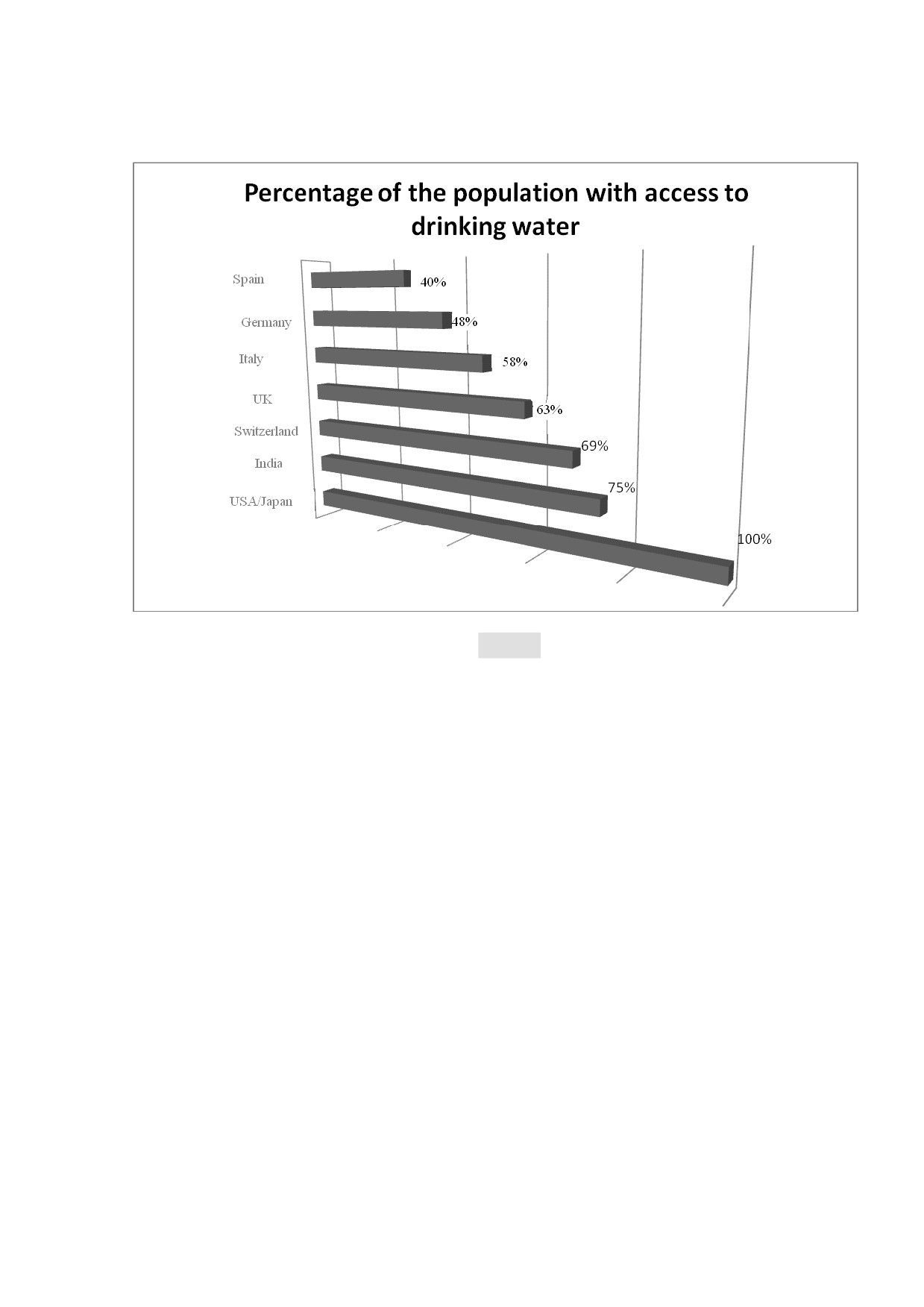
Analyze the information from CHARTS 1 and 2 concerning the water use in
different countries and make a mini presentation. Make your own
suppositions and comments summarizing the given information.
(Monologue; Time: 1, 5 - 2 minutes)
Then answer 3 questions of your partner, using the information from
CHARTS 1 and 2.
(Dialogue; Time: 2 minutes)
CHART 1
XII Всероссийская олимпиада школьников по английскому языку
2011 г.
III (заключительный) этап
стр. 2 из 2
CHART 2
Task 2
Listen to the presentation of your partner, based on CHARTS 1 and 2, on
GLOBAL Water Use by Sector and Water Consumption in Argentina and
Nigeria and ask
3 questions to get some NEW INFORMATION NOT
MENTIONED BY YOUR PARTNER.
(Dialogue; Time: 2 minutes)
YOUR ANSWERS WILL BE RECORDED

XII Всероссийская олимпиада школьников по английскому языку
2011 г.
заключительный этап
стр. 1 из 2
Карточка участника
Speaking
Set 2
Student 2
Task 1
Listen to the presentation of your partner, based on CHARTS 1 and 2 FROM
Set 1 concerning the water use in different countries, and ask 3 questions to
get some NEW INFORMATION NOT MENTIONED BY YOUR PARTNER.
(Dialogue; Time: 2 minutes)
Task 2
Analyze the information from CHARTS 1 and 2 Set 2 about GLOBAL Water
Use by Sector and Water Consumption in ARGENTINA and NIGERIA and
deliver a mini presentation summing up the information from both charts.
Make your suppositions and comments concerning the given data.
(Monologue; Time: 1, 5 - 2 minutes)
Then answer 3 questions of your partner, using the information from
CHARTS 1 and 2.
(Dialogue; Time: 2 minutes)
CHART 1
CHART 2
XII Всероссийская олимпиада школьников по английскому языку
2011 г.
заключительный этап
стр. 2 из 2
Water consumption in ARGENTINA and NIGERIA in 2000
Irrigated
Water
land/Water
Water consumption
Country
Population
consumption
consumption
per person
in industry
in
agriculture
156 100 sq
ARGENTINA
34.6 mln
1 200 km3
km/ 3000
600 liters
km3
9 570
NIGERIA
149.5 mln
700 km3
sq km/2000
1 300 liters
km3
YOUR ANSWERS WILL BE RECORDED

XII Всероссийская олимпиада школьников по английскому языку
2011 г.
заключительный этап
стр. 1 из 1
Listening & Reading
KEY
1
A
B
2
A
B
3
A
B
4
A
B
5
A
B
6
A
B
7
A
B
8
A
B
9
A
B
10
A
B
11
A
B
С
D
12
A
B
С
D
13
A
B
С
D
14
A
B
С
D
15
A
B
С
D
16
A
B
С
D
17
A
B
С
D
18
A
B
С
D
19
A
B
С
D
20
A
B
С
D
21
A
B
С
D
22
A
B
С
D
23
A
B
С
D
24
A
B
С
D
25
A
B
С
D
26
A
B
С
D
27
A
B
С
D
28
A
B
С
D
29
A
B
С
D
30
A
B
С
D

XII Всероссийская олимпиада школьников по английскому языку
2011 г.
заключительный этап
стр. 1 из 1
Use of English
Key
1
A
B
C
2
A
B
C
3
A
B
C
4
A
B
C
5
A
B
C
6
A
B
C
7
A
B
C
8
A
B
C
9
A
B
C
10
A
B
C
11
A
B
C
D
E
12
A
B
C
D
E
13
A
B
C
D
E
14
A
B
C
D
E
15
A
B
C
D
E
16
taboo
17
aim
18
subject
19
establishment
20
air
21
boost
22
audience
23
fact
24
prime
25
priorities
26
as soon as possible
27
by the way
28
care of
29
extension
30
for your information/ for your interest
XI Всероссийская олимпиада школьников по английскому языку
2010 г.
III (региональный) этап
стр. 1 из 1
Listening
Task 1
Listen to the dialogue and decide to whom - John (A), Sarah (B) or to both of them (C)
refer the following statements. You’ll hear the dialogue twice.
John
Sarah
Both
1
Have/has father’s birthday in August
A
B
C
2
Think/s that Susan’s newborn baby is big
A
B
C
3
Think/s that Susan’s baby got a good name
A
B
C
4
Suggest/s visiting Susan and her baby
A
B
C
5
Have/has a car which needs repair
A
B
C
6
Live/s next to the State Bank
A
B
C
7
Suggest/s presenting to Susan a plant in a pot
A
B
C
8
Suggest/s chocolates as a present for Susan
A
B
C
9
Suggest/s buying a soft toy as a present for the baby
A
B
C
10
Propose/s to buy all the presents
A
B
C
Task 2
Listen to a part of a lecture and decide whether the following statements are True (A) or
False (B). You’ll hear the text twice.
According to the lecturer…
True
False
11
… the culture shock is experienced by every person making the first trip
A
B
to another country.
12
… the culture shock is viewed as application of different cultural rules.
A
B
13
… the culture shock is a relatively simple thing.
A
B
14
… he plans to conclude his lecture describing his own experience with the
A
B
culture shock.
15
… a person grows up relying on the rules existing in his/her social group.
A
B
16
… a person always has knowledge of the existing social rules.
A
B
17
… the social rules are not important if a person doesn’t encounter a social
A
B
group living under a different set of rules.
18
… the culture shock is sure to take place when you are having cold water
A
B
poured over you.
19
… the culture shock serves as a behaviour guide in a different culture.
A
B
20
… experiencing the culture shock people often behave unreasonably.
A
B
Transfer your answers to the ANSWER SHEET!
XI Всероссийская олимпиада школьников по английскому языку
2010 г.
III (региональный) этап
Listening
ANSWER SHEET
1
A
B
C
2
A
B
C
3
A
B
C
4
A
B
C
5
A
B
C
6
A
B
C
7
A
B
C
8
A
B
C
9
A
B
C
10
A
B
C
11
A
B
12
A
B
13
A
B
14
A
B
15
A
B
16
A
B
17
A
B
18
A
B
19
A
B
20
A
B
XI Всероссийская олимпиада школьников по английскому языку
2009-10 г. III (региональный) этап
стр. 1 из 5
Reading
Time: 45 minutes
Text 1
Task 1
Read the article and match the paragraph summaries (A-G) from the box below with each
paragraph (1-7).
A A language Ken helped save
B Ken’s ability to learn languages quickly
C How Ken learnt languages
D Ken’s origins
E Reasons for protecting languages under threat
F
Ken’s involvement in language theory
G
The biological basis of language
Kenneth Hale, Master Linguist
1
SOMETIMES Kenneth Hale was asked how long it would take him to learn a new
language. He thought ten or fifteen minutes would be enough to pick up essentials if
he were listening to a native speaker. After that he could probably converse;
obviously not fluently, but enough to make himself understood. To those whose
education, however admirable in other respects, had provided only rudimentary
language skills, he seemed a marvel.
8
2
As many of these languages had no written grammar or vocabulary, and indeed
were spoken by few people, Kenneth picked them up orally. His tip for anyone who
pressed him for advice on learning a language was to talk to a native speaker. Start
with parts of the body, he said, then common objects. After learning the nouns, you
can start to make sentences and get attuned to the sounds.
9
3
This is all the more confusing as language is much more complex than, say, simple
arithmetic, which often takes years to master. It is often hypothesised that language
is an innate human faculty, with its own specialised system in our brain.
10
4
He spent his childhood on a ranch in Arizona and started his education in a one-
roomed school in the desert. Many years later, lecturing at MIT, he still felt most
comfortable in cowboy boots. On his belt was a buckle he had won at a rodeo by
riding bulls, and he had the slightly bowed legs of a horseman. His students were
impressed that he could light a match with his thumbnail.
11
XI Всероссийская олимпиада школьников по английскому языку
2009-10 г. III (региональный) этап
стр. 2 из 5
5
One Indian language at its last gasp was spoken by the Wopanaak, the tribe that
greeted the Pilgrim Fathers in 1620. It is now spoken again by several thousand
people around Cape Cod. A Wopanaak who studied under Kenneth is preparing a
dictionary of her language.
‘Ken was a voice for the voiceless,’ said Noam
Chomsky. And he worked tirelessly to learn endangered languages.
12
6
Despite these setbacks, Ken did contribute to an understanding of the apparently
innate human capacity for speech. He made a number of what he called ‘neat’
discoveries about the structure of language, and had an instinctive sense of what all
languages had in common. After his retirement from MIT, he said he would ‘really
get down to work’, an ambition he was unable to achieve, though his other
achievements were considerable.
13
7
And these people are often particularly upset by a scholarly argument which
surfaces from time to time about the desirability of keeping alive languages that
have little chance of survival. Occasionally the argument turns nationalistic. For
example, is what Kenneth called the ‘revitalisation’ of Welsh merely a nuisance in
Britain where, obviously, English is the working language? Kenneth Hale had an
indignant answer to that question. ‘When you lose a language’, he told a reporter,
‘you lose a culture, intellectual wealth, a work of art. The damage that’s done is
irreparable. It’s like dropping a bomb on a museum, the Louvre.’
Task 2
Now choose from the paragraphs A-G the one which fits each gap in the text (8-13). There
is one paragraph which you do not need to use.
A And he had discovered his talent for language when playing with Indian friends who
taught him Hopi and Navajo. Learning languages became an obsession. In Spain he
picked up Basque, in Ireland he learnt Gaelic, and he mastered Dutch within a week. He
sought to rescue languages that were dying out.
B And so he was. He had a gift. But he was also an academic, a teacher of linguistics at the
Massachusetts Institute of Technology (MIT). He was aware that many otherwise clever
people find learning a second language extremely hard. He sought to find laws and
structures that could be applied to all languages and the search took him into many
linguistic byways, to the languages of Native Americans and Australian aborigines and
the Celtic fringes of Europe.
C However, for Kenneth bilingual dictionaries were an anathema and banned in his classes.
He held that meanings were too fluid to be captured and readily translated word-for-word
from one language to another. He always told his students that meaning was intuitive:
you either grasped it, or you didn’t.
D In addition to his feat of learning so many languages, he is likely to be remembered by
The Green Book of Language Revitalisation, which he helped to edit. It was warmly
welcomed, especially by those who may be a touch aggrieved by the spread of English,
which is blamed for brutally sweeping other languages aside.
XI Всероссийская олимпиада школьников по английскому языку
2009-10 г. III (региональный) этап
стр. 3 из 5
E Kenneth could converse in about 50 languages, perhaps a world record. He was the last
person on earth to speak some languages. Hundreds are disappearing, he said. ‘They
became extinct, and I had no one to speak them with.’
F
Some students of linguistics believe that such an ability, if it exists, is normally lost at the
age of 12. But for Kenneth it was around this age that his interest in language was just
starting.
G Still, there is much more to language than that. Noam Chomsky, like Kenneth a teacher
of linguistics at MIT, wrote: ‘Language is really weird. There is nothing else in the
natural world that even approaches its complexity. Although children receive no
instruction in learning their native language, they are able to fully master it in less than
five years.’
Text 2
Task 3
You are going to read an extract from an autobiography. For questions 14-20, choose the
answer (A, B, C or D) which you think fits best according to the text.
A Visit Home
Amid the swarming, clattering travellers, railway staff and suitcases, I saw the thick, dark
eyebrows of my brother Guy lift by approximately one millimetre in greeting as I came down the
steps of the footbridge and out into the station forecourt. Guy speaks like most men in the village
we come from, i.e. not at all until he has spent five minutes considering whether there are other
means of communication he can use instead. His favourites are the eyebrow-raise, the shrug, and
the brief tilt of his chin; if he is feeling particularly emotional, he may perform all three together.
That morning, as I worked my bags through the other passengers, he kept his eyebrows raised.
Standing in his work clothes, he looked rather out of place, resembling a large, solitary rusty nail
in the midst of, but apart from, the crowd of people: his steel-capped boots, battered, formless
jacket and heavy stubble seemed to be causing many people to give him a wide berth1, diverting
their path to the exit rather than heading for it directly.
‘Hello, Guy’, I said.
‘Now then,’ he replied. ‘Give me one of your bags.’
‘Thank you,’ I said, and passed him a large bag.
‘Whatever have you got in here?’ he exclaimed.
My brother is appalled by indulgences such as luggage, although his exclamations are
less aggressive than resignedly bemused. With Guy, you have to understand that when he asks
what on earth you’ve got in a bag, it is a way of saying, ‘Hello, how are you?’
‘It’ll be the computer that’s heavy. And there are some books,’ I explained.
‘Books,’ he said wearily, shaking his head.
‘Sorry.’
‘Doesn’t matter,’ he said. ‘It’s not that heavy.’ He yanked the bag up onto his shoulder.
‘It’s nice to see you, Guy.’
Guy raised his eyebrows and chin five millimetres, and strode off towards the car park.
1 a berth - a place for a ship or boat to stay in a port
XI Всероссийская олимпиада школьников по английскому языку
2009-10 г. III (региональный) этап
стр. 4 из 5
I felt relieved by his distracted, unemotional expression because it was usual: since he
was a small child he had gone through much of life looking as if he was pondering2 the answer to
a complex mathematical problem. But as I caught up with him and looked at him from the side, I
noticed dark half-circles below his eyes.
‘Are you all right, then?’ I said.
He raised his eyebrow again, and blew out through pursed lips. He looked as if he were
trying to pop the features off his face. Then he gave me the sort of consolation smile you give
people when they’ve asked a stupid question, batted his lashy black-brown eyes and shrugged.
‘You look a bit worn out,’ I said.
‘I should think I do,’ he said. ‘I’ve been doing twelve-hour days on the farm since July.
Sling your bags into the back of the van then.’
This was not as straightforward as he made it sound. He used the van as a workshop,
storage unit and mobile home, and so as well as the usual driving-dregs of sweet wrappers and
plastic bottles, there was farm equipment of an often surprising scale - straw bales, black
polythene barrels, bundles of shovels and forks, metal toolboxes which were themselves almost
as large as small cars, and other tools which I did not recognise or understand. Intermingled with
that were random, inexplicable household articles: sofa cushions, half a dozen plant pots and a
roll of carpets.
I gingerly3 balanced my bags on some boxes, and then walked round the van and climbed
into the front passenger seat. Guy stamped down the accelerator and we shot out of the car park.
Guy looked straight ahead into the traffic, lifted his eyebrows and moved his mouth in what may
or may not have been a grin. As we drove through the city, I watched his face to try to catch his
expression when the half-grin lapsed, but he just lost himself in nonchalant concentration on the
other cars and vans around us. For something to do, I turned on the radio and began retuning it.
This caused a very loud static noise to fill the cab, and Guy to jerk round in his seat, shouting,
‘Don’t fiddle with that radio.’
I snapped it off, and looked at him again. ‘Sorry’.
‘Never mind,’ he said. ‘It only plays one station and it takes me ages to get that. There are
some CDs in the glove compartment. Put one of those on instead.’
I put a CD on but as we accelerated off at the bypass roundabout the music was drowned
out by the engine noise anyway.
It takes only twenty minutes to drive through the hills to our village, but that day the
journey seemed to take forever. Neither of us could think of anything to say to each other so Guy
pretended to concentrate on the speed of his windscreen wipers which were keeping the driving
rain off the windscreen so he could see the road ahead. I, on the other hand, leant my forehead
against the side window, looking out at the scenery which was so familiar to me but was actually
obliterated by the horizontal rain.
14. What aspect of Guy’s personality is the writer reinforcing when he says ‘if he is feeling
particularly emotional, he may perform all three together’?
A His facial expressions are difficult to interpret.
B His speech is always backed up by non-verbal expressions.
C He is very controlled when expressing his feelings.
D He can give out conflicting messages about what he is thinking.
15. What is meant by many people giving Guy ‘a wide berth’?
2 to ponder - to think about something for a long time
3 gingerly - in a way that is careful or cautious
XI Всероссийская олимпиада школьников по английскому языку
2009-10 г. III (региональный) этап
стр. 5 из 5
A People were staring at him because of the way he looked.
B People were getting annoyed with him because he was in their way.
C People did not understand what he was doing there.
D People did not feel comfortable getting too close to him.
16. How does the writer feel when Guy complains about his bag?
A He knows he shouldn’t take the complaint seriously.
B He thinks Guy is making an unnecessary fuss.
C He wishes Guy had not greeted him with a complaint.
D He is embarrassed about bringing so much luggage.
17. As they walk towards the car park, the writer realises that
A he is not being sensitive enough about Guy’s situation.
B there is a change in Guy’s normal behaviour.
C Guy’s expression seems more worried than usual.
D he had more reason to be concerned about Guy than he initially thought.
18. What does the writer exaggerate when he is describing the back of the van?
A the combination of items
B the size of the items
C how old the items were
D how many items were unnecessary
19. Guy gets annoyed in the van because
A the radio doesn’t work properly.
B he prefers to listen to CDs.
C the radio made a terrible noise.
D his brother touched the radio.
20. What does the writer say about the journey in the van?
A He preferred to look out at the countryside rather than talk.
B He didn’t speak to Guy because the driving conditions were difficult.
C The fact that they travelled in silence seemed to make it longer.
D It was much slower than usual because of the weather.
TRANSFER ALL YOUR ANSWERS TO YOUR ANSWER SHEET
XI Всероссийская олимпиада школьников по английскому языку
2009 -2010г.III (региональный) этап
Reading
ID NUMBER
ANSWER SHEET
Item
1
2
3
4
5
6
7
8
9
10
11
12
13
14
A
B
C
D
15
A
B
C
D
16
A
B
C
D
17
A
B
C
D
18
A
B
C
D
19
A
B
C
D
20
A
B
C
D
XI Всероссийская олимпиада школьников по английскому языку
2010 г.
III (региональный) этап
стр. 1 из 2
Карточка участника
Speaking
Set 1
Student 1
Task 1
Deliver a mini report, using the information from CHART 1 (Monologue; Time: 1,5 - 2
minutes).
Then answer 3 questions of your partner, using the information from CHART 1
(Dialogue; Time: 2 minutes).
CHART 1
Changes in modes of travel in England between 1985 and 2000
Average distance in miles travelled per person per year, by mode of travel.
1985
2000
Walking
255
237
Bicycle
51
41
Car
3,199
4,806
Local bus
429
274
Long distance bus
54
124
Train
289
366
Taxi
13
42
Other
450
585
All modes
4,740
6,475
XI Всероссийская олимпиада школьников по английскому языку
2010 г.
III (региональный) этап
стр. 2 из 2
Task 2
Listen to the report of your partner, based on CHART 2, and ask 3 questions about the
information presented in CHART 2 (Dialogue; Time: 2 minutes).
CHART 2
Underground railway systems in six cities
City
Date opened
Kilometres of route
Passengers per year
(in millions)
London
1863
394
775
1900
199
1191
Paris
1927
155
1927
Tokyo
1976
126
144
Washington DC
1981
11
45
Kyoto
2001
28
50
Los Angeles
YOUR ANSWERS WILL BE RECORDED
XI Всероссийская олимпиада школьников по английскому языку
2010 г.
III (региональный) этап
стр. 1 из 2
Карточка участника
Speaking
Set 1
Student 2
Task 1
Listen to the report of your partner, based on CHART 1, and ask 3 questions about the
information presented in CHART 1 (Dialogue; Time: 2 minutes).
CHART 1
Changes in modes of travel in England between 1985 and 2000
Average distance in miles travelled per person per year, by mode of travel.
1985
2000
Walking
255
237
Bicycle
51
41
Car
3,199
4,806
Local bus
429
274
Long distance bus
54
124
Train
289
366
Taxi
13
42
Other
450
585
All modes
4,740
6,475
XI Всероссийская олимпиада школьников по английскому языку
2010 г.
III (региональный) этап
стр. 2 из 2
Task 2
Deliver a mini report, using the information from CHART 2 (Monologue; Time: 1,5 - 2
minutes).
Then answer 3 questions of your partner, using the information from CHART 2
(Dialogue; Time: 2 minutes).
CHART 2
Underground railway systems in six cities
City
Date opened
Kilometres of route
Passengers per year
(in millions)
London
1863
394
775
1900
199
1191
Paris
1927
155
1927
Tokyo
1976
126
144
Washington DC
1981
11
45
Kyoto
2001
28
50
Los Angeles
YOUR ANSWERS WILL BE RECORDED
XI Всероссийская олимпиада школьников по английскому языку
2010 г.
III (региональный) этап
стр. 1 из 2
Карточка участника
Speaking
Set 2
Student 1
Task 1
Deliver a mini report, using the information from CHART 1 (Monologue; Time: 1,5 - 2
minutes).
Then answer 3 questions of your partner, using the information from CHART 1
(Dialogue; Time: 2 minutes).
CHART 1
Entertainment equipment in children’s bedroom, by age of children (UK 2002)
Age of children
TV
Internet
Games
Computers
Satellite
TV
4-9
50%
5%
27%
10%
5%
years
10-15
73%
7%
40%
23%
3%
years
XI Всероссийская олимпиада школьников по английскому языку
2010 г.
III (региональный) этап
стр. 2 из 2
Task 2
Listen to the report of your partner, based on CHART 2, and ask 3 questions about the
information presented in CHART 2 (Dialogue; Time: 2 minutes).
CHART 2
Holidays by age of UK citizens (per person, 2002)
Holidays spent in
Under 30
30-49 years
50-64 years
65-75 years
Over 75
years
UK
£100
£150
£160
£210
£125
Abroad
£500
£730
£760
£720
£200
YOUR ANSWERS WILL BE RECORDED
XI Всероссийская олимпиада школьников по английскому языку
2010 г.
III (региональный) этап
стр. 1 из 2
Карточка участника
Speaking
Set 2
Student 2
Task 1
Listen to the report of your partner, based on CHART 1, and ask 3 questions about the
information presented in CHART 1 (Dialogue; Time: 2 minutes).
CHART 1
Entertainment equipment in children’s bedroom, by age of children (UK 2002)
Age of children
TV
Internet
Games
Computers
Satellite
TV
4-9
50%
5%
27%
10%
5%
years
10-15
73%
7%
40%
23%
3%
years
XI Всероссийская олимпиада школьников по английскому языку
2010 г.
III (региональный) этап
стр. 2 из 2
Task 2
Deliver a mini report, using the information from CHART 2 (Monologue; Time: 1,5 - 2
minutes).
Then answer 3 questions of your partner, using the information from CHART 2
(Dialogue; Time: 2 minutes).
CHART 2
Holidays by age of UK citizens (per person, 2002)
Holidays spent in
Under 30
30-49 years
50-64 years
65-75 years
Over 75
years
UK
£100
£150
£160
£210
£125
Abroad
£500
£730
£760
£720
£200
YOUR ANSWERS WILL BE RECORDED
XI Всероссийская олимпиада школьников по английскому языку
2009-2010 г.III (региональный) этап
стр. 1 из 5
Use of English
Time: 45 minutes
Task 1
For questions 1-10 read the text below and decide which word (A, B, C or В) fits
the space best.
Example: (0) just
On the other hand?
We left-handed people lack collective pride. We (0) just try to get by, in our clumsy way. We
make (1)______ demands and we avoid a fuss. I used to say whenever someone watched me sign
my name and remarked that he or she was also left-handed: “You and me and Leonardo da
Vinci!” That was a weak joke, (2)________ it contained my often unconscious desire to belong
to Left Pride, a social movement that (3) _____ far doesn’t exist but I hope may one day come.
There are many false stories about the left-handed (4)______ circulation: for example, a few
decades ago someone wrote that Picasso was left-handed, and others kept repeating it, but the
proof is all (5)______ the contrary. The great genius Einstein is often still claimed as one of ours,
also (6)____ proof. And sadly there is also no truth in the myth that the left-handed tend to be
smarter and more creative.
(7)_____ the amount of research that has been carried out, researchers in the field still find it
hard to decide precisely what we mean by left-handed. Apparently a third of those who write
with their left hand throw a ball with their right. (8)____, those using their right hand for writing
rarely throw with their left. A difficult skill that becomes crucial at a most impressionable age,
writing defines (9)_____ you will call yourself. I have never used scissors, baseball bat, hockey
stick or computer mouse with anything but my right; (10)_____ so, I think I’m left-handed as
does everyone else.
1
A some
B few
C little
D any
2
A yet
B while
C still
D even
3
A so
B as
C this
D by
4
A on
B by
C in
D under
5
A for
B at
C to
D on
6
A despite
B without
C lacking
D beyond
7
A Although
B However
C Nevertheless D
Despite
8
A However
B Whereas
C Despite
D Unlike
9
A what
B how
C this
D which
10
A more
B yet
C even
D and
XI Всероссийская олимпиада школьников по английскому языку
2009-2010 г.III (региональный) этап
стр. 2 из 5
Task 2
For questions 11-20 match two parts of 10 idioms. There is one extra part
in the second column.
11 To be as alike as
A chalk and cheese
12 To be as different as
B daughter
13 To be the apple of
C the family
14 To be the black sheep of
D the mice will play
15 To be tied to
E thicker than water
16 To be your mother’s
F two peas in a pod
17 Blood is
G two sisters
18 Follow in
H your father’s eye
19 Twist someone round
I
your father’s footsteps
20 While the cat’s away
J
your little finger
K your mother’s apron strings
Task 3
For questions 21-31 Solve the clues and complete the puzzle. The puzzle
deals with different aspects of tourism. The sentence (0) is done for you as an
example.
0. The place where someone is going or where something is being sent or taken is called
destination.
21. A time, often one or two weeks, when people are free to do what they want is known
as a/an________________________.
22. A business, which represents one group of people when dealing with another group, is
called a/an _____________.
23. _______________ is the business of providing services for people who are on holiday.
24. An act of travelling in which you go somewhere, usually for a short time, and come
back again is called a/an_________________ .

XI Всероссийская олимпиада школьников по английскому языку
2009-2010 г.III (региональный) этап
стр. 3 из 5
25. _______________ is an agreement in which you pay a company money and they pay you
costs if you have an accident or injury.
26. An act of travelling from one place to another, especially in a vehicle is known as
_____________.
27. He was a young sailor on his first sea __________________________.
28. An American word meaning a period of time when you are allowed to be away from work
or school is called a ________________ .
29. A/an _____________ is a short trip arranged for a group of people so that they can visit a
place of interest, especially while they are already on holiday.
30. A place at a border where travellers’ bags are looked at to find out if any goods are being
carried illegally is known as _________________ .
31. The airport was jammed with thousands of ______________________ from delayed
or cancelled flights.
0
21
D
22
E
23
S
24
T
25
I
26
N
27
A
28
T
29
I
30
O
31
N
XI Всероссийская олимпиада школьников по английскому языку
2009-2010 г.III (региональный) этап
стр. 4 из 5
Task 4
For questions 32-36 look at the notices below with their ‘translations’ into
everyday English. Fill in the gaps. The sentence (0) is done for you as an
example.
Notices
‘Translations’
0. Reduce speed now.
Start going more slowly.
32. T_________ will be prosecuted.
People who walk on this private land will be
taken to court.
33. Kindly r_________ from smoking in the
Please don’t smoke in the theatre/hall.
auditorium.
Cyclists should get off their bikes here.
34. Cyclists d__________ here.
You can enter only if you have a ticket.
35. A__________ for ticket holders only.
You can be taken to court and made to pay
36. P________ for dropping litter up to £100
£100 for dropping rubbish.
fine.
Task 5
For questions 37-40 look at this gender-biased advertisement for an
airline. Change the underlined words into more neutral equivalents to make the
advertisement politically correct.
Example: 0. businessman - business person
Now! Eagle Airlines offers even more to those who need comfort.
Any 0. businessman knows 37. he must arrive fresh and ready for work no matter how long the
journey. With Eagle Diplomat-Class you can do just that. Let us fly you to your destination in
first-class comfort, looked after by the best-trained 38. air hostesses in the world. And, what’s
more, your 39. wife can travel with you on all international flights for only 25% of the normal
fare! We even sell fancy 40. American Indian crafts on board!
37. he - t__________
XI Всероссийская олимпиада школьников по английскому языку
2009-2010 г.III (региональный) этап
стр. 5 из 5
38. air hostesses - f_______ a_________
39. wife - s_________
40. American Indian - N________ A__________
TRANSFER ALL YOUR ANSWERS TO YOUR ANSWER SHEET
XI Всероссийская олимпиада школьников по английскому языку
2009-2010 г.III (региональный) этап
Use of English
ID NUMBER
Answer Sheet
Item
1
A
B
C
D
2
A
B
C
D
3
A
B
C
D
4
A
B
C
D
5
A
B
C
D
6
A
B
C
D
7
A
B
C
D
8
A
B
C
D
9
A
B
C
D
10
A
B
C
D
11
12
13
14
15
16
17
18
19
20
21
22
23
24
25
26
27
28
29
30
31
32
33
34
35
36
37
38
39
40
XI Всероссийская олимпиада школьников по английскому языку
2010 г.
III (региональный) этап
9 - 11 классы
Participant’s ID number
Creative Writing
Write your own version using the beginning and the end of the story.
You should write about 230 - 270 words.
Time: 1 hour
During the Christmas rush in London the intriguing story was
reported of the tramp1 who apparently through no fault of his own found
himself locked in a well-known chain store late on Christmas
Eve._______________________________________________________________________
___________________________________________________________________________
___________________________________________________________________________
___________________________________________________________________________
___________________________________________________________________________
___________________________________________________________________________
___________________________________________________________________________
___________________________________________________________________________
___________________________________________________________________________
___________________________________________________________________________
___________________________________________________________________________
___________________________________________________________________________
___________________________________________________________________________
___________________________________________________________________________
___________________________________________________________________________
___________________________________________________________________________
___________________________________________________________________________
___________________________________________________________________________
___________________________________________________________________________
___________________________________________________________________________
___________________________________________________________________________
The tramp was released from prison after seven days. The judge
awarded no compensation to the store for the food and drinks the tramp
had consumed.
YOU CAN USE THE OPPOSITE SIDE
1 Tramp - бродяга

XI Всероссийская олимпиада школьников по английскому языку
2010 г.
III (региональный) этап
Listening
KEY
1
A
B
C
2
A
B
C
3
A
B
C
4
A
B
C
5
A
B
C
6
A
B
C
7
A
B
C
8
A
B
C
9
A
B
C
10
A
B
C
11
A
B
12
A
B
13
A
B
14
A
B
15
A
B
16
A
B
17
A
B
18
A
B
19
A
B
20
A
B
XI Всероссийская олимпиада школьников по английскому языку
2010 г.
III (региональный) этап
Методические рекомендации
Понимание устного текста
Listening
В комплект материалов, необходимых для проведения конкурса
понимания устного текста, входят:
1. Методические рекомендации
2. Описание процедуры проведения конкурса понимания устного текста
3. Текст задания
4. Ключи и транскрипция (для членов жюри)
5. Лист ответа (для каждого участника)
6. Аудиодиск
Задания по аудированию состоят из двух частей
(всего
20 заданий). На
выполнение всех заданий отводится 30 минут, включая время, отводимое на
инструктаж и внесение ответов в ответные листы. Чистое время звучания
записи 13 минут 18 секунд.
Первое задание - прослушивание диалога. После прослушивания (текст
звучит
2 раза) участникам предлагается правильно отсортировать
прослушанную информацию (правильно определить, к кому из участников
диалога относятся предлагаемые высказывания).
Текст второго задания представляет собой начало лекции о
«культурном шокеª. После прослушивания (текст прослушивается 2 раза)
участникам предлагается правильно отсортировать прослушанную информацию
(правильно определить соответствуют ли содержанию лекции предлагаемые
высказывания).
При подготовке материалов для конкурса понимания устного текста
методическая комиссия исходила из следующих положений:
1. Сложность текстов соответствует уровню В2-С1 по шкале Совета Европы.
2. По тематике тексты предлагают обсуждение тем как общебытового, так и
научно-популярного характера.
3. Более сложный текст (№2) сочетается с менее сложным (№1).
4. Речь говорящих четкая, находится в пределах литературной нормы; темп речи
естественный.
5. В текстах может содержаться до 5 % незнакомых слов, незнание которых
не должно препятствовать пониманию текста и выполнению заданий по
тексту.
Правильность выполнения заданий проверяется по ключам.
Критерии оценивания: За каждый правильный ответ дается 1 балл.
Максимальное количество баллов, которое можно получить за конкурс
Listening - 20 (двадцать).
XI Всероссийская олимпиада школьников по английскому языку
2009-2010 г.III (региональный) этап
Reading
KEYS
Item
1
B
2
C
3
G
4
D
5
A
6
F
7
E
8
B
9
G
10
F
11
A
12
E
13
D
14
C
15
D
16
A
17
D
18
A/В
19
D
20
C
содержание .. 4 5 6 7 ..