Amtrak. Service Standards Manual for Train Service and On-Board Service Employees (Version 6, 2011) - page 2
1.
Safety Calendar
For On-Board Service Employees
Accident prevention starts by knowing, understanding
and complying with Safety Instructions. Let them be
your guide each and every day.
Date
JAN
FEB
MAR
APR
1
2244 a
2240 c
2223 d
2020 c
2
2244 b
2240 d
2223 e
2020 d
3
2244 c
2240 e
2011
2031 a
4
2244 d
2240 f
2222 a
2031 b
5
2244 e
2240 g
2222 b
2031 c
6
2244 f
2240 h
2222 c
2031 d
7
2000 a
2240 i
2222 d
2031 e
8
2000 b
2004 a
2222 e
2031 f
9
2000 c
2004 b
2222 f
2031 g
10
2000 d
2004 c
2012 a
2021 a
11
2243
2004 d
2012 b
2021 b
12
2001 a
2226 a
2012 c
2021 c
13
2001 b
2226 b
2012 d
2021 d
14
2001 c
2226 c
2012 e
2021 e
15
2242 a
2226 d
2012 f
2021 f
16
2242 b
2005
2012 g
2021 g
17
2242 c
2225
2012 h
2202
18
2242 d
2006 a
2012 i
2022 a
19
2242 e
2006 b
2221
2022 b
20
2002 a
2006 c
2013
2022 c
21
2002 b
2006 d
2220 a
2022 d
22
2002 c
2224
2220 b
2201
23
2002 d
2010 a
2220 c
2023 a
24
2002 e
2010 b
2220 d
2023 b
25
2002 f
2010 c
2220 e
2023 c
26
2241 a
2010 d
2014
2023 d
27
2241 b
2223 a
2202
2023 e
28
2241 c
2223 b
2015
2023 f
29
2003
2223 c
2201
2023 g
30
2240 a
2020 a
2023 h
31
2240 b
2020 b
1-6
Safety
Safety Calendar
For On-Board Service Employees
Accident prevention starts by knowing, understanding
and complying with Safety Instructions. Let them be
your guide each and every day.
Date
MAY
JUN
JUL
AUG
1
2023 i
2120 d
2032 a
2025 b
2
2200 a
2120 e
2032 b
2040 a
3
2200 c
2120 f
2032 c
2040 b
4
2200 b
2120 g
2032 d
2040 c
5
2200 d
2027
2032 e
2040 d
6
2200 e
2107
2101 a
2040 e
7
2200 f
2028
2101 b
2072 a
8
2200 g
2106 a
2101 c
2072 b
9
2024 a
2106 b
2101 d
2072 c
10
2024 b
2106 c
2101 e
2072 d
11
2024 c
2106 d
2101 f
2041
12
2124 a
2106 e
2101 g
2071 a
13
2124 b
2106 f
2033 a
2071 b
14
2124 c
2029 a
2033 b
2071 c
15
2124 d
2029 b
2033 c
2071 d
16
2124 e
2105 a
2000 a
2071 e
17
2124 f
2105 b
2000 b
2071 f
18
2124 g
2105 c
2000 c
2071 g
19
2124 h
2105 d
2000 d
2071 h
20
2124 i
2105 e
2015 a
2071 i
21
2025 a
2105 f
2015 b
2071 j
22
2025 b
2105 g
2015 c
2071 k
23
2121 a
2030 a
2015 d
2043
24
2121 b
2030 b
2016 a
2070 a
25
2121 c
2030 c
2016 b
2070 b
26
2121 d
2104 a
2016 c
2070 c
27
2121 e
2104 b
2004 a
2070 d
28
2026
2104 c
2004 b
2070 e
29
2120 a
2104 d
2004 c
2044
30
2120 b
2102
2004 d
2061 a
31
2120 c
2025 a
2061 b
Service Standards Manual No. 6
1-7
Safety Calendar
For On-Board Service Employees
Accident prevention starts by knowing, understanding
and complying with Safety Instructions. Let them be
your guide each and every day.
Date
SEP
OCT
NOV
DEC
1
2061 c
2056 d
2120 g
2032 b
2
2061 d
2056 e
2027
2032 c
3
2061 e
2056 f
2107
2032 d
4
2061 f
2052
2029 a
2032 e
5
2061 g
2055
2029 b
2102
6
2045 a
2053
2106 a
2033 a
7
2045 b
2054
2106 b
2033 b
8
2045 c
2024 a
2106 c
2033 c
9
2045 d
2024 b
2106 d
2101 a
10
2045 e
2024 c
2106 e
2101 b
11
2045 f
2123 a
2106 f
2101 c
12
2045 g
2123 b
2030 a
2101 d
13
2045 h
2123 c
2030 b
2101 e
14
2045 i
2123 d
2030 c
2101 f
15
2060 a
2123 e
2105 a
2101 g
16
2060 b
2123 f
2105 b
2028
17
2060 c
2123 g
2105 c
2100 a
18
2060 d
2057
2105 d
2100 b
19
2060 e
2122
2105 e
2100 c
20
2060 f
2103
2105f
2100 d
21
2060 g
2022 a
2105 g
2100 e
22
2050 a
2022 b
2031 a
2100 f
23
2050 b
2022 c
2031 b
2100 g
24
2050 c
2022 d
2031 c
2100 h
25
2050 d
2026
2031 d
2100 i
26
2050 e
2120 a
2031 e
2100 j
27
2051
2120 b
2031 f
2100 k
28
2056 a
2120 c
2031 g
2100 l
29
2056 b
2120 d
2103
2100 m
30
2056 c
2120 e
2032 a
2042
31
2120 f
2043
1-8
Safety

2. Safety Instruction Index
Safety Instructions
Instruction Number
Professional Conduct & Responsibilities
2000-2006
Personal Protective Equipment & Clothes
2010-2016
Moving about Equipment/Facilities
2020-2033
Housekeeping
2040-2045
Tools
2050-2057
Elevators/Escalators
2060-2061
Wheelchair/Special Chairs
2070-2072
Lifting and Stacking
2100-2107
Moving and Transferring
2120-2124
General
2200-2202
Kitchen
2220-2226
Boarding/Detraining
2240-2242
En Route - On Train
2243-2244
3. Safety Instructions
Professional Conduct and Responsibilities
2000 Supervisor’s Responsibilities
Supervisors at all levels are responsible for:
a) Issuing safety instructions and ensuring the safe
performance of all employees.
b) Familiarizing all employees with unusual hazards
before starting to work.
c) Personally and continuously supervising work,
when practical, that involves unusual hazards, and
d) Regularly observing all employees under their
jurisdiction, including employees from another
department, in regard to safe work practices and
rule compliance and promptly advising their
immediate supervisors of any employees who
resist correction and/or do not improve their
unsafe work practices.
2001 Employee’s Responsibilities
All Transportation employees are responsible for the
safety of themselves, their fellow employees, and passengers.
Therefore, it is important to:
a) Be knowledgeable of all safety rules applicable to
their work.
b) Act in accordance with these rules to ensure a
safe working environment.
c) Report defects in equipment, tools, material or
facilities to their immediate supervisor when
applicable, or complete the appropriate form.
Service Standards Manual No. 6
1-9
2002 Inform Supervisor
Immediately inform your supervisor and/or home crew
base of any:
a) Injury.
b) Accident.
c) Safety-related matter.
d) Incident.
e) Unsafe working conditions.
f) Illness occurring on the job; promptly complete.
injury report forms, as applicable.
2003 Medical Attention
Immediately apply first aid or obtain medical attention
for every injury, if practical. Report details of the injury and
obtain treatment from a company doctor or a qualified
physician as soon as possible.
2004 Demeanor
Your personal demeanor must be free of:
a) Scuffling.
b) Practical jokes.
c) Horseplay.
d) Careless or otherwise unsafe acts.
2005 Behavior
Your personal behavior must not interfere with or distract
fellow employees in the safe performance of their duties.
Always be attentive to and aware of safety procedures.
2006 At Other Work Locations
When you are at any Amtrak work location other than
your own, you must:
a) Introduce yourself to the person in charge.
b) Familiarize yourself with the rules for that location.
c) Obey all pertinent rules and regulations.
d) Ask a supervisor for clarification if you have a
question.
Personal Protective Equipment and Clothing
2009 Personal Protective Equipment (PPE)
When required, use only Amtrak-approved personal
protective equipment.
2010 Suitable Clothing
When on duty, you must wear suitable clothing that will
not interfere with your performance, and:
a) Is not torn or loose enough to be hazardous.
Examples:
• Neckties must be securely tucked in, clipped or
tacked.
1-10
Safety
• Pant legs must not be so long that they hang
over shoes or interfere with walking.
• Shirts and blouses must not be torn or hanging
loose.
b) Is not greasy, oily, or saturated with flammable
substances.
c) Is nonflammable.
d) Gives enough protection.
Examples:
• When working in a kitchen, a cook’s jacket
must be worn at all times,
properly buttoned, with sleeves fully extended.
• When handling dry ice or any potentially
hazardous material, employees
must wear Amtrak-approved protective gloves.
• When entering walk-in refrigerators/freezers,
employees must wear warm,
protective clothing.
2011 Head/Ear Coverings
Use only Amtrak-approved head or ear coverings, ensuring
they do not interfere with seeing or hearing. Employees
are responsible for obtaining the current list of approved
head and ear coverings.
2012 Suitable Shoes and Overshoes
All employees must wear suitable shoes and overshoes,
which:
a)
Are fully laced, buckled, zipped or otherwise
fastened. (Low-cut shoes secured by a built-in
elastic band over the bridge of the foot are also
acceptable.)
b) Are not sandals, open-toed, open-heeled, wooden
soles, canvas or shoes designed to not be fastened.
c)
Are not platform-type soles or soles that are
loose, thick, or cracked.
d) Do not have a metal plate or cleat on the sole or
heel.
e)
Do not have laces dangling far enough to cause
tripping.
f)
Do not have heels over 2 inches or elevated toes.
g)
Are not canvas, suede, woven leather, plastic,
running shoes, leather athletic shoes, hiking or
working boots, clogs or thongs.
h) Provide ample protection in your working
environment.
i)
Have a definite heel. Heels that are built into
the shoes as an integral part of the bottom
constructions are acceptable.
Service Standards Manual No. 6
1-11
2013 Jewelry
Jewelry such as rings, bracelets, or chains, which are
potentially hazardous, must be removed while on duty.
2014 Amtrak Protection Devices
When required, use only Amtrak-approved safety
protective equipment.
2015 Approved Head and Eye Protection
Wear only Amtrak-approved head protection and eyewear
while on duty in areas requiring that clothing, and follow
these guidelines:
a) Wear only Amtrak-approved accessories when
wearing head protection.
b) Wear your hard hat properly fitted with
brim forward.
c) Approved eye protection must be clean and
properly fitted when working in or near work
that requires eye protection.
d) Employees who wear prescription glasses must
wear Amtrak-approved safety goggles, unless
they have obtained Amtrak-approved safety
prescription glasses.
2016 Head and Eye Protection Required
Amtrak-approved head protection and eyewear must
be worn by the following On-Board, Stations, and
Commissary personnel:
a) All On-Board Services employees performing
utility and sanitation work, including ready crews.
b) All dedicated Baggage employees.
c) All Commissary employees while performing
their duties.
Moving About Equipment/Facilities
2020 Authorized Route
a) Use only the authorized route or path while
going to or from work and while moving from
one point to another while on duty.
b) Walk, don’t run.
c) Never walk, step, or in any way touch rail, rail
apparatus, pipe, or any potentially hazardous
object in your path.
d) Stay clear of tracks, except when necessary in the
proper performance of duty.
1-12
Safety
2021 Halls and Stairs
When going through halls/passageways or around corners
or up/down stairs, you must:
a) Walk, not run.
b) Keep to the right.
c) Keep hands out of pockets.
d) Use handrails, if available.
e) Use every step on stairs.
f) Be alert and avoid tripping and slipping hazards.
g) Ensure secure footing.
2022 Vestibules
Do not attempt to pass through the vestibule of a car that
is blocking a crossing at a station. When it is necessary to
make a cut:
a) Announce throughout the train that a cut will be
made.
b) Retract the curtains and secure end gates
between cars.
c) Wait until the cut has been made, then
d) Descend to the platform in accordance with safety
rule 2023.
2023 Walking or Standing
When walking or standing for any purpose, you must:
a) Cross or walk over a track only when no crossing
is provided.
b) Keep at least 20 feet from the end of a standing
car or train when crossing tracks.
c) Maintain sufficient lookout in both directions to be
alert to approaching equipment or close clearance
of equipment of structures.
d) Keep as far as practical from all passing trains.
e) Stay clear and maintain a sufficient lookout in
both directions, if equipment is approaching, and
ensure that no other equipment is approaching
on a nearby track.
f) Look for and avoid any opening, tripping, falling,
or slipping hazard.
g) Stop if it is necessary to look away from the
direction in which you are moving.
h) Not walk through steam/smoke/other vapor or
substance.
i) Not jump from any height. Use stairs, ladder, or ramp.
2024 Moving Equipment
Expect the train, self-propelled, or other equipment to move
at any time in any direction. Therefore, look in all directions:
a) Before getting on/off any equipment
Service Standards Manual No. 6
1-13
b) Before crossing a track, walk or driveway.
c) When pulling a hand truck or operating
self- propelled equipment across any track,
walk, or driveway.
2025 Leaning
Keep clear of and do not lean against:
a) A standing train.
b) Any self-propelled or other equipment.
2026 Using Hand Rails
Use handrails when getting on or off equipment, machinery,
cars, trucks, or trailers that are so equipped.
2027 Getting on Equipment
Do not get on or off any train, vehicle, self-propelled, or
other mobile equipment unless it is stopped.
2028 Three Points of Contact
When walking thru moving or standing equipment, in
order to reduce your chance of falling, maintain three
points of contact by extending your hands and arms to
keep contact with grab irons, handrails, seatbacks, luggage
racks or other bracing points.
2029 Getting off Equipment
Look in each direction before getting off a standing
train, self-propelled, or other equipment and always:
a) Look for and avoid any holes, slippery spots, or
obstructions.
b) Maintain a handhold until footing is firmly on the
platform or ground.
2030 Seat Belts
Follow these guidelines when in a vehicle or other
self-propelled equipment that is equipped with seat belts.
a) As soon as you sit down, promptly adjust the belt
around you with necessary slack for comfort, but
snug enough to ensure you will not be thrown
forward in the event of a collision, sudden
movement, or quick stopping.
b) Keep the belt secured around you until after the
vehicle has stopped and you are prepared to
leave.
c) The senior Amtrak employee in the vehicle must
ensure that the vehicle is not moved until all persons
are seated and have their seat belts secured.
1-14
Safety
2031 Opening/Closing Doors, Windows, Drawers, etc.
Follow these guidelines when opening or closing a door,
window, drawer (including filing cabinets and desk drawers),
bed, or other objects (including boxes and containers):
a) Face it.
b) Disconnect safety latches.
c) Use the knob, handle, or other safe means to
open or close it. If it is stuck, do not force it.
d) Keep your hands, feet, and other parts of your
body clear of the jamb or other pinch points.
e) Secure door, etc., while it is open if it is likely to
close, fall, or become a hazard. Engage safety
latches if it is designed or required to be secured.
f) Look for and avoid sharp edges of any object.
g) Secure or close the door, etc. as soon as you are
finished with it; never leave it open even if you
plan to return immediately.
2032 Standing/Sitting on Support
If it is necessary to stand, sit or place your weight on a
support and make sure it:
a) Is suitable.
b) Is not defective.
c) Will not wobble or move.
d) Will support your weight.
e) Is used for the purpose designed, including but
not limited to these examples:
• Chair or stool must have all legs on the floor.
• Step box must be place securely, not thrown.
• Never stand on the top rung of a ladder.
2033 Reaching
Before reaching, you must:
a) Visually inspect the area you are reaching into.
b) Ensure you have secure and stable footing.
c) Look for and avoid potentially hazardous conditions/
objects such as sharp edges, hot material, etc.
Housekeeping
2040 General Cleanliness
Keep the following areas clean, orderly, and free of dirt,
debris, grease spillage or items not required to be there.
a) Your work area.
b) Your locker.
c) The facility where you work.
d) Any equipment you use on the job.
e) Any machinery with which you work.
Service Standards Manual No. 6
1-15
2041 Refuse Disposal
Dispose of refuse, including garbage, bottles, or any such
items in the designated containers. Do not compact trash.
Fasten trash containers before disposal.
2042 Floors
Keep the floor and floor matting clean and free of all
slipping and tripping hazards. Spills should be cleaned
immediately.
2043 Storage
Store materials, supplies, or other items evenly and
securely on a shelf, rack, or pallet. Heavy items must be
placed on lower shelves and the bottom of the pallets.
2044 Flammable Items
Do not place any rag, paper, or other flammable item
above, below, or near any heat source, wiring or electrical
apparatus.
2045 Washing/Sanitizing
Follow these guidelines when you are washing, rinsing, or
sanitizing equipment.
a) Wear approved hand covering and other approved
personal protective equipment, as required.
b) Use only authorized chemicals, materials, and supplies.
c) Follow instructions for the proper use of soaps,
detergents, and chemicals.
d) Read the caution label and handling instructions.
e) Never mix cleaning agents in the same container.
This avoids poisonous gases from being created.
f) Read “Material Safety Data Sheets” available from
your supervisor if you are uncertain about what to do.
g) When handling chemicals, always wear protective
equipment designed for the chemical being handled.
h) Never switch the contents of bottles or store materials
to any other than the labeled container.
i) Ensure that chemicals are closed and stored properly
after use.
Tools
2050 General Use
When using any tool, equipment, machine, or utensil, you
must ensure that.
a) It is not defective.
b) It is used only for the purpose it is intended.
c) You have a sure grip on the handle.
1-16
Safety
d) It is cleaned and in good operating condition
when returned and stored.
e) You are qualified to operate it.
2051 Safe Placement
Do not place any tool, material, or other object above
floor or ground level in such a position that it can be
jarred or knocked off.
2052 Repairs
Do not operate, adjust, or make repairs to any tool,
equipment, machine or utensil unless you are qualified
and authorized to do so.
2053 Communication Devices
Radios and other communication devices must be used
in compliance with the existing rules and regulations to
ensure that safe and correct communication procedures
are followed.
2054 Hammer
Use the correct hammer to drive nails or other items. Do
not use a makeshift tool. Control the hammer swing; do
not over-swing.
2055 Clearance
Allow for clearance when near an employee who is
swinging a tool or when you are swinging a tool or other
object. Always look in all directions before swinging a
tool or other object.
2056 Using a Bar/Lever
Follow these guidelines when using a bar or lever.
a) Place it securely and with a firm bite under object.
b) Assume a properly braced position, not sitting
on, standing on, or straddling it.
c) Have all parts of your body in a position that will
not be caught between it and another object.
d) Move it slowly and steadily.
e) Frequently check base and contact points to
ensure stability.
f) Use suitable blocks under raised objects.
2057 Fasteners
Always remove and properly discard fasteners, including
metal staples, bands, or nails from boxes or cartons.
Service Standards Manual No. 6
1-17
Elevators/Escalators
2060 Riding/Operating an Elevator
When riding or operating an elevator, you must:
a) Require all persons to face the door or gate.
b) Not get on or off before it stops or the barrier is
completely open.
c) Not use the floor of a two-entrance elevator as a
passageway.
d) Not open the door, gate or barrier, until the
elevator is stopped.
e) Not exceed weight limits.
f) Not smoke.
g) Not reach through or place any part of your body
into the elevator shaft to open the door or operate
the controls.
h) Never use an elevator during a fire.
2061 Using an Escalator
When using a moving escalator, you must:
a) Keep one hand free and use handrail.
b) Keep both feet firmly on the step.
c) Not walk up or down steps.
d) Not handle more material than can safely be
transported.
e) Not transport hand trucks, carts, wheelchairs, or
strollers.
f) Make sure shoe laces and pant cuffs are not
dangling.
g) Be aware of shut off.
Wheelchair/Special Chairs
2070 Wheelchair Movement
Follow these guidelines when transporting a customer in
a wheelchair.
a) When seating the customer, make sure handbrakes
are locked.
b) Set wheelchair brakes when chair is not is use.
c) When taking a customer inside a building, over
a curb, across a crossover, or boarding the train,
turn wheelchair around so you are pulling the
wheelchair in backward.
d) When approaching cracks, holes, inclines, ramps,
dirt or uneven floor, slow wheelchair and proceed
with caution. In such cases, it is often best if the
wheelchair is pulled backward over the obstruction.
e) Seek assistance if necessary.
1-18
Safety
2071 Wheelchair Lift
Follow these guidelines when using a wheelchair lift.
Make sure:
a)
Equipment is in working order at all times.
b) Electrical socket is unplugged, if applicable,
before releasing wheelbrakes.
c)
Wheelchair lift is pulled to location needed. (One
or two people can do this).
d) Opening gate on wheelchair lift is secure before
pulling to location.
e)
Train has come to a complete stop before placing
wheelchair lift at vestibule door.
f)
Opening gate on lift is lined up with vestibule
before resetting wheelbrakes.
g)
No obstruction (poles, platform sign, etc.) is in
the way of the opening gate on wheelchair lift.
h) Wheelchair brakes are set after moving customer
into lift.
i)
The pulling handle on the lift is in the UP position
and locked along with locking the wheel-brakes,
when the wheelchair lift is not in use.
j)
The weight of the wheelchair and customer does
not exceed lift capabilities.
k) The immediate area is clear of other personnel.
2072 Straight-Back Chair
Follow these guidelines when using a straight-back chair.
Make sure:
a) The person being placed in the straight-back
chair for boarding and detraining is within a
manageable weight limit.
b) Two people always assist in handling a customer
in a straight-back chair.
c) The customer is securely strapped into the chair.
d) You use extreme caution when boarding and
detraining a customer in a chair.
Lifting and Stacking
2100 Lifting Materials
a) Follow these guidelines when lifting an object
alone, or with others: remove slipping or tripping
hazards when practical, or take the necessary
precautions to prevent slipping or tripping.
b) Know “walking conditions,” i.e. the locations of
other objects in your path and take the necessary
Service Standards Manual No. 6
1-19
precautions to avoid them. If required to walk
backward, walk slowly and avoid hazards by
looking behind you before walking.
c)
Lift only within your physical limitations. Test the
weight of the object before lifting.
d) Get help with heavy and/or unwieldy objects.
e)
Maintain secure footing with your feet clear of
the object you are carrying and as close together
as possible.
f)
Bend your knees, tuck your chin in, and keep
your back as erect as possible. Grip the object
firmly at the most suitable points, clear of sharp
edges or slivers.
g)
Slowly straighten your legs to avoid violent
pulls, jerks, sprains, and strains. Wear gloves
when practical. Move cautiously and carefully.
h) If you are losing your handhold, gradually lower
the object and tell the other person what is
happening.
i)
Immediately move clear of an object of which
you are losing control until it comes to rest.
j)
Never lift and twist your body while in the
process of lifting and placing an item.
k) Never attempt to move material that blocks your
vision without the assistance of another authorized
individual who can clearly guide you.
l)
If two people are lifting, discuss the movement
before lifting.
m) If help is needed, inform your supervisor.
2101 Multi-Person Handling
Follow these guidelines, when two or more people are
handling an object.
a) Observe the conditions and take the necessary
precautions to prevent the object(s) from getting
out of control.
b) Designate one person to give commands for lifting,
walking, placing or lowering having him/her at
the most advantageous point.
c) The designated person must inform the others of
exactly what is to be done and what the words of
a command will be. The commands should be
loud and distinct.
d) Listen to the designated person for commands.
Others must not give commands or talk
unnecessarily.
1-20
Safety
e) Lift and make moves only on command.
f) Place people according to size, strength and
experience.
g) Do not throw any objects.
2102 Placing Items
Only place an object, truck, mechanized equipment, tackle,
tool, pallet, material, board, or other items a minimum of 36
inches from track, edge of platform, roadway, doorway,
walkway or in its designated place. Do not block fire
extinguishers or hydrants.
2103 Moving Hand Trucks
Keep hand trucks balanced and controlled by having a
firm handhold on each handle or grip. Do not overload.
Use straps, if provided.
2104 Handling Luggage
When handling luggage, be sure that it is:
a) Clear of aisle, hallway, or passage between cars.
b) Placed securely to prevent from dislodging.
c) Not stacked on top of other pieces while in the
luggage rack.
d) Examined for protruding objects.
2105 Handling Food Modules
Follow these guidelines when handling food modules.
a) Examine the module for defects and promptly
repair or report them to your immediate supervisor.
b) Wear protective gloves and look for and avoid
sharp edges.
c) Close and secure the module door and only lift
and handle one module at a time.
d) Use extreme caution when carrying food modules
through equipment to avoid damaging the
equipment or causing personal injury.
e) Handle the modules properly and never throw
them.
f) Test the weight and do not overload; redistribute
weight if needed. Never place more than 40
pounds in a module.
g) Insert modules into cavity with care, watching for
pinch points.
Service Standards Manual No. 6
1-21
2106 Stacking Material
Follow these guidelines when stacking material.
a) Keep your hands, fingers, arms, and other parts of
your body away from pinch points.
b) Place material on a suitable and substantial
foundation and secure it, if necessary.
c) Place material in a safe and orderly manner and
avoid making a high or narrow pile.
d) Securely block material that is likely to shift or fall.
e) Limit stacks to 6 feet, 6 inches.
f) Always place heaviest items (i.e. cans, containers,
and crockery) on the bottom and ensure stability
of the stack.
2107 Loading/Securing Equipment
Properly load and secure all equipment. If necessary, use
rope or a similar device to prevent shifting or falling.
Moving and Transferring
2120 Moving Material
Follow these guidelines when moving material.
a) Make a visual inspection of the path to be used
before starting, then remove all hazards, i.e. tools,
materials or other objects.
b) Observe the location of obstructions and people
nearby when carrying material, especially when
making a turn.
c) Keep a safe distance behind material being
moved or carried by someone else. Do not follow
closely.
d) Always keep the material being moved—whether
manually on rollers, dollies or wheels—under
complete control at all times.
e) Never throw or drop the material.
f) Seek assistance in moving material when it is
obvious that it will require more than one person.
g) Never attempt to move material that blocks your
vision without the assistance of another authorized
individual who can clearly guide you.
2121 Moving Wheel Material
When moving wheeled, roller-borne, or manually handled
material, be sure to:
a) Keep it under complete control at all times with
respect to speed and position.
1-22
Safety
b) Keep it clear of your body or obstructions,
especially when rounding corners, moving up
or down a ramp, or through or past a door or
passageway.
c) Keep behind the material to the extent practical.
d) Keep your feet or hands clear of wheel, roller, or
other pinch points.
e) Examine it to see if it is designed to be pushed or
pulled.
2122 Moving Long or Heavy Objects
When moving long or heavy objects from a car or other
place, assign someone to a strategic point to protect others.
2123 At Seat Cart Service
Follow these guidelines when using the cart for “At Seat
Cart Service”.
a) When stationary always have brakes applied.
b) When serving passenger make sure brakes are
applied.
c) Be aware of where you are, readying yourself to
park the cart safely out of the way of boarding or
detraining passengers.
d) Ensure that doors are closed while moving the cart.
e) When proceeding through the vestibule pull the
cart carefully through this area.
f) Keep heavier items on bottom shelves of the cart.
g) Items on top of cart should be secured.
2124 Baggage and Material Transfer Plates
Observe these precautions when placing, using, or
removing a transfer plate.
a) Do not place a transfer plate in a car when the
car is coupled to a locomotive unless precautions
have been taken to prevent movement.
b) Do not place a transfer plate in a trailer when the
trailer is coupled to a tractor unless precautions
have been taken to prevent movement.
c) Place or remove the plate with a hand truck or
other suitable equipment.
d) When it is necessary to lift a plate by hand,
obtain a secure handhold, then hold it away from
your body when safe to do so.
e) Plates that are not equipped with permanent hold
devices must be secured when placed for use.
Service Standards Manual No. 6
1-23
f) Avoid running off the side or knocking the plate
out of place.
g) When not in use, plates must be stored in a flat
position with the slanted ends down. Keep them
clear of tracks, driveways, trucking areas, walkways,
or edges of platforms, unless there is a designated
safe place for storage.
h) Before placing or removing the plate, be sure that
all people and equipment are clear of the area.
i) Ensure compliance with all lifting procedures.
General
2200 On a Moving Train
On a moving train, assume and maintain a position with
firm footing at all times, especially under the following
conditions.
a) When you feel or hear an air brake application.
b) During an emergency brake application.
c) Going through crossovers.
d) Entering or leaving a station.
e) While moving on a curve.
f) Using one hand for balance (keep one hand free).
g) During switching or coupling operations in the
yards, terminals, or along the road when the train
is subject to having cars or engines added,
removed, or switched.
2201 Moving Cars
Keep your head, arms and other parts of your body
inside a moving car.
2202 Moving Trains
Do not board or detrain from a moving train.
Kitchen
2220 Dining Car Side Ladder
Follow these guidelines when ascending or descending a
Dining Car side ladder.
a) Face it.
b) Do not carry anything in either hand.
c) Have a secure handhold on the rail, making sure
the rail is clean of any foreign substance that
might be slippery.
1-24
Safety
d) Place your feet firmly with your instep on the
rung, and keep your body as close to the ladder
as possible.
e) Do not use the ladder when it is occupied by
anyone else.
2221 Safety Bar
The safety bar or safety gate on the side of the car must
be kept secured. The side door must be closed and
locked while the train is in motion.
2222 Pots/Pans
Always assume that every pot or pan in use is hot, and
follow these guidelines.
a) Use a dry, protective cloth or something similar,
such as an oven mitt, to protect yourself while
handling them. Never use a wet rag.
b) Keep the handle and spout clear of the edge of
the range, table, or aisle, when possible.
c) Fill a pan or other container with grease or liquid
to not more than three-fourths of its capacity.
d) Food must be placed gently, not dropped, into hot
grease or liquid. When turning meat or other food
in hot grease, turn it away from you to prevent
splattering.
e) When removing a lid from a kettle, pot, or other
container that contains hot food or liquid,
“crack” the lid at the point farthest from you to
permit steam to escape slowly.
f) Do not store pots and pans until they are empty
and clean.
2223 Knives/Cutlery
Knives and cutlery must be kept sharp to be useful.
Therefore, it is extremely important to handle these
utensils with care, and follow these instructions.
a) Cut away from you while using a knife to carve,
slice, trim or bone.
b) Keep fingers away from path of blade.
c) Do not store utensils until they are clean.
d) Make sure frozen food is thoroughly thawed
before cutting it with a knife.
e) When not in use return any sharp, edged, or
pointed knife or tool to its designated place in a
drawer, rack, shelf, or any other proper storage
Service Standards Manual No. 6
1-25
place. It must not be left exposed on a table,
dresser, or elsewhere, or covered with a towel,
utensil, or other item.
2224 Ensuring Stability
Always place a wet rag under a meat board or other
unstable item to ensure stability.
2225 Draining Sink
Do not drain the sink when the train is stopped at a
station or other facility.
2226 Food Trays
Employees carrying food trays must:
a) Not overload them.
b) Be given the right of way; with hot service a
priority.
c) Maintain stable footing.
d) Keep pitcher spouts turned to center of tray.
Boarding/Detraining
2240 Trap Doors
Follow these guidelines when handling a trap door.
a)
Place feet firmly.
b) Maintain a braced position.
c)
Keep all fingers clear of the latch and other pinch
points.
d) Use the handle, if so equipped, when opening or
closing the door, and keep your body clear of
movements.
e)
Release the latch with one foot. Place the tip of
the other foot lightly over the edge of the trap
door to prevent the door from suddenly springing
up.
f)
Never open or close the trap door while standing
on the ground or when train is in motion.
g)
Trap doors must be closed except when in
constant use.
h) Safety wall latch should be applied when trap
door is open.
i)
Do not jerk an unwieldy trap door in an attempt to
open it. Report the condition on the “Record of
Defect and Repair - MAP 21A” (NRPC 2775) form.
(Refer to Figure 1-1)
1-26
Safety
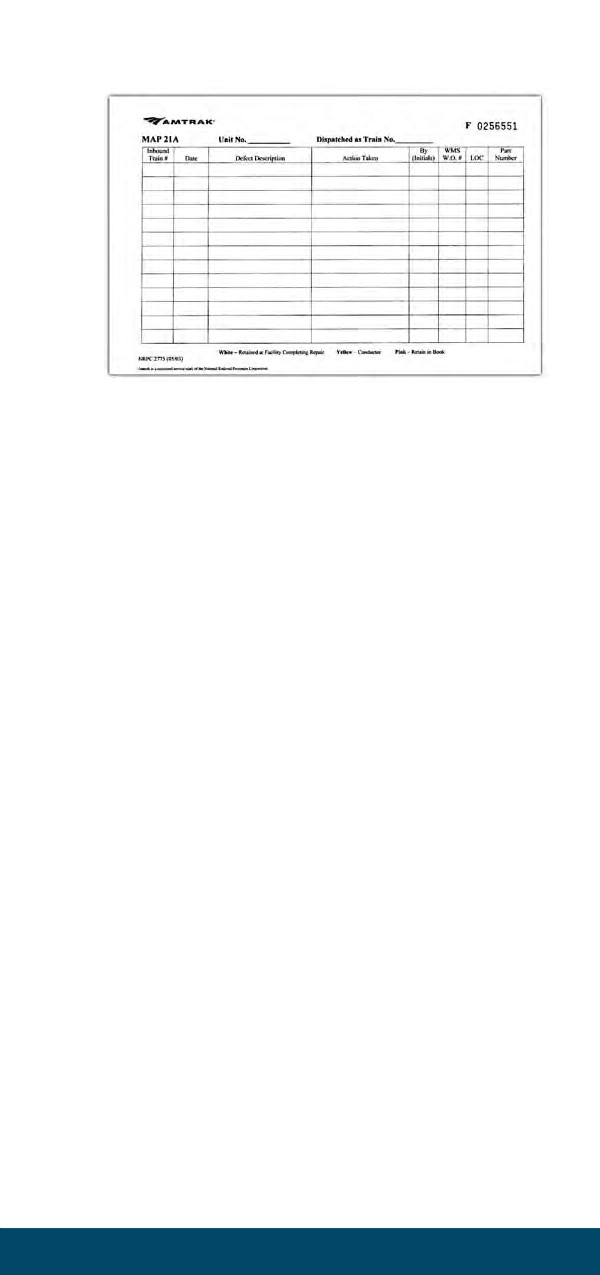
Figure 1-1 - Record of Defect and Repair - Map 21A (NRPC 2775)
2241 Detraining
When detraining, attendants must:
a) Precede passengers to ensure that ground or
platform is clear.
b) Never get off (or on) moving equipment under
any circumstances except in an emergency, and
c) Exercise every precaution to avoid slipping,
tripping, or falling when getting off (or on)
equipment, especially during periods of inclement
weather.
2242 Step Box
When handling a step box, be sure you:
a) Inspect for defects and replace when necessary.
b) Place it securely on the ground, never throw it.
c) Keep it clear of the passageway between cars.
d) Place it with the longest side parallel to the train.
e) Do not store it in vestibule or aisle.
Enroute - On Train
2243 Doors/Windows
Keep the vestibule doors, trap doors, and windows closed
and latched at all times unless the car is standing at a
station platform. Make sure they are closed and latched
before the train starts, and keep them closed and latched
until the train stops at the next station platform.
Service Standards Manual No. 6
1-27
2244 Berths
Follow these guidelines when lowering/raising
upper/lower berths.
a) Never stand under an upper berth when lowering it.
b) Always keep an arm or hand on the bed when
lowering it.
c) Use a work ladder or Amtrak approved berth
stool when making beds, not a berth ladder.
d) When closing, ensure the upper and lower berths
are secured, and attach safety latch.
e) Never use excessive force.
f) Do not leave work or berth ladders in aisles or
unsecured in rooms. When not in use, work or berth
ladders must be secured in the proper storage area.
C.
Job Briefing
All On-Board Service and Train Service employees
must participate in a job briefing before each trip.
• The Conductor’s Job Briefing must be conducted
daily, as outlined in the Conductor’s responsibilities
section of Chapter 6 “Crew Functions &
Responsibilities”.
• Job Briefings should be conducted at the train’s
point-of-origin, en route and whenever a crew
change occurs.
• It is essential that the LSA-Diner conduct a Job
Briefing with all OBS employees - including the
LSA-Café/Lounge and Train Attendants at the
point-of-origin.
• If an OBS Job Briefing involving all employees is
not possible after a crew change, the Conductor
must, at a minimum, have a Job Briefing with
the LSA.
D. Train Inspections
All assigned inspections must be completed during
designated times and recorded and/or reported using
the approved method as outlined in Chapter 6
“Crew Functions & Responsibilities”. All defects
must be reported on the “Record of Defect and
Repair - MAP 21A” (NRPC 2775) form.
E.
Boarding and Detraining
Passengers sustain more injuries during the boarding
and detraining process than at any other time.
Employees can also sustain injuries while assisting
1-28
Safety
passengers. Injuries can be avoided by adhering to
the following instructions.
1.
General Instructions
•
Make sure the train has completely stopped
before opening an individual or train-line door.
•
Wipe the handrails.
•
Be positioned near assigned doorway to lend an
arm and assist with luggage between the train and
platform. (This is particularly important during
inclement weather.)
•
Step onto the platform ahead of the passengers.
•
Asking those on the platform, waiting to board,
to step aside and make room for those detraining.
•
Make frequent announcements to remind passengers
to: “Please Watch Your Step” and to “Use the
Handrails”.
•
Pay particular attention to children, elderly, women
wearing high heels or open-toed shoes, passengers
with disabilities and anyone overburdened with
luggage, packages, etc. as these individuals are most
likely to trip or fall.
•
When taking luggage from detraining passengers,
place it on the platform in a location not interfering
with normal walkways.
•
Remind passengers to seek assistance from
Station personnel wherever necessary.
2.
High Level Platforms
When assisting passengers at High Level Platforms,
follow these instructions in addition to all of the
instructions listed in Section 1.E.1 “General
Instructions” of this chapter.
• Always notify the passengers that there is a space
between the train & platform before arriving at
the station (Refer to Chapter 10, “On-Board
Announcements and Signage”).
• Assist passengers across the space between the
train and platform. (This is particularly important
during inclement weather.)
• Advise passengers with children to cross the
space between the train and platform first, then
turn to help children across the space.
Service Standards Manual No. 6
1-29
3.
Low Level Platforms
When assisting passengers at Low Level Platforms,
follow these instructions in addition to the all of the
instructions listed in Section 1.E.1 “General
Instructions” of this chapter.
• Ensure folding steps, when opened, are adjusted
properly and do not “rock” when stepping on the
first step.
• When opening folding steps, check for debris and
slippery conditions such as snow and water that
may have accumulated while steps were in the
closed position.
• Use a step box.
F.
On-Board Passenger Safety
Many passengers do not understand the on-board
systems or features of the train. It is the crew’s
responsibility to talk to passengers about train safety
and answer any questions they may have. Help
passengers to become familiar with the features and
services that Amtrak trains have to offer. Crews should
consider the following passenger safety requirements.
1.
Basic Passenger Safety
• Passengers must not be permitted to violate any
safety rules or engage in unsafe acts while on-board
the train.
• On-train employees will politely inform passengers
that they are required to wear shoes while moving
about the train.
• Passengers must not open exterior car doors, or
get on or off moving trains.
• If seats are not available or the passenger chooses
not to sit, they should stand inside the car body,
rather than in the vestibule.
• Running through aisles and horseplay is prohibited.
• Remind passengers to use seat backs and luggage
racks for stability when walking inside the train,
and to use handrails while moving through
vestibules and on stairways.
• Keep all aisles and vestibules clear by storing
luggage and packages in overhead, end-of-car or
lower level racks.
1-30
Safety
2.
Passengers With Disabilities
The Americans with Disabilities Act requires reasonable
accommodations be made to help those with disabilities.
(Refer to Chapter 11 “Assisting Passengers with
Disabilities” for additional information)
a)
Non-Wheelchair Assistance
• Passengers who cannot perform major life
functions without limited assistance (e.g., walking,
breathing, eating, using the restroom) are
required to have someone accompany them
throughout the duration of their trip to provide
this assistance.
• Passengers with disabilities, who do not utilize
a wheel chair but may need special assistance,
can be seated in either an accessible seat or the
lower level of Superliner equipment (providing
reservations have been made to be seated in
the lower level).
b) Wheelchair Assistance - Ramps, Lifts and Bridge
Plates
•
On Superliner equipment when assisting a
passenger in a wheelchair, use the ramp available
in all Coach and Sleeping Cars.
•
On single level equipment at locations with
low platforms use the wheelchair lift.
•
On single level equipment at locations with
high platforms use the bridge plate as necessary.
•
Back wheelchairs into vestibule area when
entering or exiting.
•
Never tilt wheelchairs at any time.
•
Crews must ask the if passengers in wheelchairs
if they would like arm assistance to transfer
from their wheelchair to a seat. Determine
from the passenger if they can reasonably
participate in this transfer.
•
Passengers who choose to remain, or need to
remain in their wheelchair must use the
designated area with the wheelchair lockdown
mechanism to securely hold the wheelchair
from moving to prevent injuries.
•
Designated wheelchair areas must be kept
clear of overflow luggage to ensure sufficient
room for passenger comfort and safety. (This
area may be used for overflow luggage ONLY
when not in use.)
•
When a station stop will require the use of a
Service Standards Manual No. 6
1-31
wheelchair lift, the Conductor must notify the
station in advance of arrival to advise station
personnel the car location within the consist, so
the wheelchair lift can be positioned correctly.
3.
Announcements
(Refer to Chapter 10 “On-Board Announcements and
Signage” for required emergency announcements.)
• Train crews are required to make announcements
for a variety of reasons throughout the trip.
• Special announcements may be required due to
unusual situations or conditions.
• Preparing passengers for station arrivals in
sufficient time to prevent last minute anxiety and
confusion is one of the most important on-board
announcements crews can make to avoid injuries.
4.
Signage
(Refer to Chapter 10 “On-Board Announcements and
Signage” for a listing of signage that is available for
use by the crew.)
Signage has been developed to provide specific safety
instructions to assist passengers during emergency
situations when an employee is not present.
5. Emergency Equipment
Emergency equipment on-board trains is to be used
for emergency situations only, and is not to be used
as a substitute for the equipment/tools required to
be carried by Train Service and OBS employees in
the normal performance of their duties.
Light sticks on-board Amtrak equipment are for
emergency use only and are not to be used for passing
signals, illuminating dark platforms while performing
station work, or for providing illumination in dark
areas in the normal performance of duties. Light
sticks from the emergency equipment locker are not
to be given to children to play with. They are for
emergency use only.
6. Car Doors and Vestibules
• Unless otherwise noted on the manifest, all revenue
cars must be open to passengers. (The arbitrary
closing of revenue cars is prohibited.)
1-32
Safety
•
With the exception of the first and the last occupied
Passenger Cars in the consist, the end doors of all
cars must be unlocked while the train is in motion.
•
The collision post doors at the extreme ends of
trains must be closed and locked to prevent
accidental exit and injury to passengers. (When
these doors do not exist, chains, bars, gates, etc.,
must be secured for the same reason.)
•
Except when necessary for train crews to open
doors in the performance of duties, side doors,
trap doors and windows at each end of the car
must be closed while the train is in motion. (Door
latches must be in the “down” or secured position.)
•
Ensure diaphragm walkways are level and side
curtains are in place.
•
Handholds should be clean.
•
Ensure sliding door activation switches are
properly set for normal door operation.
•
Frequently inspect vestibule areas to protect
against slippery conditions.
•
Inform passengers of any hazards in vestibule
areas (water, ice, snow, etc.).
•
When cars are to be separated, employees must
ensure the end doors/gates are closed and
diaphragm curtains are unfastened.
7.
Restrooms
• Remind passengers that while standing in restrooms,
it is important to maintain a braced position.
• Explain how to safely operate and lock restroom
doors to ensure privacy and prevent pinch points.
• Explain how lavatories operate showing passengers
the provided instructional signage.
• Frequently check restrooms for cleanliness and
for water or paper on floors that could become
slipping hazards.
• Restroom that are not operating properly must
be locked to prohibit passenger usage along with
the authorized “This Restroom is Out Of Service”
sign posted on the door until repairs can be made
(Refer to Chapter 10 “On-Board Announcements
and Signage.”)
• Make periodic announcements in the car that
has a closed restroom notifying passengers that
adjacent cars have operational restrooms that are
available.
Service Standards Manual No. 6
1-33
Introduction
During all emergency situations, Amtrak’s primary focus is
to ensure that maximum safety is provided to employees,
passengers and other involved individuals.
On May 4, 1998, The Federal Railroad Administration
(FRA) published the Passenger Train Emergency
Preparedness, Final Rule (49 CFR, Parts 223 and 239)
in the Code of Federal Regulations (CFR). In response
to the requirements of this rule, Amtrak developed the
“Passenger Train Emergency Response Plan.” In joint
agreement with each operating railroad, the function of
this plan is to provide comprehensive emergency response
under the direction of a senior railroad official, their
designee or other local emergency responders.
The primary objectives of the “Passenger Train Emergency
Response Plan” can be summarized as follows:
•
Preservation of life
•
Injury reduction and control
•
Expeditious restoration of service
•
Asset protection against loss
•
Assistance in any subsequent accident investigation
process conducted by federal or state agencies
A. Emergency Preparedness Training
1.
Positions Requiring Training
All on-train employees (Engineers, Conductors,
Assistant Conductors, Frontline Supervisors,
Stewards, Lead Service Attendants, Chefs, Food
Specialists, Coach Attendants, Sleeping Car
Attendants and Service Attendants) are required to
complete Emergency Preparedness Training every
two (2) years to remain in compliance.
The level and nature of Emergency Preparedness
Training depends upon the employee’s position and
areas of responsibility. Regardless of the level of
training, the following five key elements are covered:
• Rail equipment familiarization
• Situational awareness
• Passenger evacuation
• Coordination of functions
• Emergency care (CPR, injury and illness
situations), Automatic External Defibrillator
Service Standards Manual No. 6
1-37
(AED), Blood-Borne Pathogens (BBP) and
prevention of disease transmission. (Refer to
Chapter 2, Injury, Illness and Reporting)
2.
Training
Emergency Preparedness Training describes various
emergency situations and the appropriate actions to
take when an emergency happens. Emergency
Preparedness Training is delivered during New Hire
Training Classes and every two (2) years during
Block Training Classes. Example: If an employee
attended Emergency Preparedness Training on
December 31, 2007, they would need refresher training
before December 31, 2009 to remain in compliance.
New employees shall be provided training within 90
days of their initial service date and periodic training
will be provided every two (2) calendar years, at a
minimum.
3.
Employees Need Training To Work
Employees who do not complete refresher training
prior to the end of the two (2) year period will not
be permitted to work until they complete the training
requirements. Employees needing Emergency
Preparedness Training must contact their supervisors
in advance to allow sufficient time for class scheduling.
B.
Train Emergencies
This section provides employees with an overview
of various critical situations and what actions can be
taken to lessen any dangers to themselves, other
Amtrak employees or the passengers.
Emergency situations may include, but are not limited
to: a derailment, service disruption, fire, prolonged loss
of HEP during extreme temperatures, grade crossing
accident, trespasser fatality, exposure to a serious
communicable disease and any situation requiring
evacuation of a train. Emergencies are any problem
with the train’s operation that endangers the safety,
health or security of employees and passengers.
Passengers traveling on Amtrak have entrusted us
with their health and safety. All employees, whether
on-duty or off-duty, deadheading or traveling under
1-38
Passenger Train Emergency Preparedness
their pass privileges, must identify themselves to the
appropriate person in charge and offer assistance to
passengers and other employees in the event of an
emergency.
On-train employees should note whether other
employees are traveling on their train so they can be
called upon for assistance if necessary. When a delay
or an emergency situation occurs, all crew personnel
must ensure that passengers are kept informed of
the situation and if any actions must be taken to
provide for their safety and security. Accurate and
accessible information pertaining to emergency
guidelines and evacuation locations must be readily
available to all passengers at all times.
All claims of legal liability presented by passengers
for personal injury or property damage (except
checked baggage claims), will be handled by the
Amtrak Claims Department.
1.
General Train Emergency Instructions
a)
Immediately notify the Conductor or other train
service crew members of any emergency situation.
The public address system should be used (if
operational) to alert crew members of an
emergency by stating “immediate assistance” is
required along with the car’s location in the train.
b) The Conductor will be in charge and have
authority over all employees during emergency
situations. Depending on the type of emergency
situation, an additional job briefing should be
held with all crew members; especially before
anyone leaves the train.
c)
The Conductors should limit the exposure of
employees in certain situations to only those
required to inspect the train or provide other neces-
sary assistance. At least one Train Service employee
must remain on-board the train at all times.
d) The train must immediately be protected in
compliance with all applicable railroad operating
procedures and instructions during an emergency
situation.
e)
Notification of the emergency must be made to
the Train Dispatcher, CNOC, CETC, etc. as soon
as possible during the emergency to report the
current location and condition of the train. The
Service Standards Manual No. 6
1-39
following information should be communicated.
• A description of the emergency condition
• Location
• Need for immediate medical assistance
• Total number of passengers
• Number of any wheelchair passengers on the
train
• Number of physically challenged passengers not
included with any wheelchair passengers
• Number of any unaccompanied children
Also, obtain relevant information for keeping
passengers adequately informed, and periodically
apprise the dispatcher as to the disposition of the
passengers.
f)
The Conductor should provide CNOC
(800) 424-0217, ATS 734-2105, (302) 683-2105
with updates of the situation, when possible,
during the emergency.
g)
Employees (on or off duty) must take charge
of the situation and provide leadership for the
passengers by providing frequent and current
information, instruction and direction.
h) Employees (on or off duty) that are currently
not performing operational duties must walk the
train (inside) and help passengers by keeping
them informed, answering questions and assisting
as needed.
i)
Solicit assistance from all employees on-board, such
as those off duty, pass riders, etc. Employees can
participate by helping to maintaining order, attend
to the injured or assist with evacuation procedures.
Keep passengers informed of anticipated delays or
arrangements for alternate travel.
j)
Make frequent announcements informing
passengers of current conditions, instructions
and estimated time delays. Use announcements
from Chapter 10 “On-Board Announcements
and Signage” as required.
k) When rescue or fire personnel are called for,
the Conductor must act as or appoint another
employee to act as a liaison with the local
authorities. The following information should
be communicated to rescue or fire officials:
• Train consist
• Assessment of conditions
1-40
Passenger Train Emergency Preparedness
• Evaluation of the number and severity of the
injured
Number of any wheelchair passengers on the
train
• Number of physically challenged passengers not
included with any wheelchair passengers
• Number of any unaccompanied children
• Emergency window locations and removal
procedures
• Car interior layout descriptions
• Total number of passengers and crew on-board
l) If emergency responders remove injured
passenger(s) from the train, items 41-48 in the
“Debriefing and Critique (49CFR Part 239)”
section of the “Non-Employee Injury/Illness
Report” (NRPC 3116) must be completed by a
member of the crew.
m) While in the vicinity of passengers, ensure that
the volume of portable radios is turned down
(if possible), so radio conversations will not be
overheard.
n) All on-train employees must be familiar with the
locations and procedures for utilizing emergency
exits and fire extinguishers on-board the train.
o) Employees must be available to passengers to
answer questions regarding the “Passenger
Safety Instruction Cards”, emergency evacuation
procedures, exit doors and windows and the
operation of fire extinguishers.
p) Employees must pay particular attention to any.
disabled passenger who may need special assistance.
q) If contacted by the news media, refrain from
making any statements and refer all questions to
the Amtrak Media Relations Department at
(202) 906-3860.
r)
Once the emergency situation has stabilized, the
Conductor must complete all appropriate forms
in compliance with FRA regulations and Amtrak
instructions. Examples are the “Non-Employee
Injury/Illness Report” (NRPC 3116), “Employee
Injury/Illness Report” (NRPC 260) and “Unusual
Occurrences Report” (NRPC 2673).
2.
Derailment
In the event of a derailment, On-Train Crews must follow
these instructions in addition to all of the instructions
Service Standards Manual No. 6
1-41
listed in Section 2.B.1 “General Train Emergency
Instructions” in this chapter.
a)
All Employees (on or off duty) will assist passengers
in derailed cars making safety the primary focus.
Before initiating a train evacuation, the following
factors must be considered:
• Outside temperature
• Weather
• Visibility
• Topographical surroundings
• Downed electrical wires
• Other hazards
b) Passengers must be kept informed of changing
developments including alternate transportation
arrangements, disposition of their personal
possessions and expected length of the delay.
Wherever possible, assist passengers in notifying
family members of their situation.
c)
Sleeping Cars may be used to accommodate the
injured. Bedding, equipment and supplies may be
used to provide for the comfort, care and welfare
of passengers.
d) Employees will protect railroad property and
equipment while securing passengers’ personal
property.
e)
Once the situation has stabilized, begin identifying
and accounting for all employees and passengers
on-board at the time of the incident. List the
following information:
• Name
• Address
• Contact person(s)
• Car they were riding in
• Origin and destination
• Their assessment of any injury
• Other relevant information as appropriate
3.
Head End Power Failure
In the event of a HEP Failure, On-Train Crews must
follow these instructions in addition to all of the
instructions listed in Section 2.B.1 “General Train
Emergency Instructions”in this chapter.
a) This procedure will apply during any instance of
a HEP disruption on revenue trains except when
such HEP disruptions can immediately be reset.
(Such as during locomotive changes or when
Mechanical Department employees are on or
about the equipment.)
1-42
Passenger Train Emergency Preparedness
b) The Conductor must immediately notify the
Train Dispatcher of the situation, including:
• Total number of passengers affected.
• If any of the passenger are in wheelchairs,
require special assistance or are an
unaccompanied child.
• Number of crew members affected.
• Can the train proceed under its own traction
power?
Train Dispatcher is required to notify CNOC. On
non-Amtrak dispatched territory, the Conductor
or Engineer, at the first available opportunity,
must also notify CNOC of the situation directly
through Qualcomm, or by cellular telephone, if
available.
c)
During such instances, the Conductor remains in
charge of the train, and is expected to make the
appropriate decisions to protect the welfare and
comfort of the passengers on-board. This includes
providing for complimentary snack packs and/or
other complimentary food & beverage items,
where appropriate. (Refer to Chapter 9 “Service
Recovery”)
d) Upon notification of a specific HEP failure, a
group advisory page will immediately be initiated
by CNOC.
e)
If the train cannot move, CNOC will immediately
develop a rescue plan in coordination with the Train
Dispatcher and the Conductor. In the development
of a rescue plan, first priority must be given to the
welfare and comfort of the passengers and on-train
crew. Accommodations must be made for any
passenger in a wheelchair or needing special
assistance.
f)
The Conductor must provide the Train
Dispatcher an update every 15 minutes regarding
the approximate ambient temperature on-board
the train, overall level of interior environment
comfort, and the number of passengers affected.
g)
The train and OBS crew, under the direction of
the Conductor, must walk the train continuously,
checking on the comfort and well-being of the
passengers; frequent announcements must be
made (at least every 15 minutes) informing
passengers of the current status of the situation,
even if there is no change from the previous
Service Standards Manual No. 6
1-43
announcement. It is essential that passengers not
feel forgotten or abandoned by the on-train crew
in these circumstances. On-train crew members
should personally speak to passengers needing
special assistance or any unaccompanied children.
h) The Conductor must notify the Train Dispatcher
of any known passengers with medical conditions
or disabilities that could be exacerbated by the
lack of climate-control on-board the train. CNOC
should also be notified of such passengers. If
available, the Conductor or Engineer can utilize
the Qualcomm system.
i) CNOC will continue to provide group advisory
pages updating the status of the specific HEP
failure every 30 minutes, until the situation has
been resolved. This will include information
about the number of passengers, the conditions
on board the train, etc.
4.
Trespasser Strike, Grade Crossing Accident Or Other
Critical Incident
In the event of a Trespasser Strike, Grade Crossing
Accident or Other Critical Incident, On-Train Crews
must follow these instructions in addition to all of the
instructions listed in Section 2.B.1 “General Train
Emergency Instructions”of this chapter.
a)
Assess the condition of both employee and
non-employee injuries on-board the train, if any.
b) Protective gloves must be worn prior to exiting
the train in situations involving a possible trespasser
strike. Latex gloves are available in all first aid kits.
c)
Contact CNOC immediately, and follow their
instructions regarding fatalities and accidents
involving a motor vehicle.
Trains involved in fatalities and accidents involving
a motor vehicle or other highway conveyance
where roadways cross railroad lines are governed
by federal laws and regulations. They are not
subject to state or local highway laws.
Railroad employees involved in accidents at grade
crossings or other locations have no obligation to
submit to a breath or toxicological test requested
by a state or local law enforcement authority,
unless the authority has specific cause to believe
1-44
Passenger Train Emergency Preparedness
a particular individual they wish to test has
committed a criminal law violation.
Section 20106 of Title 49 of the United States
Code (previously Section 205 of the Federal
Railroad Safety Act of 1970) prohibits states
from adopting laws with respect to railroad safety
if the U.S. Department of Transportation has
adopted standards governing the subject matter,
unless the state requirement is necessary to deal
with a unique local problem and is not incompatible
with the federal standards.
Localities generally are not permitted to adopt
laws with respect to railroad safety under any
circumstances. The federal regulatory authority
has been delegated to the Federal Railroad
Administration (FRA).
In Part 219 of Title 49 of the Code of Federal
Regulations (CFR), the FRA has promulgated
broad regulations regarding the control of alcohol
and drug use by railroad employees. These
regulations include very specific provisions
concerning testing of employees after major
accidents and in other situations. They govern
who may be tested and who may not be tested,
and also prescribe precise standards and procedures
that must be followed in performing testing. In
adopting these regulations, the FRA specifically
determined that, in the absence of reasonable
cause to believe a particular individual is
impaired based on their appearance or behavior,
train crews should not be required to submit to
testing in connection with the collision of a train
and a motor vehicle or other highway conveyance
at a rail/highway grade crossing. See 49 CFR
219.201 (b). In addition, testing is normally not
permitted when a person on the railroad’s right-
of-way is hit by a train. Section 219.13 specifies
that the regulations in Part 219 of 49 CFR have
the preemptive effect contemplated by Section
20106 of Title 49 of the United States Code, and
therefore, states and localities may not adopt laws
requiring employees to submit to testing after an
accident that does not involve reckless conduct in
violation of criminal law.
Service Standards Manual No. 6
1-45
State and local law enforcement authorities can
call the Amtrak Police Department 24 hours a day
at (800) 331-0008 to obtain further information
concerning the permissible treatment of railroad
employees involved in an accident.
5.
Service Disruption, Catenary/Third-Rail Power Failure,
Equipment Failure, En Route Termination Of Train, Etc.
In the event of a Service Disruption, Catenary/Third-
Rail Power Failure, Equipment Failure, En Route
Termination of Train, etc., On-Train Crews must
follow these instructions in addition to all of the
instructions listed in Section 2.B.1 “General Train
Emergency Instructions”of this chapter.
a)
When train service is interrupted or unusual or
serious delays occur, on-train employees will
make appropriate announcements from Chapter
10, “On-Board Announcements and Signage” as
required. The Conductor will inform all on-train
employees and passengers as to the probable
delay or rerouting of the train. After the initial
announcement, continue making update
announcements every 15 minutes if only to reassure
the passengers. Promptly advise passengers when
new information is received.
b) On-train employees should assist passengers with
making arrangements for the completion of their
trip. Particular attention should be given to passen-
gers in wheelchairs or needing special assistance.
c)
When an en route termination of a train occurs,
perhaps to be turned to represent another train,
through-passengers are usually bused to their
destinations or to a connecting train or, if possible,
transferred to another train on an adjacent track.
• Under these circumstances train crew(s) are
expected to assist passengers with the transporting
of luggage and offering arm assistance until they
are safely clear of the right-of-way or boarded
onto another train or bus. (Refer to section 2.C.
“Non-Emergency Evacuation - Train-to-Train
Passenger Transfer” section in this chapter and
“Electrical Operating Instructions” (AMT-2) for
additional information).
• Passengers in wheelchairs or needing special
arrangements must be kept informed.
1-46
Passenger Train Emergency Preparedness
• An Amtrak employee must remain with the
passengers until they are transported to their
destination.
d)
In the event of a service disruption:
• All Lead Service Attendants are to call CNOC
Crew Management at (800) 522-7397.
• Crew Management will arrange for a conference
call with a crew base manager or train manager
to coordinate the disposition of the OBS crew.
• The LSA may be instructed to remain with the
disabled equipment or to take inventory, close
out and transfer with the passengers to the
receiving train.
• In the event that the LSAs and/or other crew
members are instructed to transfer with the
passengers, they should assist with the transfer
of passengers and the passengers’ possessions
between the disabled and receiving trains.
• Once the transfer process is completed, those
crewmembers that transferred to the receiving
train will now be available to assist in Food
Service Cars or First Class Cars of the train.
• LSAs will again call Crew Management when
arriving at destination (unless returning to home
crew base) for confirmation on the return trip.
e)
Generally, the Dining and Lounge Car employees
stay with the train. Sleeping Car Attendants also
traditionally stay with the equipment. Coach
Attendants may or may not remain with the
equipment.
f)
Employees remaining with the equipment shall:
• Work together to ensure that the train is clean,
seats are properly turned, all beds are made
and food service cars are ready for service
when passengers arrive.
• When necessary, arrangements should be made
to replenish food supplies.
• Contact CNOC, (800) 424-0217 ext. 2307, if
circumstances prevent the train from being
ready to receive passengers or crew member
responsibilities are unclear regarding what action
should be taken.
Service Standards Manual No. 6
1-47
6.
Fire
A fire is a train emergency that may require evacuation.
(Refer to the section 2.D.2 “Emergency Evacuation”
in this chapter and “Electrical Operating Instructions”
(AMT-2) for additional information.) Make the
appropriate announcements from Chapter 10
“On-Board Announcements and Signage” as required.
a) TURN OFF THE BLOWER SYSTEM so that
smoke will not circulate to other parts of the car.
Different types of equipment have slightly different
procedures for turning the blower system off.
•
Acela - Turn off the “HVAC Blower” breakers
located in the electric lockers.
•
Amfleet I & II - Turn the chrome Temperature
Control Switch in the electric locker to the
center “OFF” position. (Up is ON, Down is
LAYOVER). Also, turn OFF the Exhaust Fan
Circuit Breaker.
•
Heritage - Turn OFF the three-position
Temperature Control Switch, which is located
on the Temperature Control Panel in the electric
locker. Also, on many cars there is an
Emergency Blower Switch located high on the
wall in the passageway that should be turned
OFF.
•
Horizon - Turn OFF the Selector Switch located
in the AC Control Cabinet in the vestibule at
one end of the car.
•
Santa Fe Bi-Level - Turn OFF the Selector
Switch located downstairs in the AC Control
Cabinet.
•
Superliner I & II - Turn OFF the Selector
Switch located downstairs on the wall in front
of the stairway in the AC Control Cabinet. An
Emergency Blower Switch is located upstairs
directly in front of the stairway. Lift the red
cover and flip the toggle switch UP to the OFF
position to shut down the blower.
•
Viewliner - Place the mode switch on both
indicator panels, of the Temperature Control
Panels A and B located in the Electric Locker,
in the OFF position.
b) If the Acela Power Car Fire Detection Alarm is
activated by a fire in the central block or auxiliary
block, the engineer should respond in the following
manner:
1-48
Passenger Train Emergency Preparedness