C7, FM 10-528/TO 13C7-26-71 RIGGING ROAD ROLLERS (May 2000)
C7, FM 10-528/TO 13C7-26-71
Paragraph
Page
CHAPTER 12
RIGGING THE 13-WHEEL (MODEL PT-13) TOWED ROLLER
ON A TYPE V PLATFORM FOR LOW-VELOCITY AIRDROP
Description of Load
12-1
12-1
Preparing Platform
12-2
12-1
Preparing and Positioning Honeycomb Stacks
12-3
12-3
Positioning and Securing Towing Tongue and Spare Tire
12-4
12-6
Installing Lifting Slings
12-5
12-8
Positioning Roller
12-6
12-8
Lashing the Roller to the Platform
12-7
12-9
Installing and Safetying Suspension Slings and Deadman’s Tie
12-8
12-11
Building and Positioning Parachute Stowage Platform
12-9
12-12
Installing Cargo Parachutes
12-10
12-13
Installing Extraction Release
12-11
12-14
Installing Parachute Release
12-12
12-16
Installing Provisions for Emergency Restraints
12-13
12-17
Placing Extraction Parachute
12-14
12-17
Marking Rigged Load
12-14
12-17
Equipment Required
12-15
12-17
CHAPTER 13
RIGGING THE VIBRATORY COMPACTOR (MODEL
CS-433C) ON A 20-FOOT, TYPE V PLATFORM FOR
LOW-VELOCITY AIRDROP
Description of Load
13-1
13-1
Preparing the Platform
13-2
13-1
Preparing and Positioning Honeycomb Stacks
13-3
13-3
Preparing and Positioning Vibratory Compactor on Platform
13-4
13-7
Lashing Vibratory Compactor to the Platform
13-5
13-13
Installing and Safetying Suspension Slings and Deadman’s Tie
13-6
13-16
Building and Positioning Parachute Stowage Platform
13-7
13-17
Installing Cargo Parachutes
13-8
13-21
Installing Extraction System
13-9
13-22
Installing Parachute Release
13-10
13-23
Installing Provisions for Emergency Restraints
13-11
13-24
Placing Extraction Parachute
13-12
13-24
Marking Rigged Loads
13-13
13-24
Equipment Required
13-14
13-24
CHAPTER 14
RIGGING THE VIBRATORY COMPACTOR (MODEL
CS-433P) ON A 20-FOOT, TYPE V PLATFORM FOR LOW-VELOCITY
AIRDROP
Description of Load
14-1
14-1
Preparing the Platform
14-2
14-1
Preparing and Positioning Honeycomb Stacks
14-3
14-3
vii
C7, FM 10-528/TO 13C7-26-71
Paragraph
Page
Preparing and Positioning Vibratory Compactor on Platform
14-4
14-7
Lashing Vibratory Compactor to the Platform
14-5
14-14
Installing and Safetying Suspension Slings and Deadman’s Tie
14-6
14-17
Building and Positioning Parachute Stowage Platform
14-7
14-18
Installing Cargo Parachutes
14-8
14-20
Installing Extraction System
14-9
14-21
Installing Parachute Release
14-10
14-22
Installing Provisions for Emergency Restraints
14-11
14-23
Placing Extraction Parachute
14-12
14-23
Marking Rigged Load
14-13
14-23
Equipment Required
14-14
14-23
GLOSSARY
GLOSSARY -1
REFERENCES
REFERENCES-1
viii
C7, FM 10-528/TO 13C7-26-71
PREFACE
SCOPE
This manual tells and shows how to prepare and rig the vibratory compactor (Model CS-433C and Model CS-433P)
on a 20-foot, type V platform for low-velocity airdrop. This manual is designed for use by all parachute riggers.
USER INFORMATION
The proponent of this publication is HQ TRADOC. You are encouraged to report any errors or omissions and to
suggest ways for making this a better manual. Army personnel, send your comments on DA Form 2028 directly to:
Director
Aerial Delivery and Field Services Department
USA Quartermaster Center and School
1010 Shop Road
Fort Lee, Virginia 23801-1502
Air Force personnel, send your reports on AFTO Form 22 through:
Headquarters
Air Mobility Command (AMC/DOKT)
402 Scott Drive, Unit 3AI
Scott AFB, Illinois 62225-5302
Air Force personnel in Special Operations Command, send your reports on AFTO 22 through:
HQ AFSOC/DOXT
100 Bartley St., Suite 260
Hurlburt Field, Florida 32544-5273
to:
Director
Aerial Delivery and Field Services Department
USA Quartermaster Center and School
1010 Shop Road
Fort Lee, Virginia 23801-1502
Also send information copy of AFTO Form 22 to:
SA-ALC/TILDP
485 Quentin Roosevelt Road
Kelly AFB, Texas 78241-6421
Unless this publication states otherwise, masculine nouns and pronouns do not refer exclusively to men.
ix
C7, FM 10-528/TO 13C7-26-71
CHAPTER I
INTRODUCTION
1-2. Special Considerations
1-1. Description of Items
The towed road rollers covered in this manual
A copy of this manual should accompany the
rigged load to the aircraft. The loads covered in
are listed below. Dimensions and weights are
given in the description of items paragraph in
this manual may include hazardous materials
such as explosives, gasoline, or batteries.
each chapter.
When included and, labeled according to
a.
7- 35-ton ballast pneumatic tire roller
AFJMAN 24-204/TM38-250.
b.
Model W-2 sheepsfoot roller
c.
Model MDG 96 sheepsfoot roller
d.
13-wheel pneumatic tire roller
e.
11-wheel pneumatic tire roller
f.
M435 4- to 35-ton ballast pneumatic
tire roller
g.
Type I, SM 54 vibrating smooth drum
roller
h.
DED gas/VP4D diesel vibrating roll
i.
13-wheel Model (PT-13) pneumatic tire
roller
j.
Vibratory Compactor Model
CS-433C
k.
Vibratory Compactor Model
CS-433P
1-1
C7, FM 10-528/TO 13C7-26-71
CHAPTER 13
RIGGING THE VIBRATORY COMPACTOR (MODEL CS-433C)
ON A 20-FOOT, TYPE V PLATFORM
FOR LOW- VELOCITY AIRDROP
13-1. Description of Load
13-2. Preparing the Platform
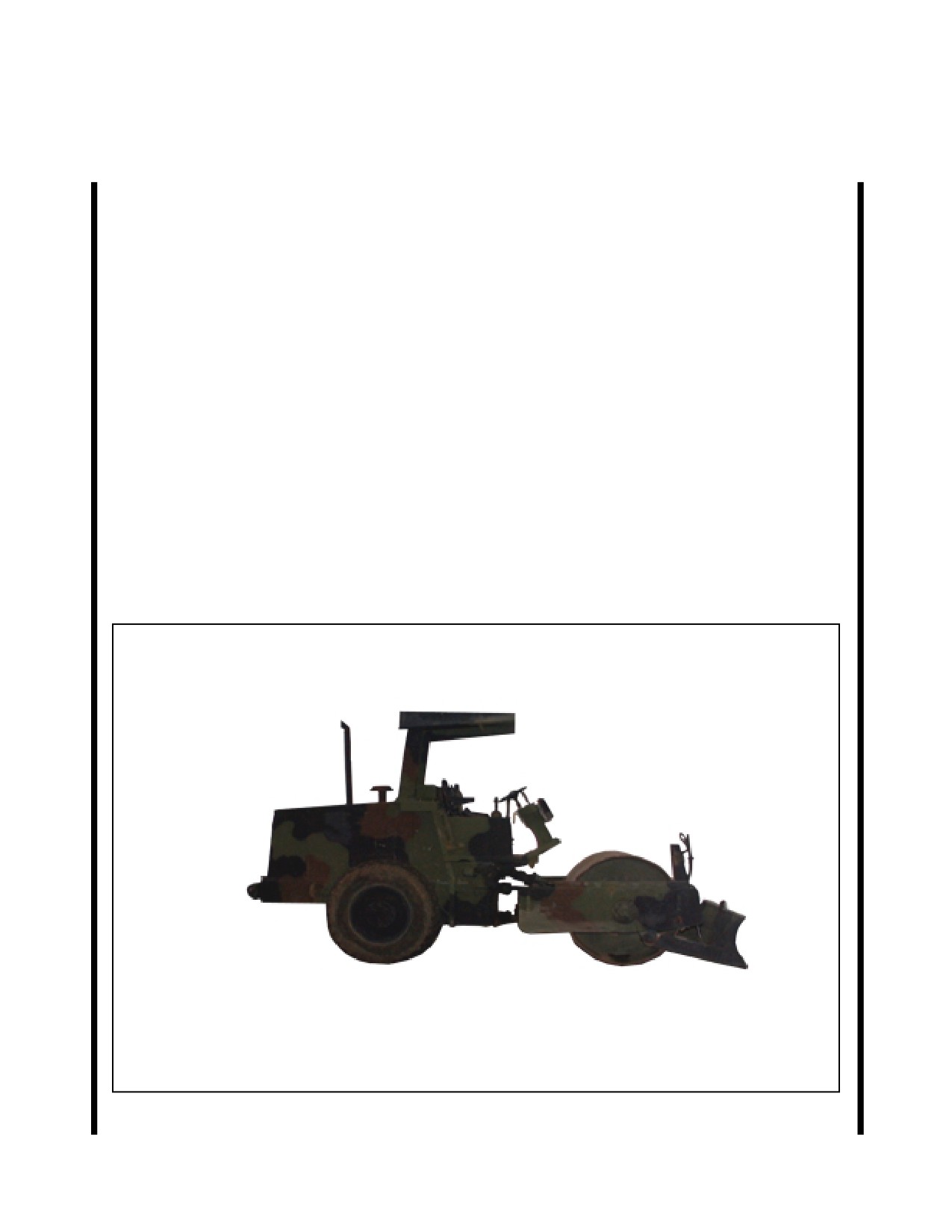
The vibratory compactor (Figure 13-1) is a four-
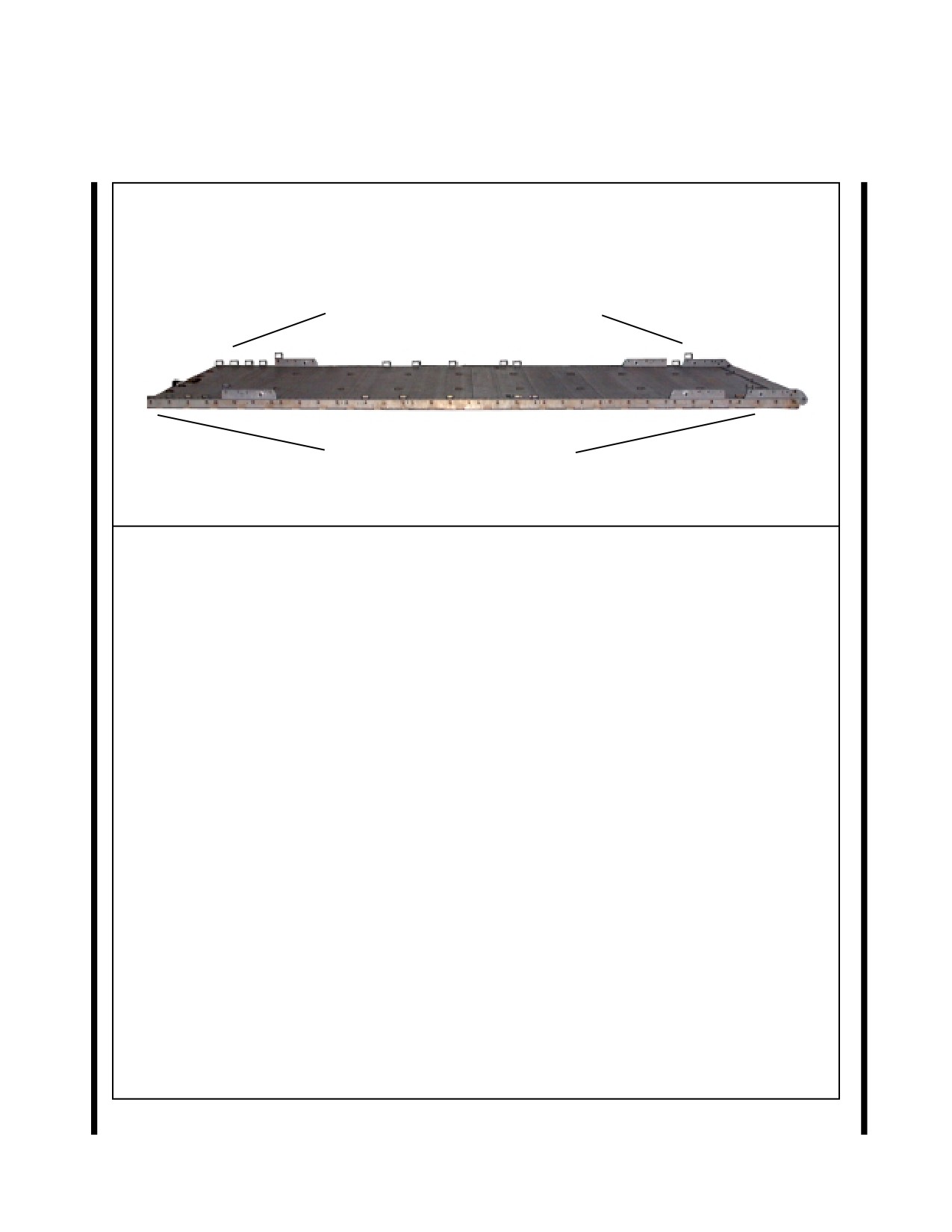
Prepare a 20-foot, type V platform using two
cylinder, turbocharged, self-propelled diesel
tandem multi-purpose links, four suspension
links and 24 tiedown clevises as shown in
driven engine. This load is rigged on a 20-foot,
type V platform with four G-11 cargo
Figure 13-2.
parachutes.The rigged weight of the vibratory
compactor is 18,890 pounds. It is 262 inches
long, 99 inches high with the roll over protec-
tion system removed, and 108 inches wide, when
prepared for rigging.
Figure 13-1. Vibratory compactor (Model CS-433C)
13-1
C7, FM 10-528/TO 13C7-26-71
Left
CLEVISES 12A THROUGH 1A
Rear
Front
CLEVISES 12 THROUGH 1
Right
Step:
1. Install a tandem multi-purpose link to each platform side rail using holes 1, 2, and 3.
2. Install a suspension link to each platform side rail using holes 6, 7, and 8.
3. Install a suspension link to each platform side rail using holes 33, 34, and 35.
4. Install a clevis on bushing 4 on each of the front tandem links.
5. Install a clevis on bushing 4 on each of the second suspension links.
6. Starting at the front of each platform side rail, install clevises on the bushings bolted
on holes 4,17,18, 22, 25, 27, 37, 38, 39 and 40.
7. Starting at the front of the platform number the clevises 1 through 12 on the right side
and 1A through 12A on the left side.
8. Label the tiedown rings according to FM 10-500-2/TO13C7-1-5.
Note: The nose bumper may or may not be installed. Measurements given in this
section are from the front edge of the platform, not the front edge of the nose
bumper.
Figure 13-2. Platform prepared
13-2
C7, FM 10-528/TO 13C7-26-71
13-3. Preparing and Positioning Honeycomb
Stacks
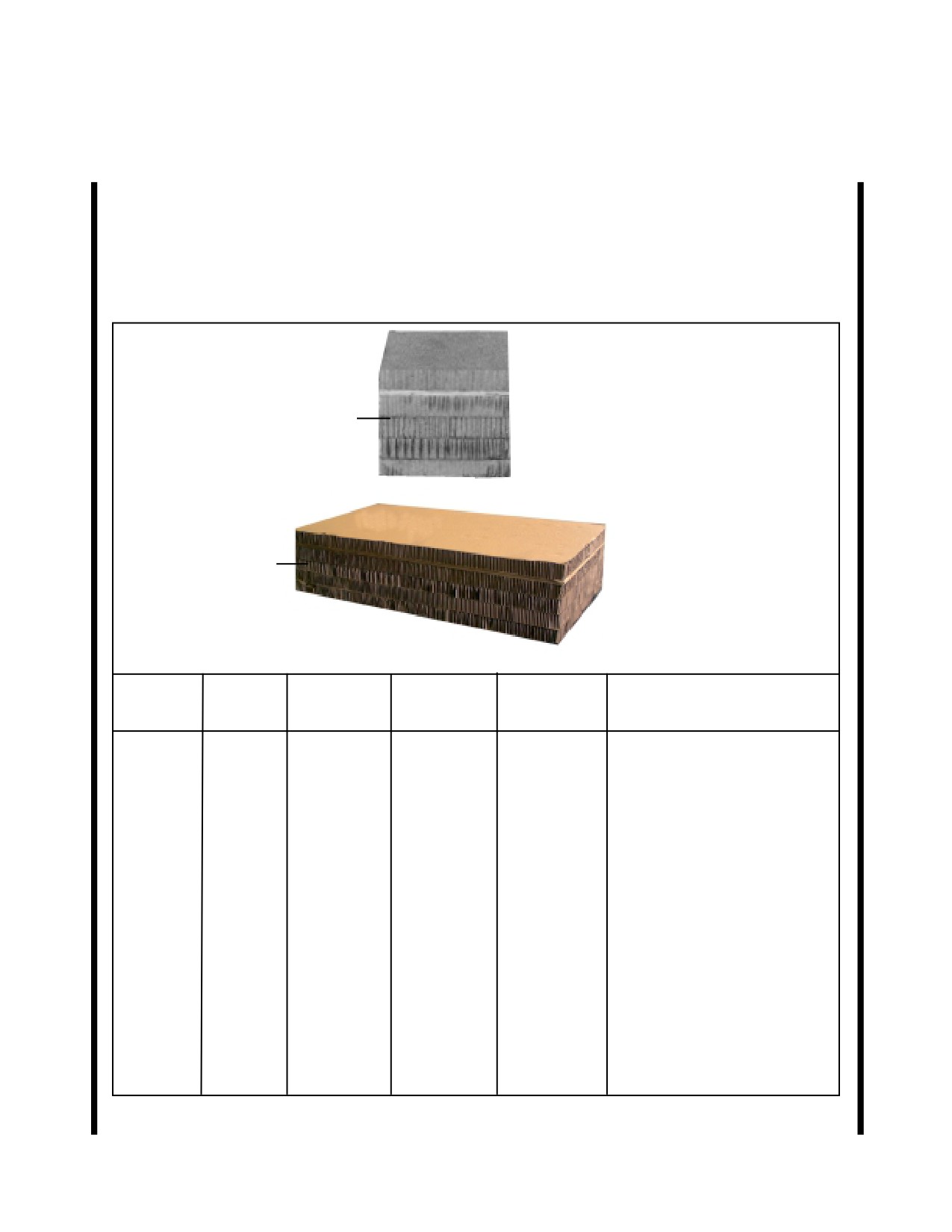
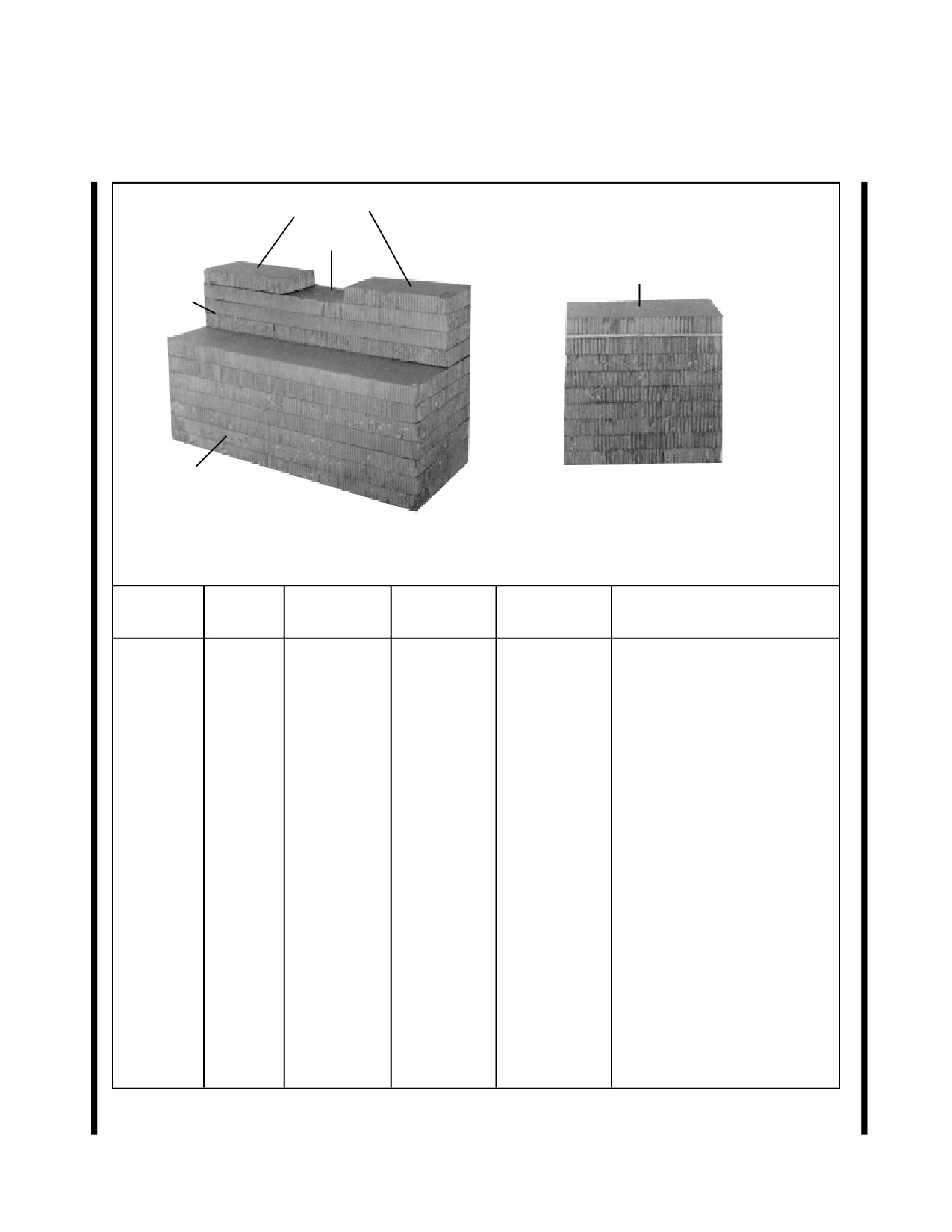
Prepare the honeycomb stacks as shown in Figures 13-3 through
13-5. Position the honeycomb stacks on the platform as shown in
Figure 13-6.
18” x 18”
Stack 1
Stack 2
36” x 66”
Stack
Width
Length
Number
Pieces
(Inches)
(Inches)
Material
Instructions
1
5
18
18
Honeycomb
Glue four pieces of honey-
comb together to form a
base.
1
18
18
3/4-inch
Glue plywood to the base
Plywood
and glue the remaining 18-
inch by 18-inch piece of
honeycomb on top of the
plywood.
2
5
36
66
Honeycomb
Glue the five pieces of
honeycomb together to form
a base.
1
36
66
3/4-inch
Glue plywood to the top of
Plywood
the base and glue the remain-
ing piece of 36-inch by 66-
inch honeycomb to the top of
the plywood.
Figure 13-3. Honeycomb stacks 1 and 2 prepared
13-3
C7, FM 10-528/TO 13C7-26-71
12” x 25”
Stack 3
Stack 4
12” x 60”
24 x 60”
16” x 30”
Stack
Width
Length
Number
Pieces
(Inches)
(Inches)
Material
Instructions
3
7
24
60
Honeycomb
Glue honeycomb together to
form a base.
3
12
60
Honeycomb
Glue pieces of honeycomb to
the base aligned to the rear
edge.
2
12
25
Honeycomb
Glue each piece of honey-
comb to the outer edge
of the 12-inch by 60-inch
piece of honey comb.
4
9
16
30
Honeycomb
Glue eight pieces of honey-
comb together to form a base.
1
16
30
3/4-inch
Glue the plywood to the base.
Plywood
Glue the remaining 16-inch
by 30-inch piece of honey-
comb on top of the plywood.
Figure 13-4. Honeycomb stacks 3 and 4 prepared
13-4
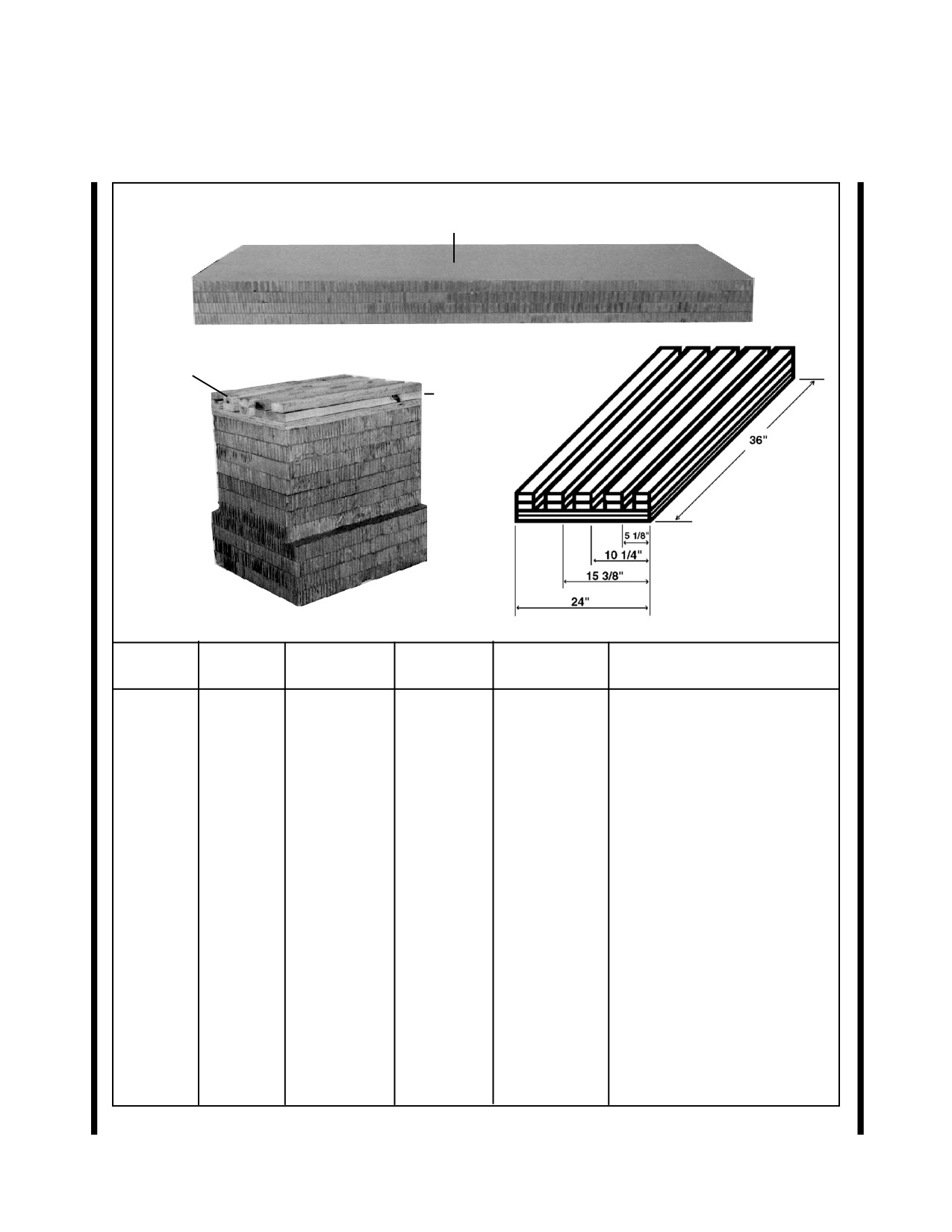
C7, FM 10-528/TO 13C7-26-71
Stack 5
36” x 96”
2 x 4 x 36”
Lumber
24” x 36”
3/4-inch Plywood
Stack 6
24” x 36”
28” x 36”
Stack
Width
Length
Number
Pieces
(Inches)
(Inches)
Material
Instructions
5
4
36
96
Honeycomb
Glue pieces of honeycomb
together to form a base.
6
4
28
36
Honeycomb
Glue pieces of honeycomb
together to form a base.
7
24
36
Honeycomb
Center and glue to base.
2
24
36
3/4-inch
Position and nail ten pieces
Plywood
of lumber to the two pieces
of plywood as shown in
Figure 13-5.
10
2 x 4
36
Lumber
Figure 13-5. Honeycomb stacks 5 and 6 prepared
13-5
C7, FM 10-528/TO 13C7-26-71
Stack 6
Stack 3
Stack 4
Stack 2
Stack 1
Stack 5
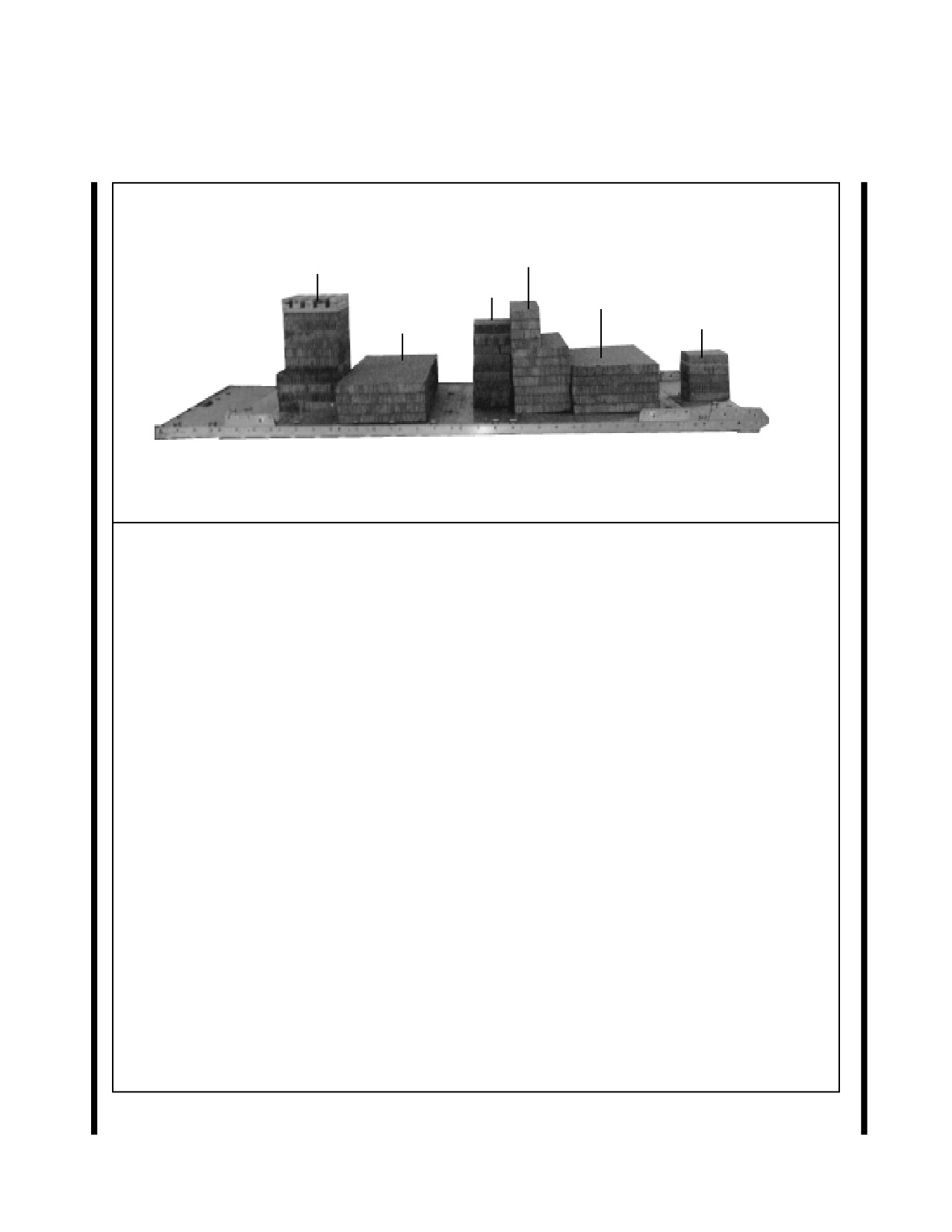
Step:
1. Position stack 1 centered and flush with the front edge of the platform.
2. Position stack 2 centered and 18 inches from stack 1.
3. Position stack 3 centered and flush against stack 2.
4. Position stack 4 centered and flush against stack 3.
5. Position stack 5 centered and 19 inches from stack 4.
6. Position stack 6 centered and flush against stack 5.
Figure 13-6. Honeycomb stacks positioned on platform
13-6
C7, FM 10-528/TO 13C7-26-71
13-4. Preparing and Positioning Vibratory
Compactor on Platform
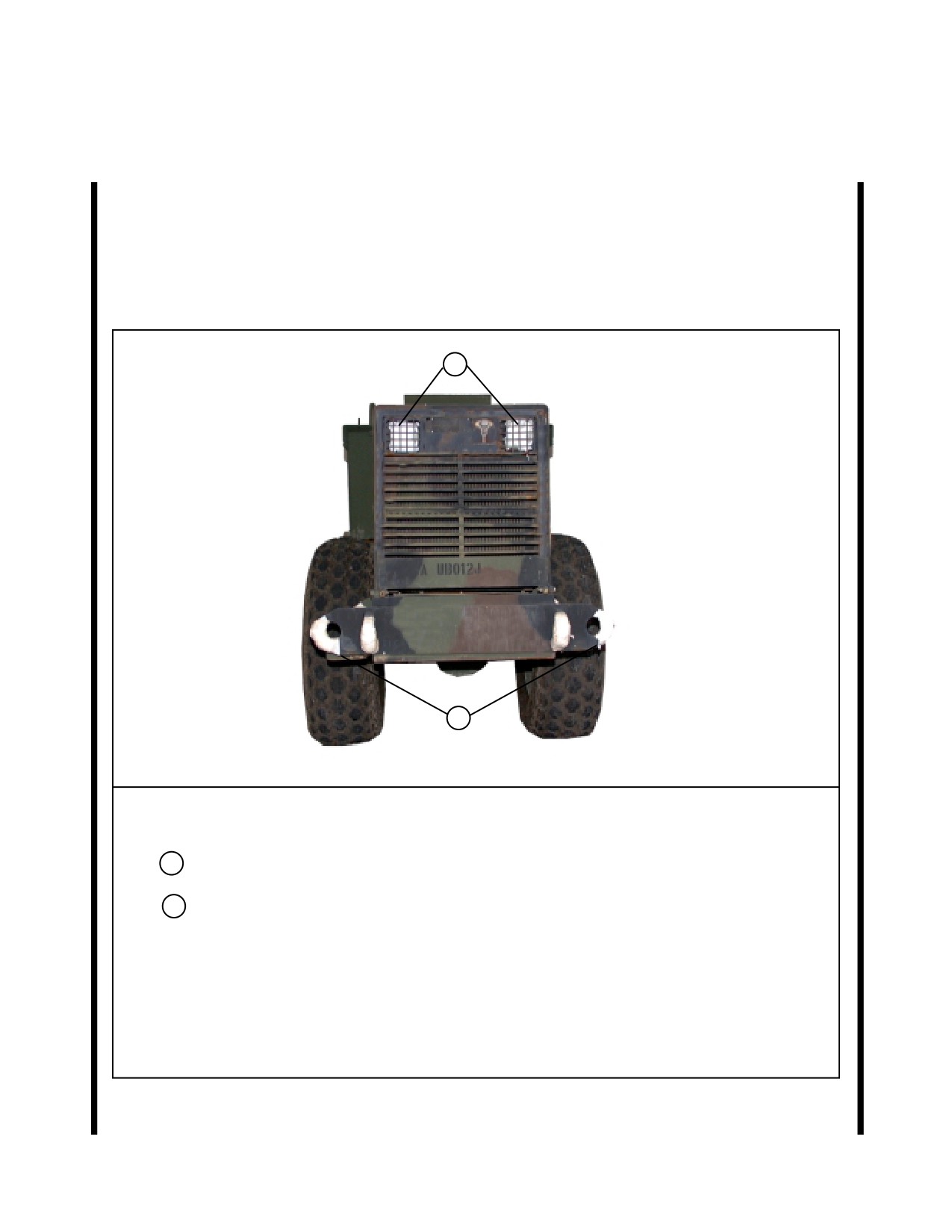
Prepare and position the vibratory compactor
on a platform as shown in Figures 13-7 and
13-8.
1
2
1 Remove the roll over protection system and tape all lights and reflectors.
2 Tape cellulose wadding to all lashing tiedown points.
Figure 13-7. Vibratory compactor prepared
13-7
C7, FM 10-528/TO 13C7-26-71
3
4
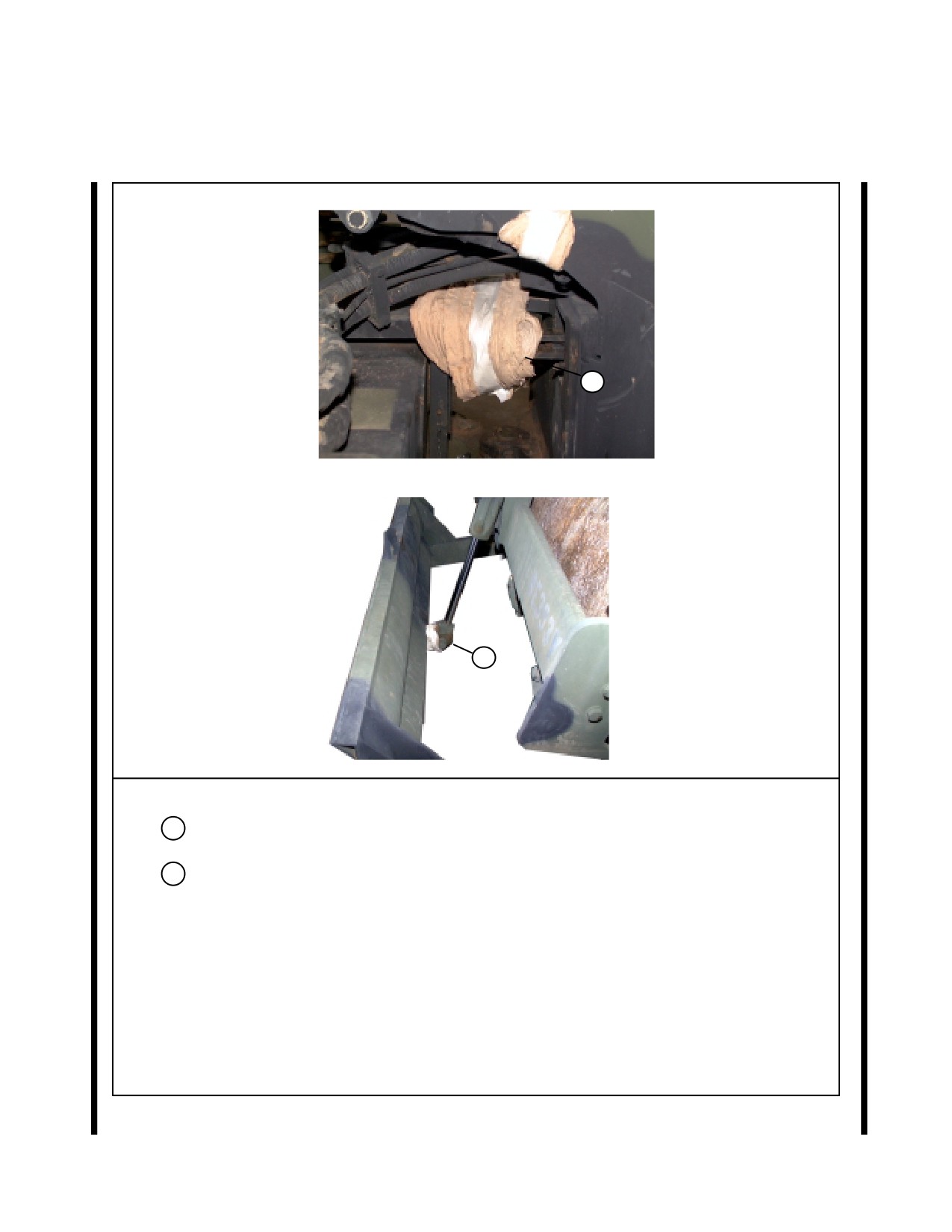
3 Tape cellulose wadding to the upper pivot arm of the chassis.
4 Tape cellulose wadding to the hydraulic attaching point of the blade.
Figure 13-7. Vibratory compactor prepared (continued)
13-8
C7, FM 10-528/TO 13C7-26-71
6
5
8
7
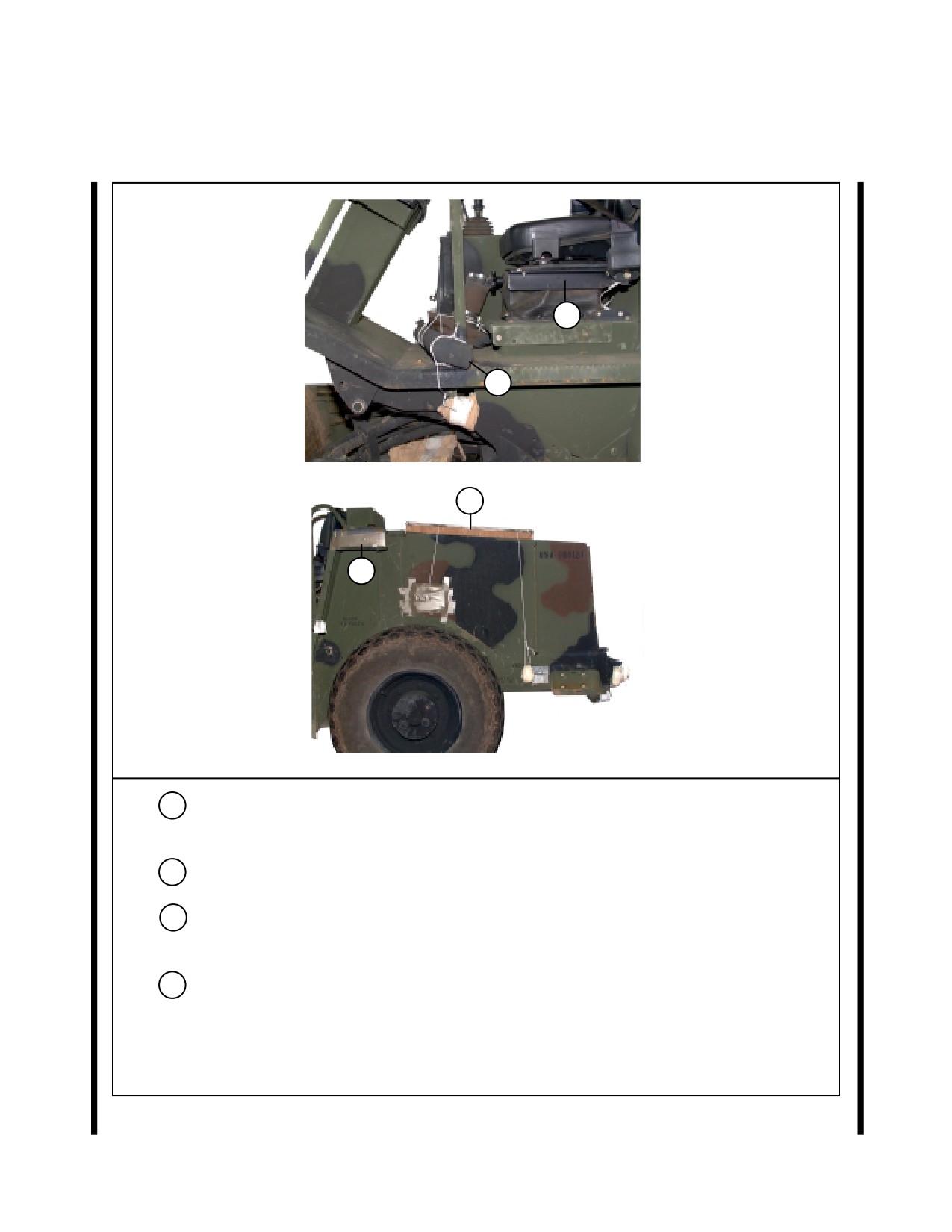
5 Remove the air-filter and exhaust pipe. Secure them to convenient points
in the cab.
6 Lower the seat and lock it down.
7 Tape felt on the upper portions of the rear wheel wells where the slings will make
contact.
8 Tape the edges of a 29-inch by 38-inch piece of honeycomb and secure it on top of
the engine compartment with type III nylon cord tied to a convenient point on the
load.
Figure 13-7. Vibratory compactor prepared (continued)
13-9
C7, FM 10-528/TO 13C7-26-71
42”
3/4-inch
28”
Plywood
3/4-inch
Plywood
52”
36”
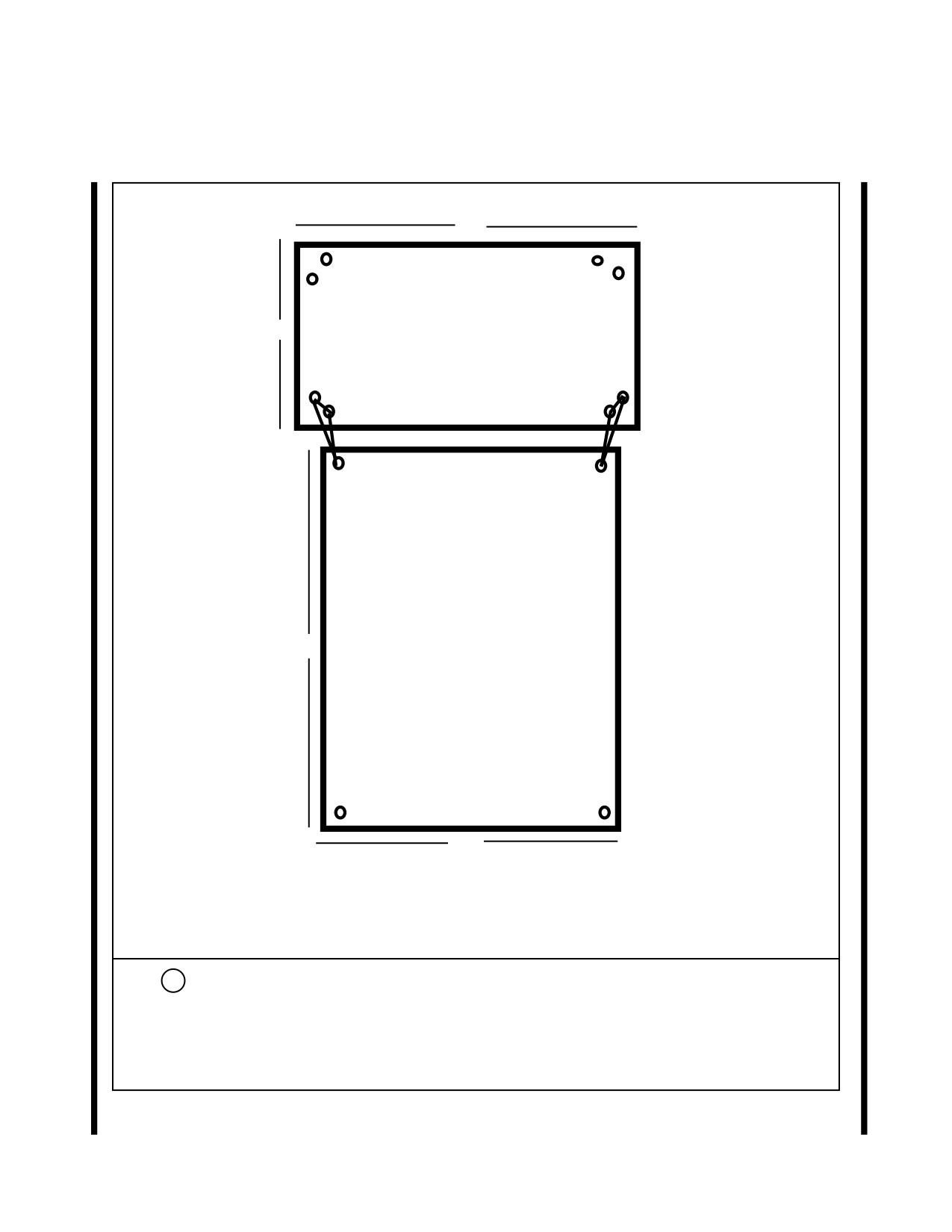
9 Tie a 28-inch by 42-inch piece of 3/4-inch plywood flush with a 36-inch by 52-inch
piece of 3/4-inch plywood using type III nylon cord. Tape cellouse wadding to the
outer edges of plywood.
Figure 13-7. Vibratory compactor prepared (continued)
13-10
C7, FM 10-528/TO 13C7-26-71
10
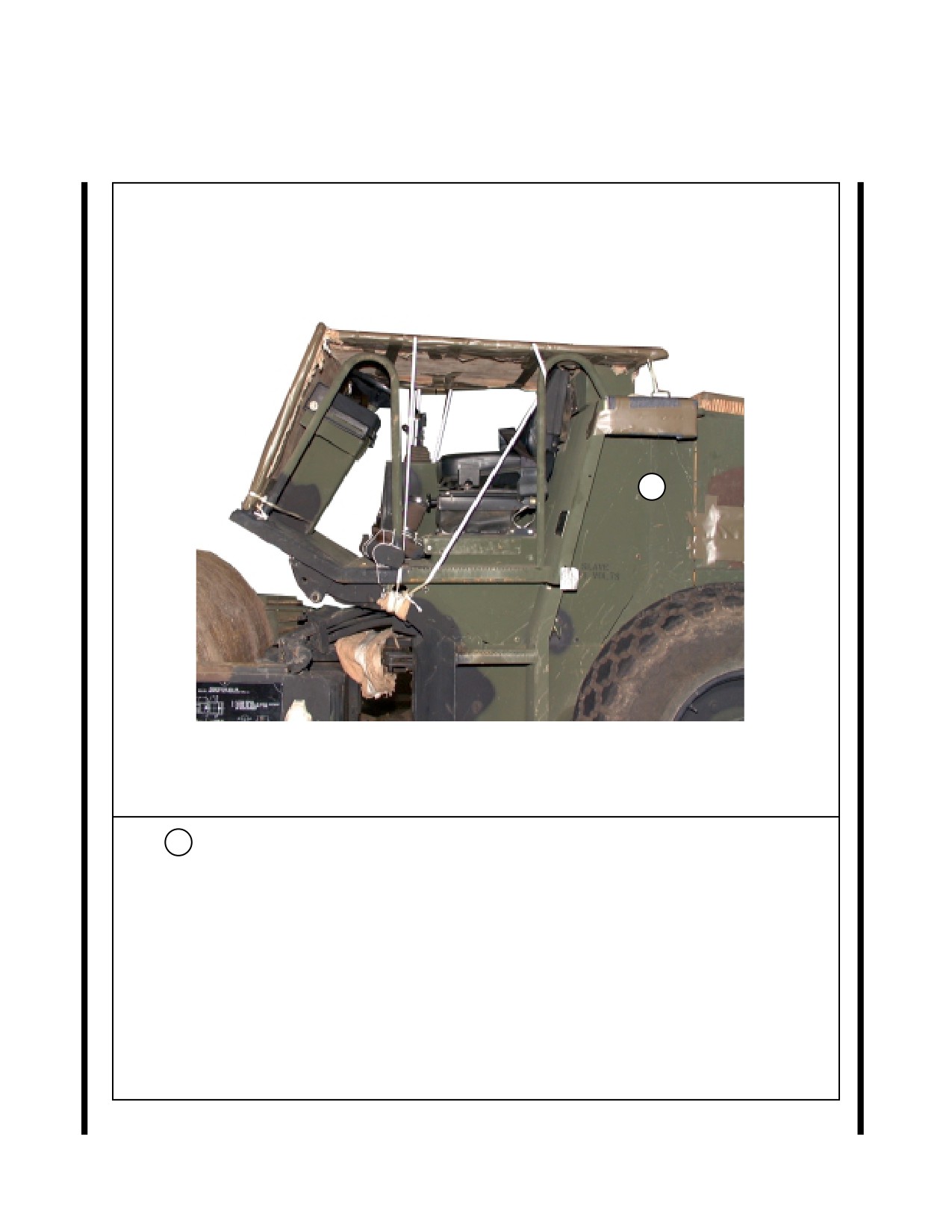
10 Using 1/2-inch tubular nylon, secure the plywood to the cab of the
vibratory compactor and to a convenient point on the load.
Figure 13-7. Vibratory compactor prepared (continued)
13-11
C7, FM 10-528/TO 13C7-26-71
1
Stack 6
Stack 2
2 Inches
3
4
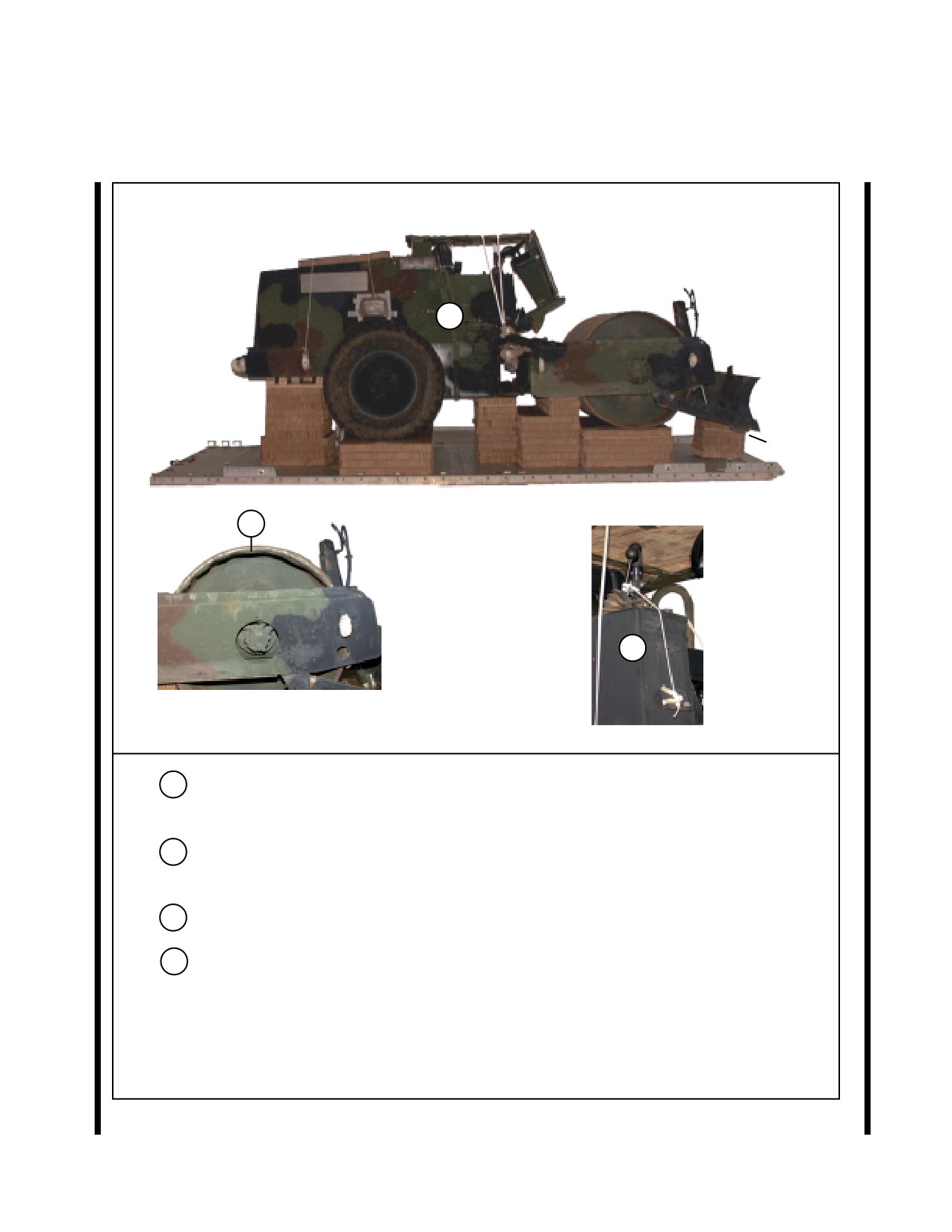
1 Position the roller on the honeycomb aligning the front edge of the blade 2
inches from the front edge of the platform.
2 Make sure the bolts under the rear engine compartment are aligned between the 4th
and 5th pieces of 2 x 4 x 36-inch lumber on stack 6 (not shown).
3 Tape felt on the top edges of the roller.
4 Secure the blade control with type III nylon cord to the fuse box hinge.
Figure 13-8. Vibratory compactor positioned on platform
13-12
C7, FM 10-528/TO 13C7-26-71
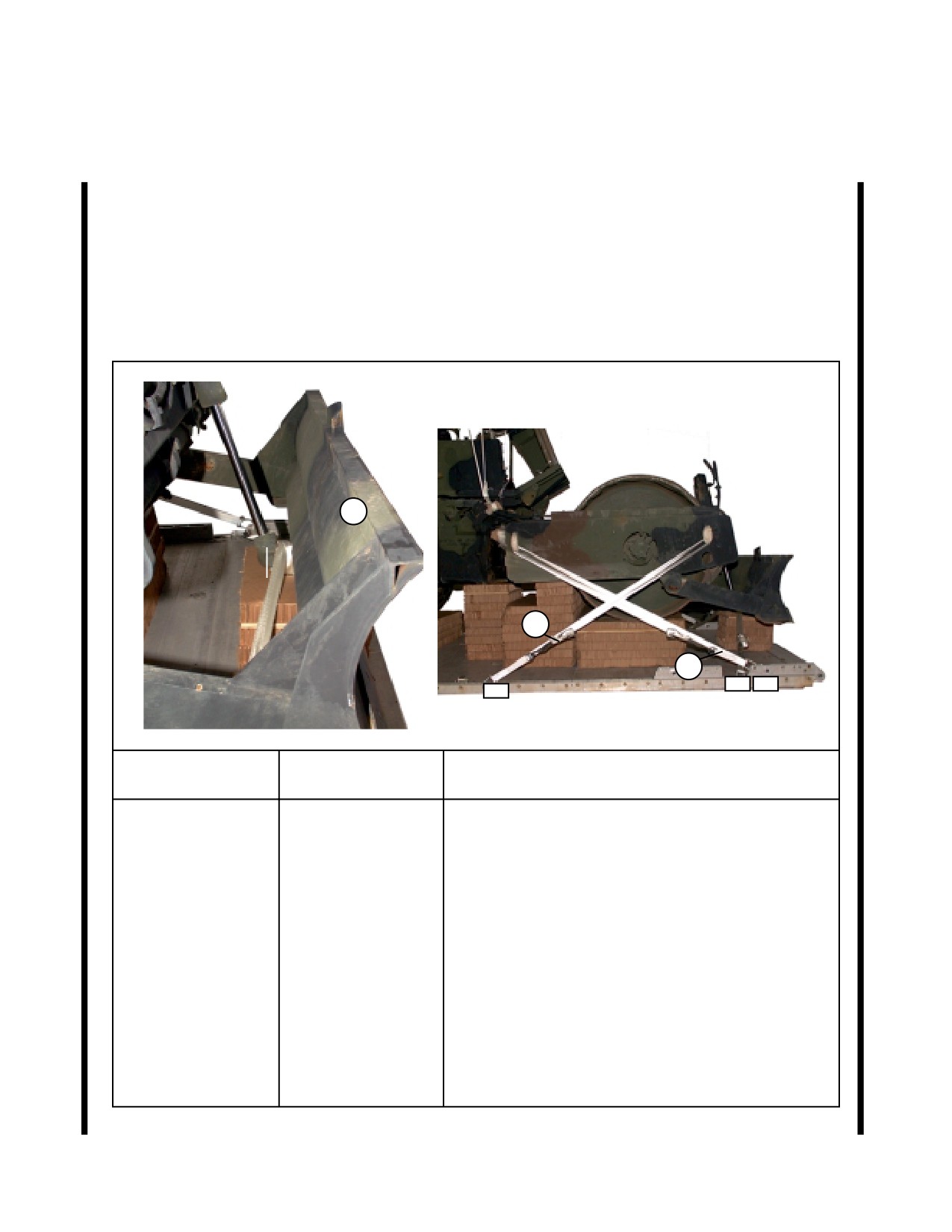
13-5. Lashing Vibratory Compactor to Platform
Lash the vibratory compactor to the platform
as shown in Figures 13-9 through 13-11 and
FM 10-500-2/TO 13C7-1-5.
1
Tiedown 2
Tiedown 1
Hydraulic Attaching
Point
5
3
2
1
3
Lashing
Clevis
Number
Number
Instructions
Pass lashing:
1
2
Around right hydraulic attaching point of blade.
2
2A
Around left hydraulic attaching point of blade.
3
1
Through tie-down number 2, right side.
4
1A
Through tie-down number 2, left side.
5
3
Through tie-down number 1, right side.
6
3A
Through tie-down number 1, left side.
Figure 13-9. Lashings 1 through 6 installed
13-13
C7, FM 10-528/TO 13C7-26-71
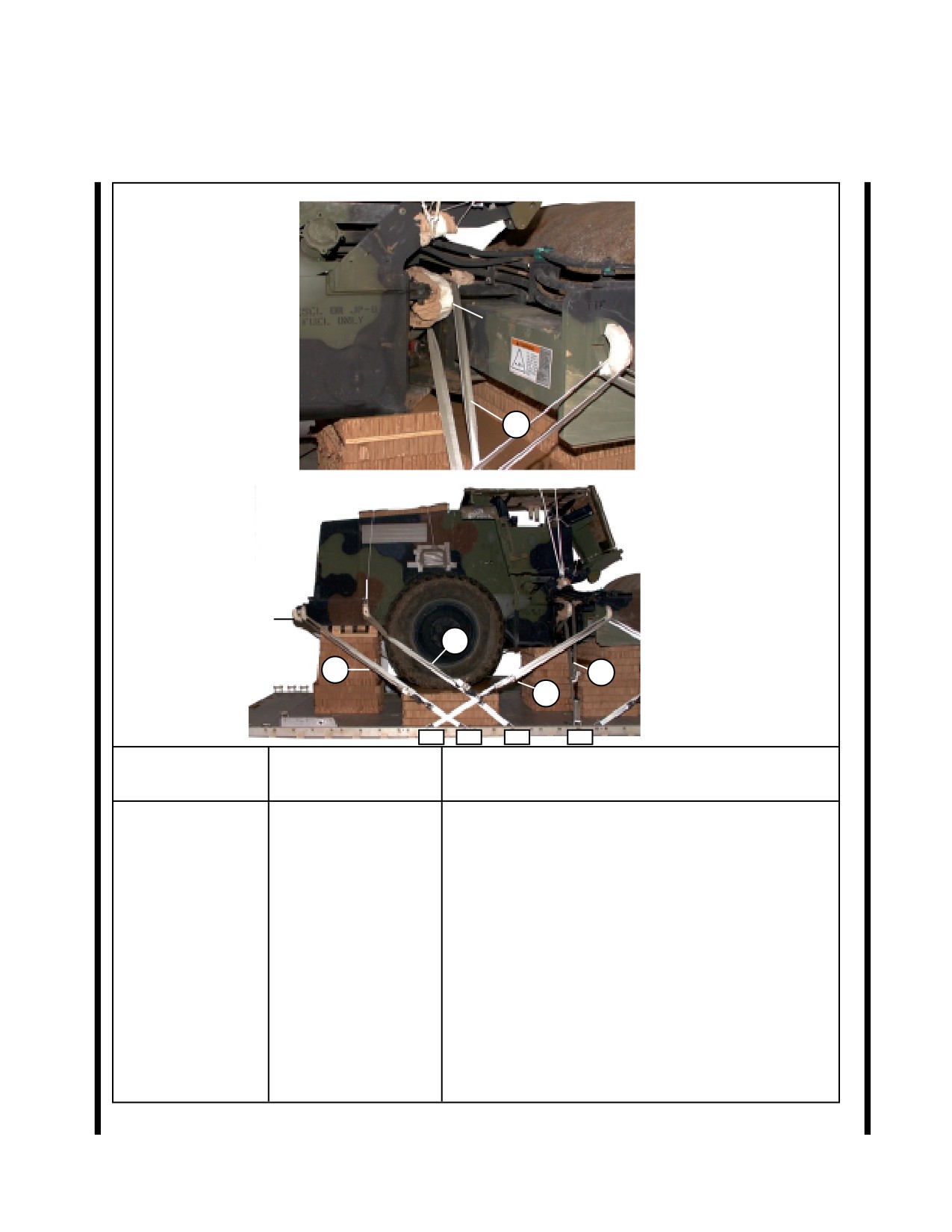
Upper pivot arm
7
Tie-down 3
Tie-down 2
Tie-down 4
9
11
7
13
7
6
5
4
Lashing
Clevis
Number
Number
Instructions
Pass lashing:
7
4
Around upper pivot arm of chassis, right side.
8
4A
Around upper pivot arm of chassis, left side.
9
5
Through tie-down number 3, right side.
10
5A
Through tie-down number 3, left side.
11
6
Through tie-down number 4, right side.
12
6A
Through tie-down number 4, left side.
13
7
Through tie-down number 2, right side.
14
7A
Through tie-down number 2, left side.
Figure 13-10. Lashings 7 through 14 installed
13-14
C7, FM 10-528/TO 13C7-26-71
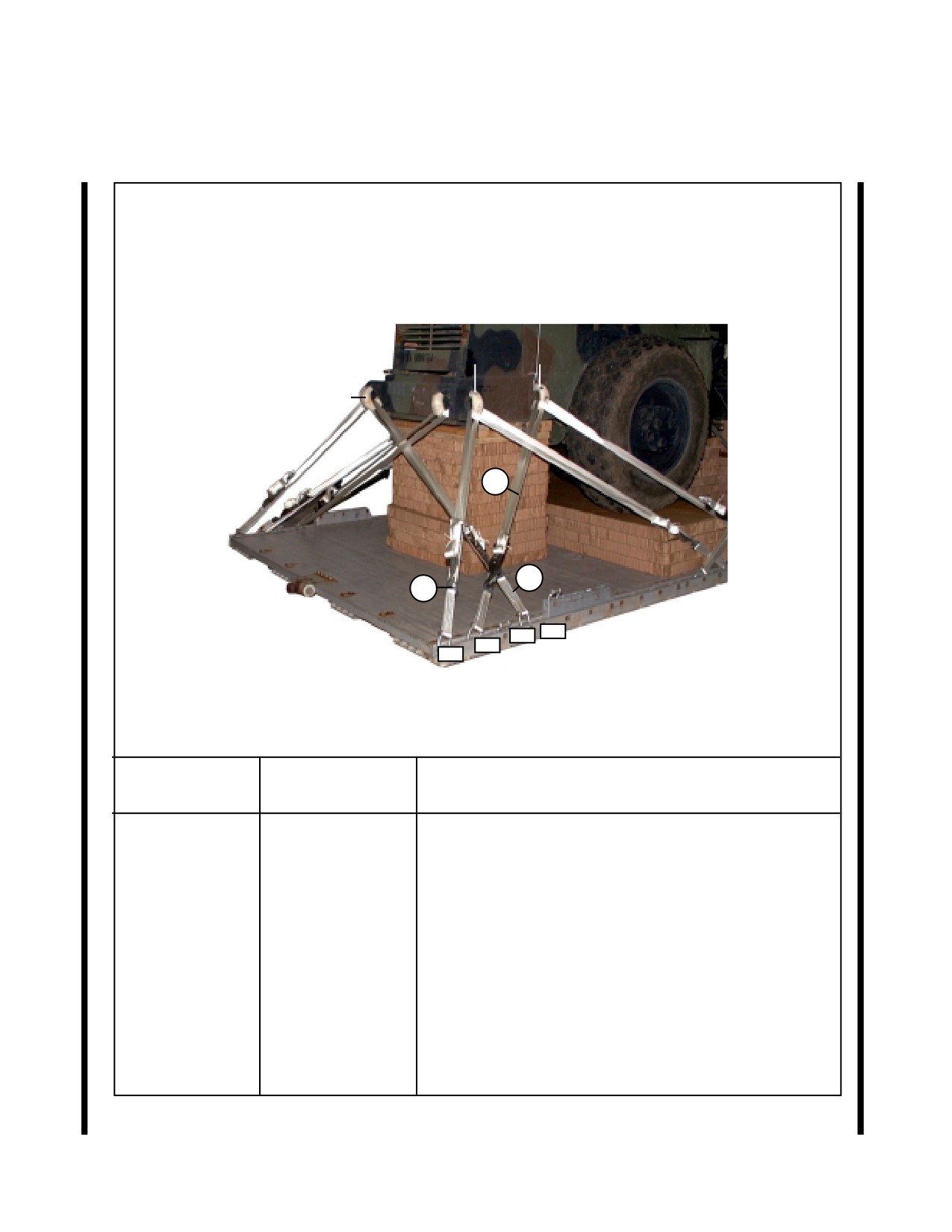
Tie-down 4
Tie-down 3
Rear Tie-down
17
15
19
9
10
11
12
Lashing
Clevis
Number
Number
Instructions
Pass lashing:
15
9
Through rear tie-down, left side.
16
9A
Through rear tie-down, right side.
17
11
Through tie-down number 3, right side.
18
11A
Through tie-down number 3, left side.
19
12
Through tie-down number 4, right side.
20
12A
Through tie-down number 4, left side.
Figure 13-11. Lashings 15 through 20 installed
13-15
C7, FM 10-528/TO 13C7-26-71
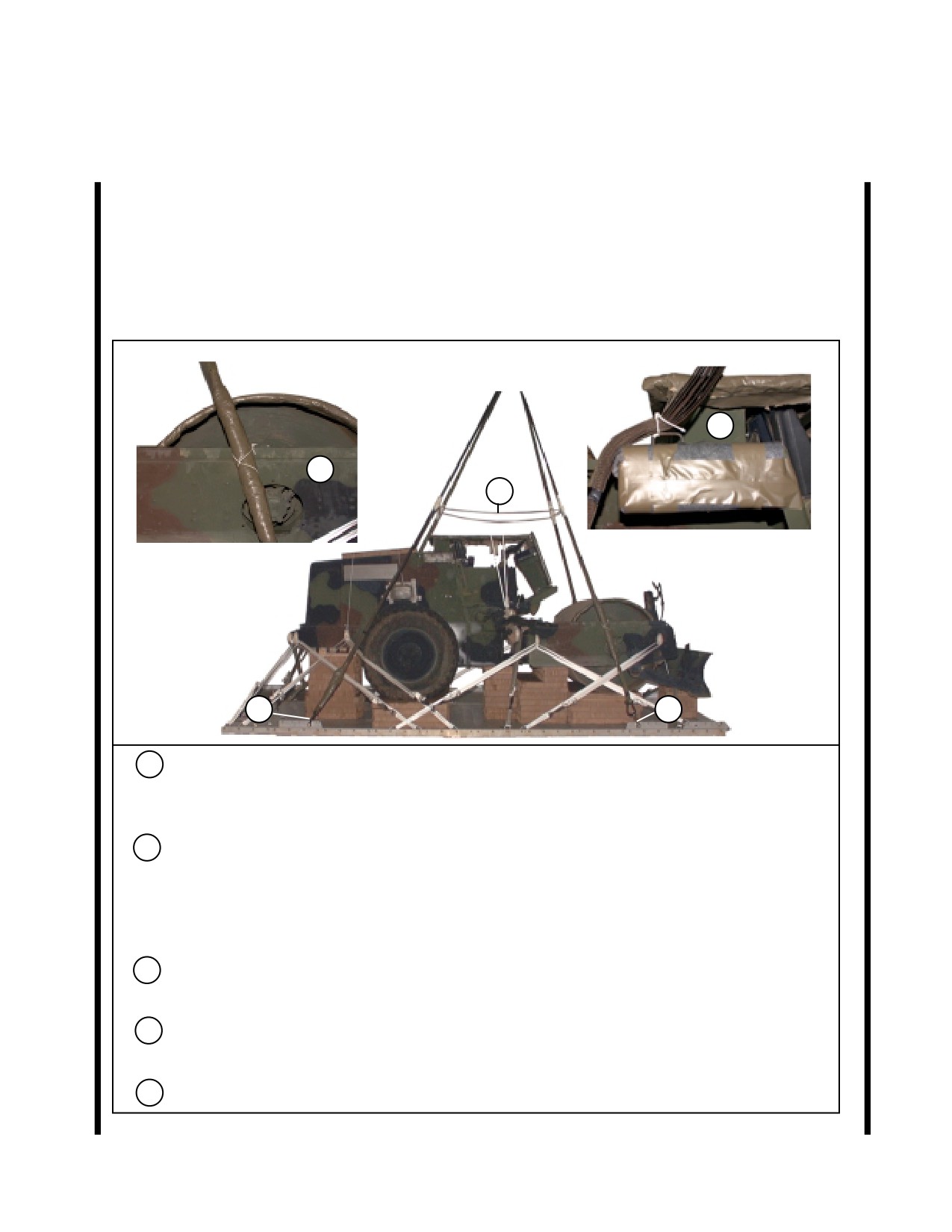
13-6. Installing and Safetying Suspension
Slings and Deadman’s Tie
Install and safety four 16-foot (4-loop), type XXVI
nylon webbing slings to the tandem links as shown in
Figure 13-12.
5
4
3
Rear
Front
2
1
1
Place a large clevis in one end of a 16-foot (4-loop), type XXVI nylon suspension sling.
Attach another large clevis to the front right and front left suspension links. Attach the large
clevises together and safety-tie them with type III nylon cord in an hourglass configuration.
2
Place a 5 1/2-inch two point link in one end of a 16-foot (4-loop), type XXVI nylon
suspension sling. Pass a 3-foot (4-loop), type XXVI nylon sling through the two point link and
fold in half. Attach both running ends of the 3-foot sling to a large clevis. Attach the large clevis
to the rear right and rear left suspension links. Tape a piece of felt to the 5 1/2-inch two point
link.
3
Raise the slings and install the deadman’s tie on the front and rear sets of slings IAW FM
10-500-2/TO 13C7-1-5.
4
Tape a piece of felt on the front slings, starting at a point 18 inches above the clevis to 18
inches above the roller.
5
Tie the rear slings to the padded and taped portions of the wheel well using type III nylon cord.
Figure 13-12. Suspension slings and deadman’s tie installed
13-16
C7, FM 10-528/TO 13C7-26-71
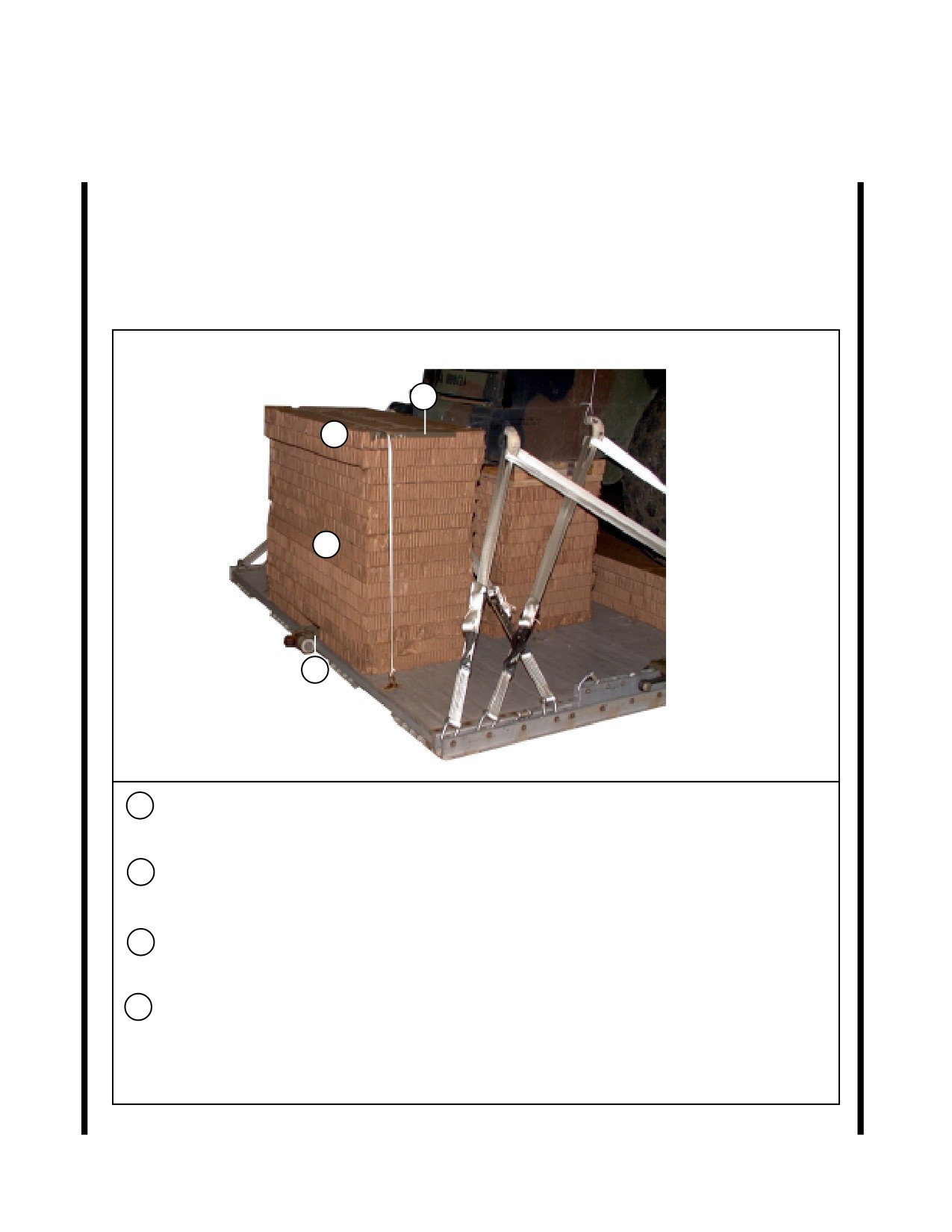
13-7. Building and Positioning Parachute
Stowage Platform
Build and position the parachute stowage
platform as shown in Figure 13-13.
4
3
1
2
1
Cut and glue 13 layers of 23-inch by 50-inch pieces of honeycomb together to
form the base.
2
Cut a channel in the bottom layer of the honeycomb that will allow the extraction
bracket to fit under it.
3
Cut and glue two layers of 36-inch by 50-inch pieces of honeycomb together on top of
the base and flush with the front edge.
4
Tape the outer edges of the 26-inch by 50-inch pieces of honeycomb and position it on
the platform centered and flush with the rear edges. Secure it to the platform with
1/2-inch tubular nylon webbing to deck-rings 10A and 10D.
Figure 13-13. Parachute stowage platform built and positioned
13-17
C7, FM 10-528/TO 13C7-26-71
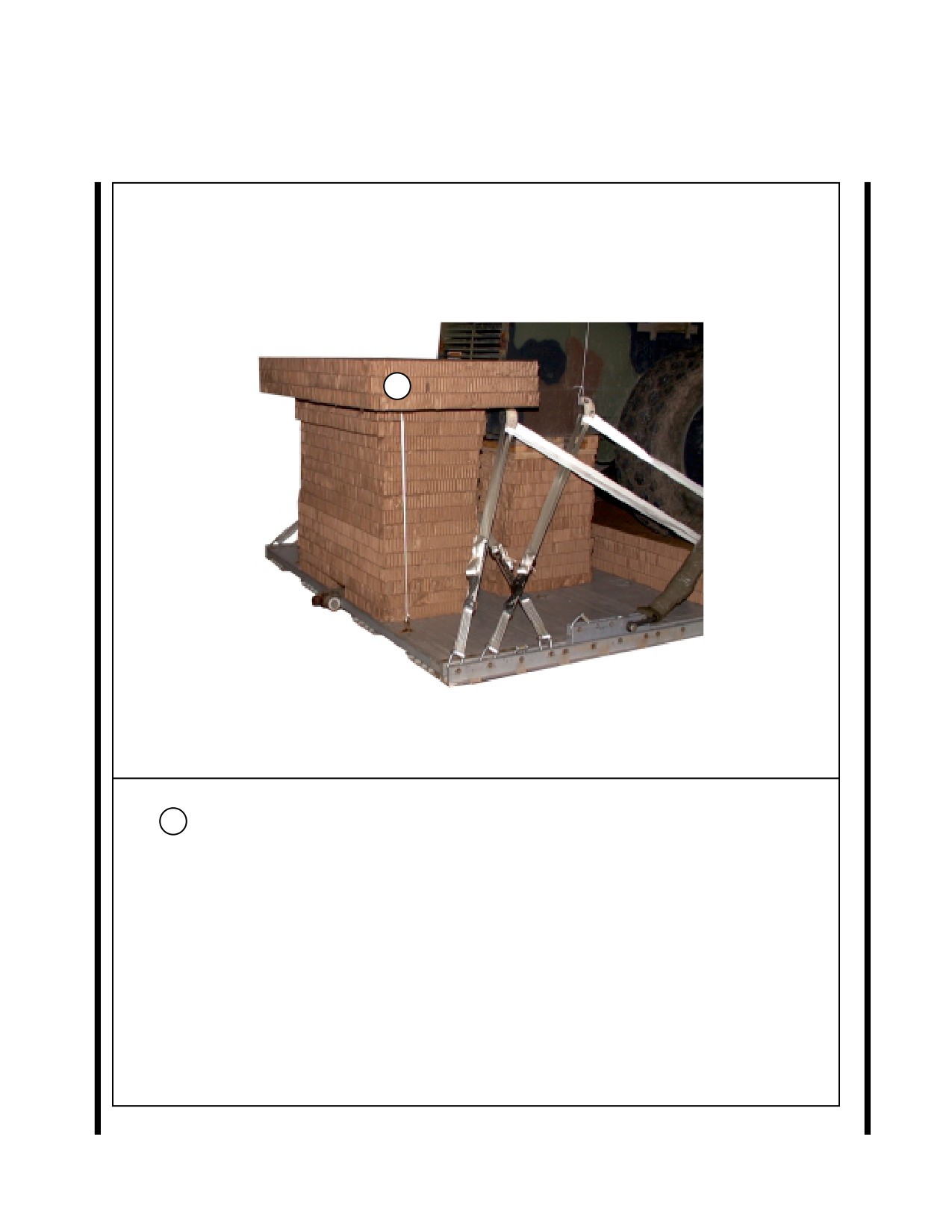
5
5 Cut and glue three layers of 36-inch by 71-inch pieces of honeycomb centered on
top of the base.
Figure 13-13. Parachute stowage platform built and positioned (continued)
13-18
C7, FM 10-528/TO 13C7-26-71
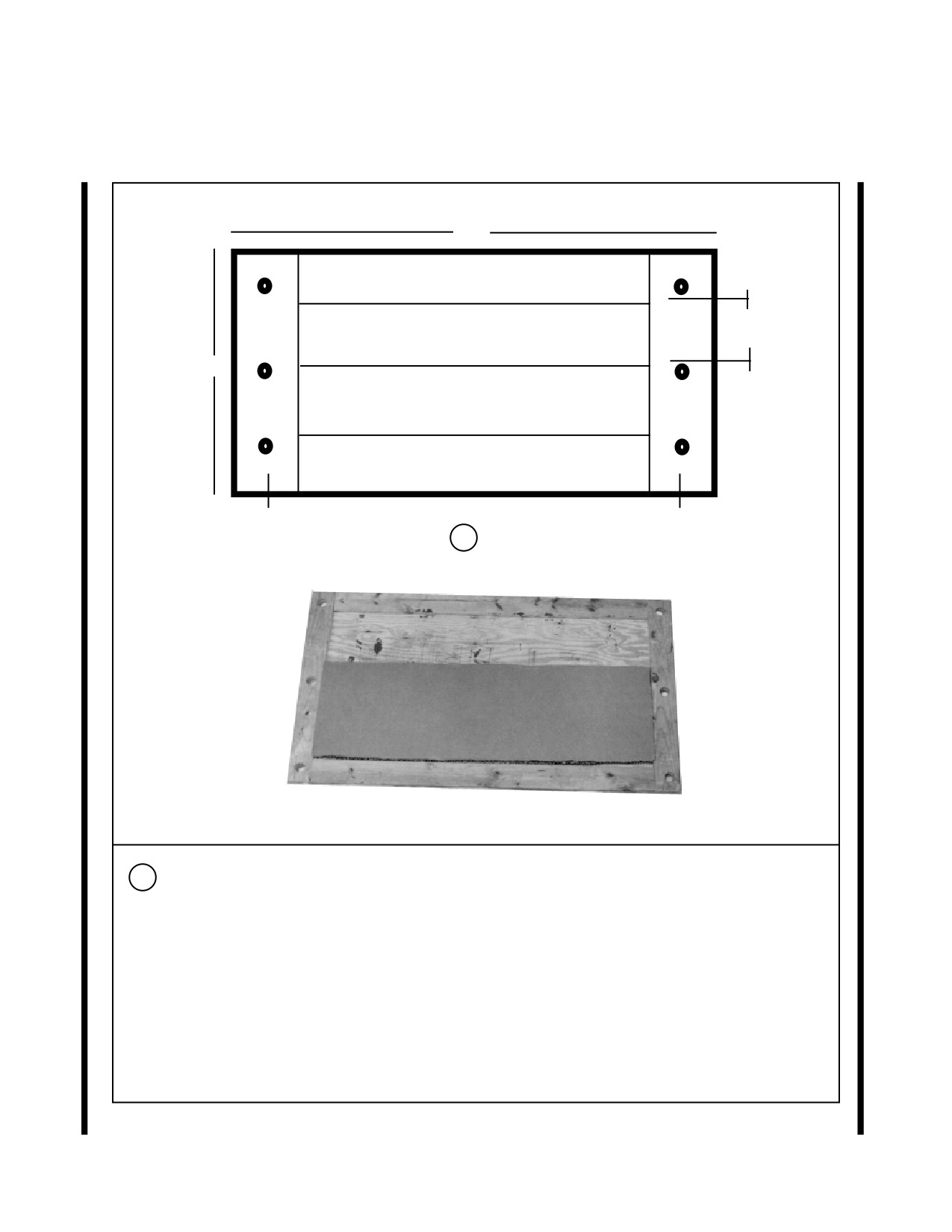
82”
2” x 6” x 71”
2”
2”
Lumber
24”
23” x 71” Honeycomb
48”
3/4” Plywood
2” x 6” x 71”
Lumber
2” x 6” x 48”
2” x 6” x 48”
6
Lumber
Lumber
6
Construct a parachute stowage platform using two pieces of 2-inch by 6-inch
by 71-inch lumber, two pieces of 2-inch by 6-inch by 48-inch lumber,
one piece of 48-inch by 82-inch plywood, and one piece of 23-inch by
71-inch honeycomb.
Figure 13-13. Parachute stowage platform built and positioned (continued)
13-19
C7, FM 10-528/TO 13C7-26-71
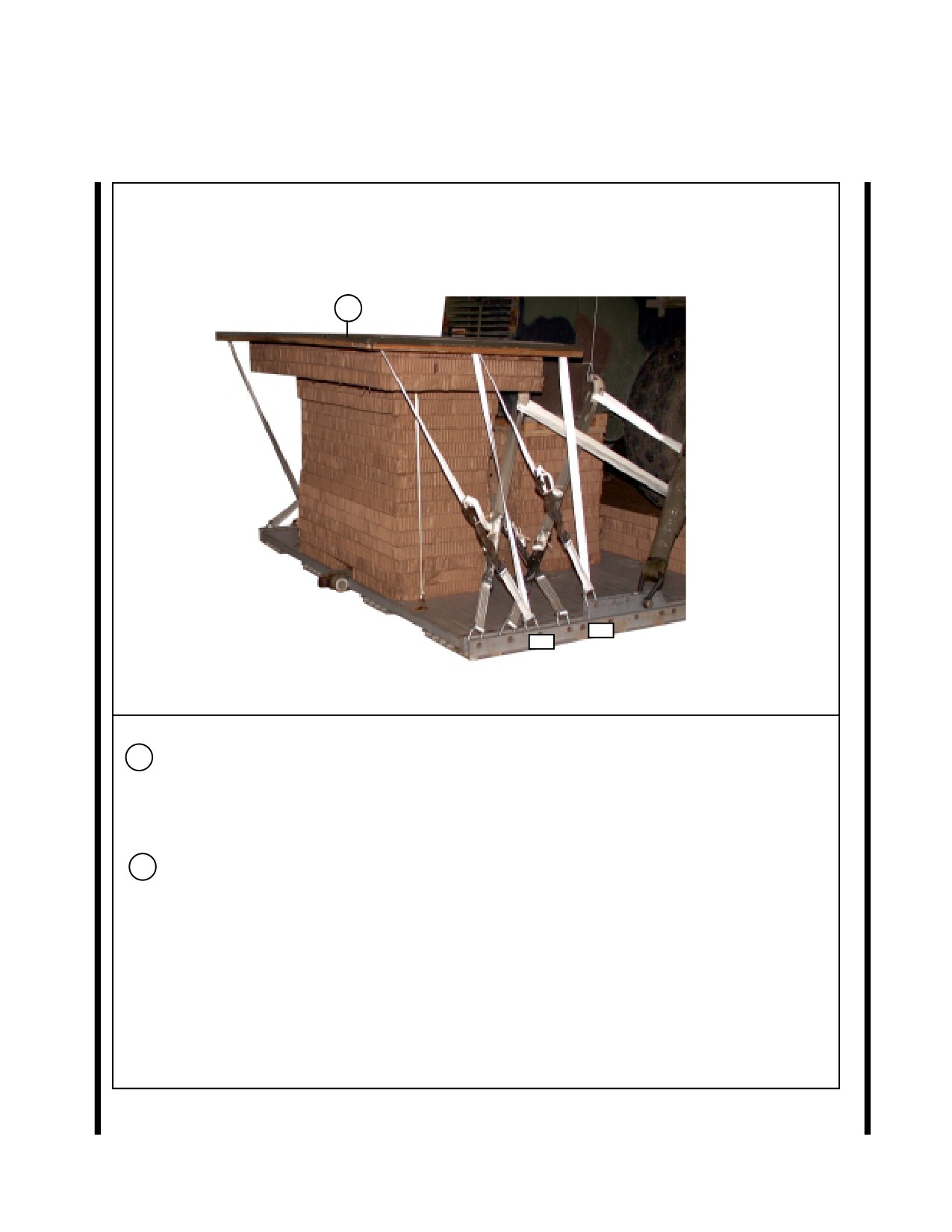
7
8
10
7
Place the parachute stowage platform on the honeycomb stack. Secure it by
routing a 15-foot lashing from clevis 8 to the front right hole to the center hole.
Secure with a load binder. Route a 15-foot lashing from clevis 8A to the front left hole
to the center hole and secure with a loadbinder.
8
Route a 15-foot lashing from clevis 10 to the center hole to the rear hole and secure
with a loadbinder. Route a 15-foot lashing from clevis 10A to the center hole to the
rear hole and secure with a loadbinder.
Figure 13-13. Parachute stowage platform built and positioned (continued)
13-20
C7, FM 10-528/TO 13C7-26-71
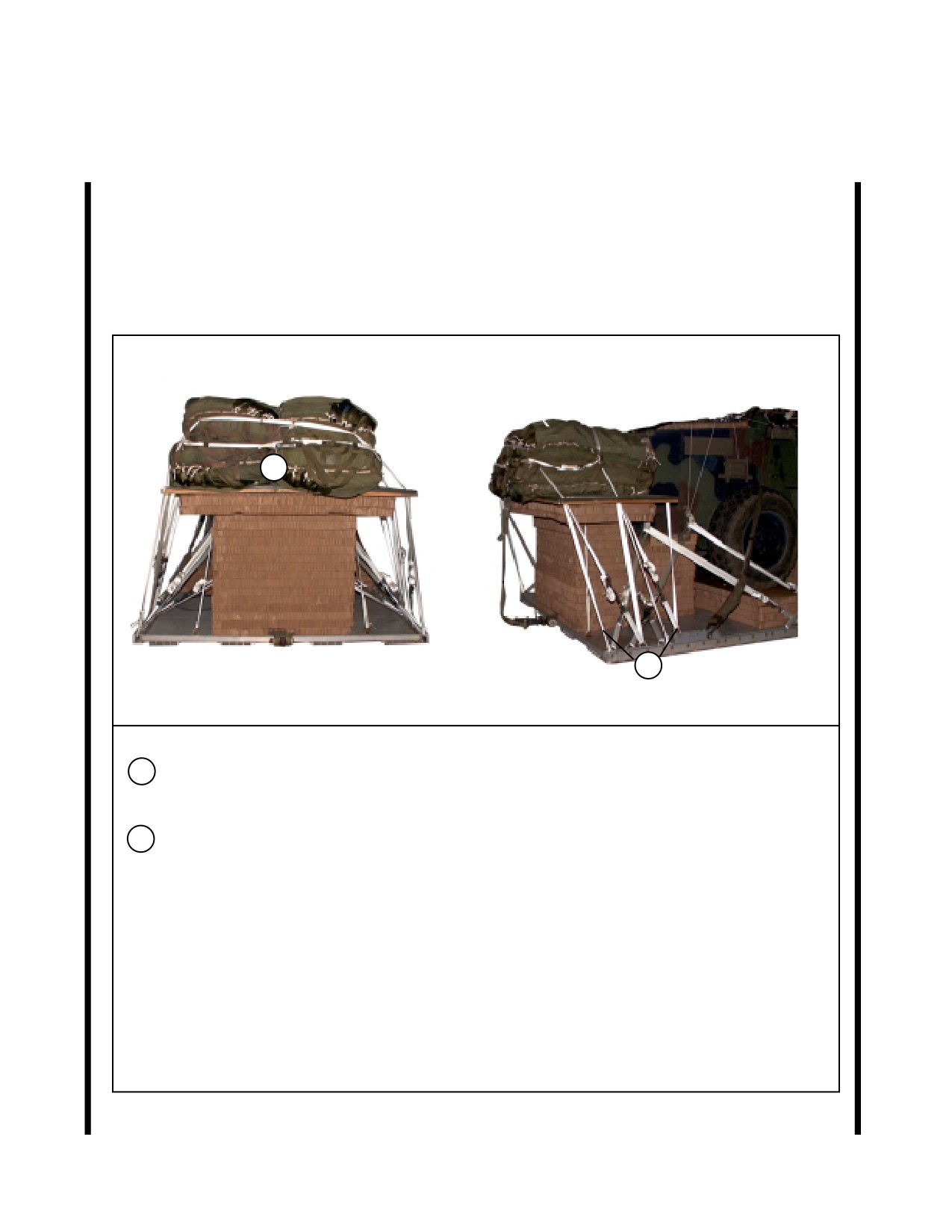
13-8. Installing Cargo Parachutes
Install four G-11 cargo parachutes on
the load according to FM 10-500-2/
TO 13C7-1-5 and as shown in Figure
13-14.
1
2
1
Prepare and stow four G-11 cargo parachutes in accordance with FM 10-500-2/
TO 13C7-1-5.
2
Restrain the parachutes using bushings 40, 40A, and 36, 36A on the platform.
Figure 13-14. Parachutes stowed
13-21
C7, FM 10-528/TO 13C7-26-71
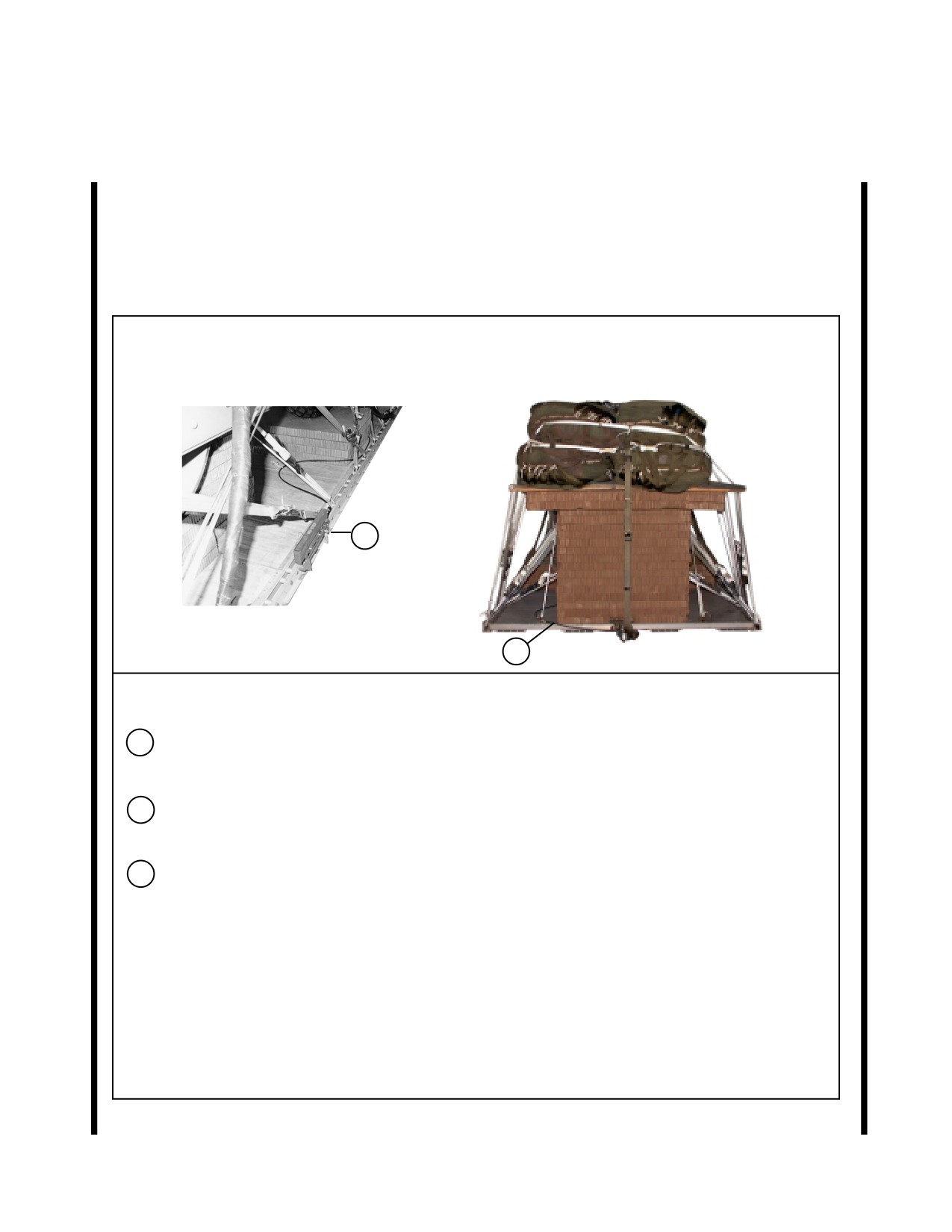
13-9. Installing Extraction System
Install the EFTC system according to
FM 10-500-2/TO 13C7-1-5 and as shown
in Figure 13-15.
1
2
1
Install the components of the extraction force transfer coupling (EFTC) according
to FM 10-500-2/TO 13C7-1-5. Use the rear mounting holes for the EFTC bracket.
2
Secure a 16-foot EFTC cable with type I, 1/4-inch cotton webbing to a
convenient point on the platform.
3
Attach a 9-foot (2-loop), type XXVI nylon sling to be used as a deployment line.
Figure 13-15. EFTC installed
13-22
C7, FM 10-528/TO 13C7-26-71
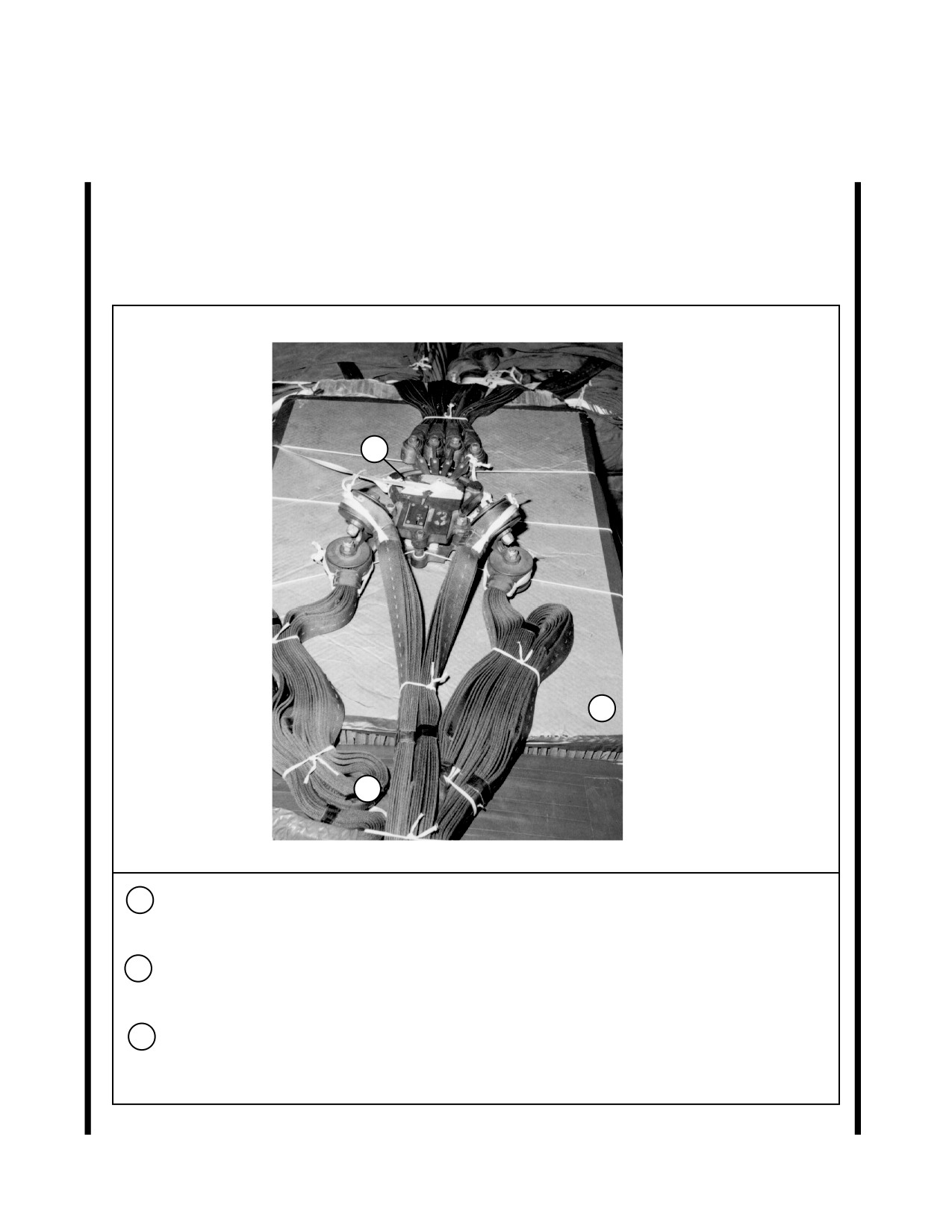
13-10. Installing Parachute Release
Install an M-2 cargo parachute release
according to FM 10-500-2/TO 13C7-1-5
and as shown in Figure 13-16.
2
1
3
1
Cut and position a 29-inch by 38-inch piece of honeycomb on the engine compartment
and secure it with type III nylon cord.
2
Attach the suspension slings and the riser extensions to the M-2 release according to
FM 10-500-2/TO 13C7-1-5. Secure the release to the platform with type III nylon cord.
3
S-fold the suspension slings and tie the folds with type I, 1/4-inch cotton webbing.
Figure 13-16. M-2 release installed
13-23
C7, FM 10-528/TO 13C7-26-71
13-13. Marking Rigged Load
13-11. Installing Provisions for Emergency
Restraints
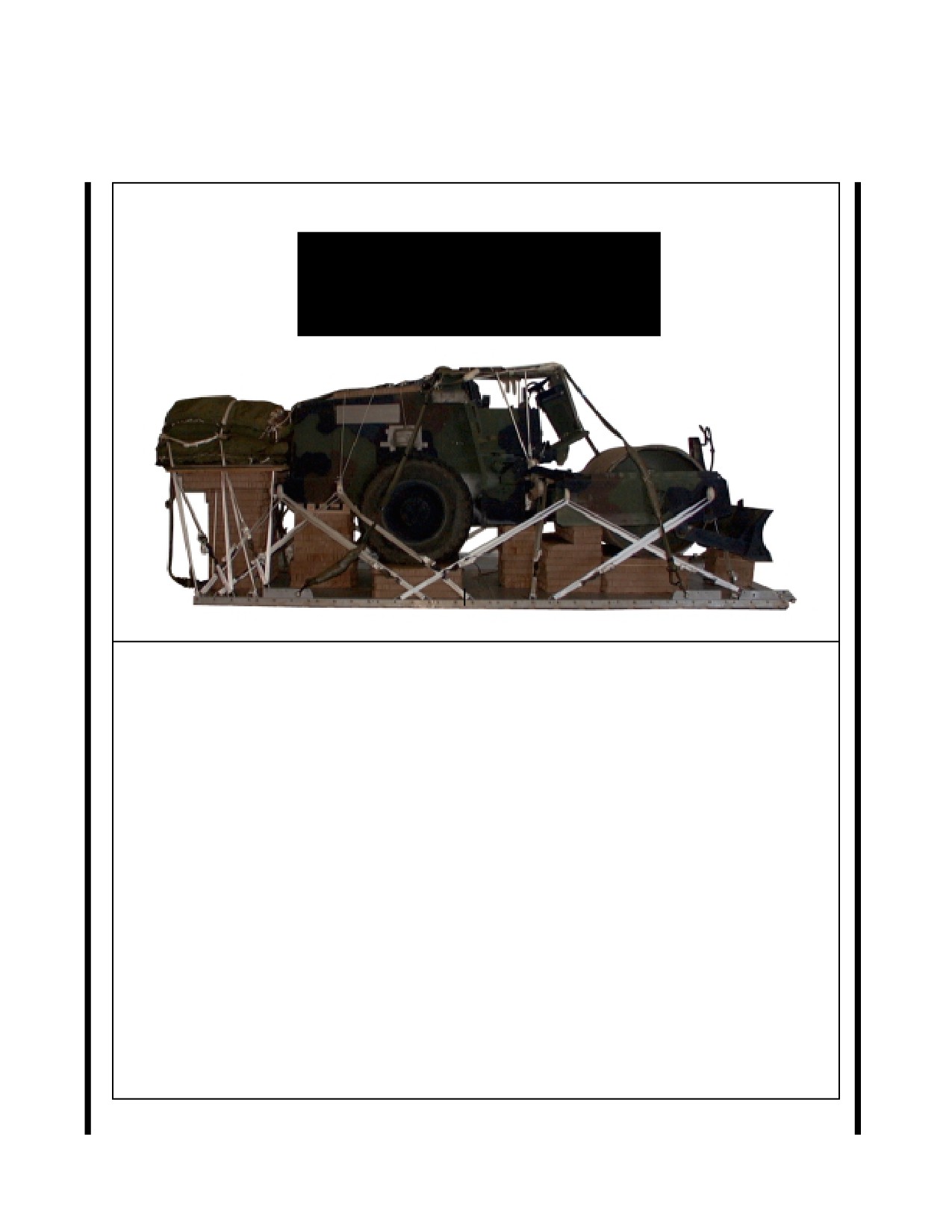
Mark the rigged load according to FM 10-500-
2/TO 13C7-1-5 and as shown in Figure 13-17.
Select and install provisions for emergency
If the load varies from the one shown, the
restraints according to the emergency aft
weight, height, CB, tip-off curve, and para-
restraint requirements table in FM 10-500-2/
chute requirment must be recomputed.
TO 13C7-1-5.
13-14. Equipment Required
13-12. Placing Extraction Parachute
Use the equipment list in Table 13-1 to rig this
Select the extraction parachute and extraction
load.
line needed using the extraction line require-
ments table in FM 10-500-2/TO 13C7-1-5.
Place the extraction parachute and extraction
line on the load for installation in the aircraft.
13-24
C7, FM 10-528/TO 13C7-26-71
Make the final rigger inspection required
by FM 10-500-2/TO13C7-1-5 before the
load leaves the rigging site.
CB
RIGGED LOAD DATA
WEIGHT
18,890 Pounds
MAXIMUM WEIGHT
20,000 Pounds
HEIGHT
99 Inches
WIDTH
108 Inches
LENGTH
262 Inches
OVERHANG
Front: 0 Inches
Rear: 22 Inches
CB (from the front edge of platform)
108 Inches
Extraction System (adds 18 inches to length of platform)
Figure 13-17. Vibratory compactor (Model CS-433C) rigged on a type V platform
13-25
C7, FM 10-528/TO 13C7-26-71
Table 13-1. Equipment required for rigging vibratory compactor (Model CS-433C) for low-
velocity airdrop on a type V platform
National Stock
Number
Item
Quantity
8040-00-273-8713
Adhesive, paste, 1-gal
As Required
4030-00-090-5354
Clevis, suspension, 1-in (large)
11
4030-00-067-8562
Clevis, emergency restraints, (med)
6
8305-00-242-3593
Cloth, cotton duck, 60-in
As Required
4020-00-240-2164
Cord, nylon III, 550-lb
As Required
1670-00-434-5787
Coupling, airdrop, extraction force
transfer with cable, 20ft
1
Cover:
1670-00-360-0328
Clevis, large
1
1670-00-360-0329
Link, type IV
1
8135-00-664-6958
Cushioning material, packaging,cellulose
wadding
As Required
8305-00-958-3685
Felt 1/2-inch
As Required
1670-01-183-2678
Leaf, extraction line, (line bag)
2
Line, extraction:
1670-01-062-6313
60-ft (3-loop), type XXVI (for C130)
1
1670-01-107-7651
140-ft (3-loop), type XXVI (for C141,
C5, and C17)
1
1670-01-064-4452
Line, drogue (C17)
60-ft (1-loop), type XXVI
1
Suspension:
1670-00-062-6310
11-ft (4-loop), type XXVI
2
1670-00-062-6307
12-ft (4-loop), type XXVI
2
Link assembly:
1670-00-783-2752
Two-point, 5 1/2-in
3
1670-00-783-5988
Type IV
12
13-26
C7, FM 10-528/TO 13C7-26-71
Table 13-1. Equipment required for rigging vibratory compactor (Model CS-433C) for low-
velocity airdrop on a type V platform (continued)
National Stock
Number
Item
Quantity
5315-00-010-4657
Nail, steel wire, common, 6d
As required
1670-00-753-3928
Pad, energy-dissipating (honeycomb)
28 sheets
5530-00-618-8073
Plywood, 3/4-in
2 sheets
5510-00-220-6146
Lumber, 2 by 4-in
As required
Parachute:
Cargo:
1670-01-016-7841
G-11B
4
Cargo Extraction
1670-00-040-8135
28ft
1
1670-01-063-3715
Drogue, 15-ft (C17)
1
Platform, airdrop, type V, 20ft
1
1670-01-353-8425
Bracket assembly, coupling
1
1670-01-162-2372
Clevis assembly, type V
24
1670-01-353-8424
Extraction bracket assembly
1
1670-01-247-2389
Suspension link
4
1670-01-162-2381
Tandem Link
2
1670-01-097-8816
Release, cargo parachute, M-2
1
Sling, cargo, airdrop
For deployment:
1670-01-062-6304
9-ft (2-loop), type XXVI nylon webbing
1
For extension:
1670-01-062-6314
60-ft
(3-loop), type XXVI nylon webbing
4
1670-01-062-6306
3-ft (4-loop), type XXVI nylon webbing
1
13-27
C7, FM 10-528/TO 13C7-26-71
Table 13-1. Equipment required for rigging vibratory compactor (Model CS-433C) for low-
velocity airdrop on a type V platform (continued)
National Stock
Number
Item
Quantity
1670-00-040-8219
Knife, multi, strap, parachute release
2
7510-00-266-5016
Tape, PSA, cloth back, 2-in
As required
1670-00-937-0271
Tiedown assembly, 15-ft
28
Webbing:
8305-00-268-2411
Cotton, 1/4-in, type I
As required
8305-00-082-5752
Nylon, tubular, 1/2-in
As required
8305-00-263-3591
Type VIII
As required
13-28
C7, FM 10-528/TO 13C7-26-71
CHAPTER 14
RIGGING THE VIBRATORY COMPACTOR (MODEL CS-433P)
ON A 20-FOOT, TYPE V PLATFORM
FOR LOW-VELOCITY AIRDROP
14-1. Description of Load
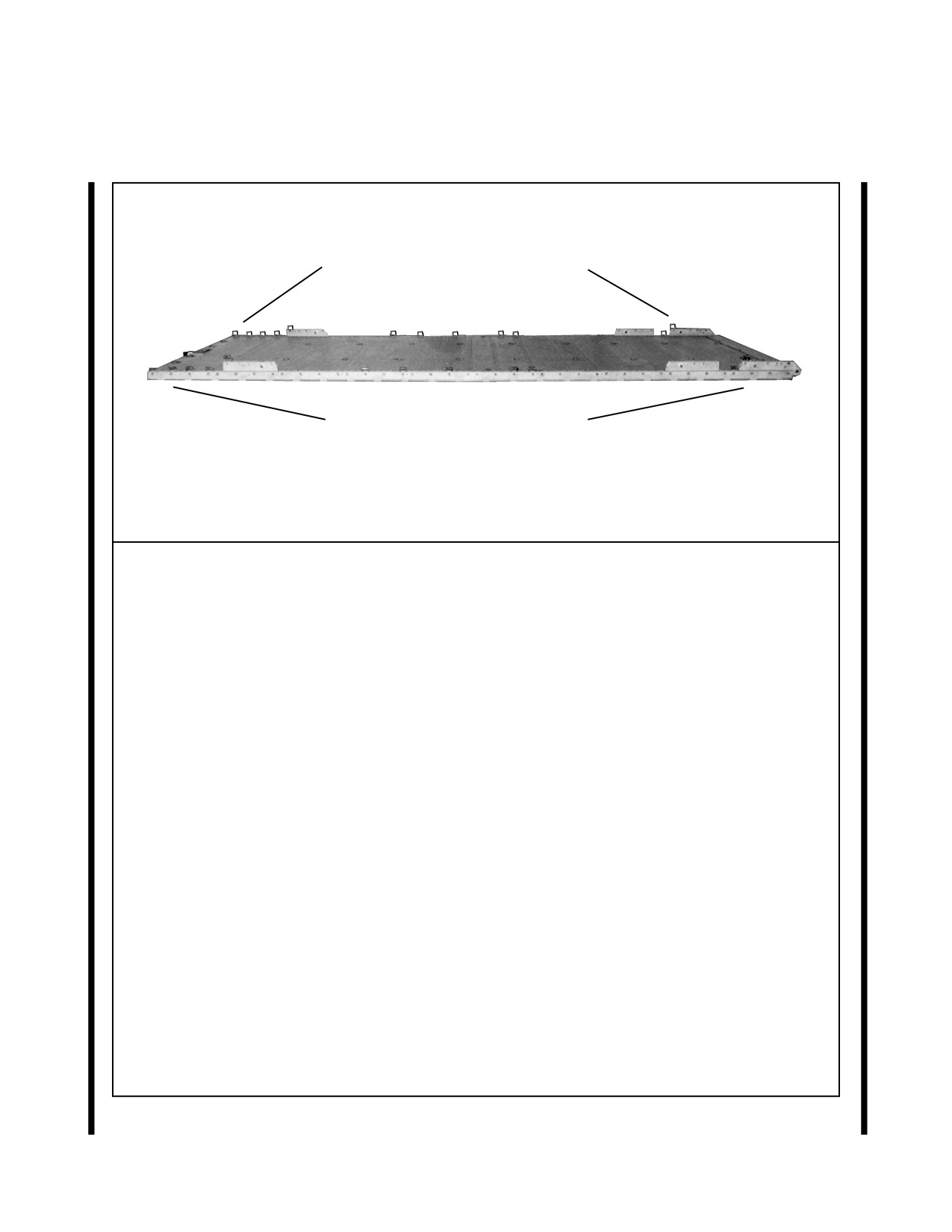
14-2. Preparing the Platform
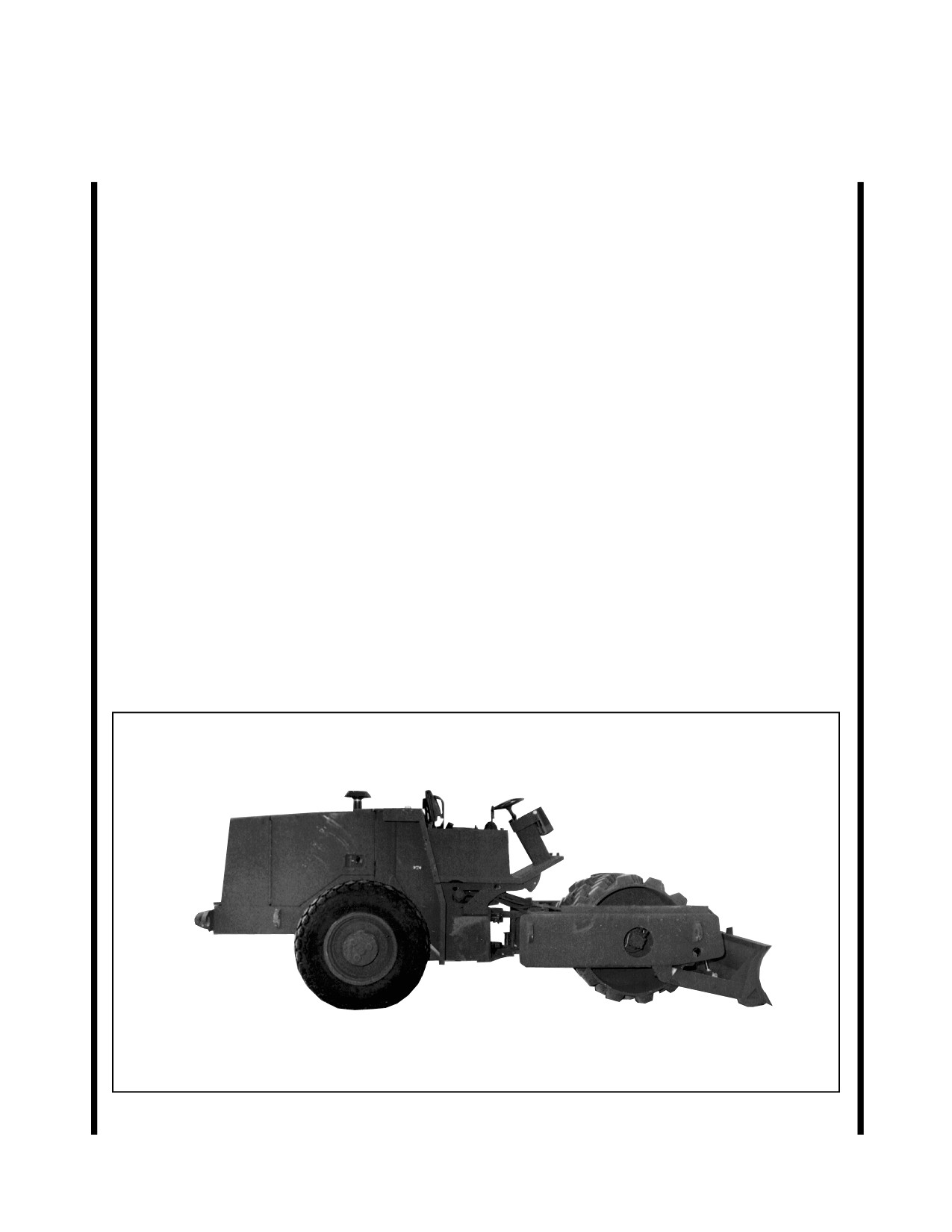
The vibratory compactor (Figure 14-1) is a four-
Prepare a 20-foot, type V platform using two
cylinder, turbocharged, selfpropelled diesel
tandem multi-purpose links, four suspension
driven engine, and uses a single sheep-foot drum
links and 24 tiedown clevises as shown in
with an optional leveling blade. This load is
Figure 14-2.
rigged on a 20-foot, type V platform with four
G-11 cargo parachutes. The rigged weight of
the vibratory compactor is 19,147 pounds. It is
262 inches long, 99 inches high, and 108 inches
wide, when prepared for rigging.
Figure 14-1. Vibratory compactor (Model CS-433P)
14-1
C7, FM 10-528/TO 13C7-26-71
Left
CLEVISES 12A THROUGH 1A
Rear
Front
CLEVISES 12 THROUGH 1
Right
Step:
1. Install a tandem multi-purpose link to each plaform side rail using holes 1, 2, and 3.
2. Install a suspension link to each platform side rail using holes 6, 7, and 8.
3. Install a suspension link to each platform side rail using holes 33, 34, and 35.
4. Install a clevis on bushing 4 on each of the front tandem links.
5. Install a clevis on bushing 4 on each of the second suspension links.
6. Starting at the front of each platform side rail, install clevises on the bushings
bolted on holes 4, 17, 18, 22, 25, 27, 37, 38, 39 and 40.
7. Starting at the front of the platform number the clevises 1 through 12 on the right
side and 1A through 12A on the left side.
8. Label the tiedown rings according to FM 10-500-2/TO 13C7-1-5.
Note: The nose bumper may or may not be installed. Measurements given in this
section are from the front edge of the platform, not the front edge of the nose
bumper.
Figure 14-2. Platform prepared
14-2
C7, FM 10-528/TO 13C7-26-71
14-3. Preparing and Positioning Honeycomb
Stacks
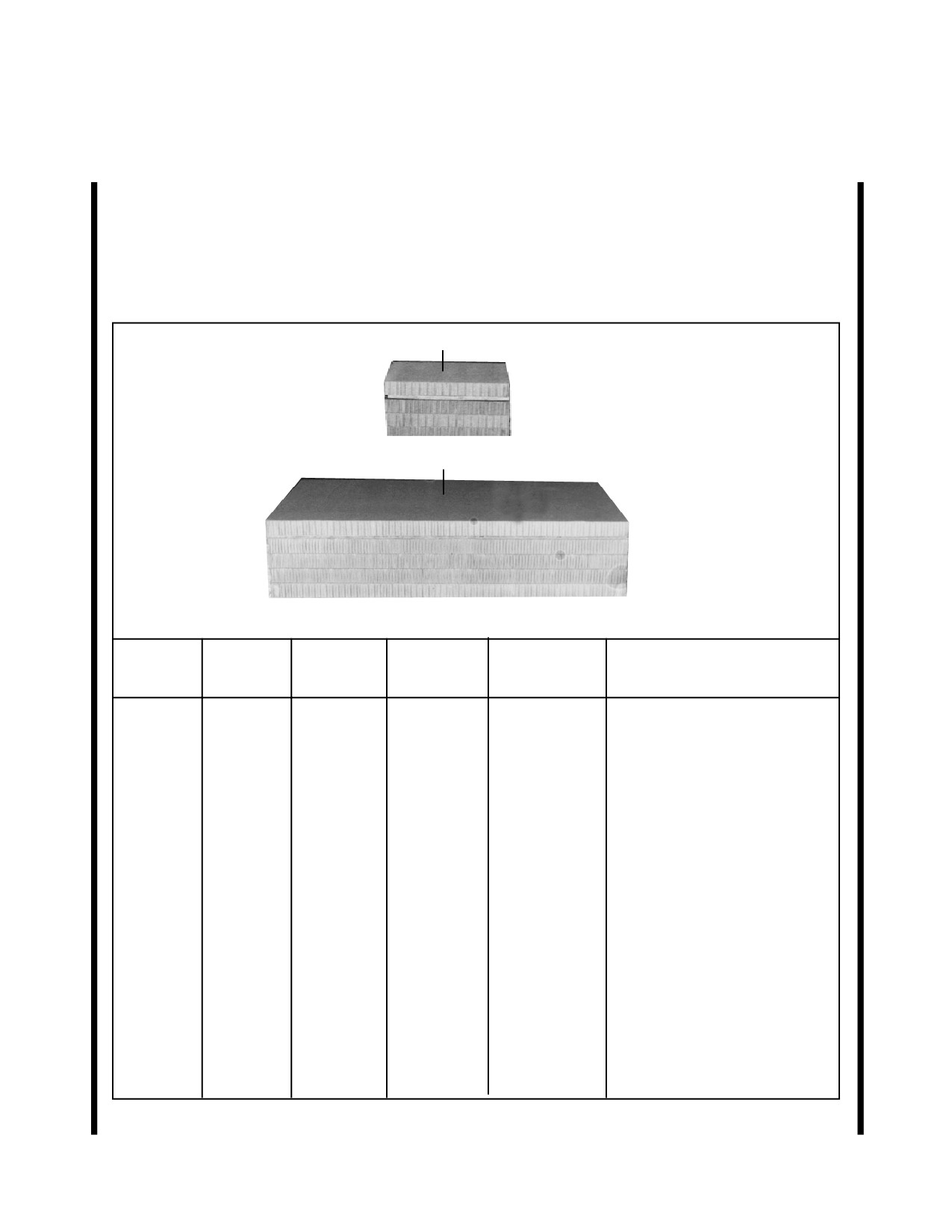
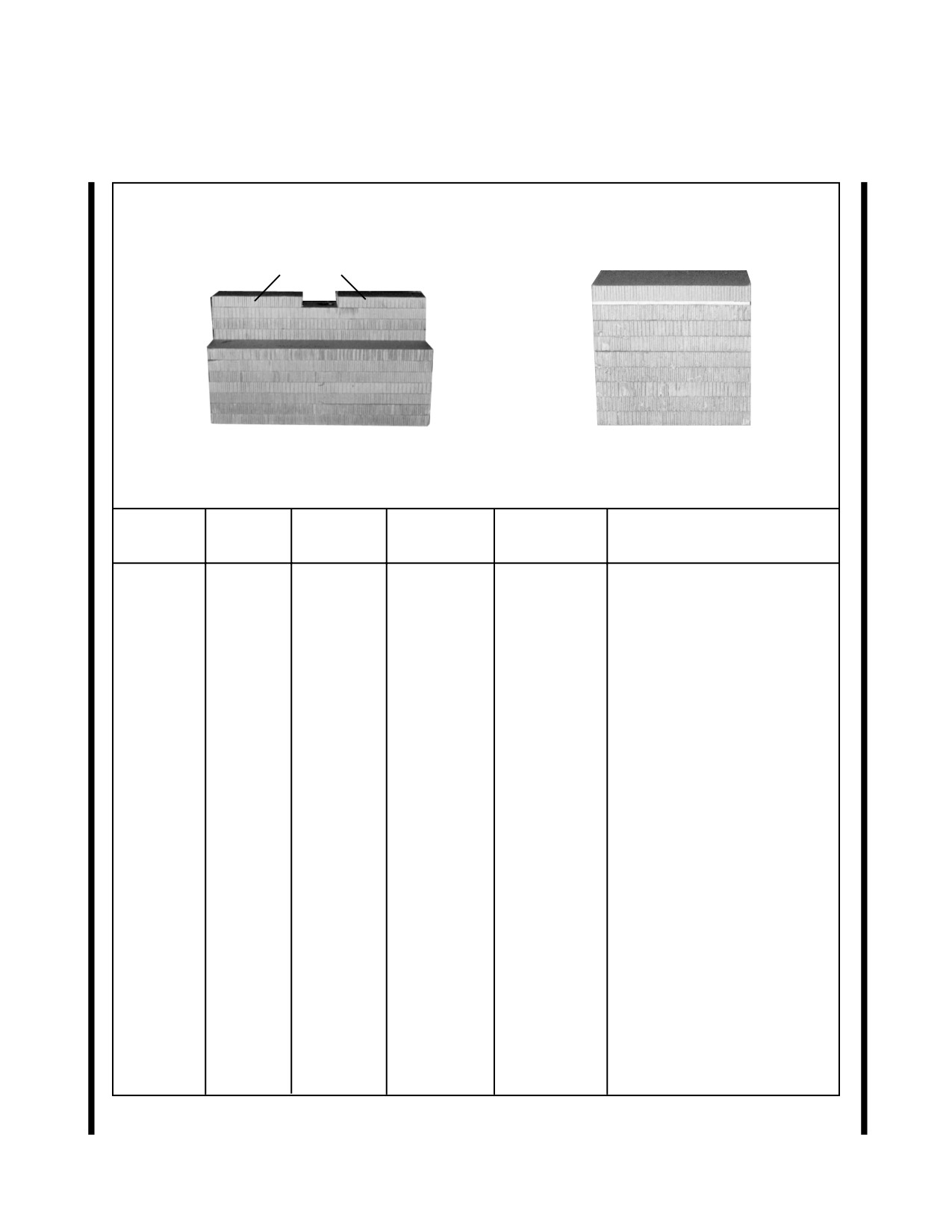
Prepare the honeycomb stacks as shown in Figures 14-3 through
14-5. Position the honeycomb stacks on the platform as shown in
Figure 14-6.
Stack 1
18” x 18”
Stack 2
36” x 66”
Stack
Width
Length
Number
Pieces
(Inches)
(Inches)
Material
Instructions
1
5
18
18
Honeycomb
Glue four pieces of honey-
comb together to form a
base.
1
18
18
3/4-inch
Glue plywood to the base
Plywood
and glue the remaining 18-
inch by 18-piece of honey
comb on top of the plywood.
2
5
36
66
Honeycomb
Glue four pieces of honey-
comb together to form a base.
1
36
66
3/4-inch
Glue plywood to the top of
Plywood
the base and glue the remain-
ing piece of 36-inch by 66-
inch honeycomb to the top of
the plywood.
Figure 14-3. Honeycomb stacks 1 and 2 prepared
14-3
C7, FM 10-528/TO 13C7-26-71
Stack 3
Stack 4
12” x 25”
12” x 60”
16” x 30”
24” x 60”
Stack
Width
Length
Number
Pieces
(Inches)
(Inches)
Material
Instructions
3
7
24
60
Honeycomb
Glue honeycomb together to
form a base.
3
12
60
Honeycomb
Glue pieces of honeycomb to
the base aligned on the rear
edge.
2
12
25
Honeycomb
Glue each piece of honey-
comb to the outer edge of the
12-inch by 60-inch piece of
honeycomb.
4
9
16
30
Honeycomb
Glue eight pieces of honey-
comb together to form a base.
1
16
30
3/4-inch
Glue the plywood to the
Plywood
top of the base. Glue the re-
maning piece of honeycomb
to the top of the plywood.
Figure 14-4. Honeycomb stacks 3 and 4 prepared
14-4
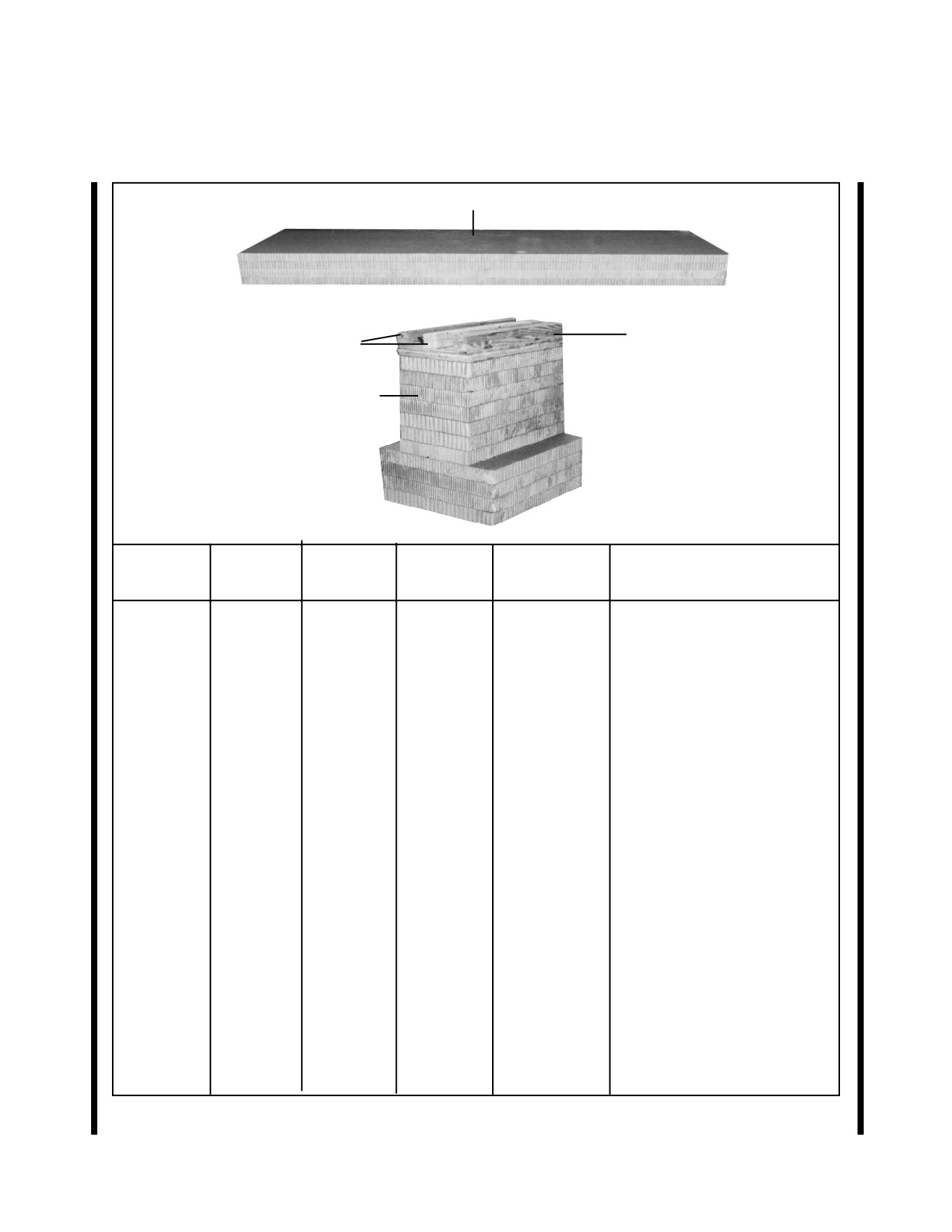
C7, FM 10-528/TO 13C7-26-71
Stack 5
36” x 96”
2 x 4 x 36”
18” x 36”
Lumber
3/4-inch Plywood
Stack 6
18” x 36”
30” x 36”
Stack
Width
Length
Number
Pieces
(Inches)
(Inches)
Material
Instructions
5
4
36
96
Honeycomb
Glue pieces of honeycomb
together to form a base.
6
4
30
36
Honeycomb
Glue pieces of honeycomb
together to form a base.
7
18
36
Honeycomb
Center and glue to base.
3
18
36
3/4-inch
Nail three pieces of 3/4-inch
Plywood
plywood together.
6
2 x 4
36
Lumber
Nail two pieces of lumber to
the rear edge of the plywood
and two more pieces centered
on the plywood. Glue the
piece on top of the 18-inch
by 36-inch piece of honey-
comb.
Figure 14-5. Honeycomb stacks 5 and 6 prepared
14-5
C7, FM 10-528/TO 13C7-26-71
Stack 6
Stack 3
Stack 4
Stack 2
Stack 5
Stack 1
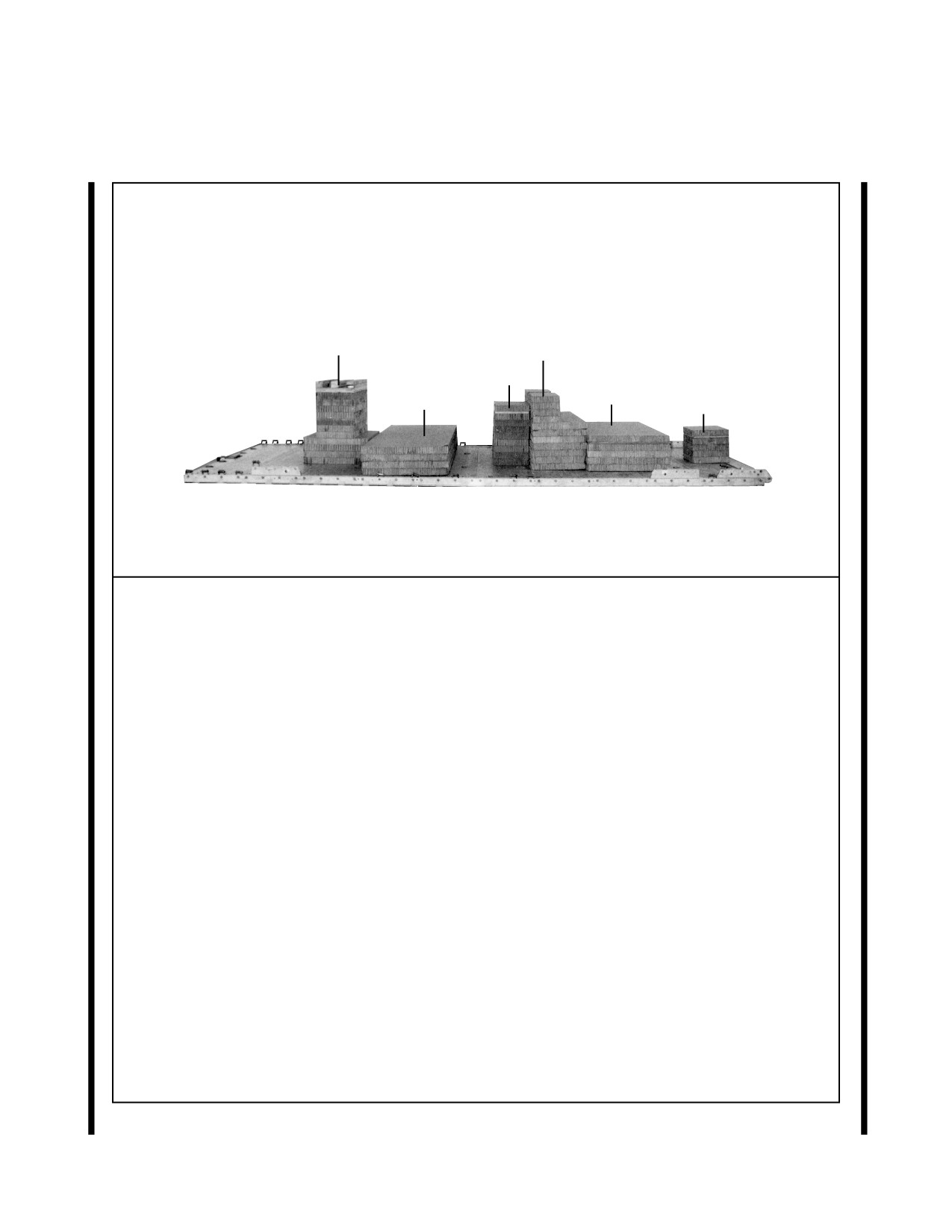
Step:
1. Position stack 1 centered and flush with the front edge of the platform and not
the nose bumper if present.
2. Position stack 2 centered and 18 inches from stack 1.
3. Position stack 3 centered and flush against stack 2.
4. Position stack 4 centered and flush against stack 3.
5. Position stack 5 centered and 19 inches from stack 4.
6. Position stack 6 centered and 1 inch from stack 5.
Figure 14-6. Honeycomb stacks positioned on platform
14-6
C7, FM 10-528/TO 13C7-26-71
14-4. Preparing and Positioning Vibratory
Compactor on Platform
Prepare and position the vibratory compactor
on a platform as shown in Figures 14-7 and
14-8.
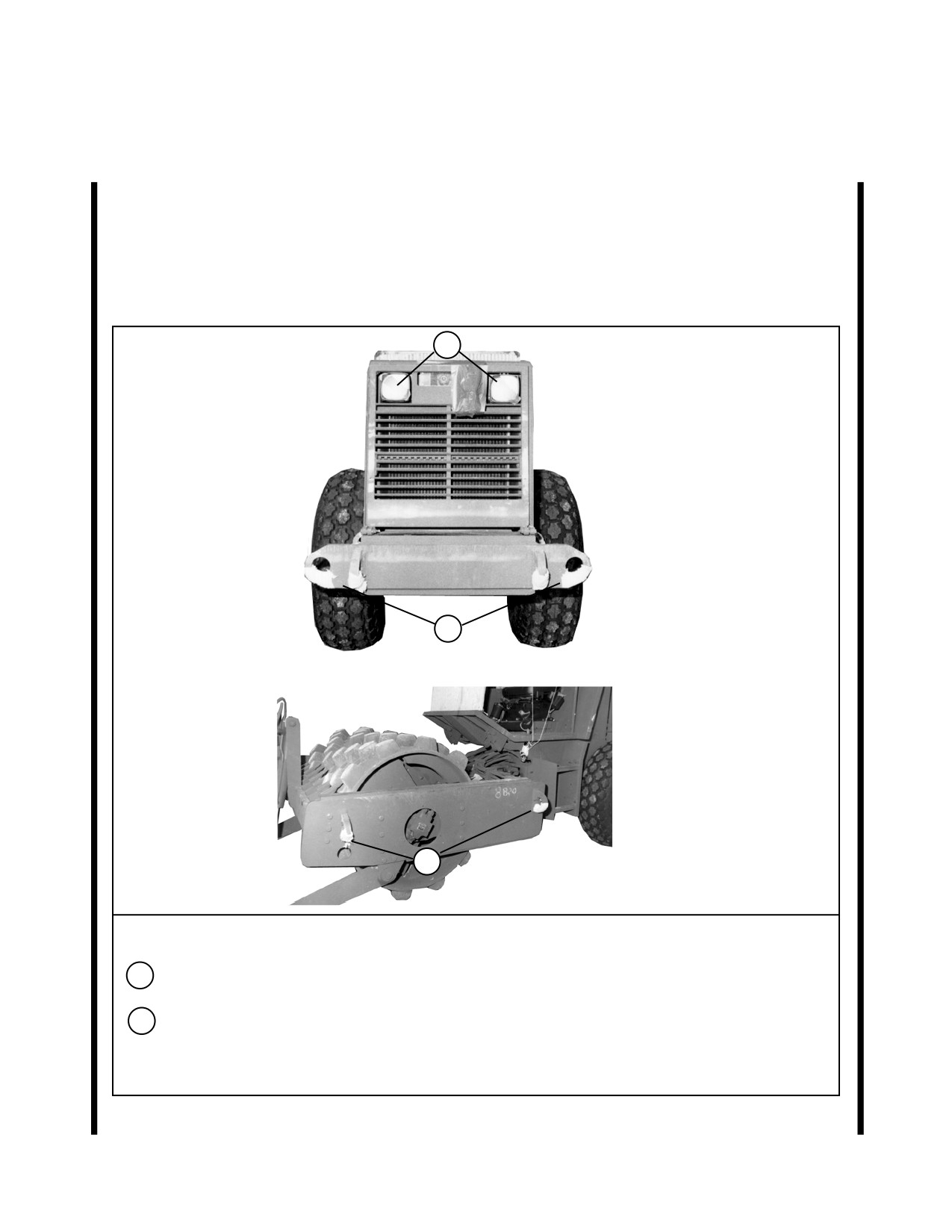
1
2
2
1
Tape all lights and reflectors.
2
Tape cellulose wadding to all lashing tiedown points.
Figure 14-7. Vibratory compactor prepared
14-7
C7, FM 10-528/TO 13C7-26-71
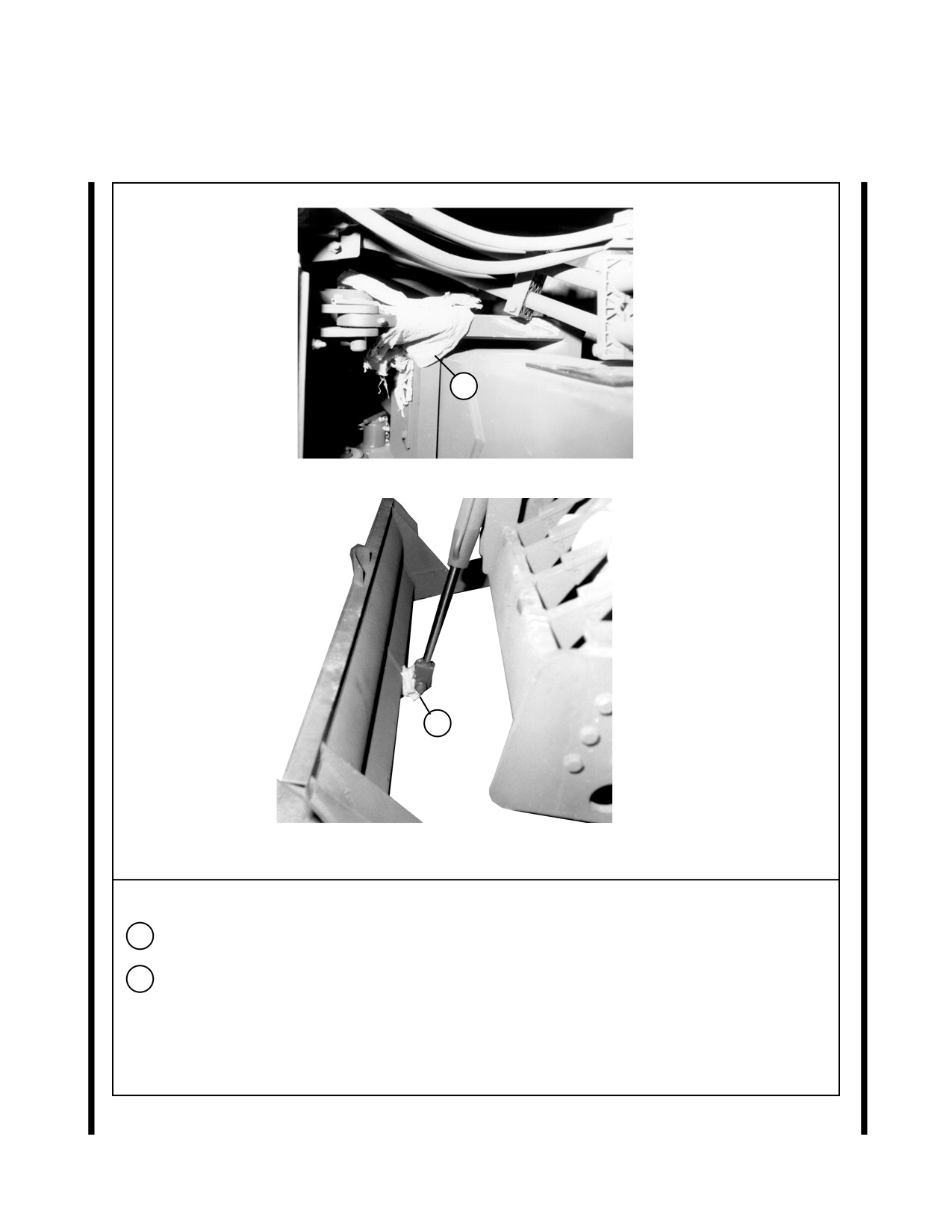
3
4
3
Tape cellulose wadding to the upper pivot arm of the chassis.
4
Tape cellulose wadding to the hydraulic attaching point of the blade.
Figure 14-7. Vibratory compactor prepared (continued)
14-8
C7, FM 10-528/TO 13C7-26-71
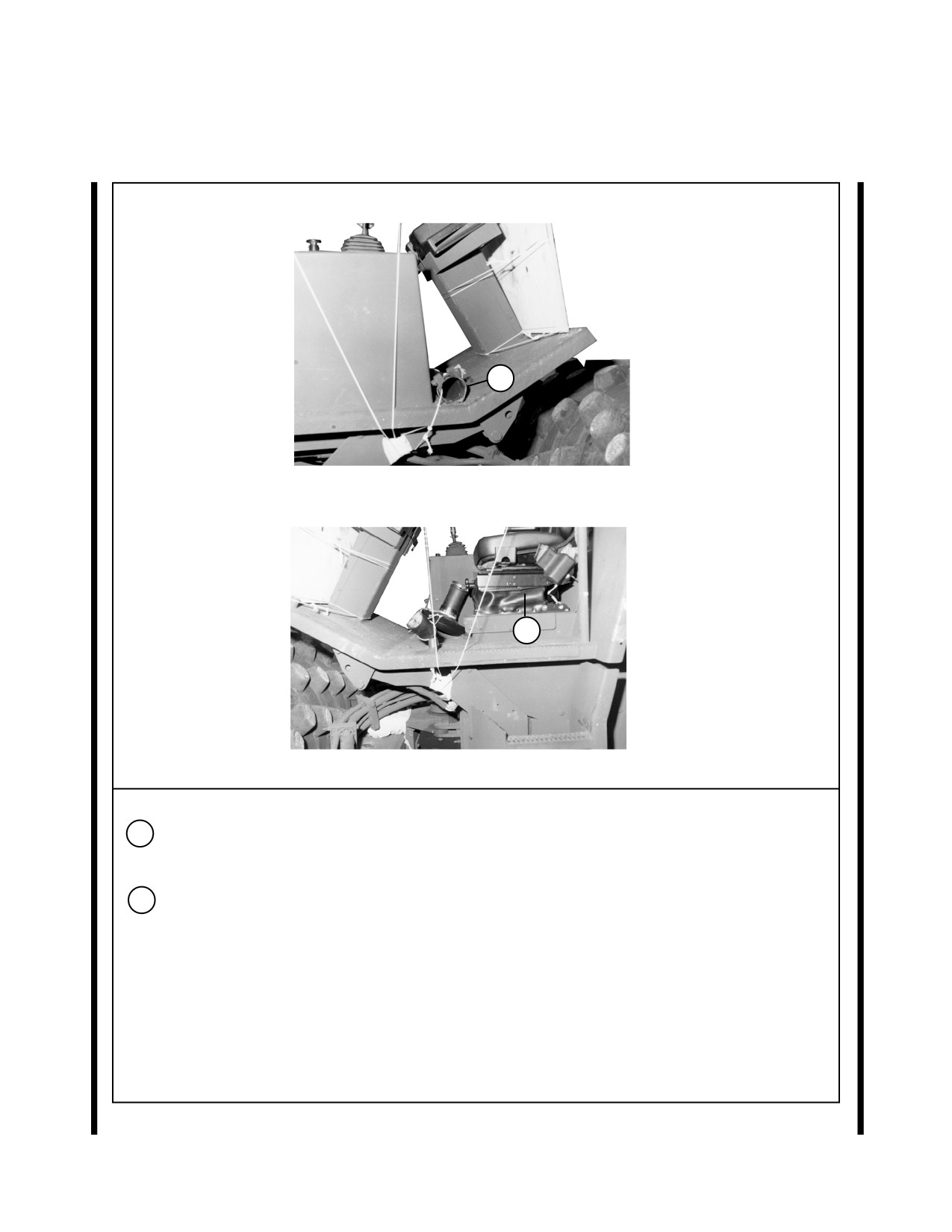
5
6
5
Remove the air-filter and exhaust pipe. Secure them to convenient points
in the cab.
6
Lower the seat and lock it down.
Figure 14-7. Vibratory compactor prepared (continued)
14-9
C7, FM 10-528/TO 13C7-26-71
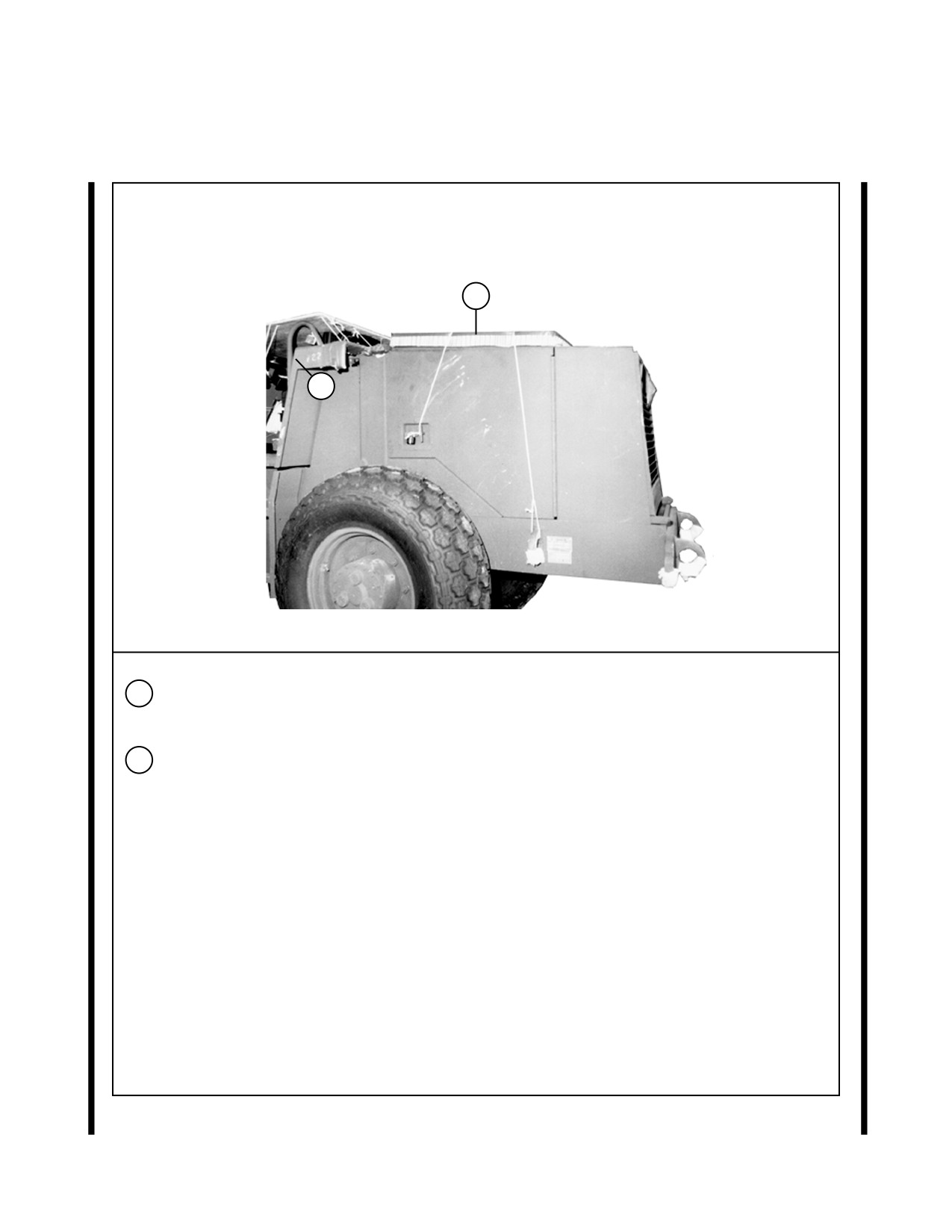
8
7
7
Tape felt on the upper portions of the rear wheel wells where the slings will make
contact.
8
Tape the edges of a 29-inch by 38-inch piece of honeycomb and secure it on top
of the engine compartment with type III nylon cord tied to a convenient point on
the roller.
Figure 14-7. Vibratory compactor prepared (continued)
14-10
C7, FM 10-528/TO 13C7-26-71
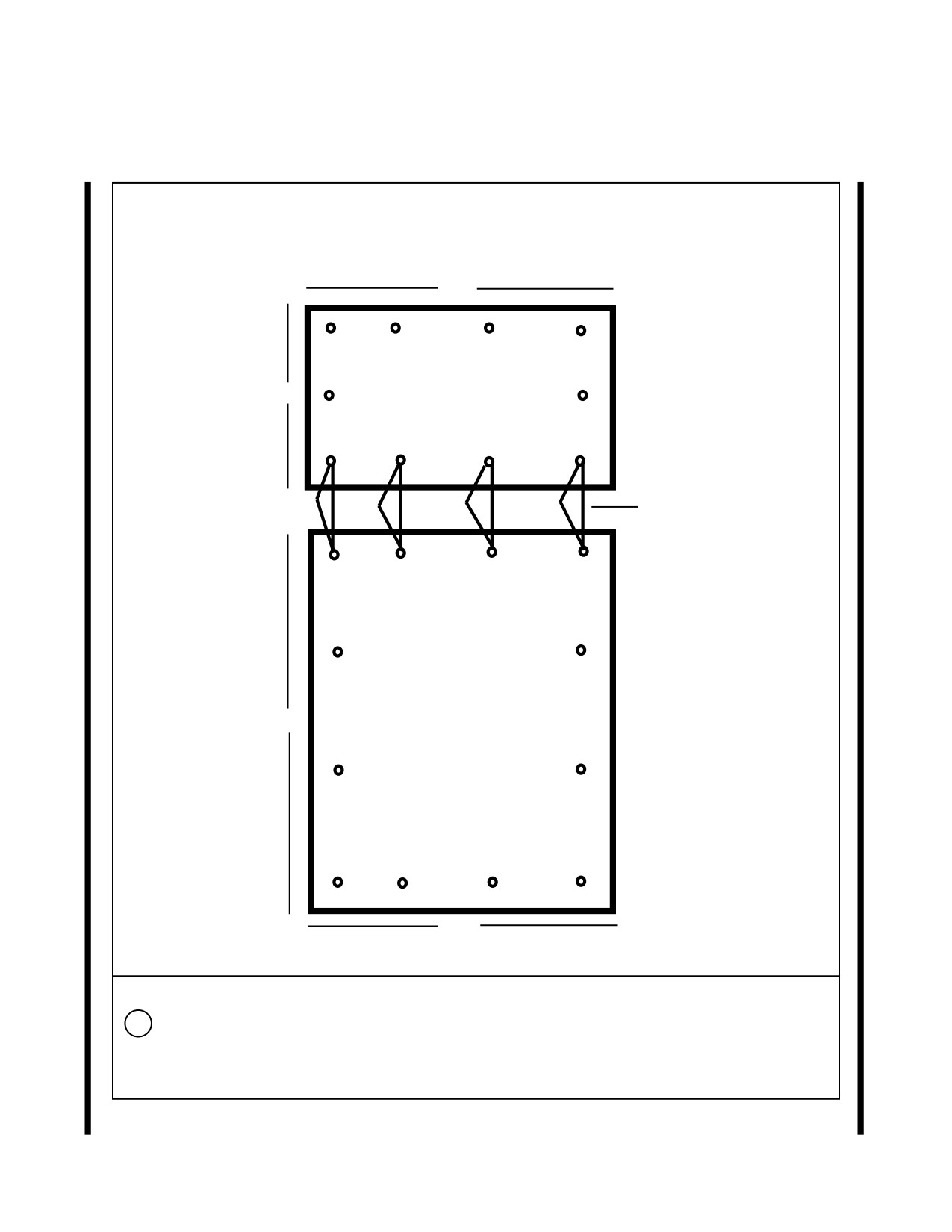
39”
3/4-inch
24”
Plywood
Type III nylon cord
3/4-inch
51”
Plywood
39”
9
Tie a 24-inch by 39-inch piece of 3/4-inch plywood to a 39-inch by 51-inch piece of
3/4-inch plywood using type III nylon cord as shown.
Figure 14-7. Vibratory compactor prepared (continued)
14-11
C7, FM 10-528/TO 13C7-26-71
10
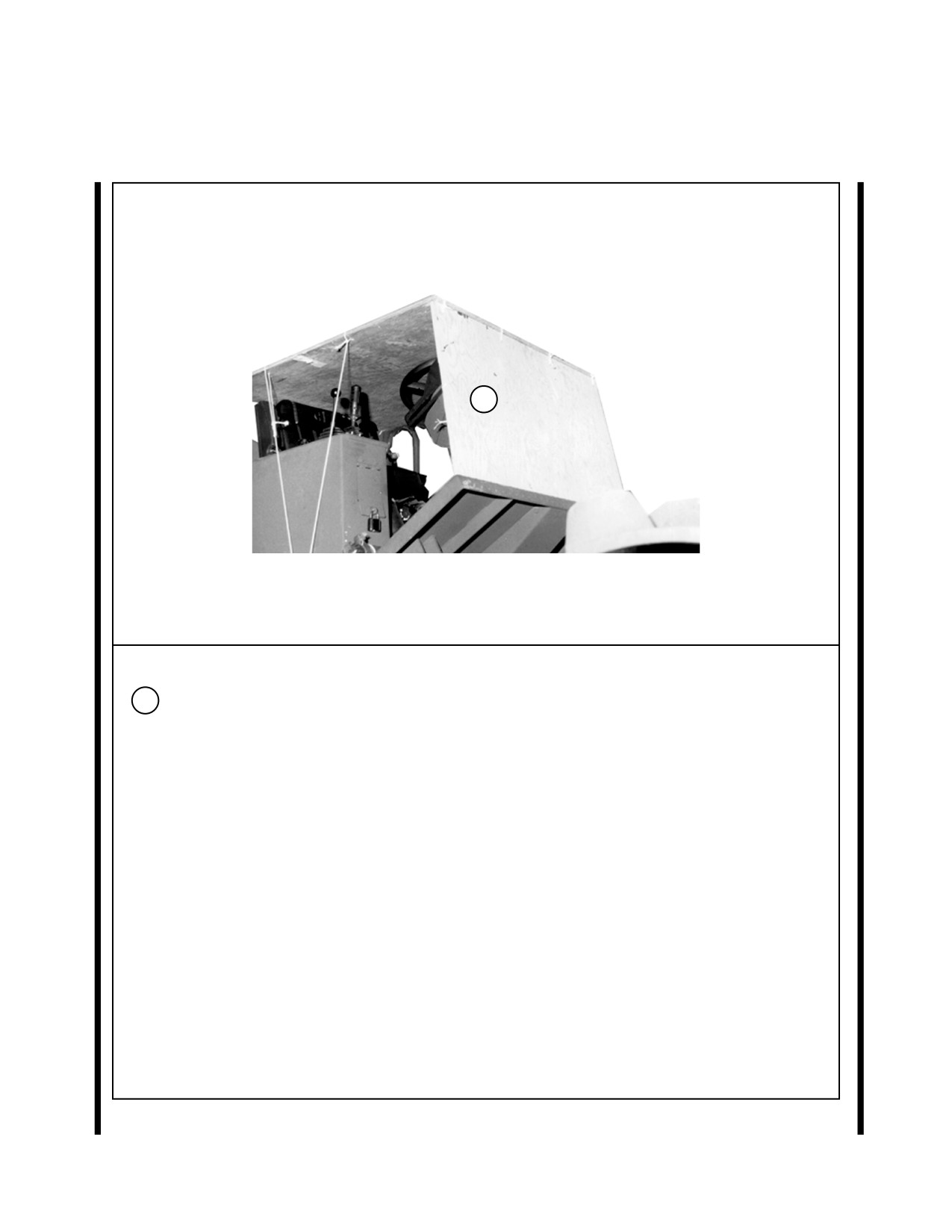
10
Using 1/2-inch tubular nylon, secure the piece of plywood to the cab of the vibratory
compactor to a convenient point on the load.
Figure 14-7. Vibratory compactor prepared (continued)
14-12
C7, FM 10-528/TO 13C7-26-71
2-inches
1
Stack 2
1
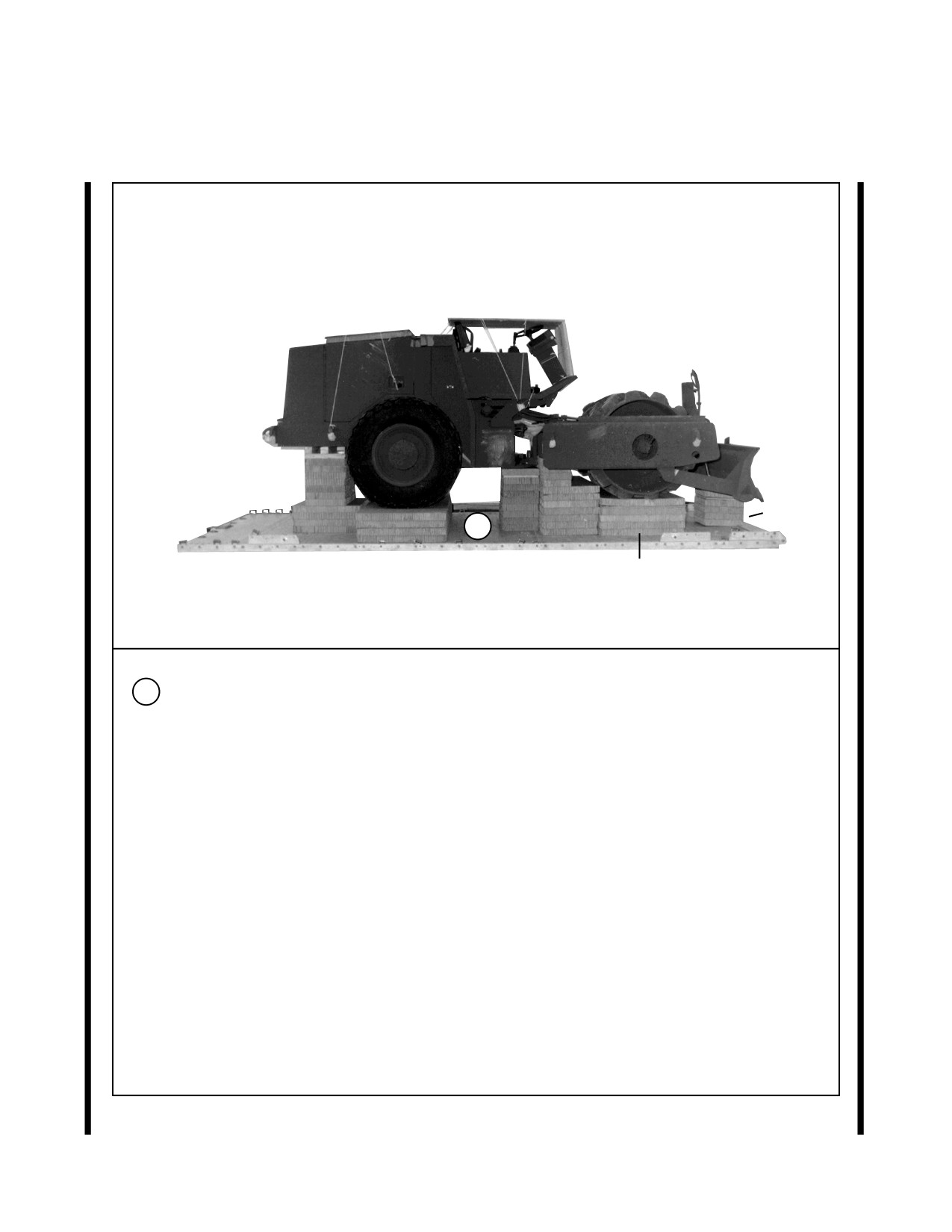
Position the vibratory compactor with the roller on honeycomb stack 2 aligning
the front edge of the blade 2 inches from the front edge of the platform.
Figure 14-8. Vibratory compactor positioned on platform
14-13
C7, FM 10-528/TO 13C7-26-71
14-5. Lashing Vibratory Compactor to the Platform
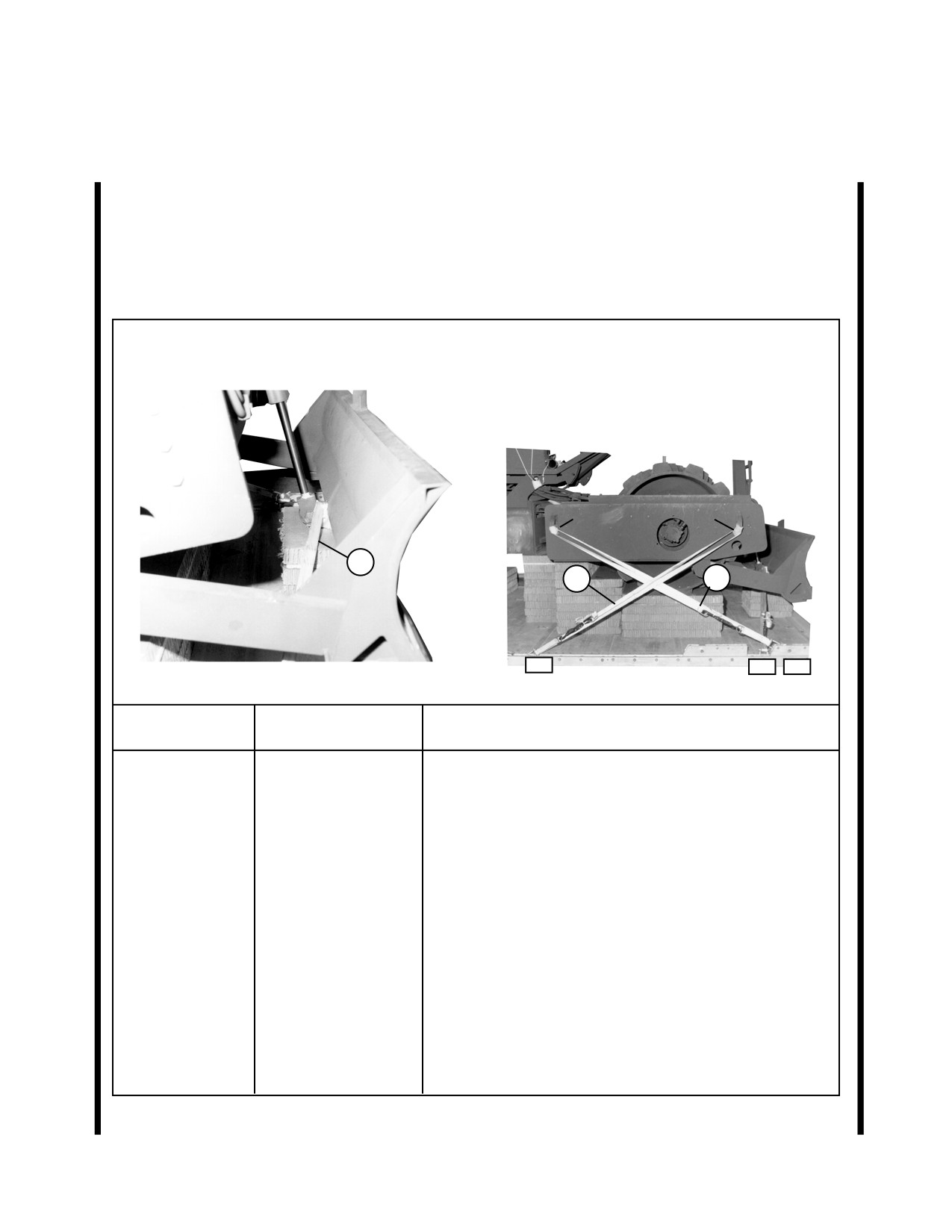
Lash the vibratory compactor to the platform
as shown in Figures 14-9 through 14-11 and
FM 10-500-2/TO 13C7-1-5.
Tiedown 2
Tiedown 1
1
5
3
3
2
1
Lashing
Clevis
Number
Number
Instructions
Pass lashing:
1
2
Around right hydraulic attaching point of blade.
2
2A
Around left hydraulic attaching point of blade.
3
1
Through tie-down number 2, right side.
4
1A
Through tie-down number 2, left side.
5
3
Through tie-down number 1, right side.
6
3A
Through tie-down number 1, left side.
Figure 14-9. Lashings 1 through 6 installed
14-14
C7, FM 10-528/TO 13C7-26-71
9
7
11
13
7
6
5
4
Lashing
Clevis
Number
Number
Instructions
Pass lashing:
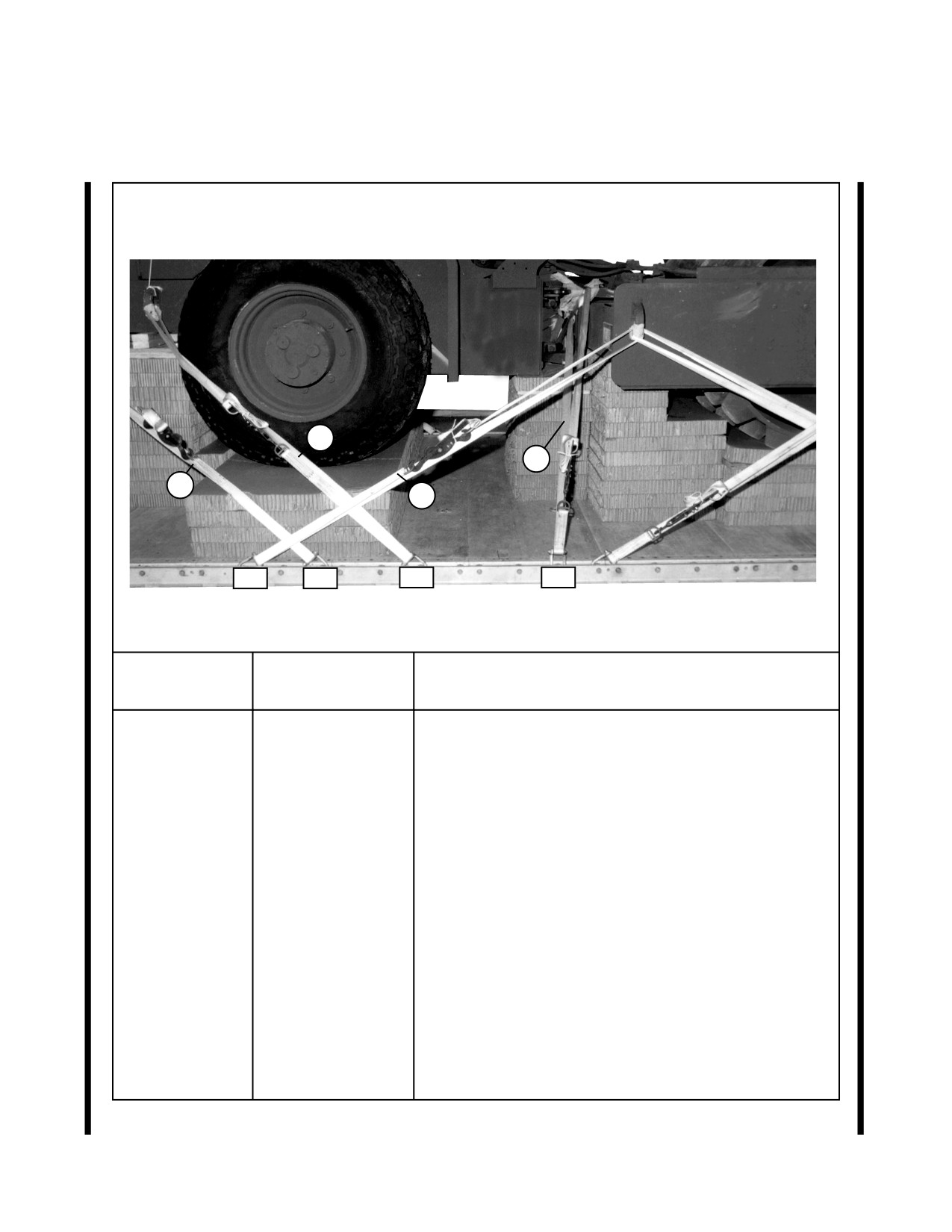
7
4
Around right upper pivot arm of chassis.
8
4A
Around left upper pivot arm of chassis.
9
5
Through tie-down number 3, right side.
10
5A
Through tie-down number 3, left side.
11
6
Through tie-down number 4, right side.
12
6A
Through tie-down number 4, left side.
13
7
Through tie-down number 2, right side
14
7A
Through tie-down number 2, left side.
Figure 14-10. Lashings 7 through 14 installed
14-15
C7, FM 10-528/TO 13C7-26-71
Tiedown 4
Tiedown 3
17
19
15
9
11
12
Lashing
Clevis
Number
Number
Instructions
Pass lashing:
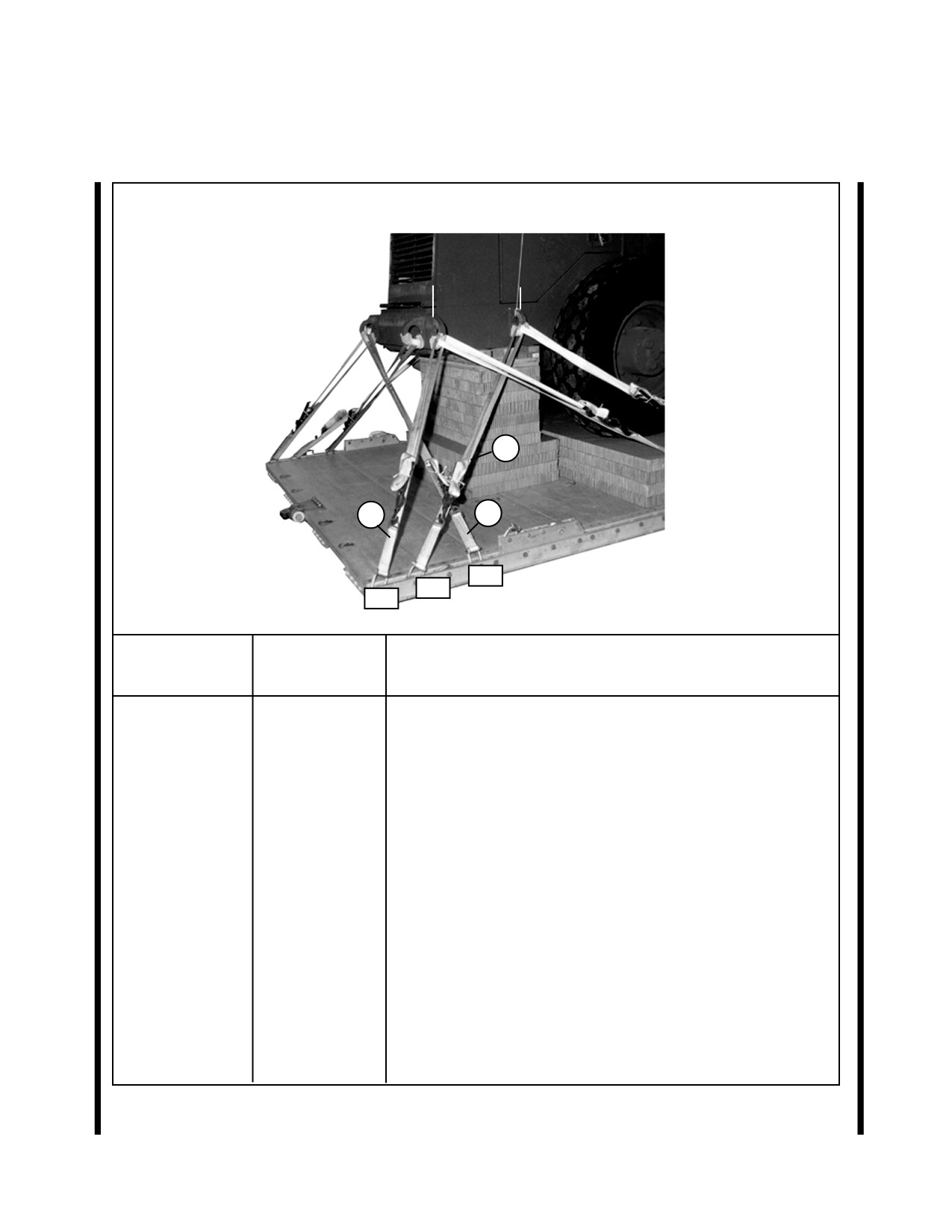
15
9
Through rear tie-down, left side.
16
9A
Through rear tie-down, right side.
17
11
Through clevis 11 to tie-down number 3, left side.
18
11A
Through clevis 11A to tie-down number 3, right side.
19
12
Through clevis 12 to tie-down number 4, left side.
20
12A
Through clevis 12A to tie-down number 4, right side.
Figure 14-11. Lashings 15 through 20 installed
14-16
C7, FM 10-528/TO 13C7-26-71
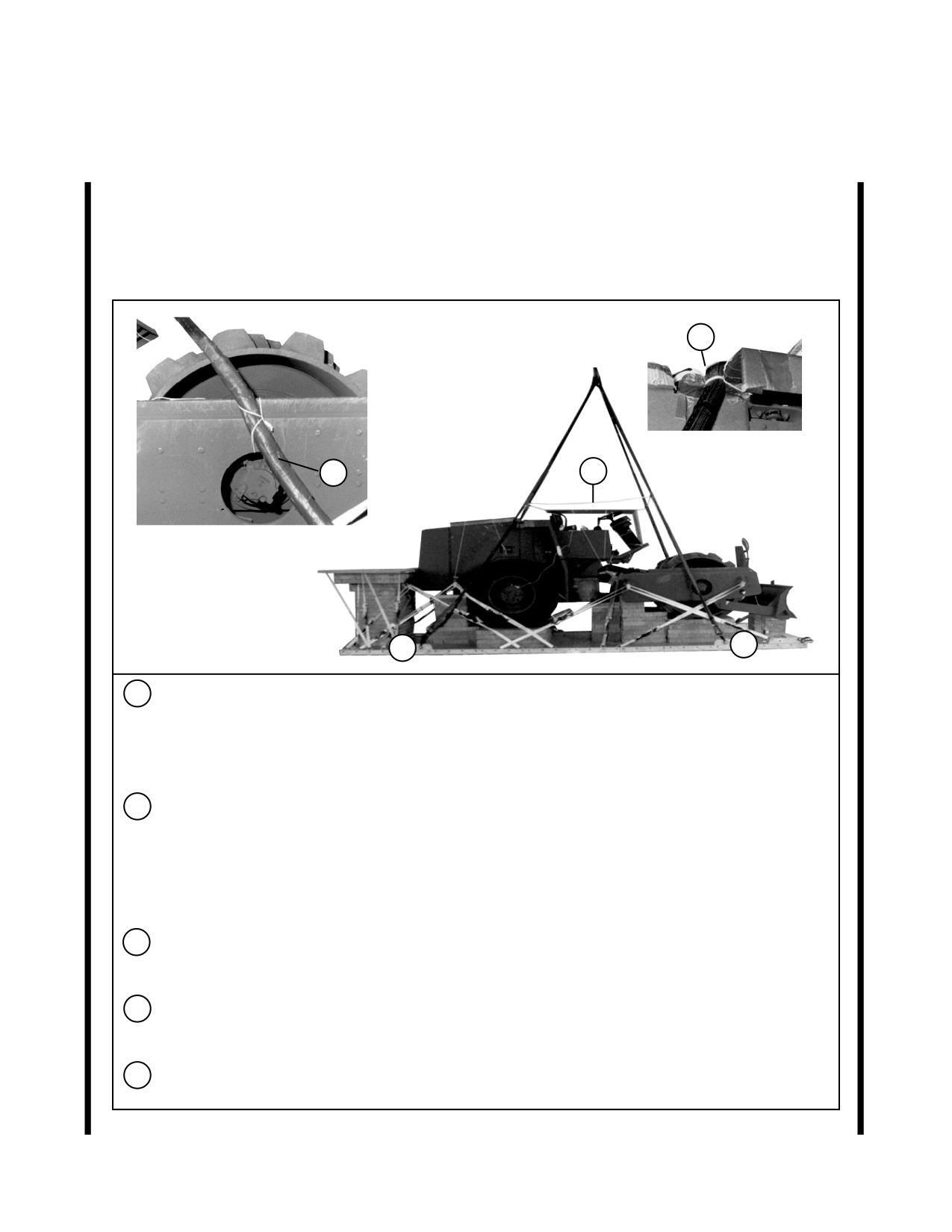
14-6. Installing and Safetying Suspension
Slings and Deadman’s Tie
Install and safety four 16-foot (4-loop), type XXVI nylon
webbing slings to the tandem links as shown in Figure 14-12.
5
4
3
Rear
Front
1
2
1
Place a large clevis in one end of a 16-foot (4-loop), type XXVI nylon suspension
sling. Attach another large clevis to the front right and front left suspension links.
Attach the large clevises together and safety-tie them with type III nylon cord in an
hourglass configuration.
2
Place a 5 1/2-inch two point link in one end of a 16-foot (4-loop), type XXVI nylon
suspension sling. Pass a 3-foot (4-loop), type XXVI nylon sling through the two point
link and fold in half. Attach both running ends of the 3-foot sling to a large clevis.
Attach the large clevis to the rear right and rear left suspension links. Tape a piece of felt
to the 5 1/2-inch two point link.
3
Raise the slings and install the deadman’s tie on the front and rear sets of slings IAW
FM 10-500-2/TO 13C7-1-5.
4
Tape a piece of felt on the front slings, starting at a point 18 inches above the clevis to
18 inches above the roller and tie to a conveniewnt point.
5
Tie the rear slings to the padded and taped portions of the wheel well using type III nylon
cord.
Figure 14-12. Suspension slings and deadman’s tie installed
14-17
C7, FM 10-528/TO 13C7-26-71
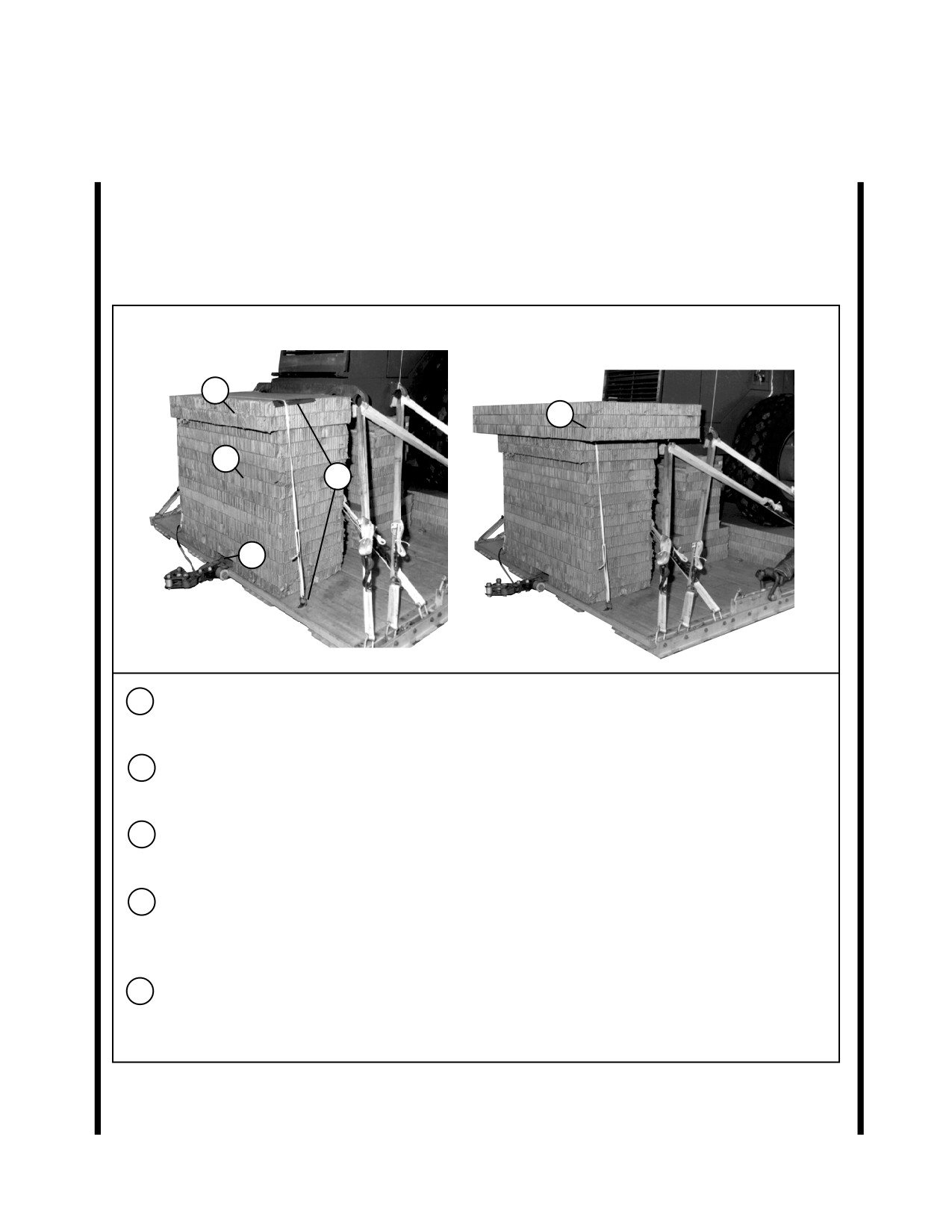
14-7. Building and Positioning Parachute
Stowage Platform
Build and position the parachute stowage
platform as shown in Figure 14-13.
3
5
1
4
2
1
Cut and glue 13 layers of 23-inch by 50-inch pieces of honeycomb together to
form the base on the platform.
2
Cut a channel in the bottom layer of honeycomb that will allow the extraction bracket
to fit under it.
3
Cut and glue two layers of 26-inch by 50-inch pieces of honeycomb together on top of
the base and flush with the front edge.
4
Tape the outer edges of the 26-inch by 50-inch piece of honeycomb and position it on
the platform centered and flush with the rear edge. Secure it to the platform with 1/2-inch
tubular nylon webbing to deck-rings 10A and 10D.
5
Cut and glue three layers of 36-inch by 71-inch pieces of honeycomb centered on
top of the base.
Figure 14-13. Parachute stowage platform constructed and positioned
14-18
C7, FM 10-528/TO 13C7-26-71
7
8
8
10
6
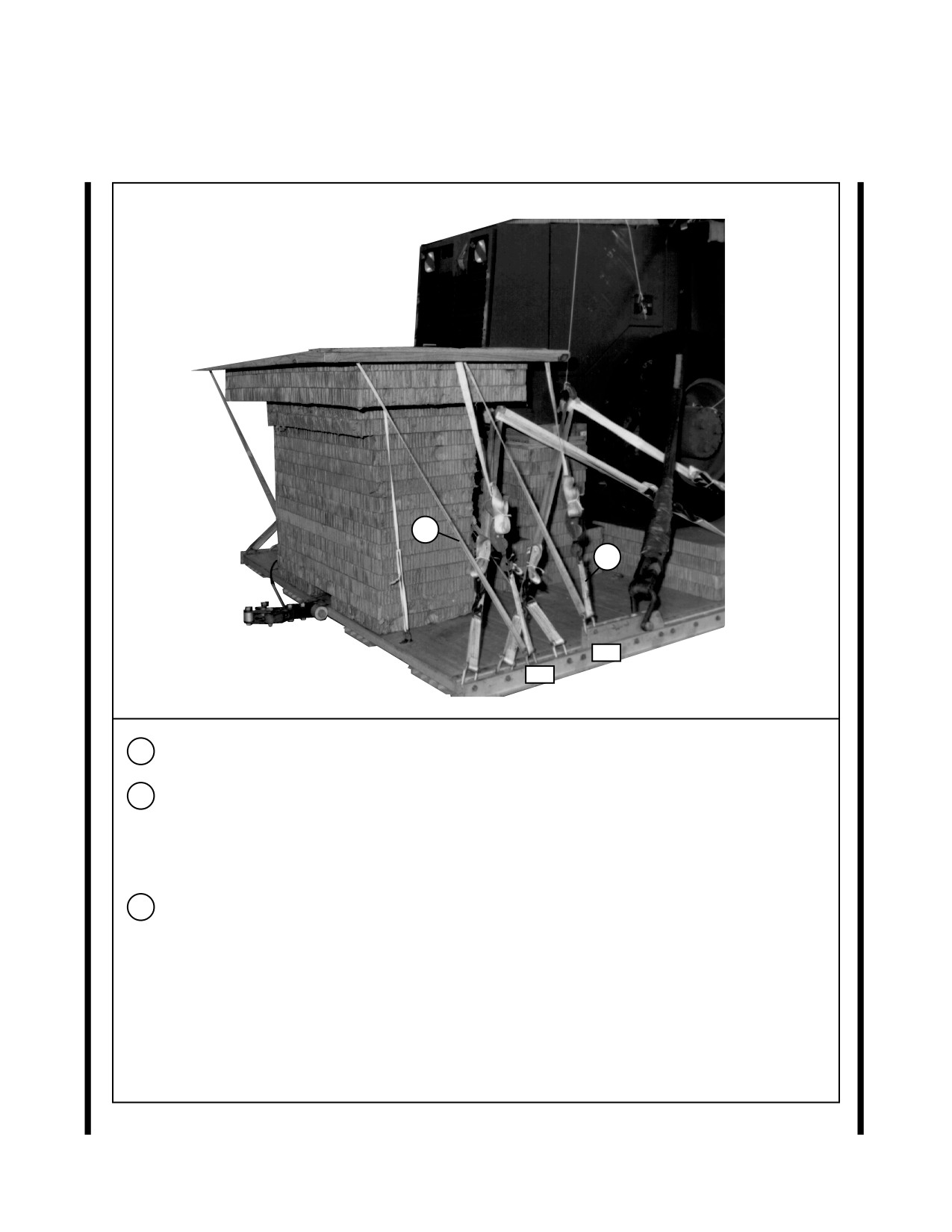
Contsruct a parachute stowage platform as shown in Figure 13-13, step 6.
7
Place the parachute stowage platform on the honeycomb stack. Secure it by
routing a 15-foot lashing from clevis 10 to the front right hole to the center hole.
Secure with a load binder. Route a 15-foot lashing from clevis 10A to the front
left hole to the center hole and secure with a loadbinder.
8
Route a 15-foot lashing from clevis 8 to the center hole to the rear hole and secure
with a load binder. Route a 15-foot lashing from clevis 8A to the center hole to the
rear hole and secure with a loadbinder.
Figure 14-13. Parachute stowage platform constructed and positioned (continued)
14-19
C7, FM 10-528/TO 13C7-26-71
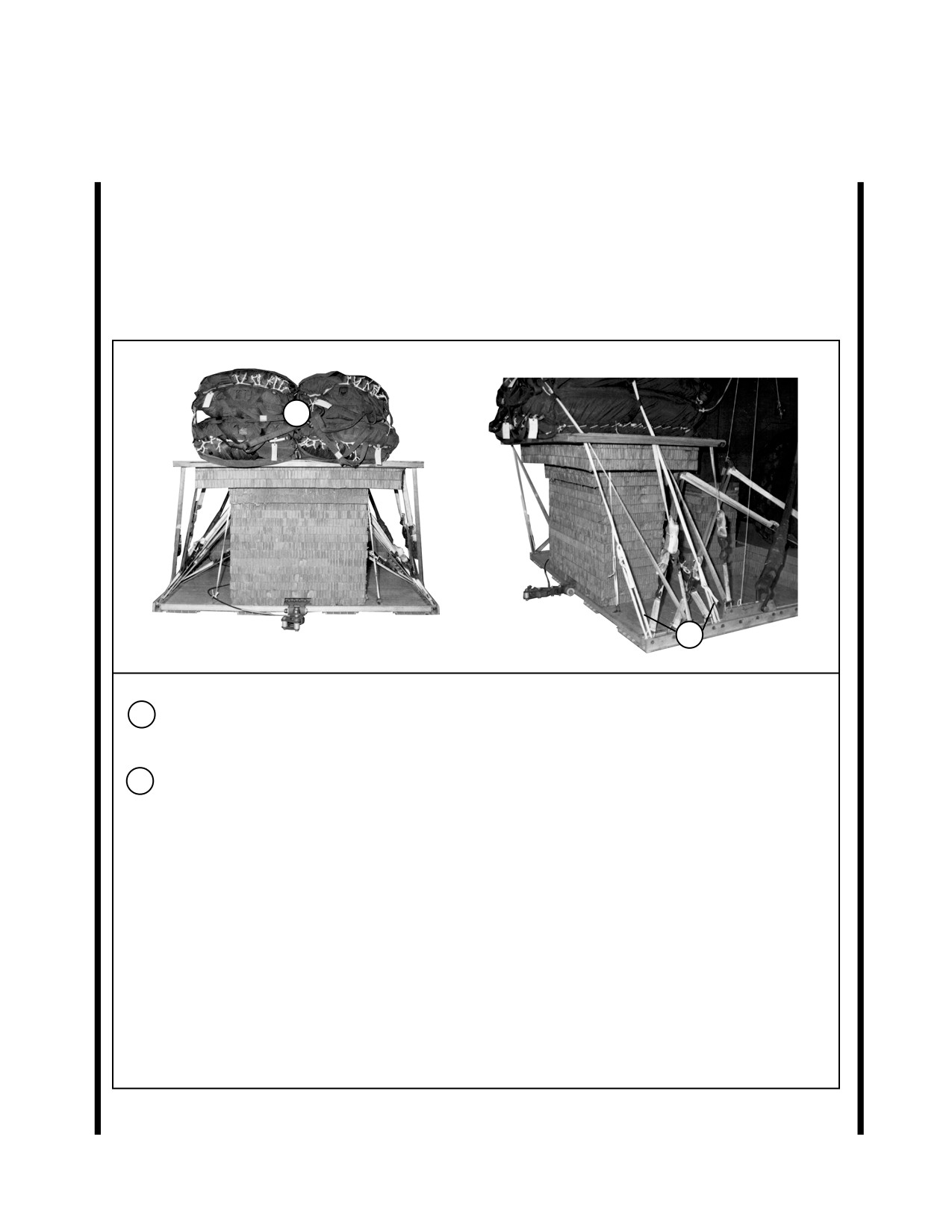
14-8. Installing Cargo Parachutes
Install four G-11 cargo parachutes on
the load according to FM 10-500-2/
TO 13C7-1-5 and as shown in Figure
14-14.
1
2
1
Prepare and stow four G-11 cargo parachutes in accordance with FM 10-500-2/
TO 13C7-1-5.
2
Restrain the parachutes using bushings 40, 40A, 36, and 36A on the platform.
Figure 14-14. Parachutes stowed
14-20
C7, FM 10-528/TO 13C7-26-71
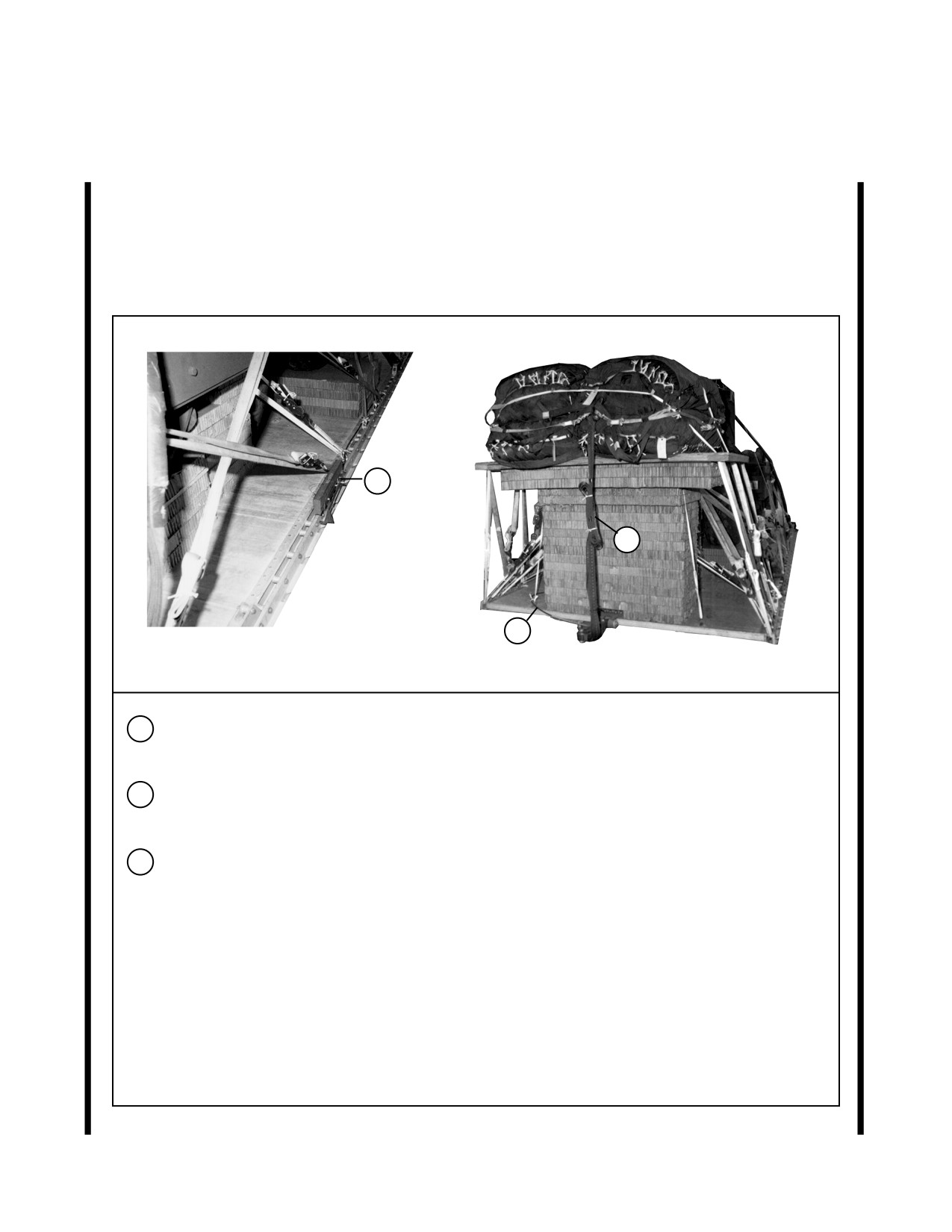
14-9. Installing Extraction System
Install the EFTC system according to
FM 10-500-2/TO 13C7-1-5 and as shown
in Figure 14-15.
1
3
2
1
Install the components of the extraction force transfer coupling (EFTC) according
to FM 10-500-2/TO13C7-1-5. Use the rear mounting holes for the EFTC bracket.
2
Secure a 16-foot EFTC cable with type I, 1/4-inch cotton webbing to a
convenient point on the platform.
3
Attach a 9-foot (2-loop), type XXVI nylon sling to be used as a deployment line.
Figure 14-15. EFTC installed
14-21
C7, FM 10-528/TO 13C7-26-71
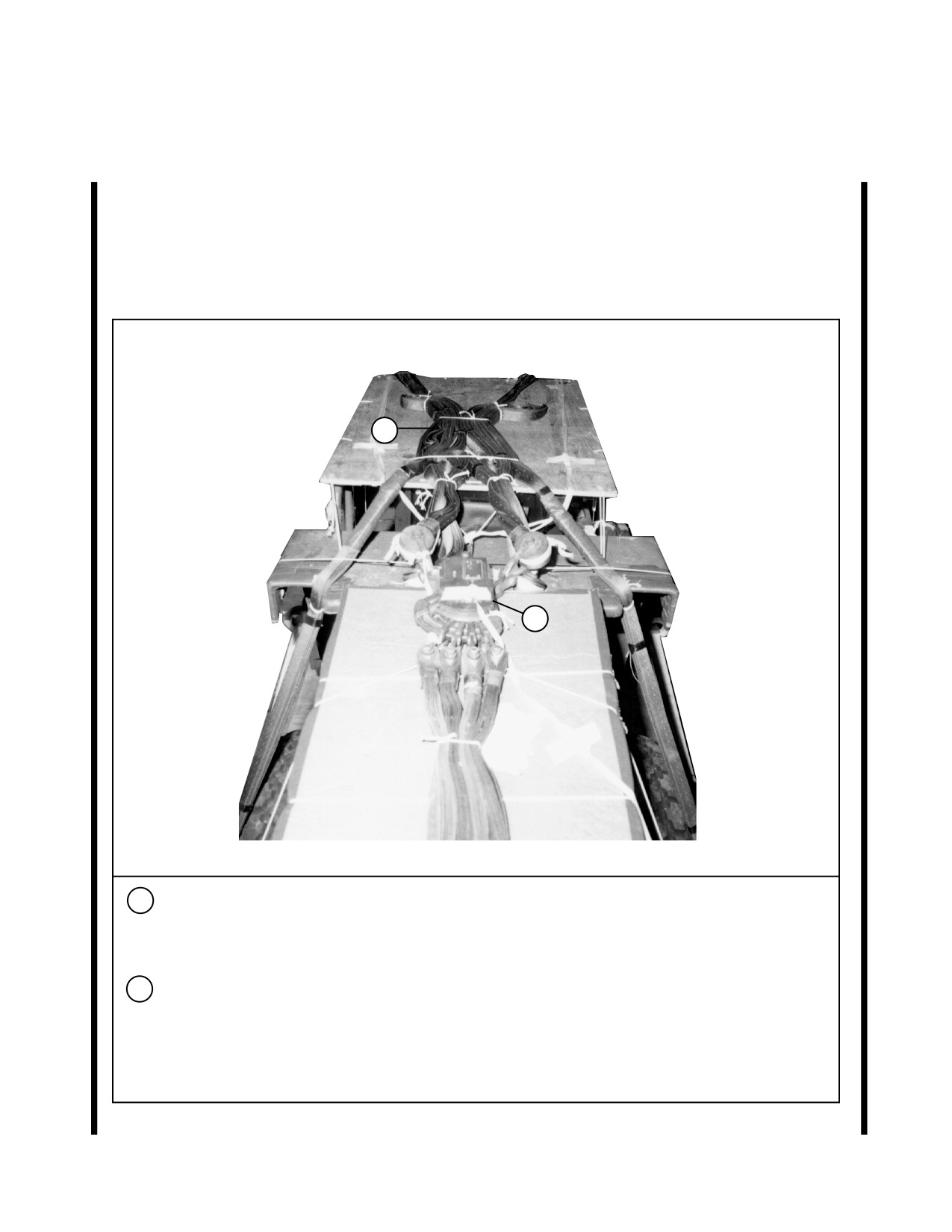
14-10. Installing Parachute Release
Install an M-2 cargo parachute release
according to FM 10-500-2/TO 13C7-1-5,
and as shown in Figure 14-16.
2
1
1
Attach the suspension slings and the riser extensions to the M-2 release according
to FM 10-500-2/TO 13C7-1-5. Secure the release to the platform with type III nylon
cord.
2
S-fold the suspension slings and tie the folds with type I, 1/4-inch cotton webbing.
Figure 14-16. M-2 release installed
14-22
C7, FM 10-528/TO 13C7-26-71
14-11. Installing Provisions for Emergency
14-13. Marking Rigged Load
Restraints
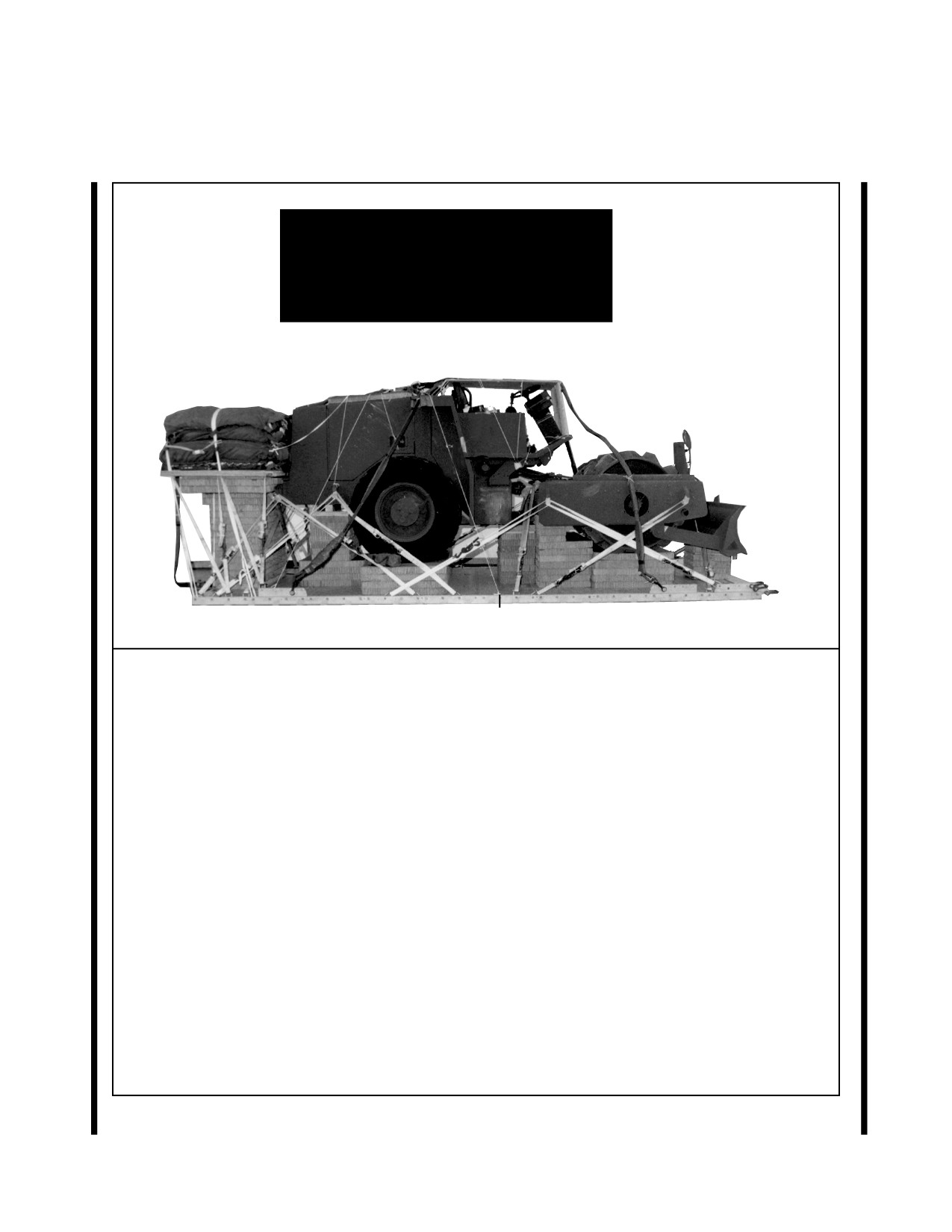
Mark the rigged load according to FM
Select and install provisions for emergency
10-500-2/TO 13C7-1-5 and as shown in
restraints according to the emergency aft
Figure 14-17.
restraint requirements table in FM 10-500-2/
TO 13C7-1-5.
14-14. Equipment Required
14-12. Placing Extraction Parachute
Use the equipment list in Table 14-1 to rig
this load.
Select the extraction parachute and extraction
line needed using the extraction line require-
ments table in FM 10-500-2/TO 13C7-1-5.
Place the extraction parachute and extraction
line on the load for installation in the aircraft.
14-23
C7, FM 10-528/TO 13C7-26-71
Make the final rigger inspection required
by FM 10-500-2/TO 13C7-1-5 before the
load leaves the rigging site.
CB
RIGGED LOAD DATA
WEIGHT
19,147 Pounds
MAXIMUM WEIGHT
21,000 Pounds
HEIGHT
99 Inches
WIDTH
108 Inches
LENGTH
262 Inches
OVERHANG
Front: 0 Inches
Rear: 22 Inches
CB (from the front of platform)
108 inches
Extraction System (adds 18 inches to length of platform)
Figure 14-17. Vibratory compactor (model CS-433P) rigged on a type V platform
14-24
C7, FM 10-528/TO 13C7-26-71
Table 14-1. Equipment required for rigging vibratory compactor (Model CS-433P) for low-
velocity airdrop on a type V platform
National Stock
Number
Item
Quantity
8040-00-273-8713
Adhesive, paste, 1-gal
As required
4030-00-090-5354
Clevis, suspension, 1-in (large)
5
4030-00-067-8562
Clevis, emergency restraints, (med)
6
8305-00-242-3593
Cloth, cotton duck, 60-in
As required
4020-00-240-2164
Cord, nylon III, 550-lb
As required
1670-00-434-5787
Coupling, airdrop, extraction force
transfer with cable, 20ft
1
Cover:
1670-00-360-0328
Clevis, large
1
1670-00-360-0329
Link, type IV
1
8135-00-664-6958
Cushioning material, packaging,cellulose
wadding
As required
8305-00-958-3685
Felt 1/2-inch
As required
1670-01-183-2678
Leaf, extraction line, (line bag)
2
Line, extraction:
1670-01-062-6313
60-ft (3-loop), type XXVI (for C130)
1
1670-01-107-7651
140-ft (3-loop), type XXVI (for C141,
C5, and C17)
1
1670-01-064-4452
Line, drogue (C17)
60-ft (1-loop), type XXVI
1
Suspension:
1670-00-062-6310
12-ft (4-loop), type XXVI
2
1670-00-062-6310
11-ft (4-loop), type XXVI
2
Link assembly:
1670-00-783-5988
Type IV
2
1670-00-783-2752
Two-point, 5 1/2-in
3
14-25
C7, FM 10-528/TO 13C7-26-71
Table 14-1. Equipment required for rigging vibratory compactor (Model CS-433P) for low-
velocity airdrop on a type V platform (continued)
National Stock
Number
Item
Quantity
5315-00-010-4657
Nail, steel wire, common, 6d
As required
1670-00-753-3928
Pad, energy-dissipating (honeycomb)
28 sheets
5530-00-618-8073
Plywood, 3/4-in
2 sheets
5510-00-220-6146
Lumber, 2 by 4-in
As required
Parachute:
Cargo:
1670-01-016-7841
G-11B
4
Cargo Extraction
1670-00-040-8135
28ft
1
1670-01-063-3715
Drogue, 15-ft (C17)
1
Platform, airdrop, type V, 20ft
1
1670-01-353-8425
Bracket assembly, compoent, EFTC
1
1670-01-162-2372
Clevis assembly, type V
24
1670-01-353-8424
Extraction bracket assembly
1
1670-01-247-2389
Suspension link
4
1670-01-162-2381
Tandem Link
2
1670-01-097-8816
Release, cargo parachute, M-2
1
Sling, cargo, airdrop
Suspension and lifting:
1670-01-062-6308
16-ft (4-loop),type XXVI nylon webbing
4
For deployment:
1670-01-062-6304
9-ft (2-loop), type XXVI nylon webbing
1
For extension:
1670-01-062-6314
60-ft (3-loop), type XXVI nylon webbing
4
1670-01-062-6306
3-ft (4-loop), type XXVI nylon webbing
1
14-26
C7, FM 10-528/TO 13C7-26-71
Table 14-1. Equipment required for rigging vibratory compactor (Model CS-433P) for low-
velocity airdrop on a type V platform (continued)
National Stock
Number
Item
Quantity
1670-01-062-6305
Link, assembly, coupling, 3-point
2
5340-00-040-8219
Knife, multi, strap, parachute release
2
7510-00-266-5016
Tape, PSA, cloth back, 2-in
As required
1670-00-937-0271
Tiedown assembly, 15-ft
28
Webbing:
8305-00-268-2411
Cotton, 1/4-in, type I
As required
8305-00-082-5752
Nylon, tubular, 1/2-in
As required
8305-00-263-3598
Type VIII, OD
As required
14-27