FM 4-20.113 AIRDROP OF SUPPLIES AND EQUIPMENT: RIGGING 3/4-Ton Cargo Trailers (JULY 2003)
*FM 4-20.113 (FM 10-513)
TO 13C7-3-51
Field Manual
HEADQUARTERS
NO 4-20.113
DEPARTMENTS OF THE ARMY
Technical Order
AND THE AIR FORCE
NO 13C7-3-51
Washington, DC, 8 July 2003
Airdrop of Supplies and Equipment
Rigging 3/4-Ton Cargo trailers
TABLE OF CONTENTS
Page
PREFACE
ii
INTRODUCTION
iii
Rigging the M101, M101A1 or M101A2, 3/4-Ton Cargo Trailers with
Accompanying Loads REFERENCE TABLES
Description of Load
1
Preparing Platform
1
Positioning and Lashing Accompanying Loads on Platform
3
Building and Placing Honeycomb Stacks
13
Preparing the Trailer
17
Stowing Accompanying Load and Trailer Components in Trailer
19
Securing Trailer Support Stand and Installing Lifting Slings
30
Positioning Trailer
31
Lashing Trailer
32
Building and Installing Parachute Stowage Platform and Wooden Support
34
Installing and Safety Tying Suspension Slings
36
Stowing Cargo Parachutes
37
Preparing and Installing Extraction System
39
Installing Parachute Release System
39
Installing Provisions for Emergency Restraints
40
Placing Extraction Parachute
40
Marking Rigged Load
40
Equipment Required
40
Glossary
Glossary-1
References
References-1
Distribution Restrictions: Approved for public release; distribution is unlimited.
*This publication supersedes FM 10-513/TO 13C7-3-51, dated 25 June 1979
Preface
This manual tells and shows how to prepare and rig the M101, M101A1 and M101A2 trailers for
low velocity airdrop from a C-130 , C-141, C-17 and C-5 aircraft.
User Information
The proponent of this publication is HQ TRADOC. You are encouraged to report any errors or
omissions and to suggest ways of making this a better manual. Army personnel, send your
comments on DA Form 2028 directly to:
Director
Aerial Delivery and Field Services Department
USA Quartermaster Center and School
1010 Shop Road
Fort Lee, Virginia 23801-1502
Air Force personnel, send your reports on AFTO Form 22 through:
Headquarters
Air Mobility Command (AMC/DOKT)
402 Scott Drive
Scott AFB, Illinois 62225-5302
Air Force personnel in Special Operations Command, send your reports on AFTO Form 22 through:
HQ AFSOC/DOXT
100 Bartley Street, Suite 260
Hurlburt Field, Florida 32544-5273
to:
Director
Aerial Delivery and Field Services Department
USA Quartermaster Center and School
1010 Shop Road
Fort Lee, Virginia 23801-1502
Also send information copy of AFTO Form 22 to:
WR-ALC/LKCB
460 Richard Ray Blvd Suite 221
Robins AFB, Geogia 31098-1640
i
FM 4-20.113/TO 13C7-3-51
RIGGING THE M101, M101A1 OR M101A2, 3/4-TON CARGO
TRAILER WITH ACCOMPANYING LOADS
DESCRIPTION OF LOAD
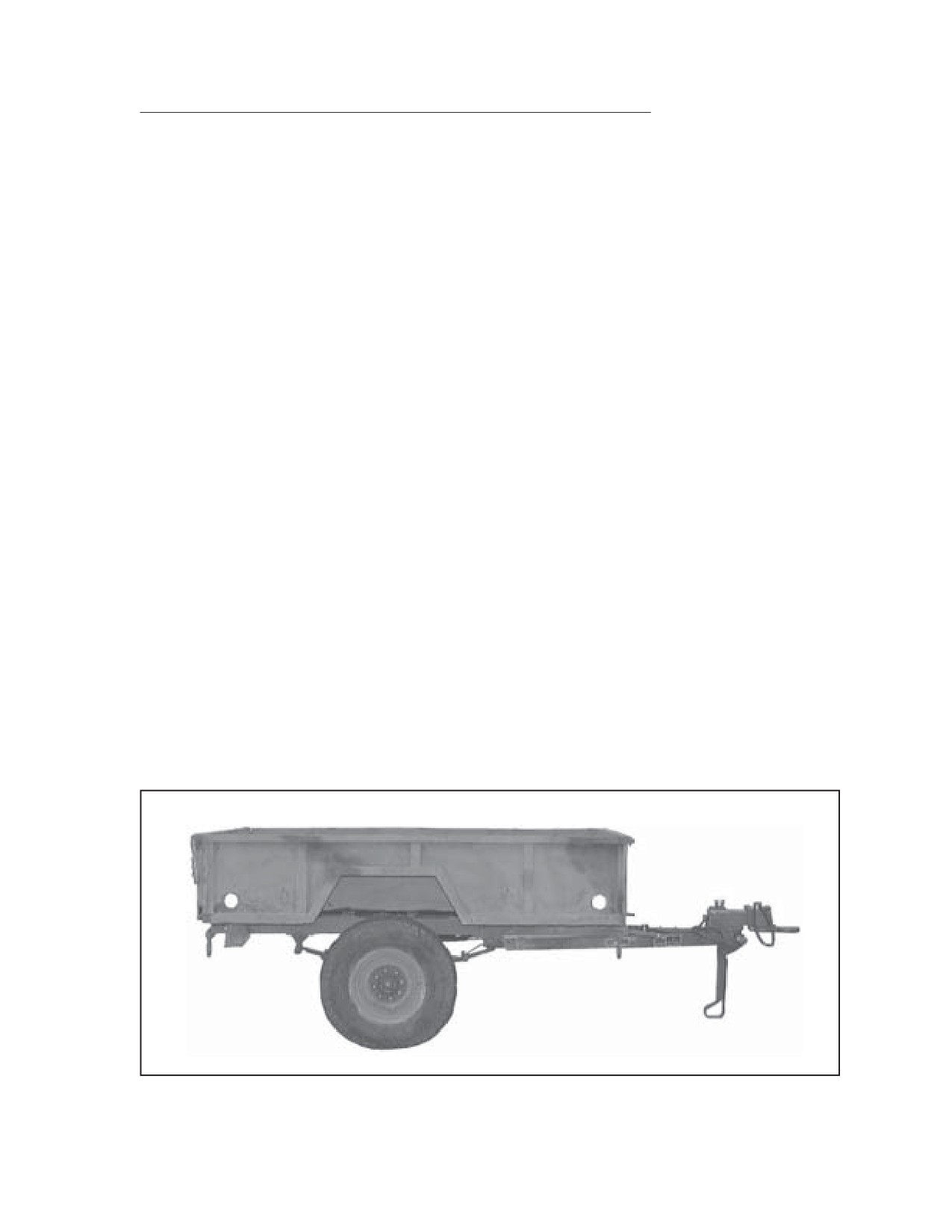
1. The M101, M101A1 or M101A2, 3/4-ton cargo trailer (Figure 1) with accompanying
loads is rigged on a 12-foot typeV platform for low velocity airdrop. The load
shown is rigged with accompanying loads consisting of 22 boxes of 105-millime-
ter ammunition and weighing 2,440 pounds. The 3/4-ton cargo trailer is rigged
with one or two G-11B cargo parachutes depending on the rigged weight. The
3/4-ton cargo trailer may also be rigged with an accompanying load weighing a
maximum of 1,500 pounds is stowed in the trailer. Additional accompanying
loads may be stowed on the platform as long as the maximum rigged weight
does not exceed 8,000 pounds. The unrigged trailer weighs 1,340 pounds. It is
147 inches long and 71 inches wide. The height of the trailer is 82 inches,
reducible to 51 inches.
PREPARING PLATFORM
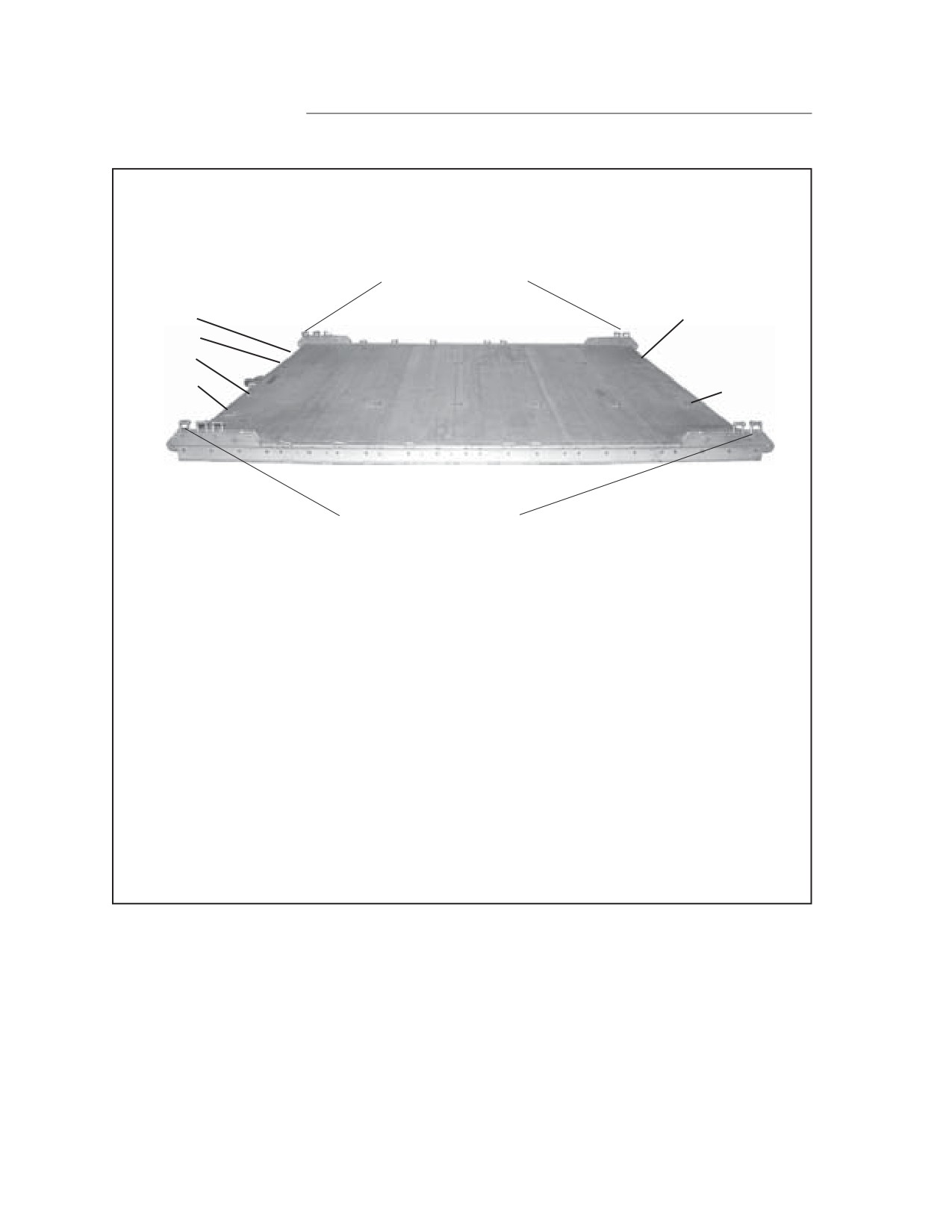
2. Prepare a 12-foot type V platform according to TM 10-1670-268-20&P/TO 13C7-52-22
and as shown in Figure 2.
Figure 1. M101A2, 3/4- Ton Cargo Trailer
1
FM 4-20.113/TO 13C7-3-51
CLEVISES
10A THROUGH 1A
TIE-DOWN RINGS
TIE-DOWN RINGS
D
ROW B
LEFT
C
B
FRONT
REAR
A
ROW A
RIGHT
CLEVISES
10 THROUGH 1
Step:
1. Install a tandem link on the front of each platform side rail using holes 1, 2 and 3.
2. Install a clevis on bushings 1 and 2 on each front tandem link.
3. Install a tandem link on the rear of each platform side rail using holes 22, 23 and 24.
4. Install a clevis on bushings 2, 3 and 4 on each rear tandem link.
5. Starting at the front of each platform side rail, install clevises on the bushings bolted on
holes 10, 11, 15, 18, and 20.
6. Starting at the front of the platform, number the clevises 1 through 10 on the right side
and 1A through 10A on the left side.
7. Starting at the front of the platform, label the two tie-down rings on the first five panels
A and B from right to left. Label the four tie-down rings on the last panel A, B, C, and D from right
to left. Starting with the first panel, number the tie-down rings 1 through 6.
Figure 2. Platform Prepared
2
FM 4-20.113/TO 13C7-3-51
POSITIONING AND LASHING ACCOMPANYING
LOADS ON PLATFORM
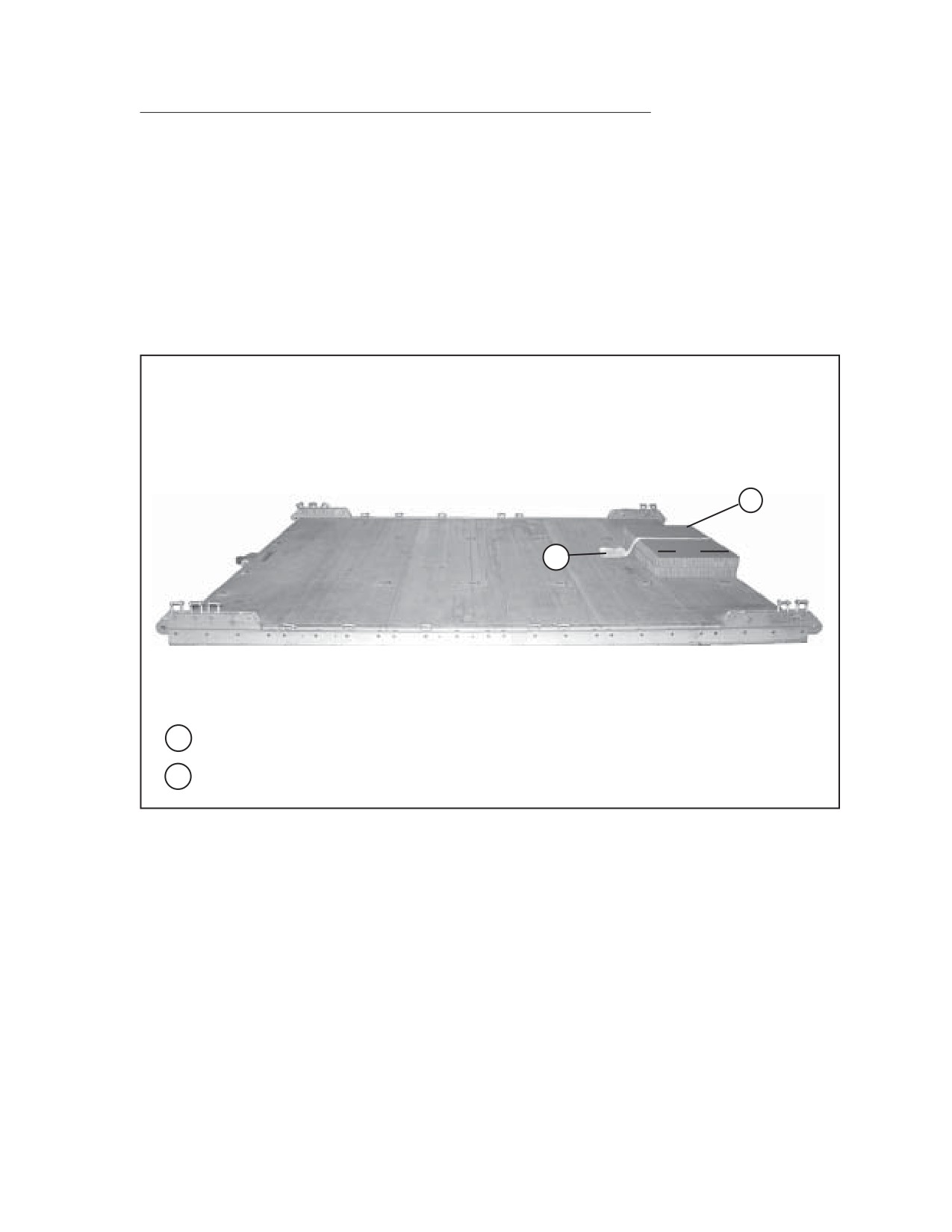
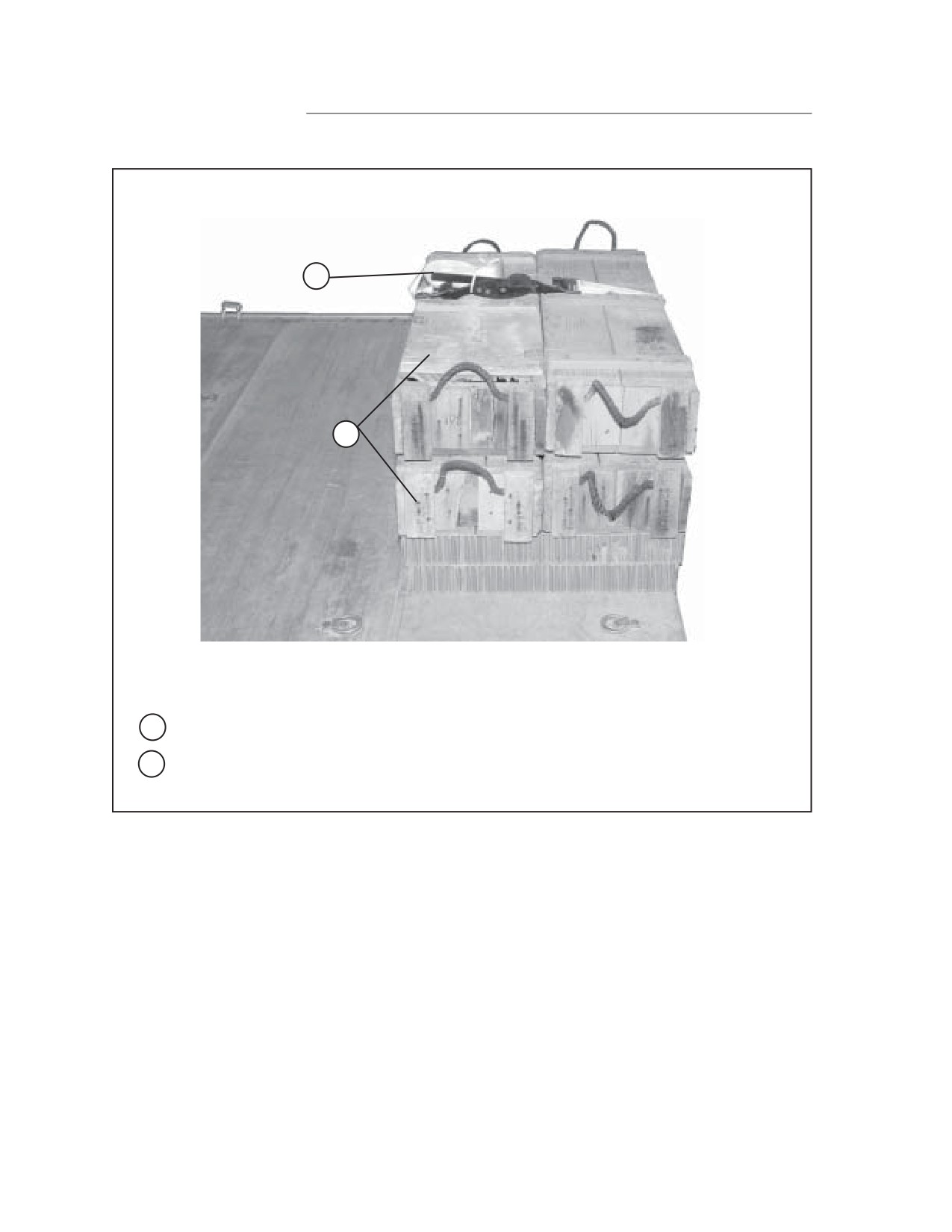
3. Position and lash the accompanying loads on the platform as shown in Figures
3 through 8.
1
24”
REAR
2
FRONT
1
Center two 36- by 24-inch pieces of honeycomb on the front edge of the platform.
2
Center a 15-foot lashing from front to rear across the top piece of honeycomb.
Figure 3. Honeycomb and Lashings Positioned on the Front of the Platform
3
FM 4-20.113/TO 13C7-3-51
2
1
FRONT
1
Place four ammunition boxes in two stacks of two each on top of the honeycomb.
2
Bind the boxes together using the pre-positioned lashing, a D-ring, and a load binder.
Figure 4. Ammunition Boxes Positioned on the Front of the Platform
4
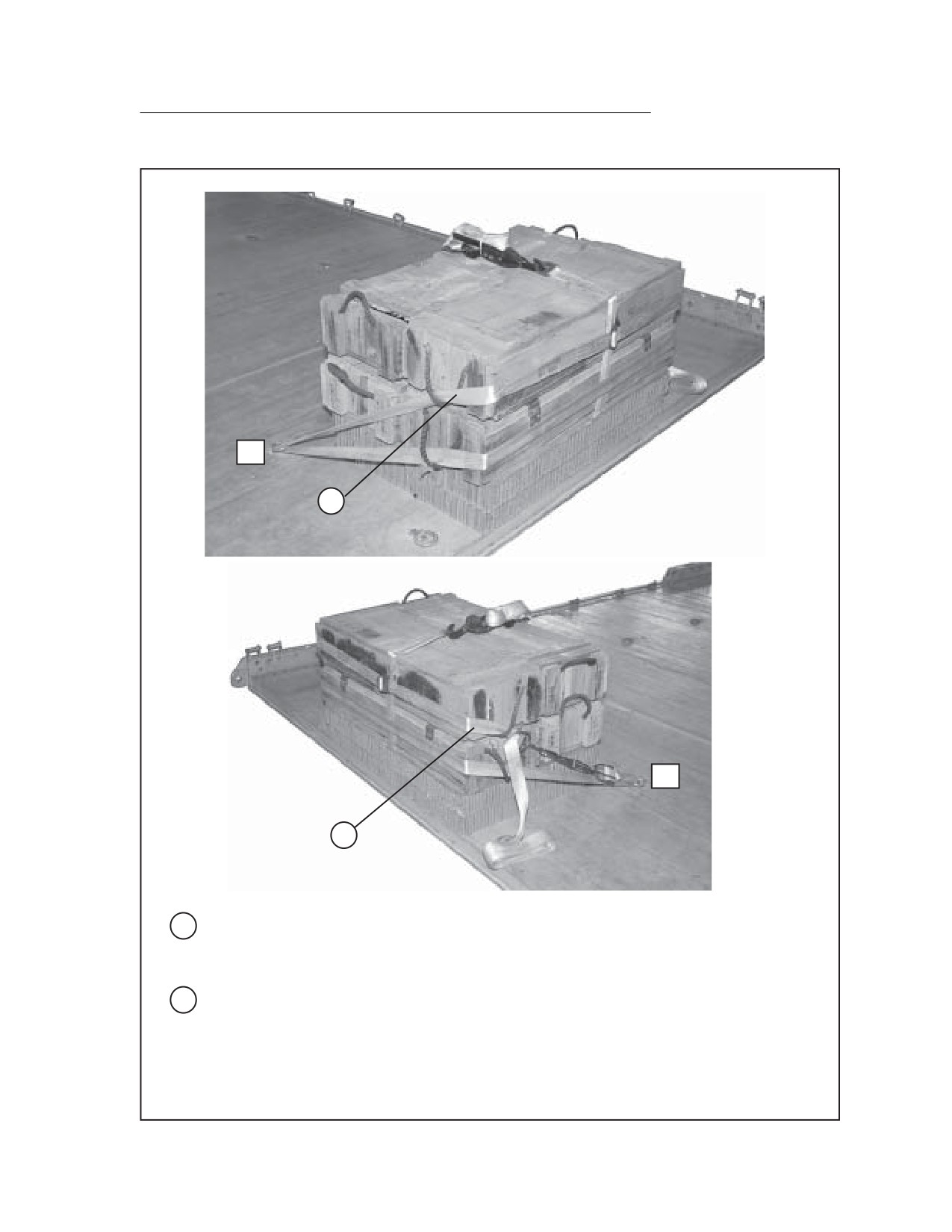
FM 4-20.113/TO 13C7-3-51
A2
FRONT
2
B2
FRONT
1
1
Form a 30-foot lashing according to FM 4-20.102/TO 13C7-1-5. Starting on the front,
pass one end through the carrying handle of the top front box on the left side. Attach
a D-ring and a load binder to the end. Do not secure the lashing at this time.
2
Pass the free end of the lashing through the carrying handle of the top front box on
the right side, down through tie-down ring A2, and through the carrying handle of
the bottom front box on the right side. Continue to pass the lashing around the front
of the bottom box, through the carrying handle of the bottom front box on the left side,
through tie-down ring B2. Attach D-ring to thelashing and load binder. Do not
secure the lashing at this time.
Figure 5. Ammunition Boxes Lashed and Secured on the Front of the Platform
5
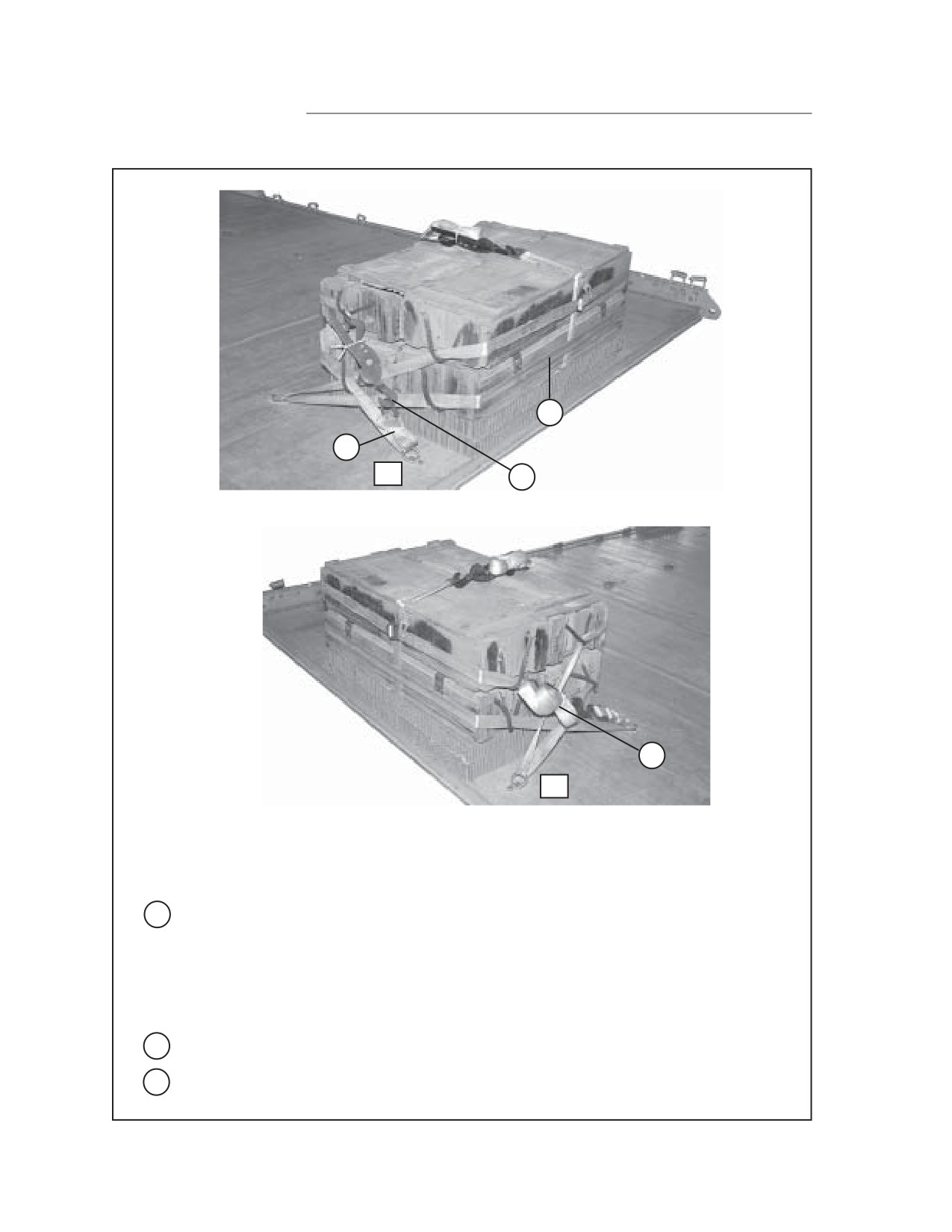
FM 4-20.113/TO 13C7-3-51
FRONT
3
5
A1
4
FRONT
5
B1
3
Starting on the right side, pass a 15-foot lashing through the carrying handle of the
top rear box, around the rear of the top box, through the carrying handle of the top
rear box on the left side, and through tie-down ring B1. Continue to pass the lashing
through the carrying handle of the bottom rear box on the left side, around the
bottom of the rear box, through the carrying handle of the bottom rear box on the
right side, and through tie-down ring A1.
4
Attach a D-ring and a load binder to the end. Do not secure the lashing at this time.
5
Secure each front and rear load binder simultaneously.
Figure 5. Ammunition Boxes Lashed and Secured on the Front of the Platform (continued)
6
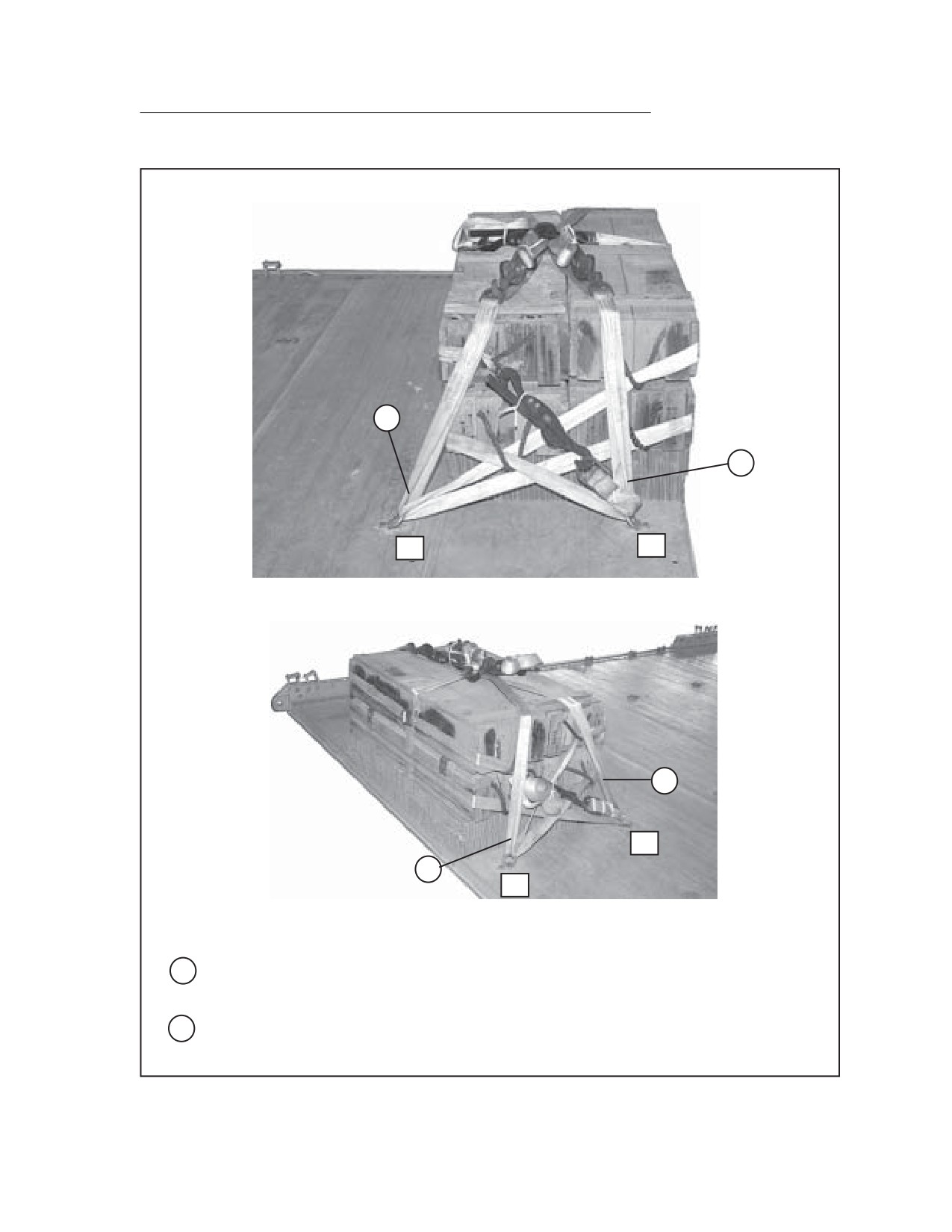
FM 4-20.113/TO 13C7-3-51
7
6
FRONT
A2
A1
6
B2
FRONT
7
B1
6
Pass a 15-foot lashing through tie-down ring A1, across the top of the boxes and
through tie-down ring B2. Secure the lashing with a D-ring and a load binder.
7
Pass another 15-foot lashing through tie-down ring B1, across the top of the boxes,
and through tie-down ring A2. Secure the lashing with a D-ring and a load binder.
Figure 5. Ammunition Boxes Lashed and Secured on the Front of the Platform (continued)
7
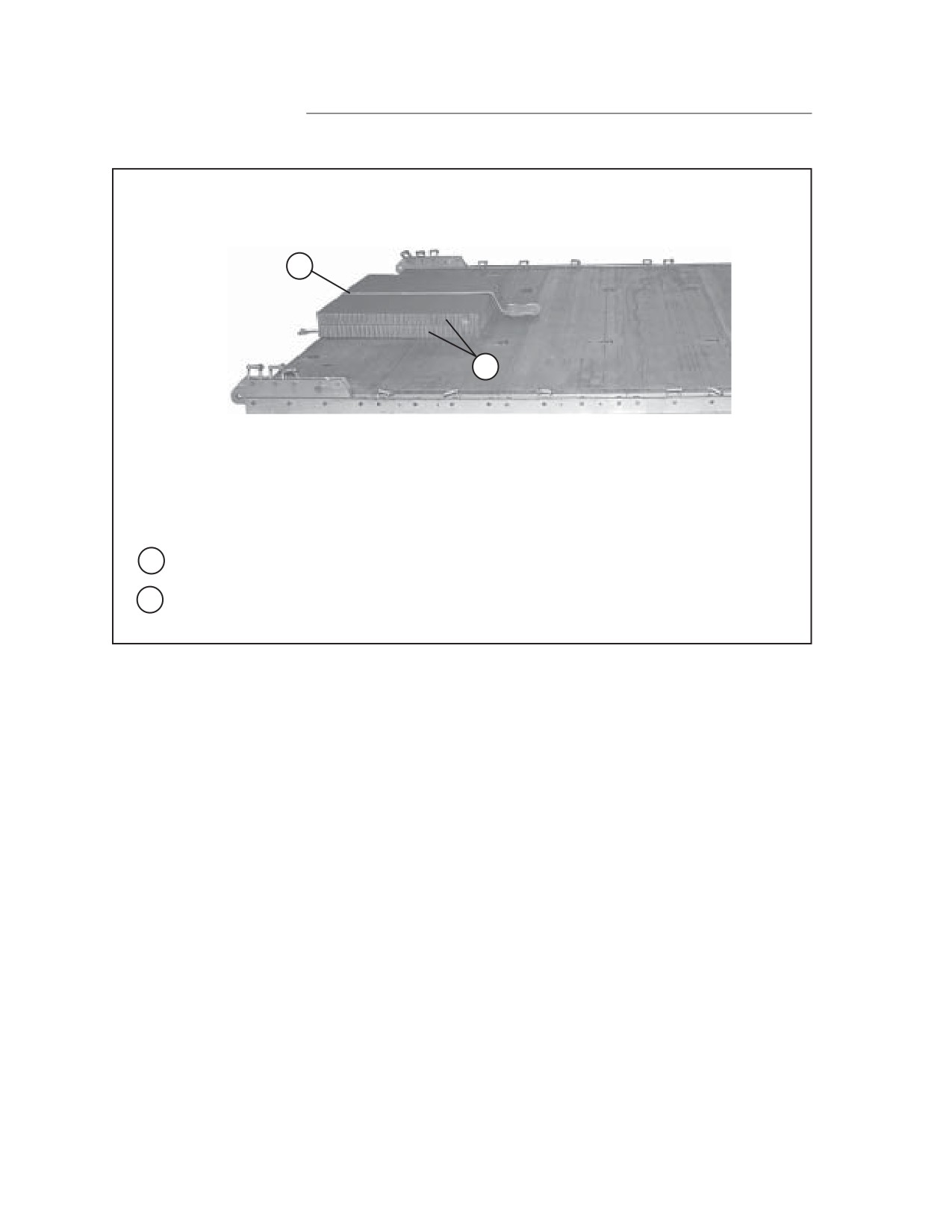
FM 4-20.113/TO 13C7-3-51
2
REAR
1
1
Center two 36- by 38-inch pieces of honeycomb on the rear edge of the platform.
2
Center a 15-foot lashing from front to rear across the top piece of honeycomb.
Figure 6. Honeycomb and Lashing Positioned on the Rear of the Platform
8
FM 4-20.113/TO 13C7-3-51
2
1
REAR
1
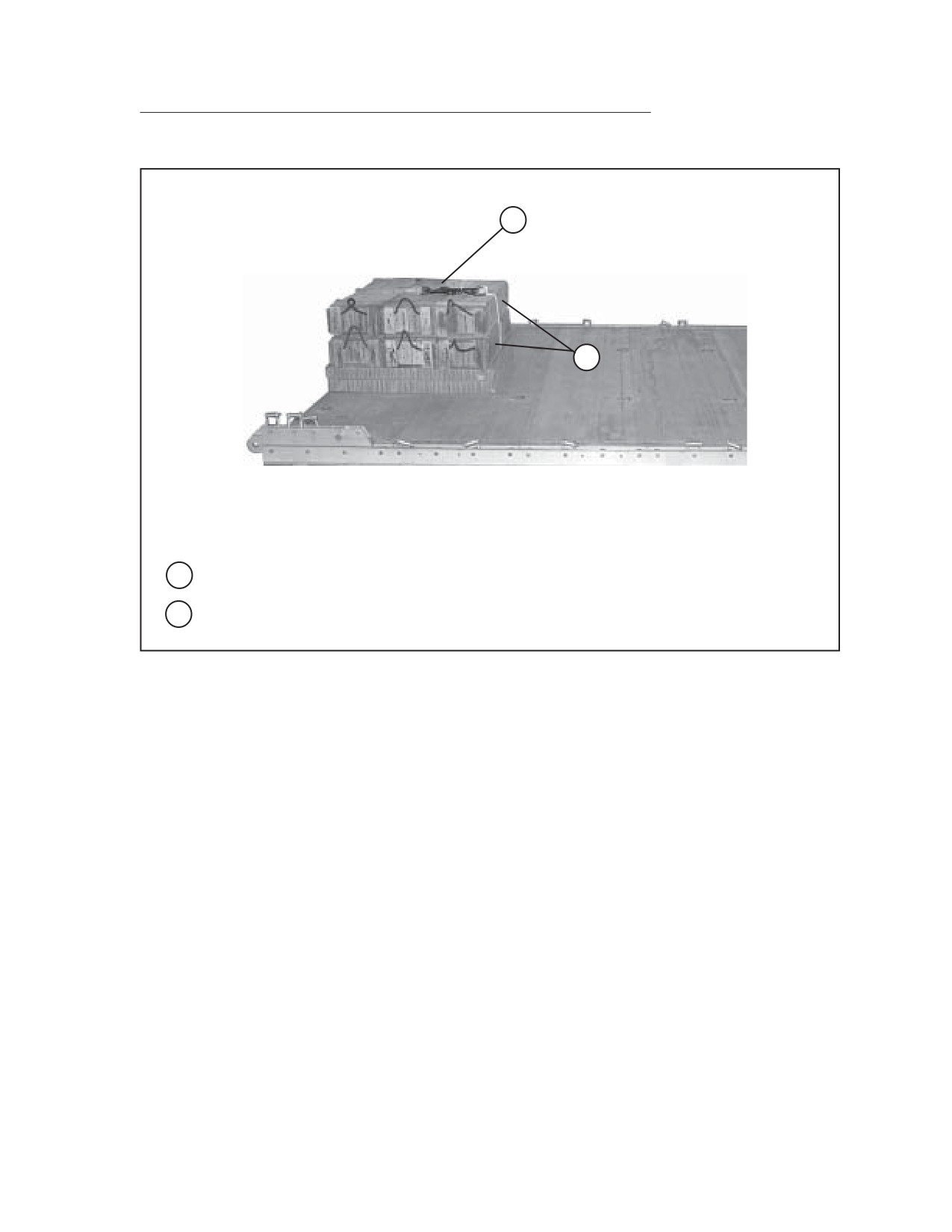
Place six ammunition boxes in three stacks of two each on top of the honeycomb.
2
Bind the boxes together using the pre-positioned lashing, a D-ring, and a load binder.
Figure 7. Ammunition Boxes Positioned on the Rear of the Platform
9
FM 4-20.113/TO 13C7-3-51
2
1
REAR
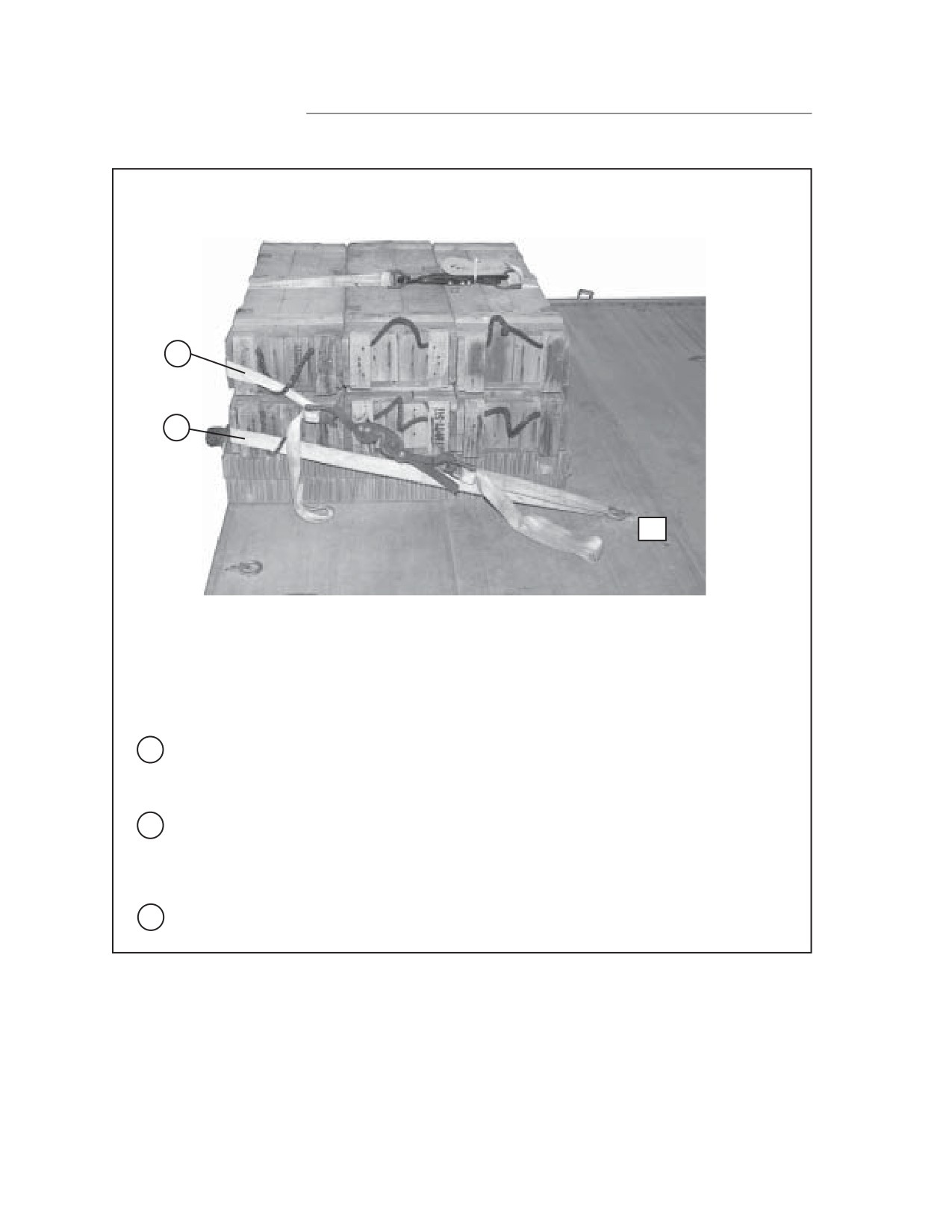
A5
1
Form a 30-foot lashing according to FM 4-20.102/TO 13C7-1-5. Starting on the right rear side, run
the lashing across the rear of the bottom row of boxes. Pass the free end of the lashing through
the carrying handle of the bottom rear box and through tie-down ring A5.
2
Pass the other free end of the lashing on the left side through the carrying handle of the bottom
rear box and through tie-down ring B5. Continue passing the lashing up through the carrying
handle of the rear top box on the left side, around the rear of the top rear box and through the
carrying handle of the top rear box on the right side.
3
Do not secure lashing at this time.
Figure 8. Ammunition Boxes Lashed and Secured on the Rear of the Platform
10
FM 4-20.113/TO 13C7-3-51
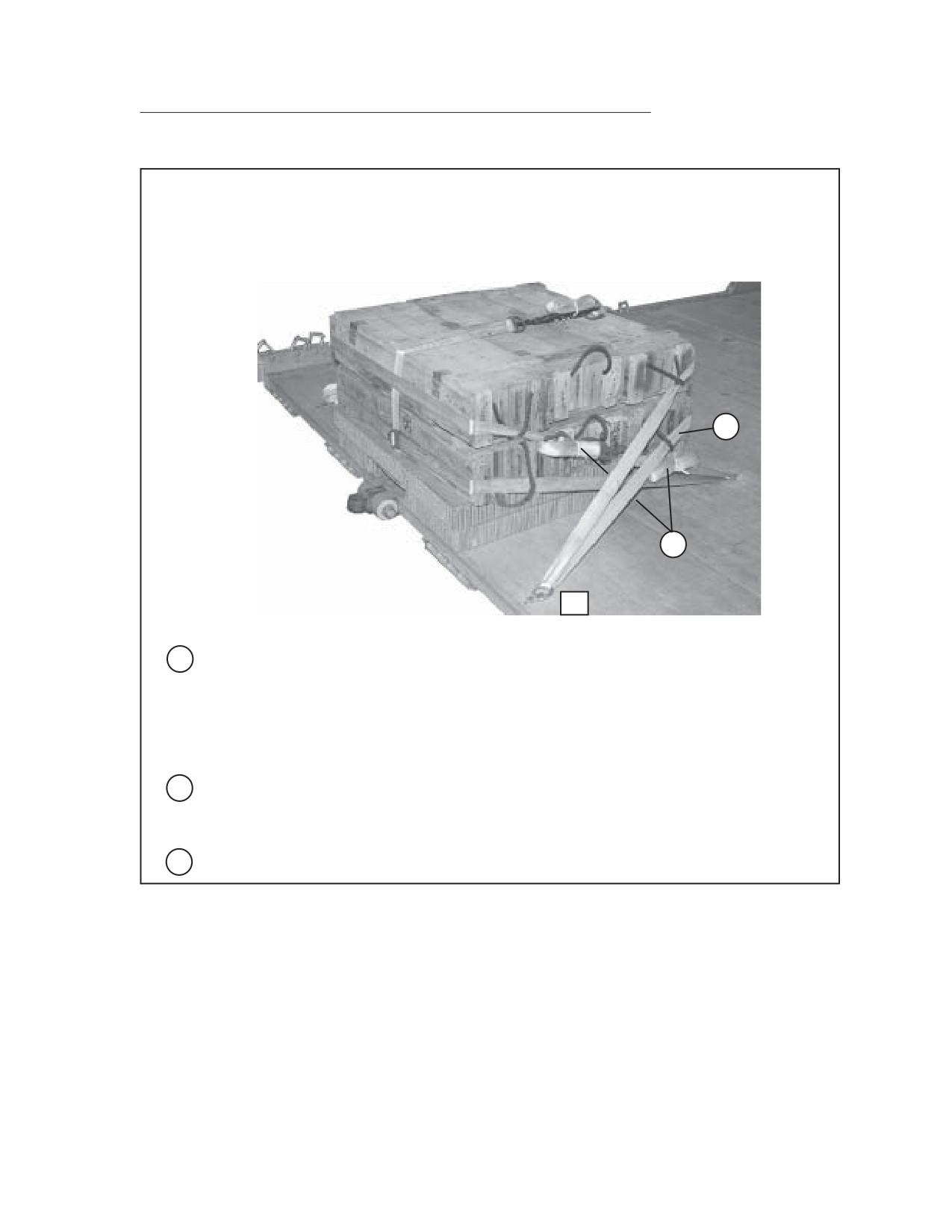
4
6
REAR
A6
4
Form a 30-foot lashing according to FM 4-20.102/TO 13C7-1-5. Starting on the right
front side, run the lashing across the bottom row of boxes. Pass the free end of the
lashing through the carrying handle of the bottom front box and through tie-down
ring A6. Continue passing the lashing up through the carrying handle of the top front
box on the right side, around the front of the top box and through the carrying handle
of the top front box on the left side.
5
Pass the other free end of the lashing around the front of the bottom row of boxes and through
the carrying handle of the bottom front box on the left side to tie-down ring D6 (not
shown).
6
Secure each side load binder simultaneously.
Figure 8. Ammunition Boxes Lashed and Secured on the Rear of the Platform (continued)
11
FM 4-20.113/TO 13C7-3-51
10
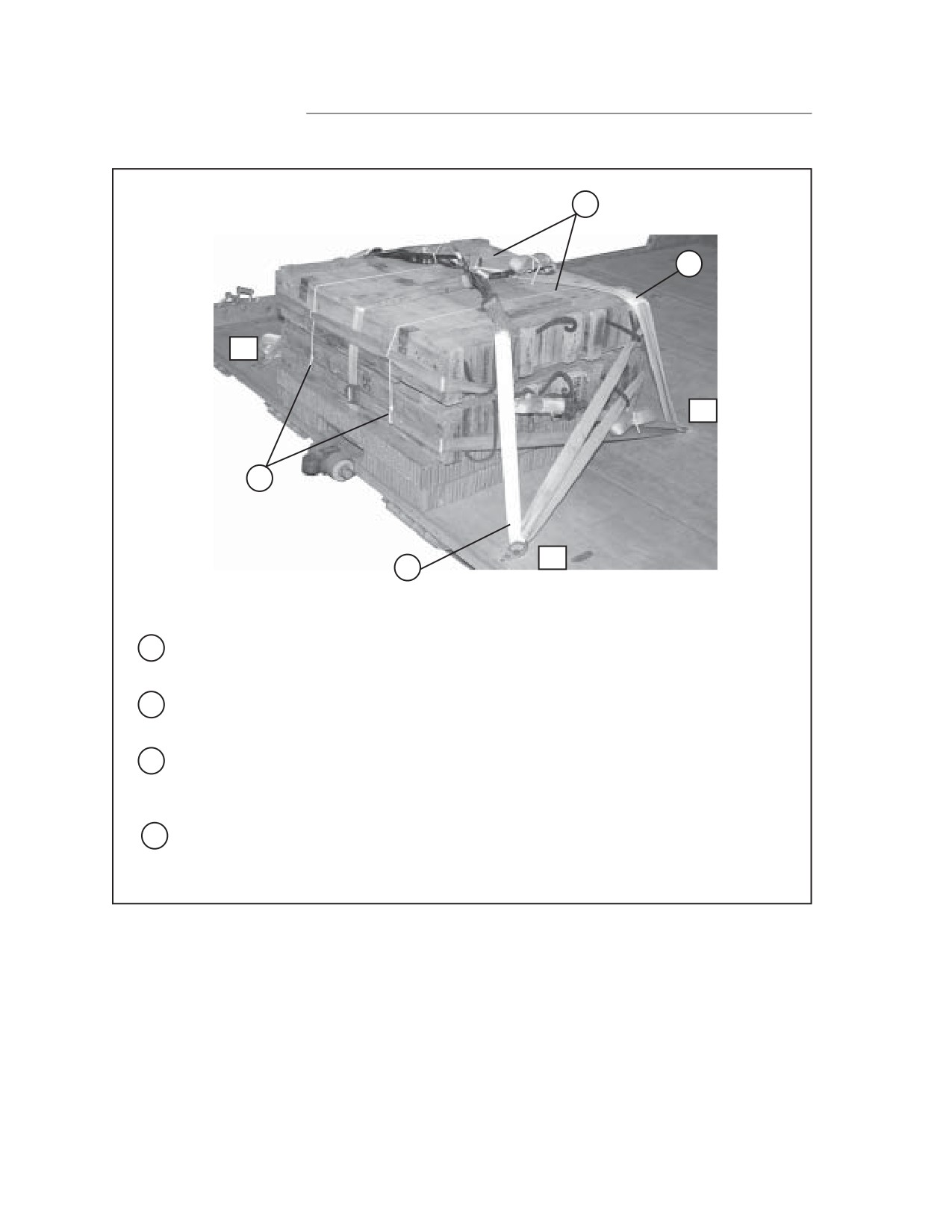
8
D6
A5
9
REAR
A6
7
7
Pass a 15-foot lashing from tie-down ring A6 across the top of the boxes to tie-down ring B5.
Secure the lashing with a D-ring and load binder.
8
Pass another 15-foot lashing from tie-down ring A5 across the top of the boxes to tie-down ring
D6. Secure the lashing with a D-ring and load binder.
9
Safety tie the lashings in place using two lengths of type III nlyon cord. Tie three alternating
half hitches around the bottom of the lashing. Pass the cord around the top of the lashing and
tie another half hitch.
10
Pass the free end of the cord over the top of the boxes and form a half hitch around the top of the
lashing on the other side. Secure the lashing to the bottom lashing using three alternating half
hitches and an overhand knot on the running end.
Figure 1-8. Ammunition Boxes Lashed and Secured on the Rear of the Platform (continued)
12
FM 4-20.113/TO 13C7-3-51
BUILDING AND PLACING HONEYCOMB STACKS
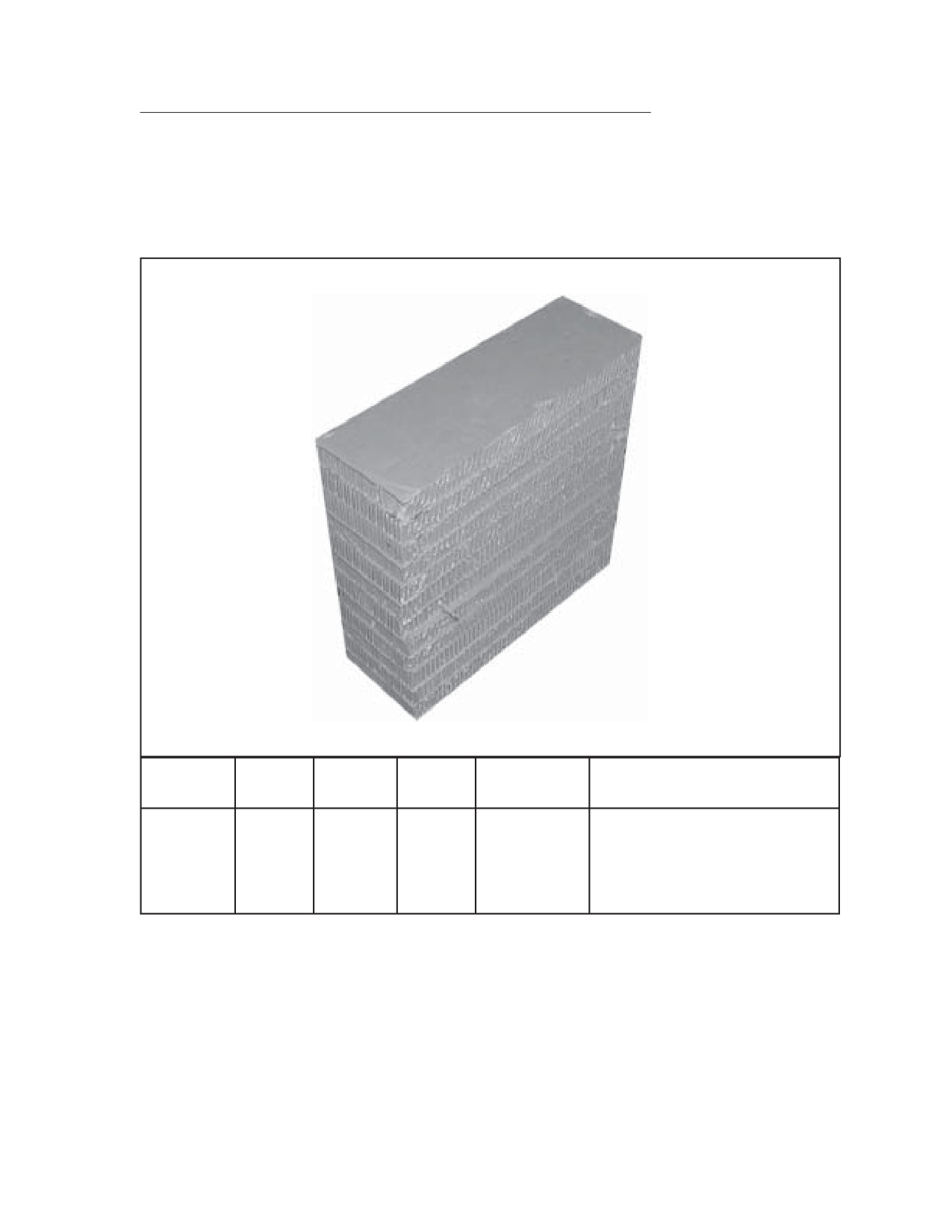
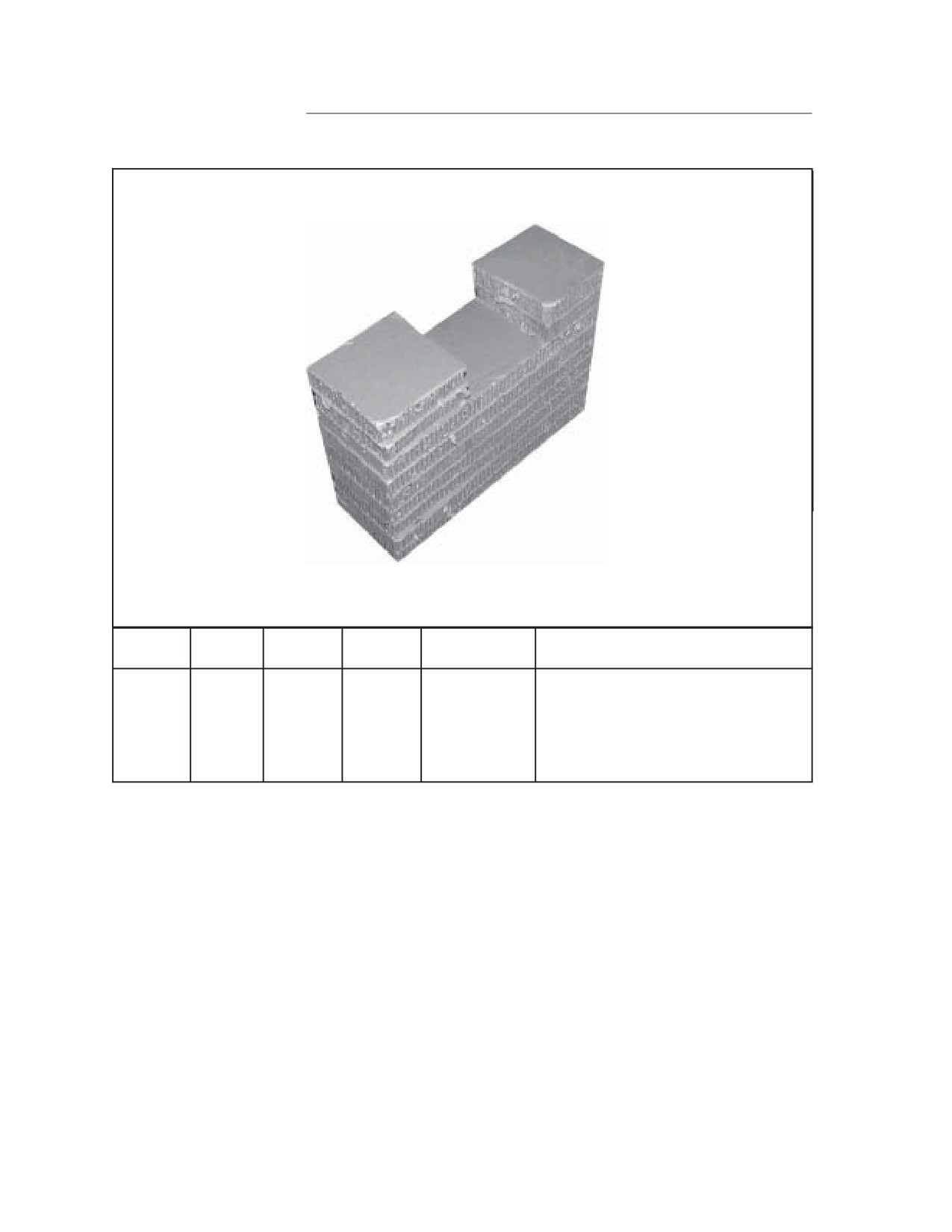
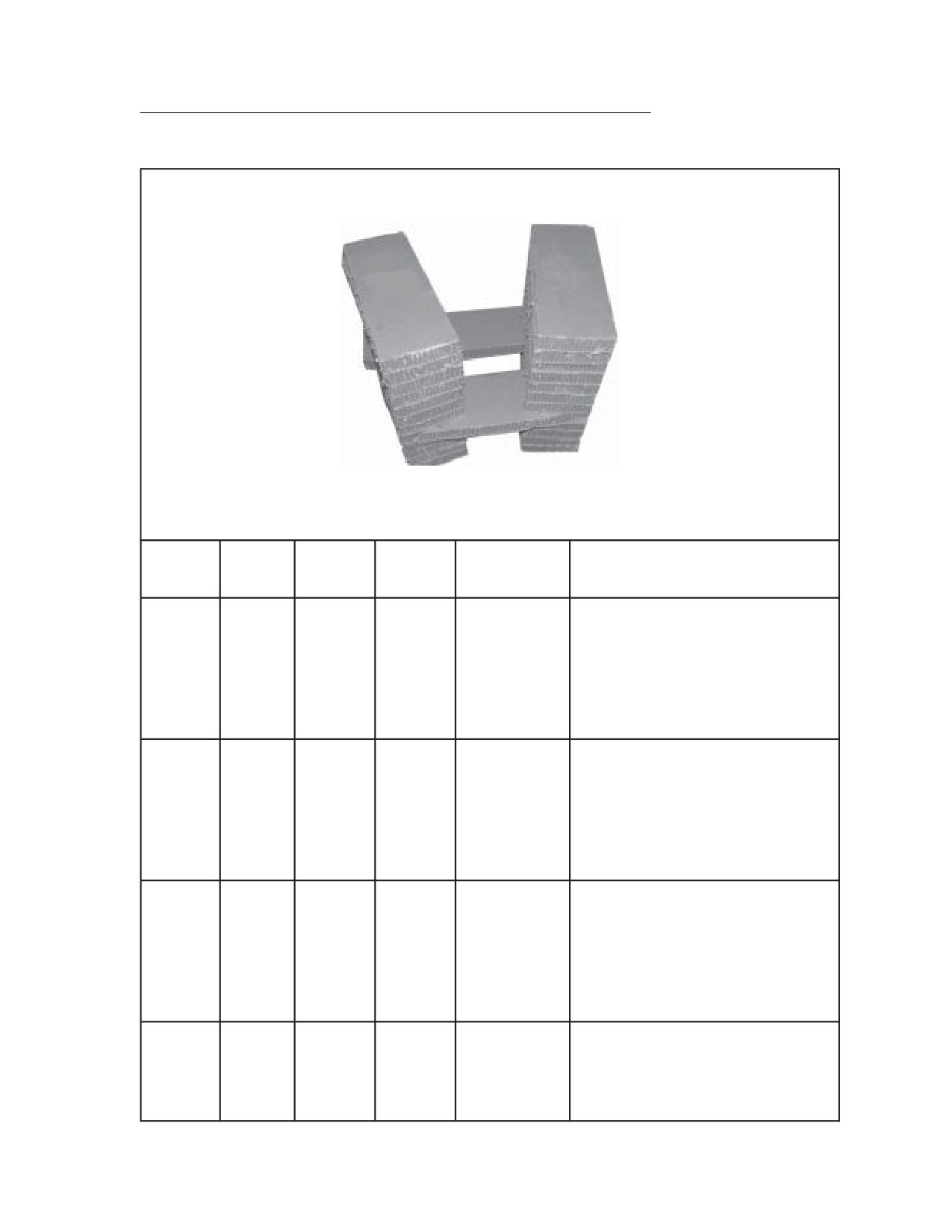
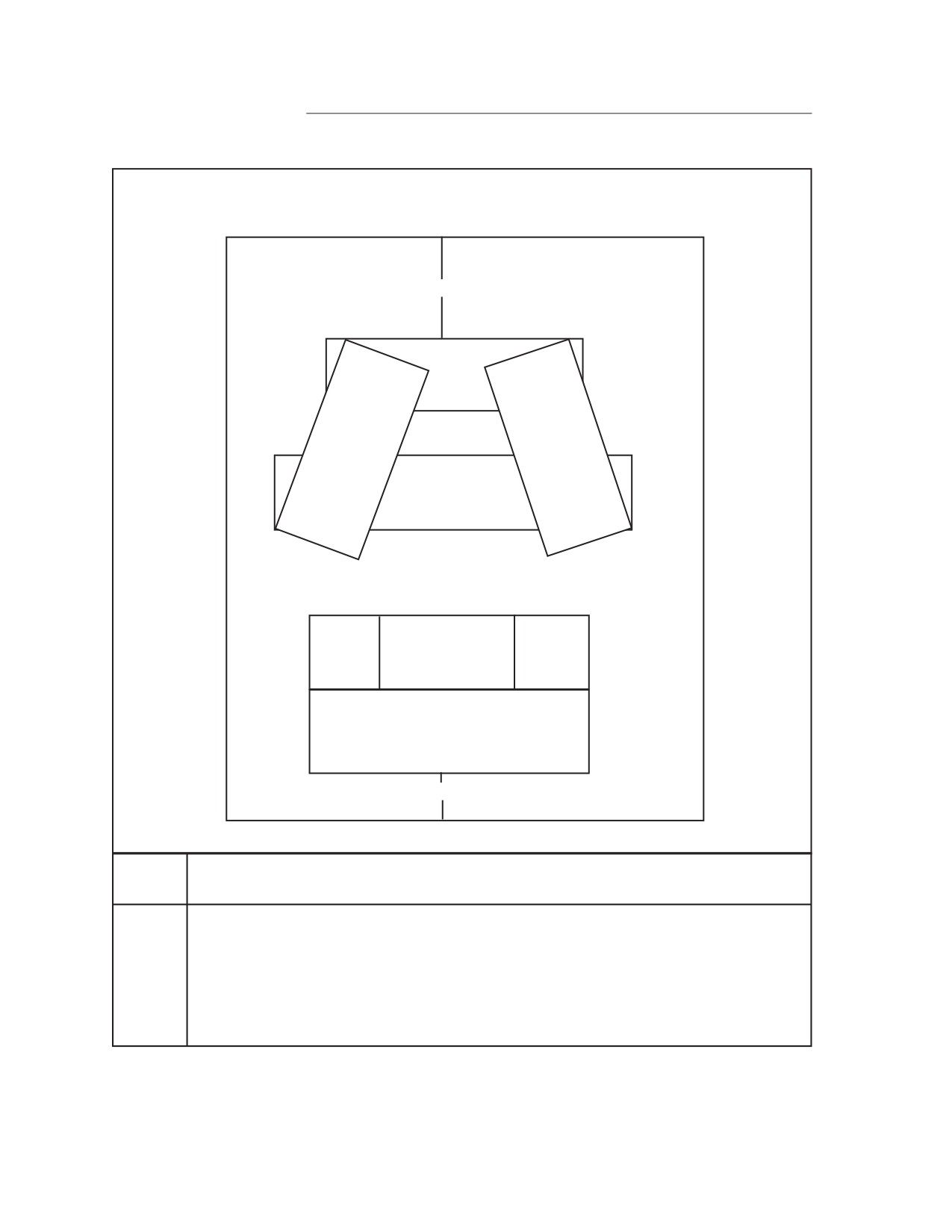
4. Prepare the honeycomb stacks as shown in Figures 9 through 11. Position the honey-
comb stack as shown in Figure 12.
Stack
Pieces
Width
Length
Material
Instructions
Number
(inches)
(inches)
1
12
36
12
Honeycomb
Glue to form base.
Figure 9. Stack 1 Prepared
13
FM 4-20.113/TO 13C7-3-51
Stac k
Piece s
Width
Length
Material
Instructions
Number
(inches)
(inches)
2
7
36
12
Honeycomb
Glue to form base.
4
12
12
Honeycomb
Stack and glue two pieces of
honeycomb flush over each side of
the base
Figure 10. Stack 2 Prepared
14
FM 4-20.113/TO 13C7-3-51
FRONT
REAR
Stack
Pieces
Width
Length
Material
Instructions
Number
(inches)
(inches)
3
8
12
32
Honeycomb
Form two base stacks of
f
each in a "V" shape. Cut a 10- by
6-
inch cutout on the front outside of
the bottom two layers. Place the
stacks 25 inches apart in the front
and 11 inches apart in the rear.
1
36
12
Honeycomb
Place honeycomb over the rear of
the base stacks to
f
Place the honeycomb so that the
rear edge of the bridge is aligned
with the rear outside corners of the
base stacks.
1
48
12
Honeycomb
Place honeycomb over the front of
the base stacks to
f
Place the honeycomb so that the
front edge of the bridge is aligned
with the front outside corners of the
base stacks.
14
12
32
Honeycomb
Form two stacks of seven layers
each. Place each stack on top of
the bridge and align it with each
base stack.
Figure 11. Stack 3 Prepared
15
FM 4-20.113/TO 13C7-3-51
Note: This is not drawn to scale.
REAR
38”
STACK 3
R
IGHT
LEFT
STACK 2
STACK 1
28”
FRONT
Stack
Position of Stacks on Platform
Number
Place stack:
1
Centered 28 inches from the front edge of platform
2
Centered flush against the rear of stack 1
3
Centered 38 inches from the rear edge of the platform.
Figure 12. Overhead View of Honeycomb Stacks Positioned on Platform
16
FM 4-20.113/TO 13C7-3-51
PREPARING THE TRAILER
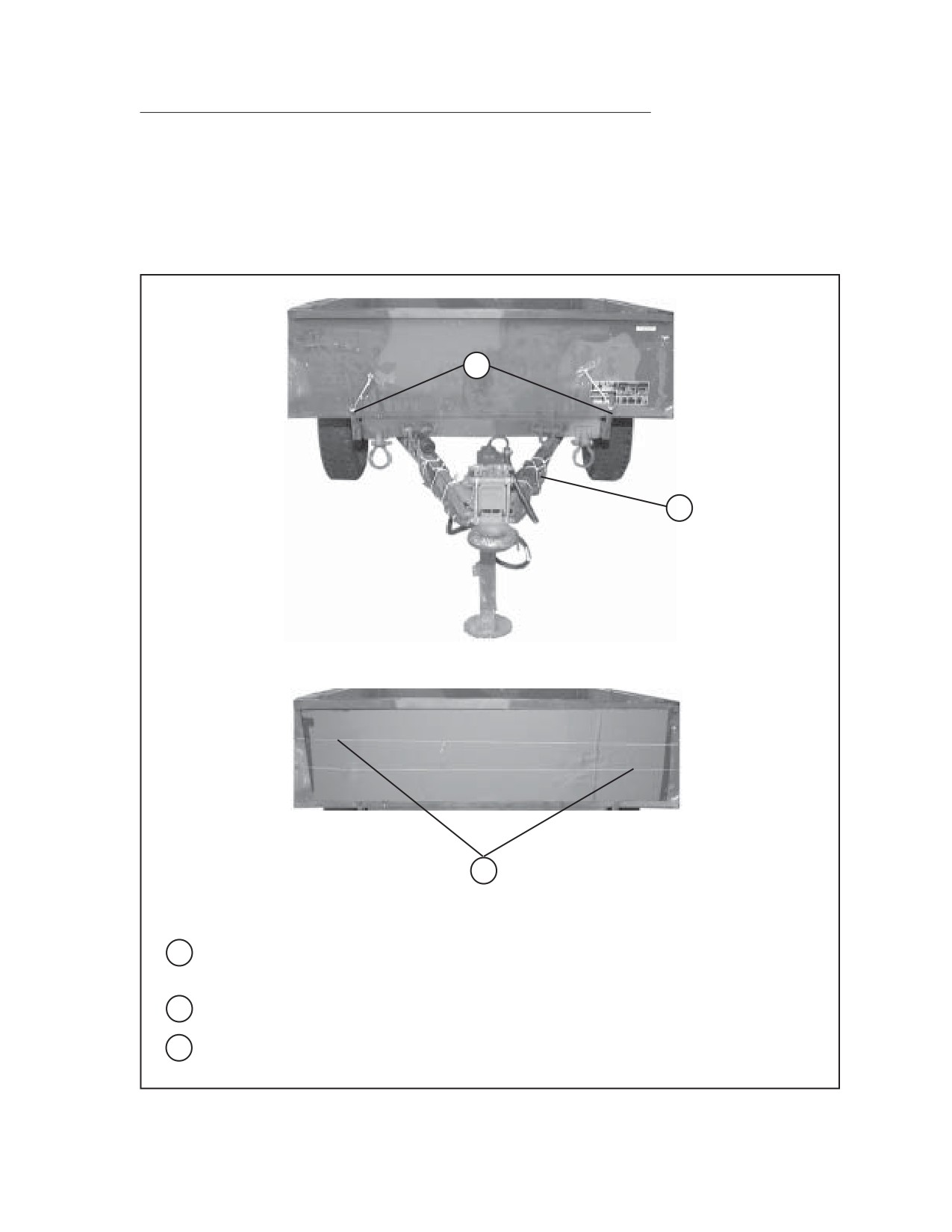
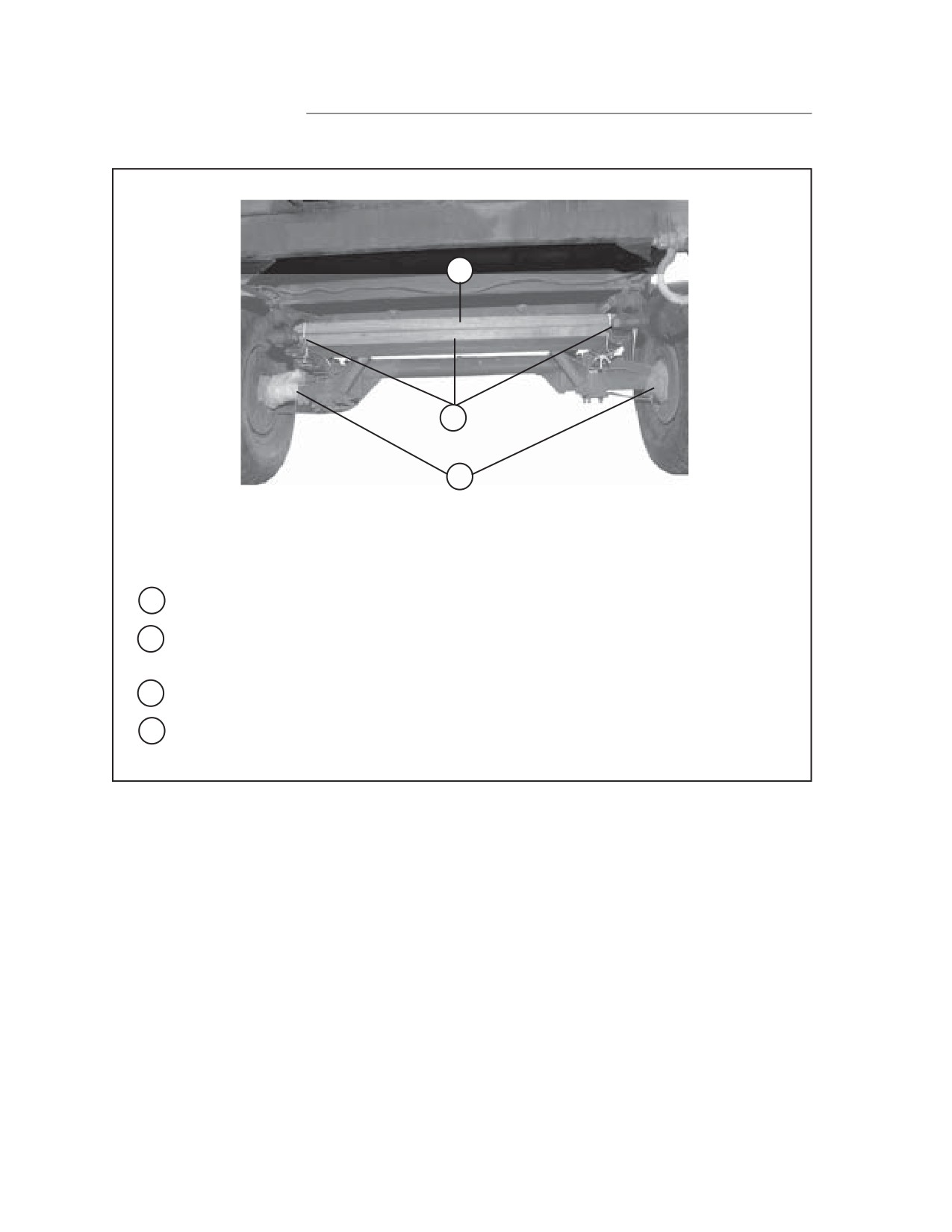
5. Prepare the trailer as shown in Figures 13 and 14. Remove the tarpaulin, bows,
and side racks according to TM 9-2330-202-14&P.
2
1
3
1
Secure the safety chains and intervehicular cable to the drawbar frame with type III
nylon cord or tape.
2
Secure the hand brake in the OFF position with two lengths of type III nylon cord.
3
Place a 24- by 60-inch piece of honeycomb on the drawbar frame in front of the hand
brake. Secure the honeycomb with a length of type III nylon cord.
Figure 13. Front of Trailer Prepared
17
FM 4-20.113/TO 13C7-3-51
2
1
3
1
Lay a piece of 2- by 7- by 46-inch lumber on top of the leaf springs and the frame.
2
Place a piece of 2- by 12- by 46-inch lumber on top and centered on the 2- by 7- by 46-inch piece
of lumber. Secure them with type III nylon cord.
3
Pad axles with cellulose wadding.
4
Tie the rear leg up to the frame with a length of type III nylon cord (not shown).
Figure 14. Rear of Trailer Prepared
18
FM 4-20.113/TO 13C7-3-51
STOWING ACCOMPANYING LOAD AND TRAILER COMPONENTS IN TRAILER
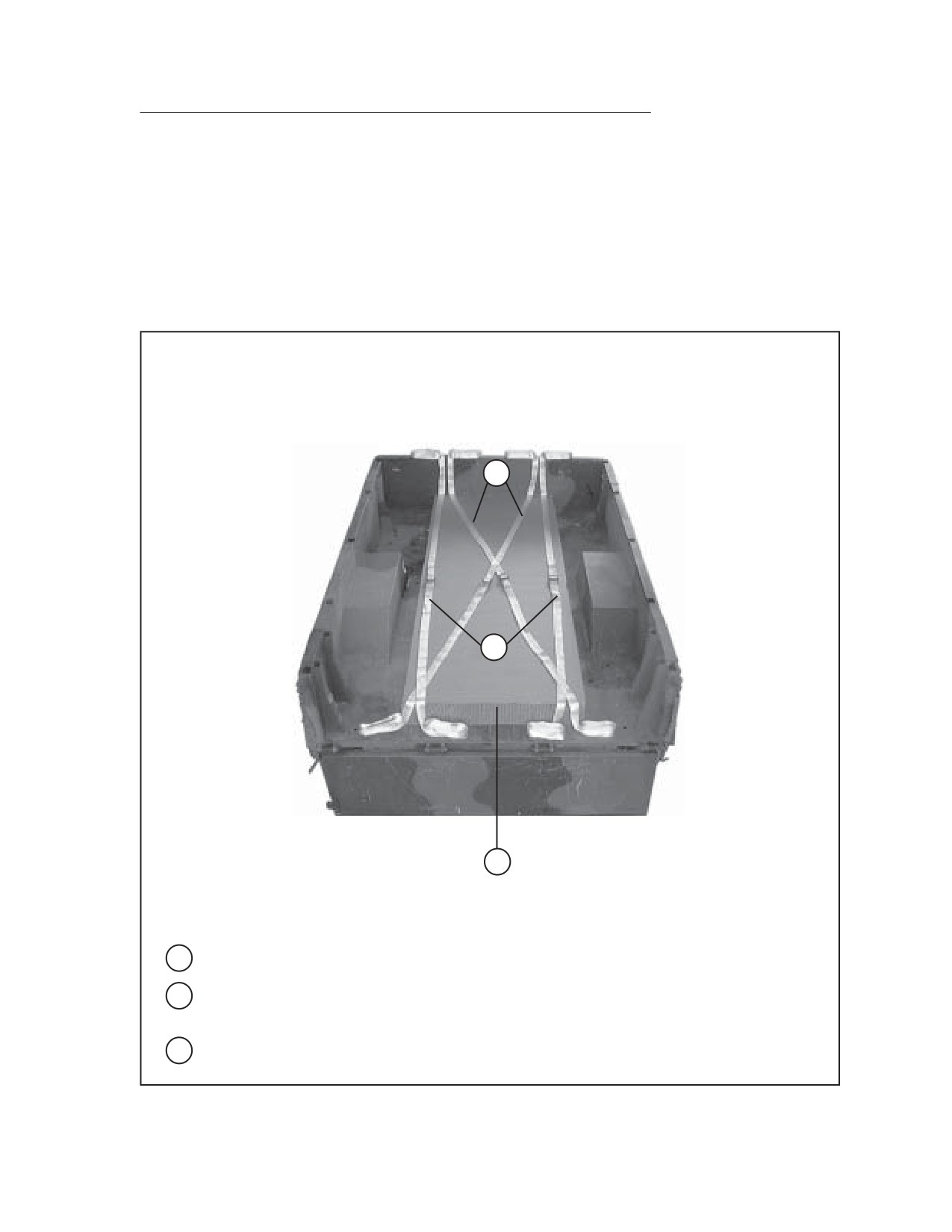
6. Stow the accompanying load of 12 ammunition boxes in the trailer as shown in
Figures 15 and 16. Stow the trailer components as shown in Figure 17.
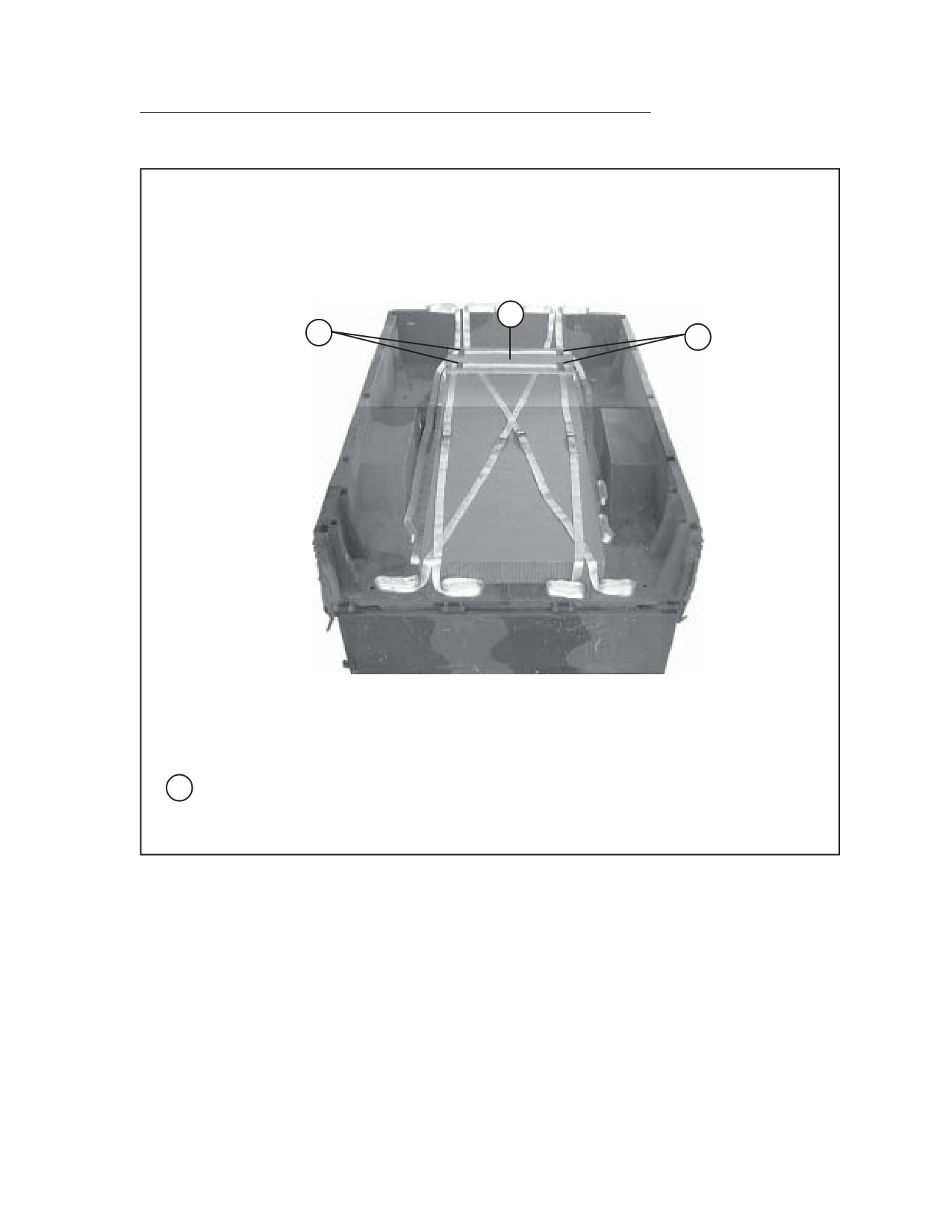
2
3
REAR
1
1
Center two 36- by 92-inch pieces of honeycomb in the trailer bed.
2
Form six 30-foot lashings according to FM 4-20.102/TO 13C7-1-5. Place two 30-foot lashings on
top of the honeycomb from front to rear crossing at the center.
3
Place two 30-foot lashings on top of the honeycomb from front to rear 22 inches apart.
Figure 15. Honeycomb, Lashings, and Endboards Positioned in the Trailer
19
FM 4-20.113/TO 13C7-3-51
Note: This drawing is not drawn to scale.
1 1/2”
37”
2”
3”
15 1/2”
3”
2”
4
4
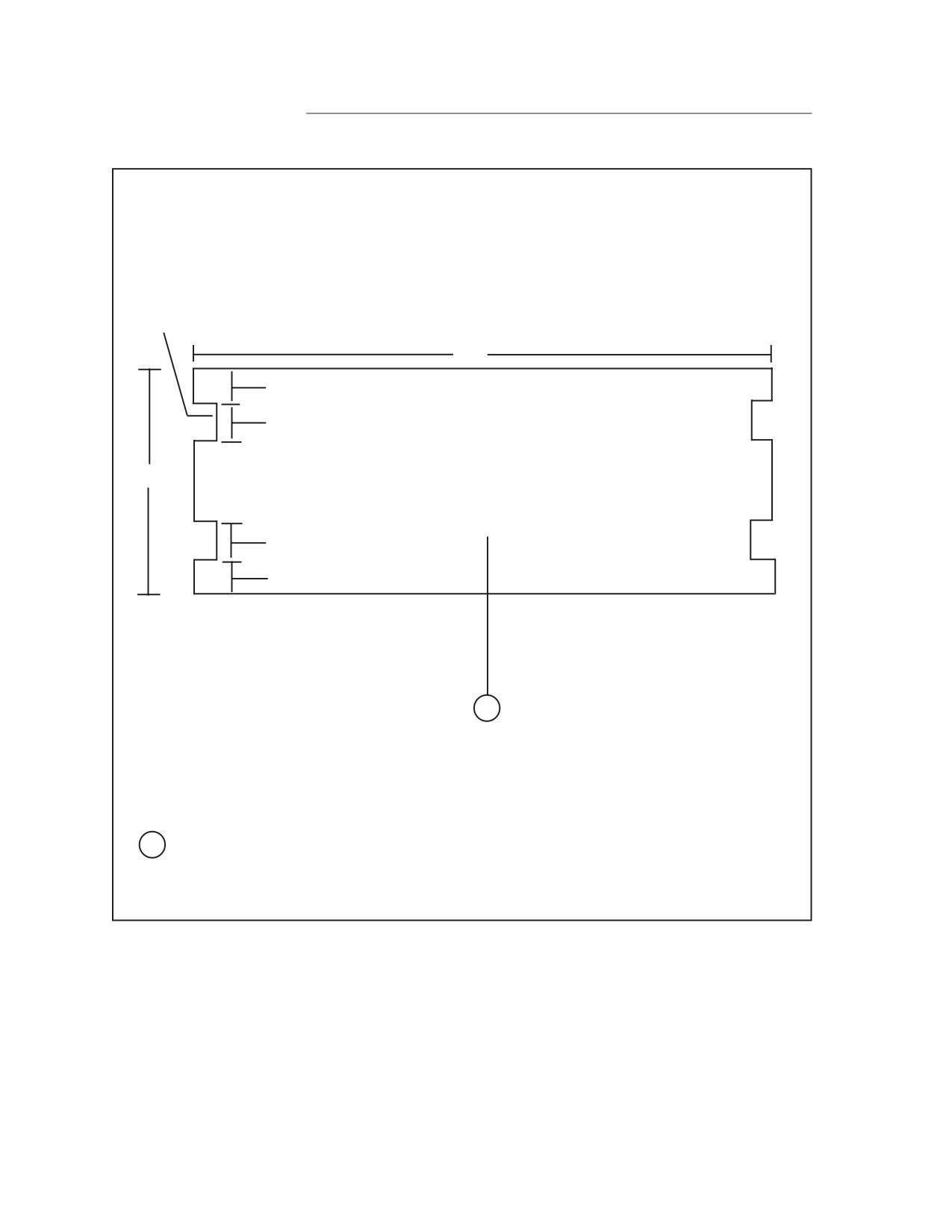
Cut two endboards as shown above using 3/4-inch piece of plywood.
Figure 15. Honeycomb, Lashings, and Endboards Positioned in the Trailer (continued)
20
FM 4-20.113/TO 13C7-3-51
FRONT
5
5
5
REAR
5
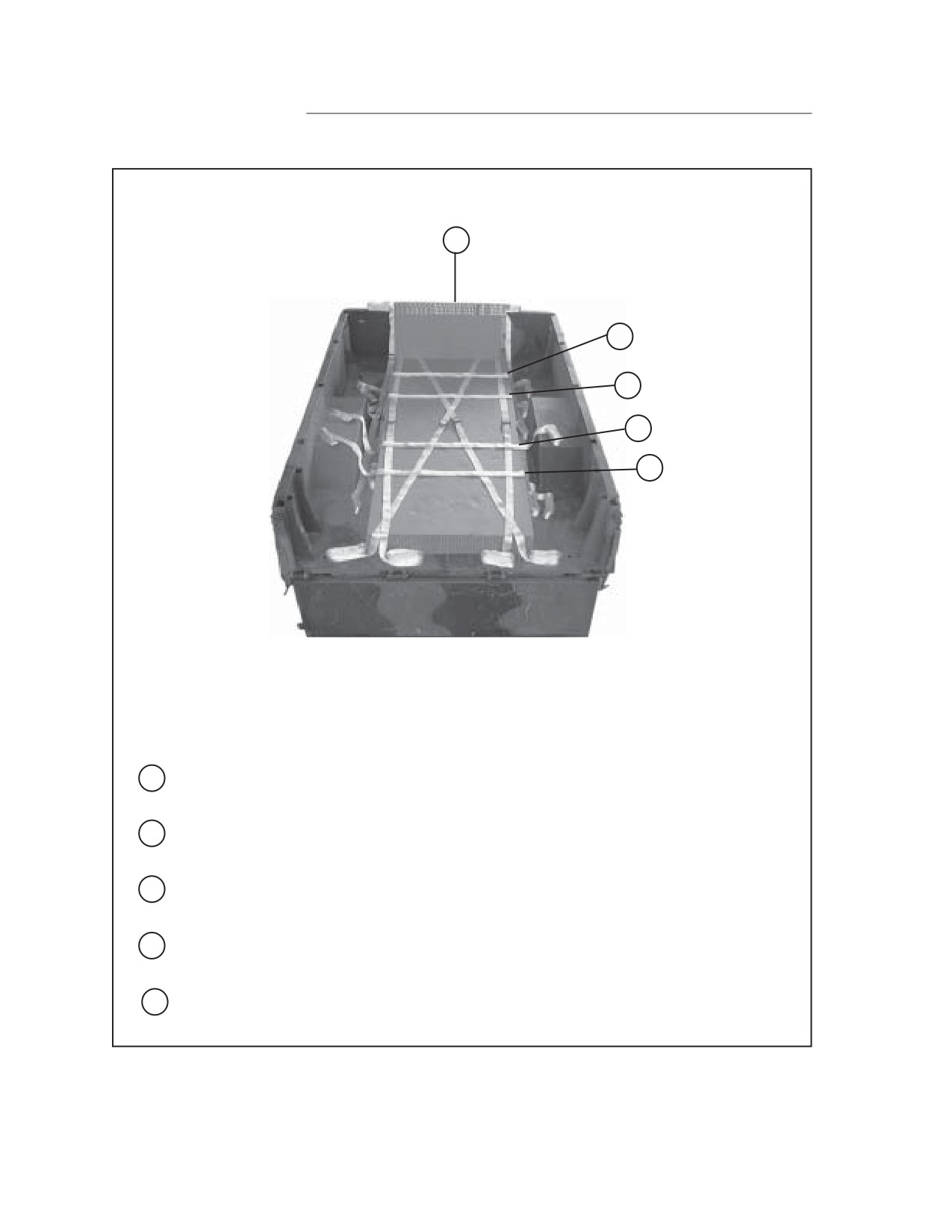
Place endboards in the front of the trailer on top of the honeycomb. Place two 30-
foot lashings on the back of the two endboards, and tape the lashings in place.
Figure 15. Honeycomb, Lashings, and Endboards Positioned in the Trailer (continued)
21
FM 4-20.113/TO 13C7-3-51
6
7
8
9
10
REAR
6
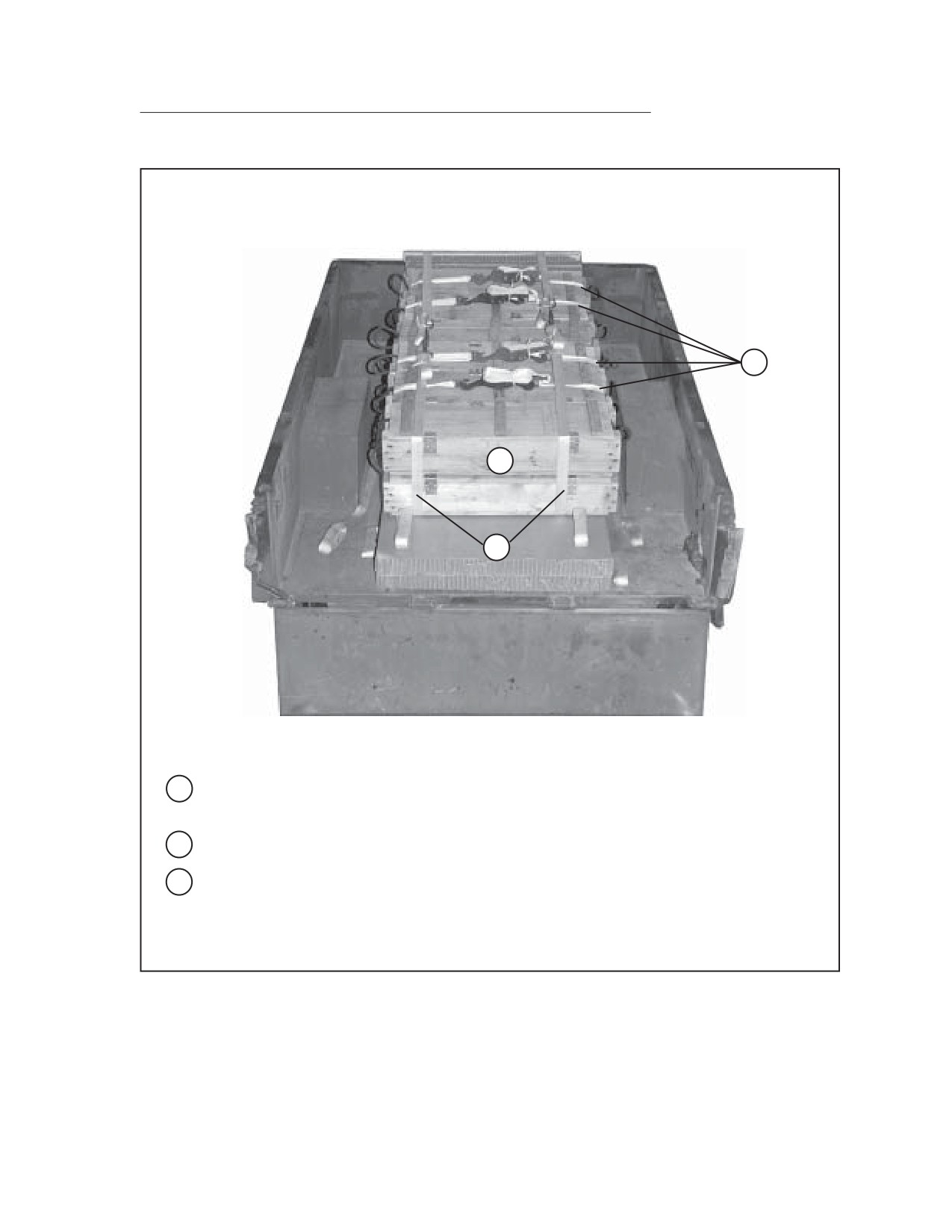
Place the endboards against the front of the trailer bed. Cut and position three 15-
by 36-inch pieces of honeycomb against the endboard.
7
Place one 15-foot lashing on the top of the honeycomb from left to right 16 inches from
the front of the trailer.
8
Place one 15-foot lashing on the top of the honeycomb from left to right 27 inches from
the front of the trailer.
9
Place one 15-foot lashing on the top of the honeycomb from left to right 57 1/2 inches from
the front of the trailer.
10
Place one 15-foot lashing on the top of the honeycomb from left to right 70 inches from
the front of the trailer.
Figure 15. Honeycomb, Lashings, and Endboards Positioned in the Trailer (continued)
22
FM 4-20.113/TO 13C7-3-51
3
1
2
REAR
1
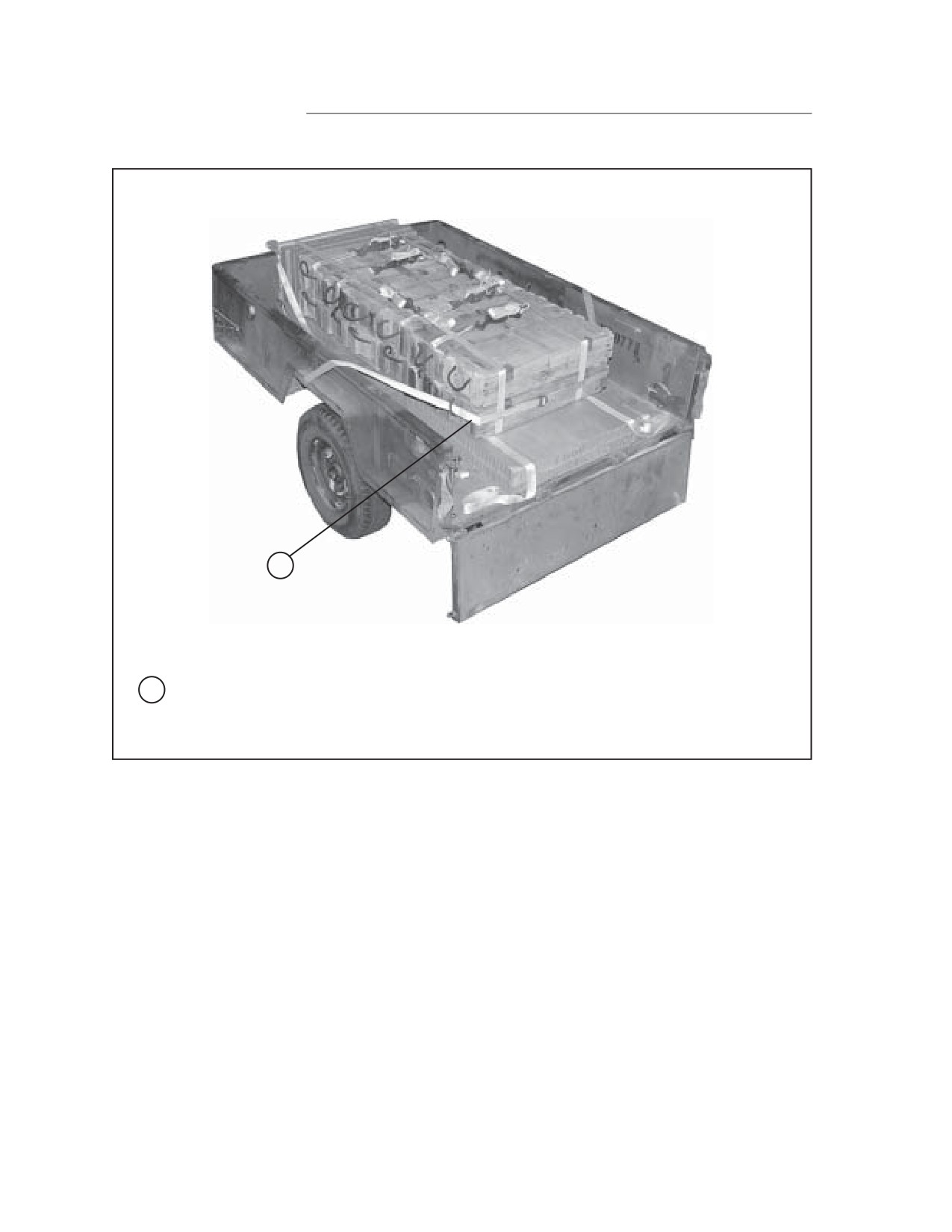
Place 12 ammunition boxes in two layers of six each on top of the honeycomb.
Place them flush against the three pieces of honeycomb.
2
Secure the boxes in place with the two pre-positioned lashings running front to rear.
3
Secure the boxes in place with the four pre-positioned lashings running left to right.
Note: The lashings may need to be adjusted slightly after the ammunition
boxes are set in place.
Figure 16. Ammunition Boxes Lashed and Secured in the Trailer
23
FM 4-20.113/TO 13C7-3-51
4
REAR
4
Form a 30-foot lashing according to FM 4-20.102/TO 13C7-1-5. Run the lashing across the rear
bottom box. Pass each free end through the carrying handle of the rear bottom box and over
the side panel of the trailer, in front of the wheel well.
Figure 16. Ammunition Boxes Lashed and Secured in the Trailer (continued)
24
DRAFT
FM 4-20.113/TO 13C7-3-51
5
FRONT
5
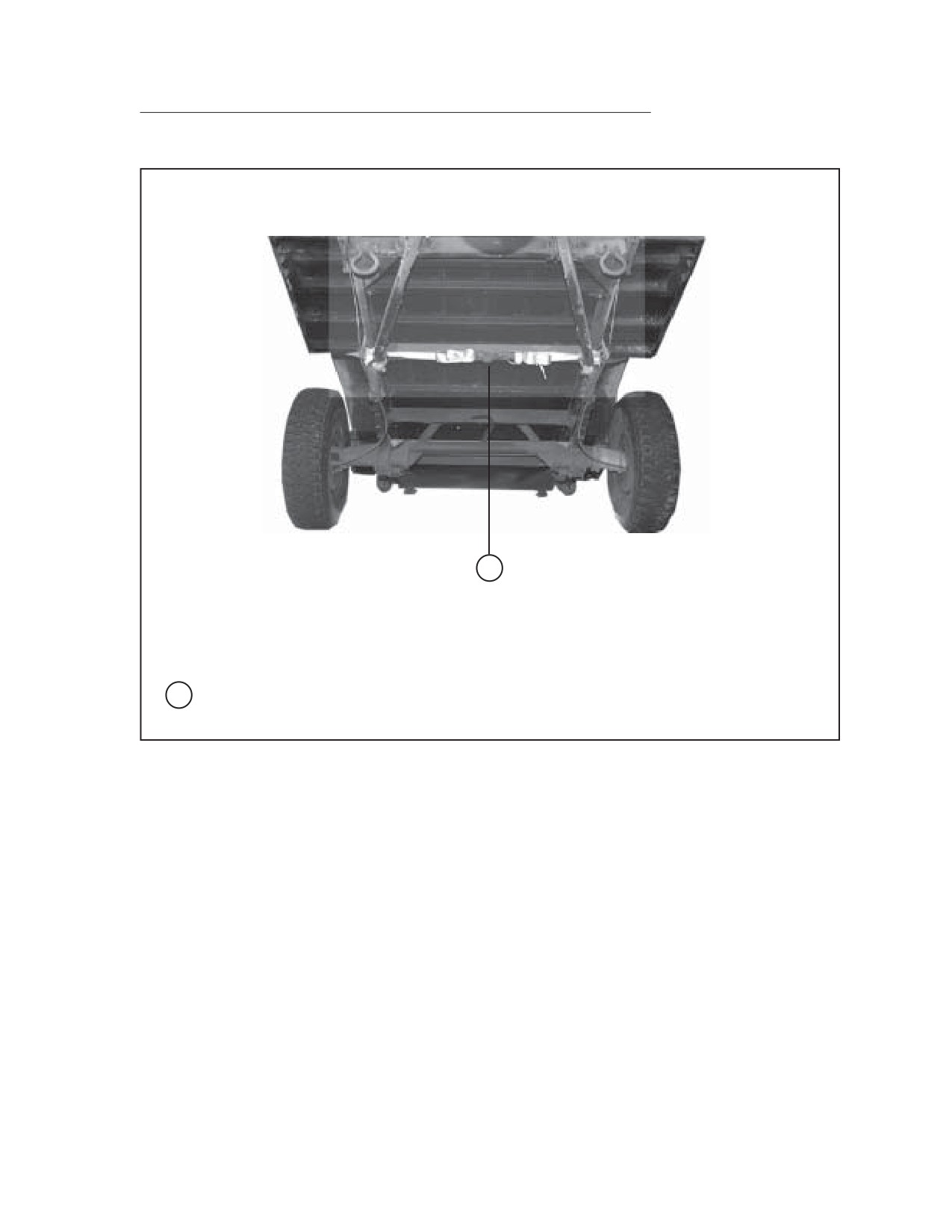
Secure the lashing in front of the second cross member of the trailer with two
D-rings and a load binder.
Figure 16. Ammunition Boxes Lashed and Secured in the Trailer (continued)
25
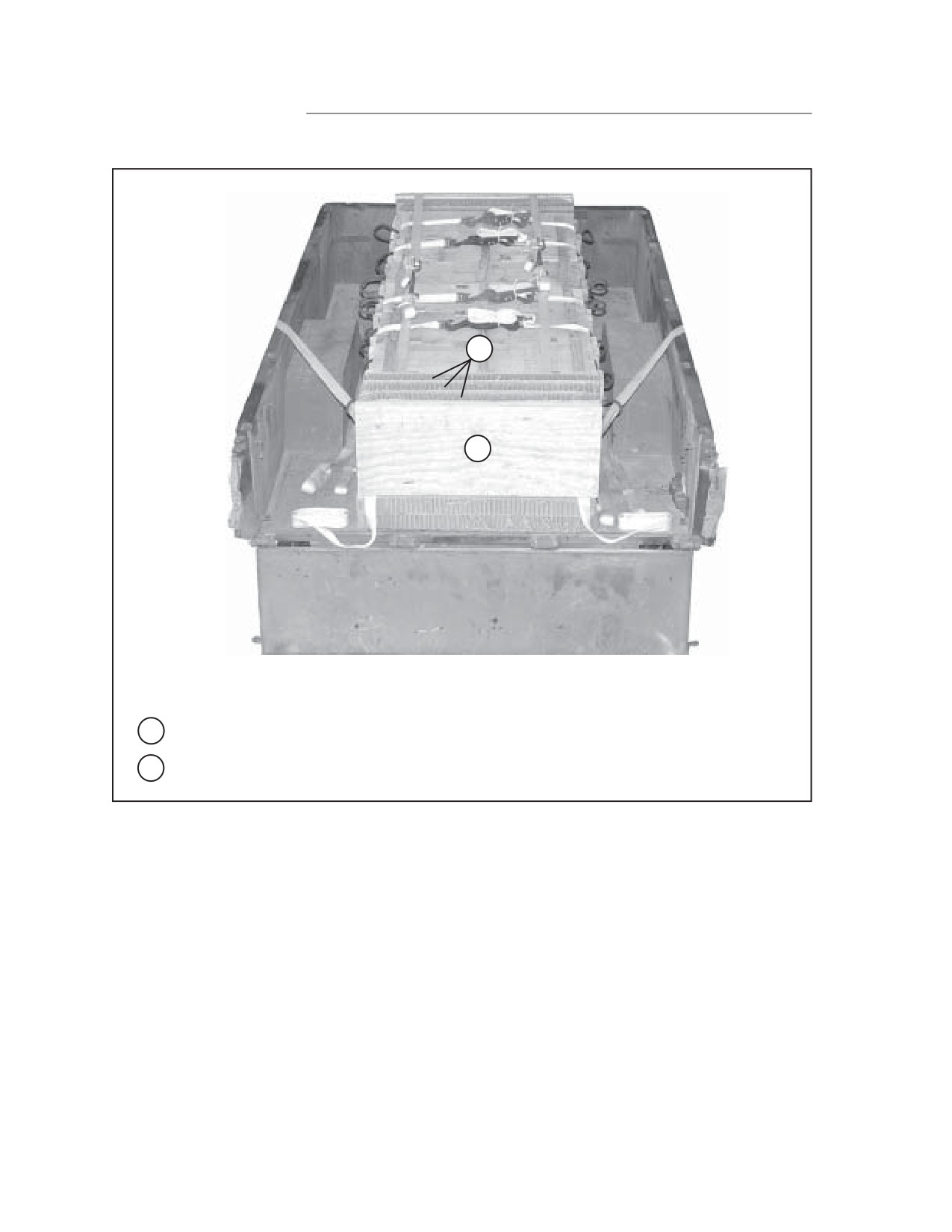
FM 4-20.113/TO 13C7-3-51
6
7
REAR
6
Place three 15- by 36-inch pieces of honeycomb flush against the rear ammunition boxes.
7
Cut and place two 3/4- by 15- by 36-inch pieces of plywood flush against the honey-
comb.
Figure 16. Ammunition Boxes Lashed and Secured in the Trailer (continued)
26
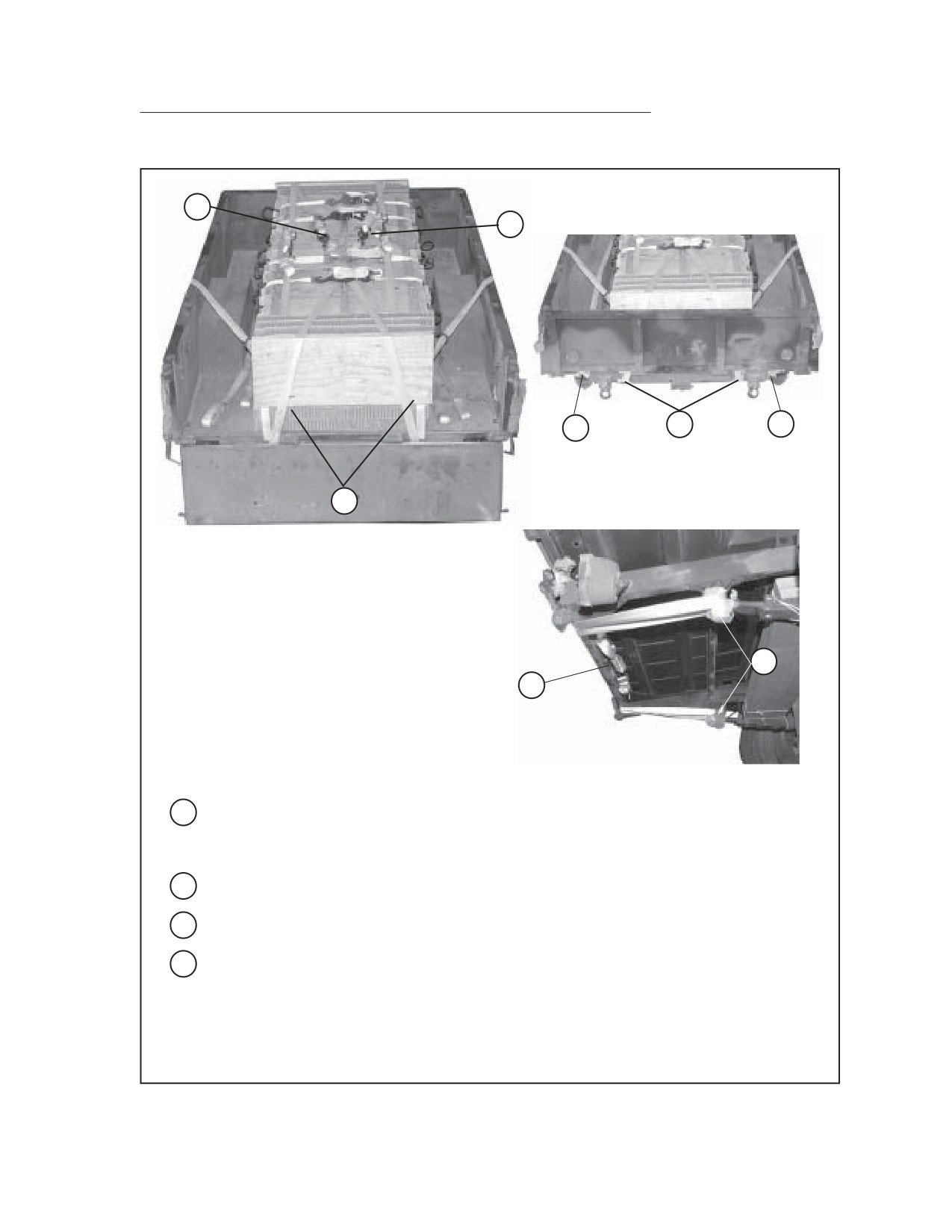
FM 4-20.113/TO 13C7-3-51
9
10
11
8
11
8
REAR
8
11
8
Pass the free end of each pre-positioned lashing (on the rear of the trailer) between the
tailgate and the cargo bed. Pass the ends around the bumper and back up to the top
of the load.
9
Secure the left rear lashing to the right front lashing with a D-ring and a load binder.
10
Secure the right rear lashing to the left front lashing with a D-ring and a load binder.
11
Pass the free end of each pre-positioned 30-foot lashing (attached to the front
endboard) between the tailgate and the cargo bed. Run each lashing down between
the mainframe and under the cargo bed. Secure the lashings with D-rings and load
binders (not shown).
Note: Pad sharp areas that touch lashings to avoid contact.
Figure 16. Ammunition Boxes Lashed and Secured in the Trailer (continued)
27
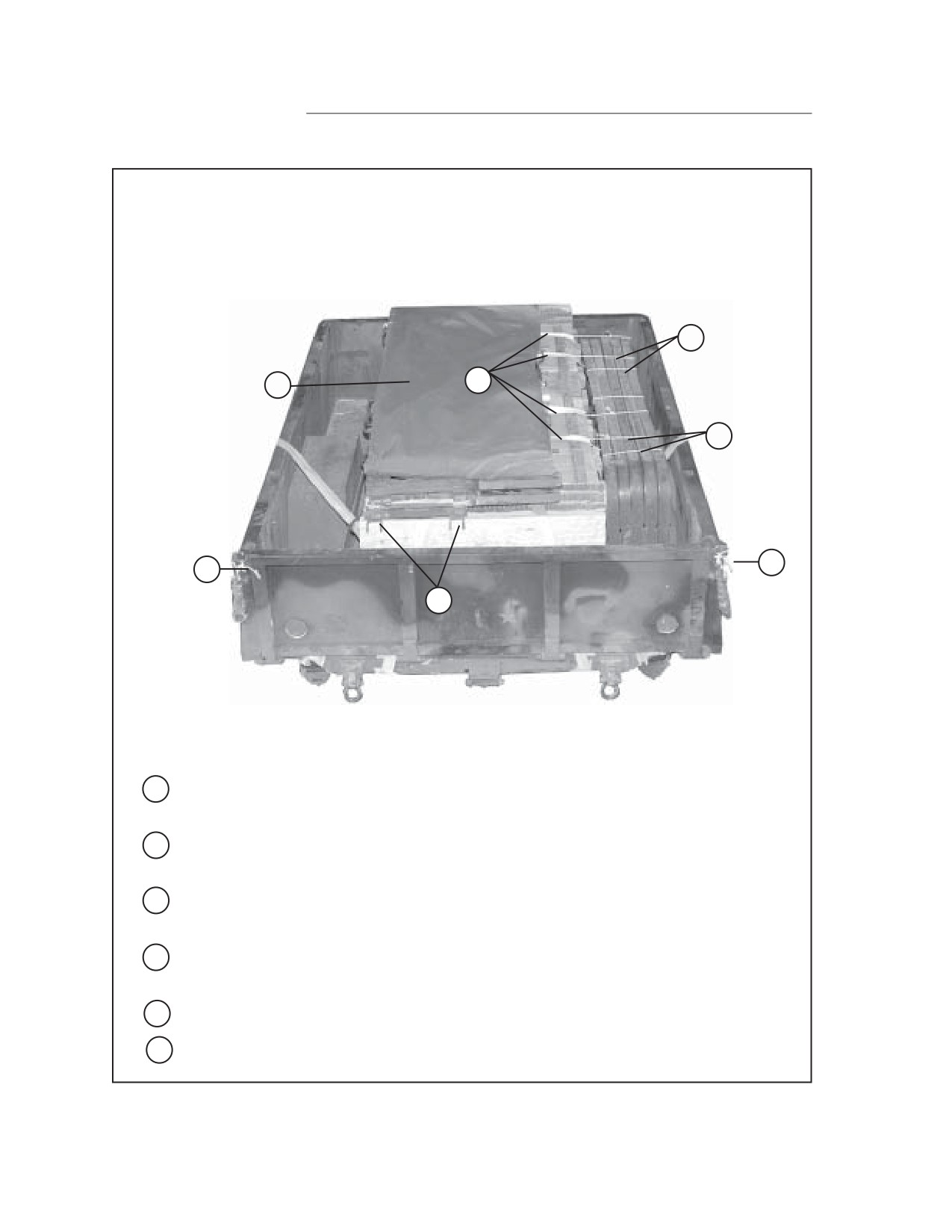
FM 4-20.113/TO 13C7-3-51
1
2
5
1
6
6
3
REAR
1
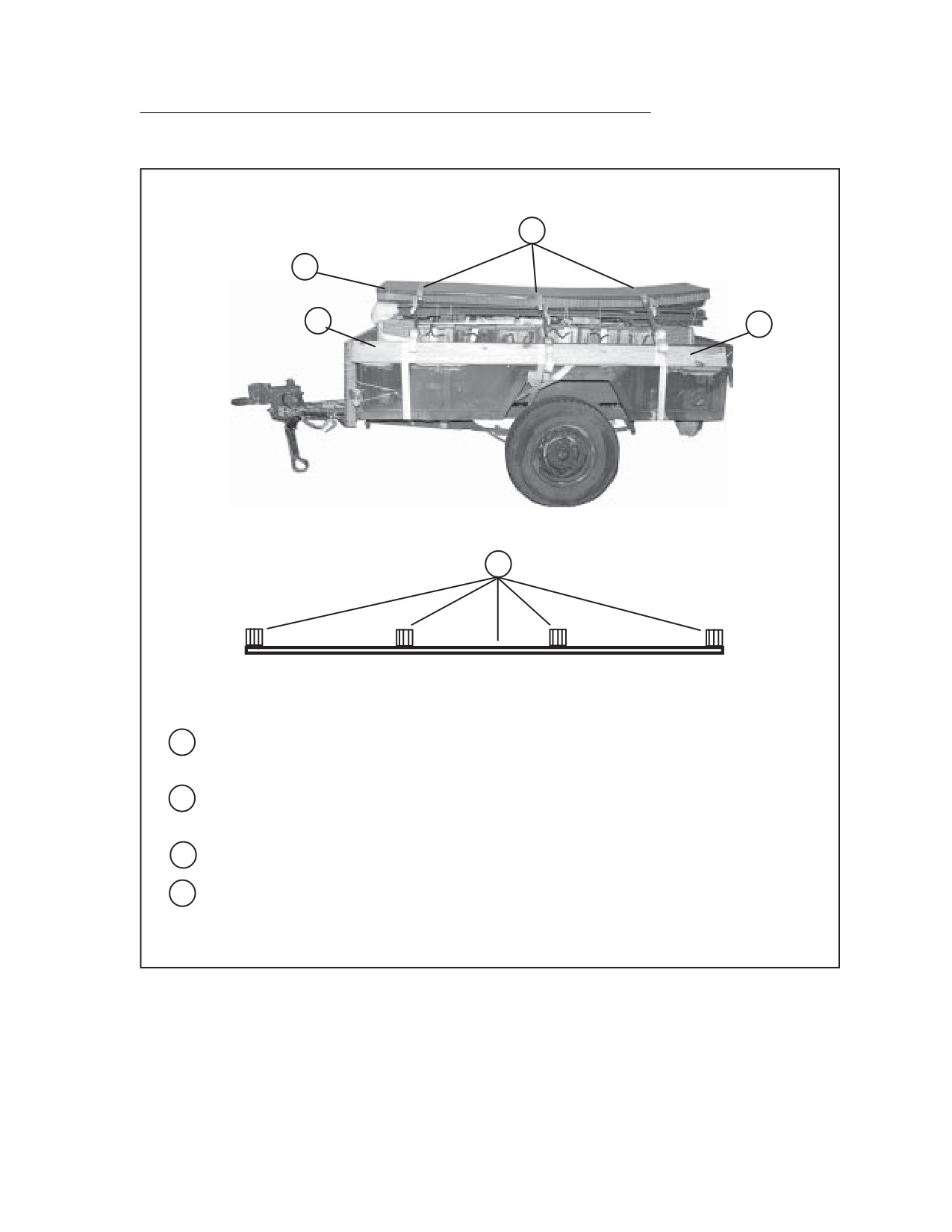
Tie the bows together with type III nylon cord, and place them inside the trailer on
the right side.
2
Tie the bows with type III nylon cord to the lashings which run from left to right
across the top of the ammunition boxes.
3
Cover the ends of the side racks with cellulose wadding and tape. Tie the side racks
together with type III nylon cord, and place them on top of the ammunition boxes.
4
Tie the side racks with type III nylon cord to the lashings which run from left to right
across the top of the ammunition boxes (not shown).
5
Fold the tarpaulin and center it on top of the accompanying load.
6
Close the tailgate, and tie the latches with type III nylon cord.
Figure 17. Trailer Components Stowed
28
FM 4-20.113/TO 13C7-3-51
10
7
9
9
REAR
8
7
Place a 36- by 96-inch piece of honeycomb on top of the tarpaulin. Tape the edges
of the honeycomb where the lashings will touch.
8
Cut two 2- by 6- by 96-inch pieces of lumber to serve as side boards. Cut eight 6- by 6-inch
pieces of honeycomb. Glue four pieces of the honeycomb to each side board.
9
Tie the side boards to the trailer with type III nylon cord.
10
Form three 30-foot lashings according to FM 4-20.102/TO 13C7-1-5. Secure the load and trailer
components by passing each lashing under the trailer body and looped around the the
side boards. Secure the lashing ends together on the left side of the trailer between
the honeycomb and side board.
Figure 17. Trailer Components Stowed (Continued)
29
FM 4-20.113/TO 13C7-3-51
SECURING TRAILER SUPPORT STAND AND INSTALLING LIFTING SLINGS
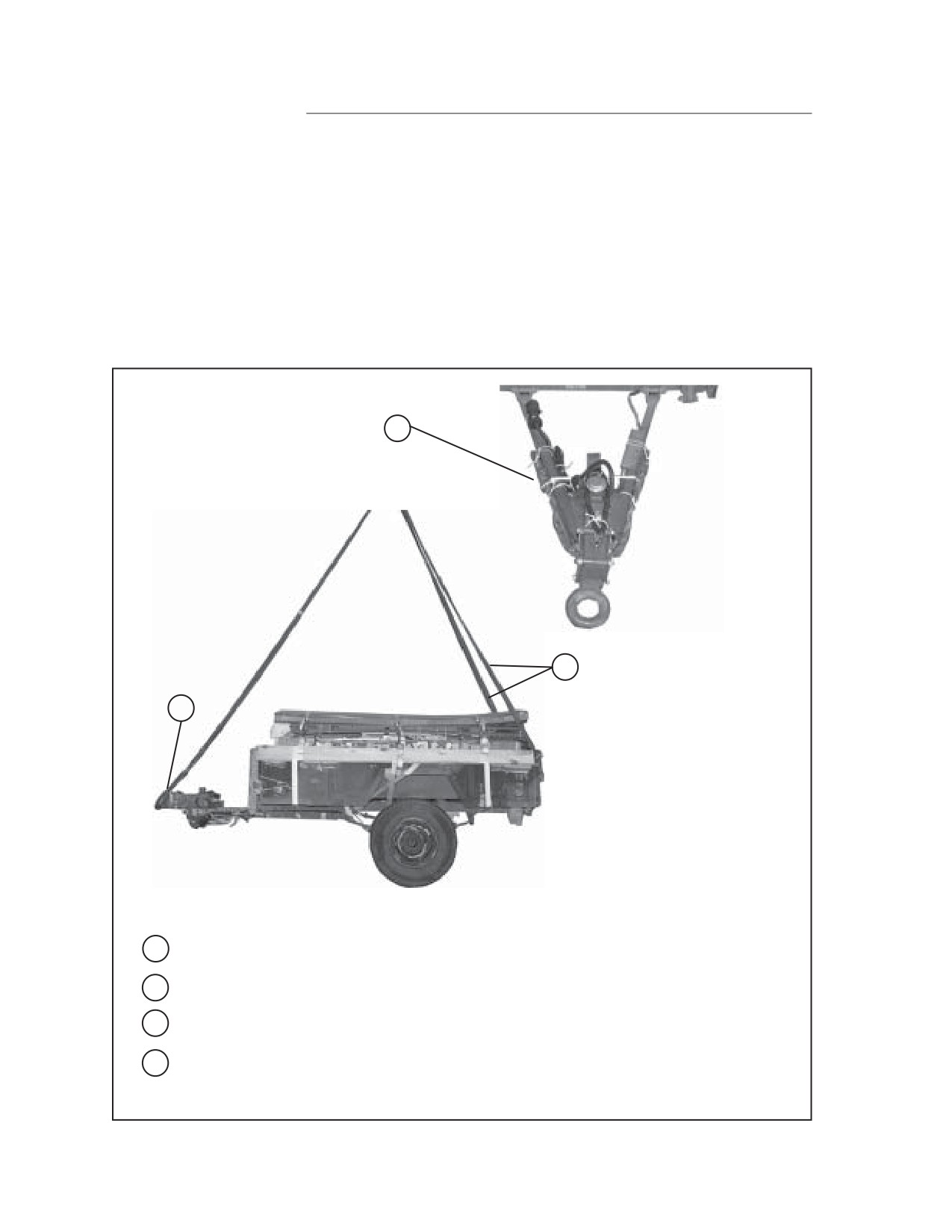
7. Raise and secure the trailer support stand as shown in Figure 18. Use three 12-foot
(2-loop), type XXVI nylon webbing slings; one 3-foot (2-loop), type XXVI nylon webbing
sling; and three medium suspension clevises to lift the trailer.
1
3
4
REAR
1
Raise the support stand, and tie it with 1/2-inch tubular nylon webbing.
2
Place the bell portion of each clevis in the end loop of each 12-foot sling (not shown).
3
Attach the two rear lifting slings to the tie-down provisions on the rear of the trailer.
4
Pass a 3-foot sling through the lunette on the trailer. Secure both ends of the 3-foot
sling to the medium suspension clevis.
Figure 18. Trailer Support Secured and Lifting Slings Installed
30
FM 4-20.113/TO 13C7-3-51
POSITIONING TRAILER
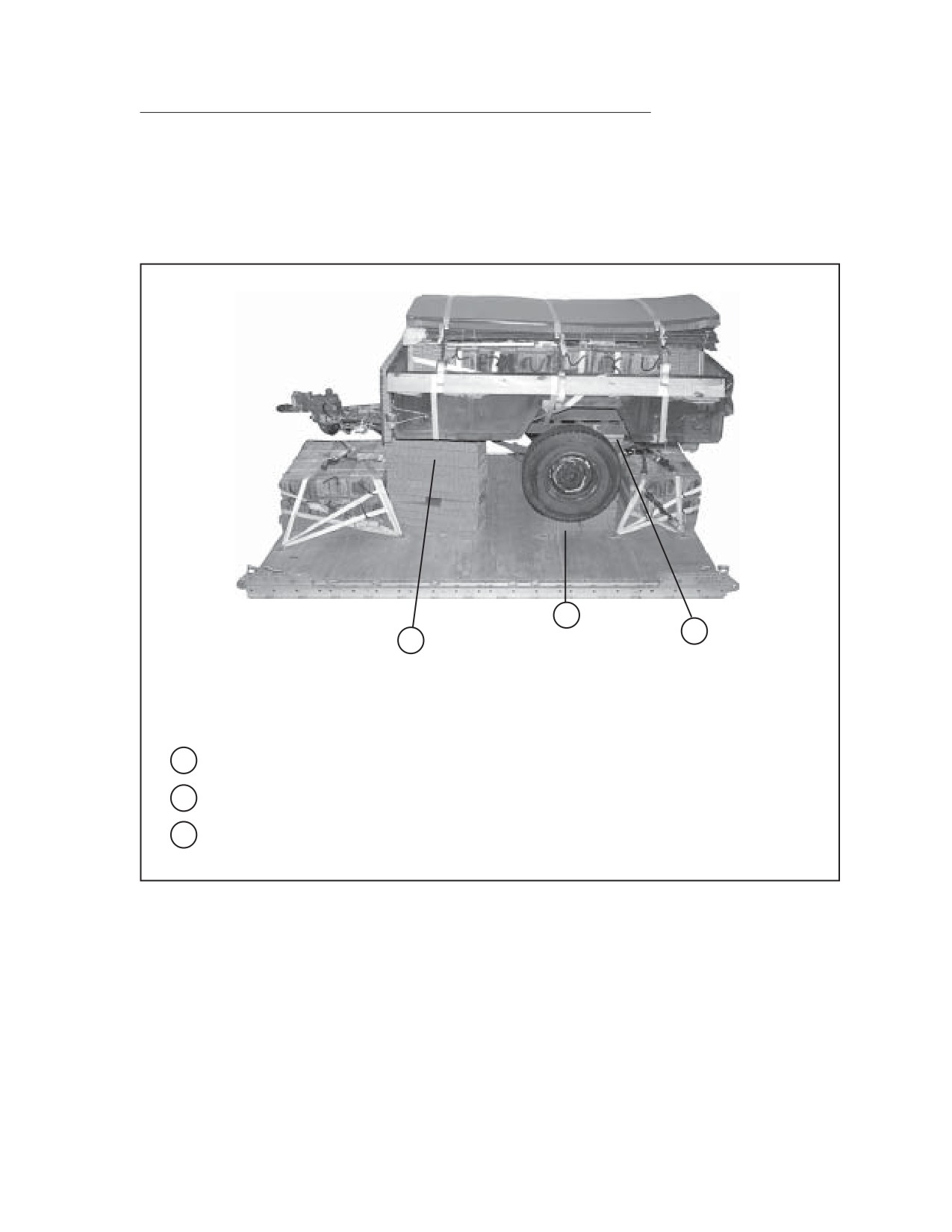
8. Position the trailer on the honeycomb stacks according to Figure 19.
R
EAR
FRONT
2
1
3
1
Postion the frame support board on stack 1.
2
Position the axle on stack 2.
3
Position the drawbar on stack 3.
Figure 19. Trailer Positioned
31
FM 4-20.113/TO 13C7-3-51
LASHING TRAILER
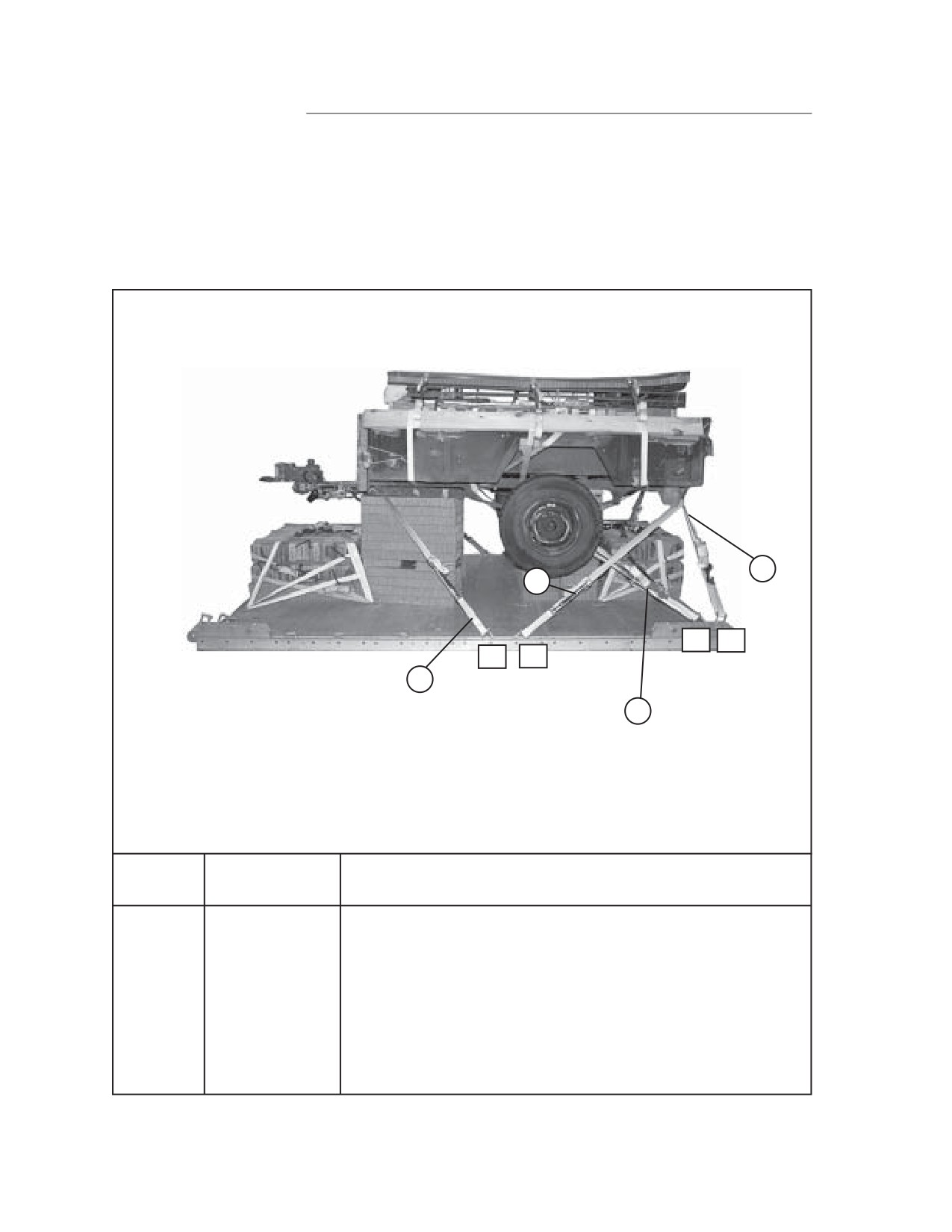
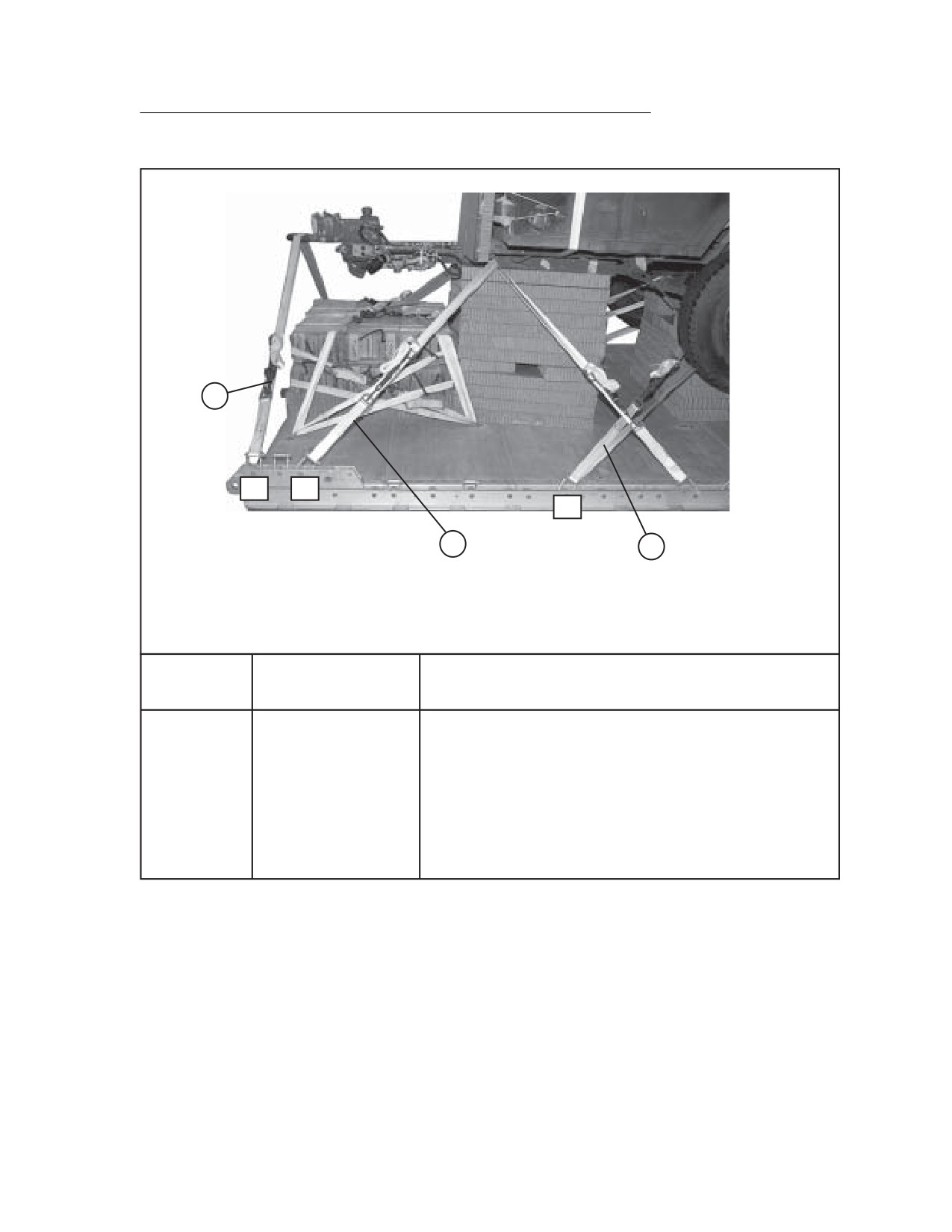
9. Lash the trailer to the platform according to FM 4-20.102/TO 13C7-1-5 and as shown
Figures 20 and 21.
1
5
REAR
FRONT
2
1
4
3
7
3
Note: Left and right refers to the vehicle not the platform.
Lashing
Tiedow n
Instructions
Number
Clevis Number
Pass lashing :
1
1
Through the left rear lifting shackle
2
1A
Through the right rear lifting shackle
3
2
Around the left side of the axle.
4
2A
Around the right side of the axle.
5
3
Through the left rear lifting shackle
6
3A
Through the right rear lifting shackle
7
4
Through the left front lifting shackle
8
4A
Through the right front lifting shackle
Figure 20. Lashings 1 Through 8 Installed
32
FM 4-20.113/TO 13C7-3-51
13
R
EAR
FRONT
10
8
5
11
9
Note: Left and right refers to the vehicle not the platform.
Lashin g
Tiedow n
Instruction s
Number
Clevis Number
Pass lashing:
9
5
Around the left side of axle.
10
5A
Around the right side of axle.
11
8
Through the left front lifting shackle.
12
8A
Through the right front lifting shackle
13
10
Through the lunette.
14
10A
Through the lunette.
Figure 21. Lashings 9 Through 14 Installed
33
FM 4-20.113/TO 13C7-3-51
BUILDING AND INSTALLING PARACHUTE STOWAGE PLATFORM AND
WOODEN SUPPORT
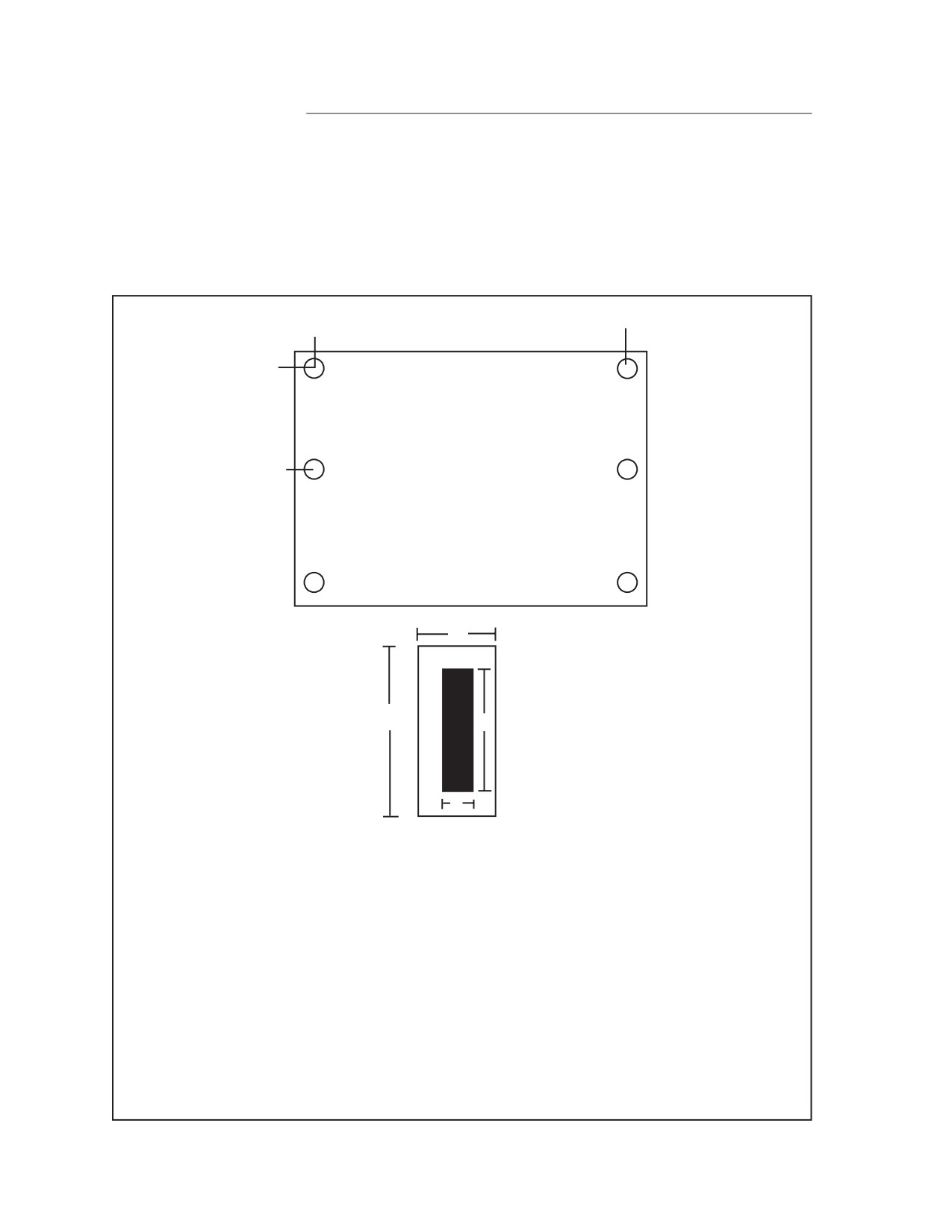
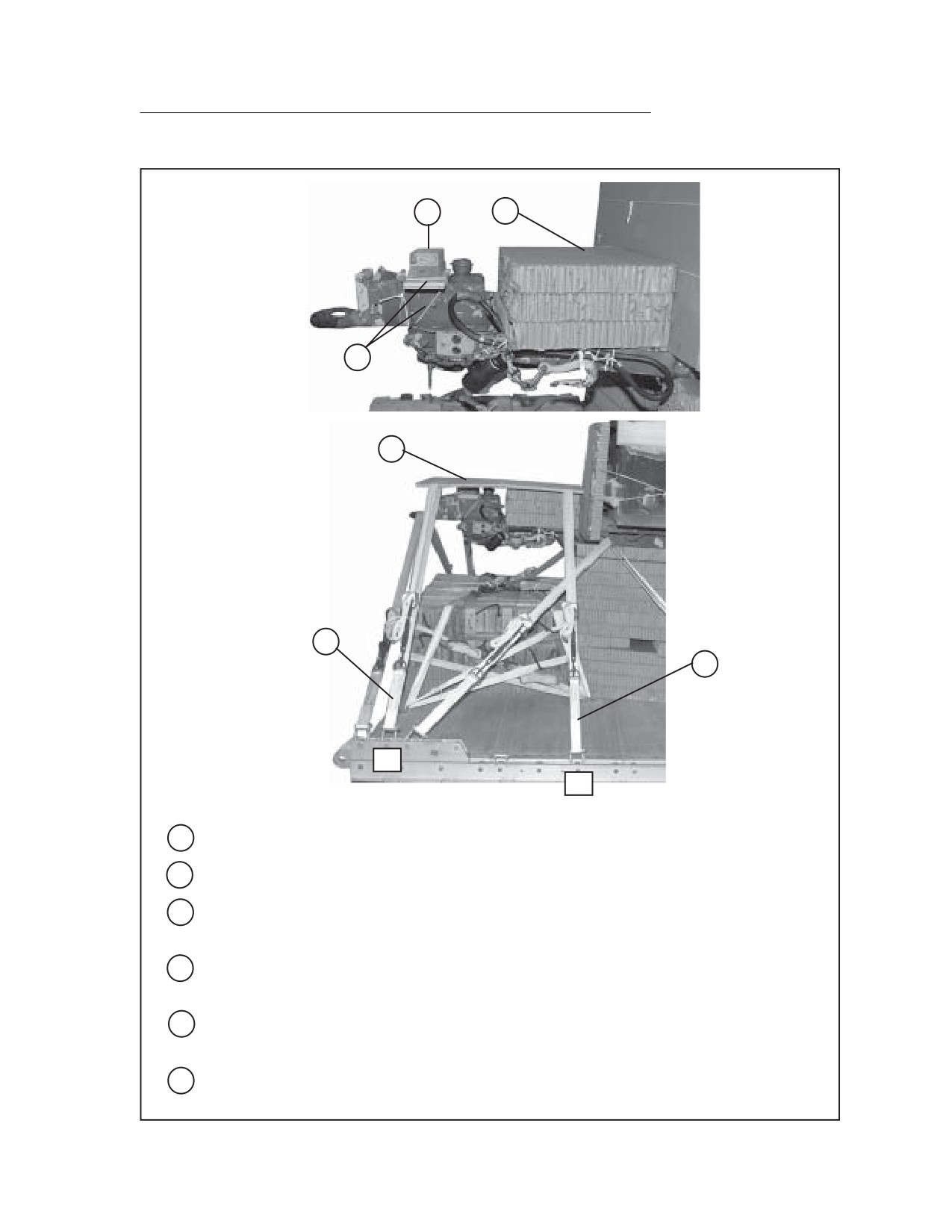
10. Build the parachute stowage platform as shown in Figure 22. Install
the parachute stowage platform using four 15-foot tie-down assemblies as
shown in Figure 23.
Note: This drawing is not drawn to scale.
2” Diameter Holes
3”
3”
3”
3/4” X 36” X 36” Plywood
LEFT
RIGHT
5”
13”
7”
4”
Step:
1. Cut a 3/4- by 36- by 36-inch piece of plywood.
2. Drill a 2-inch hole 3 inches from each corner of the platform.
3. Drill a 2-inch hole 3 inches from the side and center of the left and right side of the
platform.
4. Cut a 3/4- by 5- by 13-inch piece of plywood.
5. Cut two 2- by 4- by 7-inch pieces of lumber and nail together using 16d nails.
6. Center the two 2- by 4- by 7-inch pieces of lumber on top of the 3/4- by 5- by 13-inch piece of
plywood and nail together using 16d nails.
Figure 22. Parachute Stowage Platform and Wooden Support Built
34
FM 4-20.113/TO 13C7-3-51
1
3
2
R
EAR
FRONT
4
6
5
R
EAR
FRONT
9
6
1
Place the wooden support on top of the brake housing.
2
Secure the wooden support down to the brake housing with type III nylon cord.
3
Cut and position three 17- by 22-inch pieces of honeycomb on top of the drawbar flush against
the honeycomb on the front of the trailer.
4
Place the parachute stowage platform on top of the honeycomb with the smooth side of
plywood facing up.
5
Run the free end of a 15-foot lashing from clevis 6 through the front hole of parachute stowage
platform . Secure with D-ring and a load binder. Repeat for clevis 6A.
6
Run the free end of a 15-foot lashing from clevis 9 through the rear hole of parachute stowage
platform . Secure with D-ring and a load binder. Repeat for clevis 9A.
Figure 23. Parachute Stowage Platform and Wooden Support Installed
35
FM 4-20.113/TO 13C7-3-51
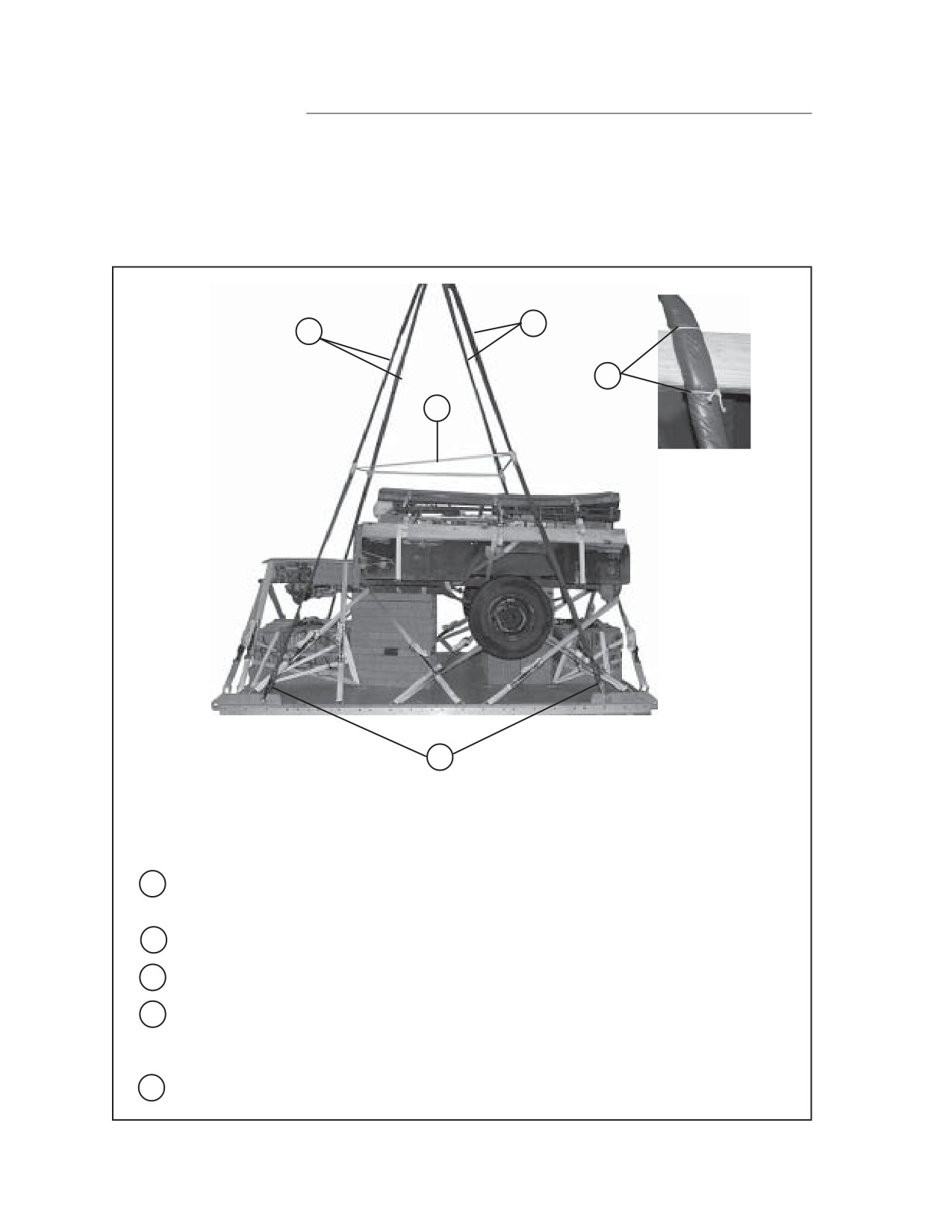
INSTALLING AND SAFETY TIEING SUSPENSION SLINGS
11. Install and safety tie four 16-foot (2-loop), type XXVI nylon webbing slings as shown
in Figure 24.
2
2
5
3
R
EAR
FRONT
1
1
Attach a 16-foot (2-loop), type XXVI nylon webbing sling to each tandem link using a large
suspension clevis.
2
Raise the suspension slings above the load.
3
Safety the suspension slings with a deadman’s tie according to FM 4-20.102/TO 13C7-1-5.
4
Pad the suspension slings with 12 by 36-inch felt and tape. The front will be 34
inches up from the front suspension clevises. The rear will be 42 inches up from the
rear suspension clevises (not shown).
5
Lower the suspension slings and secure them to the side boards using type III nylon cord.
Figure 24. Suspension Slings Installed and Safety Tied
36
FM 4-20.113/TO 13C7-3-51
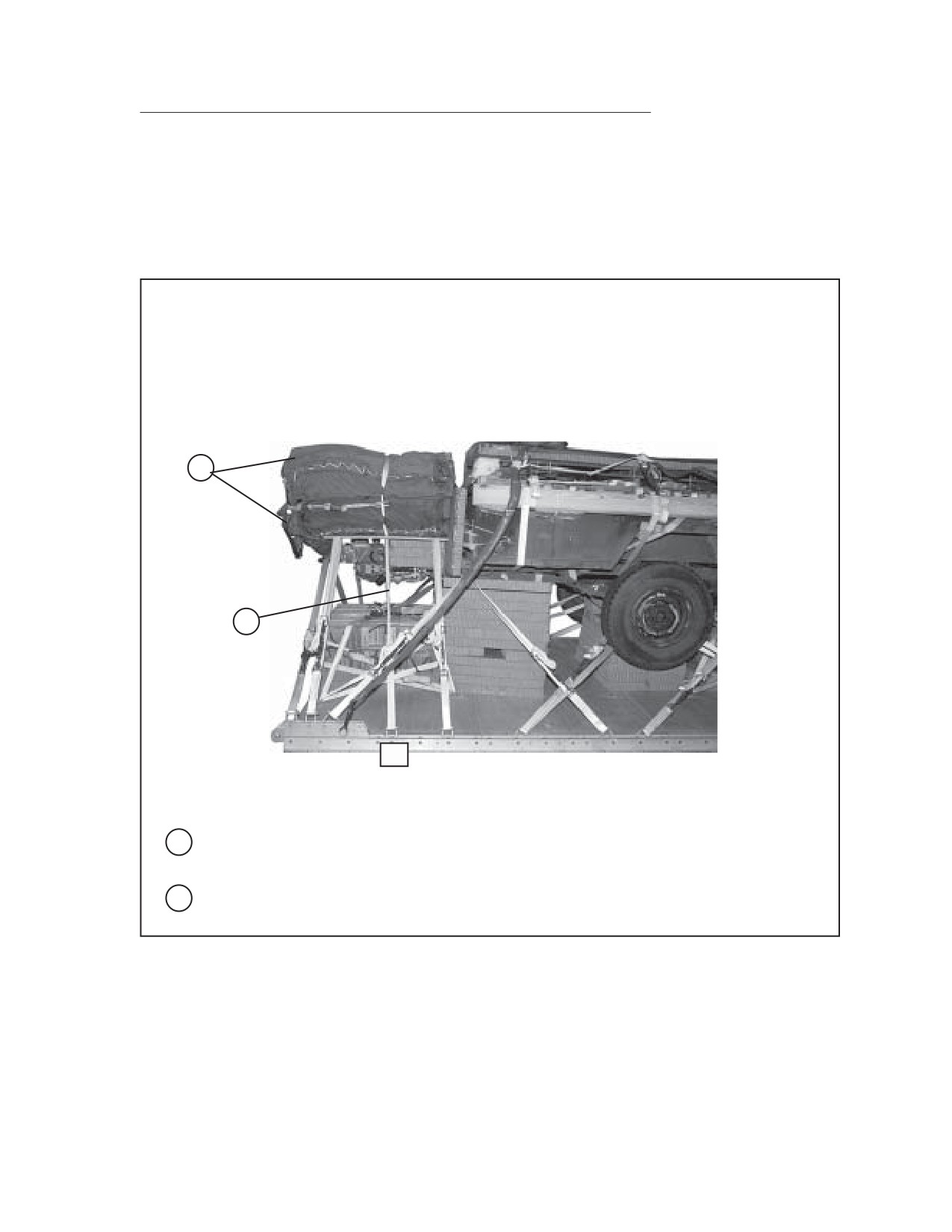
STOWING CARGO PARACHUTES
12. Stow and restrain two G-11B cargo parachutes on top of the stowage platform as shown
in Figure 25.
1
2
REAR
7
1
Place two G-11B cargo parachutes on the parachute stowage platform and cluster according to
FM 4-20.102/TO 13C7-1-5.
2
Install a type VIII nylon webbing restraint using clevises 7 and 7A according to FM 4-
20.102/TO 13C7-1-5.
Figure 25. Cargo Parachutes Stowed
37
FM 4-20.113/TO 13C7-3-51
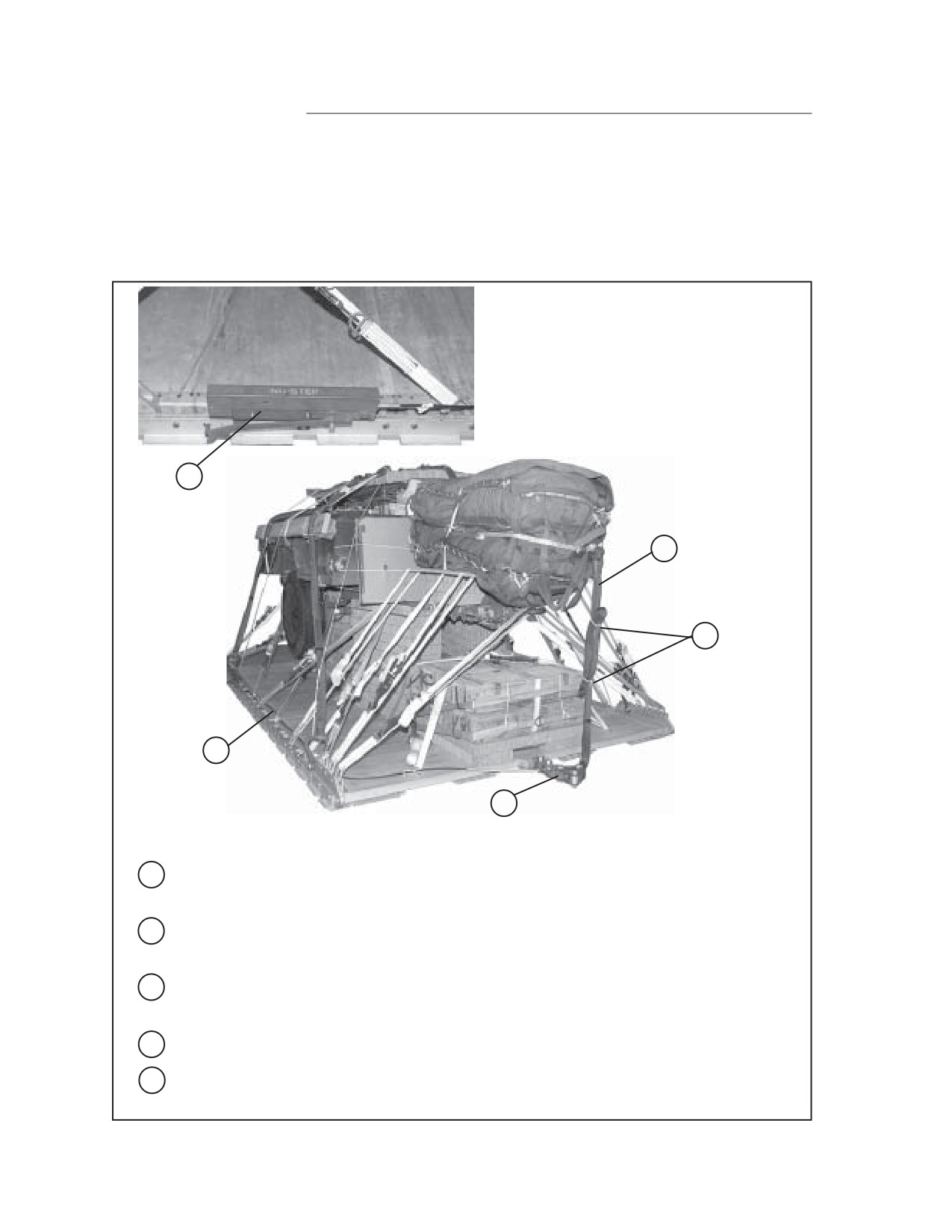
PREPARING AND INSTALLING EXTRACTION SYSTEM
13. Prepare and install the Extraction Force Transfer Coupling (EFTC) System according
to FM 4-20.102/TO 13C7-1-5 and as shown in Figure 26.
1
4
5
2
REAR
3
1
Install the EFTC mounting brackets to the front mounting holes in the left platform
side rail. Install the actuator according to FM 4-20.102/TO 13C7-1-5.
2
Attach a 12-foot cable assembly to the actuator. Safety the cable assembly to tiedown
ring D6 and several other convenient points with type I, 1/4-inch cotton webbing.
3
Install the latch assembly to the extraction bracket according to FM 4-20.102/TO
13C7-1-5.
4
Attach a 9-foot (2-loop), type XXVI nylon deployment line.
5
Fold the excess deployment line. Secure the folds using type I, 1/4-inch cotton
webbing.
Figure 26. Extraction System Installed
38
FM 4-20.113/TO 13C7-3-51
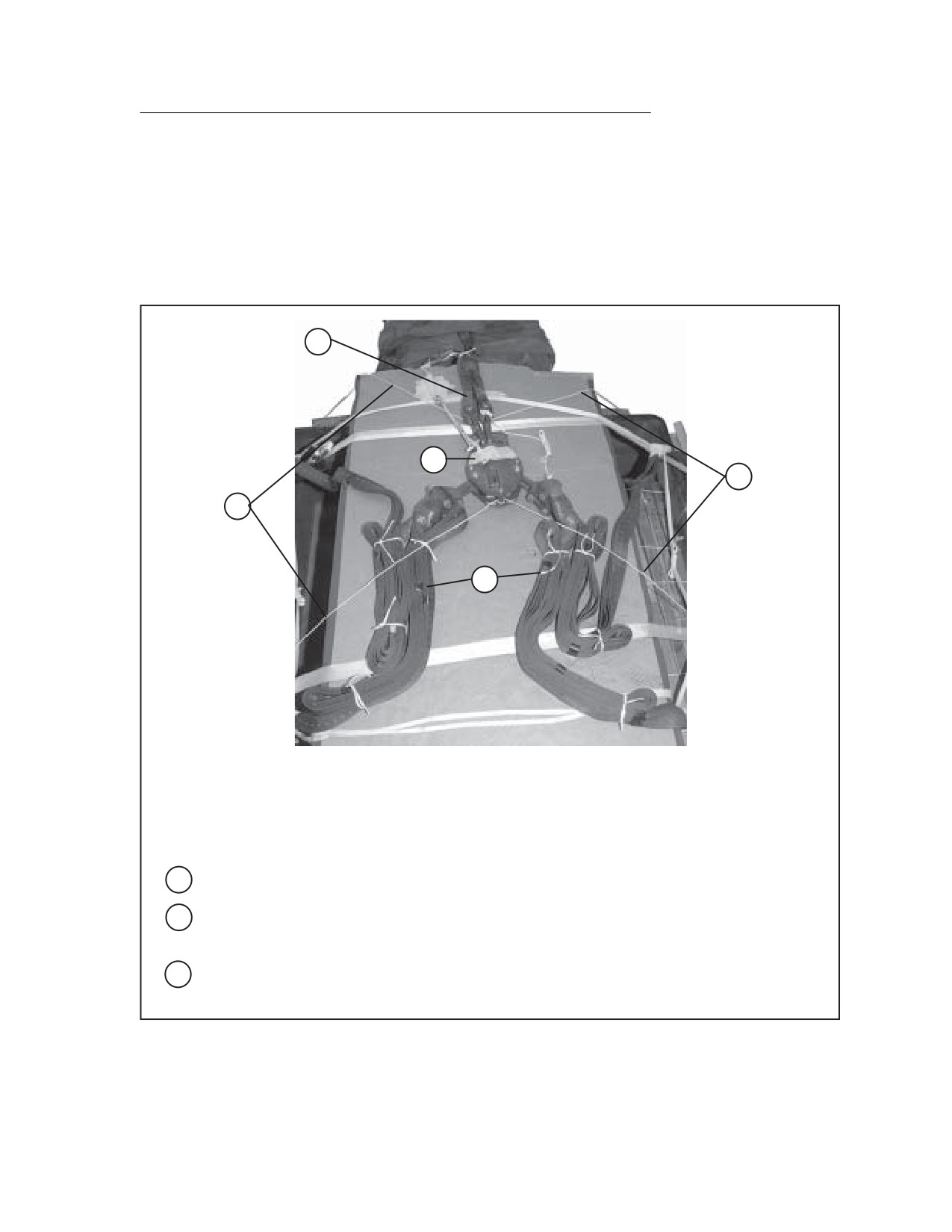
INSTALLING PARACHUTE RELEASE SYSTEM
14. Prepare, install and safety an M-1 cargo parachute release system according to FM 4-
20.102/TO 13C7-1-5 and as shown in Figure 27.
2
1
3
3
2
1
Place the release on top of the accompanying load.
2
Attach the riser extensions and suspension slings to the release according
to FM 4-20.102/TO 13C7-1-5.
3
Secure the release with type III nylon cord to convenient points on the load or
platform.
Figure 27. Parachute Release System Installed
39
FM 4-20.113/TO 13C7-3-51
INSTALLING PROVISIONS FOR EMERGENCY RESTRAINTS
15. Install the provisions for emergency restraints on the load according to FM 4-20.102/TO
13C7-1-5.
PLACING EXTRACTION PARACHUTE
16. Select the extraction parachute and extraction line needed using the extraction line re-
quirements table in FM 4-20.102/TO 13C7-1-5. Rig the extraction line in an extraction line bag
according to TM 10-1670-286-20/TO 13C5-2-41. Place the extraction parachute and extrac-
tion line on the load for installation in the aircraft.
MARKING RIGGED LOAD
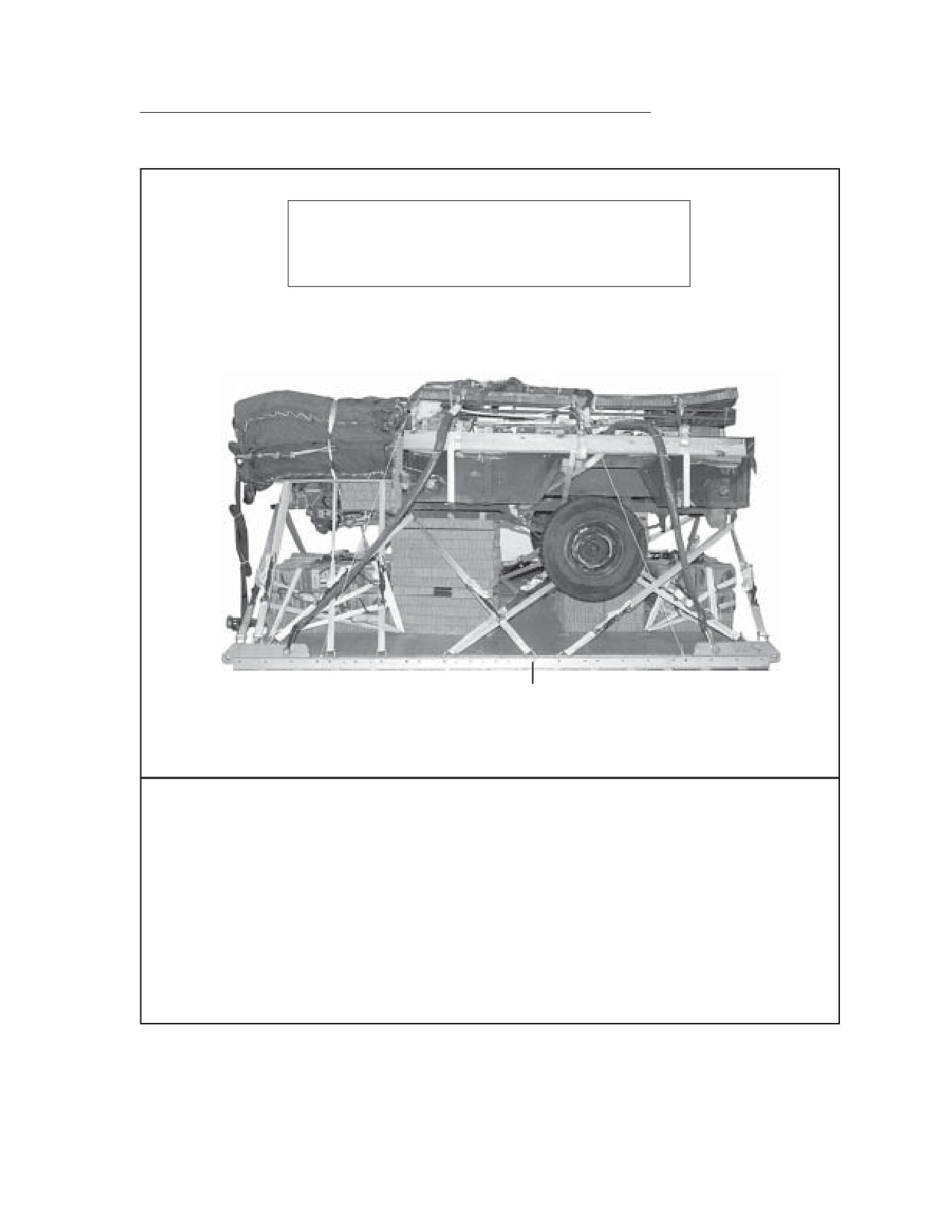
17. Mark the rigged load according to FM 4-20.102/TO 13C7-1-5 and as shown
in Figure 28. A Shipper’s Declaration for Dangerous Goods is required.
EQUIPMENT REQUIRED
18. The equipment required to rig this load is listed in Table 1-1.
40
FM 4-20.113/TO 13C7-3-51
CAUTION
Make the final rigger inspection required by FM 4-20.102/
TO 13C7-1-5 before the load leaves the rigging site.
CB
RIGGED LOAD
Weight: Load shown
5,920 pounds
Maximum weight
8,000 pounds
Height
72 inches
Width
.................................................................... 108 inches
Length
.................................................................... 163 inches
Overhang: Front
0 inches
Rear (EFTC)
19 inches
CB (from front edge of platform)
70 inches
Figure 28. M101A2, 3/4-ton Trailer and Accompanying Ammunition Load Rigged on a Type V
Platform for Low-Velocity Airdrop
41
FM 4-20.113/TO 13C7-3-51
Table 1-1. Equipment Required for Rigging the M101, M101A1 or M101A2, 3/4-ton Cargo
Trailer with Accompanying Load on a Type V Platform for Low-Velocity Airdrop
National Stock
Item
Quantity
Number
8040-00-273-8713
Adhesive paste, 1-gal
As required
4020-00-240-2146
Cord, nylon, type III, 550-lb
As required
4030-00-090-5354
Clevis, large
5
4030-00-678-8562
Clevis, medium
4
Link assembly:
T
wo-point, 3 3/4-in (1 for DES
)
2
5306-00-435-8994
Bolt, 1-in diam, 4-in long (2 added for DES
)
4
5310-00-232-5165
Nut, 1-in, hexagonal
(2 added
f
4
1670-00-003-1953
Plate, side, 3 3/4-in
(2 added
f
4
5365-00-007-3414
Spacer, large (2 added for DES
)
4
Lumber:
5510-00-220-6146
2- by 4-in
As required
5510-00-220-6148
2- by 6-in
As required
5510-00-220-6250
2- by 12-in
As required
5530-00-618-8073
Plywood, 3/4-in
2 sheets
1670-00-753-3928
Pad, energy dissipating, honeycomb, 3- by
36- by
96-in
20 sheets
Parachute:
Cargo:
1670-01-016-7841
G-11B
2
Cargo extraction:
1670-01-063-3715
15-foot
1
Platform, airdrop type
V
,12-foot:
1670-01-162-2370
Rail
2
1670-01-162-2372
Clevis assembly
20
1670-01-353-8425
Bracket assembly, coupling
1
1670-01-353-8424
Extraction bracket assembly
1
1670-01-162-2381
Tandem link assembly (Multipurpose)
4
1670-01-097-8816
Release, cargo parachute, M-1
1
42
FM 4-20.113/TO 13C7-3-51
Table 1-1. Equipment Required for Rigging the M101, M101A1 or M101A2, 3/4-ton Cargo
Trailer with Accompanying Load on a Type V Platform for Low-Velocity Airdrop (continued)
National Stock
Item
Quantity
Number
Sling, cargo airdrop
For suspension:
1670-01-063-7761
16-ft (2-loop), type XXVI nylon webbing
4
For deployment:
1670-01-062-6304
9-ft (2-loop), type XXVI nylon webbing
1
For riser extension
:
1670-01-062-6302
20-ft (2-loop), type XXVI nylon webbing
2
For lifting
:
1670-01-062-6301
3-ft (2-loop), type XXVI nylon webbing
1
1670-01-062-6303
12-ft (2-loop), type XXVI nylon webbing
3
8135-00-664-6958
Cushioning material, packaging, cellulose wadding
As required
1670-00-003-4391
Knife, miniature, cutter (for DES
)
1
1670-01-183-2678
Leaf, extraction line (line bag)(add 2 for DES
)
2
Line, drogue (for DES
)
1670-01-064-4452
60-ft (1-loop), type XXV I
1
Line, extraction
:
1670-01-064-4452
60-ft (1-loop), type XXV I
1
1670-01-107-7652
160-ft (1-loop), type XXV I
1
1670-01-483-8259
Link, tow release mechanism (H-Block) C-17 aircraft
1
1670-00-040-8219
Strap, parachute release, multicut
2
7510-00-266-5016
Tape, adhesive, 2-in
As required
1670-00-937-0271
Tie-down assembly, 15-ft
55
Webbing:
8305-00-268-2411
Cotton, 1/4-in, type I
As required
Nylon:
8305-00-082-5752
Tubular, 1/2-in
As required
8305-00-263-3591
Type VIII
As required
5315-00-753-3885
Nail 16
d
As required
43
FM 4-20.113/TO 13C7-3-51
Glossary
AFB
Air Force Base
AFMAN
Air Force Joint Manual
AFTO
Air Force Technical Order
AFSOC
Air Force Special Operations Command
ALC
Airlift Logistics Center
AMC
Air Mobility Command
CB
center of balance
DA
Department of Army
DC
District of Columbia
DES
Drogue Extraction System
diam
diameter
EFTC
extraction force transfer coupling
FM
field manual
ft
foot/feet
HQ
headquarters
in
inch
b
pound
No
number
Glossary-1
FM 4-20.113/TO 13C7-3-51
TRADOC US Army Training and Doctrine Command
USA United States of America
TM technical manual
TO technical order
Glossary-2
FM 4-20.113/TO 13C7-3-51
References
AFR 55-40/AR 59-4
Joint Airdrop Inspection Records, Malfunction Investigations and
Activity Reporting. 1 May 1998.
*AFMAN(I) 24-204/
Preparing Hazardous Materials for Military Air Shipments.
TM 38-250
December 2001.
**FM 4-20.102/NAVSEA
Airdop of Supplies and Equipment: Rigging Airdrop Platforms.
SS400-AB-MMO-010/
22 August 2001.
TO 13C7-1-5
TM 9-2330-202-14 & P
Operator’s Organizational, Direct Support, and General Support
Maintenance Manual (Including Repair Parts and Special Tools
Lists) for Trailer, Cargo: 3/4-Ton, 2-Wheel M101, and M101A1;
Chassis, Trailer: 3/4-Ton, 2-Wheel M116 and M116A1
TM 10-1670-268-20&P/
Organizational Maintenance Manual with Repair Parts and Special
TO 13C7-52-22
Tools List: Type V Airdrop Platform. 1 June 1986.
TM 10-1670-278-23&P/
Unit and Intermediate Direct Support (DS) Maintenance Manual
TO 13C5-26-2/NAVAIR 13-
(Including Repair Parts and Special Tools List) for Parachute,
1-27
Cargo Type: 15-ft Diam, Cargo Extraction Parachute. 6 November
1989.
TM 10-1670-280-23&P/TO
Unit and Intermediate Direct Support (DS) Maintenance Manual
13C5-31-2/NAVAIR 13-1-31
(Including Repair Parts and Special Tools List) for Parachute, Cargo
Type: 100-ft Diam, Model G-11A, Model G-11B, and Model G-11C.
5 August 1991.
TM 10-1670-286-20/
Unit Maintenance Manual for Sling/Extraction Line Panel (Includ-
TO 13C5-2-41
ing Stowing Procedures). 15 March 2001.
TM 10-1670-296-20&P/
Unit Maintenance Manual Including Repair Parts and Special Tools
TO 13C7-49-2
List for Ancillary Equipment for Low-Velocity Airdrop Systems
(LVADS). 15 September 1995.
FM 10-500-53
Airdrop of Supplies and Equipment: Rigging Ammunition.
TO 13C7-18-41
24 July 2000
*AFMAN(I) 24-204/TM 38-250 has superseded AFJMAN 24-204/TM 38-250 (25 November 1994).
** FM 4-20.102/NAVSEA SS400-AB-MMO-010/TO 13C7-1-5 has superseded FM 10-500-2/TO 13C7-1-5 (1
November 1990).
References-1
FM 4-20.113/TO 13C7-3-51
AFTO Form 22
Technical Order Publication Improvement Report
DA Form 2028
Recommended Changes to Publication and Blank Forms.
February 1974.
* Shipper’s Declaration Locally Procured Form.
for Dangerous Goods
* Shipper’s Declaration for Dangerous Goods has superseded DD Form 1387-2
(February 1982).
References-2