Airdrop of Supplies and Equipment: Rigging 2- and 4-Litter Ambulances (May 2006)
*FM 4-20.166 (FM 10-500-66)/TO 13C7-25-71
Field Manual
Headquarters
Department of the Army
No. 4-20.166 (10-500-66)
Department of the Air Force
Technical Order
Washington, DC, 30 May 2006
No. 13C7-25-71
Airdrop of Supplies and Equipment:
Rigging 2- and 4-Litter Ambulances
Contents
Page
PREFACE
iii
INTRODUCTION
iv
Description of Item
iv
Special Considerations
iv
Chapter 1
RIGGING THE M996 AMBULANCE ON A 20-FOOT, TYPE V AIRDROP
PLATFORM FOR LOW-VELOCITY AIRDROP
1-1
Description of Load
1-1
Preparing Platform
1-1
Building and Positioning Honeycomb Stacks
1-3
Installing Optional Drive-Off Aids on Platform
1-6
Preparing Ambulance
1-7
Lifting and Positioning Ambulance
1-18
Lashing Ambulance
1-20
Installing Suspension System
1-22
Stowing Cargo Parachutes
1-28
Installing Extraction System
1-30
Installing Parachute Release
1-31
Installing Provisions for Emergency Restraints
1-31
Placing Extraction Parachute
1-32
Marking Rigged Load
1-32
Equipment Required
1-32
Chapter 2
RIGGING THE M997 AMBULANCE ON A 20-FOOT, TYPE V AIRDROP
PLATFORM FOR LOW-VELOCITY AIRDROP
2-1
Description of Load
2-1
Preparing Platform
2-1
Distribution Restriction: Approved for public release; distribution is unlimited.
*This publication supersedes FM 10-500-66/TO 13C7-25-71, 6 August 1999.
i
Contents
Building and Positioning Honeycomb Stacks
2-3
Installing Optional Drive-Off Aids on Platform
2-3
Preparing Ambulance
2-3
Lifting and Positioning Ambulance
2-18
Lashing Ambulance
2-19
Installing Suspension System
2-22
Stowing Cargo Parachutes
2-25
Installing Extraction System
2-26
Installing Parachute Release
2-26
Installing Provisions for Emergency Restraints
2-26
Placing Extraction Parachute
2-26
Marking Rigged Load
2-28
Equipment Required
2-28
GLOSSARY
Glossary-1
REFERENCES
References-1
ii
FM 4-20.166/TO 13C7-25-71
30 May 2006
Preface
SCOPE
This manual tells and shows how to rig the M996 2-litter armored ambulance (HMMWV) and the M997 4-litter
ambulance. The M996 ambulance can be low-velocity airdropped from C-17 and C-130 aircraft. The M997
ambulance is restricted to the C-17 aircraft only.
USER INFORMATION
The proponent of this publication is United States Army Training and Doctrine Command (TRADOC). You are
encouraged to report any errors or omissions and to suggest ways of making this a better manual. This
publication applies to the Active Army, the Army National Guard (ARNG)/Army National Guard of the United
States (ARNGUS), and the United States Army Reserve (USAR) unless otherwise stated.
Army personnel, send your comments on DA Form 2028 (Recommended Changes to Publications and Blank
Forms) directly to:
Director
Aerial Delivery and Field Services Department
USA Quartermaster Center and School
710 Adams Avenue
Fort Lee, Virginia 23801-1502
Air Force personnel, send your reports on AFTO Form 22 (Technical Manual (TM) Change Recommendation
and Reply) through your respective command Weapons and Tactics to:
Headquarters
Air Mobility Command (AMC/A39T)
402 Scott Drive, Unit 3AI
Scott AFB, Illinois 62225-5302
Air Force personnel in Special Operations Command, send your reports on AFTO Form 22. HQ AMC/A39T
will consolidate and forward changes to:
Director
Aerial Delivery and Field Services Department
USA Quartermaster Center and School
710 Adams Avenue
Fort Lee, Virginia 23801-1502
Also send an information copy of AFTO Form 22 to:
WR-ALC/LEET
295 Byron Street
Robins AFB, Georgia 31098-1611
30 May 2006
FM 4-20.166/TO 13C7-25-71
iii
Introduction
DESCRIPTION OF ITEM
The M996, 2-litter, armored ambulance weighs 7,180 pounds with the fuel tank no more than ¾ full. The
vehicle is 203 inches long, 87 inches high, and 86 inches wide. The body configuration makes other uses
of this vehicle possible, such as specialized communication or command and control functions.
The M997 4-litter ambulance weighs 7,880 pounds with the fuel tank no more than ¾ full. The vehicle is
204 inches long, 99 inches high and 85 inches wide. The height restricts this load to the C-17 aircraft only.
SPECIAL CONSIDERATIONS
Special considerations for this manual are described below.
• The loads covered in this manual may include hazardous material as defined in AFMAN 24-
204(I)/TM 38-250. If included, the hazardous materials must be packaged, marked, and labeled
as required by AFMAN 24-204(I)/TM 38-250.
• Be sure that a vehicle rigged using these procedures is the same vehicle shown and described in
this manual. Be sure the equipment rigged inside the vehicle is restrained and protected.
• A copy of this manual must be available to the joint airdrop inspectors during the before- and
after-loading inspections.
30 May 2006
FM 4-20.166/TO 13C7-25-71
iv
Chapter 1
Rigging the M996 Ambulance on a 20-Foot, Type V Airdrop
Platform for Low-Velocity Airdrop
DESCRIPTION OF LOAD
1-1.
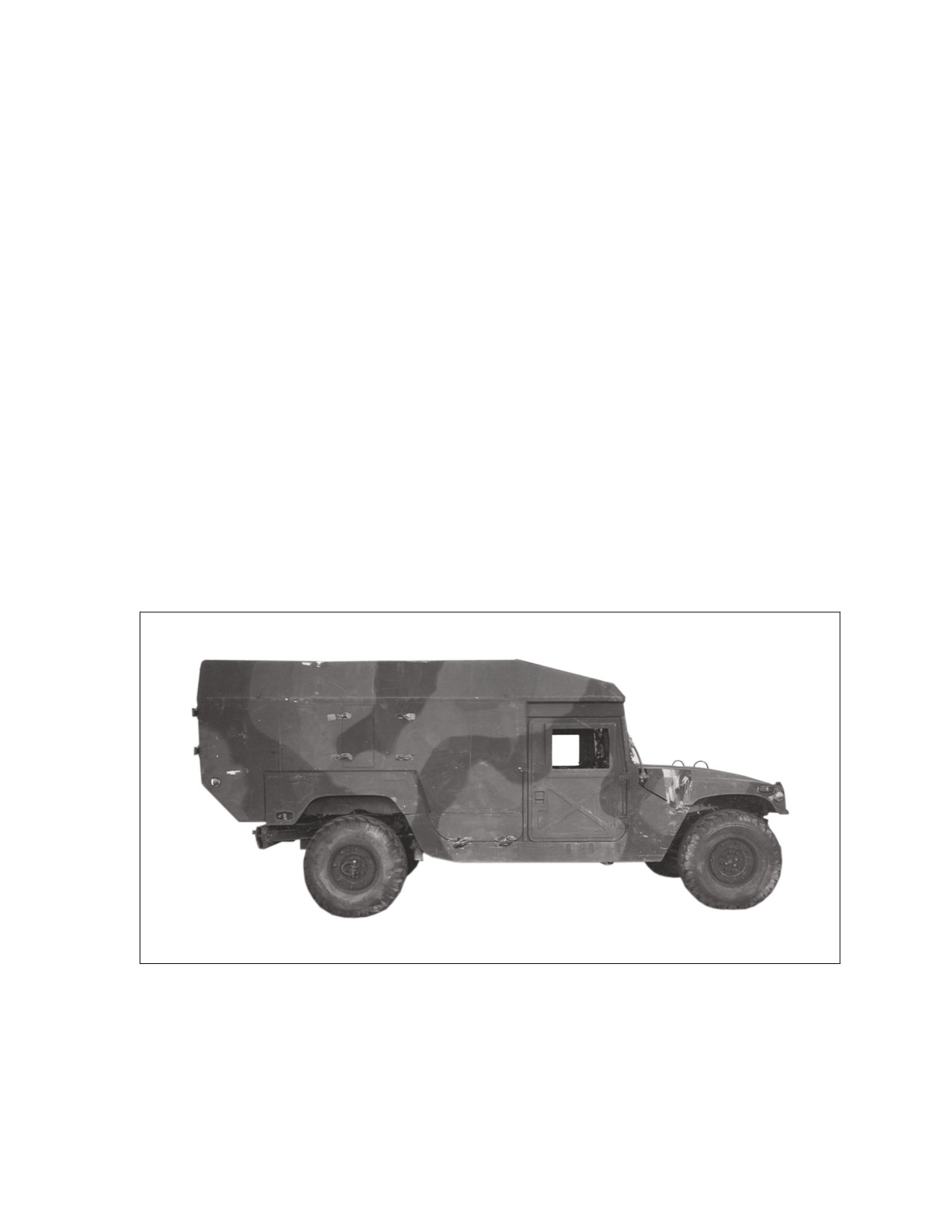
The M996 ambulance (shown in Figure 1-1) is rigged on a 20-foot, type V airdrop platform for low-
velocity airdrop. The load requires two or three G-11 cargo parachutes, depending upon the accompanying
load in the vehicle.
PREPARING PLATFORM
1-2.
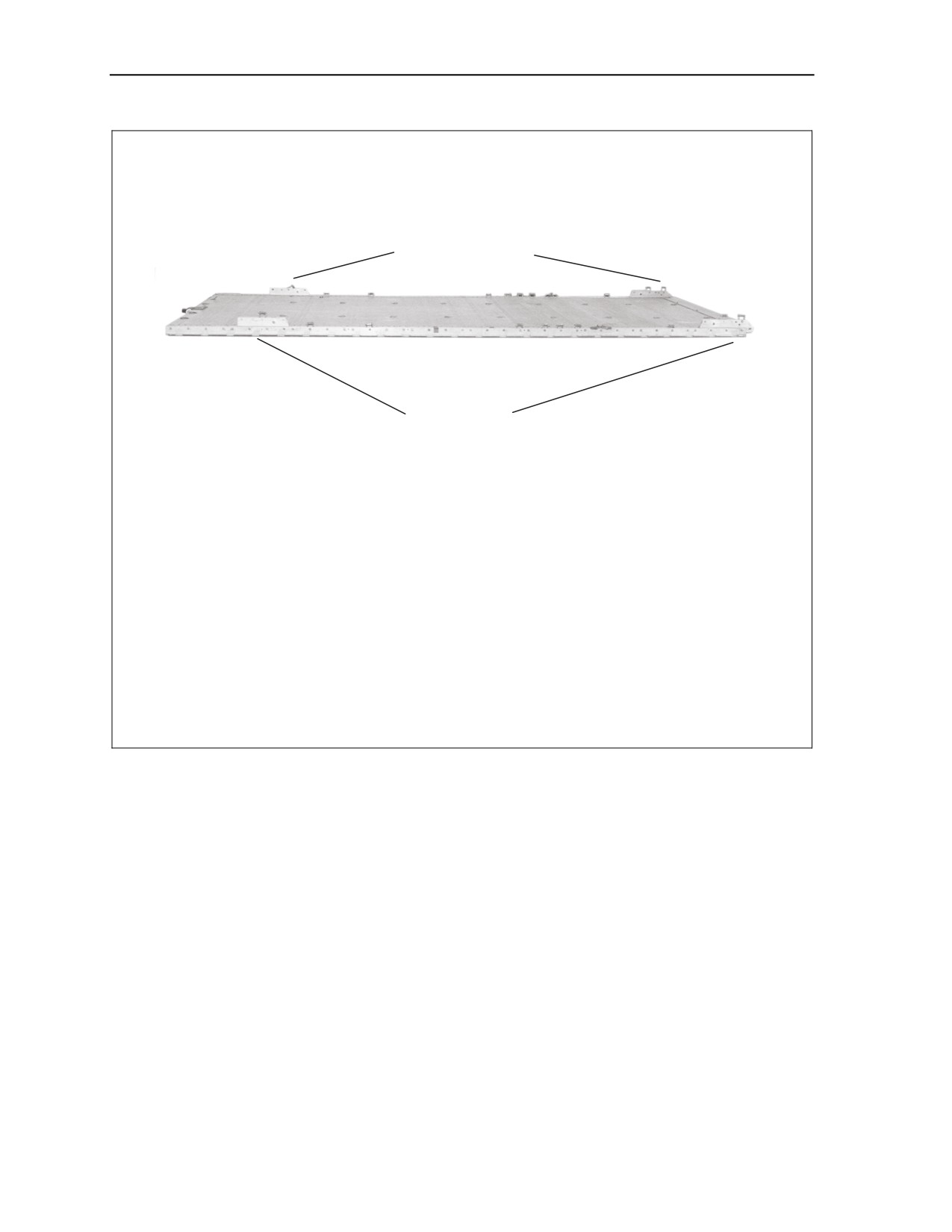
Prepare a 20-foot, type V platform as described below and as shown in Figure 1-2.
• Inspecting Platform. Inspect, or assemble and inspect, the platform according to TM 10-1670-
268-20&P/TO 13C7-52-22.
• Installing Tandem Links. Install tandem links as shown in Figure 1-2.
• Installing Suspension Links. Install the suspension links as described in Figure 1-2.
• Attaching and Numbering Clevises. Attach and number 28 clevis assemblies as shown in
Figure 1-2.
Figure 1-1. M996 2-Litter Armored Ambulance
30 May 2006
FM 4-20.166/TO 13C7-25-71
1-1
Chapter 1
Notes. 1. The nose bumper may or may not be installed.
2. Measurements given in this chapter are from the front edge of the platform, NOT from
the front edge of the nose bumper.
CLEVISES
14A THROUGH 1 A
LEFT
REAR
FRONT
RIGHT
CLEVISES
14 THROUGH 1
Steps:
1. Install a tandem link on the front of each platform side rail using holes 1, 2, and 3.
2. Install a suspension link to each side rail using holes 33, 34, and 35.
3. Install clevises on bushings 1 and 3 on each tandem link.
4. Install a clevis on bushing 2 on each suspension link.
5. Starting at the front of each platform side rail, install clevises on each platform side rail
using the bushings bolted on holes 6, 11 (tripled) 13, 14, 15, 17, 22, 27 (tripled), and 31.
6. Starting at the front of the platform, number the clevises bolted to the right side from 1
through 14 and those bolted to the left side from 1A through 14A.
7. Label the tie-down rings according to FM 4-20.102/MCRP 4-11.3J/NAVSEA SS400-AB-
MMO-010/TO 13C7-1-5.
Figure 1-2. Platform Prepared
1-2
FM 4-20.166/TO 13C7-25-71
30 May 2006
Rigging the M996 Ambulance on a 20-Foot, Type V Airdrop Platform for Low-Velocity Airdrop
BUILDING AND POSITIONING HONEYCOMB STACKS
1-3.
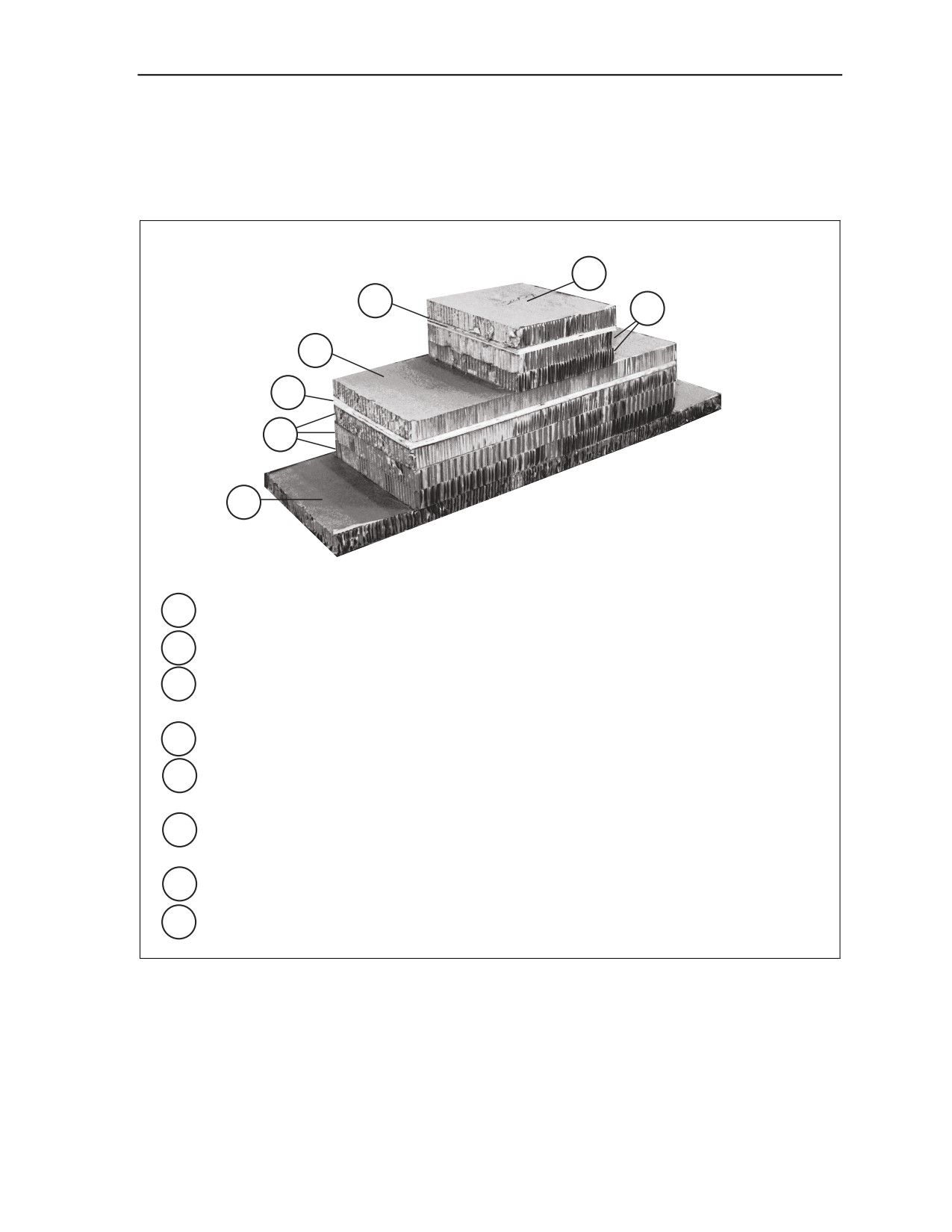
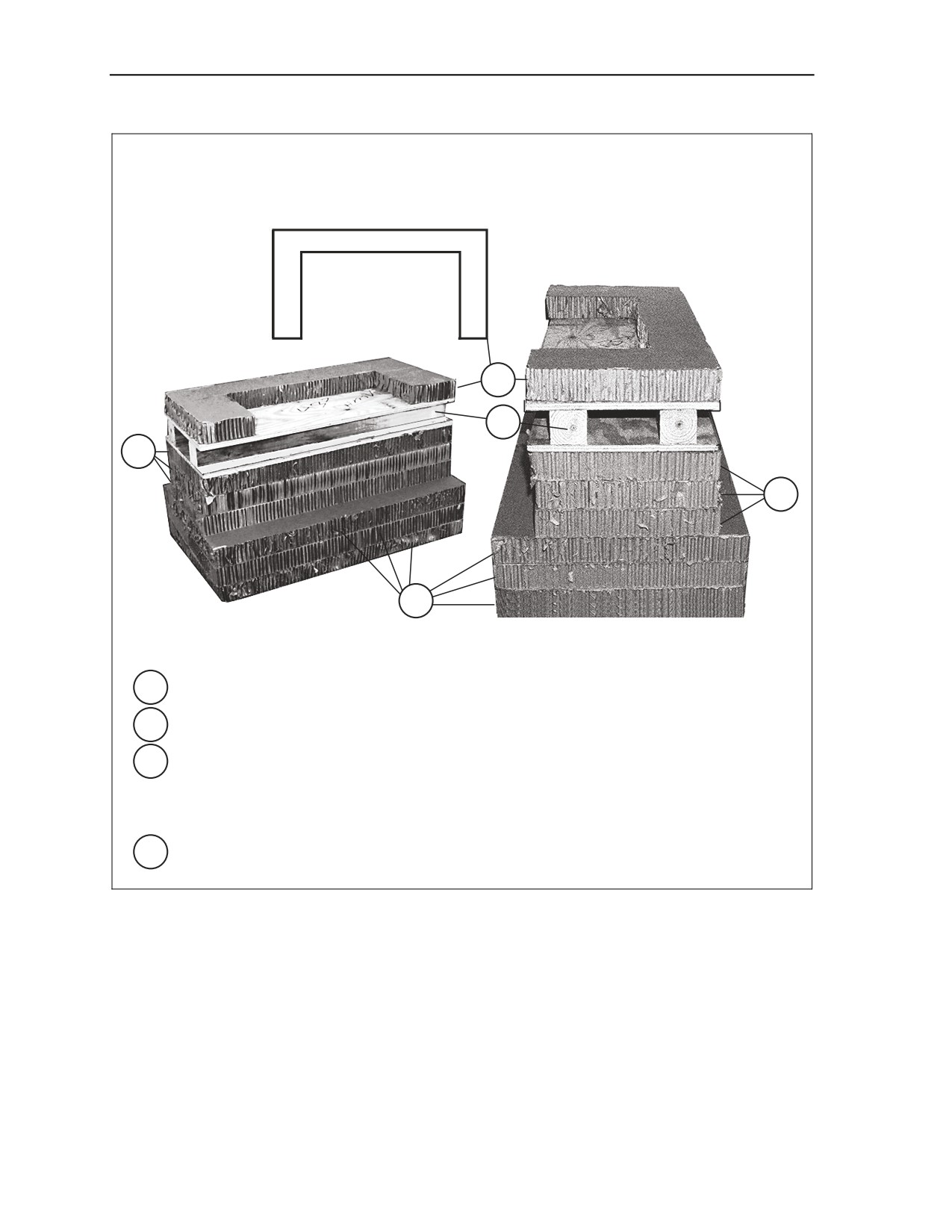
Build the honeycomb stacks as shown in Figures 1-3 and 1-4. Position the honeycomb stacks as
shown in Figure 1-5.
7
6
5
4
3
2
1
1 Use an 80- by 24-inch piece of honeycomb to form a base.
2 Center and glue three 54- by 24-inch pieces of honeycomb on the base.
3 Glue a 3/4- by 54- by 24-inch piece of plywood over the honeycomb placed in step 2
above.
4 Glue one 54- by 24-inch piece of honeycomb on top of the plywood placed in step 3 above.
5 Center and glue two 20- by 24-inch pieces of honeycomb on top of the honeycomb placed
in step 4 above.
6 Glue a 3/4- by 20- by 24-inch piece of plywood over the honeycomb placed in step 5
above.
7 Glue one 20- by 24-inch piece of honeycomb on top of the plywood placed in step 6 above.
8 Repeat to make a second stack.
Figure 1-3. Stacks 1 and 3 Prepared
30 May 2006
FM 4-20.166/TO 13C7-25-71
1-3
Chapter 1
Notes. 1. This drawing is not drawn to scale.
2. All dimensions are given in inches.
43
27
18
12
8
4
3
2
2
1
1 Glue three 43- by 26-inch pieces of honeycomb flush together to form a base.
2 Center and glue three 43- by 18-inch pieces of honeycomb flush on the base.
3 Nail a 43-inch piece of 4- by 4-inch lumber parallel to each long side and 1 1/2 inches from
each long edge of a 3/4- by 43- by 18-inch piece of plywood. Nail a second 3/4- by 43- by
18-inch piece of plywood to the lumber and flush with the bottom piece of plywood. Glue
the wooden section of the stack flush on the honeycomb placed in step 2 above.
4 Make the cutout as shown in a 43- by 18-inch piece of honeycomb. Glue the honeycomb
flush over the plywood.
Figure 1-4. Stack 2 Prepared
1-4
FM 4-20.166/TO 13C7-25-71
30 May 2006
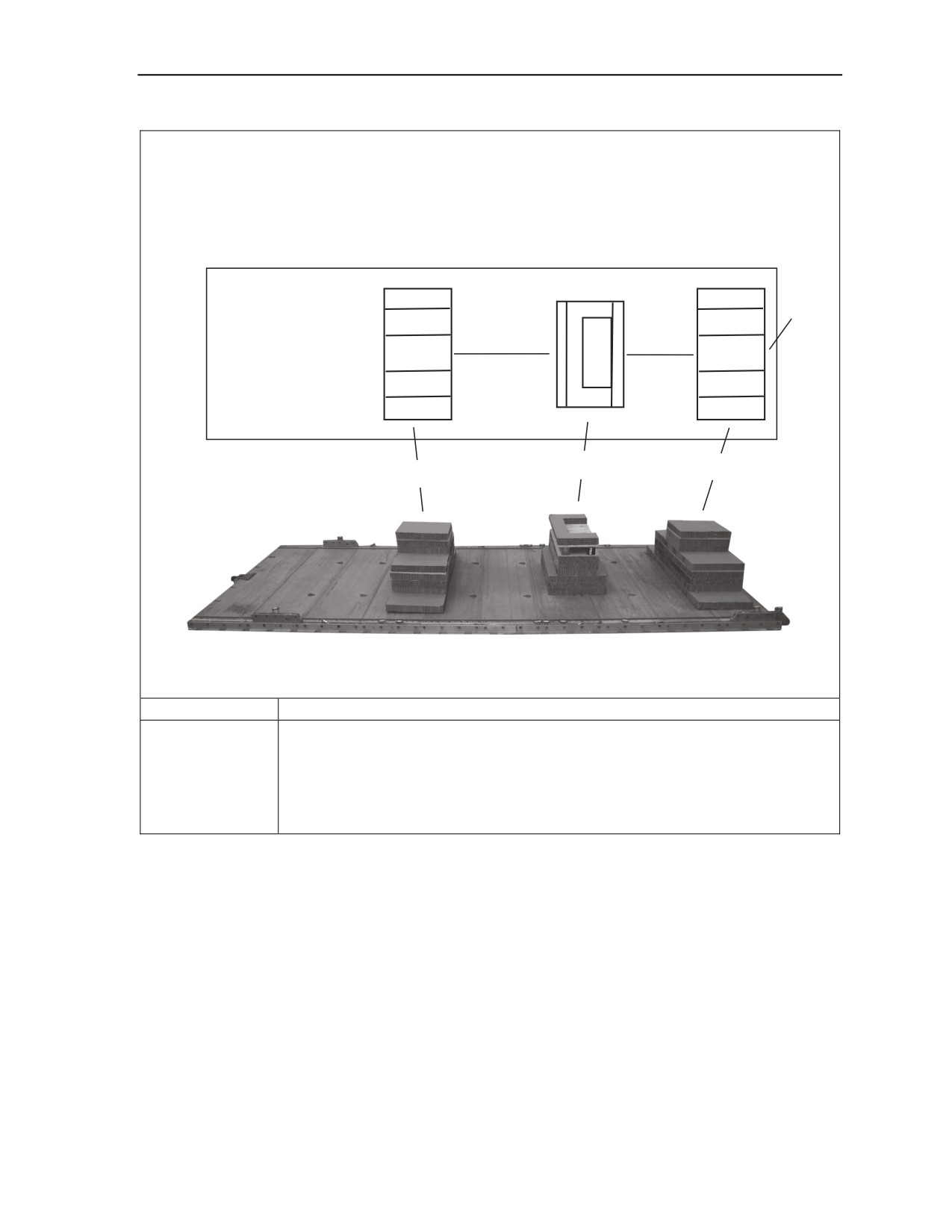
Rigging the M996 Ambulance on a 20-Foot, Type V Airdrop Platform for Low-Velocity Airdrop
Notes. 1. All measurements are given in inches.
2. This drawing is not drawn to scale.
6
45
35
Stack
Stack
Stack
2
1
3
Stack Number
Position of Stack on Platform
1
Position stack 1 centered and 6 inches from the front edge of the platform.
2
Position stack 2 centered and 35 inches from stack 1.
3
Position stack 3 centered and 45 inches from stack 2.
Figure 1-5. Honeycomb Stacks Placed on Platform
30 May 2006
FM 4-20.166/TO 13C7-25-71
1-5
Chapter 1
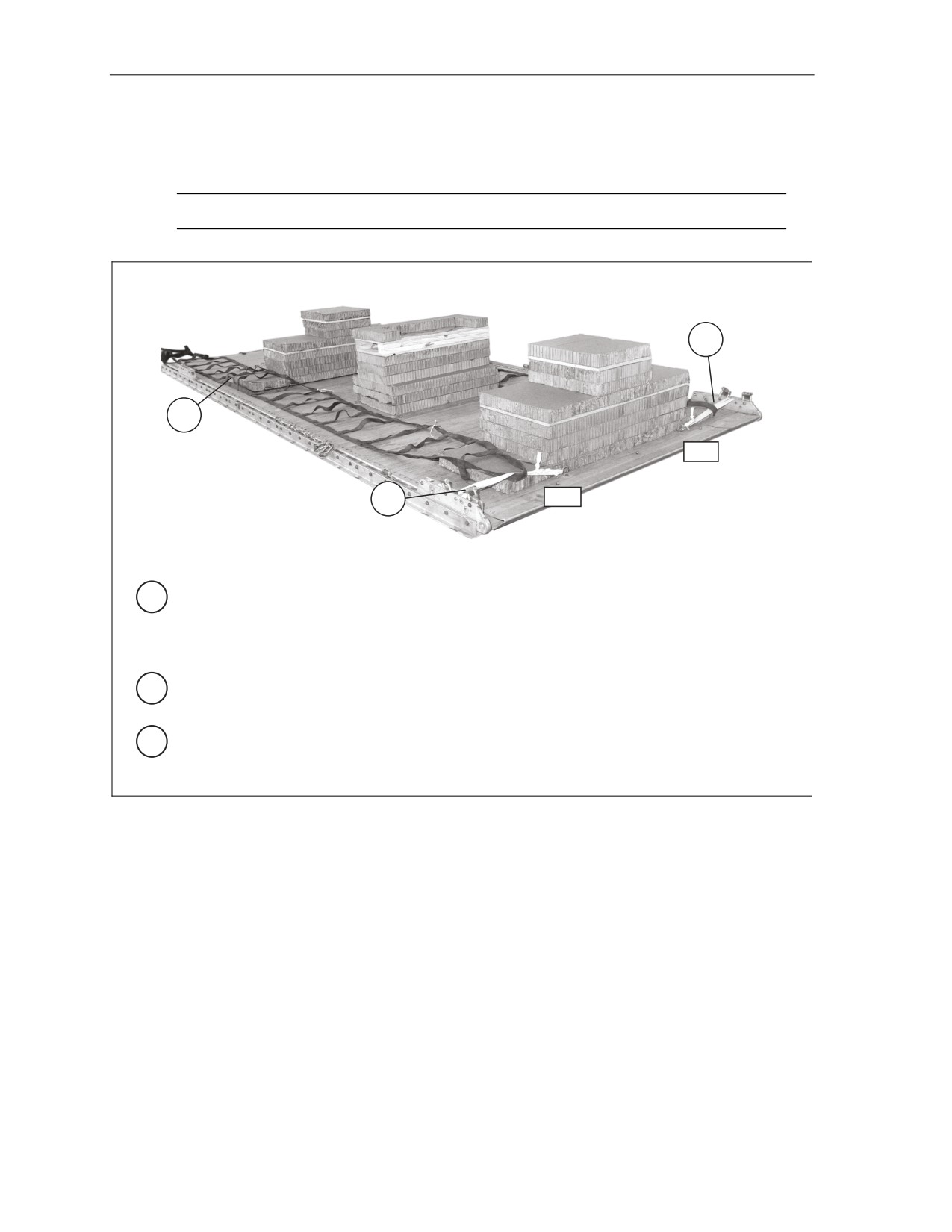
INSTALLING OPTIONAL DRIVE-OFF AIDS ON PLATFORM
1-4.
Install the drive-off aids on the platform as shown in Figure 1-6.
Note. The use of the drive-off aids are optional.
2
3
B1
1
A1
1 Pass a 45-inch length of 1-inch tubular nylon webbing through tie-down ring A1, through
the end loop of the drive-off aid, and around the second bushing of the right tandem link.
Knot the webbing according to FM 4-20.102/MCRP 4-11.3J/NAVSEA SS400-AB-MMO-
010/TO 13C7-1-5.
2 Repeat step 1 for the left side, using tie-down ring B1 and the second bushing of the left
tandem link.
3 Extend the drive-off aids to the rear, over stacks 1 and 3. Secure the drive-off aids to
clevises and bushing with type I, ¼-inch cotton webbing.
Figure 1-6. Drive-Off Aids Installed on Platform
1-6
FM 4-20.166/TO 13C7-25-71
30 May 2006
Rigging the M996 Ambulance on a 20-Foot, Type V Airdrop Platform for Low-Velocity Airdrop
PREPARING AMBULANCE
1-5.
Prepare the truck as described below.
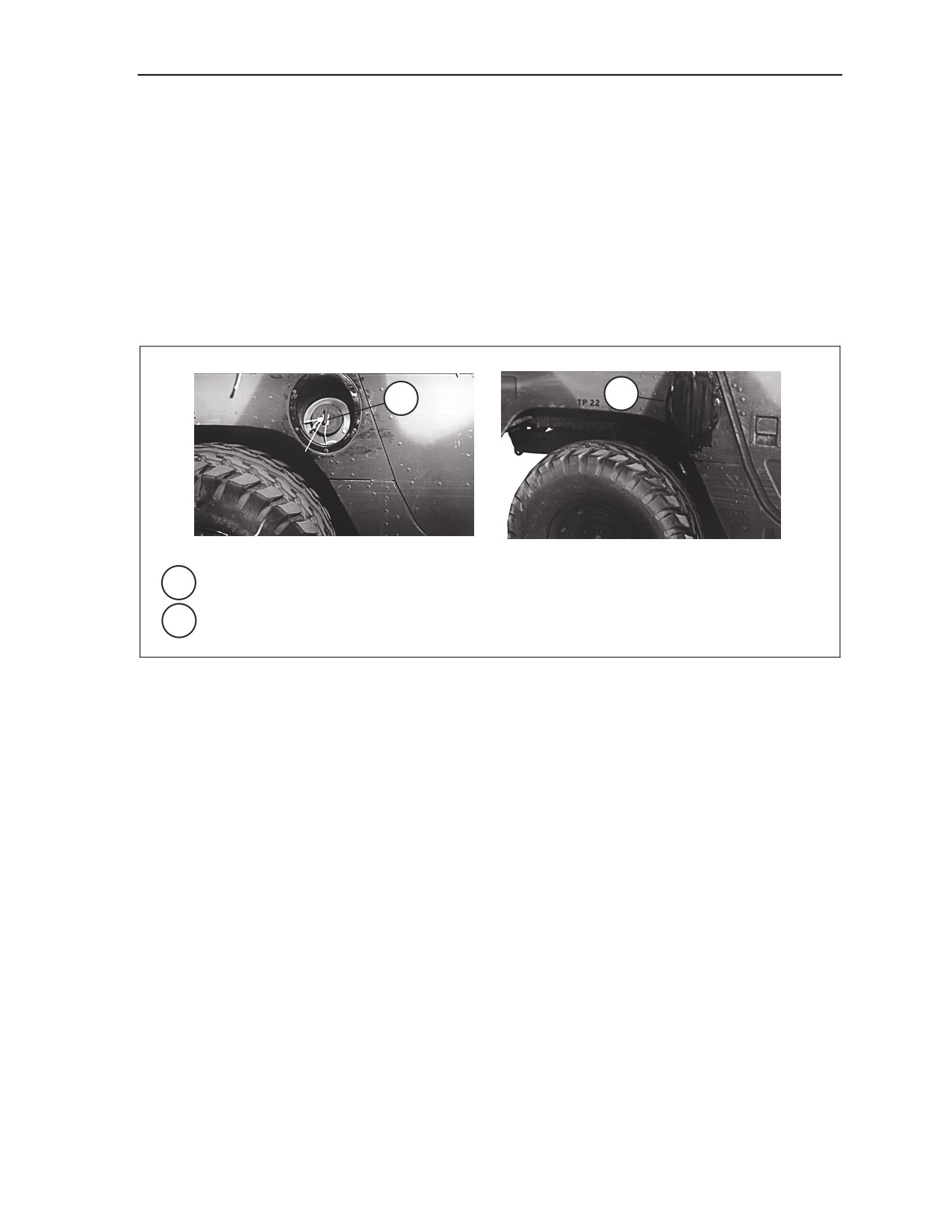
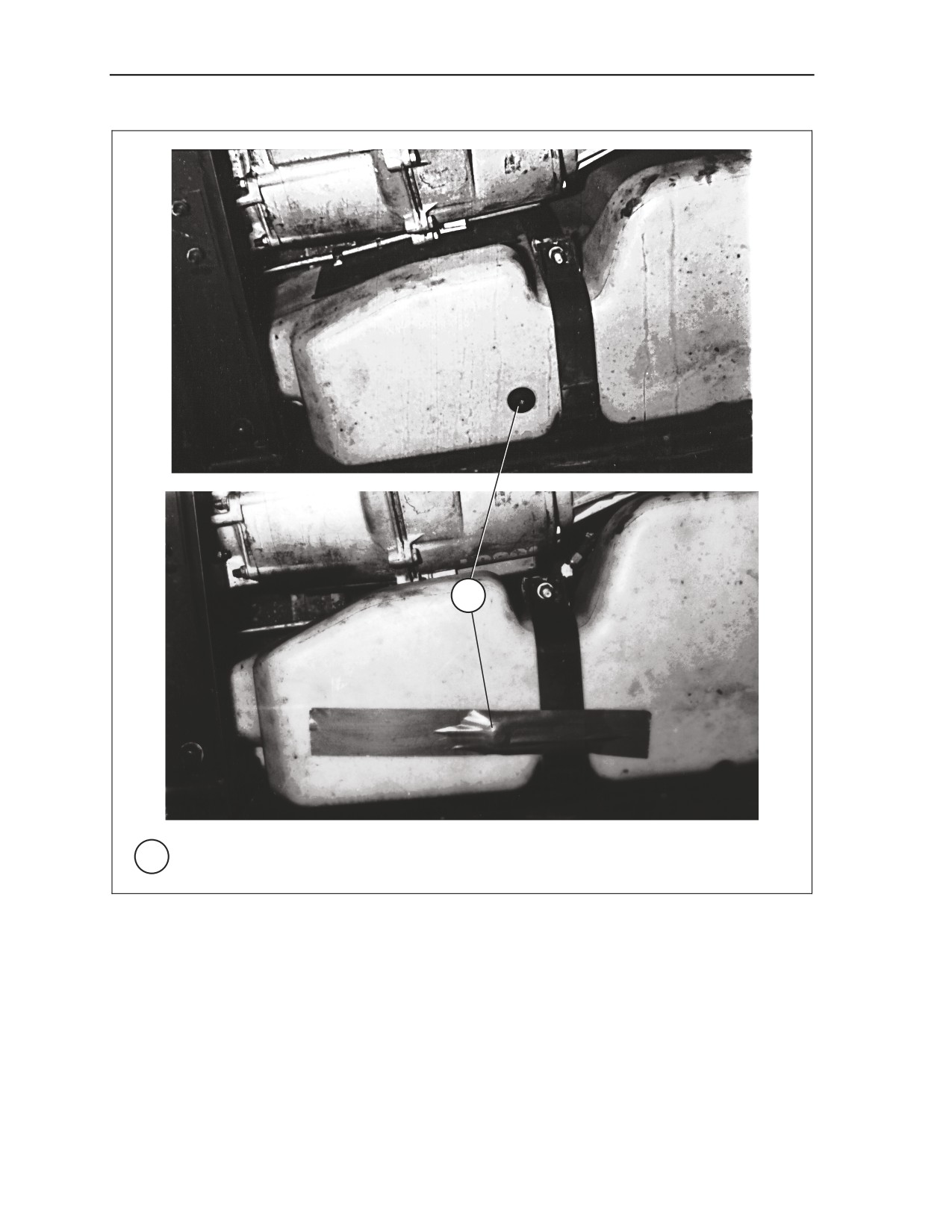
• Make sure the fuel tank is no more than 3/4 full. Prepare the fuel tank filler cap and fuel filler
opening as shown in Figure 1-7. Prepare the fuel tank drain plug as shown in Figure 1-8.
• Make sure the batteries and battery compartment comply with AFMAN 24-204(I)/TM 38-250.
• Stow the ambulance on-vehicular equipment (OVE) in the compartment behind the driver’s door.
Fill the empty space with honeycomb and close the compartment door. Tape the latches (not
shown).
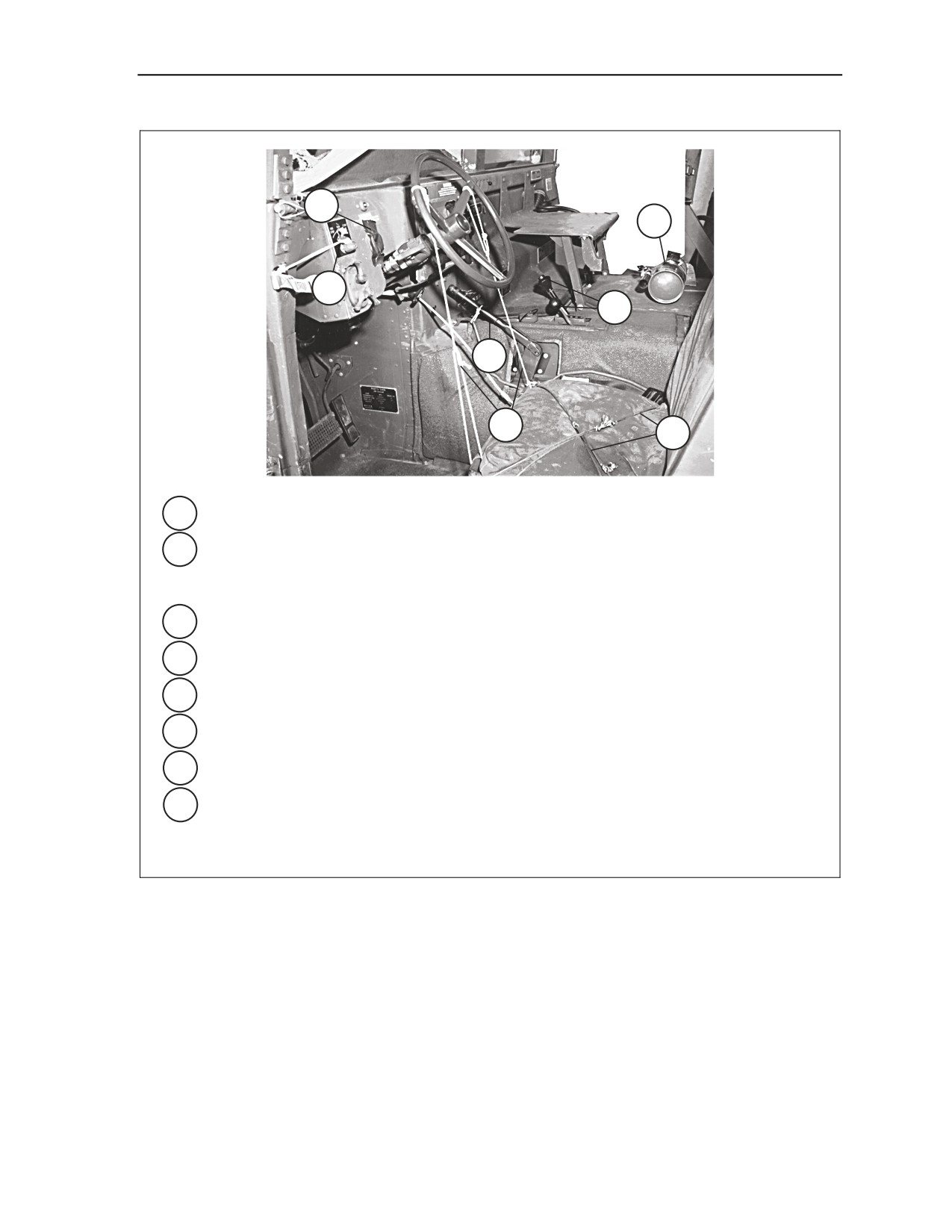
• Prepare the cab of the ambulance as shown in Figure 1-9.
2
1
1 Tie the fuel filler cap to the body of the truck with type III nylon cord.
2 Tape the fuel filler opening.
Figure 1-7. Fuel Tank Filler Cap and Opening Prepared
30 May 2006
FM 4-20.166/TO 13C7-25-71
1-7
Chapter 1
1
1 Place a 12-inch length of cloth-backed tape over the fuel tank drain plug.
Figure 1-8. Fuel Tank Drain Plug Prepared
1-8
FM 4-20.166/TO 13C7-25-71
30 May 2006
Rigging the M996 Ambulance on a 20-Foot, Type V Airdrop Platform for Low-Velocity Airdrop
7
6
1
4
3
2
5
1 Tie the engine start switch in the engine stop position with type I, 1/4-inch cotton webbing.
2 Tie the steering wheel to the seat frame in two places with type III nylon cord, or use the
retractable steering wheel locking cable. If the locking cable is used, secure it to the
steering wheel with type III nylon cord, not a padlock.
3 Tie the emergency brake handle in the off position with type III nylon cord.
4 Place the transmission and four-wheel drive levers in the neutral position.
5 Tie the seat cushions to the seat frames with type III nylon cord.
6 Tie the fire extinguisher in place with two lengths of type III nylon cord.
7 Tape all instrument panel gauges.
8 If equipped with an antenna, remove the antenna and tape over the hole with a length of 2-
inch cloth-backed tape. Wrap the mount with cellulose wadding and tape. Secure the
antenna mount in the equipment storage box (not shown).
Figure 1-9. Cab Prepared
30 May 2006
FM 4-20.166/TO 13C7-25-71
1-9
Chapter 1
10
11
12
9
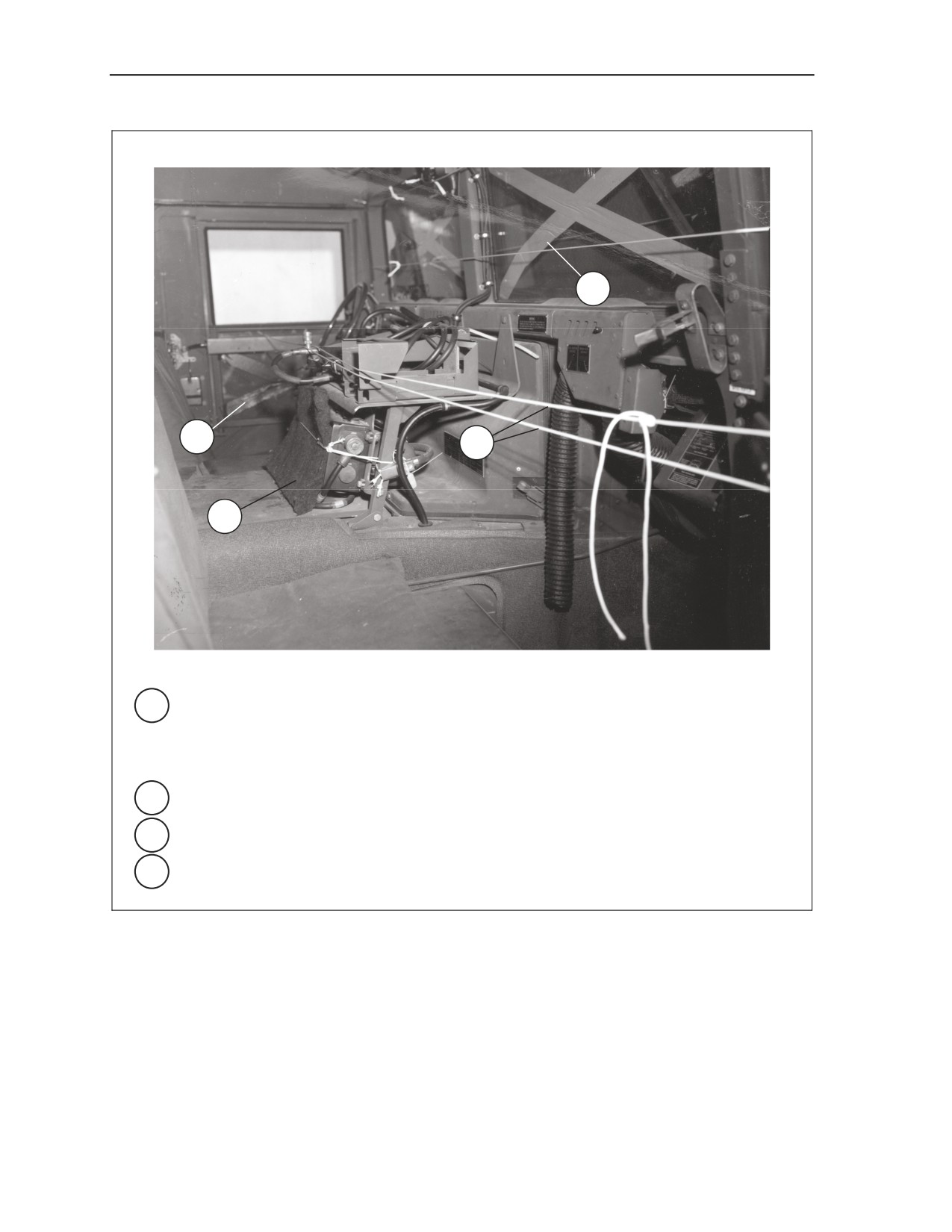
9 Pad the face of the radio with felt. Tie the felt to the radio mount supports with type III
nylon cord.
Note. Pad the control of any other radio equipment in the same way. Tie larger radios to their
mounts with ½-inch tubular nylon webbing.
10 Tape the windshield glass on both sides in an X using 2-inch masking tape.
11 Tape the side windows on both sides in an X using 2-inch masking tape and lower them.
12 Secure both doors of the cab with a length of type III nylon cord from door-to-door.
Figure 1-9. Cab Prepared (Continued)
1-10
FM 4-20.166/TO 13C7-25-71
30 May 2006
Rigging the M996 Ambulance on a 20-Foot, Type V Airdrop Platform for Low-Velocity Airdrop
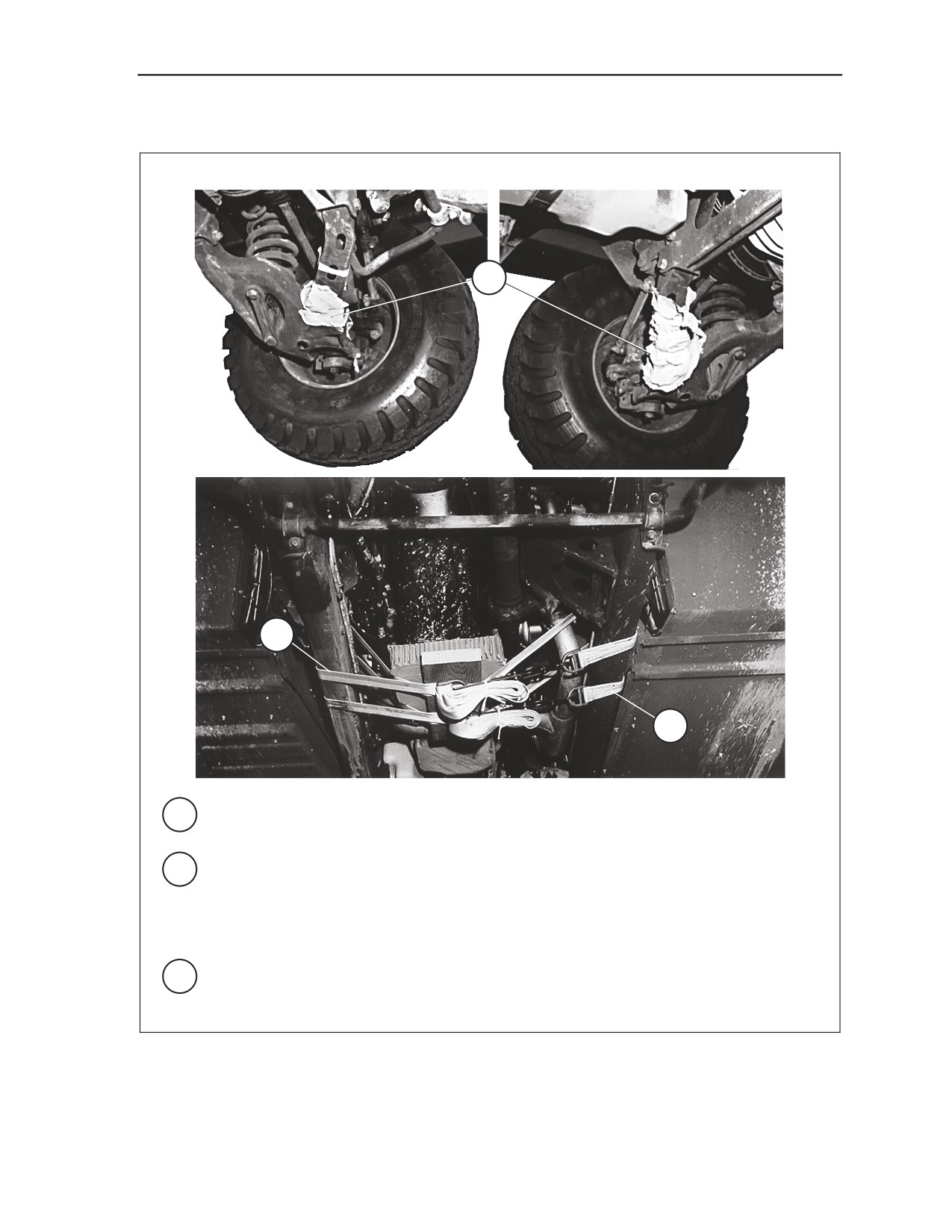
• Prepare the underside of the truck as shown in Figure 1-10.
1
2
3
1 Pad the lower control arms on the front and rear of the truck with cellulose wadding taped
in place.
2 Pass a 15-foot lashing over the right frame rail, under the oil pan, and over the left frame
rail. Make sure the lashing goes over the exhaust pipe and then under it. Make sure the
wires running along the frame rail are to the outside of the lashing. Place a 12- by 12-inch
piece of honeycomb and a 2- by 6- by 16-inch piece of lumber between the lashing and the
oil pan. Fasten the lashing with a D-ring and a load binder.
3 Secure a second lashing just to the rear of the lashing installed in step 2. Route the
lashing in the same way.
Figure 1-10. Underside of Ambulance Prepared
30 May 2006
FM 4-20.166/TO 13C7-25-71
1-11
Chapter 1
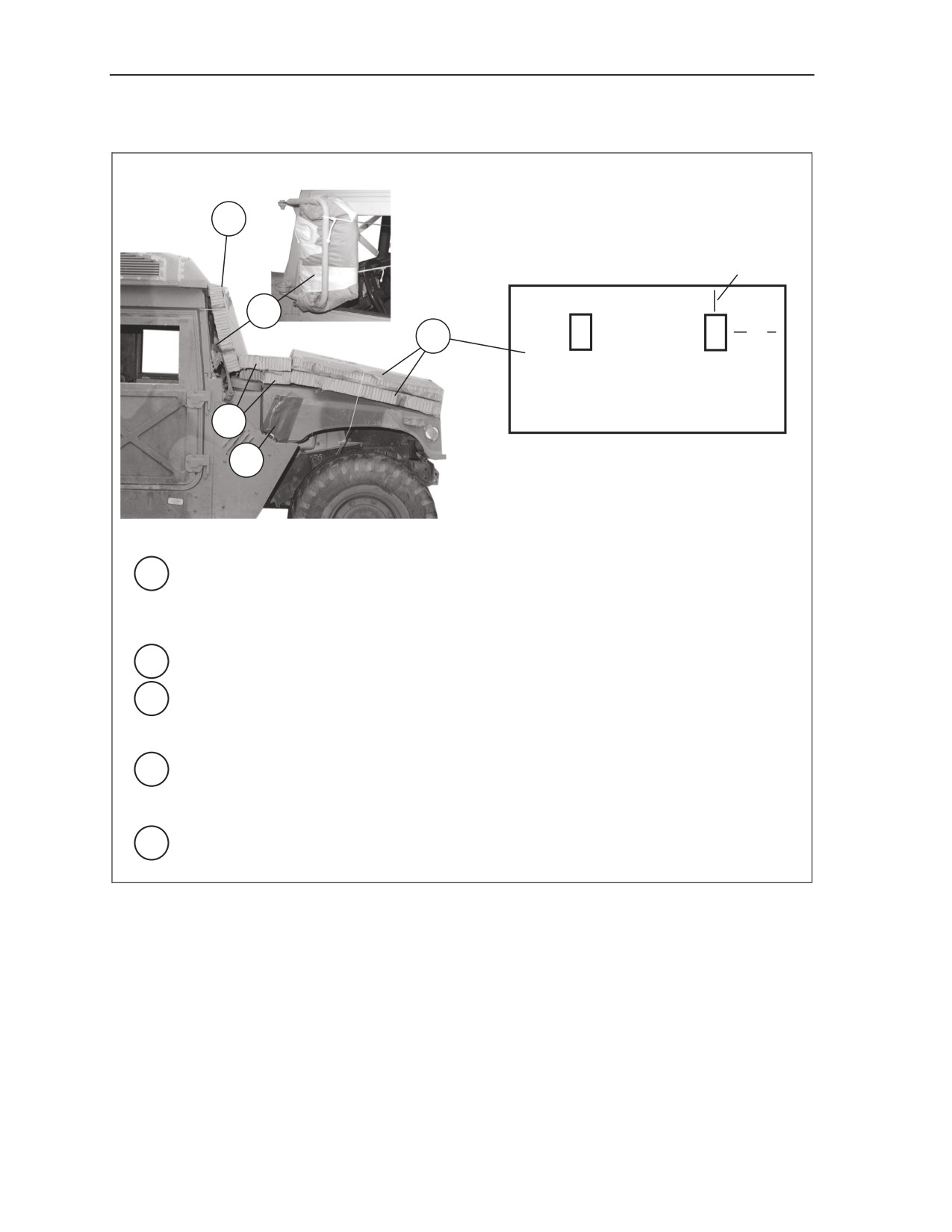
• Prepare the front of the ambulance as shown in Figure 1-11.
2
8
1
9
20
3
6
36 x 83
4
5
1 Pad the mirrors with cellulose wadding. If the mirrors are on single posts, fold them inward
over the windshield and secure together with type III nylon cord. If the mirrors are
supported on brackets at the top and bottom, fold them inward against the doors; tie them
together inside the cab.
2 Secure a 21- by 83-inch piece of honeycomb over the windshield with type III nylon cord.
3 Make cutouts in two 36- by 83-inch pieces of honeycomb as shown and place the
honeycomb on the hood. Secure the honeycomb in place with a length of type III nylon
cord tied to the upper control arms.
4 Place two 12 by 83-inch pieces of honeycomb between the windshield and the pieces of
honeycomb placed in step 3 above. Make a cutout 10 inches wide and 5 inches long in
the bottom piece to clear the air breather cap.
5 Tape the hood latches with 2-inch cloth-backed tape.
Figure 1-11. Honeycomb Placed on Front of Ambulance and Mirrors Folded
1-12
FM 4-20.166/TO 13C7-25-71
30 May 2006
Rigging the M996 Ambulance on a 20-Foot, Type V Airdrop Platform for Low-Velocity Airdrop
7
6
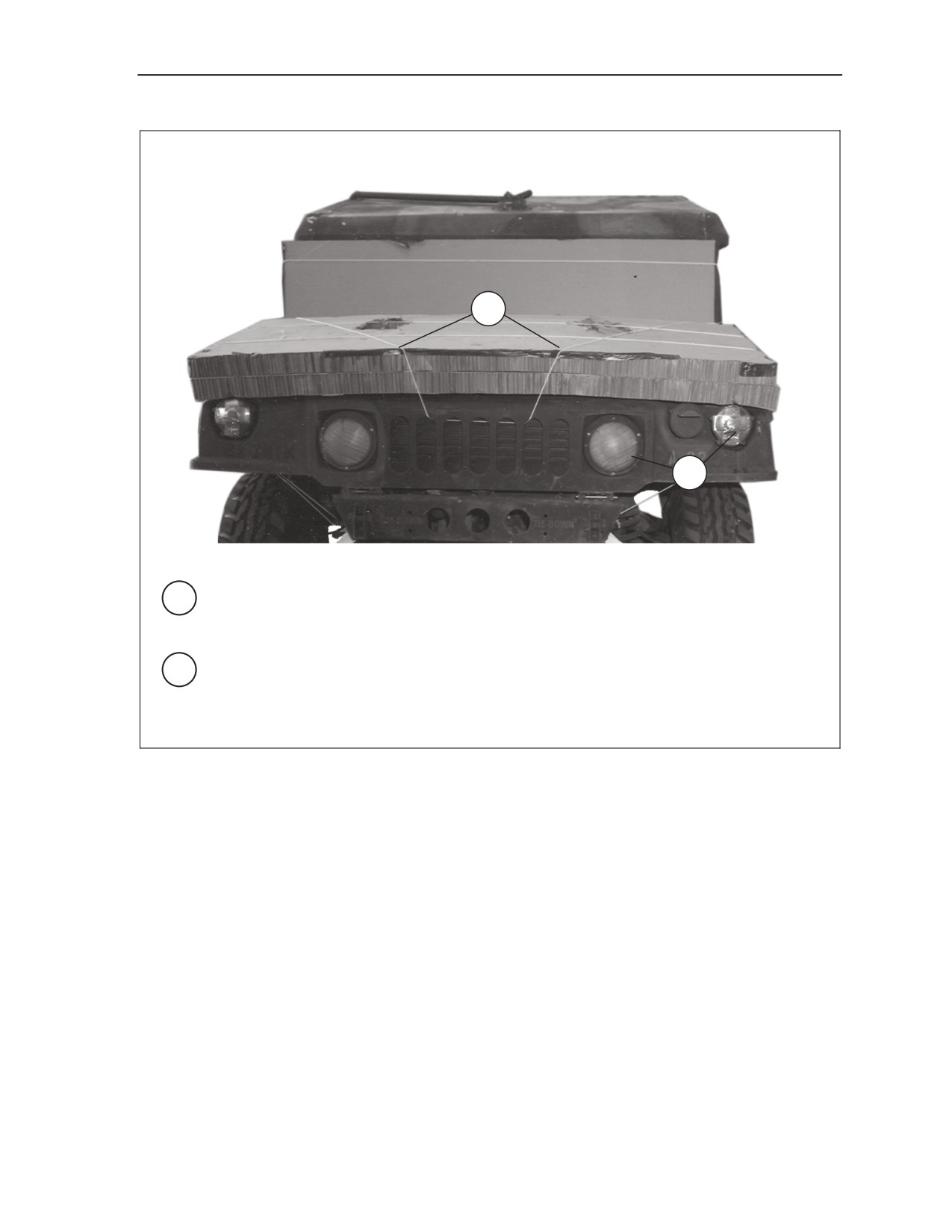
6 Run a length of type III nylon cord through the grille as shown. Run each free end over the
honeycomb placed in steps 3 and 4 above. Tie the ends to the mirror supports or the
upper door hinges.
7 Tape all lights and reflectors with masking tape.
Note. Burlap or sandbag material may be placed over the headlights and held in place by the
headlight securing rings.
Figure 1-11. Honeycomb Placed on Front of Ambulance and Mirrors Folded (Continued)
30 May 2006
FM 4-20.166/TO 13C7-25-71
1-13
Chapter 1
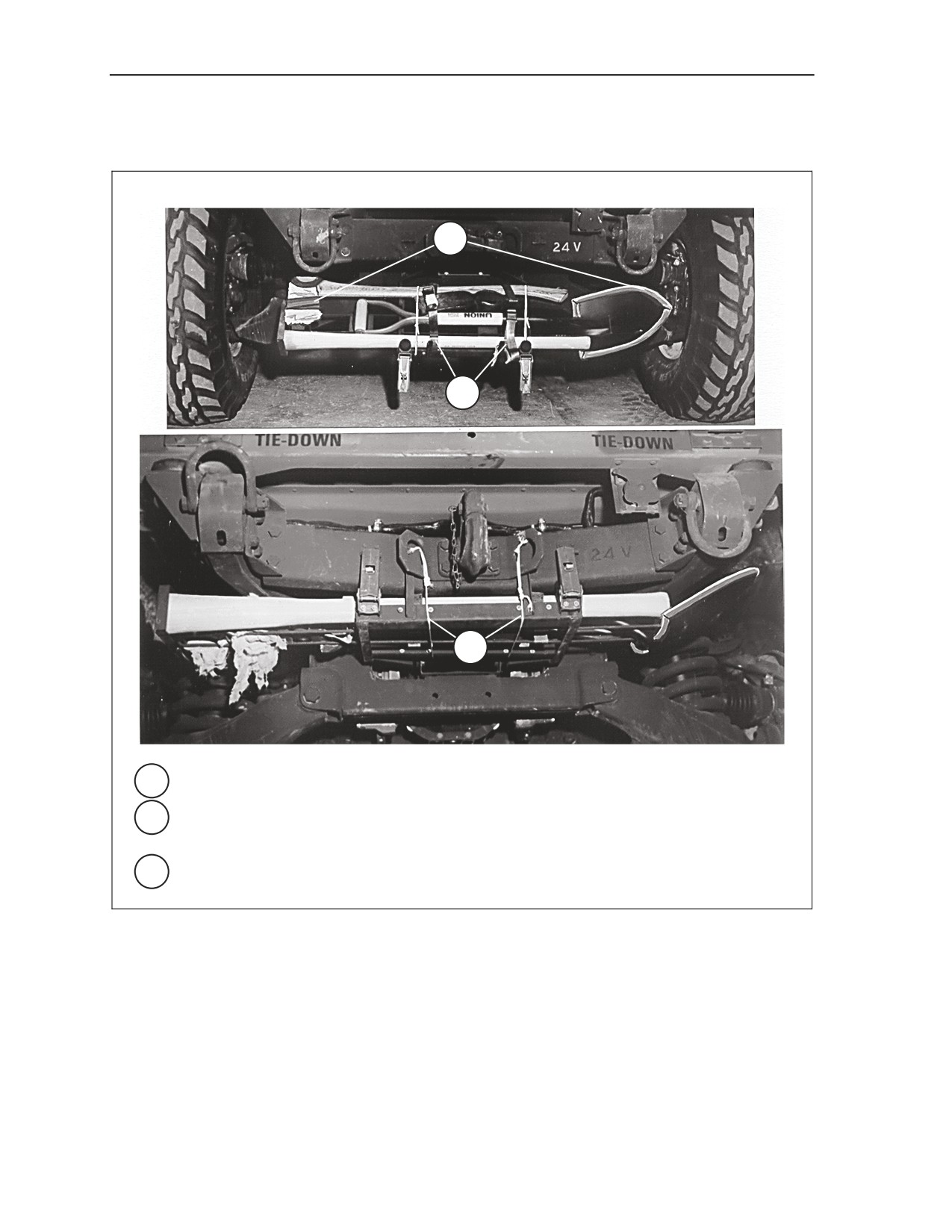
• Prepare and secure the pioneer tool kit according to TM 9-2320-280-10/TO 36A12-1A-2091-
1/TM 2320-10/6, and as shown in Figure 1-12.
1
2
3
1 Tape all sharp edges of the pioneer tools. Pad the ax head with cellulose wadding.
2 Place the tools in the rack, and secure them with the straps provided, and with type III
nylon cord.
3 Close and latch the tool rack. Tie the rack in place with type III nylon cord.
Figure 1-12. Pioneer Tool Kit Secured
1-14
FM 4-20.166/TO 13C7-25-71
30 May 2006
Rigging the M996 Ambulance on a 20-Foot, Type V Airdrop Platform for Low-Velocity Airdrop
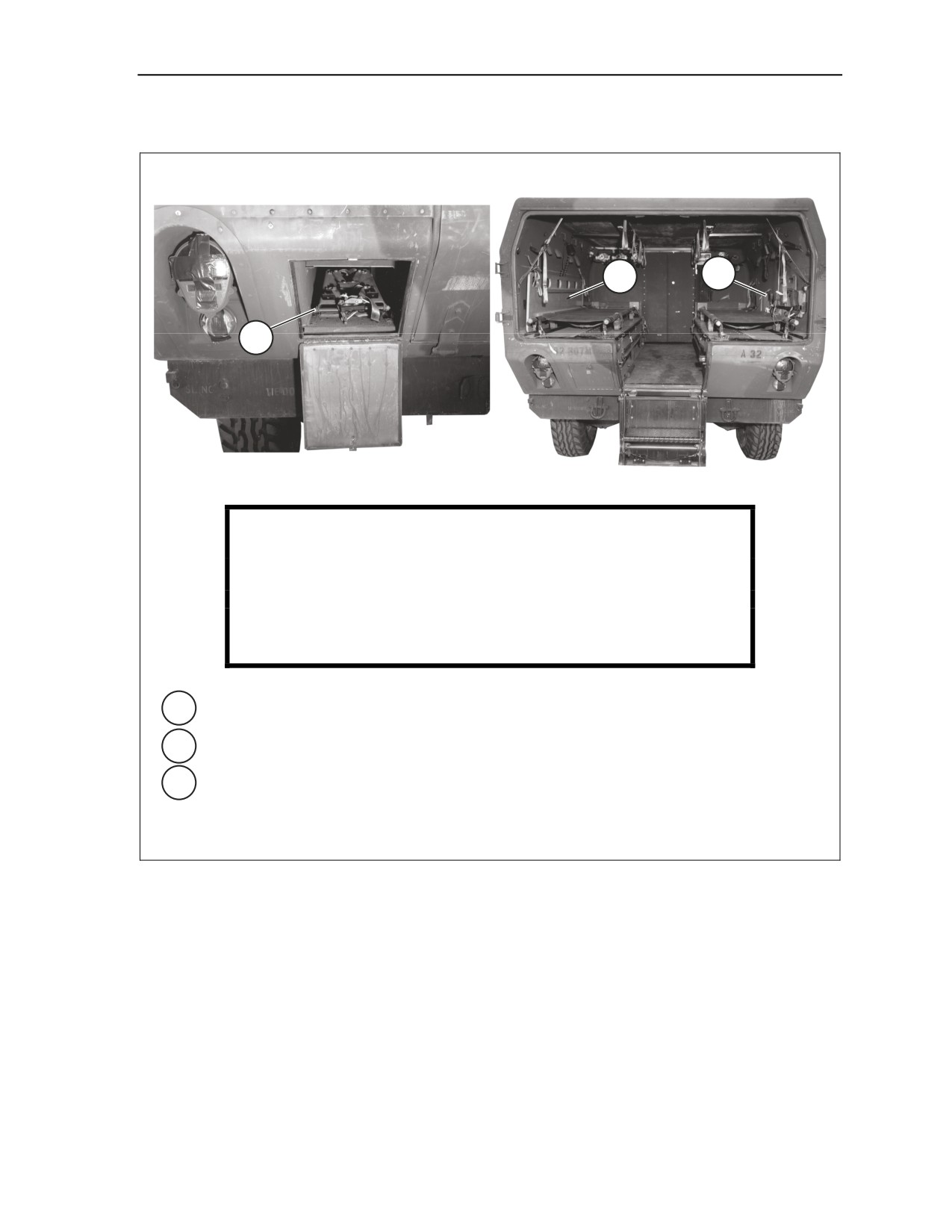
• Prepare the ambulance body as shown in Figures 1-13 and 1-14.
2
3
1
WARNING
Lowering the steps at the rear of the ambulance from inside
may cause serious injury. Lower the steps from outside the
ambulance. Use one hand to activate the release, and control
the descent of the steps assembly with the other hand.
1 Secure the splints in their storage compartment. Use the securing straps provided.
2 Secure the long backboard against the left wall with the straps provided.
3 Secure the short backboard and traction splint against the right wall with the straps
provided.
Note. Reinforce the straps with type III nylon cord.
Figure 1-13. Medical Equipment Secured
30 May 2006
FM 4-20.166/TO 13C7-25-71
1-15
Chapter 1
4
5
6
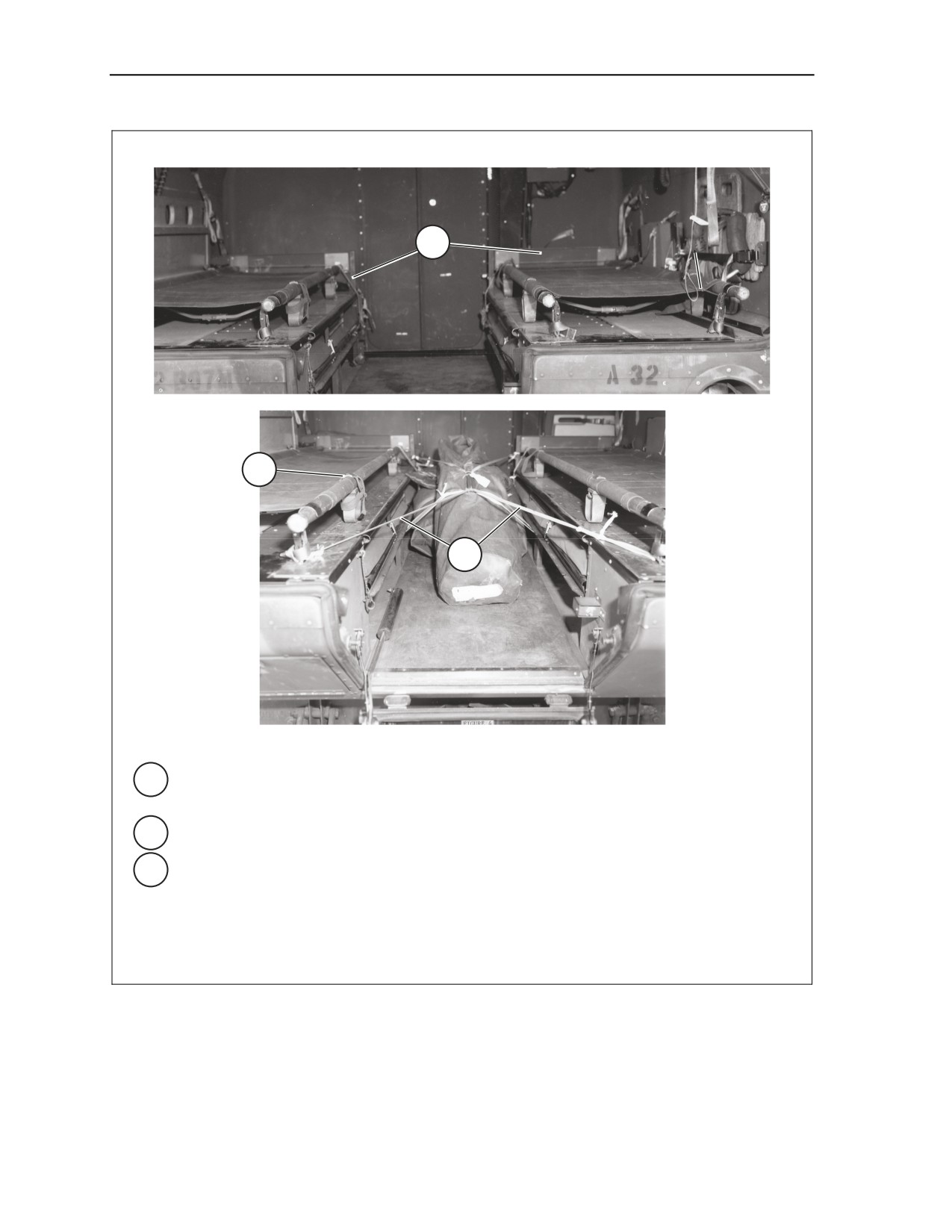
4 Secure the blanket set in the left front compartment and the resuscitator kit box in the right
front compartment. Use the straps provided.
5 Secure the two litters with the straps provided.
6 Place the camouflage net and pole bags in the center of the floor. Secure them to the litter
tie-down brackets and to the shelf supports with ½-inch tubular nylon webbing.
Note. Medical equipment may be different, depending upon the needs of the medical unit. Tie
additional equipment, such as water cans, securely to stationary points in the ambulance with ½-
inch tubular nylon webbing.
Figure 1-13. Medical Equipment Secured (Continued)
1-16
FM 4-20.166/TO 13C7-25-71
30 May 2006
Rigging the M996 Ambulance on a 20-Foot, Type V Airdrop Platform for Low-Velocity Airdrop
3
2
1
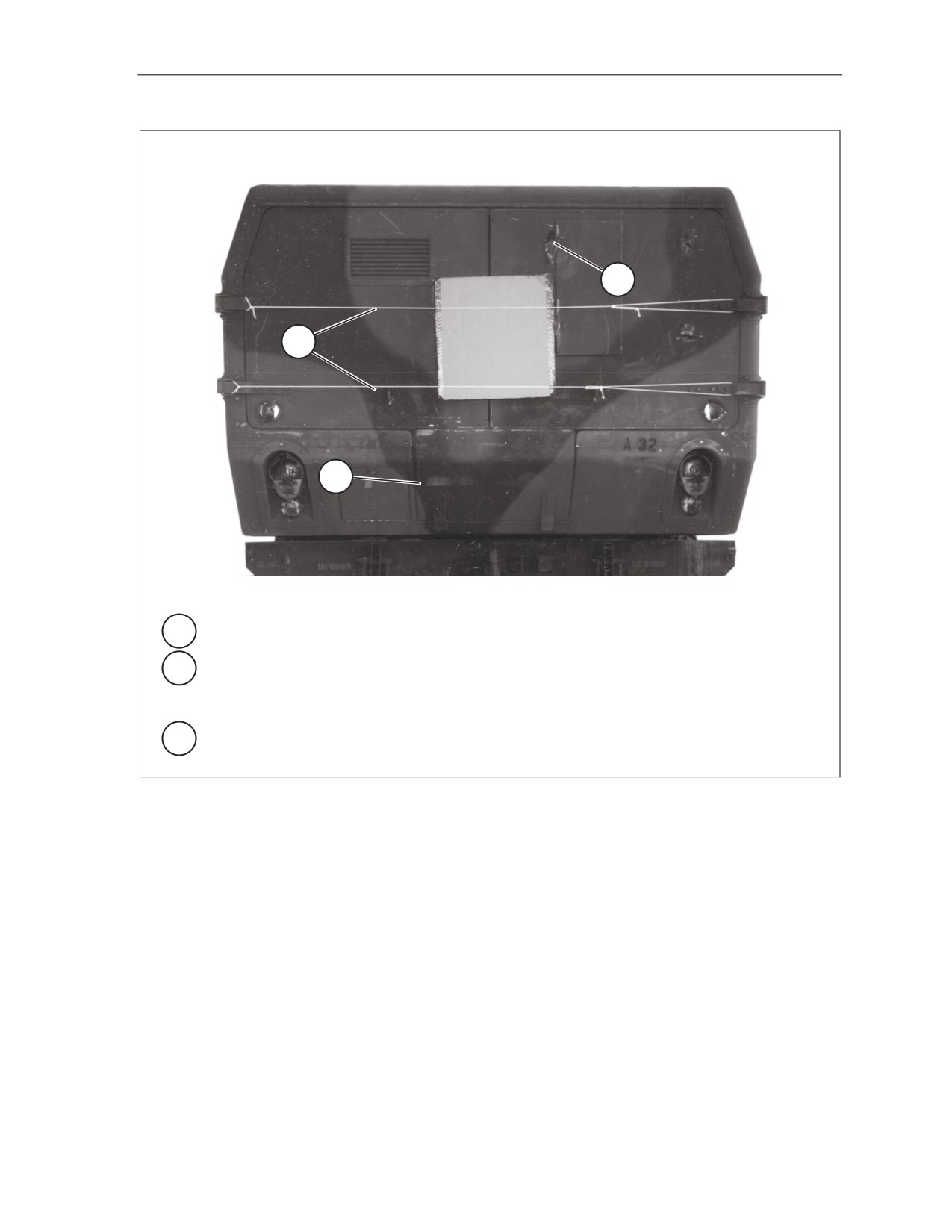
1 Close and latch the doors.
2 Make an indentation in the center of an 18- by 18-inch piece of honeycomb to fit the door
handle. Tape the edges with 2-inch cloth-backed tape and secure the honeycomb to the
door handle with two lengths of type III nylon cord.
3 Tape the medical identification panel latches on the rear and side of the ambulance.
Figure 1-14. Doors Secured and Latches Covered
30 May 2006
FM 4-20.166/TO 13C7-25-71
1-17
Chapter 1
LIFTING AND POSITIONING AMBULANCE
1-6.
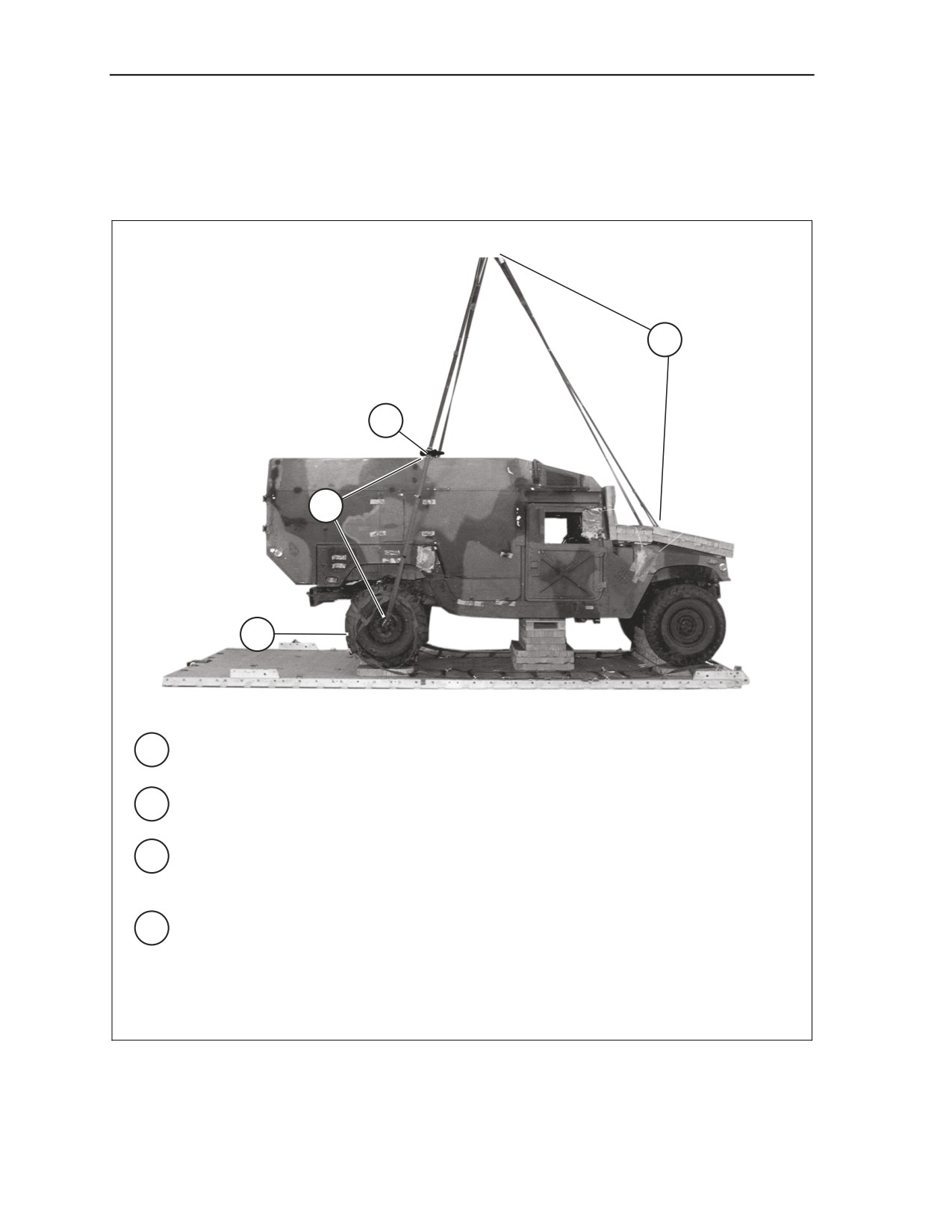
Install slings for lifting the ambulance and an attitude control bar (ACB) for the rear lifting slings as
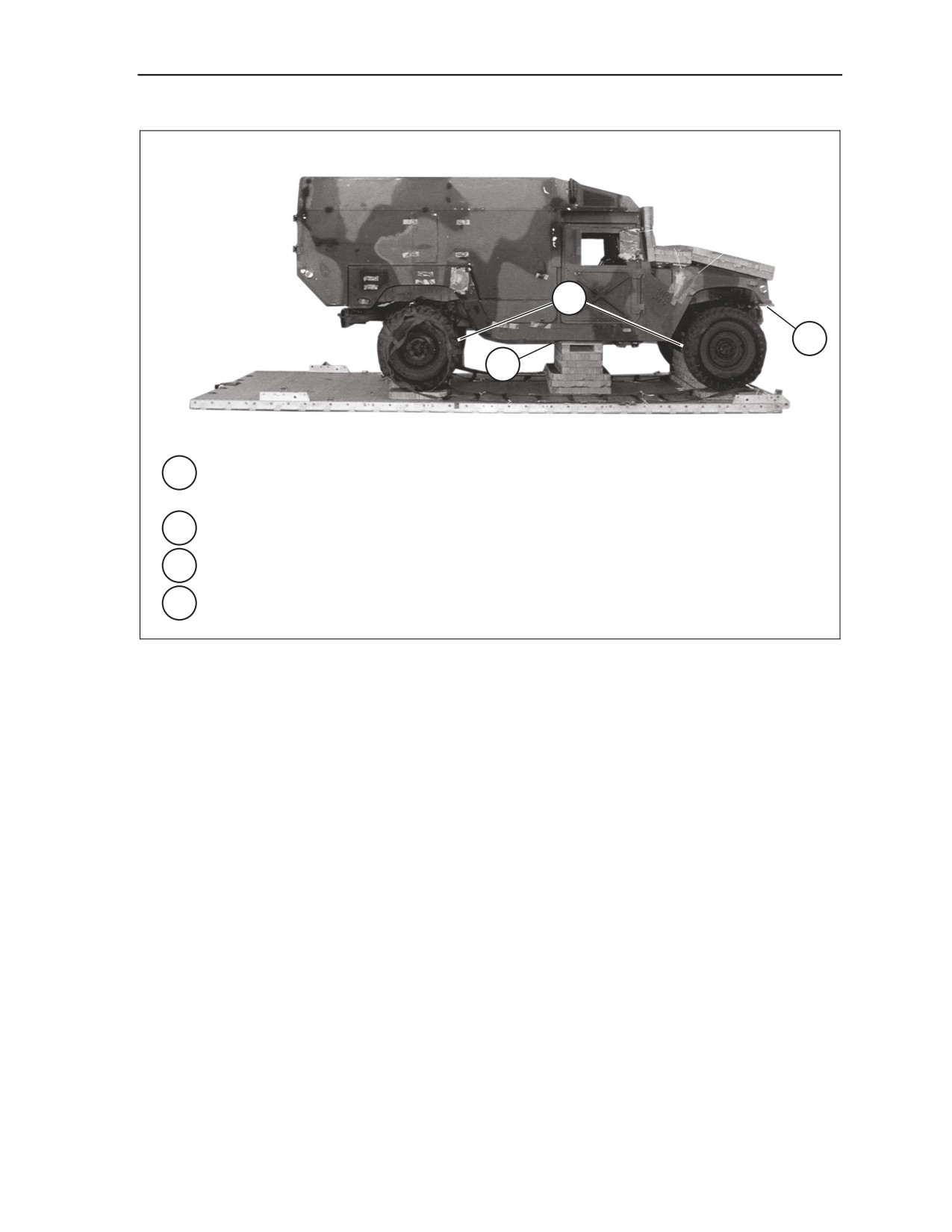
shown in Figure 1-15. Position the ambulance on the honeycomb stacks as shown in Figure 1-16.
3
1
2
4
1 Tie a piece of plywood or felt to the ACB to prevent damage to the roof. Center the ACB
across the roof.
2 Attach a 16-foot (2-loop), type XXVI nylon webbing sling to each rear wheel shackle. Pass
the sling up through the square holes of the ACB.
3 Attach a 12-foot (2-loop), type XXVI nylon webbing sling to each airlift bracket with a large
suspension clevis. Pass a 3-foot (2-loop), type XXVI nylon webbing sling through the end
loops of both front lifting slings. Place both loops of the 3-foot sling in the crane.
4 Lift the ambulance and suspend it slightly above the honeycomb stack. Place a drive-off
aid under the right rear wheel. Holding the drive-off aid against the wheel, turn the wheel
clockwise until the drive-off aid is under slight tension. Repeat for the other side, but turn
the wheel counterclockwise. Tie the end loop of each drive-off aid to the nearest cross
piece with a double length of type I, ¼-inch cotton webbing.
Figure 1-15. Lifting Slings Installed, Ambulance Lifted, and Drive-off Aids Installed
1-18
FM 4-20.166/TO 13C7-25-71
30 May 2006
Rigging the M996 Ambulance on a 20-Foot, Type V Airdrop Platform for Low-Velocity Airdrop
2
1
3
1 Center the ambulance on the platform with the front of the ambulance 2 inches from the
front edge of the platform.
2 Make sure that the suspension cross members rest squarely on stacks 1 and 3.
3 Make sure that the frame rails rest squarely on stack 2.
4 Remove the lifting slings and ACB (not shown).
Figure 1-16. Ambulance Positioned
30 May 2006
FM 4-20.166/TO 13C7-25-71
1-19
Chapter 1
LASHING AMBULANCE
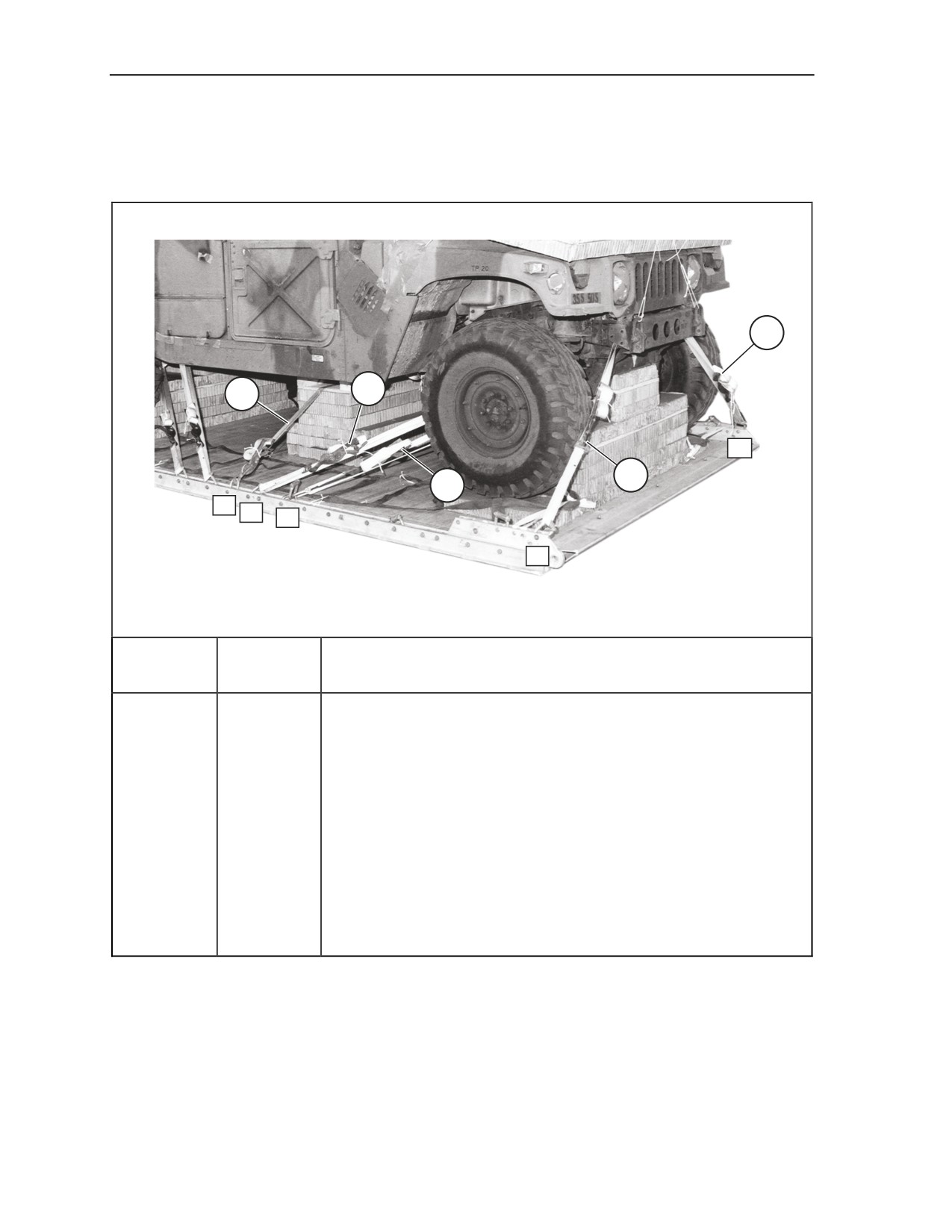
1-7.
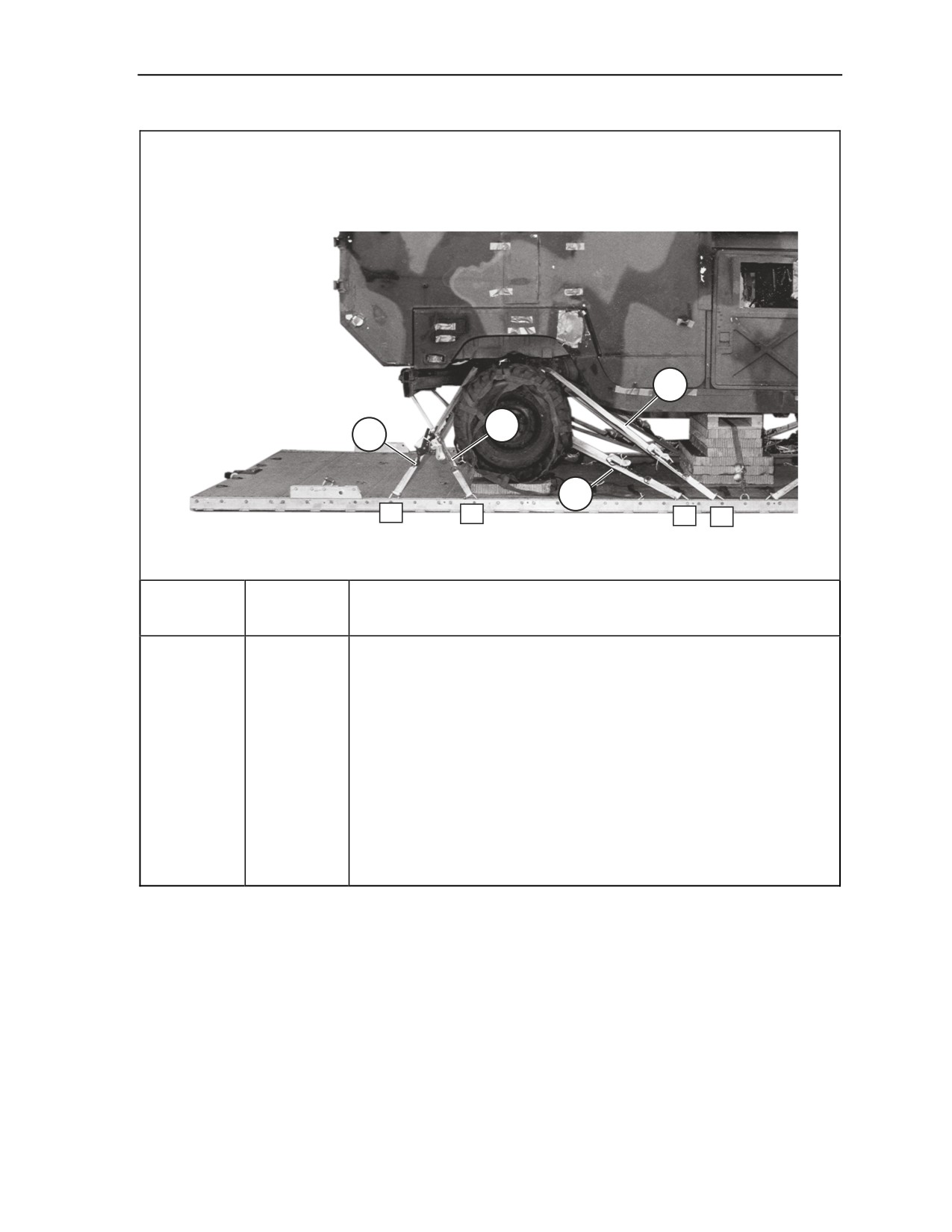
Lash the ambulance to the platform as shown in Figures 1-17 and 1-18.
2
5
7
1A
1
3
7
6
4
1
Lashing
Tiedown
Instructions
Number
Clevis
Number
Pass lashing:
1
1
Through tie-down bracket on end of right frame rail.
2
1A
Through tie-down bracket on end of left frame rail.
3
4
Around right front lower control arm.
4
4A
Around left front lower control arm.
5
6
Through tie-down bracket behind right front coil spring.
6
6A
Through tie-down bracket behind left front coil spring.
7
7 and 7A
Pass a 15-foot lashing through clevis 7A and through its own D-ring.
Pass the lashing through the hole in stack 2. Attach the lashing to
clevis 7 with a load binder.
Figure 1-17. Lashings 1 through 7 Installed
1-20
FM 4-20.166/TO 13C7-25-71
30 May 2006
Rigging the M996 Ambulance on a 20-Foot, Type V Airdrop Platform for Low-Velocity Airdrop
Note. Although the lashing order deviates from normal numerical order, it allows for easier
installation of the lashings.
10
14
12
8
13
12
9
8
Lashing
Tiedown
Instructions
Number
Clevis
Number
Pass lashing:
8
9
Around right rear lower control arm.
9
9A
Around left rear lower control arm.
10
8
Through tie-down bracket in front of right rear coil spring.
11
8A
Through tie-down bracket in front of left rear coil spring.
12
13
Through tie-down bracket behind right rear coil spring.
13
13A
Through tie-down bracket behind left rear coil spring.
14
12
Through tie-down shackle on right side of bumper.
15
12A
Through tie-down shackle on left side of bumper.
Figure 1-18. Lashings 8 through 15 Installed
30 May 2006
FM 4-20.166/TO 13C7-25-71
1-21
Chapter 1
INSTALLING SUSPENSION SYSTEM
1-8.
Install the suspension system as given below:
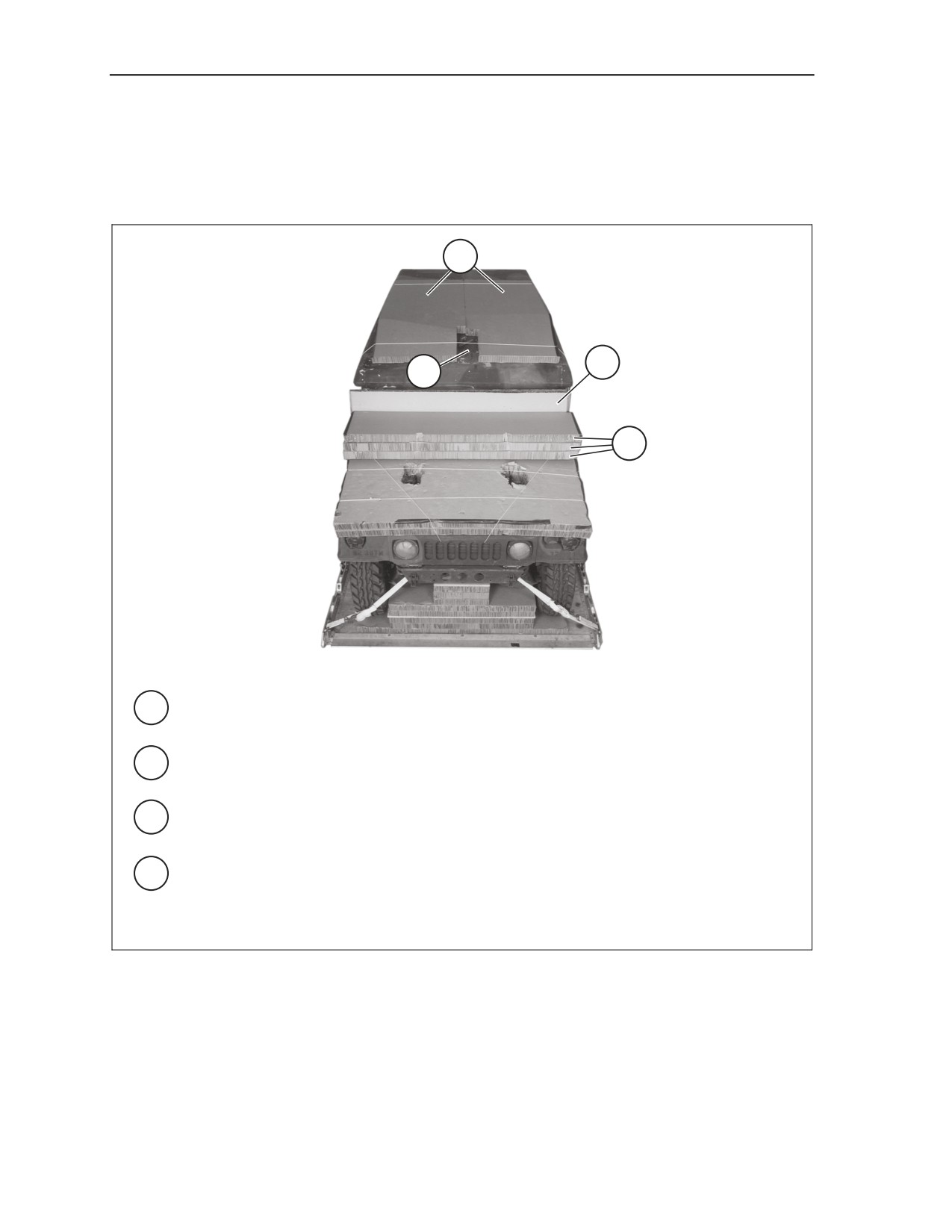
• Install the roof covers and ACB supports as shown in Figure 1-19.
3
1
4
2
1 Place a 16- by 82-inch piece of honeycomb over the piece of honeycomb covering the
windshield. Tie the honeycomb in place with type III nylon cord.
2 Stack three 18- by 82-inch pieces of honeycomb against the piece of honeycomb placed in
step 1 above.
3 Cover the front of the roof with two 36- by 96-inch pieces of honeycomb, with the front
edge of the honeycomb 6 inches from the front edge of the roof.
4 Make a 10- by 20-inch cutout in the honeycomb as shown to allow for fixtures on the roof.
Tie the honeycomb to convenient points on the load with type III nylon cord.
Note. Tape the edges of the honeycomb where the type III nylon cord passes over it.
Figure 1-19. Roof Cover and ACB Supports Installed
1-22
FM 4-20.166/TO 13C7-25-71
30 May 2006
Rigging the M996 Ambulance on a 20-Foot, Type V Airdrop Platform for Low-Velocity Airdrop
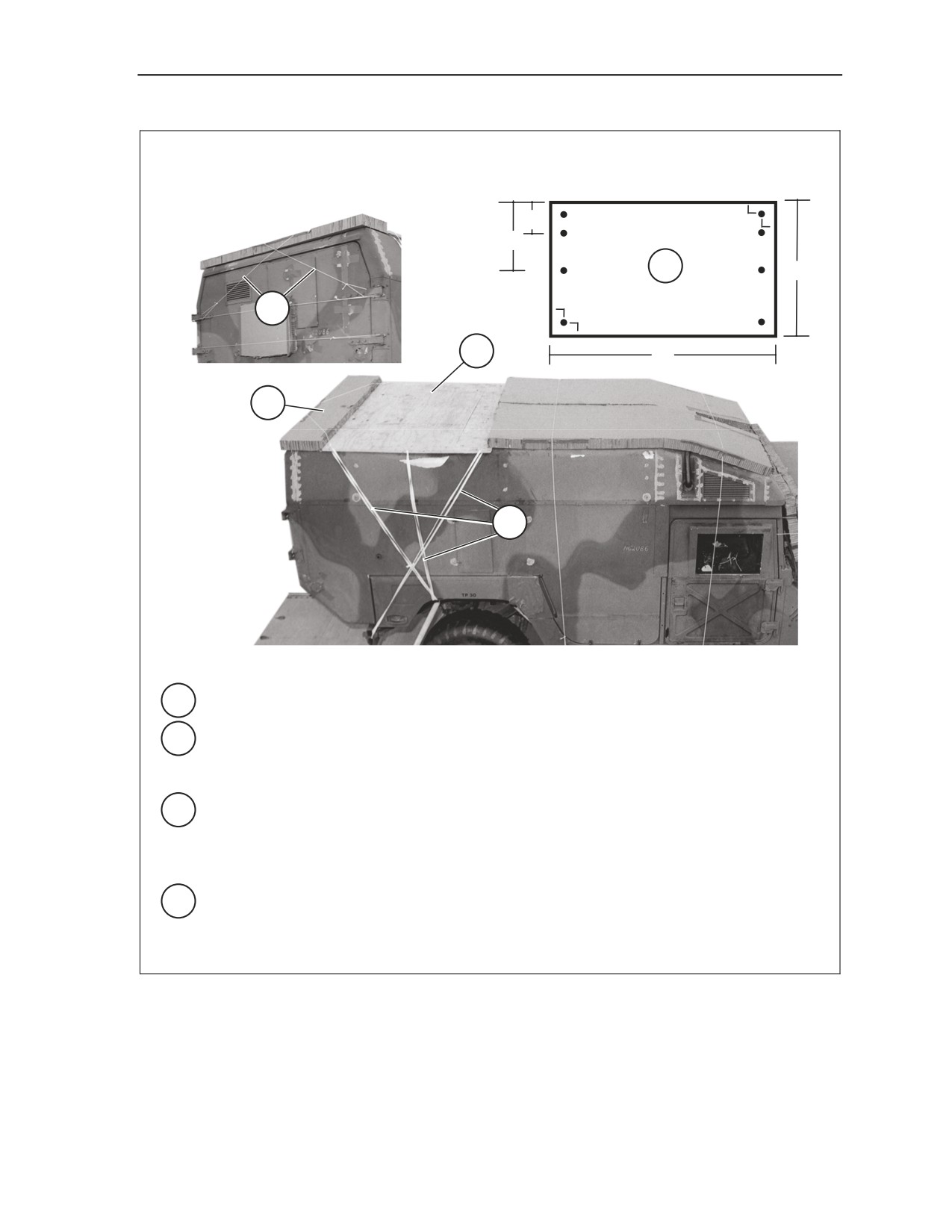
Notes. 1. All measurements are given in inches.
2. This drawing is not drawn to scale.
FRONT
2
13
2
24
5
48
2
8
2
6
76
REAR
8
7
5 Drill eight ½-inch holes in a ¾- by 48- by 76-inch piece of plywood as shown.
6 Cover the rear of the ambulance roof with the plywood so the front edge of the plywood
extends under the honeycomb and the rear edge is 12 inches from the rear edge of the
roof.
7 Secure the plywood to the roof with ½-inch tubular nylon webbing as follows: from the
front holes in the plywood to the rear bumpers, from the rear holes to the tie-down brackets
in front of the rear coils springs, and from the center holes to the tie-down brackets behind
the rear coil springs.
8 Place a 76- by 12-inch piece of honeycomb across the roof against the rear edge of the
plywood. Tape the edges and secure the honeycomb to the rear door hinges and to the
rear holes in the plywood with type III nylon cord.
Figure 1-19. Roof Cover and ACB Supports Installed (Continued)
30 May 2006
FM 4-20.166/TO 13C7-25-71
1-23
Chapter 1
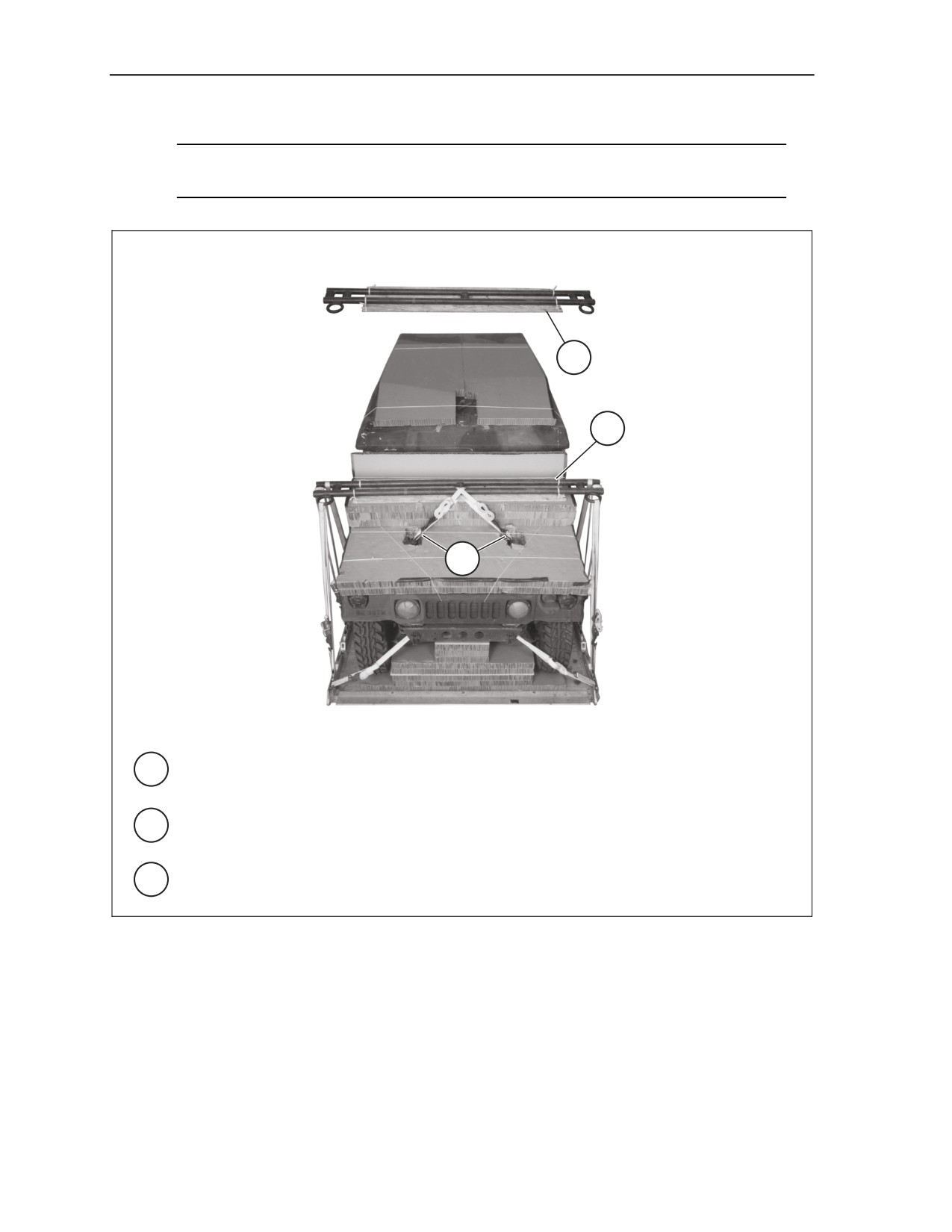
• Install the ACB to the front of the ambulance as shown in Figure 1-20.
Note. Do NOT use the suspension sling spreader bar on the front of the ambulance. Use only
the ACB.
1
2
3
1 Drill a ½-inch hole 1 inch from each corner of a ¾- by 15- by 76-inch piece of plywood. Tie
an ACB to the plywood with ½-inch tubular nylon webbing.
2 Center the ACB and plywood on the honeycomb stack on the front of the ambulance with
the rings facing the front.
3 Run a 15-foot lashing from each airlift bracket around the center bar of the ACB.
Figure 1-20. ACB Installed on Front of Ambulance
1-24
FM 4-20.166/TO 13C7-25-71
30 May 2006
Rigging the M996 Ambulance on a 20-Foot, Type V Airdrop Platform for Low-Velocity Airdrop
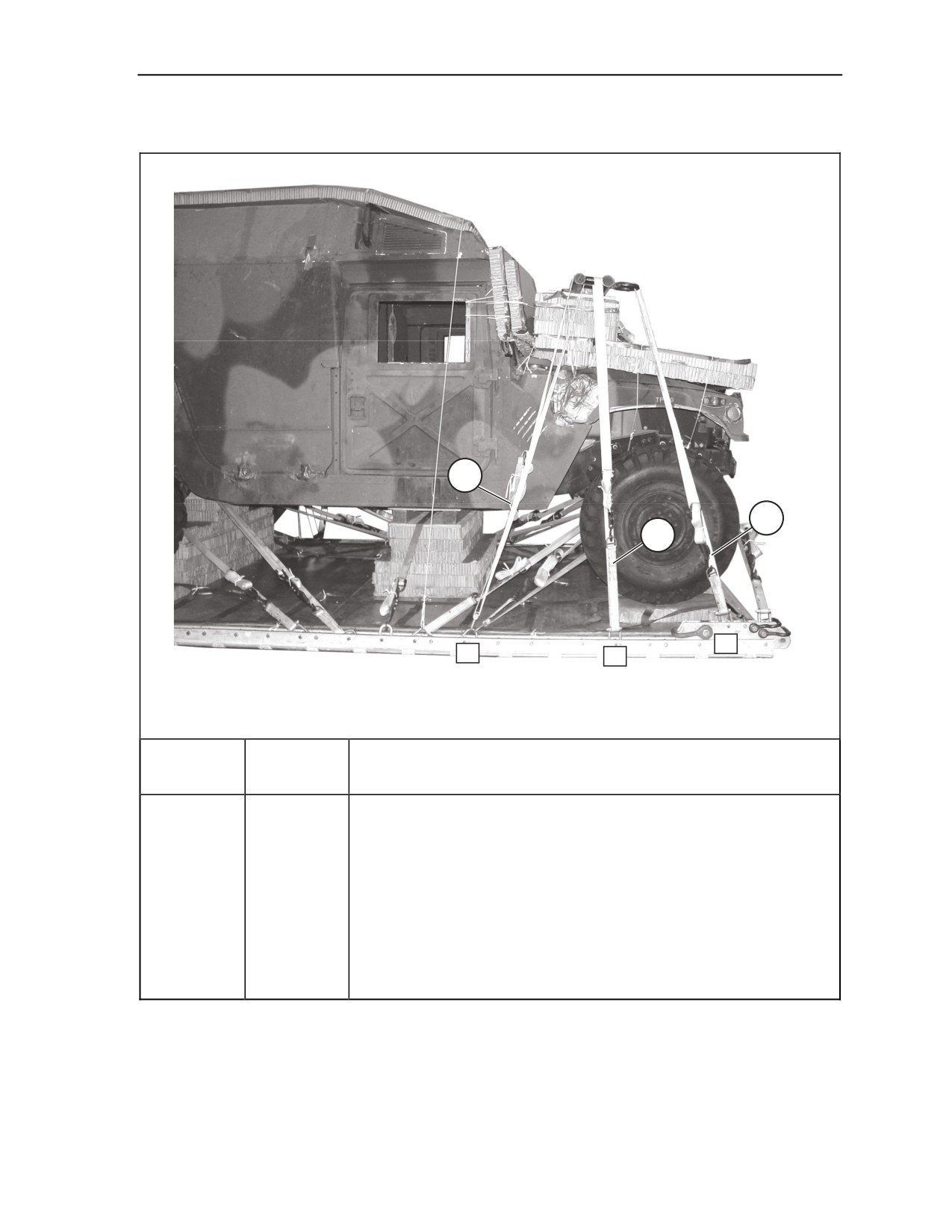
• Lash the front ACB to the platform as shown in Figure 1-21.
5
1
3
2
5
3
Lashing
Tiedown
Instructions
Number
Clevis
Number
Pass lashing:
1
2
Through ring of ACB.
2
2A
Through ring of ACB.
3
3
Through square hole of ACB.
4
3A
Through square hole of ACB.
5
5
Around rear bar of ACB.
6
5A
Around rear bar of ACB.
Figure 1-21. Front ACB Lashed to Platform
30 May 2006
FM 4-20.166/TO 13C7-25-71
1-25
Chapter 1
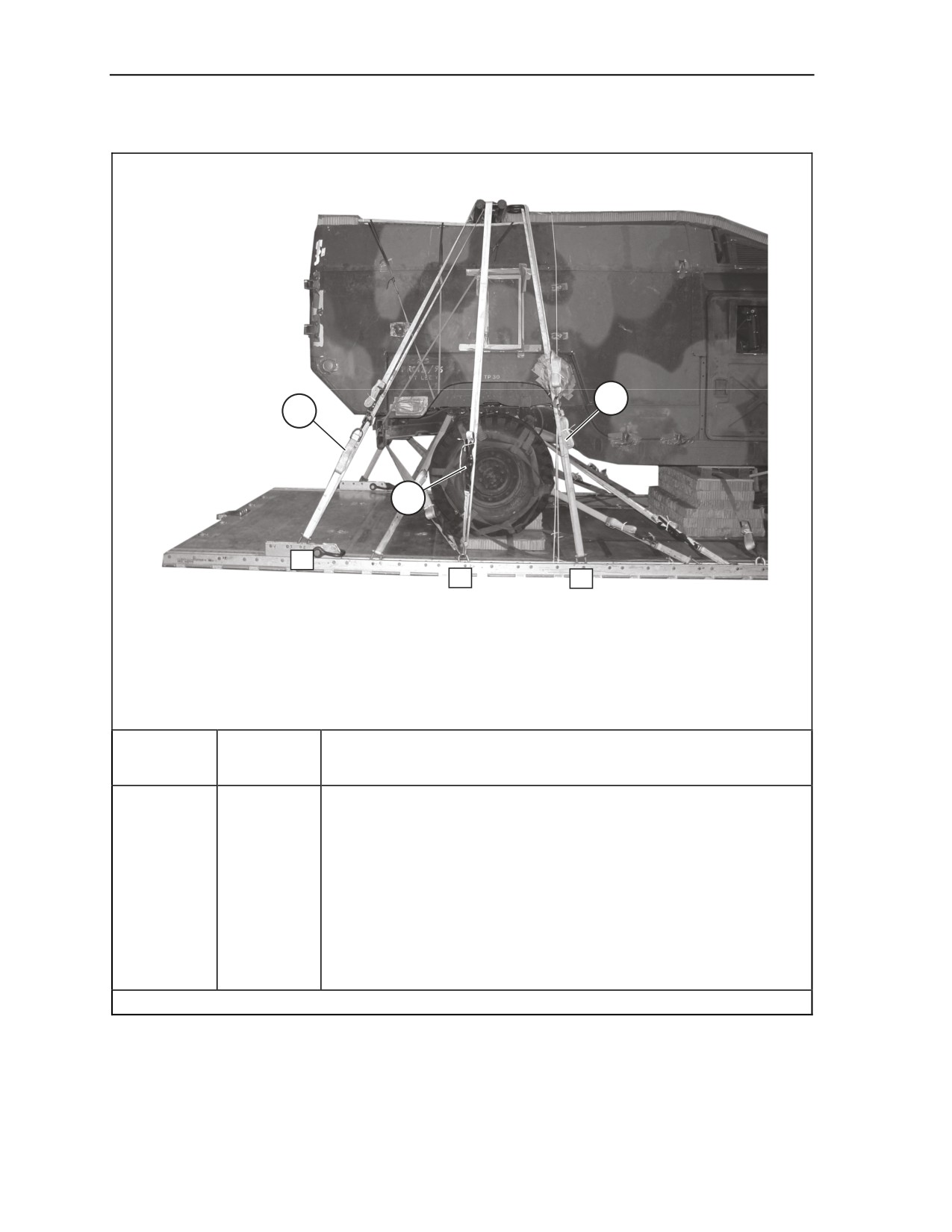
• Install and lash the rear ACB to the platform as shown in Figure 1-22.
2
4
3
14
11
10
Step:
1. Center the ACB on the plywood with the rings facing front. Tie the ACB to the plywood
through the second and third holes with ½-inch tubular nylon webbing (not shown).
Lashing
Tiedown
Instructions
Number
Clevis
Number
Pass lashing:
1
10
Through ring of ACB.
2
10A
Through ring of ACB.
3
11
Through square hole of ACB.
4
11A
Through square hole of ACB.
5
14
Around rear bar of ACB.
6
14A
Around rear bar of ACB.
Note. Be sure that the lashings are not so tight that they cause the roof to buckle.
Figure 1-22. Rear ACB Lashed to Platform
1-26
FM 4-20.166/TO 13C7-25-71
30 May 2006
Rigging the M996 Ambulance on a 20-Foot, Type V Airdrop Platform for Low-Velocity Airdrop
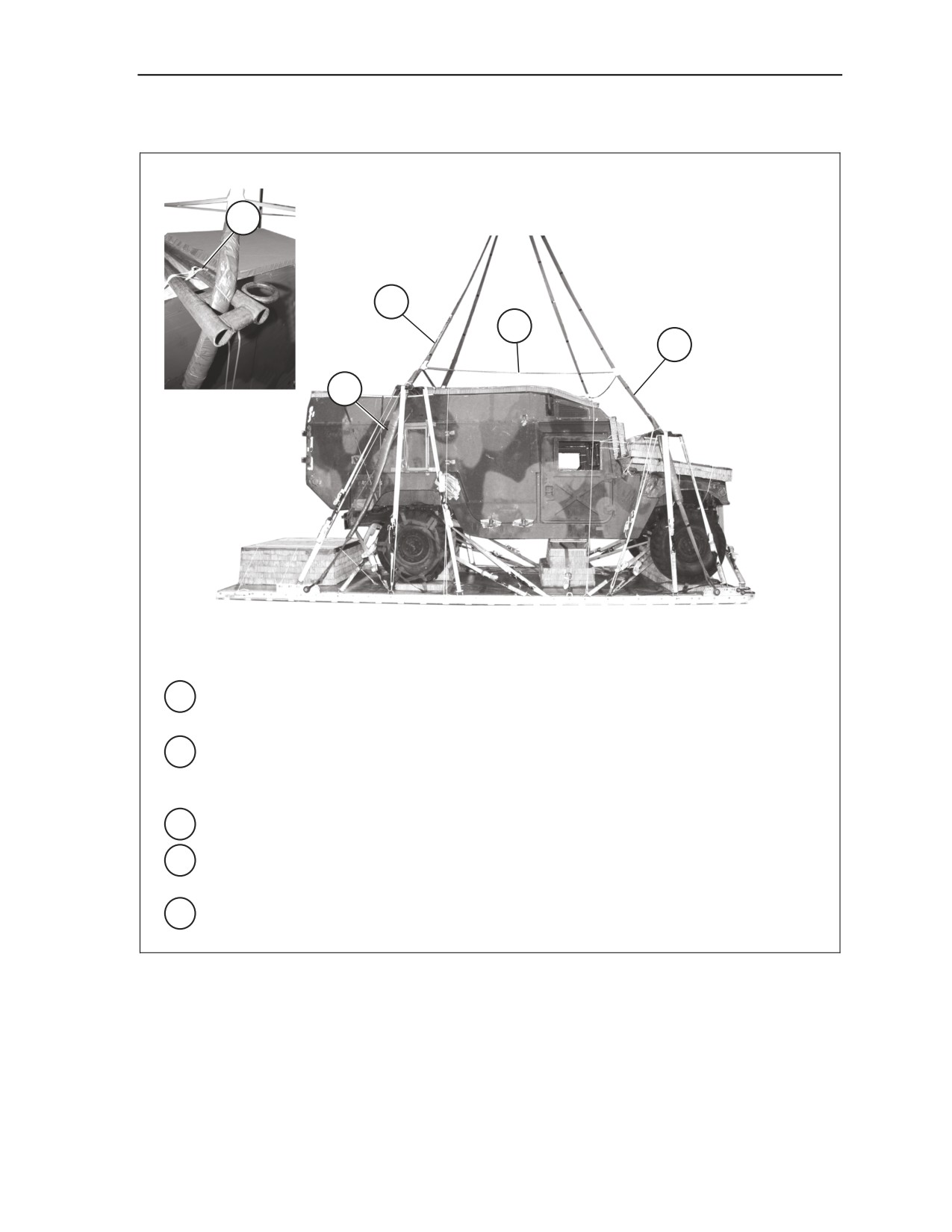
• Install the suspension slings and the deadman’s tie as shown in Figure 1-23.
5
2
4
1
3
1 Attach a 20-foot (2-loop), type XXVI nylon sling with a large clevis to the tandem link.
Route the free running end through the square hole of the ACB. Repeat for opposite side.
2 Attach a 20-foot (2-loop), type XXVI nylon sling with a large clevis to the suspension
bracket. Route the free running end through the square hole of the ACB. Repeat for
opposite side.
3 Raise the slings and pad with felt and tape 12 inches above and below the ACB.
4 Install a deadman’s tie according to FM 4-20.102/MCRP 4-11.3J/NAVSEA SS400-AB-
MMO-010/TO 13C7-1-5.
5 Secure the slings to the ACB with a piece of type III nylon cord.
Figure 1-23. Suspension Slings and Deadman’s Tie Installed
30 May 2006
FM 4-20.166/TO 13C7-25-71
1-27
Chapter 1
STOWING CARGO PARACHUTES
1-9.
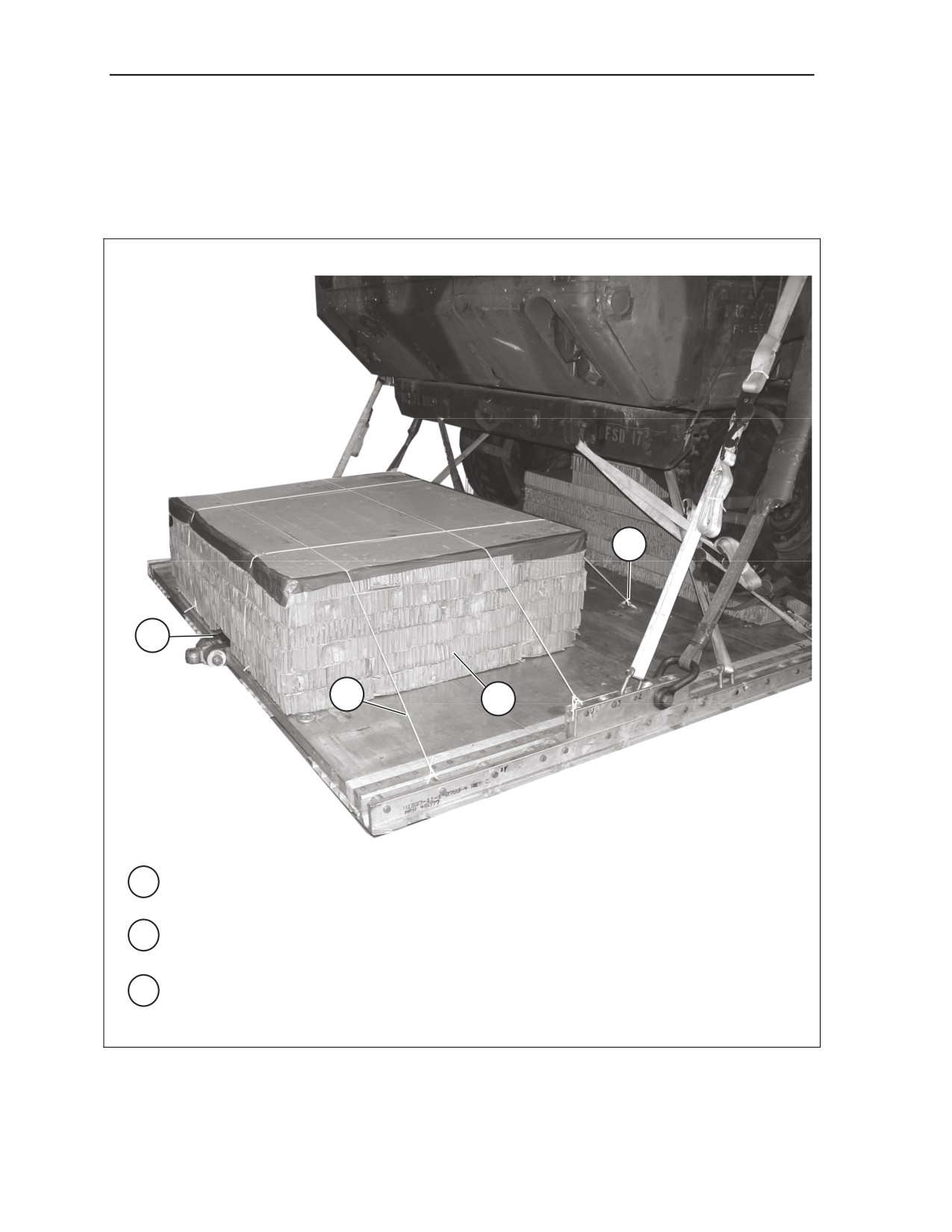
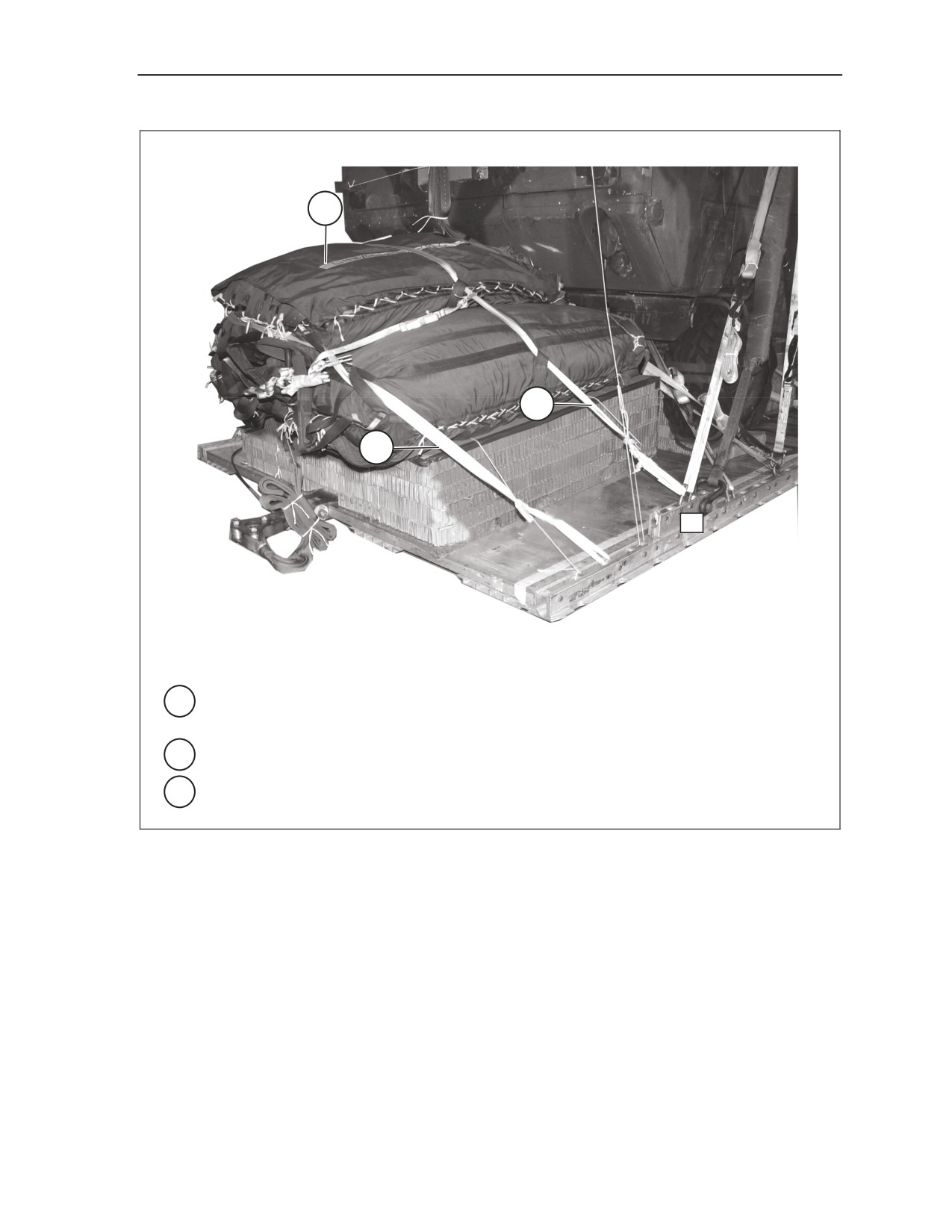
Prepare and install the parachute stowage platform as shown in Figure 1-24. Weigh the load and
install the correct number of parachutes according to FM 4-20.102/MCRP 4-11.3J/NAVSEA SS400-AB-
MMO-010/TO 13C7-1-5. The load shown in Figure 1-25 requires three G-11 cargo parachutes.
3
2
3
1
1 Alternate six pieces of 60- by 36- inch honeycomb and six pieces of 60- by 12-inch to make a
six-layer stack 60- by 48-inches. Glue the layers together and tape the top edges.
2 Center a 60-inch edge flush with the rear edge of the platform. Cut a 5- by 12-inch section
from the honeycomb over the extraction bracket nuts to allow for inspection.
3 Secure the stack to the platform with type III nylon cord tied to convenient tie-down rings,
clevises, or bushings.
Figure 1-24. Parachute Stowage Platform Prepared and Installed
1-28
FM 4-20.166/TO 13C7-25-71
30 May 2006
Rigging the M996 Ambulance on a 20-Foot, Type V Airdrop Platform for Low-Velocity Airdrop
1
3
2
14
1 Install three G-11 cargo parachutes according to FM 4-20.102/MCRP 4-11.3J/NAVSEA
SS400-AB-MMO-010/TO 13C7-1-5.
2 Tie the rear parachute restraint strap to the 38th bushing on each side.
3 Tie the front parachute restraint strap to clevises 14 and 14A.
Figure 1-25. Parachutes Installed
30 May 2006
FM 4-20.166/TO 13C7-25-71
1-29
Chapter 1
INSTALLING EXTRACTION SYSTEM
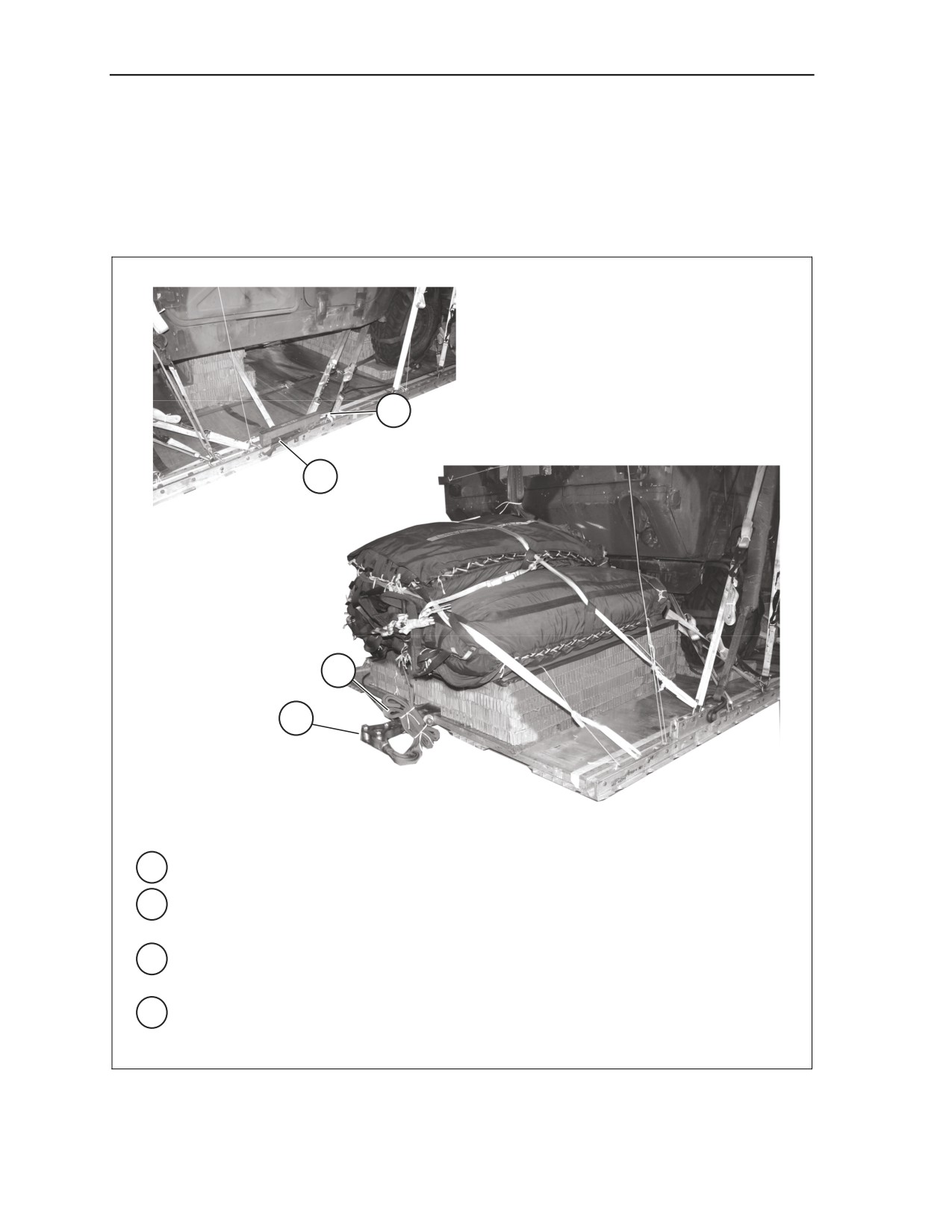
1-10. Install the extraction force transfer coupling
(EFTC) according to FM
4-20.102/MCRP
4-
11.3J/NAVSEA SS400-AB-MMO-010/TO 13C7-1-5 and as shown in Figure 1-26. If applicable, install the
extraction parachute jettison system (EPJS) according to FM 4-20.102/MCRP 4-11.3J/NAVSEA SS400-AB-
MMO-010/TO 13C7-1-5.
2
1
4
3
1 Install the actuator bracket to the rear holes in the left platform side rail.
2 Install the actuator and a 16-foot cable. Tie the cable to convenient points inside the
lashings with type I, ¼-inch cotton webbing.
3 Install the latch assembly and install the cable. Secure the cable according to FM 4-
20.102/MCRP 4-11.3J/NAVSEA SS400-AB-MMO-010/TO 13C7-1-5.
4 Install a 9-foot (2-loop), type XXVI nylon webbing sling as the deployment line. Fold and
secure the excess with type I, ¼-inch cotton webbing.
Figure 1-26. EFTC Installed
1-30
FM 4-20.166/TO 13C7-25-71
30 May 2006
Rigging the M996 Ambulance on a 20-Foot, Type V Airdrop Platform for Low-Velocity Airdrop
INSTALLING PARACHUTE RELEASE
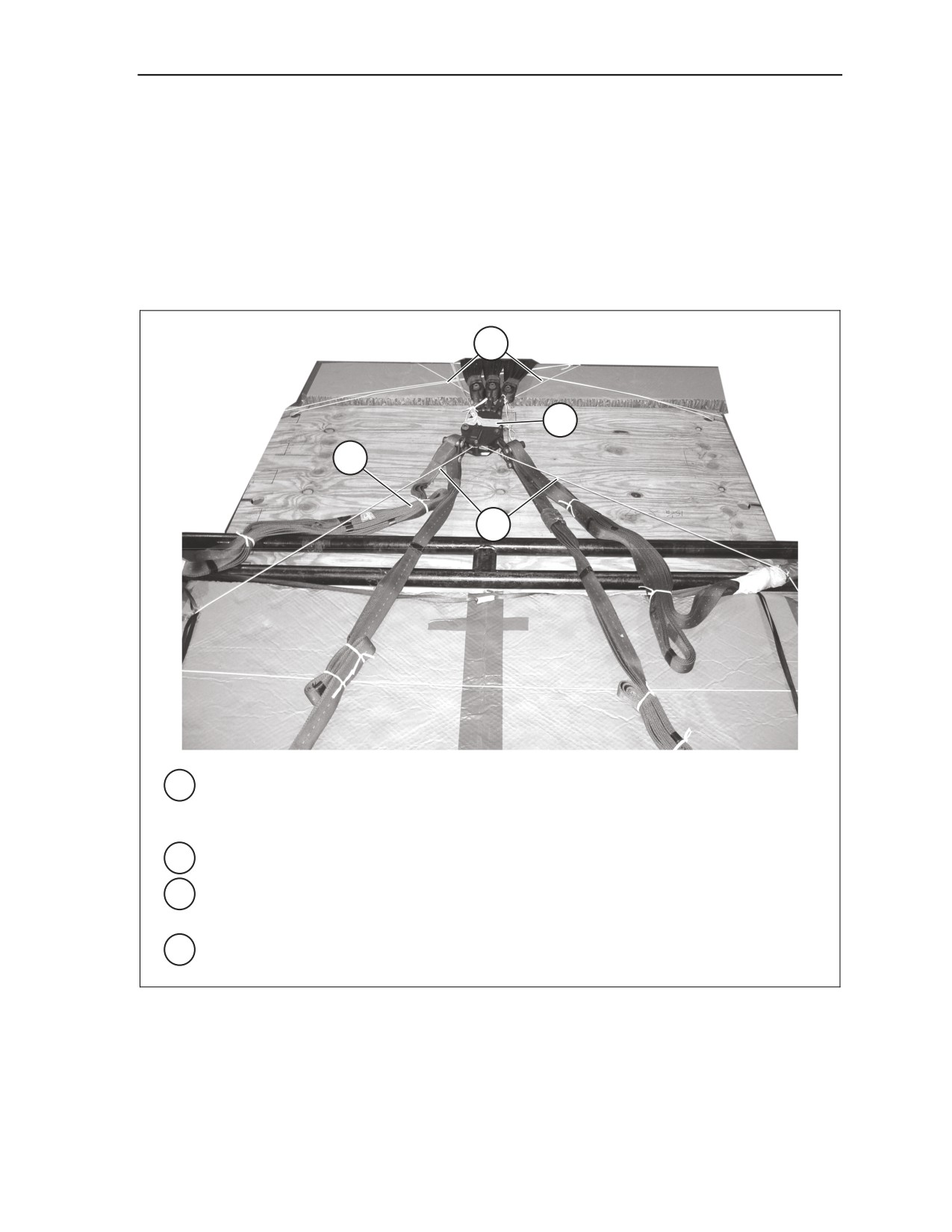
1-11. Install an M-1 cargo parachute release according to FM 4-20.102/MCRP 4-11.3J/NAVSEA SS400-
AB-MMO-010/TO 13C7-1-5 and as shown in Figure 1-27.
INSTALLING PROVISIONS FOR EMERGENCY RESTRAINTS
1-12. Install provisions for emergency restraints on the front of the platform according to FM
4-
20.102/MCRP 4-11.3J/NAVSEA SS400-AB-MMO-010/TO 13C7-1-5.
2
1
4
3
1 Center the release assembly on the roof behind the spreader bar as shown. Connect the
suspension slings and the riser extensions according to FM 4-20.102/MCRP 4-
11.3J/NAVSEA SS400-AB-MMO-010/TO 13C7-1-5.
2 Safety tie the connector links with type III nylon cord to a convenient point on the load.
3 Safety tie the bottom of the release with type III nylon cord to a convenient point on the
load.
4 S-fold and tie any slack in the suspension slings with type I, ¼-inch cotton webbing.
Figure 1-27. M-1 Release Installed
30 May 2006
FM 4-20.166/TO 13C7-25-71
1-31
Chapter 1
PLACING EXTRACTION PARACHUTE
1-13. Select the extraction parachute and extraction line needed using the extraction line requirements
table in FM 4-20.102/MCRP 4-11.3J/NAVSEA SS400-AB-MMO-010/TO 13C7-1-5. Rig the extraction line
in an extraction line bag according to TM 10-1670-286-20/TO 13C5-2-41. Place the extraction parachute
and extraction line on the load for installation in the aircraft. If a drogue parachute and drogue line are
required, place them on the platform for installation in the aircraft as well.
MARKING RIGGED LOAD
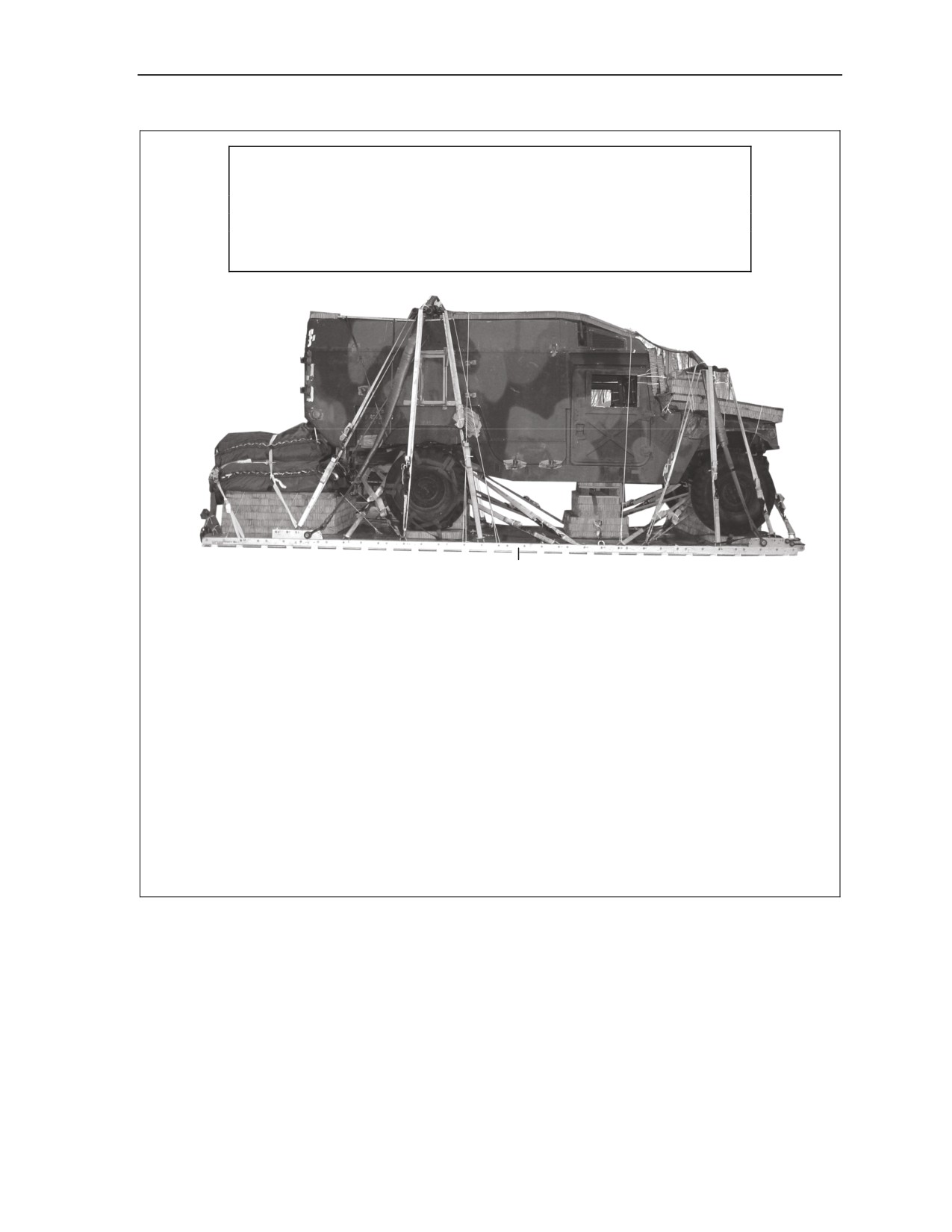
1-14. Mark the rigged load according to FM
4-20.102/MCRP 4-11.3J/NAVSEA SS400-AB-MMO-
010/TO 13C7-1-5 and as shown in Figure 1-28. Complete the Shipper’s Declaration for Dangerous Goods.
If the load varies from the one shown, the weight, height, CB, and parachute requirements must be
recomputed.
EQUIPMENT REQUIRED
1-15. Use the equipment listed in Table 1-1 to rig this load.
1-32
FM 4-20.166/TO 13C7-25-71
30 May 2006
Rigging the M996 Ambulance on a 20-Foot, Type V Airdrop Platform for Low-Velocity Airdrop
CAUTION
Make the final rigger inspection required by FM 4-20.102/MCRP 4-
11.3J/NAVSEA SS400-AB-MMO-010/TO 13C7-1-5 before the load
leaves the rigging site.
CB
RIGGED LOAD DATA
Weight: Load shown
11,680 pounds
Maximum load allowed
13,500 pounds
Height
100 inches
Width
108 inches
Overall Length with EFTC
258 inches
Overall Length with EPJS
270 inches
Overhang: Front
0 inches
Rear (EFTC)
18 inches
Rear (EPJS)
30 inches
Center of Balance (from front edge of platform)
110 inches
Figure 1-28. M996, 2-litter Armored Ambulance (HMMWV) Rigged for Low-Velocity Airdrop
30 May 2006
FM 4-20.166/TO 13C7-25-71
1-33
Chapter 1
Table 1-1. Equipment Required for Rigging M996 Ambulance for Low-Velocity Airdrop
National Stock Number
Item
Quantity
8040-00-273-8713
Adhesive, paste, 1-gallon
As required
1670-00-003-4389
Bar, attitude control
2
4030-00-090-5354
Clevis, suspension, 1-inch (large)
5
4020-00-240-2146
Cord, nylon, type III, 550-pound
As required
1670-00-434-5785
Coupling, airdrop, extraction force transfer with cable,
1
16-foot
1670-00-360-0328
Cover, clevis, large
3
8135-00-664-6958
Cushioning material, packaging, cellulose wadding
As required
8305-00-958-3685
Felt, ½-inch thick
As required
1670-01-183-2678
Leaf, extraction line (line bag)
2
1670-01-064-4452
Line, drogue, 60-foot (1-loop), type XXVI (for C-17)
1
Line, extraction
1670-01-062-6313
60-foot (3-loop), type XXVI (for C-130)
1
1670-01-107-7651
140-foot (3-loop), type XXVI (for C-17)
1
Link assembly, two-point
1670-00-003-1953
3 ¾-inch
2
Lumber:
5510-00-220-6148
2- by 6-inch
As required
5510-00-220-6274
2- by 4-inch
As required
5315-00-010-4659
Nail, steel wire, 8d
As required
1670-00-753-3928
Pad, energy-dissipating (honeycomb)
20 sheets
Parachute:
Cargo:
1670-01-016-7841
G-11
3
Cargo extraction:
1670-01-063-3716
22-foot
1
1670-01-063-3715
15-foot (drogue for C-17)
1
Platform, airdrop, type V, 20-foot
1670-01-353-8425
Bracket assembly, coupling
(1)
1670-01-162-2372
Clevis assembly, type V
(28)
1670-01-353-8424
Extraction bracket assembly
(1)
1670-01-247-2389
Suspension link
(2)
1670-01-162-2381
Tandem link assembly (multipurpose link)
(2)
5530-00-128-4981
Plywood, ¾-inch
4 sheets
1670-01-097-8816
Release, cargo parachute, M-1
1
1-34
FM 4-20.166/TO 13C7-25-71
30 May 2006
Rigging the M996 Ambulance on a 20-Foot, Type V Airdrop Platform for Low-Velocity Airdrop
Table 1-1. Equipment Required for Rigging M996 Ambulance for Low-Velocity Airdrop
(Continued)
National Stock Number
Item
Quantity
Sling, cargo, airdrop:
For suspension:
1670-01-062-6302
20-foot (2-loop), type XXVI nylon webbing
4
For lifting:
1670-01-062-6301
3-foot (2-loop), type XXVI nylon webbing
1
1670-01-062-6303
12-foot (2-loop), type XXVI nylon webbing
2
1670-01-063-7761
16-foot (2-loop), type XXVI nylon webbing
2
For deployment:
1670-01-062-6304
9-foot (2-loop), type XXVI nylon webbing
1
For riser extension:
1670-01-062-6302
20-foot (2-loop), type XXVI nylon webbing
2
1670-01-062-6313
60-foot (3-loop), type XXVI nylon webbing
3
4910-01-313-8839
Spreader bar assembly
1
5340-00-040-8219
Strap, parachute release multi-cut, with 3 knives
2
7510-00-266-5016
Tape, adhesive, 2-inch
As required
1670-00-937-0271
Tie-down assembly, 15-foot
34
1670-01-483-8259
Tow release mechanism (H-Block for C-17)
1
1670-01-344-0825
Vehicle drive-off aid
1
Webbing:
8305-00-268-2411
Cotton, ¼-inch, type I
As required
8305-00-082-5752
Nylon, tubular, ½-inch
As required
8305-00-263-3591
Type VIII
As required
30 May 2006
FM 4-20.166/TO 13C7-25-71
1-35
Chapter 2
Rigging the M997 Ambulance on a 20-Foot, Type V Airdrop
Platform for Low-Velocity Airdrop
DESCRIPTION OF LOAD
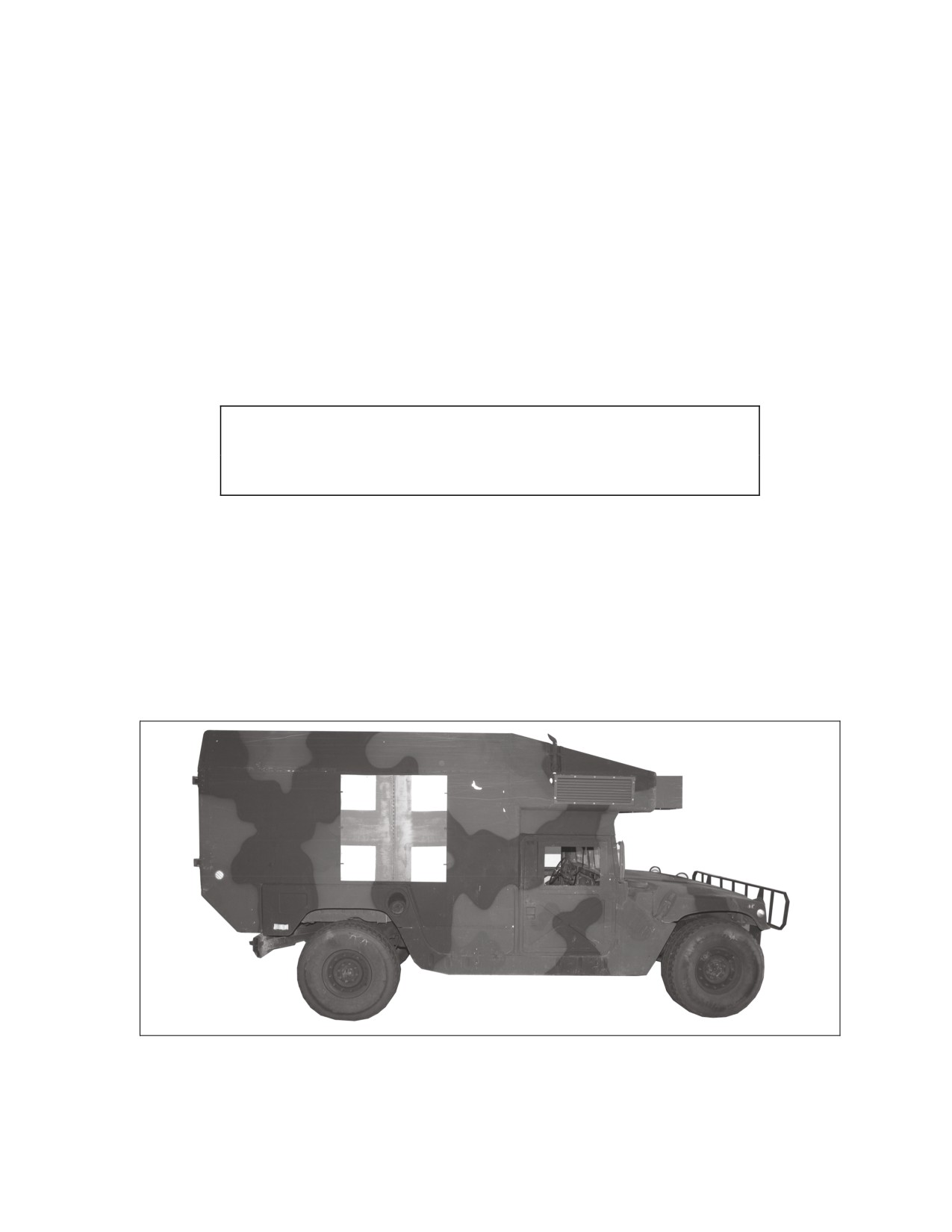
2-1. The M997 ambulance (shown in Figure 2-1) is rigged on a 20-foot, type V airdrop platform for low-
velocity airdrop. The load requires three G-11 cargo parachutes, depending upon the accompanying load
in the vehicle.
CAUTION
This load may be dropped from C-17 aircraft only.
PREPARING PLATFORM
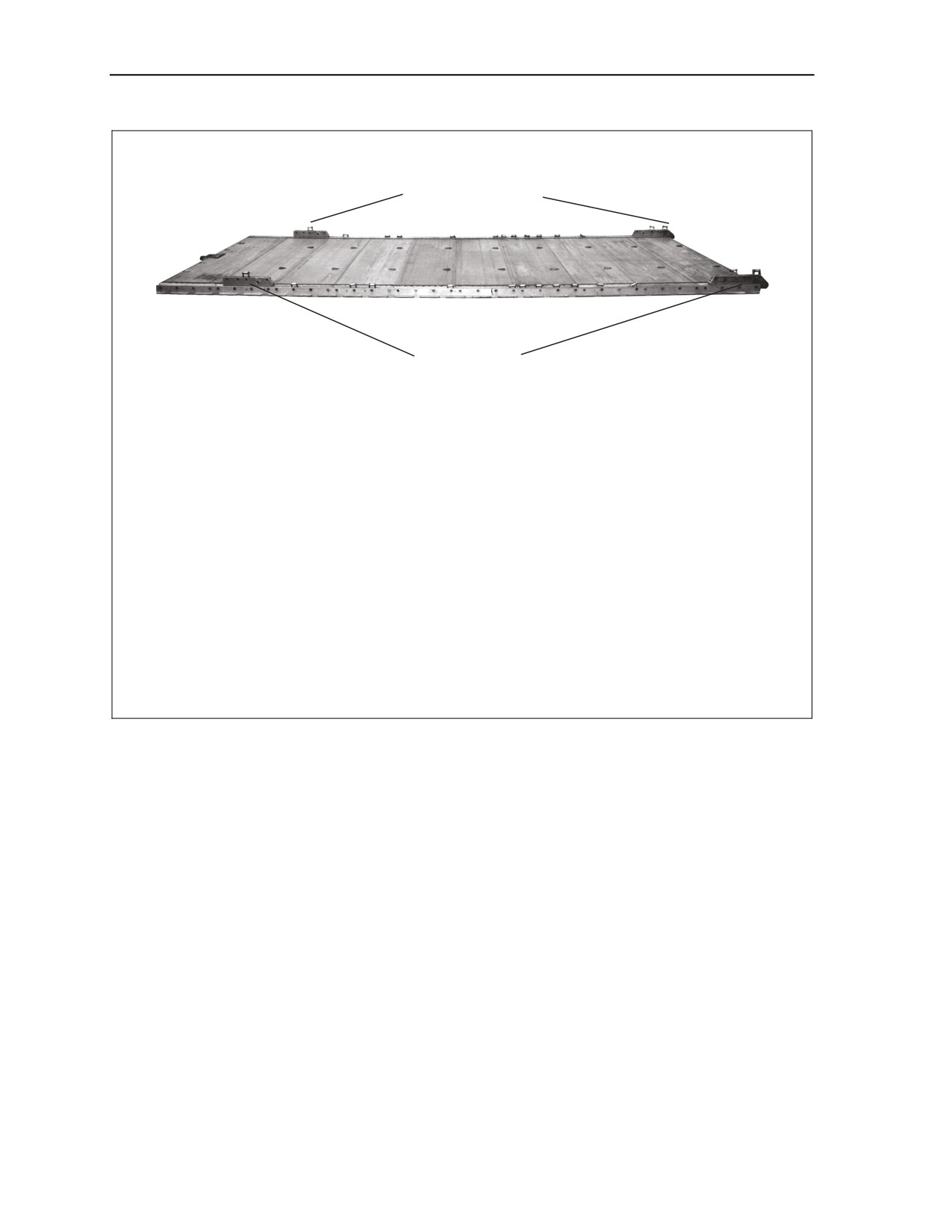
2-2. Prepare a 20-foot, type V platform as described below and as shown in Figure 2-2.
• Inspecting Platform. Inspect, or assemble and inspect the platform according to TM 10-1670-
268-20&P/TO 13C7-52-22.
• Installing Tandem Links. Install tandem links as shown in Figure 2-2.
• Installing Suspension Links. Install the suspension links as described in Figure 2-2.
• Attaching and Numbering Clevises. Attach and number 28 clevis assemblies as shown in
Figure 2-2.
Figure 2-1. M997 4-Litter Ambulance
30 May 2006
FM 4-20.166/TO 13C7-25-71
2-1
Chapter 2
CLEVISES
14A THROUGH 1 A
LEFT
REAR
FRONT
RIGHT
CLEVISES
14 THROUGH 1
Steps:
1. Install a tandem link on the front of each platform side rail using holes 1, 2, and 3.
2. Install a suspension link to each side rail using holes 33, 34, and 35.
3. Install clevises on bushings 1 and 3 on each tandem link assembly.
4. Install a clevis on bushing 2 on each suspension link assembly.
5. Starting at the front of each platform side rail, install clevises on each platform side rail
using the bushings bolted on holes 9, 11, 13, 14, 15, 16, 17, 21, 26, 27, and 31.
6. Starting at the front of the platform, number the clevises bolted to the right side from 1
through 14 and those bolted to the left side from 1A through 14A.
Note. Position clevis 6 in an inverted position.
7. Label the tie-down rings according to FM 4-20.102/MCRP 4-11.3J/NAVSEA SS400-AB-
MMO-010/TO 13C7-1-5.
Figure 2-2. Platform Prepared
2-2
FM 4-20.166/TO 13C7-25-71
30 May 2006
Rigging the M997 Ambulance on a 20-Foot, Type V Airdrop Platform for Low-Velocity Airdrop
BUILDING AND POSITIONING HONEYCOMB STACKS
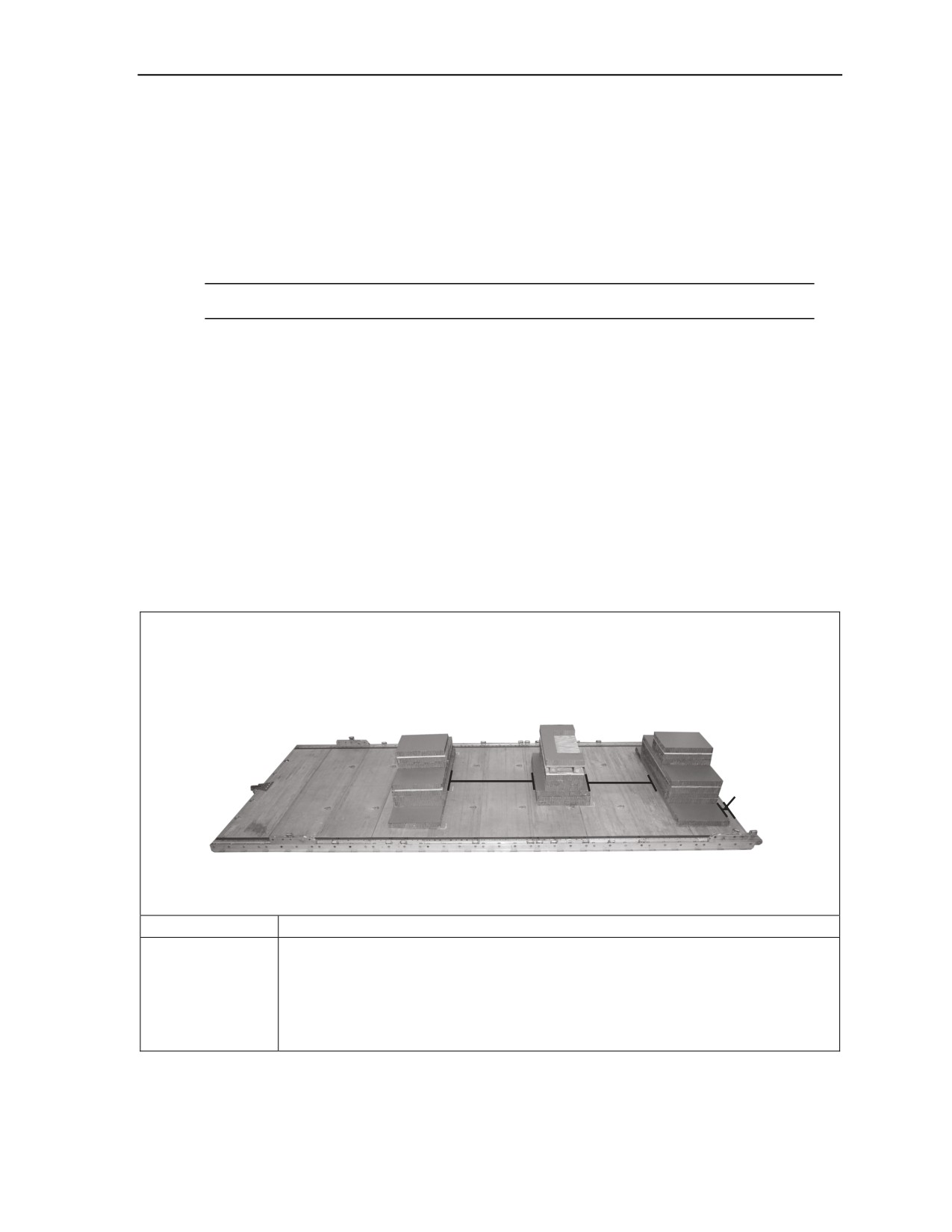
2-3. Build the honeycomb stacks as shown in Figures 1-3 and 1-4. Position the honeycomb stacks as
shown in Figure 2-3.
INSTALLING OPTIONAL DRIVE-OFF AIDS ON PLATFORM
2-4. Install the drive-off aids on the platform as described in Paragraph 1-4.
Note. Drive-off aids are optional and not shown in this chapter.
PREPARING AMBULANCE
2-5. Prepare the ambulance as described below.
• Make sure the fuel tank is no more than 3/4 full. Prepare the fuel tank filler cap and fuel filler
opening as shown in Figure 1-7. Prepare the fuel tank drain plug as shown in Figure 1-8.
• Make sure the batteries and battery compartment comply with AFMAN 24-204(I)/TM 38-250.
• Stow the ambulance OVE equipment in the compartment behind the driver’s door. Fill the
empty space with honeycomb and close the compartment door. Tape the latches (not shown).
• Tape all lights and reflectors.
• Prepare the underside of the truck as shown in Figure 1-10.
• Prepare and secure the pioneer tool kit according to TM 9-2320-280-10/TO 36A12-1A-2091-
1/TM 2320-10/6 and as shown in Figure 1-12.
Notes. 1. All measurements are given in inches.
2. This drawing is not drawn to scale.
45
37
6
Stack Number
Position of Stack on Platform
1
Position stack 1 centered and 6 inches from the front edge of the platform.
2
Position stack 2 centered and 37 inches from stack 1.
3
Position stack 3 centered and 45 inches from stack 2.
Figure 2-3. Honeycomb Stacks Placed on Platform
30 May 2006
FM 4-20.166/TO 13C7-25-71
2-3
Chapter 2
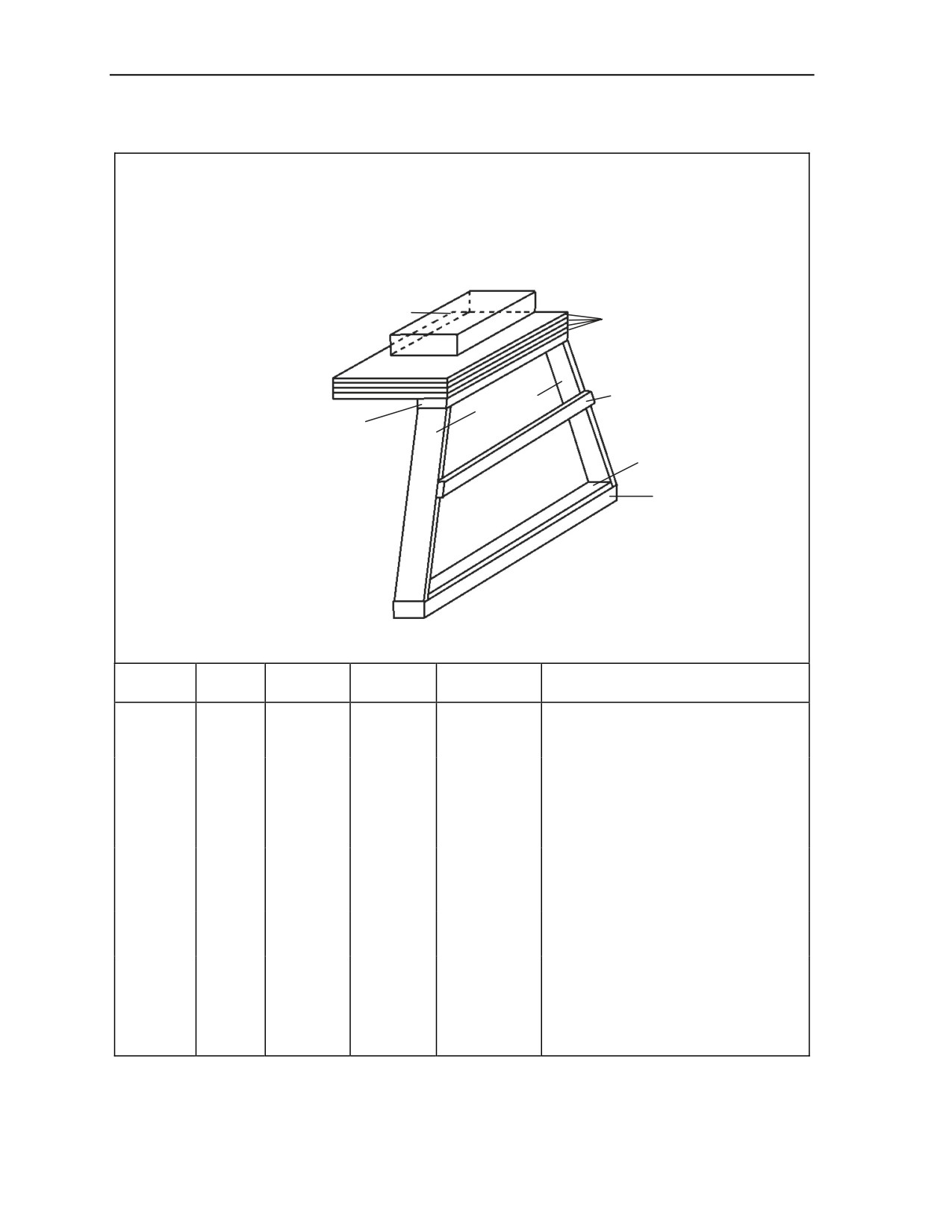
• Construct and position inner door support frame as shown in Figures 2-4 and 2-5.
Notes. 1. All measurements are given in inches.
2. This drawing is not drawn to scale.
3. Glue the honeycomb after the frame is positioned.
Honeycomb
Plywood
4 x 13
12 x 15
Lumber
Lumber
2 x 4 x 20
2 x 4 x 54
Lumber
2 x 4 x 15
Lumber
2 x 4 x 21
Lumber
4 x 4 x 24
FRONT
Support
Pieces
Width
Length
Material
Instructions
Number
(inches)
(inches)
1
1
24
4x4 lumber
Cut to form base.
1
21
2x4 lumber
Nail centered on base.
2
54
2x4 lumber
Nail upright against the 2 by 4
nailed on base.
1
15
2x4 lumber
Nail flush against the top of the 54-
inch 2 by 4 lumber.
1
20
2x4 lumber
Nail to the side of the 54-inch 2 by 4
22 ½ inches above the 4 by 4
lumber.
4
12
15
¾-inch
Nail flush against the 15-inch 2 by
plywood
4.
1
4
13
Honeycomb
Glue the honeycomb 4 inches from
the front edge the ¾-inch plywood
and flush against the 12-inch side of
the ¾-inch plywood after the
support frame is positioned.
Figure 2-4. Inner Door Support Constructed
2-4
FM 4-20.166/TO 13C7-25-71
30 May 2006
Rigging the M997 Ambulance on a 20-Foot, Type V Airdrop Platform for Low-Velocity Airdrop
2
1
2
1
3
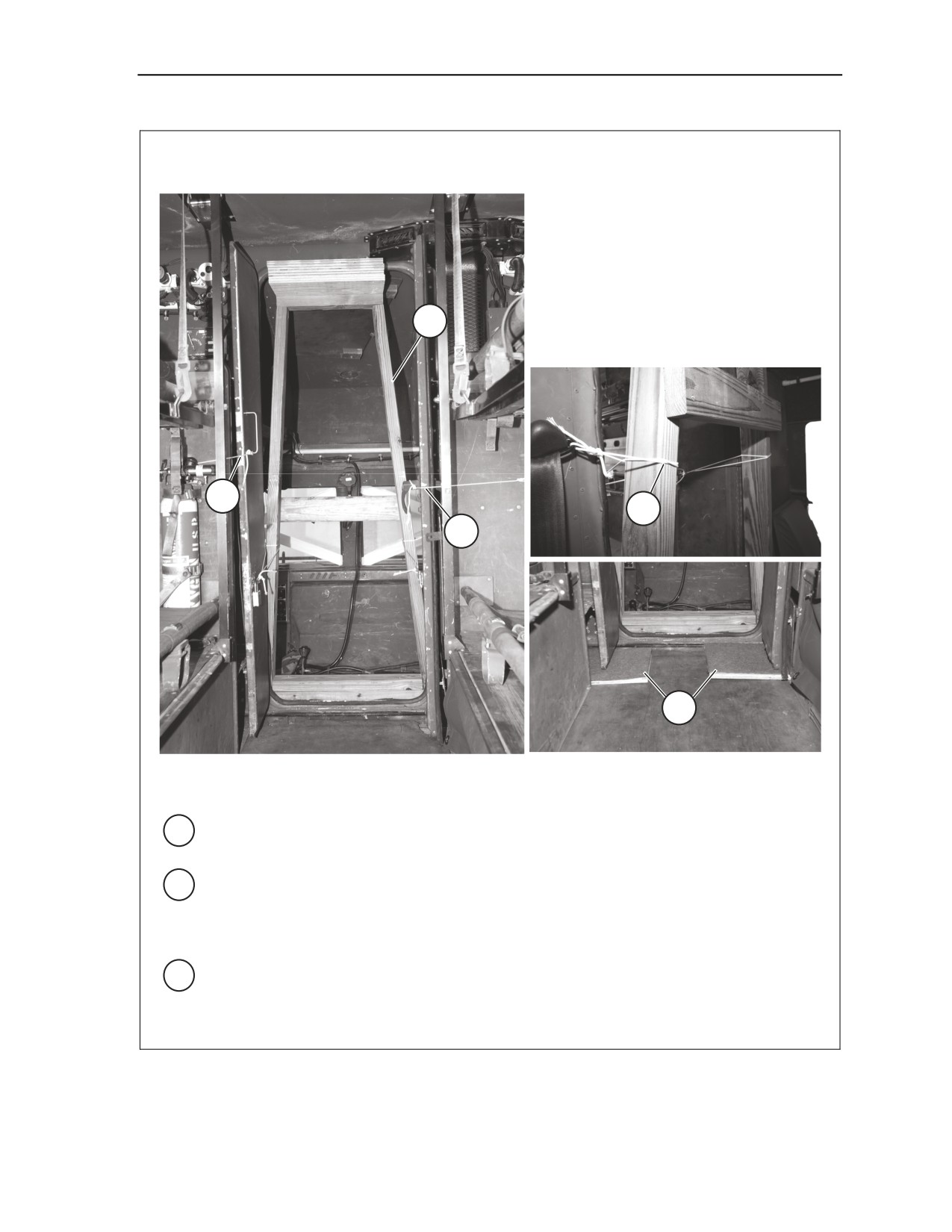
1 Open and secure the inner doors between the cab and transport area with type III nylon
cord.
2 Position the inner door support in the cab flush against the door opening to the transport
area. Ensure 4 inches of the top of the frame is to the inside of the cab and the bottom of
the frame is flush against the inner door frame. Secure the inner door frame support in
place with lengths of type III nylon cord.
3 Cut two 9- by 11-inch pieces of felt and two ¾- by 9- by 11-inch piece of plywood. Place a
piece of felt on top of the ¾-inch plywood and place under the inner door. Repeat for
opposite door.
Figure 2-5. Inner Door Support Positioned
30 May 2006
FM 4-20.166/TO 13C7-25-71
2-5
Chapter 2
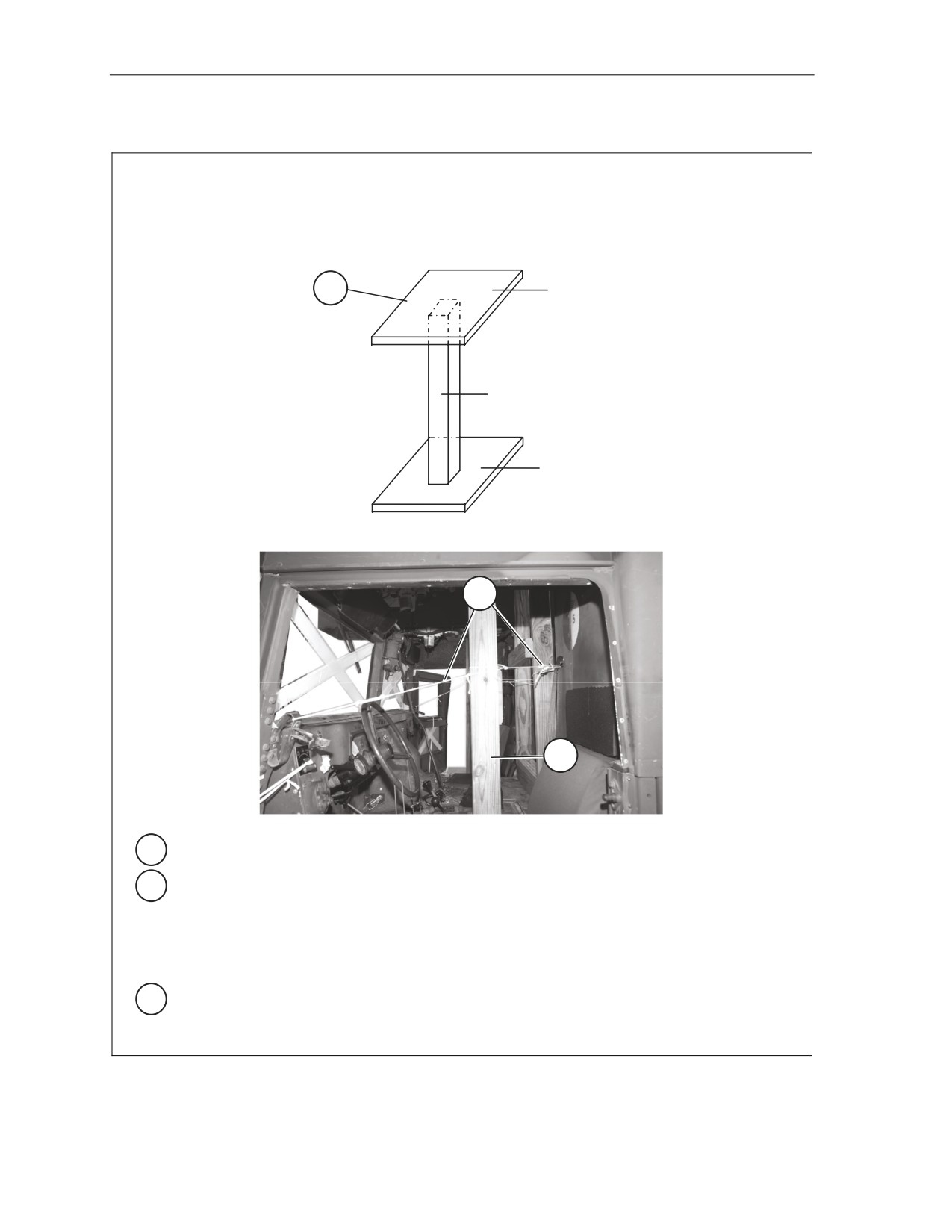
• Prepare the cab of the ambulance as shown in Steps 1 through 10 of Figure 1-9 and Figure 2-6.
Notes. 1. Drawing not drawn to scale.
2. All dimensions are in inches.
CAB SUPPORT
15 x 15
1
¾-inch plywood
4 x 4 x 40
lumber
12 ½ x 12 ½
¾-inch plywood
3
2
1 Construct two cab supports as shown.
2 Position the driver’s side and passenger side cab support on the respective seat. Ensure
the supports do not make contact with the air and heat elements running along the inside
of the cab roof.
Note. If the seats are worn additional wood shims may be needed to make contact with the top of
the cab and the seat.
3 Secure the cab supports in place with a length of type III nylon cord horizontally to
convenient places within the cab.
Figure 2-6. Cab Prepared
2-6
FM 4-20.166/TO 13C7-25-71
30 May 2006
Rigging the M997 Ambulance on a 20-Foot, Type V Airdrop Platform for Low-Velocity Airdrop
4
6
5
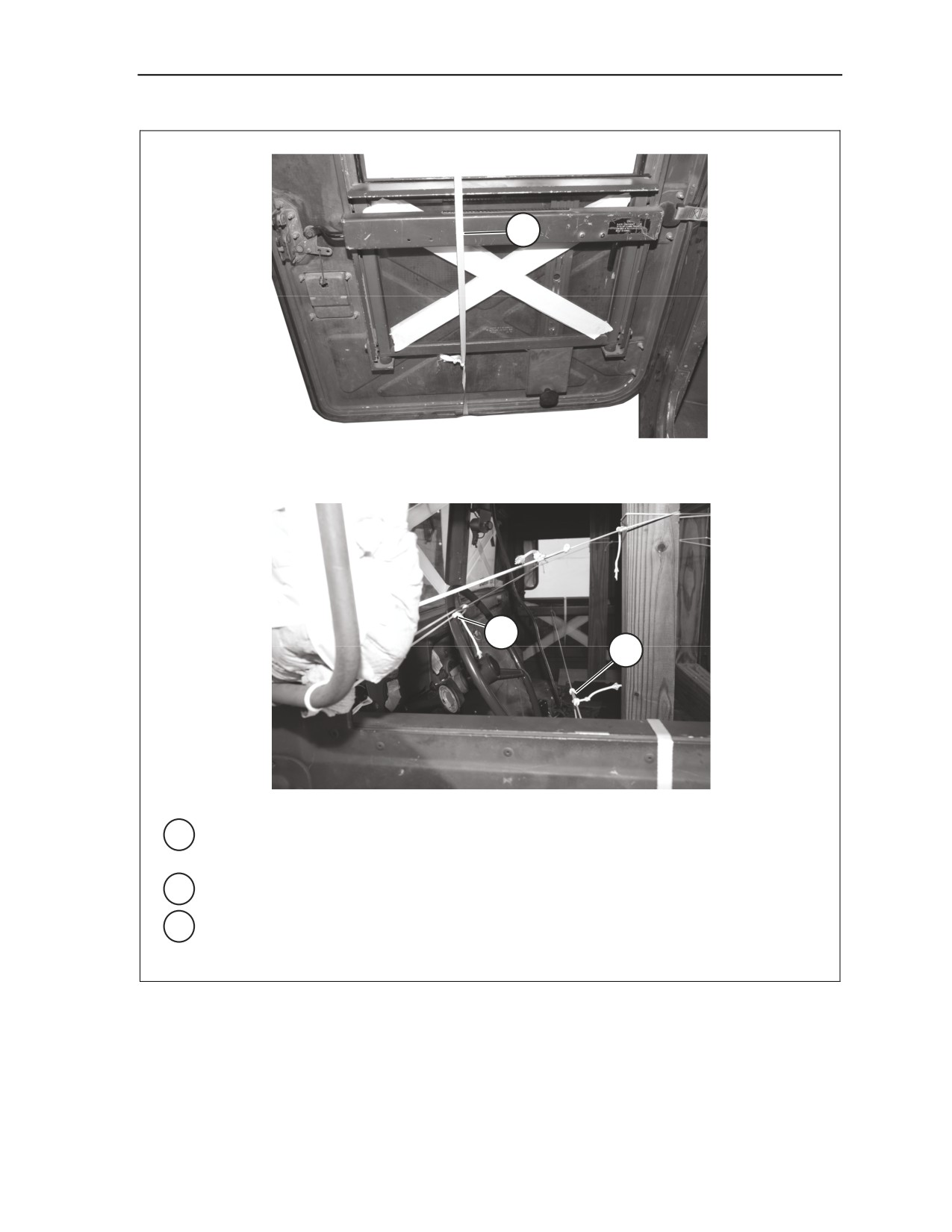
4 Secure the windows in the down position with lengths of ½-inch tubular nylon over the
window and around the door.
5 Secure both doors of the cab with a length of type III nylon cord from door-to-door.
6 Rotate the mirrors inward toward the doors and secure with a length of type III nylon cord
from the mirror bracket-to-mirror bracket.
Figure 2-6. Cab Prepared (Continued)
30 May 2006
FM 4-20.166/TO 13C7-25-71
2-7
Chapter 2
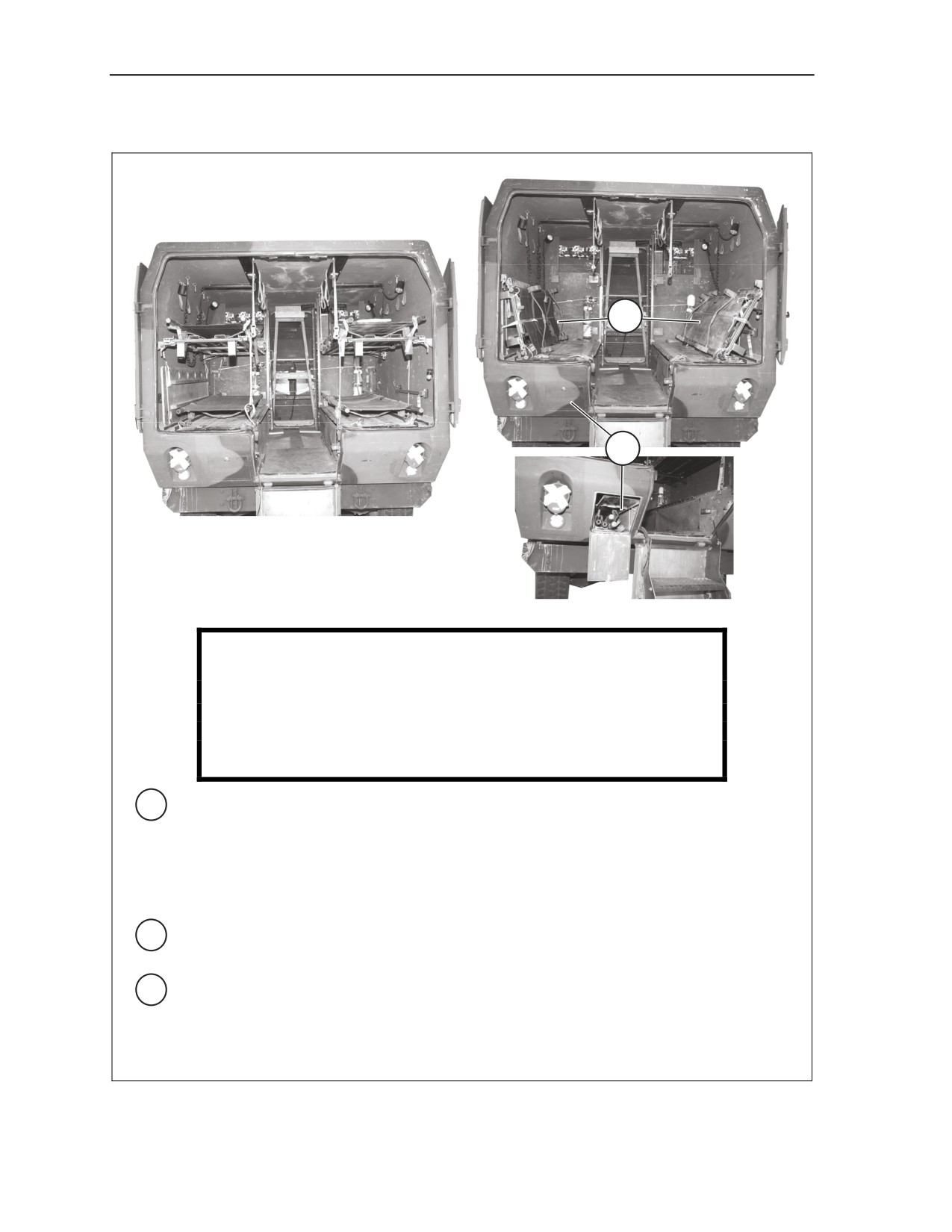
• Prepare the transport area of the ambulance as shown in Figures 2-7 through 2-19.
2
3
CONFIGURED FOR OPERATION
WARNING
Lowering the steps at the rear of the ambulance from inside
may cause serious injury. Lower the steps from outside the
ambulance. Use one hand to activate the release, and control
the descent of the steps assembly with the other hand.
1 Secure the blanket set in the left front compartment and resuscitator kit in the right side
compartment. Place the camouflage nets and poles in the storage compartments (not
shown).
Note. Medical equipment may be different, depending upon the needs of the medical unit. Tie
additional equipment, such as water cans, securely to stationary points in the ambulance with
½-inch tubular nylon webbing.
2 Remove two of the four litters and place them in their storage compartment. Remove the
remaining two litters and place to the side.
3 Remove the litter support racks from their latches. Position the litters and backboards
against the racks. Secure the racks and litters together with type III nylon cord through the
legs of the litters. Route an additional length of ½-inch tubular nylon webbing around the
racks and litters and secure to the backboard support brackets. Ensure all hardware is re-
installed once the racks are removed.
Figure 2-7. Transport Area Prepared
2-8
FM 4-20.166/TO 13C7-25-71
30 May 2006
Rigging the M997 Ambulance on a 20-Foot, Type V Airdrop Platform for Low-Velocity Airdrop
5
6
6
4
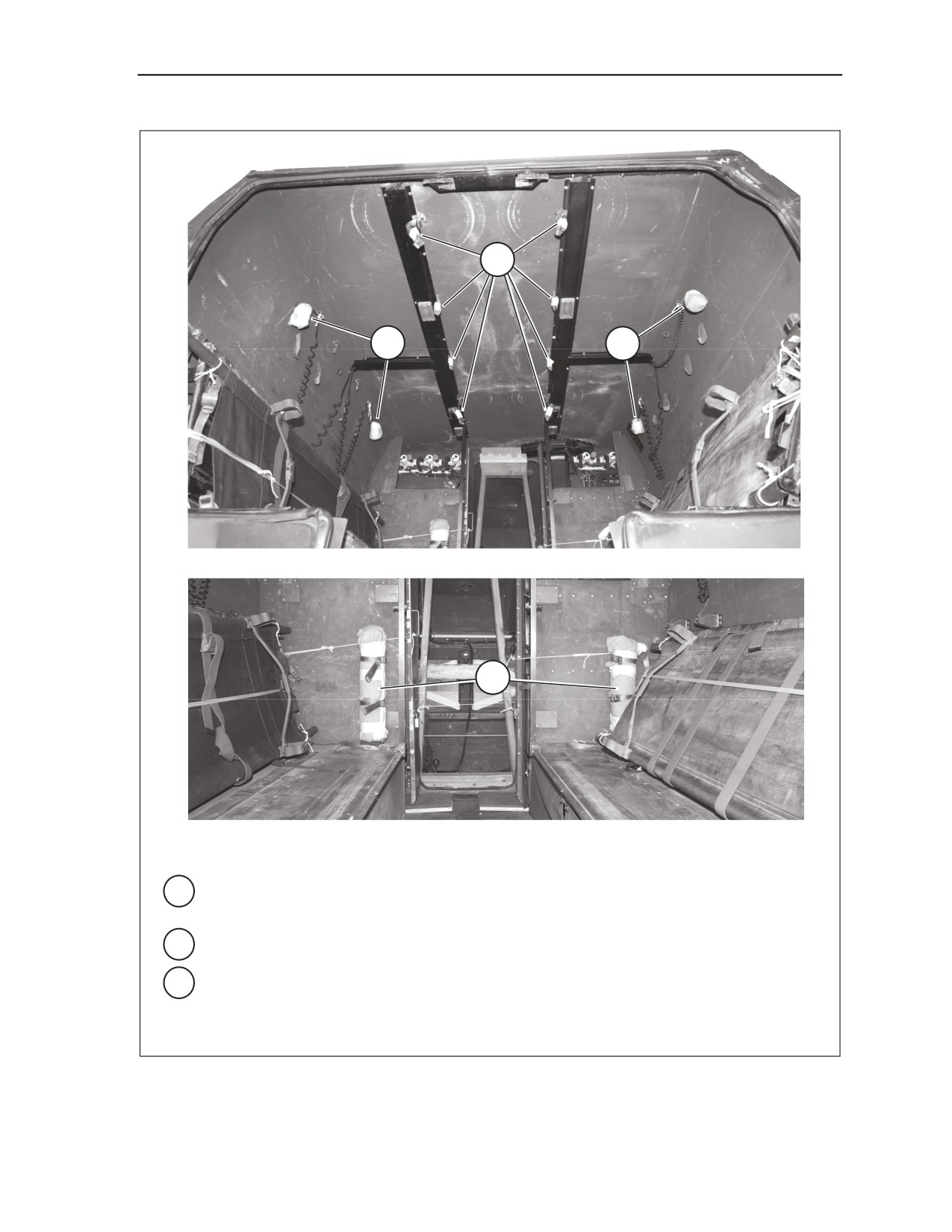
4 Remove the oxygen tanks from the designed racks. Pad the tanks with cellulose wadding
and return them to the designated racks.
5 Tape all straps in the transport area.
6 Remove the inner lights from their mounting brackets and wrap with cellulose wadding and
tape. Return the lights to their brackets and secure the light wiring to a convenient point
with type III nylon cord.
Figure 2-7. Transport Area Prepared (Continued)
30 May 2006
FM 4-20.166/TO 13C7-25-71
2-9
Chapter 2
8
7
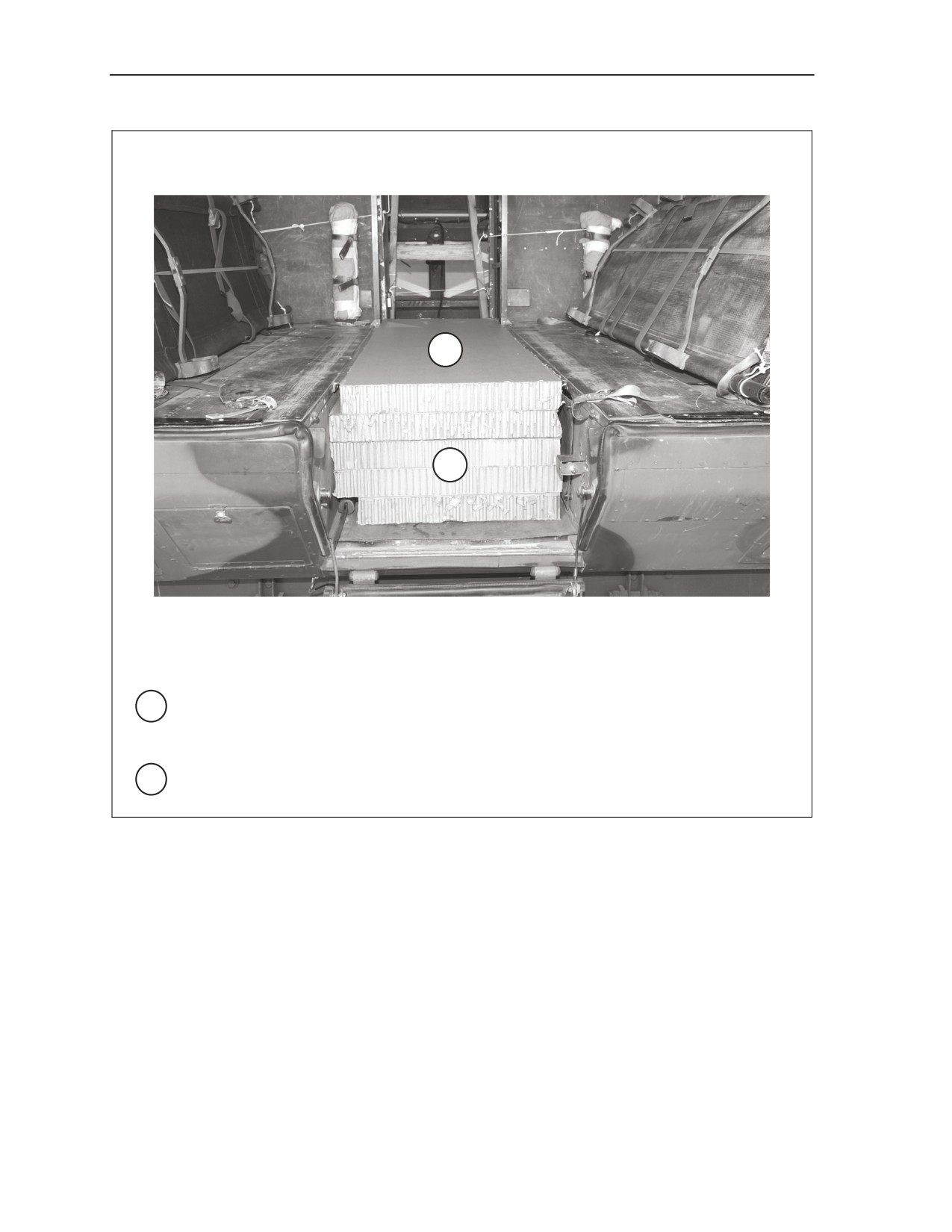
7 Cut four 77- by 24-inch pieces of honeycomb. Position the pieces on the floor of the
transport area and flush against the opened inner doors. Cutouts on the bottom piece may
be necessary to fit on the floor.
8 Cut and position a 77- by 23-inch piece of honeycomb on top of the pieces from step 7.
Figure 2-7. Transport Area Prepared (Continued)
2-10
FM 4-20.166/TO 13C7-25-71
30 May 2006
Rigging the M997 Ambulance on a 20-Foot, Type V Airdrop Platform for Low-Velocity Airdrop
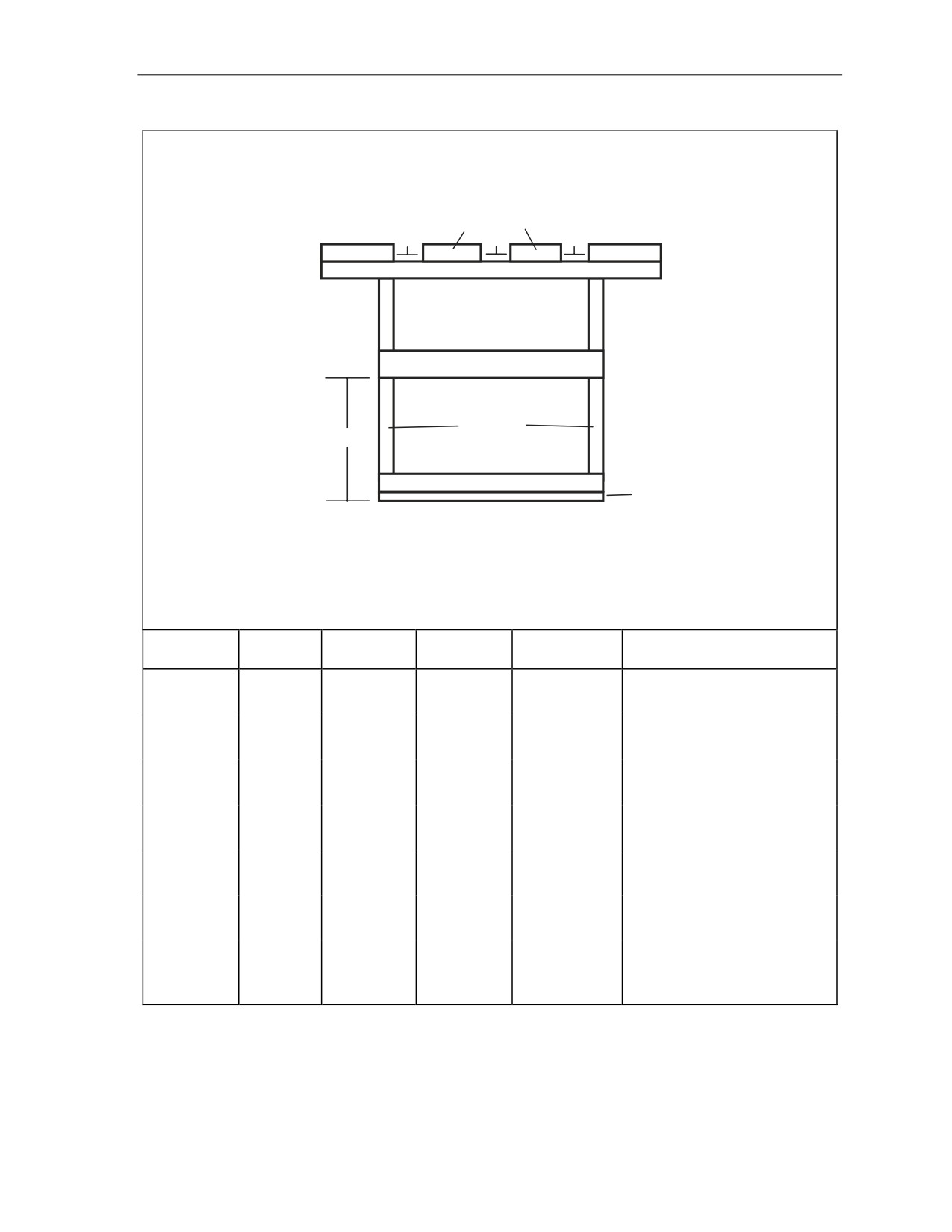
Notes. 1. All measurements are given in inches.
2. This drawing is not drawn to scale.
2 x 4 x 7 ½
6
6
6
2 x 4 x 16
2 x 4 x 16
2 x 4 x 65
2 x 4 x 38
2 x 4 x 44
20
2 x 4 x 38
¾ x 10 x 38
Step:
1. Construct three transport area roof supports.
Support
Pieces
Width
Length
Material
Instructions
Number
(inches)
(inches)
1, 2, and 3
1
10
38
¾-inch
Cut to form base.
plywood
1
38
2 by 4
Nail centered on the ¾-inch
lumber
plywood.
2
44
2 by 4
Nail one piece upright on
lumber
the end of the base.
1
38
2 by 4
Nail to the uprights 20
lumber
inches above base.
1
65
2 by 4
Nail centered on the
lumber
uprights.
2
16
2 by 4
Nail one on each end of the
lumber
65-inch 2 by 4.
2
7 ½
2 by 4
Nail one 65-inch 2 by 4 six
lumber
inches from the 16-inch 2 by
4.
Figure 2-8. Transport Area Supports Constructed
30 May 2006
FM 4-20.166/TO 13C7-25-71
2-11
Chapter 2
3
2
1
4
5
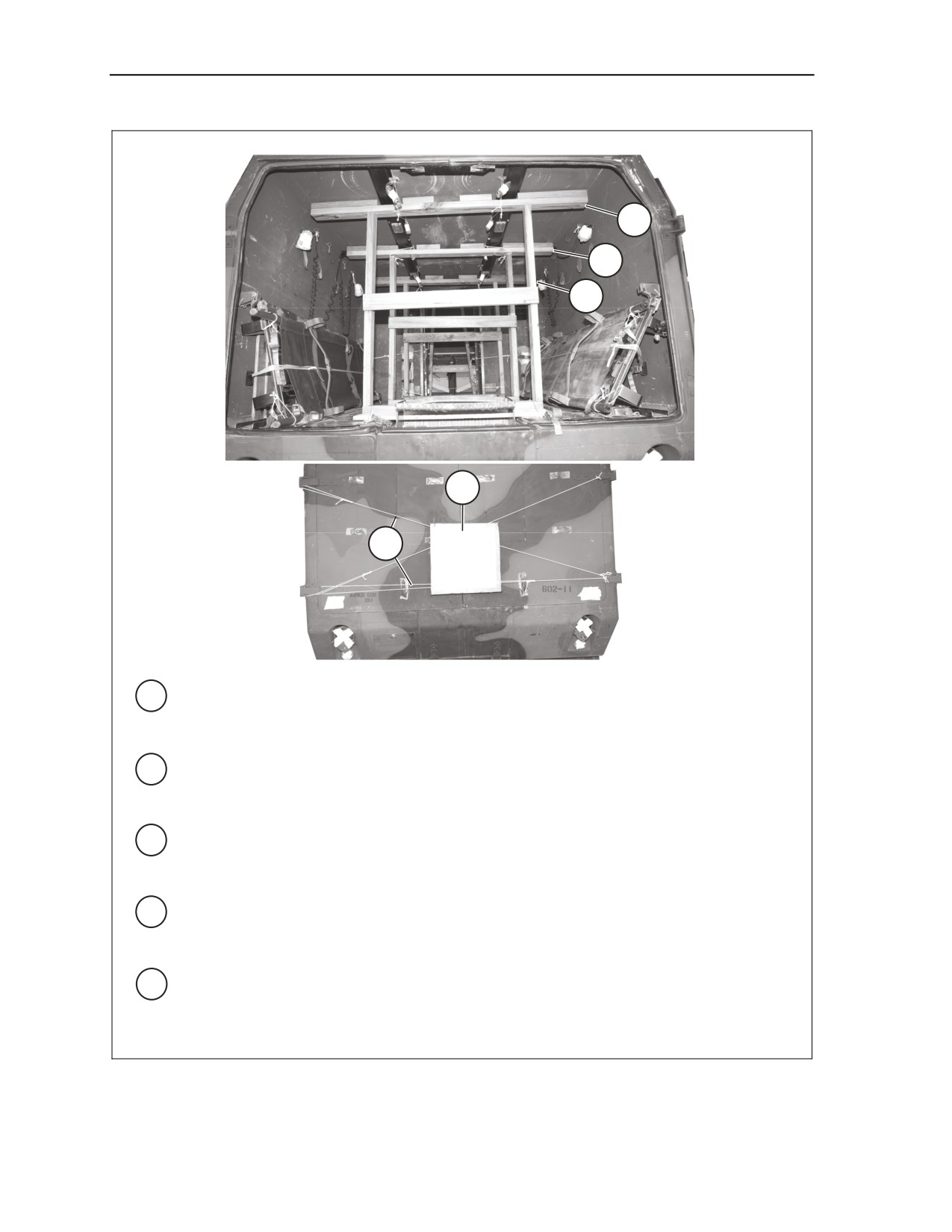
1 Position the first transport area roof support on the forward edge of the 77- by 23-inch
piece of honeycomb. Secure the support in place with type III nylon cord to convenient
places on the top and bottom of the support.
2 Position the second transport area roof support centered on the 77- by 23-inch piece of
honeycomb. Secure the support in place with type III nylon cord to convenient places on
the top and bottom of the support.
3 Position the third transport area roof support on the rear edge of the 77- by 23-inch piece
of honeycomb. Secure the support in place with type III nylon cord to convenient places
on the top and bottom of the support.
4 Close the transport area doors. Close the exposed “Red Cross” Markers on the outside of
the vehicle. Cut an 18- by 18-inch piece of honeycomb. Make an indentation on one side
to fit the handles of the door.
5 Secure the honeycomb to the doors with two lengths of type III nylon cord in an “X” from
the door hinges. Secure the bottom of the honeycomb with a length of type III nylon cord
from hinge to hinge.
Figure 2-9. Transport Area Support Positioned
2-12
FM 4-20.166/TO 13C7-25-71
30 May 2006
Rigging the M997 Ambulance on a 20-Foot, Type V Airdrop Platform for Low-Velocity Airdrop
• Prepare the body of the ambulance as shown in Figures 2-10 through 2-12.
8
9
20
6
1
36 x 83
2
1
3
5
4
Note. Tape the edges of the honeycomb.
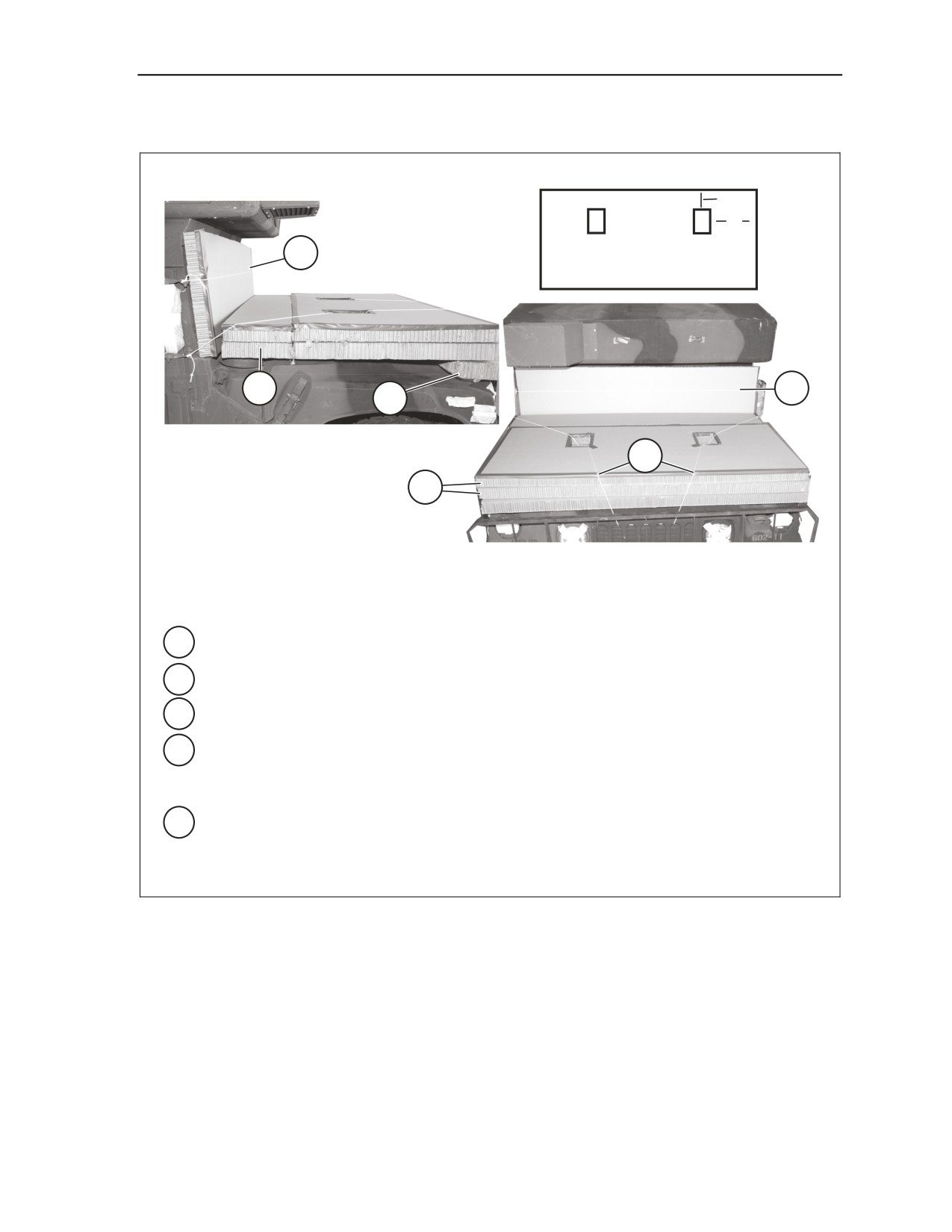
1 Tie a 21- by 83-inch piece of honeycomb over the windshield with type III nylon cord.
2 Place two 12- by 83-inch pieces of honeycomb flush against the windshield.
3 Place an 8- by 83-inch piece of honeycomb on the front of the hood.
4 Make cutouts in two 36- by 83-inch pieces of honeycomb as shown and place the
honeycomb on the hood against the honeycomb placed in step 2 and on top of the
honeycomb positioned in step 3.
5 Secure the honeycomb with a length of type III nylon cord. Tie one end to the hood latch
through the front lifting point, through the grill, back up to the other front lifting point and to
the opposite side latch.
Figure 2-10. Honeycomb Placed on Front of Ambulance
30 May 2006
FM 4-20.166/TO 13C7-25-71
2-13
Chapter 2
9
7
8
6
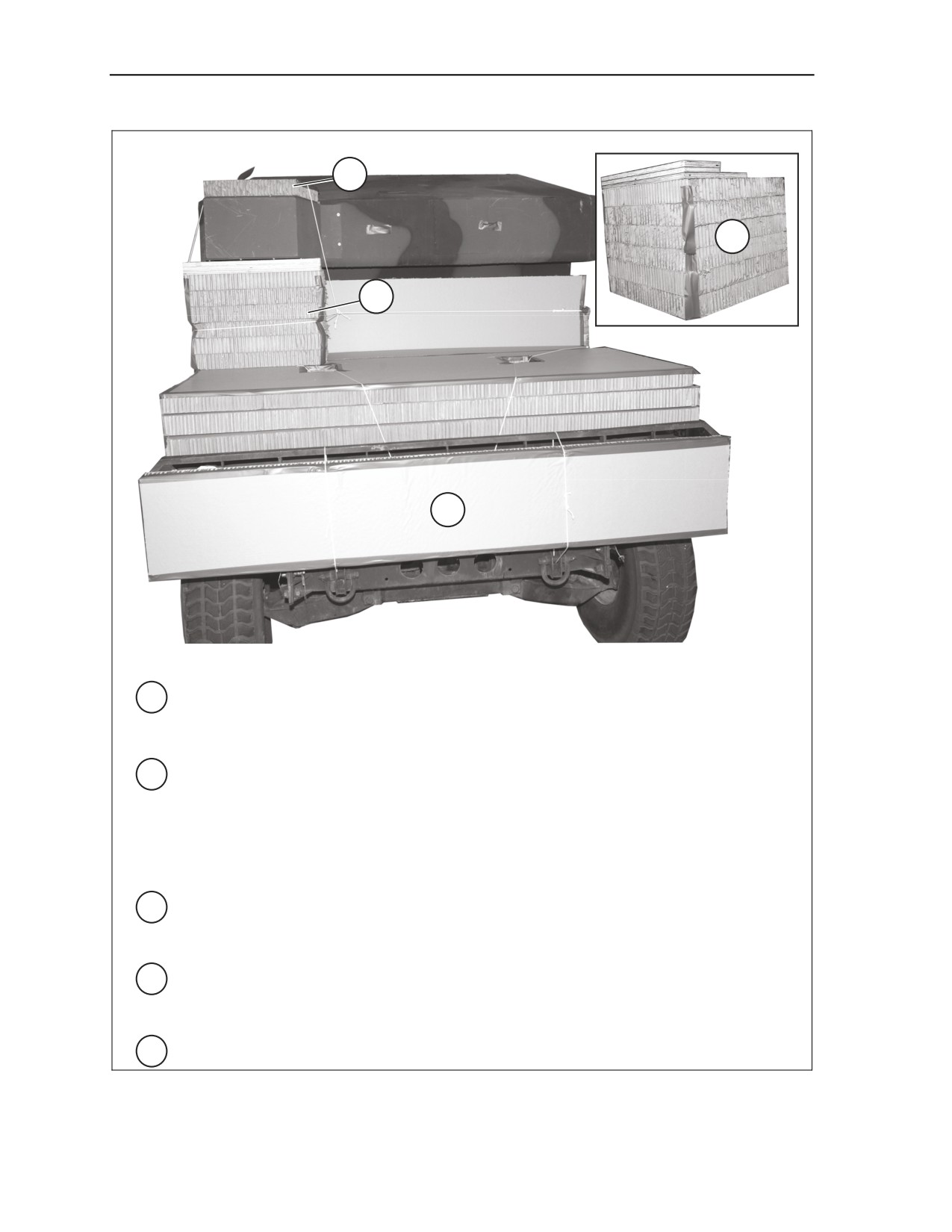
6 Cut a 14- by 83-inch piece of honeycomb. Place the honeycomb in front of the vehicle
brush guard. Secure with type III nylon cord to convenient points on the load.
Note. This procedure is only required if the vehicle is equipped with a brush guard.
7 Cut six 20- by 25-inch pieces of honeycomb. Cut a ¾- by 11- by 25-inch and a ¾- by 6- by
25-inch piece of plywood. Glue the six pieces of honeycomb together to form a base.
Glue the 11- by 25-inch piece of plywood on top, flush against the 25-inch edge of
honeycomb. Glue the 6- by 25-inch piece of plywood on top, flush against the 25-inch
edge.
Note. May be necessary to add a second ¾- by 6- by 25-inch piece of plywood to fill the gap.
8 Position the stack under the air-conditioning element with the 25-inch plywood edge facing
the front of the vehicle. Secure the stack with a length of type III nylon cord horizontally
and over the top of the honeycomb on the air-conditioning element.
9 Place a 10- by 21-inch piece of honeycomb on top of air-conditioning element. Trim the
edge of the honeycomb to fit the angle of the air-conditioning element. Secure with a
length of type III nylon cord from the hood latch to a convenient point on the load.
10 Tape the hood latches (not shown).
Figure 2-10. Honeycomb Placed on Front of Ambulance (Continued)
2-14
FM 4-20.166/TO 13C7-25-71
30 May 2006
Rigging the M997 Ambulance on a 20-Foot, Type V Airdrop Platform for Low-Velocity Airdrop
1
4
2
3
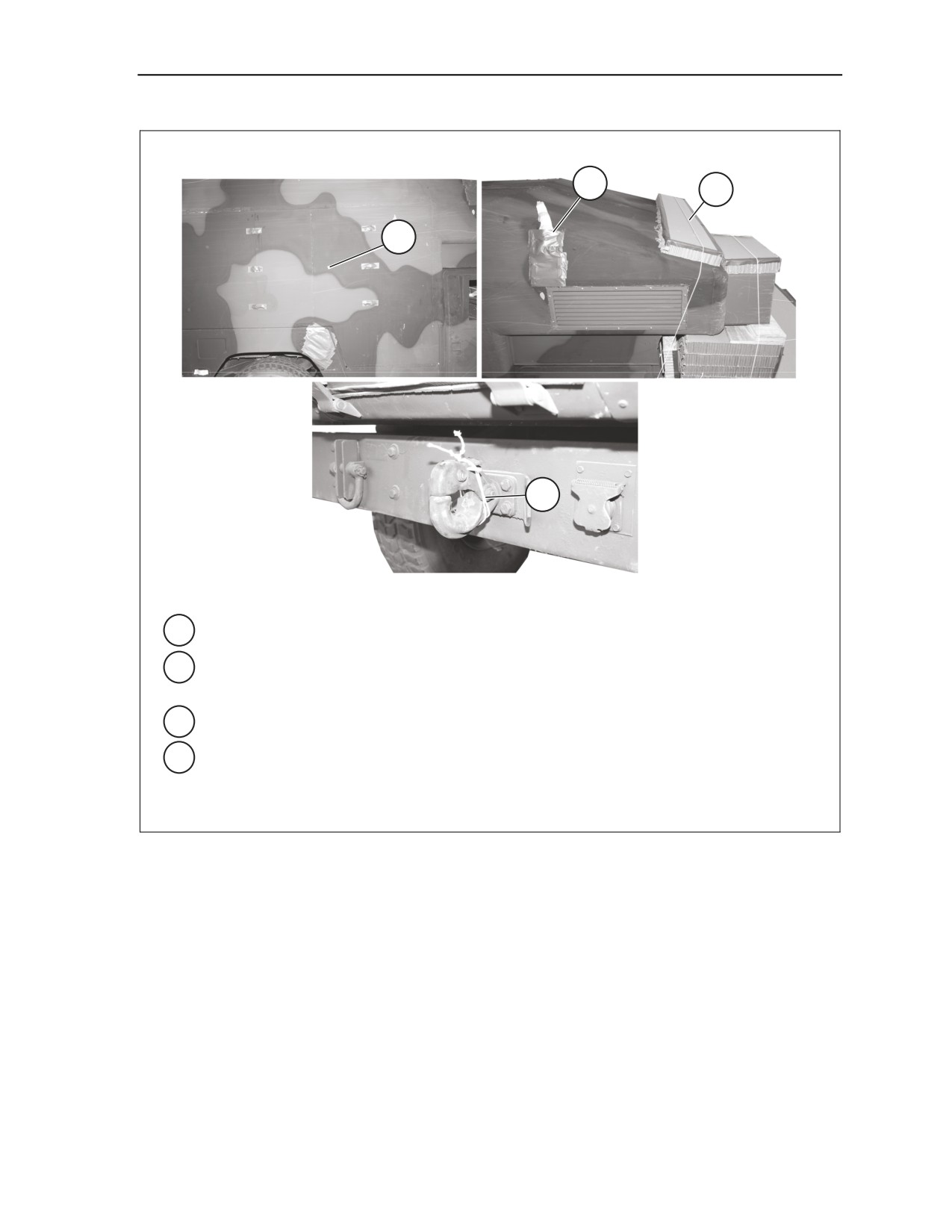
1 Pad the air-conditioning exhaust with cellulose wadding and tape.
2 Close all exposed “Red Cross” markers on both sides of the vehicle and tape exposed
latches with 2-inch cloth-backed tape.
3 Secure the pintle with type III nylon cord.
4 Cut a 12- by 78-inch piece of honeycomb. Position it on top of the forward part of the roof.
Tape the edges with cloth-backed tape. Secure in place with a length of type III nylon
cord.
Figure 2-11. Vehicle Body Prepared
30 May 2006
FM 4-20.166/TO 13C7-25-71
2-15
Chapter 2
Notes. 1. All measurements are given in inches.
2. This drawing is not drawn to scale.
FRONT
2
8
2
30
3
FIRST BOARD
4
7
1
2
2
REAR
FRONT
2
3
2
2
22
SECOND BOARD
2
1
4
2
5
REAR
FRONT
2
13
2
24
THIRD BOARD
2
1
2
REAR
1
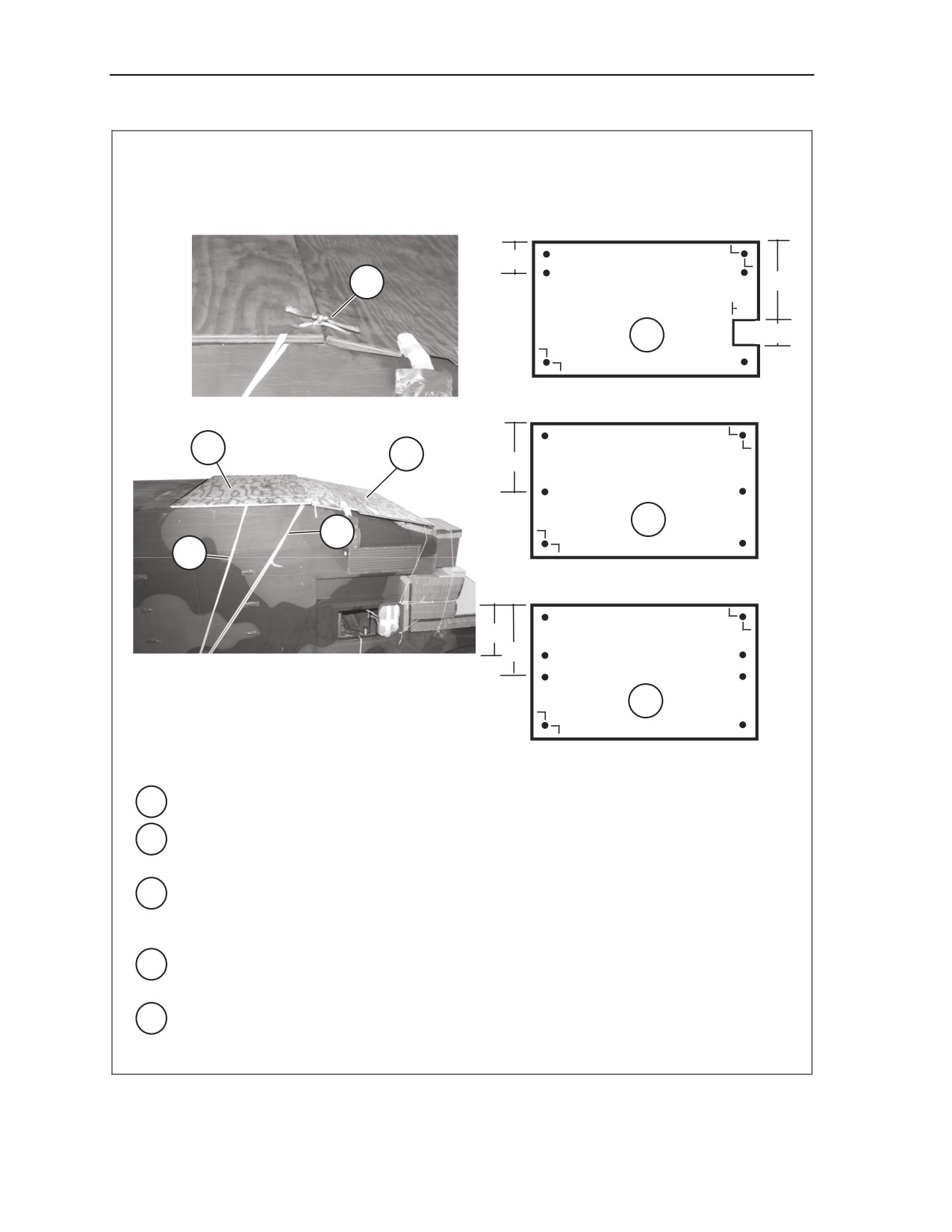
Prepare three 48- by 76-inch ¾-inch pieces of plywood as shown.
2
Position first board with the cutout around the air-conditioning exhaust. Place the front end
of the board on top of the piece of honeycomb from Figure 2-11, step 4.
3
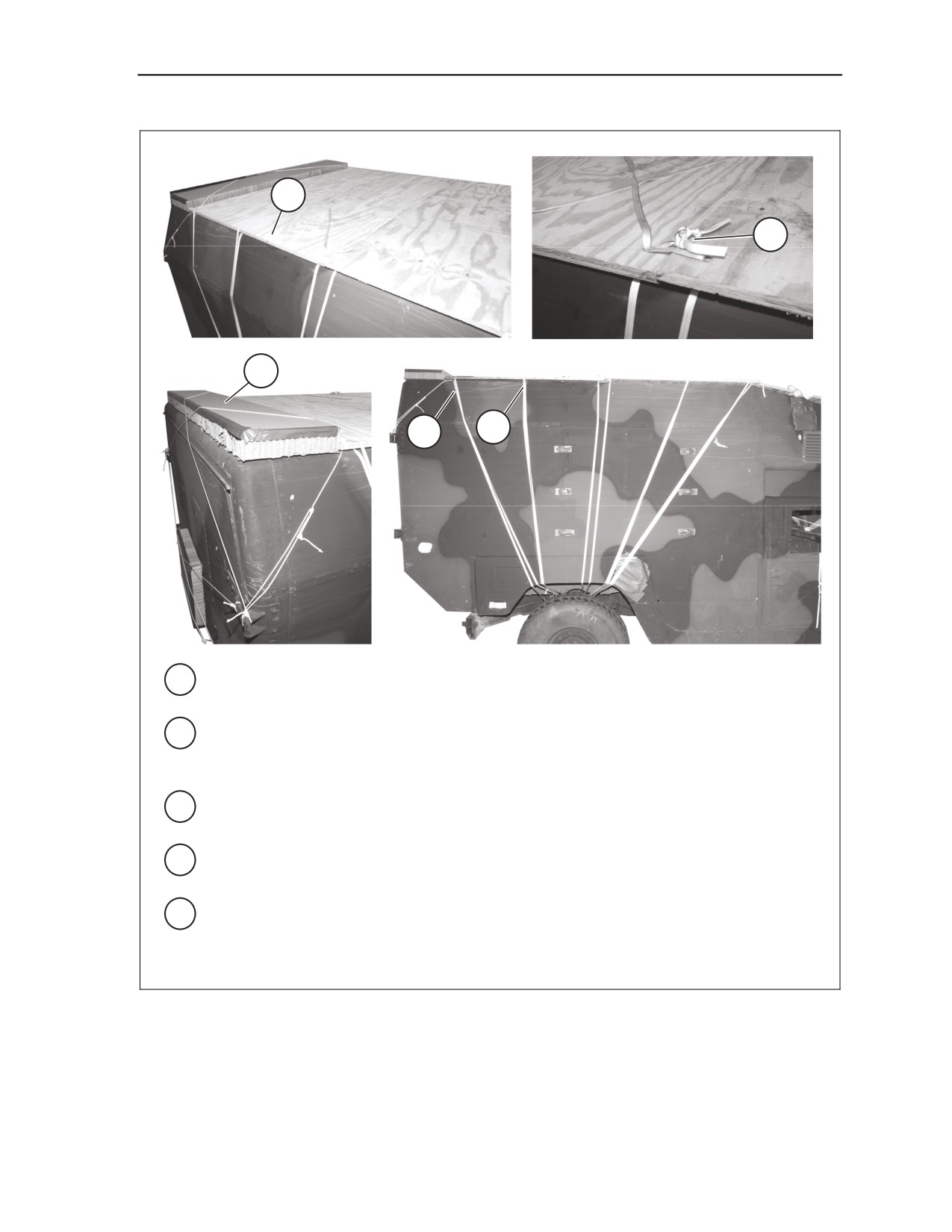
Position second board flush against the previous board. Secure the rear holes of first
board to the front holes of second board with a piece of ½-inch tubular nylon webbing on
each side.
4
Route a length of ½-inch tubular nylon webbing up through the front hole of second board
and secure to the suspension. Repeat for opposite side.
5
Route a length of ½-inch tubular nylon webbing up through the center hole of second
board and secure to the suspension. Repeat for opposite side.
Figure 2-12. Roof Cover Installed
2-16
FM 4-20.166/TO 13C7-25-71
30 May 2006
Rigging the M997 Ambulance on a 20-Foot, Type V Airdrop Platform for Low-Velocity Airdrop
7
6
10
8
9
6 Position the third board against the second board and secure the rear hole of second
board to the front holes of third board with a length of ½-inch tubular nylon webbing.
7 Route each end of a length of ½-inch tubular nylon webbing up through front holes and at
the 13-inch mark. Lay the excess on top of plywood. It will be used at a later step to
secure the ACB. Repeat for opposite side.
8 Route a length of ½-inch tubular nylon webbing through the hole at the 24-inch mark of the
third board and secure to the suspension. Repeat for opposite side.
9 Route a length of ½-inch tubular nylon webbing through the rear hole of the third board and
secure to suspension. Repeat for opposite side.
10 Cut a 12-by 76-inch piece of honeycomb. Tape the top edges with cloth-backed tape.
Position the piece flush against the rear of the third board. Secure the piece with a length
of type III nylon cord to a convenient point on the load.
Figure 2-12. Roof Cover Installed (Continued)
30 May 2006
FM 4-20.166/TO 13C7-25-71
2-17
Chapter 2
LIFTING AND POSITIONING AMBULANCE
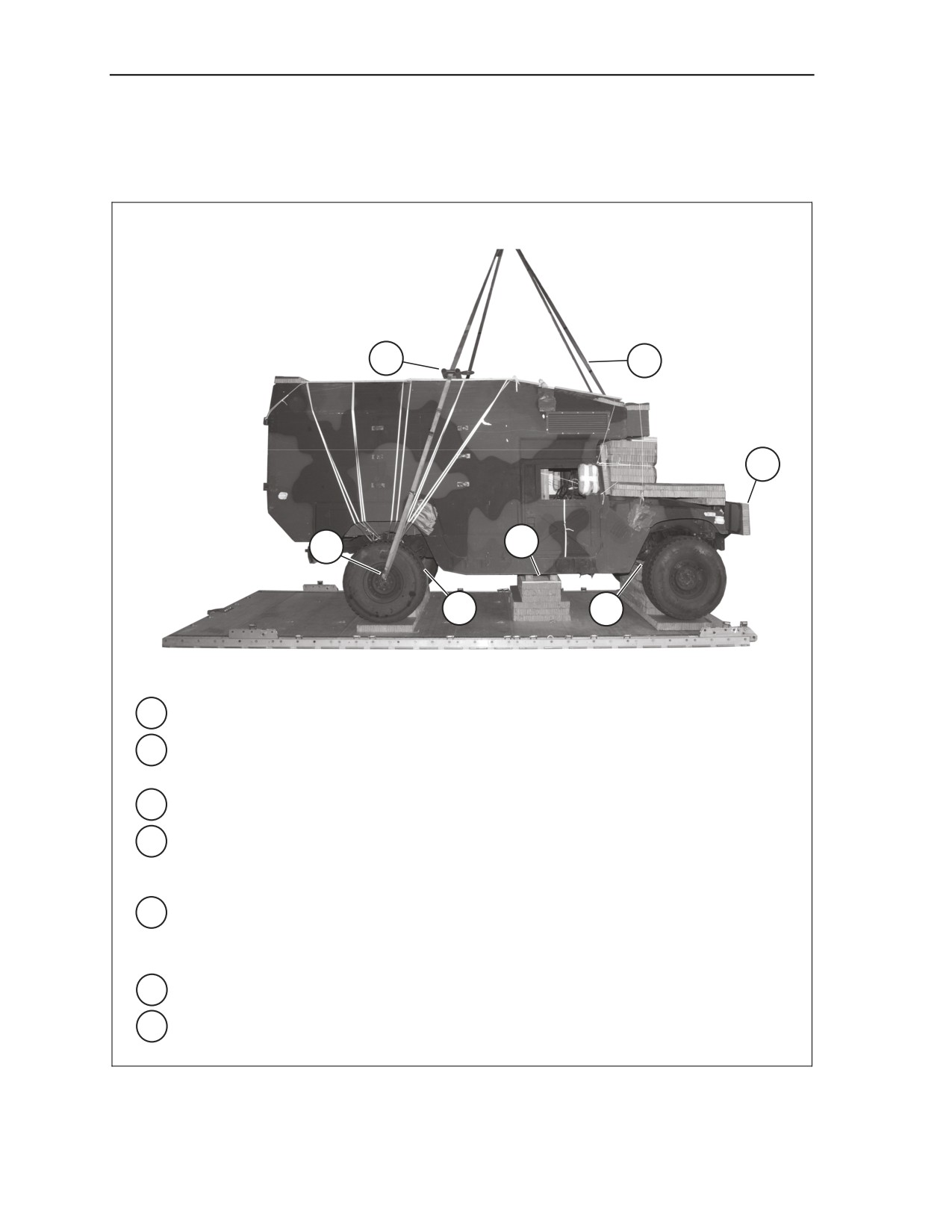
2-6. Lift and position the vehicle as shown in Figure 2-13.
1
3
5
7
4
6
6
1 Place an attitude control bar (ACB) over the transport area of the ambulance.
2 Route a 3-foot (2-loop), type XXVI nylon sling through each front lifting point on the
vehicle’s hood (not shown).
3 Attach a 12-foot (2-loop), type XXVI nylon sling to the 3-foot sling with a large clevis.
4 Remove the rear lifting shackles from the rear of the vehicle. Attach them to the rear wheel
hubs. Attach a 16-foot (2-loop), type XXVI nylon sling to the shackle with a large clevis to
each side. Route the running ends up through the ACB.
5 Raise the slings and position the ambulance on the platform with a 3-inch overhang from
the front of the platform to the brush guard.
Note. Overhang will only occur if the vehicle is equipped with a brush guard.
6 Make sure the suspension cross members set squarely on stacks 1 and 3.
7 Make sure the frame rail sets squarely on stack 2.
Figure 2-13. Ambulance Positioned
2-18
FM 4-20.166/TO 13C7-25-71
30 May 2006
Rigging the M997 Ambulance on a 20-Foot, Type V Airdrop Platform for Low-Velocity Airdrop
LASHING AMBULANCE
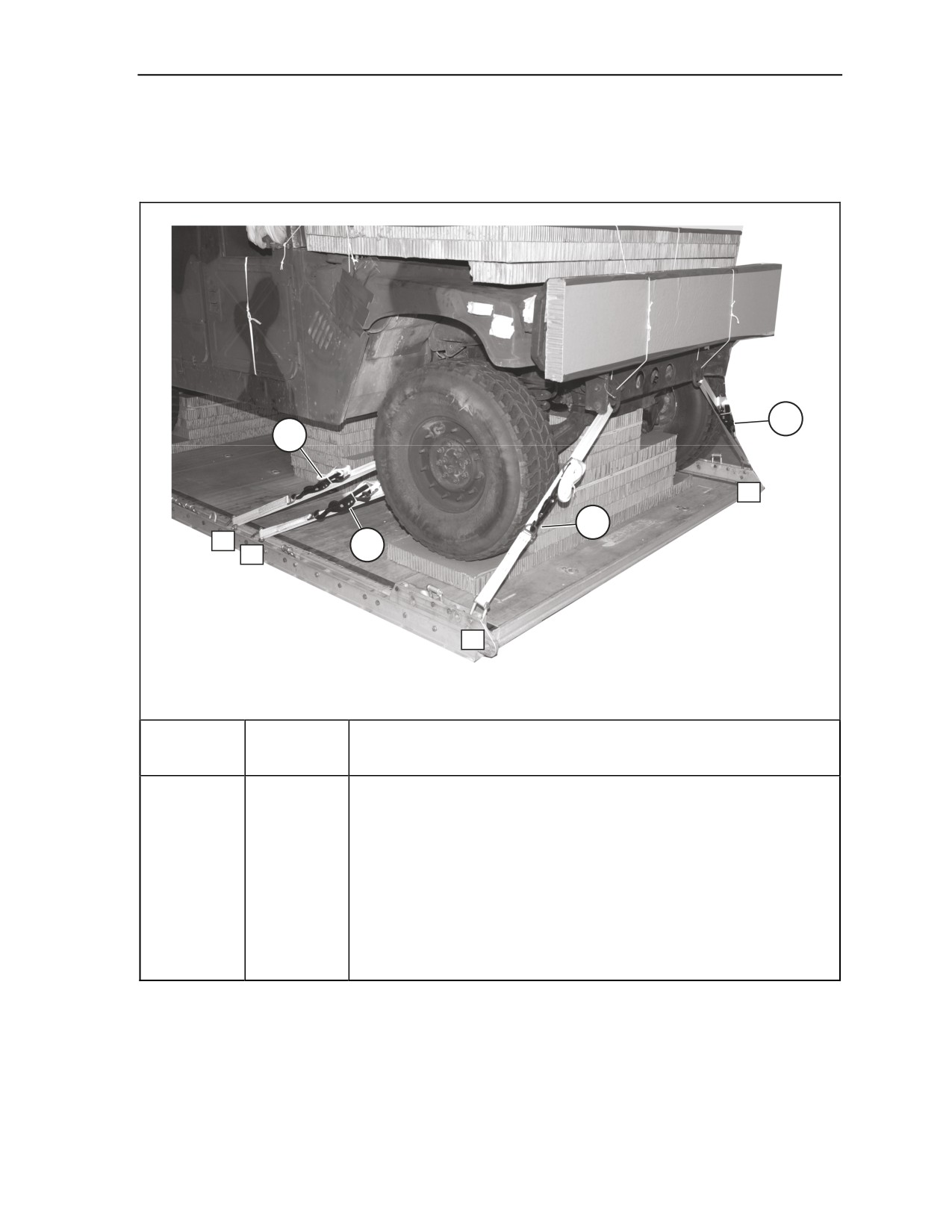
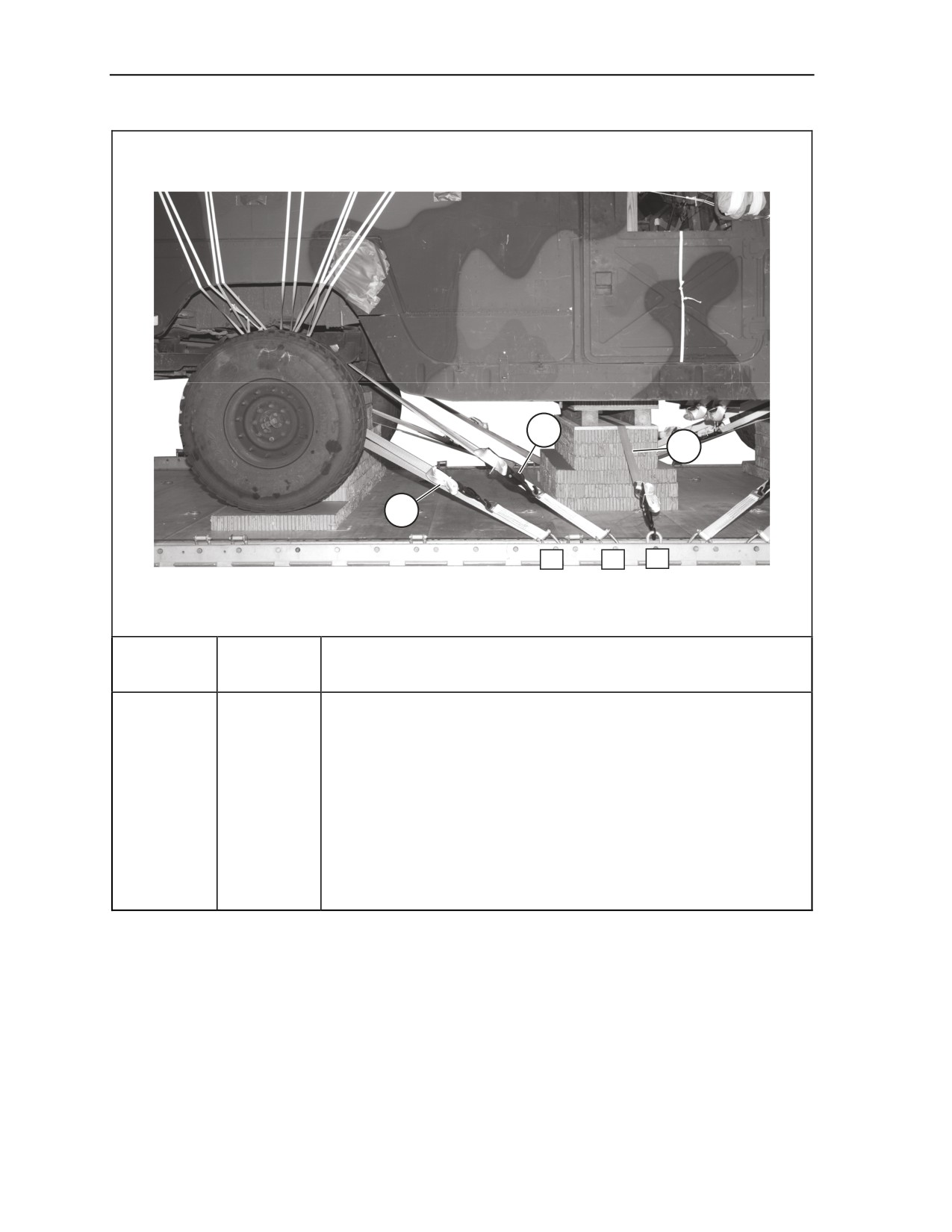
2-7. Lash the ambulance to the platform as shown in Figures 2-14 through 2-16.
2
5
1A
1
5
3
4
1
Lashing
Tiedown
Instructions
Number
Clevis
Number
Pass lashing:
1
1
Through right bumper shackle.
2
1A
Through left bumper shackle.
3
4
Around right front lower control arm.
4
4A
Around left front lower control arm.
5
5
Through tie-down bracket behind right front coil spring.
6
5A
Through tie-down bracket behind left front coil spring.
Figure 2-14. Lashings 1 through 6 Installed
30 May 2006
FM 4-20.166/TO 13C7-25-71
2-19
Chapter 2
8
7
10
9
7
6
Lashing
Tiedown
Instructions
Number
Clevis
Number
Pass lashing:
7
6 and 6A
Pass a 15-foot lashing through clevis 6A and through its own D-ring.
Pass the lashing through the hole in stack 2. Attach the lashing to
clevis 6 with a load binder.
8
7
Through tie-down bracket in front of right rear coil spring.
9
7A
Through tie-down bracket in front of left rear coil spring.
10
9
Around right rear lower control arm.
11
9A
Around left rear lower control arm.
Figure 2-15. Lashings 7 through 11 Installed
2-20
FM 4-20.166/TO 13C7-25-71
30 May 2006
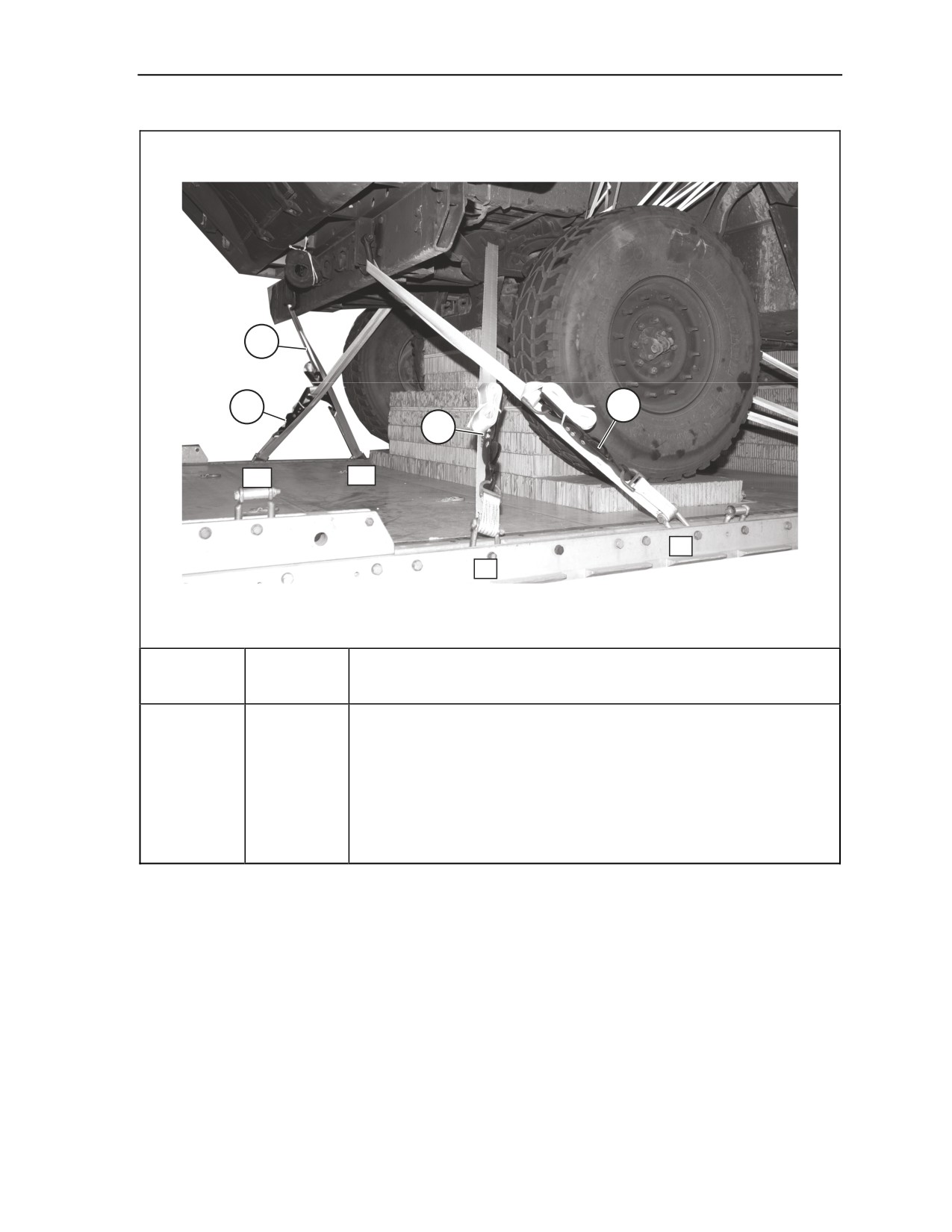
Rigging the M997 Ambulance on a 20-Foot, Type V Airdrop Platform for Low-Velocity Airdrop
13
15
12
14
13A
12A
12
13
Lashing
Tiedown
Instructions
Number
Clevis
Number
Pass lashing:
12
12
Through tie-down shackle on right side of bumper.
13
12A
Through tie-down shackle on left side of bumper.
14
13
Through tie-down bracket behind right rear coil spring.
15
13A
Through tie-down bracket behind left rear coil spring.
Figure 2-16. Lashings 12 through 15 Installed
30 May 2006
FM 4-20.166/TO 13C7-25-71
2-21
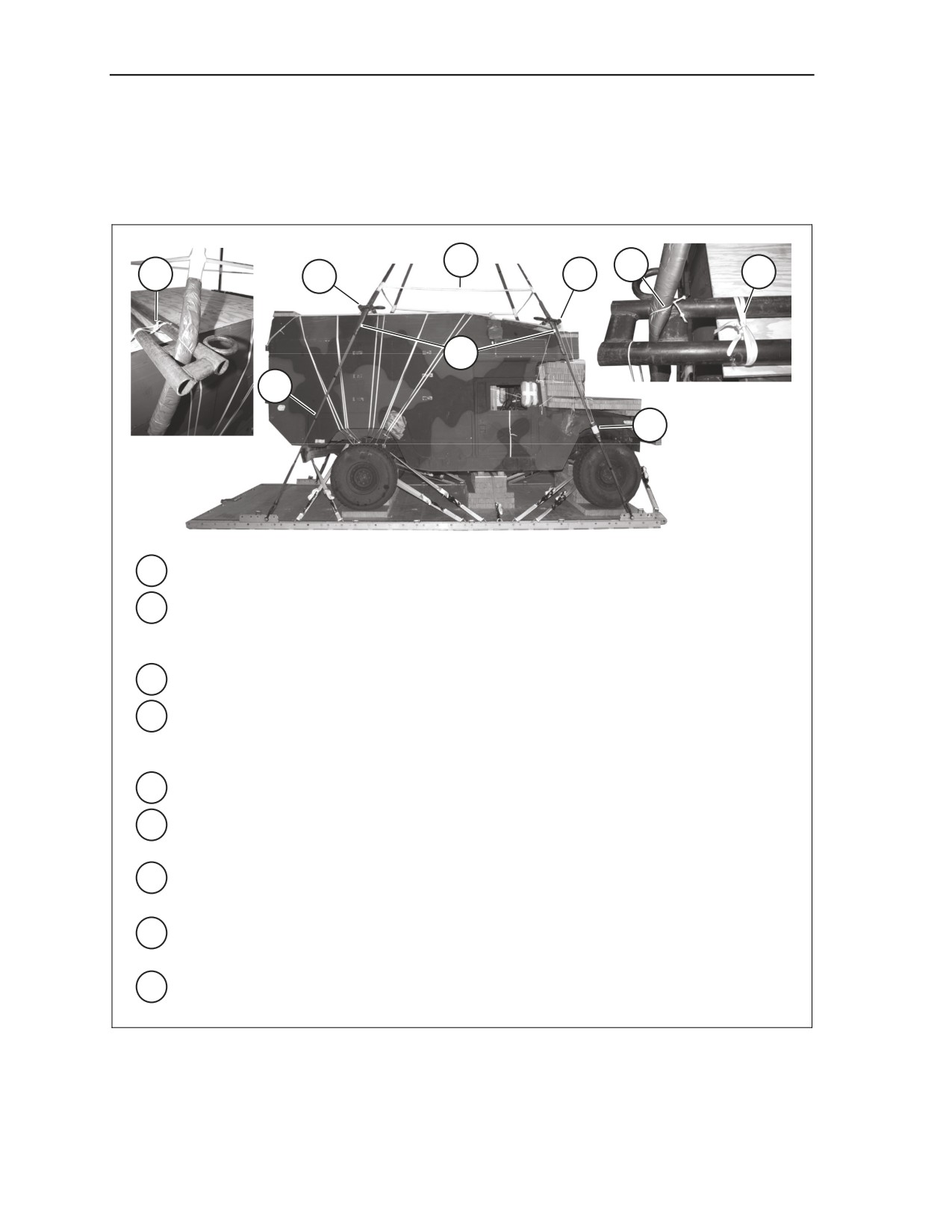
Chapter 2
INSTALLING SUSPENSION SYSTEM
2-8. Install the suspension system as given below:
• Install the suspension slings and the deadman’s tie as shown in Figure 2-17.
8
9
7
3
1
6
5
4
2
1
Position an ACB on the first board with the rings facing to the rear of ambulance.
2
Attach a 3-foot (2-loop), type XXVI nylon sling with a large clevis to the tandem link. Attach
a 16-foot (2-loop), type XXVI nylon sling to the 3-foot sling with a 5 ½-inch two-point link.
Route the free running end through the square hole of the ACB. Repeat for opposite side.
3
Position an ACB on the third board with the rings facing to the front of ambulance.
4
Attach a 20-foot (2-loop), type XXVI nylon sling with a large clevis to the suspension
bracket. Route the free running end through the square hole of the ACB. Repeat for
opposite side.
5
Raise the slings and pad with felt and tape 12 inches above and below the ACB.
6
Route a length of ½-inch tubular nylon webbing up through the front hole and center hole
of first board and over the ACB and secure the ends. Repeat for opposite side.
7
Route the existing free running ends of ½-inch tubular nylon webbing on third board over
the ACB and secure the ends. Repeat for opposite side.
8
Raise the slings and install a deadman’s tie according to FM 4-20.102/MCRP 4-
11.3J/NAVSEA SS400-AB-MMO-010/TO 13C7-1-5.
9
Secure the slings to the ACB with a piece of type III nylon cord.
Figure 2-17. Suspension Slings and Deadman’s Tie Installed
2-22
FM 4-20.166/TO 13C7-25-71
30 May 2006
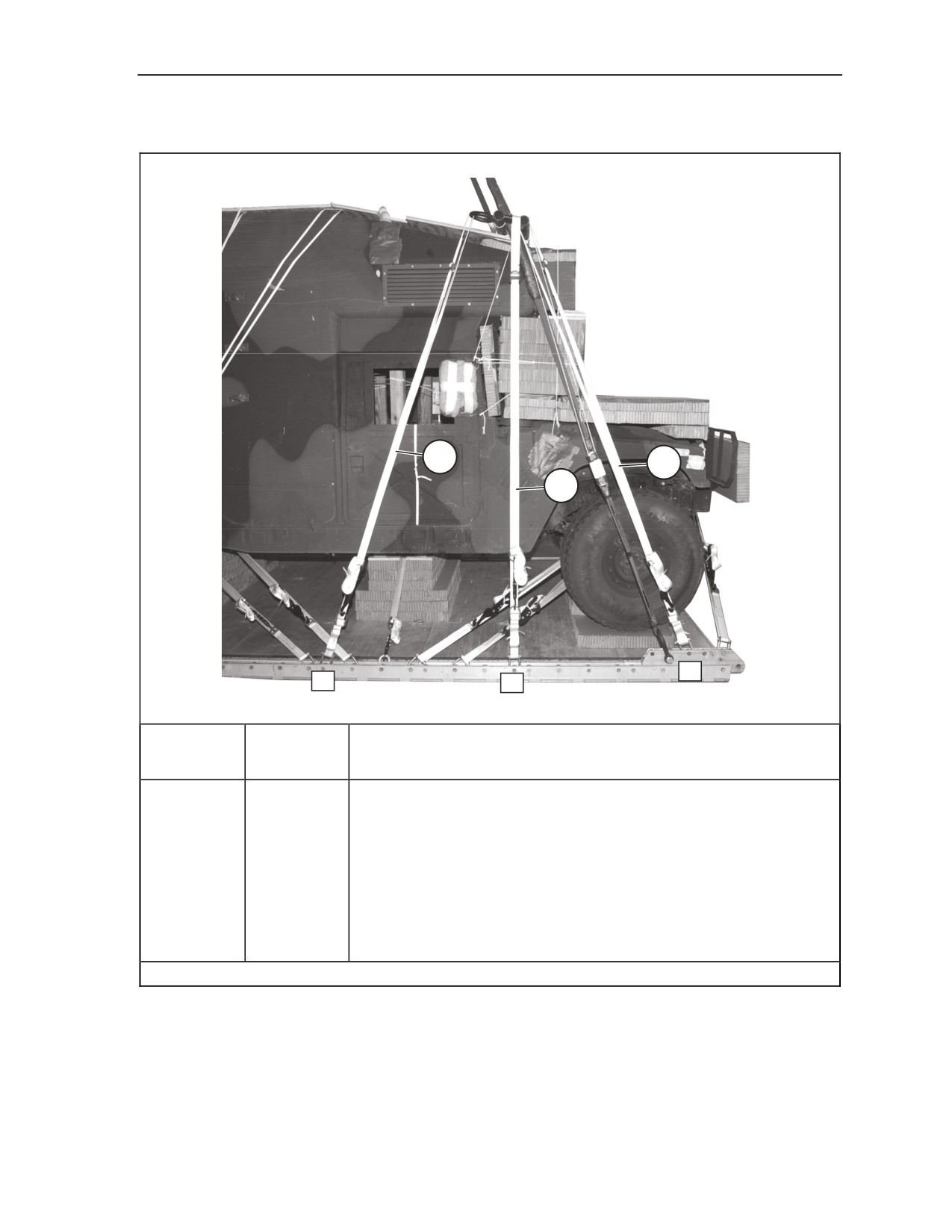
Rigging the M997 Ambulance on a 20-Foot, Type V Airdrop Platform for Low-Velocity Airdrop
• Lash the front ACB to the ambulance as shown in Figure 2-18.
5
1
3
2
8
3
Lashing
Tiedown
Instructions
Number
Clevis
Number
Pass lashing:
1
2
Around front bar of ACB.
2
2A
Around front bar of ACB.
3
3
Through square hole of ACB.
4
3A
Through square hole of ACB.
5
8
Through ring of ACB.
6
8A
Through ring of ACB.
Note. Tighten all lashings at the same time to prevent shifting of the ACB.
Figure 2-18. Front ACB Lashed to Platform
30 May 2006
FM 4-20.166/TO 13C7-25-71
2-23
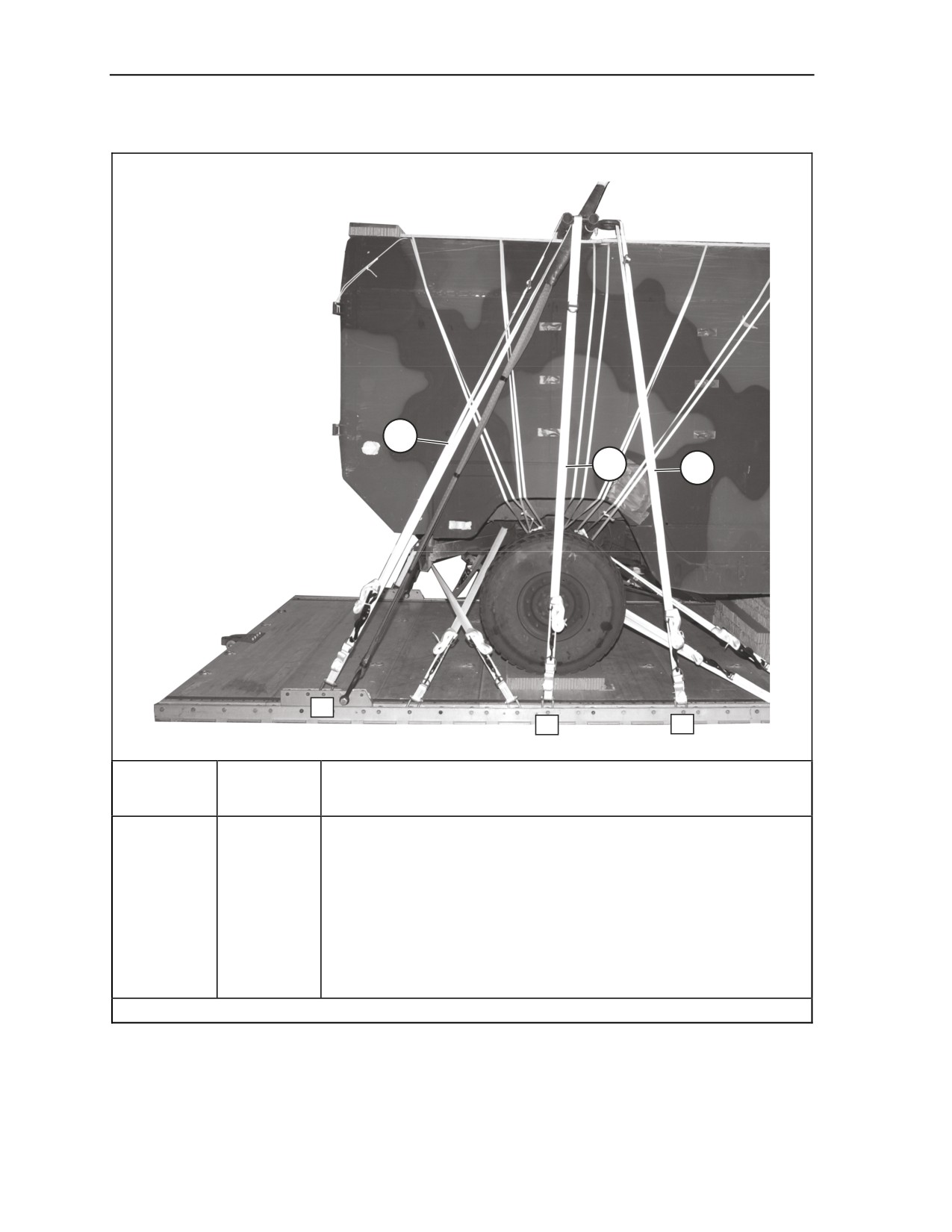
Chapter 2
• Lash the rear ACB to the ambulance as shown in Figure 2-19.
5
3
1
14
11
10
Lashing
Tiedown
Instructions
Number
Clevis
Number
Pass lashing:
1
10
Around ring of ACB.
2
10A
Around ring of ACB.
3
11
Through square hole of ACB.
4
11A
Through square hole of ACB.
5
14
Through rear bar of ACB.
6
14A
Through rear bar of ACB.
Note. Tighten all lashings at the same time to prevent shifting of the ACB.
Figure 2-19. Rear ACB Lashed to Platform
2-24
FM 4-20.166/TO 13C7-25-71
30 May 2006
Rigging the M997 Ambulance on a 20-Foot, Type V Airdrop Platform for Low-Velocity Airdrop
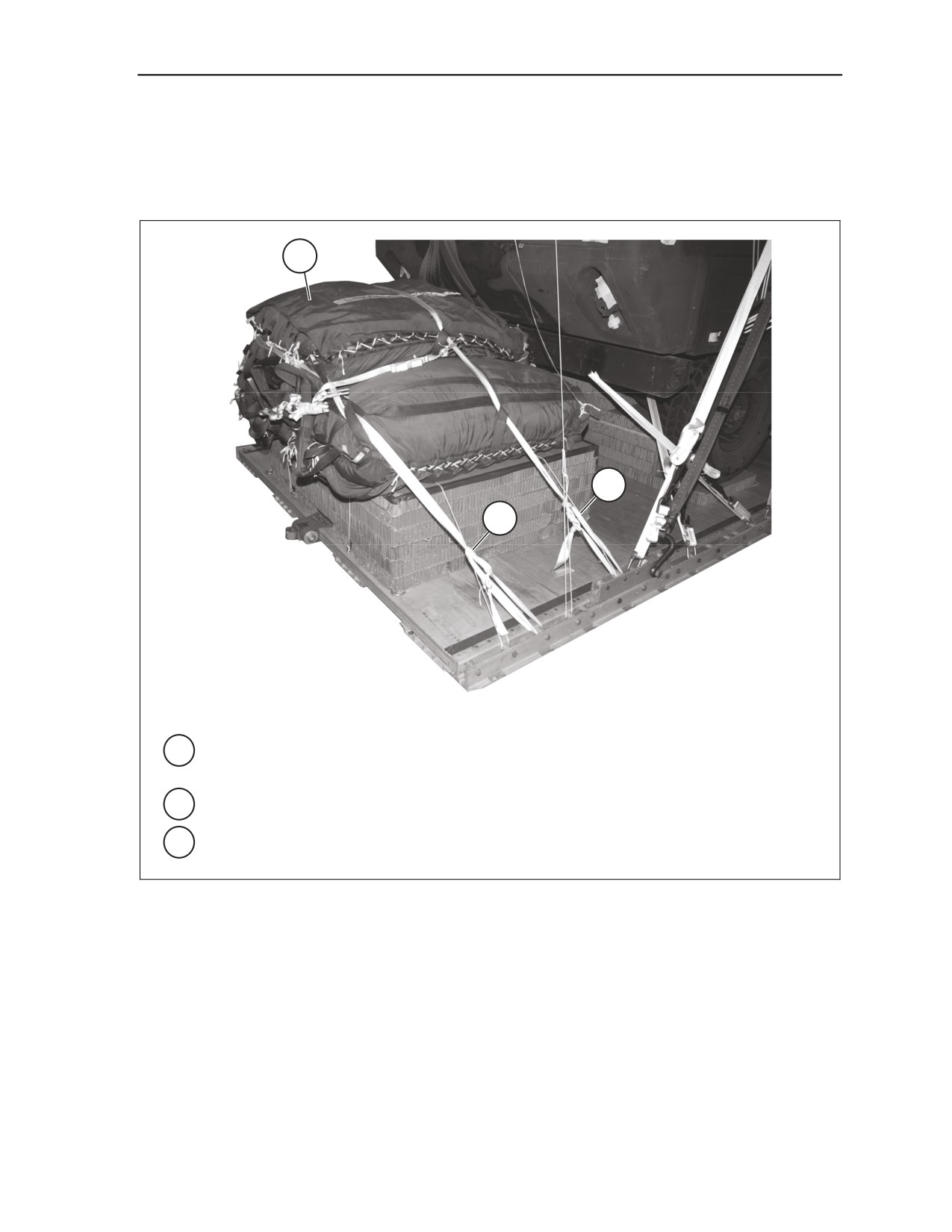
STOWING CARGO PARACHUTES
2-9. Prepare and install the parachute stowage platform according to Figure 1-24. Prepare and install
three G-11 cargo parachutes according to Figure 2-20.
1
3
2
1 Install three G-11 cargo parachutes according to FM 4-20.102/MCRP 4-11.3J/NAVSEA
SS400-AB-MMO-010/TO 13C7-1-5.
2 Tie the rear parachute restraint strap to the 38th bushing on each side.
3 Tie the front parachute restraint strap to the 3rd bushing on the suspension link.
Figure 2-20. Parachutes Installed
30 May 2006
FM 4-20.166/TO 13C7-25-71
2-25
Chapter 2
INSTALLING EXTRACTION SYSTEM
2-10. Install the EFTC extraction system according to FM 4-20.102/MCRP 4-11.3J/NAVSEA SS400-AB-
MMO-010/TO 13C7-1-5 and as shown in Figure 1-26. If applicable, install the extraction parachute
jettison system (EPJS) according to FM 4-20.102/MCRP 4-11.3J/NAVSEA SS400-AB-MMO-010/TO
13C7-1-5.
INSTALLING PARACHUTE RELEASE
2-11. Install an M-1 cargo parachute release according to FM 4-20.102/MCRP 4-11.3J/NAVSEA SS400-
AB-MMO-010/TO 13C7-1-5 and as shown in Figure 2-21.
INSTALLING PROVISIONS FOR EMERGENCY RESTRAINTS
2-12. Install provisions for emergency restraints on the front of the platform according to FM
4-
20.102/MCRP 4-11.3J/NAVSEA SS400-AB-MMO-010/TO 13C7-1-5.
PLACING EXTRACTION PARACHUTE
2-13. Select the extraction parachute and extraction line needed using the extraction line requirements
table in FM 4-20.102/MCRP 4-11.3J/NAVSEA SS400-AB-MMO-010/TO 13C7-1-5. Rig the extraction
line in an extraction line bag according to TM 10-1670-286-20/TO 13C5-2-41. Place the extraction
parachute and extraction line on the load for installation in the aircraft. If a drogue parachute and drogue
line are required, place them on the platform for installation in the aircraft as well.
2-26
FM 4-20.166/TO 13C7-25-71
30 May 2006
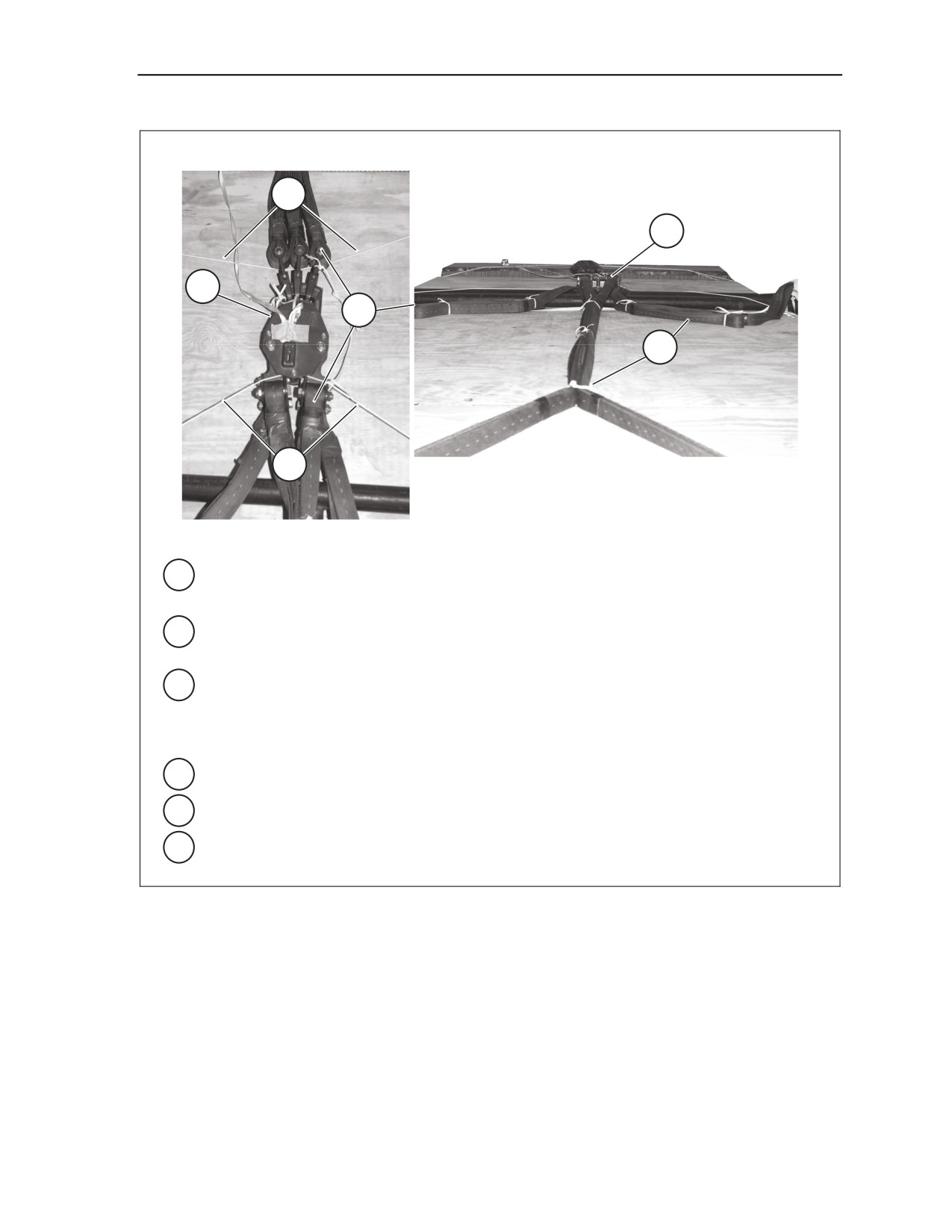
Rigging the M997 Ambulance on a 20-Foot, Type V Airdrop Platform for Low-Velocity Airdrop
5
2
1
3
3
6
1 Prepare and install the M-1 cargo parachute release according to FM 4-20.102/MCRP 4-
11.3J/NAVSEA SS400-AB-MMO-010/TO 13C7-1-5. Install a 25-foot arming wire lanyard.
2 Position the release on top of the ambulance roof on board number 3 to the rear of the
ACB.
3 Attach the suspension slings and riser extensions according to FM 4-20.102/MCRP 4-
11.3J/NAVSEA SS400-AB-MMO-010/TO 13C7-1-5. Fold the excess and secure with type
I, ¼-inch cotton webbing. Secure the riser extension together at three places between the
release and the parachutes with type I, ¼-inch cotton webbing.
4 Tape the loose deadman’s tie to the plywood with masking tape (not shown).
5 Safety tie the connector links to a convenient point on the load with type III nylon cord.
6 Safety tie the bottom of the release to a convenient point on the load.
Figure 2-21. M-1 Release Installed
30 May 2006
FM 4-20.166/TO 13C7-25-71
2-27
Chapter 2
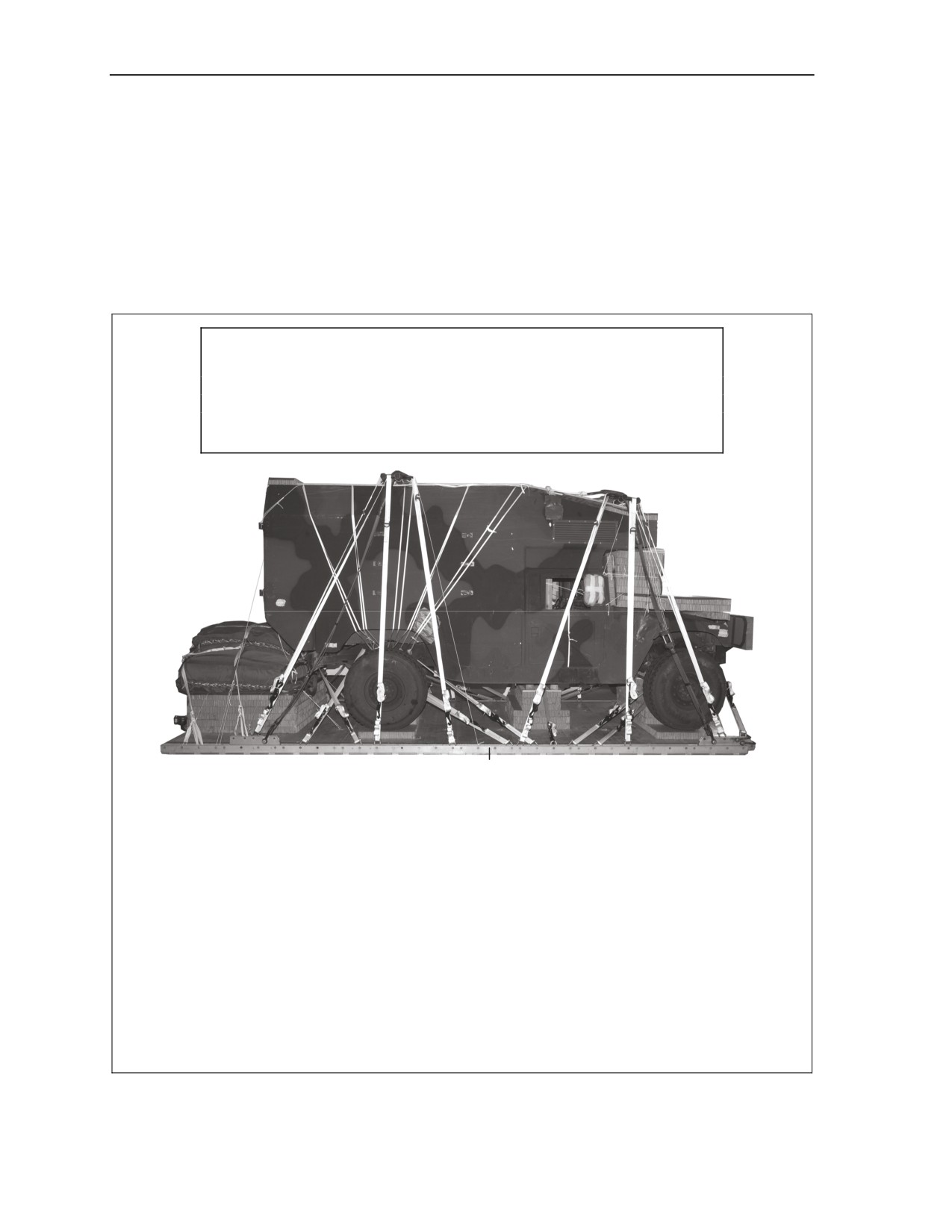
MARKING RIGGED LOAD
2-14. Mark the rigged load according to FM
4-20.102/MCRP 4-11.3J/NAVSEA SS400-AB-MMO-
010/TO 13C7-1-5 and as shown in Figure 2-22. Complete the Shipper’s Declaration for Dangerous
Goods. If the load varies from the one shown, the weight, height, CB, and parachute requirements must be
recomputed.
EQUIPMENT REQUIRED
2-15. Use the equipment listed in Table 2-1 to rig this load.
CAUTION
Make the final rigger inspection required by FM 4-20.102/MCRP 4-
11.3J/NAVSEA SS400-AB-MMO-010/TO 13C7-1-5 before the load
leaves the rigging site.
CB
RIGGED LOAD DATA
Weight: Load shown
11,480 pounds
Maximum load allowed
13,500 pounds
Height
115 inches
Width
108 inches
Overall Length with EFTC
261 inches
Overall Length with EPJS
273 inches
Overhang: Front
3 inches
Rear (EFTC)
18 inches
Rear (EPJS)
30 inches
Center of Balance (from front edge of platform)
107 inches
Figure 2-22. M997, 4-Litter Ambulance Rigged for Low-Velocity Airdrop
2-28
FM 4-20.166/TO 13C7-25-71
30 May 2006
Rigging the M997 Ambulance on a 20-Foot, Type V Airdrop Platform for Low-Velocity Airdrop
Table 2-1. Equipment Required for Rigging M997, 4-Litter Ambulance Rigged for Low-
Velocity Airdrop
National Stock Number
Item
Quantity
8040-00-273-8713
Adhesive, paste, 1-gallon
As required
1670-00-003-4389
Bar, attitude control
2
4030-00-090-5354
Clevis, suspension, 1-inch (large)
8
4020-00-240-2146
Cord, nylon, type III, 550-pound
As required
1670-00-434-5785
Coupling, airdrop, extraction force transfer with cable,
1
16-foot
1670-00-360-0328
Cover, clevis, large
3
8135-00-664-6958
Cushioning material, packaging, cellulose wadding
As required
8305-00-958-3685
Felt, ½-inch thick
As required
1670-01-183-2678
Leaf, extraction line (line bag)
2
1670-01-064-4452
Line, drogue, 60-foot (1-loop), type XXVI
1
1670-01-107-7651
Line, extraction, 140-foot (3-loop), type XXVI
1
Link assembly, two-point
1670-00-003-1953
3 ¾-inch
2
1670-00-003-1954
5 ½-inch
2
Lumber:
5510-00-220-6274
2- by 4-inch
As required
5510-00-220-6274
4- by 4-inch
As required
Nail, steel wire,
5315-00-010-4659
8d
As required
5315-00-753-3885
16d
As required
1670-00-753-3928
Pad, energy-dissipating (honeycomb)
25 sheets
Parachute:
Cargo:
1670-01-016-7841
G-11
3
Cargo extraction:
1670-01-063-3716
22-foot
1
1670-01-063-3715
15-foot drogue
1
Platform, airdrop, type V, 20-foot
1670-01-353-8425
Bracket assembly, coupling
(1)
1670-01-162-2372
Clevis assembly, type V
(28)
1670-01-353-8424
Extraction bracket assembly
(1)
1670-01-247-2389
Suspension link
(2)
1670-01-162-2381
Tandem link assembly (multipurpose link)
(2)
5530-00-128-4981
Plywood, ¾-inch
7 sheets
1670-01-097-8816
Release, cargo parachute, M-1
1
30 May 2006
FM 4-20.166/TO 13C7-25-71
2-29
Chapter 2
Table 2-1. Equipment Required for Rigging M997, 4-Litter Ambulance Rigged for Low-
Velocity Airdrop (Continued)
National Stock Number
Item
Quantity
Sling, cargo, airdrop:
For suspension:
1670-01-062-6301
3-foot (2-loop), type XXVI nylon webbing
2
1670-01-063-7761
16-foot (2-loop), type XXVI nylon webbing
2
1670-01-062-6302
20-foot (2-loop), type XXVI nylon webbing
2
For lifting:
1670-01-062-6301
3-foot (2-loop), type XXVI nylon webbing
2
1670-01-062-6303
12-foot (2-loop), type XXVI nylon webbing
2
1670-01-063-7761
16-foot (2-loop), type XXVI nylon webbing
2
For deployment:
1670-01-062-6304
9-foot (2-loop), type XXVI nylon webbing
2
For riser extension:
1670-01-062-6313
60-foot (3-loop), type XXVI nylon webbing
3
5340-00-040-8219
Strap, parachute release multi-cut, with 3 knives
2
7510-00-266-5016
Tape, adhesive, 2-inch
As required
1670-00-937-0271
Tie-down assembly, 15-foot
34
1670-01-483-8259
Tow release mechanism (H-block for C-17)
1
Webbing:
8305-00-268-2411
Cotton, ¼-inch, type I
As required
8305-00-082-5752
Nylon, tubular, ½-inch
As required
8305-00-263-3591
Type VIII
As required
2-30
FM 4-20.166/TO 13C7-25-71
30 May 2006
Glossary
ACB
attitude control bar
AD
airdrop
AFB
Air Force base
AFMAN
Air Force Joint Manual
AFR
Air Force regulation
AFTO
Air Force Technical Order
ALC
Airlift Logistics Center
attn
attention
CB
center of balance
P
penny
DA
Department of the Army
DC
District of Columbia
DD
Department of Defense
EFTC
extraction force transfer coupling
EPJS
extraction parachute jettison system
FM
field manual
HMMWV
high mobility multipurpose wheeled vehicle
HQ
headquarters
MCRP
Marine Corps Reference Publication
NSN
national stock number
OVE
on-vehicular equipment
TM
technical manual
TO
techinical order
TRADOC
US Army Training and Doctrine Command
US
United States
30 May 2006
FM 4-20.166/TO 13C7-25-71
Glossary-1